Tag: forgiveness

  • 4 Things I Learned from Being Possessive and Controlling in a Relationship

    4 Things I Learned from Being Possessive and Controlling in a Relationship

    As she stood there watching the puppet show, our eyes locked. I was instantly attracted.

    After what felt like the longest fifteen minutes torn between the desire to talk to her and the fear of rejection, I mustered the courage to introduce myself.

    She gave me a smile, then without saying a word, walked away.

    “What just happened? How can such a beautiful lady be so rude?” I stood there in disbelief, overtaken by embarrassment, pretending nothing had happened.

    Two weeks later, as if by pure serendipity, a mutual friend reconnected us. That was the beginning of a relationship I could only dream of.

    Oh boy, did I misjudge her! Her attractive appearance was an exact expression of the beauty of her soul.

    One year and a half later, we were dating. Yes, I spent one year and half chasing after her. I guarantee a minute spent with her would convince you it was well worth my while.

    They say it takes longer to build a castle than a chicken coop. One and a half years must be the foundation for a skyscraper that not even the worst storm could break.

    For about a year, it felt that way. We were inseparable. Both our parents gave us their blessings. We moved in together. We even made wedding plans.

    It was like a relationship out of a fairy tale. We had every reason to believe we would live happily forever after. Life without each other was inconceivable.

    But there a problem… I was excessively possessive and controlling.

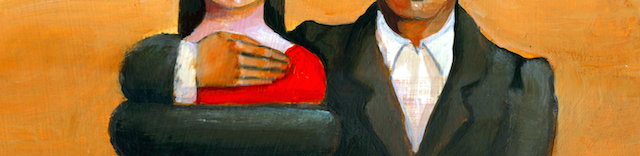
    I couldn’t stand my girl talking to another guy. I had the passwords to all her social media accounts. Whomever she was talking to, I knew. If she had to meet a male friend, I was present.

    Little by little I was withdrawing from her emotional bank account, as Stephen Covey put it. Worst of all, I was taking more than I was putting in.

    As a fervent Buddhist who believes in “letting go,” she was very tolerant. That gave me plenty of room to throw tantrums, ruminate, and blow the littlest issue out of proportion.

    Well, patience has its limits. After three and a half years, she had reached hers. I had emptied her emotional bank account.

    It was over. She had broken up with me.

    I was so clingy that I wouldn’t even accept her decision. I spent eighteen days trying every trick under the blue sky to get her back, to no avail.

    How did that happen? We’d spent so much time building our relationship, cherishing and loving each other. What went wrong?

    The eighteen days that followed were like a living hell. I suffered panic attacks, lost my appetite, and couldn’t sleep. Life became meaningless. I was at a breaking point.

    On the eighteenth day after the breakup, when I realized she wasn’t coming back, I had a reckoning. My desperation suddenly gave way to a wave of frustration, anger, and shame.

    As I was engulfed in deceit and embarrassment, I made a solemn decision to never again get rejected by a girl for being overly possessive, irrational, and intolerant.

    Such a momentous decision! I didn’t know if that was even possible and how I was ever going to reach such a lofty goal.

    That breakup and the three years spent self-examining taught me the big four lessons I am about to share with you.

    Are you in a relationship? Does your overbearingness prevent you from spending quality time with your partner? Are you ready to make changes?

    If you answered yes to all three questions, you are reading the right article. Hopefully, you won’t have to lose a partner and spend three years in self-introspection to find out you need to make changes.

    First thing first, love thyself.

    I know that sounds cliché, but I couldn’t find any fancier way to put it..

    Enjoying the company of your partner starts with you feeling good in your own skin. I’m guessing you would agree that one cannot love if they don’t possess it.

    A lack of self-love will cause you to center your entire being around the other person. And just like any host-parasite relationship, it will eventually fail. Your partner can’t let you feed off them indefinitely.

    Self-love is not selfishness. Loving yourself first doesn’t mean disparaging the other to elevate yourself. It’s acknowledging and embracing yourself while selflessly attuning to your partner’s needs and whims.

    Forget the “other half” mantras. Neither you nor your partner is a half, each of you possess their unique interests, weaknesses, strengths, and aspiration. It’s only when you both commit to each other, while staying true to your individuality, that genuine love happens.

    If I had espoused that idea then, I would never have considered suicide when my ex left me. I had based so much of my life on her I just couldn’t find meaning outsider of her.

    Learn to trust or you lose.

    Trust is the pillar of every human relationship, especially romantic ones.

    My lack of trust in my ex had nothing to do with her but rather with my deep sense of insecurity. I had the recurring thought that she would leave the minute she met someone better than me.

    Not only did my baseless fears cause me my peace of mind, they also created a wedge in our relationship.

    My trust issues caused her to lose all sense of vulnerability and safety around me. The only option she had was to confide in someone else.

    To learn to trust, I had to remind myself of this simple truth: We can’t control someone’s thoughts and actions. The best we can do is to give them the benefit of the doubt.

    Now, I choose to respect and trust my girlfriend unconditionally. Not only is she more willing to open up to me, I also enjoy a dramatic increase in self-esteem.

    Forgive and forget.

    Do you know those people who catastrophize and ruminate long after they got hurt? Well, that’s my past self!

    I did this every time my ex did something that displeased me. It didn’t matter if she apologized, I would internalize it and bring it up every time we were in an argument.

    For the last two years of our relationship, I made her life miserable. Imagine someone who never forgets even your most trivial mishap and uses it to attack you every time you’re wrong.

    Ironically, I learned to forgive and forget during the eighteen-day period while I was trying to get her back out of desperation.

    After flowers, long letters, and constant phone calls failed, I thought I could use religion to get her attention. That idea brought me to Google searching for “Buddha’s quote about forgiveness.”

    I came across this wisdom by Buddha: “Holding on to anger is like grasping a hot coal with the intent of throwing it at someone else; you are the one who gets burned.”

    As I copied and pasted the quote in a text message, I realized it was more relevant to me than her. I had an instant awakening.

    Instead of sending the quote to her, I decided to internalize it and use it for myself. How many times have I burnt myself by holding to anger? That was a genuine eye opener.

    When I started to remind myself of the danger anger poses to one’s mental health and peace of mind, not to mention its disastrous consequence on our relationships, I became more tolerant and accepting.

    Understand that nothing is guaranteed to last forever.

    I learned the hard way that no matter how well things are going between you and your partner, they may leave you at any time.

    When you accept the temporal nature of everything, you can stop clinging and worrying about the future and simply enjoy what you have in the moment.

    This means we must balance enjoying the company of our partner, while accepting the relationship might not last forever.

    Ironically, accepting that they could leave might decrease the odds of them leaving any time soon because people feel a lot happier when they don’t feel suffocated or controlled.

    Today, I understand my ex breaking up with me was a blessing in disguise.

    Would I change things if I could go back in time? Not for the world! I grew more in the three years following our breakup than I had in the twenty-one years before that. Why would anyone trade that?

    Exactly three years after that breakup, I got into a new a relationship that’s been going strong for almost two years now. I know when to invest in myself and when to give my girlfriend my undivided attention. I respect, trust, and give her all the affection she deserves.

    I don’t know what the future holds, but I don’t worry. I seize the day, prepare for the worst, and hope for best.

    Did I reach my lofty goal to never again get rejected for being overly possessive? Geez, I don’t know, and it doesn’t matter. All I know is that if my girlfriend leaves me tomorrow, it won’t be because I was being intolerant, overbearing, and bossy.

  • How I Stopped Putting Everyone Else’s Needs Above My Own

    How I Stopped Putting Everyone Else’s Needs Above My Own

    “Never feel sorry for choosing yourself.” ~Unknown

    I was eleven years old, possibly twelve, the day I first discovered my mother’s betrayal. I assume she didn’t hear me when I walked in the door after school. The distant voices in the finished basement room of our home drew me in. My mother’s voice was soft as she spoke to her friend. What was she hiding that she didn’t want me to hear?

    I leaned in a little bit closer to the opening of the stairs… She was talking about a man she’d met. Her voice changed when she spoke of him. The tone of dreamy wonder when you discover something that makes your heart race. She talked about the way they touched and how she felt being with him.

    I felt my body go weak. I could not tell if it was sorrow or rage. All I knew was, she had lied to me.

    Several months prior, my parents had announced their divorce. My mother told me the decision was my father’s choice. She told me he was the one breaking up our family. She told me she wanted nothing more than to stay with us and be together.

    And now I heard her revealing that was not true. She wanted to leave. She was not choosing me. She was choosing him.

    Since I was nine months old, my mother had been in and out of doctor’s offices, hospitals, psychiatrist’s and therapist’s offices trying to find the cure of her mental and emotional instability.

    When I was a young child, she began to share her frustrations and sorrows with me. I became her support and the keeper of her pain. She had nicknamed me her “little psychiatrist.” It was my job to help her. I had to. I needed her stable so I could survive.

    I don’t remember when or if she told us that she was seeing someone. I just remember she was gone a lot after that day. She spent her time with her new boyfriend out of the house. As the parentified child who she had inadvertently made her caretaker, it felt like she was betraying me. She left me for him.

    I was no longer the chosen one—he was.

    I hated him for it. When my mother moved in with him, I refused to meet him. I didn’t want to get to know or like this man she left me for.

    I saw them one day in the parking lot outside of a shopping plaza. I watched them walking together and hid behind a large concrete pillar so they wouldn’t see me. The friend I was with asked if I wanted to say hello. I scowled at the thought. I despised him.

    Within the same year, his own compromised mental health spiraled, and they broke up. He moved out of their apartment. I didn’t know why or what happened. I only knew my mother was sad. Shortly after their breakup, he took his own life. From what we heard, he had done so in a disturbingly torturous way. It was clear his self-loathing and pain was deep.

    My mother was devastated. She mourned the loss of her love and the traumatic way he exited. She stopped taking her medication, and her own mental health began to spiral. My father received a phone call that her car had been abandoned several states away. I’m unsure what she was doing there, but she had some issues and took a taxi back home.

    He later received a call stating that my mother had been arrested for playing her music too loud in her apartment. Perhaps to drown out the voices in her head. She was later taken to the hospital without her consent and was admitted due to her mental instability.

    After several days of attempting to rebalance her brain chemistry with medication, my mother began to sound grounded again. The family decided she would move in with her parents a few states away from us and live with them until she was stable again.

    A few days after Christmas she called me to tell me how sad she was. She grieved her dead boyfriend. I was short with her. I was still angry for her betrayal. I didn’t want to continue being used as her therapist. The imbalance in our relationship was significant, and my resentment was huge.

    I loved her, but I could not fall back into the role of being her support without any support back. It was life-sucking. And I didn’t care that he was dead. She chose him over me. I was fine with him being gone.

    I don’t recall feeling any guilt when I got off the phone that day. I felt good that I had chosen myself and put a boundary in place to not get sucked into her sorrow. I was fourteen years old, less than a week shy of fifteen. I just wanted to be a kid.

    The next day, my mother chose to make more decisions for me and for herself. These were more final. She told her parents she was taking a nap and intentionally overdosed on the medication meant to save her. She died quietly to relieve herself from her pain and left me forever.

    That choice—my own and hers—would change the course of my life.

    The day my mother freed herself from this world was the same day I learned to become imprisoned in mine. I was imprinted with a fear that would dictate my life. I became quietly terrified of hurting other people. I feared their discomfort and feeling it was my fault. From that day forward I would live with the silent fear of choosing myself.

    My rational mind told me it was not my fault. I did not open the bottle. I did not force her to swallow the pills. I did not end her life. But I also did not save it.

    I learned that day that creating a boundary to preserve myself not only was unsafe, it was dangerous. When I chose me, people not only could or would abandon me, they could die.

    Of course, I never saw this in my teenage mind. Nor did I see it in my twenties, thirties or the beginning of my forties. I only saw my big, loving heart give myself away over and over again at the cost of myself.

    I felt my body tighten up when I feared someone would be mad at me. I heard myself use words to make things okay in situations that were not okay. I said yes far too many times when my heart screamed no. All because I was afraid to choose myself.

    The pattern and fear only strengthened with time. I learned to squirm my way out of hurting others and discovered passive-aggressive and deceptive approaches to get my needs met. My body shook in situations where conflict seemed imminent, and I learned to avoid that too.

    What I didn’t see was that this avoidance had a high price. I was living a life where I was scared to be myself.

    On the outside I played the part. The woman who had it all together. Vocal, passionate, confident, and ambitious. But on the inside, I held in more secrets than I knew what to do with. I wasn’t living as me. My fear of being judged and rejected or not having my needs met was silently ruling my life.

    So many have developed this fear over time. Starting with our own insecurities of not feeling good enough and then having multiple experiences that solidified this belief. The experiences and memories differ, but the feelings accompanying them are very much the same.

    The fear of choosing ourselves, our desires, our truths, all deeply hidden under the masks of “I’m fine. It’s fine.” When in reality, we learn to give way more than we receive and wonder why we live unsatisfied, resentful, and with chronic disappointment. Nothing ever feels enough, and if it does, it’s short-lived.

    The memories and feelings become imprints in our bodies and in our minds that convince us we can’t trust ourselves. That we can’t trust others. That we must stay in control in order to keep us safe. We learn to manipulate situations and people to save ourselves from the opinions and judgments outside of us. We learn to protect ourselves by giving in, in order to not feel the pain of being left out.

    We shelter ourselves with lies that we are indifferent or it’s not a big deal in order to shield ourselves from the truth that we want more. We crave more, but we are too scared to ask for it. The repercussions feel too risky. The fear of loneliness too great.

    In the end, our fear of choosing ourselves even convinces us we can live with less. That we are meant to live with less, and we need to be grateful for whatever that is.

    Do we? Why?

    What if we learned to own our fear? What if we accepted that we were scared, and it was reasonable? What would happen if we acknowledged to our partners, families, friends, and even strangers that we, too, were scared of not being good enough? Of being discarded, rejected, and left behind.

    What would it be like if we shared our stories and exposed our insecurities to free them instead of locking them up to be hidden in the dark shadows of ourselves?

    I’m so curious.

    Where in your past can you see that choosing yourself left a mark? What silenced you, shamed you, discouraged you from choosing your needs over another’s? When were you rejected for not doing what someone else wanted you to do? And how has that fear dictated your life?

    Choosing ourselves starts with awareness. Looking at the ways you keep quiet out of fear or don’t make choices that include your needs. Seeing where this fear shows up in your life gives you the opportunity to change it. The more you see it, the more you can make another choice.

    Start with looking at the areas of life where you hold on to the most resentment and anger. Who or what situations frustrate you? Anger often indicates where imbalances lie or when a boundary has been crossed. It shows us where we feel powerless.

    Make a list of the situations that annoy you and then ask yourself, what’s in your control and what’s not? What can you directly address or ask for help with?

    Note the ways you may be manipulating others to get your needs met in those situations and how that feels. Note also what you may be avoiding and why.

    How would it feel to be more direct and assertive? What feelings or fears come up for you?

    Then start with one small thing you could do differently. Include who you could ask for help with this step, if anyone.

    As for me, I have found myself in situations where I lied or remained silent to avoid being judged, in an attempt to manipulate how others see me. I have felt my body cringe with sadness and shame each time. It doesn’t matter how big or small the lie, it assaults my body the same.

    I have learned that speaking my truth, no matter how seemingly small or insignificant, saves my body from feeling abused by the secrets it must keep. Choosing me is choosing self-honesty; identifying what is true for me and what is not based on the way my body responds. I am not in control of others’ judgments of me, but I am in control of the way I continue to set myself up to judge myself.

    I have also found myself agreeing to do things I didn’t want to do in order to win the approval of others, then becoming resentful toward them because I refused to speak up for myself.

    Choosing me in these scenarios is honoring the fact that I will still be scared to ask for what I need, as my fears are real and valid, but asking anyway, even when the stakes feel high. It’s scary to feel that someone may abandon us if we choose ourselves, but it’s scarier to lose ourselves to earn a love built on a brittle foundation of fear.

    l cannot control the past where I have left myself behind, but I can control today, the way I forgive myself for falling victim to my human fear, and the way I choose to love myself moving forward. When I choose me, I have more love to give to others. Today I can take a small step toward change.

    Taking these small steps and building on them will help us to show ourselves that we can make progress in bite size amounts and prove to ourselves we are going to be okay. The small bites are digestible and give us proof that we can do it. This helps us build our ability to do more over time, while also decreasing our fear.

    If we look at our past, we will see the majority of our big fears do not come to fruition, and if they did, we survived them and gained knowledge or strength in the process.

    It’s not the action holding us back, but the memory of the discomfort we still live with. The more we move through these fears, the more that discomfort will decrease, and the more we will trust that we will be okay no matter what.

  • Before You Reach Out to That Person from Your Past: 3 Things to Consider

    Before You Reach Out to That Person from Your Past: 3 Things to Consider

    “You don’t have to rebuild a relationship with everyone you’ve forgiven.” ~Unknown

    It’s natural, when you’re hurting and lonely, to want to reach out to people you’ve been close to in the past.

    Especially if there’s unfinished business with someone. And especially given the added isolation that comes with a global pandemic.

    Whether or not you do reach out is entirely your prerogative. For what it’s worth, I don’t necessarily think it’s a bad idea to try—in most cases, a “Whoops” is better than a “What if…?” Whatever the result, you’ll learn something. It might be an unpleasant truth, but it’ll help you, one way or another.

    But, before you draft that text message, or email, or even pick up the phone, I also believe there are three things to consider:

    1. Why are you reaching out? What’s really behind your impulse?

    If you’re only doing so to take the edge off your loneliness, think again.

    If the relationship with the person you’re thinking of contacting has broken down, there’s probably still some hurt there. For them and for you. Contact will re-open that wound.

    Perhaps a long time has now passed, and any pain is vastly less profound than it once was. But let’s not kid ourselves—if things got so bad between the two of you that you haven’t spoken for months, things are pretty bad. There’s going to be something there.

    The benefits of reaching out have got to outweigh the possible hurt that comes from doing so. And the only way that can happen is if you genuinely miss that person. In short, the person, and that relationship, has got to be worth the pain that might initially come from speaking to them.

    So, ask yourself, honestly, do you really want to speak that person? Is it really them you miss, or is it just the connection you once had with them?

    Are you, in fact, just lonely?

    If, upon reflection, you realize it is just solitude prompting you, don’t reach out. It’s really not fair to either one of you. The pain won’t be worth it. It can’t just be about you, or what you’re currently feeling; the other person has to genuinely matter to you.

    Don’t let them be collateral damage in your war against solitude. Because that’s all they’ll be, a casualty.

    Your loneliness will pass. Like desperation or the need to get something off your chest that feeling is, in most cases, a temporary one. It will abate. And, when it does, so will your need for that person.

    I’ve been on the receiving end of this more than once, and it’s not nice.

    A former partner once contacted me out of the blue. It had been a turbulent relationship; during the time we’d spent together, our lives had both been raging dumpster fires, and we’d never been able to quell those flames adequately enough. Eventually, our relationship was consumed by them. But I still felt there was still something there. Despite the final rites having been administered, I knew I had never truly given up hope.

    Initially, I was beyond happy they’d reached out. I didn’t know if anything could be salvaged, but I was willing to try.

    However, after a short time, I knew my hopes were unfounded.

    A few days after we began speaking, this person began to drift away. They even told me directly that they weren’t feeling desperate or lonely anymore, but I had already guessed that; their waning interest was obvious in the way the messages started drying up, in the manner in which they suddenly avoided the big topics, which we’d freely discussed up until that point.

    I had served a purpose, and I had taken an edge off whatever they were feeling.

    And once I had, I was let go again—I was no longer needed.

    Because it had never been about me; it had been about them and what they were temporarily experiencing.

    I was hurt but not indignant; I’d done it myself before, and it’d be hypocritical to damn them.

    But, overall, there wasn’t a good enough reason to have those wounds re-opened. Reconciliation is a long, painful process; it can’t be built on loneliness. It only works if both people genuinely want to reconcile and be back in each other’s lives.

    If you’re in the same boat, try to find a healthier way to feel connected. I know, I know… loneliness is vile, debilitating. And not an easy thing to tackle. As someone who has battled loneliness for a long time, I am in no way denigrating the devastating impact it can have on your mental health.

    But being aware that you are lonely is a good first step in doing something about it. Knowing that you don’t really miss a particular person, that you just miss people per se, is a foundation. It’s something to build upon.

    However, if you’ve seriously thought about this, and it is genuinely them you miss, then there’s something else to consider…

    2. What do you want to achieve by reaching out?

    In the same way you need to be clear about your reasons for reaching out, you’ve also got to have a firm idea about what you want to achieve.

    It’s okay if all you want to do is try and re-establish contact with the future hope of reconciliation; there doesn’t have to any grand, overly complex plan in place beforehand.

    But there does need to be something, some sort of objective. And it’s got to be realistic based on the relationship you had. If it was a fundamentally unhealthy or codependent relationship that took more than it gave, then expecting all of those flaws to be resolved in one message is simply ludicrous.

    Perhaps you simply want to see if there’s a chance that something has shifted, and that there’s a glimmer of repairing the damage. It’s a small something.

    And you need that something.

    If all you’ve got is, “I don’t know; I don’t know what I want to achieve,” then it is probably the loneliness talking, or another random impulse, and stepping back is the right thing to do.

    Don’t jump into this with no idea about what you want. There’s going to be some hurt, some pain—think about what you hope to achieve by (potentially) re-opening this particular wound.

    If you’ve done that, and the answer works, then there’s only one more thing to consider…

    3. You might not get the response you want.

    Although you might view that past relationship and the other person involved through rose-tinted spectacles, they may not view you and the relationship in the same way. Just because you’re feeling conciliatory, it doesn’t mean they do. They might be perfectly happy with how things are, thank you very much.

    Plus, if it’s someone you haven’t spoken to for some time, you won’t have a clear idea about what’s happening in their life. There’s a global pandemic unfolding around us—people have lost livelihoods and loved ones.

    Your message may arrive while they’re in the middle of dealing with something huge. A message out of the blue from you may be the last thing they need.

    There’s also the simple fact that people change. Not many, but some of us do. And that can be confusing.

    Again, I was recently on the receiving end of this.

    And, again, it was that very same former partner.

    Time had passed since our last abortive communication. And, by this stage, I wasn’t so amenable to their approaches. I still had feelings for them, but those feelings had changed, mutated, in line with the work I’d done on myself in our time apart.

    Simply put, I’d moved on.

    As a result, I now saw that person completely differently. Whereas there was once a deep affection, now there was a solid realization that my own mental well-being was better for having removed them. The sad truth was that I just didn’t miss them anymore.

    Sometimes you need someone from your past to re-emerge to show you how much you’ve changed. I was very aware that, six months earlier, I would’ve been much more open to their words. I simply wasn’t any more; I was happy with how things were.

    The affection (or connection) was gone, and I just wanted to keep moving on.

    I couldn’t give them the answer they wanted, and they didn’t take it well. It wasn’t the happiest of experiences, but it did teach me that this was something to be aware of if the roles were ever reversed.

    If you’re not feeling strong enough to face a response that isn’t overflowing with kindness, a flat refusal, or worse, no reply at all, don’t do it. You’ve got to embrace the possibility that this isn’t going to go as planned.

    And you’ve got to be in a place where you can emotionally deal with that rejection.

    If you are, it might be worth the risk. If you’re not, don’t do it.

    These are strange, lonely times. Reaching out may seem like an entirely natural thing to do. Maybe you’ll get the chance to rekindle an old relationship.

    Or maybe you’ll discover that the relationship truly did die a long time ago.

    It’s always worth taking the risk, but make sure you truly want to, and that you’re prepared for any response, good or bad.

    Reaching out—it can be a chance to reset a relationship, or to deliver the final rites. Both of which can be useful, and you might learn something invaluable.

    Most of all, paradoxically, it might give you both a chance to finally let go.

    And that’s something always worth doing.

  • Hurt by Negative People? How to Stop Taking Things Personally

    Hurt by Negative People? How to Stop Taking Things Personally

    “Some people are in such utter darkness that they will burn you just to see a light. Try not to take it personally.” ~Kamand Kojouri

    The saying goes that money makes the world go round, but of course that’s not true.

    It’s our relationships.

    How we relate to other people and how they relate to us keeps our world turning. When things go well, all’s right with our world. When things go badly, it can feel as though our world has ground to a halt.

    This is exactly how I felt whenever I had a difficult experience with a loved one or friend.

    Whenever they lashed out at me for no real reason, it felt as if I couldn’t move on again until their negativity or bad temper had blown over. Until that happened, I replayed the scenarios in my mind, trying to work out where I was to blame for their behavior, and feeling awful in the meantime.

    That’s why our relationships will always be the most important thing in our lives—they have such a strong impact on us, both good and bad.

    That is also why it serves us well to try to have the best possible relationship with others, as well as ourselves. That includes improving the connections we have with the difficult and less-than-positive people in our lives and strengthening our boundaries in the process.

    We probably all have several negative people in our lives—those who criticize, complain, belittle us and other people, and say or do cruel things. They can be the closest to us, people we have known all our lives, and that makes their negativity harder to escape and endure.

    I had a family member who was very negative about pretty much everything. Spending time in their company was usually a draining and disheartening experience due to their complaining and sniping comments.

    This person made it very clear whenever I met them that they had little time or affection for me, which of course made family get-togethers less than enjoyable.

    I was also puzzled as to why they were like that: we’d never argued, and I had never, to my knowledge, done or said anything mean to them. Yet, they still acted in a negative way toward me, especially if I mentioned affirmative life experiences such as a great holiday or a new exciting project.

    Unsurprisingly, I responded to their negativity with a sense of apprehension, frustration, and confusion, which stopped me from enjoying the company of my other relatives. It also made me wary about fully expressing myself or talking about my life. And my uneasiness undoubtedly made the atmosphere between my family member and me even more negative.

    We all Have Emotional Scars from the Past

    I eventually recognized that I was hurt by my relative’s treatment in large part because I took it personally and allowed it to affect my self-image and self-esteem—as if I somehow deserved it. Then I realized something that changed everything for me.

    We all have a self-image shaped in large part by other people. Family, friends, and partners, who’ve likely scarred us through anger, resentment, jealousy, judgment, neglect, or even outright abuse. And this affects how we show up in the world.

    Everyone, including the people who have wronged you or been negative toward you in some way, has scars from their past too.

    Maybe your critical mother doesn’t know any better because her mother was critical. Maybe your absent father never knew his father either. Maybe your backstabbing friend was jealous of you for reasons only known to them. Perhaps your cheating partner had abusive parents, and your partner sabotages relationships because they don’t believe anyone can love them.

    Each and every one of us carries around our scars, going out into the world to meet other people who have scars, and when we connect, these combined scars can sometimes tear open.

    We all See Ourselves Through Others’ Eyes

    We all tend to see ourselves through our loved ones’ eyes—starting with our parents when we’re young—because we assume their perceptions of us are accurate and blame ourselves if they’re not flattering. Our self-image can alter based on their comments, emotions, and actions—positive and negative.

    This is a classic case of our relationships shaping our sense of self, an ongoing shaping that begins even before we can fully understand the meanings of what other people say or do to us.

    We are each the result of our experiences within our multiple relationships and interactions. How other people relate to us affects our image of ourselves, but that doesn’t mean we are helpless in the face of other people’s behavior toward us.

    We may not have had much of a choice as a child, but it’s a different matter once we’re adults. With awareness, we’re now able to protect ourselves far better from others’ negativity toward us and set necessary boundaries.

    Learning to Connect in a Different Way

    If you’re dealing with a negative or painful relationship that leaves you feeling bad about yourself, you can of course choose to distance yourself from the person and limit contact. Sometimes, however, this isn’t possible, so you have to learn how to connect in a different way while safeguarding yourself from their negative impact on you.

    I decided I had to respond differently to my family member and their negativity for the sake of my well-being. I began to look beyond their behavior and actions, and in doing so I started to piece together an idea of what might be the real cause of their pain and unhappiness.

    I recalled they had often moaned about how much they hated their job, how they disliked the town they lived in and their neighbors, and they also often complained of tiredness and physical aches and pains.

    I began to see that this person’s negativity—even if it was aimed at me, maybe due to their feelings of envy—wasn’t really about me. They were unhappy with their life in general. Negative people are often unhappy on many levels.

    It also helped me to remember we all have emotional scars, as mentioned before. When you approach people from a place of understanding, compassion, and empathy, you no longer see them as cheats, liars, betrayers, or “bad” people out to get you—even though they might cheat, lie, or betray you. You instead begin to see beyond their behavior and recognize that they’re in pain.

    When you do that a lot of their power over you starts to fade. You begin to see them as vulnerable, like everyone else. You start to realize that their negative actions toward you reflect far more on them than they do on you.

    People often hurt each other because of their own deep pain and because they don’t know any other way to act. This is often a painful lesson to learn.

    But when you finally grasp this difficult truth, you become more accepting of what happened, more forgiving, and ready to let go and move on. You realize you do not need to take on their negativity, brood about it, or feel you are the cause of it.

    That doesn’t mean you have to condone or accept mistreatment. And that’s not to say people’s negativity toward you won’t bother or hurt you ever again, but the effect won’t be so intense. You’ll realize that the situation isn’t really about you at all. Any pain they try to inflict on you is simply a reflection of what they feel inside; it no longer feels so personal.

    When I stopped taking my relative’s negativity personally, I was able to interact with them in a different way. I was much more relaxed in their company and able to enjoy family gatherings much more.

    When you stop taking other people’s negativity personally, you cease to be so susceptible to creating your self-image through their eyes. In fact, you start to focus far more on how you view them.

    Then you’re also free to focus less on their negativity and bad behavior and more on how you respond to it. That might mean setting boundaries and limiting your contact with them, and that’s okay. Sometimes you have to understand and empathize from afar to take good care of yourself.

    We’re All in the Same “Life” Boat

    Essentially, we’re all in the same “life” boat, bobbing up and down on the vast ocean of existence.

    We are all fallible. We all inflict hurt on others, intentionally and unintentionally.

    We all experience negative situations and inevitable suffering, and we simply have to accept this. Without pain and suffering we might not value joy or experience spiritual growth. If we never experienced adversity, we might not appreciate our strength.

    And without negative people we might not be truly grateful for or cherish the loving, supportive people we have in our lives.

  • If You Want Closure After a Breakup: 6 Things You Need to Know

    If You Want Closure After a Breakup: 6 Things You Need to Know

    “We eventually learn that emotional closure is our own action.” ~David Deida

    When my last relationship ended, I didn’t really understand why. After eight years together and still feeling love for each other, my partner walked away saying he didn’t feel able to commit.

    He didn’t want to work on the relationship because he felt that nothing would change for him. So, I had no choice but to let it end and do everything I could to pick myself up from deep grief, intensified by great confusion.

    Now, over a year later, I still cannot give you a definitive reason as to why we broke up. I do still think about the breakup and occasionally it can bring up emotion, even now.

    But these days, instead of that burning need to understand and make sense of it, I have a more distanced curiosity when I think about the reasons we ended. I think this might be that elusive state we call “closure.”

    This reflection led me to explore what closure means: why we strive for it and why it feels so hopeless when we think we can’t reach it. Do we ever truly have it and where does it come from?

    What is Closure?

    When we say we want “closure” at the end of a relationship, what do we actually want?

    I have discovered that when people talk to me about needing closure, what they generally tend to mean is that they want answers and understanding about why things ended the way they did.

    Heartbroken people often believe that they will get the closure they so desperately desire, if only they could make sense of why. They expect that this knowledge will help them stop the overthinking and relieve them of their painful emotions.

    I used to believe this too, but experience from my previous crushing divorce taught me it doesn’t work like that. Closure must come from within because if you look to your ex or anywhere else to find it, you will be left frustrated and helpless and you will prolong your healing process.

    So, let’s look at some truths about closure that explain why it has to be an inside job:

    1. Your ex’s responses will lead to more questions.

    At the point of my breakup, my ex and I had a couple of conversations that involved me doing a lot of asking why, but not getting many answers. He couldn’t really explain; he told me “It’s not you, it’s me,” and when someone gives you that as their reason, there is nowhere you can go with it.

    For the person leaving it probably feels like the best way to end it. But for the person left, it’s deeply unsatisfying, and our natural tendency is to desperately ask more questions: “What’s wrong?” “Can I help you with whatever you’re going through?” “Can we fix it somehow?” “Can we at least work on it?”

    It’s important to know that when we are still in love with someone, nothing they can say will us give closure. The answers will never feel enough, they will only lead to more questions and more longing.

    2. “One last meeting” extends the pain.

    If there is still communication after a breakup it’s tempting to ask for one last face-to-face, to help you understand and gain the closure you seek. But for all of the reasons above, this will not help.

    A meet-up is often an excuse to get in touch because the ending feels too painfully final. Sometimes there’s a veiled hope that by seeing them for “one last talk” they may rethink or have doubts about leaving.

    Nobody is ever wrong for seeking closure this way, but before deciding to meet, check whether you are really hoping for reconciliation. Consider how your pain might be prolonged if you don’t get it.

    3. Your closure can’t come from their truth.

    You cannot rely on the words of the person who broke your heart for your own closure. Not because they are being deliberately dishonest (except for specific cases when they are), but because there is never just one truth at the time of the breakup.

    The answers you receive from your ex may bring you a little bit of understanding or peace at first. But if you depend on them for your closure, and then the reality shifts, it can set you back and bring even more pain.

    I allowed myself to feel deeply reassured by my ex’s assertion that he left because he needed to be by himself. So, when he told me two months later that he was dating again, it left me utterly devastated because I had allowed my peace of mind to come from his words and not my own healing. I had believed “It’s not you, it’s me,” then felt the gut punch that it actually was me.

    However, as I started to move through the healing process, my growth allowed me to shift my perspective on the meaning I gave to this revelation. I learned to reframe the deep feelings of rejection to create my own, more empowering, understanding of why we ended.

    You cannot cling to reassurance from someone else’s truth or explanations, because they will not hold lasting meaning for you. Your closure will only have a strong foundation if it comes from your own truth.

    4. Moving on should not be conditional.

    You disempower yourself when you believe that you can only get closure via your ex-partner. In doing so, you are effectively allowing them to say whether it is okay to move on.

    If you require an apology, changed behavior, an explanation, empathy, forgiveness, or anything else from them before you can move forward, what happens if those things never come? Are you okay with potentially spending years waiting for someone else to fix your pain?

    Whatever your ex-partner tells or withholds from you, however they acted back then, whatever their current situation or future behavior, is far less relevant than your response to any of these things.

    Your ability to gain closure is unconditionally within your control, and it becomes far easier when you stop focusing on your ex.

    5. Closure is not passive—what you do counts.

    We have a common understanding that “time heals a broken heart.”

    While it’s true that the intensity of grief emotions can lesson over time, what really makes a difference to your speed of moving on, is how willing you are to do the inner work to change and grow.

    As you gain closure, you’ll notice you are no longer so emotionally triggered by the same external situations. However, this doesn’t happen because anything out there is different; it’s because you are different.

    When you learn to heal an internal wound, shift your perspective, and change your responses to events, you gain peace from the inside. This is not dictated by time; it’s up to you how soon you want to make these changes.

    6. Closure is not a one-time event.

    There is a misconception that closure is something we finally “get.” The word itself implies that it’s a conclusion to everything related to the breakup. Because of this belief, we find ourselves constantly wondering when we will “have it.”

    Instead, if we see it as a process rather than a one-time event, it takes the pressure and expectation away from reaching this end goal. Creating closure is a continual journey of self-awareness, learning, and checking-in on our progress. We don’t just wake up one morning with a clean slate for a new life.

    Reframing closure this way also relieves us of judgment about how we should feel. It’s common to regard new emotional triggers, after a period of good progress, as unwelcome. They are negatively seen as a sign of a setback, but they are just highlighting where we still need a little more healing.

    Allow Yourself Achievable Closure

    The way we view closure matters. Compare the statement “I’m gaining closure every day” with “I don’t have closure yet.” You know straight away which feels kinder, more healing, less self-judging.

    I recently asked people what closure looked like to them, and I found that most believed that it is something you reach when you no longer think about or have emotions around your breakup.

    I wonder how realistic this thinking is. Perhaps it’s healthier and more attainable to claim we have closure, not when our thoughts and feelings have completely gone, but when they no longer have power over us.

    In my experience, becoming at peace with your breakup ultimately comes from healing through growth, and choosing to focus on what is within your control. This is the kind of closure that doesn’t come from an ex-partner, a rebound relationship, or any other external source. When you gain closure this way, it cannot be taken away from you.

  • How I’m Healing from the Pain of Growing up in a Dysfunctional Family

    How I’m Healing from the Pain of Growing up in a Dysfunctional Family

    “Don’t try to understand everything, because sometimes it’s not meant to be understood, but accepted.” ~Unknown

    As a child, I never had the opportunity to develop a sense of self. I had a father who was a drug addict. A mother who was abused by my father. And later, we had my mom’s possessive and controlling boyfriend. It was tough finding a consistent role model in the mix.

    I was one of four kids and we grew up in a trailer, sharing one bunk bed among us all. As children, we often would brutally fight with each other. We all wanted our own space and sense of self, but there wasn’t enough to go around.

    With our mom working so much, her boyfriend would watch us. He seemed to enjoy punishing us. I remember feeling so afraid. I didn’t want to do anything wrong. I wanted to have his love because it felt like the only way to be safe. I never felt good enough, not to my mom, dad, or the boyfriend.

    Starting in my teen years, codependency started really kicking in, and I wanted my mom for everything. I unknowingly was part of her triangulation between me and my sister. We both craved her love and wanted to have her favoritism.

    As a wild child, my sister was stuck with my mom’s negative self-projections, I received the positive. As the years progressed, these roles flipped, and I suffered a sense of rejection and confusion as to what I had done wrong.

    Life was hard and I couldn’t live with the fear and shame, so I learned to unplug from my feelings. At the same time, these unprocessed feelings would cause outbursts of anger. I started feeling entitled to anger. It felt like life had kicked me so hard as a child, why wasn’t it getting easier? Why was it getting worse?

    My learned dysfunction kept me yearning for connection but fearing it and pushing people away at the same time. I wasn’t capable of trusting others in a healthy way. With each loss, I took on more shame and perceived failure.

    As I struggled through life, I was oblivious to the amounts of shame my family dynamic had me carrying. My mother’s triangulation and manipulation created an environment where she was justified in lashing out with no accountability. Everyone else was to blame for her poor reactions to situations.

    As my mom and sister became a team, I became the problem who needed to learn how to accept and love them unconditionally. There was nothing wrong with them treating other people poorly. It was okay for them to deceitfully hide family secrets (e.g.: Mom drove home drunk from the bar and doesn’t remember getting home), because I wouldn’t agree, so they were justified.

    I felt like I was on an island, broken and unable to figure out what was wrong and how to fix myself because the “rules” of justification changed so swiftly, and always in their favor.

    Having no sense of self and being completely enmeshed with my mom and sister, I felt beyond broken each time I was accused of not being able to love unconditionally. I was worthless and a disgusting human being who was incapable of even a basic emotion that everyone else had.

    It took a lot for me to see that love for my mom was making me feel close only when she was going through tough times, making me part of her someday club (our motto: “someday” will never happen for us).

    My sister learned to use her money to express her love. She would take me to dinner and give me her quality hand-me-down clothes. While I was grateful, it also became justification for her to do crummy things toward me, usually when she had been drinking.

    While sober, if she had a problem, she’d choose to “forgive.” The only problem is that she hadn’t really forgiven me because one night while everyone was having fun, I might get tired or I didn’t think a joke was funny or I looked at her the wrong way, and it would all come flooding out—every stored feeling she had been holding back for days or weeks.

    If either my mom or sister hurt me, the expectation was that I should just get over it. There was no need for them to take accountability because “we are human” and “I am happy with who I am.”

    I wanted to be loved and accepted but couldn’t ever really find my place within my family because the dynamics were so volatile. I was suffocating in the conflicting feelings. I felt angry but ashamed. I was unhappy and felt worthless.

    When I hit bottom and I couldn’t see one thing in my life that gave me worth, I knew that I needed to make changes. I reached out and got help from a therapist and joined a local support group.

    As I am separating from the dysfunctional patterns, the things that have helped me are:

    1. Ask for help.

    Dysfunctional family dynamics often create shame around the idea of talking to others. It’s seen as exposing family secrets and going against the unit. Nobody should suffer due to things out of their control. Reaching out helps you find the compassionate outlet you deserve and need.

    I have been in therapy for about two years now. It has been the only time of my life where I have been able to experience consistent, reliable, and healthy direction. It has supported me in learning how to have self-compassion and make healthy, but tough choices.

    I didn’t want to accept the reality that my mom and sister will likely never truly see me for me. My role as a scapegoat is brutally necessary for the emotional “economics” that occur within my family.

    Therapy helped support me in my choice to find myself outside of my family of origin. There was much pain in going from seeing my family every weekend to now living a life outside of them. It required radical acceptance and the knowledge that I am unable to change anyone but myself.

    I was lucky to have a kind, compassionate, reliable therapist to guide me as I dealt with each of the emotions that came up during this time.

    2. Accept others as they are.

    As a scapegoat in a dysfunctional family unit, I have learned to accept my situation for what it is. I have to set my expectations for what others are capable of giving.

    We have no control over others or their view of the world. All we can do is accept a situation for what it is and assess if it is healthy for us. Once I accepted that my mom and sister do not really see the family dynamic as dysfunctional, I was able to free myself of the anger and need for control. They are blind to the ways they protect themselves emotionally and unwilling to have an open mind about it.

    There is sadness, but I see that the relationship dynamic causes so much pain for me, and I cannot fix this on my own. While I am compassionate toward the pain they must be carrying, I see that I cannot continue a relationship that is built on dysfunctional habits.

    3. Know your worth.

    As an enmeshed individual, my worth was defined by external sources. I wanted my mom, sister, brothers, friends, coworkers, and acquaintances to validate me as a good, worthy person. I desperately needed to feel like others liked me enough to feel I had worth.

    I now know that we all have worth, and it’s our individual responsibility to maintain this worth from within.

    I have a tough inner critic, so having a consistent mindfulness practice has helped me establish my worth. It is hard to find worth when you are caught up in your own head, believing the negative thoughts going through it. Mindfulness helps me turn away from these thoughts and label them as just that, thoughts.

    The more we tune out our negative self-talk, the more we can acknowledge our mistakes and learn from them without sinking into a low and getting down on ourselves. With this brings the awareness that our mistakes do not diminish our worth. Our worth is inherent. A mistake is just a mistake.

    4. Learn what healthy love looks like.

    Our family of origin doesn’t always teach us what healthy love looks and feels like.

    In dysfunctional families, each person loves based on their limited capacity to process their own emotions. When someone has to keep reminding you that you are unconditionally loved, ask yourself, how do I feel right now? For me, I felt hated and restricted to being what was easy for my mom and sister.

    Love should connect you with your inner joy. We all feel down at times and cannot rely on others to make us feel good about ourselves at all times. But I do feel that when someone loves you unconditionally, you shouldn’t feel lost. The joy of this love should be consistently present and help carry you through the tough times (e.g.: disagreements, hurt feelings, etc.).

    When it comes to my mom and sister unconditionally loving me, I have had to accept that they love me the best and only way they know how while hiding from their shame. If they lash out, they are not able to carry the shame and embarrassment of their own actions. They cannot validate my feelings or experience in any way. They need me to carry this responsibility for them. This is not unconditional love.

    As you move through the necessary steps to separate from learned family dysfunction, please remember that you didn’t learn these things by yourself and you will not unlearn them by yourself, nor should you.

    Oftentimes things like depression or anxiety are a hurdle. Building a community is scary but necessary. This can be reaching out to a therapist or searching for support groups in your local community.

    For years I struggled thinking that I could fix what was wrong with me on my own. It wasn’t until I reached out and got help that my mind was able to open up, process traumas, and make lasting changes.

  • How I Saved Myself by Surrendering When Everything Fell Apart

    How I Saved Myself by Surrendering When Everything Fell Apart

    “And here you are, living despite it all.” ~Rupi Kaur

    “I surrender!” I said this mantra out loud as my life was spiraling out of control.

    I had spent a summer in college as a camp counselor separated from my fiancé. He sent me no letters and did not keep in touch. Still, I held on. By the time I came back home, we were broken. I had also realized he was emotionally abusing me. It took that separation to make me see it.

    I realized I had been truly alone in the relationship. I was never lonelier than being with someone who refused to listen to me. A summer of independence brought me a new love of solitude, but it also made me realize I didn’t have a soulmate in him after all.

    I was forced to face that this life wasn’t perfect. I wasn’t perfect. But… I was enough. I needed to believe that to keep moving.

    When I said my mantra of surrendering, I was on a rollercoaster of emotions. I didn’t know where my life was going. The wedding planning ended. He called it off through text. I was left emotional and without closure. I didn’t know what would happen next. I just decided to be curious rather than try to control it.

    I woke up to the fact that I didn’t have to know everything. I had to just trust. This both terrified me and propelled me forward. I didn’t know if things were going to be okay, but I knew I would make meaning out of whatever would happen.

    I wanted to teach youth how to surrender too. I figured that would be my legacy since it had healed me of so much in life.

    I had already applied to graduate school, and I would start at Brandeis very soon. I was worried about being on top of it all while going through this heartbreak. I was a Type A student, president of four clubs and an honors student. I didn’t exactly have time for love back then, but I didn’t realize I had a choice to let my ex go if I wasn’t satisfied. I put too much effort into trying to make it work when it wouldn’t.

    I didn’t see that my effort to make everything work was actually blocking better things from coming my way. In other words, I had to stop holding on so tightly to life. I had to let go. I had to surrender to survive. I had to go with the flow to find my flow. I had to learn how to be happy for no reason other than to simply be.

    When I did that, my whole life opened up for me. I practiced radical acceptance and realized my place in this world mattered. I stopped white-knuckling through my problems and pain. I stopped waiting for love and decided to love myself. I started to see myself as capable and good no matter how others mistreated me. I decided by letting go, I would not give up. I made a promise to myself to always be authentic.

    Life didn’t go as planned. I left Brandeis MAT program for teaching because I realized I didn’t want to be a high school English teacher anymore. It was the hardest decision of my life because I also did not have a backup plan.

    So, I surrendered again. And again and again through it all.

    I surrendered when I found other ways to help youth. I surrendered through a bipolar breakdown and a relapse to the hospital years later. I surrendered when I went on disability and all expectations of my life were changed. I surrendered through bad side effects to meds and awful doctors. I surrendered all through my life because I knew despite how hard things could be, I was still doing good. I was still helping others. I was still waking up each morning appreciating being alive.

    It came down to the simple things. I didn’t need certain labels or popularity. I needed to rest, to do nothing sometimes. To breathe. To just live.

    I saw myself as rising in my own ways.

    I realized I couldn’t look back. Here’s what I held onto instead:

    1. Finding Purpose

    When I let go of my need to control, I became more mindful. I started to think about how I wanted to spend my time. Was it for achievements or authenticity?

    I had nothing, so I had nothing to lose when I left Brandeis. Serendipitously, I had a branding internship the same time a brand manager of a large TV personality discovered me. The internship taught me how to manage my own image and ideas while the manager wanted to simply own me like a puppet master.

    I had a choice. I could live on my own terms or have someone take over my life. I turned down advances from this man. I wasn’t going to fall for the same red flags as I did with my ex-fiancé. I let go; I surrendered.

    I decided to make my own way and live authentically as a person, not a brand, sharing my story along the way. I used my mental health journey to help end stigma and my writing for sharing insights on life.

    I did not let walking away from the brand manager stop my story. Instead, I redefined it for myself. I was enough as I was. I didn’t need anyone to discover who I was meant to be. I would live my life for me.

    My purpose became in proving him wrong, that I could make it on my own. Then, it became for me, to show myself I was worth it. I focused on living in the moment and just following my passions without a plan. That’s what saved me. But it wasn’t the only thing.

    Purpose dawned on me one day while I was simply walking my dog through the woods in my backyard. I listened to birds chirping. I grounded myself by looking up at the blue sky. I touched the bark on the trees. I felt my inner voice beckoning me to love this life as it was, not as I wanted it to be. I didn’t have to do anything. I just had to be in this moment. That’s all life was asking of me.

    It took simplicity to make me realize my purpose wasn’t just a to-do list. It wasn’t fixing everything. It wasn’t mastering every skill. It wasn’t making things work when they wouldn’t.

    I had to separate myself from the “shoulds.” I had to find the gift in what I was going through. In taking the time to do nothing but think, far away from a stressful schedule, I realized that my purpose was to be happy without needing a reason to be. That took a different kind of bravery.

    2. Forgiveness

    I wasn’t able to move on from the injustices of my life very easily. I had anger in me from living under others’ control and abuse. I had loss, which I felt every day, etched into my skin. I knew what it was to be alone. I had settled too often and always saw the best in people.

    I grew up walking on eggshells surrounded by abusers. It was an endless pattern I stopped in my twenties. After my ex-fiancé left me, I found a new type of strength. I realized the only power anyone could ever have over me was the one I consented. No one could steal the core of who I was. No one could take certain things away. No one could define me but me.

    I took my power back through forgiveness. It didn’t happen right away. I meant “I love you” to my ex, but then I realized it was governed in fear. Fear of doing this life on my own.

    Sometimes life makes you continually face the very thing you’ve been avoiding. You keep getting redirected to it even as you resist. You find yourself with the same lessons you needed to learn before.

    There’s a quote that reads “You repeat what you don’t repair.” Well, I was there. I was back there constantly in my anger and hate of those who I thought stole something from me.

    But when I decided to forgive them, I released it. I gave it back to the universe and pulled my heart from the chaos. They didn’t deserve it. It wasn’t for them. It was for me. I had to let them go and surrender so I could heal myself. I forgave myself in the process, too, for not knowing enough, for not seeing the truth.

    My heart wanted to hold onto the anger so that I could do something with it. I soothed it, though, with self-compassion. I made meaning of the events of my life by helping others through similar things.

    That meant I had to say goodbye. Goodbye to those who didn’t know me enough to love me right. Goodbye to the me that was in survival mode and didn’t know I could just let go and live. Goodbye to the dark nights of the soul where I felt like giving up and suicidal ideations crossed my mind. Goodbye to the past. Goodbye to the insecurities. Goodbye to the pain. Goodbye to the worst of it all.

    And then I said it. “I forgive you.” I salvaged myself from the wreckage of the storms I had suffered. I pulled myself out of the ruins of an old life. I realized I was the one who decided my fate. I was the captain of my soul. I was finally free.

    3. The Reason

    I found my way by allowing myself to go on the detour. I realized that I was meant to go down the wrong road so I would be sure of the right one. My road was brilliant, one of authenticity, that uplifted me above all that I had gone through. I was able to look at my life and see what really mattered. I suddenly knew what I was here to do.

    I was here to share my gift. Any insight I could. To love.

    I started volunteering, writing, speaking to youth, and advocating for mental health awareness.

    I stopped living in the stigma of struggling and became open about my story.

    I surrendered to what was happening.

    I stopped fighting every little thing that came my way.

    I didn’t need to know what would happen with the lives I touched and the good things I did along the way. I just had to follow my path hoping others would follow it too, making it a little easier for someone else.

    All I had to do was surrender—be still, quiet my mind, allow rather than resist, let go, and find myself even when losing it all.

    Surrendering isn’t easy. In fact, it’s one of the hardest things we can do. That’s because we want control. But sometimes, surrendering is seeing uncertainty as beautiful. We don’t have to know what lies ahead in order to move forward.

    What will you do when you surrender, stop fighting reality, and allow yourself to live in your life as it is?

    Can you improve a situation, share a kindness, give to a greater cause, become a better you, and build a better world? Can you dream of doing such things? That is the first step to resilience. Focus on the beauty found in the broken situation and in you. Focus on the light you can bring into the darkness.

    It doesn’t take away from the horror of any hardship to believe in yourself and your ability to make change from it. That takes its own grieving time. But during that time, you can’t let it consume you. The tragedy that befell you, the heartbreak that happened, the hurt inside that you can’t let go… they are indeed senseless. Hence, it is imperative you don’t get stuck on asking why, as many do.

    Instead of viewing yourself as a victim, it’s time to be a victor. Overcome the odds. Let what hurts and irks you be the fuel to your fire.

    Hardships do not define us.

    What you have been through, your circumstances, do not define you.

    There will be days where you need to prioritize self-care and forgiveness for who you had to be to get to this point. Maybe you were white-knuckling through the pain in your self-care journey, maybe you did what you did in order to survive, but the good news is that today is a new day for you.

    Hold space for the sacred gift of simply being alive on those days.

    It works like a cycle. You will feel all the emotions on the spectrum, which means you will feel anger and sadness and doubt, but you will also feel joy and love and hope again the longer you hold on, the more patience you practice with yourself.

    A reason not for why this happened but why to go on will come to you.

    That reason is everything.

    When you want to give up, that’s when you say, “I surrender,” which isn’t the same thing. Giving up is shutting down. Surrendering is letting go.

    When you surrender, you don’t need things to work out a certain way. You accept life as it comes, which leads to a breakthrough. When you give up, you breakdown. Surrendering is the sacred step to realizing your full potential. It’s realizing you are your own hero, and you must not stop now.

    When you let go, you realize everything could change tomorrow. All it takes is choosing this very moment and living it. Mindfully surrendering is about releasing your fears and doubts so you can see clearly and letting the light come through.

    Don’t wait for life to change to create peace, joy, and purpose. Choose to make the best of what you have in your life, right now as it is. Surrender. Say the words, and it will change your life.

  • Why Forgiving Is the Last Step in The Process and What Comes First

    Why Forgiving Is the Last Step in The Process and What Comes First

    “True forgiveness comes when you realize there is something totally radiant inside you, that nobody could ever touch” ~Eckhart Tolle

    I grew up in an emotionally abusive household.

    My father was a man who diligently provided for us, but he left me with scars and shattered self-esteem.

    My mother cooked me my favorite foods and let me sleep in her bed when I was scared, but she attacked my insecurities when I frustrated her. My friends played nasty pranks, but she wiped my tears as we both tried to survive my religious, cult-like school together.

    As a kid, I didn’t have the tools and mental maturity to deal with these complicated emotions. Everything was black and white. I couldn’t understand that people were a big, beautiful, and sometimes toxic mess of gray. After a year-long depression, I discovered the Internet, and I wanted to start healing.

    All the articles suggested forgiving, and I’m glad I ignored that specific piece of advice, because it’s much more complicated than that.

    I decided to focus on healing instead, and a crazy spiral started. There were a lot of extremes, a lot of tears, and a lot of perfectionism. But there were also love and joy, friends, and moments of incredible peace.

    Six years and one day later, I woke up and realized I didn’t obsess about my parents anymore. I could see them as people and forgive them for their cruel actions. I could set boundaries without getting subsumed by a tunnel of rage, and after a nasty fight, I could calm down and let go of any hard feelings.

    How on earth did I manage this?

    Accept the pain.

    Trauma runs deep. There are lasting effects, and we’d be fools to not acknowledge them. Even mental health professionals admit that the goal of recovery isn’t to remove the side effects, but to live in the present without being completely overwhelmed by the past and future.

    And for quite a lot of us, it hurts.

    It hurts for the teenage girl who spent her high school years struggling with depression and eating disorders because her family criticized her weight.

    It hurts for the boy who battled anxiety all his life, and his existing condition was only exacerbated by terrifying bullies and an unstable home environment.

    It hurts for me, a girl who lost years of her childhood to anxiety and fear, and never felt safe around her father.

    For a long time, I kept searching for a path where I could back-pedal. Hold up, let’s forget about the trauma and depression, can I just be a normal kid? Visit friends and insult their slime collection, and laugh about memes, and cry and fall in love? Can my diary be filled with boy-crushes and silly things, instead of obsessive questions begging me, why are you so lazy? Why are you so sad, and depressed, and ugly—

    And that brings me to my next point.

    Don’t get trapped in your abuser’s patterns, and don’t give your power to them.

    At first, I tried to fix myself. I filled pages with goals among goals. Get slimmer thighs. Talk less. Stop forgetting stuff. Stop fidgeting. Stop being lazy. Stop being yourself. Stop. Stop. Stop.

    I was a kid. Your entire world, your survival, depends on two very flawed human beings feeding and clothing and raising you. I thought that maybe if I were better, they’d treat me better.

    But eventually, I stumbled upon an article about abuse. There was this checklist activity, and I checked off twenty bullet points. “Congrats! You’re a survivor…”

    I’m not the problem, I thought, staring at the screen. They’re the problem.

    So, I went down a new road. Instead of trying to fix me, I tried to fix them , and when I inevitably failed, I was angry about the awful way they treated me

    My parents used this rage as another bullet in their gun.

    “Have you ever seen such a rude child?” “F*cking insane” “I’m just trying to speak nicely, stop yelling!”

    And they kept shooting at my heart, every time I said stop.

    “Stop commenting about my ugly skin and my weight. Stop saying I’m a failure, that I’ll never succeed in life. Stop rolling your eyes at me every time I make a mistake, or I forget something.”

    Stop, stop, stop.

    But they wouldn’t stop. Trying to fix them was worse than trying to fix me. Why? Because you can’t find closure from other people. You can’t control their actions.

    After the hundredth argument, I was sitting next to my bed. And then it hit me. They would never look me in the eyes and say, “I’m sorry, I’ll try to change.” Every time I tried to talk about my vulnerabilities, they would rip the wounds open and rub salt and lime into the blood. I would never get the closure I needed from them.

    I sat there for a long time. The tears dried on my face. And then I opened my journal, and wrote, “Dear Diary, I’m so tired…”

    Love yourself during the journey.

    I kept postponing my happiness. I kept waiting for two flawed people, who mentally, emotionally, and sometimes physically abused me, to change so I could finally move on. As a result, I never really tried to heal by myself.

    When I opened that journal, I still operated from the belief “I wasn’t good enough” and I needed to be “better.”

    I tried to have the perfect body. I was terrified to eat carbs and treat myself to a nice meal. I tried to be the perfect artist. At one point I loathed all the writing I’d ever made and threw away entire notebooks.

    It took me a long time to realize, there is no “better.” Are there milestones and visible signs of growth? Absolutely. For as long as I’m a human, I’ll struggle. So, I better start loving the imperfect soul I was given or die in the pursuit of “better.”

    This is why I encourage you to start taking care of yourself. Take the pressure of perfection off your shoulders.

    As an abuse victim, I tried to smash myself into a shape without insecurities so I’d never feel sadness, never cry while sitting on the ceramic toilet ever again.

    The journey is long. I’m still walking it. But every day, there are small opportunities to practice self-love and give yourself rest.

    These days, when I make a mistake, I still berate myself, but there’s a new voice, saying, “Don’t call yourself an idiot.”

    It tells me to go outside and get some fresh air when my brain’s being overloaded by my parents’ screaming voices and the TV fuzz. It tells me, “Things are going to be okay” when I’m recovering from a panic attack. It gives me strength when I want to do nothing more than give up.

    There are loads of ways to build a compassionate inner voice. Journaling, saying kind words to yourself in the mirror, complimenting your work before you attack it for its flaws. It’ll take time. It did for me. But slowly, the critical editor quieted, and I felt better about myself.

    Find an identity outside of your pain.

    This is intricately linked to healing. When I forgave my parents, I hadn’t made the conscious choice to forgive. I had made the conscious choice to heal.

    I wrote short stories, painted my first portrait and just delighted in mixing the colors, and I read blogs and books and laughed. Every day, I woke up and just tried. Sometimes I failed and fell into my spiteful patterns. And other times, I succeeded, and caught the cruel thought in my head, and dismissed it.

    I fed stray cats in my neighborhood. I watched Good Omens and read more Terry Prachett books. I took walks and I improved myself, not from a place of inadequacy, but from a place of kindness and self-love.

    I journaled these experiences, and as I read my previous entries, I realized three things.

    1. I’m not just a survivor.

    2. I’m an artist, a sister, a writer. I’m the girl who plucks dandelions from the grass near the lake and throws shells into the water. I’m the person who keeps my cat from eating plastic wrappers, and who helps my brother with his homework and comforts him when he’s crying. I’m the person who doodles millions of feathers, and faces, and earrings in the margins of her history homework.

    3. The abuse has affected me. It is a part of my life. It bleeds into my work and the themes I communicate.

    My talents and intelligence, they weren’t diminished by the mental abuse. I’m still a radiant person worthy of love and appreciation. These should be obvious concepts, but recognizing these things lifted a load off my shoulders—a load of resentment. And it comforted the deep fear I was never going to be healed. That I was always going to be a little broken, a little empty.

    But when I wrote down all of these experiences, I realized there were vast expanses of my soul my parents could never taint. There’s still pain. I think there’s always going to be pain; it’s a simple fact of life. But now I can comfort myself. I can feel those emotions and move on, without attaching the label “broken.”

    Forgive because you need the space.

    There are still scars. There are always going to be scars. There are always going to be hard emotions and terrible situations, because life is a series of peaks and valleys.

    I forgave them because I didn’t want to keep lugging them around, like a suitcase of rotting garbage. But it was the last step of a long, long process, where I repeatedly had to revisit my trauma, accept hard lessons, and integrate them into my sense of self.

    If I had tried to forgive right from the beginning, it would’ve been a stupid move. I would have constantly justified their sh*ity behavior, since “everyone has flaws, you should forgive and forget so you can maintain a relationship.” And I would’ve never discovered the power of my grief and my rage.

    If I had tried to forgive them during the middle, it would’ve been a false emotion. I would’ve clogged my headspace with my abusers, trying to forgive them for the horrendous things they’d done to me, when I should’ve been devoting that energy to healing.

    Right now, after I did the hard work of healing and gaining distance from my pain, I can forgive them. And when I say I forgive them, I mean I no longer obsess over them. I do get angry. But it’s me setting boundaries and protecting myself instead of my wounded soul lashing out. I may cry during a particularly bad attack of self-doubt, but I no longer waste energy trying to blame them.

    Sometimes, I want to hate them uncontrollably again. My father robbed me of my self-confidence, when he should’ve been building me up. I have this subtle, resigned voice that’s convinced I’ll never amount to anything, and it’s a permanent part of my psyche.

    But forgiveness has opened so much space. Space to process anxiety and tears. Space to fill with love and memories of friends. Space to just exist. And going back to my old ways, where I tried to get them to change, get them to realize how much they hurt me, it feels like putting a noose back on my neck.

    So that’s how I forgave. By healing. By loving myself. By learning how to handle my hard emotions and finding an identity outside my pain.

    Don’t rush yourself to forgive. Society says it’s the right thing to do, be the bigger person. But let me tell you that’s bullsh*t. If you’re just out of an abusive relationship, your version of forgiveness might be constantly excusing their toxic behavior and sacrificing your needs. Heal first. Make art, take baby steps to build healthy relationships, and above all, give yourself time.

    And when it’s the right time, forgiveness will come.

  • When You Lose a Loved One to Suicide: Healing from the Guilt and Trauma

    When You Lose a Loved One to Suicide: Healing from the Guilt and Trauma

    “You will survive, and you will find purpose in the chaos. Moving on doesn’t mean letting go.” ~Mary VanHaute

    I was ten years old when I discovered the truth. He didn’t fall. He wasn’t pushed. It wasn’t an accident.

    He jumped.

    Suicide isn’t a concept easily explained to a six-year-old, much less her younger siblings, so I grew up believing that my father’s drowning was an unfortunate freak accident. It was “just one of those things,” the cruel way of the world, and there was nothing anyone could have done about it.

    This explanation more than satisfied me and, other than a fear of open water and a slight pang of sadness whenever he was mentioned, I suffered no grievous trauma for the rest of my early childhood.

    But at ten years old I learnt the truth—that it wasn’t some divine entity or ill-fated catastrophe that took him from me. He had, in fact, ripped himself from the earth and left everyone he loved behind. Left me behind.

    Was it something I did?

    That’s the first question I asked.

    “Of course not,” my mother said. “He was just sad.”

    The idea that suicide was a simple cure for sadness became the first of many dangerous cognitive distortions I adopted. It would take no more than a dropped ice-cream cone or trivial friendship fall-out for me to declare my sadness overwhelming, to the point where, at the age of eleven, I drank a whole bottle of cough medicine in the belief that it would kill me.

    I was sad, I said, just like him. And if he could do it, why couldn’t I?

    As I grew into my teenage years, the possibility that I was the driving force behind my father’s suicide began to plague me, albeit subconsciously. I reasoned that the bullies at school hated me so, naturally, my father must have hated me too.

    Maybe I wasn’t smart enough or polite enough. Maybe I was unlovable. Maybe everyone I loved would leave me eventually.

    This pattern of thinking would slowly poison my mind, laying the foundations for what would later become borderline personality disorder. I suffered from intense fears of abandonment, codependency, emotional instability, and suicidal ideation, believing that I was an innately horrible person who drove people away.

    I refused to talk about my problems and allowed them to fester, harboring so much anger, guilt, shame, and sadness that eventually it would erupt out of me. It was only in my mid-twenties that I realized just how deeply my father’s suicide had affected me and the course of my whole life.

    I sought help and, slowly, I began to heal.

    Coping with The Stigma

    “Mental illness is nothing to be ashamed of, but stigma and bias shame us all.” ~Bill Clinton.

    Selfishness, cowardice, and damnation are toxic convictions that permeate the topic of suicide, adding to the anger, guilt, shame, and isolation that survivors feel. Growing up, I hid the truth of how my father died under fear of judgment or ridicule, scared that the knowledge would not only tarnish his humanity, but paint me with the same black brush.

    I still remember the words of a girl in high school, “Well, you shouldn’t feel sorry for people who do it, it was their choice after all.”

    Understanding the intricacies of mental illness and just how destructively they can distort the mind allowed me to come to terms with my father’s death. I was able to accept that his suicide was born not out of selfish weakness, but from lengthy suffering and pain, carried out by a mind that was consumed by darkness and void of the ability to think rationally.

    Letting Go of The Need for Answers

    “Why?”

    It is a question that only the person who took their life can answer—but they often leave us without any sense of understanding. In the absence of a detailed note or some definitive explanation we find ourselves trapped in an endless spiral of rumination, speculating, criticizing, and self-blaming, to no avail.

    It becomes a grievance, a desperate yearning for closure that weighs heavily on our hearts. After all, not only did they leave us, but they left us in the dark.

    It is completely natural to want an answer to the question of “why.” We feel as though an answer will provide closure, which in turn will ease our confusion, pain, and guilt. However, because there is usually no singular reason for a suicide attempt, we will always be left with questions that will go unanswered.

    Fully accepting that I was never going to get the answers I craved freed me from the constant rumination of “why.”

    Releasing the Guilt

    To quote Jeffery Jackson, “Human nature subconsciously resists so strongly the idea that we cannot control all the events of our lives that we would rather fault ourselves for a tragic occurrence than accept our inability to prevent it.”

    As survivors, we tend to magnify our contributing role to the suicide, tormenting ourselves with “what if’s,” as though the antidote to their pain lay in our pockets.

    We feel guilty for not seeing the signs, even when there were no signs to see. We feel guilty for not being grateful enough or attentive enough, for not picking up the phone or pushing harder when they said, “I’m fine.” Even as a child I felt an overwhelming guilt, wondering whether I could have prevented my father’s suicide simply by saying please-and-thank-you more often than I had.

    It wasn’t my fault. And it isn’t yours either.

    The truth is that we cannot control the actions of others, nor can we foresee them. Sometimes there are warning signs, sometimes there are not, but it is an act that often defies prediction. It is likely that we did as much as we could with the limited knowledge we had at the time.

    Healing takes acceptance, patience, self-exploration, and a lot of forgiveness as you navigate your way through a whirlwind of emotions. However, there is a light at the end of the tunnel of grief. Although we may never fully move on from the suicide of a loved one, in time we will realize that they were so much more than the way in which they died.

    To quote Darcie Sims, “May love be what you remember most.”

  • The Day I Found Out from the Internet my Estranged Father Had Died

    The Day I Found Out from the Internet my Estranged Father Had Died

    “The scars you can’t see are the hardest to heal.” ~Astrid Alauda

    On a lazy Sunday morning as I lounged in bed, I picked up my phone, scrolled through my news feed on Facebook, and decided to Google my parents’ names.

    I am estranged from my parents, and I have not had much of a relationship with them in over fifteen years; however, there’s a part of me that will always care about them.

    I Googled my mother’s name first and found the usual articles about her dance classes, and her name on church and community bulletin boards. From what I was able to find, it appeared she was doing well.

    Then I went on to Google my father’s name. The first item I came across was an obituary posted on the website of a business that provides cremation and burial services. However, there was no actual obituary, only a few pictures of a much younger man and a profile of a much older man.

    Was this my dad’s obituary? It couldn’t be, could it? In shock, I convinced myself that it wasn’t his obituary, but I could not shake the nagging feeling that it was.

    For the last month I had a feeling that something was off, that something terrible had happened or was going to happen. At the time I attributed these feelings to work stress and the global pandemic.

    When I learned of the death of one of my mentors, who had been like a father to me, I attributed these feelings to this experience. Could I have been wrong?

    Later that morning I decided to search for my dad’s name in the obituary section of the online local paper. His name came up instantly, and much to my horror, this was how I learned about his death.

    Shock washed over me as I read the obituary. He had been dead for a month when I began having those intense, unsettling feelings of foreboding, as if something terrible had happened. It all made sense.

    My full name, which I had legally changed several years ago, was mentioned in the obituary under his surviving relatives, which quickly turned my feelings of shock into rage. Did my family think that I didn’t care about him? Did they think that I didn’t have a right to know about his death?

    I reached out to members of my estranged support group only to learn that many others had found out about a parent’s passing in the same manner.

    Years earlier I had feared that I might find out about one of my parents passing through Google; however, I had dismissed the fear and forced myself to believe that someone in my family would tell me if one of my parents had passed.

    In the days and weeks that followed I continued to Google my dad’s name. As I read tributes written by friends and other family members, I was hit with the realization that I did not know the person they were describing.

    He was described as a “simple religious man who was a welcoming neighbor, a devoted friend, family man, and an excellent father.” To me, however, he was none of those things, and as I continued to read the tributes, sadness and anger washed over me, and I was forced to reflect on the painful relationship that I’d had with him.

    In kindergarten I remember him telling me over and over, “You are as dumb as a post.” Later, after a visit to see his father, he repeated his father’s hurtful words, “You’re a wild hair, and you’re going to come to a sad end.”

    He continued to repeat these words on a regular basis throughout our relationship. Every mistake I made was met with harsh judgements, such as “You will never be good at that, you were just wasting your time, you were never going to amount to anything.”

    When I failed, he rubbed my failures in my face, and to this day failure is one of my greatest fears despite becoming a somewhat successful professional and academic.

    Time and time again, he told me:

    “It would be much easier to care about you if you did well with your studies.”

    “You’re illiterate, you’re a delinquent, you’re a dunce, and you are an embarrassment.”

    “You are never going to amount anything; you are going to end up working a minimum-wage job with angry, stupid people.”

    “You are fat, you are lazy, you are unfocused, and you are wasting your time with that stupid piano; you will never amount anything with that hammering.”

    After I broke up with my first serious boyfriend, my father told me, “What do you expect? A person like you is naturally going to have problems with their relationships, I fully expect you to have serious problems in your marriage as well.”

    When I was preparing to move away to go to university, he told me, “When you flunk out, don’t expect to come back here, just find a minimum-wage job and support yourself.”

    It’s taken me years to realize that comments like these are verbal abuse!

    Verbal abuse can be disguised in the form of a parent insulting a child to do better, to push themselves to be more, to lose weight, or enter a particular field. It can be disguised as caring or wanting to push someone to be a better version of themselves. Regardless of the parent’s motive, insults and put-downs are, in fact, verbal abuse, and no number of justifications can change this.

    Verbal abuse can have devastating effects on a child’s life, and these effects can be felt well into adulthood.

    Throughout my childhood and into my teens, my parents’ abusive comments caused me to believe that no one would want me and that I was not good enough for anyone. This limiting belief inhibited my ability to form friendships. As a result, I spent much of my childhood and my teens alone, playing the piano or spending time with my pets.

    The friendships that I did form were often one-sided because I made it very easy for people to take advantage of me, because I believed that I had to give and give in order to be worthy of the friendship.

    I also feared failure more than anything else and became very anxious in any environment where I might fail. This inhibited me from trying new things, and I only engaged in activities I knew I was good at.

    It was not until my mid-teens that I met a mentor who not only saw my work but loved me and nurtured me as if I was his own daughter. For the very first time in my life, I had an adult to support me apart from my grandmother and my grandfather, who believed in me and reminded me every day of my value and my abilities.

    “You are good, you are smart and highly intelligent, you’re capable of doing anything you set your sights on,” he would tell me. At first, I did not believe him, but in time I slowly began to see myself through his eyes.

    He talked to me the way a loving parent would have. When I failed, he didn’t make fun of me; instead, he encouraged me to reflect on what I’d learned from the experience and how I could do better in the future.

    He instilled in me the foundation of shaky self-confidence that enabled me to have the courage to apply to university. Without this relationship, I would likely not be where I am today because I would not have had the courage to break free from the verbally abusive narrative my parents had taught me to believe, or to challenge this narrative.

    As I was reading attributes about my father in tributes from people who knew him, I was filled with a sense of longing. Had my dad been the man who was described in those tributes we could have had a healthy relationship, and I would not have had to make the painful decision to cut him out of my life.

    At the same time, these tributes forced me to accept that we are many things to different people. To some people we are a wonderful friend, a kind neighbor, and a loving parent, but to others we are a rude jerk, a self-centered person, and verbally abusive or neglectful parent. Each one of us has the right to remember the dead as they experienced them and honor their memory as we see fit.

    Years after cutting my parents out of my life I silently forgave them for the hurt they had caused me, and I worked to let go of the pain from the past. However, at times, I found myself fantasizing about what a healthy adult relationship could look like with my father.

    I imagined mutually respectful philosophical discussions, long walks, trips to far off places, and most importantly, being seen not as an unlovable failure, but as a successful adult worthy of love and acceptance.

    My last conversation with my father before my grandmother had passed away was positive, which only fueled these fantasies. Yet in these fits of fantasy, I was forced to accept my father for who he was and acknowledge the painful fact that some people are just not capable being who we need them to be.

    We can choose to plead for a relationship that will never be, or for the person to be something they are not, or we can choose to accept them as they are and accept ourselves in spite of their abuse. But this means we must let go and accept that the future holds time we can never have together.

  • The Magic of Rewriting Our Most Painful Stories

    The Magic of Rewriting Our Most Painful Stories

    “When you bring peace to your past, you can move forward to your future.” ~Unknown

    It amazes me how things that happen in our childhood can greatly impact our adult lives. I learned the hard way that I was living my life with a deep wound in my heart.

    My father was a very strict man with a temper when I was little, starting when I was around seven years old.

    He had a way of making me feel like all my efforts were not enough. If I scored an 8 in a math exam, he would say, “Why 8 and not 10?” and then punish me. It was a time when some parents thought that beating their children was a way to “put them in place” and teach them a lesson. All this taught me, though, was that I was a disappointment.

    His favorite phrase was “You will never be better than me.”

    As I got older, his temper cooled down a bit, but one thing didn’t change: his painful remarks. “At your age, I was already married, had a house, a car, two daughters, and a piece of land… what have YOU accomplished? See? You will never surpass me.”

    It was his way of “inspiring me” to do better with my life, but it had the opposite effect on me. It was slowly killing my self-esteem.

    When my father passed away, I was seven-year-old Cerise all over again. At the funeral, I asked him, “Daddy, did I finally make you proud? Did I do good with my life?”

    This was the trigger that made me rethink what I was doing with my life. I had to stop for a moment to look at the past. This can be very difficult to do, but sometimes we need to face those painful events in order to understand the nature of our poor decisions and behavior.

    It helped me realize that, unconsciously, I was looking for my father’s approval in the guys I dated. And you know what? It got me nothing but disappointment and heartache, because I was looking for something that they couldn’t give me.

    Inside, I was still that little girl looking for her father’s love.

    When you are a child, you are considered a victim, but when you are a grown up, it is your duty to heal from what was done to you. You just can’t go through life feeling sorry for yourself and complaining about the hand you were dealt. This just keeps you stuck in a sad, joyless life and jeopardizes your relationships.

    In my case, I had to give that little girl the love she so needed in order to stop feeling lonely and stop making the same mistakes.

    The only approval that I needed was my own! When I realized that, I started learning to love myself—regardless of my accomplishments—and I also developed compassion toward my father because I recognized that he was raised the same way he raised me.

    He probably also felt he needed to be the best at everything he did in order to win his parents’ approval. And maybe he thought if I wasn’t the best at everything I did I would never be valued or loved by anyone else.

    Understanding this enabled me to forgive him, break the cycle, and finally let him go.

    So, what makes us slaves to anger, resentment, and abandonment issues? I think it’s the way we keep telling the story in our heads, and this is something that we can transform.

    Don’t get me wrong, I am not suggesting we sweep things under the rug and pretend like nothing happened. We cannot change the past, and certainly we cannot turn a blind eye to it, but we can modify the way we retell the story to ourselves, and this can be a step toward inner healing.

    I decided to give the difficult parts of my childhood experience another meaning. I edited the way I tell myself the story, and this is how it sounds now:

    “My father was a strict man because he wanted me to succeed in life. He taught me to give my best in every task assigned to me; he didn’t make things easier for me because he wanted me to become strong in character and to find a solution in every situation. Daddy constantly challenged me because he wanted me to develop my potential to the fullest so I could face life and its difficulties.

    I’m certain that when my father departed from this world, he did it in peace knowing that he left behind a strong and brave daughter.”

    This is now the story of my childhood, and you know what? I think I like this version better! It’s helped me close the wound I had in my heart. My childhood left a scar, but it’s not hurting anymore.

    My gift to you today is this: Close your eyes and picture a pencil. Do you know why a pencil has an eraser? To remove the things we don’t like, giving us the freedom to rewrite them into something that we feel more comfortable with.

    You can’t change the facts from your past, but you can change how you interpret them, so feel rewrite as much as you need.

    Your wounds will hurt a lot less when you broaden your perspective, try to understand the people who hurt you, and change the meaning of what you’ve been through.

  • If You’re in a Painful Relationship and Considering Estrangement…

    If You’re in a Painful Relationship and Considering Estrangement…

    “I understand the life around me better, not from love, which everyone acknowledges to be a great teacher, but from estrangement, to which nobody has attributed the power of reinforcing insight.” ~Nirad C. Chaudhuri

    I was brought up to understand that family is family.  So I have naturally given great weight to the importance of family bonds. However, what happens when a familial bond breaks? Do you commit yourself to holding on despite the cost, or do you acknowledge the damage and take the necessary steps to sever the tie?

    Personally, I sit somewhere in the middle. Any important relationship deserves an extended amount of effort, patience, understanding, and forgiveness in rebuilding. However, you can only do so much, and there comes a point when it could be in everyone’s best interests to walk away.

    I speak from personal experience. I’ve been estranged twice in my lifetime. Once from my father, which was my choice, and the other time from my sibling, who ultimately made the decision to walk away; I guess I just dotted the i’s and crossed the t’s on it.

    Let me be clear, neither estrangement was a wonderful experience. The process of severing ties is heartbreaking, regardless of the situation that led to the estrangement. It hurts when you feel you’ve been rejected, and it hurts when you know you’re rejecting someone.

    But when it’s the right decision for you, and once the hurt abates somewhat, there is a sense of relief. Although you may never feel happy about it, you’ll feel happier overall for the steps you took in protecting yourself and your well-being.

    As with all life events there is opportunity to learn and reflect…

    In hindsight, there are certain actions I should have taken before the relationships ended, especially when it came to my sibling. Perhaps taking these actions could have prevented the outcome? Who knows? Regardless, these behaviors would certainly have helped me heal quicker even if the end was inevitable.

    If you find yourself struggling in a relationship with a family member—or any type of relationship for that matter—these five suggested actions can help.

    1. Be yourself.

    This is what I kick myself the most about when I think about my estrangement from my sibling. I was never myself. I was always trying to impress them and seek their approval.

    You see, my sibling was a lot older than me; by the time I was two they had already left home. Visits were few and far between, and when my sibling married, there were tensions between my family and their spouse.

    Everything had to be done to keep them happy. We had to tread on eggshells around them to maintain the relationship, and that stuck with me well into adulthood. I believed If I stepped out of line then the relationship would end. So I said what I thought they wanted to hear and acted in the way I felt I needed to act.

    This led to a lot of resentment on my part. No matter how hard I tried, I never felt fully accepted.

    As I saw this would soon impact my own children, I knew things had to change.

    I stopped kowtowing, and within a year they had broken away, communication basically stopped. The hardest thing was knowing that all those years I had presented an unauthentic version of me. I felt I had let myself down. What might have happened if I had just been myself?

    It can be challenging to be yourself when it’s a family member you want to please, but you can’t let the labels they place on you define you. Be who you really are. Yes, you might be rejected, but being someone you’re not is exhausting and likely to lead to more unhappiness. You’re the one who has to live with yourself after all—it’s better to love the person you are!

    If I had my time again, I would just be me, and I encourage everyone to adopt this approach too.

    2. Communicate.

    Relationships all too easily break down when there is a lack of communication. Good communication builds your connection, helps you deal with potential issues early, and allows both parties to have their needs met.

    Too often, we end up shouting, judging, criticizing, or not communicating at all. This isn’t a recipe for a healthy relationship.

    In his book Non-violent Communication, Marshall Rosenberg sets out a framework he created which allows people to express their needs and make requests without any negative behaviors. Using this method can make it easier to ask for what you want, and it also gives you a better chance of actually getting it. It’s a technique I wish I had known a lot earlier, but one that I use now to great effect.

    It’s a four-step process:

    Convert judgements to observations.

    So rather than saying, “You never listen to me” (quite an emotionally charged statement), you would say, “I see you checking your phone when I try to talk to you,” which is more factual and less likely to trigger a defensive response.

    Say how you feel.

    Express how you’re feeling without blame or judgment. Instead of saying, “I really needed you and you weren’t there,” express your feelings like this: “I was feeling really alone.” This is a powerful way of expressing ourselves and taking ownership of our feelings.

    State your needs as they relate to you and your values.

    So rather than saying, “You need to change how you treat me,” you would say, “I have a need to be respected as a human being.”

    Ask for what you want.

    Start with “Would you be willing/like to…?” For example, “Would you be willing to put your phone down when we have a conversation?” Framing your request in this way gives the other person the freedom to say no, meaning they don’t feel forced or pressured and in turn more likely to say yes.

    Here’s an example of the four-step process all put together:

    I see you checking your phone when I try to talk to you. I feel frustrated. I value being listened to. Would you be willing to put down your phone when we have a conversation?”

    3. Stand strong (even when you’re scared).

    As a recovering people-pleaser, I used to shy away from standing up for myself. I would choose to agree rather than confront. Life was more peaceful when I just smiled and nodded. But this is not a healthy strategy.

    With my father, I needed him to acknowledge and take responsibility for his actions. With each attempt to broach the subject of his behavior toward my mother and me, there would be denial, false accusations, and even aggression. Fear would make me back down.

    But you have to stand strong, even when you’re scared. If an issue is important to you, don’t allow for it to be brushed under the carpet to fester. Facing issues head on allows you the opportunity to resolve them. It provides you (and them) with clear boundaries and makes repeat behaviors less likely.

    4. Accept your part.

    Nobody is perfect. Relationships are two-person territory. It would be so easy for me to look back and put everything on my sibling or on my father, but that would be inaccurate. I have to accept my share of accountability too. We all do.

    I should have spoken up. I should have acted differently in certain circumstances. I should have been honest about how I was feeling. People aren’t mind readers after all. This isn’t about accepting all of the blame; it’s just about acknowledging your part. It helps you grow as a person.

    5. Forgive and let go.

    Firstly, you need to forgive yourself. You’re a human being after all, we all make mistakes. Show yourself the same compassion you readily show to others.

    Secondly, when you’ve had time (which may include therapy) and feel capable, start to forgive the person, even if you’re now estranged. This doesn’t mean you have to forget what happened but more allow the anger, resentment, or any other emotions that don’t serve you to be lifted from your heart.

    I find writing a gratitude letter (listing what you found good about them and your time together, plus anything you’re grateful to them for) really helpful in the process of forgiving and letting go. It helps to refocus on the good side of the person (and your relationship) rather than the negative.

    Remember, we feel hurt because we loved and cared deeply, two important components of a happy life. Letting go allows us to move forward to what is right for us. Use what happened to personally grow and build a better life.

    Every life event, good or bad, has something to teach us…

    I’ve grown so much from my own experiences and use those learnings to positively affect all the other relationships in my life. There is always hope for reconciliation, but for now, I’m at peace with where I’m at, and I hope you will be too.

  • The Unexpected Impact of Growing Up with a Difficult Mother

    The Unexpected Impact of Growing Up with a Difficult Mother

    “Difficulties in your life do not come to destroy you, but to help you realise your hidden potential and power, let difficulties know that you too are difficult.” ~Abdul Kalam

    Do you sometimes daydream that your mom is gone, and all your troubles disappear along with her?

    I used to imagine that, too.

    When Mom was in intensive care, swaying between life and death, I sat outside, shell-shocked, trembling all over my body, trying to comprehend the doctor’s words: “Her condition is critical, and only time will show if she will make it. I’m sorry.”

    For a moment, I imagined that Mom was going to die right there, in that old hospital building with rotundas, pylons, and stucco ceilings.

    And the thought of her not returning into my life felt like a relief. It felt terrific: finally, I could relax and live my own life… Then, the moment passed, and the muscles tightened around my chest, suffocating me with the energy of a rested beast.

    My mom was a fighter, and she survived against the odds. We had thirteen more years together, drifting between bad and awful. Then, close to the end, it all changed unexpectedly. It was nothing less than a miracle… or was it?

    Don’t Throw the Baby Out with the Bath Water

    The thing is, you can run away or go incommunicado, and it might bring you temporary relief. But sooner or later, history will catch up with you unless you stop running and heal yourself.

    Don’t misunderstand me—in extreme cases, the only way to save yourself is to get away from your tormentor. But in the majority of cases of family tension, it’s about a cavalcade of unhappy, struggling women who never felt loved by their mothers and don’t know how to love us as a result. Generations of unhappiness and needless suffering.

    It’s like being a part of the machinery, a gear in a wound-up clock that keeps running till either someone forgets to wind the clock, or one gear gets out of synchronicity and sabotages the entire mechanism.

    You can be that irreverent, rebellious gear and break out of a generational pattern of mistreatment as long as you have the will to heal. But don’t throw the baby out with the bathwater.

    What on earth do you mean? 

    Let me explain.

    You Are YOU Because of Your Mom

    I’m guessing your mother never really listens, or if she does, she turns it against you. She is critical, hurtful in her remarks, and she controls your life with a hard hand. And she loves to complain about her life all the time, how hard it is, how lonely and unappreciated she feels, and how tired she is, being left without help.

    These complaints drive you crazy—you have enough worries of your own. You may be still too angry and resentful to find understanding and empathy for your difficult mother. I get it.

    At your core, I know that you are kind and sensitive, a good listener, and an empathetic person. You understand the pain of others because you have been there, too. Even if you do not always know what to say, you know how to be there for another person.

    But you are also a fighter. You have to be because your mom tries to run your life according to her plan, but you won’t let her. This life is yours, you are a separate person, and only you know what’s right for you, so you have to prove to her and yourself that you can be happy on your own.

    You fight for your dreams and make them come true, one by one. You don’t wait for a fairy to come and give you everything you need to be happy served on a plate. Instead, you try to change your life for the better, bit by bit.

    You are strong and resilient, more than you give yourself credit for.

    You see, the “side effect” of being criticized and chastened, of having another’s will imposed on you, is your ability to think for yourself. You see that your mother’s behavior is irrational and confusing, and you question her judgment and decisions. You can sense people who potentially can hurt you, and you avoid getting involved with them when you listen to your inner voice.

    Always remember that that resilient and robust part of you is in there, and you can connect with it at any time. It may feel like being angry for a good reason—that anger gives you the energy to stand up for yourself. Use it to protect yourself and grow.

    You may not see it right now, but your trials are gifts to help you become a better person. Just zoom out, and you will see it—the bigger picture of your existence.

    As the Steel Was Tempered

    Each experience we live through is valuable because it teaches us a lesson we need to learn.

    Your mother was responsible for you when you were a kid. Well, you’re not a kid anymore. How you feel about yourself is your responsibility now. Take it, and you will be able to change your life.

    And what has to be done?

    Healing.

    It takes time, but that doesn’t mean you should be on a treadmill working hard all the time. You should live and enjoy your life here and now; doing so will help speed up the healing itself.

    Thinking back, the most important milestones of my healing were:

    #1 Undergoing therapy.

    Before therapy, I didn’t remember much of my childhood, and those memories that I still had were the memories I would rather forget. But the truth is, I didn’t want to remember any good stuff because it wouldn’t support the image of a terrible mother I had back then. My pain and fear so absorbed me that I couldn’t see any good in Mom at all.

    Therapy helped me to clear the anger from my heart, and doing so unfroze the good memories of my childhood: Mom reading goodnight stories for me every night; Mom making pretty dresses for me or buying me an outfit she hardly could afford; Mom spending her vacation at home so that I could take a friend to the Black Sea.

    In time, I realized that pure good and evil don’t exist—we are all mixed up, cocktails of light and darkness. Owning our shadows helps us get off a high horse of righteousness and stop pointing the finger at others. We are all humans, and that means being faulty.

    #2 Studying trauma.

    Educating myself about childhood abuse and other trauma-related topics helped me understand the cause of the problem. It also showed me that I wasn’t crazy, and none of it was my fault. That healing was possible and necessary if I wanted to live a happy life of my own. But probably the biggest takeaway was learning that I wasn’t alone in this situation.

    #3 Getting curious about my family’s history.

    Exploring my mom’s background and understanding her wounds helped me forgive her later and move on with my life.

    #4 Building boundaries and keeping my distance.

    Distancing myself emotionally from Mom helped me rebuild myself as an independent person and not an extension of her, and set up healthy boundaries.

    #5 Becoming a better daughter.

    Learning better communication skills allowed me to connect with Mom at another level, minimizing new hurt. Better communication means choosing your fights and avoiding some of the unnecessary ones.

    For example, if your mother complains about being lonely, you can validate her experience—just like that! After all, she may live alone, and if she feels lonely despite all your help, she has the right to her feelings. So by saying, “I understand, Mom, it must be tough for you,” you can prevent an attack and help her hold on to her feelings.

    P.S. You have to sound empathetic and authentic to get the response you want.

    #6 Continuing with the effort.

    Keeping up your efforts to keep contact alive to the very end, always trying to reach her, can pay off later when you least expect a change.

    Not at all costs, however. Use your judgment. In cases where there is a very malignant relationship, it’s up to you to keep your distance or avoid contact altogether.

    #7 Cultivating positive relationships.

    Making friends with emotionally healthy people can allow you to enjoy sane, healthy relationships and learn better ways of interacting.

    Is it easy? Not in the beginning, but you can learn. It can be scary, I know, but it will be rewarding, too. So, give it a chance.

    Do the Work Only You Can Do

    Losing my mom back in 2005 would probably have made my life easier in some ways, but would it have contributed to my healing and growth? Maybe not.

    And I would’ve missed the opportunity to meet a different Mom that last year of her life—that one who beamed with a smile of delight on her face when she saw me, bottomless love and appreciation in her eyes. Our mutual forgiveness and hugs—she had never hugged me before!

    All the pain and anger toward my mom are gone, and I finally feel at peace. Believe it or not, I miss her. I have pictures of her and Dad that I took from her apartment after she died; they are now in my office. I say “Good morning” to them every day when I step in.

    There’s work that only you can do. Do it not just for you, but for the next generations of your family, and also for the world, which needs kindness and acceptance more than ever. Stop trying to change your mother and use the energy to build yourself up.

    Be angry, sad, and hurt—feel it all. Then, let go and move on. If anyone can do it, it’s you, because thanks to your difficult mother, you are strong, resilient, and have a strong will to change your life for the better.

    Do it!

  • How I Forgave When Life Felt Painful and Unfair

    How I Forgave When Life Felt Painful and Unfair

    “Forgiving someone doesn’t mean that their behavior was ‘OK.’ What it does mean is that we’re ready to move on. To release the heavy weight. To shape our own life, on our terms, without any unnecessary burdens. Forgiveness is pure freedom—and forgiveness is a choice.” ~Dr. Suzanne Gelb

    It happened, again.

    I was sitting opposite one of my closest family members. The irritation coming from me could almost be felt and touched in the room. One comment from him and boom, it was like pouring gasoline on a fire. I couldn’t help myself, I used to get so upset in these situations that I could barely manage them.

    How could this happen? I was a grownup now. Also, I had worked on forgiving this person and moving past this. But then, why was I always falling back into old patterns?

    Have you ever had one (or even several) of these moments? An infected relationship with a close family member that just can’t seem to heal? And you beat yourself up for not being able to resist getting into a fight?

    Let me share my story. One of the closest people in my life when I was growing up was an alcoholic. That has been extremely painful. My childhood was amazing in many ways, but the fact that this person drank too much made the shiny surface fade.

    Due to this, I’ve felt like a victim my whole life. Why did this happen to me? What did I do to deserve growing up with an alcoholic? Why did I have to battle embarrassment and shame because of something he did? 

    It all seemed so unfair.

    During my childhood it was the same routine every evening: looking at the wine bottle that slowly but surely got more and more empty. Going to bed, carefully listening to sounds; was there an argument starting or not? Will there be yelling and screaming? Will I be able to sleep the whole night through?

    I had so much resentment towards him. How could he do this to me and the rest of my family? His drinking and behavior triggered me in so many ways, and most of the time I felt disconnected, irritated and separated from him.

    I wanted to be able to forgive and forget, and to move on, but how?

    I tried to forgive him, believe me, I really tried. But at the end of the day, nothing changed. The anger, resentment, and sense of separation was still there.

    But then one day something unexpected happened. I suddenly shifted my approach to forgiveness, and it was unlike anything I had done before. Finally, I set myself free. (I’ll explain soon how I did that).

    What I realized was this: a shift within me, not him, had to take place. This shift was the key to my forgiveness, and in the below steps I’ll take you through how I did it.

    1. I stopped thinking and started feeling.

    I used to battle with the situation from my head. I tried to “trick” my mind to forgive and forget. But this strategy only kept me further from the root cause, and thus further away from liberation.

    Eventually, I realized that I had to go deeper, to feel the hidden emotions underneath it all. I had spent so many years believing that I was angry, frustrated, and upset. My go-to state with him was attack, hatred, and resentment.

    But underneath those emotions were the true feelings that I had not been able nor willing to feel. What I really felt was disappointment, hurt, and rejection.

    Turns out it was easier to feel hatred and irritation than rejection and unworthiness. What I know today is that I couldn’t heal the situation from a place of anger and blame. I could only heal it by connecting to those deep and painful emotions that were hiding underneath.

    At the time, I promised myself never to be vulnerable again. Unknowingly, at that point in time, I signed a lifelong contract of suffering. I built a thick wall around myself in order to protect myself. A wall between me and my family member (and eventually between me and other men).

    But to forgive, I had to open up to vulnerability again. That was the door opener to true forgiveness. It is scary to go there, I know. But this is where the liberation lies. Go there, go to where it hurts the most and let these feelings come to greet you.

    2. I connected with my younger and wounded self.

    In the process of forgiving, one clear memory came back to me. It was the first time that I met him drunk and upset. I was fourteen years old and up until that point I had felt unconditionally loved. That night he said something that turned everything around. This was the painful night that changed how I viewed myself and our relationship.

    Previously, I had been aware of this memory, but not willing to connect to my younger self. I had not been willing to hear her out. I imagined my fourteen-year-old self in my mind. I imagined her talking to me, telling her side of the story.

    She put into words what I had truly felt that evening. All the suffering, feelings of rejection and unworthiness. Tears started pouring down my cheeks. I cried so hard. So much suffocated longing to feel love and connection revealed itself.

    By listening to her and welcoming the painful emotions something powerful happened – I reclaimed my vulnerability.

    Often, we fight so hard to keep ourselves from feeling the most painful emotions. But the fact is that they are the doorway to our liberation. We have to feel them to release them. In my experience, ignoring and pushing away painful feelings only leads to them controlling you even more. Only when you allow yourself to feel them are you able to set yourself free.

    3. I realized everyone acts to the best of their ability.

    I used to think this person did this because he was ignorant, insensitive, and selfish. But I couldn’t have been further from the truth. What I realized was that he acted to the best of his ability. I also realize that he, in turn, has his own trauma, tragic memories, and difficulties in life.

    It hit me that I would have acted in the exact same way if I had his upbringing (his parents, experiences, and trauma etc). And that shift made it so much easier to forgive him. No one is perfect and neither am I. He did the best he could.

    This is when I replaced anger with compassion. A wave a love washed over me, literally entering every cell of my body. In a moment I realized that this person had always loved me, and still does to this day.

    This was when my triggers vanished. Left was love, empathy, and compassion.

    This person isn’t perfect, and neither am I. I love my children more than anything in the world, but I also mess up. I’m also human. And not only does that insight make it easier for me to connect to my family member, but also to myself. I’m less harsh and judging of myself today than before thanks to that realization.

    4. Forgiveness doesn’t mean acceptance of bad behavior.

    To me, the word forgiveness used to feel foreign. As something that was given to the perpetrator in order to create peace of mind for that person. I resented the word and the meaning of it.

    But forgiveness is not about accepting or approving bad behavior. I can still forgive and objectively oppose certain behaviors. To me, forgiveness didn’t include approval of my family member’s destructive drinking behavior. Instead, forgiveness was an act of service to myself.

    I learned that forgiveness is, in a positive way, an act of egoism. You forgive to set yourself free from chains of suffering and from the past. Years later I told him because I wanted to give him the gift of my forgiveness. But it was never a necessity. It’s now been four years and our relationship is better than ever before.

    Make sure that you forgive, not to help someone else, but to help yourself. Give yourself the gift of letting go so that you can move into the future you desire.

    Set Yourself Up for True Liberation

    Living a life where you hold on to resentment, anger, and frustration toward someone is painful. Anger, bitterness, and resentment doesn’t change the past; it keeps you stuck in it.

    You deserve better. You deserve to free yourself from grudges and painful feelings. Use this article as your guide to move into forgiveness. Start with one of the points above and follow the steps outlined. Don’t force or beat yourself up for not being able to forgive or heal straight away. Just by reading this article, you have taken a step in the right direction and have faith that your timing will be perfect for you.

    Remember to feel, not to think, your way to forgiveness. Gather courage to go deeper, to feel the hidden emotions underneath it all. And most of all: remind yourself that this is something you’re doing for yourself, not for anyone else.

    Our traumas and difficulties in life can leave us feeling hopeless, resentful, and like a victim. They can be our excuse to stay stuck and not create the life we desire. Or the painful experiences in life can be your greatest gift. By learning to forgive someone once and for all, you tap into the blessings in disguise that come with any problem.

    Perhaps, thanks to your experience, you learned to tune up your emotional intelligence, empathy, and compassion. In short, make sure that your greatest problem becomes your greatest gift.

  • How Resentment Affects Your Health and How to Forgive

    How Resentment Affects Your Health and How to Forgive

    “If one by one we counted people out for the least sin, it wouldn’t take us long to get so we had no one left to live with. For to be social is to be forgiving.” ~Robert Frost 

    There are two things that may come to mind when you think about forgiveness.

    The many spiritual healers and gurus that talk about its importance, including but not limited to Buddha quotes.

    And the person you think you will never forgive.

    Forgiveness has a largely religious or spiritual connotation.

    In Buddhist teachings, grudges are likened to holding onto hot coal, in that it only ends up burning you. In Hinduism, the Vedas associate holding grudges with carrying a bag of negative memories and feelings, leading to anger and unresolved emotions that affect the present and the future. In Christianity, mercy is only shown to those who practice forgiveness when others have sinned against them.

    What’s least likely to come to mind, ironically, is the condition of your actual brain when faced with the conundrum of forgiving.

    Only recently has the scientific community begun studying the effects of forgiveness from a neurological standpoint.

    A plethora of studies have found links between the daily practice of forgiveness and improved psychological and physical health.

    Apart from lowering blood pressure, heart rate, and overall stress, the act of forgiveness has also been scientifically proven to improve sleep and reduce fatigue.

    Rarely has a subject garnered nods of agreement from both the scientific and religious community together. The results of these studies, along with several others, dovetail perfectly into what many spiritual leaders and religious teachings have concluded about forgiveness.

    Psychologist Charlotte Witvliet conducted one such study, asking her patients to recall an old grudge.

    She found that when they did so, it not only affected them mentally, but the bitterness manifested physically as well. Their blood pressure and heart rate increased, leading to increase in anxiety. Ruminating about over a past betrayal was stressful, uncomfortable, and anxiety-inducing.

    The only way out, says says Dr. Frederic Luskin, cofounder of the Stanford Forgiveness Project, is through forgiveness.

    Your brain has a happiness gauge called the nucleus accumbens. Throughout your life, your happiness meter might bounce back and forth on a scale of one to ten—ten being most happy.

    As you go about your daily routine (breakfast, work, social activities), the nucleus accumbens sends messages to the amygdala—the pleasure center of the brain—to stimulate it when something pleasant happens (e.g.: a good meal) or negatively stimulate it when something unpleasant happens (from minor infractions and small disagreements to larger fights and nasty altercations).

    As humans, we have two options in how we choose to respond to negative interactions and experiences.

    We can either ruminate in our misery over the boss that fired us or the roommate that betrayed our trust or choose to let it go.

    It’s natural for us to ruminate. It’s what comes most easily to us. What we don’t realize is that when we choose to ruminate, the mere name or any hint of the offence can cause a reaction in our nervous system. The amygdala gets activated in 27th of a second, releasing cortisol, the stress hormone. The same reaction that you would have if you were being chased by a wild animal.

    Those hormones stay in your system for a few hours, until they are metabolized out. Frequent activation of these pain sensors reduces serotonin levels and can even cause depression.

    On the other hand, letting go of the emotion, or forgiving, deflates the power of the situation and releases dopamine in the brain.

    For a while, I was one of the few who couldn’t experience a positive impact from practicing forgiveness.

    Despite my best efforts, I wasn’t able to let go of a deep betrayal by a close friend and roommate who had caused traumatic events in my life through derogatory rumors, lies, and homophobic comments.

    When faced with the past, I practiced what Dr. Luskin describes as “decisional forgiveness.” I consciously forgave my offender without releasing the emotion attached the event.

    For years, I told myself that I had let go of those memories, but I never let go of the sting attached to them. This led to a temporary reduction in hostility. It was only much later that I realized I was living my present life through the lens of the past, filling in reality with incidents from my betrayal.

    If left unchecked, those frequent recollections of our betrayal/past pain can cause the incident to form a part of our identity.

    Instead, what Dr Luskin suggests is to “emotionally forgive.” This would require one to release the bitterness, shedding their perception of the offence and leaving it in the past.

    In most cases, it is only emotional forgiveness that creates long lasting change in one’s personal life and mental health.

    Emotional forgiveness, for many, is laborious, mainly due to the unrelenting desire to hold the offender accountable for what they’ve done. We’re hardwired to seek vengeance, or justice, misunderstanding it to be the only thing to bring us peace.

    Forgiving garners the narrative that the person “got away with the crime.”

    The real crime, however, is the fact that the resentment lives on in you, for months or years, festering in your psyche. The proverbial poison that you drink and expect your offender to die.

    Assessing your damage and releasing your long-held grudges has nothing to do with your offender, and therefore doesn’t require you to reconcile with them. Real forgiveness doesn’t require two people. It only requires you to take your attention off your offender, quite simply because energy flows where attention goes.

    Emotional forgiveness requires three steps.

    Grieve

    This happens when we openly recognize the hurt that we’re feeling. Reflect instead of reacting. Learn from the experience instead of writing it off through blame. It sometimes takes months to simply bring one’s attention to the ‘grief elephant’ in the room.

    Empathize

    An integral part of emotional forgiveness, as hard as it might be, is to cultivate empathy or compassion for the offender. I am reminded, most often, of the phrase, “hurt people, hurt people” It’s almost circular in nature, it denotes a balance. It brings me comfort to know we’re all in this eternal cycle of passing down our personal pains to another.

    The only way to break that cycle is something that our ego strongly resists. Empathy. Putting yourself in the perpetrator’s shoes, asking why they could have done what they did can help. This doesn’t justify their actions; instead ,it satisfies the mind’s need to understand. As Neale Donald Walsh writes, “In the mind of the master, understanding replaces forgiveness.”

    When you understand, you realize everyone, despite their best efforts, is a slave to their conditioned past.

    When you understand, you realize a person’s actions are hardly their own and they reacted the best way their ego knew how.

    When you understand, you realize the number of times you might have reacted the best way your ego knows how.

    Let go

    The final act requires you to release the attachment from your story, keeping the memory and the lessons of the incident without the negative emotion that comes with the memory.

    This can be hard because memories are always better conjured up when you remember how they felt.

    In letting the negative emotion go, you might be able to see the incident from an outside perspective; a picture without the fogginess of emotion provides more clarity. You might find that viewing a memory without the bitter emotions attached to it leads you to insight and wisdom.

    Letting go enables one to bow to the past without being bound to it. Next time you’re faced with forgiveness, you don’t think of the person that hurt you; instead, you think about yourself.

    When neuroanatomist Jill Bolte Taylor had a stroke at thirty-seven, she was tasked with rewiring her entire brain from scratch, including re-learning how to read and write. Despite this, she felt happier after the stroke because she says, “I couldn’t remember who I was supposed to be mad at.”

  • What to Do If You Can’t Forgive

    What to Do If You Can’t Forgive

    “Your heart knows the way. Run in that direction.” ~Rumi

    “I know I should forgive but I can’t.” I squirmed in my seat as I said this to my teacher.

    I said this immediately after I explained all that I’d experienced during our meditation exercise.  In the meditation I’d had a vivid recollection of the constant verbal and emotional abuse I’d received from my dad.

    It had been ten years since I’d lived at home, but I was still angry, still carrying all of those emotions from years ago. Instead of telling me all the virtues of why it’s important to forgive, my teacher asked me one question.

    “Are you ready to forgive?”

    “No,” I said.

    “Then don’t.”

    When he said that I burst into tears of relief.

    At that time in my life so many people had been telling me about the virtues of forgiveness, suggesting different methods. When they’d see my resistance to forgiveness, they’d just tell me the same platitudes over and over again:

     Forgiveness isn’t about excusing the other person’s behavior.

     Forgiveness is for you not the other person.

     Forgiveness frees you.

    I intellectually understood what they meant. But I still couldn’t do it. I didn’t know why I couldn’t. I had started to feel guilty and shameful that I wasn’t able to do this one thing that so many people agreed I should do.

    My teacher giving me space to not forgive gave me the permission to observe myself and my pain without judgment. This meant I could explore the subtle feelings and beliefs that I didn’t even know I had. I uncovered my resistance by asking myself:

    How was not-forgiving keeping me safe?

    At the time I was a perfectionist and was excelling in my career. I had risen quickly through the ranks of my organization because I pushed myself hard and did a great job.

    At the same time there would be moments where I would go into extreme procrastination. I had learned that I procrastinated because I felt like what I should be doing was going to harm me. I stopped and went into avoidance mode whenever I was afraid that I was going to experience burnout or if I thought I would fail and be rejected.

    I looked at my reaction to not forgiving my dad in the same way. I was avoiding forgiveness because something about the idea of it made me feel unsafe.

    I sat down and wrote about why not forgiving my dad was keeping me safe. In my journaling I was surprised to see that I felt safe with the power I had in not forgiving.

    Through a family member who had told my dad I wasn’t willing to forgive him I’d heard that he was upset that I didn’t. That knowledge, that small thing that I had control of when I hadn’t felt in control of anything regarding my dad, felt like vindication.

    I wrote deeper:

    Why was it so important for me to hold that power? 

    I realized that inside of me was still a teenaged girl living in the experience—she hadn’t graduated high school and moved out. She was still in that pain right now. In this moment. And that feeling of power was the only thing keeping her together.

    It was shocking that I could feel her so strongly in my body. Mostly in my chest and in my stomach. The feeling was heavy and like sand  I couldn’t leave that girl feeling powerless while she was still actively in the moment of pain. I had to give her something to hold onto so she could survive.

    I didn’t try to correct my perception or be more positive. I just listened to me. I finally connected with the depth of pain I had been feeling all along and how often it was there without me even noticing. I wasn’t used to connecting with my body  I wasn’t used to listening to myself without judging.

    My teacher asked me if it was okay if instead of forgiving my dad if we released the energy that I was feeling from my body. I said yes, so he led me through a guided meditation.

    In it I took several deep breaths and visualized that I was sending all of my dad’s energy and the energy of situation through the sun and back to my dad. By moving the light through the sun my dad would only receive pure light back, not any of the pain he’d projected.

    I then took back my own energy, my authentic power, whatever I felt had been taken from me or whatever power I felt I’d given away. I visualized that energy moving through the sun and being cleansed so that all I received was my own pure light.

    Then I visualized all the other people who had heard my story or actually witnessed what went on with my dad letting go of all their judgments and attachments, like streams of light rising into the sky.

    After the meditation was done my body felt good. I felt lighter. I didn’t feel a part of me was caught in the past.

    Suddenly I had a strong urge to forgive my father. And I did.

    Over time I found that I still had more forgiving to do, but it was easier. I didn’t have to be convinced to forgive, I naturally wanted to.

    What helped me the most when I couldn’t forgive was finally recognizing that forgiveness is more than making a mental choice and saying words. Forgiveness is a decision that’s made with the body and the soul. It comes naturally when it is ready. 

    If you just can’t forgive, I invite you to explore what worked for me:

    1. Accept that you aren’t ready to forgive and trust your decision.

    2. Ask yourself how not-forgiving is keeping you safe and listen to your truth without minimizing or correcting your beliefs.

    3. Be present and feel where those beliefs are still active in your body,

    4. When you are ready (and only when you’re ready) releasing the energy that does not belong to you and reclaim what does using the process I wrote above.

    When we are willing to stop forcing ourselves to do what we ‘should’ do and actually listen to our truth in the moment, we expand our capacity for healing in ways we can’t even imagine.  Including forgiving the impossible.

  • 10 Things You Need to Know to Have a Strong, Happy Relationship

    10 Things You Need to Know to Have a Strong, Happy Relationship

    “The most painful thing is losing yourself in the process of loving someone too much, and forgetting that you are special too.” ~Ernest Hemingway

    When I was in my early twenties, I was in a relationship with a man who abused me emotionally and psychologically for many months.

    It turned out I was his first serious relationship, and this had often made him feel overwhelmed and insecure. He didn’t feel “good enough” for me or deserving of my love. Ironically, we’d both suffered from low self-esteem but had shown it in completely different ways.

    During my time with him I often felt insecure, stupid, unattractive, and utterly unlovable. That dysfunctional relationship stripped me of much of my self-esteem, and damaged my faith in human nature.

    But in hindsight, my ex did me a big favor. My experience with him made me, for the first time in my life, give serious thought to what I wanted from a future relationship and partner, as well as how to strengthen my self-esteem and confidence.

    I read as many books as I could on self-confidence, self-love, healthy connections, and boundaries (there was no Internet in those days). I learned how to meditate and trust my intuition, and I stopped being a people-pleasing pushover who put everyone else first.

    As a result of what I learned, I created the following ten relationship rules for myself, which I believe are essential for strong self-esteem and loving long-term relationships.

    1. No relationship can flourish on love alone.

    No amount of love for my ex-boyfriend could alter the fact he treated me badly and his behavior toward me was destructive. Love alone was not enough to salvage our relationship.

    In order for a relationship to survive and thrive, it needs trust, respect, attention, kindness, patience, empathy, commitment, communication, understanding, mutual liking, loyalty, compromise, and security. And you need a partner who is also willing to work at nurturing the relationship.

    All relationships require work and effort; there are no exceptions. Love is an essential part, but it does not conquer all. You can love your partner with all your heart and still end up in a relationship that is damaging and dysfunctional.

    Love alone can’t turn a bad relationship into a good relationship, and you can’t change an abusive person into a loving, respectful partner if they don’t want to change.

    2. Self-love is never selfish.

    Most of us have been conditioned to think self-love is selfish or conceited, but in reality there’s nothing further from the truth.

    The most powerful relationship you’ll ever have is your relationship with yourself. Other people may come and go, but you’ll always have yourself, so it’s vital to like and love the person you are.

    I discovered that when I’m more loving and compassionate toward myself, my capacity to love others in a more selfless and caring way increases. I no longer crave love or acceptance from other people.

    When you feel good about yourself, you treat others well. Looking back, I realize my ex-boyfriend didn’t like, let alone love, himself very much.

    The only person who can give you self-love is you. You don’t need anyone else’s permission, only the willingness to be more compassionate and attentive to yourself and your needs. To do that, you need to identify your needs—spiritual, physical, mental, and emotional—and then prioritize them. Even when other people have conflicting wants.

    3. Perfection doesn’t exist.

    Movies, magazines, and social media all have a lot to answer for when it comes to creating unrealistic expectations of a “perfect” relationship, partner, and life.

    No relationship, even between “soul mates,” is perfect because perfection doesn’t exist.

    We do our partner a great disservice when we expect them to complete us, read our minds, understand all our feelings, fulfill all our social needs, always be romantic and passionate, and always make us happy. Such pressures are all too often unbearable.

    And we do ourselves a great disservice, and make ourselves miserable in the process, when we demand “perfection” in everything we do, or how we look or live our lives.

    4. Kindness always counts.

    Acts of kindness, no matter how small, always have an impact. They always make a difference.

    One day, at the end of my relationship with my ex, my then manager found me crying in the restrooms at work. After coaxing me to tell her why I was so upset, she gave me a hug and sent me home for the rest of the day. It was precisely what I needed at the time.

    I’ve never forgotten her kindness, and now I consciously try to be as compassionate as possible in my daily life.

    Kindness reminds us of our shared humanity, our innate need for other people, and our sense of connection to everything around us, especially our loved ones. Our actions count. We count.

    When we show kindness to others, we are also showing kindness to ourselves because our acts of compassion resonate within us. The positive energy, good karma, whatever you wish to call it, is good for us; it makes us feel better about ourselves.

    Whenever possible, choose kindness. Be kind to your loved ones, friends, and colleagues even when they are driving you crazy. Show kindness to strangers. Be kind even to those who have hurt you. It will benefit you in more ways than you can imagine.

    5. Love is meant to be shown.

    No one likes to feel they are unappreciated or taken for granted in a relationship. I know that only too well from personal experience.

    We can’t just assume that our loved ones know how important they are to us, so it’s vital to show them in words and actions.

    Say “I love you,” praise them, and give them compliments. Show your partner how much you appreciate them. Express your admiration for them to other people too.

    Take a genuine interest in their interests. Celebrate their successes and comfort them when they’re upset. Say “thank you” often and “sorry” when necessary.

    Life is short, so show your love for others without embarrassment and don’t forget to show yourself love too. (Remember, self-love is never selfish.)

    6. You’re different but always equal.

    You and your partner are two unique individuals in a relationship, both different but always equal.

    It does not matter if one of you earns more money, is older, stronger, healthier, or more educated—you both deserve equal levels of respect and an equal say in your partnership. You are both equally worthy.

    Respectful compromise is vital, as is give and take. An equal relationship offers us a safe, loving place to grow.

    Just as you are both different, all relationships are different. Don’t waste your time comparing your unique relationship to other people’s unique relationships. Your relationship doesn’t need to look like anyone else’s; it just needs to work for you.

    7. Communication is key.

    One tactic my ex used when I tried to express a matter that was important to me was to laugh at me, mimic me, or declare I was wrong, crazy, stupid, or paranoid. His verbal bullying was a way to not only belittle me but to also deny me my voice, my right to be heard.

    A lack of effective communication causes resentment, arguments, and misunderstandings among even the most loving couples. A healthy relationship requires that both partners listen to each other and communicate in a respectful way.

    When we listen to our partner, we must focus our full attention on what they are saying, and not interrupt them or hastily respond with our viewpoint, blame, criticisms, or anger. Anger always clouds our judgment and can make us say hurtful things we later regret.

    Instead, we need to first pause to digest what they said, see their perspective, and then consider our response.

    It’s important to remember that you and your partner are a team, not combatants.

    Of course, you can only control yourself, and just because you listen fully and focus on understanding and compromise, that doesn’t guarantee they will as well. But most people are more apt to open their minds when someone has offered them the same courtesy.

    8. Boundaries are meant to protect your well-being, not close off your heart.

    My relationship with my ex clearly revealed to me my inability to set effective boundaries. I let him walk all over me, which worsened my already fragile self-esteem.

    As I mentioned before, partners work as a team in healthy relationships, and teams work best when there are clear boundaries—when both people clearly communicate what they’re comfortable with and say no when they need to. The intention of setting boundaries is not to close off your heart or limit your love, but to ensure there is respect and greater understanding.

    You need to first recognize and understand your feelings in order to set boundaries and realize when those boundaries are crossed. Vague or unrealistic boundaries can alienate you from your partner, which is why you must be clear so no misunderstandings arise.

    What do you like or dislike? What are your preferences? Where should the line be drawn and what actions would cross that line?

    You must think about how to please yourself too, not just other people. It is your right to say no as much yes, and voice your needs.

    Boundaries don’t lessen your love, but serve to protect you from situations that threaten your love, feelings, and well-being. Partners who respect each other’s boundaries ask permission first, take each other’s feelings into account, show gratitude, and respect differences.

    9. The most precious gift is time (and attention).

    All too often we give our precious time to things, tasks, and people that don’t enrich our lives. We work overtime every day instead of going home to our loved ones or we spend hours on social media instead of talking to our partners.

    When we give time to our loved ones, we show them clearly that they matter to us. When we spend time on our relationship, we show that we value it and our partner.

    In the same way, when we give time ourselves, we reinforce that we matter. Whether we enjoy a hobby, sleep, or read a book, it’s time well invested. Self-care always needs moments of solitude and reflection. We all have the right to spend time alone.

    When the time comes to look back on our lives, we are likely to regret working long hours in a job we didn’t like, or people pleasing those who did not care for us or appreciate our efforts. We will never regret the moments we spent with our loved ones and friends, doing things we enjoyed, or moments spent taking good care of ourselves.

    Choose wisely who and what you give your time and attention to; it really is the most precious gift you have.

    10. Forgiveness opens our hearts.

    Grudges, regrets, and resentment poison relationships and lives. They steal our present moments and keep us imprisoned in the past. It takes more energy to be angry and full of resentment than to forgive, and that energy is damaging and toxic.

    None of us can change our past experiences, but we can change our perception of them. When we choose to see our past hurts, betrayals, and mistakes as valuable learning tools, we’re better able to forgive others as well as ourselves. Forgiveness is incredibly empowering and it frees us to focus on the present moment.

    We really do forgive for our sake, no one else’s. It is an act of strength and an essential part of healing because it releases our pain and, crucially, releases the hold the experience once had on us.

    When my ex turned up unexpectedly several months after we split up seeking reconciliation with me, I of course refused but I also forgave him and wished him well.

    Our conversation that day was an important part of closing that chapter of my life and moving forward, and hopefully it was the same for him too.

    I was determined to not let my relationship with my ex cast a shadow over the rest of my life, and instead wanted to learn from it so that I wouldn’t repeat the same patterns in the future.

    And I succeeded.

    Today I have strong self-esteem and know how to set healthy boundaries in my relationships. I’ve been happily married for many years to a wonderful man who believes in these ten rules as much as I do.

    And that’s made all the difference.

  • How to Journal Away Your Disappointment in Yourself

    How to Journal Away Your Disappointment in Yourself

    “Forgive yourself for not knowing better at the time. Forgive yourself for giving away your power. Forgive yourself for past behaviors. Forgive yourself for the survival patterns and traits you picked up while enduring trauma. Forgive yourself for being who you needed to be.” ~Audrey Kitching

    “I can’t do this.”

    “Why do I look so fat? I’m disgusting!”

    “I haven’t done enough today. I am so useless.”

    “I shouldn’t have said that. I shouldn’t have said that. I shouldn’t have said that.

    “Oh my god, why did this happen to me? What am I going to do now?”

    Since I was a teenager, there has always been a voice inside my head telling me that things are not going to be okay because I am not enough.

    At school, it told me I wasn’t popular or cool enough. At Arts university, that my work wasn’t original or deep enough. At my first job (which I disliked), that I wasn’t happy enough. In my current work (which I love), that I am never productive enough. And as the cherry on top throughout all these years, guess what—I’ve never been thin enough, talkative enough, or proactive enough.

    This voice has become so present and loud that it has led to severe anxiety attacks.

    One day, the feeling of self-loathing and despair was so strong that my usual journaling affirmations and gratitude practice were not enough. My soul, wounded by all the negative self-talk, needed something stronger. More than being fixed, it needed to be held in a tight, comforting hug.

    So that’s what I did: I knew that journaling was still the way, I just had to find a way to hug myself with it.

    Without thinking, I started writing to myself what a wise mother or a loving mentor would tell me in this situation.

    “My dear, I know you are feeling anxious about not having completed all your tasks for today. I know it makes you doubt if you will ever be able to achieve your goals. I know it makes you fear that you will end up out of money, out of friends, out of love. But here’s the truth: it doesn’t matter that you had a bad day. I know you’re trying hard. I know you’re giving your best. You deserve a rest. You are amazing, and you’re going to make it.”

    The effects were immediate: like with nothing else I had ever tried before, I felt a deep sense of comfort and relief.

    I had just discovered my new soul-medicine.

    How This Exercise Works

    The reason why so many of us constantly push ourselves to be more and do more (and blame ourselves when we fail) is because we’re trying to get from others the approval we have never learned how to give ourselves.

    This exercise teaches us to do just that: to give ourselves the appreciation we crave so much.

    But there’s one more reason why it is so powerful: it’s because it’s written in the second person.

    We are used to valuing more the compliments we hear from others than the ones we give ourselves. Therefore, it’s like having your adult self give your inner child the love and validation it has always wanted and needed, and that’s why it’s so healing.

    On top of that, writing it on paper instead of just thinking it in your head keeps your mind focused, and your heart fully immersed in the process. And it’s also quite relaxing!

    How To Do This Exercise

    1. Whenever your negative self-talk or your anxiety kicks in, grab your journal and a pen.

    2. Observe the thoughts and feelings that are happening right now. Don’t look away. Dive in.

    3. Now, imagine that the person thinking those thoughts and feeling those feelings is your inner child. Try to feel compassion and empathy towards their pain.

    4. Then, ask yourself: “Who is someone I look up to and what words would I like to hear from them in this situation?” This can be a higher power, a parent, a teacher, or whoever gives you comfort and guidance.

    5. Now, try to put yourself in that person/entity’s shoes, and start writing those words to yourself—to your inner child. Here are some examples:

    “I can see that you feel lost. You don’t know where to go next, and you doubt that you will ever know. But you will. I can assure you that you will. And when you know it, you can pursue it. You’ve made it so far, haven’t you? You have more in you than you think you do. You are kind to others, you are taking care of yourself the best way you can, you are doing everything at your reach. You always have. Just keep holding on, my love. This, too, shall pass.”

    “It’s okay to feel angry. Your anger is valid. I love you no matter what. You know what? You can scream. Scream, my beautiful creature. You are stunning when you scream. You are full of power, raw energy, and the time will come to use it well. You are simply taking your time. It doesn’t matter that things didn’t go well this time; but they will, when they have to. You are doing great.”

    As you write it down, let the words flow freely. Get fully immersed in the exercise. It might be helpful to imagine that you are hugging your inner child, and definitely focus on giving love, nurturing, caring.

    At points, the words you’re writing might feel like huge clichés, but it doesn’t matter: all that matters is that you feel them—that’s how you know it’s working.

    All You Need Is Love

    It’s easy to get trapped in a negativity loop: you feel bad because you failed to meet your own expectations; then you feel anxious because you’re feeling bad, and so afraid to get trapped into a negativity spiral that you don’t even notice you’re already in it.

    You can’t fight negativity with negativity. To break the loop, you need love.

    You have been hard enough on yourself. Give yourself the words and love you have been longing to hear. Do it from a different perspective—I guarantee, this will rock your world.

  • How to Stop Punishing Yourself for Your Breakup

    How to Stop Punishing Yourself for Your Breakup

    “The most difficult times for many of us are the ones we give ourselves.” ~Pema Chodron

    After you come out a meaningful relationship that you didn’t foresee ending, you begin to think about everything you did wrong.

    If you were not the one who wanted to the breakup, you may spend a lot of time blaming yourself and wondering about what you could have done differently.

    You might begin to believe you’re solely responsible for what went down and that you deserve to spend years in relationship purgatory by yourself, mourning the loss of the person you loved.

    You might take all the responsibility and blame as you spend months and years alone.

    You may tell yourself terrible things about yourself and what a monster you were in the relationship.

    Then you’ll probably feel guilty about everything you did and assume that the relationship ended only because of you.

    And you may feel ashamed, unworthy, and unlovable because the other person was so good and you weren’t.

    This kind of unhealthy thinking puts all the blame on you and removes all responsibility from your ex.

    Your ex moves on and maybe even finds love soon after, while you spend an inordinate amount of time reflecting, hurting, and punishing yourself for what you did.

    These are all things I experienced when my marriage ended.

    I was such a mess after the marriage, carrying a big brunt of the responsibility, blame, and guilt.

    I felt like I had committed a crime against my ex for how badly I’d treated her, how intensely we’d fought, and how dramatically the relationship had unraveled at the end.

    If I had been better, wiser, kinder, and more giving, I believed, we could have stayed together.

    These feelings and thoughts kept me hiding for years, replaying the events of the past. I mentally attacked myself and felt bad about myself for years afterward.

    I stayed home, locked myself up, and suffered silently, believing that no one would ever want me again and I was unworthy of loving or being loved.

    I didn’t think there was something wrong with her, the relationship, or both of us. I took the sole responsibility for everything that went wrong. I put all the blame squarely on myself.

    Everything I did, I magnified in my mind and scolded myself for. Everything she did, I excused, justified, or found ways to blame myself for.

    I later realized this was all a figment of my imagination, these self-harming thoughts. Sure, I had played a large role in the way this relationship had ended, but I wasn’t solely at fault.

    If you’re blaming yourself for everything and feeling guilty about a relationship gone wrong, I want to remind you of the following seven things so you can stop punishing yourself for the past.

    7 Ways to Stop Punishing Yourself for Your Breakup

    1. You were doing the best you could.

    If you knew better, you would have done better.

    You were acting on the tools you had at the time. You likely were not intentionally or purposefully sabotaging the relationship or your partner.

    We each do our best under the circumstances we’re in.

    If you had the ability to be more understanding, less critical, or more forgiving, you would have done that, but you couldn’t have at the time.

    At one point in my life, I thought that feelings were terrible, so I wasn’t willing to open up about how I felt about things with my ex. I thought stonewalling and shutting down were more effective at resolving issues than talking them out (trust me, they’re not).

    I also thought it was effective to threaten a breakup when things weren’t going right or casually suggest a divorce in the middle of an argument (it wasn’t).

    This wasn’t right or fair but it was the place that I was at in my life. If I had known a better way, I would have done that. If I had the skills to communicate better, I would have used them.

    You and I grow, develop, and improve as people and partners over time.

    The good news is that partner you were yesterday doesn’t have to be the partner you are in the future. I’m not the person of yesterday, and I am thankful for that.

    You can be better the next time around.

    2. You are not solely responsible for what happened.

    Remember, there are two people in a relationship. You did your part and your ex did theirs.

    You can’t take the blame and responsibility for both of you.

    It takes two people to dance, two people to make a relationship work, and two people to make a relationship come to an end.

    You may put your ex in a completely positive light and view all your actions with negativity and judgment. Try to see the situation more objectively. Give credit and blame equally to both of you. You and your ex contributed positively and negatively to the relationship.

    You can’t take 100% of the responsibility when you were only 50% of the partnership.

    3. You deserve the same forgiveness you’ve given to your ex.

    You deserved to give yourself as much of a break as you gave your former partner, if not more.

    You’ve likely been unusually harsh and critical of yourself, absorbing all the blame for what went wrong.

    You may be used to being hard on yourself because loved ones were hard on you when you were growing up, but instead of harshness and blame, choose compassion.

    You may have done things without knowing, unintentionally, and without trying to hurt your ex.

    You are a human, growing and making mistakes like all people do.

    Your past errors do not have to be life-long regrets.

    You can use the things that you did unconsciously as learning and growing tools to become a better version of yourself.

    4. Get more curious about what happened.

    Instead of blaming yourself, get curious about the experience you had with your ex and identify the root cause of what happened.

    I began to get curious about my upbringing, my past wounds, and why I showed up in the relationship the way I had.

    I gave myself a break when I got more curious about how I became the person I was in that relationship and why I behaved and communicated the way I did. Instead of blaming, I got help through counselors and friends to understand myself more.

    Become a student of your pain, suffering, and blame so you become wiser about yourself.

    You can’t do anything about the breakup, but in the aftermath, you can do the work to understand why you showed up how you did so you can do better in the future.

    You can find self-awareness and wisdom in the past. .

    5. Release comparisons and judgments.

    We’re taught from a young age to compare ourselves to others and to judge ourselves. These self-sabotaging habits are especially hurtful after a painful breakup.

    Comparing your life to your ex’s life and comparing yourself to friends who are in relationships won’t help you move on.

    Neither will judging yourself and putting yourself down for what happened in the relationship.

    Instead of comparing yourself to others, think of this as a path of growth.

    Compare yourself to yourself. Observe how you’re stronger, wiser, and smarter about relationships today than when you were in your past relationship.

    Also, flip self-judgment into gratitude. Instead of judging yourself harshly, be thankful for your development. Be thankful for the experiences that helped you evolve as a person and a partner.

    6. Affirm your worthiness for being who you are.

    You’re feeling as badly as you are about the previous relationship because it’s opening up wounds about your own worthiness.

    Instead of beating yourself up, can you cultivate and reaffirm your self-worth? Can you remind yourself that you’re more than your relationship and what happened with your ex?

    Regardless of what happened between the two of you, you are worthy for just being yourself.

    If you don’t believe that, then maybe your relationship was an opportunity to recognize the feelings of unworthiness you had before it even started.

    Once you see the wounds more clearly, you can begin working on them.

    You can remind yourself that you’ve brought so much good into the world, have been helpful to many people in your life, and you likely exude compassion and kindness to many.

    Remind yourself that you are more than the narrow shoebox of being a partner in a relationship.

    7. Take credit for the good that came out of this relationship.

    No, it wasn’t all perfect, and there are some things you can take responsibility for in your past relationship, but what can you take credit for?

    If you blame yourself for all the bad things, don’t you also have to take some credit for the good things that happened?

    What positives came out of this relationship?

    How did you grow as a person in your past relationship?

    How did you mature and become a better version of yourself?

    In my relationship, one positive thing that happened was that we both helped each other achieve our professional goals and advance in our careers. We also both recognized self-sabotaging patterns and behavior and went on to work on ourselves.

    Through our partnership, we exposed each other’s wounds, which enabled us to do the work to heal them. We could now show up better for ourselves, our loved ones, and future partners with more self-awareness and understanding.

    You too deserve just as much credit as the blame you’re assigning yourself.

    Reflect on the high roads you took in the relationship and, after it ended, the good you did. Think about how much both of your lives have improved, if they have, and whether you both came out as wiser, kinder, more open people.

    You don’t have to punish yourself for the rest of your life and take all the blame for what happened. You don’t have to go about filled with guilt and shame for what you did to your ex.

    If you can see that you were doing the best you could, look at the many good things came out of the relationship, and see your past as an opportunity to grow, you’ll be able to release the heavy weight of your past and move forward with a wiser and more open heart.