Tag: food

  • How to Enjoy Food and Feel Good in Your Skin

    How to Enjoy Food and Feel Good in Your Skin

    Have you ever felt like fat and food were your enemies? Like everything would be better if you could just lose weight—and eat whatever you want without consequence?

    I felt that way for much of my childhood and teens, when unresolved trauma and low self-esteem led to a long battle with food and my body.

    I struggled with bulimia for over a decade, starting at twelve. And though I technically “recovered” in my early twenties, I spent years after trapped in rigid food rules and a lingering fear of eating the “wrong” thing.

    It wasn’t until my thirties that I finally felt free with food and truly comfortable in my own skin.

    So many of us struggle with food in ways that profoundly affect our lives.

    We eat to numb, then restrict to “make up” for it. We obsess over every bite, or we check out entirely. We feel ashamed of our habits, uncomfortable in our bodies, and unsure how to break the cycle.

    And the worst part? It can completely consume our lives.

    When food feels like a source of stress, it’s hard to be fully present. It’s hard to feel confident. It’s hard to enjoy much of anything.

    But when you change your relationship with food—when eating feels enjoyable, your body feels like home, and you’re not constantly judging yourself—everything gets better. Your energy, your self-esteem, your day-to-day happiness.

    Since I’ve lived both sides of this struggle, I’m passionate about sharing tools and teachers who help people find that same freedom. And it’s why I’m excited to introduce (or reintroduce) you to Jules Clancy, one of Tiny Buddha’s earliest contributors (from 2011) and this month’s sponsor.

    Jules is a former food scientist turned health coach who’s dealt with binge eating herself, so she understands both the biology and the emotional side of food struggles. She’s offering a free 31-minute training called:

    The Secret to Eating What You Want AND Feeling Good in Your Clothes

    In this short but powerful workshop, Jules shares:

    • The 3 essential skills for a naturally healthy relationship with food
    • 6 sneaky reasons past efforts haven’t worked (so you can do things differently now)
    • The 3 phases of healthy eating (so you know what you’re working toward)
    • A surprisingly simple, non-restrictive approach to nutrition
    • And a small, doable first step to help you eat with more ease and enjoyment

    Jules’ approach is warm, down-to-earth, and backed by both science and experience. And while she offers a paid program as well, the free training alone is incredibly insightful and actionable.

    If food has been a source of guilt or stress and you’re ready to feel calm and confident instead, I highly recommend checking out the free webinar.

    You can sign up for instant access here.

    I hope it’s helpful to you!

  • What Happened When I Stopped Ignoring My Body

    What Happened When I Stopped Ignoring My Body

    “When we listen to our body with kindness, we honor the present moment and give ourselves the care we truly need.” ~Thich Nhat Hanh

    It started back in middle school for me—the need to feel thin in my English riding breeches. I’d compare myself to others at the barn—the ones with the long, slender legs and tiny waists. My thirteen-year-old self wasn’t willing to be chubby; though, looking back, I realize that was only in my own eyes.

    What I didn’t know then was that by ignoring my hunger, my cravings, and my body’s messages, I was also silencing my own voice. It would take decades before I learned that listening to my body was not just about food—it was an act of love.

    At first, I learned to override my body’s cues—hunger, cravings, thirst, even sadness.

    Slowly, over time, I tuned out every signal my body sent me.

    When I look back now, I see that I was restricting “just enough” to fly under the radar, but honestly, I’m not sure my parents would have noticed. Not noticing was the theme of my adolescence.

    In college, I was a vegetarian and an athlete. Rowing seemed like the logical next step from horseback riding. I loved being on the water, and I loved the challenge. And I needed to be distracted. What better way to avoid myself than a full course load, twice-a-day practices, and a part-time job?

    I asked a lot of my body during this time, while still locked in full-blown disordered eating. I ran on quick-burning, simple carbohydrates—donuts, Pop-Tarts, and a whole lot of Swedish Fish. And on weekends? Alcohol and pot took over. I numbed, I ran, I ignored.

    When I moved to Montana at age twenty, I packed up my disordered eating and body dysmorphia and took them with me. Rowing had made me bulky, with big lats, huge arms, and solid thighs. So, in the only way I knew, I restricted fully—until I felt light in my body again. Not too thin, just enough to stay unnoticed.

    Settled in Montana, I ate one meal a day—if you could call it that. Honey on white toast, a latte with two pumps of vanilla. I was walking around in a fog, going to class, working, partying, drifting without direction or self-awareness. When I look back on that time, I want to hug the girl I was. My body, my heart—they were doing everything they could to keep me going.

    I wish I could say there was a single, defining moment that changed everything. But healing wasn’t a sudden revelation—it was a slow unfolding, like the first light of dawn after a long night. A gradual awakening to myself, one small act of listening at a time.

    The shift began, almost unknowingly, when I joined the local food co-op. Fresh food was abundant, and unwittingly, I found role models in the shoppers around me. They looked vibrant, grounded. Healthy. I wanted that.

    I began noticing things. My usual cow milk latte left my heart racing, my stomach bloated, rashes appearing on my arms. So I experimented. I learned to cook. I added in different foods. I started eating meat again.

    One day, I realized that the fog in my brain had lifted—just slightly. And I wanted more of that. I was craving something new—something I had never craved before. Health. Clarity.

    For the first time, I didn’t see cravings as something to fight but as information.

    My sugar cravings weren’t a moral failing; they were my body begging for nourishment after years of restriction.

    My exhaustion wasn’t something to push through; it was a plea for rest.

    When I approached my body with curiosity instead of judgment, I finally started to hear what it had been trying to tell me all along.

    And so, I went along. I met a lovely man who lit me up, and we married. Years later, we had a son, the apple of my eye.

    Being in a relationship, caring for another human—it was tricky at first. I was still a fledgling cue reader, still learning how to listen to my own needs while meeting the needs of others.

    Before I met my husband, I had slowly begun healing from childhood wounds. It was a bumpy road, full of missteps, but I kept at it. I practiced tuning in, listening with curiosity. Noticing when judgment arose—because judgment had always been my first language—and replacing it with compassion. Asking my body what it needed and, for once, responding with care.

    I began caring for myself as I would care for my child—with tenderness, patience, and deep love. I swapped sugar for whole, nourishing foods, not out of punishment but because my body wanted them. I stopped running myself ragged and, instead, allowed myself to rest.

    Now, at fifty, my son has flown the nest, and my husband and I are celebrating twenty-four years together. My old friends—disordered eating and body image struggles—still visit sometimes, especially as I navigate menopause. But now, I meet them differently.

    I don’t fight them, and I don’t let them take over. I simply ask, What are you here to tell me?

    Because now I know: Listening to my body isn’t about control or discipline. It’s about love.

    And in that listening, I find my way home to myself, again and again.

  • A New Understanding of True Health: 6 Practical Tips

    A New Understanding of True Health: 6 Practical Tips

    “Your body is precious. It is your vehicle for awakening. Treat it with care.” ~Buddha

    For years, I thought I was healthy. I was eating what I thought was a “balanced” diet, working out regularly (mostly cardio and HIIT), and I felt like I was ticking all the boxes for self-care. On the surface, everything seemed fine. I thought I had health all figured out.

    But the truth is, I wasn’t actually healthy. I was caught up in a cycle of restriction and over-exercise, trying to make my body fit a version of health that wasn’t serving me. I was punishing my body, not nourishing it. And it wasn’t until I hit a breaking point that I finally started to question everything I thought I knew about health and well-being.

    The Illusion of “Being Healthy”

    Growing up, like most, I was surrounded by diet culture. Thinness was celebrated, and I was constantly told that my worth was tied to how I looked. I learned to equate “health” with being skinny, and any deviation from that ideal felt like failure.

    This mindset became a driving force in my life. I believed I had to earn my self-worth through extreme exercise and rigid food control. It wasn’t just about being healthy—it was about fitting into a certain mold. My body became a project, something to be molded, shaped, and controlled rather than something to be nurtured and cared for.

    I spent a lot of time believing I was healthy because I was always doing the “right things”—working out and eating “clean.” But I wasn’t really paying attention to how I felt. Cardio and random gym sessions were my go-to, and I never took any days off. The goal was always to burn calories, not to feel strong or energized. I thought that the more I exercised and the fewer calories I ate, the healthier I would become.

    And when it came to food, I was equally obsessed with control. I counted every calorie, avoided anything “bad,” and felt guilty every time I ate something that wasn’t on my list of approved foods. I never went out to eat, as it gave me too much anxiety. I wasn’t eating to nourish my body; I was eating to control it.

    Despite all these so-called “healthy” habits, I was exhausted. I was drained all the time, despite my best efforts to fuel myself with “good” food and work out regularly. My body was telling me something was off, but I wasn’t listening.

    The Wake-Up Call: Realizing I Wasn’t Truly Healthy

    The turning point came once I realized I was still unhappy with my body, even after pushing it to its limits. I had finally found myself in a healthy relationship, yet I was still trying to make myself as small as possible.

    That’s when it hit me: I wasn’t truly taking care of my body. I was pushing it too hard with exercise and restricting the food I ate, trying to mold it into some version of myself I thought was “healthy.”

    It was clear: Health isn’t about being obsessed with calories burned or how little I can eat. It’s about taking care of yourself holistically, nourishing your body, and respecting its signals.

    Strength Training: The Empowerment I Was Looking For

    Once I realized something had to change, I decided to shake up my routine. I swapped my hours of cardio for strength training with a plan. I was always under the impression that weightlifting would make me bulky, but I realized it was exactly what I had been missing. I wasn’t just exercising to burn calories or eating to punish myself—I was exercising and eating to become stronger, to take up space.

    Strength training taught me something profound: It’s not about punishing your body to fit into some ideal. It’s about building your body’s power and resilience, which translates to feeling stronger, more confident, and energized. I was working to feel strong and capable rather than just lean or toned. It wasn’t about what I looked like but how I felt in my own skin.

    As I started lifting weights, I noticed a huge shift. I felt more empowered. I was proud of my progress. Every time I got stronger, I felt more in tune with my body. I realized that true health comes from building resilience, not burning out.

    Nourishing My Body, Not Punishing It

    The next major shift for me was with food. I had spent so long treating food like the enemy—avoiding it, restricting it, and feeling guilty when I ate something “bad.” But I soon realized that nourishing my body was not about deprivation. It was about fueling it with the right nutrients to support my strength and energy.

    I started to focus on eating foods that made me feel good: healthy fats, lean proteins, complex carbs, and plenty of veggies. I stopped counting calories and started listening to my body. I ate when I was hungry and stopped when I was full, without guilt or shame.

    For the first time, food became a tool for nourishment, not something to control or punish myself with. I stopped labeling foods as “good” or “bad” and instead focused on what fueled my workouts, gave me energy, and helped me feel my best. Nourishing my body became a form of self-love.

    A New Understanding of True Health

    Looking back, I understand that true health isn’t about fitting into a particular mold or following strict rules. It’s not about punishing your body with excessive cardio or restricting what you eat. True health is about building a sustainable, balanced lifestyle that allows your body to thrive—physically, mentally, and emotionally.

    I thought I was healthy when I was obsessing over calories and pushing myself to exhaustion with cardio, but I was missing the bigger picture. Real health comes from nourishing your body, moving in ways that empower you, and caring for yourself with kindness and respect.

    Practical Tips for Shifting Toward True Health

    If you find yourself in a similar cycle of over-exercising, restricting food, and feeling drained, here are some tips to help you shift toward a more balanced approach.

    1. Focus on strength, not just cardio.

    If you’ve been stuck in a cardio-only routine, try adding two thirty-minute sessions of strength training per week. It doesn’t have to be intimidating. Start with bodyweight exercises or dumbbells and gradually increase the challenge as you build strength.

    2. Nourish your body.

    Shift your focus from restriction to nourishment. Eat foods that make you feel energized and strong—whole foods that support your body’s needs, like lean proteins, healthy fats, and lots of vegetables.

    3. Move with purpose.

    Instead of overdoing cardio, choose movements that make you feel good. Strength training, yoga, walking, swimming, or even dancing are great ways to stay active without overstressing your body.

    4. Let go of perfection.

    Health isn’t about being perfect; it’s about balance. Don’t stress about eating the “right” foods all the time or burning as many calories as you can. Focus on what makes you feel good and sustainable in the long run.

    5. Listen to your body.

    Your body is your guide. Pay attention to its signals. Eat when you’re hungry, move with purpose, and rest when you need to. Trust that your body knows what it needs to be healthy.

    6. Allow yourself to rest.

    Rest is just as important as movement. Don’t skip it! Your body needs time to recover and rebuild strength. Allow yourself to rest and recover without guilt.

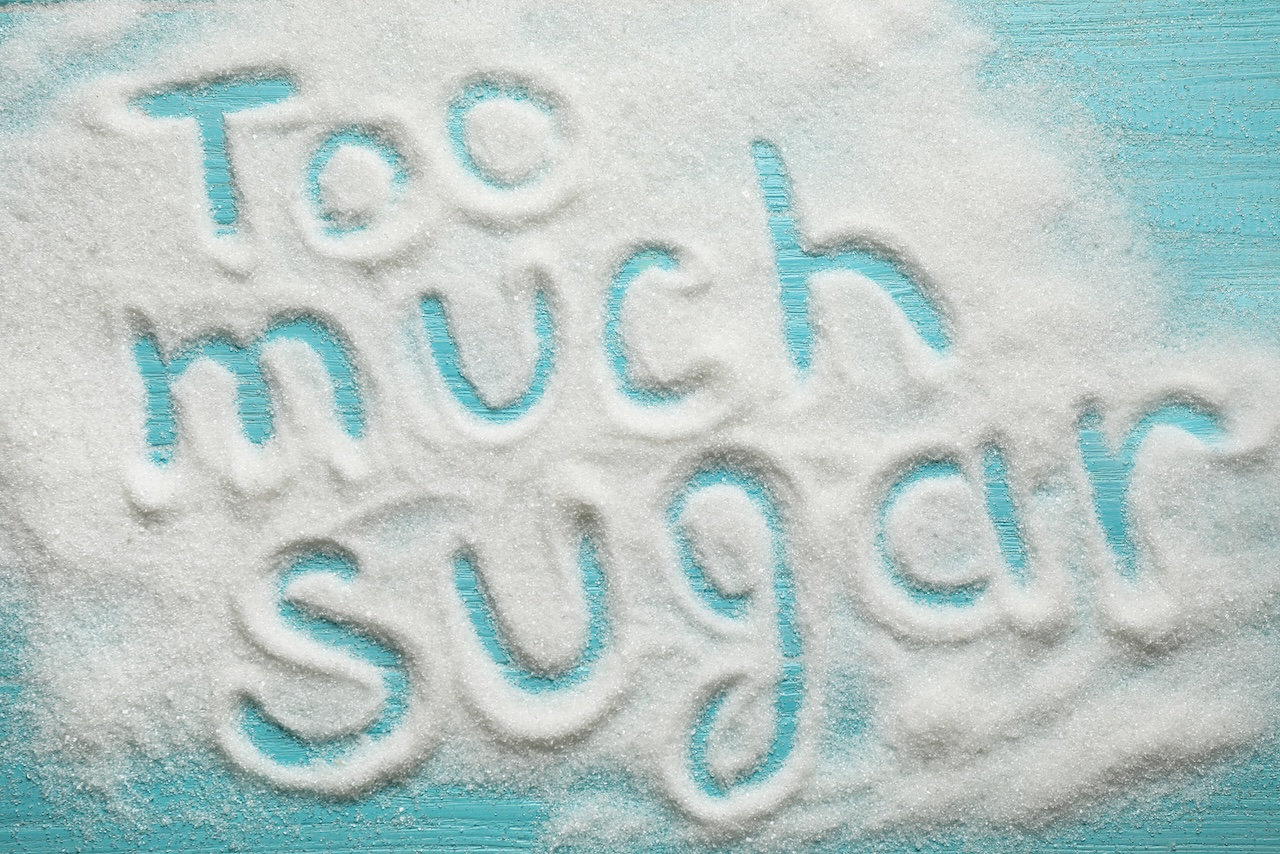
  • Free Yourself from Sugar Addiction This Holiday Season

    Free Yourself from Sugar Addiction This Holiday Season

    “Part of the ingenuity of any addictive drug is to fool you into believing that life without it wont be as enjoyable” ~Alan Carr

    “I’m okay, thanks.”

    See that? I just turned down a Tony’s Chocolonely from our family advent calendar.

    I don’t care that it’s a white raspberry popping candy flavor I have never, ever tried before.

    I don’t care that I remember being a kid, opening chocolate coins from my stocking.

    I don’t care!

    Because this year, I’m going into the holiday month already sugar-free. And I am tentatively walking on air about it!!

    I’m forty-five, and it’s taken a lot of bingeing and secret eating, regret, and shame to get here.

    Shame when the kids accused each other of having stolen bits of their Easter eggs. (I kept my head down, unstacking the dishwasher.)

    Shame when I found a whole box of Green & Black’s bars in my husband’s office, because if he buys a treat, I won’t leave him any.

    Shame when I had my head in the fridge, scooping teaspoonfuls of Eton mess into my mouth last birthday, while everyone else was enjoying the barbecue in the garden.

    Shame because being forty-five and still being silly about kids’ treat food feels ridiculous. Trivial.

    But I bet I’m not alone.

    I bet I’m not the only middle-aged woman who has Googled “addictive personality,” “food,” and “overeating.”

    I bet I’m not the only person who has worked from home, kidding herself that she ‘needs’ a few tiles of 85% chocolate “for the energy boost.”

    I expect I’m not the only perimenopausal gal allowing disrupted sleep to turn her into a cookie monster.

    I know I’m not the only one who has quit alcohol only to fixate on sugar.

    So, if you’re struggling with sugar addiction right now, I feel your pain. I was obsessed too.

    But right now, it’s like a switch has flipped in my head, and doing holidays without sugar seems possible. What’s changed? I gifted myself some new beliefs.

    Let me share the little self-talk phrases I started to use in case you’re struggling with sugar too.

    Maybe you’re not ready for sugar-free holidays. I admit it’s kind of radical, and I’m not saying anyone else ‘should’ do it. But maybe you’re thinking of giving it up next year. Or you’re wondering if it’s possible to let go of some of your attachment to it.

    If so, here are twelve brand new phrases to say to yourself.

    1. “Holidays are just days of my life.”

    I was always trying to allow sugar in my life because I wanted to eat it normally. But ‘normal’ never stayed that way for long.

    Every time there was a holiday—Valentine’s, Easter, summer, Halloween, Christmas—I’d start having loads of tiny ‘treats’ that added up to a ton of rubbish and a spiraling habit.

    From my first morning honey-laden cocoa until my last secret (what’s in the kids’ treat drawer? Broken Oreos!) self-reward for cleaning the kitchen after dinner, sugar would overrun my days like an invasion of ants.

    Eventually, I admitted my position was wishy-washy. I was trying to have my cake and not eat it.

    It was a relief to finally be decisive and make a clear code of conduct for myself around sugar, based on what I could realistically expect myself to handle. One way of behaving every day. Including holidays.

    2. “I’m deciding what I think about this now.”

    The government pays subsidies to the sugar industry. It does international trade deals. We get advertised to, and so we get the message:

    “Buy more sugar.”

    But their health messaging is the opposite:

    “Individuals should make better decisions.”

    I realized I was asking a ton from my own free will to resist it, given how ‘everywhere’ it is. I wasn’t being fair to myself when I called myself a willpower weakling. The odds aren’t stacked in favor of resistance.

    It was time to stop trying to please society and listen to my own messages.

    3. “This is just a commercial product.”

    When I looked at the shelves of shiny treats in the supermarket, I saw how clever the marketing is.

    Shiny wrappers. Expensive boxes. It reminded me of how cigarettes boxes suggest luxury—how misleading that now looks!

    Seasonal flavors keep us wanting ‘new’ experiences: “Look, Mum, this Ferrero Rocher is like a giant Christmas tree bauble. Can we get one?”

    I’ve spent my life believing these foods mean treats, fun, celebration, “I love you,” “Let’s relax and share something,” and “life is good.”

    But if you look past the wrappers, it’s just stuff. Chocolate is just brown stuff, like wax. Candy is just colored chewy stuff, like putty. It means nothing.

    4. “‘Fun’ looks like freedom.”

    I imagined chocolate Brazils wrapped in newspaper instead of shiny purple foil.

    I visualized all the shops for miles around stacked with sweets, and I could see that they weren’t rare or special but in endless supply.

    And I stopped telling myself they were ‘fun.’ Sugar addiction is about as much fun as having a constant snotty head cold. It’s with you everywhere you go, ruining your concentration and making you feel ever so slightly physically gross.

    Sure, it’s less life-threatening than other addictions. But it’s misery-making, and that’s serious.

    5. “Having more just makes you want more.”

    I dove into research on whether sugar is actually addictive. Short answer: It is.

    You get withdrawal, receptors in your brain become sensitized… All the markers are there. That’s why my urge to have a second treat is always even stronger than the idea to go get the first one!

    I had tried to normalize sugar many times. I had kept snacks stocked at home to stop them feeling off-limits. But they never lost their charm.

    Now I understood why eating more of it didn’t make me more blasé, as I’d hoped.

    6. “I stop when I decide to stop.”

    I also read up on whether our bodies can actually send signals of ‘satisfied’ around sugar.

    Surprise, surprise: They can’t.

    (Speedy science lesson: Our bodies break down sugar into glucose and fructose. It’s about 50/50. The glucose digestion process has an enzyme, PFK-1, to prevent us from overconsuming it. But the fructose part doesn’t have any signal to stop.)

    I began to wonder whether eating sugar intuitively was even achievable.

    I decided to keep listening to my hunger and fullness around other foods, but not expect them to help me out much around treats.

    7. “I only eat edible food.”

    I love the idea that all foods are morally neutral. So I didn’t think of sugar as ‘bad’ or tell my kids they shouldn’t have any. I just quietly switched my perspective to no longer thinking of sugar as an edible substance.

    Just because it doesn’t kill you doesn’t mean it’s edible.

    I ate toothpaste as a kid: Survived. Not edible.

    I once drank aftershave at a party in my teens to try to get drunk. Wasn’t even sick. But it’s still not on my menu of drinks for humans.

    Sugar is a thing, not a food. That’s how I think of it now.

    8. “I’m not a dog, and I don’t need a treat.”

    My overeating is largely emotional: the harder I work, the more I rely on food to give me a feeling of reward.

    With sugary snacks, I was treating myself like a pet, giving biscuits for good behavior. Sugar-coating my toxic habit of overworking.

    Then, during the holidays, when I couldn’t get my usual dopamine hits from ticking off achievements at work, I was at a loss for how to properly relax and was more vulnerable to receiving reward feelings from sugar.

    I learned to start giving myself inner high fives instead. And I now expect the first few days of any holiday to feel a bit empty too. That’s normal while I adjust.

    9. “Let me see how quickly this passes.”

    This was fun.

    I felt as though once I had an idea like “leftover banana bread!” I couldn’t settle or focus on my work until I’d scratched the itch.

    I’m pretty experienced at surfing urges—I mentioned I gave up drinking a few years ago, right? That was good practice.

    But with sugar obsession, my ‘urge tolerance muscle’ felt very limp indeed.

    To my amazement, as I made my way through my first two or three days without sugar, the urges died down unbelievably quickly.

    I realized my brain sent up thoughts of sugary treats like a puppy that’s used to begging. But puppies are really trainable. They adapt quickly once you stop feeding them under the table.

    10. “I’m the authority on feeding myself.”

    Nobody told me to.

    I didn’t do it to lose weight.

    I didn’t do it because I thought I ‘should.’

    I didn’t do it out of fear for my health or my teeth.

    I didn’t preach about it (or even dare to announce it) to my family.

    I didn’t join an online challenge that made me accountable to a community.

    I did it so that I have less food noise in my brain. That’s enough of a reason.

    11. “Ha ha, brain, nice try!”

    I made a previous attempt to give up sugar last January. February 1st, bang! I fell for my brain’s BS.

    “I wonder what that dark chocolate tastes like. I can’t remember.”

    “You’ve done so well; having just one little bit won’t hurt.”

    “Maybe you can eat it normally now—just have a bit from time to time.”

    Then, before I knew it, I was having a little all the time again. Throwing handfuls of chocolate chips at my face while the kettle boiled. A ‘dessert’ item after every meal.

    This time, I’m ready for the persuasion attempts. I get it, brain. You remember the taste. But, lovingly, no.

    12. “I already walked through a doorway.”

    Last February, it was as if I’d gotten to my mental finish line, so then I thought I could relax.

    Relax, relapse, collapse.

    So this time, I decided not to imagine an end point.

    I imagined walking through a doorway, and that my life with sugar was already behind me, and I was moving forward one day at a time.

    So far, so good.

    It actually felt refreshing to tell myself the truth about it all.

    I don’t know if it’s forever. I haven’t made a vow or gotten a tattoo.

    Don’t label me the ‘no-sugar’ person and then call me a hypocrite if I change strategy later on in my life.

    Because I’m not saying I’ve found the way and that you should do what I do. I truly believe that how we eat shouldn’t be about listening to other people’s magic solutions or expert advice.

    For me, it is a matter of trial-and-error, evaluating, refining my system, and finding habits and lifestyle choices that I can sustain.

    So, this is what I’m doing this holiday. It’s an experiment, and it feels fun to me.

    This year, I’m actually looking forward to connecting with the people more than the food.

  • 8 Compelling Reasons to Adopt a Whole Food Diet

    8 Compelling Reasons to Adopt a Whole Food Diet

    “The food you eat can be either the safest and most powerful form of medicine or the slowest form of poison.” ~Ann Wigmore

    Why aren’t we taught optimal nutrition in school as adolescents?

    I remember briefly learning about the food pyramid, which doesn’t even include water, by the way.

    Do you want to know what I vividly remember? Growing up during the peak of diet culture, when models and actresses who were unrealistically skinny were the only ones who were considered pretty or good enough.

    My dad died from a heart attack at age forty, and my single mother was always on the newest diet pill and didn’t cook much. I was under the impression that the only way to be valued in this world was to eat as little as possible to be as skinny as possible.

    In seventh grade, I started to obsess over cardio and barely ate 1,000 calories, yet no one flagged this as a potential disorder. This continued throughout high school and got so intense that I couldn’t walk because my stress fractures and the shin splints in my legs were so severe.

    Looking back, I’m almost certain that this lack of proper nutrition played a role in my extreme anxiety and depression. But of course, the root cause was never addressed; I was just put on a different medication.

    I remember sitting in one of UW-Madison’s largest lecture halls during my freshman year with obsessive thoughts over how much I hated my body. Focus wasn’t one of my strong suits.

    Yet, I was still operating on less than 1,000 calories a day—eating a serving of vegetables per day and the occasional granola bar. Of course, I was consuming most of my calories in vodka sodas. Poison.

    I tell you all of this to paint the picture of how improper nourishment can spiral out of control for years and can lead to physical and mental ailments. If only our education system valued teaching our children how critical nutrition is for the body and mind.

    It wasn’t until I started making my nutrition and health truly a priority back in 2021 that my life started to flourish.

    So how can we be better for our partner, our future kids, nieces and nephews, and grandchildren? It starts with being intentional about the foods and drinks we are putting into our bodies. It starts with nourishing the one body in this lifetime that we get.

    It starts with educating ourselves so that we can create sustainable nutrition transformations for ourselves and our families. It starts with supporting local farmers and cooking seasonally when given the chance. It starts with including our children in the kitchen to show them the importance of whole foods since their schools won’t.

    I’m not here to tell you what diet you should be abiding by or what foods you should be eating. But I am here to tell you the facts about how focusing on whole foods can nourish your body and mind from the inside out, leading to desirable physical and mental outcomes.

    What are whole foods anyway? Whole foods consist of fruits, vegetables, whole grains, and legumes.

    Here are eight benefits of changing to a whole food diet.

    1. Whole foods are rich in fiber and phytonutrients.

    Fiber can decrease your risk of cardiovascular disease, help you manage diabetes, and keep you fuller for longer. Fiber has also been shown to lower cholesterol levels. Phytonutrients contain vitamins and minerals that contain antioxidant and anti-inflammatory properties and can help the body fight off free radicals.

    2. Whole foods are energy-dense.

    Energy-dense foods meet the energy needs of our bodies, without causing discomfort. This supports athletes looking to build fat-free mass. Additionally, energy-dense foods contribute to more energy.

    3. Whole foods provide nutrient synergy in the body.

    Nutrients from whole foods are more readily absorbed by the body, as many foods contain nutrients that complement one another. For example, vitamin C works to absorb iron from plant-based foods, such as spinach. The next time you eat spinach, try adding in some lemon for optimal absorption!

    4. Whole foods regulate blood sugar levels.

    Because whole foods do not contain added sugars and have fiber, the body digests the food slower, which enables a more gradual rise in blood sugar levels after a meal. Goodbye, sugar crash!

    5. Whole foods aren’t created in a lab.

    As if you needed another reason to want to consume more whole foods, to state the obvious, processed foods are NOT GOOD FOR US! Foods created in a lab are made with many artificial ingredients and additives including salt, sugar, and unhealthy fats, which can contribute to inflammation in the body and chronic illness.

    6. Whole foods can add years to your life.

    When you eat a diet consisting of predominately whole foods, your chances of chronic illness are lower. Did you know that six in ten adults have one chronic illness, and four in ten adults have two or more chronic illnesses?

    7. Whole foods can fit into any budget.

    Frozen and canned whole foods are a great, low-cost option that has been proven to be as nutritious as fresh fruits and vegetables, as their nutrient content is preserved when frozen.

    8. Whole foods can improve your mental health.

    Nutritional deficiencies have been linked to symptoms of depression, anxiety, dementia, etc. The brain consumes 20% of your daily caloric intake and relies predominately on carbohydrates, which are converted to glucose, which is the brain’s primary source of energy.

    Have you ever heard someone say, “I don’t like vegetables” or “Vegetables taste bad?” This is because of their comparison to processed foods, which cause similar levels of dopamine in the brain as addictive substances such as alcohol.

    But when we start eating a diet rich in whole foods, our dopamine levels become more stable and regulated, so we feel better without needing a processed food ‘fix.’

    Let’s start savoring each bite of the whole foods on our plate, knowing that the nutrient composition is working in our bodies to protect and serve us medicinally. I urge you to see if there are any community-supported agriculture (CSA) shares available near you, to support local farmers, and to eat more nutritious foods. Or look for a farmer’s market near you!

    Even if you still include processed foods in your diet, swapping some for whole food options can be life-changing, physically and mentally.

    Let’s stop poisoning ourselves and start healing ourselves.

  • How My Wellness Passion Was Actually Destroying My Health

    How My Wellness Passion Was Actually Destroying My Health

    “Your body holds deep wisdom. Trust in it. Learn from it. Nourish it. Watch your life transform and be healthy.” ~Bella Bleue

    It didn’t fit. I zipped, tugged, and shimmied, but the zipper wouldn’t budge. I was twenty-three, it was my college graduation, and the dress I had bought a month ago would not zip.

    As I stood there crying in the mirror, riddled with exhaustion, anxiety, vulnerability, and sheer overwhelm, I wondered what was happening to my body. In just one month I had gained thirty pounds. I was having one to three panic attacks a day. Everything I ate made me sick, and no matter how much I worked out, I only felt worse.

    I was graduating with a degree in clinical nutrition, yet my health was the worst it had been in my entire life. The world was supposed to be my oyster, yet I couldn’t leave the house.

    I used to tell people all the time that my “passion” was health. I started my first fitness program when I was nine. Tried my first diet at the age of thirteen.

    Since that day on, health and wellness were all-consuming thoughts—to the point that I got a degree in clinical nutrition and became a certified personal trainer and Pilates instructor.

    But maybe the problem was that my passion for health was actually an obsession.

    In an effort to be fit, happy, and well, I became a victim of marketing and manipulation of “wellness and diet culture.”

    Everywhere you turn, there is marketing for wellness and finding your “best health.” Whether it is using fasting to regulate blood sugar, drinking adrenal cocktails to reduce stress, or only eating organic and non-processed foods.

    And even if you end up doing it “right,” the next day you are wrong because there is some new trend or hack that is being pushed. This can leave your head spinning and, in the end, it only disrupts your relationship with yourself, with nutrition, and with fitness.

    It was on that day that I vowed to chase true health. Here are three lessons that I have learned along the way.

    There is no one-size-fits-all approach when it comes to nutrition and fitness.

    You are unique. You have a unique medical history, genetic makeup, environment, and lifestyle that all influence how you and your body respond to nutrition and exercise.

    This is known as bio-individuality.

    So there is no one RIGHT way to do things. You might respond well to eating lower carb due to a history of insulin sensitivity.

    You might respond better to heavier weight training due to your muscle fiber makeup.

    You cannot put yourself in a box and try to copy and paste success. You have to honor what your body needs and nourish it accordingly.

    I find that my body does best when I eat carb meals and lift heavier weights. I also feel my best when I eat every three hours.

    I find that my body shows increased signs of stress when I do high-intensity workouts. And it rejected any attempt I made at intermittent fasting or eating lower carbs.

    Finding what works for your body is how you unlock your best self.

    But whatever you choose, you must enjoy doing it. Because if you do not enjoy the process, if it does not make you feel good, if it does not add to your life and promote your best self….

    … it will be impossible to stick to it long term.

    It’s about what you can ADD to your life, not restrict.

    Nutrition is the science of providing nourishment to your body to sustain life. Food is the fuel that your body uses to keep you alive and thriving.

    Movement is medicine that gives you the strength to take on anything that comes your way.

    It is not about restricting, cutting out, or depriving yourself. When you approach it from this mindset, it promotes negativity, it fosters the development of a negative self-image, and it cultivates a culture of guilt.

    And no one—absolutely no one—feels good in this type of environment. Instead, think of what you can add to your life and body to enrich it.

    I love to eat nachos; I enjoy them every week. Instead of restricting them, I add protein to ensure they are a balanced meal.

    You might love to enjoy dessert every evening. A great way to enhance this is to add a delicious fruit with your dessert. Or you can take a walk after your meal to help regulate your blood sugar.

    This approach stems from a place of love, support, and encouragement, which makes it much easier to sustain for life.

    You can be all-in without being all-or-nothing.

    I used to feel so much guilt when my life responsibilities disrupted my workout routine. I would obsess over the missed workout, thinking it would end my progress, and then I would try to find ways to “make it up” later.

    There is so much pressure on remaining consistent, which is critical to success.

    But do not confuse consistency with perfection.

    Perfection is trying to take this structure or “formula for success” and cramming it into your life without any flexibility. Like saying you “have to work out five times a week” or you “can’t eat out.”

    Consistency is learning how to shift your goals and your intention to match what is happening in your life at any given time.

    Life always has seasons of highs and lows. That is the beauty of it.

    There will be times where you have the energy and intention to be consistent and even chase insane growth for your health goals.

    Then there will be times where life is calling you elsewhere, so while you are still prioritizing your health, you need to shift how you show up.

    Learning how to adapt your health goals and intentions across these phases is how you get long-term success.

    Consistency is showing up in the stress. Even if this means doing less than you hoped, you still did it.

    Perfection is showing up for ten days in a row then quitting when you miss a day.

    An all-in mindset is much better than an all-or-nothing mindset.

    If twenty-three-year-old me could see me now, she would be in awe. Her jaw would drop because even though I’m not doing everything “right,” I’m doing everything right for me.

    Your health does not have to be as complicated as it sometimes feels. You don’t need a fancy supplement, the latest trend, or another unrealistic habit.

    It really comes from creating a lifestyle around what makes you feel your best and happy.

    Because you can have the perfect health for yourself without losing yourself in it.

  • How I Am Learning to Trust My Body More and Control It Less

    How I Am Learning to Trust My Body More and Control It Less

    “I’m a beautiful mess of contradiction, a chaotic display of imperfection.” ~Sai Marie Johnson

    I don’t identify as having an eating disorder. I don’t struggle with anorexia, bulimia, or binge eating.  Yet I exercise precise control of my weight, down to the pound. If I gain a mere two pounds, I can feel it. First in my stomach. Then in my face.

    That’s when the self-loathing kicks in.

    I beat myself up for gaining those two pounds.

    I wear a shirt to sleep at night, instead of being naked like I am when I am two pounds lighter.

    I leave the towel wrapped around me when I get out of the shower, to avoid having to look at my naked body in the mirror.

    I eat only a smoothie for breakfast.

    I go to bed hungry.

    I don’t want to have sex because I don’t feel good in my body.

    I restrict myself from food and pleasure until I lose those two pounds.

    What’s worse is that I desire to lose even more weight.

    Sometimes I google “BMI calculator” and enter my height and weight in the tool. The tool tells me I am a normal weight. I enter a weight several pounds below my actual weight to see what weight I would need to be to be underweight. That weight is 133 pounds.

    I secretly crave to be underweight. Which is why I was so happy when I got food poisoning a few weeks ago and weighed 133 pounds for four days.

    I am disgusted with myself for being happy about this. I was throwing up for two days, was only eating toast, and was extremely weak. Yet I felt happy because I was smaller.

    I didn’t want to return to my normal weight. I wanted to remain small.

    I did slowly regain that weight. I hopped on the scale at the gym yesterday and I weigh 136.8 pounds. “Shit,” I thought. I want to be down to 135 before my wedding in three weeks. I quickly started calculating and felt relieved, knowing it would be easy to lose less than two pounds in three weeks. No problem.

    I’m also disgusted with myself about the amount of time I spend thinking about food and my weight. What did I eat today? Did I have too many pretzels? What will I eat for dinner? Today was my rest day, so I have to eat less. 

    I am slowly becoming aware of how much brain space food and weight take up. I wonder what creativity I could unleash if I devoted less time to thinking about food and more time to brainstorming, dreaming, and problem-solving.

    In addition to all this thinking, I also snack incessantly. Yesterday I counted and I went to the kitchen twelve times to get a tiny snack. A couple of pretzels, a mandarin, a handful of granola, a bite of chocolate, a few blueberries.

    I’m not sure if my constant snacking is due to actual hunger or if it’s connected to a more general anxiety and inability to relax.

    I think it’s both. When I eat a bigger breakfast, I have less desire to snack throughout the day. But I also think there’s an element of anxiety, because I find a moment of calm through the action of putting a bite of something in my mouth. For me this doesn’t show up as over-eating when I’m stressed, it’s more of a daily anxious habit. Perhaps some sort of desire for oral fixation.

    I could go even deeper to say that perhaps I feel like I am missing something in my life and, therefore, try to fill that void with snacks. I’m not sure if that’s the case, because mostly I am pretty happy and content. Yet my snacking behavior could suggest otherwise. Perhaps both things can be true. I can be happy in some ways and still yearn for more.

    I am also assessing my other eating habits. I don’t severely restrict myself from treats. I eat cake when I want to. I eat McDonald’s at the end of a long backpacking trip. I treat myself to an occasional burger. But I don’t enjoy these less healthy foods guilt-free. If I have cake one night, I’ll work out extra hard the next morning. It’s almost like I punish myself for indulging in a treat.

    I’m not sure what’s under my desire to be small. I know some of it comes from messages from society that thin is beautiful, and the insidious design of our culture to distract women with matters of physical appearance, so we have less brain capacity to think about things that really matter. I think it also comes from the positive feedback I receive about how fit I am. As if I’m a better person because I’m thin. I’m not.

    To this last point, I’m making an effort to give more non-appearance compliments to other people. My favorite one to give (and to receive) is: “I love your energy.” Let’s attune more to people’s energy than the size of their waist or definition of their brows or shape of their butt.

    I also know I have perpetuated these unfair beauty standards. I do it under the guise of: “I want people to be healthy.” But I know that thin does not necessarily mean healthy. I know that bigger does not necessarily mean unhealthy. Also, who decided that being healthy is something to strive for?

    Sure, we have a survival instinct, and being strong, mobile, and able to endure will help us survive. But I’m not sure that being healthy is some kind of moral standard. I strive for it for myself, but just like anything else, it’s an individual person’s decision if they want to be healthy, and what healthy means to them.

    Yes, I’m seeing the contradiction here, because I say I strive to be healthy, yet my desire to be underweight doesn’t seem mentally (or physically) healthy. The amount of time I spend thinking about food doesn’t seem healthy either. Which means I am going along with the lie that has been shoved down my throat my entire life: the lie that thin and small is beautiful.

    Of course I know that is not true. Of course I know that a person’s soul is what makes them beautiful. Of course I know that being weak and underweight is not healthy. Yet in some areas of my life, I act as if I don’t know these things.

    I would like to get to a place of trusting and listening to my body. Trusting it when it wants to eat a big burger after a long hike. Trusting it when it wants a piece of cake on a random night. Trusting it when it craves fruits and vegetables. Trusting it when my stomach feels jittery and empty and wants more fuel.

    I would also like to get to a place of not beating myself up if I gain two, three, four, or more pounds. I want to actually believe that I am still beautiful and worthy, no matter what my weight is.

    Wow. It’s weird to write this. Normally I write about my challenges once I’m on the other side of them. After I have unpacked them. But this time I am writing about a challenge right as I am becoming aware of it. Which means I don’t yet have much wisdom for you. But here’s what I do know:

    1. Exercise should be something we do because we love our bodies, not because we want to control them and keep them small.

    Sometimes I do have this relationship with exercise.

    I love being alive, and I do strength and cardio training because I want to be strong and mobile when I’m old. I want to be on this journey of life as long as possible. I do lunges because I want to be able to climb up a mountain and be stopped in my tracks at the beauty of our planet. I run because those endorphins make me feel good.

    Other times, I crank up the incline on the treadmill to punish myself for eating too much popcorn at the movies the night before. Or I try to do all the squats and deadlifts to make my butt rounder. My goal is to release those latter motivations, because those are grounded in control and inadequacy, not love.

    2. Your worth is not connected to your weight.  

    Read that one again. You are talented, strong, and beautiful no matter what your weight is. You can desire to lose weight or gain muscle or strengthen your heart, but doing so gets to be an act of love.

    3. We should stop thinking of indulging as a bad thing.

    To indulge is to allow oneself to enjoy the pleasures of life—eating a sweet fig in June, eating a chocolate croissant just because it tastes good, hugging your partner after being apart for a few days, driving through your neighborhood listening to your favorite song, sitting outside in the sun on a summer day, and sipping your coffee in the morning.

    Life should be pleasurable, and I want us all to indulge more, without guilt.

    4. Get to know your body.

    What I mean by that is not just getting to know how your body looks, but how your body functions.

    One of the most empowering and transformative things for me in the last few years has been learning about my menstrual cycle. Through reading, coaching, talking to my doctor, and being aware of my own body, I know what is happening hormonally each day of my cycle. I am able to pinpoint the day, how I will feel, and what my body will need. And then I (try to) honor what she needs.

    For example, on day seventeen of my cycle I am usually cranky, tired, and hungry. I clear my schedule, sleep more, and eat what I want.

    5. Your relationship with your body might not be black and white.  

    In some ways, I have a healthy relationship with my body. In other ways (as described above), I do not. Both things can be true. I think the goal is to shift toward a place of love and acceptance, and to spend less time thinking about what you look like and more time being aware of how you feel, how you live in alignment with your values, and how you show up for others.

    6. People’s struggles with confidence and self-esteem manifest in many different ways.

    Some people close to me might be surprised to hear about my inner dialogue and complex relationship with food because I look healthy. (And mostly, I think I am healthy.) But it doesn’t mean I don’t fall prey to the social pressures to look a certain way. We all do in some way or another.

    So let’s have grace, empathy, and understanding for each other, and know that we’re all going through stuff, whether it’s visible or not.

  • Hungry and Panicked? The Link Between Food and Anxiety

    Hungry and Panicked? The Link Between Food and Anxiety

    “Take care of your mind, your body will thank you. Take care of your body, your mind will thank you.” ~Debbie Hampton

    4:00 p.m. I am suddenly aware of my heartbeat. It feels more insistent than normal. Is it faster? Is it jagged? Am I out of breath?

    I try to reason with myself: I’ve just done a brisk walk pushing the stroller over some hills.

    My anxiety responds: Those hills were awhile back… you wouldn’t be out of breath from that.

    Anxiety sufferers have a heightened sense of, well, a lot of things. For me, I am acutely aware of shifts in sensation in my body.

    Having practiced and taught yoga for most of my life contributes to this, and in many ways, it’s a great skill. I instinctively check in with my shoulders—are they up around my ears? Then my jaw—are my top teeth away from my bottom teeth? And perhaps the most important of all—am I holding my breath? I can’t help but observe when people walk with an imbalanced gait or sit with their spines slouched.

    But the heightened awareness is also pathological. A slight tingling in my hand instantly makes me think heart attack. Dizziness, which I ended up learning was caused by my vision changing, made me run to get screened for a brain tumor.

    4:30 p.m. I’m at the library with my two-year-old daughter. I still feel weird—“off.” I periodically place my hand on my chest—is my heart beating more intensely than normal? It seems normal. But what if it’s not normal?

    I press my hand into myself harder, searching for something to panic about. I find comfort in the two librarians a few feet away. I think, “If I have a heart attack, they’ll keep my daughter safe. They’ll call 911.” 

    I check in with my breath. It feels reassuring that I can take deep, unencumbered breaths.

    5:00 p.m. My eight-year-old son offers to look after his little sister. I feel like I need to lie down, to calm the strange rhythm of my heart. Something reminds me that I have leftovers from last night’s dinner.

    I made a really delicious Thai larb gai. It is a “safe” meal of ground turkey, vegetables, and rice. I hope my family didn’t notice that I avoided eating the rice last night.

    I reheat the leftovers, including a spoonful of rice. I am careful to avoid eating any rice—starch is bad, my disordered thinking will never let me forget. I take my first bite and burst into tears.

    A few months ago, this pattern of crying started when I would finally eat after going too many hours without food. It would catch me by surprise because I hadn’t intentionally been avoiding food. I hadn’t intentionally been punishing myself. It would just happen.

    I’d miss breakfast because mornings are busy. A coffee would usually follow, masking my body’s ability to communicate its hunger—my hunger.

    I typically only have three hours to myself without any kids, three hours to do way more than is possible during that timeframe. I can’t possibly waste that time eating. And then once I reunite with my kids, my own needs all but get completely forgotten.

    On these types of days, when I would finally take a bite of something, almost always around 5:00 p.m., the tears would rush up and out.

    Why was I crying over a bite of chicken breast?

    Eating my leftover larb gai, I wonder, when did I last eat? 9:00 a.m. with a friend. It is 5:00 p.m. now. An eight-hour window.

    “But I ate my daughter’s leftover applesauce!” I hear myself say. I instantly recognize this rationalization. The voice of the disorder.

    I realize I am once again inside the well-worn grooves of avoiding eating. I cry because my body is relieved it is getting sustenance. I cry because I am angry that I am still beholden.

    I try to work out what happened. It has been a busy day. But when is it not a busy day? This is not an excuse.

    At breakfast, I noticed that the person next to me was eating avocado toast, but she had scraped the avocado off the bread. Because bread is bad, my disordered thinking affirmed.

    I scanned the menu and noticed that the calories were listed next to each item. I don’t normally count calories. I try to focus on the description of each menu item and decide that Papa’s Breakfast Bowl sounds great: roasted potatoes, bourbon bacon jam, a sunny-side-up egg, and sliced avocado served with chipotle aioli. I would ask for no jam or aioli, obviously, but otherwise, this is a meal I would easily make myself.

    And then I saw the calories: 1100. 1100?! I panic.

    My friend arrived and asked what I was going to have. I casually said, “I’ll probably just have an omelet.”

    This friend is one of those women who pops out babies and bounces back. I don’t know how she does it—maybe it’s just genetic—but her body holds no visible remnants of having made babies. She was wearing skinny jeans and a fitted sweater; there are no rolls, her arms are firm and slender.

    I held my arms across my stubbornly squishy stomach. I calculated that her baby is younger than mine, but she is in much better shape. I didn’t know that I was doing it, but I chastised myself for being bigger than I used to be, than I should be. I deserved some sort of punishment for this failing, my evident gluttony and certain laziness. 

    I didn’t register when she told me, “You look amazing. What workouts are you doing these days?” My disordered, dysmorphic brain told me, “She’s just saying that to be nice because she feels sorry for how horrible you actually look.”

    Another friend has unwittingly become my eating disorder sponsor. I send her a confessional text: “Dang it. I ate at 9 a.m. And then I didn’t eat for eight hours. I didn’t even realize how long it had been until I took my first bite and teared up.”

    We’ve talked about what the crying signifies. We both know it’s meaningful, pointing to some lesson.

    It is in talking to her that I put it all together. The 1100 calories. The scraped avocado toast. My slender friend.

    I also realize I had been triggered by another friend who had recently stayed with us. She does intermittent fasting, and she is an example that it works because she is an enviable (to me) size 0. My ED brain is so eager to jump on any restrictive, rule-based eating regimen. “See? She avoids eating and look at the result! Don’t you want to be a size 0 again?”

    But I also have an inner voice of wisdom. This is the voice that reminded me that nourishing myself so I could breastfeed was more important than losing the baby weight quickly. This is also the voice that instantaneously gets silenced when my eating disorder asserts itself.

    My visiting friend touted the benefits of intermittent fasting, “Our bodies aren’t meant to eat constantly. When we were cavemen, we didn’t have refrigerators and pantries.” She claimed, “My organs function better when they are free from having to digest food.” (Sounds ideal, but how does she know this is true?) She reasoned, “And when I do eat, I eat anything! Of course I always eat healthy foods, but I don’t avoid bread, as long as it’s good, artisanal bread, and I’ll have a pudding if I feel like it.”

    My eating disorder: You need to do this too.

    My inner wisdom: Any controlled eating is a slippery slope to starvation for you. Focus on three meals of day, that’s it. That’s your work. 

    After I connect the dots of all these triggers and finish my leftovers, I promptly pass out on the couch, still sitting upright. I am relieved I (probably) am not having a heart attack and I need a minute to absorb it all.

    They say that you never recover from an eating disorder. You are in recovery. It is an active state that requires your conscious awareness and participation.

    In that sense, it seems no different to being an alcoholic. An alcoholic can’t just have one drink. They may struggle if they’re around people who are drinking. It may feel like an invisible force is pulling them to that ice cold beer or elegant glass of wine.

    I feel this invisible force, too. Except for me, it is pulling me toward starvation, deprivation, urging me to shrink into nothingness, to zero.

    But the cost is simply too high. I do not want to forgo my mental steadiness and inner ease for a smaller number on the scale or on my clothes. I’ve been there before, and it was not worth it.

    And for me, there is a clear correlation between starving myself and anxiety. I’ve learned that anxiety is actually the voice of wisdom, my inner child, piping up to grab my attention, reminding me to take care of myself.

    No, it’s not a heart attack, it’s not even a panic attack, it’s just—you’re hungry! You forgot about you. You’ve been criticizing yourself for being too big, for looking different to how you looked pre-motherhood or when you were eighteen. You’re not eighteen! And what a gift that is, to be given this opportunity to live, to age. To have children. 

    And they, my children, really are a huge motivation for me. I see how they take everything in, especially from us, their parents. I know how much I unconsciously absorbed from my mother. Babies are not born hating their thighs; you learn to hate your thighs.

    I know I cannot control everything in my children’s lives and psyches but my actions, my behavior, the way I talk about myself—these things I can control.

    I want my children to experience joy and gratefulness in the food we are all lucky enough to eat. I want them to get to know flavors, to have fun cooking, and to revel in shared meals with loved ones. I love when I make something that they love that they know their mommy made for them. Even if it’s just mac and cheese out of a box; I’ll take it when my son exclaims that nobody makes better mac and cheese than his mom does. (I do sometimes add toppings!)

    I do not want to be at the whim of my weight. I do not want to fear food. I most certainly do not want to pass any of this on to my children.

    So I will keep fighting for freedom. Freedom to eat—and enjoy!—three meals a day. Freedom to eat the damn bread (I ate the rice that was with my leftovers, by the way). Freedom, even, to make mistakes because these habits are deeply embedded, and the freedom to then celebrate the remembering, realizing, and resetting.

    I don’t know if this is the case for other people with anxiety, but I would invite you to take a look at any possible connections between your eating habits and symptoms of anxiety, particularly if you are prone to dieting.

    If you restrict your eating by skipping meals or by enforcing a tight eating window and you happen to find yourself experiencing symptoms of anxiety or depletion, zoom out and consider the bigger picture. Are you truly taking care of yourself?

    We are complex, layered beings and all the different facets of who we are intermingle and influence each other. It’s not just segregated compartments of well-being. Physical health and mental health are inextricably linked.

    Anxiety makes me feel untethered, shaky, uncertain, and afraid. Having that on empty exacerbates it all. I have no body or brain fuel to process it.

    Those tears that erupt with that first bite of food after denying myself—they ground me in relief, offer release, and ultimately, are a practice of compassion for myself. I wish good health and food freedom for us all. Because we are worth being fed, nourished, and sustained.

  • How Toast Changed My Life and Helped Me Stop Bingeing

    How Toast Changed My Life and Helped Me Stop Bingeing

    One day, toast changed my life.

    It was many years ago, when I was working as a personal trainer and nutrition and wellness coach.

    I spent my days helping people “get fit” and “eat healthy,” so of course I was always preaching about lifestyle changes, “healthy” eating, and “whole, clean, nutritious” food, while demonizing “processed” foods, as most others in those worlds do.

    Toast, at the time, was a big no-no. Especially toast made with white bread.

    That’s basically blasphemy in the “healthy eating” world, with two strikes against it. First, bread has carbs, which I learned, from Atkins in the nineties, were trying to kill me and making me gain weight. Second, it’s processed, and I learned from the “clean eating” world that processed food was also trying to kill me and making me gain weight.

    So I wasn’t allowed to eat toast for breakfast. Toast was bad. Especially if I paired it with butter and didn’t at least have protein with it.

    And there I was on this particular morning, standing at the counter buttering two pieces of *gasp, shock, horror* white bread toast for breakfast. With no protein.

    Because despite vowing to “get back on track” that day, a mere hour earlier when I woke up, I had already decided I’d start the next day instead because I didn’t want to eat what was on “the plan.” I wanted to have toast instead.

    You see, like many in the fitness and nutrition world, while I was preaching about clean, healthy, balanced meals to my clients, and trying so hard to stick to those rules myself, I was also a raging bulimic/binge eater.

    In fact, within four days of my first attempt at “clean eating,” I was a full-on bulimic.

    It got so bad that I was once hospitalized for a week and often went to bed feeling like I might die in my sleep because I’d eaten so much.

    I lived in what I call “on track” vs “off track” mode for many years. Many, many years.

    When I was “on track,” I ate meticulously “clean” and healthy.

    When I was “off track” I was bingeing and completely out of control around food.

    I could easily have concluded that I’d fallen “off track” that morning with the toast.

    But at that point, I had started working on understanding how my thoughts were contributing to my suffering, so I was in the very beginning stages of awareness.

    And there I was, standing at the counter, buttering toast and listening to my thoughts as I did so.

    They were horribly abusive, judgmental, and berating.

    “What kind of loser eats bread for breakfast? And white bread, even. It’s so bad. You’re such a screw-up. What’s the matter with you? You’re gonna be so bloated and gross. This isn’t going to build any muscle. You trained hard yesterday; you should be eating protein. God, you’re an idiot. You just promised you were going to be good today, and you’re screwing up again already. All you ever do is screw up.”

    Then the voice started planning a trip to the grocery store for all the things we would buy to binge on the rest of the day—yanno, because “I’m such a stupid screw up already; may as well just eat everything today because I won’t be able to have any of it when I get back on track tomorrow.”

    The voice had our entire day of bingeing planned out, and then it started getting all judgy again.

    “You’re supposed to be having oats, eggs, and six blueberries. That’s a good breakfast. You’re never going to be able to stick to anything. Loser. Why are you broken? You’re going to get fat. What’s everyone going to think of you then?”

    (Yes, I used to actually have meal plans from my own coach with six blueberries in a meal—this is me rolling my eyes into oblivion.)

    Then, like magic, something switched in my brain, and another voice came charging in like a knight on a white horse and said, in a lighter, more compassionate tone, “Uhhm, dude. It’s just toast.”

    The first voice stopped in its tracks and was like… “Wait, what did you just say?”

    White knight voice: “I mean, it’s just f*cking toast. You don’t want oats and eggs this morning. You just want a couple of pieces of toast. Normal people eat toast for breakfast sometimes. Why have you decided you’re a horrible human just because you feel like a couple of pieces of toast for breakfast? That’s the silliest thing I’ve ever heard.”

    It was like someone in my head threw me a life raft of sanity.

    The first voice was a little taken aback for a second and needed to sit with that information before replying, ”Holy sh*t, you’re right!!”

    Instantly, all abusive thoughts were gone. And all thoughts about bingeing during the rest of the day were gone.

    I ate and enjoyed my two pieces of toast and went about my day in peace.

    A few hours later it was lunchtime. I realized I was starting to get hungry, which made me realize that not only had I not thought about food since breakfast, but I had forgotten that before breakfast I had been planning to go to buy binge foods.

    I forgot to binge.

    What?! How did I do that!?!

    It felt like a miracle. Normally, I was consumed with thoughts of food non-stop, and nothing in the world could stop a binge.

    So I wondered, hmm… can I use this new skill of just having what I want for lunch too? *Gasp.* Dare I?

    I asked myself what I wanted and felt like a sandwich.

    *Gasp again.* But that would be bread… twice …in one day. *The horror.*

    The white knight rolled in with the reminder: It’s okay to eat what you feel like eating.

    So I had and enjoyed a sandwich.

    A few hours later, the same thing—I noticed I was getting hungry and, again, I hadn’t thought about food since lunchtime.

    I don’t remember what I had for supper that night, but I just ate something normal, went to bed feeling fine, and contemplated the fact that I hadn’t wanted to binge after all.

    What was almost another day of bingeing on things that made me feel like garbage turned into a normal day of eating in peace and enjoying food.

    Because I took my power back.

    I shut down the voice in my head that had been programmed by our insane diet and healthy eating cultures. I reconnected with myself, trusted myself to decide what I wanted to eat, and allowed myself to eat whatever it was without shame or fear.

    That was the beginning of freedom, peace, and getting my sanity back.

    It was the beginning of healing not only my relationships with food and my body, but also with myself.

    It was the beginning of healing and creating truly healthy eating habits—habits that are rooted in love and trust rather than fear and restrictions.

    Before I’d be scared to buy bread because I didn’t trust myself with it.

    “Don’t keep the bad food in your house,” right?

    Back then, if I did have bread in the house, I’d eat the entire loaf in a day.

    Now, I can’t remember the last time I bought a loaf of bread, not because I’m scared of it, but because I simply don’t care about eating it anymore. The last couple of times I bought bread, I threw it away because it got moldy before I could eat it all.

    Obviously, complete recovery required more work than the one day with the toast, but it was definitely a pivotal moment.

    Because from that moment on, I stopped fearing and trying to control my food intake.

    Instead, I practiced connecting with myself, recognizing what I wanted to eat and, more importantly, understanding why I wanted it.

    If I was about to make a choice that I knew wasn’t in my best interest, I’d ask myself, why? Why was I making the self-destructive choices I was making?

    One of the biggest reasons I was stuck in those patterns with food was because I kept trying to “be good.”

    The fear and restrictions I’d learned were required to “eat healthy” were, in large part, causing the bingeing and feeling out of control around food.

    That’s why after I simply allowed myself to eat and enjoy the toast for breakfast, I didn’t binge and wasn’t consumed with thoughts of food the rest of the day.

    Here’s the thing: I’m not here to argue about what’s the healthiest or the best way for you or anyone else to eat (anymore).

    Because I know very well what a sh*tshow the world of nutrition science is, and I also know that our beautiful bodies are natural healers and communicators. They know what they need to feel their best, and they know how to communicate those needs to us.

    We just get so disconnected from them that we cannot hear (or trust) them anymore.

    And it doesn’t matter how perfectly healthy and “clean” you think you’re eating part of the time if the rest of the time is a complete train wreck—because you’ve been trying so hard to “be good” that you end up falling “off track” and start eating everything you can’t have when you start “being good” again.

    And carrying fear, shame, self-judgment, and criticism over the way you eat is a lot less healthy than just having a cookie or two when you feel like it.

    It’s incredibly harmful and unhealthy, in fact.

    Especially because when you start allowing yourself the cookies while working on uncovering why you want them in the first place, you eventually naturally stop caring about the cookies so much, in the same way I have with bread.

    The healthiest way for you to eat is whatever way best nurtures and supports not only your unique body, but also your mental and emotional health and your relationships with yourself, your body, and food. Nobody knows what that looks like for you better than you and your own body.

    And you can be trusted to decide.

    There is no binary, one-size fits all answer to “healthy” eating, and it’s not rooted in rules and restrictions.

    It’s rooted in love. Trust. And wholehearted being—being fully grounded in the knowledge of our own worthiness exactly as we are, while also being present, connected, curious, and intentional about our choices.

  • How I Got Healthy & Overcame My Food/Body Issues by Ignoring Conventional Advice

    How I Got Healthy & Overcame My Food/Body Issues by Ignoring Conventional Advice

    I was an award-winning personal trainer and nutrition and wellness coach for over eight years.

    I also spent close to three decades struggling with my own weight and food issues—trying to “stick to” diets and/or healthy eating and lifestyle goals. And many years struggling with binge eating, bulimia, and (what I thought at the time was) an uncontrollable sugar addiction.

    During the years I was working in the fitness and nutrition industry, whenever I’d get new clients, I’d find out what their health and fitness goals were, and I’d give them the perfect plan to help them get there.

    And I made sure to remind them, it’s not a diet, it’s a lifestyle.

    I did that because it’s what I learned to do. It’s what everyone does.

    Because that’s what we’re taught—that eating, living, or being healthy requires us to make choices that others have told us are healthy and not do the things they’ve told us are unhealthy.

    You know… the perfect healthy lifestyle that constantly reminds you to:

    • Eat this, not that… or you’ll get sick, disease-ridden, and die early.
    • Weigh this amount and not more…. or you’ll get sick, disease-ridden, and die early.
    • Move this amount each day, in these ways… or you’ll get sick, disease-ridden, and die early.
    • And… you’re not dieting. You’re just eating healthy. You’re creating a healthy lifestyle.

    The perfect healthy eating and living plans constantly remind you that you must always be fighting, resisting, ignoring, and controlling yourself, your body, your hunger, and your cravings.

    And always doing more, working harder, being disciplined, having motivation, building willpower, etc.

    There’s a predictable formula for this supposedly “healthy” eating and living culture.

    The formula insists that we conform to a socially acceptable, mythical, perfect body size and shape.

    The formula treats our health as though it’s a future goal or accomplishment that we can only achieve later if we’re “good” now.

    The formula must be followed with no excuses. When it’s not, the problem is you and your obedience, willpower, discipline, motivation, and commitment.

    The formula is primarily concerned with optics rather than actual health. As long as we portray the “picture of health” and the behaviors we’re engaging in appear healthy, it doesn’t matter if the pressure, fear, and shame created by trying to stick to them are actually destroying us behind the scenes.

    The formula requires us to trust the rules and advice of others over our own bodies.

    It’s a mass-marketed, templated, “easy” model that allows no room for our own inner knowing, logic, self-trust, or personal power.

    It’s easy to sell because it preys on fear and always sounds so shiny and tempting.

    And this is what we’re taught it takes to eat and live healthy lives.

    Multi-billion-dollar-a-year industries have taught us how to “get healthy.”

    “Lose weight, feel great. Gain confidence. Get fit. Be healthy and happy. Live your best life.” But the unspoken truth is that it’s only “…as long as you follow our rules.”

    But you’re not going to be able to stick to this plan, and when you can’t, you’re going to waste your entire life at war with yourself, promising to “get back on track.”

    “On track,” of course, meaning doing all the things they say you’re supposed to.

    It’s a paradigm that promotes constant fear and oppressive attempts to control ourselves and our bodies in order to follow one-size-fits-all, arbitrary prescriptions.

    Nothing proves this more than how we’ve become so completely conned into believing the lie that healthy eating is hard work that requires willpower, discipline, commitment, and constant vigilance.

    That’s horrible and not a healthy way to live at all!

    We’ve been sold this message because it’s highly profitable for us to believe that we cannot trust ourselves and our own bodies and we must rely on others to tell us what to do.

    And we’ve bought it—hook, line, and sinker.

    But it forces us to go through life literally fighting with ourselves and our bodies, trying to follow their rules.

    It forces us to live disembodied, detached, disconnected from, distrusting, and fully ignoring the wisdom of our own bodies and our own inner knowing.

    Living in all that fear, disconnection, and distrust is so harmful.

    For me, it resulted in bulimia, binge eating, anxiety disorder, panic attacks, chronic clinical depression, self-loathing, crippling shame, and what I was fully convinced was a sugar/food addiction so severe that I often went to bed at night afraid I would die in my sleep because I’d eaten so much.

    I lived in a constant state of being completely consumed by not only the number on my scale but also fear and shame every time I “screwed up” and ate something “bad.” For decades of my life.

    Eventually, my mental, emotional, and physical health deteriorated so badly that I recognized my only choice was to learn how to heal because I couldn’t keep living that way—it was killing me.

    I finally recognized that my suffering was in large part the result of everything I was taught to do to maintain this supposedly healthy eating and lifestyle plan.

    And all I really wanted was peace.

    So I turned my back on it all.

    I stopped exercising every day and started a little light, mindful walking and mobility work instead— whatever helped my body heal.

    I released the need for my body to look a certain way or be a certain size and worked on healing my relationship with it instead of fighting to shrink, change, or control it.

    I stopped trying to make myself “eat healthy” and allowed myself to not only eat whatever I wanted, whenever I wanted, but I even allowed myself to binge. I know that sounds crazy, but it’s truly the first step that helped me stop binge eating.

    I shut out every single message I’d ever gotten in my life about what it takes to eat or live “healthy,” and I started reconnecting with myself so I could figure out what actually helped me best support my overall well-being, right now, in this moment.

    I even eventually quit being a trainer and (traditional) nutrition and wellness coach.

    I tuned out everything I knew about what “healthy” eating and living looks like, and instead I turned inward and started connecting with myself. I started getting to know myself, understanding the patterns that were driving all those unhealthy choices in the first place and learning to change those.

    I started asking, how do I feel right now? How do I want to feel? What do I need (mentally, emotionally, or physically) in order to bridge the gap between the two, if there is one?

    It’s changed everything in the most glorious ways.

    I haven’t binged in many years. That’s a pattern that simply no longer exists in me.

    I’m not scared of and don’t feel addicted to or out of control around sugar (or any food) anymore.

    Food no longer controls me… not even sugar.

    I crave things that help me feel my best, including water, which I never used to drink before.

    I treat (and speak to) myself and my body with love and kindness.

    All of the “unhealthy” choices we make, all the unhealthy things we do to ourselves—even binge eating and supposed “sugar addictions”—it’s all merely the result of our conditioning. The stuff going on inside us.

    My external world, my lifestyle, my unhealthy choices, they were all symptoms of what was going on inside me—all the self-abuse I heaped on myself, ironically, because I couldn’t “stick to” a healthy living plan.

    When I changed that, when I stopped focusing on what I was doing and started changing my inner world, who I was being, my outer world (and the choices I was making for myself and my body) naturally changed.

    Healthy eating and living should never be the goal; they’re the result of how we’re being.

    Because here’s the thing: your body doesn’t care about the “health” goals you hope to meet in the future.

    It only knows what it needs right now, in this moment, and whether you’re making choices that help support that or not.

    If you’re trying to make yourself be consistent with some plan that’s supposed to help you reach some goal at a later date, you are, by definition, disconnected from your body and what it’s trying to tell you it actually needs right now.

    That’s a recipe for not making healthy choices and ignoring your body’s cues and messages.

    Supporting our health requires supporting our overall well-being, and we can only do that when we’re deeply connected to ourselves through what I call wholehearted being: being present, connected, curious, and intentional about our unique moment-to-moment needs and loving ourselves and our bodies enough to want to honor them.

    When you do that, making choices that best support yourself and your body right now becomes the natural result.

    Not some arbitrary goal that you can’t ever stay consistent enough to reach.

    If you’re reading this and can relate to any parts of my struggles with weight, overeating, binge eating, and sugar addiction, I want you to know that you, at your core, instinctively know what you and your body need to feel and live your best.

    You’ve just been conditioned out of that inner knowing after a lifetime of learning from everyone else that the only way to be healthy is to control yourself and your body and follow their advice instead of trusting your own inner knowing.

    With wholehearted being, I’ve gone from binge eating, bulimia, obsessive and compulsive thoughts and patterns around food and exercise, self and body hate and distrust…

    …to kindness, compassion, self and body love and trust, and learning to genuinely want to eat in ways that best support and nurture me.

    A New Path to Healthy Eating and Living

    Healthy eating and living through wholehearted being helps you build a foundation rooted firmly in your own self-love, trust, and worthiness because how we feel about ourselves impacts every aspect of our lives, including how we treat ourselves and our bodies.

    From there, you learn to make choices for yourself and your body through four main pillars of being:

    Present in this moment and in your body so you can break the conditioning that drives unhealthy behaviors

    Connected to your inner world—your thoughts, feelings, and communication from your body about what you need

    Curious about your inner experiences in this moment, with gentle awareness, self-compassion, and non-judgment

    Intentional with your thoughts, behaviors, and responses—intentionally choosing from kindness, gratitude, and love

    This process is incredibly powerful because it does two things that are required for lasting change:

    1.It helps you learn to love, trust, and value yourself enough to care how you treat your body.

    2. It allows you to put space between your triggers and the conditioned, autopilot behaviors that drive unhealthy choices in the first place. This allows you to get to know yourself, your patterns, and your needs and learn new tools and practices that better support your overall well-being. Tools and practices that also help you learn to better understand and nurture, not only your physical needs, but your mental and emotional needs as well. And that’s vital because our thoughts and emotions are major components of our overall well-being. They drive the choices we make.

    It’s a powerful and simple process but not an easy one. It takes courage to relearn to trust yourself with food, to learn new ways of being, and it takes a lot of practice, repetition, and support, but it’s so very worth it.

    After eight years in the fitness, nutrition, and wellness industry (and almost thirty years of dieting), I finally got healthy and broke my sugar addiction by choosing to start focusing on my life instead of my weight or food choices.

    By learning to tune out the external messages trying to tell me what I “should” eat or do and turn inward to start making choices for myself that best nurture my whole being, moment to moment—choices that are grounded in love, self and body trust, connection, and kindness.

    And it’s changed everything.

  • Eating Too Much While Working from Home? How to Solve Emotional Snacking

    Eating Too Much While Working from Home? How to Solve Emotional Snacking

    “We eat the way we eat because we are afraid to feel what we feel.” ~Geneen Roth

    Sometimes I feel like asking me, a recovering overeater, to work from home is as unreasonable as hoping a sex addict will pen a report from the lobby of a brothel.

    Snarky email? Feel annoyed. Get Penguin bar from cupboard.

    Meeting over? Feel relief at no longer being on camera. Eat Wagon Wheel from cupboard.

    Worked hard today? Need a reward. Wait, who ate all the kids’ lunchbox treats? Never mind, people, all good: I found the cheese.

    This was me when my desk moved from an office full of doctoral researchers to the corner of my living room.

    Some people would say I was emotional eating, or “stress eating.”

    But I didn’t recognize myself in that description.

    Where was the stress? I worked for a university: plenty of holidays, flexible hours.

    And although I hated the way I ate, I didn’t feel anything dramatic about work.

    Looking back, yeah, I had the odd frustrating collaboration, a smidge of self-doubt, a bit of trying to make myself do a spreadsheet while believing “I’m not a spreadsheet person.”

    I treated these low-level doubts and insecurities as insignificant because, like we all are, I was a professional at ignoring them.

    What I couldn’t ignore, though, was a twenty pound weight gain.

    So I tried to eat better food.

    For instance, I banned chocolate from the house, put the kids on school lunches, and got the bread machine making wholemeal bread.

    Unfortunately, the problem didn’t vanish: After working my way through a whole fresh baked loaf with butter one rainy Zoomtastic Wednesday in November, I just felt gross and out of control.

    Then came the self-criticism. “I’m weak. I can’t stop.” That made me want to eat even more.

    I was stuck in a vicious circle. But my vicious circle was like a half-moon: I could only see the half that involved stuffing my face.

    Then one day, something happened in my work life that woke me up to what was really going on when I was eating.

    At my work, we had to complete an annual professional development review. It was like a form I had to fill out about my strengths, weaknesses, and progress goals that my line manager and I both signed off on.

    I put it off. For days, I ate dry granola standing up in the kitchen. I invented a weird mousse, made of creme fraiche stirred with tons of cocoa powder, honey, and lemon essence. I mixed and ate it multiple times a day.

    When I finally tried to fill the form out, I fell apart. I felt my weaknesses were so glaring, and that I was such a productivity lost cause, that I cried and cried.

    The unavoidable issue was, although I got results by throwing creativity and enthusiasm at my job, I was hopeless with time management and focus.

    I phoned my line manager and told him everything (except the food part) in one outpouring.

    He was a total star. Kind, receptive, unfazed.

    He proposed a new daily practice…

    Planning.

    Urgh!

    The idea was to plan my time every twenty-four hours, in my calendar.

    It was a complete disaster. Every day, I’d veer wildly off-plan.

    For instance, I’d aim to spend two hours producing slides for a presentation but end up reading research papers. Then I’d do my best work for the half hour before school pick up and arrive to the school gate late again.

    Luckily, writing on my daily schedule became my new favorite procrastination tool: Even if I’d done nothing, at least I could evaluate why.

    So I started noting, alongside my schedule, what I actually ended up spending my time on.

    And I didn’t just write down the activity, either; I went further. I wrote my rationale for getting sidetracked.

    Total. Game. Changer.

    For each sidetrack, I wrote down the exact words I’d been inwardly telling myself, to make whatever had overtaken the priority seem so important in that moment. (My manager never saw this part, so I could be really honest with myself).

    And there they were, in black and white! All the visits to the kitchen. All the thoughts and feelings behind the eating, made visible.

    Since this was about time management, it gave me some objectivity on the eating issue.

    This time-tracking activity was surfacing data about my eating behaviors, but unlike other attempts to track my eating, this time it wasn’t about my body, my weight, or my self-worth. Cold, hard info neutralized my outrageous, shameful eating habits just enough for me to be intrigued by what the hell was going on in my head.

    That information led me to these learnings that I’m about to share with you.

    Insights that completely revolutionized my emotional eating. I’m going to show you a perspective shift, an understanding, a tool, and a strategy.

    These four things completely took me by surprise but had been under my nose all along.

    Tools that help me to continue to unlearn my emotional eating as it relates to work.

    Simple techniques that have helped me get healthier and more productive, and waste less of my energy hating myself for having snacked randomly all day.

    So, if you’re feeling like food is calling you from the kitchen all day long, and you fear you’re just someone who needs to be in an office to function, think again.

    These discoveries are going to help you let go of your urges and make all working environments an option.

    Seriously, if working at the kitchen table can be safe and doable for me, it can be for you too.

    1. A perspective shift: People don’t make you feel things; your thoughts do.

    Some days, I blamed my boss for my eating.

    For instance, she’d pick holes in my idea… I’d feel discouraged… Damn, now I’d polished off half a loaf of banana bread.

    But she didn’t make me feel bad; my thoughts did.

    I was making her criticism mean something about me: “I’m useless at my job and I’ll never get recognition.”

    Until I wrote them down, those sentences ran all day beneath my awareness, so of course I felt inadequate and cheesed off!

    We don’t notice our thoughts until we externalize them by speaking them out loud, or writing them down.

    We swim around in them all day. It’s like being a fish that doesn’t know it’s in water.

    2. An understanding: Feelings are physical.

    When I felt tempted to go to the kitchen, it felt like a physical compulsion to walk there.

    Like my body was a puppet, and the food was a puppet master.

    I realized that feelings like urgency and self-doubt make my body especially restless. Jittery, insecure.

    With a feeling coursing through me, my body literally did not want to stay seated at my desk. It wanted me to walk, move, shake off the crawling feeling.

    That’s when the penny dropped that all emotions are bodily experiences.

    Not just the extreme emotions: butterflies in your tummy, needing the bathroom before appearing on stage, or feeling like you’ve had a double espresso when you’re in love.

    But also, low-level challenging emotions that normally reverberate in our bodies but are somewhat under our radar: boredom, confusion, slight overwhelm.

    3. A tool: Change your thoughts on paper.

    So now that I was noting my justifications for going to the fridge, I could see that my body’s restlessness was ramped up and my eating was given the go-ahead by the exact sentences I was running in my head.

    Let me show you an example.

    Thoughts about the task: “I don’t know where to start.” “This communications plan is just a formality; nobody will read it.” Feelings: Daunted. Hopeless. Draggy low energy. Justification for eating dark chocolate: “I’m tired, this’ll wake me up.”

    With this understanding, I was able to make changes before the urge to eat even arose.

    Instead of thinking downer thoughts and then believing food would pick me up, I could purposely say more encouraging sentences to myself to create motivated and confident feelings.

    Except how? How could I think a new thought? Um, just think it?

    Since writing things down was working for me, that’s what I kept doing.

    I remembered revising for exams, when writing things over and over was my go-to revision method.

    “Getting this done now will make my future life simpler.”

    “I’m phenomenal at coping with my workload.”

    Try writing it down right now!

    “My work is a valuable contribution to the world.”

    Imagine believing that was true.

    When I discovered that, I was like: Mwah ha ha ha! I have the power to control my feelings!

    4. A strategy: Surf your urges.

    Journaling helped me nip some of my triggers in the bud.

    But what about when I was already in the kitchen, or boiling the kettle, and the urge to browse the cupboard was already upon me?

    Once an urge had hit me, I felt like eating was the only way to quiet it.

    But now I had a new perspective on emotions as being physical, and I realized that urges are the same. Urges are just emotional desire. Restless desire in the body.

    I also realized that I already let urges and desires come and go every day without acting on them.

    For instance, I hadn’t acted on the urge to send a sweary, irate email to management for making me repeat an onerous online training I had done twelve months earlier. No brainer: Being rude would cost me my livelihood.

    I just composed it in my head, had a rant to my husband, and then it passed. My body was inflamed with it for a bit, but after a while the sensation subsided.

    So I wondered: What’s the equivalent for the urge to eat?

    I noticed: When I have the urge to eat, my neck feels tight. I feel unsettled. Graspy.

    It’s laughable really. When I feel compelled to satisfy an urge to go eat peanut butter on toast, I really just want to dissipate a fleeting tension in my neck?

    Try it. Two minutes.

    The even better news is, after a few days of letting urges come and go, they stopped coming so thick and fast.

    So, friend, you don’t need to go back to the office to escape your compulsions.

    And there’s nothing wrong with you for having them.

    Our brains form habits to help us get through the day. They are just learned ways of coping with the emotional terrain of working life, and if I can learn better ways of coping, guaranteed you can too.

    We put a lot of ourselves into our work lives, and work requires more of us emotionally than we give ourselves credit for.

    It takes intentionality to not use food, Netflix, checking Facebook, and anything else that’s easy and mind-numbing to take the edge off the tougher feelings, and there’s nothing wrong with that.

    It takes a willingness to feel our feelings bodily, which is a skill we can cultivate.

    So please go easy on your lovely, hard-working soul. Be patient. You’re doing a great job of being you.

    And next time you’re staring vacantly into the cupboard while the kettle boils, remember you’re not alone. I’m learning this too.

  • How to Protect Our Kids from a Lifetime of Food, Weight, and Body Image Issues

    How to Protect Our Kids from a Lifetime of Food, Weight, and Body Image Issues

    I went on my first diet when I was around fourteen or so because, as they often do in growing teens, my jeans started getting tight.

    And because I grew up in the same anti-fat culture we all have, I hated myself for it.

    Around the same time, an adult in my life who was always obsessed with “eating healthy” gave me a copy of the new book she was reading outlining the healthiest way to eat.

    It was a book on the Atkins/low-carb diet.

    The author spent the bulk of the book demonizing carbs, explaining in convincing-sounding detail all the science he supposedly had about not only how harmful carbs were but how they were the cause of weight gain.

    Three things happened from reading that book.

    1. I became scared of eating carbs and started trying to eliminate them because, while of course I wanted to be healthy, I was terrified of gaining weight.

    2. Instead of losing the five pounds or so that I wanted to lose, I gained about five pounds and a slow progression of weight gain continued for years. Because the harder I tried to eliminate the carbs, the more I craved and obsessed over them; always eventually caving, eating them, and then hating myself for it and promising to start “being good tomorrow.

    Eventually the caving led to overeating them because “as long as I was being bad anyway, I may as well eat them all and get them out of the house so I won’t be tempted when I start being good again.”

    3. An almost three-decades-long war with my weight, my body, myself, and food began. A war that resulted in a hospitalization in my early thirties, after my first foray into the world of “it’s not a diet; it’s clean, healthy eating,” for bulimia so severe I often felt like I was going to eat myself to death.

    And the whole time, I blamed myself for it. I believed I was stupid, weak, pathetic, a pig who needed to try harder to control myself.

    So I kept trying. For more than half my life I tried, and it almost killed me.

    I’ve been working with women around the whole weight and food thing in one form or another for over fifteen years now. I started sharing my story because after listening to other women describe their histories with food and weight, I realized that my story is not unique.

    Varying degrees of my story are the norm, and they all start in basically the same seemingly innocent ways.

    We want to lose weight or “eat healthier,” so we do what we’re taught we’re supposed to.

    We start a diet or “healthy eating plan” of some sort that tells us what we “should” and “shouldn’t be” eating. This leads to a lifetime of trying to control our intake and our bodies, which results in disordered eating patterns, weight cycling, and self-loathing.

    I regularly hear from women in their seventies or eighties who have spent their entire lives fighting this losing battle with themselves to “eat right” and lose weight.

    In one survey of US women a few years ago, 75% reported disordered eating behaviors or symptoms consistent with eating disorders.

    My recovery didn’t start until I realized a few basic truths.

    First, if I had any hope of healing, I had to figure out what was causing my eating issues. Ultimately, it came down to my conditioning: patterns of thoughts, beliefs, and behaviors that had developed over the course of my life as a result of many different things, not the least of which being:

    1. The stories I had learned to believe about bodies and the people in them: Big ones are bad, unhealthy, undisciplined, and lazy. Small ones are good, healthy, and disciplined, and they work hard.

    These misguided beliefs taught me not only to live in fear of weight gain and the harsh judgment of others if I gained weight, but also to judge myself and my body harshly when I did so. This contributed to not only the decades of weight gain and disordered eating but ultimately the eating disorder.

    2. The stories I’d learned about food: These are the good foods, the healthy foods, the foods you should be eating, and those are the bad foods, the unhealthy ones, the ones that cause all manner of disease, poor health, and weight gain. Those are the foods you have to give up forever, or only allow in moderation.

    These misguided beliefs taught me to live in fear of food and my body becoming unhealthy or fat if I dared to eat the “wrong” thing. This created the never-ending pattern of promising myself I was going to “be good” only to end up craving, caving, hating myself, and starting over that I felt trapped in for so many years.

    3. Disconnection with myself, my body, and my own needs: As long as I was trying to make myself eat or do the things I thought I “should” do in order to control my body and my food intake, I was stuck in my head. Stuck in fear. Disconnected from myself, my body, and even the decision-making part of my brain. Ruminating, promising, obsessing, hating.

    In that state, I had no ability to understand the messages my body was constantly sending me about what it needed, nor did I have any concept that my body was something that could be trusted to tell me that. I saw it as an enemy to be ruled over, controlled, and beaten into submission… rather than the ally, healer, and communicator that it is.

    4. Self-loathing: I didn’t like, love, trust, or value myself, so my entire self-worth and relationship with myself relied on what my body looked like and my need to control how others saw me.

    The second truth I had to realize: if I had any hope of recovering and making peace with myself, my body, and food, I had to change the things that were causing the war.

    That meant giving up the obsession with my weight and eating or looking perfect.

    I had to recognize those things for what they were—distractions that kept me from dealing with the issues that were causing the problems in the first place and were making matters worse.

    So I put all my energy into changing the causes.

    It didn’t happen overnight, but one day I realized I couldn’t remember the last time I’d engaged in compensatory behaviors. The binges were getting fewer and farther between.

    And then I couldn’t remember the last time I binged or even overate, and I couldn’t even imagine ever doing it again.

    It’s been many years since those things were my daily reality, and I’m thrilled to say they simply don’t exist in me anymore because I changed the conditioning that was causing them. I learned to reconnect with and trust my body when it tells me what it needs or wants, and I learned to value myself enough that I cannot imagine treating myself or my body poorly anymore.

    Recovery and peace are blessings that I don’t take for granted for a second and I’m still grateful for every minute of the day.

    But disordered eating and eating disorder recovery are unbelievably difficult, prone to multiple relapses, and many aren’t so lucky.

    This brings me to my main points because the simplest solution to disordered eating or eating disorder recovery is to prevent those things from ever starting in the first place.

    That’s my dream, to save future generations from growing up with the disordered eating patterns/eating disorders and horrible body/self-images that ours has grown up with.

    It starts with us, as parents.

    What I Wish Parents Understood

    Living with disordered eating patterns or an eating disorder is a special kind of hell that I wouldn’t wish on anyone.

    It’s like living with the meanest, most self-destructive monster in your head one can imagine.

    You know the things you’re thinking and the choices you’re making are harming you, you know they’re making you miserable, you’re desperate to stop, and yet… no matter how hard you try, you can’t.

    You feel powerless. Hopeless. Helpless. Trapped.

    Recovery was one of the hardest things I’ve ever done in my life—and I’ve not had an easy life, so that says a lot.

    Given this, it’s my view that in addition to helping those struggling recover, prevention at an early age needs to be a top priority.

    And parents, I’m not trying to place blame, but after fifteen years of hearing women talk about their struggles, I’ve come to realize that we are often a big part of the cause, although not purposely of course.

    We all have our kids’ best interests in mind.

    We want our kids to be the healthiest, most confident versions of themselves, and we’re all doing the best we can to help them get there.

    We want them to maintain healthy bodies and eat nutritious foods. Nobody doubts that we all want the best for our children and are doing our best.

    But the way we’re approaching it is almost guaranteeing that our kids are going to struggle with the same food issues, eating disorders, or a lifetime of disordered eating and failed diet attempts that so many in our generation have.

    They’re learning to fight the same wars we have in the same ways we learned to fight them.

    All the things we typically do to try to help encourage health (restricting “bad” foods, teaching them that some are “good” and some are “bad,” encouraging them to lose weight or even acknowledging their weight) are among the worst things we can do for the health of our children.

    It’s difficult to overstate the damage that weight and food shame does to adults, and that damage is worse in children.

    We also have to remember that they learn from us. If your kids watch you struggle with food and your weight, if they see you tie your mood and your self-worth to your scale, they are going to be at a significantly higher risk for developing an eating disorder or living with those same struggles themselves.

    So this is what I want parents everywhere to know: encouraging weight loss, labeling or restricting their food intake (good vs bad, allowed vs not allowed), discussing weight, restricting foods, and dieting yourself—all of those things that millions of us are doing every single day that diet and healthy eating cultures have taught us is expected or accepted—they’re putting our children at risk.

    Research has shown that the younger girls are when they go on their first diet, the more likely they are to engage in extreme weight control behaviors like vomiting and laxatives (that’s an eating disorder), abusing drugs and alcohol, and becoming overweight by the time they reach their thirties.

    One out of four dieters will develop some type of eating disorder. That’s a number that’s doubled in the last twenty years. And the majority of the rest develop very disordered eating patterns.

    Eating disorders are widely recognized to have the highest mortality rate of all mental illness, while also being among the most underdiagnosed and under/poorly treated.

    Not even to mention the levels of anxiety, depression, and self-loathing that typically come from years of living with disordered eating and battling with our weight.

    There is a better way.

    Encouraging Healthy Choices Without the Risk

    DON’Ts

    Don’t discuss weight, size, or bodies—not yours, not theirs, not anyone else’s.

    Don’t let other people discuss their weight in front of them—not their doctor, not relatives, no one.

    Don’t label foods—no good, no bad, no healthy, no unhealthy… no food labels. At all. Binary food labels can cause shame, create self-punishing behaviors, destroy our relationship with food, and contribute to overeat/binge/restrict cycles that can take years to heal.

    Don’t tell them they are what they eat—our food choices don’t determine our worth.

    Don’t restrict foods—let them eat what they want. Restriction leads to guilt, shame, overeating, or bingeing and fuels disconnection.

    Don’t force exercise or “burning off calories”—encouraging exercise as a means of weight loss is setting them up for trouble.

    DOs

    Do encourage them to consider how their food choices make their body feel. How does that big mac and fries make their body feel when they’re done eating? What about the candy for breakfast? Do they feel good when they’re done eating? Or do they feel sick? Would they rather feel good, or sick? How does skipping a meal make their body feel? Do they want to feel that way? Do they really want to ignore their body’s most basic human needs with restriction? Why?

    Do encourage them to consider why they’re eating. Are they physically hungry? No? Are they emotionally hungry? Teach them the difference and help them learn to accept, honor, and express the emotions they’re trying to feed or soothe rather than ignore or numb them.

    Do teach them the value of understanding the why behind the choices they’re making and how their choices are often a result of their relationship with themselves.

    Do teach them that the relationships they have with themselves, food, and their bodies are the most important relationships they’ll ever have in their lives and to protect and nurture them.

    Do lift them up, teach them to value themselves exactly as they are, for who they are, not what they look like, weigh, or how they eat. Teach them to value and respect others, no matter what size they are.

    Do teach them about self-acceptance, kindness, authenticity, self-compassion, and the power of mindful living.

    Do teach them to appreciate the wonder and magic of their bodies, no matter what size they are. Teach them how to stay present in the moment and in their bodies, so they learn to listen to and trust their own bodies.

    Do teach them humans come in all shapes and sizes—and that no one shape or size is any better than another.

    Teach them that they are enough, exactly as they are, and that neither their bodies nor their food choices define their worth.

    And that will all be way easier if you learn it for yourself first.

  • Obsessed with Healthy Eating? 9 Things I’ve Learned Since Recovering from Orthorexia

    Obsessed with Healthy Eating? 9 Things I’ve Learned Since Recovering from Orthorexia

    “Sending love to everyone who’s doing their best to heal from things they don’t discuss.” ~Unknown

    I used to obsess over healthy eating, and I mean OB-SESSSSS. I spent virtually every waking moment thinking about food. What should I eat today? Is there too much sugar in that? What will I eat when we go out next week? Should I claim that I’m allergic to gluten?

    Although I didn’t know it at the time, I was suffering from orthorexia (that is, an unhealthy obsession with healthy eating). Yes, I fully agree that eating nutritious food is good for you—there’s few who would deny that—but when you are thinking about food non-stop, something has definitely gone awry.

    It all started innocently enough. My daughter (who’s my youngest) was about a year old, and I was ready to “get back in shape” and reclaim my pre-pregnancy weight. However, since I was against the idea of fad diets, I was looking for something else.

    That “something else” turned out to be wellness culture, and I absorbed it all. I followed several influencers who said we must eat in a certain way for ideal health, which often meant organic, gluten-free, dairy-free, and absolutely no sugar. The influencers also used a lot of pseudoscience to support their ideas, and I totally fell for it.

    With the idea of eating in a certain way for optimum health swirling round my brain, I decided to follow a thirty-day kick-starter healthy eating plan. It was all about focusing on health (and not weight loss). Easy enough, hey?

    There was no counting calories, macros, or weighing food. No points. It was just about eating nutritious, wholesome food and having a protein shake for breakfast. What could be the harm in that?

    Well, it was probably the long list of “not allowed” foods that you cut for thirty days (such as sugar, dairy, gluten, and soy)—essentially an elimination diet. The idea being that after thirty days you reintroduce the foods to help you identify your food intolerances. See? It’s all for health! Or so I thought…

    And, as my “clean eating” regime was underway, I started to get a lot of positive feedback.

    You’re so disciplined! How do you eat so healthy? Wow, you look really well.

    It was alluring.

    This was my slippery slope and the beginning of an unhealthy obsession with food.

    Three years in, my life looked something like this: I claimed a gluten and dairy intolerance and was experimenting with being vegan, all for the sake of my health. Unfortunately, there’s not much food left to eat on this kind of restrictive diet.

    Every few months I would follow an elimination diet (again) and would cut out all sugar, alcohol, caffeine, and soy (alongside the dairy and gluten that I was no longer eating). I started avoiding social events because the list of “safe foods” was getting so complicated; it often seemed easier to stay home.

    All of this in the name of “health.” Except that it wasn’t healthy.

    I was missing social events and avoided spending time with friends, my mental health was suffering, and I was developing an extremely disordered relationship with food.

    While orthorexia isn’t classified as an eating disorder according to the Diagnostic and Statistical Manual of Mental Disorders, some healthcare professionals believe that it should be. And, personally speaking, my relationship with food was starting to remind me of the time when I’d suffered from an eating disorder back in my twenties.

    I had a series of aha moments that finally woke me up to the fact that my behavior was not at all healthy and my extreme approach to food was doing me more harm than good.

    It was when I started feeling embarrassed going to someone’s house for dinner and sending a long list of foods I couldn’t eat.

    It was when I started to notice bingeing behavior: I’d binge on five sweet potato brownies because they were supposedly “healthy.” I’m sure that if I’d just had access to a chocolate brownie, I might have only eaten one

    It was when I was doing my elimination diet so frequently, I had to make lots of excuses about why I couldn’t join evenings out.

    Eventually I realized that my old eating disorder had morphed into orthorexia.

    Thankfully, I had the resources to make a quick recovery, and my relationship with food has done a full 180 turn… In hindsight I can see clearly how very disordered my thinking, feelings, and behavior were.

    With that in mind, here are nine lessons I learnt from my brush with orthorexia. My hope is that if you question some of your own food behaviors, you seek help before too much damage is done.

    #1 There is no need to restrict food groups from your diet.

    Unless you have a medical reason to do so (like coeliac disease), restricting food groups from your diet is unnecessary. Nope, you don’t need to be carb free; in fact, research shows that in the long term, a low-carb diet is actually bad for you.

    #2 A flexible approach to eating is best.

    You just don’t need overly rigid food rules. My food rules were too rigid, and I tried to eat perfectly all the time. Perfectly to me was organic, gluten-free, dairy-free, and absolutely no processed sugar. Alongside that, I stopped eating fruit because it has sugar in it. So, for a while, the only fruits I would eat were berries. Bananas, red apples, grapes, and tropical fruits were totally out of the question.

    The problem with rigid rules is that all the fun things in life become stressful, like holidays, eating out, and going to a friend’s house, so flexibility is key.

    #3 If you get overly upset when food rules are broken, something’s wrong.

    I felt compelled to stick to my food rules, and I would feel emotional, distraught, and upset if I broke them. Like I had failed. I remember once crying in a French supermarket on holiday because I couldn’t buy the organic and gluten-free versions of food I wanted. It’s kind of missing the point of a holiday, isn’t it?

    #4 Food is NOT just fuel.

    Have you heard the quote “food is fuel”? It’s bandied around everywhere in the wellness and fitness spheres. But food isn’t just fuel. It’s about so much more, and this kind of thinking limits our potential to enjoy food to its fullest potential.

    Food can be comforting; it can be a time to connect with friends and family. It’s nourishing for our bodies, and also nourishing for our souls; it can be nostalgic or related to our culture. A cup of tea and a biscuit can remind you of your granny, while a single meal can take you back to your childhood.

    #5 All foods can fit in a balanced diet.

    Yes, even sweets, chocolate, and pastries. It’s totally unsustainable to cut out “bad” foods for the rest of your life. I’ve also found that you’re more likely to crave these “bad” foods if you tell yourself you can never eat them again. When all foods fit, the ice cream comes off the pedestal and you can keep it in the house without bingeing. It’s a total revelation.

    #6 It’s worse for your health to stress about sugar in food than to actually eat a damn cookie.

    I used to stress about the sugar in food constantly. I would read every food label when shopping; I would calculate grams of sugar in things like raisins; I would only eat a green apple and not a red apple (too much sugar, apparently). Yup, I was one of those mums who cooked gluten-free, dairy-free, and sugar-free cakes for the kids’ birthdays. Yuk! Poor kids.

    I’ve learned the stress of worrying about food is way worse than just eating the food itself. So relax, and enjoy that cookie.

    #7 “Health” is more than just the food we eat.

    Health is not just about what we eat; it’s way more than that. It’s about your genetics and your access to nutritious food and decent healthcare, which means it’s associated with your income level.

    Also, what you consider “healthy” is different to what I consider “healthy.” Maybe my “health” is about being able to run around after my kids without feeling breathless, or improving my flexibility to keep my body feeling supple.

    Your health might be about improving stamina and strength to run a marathon, or about sleeping seven to eight hours a night.

    #8 Social events shouldn’t be awkward.

    Quite the opposite. Social events should be fun, or relaxing and enjoyable. Not fraught and stressful. I had many an awkward conversation with hosts about things that I couldn’t eat.

    I would avoid events when doing my cleanse, or re-arrange things around these months. And if I did venture out, I would endlessly worry about what I’d eat, sometimes calling the restaurant ahead to see what they had on the menu to fit my rigid rules. Or I would claim allergies so I could work out what was gluten-free and dairy-free. #awkward

    And finally, if you are a parent…

    #9 Your kids are watching you.

    You might not say anything to your kids, but they are watching you. They notice what you do, reading those labels, and how you talk about food. They see when you skip the fun meals or cook something separate for yourself. They see when you are down on yourself and your body.

    They are watching. Everything.

    If I’m truly honest, this was the biggest driver for me to heal my relationship with food. The last thing I wanted to do was pass my disordered eating down to my kids.

    Finding food freedom was the best thing that happened to me. I no longer fall to pieces in a restaurant or on holiday. Eating is no longer a stressful experience. I love food for all the things the eating experience gives us—connection, chats, family, and friends. I hope you can too.

  • Disordered Eating: What We Need to Understand and How to Heal

    Disordered Eating: What We Need to Understand and How to Heal

    “Food can distract you from your pain but food cannot take away your pain.” ~Karen Salmansohn

    Long before I was watching The Biggest Loser (a popular weight loss reality TV series) and trying to look like a swimsuit model, I was hiding in my closet eating candy, fiercely addicted to sugar.

    I remember feeling completely out of control over my cravings for all things sweet, and I didn’t know how to stop myself from eating until I felt sick. Food played a bigger role in my life than simply to support the processes in my body that lead to optimal health. To my “child self,” who wasn’t sure the world was a safe and welcoming place, food was a lifeboat.

    No little kid imagines, “Oh, it would be fun to starve myself and see what happens!” Or enjoys waking up in the middle of the night to work out for hours for the reward of being “loved” by those around them. But when faced with adversity in childhood, our number one goal is to survive, and in order to do so, we look for ways to reassure ourselves that we have some element of control.

    I grasped for anything I could to create a sense of agency and stability in my life, but at the cost of disconnecting from my inner wisdom and abandoning the core of who I was created to be. I was trying to survive by becoming less. Less of myself, less visible to the world around me, while at the same time crying out to be seen.

    As you consider your own childhood experiences with food, notice any emotions that come forward. How old were you? What was the backdrop in which these early experiences with food occurred?

    As I reflect on my own food story, I see how my emotional pain and a complicated relationship with food became intertwined. It was one of the only levers I could pull to manage the chaos both in my home and within myself.

    What appeared on the surface as a “fear of food” was in truth a fear of feeling. Feeling meant facing the ache of growing up in a home where strong emotions were suppressed, intuition ignored, and many conversations critical for the healthy maturation process of an adolescent, avoided.

    For example, any discussion around the topic of sexuality and what it meant to embody and express mine, was considered “taboo,” and shameful in the highly religious culture of my upbringing. Therefore, it is no coincidence my disordered eating patterns surfaced in tandem with my body’s transition into puberty.

    The changes in my body, at that time, felt terrifying, and the disordered eating served as an attempt to shut down the process of sexual maturation—a means to avoid the shame of being “sexual.”

    In my rehabilitation process from anorexia, bulimia, and orthorexia I found again and again that behind a binge, purge, or restrictive behavior was often a deep emotional pain I felt ill-equipped to meet and care for in a healing manner.

    Disordered eating was “pain-management.” Albeit not the most effective strategy for coping with distress, but it was the one I knew inside and out.

    The first time I recall recognizing disordered eating as a way to handle emotional turmoil, I was sitting in therapy feeling guarded and hesitant to believe that the healing answers lived anywhere in that room. I didn’t fully understand why I was there, aside from being told it was the “right” thing to do to get professional help.

    The therapist looked at me with concern in her eyes and asked, as if the answer should be simple, “Why are you so afraid of food? Why the eating disorder?”

    Now, I’d been asked that question by many well-meaning, worried adults before, but on this day, I felt an unexpected flood of emotion rise within, and fighting back tears, I replied,

    “I’m not afraid of food. I’m afraid my parents will divorce.”

    The moment the words left my mouth, I realized the question my heart had been desiring for someone to ask all along was: “Why the pain?”

    Think back to your childhood home and the role food played, beyond physical sustenance.

    Was food a reward for good behavior?

    Did food cause fights between your parents (i.e., one parent burns dinner, and the other explodes in anger)?

    Was food used as a way to “regulate” you—help you “calm down,” feel comforted when you were sad, or numb pain?

    When you faced challenges, was food more available than the ears of the adults in your life?

    Did you feel safe in your childhood home to express internal pain?

    Furthermore, if you grew up in an intense emotional climate, and your primary caregivers lacked the level of consciousness, and resources, to support you in learning healthy emotional regulation, food might have been the only “state-changer” (the only thing to take the edge off painful experiences) available. Food was your therapy.

    Emotions ended up being “fed” instead of felt. Eating became a way to cope with the feelings that seemed out of control in your life. Instead of fueling your body with the building blocks required for healing, you ate to numb your pain.

    Hear me when I say, there is no shame if you find yourself here—if you’re still stuck in the cycle of using food to survive your own emotional experience. You’re worthy of self-compassion—to be able to look back at your younger self and appreciate the ways you managed the pain you faced, with the resources you had. Whole-body rehabilitation starts by offering gentleness toward oneself.

    Another critical component of healing is giving yourself permission to have the conversations with yourself that, as a child, you didn’t or couldn’t have with others, but longed to. Doing so aids in establishing a “safe” environment within yourself for healing to flow. Set yourself free to explore any and every question that feels important to you.

    As I mentioned earlier, for me one such conversation was around what it meant to be a sexual being. For you this might mean exploring the confusion you felt when your parents split and the challenges you faced adjusting to new blended family dynamics, the loneliness you experienced as a child because it was hard for you to make friends, or a sense of shame about your family’s socioeconomic status.

    And if it was normal in your family of origin to bury and suppress half of the emotional spectrum, as it was in mine, especially the feelings that are uncomfortable, that require deeper self-inquiry, think about whether this culture aligns with your core values, now.

    What culture do you desire to cultivate for your future self around navigating emotional pain? This is your opportunity to excavate a new tunnel from which to travel from emotional pain to healing, for you and generations after you!

    Right now, you have an opportunity to build trust with yourself by committing to allowing every emotion to be experienced. What is one emotion that you believed as a child was “off limits?” What would change today if you allowed yourself to experience that emotion—to permit its flow through you?

    Listen to the little voice within you, with your heart wide open. Witness yourself. Be the listening ear you longed for when things first got “complicated” with food. Only then can you ask your younger self if they’re ready to entertain some alternative strategies, besides food, to help scary emotions move through the body.

    And when you are ready, here are some of the beautiful practices I have found on my own healing journey, that aid in building a space where the body feels free to release big feelings:

    1. Jin Shin Jyutsu- Finger Holding Practice

    This Japanese healing technique works to calm your energetic body. The practice involves holding each finger for one to three minutes on one hand, then repeating on the other hand. Each finger represents a different emotion:

    Thumb- Worry

    Pointer Finger- Fear

    Middle Finger- Anger

    Ring Finger- Insecurity and grief

    Pinkie- Self-confidence

    2. The 4-7-8 Breath or “Relaxing Breath”

    One benefit of this breath practice is its ability to strengthen “vagal tone.” The Vagus Nerve is the longest group of nerves in the body, running from your brain to your gut, and it is a key component in the activation of your parasympathetic nervous system—the branch of the autonomic nervous system that promotes the resting, digesting, and repairing in the body. Improving vagal tone can play a role in reducing stress and anxiety as well as:

    • Improve digestive health
    • Increase HRV (Heart Rate Variability)
    • And lower levels of inflammation in the body

    3. Walking outside barefoot

    Reconnecting to our roots, putting feet to earth, and absorbing the healing nutrients it has to offer can do a world of healing. When you put your bare feet on the earth, the electrical current coming from the ground contains an abundance of negative ions that are then absorbed by your skin and dispersed throughout the body. These negatively charged ions have been shown in clinical research to promote greater physical and psychological well-being.

    Try one or all of the techniques listed above to reconnect to your emotional body, ground yourself, and release stuck feelings. Notice any shifts you experience as a result.

    The goal is to start to create an environment of safety for your inner child to explore the previously forbidden emotions, without fear of abandonment or shame.

    No different from any other coping strategy, disordered eating can be a means to try to create the safety within that we lacked in our outside world early on in life. But there are other interventions, such as the ones mentioned above, that can offer a sense of safety without harm.

    Recovering from disordered eating comes back to finding healing ways to be there for your emotions, rather than numb them with food restriction, binging, or purging. Because it’s really not about the food at all. It’s about becoming the friend your body longed for in your most painful moments.

    Give your body a safe place to express, let go, and experience, without judgment, the total expanse of feelings that come with being human, and watch your relationship with food transform as a side effect.

  • The Areas of Our Lives We Need to Balance to Find Peace and Contentment

    The Areas of Our Lives We Need to Balance to Find Peace and Contentment

    “Happiness is not a matter of intensity but of balance, order, rhythm and harmony.” ~Thomas Merton

    Balance is everything and is really what we are striving to find in life. Balancing work and play. Balancing food and exercise. Balancing a social life and solitude. Balancing being and doing. Finding balance is finding freedom.

    Once I was truly able to comprehend this it was a game changer on my healing journey. Any suffering you experience in life can be attributed to a lack of balance.

    What is balance? The ancient Chinese philosopher Lao Tzu speaks of The Dao, which means “the way.” It is essentially the balance of the yin and yang energies. The masculine and the feminine. The dark and the light.

    Everything has two extremes, and the Dao lies in the middle. It is where there is no energy pushing in either direction. It is where harmony lies. The only thing we are doing wrong in life is doing too much of one thing and not enough of something else. It takes all your energy to do the extremes.

    “The inefficiency of your actions is determined by how many degrees off center you are. You will be that much less able to use your energy for living life because you are using it to adjust to the pendulum swings.” ~Michael Singer

    Balance. That’s it. That is the key.

    Food, exercise, and relationships are core areas where I have spent many years living off balanced. You may be able to relate.

    Food. I’ve wasted an incredible amount of energy with my pendulum falling to the extremes when it comes to food. What to eat, when to eat, how much to eat… all comes back to balance.

    I spent years swinging to the extremes of excess or deprivation. Overeating and binging to starving and fasting. Eating a sh*t ton one day to eating nothing the next. Eating too much junk food to only eating healthy food. Neither of which are necessary.

    I wasted an exorbitant amount of energy living in these extremes.

    When I was overeating, my body was having to spend all its energy digesting large amounts of unnecessary food, robbing me of precious energy I could have used elsewhere like developing a passion and connecting deeper with others, which I came to realize were the underlying reasons as to why I was overeating. I was off balance with my personal connections and was using food as a replacement for the nourishment and love I really needed from other humans.

    Remember that every single thing we do takes energy, and we only have so many energy units in a day, so it’s imperative to become conscious of where you are using up energy in order to make sure you are using it wisely.

    Another predominant area that I found myself living purely in the extremes was with exercise. Unlike food, where I consciously knew that eating too much and starving myself wasn’t good for me or what I needed, it remained unconscious for quite some time that too much exercise is most definitely a thing.

    I spend many years chronically exercising with extreme HIIT workouts, running, intense vinyasa yoga classes, and weight training. The endorphin rushes I got post-workout felt too good to be bad for me, plus we are told again and again how important exercise is, so I sincerely didn’t see anything wrong with my relationship to exercise. However, I lived in a state of complete exhaustion unconsciously, not realizing the balance needed between exercise and rest.

    If you are doing extreme workouts, you must also create space for recovery.

    I was holding onto an extreme amount of stress in my body due to this lack of balance, which impacted my sleep. It took me many years to become conscious of this habit and realize that me not sleeping was directly correlated to me overexercising. I was addicted to exercise without realizing it.

    Once I stopped working out six days a week and started incorporating gentler exercises like yin yoga and walking instead of running, my body was able to let go of the chronic stress hormones it was addicted to, and I was finally able to find rest.

    So yes, exercise is a good thing, but you can definitely overdo it. Many people live in the other extreme of never exercising, which is equally as unhealthy and depleting of your energy. Balance, it’s all about balance.

    The last predominant area where balance is essential is in our relationships.

    Are you spending too much time with your boyfriend and not enough time with friends? Or maybe you have too many surface friendships and not enough deep connections with the same people. Maybe you don’t have enough relationships at all and it’s keeping you in a state of chronic loneliness. Or living in the other extreme and don’t have enough alone time to recollect your energy, as solitude is also essential to our health.

    Furthermore, you can lack balance inside relationships themselves. Too much sex, not enough sex. Too much giving, not enough receiving. Too much talking, not enough communication… Where do you lack balance in your relationships?

    The examples of where you can be off center can be applied to every single area of your life, the list is endless. Not spending enough time in nature vs. spending too much time in the sunshine and getting sun damage. Not spending enough time engaging in self-care vs. obsessing about self-care and not using your energy elsewhere. Not taking enough time off from work to relax and enjoy life vs. not working at all and giving back to humanity in some way, which leads to a lack of fulfilment and purpose in life.

    The tricky thing about balance is that it differs for everyone. There is no exact formula that everyone must follow in order to find the balance they need. It’s really just about tuning into your body and listening to what needs aren’t being met in your life and where you are hurting yourself by engaging in an extreme.

    So stop and ask yourself: Where in my life do I lack balance? How can I create more balance in order to find a place of beautiful harmony and flow in my life?

    Confucius said that balance feels like the perfect state of still water. Let’s settle our water and find a level of deep peace and contentment that will naturally arise as a result.

  • I Was a Bulimic Nutritionist, but I’m No Longer Ashamed or Hiding

    I Was a Bulimic Nutritionist, but I’m No Longer Ashamed or Hiding

    “Shame derives its power from being unspeakable.” ~ Brené Brown

    I felt like a hypocrite. I would tell my nutrition clients to eat a salad with vegetables, then I’d go home and scarf down an entire pizza. After guilt and shame set in, I would purge and throw it up.

    I think I became a nutritionist partly so I could better control my relationship with food. If I learned the secrets behind eating I could biohack my way to putting the fork down, losing weight, and finally being happy. This was back when I thought thinness equaled happiness.

    It’s taken me over ten years to recover from an eating disorder. Years filled with perfectionism, shame, and isolation as I untangled that my worth is not tied to my weight. I share my story in hopes that it sparks a deeper dive into your own relationship with food.

    Growing up I was an over-achieving, people-pleasing perfectionist. Which by itself may have been fine but, paired with a sexual trauma I experienced in early University, it was the perfect storm for developing an eating disorder.

    I used food as a coping mechanism for the trauma I’d endured. It was a way to dissociate from having to feel the shame of being assaulted. I assumed it was my fault this terrible thing happened, and while eating as much and as fast as possible, I could numb out from strong emotions.

    For a short period of time, I was worry-free.

    But then inevitably came the guilt and shame—ironic, since I was trying to numb the shame of my assault with food.

    Why did I have to eat so much? Now I’ll gain weight, and if I gain weight no one will like me. Why don’t I have the discipline to control my food? To control myself? I am truly worthless.

    Somehow my brain had built the association between looking a certain way and being accepted, worthy, and even safe. Having a sense of control over what I ate and how I looked made me feel powerful in a way. And maybe subconsciously it gave me a sense that I could also control what happened to me.

    I knew I needed help in University when after purging for the third time one day I had a sharp pain in my chest. Bent over the toilet, clutching my heart, I realized things had gotten out of control.

    Luckily, before I lost my nerve, I set up an appointment with a counselor. And there began my long and twisty road to recovery from bulimia. A word I would rarely utter in the coming years, instead referring to it as my “food issues,” downplaying the severity of my illness. Bulimia was something only celebrities developed, not something a straight-A student like me could encounter.

    Wow, was I ever wrong! Along this journey I’ve met many others like me, and I discovered we had more similarities than differences. We put immense pressure on ourselves to be perfect, had an insane need to control everything, and we all felt deep shame about our behavior. Many others I met had also experienced trauma and used food to soothe.

    In 2008, when I first sought treatment, I worked in secret on my recovery, only talking with a counselor and a doctor. I needed weekly blood tests to ensure my electrolytes were balanced. Turns out purging is very hard on the body, something my lack of tooth enamel will attest to.

    It was years until I told friends and family, and even now many will be shocked reading this article. It was easy to hide from roommates, as I would binge alone in my room and come up with creative reasons to use the bathroom when needed. Sometimes even purging into bags in my room then disposing of it later.

    In 2013, after a few weeks of some particularly painful binging sessions, a doctor told me I had lesions in my throat. I could barely swallow, having to sip smoothies through a straw. And my first thought was:

    Yay, now I’ll definitely lose weight.

    Thankfully, it was followed by a second thought.

    This is dumb. I’m putting my health at serious risk here… to be thin? That makes no sense.

    That’s when I knew I needed to kick my recovery into high gear. I started out-patient treatment in Toronto and attended support groups with others like me. I learned to sort through complicated emotions and release my need for everything to be perfect. In short, I was on a great track.

    But here’s the thing no one tells you about recovery—it’s not linear. I was settling into my career as a nutritionist, my binging episodes reduced, then someone would make an off-hand comment…

    Wow, you cleaned your plate, you must’ve been hungry!

    And boom, I would spiral out and feel compelled to rid myself of the extra calories. Secretly hunched over the toilet once again, knowing I had failed.

    I didn’t think people would trust my nutritional advice if I gained weight. I was also a yoga instructor at this point and convinced students wouldn’t return to my classes if I didn’t have a lean svelte yoga body.

    I continued the ups and downs of recovery for years. Having to choose recovery every single day was exhausting. Over time, the periods between binges got longer.

    For me, there was no silver bullet cure. It was a combination of using mindfulness to sit with difficult emotions and getting a whole lot of therapy to address the trauma. I never thought I’d get to this place, but eventually I learned to see myself as a worthy person—no matter my past, no matter my size.

    I used to think having an eating disorder was a shameful secret. Now I see that struggle as the source of my strength. It takes an incredible amount of courage to address trauma, and working tirelessly on recovery has taught me how to bounce back over and over again.

    I went through the ringer for many years, having to hide many of my behaviors, and thinking my weight was the most interesting part of me. I share my experience as part of the healing process, to take away the shame that hides in the shadows. I hope it encourages you to examine your relationship with food and your body—and how you might also be using food or another substance to avoid dealing with your own traumas.

    We tend to judge what we’re eating and think of food as something to be controlled, but eating disorders aren’t just about food. They’re a reflection of how we judge ourselves and our need to regain control when we feel we’ve had none.

    If we can come out of the shadows and face our pain and shame, we can start to heal, but it might not happen overnight. It might be two steps forward and one step back, sometimes one step forward and two steps back—and that’s okay. People who struggle with eating disorders are often perfectionists, but we need to accept that we can’t be perfect at healing. It’s a process, and as long as we stick with it, we will see progress over time.

    Now that I’ve worked through the pain of my past, I can finally see that food is something to be enjoyed and celebrated, and I too deserve celebrating, no matter my size. I don’t need to be perfect to be worthy. And neither do you.

  • The Surprising Strategy I Used to Stop Bingeing (and Why It Worked)

    The Surprising Strategy I Used to Stop Bingeing (and Why It Worked)

    “Sometimes the thing you’re most afraid of doing, is the very thing that will set you free.” ~Robert Tew

    I recovered from binge eating and bulimia by giving myself permission to binge. Sounds crazy, doesn’t it?

    My decades-long weight and food war started in my teens, immediately after reading my first diet book, about Atkins, to be exact. I spent the following two decades trying to lose weight (only to keep gaining) and struggling with food.

    By my early thirties, I’d finally managed to lose weight, but it hadn’t end the war, it had just started a new one. The war to try to keep the weight off and transform my body even further.

    Thus began the decade of my “fitness journey.” I became an award-winning personal trainer and nutrition wellness coach and even a nationally qualified, champion figure athlete.

    The weight and food war continued through it all.

    I was introduced to clean eating by a trainer I hired before I became one myself. Four days into my first attempt at clean eating, I was bulimic—bingeing out of control then starving myself and over-exercising to try to compensate. Within eight months, I was officially diagnosed.

    Bingeing to the point of feeling like I may die in my sleep became common, and I realized I had two choices: potentially eat myself to death or heal. I chose the latter.

    I sensed that understanding what was driving those behaviors was the key to learning to change it all, so I decided to get busy learning just that.

    And I recognized that meant I had to stop obsessing over (and hating myself for) my food choices. They were not the problem; they were the symptom of whatever was going on in me that was driving those behaviors.

    So I gave myself full permission to eat whatever I wanted, whenever I wanted.

    I even gave myself permission to binge as much as I wanted.

    And I slowly started bingeing less and less. Now it’s been years since I have—the drive is just completely gone.

    I know permission to binge sounds crazy, but has trying to force yourself not to binge or eat “bad things” been working? Is trying to judge, control, criticize, restrict, and shame your way to “eating right” and/or health and happiness working?

    If so, carry on. But if what you’ve been doing hasn’t been working, stay with me while I explain two reasons why permission is so vital, and the helpful versus unhelpful way to practice it.

    Why Is Permission So Vital?

    Permission to eat whatever we want helps reverse two of the biggest reasons we eat self-destructively: restrictions and self-punishment.

    Food restriction (the rules around what we think we should or shouldn’t be eating) caused my cravings, overeating, and even bingeing.

    Science has shown that food scarcity/restriction activates a millennia’s old survival instinct in our brains that triggers cravings, compulsions, and even food obsessions until we “cave.”

    Self-punishment contributes to bingeing because we treat ourselves how we believe we deserve to be treated.

    We’ve been taught that certain foods are good and create “good” bodies, and that certain foods are bad and create “bad” ones. We’re taught that we are what we eat, and to judge weight gain or eating “bad” things as failure, that we are good or bad depending on what we eat and what size we are.

    We punish ourselves by trying to restrict even more, or we go in the other direction and overeat the things we keep telling ourselves we’re not supposed to have, which fuels the cycle.

    How can you want to make nurturing or nourishing choices for yourself when you’re hating, judging, shaming, and criticizing yourself? You can’t.

    That thought, “Oh well, you already screwed up, you may as well eat the rest and start again tomorrow”—that all or nothing thinking, the bingeing, the self-sabotaging—it’s being driven in large part by those two things: restriction and self-punishment.

    Full permission, even to binge, helps start to shift both.

    It stops the feelings of scarcity around certain foods (so they lose their allure), and it helps improve the relationship you have with yourself (so you’re no longer judging and berating yourself for eating “bad things”).

    Now, you may be thinking, but Roni, eating whatever I want got me into this mess. I can’t be trusted to just eat whatever I want.

    Here’s where the biggest lie of all has steered us in such a toxic direction: the idea that our natural compulsion is to “be bad” and eat all that bad stuff is bull.

    We’re not born into bodies that naturally want to eat in ways that make them feel like garbage. We’re not even born into bodies that are “too lazy to exercise.” I call bull on all that too.

    We’re born into bodies that know how to eat and naturally want to move. We’re born into bodies that want to feel good and are actively working to try to keep us healthy 24/7.

    But we’re actively taught to ignore or disconnect from them, and we get so good at ignoring and disconnecting from our bodies’ natural cues that we can’t even hear them anymore.

    We learn patterns of thinking and behaving that get programmed into our brains and end up driving our choices, rather than the natural instincts we were born with.

    It’s not your natural instinct to chow down on a whole bag of potato chips just because they’re there. Nor is it your natural instinct to ignore your body’s cry for some movement. Those are learned behaviors.

    By the time we get to adulthood, the ways we eat, think, and live just become learned patterns of behavior—that can be changed when you stop trying to follow other people’s rules and start understanding how you got where you are.

    When you spend your life stuck in that “on track” versus “off track” cycle you’re completely disconnected from yourself, your body, and what you actually want and need.

    The two things that are driving you and your choices when you live in that place are either:

    1) learned patterns of thoughts and behaviors from old programming (when you’re “off track”)

    or

    2) fear and other people’s rules about what you think you should be doing (when you’re “on track”)

    Neither have anything to do with you—with what you, at your core, actually need or want.

    By giving yourself full permission to eat what you want, when you want (yes, even permission to binge) you’re given space to reconnect with yourself and what’s best for you.

    What You Think Permission Is Vs. What It Actually Is

    There are two ways to do this whole permission thing: the way you think you’re doing it when you’re “off track” and the helpful way.

    Typically, when we “fall off track” or binge, we start “allowing ourselves” all the foods we can’t have when we’re on track, but the whole time we keep telling ourselves it’s okay because when we get back on track, we won’t have it anymore. Then we feel bad and guilty the whole time.

    That’s not permission, it’s a clear example of the food restriction/self-punishment cycle that fuels feeling out of control around food/overeating or bingeing.

    How? It’s restrictive and punishing. We know at some point we won’t be “allowed” to have it anymore—ya know, when we start “being good”—and since we’re already “being bad” we may as well just eat all of it, then we end up not feeling great.

    That’s a food restriction/punishment fueled diet mindset that perpetuates those old patterns.

    True permission means losing all the food rules and judgments. I know it sounds scary and wrong, but it really is key to learning to want to eat in ways that serve you and hearing your body when it tells you what makes you feel your best.

    Begin noticing the things you’re saying to yourself around your food choices and start noticing how the foods you’re eating make you feel after you eat them.

    Do you feel energetic and good when you eat that thing, or do you feel bloaty, lethargic, and sick? How do you want to feel?

    If you’re eating lots of things that are making you feel the latter, just notice that, get curious about why, and most importantly, extend yourself compassion and kindness.

    The next time you’re about to eat something that you know makes you feel terrible, remember how it made you feel last time and ask yourself, do you really want to feel that way right now?

    If you think, I don’t care, ask why? Why do you not care about treating yourself and your body well? Don’t you want to feel good? If you keep hearing, I don’t care, that’s a sign more digging is likely required, but permission is still where you start.

    Notice how often through the day you judge yourself for eating something you think you shouldn’t. How does that judgment affect the choices you make next?

    Remind yourself that what you eat doesn’t determine your worth, and you’re an adult. You’re allowed to eat whatever you want.

    Giving myself permission to eat whatever I wanted, even to binge, was the first step toward a binge-free life because it helped me learn to change the biggest reasons I was bingeing in the first place: destructive thoughts, habits, and behaviors that were caused by food restriction and self-punishment.

    It’s how you start learning to end the food war, to trust yourself and your body, to stop feeling out of control around food, and to start making choices that make you feel your best, because you deserve to feel your best.

  • Freedom from Food – This Time for Good!

    Freedom from Food – This Time for Good!

    “Nonresistance is the key to the greatest power in the universe.” ~Eckhart Tolle

    I cannot say that I didn’t struggle in my life. But there’s one area in which I have overcome the challenges I was facing with hardly an effort: letting go of the eating disorder I was suffering from, getting rid of the extra weight I was carrying, and maintaining the results easily for twenty-eight years.

    How Did I Do That?

    In a minute I’ll tell you exactly how I did that and how you can do it too. But first let me take a moment to explain what exactly I was dealing with.

    As a child I always loved to eat and ate quite a lot, but though I wasn’t skinny I was always thin.

    At around fifteen I developed an eating disorder. I usually say that I suffered from bulimia, but when I read the symptoms, I’ve realized it might have been a binge eating disorder.

    I would eat a huge amount of food one day in a short period of time, and the next day I would start an extreme diet plan that I never managed to maintain for long. On one occasion I managed to maintain such a diet plan for several months until my period stopped and my hair started falling out.

    I would rarely vomit. Firstly, because it took a couple of years until I found out it was possible, and secondly, because it made my eyes red and swollen.

    But I think the exact diagnosis is not that important. In any case, I was suffering. And I’m sure you can relate, because even if you are not diagnosed with an eating disorder, you might still be struggling with endless cycles of dieting and overeating.

    (You may not be calling your eating plan “a diet,” since today it’s fashionable to say “I simply eat healthy” instead. But all those healthy *and strict* eating plans are ultimately diets, and like any diet, they eventually drive us to binge eating.)

    Why Did This Happen to Me?

    Concurrent with the development of my eating disorder I struggled as a teenager with bullying for six years.

    As an adult, when thinking about what happened, I used to say that eating was a distraction from my feelings. This is not entirely wrong; however, over time I’ve realized that this was not the main cause of my problem.

    My mother struggled most of her life with obesity and for years she tried all sorts of diets, without success.

    When I was in the seventh grade, she became concerned that I was eating too much. “If you keep eating so much, you’ll end up being fat like me,” she repeatedly told me.

    As a consequence, I came to believe that I inherited her tendency to be overweight and thus shouldn’t eat certain kinds of food. And because I had a hard time resisting the temptation, I started eating in secret and eventually developed an eating disorder and gained weight.

    The Big Shift

    Toward the age of twenty-three I woke up one morning with the understanding that not only did I think about food all day long, my efforts to overcome my weight problem didn’t get me anywhere.

    That morning I decided I would never diet again, even if it meant being overweight my entire life. I also decided that the foods that made me break my diet time and time again would become an integral part of my menu.

    For instance, from that day on, for many years my breakfast consisted of coffee and cookies (and that wasn’t the only sweet thing I ate that day).

    Once the burden of dieting was removed from my life, I no longer felt the irresistible urge to finish a whole block of chocolate like before. I knew I could eat chocolate today, tomorrow, the day after tomorrow, and so on; and thus, I got to the point where I had chocolate at home and didn’t touch it—something I couldn’t imagine before.

    During the following year my weight has balanced and to this day, twenty-eight years later, I am thin and maintaining a stable body weight.

    I still think quite a lot about food, but not obsessively, only because I enjoy it so much. I also eat quite a lot, by estimation between 1700-2000 calories a day (I don’t count). I love healthy food but also enjoy unhealthy foods, and I never feel guilty for something I ate; in the worst-case scenario I suffer from a stomachache or nausea.

    The Principles That Gained Me My Freedom

    1. No food is the enemy.

    Contrary to popular belief, no food by itself has the power to create addiction, ruin your health (unless you are suffering from a specific medical condition), or make you instantly fat. However, many people have gotten extremely rich by convincing you otherwise.

    Obviously, the main part of your diet should be healthy, yet the bigger problem than eating unhealthy food is stressing, obsessing, and loathing yourself for doing so!

    If you can’t control yourself in front of a certain food, allow yourself to eat it only when you are outside or buy it in small packages.

    2. No food is strictly forbidden.

    When we forbid ourselves from a certain food, we inevitably develop an uncontrollable desire for it, and eventually find ourselves helplessly bingeing it.

    When we allow ourselves to eat whatever we crave, as I did with sweets, the day that we don’t feel like eating the food we couldn’t resist before, or desire it only once in a while, will surely come.

    The reason why this idea seems so unrealistic to most people is due to what I’ll describe next.

    3. Give yourself permission.

    The secret of my success was that I really allowed myself to eat whatever I want for the rest of my life.

    While people sometimes say that they give themselves permission to eat certain foods, they are still driven by fear of these foods and by the belief that they shouldn’t be eating them.

    While “enjoying” their freedom, in their minds they say to themselves, “tomorrow I’ll get back on track.” (Tomorrow, in this context, can mean the next day or “as soon as I can.”)

    And as long as this is their state of mind, they’ll be impelled to eat as much as possible of the forbidden food today.

    4. Stop treating yourself as an emotional eater.

    According to the urban legend about emotional eating, a “normal” person should only eat when they are hungry, only healthy food, never eat for pleasure only, and never reach a sense of fullness.

    Anything but this is emotional eating.

    But this is a complete deception, and if you hold onto it, you’ll forever be dieting and bingeing and will always feel that something is wrong with you.

    I often eat a bit too much or things that are not so healthy. I eat not only according to my needs but also for pleasure. And if I overdo it, nausea, stomachache, and a feeling of heaviness remind me that I need to regain balance.

    I’m not saying that overeating has no emotional motive; I’m just saying that this idea has gone way too far.

    5. Follow your own guidance.

    I can promise you that as long as you eat according to someone else’s plan, or according to any strict plan, over time your efforts will be futile.

    Rules such as “You must eat breakfast,” “three (or six) meals a day,” “Chew each bite thirty times,” “Never eat in front of the TV,” or, “Don’t eat after 7pm,” will only stand between you and your natural instincts and enhance fear and self-judgment.

    I eat fast, mainly in front of the TV, I eat small portions every one to three hours, I eat late at night—and that’s fine for me.

    So listen to yourself and learn through trial and error what works best for your body.

    6. Be honest with yourself.

    Often people say things like, “I’ve forgotten to eat,” “I’m never hungry before 4pm,” or, “one modest meal a day totally satisfies me.”

    They insist so strongly it’s the truth that they manage to deceive even themselves. But only for a while. Eventually their natural hunger and satisfy mechanisms reveal the truth, and again they find themselves bingeing.

    So don’t play games with yourself. It might work in the short term, but it keeps you in the loop of weight fluctuations and obsessive thinking about food in the long term.

    7. Do not waste calories on something you don’t like.

    If you insist on eating something you don’t want to, you’ll find yourself craving what you really desired and eventually eating it in addition to what you already ate.

    8. Be physically active.

    Being physically active boosts your metabolism and immune system and supports your emotional and physical well-being.

    Sometimes, however, people set a trap for themselves when they push themselves too far with exercising, and thus, after a while they can’t endure it anymore and ultimately quit.

    Instead, be as active as you can and in the way that best suits you. That will serve you much better in the long term.

    9. Focus on reaching a balance.

    Your ideal body weight might be a bit higher than the one you desire. But remember, insisting on reaching a certain body weight that is beyond your natural balance will cost you your freedom and keep you in the vicious circle of dieting and bingeing.

    Last but Not Least…

    The concept I’ve offered here won’t make you lose weight overnight. It took me a year to lose the excess twenty-two pounds I was carrying. And if you have more weight to lose it might take a bit longer.

    But if you feed it well, without driving it crazy with constant fluctuations between starvations and overeating, over time your body will relax and balance itself, this time for good.

  • Do You Remember When You Didn’t Worry About Your Weight?

    Do You Remember When You Didn’t Worry About Your Weight?

    “We need to start focusing on what matters—on how we feel, and how we feel about ourselves.” ~Michelle Obama

    Do you remember the little girl (or boy) in you? The kid who ran, jumped, danced, laughed anywhere and everywhere they felt like it—before someone told them to shush, that they were too big, too loud, too much.

    The kid who didn’t even know what a scale was before someone told them their size was wrong.

    The kid who just ate—before someone gave them a mile-long list of “bad” foods and made them scared of food and distrusting of themselves.

    After over two decades of fighting with food and my body, I’ve spent the last four years reconnecting with and relearning to trust the little girl in me. And it’s been glorious. The little girl in me, before she was taught to suck in her stomach, lift her boobs, hide her flaws, ignore rumblings of hunger in her belly,  or endure the excruciating pain of the perfect heels because beauty is pain and only skinny matters.

    We were born into bodies that we loved. Bodies that fascinated us. We learned to run, jump, dance, with no thought of how we looked while we were doing it.

    Our relationship with food and our bodies was easy, joyful, and magical.

    We’re born into bodies that know how to eat. They know what they need, when they need it. They know what makes them feel their best and what doesn’t, and they instinctively want to move and feel good.

    They also come with all kinds of built-in functions designed to communicate with us so we hear their signals.

    But slowly, it all changes. We hear people making jokes about weight gain. We hear those around us talking about being fat, needing to lose weight, or otherwise being self-critical. We’re warned against “bad” foods—“Careful, you’ll get fat if you eat that,” as though it’s something we should be afraid of.

    And we’re told we are what we eat, as though we’re good or bad based on what food we choose to consume on any given day.

    We start looking at ourselves and our bodies critically. We start learning that food comforts and we start learning to numb—to ignore the messages we get from our bodies.

    The little kids in us get pushed aside. They get quieter and quieter. We stop trusting them and eventually we forget all about them.

    All of a sudden, the wonder and joy with which we used to look in the mirror is replaced with feelings of disgust, distrust, and shame. We feel frustrated, discouraged, stuck…

    Rather than carrying the joy and wonder for our bodies that we’re born with, we waste decades stuck in the never-ending trance of self- (and body-) criticism, chasing external fixes to make it all go away. 

    Because we’re taught to. The sickest part of all is that it’s usually in the name of “health.”

    Like you, I grew up in a society where I learned that certain ways to look, eat, live, and be are good, and everything else is bad.

    Those messages first became destructive for me in my teens, when I read my first diet book and started my first attempt to lose weight, get fit, and eat healthier.

    I was already fairly small, but every time I looked in the mirror, I saw a reflection I hated because no matter how small I was, I was never small enough.

    There was my life before that awful Atkins book and my life after. Before the book, I just ate.

    After the book, every time I ate my favorite chocolate bar or even just a piece of toast, I felt bad and worried about getting bigger.

    Over time, as I continued to try to “stick to” someone else’s rules about what I should be eating to “be good,” only to keep failing and gaining weight, the guilt turned into shame and judgment every time I ate almost anything.

    My inner world was consumed with one ever present concern: I have to get my act together and get healthy. I have to get this weight under control.

    I’d start and stop a new “weight loss” or “fitness journey” every other month. Vowing that this time would be different because this time, I had the perfect plan, the perfect goals. This time I’d be strict. This time, I’d be good. This time, I was motivated enough to stick with it and I was going to work extra hard.

    It never lasted very long. I’d always “screw up,” lose motivation, “fall off the wagon” only to end up feeling even worse.

    We pray for the day we’ll finally lose weight and all our problems will be over, the day we’ll finally be able to stand in front of the mirror and feel the way we used to feel—before the world told us our bodies were a problem we needed to solve and gave us a thousand different “solutions” that only end up making things worse.

    And we’re taught the solutions to getting there lie in hitting goals. They lie in achievement. They lie in restriction. Deprivation. Suffering. Harder work. More discipline. More motivation.

    If we just hit those weight, food, water, lift, run time/distance, step goals (and stick to them), then we’ll be happy and healthy. Then we’ll be living the “good” lifestyle.

    So we try. Most of us have spent our entire lives trying, failing, and trying again.

    What part of any of that is healthy?

    Exactly none.

    But it’s how our population has been programmed to chase health and happiness. Through this warped need to achieve—to reach goals or see visible progress via the mirror or the scale or whatever.

    But human health and well-being has never been about achievement or goal-setting. It’s not the result of how much you can restrict or deprive yourself, how much you suffer, or how hard you work.

    It’s a moment-to-moment measure of our mental and physical condition, and it’s constantly changing based on a ton of different factors—only some of which have to do with our choices and none of which have anything to do with whether or not we have a thigh gap or what the scale says.

    Yet, those things can make or break our mood, our inner peace, the way we feel about ourselves, and what we think we’re capable of or worth as humans.

    We ride or die based on whether or not external measurements of success make us feel like we’re doing something right.

    Forget about how we feel and what we need—just be good. Be successful. Follow the rules, hit the goals, look good on the outside.

    Less than 5% of people will ever be “successful” at the whole “weight loss/fitness journey” thing, and since I was eventually one of them, I have to ask: How do you define success? We’re “successful” at what cost? 

    Yes, I failed for years, but I was also “successful” for years. I finally had what everyone spends their life chasing through all the diets, lifestyle change, fitness journey attempts, etc.

    Was I happier? A better person? Healthier? No.

    Sure, I looked it. I was celebrated for how amazing I looked, how hard I worked, how inspiring my “discipline” and “self-control” were. My Instagram account was peppered with #fitspo and before and afters. I regularly had comments like #bodygoals and questions from desperate followers asking how they too could achieve the same “success.”

    But in reality? It destroyed me mentally and physically.

    Even after I lost the weight, my life still revolved around the internal war I felt between what I thought I wanted to eat versus what I was “supposed” to eat to “be good” or “make progress” or hell, even just try to maintain the progress I had made. Because by that time, I used food as a coping mechanism for everything. And because reaching goals, forcing “lifestyle changes,” and even weight loss success doesn’t magically solve those kinds of food issues or self-destructive, self-sabotaging behavior patterns.

    I ended up with bulimia and binge eating so severe that many nights I went to bed afraid I may die in my sleep because I’d be so sick from what I’d eaten.

    But at least I was being celebrated every day for my “weight loss success.” At least I looked good. Right?

    It’s all so toxic.

    Because we’ve been taught to demonize certain bodies.

    Because instead of self-trust, kindness, and compassion, we’ve been taught rules and restrictions, hard work, self-control, and “success at any cost,” while ignoring the underlying causes of weight and food struggles.

    Forget about how we feel. Forget about what we need. Forget about the cues we’re getting from our bodies when they’re trying to communicate. Don’t listen to those.

    Just behave and do what everyone else tells us we’re supposed to do.

    We get so caught in this trance of obsessing over it all that we don’t even realize how miserable it’s making us, how much of our life it’s consumed, or how much damage that obsession and all those messages is doing to our health, happiness, and peace of mind.

    We waste decades not only distrusting and disconnected from our bodies, but full on rejecting and fighting them.

    Why? For health? Happiness? To feel good about ourselves? Because it’s just what everyone does so we think it’s what we’re supposed to do?

    We wonder why we struggle so much while being completely disconnected from, and even at war with, not only ourselves but our our bodies.

    No matter what it weighs, your body can and should feel like home. It should feel safe, loving, calm, and centered. But it’s very difficult to ever get there if you’re always fighting with it.

    Taking care of ourselves and our bodies should never have become associated with work, punishment, suffering, or something that required motivation, discipline, or even lifestyle changes.

    What do you suppose determines your lifestyle? Your daily choices.

    And what determines your daily choices? Your programming.

    That is, your thoughts, beliefs, and patterns of behavior. The vast majority of which have developed and been wired into your brain over the course of your life so completely that they run on autopilot.

    That’s why they’re so hard to change and it can feel like we have no control over them—because until we actively work to change those things, we kinda don’t have control over them.

    We just go through life in a trance being driven to repeat the same thoughts and behaviors day after day. If we’re not happy where we are for whatever reason, that’s all that needs to change. Change what’s going on inside and the outside falls into place.

    The greatest tragedy of all is that all the outside noise has made us stop trusting ourselves, our ability to decide what we should eat, and follow through, and often, even our worth as humans. 

    All of which affects our choices because we treat ourselves the way we believe we deserve to be treated.

    Really, all most of us want is to feel better, am I right? We want to feel healthy, happy, good in our skin, comfortable in our clothes, at peace and fulfilled.

    Stop trying to punish and suffer your way there.

    Healthy living shouldn’t make life harder. It should all make life easier, better, and make us feel better about ourselves.

    It’s time to ditch the healthy living goals, the lifestyle change attempts, and hopping on and off the fitness journey wagon every few months. It’s not working.

    Ditch the food rules and restrictions.

    Ditch the plans and goals and to-do lists.

    Ditch deprivation, suffering, and struggle.

    Ditch the fear and distrust.

    Trade them in for love. For self-acceptance. Self-kindness. Self-compassion. Awareness.

    Get to know yourself so you can start understanding what’s going on inside that’s keeping you stuck in patterns that aren’t serving you. That’s where the power is.

    Start finding your way back to that little kid, the one who felt like a superhero before the world taught her (or him) to fear, doubt, and live for achievements and goals.

    Forget all the things you think you “should be” doing and start reconnecting with yourself and your body.

    Pause and notice. Emotionally and physically—what do you feel? Where do you feel it? What is it trying to tell you?

    Try putting your hands over your heart and just breathing.

    Ask yourself, “What do I really want right now? What do I need?”

    Tell yourself and your body, “I love you and I’m listening.”

    Pay close attention to how you feel, physically and mentally, before and after you eat. Before you reach for that thing that you know is going to make you feel terrible ask yourself, “Why do I want it?” Is your body physically hungry, or is it a mindless, learned behavior?

    Ask yourself, “Do I really want to feel the way that’s going to make me feel if I eat it?” If you notice yourself answering, “I don’t care” ask yourself why. Why are you purposely eating something that makes you feel terrible?

    When I started asking myself those questions, I realized I was doing it to myself on purpose because I didn’t believe I deserved to feel good. That was super helpful information because then I could start practicing compassion and figuring out what I was punishing myself for, and ultimately stop.

    We’re born instinctively knowing how to eat, but by the time we reach adulthood, most of the ways we eat and live are learned behaviors.

    The beautiful thing about learned behaviors is that we can learn to change them if they’re not serving us, but it starts with awareness and kindness, not goals and restrictions.

    The more you love and honor yourself and your body, the more at home and connected you’ll feel. The more at home and connected you feel, the more you’ll be able to hear your body when it tells you what it wants and needs

    You’ll recognize and trust hunger and fullness cues. You’ll recognize emotions and manage them more easily, without always needing to numb or stuff them. You’ll naturally start feeling compelled to move in ways that make your body feel better because you’ll hear your body when it asks for it.

    The more you live from this place of love, trust, and connection, the more at peace you’ll be, and the better you will naturally start treating your body.

    That’s when health and happiness really have a chance to thrive.

    You don’t need another weight loss or fitness journey; you need a journey back to the place in you that is just love and trust.

    That little kid I spoke of earlier? That kid loves you, trusts you, and knows what you’re worth and capable of.

    That kid is still in you and you need each other.
  • How I Stopped Obsessing About the Wrong Things to Stay Healthy

    How I Stopped Obsessing About the Wrong Things to Stay Healthy

    “To change your life, you need to change your priorities.” ~Mark Twain

    Every year, come December, I used to obsess about air pollution. This was the time when my husband and I would take our young daughter to Poland, the country of my birth, to spend Christmas with the extended family. There my anxieties would hit the roof.

    Once the heating season kicks off, and the coal starts to burn in home furnaces, Polish air becomes unbreathable. The particle pollution may exceed norms by as much as 3000%. Some days you can actually feel the air burning the back of your throat, tasting of sulphur. And so I would keep the windows closed and forbid my daughter to venture outside.

    I purchased smog masks with the best of filters. I even considered skipping the Polish Christmas altogether and settling for some quite time with just the three of us in our tiny French village, enjoying the pristine air. That would be the responsible thing to do, right? After all, as a mother, my topmost priority is keeping my daughter—and us, her parents—in the best of health.

    In the meantime, however, I was writing stories on health and psychology, digging through hundreds of research papers a year and talking with dozens of scientists. And I finally came to realize what a mistake skipping Christmas in Poland would have been.

    The pollution, no matter how ghastly, was nowhere as important in terms of our family’s physical health as was spending time with relatives and friends, the more the better.
    There was one scientific paper which I found particularly striking: a large meta-analysis in which researchers looked at 148 studies with over 300,000 participants. The scientists noticed that people with stronger social relationships had a 50% higher chance of living to the end of that particular study—on average 7.5 years—than those who didn’t possess such healthy social capital.

    Some of the relationships were particularly life-prolonging. High quality marriage and friendships, plus being able to rely on neighbors, meant an astounding 60% lower mortality risk. To put it into perspective, lacking such relationships would have a far larger impact on longevity than smoking fifteen cigarettes a day (50% higher mortality), far larger than excessive drinking (30%) or leading the life of a couch potato (about 20%). Air pollution had a meagre 5% mortality risk.

    I was obviously worrying about wrong things. Denying my daughter, and myself, the joy of being surrounded by grandparents, aunts, uncles, and dozens of cousins, was far, far worse in terms of our health than whatever amounts of sulfur oxides linger in the Polish air.
    I got other things wrong, too. When my daughter was a toddler, I went through a vegetable obsession phase. We lived in Philadelphia at the time, walking distance from a well-stocked Whole Foods. That store was my heaven and hell all in one.
    Back then I believed that to stay healthy and live long my little family needed access to the best organic foods, the more varied the better (hence Whole Foods as heaven). I believed I needed kale and okra and enoki mushrooms. I needed organic raw honey and heirloom quinoa.

    Yet it was hell, too, because each shopping trip meant not only gazillion dollars spent, but also agonizing over which type of black rice was the best, or whether to buy baby arugula or broccoli raab. Wasting time that, as a working mother, I really did not have.

    But over the years I’ve learned that although proper diet is indeed important for health, it’s not the holy grail I’ve made it to be. Certainly no one needs heirloom quinoa to stay healthy. As long as you don’t overdo candy and fast food and get your five servings of fruits and vegetables per day (apples and carrots are perfectly fine), you will be okay.

    For me, the time I was squandering choosing organic greens would have been better spent volunteering, being mindful and kind to those around me.

    Consider the numbers: studies show that eating six servings of any fruit and veg per day can cut the danger of dying early by 26%. For volunteering, it may be even 44%. Simple kindness can tune our leukocyte genes less toward inflammation—which is a good thing, since chronic inflammation has been linked to such conditions as cancer, heart disease, and diabetes. Meanwhile, most so-called super foods have been vastly over hyped.

    All this made me wonder about the so-called French paradox—something I see all around me—my neighbors and friends eating plenty of fatty cheeses and sugary viennoiseries, and yet staying slim and healthy (the French are actually among the longest-lived nations on the planet).

    We often meet in our neighbors’ gardens for aperitif — a simple table will be set out on the grass, covered with snacks—greasy sausages (nitrates! Saturated fats!), baguette (simple carbs!), cakes, and plenty of wine. We would sit down for hours, eating, drinking, talking—and consider it dinner.

    Children would disappear into the wilderness of the garden, unsupervised, looking for bird nests and chasing bugs, from time to time reappearing to grab a bite of baguette or cheese. Healthy? Not by Whole Foods standards, no. But maybe it’s not that much about what the French eat, but how they eat—slowly, surrounded by others?

    My seven-year old French daughter absolutely refuses to eat by herself, and won’t touch her dinner or lunch unless someone sits down with her at the table—we’ve just had a scene about this a few days ago.

    That connection, that togetherness, may be what keeps the French arteries healthy. After all, science shows that our social hormones such as oxytocin and serotonin, our vagus nerve, our insula and amygdala in the brain, and even our gut microbes connect our physical health to how mindfully and socially we live our lives.

    It took years and hundreds of research papers to convince me, but I’ve learned my lessons. I no longer obsess about the best of organics. I no longer consider skipping holidays in Poland because of pollution. Instead, I pour my newfound time and energy into helping my neighbors, teaching my daughter kindness, meditating, being mindful, meeting my friends more often, and connecting with my husband, remembering to hold hands (to boost oxytocin).

    It helps us all stay healthy better than organic quinoa and the most pristine air. And as a side effect, it makes us extra happy, too.