Tag: flaws

  • How to Motivate Yourself with Kindness Instead of Criticism

    How to Motivate Yourself with Kindness Instead of Criticism

    “I don’t always make the best choices, but today I choose compassion over intolerance, sympathy over hatred, and love over fear.” ~LJ Vanier

    It’s crazy to me now, to look back and realize how freaking hard I was on myself for decades.

    Had I ever talked to anyone else the way I talked to myself, it would surely have left me friendless and jobless, and I definitely would have been kicked out of school.

    Basically, I was a bully. Just to myself.

    If I said something awkward, I called myself an idiot.

    When I couldn’t find the motivation to clean my house, I called myself a lazy slob.

    If I wasn’t invited to a party, I told myself it’s because no one liked me.

    When work projects were hard, and I had to make it up as I went, I told myself that I was going to get fired as soon as my boss figured out that I had no idea what I was doing.

    My parents set high expectations of me. A’s were rewarded and B’s were questioned: “Why didn’t you get an A?”

    They are successful, intelligent people (who somehow also are able to keep a clean house, like all the time), so if I did anything that didn’t meet what I assumed were their expectations, I told myself, “I’m not good enough, I’ll never be good enough.”

    At a certain point, I realized this “strategy” wasn’t working out for me.

    It wasn’t making me any smarter or more successful.

    It wasn’t making people like me more.

    It wasn’t getting my house any cleaner.

    What it was doing was making me feel like crap. Every day. And it got old.

    Looking back, I realize now my catalyst for change was when I finally pushed past my social anxiety and found the courage to take classes at the gym.

    I found that I performed better when in a group because of the positive energy of people cheering me on.

    After a while I noticed I didn’t cheer people on quite as much as they cheered me on, and since it felt good for me to hear it, I busted through my fears and started cheering on everyone else in the class.

    It felt really good.

    It felt even better when it dawned on me that I could talk to myself that way too.

    And that is what self-compassion really is.

    What is Self-Compassion, Anyway?

    Self-compassion is speaking to yourself as kindly and empathetically as you would a friend.

    It involves consciously directing kindness inward.

    Self-compassionate people recognize that being imperfect, failing, and experiencing challenges are all inevitable parts of life, so they’re gentle with themselves when confronted with painful experiences rather than getting angry when life falls short of their expectations.

    Therefore, they speak in kind words—intentionally—to themselves.

    It is recognizing the shared humanity in our suffering and difficult experiences.

    When we’re being compassionate toward someone who is going through a hard time or has made a mistake, we say things like:

    • “You’re not alone.”
    • “Everyone makes mistakes.”
    • “You’re only human.”
    • “I’ve been there too.”

    Because there is comfort in recognizing that pain and making mistakes is part of life, it’s part of the process, it’s how we grow, and we all do it—literally every human.

    When we don’t take the time to say that to ourselves when we misstep, we feel isolated, and isolation breeds shame and separation and makes us feel worthless.

    Why We Are So Darn Hard on Ourselves

    We live in a success-driven, “no pain no gain,” “win at all costs,” “if you have time to lean you have time to clean,” “failure isn’t an option” kind of culture.

    There is nothing wrong with pushing ourselves and driving success.

    The problem is, we are a mimicking species, and when all we see are examples of people being hard on themselves and few or no examples of people being kind to themselves, we don’t know what that looks like.

    So the idea of self-compassion is foreign to most people. As such, we have these misconceptions that keep us from being self-compassionate.

    Myth #1: I need high self-esteem to feel good about myself.

    One of the biggest misconceptions about self-compassion is that it is the same as self-esteem.

    We grow up believing that high self-esteem is the key to feeling good about ourselves.

    The problem is, in our culture, to have high self-esteem, we have to be above average or special in some way.

    It’s almost an insult to be considered “average.” If someone were to say, “There’s nothing special about her” that would make a person feel especially bad.

    So, by this measure, self-esteem is conditional to everyone else’s status in comparison to ours. Our self-esteem (and therefore self-worth) go up and down as those around us go up and down.

    That’s why there are so many bullies in our society—because putting others down is one way to make your self-esteem go up.

    (There are literally studies showing an increase in bullies and narcissism in our society in the past several years, and many psychologists point to the “self-esteem” movement as a big factor.)

    Myth #2: I need to be hard on myself, or I’ll let myself get away with anything.

    A lot of people have the misconception that self-compassion is self-indulgence.

    They worry that they could be too self-compassionate and too soft on themselves, that they need to be hard on themselves in order to keep on track.

    But self-compassion enhances motivation, it doesn’t hinder it.

    Let’s say your friend is upset that she texted someone, and they haven’t texted her back.

    Do you say to her, “That’s probably because you did something wrong. I bet she doesn’t like you anymore, or maybe she never really did. You should apologize even though you don’t know what you did wrong, since she is most likely mad at you for something.”

    Absolutely not!

    Not only is it a mean thing to say, you know objectively that this is almost certainly not true.

    You would likely say, “I know that feeling too. I get disappointed when I don’t get a response from someone. But she likely forgot or is busy, just like a lot of people. Her not replying isn’t a reflection of you, it’s an inaction by her. Don’t worry, she still might message you back, or you can message her again later!”

    Which one of those feels more motivating? Which one feels more stressful?

    Which way do you talk to yourself when you slip up?

    The motivational power of your inner bully comes from fear, whereas the motivational power of self-compassion comes from love.

    How to Practice Self-Compassion

    1. Mindfully recognize when you hear your inner critic talking.

    We get so used to using negative self-talk that we don’t even notice it. We just run with the critical stories we’re telling ourselves.

    But you can’t change anything unless you recognize when you’re doing it by mindfully bringing attention to your thoughts, without judgment.

    First, notice how you feel. Because self-criticism feels crappy. That’s your sign that you need to do a little mindful digging.

    Now, the best tool you can use when you get that sign is to ask, “What is the story I’m telling myself?”

    • The story I’m telling myself is that people at work think I’m a fraud because I’m making everything up as I go, and I’m not giving myself any credit for all that I do know and have achieved.
    • The story I’m telling myself is that I’m not a good mom because I let my house get messy, and I’m not thinking about how happy and healthy my kids actually are.
    • The story I’m telling myself is that I’ll never lose weight because I ate those cookies, and I’m not giving myself permission to make a mistake.

    What is the story you’re telling yourself, and what language are you using to tell it?

    2. Understand the positive intent behind your negative self-talk.

    This is going to help you reframe your negative self-talk into self-compassion.

    Let’s say you’ve been wanting to lose weight, but you look down and realize you just ate an entire box of cookies.

    And now your harsh inner critic is saying, “You’re disgusting, you’ll never be able to lose weight, you have no self-control, this is why you’re so fat.”

    Again, words we would never say to someone else.

    What is the positive intent, what is that self-critic voice trying to achieve?

    • It wants me to be more conscious of when I’m eating and what I’m eating.
    • It wants me to be a little stronger when I have these cravings so I can lose weight.
    • It wants me to make a better choice in the future.

    Right? It’s not trying to beat you up for the sake of beating you up. That voice has a purpose, it’s just using the wrong words.

    3. Reframe that positive intent with self-compassion.

    Restate what your self-critic is saying with the voice of self-compassion by talking to yourself as you would a friend or loved one, recognizing the shared humanity in the experience, and consoling in the fact that this too shall pass.

    Can you look inward and say, “I see what you’re doing here. Thanks, subconscious, for the reminder, I know you’re just looking out for me. Now that we’ve heard what you have to say through the self-critic voice, let’s hear what the self-compassion voice has to say…”

    What would that sound like?

    “I get it, I’ve had a stressful day, I skipped lunch, and I’m tired, so I just fell back on an old habit—I made a mistake. Now that I know why I ate all those cookies, I can make a better decision tomorrow. All is not lost.”

    Which one of these feels better? Which one would motivate you to do better tomorrow?

    4. If you think you can’t be self-compassionate…

    If and when during this growth process, you find yourself thinking, “I just can’t stop talking to myself in that negative way, it doesn’t feel natural to speak positively to myself,” I want you to understand two things…

    First, self-compassion is a habit.

    That negative self-talk you’ve been doing for years has simply become a habit.

    It’s become your habitual reaction to stress, adversity, and failure. And that’s what we’re doing here: breaking old habits and creating new ones.

    It will be a challenge at first, as are all new habits. But with some practice, this is going to get easier and easier. It’s making self-compassion your new default mode.

    It will feel weird and unnatural at first. Don’t let that make you think it isn’t working. The more you practice this, the more you are training your brain to focus on compassionate self-talk instead of criticism, meaning you’ll spend less and less time with that critical language and more time with the compassionate language. In time, this will become your new, natural response.

    Eventually, you’ll reach a point where you say, “Hm, if I did that a year ago, I would have beat myself up for days. Good for me!”

    Second, you have a natural negativity bias that is working hard right now.

    When you feel like you can’t be self-compassionate, understand our natural negativity bias.

    We all have a negativity bias. It’s there with the intention to keep us safe. Your ancestors who were on the lookout for mountain lions lived longer than those who sniffed flowers all day.

    But we are centuries beyond the point in our evolution where we need to be on guard in order to keep safe at all times. When you’re living with chronic stress and anxiety, your negativity bias is sticking in the on position.

    Meaning, all you can see are threats. What could go wrong. What is wrong. What might be wrong. If you get a ninety on a test, you look at that ten that you missed and not the ninety that you achieved.

    Know that you have blinders on to positivity, that your negativity bias is making you focus solely on challenges instead of achievements.

    It’s what I call wearing poop-colored glasses instead of rose-colored glasses. Mindfully notice when you’re wearing them. Then take the glasses off! (They smell and they aren’t helping anything, anyway!)
  • My Secret to Overcoming the Painful Trap of Perfectionism

    My Secret to Overcoming the Painful Trap of Perfectionism

    “A meaningful life is not being rich, being popular, or being perfect. It’s about being real, being humble, being able to share ourselves and touch the lives of others.” ~Unknown

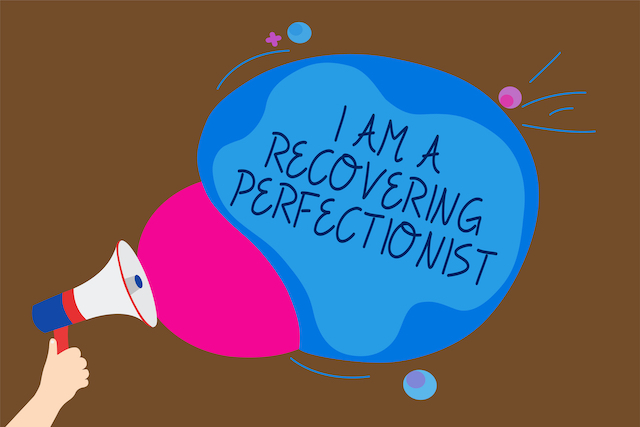
    Hello, I’m Kortney, and I’m a recovering perfectionist.

    Like so many of us, I spent the greater part of my life believing that unless something was perfect, it wasn’t good at all. There was really no in-between. If it wasn’t perfect, it was a failure.

    One of the problems with perfectionism is that it’s common to believe it’s a positive thing. In our society, people tend to value it. If you’re someone that aims for perfection, you must be accomplished. Driven. Smart.

    Have you ever had a sense of pride over being called a perfectionist?

    I have.

    Have you ever thought about why?

    Speaking for my own experience, when someone called me a perfectionist, I felt like even though I didn’t believe I was perfect, it meant that they were perceiving me as being perfect. They saw me as being one of the best, or as someone who was talented. It was validation that I was seen as someone who was good at things.

    My rabid thirst for this sort of validation fed the perfectionist machine for years.

    If you’re wondering what it means to be a perfectionist, here are a few traits:

    • Perfectionists obsess over mistakes, even when it’s not likely that anyone else even noticed.
    • Their self-confidence depends on being perfect.
    • They think in black and white—things are either good or bad. Perfect or failure.
    • They have unrealistic expectations and crazy-high standards for themselves and beat themselves up when they don’t meet them.
    • They put up a front that everything is perfect, even when it’s not, because the thought of someone else seeing their imperfection is unbearable.
    • Despite their quest for perfection, they don’t feel anywhere close to perfect.
    • They can’t accept being second-best at something. That’s failure.
    • They spend excessive time on projects because they’re always perfecting one last thing.
    • They spend a lot of time searching for external approval.
    • No matter what they do, they don’t feel good enough.

    At one point in my life, all of those bullet points described me well. I wasted so much time worrying about approval and validation so that I could feel like I was awesome. But I never felt even close to awesome. I never felt good enough at anything.

    Sure, there were times when I felt like I was good at something, but then I had to raise the bar. Just being good at something wasn’t enough. There was always another level to reach. The bar kept getting higher and higher, which isn’t necessarily a bad thing for people who are striving to make improvements in a healthy way, but for a perfectionist whose self-worth hinges on reaching the bar every time it’s raised, it’s not a positive.

    It was exhausting.

    After a lot of struggle in my life, I knew I needed to explore my perfectionist ways and find a way to be more compassionate toward myself. Perfectionism was holding me back from loving my life. And to be honest, I don’t think I intentionally set out to rid myself of the perfectionist mentality specifically. It came as a byproduct of a great deal of other personal work.

    I began to realize that I had many beliefs that were etched into my brain that weren’t helpful. Beliefs that I never thought to question. These beliefs also severely hindered my ability to be happy and to live the life I wanted to live.

    We all have belief systems that we don’t really think to question. We’ve grown up with them. We’ve learned them from the media, culture and society. But if we actually take a step back to notice that these thought patterns that inhibit our ability to grow and progress are there, we can start to question them.

    Some common limiting beliefs that keep people stuck in perfectionism are:

    • People reward me for having high standards. They are impressed and I gain approval.
    • The only time I get positive attention is when I am striving for big things or achieving.
    • If I make a mistake, I’m a failure.
    • If only I can make so-and-so proud with my achievements, he/she will love me, and I’ll be happy.
    • If I fail, I am worthless. Failing is not okay.
    • If I don’t check over everything multiple times, I’ll miss something and look like an idiot.
    • My accomplishments are worthless if they’re not perfect (i.e.: receiving a “B” instead of an “A” in a class is a failure),
    • If others see my flaws, I won’t be accepted. They won’t like me.

    The good news is that thoughts like these are examples of faulty thinking—faulty belief systems that keep you stuck in perfectionism. By identifying the specific thoughts and beliefs that keep you stuck in perfectionism, you can start to build new, more helpful thought patterns and belief systems.

    I also stumbled upon another secret for overcoming perfectionism.

    The secret is that I became okay with being average. I worked to embrace average.

    If you’re a perfectionist, you know that being called average feels like the end of the world. It’s a terrible word to hear. My inner critic was not having it. “How dare you even think average is okay?” it hissed.

    As a teenager, a twenty-something, and even a thirty-something, my world would have come to an end if I had accepted being average.

    But sometimes life has a way of making you better.

    Life has a way of putting things into your path and it presents opportunities for you to grow. Everyone has these opportunities at one point or another, but you have to notice them and choose to take advantage of them.

    There was a time not too long ago when I went through a really difficult time and had to rebuild my life.

    Looking back, I can see that the situation was an abrupt “lane-changer”—a push in a new direction to make a change. I was not living my best life and I wasn’t meant to stay stuck in that lane. I struggled with depression and anxiety, much of which was triggered by perfectionism.

    By working on thoughts like the ones I listed above, and working to accept lowering my standards—the ones that told me that achievement and success were the only way I would be worth anything—I gradually learned to replace my old standards with this one:

    Just be happy.

    Learning to make this my standard led me to a place where I am okay with being average. Eek! I said it. Average.

    Today, I can honestly say that I’m pretty happy with being average. Do I like to do well? Sure. But it doesn’t define my self-worth. While it’s created more space for me to fail, at the same time it’s created the space for me to succeed.

    The difference is that my self-worth isn’t tied to whether I succeed or fail.

    Here’s how I look at it:

    I’m really good at some things, but I’m not very good at other things. You are really good at some things.  And you aren’t very good at other things too. The good and the not-so-good all average out.

    At the end of the day, we are all just average humans. We are all the same. We’re humans trying to live the best life we can. We are more similar than we are different.

    Don’t you think that if we all ditched our quest to be perfect, or better than everyone else, we’d feel a little happier? Don’t you feel like we’d all be a little more connected?

    If you struggle with perfectionism, I invite you to take a look at the list of limiting beliefs above and see what resonates for you. What evidence can you find that can disprove these limiting beliefs? What would you like to believe instead? Try on those new beliefs and build them up with new evidence to support them.

    And along the way, work on accepting that you are enough, even if you’re average.

  • Why I Now Believe Everyone Is Doing the Best They Can

    Why I Now Believe Everyone Is Doing the Best They Can

    “You just never know what someone is dealing with behind closed doors. No matter how happy someone looks, how loud their laugh is, how big their smile is, there can still be a level of hurt that is indescribable. So be kind. Even when others are not, choose to be kind.” ~Andrea Russett 

    Everyone is doing the best they can. When they can do better, they will.

    “I disagree,” you say. “I see people who are not doing their best all the time!”

    Before the year 2006, I had a ton of complaints about the world and the people around me, including my parents, friends, and coworkers. I felt no one cared. Or at least didn’t care enough to try to do better. People seemed to do the bare minimum to get by or only what benefitted them directly. They didn’t care about how they affected others. They certainly didn’t care about me.

    I had issues with my family I couldn’t make sense of, such as how my parents treated me, the way they communicated or lack thereof, and how they were never there for me. Everything I experienced in my family seemed like the direct opposite of how parents love their children was publicized.

    Outside of my own family dynamics, I saw others with a variety of their own family issues. From financial struggles, household duties, to resentment and neglect, even abuse.

    My view of mankind and my hopes to find happiness were dark and pessimistic.

    I went to therapy, attended workshops, tried support groups, but nothing really answered the burning question I had in my mind: “Why do people continue to behave the way they do when they can change? WHY?”

    Then in 2006, I attended a three-day workshop hosted by the late Dr. Lee Gibson. It changed my perspective forever.

    Lee, as we all lovingly called him, was a brilliant behavioral psychologist who taught from a spiritual and energetic foundation. It was my first experience seeing everything from a holistic point of view, and I was hungry for more. I still practice all of his teachings today.

    Among all the Leeisms he shared, it was the insight, “Everyone is doing the best they can. When they can do better, they will” that sparked a lightbulb in my head. It would free me from an emotional trap I had created for myself.

    I will admit, it took me some time to fully grasp and embrace that perspective. I was not going to let everyone off the hook that easily. Every moment I was hurt, ignored, and betrayed flashed before me. What about my uncaring parents, my condescending boss, or my selfish boyfriend? Why should I give them the benefit of the doubt?

    Then it occurred to me that I was, in fact, doing my best at the very moment but still felt sad, angry, not good enough in many areas of my life. Not because I wasn’t trying, or didn’t want to be better, but because I didn’t always know the exact right things to say or do every step of the way. I was filled with confusion and uncertainty a lot of time, bombarded by my own emotional past. And as far as I knew, I had never chosen a lesser option if I knew there was a better way. Turned out I was the first person I needed to give that benefit of the doubt.

    If others are going through similar struggles, bound by emotional pains and egotistical voices, then I can surely believe they are as helpless as I was in breaking free of those patterns until they are aware and have the right tools to do so.

    Life events are arbitrary, and most of us don’t get to practice each scenario over and over again until we get it right (like in the movie Groundhog Day). We are often put in a position to respond to whatever is thrown at us unexpectedly. All we have to go by is what we learned at a young age from our guardians or mentors. Even if we suspect they were not the best ways, we are still unsure what the best ways are.

    It was as if a weight was lifted off my body. My mind felt more open, and I began a sort of social experiment by slowing down, observing the way people react in different situations from an outsider’s point of view, and freeing myself from taking anything personally.

    What I discovered was when I positioned myself at a place of compassion and objectivity, I became less reactive to others’ reactions. The knowledge of everyone is doing the best they can but can’t help themselves gave me a sense of power—a power to disengage from their personal struggles and maintain focus on my own powers.

    Shortly after that shift of perspective, my relationship dynamics began to shift as well. The people around me gradually put down their weapons and began to relax and open up about their internal struggles. They even started to take an interest in how I felt and expressed remorse in how they behaved in situations. It was unbelievable!

    I won’t lie in saying all my relationships have flourished. A few of them remained the same or faded away, while others were brought closer than ever because of my newfound perspective.

    For me, the greatest outcome was knowing that the few relationships that could not progress was not because of my rigid condemning stance of “Why wouldn’t you try to be better?” And that was a new level of emotional freedom.

  • If You’re Insecure and Afraid of Rejection Like Me


    If You’re Insecure and Afraid of Rejection Like Me


    “How brave the moon shines in her skin; outnumbered by the stars.” ~Angie Welland-Crosby

    I have this reoccurring dream where I am about to teach a yoga class. I stand to teach, and no one is paying any attention to me. They are all distracted or in deep conversation with one another and have no interest in engaging in the class.

    As I begin, one by one the students get up and leave. I am mortified and discouraged, though I continue to teach anyway.

    I wake up from the dream with a sinking feeling in my stomach and heaviness in my heart. Rather than indulge and spiral into sadness, I turn directly toward the aching.

    “Where is this coming from?” This is the question I ask myself as I dive into self-healing. Just as the body has the ability to heal itself on a cellular level when injured, we too have the ability to heal our emotional wounds.

    I have never been fired, from a job or relationship. I have always been the one to leave. This is not something I take pride in, rather I see a pattern that has developed over the course of my life since childhood.

    When I receive criticism, my insecurities are triggered. It must be because I am not good enough, as an employee, teacher, friend, partner. Clearly there is something wrong with me. My instinct in these situations is to run, to leave before anyone discovers my flaws, before I feel more hurt.

    I fear being abandoned or rejected, so at the first sign of conflict I retreat, like a turtle that goes into its shell the moment it senses danger.

    When I look back at my past I am left with overwhelming grief. As I peel back the layers further, I see more clearly the origins. Beliefs deeply rooted in childhood and cemented in adolescence. False beliefs of being replaceable, unworthy, not enough.

    Underneath the protective armor is an extremely sensitive and hurt little girl.

    A girl whose older sister locked her out of her room and refused to play.

    A girl who was teased by neighborhood kids for being weird.

    A girl whose best friend started an “I hate Shannon club” in fourth grade.

    A girl who always saw her friends as smarter, prettier, cooler, and more likeable.

    A girl who was desperate to be accepted.

    These deeply rooted wounds need proper acknowledgement in order to be healed.

    When we feel vulnerable or hurt, we tend to close off our hearts, gossip, turn to anger, or run away rather than address the discomfort. None of these behaviors will heal our emotional wounds. They are only temporary means of alleviating the pain. In order to break these old, conditioned patterns, first we must identify where the feelings are coming from.

    When We Feel Rejected

    Let’s face it, people can be mean. We ourselves can be mean.

    It can be hurtful and scarring to be left out, rejected, or on the receiving end of another’s harsh comments or behavior. But often, it isn’t as personal as we think. Often, others hurt us because they themselves are hurting. Perhaps it isn’t even intentional and the other is unaware they are inflicting pain.

    When we look beneath the surface of rejection, we ultimately discover feelings of fear and abandonment. But we can choose to change how we think about rejection, and consequently, what we feel.

    While we can’t control what other people think, say, or do, we can control how we receive and perceive. We get to choose whether we allow another’s comments to define who we are or how we feel about ourselves.

    There are some situations where walking away is the right thing to do. But not out of fear, spite, or in defense, but rather from a place of surrender and acceptance.

    We can redirect our energy to people and situations that are positive and enriching. Mutually loving relationships and situations where we treat one another with kindness, support, and encouragement. Where, rather than tear one another (or ourselves) down, we lift each other into the highest version of ourselves.

    There are countless situations that can trigger feelings of unworthiness, but I’d like to focus on two specific ones that have been particularly challenging for me.

    When a Relationship Ends

    Whether we chose to leave or not, there is often a deep sense of loss when a relationship ends. These feelings of loss can reappear at any time after we think we have moved on, especially when we witness someone else taking our place. A place that once made us feel special, valued, adored.

    I experienced this as I watched my ex’s new girlfriend move into a home that was once mine. The feeling of being replaceable. Even if ultimately, a relationship isn’t good for us and is no longer what we want for our future, watching someone move on can bring up grief and insecurity.

    Rather than indulge in these feelings, we can choose to be happy for the other. Happy they have found love and comfort in someone else. Happy at their own ability to heal and move forward with their life.

    Not always easy when we haven’t found love or comfort in another, we haven’t healed, and we aren’t moving forward with our own life. What makes it even harder is that we often reject ourselves when we feel rejected by someone we loved. The antidote? Focus on finding love and comfort in ourselves to reinforce that we are still worthy of love, and we don’t deserve to be or feel rejected—by anyone, including ourselves.

    When We Compare Ourselves to Others

    Jealousy is a destructive emotion and can be triggered by an off-hand comment, a sideways look, or a social media post.

    We are happy and content one moment, the next our ex updates their Facebook status to “in a relationship,” or we see a post from someone who appears to be doing better in life, and we are sent into a downward spiral that involves stalking profiles, comparing ourselves to another, anger, questioning our decisions, feelings of regret
 the list goes on.

    In order to overcome the green-eyed monster, we must stop comparing ourselves to others and see our own unique gifts.

    Often it is the desire to be someone special that drives unhealthy behavior and thought patterns. Consider this: You already are special. You already are good enough, just as you are. Without having to change or do anything different. You can stop trying to be good enough and allow yourself to just be.

    When I recently experienced conflict in an interpersonal relationship, I was talking with my mom and I said to her in defeat, “I just try so hard to be a good person.”

    She said to me, “Well then stop trying. You already are a good person. You don’t have to try, it’s who you are.”

    The truth is, no one has come before you or will come after you with your exact qualities. You don’t need to prove yourself to anyone else or to yourself. The fact that you even exist is a miracle. What a gift. Allow who you are to shine, and allow others to shine, without insecurities, jealousy, or fear. Our true gifts are revealed when we recognize we are each perfect just as we are.

    It’s Time to Write a New Story

    Those old stories from childhood, the hateful words on the playground or rejection from others, they don’t fit any more. They never did. We unfortunately allowed them to mean something about us and replayed the same story over and over again. As adults we have the ability and awareness to see and break these old patterns.

    Just recognizing our old stories is a great first step. The next step is to create new stories that better align with who we want to be and how we want to feel. And the last step is supporting those new stories with our perceptions and interpretations.

    Instead of interpreting a breakup or layoff as proof of our unworthiness, we can tell ourselves there’s something better out there for us—and we deserve it. Instead of expecting people to reject us, we can focus on all the reasons we’re worth accepting, and recognize that if they don’t, it’s their loss.

    We can also help ourselves engrain these new stories by surrounding ourselves with people who support, value, and encourage us.

    As I continue on my own path to healing, I am so grateful for an amazingly supportive boyfriend and network of friends and family (including my sister, who has become my best friend over the years), as well as an incredible puppy who teaches me the meaning of unconditional love daily (I highly recommend a dog for healing emotional wounds). Even when I retreat or fall into old patterns, I continue to be surrounded by people who accept me, challenge me, lift me, and inspire me to be the best version of myself.

    My new dream goes like this: I show up to class to teach yoga and students arrive ready and willing to practice. They are engaged and excited to be there, and so am I. I am no longer insecure and fearful of rejection or abandonment. In this new dream, I give everything I have and allow my gifts to shine. In doing this I give others permission to do the same.

    We are the authors of our own story. The kind of story where we get to live our best life. We can rewrite our story if it no longer fits as we continue to grow and evolve on our path. What will your story say about you?

  • What Helped Me Love and Accept My Imperfect Body

    What Helped Me Love and Accept My Imperfect Body

    “You are imperfect, permanently and inevitably flawed. And you are beautiful.” ~Amy Bloom

    “Just look at yourself!”

    “That chubby face, those massive hips and thighs. The stumpy legs.”

    “No wonder he doesn’t love you anymore. No wonder he left you for her! She is so much prettier than you are.”

    I stood in front of the mirror. Tears streamed down my face. My body was shaking uncontrollably as I stared at it in disgust.

    Resentment and anger accumulated in my chest. Heavy, dark, and painful, the all-consuming emotions tried to crush me. My throat felt tight, I couldn’t breathe, my mind was racing in desperation.

    If only I was beautiful. Tall, slender, delicate, and fair. If only my body was perfect.

    He wouldn’t have rejected and betrayed me. We would still be happy. The plans we made for a future together intact and alive.

    I collapsed on the floor, sobbing and shivering. Blaming my flawed appearance for all the despair, the unbearable suffering, my shattered life.

    I had always been insecure about my body and the way it looked. But now, I condemned it for failing me, destroying my life. Judged all its blemishes and cursed its unattractive features that were too ugly to love.

    I hated my body.

    And that’s how it started.

    The Miserable Consequence of Fighting Your Own Body

    In the weeks after my boyfriend left me in May 2005, negativity consumed me.

    I was furious at him for choosing another woman over me, and I beat myself up for not noticing the affair earlier. Toxic thoughts about my inadequate body and insufficient looks circled endlessly in my mind.

    I was obsessed with the improvement of my appearance. I cut my hair, changed my wardrobe, waxed, plucked, and dyed. I considered plastic surgery to remove the visible effects of a genetic skin condition that had never bothered me before.

    And I deprived myself of food, forwent sleep to have more time to exercise fanatically every day. I ignored any hunger, discomfort, and exhaustion, lashing myself on.

    I was determined to make my body better. Fitter, slimmer, more attractive. I would never allow it to let me down again.

    And my body reacted to the verbal and physical abuse.

    Within a few weeks I suffered from a stomach ulcer, bowel issues, and frequent migraines. My hands and legs were covered in eczema. And I was plagued by hypoglycaemia that made me dizzy, faint and, on a couple of occasions, temporarily blind.

    My body and I were at war. I knew I couldn’t go on like this. I had to make peace with the way I looked.

    I had to accept my body for what it was to restore my health, emotional balance, and sanity.

    For months, I forced myself to look in the mirror and reconcile with every part of my body. I reasoned with myself that the failed relationship had long run its course and my looks had nothing to do with the break-up. I cried as I tried to forgive myself for every flaw, wrong proportion, and imperfection.

    After a while, I could look at myself and accept what I saw. Free from condemnation, shame, or judgment. Without the self-hatred, it became easier to take care of my body and my health improved together with my opinion of my appearance.

    I thought I had learned to love my body. But I was wrong.

    Realization #1: Accepting your body doesn’t equal loving your body.

    For eight years, my body and I upheld our truce. I could walk past a mirror without criticizing myself and look at myself without disgust, upset, or resentment. I had found a loving husband who frequently told me how beautiful I was.

    And I believed that he really meant it. For the most part I was okay with my looks.

    But then I gained twenty pounds during my pregnancy, and the disastrous body-shaming cycle started again.

    At first, I didn’t notice.

    I thought that I kept my husband at a distance because I was too preoccupied with my daughter. But, in reality, I felt too self-conscious and ashamed to allow him to see my flabby body.

    I deluded myself into thinking that life with a new baby was too busy to visit friends. But I just didn’t want them to think, “Blimey, she’s gone fat.”

    I believed that I stuffed myself with chocolate and greasy junk food because I had no time to cook from scratch and needed the energy while breastfeeding. In truth, I punished my body for its shortcomings.

    I had worked so hard to accept my appearance. But now, my new, changed body had once again become an enemy. I blamed it for my marital problems with a dissatisfied husband and held it accountable for my social isolation. I hated it for its ugliness, for letting me down again.

    Because the truth was that, back in 2005, I didn’t accept my body for what it was, embracing all its imperfections.

    Instead, I made peace with the fact that I wasn’t beautiful. I accepted my body as “just not good enough.” And convinced myself that, despite the inadequacies, I could live with the specific looks of the body I had back then.

    But as I gained weight and my body changed, the acceptance vanished because I never learned to love my body.

    Realization #2: The true reason why your body deserves your love.

    As I searched for ways to truly love and accept my body, I realized what a miracle the human body is.

    Trillions of cells work in harmony to perform millions of tasks that guarantee survival. Day after day, they communicate via chemical, electrical, and hormonal signals to regulate, defend, digest, filter, breathe, regenerate.

    The heart beats 42 million times every year, pumping over 2.7 million liters of blood. Bones, muscles, cartilage, tendons, ligaments, and joints work together, orchestrated by the nervous system, to allow us to sit, walk, run and jump. It takes the coordinated cooperation of around 100 muscles to simply say “Hello”!

    And yet, we are mostly unaware of our body’s accomplishments. It works in the background. Tireless, faithful, reliable, expecting nothing in return.

    As a health scientist, I knew how bodily functions worked to preserve life. At least in theory. But somehow I had never truly understood what my body did for me every second of every day.

    My body gave me life and served me unconditionally. It allowed me to experience the sunshine and all this world’s joys and pleasures. It enabled me to love, laugh, cry, and contribute.

    It created my daughter.

    But, instead of being grateful, I ignored and neglected it, sabotaged its efforts to maintain my health, and damaged it with abuse and negativity. Instead of loving the miracle that it was, I reduced it to its outer form, condemned its looks, which I denounced as unacceptable.

    Despite knowing what an amazing marvel of creation my body was, I still couldn’t look beneath my body’s exterior appearance. I obsessed over my figure and physique.

    Why did I believe my body was somehow wrong or not good enough? Why was it so difficult to love and accept it?

    Realization #3: Beauty is not in the eye of the beholder.

    As I looked into it more deeply, I started to understand that I had become a victim. All my life, I was bombarded with set definitions of beauty. Every TV show, movie, and newspaper highlighted the standards required to be beautiful.

    Every commercial, billboard, and fashion magazine implied how I had to look to be desirable. And they established beauty, attractiveness, and physical perfection as prerequisites for happiness, success, and love.

    Society seemed to prescribe specific measurements for every part of the human body.

    A certain height, weight, and hip-to-waist ratio defined a gorgeous body. Symmetrical features, flawless skin, and full lips made an attractive face. And every scar, lump, blemish or departure from the perfect body proportions destroyed all prospects of ever being beautiful.

    I had allowed my mind to become conditioned and accepted society’s version of beauty without questioning. I believed that I was destined to be ugly because I didn’t meet the criteria. I accepted the fact that beauty was out of my reach because my body shape didn’t make the grade.

    I felt like a failure for not being beautiful.

    But now it dawned on me that the society-imposed criteria were haphazard. The beauty I yearned for was a set of randomly selected dimensions, arbitrary proportions, and subjective features. Ever changing according to trends dictated by the media and beauty and fashion industries.

    Yet I bowed to them. I fixated on my appearance and compared myself to photoshopped idols. I beat myself up for my too broad hips, short legs, and round face.

    But these features were out of my control, genetically determined by the miraculous fusion of my parents’ DNA. My body was so much more than its looks and I was so much more than my body.

    So why was it so important for me to be beautiful?

    Realization #4: The true reason why we strive for beauty and perfection

    I now knew that beauty was nothing but a man-made concept. A random phantasm imposed upon us by relentless conditioning.

    But still I craved to be beautiful, I obsessed over my body’s appearance, I wanted others to admire my looks.

    And the reason was low self-worth.

    All my life, I felt inferior to others. I thought that I was inherently worthless.

    Yet, I believed that, in order to deserve happiness, love, and fulfilment, I had to be worthy of them. I had to have worth.

    So I dedicated my life to the accumulation of worth. And again, society had strict criteria to fulfill in order to be worthy of what I desired. Impressive possessions, qualifications, wealth, and other people’s approval increased my worth. And so did beauty.

    The more beautiful, flawless, and perfect a person is, the more worth they possess in society’s eyes.

    And my unremarkable looks were not good enough, leaving me with a painful worth deficit.

    Because not being beautiful made me worth less compared to others. Unworthy of a happy life, undeserving of a loving relationship. And there was nothing I could do about it.

    Or so I thought.

    The Incredibly Irony of Our Obsession with Beauty

    All my life I had been stuck in a disastrous, depressing loop.

    I wanted a life blessed with happiness and love. And in order to deserve it, I had to be worthy. But I couldn’t be worthy because I wasn’t beautiful enough.

    My body’s looks didn’t meet the requirements.

    And that’s why I could never love my body. Because it doomed me to a miserable, worthless life full of heartache, disappointment, and suffering.

    But all my self-loathing, self-condemnation, and the inability to love and accept myself were based on a mesh of lies.

    Because the truth is that beauty is a myth, a random set of society-imposed criteria. And not falling into the narrow range of qualifying measurements does not make us worthless.

    Our worth doesn’t depend on beauty, desirability, popularity or other people’s admiration and approval. It is an inherent part of who we are. An intrinsic, absolute feature of our being.

    We are worth personified, every one of us.

    We all equally deserve to be happy and loved. No matter what we look like, how tall we are, or how much we weigh.

    Our body’s outer appearance will never change anything about our worth. Our scars and imperfections cannot diminish our deservedness. Excess weight won’t make us inferior to others.

    Because we never were worthless. Nor will we ever be.

    How to Finally Love Your Body

    After these life-changing realizations, I went to work to improve my self-worth and break my mind’s conditioning.

    I must have repeated the affirmations “I am worth” and “I love and approve of myself” thousands of times. I ignored my mind’s resistance to the new paradigm and forgave myself when I slipped back into old self-criticising habits for a while. I persevered.

    I kept reminding myself that our commonly accepted concept of beauty was society-imposed, arbitrary, and unfounded. My body was a miracle regardless of whether its outer appearance met the criteria. As such, beauty wasn’t a prerequisite for loving it. Or for my worthiness as a person.

    As my mind got used to the new way of thinking, I started to accept my body as a wonderful part of the infinitely worthy being I was. I broke free from the misguided untruths I used to bow to.

    I am in a loving relationship with my body now. We are a team. I listen to its needs and allow it to look after me.

    Every day I thank it for being awesome and serving me so well. When my body changes or is unwell or in pain, I bless it with love instead of cursing it for being weak or letting me down.

    I still carry the twenty pounds I gained during my pregnancy. I might lose them eventually, for health reasons. But they don’t destroy my beauty; they don’t deduct from my worth.

    I no longer look in the mirror and see vast hips, a flabby belly, and imperfections. I see a miracle. I see life.

    I see worth.

    Beauty isn’t restricted to a chosen few who happen to meet the requirements. It is an expression of the marvel of human existence. Beauty is within all of us.

    Your body is a miracle. You are worth.

    And you are be-you-tiful.

  • Everyone Has Struggles, So Don’t Stigmatize Yourself

    Everyone Has Struggles, So Don’t Stigmatize Yourself

    “Shame corrodes the very part of us that believes we are capable of change.” ~BrenĂ© Brown

    From a psychological point of view, my childhood sucked.

    I didn’t have many friends, I rarely left the house, I was terribly shy, and I used to get bullied a lot, both physically and mentally.

    My teenage years weren’t any different. The psychological issues I had as a child amplified further and created more profound problems.

    When I started college, I didn’t magically become more confident or develop high self-esteem. I was almost the same person.

    Now, I proudly (and humbly) can say that I’ve gotten over most of my childhood and teenage problems, including the ones related to my social life.

    But I’m not here to tell you how I did that. That would probably take a book. And trust me, it’s not as glorious as I wish it were.

    Instead, I want to tell you about one factor that made all the difference during my journey of change and development.

    One factor that made my journey tolerable at times. Without it, I would have given up.

    I’m Bad, Aren’t I?

    When I was younger, I was shy, lonely, and depressed. My social skills were bad.

    That, in and of itself, was hard enough.

    Basically, I was witnessing my life falling apart in front of my eyes, socially and emotionally.

    But do you know what was worse than seeing my life falling apart before my eyes?

    It was feeling bad and ashamed of myself because my life was falling apart.

    It was believing there must have been something wrong with me, and that was why I was suffering.

    It was stigmatizing myself because of my problems.

    I was developing harsh feelings of shame because I was shy, lonely, and depressed. And for a long time, I couldn’t ever feel good about who I was as a person.

    In other words, I didn’t feel bad only because I wasn’t able to go out there and socialize. I also felt bad because I believed having these issues meant that I was worthless and inferior to other people. That I was unworthy of their attention or time.

    When you stigmatize yourself, the feeling of shame very well may cripple you. You likely will not take action to solve your problems. You will think you are already a loser, so why bother?

    Feelings of shame and stigma can never induce positive changes in your life. They will only induce fear, self-hatred, anxiety, and self-pity.

    This was what I did for years and years. I solved nothing. I sat there pitying myself.

    Am I Really Bad?

    We all share the desire to connect with each other. Connection is essential for our well-being. No one can live alone; the “lone wolf persona” is just a myth.

    And here’s where shame comes into play.

    It’s when you feel that you are so flawed that you don’t deserve this connection. It’s when you believe you are too bad for anyone or anything.

    It’s when you believe that, because you have certain problems or issues, you’ll never be as worthy as other people.

    It’s when you stigmatize yourself because of your problems and issues.

    It was only when I stopped doing this that I was able to get up and do something about my problems.

    You know it’s hard when you work with someone who is judgmental about your every action. Someone who believes you are bad because you have issues. What if that person was yourself?

    There’s a difference between guilt and shame. When you feel guilty, you’ll feel bad because of your actions, but you’ll likely do something to correct them. With shame, you’re more apt to do nothing but dwell in self-pity and self-destruction.

    And in the case of stigmatizing yourself because of your problems, it’s shame and not guilt.

    Own Your Problems, Flaws, and Mistakes

    I remember one of the first times I started to adopt this mentality.

    I was supposed to hold a microphone and talk in front of a lot of people. It wasn’t compulsory, but I was advised and expected to do it.

    At that time, I was working on my self-confidence and my social skills.

    But I chickened out. I escaped. I didn’t do it.

    I remember sitting down to have a cup of coffee right afterward. My inner critic was torturing me. I felt like a fraud and a coward.

    After all, I’d been working on my self-confidence, but I still couldn’t do it.

    I started beating myself up. Feelings of shame started to develop. I started to hate myself because I couldn’t be as confident as I believed I should have been.

    But then I stopped and noticed that I was stigmatizing myself because I’d chickened out and escaped. I was calling myself ugly names because I couldn’t overcome my low self-confidence.

    That wasn’t a healthy response. A healthy response would have been to feel bad (and guilty) about the action but not about who I was as a person.

    So, I stopped. And I told myself something like, “Hey, you have issues. But we all have issues because that’s life—everyone suffers somehow. The people around you have issues as well. Uncontrollable childhood events can screw up anyone. Work on a solution and do your best to improve. Feeling bad and inferior because you have problems is worse than the actual issues themselves!”

    And man, did that save my self-esteem from collapsing.

    Don’t Stigmatize; Do This Instead

    This concept isn’t only about social skills or self-esteem.

    It’s about any kind of problem or issue you are facing.

    In fact, it’s not about the actual problems or issues. It’s about every situation that makes you feel ashamed of yourself because you feel like you lack something or something is wrong with you.

    This feeling, the feeling that “something is wrong with me because I have X or Y,” is worse than the actual issues (the X and the Y).

    Whether it’s depression, anxiety, failure, rejection, financial problems, family problems, or any kind of such (usually personal) issues, the concept is the same. Don’t stigmatize yourself because of your problems. Just don’t. It’s destructive. And, from the deepest point in my heart, I know you don’t deserve to feel stigmatized. No one does.

    Instead, recognize that it’s not shameful to struggle, and it is possible to improve if you’re willing to accept responsibility for learning and growing.

    The younger me, who was very afraid then, realized that there was hope when I did that presentation (and a couple more public speeches after). I wouldn’t have made that presentation if I hadn’t held myself responsible for solving my problems. And I wouldn’t have held myself responsible for improving if I had stigmatized myself.

    It’s much easier is to make progress once you accept that having problems doesn’t necessarily mean you are a bad person or that the situation is helpless.

    This lesson is easy in theory, but it takes a large amount of self-awareness, self-care, and self-love to be applied. But once applied, it can move mountains. Mountains of emotional and psychological problems that were beating the hell out of you. Choose, right now, to do that for yourself when you need it the most, no matter how hard or uncomfortable it might be.

  • Stop Focusing on Your “Flaws” and Let Your Light Shine Bright

    Stop Focusing on Your “Flaws” and Let Your Light Shine Bright

    Glowing woman

    “Vulnerability is about having the courage to show up and be seen.” ~Brene Brown

    When I was twenty-seven someone told me I had old looking skin.

    Up until I heard this comment, I had never given much thought to my skin. Ever since, however, it’s been the only thing I see when I look in the mirror.

    Lately, I have been diving deeper into the inner areas of my life that still need further integration. Making themselves most apparent as top priorities are self-love and acceptance.

    A good friend recently told me that she has started to look at herself in the mirror every day and say “I love you,” and really mean it.

    She said when she first started this exercise, all she could see was the line that was between her eyebrows. Her one flaw.

    Before my friend mentioned this line in her face, I had never really noticed it.

    My friend has big, beautiful, blue eyes, and those are all I see every time I talk to her.

    This conversation was quite eye opening. It made me admit that I do the same thing.

    The only things I see in the mirror are the lines in my face, and I think, “maybe I need to get a facelift.”

    I am committed to loving and accepting myself fully and changing this behavior pattern.

    My friend said, “Polly, you have to see your lines in a different way. Your lines tell the story of who you are! Your lines show all of your many adventures, all the time you have spent outside kayaking, surfing, and cycling. This is the story your lines tell. Your lines have made you who you are. Love your lines!”

    AMAZING!

    Love my lines! Really?

    Love my biggest insecurity? Accept my flaws as they are?

    What if I loved my lines? What if I saw them like she did?

    They are the story of who I really am.

    I have not been wrapped up in cotton wool, sitting in a cubicle, and my face shows it.

    What if I even honored my lines and said thank you?

    Thank you for taking on the elements.

    Thank you for protecting me and allowing me to do all the sports I love outside for hours in the sun.

    Thank you, lines!

    Well, this is revolutionary!

    Self-acceptance, gratitude, compassion, and forgiveness are my practices today. I forgive myself for letting someone else’s opinion of me dominate me. For giving away my power, and allowing my sense of self to come from outside of me.

    In his book The Presence Process, Michael Brown says:

    “The behaviors we generate in order to feel safe and accepted in the world are a substitute for real peace and aren’t who we are. By embracing responsibility for our experiences, we embrace the capacity to change them.”

    In taking responsibility for my life and experiences I can see that I have allowed my worth and value to be dictated by one person’s superficial observation of my appearance.

    I now take back my power. I now change my story. I can choose a different path. I can love and have gratitude. I can forgive this person and myself. I can focus on my gifts instead of my imperfections.

    It is commonly believed that the eyes are the mirrors of the soul.

    When I talk to people I always look in their eyes. When I look at myself I hardly ever look in my own eyes.

    Why? What would I see if I looked beyond the surface? What have I been distracting myself with by only focusing on my skin?

    What if I saw who I truly am? What if I saw my own soul? What if I let my light really shine?

    Digging deeper, I see that perhaps Marianne Williamson is right when she says,

    “Our deepest fear is not that we are inadequate. Our deepest fear is that we are powerful beyond measure. It is our light, not our darkness that most frightens us. We ask ourselves, who am I to be brilliant, gorgeous, talented, fabulous?’ Actually, who are you not to be?”

    If I fully accept and embrace my imperfection, and believe Marianne Williamson, then what?

    Is my deepest fear that I am powerful?

    Does my light scare me?

    What if I truly let my light shine?

    What an amazing gift this would be! To myself and to the world.

    This is all I really want.

    To be my most authentic, whole, true self. To let my light shine. To be comfortable in my own skin.

    I believe this is the point of life, and that my inner work is to see beyond my lines—to see who I truly am.

    I now am showing up and having the courage to really be seen. Lines and all!

    I know that if I honestly allow this, I will be free.

    That no one outside of me can do this for me.

    I have begun to edit video footage that I took of myself last year, when I was on a self-searching walk by myself. I spent thirty-two days alone in the wilderness and recorded my journey on video. I haven’t shared these videos because I was self-conscious about my skin, and, as a result, I have been holding back the potential of letting my light shine.

    Letting my light truly shine means following my heart and inspiration. Allowing my gut instinct to rule, even when I don’t know why. Smiling big. Saying hello to people with my heart open. Seeing others as a reflection of myself. Asking, “What can I give?” rather than “What can I get?” and being present with everyone I come into contact with.

    If I feel like dancing, I get up and dance.

    Shining my light means sharing my gifts with generosity, and getting out of my own way. Putting myself out there and allowing my voice to be heard. Through writing, dance, film, art, and by simply being my whole, authentic, true self.

    It is well and truly time. Time to get over the insecurity, the reverse vanity, and practice self-love and acceptance.

    The only one who needs to love and accept me is me, and I know that once I do this what you think of me really doesn’t matter.

    We can all let our light shine bright—you too.

    Stop focusing on your perceived imperfections and recognize your inner light.

    Look yourself in the eyes in the mirror and say “I love you” or “You are amazing,” and really mean it!

    See yourself as your friends see you (without honing in on physical flaws).

    “Show up,” however that looks for you, and allow yourself to be seen.

    Call back in your power—from all people, places, and situations where you may have given it away.

    We owe it to ourselves and to the world to step into our full power, and shine our full brightness. Allowing ourselves to be, express, and create gives others the room to do the same.

    Our unique, authentic selves are here now, ready, and waiting for our permission to shine!

  • A Simple Practice to Appreciate Our Bodies, Flaws and All

    A Simple Practice to Appreciate Our Bodies, Flaws and All

    Sunset Silhouette

    “Who does not thank for little does not thank for much.” ~Estonian Proverb

    I remember the moment so well: I had been seeing a new guy for a few months and I was staying the night for the first time. Up until that point he hadn’t seen me without heavy makeup, as I was careful to always look completely put together while with him.

    That night I had to make a decision.

    I could fall asleep with my makeup still on, or I could remove it first. Did I feel comfortable enough to let him see me without foundation, eyeliner, or mascara? Would he still like me?

    For many people this might not be a tough decision to make (and truly, I have nothing against makeup or those who wear it), but for over a decade I had worried constantly about anyone seeing me without. I had over a decade of time to build up unhealthy attitudes about my appearance.

    Any time I spent the night away from home, from trips and staying with friends to dating, I would get up around 5am to redo my makeup and get back into bed before “waking up.”

    It was exhausting, but the only way I felt comfortable around other people. Going to the beach or the pool was a real struggle.

    I remember this particular moment so strongly because when he saw me the only thing he said was “you look so different.”

    The comment itself wasn’t outwardly negative, but I also noticed his body language and the look on his face. Let’s just say it didn’t make me feel supported, or beautiful, or seen. It simply made me feel sad.

    Moving Past Crippling Self-Criticism

    Sometimes I feel gratitude for that moment, the weight of my own insecurity so heavy that I knew there was a choice to make.

    Would I repeat this scenario again and again in each new relationship, holding my breath and expecting the worst in that critical moment? Or would I learn to truly accept myself first, as I was?

    Not long after, I stopped wearing makeup completely.

    I had significant difficulty at first, to be honest. I was so used to feeling put together and confident. No makeup left me feeling depressed and deeply unattractive, as I was struggling with significant acne at the time.

    I even had trouble looking up from the ground while I walked, as I was so afraid to be seen.

    I remember thinking to myself during this time have faith, have faith, have faith.

    And then one morning I was drawn to stand in front of the mirror and place one hand on my stomach and the other hand over my heart. I took a deep breath and said to my body, Thank you for taking care of me.

    Then I touched the skin of my cheeks to feel their warmth and said, Thank you for your resilience.

    Then my hands, my fingers, my wrists: Thank you for your strength. 

    And finally my throat, saying, Thank you for your truth.

    I ended the practice with a simple thank you. I love you.

    A Shift in Perspective

    Whenever my critical eye began to get the best of me, I’d return to the mirror.

    Thank you. I love you.

    The most powerful part of the exercise for me has always been the element of touch.

    I’ve always found it so easy to briefly glance in the mirror and only see what I dislike. My flaws become harder to see when I feel the strong beat of my heart and the muscles beneath my skin that make my life as I know it possible. A pimple doesn’t seem as important when my chest rises and falls beneath my hand during a powerful breath.

    I still have mornings when I wake up and am not pleased with what I see in the mirror. However, I now also have mornings when I feel complete gratitude for what my body allows me to do and who I’m able to be.

    I now have mornings when I look at my eyes in the mirror and instead of seeing pale eyelashes I see kindness. I see courage and determination.

    Thank you for taking care of me. Thank you for your resilience.

    It’s incredibly easy to be critical of ourselves, and so incredibly vulnerable to embrace our bodies, acne and all.

    The next time you feel insecure, try reconnecting to yourself with a simple touch. Touch reinvigorates us with the energy that runs through our veins, our skin, our organs.

    Thank you for your strength.

    Place one hand over your heart and the other on your stomach and breathe in and out, feeling the healing impact of your breath on your body.

    Thank you for your truth.

    Stay there for several breaths, eyes open or closed.

    When you’re ready, say thank you.

    When you’re ready, I love you.

    Sunset silhouette via Shutterstock

  • You Are Broken, Let Me Fix You

    You Are Broken, Let Me Fix You

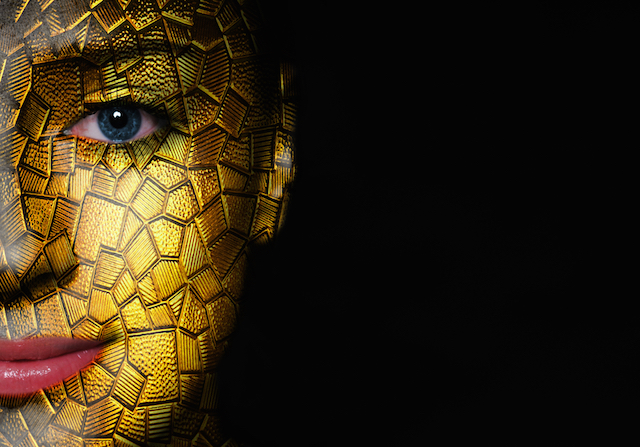
    Mosaic Face

    “To wish you were someone else is to waste the person you are.” ~Sven Goran Erikkson

    Let me fix you.

    You really should try not to be so sensitive, Leah. The world is sometimes a difficult and upsetting place, but you shouldn’t let it affect you so much.

    Let me fix you.

    You know, you really ought to spend more time with people, Leah. It’s not good for you to be alone so much.

    Let me fix you.

    You know, you really shouldn’t make such quick, spur-of-the-moment decisions, Leah. It’s not good to do that in life and you’ll end up regretting them.

    Let me fix you.

    You’re so young, Leah. You should be out dancing and dating and having fun, not sitting home alone with another book.

    Let me fix you.

    You need to be more realistic, Leah. I know you have big dreams for your business and life, but it’s not secure. We all have to do work we don’t enjoy, it’s just the way things are.

    Let me fix you.

    Thank you for trying to fix me. Now let me tell you this


    Let me tell you


    My greatest strength is empathy. I feel others’ feelings as if they were my own. Their pain is my pain. Their joy is my joy. I cannot help but cry sometimes and I cannot hold the tears in, as you would like me to, nor wait for a more convenient moment.

    Please don’t try to fix me. My sensitivity is my gift.

    Let me tell you


    I am an introvert and a thinker. Introspection is in my blood. Long periods of time alone are a joy to me. Where others might feel lonely, I feel replenished.

    I ponder, I reflect, and I muse over the thousands of dreams and ideas that are always in my head. I’m filtering, planning, connecting the dots and making sense of the world around me

    Please don’t try to fix me. My thinking is my gift.

    Let me tell you


    I am a woman of action and I do not like to wait. Once my mind is made up there is no turning back. Where others might be stuck in indecision, I have moved ten steps ahead. My life is in motion and I am creating in the real world the dreams I have in my head.

    Please don’t try to fix me. My ability to act is my gift.

    Let me tell you


    The future is beautiful to me. I see all that is possible and all that I want to create. In vivid colour and in high definition it appears to me. Whilst others see all that is wrong and the reasons why not, I see all that is right and all that could be.

    Please don’t try to fix me. My dreaming is my gift.

    You Are Not Broken

    For the longest time, I thought I was broken. I thought I had to change myself. I thought I had to behave differently. I thought that my way of being wasn’t the way of being. I wished I were someone else.

    At school my reports went like this:

    “Leah is a wonderful student but she’s too quiet and needs to speak up more in class.”

    In my nine-to-five office jobs it went like this:

    “Try not to be so sensitive, Leah. It’s not good to let people see you cry at work.”

    And when I handed in my notice, it went like this:

    “You can’t go through life making rash decisions like this, Leah,”

    And even now, almost three years into my journey of creating my dream life and business, it goes like this:

    “We believe in you, Leah, we really do, but don’t you think it’s time to look for a more secure job?”

    Everyone, everywhere, throughout my life has been ready with advice for me on how I should be.

    Over the years, not knowing any better, I tried to bend myself to their suggestions.

    I tried to be less sensitive. I tried to hold my tears in. I tried to be less impulsive and less impatient. I tried to spend more time around people. I tried to tame my dreams.

    But when I tried to do all these things, all I felt was pain and it didn’t make anything in my life work better the way people told me it would.

    Finally, thankfully, today, I see the truth.

    There isn’t and never was anything to fix.

    The very things that others told me were my faults turned out to be my greatest strengths and my most beautiful gifts.

    When I finally saw and embraced them as such, I was able to begin creating a life that encapsulated everything that I am instead of constantly struggling and trying to be something that I was not.

    It’s true for you too. There is nothing to fix.

    If you find yourself surrounded by people telling you should or need to be different, I hope these three short notes will help you let go of what they’re telling you and to embrace instead what is truly special about you.

    1. You are not broken, faulty, or defective.

    There is no right or wrong way to be. Each and every one of us makes sense of the world differently. The way you are may be different to those around you, but that does not make your way of being wrong.

    Instead of trying to bend yourself to their suggestions, take note of what the people around you say you should be like. There is a very good chance that they are pointing the way to your most special gifts and the things that make you uniquely you.

    2. Use your unique gifts to create a life you love.

    When you recognize, understand, and accept your personal strengths, you have the opportunity to consciously and thoughtfully craft a life that is in alignment with those strengths, instead of trying to squeeze yourself into a mould you won’t ever fit into.

    I didn’t see it at the time, but the pain I experienced in my office jobs were clear signs that I wasn’t where I was meant to be. The roles I was in didn’t value my biggest strengths and work often felt like a battle against my very nature.

    By seeing, understanding, and accepting my own personal strengths and gifts, I have been able to create a business and life that allows me to freely be all that I am. You can do the same.

    3. Forgive those who try to fix you.

    Remember that those who are telling you to be more like this or less like that—it’s not their fault. They, too, are filtering everything through their own set of unique gifts. Go easy on them; they’re just doing their best, like the rest of us.

    Listen to what they have to say, take anything that feels useful but go ahead and drop the rest without a second thought.

    Let me tell you this, my friend


    There is nothing to fix and nothing to change.

    It is in those qualities that others might find difficult to accept that you will find your power.

    It is in the acceptance of those qualities that you will have the opportunity to not only create a life that feels right for you, but to have the greatest positive impact on the people and world around you in this short and precious life.

    You are a gift to the world. Just as you are.

    Mosaic face image via Shutterstock

  • 3 Tips to Embrace Imperfections and Bounce Back from Mistakes

    3 Tips to Embrace Imperfections and Bounce Back from Mistakes

    Happy Woman

    “There is a kind of beauty in imperfection.” ~Conrad Hall

    Back when I was a teenager, I was kind of a perfectionist. Or, well, I wasn’t really a perfectionist—I was actually a “fake” perfectionist.

    Allow me to explain: I put on the perfectionist persona. I acted and behaved in a certain way so that everyone (including both my fellow classmates and teachers) thought and believed that I was the perfect student when I wasn’t.

    Everybody thought I was the student who got straight A’s, was a bookworm, was involved in every extracurricular activity that ever existed, never got in trouble in school for anything ever, and was an overall stellar student.

    Though some of those things were kind of true—I mean, I was involved in a lot of activities and I never did get a detention ever—I was very far from a stellar student.

    I didn’t get A’s in middle and high school; I mostly got C’s. I certainly wasn’t a bookworm; I hated reading all this fiction stuff I was told to write book reports on.

    The truth of it all was that I was really stellar at one thing: faking my own perfection. I had mastered the skill of being seen as the perfect, most stellar student in order to hide my own shortcomings.  

    I was trying to hide that I wasn’t so great at studying and getting good grades. I was trying to hide that I did, in fact, get in trouble every so often.

    I was trying to hide my own imperfections. I was terrified that the world would see that I had weaknesses and inner wounds. I feared that others would know that there were tasks that I was not good at or just flat-out could not do.

    To this day, the fear of others seeing my imperfections is still an issue to some extent. Like the fear of judgment that comes up whenever I make a typo in an article or whenever I give a presentation and accidentally mispronounce a word.

    My inner critic still likes to creep in and try to debilitate me from moving forward.

    Whether we are a child trying to avoid bad grades or an adult who is trying to write the perfect book, we are all struggling with accepting our own imperfections.

    We are all on the journey of hindering the voice of our inner critic and allowing our true selves (imperfections and all) to be seen.

    Here are three ways that can help you create a habit of accepting your own imperfections:

    1. Focus on utilizing your strengths, not your weaknesses.

    Many of us grew up societies where we were told we have to really focus on strengthening our weaknesses. If we weren’t great at math, then we got the idea that we needed to spend more of our time and energy strengthening our abilities in math.

    Though there are benefits to strengthening our weaknesses, it can really cause a blow to our self-esteem and motivation to focus on them. We can develop the idea that just because we are not good at this one thing, then we are a failure.

    So ask yourself: What things am I really good at? Is it music? Languages? Writing? Speaking? Physics? Identify what things come natural to you and make it a goal to really enhance your gifts so you can be the best that you can be.

    2. When you mess up, say to yourself, “I am beautiful!” Then write down all the ways that you are beautiful.

    Let’s get real here: Whether you are doing something that is your strength or your weakness, at some point or another you are going to mess up.

    The problem, however, is that when we do mess up, many of us shut down. We stop trying, and our inner critic starts telling us how we are not good enough.

    Next time you mess up when you’re doing something, say out loud, “I am beautiful!” Then get out a sheet of paper and write down ways that you are beautiful. What are the good things that you do for others? What are the amazingly beautiful qualities that you have?

    To enhance this even more, make it a habit to do this same thing when someone else messes up.  See someone trip over their words during a speech? Remind yourself that they are beautiful, and why. See someone make a typo? Remind yourself that they are beautiful, and then write down a quality that they possess that makes them so beautiful.

    We are all connected, so by sending other people love when they expose their own imperfections, we will give ourselves space to heal as well.

    3. When you mess up, just keep going.

    For many of us, the problem is that when we mess up, we just stop working. We get so caught up in the belief of “I am not good enough” that we stop ourselves from moving forward.

    I struggled with this constantly when I took my very first watercolor painting class two years ago while I was living in Korea. Over and over again I found myself making a small error, getting all worked up about it, shutting down, and basically just wanting my art teacher to do it for me.

    Over time I gradually learned to just let it go and keep going. I ultimately developed and strengthened my skills by setting the intention to keep going regardless of any errors I made along the way.

    So, whenever you do mess up, whether that be using the wrong brush for that one stroke, saying the wrong thing, losing something important, or tripping over your own two feet, just brush it off and keep on going.

    Breaking down, stopping, and worrying about it doesn’t allow us heal and transform. Accepting the mistake and continuing to act does!

    Happy woman image via Shutterstock

  • Why Life Is A Lot More Fun When We Stop Trying to Be Perfect

    Why Life Is A Lot More Fun When We Stop Trying to Be Perfect

    Friends Having Fun

    “The thing that is really hard, and really amazing, is giving up on being perfect and beginning the work of becoming yourself.” ~Anna Quindlen

    “Oh, my god,” she said, “I forgot to shave my left leg!”

    That may not sound like a particularly dramatic announcement, but Jenny and I were sharing a seat on the chartered bus taking our senior class to the beach for “Senior Cut Day” a few weeks before graduation, and her discovery horrified me.

    An unshaved leg, it seemed to me at the time, was scandalous in the extreme.

    Had it been me who forgot to shave, I would have kept my sweats on all day rather than display my embarrassing imperfection.

    Jenny, on the other hand, not only shared her faux pas with me, she then announced it loudly to the entire bus. She laughed about it, and invited everyone else to laugh, too!

    I was appalled.

    I was also fascinated. That someone could intentionally draw attention to her imperfection, and laugh about it, was mortifying, yes, but also intriguing


    It was hot at the beach that day. My well-shaved legs were bare, but I had forgotten to pack a T-shirt, and because I was self-conscious that my belly wasn’t perfectly flat as a pancake, I kept my sweatshirt on over my bikini.

    Rivulets of sweat rolled down my torso, but heaven forbid I put my imperfection on display!

    Jenny, meanwhile, spent the day laughing, playing volleyball, splashing in the waves, quite unconcerned about her hairy left leg.

    Can you guess who had the better time?

    You might think that this experience would have taught me something, but in fact, before I finally began to let go of perfectionism and ease into becoming myself in all my flawed, imperfect glory, I spent decades flagellating myself for not being perfect.

    Somehow I believed that I couldn’t be lovable if I weren’t perfect, so I was caught in a vicious cycle: aiming for perfection, failing, then beating myself up for the failure and goading myself on toward perfection again. Lather, rinse, repeat.

    Throughout my teens and twenties, in pursuit of the perfect body, I was plagued with eating disorders, kept carefully secret so as not to reveal my flaws to the world.

    In college, nothing less than an A was acceptable. The pure joy of learning took a back seat to striving for the perfect grade point average.

    Meanwhile, in relationships I hid my true self behind a mask, fearing that nobody would love me if they saw the real, flawed me.

    Amazingly, I did find a man I could be myself with, but when we decided to get married, I was the quintessential “Bridezilla,” completely focused on planning the perfect wedding.

    My obsessive pursuit of perfection helped me stay in denial about the fact that, although we loved each other, the relationship was built on a shaky foundation.

    During my marriage I discovered a love for making art, but the joy I experienced when creating was soon overtaken by misery, because nothing I made ever felt good enough. Eventually it seemed easier not to create at all. I became paralyzed by perfectionism.

    I could say that it was the very public “failure” of my divorce that started me on the road to accepting myself. Or that it was the college classes in Feminist theory, which helped me overcome my eating disorder and start to accept my body the way it was.

    In fact, I see self-acceptance as a long and winding journey, composed of thousands upon thousands of teeny, tiny baby steps, over the course of an entire lifetime.

    Baby steps like the revelation—thanks to Jenny on that high school bus ride—that it’s possible to laugh at yourself, and even draw attention to your flaws, and that this may be a more comfortable way to deal with them than trying to hide them all the time.

    Baby steps like the gradual dawning that instead of beating myself up, I could forgive myself for my mistakes and missteps, and that responding with self-compassion was a much more pleasant way to live.

    Baby steps like the epiphany that making ugly messes at my art table is infinitely more fun and satisfying than making nothing at all (and that often what I deem “ugly” at first, appears less so after some time has passed!)

    Gradually I untangled the false belief that only if I were perfect would I be worthy of love and happy.

    Letting go of the attempt to be perfect took a long time. At first it felt like a dishonorable surrender, like giving up and “letting myself go.” But when I thought about the people I loved most in my life, I realized that of course not one of them was perfect.

    I realized that the people I love being around the most are those who accept themselves as they are, who are comfortable in their own skin. Why should I expect anything different from myself?

    Little by little I began to deprogram myself. In fact, I intentionally embraced imperfectionism, and discovered, much to my surprise, that the more I allowed myself to just be me, the happier, more serene, and more content I became. And the more attracted other people were to me, too!

    There’s nothing wrong with self-improvement, but the truth is, none of us is—or can even hope to be—perfect. We may pursue mastery, excellence, improvement, and be challenged by the pursuit, but insisting on perfection can only lead to self-disgust and unhappiness.

    The only thing we can ever really hope to be perfect at is being our flawed and wonderful selves.

    If you’ve been stuck in a perfectionist spin cycle, what’s one thing you might do to press the pause button?

    Giving up on being perfect is hard. The work of becoming yourself is hard. The payoff, though, is truly amazing, and you’ll continue to reap the benefits for the rest of your life.

    Friends having fun image via Shutterstock

  • The One Thing You Need to Change If You Want to Accept Yourself

    The One Thing You Need to Change If You Want to Accept Yourself

    “Serenity comes when you trade expectations for acceptance.” ~Unknown

    I quit Weight Watchers this week and I have never felt happier.

    To be clear, quitting this weight loss program was not an act of defeat, nor was it an example of me running away from something difficult or painful. Cutting ties with Weight Watchers was truly an acceptance of self.

    A couple of weeks ago I had a heart-to-heart conversation with a friend. I was feeling really down, and I confided to him that not only do I lack self-confidence in nearly everything I do, I also seem to not like myself very much at all.

    A voice in my head pretty regularly reminds me that I am not smart enough, funny enough, pretty enough, skinny enough, or anything enough in this life, so why bother trying.

    As I explained all of this to my dear friend, I noted that I would never treat another human being as badly as I treat myself. I am loving and kind to everyone around me, but inwardly I am a mean bully. As I was saying it out loud, the whole thing seemed kind of ridiculous to me, but I didn’t know how to stop hating myself.

    It was at this point that my friend said something that changed my life; he said, “Take a hard look at the things you think you don’t like about yourself. You have a choice: Either learn to accept them for what they are or change them. It’s that simple.”

    At first his advice infuriated me. How on earth was I supposed to accept my flaws? I have spent thirty-six years perfecting my self-loathing; it seemed impossible to undo all of that hard work.

    Turns out, it was easier than I thought it would be. After I got over the initial angry response to my friend’s advice, I started soul searching. I made a mental list of the things I have disliked about myself for nearly my whole life and examined each one, starting with the issue that has caused the most distress for me: my weight and body image.

    For as long as I can remember, weight and body image have been an issue for me. I remember weighing-in in gym class in middle school and noting that I was not as small as some of the other girls in my class, but I also was not as big as some of the others either.

    Truthfully, I have always fallen somewhere in the middle and would be considered average, but in my head I was never the right size or shape; I always wanted to be thinner, sleeker, and more toned.

    Since my early twenties I have been struggling with weight loss; I would join weight loss programs or get into exercise routines with really high expectations: “This time I am going to lose thirty pounds and look like a super model!”

    Inevitably, I would fail each time. I realize now this is not because I am a complete failure; it’s good to have goals, but I was setting my expectations impossibly high. I was aiming to drop three dress sizes when I should have been aiming to just be healthier.

    Alone in my bathroom, I stripped off all of my clothes. I stood naked before the mirror and looked at myself. I mean, really looked at myself. I wanted to see my body and acknowledge what I didn’t like. I felt that by doing this I could see the real me and finally accept who I am, flaws and all.

    Here’s what I saw: My body is not perfect, but it is certainly not bad, either.

    Regardless of its flaws, my body has withstood many challenges: I gave birth to two children, I ran a half marathon, and I can rock the thirty-minute circuit at the gym like nobody’s business. I also have some pretty cool tattoos, and even though I am no super model, I actually think I look good naked.

    When I thought about it, I realized my body was actually pretty awesome.

    It was then and there that I decided I needed to take my friend’s advice: accept my body for what it is. Sure, it would be cool to have rock hard abs or to look like a girl on the cover of a fashion magazine, but by comparing my body to some ideal, I am overlooking what is truly great about me.

    And so I quit my weight loss program, and as soon as I did, I felt amazing. No more feeling guilty about what I did or did not eat that day, no more hating myself on weigh-in day (no more weighing myself, period!), and no more telling myself I am not thin enough.

    I will still make strides to be healthy (regular exercise, healthy portions, fruits and veggies), but now it is just to be healthy, not to lose thirty pounds or look like a super model.

    My experience in truly facing my insecurities and consciously deciding to accept myself, my whole self, and nothing but myself, was truly enlightening; and it was freeing.

    I challenge you to do the same. You don’t have to literally get naked, but definitely do so metaphorically. Strip away your impossible expectations and look at the amazing person you really are.

    The next time the mean bully in your head tells you that you aren’t smart enough, funny enough, pretty enough, or thin enough, challenge what you are hearing. Change your story. Instead of comparing your “behind the scenes” with everyone else’s “highlight reel,” yell back at the bully and tell him or her you are awesome because you are you.

    It doesn’t matter what size you are; you are still worth loving, so be kind to yourself and start accepting your little imperfections. You might find that once you begin accepting those things you think you dislike about yourself, those flaws are actually pretty great. And you are pretty great, too.

  • How to Use Your Flaws as Creative Inspiration

    How to Use Your Flaws as Creative Inspiration

    “If you are always trying to be normal, you will never know how amazing you can be.” ~Maya Angelou

    I love my skin because not only does it protect and make me human, it also inspires me to make art.

    Being an artist, I’m always finding inspiration in my day-to-day life. Well, ten years ago that came in the form of irritating and weird looking welts that appear on my skin when I barely scratch. It was so embarrassing when people would see the itchy welts and ask, “What’s wrong with you?”

    I have dermatographia. It’s a skin condition in which histamine is released when the skin is lightly scratched, causing capillaries to dilate and welts to appear. While it’s not life threatening and doesn’t hurt, it sure can be uncomfortable and annoying when those red marks manifest.

    Rather than let it get to me, I decided to make dermatographia beautiful by drawing patterns on my skin to photograph. At first I did it quietly, not showing anyone, then slowly I let others see what I’d been working on. People really liked the photographs, so I kept making them and eventually made a website.

    Pretty soon the images spread online and I got emails from other dermatographics thanking me for helping them realize they’re not alone having weird skin. Now when people see the welts they say, “Your skin is so cool!”

    By sharing something that was a source of shame, not only did I transform my own relationship to my skin, I also helped others feel more comfortable in their own skin. If I had kept this skin condition to myself I wouldn’t have been lucky enough to communicate with some of the 5% of the population that also has it.

    Over the years I’ve learned that creativity comes from within, from exploring your own interests of course, but also from exploring what you dislike or find annoying about yourself and others. What might be considered a weakness can actually be your greatest strength!

    Creative inspiration exists everywhere; you just have to pay attention.

    Your body is a gift, your life is a gift, and we are meant to learn from all of it. Our ‘flaws’ teach us about self-acceptance and love. Every person is a miracle, including you. Shift your perception to see yourself as the beautiful, creative, and inspired person you are.

    Here are some suggestions to transform something you may have considered a flaw into a source of inspiration:

    1. Make a list of physical and/or emotional traits you consider to be strengths.

    Identifying these can help you also identify weaknesses by adding contrast to the exercise. You may want to interview someone you trust, asking what they like and admire about you or what they consider to be your strengths.

    2. Now make a list of things you consider to be weaknesses or flaws.

    Pay attention to the things you dislike or find annoying about others. The world around us acts as a mirror, so if we see something in another that is bothersome, odds are there’s some of that in ourselves. Conversely, if you see something you admire, there’s some of that in you too.

    3. Recognize how these flaws limit the way you show up in the world.

    Are any of these weaknesses things you’ve told people about? Or do you tend to keep them to yourself or hide them? Really own up to what you may be ignoring or ashamed about, and what you may be trying to hide.

    For instance, if you snort when you laugh maybe you try to contain it for fear of drawing attention to that sound. Or, perhaps you don’t like the shape of your legs so you always keep them covered. More than likely, if you feel there’s a ‘flaw,’ you’ll try to cover it up.

    4. Now let your imagination run wild!

    I like to call this free association brainstorming. No thought is too small or insignificant, so write down whatever comes to mind after doing the previous exercises.

    Here are some things to consider:

    How can you do something positive with this perceived flaw? What do you find compelling or beautiful about it that others would also find interesting? What might be possible if you stopped trying to hide it? What would you do differently if you believed this flaw to be a strength that makes you unique?

    Try to write a little bit each day as more things come up based on your experience. This writing could be the source of a great big idea!

    5. Choose a creative outlet that leverages your flaw.

    Find a form that feels good to you, whatever medium that might be. It could be a blog post (start a blog if you haven’t already—it could be private for only select people to view), write a story or essay, make art (drawings, sculpture, photographs, paintings, etc.), or even just speak with your friends and family about what you consider to be a flaw, and how you’d like to transform it into something inspiring.

    People you choose to share with may also have helpful input that can be further inspiration, and they will be touched by your willingness to share. They may even be moved to transform their own flaws because of you!

    And above all, love your body, personality, and of course, your skin—because it loves you back.

    What’s your flaw, and how can you use it as creative inspiration?

  • A Lasting Romance Is Built on Flaws: 6 Tips for a Strong Relationship

    A Lasting Romance Is Built on Flaws: 6 Tips for a Strong Relationship

    “Let our scars fall in love.” ~Galway Kinnell

    We all bring our own baggage to any relationship. I know that my past relationships have shaped my approach to love and romance. When we seek out that special someone to share our life, the disappointments of our past relationships tend to get in the way of new discoveries.

    It’s human nature to size up a potential partner by drawing from past experience.

    There are so many ways to catalog the possible flaws: He’s too short. She’s too tall. Too fat. Too thin. Not enough education. Too much education. Or you become judgmental about how much your date eats or drinks or how they interact with other people.

    The perceived flaws get in the way of making a connection.

    It’s like the three bears’ approach to dating, looking for that partner who is “just right.” Too often we make the mistake of looking for a mirror of ourselves in a partner.

    After a while, I realized that the perfect mate doesn’t exist. There is no “right” person who has everything on my perfect mate checklist. And even if I found someone with everything I was looking for, wouldn’t that relationship become dull with time? They’d be too much like me.

    I finally figured out that it’s better to seek out a partner who understands and shares my failings; someone who would complement my worst characteristics. To find my soul mate, I first needed to be able to look inside, examine my character defects, and change them or embrace them.

    As I got older, I stopped trying so hard. I started to relax, be myself, and invite women to accept me for who I am, flaws and all.

    I can be geeky. I can be arrogant. I can be aloof. I can be a real know-it-all. I can be selfish. I have any number of character defects. But by taking my own inventory and laying my faults on the table for all to see, I could invite someone to accept me for me.

    I finally married at age fifty. It took me that long to figure out that I had to be true to myself in order to be true to a partner. And now I have a beautiful wife and two terrific stepchildren who love me for me—flaws and all.

    Like any family, we have our fights. When we forget how to tolerate the other’s defects, my wife and I can get into a real shouting match. It’s at those moments that I have to remind myself to embrace our flaws and follow some simple rules:

    1. Communicate.

    I tend to live too much in my head, and when I listen to my own inner voices too long, I lose touch with what’s real and start imagining the worst. Good communication solves that problem.

    My wife and I share our feelings, our anxieties, our hopes, and our dreams. We communicate, but we try not to take on each other’s problems as our own. Just simply saying “I’m having a bad day,” or “I don’t really want to talk about that now,” we can stay connected and leave the doors of communication open without getting into a fight.

    2. Respect each other.

    Even when we disagree I always try to give my wife the respect she deserves. When we do fight, we try to practice fair fighting, being respectful of the other party and hearing their side. If you are considerate of your partner, it’s easier to find a middle ground.

    3. Respect each other’s space.

    And we make sure we give each other space. We each have friends and activities we pursue on our own.

    My wife will go out with her girlfriends to hear a local band or see a ballgame, and it’s understood that I’m not welcome. I also work at home and we have set ground rules around my hours and my workspace. For example, my wife keeps our house spotless and she knows that, even though I am a slob, my office is off-limits; it’s my space.

    4. Rely on each other.

    No matter what we are doing or how busy we get, we know we can count on each other for support.

    I try to call on that support when I really need it, so I don’t take it for granted. And if my wife needs help with a technical problem or is worried about the kids, I make time to assist or lend a sympathetic ear.

    As we have grown together we have become better at triaging crises; if a problem can wait, we set a time aside to deal with it when we can both give it our full attention.

    5. Take your own pulse.

    I try to stay in tune with my own moods and feelings to make sure my inner demons don’t affect my family.

    When my inner voices start to whisper to me, I can start blaming my family for my own failings. It’s then that I pause, take a deep breath, and try to distinguish what is real and what is imagined. It eliminates a lot of family drama.

    6. Keep the romance alive.

    Despite busy schedules, my wife and I take time out for each other. Friday is date night and it’s sacrosanct. We go to dinner, take in a movie, or find some activity we can share and enjoy together. We also work to make time on weekends for joint activities, even if it’s grocery shopping or a trip the hardware store together.

    After many years of self-examination and soul-searching I understand that I am the only constant in any relationship. When I found a partner willing to love me for my flaws as well as my good points, I knew I had found the right mate.

    Even when I screw up, the foundation we have built tolerating and even celebrating each other’s faults and foibles, our humanness, is strong enough to withstand anything.

  • Wabi Sabi: Find Peace by Embracing Flaws and Releasing Judgment

    Wabi Sabi: Find Peace by Embracing Flaws and Releasing Judgment

    Meditating

    “Remember that sometimes not getting what you want is a wonderful stroke of luck.” ~Dalai Lama

    Several years ago, a colleague and I were invited to give a presentation on mindfulness at our State Mental Health Conference. I was a novice and flattered to be asked.

    Singing bowls, which are metal and look like a mortar and pestle, are useful tools in mindfulness practice. The bowl is placed on a cushion and, when struck, makes a beautiful sound like a bell.

    The tone and pitch are determined by the size of the bowl and thickness of the metal. They’re used for various purposes, but always signal the beginning and ending of a mindfulness meditation.

    At the time I owned a tiny brass bowl that made a beautiful high-pitched tone. It was a lovely bowl, but the sound only traveled to a small area.

    Needing the sound to travel to a larger audience, I took a shopping trip to our local New Age Emporium. It was a large store with every thing you could want: art, bamboo plants, books, Buddha statues, hemp clothing, incense—and singing bowls.

    I made my way to the meditation section and was quickly drawn to a Tibetan bowl with metalwork that looked old and well used. I picked it up and felt how it nestled in my hands like a warm cup of tea.

    To quote Goldilocks, the words “just right” came to my mind. I fell in love with it, and though the bowl was a little pricey, the comfort it gave me when I held it was priceless. The singing bowl was going home with me.

    Next I needed to find a cushion. I wanted it to be deep red, green, or maybe even royal blue, but where were the cushions? I was expecting a large stack to match the number of bowls, but alas, there was only one. 

    It was magenta: not my favorite color to say the least. Magenta! Absolutely not! I am not a magenta person, and it looks so garish next to my earthy singing bowl. But if that wasn’t enough, there was something even more disturbing than the color magenta.

    The embroidered circle on the top of the cushion was off center. It wasn’t a little off. It was a lot off.

    Are you kidding, I thought. How could anyone expect to sell this thing? No wonder it’s the last one. It’s the leftover; who would want it? I can’t imagine using a “misfit” cushion for my presentation.

    It would be humiliating—almost like I left my zipper down or had toilet paper hanging under my skirt.

    I felt a physical sense of resistance when I looked at it, as if my heart had hands that were pushing it away. My stomach began to twist, and I felt a golf ball forming at the base of my throat.

    After recovering from my horror, I laid the cushion down and decided to scavenge the store. I was banking on the chance that there was an abandoned cushion misplaced. Surely in a store this big, there was one more cushion.

    I investigated as though I were a detective looking for clues. Trust me, if I had been looking for a needle in a haystack, I would have found it—but I didn’t. There wasn’t another cushion.

    I sulked back to the scene of the crime, aka “the misfit cushion,” and glared at it. Once again, the resistance began to bubble up, but this time something miraculous happened.

    The whisperings of wakefulness called my name, and gently I returned to the here and now.

    Stop I thought. If you’re going to give a presentation on mindfulness, practice what you preach. You can’t be mindful if you have fallen into the trance of being judgmental. You are being mindless.

    Observe the resistance. What does it feel like viscerally? How does it feel in your hands? Close your eyes. Hmmm, it feels like a cushion. Set the bowl on it and strike it. Oh, it sounds beautiful—what a mellow tone. The cushion is perfectly functional.

    Look closely at it


    The solid color is magenta. It’s shiny and soft. The embroidered circle is on the bottom left hand corner, and it’s about 3 inches in diameter. Hmmm. The sides have a band of embroidery circling it. Hmmm.

    Then the insight began to pour in. Who said the circle has to be in the middle? Why is the middle correct, and off center not? Perfection and imperfection imply right and wrong, but is that true? Who said symmetry is beautiful and asymmetry is not?

    As I questioned everything I had mindlessly assumed, I realized the cushion was perfect in its imperfection and utility.

    Understanding, along with my new eyes for finding beauty in unexpected places caused me to meet my teacher, in the form of a singing bowl cushion. I held it close to my heart and welcomed it home.

    My epiphany was an example of the Japanese term Wabi Sabi, which is a hidden treasure available to us all that offers peace, balance, and freedom. 

    Wabi means simplicity, quietude, harmony, peace, and poverty as in being stripped down to the basics.

    Sabi means things that come with age or time, and taking pleasure in that which is old or well used; “the bloom of time” as someone once said.

    Put those two words together and you have a feeling similar to faith—hard to explain, but a way of knowing that represents the peaceful acceptance of things as they are, including imperfection, impermanence, and incompleteness.

    Wabi Sabi doesn’t only help with changing how we see physical objects. We can practice Wabi Sabi in our relationships, in our professional lives, and in any situation where we may be causing ourselves stress with expectations and judgments.

    When navigating these life experiences, it’s important to remember:

    1. Flaws are the leveling field of humanity.

    We all have them, rich and poor alike. It is our blemishes that connect us with our humanness.

    2. Wabi Sabi doesn’t imply giving up striving for excellence, but it does ask us to accept what is true.

    It asks us to slow down and look at things deeply, discovering beauty that might ordinarily be passed over in unexpected places.

    3. Resisting judgment allows us to see the whole picture, not just the fragment that too often is allowed to run the show.

    In doing so, we make room for peace that comes with acceptance. Peace brings relief, wisdom and connection.

    4. By calling a truce with imperfection, impermanence, and incompleteness, a paradox happens, and we discover harmony and balance.

    My magenta, off centered cushion; my sensei, takes its place at the top of my gratitude list and continues to teach all who meet it.

    Photo by Wabi Sabi

  • We Are All Imperfect: How to Own it & Keep Growing

    We Are All Imperfect: How to Own it & Keep Growing

    Imperfection

    “Be what you are. This is the first step toward becoming better than you are.” ~Julius Charles Hare

    A few weeks ago, I made a mistake.

    I wrote a newsletter about my relationship with money, explaining that I used to get worried about money, but I feel differently now. I wrote that I’d realized that doing what I love is the most important thing.

    As long as I am doing what I loved, I don’t have to feel anxious. I trust that the money will appear, without me having to chase it.

    After I sent the newsletter out to the 500 people on my subscription list, I had a funny feeling in my stomach.

    The next day, I asked a friend what she’d thought about what I’d written.

    She said, “It sounds like you’re still worried about money.”

    She was right. That explained the funny feeling in my stomach.

    The things I said weren’t quite true. I wanted them to be true because I wanted to be the kind of person who doesn’t worry about material things.

    It was true that I’ve made some progress in my relationship with money. But I’m certainly not as serene and trusting as I portrayed myself in my newsletter. I still have mornings when I feel panicky about finances. (more…)

  • 4 Ways to Embrace Imperfections

    4 Ways to Embrace Imperfections

    “Be yourself; everyone else is already taken.” ~Oscar Wilde”

    I have the amazing privilege and overwhelming responsibility of raising three daughters. I’m deliberate in the personal choices I make, knowing I set an example of what a strong, independent woman of integrity looks like.

    I don’t always succeed.

    As hard as I try to parent gently and with smart guidance, I’m imperfect and sometimes I get it wrong.

    All relationships go hand in hand with feelings of regret and disappointment, and a sense we haven’t given our best at some point. Here are a few ways I have learned to parent with grace despite the fact that I am imperfect.

    Even if you’re not a parent, you may find these ideas helpful in accepting yourself just as you are—even when you don’t get everything right in relationships.

    1. Accept that we are human and humans are messy.

    I am most authentic when I am forced to humbly admit I don’t know everything and I sometimes make mistakes. This makes me much more likely to accept the imperfections in others and love them anyway.

    It’s easier to be authentic when you take the pressure of perfection off the table—and it’s easier to be compassionate and kind when you understand everyone is messy. (more…)