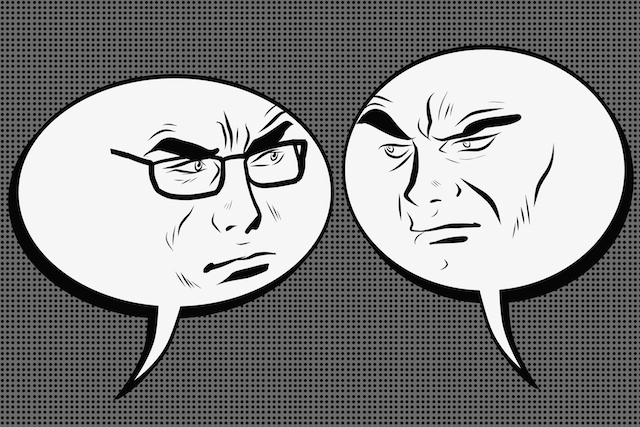
Tag: fight

  • 5 Effective Guidelines for Fair Fighting in a Conflicted World

    5 Effective Guidelines for Fair Fighting in a Conflicted World

    “The greatest obstacle to connecting with our joy is resentment.” ~Pema Chodron

    It happened today. Two minutes after announcing I was on lunch my coworker failed to pick up a call, letting it roll to my line. I angrily picked up the receiver and hustled through the call as fast as I could.

    As soon as the call ended, my coworker apologized, and in a voice that almost fooled me as well, I answered, “That’s okay!”

    It wasn’t okay. It upset me. I would really appreciate it if it didn’t happen again in the future.

    These are all clear indications that it’s time to establish clearer boundaries.

    Throughout my life, I’ve had the opportunity to explore healthy and unhealthy forms of confrontation.

    At best, a confrontation addresses specific behaviors, one at a time, and does not involve attacking the person’s character, in an environment that is comfortable for all parties. A worst-case scenario involves flat out berating someone, or a sudden attack after frustration after frustration has boiled you over the edge.

    I’ve gone both routes, and I can tell you the better prepared everyone is the better the conversation will go.

    Oftentimes, I find we avoid direct conflict management at all costs. Our first route is usually to find someone who knows those involved and complain. Sometimes this is called venting, but be aware that venting can easily turn into gossiping.

    Sometimes there is a person smack dab in the middle of the conflict, and she usually gets to hear both sides and mediate, never actually bringing the two of you together. This usually doesn’t help the situation. Your friend will become exhausted and overwhelmed and start to think you’re both being ridiculous.

    This kind of proxy communication often puts the middleman in a position vulnerable to breaching confidentiality. If anything, it will only prolong and fuel the conflict.

    If we don’t talk to someone who knows the other party, we are probably talking to someone who doesn’t. Be careful, these people are usually listening for their own entertainment and will do little to help you resolve the situation. There are people who will genuinely listen and try to help. Just make sure your listener is one of these people.

    Even when you find someone genuine to listen, he may soon grow impatient and be able to recite your own accusations for you. Because he doesn’t know who you’re mad at personally, he may soon realize his own lack of ability to resolve the situation as an outsider or may feel uncomfortable judging someone he doesn’t know. Now there’s one person left to speak with: The person who upset you!

    Confrontation and boundary setting take planning, consideration, and courage.

    The best advice my father’s ever given me is to write out what you want to say before you say it if you think your emotions will blur your true intentions. The best advice my mother’s ever given me is that we teach people how to treat us. I think both can be effective insights for conflict management. They have influenced my personal set of guidelines for effective confrontations:

    1. Never attack the person’s background, personality, or parents when confronting someone.

    Not only will this be extremely hurtful, it will distract you both from the true issue. This is actually a logical fallacy called “Ad hominen” in the academia of law; telling Susie because she rear-ended you with her child in the car she must be a bad mother is not only rude, it’s illogical.

    2. Address each behavior or event separately.

    Listing all the ways someone has let you down will overwhelm them and feel like an attack. Try by starting with what has upset you the most. You may find that the smaller details don’t need to be addressed or somehow tie in to the main upset.

    3. If you are able, try to think where your friend may say you failed.

    Having this wisdom going in will keep you from looking like a jerk when you vehemently deny your own shortcomings because you’re shocked that he has the audacity to actually be mad at you!

    4. Use feeling talk.

    “I felt very hurt when you said you were glad she cheated on me.” As opposed to: “For the record, you said you were happy she cheated on me, and that makes you a jerk!” The wisdom behind this is: 1) No one has the right to challenge the way you feel, and 2) By owning your feelings you keep the focus on your needs and away from attacking them.

    5. Know that when it’s over, it’s over.

    A mutual agreement must be made at the end of every attempt at conflict resolution. Either you decide to go your separate ways or you will devise a new set of conditions for your friendship, also known as boundaries.

    You and your friend may have different viewpoints as to where to go from here, and that’s okay. What’s important is to respect each other’s newfound boundaries.

    Down the road, chances are you and your friend will both feel a little differently about the situation. If this is the case, it may be worthwhile to revisit your feelings together, but only if you both feel safe and willing to do so. In all other cases, it is best to avoid bringing the issue to light over and over again.

    My guidelines have not only been influenced by my parents, but also by my personal experience with breaking each of these rules. Most likely, you won’t fight fairly every time you argue with someone. However, I’ve found that using the tips above creates a better experience in a conflicted world for everyone.

  • Don’t Control Anger, Control Yourself

    Don’t Control Anger, Control Yourself

    “Speak when you are angry and you will make the best speech you will ever regret.” ~Ambrose Bierce

    I once had a much-cherished friend who meant the world to me. The problem was that we were both short-tempered individuals and the word patience was fictional to both of us.

    There is a thin line separates right from wrong and when one is blinded by anger; it can be near impossible to see this line.

    Invariably, my friend and I kept crossing it and ended up destroying what was one of the most beautiful bonds anybody could ever have.

    One day in a fit of anger we said some mean things to each other in front of a lot of people, and that was the end of our relationship. From days of completing each other’s sentences, crying on each other’s shoulders, and growing together as best friends, we are strangers who walk this planet today.

    Much has been said about anger, an emotion that most of us experience often. We read about anger, we learn anger management tips, and we know that it is an emotion with the power to destroy, and yet when it comes to our own lives, it’s an altogether different story.

    When I replay the way I “reacted” to the whole incident instead of “responding” to it, I think of a hundred different things that I could have done right. I still wonder why I said those things, and in front of so many people.

    When we were little kids we used to write with pencils. It was a sign that told us that our mistakes could be corrected. As we grew older we received permanent markers to paint with on the canvas called life. This is because we were expected to take the responsibility of not making irreversible mistakes.

    How we manage our anger will decide if there are ugly marks on this canvas.

    Anger may be an emotion that we cannot evade, but the truth is that life is much more beautiful when we learn not to succumb to it.

    I have always been a short-tempered person. I’ve tried various things to control this, in vain. After having ruined many relationships because of this, I decided it was time to do something about my anger.

    I’ve been asking myself “Is it possible to be someone who never gets angry?”  

    There was once a saint who felt like having a bottle of beer. He asked his disciples to get him one. When the shocked disciples did as they were told, the saint simply folded his hands and stared at the bottle.

    Later, he asked his disciples to take it away. When one of them asked him, “What was it that you did?” the saint told him something that we all need to understand. He said, “I cannot control the feelings, the emotions, or the temptations but I can definitely control my actions.”

    As long as I keep my hands folded, there is no way I can grab this bottle of beer, and even though I cannot control my temptations I can control my actions.

    While anger is something we cannot control, what we do when we are angry is something that we definitely can control.

    Imagine you are working on a beautiful painting and suddenly there is a power outage and it’s pitch dark. Would you continue to make strokes on the painting, hoping that it miraculously became a masterpiece?

    In the same way, when you are angry the best thing to do would be nothing at all. Anger is like a power outage for the thinking part of your brain.

    These days, when I get really upset I choose not to say anything. I retire to my room for a couple of minutes, listen to some music, or distract myself. I let myself feel the emotion, but I don’t let myself react.

    Like the saint, I hold my hands and control my tongue, because if I cannot control anger, I will control myself at least.

    The Buddha said, “Holding on to anger is like grasping a hot coal with the intent of throwing it at someone else; you are the one who gets burned.”

    When I look back at the incident with my friend, I feel like a lot could have been different had I not succumbed to my emotions. In the process I have hurt myself more than I have hurt my friend.

    So I ask you, the next time you get angry, don’t try to control the anger; instead try to control yourself. With a little practice, it becomes a part of your life and you become a person who never lets anger ruin a valued relationship.

    Photo by Scarleth White

  • Speaking Your Mind Without Being Hurtful

    Speaking Your Mind Without Being Hurtful

    Friends Talking

    “If you propose to speak, always ask yourself, is it true, is it necessary, is it kind.” ~Buddha

    Many of us allow other people’s opinions to dictate what we believe, value, or perceive. It’s not always easy to stand up for our beliefs and opinions when others, particularly those we care about, constantly bombard us with their views.

    You might be thinking, “No, not me! This never happens to me. I’m strong in voicing my beliefs.”

    At one point or another, we all conform our opinions, either to avoid confrontation or judgment or because we’re losing faith in what we feel is right.

    Ask yourself, “Do I often justify what I believe after engaging in conversations with others? Am I continuously second guessing myself?” If so, you may be losing yourself.

    I used to be someone who always avoided conflict with others at all costs. Needless to say, I was passive by nature, and I shied away from standing up for my beliefs.

    I would avoid and distance myself from any means of voicing my opinions. In turn, I became submissive and engaged in both romantic and platonic relationships with people who were more dominating in demeanor.

    While I lacked the willpower to express my own ideas, I found myself in a state of annoyance and frustration from allowing others to indirectly control my life. Feeling helpless and unaware of who I really was took a toll on my mental well-being.

    I longed for the ability to express my thoughts and opinions freely. I craved the feeling of acceptance by others, without judgments being passed.

    I deeply admired and looked up to my sister as a role model, one who possessed the internal strength to be truthful to herself and others, regardless of the consequences.

    Sometimes my sister would discuss her issues with her friends and seek my advice, perhaps to validate if she was doing the right thing. Sometimes she wasn’t sure if she was coming on too strong and pushing others away because of her honest and strong-minded nature.

    She’d often find herself in situations where she would lose friends. Perhaps her honest opinions were too much to handle.

    When she would come to me in full-blown tears, asking me, “Why do my friends keep leaving? Why don’t they understand that I am just trying to help them?” I would respond to her by saying, “They don’t want to hear the truth from you, because sometimes the truth hurts.”

    Friends who resent one’s openness and honesty are usually, in turn, not worthy of the friendship.

    Looking back at the way I used to be led me to a conclusion. It’s not what you say to others; it’s the manner in which you say it that truly matters.

    I finally realized that, although my sister and I had opposing approaches of maintaining our relationships, neither of us was necessarily wrong in the way we went about constructing them.

    We often want to give genuine advice or opinions. However, we also need to understand that it’s not always easy to accept the truth. We need to find the balance and set limitations in order to maintain positive relationships.

    While I had no problem in maintaining mine, I often felt repressed in terms of being expressive. In contrast, my sister’s strong-minded character eventually caused her relationships to slowly dissipate.

    Over the years, I have learned that using appropriate language, word choices, and tone is the key to flourishing relationships.

    Speaking constructively and delivering tactful criticism eliminates the chance to pass biases. This also creates a healthy environment and opportunity to grow.

    As I’ve matured, I’ve recognized that my opinions actually matter and have the right to be heard. Having said this, I have learned that it is more effective to give an opinion or advice when it is sought.

    When I engage in conversations, I always try my best to think before I speak. Then, I contemplate, “Is it worth saying? How will what I say make a difference to this person?”

    If I proceed to give my opinion, I then decide, “How can I say this in such as way that it comes across as genuine, yet constructive?”

    By nature, we all have the tendency to overreact; it’s important to choose our battles wisely and release the negative energy that surrounds us.

    Be real; tell the truth using kind and heartfelt words. Respect will follow.

    Even though telling the truth may be difficult for many people, it’s the approach that we take that allows us to earn the respect of others.

    Often enough, people are so preoccupied with verbally offending others that we end up feeling as though we need to “walk on egg shells.” We may also end up saying something we didn’t originally intend.

    When I was one of those people who worried about what others thought, I allowed my life to be dictated and controlled by someone else’s agenda.

    I always felt obligated to adopt the views of my partners and friends, in fear of disappointing and upsetting them. I struggled to find the courage and willpower to rid myself of this imprisonment, in search of a voice, love, and passion.

    Through some of my ongoing romantic relationships with over-bearing, possessive men, I have come to terms with the fact that telling the truth will not always yield a positive or expected outcome.

    Still, I think that it is most important to be true to yourself. You need to be happy first before you can make others happy, and that means not self-sacrificing for unappreciative, non-reciprocating individuals.

    Speaking up for what we believe and sharing our opinions can be helpful and beneficial—when it’s appropriate, kind, constructive, and consistent.

    Photo by Seniju

  • How the Need to Be Right Can Lead to Guilt and Regret

    How the Need to Be Right Can Lead to Guilt and Regret

    Sitting Together

    “The obstacles of your past can become the gateways that lead to new beginnings.” ~Ralph Blum

    I think we all have this issue: guilt, followed by its sister, regret.

    I didn’t realize how dark a blemish it was on my heart until I fully felt the anguish of my mother’s death. I never quite realized my full potential, courage, or strength until her passing.

    Her greatest sacrifice, leaving this earth, proved to be my greatest motivation to search myself for the answer of whom I was and why; it was the major catalyst in my life for change.

    Sometimes the best things for you are the hardest.

    Admitting the darkness you’re carrying inside is one of the hardest things to do. Convincing yourself that you have been wrong and need to change can be even harder.

    Forgiving yourself because you are human, and loving yourself enough to know you deserve more, and deserve to give others more, is the hardest task of them all.

    I was an embittered person almost my whole life. I could hold a grudge with the best of them. I felt I had a lot to be resentful for, and truthfully, much of it was not unwarranted. But with my inability to never let go of things, I was miserable, making everyone else around me miserable, as well.

    This went far beyond just being angry. I felt I was being terribly misunderstood and never heard. I also felt the constant need to have to defend myself and my views with a strong argument.

    I had a very strained relationship with my mother starting when I was 14. I was at that age when I thought my parents knew nothing and I was smarter than they were.

    I can now fully understand why I felt that way, beyond just normal teenage rebellion. I was projecting a lot of my older siblings’ perceived unpleasant experiences with my parents onto my own, and letting that determine my relationship with them.

    There was a lot of friction between them, and I somehow felt that if I didn’t share their same resentment I was somehow betraying them.

    Because of this, I went through my youth and into my adulthood expecting my mom to give more than she could and blaming her, instead of blaming myself for not having enough compassion and never taking the time to understand that she was a person, too.

    I seemed to always be aggravated at everything she did.

    I held onto the need to be right, never letting up and always needing to argue. I grew into this person who could never listen with a compassionate heart and lived with resentment instead of love, kindness, and forgiveness.

    I was very hard-hearted instead of soft and pliable and forgiving.

    We would have bouts of calm when we got along great, then something would shift in her mood or mine and it would turn volatile. I see now that, because we were so much alike, it caused much of that friction. This went on for our whole relationship, up until just a couple of years before she died.

    I’m not saying she was without her faults, too. But now that she’s gone, and since I am much older, I can see everything so much clearer. That’s where the guilt comes in.

    We had been working on our relationship, though we didn’t acknowledge that openly, and we were really making headway. You see, I couldn’t even hug her, hadn’t done since I was a kid. But I was getting closer to her and hugging her more because I knew she needed it, and so did I.

    My great wall was crumbling.

    We had always done things together for years, not that that stopped the bickering. But that was all but over for a long while. Not long enough, though. And this is where the regret comes in.

    I wasted so much time being angry and self-righteous that I missed out on having a better relationship with my mother.

    If I had only known then what I have learned in the last few years and especially since her death, I could have saved myself the burden of that guilt and regret.

    There are so many moments each day where I will have a memory of us together and I will feel shame for the way I reacted to a situation. In my mind I can change the outcome to something that I should have done to handle the situation better.

    When she would be difficult, and she could be at times, why did I have to make it worse? Why couldn’t I have just stayed calm and had compassion for her feelings instead of getting overwhelmed and lashing out?

    I was incapable of doing that at the time because it’s hard to do when you are totally unconscious. You act before you think, lash out before you embrace.

    Oh, how I wish I had known this calm before it was too late! I think about the agony I could be saving myself now, and I am filled with remorse. But it doesn’t have to be that way. You can save yourself from the pain that I am trying to overcome.

    All it takes is a step in the right direction.

    It is so important to put your prideful ego aside and try the softer way. Ask yourself these three questions:

    1. Will it destroy me to “give in,” take the barriers down, and not have to be right all of the time? 

    When you “give in” it is not to lie down and be trampled on, but to slow down and reflect on what’s most important. The egotistical need to be right is what will ultimately destroy you. It leaves no room for compromise or compassion for another’s feelings, and will cause you more damage in the long run.

    2. Is it worth it to be right, making the argument more important than making someone else happy?

    When you constantly reinforce to the people in your life that you value your own opinions more than their feelings, it can cause a lot of hurt. Why not take the higher road and save the moment by saving your voice?

    3. Will my actions now cause me pain and regret later? 

    My biggest lesson learned was that, if I had only known then what I know now, I could have prevented so much grief.

    I wish I had had more generosity in my heart at that time. I wish I knew how to pause and let myself have that moment to feel the clarity that I needed to make a better choice in how I handled the situation at hand.

    I know that, when she did things that I considered unforgivable, it’s because she didn’t know any better and was only doing the best she knew how at that time, as was I.

    I am so grateful that I have learned these lessons now so that I can have the opportunity to live this way from here on out. I’m a big believer in things happening for a reason, and though I don’t quite know how to justify this one, I thank my mother every day for her sacrifice in that in losing her, I gained the greatest insight.

    I just wished I’d learned these lessons sooner.

    Photo by Kevin Krejci

  • How Accepting Your Pain Can Help You Heal

    How Accepting Your Pain Can Help You Heal

    “Whatever the present moment contains, accept it as if you had chosen it. Always work with it, not against it.” ~Eckhart Tolle

    My partner, Ruth, and I were not happy.

    The inside of her mouth was covered in sores, she couldn’t swallow well, and she was exhausted. The chemotherapy was ravaging her body. Something had to be done.

    When her oncologist, Dr. Patel, came into the room, he perched on his little rolling stool and looked up at her Ruth where she sat on the exam table with her legs dangling.

    She railed against the chemotherapy and what it was doing to her. I seconded her sentiments silently with frequent nods and frowns.

    After some time, Ruth finished her diatribe and crossed her arms, daring Dr. Patel to fix this invasion into the very lifeline of her system.

    His expression had never changed during her speech. He looked at her intently, listening carefully, but his eyes were soft with care and concern. Now those eyes looked deeply into hers.

    “Ruth, don’t resist. Don’t resist the chemotherapy. Allow each drop to enter your body in a healing way and do its work. Resistance does not help you; it only saps your energy. In your treatment, in your work, in all places in your life—don’t resist. Go with whatever comes rather than struggling against it.”

    Ruth and I looked at each other and then back at Dr. Patel.

    Don’t resist? (more…)

  • 10 Ways Overcome Conflicts in Relationships and Grow Together

    10 Ways Overcome Conflicts in Relationships and Grow Together

    “You can’t stop the waves, but you can learn to surf.” ~Jon Kabat-Zinn

    About six months into a serious relationship with my boyfriend, we started experiencing major conflict. Fighting over small things, flipping out over misunderstandings, we just couldn’t seem to get on the same page about anything. This caused me to think about relationship conflict in general, what causes it, and how to deal with it.

    It’s clear that relationship conflict occurs because expectations aren’t being met. Each person comes into a relationship with certain expectations. These are based on past experiences, childhood, or how you think things should be.

    The problem is that no two people think the same, no matter how much you have in common.

    A lot of couples see conflict as a time to bail—either because they were already looking for a way out or because they freak out and feel threatened. When our ego feels threatened, it activates our flight-or-fight response. Sometimes it may be hard to get resolution on a conflict, making matters worse.

    Instead of seeing conflict as a threat to a relationship, what if we reframed this and saw conflict as an opportunity and a sign of growth in a relationship?

    This requires understanding that conflict will inevitably occur in a close relationship. The only way of getting around it is to not share your opinion at all, which is not healthy.

    So what if we focused on sharing our opinions in a way that is productive?

    To do this:  (more…)

  • How the Differences in Your Relationship Can Be Gifts

    How the Differences in Your Relationship Can Be Gifts

    “We need not think alike to love alike.” ~Ferenc David

    Our commonalities were small, insignificant perhaps, but being in high school, we were both uninterested in comparing notes on religious beliefs or political affiliation. I appreciated his humor and he my smile, and that was the end of that—until we became bona fide adults, that is.

    After a year of bliss and a few declarations of, “no, we don’t fight at all!” we began to notice the things that set us apart and the experiences that shaped us in vastly different ways.

    He came from a broken family while mine was still firmly in tact; he was staunchly conservative while I leaned more to the left; I could be labeled “New Age,” while his religious upbringing was more traditional.

    Firmly rooted in what I believed to be “right,” I ignored the differences in hopes that we could eventually learn to think and believe the same way.

    This, as you might have guessed, never happened.

    With these monumental differences laid out in front of us, we had every reason in the world to say our goodbyes and move on. But it was in our decision to stick together that we learned far more about who we were as individuals than we would have had we found carbon copies of ourselves.

    We certainly didn’t think alike, but we loved alike. And in doing so we both learned some of life’s sweetest lessons. (more…)