Tag: feeling

  • Riding the Wave of Rage: How Mindfulness Became My Lifesaver

    Riding the Wave of Rage: How Mindfulness Became My Lifesaver

    “Letting go gives us freedom, and freedom is the only condition for happiness. If, in our heart, we still cling to anything—anger, anxiety, or possessions—we cannot be free.” ~Thich Nhat Hanh

    My anger has gotten the best of me more than I care to admit. I’ve smashed windows, broken chairs, had movie-worthy brawls on the beach, and said gut-wrenching stuff that has brought people I care about to tears.

    I grew up when mental health was not taken seriously, nor was it even on my radar. I just took my wild nature to mean I was screwed up and hopeless. And sadly, the thought of seeking support only brought up more anger. It felt like I was weak, pathetic, and a loser for being unable to sort my life out.

    So, without understanding why my emotions were such a rollercoaster (undiagnosed depression and type II  bipolar disorder), I didn’t know where else to turn except to my dear ole friend Sailor Jerry, the purveyor of fine spiced rum. Alcohol only fueled my emotional outbursts, exacerbating the problem.

    Knowing that kind of anger lived inside me brings on an emotional blubbering mess of a show. Because overcoming the guilt that came from identifying with those actions and feeling like that’s who I was as a man took years of therapy.

    It feels so different than the person I am now.

    I understood in therapy that it’s not my fault per se, but it is my responsibility to do something about it.

    Nothing has driven that lesson home more than being a dad.

    And if my daughter is anything like my wife and me, we got ourselves a wild child ready to test our limits.

    Living with Canadian winters means it’s inevitable that, at some point, you’ll lose control of your car. I once did a complete 360 on the highway on the way to work as I lost control on black ice. I didn’t think; I just acted based on what I learned in driving school.

    If you’re driving your car and it starts to skid, you go with the flow of your vehicle and move in the direction of the skid, not against it. That’s how you regain control, even if it seems counterintuitive.

    Anger is the black ice of emotions. You’re often thrown into a spiral of anger before you even have the chance to mindfully be aware that you’re losing control. That’s why I’ve found the practice of mindfulness and daily meditation life transforming.

    The anger never goes away because you never stop experiencing the emotions of life, but through the practice of mindfulness, you create space between the stimulus (my wife and I fighting, exhausted from a sleepless toddler, and businesses to run) and the response (thinking it’s time to end the marriage).

    You can choose to respond and act differently because you see the trigger for what it is for you.

    Think of it like a gigantic pause button that allows you to slip into Matrix mode. You see the stimulus, pause for presence, and respond with intention. My daughter is not purposely trying to throw our lives into chaos. My wife and I aren’t fighting because we no longer love each other. We’re dealing with the tornado nature of a toddler, running businesses, and being pushed to our limits.

    It’s better to respectfully and constructively communicate your feelings with your partner if you plan to stay married. I get it. Easier said than done, but we need to believe that we’re not inherently flawed and beyond help.

    My previous relationships all had their fair share of fights (stimulus), resulting in my doom spiralling into believing it was time to burn it all down (response). Without a pause between stimulus and response, the middle became a breeding ground for an unconscious poison cocktail of guilt, shame, and a need to escape the uncomfortable reality of what I was facing.

    Let’s be honest. I wasn’t making any effort to change. Repairing a relationship without tools is damn near impossible. Through therapy, I gained a deeper understanding of my emotional struggles and the root causes of my anger. Now, I have a fully stocked toolbelt that I feel comfortable using.

    And that’s where the power of mindfulness comes in. You learn to know and trust yourself well enough to tap into a greater energy around you, and you become calm in any situation. You see the black ice, grip the wheel, and control the situation by keeping yourself present with the stimulus.

    When faced with a challenge, do you possess the mental flexibility and self-awareness to remain centered and connected with that space between stimulus and response, and move forward in a way you can be proud of?

    Or do you struggle against challenges, only to give up because negative self-talk and conditioned thinking compel you to repeat the same destructive pattern, leaving you guilty and ashamed?

    I’m not saying I never get angry anymore. But I sure as hell try my best not to throw rocket fuel on the fire. Addressing the root of the problem—undiagnosed depression and type II bipolar disorder—helped me better understand how to cope with a rollercoaster of emotions and feelings that previously felt beyond my control.

    Life is a lot like being in a high-stress athletic event. The ability to react to another player’s actions without emotional triggers often makes the difference between making a wise or a poor decision and ultimately winning or losing the game.

    The only difference is that the game of life truly never ends. We will only lose if we stop improving and holding ourselves to a higher standard for how we show up in the world. Taking full responsibility for our lives can be terrifying, but it also creates a sense of personal freedom. This is because it allows us to take action toward becoming the people we know we’re capable of being.

    To thrive, you must mindfully choose to go with the flow of your emotions and drive toward anger, shame, and guilt, not away from them. You must sit with these feelings, pause to recognize how you’ve been triggered, and consciously choose a response you’ll feel good about. This way, you regain control of your life by releasing yourself from a pattern of actions that no longer serves you. Remember, practice makes progress.
  • How Pain Can Be a Teacher and Why We Need to Stop Avoiding It

    How Pain Can Be a Teacher and Why We Need to Stop Avoiding It

    “The strongest hearts have the most scars.” ~Unknown

    I always hated pain when growing up. For as long as I can remember I tried to avoid it. Physical pain was uncomfortable, but emotional pain was the real torture. It was sometimes easier to have a fight and stop communicating than to have a challenging conversation.

    Disconnecting emotionally and withdrawing from painful experiences was my de facto subconscious strategy. I still pursued goals and succeeded, but this didn’t feel painful to me because I used my passion and bravado to drive through the long hours and grueling work.

    If I wasn’t avoiding pain, I was in denial. It cost me. Ignoring a painful feeling made me numb all over. Denying an unpleasant emotion made me oblivious to the whole spectrum of sensations.

    Avoiding dentists created more issues and massive bills down the road. Dodging challenging scenarios and boredom cost me passions and hobbies that could have led to a different career or a creative outlet.

    This continued until one day I found myself without busy work and distractions when taking a career break. Not being able to hide behind time fillers, a whole army of emotions and feelings came at once. The bottled-up monster escaped, the dam broke, and the castle fell under attack.

    It was overwhelming and frightening. Remembering from my coaching training that sensory adaptation will kick in at some point, I let it all play out. I meditated for hours observing the emotions rising and falling like an ocean tide. Eventually, the monster deflated and the flood dried out.

    Recognizing that there is an issue is the first step to resolving it. I realized that this was not the way I wanted to continue living. After learning more about mind machinery, I became aware of my behavioral patterns. Enneagram type 7, called Enthusiast or Epicurian, perfectly described how I ran “Me”—motivated by a desire to be happy and avoid discomfort.

    Before that, I accepted my pain avoidance patterns as an unchangeable status quo. I did not see reality in any different way. With time, I learned that pain was not the bogeyman to be afraid of.

    Pain became my teacher, an early alarm that something was not going well, and a motivator. Getting praise and encouragement for good behavior isn’t the only way to learn. Our participation prizes-driven society creates a false sense of entitlement, preventing us from personal growth.

    Teacher pain can fix unproductive behavior or an issue almost instantaneously. As cruel as they can be, these lessons are long remembered and followed sometimes our whole lives. A perfect example of this is how Tony Robbins made his early mark as a quit smoking coach by making clients associate nausea and fear of his booming voice with cigarettes.

    To be clear, I’m not suggesting we should knowingly hurt ourselves or others as a teaching tool; just that we need to stop avoiding pain and discomfort because they can both lead to growth.

    When I became appreciative and respectful of pain, I was able to slow down and learn more about what it taught me.

    Our bodies communicate through sensations. Pain is one of the common languages that the body uses to make us understand in a split second that something isn’t right. It also can speak for both your body and mind, as our emotional and physical circuitry is interconnected. Taking Panadol can ease the pain of social rejection in the same way it can fix your headache.

    It is the language that bonds us with other humans. Shared painful experiences do not need to be explained. They are understood on a deeper level. Compassion is born from the language of pain, as it makes us appreciate what another person is going through.

    What would our lives be like if we never experienced pain? Without an early alarm system, a broken bone would not hurt, eventually causing a deadly infection. A serious illness would go unnoticed until a person perished. Congenital insensitivity to pain is a very rare condition affecting 1 out of 25,000 newborns. It is also very dangerous, and most affected people do not survive their childhood.

    When we strip away pain from its emotionally excruciating quality, it is essentially a sensation. Experienced meditators can attest that knee and back pain during long seated meditation sessions eventually lead to the emotional context fading away, showing pain for what it really is.

    It took time to learn the language of pain. Running out of breath, having sore muscles, or feeling anxiety before a performance is good pain. Sharp pain in joints or feeling of discomfort, leading to a crippling flight-or-fight response, is a different animal.

    Good pain keeps us wanting more of the experience. It motivates incremental growth by forming a habit of seeking that familiar feeling. Its bad cousin will cripple us if left unnoticed or overwhelm us, teaching hopelessness.

    The school of pain can’t be skipped. We can’t call in sick or cheat our way out of it. The teacher pain will keep calling our names until we show up for the lesson. Avoiding it would eventually cost more. It is feeding a bottled-up monster that one day turns into a formidable Godzilla.

    It’s pointless to hide from it. Just like Buddha found out about death, sickness, and old age despite his parents’ best efforts to shield him, we will all have to accept that it is ever-present in our lives.

    Walking a life journey made me realize that sometimes there is no other option but to face pain. As uncomfortable and frightening as it may be, if I don’t square up to the monster, it will never go away.

    The saying “the only way out is through” holds true. The next level of personal growth has to happen through discomfort. Though these victories may be invisible to everyone else, they are uniquely valuable to us.

    It may sound like I’ve mastered the art of facing the uncomfortable and I am no longer concerned about pain. That is not true. The lessons I get from pain are still challenging.

    As much as I don’t want to sit through hard lessons, I’ve learned to respect and heed pain’s presence. Knowing that becoming invincible to it is impossible, I’ve learned to recognize the challenge and see it as a catalyst for growth.

    Anticipating pain keeps me motivated to avoid its visits and learn on my own. I will probably never tolerate pain as some people do. I am probably wired that way. But nature can always be complemented by nurture. Resilience, acceptance, and embracing the suck make it valuable learning.

    In her influential book The Upside of Stress, psychologist Kelly McGonigal challenged conventional thinking that stress kills. The research shows that how we perceive stress can turn a negative into positive. Pain can be seen in the same way.

    We can’t pick and choose which parts of human experience we want to face. As tempting as it is to only eat the cherry on top of life’s cake, this will never make us appreciate life wholly. We need to accept all of it. Without pain, we do not know pleasure. Without the discomfort of ignorance, there is no bliss of knowledge.

  • The Childhood Wounds We All Carry and How to Heal Our Pain

    The Childhood Wounds We All Carry and How to Heal Our Pain

    “As traumatized children, we always dreamed that someone would come and save us. We never dreamed that it would, in fact, be ourselves as adults.” ~Alice Little

    Like most people, I used to run away from my pain.

    I did it in lots of different and creative ways.

    I would starve myself and only focus on what I could and couldn’t eat based on calories.

    I would make bad choices for myself and then struggle with the consequences, not realizing that I had made any choice at all. It all just seemed like bad luck. Really bad luck.

    Or I would stay in unhealthy relationships of any kind and endure the stress that was causing. Again, I didn’t see what I was contributing or how I was not only keeping my pain going but actually adding to it.

    These are just a few examples of the many ways I ran away from my pain. The real pain. The one below it all. The one that started it all. The core wound.

    The wound of unworthiness and unlovability.

    The wound that stems from my childhood.

    And my parents’ childhoods.

    And their parents’ childhoods.

    But this is not a piece on how it all got started or who is to blame.

    No. This is about me wanting to share how I got rid of my pain.

    Because discovering how to do that changed my life in ways I never thought possible.

    It is something I would love for you to experience too because life can be beautiful no matter what has happened in the past. I don’t want you to miss out on this opportunity. Especially because I know it is possible for you too.

    Hands on the table, I am a psychotherapist and I have been for almost ten years. I also train and supervise other psychotherapists, so I should know what I’m talking about.

    But, let me fill you in on this: There are plenty of professionals who haven’t done ‘the work’ on themselves. I know, I’ve met them.

    And I have met hundreds of people who don’t have any qualifications, but they have done the work on themselves. I know, I’ve felt them.

    Doing the work, in the shortest possible summary, is all about facing your pain. It’s when you stop—or when you’re forced to stop, which is so often the case—and you’re done with running away from it.

    It’s when you finally give up.

    Sounds like a bad thing, right? But it isn’t.

    To heal, you have to see the pain.

    We all think we see it or feel it or know it, but we don’t.

    We know what it feels like to run away from it and the pain and stress that causes. The constant anxiety, the pressure, the breathlessness, the numbness. That’s what we know.

    But that’s not the pain, not the pain of the core wound. Those are the symptoms of not dealing with the wound, of not healing it because you’re too afraid to even look.

    It’s fear that stops us from healing.

    It’s not the process of healing itself that scares us; it’s what we imagine healing means. And it usually is nothing like we imagine it to be!

    Healing just means facing the pain.

    Let me try to make it more practical:

    Do you remember a time when you were very little, maybe three or five, or maybe a little older?

    Do you remember, in your body, how it felt to be misunderstood? How to want something and then not get it? How to be punished for something you didn’t do? How to be shouted at for no reason at all just because someone else was stressed out and couldn’t control themselves?

    Do you remember how that felt?

    I do.

    That’s the origin. All those little incidents when we were too young to understand what was going on, but we made it mean something negative about ourselves.

    Because what was reflected back to us by the world, by the people we loved the most, was that something was wrong with us, that in some way we were flawed, wrong, or bad.

    Our brains were too young to take a different perspective, to defend ourselves from unfair judgments and punishments, and so we took it all in.

    And believing something horrible about yourself that isn’t true hurts. Believing that you’re not good enough hurts. Believing that you’re unlovable hurts.

    It also scares us, and so we no longer feel safe.

    Safe to be ourselves. Safe to love. Safe to be loved.

    We start to hide from ourselves and our pain. We start to hide our truth and inhibit the great humans that we actually are.

    Because in those moments, those moments of misunderstanding, we receive the wrong message—that we are not worthy of being heard, trusted, held, or loved.

    We are pushed away, through being ignored, threatened, or punished.

    And then we start doing that to ourselves.

    We want or need something—just like we needed it then when it was inconvenient to a parent who shouted at us and invalidated what we wanted or needed—and we deny it or minimize it.

    We want to say “enough” and set a boundary with someone—just like we wanted to when we were little but were told we didn’t know what was good for us—but we don’t do it.

    We want to choose what we like or are excited by—just like we tried to when we were young but were told we were being stupid, childish, or silly—but then go for the boring, reasonable option instead.

    We carry the pain on.

    We don’t stop to ask ourselves whether that’s actually what we should be doing.

    We try to avoid re-experiencing the pain from our childhood by treating ourselves in exactly the same ways as we were treated back then.

    We don’t realize that we’re keeping that usually unconscious pattern going.

    The most obvious example I can give you from my life is that I didn’t grow up surrounded by emotionally available adults. So obviously I didn’t become one either. I wasn’t emotionally available to myself, and I didn’t choose emotionally available partners in my relationships.

    As a result, I got to relive my childhood experiences over and over again while not understanding why I kept feeling so depressed, unloved, and worthless.

    I kept the pain going by being closed off to how I was feeling and by choosing partners who would shame, reject, or ignore me and my feelings the same way my parents had.

    But I broke that cycle.

    I broke it when I faced my pain.

    I broke it when I stayed within myself when I felt something, no matter what it was.

    When I felt disappointed that I didn’t get the grade I wanted on an important university assignment, I stayed with that disappointment.

    I didn’t talk myself out of it. I didn’t talk down to myself and tell myself what a useless waste of space I was. I didn’t pity myself or blame my lecturer. I didn’t numb myself by binge-watching Netflix and eating chocolate.

    No, I stayed with the disappointment.

    It was like I was sitting opposite my disappointed three-year-old self, and I stayed with her.

    I didn’t shout, mock her, invalidate her, leave her, or make her wrong for feeling how she was feeling.

    I stayed with her. I saw her disappointment. I saw her pain. I knew what she was making it mean and I stayed with her.

    I didn’t push her away. I didn’t push the pain away.

    And guess what happened?

    It started to speak to me! And it made sense!

    It wasn’t scary or weird or awkward or crazy! It made complete sense.

    And it needed me to hear it, to understand it, and to parent it.

    Just like I parent my children.

    “Of course, you feel disappointed. You have put so much work into this, and you didn’t get the result you wanted. I get it. I’m here to listen to you. I want to understand you.”

    Do you know what that does? It calms you down. Truly.

    It calms you down. It’s such a relief!

    Finally, someone wants to listen! Finally, someone doesn’t turn away from me like I am the biggest threat they have ever encountered. Finally, someone looks at me with understanding and compassion.

    This is what I do with all of my feelings.

    If there is jealousy, I am there for it. I’m not shaming it, not judging it—I’m just here to listen, to soothe, to understand, and to act on it if it feels like that’s what it needs.

    So I turn toward the pain, the feeling; I try to understand what it’s all about and see if there is anything it needs from me, something more practical.

    Does my disappointment need me to ask my lecturer for feedback to improve my work for the next assessment?

    Does my jealousy need me to remind myself how worthy and lovable I am? Or does it need me to choose something beautiful for me to wear because I’ve not really paid that much attention to my appearance recently? Or does it need to speak to my partner because he’s much friendlier with other women than he is with me?

    A lot of the time the pain tries to alert us to doing something we need to do for ourselves.

    By not facing the pain, by not tending to it, we can’t know what it is that it needs us to do—and it’s always something that’s good for us.

    And so we go without what we want and need, and the pain only grows bigger and louder like the tantruming toddler that is only trying to express herself in an attempt to be heard, held, soothed, and taken care of by their parent.

    It’s time to stop doing that to ourselves.

    I did many years ago, and I feel like a different person. The way I live my life is different. The way I feel about myself is different. I no longer go without what I want and need.

    That can’t happen as long as you use up all your energy to run away from the pain.

    The pain is your invitation to do the healing work. It invites you to stay and listen, to find out what’s really going on below all distractions and symptoms.

    What is the feeling that needs to be felt?

    What is the pain that needs to be witnessed and understood?

    And what does it need you to do for it so the core wound can finally heal?

    You have the power to heal it. You are the only one you need to heal it. But you have got to stay and learn to be there for it, learn to be there for yourself.

    That’s it.

    Unlike other people, you don’t walk away. You don’t say no to yourself. You don’t go against yourself and make yourself wrong.

    You stay. You feel it. You give it what it needs.

    And that’s when it heals.

  • Why Feeling Anxiety Was the Key to My Happiness

    Why Feeling Anxiety Was the Key to My Happiness

    “Lean into the discomfort of the work.” ~ Brené Brown

    Anxiety was the core of my existence for decades.

    When I look back at my life over that time, what comes to mind first is the constant tension in my chest, a knotted stomach, and a lump in my throat.

    From the outside, my life looked great. I was college-educated, had a good job, was in a relationship; I lived in a nice place, had a decent car, and enough money to buy organic food and a gym membership.

    But I was miserable.

    Not only was I anxious all the time, worrying that people would judge me, I felt like I couldn’t feel happiness.

    Even when the situation around me was a happy one—a surprise birthday party for me, getting gifts on Christmas, a lazy Sunday morning with nothing to do but enjoy a nice cup of coffee, or a hilarious scene in a comedy movie—true happiness never seemed to surface.

    Those were all my favorite things, but I couldn’t feel the happiness in my chest and my gut. I felt like I could only intellectualize happiness.

    All I really felt was discomfort, and not just because of my anxiety but because I was constantly resisting it. I refused to accept sadness and fear as perfectly normal emotions. I thought I shouldn’t feel them, so whenever I felt that familiar tension in my mind and body, I shut down, trying to block out all the negatives.

    My Resistance to the Discomfort of Anxiety Blocked Me from True Happiness

    We can’t turn off one emotion without blocking the others. It took me a long time to learn this. In my journey to learn how to stop worrying about what other people thought of me, practicing meditation to calm my body and strengthen my mind, or learning how to deal with heartache in a healthy way, I began to lean into the discomfort.

    By that I mean I gave the tension and discomfort permission to be there. It’s like the difference between trying to pull your fingers out of a Chinese finger trap as opposed to pushing your fingers together to loosen the grip of the trap so you can eventually wiggle your fingers out.

    Years of anxiety left me feeling numb. I thought I would never truly feel happy. That was for lucky people. Or people were just lying about how happy they were.

    But as I progressed along my journey, leaning into the discomfort allowed it to flow through me instead of staying stuck.

    I leaned into the discomfort physically, mentally, and emotionally. I would sit there and breathe slowly, relax the tension and resistance in my body, and allow the discomfort to be there. I would think, “Okay, this sadness is uncomfortable. I feel it in my stomach and my chest. I give you permission to be here while you work through me.”

    And I would sit and watch the emotion instead of fighting it. It brought the wall down. I would feel the intensity lessen as I was compassionate toward it and to myself. I felt it shift. Sometimes it went away completely. It made me feel more in control. Which is a funny irony, gaining control by letting go.

    Our Emotions Can Become Stuck in our Bodies

    When our stress response is triggered, it sends cortisol and adrenaline through our veins to give us the energy and motivation to fight or flea. Once the danger has passed, if there is extra adrenaline in the body, we mammals naturally shake it off to burn the rest of it.

    For example, if you almost get in a car accident, you might notice your body shaking after. Or maybe you laugh out loud (even though it’s not ha-ha funny). These are ways we naturally “finish” our stress response.

    But us smarty-pants humans often stop this process from finishing. We get stressed at work and hold in our emotions so we don’t look weak. We experience a loss, so we hold in laughter because “it’s inappropriate” to feel happy right now. We feel sad or afraid and we stuff it down to ignore it.

    All this ends up leaving us disconnected from our full emotional experience. You can’t deny fear without also blocking joy. You can’t hide from sadness without also hiding from happiness.

    Paradoxically, by leaning into the discomfort, without fear, without judgment, we get closer to happiness.

    Without Anxiety, I Cry More

    Today I no longer “suffer” from anxiety. Sure, I get anxious if I have something important coming up—that’s perfectly natural. But I accept that anxiety and let it move through me instead of fighting it and shutting down.

    For the most part, I’m the chill person I’d always hoped I could become.

    And the funny thing I’ve noticed lately is how much more I cry. Not tears of sadness, but of happiness, pride, appreciation, and gratitude.

    I watch the news every day, and there’s almost always a feel-good story at the end. So nearly every day as I sit there sipping my coffee, I look forward to that energetic surge swelling up from my gut, through my chest, up my throat, and watering my eyes.

    Watching a talent show like America’s Got Talent, I cry every time someone does a great job feeling incredibly proud of this stranger who I know nothing about.

    I love feeling genuinely happy for others. It’s something I never fully appreciated before. I couldn’t embody the emotions even when I mentally knew “this is great.”

    If you find yourself feeling numb to happiness, know that there is hope if you’re willing to start letting yourself feel the full range of emotions.

    It may take some time, but don’t be afraid to lean into the uncomfortable feelings that arise. Anger, frustration, shame, envy—none of these feelings are “bad.” And they won’t consume you. You just have to open up, feel them, and let them naturally pass.

    Relax your body, focus on your breath, and let the energy of the emotion work its way through. Know that this is only a moment that is uncomfortable. It isn’t causing you long-term harm, and it won’t damage your body (note, if you feel truly unsafe during a practice like this, it is better to do so under the supervision of a licensed mental health professional).

    It’s like the story of the second arrow. A soldier got hit with an arrow and it hurt. Pain happens, right? When that soldier started shouting in anger, upset that this shouldn’t have happened, wailing over the unfairness of it all… he created suffering on top of the pain.

    If you were watching this soldier, you would know that if he were to just sit, take some deep breaths, and relax his body, the pain would lessen. That resistance to the pain created more physical pain as his body tensed up, and mental pain as he fought the idea of what happened.

    Here are a few resilience-building practices that can further teach you the art of letting go and leaning into discomfort:

    • Relax your body in cold water instead of tensing up
    • Resist quenching an urge like eating a cookie when you know you aren’t hungry or reaching for your phone when you feel bored
    • Mono-task instead of multi-task, especially when you feel worried about getting things done

    And as you work through the emotions that arise in these scenarios, be sure to speak kindly to yourself.

    On your journey through your anxiety, or whatever “negative” emotion you’re tempted to resist, know that you might come across some interesting things, like joy and crying, and it’s all so worth it.

  • How to Feel Better When You’re Down (Without Forcing Yourself to Be Positive)

    How to Feel Better When You’re Down (Without Forcing Yourself to Be Positive)

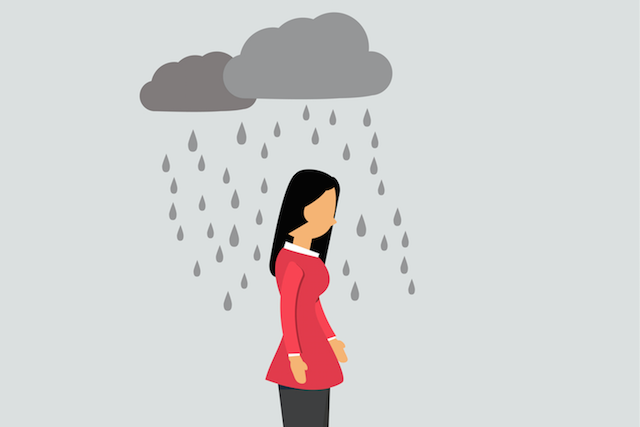
    Woman with dark cloud

    “Forget the failures. Keep the lessons.” ~Dalai Lama

    The year had finally come. I’d officially entered the “adult” world after celebrating my thirtieth birthday.

    I’d enjoyed being in my twenties. It was an incredible time for self-growth and healing after growing up in an unstable environment with a narcissistic, alcoholic father, and also a time of living life fully, having fun, and going on adventures.

    I felt pretty happy…until I hit thirty.

    I began examining my life not so positively anymore.

    Health problems had become more frequent and scary, my career path was ominous, I had not settled into a place where I wanted to live, and the answer to the big question for women my age (“Are you married with kids?”) was a definite “no.” I felt like I had nothing to show for myself.

    So, I resorted to one companion that I had known for a long time: the negativity blanket.

    We all have our times with the negativity blanket. It’s not soft, warm, or big, but it’s so familiar.

    I used the negativity blanket as protection during the times when I had no safe haven, when I had no comfort, no one to hug me and tell me it was all going to be okay. In a way, it helped me cope with the difficult aspects of my life.

    In my twenties I’d learned how to let go of that blanket. I’d learned about discarding old habits that were no longer serving me, accepting situations, fostering a positive mindset, and trying to find solutions to problems without allowing negativity to hold me back.

    The time had come to get back to that mentality—but I had to do it without shaming myself for my natural feelings.

    It’s easy to feel guilty about not being positive all the time, but we’re only human. It’s okay to have low times, so long as we don’t let them consume us.

    Below are some ways to gently move from a place of persistent negativity to more positivity.

    Go through what you have to go through.

    We all experience difficult emotions. Own them. If we do not own our emotions, we feel shame for having them and it’s harder to see the issue in front of us clearly. It may even become suppressed or internalized.

    I felt a string of mixed emotions before I turned thirty. Mostly, I felt lost and insecure because of where I was in life in comparison to a large majority of my peers. These were totally natural emotions.

    By letting myself feel them, I was eventually able to move beyond them. As they say, the only way out is through.

    Realize your triggers.

    It’s always easier to deal with something if you know what you are dealing with. Breaking down a problem and identifying your fears, unknowns, and stressors gives more clarity into what you can change, face, or let go, as well as what challenges you might have in front of you.

    For example, my triggers were fears related to being financially stable and cared for, as well as having someone to care for in the future. Realizing what was bothering me helped guide me through finding solutions, such as re-directing my life goals and working on being patient.

    Find space.

    Begin to create space between you and issues. Creating space means that you are taking a step back from your emotions and taking a look at what you’re experiencing a little more objectively.

    I began to work on shedding the shame I was feeling as a result of the narrative that I was telling myself, that I had no accomplishments when I turned thirty. Instead, I found space in between my feelings by relinquishing control over them. I stopped trying to control my future by planning or worrying, and instead focused on my hopes and intentions.

    Be grateful.

    Gratitude is a powerful tool. It’s the first step to setting a good mindset. You don’t have to be grateful for anything related to your problem; it helps just to identify three things you’re grateful for each day.

    I became aware of more value in the life I was living and began cultivating gratitude toward that. I was grateful for the opportunity to move to a different state, for my friends back home and in my new one, and for having the privilege to work as an ecological restoration technician on some of the most beautiful natural areas, I would argue, on this planet.

    Reminding yourself to be grateful allows you to see some richness in your life, regardless of what you’re going through.

    Take the good with the bad.

    It’s not that bad things don’t happen to good people, but the way we handle our issues depends on our perspective. A feeling of personal empowerment emerges when you are able to accept the bad and enjoy the good in each situation.

    Even though I had not spent my former years settling down, when I look back I see that I traveled to different countries and states, worked an array of cool jobs in the natural resources industry, got involved in various hobbies and activities that I never thought I could even do, and so much more.

    Watch for opportunities.

    During this hard time, I began to find opportunities to better myself. I started fine tuning my skills in the various activities I pursued and refined my habits into more appropriate and healthy ones. I realized that I had an opportunity to grow into a better person, and in a better direction than ever before.

    It may just take time and patience to realize what may come out of a situation; after all, to quote Joni Mitchell, “Something’s lost, yet something is gained in living every day.”

    Build strength.

    Call on your courage and see how this can make you stronger.

    I was having a terrible time traveling solo internationally at one point in my life and was reciting my woes to a hostel roommate of mine, who happened to have more bad luck than I did. Her perspective was “Sometimes the more you go through, the more you know you are able to handle.” Believe that.

    Focus on the lesson.

    If you look at past issues, are there any lessons that were learned? Did you get through them and did you feel good about that? That may be one silver lining.

    During this time, I was again reminded of how my perspective influences how I work through issues and how much I enjoy life. That negativity blanket was not as useful in the big picture of things.

    It’s not possible or healthy to be positive PollyAnna all day. Tragic events, trauma, and drama happen, and we have to go through anything that life hands us. When I felt bad for feeling bad, I reminded myself to stop being so hard on myself. This allowed me to accept my challenges and to recognize the beauty in my life.

    It’s the little things we do to motivate and encourage ourselves that bring positivity to our inner world.

    Accept all the emotions that arise, and don’t feel bad about feeling bad. Instead, gently pull yourself out of it, just as you’d offer compassion and support to a friend. With your own motivation and encouragement, you’ll feel much stronger overall, and a lot more positive.

  • How to Change What You Feel and Believe About Yourself

    How to Change What You Feel and Believe About Yourself

    “Wisdom is nothing more than healed pain.” ~Robert Gary Lee

    A year ago, I began to accept that I was depressed, and had been for a long time. It was scary. I broke up with my live-in boyfriend of almost three years, quit my job, and though I didn’t want to, I moved halfway across the country to move back in with my parents.

    I was a wreck; all of the feelings that I had been suppressing for years, some literally since childhood, came flooding back. My only defense in the past had been to ignore these feelings, though I did so quite poorly and ended up being an emotional basket case most of the time anyway.

    After months of talking to my therapist and anyone who would listen, I finally began to heal. I started to find strength in myself, in my own thoughts, and was able to stop denying the truth that has always been inside of me. Now, when I get upset, I am able to accept it as a feeling, not as a truth; and I no longer have to run from my feelings.

    This is a process that I wrote out, but came from a combination of help from good friends, said former boyfriend, and of course, my wonderful therapist.

    1. Identify your feelings.

    Where in your body do you feel it? What does it feel like? What thoughts come up?

    These thoughts are what your mind is defining as your “truth.” You can redefine your truth. You may be thinking, “I’m not good enough,” “I’m weak,” “I’m broken,” or something similar.

    These are not feelings; these do not describe how you feel. They describe what you think you are, your false “truth.”

    Change “I am” to “I feel” when these “truths” come up.

    When you hear, “I’m broken,” replace it with, “I feel broken.”

    My personal false “truth” was, and sometimes still is, “I am incapable.” When changed to “I feel incapable,” I really notice the difference in emphasis.

    I used to truly believe that I was incapable of a lot of things, usually relating to work or school. “I feel incapable” is a statement of the negativity that my mind was stuck in, a false belief, not a “truth” about myself.

    Now that you’ve recognized you aren’t this thing—you only feel this way—dig deeper. Ask yourself why you feel this way; what’s behind the feelings?

    2. Accept your feelings.

    Repeat them to yourself. Don’t judge them; just feel them.

    If you feel like crying, let yourself cry. If you have tension, sit with that tension; breathe it in and breathe it out.

    I felt incapable because I had performed poorly in jobs before, and I used this as evidence that I truly was incapable of doing better.

    This acceptance hurts, but it ultimately brings us peace by releasing the negativity that we are holding onto.

    3. Replace your old truths with new ones. Back them up with reasoning, and trust that this is the real truth.

    For example, you might change “I feel that I’m not good enough” to “I am good enough. I am having a hard time because… and I accept that. I am working on these issues to become even stronger.”

    By accepting that I felt incapable because of the past, I could now remember the good things that happened at work—the projects I was proud of, the people who I had helped, the difference I made.

    4. Repeat the new “truth” back to yourself.

    Notice what feelings come up and compare them to the feelings that came up from step two.

    Which feels better to you? Which sounds more true to you now?

    The intent of going through these steps is to examine these “truths.” In your gut, you know the real truth.

    You may feel a sense of relief after doing this once. You may not feel much different at all. But if you trust your intuition, the new “truth” will become the new voice in your head, after going through the steps more times.

    I knew on a deeper level that I was actually capable of doing a good job at work, a job I could be proud of. The negative “truth” hid what I really know I am capable of.

    5. Do something constructive with these good thoughts.

    Write. Make art. Make music. Dance. Exercise; do something physical.

    Do something that expresses how you feel now, that solidifies in your body as well as your mind what your “truth” really is, and how good you deserve to feel about yourself, no matter what unpleasant circumstances you may be going through.

    Our bodies contain memories that we don’t consciously know of. Doing something active with these new ideas and feelings will bring positive body associations.

    I find journaling and yoga to be very healing. I sit and give myself time to really think and feel instead of never questioning the false “truth” that I sometimes carry around with me. I write that out. And I reinforce the new truth when I am going through the movements in yoga poses. My body remembers that feeling.

    Each time the old “truth” comes up, go through these steps. Your brain currently has a habit of jumping from a negative feeling to a false truth in your consciousness as a single thought. Sometimes these thoughts are also subconscious, as they were for me, because you’ve ignored them for so long as your mind tried to shield you from the pain of admitting negative feelings.

    “I am incapable” actually led me to feel so poorly about myself that I really did perform inconsistently at work. Once I started to dismantle it, I was able to start fresh and not let the subconscious “truth” fester and keep me from being productive.

    Even better than waiting for these thoughts to come up, practice this daily. Soon, you’ll change the habit of clinging to false truths so to the positive, real truth becomes your first thought.

    Instead of the old thoughts festering, these new thoughts are mindful, and they creative positive energy, which will continue to build.

    If you still can’t get yourself to really feel that this new truth is reality, just try to trust it. Trusting it is trusting yourself. And once the habit forms, it starts to feel like the truth.

  • How to Keep Our Thoughts from Making Us Miserable

    How to Keep Our Thoughts from Making Us Miserable

    Dark Clouds

    “Nothing is either good or bad but thinking makes it so.” ~William Shakespeare

    I thought I knew what happiness was. I experienced it, and did so for a while—that is, what I thought was happiness.

    What I was calling happiness was merely an emotion. Emotions, feelings that arise in the body, come into existence when we have thoughts related to them.

    When I have certain thoughts having to do with anger, then I will feel, actually physically feel, angry. When I have thoughts that are positive, then I will feel the feeling, or emotion, that we call happiness.

    In the past, whenever I felt that feeling, I thought, well I am happy. And how sweet it was. The world seemed perfect, in harmony; nothing needed to change. And I felt it most of the time. When I did, everything was good. But then the feeling would leave. The world wouldn’t seem so balanced or peaceful anymore.

    The feeling would be gone, and I wouldn’t know why.

    I would be able to guess why—maybe I had spent a lot of money recently and didn’t have much left, or a relationship with a woman I liked a lot ended, or maybe I was feeling fearful of the future for whatever reason. I would guess that things like these were the reasons for my lack of happiness.

    I looked closely at my mind. I tried to figure out the patterns. But they weren’t so clear-cut. Sometimes, good things were happening in my life, yet I didn’t feel happy. And then sometimes when things weren’t go so well for some reason, I felt that everything was all right.

    It didn’t make sense. To add to the mess, I couldn’t always control if things were going well or not. Sometimes, I did everything I could, the same things I did when I was happy, and yet the feeling of happiness would escape me. The patterns escaped me until I read an article that told me to look toward thought.

    I looked at what impact my thinking had on my happiness. The article suggested that the thoughts arising in my head were only thoughts and to let them quiet softly.

    I practiced this and new patterns emerged.

    This time, the patterns were easy to see. Every time I was down, it was because I was thinking so much. The voice in my head would ramble uncontrollably, and I would listen to everything as if it were fact.

    The thoughts would pressure me to live and act in a way that would benefit me in the future. They would focus on things I needed to do, things that I wanted, things that would make me happy if I did or attained them.

    They would tell me that I was uncomfortable, to change this, to change that; when I was driving, to drive fast so I could hurry up and get to where I was going; when somebody said something mean, the thoughts would be about how awful this person was.

    But sometimes I would meditate. I’d become aware that thoughts are only thoughts and let them quiet.

    I set time to meditate, but also I tried to do it when I was amongst the regular activities of my life. When I would do this, there would be a period of time when my thoughts became slower, less loud, and they didn’t seem so important that I needed to listen and obey them at all costs.

    Those were the times when I was happiest.

    But then again there were some times in my life when things were going really well. I was on fire. I was killing it in my career; I had good relationships with friends and a woman I came to love. Everything was great. When things went well, I would feel happy for sure.

    I had a hunch, however, that I shouldn’t get too happy just because things were going well. I knew that they could easily change, and they would often; and when things weren’t going great, I would feel miserable. I didn’t want my happiness to become dependent on the circumstances of my life.

    Still, it was hard. The way things were going made me feel happy or didn’t. I couldn’t help it. They would bring about the way I felt.

    When I looked closely, I saw that this was because my thoughts reflected how I was doing. I realized that however I was doing, if I let go of the thoughts about the circumstances of my life, the feelings would go away. I tried to do this even when things were going well and I felt happy.

    I did this because I felt that the happiness that came from the times when I quieted and slowed my thoughts was deeper and more complete than happiness based on my circumstances. It felt more real and less easily shaken.

    And so that brings us to the present. I still struggle to stay centered and avoid becoming connected to my thoughts.

    I try not to focus my energy on making sure things are going well, but I still struggle with this too. When things do go well, I feel happy, but I try not to get too excited about that happiness. I have seen circumstances change in my life so often that it seems silly to be too caught up in them.

    I see others who seem to be going through the same cycles. They seem to get wrapped up in their thoughts, which affects their moods. I see friends whose normal states of mind I know, but when they get caught up in what is going on in their lives and start thinking about it too much, they seem to morph into different people.

    We are all in the same boat. We all have this struggle to stay centered instead of responding emotionally to life in a way that pulls us from the present moment.

    But if we can try to remember that our thoughts are just thoughts, they will fade away and grow silent, and we’ll be filled with a deep feeling of peace and joyousness.

    Photo by Visit Greenland

  • How to Get Out of Your Own Way and Let Your Life Shine

    How to Get Out of Your Own Way and Let Your Life Shine

    Shining Heart

    “I wish I could show you, when you are lonely or in darkness, the astonishing light of your own being.” ~Hafiz of Shiraz

    I have been on a quest to be happy for as long as I can remember.

    I thought I had looked everywhere. I tried relationships, work, adventure travels, and a life filled with friends and activity, but still I felt anxious. I was disenchanted with life. Years of therapy attempting to work out my problems didn’t give me the sense of peace I somehow thought was possible.

    I knew there had to be more, and I am delighted to tell you that I found it when I learned to get out of the way.

    The Power of Habits

    Without my realizing it, I had been caught up in habitual ways of thinking and feeling that dominated my everyday life. My mind went on endlessly with judgments, expectations, worries, resentments, and stories about what should and shouldn’t happen.

    And I had overlooked the feelings of fear and uneasiness that were running beneath the surface almost nonstop.

    Life was happening, but with a constant inner commentary about how things weren’t quite right. No wonder I wasn’t happy.

    Fast forward to now, and things are very different. No more useless worrying, regret, or getting caught in mental stories about other people or myself. Even my body has relaxed without that lurking agitation. Everything is so open, so fresh!

    And here’s what I discovered.

    Finding Freedom

    Getting out of the way means becoming very familiar with your inner world. You discover what you do that makes you suffer so you can choose peace instead.

    Amazingly, you realize that you can press pause in any moment and step back from the momentum of old, recycled habits.

    When you do, you see what is actually happening: the pain of being stuck in an old resentment that has been dragging you down, the constricting effect of believing your thoughts, and the chaos that comes from letting your feelings rule.

    With your eyes wide open, you are primed to live in ways that are intelligent, affirming, and aligned with your deepest desires. Finally, clarity arrives.

    Getting out of the way looks like this:

    Ask yourself, “In this moment, what do I really want to feel?”

    The answer connects you with your true intention to be happy, peaceful, and clear. Already, you are halfway to being free.

    Notice the thoughts and feelings that grab your attention.

    See how you get in the way of happiness. Do you live in a belief that you are inadequate? Do you tell yourself you are a victim of your past? Do you define yourself by sadness or fear? This is why you suffer.

    Befriend your experience by noting what is present, but know that it doesn’t have to control you.

    Just for now, don’t hold onto your stressful stories. Let your feelings be without acting on them. This is the most loving way you can be with yourself.

    Experience the space that remains when you are no longer hooked by thoughts and feelings.

    Even if only for a moment, you’ve discovered what it’s like to get out of the way. Here you are—whole and relaxed, ripe to enjoy yourself, to make wise decisions that come from love, not fear and limitation. You see that life can be so beautifully simple. You touch into the living possibility of happiness for you.

    There is no need to change your thoughts or get rid of any emotions to get out of the way. Just become aware of your inner experience. Realize how defining yourself by it constrains you.

    Notice that you can make the choice to live fully now, beyond any self-imposed boundaries, with a clear mind and open heart.

    It is the effortless, practical way to happiness available in each moment.

    How to Do It: An Example

    Let’s take worry as an example. I used to worry about everything; I was full of “what if’s”—what if my plans didn’t pan out, what if I made the wrong decision, what if I didn’t fit in, what if I couldn’t cope. It was endless.

    I remember worrying years ago about whether or not I should attend a work-related social function. By that time, I knew that I could actually get out of the way, so I stopped and felt a moment of gratitude—this was my golden opportunity for freedom. I tapped into what I really wanted, which was to be peaceful, present, and clear.

    Rather than being consumed by worry, I chose to be curious instead.

    I noticed that my attention was completely taken up by negative projections about what might happen in the future. What if I don’t know anyone? What if I feel uneasy there? What if it’s a waste of time?

    My mind was flooded with these anxious thoughts. And when I stepped back to observe them, I saw that they squashed my enthusiasm, closed me down to opportunities, and inhibited me from going outside my comfort zone (which wasn’t so comfortable, anyway).

    Bringing attention to my feelings, I realized I was locked up in fear, with tension everywhere in my body. It was a light bulb moment when I saw how powerful these feelings were, even though they hadn’t been conscious to me before.

    As I noticed these anxious thoughts and feelings, I took a breath. I shifted my attention away from them and returned to simply being present and aware. There was an immediate sense of relief.

    No longer feeding worrying thoughts, the tension subsided, and I found the clarity to make a sane, calm decision about whether or not to go. I saw that the unfolding of life right now was just fine. It was amazing to realize that worry was optional.

    It took some time, but as I became more aware whenever worry started to grip, I began to see the opening of possibility. Instead of needing to figure everything out, I could relax and trust. Instead of being limited by fear, there was space for wonder, creativity, appreciation, and ease of living.

    I was shocked to realize how profoundly this pattern of worry had infiltrated my life.

    At first, only a tiny crack in the tsunami of worry appeared, but eventually, the whole thing collapsed. It just didn’t make sense anymore.

    Things didn’t change overnight, but with care and diligence to worrying—and every other confused habit—it became obvious that they were not serving happiness. Suffering was the tap on the shoulder that brought me back to peace.

    When I saw that the habits were in my way, my interest in them waned until it disappeared entirely. Why? I am happy without them.

    Finally Fully Living

    When you get out of the way, you stop resisting life. The focus shifts from what you don’t have to what is here and available. No longer doubting everything, you receive what life offers you.

    And rather than living in the mind-created past or future, you are available to the simplicity of this now moment.

    Unclouded by mental noise, you become crystal clear about what to do next. You tell the truth about what is and isn’t working. And you take practical steps to begin truly living.

    As I became aware of habits that were hijacking my happiness, I discovered why my relationships weren’t lasting and began making different choices. I realized how fear had been keeping me from living fully. I began seeing everything through the eyes of love.

    Really, it’s true. When you get out of the way, your life will shine…endlessly.

    Photo here

  • Are You a Highly Sensitive Person?

    Are You a Highly Sensitive Person?

    “Trust yourself. You know more than you think you do.” ~Benjamin Spock

    I used to believe that I was my thoughts. I really believed that everything happened well because I had analyzed and planned and prepared. I didn’t even know that I was doing this. I didn’t know there was any more to me than my thoughts.

    I also used to believe that there was something seriously wrong with me, so thinking about how to fix myself was my main pastime.

    All my life people told me, “You’re too sensitive,” “so intense,” “you’re just so emotional.”

    I told this to myself, and plenty of other people told it to me too, both directly and indirectly.

    I didn’t know how to live. I had an analysis of life rather than an experience of life when I was with others. When alone, my life was deep and vivid and rich. I felt it all. Little did I know then, no one knows how to live. We do it.

    It only felt safe to feel it all alone. I’d get sideswiped by inexplicable emotion at inconvenient times. So, I just tried to keep it all under wraps, keep it all under conscious control.

    I didn’t trust myself at all. I didn’t trust my body. I didn’t trust anything other than my thoughts. My body was so unpredictable and confusing, this sensitivity was so out of control.

    Then, when I was twenty-five and married, after just graduating with my Master’s degree as a marriage and family therapist, I couldn’t do it anymore. It all fell apart. I realized that there was more to me, and the life I was living was a fake, a construction based on my thoughts.

    I got divorced. I quit my job. I moved. I dropped it all. Realizing how much of my life was a lie and how directly I could connect with and trust my body made me see that I couldn’t keep living that life. It was a beautiful break down.

    It was then that I started studying hypnosis in depth and I came in direct contact with my subconscious.

    It was a funny paradox that it was so hard for me to relax because it was hard for me to let things be easy. I thought that every thing took a lot of effort.

    I couldn’t believe that I could have such immediate and powerful results from a seemingly simple process of listening to my sensations and using them to give my body what it wanted. (more…)