Source: NotSalmon.com


“We ask ourselves, who am I to be brilliant, gorgeous, handsome, talented and fabulous? Actually, who are you not to be?” ~Marianne Williamson
I’ve been dreaming about dead bodies again—disposing of dead bodies. Given that I have never actually killed anyone it’s probably a little weird how often this crops up for me. My dream metaphors tend to be blatant and graphic. I think my subconscious mind really wants me to pay attention to them.
I don’t have recurrent dreams per se, but I do get recurring dream themes. Lately my subconscious has been knocking me over the head with images around hiding things I don’t want others to see (thus the dead bodies) and frantically looking for things that I can’t find.
Last night three people were impatiently waiting in expectation for me to produce a simple receipt, we all knew exactly where it was supposed to be, but damned if I could find it.
I used to Google dream interpretations and ask people what they thought it all meant. But I have come to realize that our dreams, and the imagery contained within them, are as individual and personal as we are. And if we really think about it, we know exactly what they are trying to tell us. Sometimes we may not want to know, but the information is always there if we seek it.
It’s no coincidence that these images are popping up at a time when I am involved in a new creative project that is beginning to show the light of possible success.
I know that these dreams are a reflection of my doubts and fears. Fears around exposing myself to judgment, even ridicule, have me spending my nights “burying” aspects of myself. Doubts around losing my creativity have me frantically “searching” for it as I sleep.
I read the book Fight Club years ago, and it quickly became one of my all time favorites. I love that book. So of course I sought out and read a couple more by the same author. And I hated them. I decided that Chuck Palahniuk only had one good story in him.
Maybe he has written good books in the meantime—and of course my opinion about it is totally subjective anyway. But for me it reflected, and confirmed, my fears and doubts about my own creativity. That fear cemented in my mind. What if my well of creativity is finite? What if I actually do become successful, and there is nothing left for me to give?
I don’t really think creativity works that way. It strikes me as more like something that grows and expands the more you use it. Once you take the lid off and let it start flowing, there is no going back. You probably can’t stop it if you tried; it is that powerful a force. (I wish I had discovered that years ago, but apparently I am a very late bloomer.)
But regardless of our conscious beliefs, our fears can be hard to shake, and often run like gremlins in the background, poking at us from our subconscious, and causing us discomfort.
Many people assume that failure is our biggest fear, and it can look that way. But in reality a bigger fear, for many people, is the fear of success.
Success is frightening because with it comes expectations, not the least of which is the expectation that that success will continue. We sometimes attribute small successes along the way to being the result of fluke or luck, and fear that we will be “found out” as unable to sustain greater success.
In both creative and other endeavors, the fear of obtaining a measure of success only to be exposed as unable to maintain whatever it took to get us there, or as unworthy to have obtained it at all, can manifest as imposter syndrome.
Imposter syndrome—the fear that people will find out that we have been BSing our way through life and really don’t know what the hell we are doing—is, if not universal, at least pervasive.
Nobel laureate Maya Angelou once said: “I have written eleven books, but each time I think ‘uh oh, they’re going to find out now. I’ve run a game on everybody, and they’re going to find me out.’”
When I think back to my childhood, I looked up to the “grown ups” as the people who had it all together, who knew it all. As I grew up I kept waiting for that feeling to kick in for me—that feeling of being grown up and competent—but it never did.
At some point I realized that it never would, and I wondered if everyone around me felt the same way I did: that we are really all those same children, just in a grown up bodies, continuing to stumble our way through life.
While it is enlightening, and somewhat comforting, to realize that others (even Maya Angelou) experience similar fears, it is also a little frightening.
One might think that failure is the opposite of success, but in reality I think it is invisibility. Invisibility is comfortable, and safe, but it’s not particularly challenging or inspiring.
When we come to a point in a given situation where when comfortable just doesn’t cut it anymore, where the fear of remaining stuck and invisible outweighs our fear of success (or failure, exposure, embarrassment, or whatever else is waiting for us in the unknown) we push past that fear and put ourselves “out there.”
But still our imposter syndrome fears may be there, lurking in the background. Bringing them into our conscious awareness is key to lessening their power over us.
For me, that often means paying attention to my dreams, especially those that give rise to uncomfortable feelings (as disposing of dead bodies tends to do). Delving into our uncomfortable feelings can be confronting, but there is power in it.
Imposter syndrome, and fears that arise around success and failure, are often manifestations of deep feelings of unworthiness. So our innate and inherent worth is forgotten, and we can be plagued by vague feelings of shame.
Is it any wonder that many of us fear success? That we fear the exposure of our shame and unworthiness to the world? We sometimes decide that remaining invisible is the better choice, and self-sabotage our efforts.
But what we fail to realize is that we are born worthy. There is nothing we have to achieve or prove in order to enjoy that worthiness, even if we have allowed our true worth to become buried under a lifetime of perceived mistakes, failures, and self-recrimination.
We can start now, in this moment, remembering and reclaiming our inherent worth and value. And we can begin to shine our own unique light on the world.
Fears, doubts, and limiting beliefs tend to thrive in the darkness. By shining a light on them we begin to loosen their hold on us.
The simple act of acknowledging our fears to ourselves is the first step to challenging them. Going a step further and acknowledging them here, for the world to see, is even more empowering. There is freedom in that. If we have nothing to hide, then perhaps we have nothing to fear.
Shining spotlight image via Shutterstock


“If music be the food of love, play on.” ~William Shakespeare
This quote holds a very special place in my heart.
Growing up, I was always surrounded by classical music. My grandfather loved the arts, and the first song I ever sang was “Edelweiss” from The Sound of Music.
I remember recognizing what it felt like to have a big voice come out of a tiny body, how powerful and scary that was.
Years passed, along with plenty of practicing and an expanded repertoire, and I found myself going to college to study vocal performance. This was where the power of my voice and what could come from it started to emotionally affect me.
I felt a lot of pressure to maintain my scholarship and pass classes like music theory, with which I deeply struggled, and the experience of being away from home for the first time was difficult for me. So I started to overeat, using food as a way to comfort myself.
At the time, I had no idea that I was using food to combat my emotions, and how that response was not only unhealthy for my body, but was a temporary Band-Aid to ease the current stressors in my life.
Instead of going out to parties every weekend, I felt comfort in ordering a pizza and watching a movie.
I eventually realized that in order to reach my healthiest potential I had to develop ways to identify and manage my emotions.
Emotions themselves aren’t “good” or “bad”; in fact, our emotions can be useful tools that let us know where we need to make changes in our lives. But they can become toxic based on how we respond to them.
I want to share with you five potentially toxic emotions that can lead to overeating and some ways I discovered to deal with them.
If you find that you’re constantly frustrated in your life, be it with school, work, or relationships, it can be easy to turn to food as a way to distract yourself from those feelings instead of dealing with the source of the feeling itself.
There is a reason the term “comfort food” exists, after all! Food is comforting, and in that moment it may help you mask those stresses and resentments, but then what?
A simple, and all too often overlooked method for dealing with frustration is just to breathe. Try to allow yourself just ten minutes at the end of your day to sit alone with yourself in silence, focusing on nothing but your breathing.
Taking some time to breathe will help you identify proactive things you can do to address your frustrations, and let go of things you can’t control. It’s an exercise that anyone can do; all it requires is that you give yourself permission to try.
I noticed that I would feel incredibly bored at night, after completing a day full of tasks.
Before I was aware of mindfulness and meditation, I would often sit alone and become overwhelmed with a sense of extreme boredom. This uneasy feeling was very easily resolved by ordering something yummy.
The key is to have something to focus on that is outside the scope of our daily responsibilities. Something that is entertaining or educational that can help us to relax in a productive or healthy way.
I highly recommend a coloring book. Yes, you heard me—coloring isn’t just for the little ones anymore. There are a number of fantastic options online, from downloadable templates to good old-fashioned books. It’s a sublime way to spend a little free time after a long day, and you have something beautiful to show for it afterward.
You might prefer a different hobby, like baking, crafting, photography, yoga, or playing an instrument. The goal is to choose something that’s engaging, and as an added bonus, it will likely be stress relieving, as well.
When I was struggling with eating emotionally, fear played a huge part. Fear of all of the things I had to do, fear of not being good enough, fear of messing up a note in front of 300 people.
Fear was also easily combatted by a familiar snack, but once that snack was done those feelings would come creeping back in again.
Instead, I found that writing was a more effective way to mute the angst. By journaling about my fears, I started to gain strength to face them. Writing helps you work through them, and also visualize ways of confronting them.
If you recall in the beginning of this article, I talked about how I would much rather sit at home and watch a movie with a pizza instead of going out to a party.
I don’t think there’s anything wrong with not being a party animal, but staying in as much as I did and using food as a friend was unhealthy.
I changed this habit by setting weekly hiking adventures or going to the movies, simple activities that I enjoyed, and loved to share with friends.
If you recognize that you’re feeling lonely, be proactive to address that. Call someone. Meet up with a friend to catch up. Go to a free local event to meet new people.
Shame for me would always rear its ugly head after I decided to eat a meal as a way of dealing with the other four feelings mentioned above. Shame would start creeping up as I was taking the last few bites.
“Why did you do that? You didn’t need all of that food,” I would think to myself. This continued until I acknowledged that it was my overeating magnifying the negative emotion I was trying to escape.
Learning to eat mindfully was truly eye opening, and I didn’t feel that crushing sense of shame anymore because I ate to feel satisfied, not to numb my feelings.
It also had the added benefit of teaching me to approach food with love again, and not as something sinful.
You might overeat in response to shame related to other events, for example, something hurtful you said or did.
Instead of turning to food, sit with the feeling, recognize what happened as a learning experience, and forgive yourself for being imperfect. We all make mistakes. That uncomfortable feeling won’t go away by stuffing the feeling down with food. It will only go away when you embrace it and cut yourself some slack.
—
What I learned through all of this is that being healthy and mindful is a life-long journey. Life isn’t always going to be easy, and there will be times when we will overeat or turn to things like food for an escape.
Perfection isn’t the goal here—the key is in the willingness to keep trying. That is one of the main things I hope you take from this. Love yourself enough to keep trying. Every emotion is an opportunity.


“Courage is not the absence of fear, but rather the judgment that something else is more important than fear.” ~Ambrose Redmoon
It’s only 9:25am on a Saturday morning and I feel myself welling up already.
I know this is difficult. This might just be some of the hardest stuff he’s ever had to do.
I’m there. On the sidelines, watching him.
I know him so well by now and all of his little “giveaways.” His eyes looking for mine. Fidgeting.
We’ve agreed that he’ll give it a chance because he really wants to do this. REALLY, REALLY. There’s no doubt about that.
But in order to get what he wants, he needs to show up. He needs to:
It’s not my job to ensure that he’s always inside his comfort zone and let him stay there forever.
It’s my job to be by his side every single time he exits his comfort zone, his safe place where everything is familiar, easy, and nice.
And then the tears come. A mix of being (oh-so!) proud and me seeing myself in him.
Phew! I take a deep, deep breath.
He’s running toward me. Throwing himself in my arms and cuddling up for a deep hug.
“Mom, I’m actually a bit scared. There’s so much noise and I don’t even know all of these other kids.”
He hugs me a bit harder. We sit like this for a few minutes until I feel him relaxing.
“All right, out you go. Just do another five minutes,” I tell him, cheering him on. “You can always come back for another hug, but we’ll stay here until the game finishes, so get out there and play.”
We had five lovely hugs in two hours and when we got in the car to go home, he was a very (very!) proud five-year-old boy.
“Mom! Did you see my goal??”
“I sure did, sweetheart!”
Let’s wind back time seven days to when I was on a plane to London, feeling:
I was on my way to a big conference with a whole lot of people I didn’t know.
“Ohhhh, Mads, I almost don’t even want to go. Why does it have to be like this every time I do something new?”
I said this to my husband all snuggled up in a big hug before we got in the car for them to drop me off at the train station.
“It’s part of the game, baby. You know that. And Maj, remember that you feel this way every single time, and you go through with it and feel awesome. You feel proud for going through with it, for being brave and for learning all this new stuff.”
I know.
My husband is a very wise man.
My point:
Whether you’re five years old and about to play your first indoor football match, feeling super nervous but really wanting to learn how to play football, or you’re thirty-seven years and going to a big conference in London, about to meet some of the world’s leading teachers and have a private dinner with them, it takes courage.
Don’t let it fool you, though!
Courage is not the same as an absence of fear.
In no way.
Courage is doing what you really want to do, even if it scares you to death.
Like this… me writing this blog post to you, telling you (very openly and honestly) about my own vulnerability; telling you how I feel when I have to do something I haven’t done before.
Courage is taking teeny, tiny steps in the right direction even though, sometimes, that really is freaking terrifying to do.
And sometimes you need to go back for another hug and just soak up a little bit more of that security before you make room for another tiny little step.
The courage that makes you an inch closer to where you want to be.
The courage that makes you, in one year, closer to the goal you visualized than you are today.
Courage is also required when you’re being honest in a relationship.
It’s being brave enough to say what your heart knows is right but you know might upset your partner.
Being brave enough to say what you’re missing the most even though you’re afraid that your partner might see this as criticism and might snap at you.
Saying the one thing that makes you so vulnerable and gives your partner the possibility of hurting you.
Being brave enough to taking that step in that direction that enables you (and you as a couple) to, in one week, one month, one year, be even closer to the relationship you long for and the relationship you know, deep down in your heart, is right.
Courage is doing something you wouldn’t normally do despite the fact that you’d much prefer to do what you usually do.
It’s courageous to be brave enough to pursue something better.
It’s brave to put in a hardcore effort to get closer to your goal.
Whether it’s indoor football for juniors, a conference in London, a better relationship, a better job, or the courage to be bold enough to work on getting more quality into your life in general, it all requires courage.
And it requires you to be brave and that you act.
Just one step at the time. Teeny, tiny steps in the right direction.
You know what the next step for you is, right now. Take that step.
Yes, it’s a challenge. Be courageous!
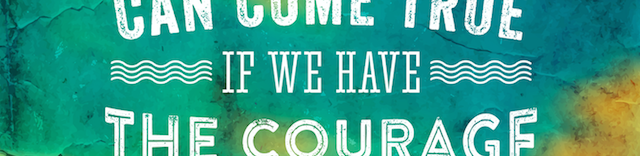
Dreams come true image via Shutterstock


TRIGGER WARNING: This post deals with an account of physical and emotional abuse and may be triggering to some people.
“I say I am stronger than fear.” ~Malala Yousafzai
“Don’t be scared.” It’s so easy to say, yet sometimes, for many of us, so hard to accomplish.
When I was about three or four years old, my dad locked me in the chicken coop in our back yard. This was a punishment. I was naked and screaming, literally jumping up and down with terror.
Another punishment consisted of my mother rubbing human waste in my face.
There are other things they did, other things I went through, but I’ll let those two examples stand as confirmation of the physical and emotional abuse I suffered as small child.
Then when I was nineteen, some friends and I were physically assaulted by another group of young men. No reason, no motive. We were ganged up on one at a time and not a single one of us managed any sort of self-defense.
The police told us “not to bother” pressing charges, so we didn’t. Those guys went home free and clear, but a few months later, I unexpectedly found myself almost convulsing on my bedroom floor, unable to breathe or move, absolutely terrified that the next time I left my house, I would die.
It was quite the one-two combination for a kid (and as a dad now, I very much consider nineteen as still being a kid). The events of my childhood coupled with the events of that night left me a changed person for the rest of my life.
Maybe you know what that feels like. Maybe something has happened to you that has impacted your day-to-day existence. Before we go any further, let me just say: I’m sorry. And I understand.
Between the assault and the things done to me at home (and at school), I eventually was diagnosed with post-traumatic stress disorder (PTSD) and panic disorder.
My entire life, I had uncontrollable fits of blind rage that led to the destruction of many things around the house—doors, toys, trees, furniture, concrete blocks . . . anything that was handy and would make a good CRASH! when I broke it.
I would utterly lose control, punching myself and anything nearby. I would scream until I couldn’t speak, then spend three days isolated in my room hating the world and debating the merits of staying alive.
Eventually I’d “snap out of it” and resume my normal life, but within a few weeks, the whole cycle would start all over again, trigged by something as innocuous as the garage door not opening all the way on the first press of a button.
I couldn’t handle sudden loud noises; they’d scare me half to death and put in me in a bad mood the rest of the day. If I had a near collision while driving, my entire day would be ruined as the adrenalin pumped through me on a non-stop loop.
The flip side of my outrageous anger was my paralyzing fear that arose after I was assaulted. I could not leave the house after sunset, and could only go to certain “safe” places during the day.
I couldn’t walk to the end of my street in the middle of the day without shaking. I once ditched my own birthday party because it was at another person’s house and I couldn’t make myself get in the car to go there.
I could go on. But if you have ever had an anxiety or panic attack, you know the feeling. And the frequency. Even as I write this, quite safe and secure, my heart is racing and my stomach clenching.
I didn’t get a professional diagnosis until I was almost forty, and the reason I did not get that diagnosis is because I didn’t tell anyone what really happened. Then when the diagnosis came, I fought it. I argued it and resisted it.
I didn’t feel I had earned PTSD. That was a disorder for war veterans and first-responders. I’m an author—my most dangerous work is done on a laptop at a coffee shop. And as for panic attacks, that just meant I was a wimp. (I used a different word, though.)
Here’s what I want you to know, because I want you to have the best life you can. These are the things I wish I had known ten or twenty years ago.
First, I had to name the trauma.
I had been to a raft of professional therapists, counselors, pastors, and friends, and even a psychiatric hospital stay, trying to find a way out of my angry and fearful lifestyle. While many were helpful, none really helped me recover because I didn’t tell them the whole story.
I kept the darkest parts of my past to myself, worried about how I would be perceived. But the more frequently I share my story now, the more validated I feel. It becomes more and more apparent that I’m not some kind of freak or aberration.
These things really happened, and they really were that bad. Which brings me to the next thing you need to know:
I had to accept that I did “earn” my diagnoses.
We mustn’t fall into the trap of comparison. We mustn’t say to ourselves, “Oh, well, Frank was in direct-action combat/had alcoholic parents/got locked in a basement, he had it worse than me.”
No. Frank’s life is Frank’s life. Your life is yours. PTSD and anxiety are not a human being’s natural state of being. Something bad happened to you, and that is not okay. It left a lasting, damaging impression.
The only way to begin moving forward, to reclaim our lives, is to let the truth of our story exist in its own authentic way without comparing ourselves to others.
Third, there is a difference between being scared and being afraid.
Being scared is a natural and healthy response to danger. It’s healthy because it can keep you alive when your instincts tell you something is wrong. That’s the whole point of being scared.
Scared is an adrenalin dump, preparing your body to fight, flee, or freeze. If you are scared, there’s probably a very good and sane reason for it.
“Afraid” is something different. Afraid is how you do life. It’s how you process the world around you: family, friends, career, hobbies, pets . . . everything.
The night I was attacked, I was scared. And that was perfectly natural. Every night thereafter, I was afraid.
If you’re afraid, your mind automatically screens every single decision you make through the filter of fear. What happens if I take this job? Go on this date? Travel to this place? Panic sets in, often resulting in complete and total inaction. Afraid is a thief. It steals everything from us.
Finally, and perhaps most difficult: You will have no forward motion in your life without forgiveness.
Author and speaker Rob Bell says that to have really forgiven, we must truly wish the best for those who have hurt us. It’s not enough to say the words, even if it’s face-to-face (and face-to-face might make things worse; the person you’re forgiving may have no honest grasp that what they did was wrong).
What matters is that we truly release them and want the best for their lives. That is how we can know we have forgiven them. When we can do that, their power over us and the power of fear begin to wane.
It’s been many years since I had a real panic attack. I do still have the symptoms of PTSD from time to time; it’s not like chicken pox that will run its course and leave me with the antibodies to prevent it from roaring back.
But I am much less angry than I used to be. I don’t break things anymore. I don’t lose minutes, hours, and days nursing my grudges, time that I could have spent with my wife, my son, my friends, or my job. I still jump at sudden, surprise loud noises. It still takes me a while to recover from a near-miss in traffic.
But the people who hurt me no longer have power over me because I have forgiven them. I want the best for them. It took (and can take) a long time. But it’s essential to becoming whole, to no longer being afraid.
Remember that forgiveness is not condoning or making excuses for the wrong. You may need to remove yourself from people who have a habit of hurting you. And that is all right. You do not deserve to be hurt. No one does.
Don’t be afraid.


“Respond kindly to someone who is unkind to you.” ~Lori Deschene (from Tiny Buddha’s 365 Tiny Love Challenges, January 15)
Growing up with an alcoholic father, I was often on the receiving end of his anger. As a child, I didn’t realize his behavior was a reflection of how he felt inside and wasn’t about me at all.
I thought he was angry because I wasn’t good enough or I had done something wrong. I felt like if I could just be perfect enough, maybe he would love me. I tried and tried, but trying to be perfect didn’t work.
As I got older, I learned to react to everyone around me. If someone was rude, I was rude back. If someone yelled at me, I yelled back. This harmed my relationships and caused a lot of isolation in my life.
I wanted to be alone because I felt like everyone hurt me. But, I discovered, that is not the answer.
It’s taken me years to realize that I’m responsible for my own behavior and can’t control others. I now focus on behaving with kindness to everyone and my relationships have improved as a result.
It’s not always easy, but the following tools have helped.
Reacting to what someone is saying rather than responding from a place of calm rarely goes well. I’ve learned that I don’t have to answer every question. I can say, “I don’t want to talk about that right now,” and come back later in a better frame of mind.
When another person projects their fear onto you, it’s okay to walk away.
I came to the realization that I was walking into my parents’ house in a state of agitation and defensiveness; I was adding my anger and anxiety to the negative energy in the house.
An amazing thing happened when I stopped walking in the door that way; it seemed to positively affect everyone’s energy. There is a sense of peace in our interactions that wasn’t there before.
Now, when I walk into any situation at work or with family, I check my attitude when I walk in the door. Often, that makes a big difference.
When you don’t add your fuel to the fire, sometimes the fire goes out.
I’ve come to understand that a lot of the things I think in my head aren’t true.
If a friend calls and cancels, I tell myself it’s because she doesn’t want to hang out with me. If my husband is in a bad mood, I tell myself it’s because he’s unhappy with me.
I don’t know any of those things. They are only stories in my head. These stories create defensiveness in me, which creates conflict where none exists.
There are a million reasons people might cancel plans or be in a bad mood. Most of the time, it has nothing to do with you.
You can’t make another person happy or unhappy. Another person cannot make you happy or unhappy. A person’s happiness comes from their own thoughts and behavior, not what someone else is doing.
The next time someone does something and you assume you know why, question whether you really know if that’s true.
Most people are doing the best they can from their level of consciousness. We are all in this together and at our core, we are basically good.
Hatred and anger cannot wipe out hatred and anger. But sometimes love and understanding can.
I was always waiting for an apology or a change in behavior from the other person. Sometimes it has to begin with you. Sometimes, you have to accept the fact that the other person may never change.
What is hurting you most is your behavior toward them. Changing that will help you feel better.
Resentment will poison you from the inside. Forgive the other person for yourself. Let the anger go.
Amazingly, sometimes that also changes the other person. But you have to go first.
Love is worth a try. Give it a shot.
Part of learning to love yourself is learning to listen to your gut and speak your truth.
If someone is being unkind to you, say something.
Don’t let others treat you poorly. Treat yourself with love and compassion.
Don’t blame, criticize, or complain. Calmly state your boundaries.
Sometimes, relationships don’t work out. Sometimes, you need stronger boundaries.
But changing your behavior instead of waiting for the world to change gives you back your personal power.
Come from kindness and watch your world change.


“When you become comfortable with uncertainty, infinite possibilities open up in your life.” ~Eckhart Tolle
Lately, I have been reflecting a lot on what I was like when I was a kid.
Back then, what I didn’t know seemed magical. It gave me room to imagine, to fill in the blanks with my own creative inspiration, and to live with a sense of wonder and awe.
I loved fantasizing and daydreaming and imagining what magical situation might be brewing in my life.
As children, curiosity was a natural and automatic part of us, and what we didn’t know didn’t scare us. If anything, it made us into warrior explorers who took adventures into the unknown, unafraid to change direction if something wasn’t working, unattached to the outcome, and perfectly content on the journey.
As a child, I was open and available to the possibility of the kind of world I wanted to live in. I loved learning about people and their life situations.
What I didn’t know inspired me to ask questions. And I asked a lot of questions. I was unscripted and unedited. It took people by surprise, but I shook things up everywhere I went and saw nothing wrong with that.
I was unapologetic about who I was.
I believed in the good, the magical, and the powerful, and I believed that fairytales were real. After all, no one had told me yet that it was silly, crazy, or impossible. No one had convinced me yet that fantasy was not a useful tool for creating a worthwhile life.
But sadly, I was only wholeheartedly curious and unedited until about age five. Then I began to doubt, to limit what I knew to be true, and to edit the world I believed was possible.
I got really good at fitting in and being whatever I thought others would adore. I stopped asking questions, and I went through years of agreeing with everyone all the time.
I had forgotten who I was and grew fearful of rocking the boat. I now felt threatened by the unknown, and I lived with anxiety because of it.
All those years of forgetting about who I am wound me up good and lost by the time I graduated college. I went through some pretty heavy rock bottoms in my twenties, super lost and so unsure of myself.
I struggled because there was this world I believed in, but then there were all the ways in which I had edited myself into a world much smaller. I knew there had to be a way out. It just took me some time to find it.
As it turns out, the way out was not some external thing that changed for me, but rather the willingness to search inside myself, a place I hadn’t spent much time up to this point.
I let myself start asking questions again, and I contemplated those questions for months and years. Just asking them was enough to open up a whole new world to me.
I believe in the practice of taking what we do not know—that precious space where anything is possible—and allowing ourselves to live in its question mark, to play with what we really want, and to dance in the discomfort, challenging ourselves to build and create the world we want to live in.
If we don’t choose this, then what are we choosing?
What if we let the unknown be an invitation, a calling to a greater you and me? What if the unknown was a blessing and a gift, presenting us with a blank to fill in with whatever we want to create? What would be available to you if you let the unknown inspire you instead of letting it intimidate you?
I have so many unknowns in my life right now, and I am pretty positive I always will.
Will I become a wife or won’t I? Will I be a mom or not? Will I live here for the rest of my life, or will I move again? Will I travel the world again? Is this what I am meant to be doing, or is there something else or something more? What do I really want, and am I willing to do whatever it takes to create that?
Instead of making myself crazy, trying to get answers that I cannot possibly have in this moment, I choose to practice surrender and mindfulness.
Whenever I’m facing the unknown and I see myself going into a negative, fearful, victim place, asking questions helps me shift.
I ask questions like:
How do I know this bad thing is going to happen? Is that a fact? Since this is not a fact, what is a fact? The fact is that I am facing the unknown.
What do I prefer to create right now? Where is the magical place that I wish to go instead of this limited place? What do I want this unknown to mean for me? What would it take to create something better that I haven’t even thought of yet? Can I just live in the question of that? How does it get any better than this?
As we become responsible adults, we need to reclaim our power, remember who we are, and become the person we wish would save us so we can create the world we would be joyful living in.
It is up to us to let go of the outcome and to be curious and adventurous, like when we were kids.
When you are faced with the unknown, notice what you do. Become aware of whether you make up a negative story about it. If so, what would happen if you made up a fun, exciting, empowering, inspirational story about it instead?
Use your curiosity. Investigate your own mind, heart, and spirit. Ask questions. Explore. What adventure do you want this unknown to mean for you? What do you want to create?
Lastly, look outside your comfort zone. Instead of reaching for what you know based on your past, look outside the bubble that includes everything you’ve ever known. What is a new way for all the pieces to come together? How might this time be different for you?
Be willing to look beyond what is currently showing up. Sometimes we may not know how something will come into being, so we must stay present with the knowing we hold deep inside and committed to the vision we have for our lives.
We are human. There will always be uncertainty, but it doesn’t have to overwhelm us or freak us out. It could inspire us and get us excited about what magic is unfolding for us.
As for me, I am choosing to just be with what is. As I sit with my resistance to what is, I become aware that the temptation to make the unknown mean something scary and bad is just another distraction so I don’t have to sit in the discomfort of not knowing.
So every day I must recommit to sitting with the discomfort instead of giving in to the temptation to make up scary stories about it. Just embracing what is can be the very relief we are searching for!
Uncertainty image via Shutterstock


“With confidence, you have won before you have started.” ~Marcus Garvey
It’s not a great feeling.
Whether it’s meeting new people, speaking in front of a crowd, or learning a new skill, that inner knowing that you just aren’t feeling strong enough to competently complete the task ahead festers inside you.
I’ve had this feeling on numerous occasions.
As a kid I developed a fear of speaking out which emerged from a deep discontent with my body image, which translated later into a fear of socializing and public speaking.
I would have thoughts running through my mind such as “what if they don’t like me?” and I was constantly worried about my physical appearance.
I noticed this limited my ability to maintain friendships, as I couldn’t hold a natural, genuine conversation for long periods.
As the years went on, however, I realized that a lack of confidence is something that we unconsciously acquire, not something that’s inherently built into our DNA.
This spurred me to want to know how I can remove what I had accidently learned as a child.
I also realized that confidence is not just a matter of being larger-than-life in the way we stand and speak.
It’s a deeper level of a much simpler state: comfort.
Comfort in your own skin, in your own body, or whatever the situation is.
As an introvert, I still to this day prefer to avoid busy social situations or speaking with new people, but there’s not a fear or anxiety attached. It’s simply a preference.
And one thing I know for sure is that confidence is not a matter of luck. It is, as many things are, a matter of mindset.
Take the following simple, proven steps I took to become much more confident in all situations:
Popularised by Dan Gilbert in his book Stumbling on Happiness, our ability to predict accurately how good something will feel when something goes right, as well as how bad something will feel when something goes wrong, is vastly inaccurate. This is known as affective forecasting, and we are all prone to it.
So instead of guessing, try writing down in words what would be the worst-case scenario if what you wanted to be confident in went completely wrong.
You’ll notice that it’s never that bad. Life will still continue, and you can grow from the experience.
Knowing this can put you at ease and prevent you from overestimating the consequences of taking that first step.
Overthinking is the enemy of confidence. You’re better off jumping into the deep end and correcting errors rather than treading cautiously around the situation trying to pursue perfection, which is nothing other than an excuse for procrastinating.
Show yourself you can be confident by doing the most confident thing of all: beginning.
Take that first step and adjust accordingly afterward. You’ll make mistakes and feel a lack of confidence initially, but you’ll have laid the foundations for long-term inner strength and true confidence in the near future.
As we all know, a few fundamentals are necessary to succeed in anything. We can all agree that repetition is one of them.
If you want to gain confidence in something, you must do it over and over again.
Why is practice so effective? Because confidence has a direct correlation with competence.
Think about it; when you’re able to complete a task easily, don’t you naturally feel confident doing it?
For example, when I wanted to develop more confidence talking to new people, I would simple practice talking to strangers as often as possible. With time, I realized that the worst-case scenario was never that bad, it’s better to say something before my mind could put me into fear, and I should repeat this as many times as possible.
Although confidence is not exclusively about the posture you hold and the gestures you make, as often stereotyped, posturing your body for confidence is important.
Amy Cuddy, associate professor at Harvard Business School, became famous for her research that showed how standing and sitting confidently for a couple of minutes changes our biochemical layout in our brains, and thus actually affects how we feel.
The takeaway: Our internal physiology responds to our bodily movements, including our posture and facial expressions. To instantly feel more confident, make your body first look as it would look if you felt confident. Simple, fast, free, and very effective.
When a situation makes us feel insecure, it’s really because we’re picturing an extremely negative outcome.
The essence of being confident is to imagine a positive outcome instead of a negative one.
Easier said than done, right?
I agree! In my experience, however, the more you do this consciously, the more it becomes a habit, and eventually it becomes natural to think this way.
In addition, the more competent you become in a given situation, the more you naturally develop a thought process where you imagine a positive outcome, every time.
You’ll never know what you’re capable of until you touch the edges of your comfort zone on a regular basis.
Once you reach the edge, you’ll have expanded your capabilities, and the circle of comfort will increase.
This helps greatly because what you had previously felt was uncomfortable becomes second nature, and you have a new level of discomfort to challenge you to grow and expand your level of confidence.
We want to know we can develop confidence not only authentically, but swiftly too. Like any skill, the more we remove unnecessary distractions, the quicker we can become better at it.
For example, when I wanted to become more confident with public speaking, I regarded it as a new skill I was learning and developing, and thus I consciously decided to put everything else on the back burner so that I could focus solely on this one skill.
In addition to harnessing your focus for faster improvements, removing distractions also creates extra time, which, as we discussed in tip #3, allows you to pursue excellence by increasing the frequency of practice.
This is by far one of the most virtuous habits to adopt for confidence.
As mentioned before, a lack of confidence most often has its basis in thoughts that are unhelpful. To be able to step back and watch these thoughts, the moment they arise, causes an immediate release of negative emotional energy.
It’s human nature to be self-critical at times: What if he doesn’t like me? What if she notices this flaw about me? Why do I always act this way?
But none of these thoughts have power to bring us down without our belief in them. To reduce our attachment to them, we must first be aware of when they arise.
From here, we can use the beautiful gift we have been given—our thought—to challenge these negative assumptions and eventually turn them around.
With time and resilience, these thoughts will not even arise, and confidence will be a natural by-product.
Our scientific understanding of neurophysiology proves that exercise has a beneficial effect on our moods.
What many people don’t know, however, is that exercise has a direct impact on our confidence too.
What’s even less known is that it’s not about how frequently you exercise, nor is it the intensity with which you exercise. It’s simply the mere act of exercising versus not exercising that can affect our levels of confidence.
Researchers from the University of California reviewed fifty-seven case studies on how exercise influences mood and mental health, and they found that with the release of endorphins in the brain during exercise, we can develop a sense of increased self-confidence.
So no need to enter the gym. Go for a pleasant walk every day. Your body and your mind will thank you for it.
Music is one of those universally loved forms of art. It can make us feel heightened states of emotion, both positive and negative.
You can also use music to increase your confidence. Researchers from the Kellogg School of Management found that the right type of background music can be hugely effective in making you feel powerful and confident.
Specifically, bass-heavy music can make us feel a boost in confidence. We often see this in stadiums before large sporting events, or when athletes or musicians psyche themselves up for an important performance.
So don’t be afraid to get your headphones on and blast your favorite jams before your next event.
Remember, above all, you have the strength and intelligence within you to overcome any obstacle that’s in your way of living the life you truly deserve.
Confidence is an attribute you can develop within yourself using these simple steps.
Before you know it, you’ll be ready to take on the world with an unbeatable inner strength and power.
And remember, never let anything get in your way.
I think I can image via Shutterstock


“Fear is a natural reaction to moving closer to the truth.” ~Pema Chodron
You wake up in the morning, it is sunny outside, and you are grateful for this brand new day. You are enthusiastic to get it started. You take a deep breath and go outside; then you see some gum in your street.
Will you pick it up and stick it to your T-shirt, or maybe even have a little taste of it? Of course not!
Please excuse the gross opening, but bear with me for a second.
So many of us have done something just like that, energetically, myself included.
I still remember an afternoon about three years ago. After work, I was on a high after watching a self-development video on the importance of going after our dreams, and in order to do so, we must conquer our fears first.
So there I was, sitting on a bench by the River Thames, following the instruction, writing about my fears about becoming an intuitive guide.
The first one popped up immediately: uncertainty!
“Alright, let me see how I can conquer it!” I devoted myself to doing the inner-work over the next three weeks.
Except, there was no progress, no breakthrough, nor much “conquering” going on. When I thought about leaving the corporate world behind and creating a business based on my true expression, I was still paralyzed.
I was disappointed. It felt like that I was running around in circles and getting nowhere.
Fortunately, my intuition visited me in my dream on one of those frustrating late nights.
In my dream, I saw so many people shouting at me: “How are you going to deal with uncertainty? Isn’t it too risky? What if you are going to lose everything that you’ve built for years?”
The images and voices were from my concerned family members, from my curious colleagues, from my cautious (perhaps overly) friends.
But none of them actually were mine!
Here is the thing: I only see uncertainty as opportunity and wonder. This was not what I was afraid of.
I woke up with such a refreshing mindset the next morning. “I cannot deal with fear that doesn’t belong to me. No matter how much I look at it, look around it, look beneath it, it was not my fear.”
Carl Jung said, “When the diagnosis is right, the healing begins.” But I got the wrong diagnosis, no wonder why I could not move forward.
I am classified as a “highly sensitive.”
On one hand, I relied on my intuitive side to see the beauty and gifts in people; on the other hand, the shadow side was that I also felt their fears and pains, so vividly at times that I thought they were my own.
I was carrying on other people’s expectations and opinions, and allowed them to blind me so that I wasn’t able to see what was really going on.
And I am not the only one. As social beings, we are all influenced by our immediate environment to various degrees.
Do you know how much fear and anxiety you might have absorbed from others and now keep in your psyche on a daily basis?
You might not even be aware of it but end up internalizing it over time.
Day after day and year after year, gradually you came to believe that they were your own fears.
Just like you cannot take responsibility for someone else’s actions, you cannot do much about those imposed fears other than lovingly release them.
But firstly, how do you know if you take on others’ fears and emotions easily and unconsciously? Here are a few signs:
Chances are you’ve absorbed the other person’s anxiety about you saying no. Your decision is dictated by how others feel, not your own well-being.
But once you look into the situation, you realize that you don’t have the resources to deliver your promise. You become resentful toward your good intention earlier.
It doesn’t always take a full-on party with hundreds of people; at times you are exhausted by just browsing your social media feeds for thirty minutes.
You are happy when your feeds are full of joyful updates, but miserable when your feeds are full of misery. You unconsciously take on what your virtual circles experience, without a healthy filter to protect your own energy.
You don’t really know why; only later on you’ve learned that something unpleasant happened in your environment such as a redundancy or burglary nearby.
Or like myself earlier, you want to move forward, and you have been doing everything that you were told to do, but things just don’t work.
By the way, it is not your fault if you said yes to any of the above.
The truth is, we cannot live freely unless we actively release fears and emotions that do not belong to us.
So how can you release those imposed fears or even prevent them in the first place?
Before you rush to browse your inbox or social media profile every morning, meditate for a few minutes and check in with yourself. “How do I feel? What do I want today?”
This way, you will set a clear intention that serves your spirit instead of being dragged away by some unimportant noises even before your day gets started.
Always finish your day with good vibes.
Take some exercises in the evening to shake off the anxiety, pains, fears, or any other forms of “psychic rubbish” that have been dumped on you, followed by a relaxing bath.
When you take care of your body and treat yourself gently, it’s like boosting your psyche to be more immune from negativity.
This method has worked exceptionally well for a hospital nurse friend, helping her recover from long-term work-related depression.
Sleep only with your own energy every night; otherwise, it’s hard to discover your most authentic self over the years.
Sit quietly with it, without any judgment, and ask it, “Are you mine? If not, whom do you belong to? Where are you coming from?”
Then wait for the answer. If in doubt, trust what your intuition tells you.
Once you identify the source, with your mind’s eye, send the fear back to the light and imagine yourself breathing in your own light and breathing out others’ fears.
You can repeat this process until you there are no imposed fears that need to be released for the time being.
Once you’ve released those absorbed fears, it’ll be like a spring clean on your energetic body, and you’ll better connect with your truest self.
Now you are ready to see the deeper truth and live more freely.
Once you peel off the “fear onion” layer by layer, the “real deal” will start to reveal itself.
By “real deal,” I mean your truth.
Have an intimate conversation with it.
You can start it like this: “Dear Truth, what would you like me to know at this point of life?”
The answer might surprise you, or you might feel uncomfortable to acknowledge it at first.
But it will reveal something that you can take responsibility for so that you can shift your reality, no matter where you are in life.
Don’t be alarmed or run away.
No matter what your answer is, it will push you closer to your purpose.
Back to my story earlier, beneath everyone else’s voice of “insecurity,” which I didn’t resonate with, what I was really suppressing was the sadness of letting my old self go.
I had worked so hard to build a brand new life in a foreign country on my own, but I didn’t even acknowledge my effort, sacrifice, or growth.
My old self was asking for love and witness, which had been absent for over a decade.
That was it!
I put aside the embarrassment of feeling my raw emotions for a change, and immersed myself into days of journaling, healing, (a lot) of crying, and (even more) praying.
It was fantastically liberating and nourishing, and way more effective than affirming: “I must conquer uncertainty” a thousand times.
As for the end of that story, I left the corporate world and launched my dream business in record time: one month.
After releasing those imposed fears by others, I saw my organic truth, and honoring it set me free.
When you feel the fear but really cannot do it, stop trying to “conquer” it, play with it!
It will play back and reveal the hidden truth that you need to know.
And this is how you can take leaps and bounds with grace.
Jumping girl image via Shutterstock


UPDATE: The winners for this giveaway are:
“Just like the characters of a movie, you are a character in the show called ‘Life.’ Are you in a starring role? Or are you a supporting actor?” ~Shannon Kaiser
Do you ever feel like could be doing more with your life? Like you’re holding yourself back in fear and not reaching your true potential? Maybe you don’t even know what you want; you just know what you don’t want, and yet you can’t seem to escape it.
I’ve been there quite a few times myself, and I’ve recognized several unhealthy habits that keep me stuck, such as getting caught up in my head and comparing myself to other people.
It’s not easy to overcome these kinds of habits—especially if we’ve fallen victim to them for years, or even decades.
Bestselling author Shannon Kaiser knows this, and that’s why she wrote Adventures for Your Soul: 21 Ways to Transform Your Habits and Reach Your Full Potential.
I’ve always been a huge fan of Shannon’s work, and not just because she’s insightful, wise beyond her years, and focused on proactive solutions.
I admire Shannon because she’s battled her own demons—overcoming depression, drug addiction, and an eating disorder—and has emerged with an enthusiasm for life, a belief in herself, and a passion for helping others identify and pursue what they truly want.
That’s exactly what she’s done with Adventures for Your Soul. In this powerful guide to a more fulfilling life, Shannon tackles the most common “happiness-hindering habits,” and presents exercises, questions, and action steps to help us overcome them.
I highly recommend Adventures for Your Soul to anyone who feels stuck, scared, lost, or confused. The book will take you on a soul-searching journey of self-discovery, bringing you closer to the “you” you want to be.
I’m grateful that Shannon took the time to answer some questions about her work and her book, and that she’s provided two free copies for Tiny Buddha readers.
To enter to win one of two free copies of Adventures for Your Soul:
You can enter until midnight PST on Friday, November 13th.
I suppose I didn’t know what I would be when I grew up, but always knew I wanted to be extremely brave and let passion be my compass. I knew I had to express myself creatively in order to be fulfilled.
I could share that I am writer, author, life coach, speaker, travel writer, and teacher who left behind my corporate job in advertising six years ago as well as drug addiction and depression in order to find my happiness, but that is my past.
Today, I am more interested in who I am becoming. My life is about showing up fully and feeling all of what life has to give. I want to be a constant reminder of what courage looks like, what choosing love over fear feels like. And to remind people it is never too late to become what you dream about.
I wrote my new book Adventures for Your Soul as a demonstration of what living a courageous life looks and feels like. It’s a manual to getting out of your own way and embracing your true self.
People who are on mission to better themselves and who are committed to living an authentic life. People who are looking for answers for their deep, heartfelt questions, such as: How can I get unstuck? How can I learn to love more in the face of fear? How can I remove habits holding me back? How can I be more comfortable with myself and learn to love all of me? This book answers these.
Through my own personal experience and life coaching practice I discovered the top twenty-one habits that hinder our happiness, and I found powerful ways to transform these habits so we can get unstuck and move forward with more grace and ease.
In order to not settle we have to give ourselves permission to dream bigger. We can start by asking ourselves “What do I really want?” and becoming aware of the inner critic that says, “It can’t be done.” Then, instead of listening to that little voice, we can turn to love and inspiration.
We all have a little nudge and inspiration that comes to us, insights, visions, or hopes and dreams. The opportunity is to begin to trust those little nudges, and act on them. This will quiet our fear-based mind so the fear won’t be as strong.
Ask if your current lifestyle is giving you the results you desire. If not, take steps in the direction you want and release what doesn’t serve you.
For example, maybe you’re in a job you no longer enjoy, and you feel as if you were made for more. Instead of staying in that boring job, begin to listen to your inner nudges, the inspiration that comes to you.
Maybe it’s saying go take a yoga class or go to the bookstore, or go join that new community group. Follow these nudges because they are leading you to fulfillment, one small step at a time.
When I first left corporate I didn’t know I wanted to become a writer. I just knew what I was doing wasn’t fulfilling me anymore. So I took one small step at a time, such as getting a journal, investing in travel writing books, and reaching out to life coaches to learn more about the industry.
Each small step opened up new possibilities. All we have to do is take one step at a time and the path will reveal itself. But we must move forward and take the steps.
We can get in touch with the feelings associated with each, which can help us make the right choice.
When we listen to our heart it feels expansive, inspirational, joy-filled, and loving. When we listen to our fear, which is in our head, the rational over-thinker part of us, it often feels scary, overwhelming, critical, and heavy.
I believe the focus on overwhelming obligations is what makes us feel like we can’t entertain any inspiration. But inspiration is with us all the time; we overshadow it with our focus on fear.
If we are focused on how we can’t make ends meet, that becomes our reality, whereas a better way would be to focus on how we want to feel: creative, safe, free, for example. Then we can let our truth pull us forward. We get what we focus on, so focus on what you want.
I believe fear of the unknown is one of the most common. We want a guarantee that things will work out, that our ventures will yield results. We need proof of concept and stability.
Many of us don’t act on inspiration because we are unsure of the outcome.
One way to overcome this fear is to first take a life inventory and ask where you are holding yourself back in life. Ask, what do I really want? Then take action on that desire.
For example maybe you worry a lot and have fear-based thoughts about your future. First, address these by listing out the thoughts that worry you. Ask if believing these fear-based thoughts is holding you back, and if so, what action steps can you take to work through them?
Maybe you want to leave your corporate job to become a wellness coach but you worry about making a living doing what you love. Maybe you also fear the unknown outcome. What if no one pays you for your services? How will you get clients?
These are examples of fear-based thoughts. Address them, and then ask, what action step can I take in the face of these fears? When we take action we build confidence, which gives us clarity.
Maybe you list out blogs you want to visit and wellness coaches you want to follow or meet, maybe you look into certification programs or attend yoga classes. Follow the inspiration that comes to you, and this will help you move forward with more ease.
Many of us want to find our life purpose, but we struggle to find it. The struggle is the problem.
Instead of trying so hard to find our purpose, we have to trust it will reveal itself to us when the time is right. You can’t find your life purpose by thinking your way into it; it can only be felt in the heart.
I created this acronym to help you discover your passion, which will help you lead a more purpose-filled life.
H – Habitual Happiness
O – Open up to Optimism
P – Purpose-filled Passion
E – Embrace the Journey
I think society, culture, the world puts pressure on us to be a certain way, and when we don’t match up we feel less than. But the truth is, you are enough as you are, and just because it doesn’t fit with society’s expectations doesn’t mean it’s wrong or right.
We walk around feeling guilty for things we actually like: eating an extra helping of ice cream, or binge-watching Netflix. We feel bad, but it makes us feel good. So we should switch to focus on how our life feels instead of how it looks.
Once we embrace them, they can be released from us. When we avoid them or hold onto them, that is what causes the damage. But all feelings deserve to be felt.
You matter just as you are. Don’t be afraid to show the real you because the world needs what you have.
You can learn more about Adventures for Your Soul on Amazon here.
FTC Disclosure: I receive complimentary books for reviews and interviews on tinybuddha.com, but I am not compensated for writing or obligated to write anything specific. I am an Amazon affiliate, meaning I earn a percentage of all books purchased through the links I provide on this site.


“When you realize there is nothing lacking, the whole world belongs to you.” ~Lao Tzu
Five years ago, I found myself rebuilding my life after my fourteen-year marriage ended. During those first months preceding my divorce, crushing feelings of fear and loneliness often consumed me. Thankfully, I began seeing a wonderful therapist named Muriel.
Each week, I held my breath until it was time for my appointment, when I could curl up on Muriel’s sofa and exhale all my anxieties.
One week, when I was particularly overwhelmed, Muriel gave me the number of the local Crisis Hotline and insisted that I save it in my mobile phone.
“I’m not suicidal!” I said, laughing as I dutifully recorded the number.
A few nights later, I awakened in the middle of the night filled with anxiety and fear. I couldn’t stop crying. I called a good friend, but she didn’t answer. Just as I began to panic, I remembered the number Muriel gave me.
After pouring my heart out to a complete stranger at the Crisis Hotline Center, an hour later I hung up the phone and promptly fell asleep. (In fact, I felt better from the moment I heard the volunteer’s voice on the end of the line.)
Having the right resource empowered me to get the help I needed, when I needed it, in an appropriate manner.
After that night, I realized the value of reaching out to the “right” person to help me through the various challenges I faced.
In the months that followed, I came to rely upon my attorney to navigate the often rough waters of custody negotiation and property dispersal.
I called on my accountant to provide me with guidance on my tax return.
When I became anxious about my financial situation, I tapped the expertise of a financial planner to help me set up long- and short-term goals.
In my personal life, I knew I could rely on my sisters for parenting tips, and I tapped the wisdom of my (single) friends when I began dating again.
I also had colleagues with whom I could share ideas about pitching stories, or finding new clients. And I sought out a spiritual community with whom I could study, meditate, and pray.
After a while, I began to look at every person in my life who helped me with an aspect of my well-being as a member of “Team Brigid.” Soon, my phone was filled with numbers of “experts” who could help me weather any crisis, or celebrate any triumph.
Celebrities and millionaires have entourages and handlers to take care of their every task and need. But I don’t have to have fame or fortune to put together my own personal concierge service. In fact, having a team doesn’t have to cost me a cent; I only have to identify the people who are most valuable in my life and ask them for help.
Creating my team roster didn’t take a lot of effort. Most of these people were already helping me in some capacity. But it’s a great source of comfort and confidence to create a list of all the people in various areas of my life who could help me with different tasks.
For example, the mechanic who changes my car’s oil every 3,000 miles is an incredibly valuable member of my team—if I choose to look at him that way. Same goes for my hair stylist and my dry cleaner and my editor. I can look at each facet of my life—intellectual, physical, and spiritual—and identify people who are already helping me.
By using the team perspective, I consider everyone who provides me a service as an ally, which makes the world a friendly place.
The checkout woman at the grocery store who is always so nice to me (and everyone in her lane), and the Zumba instructor at my gym are all members of my team. As I expand my list, I realize how many people contribute to how I get through the day. Sometimes a friendly smile in the checkout lane makes all the difference.
I don’t have an intimate relationship with every single person on my list. In fact, most of Team Brigid doesn’t know what’s happening in my personal life, let alone that they are on my “team roster,” but I can count on them all to play their part.
Today, my team is more important than ever. Some days, just remembering that I have a wealth of (paid and unpaid) experts at the ready to support and guide me helps me maintain sanity and perspective when life becomes difficult.
“Team Brigid” includes: my accountant, financial advisor, therapist, attorney, gynecologist, general practitioner, dentist, spiritual teacher, my neighbors, work colleagues, editors and clients, my car mechanic, hair stylist, 12-Step Sponsor, 12-Step program friends, my sisters and family members, girlfriends, my son, boyfriend, ex-husband*, my son’s teachers, coaches, and school counselors, and my son’s pediatrician.
(*Yes, my ex is on my team today, as he plays an important role in helping raise our son.)
Whenever I begin to feel anxious or lonely, I pull out my team roster and call up the appropriate player. For example, if I’m concerned about my son’s math grade, rather than sit and worry, I send an email to his teacher.
Sharing my team perspective comes in handy when I have a loved one who is struggling with a difficult situation and leaning on me for support. Like my dear friend who (thankfully) slept through my 2am meltdown years ago, sometimes I just can’t be on the end of the phone—or I’m not the appropriate person to provide assistance.
By helping my loved one develop her own team roster, I’m empowering her with far more help than I could by simply doling out advice based on my limited experience. (Plus, the team approach helps reduce caregiver burn out.)
Who’s on your team? Spend some time today making a list of all the helpful people in your life who contribute to your well-being. You might find a position or two that needs to be filled. Or you may discover that you’ve “over-hired” in some areas.
Looking at my life from a team approach helps me be open to the resources that are around me. I don’t have to be completely self-reliant, nor depend on any one person to take care of my needs.
Ultimately, creating a list of the Most Valuable Players in my life helps me remember that, no matter what comes my way, I am never alone.
People holding hands image via Shutterstock


“The only thing we have to fear is fear itself . . .” ~Franklin D. Roosevelt
You’ve heard that quote more times than you can count.
You’ve also made fear-based decisions; we all have.
Looking back, you can point to times it has happened and caused you to fall short of what you could have achieved.
It has certainly has happened to me.
I was three years into my first career as a high school science teacher. I had always wanted to live abroad, specifically Mexico, and I had always wanted to learn Spanish (after taking an embarrassing amount in high school and college without really ever picking it up).
So when I met a lady that had a connection to a high school in Monterrey, Mexico, where they taught the classes in English and had an opening for a science/math teacher, I jumped on it.
I contacted the school and expressed an interest. When they told me if I ever came through Monterrey they would be happy to speak to me, I immediately booked a flight and flew down during the upcoming spring break.
I went to the interview and told them I would be happy to teach science or math, or both. They told me about the program, and that they support all of the teachers with intensive Spanish-immersion classes.
It was exactly what I wanted—a way to live in Mexico, learn Spanish, and keep teaching.
I left the interview excited.
A couple months later, they contacted me and told me I had the job if I still wanted it.
Perfect, right? I got exactly what I had been dreaming of.
I turned it down.
I rationalized the decision at the time because I had already told my current school I would be there the next year and had already committed to a trip to Europe with friends that I would have to miss because the school year started earlier in Mexico.
The reality is that my school would have understood and my friends would still be my friends (and Europe wasn’t going anywhere) if I took this opportunity, which I had been talking about for years.
The real reason I didn’t take the job was that I was scared. Scared to move to a new country where I didn’t know anyone. Scared to leave my comfort zone. Just generally scared of the unknown.
Now, looking back, I have a lot of regret about that decision. Over ten years later, I still haven’t lived abroad and I still don’t speak Spanish fluently.
But I have also learned from that experience to push back when fear pops up to stop me from moving forward.
And importantly, I’ve gotten much better at recognizing when it is fear that is stopping me, even when it isn’t so obvious.
And that’s what I want to share with you.
Below are five common, but not-so-obvious, ways fear works to limit our potential.
And importantly, how you can recognize that fear for what it is, and then push through anyway.
We have a lot of faith (for no apparent reason) that the version of us that wakes up on Monday will start that thing we want to do.
It’s like we believe some other person will be responsible for getting us up and moving.
It’s hard to start now, when we are the ones in charge. Why?
Fear lives in starting. Because starting means one of two things will happen: You will do the thing you set out to do, or you will fail.
And failure is scary; we fear it. So we decide to start later.
The problem is that later is quite elusive. So the change never really happens.
Even though you think you are protecting yourself from failure by procrastinating, you are actually just ensuring it. By not starting, you take success off the table; the only thing left is failure.
The solution is simple, but not easy:
Recognize your procrastination for what it is—you letting fear prevent you from moving forward.
Move anyway. It doesn’t have to be a huge movement, but just do something that commits you to either success or failure.
I know, you’ve been told to set a “big-hairy goal.”
The problem is that the definition of a big-hairy goal is a goal that seems impossible. Because it seems impossible, you don’t actually believe you can achieve it. So you don’t act. You just wait for some cosmic shift to occur.
You are scared that if you act you just will prove that it is impossible. That fear paralyzes you.
To overcome this, you have to set smaller, more approachable goals, after you set the “big-hairy” one. Goals that you see as possible, but that add up to the end game.
Come up with three small goals that you believe are doable and that will get you closer to the “big-hairy goal.” They don’t need to get you there. They just need to head you in the right direction.
When you’re done with those, come up with three more. Keep that up and that almost-impossible goal will become inevitable.
Have you ever decided that something you’ve been “meaning” to do for months, like organizing your closet, has now become a must-do thing?
You are probably using your newly minted “must-do” task to avoid starting something that might open you up to failure.
While organizing a closet isn’t fun, you aren’t going to fail at it, so it’s not scary. Even though it feels very much like you are being productive, you are actually paralyzed.
If you hear yourself saying things like, “I know I said I would do X today, but I actually can’t because I really need to get Y done first,” you are probably falling victim to this fear-based behavior.
The solution is easy: Realize that you haven’t done Y for the past two months, and so not doing it today will probably be fine and do X instead.
As soon as you go from, “This is going to change my life for the better” to “What will so-and-so think about it?” you have almost certainly sunk your chances of moving forward.
Everyone wants the approval of their peers and seeks to avoid their disapproval. But you can’t let fear of disapproval prevent you from acting.
It’s not easy. But, when you feel judged by your peers, and you feel like it is stopping you from moving forward, consider these questions:
If you don’t want to live up to their values, just shrug off their judgment and move on.
Science is all about failure. And your life should be all about failure too.
Science comes up with an explanation for the data available, and then tests that explanation.
As soon as the explanation fails, everyone goes back to the drawing board and comes up with a new idea, incorporating the data that was collected as a result of testing the first idea.
Over time, science gets more and more right. That is what life is about.
You aren’t going to live a perfect life. You aren’t going to achieve everything you could possibly achieve. But, you can get closer to perfect. You can achieve more than you have so far.
But to do so, you have fail. You have to try something new. And doing so, you will fail. Which is great. Because then you get to learn from your failure, and try again.
To start, try to get three people to tell you no every day, ask random people to do things for you, ask for discounts on retail or food, whatever.
I know it sounds stupid, but the whole idea is to get used to failing and so dampen the fear of it. Then you can see failure for what it is:
A big billboard telling you are going in the right direction but that you just need to adjust your course a tad to take into account what you learned from the failure.
You have the tools to recognize fear for what it is and to shine a light on it when it pops up its ugly head—no matter what form it is using.
Then you can then address that fear, knowing that it is largely, if not totally, of your own making. And you can stop the rationalizing that you will inevitably use to avoid doing the scary thing that led to the fear in the first place.
Once you have done that, you will start pushing the envelope of your potential and achieving more than you thought possible.
So look fear in the eyes. Call it out. And, keep moving.
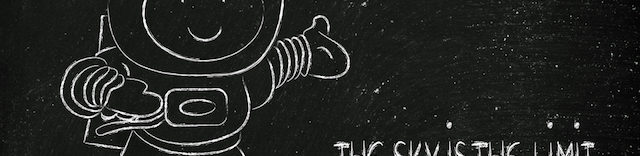
The sky is the limit image via Shutterstock


“Happiness is an inside job. Don’t assign anyone else that much power over your life.” ~Mandy Hale
Everyone wants to be happy, but not many people contemplate whether or not they really are.
Some of us feel too privileged to not be happy, while others don’t want to face the possibility that we might not be. Here are nine truths about happiness to help you think a little more deeply about what it really means.
To be human means that we experience a range of emotions. If you were to look at a grid and see a line in the shape of a wave it would be an accurate representation of the human experience.
We shouldn’t be operating as an even, straight line. That’s what I’d call a robot or someone numbed out.
Human beings experience emotions in response to life circumstances. That means sometimes you’re going to feel happy, sad, and all the other emotions in between. Embrace it.
True happiness is not a state; it’s the way we relate to our lives.
If we’re rooted in unconditional love for ourselves, the world around us transforms.
We have the ability to express gratitude for all experiences in life. We’re able to sit with difficult emotions without denying ourselves love. We’re able to be with ourselves and with the world in a way that shapes our overall perception of our lives to one of love and gratitude. This is the path to happiness.
I once felt guilty for not being happy. I felt like I had no right not to be happy. After all, I was born into a loving family, I was fed, I was loved, and I was educated. I had so much more than so many people on this planet.
And then I woke up the truth that I was, in fact, not happy, and to deny that didn’t change the truth.
I realized that my relationship to myself was the source of my unhappiness. I lived under the illusion that I loved myself by avoiding contemplating whether or not I did. I was able to see that I couldn’t actually be happy until I learned to love myself as I am.
We have to wake up to our own underlying truths. Anything you’re lying to yourself about is holding you back from true happiness.
True happiness isn’t the expression of happy chemicals floating through our brains. True happiness comes from the willingness to face ourselves. Only through some of my most painful experiences have I come to live in true happiness.
When I was willing to sit in the despair of my lost love, when I was willing to face the truth that I had become numb from feeling, and when I did the difficult work of healing I came out the other side. Sometimes I felt lighter, but always with a deeper understanding of who I am.
Doesn’t it feel great when people like you? It’s like the high school experience I always dreamed of. As I got older and more comfortable with myself, I seemed to attract amazing people into my life. I loved them and they loved me.
And then someone slipped through the cracks, and I experienced someone not liking me again. It stings, right?
No one likes not being liked. But it also wasn’t my problem.
As long as you’re good with who you are deep down and as long as you’re facing yourself each day, it’s not your problem if someone else doesn’t like you. It’s their problem, because more often than not people are reflecting their relationship to themselves.
When someone doesn’t like you it doesn’t threaten your happiness. Your happiness is yours. It’s your relationship to yourself and your own life. What another person thinks about you can sting, but it doesn’t have to change how you feel about yourself.
Comparing yourself to anyone else is not only futile but also irrelevant. Your concern should be to uncover your own truth and live according to that.
When you try to be like someone else, you are trying to live according to what you think it means to be happy like them. And the unfortunate truth is that most people are pretending to be happy.
They may gloat about their successes or perceived achievements. But true happiness is a vibration that is undeniable and needs no proving.
You will never find true happiness if you take out a flashlight and start searching. There is not one single thing outside of ourselves that will cultivate true happiness. Nothing. Not another human being whether it be a partner, parent, or child.
The only place true happiness can emerge from is through the self. We can experience moments of joy and bliss in relationship to other human beings, but true happiness is a result of your connection to your own truth.
Once you’ve awakened to that, all of your relationships will be more vibrant.
I have six younger siblings. Years ago, I remember my three year old sister looking at herself in the mirror. When I asked her if she thought she was beautiful, her eyes lit up as she looked at herself, and without a doubt, without hesitation, she said yes.
Children are not yet tainted by the judgments of our world. They see that beauty is not physical, that it’s an essence. They look at themselves without judgment.
It’s the same relationship to self we now have to cultivate. We have to learn to let go of the judgments of others in order to see the truth of who we are: that we are, in fact, that same beautiful baby.
True happiness is not a book you can read, lipstick you can wear, or act you can do. It’s almost ineffable. It’s most definitely not any of the things our culture has attempted to brainwash us into believing it is.
It’s something you have to discover for yourself. It’s something you have to be willing to work hard to uncover. A good place to start would be to let go of all of the ideas that things and ideas are what will bring you to true happiness.
In our moments of great deliberation we have two choices: love or fear. Love is not often the easy choice. Love can challenge us. It can make us feel uneasy. Love can actually elicit deep pain.
Fear is the easy escape route. It’s the choice to express anger instead of vulnerability. It’s the choice to hide instead of face the pain. It’s the decision to push someone away instead of embrace them.
True happiness will always be at arm’s distance when you choose fear. Choosing love, especially when it’s difficult, is the path to accessing true happiness.
True happiness is an unwavering connection to your own truth. It’s is a connection to the soul, to the deepest part of ourselves that screams out for us to listen.
You always have the choice to align yourself with it because your soul is always communicating with you. It’s happening now as you read this. Are you listening?


“Your largest fear carries your greatest growth.” ~Unknown
I was twenty when I met him. A naive apprentice of love, I plunged into romance with no fear and I was left speechless.
It was all so new and thrilling, all I had ever dreamed about and more. It’s hard to describe how strong our bond grew in such a short time. We knew we had met our perfect match; we knew we would spend the rest of our lives together.
But one day it all suddenly became too good to be true: he confessed he had cheated on me.
My world stopped cold.
He admitted everything, from how they did it in our bed to how they said goodbye in the morning. But the most damaging secret was that I knew her.
The details of heartbreak are trivial compared to what was left of me in the long run. Over the course of one year, I had effortlessly spiraled down into a pit of misery and self-destruction. I was caught in a state of severe mental suffering that I could see no exit from.
I became grimly obsessed with the girl. I spent hours looking at her pictures, listening to her voice in videos, stalking her on social media, thinking about her, thinking about how I could hurt her so she could feel the pain I felt. So things would be fair.
I re-opened my wounds over and over again just to feed the conviction that she was better than me, prettier than me, more intelligent than me.
I was once a fearless jet setter, confident in my power as a woman, strong and intimidated by no one. But now, the thought of this girl I had only ever met once reduced me into a self-pitying, vulnerable little person.
I couldn’t go anywhere without looking for her around me. I even looked for her in other countries while traveling.
Maybe if I ran into her she would apologize. Maybe I could tell her how I really felt. There was not one day that passed that she wasn’t in my thoughts. I wondered if she ever thought about me. I wondered if she cared.
It’s been a year and I thought I would have healed in this time, but until recently the effects of this sickening hysteria were still taking their toll on every aspect of my life—my friendships, my work, my family, my social life, my physical health (I developed a tumor in my gallbladder with no explanation from doctors other than “it could be stress related”).
Everything revolved around her. Everything reminded me of her. I was sick and haunted and I didn’t understand why… until I finally saw her.
It was at a friend’s concert. Everything seemed normal until someone grabbed my arm and told me, “We’re leaving. She’s here.” I didn’t need to be told who they meant by “she.”
I’d had nightmares about this for months and this night my nightmare became reality. My heart dropped and I felt like every ounce of blood in my body was drained.
I stood up and went to the bathroom to gather my emotions for a minute. I told myself I would come out when I was ready, but I wasn’t ready. I wasn’t ready for anything.
I stepped out and walked toward her thinking, “I have no clue what I’m doing.” Little did I know, I was facing my biggest fear head-on with all of the strength I could muster.
I introduced myself to her again, and with two steps backward she told me she didn’t want to talk about anything.
This was when all of the delusional images I’d created of her in my mind crumbled into the truth: She was more scared of me than I was of her.
I told her I didn’t want to ruin her night but I just wanted to talk to her human to human.
We somehow managed to talk it out while I noticed how afraid and insecure she really was. She never really admitted her faults, but I told her that she’s a good person inside and that we all make mistakes.
I thanked her for unknowingly teaching me a lesson in life and then ended it all with something I still can’t believe I had the courage to do: a hug.
I walked back home trying to make sense of what had just happened and to my surprise I felt an immense sense of bliss, like my heart had just grown bigger in my chest.
I walked on knowing I had just left my heaviest weight behind, knowing I was finally on my way to where I want to go, knowing I had just won one of my hardest battles, knowing it was all over. I felt as light as a feather.
So I am calling out to all of us who ever felt stuck in the past or terrified of the future. Here are some lessons I learned from this experience that might help you in your battle against fear.
We live our lives thinking others cause our discomfort and unhappiness. Whether someone hurt you or had a big impact on your life, blaming this person for your emotions is irrational.
You are the writer of your own story; you get to choose how it’s going to end and nobody else. Taking responsibility for feelings like anger, sadness, or jealousy is hard, but the truth is no one else can control what you think or feel.
Just like you are hurting, so is the person who hurt you; it’s just that you may never know how they really feel.
They are human, just like you, and they feel, just like you. They might not be feeling the same thing at the same time, but guaranteed they, too, may feel lost and insecure. Try to understand that we all go through the same things only at different times.
You might dislike the way a certain person or situation makes you feel and you can try to distance yourself from that place in time, but you can’t distance yourself from your own feelings. They’re inside of you, and they come with you wherever you go.
It’s important that you look at the present moment and create a healthy output for unwanted emotions (i.e.: dancing, painting, writing, singing). Ignoring your emotions will not make them go away, and when emotions build up they can eventually lead us to do things we aren’t proud of.
Have you ever heard the quote “fear is a pointer to your next adventure”? Fear only exists within the mind; it does not exist in the world outside of us. It’s an imaginary barrier we create for ourselves, a barrier that usually appears right before something great is ready to take place in our lives.
When we make the choice to confront our fears there is a reward waiting on the other side. Trust this feeling even when it may seem counterintuitive, because where there is fear there is a hidden treasure.
Let fear show you the way.
Fear image via Shutterstock


“Everything you want is on the other side of fear.” ~George Addair
My parents were teenagers when they had their first of three children. I was the middle child. They were uneducated, poor, and had very difficult upbringings.
As I recall my childhood, most of what I remember is how fearful both of my parents were.
They were constantly stressed out about money, the kids, the tattered house, the rusty car, and everything else in their lives.
My mother, my first role model, was so scared of the world. She definitely had an undiagnosed anxiety disorder. She was afraid to drive a car, afraid to eat in restaurants, afraid to go shopping, afraid of strangers.
She was completely crippled by fear.
In order to cope with all their anxiety, my parents often turned to binge drinking and smoking.
I remember watching the cigarette smoke form a thick haze throughout the house. My siblings and I had no choice but to inhale the second-hand smoke every day. Even our clothes and school books smelled like an ashtray.
I hated to see them drink because it often led to angry outbursts.
Throughout my childhood, I witnessed many painful and sometimes tragic events. My parents’ reaction to such events was always overdramatized and downright scary at times. They never knew how to cope in a civilized or peaceful manner.
Needless to say, my childhood was filled to the brim with fearful experiences.
I desperately wanted to free myself from all the pain and fear. I just wanted to break free and be happy.
I vividly recall, at the age of eleven, making a promise to myself that I would do my best to get out of that mess. I knew my only escape route would be to study hard, go to university on student loans, and get a good job.
I locked myself in my bedroom, wearing sound blocking earmuffs, and studied every day until I graduated from university at the age of twenty-three.
Graduation day was one of the best days of my life. I finally got my ticket to freedom and happiness. At least, that was what I thought….
After that, everything fell neatly into place. I got a good job, got married, bought a nice house, and had two beautiful children.
But, despite all of these wonderful external experiences, I hadn’t escaped the clutch of fear. It was like a leech from childhood that wouldn’t let go.
I often cursed my parents for saturating me with such fear.
I made sure to hide it, especially from my loved ones and coworkers. I didn’t want my children to suffer like I did, and I didn’t want my employer or coworkers to see my weakness.
But the fear was building. It was starting to beat me up. I wouldn’t be able to hold it in much longer.
I had to figure out how to deal with this fear, and I had to do it fast.
My heart and soul told me to dive deeply into the spiritual aspect of life.
I diligently consumed a huge amount of spiritual/self-help/philosophical literature, attended numerous classes and retreats, and faithfully practiced much of what I had learned.
I was enthralled by it all and genuinely excited. This world wisdom resonated to the core of my being.
I finally found the tools necessary to help catapult me to the other side of fear.
Over the past several years I’ve adopted many spiritual practices. They have not only helped me deal with fear, but have improved every aspect of my life.
Here are the top lessons I’ve learned:
There is so much clarity, peace, and joy in the present moment. To truly let go of the past and stop fearing the future is liberating. It’s the doorway to freedom.
Daily meditation is one of the best ways to fully experience the present moment.
I have a handful of meditation techniques in my toolbox, but I often resort to simple breath meditation for thirty minutes a day to help ground me in the present moment. As well, I practice mindfulness daily.
One way I practice is to eat mindfully for one meal each day. I am fully present while I eat. I eat slowly and I engage my senses. I pay attention to how the food looks, tastes, and smells. I feel it in my mouth and how it settles in my body. I try to experience the food as though it was my first time ever tasting it. With such focus, I inevitably slip into the present moment.
It doesn’t matter if you meditate, practice mindful eating, or turn any other daily activity into an opportunity for mindfulness; what matters is that you create time to practice living fully in the present moment.
We are not what we think we are; we are not our thoughts. With this higher level of awareness, you can step outside of yourself and watch your mind as it races from one thought to another. And you can witness your habitual emotional reactions to those thoughts.
You become the empowered watcher of your mind instead of being lost and entangled in the web of thoughts and emotions. You realize that you have a choice in how you react to your thoughts and feelings.
To give you a more concrete description of what I’m talking about here, I will give you an example of how I use a higher level of awareness to deal with potentially stressful situations in everyday life.
I had an important work project to complete and I started to feel overwhelmed because I thought I wouldn’t be able to meet my deadline.
Rather than automatically defaulting back into my fearful feelings, thoughts, and reactions, I stopped myself immediately. I took a few slow deep breaths and focused on the sensations of my breathing. This helped me connect with the present moment and offered space between my thoughts and my actions.
Then, I spoke statements to myself that made me feel better, including: “It’s not the end of the world if I can’t finish this,” “My boss knows I’m a good worker and he may extend the deadline,” and “If I take a few minutes to relax my mind, I will work more productively.”
The simple acts of stopping myself, focusing on my breath, and talking positively to myself brought me to a higher level of awareness. I realized I had a choice in how I could think and react. Within a few minutes I calmed myself down completely and I successfully finished the project on time.
All of the great spiritual teachers, masters, and philosophers of the world share the same message that happiness cannot be found outside of us, in the external world. There is no person, place, material possession, or amount of money that will bring you true, lasting happiness.
Rather, happiness is found within. You have to spend time taking care of yourself and closely evaluating what makes you feel happy. It will vary from person to person.
My first encounter with true inner happiness occurred during meditation. I had been practicing for about a year at that point.
As I sat in stillness, I felt myself gently go beyond the tangle of thoughts and emotions. I shifted from a baseline of worry to a feeling of peace and happiness. It was wonderful. I finally tapped into a state of consciousness that was hiding inside of me my whole life.
I also feel happier inside when I eat well, exercise, sleep well, practice gratitude, spend time with loving friends and family, and listen to uplifting music.
Shift your focus from externals and you’ll be better equipped to identify the little things that bring you peace and joy.
I was dumped into the depths of fear when I arrived on this planet. But with courage, focus, belief, and desire I ploughed myself a path to happiness.
My life today is quite the opposite to that of my childhood. Now, I enjoy my life. I appreciate and love my family, friends, and the life I have built.
Please don’t get me wrong—my life has its challenges. Challenges are a normal part of human existence.
But now, I have the tools necessary to prevent myself from defaulting back to my old, habitual, negative, and fearful way of thinking. Instead, I try my best to focus on the good in life and consistently reach for the valuable lessons in every difficulty.
Today, when I look back at my childhood, I feel love and forgiveness toward my parents. I now realize that they tried their best from where they stood. They were just human beings lost in the whirlwind of fear and struggle.
In fact, without my childhood, I wouldn’t be who I am today. I feel that my childhood clearly showed me what I didn’t want and, in turn, it forced me to focus on what I really wanted in life, what we all want—to be happy.
Happy brain image via Shutterstock


“There are two basic motivating forces: fear and love. When we are afraid, we pull back from life. When we are in love, we open to all that life has to offer with passion, excitement, and acceptance.” ~John Lennon
When it comes to facing fear and moving past it in order to see my dreams realized, I was always advised to power through it. Do the thing that scares you, no matter how much it makes your heart pound. Take that step that makes your stomach knot up in tight balls. Do it and power through, or else miss out on life.
For a long time, I felt these were my only two options. I could either have moments of crippling fear as I chased what I wanted, or I could feel like life was passing me by as I let my passions die.
One of my passions is writing screenplays, and so I continually did what I thought I should do in order to become a successful screenwriter. I called people who gave me anxiety. I put my work out to places I felt I wasn’t ready for. With each step I took, I hoped and prayed I would get more comfortable.
I couldn’t live with the constant fear I was feeling, and yet no amount of powering through was making it go away. It was, in fact, growing, because it felt like I had no control over it. The fear was getting larger than my dreams, and I became exhausted and eventually burned out.
I had no choice then but to take time to pause and reflect. When I did, I could see the counter-productive patterns I was engaging in.
I was forcing myself to do things that brought me angst rather than joy. The advice to power through had turned me into a bully toward myself.
Because I wasn’t doing the kind of behavior I normally associate with being self-destructive, such as constantly criticizing myself, I didn’t see my actions as being hurtful. In fact, I saw them as honoring my journey because I was chasing my biggest goals.
However, when the dust settled and I stepped back, it was very clear that by powering forward, I had left behind a crucial thing: self-love. I wasn’t listening to myself.
Because our inner world is always mirrored back to us, I always had the frustrating feeling that people weren’t listening to me.
Instead of hearing my great ideas, they would hear the shake in my voice. They would hear me rambling on because I was too nervous to be clear and concise, and they would tune out, ending the call as I would slump down in my chair, knowing I’d blown it.
Compounding this is the fact that I also wasn’t treating myself as an important person. I wasn’t honoring that the fear and anxiety was taking a toll.
This too was mirrored back in the fact that people forgot me as soon as we connected. I never got any follow-up calls after my initial pitches, which only fed into my fears more. The momentum I had going was certainly powering me onward, but in the opposite direction of what I wanted.
Once I could see the patterns, the solution was obvious. The old adage “what you resist persists” repeated in my mind.
I had to first of all accept that I was living from a place of fear. I allowed myself to acknowledge that I didn’t like being afraid all the time. This swept through me in a wave of relief, and I felt free to choose what I wanted rather than what I felt I was supposed to do.
I began cultivating and prioritizing self-love. The more I slowed down, took time to ask myself if I was okay, and returned to my meditation practice, the easier things got. What began to reflect back to me were my new feelings—that I’m important and what I do is important.
As I went through this process, I was able to stop fearing fear itself. This too helped me to reverse my momentum even further, because I was open to receiving new information. I learned how fear begins in my brain and body. Once I understood how it worked, it wasn’t this huge, abstract, and uncontrollable thing.
Fear begins in a place in the brain called the amygdala. The amygdala processes a situation and decides if it’s safe or if you need to get scared and run away. If it decides something’s not safe hormones are released in order to get your body moving and prepare you for fight or flight.
Attached to the amygdala is the hippocampus, which is where your memories are stored. These two things work together. The amygdala looks at old memories as a way of assessing a current situation. This process is meant to be helpful, but when we’re not aware of it, it can run amok and become hurtful.
As an example from my own life, one bad phone call with a potential agent had been stored in my memories. From that point onward, when I went to call someone with a pitch, my amygdala would access that memory and immediately label all related phone calls as bad, which steamrolled as I would get more anxious, have more bad phone calls, and dread any interaction.
This was my brain trying to protect me by ensuring I wouldn’t engage in something that might cause me harm or emotional pain.
Understanding this about my body and how I process things gave me a huge amount of power back.
It was reassuring first of all to know I wasn’t trying to subconsciously sabotage myself, but to instead keep myself safe. It was also reassuring to know where this started, because once I was aware of the root of it, I could begin untangling myself from it.
The more I began to see fear as something I could manage, the more I felt I could work with the fear rather than trying to power through it. It was then that I began to feel that thing I’d yearned for but felt was impossible to reach—excitement. I remembered why I’d started writing in the first place.
I felt excitement to share my stories and see them made into films. I felt excitement about contacting people who were passionate about film also. I remembered how good it was to feel excited about talking to people rather than fearful.
From this new, more self-love-based place, I started contacting people again. I listened to my inner voice, and if something made me feel fear, I would stop. I would tune in, breathe, and ask myself if I was attaching old, unrelated memories, or if it really was my intuition trying to tell me something was amiss.
I’m happy to say people are requesting my scripts again, and I’m now enjoying pursuing my passions more than ever. I wake up excited rather than with dread. I take steps and go for things, as I did before, but without feeling like I’m stretching a rubber band that’s about to snap.
If you’re also paralyzing yourself with fear, see what happens when you put self-love first. When you believe that you’re worth listening to, and show up confident, without an energy of desperation, people will be far more interested in what you have to say.
And when you feel your fear creeping back in, instead of ignoring it and pushing through it, step back, breathe, and remember that your own mind and body have created it to help you.
When you realize it’s not some big, monstrous force that shows up without your consent—that you’ve created it to keep yourself safe—you can learn to let it go.
Follow your dreams image via Shutterstock


“But feelings can’t be ignored, no matter how unjust or ungrateful they seem.” ~Anne Frank
As a sensitive person, I have a complicated relationship with my feelings. They are the sensors I extend out into the world, to pull it in. They are the guides that help me decide what works or doesn’t work for me. But there are also times when my feelings rise with such force that I am left gasping for breath.
Then, I am tempted by the thought that not feeling so much would have definitely made things easier.
And yet, I don’t feel all my feelings. Parts of my emotional life feel numb. For a long time, like many people, expressing anger was extremely difficult for me.
We’re all like this, whether we think of ourselves as sensitive and emotional or logical and rational. Our emotional lives are a patchwork made up of beliefs we have internalized and things that we have seen modeled.
We are never taught how to relate to our emotions, and so, we must make our own way through.
Here are some things I have learned that might help you:
We are trained to think of emotions as positive and negative. But in truth, every emotion serves an important function. What would we be without anger to protect our boundaries? Where would we be without fear that tells us that something is wrong? How can we let go of things if we never allow ourselves to feel sad?
We confuse a negative or destructive expression of a feeling with the feeling itself. Yes, unhealthy expressions can be harmful. But if we banish some feelings and don’t allow them to move through us, we get stuck in places that we belonged to a long time ago.
These are no longer our reality, but we go on living as if they are.
Giving up the belief that certain emotions are okay to feel and certain emotions are not okay is the first step to help us process our emotions.
But many of us don’t even know what is it that we are feeling. How are we supposed to channel something that we can’t even name?
Think about what happened when you first started learning new words. You had access to a whole new universe. You had a way of naming your experience more precisely than you had before.
Cognitive psychologists are now finding that a more precise vocabulary (for example, having specific names for light blues and dark blues, as Russian speakers do) helps make people quicker at identifying subtle differences.
In a similar way, if we can name our emotions precisely, we can identify subtle nuances and hone into what exactly we are feeling. That can help us take the most effective emotional action.
Karla McLaren, the author of the wonderful The Language of Emotions talks eloquently about the different forms in which one single emotion can show up. Did you know that indifference can be a form of anger? So can coldness, resentment, and impatience.
In its mood state, anger can show up as sarcasm and arrogance. And of course, we know anger when it erupts in rage and violence. But bitterness is also an intense form of anger, albeit a hardened, calcified form.
Seeing that anger shows up in different degrees and forms can help us get straight to the heart of the problem.
McLaren tells us that the question anger poses is: What must be protected? What must be restored? If we are feeling resentful or cold, where have we given too much of ourselves away? What can we do to enforce limits that will make us feel protected?
If we do this, we catch anger before it morphs into an even stronger form and becomes harder to deal with. We also stay on course instead of getting lost and disoriented about the direction of our lives. For me, the belief that “Nice people don’t get angry” meant that I stayed in an exploitative work situation for several years.
As soon as anger came up for me, I dropped it. I would work harder, be better till someone noticed me. But what I didn’t realize was that the increasing fear and shakiness that I was feeling was a direct result of rejecting my anger.
How can you not feel scared and insecure when you have opened yourself up to harm?
The fear had risen because I had banished the protective energies of anger. I was, indeed, in undefended psychic territory.
So, fear, another so-called “negative” emotion comes bearing its own important messages.
My fear took the form of confusion and disorientation. Your fear might take some other form, depending on what the situation is.
In its diffuse form, McLaren tells us, fear can be experienced as our caution, uneasiness, or instinct. You might feel disconcerted, doubtful, or concerned that something is off. You might feel jumpy, nervous, or suspicious.
At the root is the same feeling. It’s showing up in different ways, and asking you to probe for answers.
Is the fear natural? Is it tied to something that is happening around you? What can you do about it?
But what if you get stuck in one feeling? What if you have repetitive fearful thoughts that don’t track back to real dangers? Then, it’s likely that your feeling response is locked in place.
This often happens when we have experienced trauma in the past. We remain hyper-vigilant long after the traumatic event is over. If this is the case, we need professional help to release the traumatic material.
But in the normal course of our days, feelings naturally ebb and flow. They direct our attention to what is happening in our lives. They urge us to take action.
But what action should we take? Isn’t that the trickiest part of dealing with feelings?
One of the reasons that I didn’t allow myself to feel anger in my work situation was because I was not sure what I could do with it. Expressing it felt dangerous, because I had stored up so much emotion. Repressing it felt like the only other thing to do.
Many of us get stuck in this tricky space.
We keep hearing that the only way out is through the feeling, but doing that doesn’t seem viable without expressing it and hurting someone or harming something in the process.
One of the ways that I am learning to work with my feelings is to first consciously experience the feeling myself. One way to safely release anger, for example, is to beat pillows for ten minutes or so. That lessens the intensity of the rising emotion.
Another practice that McLaren suggests is called “conscious complaining.” You sit all by yourself and complain loudly about all the things that are going wrong in your life. Again, we are attempting to use up some of the energy of the feeling, and move it out of our systems.
For fear, we can put on some music and imitate the shaky energy of the feeling, and lessen the burden that it is putting on us physically.
Remember that emotions, by their very definition, are energies that move us to take some action. So, a physical release is important.
Something is rising, and we are letting it move us. We are now just choosing that movement consciously.
Once we have released some of the energy of the emotion, we can then think of what action we can take to address the issue that it has brought up. For example, if we are angry, how can we restore the boundary?
One important realization I had about anger was after reading Harriet Lerner’s book The Dance of Anger. In it, she tells us that venting anger is often ineffective. We are trying to convert someone else to our point of view. If they don’t agree to what we are saying, we often get stuck in the space of trying to get them to agree.
Believing that we need agreement is what keeps us stuck. We are, in effect, maintaining the status quo.
If it’s something important to us, a limit we are choosing to place, then we don’t need permission. What we need is the clarity and courage to enforce this limit and to deal with the anxiety that rocking the boat often brings.
This emotional process has been a learning curve for me. It is not easy and I often falter. But whenever I can experience my feelings and move through them, I feel a sense of ease.
I guess it’s because I am not invalidating my experiences. I am owning them, letting them speak their truth.
What about you? What will opening to all your own feelings do for you?
People talking image via Shutterstock


“If you’re still looking for that one person who will change your life, take a look in the mirror.” ~Roman Price
For years and years I was in denial. I denied the obvious dysfunction in my marriage, and how terribly unhappy I was in it.
I told myself over and over that things would change and get better, that it wouldn’t be this way forever, and that I could find a way to be happy with how things were.
I had long given up hope that my spouse would change, but I have to admit, I joyfully splashed around in deep denial, telling myself that I could change.
In my mind, if I could change my feelings about my marriage, I would miraculously be at peace, and things would get better.
I tried to change what I needed, what I thought, and what I wanted in attempt to make things better.
The key to this false sense of peace was to accept the unacceptable—and I had become a master at it.
I’d tell myself, “My relationship is good enough as it is and I’m just going to be happy.”
No matter how hard I tried this ‘acceptance’ strategy, I was not and could not be happy with the way things were. I desperately wanted more companionship, conversations, and intimacy. I wanted to feel seen and heard.
But day in and day out, lingering below the surface was this feeing of loneliness in my marriage. The truth was, I had an emotionally unavailable partner who had shut down, and he completely shut me out in the process.
Acknowledging the truth about my marriage and my unhappiness in it only bombarded me with all kinds of emotion—from sadness, to fear, to guilt, to shame. So I did everything I could to avoid it.
Every time unhappiness came rushing up to the surface I would skillfully wrestle it back down again.
Then one day, a glimmer of light shone through in the form of a question. I was asked a simple, and what would be life-changing question: “Was my marriage enough for me? And if so, why?”
That question stopped me dead in my tracks. I knew the answer to it immediately—it wasn’t enough. It came bubbling up from that wellspring of inner ‘knowing’ that I had been keeping silent, mostly out of shame and fear.
I knew I wanted more. I also knew that for way too long I had allowed the unacceptable to be acceptable.
You would think that this light bulb moment would lead me to immediately take action and change what I needed to in my life, but that wasn’t the case.
What happened for me next is what I have come to recognize as the dance between fear and denial. It unfolds like this:
At first glance, the idea of change may feel good to you. It’s even inspired you enough to peek out from behind your wall of comfort to see what lies on the other side.
Once you see what lies beyond, you have that moment of ‘deep in your soul knowing’ that it’s right for you. For me, it became crystal clear that I wanted more from a relationship, from myself, and from my life.
Then a strange thing happens. As you move closer to thinking about making the change, going for the life you want and need, you seem to find all kinds of reasons to stop. And there you sit—stuck.
This is where fear, with its beautiful toolbox of deceptive tricks, swoops in and efficiently constructs this brick wall called ‘denial.’
The wall of denial blocks the very truth you’ve just caught a glimpse of—the one that whispered to you that you want to be more, have more, and do more.
Denial starts its conniving routine of reassuring you that nothing is really wrong with the way things are, and as a matter of fact, you really don’t want or need to make any changes.
You wonder what on earth you had been thinking and without warning, you actually begin to defend the old undesirable life you are trying to move away from. In my case, it was my marriage.
What if I never find anyone better? What if I’m alone for the rest of my life? What if I can’t make it on my own? What if I’m making a mistake?
Denial will always feel like a welcome relief because it skillfully lays your fears to rest, enticing you to resume life exactly as it is.
The late Debbie Ford shared an insightful acronym for denial: Don’t Even kNow I Am Lying.
And there you sit. No rope, no ladder, deep hole of denial.
So how do we outwit this sneaky thing called denial?
First, we must give ourselves permission to do absolutely nothing at all.
The truth is, we can’t change what we don’t acknowledge. And we won’t acknowledge the problem if we think it means we have to take any kind of action before we feel ready to.
I believed for a long time that if I really acknowledged how bad things were in my marriage, I’d have to take immediate action and leave.
And if I didn’t take immediate action and leave, it meant I was a coward and was inevitably doomed to live an unhappy life in an unhappy marriage.
Either option terrified me.
This is the thing though, the reason we are stuck in denial isn’t because we are afraid to admit our own unhappiness. We are stuck in denial because we are afraid we have to do something we aren’t yet ready to do.
Taking ‘no action’ is the way we create safety. It’s from this safe place of ‘no action’ that we are able to look honestly at ‘what is’ and evaluate it. In the safety of ‘no action,’ there is no pressure or fear of changing ‘what is.’
The goal of ‘doing nothing’ isn’t to trick yourself into eventually ‘doing something.’ Nor is it to strong arm yourself into taking an action you’re not ready for or, for that matter, even sure you want to take.
The goal of ‘no action’ is to create space for you to just become aware. In the safety of ‘no action,’ awareness is the rope that allows you to pull yourself up and out of that deep hole of denial.
Awareness always brings with it the generous gift of transformation. Stepping out of denial and into awareness is where the journey of healing and transforming yourself begins.
Regardless of whether we find ourselves in an unhappy relationship, unsatisfied in our job, or struggling with money issues, the solution is never about changing or not changing our circumstances—it’s always about changing ourselves.
The truth is that when we decide to look at our lives with eyes wide open (through the lens of awareness) and not with both eyes closed (with the blindfold of denial) we give ourselves the most amazing gift.
We discover who we are, what we need and what we want.
In allowing myself to be present in the beautiful ‘no action’ space of the truth about the circumstances of my marriage, I began my journey of healing and transforming.
I began untangling myself from the fears and beliefs that no longer served me.
I started taking responsibility for my own happiness and stopped waiting for someone else to make me happy. In the process, I also stopped taking responsibility for everyone else’s happiness.
I learned what healthy boundaries were and began to put them in place and practice them in all aspects of my life. I learned to let go of any judgments about what I should and shouldn’t do, and learned to hear and honor my own voice.
I stopped accepting the unacceptable and claimed my right to live my own life.
I warmly invite you to allow yourself permission to be present with what is going on in your life and begin to explore how you feel about it, knowing you are to do absolutely nothing but simply observe it.
Is it enough for you? Is it what you want and need? What’s missing? What are you tolerating? Where are you accepting the unacceptable?
Take a good look, knowing that transformation begins in the exploration of ‘what is.’ The answers you need will arrive in perfect timing, when you are ready for them, and not a moment sooner.
And then, from that beautiful, safe place of awareness, you will make your decisions based on truth and not denial.
Woman with raised hands image via Shutterstock


“Fear keeps us focused on the past or worried about the future. If we can acknowledge our fear, we can realize that right now we are okay. Right now, today, we are still alive, and our bodies are working marvelously. Our eyes can still see the beautiful sky. Our ears can still hear the voices of our loved ones.” ~Thich Nhat Hanh
I lay in bed staring into the darkness feeling physically ill with an acute sense of anxiety the like of which I hadn’t experienced in quite some time.
It felt like I had a soccer ball sized, black, dense object consuming the entire center of my stomach, causing nausea to ripple up into my throat uninvited.
I knew it wasn’t that hot, with the air conditioning on full, yet my legs were sweating, as was the back of my head. I could feel the damp pillow under me and the bed sheets sticking to me whenever I moved.
I cursed my own stupidity and replayed the previous week’s events over and over again in my mind as though under some illusion that the more I did this the easier things would become. As a coping strategy it wasn’t one of my proudest moments.
You may think I’m describing some event from my dim and distant past. When the high stress of working in big-ticket sales would cause me endless sleepless nights as I fretted over deals missed and even deals made that may go wrong.
But this was last month.
Wind back in time to April with tax day looming. After I forgot to send some bank statements to my accountant she had to file for an extension to help avoid a fine from the IRS.
I had put aside some money based upon what my tax bill was last year with a little bit extra. I called my accountant a few weeks later and asked her if she could estimate the amount I would owe.
In fairness to her she was reluctant to do so, but the figure she gave me after much prompting had me punching the air in delight, imaginary high-fiving my dogs, and grinning like a demented Cheshire Cat. It was way lower than I anticipated.
Shortly after, we got the confirmation that our best friends were coming over to stay for two weeks later on in the year. It was going to be the first time they’d visited in almost five years and to celebrate I suggested we go on a five-day Caribbean cruise.
They agreed and shortly after everything was booked and I was chilled and thrilled. Then it all went wrong. Horribly wrong.
No more than forty-eight hours later I got an e-mail from my accountant saying the final tax bill wasn’t what she had advised, but eight times higher.
How could that be? I called her and she apologized profusely, but it was what it was and there was nothing more she could do.
As I lay in bed that night I was cursing myself for rushing to book the cruise and for not making higher regular payments to the IRS as I had been advised.
I have said many times, “I have no sympathy with people complaining about their tax bill, as they can’t charge you for what you haven’t earned.” In the early hours of the morning this was the biggest stick I had to beat myself with, and trust me, it was a very big stick.
Stress, fear, and anxiety are all much the same thing. They all stem from a feeling that we’re not in control of life’s events. This stimulates the fight, flight, or freeze reaction triggered by the sympathetic nervous system, courtesy of the Limbic System in the brain.
There was no way I could fight the IRS and I’m not sure where I would fly to, so I lay in bed frozen with anxiety.
After several hours lying there listening to my own self-recrimination, I remembered to tell myself that it was okay to feel anxious under such circumstances. That it was a perfectly natural response to a negative event, and it was just a feeling.
And fear is only a feeling, albeit a powerful one. There is no thing called “fear.” You cannot touch it, smell it, see it, or taste it. As with any emotion, you can only feel it.
Also, we cannot experience fear if we are truly and congruently living in the present moment. Fear is always the mind projecting an inability to cope with a future event or situation.
It’s not real per se. Fear itself cannot hurt you. It’s how you respond to the perceived threat that hurts you.
Fear has a valuable evolutionary purpose in the survival of the human species because (for the most part) it stops us doing things that can threaten our health, safety, and well-being.
However, the worst strategy in dealing with fear is to fight it by resisting. Or to feed it by seeking out the worst possible scenarios to relatively benign situations.
I was doing both. I was feeding it by dragging myself through an imaginary court of stupidity in my own mind. At the same time I was also resisting it by telling myself I was being stupid to worry about such a thing.
Finally common sense kicked in and I decided to observe it, to be curious about it and to drop the futile resistance that was only giving it more strength.
I thanked it for its concern and reminded it that between the two of us we had dealt with every single-issue life has thrown at us for over half a century, and that we would deal with this also.
I could feel the black ball start to slowly melt and the nausea subside.
You too have dealt with everything life has thrown at you to date otherwise you wouldn’t be reading this post.
There is nothing in your life you haven’t coped with and there is nothing you won’t cope with. Sure, there will be times when it doesn’t feel like that, when the fear demon is whispering in your ear that things won’t be okay and you start to let it take control.
But, he is mistaken and the only power he has is the power you give him. Just hug him (or her) and say with sincerity, “Thank you for looking out for me. I know you have the best intentions, but everything will be okay. I promise.”
Scared boy image via Shutterstock