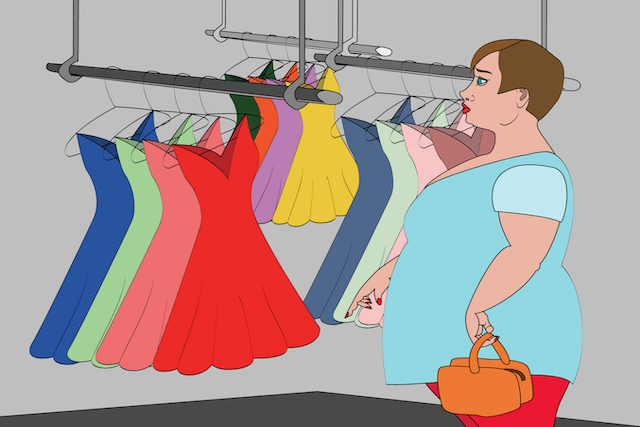
Tag: fat

  • Thinner is Not Better – Healthy, Connected, and Happy Is

    Thinner is Not Better – Healthy, Connected, and Happy Is

    “Standards of beauty are arbitrary. Body shame exists only to the extent that our physiques don’t match our own beliefs about how we should look.” ~Martha Beck

    I have so many women around me right now—friends, mothers, clients that are on a diet—constantly talking about their weight and how their bodies look, struggling with body image.

    I am profoundly sad about the frequency and theme of those discussions.

    At the same time, I deeply get it; it is hard to detach from our conditioning.

    I too struggled with body image at one point in my life, and for a very long time. I suffered from anorexia in my late teens and early twenties. I was skinny as a rail and thought I was not thin enough. I hated the way I looked. I was never perfect enough.

    I controlled my food intake as a way to regain control over my life, as a way to maybe one day be perfect enough that I might feel loved. I almost ended up in the hospital, as my weight impacted my health, physically and mentally. I had no period, no healthy bowel movement. I was so unhappy and depressed. I had no energy.

    The messed-up thing is that the skinnier I looked, the more compliments I received from a lot of people, from family to friends: “You are so slim and gorgeous.” To me, this just validated the way I treated my body—and myself—with control, self-criticism, and harshness.

    Then there were the magazines, showing skinny models, getting so much positive attention. I was obsessed. The more my body looked like those magazine pictures, the better; though I could never quite get to a point where I looked at myself in the mirror and liked what I saw. It was an endless circle of judgment, control, and unhappiness. 

    It took me many years to change the way I saw my body and debunk the standards created by “society” for women.

    For many years I bit my tongue each time I would hear other women around me comparing and judging their body size and shape, repeating the same narrative of needing to lose weight. These conversations felt like an unbearable ringing in my ears, a knot in my stomach, the story in my head of “I am not good enough.”

    I was in the process of creating a new set of standards for myself, of what it was to be a woman in this world, but the old stories were hard to escape and easier to follow because they were the gold standard. I did not have any role models of women out there, younger or older, loving their body just the way it was.

    There was a point, though, when it was just too draining. I noticed that it was not the striving to get to a perfect body that brought me love. What brought me love was being vulnerable, authentic, sharing my inner life, supporting others, having deep talks, being kind with myself and others, and doing the things I loved.

    From then on, I started to soften and release all those standards that had been gifted to me. I allowed myself to be okay with how my body looked, to enjoy food, to enjoy movement, to enjoy my body. I learned to truly love my body, and with that came a different type of respect: I learned to rest when my body was tired. I learned to eat really nourishing food. I learned to move every day in a way that was respectful to my body and that I enjoyed.

    Thinner is not better. Healthy, connected, and happy is.

    Practicing yoga helped me so much in embodying this new belief, and studying neuro-linguistic programming as well.

    The truth is we are “society”—all of us, women and men—which means we are the agents of change. So let’s pause, reflect, and choose new standards. Is this constant need to lose weight healthy or serving anyone?

    There are a few different things to separate and highlight here.

    If your weight negatively impacts your health or your life, if you feel heavy in an unhealthy way and can’t do the activities you’d like to do, that is a different story; and yes, please, take care of your body, through what you think will work best for you: exercise, nutrition, mindset, support.

    Your body is your vessel to experience life, so finding your way to a healthy body is a worthwhile investment. And daily movement and good nutrition will have such a positive impact on your vitality and health, physical and mental, so yes, go for it, with love, softness and kindness—no control, judgment, or harshness.

    But if you feel that your body is strong and healthy, but you don’t like the way it looks… I feel you. I was there. I felt the shame, the discomfort, the sadness, the feeling of not being good enough. Allow yourself to feel this pain. It is okay, and human nature, to feel concerned about your appearance. We all want to be part of the tribe, to be loved and admired.

    But then, ask yourself, is it me that does not like the way my body looks, or is it because of society’s beauty standards? Is it because of all the noise from my friends, constantly talking about weight and looks? Do I want to transmit those standards to the next generation? To my sons? To my daughters? Is it really the most important thing for us women, to look thin and good? Is this story serving us all? Is it love?

    No, it is not love, and it serves no one. Not the women suffering in silence because they believe their body is not slim enough. Not the partners of those women who can’t appreciate their true beauty and fullness. Not the daughters that will believe the same messages and suffer as well. Not the sons that will not know how to recognize beauty in its diverse shapes and forms. Not society as a whole, which will be robbed of having a happy, compassionate, loving, self-confident population.

    So let’s choose differently. Let’s celebrate our different body shapes and weights and strength. Let’s feel good and enjoy life, movement, and food without counting and restricting and denying love to our bodies and selves.

    Let’s stop talking about our weight constantly and find other ways to connect.

    Some might say that I am too slim to really speak about this subject, that I have it easy. This is not quite true. My body has changed so much throughout the years. I went from an ultra-skinny teenager and twenty-year-old with anorexia, to a healthy weight in my thirties, to ups and downs with weight throughout my two pregnancies and breastfeeding journeys. I have seen my body change quite a lot and have been judged for how I looked oh so many times. I have been judged for being skinny, or envied for being slim, and I have been judged for gaining weight.

    Today I am forty-three. My body is not as slim as it used to be. I have a bit of fat around my belly, and my breasts are not as round and firm as they once were, but I feel strong and healthy. And I am SO grateful for my body for enabling me to experience life so far, and for creating life and feeding life, that I don’t want to ever criticize or shame my body again.

    I have learned to love every scar, my stretch marks, my extra skin, because they are the witness of my life, my loves, my years.

    So thank you, body, for everything you allow me to experience.

    The alternative to loving my body—the constant internal criticism and self-doubt—is too draining.

    We, as humans, are society, so let’s change this conditioning. Let’s never transmit this idea of what a woman’s body should look like to our daughters, to our sons. Let’s invent a world where it does not matter what you weigh as long as you feel healthy and good within. Let’s change the chattering from what diet we are on to how our heart is feeling.

    Let’s celebrate bodies, in their diverse beauty and forms.
  • I Was a Bulimic Nutritionist, but I’m No Longer Ashamed or Hiding

    I Was a Bulimic Nutritionist, but I’m No Longer Ashamed or Hiding

    “Shame derives its power from being unspeakable.” ~ Brené Brown

    I felt like a hypocrite. I would tell my nutrition clients to eat a salad with vegetables, then I’d go home and scarf down an entire pizza. After guilt and shame set in, I would purge and throw it up.

    I think I became a nutritionist partly so I could better control my relationship with food. If I learned the secrets behind eating I could biohack my way to putting the fork down, losing weight, and finally being happy. This was back when I thought thinness equaled happiness.

    It’s taken me over ten years to recover from an eating disorder. Years filled with perfectionism, shame, and isolation as I untangled that my worth is not tied to my weight. I share my story in hopes that it sparks a deeper dive into your own relationship with food.

    Growing up I was an over-achieving, people-pleasing perfectionist. Which by itself may have been fine but, paired with a sexual trauma I experienced in early University, it was the perfect storm for developing an eating disorder.

    I used food as a coping mechanism for the trauma I’d endured. It was a way to dissociate from having to feel the shame of being assaulted. I assumed it was my fault this terrible thing happened, and while eating as much and as fast as possible, I could numb out from strong emotions.

    For a short period of time, I was worry-free.

    But then inevitably came the guilt and shame—ironic, since I was trying to numb the shame of my assault with food.

    Why did I have to eat so much? Now I’ll gain weight, and if I gain weight no one will like me. Why don’t I have the discipline to control my food? To control myself? I am truly worthless.

    Somehow my brain had built the association between looking a certain way and being accepted, worthy, and even safe. Having a sense of control over what I ate and how I looked made me feel powerful in a way. And maybe subconsciously it gave me a sense that I could also control what happened to me.

    I knew I needed help in University when after purging for the third time one day I had a sharp pain in my chest. Bent over the toilet, clutching my heart, I realized things had gotten out of control.

    Luckily, before I lost my nerve, I set up an appointment with a counselor. And there began my long and twisty road to recovery from bulimia. A word I would rarely utter in the coming years, instead referring to it as my “food issues,” downplaying the severity of my illness. Bulimia was something only celebrities developed, not something a straight-A student like me could encounter.

    Wow, was I ever wrong! Along this journey I’ve met many others like me, and I discovered we had more similarities than differences. We put immense pressure on ourselves to be perfect, had an insane need to control everything, and we all felt deep shame about our behavior. Many others I met had also experienced trauma and used food to soothe.

    In 2008, when I first sought treatment, I worked in secret on my recovery, only talking with a counselor and a doctor. I needed weekly blood tests to ensure my electrolytes were balanced. Turns out purging is very hard on the body, something my lack of tooth enamel will attest to.

    It was years until I told friends and family, and even now many will be shocked reading this article. It was easy to hide from roommates, as I would binge alone in my room and come up with creative reasons to use the bathroom when needed. Sometimes even purging into bags in my room then disposing of it later.

    In 2013, after a few weeks of some particularly painful binging sessions, a doctor told me I had lesions in my throat. I could barely swallow, having to sip smoothies through a straw. And my first thought was:

    Yay, now I’ll definitely lose weight.

    Thankfully, it was followed by a second thought.

    This is dumb. I’m putting my health at serious risk here… to be thin? That makes no sense.

    That’s when I knew I needed to kick my recovery into high gear. I started out-patient treatment in Toronto and attended support groups with others like me. I learned to sort through complicated emotions and release my need for everything to be perfect. In short, I was on a great track.

    But here’s the thing no one tells you about recovery—it’s not linear. I was settling into my career as a nutritionist, my binging episodes reduced, then someone would make an off-hand comment…

    Wow, you cleaned your plate, you must’ve been hungry!

    And boom, I would spiral out and feel compelled to rid myself of the extra calories. Secretly hunched over the toilet once again, knowing I had failed.

    I didn’t think people would trust my nutritional advice if I gained weight. I was also a yoga instructor at this point and convinced students wouldn’t return to my classes if I didn’t have a lean svelte yoga body.

    I continued the ups and downs of recovery for years. Having to choose recovery every single day was exhausting. Over time, the periods between binges got longer.

    For me, there was no silver bullet cure. It was a combination of using mindfulness to sit with difficult emotions and getting a whole lot of therapy to address the trauma. I never thought I’d get to this place, but eventually I learned to see myself as a worthy person—no matter my past, no matter my size.

    I used to think having an eating disorder was a shameful secret. Now I see that struggle as the source of my strength. It takes an incredible amount of courage to address trauma, and working tirelessly on recovery has taught me how to bounce back over and over again.

    I went through the ringer for many years, having to hide many of my behaviors, and thinking my weight was the most interesting part of me. I share my experience as part of the healing process, to take away the shame that hides in the shadows. I hope it encourages you to examine your relationship with food and your body—and how you might also be using food or another substance to avoid dealing with your own traumas.

    We tend to judge what we’re eating and think of food as something to be controlled, but eating disorders aren’t just about food. They’re a reflection of how we judge ourselves and our need to regain control when we feel we’ve had none.

    If we can come out of the shadows and face our pain and shame, we can start to heal, but it might not happen overnight. It might be two steps forward and one step back, sometimes one step forward and two steps back—and that’s okay. People who struggle with eating disorders are often perfectionists, but we need to accept that we can’t be perfect at healing. It’s a process, and as long as we stick with it, we will see progress over time.

    Now that I’ve worked through the pain of my past, I can finally see that food is something to be enjoyed and celebrated, and I too deserve celebrating, no matter my size. I don’t need to be perfect to be worthy. And neither do you.

  • Being Skinny Doesn’t Make You Fit or Healthy

    Being Skinny Doesn’t Make You Fit or Healthy

    “Your body is precious. It is your vehicle for awakening. Treat it with care.” ~Buddha

    As a 5’4″ petite, half-Asian, people have always assumed that I’m fit. However, my slender figure hid the sins of a poor diet and exercise routine for a decade.

    The truth is, being skinny doesn’t make you healthy. There are many hidden dangers of being so-called “skinny fat.” (Though this is a commonly used term for unhealthy skinny people, it’s worth noting that bigger doesn’t always mean unhealthy. So perhaps a more accurate term would be “skinny unhealthy.”)

    Skinny fat, also known as “normal weight obesity,” affects both men and women who have seemingly healthy weights and Body Mass Indexes (BMI). However, a 2008 study by the University of Michigan found that nearly one-fourth of Americans of normal weight had high blood pressure or high cholesterol.

    I spent all of my twenties as a skinny fat woman. I haphazardly worked out without any routine or strategy, mainly copying what my friends did or running on a treadmill. I drank too much alcohol and never followed any diet consistently. My idea of a healthy dinner was frozen potstickers over a bed of lettuce.

    This thinking changed after my then-fiancé, now-husband, Ryan, proposed. I kicked it into high gear and used my engineering background to dive into the research. With six months to go before the wedding, I started experimenting with my body, diet, and exercise to have a toned body for my dream wedding.

    How Do You Know If You’re Skinny Fat?

    Dr. Ishwarlal Jialal, director of the Laboratory for Atherosclerosis and Metabolic Research at UC Davis Health says, “They look healthy, but when we check them out, they have high levels of body fat and inflammation. They’re at high risk for diabetes and cardiovascular problems, but you wouldn’t know it from their appearance.”

    Whether or not you’re capable of eating Taco Bell every day for lunch without gaining a pound, don’t be fooled. Bad diets will catch up with you. Here are other descriptions to see if you’re skinny fat:

    • You wake up skinny, but by the end of the day, your stomach has bloated as if you’ve gained twenty pound
    • You have a muffin top yet are slender everywhere else but your midriff.
    • You tend to reduce food intake during the day if you plan to fit into a tight shirt in the evening.
    • People dismiss your weight fluctuations and concerns due to your small or slender size.
    • Despite a sometimes-poor diet, you don’t seem to gain weight.
    • No matter how much cardio you do, your weight also seems to stay the same.
    • You’ve never seen muscle definition.
    • You can’t do a pull up to save your life and have “jelly arms.”

    According to InBody, a body composition device manufacturer, recommended body fat ranges for healthy men are between 10-20%, while for women 18-28%. If your weight is normal or low, yet you have a higher percentage of body fat, then you may be skinny fat.

    The same as being overweight, a bevy of health problems can afflict those men and women who are skinny fat, including higher risks of cardiovascular diseases.

    It took me years to understand that while I was skinny, I wasn’t healthy. Since then, I began taking intentional and systemic steps to get my health back on track.

    Now that we’re all housebound, it would be all too easy to indulge poor eating habits, and it’s understandable and okay if we splurge every now and then. But this could be a great time to develop new habits that can improve our overall health—which is crucial to maintaining a healthy immune system.

    If you’re ready to go from skinny fat to fit, here’s what you need to keep in mind:

    1. Know that it takes time.

    The problem with being skinny fat is that it takes a lot of effort to shift your body composition, a lot more than it often does for others. I can see my husband’s defined muscles after a week of workouts and healthy eating. For me and others who are skinny fat, it may feel like your body simply stays the same. However, you’ll undoubtedly start feeling better, even if you can’t see the results.

    Eating well and working out provides a whole spectrum of benefits, from better sleep to more energy. I felt better within a week although didn’t see any physical results for about two months. Don’t fear. Stay consistent and follow the plan. Good things are happening.

    2. Forget the scale.

    Many men and women are obsessed with the number on the scale. The truth is, the scale can’t tell you if it measures water weight, fat, or muscle. In fact, the scale can be downright misleading for skinny fat people. You may think that you don’t need to change your unhealthy habits because you’re a normal, or even low, weight.

    So, instead of focusing on the weight when you’re improving your diet and fitness, focus on tracking inches or taking photos as the primary data benchmark for success.

    Document your “before” stats by measuring the size of your chest, arms, waist, hips, and thighs. Next, take photos of yourself from the front, side, and back. Date them and store them somewhere safe. Don’t worry. No one ever has to see them. The important thing is creating a benchmark to see your health and body composition improve over time.

    Once you start focusing on eating better and working out regularly, you’ll likely become leaner in some areas, but more muscular and bigger in others. Either way, you’re on track to becoming healthier.

    3. Focus on five or six small meals a day.

    If you’re only going to do one thing, hone in on healthy eating. Eat fiber-rich foods like leafy vegetables and beans while reducing simple carbohydrates and sugars. While someone who is skinny fat may not see the adverse affects of a poor diet, consider this: a single chocolate milkshake is only burned off after sixty minutes running on a treadmill. Be thankful of your body’s metabolism, but don’t take it for granted.

    For all skinny fat men and women, I recommend eating smaller meals more frequently. While it’s a big scientific debate as to whether three or six meals a day are better, studies support that smaller meals help stave off hunger and reduces the potential to overeat or binge.

    As someone who has intermittent fasted, ate a traditional three large meals daily, and also experimented with small, frequent meals, I found that the small, frequent meals were most effective at keeping me the same size throughout the day. It also required advanced meal prepping, which meant extra thought was put into my food and nutrition.

    For me, moving to five small meals wasn’t as hard as I thought. Here was a typical day of vegetarian eating for me:

    8:30 AM – Breakfast smoothie loaded with frozen spinach and peanut butter

    10:30 AM – A snack of pumpkin or sunflower seeds, plus a banana

    12:30 PM – Homemade cup of vegetable soup with a strawberry and goat cheese salad

    3:00 PM – A half-cup of Greek yogurt with low-sugar, high-fiber granola

    6:00 PM – Asian vegetable stir-fry with quinoa

    This plan was enough food to keep me satiated and never hungry—although my colleagues joked that whenever they came into my office, I was always eating! This diet plan along with my workouts helped me move past my skinny fat phase.

    Remember, no matter your size, women should never consume less than 1,200 calories, and men should never consume less than 1,600 calories a day. If your goal is to increase muscle mass, then you might even have to eat more!

    4. Stop the cardio and grab the free weights.

    Hands down, the fastest way to leaving your skinny fat behind is through weightlifting—and you can even use DIY weights, like packages of rice or beans or paint cans.

    Weightlifting is something I would never have tried without my husband first suggesting it. With six months to go before the wedding, I knew my current cardio and running routines wouldn’t get me there! So, I acquiesced and started an online weightlifting program in our home gym.

    Unlike with cardio and aerobic exercise, weightlifting and other anaerobic exercises (like sprints and HIIT) build lean muscle mass. Instead of burning fat and oxygen, your muscles burn stored sugar called glycogen. Then, as you grow more muscle, new benefits follow including more calories burned, faster metabolism, increased bone density, and lowered blood sugar.

    For the first couple of months, I was skeptical that the weightlifting was doing anything. For years my mantra was “the more you sweat, the better the workout.” There were some days when after forty-five minutes of lifting, I didn’t even break a sweat! Before I wrote it off, however, I consulted my “before” stats and photos.

    When I saw the results, my jaw dropped. As someone who kept a never-changing figure since high school, I had put on muscle and looked more vibrant and healthier than ever. Outside of feeling sexier and stronger, the photos revealed that I hid all of my excess fat in my back. To top it off, my small Asian hips grew by four inches.

    As our wedding loomed closer, I realized that my perspective had changed about what my “dream body” looked like. Instead, it was now apparent that being skinny should never have been my goal. My body physique had become even bigger in some places, yet I had never felt so strong, confident, and healthy. I remember leaving my dress fitting the weekend before our wedding giddy, feeling more beautiful than I had ever felt before.

    It’s been an eye-opening journey, but it’s been rewarding to share that yes, men and women can go from skinny fat to fit with a few small dietary and exercise steps.

  • I Used to Be Hungry All the Time

    I Used to Be Hungry All the Time

    I mean, hungry allll the time. Basically, if I was awake, I was ready to eat.

    I’d mindlessly pick at whatever was available.

    I’d wander the kitchen feeling “snacky” all the time.

    I’d be completely consumed with thoughts of what I was going to eat next from the minute I woke up til the minute I went to bed. And behind all the desires to eat were always the arguments—what I wanted to eat versus what I thought I was “supposed” to eat.

    No matter how much I had just eaten, I could literally always still eat. I lived in a constant state of fear of putting on more weight and felt guilty and horrible about myself for all of it.

    “No thanks, I’m not hungry” wasn’t a sentence that existed in my vocabulary.

    If there was food around, I was eating it. If there wasn’t food around, I was going to get it.

    (An interesting point to make here, and something for you to think about in your own history with food and dieting, is that I was never like that until I started dieting. The harder I tried to restrict certain foods, the worse it seemed to get, but I digress…)

    Dieting and food rules were a big part of the cause, but they weren’t the only cause.

    For many years, I thought I was a pig. I thought I was just someone who loved food. I thought I was a pig with no self-control. For quite a while I even thought I was addicted to food (and more specifically, sugar).

    That was the problem, I thought. The solution then, of course, was to just try keep trying to “be good.” I had to want it more, shame myself more, and try harder to stop eating things I shouldn’t eat.

    I thought the way I felt about my body (hatred, of course) was my fault because I was too much of a pig to stop eating and I kept making myself fatter and fatter (I thought).

    I knew there were things in my past that could have been considered “issues” I’d never dealt with, but as far as I was concerned, they were in the past. I was over them. Besides, I was strong and nothing bothered me (I thought).

    That’s what I honestly believed.

    But wow, was I wrong.

    Here’s what I’ve learned in the years since I’ve “awakened” (as they say) to the truth.

    First, our thoughts are not our truth, but if we repeat the same ones to ourselves for long enough, we believe them to be true.

    What stories are you running on autoplay in your head everyday about yourself, about food, about your body, about food?

    Second, our thoughts are only the surface level chattering of a very complex computer, and that computer is constantly running (mostly) unconscious programs in the background, all day, every day.

    Beneath those thoughts, what subconscious beliefs are lingering and driving them?

    Those programs not only store our beliefs about ourselves and the world around us, but they drive a lot of our choices as a result of those beliefs.

    Our thoughts, emotions, and beliefs drive a lot of the choices we make—like, a whole lot of them.

    I thought I’d share some of the unconscious beliefs I had below the surface, because, I’m also beginning to notice that a lot of us have a lot of the same ones; and if any of this resonates with you, you may recognize some of them or it may give some things to think about it your own history.

    Belief: At my core, I am bad.

    I am darkness. I am worthless. I am a loser. This is more a general theme of beliefs, I suppose, and thankfully it’s been shifting a lot in the last few years. It does, however, still have some roots that I’m working on.

    This came from childhood, an alcoholic parent, but a number of other things as well; weight gain and food struggles contributed to it. What surprised me when I was digging into this was how many other things contributed to it as well, things that, as an adult, seem rather silly and innocent.

    For example, money was always an issue when I was growing up. That’s a fairly common issue for most families that I never would have thought contributed to so much pain in my adult years—yet it did. It contributed to the “not good enough” and “loser” stories I believed about myself. Also, something I never would have guessed in a million years.

    The takeaway point is that it doesn’t take big obvious childhood traumas to create these destructive “not good enough” beliefs.

    Belief: I am unsafe. The world is unsafe. People are unsafe.

    This one is still in there for me. It’s one of the more recent ones I’ve uncovered, so I haven’t completely cleared it yet. I frequently still feel it as a heavy ache in the center of my chest. It came mostly from having an abusive, alcoholic parent, although other things contributed to that one, as well.

    Belief: Nobody cares what I have to say and even if someone does, I don’t say the right thing anyway.

    This is one that I’ve fairly recently discovered, and it’s another one that came from what now seems like the silliest place. I used to hear, “Shhh, don’t say that! Little girls shouldn’t say things like that” and “Girls are meant to be seen and not heard” all the time from the adults around me when I was growing up. I mean, I probably said that to my own kid when she was little. It seems like such a normal, adult thing to say, yet it’s a message that affected me most of my life.

    Belief: If I gain weight, I am worth less, I am a failure.

    This one is unbelievably common because fat = bad is a message we’re programmed with from the time we’re little.

    Those are a few examples to help you start thinking about some of yours.

    I lived with and from those beliefs my entire life and had no idea they were even there.

    What do I mean I lived from them? I mean, they drove the choices I made for myself.

    Because that’s how it works.

    Every belief that stemmed from the underlying, “I’m not worthy, I’m not good enough, I’m bad” theme prompted me to treat myself and my body accordingly.

    Those beliefs fueled overly restrictive diets, starvation, over-exercise to the point of it being corporal punishment, but they also fueled the non-stop feeling of hunger. They fueled emotional eating, over-eating, and bingeing.

    The more weight I’d gain, the more it would fuel those beliefs and the more I’d try to restrict to “be good” and “make up for it,” which would result in more bingeing. It was an endless cycle.

    The other beliefs created uncomfortable feelings in my body that I not only wanted to avoid but learned to mistake for physical hunger. That’s why I was always hungry. I was always trying to numb everything I was feeling—and I didn’t even know it.

    That gnawing, non-stop hunger feeling was never physical hunger. It was an aching hole in my chest that needed to be filled with feelings of safety and my own love and acceptance, but that I instead tried to fill with food simply because I didn’t know it. I didn’t recognize my own unwillingness to simply allow emotions to exist.

    And the whole time, I thought I was just someone who had no self-control with potato chips.

    Ha. Nope. That’s not it. And that’s the good news because once you recognize that, you can start doing something about it.

    Food numbs and soothes. It just does. Constant hunger or “snacking” comes from a program in your brain running in the background that’s usually attached to the need to soothe or numb something uncomfortable—fear, pain, boredom, annoyance, etc.

    It’s also reward and punishment. It took me years to realize that sometimes, I was feeling driven to eat, not because I was physically hungry but because I felt so worthless, I was actively trying to punish myself.

    And the side effects of trying to control food intake tend to create more self-destructive habits of over-eating and bingeing (aka, feeling “hungry” all the time).

    Constant hunger, feeling like there’s a hole that just can never be filled, isn’t physical hunger. That’s why it feels like it’s a need that’s never satisfied. It’s simply misinterpreting signals and responding with the wrong fix.

    Something else I’ve learned: Our bodies are unbelievably smart. They don’t want to overeat to the point of being uncomfortably full; we’ve just unlearned how to connect with and listen to them.

    If you can relate to those feelings of always wanting to eat, start by simply pausing before you eat to ask yourself, am I physically hungry? Do a quick inventory of how you’re feeling. What sensations do you feel in your body? Where do you feel them? Emotionally, how do you feel? What were you just thinking about? What were you just doing? 

    Just pause for a second and check in with yourself. What do you really need right now? Is food the answer? (Because I know sometimes it can be hard to make yourself stop for a second when you get that urge to eat something, you can alternatively start practicing this while you’re eating)

    Awareness and body-connection are where you start. From there, learning to recognize, manage, accept, and allow emotions makes a world of difference.

    You don’t have to have all your unconscious beliefs uncovered and changed before you stop feeling hungry all the time.

    Once you start recognizing when you’re being driven by your thoughts, beliefs, and emotions rather than physical hunger, and are better able to determine how to manage those emotions or when to just accept and allow them, the constant hunger begins to fade and things begin to shift.

  • If You Hate Your Body and Think You Need to Fix It…

    If You Hate Your Body and Think You Need to Fix It…

    “That girl was fat, and I hate her.”

    One of my clients said this the other day—about herself. Well, her little girl self. And my heart broke.

    One of the very first things I do with clients is encourage them to practice self-compassion and kindness—just extending themselves the same basic human compassion and kindness that they would anyone else.

    Very much the opposite of what most people who struggle with weight and food are used to. After all, when it comes to our weight and food, we’re programmed with messages like “You just have to want it more, be motivated, build your willpower muscle, try harder, work harder, be better…”

    Perhaps to some, it may sound easy or silly, and it’s hard to understand what the hell kindness and compassion have to do with weight and food struggles when we’re so programmed to believe the opposite.

    Just extending yourself some basic human kindness and compassion really does end up being one of the most important things to do when you’ve struggled with weight and food for a long time. It’s also the hardest, and some struggle more than others with this simple concept.

    Personally, I struggled hard with it when I first started trying.

    I hated myself. I hated and was ashamed of every single thing about me, and didn’t think I deserved any kindness or compassion. But I knew that if I ever wanted to change the way I felt about myself, I had to figure out how to find some.

    So, I started picturing a little girl version of myself when I felt like I needed kindness and compassion. If I couldn’t give it to myself, I’d pull up a mental image of her and direct it that way.

    It worked, and it’s a trick I’ve also been using with clients since.

    But the other day, this woman (like many others) said, “Little girl me was fat… and… I… hate her. How am I supposed to give it to her when I hate her too?”

    It broke my heart, but it didn’t surprise me, and as I think about it, it makes me angry. It makes me angry because this beautiful lady wasn’t born hating herself for a little belly roll. She learned to from our stupidly broken society and has carried that belief around with her every single day since.

    From the time we’re old enough to make any kind of sense out of the world around us, we’re taught that fat is the enemy.

    Mothers have been taking their kids to Weight Watchers meetings with them to get publicly shamed for the number on a scale since they were seven or eight. We’ve been warned “Better not eat that, you don’t want to get fat, do you?” as though it was a fate worse than death, while simultaneously being taught that food fixes everything.

    “What’s wrong honey, you’re sad? Here, have a cookie.”

    “Sore throat? Here, have some ice cream.”

    We’ve watched as weight loss, at any cost, has been rewarded. Those who lose it are treated like royalty—showered with praise, attention, and acceptance, while we watch those who gain get whispered about behind their backs for “letting themselves go.” Or worse, they get openly teased and made fun of to their face—often even by friends and family who supposedly love them and claim to do it out of love and concern.

    Our society has programmed us to believe that fat is the enemy and thin people are somehow better than those who are bigger, through millions of micro (and macro) aggressions over the course of our entire lives.

    And here’s what’s happened as a result:

    Tens of millions of people (big and small) are wasting literally their entire lives desperately trying to “fix” their “fat” problem so they feel more acceptable to the current narrative that size and shape determine human worth.

    And when they put on a pound, they hate themselves.

    It’s all so unbelievably toxic, damaging, and counterproductive, and it fuels the exact “problem” our population is obsessed with trying to “fix.” Because the individuals behind the war we’ve waged on fat, go through their entire life hating and rejecting themselves.

    The stories they tell themselves about themselves end up looking a whole lot like this:

    I’m worthless and unlovable if I’m not skinny.
    I’m a failure if I gain weight.
    I’m useless and stupid.
    I ate bad, so I’m bad.
    I’m such an idiot because I let myself go.
    I’m disgusting and don’t deserve to feel good or be treated well (by myself or others).

    You may be thinking, “Good, how else are they going to get motivated to get their shit together and lose the weight!” You may even follow that thought with the typical “I’m just worried about their health” tripe. (If you still believe that weight loss obsessions are in the “best interest” of public health, pop over here and read this piece).

    Think about those words for a moment and consider how they make you feel. Now think about the impact of hearing them running through your head on autoplay, both consciously and unconsciously, tens of thousands of times a day, every single day, for years or even decades.

    We believe the things we tell ourselves. And if we’re telling ourselves that we’re worthless and unlovable and failures because of extra body fat, we believe those things to be true of who we are at our core, what we’re worth, and more importantly, what we deserve in life.

    And we treat ourselves accordingly.

    That woman I spoke of a minute ago? Like tens of millions of us, she struggles to feel anything but hatred for a little girl who she thought was fat. The little girl who doesn’t even physically exist anymore but is built into the fabric of who she is now and how she feels about herself because she carried those stories, feelings, and beliefs into adulthood.

    So did I. And I’d be willing to bet, so have you. Because we all do.

    So, she doesn’t prioritize herself. She does everything for everyone else, while ignoring what her mind and body need until she has no physical or emotional energy left to do anything. And then, when she can’t seem to muster the energy or willpower to force herself into following someone else’s stupid food rules to “fix” her “weight problem,” she hates and berates herself even more, and the cycle just keeps feeding off itself literally forever.

    No one in the history of mankind has ever thought, “I’m such a worthless failure, I think I’ll do something really nurturing and kind for myself and my body today.”

    That’s not how those stories work. That’s not how the shame they create works because we treat ourselves how we believe we deserve to be treated.

    When we associate our happiness and worth with our weight, weight gain makes us feel less worthy. The less worthy we feel, the less health-promoting behaviors we engage in.

    We don’t move our bodies (unless we decide to “lose weight”) because we don’t prioritize their health. We only care about the things we think we have to do as punishment for weight gain and to “whip them back into shape.” Corporal punishment is literally built right into the way we talk about it. But because we’re treating it as punishment, we can’t stick to it.

    We eat and overeat things that make us feel like garbage (and gain weight) on autopilot, as habit, as punishment, as reward, to numb and soothe, to celebrate, to mourn whether our bodies need or want those things—who cares what our bodies want, anyway, right? We’ve spent decades hating, berating, and learning to not trust those.

    That’s why stories matter. That’s what they have to do with weight. That’s why the entire weight loss industry has become such a friggen joke.

    We have got to stop demonizing and prioritizing weight. We have to.

    Instead, we have to shower ourselves with kindness and compassion. If we hate ourselves too much to consider that, we have to shower a younger version of ourselves with it (just keep going to the youngest version you need to, in order to find a version of you feel compassion for). 

    Kindness and compassion are so heavily built into this process because we cannot change self-punishing behaviors until we stop believing we deserve to be punished.

    If you want to change your weight, health, or the relationship you have with your body or food, you have to change the way you feel about yourself, and you cannot do that while berating yourself with stories of being worthless because of what you ate or what the scale says.

    It’ll just never happen.

    We have to stop rejecting parts of ourselves, since rejection writes those stories in the first place, and start working with the way our brains are wired (changing the thoughts and stories that create the beliefs that drive self-destructive habits and behaviors). And we have to tune into our thoughts and the wisdom of our own bodies with kindness and compassion.

    When we stop focusing on weight and weight loss and instead focus on shedding the stories (and beliefs that cause self-destructive choices), then, and only then, are we able to forever shed physical, and more importantly emotional weight they may have created. It eventually just becomes an effortless side effect.

  • The Truth About Body-Positive Activists on Social Media

    The Truth About Body-Positive Activists on Social Media

    “The most difficult times for many of us are the ones we give ourselves.” ~Pema Chodron

    I’m on my phone, posting a photo of myself on Instagram. It’s a vulnerable shot—I’m holding my bare belly.

    I type in the caption “Accepting my body isn’t easy, but it’s worth it.”

    I mean this, but I also have voices in my head telling me to delete the picture because I’m gross, not good enough, and a phony.

    I get half a dozen comments supporting me, mostly emoji hearts. One comment reads, “I wish I had your confidence.” I feel weird reading it because my feelings are mixed. I don’t necessarily think of myself as confident all the time.

    In fact, my reality is that I’m struggling with body image more than I’m swimming in acceptance. I think about how this person is comparing their backstage to my highlight-reel. 

    We do that—we look at ourselves as “not enough” and think that others have it all together.

    We’re our harshest critics, and we hyper-focus on aspects of ourselves and bash them. We think that behind closed doors we are monsters. But when we focus all of our attention on that behind-the-scenes person, we’re not taking into consideration how human others are, too.

    The truth of the matter is that things aren’t always as they appear on social media. Yes, I realize I’m calling myself out, but I think it’s important for people to know that even people who seem wildly body-positive struggle, too. I mean, body acceptance is damn hard.

    I didn’t get to this point overnight, finding relative peace with myself. It’s been a long time of hating myself and wishing I was different. Even with finding some peace, I’m not “cured.” I don’t have a magic dose of body love all of a sudden.

    In fact, body acceptance doesn’t have to be self-love at all. It’s commencing on a simpler level. How about I just try to find acceptance in myself to think that this is how my body is at this moment? This is where we are, here in this body. It’s simple, but not easy.  

    It’s important to note that body acceptance is a moment-to-moment thing rather than a state of being in which you exist. It’s something that has to be fought for but is sometimes settled on.

    My background is that I’ve had eating disorders over the years, I’ve dieted like it was going to save me from body image issues, and I’ve had long periods where I weighed myself every day. I’ve also counted Cheez-Its out of the box, vowing to eat only the serving size. I’ve suffered in not accepting my body and instead succumbing to diet culture.

    At points, I thought I had it under control. I had dieted just right. I had even lost some weight. Inevitably, though, the self-disgust seeped in. I fell off the wagon over and over again, binging, particularly on sweets and foods high in carbs—the very foods I was depriving myself of.

    I’d say, “screw it” and I’d devour pizza with friends. I’d eat alone with a carton of ice cream or a box of cookies. Binging was inevitable after deprivation. While the high was fun during, it led to being sick and hating myself even more.

    In a fit of despair, I’d vow to “get back on the wagon” the next day.

    I’d tell myself I was definitely going to do better next time, but next time never permanently came. I may have been able to string together a few days of what I saw as “good” eating, but never lasting change.

    I got to a point where I felt defeated.

    Diet exhaustion looked like no longer finding joy in foods. It felt like a rock in my stomach. It sounded like sighs from having to make what felt like complicated food choices over and over again every day. 

    I couldn’t count my Cheeze-Its anymore. The scale was haunting and owning me. I feared social gatherings with friends, sometimes even avoided them. The next diet be it Keto or Whole 30 just sounded like another opportunity to fail.

    I got tired of chasing my tail. Diet culture wasn’t working for me anymore.

    What was the alternative? My ears started to perk up when I saw body-positive content on my social media feed. There were promises of body freedom and breaking the cycle of binging. I couldn’t believe it, but I thought about trying it for myself.

    The only thing was that I was terrified of trying it this way. The path of body acceptance sounded like giving up to me. It was far from it, though.

    I don’t remember if I googled body positivity, ran into it on social media, or some combination. I remember the despair I felt in searching for it. Thoughts passed through my mind like “could this work?” or “could this be real?” For so long all I had known was war with my body.

    While I was terrified, the positive effects of body acceptance began to flood my world in the best way possible. 

    I found influencers like Lauren Marie Fleming, Megan Jayne Crabbe, and Jes Baker. These women showed me that you could be happy and free in any body type. They started to break down those ideas I had about fatness and even what constitutes health.

    I started my journey. I downloaded all the podcasts I could on the topic: Food Psych and Love, Food were my favorites and top-ranking in the podcast charts. I filled my arms with books like Health at Every Size by Linda Bacon and Shrill by Lindy West. I religiously followed Instagram influencers like Virgie Tovar and Tess Holiday.

    Their messages were essentially the same:

    • Your size doesn’t determine your worth.
    • People can take actions to be healthy at any size.
    • Food isn’t to be defined as “good” and “bad.”
    • Dieting doesn’t work, and long-term weight loss from dieting is not sustainable.
    • All bodies are good bodies.
    • You can listen to and trust your body.

    These are just a small handful of the variety of beautiful messages I got from these amazing body-positive activists. They brought me hope.

    I also compared myself to them.

    I imagined their lives being perfect. I believed they had totally overcome diet culture and were floating above the clouds in body acceptance land. I thought that in order for me to experience freedom, I had to completely rid myself of negative thoughts.

    My backstage looked more like some body-accepting thoughts mixed in with a whole lot of self-loathing. Even today, I look down at my belly in disgust some moments. I guess the difference is that I have tools and messages to turn my thinking around these days.

    Some horrible thoughts that actually go through my mind are:

    • You’re only worthwhile if you’re thin.
    • No one’s ever going to love you.
    • You’re a failure and pathetic.
    • You ate terribly today.
    • Tomorrow I’ll eat “better.”

    I’m not immune from these thoughts just because I strive for body acceptance. In fact, these thoughts infiltrate my thinking regularly.

    It’s not a matter of having negative thoughts or not, it’s what I do with them.

    What I do with them these days is breathe through them. I turn them around and don’t let them control my life. In turning them around, I tell myself things like:

    • You’re worthwhile at every size.
    • You’re incredibly lovable.
    • The only thing that’s failed is diet culture’s promises.
    • You were feeding your body the best you could.
    • There’s no hope in a diet tomorrow.

    I want others to remember this when they think that myself or any other body-positive person on social media has it all together. I have to remind myself, too, when I go to compare my insides to another person’s outsides.

    We’re all just trying to figure it out, perhaps fumbling in the process. Those of us who are lucky enough to be working toward body acceptance know that this journey isn’t perfect. Changes aren’t going to happen overnight. Even the changes that do happen aren’t totally polished. 

    Just as others don’t know all that’s going on inside of us, we don’t know what’s going on inside of another person. They could be struggling just as we are. Attempts to mind-read only bring pain.

    What if that person you’re admiring is thinking the same self-deprecating thoughts as you are about themselves? What if they’re not happy with the way they’re eating and their relationship with their body isn’t nourishing?

    You can’t compare what’s going on inside of you to what’s going on outside for another person. All you can do is work to have the best relationship with yourself as possible.

    Acceptance is difficult and a process. In no way am I saying that it’s easy breezy. We wouldn’t all struggle so hard with accepting ourselves if it was easy.

    By recognizing that the person in the picture is just a human being, we see that we can have acceptance for ourselves, too. So, stop measuring yourself up to someone else. You’re your own person, flawed and beautiful. You deserve your own acceptance.

  • Why I’m at Peace with My Weight Gain

    Why I’m at Peace with My Weight Gain

    “Resistance keeps you stuck. Surrender immediately opens you to the greater intelligence that is vaster than the human mind, and it can then express itself through you. So through surrender often you find circumstances changing.” ~Eckhart Tolle

    I took a deep breath, feeling the recent change in my belly. I pinched at my belly rolls. They were familiar, I’d had them before, but recently I had gone through a period of over a year where I was in a smaller body. Now I was gaining weight again.

    I refuse to step on the scale, so I don’t actually know how much weight I’ve gained. I can just feel it in the extra belly rolls and the snugness in some of my clothes. In my mind, I have two choices: to wage war on my body or to surrender to the weight gain.

    Surrender is the ability to let go of the crushing weight of societal and personal expectations. It’s waving the white flag, signifying I’m giving up all the diet culture methods I’ve tried so hard to make work. I’m acknowledging that they actually never worked in the first place. This option isn’t always so easy, though.

    For some context, I’m a body positive and fat positive activist. I advocate for acceptance and health at every size. I tell others they’re worthwhile just as they are. Though when it comes time to put them into practice within myself, it’s very challenging.

    I still have days where I suck in my stomach, hoping to appear skinnier to the world and to myself. I try to shrink to become small enough. I feel as though my worth lies in the number on the scale (even though I’m a stranger to it now).

    I lie to myself and say that I’m never going to find a partner if I keep gaining weight. I beat myself up about the food I’ve consumed and I compare myself to other people.

    My body positive journey is far from perfect; I struggle with all of these things. One big reason is internalized weight stigma or fatphobia. It infests my mind and can take over if I’m not careful.

    I mean, look at the world: We fear and despise fat. People are bullied and discriminated against because of being in larger bodies. Fatphobia is very real. It’s ingrained subconsciously; our society trains us to be this way.

    The Body is not an Apology outlines some ways in which fatphobia rears its ugly head. In jobs, fat employees tend to be paid less for the same work. In dating, they often deal with people who fetishize them rather than seeing them as humans. In fashion, there are rarely sizes available beyond a size 16. In medicine, doctors see them as weak-willed and lazy.

    This is not surrender in our society. This is bullying and prejudice. No wonder it’s hard for people to accept their changing bodies—there are so many consequences for being fat.

    The irony of fat-shaming in the name of health is that it actually causes adverse health effects. According to a survey done by Esquire magazine, two-thirds of people report they’d rather be dead than fat. Can you imagine the damage this amount of stress does to one’s system?

    No wonder we’re terrified of gaining weight. We let those messages infiltrate our minds, and they drive us to pinch at our belly rolls as if we’re the worst people ever.

    On the other hand, being thin means being accepted, flying under the radar, even being complimented. It means that life is easier because you’re not oppressed in this way. Still, fatphobia manages to creep into all of our minds.

    When you’re scared to death of what other people are going to think of you, you’re carrying your own sense of internalized fatphobia. This phenomenon even impacts those who are in smaller bodies because of the negative feelings they have about themselves and the world.

    It makes sense, then, that my first reaction to my body admittedly isn’t always unconditional love. Rather, the old messages in my mind were saying, “You’re not good enough. You’re disgusting. No one will ever love you. You’re a failure.” They were loud and unrelenting. I was familiar with these messages.

    For many years I waged war with myself. I was stuck in cycles of binging and restricting that wreaked havoc on my body. I thought I was being “healthy,” but really I was very sick.

    I was obsessing over every little thing I consumed, making sure to track seventy-two calories of butter to my MyFitnessPal app and being hysterical when I gave into a Twix bar. Weight control owned me. I was constantly thinking about food.

    Binging and restricting create terrible health risks—getting physically sick from too much or not enough food and brittle hair, not to mention the emotional consequences that occur like stress, obsession, and the absence of joy.

    I loathed my very existence, and I definitely was fighting a war against my body and myself. I thought that there was something fundamentally wrong with me. It was utterly exhausting.

    I started to think that there had to be another way to relate to my body.

    When I was twenty-two, I discovered the body positivity movement. I began with a program called Bawdy Love, which was all about being a revolution to loudly declare that every body is worthy and no body is shameful.

    I began to follow body positive influencers online like Megan Jayne Crabbe, Tess Holiday, Roz the Diva, Jes Baker, and hashtags like #allbodiesaregoodbodies. Fat women filled my feed. They were beautiful and unapologetic. They taught me that fat isn’t bad and that people in larger bodies aren’t lazy, unhealthy, or unlovable.

    Now, I must say, I’m in a smaller body. I have privileges that many people do not. My level of weight gain so far is still keeping me in a body that’s relatively accepted by society. I don’t know what it’s like to face discrimination based on my size.

    I do, however, know what it’s like to hate your body and think that you’re broken. I know what it’s like to do the opposite of surrender. When I’m living this way I do things like workout until I’m ill, take my favorite foods out of my diet, and berate my body in front of other people. This is what waging war looks like.

    Instead of doing this, I chose to surrender to weight gain. I make this choice every single day. I try to let go of my expectations and preconceived notions. I’m throwing my hands up in the air.

    This isn’t a happily-ever-after story where everything is perfect. Rather, body acceptance takes rigorous work as well simply just letting myself be.

    I’m continuing to enjoy my food free from disordered eating. This means no restricting; every single food is available at any time. You won’t hear me talking poorly about my body or about anyone else’s. I refuse to diet and I refuse to indulge others in their diets.

    To counteract the voices that tell me I’m not good enough, refute them with “You’re worthy and lovable just as you are. Weight is just a number. You’re okay.”

    Eventually, I started to believe these thoughts are true. Part of me thinks that maybe, just maybe, my existence on this planet isn’t for nothing. In letting go of the self-pity, a beautiful sense of self begins to bloom.

    Surrendering is harder than you may believe. Internalized weight bias runs deep.

    I think at times I come off as someone who’s super-confident in myself and in my relationship with my body, but it takes a whole lot of work to get to the point of surrender. The point of being free from the grips of diet culture.

    I still poke at my belly, but mostly it’s with curiosity. If I feel disgust, I quickly try to turn my thoughts around to have compassion and confidence. I notice when my thighs are pressed against a bench. I smile, feeling thankful that my legs move me around.

    I don’t step on the scale because I know that it can’t tell me anything about my worth. The numbers are irrelevant. I open my arms to weight gain, though sometimes taking a deep breath first. Accepting it means healing from a disordered relationship with my body and food.

    Weight gain is an indicator that I’m living with joy in my life. I’m enjoying meals out with friends, snacking on treats at work, and taking seconds. I’m eating when I’m hungry, what a revelation.

    I’m taking deep care of myself, and that may not look like other people’s definitions of self-care. That’s okay.

    Fatphobia may say that I’m being stupid, but I choose surrender today. For me, that means throwing out lifelong conceptions that I’m not good enough. It means no longer running in circles chasing my tail, trying to lose weight. It’s opening up to the idea that there’s another way to go about this. It’s peace and joy.

  • Watch Me Dance: Why I Stopped Playing Small and Hiding from Life

    Watch Me Dance: Why I Stopped Playing Small and Hiding from Life

    “There is no passion to be found in playing small—in settling for a life that is less than the one you are capable of living.” ~Nelson Mandela

    When I was a kid I’d get up early on Saturday mornings to start my routine, which ended with a few hours in front of the television watching my favorite shows. After the cartoons came dance shows featuring the popular musical acts of the time. I’m in love with music and I have been all of my life, so these shows in particular excited me and made me feel like dancing with joy—and I did!

    I always had a great deal of energy. I loved riding my bicycle, playing hide-and-go-seek with my friends, and dancing. Despite always being overweight (since weighing in at eleven pounds at birth), I still managed to keep up rather well with my smaller, super active peers.

    Warm weather meant lots of outdoor activities, and I even looked forward to physical education class, particularly when we could exercise outside.

    School provided a new, tougher atmosphere for me, though. There were always “those other kids” who would remind me of my weight in the midst of my fun times on the slide or running around the school yard.

    I thought they were mean and hurtful just because they didn’t know me. If they knew how I loved to laugh and sing and dance and play, they’d surely be my friends too, right? Maybe not.

    I remember the first time words from one of “those other kids“ changed how I felt inside. It was the first time I knew the power of words—unfortunately, at the time, being used for harm.

    The feeling confused me at that age and was the first crack in my inner mirror. Being teased back then changed my energy and altered the bliss that I felt when I was ignorant about how much someone’s words could hurt. “Those other kids” wanted me to feel bad and I didn’t understand that. Even worse, I changed how I viewed myself.

    That crack remained as I absorbed those words and brought them home with me. It became a full break when some of those words hit home for me there.

    On this particular Saturday, I was watching my shows and I proceeded to dance as if I was in the studio with the others. I turned up the volume and shimmied and shook as if the camera was headed my way next.

    My oldest sister came in and said a few things that I wasn’t paying much attention to because I was focused on my performance. Then she blurted out, “…and sit down! You’re too big to be dancing around like that!”

    Her words tore through me like a knife. I loved my big sister. She was mean sometimes and I didn’t like when she didn’t want me around, of course, but when she was nice, she was really nice, and when I could be around her I loved it. But now she sounded like “those other kids.” And she knew me. She was my friend already.

    I remember slowly finishing my dance and then turning off the television.

    I haven’t danced so freely in the forty years since.

    That message remained as I grew but took on a different voice—mine. I would quietly analyze all of the experiences that I felt I was “too big for” and find clever ways to avoid fully engaging and participating.

    In junior high, I was a girls’ basketball team manager who filled water bottles and recorded stats instead of trying out to play for the team.

    I was in my high school band, but learned to play a different instrument when competition became too stiff in my section.

    At work, I was always the one who worked harder, faster, better, but remained passive when I wasn’t promoted or considered for salary increases.

    Even socially, I usually sought the company of those with larger, louder personalities that were easier to hide behind. Many opportunities to step on life’s stage culminated in paralyzing stage fright fueled by negative self-talk and overall feelings of inadequacy.

    I minimized the rest of myself because my body wasn’t minimal.

    Many years had passed before I realized that repeating negative messages to myself drastically lessened my effect. My own cruel inner voice did much more damage than anyone else’s words ever could.

    As an adult, my weight struggles continue. But I now have a greater understanding of the life-altering power of words heard from others, and also those I speak to myself. There is no other voice as important as my own. I had to go back to the basics to get that, though, and on that journey found even more.

    Along with “doing unto others as I’d have them do unto me,” I also strive to do and speak unto myself what I want done and spoken by others. I know now that the “selfs”—self-esteem, self-confidence, and self-worth, along with self-acceptance—truly are inside jobs. Cracked or broken mirrors still show you a beautiful reflection when you stand in the right position of self-awareness.

    Self-awareness came to me through a great deal of self-assessment. I’d mistakenly taken on the opinions of others as my own, but as I matured emotionally and spiritually, I knew I didn’t need to see myself through their lens. And I knew I didn’t want to, because in hiding to avoid showcasing my flaws, I ended up concealing my gifts.

    I also realized we’re all quite similar. We all have things we’d rather hide, and we’ve all been on the receiving end of unfair judgment at some point in time, if not for our bodies, for something else.

    I no longer compared myself to others when I realized that each one of us is human, fallible, and flawed. With that realization, I stopped punishing myself for my imperfections and mistakes and decided not to hold myself back because of them. Maintaining perspective helped me stop being overly affected by condemnation or praise from others and highly critical of myself.

    I found it most important that I spoke well of and felt good about who I was becoming.

    Though quite simplistic, the full grasp of this awareness allowed me to see myself and others differently. It began my path to self-acceptance and “those others” became people in need of acceptance, as well.

    I’d spent decades spackling and caulking my ego after being hurt both intentionally and not, by others and myself. It has been a steady chore to find just the spot that enables me to see clearly my own image, but, through acceptance, I finally do.

    I’m excited about who stares back at me now with the same simple joys as that free-spirited girl on a Saturday morning.

    Now, I make sure having great energy is my goal. I try to put it in my words to live harmoniously with myself and others.

    I take steps to speak from love and remain aware of my intention.

    I’m a devoted relative, thoughtful friend, and compassionate, respectful person. I love hard, smile continually in gratitude, and have joy in my spirit so my very soul tends to dance. It’s too big not to.

  • 5 Things to Remember When You Feel Disgusted by How You Look

    5 Things to Remember When You Feel Disgusted by How You Look

    “Your face will change. Your body will change. The only kind of beauty that endures is the kind that lives in your heart.” ~Lori Deschene

    How many times have you hidden away from the world when you felt ashamed by your appearance?

    How many invitations have you turned down because you felt disgusted by the way you look?

    And how many times have you gazed into the bathroom mirror and thought, “Why, in my brief existence on this planet, does it have to be me?”

    Seeing your reflection in the mirror is like a physical pain. It’s not just one part of your life. It’s obsessive. It consumes your every waking moment.

    Then you start feeling envy toward beautiful people. Wrath at whatever higher being there is for not making you one of them. Pride in your strengths whenever you see someone who looks worse than you. Self-loathing and blaming your treacherous genes for giving you an odd face, an imperfect shape, a visible health condition.

    For me, it was my skin.

    I was cursed by a chronic illness that regularly causes rashes all over my body, and sometimes even on my face.

    I can’t count how many times I cried over it. Sometimes from the pain. Sometimes from the itch. Too many times from people’s looks of revulsion or their unkind words.

    The borderline shallowness of many people who never bothered to open a book whose cover they didn’t like was painful and grating.

    My insecurity was like an open wound and my self-esteem was at rock bottom. I felt like a target, a second-class citizen with few rights to have dreams, hopes, or success.

    I perfected the art of avoiding mirrors and cameras, bought extra clothes to cover my skin, and learned how to keep my head down to avoid eye contact. I was terrified of social situations and worried that people would look at me in disgust.

    Every single comment could shatter my fragile confidence.

    The hopelessness and soul-crushing feeling of not looking pretty enough made me want to roll the duvet over my head in the mornings and not come out.

    Thinking that you’ll never be happy because of your looks is the most gut-wrenching thing. It’s isolating. It’s maddening. It’s frustrating and a thousand other things.

    We’re living in an appearance-saturated society that tells us that our likeability is dependent on being attractive. The diet culture, beauty industry, media—they all convey that beauty equals perfection.

    In today’s digital age, it’s easy to create a façade with carefully chosen photos and posts that lie through omission.

    But deep down, you know the truth.

    You can’t ignore it.

    The world doesn’t let you.

    Advertisements and magazine covers all remind you of how imperfect you are. Beauticians love to point out your flaws to sell you more products.

    It’s not until you decide to wear your imperfect look as a form of armor that you become comfortable in your own skin. People’s looks no longer intimidate you. Hurtful words don’t steal your sleep. You fall in love with yourself.

    It’s a journey toward acceptance. And the journey is liberating.

    We all face challenges in accepting who we are and how we look. But the truth is that, cliché as it may sound, beauty is in the eye of the beholder.

    It’s not what’s on the surface. It’s what’s inside you.

    Here are some of the things that helped me on my journey toward self-acceptance.

    1. You can make peace with the parts of you that you hate.

    Accepting that you don’t like everything about your body is the first step toward having a more positive frame of mind. It’s about acknowledging that you may feel “meh” about some parts of your body, but not letting that stop you from doing things you want to do.

    You’re probably thinking, “Yeah, right, but what about my stomach pooch?”

    Well, what about it? It’s there. You’re not perfect, and that’s okay.

    Often we forgo pleasure because we feel we don’t deserve it. Somehow simple parts of living become unobtainable “rewards.” Maybe you won’t let yourself hit the beach unless you get into a certain shape, or you can’t get married unless you drop the weight, or maybe you can’t buy new clothes until you’re a few pounds lighter.

    It sounds crazy when you say it out loud, but that’s how a lot of us think.

    So be kind to yourself. Be gentle and remind yourself of all the other things that you love about yourself.

    Give yourself permission to accept that some parts of your body may not be your favorite thing. You won’t always love every part of your body. However, you can still love your life even on the days you can’t love your belly.

    You’re certainly not alone in your struggle toward body acceptance. I could give you a laundry list of things I don’t like about my body.

    However, this is the body you were given. It’s the only body you were given. So it might be time to make peace with it.

    2. Everyone feels unattractive at times.

    We all have moments of weakness when we view everything through a negative filter, and the voice in our head becomes critical and unloving. Times when we feel ugly and unattractive. All of us. You. Me. Your best friend.

    Days when you look at yourself in the mirror and don’t see anything positive. You don’t see the loving spouse, the caring mother, the wonderful son, the understanding friend. You don’t see the wisdom in old age wrinkles, the power in stretch marks, and the beauty in your body curves.

    Instead, you just see . . . blah. Gross. Unlovable. Disgusting.

    In those moments of self-doubt, pause and ask yourself these questions: Is my mood affecting the way I’m feeling about my looks? Have I been getting enough sleep and fresh air? Have I been eating well and moving my body frequently? Self-care is so important because your mirror image is simply a manifestation of your positive energy.

    3. Media-defined ideals of beauty aren’t real.

    For years, the world of media has been trying to construct a sparkling image of what an ideal man and an ideal woman should look like. From television shows to commercials to magazine advertisements to celebrity culture, mainstream media has been reinforcing the notion that you only look beautiful if you have a toned body, perfect hair, and flawless skin.

    But the reality is that you just don’t.

    Why? Because the image of perfection doesn’t exist. It’s superficial. It’s unattainable. Even models themselves don’t look like their photoshopped, heavily edited images. No wonder you come up short whenever you compare yourself to celebrities and models on magazine covers.

    The pressure of looking perfect weighs you down. You begin to think that you aren’t beautiful enough, are too fat, too small, too whatever. All that to say that you’re not good enough.

    That’s, at least, what the beauty industry wants you to believe. If you feel inadequate about your looks, you’re more likely to buy whatever fix the ads are selling. Making you uncomfortable with your body sells – whether it’s a weight loss plan, fashion, or a beauty product.

    Are you going to change society’s definition of beauty? No. However, you can change your own. Don’t focus on the beauty you see in ads; focus on the beauty you see in the real-life people you admire.

    4. Your reflection doesn’t define you.

    The sum of who you are—your thoughts, beliefs, hopes, dreams, feelings—is much greater than what meets the eye of an observer who doesn’t know you. All those things about you are the force that draws others to you.

    You might have heard the saying that an ugly personality destroys the face. Well, I happen to agree with that 100%.

    Sometimes you hear somebody speak with kindness and compassion, and you perceive them as beautiful. However, it’s not their outer appearance you’re drawn to. It’s their inner depth, a kind of beauty that can’t be inherited, photoshopped, or surgically attained.

    I know many people who aren’t the most attractive, but their energy, joy, and positivity is so contagious that it’s hard not to have them around.

    So think about what brings you joy. Do things you like. Make your self-esteem contingent on inner, not outer, qualities. After all, a positive attitude brings more friendships than looks do.

    5. Your perception becomes your reality.

    If you feel beautiful, it will transcend your physical attributes.

    Think about the story you’re living right now. Did you consciously decide to create it, or was it shaped by your parents, your friends, or perhaps even the media?

    From the time you were born, you’ve received both positive and negative messages from your surroundings. All those messages create your belief system. You act on those messages as if they’re true until you believe them to be true. They become your reality. They give you your identity.

    Every time you say “I am,” you are telling a story about yourself. When your story takes on a life of its own, you become it. But who wrote that story? And why is there so much criticism and low self-esteem in there?

    Rewrite it. Take control of the pen and write the story you want.

    Let Yourself Be You

    Next time you notice that inner critic of yours attacking your appearance, catch it.

    Take a deep breath and ask yourself if you can release it.

    I’m not talking about making it spit out positive, self-loving affirmations that don’t feel authentic and real to you. I’m talking about the soft, embracing energy of acceptance.

    I’ve learned to cultivate self-worth apart from my appearance. I take pride in my talents, skills, intelligence, and caring heart. When my perfectionist self wants to critique not only my appearance, but also everything I do, I remind myself of those qualities.

    When you open up to all parts of yourself, you will feel lighter. As you rewrite your story and let yourself be you, the many facets of your beautiful self will shine.

    It’s a practice of making peace with what is. And you can make it happen within yourself.

    It’s an ongoing journey that feels liberating.

  • Loving Yourself When You’re Too Fat, Too Skinny, Too Tall, or Too Short

    Loving Yourself When You’re Too Fat, Too Skinny, Too Tall, or Too Short

    “It’s not what you look at that matters, it’s what you see.” ~Henry David Thoreau

    Living in NYC, I have seen some crazy and outrageous things. So, I shouldn’t have been surprised to see an ad in the subway that read, “Overcome Your Bikini Fears. Breast Augmentation Made In NY: $3,900,” or another ad from the same plastic surgery office that showed a picture of a woman looking sad, holding a pair of small tangerines in front of her breasts, and the same woman looking happy holding grapefruits, with the same caption, “Breast Augmentation Made in NY: $3,900.”

    Still, I was surprised to see that this plastic surgery office would so overtly play into the insecurities of some women, basically implying, “You’re not good enough as you are; let me make you better.”

    I understand that this office is simply trying to make a buck—a big buck, that is—but I couldn’t help but be aghast that this sort of message is allowed to be out there, to be seen on the train by many women, especially young women who might be wracked with a poor self-image already.

    The truth is, I get it. I grew up wanting plastic surgery pretty much from third grade into my early twenties.

    I was obsessed with looking in the mirror, poking around with my fingers trying to see the “better version” of my face, when it would be somehow reconstructed magically or surgically.

    My nose was too flat, my eyes were not big enough or deep-set enough, and my jaw was not defined enough. To top it off, my legs were too short and my torso too long. I was not a girl on a magazine cover.

    It broke my heart that I felt ugly and plain, and that I wanted something different from what I was. I actually felt beautiful sometimes, but when I looked at myself in the mirror, it wasn’t a vision of beauty, as I understood it.

    The vision of beauty was the girl in a Hollywood movie. The vision of beauty was the girl in a commercial. The vision of beauty had features that I didn’t possess.

    I kept wishing that my facial and body features would magically change as I grew up, or that I would one day be able to have plastic surgery. But deep down, I knew that I didn’t want to change my physical appearance in order to feel good about myself.

    Over time, through the transformational work I did in the past decade, I was able to dissolve self-hatred and the desire for plastic surgery, and give myself total acceptance for who I am.

    Now I feel good in my own skin. I’ve learned that the old adage is true: “Beauty is in the eye of the beholder.” I had appreciated it as a concept for a long time, but now I get it and know that it’s true.

    I used to wish that my face and body would change somehow, but in truth, what needed to change was the way I saw myself and how I felt about myself.

    My hope is that every person feels beautiful and good in his or her own skin.

    Beauty is not a monopoly that only belongs to Miss Universe and the like. We are all beautiful in our own unique ways.

    If you’re struggling with a poor self-image like I did, these tips may help.

    1. Stop comparing.

    My old boyfriend used to tell me that I was beautiful over and over like a broken record, though I didn’t believe him. He said this to me one time and it stayed with me: You can’t compare a rose to a lily; they’re both beautiful and they’re different.

    I was constantly comparing myself to others, and I felt inferior because I didn’t measure up to the conventional ideas of beauty.

    Since I stopped comparing, I realize that no part of my body is any less beautiful than someone else’s just because it’s shorter, longer, flatter, or bigger. When I stopped seeing with a specific set of beliefs and ideas, my “short” and “crooked” legs stopped being inferior.

    You will always be too fat, too skinny, too tall, too this and that, when you compare yourself to others. You will always be “too something” when you play the comparison game. Know that you are exactly what you’re supposed to be—one of a kind and beautiful.

    2. Ideas of beauty differ and change all the time.

    If you looked into different cultures at different times, you would see that people had (and still have) different ideas of beauty. Some like curvy, some like skinny, some like tall, and some like short.

    A lot of times (or maybe all the time), the definition of beauty as we know it is just the opinion of one person or group of people. It’s just so happened that this opinion got popularized.

    If you don’t fit their definition of beauty, does it mean you’re any less beautiful? Absolutely not. Don’t let the ever-changing opinions of others affect how you feel about yourself.

    Take Sarah Jessica Parker, for example. Some people think she’s the most gorgeous woman on the whole planet, and some quite the opposite. So, who’s right?

    The better question to ask would be: Does it really matter? It really doesn’t matter what other people say or think. What matters is how you see yourself and how you feel about yourself.

    3. Change the way you see.

    Have you had experiences where people you thought were attractive became unattractive in your eyes, and people you thought were unattractive became attractive? I have many times.

    When I was nineteen, I met a guy who I thought was “ugly” at first sight. Then I fell madly in love with him two weeks later, and he became the most handsome guy in the whole wide world to me.

    Conversely, I met another guy a few years later that I thought had the most gorgeous face. A few interactions later, his face lost all its appeal to me, as I found him to be rather obnoxious.

    I’ve had so many of these experiences over the years, and I’ve realized that beauty entails more than just “pretty” features. Whenever I find something lovely about a person, whether it’s their kindness, generosity, or thoughtfulness, their external features seem to start to sparkle with radiance. It’s not that the person changed—my perception did.

    Dr. Wayne Dyer often said, “When you change the way you look at things, things you look at change.” I know this to be true because I often experience this in my life.

    When I go on my nature walks, I try to observe things without preconceived notions or ideas. I sometimes stop and look at a fly perched on a leaf of a plant, and when I look at it without my preconceived notion (that it’s ugly or disgusting), I can see the exquisite beauty that it is.

    Now, I know that you’re not a fly, but the same principle applies. When you remove the gunk—the gunk of beliefs and ideas—from your eyes, you start to see the magnificent beauty of who you are.

    4. Change your thoughts.

    Recently, when I was video recording myself, I felt rather disturbed by my appearance. I didn’t want to feel this way, but a barrage of negative self-talk dominated my head, and I wanted to just give up on the whole project.

    I went for a walk, and when I came back—with a little more space within myself—I realized I had allowed myself to be taken over by the negative voices in my head. I had been totally immersed in them.

    Time, space, and a little bit of deep breathing helped me step back from my own drowning thoughts. Then I was able to embrace the other voices that also existed in my head, which were more affirming and kind. And I continued with my project.

    How sad it would be if I allowed those negative voices to stop me from offering what I have to give: my knowledge, ideas, voice, gifts, my love, and more. I would be withholding all of those things from people who might need and benefit from them.

    If you find yourself in a similar situation where you’re feeling bad about how you look, take a moment to notice what you’re thinking. Step back and take a few deep breaths so you can observe your thoughts instead of being immersed in them.

    And remember, you’re more than your skin. You, too, have so much to give (even if you feel like you don’t): your unique gifts, your experience, courage, ingenuity, creativity, and so much more. Don’t let the negative voices stop you from sharing what you have. The world (your neighbors, your friends, your grandma, or whatever your world may be) needs it.

    5. Give yourself total acceptance.

    I admit, even with all the realizations I’ve had, there are times when I look at myself in the mirror with dismay.

    Some of the old, familiar thoughts crop up in my head, telling me I’m plain and ugly. The difference now is that I catch myself falling into my old belief—that looking a certain way makes me undesirable and unlovable.

    For most of us, this is the core of the issue: We believe that we would not be desirable, that we would not be loved, if we didn’t look “good.”

    The truth is, there will always be someone or some people who will find me undesirable or unlovable, but the world is also full of people who will feel the opposite.

    Ultimately, the deeper truth I had to find within myself was this: If no one loves me, will I love myself?

    The answer was yes, I will love myself. I will not forsake me. I will not take my love away from me.

    That’s the truth I needed for myself, and what I truly needed in order to feel beautiful and good in my own skin.

    In those moments when I don’t like what I see in the mirror, I make a choice. I make a choice to give myself total acceptance and love for all that I am: good, ugly, bad, and all.

    And that’s how I love myself when I’m too short, too tall, too fat, and too skinny.

    Woman at beach image via Shutterstock

  • Stop Shaming Yourself If You Want to Start Losing Weight

    Stop Shaming Yourself If You Want to Start Losing Weight

    Woman Hiding Face

    “Love yourself first and everything else falls into line.” ~Lucille Ball

    As I sat on my bedroom floor almost in tears that night, surrounded by all the clothes I’d just tried on before a night out with my friends, the same thoughts replayed through my mind. You’re fat, you’re ugly, and you’re disgusting for letting yourself get this way.

    I still cringe when I think about that, and the way I used to speak to (and about) myself. I would never think that of another person, let alone talk to them like that, yet it was second nature to say those things to myself!

    I canceled on my friends that night; I was so unhappy with how I looked and felt that I couldn’t face going out and worrying what other people thought of my shape and size.

    It’s ironic, isn’t it, that when we feel so low about ourselves, that’s the time when we’re most self-absorbed? We retreat into a small bubble that’s all about us. As if the people in the bar that night would care what I looked like! They were there to have a good time with their friends, and I should have been too.

    I struggled to lose weight during that time because I just couldn’t stay consistent or build new healthier habits. I’d do well for a while, but then I’d have one off moment and I’d give up, feeling like a failure. It was a vicious cycle, with my lack of consistency and results feeding my low self-esteem, and vice versa.

    That night that I canceled on my friends still sticks in my mind all these years later because it was a turning point for me. This was not the life I wanted to be living.

    If I could go back in time, I would tell that girl to get up off the floor and go and enjoy a great night out with her amazing friends. But that’s probably because I’m in a totally different place now and I no longer have those awful thoughts about myself.

    When this change first started happening and I grew my self-esteem, with that, I found it easier to take far better care of myself, and that’s when I really started to lose weight. Everything clicked into place. These are the steps I took to get here, and I hope they’ll help you make it too:

    1. Treat yourself as you would a close friend or loved one.

    Take stock of your thoughts as they come into your mind. Would you say that to a loved one? If not, get rid of it or reform it. If you wouldn’t say it to a loved one at all, discard it! If you would say it in the situation but word it differently, reform it.

    Try to always ask yourself: Is it true? Is it helpful? Is it inspiring? Is it necessary? Is it kind?

    2. Stop obsessing about yourself; start thinking about others.

    It’s so easy to get into that little bubble I mentioned earlier, but you need to get out of it and take your focus away from yourself sometimes. Try doing random acts of kindness, or helping someone you know, or even volunteering. Anything that helps you to remember there is much more in the world than yourself.

    3. Forgive yourself and release any guilt or anger.

    We’ve all done things we’re not proud of and messed up in some way. But our mistakes don’t define us as people. A friend of mine used this analogy when we were talking about this some time ago:

    Sometimes bad fruit can grow on good trees. The tree is good at its core, but it has produced something bad by mistake. But it’s also produced a lot of good fruit too!

    Good fruit never grows on bad trees. If a tree is bad at its core, it can never grow good fruit.

    If you’ve ever ‘produced good fruit,’ you are a good person at your core. Good people still sometimes do bad things, and ‘produce bad fruit,’ but it does not make you a bad person.

    4. Learn what your body needs.

    And start giving it those things! Learn about nutrition and healthy foods; find out which types of foods your body thrives on. Drink plenty of water each day to stay hydrated. Move your body—we’re not designed to sit at desks all day and then come home and sit on the sofa. Even if it’s not scheduled exercise, just getting more activity into your day, like taking the stairs, will help.

    And always remember to switch off and rest. With technology the way it is now, it can be difficult to unplug and unwind, but it’s so important to your well-being. Find out how much sleep your body needs to work at it’s best, and try to get those hours in each night; it’s different for everyone, so it’s worth testing out.

    5. Have more fun and connect with people.

    When we get into this place of low-self esteem it can affect our daily habits and our social life. Don’t forget the things that make you happy and light you up. Keep a list of them if you need to and make sure you do them regularly.

    Put yourself out there more and connect with people again. We all need human interaction and social bonds, we all need people we feel comfortable with. And it will help so much to have that group while you build your self-esteem.

    These points take time to go through; you won’t suddenly become confident and love yourself overnight. But they do work in helping you build healthier thoughts of yourself and enjoying your life more again.

    They help you want to take better care of yourself and, if you’re trying to lose weight and get in better shape, they will help you enormously.

    Woman hiding face illustration via Shutterstock

  • What the Bathroom Scales Are Not Telling You

    What the Bathroom Scales Are Not Telling You

    Feet on Scale

    The only person who can pull me down is myself, and I’m not going to let myself pull me down anymore.” ~ C. JoyBell C.

    At a recent visit to the doctor’s office I had some routine checks done. Afterward, the doctor flipped through the findings and said, “Blood pressure, good. Pulse, good. Weight, okay.”

    He then continued talking about other things, but my mind was still on his previous words. “Weight, okay.”

    Why wasn’t my weight “good” like my pulse and blood pressure? 

    I had managed to completely skim over the fact that my vital signs were absolutely fine. I immediately fixated on the physical aspect—and added my own negative slant to it. 

    There is so much that is so deeply ingrained within us that even when we are self-assured, we still get caught off guard sometimes.

    A few weeks before the doctors appointment I’d gone shopping for a winter coat. I found one I liked, grabbed two sizes for comparison, and went through to the fitting room. One size was slightly too snug under the arms and the other gave me more freedom to move.

    But the better fitting coat had a label that read “large.” And I had a problem with it.

    I tried both coats on again, as though somehow expecting a different result. I told myself I was just making sure. Just being certain. Once again I determined that the larger size was a better fit. Except this time, I played it a little differently.

    Instead of just looking at my body shape and size in my reflection, I looked into my eyes. I reminded myself that I am a beautiful, empowered woman who does not permit herself to be restricted by limiting labels. Who does not measure her self-worth by numbers. 

    And off I went to the cash register smiling.

    Both experiences gave me a bit of a wobble, but I was also grateful for the opportunity to remind myself of what truly matters.

    It can be challenging at times to keep our confidence in tact, because even when we deflect the worst of what some of society (and almost all of the media) tries to throw at us, occasionally it finds a way through.

    Yes, I could be slimmer. I could say no to the glass of wine or the homemade fudge. I could. But—empowerment alert—I don’t want to.

    I choose my life. All of it. I choose the thoughts that I feed my mind and I choose the food that I feed my body. I strive to ensure that I’m in balance.

    There is a space between greed and deprivation and I (mostly) live there. Sometimes I wander. I’m okay with that. Because honestly, it’s better for me to visit both directions occasionally than to be hell-bent on staying firmly in the middle. 

    I follow a plant-based diet and I exercise every day. But I don’t want to be fixated on a so-called ideal (and unrealistic) image that doesn’t allow me to enjoy my life.

    Sometimes a little loss of control is good for the soul.

    Like many of us, I used to obsess about my weight. I would step onto the bathroom scales every single day and look to see if I could hit that magic number. Quite often I did. I also had a variety of hospital trips that unearthed low blood pressure, repeated urinary tract infections, and a brutal inner ear infection.

    And that’s why I went to the cash register with the large coat and a larger grin.

    The bathroom scales cannot tell me how much my contribution to this world counts. They cannot tell me the density of the passion I feel for what I do. They cannot tell me the value of my cherished relationships.

    What if we stopped measuring our waistlines and started measuring our magical moments? The ones where we laugh like lunatics with our friends. The ones where we look down and find our hand wrapped in someone else’s. The ones where we let ourselves get gorgeously lost in a book or a movie. The ones where we fill up on love and get dizzy drunk with happy. 

    Will you get to the end of your days thinking, “I’m so glad I spent all those years sucking in my stomach”?

    Or will you smile as remember how much you enjoyed creating precious memories?

    Will your final thoughts be that you wish your thighs had been slimmer or smoother?

    Or will you just be grateful that they carried you?

    Will you ponder on what everyone else thought of your life?

    Or will you just think “I’m glad I did it my own glorious way”?

    I may have the odd moment of self-doubt (aka being human) but there are many, many more moments where I remember that I’ve come a long way since being that younger, slimmer, unhappier, less confident girl.

    I’m now a woman with a wonderful weapon—an empowered mind. And believe me when I tell you, she doesn’t play small.

    Feet on scale image via Shutterstock

  • Overcoming Sugar Addiction: A Guide to Breaking the Sweets Cycle

    Overcoming Sugar Addiction: A Guide to Breaking the Sweets Cycle

    Donut Smiley Face

    “Its not until your eyes adjust to the dark that you can finally grasp—and if you let it—be astonished, by the light of your own being.” ~Andréa Balt

    Sugar was my best friend, my confidant, and my (not so secret) love. She provided me comfort and companionship. I went to her when I was happy, sad, anxious, excited, celebratory, scared, and broken-hearted. Social gatherings were centered around my infatuation with her.

    I loved the taste, the experience, the social aspect. I loved the visual experience, the artistry, the display case of the perfectly frosted cupcakes and dusting of sprinkles. The colors and rows of smooth, rounded, crunchy on the outside and chewy, gooey deliciousness on the inside pistachio macaroons.

    I loved sugar, but she didn’t love me back.

    We fought, every day. I hated myself for the way I would feel when I woke up the morning after eating a box of cookies. I carried that struggle with me to every birthday, every look in the mirror, and even into my dreams and career aspirations.

    The impact of sugar destroyed my confidence. I knew that my inner self was so much brighter and alive than what my outside appeared to be.

    In my early twenties, I dated someone who was trying to quit smoking. I saw her struggle and recognized in it my own.

    For the first time in my life, I said out loud that I was addicted to sugar. I told her that I couldnt go a day, let alone a few hours, without eating it. That every time I said I was going to stop eating sugar, I would only be drawn in even more.

    She dismissed me and my pain, and I felt belittled. She didn’t understand that my struggle was real too. I didn’t speak of it again, to anyone, for years. When we eventually broke up, I turned to my “real friend” Nutella, and she helped me dry the tears.

    The winter after my thirtieth birthday was especially long, and filled with many mornings of food hangovers from overindulgences. One night I decided to watch a documentary that I had heard about the year before.

    I sat on the bed, obviously with a pint of vegan chocolate cherry ice cream in hand, and started the movie. Within the first hour, it became very apparent to me that I needed to make a change.

    I was watching heartbreaking stories of obese children being made fun of and struggling, devastatingly, without success to lose weight. And it wasn’t for lack of determination but for lack of education.

    They were eating a “low-fat diet” and were completely oblivious to the high content of sugar they were ingesting.

    The documentary summed up the nation’s disconnect of low-fat versus low-sugar, highlighting the suffering of the miseducated. But the difference between those kids and myself was that I knew what I was doing and I was still choosing the option that kept me feeling horrible about myself.

    The pain of being the biggest girl in the room, feeling left out of shopping at cool stores, and having peers call you fat really tugged on my heartstrings. Tears streamed down my face. I knew that I owed it to myself—my younger and current self—to know what my life and my body would be like without the go-to comfort of a treat.

    Here’s what my next few minutes, hours, and days looked like. Hopefully if you too have struggled with this attachment to sugar, this little plan I set out for myself will help you:

    1. Put down the treat, right now. Don’t take another bite.

    What if it’s that simple? What if putting down the treat really is all that needs to happen to change your life? In theory, yes, it is that simple. In reality, you’ll probably need to follow these next few steps.

    But putting down the treat right now is a great start. Good for you!

    2. Open up the dialogue with yourself, but come from a place of love.

    If you’ve struggled with an attachment to sugar your whole life, as I have, think back to when you were a little kid. What were the dreams you had for yourself? Are you honoring them today by the choices you make?

    If you wrote your inner child a letter, would you be proud of the person that you are today? It’s so easy to be mean and harsh with yourself, but your body is the only vessel that will keep you strong and healthy well past 100, so start your sweet-talking now, so to speak.

    If you wouldn’t say it to your eight-year-old self, don’t say it to your forty-year-old self. Be your own best friend, cheerleader, and dream maker.

    3. No is just an answer. But a series of no’s is…

    A series of no’s will leave you feeling successful. One day at a time.

    Next time you are shopping at the grocery store, keep walking past that container of peanut butter cups calling your name. The first time you do it, give your inner-self a high five, and take a moment to recognize that saying no was actually kind of easy. Empower yourself to keep walkin’!

    4. Eliminate all sugar.

    Yep, eliminate all sugar. Except fruit. Step aside, sugar, fruit is your new best friend. I had been in the habit of finishing dinner (and most lunches) with dessert.

    Frozen fruit (specifically dark sweet cherries) was a godsend. It helped me transition my taste buds to a healthier, still satiating option. No alcohol, no honey, no stevia, no maple syrup. You don’t want to taste anything sweet. Your brain chemistry will light up like the fourth of July and you’ll be left wanting more.

    Watch out for sauces, breads, pretty much anything packaged; companies love adding sugar to those guys.

    Eventually you won’t find yourself needing something sweet after every meal and the cycle will break!

    5. Keep perspective.

    The fulfillment and satisfaction you receive from sugar is so momentary. You taste it, chew it, swallow it, and it’s gone. Remember this when you’re out to dinner. This will save you when the plates are cleared and the dessert menus are dropped.

    If your friends order dessert in front of you, order a tea. Peppermint tea is a great option! This will keep your hands, mouth, and brain busy.

    6. Replace your go-to. For good.

    Go for a walk. Take up a new hobby. Stream of consciousness write for five or ten minutes until the craving goes away. Brush your teeth. Meditate. Call up a friend to chat. Put on your favorite song and dance!

    I went to sugar to bury anxiety. Think about your behavior and relationship with sugar; is it a medication, a habit, a crutch so you don’t have to deal with something or someone? Tune in to your inner voice and see what it’s saying.

    7. Mark the date on your calendar.

    March 23rd. I remember it like it was yesterday. I made the decision to eliminate sugar from my life. It wasn’t a “fad diet” or “challenge for X number of days.”

    While it was very exciting to say that it had been one week or one month since my last scoop of chocolate cherry, at no point was I looking to the future. It was purely about making good choices today, for this meal, at this moment.

    As the days go on, you will find within yourself a strength you didn’t know you had simply by honoring yourself, your true self.

    As time moves forward you will begin to feel a difference in the clarity of your thoughts and your confidence, and your body will follow suit. The weeks will pass, and it will be a series of good choices that will lead to your success.

    For me, weeks turned into months and here we are, twenty-six weeks since that last bite of ice cream.

    I don’t know what future me will decide when it comes to treats.

    Right now there isn’t a place for frivolous foods that don’t enrich my body, but I can say for sure that present me is really happy. I have made room for myself to grow in so many ways, without the dark cloud of my sugar addiction weighing down on me.

    I hope that this will give you the courage that you are seeking to make a change!

    Donut smiley face image via Shutterstock

  • 3 Things You Need to Stop Telling Yourself If You Want to Lose Weight

    3 Things You Need to Stop Telling Yourself If You Want to Lose Weight

    “Stop hating yourself for everything you aren’t. Start loving yourself for everything that you are.” ~Unknown

    Picture it: You’re out with friends having dinner, then one of them says, “I shouldn’t be eating this. I skipped the gym today.”

    Another one replies, “I’m so bad. I’ve been eating out of control all week. I just can’t stop.”

    And another one says, “I’m going to have to eat salad for the next couple days to make up for this.”

    Does this type of conversation sound familiar to you?

    It’s all too familiar to me. I used to be the leader in these conversations, until one day, in the middle of claiming myself the fattest, I actually heard the words coming out of my mouth. And then I listened to everyone else talking negatively about their bodies as if we were competing to see who is the most guilty for eating.

    I get it. You want to lose weight. Heck, I want to lose weight. That’s not the problem.

    The problem is how we treat ourselves when we decide we need to lose weight. If you’re anything like I used to be, you can be very nasty to yourself in the name of “motivating” yourself to lose weight.

    Rather than giving you three tips on losing weight through diet and exercise—because I know you know what to do; you just don’t want to do it all the time—I’m going to share with you the three statements that are getting in your way of losing weight and loving yourself.

    1. There is something wrong with me.

    I always said this to myself when I could not stop reaching for sweets, even though my stomach was full or I knew I only wanted it because I was bored. There had to be something wrong with me since I didn’t have the willpower to just stop myself.

    Are you wondering what’s wrong with you?

    Nothing! Stop bad mouthing yourself when you are not able to work out or don’t possess enough fortitude to adhere to your restrictive diet plan.

    In case you haven’t noticed, berating yourself never has and never will work to motivate you on your weight loss goals. And as the saying goes, “If you do what you’ve always done you’ll always get what you already got.”

    Instead of trash talking yourself to “motivate” you to lose weight, how about you take it easier on yourself?

    Yes, you had a donut for breakfast instead of your wheatgrass smoothie or you didn’t get to the gym today. So what?

    I now realize that when I “slip up” I can always start anew right where I am, and so can you. Because no matter how much you punish yourself, you can’t feel badly enough to change what happened in the past.

    And let’s face it, it hasn’t worked so far, so what do you think is going to change if you continue to do that?

    2. I need to wait until I lose the weight.

    For a long time, I was waiting to buy new clothes until the scale reached a certain number. My life was on hold until I felt I deserved or earned the right to do all the things I wanted to do.

    I recently chose to just accept the weight I am and I bought clothes that make me look and feel good. I was tired of shoving myself into clothes that didn’t fit or waiting to lose weight to fit back into them.

    I know I was not alone in this thinking either. Friends, family members, and strangers say this to me all the time, that they are going to do something amazing but they have to lose weight first. Or they will be happy after they lose the weight.

    Stop waiting! You don’t know how long it’ll take you to lose the weight, and keep it off. What if it takes you months or years? You don’t deserve to wait that long for nice things. That’s not what life is about.

    Instead of waiting that long, celebrate the little wins along the way to encourage yourself to keep going. Take out the good dishes and eat on them, buy a new outfit and feel great in it now, go out on a date, LIVE!

    3. They are so beautiful. I’ll never look like that.

    While looking at Facebook and Instagram, it’s so easy for me to see celebrities or even strangers and wish I had the body they have.

    I’m sure you find yourself comparing your body, and that’s not always a problem. The problem occurs when you start using someone else’s body as a standard for how your body should look. That’s not fair and is actually an insult to your body.

    You don’t have the same physique as they do. You can’t make your body look like theirs if that’s not how your body frame is set up.

    If you are comparing yourself to someone who has an hourglass figure and you have more of a pear shape, there is just no way you are going to have the shape they have. You are just setting yourself up for a huge disappointment.

    My celebrity standard was Beyonce. I wanted to have the flat stomach and curves in all the right places, but after a few months, I realized I don’t have the desire or dedication to do all the work it takes to look like that. That’s part of her job, and it’s certainly not my job to look like her.

    Eventually, I realized that what I really wanted was to tone up what I already had. That is more attainable. And now, I compare myself to how I was a few months ago and celebrate the small and steady progress I am making.

    If you still want to compare, then start with where you are right now and compare your eating now to how it was before you started eating healthier.

    Don’t go back to ten/twenty years ago and ogle and get upset because you weren’t able to stay that size. You and your body have changed. It happens. Set a new barometer and watch your progress from now until you get to where you want to be.

    Berating yourself, waiting to do nice things for yourself, and comparing yourself are not what you want to do when you want to lose weight and feel better about yourself.

    Focusing on what you like about yourself, treating yourself to something special every now and then, and giving up comparisons is the way to a healthier and happier you.

  • How to Get Lasting Results: The 4 Laws of Permanent Change

    How to Get Lasting Results: The 4 Laws of Permanent Change

    “Sometimes, it’s the smallest decisions that change your life forever.” ~Keri Russell

    Seven years ago I was that athletic, hyperactive person you could look at and admire.

    I was madly in love with cardio, and I could easily work out twice a day, six days a week, without a single complaint, not to mention jogging at 6:00AM five days each week.

    In college I went through lots of rough times, especially in my senior year. I was always stressed, I procrastinated a lot, and I couldn’t care less about working out, until one day I woke up and realized that I had gained forty-six pounds in less than a year.

    In just twelve months, I found myself transforming into a less attractive, obese young man who couldn’t breathe properly or even fit into an old pair of jeans. I also had stress problems and a non-stop bad temper.

    I tried hard to get back on track and get my old self back again, but with so much stress in my life, it was only a matter of days until I gave up and went back to my bad eating habits.

    I would plan my diet, stick to it for a couple of day or weeks, and then give up. Working out was no longer easy for me, the gym was boring, and healthy food was unbearable.

    For seven consecutive years I faced lots of difficulties and tried to lose weight more than 100 times. All failed. I was desperate, I was helpless, and I felt stuck, until one day I asked myself:

    Why don’t I start small?

    Why don’t I forget about doing too many things at once, and change only one thing and see what happens next?

    Why don’t I just go to the gym—without caring about how much I eat, how much weight I lift, how fast I run, and without even sticking myself to a specific schedule?

    Why don’t I just put my shoes on and walk myself to the gym three days every week, and consider my daily goal done once I step into the gym. No more doubts and no more worries—I’ll just try to be someone who goes to the gym more often.

    I did it, and it was the best thing I ever did for myself.

    In a matter of three months, I have lost thirty-eight pounds, gained control over my life, and become more disciplined. And junk food has finally no control over me.

    I did that by following a set of universal laws that most people neglect when trying to change their lives. I strongly believe that if you manage to follow these universal laws, changing your life is guaranteed.

    I have summarized them in four simple rules that are applicable to almost all types of human behavior. Whether you’re trying to lose weight or build self-confidence, follow these four rules and you will see results.

    Rule 1: Make it easy to start.

    I asked myself: What are the obstacles that make me hate going to the gym?

    The answer was:

    • Feeling bad when I fail to reach the specific number of reps for each exercise, or when I don’t lift a lot of weight.
    • Feeling bad when I can’t push myself to run on a treadmill.
    • Feeling like I’m not disciplined enough and I lack control over my life whenever I miss a workout (even if I have a busy schedule).

    So I decided to eliminate all the obstacles and make it easy to go to the gym consistently.

    I knew that if I kept lifting weights and running even with 50% of my strength, my body would change and I would see progress. That’s why I decided to:

    • Lift only what I could, especially when I wasn’t in the mood to lift a lot of weight.
    • Do only what I could when it came to cardio. If the ideal intense cardio workout is made of four intervals, then I’d be satisfied if I did two or more.
    • Be less strict with timing. I’d hit the gym any day at anytime, as long as I go there at least three times each week.

    I did that and I realized something very strange. When I dropped the stress off my shoulders, I started to lift more weight, run faster, and go the extra mile in almost all of my workouts. And that made me stick to the habit more than ever because I made it easy for myself to progress.

    If you want to see results, you must make it so easy to start that there is no place for thoughts of quitting or backing up. Life is already hard. Don’t make it harder.

    Rule 2: It`s all about consistency.

    No matter who you are, you will have some sort of resistance to change. This resistance is at its minimum when you introduce change into your life step by step until it becomes a part of who you are, or face any kind of emotional trauma or a situation when change is a must (like losing your job or getting a divorce).

    Since you don’t want to put yourself in a traumatic situation, and because your reasons are sometimes not strong enough to weaken your inner resistance immediately, the best way to change your lifestyle is by starting small and being consistent.

    Focus on one—and only one—thing to change at a time (so you don’t stir up your inner resistance) and take consistent actions toward this goal until you have a new way of life.

    Take my dieting example:

    It was hard for me to exercise regularly and introduce a healthy lifestyle to my daily routine, so I changed only one variable (going to the gym) and left the rest unchanged. Within a month I found myself changing my eating habits completely without feeling bad about it.

    Why? Because being a gym-goer had changed the image I had of myself, which made overeating seem less exciting.

    I simply didn’t want to lose the calories I’d worked hard to burn in the gym on a can of soda or a cheeseburger.

    Consider change as a snowball; all you need is to build a small ball, clear the path, and let the ball roll.

    Start small now and build on it. It’s the tortoise that wins in real life, not the lazy rabbit.

    Stop trying to revolutionize your life in a single shot. Small and consistent is what you need to explode.

    Rule 3: You never start at the end line.

    When playing a new video game, the best way to show fast progress is to start at the amateur mode and get used to it for sometime before you move to the pro level.

    The same goes with real change; you start at the bottom in the amateur mode and keep progressing until you become a pro.

    Your goal is to move from the beginner level to the pro one fast and safe, and to do so you must know that:

    • When you demand too much too early, you lose.
    • When you be over-judgmental and beat yourself up too often, you lose.
    • And when you choose perfection over progress, you still lose.

    Don’t look far and forget where you’re stepping. You have two eyes; keep one on the sky and the other one under your feet.

    Rule 4: Regret is a complete waste of time.

    I had my moments of relapsing. I have cheated many times but I haven’t allowed such mistakes to ruin my diet because I realized that regret is useless.

    When changing your life, keep in mind that it’s immediate action that fixes a mistake, not crying over it. It is your reaction toward a mistake that counts, not the mistake itself.

    Get over your mistakes fast, and you will be amazed by how far you will go with your life.

  • Love Your Body, Love Yourself: You Are Not Alone

    Love Your Body, Love Yourself: You Are Not Alone

    Jumping

    “Judge nothing, you will be happy. Forgive everything, you will be happier. Love everything, you will be happiest.” ~Sri Chinmoy

    I hated myself when I was a kid.

    I was overweight and starting to really like girls, but they didn’t like me.

    I didn’t want to take my shirt off in front of them, so I didn’t go to the pool. And, when my parents made one last ditch effort at their marriage and moved to Coral Springs, Florida when I was in fifth grade—away from my friends and my hometown of Davenport, Iowa—I didn’t go to the beach.

    Any religious feeling I might have accidentally absorbed as a boy attending Prince of Peace Lutheran Church every Sunday, I channeled directly into prayers for the Roulette-like decision to be picked to play “shirts” not “skins” during basketball in gym class.

    I felt overwhelming self-consciousness during those agonizing moments waiting for the gym teacher to go down the line, pointing his almighty finger at each player.

    I sent my entreating pleas up to whatever deity would listen, asking to be saved from the humiliation of running and jumping without a shirt to hide my love-handles from the girls on the other side of the gym.

    It’s like that scene in On The Waterfront where Marlon Brando stands on the docks with all the other men waiting to be chosen for a day’s work.

    The men stand, anxious, cold with visible breath, waiting for the decision, hoping they look strong enough to work even though they haven’t eaten for days. If the foreman picks him, his family has dinner tonight.

    If the gym teacher picks me to play basketball with my shirt on, well, then…

    I can play basketball with my shirt on.

    I look at kids now and wonder if they feel as sad, lonely, and serious about life as I did when I was that age. It seems impossible, but I’m sure some of them do, and I have great compassion for them trying to find comfort in their own skin.

    It’s the kind of feeling I gravitate toward when I watch films and plays, and read books, and in my own work as I continue to develop my voice.

    It’s a feeling, ineffable, a longing, an ache. (more…)