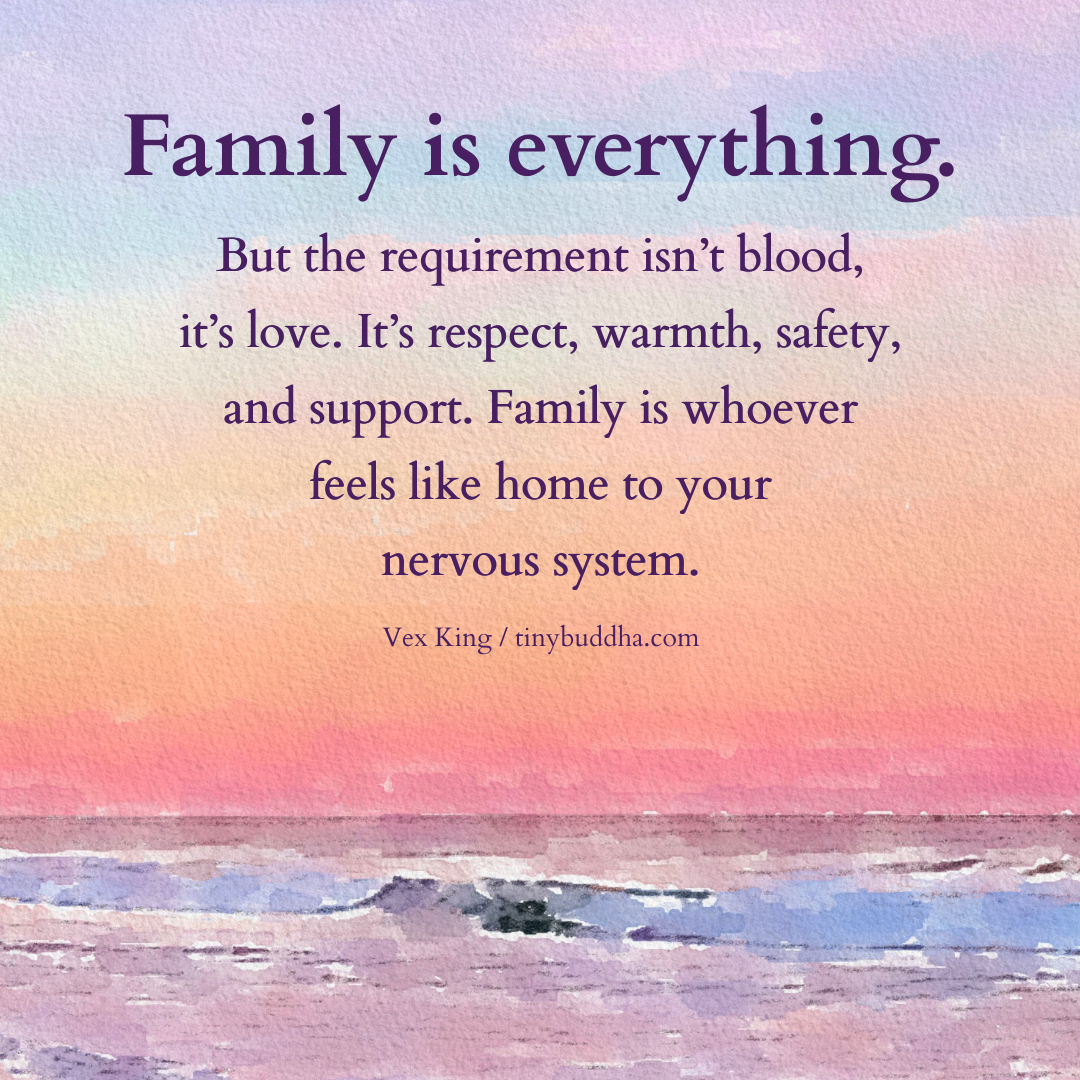
Tag: family
-
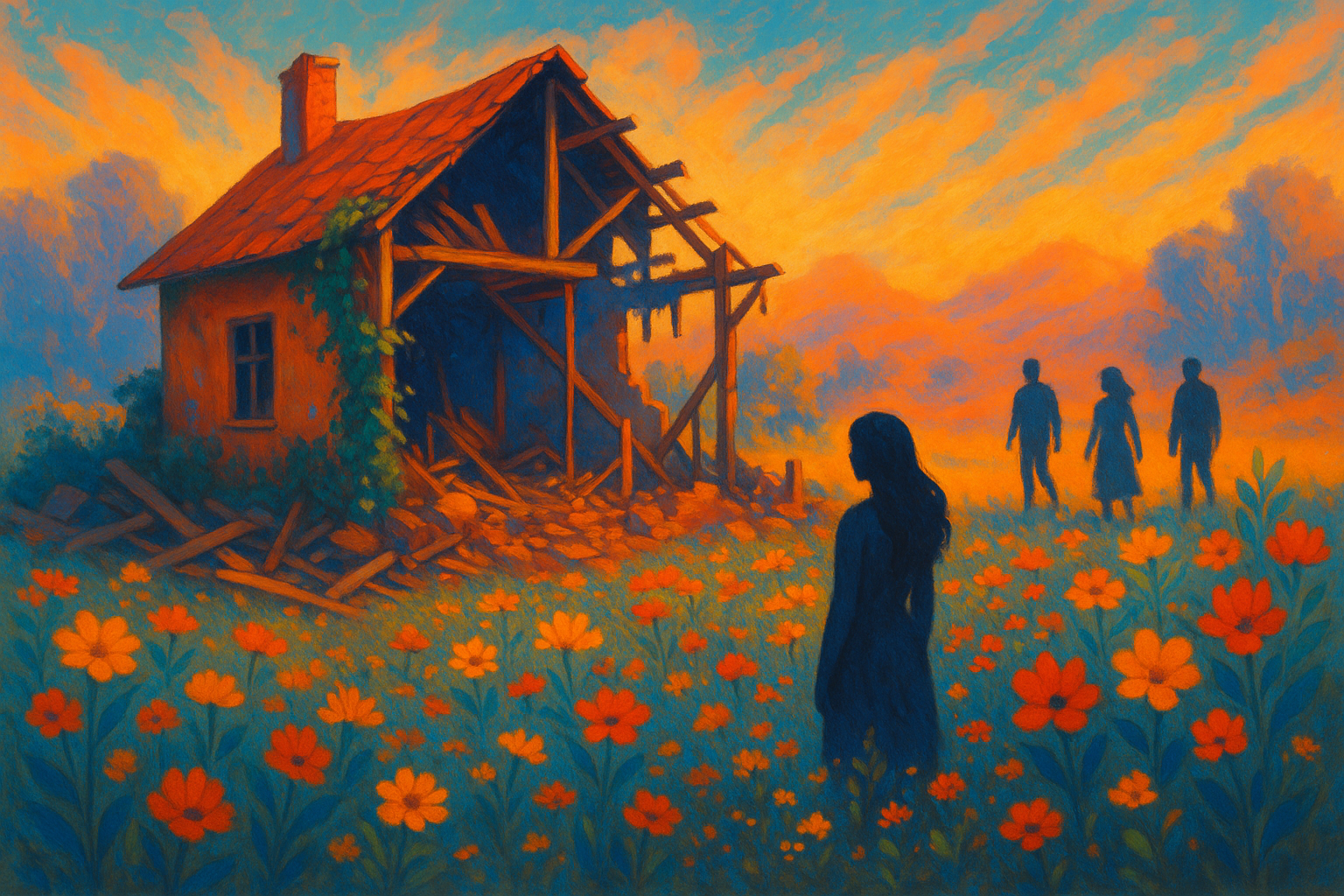
How I Broke Free from a Narcissistic Family System
“Your vision will become clear only when you can look into your own heart. Who looks outside, dreams; who looks inside, awakes.”~ Carl Jung
My mom had always been invested in real estate. I remember snacking on open house charcuterie years before we finally purchased a house to flip—the first of four. By the time I was eighteen, we’d moved five times.
I knew our family was falling apart by renovation number three.
I had spent the previous few years experiencing suicidal ideation and was now on a strict cocktail of seven or so psychiatric and neurological medications.
My brother was in his sophomore year of college, on academic probation, and coping by mixing alcohol with benzodiazepines.
My mother was expanding a highly ranked vocational services program while struggling with hyperthyroidism and unidentifiable gut health issues.
My father was often missing, either executing his latest scam (upcharging my friends’ parents on cases of local wine) or pursuing the buyer of our latest fixer-upper, who eventually became his second wife.
I couldn’t see the difference between a faulty house and my faulty family. There were constant leaks (tears), water damage (resentment), and cracks in the foundation (domestic violence), and yet there was character, familiarity, and history worth saving.
My family would have rather remained in denial of our structural instabilities, but the increasing severity of my suicidal ideations left me no choice. If I were to survive, I had to dig through the walls of our house and remove whatever was making me sick.
The Inspection
The first step in the renovation process is identifying the problem areas: what can be saved and what must be removed.
Growing up in a narcissistic family system leaves a child with no baseline to compare to. Narcissistic abuse often isolates physical violence to certain people or excludes it entirely, so traditional models of domestic abuse are not comparable.
Identifying narcissistic abuse is an act of decoding a series of games and behaviors that mimic that of an infant. Pathological narcissists are psychologically frozen in the primordial mind, exclusively concerned with getting their needs met without concern for their effect on others.
My father’s unpredictable conduct was like a mold that had spread into every room of the house: insidious, nearly undetectable. He was rarely physically violent but constantly psychologically toying with us.
Common behaviors included hiding necessities, like keys and wallets; ignoring calls, texts, or even our physical existence; triangulating arguments between family members; and harshly punishing mistakes while finding serious offences humorous. The effects of his volatility appeared in a variety of health issues amongst the rest of us. My brother developed a chronic stomach illness, my mom started losing circulation in her hands, and I began experiencing pseudoseizures.
For the sake of my health, I could not continue living in a mold-infested home; both my physical and psychological well-being were compromised. By the end of my inspection, it had become clear that exterminating my father from the home was integral to my recovery. Too much damage had been done. Gutting the house was the only chance I had at saving it.
Demolition Day
There is no clean or precious way to demolish a house. Ripping out vinyl flooring and knocking down drywall is a messy process. Dust scatters everywhere, glass breaks, and rodent feces are found within walls. If one wishes to undergo such a renovation, they must accept that a mess will be made and cleaned up later.
Identifying my father as a narcissistic abuser released me of the narrative that I was mystifyingly crazy, but it also made him crazier. He became firmly unapologetic, insults and neglect were more pointed, and the physical violence amplified. I was rebelling—as normal teenagers do—but my dad responded with harassment, physical intimidation, and complete emotional abandonment.
My compulsive self-loathing morphed into rage. The harm I had been inflicting inward began unfolding outward in bouts of verbal assault, criticism, and bullying. I remember once screaming profanities and threatening suicide to my ex-boyfriend after I had found out he had been hanging out with a group of our friends without telling me. No one was safe from my wrath.
The threads of my father’s personality that were embedded within me had to be explored in their entirety. They had to be acted out and mirrored back at him for the illusion to be shattered.
In defense of my autonomy, I weaponized his insecurities, verbally recognized him as an abuser, and learned to play his game. I was not the character he had made of me: the cowardly, mentally tortured weakling. I could be volatile, ferocious, and wicked. I could be like him.
By the last renovation, my father’s mental illness had become undeniable. The fighting was constant and precisely unveiled his intemperate nature. After we sold the house, my mom filed for divorce from my dad, and I cut all contact with him. This August, it will be ten years since I’ve spoken to him.
When I finally finished tearing through every wall, counter, and cabinet, I discovered the mold was not the only issue; the foundation was rotten too. Cutting contact with my father did not cure my depression or anxiety because he was only one cog in a faulty machine.
Weak Bones
To properly inspect the foundation of a house, one must calculate how each pillar supports the others. For a house to be stable, the materials must be solid, the architecture perfectly calculated, and the ground level.
In systems of abuse, the abuser is not simply a bug that infiltrates and poisons what would be a normally functioning software; the players within these systems are puzzle pieces, all equally contributing to a complete picture. Identifying the role each member plays is integral to deconstructing the family system and potentially saving it from collapse.
After four or five years of therapy and self-study, I accurately identified each family member’s role in the system: The Narcissist, The Enabler, The Golden Child, and The Scapegoat.
One of the burdens of the Scapegoat in the family system is they’re the only participant living in the shared reality yet surrounded by people motivated to remain in a delusion.
The Narcissist trains each member of the group to deny their reality in favor of his or her perception, which makes it difficult for all parties to differentiate reality from fantasy.
The Scapegoat’s ego strength is usually underdeveloped, making it difficult to maintain the position that they can see through the familial matrix. But the pain of abuse makes reality less deniable for them than, say, the Enabler, who believes they can escape the abuse by remaining in denial, or the Golden Child, who is championed and protected for validating the Narcissist’s perception.
Whether they adhere to the delusion or not, the Scapegoat is never rewarded by the Narcissist, nor allied by the other family members.
This is also the best part about being the Scapegoat. They are the most overtly abused and yet the most likely to recover. There is no value in pleasing or maintaining a connection to the Narcissist nor upholding the false narrative they’ve crafted.
There is no motivation to remain in the fantasy, therefore they have nothing to lose in destroying it. If the Scapegoat can deconstruct the self-loathing, victimized role they’ve been cast in, they can escape the system.
Removing the Narcissist does not necessarily unbind each character from their role. Just as my self-identification with mental illness had assisted my father in creating a Scapegoat of me, my mother’s martyrdom made an Enabler of her, and my brother’s mirroring of the behavior made a Golden Child of him. Once the Narcissist is excavated from the system, each member has to deconstruct their relational patterns and personal identity to properly engage in healthy relationships.
For years, my role as the Scapegoat exempted my family from embracing their own responsibility in fostering my father’s verbal and psychological abuses. Even after my father was ostracized, my identification with “mental illness” made me an easy patsy for my family member’s own dysfunction.
They didn’t need to look within themselves to find a leaky pipe; they could point to my hospitalizations, failing grades, and diagnoses. In order to save myself from the dysfunction, I had to become healthy, so undeniably healthy that the damage could not possibly be coming from me.
Starting from Scratch
Tearing down the residual structure is quicker but just as messy as the demolition process. Every trace of the familial programming within the child must be broken down and examined. Homogenous relationships coined by codependency and self-destruction must be excavated from their life.
The child has to accurately differentiate appropriate and inappropriate behavior from both themselves and those around them before walls can be built to protect them from compulsively engaging in more unhealthy behavior.
Building the frame of oneself is an act of identifying core values and beliefs: “What matters most to me? How do I expect to be treated? What will I not stand for?”
I had to swing to the other end of the pendulum to discover which bits of my upbringing were authentic. Every trace of my upbringing had to be removed from my sense of self: politics, humor, religious beliefs. I became artistic where my family was business-minded, empathetic towards those they would have laughed at, and honest when they would have lied.
I became unrecognizable; the preppy, conservative, private school girl morphed into an edgy leftist with a theater degree. I moved from coast to coast, desperate to escape any identification with my past self. I successfully removed an array of self-destructive habits: boundaryless friendships, hypersexuality, and self-identification with mental illness. The house I had built was sturdy and spotless.
In the end, I discovered that my family members and I don’t entirely share the same values, we do not follow the same moral code, and we are not driven by the same aims, but we are not total opposites. New builds are stable but sterile. I needed to sift through the parts of myself I had thrown away in order to feel complete.
Scavenging the Rubble
After the construction is finalized, the few remaining remnants of the previous house are piled in the lawn, waiting to be sorted. Some of it is junk, but other bits are sentimental relics of the old home, too precious to leave behind. Beams of original hardwood, vintage furniture, and iron bookends are saved and repurposed as charming decor.
Children of narcissistic family systems grow up not as themselves but as a projection of the narcissist’s experience of the child. The child’s honest self isn’t just neglected; it is punished and suffocated. Even identifying preferences is a difficult task.
When I first began searching for my true self beneath the programming, I would have preferred to have found I have nothing in common with my family or the holographic self that had been projected onto me. It’s tempting to order everything new. It can feel clean and picturesque, but truthfully, I couldn’t decorate myself from scratch. If I were to live authentically, I would need to integrate the parts of myself I would have rather abandoned.
In order to determine which remains could be repurposed, I had to ask myself, “Is this piece mine or something that was instilled in me?”
It’s been almost a year since I moved back to my hometown, and I’ve found that these streets that contain my childhood are also beacons leading me back to my missing parts. My charm, my humor, and even my storytelling abilities are all traces of my family members. The timid, morose young girl formed by my upbringing is a character that contributes to my depth. To remove either from my personality would be a denial of my own complexity.
I am still in the process of completing my home, and there is comfort in knowing that it will never end. I may shut a door too hard, causing a frame to fall and need replacing. I may inherit silver from my grandmother that needs polishing. A house needs constant updating and maintenance; we are always renovating ourselves with new experiences, information, and outlooks.
What’s important now is that I have a place of my own. I am not a living projection created by my upbringing, and I can recognize what is mine and what has been given to me. I am a stable, individual structure with my own design and shape, all of which come from within me and nowhere else.
-

Why You Don’t Need Many Friends to Be Happy
“Introversion—along with its cousins sensitivity, seriousness, and shyness—is now a second-class personality trait, somewhere between a disappointment and a pathology.” ~Susan Cain, Quiet: The Power of Introverts in a World That Can’t Stop Talking
I’ll be honest, I don’t have many friends.
And it’s something I’ve always felt a level of shame about.
In fact, I recognize it’s a self-limiting belief I’ve been carrying around since secondary school: I don’t make friends easily or have a big circle; therefore, I’m unworthy or there’s something wrong with me.
That’s not to say I’ve never had friends. I’ve had friends from childhood I’ve drifted apart from. I’ve had my share of intense, toxic friendships. And I’ve even had a few healthy friendships that withered and eventually died because I didn’t nurture them enough (incidentally, this is probably why I can’t keep houseplants alive, either…).
In all seriousness, is it okay not to have many friends? Does that make me ‘less than’? And just what is a ‘healthy’ number of friends, anyway?
Understanding the Traditional Tropes Around Friendship
Let’s be clear here—I’m not denying that friendships can have wonderful benefits.
Friends provide emotional support, create a sense of belonging, and allow us to build meaningful connections through shared experiences.
In studies of the Blue Zones—regions where people live the longest and healthiest lives—friendships are often highlighted as one of the main factors contributing to longevity.
On the flip side, the experience of loneliness or social isolation has been linked with a higher risk of early mortality.
Human beings are a social species. Historically, the survival of our ancestors relied on forming close-knit social groups. If you became an outcast from the tribe, you were highly likely to die. So, in many respects, the need for friendships and social acceptance is hardwired into our DNA.
While I don’t think that anyone can exist in a vacuum, it strikes me as important to note that you’re not going to die anymore if you don’t belong to a group. Just like having children used to be an inevitable part of life, forming friendships is now something we have more of a luxury of choice over in a 21st-century world.
The Moment That Hit Me
“Have you got a lot of friends?” Steve Bartlett asks out of the blue.
“No,” Molly-Mae Hague looks uncomfortable. “That’s a blunt question! Straight up, no, no, I don’t. My circle is minuscule… And I wouldn’t have it any other way. I work, I spend time with my boyfriend, and I go to bed. That is literally my life… I don’t really drink, I don’t party, I don’t go out, but that’s because I actually don’t enjoy it.”
“So you don’t actively want more friends?”
“No,” Molly-Mae asserts more confidently. “It’s time-consuming, trying to make people happy… I’d rather focus on the things that are going to elevate me.”
“I ask that question in part,” Steve says, “because every successful person I’ve sat here with doesn’t have a lot of friends.”
—
If I’m being truthful, I was unfairly judgmental going into this episode of Diary of a CEO. I can’t say I was expecting to get many pearls of life wisdom from a former Love Island contestant.
But I think that’s why this was such a lightbulb moment for me—because Molly-Mae strikes me as exactly the type of popular girl in school who would have had a huge, tight-knit friendship group.
For years, I’ve berated myself for just not trying hard enough when it came to making and keeping friends. Even my family and partner have commented on it before. It’s made me feel like there’s something wrong with me for not wanting or needing friends as a strong presence in my life.
But perhaps the issue was never my lack of friends, but rather my belief that it was a problem in the first place.
7 Reasons Why You Don’t Need Loads of Friends to Be Happy
1. Being introverted is a superpower.
I’d always seen my introversion as a deficiency.
Why was I not like other girls who wanted to get ready for a night out together and paint the town red?
In true rock’n’roll style, I’d much rather be snuggled up in my PJs with a book and a cup of tea at 9 p.m. on a Saturday night.
But when I strip all the layers back, I see that it’s simply a matter of valuing different things. And just because it looks different, doesn’t mean it’s not valid.
While introverts may not have the loudest voices in the room, we are gifted with vibrant inner worlds. Our natural disposition toward self-reflection, creativity, and deep thinking are remarkable strengths worth celebrating.
2. You get clear on what you truly want.
When you spend time with other people, you’re like a sponge. The psychological concept of mirroring is testament to this—an unconscious tendency to mimic the gestures, mannerisms, and expressions of those around us to establish rapport and empathy.
There is also an unavoidable level of compromise in friendships where you can’t help but go with the flow (unless you love the exact same things).
Fewer friendships, on the other hand, mean less social pressure to conform to expectations or engage in activities that don’t align with your values or interests. This enables you to better understand who you are, what you value, and what you want out of life.
This singlemindedness is probably why Steve Bartlett sees a strong correlation between ‘success’ and fewer friends.
3. Popularity doesn’t equal self-worth.
The idea that I could use my perceived popularity as a barometer for my self-worth is something I’d subconsciously internalized for years. But it should go without saying that there is no link here. You are not defined by social status or external validation.
I’d also point out that it’s so easy to fall victim to comparison. In the past, I was particularly sensitive to social media portrayals of people with the ‘perfect’ group of friends.
But remember that Instagram is a highly edited version of someone else’s life. Most people don’t have as many friends as they’d like you to think they do.
4. You are whole and complete.
First and foremost, your number one relationship in life is with yourself. People come and go, but the one constant you can always rely on is you.
I’ve been through some of the hardest times on my own. Maybe I’d have found it easier leaning on friends for support. But, in many ways, I think I only found out how strong I was by understanding that I could get through things alone.
In this sense, loneliness can be transformational. Relying on yourself to be your own best friend encourages independence, self-reliance, and insane personal growth.
5. You don’t indulge in toxic tendencies.
When I was younger, I wanted more than anything to be liked and accepted, so I inevitably ended up trying way too hard. I’d go along with what other people said and did because I was so desperate for their approval. And in the process, I completely eroded my own sense of self.
I recognize countless times where I’ve lacked boundaries, entertained drama, or gossiped and bitched about other people, despite deep down hating how it made me feel.
Instead of clinging to toxic friendships for fear of being alone, you are 100% better off without these people in your life. Integrity and authenticity are worth so much more.
6. Family can be your support system.
I recognize that not everyone is blessed with a strong support network, but it’s worth pointing out that close-knit familial relationships can often provide a foundation of love and trust, especially among siblings.
Alternatively, we may find much of the emotional security we need in our significant other.
The unwavering presence of family or a life partner can be reassuring. Having a space where you feel heard, can be unapologetically yourself, and aren’t required to make small talk provides a haven where you can regroup and recharge at the end of a long day.
7. Quality is more important than quantity.
When it comes to friendships, the old saying “quality over quantity” holds true.
Investing in a handful of genuine, supportive friends is far more fulfilling than having lots of superficial acquaintances. If you’ve ever felt intensely alone in a room full of people, you’ll know exactly what I mean by this.
As humans, we crave deep, meaningful connections that create a safe space for vulnerability and allow us to be our true selves. So, when our circle is too broad, we risk spreading ourselves too thin and diluting the quality of our relationships.
All relationships require work and commitment, so make sure you’re investing in those which genuinely add value to your life.
Embracing the Power of Introversion
For those of us striving to live more intentionally, it can be difficult to identify where there is genuine room for improvement and where we simply need more self-acceptance. And in this area, it was a case of reframing my perspective to come to peace.
So, for all the guilt-ridden introverts out there, I want you to know that it’s okay if you find yourself going through life without many friends. So long as you feel happy and fulfilled in yourself, you don’t need to try harder to be someone you’re not.
Who knows, perhaps I’ve simply not found my tribe yet. Ironically, now that I’m not clinging or wishing things were different, I may allow more of the right people into my life.
But you know what? I’m perfectly content either way.
-
The Closure in Accepting That They May Never Change
“One of the hardest things I’ve had to understand is that closure comes from within. Especially difficult if you’ve been betrayed by someone you love because you feel like you gotta let them know the pain they caused, but the peace you seek can only be given to you by you.” ~Bruna Nessif
Many years ago, I wrote a very personal post for Tiny Buddha titled Get Past It Instead of Getting Even: Revenge Isn’t Winning.
The post described the challenges I experienced with my parents as an adult and, ultimately, my decision to cease all relations with them.
Such a decision was by no means easy or hastily made.
It required many years of guidance and counseling to accept that sometimes such a drastic decision is necessary for maintaining one’s mental health and the health of other meaningful relationships.
Over the years, I have experienced sharp criticism for that decision to dissociate from my parents. I’ve been branded an awful son, self-centered, and even a hypocrite based on my writings when compared to the reality of my familial relationship.
I understand the criticisms because I once was on the opposite side of where I am now, with a seemingly perfect family relationship that others envied.
I was quick to judge those estranged from their families with some of the same criticisms now cast at me.
I was simply unable to fully grasp how it was possible that a bloodline connection could ever be severed, and how life could go on without their presence.
But what we see often differs from reality, and perfection is unsustainable and unattainable when it comes to family relations.
Before you know it, you have transformed from the harshest critic to the pitiable object, constantly wondering how lifelong relationships could quickly deteriorate with such hatred and anger.
But the passage of time, combined with age and life’s unending volatilities, alters one’s perception and relaxes the emotions we once believed would extinguish our joy, sanity, and quality of life.
This new perspective is an unanticipated sensation after such a tumultuous experience, and suddenly, the word “closure” is no longer foreign to one’s vocabulary.
An Attempt at Reconciliation
It was early December, and homeownership again handed me an unexpected repair project in my kitchen. It appeared easy enough at first but became much more complicated once I understood the problem.
Pausing momentarily to decide how best to proceed, given that a clever solution was necessary if I did not want to incur a hefty repair cost, I immediately began thinking about my father.
Growing up, my father and I were incredibly close.
We spent a great deal of time in each other’s company, sharing long conversations with him mentoring me on the mechanical skills he was so adept with.
Sitting on my kitchen floor, lost in a sea of nostalgia, I realized how invaluable those conversations and his mentoring were. How other invaluable life lessons often sprouted from those conversations. And how, regardless of all that had occurred, I considered myself grateful that he was my father.
As tears began pooling in my eyes, I decided I had to reach out to him at that moment, sharing my nostalgia and gratitude while naively hoping this might be the impetus we needed to reconnect.
Fearing my mother would intercept any hard-copy communication, I turned to social media and sent him a private message through his Facebook page.
My message to my father was 436 words long.
At the start, I acknowledged how the passage of time and age softens our perspectives, lessens the bitterness, and enables us to see and appreciate things we took for granted in the past.
I acknowledged how we all played a role in our eventual separation, how conversations could have been handled differently and more beneficially, and how blame at this point was futile.
I reminisced about our relationship, his teachings, our obsession with car care, and how, regardless of our separation, the memories we shared would live in my heart and mind forever.
It was sincere and sentimental, filled with a hopeful optimism about reconnecting with a person I have missed greatly over the years.
I am unashamed to admit that after writing those 436 words and reviewing them several times afterward, I cried, not necessarily for the loss that I still bore, but over my capacity to look beyond this unhappy part of my past and attempt to reconcile it.
Closure Comes from Within
For two weeks, I checked my Facebook account constantly, excited over the prospect of renewing our relationship.
I understood that even if things did not turn out as I hoped, I was glad he knew how I was feeling and what I was thinking.
Then, after two weeks and one day, on a sunny, fifty-degree afternoon in early December, my inbox alerted me that I had a response to my private Facebook message.
I probably waited ten minutes before finally opening the message, hopeful that the passage of time, combined with age and life’s unending volatilities, had altered his perception and relaxed his emotions.
Sadly, it had not.
My father’s response was thirty-seven words long and void of all sentimentality.
Narcissistic tendencies, the catalyst for our eventual separation, were still painfully evident in his opening sentence: “You have no idea what has happened to us, and I am not going to tell you.”
His overall indifference toward the content of my message was obvious when he said, “Don’t play up to me,” which revealed his doubtfulness over my sincerity.
Though short, his words were incredibly telling, confirming what I had feared and why I was so skeptical about reaching out to my parents earlier.
Author Mandy Hale says it best: “To get over the past, you first have to accept that the past is over. No matter how many times you revisit it, analyze it, regret it or sweat it… it’s over. It can hurt you no more.”
Though a decade and a half has passed, the past is very much a part of my parents’ present.
Unexpected misfortunes like my father referenced often have a redemptive effect on an individual’s long-standing resentments, but they appear to have only intensified theirs.
There has been no personal growth, no self-admissions, and no remorse of any kind. Honestly, I am astonished by their incapability.
While I know many hurtful exchanges transpired between my parents and me, I have not allowed them to define my past or clutter my present. I do not want to be a victim but rather a witness to a mishandled situation that belongs in the past.
My parents, on the other hand, have branded themselves “the victims” for so long while manipulating the narrative to suit that claim that I am not even sure they know what the truth is any longer, and that is a very sad place to find oneself.
Several days after receiving my father’s short response, I thought I would be overcome with sadness and grief, immobilized by the realization that my family would never be whole again.
But something unexpected occurred instead.
I began to feel at peace.
While not the ideal conclusion, the situation has now been resolved.
I will no longer feel guilty about not trying to reconcile, no longer question if my father is missing our relationship or not, and no longer crave an outcome that I now understand is impossible.
And so, I can finally and definitively assign closure to the unfortunate end of my familial relationship.
Did I want my situation to turn out differently? Of course.
But meaningful relationships cannot be sustained by living in a questionable past while refusing to acknowledge any failings that need to be remedied.
Regardless of who is at fault, I encourage anyone in similar circumstances to reach out to those whose presence still lingers in their heart and minds.
I do not encourage this solely as a possibility for reconciliation, but rather for the ability to find peace in the truth, whether good, bad, or indifferent.
Closure often springs from the acceptance of that truth and the understanding that healing can still occur even if our efforts are not reciprocated.
-
Dysfunctional Family Survivors: 7 Myths that Hold Your Healing Hostage
“I have never known a patient to portray their parents more negatively than they actually experienced them in childhood but always more positively–because idealization of their parents was essential for their survival.” Alice Miller, Thou Shalt Not Be Aware: Society’s Betrayal of the Child
If we’re born into dysfunctional families and, by some miracle, manage to recognize there’s something really wrong there, we can end up devoting a huge portion of our time on Earth (if not all of it) to piecemealing a life not defined by the despair and pain we felt as children.
This is as challenging a feat as it gets.
The institution of family is universally recognized as sacrosanct. But when this unquestioned bubble becomes a breeding ground for trauma, neglect, or abuse—be it covert or explicit, emotional or physical, subtle or extreme—then naming a breach, taking a stand, protecting ourselves, or even deciding to proactively heal can be seen as a betrayal.
After a lifetime of some version of this, I want to share with you seven family myths that, for years, held my healing hostage.
It was through gradually unwinding these myths one by one that I mustered the strength and resolve to go no-contact with my mother and set necessary boundaries with other members of my family, which cleared the way for a difficult but true healing process.
It hasn’t been an easy road; in fact, it’s been an almost entirely off-road journey involving enormous patience, grief, truth, and courage. But I can tell you, cross my heart, I owe it my life.
Admittedly, this is a confronting topic. We’re unpacking an aspect of being human that’s rife with open wounds, loyalty, heartbreak, and primal bonds.
My intention here isn’t to rebuff the natural ties of family but to validate your longing to feel safe, whole, and seen as you are and to shed light on the enormous potential for healing that can happen within the family structure when these myths are dismantled.
Let’s begin.
MYTH 1: Blood bonds are a free pass for bad behavior.
The pervasive refusal to address our trauma and do the work to actively heal it plays out in the family like nowhere else.
Because this is an institution that we take for granted as just and loving, it’s one in which our worst behavior can run rampant, completely exempt from checks and balances.
In these cases, the measure for love seems to be how much we’re willing to endure and how much they’re willing to endure from us. This is not okay. Family members treating each other in ways we’d be ashamed to treat virtual strangers is only the norm for one of two reasons. We’ve either taken it for granted as the only way (it isn’t), or we’re invested in not taking responsibility for healing our trauma and would rather keep open the channels to unconsciously play it out.
If the only thing binding us together is our fear of going against this institution, if the only thing that keeps us in each other’s lives is fear, guilt, shame, or the hope for a change that never materializes, and if we don’t bring these conditions to the light and question them, we sign our lives over to more of the same and enable the problem.
Refusing to play by the rule of ignoring and enduring dysfunction is the only way to end the pain chain. Repeat after me: Blood bonds are no excuse for bad behavior. Not our own, not anyone else’s.
MYTH 2: This dysfunction is what’s real and primary; well-being and sanity are fantasy and secondary.
One of the most painful parts of my experience growing up and throughout my twenties was that, despite investing more time, money, effort, and faith in my healing than I did on anything else, at the end of the day it was the energy, dynamics, and unspoken rules of the dysfunction that defined the baseline of my life.
How I wanted to live, the boundaries I was setting, and the way I was able to conduct my life were dismissed as fantasy or denial. My needs weren’t real, the relational code was. Reality was fighting, bending the truth, manipulating, worrying, speaking behind each other’s backs, enabling, blowing up, and pretending it was all okay. I was wrong and in dreamland to suggest that this wasn’t okay and that something else was possible.
Here’s what I want you to know:
You are real. And if you’re able to live without abusing others, if you’re able to take responsibility for your healing, if you’re able to create peace and harmony in your life, if you’re able to take any window of personal freedom to grow and thrive, it’s absolutely real. It can be done and it’s 100% legitimate, not to mention preferable as a way of living.
Just because your predecessors haven’t made the same choice, that doesn’t make it make-believe or a fantasy.
You make your healing and a whole new set of rules to live by true by living them out. If you’re doing it, it’s not make-believe, it’s reality.
MYTH 3: If they don’t recognize my wounds or my right to heal, I don’t get to heal.
I’ve been working on myself forever. And for a long time, while I was working on myself, I was also furiously trying to find ways to be understood and help or change my family.
I needed them to be the bridge that facilitated my healing. Only once I got them sorted or got them to understand me would I get my permission slip to live the way I was here to live. That permission slip didn’t come.
Eventually, I did the unthinkable: I gave that permission to myself.
I figured out exactly what it was that was costing my sanity, expressed it every way I could, and when it became clear that ignoring my non-negotiable needs was an implicit expectation, I said, “No more.” And in the case of my mother, I even decided to go no-contact for good. It wasn’t easy, but that began the process of healing a lifetime of parentification, erasure, and trauma.
Giving up the need to have my right to heal legitimized by family (and even friends) was the single most pivotal, empowering, and positive turning point in my life.
This shift allowed me to validate myself in the way I’d always needed. For the first time in my life, I stopped negotiating the reality of my lived experience, and in hindsight I can say without that shift, healing would not have begun.
Asserting my right to choose and protect my safety and sanity, no matter what, created the inner trust required for the magnitude of my grief and wounding to come to the forefront so I could work with what I was packing.
Healing our real wounds is a vulnerable process that requires the safety to come undone and the assurance that we won’t knowingly put ourselves back in harm’s way as we build ourselves up to wholeness.
MYTH 4: If it’s in the name of love, it’s as good as love.
When, in the name of love, we hurt, belittle, or abuse each other and demand that the flow of toxicity remains intact, we’re ultimately saying that real love doesn’t exist, or that love and truth cannot coexist.
Real love is coherent, straightforward, and present. Real love sees and honors the other as a whole, separate being with a will and truth of their own. Real love doesn’t picket someone’s right to peace, safety, and healing.
Abuse or denial in the name of love wounds, creates vortexes of remorse and resentment, and compromises our ability to recognize healthy love in ourselves and from others.
We must begin to take notice of sanctioned behaviors that are actively un-loving in the name of a love that never or rarely manifests or registers as true in the here and now.
We can all do better, and I believe, with every fiber of my being, that deep down it’s what we most long for.
MYTH 5: Whatever healing you muster is owed to the dysfunctional dynamic.
This was another big piece for me. After an abusive or painful event, the expectation was that I’d take a little break to recoup and then come back for more, rinse and repeat. This held my healing in a vice because I could never heal further than the fear of being torn to shreds again.
I knew there was a ceiling I had to break through to become the woman I knew in my heart I was, but I’d always end up at square one when I circled back to the toxic dynamics.
It wasn’t until I decided my healing was final, until I was sure I wasn’t available to siphon it back into the scheme, that my healing ceiling began to shatter and I started feeling what’s on the other side.
Repeat after me: “I’m not healing so I can be hurt again. I’m healing so I can move forward whole.”
MYTH 6: Your job is to change your NO to a YES.
This is another big one.
The truth is that most of us that have incurred substantial wounding in the family bubble have also learned to de-legitimize what’s true for us.
Because being chronically wounded (by those who gave us life, no less!) is so deeply invalidating, we come out on the other end with a wall-to-wall feeling of not being real. To them, our feelings and inner truth are getting in the way of the real us—the one they want, can do what they want with, and get what they want from without boundaries, protest, or consequence.
As a coach I see this all the time. Incredible humans with big hearts and a commitment to courageously heal that simultaneously use spirituality and self-help as a means to deny their lived experience. This allows them to avoid rocking the boat, setting boundaries, or making a real stand for their needs and truth.
“Taking the high road” seems to mean enduring breaches and abuse without hurting, feeling sated in withholding relationships, placing everybody’s needs ahead of their own, or even better, not having needs (let alone desires) at all.
I believe this is a manifestation of the same wounds of invalidation they incurred in childhood (now operating from within on the DL), combined with the unconscious belief there is no version of life that’s not subject to the rules and dynamics of their families.
Whenever I see someone bust through this myth, my heart leaps with joy because I know that’s when they’re cooking with gas.
In my personal journey, another huge turning point was when I threw in the towel of self-denial and began to notice that my NO was telling me something, and that it was up to me to listen. I could turn that NO into a YES by standing firmly in it so my life force could move toward what’s true for me.
I can guarantee that’s how it works.
How do you move into an authentic YES if someone’s trying to shove a spoonful of poison in your mouth? By saying no, trusting that no, and moving away from it.
Each and every one of us is alive and feeling regardless of the agendas and expectations of others. Your NO is not a problem; it’s a pointer to the real-deal solution for you.
Regardless of how unreal core wounding makes us feel, our reality is overruling and speaking volumes at every moment. Listening to and aligning with that is a non-negotiable step in restoring ourselves to wholeness.
MYTH 7: You’re forever bound to the role you played in your family drama.
We’re closing with a bang here, so listen up.
The coping mechanisms we employed to survive childhood often end up becoming who we believe we are.
If we had to be boundary-less, “or else…,” needless, “or else…,” believe we were nothing, “or else…,” this is how we learn to operate and how we try to survive and get our needs met in adulthood.
When we take a real stand for our healing and begin to assert and protect our safety, the parts of our persona that came about as coping mechanisms begin to unravel.
Each and every inch of safety and inhabiting of personal truth we take back systematically renders these parts obsolete and allows the full essence of our being to emerge, in self-responsible ways.
This means the limitations these parts imposed on us—compromising our ability to love, create, work, relate, speak up, rest, earn, enjoy, connect the way we’ve longed for, in alignment with love and truth—little by little begin to fall away, and life opens up in ways we hardly thought possible.
Listen, there’s always a reason why people are abusive or hurtful, and it’s usually trauma of their own. But while that’s a valid reason and a tragic one, it’s not an excuse or a free pass to rob anyone of their will, peace, truth, and the life they were born to live. Family is not an exception to this rule.
But here is a rule I’ve created for myself that I’m learning to live by: To love, set boundaries, treat others, accept treatment, and express my needs the same way in all close relationships, be they family or not. If a behavior or dynamic needs the shield of this or any other institution to be okay, it’s not okay.
-

Are You Outgrowing Your Family? 6 Effective Ways to Manage This
“You can’t force anyone to value, respect, understand, or support you, but you can choose to spend time around people who do.” ~Lori Deschene
I always felt somewhat different from my family growing up.
I didn’t have a terrible childhood—I was certainly loved, cared for, and looked after—but despite having two siblings, a mother, and a stepfather (who raised me), I seldom felt a sense of belonging and often times I felt very lonely.
Growing up I could never quite put my finger on what it was that was different, but I just knew that I was. I knew that I didn’t see the world how my family saw it. I analyzed everything on a much deeper level. I viewed things differently, and a lot of my interests were different than my family.
Late last year, I had just gotten back from a long weekend on a family trip and I was relieved to be home. I found the weekend to be exhausting and couldn’t wait for it to be over. I checked in with a friend and informed him about my weekend.
“It sounds like you’ve outgrown your family.”
I paused while I reflected on this statement. Just a couple of weeks prior I had written an article about outgrowing friendships. It never once crossed my mind that we could outgrow our own family.
I mean, we can’t possibly outgrow our family, right? At best, they are our protectors and providers. They love us unconditionally, flaws and all, and they are our biggest supporters. We are tied and bonded by blood and DNA.
I sat and reflected on this for a few days. If we can outgrow our friends and partners, then we can, too, outgrow our family.
I had worked a lot on myself over the past ten years. I was committed to self-development, and although I was in no way perfect, I actively worked to be the best version of myself and tried to take something away from every difficult situation I was faced with.
This inner work had enabled me to grow mentally, emotionally, and spiritually, while I believed my family were stuck in their ways, ignorant to the fact that as the world around us changes, so should our mindsets.
As I did the inner work, I noticed I disagreed with more things that my family were saying and doing. Decisions they made and behaviors they displayed didn’t sit right with me a lot of the time. I was changing, leading me to drift further away from my family. The connection we once had was tearing at the seams, and I desperately wanted them to ‘catch up.’
The trouble is, outgrowing our families can be complex. For example, when you outgrow your friends, you usually go your separate ways, open and ready to let people into your life who align with who you are at that time. But when this is family, it isn’t always that easy or the right thing to do.
Below are some things you can implement in order to maintain healthy relationships with your loved ones when you have outgrown your family.
1. Stop trying to change people who do not want to be changed.
Whenever I found the courage to disagree with my family, I would spend a significant amount of time trying to reason with them and make them see a different point of view—that things are not always black and white, but there are sometimes grey areas too.
Admittedly, I would often try to encourage personal growth and healing in the hope that they would view the world the way I did, and in the hope that we could connect on the same level we once did. This only created tension, frustration, and conflict.
When I reflected on this, I realized that I had my own views on how I felt my family should behave or act, but not everyone had to think the same way I did. I also realized that I shouldn’t preach and try to push my ways of living on others, and that I didn’t always know best, especially since everyone is on their own journey and path to self-discovery.
Everybody is responsible for themselves; you cannot change anyone if they do not wish to be changed. Perhaps, like mine, your family does not feel that they need to change. If this is the case, then you are fighting a losing battle. You cannot change anyone, and they cannot change you.
2. Do not be afraid to let them know when you do not agree with them.
There were times when I did not agree with my family’s decisions, opinions, or choices, and to keep the peace or to please them I would agree with them, at the detriment of being true to myself.
This always led to me having a deep sense of discomfort when I had to pretend to be on their side of an issue. It always felt like my reality and spirituality were at war with one another, and I was being a traitor to myself.
As I looked back, I realized that this had nothing to do with them and everything to do with me. I didn’t want to disappoint my family by having opposing views and feared how they would react if I voiced my true opinions.
I also feared that I would be rejected, and moreover, I feared that any disagreements would lead to conflict.
Understand that you are your own person. You may share blood and DNA, but you are on your own journey, and you may have morals and values that do not align with your family’s, and this is okay.
While I was fearful of hurting my relationship with my family members by being honest, I also learned that not being honest with them could do just as much damage if they found out how I truly felt.
You are entitled to your own opinions and views, and if your family or friends condemn you for not agreeing with them, then that is their problem and not yours. They should try to understand that our differences make us diverse and unique.
Now, I can confidently and respectfully disagree with my family when I need to, without fear of consequences.
3. Have compassion.
While I have spent a significant amount of time healing from old wounds and past trauma in order to grow, spiritually, emotionally and mentally, not everyone in my family has.
Everyone has their own struggles and battles, and we should not judge or condemn them but be compassionate toward them and their struggles.
4. Establish new boundaries.
Establishing boundaries is a solid foundation for any healthy relationship. When we have boundaries in place, we have a clear understanding of what is expected of one another.
Boundaries have many benefits for our relationships; they are more likely to be respectful, with less conflict and more peace.
Perhaps there are topics that you feel uncomfortable talking about with your family, or behavior that you simply won’t tolerate. Identify your limits and set those boundaries in place so everyone is clear on expectations.
5. Understand “outgrowing” doesn’t mean “better.”
The word “outgrown” gets a bad rap, which is why I have avoided using it with my own family for fear it will make them feel less-than. However, I am not better than my family, nor are they better than me.
Outgrowing family does not mean that your life is now better than theirs, and the way you view the world holds more value than the way they view theirs.
Outgrowing your family simply means that your values, morals, opinions, and views have changed and may be in conflict with one another’s. It means you are no longer in alignment with those you once were.
Something changed, and that something is you (or them), and that’s okay. Change is natural and fundamental to progress in life. When you change, it can change the dynamics in relationships, sometimes for the better and sadly, sometimes for the worse.
6. Learn conflict resolution.
Nobody’s family is perfect; there will always be conflict. But this can be even more common if you feel you have outgrown your family because there may be more disagreements and behavior you can no longer tolerate.
The ability to deal with conflict might just be the saving grace for serious fallouts and family dysfunction. This can include:
- Addressing the issues
- Finding a resolution to the problem
- Agreeing to disagree without animosity
- Using good communication skills; for example, actively listening
- Not ignoring the conflict
7. Distance yourself if needed.
Being family does not have to mean that you are obliged to put up with anything you do not feel comfortable with, toxic behavior, or abuse, so if you need to distance yourself or cut off family members to protect your peace and mental health, you are well within your rights to do that.
-
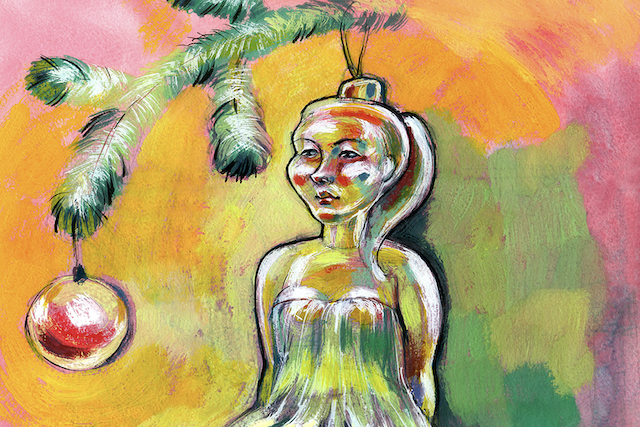
A Gentle Reminder to Anyone Who’s Struggling This Holiday Season
“It’s okay to want to be alone. It’s okay to take time for yourself.” ~Kate Allan
It’s the holiday season, the most wonderful time of the year, they say, but it’s not for all of us. For those of us coping with the loss of a loved one, family estrangement, loneliness, financial difficulties, or health struggles, the holidays can be one of the hardest times of the year.
For some of us the holidays can feel as if we have been cast out in the cold. As if we are forced to look through a window of a happy, loving family.
Many of us are filled with feelings of longing for things that can never be, such as more time with a loved one we have lost or a supportive family. We find ourselves swept into memories of holidays past or lost in fantasies about what the holidays would be like if we had a different life.
We find ourselves feeling pressured to hide our problems, bake a dozen cookies, put on a happy smile and an ugly Christmas sweater, and attend that office holiday party. There, we smile and engage in exhausting small talk, and do our best to avoid the subject of what we are doing for the holidays.
These events can leave us feeling totally depleted. We buy obligatory gifts for our friends or coworkers, and we spend hours trying to figure out what they might like. After the gift is purchased, we second guess ourselves and worry that we missed the mark.
Some of us might host parties and obsess over making our tree look absolutely perfect in a desperate effort to please others and give people the impression that everything is fine.
Society has filled our heads with unrealistic notions about perfect gifts, immaculate homes decorated with lavish matching decorations, endless resources to spend, and happy times spent with family. Some of us find ourselves exhausted and stressed trying to live up to social pressures or expectations of others.
Over the years, as I have struggled with various losses in my life or felt cast aside by family members, I have learned that the most important thing we can do over the holidays is take care of ourselves.
As an altruistic person who goes out of the way to please everyone, taking care of myself does not come easily to me. In the past I felt guilty for putting my own needs first, but over the years I’ve learned that our own needs are just as important as everyone else’s. If we sacrifice ourselves to please others, it can not only be harmful to ourselves but those around us as well.
If you are struggling this holiday season, take time to reflect on how you would like to spend the holidays. Remember, you don’t have to buy the perfect gift for everyone, put up a tree, decorate the entire house, spend hours baking cookies, or even attend that family gathering.
If you are worried that a friend will be disappointed that you are not attending an event, you can suggest that you meet up for coffee when you’re feeling up to it.
In the past I worried that a friend would judge me for not attending a holiday event. However, over the years I have learned that true friends are empathetic and do not judge us for needing to take time for ourselves.
The most important thing you can do if you are struggling during the holiday season is pay attention to your own needs and do what you feel is best for you.
If you feel like curling up on the couch with Netflix or a good book and a pet instead of going to a party or a family gathering, give yourself permission. It can sometimes be better for our health and well-being to decline an invitation and rest.
If you are someone who is used to keeping busy, the holidays can become more difficult because our workplaces are often closed or slower than other times of the year.
In order to cope, I create a to-do list filled with new recipes I want to cook or bake, household cleaning that would be helpful to do, movies/shows I want to watch, places I want to go to see Christmas lights, and other things I have wanted to do. I also buy myself something that I have always wanted but don’t necessarily need as a form of self-love and self-affirmation.
I also engage in volunteer work because when I am helping others I feel less alone and have less time to ruminate about the past or events that are outside of my control.
I have discarded holiday traditions that did not bring me joy. I don’t go to church or make desserts with dried fruit or decorate my tree with handmade ornaments that are unsafe for my pets. I try not to buy material gifts for all of my friends. Instead, I treat friends to events such as concerts, art gallery exhibits, or museum shows we can enjoy together.
I have held onto a few traditions that have made me happy. A childhood friend used to buy me a hallmark ornament as a gift, and now I buy one for myself. I donate to a charity, and I buy a gift for a for a child in need.
I have also started to create my own traditions such as making my favorite cake and taking a break from digital communication. Each day I take time to feel grateful for the things that I have and the people and pets that help to make my life magical.
I don’t force myself to do anything I am not feeling up for, and I do not spend time with people I do not feel comfortable being around. Once I started doing this, the holidays stopped being draining, exhausting, and socially challenging and started to become relaxing and peaceful.
When I find myself feeling down, I remind myself that all situations are temporary, and the future could look very different. There may be other holiday seasons when I feel upbeat, excited, and eager to spend time with people who love me. But for now, I need to love myself, and that means doing what’s best for me.
The best thing that any of us can do this holiday season is be kind to ourselves and take care of ourselves like we would our closest friend. This is the best holiday gift we can give ourselves.
-

How Releasing Control Opened Me Up to a Limitless Life
“What the caterpillar calls the end of the world, the master calls a butterfly.” ~Richard Bach
I have always wanted to create a family.
As a child, I lovingly cared for my dolls and fell head over heels for my college boyfriend. Kneeling before me with a ring, he said, “I want you to be the mother of our children.” I swooned as we walked down the aisle at the tender age of twenty-two, convinced I was set for life. I had the husband, and I would have the family.
I entered into our marriage with the expectation and security of certainty. We had vowed to be together for life, so I believed that was the truth.
But I had another love besides my husband.
I was in love with performing.
After a childhood of classes in the arts, I was accepted into the BFA Musical Theater Program’s inaugural year at Penn State University. I soaked every minute up and graduated with summer work already booked and the plan to move to New York City with my new husband and dive into my career.
Creating a family could wait. Broadway was calling.
Except I found myself hitting a ceiling. Despite working consistently as a professional, Broadway eluded me. With the exception of two Broadway shows that closed before I would have joined them, I would choke when I was invited back for a second or third audition, and never make it any further.
I was a true triple threat, strong in my singing, dancing, and acting, but I didn’t know how to deal with the loud and critical voice in my head. When I needed to deliver my best at these big moments, the critic would become deafening and my voice would crack or I would spontaneously “forget” which leg to step forward on while I was dancing. In those moments, it was as if all my training went out the window.
Over time I was losing confidence. I literally worked at every level except Broadway. I worked off-Broadway, regionally, did national tours and commercials, and kept auditioning in hopes my break would come.
And then I found myself at the age of thirty-seven staring into my husband’s eyes as he told me, “I don’t think I love you anymore. I don’t think I want to be married anymore. I don’t think I want to have children.”
The security and certainty I had clung to in my twenties evaporated in smoke. I lost my marriage and the ability to create the family I had desired for the last fifteen years.
In the face of my divorce, I felt a great urgency arise. It fueled me to heal emotionally, spiritually, and mentally from my heartbreak and to seek the right support to guide me as a single woman. I worked with love coaches and therapists and joined women’s groups to help me make sense of how to find a life partner.
And then four and a half years later, I went on a first date with a kind blue-eyed man who took me to the Brooklyn Botanical Gardens and gently opened an umbrella over my head as rain began to fall. In all the dates I had been on, I had never felt like this before, and we quickly fell in love.
Before I became exclusive with him, I asked how he felt about creating a family and was thrilled when he shared that was his biggest desire as well. We were married a year and a half later and began to try naturally to get pregnant.
Creating a family was now. There was no more waiting. I had the husband and the security. Certainty had returned to my life again.
Except after a year of trying, nothing had happened. So, we entered into IVF as I had frozen my eggs after my divorce for this very reason. We followed all the steps, and I was convinced this was going to work. With the number of fertilized eggs, I imagined we had two tries and I was completely open to twins. But on the day of the transfer, only one egg was ready, and the other three became unusable.
The pressure was unmanageable. I was experiencing migraine headaches from the synthetic hormones and was terrified it wouldn’t work. Which it didn’t.
I vowed I was done with the drugs and our family was either going to happen through natural causes or through adoption.
A year later, I found myself staring at a positive pregnancy test.
My husband and I were giddy beyond belief, and began to read children stories to the growing life inside me.
Creating a family was now. There was no more waiting.
Except just before my eleventh week, I stared at an ultrasound with no heartbeat. The white light that had fluttered with such ferocity at seven weeks was now a static white dot.
While we went back to trying, my heart was broken. Nothing was happening, so we entered into the process of adoption.
Within two months we were matched with a birth mother, and I wept when we got the call. The birth mother had just entered her second trimester, so we had several months to wait.
Now we could prepare! I dived into podcasts, books, and workshops, learning everything I could about adoption, about being a trauma-informed parent, and what products felt most aligned with our values. I created a registry, and we both planned to take time off work.
Everything was set.
Creating our family was now. There was no more waiting.
And then a month before the baby’s due date, the birth mother changed her mind. In adoption, they call this a disruption, and that is exactly how it felt.
I found myself reliving every pillar of my journey. Choosing Broadway over family. The divorce. The failed IVF. The miscarriage. And now the disruption. I wasn’t just mourning the recent loss; I was mourning decades of a desire that had burned in my womb.
I thought it was the end of the world. End of certainty.
I found myself feeling completely disoriented. I had planned maternity leave from my business and set up an elaborate schedule for my approaching book launch all around the adoption. I had a nursery filled with a stroller, changing table, clothes, and a glider. I had thought of everything.
I had planned it all out, because I wanted to believe it was going to happen. I wanted to believe there was no more waiting. I wanted to believe in certainty.
I pulled an Oracle card from Alana Fairchild that read, “This comes with special guidance for you. More love is rushing towards you like a great cosmic tsunami. You will struggle with this blessing to the extent that you will attempt to hold onto what has been. So don’t. Let go. You’ll perhaps get some water up your nose, but nothing will come to you that you cannot handle. Instead, you’ll have no idea what is going on. Oh, how the tsunami will deliver you into your divine destiny!”
So I did something new. I surrendered. I surrendered all my plans.
I started coaching my clients again. We went back to being active again with the adoption agency. I started my book marketing tasks again.
But none of this had any certainty or definitive timeline. After decades of knowing the exact day and time things were going to happen, I embraced not knowing.
I embraced waiting. Because it seemed there was nothing else to do.
It felt like a part of me was dying, the part that had planned my family with such ferocity and certainty.
In my grief, I turned to the Oracle deck’s guidebook and saw Robert Brach’s quote. As soon as I read it, I began to weep in resonance.
How I had strived to stay the caterpillar.
The caterpillar of certainty. The caterpillar of timelines. The caterpillar of planning.
But the caterpillar couldn’t transform with these values. It needed to be washed up on the waves of love, and finally enter the cocoon to grow into a sacred butterfly.
Robert’s words speak to that profound moment when we recognize that the way we’ve been living our life doesn’t work anymore. If we want to grow, we have to let go of our clinging, specifically our clinging to certainty.
Because the truth is, our greatest power comes in the acceptance of not knowing.
If you “don’t know” then you are actually opening yourself to a limitless life, one that is led by divine timing, instead of what your ego wants to believe is “right.”
What if experiencing the same thing over and over is actually a divine tap on the shoulder to try something new?
What if being disoriented and not knowing when your desire will arrive is the softly spun silk surrounding your most vital soul?
For me, the tsunami washed me up on the shore with sacred wisdom. No longer holding onto a timeline was actually a deep relief. Going through the cycle of trying to control every aspect of creating my family had been so taxing and exhausting.
I had formed a castle of certainty with bricks and stones, only to discover it was actually made of sand. And when the waves crashed through, I saw it was never meant to last. It was always meant to wash away.
Now I’m opening to something far more powerful than certainty. I’m opening to trust.
I don’t know when my family will come. I have no idea how my desire is going to manifest. Perhaps my life has actually been working out beautifully, creating a divine path I may not have “planned” but one that has sparked a vital inner transformation.
One that has opened me to the possibility of my life unfolding in a new direction. And with that, I can let go of crawling on the ground in vain as the caterpillar. Now I can just open my wings and fly.
Now I can simply receive.
-
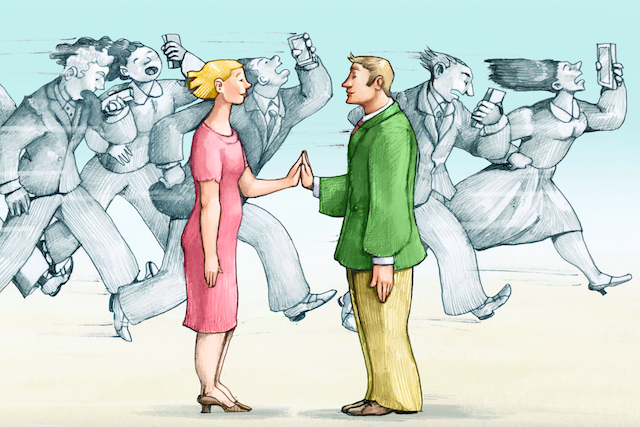
Put Down Your Phone: Why Presence Is the Best Gift You’ll Ever Give
“When you love someone, the best thing you can offer is your presence. How can you love if you are not there?” ~Thich Nhat Hanh
The only thing worse than not listening to someone is pretending to listen.
Giving the vague murmur of agreement, or a quick nod to communicate “Yes, I’m listening, totally,” when really, we’re not.
I remember vividly a dinner I had with friends about four years ago. I’d been backpacking in New Zealand for twelve months and had just returned to the UK. Traveling in the car to my friend’s house, I imagined how the night would look…
There would be lots of laughter (it was always side-splitting when we all got together).
There would be lots of hugging (I hadn’t seen them for a whole year after all).
There would be lots of storytelling (I would get to share my epic adventure).
Did all of this happen? To some extent, yes, but not how I had imagined.
In fact, I left feeling a little miffed, a little gutted.
At first, I couldn’t work out why.
My friends were the same old fun-to-be-around people.
Despite ‘finding myself’ while traveling (I joke), I felt I was pretty much the same old person.
So what was different?
It hit me.
The constant. Mobile. Phones.
The entire evening was tainted by endless selfies, videos, status updates, incoming phone calls, outgoing phone calls, and notifications.
Distraction after distraction after distraction.
There were moments you could have heard a pin drop as the four of us, faces illuminated by the glow of the mobile phones, sat, hands glued to our devices. Ironically, telling anyone who was on Facebook and Instagram that night what a terrific time we were having.
To begin with, I was angry with my friends. But soon I realized I was really angry with myself. I was equally guilty, and people in glass houses shouldn’t throw stones after all.
What could have been, rather, what should have been, an evening of being deeply present with one another, each one of us offering our full and undivided attention, was tainted by technology, spoiled by social media, marred by meddling mobiles.
Backpacking was more campfires and deep life conversations below the stars, so this evening was felt like a return to reality. Most of us struggle to put our flipping phones down.
If we stop and think about it, what message does it send to the human beings in front of us when we are busy on our phones?
I made a vow that evening to get better at this, to be more present with friends and family, anyone I’m communicating with.
I didn’t want to make anyone feel how I felt that evening—unheard and unimportant.
Zoom forward to today and, well, I’m much better but far from perfect.
Technology certainly is a huge barrier to presence, but it’s not the main culprit.
The main culprit lives between our ears, the mind.
The mind is a lot like a talking alarm clock, and you have no control over when it goes off and what it will say.
For example, I can be sitting face to face with someone, physically a few centimeters in distance, but consciously, a world away.
Instead of listening to what the person sitting across from us is saying, we listen to our thoughts.
Hey, did I leave the oven on this morning when I left the house?
I hope my breath doesn’t stink.
Why is that stranger in the corner laughing—is my underwear tucking into my shirt?
Or literally, anything else. Anything. Any other thought can pop up at any moment, pulling my focus momentarily away from the person in front of me.
Luckily for us, people can’t always be certain when we’re not being fully present with them, especially if we’re an expert fake listener, able to give a very convincing response like “Yeah, sure, I get you.” Occasionally, I sense that the person I’m talking to senses I haven’t been listening. I feel bad and forgive myself for being human, before returning to the conversation.
On the other hand, when someone is really listening to us, fully present with us in the moment, we can be certain. Without a doubt, because we feel it.
It’s tough to put such moments into words, but you just know.
Moments when we’re fully present with someone and it’s reciprocated, it’s like magic, like the rest of the world fades into the background. Like the first time you fall in love and you just feel connected; you feel the dance of communication, the resonating, the synchronicity, the oneness.
That’s it. This, for me, is what presence is all about. The oneness.
A few of my favorite ways to get present and cultivate oneness are:
Eye contact
The eyes truly are the windows to the soul. Giving eye contact really lets people know they’re being heard.
Listening to understand instead of listening to respond
We’re stuck in our heads if we’re listening purely to plan our response. Tuning into a person’s words and also how they say the words has greatly helped me to connect with people.
Limiting distractions.
Technology, off. The world can wait.
Remember the good old days when only landline phones existed and if you weren’t at home people would leave a message and patiently wait for a response? Bliss. Nowadays, we’re available on mobile, Facebook, Messenger, Instagram, Snapchat, email… the list goes on. Flight mode is my friend. Anytime I want to get present, flight mode is activated.
Facial expressions.
When I really listen to someone, I find I empathize with them so much more. Naturally my facial expressions will reflect this, communicating I understand how they’re feeling. We all wish to feel understood.
In a few weeks’ time, I’ll be flying back to the UK to spend time with my family. In fact, this will be the first Christmas in six years we’ll all be together (my dear parents, older sister, younger brother, and me).
A part of me is sad knowing that around the world, there will be families sitting in their living rooms, surrounded by their nearest and dearest, but not really being there.
Distracted either by their own minds, their mobiles, or maybe their new presents.
It doesn’t have to be like this. Board games can be played and conversations can be had, with presence, together.
In truth, we needn’t wait until the holidays to connect in this way, as any moment, any conversation, offers a chance to be present with each other. But the holidays, for me, really are prime opportunities.
To be surrounded by the ones we love most and be with them more than just physically, but emotionally and spirituality too, well, this is worth more than any gift you’ll give or receive this year. This holiday season, give presence.
-
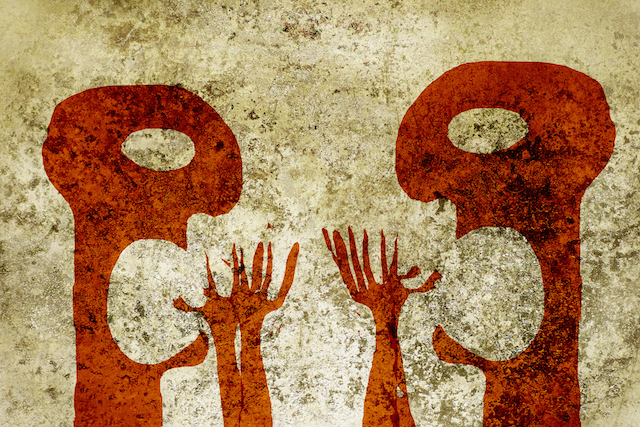
How to Cope with a Toxic and Estranged Family Relationship
“Letting go doesn’t mean giving up, but rather accepting that there are things that cannot be.” ~Unknown
You two are family. Maybe you grew up with them and were by their side for a huge chunk of their life. There was a lot of laughing, crying, and sharing. Some fighting too.
You know how their brain works probably better than anyone else. But sometimes, in adulthood, those closest to you can become unrecognizable—estranged, cold, and careless. For no apparent reason, you find yourself shut out of their life. Your peace-feelers are increasingly rejected. You’ve been left out in the cold.
There is always a reason why people turn out the way they do. But, sometimes the metamorphosis is so gradual that it sneaks up on you, and one day, you wake up and wonder, “How did it come to this?”
You want them back. So you start to question and blame yourself. Was it the time I chose to go to the party instead of keeping her company? Was it when I used his things without asking? What did I do to deserve this? What can I do to make it better?
While it’s good to ask yourself such questions, sometimes the lesson you are meant to learn is to let go of the memory of who they were and accept who they have become.
This is based on my own relationship with my sister. We’d always been close, and when I was growing up, I looked up to her as my role model. I was shy, nerdy, and runty. She was pretty, popular, and good at sports.
But after she went to college and, four years later, I followed suit on another continent, our lives didn’t really intersect. When we did meet, we’d butt heads about a lot of things. She had grown bitter in the years post high school, while I’d grown up, become assertive, and was impulsively exploring the world. Still, despite our differences, I thought we’d always be there for one another.
Then she got married to a man who doesn’t get along with me or our parents. They began living in a strange emotional autarky.
She grew very cold, defensive, and resentful toward our family and began to cut me out of her life. I tried to reach out and mend the relationship, but she refused to open up. She’s always been proud that way.
One day when I told her I loved her and wished we could be close like before, she replied, “That was a long time ago.”
Over the last few years, the relationship has really gone downhill. I’ve struggled with the hurt of “losing” my sister, as well as feelings of self-blame as I struggled to find a reason for her change. I have racked my brain for memories of what I could’ve done wrong, but my mind draws a blank.
Then, I decided I didn’t want to dwell on feeling hurt any longer. I didn’t want to keep longing for and trying to rekindle the sisterhood we once had.
I have come to realize my sister is not the person I once knew, and I have to accept that, learn to let go, and move on. That is how I decided to take certain decisions for the sake of my own happiness and mental health.
I hope this advice can help those who may be experiencing a toxic and estranged relationship with a family member with whom they had once been close.
1. Identify in what ways the relationship may be toxic and how it makes you feel.
A toxic relationship can manifest in many ways. Perhaps your relative always puts you down, lacks empathy, acts passive-aggressive, or ignores you when you speak.
Once you have pinpointed the person’s patterns of behavior, become aware of how this affects your mood, body language, energy levels, self-esteem, and peace of mind. Knowing how to recognize toxicity and its effects is the first step to understanding your feelings and empowering yourself to deal with the situation.
2. Accept that you may never find the root cause for your relative’s behavior.
People do therapy for years—there’s never a simple answer. You may be able to talk to your relative to find out why s/he acts a certain way. You may not. Sometimes, the reason why a person treats you badly may not have anything to do with what you’ve done, but might just be the way they process and respond to their own life experiences. Hardships may strengthen one person and make another bitter.
In any case, try to reframe toxicity by understanding it tends to come from a place of unhappiness or discontent. People’s hurtful actions will then become less hurtful to you when you realize they reflect their inner state rather than you.
3. Do not normalize toxicity.
If you have done nothing wrong, don’t forget it is not normal for anyone to continually be negative, inconsiderate, and hurtful toward you. It is very easy to lose perspective about what is right and wrong, especially when you are constantly justifying a person’s behavior with stories of their past traumas or hardships.
People tend to make concessions for difficult or estranged loved ones because they wish to forgive and forget, avoid conflict, or do not want to push the person farther away. Empathy is good, but it cannot be used to keep making excuses for terrible behavior. Sometimes you need to set limits and say “enough!” before such behavior becomes the new normal.
4. Don’t expect anything from your estranged relative.
Yes, you might expect your family to have your back because you’d do the same, but don’t count on it with an estranged relative with whom you struggle to maintain a relationship. I’ve learned not to be dependent or expect any help from my sister, even though I grew up believing that’s what siblings should do for one another.
5. Realize it takes two people to fix a relationship.
As much as you try, if the other person is not ready or not willing, you may not fix much. The relationship will remain toxic for as long as the person is unable to change. You cannot blame yourself for it. You have done your best.
6. Decide how much space you want to give them in your life.
You will probably encounter your relative again at family gatherings, or you may need to communicate with them about family matters. In this case, minimize the amount of time you spend in their presence and keep communication to a minimum.
Sometimes, though, you may need to cut them out of your life entirely, whether permanently or momentarily. Keeping a space open for them and constantly making the effort to reach out is emotionally exhausting.
Once you have deemed you have tried enough and done your best, don’t feel guilty about drawing the line and deciding that enough is enough.
7. Don’t bottle things up.
Communicate your feelings to people you trust. If the person knows your relative, you may learn that they also share the same feelings of hurt and disappointment in dealing with him/her.
Talking through your feelings is therapeutic and helps you acquire perspective about the situation.
In my case, my parents also have a toxic relationship with my sibling, and I found that letting them talk about it and encouraging them not to bottle things up has been a great release for them.
8. Refrain from frequently gossiping about your relative, especially to a wide circle of people.
There is a difference between sharing your feelings with people you trust and constantly focusing all conversations on this individual and what s/he did or said. You risk getting into the habit of speaking badly of someone, and the conversation will often just keep going around in circles. Also, the negative talk can return to your relative’s ears and feed the cycle of negativity and estrangement.
Instead, decrease the mental and emotional energy spent thinking about your relative, and focus on the positive aspects of your life and your loved-ones’ lives.
9. Don’t give your relative an opportunity to blame you.
People like my sister are often extreme narcissists who blame everyone but themselves. It is important not to give him or her ammunition for this blame-game. If he/she always shows up late, acts rude, never tidies up, or uses your things, resist the temptation to do the same in return. Do the right thing and s/he won’t be able to reproach you for anything.
10. Accept you may not be able to have a frank, heart-to-heart conversation.
My sister goes through life demonstrating a character devoid of vulnerability or weakness. If you are faced with an emotionally inaccessible and excessively proud individual, you may have to accept the fact that you may never have that cathartic moment of truth you so crave. Strive for closure on your side and move on.
11. Shift your focus.
Do not dwell on the pain and hurt of “losing” a relative. Don’t focus on trying to grapple with the toxic relationships in your life. Build upon the positive ones you have instead. Accept the cards that life has dealt you and make the best of them. Live your life and cultivate your soul. Be content and grateful for what you have and who you are, for that is more than enough to fill a heart with happiness!
**This post was originally published in October, 2017.
-
How I Stopped Putting Everyone Else’s Needs Above My Own
“Never feel sorry for choosing yourself.” ~Unknown
I was eleven years old, possibly twelve, the day I first discovered my mother’s betrayal. I assume she didn’t hear me when I walked in the door after school. The distant voices in the finished basement room of our home drew me in. My mother’s voice was soft as she spoke to her friend. What was she hiding that she didn’t want me to hear?
I leaned in a little bit closer to the opening of the stairs… She was talking about a man she’d met. Her voice changed when she spoke of him. The tone of dreamy wonder when you discover something that makes your heart race. She talked about the way they touched and how she felt being with him.
I felt my body go weak. I could not tell if it was sorrow or rage. All I knew was, she had lied to me.
Several months prior, my parents had announced their divorce. My mother told me the decision was my father’s choice. She told me he was the one breaking up our family. She told me she wanted nothing more than to stay with us and be together.
And now I heard her revealing that was not true. She wanted to leave. She was not choosing me. She was choosing him.
Since I was nine months old, my mother had been in and out of doctor’s offices, hospitals, psychiatrist’s and therapist’s offices trying to find the cure of her mental and emotional instability.
When I was a young child, she began to share her frustrations and sorrows with me. I became her support and the keeper of her pain. She had nicknamed me her “little psychiatrist.” It was my job to help her. I had to. I needed her stable so I could survive.
I don’t remember when or if she told us that she was seeing someone. I just remember she was gone a lot after that day. She spent her time with her new boyfriend out of the house. As the parentified child who she had inadvertently made her caretaker, it felt like she was betraying me. She left me for him.
I was no longer the chosen one—he was.
I hated him for it. When my mother moved in with him, I refused to meet him. I didn’t want to get to know or like this man she left me for.
I saw them one day in the parking lot outside of a shopping plaza. I watched them walking together and hid behind a large concrete pillar so they wouldn’t see me. The friend I was with asked if I wanted to say hello. I scowled at the thought. I despised him.
Within the same year, his own compromised mental health spiraled, and they broke up. He moved out of their apartment. I didn’t know why or what happened. I only knew my mother was sad. Shortly after their breakup, he took his own life. From what we heard, he had done so in a disturbingly torturous way. It was clear his self-loathing and pain was deep.
My mother was devastated. She mourned the loss of her love and the traumatic way he exited. She stopped taking her medication, and her own mental health began to spiral. My father received a phone call that her car had been abandoned several states away. I’m unsure what she was doing there, but she had some issues and took a taxi back home.
He later received a call stating that my mother had been arrested for playing her music too loud in her apartment. Perhaps to drown out the voices in her head. She was later taken to the hospital without her consent and was admitted due to her mental instability.
After several days of attempting to rebalance her brain chemistry with medication, my mother began to sound grounded again. The family decided she would move in with her parents a few states away from us and live with them until she was stable again.
A few days after Christmas she called me to tell me how sad she was. She grieved her dead boyfriend. I was short with her. I was still angry for her betrayal. I didn’t want to continue being used as her therapist. The imbalance in our relationship was significant, and my resentment was huge.
I loved her, but I could not fall back into the role of being her support without any support back. It was life-sucking. And I didn’t care that he was dead. She chose him over me. I was fine with him being gone.
I don’t recall feeling any guilt when I got off the phone that day. I felt good that I had chosen myself and put a boundary in place to not get sucked into her sorrow. I was fourteen years old, less than a week shy of fifteen. I just wanted to be a kid.
The next day, my mother chose to make more decisions for me and for herself. These were more final. She told her parents she was taking a nap and intentionally overdosed on the medication meant to save her. She died quietly to relieve herself from her pain and left me forever.
That choice—my own and hers—would change the course of my life.
The day my mother freed herself from this world was the same day I learned to become imprisoned in mine. I was imprinted with a fear that would dictate my life. I became quietly terrified of hurting other people. I feared their discomfort and feeling it was my fault. From that day forward I would live with the silent fear of choosing myself.
My rational mind told me it was not my fault. I did not open the bottle. I did not force her to swallow the pills. I did not end her life. But I also did not save it.
I learned that day that creating a boundary to preserve myself not only was unsafe, it was dangerous. When I chose me, people not only could or would abandon me, they could die.
Of course, I never saw this in my teenage mind. Nor did I see it in my twenties, thirties or the beginning of my forties. I only saw my big, loving heart give myself away over and over again at the cost of myself.
I felt my body tighten up when I feared someone would be mad at me. I heard myself use words to make things okay in situations that were not okay. I said yes far too many times when my heart screamed no. All because I was afraid to choose myself.
The pattern and fear only strengthened with time. I learned to squirm my way out of hurting others and discovered passive-aggressive and deceptive approaches to get my needs met. My body shook in situations where conflict seemed imminent, and I learned to avoid that too.
What I didn’t see was that this avoidance had a high price. I was living a life where I was scared to be myself.
On the outside I played the part. The woman who had it all together. Vocal, passionate, confident, and ambitious. But on the inside, I held in more secrets than I knew what to do with. I wasn’t living as me. My fear of being judged and rejected or not having my needs met was silently ruling my life.
So many have developed this fear over time. Starting with our own insecurities of not feeling good enough and then having multiple experiences that solidified this belief. The experiences and memories differ, but the feelings accompanying them are very much the same.
The fear of choosing ourselves, our desires, our truths, all deeply hidden under the masks of “I’m fine. It’s fine.” When in reality, we learn to give way more than we receive and wonder why we live unsatisfied, resentful, and with chronic disappointment. Nothing ever feels enough, and if it does, it’s short-lived.
The memories and feelings become imprints in our bodies and in our minds that convince us we can’t trust ourselves. That we can’t trust others. That we must stay in control in order to keep us safe. We learn to manipulate situations and people to save ourselves from the opinions and judgments outside of us. We learn to protect ourselves by giving in, in order to not feel the pain of being left out.
We shelter ourselves with lies that we are indifferent or it’s not a big deal in order to shield ourselves from the truth that we want more. We crave more, but we are too scared to ask for it. The repercussions feel too risky. The fear of loneliness too great.
In the end, our fear of choosing ourselves even convinces us we can live with less. That we are meant to live with less, and we need to be grateful for whatever that is.
Do we? Why?
What if we learned to own our fear? What if we accepted that we were scared, and it was reasonable? What would happen if we acknowledged to our partners, families, friends, and even strangers that we, too, were scared of not being good enough? Of being discarded, rejected, and left behind.
What would it be like if we shared our stories and exposed our insecurities to free them instead of locking them up to be hidden in the dark shadows of ourselves?
I’m so curious.
Where in your past can you see that choosing yourself left a mark? What silenced you, shamed you, discouraged you from choosing your needs over another’s? When were you rejected for not doing what someone else wanted you to do? And how has that fear dictated your life?
Choosing ourselves starts with awareness. Looking at the ways you keep quiet out of fear or don’t make choices that include your needs. Seeing where this fear shows up in your life gives you the opportunity to change it. The more you see it, the more you can make another choice.
Start with looking at the areas of life where you hold on to the most resentment and anger. Who or what situations frustrate you? Anger often indicates where imbalances lie or when a boundary has been crossed. It shows us where we feel powerless.
Make a list of the situations that annoy you and then ask yourself, what’s in your control and what’s not? What can you directly address or ask for help with?
Note the ways you may be manipulating others to get your needs met in those situations and how that feels. Note also what you may be avoiding and why.
How would it feel to be more direct and assertive? What feelings or fears come up for you?
Then start with one small thing you could do differently. Include who you could ask for help with this step, if anyone.
As for me, I have found myself in situations where I lied or remained silent to avoid being judged, in an attempt to manipulate how others see me. I have felt my body cringe with sadness and shame each time. It doesn’t matter how big or small the lie, it assaults my body the same.
I have learned that speaking my truth, no matter how seemingly small or insignificant, saves my body from feeling abused by the secrets it must keep. Choosing me is choosing self-honesty; identifying what is true for me and what is not based on the way my body responds. I am not in control of others’ judgments of me, but I am in control of the way I continue to set myself up to judge myself.
I have also found myself agreeing to do things I didn’t want to do in order to win the approval of others, then becoming resentful toward them because I refused to speak up for myself.
Choosing me in these scenarios is honoring the fact that I will still be scared to ask for what I need, as my fears are real and valid, but asking anyway, even when the stakes feel high. It’s scary to feel that someone may abandon us if we choose ourselves, but it’s scarier to lose ourselves to earn a love built on a brittle foundation of fear.
l cannot control the past where I have left myself behind, but I can control today, the way I forgive myself for falling victim to my human fear, and the way I choose to love myself moving forward. When I choose me, I have more love to give to others. Today I can take a small step toward change.
Taking these small steps and building on them will help us to show ourselves that we can make progress in bite size amounts and prove to ourselves we are going to be okay. The small bites are digestible and give us proof that we can do it. This helps us build our ability to do more over time, while also decreasing our fear.
If we look at our past, we will see the majority of our big fears do not come to fruition, and if they did, we survived them and gained knowledge or strength in the process.
It’s not the action holding us back, but the memory of the discomfort we still live with. The more we move through these fears, the more that discomfort will decrease, and the more we will trust that we will be okay no matter what.
-
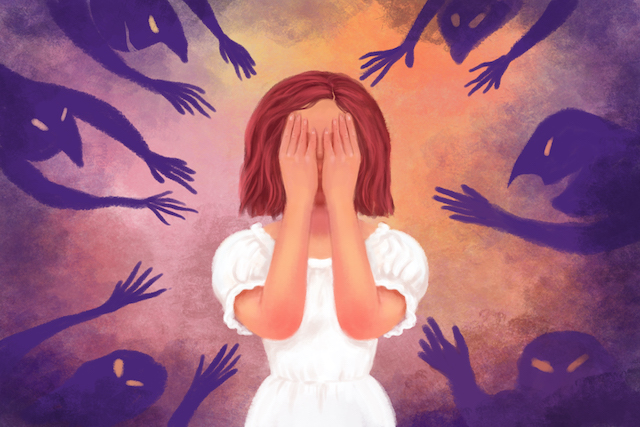
How I’m Healing from the Pain of Growing up in a Dysfunctional Family
“Don’t try to understand everything, because sometimes it’s not meant to be understood, but accepted.” ~Unknown
As a child, I never had the opportunity to develop a sense of self. I had a father who was a drug addict. A mother who was abused by my father. And later, we had my mom’s possessive and controlling boyfriend. It was tough finding a consistent role model in the mix.
I was one of four kids and we grew up in a trailer, sharing one bunk bed among us all. As children, we often would brutally fight with each other. We all wanted our own space and sense of self, but there wasn’t enough to go around.
With our mom working so much, her boyfriend would watch us. He seemed to enjoy punishing us. I remember feeling so afraid. I didn’t want to do anything wrong. I wanted to have his love because it felt like the only way to be safe. I never felt good enough, not to my mom, dad, or the boyfriend.
Starting in my teen years, codependency started really kicking in, and I wanted my mom for everything. I unknowingly was part of her triangulation between me and my sister. We both craved her love and wanted to have her favoritism.
As a wild child, my sister was stuck with my mom’s negative self-projections, I received the positive. As the years progressed, these roles flipped, and I suffered a sense of rejection and confusion as to what I had done wrong.
Life was hard and I couldn’t live with the fear and shame, so I learned to unplug from my feelings. At the same time, these unprocessed feelings would cause outbursts of anger. I started feeling entitled to anger. It felt like life had kicked me so hard as a child, why wasn’t it getting easier? Why was it getting worse?
My learned dysfunction kept me yearning for connection but fearing it and pushing people away at the same time. I wasn’t capable of trusting others in a healthy way. With each loss, I took on more shame and perceived failure.
As I struggled through life, I was oblivious to the amounts of shame my family dynamic had me carrying. My mother’s triangulation and manipulation created an environment where she was justified in lashing out with no accountability. Everyone else was to blame for her poor reactions to situations.
As my mom and sister became a team, I became the problem who needed to learn how to accept and love them unconditionally. There was nothing wrong with them treating other people poorly. It was okay for them to deceitfully hide family secrets (e.g.: Mom drove home drunk from the bar and doesn’t remember getting home), because I wouldn’t agree, so they were justified.
I felt like I was on an island, broken and unable to figure out what was wrong and how to fix myself because the “rules” of justification changed so swiftly, and always in their favor.
Having no sense of self and being completely enmeshed with my mom and sister, I felt beyond broken each time I was accused of not being able to love unconditionally. I was worthless and a disgusting human being who was incapable of even a basic emotion that everyone else had.
It took a lot for me to see that love for my mom was making me feel close only when she was going through tough times, making me part of her someday club (our motto: “someday” will never happen for us).
My sister learned to use her money to express her love. She would take me to dinner and give me her quality hand-me-down clothes. While I was grateful, it also became justification for her to do crummy things toward me, usually when she had been drinking.
While sober, if she had a problem, she’d choose to “forgive.” The only problem is that she hadn’t really forgiven me because one night while everyone was having fun, I might get tired or I didn’t think a joke was funny or I looked at her the wrong way, and it would all come flooding out—every stored feeling she had been holding back for days or weeks.
If either my mom or sister hurt me, the expectation was that I should just get over it. There was no need for them to take accountability because “we are human” and “I am happy with who I am.”
I wanted to be loved and accepted but couldn’t ever really find my place within my family because the dynamics were so volatile. I was suffocating in the conflicting feelings. I felt angry but ashamed. I was unhappy and felt worthless.
When I hit bottom and I couldn’t see one thing in my life that gave me worth, I knew that I needed to make changes. I reached out and got help from a therapist and joined a local support group.
As I am separating from the dysfunctional patterns, the things that have helped me are:
1. Ask for help.
Dysfunctional family dynamics often create shame around the idea of talking to others. It’s seen as exposing family secrets and going against the unit. Nobody should suffer due to things out of their control. Reaching out helps you find the compassionate outlet you deserve and need.
I have been in therapy for about two years now. It has been the only time of my life where I have been able to experience consistent, reliable, and healthy direction. It has supported me in learning how to have self-compassion and make healthy, but tough choices.
I didn’t want to accept the reality that my mom and sister will likely never truly see me for me. My role as a scapegoat is brutally necessary for the emotional “economics” that occur within my family.
Therapy helped support me in my choice to find myself outside of my family of origin. There was much pain in going from seeing my family every weekend to now living a life outside of them. It required radical acceptance and the knowledge that I am unable to change anyone but myself.
I was lucky to have a kind, compassionate, reliable therapist to guide me as I dealt with each of the emotions that came up during this time.
2. Accept others as they are.
As a scapegoat in a dysfunctional family unit, I have learned to accept my situation for what it is. I have to set my expectations for what others are capable of giving.
We have no control over others or their view of the world. All we can do is accept a situation for what it is and assess if it is healthy for us. Once I accepted that my mom and sister do not really see the family dynamic as dysfunctional, I was able to free myself of the anger and need for control. They are blind to the ways they protect themselves emotionally and unwilling to have an open mind about it.
There is sadness, but I see that the relationship dynamic causes so much pain for me, and I cannot fix this on my own. While I am compassionate toward the pain they must be carrying, I see that I cannot continue a relationship that is built on dysfunctional habits.
3. Know your worth.
As an enmeshed individual, my worth was defined by external sources. I wanted my mom, sister, brothers, friends, coworkers, and acquaintances to validate me as a good, worthy person. I desperately needed to feel like others liked me enough to feel I had worth.
I now know that we all have worth, and it’s our individual responsibility to maintain this worth from within.
I have a tough inner critic, so having a consistent mindfulness practice has helped me establish my worth. It is hard to find worth when you are caught up in your own head, believing the negative thoughts going through it. Mindfulness helps me turn away from these thoughts and label them as just that, thoughts.
The more we tune out our negative self-talk, the more we can acknowledge our mistakes and learn from them without sinking into a low and getting down on ourselves. With this brings the awareness that our mistakes do not diminish our worth. Our worth is inherent. A mistake is just a mistake.
4. Learn what healthy love looks like.
Our family of origin doesn’t always teach us what healthy love looks and feels like.
In dysfunctional families, each person loves based on their limited capacity to process their own emotions. When someone has to keep reminding you that you are unconditionally loved, ask yourself, how do I feel right now? For me, I felt hated and restricted to being what was easy for my mom and sister.
Love should connect you with your inner joy. We all feel down at times and cannot rely on others to make us feel good about ourselves at all times. But I do feel that when someone loves you unconditionally, you shouldn’t feel lost. The joy of this love should be consistently present and help carry you through the tough times (e.g.: disagreements, hurt feelings, etc.).
When it comes to my mom and sister unconditionally loving me, I have had to accept that they love me the best and only way they know how while hiding from their shame. If they lash out, they are not able to carry the shame and embarrassment of their own actions. They cannot validate my feelings or experience in any way. They need me to carry this responsibility for them. This is not unconditional love.
—
As you move through the necessary steps to separate from learned family dysfunction, please remember that you didn’t learn these things by yourself and you will not unlearn them by yourself, nor should you.
Oftentimes things like depression or anxiety are a hurdle. Building a community is scary but necessary. This can be reaching out to a therapist or searching for support groups in your local community.
For years I struggled thinking that I could fix what was wrong with me on my own. It wasn’t until I reached out and got help that my mind was able to open up, process traumas, and make lasting changes.
-
If You’re in a Painful Relationship and Considering Estrangement…
“I understand the life around me better, not from love, which everyone acknowledges to be a great teacher, but from estrangement, to which nobody has attributed the power of reinforcing insight.” ~Nirad C. Chaudhuri
I was brought up to understand that family is family. So I have naturally given great weight to the importance of family bonds. However, what happens when a familial bond breaks? Do you commit yourself to holding on despite the cost, or do you acknowledge the damage and take the necessary steps to sever the tie?
Personally, I sit somewhere in the middle. Any important relationship deserves an extended amount of effort, patience, understanding, and forgiveness in rebuilding. However, you can only do so much, and there comes a point when it could be in everyone’s best interests to walk away.
I speak from personal experience. I’ve been estranged twice in my lifetime. Once from my father, which was my choice, and the other time from my sibling, who ultimately made the decision to walk away; I guess I just dotted the i’s and crossed the t’s on it.
Let me be clear, neither estrangement was a wonderful experience. The process of severing ties is heartbreaking, regardless of the situation that led to the estrangement. It hurts when you feel you’ve been rejected, and it hurts when you know you’re rejecting someone.
But when it’s the right decision for you, and once the hurt abates somewhat, there is a sense of relief. Although you may never feel happy about it, you’ll feel happier overall for the steps you took in protecting yourself and your well-being.
As with all life events there is opportunity to learn and reflect…
In hindsight, there are certain actions I should have taken before the relationships ended, especially when it came to my sibling. Perhaps taking these actions could have prevented the outcome? Who knows? Regardless, these behaviors would certainly have helped me heal quicker even if the end was inevitable.
If you find yourself struggling in a relationship with a family member—or any type of relationship for that matter—these five suggested actions can help.
1. Be yourself.
This is what I kick myself the most about when I think about my estrangement from my sibling. I was never myself. I was always trying to impress them and seek their approval.
You see, my sibling was a lot older than me; by the time I was two they had already left home. Visits were few and far between, and when my sibling married, there were tensions between my family and their spouse.
Everything had to be done to keep them happy. We had to tread on eggshells around them to maintain the relationship, and that stuck with me well into adulthood. I believed If I stepped out of line then the relationship would end. So I said what I thought they wanted to hear and acted in the way I felt I needed to act.
This led to a lot of resentment on my part. No matter how hard I tried, I never felt fully accepted.
As I saw this would soon impact my own children, I knew things had to change.
I stopped kowtowing, and within a year they had broken away, communication basically stopped. The hardest thing was knowing that all those years I had presented an unauthentic version of me. I felt I had let myself down. What might have happened if I had just been myself?
It can be challenging to be yourself when it’s a family member you want to please, but you can’t let the labels they place on you define you. Be who you really are. Yes, you might be rejected, but being someone you’re not is exhausting and likely to lead to more unhappiness. You’re the one who has to live with yourself after all—it’s better to love the person you are!
If I had my time again, I would just be me, and I encourage everyone to adopt this approach too.
2. Communicate.
Relationships all too easily break down when there is a lack of communication. Good communication builds your connection, helps you deal with potential issues early, and allows both parties to have their needs met.
Too often, we end up shouting, judging, criticizing, or not communicating at all. This isn’t a recipe for a healthy relationship.
In his book Non-violent Communication, Marshall Rosenberg sets out a framework he created which allows people to express their needs and make requests without any negative behaviors. Using this method can make it easier to ask for what you want, and it also gives you a better chance of actually getting it. It’s a technique I wish I had known a lot earlier, but one that I use now to great effect.
It’s a four-step process:
Convert judgements to observations.
So rather than saying, “You never listen to me” (quite an emotionally charged statement), you would say, “I see you checking your phone when I try to talk to you,” which is more factual and less likely to trigger a defensive response.
Say how you feel.
Express how you’re feeling without blame or judgment. Instead of saying, “I really needed you and you weren’t there,” express your feelings like this: “I was feeling really alone.” This is a powerful way of expressing ourselves and taking ownership of our feelings.
State your needs as they relate to you and your values.
So rather than saying, “You need to change how you treat me,” you would say, “I have a need to be respected as a human being.”
Ask for what you want.
Start with “Would you be willing/like to…?” For example, “Would you be willing to put your phone down when we have a conversation?” Framing your request in this way gives the other person the freedom to say no, meaning they don’t feel forced or pressured and in turn more likely to say yes.
Here’s an example of the four-step process all put together:
“I see you checking your phone when I try to talk to you. I feel frustrated. I value being listened to. Would you be willing to put down your phone when we have a conversation?”
3. Stand strong (even when you’re scared).
As a recovering people-pleaser, I used to shy away from standing up for myself. I would choose to agree rather than confront. Life was more peaceful when I just smiled and nodded. But this is not a healthy strategy.
With my father, I needed him to acknowledge and take responsibility for his actions. With each attempt to broach the subject of his behavior toward my mother and me, there would be denial, false accusations, and even aggression. Fear would make me back down.
But you have to stand strong, even when you’re scared. If an issue is important to you, don’t allow for it to be brushed under the carpet to fester. Facing issues head on allows you the opportunity to resolve them. It provides you (and them) with clear boundaries and makes repeat behaviors less likely.
4. Accept your part.
Nobody is perfect. Relationships are two-person territory. It would be so easy for me to look back and put everything on my sibling or on my father, but that would be inaccurate. I have to accept my share of accountability too. We all do.
I should have spoken up. I should have acted differently in certain circumstances. I should have been honest about how I was feeling. People aren’t mind readers after all. This isn’t about accepting all of the blame; it’s just about acknowledging your part. It helps you grow as a person.
5. Forgive and let go.
Firstly, you need to forgive yourself. You’re a human being after all, we all make mistakes. Show yourself the same compassion you readily show to others.
Secondly, when you’ve had time (which may include therapy) and feel capable, start to forgive the person, even if you’re now estranged. This doesn’t mean you have to forget what happened but more allow the anger, resentment, or any other emotions that don’t serve you to be lifted from your heart.
I find writing a gratitude letter (listing what you found good about them and your time together, plus anything you’re grateful to them for) really helpful in the process of forgiving and letting go. It helps to refocus on the good side of the person (and your relationship) rather than the negative.
Remember, we feel hurt because we loved and cared deeply, two important components of a happy life. Letting go allows us to move forward to what is right for us. Use what happened to personally grow and build a better life.
Every life event, good or bad, has something to teach us…
I’ve grown so much from my own experiences and use those learnings to positively affect all the other relationships in my life. There is always hope for reconciliation, but for now, I’m at peace with where I’m at, and I hope you will be too.
-
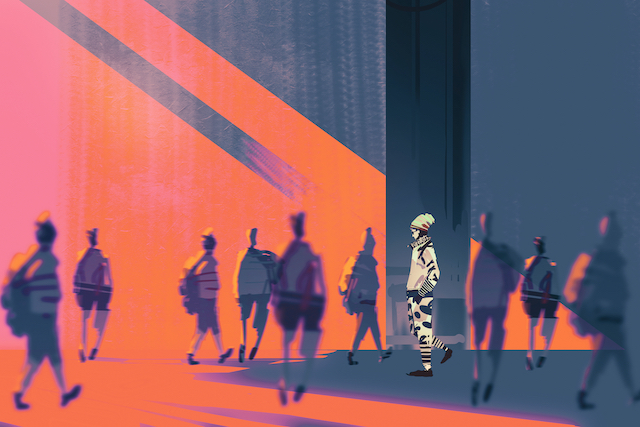
Dear Estranged Adult: You Are Strong and Worthy of Love
Dear estranged adult,
What I want you to remember is that it was never really about you, although it might have felt like it at the time and it might feel that way now.
When your parents told you over and over you weren’t good enough, that you would never amount to anything, they were just projecting their own feeling about themselves on to you because deep down, they do not feel they are good enough and don’t believe they have amounted to anything.
Maybe these feelings were passed down from their parents, or maybe your parents have regrets about their lives that they transfused on to you, but these reasons are not that important. Not as important as that fact that what was said to you, what was done to you, was never your fault. It was not about you.
You were always good enough; you were always going to amount to something. and that might have threatened them. No one is born unlovable or unworthy of love, no one.
Over the years I have learned that people’s words, actions, and beliefs have very little to do with me and are more about themselves.
As people interact with others, they project how they think, what they believe, and how they feel on to others. In fact, we all do this, even you and I do it. But what sets us apart is the fact that we can reflect on how our actions and words impact others. We can see the world from our own perspective and can also understand how others might see it.
If you grew up in an environment like mine, you were taught the incorrect belief that how others see things and how others see you is more important than how you see yourself. You were likely taught to put your own thoughts and feelings aside and instead engage your parents’ thoughts and feelings.
In some cases, you might have mistaken their thoughts and feelings as your own. You might have heard their voices in your head over and over, and you might have found yourself saying their words.
Over time, if you were at all like me, you began to experience dissonance with what your parents told you, and you began to connect with your own ideas, thoughts, and feelings.
In some cases, you might have felt doubt about your ideas, and you might have tried to suppress them. In other cases, you might have found yourself on a teeter-totter between your thoughts and their paradigms of you on the other side. But either way, you found your truth, and even though it caused you pain you found your voice.
As you found your voice you found yourself and started to speak your truth. As you started to speak your truth you were told over and over “But they are your parents, they love you, you can’t cut them out, you can’t let them go. They are getting older, they need you.”
In your heart you know the truth, but because you were taught to listen to and believe the voices of others you questioned yourself and tried over and over to reconcile. With each attempt to fix a broken relationship, your heart ached until you knew you could not take it any longer. You had to listen to your own voice, or you would break.
You likely wrestled with guilt and you might feel guilty now. If you are struggling with guilt over going no contact with your parents, let me ask you a few questions:
How do you feel after you have interacted with your parents in any form? Be honest with yourself.
Do your parents respect your boundaries?
Is there healthy reciprocity in the relationship?
Do you feel you can be who you are, and state your truth without judgment?
Do you feel respect or love or acceptance from your parents?
If the answers to these questions are painful, know in your heart you have made the correct choice for you. You have made the choice that is best for your health and well-being.
Now here you are, an estranged adult child. You are navigating the world without connection to your family of origin. You might be stronger than you have ever been, in some cases happier, healthier, and more confident then you have ever been.
Every day you confront the childhood trauma that brought you to this choice with clarity, resolution, and strength to work through it.
You might have done things you did not know you were capable of doing; you might have built a supportive family of your own and/or helped others in the ways you needed help. You might be taking small steps every day to live as your best self. Take a moment to celebrate that!
You have done something that no one should ever have to do, you have made one of the most painful choices you will ever have to make, and you have been misunderstood by so many—and yet you remain strong. You remain true to yourself and your story!
Maybe you are desperate for people to understand your story, to validate your lived experience. You might long for your parents to say that they are sorry for the pain that they have caused you. I know because I have felt and longed for these things, but the truth is you don’t need these things.
You might question why. Why will my parents not understand the pain they have caused me, say they are sorry, and love me the way I have needed to be loved all my life?
I wish I had an answer that would satisfy these questions and somehow take away that pain. The best answer I can come up with for you and for myself is that some people are not ready to accept that they are the villains in your story, and they might never be. Rather than reflect on what you have asked, they lash out, desperate to protect their narrative as kind and loving parents.
Parents often don’t want to experience any cognitive dissonance, or things that cause them to question who they believe they are as parents and as people. This may be why you do not get the validation you deserve. The truth is, you don’t need that apology you might never get, and begging and pleading with them to validate your truth is likely hurting you.
Some people will never understand you; some people will hurt you in more ways than you can imagine, and they’ll walk away as if it was all your fault or as if nothing ever happened. This is about them; it’s not about you. You know your story and you are prepared to own it. You are living it despite adversity. and I am proud of you for that.
Please try not to focus on those who don’t understand, don’t try and convince them to see it your way. You will be better off emotionally if you abandon those fruitless efforts. Sometimes people can only understand what they themselves have lived through.
If your friends or extended family grew up with supportive parents, they might not even be able to picture what you went thought, and that is okay. Instead, try to surround yourself with people who do understand and do your best to validate your own lived experiences. Write or record notes about your experiences, and when you start to question yourself, look back at these and self-validate. This helped me when I questioned myself, and I still do this today. I know this is not easy.
Take time to celebrate you, because you deserve it. You have discarded the story your parents tried to write for you, and you have started to write your own. You have walked away from abuse and adversity in a society that sees you as the problem, and you continue to stay strong every day.
Tell your story, live your truth, and never be ashamed of the painful choice you had to make. The abuse and the way you were treated was never about you, it was about them. You have virtues, insights, and values. You are lovable and you deserve to be celebrated and loved for the person you are and the person you are becoming. You are not alone.
-

How to Let Go of Your Family’s Expectations and Be Who You Want to Be

My parents often spoke about coming to America from Nigeria with one portmanteau.
I imagine that their suitcase was filled with their hopes, dreams, and expectations, and in many ways, I feel like I was metaphorically handed this suitcase of desires and things the day I was born. It would now be my load to carry and make sense of.
But when I opened that portmanteau, I realized that the clothes didn’t quite fit, and there were notebooks full of expectations I would never meet.
Although I had a reverence for this great object and the hands that had passed this legacy to me, I wasn’t sure if I could carry all that was in it.
I think this is the dilemma of any child in a household filled with hope and expectation, and specifically for the immigrant child, it is often one of the defining questions of our existence. The idea of having a load you are destined to carry, even if you’re not sure you want to carry it…I can’t think of a more spiritual quest than this.
We know all too well that there’s so much more in that portmanteau other than a simple hope or desire. Often, we find that there’s unreconciled feelings, a trauma here or there, grief, and a firm belief in what is right versus what isn’t. So then the question for the immigrant child, and any child who knows what it’s like to come from a family that has its share of challenges, is, What is mine to hold?
In order to sift through all of this, I have had to rediscover who I truly am on my journey to recovery, especially as the daughter of Nigerian immigrants. Notice how I say “daughter,” which means I have to contend with a gendered reality where I am clearly a part of a larger unit. So these words—daughter and immigrant—imply that there’s a relationship existing between multiple parties with different understandings.
If this wasn’t enough to deal with, when we think of Nigeria, Africa’s most populous nation that has birthed many people who have committed themselves to making their lives better in service of a vision beyond themselves…well, this lets me know that I come from a place where people have chosen to fuel their inner light.
And like any place, this land that runs through my veins has also birthed people who could not see beyond their fears and chose (knowingly or unknowingly) to feed their inner demon.
All of us, no matter where we’re from, and no matter what we know or don’t know about our particular ancestry, must contend with the fact that our familial histories often carry the light and the shadow. So then naturally, I have to acknowledge that all this complexity has been passed down to me. This was the true start of my recovery, understanding that I come from the very best experiences that humanity has to offer and the very worst.
And let’s not forget that we’re immigrants living in the U.S., which means that we are now first and foremost considered Black people. So my life—like many of my counterparts—is a life of many understandings converging into one.
I have always had friction in my life between who I am expected to be and who I really am. In a way, the expectations I brushed against sanded me down to my most vulnerable parts, where I had to grapple with who I wanted to be.
In a previous reflection, I wrote about this vulnerability and exposure that led me to release a certain expectation that was expected of me in my family as it concerned religion.
“When the God you are told to love is either a brute or woefully withdrawn from the deepest stirrings of your heart, you can become frozen to life. I’ll never forget the day my father prayed about my clothes. I was fifteen or sixteen, experiencing a rapid growth spurt, and experimenting with makeup, bare midriffs, and platform shoes. One afternoon, my father stood as the mighty patriarch, doling out a prayer for everyone in the family. Finally, he got to me: ‘Oh God, please take away the spirit of looseness from, Itoro.’ … I yearned for a closeness to my parents and to my culture, but I also wanted a life free from denial and religious absolutism, where I could feel at peace as I truly was.”
Religious tension was one of the many reasons I imagined a life beyond the cultural expectation that a good daughter stays close to home.
It is a code that many families live by, the hope that you’ll get over any arguments and differences and “make it work.” For the immigrant family, this code of ethics is often vital to our survival. If we all don’t support each other, who will? But really…who will?
In short, there was something greater at stake for me to preserve, and it did seem to boil down to choosing family or the opportunity to become who I really am.
That idea that a good daughter stays close to home and does not disrupt the family unit was a huge expectation to carry, especially because I had a need for independence at an early age. Everyone would be sitting in the living room watching a movie or gathering together, and I would be upstairs dancing or listening to music.
It’s possible to love where you are from and yet want to be free of the expectations you must carry, and sometimes it’s necessary to let it all go.
And there was much more letting go to do. As I followed the small voice that wanted independence, I began to define who I am in present time:
A daughter will call her mother once a week and occasionally send pictures of her travels abroad. A daughter will make a new home and adopt a chosen family while she still holds the family she was born into in warm regards. A daughter will marry (or not) when the time is right for her and not a minute sooner…same goes for having a child. And a daughter is still very much the daughter of Nigerian immigrants, just maybe a daughter who lived up to a standard of her own making. Amen.
In my own experience, we’re often congratulated for our ability to carry a tough load. As Black women, we are often given accolades for our ability to do this and bear more than our share.
For me, the ability to manage relationships that may not be healthy, carry cultural expectations, and achieve at a high level has been the marker of strength, meaning to do anything different shows weakness.
However, I think that my true strength is determined by who I really am, and who I’ve always been is not the archetypal superwoman who can do it all. I’ve always been more on the sensitive and gentle side, and for me this is where my strength lies. My strength lies in the ability to put down the load and give up any expectation that would compromise my sense of integrity.
Where do we go from here?
The answer to the question of how we can free ourselves might be simple (i.e. just let go), but we know that the task of actually letting go is a difficult one. As one immigrant woman I knew said years ago, “I’ve already had to let go of so much…how much more change can one person take?” It takes a lot to give up the load, especially when there’s so much hope zipped into it.
So here are three reflection questions that might help in letting go:
What about my humanity do I need to embrace, challenge, and release?
I think before you can become who you’re meant to be, it’s also important to know where you come from and what you’d like to preserve from your upbringing.
In my particular embodiment as a first-generation Nigerian woman, I make it a point to honor this part of my story while making the necessary changes to broaden my perspective.
I believe this question requires one to really develop an awareness for one’s habits and identify those ego stories that need to go.
After sitting with myself for years, I realized that I was addicted to my anxiety. As a young girl, I always worried that I was doing something wrong and causing the adults in my life anger. Worrying about not being enough was an essential part of my framing, so essential that I wasn’t quite sure who I would be without it. It had shaped me for my entire life, so that feeling at dis-ease was my familiar state of being. But as I kept confronting myself I realized that it may have been familiar but it certainly wasn’t natural.
I was presented with a choice: Do I want to keep this or let this go?
Take your time with this, and if you are working with a therapist or support group, this might be a good question to work on in your process. I think of Eckhart Tolle’s quote in how I approach this question,
“In essence, you are neither inferior nor superior to anyone. True self-esteem and true humility arise out of that realization.” So this question is one tool to support you in getting honest with yourself and accounting for who you are. What’s the truth you need to tell?
What has carrying this load taught me about myself?
I think this is explanatory, but to use myself as an example, in carrying this load I realized the stress and resentment that had built up in my life. I also realized that I wasn’t quite sure who I was without it. More importantly, I realized there were actually things within the suitcase I wanted to keep and integrate into my new way of doing things, so in ways, the load wasn’t entirely bad and wasn’t entirely good.
What do I really want?
It’s taken me decades to answer this question. Some people come out of the womb understanding their place in the world and their desires, but for many people, often we have other people’s wants and desires as our blueprints for what think we want. But if no one was there to validate or invalidate your hopes and dreams, and this was a talk between yourself and your soul, what would it be?
—
I hope this helps in some small way, because letting go is complicated, and sometimes we just need the right tools and questions to help us get there.
-
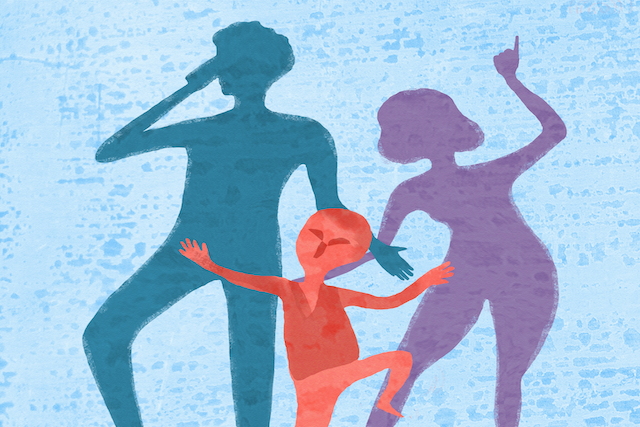
Family Estrangement: 3 Stories and the Advice You Need to Hear
“Home is not a place, it’s a feeling.” ~Cecilia Ahern
This post is written by three people from different parts of the world who came together to share their story of family estrangement and their choice not to reconcile.
To the outside world, it seemed none of us were neglected. Our parents were well-educated. We grew up in decent homes, were given good educational opportunities, and had financial support. We looked like we came from perfect families, but….
Jen’s Story
On March 24, 2019, I received a chilling text from my sister that Grandma was found unconscious in her home and rushed to the hospital. Her pancreatic cancer had progressed, and it seemed the time Grandma had left was like grains of sand in an hourglass.
From that moment on, all I could think about was how much I wanted to tell my grandma I loved her, to hold her hand, and to share how grateful I was for all of her love despite being estranged from my parents.
Without thinking, I quickly jumped into action. As my husband helped me book flights and accommodations, I canceled appointments and made arrangements to make up the work I’d miss so I could spend my grandmother’s final breaths with her.
At the airport, I made notes about all the things I wanted to tell Grandma. Would I get to see her, or would I be too late? While these thoughts raced through my mind, my sister continued to text me a very grim picture. My thoughts punched me in the stomach as I reminisced over the ways Grandma had made my life wonderful.
When I was growing up, Grandma was the parent I looked up to. She always had a creative solution for everything. I called her when I felt down, when I needed advice, or when something good happened in my life because she always shared my joy. I always felt encouraged, and so I truly aspired to be like her.
Because I was so focused on reminiscing on our wonderful times, I didn’t stop to consider the reality of seeing my parents again. At that point, I had not seen them since 2004, had grieved the loss of them in silence as if they had died, and had tried to heal the wounds of an abusive childhood.
When I entered my grandmother’s hospital room, her eyes were closed, and she looked very gray. I took this moment in, just being alone with her, and then suddenly she opened her eyes. I could see her face fill with so much joy, but then just as quickly it suddenly turned to intense rage.
“You are the last person I wanted to see!” she exclaimed, pulling the blankets around herself. “What if you run into your mother—what if you upset the family?”
I was stunned. I hadn’t thought of any of these things because my mind was so focused on her.
“Would you like me to leave?” I whispered.
“No dear, I am glad that you’re here, but I don’t want you upsetting the family.”
My grandmother was right. I hadn’t taken the time to reflect on how I would respond to seeing my parents again, what I’d say, or how I’d choose to engage with them. I also hadn’t considered how they might engage with me.
No sooner than I realized this, suddenly, my mother walked past my grandmother’s hospital room. Without thinking, I rushed over to hug her. I asked her if she was okay with me being there, and we had a short, respectful conversation.
But, after our interaction, I began to feel physically ill. My body tightened, and I found it hard to breathe properly. Feelings of deep longing washed over me, and I found myself fantasizing about having a supportive adult relationship with both of my parents again.
Later that day, in a flight of emotion, I called my parents and had a decent conversation with my father. I gave him my phone number and told him I would be willing to reconnect again. Looking back, I see this was a detrimental mistake—a mistake that filled me with hurt and longing.
During my visit, I noticed when I was not with my grandmother, I became preoccupied with false hope. A strong desire came over me wishing my parents would call me. I was hoping they’d also apologize for the hurt that they had caused me over the course of my life, and that this time, maybe things would be different. I fantasized about my parents taking an interest in my life without judgment.
Had I really taken the time to reflect on how I would respond to the situation away from the emotion of the moment, I would not have gotten caught up in false hope or fairy-tale notions of reconciliation.
I would have thought back to why I made the choice to cut off contact with my parents in the first place, and that door would have forever remained closed. I would have accepted that behind that door is a past that has shaped me, that continues to haunt me, and still has some power to hurt me in the present if I were to open it again.
Magdalena’s Story
My phone pinged in December 2019 notifying me of a text message. I jumped a little, and then even more so when I realized that the message was from Dad. I pressed the “Read” button cautiously:
“Is it possible we can meet up face-to-face to talk about this situation?” the message asked.
For a moment, I thought it sounded like a reasonable request, but then all of a sudden, a million emotions raced through my body like fear, hope, anger, longing, and worry.
Prior to receiving Dad’s text, I had become increasingly aware over the years that my relationship with my parents hadn’t been healthy. My parents’ reactions to challenges had ranged from threats of suicide and physical threats of violence against my partner and me to emotional manipulation.
Since I had become a parent myself, it became abundantly clear that my ideas on parenting clashed with theirs, which is not necessarily uncommon; however, I became more aware of the dysfunction within our family and decided to do something about it by choosing limited contact in March 2019.
As I sat there, pondering Dad’s text, I considered lots of scenarios: Could things be different this time? Could we possibly compromise? What could I do to make this easier? But, I also noticed just how cautious I was because, sadly, previous attempts at reconciliation had disintegrated badly into unsolved drama, severe insults, and horrible disrespect.
I regularly felt my parents diminished and ridiculed my concerns. Their sense of entitlement was always so overwhelming, which simply made balanced discussions impossible.
Over the years, I’d been patient with my parents’ dysfunctional behavior and my mother’s mental health, which had significantly deteriorated, but she refused to admit it. My therapist has highlighted several times that, while having a mental health problem is common, it doesn’t excuse poor treatment of others, and therefore, my mother will always be responsible for her actions, both good and bad.
Meanwhile, my father has clearly crumbled under the weight of my mother’s emotional instability, yet he continues to support her unhealthy and dysfunctional behavior as a means of safeguarding himself.
Again, I thought that if I agreed to respond to his text and meet, I would resolve not to engage in any provocations, but rather calmly listen to what they have to say while attempting to positively direct the focus of the conversation. As I sat in trepidation, I felt somewhat hopeful yet wary.
I decided to respond to my father’s text and ask to meet somewhere public to minimize the risk of great drama. My parents agreed and I started to feel hopeful.
Unfortunately, it became clear almost immediately that my mother had an alternative agenda. Almost immediately, she told me I am a disgrace and my own children will one day turn on me as I have on her. She called me an evil witch and a marble-hearted fiend.
The insults she bombarded me with slipped out of her mouth easily and effortlessly leaving me to shake while lowering my head. It was obvious she hated my cool response, and it felt like my father was clueless as to what was happening in front of his eyes.
True-to-form, my father accused me of insulting my mother due to my silence. I explained I had genuinely come to meet them with the hope of starting to build some bridges, and that it felt like, just as my father and I were starting to make those tiny steps, my mother decided to deliver some killer blows, which ultimately derailed everything.
My father told me I am a waste of space and I never had any intention at reconciling at all. Together, they both agreed they’ve created a demon while dramatically walking out of the café. That pretty much concluded the “peace negotiations.”
I sit in a shocked state again. I question, why did I do this to myself again? The answer is, I had fallen prey to my dreams of wanting joyful Christmases with my whole family, as well as wishing for simple picnics in the garden where I had played as a kid.
Now, I just feel stuck. I realize I miss not having parents with all my heart but, I can’t have any contact with them because it is too damaging. It’s time to acknowledge that while relationships can be difficult, healthy relationships don’t play out like this.
CJG’s Story
“Could there ever be a genuine chance of reconciling with my parents,” I asked my therapist in January 2020.
He reminds me, “If you want to reconcile with your family, remember there’ll always be a ‘hit’ for every kiss you get. So, keep in mind, it’s kiss-hit, kiss-hit.” Taking that in, I say, “I’m just too old to take the hits anymore. I only want kisses.
I’ve been estranged from my family since 2018. It’s been an ongoing vacillating back-and-forth of wondering how it would be to reconcile. Estrangement has been the hardest decision I’ve made, but choosing not to reconcile is harder. Despite this struggle, I’ve chosen to remain estranged.
I didn’t think I was unloved as a child because my father was extremely affectionate, said “I love you,” and attended my sporting competitions. Nightly, my mother made sure my homework was done correctly, and we sat down as a family to have homemade dinners cooked by my grandmother or mother.
My household felt every bit “family,” but it was also a place full of tension, unsaid thoughts, extreme stress, debilitating confusion, radical rage, and countless secrets.
Growing up I overlooked the weeks my mother would ignore me for no reason, despite me begging her to tell me how I could fix whatever I’d done. I’d apologize profusely while sobbing and pleading with her to speak to me so I would feel loved again.
Instead, she prided herself on knowing she could ignore an eight-year-old child without any reason. Suddenly, she’d just start talking to me as though nothing had ever happened. And, like most children, I’d forget the pain she’d caused over those weeks.
Nightly, my father watched the Playboy channel on the family television. He’d rush me and my sibling off to bed very early so he could get his fix.
Most nights, I’d have nightmares, groggily walk down the stairs in hopes of some comfort, but would be yelled at instead because I’d caught glimpses of the explicit images my parents were watching. Confused and not soothed, I’d walk back up to my room and wet the bed. The following morning, my father would shout and degrade me for yet another bedwetting incident.
I’ve always been mindful not to shame my parents. I was trained to “never air our dirty laundry.” Yet, it never dawned on me just how much “dirty laundry” we actually had. I didn’t realize what they were so afraid of and why it was imperative to condition us to ensure we were never exposed. I just assumed all the stuff happening in our home happened in everybody’s else’s homes, too.
Parents like mine are more concerned with what the “neighbors think” than how their children feel. They work hard keeping up appearances rather than emotionally supporting their children. They live out the fantasy of having the perfect family while destroying it with double-standards, hypocrisy, betrayal, and cognitive dissonance.
I was actively a part of this family-fantasy till 2018. I ignored physical and emotional cues, as well as frightening memories for years, to be loyal and loving to my family. I focused only on the “good times” and suppressed abuses, covert sabotaging, and extreme enmeshment.
I feel heartbroken and ashamed this is the truth of the family I grew up with and wanted to know for the rest of my days. Despite admitting these truths, I’ll always love them, and that’s what makes it hard not to reconcile.
Our Advice to Readers
If you’re struggling over reconciling, you’re not alone. Your parents helped make this inevitable choice with you through whatever behaviors they exhibited that ultimately brought on the estrangement.
Some advice to remember:
Keep your “why” handy. Write a list of reasons you feel can’t have a relationship with your family. Review this “why” list often. Your “why” may include displays of stonewalling, silent treatment, feeling physically ill after contact with them, severe abuse, covert sabotaging, betrayal, gossiping, enmeshment, and triangulating, for example.
Leave out the “shoulds.” If you’re saying things like, “I should reconcile with my family,” or, “I should reunite because society tells me I should,” then try to feel twice.
Feeling twice is tuning into your body rather than your logic. Here are some ways to help you do that: Close your eyes, place your hand on your stomach or heart. Notice your body’s cues when you think of reconciling. Are your palms sweaty? Is your heart racing? Do you swallow heavily? Do you feel a sense of dread and panic or do you feel a sense of joy and fulfillment over reconciling?
Take your time. It can be hard if you have a family member who is ill, aging, or dying, but it’s important to remember that estrangement did not happen overnight. You made this choice after years of ongoing toxicity and dysfunction. So, go slowly with this process, too.
Be realistic about what could happen if you reconnect and envision honestly the best- and worst-case scenarios. Take time to reflect over a period of weeks. Consulting with a therapist can help, as this process can bring up feelings of pain and longing.
Ask what’s “value-added?” What’s the emotional value added if you reconcile with your parents? What’s the value added if you don’t?
Tune into the truth: Do you see any evidence that the person or people you’re estranged with have grown? Do your values and their values align or not? Will reuniting with them compromise your healing plan?
Lastly, make a list of non-negotiables. Reconciliation can only happen if your family agrees to committing to your list and understands the consequences if they violate your deal-breakers.
We have all walked away from our families of origin, let go of the hope for fairy-tale ending, and fought to discard society’s romanticized notions of reconciliation. We have found peace, our health and well-being have improved, and we all lead happy, meaningful lives. You can too.