Tag: faith

  • The God I Lost, the One I Found, and the Faith That Changed Me

    The God I Lost, the One I Found, and the Faith That Changed Me

    “I searched for God and found only myself. I searched for myself and found only God.” ~Rumi

    There’s a particular kind of heartbreak that happens when you realize some of your prayers are going nowhere.

    There’s a painful silence that follows unanswered calls. Yet, despite the ache, I can still feel the pull to pray to the God outside of myself—that old reflex to place faith in something bigger, some invisible force in the sky, who, apparently, can make things happen magically here on Earth.

    But it doesn’t always go that way, does it?

    I prayed my cancer would go away. It didn’t.

    I prayed the world would heal from climate change. It didn’t.

    I prayed my business would make enough to live on. It didn’t.

    I prayed my book would reach thousands. Still hasn’t.

    I prayed for peace in the world. It’s getting worse.

    So, I stopped. Stopped praying. Stopped hoping in that way where my heart is wide open and a little desperate.

    It didn’t feel brave. It felt hollow. But in the silence that followed, something shifted within me. When the noise of asking subsided, a quieter truth emerged.

    For a long time, I thought my discomfort came from out there. From God. From other people. From difficult situations. Blaming something outside myself gave me a sense of control—a story to hold onto. But no matter how convincing that story was, the ache inside remained.

    It took time, but eventually I saw it: the root of my suffering wasn’t external at all. It was internal.

    When I finally stopped waiting for life to bend to my will and turned inward, I came face-to-face with something uncomfortable—my attachment to control.

    What I discovered was a mind conditioned to grasp, to fix, to be right, to judge, to compare, to push. And most of the time, that’s where the struggle began—when reality didn’t match my expectations. I’d get caught in loops of thought, unable to see clearly, tangled in ego and forgetting the essence of my being—my heart.

    The heart is where our whole, compassionate selves live. We feel it. We recognize what Howard Thurman called the sound of the genuine. That’s who we are—at our core.

    So, it’s not that I lost faith entirely. It’s that I relocated it. I remembered the genuine within.

    Now, I have faith that life will unfold as it will, and sometimes, that’s painful. Life doesn’t often match the visions we hold. It burns plans to the ground. It humbles. It disappoints.

    And still, I have faith.

    I have faith in the goodness of the human heart. I have faith that we can hold grief in one hand—the image of the life we imagined—and, with the other, steady ourselves enough to rise and take the next step forward.

    I have faith in our ability to choose compassion over entitlement. To sit with discomfort and still reach for the just response. To place our hand on our chest, close our eyes and choose to respond—not from the head, but from the heart.

    And maybe, just maybe, that’s what God actually is.

    Not some white-bearded man in the sky. Not a distant savior. But the part of us that knows how to return—not to the mind’s spirals, but to the body. To the breath. To the quiet pulse of the heart.

    What if we—all of us, even world leaders—stopped looking to the God outside and, instead, returned to the one within?

    Because the God within doesn’t need to be right. The God within doesn’t dominate or divide. The God within creates peace. Is peace.

    And maybe that’s the kind of faith we need now.

    Because when faith in something outside of us falls away, what’s left?

    We are.

  • Micro-Faith, Huge Benefits: Reasons to Believe in Something Bigger

    Micro-Faith, Huge Benefits: Reasons to Believe in Something Bigger

    “Faith is taking the first step even when you don’t see the whole staircase.” ~Martin Luther King Jr.

    My grandmother passed away a few years ago after a long battle with cancer. Even as her health deteriorated, she never lost her spirit. She’d still get excited about whether the Pittsburgh Steelers might finally have a decent season after Ben Roethlisberger’s retirement. She’d debate the Pirates’ chances with the kind of passionate optimism that only comes from decades of loyal disappointment.

    But what I remember most are the afternoons she’d spend napping in her favorite chair with my son curled up against her. He’d drift off clutching some random object, like a wooden spoon or random toy from my parent’s basement. She’d just smile and close her eyes too. Even when she was tired, even when the treatments were wearing her down, she found joy in those stolen moments.

    In her final years, she lived with my parents, but she brought her faith with her.

    Her rosary beads found new homes on nightstands and windowsills. Her worn Bible sat open on the end table, bookmarked with a picture of her husband. The little curio cabinet filled with angels followed her too, a portable shrine to stubborn hope. Wherever she was, the air around her carried that same indefinable quality that I later realized was simply peace.

    My grandmother had the kind of faith that could part emotional storms with a single glance. She didn’t need to preach it. She lived it. You could feel her belief before you even stepped through the front door. She believed in prayer, in miracles, in second chances. In the Steelers. And in Diet Pepsi.

    After she was gone, I expected to feel completely untethered. Instead, I discovered something surprising. Things seemed to hold together. The sadness was real and deep, but underneath it was something solid. A foundation I’d never realized she’d built in me.

    My mother always said I “lived with my head in the clouds,” and it wasn’t until after Grandma passed that I understood where that came from. While I was raised in the Catholic church and spent years as an altar boy, my faith had always been fuzzier than hers. Less certain. More questions than answers.

    But it was there, hidden under the surface, because of her. I’d been benefiting from her quiet influence in ways I never fully understood or appreciated until she was gone. Her faith hadn’t just surrounded me. It had somehow taken root in me, even when I wasn’t paying attention.

    Learning to Recognize What Was Already There

    The months after her death weren’t filled with the existential crisis I expected. Instead, I found myself noticing things. How I naturally looked for the good in difficult situations. How I held onto hope even when logic suggested otherwise. How I moved through the world with a kind of quiet optimism that I’d never really examined before.

    I was still a professional overthinker, still a card-carrying worrier. But underneath all that mental noise was something steadier. Something that whispered, “This too shall pass,” even when I wasn’t consciously thinking it.

    It took time to understand that this wasn’t something I needed to build from scratch. Grandma hadn’t just modeled faith for me; she’d been quietly cultivating it in me all along. Through her example, through her presence, through those countless afternoons when she’d choose hope over fear, even when the odds were stacked against her health and her beloved sports teams.

    Discovering My Own Messy Version

    What I came to realize was that my faith was never going to look like Grandma’s. Hers was rooted in tradition, in ritual, in the comfort of centuries-old prayers. Mine was more scattered, cobbled together from different sources and experiences.

    My faith, I discovered, is held together with hope, a healthy dose of skepticism, and about six different kinds of sticky notes. It’s not the neat, organized kind. It’s more like a spiritual junk drawer full of useful things, but you’re never quite sure where anything is.

    I believe in second chances and fresh starts. I believe in the power of afternoon sun to reset your entire day. I believe that kindness is contagious and that sometimes the universe sends you exactly what you need, even if it arrives late, confused, and covered in cat hair.

    Some days, my faith is a whisper: “Maybe things will get better. Maybe I’m not alone. Maybe I can try again tomorrow.” Other days, it’s louder: “This is hard, but I can handle hard things. I’ve done it before.”

    My faith doesn’t look like Grandma’s, but it carries her DNA. It’s messier, less certain, but it has the same stubborn core, a refusal to give up hope, even when hope seems foolish.

    The Science of Belief

    Here’s what I wish I’d known during those dark months: You don’t have to be religious to benefit from faith. Science shows that belief in something greater than yourself can be a powerful tool for mental and emotional well-being.

    Faith literally reduces stress. Studies show that people who report a strong sense of meaning or spiritual belief have lower levels of cortisol, the hormone associated with stress. Translation? Faith helps your brain pump the brakes on panic.

    It improves emotional regulation by activating the brain’s prefrontal cortex, which helps you pause before spiraling. It builds psychological resilience by reminding you that you’re not at the center of every catastrophe. Whether you believe in God, the universe, karma, or cosmic duct tape, faith acts as a buffer against hopelessness.

    Acts of spiritual reflection can trigger the same brain regions involved in feelings of safety and joy. And faith often leads to rituals or conversations with others, building the connections that are crucial for well-being.

    Here’s the kicker: You don’t have to get it right. Wobbly faith counts. Uncertain, whispered-in-a-closet faith is still valid. Half-hearted “Okay, Universe, I trust you… kinda” mutterings are welcome here.

    The Power of Micro-Faith

    Big transformations feel great in theory but hard in practice. That’s why I’ve learned to embrace what I call “micro-faith,” these small, digestible moments of intentional belief. Like appetizers for your spirit.

    Today, try believing in something small:

    • The possibility of a good cup of coffee
    • The strength hiding inside your own weird little heart
    • The fact that what you need might already be on its way
    • The idea that this difficult season won’t last forever
    • The chance that tomorrow might feel a little lighter

    Faith doesn’t have to be grand or glowing. Sometimes it’s just showing up anyway, even when you’re not sure why.

    What Grandma Taught Me

    Years later, I realize Grandma didn’t just give me faith; she showed me how to live it. She taught me that faith isn’t about having all the answers. It’s about trusting that you’ll find your way, even in the dark.

    She taught me that belief can be quiet and still be powerful. That faith isn’t a destination but a traveling companion. That sometimes the most profound act of faith is simply getting up and trying again.

    Most importantly, she taught me that faith isn’t about perfection. It’s about showing up. Showing up to your life, to your relationships, to your own healing, even when you feel completely unprepared.

    I carry pieces of her faith with me now, mixed in with my own messy, imperfect beliefs. Some days I feel like I’m floating through life with my head in the clouds. But thanks to Grandma, and a whole lot of trial and error, I’ve learned to float up here without getting totally fried by the sun.

    If your faith feels fractured, fuzzy, or faint, you’re not doing it wrong. You’re just human. Faith isn’t a finish line. It’s a floating device. It won’t always steer you straight, but it might keep you above water long enough to find the shore.

    So go ahead and believe in something today. Even if it’s just the idea that the clouds will eventually clear… and the coffee won’t taste burnt this time.

  • Looking for a Meaningful Holiday Gift? These Stories Will Renew Your Faith in Humanity

    Looking for a Meaningful Holiday Gift? These Stories Will Renew Your Faith in Humanity

    The holiday season can be joyful, stressful, difficult, or beautiful. It all depends on what you’re going through.

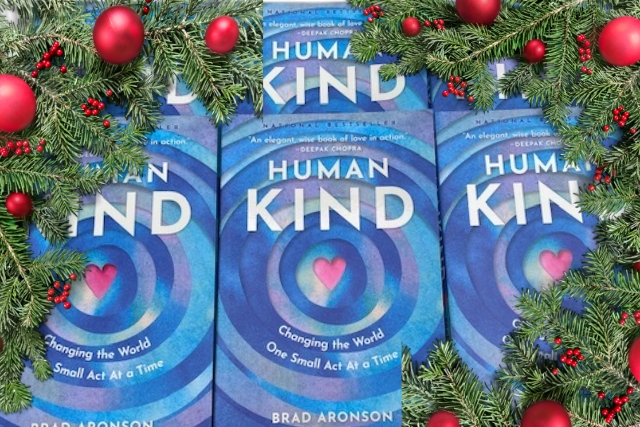
    Regardless of your unique circumstances, I suspect you’ll feel a little lighter and brighter after reading HumanKind: Changing the World One Small Act at a Time.

    This national bestseller brought tears to my eyes. With uplifting stories of hope and kindness, it’s an antidote to all the negativity in the media and the world, and proof that small acts of kindness can have a ripple effect and transform thousands of lives.

    It’s also a gift to mentoring organization Big Brothers Big Sisters (BBBS). One hundred percent of the author’s royalties go to BBBS.

    You might recall that I’ve recommended this book a few times before. I particularly enjoy sharing it around the holidays, since it’s the perfect stocking stuffer, and it supports a great cause.

    Author Brad Aronson was inspired to write HumanKind when his family went through one of the most difficult times of their lives. His wife, Mia, was in the middle of two and a half years of treatment for leukemia when a patient advocate suggested that Mia, Brad, and their five-year-old son, Jack, create projects to provide a purpose, a distraction, and a focus for the hours they were spending in the hospital every week.

    For Brad’s project, he wrote about the small acts of kindness by friends and strangers that carried his family through Mia’s treatment and recovery.

    But when he was done, he felt compelled to keep going. What about all the other stories out there? Other stories about seemingly small acts of kindness that had an extraordinary impact, often changing thousands of lives? He decided to seek them out—and those are the golden threads that weave a heartfelt tapestry in this book.

    In HumanKind you’ll meet Rita Schiavone, who decided to cook an extra portion of dinner every night to feed to someone in need. Her evening ritual led to a movement that now provides more than 500,000 meals a year.

    You’ll also meet Larry Stewart, who was homeless when he received a $20 gift that inspired him to become a Secret Santa when he got back on his feet. He went on to give a total of $1.5 million to strangers in need and build a team of thousands who serve their own communities as Secret Santas.

    Then there’s six-year-old Gabriel, whose simple request started a global kindness movement. And these are just a few of the many ordinary heroes you’ll learn about.

    HumanKind will not only restore your faith in humanity, but it will also inspire you to make your own impact. Each chapter has a “What We Can Do” section with practical tips to help you spread kindness in your daily life.

    You can grab a copy here: Amazon Barnes and Noble45% discount on 5+ copies here Other retailers

    If you’re looking for an uplifting stocking stuffer for your entire family, your colleagues, or employees, you can purchase 5+ copies for only $8.50 each this week. Use code “Friend” at checkout here!

    I hope you enjoy this life-affirming book as much as I did!

  • Learning to Have Faith That All Is Well

    Learning to Have Faith That All Is Well

    “If you believe it will work out, you’ll see opportunities. If you believe it won’t, you will see obstacles.” ~Wayne Dyer

    Gwen and I first met at a lactation group for new moms. She seemed like someone I’d get along with, and we talked here and there, eventually becoming Facebook friends, but nothing more.

    Fate (or just good luck) intervened, though, when we met up again months later at the first birthday party of a mutual acquaintance’s daughter.

    Gwen was the only person I knew at the party (other than the hostess, of course), and I was the only person she knew, so we started chatting. I was quickly reminded of how much I liked her, and after she told me she was desperate to hang out with someone other than her retired next door neighbor, we made a plan to meet up.

    We clicked immediately. We talked parenting, politics, relationships, and more, and on a really deep, intimate level. I felt like I’d known her forever, and by the end of our first playdate she said something along the lines of, “I really like you and I’m so glad we had the chance to meet again!”

    I felt so happy and full, and our relationship continued along this way for more than a year. Our kids were close in age, so we’d play at each other’s houses, meet at a playground, or do some sort of activity. One time we went away to a lake for a few nights and I had more fun (and talked more) than I’d had since I was a teenager.

    Then things changed a little bit. We both got busier, and the fact that we lived about forty minutes away from one another made it challenging to hang out. Our visits dwindled to about once a month instead of once a week, though we were always happy to see each other.

    Or so I thought.

    A few months after this shift, we went more than a month without seeing each other. I had contacted her at one point, but she had said she wasn’t available on any of the days I was free.

    Two more weeks passed and I heard nothing. Finally, with her birthday on the horizon, I texted her to say that it was weird not talking to her, and that I missed her. No response.

    I texted a childhood friend, someone whom I’ve known for decades, and asked her what she thought I should do. She said Gwen was probably just busy, and I shouldn’t worry about it.

    A couple of days later I sent another follow up text to Gwen, one that simply said “Hello?” and heard nothing once again.

    I started to get really down whenever I thought about the situation. Even though we’d both been much busier lately, each taking on part-time jobs and working on side businesses of our own, I felt gloomy and worried. I thought we’d be friends for the long haul.

    One night, while I was lying in bed, I talked to myself about just letting it go. Being mad wasn’t going to do anything, being hurt wasn’t going to help, and I’d done my best to reach out.

    And then you know what? I woke up one day and there was a text from her.

    It said, “Did you get my texts?? I think something is wrong with my phone, because I haven’t heard from you at all, but I just saw that all of your recent texts had gone to my iPad!” I immediately texted her back, and we realized the issue had to do with her getting a new phone, a technological glitch.

    We happily texted each other back and forth, with me even telling her how I was wondering what the heck was going on, and quickly made plans for the next week.

    When I went online later that same day, I saw she’d posted a message on my timeline that said something similar to her text: “I don’t think our texts are getting to each other. Message me!”

    Here’s what struck me when I read that: Gwen had faith. In herself, in our friendship, perhaps in life in general.

    I did not.

    Why did I automatically assume she didn’t want to be friends with me anymore after she didn’t respond to just a couple of texts? Why didn’t I send her a message on Facebook? Why didn’t I try calling her? Why did I just give up?

    I realized this was a pattern with me; I was often looking for the bad in things rather than the good. Looking for reasons why things wouldn’t work out rather than why they would. This was something I needed to change.

    The incident with Gwen happened nearly two years ago now, and thinking back on it, I see how much I’ve changed and how much better my attitude is.

    First of all, I’ve realized how much my thoughts and outlook impact every single area of my life. In this scenario, I could have told myself something kind instead of assuming the worst. I could have thought, “It’s been a long time, I bet Gwen misses seeing me, too!” instead of thinking she didn’t want to be friends anymore.

    I had and have no control over someone else’s thoughts or actions, so even if it was true that Gwen didn’t want to have a friendship anymore, I could have looked for things to appreciate instead of automatically jumping to the bad.

    Thinking about how thankful I was to have had the friendship when I really needed it while at home with a young child, or being appreciative of meeting someone I could talk to so easily, regardless of how long the relationship lasted, would have both been more beneficial stories to tell myself than the negative ones.

    Second, I’ve developed more faith in myself and in life. I’ve often struggled to believe that things can work out, regardless of the area of my life I’m thinking about (career, relationships, finances), and focusing on what’s working rather than dwelling on the negative has made a big difference.

    Sure, things can go wrong, but my deep sense of believing it’s going to be okay regardless of what’s happening in the moment has caused a big shift in my world. If the same thing happened today, I have confidence that I would tell myself, “All is well, and no matter how this works out, I can handle it.”

    Third, I’ve worked on changing the “I’m not good enough” story that makes me question my worth as a human being. Talk about a recurring theme in my life! Whether I was stressed about my performance at work or worrying over a guy I liked, I often had the “not good enough” story on repeat in the background. This affected the Gwen situation in a big way, because I was letting myself believe I was somehow unworthy of our friendship and believing something was wrong with me.

    This is still a work in progress, but I’ve come a long way. Catching myself when I have these thoughts is important, as well as reminding myself that it’s just something I’m making up, and humans all have similar thoughts. Getting stuck in them makes things worse; doing something positive for myself, like going for a walk or taking a nap, can make them better.

    Lastly, I’ve tried to just stop worrying. About everything. Yes, that’s a tall order, and no, I’m not completely there yet, but being aware of my worry allows me to channel it into something else.

    For instance, if I found myself worrying over my friendship status with someone now, I’d stop, take a step back, and ask myself if there’s anything I could take action on in that moment. If I decided yes, I’d take that action, whether it was picking up the phone or sending an email, but if I decided no, I’d be diligent about changing my focus to something else. Worry doesn’t solve anything, it only digs you into a deeper hole.

    It can feel difficult to shift deeply ingrained thoughts and patterns, but when you realize they’re making your life harder and sadder than it needs to be, you’ll see they’re worth the work to change them.

  • Searching for Purpose? 5 Ways to Embrace Not Knowing What You Want

    Searching for Purpose? 5 Ways to Embrace Not Knowing What You Want

    “Omnipotence is not knowing how everything is done; it’s just doing it.” ~Alan Watts

    We sometimes hear of remarkable people who just knew what they wanted to become from a young age. I, however, was not one of them.

    When I was about eight years old, I told my cousin that I wanted to become a scientist. Looking back, I find that pronouncement baffling since I wasn’t particularly interested in science at the time. What I did love doing, though, was making art.

    My interest in art eventually led me to study graphic design. I thought that design would be a perfect fit since I’m creative and logical. But at a certain point, I realized that while design made some sense logically, it didn’t feel right to me.

    I wondered, how could I have put so much time and effort into something I didn’t enjoy doing? It was only much later that I recognized my error: I believed that I had to have everything figured out completely.

    Embracing Not-Knowing

    What do you do when you realize what you worked so hard to attain isn’t what you want anymore? In this situation, many feelings may come up. I felt despair, fear, anger, resentment, sadness, hopelessness, and desperation.

    These powerful emotions can overwhelm us and bring us into a state of paralysis. I remember wanting to pivot, but seeing numerous obstacles before me. If I make a drastic change now, I will have to start from zero, I thought.

    I believe those thoughts and emotions stem from putting too much emphasis on the need to know. In the book The Overweight Brain, Lois Holzman, Ph.D., describes how our obsession with knowing “constrains creativity and risk-taking, keeps us and our dreams and ideas small, and stops us from continuing to grow and learn new things.”

    As Holzman explains, infants don’t know much of anything. However, they grow tremendously in a relatively short period. They can develop this way by “not-knowing growing,” which one does through play.

    Learning to Play Again

    Let’s think for a moment. When you play a game, do you want to know what will happen next? If you did, then the game wouldn’t be any fun—there would be no point in playing it.

    After working for seven years in my full-time job, I ended up quitting with nothing lined up and no idea of what to do next. Leaving your day job like this isn’t something I would suggest to everyone. But for me, it felt like the best thing to do at the time.

    Taking a risk like that was exhilarating. I felt like a newborn child, free to explore the world and its possibilities again.

    Before I made that decision, I used to sit in my office thinking, once I figure out what I want to do, I’ll be able to take some action. But I didn’t need to figure anything out. I just needed to begin by exploring.

    As I tried many new things, I gained insight into who I was becoming. By interacting with the world with openness and curiosity, I found the clarity I needed to create my life with purpose.

    Five Ways to Embrace Not-Knowing

    So, how do you start embracing not-knowing to realize your true potential? Here are five ways for you to consider.

    1. Question your situation.

    Notice the assumptions you’re making about what is and isn’t possible. Like a child, be curious about what opportunities are already available at this moment. Instead of thinking, “Things can’t change because (some reason),” ask yourself: “I wonder what would happen if I said this… looked that way… went over there… tried this and that…?”

    2. Take tiny risks.

    You don’t have to quit your job to find a sense of purpose. Once you’ve identified the possibilities by questioning your situation, see what would happen if you did something different.

    For example, if you’re passionate about diversity, inclusion, and belonging, how can you contribute to supporting that in your current role, or even outside your job? Perhaps you can spark a conversation about it with a few people. Because the risk is low, you may feel a rush of excitement from breaking your regular pattern.

    3. Alchemize the experiences you’ve gained.

    If you lose interest in something you worked hard for, realize that it wasn’t all for naught. Think instead, “Okay, so this is how I feel about it right now. How can I transmute this thing by combining it with other elements to produce something new and life-affirming?”

    For example, I already had design and writing skills. I also had an interest in anthropology, psychology, learning, and human development. So, I tried to combine my existing skills with my interest in learning and human development to become an instructional designer. That pivot eventually led me to join a team in designing an online course that teaches intercultural skills to internationally trained professionals.

    4. Give an improv performance.

    If you’re a person who feels the need to plan everything, see if you can give an improv performance of a different version of yourself. For example, you can perform the version of yourself that finds the unknown exciting. Go out and walk like that version of you, speak like that version of you, listen like that version of you, eat like that version of you.

    If it helps, imagine that you are an actor in a movie scene.

    5. Do something unexpected.

    Do you have a routine that you follow? What if you broke out of that routine for one day? Choose a day when you have no plans and do something that would surprise people who know you well. Maybe you will end up having a conversation with a total stranger and make a new friend.

    Final Thoughts

    From my journey, I’ve learned that not knowing what we want isn’t a sign that something’s wrong. It’s an invitation to walk the path of self-discovery. The journey is not a straight line—there are twists and turns, and sometimes we find ourselves at crossroads.

    Remember that we are constantly in a state of becoming. We can shape each instance of our life by choosing to stay open, be curious, and explore the world with a sense of child-like wonder, which releases us from the confines of the mind.

    Living this way, we give ourselves the space to grow into our true potential.

  • How I Overcame My Psychic Addiction and Stopped Giving My Power Away

    How I Overcame My Psychic Addiction and Stopped Giving My Power Away

    “If you’re looking for a sign from the universe, and you don’t see one, consider it a sign that what you really need is to look inside yourself.” ~Lori Deschene

    I used to have no idea what I should do. About anything. I would go from friend to friend running polls:

    Should I be a solo singer or in a group?

    Is this guy the one?

    Should I do this job or that job?

    Should I stay in LA or move to Vancouver?

    Should I get bangs?

    On and on it went. It wasn’t that I wanted validation. It was that I had no clue what I should do. Or, if I did know, I would quickly override it with endless doubt. I’d loop:

    “Maybe that isn’t the right decision. What if you’re wrong. Maybe it’s better if you do this.”

    It didn’t stop, and I couldn’t get it right. If only someone would just help a girl out. Surely, they’d know what’s best for me.

    There was a period of time (okay, years) when I had a serious psychic addiction. I would go from tarot reader to intuitive to tea reader to whatever else held the key to my life and purpose. Numerology, astrology, palm reader, random aliens, or angels—you name it, I doled out cash for it. It was my favorite hobby.

    Years back, I went through a breakup, and I had very important questions like, “When is he coming back?”

    I made some serious rounds through the LA tarot circuit. I found one reader that I bonded with at the now-closed Bodhi Tree (still grieving the loss…way longer than that ex). I liked her a lot, and because her readings gave me the kernel of hope I needed, she was the one, and I was hooked. It was like her cards magically tapped into my ex! In the first reading. She said, “Looks like you will be seeing him very soon.”

    Then I saw him on Melrose.

    What?

    Ding, ding, ding. She was the direct line, and I needed more. She just did it so well, tuning into my future.

    Every time I saw her, I knew I would get exactly what I needed. A hit, a bump—I could relax, knowing all was well with my existence. My future was all figured out. The love would return, fame was destined, and money would soon pour in. So I started going more and more. She only worked a few times a week, but I often made sure my name was on that appointment list.

    Then one day, it happened. It was the wake-up call that I needed but hadn’t prepared for.

    I got to the Bodhi Tree before her shift (I knew her schedule, of course), and since they weren’t yet open, I hung out on the sidewalk waiting. I needed to get to her first.

    My heart sped up with excitement when I saw her gliding down the sidewalk. The Tarot Queen, the one who held my future in her hands, walked toward me, obviously flanked with fairies and magic dust.

    Though we were the only two people on the sidewalk, she took a few moments to see me. I smiled, waved with enthusiasm, and walked toward her.

    Her gaze met mine, and we locked eyes. And for just a quick moment, she held my gaze. And then it happened. Her face kind of contorted, and she jumped back a bit. She was surprised or worse, scared when she saw me.

    She was scared to see me.

    Not the “OMG, I didn’t see you, and you startled me” kind but an “Oh no, this person is stalking me” look. She had panicked eyes. She was one thousand percent making a judgment call, and it was that I had gone way too far with the readings, and she was worried, perhaps for herself.

    She had become my drug, and I had come for my fix—she was doling out oracles for a reality that did not currently exist. The future. She played it off that day (oh yes, I got my reading), but it was a sight I couldn’t unsee.

    You know when someone you’re paying rejects you that something is off. It’s like those stories about drug dealers cutting their clients off in the hopes they go to rehab. You almost can’t believe it and assume it’s a myth until you get a first-hand account of one of these unicorn scenarios.

    Of course, an addiction to the need to know isn’t going to land me a DUI, but it wasn’t leading me to self-confidence and rock-solid intuition. Besides, wake-up calls come in all different “hello, notice me” alerts.

    Sometimes you just need a giant slap in the face with a deck of goddess cards to get you back on track.

    Now just to be fully transparent, that was not the end of my psychic run. It was the end of my time with her because I hate to look bad, but it didn’t stop me from getting advice from wherever I could. However, it did make an impression.

    And just to further drive the transparency home, when I was over that guy, there was another. And another that I sought advice for “out there,” whether it was with a Love Tarot deck or a friend that I thought somehow knew something I didn’t. Here’s what I didn’t know…

    No one outside of yourself knows what your answers are.

    No one.

    Not a one.

    Things just take the time they need to take, and we need to learn what we’re meant to learn. It’s the healing and completion that matter, not the time required.

    My overthinking, obsessive mind and love of all things spiritual led me to an amazing teacher that helped me shift to my inner knowing instead of needing constant outside approval.

    She was strongly opposed to psychics. She had spent many years as one but quit when she had the realization that people stopped living when they were told something about their potential future.

    If someone hears “Your soulmate is a blond man with an accent,” they then cease giving anyone else the time of day and might miss an amazing dark-haired guy in the process. That blond could be coming, but he may not. Psychics are sometimes accurate, but they are not perfect. No one is.

    Aren’t we all just swinging in the dark?

    And things change. A clairvoyant might have seen a glimmer of something that you might quickly grow out of or change course from. Nothing is permanent, and we can change our current path in a moment.

    My spiritual teacher used the term “corner store drug dealers” when describing psychics. They provide an easy-to-find, quick fix of the most addictive and popular drug (the who, what, where, when, and why) that comes in the form of your juicy future. One hit at a time.

    After many busy years in that business, she didn’t want to co-sign it anymore. So she walked away because it removed people from their present moment. She wanted to encourage people to tap into their own intuition—something she believed only came from life experience in the “now.” She rarely ever told me something I couldn’t feel for myself, and she did her best to guide me toward my true instinct.

    It was a gift I could never repay. Something I could never have gotten from a reading.

    Does this mean I’m psychic-free? No, I’m not, but I get them for entertainment now. I like to get a reading on my birthday most years. I got one in New Orleans (isn’t that rite of passage?), and I’ll never turn down a tarot party. I’ll get one, but I don’t shift my life to fit the prediction.

    Readings are also helpful when used as a real-life pendulum. Like, “Did I like what she just said? Do I want it to be true”? Great, then move in that direction regardless of any outcome. It’s just a clue to what feels right and good.

    However, despite all this “look at how I’ve changed” wisdom, I recently fell prey to my old ways. This past August I went to a sought-after channeler to celebrate my birthday. As much as I wanted to just toss her expensive words into the fun psychic basket with the rest, I found myself in that all too familiar feeling of my past.

    Maybe it was because it was hard to score an appointment, or because she has a high accuracy rate, or perhaps because I was feeling directionless in general. Regardless of why, when she told me that Nashville was where I’d be by Christmas, I just couldn’t shake her prediction.

    Here’s the catch, my husband didn’t want to go, and he wasn’t budging. But, but, but…I needed to get there. After months of Zillow shopping and spinning out of any intuition I had left, I came up with a genius idea.

    Go back for another reading. Say nothing and see if she still sees Nashville. She was, after all, in a trance, so she would never remember. When a spot opened on her waiting list, I jumped at the chance.

    Drumroll. This session did not include Nashville in the near future.

    I was so relieved. Not because I will or will not eventually live in Nashville. Or Milan or London or anywhere else in the world. But because the choice was mine again. It always was, but I had given my power away to someone else. She’s a lovely person too, by the way—this was all on me. We create our own destiny. We create our futures. No one else.

    Only we truly know our own answers. And we can change our minds whenever we want.

    Even my psychic relapse bestowed a gift. I am even clearer about what feels right for me now. I just needed a reminder that I am the only one making decisions for my life. So any future readings will be a fun check-point for my intuition. And believe me, I’d be thrilled if something came true, but no prediction ever has…

    Well, I did see that ex on Melrose that one time. But other than that, nothing. Not a thing.
  • How to Welcome Uncertainty into Your Life and Release Your Worry

    How to Welcome Uncertainty into Your Life and Release Your Worry

    “Fear, uncertainty, and discomfort are your compasses toward growth.” ~Celestine Chua

    Uncertainty can be the glue for anxiety if you allow it. One thing can snowball into another and soon you are looking at the road ahead, absolutely dumbfounded about which way to go. It shakes us to our core; it disrupts our security, our stable foundation and makes us feel unsettled, even a bit lost.

    But can our lives change without uncertainty?

    I don’t believe they can.

    Two years ago, I found myself wondering: Is this all there is? The road I’ve been on is where I’ll stay; no passionate youthful ambitions, no joyful exuberance; just working and paying the bills, day in and day out. That’s being an adult, isn’t it?

    At least I have a comfortable life, I told myself, with little disruptions, no drama, and nice friends that I have trouble feeling close to.

    There must be something better, I told myself.

    I searched everywhere.

    Then I found my passion. It was buried deep. I dusted the cobwebs off. I wondered why I had abandoned such a beautiful passion. Then I remembered, convincing myself decades ago, that my passion had no real use, especially in a world that valued money above everything else.

    But it made me happy, so I worked at my passion twice a week in the evenings when I had time. It was a very busy time. I had little space left for my distant friends, superficial dating, or any of the other things that were slowly draining my soul.

    Miraculously, my passion had quickly filled my cup in a way nothing else could, not dating, not friends, and definitely not work. I made a choice to give it all I’ve got; to make a big change.

    This was happiness! I had found it!

    I sold my business and pursued change. I chased it, shedding the old chains that bound me, blazing my own path. Then something happened that I didn’t fully expect.

    Uncertainty.

    It shook me to the core.

    Here I was, with little money, a fixed income, and no clear path ahead of me. Do I turn right or left? Do I go straight or take this side road? Which path is the best path? Will I succeed or become a failure?

    Anxiety gripped me, threatening to choke the air out of my lungs. What have I done? How could this be? I’ve ruined everything.

    I put all my heart and soul into my passion, continuing tirelessly. The negative thoughts tugged at my brain at night, raising my anxiety levels. My sleep was disturbed, and my life was in chaos. Nothing was for certain anymore.

    I analyzed every direction. One direction must be better than the other! But they all seemed the same, fraught with obstacles and inconsistences.

    I started making plans to move but froze. I felt unable to make a decision.

    I mulled things over and over in my mind until I could no longer think about anything. My path was so wide, and the waters were unchartered. I felt like I had absolutely no idea what I was doing or where I was going.

    How could this be? How could the path to happiness be so rough and riddled with peril?

    Then I forced myself to breathe. It was going to be alright, I told myself. Exercise and take care of things every day but accept that there will be mistakes. You are human after all.

    I began talking myself out of the crippling anxiety and came up with a list of positive messages to counter the worry:

    1. You are intelligent; you make good choices. You always have. Look at all your past achievements. They are tangible proof.

    2. Trust yourself. You’ll make it.

    3. Change is better than going back to where you were before.

    4. Release your power over things if you want them to evolve.

    5. Go ahead, analyze your situation, but leave many margins for error.

    6. Take a break sometimes and focus your mind on other things that have absolutely nothing to do with your decisions.

    7. If you don’t know the right path, just start swimming in the right direction. The river will eventually take you there.

    So, I started swimming. The river slowed down along the rocks a few times, but I found clever ways to get around them. Sometimes the water was freezing cold and I learned if I kicked my legs faster, I would stay warm. A few times, I just waded in the water, enjoying the scenery.

    While I was admiring the scenery, I wondered if maybe the journey was more important than the destination. Those moments were precious.

    I still have crippling anxiety often, but I have grown an impressive amount of faith in myself. I believe things will work out; they always do somehow eventually.

    Every day I wake up with uncertainty hovering over my head. I wonder how I could rid myself of this unwelcome guest.

    Then I had an epiphany.

    If you want change in your life, you must open the door to Uncertainty. He might stay awhile, so be sure to invite him in and shake his hand. It’s okay, he’s not the bad guy. Uncertainty is actually the guy that’ll introduce you to Future.

    Oh, and that guy Anxiety? Don’t listen to a thing he says; better yet, tell him he’s not welcome and slam the door in his face.

    And remember, you’ll be okay.

  • Our Future Is Bright—Why Worry?

    Our Future Is Bright—Why Worry?

    “How much pain has cost us the evils that have never happened.” ~Thomas Jefferson

    When my friend said she worried about the kind of future world her grandkids would live in, her daughter and I stared in disbelief.

    I hear it often, the concern for the future. There’s concern for many things, from the Earth itself to the concern for the lack of community and the implications of generations reared in a world where social media appears to be the new community.

    My friend’s daughter is quite a bit younger than me, but our kids are the same age—she came to motherhood early, I came late. Over the years I have watched as this young lady has absolutely blossomed as a mother and as a member of our society.

    Her conversations are intelligent, witty, and insightful, but most precious of all is her ability to ask questions that make people think, to question their beliefs, without creating a defensive reaction. It’s a beautiful thing. As her mum was questioning what the future would be like, my first thought was “with people like this in our younger generation, why worry?”
    The Earth right now, our people and our society, are a reflection of yesterday’s actions.

    Given our actions are driven by our thoughts, I’m really not in the least worried about our future.

    Sure, I can browse the internet, watch media, or walk out my front door and spend time observing the kind of behaviors that created the world we live in today. In fact, it’s fair to say there are many things we can look at and feel utterly horrified about.

    The fact that we do is the catalyst for change.

    There are the people like you and me, becoming more conscious of our actions, becoming more conscious of the thoughts that drive our actions. And there are our younger generations, born with more wisdom and insights into tomorrow than any amount of worry would give them credit for.

    A few years ago I watched an Australian drama series called Puberty Blues, set in the 1970’s, but played by actors born in the millennium. Having grown up in the 1970’s, I could relate to a lot of the experiences the young characters were going through.

    However, the most striking thing was an interview with the actors that I read; they were being asked how different their characters’ experiences were from their own.

    The boys felt that their 1970’s counterparts suppressed a lot of their feelings, masquerading as macho men. One commented how common it is these days for male friends to hug each other, which would have been unheard of then. The girls commented on how subservient to whims of the boys their counterparts were, something they themselves couldn’t contemplate.

    I was astounded, and rather reassured. In just thirty years, society has apparently evolved more than it has in hundreds (if not thousands) of years. The patriarchal ego has been called out; the feminine traits within us all rising to create more of a balance it seems.

    Then there are the likes of Boyan Slat that I saw on a social media site a few years ago, the young Dutch student who invented a way to clean up our ocean’s plastics and is now trialing it, and Melati and Isabel Wijsen, sisters from Bali that I found via Google, who founded Bye Bye Plastic Bags in 2013 and now the entire island of Bali is declared free of plastic bags—with the whole of Indonesia planning to ban all plastic bags by 2021.

    You only need to search “young people changing the world” or similar and you will find countless examples, ranging from environmental to humanitarian. It made my heart soar.

    Yet I need not look even that far; there are my own kids, and my friend’s granddaughter who were all happily playing together as we had this conversation. These are really enlightened kids.

    Just a month or so ago I had been reading a kids’ book about people who changed the world. This particular story was about Martin Luther King Jr. My daughter’s eyes went wide as she took it all in. I could see her wrangling with the injustice of it all and saw a look of what I’d describe as determination appear on her face.

    One of her friends had been reading another children’s book about women who changed the world, and she knew the story of Rosa Parks. I listened to them discuss it in depth as we did a scavenger hunt around a local nature reserve last week.

    These two seven-year-olds and an eight-year old friend, along with my younger child who, despite bouncing around the room at the time we had read Martin Luther King Jr.’s story, had obviously taken in more details than I would have given her credit for.

    Future activists, these kids. Not simply on the topic of equality, but they are informed about environmental issues, diet, money, healthcare, education, politics, and government. This isn’t just because they grow up in homes where we take an interest in these things; it’s because society at large is starting to take an interest.

    They are assessing this world and seeing things they like and dislike, and have the energy and sense of self-worth to believe things can be different. They know they have choices in the way they do things, and it seems likely they will.

    Our kids may not go out and start a movement, but their thinking will lead to actions that change the world.

    Tonight when we watched Disney’s WALL-E movie about a future Earth that was simply a huge garbage dump that humans had abandoned 700 years before, the kids asked so many questions about it, I am sure they came away with a strong resolve that that was not going to be the kind of future they live in.

    Sure, these are just my kids and my friends. However, I see a world full of people just like that, and we are certainly not leading lights when it comes to most of this thinking; we are simply following because it resonates and makes sense.

    In the last decade alone, the amount of choice on supermarket shelves has increased amazingly to incorporate environmentally friendly, free range, and organic produce. Many more independent, locally owned and operated alternatives have sprung up too. Even produce sold for cash along the roadside sports signs such as “spray free.”

    Pharmacies now stock many more alternative and complementary healthcare products. Even doctors are starting to recommend a broader context for treatment than the pharmaceuticals at their disposal. The world is a changing place.

    It really was surreal to listen to someone who has awareness of all these issues express worry, at the same time sitting there with future generations who are so overwhelmingly wise, empowered, and enlightened.

    To be fair, it’s crazy to worry about anything. No amount of worry ever solved anything.

    The worry was more of a habit. One I am not immune to myself, on a myriad of fronts, but mainly when it comes to my personal behaviors and achievements. In other people and in the future of this planet, I have every faith.

    In the hands of our next generation, I’d say the future looks absolutely bright.

  • What Would Your Future Look Like If You Took a Leap of Faith?

    What Would Your Future Look Like If You Took a Leap of Faith?

    Woman Leaping

    “In the end, we only regret the chances we didn’t take, relationships we were afraid to have, and the decisions we waited too long to make. ” ~Unknown

    Have you ever thought about making a big change in your life?

    Chances are, just that very idea produces a mild sense of anxiety and discomfort. But what if you were to actually go ahead and make that change? What would that look like, what would that feel like?

    A rhetorical question, I realize. You only know if you go through with it. If you don’t, you will never know. It’s a really tough place to be—one that I have been grappling with for many months.

    Recently I took my own leap of faith and resigned from my job of almost ten years. This was a long time coming; I invested much time and energy on what would be the ideal outcome and when I should take action.

    Wracked with indecision, I thought through every aspect of my decision, and then mulled it over some more.

    One thing that I learned from this approach is that intellect can be a useful and logical tool to work through certain issues, but it’s also very easy to over think a problem into oblivion.

    Granted, while it’s possible to think a problem through to its logical end, this approach leaves you with a bigger problem. How can you be sure?

    The term leap of faith proves to be an apt metaphor. There are no guarantees in life. X doesn’t always equal Y.

    You choose to take the leap despite the uncertainty. That’s the trick.

    It’s a brave move but so often in life, our life rewards increase exponentially with the risks that we choose to take. In taking the leap, you are making a very bold statement to the Universe. You are effectively saying, “I trust in you.”

    While I was mulling, tweaking, and generally controlling every aspect of making this decision, the Universe had other ideas in store for me.

    The work stress, which was previously tolerable, was turned up several degrees to a rolling boil.

    Business colleagues who I previously had easy working relationships with were replaced with aggressive Wall St. Finance Guy. Time passed, stress levels rocketed skyward, tempers frayed. Something had to give. That something was me.

    Knowing it would take an Indiana Jones boulder rolling toward me before I actually quit my job, the Universe finally got its message across. I was the proverbial frog, boiling away in a pot of my own making.
    My work environment was so toxic it was starting to make me physically ill. Sunday nights were a hotbed of anxiety-driven insomnia, while the Monday morning elevator ride was akin to riding to the top of a rollercoaster, excruciatingly slowly.

    Finally, I took control of the situation, and under the influence of a heady cocktail of anxiety with a splash of dry mouth, I handed in my notice.

    I had imagined this moment for quite some time. I fantasized about the sense of euphoria I would feel in the aftermath.

    In my deluded version of events, the soundtrack from Rocky would begin to pump out of invisible speakers as I made a couple of victory laps around the office, hands raised aloft.

    Alas, the only thing that was raised aloft was my blood pressure.

    The euphoria that I had imagined went MIA and its evil stepbrother, Fear, came strolling gleefully into its place. I certainly wasn’t expecting that.

    What people don’t tell you about making these types of decisions is that there will be a period, usually immediately afterward, whereupon you stop and ask yourself, “What the F did I just do?”

    When recollecting these typically momentous times in our lives, people tend to skip over this part of the story. Time passes, things work out, and so the focus leans on the following premise: I took a leap; it was scary but in hindsight it was the best thing I ever did.

    Let’s focus on that scary bit for a second. I’m not advocating not following through with your dreams, but I feel that its important to know that there will be a period of time where a torrent of emotion pours forth. Good, bad, or indifferent.

    In my experience, the post-leap process ranged wildly from the spectrum of buttock clenching anxiety through to “Sorry I didn’t mean that; can I take it back?”

    When you make and follow through with a huge decision, know that you are effectively taking that little comfort zone you painstakingly created for yourself and burning it to the ground. Expect to feel uncomfortable and probably a little vulnerable.

    I made the mistake of believing that the absence of this euphoric feeling was because I had made the wrong decision. I didn’t. It’s totally normal to spend this time with your old friends, Regret, Worry, and Anxiety.

    They’ll come over for coffee, stay for dinner, and probably spend the night. Remember, they are just paying a visit to check in and ask you again, and probably again over your morning coffee, “Are you sure you made the right decision?”

    What helped me get through this difficult time was a combination of self-care, talking with positive-minded friends, and most importantly, imagining what my life would look like if I didn’t go ahead with my decision.

    I recently heard about the “Rule of Ten,” which I found very useful when faced with a big decision.

    Ask yourself what your life would look like in ten minutes if you went ahead with it. What would it look like in ten months? Ten years? Then, reverse it. What would your life look like if you don’t go through with it? In ten minutes? Ten months? Ten years?

    Simple, but incredibly powerful.

    It’s been a while since I took the leap. My emotional houseguests have finally left, and today was the first day where I woke up and felt something. Was that Hope I heard ferreting around at the bottom of the bed? Oh and look, Excitement is knocking at the door.
    Making a change can produce some of life’s most rewarding moment. This doesn’t necessarily have to be experienced through a dramatic gesture such as quitting your job. A small life tweak such as breaking a bad habit can oftentimes be equally as rewarding.
    Changing what no longer works for us, whatever that might be, is an act of bravery. To stand up for oneself and say “I don’t want to do this anymore” shows us that we are capable of doing more and being more.
    But it’s also important to know that there will be growing pains. After all, if it were easy for people to change up their lives, the whole population would be in constant flux.

    Yet, ultimately change really is the only constant in life. It’s how we adapt to it that matters.

    So, when you find yourself on the precipice of a cliff, teetering on the edge of a big decision, ask yourself what your life would look like if you made a change, and if you didn’t. This just might help you follow your heart and take your own leap of faith.

    Woman leaping image via Shutterstock