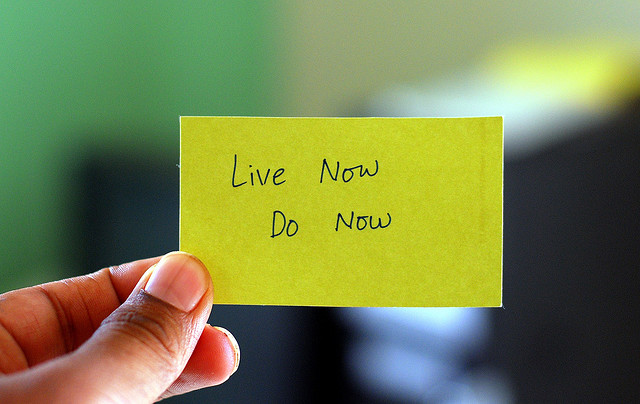
Tag: failure

  • The Power of Failure: We Get to Decide What It Means

    The Power of Failure: We Get to Decide What It Means

    Happy Woman

    “The greatest mistake you can make in life is to be continually fearing you will make one.” ~Elbert Hubbard

    Why does this affect me so? What am I feeling? Sheer Anger! Total disgust with myself. Hatred and disappointment in my life stain my thoughts. Why? Because in my ego’s opinion, I should already be who I am meant to be, and I am not there! Not by a mile.

    I feel so much disgust. My fears and resentment have grown into hatred and pain. I am at a loss for who I never became. Full of shame, I see that I have wasted my life—or so I perceive it that way.

    It is hard to accept this. I am so sorry that I have failed so frequently at empowering myself. Seriously, what extremes must I take to wake up and say, “I am finally okay with myself; I am here, warts and all”?

    Instead, life has molded me, shaped me, and created me where I am right now.

    Tears of anger fill my eyes. Why pursue so many times my desire to make something of myself? What am I making?

    What did I expect to have happened already? Who did I think I was supposed to be? Fear, disappointment, and sadness shadow me as I have moved on.

    Now I am asking myself, “What would someone who loves themselves do?”

    It struck me, what if I decided to define what I believe I failed at? As I looked at my life, what I perceived as success and failure started to unravel.

    I was learning how I defined each of these two words. This was a monumental moment for me.

    Because I experienced my power at a young age of believing I could do anything, believing that I could make anything happen, I concluded in my late twenties, as one dead end led to another, that I couldn’t maintain, sustain, or become successful at what I really wanted.

    Attempts to open a restaurant failed as investors backed out. My joy and passion as a pastry chef failed at so many corners, it drove me mad. As a successful pastry chef in Chicago, my experience in my move to Seattle changed my belief.

    Several jobs within a year, eventually attempting to do something on my own, I faced many frustrations. With enthusiasm from being told I was one of the best vegan pastry chefs around, I thought I could make a success of myself—and yet, no one would hire me. Why? 

    Was it not clear just how much I was dedicated to making this happen? Was it not understood that I used my last cent to give it my best shot? Penniless, having moved five times in one year, dealing with a car accident and my dog running away brought me to one dead end after another. I finally surrendered, and gave up.

    When I reflect back on my life, I can see that if I had succeeded in these endeavors, I never would have worked on my own healing and opened up to my own gifts as a healer. Fate or destiny had another plan for me.

    My definition of failure became clear to me. It didn’t help that I believed I could not make much money. (Or was it that I believed I wasn’t worth a lot?)

    Because I lacked the skillful means to ask for help, needed to improve my coaching skills, and had minimal computer skills, I felt like I didn’t have the strength to sustain anything on my own (especially as resources back then were considerably different than what they are today).

    I felt it had all led me down a big black hole that I defined as failure.

    Then one day I sat down and made a bullet list showing all the failures on one side and all the successes on the other side. All of a sudden I had a light bulb moment where it was clear that I had more successes than I ever thought.

    I began seeing my strengths. Looking at my failures and successes this way has changed the charge I have on it. I’m not afraid of ideas, or starting something and making something out of nothing. This is not failure!

    As I continued looking and decoding my thoughts, I could see that I connected my self-worth and self-esteem with money and earnings in my definition. That is not success. That is all about old beliefs and being stuck in them.

    I have changed in twenty years. And now, I can see how different I am. My past is not my future. My worth is not based on money, talents, or what I have proven to myself or the world. Success is not a destination; it is how we choose to live our life on a daily basis.

    I can only now see this. At a young age, there was no way I could see it..

    Life needs to create “failures” so we have two viewpoints to reference from.

    I’ve recognized that I am quite successful at many things. As I looked at my successes on my bullet list, I realized that I need to market my strengths and hire someone for the things I’m not great at. Maybe even get a coach. As my excitement bubbled up, for the first time in my adult life, I felt I was becoming myself.

    By redefining this word “failure,” I learned that I am able to move forward and embrace who I am becoming.  The guilt, the anger, the wishes and desires that shadow my past can fade away.

    The illusions of who I was and who I am can fade as my authentic self emerges and rises above. I get to create success now through my choices. I can rejoice that I have made it thus far. For me, that is magical. I feel I am enough.

    That is how someone who loves themselves gets to decide what failure means.

    Photo by Ian D. Keating
  • Scared to Try: Moving Beyond the Paralysis of Perfectionism

    Scared to Try: Moving Beyond the Paralysis of Perfectionism

    “Fear is inevitable, I have to accept that, but I cannot allow it to paralyze me.” ~Isabel Allende

    I am a recovering perfectionist.

    Up until now, this is the only way I’ve known how to live. The thrilling burn of perfection invaded every aspect of my life to the point that I became paralyzed by fear. If I couldn’t do it right, I didn’t want to do it at all.

    When I was younger, I allowed the desire for perfection to control all of my actions. In music, if I couldn’t sit first chair, I didn’t want to play an instrument at all. In sports, if I couldn’t play first singles, I wanted to put the tennis racket down.

    All of the choices I made reflected back on what I could do perfectly.

    Several things happened.

    First, I was never satisfied. Even when I was the best, I was always looking over my shoulder at someone else who wanted my spot. I also doubted my accomplishments and thought, “Anyone could’ve done this.”

    Second, my admirable drive to succeed transformed into something ugly. I became paralyzed by fear. If I couldn’t play my scales perfectly, I stopped practicing for fear of hitting a wrong note.

    And then the fear turned into anxiety. I fretted about going on auditions because someone who doesn’t know her scales certainly isn’t going to get chosen for first chair. I was stuck between the wanting and the work.

    I wanted to be the best, but I didn’t want to work at something that I might not ever achieve. The threat of failure was too much to bear.

    As I got older, my perfectionism made me more and more miserable. Reasonable goals that were attainable as a child morphed into more challenging goals that were more difficult to achieve as an adult. My ultimate goal: I wanted the perfect life.

    Wanting more, yet full of fear, I continued to eagerly seek the promise of perfection. As if to spite these desires, my world got smaller and smaller. Finally, I stopped taking any action.

    If I couldn’t be a best-selling author, I wasn’t going to write a word. If I couldn’t run as fast as the person next to me, I’d get off the treadmill. If I couldn’t decorate my house just like the pictures in glossy magazines, I wouldn’t put anything on the walls.

    And it got worse. If I couldn’t have the perfect house, I’d live in a cluttered mess. If I couldn’t be the perfect size, I’d stuff my face. If I couldn’t be the fastest and the best and the most perfect and the brightest and the shiniest and the most beautiful, I just wouldn’t do any of it.

    So you see, instead of living comfortably in the middle of perfection and failure, I went completely the other direction. Because my world was black and white—either I was successful in everything that I touched or I was an utter failure. I couldn’t live in the grey space. I couldn’t be happy with my effort—with the thrill of just trying something new.

    Finally, I came to the point where there was only one thing that I wanted to do because I knew I could do it perfectly.

    What was this magic thing that I could do without any threat of failure?

    Walk the dog.

    I could walk that dog for a solid fifteen minutes and do everything right. I’d put on that leash, walk up and down the block, give her time to do her business, pick up the business in a baggie, and return home. I was a solid A dog walker.

    But boy was I unsatisfied.

    I had dreams and passions and hopes and aspirations. But I didn’t dare touch any of those things for fear of failure. I couldn’t bear the sting of defeat.

    So I walked and walked and walked that dog. I was neglecting my other interests, which would pop into my mind and quickly get pushed out, but my joyous, tail-wagging, tongue-lolling dog certainly loved every second of it.

    And then I learned two life-changing lessons.

    My first lesson came from my dog. Just watching her pure joy of life—her contentedness to just be—had a positive effect on me. Instead of focusing on being the best dog on the block, she drank in the sunshine and set her sights on appreciating her surroundings.

    That contented dog has taught me more about life that I ever thought possible.

    My second lesson came from a day at our town’s street fair. The organizers brought in a rock-climbing wall, and I plopped down near the wall to eat a snack. I watched the kids excitedly scurry to the top and come whizzing back down.

    One girl, about ten years old, made her way to the front of the line. She got strapped into a harness and approached the wall.

    What came next was painful to watch. She tried climbing the wall and stumbled again and again. One step up, one step down.

    She couldn’t grab a foothold, and the other kids waiting their turn started to become anxious. To my amazement, she didn’t seem to notice her detractors. One step up, one step down.

    She went on like this—without making an ounce of a progress—for a good ten minutes. By this point, the kids behind her became loud and restless. They wanted her to stop trying—to stop wasting everyone’s time.

    But she kept on. One step up, one step down. Watching her perseverance, something I didn’t have at my age and certainly didn’t have at eight years old, made me cry.

    I was so proud of this little girl—this stranger who reminded me of the person I wish I had been. Even if I couldn’t be the best, I wish I tried.

    Finally, tired and sweaty, she backed away from the wall. Instead of looking defeated, she had a huge smile on her face. She turned around and ran towards her mom.

    “Mom,” she cried. “I almost did it! Can I try again later?”

    And with those simple words, I was a changed person—a recovering perfectionist.

  • 8 Ways We Block Our Creativity and Keep Ourselves Stuck

    8 Ways We Block Our Creativity and Keep Ourselves Stuck

    “Accept your past without regret, handle your present with confidence, and face your future without fear.” ~Unknown

    I have always considered myself a creative person, and formerly, I didn’t put much attention or energy into where  inspiration came from.

    There was a time when I had just started writing copy, designing, printing, and hand-painting T-shirts. Having worked on a few creative ventures before then, I felt that this time things were different.

    I urgently and passionately worked into the early mornings, designing and putting ideas and concepts on paper, afraid that I would lose the inspiration. Dramatic as it may sound, this was my first brush with raw creative inspiration and the waves of delight and despair it makes you ride.

    Fast-forward many years later, I had gotten myself gradually into a non-creative nine-to-five job. I began wondering why I didn’t feel as inspired to create.

    These last few years have been an attempt to reconnect with creative inspiration. I have always been interested in writing and the power and magic of words. I strongly feel like there is a writer within me who is waiting to unleash his creativity.

    As I turn the clock back, I reflect over how I blocked my own creativity—what thoughts, beliefs, and excuses got in the way. If you’re also feeling stuck, some of these may be holding you back:

    1. I am not an expert and I don’t feel ready.

    This is the most fundamental level at which we block ourselves from using our creative powers. We tell ourselves that we’re not ready, and we believe we need to learn more before we can begin.

    We may never feel completely ready, but we’ll feel a lot better and a lot more confident after we allow ourselves to take action.

    2. I don’t believe in myself.

    Have you ever met someone who was talented but chose to remain a wallflower in their own life because they didn’t believe they were?

    I remember the time I stood in front of fifty students to teach biology. Before the class, I’d looked at myself in the mirror, nervous and unsure if I would be received well. I looked squarely into my eyes and reconnected with a sense of deep belief that I was good enough for the task.

    As a result, I felt authentic and allowed myself to be a vehicle of expression to others.

    Since that day, I’ve incorporated many creative techniques in my teaching methods. Instead of just lecturing, I tell stories, use models, and engage my students in hands-on activities.

    3. It’s not the right time.

    Time is a wonderful excuse to put off that dream project because we always think we’ll be better prepared or have more time later. But every time I’ve asked myself if I could carve out some time for my creative dreams, the answer has been a resounding “yes,” because I know it’s a worthy, fulfilling, and rewarding experience, and that I need to make time.

    4. It’s not perfect: analysis paralysis.

    Perfectionism can kill creativity. You wear yourself thin by assuming something isn’t good enough, and you get stuck in analysis.

    I have endlessly analyzed the merits and demerits of a creative venture, never quite going past that stage—never taking any real action to make it happen.

    We create standards for perfectionism based on our beliefs, and think that we don’t measure up. This becomes a self-limiting experience. When we realize we’re the ones setting the high standards, we have the choice to accept imperfection and become free to express our creativity.

    5. I feel overwhelmed.

    Having too much on your plate can push you into overwhelm mode, and everything feels like a crisis. How can you create if you don’t know where to begin?

    Whenever I feel like this, I take the time to unwind, breathe, and slow down. I clean my space, de-clutter my surroundings, and put things back to where they belong. I allow myself to take a break, relax, and do what I enjoy.

    I’ve realized that we were not designed to be on “go” mode all the time; doing too much makes us feel like hamsters spinning on a wheel. I’ve made the choice to step off. The solution is to take small steps!

    6. I’m afraid of failure.

    As a society, we are mortally afraid of failing and looking bad. Success and the quest for the better life are deeply programmed in us. We don’t always learn to fail, brush off, and move on, and we don’t accept that failure is not only probable, but also inevitable.

    I learned the lesson of failure when I began working in a laboratory setting. In science research, much of what you do on a daily basis fails. These failures become stepping stones for what finally works.

    7. I feel uncertain and don’t know what to do next.

    How many times have you felt uncertain and unwilling to do something new, and therefore became stuck?

    When we realize that uncertainty is just a step in the creative process, we can begin to feel at ease with it and focus on moving forward.

    8. I’m dwelling on the past and blocking my creative energy in the present.

    When I was angry, I told myself stories about how everyone else was to blame for my problems—how I had it difficult and why no one understood or cared.

    Now I realize that by being caught up in my stories, I stunted my creative growth. Instead of using the energy of anger and my stories as an impetus to create more, I just let it waste away.

    When ancient stories and programs bubble up, I do some acceptance and forgiveness work. I allow the emotions to come up and then I thank them and ask what can I learn from them. I then choose to forgive and let go. This frees up my energy to create more in my present.

    What blocks your creativity, and are you ready to get unblocked?

  • 5 Lessons on Bringing Your Dream to Life

    5 Lessons on Bringing Your Dream to Life

    “The future belongs to those who believe in the beauty of their dreams.” ~Eleanor Roosevelt

    I grew up with a stepdad who was a dreamer. He lived in a world where positive affirmations created a positive life. He believed that going after your heart’s desire was as important as anything else. He lived in the clouds and in his designs and in his visions.

    I used to wake up and find that he had left post-it notes on my bathroom mirror with quotes about reaching my dreams such as, “You can if you think you can,” and “Quitters never win, and winners never quit.”

    He bought me a pillow speaker when I was seven, so every night I could listen to a subliminal tape repeating how I would succeed beautifully in life.

    He held a vision for himself to create his own business. He invented a product to put on every street sweeper and set out to make this dream come true. He worked tirelessly at it for many years, and eventually it took off. He had done it. He was living his dream.

    I would love to say that this is where the story ends. I would love to say that he lived happily ever after embracing his dream. But that just wouldn’t be the truth.

    What actually happened is that my stepdad’s dream—this life that he created—began to unravel almost as quickly as it had been created. And eventually, he lost everything: his dream, his family, and his life.

    (He was never the same after his business folded; his zest for life left him, and he ended up dying at fifty-six from unknown causes. I think that his spirit was broken and his will to live was no longer there.)

    But, even though it ended so badly and sadly, he happened to pass on the dreaming torch to me. And I carry it proudly and almost defiantly.

    Dreamers aren’t always revered in our society. Sometimes they are seen as flaky or irresponsible. (more…)

  • Why Quitting Is Sometimes the Right Thing to Do

    Why Quitting Is Sometimes the Right Thing to Do

    “Celebrate endings, for they precede new beginnings.” ~Jonathan Lockwood Huie

    We often think of quitting as failure. We commend people for carrying on when times get rough. The heroes in our action movies don’t just give up when things get difficult. When was the last time you saw Steven Seagal walk away from a fight?

    As the saying goes, “When the going gets tough, the tough get going.” Society expects us to fight back and battle on.

    But sometimes, quitting is most definitely the right thing to do.

    Sometimes, it’s the best option. A lot of people assume that it’s the easy thing to do—that only defeatists and good-for-nothin’ drop outs would even consider such a “cop-out.” This is not the case.

    I learned this myself when I finally made that looming decision to drop out of college. There it is: “drop out.” Even the words sound negative, as if I’ve fallen away from society, failing to meet my expectations. But I don’t see my decision as a negative thing at all, and it wasn’t the easy thing to do.

    I had been at college for a year and two months; I had great friends, and everything was happily laid out for me.

    Nothing was too demanding, especially considering I had only nine contact hours a week. People told me where I had to be and when. This must all sound fairly straight-forward and easy going.

    Why, then, would I decide to give it all up and leave?

    As idyllic as this lifestyle sounds (and probably was), I simply felt no drive to live it. I had no desire to follow these laid out plans, and this was making me extremely unhappy. Going to college was, in hindsight, a bad decision for me.

    I rushed into the decision rather than taking a break to find myself in the world. (more…)

  • 20 Ways Life is Amazing (Even When it Hurts)

    20 Ways Life is Amazing (Even When it Hurts)

    “How wonderful it is that nobody need wait a single moment before starting to improve the world.” ~Anne Frank

    I have a confession to make: The last few weeks have been some of the hardest I’ve lived through in my entire life—but not for the reasons you’d think.

    Thankfully, all of my family is safe and sound. Today is actually my grandmother’s 80th birthday, and we’re having a wonderful dinner to celebrate her life.

    My husband and I have just moved into a beautiful new home and are ecstatic to finally have a little nest of our own. I have my health, my family, and my life—so what could possibly be missing?

    The puzzle piece I have lost is what makes me most proud: the results of my intellect and mind.

    In January of this year, I left my corporate job to launch a startup. The business grew, and I achieved many interesting goals. I hired a staff, met amazing new people, served great clients, launched a platform, and even published a mobile app.

    Ten months later, I am now left with only a fraction of what I built. What makes this devastating are not the reasons that things went sour, but the fact that it was all my fault.

    In the aftermath of a very strenuous episode, I can now see that what I feared would happen did actually happen, and the world has not crumbled. My life has not been stripped out from under me, and I still have all that I find precious.

    I have felt anxiety, yes, but it was my own choice to create and suffer it. I have left that behind.

    I choose to let the negativity float away, along with all the thoughts of what could have been, because those are the ones that bring me down.

    In finding the balance between a harsh reality and a smiling heart, I made a list of what I find amazing about life, even when it hurts. Here’s what I came up with: (more…)

  • Gaining Strength, Courage, and Confidence from Failure

    Gaining Strength, Courage, and Confidence from Failure

    “He is able who thinks he is able.” ~Buddha

    At any point of time, every person has:

    • A set of things s/he wants to change but cannot (plans)
    • A set of things s/he tried to change but could not (helplessness)
    • A set of things s/he could have changed and did not (guilt)
    • A fear of the unknown, anxiety about the future, and worry about decisions to be taken (fear)
    • Too many plans and associated what-ifs (anxiety)

    I have experienced all of the feelings listed above and have tried hard to ease myself from what I went through. Many times, I was unsuccessful.

    After contemplating on all the above, I realized something: If someone can change something in my life, it’s me!

    The normal path we all choose is: plan -> effort-> outcome.

    And the outcome is usually one of the three:

    • Best effort -> success -> acceptable
    • Weak effort -> failure -> acceptable
    • Repeated best efforts -> unforeseen factors -> failure -> not acceptable

    There are plans and then there is effort to work on those plans, and then on top of everything is the result—which, most of the time, is directly proportional to the effort, until there’s a mystery factor, like luck or unforeseen circumstances involved.

    I’ve been unemployed for two years now.

    I got married two years ago, and my husband had a job in another country. After we got married, I had the choice of quitting my job and relocating with him or hanging onto my job and persuading my company to give me an intra-company transfer. I tried the latter, but it didn’t work out.

    So I quit my job and relocated with my husband. I was pleased with my decision, and so was most of my family. With a strong job profile, I was confident that I could nail a job in any country, any time I wanted.

    But that was not the case. I tried to get a job, but I couldn’t. There was failure at every step. I slowly lost all the self-confidence I had. My personality just faded away. (more…)

  • Why We Need Mistakes and Failures

    Why We Need Mistakes and Failures

    “The greatest mistake you can make in life is to be continually fearing you will make one.” ~Elbert Hubbard 

    A while back, I was invited to attend the Asian Chamber of Commerce’s 22nd Annual Awards Gala. Focused on “The Spirit of Entrepreneurship,” the Asian Chamber of Commerce celebrated individuals who exemplified great leadership skills in the Houston community.

    The keynote speaker, Dr. Lynda Chin, surprised me by talking about failure. A scientist, Dr. Chin is the first to admit medical mistakes. She talked about cancer-related pharmaceuticals having a 95% failure rate, because the medication needs to be tailor-made to the individual.

    I had never heard someone in a high-ranking position admit to failure so freely. But as she put it,  “There is no success without failure. There are no experiments that succeed before first failing.”

    So in essence, failure is the stepping-stone toward success.

    Another person who inspired me that night was Keiji Asakura, an urban design and landscape architect. A botanist, without the degree, he was a lover of plant life. Asakura was another model of someone who was able to take his mistakes and use them as the fundamental building blocks of his successes.

    One day nearly 10 years ago, his company filed for bankruptcy, and on the same day his wife asked him for a divorce. Life couldn’t have been any worse. In the depths of despair he asked himself, “Why do I do what I do?” The answer: because I love it.

    Because he loved it. Hearing those words from someone not in entertainment reminded me of why I do what I do. Because I love it. Without that love there would be no point in enduring this much anxiety in anticipation of something greater.

    People tell me all the time that they admire me for going after what I really want. But people only see what they want to; they forget that behind every truly large success, there are a million failures. For every good sentence that I write, there are thousands more that need to be rewritten.

    So far, in my adult career, where I’m at now is my lowest point. There is nothing on the horizon that promises that the work I’m doing now will pay off. My life is a gamble.

    My dad actually—I say “actually” because he only inadvertently supported my career choice—said, “In every business there is a risk, but without risk there is no potential to prosper. You simply have to take it.” (more…)

  • 3 Simple Ways to Turn Failure into Success

    3 Simple Ways to Turn Failure into Success

    “Life is a process of becoming. A combination of states we have to go through. Where people fail is that they wish to elect a state and remain in it. This is a kind of death.” ~Anais Nin

    I’ve always been an optimist, looking for the good in situations, even when they seem like the bleakest thing that could happen to me or the people around me.

    But failure is a difficult one to turn on its ear.

    You know when you don’t reach your goal. You know when you don’t get what you wanted.

    Now I know the Rolling Stones sang “You can’t always get what you want…but if you try sometimes, you just might find, you get what you need.” And you know what? Those lines never sat well with me—to just sit and accept it.

    So, even though I know there are reasons I didn’t make it big as a recording artist—and that my Pilates business didn’t fulfill me, and that I’ve experienced the sting of working at companies that decided to shut down—I have always refused to simply shrug my shoulders and say, “Oh well!”

    I decided to find a new way to handle failure and to not only look at in a more optimistic way, but also find within it clues for my next move.

    Here’s what I discovered.

    Failure is a step toward your ultimate success. It’s a lesson. A challenge. A chance.

    When I struggled with my Pilates business, for example, I realized I needed to ascertain where the bulk of my money was coming from and then do more of that. So I made a plan and moved forward. I started doing more of what I loved and what was bringing in income, and less of what wasn’t. (more…)

  • 7 Ways to Benefit from Not Getting What You Want

    7 Ways to Benefit from Not Getting What You Want

    “Remember that sometimes not getting what you want is a wonderful stroke of luck.” ~Dalai Lama

    A year ago, I hit rock bottom. Until that point, I had put all my energy into my dream of becoming a physician. Last year my life slammed into a brick wall, and my plans seemed to be torn into pieces.

    After high school, I took every opportunity to immerse myself in the medical profession while maintaining my grades in college.

    During the summer of my freshman year, I worked as an Emergency Medical Technician and practiced being a first responder during medical emergencies. Over the next three years, I woke up at 6:00 AM on the weekends and drove an hour to work as a Patient Care Assistant on the Trauma floor at Parkland Hospital.

    However, none of my hard work, experiences, or ambitions seemed significant last year when I didn’t gain acceptance to medical school.

    All the work I had put into achieving my dream meant nothing. The energy that I had expelled to become a physician felt meaningless. I was a senior graduating from college, but I no longer had a life plan.

    After a challenging year, I finally let go—and then I got into medical school. (more…)

  • How the Word No Can Help You Achieve Your Goals

    How the Word No Can Help You Achieve Your Goals

    “If you lose today, win tomorrow.” ~Daisaku Ikeda

    From the moment we learn to walk and touch things, we hear the word no far more than we will ever hear the word yes.

    “No, don’t touch that.” “No, that’s not for you.” “No, you shouldn’t eat paint chips.” OK, maybe that last one was just me, but you get the picture.

    We are told no so much more than we are ever told yes during the course of growing up, so why is it as adults that hearing the word no can be so devastating? Shouldn’t we be used to it by now?

    As a rookie salesmen every time I heard the word no I got discouraged and thought I must be doing something wrong. I would constantly beat myself up.

    “What am I doing wrong?” “What can I do different?”

    These were great questions to ask myself; however, it’s the answers I supplied myself that turned out to be misleading.

    I figured that if people were saying no, it was because the process was failing me. How wrong I was.

    With sales, as in many aspects of life, there is a process—a start and a finish. Whether it’s setting and achieving goals, getting dressed, or cooking dinner, everything has a process, whether we consciously think about it or not.

    Like a naïve cocky rookie, I decided to abandon the process and started to do things my own way. Much to my surprise, I now heard no twice as many times.

    I just could not understand what was going on, so I got even harder on myself. (more…)

  • Why We Often Fail with Goals and Resolutions

    Why We Often Fail with Goals and Resolutions

    “The future is completely open, and we are writing it moment to moment.” ~Pema Chodron

    Statistically, a lot of people have given up on their resolutions by now. The definition of a resolution is “a firm decision to do or not to do something.”

    When I examine the firm decisions I’ve made, I can’t help but notice that we all have the same lists. Why is that?

    Could it be that the same media, the same books, and the same friends have written all of our lists? I’m not making a value judgment of these shared desires—I just find it interesting that we all seem to feel the need to include so many of them.

    So now I find myself questioning where my resolutions and intentions are based. Did they come from some other source, or do they reflect my heart’s desires?

    I hadn’t actually made any resolutions for 2011, but for the sake of exploring this idea, I got out a notebook and pen and began writing.

    I looked down and saw—yes, you guessed it—that I had written what appeared to be the universal generic resolution list: exercise more, eat more healthy foods, meditate daily, lose weight, call my mother, etc., etc., etc..

    And although all these desires are good—in fact, they are wonderful and I truly would like them in my life—I was surprised that I felt no real energy reading the list.

    It just felt like another list among hundreds, written and then forgotten. Of course I would have issues keeping these decisions. They held no passion, no energy for me at this moment. They were just lots of words on a piece of paper. (more…)

  • 8 Ways to Turn Disappointment into Meaningful Success

    8 Ways to Turn Disappointment into Meaningful Success

    “Don’t let today’s disappointment cast a shadow on tomorrow’s dream.” ~Unknown

    Have you ever looked back on your life, exactly a year ago, and felt amazed by how much has changed?

    Last year at this time, I’d only just started this site and I was competing in a blogging contest. Ignite Social Media, the marketing company behind the mood supplement SAM-e, had come up with a clever crowdsourcing campaign to generate awareness for the product.

    In the beginning of the fall, they advertised a contest to win a dream blogging job. The winner would get a six-month contract to write one short daily “good mood” blog post—as well asa new laptop and $5,000 per month, totaling $30,000.

    In order to win, candidates needed to get enough votes to be in the top twenty—out of close to a thousand people—and then needed to get even more votes in a second round that involved a video.

    At the time, I was still collecting unemployment after being laid off earlier in the year. I was also putting all my heart into building Tiny Buddha around the ideas of wisdom and happiness and running my old blog, Seeing Good.

    I knew Brigitte Dale was in the running. In case you aren’t familiar, Brigitte Dale is a popular vlogger who used to make videos for ABC Family. I wasn’t certain if I—or anyone—had a chance up against a bona fide web celeb who could clearly bring in big traffic for SAM-e. And then there was her obvious charm—even I fell in love with her watching her videos.

    Still, I was going to do everything in my power to try. The judges said ultimately they would choose the winner, regardless of who had the most votes, so I reasoned that it was anyone’s opportunity to earn. (more…)

  • 40 Amazing Everyday Successes That Are Worth Celebrating

    40 Amazing Everyday Successes That Are Worth Celebrating

    “To laugh often and much; to win the respect of intelligent people and the affection of children; to leave the world a better place; to know even one life has breathed easier because you have lived. This is to have succeeded.” ~Ralph Waldo Emerson

    My father is my hero, and one of the most successful men in the world.

    When I was a kid he worked two full-time blue-collar jobs to support me and my siblings. He didn’t have a college degree—he attended briefly on a golf scholarship and then got hurt—but he compensated with hard work.

    Though many people wouldn’t be happy with that type of life, I never once heard him complain. Being someone who prefers a simple routine over ambition, he stayed in the printing industry until he got laid off last year.

    Though he’s inspired me in a million ways, he’s done two things exceedingly well: enjoy his life and treat everyone with kindness and respect.

    I thought about this the other day while flipping through Time Magazine’s 100 Most Influential People list. As I read about leaders and luminaries who’ve made huge impact on the world, I started to think about the important little things we all do on a daily basis.

    You may not have won the Nobel Peace Prize, but that doesn’t mean you’re not influential in making the world a peaceful place. You may not have created a tool that connects millions of people the world over, but you’re still the glue that holds people together in more ways than you even realize.

    I haven’t always given myself credit for all the good I do. If you can relate, you may enjoy this reminder of all the ways you make the world a better place. (more…)

  • One Simple Way to Live a Successful Life

    One Simple Way to Live a Successful Life

    “Whenever you fall, pick something up.” ~Oswald Avery

    There are plenty of people in this world who know how to be successful, but how many of them know how to fail?

    When you fail, that’s when you become stronger—you learn to pick yourself back up, dust yourself off, and move on.

    These are also opportunities to learn and to help others as you come back up. As the quote above says, when you fall, pick something up. I would add that when you fall, you should pick someone up too.

    I used to envy other people, thinking them more successful than I may have been. But I have done a lot in my life, seen a lot of things, worked with lots of different kinds of people. I have been successful and I have failed, and I think it is this that has allowed me to be a more grounded human being.

    I have learned that it takes all kinds of people to run the world, and that the ones running the world are not always the smartest.

    I have worked underneath supervisors who make you wonder how they graduated from high school, and I have met truck drivers out on the road who are smarter, more educated, and more widely read than some of our recent US Presidents and CEO’s of fortune 500 companies. (more…)

  • How to Release the Fear of Failing: 20 Inspiring Definitions for Failure

    How to Release the Fear of Failing: 20 Inspiring Definitions for Failure

    “All that we are is the result of what we have thought. The mind is everything. What we think we become.” ~Buddha

    You didn’t get the job. You couldn’t raise the money. You missed the deadline. You hired the wrong person.

    You didn’t ask for help. You let someone you love down. You failed to plan in advance. You bit off more than you could chew. You forgot something important.

    Worst of all, whatever the case, you set the stage for a million questions about what it means and what you should have done.

    When you don’t do something you wanted to do, oftentimes your disappointment has less to do with the results you failed to create and everything to do with your interpretation of what that failure means. That you’re not talented enough. Or competent enough. Or confident enough. Or good enough in general.

    The only way to change your reaction to failure is to challenge the beliefs that create it—those ideas about what failure means. And the best way to change those beliefs is to change the thoughts that shape them. (more…)

  • Choose to Lose

    Choose to Lose

    Two Friends

    “Being right is highly overrated. Even a stopped clock is right twice a day.” ~Unknown

    We all know someone who always needs to be right.

    She turns everything into an argument worthy of a courtroom, complete with counter arguments and below-the-belt accusations. She finds holes in everything you say, even if you were actually agreeing with her. And in the end she needs the last word, even if means belittling you or ignoring your feelings.

    Not everyone acts this righteous all the time, but we’ve likely all tried to win in an argument at least once before.

    Maybe it’s the rush of feeling like the more powerful or intelligent person, or perhaps it’s just a stubborn resistance to bending. Whatever the case, we all play to win in conversations on occasion.

    The irony here is that winning rarely feels as sweet as the fighter imagines it will. Research shows competitve people take less pleasure in their successes than their less combative counter parts because they’re rarely satisfied with their accomplishments, ever-ready to seek the next win. (more…)