Tag: failure

  • 5 Dos and Don’ts for Surviving a Hard Time

    5 Dos and Don’ts for Surviving a Hard Time

    Boat in a Storm

    “Our ultimate freedom is the right and power to decide how anybody or anything outside ourselves will affect us.” ~Stephen Covey

    My partner was a well-respected bank manager in a small country town. He was rising through the bank hierarchy with good prospects for further promotion. We were thought of as a happy, close-knit family that contributed in every way we could to the local community.

    Unbeknownst to us, the bank was conducting a re-assessment of their country branches. Several of the smaller banks would close and all staff would be dismissed.

    Frightening words were on our lips—redundancy, fear of the unknown, financial difficulties, unexpected change, personal loss.

    Little did we know how much a huge obstacle suddenly dumped in our path would affect us, particularly emotionally. Our hopes and dreams for the future—moving back to the big city to live in a “castle” with a fantastic view—were dashed.

    We started to name and blame bank personnel. We asked lots of questions but the answers remained elusive.

    Our totally negative and blaming attitude kept us stuck in an emotional hole. We couldn’t see how necessary it was to accept the situation emotionally, before we could do the practical stuff required to relocate and rebuild.

    There was a pre-requisite to the rebuild but we missed understanding this, until…

    A close friend started sending us a card every six or so days. In each card was written a quotation, the words of a song, or sentences our friend had read that she thought would be constructively helpful.

    One day when a card arrived, I was feeling very down. I read the words “Could we change our attitude, we should not only see life differently, but life itself would come to be different.” (Katherine Mansfield)

    The word attitude jumped right out. Changing our attitude was the pre-requisite we had missed seeing. What a realization—such a powerful one. It became the catalyst our family needed to accept our situation, stop feeling sorry for ourselves, and start to map out a recovery plan.

    And it all started from a simple, thoughtful act. Our friend had helped us survive.

    How can you, too, be a survivor when loss, health issues, financial challenges, or accidents block your path?

    Not all your problems will be as overwhelming as the one I’ve described. Nevertheless, every problem, including insignificant ones, can be worrying, even numbing. Knowing what to do will ensure that the physical and emotional scars left by your experience will not be very deep.

    Following are my five Dos and Don’ts that I documented from our experience, to help you work through every bump and hump, minor or major.

    This is not your usual list of “five practical steps.”

    Rather, the Dos and Don’ts are what reshaped our attitudes and emotions—a reshaping that was the pre-requisite to solving our practical issues—moving both our location and professional direction.

    5 DOs and DON’Ts to Ensure Your Survival

    1. DON’T bury your feelings.

    Denial, anger, and anxiety are normal feelings that can accompany setbacks. They’re also positive things—stepping stones on the road to acceptance and recovery. It’s natural, too, to feel completely overwhelmed and powerless.

    First, recognize and accept that the situation is real. Allow your feelings to surface and overflow. Have a cry, a yell, and a rave. You’ll empty yourself of the worst of your negative feelings and be quicker to mend and move on.

    We found that taking walks in a nearby park, among trees, provided a peaceful environment for us to clarify our feelings and come to grips with the above emotions.

    2. DON’T act like a victim.

    Things get worse when you focus on yourself and act like a victim.

    Quit blaming yourself, others, or external circumstances for what has happened. Going over and over what you should have done solves nothing. Wallowing in self-pity and beating yourself up takes your power away.

    Believe in yourself and your abilities. Believe that you are awesome enough to push through to a brighter future. Read inspiring books or put sticky notes with motivational quotes around the house. Say them out loud as you walk past. Take back your power over the situation.

    For us, mindfulness was a great tool to help us snap out of the victim mentality. We sat quietly for ten minutes a day and concentrated on our breathing, taking our focus away from our worries. The activity was very calming.

    Being mindful gives your mind a rest. You’ll problem solve more easily with a calm mind. You’ll move from victim mode into action mode, as we did, to hasten the healing process.

    3. DO keep the communication channels open.

    At these difficult times, keep friends and family close by as listeners and supporters. Find someone you can confide in about the challenges you face. Together, brainstorm possible ways to move ahead.

    Talking and sharing helps you see a different perspective so you can come up with creative solutions. It will also help you see that you’re not alone because others have been through equally challenging circumstances.

    I found keeping in touch with my usual contacts on social media helped lighten my load. I enjoyed logging on to sites like Tiny Buddha, where I received encouragement from others in the blogging community.

    4. DO be flexible.

    Accept that ups and downs are an inevitable part of life. Remembering that life moves through cycles of peaks and troughs will help you look forward to the rewarding times that lie ahead.

    These words from Alexander Bell, in one of our cards, gave us both a jolt. “Sometimes we stare so long at a door that is closing that we see too late the one that is open.”

    Be flexible; adjust your thinking and your goals. Becoming paralyzed and inflexible by the reality of your situation might deny you the opportunity to follow a new, exciting direction. Adapt so you can survive and thrive.

    Previously we were choosing to be miserable. Now we started asking empowering questions such as, “What choices do we have here?”

    This form of questioning encouraged flexibility and enabled us to expand our thinking. We found ourselves probing possible alternative— in what employment areas outside banking is financial expertise sought after?

    Being flexible isn’t easy. However, we found it absolutely necessary before we could move forward.

    5. DO focus on the good things in your life.

    Focusing on what you don’t have stops you from seeing all the wonderful things that you do have. Appreciate what you have, and the things that are working out well. You’ll gain a better perspective on life.

    Rejoice in any progress you make. Reward yourself with small treats such as coffee with friends. Each step and celebration provides motivation for the next one. You’ll find relief from the stress that has enveloped you.

    As a family we made a list of things we were thankful for such as good health. We included positive aspects of moving back to the city—more time to spend with our families, wider educational and sporting opportunities.

    Being thankful gave us a more positive outlook. Even the “castle” came back into view.

    We placed the following words where we could see them every day, and that helped too. “If you have nothing to be grateful for, check your pulse.” It’s something to smile about, eh?

    Final Thoughts

    Setbacks, tragedy, loss, and failures are part of life. So the joy and success we find in our daily life depends largely on the way we handle life’s problems—our attitude—as well as on our ability to keep going, no matter what.

    In other words, never give up.

    Setbacks are golden opportunities to learn and grow. It’s up to you to transform the pain into purpose.

    Ship in a storm image via Shutterstock
  • The Truth About Failure: How Hitting Hurdles Makes You Successful

    The Truth About Failure: How Hitting Hurdles Makes You Successful

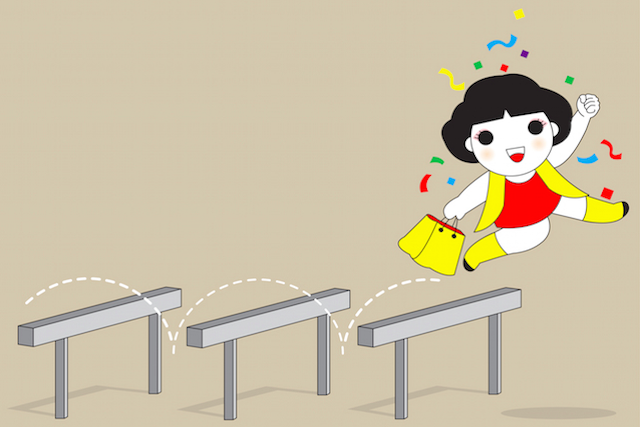
    Woman Jumping Hurdles

    “There are no failures. Just experiences and your reactions to them.” ~Tom Krause

    I had spent years training for this race. This was the big one. If I won and made the qualifying time, I would go on to compete in the Canadian National Track and Field Championships.

    I was burning to win. Only the winner of this race would qualify. Second place wouldn’t cut it.

    Competing at the national level could lead to all kinds of opportunities: sponsorship, athletic scholarships, and a career in athletics.

    My favorite form of self-torture was the 110-meter hurdles. I lived and breathed sprinting and hurdles. Track and field was my life in my last year at high school. In fact, track was probably the only reason I even showed up at class.

    I was good at it too. I had run the fastest time in my event that season and I was on target to win the Provincial Championships.

    I trained four to five days a week on the track, plus I hit the gym two to three times a week. I was in peak form and ready to destroy my competition.

    I was laser-focused on the day of the event in Vancouver, Canada, at the Provincial Track and Field Championships. In my races, I was usually the first one out of the blocks and this race was no different. I exploded out of the starting blocks and was the first one to reach the first hurdle.

    The hurdles for my age category were thirty-nine inches tall (three inches lower than Olympic height), made of thick wood, and were weighted with a metal base. When you hit them, they resist and they don’t move much.

    Best if you don’t hit them.

    I felt powerful in this race. By the third hurdle, I was already taking the race. At no time was anyone in front of me.

    Then, I started hitting hurdles. A lot of them. Each time you hit a hurdle, it dramatically slows you down.

    Some hurdles I smashed into with my knee, while others I hooked with my foot. Painful every time.

    And I didn’t just graze the hurdles. I really clobbered most of them. At times, it almost brought me to a complete stop.

    I hit five hurdles that day. There are ten hurdles in total. It was the worst race I had that season.

    Despite hitting so many hurdles, I still came in second place. I could have touched the winner with my arm, it was that close.

    If I had run a clean race like I usually did, I would have shattered my previous fastest time. I would have easily run the fastest time that year in the province and I would have qualified for the Canadian National Track & Field Championships.

    I was devastated after that race. All my training for nothing. I wasn’t going to get a chance to compete nationally. Game over. Done. I felt like all the life had drained out of me.

    That was the last time I ever jumped over a hurdle.

    I spent the rest of the summer partying and hanging out with friends. I became a bit directionless and I no longer had much interest in going to university (the only reason I was thinking about going was so that I could compete in athletics).

    At the end of summer, I started working full-time in a supermarket and saved up cash. By spring of the following year, I was on a four-month trip around Europe with one of my best friends.

    After that trip, the demands of life took over. I got stuck in low-paying jobs for a few years.

    I had an unhealthy diet and I would sometimes get drunk on the weekends. I barely had time or energy to even go for a short jog once a week.

    Failure Hangs Heavy

    That race is still my biggest failure in life. Seems silly but there it is.

    Over the years, I occasionally thought back to my track and field days.

    “That race was mine and I should have won that. If I had won, maybe I would have gotten sponsored by a sports company. Maybe I would have gotten an athletics scholarship. I might have had a sports career. I totally screwed up my big chance.”

    The concept of failure is very pervasive in most modern cultures. It’s also responsible for a lot stress, poor health and well…basically crazy, unbalanced behavior.

    In our culture, the attitude of “Second place is the first loser” is prevalent. You’re either a winner or you’re a loser. Not much in between.

    We equate “winning” and success with achieving certain milestones such as having high salaries, being in a relationship, or having high-status roles in life. For many of us, not achieving these external successes means we’re failures.

    Additionally, “mistakes” are often not tolerated at work or in relationships with people. There is usually a background, gnawing pressure to always say and do the right thing.

    Failing can feel like an imminently dangerous threat that we must avoid at all costs, and cover it up when it does happen.

    But it doesn’t have to be this way. If we just shift our focus, we can use failure to propel us towards our goals.

    You Must Fail to Have Success

    Quite often, when learning something new, we think that we have to nail it right off the bat. Who wants to look like a rookie, right? A clueless beginner?

    Nope, not me.

    Everyone wants to avoid mistakes and failure. But it is precisely through the path of making mistakes and “failing” that we learn.

    You will hit hurdles in your life. You’ve been hitting them. What matters is what you do after you hit one.

    In my case, I focused on my failure. I focused on hopelessness and I identified myself as being a failure just because I had a bad race.

    I didn’t value coming in second. I ignored what was good and I was dismissive of anything positive that I had achieved.

    I even gave up doing something I really loved doing.

    You can see how dangerous having a “win or lose mindset” is, right? It shuts down our learning, closes off options and causes us to suffer emotionally.

    We need to focus on our little successes, on what we did right and on how to keep learning and improving.

    Let’s get comfortable with the idea that we’re going to make “mistakes” and that we might not always run perfect races.

    If you take on the challenge of cultivating an improvement-oriented mindset, this will help you in all areas of your life.

    You’ll become curious about your mistakes, observing yourself kind of like a scientist might: How can I do this better? What could I do differently so that I can avoid making that same mistake?

    Winners and No More Losers

    I still cringe sometimes when I say or do the “wrong” thing, but I usually catch myself and resolve to do something different the next time.

    If I feel ashamed about making a mistake (or bombing big time), I try to move on as quickly as possible.

    I recognize that my mind is my greatest ally; I’m the one who defines my own version of success, and I re-frame my experiences in a healthy, positive way, whenever I can.

    Everyone deserves to “win” in life, and everyone is capable of reaching their goals in a way that is emotionally and physically healthy.

    Can everyone really be a winner in life?

    Yes, definitely…and you don’t need to come in first place or be the “best” to be a winner. When you love what you’re doing and when you’re focused on learning and making small improvements, anything is possible.

    That’s winning.

    Woman jumping hurdles image via Shutterstock

  • Stop Beating Yourself Up: 40 Ways to Silence Your Inner Critic

    Stop Beating Yourself Up: 40 Ways to Silence Your Inner Critic

    “To be beautiful means to be yourself. You don’t need to be accepted by others. You need to accept yourself.” ~Thich Nhat Hanh

    If you’re anything like I used to be, your inner critic packs a powerful punch.

    You’ve got a vicious voice bad mouthing you for much of the day. And when it’s in one of those moods, wow, are you going to suffer.

    It’s no wonder you feel small, disappointed, and ashamed of who you are.

    It’s the reason you lie in bed at night feeling like a failure, convinced you’re a nobody, certain you’re a serial mistake maker.

    It was exactly why I used to just lie in the dark, a lot. Most days in fact. Not sleeping, not even thinking, just lying.

    I was forever longing for my life to go away. I’d gotten so good at beating myself up that each day seemed to present more opportunities to fail, to feel insignificant and never good enough.

    Alone in the dark, I could pretend that all my problems disappeared and that I was free of the stress. I could make-believe that the pressure had evaporated.

    You see, I’d taken on one of those jobs, one of those supposed leaps up the career ladder. But hell, being the head of a college department turned out to be a bad life choice … given my oh-so critical inner voice.

    Every day added to my imagined portfolio of failures. Every day blew another hole in my smokescreen of having any confidence in my ability. And every day, I became more fearful of being exposed as the ‘fake’ I believed I was.

    I felt like I was constantly aching yet feeling numb at the same time, which became too painful to bear. I dragged my shameful self into the college and quit. I left my entire library of books on the table along with my resignation.

    Four years on, even though I’d tried to move on, even changing countries, I still felt the same. No more confident and no less self-critical.

    That’s when I learned that even if I hadn’t packed any belongings, I still took a devastating amount of baggage with me. Even worse, I’d allowed my inner critic to ride passenger.

    That voice—that mean, vicious, ever-present voice—had to go if life was going to be worth living.

    Consciously and patiently, I set out to understand why this self-critical person had become such a huge part of me. I learned how to recognize and counter the habitual negative messages and destructive behavior patterns. I learned how to beat my inner critic, for the most part.

    And now it’s your turn.

    Because it’s time you felt free from the pain of constant self-criticism as well. It’s time you finally stopped beating yourself up over everything you say or do. And it’s time you were able to breathe, smile, and be pleased with yourself, just as you are.

    How? With one simple, small action at a time.

    Some of these ideas will speak to you; some will shout. Others will only mumble. Try a handful that grab your imagination. Add in others from the list over time as you learn to build them into an inner-critic-beating habit.

    1. Keep a self-praise journal.

    Pocket-size is best. Each time you feel pleased by something you’ve done or said, jot it down. Flip through the pages every time you feel your critical voice starting to pipe up.

    2. Write a positive self-message.

    Use a permanent marker and inscribe it on the inside of your shoes.

    3. Diminish your inner critic’s power.

    Repeat a negative thought back in a silly voice.

    4. Update your Facebook status:

    “Happy to be me. Work in progress.”

    5. Send yourself a loving text.

    Keep it, and re-read it often. Appreciate yourself.

    6. Add a positive self-message to an image.

    Put it on your phone and laptop.

    7. Draw a caricature.

    Give your inner critic a silly feature that makes you laugh. Stick it on your fridge.

    8. Make a face or blow a raspberry.

    At your inner critic, not yourself!

    9. Visualize your inner critic.

    Imagine it as an evil gremlin squatting on your shoulder. Each time it speaks up, turn and flick it away.

    10. Look in the mirror.

    Smile and compliment yourself on one quality or trait you like.

    11. Keep a list of self-forgiveness quotes.

    Or sign up to receive daily emails from Tiny Buddha.

    12. Write a list of qualities others like about you.

    Keep it in your purse or wallet.

    13. Write a list of qualities you like about yourself.

    Add it to your purse or wallet as well.

    14. Remind yourself

    “No one can do everything, but everyone can do something.” ~Unknown.

    15. End each negative thought with a positive.

    For example, “But I’m human and I can learn not to make the same mistake,” or, “But I have the power to change this.”

    16. Jot down one thing you’d like to be better at.

    Then take one tiny step toward that.

    17. Remember “not good enough” doesn’t exist.

    “I don’t know a perfect person, I only know flawed people who are still worth loving.” ~John Green

    18. Ask yourself why you think you should be good at everything

    We all have our strengths and weaknesses. Concentrate on your strengths.

    19. Find one thing each day to reward yourself for.

    Make it something you truly look forward to.

    20. Apologize to yourself.

    Do this every time you recognize self-criticism (tell yourself you’re sorry out loud if you can).

    21. Ring someone you haven’t spoken to in ages.

    Tell them how much they mean to you. The best way to feel better about yourself is to make someone else feel better.

    22. Remember that self-hate is not an option.

    You’re the only person you can guarantee you’ll be in a relationship with from birth to death, so learn to love yourself.

    23. Remember there’s no shame in messing up.

    You’re trying to do something, grow, and contribute.

    24. Break the cycle.

    Admit you made a mistake and ask, “Now what can I do about it?”

    25. Look at a mistake or “failure” in context.

    Will it really matter in a week, a year, or ten years from now?

    26. Recognize that you make fewer mistakes than you think.

    You just criticize yourself repeatedly for the same few.

    27. Drown out your inner critic.

    Put on your favorite feel-good music.

    28. Stop trying to do too much.

    Strike one task from your to-do list that won’t stop Earth from revolving if it isn’t done.

    29. Reflect on how you’re only on this planet for a short time.

    You can either spend it beating yourself up and being miserable or learn to love yourself and be happy.

    30. Stop focusing on the one thing you got wrong.

    Focus on the many things you got right.

    31. Recognize the good you do for others.

    The more you beat yourself up, the less good you do.

    32. Keep a daily, written tally of positive self-messages.

    Increase this by at least one each day.

    33. Physically pat yourself on the back.

    Do this for everything you’ve done well this week.

    34. Look at a satellite image of the earth.

    Realize that you are an important part of this amazing creation.

    35. Realize that over six billion people in the world don’t care.

    Only you care that you made a mistake.

    36. Think of a fun, positive adjective.

    Adopt this as your middle name so that every time you criticize yourself by name, you’ve described yourself in a positive way.

    37. Buy a houseplant.

    When you tend it remind yourself you need this much love and attention.

    38. Note down kind words from others.

    Write them on slips of paper and keep them in a compliment jar. Dip into this whenever you need to counter a negative self-message.

    39. Halt a negative self-thought.

    Use an act of self-care. For example apply hand cream, or give yourself a neck rub.

    40. Stop comparing yourself to others.

    Remember Dr. Seuss: “Today you are You, that is truer than true. There is no one alive who is Youer than You!”

    Stop Beating Yourself Up Once and for All

    Beating yourself up leaves you feeling horrible.

    All that constant self-criticism is exhausting. It leaves you aching inside.

    Small, simple actions can bring great leaps in breaking this negative cycle—for good.

    Let these ideas speak to you. Pick the ones that shout loudest.

    Defeat self-depreciating thoughts you’ve heard over and over with conscious, positive acts of self-compassion.

    Stop letting your inner critic overpower you. Fight back with self-love.

  • 10 Things Everyone Should Learn as a Kid

    10 Things Everyone Should Learn as a Kid

    Smiling Kid

    “There are only two lasting bequests we can hope to give our children. One of these is roots, the other wings.” ~Johann Wolfang von Goethe

    In 2010 two major life events marked my life forever: my father lost his battle with melanoma and I become a mother.

    Both events came unexpectedly. My father was only fifty-six years old and had never been sick for one day of his entire life. Also, I had other plans at the time, focusing heavily on my career, so I did not want to have a baby just yet.

    But life is what actually happens to us while we are making all those plans. I remember being six months pregnant at my dad’s funeral, and my baby did not move at all throughout the entire day. It’s like she wanted to stay quiet so that she would allow me to focus on my grief.

    In 2010 I lost someone I loved and then I gained someone else. Here I am now, four years later, enjoying my life as a mother, simply adoring my daughter and being very clear about all the things I want her to know. And still, so desperately, missing my father.

    This is my list. I could add another 100 things, of course, but I learned to keep things simple. And really meaningful. So here it is:

    1. Cherish every moment you spend with your loved ones, and don’t take them for granted.

    To say “I’m sorry” or “I love you” to a picture on a grave is the most painful experience ever. Be careful to not get there.

    2. Sometimes, your only available transportation will be a giant leap of faith.

    Take a deep breath and take that leap.

    3. Other times you’ll be afraid of failure.

    It’s okay, we all are. Just go for it. You’ll either succeed or you won’t. Either way, you’ll not live with the regret of never trying.

    4. Do more of those things you enjoy doing.

    Explore as many activities as you can. Finding your passion is not a myth, but it is surely not as easy as it sounds, so be open and curious. Experiment. Learn.

    5. Embrace challenges.

    And don’t be afraid of change. Look for opportunities all around you.

    6. Happiness is a right you give yourself.

    Be happy with who you are. Accept yourself, have patience with yourself, and love yourself unconditionally.

    7. What you see in the movies about love is not all the truth.

    Love is not only about passion and romance. It is also about doing the dishes together after a Christmas family dinner and then falling asleep exhausted in each other’s arms.

    8. Nobody is perfect.

    So don’t look for the perfect person. Just look for the flawed one who still makes your heart sing.

    9. Be present.

    Go only to those events or meetings  you actually want to attend. Saying no will not hurt other as much as you’d think. They will get over it. What you can’t do is recover a lost moment of time.

    10. Don’t settle.

    If you are not satisfied with one result, take action, go deeper, or try a new approach. Don’t do anything only because “you have to” or because others expect that of you.

    You can’t avoid pain; it comes with life. The only thing you can control is how you react to it. This is one of the most important life lessons I learned back in 2010. I will never forget my father. And I will continue to teach the lessons above to my daughter for as long as I live.

    Smiling boy image via Shutterstock
  • How To Move Forward When You Feel Paralyzed by Uncertainty

    How To Move Forward When You Feel Paralyzed by Uncertainty

    “When you become comfortable with uncertainty, infinite possibilities open up in your life.” ~Eckhart Tolle

    A woman in a relationship that is breaking her spirit might remain there for fear of what leaving will bring.

    She doesn’t know if she will find another to care for her, and having a warm body is better than having no one. The uncertainty about whether or not she will survive that decision, and be happier for it, keeps her there.

    I know the harsh clutches of uncertainty all too well. It wasn’t long ago that I waffled and wavered about every decision I faced, feeling afraid to make one for fear that some mistakes cannot be undone.

    I resisted relationships because loving led to marriage and then divorce. I resisted starting my business because seven out of every ten businesses fail. I refused to quit the job because it was the only way I thought I could succeed.

    I allowed myself to fall in love only when I was certain that he loved me more and would stay. To ensure that it worked, I planned every detail of the relationship and the wedding.

    Feeling doubtful that this relationship was truly the one I wanted, I was unhappy and silently praying for something to happen to help me out. But I stayed the course because at least I knew what would happen next; I had it all planned.

    My awakening came when my engagement fell apart and there was nothing that I could do about it. I broke into a million pieces. I lost twenty pounds in one week and wept until there were no more tears.

    I had placed a certain level of trust in things working out and was certain that it would. The experience left me paralyzed because “I had it all planned.” What was I supposed to do then?

    I woke up daily gasping for air, knowing I’d go to work where I’d help people and come home to a crumbled life. It was then I knew that if I didn’t move I would die.

    I fought against the emotional pain of the break-up and decided that I would have no more of it. I quit my two jobs, went home, and began packing my bags.

    Two months later I sold my belongings, counted out the little savings I had stashed away for a safety net, and moved back to Jamaica to be with my family.

    I had no fear about what would happen; I had been so fearful for so long and life happened anyway. All I knew was that I needed to have a hand in my own life, to be an intentional co-creator of my reality, to accept uncertainty as a friend.

    So how do you move forward in uncertainty?

    1. Accept that at the root of uncertainty is a fear of failure.

    We’re not afraid that we don’t really know what’s going to happen tomorrow. We’re afraid that what happens tomorrow will be so painful that we won’t survive it. We have already created a worst-case scenario in our minds, and the likelihood of it becoming reality is what really keeps us bound, not uncertainty itself.

    Action Step: Examine your uncertainty. What lies at its root? What emotion comes up when you think about doing the thing that you’re uncertain about?

    2. Understand that failure is a natural part of life, and embracing uncertainty is key to defeating failure.

    Everybody fails, and failure holds the best opportunities for growth. When we succeed without experiencing failure, our account is narrow. A person who can speak to both failure and success has a much more textured life and can help others navigate both waters.

    For every success story that you hear, there are at least ten stories of failure to supplement it.

    Action Step: Talk with someone who you view as successful and ask about the times that they have failed.

    3. Embrace the idea that nothing is completely within your control.

    We saunter into the world daily, ignoring the many risks that we encounter. When we step out the door, we take an enormous leap of faith that we will get to our destination. We trust that other motorists are as diligent as we are. We hope that no one decides to harm us. We assume that we are healthy and nothing will happen to us.

    We hedge our bets with the universe, forgetting that nothing is guaranteed. It is just as likely that you will survive your break-up as it is that you will find another partner. It is just as likely that your business will succeed as it is that it will fail. Life is about taking risks, and without uncertainty, surprises would not exist.

    Action Step: Make note of everything that requires trust in the uncertain. Some of them are automatic, such as driving. Note the times you rely on others to make decisions in your best interest. What are you really in control of?

    4. Be willing to open up to the universe.

    When we release our expectations of what should happen for us, we allow the universe to deliver in ways far beyond our wildest dreams. By dwelling in uncertainty, we limit the space in which the universe has to work.

    Approaching the unknown with openness breeds a multiplicity of experiences that strengthen our resolve and help us grow. I learned my best lessons when I relinquished control.

    I quickly came to understand that in order for me to grow, I had to let go and leap. By choosing to remain paralyzed, I was choosing to rob myself of some of the best experiences of my life, like a new relationship that supports my growth and my beautiful daughter who helps me appreciate life.

    Action Step: Take a situation that you are uncertain about and imagine what could happen if it turns out ten times better than you hope it will. What emotions would you have attached to that experience? How would releasing expectation free you?

    5. “Make the best use of what is in your power and take the rest as it happens.”

    This quote by Epictetus is an excellent piece of advice. It provides a clear path through uncertainty—taking one step at a time. Sometimes we look at the first step as insufficient, but all you need is one step.

    Once you take that step, the next step becomes easier, and so on. Having too definite a path can serve to block opportunities disguised as surprises.

    Action Step: Think back on all the experiences in which you only saw the first step. How did they turn out? Was the second step anything that you could have predicted?

    6. Take your worst-case scenario and dissect it, asking “what if?”

    “What if?” is a powerful question. It primes us for possibilities and allows us to examine the constancy of our reality. If we are fully devoted to the process, asking “what if” can challenge our perceptions of what is possible for us.

    So what if you did quit your job and had no money? Would you be forced to use talents that you have kept hidden? Would you face your fear of asking for favors?

    What if you left the relationship and didn’t find someone right away? Would you sit with yourself getting to know the you that you forgot in that relationship? Is the worst thing that could happen truly that bad?

    Action Step: Complete this activity with a trusted friend and continue until you can’t think of anything worse. Build a scenario of survival and thriving from your rock bottom.

    7. Keep moving forward.

    Nothing beats uncertainty like facing your fears. Moving forward brings you face to face with risk but also with hope.

    Your life is not the same as it was last year, nor will it be the same tomorrow. When you make an intentional choice to embrace uncertainty, you take back your power. Not only will you be at peace with what may come, you will also have released your attachment to things going exactly as planned.

    Action Step: If you are facing a paralyzing fear of the uncertain, your best bet is to take a step forward. Everyone has experienced the negative effects of uncertainty. The majority has thrived. You are not alone and you can do it.

    What steps have you taken when faced with paralyzing uncertainty? How did you move through it?

  • 7 Things to Realize When You Think You Don’t Matter

    7 Things to Realize When You Think You Don’t Matter

    Woman in a Ski Jacket

    “I wish I could show you, when you are lonely or in darkness, the astonishing light of your own being.” ~Hafiz of Shiraz

    Have you ever felt like you didn’t matter?

    Were you ever held back from pursuing something because the voice in your head said, “Why bother?”

    You’re not alone.

    I once felt that way too, but I discovered a way out of that dark time.

    In my early twenties, fresh out of college, I had my first professional job interview. I had the blissful optimism and naiveté characteristic of most college grads seeing a world full of infinite possibilities.

    And although optimistic, I was understandably apprehensive because it was relatively difficult for a first-time interview.

    It consisted of the following:

    • An interview lasting one to two hours conducted by a panel of eight to ten people.
    • Answering questions in Spanish since being bilingual was a requirement.

    I prepared for a week and hoped for the best.

    In the beginning, the situation was quite unnerving with everyone watching and analyzing me, but then it got relatively easier. Yet, just when I started to feel somewhat comfortable, someone asked me a question in Spanish (my big weakness).

    I wasn’t confident speaking conversational Spanish, so when I answered the question, I completely choked, and my Spanish sounded like I was a toddler learning how to talk. All of a sudden one of the other interviewers belted out raucous laughter, and the humiliation poured over me like a waterfall.

    After ten seconds of awkward silence, the rest of the interview didn’t matter because I felt more insignificant than a speck of dust.

    And, not only did I not get the job, but the resulting humiliation also destroyed my self-worth and bruised my youthful, inexperienced ego.

    I didn’t bother interviewing for another job for almost a year.

    Not until I had some clarity one day looking into my daughter’s eyes did I realize how I had allowed someone to control my life like an invisible bully.

    I wanted to take back control, move on, and not live life feeling so small.

    I had to be strong for my daughter and regain my self-worth.

    I realized seven things we should remember when we think we don’t matter:

    1. We all have the same emotional pain points: insecurity, self-doubt, and fear of not belonging.

    As different as we all are outwardly, we feel the same emotional pain. Some of us hide it or mask it with anger, mean-spiritedness, and insensitivity, while a minority can clearly communicate that pain in a healthy way. In the end, we all want the comfort of belonging to a group and the feeling of sincere acceptance.

    Stop feeding your pain by comparing yourself with others.

    Whether it’s a lack of success in relationships, financial issues, or being insecure about your body, focus on the emotional indirect connection with others instead, and feel less alone by knowing you share this pain with everyone

    2. You were blessed with a “super power.”

    You may not know it, but you can do something so easily that you take it for granted. If you are unsure what that super power is, take the time to deeply reflect on the possibilities: intuitive, artistic, empathic, talented dancer or musician, skilled cook, caring, organized, etc.

    This is your super power or skill you are blessed with. No matter what you think, this blessing is significant, so recognize you have a gift, use it, and share it with the world.

    3. Confidence can be learned.

    You may think that people are born confident, but this isn’t true; confidence can be learned. It also can be rebuilt. For me, the difficult first step of doing another job interview began the process of rebuilding my confidence, and steadily my confidence grew with each interview I tackled afterward.

    Know it’s possible and don’t get shut down by the myth that you either have confidence or you don’t. Learning to be confident will test your comfort levels, but building confidence is a process that even the most timid can achieve.

    4. Look at low points in your life without self-judgment.

    Just like we take care of a physical injury, emotional pain also must be taken care of in deeply caring ways.

    The most important thing to do when you are at a low point in your life is don’t judge or self-blame. Punishing yourself by going through that mental loop of I deserve this, or I’m worthless is like walking on a broken leg; you won’t heal.

    Be gentle to yourself, give yourself time, and rebuild your strength—you’ll get through.

    5. Of all the voices in the world, the loudest and most insidious is your inner voice.

    The inner critic wants you to believe the lie that you must be perfect. Trying to be perfect all the time strips the joy out of life.

    If you don’t accomplish goals, don’t know what you want yet, and make numerous mistakes, that’s okay because life is about discovery.

    The only obligation you have is to be true to yourself. Don’t empower that inner critic by listening. Instead, drown out that voice by talking to yourself in more encouraging ways; you’ll live your life with more joy this way

    6. You don’t need to know what others think. In other words, nobody will please and be liked by everyone.

    Stop obsessing about what others think. You can’t control their thoughts because it isn’t within your control. So let go of that forever.

    Free yourself and know that you can’t possibly please everyone. The greatest creators, dreamers, and innovators faced the worse kind of adversity and were hated by many people. Just be the real you and nothing more.

    Don’t allow others to validate your worth; all you need to know is you are doing the best that you can do, and that’s enough.

    Throughout your life, gather the ideas, thoughts, and opinions of others, but always look within and live your truth. We all want acceptance, but if you never live your truth, you will always be imprisoned by other people’s opinions.

    7. Rejection is not failure; it means something better that you deserve is coming.

    That rejection by a love interest or that HR Manager for the job opportunity you really wanted is not a failure. You are simply in the process of getting what you deserve and what is right for you.

    The doors that slam in your face may be many, but soon you’ll realize they were secret blessings that you will look back on fondly. When people say, “No,” keep trying and eventually you’ll find that one proverbial door that will finally be the one meant just for you.

    Rejection is better than doing nothing because you’re at least trying and building momentum, regardless of how crappy you may feel.

    If you want something, momentum begins when you take the first step, even if it is the tiniest step.

    Make Your Inner Light Burn Brighter

    Regardless of all the curveballs that life throws at you, know that you completely matter.

    You may feel your self-worth has been lost, but don’t lose hope.

    Focus on what connects you with others (both flaws and strengths), embrace your superpower and not your weaknesses, strengthen your confidence one step at a time, and be empowered to accomplish your dreams.

    Know that everyone endures the ebb and flow of life in different ways.

    Before you know it, the bounce will return to your step, and your confidence will radiate the room.

    It’s only a matter of time.

    Let me know which of these points you’ll embrace today.

    Woman in a ski jacket image via Shutterstock

  • Why People Who Embrace Their Imperfections Go Far

    Why People Who Embrace Their Imperfections Go Far

    Man with raised arms

    “A beautiful thing is never perfect.” ~Proverb

    I was having a conversation with a group of friends that I meet up with occasionally, and my friend—let’s call her Sarah—started talking about perfectionism.

    She said that people used to describe her as a perfectionist and she’d wonder what they were talking about because, according to Sarah, she couldn’t do anything right.

    And then one day it dawned on her that her perfectionism was rooted within the idea that if she couldn’t do something perfectly, she wasn’t doing it right. So she had best not do it at all.

    I can relate to Sarah. I spent the majority of my childhood and many of my adult years running away from my gifts for complete and utter fear of failure.

    And the fear of failure seemed so physically debilitating that I would just quit doing stuff before even giving myself a chance to get really good at it.

    Generally, it was the stuff I loved that I would quit doing, too. Because I equated loving doing something with huge risk of failure, leading to me not being able to do that thing—that thing, so to speak, that I loved.

    And ultimately this would lead to self-doubt, embarrassment, and low self-esteem. The horror, right? I genuinely thought that the insecurity came from not being able to do things well.

    I never considered the possibility that insecurity was the culprit, leading me to make decisions not to do things that I couldn’t do perfectly. Which meant that at the end of it all, I didn’t really do anything of interest for many years.

    I started playing the piano when I was three years old. I’m classically trained and I wanted to be a concert pianist. My parents gave me lessons, bought me a beautiful baby grand piano, and encouraged me to keep playing.

    I played, and I played well for years. But then eventually when I was a teenager, I gave it up because I felt like there were so many other pianists my age who were so much better than I was.

    Of course this was all in my head—musical ability is entirely subjective, but it didn’t matter. It was enough to make me stop playing.

    I did the same with drawing, painting, writing, sewing, etc. I even started my own jewelry line in elementary school using macramé, beads, and inexpensive knick-knacks from the hardware store.

    My peers loved my jewelry and I actually sold my stuff at school. You know, for candy money and Choose Your Own Adventure books. I gave that up, too.

    I wasn’t good enough. An aspiring jewelry designer who, at eight years old, just was never going to make it in the fashion world. Oh, what a dark and dreary future. Sigh.

    And when I was done surrendering all of my talents in an effort to be, I don’t know, perfect, I found myself completely aimless and miserable. But I ran with it. After all, now that I had nothing that I needed to be perfect at, I couldn’t disappoint anyone, right?

    Such freedom in that! Except what I failed to recognize at the time was that I was disappointing the only person that mattered, and that was myself.

    About four years ago and some change, I decided to give up some bad habits. Some of these included drinking and partying. But most of what I was determined to give up was the “perfectionism.”

    And it’s funny because that’s not what I would have called it prior to that conversation with Sarah, but that’s precisely what I was giving up. So that I could go on with my bad, imperfect self.

    The moment I made the decision to give up the perfectionist mindset is the moment that I started to follow my dreams. I traveled to Bali, Indonesia, and started my own jewelry line—an island-inspired line that’s overflowing with meaning. It’s beautiful, and it’s me.

    I began writing about things that I feel passionately about, I picked drawing and sewing back up and I started playing the piano again. This time I’m learning how to play jazz and it’s so much fun.

    These are all things that nourish my soul. How absurd that I would deny myself these pleasures—these gifts of mine.

    I spent obscene amounts of time partying, took a very slapdash approach to college, worked dead end jobs that I had no genuine interest in, remained in bad relationships for way too long, and the list goes on and on.

    The idea that life could actually be fun while doing the things that I love, and not doing them perfectly, was just unfathomable. And yet here I am on this brand new pursuit of anti-perfectionism, thoroughly enjoying it.

    And on this journey, I’ve learned a few very critical things that have profoundly altered the way I approach my life.

    Try not to compare yourself to others. I wish someone had drilled this into my head when I was younger. Or maybe they did and I just wasn’t paying attention. Drilling averted.

    Still, it’s suicide for your dreams. Keep in mind that no two painters will ever paint the same, no two pianists will play Mendelssohn’s Songs without Words the same, and no two entrepreneurs will build the same business, no matter how similar.

    The finished product is always going to be perfectly imperfect and entirely unique. And beautiful.

    Even if you think you’ve failed at the things you’ve set out to accomplish, I challenge you to look at those “failures” from a different perspective. You’ve created something—something where there was nothing. Maybe that supposed “failed” something taught you how to do that thing a little differently the next time.

    Or maybe you just had to try that thing one time to know whether or not it was the thing for you. And maybe, just maybe, that thing that you think you failed at was a source of inspiration for somebody else.

    So, you see, there’s really no such thing as perfection, as it were. It’s simply about having new experiences that enhance our lives and make us feel good.

    Embrace your imperfections and you will go far. You’ll probably enjoy yourself a whole lot more in the process, too.

    Man with raised arms image via Shutterstock
  • Moving On Isn’t Failure: 5 Lessons On Changing Paths

    Moving On Isn’t Failure: 5 Lessons On Changing Paths

    Changing Paths

    “Letting go isn’t the end of the world. It’s the beginning of a new life.” ~Unknown

    Ever since I was young, I have been intensely driven and very goal-focused. I have never been the type to flip-flop and I have never been the type to start something I do not intend to finish.

    Recently, I was faced with the incredibly difficult decision to leave the career path I had committed myself to. In the process, I learned quite a lot about my definition of “failure” and what happens when we allow ourselves to move on.

    About three months after completing my undergraduate degree, I applied for and was accepted into a Master’s program within which I began studying midwifery. As a chronic and hugely enthusiastic student, I poured my heart into my training.

    In addition to seeing clients and attending births, I read everything I could about the field, I took classes, I attended conferences, I networked with other midwives and apprentices, and I talked at length about the experience to anyone who would listen.

    Being a student midwife defined me, and I applied huge significance to the direction it provided.

    For the better part of a year, everything went beautifully. I was happy, I felt filled with unique purpose and excitement, and I genuinely loved what I was doing. And then one day I woke up and realized “This is not right for me.”

    The realization was truly that sudden, and the certainty with which I felt it nearly knocked me off my feet.

    Suddenly, I was confronted with the prospect of abandoning something for the first time in my life. Suddenly, I was confronted with what felt, to me, like failure.

    Most of us aren’t great at this—“failure,” that is—and we live in a world that doesn’t often offer much of a grace period for finding yourself or trying things that don’t work out.

    We are largely expected to define our purpose and then stick to it, for better or for worse. The majority of us are taught that failure, quite simply, is not an option.

    But here is what I realized when I came face to face with my own moment of “failure”: in order to live a fulfilling and fully formed life, failure needs to be an option.

    To insist upon stamping out failure is like insisting upon banishing rain and enjoying only cloudless days—failure is an essential piece of the experience, and, indeed, it is sometimes a better teacher than success.

    So, what can we do when “failure” stares us in the face and insists upon becoming a reality? Here are five tips:

    1. Ask yourself good questions and then listen for the answer.

    When I first began talking to my partner about the possibility that I would leave midwifery, I already knew what I was going to do. I had my mind made up, I just wanted him to tell me that I wouldn’t be branded as flaky or indecisive if I did decide to pursue something different.

    I wanted him to tell me that the world wouldn’t fall apart if I chose to go down another path.

    There is nothing wrong with seeking reassurance and validation from the people we value, but we must also be sure to make room our own voices to come through. In situations like this, most of us already know what we need to do; we simply need to honor ourselves enough to truly listen.

    2. See it for what it is.

    Before I made the decision to leave my budding profession, I agonized over what would happen when I was gone. I lost sleep over how my colleagues would view me and what my absence would do to the clinic.

    It took awhile for me to realize that each of these things was borne from ego. Well-meaning ego—ego focused on the good of the whole—but ego nonetheless. The truth was, my absence would not make or break anything.

    Once I realized this, I felt much more free to make my decisions based upon true desire rather than a sense of uneasy obligation. If we can learn to zoom out and view a situation from a place of distance, we can often gain a better handle on the truth of the matter.

    Very few things in life truly center around us the way that our ideas about obligation and responsibility would have us believe. And while a sense of obligation and responsibility are both important things, there is freedom in realizing that we are not actually the point around which everything orbits.

    Knowing this allows us to break free and follow something different without believing that the world as we know it will collapse if we aren’t there to hold it up.

    3. Take from it what you can.

    Every experience in life offers us something, and it is important to remember this when we are faced with a transition into something new.

    Yes, I spent a great deal of time and money on something I ultimately chose not to finish, but I witnessed beautiful births and I built relationships I will never forget. I came to the bottom of myself time and time again, and, as a result, I was forced to grow in ways I would not have had I not chosen to study midwifery.

    Even though I ultimately stepped off of the path I was on, I took countless lessons with me, and, because of that, the experience simply cannot be counted as a loss.

    Very few things are truly for naught, in the end. Most situations, regardless of outcome, provide us with a wealth of things to take away with us to ensure that we are stronger, smarter, braver, and better down the road. Our job is simply to find these things and make the best possible use of them.

    4. Let yourself rest.

    Part of me knew all along that I jumped into that Master’s program because I was uncomfortable with what I perceived as stillness. I had been so intensely proactive for so many years that I did not know how to rest and allow myself to be guided over time.

    Although I did truly love midwifery, I know that I committed to it at a point in my life that wasn’t ideal simply because I felt I needed to be doing something. Simply because, back then, I thought that doing something—anything, really—would prevent me from seeing myself as inactive or stalled-out.

    Now that I’ve done that, I know not to do it again. Although uncertainty is a difficult place to be, it is infinitely more productive to think, lie in wait, and go slowly than it is to lunge at the first thing that presents itself.

    5. Forgive yourself.

    After I had made my decision to leave, I had a hugely difficult time forgiving myself for making the decision in the first place. I berated myself for spending so much time, energy, and money. I convinced that I had let people down and I battered myself for not “getting it right” the first time around.

    In retrospect, these were cruel thoughts and they didn’t ultimately help me figure out where I was going.

    When we feel like we have ‘failed’ it can be hard not to enter into critic-mode, but doing so won’t serve us in the long run. Instead, we would be wise to remember the words of Thomas Edison: “I have not failed, I have simply found 10,000 ways that don’t work.”

    In the end, we cannot think of these things as failures. Instead, we must think of them as lessons. We must think of them as gifts and opportunities. We must take from them what we can and be grateful that we had the opportunity to experience what we did.

    Most importantly, we must allow ourselves to move on, realizing full well that we did not fail; we were simply brave enough to acknowledge the truth and seek out something better.

    Changing paths image via Shutterstock

  • 8 Secrets To Developing Confidence (So Self-Doubt Never Sabotages You Again)

    8 Secrets To Developing Confidence (So Self-Doubt Never Sabotages You Again)

    “What you think of yourself is much more important than what people think of you.” ~Seneca

    I can still remember it like it happened yesterday.

    There I was. Ten years old. It was my first day back at school.

    I walked past the enormous church that marked the entrance of the school compound. I passed under this huge tree as it towered over me. I was in a crowd of other screaming school kids. They laughed and cackled loudly.

    Me?

    I just felt overwhelmed.

    See, I was always an anxious kid. Scared. Worried that I hadn’t done my homework properly. Terrified I’d be punished. That was the world I lived in.

    For many years, my fears tainted my vision like prison bars that impose a life sentence on inmates who have long forgotten the bars even exist.

    As I reached adolescence, my fears manifested as a series of failures. My unshakeable belief in my ineptitude stopped me from truly trying to succeed. Unwittingly, I was conforming to a self-fulfilling prophecy I’d set for myself.

    Many years later, I married an amazing woman who truly believed in me—often when I didn’t believe in myself. Her confidence in my abilities forced me to re-examine my limiting beliefs.

    She’d repeatedly tell me that I could achieve my goals, provided I put in the effort.

    Eventually, I did.

    That was over ten years ago. Today, I’m a confident man who stands tall and is comfortable in his own skin.

    You can develop this confidence too.

    Here are the eight secrets to confidence I learned along the way.

    1. Let the dancer become the dance.

    Do you ever feel disconnected from what you’re doing because of that little voice telling you you’re not good enough?

    Does your mental chatter derail your sincere efforts? If so, you’re not alone. We all experience this from time to time.

    The solution?

    Make a decision to lose yourself completely in your work. Get so absorbed in it that you enter a state of flow. Let the dancer become the dance.

    When the dancer becomes the dance, there is no dancer, and therefore no one to suffer from lack of confidence.

    There’s just the dance. The flow.

    2. Choose an emotional state of success.

    Building self-efficacy is a great way to develop confidence.

    Reflect on your past successes. They don’t have to be related to what you’re trying to achieve right now. They just have to be your successes.

    The point here is to reconnect with those feelings and emotions. They’ll set you up for success in your current endeavor.

    When I face self-doubt as a writer, I quietly reflect on the feeling of success I experienced when my mentor (Jon Morrow) sent me an email saying he was proud of me.

    I often go back to that email to reconnect with the feeling of success it evokes. Seeing this evidence of my abilities as a writer drives away the self-doubt every single time.

    3. Empower yourself with visualizations.

    Visualizing yourself succeeding is another powerful approach.

    Have you watched an elite athlete just before a hundred-meter sprint? She looks intensely at the finish line and visualizes herself sprinting down the track faster than anybody else in the field.

    In fact, she’s visualized herself winning the race hundreds and thousands of times to prepare. That’s how she prepares to give her very best over those hundred meters.

    Repeatedly visualizing success can actually rewire your brain. It creates positive neural pathways that restore the natural confidence you had as a child.

    Not only does this stop you from thinking negative thoughts, but it actually replaces negative thinking with (confidence boosting) positive images.

    4. Use your past failures to vanquish self-doubt.

    A large amount of self-doubt arises from our past failures. Each time we fail at something, we develop self-limiting beliefs, which get embedded in our psyche and our thinking.

    Fortunately, we can use these past failures—think the trail of breadcrumbs in the story Hansel and Gretel—to lead us back to these self-limiting beliefs. And once they’re out in the open, we can then challenge them.

    Imagine this: You have this belief that you’re no good at athletics. Maybe the seeds were sown when you did poorly in track and field in high school. And since then you’ve always made a halfhearted effort at athletics because you thought, “Why bother? I’m no good at athletics anyway.”

    See the (self-defeating) belief here? That (one) poor performance early in life created a belief that you’re not good at athletics. And that belief led to a halfhearted approach, which in turn stopped you from getting good at athletics.

    See the vicious cycle?

    Challenge that belief that you’re no good at athletics, and you stop making a halfhearted effort. And that’s how you get good and break out of the cycle.

    Here’s the thing: The past is not a predictor of your future performance, if you make a conscious effort to improve.

    So, examine your past failures and use them to challenge your self-limiting beliefs.

    It’ll do wonders for your confidence!

    5. Edit those sentences in your head.

    Do you think in sentences? Most of us do.

    Imagine this. You’re about to give a talk to a roomful of people.

    If you lacked confidence, the sentences in your head would sound something like this: “Ummm…. Hopefully this talk will be okay. I think I’ll be fine. But what if I crash and burn? No I’ll be okay. Geez I hope I’ll be okay.”

    Do you see the vacillation in that self-talk? One second you’re thinking you’ll be okay and the next second you’re terrified that you’ll crash and burn.

    The good news?

    All you need to do is edit the sentences in your head.

    The sentences you want to hear in your head sound something like this: “This talk is going to go well. Sure, it won’t be perfect. Nothing ever is. But I’m going to absolutely enjoy this and I’ll successfully get my message across.”

    Notice the words absolutely and successfully?

    See the tone in those sentences? There’s no vacillation.

    It’s almost as if you made a decision to be successful. And that’s reflected in your self-talk.

    Of course, this isn’t going to happen overnight. Like anything, it takes conscious effort and consistent practice.

    Is it worth the effort?

    You bet.

    6. Train your body to manipulate your mind.

    Think of the times when you felt a bit low. Most likely, you were slouching, your breath was shallow, and you were staring at the ground.

    Guess what?

    You can use your body language to build your confidence. You get your body to fake it till your mind makes it. The body informs the mind about how to feel, as much as the mind influences the body.

    Start with your posture. Stand tall.

    Breathe deeply.

    Speak purposefully and slowly.

    And then watch the magic happen.

    Don’t believe me? Try it.

    7. Cultivate a positive opinion of yourself and learn to value it over others’.

    We all look to authority figures for approval during our developmental years. In fact, this feedback is essential for our social development.

    But as you grow older and gather life experiences, you must scale this back.

    Now, I’m not suggesting other people’s opinions don’t matter, they do—up to a point.

    You’ve got to recognize that we all have unfounded prejudices based on our individual life experiences—this includes those authority figures.

    It’s one thing to learn from constructive criticism and use it to better yourself.

    But, to get overwhelmed by others’ opinions of you? That’s an unskillful approach.

    There is no expert on you.

    Instead, work on cultivating a positive opinion of yourself.

    Here’s a great way to start. Next time you feel undermined by someone’s opinion of you, make a conscious choice not to get overwhelmed. Take on what’s constructive and discard the rest.

    Now here’s the important part.

    Ready?

    Bring your attention back to your own opinion of yourself. Understand that your opinion of yourself matters as much as anyone else’s because you know yourself better than anyone.

    There’s no reason to be overwhelmed by others’ opinions of you.

    8. Use external stimuli to leverage your way to confidence.

    What’s your favorite song that truly gets you going?

    Several athletes listen to music just before a race to put themselves into a certain state (of confidence) just before a race so they can perform at their best. They get in the zone.

    Another great way to get in the zone is to use external stimuli. Hold a trophy or a certificate of achievement that you may have won in the past.

    Physically connecting with a tangible memento of past successes is a great way to send a concrete message of success to your mind.

    You’ve got this.

    It’s never easy to get started on a new path. But once you develop the habit of confidence, you’ll never look back.

    See, we all have our own vulnerable inner child that feels overwhelmed like I did on my first day of school.

    But over time, I learned to embrace that inner child, acknowledge his fears, and then make a conscious choice not to get overwhelmed. Much like a father reassures his son.

    And I can honestly say I’ve never felt stronger.

    You, too, can acknowledge your inner child’s fears and comfort him or her with love and acceptance.

    And before long, you’ll be the confident person you were always meant to be. Self-doubt will never darken your (mental) doorway again.

  • Taking the Shame and Fear Out of Mistakes

    Taking the Shame and Fear Out of Mistakes

    Ashamed

    “The greatest mistake you can make in life is continually fearing that you’ll make one.” ~Elbert Hubbard

    There have been times in my life when I knew I was stuck, but instead of dealing with it I chose to backpedal to the “safest bet” for me at the time, whether it was the steady paycheck from a soul-crushing job or an abusive relationship.

    Then, one day, I suddenly realized that I had spent precious years just going through the motions.

    One reason I had gotten so stuck was because I had been trained from early childhood to avoid making any sort of mistake at all.

    In the first grade, I cut my ankle playing on a swing set. It quickly became so infected that I had to be hospitalized for many weeks.

    I have blocked most of this from my memory, but my family tells me that I became very sick with osteomyelitis, which is an infection that reaches the bone. The doctors weren’t sure if my leg would need to be amputated or not.

    My parents admit to me now that they had been very afraid that I was going to die.

    Luckily, I recovered after an operation designed to help remove the infection instead of an amputation. Even so, they continued to operate from a place of fear and vigilantly protected me from the possibility of getting hurt.

    My five-year-old self misinterpreted their wishes to keep me safe to mean that I was supposed to be perfect.

    So, instead of moving forward, learning, and possibly harmlessly tripping up somewhere along the way, I learned to look for the sure thing, the safe harbor. The perfect choice became inaction.

    We often won’t change until the situation becomes intolerable.

    It’s like the urban legend of the frog in a pan of water under a Bunsen burner in a laboratory somewhere. The temperature of the water is gradually increased until the frog slowly boils to death, unconsciously, or at least until the frog suddenly becomes conscious enough to realize that it is too late to jump.

    The frog legend illustrates that if something were immediately intolerable, we would effortlessly change.

    But when the change happens so very gradually, we often aren’t aware that the situation has morphed into something completely intolerable.

    I was never allowed to skip and fall when I was a child. Although my parents loved me, after my hospital stay they were filled with fear that something would harm me again.

    If something went wrong, then one of them would have to rescue me. Worse than that, I was lectured so much about the dangers of failing at something that I often didn’t even try to begin. It was so much easier that way.

    Since I never learned how to handle mistakes and failing, I kept doing the things I considered safe, easy, and predictable.

    By protecting myself from falling, failing, or feeling uncomfortable, I became stuck in the place of not trying. I inadvertently had set up my life so there were no surprises and no chances of making a mistake.

    By doing that, I was limiting my learning and my evolution. Life became predictable and stagnant. I had essentially become my own boiling frog. Only recently have I jumped.

    I’ve learned that I need to make mistakes and face failure if I’m going to make any changes in my life. Here is what I have learned about failure and mistakes:

    1. View mistakes as learning experiences and stepping-stones to get where you want to go.

    “I have not failed. I have just found 10,000 ways that won’t work.” ~Thomas Edison

    We all make mistakes when we are learning. It’s the forward motion that’s important, no matter how small.

    2. Stop comparing yourself to others.

    “Comparison is the thief of joy.” ~Theodore Roosevelt

    We often have unrealistic expectations of ourselves and compare ourselves to those with much greater expertise when we are just beginning. Even the experts made mistakes when they were learning.

    3. Mistakes are seldom fatal.

    “Mistakes are a part of being human. Appreciate your mistakes for what they are: precious life lessons that can only be learned the hard way. Unless it’s a fatal mistake, which, at least, others can learn from.” ~Al Franken

    You will live. It’s important to learn to admit that we are human, we make mistakes, and we learn from them. Mistakes are about learning, not about shame.

    4. It takes guts to get up wherever you may fall, brush yourself off, and to try again.

    “The willingness to show up changes us. It makes us a little braver each time.” ~Brené Brown

    If the direction you are going is true to your heart, you simply need to keep honing your skills.

    5. If you are truly not learning and you keep making the same mistakes, it may be the truth coming out.

    “The most confused you will get is when you try to convince your heart and spirit of something your mind knows is a lie.” ~Shannon L. Adler

    Almost always, it doesn’t work because it isn’t beneficial for you. Move on in a completely different direction. At the time, we may consider what happened to be a failure, but it is almost always a blessing in disguise.

    The only way we can become unstuck is through movement. And, when we move in any direction, we will invariably make mistakes and experience failure along the way. But is it really a “mistake” or a “failure” if we learn something and move forward?

    Ashamed man image via Shutterstock
  • 6 Effective Practices for a Peaceful, Positive Mind

    6 Effective Practices for a Peaceful, Positive Mind

    Woman in Garden

    “To ensure good health: eat lightly, breathe deeply, live moderately, cultivate cheerfulness, and maintain an interest in life.” ~William Londen

    We often focus on nourishing our bodies, with fitness and nutritious food, and forget that to function at our optimal level and experience overall well-being, it is equally important to nourish our minds.

    Years ago I wasn’t doing either, and eventually I got stuck, physically, mentally, and emotionally. Physically, I had low energy; mentally, I was not growing; and emotionally, I was bored, resentful, and lost passion for life.

    Life became a monotonous routine. I got lost in playing “safe” and remained in my comfort zone, which started limiting my potential to live the life I wanted to experience.

    Things became stagnant and I knew something had to change to feel alive again, so I looked for ways to change my mindset, to help me move past my negative self-talk, and to find the courage to take action.

    Once I started choosing activities and thoughts that nourished my mind, it triggered me to turn up the love for myself.

    I started seeing my habits shift to eating better, incorporating more physical activities into my life, and being more open to take risks. I was able to live from a more peaceful, fearless, and creative space.

    What Is Nourishing Your Mind?

    Nourishing your mind is feeding it with positive, compassionate thoughts that support you in taking action to create the life you want.

    We often hear people say, you are what you see, you are what you eat, and you are what you think. Our life mirrors back the energy we put out.

    Why Is It Important?

    Your body and mind work as one.

    Nourishing your mind is a critical component of living a healthy, empowering lifestyle. It impacts your body systems, your behaviors, and how successful you are at creating the experiences you want in life, because everything stems from your mind.

    When you nourish your mind, the thoughts you create trigger chemical responses in your body that help increase your happiness, lower your stress, and allow your body to function in homeostasis.

    By checking in routinely to ensure your mind is aligned with your core values and what it is you want to feel and create in your life, you are able to choose your thoughts from a place of deliberation and clarity. This generates more peace, health, and happiness.

    Below you will find the practices I have continually applied to maintain a nourished mindset before the mental weeds start to grow out of control.

    Practice #1: Breathe.

    Many people underestimate the power of breathing. The act of breathing consciously allows us to inspire vitality and expire what no longer serves us in life. It’s the constant that represents our life force, and it influences all aspects of our body, mind, and spirit.

    It is also a tool you can use to “check in” and recalibrate what’s going on in your body and what’s happening in your life. It refreshes your mind and brings you back to the present.

    When you slow down and pay attention to your breath, it quiets your mental chatter and creates room for you to tune back into your essence, while your body benefits physiologically. As yogis often say, “Perfect breath equals perfect health.“

    Practice #2: Follow what makes you happy.

    Tune into what tugs at your heart and makes you happy. When you follow it and allow yourself to bask in the feelings of happiness and fulfillment that result, your mind will consequently feel lighter and more positive.

    Stop searching for happiness and stop trying to conform and meet others’ expectations. You only get lost in the process of trying to please everyone else, when the only constant you can control is you.

    Practice #3: Talk to yourself like you would to a friend.

    Practice being kind to yourself. Give yourself a break. By instilling loving and non-judgmental thoughts in your mind, you allow yourself to experience more pleasure than pain.

    I remember a time when I had to host and record a conference call for my coaching group, as it was part of the curriculum requirements. After the call, I realized I didn’t log in properly as a host and failed to record it.

    Instead of getting angry with myself for being a careless, forgetful idiot and letting my group down, I asked myself what would I say if it happened to another group member.

    I knew I’d say it’s okay, things happen. Look at it as a technical learning experience. We all enjoyed the call and came out with new ideas and perspectives and you did a great job leading it.    

    Now, doesn’t that sound nicer than if I was to beat myself up?

    Practice #4: Ask powerful questions.

    When we experience conflict in our lives, instead of making assumptions, take responsibility and ask powerful questions. Get the facts. See things from a different angle, and spin it into a positive perspective.

    Instead of thinking why is this happening to me again? Ask what do I want to change? What can I learn from this? What has to happen for me to feel good about the outcome?

    Our perception creates our reality. Reflect on what can be done and what you can control to influence and create the outcome you seek. When you are willing to take responsibility, you will be freed.

    Practice #5: Challenge your thoughts about failure.

    Oftentimes, failure is what stops us from taking action to better our lives, because it has a negative connotation attached to it, which fuels our mind with fearful thoughts.

    When you change your beliefs about failure, it can nurture your mind and allow you to take steps to achieve what it is you seek.

    Not trying is failure. Exercise your right to live a full and purposeful life.Give yourself the opportunity to create and experience the life you desire.

    If you fail, similar to Thomas Edison, you’ve simply learned “10,000 ways that won’t work.” This takes courage and contributes to your learning and growth, which is what feeds our energy and vitality for life.

    Practice #6: Embrace your imperfection.

    We are not perfect, so stop trying to be. The sooner you are able to accept your imperfections, the sooner you’ll be able to get out of your head, and the sooner you’ll be able to rock your authentic self.

    When I travel, I challenge myself to bust out what I know in the local language when meeting people or asking for help. Most people appreciate the effort, and are often more willing to help out and engage in conversation.

    In the process, I am improving my language skills little by little, having a good laugh at times, and if I’m lucky, I may experience and meet some really interesting and fun people.

    When we seek to be perfect, our mind tends to be on alert to ensure all the i’s are dotted and the t’s are crossed. Our body gets uptight and our mind gets lost in the worry. It gets exhausting and stops us from allowing lightness and joy to come into our lives.

    So, if you are trying to be perfect somewhere in your life, ask yourself, am I already doing the best that I can? Am I trying to be someone else’s perfect vision? If you answer yes to the questions, I encourage you to let it go for your peace of mind.

    Remember, when you feed your mind with nourishing thoughts, your body also benefits from it. So find and apply what works for you, and see your life shift in the direction you seek with greater clarity, courage, and confidence.

    Woman in garden image via Shutterstock

  • How Taking a Step Backward Can Be the Way Forward

    How Taking a Step Backward Can Be the Way Forward

    Moving Forward

    “Your dream doesn’t have an expiration date. Take a deep breath and try again.” ~KT Witten

    As I said goodbye on my last day of work, I couldn’t help feeling smug. When my colleagues turned up for work on Monday morning, I’d be at home, free to do whatever I wanted with my day.

    I’d resigned to explore the possibilities of a career in writing. With no clear idea of what the immediate future held, I was both nervous and excited.

    I imagined myself in a few years’ time, happily making a fortune from all my creative endeavors, living a life of adventure, appearing in magazines and on TV, chatting with Oprah about my latest project and my fabulous life.

    I was so cool.

    About eight months later I was back. My “bestseller” was still waiting to be published; I’d abandoned the blog that was going to take the world by storm; I’d dropped several other ideas that had barely even started; and my bank balance was looking very sorry for itself.

    Not so cool.

    Thankfully, I successfully managed to ignore my inner critic, who was doing her best to tell me how stupid I’d been. Nevertheless, I felt confused about what had happened.

    Over the past couple of years I’d been hearing how we should all have the courage to go for our dreams—that we should trust our instincts, follow our hearts, embrace uncertainty, and dare to believe in ourselves.

    And that’s what I’d done. I’d followed my heart, which had told me to resign from my job and pursue writing. Then I followed it back again to the same job I’d spent a year telling myself I had to leave.

    If I was supposed to follow my heart, why was I back to square one? On reflection, I realized the answer was simple; I wasn’t back to square one at all. In fact, I wasn’t even back to square two.

    When we try something new, when we dare to take a risk, it rarely, if ever, works out as we imagine.

    When unexpected challenges arise, when things go “wrong,” it’s tempting to tell ourselves that we’ve failed; that we should stick to what we know. That we should just play it safe and leave dream-following to those who have what it takes.

    Don’t do it; don’t let the negative thoughts and self-doubt bring you down. Instead, consider the following questions to keep you focused on your goal and going in the right direction.

    What have you learned from the experience?

    I knew becoming self-employed would be hard work, but I wasn’t prepared for the psychological shift it would take.

    I’d always worked for other people, and I’d always pretty much done what I was told in every other area of my life, too. It takes a huge change on the inside to be able to go from one extreme to the other.

    But if I hadn’t left my job, I wouldn’t have known that. I’d still be at work, resenting every moment, wanting to jump but not daring to do it and always wondering, “what if…?”

    I’ve learned that I don’t have to sacrifice everything to go for what I want. I don’t have to eat baked beans and live in a squat until I’m discovered.

    Going back to work has meant that I can afford to invest in myself, both in terms of my physical well-being and getting my ideas off the ground.

    Prioritizing your dreams doesn’t mean you mustn’t ever work a day job again. It means making time for the things that are truly important to you.

    I’ve also learned that taking a big risk isn’t always that risky after all. Before I left work, I procrastinated for months, alternating between excitement at the thought of going for my dream and fear over what would happen if I ran out of money.

    And what happened in the end? I ran out of money and went back to work. No biggie.

    Very rarely do the calamities we imagine happening come true.

    What have you achieved?

    It can be all too tempting to focus on the things you haven’t done, but try instead to focus on what you did manage to do.

    I finished the project I was working on before leaving my job and researched the world of publishing, which I didn’t have time for when I was working. I started a blog, and while it didn’t work out as I’d hoped, the experience gave me some more ideas to work on. It also led me to discovering that people liked my writing, which gave me the confidence to believe that I had something to offer.

    Even your “failures” can be achievements, as when you know what doesn’t work for you, you’re one step closer to finding out what does.

    How have you changed?

    Going back to work has shown me just how much my mindset has changed. For so many years, work was something I had to do to survive, and everything else had to come second.

    Now I understand that life isn’t supposed to be about cursing the alarm clock on Monday morning and living for the weekend. I can see the pointlessness of arguing over who gets the best parking space (especially since I don’t even drive) or complaining about things we’re not even going to try to change.
    Use the negative as a positive. Sometimes, a healthy dose of what you don’t want can help remind you of what you do want and where you want to go.

    Once you’ve taken the first step toward your dream, there really is only one direction to go in. Keep your eye on the goal and use any step you take backward as a tool for moving forward.

    Photo by Simon

    Editor’s Note: Louise has generously offered to give away two free copies of her book, Stop Making Your Life a Misery. Leave a comment on the post for a chance to win! You can enter until midnight PST on Friday, July 25th. 

    UPDATE: The winners for this giveaway are Amy and MAustin

  • 4 Things to Do When You’re Struggling with Your Dreams

    4 Things to Do When You’re Struggling with Your Dreams

    Man Thinking

    “Remember that sometimes not getting what you want is a wonderful stroke of luck.” ~Dalai Lama

    Three years ago I was in the stressful process of applying to colleges. I had my heart set on this one particular school that, apart from being difficult to get into, was perfect.

    I imagined myself wearing the uniform and feeling a sense of accomplishment. I’d finally be able to prove to people that I was clever and worthy of going to this amazing school.

    A few weeks later I got a letter from the school. I remember getting excited and grinning like a maniac—until I opened it. The school had declined me because my predicated grades were not good enough, while the rest of my classmates had been accepted or put on the waiting list.

    I don’t think I’ve ever cried as hard as I did that evening. I’d pinned so much hope on going to this perfect school that the sudden and final rejection hit me pretty hard.

    I lost faith in my academic ability. My best wasn’t good enough; I wasn’t good enough.

    The thought of telling my friends filled me with dread. Even though I was proud of them for getting in or on the waiting list, every time they mentioned going, I had to pretend that it didn’t bring back the feelings of shame and disappointment.

    My exams approached, and even though I was absorbed in my revision, the news that on results day I could reapply if my grades were high enough gave me something to hope for, another chance to prove myself.

    Results day arrived and my grades were high enough, so off I went to the school with my friend.

    We received forms to choose our subjects. I just checked the ones that still had spaces left; that’s how desperate I was to go to this school. What was I, an aspiring film director, doing applying to study chemistry, math, and business?

    In the end I still didn’t get a place, but no tears this time. The six-month ordeal had finally come to an end.

    Here are four amazing things I’m thankful to have learned about going after the things you want.

    1. Check your ego.

    Is what you’re going after really what you want? Are you going after it for yourself or for other people? How will you feel when you do (or don’t) achieve it?

    As much as I hate to admit it, the reason I was so intent on getting into that school was to prove to the people around me that I was smart enough to get in. I’d spent most of my secondary school life feeling as though others didn’t take me seriously academically because I was a bit of a class clown.

    My ego was ready to have me study subjects that didn’t interest me. I’m sure the initial high would’ve worn off pretty quickly upon realizing that I was stuck with them for two years, and if I didn’t do well it would have affected my university application.

    Make sure that your goals are yours. Don’t follow the crowd and don’t feel the need to prove yourself to people who make you feel inadequate, because chances are that you’ll always have “just one more thing” to prove to them.

    I think we often get so caught up in the race against others that we forget why we’re running it in the first place.

    2. Persevere until the end.

    If you want to accomplish something, you have to give it everything you’ve got.

    Although I wasn’t persevering for the right reasons, I did absolutely everything I could to get into the school. I went to every single one of my teachers and asked them for my predicated grades. I sent an appeal letter to my local council, and as I mentioned, I made one final attempt on results day.

    So despite being unsuccessful, when it was over I was able to accept it because there was absolutely nothing else I could have done. If you know in your heart that you did everything you could and you still didn’t succeed, you have no reason to feel bad. You can hold your head up high and say, “I gave it my best shot.”

    3. Embrace failure.

    When you’re going after a big dream, the road will never be perfect. You will fall down and it won’t be pleasant, but don’t let that stop you from going after what you want.

    Often people worry about others laughing at them if they fail, and so they never attempt anything that they aren’t guaranteed to succeed at. But remember, nothing great comes from staying inside your comfort bubble and playing it safe.

    If you want to achieve something you never have, you have to do things you’ve never done.

    The next time you’re stressed because you might fail, imagine what you could learn from your failures. Think of someone you know who is successful. They failed at one point, but you don’t remember them for that because their attempt didn’t end when they failed; it ended when they succeeded.

    4. Explore your options.

    There‘s more than one way to reach your goal. If you’re not succeeding, try another way. Initially, I refused to allow myself to believe that I could do well at my second choice of school because I was too caught up in the perfect idea of the first choice. It wasn’t until I actually got there that I realized how great it was.

    Don’t turn down opportunities because they’re not what you were expecting or because you think you’re above them. You never know where they could lead. Embrace the opportunities that come your way and enjoy your journey to success.

    Photo by Will Foster

  • How to Tackle the Top 6 Fears That Keep Us Stuck

    How to Tackle the Top 6 Fears That Keep Us Stuck

    “Fear is inevitable, I have to accept that, but I cannot allow it to paralyze me.” ~Isabel Allende

    When you think of a fearless person, you might imagine a real-life James Bond who performs death-defying stunts knowing he could die at any second.

    But for most of us living “normal” lives, fear operates at a subconscious level and prevents us from being the best we can be.

    For a long time, I struggled with these fears. I could not get myself to speak in front of people without experiencing extreme nervousness. When it came to talking to girls I liked, I could list 100 reasons why I would get rejected.

    As I got older, I learned that these fears affected me not because I wasn’t talented or likable, but because I was limiting myself with my thinking.

    By training our minds, we can control our fears instead of letting them control us. Below are some tips that have helped me fear less and live more (which I hope will help you too).

    1. Be more vulnerable. (Tackle the fear of rejection and intimacy.)

    None of us want to have our hearts broken, but when we’ve experienced this before, we may be afraid of entering new relationships for fear of getting hurt.

    Being vulnerable means accepting yourself for who you are and accepting your imperfections. Revealing your authentic self is a powerful way to combat the fear of rejection because you don’t try to be an ideal person; instead, you learn to be confident in yourself, regardless of who accepts or rejects you.

    2. Work hard and expect nothing. (Tackle the fear of failure.)

    As harsh as it sounds, expectations set us up for failure. A lot of the things we plan and expect to happen never happen. The potential for failure hurts our egos and keeps us from trying new things.

    Your task is to discover what your heart wants and work really hard at it. Whether things actually work out how you planned is not under your control. Trust that life will take care of that, and that you can be happy regardless of what happens.

    This mindset helps you do your best; and even if you fail, you’ll still feel good about doing what you love.

    3. Know that you are capable of achievement. (Tackle the fear of success.)

    It’s not always fear of failure that stops us. Sometimes it’s the fear of success. As ridiculous as it may sound, sometimes even if we’ve worked hard at something, we are afraid of putting ourselves out there because we feel we don’t deserve it.

    As I mentioned before, I used to be afraid of public speaking and thought it was because of the fear of failing. But really, I was saying to myself, “You are not good enough; just leave it to the experts.” Then I changed my inner voice to, “Why not me? I deserve this and am fully capable of doing this.” This helped me get rid of my fear of public speaking.

    4. Let go. (Tackle the fear of losing control.)

    We like to be in control of everything in our lives. It’s easy to think of someone like Sherlock Holmes who plans everything out in detail; and even when things don’t seem to be going according to plan, he really had that planned all along too.

    But real life just doesn’t work this way. For example, one of the things I liked to control was time. I would try to plan my entire day on Outlook, and when things didn’t go that way, I’d be disappointed. When I stopped doing this, I felt less stressed, and many of the things I feared would happen if I didn’t plan things out never happened.

    I’m sure many of you have had similar experiences trying to control things. It is important to realize that you don’t need to control life to be happy; and if you try to control life, you definitely won’t be.

    5. Focus on the present. (Tackle the fear of the past repeating itself.)

    Sometimes, we let our past experiences prevent us from succeeding. Because you failed so many times before, you start to expect failure this time too.

    You hear people telling you to let go of the past all the time. But how exactly do you do it? By being fully absorbed in the present. Focus on your breathing right now. See what you are seeing right now and feel what you are feeling right now.

    For those who practice meditation, this may sound familiar. This is how you let go of attachment to the past and the fear of it repeating itself.

    6. Realize you can handle whatever happens. (Tackle the fearing of worst-case scenarios.)

    We humans like to picture the worst scenario that could arise out of a situation. In our minds, we may fear going bankrupt or something bad happening to our loved ones.

    I’m not saying we should be naïve and not expect bad things to happen at all. But to live in fear of these scenarios is a waste of time and energy, because many times the things we fear never end up happening, and when they do happen, it’s not quite as bad as we imagined it would be.

    We can’t control whether the worst will happen to us or not. But if it does happen, the only thing we can do is take action, knowing we can handle whatever comes at us, as we’ve handled every obstacle we’ve faced up until now.


  • Keep Moving Toward Success, One Failure at a Time

    Keep Moving Toward Success, One Failure at a Time

    Running

    “If you get up one more time than you fall, you will make it through.” ~Chinese Proverb

    I remember clearly the day in March 2003 when I would receive the kind of news that no aspiring musician wants to hear.

    “Sorry, but you aren’t currently at the level needed to enter our school.”

    Five years of blood, sweat, and tears for what? To be told that I sucked? I sat there, lost in my own thoughts. Was I having a bad day? Was I simply not as good as my ego led me to believe?

    There I was, face to face with my assessor in a strange city on a damp and dreary Saturday afternoon. It could at least have been sunny! A bit of warmth and energy to brighten up this horrible feeling, but alas, as with many things that day, it just wasn’t to be.

    I wandered around these unfamiliar surroundings for almost an hour before catching the train home. This was to be one of the longest journeys of my life, not because of the mileage, but because I felt utterly dejected.

    Unfortunately, this wasn’t to be the only type of rejection I would face during my twenties.

    I have genuinely lost count of the number of women who have turned me down. Every “no” was like a hammer blow to my confidence and sense of self-worth. Why doesn’t anybody like me? What am I doing wrong? Am I destined to be alone?

    Yet more questions I didn’t have the answer to.

    The hardest part to take was the fact that a lot of these women were people that I actually knew, not just random strangers in a nightclub but friends, colleagues, and acquaintances.

    I was not some drunken guy that could be easily shaken off when surrounded by a group of friends, fuelled by alcohol and peer pressure. I was a part of their everyday lives, but held at arm’s length, never to get any closer.

    Miss P was one of these women. I had chased her for two years. We had a mutual feeling of affection that was only hindered by a toxic relationship on her part.

    I waited; it was all I could do. There were the occasions when our eyes would meet as we crossed paths, the hugs that lasted a few seconds too long, and the sense of belonging that hinted at what was possible.

    But when my chance came and the universe conspired to bring us together, it was to only be a fleeting moment. Life drove a wedge between us and I felt powerless as I watched her slip away.

    Situations like these are hard to take, but you know what? It toughens you up. There are only so many beat downs that one can receive before something must change, it has to. Eventually the brain will find a solution. When faced with adversity, we can all rise up and meet the challenge head on.

    I returned to that music school a few weeks later, and I had taken on board everything that was said to me. I practiced intently. I refused to allow this person to tell me that I wasn’t good enough. I refused to walk out of there having failed again. This was my time, and it was going to happen.

    It did.

    The audition was a success. I had adapted to the situation by accepting my faults and working tirelessly to correct them, and thus began a period of huge improvement in my day-to-day life.

    I was now ready to adapt this mentality to my faltering love life.

    After being rejected by nine women in a row, it was time to change things up. I would no longer focus on the outcome; instead it was all about the process. I taught myself to just enjoy the interactions and focus on making these women smile instead of my own selfish desires.

    A funny thing happened: The less I chased, the more success I had. I worked on my personality, not so much the core of who I was but in how I expressed the real me. These people weren’t seeing a nervous, needy guy but someone who was happier being who he wanted to be.

    Once I figured out that I held the key to my happiness, nothing would stand in my way.

    I started going on more dates. I had more meaningful relationships and even though I still don’t know what the future will hold for me, I believe 100% that by opening up and sharing the true essence of who I am, the right person will somehow find a way into my world.

    Throughout life we will receive bad news and criticism that will attempt to strip our confidence to the bone, but we can never allow that to happen.

    Failure, or as I like to say, the path to success, is a necessary part of our growth as human beings.

    Some people won’t see how amazing you really are and some people may not agree with your principles, but that’s okay. We just have to figure out how best to display our true selves, regardless of the situation.

    Whether you’re going on a date, attending an audition or an interview, or simply doing something that stretches your comfort zone, it is important to trust yourself and believe that you have what it takes to succeed.

    Mistakes happen. Failure occurs. Things don’t always go to plan but that’s okay, that’s life, and it’s necessary for personal growth. As long as we keep improving and moving forward without compromising our core values and therefore, our integrity, we can achieve almost anything.

    Keep putting one foot in front of the other. Don’t allow anyone to knock you off from the goal that you see in your mind’s eye. This journey is yours and nobody has the right to change your destination.

    Learn from the feedback that you receive, both good and bad, but don’t take it to heart.

    Everything can be improved and modified to fit any situation. People’s opinions can be changed, as can yours.

    Who you currently are, who you want to be, and who you want the world to see are entirely in your hands.

    Perseverance—it’s how we can all keep moving toward success, one failure at a time.

    Photo by Drewski Mac

  • The Antidote to Criticism: Turn Others’ Doubt Into a Standing Ovation

    The Antidote to Criticism: Turn Others’ Doubt Into a Standing Ovation

    Clapping

    “Criticism is something you can easily avoid by saying nothing, doing nothing, and being nothing.” ~Aristotle

    Gangly and skinny, I never attracted much attention from the opposite sex during high school. I was the friendly and funny sidekick to the popular girls—fun to hang out with but not to date.

    When an older guy approached me during my last year of high school, I thought it would be a normal high school romance.

    It turned out that our relationship wouldn’t be anything close to “normal.”

    As I began to get to know him, everyone around me started to object to our interest in each other. My family, my friends, even people I hardly spoken to in years, they all opposed our budding relationship from the start.

    One time, a friend of my parents came up to me at a restaurant and said, “He’s not for you. You’re a princess and you deserve a prince,” before walking off. It felt like a hit and run.

    They said we weren’t right for each other. They said we didn’t run in the same circles. They said we were brought up differently. They said the long distance we’d have to endure wasn’t worth it.

    They said so many things, but it didn’t matter.

    Despite their objections, we continued our relationship on and off for four years, suffering under the weight of the rejection of our loved ones. We didn’t understand why they couldn’t see how simple and right our relationship was. We didn’t understand why it was such a problem for us to be together.

    As much as we fought it, our relationship eventually buckled under all that judgment and fell to pieces.

    Now, looking back on everything I went through, I can see just how much I gained from that suffering and criticism. Not only did I enjoy a beautiful relationship and friendship for four years, I also gained something else entirely:

    I gained the opportunity to do something of my own, making my own actions and decisions based on my own criteria.

    No matter if people’s criticism were right or wrong, what matters is that I learned to follow my heart and make decisions that are important to me.

    I withstood the rejection of the people closest to my heart, all because I believed strongly in what I was doing. I was strong and steadfast—attributes I didn’t know I had.

    Hindsight is 20/20, right?

    All of those lessons are what I can see now, after everything has been over for years, but the moments when I felt attacked by their criticism were difficult to get through back then. It would’ve helped me understand it all better while I was going through it, so I started wondering…

    Why do people criticize in the first place?

    Through my conversations with friends and family that once criticized me, it seems to me that there are a few main reasons why people may criticize—all related to fear:

    1. Fear of failure.

    Most of the people that criticize our decisions are fearful of our failure. They want to protect us, and telling us their objections are their way of attempting to keep us safe from failure.

    2. Fear of change.

    Sometimes, the people who criticize us are afraid of how our decisions and actions will cause changes to the status quo. We like how things are right now, so why change them? Change means we don’t know what will happen next, what’s lying in wait around the corner.

    3. Fear of action.

    What this really means is insecurity. This is probably the most hurtful kind of criticism, but it’s very simple to break down.

    Sometimes, people criticize us because they too wish they could make these decisions or take action similar to ours. They’re afraid that they don’t have it in them to pull off what we’re trying to pull off, and they turn to criticism to deal with that fear.

    Most of these come from places of love—love for us or love for themselves. Identifying that would’ve helped me deal with what I went through years ago, but it helps me now, too, whenever I face criticism.

    Sure, there are many more reasons for criticism and not everyone gives it from a place of love, but these few examples have helped me dive deeper into why criticism arises and how I can turn it into something great.

    What can criticism turn into?

    When I suffered from the judgment of my loved ones (and the scorn of people I hardly knew, like the lady in that restaurant), I followed my heart and did what I thought was best, despite the hurt. I wasn’t aware that those few years of steadfastness would turn into what I now call a “standing ovation” of sorts.

    Recently, I was at a party with friends when an acquaintance approached me and said, “Marcella, I know we’re not close or anything, but I wanted to tell you that I admire you for standing up to everyone when you were in love. You stood up for what was right, and that was a beautiful thing to do.”

    The very people who criticize us are the same people who later on applaud our efforts.

    While it’s wonderful that someone saw the value in my struggle, I’ve recognized even greater value the more time goes by. Facing criticism and following what felt right with my first love trained me to do the same as I grew up.

    Dr. Brené Brown says, “If you’re not in the arena getting your butt kicked, I’m not interested in your feedback.” I’d add to that with the following: I hope that me being in the arena getting my own butt kicked can inspire others to enter the arena, as well.

    Photo by Martin Fisch

  • It’s Not Over: Failure Is Success in the Making

    It’s Not Over: Failure Is Success in the Making

    “A man’s errors are his portals of discovery.” ~James Joyce

    Everyone has a story of failure and disadvantage—those things we wish were done differently, better, or not at all. Take these stories for instance:

    A speaker intending to be unifying and encouraging onstage leaves the audience disappointed and bored instead.

    A lone manuscript is rejected by publishing houses over twenty-seven times, dismissed as too fanciful, fake, and “never gonna sell.”

    A poor eleven-year-old boy, deprived of toys his entire childhood, trudges through sleet and snow on his newspaper route in order to help support his family.

    An author struggles to write a novel, while a divorced, jobless, and homeless single parent facing a deep depression.

    Maybe your story sounds a lot like one of these? Is your situation cause to give up or is it motivation to keep pressing forward?

    I, myself, press forward past my bouts of feeling like a failure. Like when I ran for student body treasurer in the seventh grade and lost to my opponent. Or when I got fired from my first job after college. And especially when I had to dissolve my two-year old, bankrupt business at the turn of the 2008 recession.

    No fun.

    Fast forward: At the end of junior high, I graduated valedictorian. Weeks after I lost my job, I found work with a company that was a much better fit for my skill set and personality. And after shutting down my business, I went back to school, earned my Master’s in Business Administration, and graduated with honors.

    Not having perspective vast enough to see how failure could actually help me, I thought I had met my end during those painful days. Each event felt tragic. But I consistently came to find there was something else to be enjoyed after one door closed.

    Looking back, I see it was all good, everything that happened.

    What if we had that hindsight now—amidst the difficult times? Wouldn’t our experience be much more bearable (if not enjoyable)?

    The opportunities that arose after the so-called failures made what I wanted before pale in comparison to what I eventually got. I just had to be patient to see it unfold.

    You and Failure

    Failure is defined by Merriam-Webster dictionary as “the action or state of not functioning.” In other words, failure’s something that stops you; it gets you nowhere. Do you stop moving, stop breathing, or stop living when things don’t go as planned?

    This body only stops when its heart stops beating. So every day it keeps ticking is another chance at progress.

    Don’t you always take another step, even if it was just to pick yourself up out of bed today? Even when you think you failed, you haven’t because you’re still taking in air.

    Failure is a misnomer. It is an attempt to describe an event that leaves us with nothing—no opportunities, no chances, no understanding. When is that ever the case?

    Failure is only failure if you say it is. It only exists if you’re not willing to pick yourself up, dust yourself off, and walk on. Besides, success depends on those struggles, those attempts, those defeats. Success requires that climb up.

    You and Success

    Success is a journey; it consists of every trial and triumph combined. And the best kind of journey…

    • Makes you stronger
    • Teaches you more about yourself
    • Gives you insight and answers
    • Is an opportunity to evaluate and do different
    • Is better than the regret of not doing
    • Puts your goals within reach

    Everything that happens contributes to a new awakening, a new way of life, a new way of being. We just have to see it as such.

    When we don’t stop at failure, we’re bound for success. So really, failure is success in the making…

    Which brings me back to the four stories I mentioned earlier. They didn’t end there. Their journeys continued:

    The speaker was Abraham Lincoln delivering the (now legendary) Gettysburg Address.

    The manuscript was eventually published. It was one of many books written by Theodor Geisel, also known as Dr. Seuss.

    The boy, Walt, went on to create the childhood he never had and opened Disneyland, a take on his last name.

    The author finally finished the novel. Using the pen name, J.K. Rowling, she wrote of a boy wizard named Harry Potter.

    Batteries fail, people don’t. We’re always full of potential to do different, do more, and do better. Failure is what you thought you couldn’t be; what you thought you couldn’t do; what you thought you couldn’t have. Change that thought.

    Start looking at life in terms of what you can and will do from where you are, with what you’ve got right now. Start looking toward success no matter what…and make lemonade!

    Success is our lesson learned. Success is our silver lining. Success is our second chance.

    What failures have you overcome only to find yourself living your own success story? What keeps you pressing forward?

  • 4 Massive Motivation Killers and How to Overcome Them

    4 Massive Motivation Killers and How to Overcome Them

    “Better to do something imperfectly than to do nothing flawlessly.” ~Robert H. Schuller

    For the entirety of my life I have had an external source of structure.

    I’ve very much thrived when both guided and held accountable by others. You could say that I’m a “systems” friendly person and have always felt safe and secure when I can simply follow the guidelines or instructions and then arrive at the intended destination.

    The only problem is that I didn’t always create the “intended” destination. In fact, it usually wasn’t even where I wanted to be. It was where I thought I should be. So I decided to change all that.

    Since starting my own business I have both felt the power of freedom, control, and expression as well as experienced the terrorizing fear of … freedom, control, and expression!

    Nobody is telling me what my schedule should look like anymore. No one is checking in on me to make sure I’m staying proactive in marketing myself.

    After being a corporate “yes man” for years I have finally obtained the independence that I have always wanted, and yet I swear that many times I would just prefer my old boss tell me what to do and crack the whip when I am slacking.

    Parents, school, sports, work—the structure has always been built in for me and now I struggle daily to find the motivation from within. In response, I have worked hard to identify four of the biggest motivation killers out there.

    1. Fear of Failure

    For all the perfectionists struggling with procrastination, it’s actually pretty straightforward what the underlying road block here is: the crushing weight of expectations, the proverbial gun to the head mentality.

    How many times have you been defeated before even taking on a task or challenge because of the overwhelming unknown of whether or not it’s going to be executed to your (or someone else’s) high level of expectations?

    I can justify putting off just about any chore or task by telling myself that I don’t have the time or resources to get it done right.

    This mindset leaves me feeling paralyzed. I have found that it’s better (more often than not) to take the jump, regardless of whether or not circumstances are optimal. Regardless of whether or not rejection is a possible outcome. Regardless of whether or not other people will appreciate or understand your actions.

    I’m not saying you shouldn’t put your best foot forward, but you do have to realize that at some point you’ll need to start taking steps forward.

    Even though missing the mark is uncomfortable at times, most happy and successful people that I’ve interviewed or read about have all gotten okay with taking shot after shot until they finally hit their target.

    2. Lack of Clear Goals

    We can mitigate the overwhelming fear of failure by focusing on rewarding, enjoyable, and achievable goals.

    Ultimately, living out a productive, inspired, and motivated life requires us to make choices. We simply can’t have it all. But sometimes we get so caught up comparing our own situation to that of others (what others have and where others are in life) that we sabotage any chance we have of making the choices we really need to make to get to where we really want to be.

    And worse, whenever we feel that our hand is forced in our journey, our intrinsic motivation is killed. Dreaming about what you want and then actually believing that you can achieve it (even during times of adversity) is the only way to really find motivation from within.

    While big picture goals are important in order to understand where it is that you ultimately want to go, overcoming inertia (remember that heavy weight of expectation?) and making movement by knocking out a smaller plan of attack is a perfectly viable option when you are moving at zero miles per hour.

    Whether it is by creating your to-do list and schedule the night before or creating a flow chart of how to get from point A to B, it’s remarkably more fun, effective, and rewarding to create and implement daily strategies to get what you want out of life.

    Without more tangible realizations of your dreams, wants, and goals (no matter how big or small) you are going to struggle knowing where to start.

    3. Ignoring Your Health

    As a personal trainer, this is more my area of expertise, and yet I still struggle to follow my own advice at times. And much like depression, physical neglect will rob you of feeling pleasure for any activity.

    One of the biggest battles I have on a regular basis is getting enough sleep. If I consume caffeine too late in the day, or decide to reflect on life at 10pm, there is a good chance I’m going to toss and turn till 2am, leaving me with little time to mentally rest and physically heal by the time my 5:30am training rolls around.

    The entire next two days I will be tired, so I choose to consume even more caffeine to stay peppy for clients, thus creating a vicious cycle and yet all the while wondering why I’m so lethargic!

    Poor hydration, lack of exercise, and large amounts of insulin in the body (primarily from overconsumption of carbohydrates) will also leave you riding the motivation roller coaster (with mostly drops) thus killing self-esteem, leading to depression, and in turn creating a whole new vicious cycle of negative thoughts and negative energy levels.

    You need to stop the cycle at some point. Recognize this and get off this ride immediately!

    4. Loss of Core Identity

    How can you possibly handle any of the above three challenges effectively, let alone find the intrinsic motivation to even try, if you do not know in your heart who you are? Or more importantly, who do you want to be?

    I’ll never forget my first private therapy session as an “adult” and how shocking it was to fail to articulate an answer to the above questions. At the conclusion of our first meeting all I could dejectedly muster was “I don’t know even know who I am.”

    It took (and still takes) a lot of work to uncover and stay true to my answers to these questions.

    If there has been one best practice I would advise anyone to perform it would be journaling. There’s rarely a moment after being truly honest and fair with myself that I haven’t been able to dial up some immediate intrinsic motivation and be okay with “doing me.”

    Because for me, having a stronger sense of self, combined with re-committing to loving, humble, and honorable principles has kept my world from collapsing when something doesn’t go my way.

    This is such an empowering feeling and makes risk taking so much more exciting, goal planning more identity congruent, and proactive health care a worthy and top priority.

    All four of these productivity and happiness assassins seem to work together in an effort to kill my momentum. Sometimes they still win. But more and more these days I realize that I’m in control over them. It’s been the battle of my life, and it may be yours. But our lives are worth fighting for.

  • Ode to Failure: An Inspiring Video for Those Who Have Fallen

    Ode to Failure: An Inspiring Video for Those Who Have Fallen

    If you’ve ever felt like your failures define you, then you need to take ten minutes to watch this inspiring, uplifting video, written, illustrated, and produced by Tamara Levitt. I’m grateful that she shared this with me through Facebook, and excited to share it with you!