Tag: Facebook

  • How to Enjoy Social Media and Stop Comparing Your Life to Others

    How to Enjoy Social Media and Stop Comparing Your Life to Others

    “You never know what someone is going through. Be kind, always.” ~Unknown

    A few months back I was at the park and passed a family taking what looked like holiday photos.

    The mom’s hair was perfectly coifed, dad was nicely shaven and looking quite dapper, and four kids stood smiling between them—all wearing matching khaki and surprisingly clean white shirts.

    I watched the khaki family out of the corner of my eye as I pushed a stroller along the gravel trail, thinking of what their holiday post might say as my baby yodeled her displeasure at facing the sun.

    “Kayden is already reading!” I imagined the post beginning. “And Kenzy, Kyra, and Kourtney are now fluent in both Spanish AND Portuguese.”

    I giggled to myself as I imagined how the post would go on to detail news of the family travels, the dad’s promotion, and the non-profit the mom had started to benefit children in Siberia. I was checking all the boxes of an Instagram perfect share when my thought stream was interrupted by a piercing scream and some serious commotion.

    I looked over to see a khaki child being hauled out of the park’s pond by a now-not-so-dapper looking dad; mom was screaming and holding her white skirt above the mud as the other three kids threatened to join the first, who was now most definitely not clean.

    The photographer didn’t seem to know what to do, backing away from the deteriorating situation with a frozen smile and look of terror.

    I was far enough away that the scene didn’t involve me, but when I saw the mom break down in sobs I immediately had a stab of guilt: they aren’t some picture perfect social media fantasy, they’re just a regular family with regular emotional breakdowns like all of us have.

    My own baby started screaming as I stole one more glance over my sunglasses—this is the stuff you don’t see on social media, I thought. This is the stuff between the posts.

    **

    It’s important to remember all that doesn’t get shared on social media because otherwise we forget just how very human everyone else’s lives are too.

    With the advent of social sharing came the construction of an alternate universe, and the ability to create two-dimensional characters that don’t always match our actual lives.

    This sounds quite devious, but it’s not really our fault because social media wasn’t designed to be a play-by-play realistic depiction of who we are. Many refer to it as the “highlight reel” for a reason: most of us aren’t documenting our every moment, as evidenced by how few pictures you see of couples fighting or people picking their noses while staring at a screen.

    It’s easy to forget that the aforementioned moments are just as common in many of our lives as the smiling, witty, or thoughtful posts you likely see populating your feed (or even sharing yourself.)

    Even as someone who takes great care to be as honest and transparent online as possible, I can still recognize the chasm between my online avatar and my actual human life. Sometimes I’m thoughtful but sometimes I’m crass; sometimes I’m witty and sometimes I stare at a picture for an hour trying to come up with the perfect caption that seems off-the-cuff and effortless.

    And even as I recognize this gap between my online and actual self, I can forget that its true for other people as wellI have to consciously remind myself that other people (who may appear quite together and “perfect”) are also living very human, flawed, and sometimes boring lives.

    I know its easy to fall into the comparison game or to simply feel isolated (especially in times like the present, when so much of our lives are lived on a two-dimensional screen.)

    It’s for this reason I share with you some tips to cultivating a more positive relationship with social media—and more importantly, a healthy relationship with yourself.

    1. Remember that these are highlights, not reality.

    Though many of us try to be honest online about our imperfect lives, we still can’t possibly bring every fact about our reality to the screen (nor should this necessarily be the intention.) Not every emotion needs an audience, and its not always safe or necessary to bring all of our lives to the public sphere: but when scrolling through pictures of smiling faces and happy families, its important that we (the social media consumer)  remember that we’re seeing a highlight reel, not the “real” reel.

    2. Be yourself.

    This one sounds obvious, but its easy to put so many filters or edits onto our lives that we stop feeling like our actual selves.

    For example, years ago someone told me that I posted “too much” and I believed them; I decided to scale back my online presence in order to stop overwhelming the feed. I wouldn’t interact on social media for weeks at a time, trying to create this appearance of detachment and busy-ness: like I was simply too busy living life to interact online (when really I was totally still there I just didn’t want anyone else to think I was too much.)

    It was at this point that I began to hate social media and the people on it, and though at first, I blamed the platforms, I realized soon after that it was my relationship to them that was making me feel terrible.

    Once I realized it was because of who I thought I needed to be (or more importantly, who I thought I couldn’t be online—myself) I decided that I was done letting other people dictate who I was. I went back to interacting with friends, sharing articles I found interesting, and commenting on all the posts that my heart desired.

    This lightened me up to connect with people as my “real” self, turned off the “right” people who thought I was too much, and also helped me to like social media again. I found out that the energy had been coming from within me all along.

    3. Recognize the differences between you and your online persona.

    Whenever I start to compare my insides to other people’s outsides, I think about all the (accidental) differences there have been in my own social media posts and my actual life.

    For example, I took an amazing international trip a few years back that had me sleeping at the base of volcanos in Iceland and hiking to the top of green hillsides in Scotland.

    The pictures and memories I shared were mostly smiles and beautiful landscapes—I didn’t, however, detail my huge anxiety about driving in another country, or the tense moments between a close friend and I as we crammed ourselves into a camper van and tried not to snap at one another each cold morning. These omissions weren’t devious: they were simply not the moments I chose to share with other people. Similarly, it’s important to remember that other people are not sharing their full story with us either.

    4. Periodically check out of the online world and into your five senses.

    Sometimes I look up and realize that I’ve been scrolling mindlessly on my phone for way too long. I recognize these moments because I somehow end up three years deep into the online album of a person whom I’ve not seen for twenty years (or have never actually met in real life.)

    It’s moments like these that have had me swearing off social media all together: after all, why waste precious moments of life staring at other people’s timelines that have nothing to do with me?

    But I’ve found that this “all or nothing” approach isn’t sustainable for me either, because the truth is that I truly like connecting with people online—when I’m not mindlessly scrolling down rabbit holes, it’s really fun to check in with my friends and interact with the many people I’ve connected with virtually.

    The answer I’ve found is to balance my online interaction with my real-life day.

    I make it a practice to set a timer when I’m about to get on social media; finishing my scrolling or comments before the buzzer goes off becomes a game that I play with myself. And if I find myself feeling bad as I look at other people’s posts, I take that as a signal to sign off and look at “where my feet are.” As in: where am I standing, what can I see, hear, or touch?

    Checking in with my five senses gives me an idea of what’s real in my life, which gives me a space to decide if interfacing with the two-dimensional world is going to serve me at that moment or in that day. Though sometimes the answer is yes, the space to decide what serves us and doesn’t is the one from which we can enjoy social media interaction.

    5. Imagine your favorite celebrity constipated.

    Okay, I know that one’s a little crass, but bear with me here: Anybody that seems to have a perfect life is actually still a human just like you and me, with moments of definite imperfection at the same frequency.

    Yes, they might have great filters or a house that’s been featured on “lifestyles of the rich and famous”, but I guarantee that they too sometimes sit around picking their nose, have been heartbroken at one point or another, and likely have people that they watch longingly (and with a sense of comparison) as well.

    I’ll never forget happening into a group of very wealthy friends when I was young, and then being astonished at the ways they jealously compared themselves to even wealthier people. I was amazed at the houses and bank accounts they took for granted, while they told me about being made fun of in their privileged school for not having a garage full of antique cars or their own yacht, like some other (wealthier) classmates.

    As I scooped my jaw up off the floor I was forced to realize that there is no end to comparison, whether it be in real life or online: the key is to take some deep breaths, recognize all that we already have to be grateful for, and then remember just how similar our humanity is beneath the fancy filters and thoughtful captions.

    Everyone is doing the best they can—and this looks different online for different people. We are only responsible for what it looks (and feels) like in our world.

    **

    I hope the khaki family got a picture for their holiday card that day in the park, or that maybe they traded their perfectly posed smiles for some muddy and imperfect shots of real life. I got distracted with my own screaming baby and didn’t see how their shot turned out, but I’m sure that whatever happened, it didn’t all end up online. When I finally calmed my own daughter down, we lay belly up in the grass and I decided to snap a photo.

    “So grateful,” I captioned the post, looking at our happy faces beaming back at me from the land of social media. “And constipated,” I added with a smile, loading my daughter back into the car for our trip back home to our perfectly imperfect and very real, actual, life.
  • Why We All Need Time Unplugged

    Why We All Need Time Unplugged

    “Life is what happens while we’re busy worrying about everything we need to change or accomplish. Slow down, get mindful, and try to enjoy the moment. This moment is your life.” ~Lori Deschene

    Technology is everywhere today, integrated into our lives from the moment we wake up and check our email to the twenty minutes we spend checking our Twitter feed before falling asleep.

    From smartphones and tablets to Fitbits and multi-display work computers, it’s hard to use technology mindfully, and most of us spend a great deal of time throughout the day looking at screens.

    Choosing to unplug, disconnect, and put down our devices is a deliberate decision. For me, the decision to unplug came as I was preparing to set off for a year and a half of traveling around New Zealand.

    The Problem

    I had just left a job where I spent most of my day emailing, updating social media, and scouring the Internet for websites that would be useful contacts for my company. I would get home from the office and eat something while simultaneously scrolling through my personal Facebook, Instagram, Twitter, and email accounts. The barrage of information was endless. I would often end the day red-eyed and battling a headache.

    I realized I didn’t actually know how to relax and unplug, and I also realized I didn’t know what a huge toll the excessive screen time was taking on me until I stopped the flow. It took a few weeks, but slowly the constant need to check feeds and update statuses faded, and I spent a great deal more time actually, well, doing things in the world—without posting about it.

    Deciding to Unplug

    Since I was embarking on a new chapter in my life, it seemed like a good time to try something new and try to not let technology take over my life. I was afraid of missing out on the experiences I would have while traveling because I was too busy trying to take the perfect photo or craft the perfect post instead of just being there and enjoying the moment.

    I sold my smartphone, cancelled my cell phone service, deleted my social media accounts, and asked all my friends and family for their mailing addresses so I could send postcards and letters instead of emails and tweets. I went cold turkey and all-in.

    While resistant at first, most people close to me were supportive of this change in the long run, although I did get the occasional, “How will I ever contact you if you’re not on Facebook?!” I figured the people who mattered would find a way to stay in touch, Facebook or no Facebook.

    My partner and I decided that while traveling, we would share one iPad mini we’d use to post monthly blog posts about our travels, and all other devices would stay at home. No phones, no nothing.

    Technology’s Impact on Behavior

    The effects of technology on our thought patterns and behaviors aren’t great. The presence of technology seems to give us a free pass to be rude and unmindful in group situations (i.e. texting during dinner), or to flake out on our friends. It also changes the way we interact with others, including our children, when doing an activity together, like reading.

    “Electronic readers seem to change the types of conversations that parents and children have over a story,” according to KinderCare Learning Centers. “With e-readers, we adults tend to be more prescriptive when talking—push this, swipe that—and less conversational…”

    For all the talk about technology connecting people around the world, it certainly does its share of creating disconnection, too. I strongly believe we would all be happier if we spent more time face-to-face and less time face-to-screen.

    Together but Apart

    I recently moved into a new house, and it took a few weeks for my Internet to get hooked up. There was a very noticeable shift in my behavior and that of my roommates once we were online.

    Before the Internet, we all interacted with each other when we were in common spaces, playing games and talking about our days. With the Internet, we were more likely to be in our own rooms, procrastinating and wasting time.

    Of course we still interacted and still have frequent game nights together, but often the presence of a smartphone or laptop changes the entire vibe of an evening. I long for the days when we were unplugged and connecting more deeply.

    Physical Reasons to Unplug

    In addition to emotional and behavioral patterns, the physical costs of excessive screen time are great. Vision and eye problems like dry eye syndrome can be exacerbated by too much screen time, while headaches and back problems are common among people who sit in front of computers all day. Lack of exercise due to too much sitting in front of computers directly leads to obesity and other health issues.

    Somehow, these ailments don’t seem to stop us. We’d rather end up at rehab camps for tech addicts than set down our devices. Do we really want to be chained to the Internet and at the beck and call of each notification that lights up our smartphone?

    A Different Way

    It’s unrealistic to banish technology from our lives completely. But we can take steps to unplug from certain networks or devices, or to designate a no-tech period in the day that’s screen-free. For me, finding that balance is key.

    Once I returned home from my travels, I found myself wanting to connect to all the social media networks I had abandoned. I wanted to share travel photos and stories and see what friends had been doing while I was gone. I felt torn between this urge to scroll and post and the desire to stick to my commitment of trying to be a more mindful user of technology.

    So I made some compromises. I waited a year before getting back on Facebook (and have since found it significantly less interesting) and I use a flip phone (I know, I know—living in the Stone Age) instead of a smartphone. I know I have to make it easy for myself to not get sucked into the social media/internet vortex.

    One technique I also like to use is list-making. Have you ever gotten online to do one simple thing and then found yourself staring blankly at your computer an hour later, having no idea what you set out to do in the first place? I like to make a specific list of what I need to accomplish online and stick it in front of my laptop where I can see it. That way I’m reminded of my goal and purpose for opening my computer.

    Finding individual solutions is the key to success, whether you need to get outside and completely away from technology, or you simply need some productivity tools to keep you on task so you can be done with your work sooner. Either way, everyone can benefit from unplugging from time to time. Our health depends on it.

  • In Search of the Sacred: Escaping Facebook’s Sticky Web

    In Search of the Sacred: Escaping Facebook’s Sticky Web

    “You leave the present moment every time you check your phone.” ~Deirdre Jayko

    Facebook was driving me to distraction! One late-winter evening, I prepped for a mood-saving hike in the snow. Magic happened on the trails in the moonlight. I decided to check Facebook for a friend’s answer to a message.

    Who knows what caught my attention, but I ended up skipping from post to post. Once I emerged from my Facebook haze, I realized it was too late to walk safely. What had I accomplished in place of my hike? What did I even read about?

    As I put away my warm clothes and went to bed, I promised myself I was going to change my Facebook usage. It was eating away at my life. I was driving myself to distraction.

    Social media usage bothers people for a variety of reasons. Drilling down on those reasons reveals a larger theme of loss of control. In spite of ourselves, we spend way too much time scrolling through mindless content. Seemingly against our best intentions (sometimes, against our will), we waste countless hours on the site.

    My frustration level only escalated once I made the decision to torch my Facebook profile. Getting off the site seemed impossibly complex! What about people I only had contact with through Facebook? What about seeing photos of relatives and friends? What about the writings and photos I loved to share? Each time I planned on hitting “delete,” I would give up and decide it was too complicated.

    Every morning, I would roll out of bed and check Facebook. The silly thing was: I didn’t want to check Facebook. It was a subconscious habit. I didn’t even realize I was doing it.

    A red notification of some type would fuel my addictive response. Someone liked my post. Someone commented on a post. A close friend posted something new or had messaged me! That little red symbol is addicting, especially if your life is stressful. It gives your monkey mind an unsatisfying play date with the inane.

    One of my passions has always been escaping to the woods for a solo hike. One cold, crisp February morning, I chucked my smart phone into the trunk and set off down the trail into the woods. I was the only human on the prowl, and it felt great.

    Clambering along, I took a hard look at my Facebook addiction. I was bothered by the unhealthy anxiety reliever and the gambling-like satisfaction of the red-symbol jackpot. Yet, it seemed something deeper was bothering me about my Facebook use. I wanted to explore this feeling in more detail.

    I sat watching squirrels scampering through the tree heights. I reflected on that slightly sick feeling accompanying social media usage. We become caricatures of ourselves on Facebook. The nature of the beast is such that experiences are condensed into soundbites for public broadcast—an exaggerated and polished version of a moment. My real-time sharing with family and friends was much different than this public sharing.  Online interactions lacked substance and depth. On some level, they are not authentic.

    Thesaurus.com shares some synonyms for caricature: cartoon, parody. distortion… mockery? And (ouch): travesty and sham. Maybe too harsh in some situations, but, honestly, these words reflect my feelings about posting.

    Instead of chilling with my squirrel friends, I would scroll mindlessly as time slipped away, as my life slipped away. I made a pact with myself to delete my Facebook account. I created a statement of intent in my journal, signed and dated it.

    I still didn’t get off of Facebook.

    A few weeks later, I cruised to work, jamming to my favorite Gordon Lightfoot songs. The open road and dreamy music made me feel young, wild, and free. Suddenly, texts from my kids began interrupting the music. I had notifications coming in on Messenger.

    As a result of some of those messages, I began fighting the urge to check my work email before I arrived. I cursed silently that I had not taken the time to learn how to disconnect the damn phone, so I could just hear my music. Constant bombardment of stimuli. Not only irritating but also unsafe.

    I turned my phone off and threw it in the back seat. SILENCE. As I watched the trees and fields skimming by, I thought about my life before all this technology. I was beyond revolted with perpetual connectivity. I drifted back to my resolve to delete Facebook.

    I practice my spirituality in the woods. My nature time is sacred time, my interface with the Great Mystery. As I added gadgets, my secret, unique, sacred relationship with the earth had seemed harder to access. Would I ever feel that connection again? A hypothesis began shaping in my mind. Would I feel more spiritual and be able to access a deeper level of awareness if I got off of Facebook?

    I thought about the sticky web that is Facebook. Not only did I have over 200 “friends” of varying levels of intimacy, I had hundreds of photos and memories all neatly time-lined for my reminiscence. I felt the stress of giving up a potential audience for my creative works.

    I was stuck in an uncomfortable spot for several weeks. I wanted to get off Facebook to test my hypothesis, but I inexplicably felt trapped on the social media. I began to realize how I was being manipulated in an unhealthy way.

    I couldn’t torch my Facebook despite my great desire to plunge deeply into my spirituality. I was hooked. I hate being hooked or controlled by anything. So, I redoubled my efforts.  I developed a plan to get off Facebook in steps.

    In the first step, I deleted people I really didn’t know. I quickly deleted about thirty people. It felt good to finally start on my goal. I focused on being more in tune, being more aware, being more spiritual.

    As I whittled down my friends, the people became more intimate. People that mattered in my “real” life. I started getting confused about who to delete next and how to delete them. Should I send them a note? Would that be strange? Should I make a public post?

    I stalled for another couple of weeks. I was acutely aware that social media traps people and creates a labyrinth of complexities, a maze of prisons. I didn’t like how that made me feel.

    A few weeks later, I opened my journal to write. My signed pact stared back at me, forcing me to address this disturbing phenomenon of being trapped on Facebook.

    That evening, I curled up on the couch with a cup of coffee. My sole intent was to reduce my social media presence. I sent a private message to select people, explaining I was leaving Facebook and providing my contact information.

    A few wrote back, asking, “What’s wrong? Are you okay?” My ego raised up a bit. Wow, they think something has gone wrong in my life. I should stay on Facebook to prove nothing is wrong. I slayed that ego dragon and pressed on with my quest.

    As I mass deleted my friends, Facebook acted like a real creature, bombarding me with more “people I may know” than ever before. It made me wonder if the site is programmed to recognize when someone starts deleting friends. Maybe not…but the new potential friends were very intriguing.

    How did they manage to target my profile with these people? I was tempted to click on some of the new profiles but moved on towards the goal. At times, the process of deleting friends felt great, but mostly I felt a sense of loneliness.

    Eventually, I had no friends. I experienced a mix of relief, sadness, and anxiety.

    Even the shell without friends proved a sticky trap. I belonged to groups that only posted on Facebook. I also had “liked” very entertaining pages. Could I give up Randy Rainbow videos, and adorable pictures of cows and elephants from the Gentle Barn and the Elephant Sanctuary? Yes, I can access their websites when I need a fix. I ‘unliked’ all my awesome pages.

    The hardest sacrifice was abandoning all my kids’ pictures and my life experiences neatly time-ordered. I pressed on because I wanted a deeper, more authentic life.

    I was ready for the final step—deletion! I couldn’t find the deletion button. Deactivation is not the same as deletion. All your info is stored and ready to be resurrected. I didn’t like this privacy issue, and I didn’t want the option to reactivate! I found it easier to google “delete Facebook account” and follow a link from a separate website, than try to find the instructions on Facebook.

    Finally, I found the delete account button and smelled freedom. Like a creepy, ex-partner who decides he isn’t going to be rejected, Facebook notified me deletion would take two weeks, and I could hop back on anytime in that two weeks.

    Thinking back on all the sticky traps of Facebook and the recent media attention on privacy breaches, I thought, “Why do we allow this? Why are we okay with this?” It is not authentic or satisfying to live this way.

    The first afternoon free of Facebook felt super!  A few days later, I felt similar to when I left home for a new job in a new city. Kinda lonely and lost, but ready for a new adventure. I definitely missed my friends back in Facebookland. I wondered if I would ever talk to some of them again.

    I jokingly asked my kids, “Do I still exist?” Sometimes, I caught myself clicking through news sites more often, simply out of habit. I realized some of my clicking provided a method of anxiety relief. The other sites just didn’t have the addictive quality of Facebook, and I eventually quit the mindless clicking.

    As the days move on, I notice subtle differences in my thinking. I feel a soft, calm sensation as I drive to work or create projects. I notice light patterns as the day shifts to dusk. I am more present in my own life. I feel a novel sense of boredom from time to time. Surprisingly, I really like feeling bored. It has stimulated my creativity and my humor. You have to work a little harder when there is nothing to do.

    One morning, I was goofing around with my dogs on the couch, playing with their paws, scratching their ears. I had not really connected with them in that manner in a long time. A kind of bored goofiness came over me that had been destroyed by the constant clicking. I felt like a little kid, lazing on Saturday afternoon. Boredom is not a bad thing.

    I also became really aware when my loved ones were ‘hooked up.’ It seemed weird that they would be so intent on staring at screens. It should seem weird, shouldn’t it? We’ve been deconditioned to this insanity.

    Occasionally I have moments of discomfort about my exodus. What about when my son graduates? Or, I have an article published? Or I travel to an exotic location? What if I take a killer photograph or observe a rare animal in the woods? Who will know?

    I guess I’ll share these experiences, successes, and photographs during lunch with my close friends and around the table with my family. At this point in my life, that feels so right to me. My smoother, more relaxed, unplugged mind is savoring the days I have left.

    I went to the woods today. I walked quietly and softly on the earth. I left my iPhone at home. The perfect scene for a photo and an unexpected animal sighting went uncaptured. With no phone to grab, these snapshots won’t be shared with the masses. How refreshingly beautiful.

    A little squirrel scampered on a tree, chattering to me. It was so quiet, so calm in the woods. I became lost in the moment. I felt that deep, sacred connection with nature that is so precious to me. I transcended into that other world, the world that remains hidden from a noisy mind. A place void of anxiety, of ego, of caricature. A place rich with connectedness, with earthiness, with authenticity.

  • Is Your Life Really as Perfect as It Looks on Facebook?

    Is Your Life Really as Perfect as It Looks on Facebook?

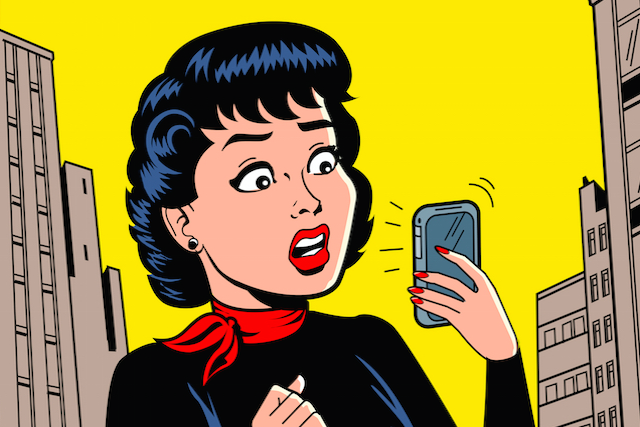
    Retro woman with phone

    “Most men would rather deny a hard truth than face it.” ~George R.R. Martin, A Game of Thrones

    So would most women.

    This is the way we have encountered life so far. Better to show the world just the socially acceptable and shove the rest under the rug. That’s where the hard truths go.

    But we all know the trouble with the rug. Stuff builds up under the rug and eventually you land on your face. Hard truths don’t go away.

    Social media is exacerbating the historical tendency to present only the pretty, so we’re justifiably, and understandably, really scared about putting the hard truth out there.

    Naturally, we don’t post that our relationship is in trouble, or that we’re going to lose our business, or that we have a physical illness, or some deep emotional stuff that we’re working through, or that we’ve been diagnosed with anxiety, or depression, or have an addiction.

    If we did, it might bring a whole slew of support, but it’s also a high-risk maneuver.

    I saw a meme the other day that read, “May your life be as amazing as you pretend it is on Facebook.”

    It made me laugh out loud. And I’m as guilty as anyone.

    I’m a big advocate of transparency and vulnerability. I’ve written publicly about my eating disorder, as well as depression and anxiety. Those were big.

    But you are unlikely to see me online yelling at my kids, crying after I’ve argued with my husband, or first thing in the morning, pre-caffeine and make-up.

    Recently, on Facebook, I posted a playhouse that I’d sanded it down and re-painted for my kids. I felt pretty damn pleased with myself.

    Here’s what I didn’t post.

    I actively encouraged my four-year-old to watch TV for a lot of the day while I painted.

    The next day my husband yelled at my six-year-old for turning on the electric sander without supervision. She cried. I was annoyed with him for watching rugby and not helping me, even though I didn’t really even want his help. I wanted to take credit for doing it all myself, and I did.

    This is hardly egregious behavior. It’s not super high on the shame scale. But still, I just posted the happy ending. My two girls standing by the white picket fence smiling.

    Actually, it’s a grey picket fence, and I think that’s a great metaphor. Because our lives are never black and white. A lot of life is grey.

    Having a crappy day (or week or month or year), getting the odd bit of road rage, feeling bitter and twisted toward our co-workers, worrying about our appearance, feeling overwhelmed and rushed, disliking the behavior of our children, getting sick—that’s grey.

    We’re ashamed of the grey because we think it is unacceptable.

    But the more unacceptable thing is to choose not to acknowledge it, and to pretend we’re not human. Because clearly we are.

    Part of being human is smiling kids, cute playhouses, and happy families. A big part. A beautiful part.

    But it’s not all of it.

    By ignoring what we perceive as not so beautiful, we do ourselves a disservice. We do our fellow humans a disservice. Because we are not telling the hard truth.

    But the reason we are not telling the hard truth is because it is hard. It feels way too vulnerable.

    We’ve all felt the pain of judgment, whether from ourselves, or from others. It’s a hard thing to recover from.

    It brings up shame, and nothing keeps you quiet like shame. Shame ensures we take the safe option. Picnics with our kids, holidays, sunshine, and happy faces.

    And you know what? This is okay. In the meantime.

    I don’t believe in feeling the fear and doing it anyway. Fear, like any other emotion, has something to tell us. Fear believes it is trying to protect us. So I believe in feeling my fear, acknowledging my fear, honoring my fear for what it’s trying to protect me from, and then letting it know that I’m doing it anyway.

    I wonder, can we honor our fear and allow it to help us be more vulnerable, and more real? To help us show up more? Little by little?

    Can we recognize our shame and our denial, too, and thank them for their role? Can we listen and learn so we can move on?

    Shame, denial, and fear are like misunderstood bad boys. They’ve put up a wall. They are trying to protect you from judgment, because they know how much it hurts.

    Shame will tell you that you can never let anyone know, because whatever it is doesn’t measure up.

    Denial will tell you that if you don’t engage with the hard truth, it can’t hurt you.

    Fear will tell you that courage is a lofty goal you probably can’t reach.

    Like with bad boys, you know in your heart that it’s not healthy to stay in the relationship. You’ve got to learn from the relationship and find a way to leave as gracefully as possible.

    When I experienced depression and anxiety, I had a close relationship with all of them.  

    I wanted to believe there was no problem. If there was a problem I could explain it away with something else.

    I wanted to believe that if I just tried harder, these symptoms would go away. And try I did.

    I wanted to be courageous, but I couldn’t.

    I wasn’t ready to leave denial, and this resulted in a very difficult few years—for me, for my husband, and for my babies.

    When I did leave, I found a way to sort through the grey. Shame and fear were still frequent visitors. They needed time to let go.

    We all needed time to integrate. And this was okay. Not at the time so much, but in hindsight.

    Here is some of what I’ve learned about shame, denial, fear, and courage that I hope will help you:

    1. There was actually nothing wrong with me.

    Shame, fear, and denial stepped in because I thought there was. But there wasn’t.

    2. What was wrong was that I was basing my perception of myself on society’s perception of me.

    I was caught up in people-pleasing and perfectionism and trying to be someone I wasn’t. I had no idea how to handle my emotions, and no idea how my thoughts about myself and my emotions corresponded. This resulted in a long trip down to the bottom of the barrel, and a steady climb back up.

    3. There is something wrong with society’s perception of mental health issues.

    We change that one by one, by individuals understanding that society’s perception is the problem, and allowing ourselves to be honest about that. That is the truth, but it’s still a vulnerable statement, and becoming vulnerable is a journey.

    4. There is something wrong with continuing to seek the white picket fence and ignoring the grey in life.

    It’s not serving us well. We change that too by working toward transparency. Transparency is also vulnerable, and for me has been a work in progress.

    5. When we recognize that everyone has some kind of issue (it’s not just you), we gain courage.

    And trust me on this. Everyone has issues. Kind of like everyone has a belly button. When you come into this world, you get both.

    Opening up and being transparent, whether to family or friends or online, is risking engaging with shame, denial, and fear. It’s risking deafening silence or unhelpful comments.

    It’s not always going to feel safe. It’s not always going to be safe. You should feel no pressure to do it if you haven’t had a chance to work through the stuff that you need to work through.

    But it is something to work toward, little by little. Because grey is a very pretty color, really. And the truth, although hard, is still the truth.

    And only the truth will bring us closer to love.

  • 7 Tips to Help You Scale Back on Social Media & Reclaim Your Time

    7 Tips to Help You Scale Back on Social Media & Reclaim Your Time

    Social Media Addiction

    “Time is the most valuable thing a man can spend.” ~Theophrastus

    We’ve all been there.

    We’re supposed to write a paper, send an email, do our job!

    We have deadlines, places to see, people to meet, and yet we find ourselves (for the umpteenth time) perusing our Facebook timeline, scrolling our Instagram feed, or catching up on Twitter updates.

    Whether it’s YouTube, Facebook, or Twitter, we are all experts at self-distraction, and we wonder where all that time goes!

    It’s actually getting a bit scary. Social media addiction is a real thing, and research from the University of Maryland shows that approximately four out of five students experience negative side effects when disconnecting from technology for a day.

    More research has shown that too much social media and smartphone use is affecting our happiness, stunting development in children, and decreasing academic potential in students.

    Social media rehab programs are available now, but like everything I believe we can avoid going to rehab by implementing some simple but necessary practices into our daily lives. Let’s be proactive about curbing our social media use.

    Now, before you get all self-righteous, let me just stop you. I love social media like it’s my job. In fact, it is!

    I am a social media manager and spend much of the day creating content and engaging communities on social platforms. Not to mention spending my free time maintaining my personal social profiles and interacting with friends online.

    Not so long ago, I was not practicing any of the “rules” below, I was constantly online, and my sleep, stress levels, and relationships were the worse for it.

    I had to learn to be disciplined and use the tools available to stay focused and do the work without getting sucked into the proverbial black hole.

    Here’s how!

    7 Social Media Rules

    1. No laptops or cellphones in the bedroom.

    There was a time when I charged my phone beside my bed every night. Checking Facebook or Twitter became the first and last thing I did every day. I did not want to miss that important news tidbit or mention.

    But here’s the thing! It’s really bad for you. The technology itself, the light given off by our screens to be precise, prevents our brains from releasing melatonin, a hormone that tells our bodies it’s nighttime.

    A recent study published last year in the Science Translational Medicine journal found that the amount of caffeine you’d get in a double espresso has a smaller effect on your sleep schedule then the light off of our smartphones and laptops. So while you may not be drinking coffee in the evenings anymore, it turns out your sleep is way worse off because you are using your smartphone in the evenings.

    This means it takes us longer to fall asleep, but science is also showing us that it has more and more negative, and even dangerous long-term effects—not getting enough sleep or only getting poor quality sleep has been linked to obesity, cardiovascular disease, diabetes and an increased risk of certain cancers.

    And guess what, checking Twitter that one last time is not going to change your life or even your next day one little bit!

    Practical Tip: Buy an alarm clock! You do not need to use your smartphone to wake you up every morning.

    2. Create a morning ritual.

    I don’t really care what it looks like, as long as you need to finish it before you get online every morning.

    If you’re really ambitious you might try to “sign on” after you have eaten breakfast, but I know that is unrealistic for a lot of us.

    Other ideas could include: meditation, (or if you are religious, a daily devotional), a work out, or walking your dog.

    Knowing that you cannot access your smartphone or laptop first thing will free your brain up for other things and is a much better start to your day.

    Practical Tip: This practice of creating a ritual can be used at any time throughout the day. For example, you might decide you want to read a book for thirty minutes a day during your lunch break. Leave your smartphone at your desk when you go for lunch.

    Whatever ritual you decide on, make sure you commit to yourself that these “me” moments are smartphone-free.

    3. Social time means NO social media.

    This works if you have a significant other, a roommate, or live at home. If you live alone this is more difficult, but there are still practical applications.

    My wife and I have a rule: When we are spending time together, whether that is on the couch reading, at the table eating, or in front of the TV, our phones and computers are not allowed. This can be applied when you meet friends for a drink or to watch sports.

    Practical Tip: You might want to keep your chargers in a room that you aren’t often in, that way when your smartphone needs a charge it has to leave the room. You would be surprised what happens, out of sight, out of mind!

    4. Get a watch.

    This one is dead simple! I actually have to thank my wonderful wife for this particular tip. For her birthday this year she asked for a watch; that way she could stop needing to use her phone to check the time.

    Not only is a watch a stylish, fashion accessory that not many people use anymore, but it actually works to reduce smartphone (and social media) use. So many of us use our smartphones as our alarm clock (direct violation of rule 1), we check it to make sure we catch the bus on time or to count down the minutes in our class.

    Just because our smartphones have the ability to do something doesn’t mean we should rely on them for it.

    Practical Tip: Reduce your reliance on your smartphone for things you need (like knowing the time) and you will check social media less.

    5. Take tech breaks.

    Use a stopwatch during the day. After you have checked your social profiles and have caught up on emails, set it for fifteen minutes and then turn your phone off.

    This is what Dr. Larry D. Rosen of California State University suggest continuing this until we don’t feel the need to constantly check in. Dr. Rosen is a Professor of Psychology, author of iDisorder, and one of the world’s experts in the “Psychology of Technology.”

    “Increase your tech break by five minutes every week or so, and soon you will be able to not check in for an hour or more without getting anxious about what you may have missed,” Rosen advises. “It also trains your friends, family and colleagues to not expect that immediate Pavlovian response!”

    6. Turn off notifications.

    Social notifications are the enemy of everything this post is trying to achieve. If your smartphone pings, vibrates, lights up, or does a dance every time you get a new follower or “like,” then it is distracting you from whatever you may be doing at the time, whether you check it or not!

    In the last sixteen years, the average attention span of humans has dropped from twelve to eight seconds. We now have a shorter attention span than a goldfish. The age of social media and smartphones has resulted in hyperactive attention spans that can’t rival our pets!

    Practical Tip: Turn off Facebook and Twitter notifications on your laptop and smartphone. I guarantee you that you’ll still check your profiles often enough that you do not have to worry about giving your followers timely responses, and this way you can stay focused and in the moment.

    7. You can’t do it alone.

    It is not weakness to fail; after all, the science shows that social media is addictive. So don’t rely solely you’re your own will power to accomplish the above.

    There are multiple apps now which block social media sites, apps and other time-wasting online activity of your choosing. For Apple users you can even block websites on iPads or iPhones via Settings à General à Restrictions and then pick which apps or websites you would like to block.

    Other softwares that can help us battle our need for social media “hits” include:

    Unfortunately, this is only relevant to Google Chrome users, but this app has been a game changer for me and my fight to stay productive.

    Basically it allows you to limit the daily time you spend on any website. I allow ten minutes daily on Facebook. You would be astonished at how long ten minutes on a social media platform actually is.

    At the beginning, I ran out of time before lunch, which freed my mind and time up for more productive and often more important things. Now, I never even reach my ten-minute limit. I have realized how little I need to check Facebook on a daily basis.

    The great thing about this app is that you can dictate how long your daily limit is, which particular sites that you limit and then it will warn you as you near your limit on said sites. Try it out, it might surprise you.

    A Challenge

    I wanted to leave you with a bonus thought that may be completely unrealistic but at least will give you something to think about before you go off to check Facebook. Smartphones are the biggest facilitator of our addiction to social media.

    A report from Informate Mobile Intelligence found that people in the U.S. check their social media accounts seventeen times a day. That’s at least once every waking hour, and American’s are not even close to the biggest culprit.

    Smartphone users in Asia and South America checked social media at least forty times a day. Generation Z might be the most unsettling trend. Some teenagers in the U.S. check their social media feeds more than 100 times a day.

    I don’t know about you, but even while writing this I find myself getting all defensive about my smartphone use. I tell myself I need it for work, or that I will lose touch with my friends, or even that my social presence will suffer for it.

    But the fact is, they are all lies. People had thriving careers and social lives long before smartphones. And as for my social media presence, if it is that important to me I will make it work via my laptop or tablet. But the fact is we don’t need to be connected 24/7.

    I know it is very counter culture and a scary thought, but I challenge you to at least think about whether you need your smartphone. The process of thinking about it will make the rest of the “rules” listed above seem way more important, and even doable, and surely that is worth it.

    Go Out and Live

    Yes, we have all been there.

    But it doesn’t mean we have to stay there. Life is more than RTs and Likes, even if it is your job.

    Your home should always be a refuge and a place where you can unplug, at least a little.

    Since I have been using these rules in my life, I got married and have a happy, healthy relationship with my wife, I read more, I work out regularly, and I have started a personal yoga practice. All things which I can attribute, in part, to not being so plugged in at home.

    You are going to mess up! Heck, while writing this article I must have checked my smartphone a dozen times. But using the above household rituals and rules will make sure that your life revolves less around social media then it once did.

    Try the above suggestions for a week, and I promise that you will notice a difference!

  • The Key to Freedom: Minding Your Own Business

    The Key to Freedom: Minding Your Own Business

    Freedom

    “The day you stop racing is the day you win the race.” ~Bob Marley

    Let me take you back to the beginning of my day, how I used to do it.

    Flicking through my Facebook newsfeed, clicking on profiles, scrolling through comments, monitoring social interactions, checking how many likes my last post or profile picture got. Then I’m going to my therapist, to talk about how worthless my own life is, how inadequate I feel.

    I’m not saving the world, pursuing my passion, making friends, or traveling. Neither am I getting married or engaged nor having children—and I do not have a clue what the heck I even think about all of these prospects, whether I even want them.

    I can barely look at myself in the mirror. I hate my life and my own weakness for not taking control of this pathetic situation.

    The smiling faces on my social media page grin down at me like clown masks in some perturbed haunted house in a nightmare. I ask myself, why am I taking their happiness so personally?

    We can’t seem to escape comparison. We seem to be enmeshed in it, entangled in it, trapped and suffocated by it. We can’t seem to understand who we are or where we are in life without looking around us to compare our position.

    Somewhere inside us we believe that if we can gain all the information that we can through comparing ourselves to those ‘better than us,’ maybe we will find the key to that elusive happiness, which comes only from the confidence that we are good enough.

    If we keep on social media stalking those who are living the lives of our dreams, maybe we will pick up on that thing that makes them so different from us—so much ‘better.’

    I believe we aren’t after their lives so much as what we perceive is their ease. As much as the freedom they ooze, or the contentment they display, we want their happiness. We forget that most people only display the highlight reels of their lives on the Internet.

    In fact, I used to tell myself that we create ourselves, and I tried to make myself a collage of all the people that I admired—Beyoncé included.

    I told myself, that I didn’t have any preferences. I treated myself as a blank canvas, and by that I mean I slowly rubbed out anything that came from within, without reason or logic, and replaced it with everything I was attracted to externally, like a magpie.

    The noise I was letting in from outside was torturing. And deafening.

    When the toxic concoction of low self-esteem, ambition, insecurity, and unfavorable self-comparison escalates, you may get depressed, as I did.

    My former way of life (in combination with a complex range of other factors) made me ill. While everyone is different, I realized, for me, the key to recovering my mental health was to supplement professional help and therapy with a radical simplifying of my life.

    Today, I wake up in the morning and open my eyes, taking a good look around at where I am, noticing a kitten asleep at my feet. I talk with my sister who I share a room with; we both get dressed for work, joking and teasing the other on our rushed fashion choices.

    I look out of my open attic window and smell the fresh crisp air, watching the stillness of the tree-lined street against a backdrop of rolling green hills, before the storm of traffic and rush hour.

    I get changed and choose my clothes. I pick out a book for my short commute to a digital marketing agency where I work as copywriter. I walk to work lightly, observing my surroundings and feeling life flow through me, a dull vibration at every step.

    I sit on a seat on the public bus as children get on with their parents, gossiping and teasing amongst each other. My mind is still, and I feel strangely alone—but alone in my own company. I am with myself.

    I am whole. How curious. What changed? Very little, externally. I unplugged from the noise around me and started to mind my own business.

    It happened one day, quietly, and I found it made my thoughts less erratic, my mind less split and divided. I didn’t force myself to come off social media; I knew I was way too stubborn and addicted to do that. So I turned my attention, gently, not in distraction, to the present moment instead.

    I peeked out of the quicksand that is an obsession with comparison and self-deprecation, and asked myself out of curiosity, what’s going on in my own life?

    I looked around and thought: this is it. Your dreams haven’t come true yet, and your past is filled with soreness. But there is no escape from that which you consider to be a hellhole, this is your life.

    And you are living it.

    Then a curious thing happened. I allowed any pain to pass through me like water in my hands. I processed the beauty in the same way, and I felt a part of life. Like life itself, in fact.

    I realized that I wasn’t in a hellhole at all. Relentless clinging to my thoughts, obsessions, and desperate escapes from life—resistance—had made it so. And all I had to do to be free was let go.

    Don’t worry, minding your own business doesn’t mean ignoring everyone else’s existence. But it does mean you get to control how you give and what you give, so that it is conscious, not masochistic martyrdom.

    Rather than thinking, I should travel abroad and save all those poor unfortunate souls less privileged than I (which is escapist, and also patronizing, and also doesn’t tackle the issue at the root), I began to help my mother, my siblings, my friends and began to write and share work on poverty and mental illness, as these were my most immediate experiences.

    Everyone has a different path, of course, and this is only one route, which brought me peace.

    I decided to pay attention to my existence, seeing as it was the only thing I had, after all.

    And, I started to really see the things around me, like the dust on the corners of my floorboards, and the hundreds of books I’d bought and piled up in desperation for some kind of knowledge that might bring me certainty or security, thinking I should maybe arrange them in alphabetical order.

    I would barely acknowledge these tiny details of living when I was caught up in the whirlwind of my mind—and now they grounded me in a stillness that calmed me.

    I was able to let myself live and feel worthy of the miracle of existence, with all its highs and lows. Above all, I felt a gorgeous freedom, liberating, vast and expansive, allowing me to have fun with curiosity, gratitude, and peace.

    I told myself I would enjoy the days I had, as I passed through this world, just like everyone else was also passing through. By freeing myself every day, and indeed every moment, from the limits of comparison, competition, chasing, and clinging, I began to mind my own business.

    We can all experience this freedom. We just have to choose to see life through our own eyes, by being present in the only moment that matters: this one.

    Free, happy woman image via Shutterstock

  • Using Social Media for Growth and Minimizing Its Negative Effects

    Using Social Media for Growth and Minimizing Its Negative Effects

    Like Button

    “Social media should improve your life, not become your life.” ~Patrick Driessen

    The summer after college, my best friend and I had many a girls’-night-in, largely to accommodate her new life as a single mother.

    These nights consisted of drinking wine and Facebook stalking anyone and everyone who went to our high school.

    One night we went as far as creating a false page representing a popular local bar so that we could peer into the lives of anyone our hearts desired without revealing ourselves as grade-A cyber stalkers.

    We spent a lot of our downtime that summer focusing on what other people were doing, and none of that focus prompted any kind of personal growth or increased self-worth on our ends.

    I know there are people out there who are masters of self-discipline when it comes to their devices and social media pages.

    These people put their phones down during dinner, turn them off to go to bed, and only check their social media pages during specified times during the day; they may go days or weeks without accessing their online profiles. I, however, am not one of them.

    I often find myself torn between the practical benefits of engaging with social media and the detrimental toll these same tools can take on my inner self.

    On the one hand, I rely on being able to access certain private pages for work, and I enjoy keeping in touch with long distance friends. On the other hand, compulsively checking my profiles on various devices often prevents me from living in the now.

    Over the years, I have deactivated and reactivated my social media accounts time and time again in an effort to break myself of my bad social media habits.

    For me, deleting my accounts helps me focus on the present moment and the goings on in my own life. However, I missed connecting with my friends and risked alienating myself from an ever-more-technological professional sphere.

    When I began a position with a company that all but requires the use of social media, I realized deleting and reactivating my accounts was no longer a solution to my social media problem.

    I found myself faced with the question: how do I use social media in a way that helps me grow, both professionally and personally, while minimizing the negative effects of overuse?

    Over the past year, I developed some strategies for increasing positive content presented to me through my social media accounts, while decreasing the material that leaves me feeling bad or distracted and creating greater awareness around my usage habits.

    1. “Follow” the blogs and websites you like to read.

    Your favorite blogs and websites often have social media counterparts to which you can subscribe. If you don’t have a running list of blogs and websites (I didn’t until about a year ago), spend an afternoon searching for content that interests or inspires you and then continue to add to it over time.

    I created a folder on my favorites bar containing links to literary journals, professional and personal development blogs, online learning websites, recipe guides, fitness videos, etc.

    As you scroll through your newsfeed, you’ll pause to read articles related to your interests that may help you grow, cause you to pause and reflect, or inspire you to begin a new project.

    Instead of spending an hour cyber stalking your ex-boyfriend’s new girlfriend, who you saw in a picture with a mutual acquaintance, you may end up writing an article (like this one), bookmarking an interesting recipe, or sharing a funny video with a friend.

     2. Unfollow or block people who distract you.

    Do you find you criticize yourself after viewing your beautiful friend’s daily selfies? Do your brother’s travel photos make you lament your office job? Does your aunt’s constant complaining clog your newsfeed with negativity?

    Unfollow people whose posts—for whatever reason at all—typically make your mood take a turn for the worst or cause you to lose focus on your own goals. You can still access these people’s content by intentionally navigating to their profiles, but you remove the spontaneous mood killers throughout your social media usage.

    If the person isn’t someone you care to maintain any kind of connection with, you might want to think about blocking him or her. My Facebook block list is a mile long, and here’s an example as to why that is:

    I recently blocked my boyfriend’s ex-girlfriend on Facebook.

    Blocking her was not something I needed to do to prevent her from contacting me; I have never interacted with this person firsthand. However, we share many mutual friends (both on Facebook and in life), and I realized that her comments and Facebook activity became distracting for me in a negative way.

    Blocking her prevented me from seeing comments she makes to mutual friends, prevented me from stalking her profile during insecure moments, and removed from my vision any pictures that she previously tagged my boyfriend in while they were dating.

    This was not an attempt to erase my boyfriend’s past, just a measure prevent me from returning to it in the present.

    The unfollow and blocking features are not indications that you do not like someone; they are tools you can use to filter content that you don’t need to see on a routine basis. Remember, you can always unblock a person or decide to follow him or her again later.

    3. Delete the mobile app from your phone (or at least put mobile apps in a folder).

    Use the web app instead of the mobile app. This requires you to open a web page and intentionally login to a social media account versus mindlessly checking the same profile you’ve viewed twenty times today already.

    If you cannot (or will not) forgo the features offered by the mobile app, group all your social media apps into a folder, and move that folder to the last page on your phone or tablet.

    Increasing the time and effort it takes for you to access for your social media accounts helps to create awareness around your actions.

    4. Create separate pages for different purposes.

    I have three different kinds of social media profiles. One I reserve for personal use; this is private profile I use to keep up with friends, follow celebrities just for fun, and access my favorite blogs on any topic under the sun. The other two profiles are public: one I use for business purposes, and the other is dedicated to art.

    Having different focuses for each of your profiles gives you a direction for your social media use. Instead of using three different profiles to keep tabs on your friends and share photos of yourself, dedicate one or two profiles to your professional or personal growth.

    If you’re like me, you may spend a considerable amount of time perusing social media pages each week. Turn this time into an opportunity for personal growth by practicing social media habits that nurture your interests and promote positive connectivity.

    Woman touching like button image via Shutterstock

  • Why We Compare Ourselves to Others on Social Media and How to Stop

    Why We Compare Ourselves to Others on Social Media and How to Stop

    “The reason we struggle with insecurity is because we compare our behind-the-scenes with everyone else’s highlight reel.” ~Steve Furtick

    We all have certain triggers that can cause our confidence to take a sudden nosedive.

    For some, it’s a trip to the gym. If you’re self-conscious of your body, watching fit people strut their stuff in their tightest fitting gym clothes likely has you over analyzing your every body part.

    For others, it may be a certain individual—a family member, friend, or enemy that, for whatever reason, leaves them with the dreaded feeling that they just aren’t enough.

    We all know the gut wrenching feeling that arises when we see or hear something that immediately has us second guessing our appearance, personality, or skill set.

    Unfortunately, social media provides us with numerous platforms that help to quickly trigger that unpleasant self-disdain.

    Facebook recently reminded me of just how powerful a determinant it is to my confidence level.

    I found myself comparing all aspects of my life, both internal and external, to a person I had never met. She was a stranger in every sense of the word, and yet somehow, her profile page caused me to question my accomplishments, appearance, and even personality traits.

    I didn’t realize just how illogical this was until I explained it to someone, and, now as I type, I’m reminded even further.

    Regardless of how illogical these comparisons may be, our emotional responses to such images can be so strong that they completely overpower our sense of logic.

    The reality is, people are constantly showcasing the best aspects of their life onto social media.

    The arrival of a new baby and a recent trip to the Caribbean are both ideal picture-posting occasions. But do these same people post photos of 2 a.m. feedings or lost luggage? Not often, because that wouldn’t show them in an ideal light, but it would provide a sense of reality.

    Reality is what is lost on social media. We emphasize the best versions of ourselves instead of the real versions.

    Life can be hard, ugly, and downright depressing at times. But those likely aren’t the adjectives most of us would use to describe the photos we post onto our accounts.

    The feeling of lack and dissatisfaction that we feel when scrolling through our newsfeed often results from comparing our true reality to our “friends’” idealized, perfectly Instagramed realities.

    We are using the same scale to measure two entirely different realities.

    However, we fail to step back and recognize just how wildly unfair and unrealistic these comparisons actually are.

    So how can we stop ourselves from making them?

    1. Reduce your time on social media.

    This can be a challenge since we live in a culture that puts such a high value on social media outlets. But that doesn’t mean it’s impossible.

    Allow yourself five to ten minutes a day to check your social media accounts and then be done with it. Especially avoid looking at profiles of people who trigger thoughts of comparison. You have nothing to gain in doing so besides anxiety and sadness.

    2. Redirect your focus on the things that really matter.

    When you direct your attention toward the real world, you have less time and energy to direct toward meaningless activities such as social comparisons.

    Focus on a high-energy work out at the gym or finishing a book you’ve been putting off. Immerse yourself in activities that leave you feeling better for having engaged in them (versus Facebook stalking, which leaves you wishing you hadn’t).

    Make a list of activities and then schedule them onto a calendar. Since we often spend time on social media when we have little else going on, having scheduled plans will reduce the time we are sitting idle.

    3. Assess where those negative comparisons are stemming from.

    As unpleasant as these comparisons can feel, they can serve a positive purpose in that they inform us of an area of our lives that may benefit from some improvement. The incident served as a reminder that I want to be secure enough in who I am and where I am in life that I don’t feel the need to measure it in comparison to anyone else (least of all, a stranger).

    After my strong reaction to a stranger’s Facebook profile, I decided to work on developing a stronger sense of confidence and self-worth. I’ve done this in a number of different ways such as:

    • Putting a higher value on my relationships. I have amazing friends and family, but I admit that I often take them for granted. I’ve tried to become more present in my interactions with them, as well as in encounters with complete strangers.
    • Valuing my time more. In the past, I’ve been much more cognizant and respectful of others’ time than my own. I’m practicing putting my needs first and learning to accept that it is okay to do.
    • Doing more of what I love. Sounds simple, but I’ve really made an effort to go on quiet walks with my dog more or allow myself an hour to read a book. Doing things simply because I like to do them has given me an increasing amount of self-value.
    • Eating well and moving. I make sure to put my body in motion for at least thirty minutes a day (even if it’s just walking the dog), and I eat small, healthy meals throughout the day so I don’t find myself snacking mindlessly on junk. Putting a higher value on my body by eating clean and getting exercise has naturally given me a higher sense of self worth.

    So, next time you make an unfair comparison, instead of allowing it to make you feel poorly about yourself, view it as an opportunity for a little self-evaluating.

    Ultimately, social comparisons aren’t indicative of what others have that you don’t, but rather what you already have but aren’t quite aware of yet.

  • Are You Missing Out on Life While Checking Your Smartphone?

    Are You Missing Out on Life While Checking Your Smartphone?

    Distracted by smartphone

    “The present moment is filled with joy and happiness. If you are attentive, you will see it.” ~Thich Nhat Hanh

    “Yeah…Uh huh…Uh huh…Yeah…No way! Uh huh.”

    This was the response I got when talking to a friend the other day. I could tell he wasn’t really listening, because he was browsing Facebook at the time.

    Why was his smartphone more important than me? It didn’t used to be this way.

    I know I’m at risk of sounding out-of-touch and technophobic. But I really do think this is a much bigger problem than we perceive.

    We’re talking about our lives here. Do we really want to dedicate them to an iPhone?

    Another Smartphone Shocker

    The other day I saw a man on his Blackberry during an entire meal with his family. He was with his wife and young children (although they’ll be adults before long).

    How rare are moments like this? How precious are they?

    Yet, the man let this moment pass him by forever. If only he’d brought his attention to the present moment, he’d have experienced something far more valuable than anything displayed on a three-inch screen.

    And is there any joy in a stroll through the park or along a bustling city street?

    Last year I roughly counted one in five people glued to their phones while walking. And this was on New York’s 5th Avenue—one of the most exciting, alive, beautiful streets I’d ever walked on.

    Was it really so mundane to these people?

    Let me be clear. I’m not suggesting you throw away your smartphone and communicate with telegrams. The smartphone is an extremely useful tool, no question.

    What I’m saying is this: Bring attention to the moments when you reach for your smartphone.

    There are three questions I suggest you ask yourself every time.

    Question 1: What’s the emotion behind this decision?

    I work from home most days, and this wasn’t easy at first.

    I spent a good couple of years completely addicted to my email account. If there was an opportunity to check my inbox, you can bet your best socks I’d have taken it.

    But once I began meditating, I became much more aware of my emotions.

    I soon realized I didn’t check my email to check my email. I checked my email because I wanted fulfillment. I wanted somebody to praise me for good work, send me a dream brief, or tell me something fascinating.

    As you check your smartphone, try to pinpoint the emotion behind your decision.

    Is it anxiety? Boredom? Or are you subconsciously putting off something more important?

    Once you know the emotion, ask yourself: Can this emotion be fulfilled by something else?

    I realized I got the same feeling of fulfillment from writing. So I stopped checking my email first thing in the morning and would write for two hours instead. Since I’m a copywriter, this was doubly beneficial, because it made me better at my job.

    Question 2: What value do I place on this present moment?

    If you show gratitude for the present moment, you might think twice about using your smartphone.

    Riding the bus is a common place to start checking Facebook. The bus is, admittedly, quite boring. You follow the same route every day, and not much seems to happen.

    But what if riding the bus became a wonderful in-the-moment experience? Rather than grab your phone on instinct, notice the passing scenery, the feeling of movement, and the different people who hop on and off.

    This is a moment in your life. Never forget that.

    If you need to check your phone, the bus is a good time to do it. But if you don’t, why not experience the journey?

    Also, remember, if you’re with a friend or relative the present moment has twice as much value. You have someone else to consider.

    Personally, I don’t think it’s ever appropriate to check your phone in someone else’s company. (Unless you have something very serious going on in your life, of course.) Show people how much you value them instead.

    As Thich Nhat Hanh said, “The most precious gift we can offer others is our presence. When mindfulness embraces those we love, they will bloom like flowers.”

    Question 3: Can my smartphone really add value to the present moment?

    Before the smartphone, we had something very precious indeed—the unanswered question.

    Your smartphone can answer any question in a couple of seconds. That’s true. But don’t you find it’s the unanswered questions that spark the most interesting conversations.

    Unanswered questions start debates. They enrich friendships.

    The other day I mentioned that the author Jack Kerouac was Canadian.

    “You’re wrong,” a friend jumped in. “He was American.”

    “Are you sure? I swear he was from Quebec,” I replied.

    “I’ll find the answer,” another friend said, withdrawing their smartphone. Presto! Two seconds later, the conversation was over.

    Another time, at dinner, a group of us wondered who composed the Lord of the Rings score. All sorts of interesting topics popped up along the way—from Hans Zimmer to John Williams to Star Wars and back to Lord of the Rings again.

    “I’ll find the answer,” someone said. And again, it was a smartphone that killed the conversation.

    Unanswered questions are uncomfortable.

    Reaching for your smartphone is understandable. Perhaps it’s even human nature. But it’s important to stop, reflect, and question what might happen when you do.

    I believe mindfulness is more important today than ever before. Unless we take control of ourselves, our gadgets will take control for us.

    Notice the present moment. Understand it. Be grateful for it.

    And if you decide it’s not a good time to use your phone, please resist the urge. You’ll feel much happier.

    Distracted by smartphone image via Shutterstock

  • 8 Things I Learned from a Phone-Free Month

    8 Things I Learned from a Phone-Free Month

    “Tell me what you pay attention to and I will tell you who you are.” ~Jose Ortega y Gasset

    I used to live in San Francisco, a city celebrated for its carnivals, free music festivals, thriving bar culture, Mexican food markets, beautiful parks, fantastic literary events, thrift stores, and… (Can you tell I miss it?]

    The effect of having all this culture available is that quite often, we spend more time around the doing of an event than the doing itself. I’ll elaborate.

    I would spend x amount of time on my phone searching for cool events to go to. Then I would be on Facebook, advertising this future event and inviting friends.

    The day of the event I would spend time calling and texting people to establish a meeting place, before following the little blue dot to find that place. Then, during the actual event, I would spend x or even xxxx amount of time trying to find signal to call a lost friend or—in the more likely case—relocate my lost self and find the group.

    When not trying to find signal and/or friends, I would be sending texts telling people who couldn’t make it what they were missing out on.

    Or I’d be holding my phone in the air taking x amount of pictures of where I was and publishing the photos on Facebook/Instagram/Snapchat/all the above (checking my phone every x minutes thereafter to get an update on like-count) trying to show the world how much fun I was having (read: forgetting to have).

    Does any of this sound familiar? The x amount of time spent on my phone combines to way more x’s than the time spent enjoying x event itself. See, I can’t even remember what the event was.

    I remember Nokia’s first advertising campaign: “Connecting People.” Now this slogan would more correctly read: “Connecting Phones,” because I observe that the people behind the phones are actually hugely disconnected from valuable forms of interaction, myself included.

    We live in a world where losing your phone is more dramatic than losing your virginity, and I found it way more distressing because I couldn’t call my mum and tell her about it.

    I lost my phone in the fatal sense; it fell to its death and I was phoneless for a month. This month was somewhat transformative for me. I mean, I know that a phone isn’t technically a limb, but at first it felt very hard to walk anywhere if I wasn’t 100% sure that I was going in the right direction.

    My phone used to guide me. It was brave to go somewhere to meet a friend, not sure if they’d had to cancel without being able to let me know. My phone used to confirm things. Another hard thing was the not knowing what my friends had eaten for dinner the previous night. Instagram used to show me.

    How are people going to invite me to things?! Denial, anger, frustration, loneliness… I’M FALLING OFF THE RADAR! People will forget me! Desperately clicking my heels “There’s no place like phone, there’s no place like phone” … *Spiral into delirious black out.

    It’s hard to believe that a month later I had become pretty nonchalant about even getting my phone fixed. I could now afford to, but I had discovered a charm and liberation to my life without a phone that I was now scared to lose.

    Here are some ways I found myself when I lost my phone:

    1. I would give myself time to get lost, and enjoyed taking notice of my perhaps wayward route.

    I would find things on the way that I’d never seen before—great street art and food joints. If really lost, I would ask locals for directions, and in so doing met interesting characters and appreciated their willingness to help me. I enjoyed not being self-reliant.

    2. My friends were always there to meet me at the time we’d planned in advance.

    When is the last time you made plans with a friend a week or two in advance—Lunch at Rosso on the 12th, 2:00—and not called to confirm before hand? It’s a test in your trust that friends won’t let you down, nor you them. It’s fun to have something to look forward to and to simply… show up.

    3. I didn’t update Instagram nor Facebook for a month.

    I lost the urge to show people a #nofilter photograph of my burrito or let Facebook know which Disney Princess I am according to Buzzfeed. I started reading more, enjoying my own company. When I had moments to spare, I would reflect on my day rather than take out my phone and read about everybody else’s.

    4. I started being present at events in the true sense of the word.

    If you spend all your time on social media telling people where you are, it probably means you weren’t present at all. I mean, take a cool picture, by all means; start a photography blog. But a photograph should be a memory of an experience, not the experience itself. Don’t check out when you check-in.

    5. I became more spontaneous.

    There is something organic about running into friends unexpectedly, when the stars align to connect you with someone even when you couldn’t call to make plans. I could be more spontaneous without a phone, or perhaps it just felt that way because as it was harder to plan things. I started to accept and embrace all the twists and turns of my day.

    6. I became unreachable at times.

    It feels great to be unreachable in a world where we are expected to be so available. We are at the beck and call of a beep or a buzz, and apologize if we respond to a text twenty minutes later because we were in the shower.

    I realized that my time is my own and stopped feeling that I owed people my attention 24/7. When you disconnect from the outside world, you connect with yourself.

    7. I became acutely aware when my company was dividing his/her attention between their phone and me, and I hated it.

    That’s probably how I used to interact before I learned how it feels to speak to the top of someone’s head. I enjoyed the dose of self-awareness, and I like to think I’ve become better company for it.

    8. I realized I wasn’t really staying in touch.

    What I’d been doing to “stay in touch” with friends were things such as liking their Instagram photo, commenting on their Facebook status, vaguely committing to an event they were hosting with no real intention to go, texting sporadic and disinterested-sounding questions like “How’s life?” etc.

    Without a phone, I realized how lazy my most valued friendships had become, namely, because I didn’t suddenly feel disconnected from those people; rather, I realized I hadn’t been connected in the first place.

    I’m not suggesting that you should smash your phone on the ground after reading this; I eventually had my phone fixed, and in these times there are obvious safety and organizational benefits to having one.

    What drives my thought process is this: Phones are merely tools, and we are at risk of trying to extend their function beyond their limitations. Phones are a poor substitute for real interaction, presence, experience and connecting.

    Life doesn’t happen on a tiny screen. Take a leap and leave your phone at home once in a while. Say brb and give your immediate world your undivided attention, because that’s where the good stuff is, and you’re missing it.

  • Compassionate Posting: Minimizing Social Media Comparisons

    Compassionate Posting: Minimizing Social Media Comparisons

    Social Media

    “We must each lead a way of life with self-awareness and compassion, to do as much as we can. Then, whatever happens we will have no regrets.” ~Dalai Lama

    If you’re anything like me, you may have a love-hate relationship with social networking.

    There are so many cool facets to social networking sites, such as Facebook, but I am finding that the relative ease of information sharing with the masses and portable nature of technology bring their own set of challenges. Not a bad thing, per-se, but perhaps an invitation to practice even greater mindfulness and compassion.

    Consider the title “FACEbook”

    Jungian psychology describes the journey of the self through personal individuation. It’s a path of learning how to better understand and shed aspects of our persona—the “mask” or public face we use to make an impression on others, while potentially concealing parts of our true nature—as we work toward integrating a more holistic and genuine self-presence in our world.

    The hope is that in coming to better understand our multi-faceted selves (desired and undesired aspects), we come to realize that while we are unique, we are also very alike in our fears, our longings, our hopes, and desires.

    In other words, after all our all our striving to be someone, we eventually learn to relax into who we are in our shared humanity, which is broken and beautiful. 

    Facebook has been both my friend and enemy throughout the past year and a half, as I have struggled to recover from surgery after surgery due to traumatic injuries suffered in a climbing fall in November of 2012.

    Mindfulness practice is something I have chosen to embrace as part of my recovering journey. I am finding that as I come to better understand my own feelings in relation to pain and struggle, loss and gain, ability and disability, and despair and hope, I am comforted by the realization that these are the things I share with all human beings.

    Awareness

    I think I am not unique in the sense that, by nature, I tend to compare myself to other people. The society we live in encourages the competitive spirit—the edge that somehow sets one apart as “better” or “more deserving” of praise, affirmation, or whatever.

    We are proud of our accomplishments, our abilities, our attractiveness, or the things we believe define us. The feelings that arise with these qualities are good, even though they are fleeting.

    But what happens to our spirit, or our psychic energy, when we are faced with loss of ability, loss of attractiveness, or loss of what has typically brought us happiness and fulfillment? 

    When we are faced with any type of emotional experience, Facebook can provide a fertile opportunity for composting those feelings, or churning them around in our psyche.

    These feelings can serve as a reminder to have compassion with ourselves.

    For a period of time, I found that I needed to limit my interaction with Facebook, as the postings of others seemed to really magnify the pain and losses I was feeling.  

    Seemingly “perfect” lives appeared to reach out from my computer screen to punch me in the face. I was consumed with my own personal misery—my scars, my disabling injuries, and my frustration with how limited my life had become, as well as my uncertain future.

    My initial reaction to these feelings was to feel really bad and guilty, and to minimize my own experience.

    As my mindfulness practice evolved, however, I was able to create maitri, or unconditional self-acceptance as a part of my healing journey. To be able to tell myself “yes, your life does suck right now, and it is okay to mourn your abilities, your hopes, and dreams” was incredibly liberating.

    Since then, I have taken dozens of vacations from Facebook, and I return when I am ready.

    The feelings we experience as a result of social networking can also serve as a reminder that we are not alone. They are shared by all human beings.

    The Buddhist concept of Big Mind indicates an awareness of reality that transcends the merely personal, into the collective reality of all humankind.

    Have I ever felt proud of my abilities and my appearance? Absolutely. Have I felt the desire to share my joy in accomplishment or circumstance with others collectively? Of course. These are awesome feelings, and they teach us the value of gratitude.

    But I am acutely aware that there are folks out in Facebook-land who are also faced with struggles and challenges, and that whatever I post may engender a variety of responses or feelings in people with varying life circumstances.

    Mindful Compassionate Posting

    With every post, I try to be mindful of feelings and personal reactions. I ask myself these questions:

    What is my reason for posting this?

    Is it because I want to share what is happening in my life, to communicate good or helpful information, or a positive message?

    By my posting this, I obviously have some kind of expectation of others reading it (otherwise, why would I post?). How will I feel if the comments or feedback (or lack of them) are not what I had hoped for?

    Am I posting this because of some kind of validation that I need, or can I let go of the expectations that I might have?

    If I am posting to share good news (new job, achievement, marriage, children photos, etc.): Am I aware that my posting could bring up feelings of loss or pain in others?

    I know that every day, people are faced with job-loss, acquired disability, divorce, or inability to legally marry, infertility, and other losses of hopes and dreams.

    If I am posting to share news that is difficult, again, what are my expectations?

    To be encouraged? To simply share information? Am I willing to not take things personally, understanding that sometimes the written word is not adequate to share or respond to some things.

    It is unrealistic to think that in an age of widespread mass-communication, we can circumvent certain challenges and difficulties.

    But we can become more aware of our reactions and compassionate in our interactions. 

    We can learn to brace ourselves for a variety of emotions when exposed to a huge diversity of experiences—all of which are relative and changing, and utilize Facebook and social networking as tools for cultivating greater loving-kindness toward ourselves and all beings.

    Photo by geralt

  • Mindful Technology: Simplify Email & Reduce Inbox Stress

    Mindful Technology: Simplify Email & Reduce Inbox Stress

    Happy Girl with Laptop

    Up until recently, I received communication online in ten different places.

    In addition to getting messages through Facebook, Twitter, LinkedIn, and StumbleUpon, I got emails through six different email accounts. I have not always managed this ever-flowing stream of information in the most mindful and productive way.

    Studies show that we actually get a little endorphin rush when something new pops up in the inbox. It’s almost as if an email, direct message, or blog comment confirms that we’re important—that someone somewhere values us and needs our attention, expertise, or approval.

    I’ll admit it: I enjoy seeing there’s a new comment on something I’ve written, and I love when someone sends me an email telling me how deeply Tiny Buddha has impacted them.

    But I’m not a big fan of spending my whole day reacting to things popping up on my screen; not when there are so many more efficient, fulfilling ways to spend my time.

    Recently I’ve been making some changes to create a more mindful online experience, less dictated by other people’s requests and feedback.

    If you also need a little help managing your stream, I recommend the following. (more…)