Tag: express

  • If You Think You’re Not Good Enough to Pursue Your Passion

    If You Think You’re Not Good Enough to Pursue Your Passion

    “I think something people need to understand is that others disliking you is not a bad thing. When you are embodying your true authentic self, it creates fear in people who still operate from the ego. If you want to grow, heal, and evolve you have to let go of wanting to be liked.” ~Audrey Kitching

    Since I was a child, I have always felt a huge need to express myself and let my inspiration flow. I was a creative and playful kid, with a vivid imagination and an enormous passion for writing.

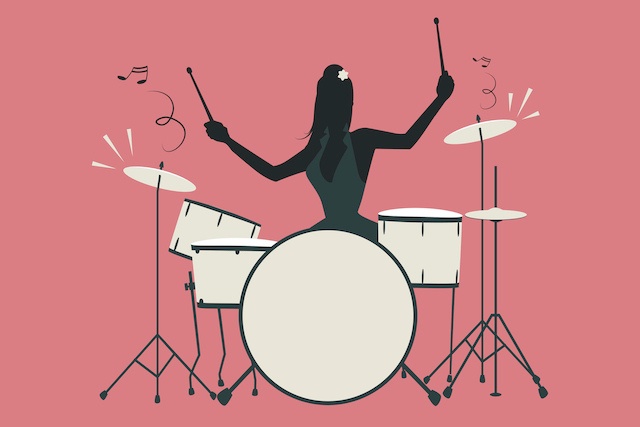
    As a teenager, I became interested in music and wanted to be a drummer. It was a spontaneous decision—my intuition suggested to me that, behind those rhythmic patterns that fascinated me, there was something more.

    Something meaningful, spiritual, something that was calling me so strongly that my soul wanted to resonate with it.

    Knowing that, I asked my parents to take drum lessons, but they eventually convinced me that I was dreaming too big. I began to think that it was too late to start, I would never be good at it, and that playing the drums was something that only privileged people, perhaps with a big soundproofed room, and the right amount of talent, could do.

    I gave up on my aspiration and decided to follow my father’s suggestion to take guitar lessons, which would have been more practical and easier to afford.

    I thought it could be an opportunity to learn how to play the songs I loved the most, but after a few months of early excitement, my interest started to decrease because I spent most of the time doing arpeggios and playing sheet music without feeling it.

    After almost two years taking classes, I realized something astonishingly simple, yet powerful: I was following a path someone else had chosen for me! How could this have led me to joy and fulfillment?

    Immediately after that, I gave up on the lessons. Since then, I have played sporadically, mostly alone. Thanks to video tutorials and the right amount of effort, I’ve managed to get a good technique and to play my favorite music. But, several times, a thought snuck into my mind.

    You’re not good at music.

    The cheerful kid had been replaced by an insecure teenager trapped in the painful process of growing up. I was pulled down by what the others were thinking about me.

    For some years I was verbally bullied and mocked from peers and schoolmates, for no apparent reason—I was just trying to be myself. This created emotional and psychological pain and made me believe that I was different and didn’t fit with what others expected me to be.

    I went through dark times and repressed my creativity, thinking that I couldn’t give birth to anything valuable or worth being enjoyed. I subconsciously believed that I would have never been as good as others.

    With the support of the right people, and through a long and painful introspective journey, I eventually realized that what made me repress myself were sneaky and dangerous limiting thoughts.

    More than ten years later, I had the first glimpse of what I could have become if I’d connected to my innermost passions.

    After moving to live in Spain I met some guys who owned a rehearsal room. When I first entered the room, my instinct immediately led me to the drum kit. Before that night, I had played the drums only once, but the idea was still fascinating to me.

    Soon after, a thought popped up. When I was twelve I really wanted to become a drummer, what became of that dream? After many years spent denying my passion, it was time to become the architect of my own life, as I knew that I’m the only one responsible for my happiness.

    A few weeks later, I was able to find a teacher and start taking lessons. The first time I stepped into the classroom I was a bit nervous because an unpleasant dialogue was taking place in my mind.

    What if he notices that I don’t have a musical ear?

    My level of Spanish is not that high. How could I understand him?

    Will I ever be able to continue my lessons, or will I be kicked out on the first day because I am hopeless?

    As soon as I started playing, my fears simply dissolved. My heart felt light and joyful. When the lesson was over and the teacher smiled at me, the negative rush of thoughts was replaced by shining and optimistic affirmations.

    I may not have a good musical ear, but I have an amazing sense of rhythm.

    I could understand everything he told me; my Spanish is good, after all.

    I am not that bad, and I’m sure the next time will be better.

    That happened four years ago. Since then, I’ve never stopped drumming. Here are some of the most meaningful lessons I have learned in that time.

    Talent is not something we are born with.

    Better said, talent is something that very few people are born with.

    My timid attempts at learning guitar made me believe that I should give up on music because it wasn’t my thing.

    Similarly, when I decided to take drums lessons, I thought I could never improve, because it was too late. I was told that all the good drummers started learning when they were children, that becoming good at drums takes way too long to start when you’re an adult.

    Time proved to me that my opinions were wrong. I spent the initial months practicing however I could, doing my homework on pillows, in the office, during my lunch breaks. A few months later, I was rewarded with one of the most amazing gifts I ever received—a friend of mine asked me to join a band.

    Like many times in my life, the negative self-talk was about to tell me I was not talented enough to play with other people.

    It was time to stop that destructive inner dialogue that had been pulling me down for a long time.

    I was mature enough to understand that no one was restraining me but myself: I was creating boundaries that didn’t exist.

    I joined the band for about five months and had a great time, mostly because, for the first time in my life, I was playing with other people.

    Thanks to this opportunity, the idea of being bad at music was replaced by a genuine sense of self-confidence.

    Learning doesn’t require us to be a specific age; we just have to be in the right mindset. The world is full of sprightly and passionate people who realize they have a huge enthusiasm for something later in life and want to enjoy this passion. They know they’d have regrets if they didn’t, so they just start doing it.

    We tend to think that if someone is successful, it’s because they were born with a unique talent that we will be never able to develop.

    We try to escape introspection, avoid analyzing our resistances, and justify our lack of attempts and passive behavior by thinking that we’re not as lucky as the successful people we admire. That might look like self-defense, but that’s actually self-sabotage. We have to be brave enough to understand and overcome whatever is pulling us down.

    My negative self-talk was keeping me away from trying something new: I’m not talented. I will never learn how to play because I’m not able to recognize and sing the notes. I am not creative; I can’t make music.

    Those limiting thoughts, coming from my past experience of being verbally abused, had been with me for a very long time, and I was almost convinced that they were true. I never considered the possibility that they were just thoughts.

    At one point, I felt exhausted, my energy was drained, and I could not move forward.

    I started observing my inner dialogue as if I was a spectator and my thoughts were part of a movie, together with sounds and people that surrounded me. I imagined them coming and going, like trains in a station. I finally came to realize that they didn’t define me—my thoughts are part of me, that’s for sure, but they don’t define me. The difference is huge.

    Thanks to consistent practice, I became aware that my mind was tricking me. I was not less creative than others; I had just believed it was true.

    To live in the present moment is to really live.

    For many years, I struggled with anxiety and overthinking. My mind constantly wandered somewhere between my painful past and a scary future. Then I developed yoga and mindfulness practices, which helped me significantly. For the first time in my life, I was able to connect to my emotions and feel a peaceful relaxation of body and mind.

    But it was when I first experienced a strong sense of aliveness and a deep awareness of the present moment that I realized that my whole life I’d been living on autopilot.

    The first time this happened was during a jam session with my band. I was sweating, my hands were shaking, and my legs were tired, but my whole body was flooded with endorphins.

    I was feeling good, my mind was focused and not involved in that hectic monkey dance that kept it busy all the time. My movements were fluid, gentle, and meaningful. And, the most surprising thing of all, I was not thinking any thoughts!

    For a moment that could have lasted ten seconds, a minute, or even more, I felt eternal. I was not aware of time. I was simply living.

    Sometimes, this wonderful sensation comes in unexpected ways—I never thought I would achieve this enlightened state in the middle of a jam session, with loud noise all around me!

    This happened because my whole self wanted to be absorbed into the process of doing something it really resonated with.

    If you are feeling lost or purposeless, take some time to talk gently to yourself. Listen to your soul and explore your most genuine passions and desires so you can connect with them, start doing what you love, and experience this enlightened sensation.

    To me, this feeling is one of the things that make life worth living.

    Follow your intuition, and this will lead you to happiness.

    When I stepped into that rehearsal room, sat behind the drum kit, and started to play, I felt like I had been playing all my life.

    My desire had been pawing behind the surface for a long time. When I finally became conscious of it, I couldn’t wait a second more. I had to give myself permission to be creative.

    Playing music increased my self-confidence. I stopped comparing myself to others and began to get to know and love myself. We can’t express ourselves if we don’t know who we are. My raised inspiration led me to write more regularly, and with a higher purpose. My light started to shine so brightly and inspire the people around me.

    Being a drummer made me cherish everything done with love, passion, and effort.

    We all are unique, and the way to fully express ourselves is to open our hearts and souls and let creativity flow through our bodies.  

    It could be through music, poetry, painting… anything. Don’t limit your creative process. Expand yourself. Express yourself.

    If there’s something you want to do that you’ve postponed for a long time, don’t wait any longer. Don’t let the fear of failing and judgment define you. Negative self-talk is ego-driven. Don’t trust it. Dig down below the surface, listen to your primal instinct, and practice positive thinking.

    Be receptive, stay open to new experiences, and never say no to the opportunities that may develop your potential, as you never know which one could lead to an important turning point in your life.

    Trust your intuition and follow your heart, and everything will flow in the direction of your happiness.
  • You Are Not “Too Much” to Be Loved

    You Are Not “Too Much” to Be Loved

    “If you always feel like you’re too much or too little, maybe you’re adding yourself to the wrong recipe.” ~Sophia Joan Short

    There is an art to shrinking yourself.

    As a young girl, I was painfully earnest. I hadn’t learned the craft of nonchalance that was as much a requirement for being liked as name-brand clothes and Livestrong wristbands. One day, as I chattered excitedly on the school bus home, my seat-mate scolded me: “Hailey. Calm down. You’re so annoying.”

    This is how I learned that my enthusiasm made me unlikable.

    At home, short tempers led to angry arguments. After conflicts, my dad would withdraw his love in a stormy silent treatment⁠ until I cleared the air—or until we both agreed to pretend that nothing ever happened. I learned the art of walking on eggshells. When I was fifteen, Dad and I got into an argument and didn’t speak for days. We orbited around each other like silent planets in a lonely solar system.

    This is how I learned that my anger made me unlovable.

    Years later, my first adult relationship began to unravel. I felt the pain of our withering love acutely. My then-partner withdrew further into himself with every argument, every tear, every dissonance. The more I tried to repair our broken love, the more distant he became.

    This is how I learned that my needs would push away the people I loved the most.

    Where did you learn that you were too much?

    Were you bullied at school? Mistreated at home?

    Did your caregivers say you were too loud, too energetic, too difficult? Did they neglect your interests, deny your feelings, or punish your anger?

    Did your lovers withdraw their affection when you expressed your true feelings? Did they balk at your trauma? Did they hold you at arms’ length?

    These experiences leave us with a resounding mantra:

    I am too much. 
    I am too much. 
    I am too much.

    But you are not. Here’s why.

    The Beauty of “Too Much”

    Those of us who give ourselves permission to feel deeply give ourselves the gift of fully participating in this world.

    We embrace the vast palette of emotion that living demands. We experience the valleys of loss, the black pain of grief, and the jagged edges of trauma. We also experience the searing catharsis of inspiration, the rich colors of joy, and the deep, calm ocean of love.

    Because we feel so richly, our hearts are calm harbors where others’ pain can seek refuge. We are empathetic and expansive, and when we say, “I hear you, I’ve been there,” we really mean it.

    We do the hard labor of living, of feeling, every day. We have built within ourselves a powerful infrastructure for empathizing, connecting, and relating. This gives us a profound capacity to connect with others —others who are capable of meeting us there.

    It’s Not About You

    Every time someone implies that you are “too much,” they express their own limitations.

    Emotional intensity scares those who have never learned to access their own emotions. If they don’t know how to feel their own pain, sadness, or joy, they will be incapable of handling it in others.

    What they say is:

    • “You’re being too dramatic.”
    • “Do we always need to talk about our feelings?”
    • “Everything’s fine. Why are you so upset?”
    • “I can’t do this.”

    What they are really saying is:

    • “I am afraid of your pain because I do not allow myself to feel my own.”
    • “I am afraid of your vulnerability because I never learned how to be vulnerable.”
    • “I do not have the tools to handle conflict, so I will avoid it.”
    • “I am afraid of failing because I don’t know how to take care of you.”

    These folks have spent a lifetime erecting and fortifying walls to keep intense emotions out. They may have learned to do this as a coping skill. They may have been taught to by their caregivers. Regardless, as a result, they may push you away, withdraw, retreat, shame, criticize, or blame—anything to keep their walls intact.

    Their judgments are a reflection of their own limitations, not a reflection of you. This does not justify the ways they’ve shamed you, but it may help you feel compassion for the fearful manner in which they’ve lived.

    Alongside this compassion, you also have a choice.

    Will you choose to shrink yourself to fit behind their stifling walls?

    Or will you seek relationships with folks who embrace your capacity for feeling widely—ugly cries and happiness and all?

    A Gateway to Wholeness

    Despite my many efforts to become invisible, there was a woman within me who had fierce truths to speak, whose heart felt crushing pain and wild joy in equal measure. Repressing my true self was like trying to outrun the morning sun.

    I wanted to be seen in all my wholeness, but I was terrified of being abandoned as I’d been before. I needed to learn—not through affirmations and visioning, but through action and supportive relationships with others—that I could be loved for who I was.

    And so, I began to practice. I noticed which friends listened when I spoke. I noticed who validated my feelings and who glossed over them en route to their own stories. I noticed who welcomed me with open arms, even if I was feeling blue, tired, or anxious.

    Romantically, I sought partners who acknowledged my needs instead of scoffing at them. Words like “dramatic” and “hysterical” became red flags I heeded without exception.

    I sought partners who were forthright about their feelings for me—who matched my desire for verbal affirmations, physical touch, and time spent together. I still remember the shock I felt when I realized that there were lovers who wanted more time with me, more intimacy, more depth, instead of less.

    Over time, my relationships became the safe containers within which I practiced wholeness. Qualities I forgot I’d had, like humor, confidence, and expertise, blossomed in these new, safe ecosystems.

    Now that I’ve experienced the freedom of others’ acceptance, I have zero interest in pursuing relationships with folks who would deem me “too much.” As the saying goes: “You will be too much for some people. Those are not your people.” 

    Learning to embrace my wholeness is a daily practice. Some days are harder than others.

    When I’m feeling anxious and seek comfort from my partner, sometimes a niggling voice whispers that he will leave me.

    When I speak at length about a new endeavor, I occasionally fear that I’m boring my audience.

    When I express grievances in my relationships, I cringe at the prospect that the recipient could throw up her hands and declare me “too much work.”

    Every time I feel these fears and act anyway, I honor my innermost self. I am teaching myself—slowly, diligently, patiently—that I am worthy of expression and worthy of love. It gets a little bit easier every day.

  • 3 Tips to Get Out of Your Head and Start Expressing Yourself

    3 Tips to Get Out of Your Head and Start Expressing Yourself

    Get Out of Your Head

    “Always be yourself, express yourself, have faith in yourself, do not go out and look for a successful personality and duplicate it.” ~Bruce Lee

    I have always been timid when it comes to expressing myself, speaking my mind, and standing up for something. This stems from being raised in a culture where showing emotions is frowned upon.

    Nothing I ever did seemed good enough. There was constant criticism that I could do better, and be better. I was raised to never to talk back to my seniors and not to say anything when I had nothing nice to say.

    So I’ve always played it safe and stood by the sideline, and I never wanted to rock the boat. And sometimes, when I’ve felt like saying something, I’ve wondered if people would even care.

    Because, frankly, sometimes people talk just for the sake of talking or because they want attention, and that bothered me. However, I also envied those who could just say what they think and speak their truth, even though I may or may not have agreed with them.

    Nonetheless, as years passed, the more I stayed mummed, the more horrible my body and mind felt.

    I eventually became depressed. I felt like no one cared, I didn’t know who I should be, and I felt lost. Not wanting to blame the past anymore, I knew I needed to find something to take me away from this darkness.

    Along the way I found Bodytalk and yoga, and these were the things that helped me get out of my depression and helped shift my mindset. As I became more engaged with these activities, my inner voice grew stronger and stronger, and it wanted to come out and express itself.

    I began to accept myself for who I am, and soon, much like Katy Perry, I was ready for the world to hear me “roar.”

    The Problem

    It took me forever to express myself in both writing and speaking because I felt like I had to craft the perfect message to sound smart, funny, and diplomatic. By the time I was ready to share my thoughts, the conversation topic had gone and the moment had passed.

    Yes, it’s great to be thoughtful but Come on! I would tell myself. Stop bottling up your thoughts and start expressing yourself without care.

    I’ve learned to nurture my voice and not spend so much time crafting my message and worrying about what others think.

    These are the three philosophies that have helped me get out of my head, let go, and start expressing myself.

    1. The only person you need to impress is yourself.

    Yes, it’s scary to put yourself out there to potentially have people judge you. But if you know who you are and what you stand for, does it matter what others think, when you know your truth and what it means to you?

    The truth is, if you are comfortable in your own skin, what others think of you probably won’t bother you that much. After all, you will always have people who will be for you or against you, so why not stand for something and just be you? What’s the worst thing that could happen?

    “In the end people will judge you anyway, don’t live your life impressing others. Live your life impressing yourself.” ~from Raw for Beauty

    2. Stand for something.

    This is important. It allows you to let your personality shine. It’s also the foundation of your values, which help shape your identity, allowing people to connect with you and enabling you to surround yourself with like-minded people for support.

    Remember, no man is an island, as John Donne wrote. We, as human beings, need to interact with another and need each other to find fulfillment in our lives. So stand for something to build your world of lovers and ‘haters,’ instead of having no supporters or challengers to help you grow.

    3. Let go of the outcome.

    Sometimes we say things or do things because we want to get a certain reaction or action out of people. However, keeping in mind we have no control over anything in life (except for our actions and our responses), why not speak your truth?

    Your body and mind will be grateful because you are being honest with yourself. In the end, whatever happens, you’ve got nothing to lose because you have honored your truth. No regrets.

    “Say what you wanna say, and let the words fall out. I wanna see you be brave.” ~Sara Bareilles, Brave

    Have you ever felt like you were holding back from speaking your truth? What helped you?

    Photo by Leland Francisco