Tag: expectations

  • Switching Paths: You Can Live an Exciting, Fulfilling Life

    Switching Paths: You Can Live an Exciting, Fulfilling Life

    Excited Man

    “Life begins at the end of your comfort zone.” ~Neale Donald Walsch 

    Lights out. Eyes closed. We biked through an imaginary trail. Our guide shouted the magic word, “switch,” and we knew it was time. We began using our minds to visualize where we wanted to be.

    I imagined biking down my favorite street in a city abroad.

    I enjoyed feeling the bumpy ride on the uneven pavement, looking at the clothes line-drying from beautiful ancient buildings, smelling delicious aromas from local cafés, and listening to the different languages that people were speaking around me.

    My heart felt full. I felt happy.

    The instructor told our group to shout the word “switch” whenever we felt the urge, and each person had the choice to either stay where they were or switch their path.

    I felt every muscle working, my heart pumping, the energy soaring within and around me. Hearing that powerful word pushed me to courageously continue on the path that felt right to me. I did not want to switch back.

    I felt fearless.

    Then the class ended. My eyes opened, the lights turned on, and I was still in the same place. I was left with the idea of that path, and I knew I wanted to be riding down it more than anything.

    Playing this game in my college spinning class reminded me that we all have the ability to create the life we want, but we must be willing to get uncomfortable and embrace change.

    Which Path Would You Choose?

    There’s a path we are taught we “should” follow, a path that we learn about early on from our family, friends, and teachers. There is also a path that is true to our heart, a path that feels right to each of us individually.

    For a long time, I lived as a people pleaser and had difficulty making my own choices without getting approval from others. I wanted to switch paths, but I was afraid I would disappoint the people I loved the most.

    A while back, I realized that I had lost my way to the path that inspired me. I had become too comfortable because I had ignored my heart for so long, and I did not know how to make a change.

    I had recently completed my bachelor’s degree and started teaching. I had a loving family, great friends, a perfect puppy, a motivating job, and many materialistic comforts surrounding me. But deep down inside, I felt like something was missing.

    I had the urge to explore, to travel, and discover the unknown. But I wouldn’t allow myself to follow these urges because the people I cared about and respected perceived them as irrational.

    However, “Switch” reminded me that I am free to choose the path I want to go down, and it ignited the power I have within myself to make it there. So I decided to incorporate “Switch” into my real life.

    My switch was leaving everything that felt familiar to participate in a six-month work/study abroad program.

    Most people in the program were eighteen, and I was twenty-four. Many people questioned why I wanted to do this at my age. But I knew why, and that was all that mattered.

    I was going to live in the Middle East for six months. I would learn a new language, volunteer wherever I was needed, share a room with two eighteen-year-old strangers, and meet ninety people from twenty-six different countries.

    I was bursting with excitement but scared out of my mind, because this would push me out of my comfort zone, and I had no idea what other changes in my life would stem from this big switch.

    The moment I stepped on the plane, there was no turning back. My life was changed forever.

    Incorporating “Switch” into Your Life

    Each one of us has the ability to choose the life we want to live, and to change direction throughout the course of our lives.

    Opportunities for change may become limited after we take on more commitments and responsibilities, and our families grow. But there are still options available to us. If we are willing to get creative and are open to change, we can follow our interests at any stage in our lives.

    Your switch can be minor or more dynamic. Switch is about what you need and what works for you.

    If you feel that you are on a path that is not true to your heart, if you have pushed yourself to pedal along but think you are heading in the wrong direction, if you are afraid of change or are ready to make some changes, employ these five strategies to help you switch and begin living the life you want to live.

    1. Incorporate minor switches into your life.

    Switch the way you drive to work, switch up your schedule, switch your usual restaurant.

    Minor switches prepare you to make larger changes in your life, and enable you to get out of your comfort zone and live the life you want to live.

    2. Visualize what would make you fulfilled.

    Allow yourself to veer off the “should” path and imagine yourself going on a ride to find what’s true to your heart. Focus. Create a picture in your mind and really try to be there.

    What does it look like? Where are you? Who are you with? What are you doing? How are you doing it? How do you feel doing it, and why?

    It’s all too easy to go through life trying to please everyone else, without ever identifying what you value and what interests you. But in order to change paths, you first need to visualize one that excites you.

    3. Identify small switches you can make to work toward your goals.

    There are always possibilities for us to enhance our lives if we are willing to get creative.

    You could take a night class to work toward learning something new; search for free workshops or events (in person or online) that intrigue you; begin a book, debate, or art club with your friends; and/or try something that will make you feel good, such as yoga, dancing, or volunteering, independently or with your family.

    Don’t stress about making a major switch. Not everyone can drop everything and travel abroad (and not everyone wants to). The goal is to identify tiny steps you can take to work toward that life you envisioned.

    4. Don’t attach to your worries. 

    It’s natural to want to please the people we love, but try to let go of any expectations you feel from others, or ones you might have created for yourself.

    If you start worrying about what other people might think of you or fearing their judgment, remind yourself that this is just a story in your head, and you don’t have to attach to it.

    I have learned that the people who truly care about you will be there to support you wherever your path may take you. You might be surprised when you find out who that is, but they will be the ones that set you free, and you’ll both know that it isn’t goodbye forever.

    5. Prepare to be at least a little uncomfortable.

    Whenever we try something new, even if it’s something we’ve always wanted to do, it can feel a little scary and uncomfortable. But that feeling fades over time, as we stretch our comfort zone, and we usually end up feeling glad that we pushed ourselves to grow.

    For example, taking my first spinning class was uncomfortable for me, but over time, challenging myself felt good. It had a meaningful impact on my mind and body. It also ended up leading me to the game “Switch,” and helped me identify the major switch I wanted to make in my life. You never know what you’ll discover about yourself when you get a little uncomfortable.

    It’s never too late to live a life that excites you. Develop a “switch” mindset, and allow yourself to take the first steps toward the life you want to live.

    Excited man image via Shutterstock
  • How to End Your Stress and Live a Life of Peace and Balance

    How to End Your Stress and Live a Life of Peace and Balance

    “To experience peace does not mean that your life is always blissful. It means that you are capable of tapping into a blissful state of mind amidst the normal chaos of a hectic life.” ~Jill Botte Taylor

    I used to be a stress bunny. Something was always driving me to want to do better—to be more, to have more, to compete and win at everything.

    I thrived on pushing myself, thinking achievement was a great thing.

    I was also restless. I always had to be going somewhere—doing something—never sitting still. I was bored, frustrated, and trying to find happiness outside myself.

    One day after I graduated from college, I became totally paralyzed by a rare syndrome and landed in the hospital. The doctors couldn’t tell me when or if I would ever walk again.

    I soon understood why I pushed myself so hard. I was running from myself so I didn’t have to face all the inner thoughts that were fueling my stress.

    Suddenly I couldn’t even walk away. I still wanted to run, but I was forced to lie there—tortured by my own racing thoughts.

    Talk about stress! This frightening experience taught me many valuable life lessons. One of them is that stress has no redeeming value. You can live a much happier, more successful life by transforming your stressful inner thoughts.

    Tying Our Emotions to Specific Outcomes Trips Us Up

    We’re all striving for certain things in life. Security, love, happiness, purpose, success, and independence are among our top goals, however we define these for ourselves.

    We live our lives trying to find happiness. But, as John Lennon sang, “Life is what happens while we’re busy making other plans.”

    Sometimes our disappointments can be extremely jarring, like when I landed in the hospital. Other times life is on a roll, and we become elated. But then things turn, and we’re headed for a crash landing. Life’s ups and downs can be so distressing.

    When we feel like we’re being torn apart, we learn to protect ourselves by not getting our hopes up about anything. But then we’re living a life of resignation, which isn’t fulfilling, either.

    Tying our emotions to all the ups and downs is like stepping onto a perpetual roller coaster, riding through multiple dips every day. Why live with that kind of stress when a better alternative exists?

    How to End Stress and Achieve a Life of Peace and Balance

    Wayne Dyer said, “Peace is the result of retraining your mind to process life as it is, rather than as you think it should be.”

    If that sounds like giving up or giving in, that’s not what Dyer meant. He was referring to the flow of life. We can train ourselves to take advantage of this flow and stay in balance regardless of any temporary elation or dismay.

    1. Loosen up on expectations and attachments.

    When we expect something great to happen, we begin to set ourselves up for the roller coaster. We’ll be disappointed if it doesn’t happen, or happy if it does. Pair that with being emotionally attached to the outcome and wham—there’s an even bigger charge. You just stepped onto life’s roller coaster.

    If you realize every situation offers growth and opportunity, you can more easily live without expectations. You can feel confident being open to whatever happens, knowing that you can appreciate good events and accept the challenge of things you feel are negative.

    Some of us have a general fear that bad things might be just around the corner. Try to detach yourself from fear of what might happen and experience life as it unfolds.

    2. Remember, nothing is permanent.

    When life is great, we hope it continues forever. When we’re in a dip, we can’t wait until it ends. But nothing is permanent. That’s hard to remember when we’re stuck in a bad situation and hard to accept when life is good.

    Reminding yourself that all things must end (and new situations will replace them) is a great way to begin detaching, and maintaining balance no matter what.

    Being paralyzed and not knowing what was in store was terrifying. But I faced each day with hope that the paralysis would stop progressing. When it did, my doctor told me I had actually willed it out of myself because nothing he had given me had the power to stop it.

    3. Catch yourself when you’re judging and evaluating.

    Life just is. It’s easier to relax and meet it with a smile when you can. If you practice living and being in the moment, rather than evaluating how everything is affecting you, events will lose their grip.

    Human beings experience physical pain differently than animals do. We exaggerate pain by thinking about how bad it is and how much we don’t want it. But we can get control of our pain by focusing on the actual size of the area it covers and how it truly feels. Observing instead of judging can help us see reality.

    The same applies to events we label as bad. Next time, try to take your focus off of feeling bad long enough to assess the reality. Then shift your mind to finding a positive aspect of the experience or thinking about something good that is also happening.

    For example, when I was still adjusting to being paralyzed and in the hospital, coworkers and neighbors who I thought were just acquaintances came to see me. I was amazed that so many people I hardly knew cared about what was happening to me. Experiencing this was a great comfort.

    4. Use the signs life provides to guide you.

    Life is like a flowing river. We can do three things when we jump in: We can go with the natural flow, letting the current carry us forward; we can try to go upstream; or we can hang onto a rock to try to stay put.

    If we go with the flow, we’ll be carried along peacefully. If we try to go upstream, we’ll have a real battle on our hands. If we hang onto a rock, we’ll risk being battered against that rock.

    Why not take the easy route and go with the flow? This doesn’t mean you can’t shoot for your goals. It means be aware of signs that your chosen path is on or off target. If you’re struggling too hard, try a different approach.

    For instance, if you’re beating your head against the wall trying to convince someone to love you and it’s not happening, try finding a different wall with an open door.

    5. Find the natural flow of life.

    With more practice, you’ll begin to see solid evidence of the flow of life. Experiment to find it so you can really trust and let go.

    Maybe you have far too much on your plate for one person to handle, and you always end up completely stressed over not being able to get things done. This is so common today.

    Stress further slows your progress as you worry about whether you can ever catch up.

    Try stepping back, relaxing, and taking a bigger view. Focus on believing that everything will get done in its own time if you take one step at a time. When you do this, you’ll find that things will fall into place with less effort on your part. You’ll experience the flow of life.

    Every day, give yourself a simple list of two important things you want to work on that day. This will ensure that you get to those two important items, which likely isn’t happening if you’re reacting to all the little distractions. Doing so also allows time to handle most of those little items too.

    I’ve done this for several years, and I’m amazed at how much more I accomplish, with less stress.

    Ending your stress is in your power—what a relief!

    I survived my ordeal with paralysis and healed perfectly in a few months. This experience was a wake-up call that taught me to stop stressing so much, appreciate life, and live it to the fullest. To do that, I slowed way down and learned what a gift it is to live in the moment, open to whatever life brings.

    Like any major challenge, the experience showed me how strong I can be. This helped me reduce general fears of what might happen in the future.

    It was a great reminder that even horrible situations are only temporary, and since I can learn so much from them, it’s better to look for the lessons than to focus on how bad things seem.

    Life can’t always be just the way we want it. But if we go with the flow and work with each situation as it is, we will often be surprised that things turn out better than we wanted.

    A balanced life that is far less stressful makes everything more enjoyable.

  • What to Do When People Always Underestimate You

    What to Do When People Always Underestimate You

    Woman Silhouette

    “You can’t base your life on other people’s expectations.” ~Stevie Wonder

    Being blatantly underestimated is simply a part of my life.

    No matter what I’m doing, the ordinary will seem extraordinary, and the extraordinary will seem insurmountable to those who look at me for the first time. There is no way I am contributing the same amount to society as the rest of the world.

    These are not drawn conclusions on my part; I have been told these very things straight to my face. People perceive me this way because of the white cane in my hand, the badge, letting everyone know of my lack of vision.

    The most extreme instance of this happened while I was riding the bus, heading to an early college lecture. The man boarded the bus and sat down next to me. After he asked me how I was, and I answered as politeness dictates, I asked him the same.

    His response was, “I’ve been better. I just got out of prison.”

    The conversation went downhill from there. He told me that he had wanted to “throw in the towel,” “call it a day,” “end his life.”

    He then said to me, earnestly and sincerely, “but seeing you, and realizing how horrible your life is, there’s no way I could take my life. You’ve inspired me, showing me that someone has it much worse than I do.”

    As I rode that bus down to the university I attended, and he rode that bus to who knew where just after getting out of prison, a knot of bitterness tried to wriggle its way up my throat.

    I had been completely underestimated without a second thought, my life relegated to mere scraps of what it actually was because of one small quality.

    When people hear the word “prejudice,” they automatically think of the worst instance of judging another and immediately put themselves in the innocent category. There is no way that we underestimate or discriminate in the way that the word prejudice makes us think we do. The word, however, in the Marriam Webster dictionary is simply defined as:

    “An adverse opinion or leaning formed without just grounds or before sufficient knowledge.”

    It is extremely easy for someone to glean one small fact about another person and immediately begin to underestimate them without realizing it. Because of this, so many of us are being underestimated for circumstances out of our control. It could be that:

    • You are in an entry level position, inexperienced in your field as you continue to learn and grow
    • You are between jobs, and you’re constantly searching
    • You’re young or unmarried or in an uncertain place financially, and a baby is on the way
    • You have a physical or a mental disability
    • You find yourself in a career that the world thinks will yield no return.

    Even though you are, without a doubt, a uniquely valuable, talented person, that one small circumstance has the potential to bring you down in the eyes of the world around you.

    Though the general advice for people in a situation where others are commenting in a negative way is to not listen to the rest of the world, it can be difficult, when day after day, we are repeatedly told that we are less than we actually are.

    I know how it feels to be underestimated. I know how it feels when low expectations are heaped upon me without a second thought.

    I have, however, learned a few incredible lessons about being underestimated, and I’ve learned how to, for the most part, combat the pressures of being underappreciated.

    So, for those of you who are underestimated because of a circumstance that you can’t control, I hope these actionable steps can help you as they have helped me.

    Know Your Worth

    This is the easiest, most straightforward step you can take to keep negativity from dragging you down. It is, however, one of the hardest steps to actually put in to practice. When people tell us that we aren’t as valuable as we know we are, it can be easy to begin to believe them.

    You have to intentionally, consciously remember how valuable you really are. Here are a few ways to bring this abstract, but essential step in to the practical:

    Compliment yourself.

    Whenever you hear a negative comment aimed at you, combat it with a positive one.

    Compliment yourself when you look in the mirror. Compliment yourself before you walk out the door in the morning. Positively affirm yourself, bringing the qualities that make you unique and valuable to the front of your mind.

    Bring to mind the reasons for self-pride.

    No matter how insignificant they may seem, if you’ve done something in the past that you are proud of, or you are doing something now that propels you forward, these accomplishments can show you that the one small thing you are being underestimated for is actually not that important when you really think about it.

    Show pride in yourself externally.

    What I mean is, walk confidently, make smart clothing choices, do each of your actions to the best of your ability, and eventually your feelings of self-worth will soar.

    It’s also harder for people to underestimate you if you look as though you know what you’re doing. It might seem as though you’re trying to fake it until you make it, but trust me, you won’t have to fake it for long.

    Educate Those Doing the Understanding

    As someone who is totally blind, I have learned something very important: there are many people out there that are just ignorant and misinformed. They’ve never interacted with a blind person before, so they simply don’t know any better.

    Once I begin to talk to them, share my story, show them that I am just like anyone else, many of them begin to have much higher opinions of me and what I can do.

    Everyone has a story, and it can be therapeutic to open up and share it. Whether it’s a family member, a friend, or a stranger you’re talking to for the first time, you can have a chance to bring that person a perspective that might not have been known before.

    You don’t have to share your life with every person you meet, but misinformation and lack of understanding plays a huge part in the underappreciation of others.

    Surround Yourself with Like-Minded People Who Understand You

    These are the people you can vent your frustrations to, the people who will bring you through when others want to put you down.

    This step, for me, is key to keeping the positivity in my life. I already have to deal with people who may or may not see me in the way I see myself, so why would I want to go home and experience that, or invite that kind of negativity in to my life?

    Sometimes, the people who are around you the most—your family, your friends, your colleagues—are the ones who are doing the underestimating.

    I know this can be the hardest part for some of you, which is why it is all the more important to find a small inner circle that can support you where you are. Your inner circle should be the ones to cheer you on and stand with you, from a position of wanting to lift up and not pull down.

    If you find a group like this, and the underappreciation becomes too much, they will help you stay sane. I can promise you that. An open mind and a readiness to meet new people and forge relationships is really all you need to begin connecting with others on a deeper, more supportive level.

    Join a group of like-minded people, such as a meditation or yoga group, an intuition development class, a writer’s club, anywhere that will allow you to feel supported and connected. When you begin to meet with people, be prepared to share and open up, at least a little. These people are there to connect in the same way you are, and being open and authentic breeds trust.

    These types of relationships aren’t built in a day; it will take work and consistency to see results, but if you have a desire to connect, people will understand or feel that on a deeper level and will want to reciprocate. Connections like these can lead to the most fulfilling relationships, which are the kind that can help to combat low expectations and negativity.

    Prove Them Wrong

    The people who are doing the underestimating think they know something about you that, for some reason, you don’t know about yourself. You, however, have the home court advantage; you know more about yourself than anyone else ever can or will.

    • You know how valuable you truly are.
    • You know from what place most of these people are speaking.
    • You know that you can communicate with someone who will lift you up.

    And, at the end of the day, you are the one with the plan for your life. You are the one who knows how successful you are and can continue to be.

    So, you are the only one who can put one foot in front of the other and just keep on moving, even when others think they know the exact reason why you should stop. You are the only one who can prove them wrong.

    In the end, you are the one in control. No matter what anyone thinks or says, you choose your life and your path.

    If you know your own value and keep moving forward, if you understand the mindset of the people around you and hold on to those closest to you who love you, you will begin to see a transformation in the perceptions of those you encounter throughout your life and within yourself.

    Woman silhouette via Shutterstock

  • How to Stop Being a Victim of Your Own High Expectations

    How to Stop Being a Victim of Your Own High Expectations

    “The outward freedom that we shall attain will only be in exact proportion to the inward freedom to which we may have grown at a given moment. And if this is a correct view of freedom, our chief energy must be concentrated on achieving reform from within.” ~Gandhi

    If someone asked you to recall the last time you were kind to yourself, would you struggle to bring up that memory?

    At one point in time, I couldn’t remember ever being kind to myself.

    I grew up with a lot of expectations from a demanding mother and other caretakers. Their expectations were all about them being in control and always being right.

    It was more than confusing; it left me with a need to prove myself constantly, and it gave me an inner critic that berated me at an early age.

    Years later, I got a job in corporate America where expectations were clear-cut and measured. Positive encouragement and regular successes made me feel good about myself.

    I became addicted to that feeling. My ego encouraged me to continually exceed other peoples’ expectations by making my own even higher. My inner critic accepted nothing less.

    Then I started my own business. I expected success to come quickly, easily, and be beyond anything I had experienced before.

    It certainly bypassed my expectations—in the worst way possible.

    This is a story of failure and how life got better when three small changes worked together to free me from being a victim of my own expectations.

    Take a look, and imagine what these changes can do for you.

    Change One: How You Treat Yourself

    Not only had my third attempt at creating a successful business failed but also the man I loved turned out to be a lying, thieving con artist who left me emotionally and financially broke.

    Life became nothing more than dealing with shame, runaway anxiety, and panic attacks that flung me out of bed at night.

    Then I tripped over a bag of books one day that I’d packed for a fundraiser. One fell out.

    Have you ever heard of the Buddhist practice called loving-kindness? I hadn’t, but Tara Brach’s book Radical Acceptance that fell at my feet explained it to me. Desperate for any relief I gave it a go.

    The practice begins with expressing loving-kindness first for yourself and then for others. Think you might have trouble with that? Then begin by expressing kindness to someone or something you love such as a pet. Take that feeling and transfer it to yourself.

    That’s how I had to do it. It was both heart- and eye-opening to realize how mean I had been to myself, and for how long I’d been that way.

    Though the full loving-kindness practice can take hours to complete, using this shortened version is a quick, effective way to feel better about yourself.

    This is what I’ve taken as my mantra, but feel free to use your own words: May I be filled with loving-kindness. May I be held in loving-kindness. May I realize loving-kindness as my essence.

    The practice is simple and easy to do: Eyes opened, lowered, or closed, speak the words quietly or silently, and immerse yourself in the feeling of loving-kindness for as long as you can or for as long as time permits. Thirty seconds is fine, but the longer you can sustain the feeling, the quicker you’ll reap the benefits of this practice.

    Not only can you begin and end your day with loving-kindness but you can also easily practice it as you’re waiting for tea or coffee to brew, an elevator or bus to show up, or a person to come back after putting you on hold.

    Aim for a total of six or more practices each day. Not only will that help you make a habit out of treating yourself kindly but it’s also a great stress buster.

    Yes, you have to practice, but imagine how good you’ll feel when you fill yourself with all that loving-kindness.

    Change Two: What You Say That Limits You

    Though I was trying to be nicer to myself, my inner critic was entrenched in the judgmental family attitude.

    When I challenged it to stop judging me so harshly, it was quick to call me out on my own behavior of judging people.

    It was true. I judged, and I labeled.

    Attach a label to someone and that’s how you see them and think of them—even when evidence exists to the contrary.

    And what I was doing to other people was the same thing I was doing to myself.

    So I challenged myself. For every negative label I wanted to attach to someone, I had to come up with at least six different reasons that would stop me from doing so.

    For example, the person who cuts you off in traffic. Instead of labeling them as a stupid jerk, you think: Maybe they got fired or hired today. Or maybe it’s something tragic or serious that’s distracting them. Perhaps they just came from the dentist, and now they’re getting transmissions from outer space!

    It’s a practice that I made a game out of, and like any game, it has rules:

    1. You must focus on the person’s behavior and come up with six reasons that could have caused it.
    2. At least some of the answers have to be within the realm of possibility.
    3. Reject all expectations of finding the perfect answer or even coming up with six of them.

    This practice is doable anywhere and with almost anyone, including kids.

    It helps create an awareness of how labels limit your thinking and creates an awareness of the truth that what we do to other people reflects what we do to ourselves.

    Don’t forget to play it with your inner critic. Listen closely and you might hear grinding noises as it tries to switch gears from beating you up to being supportive.

    After all, if you can be less judgmental toward other people, how can it not do the same for you?

    Change Three: What You Say That Belittles You

    This one is about your self-talk habits. You know the ones when you ask yourself questions like, “How could I be so stupid? ” or, “OMG what a screw-up! Could I not make a bigger mess of things? ” or, “Why do I do this to myself? I’m such an idiot!”

    Yes, labeling is definitely going on here, but this is different. This is all about your expectations of yourself and how you talk to yourself when you fail to meet them.

    Even with the loving-kindness and labeling practices, my expectations of myself continued to run high. My inner critic loved beating up on me for every mistake, failure, or setback, real or imagined. Then one day, a little voice made itself heard, “Not being very kind to yourself, are you?”

    So leaning heavily on my loving-kindness practice, I struggled to be more tolerant of my mistakes. Asking myself questions that would produce a more positive response was a big help.

    For example: “Nothing is a total failure. There has to be something positive about this. What is it?” Or, “Is this really a mistake? Did I really screw up? Is it possible the outcome is acceptable?”

    Think about those harsh ways you talk to yourself and the questions you ask that belittle you. They may be old reruns of taunts and questions other people used on you to make you feel ashamed or to justify punishing you.

    Replace them with questions that explore the circumstances of your mistake or setback. Remember to look for anything that could be construed as positive. Doing so will help you reform your demanding expectations.

    Sometimes, positives can be hard to find. That’s when you really want to be nice to yourself. Do extra loving-kindness practices, and then ask yourself what you’ve learned from what happened.

    Experience can be a harsh teacher. Owning up to what you’ve learned may not be an easy pill to swallow. There may not be a spoonful of sugar to help it go down, but it’s certainly more desirable than beating yourself up, isn’t it?

    Small Changes Have Large Impacts

    These changes are small but powerful because they open you up to possibilities that you may not have considered previously.

    They help you stop being victimized by your own expectations by treating yourself more kindly, by helping you realize that judging other people is closely aligned with the labels and limitations you put on yourself, and by helping you see the positives in supposed failures and cut yourself some slack.

    Changing habits of thought and behaviors is challenging, but if I can do this, you certainly can!

    It all begins with a practice taking less than a minute, six times a day. It’s a small practice of showering yourself with loving-kindness.

    It’s easy to start. It’s easy to do. Just repeat after me:

    “May I be filled with loving-kindness. May I be held in loving-kindness. May I realize loving-kindness as my essence.”

  • How Your Expectations Can Hold You Back and Keep You Unhappy

    How Your Expectations Can Hold You Back and Keep You Unhappy

    Sad Face

    “My happiness grows in direct proportion to my acceptance, and in inverse proportions to my expectations.” ~Anonymous

    I used to be quite the model student. I thrived at university and seemed to be meeting all the expectations of our milestone-society.

    Having chosen a Business Masters at a well-established university in the Netherlands, I was being schooled for a corporate career in a multinational firm, which I thought was what I wanted for myself.

    I was led to believe that a shiny-bright future was waiting for me as soon as I acquired this magical piece of paper, and who doesn’t want that? I never even gave it a second thought and just pushed myself through my studies as best as I could.

    Sure, being a financially challenged student and having to pay for my own education had its struggles, but it also had its charming moments. Besides, studying came easily to me. The achievement gave me a purpose and a great sense of self-worth.

    I couldn’t wait to graduate and finally start ‘real life.’ I was eager to be able to make good money, and I imagined myself happy, together with my boyfriend, living that grown-up life with all the perks that come with it.

    Little did I know what was waiting for me. There was this something called an economic crisis and, although I’d put my resume online, my phone wasn’t ringing off the hook with companies begging me to work for them. Quite the opposite, actually.

    I was receiving rejection after rejection, unable to get a job that was suitable for my education, and I ended up working at a coffee store for minimum wage.

    I’d get up every morning at 4am to serve cappuccinos to people who were on their way to university or their grown-up jobs. I had to face those strangers covered in milk foam, feeling like I had “underachiever” written on my forehead. I felt like an absolute failure.

    When I got home from work, cranky and sleep-deprived, I searched for jobs I could apply for. I would catch myself, while I was desperately applying for the jobs I’d spent so much time studying for, feeling resentment toward those jobs at the same time.

    They all seemed either boring or extremely stressful, didn’t sit with my moral practices, and, above all, seemed so meaningless to me. I started to realize that getting into this corporate treadmill would set me up for a life that would make me downright unhappy and empty.

    So there I was, finally graduated, my income barely covering my rent, with a big fat student loan debt and absolutely no clue what I actually wanted to do in life. Shortly thereafter, I got physically sick and, just when I thought things couldn’t get any worse, my relationship ended, leaving me on my own, devastated, clueless, and broke.

    There it was: the ever-widening gap between my expectations and reality. To say that I was dissatisfied would be a massive understatement. It is safe to say that I was having a full-blown mental breakdown.

    My entire self-worth was dependent on achievement and the love of someone else, yet now I had none of that left to cling to. I absolutely loathed myself and felt ashamed of where I was in life, convinced that there had to be something terribly wrong with me.

    So how do you even begin to deal with that? I can tell you what definitely does not help (because I tried them all):

    • Spending your days at home scrolling through Facebook and comparing yourself to everyone who seems to have his or her life together.
    • Watching Netflix while binging on chocolate and pretending that the reality doesn’t exist.
    • Indulging in alcohol, drugs, and cigarettes only to wake up feeling like absolute crap.
    • Spending hours on end dwelling on the situation, overthinking and analyzing it over and over, wondering “Why me?’
    • Being too hard on yourself for not being where you want to be, talking negatively to yourself, and feeling worthless because of it.
    • Throwing yourself in the arms of the next man (or woman) who is clearly not the right partner for you, hoping he (or she) will fix you, or at least ease the pain. This leads down the path of even more drama and very ugly break ups.

    These kinds of activities may lead you to think you are helping yourself, as it does bring momentary relief, but you only end up causing more damage.

    I got stuck in a deep, dark depression and I had no clue how to get out of it. I spent hours lying on the floor crying my eyes out, praying for this to be over.

    I decided that working on myself was the only potential course of action to get out of this mess. I started reading piles of books about personal development, I got back to my yoga practice, and I started to turn inward and practice mindfulness in my daily life.

    I followed a mindfulness course and would sit down for at least thirty minutes in silence every day to practice my mindfulness meditation. It’s what turned my whole world around.

    Not right away, but slowly and steadily, my mindset and perspective began to shift and, with that, my outside world changed too.

    By practicing mindfulness I learned to accept what is instead of resenting and fighting it. I stopped judging both my situation and myself, which helped me to stop beating myself up over not being where I wanted to be.

    It gave me the strength to let go of all my long-held expectations (many of which weren’t mine to begin with) and just be present with whatever there is now.

    Before my mindfulness journey, the idea of accepting and not judging the situation sounded like defeat to me, like being passive . In university I was programmed to compete, to analyze, to strive… everything but accept.

    Though it might seem like the easier way out, fully accepting the present can be quite a challenge. Yet it is the only way to move forward.

    That’s the paradox, which can be sometimes hard to grasp. Only by accepting A are we able to move to B, and only by practicing this day by day did I start to experience and understand that.

    That’s when you start to enjoy the journey and stop wishing you were at your end goal already. It doesn’t suddenly make the gap between what you have and what you want disappear, but it does allow you to regain your happiness.

    It also creates space in your head. Space that’s no longer absorbed by negative emotions and hostile thoughts. When you learn to let go of your expectations, a big open road suddenly unfolds right in front of you. One full of new possibilities, ready and waiting for you to create your own path.

    They say that every difficult experience holds a blessing within, which is so true when I look back at my situation now.

    I can clearly see how this dark period in my life was a necessity for me to grow into the person that I really am. To start living the life I always wanted and pursue happiness instead of social status or material wealth.

    I have now found my sweet spot and live a healthy and happy life driven by passion and love. When you trade expectations for acceptance miracles will truly happen.

    Sad face image via Shutterstock

  • 5 Beliefs That Hurt Your Relationships (And How to Let Them Go)

    5 Beliefs That Hurt Your Relationships (And How to Let Them Go)

    Couple with Arms Raised

    “Beliefs have the power to create and the power to destroy.” ~Tony Robbins

    “I’m not great at relationships.” This is something I used to say all the time, to others and myself.

    I’d had quite a few unhealthy friendships that ended in dramatic showdowns when our combined issues proved toxic.

    My romantic relationships weren’t any less volatile—largely because my deep-seated shame affected the type of men I attracted and compromised my ability to be there, with and for others.

    But even after making significant progress with my insecurities and working through some painful experiences from my past, I realized I still felt terrified of somehow messing up relationships.

    As much as I wanted to believe the future could be different from the past—that I could be different—I couldn’t let go of that one sentence: I’m not great at relationships.

    I had to challenge my beliefs about myself, and I also needed to recognize and unload my subconscious self-judgment. Because when I said, “I’m not great at relationships,” I wasn’t making an objective observation. The unspoken ending to that sentence reads, “…and it’s because I’m lacking as a person.”

    I needed to believe I was worthy of healthy connections, and capable of forming and sustaining them, even if I’d struggled in the past. Otherwise, I’d never allow myself to let my guard down, let others in, and then, freed from the burden of my own defenses, show up fully for them.

    Over the years, I’ve identified countless limiting beliefs like these, and I’ve seen tremendous improvements in my relationships by releasing their grip on me.

    We all have beliefs like this, and they can compromise our ability to show up for the people we love if we don’t acknowledge them and proactively work to let them go. Perhaps you’ll recognize some of these tendencies and beliefs in yourself:

    1. COMPARISONS: If someone appears to be doing better than me in some area of their life, that means I’m less than—and I have to catch up to prove that I’m worthy.

    We all want to feel happy for the people we love, and we want them to feel happy for us when we’re doing well. This can be challenging, though, if we allow comparisons to convince us we’re somehow behind and therefore inferior or inadequate.

    The solution? Work on nurturing a sense of self-worth that has nothing to do with what we achieve. Every last one of us will experience highs and lows on our journey. Sometimes we’ll thrive when friends struggle, and vice versa, and sometimes we’ll thrive at the same time.

    If we can work at valuing our efforts and ourselves regardless of the outcome, we’ll be better prepared for the inevitable lows, less attached to the highs, and more supportive of our loved onesregardless of where they are in their journey.

    2. SCORE KEEPING: If I don’t get exactly what I give, someone is devaluing and disrespecting me, so things always need to be even.

    Nothing suffocates a relationship like keeping score. It communicates to the other person, “I suspect you’ll cheat me if I don’t keep track and remind you when you’ve fallen short.”

    I’m not suggesting we give and give without regard for receiving. The key is to create an atmosphere of caring and generosity by giving without always expecting reciprocation, and then trusting that you’ll receive that same courtesy.

    It’s about creating a team mindset and recognizing that we all have different strengths, and we all give in different ways.

    I may do more laundry than my fiancé, but he’s an excellent cook. We each contribute in our own way, in all aspects of our relationship. (Keep in mind this isn’t always the case. If you always give and never receive—despite communicating your wants and needs—you may want to rethink that relationship.)

    3. ASSUMPTIONS: I know why people do the things they do, and they often have selfish or hurtful intentions.

    Formerly, I assumed the worst of everyone. If someone hurt me, they meant to. If someone did something I didn’t understand, they were selfish and thoughtless. Primed as I was with these cynical beliefs, I frequently brought out the worst in people.

    That’s often what happens when you guard yourself with these kinds of assumptions; people guard themselves in return, and seem to confirm your fears.

    The truth is we can never know why other people do the things they do unless we ask—and then trust the answer. More often than not, people are doing their best, just like we are, and would never intentionally hurt us.

    Stephen Covey wrote, “We judge ourselves by our intentions and others by their behavior.” If we assumed that other people have positive intentions, we’d all judge each other a lot less, and feel better about each other, and ourselves, as a result.

    4. EXPECTATIONS: If someone doesn’t meet my expectations, that means they don’t care or value me, or intended to hurt me.

    It happens all the time: We expect a certain outcome, or response, and then we feel disappointed and disrespected when things don’t go according to plan.

    Things rarely, if ever, go to plan. Even when we communicate our wants and needs, it’s entirely possible that someone else may fall short—because they’re imperfect, just like us, and dealing with their own challenges.

    I’m not suggesting we don’t expect anything of anyone, but rather that we try our best to recognize and appreciate what people do “right” instead of maintaining a list of all the things we think they’ve done “wrong.”

    Think back to when you were young. What would have motivated and empowered you more: being praised for your efforts, or being chastised for your shortcomings? The same holds true in adult relationships.

    5. BITTERNESS: I can’t let go of what hurt me because that would be letting that person off the hook.

    For years when I was younger I tried to maintain a relationship with someone while holding on to anger and bitterness. As a result, I unknowingly made this person “pay” for their lack of compassion in the past by treating them without compassion in the present.

    Not only was I not “being the change I wished to see,” as Gandhi recommended, I was losing self-respect by becoming the very thing I’d condemned.

    Eventually, I realized I needed to make a choice: I could let go and recreate the relationship anew, or let go and move on—but it was no longer an option to hold on to both the person and my bitterness.

    I chose the former, aided by the belief that hurt people, hurt people—and conversely, healed people, heal people.

    Forgiveness may be “letting someone off the hook,” but that doesn’t mean we deserved whatever happened, or that it was okay. It simply means we’ve accepted it, and chosen to grow through it.

    Nothing could be healthier for our relationships, with others and with ourselves.

    Obviously, this is all a lot easier to neatly summarize in a list than it is to regularly apply. But we don’t need to tackle all of these beliefs all at once. We just need to try our best, each day, to recognize when we’re getting caught up in one of these limiting beliefs.

    Even the tiniest bit of progress can make a huge difference, so give yourself credit for every small shift you make and then watch as they all add up.

    This article first appeared in Best Self Magazine, the digital magazine for the next generation of seekers and doers. Couple silhouette via Shutterstock.

  • How Self-Awareness Can Help Us Love People Just as They Are

    How Self-Awareness Can Help Us Love People Just as They Are

    Woman with Heart

    “Everything that irritates us about others can lead us to an understanding of ourselves.” ~C.G. Jung

    We were visiting my parents’ place in the woods for the weekend. I unlocked the door to the cabin and flipped the switch. The lights didn’t come on, so I began rapidly flipping other switches. I hollered at my husband to come have a look.

    He walked to the breaker box in the back. I heard popping as he flipped them on and off. He shouted every so often, “Try the front room!” I reported back, “Nope.”

    “Try the bedroom!” I reported back again, “Nope.”

    We did this for a few moments, then he came around the corner and said, “It’s a bad breaker. They’ll need an electrician.”

    He walked out the front door and bent over to put his boots back on. I asked, “So it’s not something you can fix?”

    He looked over his shoulder and replied, “I’m scared of two things—snakes and electricity.”

    Then he pulled the leg of his jeans down over his right boot. I jokingly said, “There are only two? Aren’t you scared of me?” and I playfully patted his rear end.

    He slid his left boot on, straightened his other pant leg, and stood up. He looked me square in the eye and said without smiling, “Yes, you too, when we aren’t meeting your expectations and doing things the way you like them done.”

    The grin slid from my face and my shoulders slumped forward. His feelings were still hurt from my reprimand the night before. I made big sad eyes and dropped the corners of my mouth to look pitiful. He held his ground, “Hey, you poke at me sometimes; I’m just poking you back.”

    Indeed, his words were like a hot fire poker rearranging embers in my gut. A flame caught and my fiery ego snidely replied, “I only do it in your best interest.” In his eyes I could see the wall going up. He sensed a lecture coming and turned and walked away.

    I stood there alone in my pride. “Yes, I do push my husband and son to be better. So?” But in that moment my heart asked, “Better than what? They are already the very best gifts in my life.”

    Some time passed. I decided a walk might clear my head and heal the hurt.

    As I stretched, I heard my dad complaining in the distance. He was upset that someone had not done something the way he wanted it done.

    He lectured my ten-year-old son about being irresponsible. My son wasn’t the culprit, but he still got a sermon about doing things “the wrong way.”

    I assumed my dad had the good intention of teaching my son something, but his rebuke roused the mama bear in me. I growled, “Why is he putting his ridiculous expectations on my cub?”

    Before I went to strike, I noticed the burden had an eerie familiarity. I suddenly realized that I was not upset with my dad; I was upset with myself. “That’s how I sound sometimes,” my heart reminded me. And I could see clearly what my husband was poking at.

    I closed my eyes and turned my shame toward the sun.

    I let my shoulder blades fall gently down my back to open my chest. I took in a deep breath of Leance and held it for a moment. I exhaled guilt. I inhaled forgiveness and let go of control.

    In the stillness I acknowledged that I am broken, but I am not beyond repair. I can apologize for expecting my boys to be different than they already beautifully are. And I can take note of how I am hard wired and ask to be transformed by love.

    We all have blind spots that impair our relationships. I’ve realized that the best way to gain insight is to pause and really listen when someone shares his or her frustrations with us. If we humble our egos and limit our lips, our eyes will often open wide and so will our hearts.

    One way we can wake up to our blind spots is to begin noticing the situations that repeatedly make us mad. A situation won’t give us a charge unless it connects deeply to something inside of us. It’s our work to determine what exactly our anger is connecting to and why.

    Once we have noticed what aggravates us, we can look within. “Where in my life do I potentially do something similar to this?”

    If disrespect makes you disgruntled, where in your life are you possibly disrespecting yourself or someone else?

    If being controlled makes you cross, where in your life are you potentially being overly controlling?

    If injustice infuriates you, where in your own life are being even the slightest bit unjust?

    Our world-changing work begins by looking within. It is from this place of self-awareness and authenticity that we can begin to truly heal our own hurts and learn to honestly love others just as they are.

    Woman with heart image via Shutterstock

  • How Expectations Undermine Our Relationships and Happiness

    How Expectations Undermine Our Relationships and Happiness

    “I’m not in this world to live up to your expectations and you’re not in this world to live up to mine.” ~Bruce Lee

    A few years ago, my husband was away from me for a few weeks, working in another town. It was summer, and we were living close to the beach at the time, so I often spent my Saturday nights walking along the ocean at sunset, enjoying the colors and sounds.

    One Saturday night I was in a simply glorious mood. The beach was filled with happy families and couples, the Atlantic was a particularly lovely shade of aquamarine, and life felt just about perfect.

    When I got back to my car I looked at my cell phone and saw that I had missed a call from my husband. I called him back and quickly realized his mood was not nearly as buoyant as my own: He wasn’t particularly chatty, and seemed pretty negative about the work he was doing.

    I took this extremely personally and turned cold and quiet almost immediately, eventually taking the very juvenile step of hanging up on him. How dare he ruin my perfect summer evening!?

    About ten minutes later, in the parking lot of a grocery store, I had a huge epiphany: He hadn’t ruined anything. It was all me, as my negative feelings were entirely created by my expectations of how he should have behaved.

    I had been anticipating that he would be in the same great mood I was, and when he wasn’t, I took it personally. I became upset that he wasn’t acting as I expected. I became angry because he wasn’t meeting the standards I had set.

    In other words, I was completely responsible for my deflated mood.

    This was the very first time I realized how having expectations of how other people should act was causing unnecessary pain and suffering in my life. Once I started looking around, though, I saw many other examples.

    For instance, I once had the expectation that a new acquaintance would quickly respond to my text and agree that she, too, had a nice time hanging out with me.

    When she didn’t, I ended up spending more than twenty-four hours wondering if she liked me, feeling pretty bad about myself. (She did eventually respond with a very nice text; she’s just a busy person who doesn’t respond to texts immediately!)

    I expected an automatic response, and not getting one undermined my happiness.

    Another example is the time I was seventeen and gave my dad a Father’s Day card I thought he’d find really funny, and he barely even responded to it at all.

    I had built up a vision of him having a really warm and amused reception to this card, and when there was almost zero reaction, I was crushed. Again, my expectations, and the beliefs about what it meant if they weren’t met, were causing pain.

    Before you think that I’m suggesting you lower your expectations of other people and never, ask anything of anyone, let me clarify a bit.

    Telling a friend about a tough situation at home and expecting you’ll get some words of wisdom is wonderful. Hoping the guy whose eye you’ve been trying to catch will smile at you today can be fun and rewarding.

    Hoping for the outcome you desire is one thing, trying to force it and being overrun with negative thoughts and feelings when it doesn’t work out is another.

    You can’t control the way people think, feel, or react. Ever. You may try to, you may want to, but ultimately, how they act is up to them.

    And when you base your feelings of happiness, worth, or confidence on the actions or reactions of other people, you’re setting yourself up for many moments (or days or even years) of avoidable misery.

    There are a few ways to keep hoping for positive interactions with other people, but not get sucked down into the mud and muck when they don’t go as you expect.

    1. Stop expecting other people to act exactly as you would like them to—it’s a game you’re guaranteed to lose. Instead, try being open to any and all reactions from others.

    If, on that gorgeous night back in 2012, I had opened my mind and heart to my husband with no preconceived notions of what his mood should be, my evening could have remained joyful and I may have even improved his evening, too.

    Back when I was seventeen, if I had realized that my dad’s lack of reaction had nothing to do with me, but was about his own problems with expressing emotions, I would have felt far less hurt. I couldn’t make him react the way I wanted, and assuming he would do what would make me happy led to a sad experience for me.

    2. Start building up your own happiness and confidence on something you do have power over: your thoughts and beliefs.

    When someone does the unexpected and it disappoints you, it’s always because you had a belief about what they were supposed to do.

    You believe that your mother should have been proud when you won the essay contest, and when she wasn’t, you were sad. If, on the other hand, you lean in to the truth that your mother can react however she wants to, but still believe you are a wonderful writer anyway, your pain won’t be so great.

    You believe your son should have gotten better grades, but when he brings home a poor report card, you feel angry and guilty. When you stop believing that your son’s grades are a reflection on you as a parent, and start believing that you’re doing the best you can and letting go of guilt, you suffer less.

    3. Stay in the moment as often as you can.

    Stay present with your thoughts, and see if you’re holding onto expectations of how other people should behave.

    It’s when you slip out of being in the now that you are truly disappointed. When this happens, you’re letting your thoughts and stories about what the other person should have done, or what will happen now because of this perceived slight, or why you deserve to be angry, take you out of the now and down a path that is full of rejection and fear.

    The bottom line is that you will not find peace if you’re always expecting other people to give it to you with their actions or words or even love. The only way to find it is to drop your expectations of others, let go of what you think they should or shouldn’t do, and allow yourself to create your own happiness.

  • How to Free Yourself from the Pain of High Expectations

    How to Free Yourself from the Pain of High Expectations

    Imprisoned

    “Suffering is traumatic and awful and we get angry and we shake our fists at the heavens and we vent and rage and weep. But in the process we discover a new tomorrow, one we never would have imagined otherwise.”  ~Rob Bell

    During my pregnancy, I was the poster child for prenatal health. From taking my supplements and participating in birthing and breastfeeding classes to doing downward dogs up until three days before my birth, postpartum depression never crossed my mind.

    I am married and financially and professionally successful.

    I hungered to be a mom.

    I have a robust community of friends.

    I do not fit the stereotype of who is at risk for postpartum depression.

    And yet, less than six weeks after giving birth to my daughter, I found myself sobbing and shaking on my bedroom floor in the middle of the night—incapable of getting up, incapable of taking care of myself or of my daughter.

    To understand how I found myself in this position, it’s important to understand what happened leading up to my birth.

    From the moment I found out I was pregnant, I began designing the vision for how I wanted to bring my child into the world.

    This was going to be my greatest creative act.

    I would labor at home as long as possible so that I could take baths and walk in my meditation garden.

    When I finally arrived at the hospital, I had an iTunes playlist (think Yanni, Jack Johnson, and Snatam Kaur) that was to play while my husband rubbed lavender and frankincense essential oils over my body.

    I did not want any pain medication. After all, my husband and I trained in hypnobirthing so that he could help me manage my pain.

    I created a lengthy document listing my desires as well as what I most definitely did not want. I posted it in multiple spots in my hospital room and provided a copy to my obstetrician and each nurse who attended to me.

    As you have probably guessed, my birth did not go according to plan.

    From the moment I was told that I needed to be induced because my daughter was in fetal distress, I watched myself move from protagonist to bit player in my birth story.

    Cervical ripening. Pitocin. Ruptured membranes. Epidural. Each of these medical interventions I abhorred the thought of I found myself submitting to as my labor stalled and my daughter’s breathing become more erratic.

    Twenty-seven hours after my induction, I gave birth. Only, I did not feel bliss or even gratitude. I was emotionally exhausted, disappointed, and anxious about what would come next.

    Within a day of my beautiful and healthy daughter entering the world, my cat of thirteen years exited it. As I grieved his passing, I found it difficult to bond with my daughter, particularly as she struggled to latch and my attempts at breastfeeding became futile.

    My fragile emotional health ultimately compromised my physical health. After a lengthy upper respiratory infection and weeks of postpartum insomnia, I began to feel like a dark, unfamiliar force had taken over my body. And I had no will to do anything about it.

    Fortunately, my mother and husband rallied to my rescue. They ensured I received the multiple forms of treatment needed to get back to me while my daughter was provided the nurturing that I could not give her at that time.

    By five months postpartum, I felt whole again. I felt connected to my daughter. Fortunately, she felt connected to me.

    I felt excited about my own and my family’s future.

    Postpartum depression forced me to question everything I thought I believed about what makes me happy, what I want my life and work to look like, and what makes me feel worthy to receive love and happiness.

    I am grateful for these lessons, even though the process to them was painful.

    While I now know that I was unconsciously equating my success and self-worth with my birth experience, strangling one’s self with an unrealistic benchmark for success is most definitely not just a woman’s issue.

    I do not want to allow myself to become prisoner to my expectations ever again.

    And I do not want you to become a prisoner to yours.

    Most of us struggle with how to create an ambitious and achievable vision for what we want for ourselves without getting our identities wrapped up in achieving them.

    Whether we strive to scale a business, negotiate a salary increase, payoff debt, buy a house, or take a family vacation, the key to having aspirations that fuel us, that make us feel good, is shifting our expectations about the outcome.

    First, we want to create goals for how we want to feel as we pursue what we are seeking to achieve.

    Prior to postpartum depression, I had never realized that in both my personal and professional life my goal setting always revolved around achieving something I could check off a list. And unfortunately, whether or not I checked off that thing on my list, was in large part not in my control.

    As a result, my feelings often operated by default rather than by design, and they were directly connected to my outward achievement.

    If we want to set ourselves to do well and feel good, we have an opportunity to set expectations for how we want to feel going through the process of achieving our vision.

    Had I done this during my pregnancy, I would have been lauding myself along the way for feeling healthy, creative, present, and so forth rather than pinning all of my success on the ultimate destination, the childbirth.

    We know from neuroscience that our beliefs shape our thoughts, and our thoughts give rise to our feelings. We have an opportunity to decide we are ready to feel a particular way—i.e., grateful, inspired, or accomplished—and align our beliefs and thoughts accordingly.

    Of course when we are triggered from something unexpected, upsetting, or downright devastating we are entitled to whatever emotional response is evoked. In these moments, we can observe our emotions moving through us without becoming them, or getting stuck in them, until we are back on the path we want to be on.

    When we put our awareness on believing that the feelings we desire can and will happen, it empowers us to have moment-to-moment thoughts (even if there are some occasional interruptions) that support the realization of the feelings we are striving for.

    This, ultimately, gives us a more solid base for realizing our expectations.

    Second, we want to find a way to measure success that goes beyond yes and no.

    To me, a successful childbirth was delivering my child without what I deemed were “unnatural” forms of medical intervention. I now realize how silly this goal was, given that it did not even address my daughter’s health.

    Yet if I were to time travel back or at some point have another child, I likely would still strive to minimize many of the medications and procedures I experienced.

    The key is the word “minimize.”

    I would focus on minimizing medical interventions that were not needed for the emotional, physical, and spiritual health of my child and me.

    That is very different, yes?

    How can you create goals that allow success to be lived in the gray, very important space, between black and white?

    Third, we must surrender in the wake of surprises and setbacks.

    When we surrender, we make peace with what is, and we use our newfound awareness to expand our conscious capacity for how to move forward with grace and ease.

    Note: This is not giving up.

    When we have an expectation that clearly cannot be met, we may grieve the shedding or the reframing of the expectation, but we do not adopt embarrassment, shame, or guilt about what has happened.

    We give ourselves space to awaken to the lesson, and then we incorporate it in how we move forward.

    To recap, if we want to consistently preserve our self-worth and ensure our identity does not become enmeshed in our results, we begin by shaping expectations that set us up to be successful in multiple and holistic ways.

    Then, we pause and pivot when expectations are challenged or outright dashed. We forgive ourselves for whatever role we played in the situation. And no matter what, we remember we are the protagonists in the story we choose to create about our lives.

    Prisoner image via Shutterstock

  • 10 Truths About Real Love (It’s Not Always Like the Movies)

    10 Truths About Real Love (It’s Not Always Like the Movies)

    Movie Romance

    “No relationship is all sunshine, but two people can share one umbrella and survive the storm together.” ~Unknown

    In a world duped by wild expectations and soaked Ryan Gosslings, my recent engagement to my partner Rob got me thinking: No one writes a letter every day for a year and talks about it in the rain.

    So, to anyone out there ready for love, these are the lessons I have to share.

    1. You may find love where you least expect it.

    We met in a bathroom. At a gay bar. I’m not saying people don’t find love when they’re looking for it, or that it’s never magical, but you’re probably not going to meet when and where you think.

    2. Technology is tricky.

    Once you’re in a committed relationship, I think everyone would agree it’s time to delete the dating apps. The rest is totally subjective.

    For example, you may not see the harm in liking a picture of your ex on Facebook, but your partner might. Either way, it’s definitely worth having a conversation on what you both agree is socially kosher online.

    3. Jealousy can be healthy (in moderation).

    Like booze, too much is bad for you, but a little here and there can actually be good. Rob once said, “You should be glad I’m jealous. Otherwise, it would mean I didn’t care.”

    I know it sounds sort of twisted, but as long as there is trust, a little jealousy acknowledges you have something other people might want, and your partner knows it. Take it as a compliment.

    4. It doesn’t matter if you’re gay, straight, or anything in between. 

    A relationship is a relationship. That’s that.

    5. It’s like the movies, but not at all.

    My improv teacher once said, “Every scene should be like the movies. Today is the day.”

    Aliens are invading, a meteor needs to get blown up, your best friend is getting married—whatever it is, it’s going down, and it’s going to be super dramatic, hilarious, or terrifying.

    Unfortunately, this intensity is not sustainable. Life has a lot of uneventful moments, and your relationship will too. No one wants to see a movie about two people spending an entire day on the couch. And that’s perfectly okay.

    6. Seriously, everybody fights.

    There are a lot of things you can do to prevent most fights, like communicate more and drink less. But when it does come to blows, remember that you can still get your point across without being mean about it.

    7. Sex is easy. Working together is hard.

    Some things come naturally, but packing up your entire apartment and filling a 17’ U-Haul isn’t one of them.

    The cool thing is, the more you work together, the more you come to understand each other’s strengths, and for better or worse, weaknesses. Ultimately, it’s not just about you anymore. You’re a team. And as cheesy as that sounds, it’s the truth, Ruth.

    8. Breaking up can actually be just a break.

    About a year into our relationship, I took a job in Denver. Rob and I subsequently broke up. It was definitely one of the hardest things I’ve ever done, but also one of the best.

    Six months later, I moved back to Chicago with a renewed appreciation for the city, my friends, my family, and most of all, Rob, who (lucky for me) was still there. But there’s no denying breaking up is risky stuff.

    9. It’s a package deal.

    So that means antique shopping with your future mother-in-law, introducing yourself to that one friend for the fifth time, or discovering a close friend is actually an old flame.

    10. Companionship is conscious.

    We choose to be in a relationship. It’s a choice you will make every day for as long as you want.

    I know I’ve got someone very special. And I know it took a lot of learning and growing to realize it.

    So here’s to real life, sharing what you know, and the absolute “yes.”

    Movie romance image via Shutterstock

  • Embrace Who You Are (Not What People Expect You to Be)

    Embrace Who You Are (Not What People Expect You to Be)

    Man with Arms Up in the Air

    “Authenticity is the daily practice of letting go of who we think we’re supposed to be and embracing who we are.” ~Brené Brown

    Now that the fog of what everyone else wanted for me has lifted, it seems so clear to me that we need to be who we truly are—not what society expects us to be. But it wasn’t always this way.

    For decades, I bought into a model of success that belonged to someone else. I was studying for my MBA, but I didn’t want my friends to think I was weird, so I didn’t reveal that I was a yogi. I didn’t want them to not take me seriously, to laugh at the thought of me doing yoga while wearing a business suit.

    And I wouldn’t tell my yoga students that I liked heavy metal because I feared it would make me look less spiritual. When was the last time you heard the Dalai Lama talk about Ozzy Osbourne?

    I didn’t delve into the artistic sides of my spirit—the parts that painfully wanted to celebrate music, art, or poetry—because I was led to believe it was a distraction from my professional career. I was caught in a catch-22 where I couldn’t be one thing because I was another. Society would only accept me as one.

    Reality Doesn’t Bite

    In fact, I have seen the exact opposite. The more I practice finding, being, and expressing myself, the more prosperity I experience and the better I perform in business. Most importantly, I’m living the advice we give our kids: be yourself.

    By finding our true selves, we can express ourselves internally and to those around us, and that’s when we become aware of this symphony. Today, we often get trapped in the little “self,” or the pain body, as Eckhart Tolle calls it. It’s the false mask we put on to protect ourselves and fit in with others’ expectations.

    Connecting with our true selves is challenging—we often feel a great deal of pressure to meet societal demands of who we should be or what we should look like, often in direct conflict with authenticity. Yet we have the great potential to unveil our true selves and rock the universe.

    Break Past Societal Demands

    Societal demands know no bounds—they impact both men and women, but they affect them in different ways.

    I’ve found that, while self-expression is difficult for everyone, men often put up a different façade of who they think they need to be at work and home; then, they pretend that it’s not a façade. Women, on the other hand, are more aware of this façade.

    Women are also more reluctant to express all the facets of their personalities until they’re comfortable with a group. Men will often put up a façade and stay in it longer. Women need a sense of trust to open up, which takes time. In both cases, inauthenticity can lead to dysfunction, stress, disease, and distance from your highest potential.

    Uncover Your True Identify

    That’s not to say that you must express all facets of who you are at all times for all people. As humans, we must be authentic and true with the aspects of ourselves that we do express in each context. Letting only certain facets of the diamond in you shine in various settings is perfectly fine as long as it’s a facet of the true you—not a false mask.

    Here are some actions you can take to tap into spirit by tapping into your authentic self:

     1. Do yoga.

    I strongly recommend Kundalini Yoga, which works at all levels—physical, psychological, emotional, and spiritual. It gets you out of your head and helps you uncover your unique vibrations without letting your brain or fear take over.

     2. Sit in silence for a few minutes.

    I do this every day. Sit in the space of your greatness and spirit. Do nothing, chant nothing, and don’t worry about how you sit; just be. Sounds easy, right? Try it. It’s one of the hardest things for many people to do, yet it’s the most powerful way to get connected to your true source.

     3. Self-reflect.

    When you think, “I can’t be that way” or “What will they think?” ask yourself where this voice is coming from. Is it fear, the need to be liked, or a need to fit in? Then, adjust your strategy and take a few risks. Find a way to be authentically present and engaged, and let that part of you speak, act, or even stay silent.

     4. Put pen to paper.

    Ask yourself for details of who you are, and write them down. Ask yourself, “Am I authentic in my expression and experience of each of these roles? What is one thing I can do to move closer to my authentic expression in each facet of who I am—my words, my appearance, and my actions?” If you journal first thing in the morning, it propels you to another whole level of self-realization.

    5. Tune out the negativity.

    When you’re watching TV or reading a magazine or a website and you hear the message “you’re not good enough as you are,” turn it off or simply say, “I reject that.” You’re a powerful and divine expression of spirit back to spirit—perfect and complete. The more authentic you are, the more you will know and experience this.

     6. Take action.

    Take one action that’s a true expression of your unique self or your unique note in the symphony of the universe. Just speak or act authentically in a small way when you’re tempted to stay quiet or pretend you’re something else, and see how it feels. Keenly observe how you feel afterward. Are you breathing deeper? Smiling more? Feeling less tense?

    You have the potential to shape a new reality as you discover your true self. You must tune in to the incredibly unique and beautiful kaleidoscope of who you are and let it shine. Experiment a bit, especially around your closest friends and family.

    Embrace your authentic self, and in enacting this positive change, you’ll enact a powerful change in the world around you.

    Man with hands in air image via Shutterstock

  • Let Go of Who You Think Should Be and Become Who You Want to Be

    Let Go of Who You Think Should Be and Become Who You Want to Be

    Happy Man

    “Do not become a stranger to yourself by blending in with everyone else.” ~Dodinsky

    I spent many decades of my life trying to be person I was expected to be.

    It was partly the kind of expectations our parents impose on us, but also those from society, combined with the worst ones of all: the expectations I had put on myself.

    For example, the story of who “I should be” had told me that:

    • I had to be a hard worker, a great student, and an overachiever.
    • I had to be responsible.
    • I had to be serious.
    • I had to take care of everyone else.

    Naturally, my actions reflected all of these thoughts.

    Eventually, the picture my life painted became everyone else’s picture.

    I ended up going into a “safe, secure career”—you know, the dreaded corporate job you don’t want but you “know you should do” to have all the trappings of a secure life.

    People discouraged me from pursuing the things I was interested in, because it wasn’t guaranteed that I would make a good living in them. How was I supposed to support a family if I didn’t have a safe, secure job?

    Happiness wasn’t less important in this equation; it was non-existent.

    As the first born, I felt I didn’t have a choice—partly because I had expectations from others riding on my shoulders, partly because I wanted to make my family and friends proud of me.

    I wanted to show them that all of my parents’ work didn’t go to waste.

    For a while I could fake who I was. And for a while it worked. I went to my job like a busy worker bee and did what I was supposed to do; then I clocked out, went home, rinsed, and repeated.

    About a year or two later, those first stirrings started showing up. Why am I even here? How did I get here? Do I even like this line of work? What on earth am I doing? What’s the point of my life and waking up to do all of this stuff?

    Then I felt the worst feeling of all—the one we’ve all felt before—the feeling of your soul leaving your body.

    The next year was unlike the first. Mysterious illnesses start cropping up: sleep issues, fatigue, aches and pains, and the worst, an unshakeable unhappiness that wouldn’t go away, even though I was doing everything “right.”

    That’s when I reached a breaking point.

    One day, which naturally was a rainy Monday, I stood for a moment longer than usual before entering the office door.

    A second later a big commuter bus passed by.

    Right then and there, I wondered if it might be easier to just get hit by a bus rather than keep repeating this ridiculous nightmare every day.

    I paused.

    The idea that I would rather die than live another day like that shocked me sufficiently that I stepped back, and after work spent time in a cafe and thought about how I got here, and how I could get out.

    There were three things after this event that dramatically helped me:

     1. Blind courage

    I thought about what I wanted, which was surprisingly difficult, and just went for that without questioning it. This is something that almost no one tells us to do when we’re young.

    I realized how important it is to be brave, because the entire world (and often our close friends and family) is trying to change us.

    Everything competes for our mind space—we want to be happy, we want to make our parents happy, we want to be successful, and more.

     2. Listening to my gut

    I understood that this battle would never end. I realized there would always be conflicting voices: voices that told me to work for money, voices that told me to work for passion, voices that told me to just run away and do neither.

    Most importantly, I remembered to listen what my gut voice told me, beyond the intellectual stuff of what sounds practical.

     3. Tuning out other people’s opinions

    Finally, I stopped letting other people determine who I think I should be and decided to just be me. This was perhaps the hardest of all because we’re always receiving the message that we should be more or less of something.

    I made a conscious effort each day to pause and think about what I wanted. Forget what my parents wanted, what my friends wanted, what I thought I should want—what did I want?

    It wasn’t until I made these three changes that I released the brakes in my own life, regained that feeling of being myself, and finally embraced who I actually was, not who I should be.

    I invested more in my passions and interests: health, medicine, meditation, reading (and writing), and lots more.

    And over the next period of months and years, I gradually felt “my spirit” coming back.

    We’re always going to feel pressure to make choices we think we should make rather than the choices we want to make. The world is always trying to pull us or push us in different directions.

    It’s up to us to stay focused and centered so we can identify what we really want; otherwise, we’ll end up feeling that we’re just going through the motions.

    Ultimately, it takes courage to be truly authentic. It can be easy to conform because it doesn’t require going against the grain or stirring up conflict, but it’s the little acts of courage that lead us to fulfillment.

    Happy man image via Shutterstock
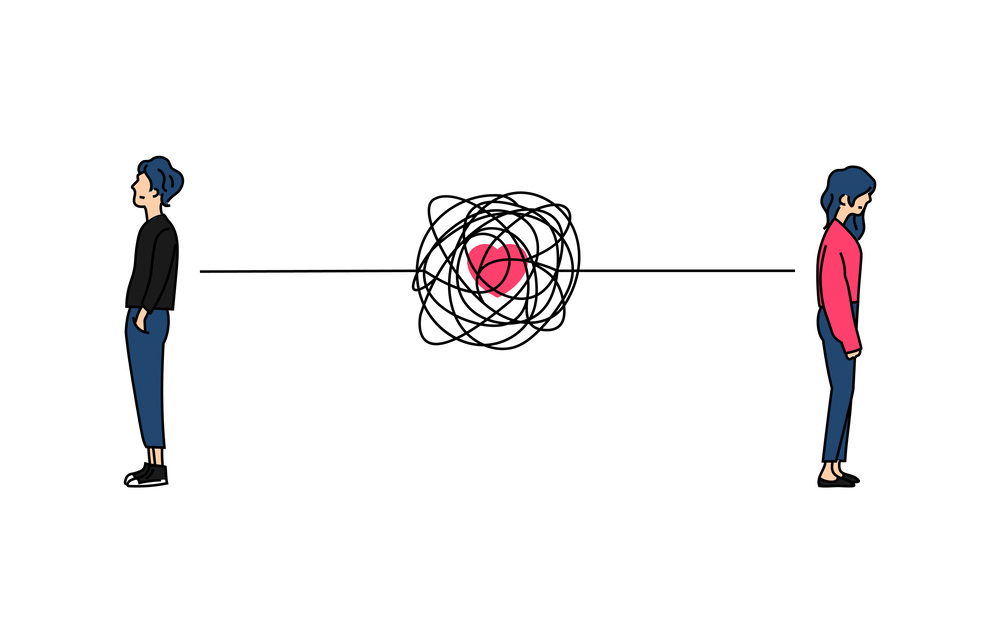
  • How to Let Go of Expectations and Pursue What You Really Want

    How to Let Go of Expectations and Pursue What You Really Want

    “There are two ways to be happy: improve your reality, or lower your expectations.” ~Jodi Picoult

    I grew up with a lot of expectations—from other people in my life and from myself. I had to finish school, do my best, finish college, get married, have children, and be a success in everything I did.

    My family was supportive; however, they never really pushed me to get active. I had to push myself, and I pushed hard.

    I finished high school, then college with an associate’s degree, then my counseling license, and then my bachelor’s. I got married and had a daughter. But I wasn’t happy.

    I didn’t really want to get married. I wanted to be independent and live on my own, and I wasn’t sure that this person was “the one.”

    I was attempting to follow the expectations I’d set for myself.

    My oldest sister is the wisest person I know, and she knew that this wasn’t right for me. Still, I was always stubborn, so despite others telling me not to do it, I got married anyway.

    I wanted to be a success, and being a success meant living up to my own expectations.

    I was supposed to be married at twenty-three, whether I wanted that or not.

    I couldn’t get a divorce because I would have had to admit that I was a failure. My expectations were stopping me from actually living life.

    I wondered if I could really complain. He was a good husband and father. One would think this would be enough to stay in a marriage even if I didn’t want to get married to begin with.

    One day I realized that I needed to be happy, and decided to drop the belief that I’d be a failure if I got a divorce. So that’s what I did.

    I’ve learned that some relationships are like milk. They go beyond the expiration date, and eventually they turn sour.

    Sometimes my old self wants to be mad and guilt me for “giving up,” but the new me says, “You’re courageous to stand up and do something that’s scary.”

    To do that, I needed to get in touch with what I really wanted and not worry about what others thought about me.

    If you’re also living a life you don’t love because you think that’s what you should be doing:

    Be true to yourself.

    Put yourself first because you cannot care for anyone else unless you care about yourself. Don’t worry about what others expect of you; think about what you really want for yourself. Letting go of expectations (self-imposed and from others) will set you free.

    Be honest with yourself about what’s possible for you.

    You can do more than you think. I was honest with myself that I could own a house without a spouse. I had a vision of my future and I didn’t need to stay in a situation I did not want.

    Set goals you can accomplish.

    Someone with unrealistic expectations will set a nearly impossible goal and give up before they start because of doubt. Set realistic goals, based on what you really want, that you believe you can obtain.

    I knew I wanted to complete my bachelor’s degree but gave myself a year break after completing my counseling license. If I pushed myself for a goal I was not ready for, I could have given up before I even started. Based on my time and resources, I knew I would set myself up for success if I didn’t rush.

    Learn to celebrate every tiny victory.

    Be proud of your small daily accomplishments rather than getting self-worth from big accomplishments only.

    For example, I needed to give myself credit for saving up money for my own house instead of waiting until I closed on a house to commend myself. Giving yourself credit as you go will help you stay motivated to keep working hard toward your goal.

    Ask for help.

    Don’t try to do everything on your own; you’ll get burnt out. Even if I know I can do it on my own, I ask for help. It’s a healthy balance between independence and depending on others. Asking for help also can get you outside of yourself so you can check where your expectations are.

    You have to have bad days to enjoy the good.

    Not every day will be a good one, but we wouldn’t know what a good day looks like unless we experienced bad ones too. When I have an exceptionally bad day, I tell myself, “Tomorrow can only be better!” When I have an exceptionally good day, I store it in my mind to remember later.

    I believe most things are possible if you put your mind to it. Being honest with yourself about what you really want will allow you to make choices that can lead to a happy, rewarding life.

  • Breaking Free from Your Family’s Expectations

    Breaking Free from Your Family’s Expectations

    Break Free

    “Stop worrying about pleasing others so much. Do more of what makes you happy.” ~Unknown

    There comes a time in everyone’s life when you break away from your family. Right? We are all familiar with this. It happens when you turn eighteen, go off to college, and move out the house—and out of the state or country for some.

    This is the expectation of society on the whole. Then what keeps us so bound to our families that we sometimes feel paralyzed, afraid of making the “wrong” decisions for our career, relationships, or simply how we choose to live?

    Despite each of us eventually breaking through the normal cycle of leaving home and starting our own life, many of us still feel obligated to our family, more specifically our parents.

    We feel like we have to choose a specific career path or be with a specific type of person for marriage and beyond. It’s like this unspoken obligation to please our parents, except we know that it can’t last forever and there’s got to be another way.

    There is another way. And I know because I’ve been living through it over the past several years.

    I was a rebellious child, mostly because my father was so strict and I wasn’t allowed to do anything—well, not much. (I’ll give him some credit, while other credit goes to my mother for allowing friends to come over on occasion.)

    But rebellion doesn’t serve healthy relationships and is bound to transform into healthy independence and respect at some point. For some, it’s much later in life than others; I’ve spoken with several people in their late fifties who still feel obligated to their parents yet wildly rebellious and, thereby, resentful.

    For me, it started with realizing that I value family. There’s no getting around that. I love my family. Period.

    I also love myself, which means that there’s no way I’m going to give up my heart’s desires and dreams to acquiesce to what they think is best for my life, like I had to all throughout my childhood.

    Yes, I’m a passionate woman who has a strong desire to break free of the practical way of living. And that’s exactly what I’ve done.

    At the same time, I demanded and knew in my heart that true love, especially love between family members, ought to stand up to tests like this.

    No doubt, it came with its price. There were several moments when I had to share my desires while lovingly holding space for my family to simply be. I came to them on several occasions over the last years (or they came to me and I opened up) with conscious decisions I made for my life.

    Now, let me reiterate this: conscious decisions. If they weren’t conscious, there was no way I could have done this. So, I shared with them my conscious decision while I stood in the fire of their adverse opinions and reactions.

    Standing in the fire means I held on to my desire and my love for family while I faced down their criticism. This was challenging. And it burned.

    I could feel it all throughout my body. But because I had consciously decided with a strong intention of love and a knowing that it came from my heart, I was able to hold on to my center—no matter what.

    I was able to stand there and let their criticism and opinions wash over me while remaining in a loving space. This would not be possible without that conscious choice.

    Since then, even though it’s been a process and there are still many fires to stand in, it has been increasingly easier to simply be me and share my “unpractical path” with them. Their expectations are beginning to subside, as they realize that my life may be a bit unorthodox.

    I love them anyway. Yes, you heard that right: I love them no matter how unorthodox my life is; therefore, I can influence them to drop their defenses and decide whether they’ll love or hate me because of the life I choose.

    By standing up for myself in this way, I let go of any power they had over me and hand it back to them, giving them the option to continue loving me or not. Because I know that no matter what they choose, I’ll always love them.

    Standing up for yourself isn’t an easy process. It’s especially hard when you’re trying to build a life for yourself that you actually love, because that’s the time when you most need support.

    Holding on to the earnest vision that only good can come from standing in your heart’s desires, you’ll realize what true love really is, and it will completely reframe how you approach life and relationships.

    Family often has no clue of the ties and chains they’ve placed on you; therefore, it’s important to come from a loving place when standing your ground and claiming your life.

    They don’t know what they’re doing. Would you punish them for that? I wouldn’t. I didn’t. I chose to love them anyways, no matter what, the same way I desire to be love, no matter what.

    Break free image via Shutterstock

  • How to Cope When People Disappoint You

    How to Cope When People Disappoint You

    Disappointed Woman

    “Blessed is he who expects nothing, for he shall never be disappointed.” ~Alexander Pope

    Growing up, I had a wonderful relationship with my mother. We did all the usual mother-daughter things together—went shopping, had brunch—and we supported each other when my father left.

    In 2011, I was happily pregnant. I felt supported by my family and ready to take on motherhood. My husband and I were elated by the birth of our little boy.

    It’s fair to say that I may have been a little naïve about what was to come. I knew it would be hard work, but I didn’t quite realize how hard.

    The other expectation I had was ongoing support from my family. You know, the kind of situation where family (both parents and siblings) rally around you to welcome a new little person into the world. The kind of situation where there are regular visits and an influx of babysitting offers.

    In particular, I expected the bond with my mother to strengthen—because in my mind, having your first child is the time when you are deeply supported by your mother. What happened next fell entirely short of what I had imagined life to be like post-baby. I was utterly disappointed.

    I felt blessed for the birth of my little boy but resentful for the lack of support from my family.

    You see, although my little boy was healthy in the most important ways, he was a screamer. He was diagnosed with severe acid reflux, and we endured an extremely unsettled baby (and toddler) for the first eighteen months.

    My husband and I didn’t sleep for more than two hours per night (on shifts) for the first four months, and it improved only marginally from there. There were feelings of despair, helplessness, and confusion as we paced the floors trying to help our little boy.

    At first, my mother stayed with us in our house and helped us tirelessly. But at month four she relocated overseas. By this time, I felt disillusioned by the experience of having an unsettled baby, and disappointed that what was supposed to be a beautiful time had become somewhat negative and relentless.

    Looking back, I realize expectations played a huge part in my disappointment.

    I had expected a blissful experience—picnics in the park with my (sleeping) newborn! My disappointment was closely linked to my expectations of how it would be, with my baby, and with support from my family.

    Had I not expected a certain outcome, I would not have felt so low about what occurred. Had I been more open-minded about what may eventuate, I may not have felt abandoned and resentful at a time when I needed the most help.

    My little boy is now healthy, happy, and three. Granny has moved back to this side of the world, and she visits weekly. There is still minimal involvement in comparison to the vision in my head, but I have come to terms with it. Acceptance is liberating sometimes.

    The following philosophies have helped me to be more at peace with my own feelings, and you may find them helpful when facing disappointments in your world too.

    You have the right to feel what you feel.

    So don’t ignore your feelings of disappointment. But try to obtain a renewed sense of the other person’s perspective.

    We all have different expectations.

    Most people are inherently good. They are on their own journey, and although disappointment can feel personal, it’s often not. The other person’s expectations are simply different to yours.

    Disappointments aren’t always all bad.

    What may seem like a challenge may be a blessing in disguise—or a blessing in waiting; it may only be a matter of time before you recognize that your disappointment is actually the universe working its magic for you. For example, my challenging start with my first born has led me to support other mothers through their own hard times.

    It helps to shift your focus.

    Resolve to do things that bring you joy. Focus on what is new and good, start manifesting, and leave those disappointing thoughts behind.

    It will pass.

    No matter how deeply you are disappointed, in time you will move through the feeling.

    Weed out the people who consistently disappoint you.

    Be mindful of people who regularly disappoint you or let you down, and make more time for those who don’t. Maintain a positive sense of yourself through happy relationships with people who are uplifting and energizing.

    We’re all on our own paths (even grannies). We have our own lives to live, our own choices to make, our own wishes and wants, and our own free will.

    Our closest connections can’t be expected to live on our terms, or to live inside the box we have created for them in our minds. So release your disappointment and get ready for the next adventure the universe will send your way.

    Disappointed woman image via Shutterstock
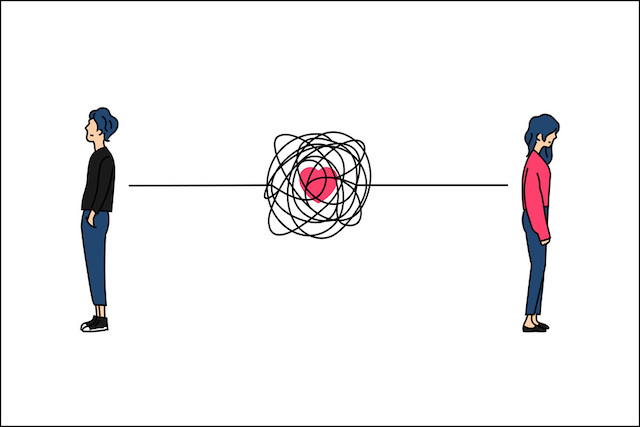
  • 3 Things I Did to Relax When I Was Stressing About Reaching My Goals

    3 Things I Did to Relax When I Was Stressing About Reaching My Goals

    “Every day brings a choice: to practice stress or to practice peace.” ~Joan Borysenko

    Stress and my own expectations were killing me. I was taking care of my physical health with exercise four to five days a week, eating right with lots of plants and vegetables, and sleeping enough, but my health was getting bad.

    I had IBS that was getting worse, and I wasn’t sleeping well (even though I spent enough hours in bed). In other words, I was doing everything right, or rather, all the external physical stuff right.

    I was doing something that virtually everyone agreed was going to make me happier: I was building a side business to fund my freedom from my day job.

    Finally, I had taken the plunge to pursue one of my biggest, scariest, most exciting dreams.

    I would fantasize about being able to do what I was passionate about every single day: help people live healthier, happier, more “whole” lives.

    I couldn’t wait to turn in my two weeks notice and wake up every single day early in the morning with the fire and passion to make a difference in people’s lives—and actually get paid to do it! It sounded like a dream come true.

    Fast-forward one year: I still hadn’t quit my job, and I was living in a nightmare.

    Some days I had slight panic attacks because I would tell myself I would quit my job soon, but my passion business wasn’t making enough money for me to quit comfortably without freaking out.

    The expectations I put on myself were crushing me; I thought I would be at a certain benchmark by a certain date, and I hoped I would be somewhere that I currently wasn’t in my business.

    I was being crushed and crumpled under the weight of my own expectations and goals.

    Something that originally woke me up in the morning inspired and ready to roll was now drudgery—something that I constantly associated with pain and failure.

    There weren’t enough clients, there were too many things I was trying to figure out, working twelve or more hours a day was wearing me out, and I was nearing burnout.

    Nothing seemed to be enjoyable anymore. And one night, when I (yet again) couldn’t sleep, I had an “aha” moment.

    “What a horrible irony. I started this side thing, working on my passion every day, with the hope of one day getting compensated for doing something I loved. And now I wake up every day dreading both my job and my ‘passion’ business. How did it get to this point?”

    After sitting down to think about my own goals, my passion, and what was destroying my happiness, I learned a few things:

    1. Remove expectations and find flow.

    So much of the initial stress was self-imposed. Actually, all of the stress I had each day was self-imposed.

    I thought back and realized that I’d stressed myself out with almost every goal: health goals around the New Year, personal finance goals, and now my own business/passion goal.

    How often do we place these expectations on ourselves—“I’m going to lose thirty pounds in sixty days!”—and once we don’t reach them, get crushed and quit?

    The more this happens, the more our self-esteem suffers, and the more we internalize the story that “I’m a failure.”

    Even though I needed money in order to quit my job, I did a test: iInstead of focusing on the bottom line, I focused just on flow.

    I focused purely on the things I enjoyed the most, the things I was most motivated to work on, and I focused on pushing myself forward every single day rather than meeting random goals like “losing thirty pounds in the next two months.”

    2. Focus on growth, not hard deadlines.

    By far, the best thing I ever did for myself was set only one goal: get better each day.

    No other goals and no more deadlines.

    Deadlines always produced massive stress in my life. Did they work? Sure, sometimes.

    But every time they resulted in pressure and discomfort. And often they didn’t work because I didn’t accurately estimate how much time it would take to achieve them, since I was doing things for the first time.

    Whereas every day used to be stressful because I was always measuring how I stacked up against my goals, now every day was enjoyable because I just focused on getting better each day.

    To say this was a major relief would be an understatement!

    3. Forget the timeline and focus on enjoyment.

    There’s an old Tony Robbins saying that goes something like this: “Most people overestimate what they can do in one year but underestimate what they can do in ten years.”

    Almost all the anxiety, panic, lost sleep, and stress occurred because I had an artificial timeline: I wanted to quit my job now. So I wanted to reach XYZ goal by XYZ date—and when I didn’t, it would cause anxiety and panic because I was resisting reality.

    As an experiment, I spent thirty days without any timeline.

    That meant no goals, no benchmarks, nothing.

    It didn’t happen overnight, but over the coming months I slowly regained that passion, love, and zest I had for life. And my “passion” business regained its former “passion,” which had disappeared in the face of my expectations, stress, and anxiety.

    I’m proud to say with these three subtle mental shifts that dramatically simplified my life, removed deadlines and pressure, I was able to focus on self-growth and my sanity returned.

    At the end of the day, the self-imposed stress and anxiety caused by deadlines and setting too many goals were more damaging than the benefit.

    I realized that it was only once I stopped trying to control everything and trusted the process things started to happen.

    When we release expectations and focus on enjoying every day and working our hardest on growth—not madly achieving our goals as quickly as possible—that’s ironically when we reach our goals faster, and with less stress, than ever.

  • How to Let Go of Expectations: Lessons from My Dog

    How to Let Go of Expectations: Lessons from My Dog

    Stay committed to your decisions, but stay flexible in your approach.” ~Tom Robbins

    Have you ever finally gotten something you longed for only to find that things didn’t work out as expected?

    I know I have.

    I firmly believed that having a dog was the answer to some of my desires, such as having more meaning in my life and receiving love on demand from another life.

    I bought into irrefutable sayings like, “Dogs love unconditionally,” and, “Dogs are man’s best friend,” and, “Dogs are loyal.”

    As it turns out, the reality can be very different. And yes, those statements are true, but the results of expectations don’t manifest out of thin air. It takes patience, understanding, and a willingness to give more love than you take.

    A Day That Changed Our Lives

    My partner and I talked about having a dog for a while. He set his heart on West Highland Terriers because of their friendly, playful, and gentle nature. We couldn’t decide on the finer details, like shall we get a pup or “rescue” one that really needs a new home?

    Not having children, we thought a dog would be an ideal way to introduce some fun, responsibility, and meaning into our lives, and of course to get an abundance of joy and love. We fought our own demons around the same time; my partner had the blues, and I was still searching for myself.

    Then, by a series of “coincidences,” we found Mowgli. We spent hours scanning the classifieds and had gone to see a couple of Westies already, but none of them felt right.

    One cold February day, we visited a local shelter and set our eyes on an interesting-looking yellow terrier, one that would do.

    As we took him out to the playpen, we admitted to the keeper how we gave up on finding a Westie because the right one was hard to come by. Our jaws dropped when he said, “One’s actually coming in tomorrow. He’s five years old, and his name is Mowgli. Would you like to see him?”

    We could barely contain our excitement!

    My partner turned up the next day, and his first words will always ring true in my ear: “He’s perfect.” He walked him tirelessly for two hours every day until we could take him home a couple of weeks later.

    What Have We Done?

    But things weren’t as smooth as I had pictured. It took me a while to fully accept this little creature into my heart and life.

    We knew he had some behavioral issues that weren’t apparent until we brought him home.

    The first time I realized this was when my partner left the house and Mowgli repeatedly displayed his disapproval by messing in the wrong places. And my empathetic reaction to this? “I see now why they wanted to get rid of him!” However, the situation was more complex.

    After some research, I discovered he suffered from separation anxiety—common among some rescue dogs. Knowing this made it easier to understand what he was going through, and we started to take corrective action.

    Ironically, I was also dealing with my own anxiety problems, and this little dog helped me in some ways to change. I unreasonably chastised him when I was no better. As time went on—using ingenuity and creativity to calm him—small improvements became noticeable.

    Then came the jealousy; he formed a strong bond with my partner, and I felt left out. He didn’t love me as much. Every time I took him out, he didn’t want to go—he kept pulling me back home. I lost sight of the bigger picture and started to resent this poor animal.

    A Sobering Wake-Up Call

    The wake-up call came when he was attacked by another dog in a field and got injured. We all limped home shocked and bemused. My partner and I were irresponsible to let him off lead since we barely even knew him. We could’ve lost him right there.

    I took time off work to look after him, and we began to get closer. I nursed him and took him on walks, carefully introducing him to other dogs. While I got to know local dog owners, I faced my own fear of people too.

    A year on, we have a much better relationship. He still prefers my partner, but I no longer have bad feelings about him. I now understand his needs and emotions better, and I fully accept him and the way he behaves.

    On reflection, he was also teaching me some important lessons—I needed rescuing from my own expectations and rigid beliefs.

    He’s a content little dog most of the time, and we love having him around!

    A Dog’s Wisdom on People and Life

    Take a good look in the mirror.

    The dog’s behavior was a catalyst for me to recognize I needed to change some of my attitudes.

    He was afraid of being apart from my partner, and I was afraid of interacting with people. But he required daily walks, and inevitably we’d meet humans and canines along the way. Slowly, he got used to spending more time with me, and I was getting better at small talk.

    Sometimes you get so caught up with everyday life that it takes a big change to jolt you into reflection on how things really are. Use difficult events in your life as reminders to take a good look in the mirror and ask, “How can this help me?”

    Cultivate patience and let events unfold.

    Clearly, you cannot hurry bonding with a dog. Same goes for human interactions—deep and meaningful relationships will take time to form.

    Chatting in the park regularly can make friends out of acquaintances. I now know a number of people from town who I would have never met if it weren’t for catering to my dog’s needs. If something goes awry, try and try again.

    Befriend acceptance.

    Be willing to receive wholeheartedly what you are faced with instead of judging and wanting to change it. I learned that it was better to acknowledge how things were rather than fighting them and wishing to be different without doing the work.

    Be more present.

    You can immerse yourself in the right now instead of focusing on how things should be. Whatever you experience in the moment, embrace it. And some of it won’t be pretty. But each of them contributes to your understanding and reaction to events.

    Release the need to control.

    One reason you become paralyzed by expectations is because you want to feel in control of every situation coming your way—to be able to deal with everything efficiently and to have a handle on them. But, it’s okay to be out of your depth and admit you don’t have all the answers and may need to learn something.

    Find your role.

    You’ll get more satisfaction out of a seemingly lost situation if you can recognize your part in it.

    I didn’t get instant or unconditional love from this dog, but I had another role to play in supporting both him and my partner while we were figuring him out. I found the answers for his behavior, which enabled me to see my value, making me a whole lot happier.

    Adopt a flexible outlook.

    Consider letting go of rigid beliefs and give yourself permission to change your mind. We all hold onto some values and ideals that we think define us. Sometimes we don’t see the woods for the trees because of recurring patterns we are trapped in.

    Look for opportunities.

    Go beyond the initial projections you had about a situation, and be willing to see what else may be possible. It could be the ideal time for gaining better understanding about yourself and expanding your horizons, thereby allowing for growth that was not apparent before.

    Remind yourself of the bigger picture.

    When all else fails, think of the big reasons for why you’re doing something. Why did we want to take the dog in the first place? A living, breathing soul in need of a forever home and a loving family to take care of him. In this light, all my prior expectations dissipated.

    Turning Around Unhelpful Expectations

    Expectations are like first dates. You put them on a pedestal to which they rarely match up. They confine and limit your vision, clouding anything else that may be out there.

    But they don’t have to paralyze you. Have an open mind. Have the courage to be wrong. Find the usefulness in seemingly lost causes.

    Like a wise old sage, you’ll become skilled at finding valuable lessons even when things don’t go as planned.

    And what you thought was the worst thing that’s ever happened to you might just turn out to be one of the best.

    Western Highland Terrier image via Shutterstock

  • How to Stop Feeling Inadequate and Let Go of Heavy Expectations

    How to Stop Feeling Inadequate and Let Go of Heavy Expectations

    “No one is useless in this world who lightens the burdens of another.” ~Charles Dickens

    When I was seven years old, my parents had me take an IQ test for an application to a private school near our new home.

    I vaguely remember sitting with the proctor, answering question after question about vocabulary and spatial recognition. To seven-year-old me, the test was nothing more than a fun logic puzzle, and I delighted at each question I knew the answer to, bright eyed and enthusiastic.

    While I don’t recall my exact score, the numbers were unusually high—in fact, so high that the proctor expressed her surprise to my parents that I was not suffering from some form of high-functioning autism.

    From age seven on, I was placed in the most gifted classes in both public and private school. I enjoyed the challenge, and the attention I received, until I became a teenager.

    In my transition to adolescence, I became aware of the incredible teenagers around the world writing novels, promoting peace, and inventing the types of machinery and technology that change the world.

    These individuals inspired me, but secretly implanted a deep sense of fear and angst in my mind.

    For as long as I could remember, people had been telling me, “Avery, you are going to do amazing things with your life,” while I spent my life like any other teenager: school, sports practice, homework, food, bed, repeat. I was not accomplishing any great feats.

    I slowly began to feel like I was failing to fulfill my full potential as a human being.

    Being exceptionally gifted, once a joy and privilege, had become a toxin to my emotional well-being. I was all consumed by my ego telling me that I should be more—or I was wasting my intellect.

    This led me to sporadically start novels, blogs, articles, anything to prove myself worthy of my intelligence. I would give up on each one quickly and move on to my next idea, as unsuccessful as the first.

    No matter what I tried, the world still did not know my name—the only thing, I thought, that could make feel adequate.

    About a year ago, it dawned on me that my pattern of self-dissatisfaction and disappointment was unsustainable.

    No matter what I did, no matter how many people knew my name, it made no difference. I always craved more, and anything less than becoming the next Einstein was a personal failure.

    So, with that in mind, I began the arduous process of redefining success in my life. The only way I could do this, I learned, was to help others realize their own goodness.

    I began with my personal mantra:

    “It is better to change one person’s life than to have 1,000 know your name.”

    I stumbled upon this realization somewhat suddenly, after taking a two-week long trip with my grade. I invested myself in helping my friends with sickness and fear, and I came away changed; I finally felt like I’d accomplished something permanent and meaningful.

    Instead of living for recognition from the world, I began to look for satisfaction through my personal relationships. I no longer needed to change the world to be successful; I just needed to know that I had changed someone’s life for the better.

    Surprisingly, this is a relatively easy task to accomplish with discipline. By investing myself in relationships with my friends, acquaintances, and partner, I began to receive incredible feedback.

    People genuinely began to thank me—not for being kind, but for literally changing their lives.

    The key for me was genuinely listening to others, and caring about their needs and opinions. Helping people came naturally to me, and remains the best gift I can give to others; not some profound piece of writing or technological advancement.

    Typically, the people around me who I listened to had similar issues of inadequacy. I was not alone. They too believed themselves to be failures, unable achieve their potential, whether that potential was straight A’s or a sports scholarship or being kind.

    I could see the innate goodness of the people around me shining through, and it pained me to see them suffer from feelings of inadequacy. I knew, deep down, that everyone around me was good and pure and beautiful, as all children of this earth are.

    As a result, I realized through time that if the people around me were all beautiful and good, as all people are, then I must be good too—just the way I am and always will be.

    By loving others, I had already achieved my purpose on this earth: to be the inherently sympathetic and kind creature that all human beings are.

    I now actively seek people around me who need my care, and indulge them when necessary. Love has taken precedence in my life over material accomplishment, as it truly should. I have closer, more meaningful relationships, more acquaintances, and an exponentially higher self esteem.

    The beauty is, people reciprocate genuine love: the people you help will be there for you in your times of need, too. Love is a self-fulfilling prophecy that can only be positive for all parties involved.

    At the end of the day, people simply want to receive love and attention; and through giving others these things, I not only improved their lives but also my own perception of myself.

    I was able to focus on the immediate positive impact my life was making on that of others, and I finally felt purposeful and that I was leading a meaningful life.

    The truth is, not everyone can change the entire world, and not everyone needs to. All we can do is give as much love in our lives as possible, treat ourselves kindly, and leave the world a more positive place than we entered it.

    That is all I can ask of myself, and I try to leave all other expectations of myself behind—the ones of impermanent success that can only bring me dissatisfaction and suffering.

    Maybe thousands do not know your name, but you have the power to completely change the lives of those around you with love; and that, I’ve learned, is far more gratifying and important.

  • Releasing Expectations: It’s Okay to Be Right Where You Are

    Releasing Expectations: It’s Okay to Be Right Where You Are

    “The most important point is to accept yourself and stand on your two feet.” ~Shunryu Suzuki

    When I was younger, I am sure I was a little bit arrogant. I had high expectations for my life. They haven’t come to pass. I haven’t achieved whatever I thought I would achieve. It turns out that I’m an ordinary human being struggling with ordinary things.

    Now that I’m in my forties, I have experienced disappointment, failure, and confusion. Many times I have lost sight of the path, and sometimes it’s felt like there never was one.

    I expected I would be a writer. I did not expect to be a secretary. Not that there is anything wrong with that, it just wasn’t what I dreamed of.

    I didn’t expect to have periods of unemployment, loneliness, or despair. I didn’t expect to be just like everyone else. Maybe I thought I was special, different, exempt. Maybe we all think that when we’re younger.

    It’s not like I had it easy in my early life, but by my twenties I’m sure I thought it would all go to plan. It never went to plan. I’m not sure there ever was a plan.

    And yet, maybe it has gone to plan, just not my plan. If some higher power is running the show, maybe this is part of the plan.

    If I want to express the highs and lows of being human, then I need to have lived them. That’s what being a writer is. It’s not just being bulletproof and full of ideals. It’s making the dream right there in the gritty groundedness of everyday life.

    I also realize that what I have achieved is not that important. What’s more important is what I’ve learned, and much of that didn’t come from success. Often my lessons came from the struggle of being human—wanting, trying, failing, and wanting and trying some more.

    So at this stage, with my dreams still tugging at my heart and a lot of struggle behind me, I finally understand something about self-acceptance.

    Here I am, right now. This is where I am and it’s okay.

    Right here, right now.

    I am where I am right now. That’s my starting point. I might wish I were further along, but I am where I am. I have to accept where I am or I can’t move anywhere, let alone forward.

    Where are you now? Why is that okay?

    This is my life and it’s good.

    When I come back to gratitude, everything gets better. My expectations may be higher than my reality, but really, I have so much. Many people lack the basics: good food, clean water, access to healthcare, literacy. Even at the simplest level, my life is blessed.

    What do you give thanks for?

    A divine plan.

    It does seem that life isn’t running according to my plan. Maybe there is a bigger plan. I may not always like it, but maybe it’s perfect after all. I don’t know what the Universe has in mind. It would be very arrogant to think I did.

    How could this be part of a higher plan?

    Being very human.

    Experiencing disappointment, struggle, and failure is part of being human. It helps us feel for each other. I am fairly idealistic, but at this age I know that I am pretty human. I am full of faults and mistakes, and a few brilliant moments too.

    How do you feel most human in your challenges? Why is that good?

    No better or worse.

    In my twenties I went to acting school. When you act, you explore the potential to be many different selves. We all have the potential to be an angel or a devil. Most of us are in between, but it might have worked out differently.

    Why are you no better or worse than anyone else?

    Favorite faults.

    Honestly, sometimes our faults are simply our characteristics. Maybe you’re bossy but a great organizer, or a natural leader. Maybe you are a rebel who challenges the way we think and act. Maybe you channel your anger and make others laugh at your daring. Great comedians do that.

    What is your favorite fault? How could you use it?

    How it looks to the world.

    We are often much harder on ourselves than anyone else would ever be. You may think you’ve achieved nothing while, to the next person, you have everything. It’s all relative and it’s all perspective. None of us have an unbiased lens.

    There is no point wishing you were more than you are. It may all be happening this way for a reason. Even if there is no reason, the meaning you choose will make the difference.

    At the end of our lives, it won’t really matter how many toys we have or even what we have achieved. It will matter that we appreciated this one precious life. It will matter that we enjoyed and explored being human. Love and experience; that’s it.

    Let’s not give up on our dreams. Let’s keep moving toward them. Just play the game lightly with little attention to the score.