Tag: expectations

  • 5 Meditation “Mistakes” That Increase Our Suffering

    5 Meditation “Mistakes” That Increase Our Suffering

    “If your mind is empty, it is always ready for anything, it is open to everything. In the beginner’s mind there are many possibilities, but in the expert’s mind there are few.” ~Shunryu Suzuki

    So many of us come to meditation through our suffering. Nearly everyone who has come to walk the spiritual path can spin a tale of sorrow, frustration, and often devastation. Through our life struggles and difficulties, we become conditioned into habitual patternings of mind that seem to offer us no escape, and often turn to meditation to find relief.

    I always say that anxiety was my first spiritual teacher and it began teaching me at a very young age.

    I spent a great deal of time and effort attempting to control my experience in order to limit my suffering. I’ve now come to see that the illusion of control is the root of anxiety, as our stresses are exacerbated by our inability to accept “not knowing” what will happen in life.

    In my early forties life handed me a situation that would eventually overpower my ability to control life. Over a seven-year span, my son Mark struggled mightily, suffered deeply, and fought gallantly to try to fend off addiction and mental illness.

    Lost within my own mental struggles, I attempted to meet his difficulties through my habitual need to control life. Anyone who has ever had a loved one suffering with addiction knows that we’re never in control of the situation. Nevertheless, I foolishly pressed forward and selfishly tried to control Mark’s experience.

    I can remember the day Mark was diagnosed with schizophrenia. My inner controller had an “I can’t do this anymore” moment and finally came to the stark realization that there was no way for me to control his situation.

    Something shifted within me, and I felt the “controller” release its grasp on me. There was nothing to control. There was just life moving, and life was just meant to be lived as it comes.

    Tragically Mark lost his fight against addiction in 2017. I’ve come to see that Mark was my spiritual guru the entire time, teaching me about compassion, how to love unconditionally, and how to let go of the need to control life.

    Mark opened the doorway to meditation for me by teaching my how to let go. He opened up my heart to accepting what is, as it is and taught me how to start shedding my mind’s old habitual patterns of conditioning.

    I’ve been formally “sitting” for about four years, and although I feel very good about my practice now, I’ve made my fair share of “mistakes” along the way.

    One of the biggest errors I made was trying to use meditation as a means to an end. I wanted to feel better and thought if I sat “well” enough then I would find peace. I initially failed to realize that this mind that was trying so hard to find relief from suffering was the same mind that had created my suffering.

    I spent a lot of time spinning my wheels trying to find the right formula to quiet my mind. I thought if I concentrated hard enough, if I focused on the breath the right way, if I limited external noises and distractions… then my mind would quiet down and I would find truth. The mind was the one constantly looking for the right formula, the right path, the right insight.

    It took me nearly two years to finally realize that no matter what the mind decided, if the method came from the mind, it would actually prevent me from relaxing into the silence beyond the mind.

    This was just one of the many mistakes I’ve made. Putting too much emphasis on how long I sat in meditation, trying to recreate blissful feelings, trying to determine if I was enlightened or not, all contributed to perpetuating my monkey mind.

    If you’ve had similar frustrations with your practice, don’t be discouraged. Don’t stop. There’s no wrong way to meditate, because all “mistakes” only serve to exacerbate our suffering, and therefore increase our earnestness to come back to try meditation again. Life is very good at putting in fail-safes against our own ineptness.

    If you’ve started meditation and stopped, started and stopped, let years go by, started again and stopped, you’re in good company. Everyone gets frustrated and quits a few times before developing a good practice. In actuality, one must stop “attempting” to meditate before one actually begins to awaken to what meditation is all about.

    So let’s go into a bit more detail on these mistakes we want to avoid…

    1. Trying to quiet the mind

    As I touched on earlier, the number one reason we sit in meditation is we desperately want to silence the inane chatter within our mind. Our monkey mind is quite relentless. It’s like the Terminator: “It can’t be bargained with. It can’t be reasoned with. It doesn’t feel pity, or remorse, or fear. And it absolutely will not stop, ever, until you are…” spiritually awakened.

    So why shouldn’t we try to quiet the mind?

    The best way to answer this is to ask: Who is trying to silence the mind? Take your time and examine this. What you will find is that your mind is trying to quiet the mind. How could that which is the root cause of the problem also be the source of the solution? It can’t. It won’t listen to our desire to be freed. It’s only interested in furthering its continuity and increasing its own significance.

    Our mind wanting to quiet our mind creates additional inner conflict. This inner conflict provides more fuel to the mind, and so our attempt to meditate and quiet the mind has only led to more struggles and frustration.

    In order to circumvent this dilemma, we must “do nothing.” Just sit and observe whatever comes and goes. Patient, passive, non-reactive observation is your superpower. Whatever thoughts arise, let them come. Whatever thoughts go, let them go.

    It might take a bit of time to settle into observer mode, but once we realize it’s possible to sit and observe the mind from a point of neutral awareness, the mind’s reign of terror is coming near to an end.

    2. Sitting too long too soon

    I think many of us sit down in meditation envisioning a transformation into a Zen Master on day one. We’ve heard that an hour of meditation is a really good meditation, so we decide to sit for an hour.

    Within the first minute we’ve relived every embarrassing event in our life from preschool up until this current moment. We sit and wrestle with our thoughts like a chihuahua puppy tied to a firehose on full blast. We’re tossed around like a rag doll in this mental octagon by our own mind. Beaten to a bloody emotional pulp. Our will is broken…

    We quit after five minutes and vow to never sit in meditation ever again.

    Don’t do this to yourself. Start slow! Meditation is no different than lifting weights. If you try to do too much too soon, you will only end up hurting yourself.

    Do one or two minutes for the first week or two. Add a minute or two every week after that and try to slowly work your way up to at least twenty minutes per day.

    This is not a competition. You don’t get any awards for persevering through harsh conditions or adversity. Enjoy the journey. Take your time.

    3. Quitting too soon

    So we’ve worked our way up to twenty minutes a day. We’ve sat for twenty minutes for two days now and we feel… nothing. Everything feels the same. The mind is still wandering. The monkey mind is still in charge, still kicking us around, and we’re getting frustrated.

    The mind is whispering that this is all a really big waste of time and you’ve fallen for it again! How long are you going to listen to that spiritual guru who is unemployed and has no money? Of course he is at peace. He doesn’t ever do anything…

    Don’t give into the mind.

    Meditation is like walking in fog. We don’t notice much of anything going on, and then we realize that we are soaking wet. If the mind begins to pressure us about sitting without seeing any results, then just observe those thoughts as well.

    There is no set time frame for the mind to settle down, but if you are patient you will begin to experience “gaps” of silence in the mind. These small gaps are a good indication that the mind is getting tired of not getting a reaction out of us. So, be patient. Relax. Take up the attitude that you will sit until your last breath, and having no results is not going to deter you.

    4. Trying to recreate meditative phenomena

    The bliss! Give me some more of that bliss. Can never have enough bliss! Anyone who has come to experience the feeling of euphoric bliss in meditation has definitely tried to recreate it. If you say that you haven’t, you’re lying.

    Anything that occurs within the meditation is phenomena. Bliss, lights, colors, auras, sounds, images, dreams, out-of-body experiences, clairvoyance, receiving messages, full-body orgasmic euphoria, alien contact, angels, numbers, time travel, space travel… It’s all just phenomena and it has no real significance in the grand scheme of awakening.

    If you become infatuated with phenomena, this means that the mind has become infatuated with phenomena. The point of meditation is to relax into the awareness of life moving. Awareness of life moving includes awareness of mind moving. If we “fall into” the role of mind trying to recreate our meditative experience, then we’ve most likely fallen out of the neutral witness role.

    A good rule to remember is to relax and allow whatever comes to come and allow whatever goes to go. Nothing needs to be created. Nothing needs to be removed. Just relax with what is.

    5. Holding any expectations about your practice

    It’s natural to begin a meditative practice because we want to feel better. Our mind is giving us trouble. Our relationships never work out. We are overworked, underpaid, and complete balls of stress. We are grieving over loss. We are tired. We sometimes just want to give up. It’s all too much.

    Again, who wants to feel better? Who is holding this expectation that meditation is the cure all that we’ve been waiting for? The mind! The mind is interested in feeling better, so again, we are creating more inner conflict. The mind doesn’t like the way life is moving, it wants to make life better. We are playing tug of war with ourselves…

    Any expectation of getting something out of meditation delays getting anything from meditation. If you don’t want anything, then you will get something. That something is peace of mind.

    Peace of mind arises with the deepening of awareness of what is. When we sit in meditation without expectation, the mind’s inner conflict dissolves. There’s no fuel added to the mind when we don’t expect to get anything. Relaxation without expectation is how the mind begins to quiet down.

    So, to summarize, even though we may make some or all of these five meditation mistakes, life will continue to use our suffering as a way to bring us back to our spiritual practice and back to meditation.

    Don’t try to quiet your mind. Don’t try too much too soon. Don’t quit too soon. Don’t try to recreate a pleasurable meditation session. Don’t hold any expectations.

    Just sit. Relax and be with what is.

  • How to Let Go of Your Family’s Expectations and Be Who You Want to Be

    How to Let Go of Your Family’s Expectations and Be Who You Want to Be

    My parents often spoke about coming to America from Nigeria with one portmanteau.

    I imagine that their suitcase was filled with their hopes, dreams, and expectations, and in many ways, I feel like I was metaphorically handed this suitcase of desires and things the day I was born. It would now be my load to carry and make sense of.

    But when I opened that portmanteau, I realized that the clothes didn’t quite fit, and there were notebooks full of expectations I would never meet.

    Although I had a reverence for this great object and the hands that had passed this legacy to me, I wasn’t sure if I could carry all that was in it.

    I think this is the dilemma of any child in a household filled with hope and expectation, and specifically for the immigrant child, it is often one of the defining questions of our existence. The idea of having a load you are destined to carry, even if you’re not sure you want to carry it…I can’t think of a more spiritual quest than this.

    We know all too well that there’s so much more in that portmanteau other than a simple hope or desire. Often, we find that there’s unreconciled feelings, a trauma here or there, grief, and a firm belief in what is right versus what isn’t. So then the question for the immigrant child, and any child who knows what it’s like to come from a family that has its share of challenges, is, What is mine to hold?

    In order to sift through all of this, I have had to rediscover who I truly am on my journey to recovery, especially as the daughter of Nigerian immigrants. Notice how I say “daughter,” which means I have to contend with a gendered reality where I am clearly a part of a larger unit. So these words—daughter and immigrant—imply that there’s a relationship existing between multiple parties with different understandings.

    If this wasn’t enough to deal with, when we think of Nigeria, Africa’s most populous nation that has birthed many people who have committed themselves to making their lives better in service of a vision beyond themselves…well, this lets me know that I come from a place where people have chosen to fuel their inner light.

    And like any place, this land that runs through my veins has also birthed people who could not see beyond their fears and chose (knowingly or unknowingly) to feed their inner demon.

    All of us, no matter where we’re from, and no matter what we know or don’t know about our particular ancestry, must contend with the fact that our familial histories often carry the light and the shadow. So then naturally, I have to acknowledge that all this complexity has been passed down to me. This was the true start of my recovery, understanding that I come from the very best experiences that humanity has to offer and the very worst.

    And let’s not forget that we’re immigrants living in the U.S., which means that we are now first and foremost considered Black people. So my life—like many of my counterparts—is a life of many understandings converging into one.

    I have always had friction in my life between who I am expected to be and who I really am. In a way, the expectations I brushed against sanded me down to my most vulnerable parts, where I had to grapple with who I wanted to be.

    In a previous reflection, I wrote about this vulnerability and exposure that led me to release a certain expectation that was expected of me in my family as it concerned religion.

    “When the God you are told to love is either a brute or woefully withdrawn from the deepest stirrings of your heart, you can become frozen to life. I’ll never forget the day my father prayed about my clothes. I was fifteen or sixteen, experiencing a rapid growth spurt, and experimenting with makeup, bare midriffs, and platform shoes. One afternoon, my father stood as the mighty patriarch, doling out a prayer for everyone in the family. Finally, he got to me: ‘Oh God, please take away the spirit of looseness from, Itoro.’ … I yearned for a closeness to my parents and to my culture, but I also wanted a life free from denial and religious absolutism, where I could feel at peace as I truly was.”

    Religious tension was one of the many reasons I imagined a life beyond the cultural expectation that a good daughter stays close to home.

    It is a code that many families live by, the hope that you’ll get over any arguments and differences and “make it work.” For the immigrant family, this code of ethics is often vital to our survival. If we all don’t support each other, who will? But really…who will?

    In short, there was something greater at stake for me to preserve, and it did seem to boil down to choosing family or the opportunity to become who I really am.

    That idea that a good daughter stays close to home and does not disrupt the family unit was a huge expectation to carry, especially because I had a need for independence at an early age. Everyone would be sitting in the living room watching a movie or gathering together, and I would be upstairs dancing or listening to music.

    It’s possible to love where you are from and yet want to be free of the expectations you must carry, and sometimes it’s necessary to let it all go.

    And there was much more letting go to do. As I followed the small voice that wanted independence, I began to define who I am in present time:

    A daughter will call her mother once a week and occasionally send pictures of her travels abroad. A daughter will make a new home and adopt a chosen family while she still holds the family she was born into in warm regards. A daughter will marry (or not) when the time is right for her and not a minute sooner…same goes for having a child. And a daughter is still very much the daughter of Nigerian immigrants, just maybe a daughter who lived up to a standard of her own making. Amen. 

    In my own experience, we’re often congratulated for our ability to carry a tough load. As Black women, we are often given accolades for our ability to do this and bear more than our share.

    For me, the ability to manage relationships that may not be healthy, carry cultural expectations, and achieve at a high level has been the marker of strength, meaning to do anything different shows weakness.

    However, I think that my true strength is determined by who I really am, and who I’ve always been is not the archetypal superwoman who can do it all. I’ve always been more on the sensitive and gentle side, and for me this is where my strength lies. My strength lies in the ability to put down the load and give up any expectation that would compromise my sense of integrity.

    Where do we go from here?

    The answer to the question of how we can free ourselves might be simple (i.e. just let go), but we know that the task of actually letting go is a difficult one. As one immigrant woman I knew said years ago, “I’ve already had to let go of so much…how much more change can one person take?” It takes a lot to give up the load, especially when there’s so much hope zipped into it.

    So here are three reflection questions that might help in letting go:

    What about my humanity do I need to embrace, challenge, and release?

    I think before you can become who you’re meant to be, it’s also important to know where you come from and what you’d like to preserve from your upbringing.

    In my particular embodiment as a first-generation Nigerian woman, I make it a point to honor this part of my story while making the necessary changes to broaden my perspective.

    I believe this question requires one to really develop an awareness for one’s habits and identify those ego stories that need to go.

    After sitting with myself for years, I realized that I was addicted to my anxiety. As a young girl, I always worried that I was doing something wrong and causing the adults in my life anger. Worrying about not being enough was an essential part of my framing, so essential that I wasn’t quite sure who I would be without it. It had shaped me for my entire life, so that feeling at dis-ease was my familiar state of being. But as I kept confronting myself I realized that it may have been familiar but it certainly wasn’t natural.

    I was presented with a choice: Do I want to keep this or let this go?

    Take your time with this, and if you are working with a therapist or support group, this might be a good question to work on in your process. I think of Eckhart Tolle’s quote in how I approach this question,

    “In essence, you are neither inferior nor superior to anyone. True self-esteem and true humility arise out of that realization.” So this question is one tool to support you in getting honest with yourself and accounting for who you are. What’s the truth you need to tell?

    What has carrying this load taught me about myself?

    I think this is explanatory, but to use myself as an example, in carrying this load I realized the stress and resentment that had built up in my life. I also realized that I wasn’t quite sure who I was without it. More importantly, I realized there were actually things within the suitcase I wanted to keep and integrate into my new way of doing things, so in ways, the load wasn’t entirely bad and wasn’t entirely good.

    What do I really want?

    It’s taken me decades to answer this question. Some people come out of the womb understanding their place in the world and their desires, but for many people, often we have other people’s wants and desires as our blueprints for what think we want. But if no one was there to validate or invalidate your hopes and dreams, and this was a talk between yourself and your soul, what would it be?

    I hope this helps in some small way, because letting go is complicated, and sometimes we just need the right tools and questions to help us get there.

  • How to Keep the Love Flowing in Your Relationship

    How to Keep the Love Flowing in Your Relationship

    “The beginning of love is to let those we love be perfectly themselves, and not to twist them to fit our own image. Otherwise we love only the reflection of ourselves we find in them.”~Thomas Merton, No Man is an Island.

    Have you ever noticed how with certain couples love and affection flow so naturally? Indeed, almost effortlessly. There is a good reason for this. These couples have learned to accept one another as they are, which leads to greater intimacy and a more vibrant love flow.

    When we don’t accept our loved one for who and how they are—quirks, idiosyncrasies, annoying habits, and all—we are communicating to them that they are not good enough. That they fall short.

    Who wants to feel that—particularly in matters of the heart?

    Simply put, when you don’t accept your loved one as they are, it dampens the love flow.

    Even porcupines know this! With thousands of quills attached to their body, they know that they must pull them in and touch paws, if they want to have a “close” relationship.

    If porcupines manage to find ways to “accept” their “loved” ones, quills and all, shouldn’t we be able to as well?

    Below are some key practices and mind-sets that will go a long way toward achieving that.

    Don’t Try to Change Your Loved One

    When you try to change another, you are not accepting them. Yet many of us constantly try to change our loved ones’ traits and habits or opine and advise what they should do differently.

    Myself included!

    I like neatness and order in our home, but it’s very difficult for my dear, loving wife to get rid of things, and clutter constantly piles up in our garage. In the early years of our marriage, I constantly tried to get her to dispose of unused items in our garage. I complained, pleaded, and even cajoled.

    She paid lip service to me for a while and removed some clutter, only to have it reappear days later. When I continued harping, I was quickly met with, “You try taking care of the kids, doing the shopping, doing the laundry… and keeping the garage neat!”

    Not exactly a recipe for a loving relationship!

    I eventually realized that I was powerless over changing her ways, and that my continually trying to do so impacted our love bond.

    As I began accepting my wife for who and how she was—clutter and all—it enhanced the love flow. Our bond is stronger than ever today.

    Moreover, my acceptance brought me an unexpected gift. It allowed me to reflect on why (and when) I was so easily disheveled by clutter. I discovered it was almost always tied to my feeling anxious and stressed, usually about work or finances, or not being productive, or some general malaise.

    Addressing these “personal truths” brought me peace of mind, and my wife’s clutter no longer bothered me.

    Simply put, it was about me, not her!

    It will help reduce your urge to control your loved one if you ask:

    Do I really have the power to change my loved one?

    In most cases, we don’t. The simple truth is that people will change when and if they choose or are able to do so, not because we want them to.

    Reduce Your Expectations of Your Loved One

    High expectations of our loved ones easily lead to disappointment, resentment, and disconnect.

    My friend Margaret shared how her high expectations constantly dampened the romantic flow:

    “Expectations have ruined countless intimate relationships I have had. I start out being fun and easygoing, but once the relationship begins to build, I start to expect a certain level of communication, contact, and time together… I almost don’t know I’m doing it. I hear the person say they feel pressure and like everything has to be scheduled, yet I continue. It is horrible and not the way I want to be. I understand I need to let go. I just don’t seem to know how to do it.”

    Margaret’s quandary is not uncommon: few expectations at the beginning when the “love stakes” are low, and steadily increasing as the relationship becomes more serious.

    One thing is clear, however: When you expect too much of your loved one, you aren’t accepting them.

    Underlying many of our expectations are core needs we look for others to fulfill. For example, we may believe if our partner would be more nurturing or spend more time with us—instead of working so much or doing other things—we would be more content and less lonely. Or if she took more interest in our endeavors and passions, they would be more satisfying.

    Consider, though, whether we are truly better off if our loved one does as we want or expect. Is our happiness and well-being that dependent on them? I suggest not.

    When our focus and reliance is too much on our loved one, we lose sight of the changes and steps we can make to improve the relationship.

    It can help reduce your expectations, if you ask yourself this question:

    Are my needs something that my loved one can realistically fulfill? 

    Most often they are something that only we can.

    Honor Your Loved One’s Choices

    All people, including our loved ones, have their own life path and are entitled to make the choices and decisions that influence and ultimately determine that path.

    We can have compassion for our loved ones and sincerely and lovingly want what’s best for them, but we cannot truly know what is best for them.

    That’s because we look at things through our own history, prisms, and filters, not theirs. Hence, we should accept their choices, unless we or others are harmed by them. When we don’t, we aren’t accepting them as they are, and risk impeding and jeopardizing their path.

    To be sure, this is not always easy. I have learned that I need to be more aware of my controlling inclinations and keep my ego in check or quiet that “I know what’s best” part of me.

    I also need to remind myself that others’ points of view and choices have validity—for them.

    Acceptance is a Choice

    In the final analysis, accepting our loved one for who, what, and how he or she is, is a choice that each of us has to make. We are essentially powerless over changing their ways and traits that we dislike, and trying to do so makes things worse.

    We are much better served by focusing on what we do have control over: our part or role in the relationship.

    That includes our motives and attitudes, our actions and reactions, and our willingness to own up to our own shortcomings and part in relationship dysfunctions.

    And remember, no one is perfect and without flaws, least of all ourselves!

    I encourage you to choose acceptance—and improve the love flow!

  • How to Keep Going When You’re Not Good at Something New

    How to Keep Going When You’re Not Good at Something New

    I believe the people who are the most satisfied in life are those who feel the most alive.

    We generally feel most alive when we propel ourselves out of our comfort zone and seize new possibilities for meaning, excitement, and passion. But unfortunately, we’re wired to do what feels easy and safe, and it rarely feels easy or safe to be a beginner.

    No one wants to feel like Bambi taking his first wobbly first steps—weak, inept, like he could fall over at any time.

    And no one wants to feel as vulnerably exposed as Napoleon Dynamite during his awkward “Vote for Pedro” dance, an audience of underwhelmed peers staring blankly back at him, possibly judging in their heads.

    We want to feel competent, confident, and proud. Like we know what we’re doing and we’re doing it well. But that’s not usually how it works when we’re just starting out.

    Recently I’ve been helping produce a new podcast called Next Creator Up, a show that helps people get out of their own way and create what they want to create. In the first episode, Ehren Prudhel, my partner in many things, interviewed singer/songwriter Kelley McRae.

    After spending years touring, Kelley wanted to focus more on connection, community, and giving back, and ultimately started Song Rise Arts—a non-profit through which she helps underprivileged youth share their stories through song.

    Though her interview was full of aha moments for me, one thing that really stuck out for me was a discussion about getting a win quickly.

    She shared how she helps her kids complete something on day one so that they feel proud of themselves and motivated to continue.

    It’s such a simple idea, and yet incredibly powerful.

    Think about it: How many times have you tried something new and hard, felt overwhelmed, and then decided it wasn’t for you?

    I remember when I was really into step aerobics in my twenties. I liked to stand in the front row in class so I could see my form in the mirror.

    Since I’d been taking classes for months, I never felt insecure being front and center. In fact, I felt confident and proud of myself for hopping around up there with such precision of movement—so much so that it blinded me to the potential consequences of stationing my newby friend right beside me in the spotlight.

    Looking back, I can’t believe it didn’t occur to me that she likely wouldn’t appreciate being quite so visible while learning something new.

    Sure enough, she struggled throughout the entire class, every misstep reflected back to the whole group in the mirror; she felt discouraged and embarrassed; and she never again came back.

    I’ve had many similar experiences like this myself.

    Like the time I decided to learn to cook. One would think, after my aerobics experience, I would have recognized the importance of starting small and safe. But no.

    I didn’t try an easy recipe for one simple dish. I tried a four-course gourmet meal, burned most of it, then decided to go back to sandwiches and frozen food. Because I just wasn’t meant to cook.

    Then there was the time when I first tried painting. It would have made sense to find a class for beginners or a YouTube tutorial for something basic. But instead I overspent on art supplies, including a massive canvas, and quickly felt discouraged when I realized my piece looked like something I’d painted blindfolded. And drunk.

    In both situations, I expected instant perfection and set myself up for failure—not just in the moment but also in the long-term. I went from someone who could learn to cook and paint, in time, to someone who was afraid to try. Because I sucked at both… or so I thought.

    I now understand the importance of creating an early win, and continuing to create small wins over time, which I’ve learned requires me to do the following:

    • Adopt a growth mindset
    • Start small
    • Hold reasonable expectations
    • Avoid comparisons
    • Give myself credit

    If you want to feel more alive, and have identified a way to stretch into new territory, this is the path to seeing it through.

    Adopt a growth mindset.

    This is a crucial first step because you have to believe in your capacity to grow and improve, or you likely won’t allow yourself to keep going after your first imperfect attempt.

    Psychology professor Carol Dweck coined the terms “fixed mindset” and “growth mindset” over thirty years ago after studying thousands of kids and recognizing two opposing belief systems that influenced their efforts and their outcomes.

    People with a “fixed mindset” believe that success is based on innate ability—meaning you either have it or you don’t, and if you fail, it’s confirmation of the latter. It means you’re not talented enough, smart enough, or good enough, so there’s no point in trying any further because you’ll just make yourself look bad.

    People with a “growth mindset” believe that failures are part of learning, and if they keep trying, they can get better over time. Because they believe this, they keep showing up and eventually confirm their own belief. They may feel embarrassed when starting out, but they understand this is just part of the process.

    It turns out growth truly is possible for anyone. Research in brain plasticity has shown that through repeated practice—at anything—we can build new pathways in our brain, enabling continued progress.

    I remember when I was in Amsterdam, where more people ride bikes than drive cars. I had never ridden a bike in a street before, or ridden a bike at all since childhood, and I struggled to start up again whenever a red light turned green.

    On my first day, I was holding up bike traffic at an intersection as I tried to get myself going, so I turned my head and told the biker behind me, “Sorry, I’m not really good at this!” With a huge grin, he responded, “Not yet!”

    And he was right. By the end of my month there, I was stopping and starting like a pro, something that couldn’t have happened if I kicked my bike to the curb in resignation on day one.

    So before you go into this new thing, whatever it is, no matter how hard, recognize that ineptitude is just a starting point, and if you put in the time, even just a little every day, you will eventually see results. 

    Start small.

    When we feel a sense of accomplishment, it activates the reward center of our brain, releasing the neurochemical dopamine. Because we feel good, we’re then driven to do more.

    And the thing is, we don’t actually need to achieve massive success to feel a sense of accomplishment. Even a small win—like writing one section of a blog post or signing up for a class—can motivate us to keep moving forward.

    This isn’t relevant only when pursuing passions and professional goals; the same principle applies with everything you might want to improve in your life.

    If you’re struggling with depression or anxiety, applying one lesson or tool from therapy or personal research can help you feel encouraged and inspire more healthy choices.

    If you’d like to improve your financial situation, unsubscribing from one store newsletter or bringing lunch instead of buying it can empower you to make more smart money decisions.

    Or, if you’re trying to improve your health, walking ten minutes on a treadmill or smoking one fewer cigarette today could help you find the motivation to keep taking tiny steps forward.

    This was actually the most helpful approach I used when recovering from bulimia. The treatment centers preached abstinence, and for good reason, I know—setbacks can have fatal consequences when you’re putting such strain on your heart.

    But I was too far in to simply stop, and every slipup created massive shame, which then led to more slipups. So instead of expecting perfection, I told myself to do one fewer disordered behavior today, and to do at least the same tomorrow, or one fewer than that if I could.

    Sure enough, I eventually started to feel proud of myself, my pride built momentum, and through that momentum (along with continued therapy to address trauma from my past), I slowly healed.

    Hold reasonable expectations.

    In order to start small, you have to be willing to let go of any unrealistic expectations about what you should be able to accomplish.

    This isn’t always easy to do. We live in a culture that promotes extraordinary natural talent as an indicator of worth, and celebrates “overnight success” as the ultimate sign of accomplishment.

    But the truth is, even people with natural talent need to work hard to excel at their craft, and “overnight success” usually happens after months and years of work that no one knew to recognize, because it wasn’t public.

    So let go of the idea that you should be anywhere other than where you are. Release yourself from the burden of believing your current skill level says anything about who you are as a person, or what’s possible for you.

    If you’re going to expect anything as you start doing something new, expect that:

    • You may not be very good at it.
    • You may feel embarrassed if other people are watching.
    • You may follow every small win with (what feels like) a small failure.
    • You may feel frustrated and wish you could do more than you can do.
    • You may not be able to live up to your own taste level (another insight from Kelley’s interview).
    • You may want to give up because it feels too hard.
    • You may make slower progress than you’d like.
    • But if you accept all of the above and keep showing up anyways, you will eventually see results.

    Avoid comparisons.

    There’s a quote I love that reads, “Don’t compare your chapter one to someone else’s chapter twenty.” I’d extend this further to include, “Or someone else’s chapter one.”

    It’s tempting to judge ourselves based on someone else’s capabilities or accomplishments, especially since they’re in our face all day, every day, on social media. But all this does is feed into our insecurities and doubts and leave us feeling inadequate and discouraged.

    We’re all starting from different places, with different backgrounds, strengths, and skill levels. And we all have different wants, priorities, and values. Maybe you value balance, so you’re moving more slowly than someone else who works around the clock and deprioritizes family time and sleep.

    You could compare yourself to that person, but would it really be a fair comparison?

    And even if you are making a fair comparison, does it actually serve you in any way?

    I’m not going to lie; knowing this doesn’t always make it easy for me to stop comparing myself to other people.

    I sometimes see people who seem to be doing better, question if maybe they’re just fundamentally better—not just at whatever they’re doing, but also as people—and then get stuck in a cycle of shame and self-judgment. And sometimes this all happens so quickly I don’t even realize I’m doing it.

    If you find it hard to avoid comparisons, then maybe a better goal, for now, is to avoid comparison triggers.

    If you know you get down on yourself when you look at a specific person’s Facebook updates, unfollow them. If you can’t read about the greats in your niche without feeling like a failure, don’t read about them.

    Keep your eyes on your own path so you’re less apt to convince yourself your small wins are insignificant.

    Give yourself credit.

     A small win only has value if you acknowledge it, so stop and create some self-satisfaction by asking yourself the following questions:

    • What did I do right or well?
    • Why was this impressive or noteworthy for me specifically, based on my unique personality, past, and challenges?
    • What fears did I have to push through to do this?
    • In what way did this push me out of my comfort zone?
    • Why is this small win actually a big win?
    • What would I say to a friend or my child if they had a small win like this?

    Proactively choose to build yourself up for doing whatever you did, no matter how small, and you’ll be more likely to do the same, or even more, tomorrow. Then you’ll give yourself more credit, feel even more motivated, and slowly, over time, become the person you want to be and do the things you want to do.

    If you’re interested in hearing the podcast episode I mentioned at the start of this post, you can find it here, along with detailed show notes.

    I’m incredibly proud of Ehren, the show’s host, who’s pushed himself outside of his comfort zone with this new venture, and has been collecting small wins over the last several months leading up to this launch.

    And I’m beyond inspired by Kelley McRae, a talented musician and brilliant teacher who’s making a tremendous difference for low-income kids by enabling them to tell their stories through song.

  • Lessons from Infertility: What’s Helped Me Cope with Disappointment

    Lessons from Infertility: What’s Helped Me Cope with Disappointment

    “When you find no solution to a problem, it’s probably not a problem to be solved, but a truth to be accepted.” ~Unknown

    For the longest time, I swore I’d never get married or have kids.

    Growing up with an alcoholic father, in a domestic violence situation, shattered my young spirit and left me putting the pieces back together for years.

    Since I didn’t see healthy coping skills growing up, it’s no wonder I grappled with my own addictive behaviors. I struggled with self-worth, focusing solely on accomplishments to fill a void inside of myself.

    Externally, people saw a well-adjusted, smart girl who excelled at sports and was a natural leader, with plenty of friends.

    All seemed well.

    It wasn’t.

    Internally, I was dying, and I’d take anything I could get my hands on to escape my reality. I used work, relationships, and substances to make myself feel better for a short while.

    However, self-loathing runs deep and it eventually won the day.

    I wasn’t enough, and there wasn’t anything sustainable that would make me feel okay about myself for any length of time. I didn’t realize it then, but what I really wanted wasn’t to merely the fill the void; I was longing for a connection to my authentic self. But I couldn’t figure out how to create it.

    My emotional suffering was crippling.

    While other people were getting married and having babies, I was surviving the day between emotional highs and lows and barely holding on to any form of functioning.

    Though I had vowed never to get married or have kids, I secretly longed for it. I’d disavowed it only because it didn’t seem possible for me.

    Plus, how would I ever bring a child into this mess of a life?

    I wouldn’t.

    When my self-destruction hit a crossroads of kill myself or live, I chose to heal and get better so that I could be a healthy person for myself right then and perhaps for a partner and child in the future.

    I wanted to be the healthiest version of myself, and thinking about what might be helped me get present to what needed to be healed.

    Part of the journey back to my true self was about learning unconditional self-love. Hearing the paradigm that I’m a spiritual being having a human experience opened up an avenue of self-loving within me that I had never experienced before.

    I focused diligently on having a healthy relationship with myself by engaging a daily self-care practice that included positive affirmations, physical exercise, self-forgiveness, and connecting to something greater than myself.

    By learning to relate to myself in a more positive way, I started to have better relationships with others. And one particular relationship came in that reflected back to me my deep self-love and spiritual growth. This relationship would turn into a life partnership and eventually a marriage.

    Though I never thought I would get married, I did the inner work to transform myself into the partner that I wanted to have in this lifetime.

    My spiritually connected and loving relationship with Richard opened me up to the possibility of having children.

    This was a huge shift from my days as a child and young adult where I vowed never to have significant relationships with anyone.

    But then something I never expected happened. We never got pregnant.

    We tried for many years and mutually decided that if we couldn’t naturally have a child, we wouldn’t have one at all.

    There was tremendous disappointment, anger, and sadness. When something isn’t a possibility for you, it can make you want it more.

    I went from obsessed to defeated.

    Richard and I finally landed on and allowed our grieving.

    It was a process. It still is.

    What’s super special about this journey is that I was able to pull from my recovery toolbox to support myself through this experience.

    I focused on these three powerful steps.

    1. Look for the learning.

    Getting my mind right has been the biggest growth opportunity in my healing process. Before learning about my infertility, I’d studied spiritual psychology at The University of Santa Monica, where I learned the twenty-two principles of spiritual psychology. One of those principles, “life is for learning,” has empowered me to look for my spiritual curriculum instead of staying in victimhood.

    Staying empowered versus going into disempowerment has kept me learning from my life experiences, and helped me avoid growing bitter. Through my infertility, I learned to let go of control. I learned true surrender to the unknown. And I learned to trust something greater than my humanness. I’ve experienced so much grief, resilience, and acceptance. Embracing it all has enriched my life instead of making this a solely painful experience.

    2. Accept what is.
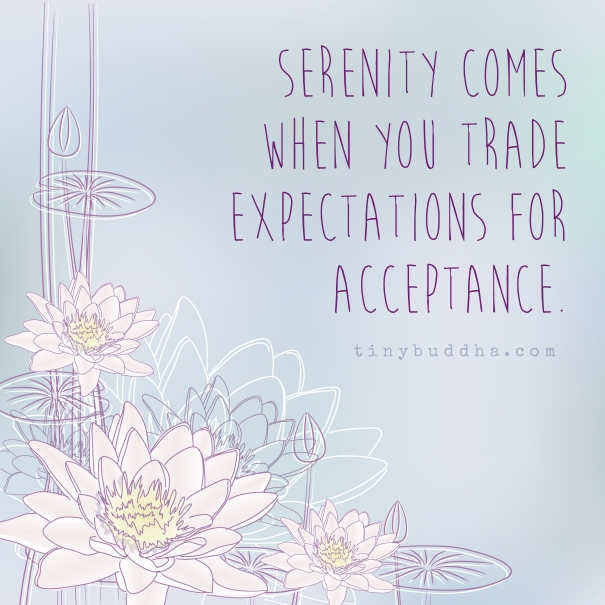
    I found acceptance of what is. I’m not fighting reality, saying it should be different. I don’t know what it should look like, and I accept that this is my spiritual curriculum.
    Ego thinks it knows what the human experience should look like. My spirit knows that this is the experience I’m meant to have. Or at least that’s what I believe—that I was meant to grow through this and love myself no matter what. And I’m doing that!

    I’ve also come to realize that even when life doesn’t turn out how we think it should, it can still be enjoyable if we’re willing to shift our focus and do the best we can with the hand we were dealt. For me, that’s meant committing to being the healthiest human I can be, living a purpose-driven life, and helping other people self-actualize.

    Even if you don’t believe you receive a “spiritual curriculum” for life, or are “meant to have” certain experiences for your growth, it feels incredibly liberating to accept what is and choose to make the best of it. This is how I’ve been able to keep my peace instead of giving it away.

    3. Choose peace.

    I choose peace. It’s an affirmation that has served me well for many years through different life challenges. I can choose to be in resistance and suffer, or I can choose to be in acceptance and have my peace. I choose peace. It doesn’t mean I don’t experience some sadness from time to time, but those moments are few and far between because it’s more valuable to me to accept and have peace than it is to hold onto grievances.

    Life didn’t turn out the way I thought it would. I put expectations on life, and life had its own plans.

    My duty is to be with what is and love myself through it.

    Accepting what is has been one of the most freeing experiences of my lifetime because it’s opened me up to new possibilities I wouldn’t have been able to see had I stayed stuck in resistance. Furthermore, I’ve been able to experience motherhood through mothering myself, our four wonderful dogs (Peanut, Ziggy, Tucson, and Bootie), and those I come into contact through my life’s work.

    I can still be a mother—to myself and others. I get to define what that looks like for me.

    When life seems difficult or unfair, focus on the lessons so you can empower yourself instead of victimizing yourself, accept what is, and remind yourself that this is what it means to choose peace. These strategies have offered me continued spiritual growth, supported me in strengthening my relationship with my husband, and empowered me to carry on with co-creating an enjoyable life.

    And if you’re experiencing infertility, like me, know that it doesn’t have to be something that sidelines you. It can not only be a source of tremendous spiritual growth, it can also be the gateway to a different path that could be equally as fulfilling.

  • When Expectations Hurt: How I’ve Forgiven My Absentee Father and Healed

    When Expectations Hurt: How I’ve Forgiven My Absentee Father and Healed

    “What will mess you up most in life is the picture in your head of how it’s supposed to be.” ~Unknown

    I may have said a few words that hurt my father’s feelings, but…

    See, here’s the backstory.

    I’m thirty-four years old, and I started having a relationship with my biological father at age twenty-one. During my childhood years I would see him every now and then even though he lived less than three miles away from my home. I don’t have any memories of being with my dad for birthdays, holidays, family vacations, or even just hanging out watching TV at home.

    When I was twenty-one my father called and said, “Hey, I’m outside your house.”

    I went outside and he said, “Your mom told me you just had another baby.”

    I said, “Yes, I did.”

    By this time I rarely had any dealings with my father, and I had some negative feelings about him because he was not in my life in the way I felt he should have been.

    A part of me was upset and confused as to why he wasn’t around during my childhood when I needed him. I wanted his guidance and protection, and I felt that he hadn’t given that to me.

    We had a conversation, and he told me that I was welcome at his home anytime and that I should come around more often. Despite how I was feeling, I decided I would give it a try because a part of me wanted to be daddy’s girl.

    So, I did just that. I called him as often as I could and would go by his house for visits. I finally got comfortable enough that felt like I was in a good place with my dad. He has a wealth of knowledge, so we began having deep conversations about different things in life, and he would give me advice on things I was going through.

    I couldn’t help sometimes but wonder, what would my life be like if he’d been there from the beginning?

    I would look at him and his wife and the children they had together—they have so much joy and so many memories with my father. Why couldn’t I get that? Was it because of my mother? Was it because of his wife? What is wrong with me that I couldn’t get the same level of love and attention?

    Recently I saw a post on Facebook by one of my siblings. It read, “I have the world’s greatest DAD!”

    But that’s not who he is to me. I have no childhood bond with him. What we have shared these past thirteen years has been more of a great friendship. He’s not the world’s greatest dad, because if he were he would have been there for me! My emotions and feeling of neglect got the best of me, and I had to disagree with this statement.

    The little girl in me was crying. Why couldn’t my father love me the way he loves his other kids? I felt unworthy. I also felt guilty, like I maybe I had done something wrong. Maybe I wasn’t perfect enough. Maybe he didn’t want me. I asked myself over and over, why couldn’t I have that love? All I wanted was his attention and acknowledgment.

    If you have gone through this experience you know as you get older that little girl or boy is still hurting for the love they didn’t get. That pain often shows up as anger and resentment toward your parent(s).

    The feelings I felt as a child followed me into my adulthood. I was insecure as a person and followed the crowd. I had a hard time trusting people to show up for me; I couldn’t get my own father to be there for me, so why would anyone else?

    Since I felt unworthy of being loved by my father, I developed low self-esteem. Like a drop in the water, this caused a ripple effect. I ended up forming relationships with men who were just like the picture of my father; they would abandon me, and once again I’d feel unworthy of love.

    In order to stop this ripple effect from controlling my life, I had to acknowledge that little girl inside me. I had to let her know that I heard her, and I felt her pain. So I started journaling about my feelings. I took that energy out of my body and left it on the paper.

    I also had to have tough conversations with my parents. This was hard because it meant everyone needed to take accountability for their part in this situation—myself included. That meant releasing the expectations I’d placed on my father, which I’d never communicated to him. I recognized that I’d wanted him to be something he wasn’t, I wanted to change him, but I realized that I can’t control or change anyone but myself. 

    This is the part where I hurt my father’s feelings.

    I needed to have this conversation with my father and get these feelings off my chest. I knew there was a possibility he wouldn’t understand, because he may have felt justified in his absence. But I also knew the pain I was feeling was not my fault.

    I called him, and I stated, “Dad, I feel like we are really good friends, but I don’t feel like you are my dad. I have no childhood memories with you, but I know I can always call you for advice now.”

    I wasn’t trying to hurt his feelings. I wanted to explain my feelings, based on my experience and my perception. I didn’t really know why he wasn’t around during my childhood; I just knew I didn’t get my dad.

    He responded with, “It sounds like your saying I’m a failure.”

    I said, “No, I’m just sharing how I feel.”

    I took a few days to think about this conversation because it was tough for the both of us. I’d cried, and I could tell he felt disappointed. I realized then that just because people have children, that doesn’t mean they are ready to be parents.

    We think two people meet, fall in love, get married, plan to have kids, and plan out their career. Sometimes it happens that way. But often they really love and care about each other, and then they get pregnant, unexpectedly. Then things go south, and co-parenting goes with it. At least this was my reality with my parents. Neither was there to raise me in the way I thought parents should.

    I have no clue what specifically they were going through at that time. But whatever it was, it required me to live with my aunt till I was in third grade.

    My Ah ha! Moment

    A mother and father give you life, but that doesn’t mean they will be the ones who raise you. I have a mother and a father, but my aunt who stepped in and took me to live with her and her three children was my mother.

    My “dad,” who was my uncle, picked me up almost every weekend and promised to protect me from all danger.

    I had another “dad,” who just happened to be my grandfather; he provided for me like a father would.

    When I eventually went to live with my mother, her boyfriend at the time treated me like his own daughter.

    I realized then I’d been wrong when I told myself I didn’t have a dad, because I clearly did.

    Plenty of people had stepped in as father figures even though they had no obligation to do so. They created those birthdays, holidays, vacations, and just hanging out at the house type memories that I was looking for from my father.

    I was blinding myself to my blessings and holding my parents to an expectation that they were never going to be able to fulfill.

    As a child I wasn’t able to look at them for who they truly are or accept them with the good and bad. As an adult, I focused so much on what I was lacking in my relationships with them that I couldn’t see what I’d had in other people all along.

    I know now that I want to lead my life with love. That means accepting people for who they are and how they are, not what I would like them to be.

    Though the pain I felt when it came to my father was not my fault, my healing was my responsibility. As an adult, I’m now capable of taking responsibly for my life decisions in a way I wasn’t as a child. I had to take my power back and stop letting my pain control me.

    I told my father, “I’m not trying to hurt you. Things just are the way they are. It’s not good or bad; this is just our experience. Having you as a friend is better than having nothing at all.”

    I now call my dad often, because I know it’s difficult to find good friends. I’m happy to say that I have found one in my father.

    I think I’d just been caught up in the personal emotions and attachments to the people who gave birth to me and expected them to be X, Y, and Z. As a result, I caused myself a lot of unnecessary pain and suffering. I had to forgive both my parents and myself for holding on to these expectations.

    If we can let go of expectations and focus on appreciating the people who are there for us we can find healing in the painful truth. I think this is a key to finding peace with things that have hurt us. We have a picture in our minds that doesn’t match up with our reality. When this happens, we may feel disappointed and close ourselves off to other perspectives.

    Like me, you may not have had the relationship you wanted with your parents, but perhaps foster parents, aunts, uncles, brothers, or friends stepped into your life and become that dad or mom when they had no obligation to do so.

    To those people in my life I say thank you. It’s hard to see, at first, just how much you’ve done. As a child our pain can blind us from the love we are given. Because of your love, people like me can stop and say, “I did have mom or dad.”

    This insight doesn’t only apply to parents. Have you ever held someone to certain expectations, just because of who they are to you? Like a husband or wife, mother or father, brother or sister, aunt or uncle, grandparents, best friend, boss, co-worker, etc.

    At times we expect people to fill certain roles just because of their label. Some expectations are reasonable and healthy, but can you perhaps release some and replace them with gratitude?

    This is in no way, excuses anyone’s behavior or the pain they may have caused you. This is a step toward acceptance. Accepting people in their truth even when we don’t agree, this is taking back our power.

    I know I can’t change who my parents are or what they’ve done, but I can always change my perspective by looking for positive aspects in each of them. I receive more from being grateful than I do with expectations.

    I’ve stopped focusing so much on them and now focus more on myself, because I’ve realized the only person I can change is myself.

    Forgive yourself for hurting yourself or others with expectations. Know that the pain you feel is real, and that you can release that pain from your life at any moment you choose. And allow yourself to be grateful for all the good in your life instead of focusing solely on what’s hurt you.

    This is how I’ve healed some deeply rooted wounds that caused a great level of pain in my life. I hope by sharing my experience I’ve helped you take a step toward your own healing and understanding.

  • How Lowering Our Expectations Helps Us Do What We Really Want to Do

    How Lowering Our Expectations Helps Us Do What We Really Want to Do

    “Human beings can alter their lives by altering their attitudes of mind.” ~William James

    Despite being the sort of person who’s constantly generating self-improvement to-do lists, I’ve never been big into making New Year’s resolutions. If I make any at all, they usually occur as an afterthought, frequently after the fact, and without much in the way of any real resolution.

    However, this January I suddenly decided my resolution for 2019 should be to lower my expectations.

    My whole life I’ve been an overachieving, Type A perfectionist. The sort of person who obsessively stresses about getting work in on time, yet also compulsively turns in assignments a week ahead of their due date.

    While my discipline and work ethic are certainly qualities I’ve come to appreciate, they haven’t always served me well. My relentless drive toward perfectionism and often mile-high expectations have actually held me back from doing many of the things I’ve wanted to do.

    Having moved around a lot during 2018, I found myself in the new year without a yoga studio or routine practice for the first time in over a decade. After regularly getting on my mat for nearly half my life (in sickness and in health, for richer or for poorer) I was shocked and dismayed, and a little scared, by how easily I had fallen off the wagon. Even worse was how hard I was finding it to get back into the swing of things.

    I decided to sign up for a one-week free trial of a popular yoga app hoping the accessibility of classes and convenience of being able to practice whenever and wherever I wanted would inspire me to get back into it. However, the trial came and went and I still hadn’t logged onto the app or gotten on my yoga mat.

    Now officially a paying member, wracked with guilt and headlong into a shame spiral, I decided the least I could do was open the app. If only to keep from feeling any worse than I already did. As I scrolled through the classes I noticed most of them were only twenty or thirty minutes long; I certainly had twenty minutes to spare, might as well…

    Twenty minutes later, after having completed my first yoga class in months, I had an ah-ha moment.

    During the video, the instructor focused on letting go of needing to be in a certain place mentally and/or physically in order to begin to practice.

    Seated on my mat, I thought about why I had stopped practicing in the first place.

    I was used to practicing yoga in a specific way—taking a seventy-five or ninety-minute class in a traditional studio setting—and I kept waiting to have the time or energy or desire to find a studio and go take class. But none of those things ever seemed to align.

    After falling out of my routine I felt so badly about myself that I didn’t even want to think about yoga because every time I did it reminded me of how I should be practicing. And that’s what kept me from starting up again.

    The expectation that when I did yoga, it should be in a certain place and for a certain length of time kept me from seeing other options and ways of continuing to do something that was good for me and I felt good doing.

    In the spirit of taking action, and the belief that practicing for twenty minutes was obviously better than not practicing at all, I decided to try lowering my expectations. I had to figure out what felt doable to me. I still wanted to try and fit yoga into my week at least three times, but a practice of twenty to thirty minutes each felt like a more realistic goal, and one I knew was well within my reach.

    Lower expectations initially ran counter to everything I believed to be true about self-improvement (if you’re not crying or bleeding you’re obviously not trying hard enough!). According to science, however, low expectations might be the secret to success when it comes to creating positive change and building healthy habits.

    Because of what’s called the self-enhancement bias, people prefer to see themselves in a positive light. Though, this preference often and unfortunately gets in the way of real self-improvement when we overestimate things like how quickly and easily we can enact change, or how much change we’re capable of.

    When we set our expectations high and then can’t quite reach them, it feels like we’ve failed, discouragement sets in, and we tend to give up.

    Recent studies show that if we expect less, it’s more likely an outcome will exceed our expectations and have a positive impact on happiness. This is important because the happiness we feel when we exceed our expectations creates an intrinsic reward, which is a major component in building healthy habits that stick.

    Interestingly, after I got over the initial hump of doing less, it didn’t feel like I was lowering my expectations at all. I felt like I was simply breaking things up into bite-sized pieces and also being more realistic about how much I could accomplish given the amount of time, energy, and willpower I had. I found, in general, I got overwhelmed a lot less and ended up feeling better about myself overall.

    Another takeaway was the awareness that almost anything can become doable if you break it down into a process.

    I used to look at all of the big things I wanted to do in life and immediately become overwhelmed. Now when I look at those same things, take each individual goal, and format it as a step-by-step process, I realize I can achieve pretty much anything. It’s simply a matter of being reasonable about how long something is going to take, as well as getting real about how much I actually want to do a given thing.

    Lowering my expectations has equally helped me learn to prioritize my goals and itemize my time and energy, looking at what matters to me a lot, what matters to me a little, and what I really don’t care about at all.

    If you’re feeling frustrated about all the things you’re not doing—especially big, time-consuming activities—ask yourself if you really want to do this or just think you should. If it is something you want, try lowering your expectations of yourself and doing only what feels manageable, and see if that helps you get going. Like me, you may find that taking the pressure off makes it a lot easier to get and stay motivated.

  • Forget What Other People Expect and Do What’s Right for You

    Forget What Other People Expect and Do What’s Right for You

    “Your time is limited, so don’t waste it living someone else’s life.“ – Steve Jobs

    When we come to this world, we know nothing. We are all products of the societies that raised us and shaped our belief system with things labeled good or bad, right or wrong, normal or abnormal.

    I was raised in an Eastern European culture that led me to believe every single woman on Earth must tick off certain boxes.

    During the time I was single, especially once I turned thirty, many people started to wonder “what was wrong with me” and why I couldn’t find that illusionary person that was supposed to be “The One.” The prince on the white horse who was supposed to make me forever happy. I was perceived as smart, healthy, funny, and beautiful, so “why I was single?”

    I used to think about my biological clock ticking, and the societal pressure to marry felt high, as if a woman without a romantic partner were unlovable, miserable by default, or incomplete.

    I think asking single people when they are getting married is rude and unfair. No one asks married people when they are getting divorced.

    I met my husband four years ago, many years after I was expected to marry. At the time, we were two Romanians living and working in Asia, within the same company but in two different countries. I was in China; he was in South Korea.

    Our relationship started as a beautiful, genuine friendship. After three dinners in Shanghai and many long telephone conversations that felt like a deep, soulful connection, he proposed. I will never forget that day. It came like thunder. Totally unexpected. Surreal. A miracle of love.

    I was thirty-five and very clear on what I wanted from a romantic relationship. My wish was to feel loved, supported, cherished, and appreciated. I wanted a partner—a lover and a friend—not to complete me, because I was already feeling whole and complete. I wanted to spend my precious time with someone I could share new life experiences with while building a solid foundation together.

    Once we got married, some people started to ask me about pregnancy plans. Some ask this question without even thinking that some women can’t conceive, or just don’t want to have children. In fact, it’s nobody’s business.

    Motherhood is not for everyone, and every woman has the right to her own choices. Having children is not a game to play; it’s the most difficult job in the world, and it has to come as a conscious decision, not an obligation or another box to tick. Some people adopt, and some don’t. Some women make amazing aunts, friends, caregivers, or mentors. There are various ways to give, nurture, and be of service.

    I know women who’ve been advised to have a second child right after delivering their first baby, as if a mother should not act “selfish” and “only think of herself.” To some people, part of being a good mom is providing the first born with brothers or sisters.

    Why so much pressure? In our lives, who makes the rules?

    Someone recently suggested that I hurry up and have a child now, as I’m still young enough to conceive. “What if you end up alone when you’re old?” they asked. “Who’s going to take care of you if you get sick?”

    But here’s what I think: I would never decide to have a child out of fear. It’s not a child’s job to complete their parent or make them happy, just as it isn’t our partners’ job. Children are meant to come to life for themselves, not to fill a void or make us feel whole and complete. Happiness is a personal responsibility, with or without children. But not everyone sees it this way.

    So many people live their precious years ticking boxes or following norms imposed on them by others, trying to fulfill other people’s requirements and expectations. I find this heartbreaking. Some do not go for their dreams because they feel afraid or guilty. They wouldn’t want to disappoint anyone, especially their dear ones.

    In reality, we can’t disappoint anyone. People disappoint themselves with the expectations they set for whom they want us to be, or what they want us to do. People with no agenda cannot get disappointed, nor can they get involved in drama. They accept and love us unconditionally, as we are.

    I wouldn’t want anyone to enter co-dependent romantic relationships with someone out of pressure.

    I wouldn’t want anyone to do a job they dislike or even hate because that’s what someone in their family wanted for them. Or more precisely, their family member wanted that for themselves.

    Descartes was right: by nature, we are all “social animals.” No matter our gender, race, age, or social status, we all have a basic human need to feel seen, heard, liked, appreciated, and loved. Most of us need to belong to particular groups or communities of like-minded people and feel socially accepted. There’s nothing wrong with that.

    The problem occurs when we are not able to satisfy some of our human desires by ourselves, using others as a source of happiness, an instrument for validation, or a means to avoid ourselves.

    I’ve been there myself in the past. I can recall many situations when I did things I didn’t really want to do to please others, like going to a movie with someone on a Sunday when my body wanted to stay home and take a good nap.

    I was a master of people pleasing and, to be honest, it wasn’t always because I wanted to make everyone happy. The truth is that I wanted people to like and approve of me. I expected them to give me the things I wasn’t giving myself: love, time, care, and attention.

    Again, being loved is a human need. However, being needy for love is something different. When we have a harmonic relationship with ourselves, we don’t need to spend time with others to fill a void in ourselves, but rather to feel a sense of connection and belonging. And we don’t need to make choices just to get their approval. We’re able to do what’s right for us, and accept that may or may not approve, and that’s okay.

    You are the sum of your choices. Do whatever feels right for you. You don’t owe anyone any explanations for the way you choose to live your precious years, and with whom. Your time is your life, and it’s never coming back.

    Spend your life with people who bring the best in you, who support you and accept you just the way you are. Relationships in which you need to pretend are toxic. If you don’t feel at ease with people, don’t try to change yourself; change the people you surround yourself with.

    Mind your own journey and sing your own song. If it sounds like something you “should” do, don’t do it. Your needs matter. Don’t let anyone else write your story. Your life is about you, and you deserve to be happy. The world doesn’t need more counterfeit people. The world needs you to be you.

  • My Ordinary Checklist for a Highly Successful Life

    My Ordinary Checklist for a Highly Successful Life

    “In this world, an ordinary life has become synonymous with a meaningless life.” ~Brené Brown 

    As I see it, there are two types of people out there.

    There are those who read goal attainment books and feel inspired, and me.

    The former will read the anecdotes about all those underdogs who beat the odds and managed to achieve wealth and prestige beyond their wildest dreams and will say to themselves, “Wow! That could be me!” They’ll feel enlightened, invigorated, and revved up to make a change.

    And then there’s me.

    While I may initially pick up such a book with genuine interest, my desire to whip my life into shape will invariably do an about-face, leaving me anything but inspired. If I say anything to myself as I read, it’s more likely to be a string of ego-deflating curses than a yearning-filled “one day that’ll be me.”

    I actually discovered my aversion to success books by accident. Charged by work with the task of developing an online course on the topic of goal attainment, I began to do some research.

    At first, it all seemed dandy. To-do lists? I can get behind those. Articulating a vision for the future? Check, check! But then, as I started to delve a bit more, I began to sink into a mire of confusion amid all the contradictory advice:

    Make to-do lists and then prioritize them by urgency. No, not by urgency, by importance, because that’s the way to a meaningful life. Except that to-do lists are actually now passé, so chuck those altogether. It’s the “less is more” mindset that will breed success.

    Just make sure you’re not spending too much time planning your tasks, because that takes you away from working on them. Although most failed projects could have been saved at the planning stages, so planning is crucial before embarking on any project. You would have known all of this had you properly color-coded your task list in the first place!

    The more I delved, the more aware I became of an undercurrent of shame that was slowly simmering inside of me. It was the feeling that something was dreadfully wrong with me if I was not willing to do whatever it takes, like the underdogs in the books.

    Didn’t I have any faith in the universal laws that turned out Oprahs and J.K. Rowlings and an endless stream of other success stories? Why, it might be as simple as manifesting my destiny with positive thinking, or mindfulness, or a cream cheese bagel for all I knew.

    No dice. Guess I’m just not built for success.

    And yet at some point, maybe just for fun, I began to consider an alternative: What if most of the people I know are more like me than them—you know, busy with life, proud of themselves when they hit “good enough,” happy to have work that is more or less satisfying, even if it’s not tremendously lucrative or glamorous?

    What if others don’t view themselves as a rags-to-riches tale waiting to happen and instead walk around with their heads held high simply because they are proud of the ordinary lives they are living?

    It felt subversive, empowering, and indeed nothing short of revolutionary.

    Success doesn’t have to mean a coastal beach house or getting up to speak in front of a crowded audience where everyone knows just who you are, what you do, and how much you’re worth.

    There is a quieter, softer form of success.

    I began crafting my own definitions and principles of success. Things along the lines of:

    * If you have one person in your life you genuinely care about and who genuinely cares about you, you’re successful.

    * If you have one more positive thought today than you had yesterday, you’re successful.

    * If you have just one thing to be proud of, or be grateful for, or to celebrate, even if it’s just the fact that you didn’t rip anyone’s head off even though you had a miserable day, you’re successful.

    Don’t get me wrong; I’m all for setting and achieving goals. I’m also all for striving to become the next one-in-a-million success story, if that’s what floats your boat. But if it isn’t what floats your boat, that’s no indicator of your personal worth, or lack thereof.

    It’s a sad sign of the times that success is measured in extraordinary terms only. It’s as if the benchmarks of ordinary, mundane success have now been rendered obsolete, or worse: something to feel ashamed of.

    It takes heaping amounts of courage to step back from the grandiose expectations of what success books tell you life could be and say that what you already have is enough. Maybe even more than enough. But in truth it is.
    So, if you, like me, are an “unsuccessful” type, the type that reads about the Oprahs of our world with little more by way of reaction than a “that’s nice,” remember that great potential for success lies in your own backyard.

    Success is what you make of it—even if that means simple, boring, ordinary ole everyday life.

  • The Betrayal of Expectations: Coping When Life Doesn’t Go to Plan

    The Betrayal of Expectations: Coping When Life Doesn’t Go to Plan

    “What will mess you up most in life is the picture in your head of how it is supposed to be.” ~Unknown

    I expected to get into college. I expected to have a career after a lot of hard work, and that one day I’d meet a nice man and we would get married. We would buy our first house together and start a family, picking out a crib and the baby’s “going home” outfit and organizing a drawer full of diapers. We’d have more babies and go on vacations and grow old together.

    I expected that one day I’d take care of him until he took his last breath, and then I’d join a travel group with other retired women. My adult children would come over for dinner, and we’d take a family vacation with the grandchildren every year. That’s how it all played out in my mind.

    I had a linear view of life. You go to point A, B, C, and so on. You do what you’re supposed to do and you work hard. It was very simple, life with these expectations. Follow the recipe and then eat your dessert.

    Spoiler alert: Life was only that simple until the universe pulled the rug out from beneath my feet.

    It was an ordinary school day when my life fell apart. These sort of things usually happen on ordinary days.

    My husband and I were both teachers, and we woke up before the sun rose to begin our assembly line of breakfast and lunch preparations. Afterward we’d wrangle children and get them dressed and ready for departure, which was basically like herding cats. Then, he dropped them off at their respective places. I picked everyone up after school.

    In between all of that we worked and went to meetings and ran errands and bathed children and cooked dinner and tended to all the usual moving parts of domestic life.

    Except on that ordinary day, none of it happened.

    On April 27, 2016 I woke up and found my husband dying on the living room floor. Out of left field, in an instant, the life I expected was gone.

    I never considered the possibility of becoming a thirty-four-year-old widow with a one-year-old who I was still nursing, a three-year-old barely talking in sentences, and a six-year-old only two months away from his kindergarten graduation.

    I was thrust into an alternate reality of gnarled, tangled grief, and it was in this new place that I had the painful realization that the life I knew, the one that was familiar and most comfortable to me, was over.

    My husband and I planned each of our children down to the day. We even had number four, the one who would never be, scheduled in the calendar.

    But now I was a single mother. A widow.

    It’s kind of embarrassing to admit, but during this time I wasn’t only mourning the loss of my husband. Sure, I missed him so much that I couldn’t eat. I couldn’t sleep. I lived my days in exile, not knowing where I belonged. The tediousness of my new life as a single mother wore me down to the bones. The loneliness that festered inside of me created a painful hollowness that felt hopeless; the unfairness of this cosmic roll of the dice made me want to give up more times than I would like to admit.

    But there was something else I was grieving: the loss of the life that I expected to live. My dashed expectations. The trajectory of my life that was forever altered, now headed in an unknown direction that felt like it would surely kill me.

    We expect our lives to materialize the way we envision them in our hopes and dreams. When life doesn’t go as planned, it can be difficult to reconcile the disappointment of our new reality. Resistance is the first defense. We don’t want to believe or accept the change.

    This wasn’t the life I chose. I deserved something better, I thought. “This” seemed so patently unfair. Surely there were worse people who were more deserving of this kind of lightning to strike them instead—so why me? I clung to those thoughts and let them bury me deeper and deeper into the abyss. The resistance might have been the catalyst to the darker parts of grief.

    It’s such a disappointing, embarrassing revelation when you realize that you never actually had complete control. It feels like you were lied to. All of those years you spent with your first-world blinders on, thinking that you could plan every detail. It was cute while it lasted. Now it just felt stupid.

    I realized what expectations really were.

    Nothing.

    My expectations were never real. They were nothing more than thoughts in my head. Assumptions. Desires. Never guarantees.

    It was always like that, but for me it had been on a micro level. Micro-disappointment, like not getting the job I thought I wanted. A relationship that ended. Losing a bid on a house. I never prepared myself for the real disappointment in life. Earth-shattering disappointment that makes your world crumble and introduces you to your new constant companion: pain.

    We usually think the bad stuff we hear about only happens to other people. We’re aware that it exists, but not in our reality. Just an abstract thing somewhere else in the world.

    Until it happens to us.

    I remember how mad my husband used to get when I’d be surfing Facebook, bemoaning that so-and-so got a new car, or how in love a couple seemed to be, and why can’t we go to Hawaii like so-and-so?

    “Everyone puts their best on Facebook,” Kenneth told me. “It doesn’t mean anything.”

    “No,” I insisted, shaking my head. “So-and-so and so-and-so are madly in love. Look at how passionate they are with each other. Why don’t we hold hands like that?”

    “We have three kids under five,” he said, rolling his eyes.

    I wish Kenneth lived long enough to know that the so-and-so’s got divorced. He would have told me “I told you so.” And for once, I would have gladly told him he was right.

    It’s memories like those that I like to lean into. Life can’t be as horrible or as wonderful as it appears in my head. There has to be middle ground.

    When I’m feeling an extreme of any emotion, I have to remind myself of this. It’s just thoughts in my head. Sandcastles built out of feelings, and sandcastles get washed away when the tide rises and brings in a new day. It’s not a matter of being a good or a bad thing. It just is.
    My expectations have been a thing that I’ve had to live with my entire life. I’ve always had high expectations for myself. Failure was not supposed to be a thing. As a widow, I found myself floundering in a new reality where I felt like I was constantly failing. Legitimately not capable of doing what I once could.

    I wasn’t the same mother to my children. This new me had less time and patience. She was more tired and overworked and in pain. I had to learn to live with the limitations of my new life. My disappointment pooled inside of me like poison. Nothing I could do was enough. I wasn’t enough. Those are all very toxic feelings to carry around when you are already drowning in grief.

    But there is only so much time you can spend falling deeper into your pit of despair. One day you realize that you are no longer falling and have in fact reached the bottom. There you are, alone with your despair, so sick of yourself that you can’t even handle your own negative thoughts anymore. You can’t take one more second of it.

    This is your moment to get up and wash yourself off and start over.

    When the despair stops roaring in your ears and you have a moment of quiet, you can begin to think objectively about your life. Your new life.

    I realized what was wrong with me. My problem, I decided, came from my expectations. They were the root cause of my despair.

    I expected a long life with my husband, even though he was always a mortal being who was never promised to be mine forever. I expected a lot of things, except for the only thing that was true about life: We are only guaranteed today. Yesterday is over. Tomorrow is unknown.

    I knew I wanted to live as best as I could. I wanted a fulfilling life that was hopeful, joyful, and meaningful. I’d have to change my expectations if I wanted all of that. It was impossible to get rid of the expectations completely. I’m only human. Besides, expectations do serve a purpose. They’ve helped me in life. They’ve also hurt me.

    The middle ground, I decided, was finding “flexible expectations.” I couldn’t be rigid in my thinking. I wanted to have standards and goals, but I needed to have wiggle room for the inevitableness of life not going as planned.

    I had to become more resilient and strategic about my setbacks. I needed to have long-term perspective and not feel like individual moments in my life were the be-all, end-all. I needed to be less attached to a prescribed way to live.

    You realize that in a world full of uncontrollable circumstances, the most powerful line of defense that you have completely in your control is how you think.

    Your attitude.

    Your perspective. Is that glass half-full or half-empty? You decide.

    How you think is your resilience. Your ability to get back up and dust yourself off. The way that you know life is worth living, not only during the moments of joy, but also during the challenges and pain and heartbreak, and this is the reason you persevere.

    Maybe my expectations never betrayed me after all. Maybe it was actually supposed to be one of my greatest teachers in life.

    Around a year after my husband died, I sat down and made a list of “good” and “bad” from the past year. It had gone by in such a blur that I felt like I needed to go back over the details. I anticipated a pity party as I recalled all of the terribleness.

    The bad: my husband died. Single.

    The good: new friendships, a loving community who showed up for us when we needed them, trips to Japan and Italy and Denmark, saw an old friend for the first time in eleven years, more productive than ever with my writing, my kids were happy and adjusted little people, we had a nice roof over our heads, I loved my job that didn’t feel like a job, we were healthy, I worked on the election (even if it meant precinct walking with the toddler on my back as a single mother—but I did it!), and so much more. I kept thinking of new things to add to the list.

    It was very telling. We tend to focus on the negative. My mind wanted to go back to the dark moments of the past year. But after re-reading the list, it was clear that the year wasn’t all bad. There were many bright spots in the hardest year of my life.

    Mooji said, “Feelings are just visitors. Let them come and go.”

    I try to always remember that.

    It’s okay to feel terrible. You aren’t broken for feeling that way. You just can’t let yourself get attached to the feelings. There will be days when life feels too hard. You will feel pain and loneliness and fear that will make you suffer. None of it reflects who you are, nor are they any indication of what your future looks like. They are merely the temporary visitors.

    When the feelings visit me, I acknowledge the pain. Hunker down. Maybe clear my schedule. Lower my expectations of productivity. Give myself permission to rest while I let the thoughts pass. Then I move on. It’s not that you ever forget the pain, but moving on is a way to compartmentalize it so it does not destroy you.

    Eighteen months later, I’m a different person than who I was before my husband died. It’s not the life that I initially chose, but in many ways I am living a more intentional life with a lot more choice. There is some degree of excitement in what I call my “renaissance.” There are no rules. You just live as authentically as you can, with what you have, doing the best you can, and that’s it. No secrets.

    Everything that you need to persevere is already inside of you, and this truth is liberating.

  • How Expectations Can Drive People Away and How to Let Go of Control

    How Expectations Can Drive People Away and How to Let Go of Control

    “I’m not in this world to live up to your expectations and you’re not in this world to live up to mine.” ~Friedrich Salomon Perls

    About five years ago, I had a falling out with a close friend. I was irritated because she didn’t do the things I thought she should and she didn’t give as much as I did. I felt I had been very generous with her, and I expected her to do the same. I felt she owed me.

    My anger became unmanageable and started seeping into pretty much every interaction we had. She began cancelling dinner plans and camping trips. She wouldn’t call me back after days of me leaving a message. It happened out of nowhere, and of course everything was her fault.

    Except that it didn’t. And it wasn’t.

    Not too long ago, I was a bit of a control freak. I didn’t know it, of course, and I would have described myself as open-minded and easy going. In reality, I was tormented by my own expectations.

    Since I was a child, I had an image in my head about who I was supposed to be. What my family was supposed to look like. What house I was supposed to live in. What career success was supposed to mean. That’s a lot of supposing! I had always assumed these expectations were my future.

    I am an artist by trade, and in my art studio, I have many tools. Paintbrushes, sanders, stencil cutters, and paper punches fill shelves up to the ceiling. However, I tell people that the most important tools I use are flexibility of mind and a practice of not having expectations as to the outcome. This allows new and amazing techniques to be discovered and yields paintings that continuously surprise and delight me. I find these tools are useful outside of the art studio as well.

    As time went on and distance grew between me and my friend, I began to feel enraged by her apparent apathy toward me and everything that I “had done for her.”

    I thought to myself, “I would never treat anyone that way. How dare she do that to me?” and “After all I’ve given her, she should want to give back!” Every thought I had praised me for all the good deeds I had done and blamed her for ruining our friendship. I was the victim and she was the wrong doer.

    One day, I sat down to enlighten her about how she had negatively impacted our relationship. Her reaction was horrifying to me. She said she was going to take a step back from our friendship.

    I couldn’t believe what I was hearing. I mean, I was telling her how she could singlehandedly improve things. What was wrong with her that she didn’t understand that? We stopped speaking and I didn’t see her for a long time.

    Then something life changing happened—sobriety. In the first year after I quit drinking, I learned a lot about myself and my need to control just about everything in order to meet my expectations.

    I learned how my expectations of others (unexpressed, by the way, because “I shouldn’t have to say it!”) and the anger that followed when people didn’t act the way I thought they should, actually drove people away.

    The entire time our friendship was breaking down, I thought that if she would just do the things I wanted her to do, not only would our friendship be fixed, but everyone involved would be better off. I knew better than she did. My way of living was better than hers. She, of course, ran away from me like I was on fire.

    My need to control others was unfounded, unrealistic, and unattainable. It was a hard thing to admit that my way wasn’t better than her way and, in fact, people weren’t abandoning me. I was driving them to leave. I saw that other relationships in my life were also going down this path. I had to change.

    One day after surfing, I went to sit on a bench overlooking the water. One of the “old guys” we surfed with, who lived across the street, came and talked with me as the sun was setting over the ocean and I was lamenting about the stresses in my life. He said one of the most important things anyone has ever said to me: “I don’t do stress. Stress is optional.”

    WTF? How on earth does one not get stressed? Teach me, Oh Wise One. I thought deeply about this and about my issues with expectations and control. I needed control in order to meet my own expectations. When those expectations were not met, anxiety, anger and depression followed. Where does stress fit in?

    The stress comes from trying to control actions that I think can bring my expectations to fruition. Have you ever seen the YouTube video of the zoo keeper trying to take a photo of all the baby pandas together? He expected a cute shot. All he got is a video of him trying to put baby pandas in a line, as one by one they continuously wandered off.

    I know that’s kind of a cut and dry example, and life isn’t always cut and dry. However, the primary reason that I would get so pissed when my expectations were not met is rather simple: “My way is superior to everyone else’s way. How can people be so stupid and disrespectful?”

    I don’t want to be an angry person. I don’t want to be unhappy with the people in my life. At some point, I realized that all of the control I was attempting to put on others was really me trying to make others meet my own expectations. That doesn’t work. Like ever. And it creates a huge amount of stress and frustration akin to trying keep baby pandas in line.

    The real questions are: Who do I think I am? Why do I think I can control anything? What does it really matter if people are late, or my flight is cancelled, or my hat got lost when it flew off the top of the car.

    Do these things affect my life? Sure, they can. Is it worth having an explosive hissy fit and making myself and everyone around me miserable? Uh, that would be a no. (Embarrassingly, the loss of that damn hat came close to ruining our evening.)

    Advice from an Artist—Three Ways to Let Go:

    1. Have zero expectations about how anything is going to turn out in the end.

    It’s easier said than done, but if I went into the art studio expecting a certain painting to be created, I would be disappointed all the time. It’s so much easier to have an open mind and go with the flow.

    This is also true when it comes to other people. By accepting the fact that people are not predictable, I am not attached to outcomes about how they “should” be.

     2. Stop trying to control everything.

    My passion is creating, but I can’t always get in the studio to paint. And guess what? I don’t pitch a fit. I simply do what needs to be done to continue on.

    For whatever reason, this is easy for me to apply to my business, and harder to apply to situations that involve people. I have to peel my fingers from the white-knuckle grip they have on how people should be and be okay with the possibility of “my way” not being an option. Perhaps somebody else has an awesome way I’ve never even thought of.

    3. Be flexible and don’t be attached to outcomes.

    I choose to open my mind to all the possibilities. In the studio, experimentation and the ability to adjust comes very easily. In life, not so much. Last minute changes in dinner plans aren’t going to kill me. When someone is “inconveniencing” me by wanting to meet at 8:00 instead of 6:30 I don’t get pissed anymore. I go for a hike because now I have time to.

    Does that sound too simple? I don’t think it is.

    My old friend and I have begun to repair our friendship. She moved away and I miss her dearly. We have talked about the past, but not in great detail. I try to show her that my thinking has changed and I don’t want anything from her but her friendship. It’s a hard thing to repair when you live far away but it’s mending little by little.

    I no longer expect her or anyone to think like me. When I start feeling superior, I have to remember that I’m no better and no worse than any other person on the planet. I hope she forgives her wayward friend. At the time, I really thought that I was doing her a favor by showing her a better way to live. It was hard to realize that my ego was running the show.

    When I’m working on a painting and I make a mark that I didn’t intend to, I don’t look at it as a “mistake.” I look at it as an opportunity to go down a road I may not have seen had it not been for that out of place mark. This is how I strive to live my life now. When a monkey wrench is thrown in, I put it in my back pocket figuring that a wrench may come in handy at some point.

    And if it doesn’t, that’s okay. Just as with my art, I choose to live open-minded to all experiences. Also, just like my paintings, life isn’t only made up of straight lines. There are twists, turns, and interruptions. The question I must ask myself is, do I want to put up a fight whenever something unexpected happens, or go with the flow and gracefully see where this new road leads?
    We can’t control other people and situations. But we can choose to set expectations aside and not put so much emphasis on how things are going to end up. After all, it truly is about the journey. And the destination? Well, sometimes the most beautiful views are the ones that we stumble upon unexpectedly, while on the way to where we’re “supposed” to be.

  • How Releasing Expectations Takes the Pressure Off Relationships

    How Releasing Expectations Takes the Pressure Off Relationships

    “When you learn to accept instead of expect, you’ll have fewer disappointments.” ~Unknown

    A few months back, I was having drinks with a friend from university for the first time in a while. I sat across from her, smiling and laughing, almost in awe that we were here—here, not as in at this particular restaurant patio, but here, as in, in this moment that felt so free and so light, unbound by who we used to be.

    During our first couple years of university, we were best friends, always hanging out, living together, supporting each other, swapping secrets, and creating unforgettable memories. And then over time, things changed.

    Throughout university, we had found our own niches, our own interests, our own passions, and as we explored who we were and who we wanted to be, our friendship fell by the wayside.

    In our last months of living together, our friendship created a lot of suffering for me. I constantly felt this weight between us, this heaviness that came from pretending that we were still the same as we were in the beginning, this heaviness of a friendship that wasn’t what it used to be.

    Through my yoga practice, I found the tools I needed to free our relationship from this suffering, by shining a light on the truth and choosing something different.

    So how do we find this freedom in our relationships?

    1. Accept the relationship as it is.

    The first step to changing anything is always to see it as it really is. We often create suffering in our relationships when reality doesn’t match the ideal in our head. We end up trying to force our relationships to be what we think they should be, based on the past or a fantasy, rather than accepting how they actually are in the present.

    For me, this meant facing the truth that our friendship wasn’t as close as it once was and we were no longer the people we used to be. Until I accepted this truth, I suffered.

    When we have the courage to face the truth—when we accept and interact with reality instead of clinging to how we want it to be—the pressure on the relationship automatically starts to lift.

    And sometimes when the pressure lifts, relationships naturally get closer and stronger.

    2. Challenge your faulty beliefs.

    Throughout my confrontation with truth, I unearthed different thoughts that I’d had about our relationship. In particular, I became aware of this mantra that I had been repeating in my head: “I don’t belong.”

    This belief was like an infection, poisoning my mind and tainting how I saw our friendship, before any interaction even took place. That story created and contributed to the heaviness that lay between us.

    When relationships change, we often think it’s something we did. We blame ourselves, we think we did something wrong, or that we just are wrong. We might start telling ourselves things like, “I’m not good enough,” “There’s something wrong with me,” or even “It’s all my fault.”

    We internalize something that is beyond our control, something that is often a natural experience as people grow and develop in their own ways.

    As I grappled with the mantra I’d taken on, I realized that it didn’t just exist in this one single relationship; it went much deeper than that and affected how I saw and therefore how I interacted in other relationships.

    I could see how this same thought had led to me feeling like an outsider in other relationships too. The thought was like a wall that kept me at arm’s length from everyone around me, while at the same time, there I was, wishing it were different.

    Once I realized and accepted the truth, I could start to choose something different. I started to challenge that belief by reinforcing the opposite, “I belong here.”

    When I spent time with her and other friends, I reminded myself that I was a part of this group. Whenever I questioned whether or not I belonged with any group, I reminded myself that I did. The more I did this, the stronger the new mantra got and the quieter the old one became.

    3. Practice a new way and let go of expectations.

    When we know the truth about our relationship, and we acknowledge our part in creating the suffering, we can start to practice something different.

    We have to override the way we used to do things, or the thoughts we used to tell ourselves that led us to suffering, and consciously choose a different path. What this practice looks like depends on what truths you uncover.

    For me, I asked my friend if she wanted to get together and catch up. Having recognized that I’d formed this idea that I didn’t belong and that our friendship was broken, I consciously set an intention to not compare our evening with how things used to be, and to let go of any expectations of how it should be. In essence, I wiped the slate clean, leaving myself open to however it turned out.

    When we let go of how we think things should be and allow them to just be, we can interact with what’s really there. If we don’t set an ideal, there is no story to compare reality to. There is only reality.

    As I sat across from her that day, I was no longer tethered to the past mantras or the disillusioned expectations of how things used to be. There was only the present moment, however it was going to be.

    I wasn’t sure what would become of our friendship. We had spent so much time under the heaviness that I didn’t know what would be there when we took it away. I didn’t know if there would be anything left. All I knew was that I didn’t want this friendship to create anymore suffering; we both deserved to be free. I wanted our relationship to be free to be whatever it was now.

    When our relationships create suffering, it often isn’t the relationship that has to change; it is how we see the relationship and how we interact with it.

    Freeing our relationship from expectations brought back the lightness that I had missed so much, that I had fought for so long to get back.

    In some ways, it felt like it used to, only different because the specifics of our friendship didn’t change at all. We aren’t as close, we don’t get together that often, and we aren’t as involved in each other’s lives. The only thing that changed was how we saw it. And because of that, when we do get together, our friendship is fun, supportive, and freeing again.

    Have the courage to seek the truth within yourself and acknowledge the effect of your thoughts, beliefs, and actions with compassion and without judgment. Only then can you choose a different way, a freer way.

    Sitting across from her that day, there was freedom. I could feel it. And I think she could feel it too.

  • Three Unexpected, Life-Changing Lessons I Learned at a Silent Retreat

    Three Unexpected, Life-Changing Lessons I Learned at a Silent Retreat

    “Every moment is a choice to begin again.” ~Unknown

    By day three of the five-day silent retreat I found myself wondering, “Why did I do this again?”

    The pain of sitting in lotus position for eight hours a day was testing my patience. I was frustrated that my mind would only be still for a few moments, before interrupting itself with commentary on the fact that my mind was still, and I wasn’t feeling any spiritual awakening—although not being a particularly “spiritual” person, this wasn’t entirely surprising

    So why had I decided to go on a silent retreat in the first place? I had wanted to experience meditation without distraction and to take my practice to another level.

    Going into the silent retreat, I had worries and questions circling: Will the silence be tedious? What will the other people be like? Are the teachers going to be cult-like leaders? Will I uncover some past trauma buried away deep inside?

    Of course, of the things I worried about, none of them came true. Instead, what I found challenging and what I learned the most from were things that I hadn’t even considered: desire, expectations, and judgment.

    Desire

    If you’ve ever wondered what drives your behavior, you can thank the power of desire for that. And you certainly learn a lot about desire when you’re at a silent retreat.

    Silent retreats are set up so that you never need to verbally communicate, which means that almost every minute of the day is scheduled for you, all your meals are prepared, and all external stimulation is removed. This creates a perfect storm for your desire to run wild, fantasizing about all the things you can’t have or do.

    I never noticed how much I’m driven by desire until I spent a significant portion of the retreat daydreaming about different foods I wanted to eat. By day three I was writing lists of foods I was going to eat when I finally was “free” again.

    I didn’t understand why I felt so compelled to do this until our evening teachings the following night, when I realized it was because I was struggling with desire.

    That night we learned that what we’re often really craving is not the thing that we desire, but the reprieve we feel once we have relieved ourselves from the yearning of desire. This realization actually freed me from my wants, and allowed me to instead laugh at the simplicity of my humanness and my clear love of rice paper rolls.

    It also made me realize that when we’re able to see what’s driving us, we have the space to observe our experience and choose how we respond, rather than being at the mercy of invisible desires. Instead, we’re able to consider what it is we really need, rather than simply what we want in that moment.

    Since the retreat, I’ve been more mindful of when desire is driving me and it’s certainly helped my bank account, particularly when I’m having a moment where I think, “I just need these shoes” without really knowing why I “need them” so much.

    Not that there’s anything wrong with buying shoes, but I’ve been able to see more clearly when my desire to buy shoes is coming from a place of wanting to feel better about myself, when I want to feel like I’m keeping up with others, or when I want other people to think I’m cool.

    I’ve come to realize that while buying shoes might make me feel good in the moment, it isn’t going to build the foundations of lasting self-confidence.

    Instead, I now find it much easier to pause and acknowledge, “Aha, this is just desire” and recognize that really, I have enough and I don’t need things to be enough.

    Expectations

    I’ve always known that having really set expectations can cause all sorts of problems, but the experience of the silent retreat cemented this for me.

    My biggest problem was that I expected my meditation practice to somehow transform itself into something other than what it currently was. Of course, setting this expectation didn’t mean that my meditation practice changed at all; instead, it just left me feeling frustrated that I wasn’t experiencing something different. Ironically, meditation is all about experiencing whatever arises in that moment.

    I didn’t even know what it was that I expecting to change. But I learned that when we’re searching for something, we’re blinded by the act of searching, and we miss the subtle changes that are unfolding before us. It’s often not until we let go of what we think should be changing that we can really notice and appreciate what has changed.

    I also came to realize that expectations can really cause a lot of suffering. Now, looking back, I recognize that my expectations took me away from the beautiful sounds of the Balinese jungle, from the stillness that was there, and the joy of simply being.

    When I let go of my expectations, not only did I start enjoying meditation more, I realized how powerful it could be to let go of expectations.

    Despite having this realization, I’m still constantly surprised at how often my expectations get in the way of me being able to live peacefully. I often find myself expecting friends to behave in certain ways, and when they don’t, I feel deeply disappointed. But really, there’s no reason for me to expect them to behave differently, as they are simply engaging in the same behaviors that they have over the past fifteen years.

    What I’ve taken from this is that the solution isn’t to disregard expectations, but to be mindful that your expectations aren’t too far removed from reality. I’ve found looking at the facts of a situation helpful in managing my expectations and instead, delighting in the unexpected.

    Judgment

    No matter how much we try not to be, we’re naturally judgmental. And I know this cannot be changed, but what I really noticed on retreat was the effect it had on my mind and my body, and how different my experience could be if I practiced letting go of judgment.

    One evening I found myself really judging another girl for using social media while at the retreat. We had been asked to not make any contact with the outside world, and this of course included no use of social media.

    At the time, I assumed that her use of social suggested that she wasn’t taking the retreat seriously. As these judgments raced through my mind, I noticed how much my body tensed up, how irritated I felt, and I could almost feel my mind narrowing as I focused on how their behavior was “wrong.”

    Yet, when I opened myself up and tried to accept her behavior, I was freed from my own prison of judgment. When I allowed myself to be curious rather then judgmental, the experience transformed for me.

    Instead of feeling irritated by her and closed off, I instead felt open and compassionate, and frankly just a lot less bothered by her. Being open and curious allowed me to move on and let go, relieving the discomfort of being judgmental.

    It certainly wasn’t an easy thing to do, and I had to remind myself time and time again to keep opening, but the felt difference between the two was unbelievable. It was actually much more physically and emotionally pleasant being non-judgmental than being judgmental.

    I really noticed this for myself when I was back in New York, sitting in a Broadway show. I caught myself totally distracted by the judgmental commentary happening in my head. It was the same old story, comparing my body to those of the performers, and my poor old thighs were the victims of my self-criticism yet again.

    When I noticed how deeply I was caught up in worrying about the size of my thighs, I decided it was a good moment to practice what I had learned on retreat. I started saying to myself over and over, “Let go, be present.”

    It was such a relief to allow myself to let go of judgment, and instead I was open to connect with feelings of joy as I started clapping along to the songs with the rest of the crowd. Not only this, letting go of the judgment allowed me to be more accepting and compassionate towards myself.

    So all in all, while my meditation practice didn’t change as I expected it to, I certainly learned a lot on the silent retreat and took a lot away with me, all which was delightfully unexpected.

    My three takeaways were that:

    1. Desire is just a creation of our mind that we don’t need to follow. In fact, just acknowledging it can relieve us from the power of our desire.

    2. Letting go of expectations allows us to be present and enjoy what is already here.

    3. Being open and curious frees us from judgment, allowing us to be accepting and compassionate toward others, and ourselves.

  • How to Maintain a Sense of Peace No Matter What Life Throws At You

    How to Maintain a Sense of Peace No Matter What Life Throws At You

    “Ships don’t sink because of the water around them; ships sink because of the water that gets in them. Don’t let what’s happening around you get inside you and weigh you down.” ~Unknown

    Do you ever feel like your life is a rollercoaster?

    One second, you’re on top of the world. The next, you’re down in the dumps.

    For me, this feeling of going up and down began back in high school.

    Before then, everything in life seemed like a test run. Sure, there were exams, extracurricular activities, and the usual social pressures. But now that university was only a few years away, things suddenly turned serious.

    “These are the most important years of your life,” people would say. “Make the best use of them.”

    And so, every single thing, no matter how big or small, seemed to have an amplified effect. If I didn’t do something right, my life was over. But if I did achieve a step in the right direction, my life was set.

    When I applied for a leadership position that I thought was a good fit, I convinced myself that I absolutely had to get it. I read the leadership responsibilities diligently, practiced the same speech over and over, and thought about what I would do when I got the position.

    The result? I didn’t get it. My life, as I knew it, was over.

    Fast-forward a few years to university: I had decided by this time that I wanted to go to business school. My friends and I would talk about the application process and how to improve our chances of acceptance. With bated breath, I finalized my application and submitted it.

    The result? I was accepted. Since the school had strong internship and job prospects, my life was set.

    While I had fun, school was also incredibly stressful. Classmates and I would beam with excitement when we were invited to interviews, only to be disheartened a few days later when an offer didn’t come.

    Later, I received an offer to work in a role that seemed perfect for what I was looking for. I was elated.

    As you can probably guess by now, that feeling didn’t last.

    It began to feel like no matter what I did or how much effort I put in, life was never a smooth path. Seemingly promising opportunities would lead me to obstacles in the way. Even when I did get something I wanted, it would lead to another stressful problem that needed solving. And so on it went.

    After dealing with these emotions and thoughts for years, I felt exhausted. It felt as if there was no end to the tunnel. No point in time when I could just put down everything, sit, and enjoy the scenery for a while.

    Eventually, I figured that it wasn’t simply the swirl of events surrounding me that caused my ups and downs. It was my perspective. I consistently attached myself to specific outcomes, as if my life depended on them, and felt devastated when things didn’t work out.

    Sure, some of the things I experienced could easily make anyone feel the same way. Had I taken a different view, however, I wouldn’t have constantly psyched myself up and created these unhealthy emotions.

    When I look back at what I thought were huge victories and setbacks at the time, they seem insignificant now. My life wasn’t over, as I believed it to be, nor was it set in stone. And truthfully, I wouldn’t want either.

    I learned that no matter what happens, life goes on. Celebrations and challenges are a part of everyone’s life, not the be-all and end-all. With practice, I’ve started incorporating a sense of peace into my life by using some practices that anyone can apply.

    4 Practices to Help You Maintain Peace and Perspective

    1. Expect twists and turns.

    Recently, I went on a long-awaited vacation. Soon after landing, I stepped off the plane relieved and excited to begin my holiday.

    Unfortunately, my new luggage case arrived less than intact.

    “Why me?” I thought. This was the first time in years that I had used the airport check-in, and my luggage was the only one that was damaged.

    I realized then that I had two choices: I could let this ruin my vacation, or I could enjoy my holiday regardless.

    I admit, I did grumble about it initially. But later I took the contents out and put the case out of view so that I wouldn’t spend my holiday thinking about it.

    Unexpected events happen to everyone. It’s important to acknowledge them as a part of life and plan for them when possible. Even though I felt upset about possibly tossing out my new favorite luggage, I reminded myself how fortunate I was that I got to use it in the first place.

    Thankfully, the airline ended up offering to get my luggage case repaired.

    I realize some twists and turns are more emotionally trying than damaged luggage, and far more difficult to accept. But if we learn to expect the unexpected, we’ll spend less time resisting life’s inevitable curveballs and more time proactively dealing with them.

    2. Look at the big picture.

    Painful events and experiences happen to everyone. Sometimes, they’re so painful that it feels like nothing will ever take away the feeling of sorrow or hurt. But everything heals in time, and sometimes good can come from even the most traumatic situations.

    A few years ago, a relative of mine lost her husband to cancer. It was devastating for everyone, especially for her family. At the time, it felt almost unimaginable that someone so close and well loved could leave so soon.

    While he is still missed and thought of every day, good things have happened since then:

    • A marriage and the addition of a new family member
    • A stronger bond between the family
    • The realization that it’s crucial to laugh and enjoy life while we can

    So no matter how terrible something feels at the time, know that you have the strength to get through it. There will be many moments in the future, both blissful and difficult. And if you can survive one painful experience, you can survive the next one.

    It also helps to remember that some of life’s greatest challenges end up being our greatest teachers. You may not be able to control what happens, but you can decide what lessons you choose to learn from them.

    3. Practice self-care.

    When was the last time you did something nice for yourself?

    Most of us spend our time running errands or doing work for other people, but rarely do we pause and enjoy a moment simply for the sake of it.

    By constantly putting ourselves in stressful situations, we end up damaging our health in the long run.

    Make time for yourself. Sit and listen to your favorite music, pursue your hobby, or meditate. Some of my favorite ways to de-stress include taking a walk outside and curling up with a good book.

    When you take care of yourself, you feel more centered, more peaceful, and better able to handle whatever life throws at you.

    We all need time for ourselves to relax and reflect on our day. Besides, I’ve found that taking breaks helps me to approach tasks with greater clarity and calmness than working all the time.

    4. Practice patience.

    Sometimes it feels like life is a constantly unraveling story. The only problem is, we want to jump straight to the end and see what happens.

    For instance, sometimes I think to myself: In five years, will I still be in the same place that I’m in right now? If I choose to spend time working on this endeavor, will it eventually give me the results I want? Will the person I just messaged reply back?

    We feel anxious when something in our life is unresolved—an “open loop,” they call it. It makes our heart rate go up and creates tension within ourselves, both of which are unhealthy.

    It’s been difficult, but I’ve been trying to be more patient. To do this, I direct my thoughts and attention to things that are productive, such as focusing on the actions rather than the result.

    When I’m patient, it becomes easier to deal with both celebrations and setbacks. Knowing that sometimes only time can resolve a situation gives me the ability to let go and be present. And it’s always easier to be peaceful when you’re living in the moment.

    Feel At Peace With a Change in Mindset

    We all experience disappointments and serendipitous moments. But if you’re exhausted from constantly reacting to the ups and downs in your life, it’s time to step back and reflect on how you respond to things.

    Inner peace comes from appreciating life, with all its quirks and bumps. It’s about doing what you can, knowing that sometimes the path you choose will take unexpected turns.

    The process of growing and learning can be challenging. It can be downright scary. But if you manage to weather the storms that come your way, you’ll come out stronger than before.

  • How to Avoid End-of-Life Regret: Stop Giving Your Life Away

    How to Avoid End-of-Life Regret: Stop Giving Your Life Away

    happy-man

    “One day your life will flash before your eyes. Make sure it’s worth watching.” ~Unknown

    Do you ever wonder what life is all about? You may wake up day after day and go to a job you can barely stand. You might be in an unsatisfying relationship that’s on its last breath, yet you can’t seem to let it go.

    Maybe you spend more money than you have, or you eat or drink too much because it’s the only thing that distracts you from your misery. Whatever the distraction, you know you are unhappy, but powerless to know what to do about it.

    In my early twenties, I had finished college and was working at my first “real” job. My graduation allowed me to become commissioned as an officer in the Army National Guard. Most importantly, and best of all, I was in love. I was on a personal and professional trajectory and right in line with societal norms.

    The next step in my carefully predicted life was marriage and a family. My life was unfolding before me like I thought it should, and I was content to ignore the gnawing discontent that had been quietly eating away at my insides, for as long as I could remember.

    Unfortunately, or fortunately, when the “love of my life” brought our relationship to a screeching halt, I was devastated. Like, I wanted to die, devastated.

    My body froze in time, and I was unable to move with any sense of direction or intention. I was lost, as grief washed over me in relentless waves, threatening to drown me. Life had thrown me overboard, and I was not wearing a life vest.

    The truth is, all those overwhelming feelings had less to do with him and more to do with feelings that had been living inside of me long before he came along. He just reminded me they were there.

    Do you know the feeling? The feeling of the bottom completely falling out of your world, leaving you with nothing to stand on? That relationship was not my destiny, but it would turn out to be a critical turning point in my life.

    Obviously, I did not die. After crying countless tears and dragging myself out of bed every morning for a few months, wondering what I was doing with my life, I made a decision.

    I had four months of Officers training to complete at Ft. Sam Houston in San Antonio, Texas, so I decided it was time to fulfill that commitment. So for four months I worked hard, played hard, made some fantastic new friends, and got paid for it all.

    Something unexpected happened. An unfamiliar feeling of lightheartedness began to possess my body, and my eyes were opened to the seriousness with which I had been living my life.

    I had no idea how burdened I had been feeling, having rarely known anything else. I realized that I had not been living the life I wanted. I was living the life expected of me, or at least what I thought was expected of me.

    When my time in Texas came to an end, the thought of returning home wrenched my gut with dread. The feeling was in stark contrast to the lightheartedness I had been feeling. This got my attention.

    Something had changed, and I could not return to life as I had known it. What I had not yet realized was that it was me that was changing.

    I was discontent in all areas of my life, and that relationship helped me avoid it. It wasn’t until the breakup that I was forced to take notice.

    I was barely twenty-four years old, and I was miserable. So despite opposition and my own anxiety, I stopped complying with my perception of societal expectations and I started to follow my gut. I followed my feelings.

    I wanted to travel. Some said I was running away from things; nonetheless, I believed, instead, that I was running towards something. I had come to realize there were a multitude of voices in my head all vying for my attention.

    Family, friends, religion, and society were all scrambling for possession of my mind, and I had been trying to live my life the way I thought I should.

    I honestly did not know what I wanted, so used to pleasing others first. At that moment in time, what I did know is what I didn’t want. I did not want to go back home.

    So I planned a trip with my youngest sister. We spent two and a half fabulous, fun, carefree months traveling and exploring the western U.S., camping and backpacking.

    While in California I met a woman who had backpacked Europe, and I knew immediately that was to be my next trip. After my western U.S. exploration was done, I returned home to plan a trip to Europe.

    After a couple months of planning, I traveled alone to Europe, where I spent four months backpacking Western Europe, the Mediterranean countries, and Egypt. All because I began to listen to my gut, to my feelings and desires, rather than all the voices in my head telling me what I should do.

    As I stood alone on a street corner in London on the cold December day that I landed there, I was ecstatic. Cell phones were barely in existence, and no one could reach me. I was completely on my own and ready to find out what kind of grit I had, and I was amazed at how good it felt. I was amazed at how good I felt!

    I was learning that taking care of myself and making decisions for my life based on what was right for me, rather than others, was a priority. I don’t mean that in an irresponsible, indifferent way. I mean it in a “this is my life and I get to live it my way” kind of way.

    So, as it turned out, the ending of the relationship that I thought would last forever was one of the best things that ever happened to me. Not because he was a bad guy or would have made a lousy husband, but because his ending the relationship woke me up. 

    It was not his job to be my “happily ever after.” It was mine and his leaving forced me to begin to figure that out.

    Many of us expect others to make us happy and to fulfill our dreams, never knowing that we have the ability to do it for ourselves. Trust me when I tell you, you will be most happy and most contented when you do. Your relationships will be healthier when you do.

    Here’s the hard part: It means taking a chance. Maybe risking failure, maybe finding success. Likely feeling very uncomfortable—at least for a little while. But if we don’t try, we will never know. We will never grow.

    It can be difficult to make decisions that go against the grain, especially if we anticipate being rejected by or disappointing to someone close to us. I know, I lived it. Hard as it was, it was the best thing I ever did for myself.

    I also know that to live your life pleasing someone else, or following what mainstream society dictates you do, will leave you doing things you do not want to do and feeling ways you do not want to feel.

    Societal and family systems will pigeonhole us if we let them. We internalize limits based on what we have been told or taught. The key is to question what you have been told or taught. You get to decide if it is true for your life. It can be scary, I understand that. Do it anyway.

    Keep what works for you and get rid of the rest. The limits we face are usually the ones we place on ourselves. We can blame no one else if our life is unsatisfying. Take small steps, but take a step.

    The consequences of a life given away are greater than the consequences of living life on our terms. In other words, when we live life on our terms, we gain more than we lose. Period.

    I came to further understand how important that was years ago, while working as a hospice nurse. That work became my teacher, as I recognized very quickly who had lived a fulfilling life and who had not.

    It was easy to see the peace and acceptance of the contented and fulfilled, which highlighted the sad and painful turmoil of those with regrets.

    Those most at peace were the ones who had faced their fears, who’d taken chances, while risking losing. Those in turmoil had avoided themselves, their pain, their fears, and their dreams. They stayed safe or distant and disconnected and regretted it in the end. They suffered as a result.

    Life is an invitation to grow and to make a difference. You are important. You are needed. Don’t be the one dying with regret. Do not waste another minute being afraid to break out of your rut. Take a chance!

    Discover your passions. What makes you come alive? What gets you excited? What do you want? What is your gut telling you to do and what are the fears holding you back? Whose life is it?

    It’s your life. Live it!

  • 10 Powerful Tips for Building a Deep, Lasting Love

    10 Powerful Tips for Building a Deep, Lasting Love

    Couple in a forest

    “We are a work in progress with a lifetime contract.” ~Phyllis Koss

    The priest at our wedding advised us, “It’s not enough to say, ‘I want to marry you’ just today. You’ve got to be able to say that every day.”

    Problems and challenges in life can be like the wind, which blows unpredictably. You can’t control the wind, but you can learn to set your sails and to make repairs.

    We’ve now been married for thirty years. Life, with all its ups and downs, has taught us a few lessons about building a lasting romance.

    Here are ten tips that seem to help. They’re probably relevant whether you’re just starting out or have been together for decades.

    1. Keep developing yourself.

    I used to be keen on improving my partner. Then I decided to try and develop myself. That helped.

    The more I cultivated the skills of living in the present moment and calming myself when distressed, the more our connection flourished. The more reliable and conscientious I grew, the more romantic our connection became.

    Nobody’s perfect, but we can all grow steadily beyond our unhelpful habits. If your partner sees you trying to learn and grow, it encourages them to do the same. It also infuses your relationship with hope, whatever the problems and challenges.

    Seeing yourself as a work in progress makes you more confident about acknowledging mistakes and apologizing. Apologies carry healing power.

    None of us is set in stone. Scientific research shows that what we choose to do regularly can change even our brains. Developing yourself may be one of the best ways of nurturing romance.

    2. Cultivate compassionate love.

    It may be tempting to snap at your partner when you feel annoyed. However, you can communicate your feelings without being rude.

    Compassionate love is the opposite of impatience, rudeness, and anger. You’ll enjoy more intimacy and get more worthwhile stuff done if you recognize that your partner has a mind, desires, and struggles of their own. Even if they can meet a request, they might take longer than you’d like.

    When I’m on the verge of erupting, I like to visualize a bridge over troubled water. That helps me to be more patient.

    Every relationship is like a perpetually young sapling that requires constant protection. Treating your relationship as sacred can boost your motivation to grow in patience and kindness.

    3. Be responsive.

    Being generally supportive is helpful. However, the most powerful form of support is providing what your partner requires in a particular situation.

    For example, when my partner was panicking while racing to meet a deadline for a Master’s thesis, I tried to assemble scattered manuscript pages and was generally helpful and encouraging. Those little, responsive acts brought us closer together.

    It’s an attitude of “What do you need from me in order to flourish?” That nurtures romance.

    Likewise, ask for what you need. That’s better than expressing irritation. Your partner deserves a chance to try, even if they can’t always meet your requests.

    4. Learn to tolerate unpleasant feelings.

    Practice observing your own unpleasant feelings, whenever they occur, without letting them throw you off balance. Try focusing on your breath, instead of your unhelpful thoughts, until you feel calmer.

    Unpleasant feelings are often produced by chemicals, which come and go. If you learn to recognize and tolerate the temporary chemical spurts, you’ll keep your balance better. Once you’re calmer, you can more easily look beyond your immediate, unhelpful thoughts.

    It also helps to remember that our partners aren’t wholly responsible for our unpleasant feelings. It might seem like their actions are the sole cause, but sometimes their actions merely trigger some greater pain from our past.

    Calming yourself when you’re distressed is one of the best gifts you can bring to your romance.

    5. Adjust your expectations.

    I was once approached, out of the blue, with an amazing job offer in another country. However, it was a bad time to uproot the kids. After we discussed the pros and cons, I declined the offer.

    Life can throw up many areas of disagreement: handling finances, philosophy of life, cherished values, major one-off decisions, household chores, leisure, careers, friends, and more. The more flexible each partner can be, the better the chances of agreement.

    Forging a consensus is more helpful than holding grudges. It’s also okay to agree to disagree on less-than-crucial points, if that helps you get on with the rest of life.

    6. Focus on what makes you feel lucky.

    Don’t seize every opportunity to criticize or blame your partner, lest you drive them to extreme defensiveness. Share how a particular intolerable problem makes you feel and what behavior you hope for instead. But ask without becoming too shrill or raising the temperature unnecessarily.

    If you find yourself feeling frequently annoyed by little things, it may be a sign that you need to address underlying issues in your relationship. The sooner you discuss this, the better.

    Treat your partner’s mistakes as you would treat the errors of a good tennis player who’s just played a bad shot. Don’t rush to damn the whole person. Be quick to apologize for your own errors and even quicker to forgive an apologizing partner.

    In our relationship, we now tend to overlook shortcomings that might be apparent to others. We focus more on what makes us feel lucky about having the other. For example, I love how adventurous my partner is, how resilient, encouraging, optimistic, and forgiving. Express appreciation at every opportunity.

    A forgiving and appreciative mindset helps nurture romance.

    7. Look after your health.

    Our minds and bodies are closely intertwined. Our bodies help us express romantic love. You deserve as healthy a version of yourself as possible, as does your partner.

    Eating nourishing meals instead of grazing on sugary or packaged snacks, taking frequent stand-up breaks during prolonged sitting, and exercising regularly can all help transform your health. When you’re good to your body and brain, your well-being becomes a gift to your relationship.

    Of course, age eventually erodes health. Romance can, and often does, survive the challenges of ill health. But a few simple practices can keep you healthier for longer.

    8. Reassure yourself.

    Reassure yourself so that you become more secure in yourself. This helps to foster mutual respect. Reassure yourself with kindness and forgiveness for mistakes.

    Becoming secure in yourself also helps you to see your partner with new eyes, with less critical glasses, as appreciative outsiders might see them. When you learn to soothe yourself, you’ll probably like yourself despite life’s unavoidable ups and downs. Then the electricity of romance will more easily flow between you.

    The kinder and more forgiving you are toward yourself, the more readily love and positivity will overflow into your relationship.

    9. Feed each other intellectually.

    Exchange ideas, discuss and debate interesting things, do an occasional joint project, share stuff that makes you laugh. Give your partner the heartwarming gift of your undivided attention from time to time.

    There are times when we’re talking and gazing attentively into each other’s eyes when I become acutely aware of how lucky I am. It’s like souls touching.

    10. Make time to play together, often.

    Date nights needn’t be major productions. Just a little time together, temporarily shielded from troubles and challenges, can help. We have pleasant, relaxing mealtimes several times a week.

    Here again, the ability to calm yourself is invaluable. Then you can show up as a playful individual, fully present in the moment, eager to express affection and passion.

    When we were newly married students, we used our meager savings for a trip to Brazil. The adventure created priceless memories. We still love to travel together or to go hiking nearby.

    Shared adventures bring surprises and excitement, helping to boost romance. You don’t have to go to Brazil. You can set aside a little time throughout the year to explore nature and activities near you.

    Your relationship might be far from a fairy tale. That’s normal. We’re all just human beings, trying to make life sparkle despite all our flaws and shortcomings.

    Think of your relationship as a boat on the sea of life. Storms will happen; winds will blow where they will. Do your bit to learn and grow, treat yourself with kindness, ask for what you need, be responsive, be playful, forgive, make repairs whenever necessary, and stay hopeful.

    The tips here have helped us nurture a thriving romance, through thick and thin, for thirty years.

    Lasting romance is one of life’s most fulfilling experiences. It’s possible, and it’s totally worth reaching for.

  • Stop Chasing Happiness: 17 Alternative Ways to Live Your Best Possible Life

    Stop Chasing Happiness: 17 Alternative Ways to Live Your Best Possible Life

    “If only we’d stop trying to be happy we’d have a pretty good time.” ~Edith Wharton

    I have a question for you.

    What would you be willing to sacrifice to be happy?

    Would you be happy to let go of Netflix? Alcohol? Pizza?

    Would you be willing to take up a monastic life?

    Every single day of the year we’re being sold happiness. It doesn’t matter whether it’s in the form of a pill or a book or a holiday, the underlying idea is the same: What we have to sell you will make you happy.

    The problem with happiness is that no one really knows exactly what it is. It’s intangible, even a little mysterious, yet still we all want to be happy. But trying to be happy is like trying to get to sleep; the harder you try, the less likely it is to happen.

    So four years ago, on New Years Eve, I made the pledge to myself to stop trying to be happy.

    Don’t get me wrong. I wasn’t miserable. I was just spending too much time thinking about whether or not I was happy—even though neither I, nor anyone I knew really, could give a clear answer about what this meant.

    So instead of saying to myself, This year I’m going to be happy, I said, This year I’m going to try new things. I’m going to meet new people. I’m going to go to new places. I’m going to push myself out of my comfort zone.

    And if I’m not happy, well, I’m not happy, but at least I’ve had some interesting experiences.

    The result of this was the best (and probably happiest) year of my life, at least up to that point. And I realized something obvious in hindsight, but still profound: Happiness is something that comes a lot more easily when we stop thinking about it.

    It’s more like a place you occupy than an object you obtain. Some days you’ll be there and some days you wont, but the more time you spend thinking about being happy, the less likely you are to spend time being so.

    A large part of what less than happy people have is a problem with their patterns of attention.

    In the same way the attention of an extrovert is naturally directed at social communication, the attention of an entrepreneur seeks out business opportunities, and an artist looks for creative expression, an unhappy person tends to look directly at happiness.

    This post will explore some practices that can help you to stop focusing so hard on the idea of happiness and instead embrace the experiences and thoughts that will actually make you happy.

    1. Take the word “happy” out of your vocabulary.

    We all know words are used to communicate ideas. Unfortunately, sometimes a word can get overused and it becomes confusing, stifling, or even dangerous.

    Here are some other words you should start to use in conversations with yourself and others about how you feel. Don’t be fooled into believing you need to experience all of them; you don’t.

    If you find yourself asking, Am I happy? Replace the question with: Do I have [insert word] in my life?

    • Contentment
    • Enjoyment
    • Laughter
    • Well-being
    • Peace of mind
    • Cheerfulness
    • Playfulness
    • Hopefulness
    • Blessedness

    2. Practice living in the present.

    Letting go of past regrets and future anxieties is not easy, but it’s the fastest way to live a full and enjoyable life. Think about enjoying each moment for its own unique role in the ongoing narrative of your life.

    If you want a short mantra to keep in mind: be here now.

    3. Decide what you really want to do.

    A lot of people that are searching for happiness will end up with “shiny object syndrome.” This is what happens when they bounce from goal to goal because they’re looking for something (or someone) to take away all their suffering.

    Knowing yourself and what you truly want can help you develop purpose and focus—so much so that you don’t even have time to waste pondering happiness. You may even realize that happiness is not what you really want, that you’re willing to put up with being unhappy some of the time if it means you will have a sense of achievement.

    4. Let go of unrealistic expectations about how happy you’re supposed to be.

    For most of human history people lived relatively rough lives. The idea that you’re supposed to be happy all of the time is pretty new.

    Though you should strive to live the fullest life you can, it’s actually more normal and perfectly okay to live an average life interspersed with brief periods of joy.

    5. Take small daily steps.

    If you think you know what you want and you’re determined that it will make you happy, at least decide on small daily steps that you can take to get there.

    Setting unrealistical goals that you never get to finish is far less fulfilling than setting small goals that you can finish and appreciate—and ones that let you know you’re on the right track.

    6. Make serving others a regular habit.

    One key habit of unhappy people that we often don’t talk about is that they are inherently self-centered.

    This doesn’t mean that they are bad people by any means. It just means their minds spend a disproportionate amount of time focused on the self.

    Serving others is one way to break this pattern of attention from “How am I feeling?” to “How are you feeling?” There are a lot of studies that show that giving to others is more rewarding than receiving.

    7. Separate your happiness from your achievements.

    We all need to learn to separate our happiness from our achievements. It’s okay to feel content with our lives simply because we have an inherent sense of self-worth.

    Reaching our goals can obviously bolster this feeling and give us a deep sense of accomplishment, but the absence of achievement should not mean the absence of happiness.

    8. Don’t force yourself to be positive all the time.

    There’s a lot of advice in the self-help community and spiritual circles about being positive. Unfortunately, this isn’t always the best advice. It’s better to be positive when you are actually feeling positive than it is to be positive when you’re feeling negative.

    9. Remove things that prevent happiness.

    This is actually a lot more important than finding things to make you happy.

    Are you in a toxic relationship?

    Do you dislike your job?

    Are you eating a lot of unhealthy food?

    These things all need to go before you start to seek happiness; otherwise, they can hold you back and you may never be satisfied.

    10. Be okay with okay.

    When people ask you, “How’s work? How’s the new city? How’s your relationship going?” Don’t you feel compelled to say “really good!” even when it’s not?

    We’re so conditioned to feel like we need to have the best of everything that “okay” just isn’t good enough for most of us.

    Learning to be okay with okay is a much better strategy toward allowing things to become great than is anxiously wishing that they already were.

    11. Get out of your comfort zone.

    Getting out of your comfort zone is good not only for your sense of self-worth, but it also gives your brain a huge adrenaline dump and a flush of endorphins.

    You’ll know when you’re getting out of your comfort zone when you feel anxious before doing something, but you do it anyway, because you know it is beneficial to you in the long run. Afterward, you’ll often feel a huge relief and sense of self-worth at having done something you were scared to do.

    Depending on your own situation you might find this in traveling to new places, meeting new people, trying new activities (public speaking, scuba diving, bungee jumping etc.) or even just meditating through negative emotions.

    12. Look after your body.

    From muscular tension that can trap emotions to serotonin production and bacterial imbalances in your gut, your body is the number one vehicle that will allow you to experience joy and satisfaction, so treat it with care!

    13. Meditate daily.

    This is a no brainer. I’m sure anyone reading this article is familiar with the physical and psychological health benefits of mindfulness and meditation.

    But there is one I’d like to add:

    Meditation is long, slow, and you often you don’t see the deep benefits for a long time; in fact, when you are starting out, it can often seem like a complete leap of faith. But this is why it’s so important.

    When you sit and stare at a wall or focus on your breath or do anything that (compared to our normal lives) is so bland, it conditions you to not grab on to the colorful, shiny objects that usually point you toward a shallow sense of fulfillment.

    With a longstanding meditation practice that tendency to grasp will usually just fall away naturally. You’ll unknowingly get out of your own way.

    14. Meet new people.

    Meeting new and positive people can give you new vital energy that kickstarts your life and helps you focus on enjoying the present.

    Because we are such social creatures, having likeminded people in our lives can have such a powerful impact on the way our habits and beliefs develop. As the old saying goes, “You’re the average of the five people you spend the most time with.”

    To find people with similar interests and ambitions in your city, there are plenty of sites that can help you connect. You can try MeetUp.com for starters, or just do a simple search in Facebook for groups in your area.

    Likewise, if you are interested in meditation and spirituality, retreats are a great way to know people and connect on a deep level in a short amount of time.

    15. Go out in nature.

    A lot of the time our worries and concerns are largely linked to our environment—both immediately, such as the construction noise outside our bedroom, and peripherally, such as when an advert on T.V. reminds you of a past failure.

    Nature allows you to completely unplug, allowing yourself the space to experience relaxation and acceptance.

    16. Be honest with yourself.

    Discontentment often comes from what psychologists call cognitive dissonance—incongruence between two conflicting ideas or emotions in your mind.

    You can greatly reduce this by just accepting, admitting, and experiencing the emotions that are passing through you.

    If you are angry, be angry; if you are sad, be sad; if you are joyful, be joyful. When we try to actively change or deny present emotions, they become meta-emotions: guilt about sadness, anger about fear, fear about unhappiness. Then they become toxic.

    17. Energize yourself in the morning.

    As much as we like to think we have control and autonomy when it comes to our feelings, the truth is that momentum is a huge factor.

    Morning routines have been a keystone habit of content and successful people throughout history, and for good reason; starting your day with a spiritual practice, a physical practice, and a healthy breakfast may not seem like much, but compounded over years, it can make all the difference in the world to your well-being.

    We can all learn to let go of the neurotic need to chase happiness.

    Doing so will do us a world of good—and who knows, we might even have a pretty good time.

    How have you learned to stop chasing happiness? Let us know in the comments!

  • How High Expectations Can Lead to Disappointment, Depression, and Anxiety

    How High Expectations Can Lead to Disappointment, Depression, and Anxiety

    “Blessed is he who expects nothing, for he shall never be disappointed.” ~Alexander Pope

    I was sitting on the couch in my bedroom, at sunset, looking at the trees outside my window. I felt a profound sadness, frustration, disappointment, and desperation taking me over.

    While I was staring into oblivion, all my expectations came flashing to my mind.

    “No, this is not what my life was supposed to be. I was supposed to be successful. I was supposed to have my own house. I was supposed to be happy. What happened?”

    What happened was that I am part of the majority, not the exception.

    My entire life I expected to be the exception. I assumed that if I worked hard enough, I would succeed; if I did well in university, I would succeed; if I poured my heart and soul into something, I would succeed; my dreams could come true.

    I had become a slave to my expectations, and they were ruining my life.

    In my mind, things were supposed to be different. My great expectations were robbing me of happiness, because I wasn’t where I wanted to be, I didn’t have what I expected to have, and I wasn’t who I expected I should be.

    The truth of the matter is that there are few people out there who are lucky enough to be living their dreams.

    Most of us survive on crumbs of our expectations. We have a job, even if it’s a job we don’t like. We work from nine to five every day to pay the bills. If you’re lucky, you get to go on a vacation once a year, and for the very lucky, two of them.

    Statistics show depression and anxiety are on the rise. I am part of those statistics, along with 350 million other people who suffer from the same hell I do.

    How could depression and anxiety not be on the rise when we are constantly bombarded by repetitive messages that tell us about all the great things we can accomplish?

    Of course giving people high expectations is what sells. If beauty creams advertised their products by saying, “It will moisturize your skin and that’s pretty much it,” not too many people would buy the product.

    Marketing survives by raising people’s expectations. When the product doesn’t meet up with their expectation, disappointment follows. And so it goes with most things in our lives.

    Don’t get me wrong; I truly believe that dreams can come true. The point is that we shouldn’t expect it to happen. If it does happen, it will be a nice surprise. But if it doesn’t and we’re expecting it, we are likely doomed for disappointment and frustration.

    Of course it would be amazing if we could all live our great expectations, but we shouldn’t base our happiness and personal satisfaction on them, because there is no rule that says that we will all live to fulfill them. I know this might sound pessimistic, simply because it goes against everything we’ve heard.

    We read great stories of people who defied the odds and became a success, but we never read about the people who did their best and failed. Their stories never become motivational quotes and bestselling books, because they didn’t make it.

    We never hear their stories about how they put their heart and soul into something and failed, because that doesn’t sell books; that doesn’t sell conferences.

    Many motivational books and personal coaches survive by raising people’s expectations instead of focusing on finding happiness with what they already have.

    Of course meeting our expectations could bring happiness, but if we’re waiting to be happy for that to happen, we might be waiting a long time.

    Maybe you’re not Anna Wintour or Mark Zuckerberg, and you don’t have a million dollars in the bank.

    Maybe you’re feeling frustrated because parenthood didn’t turn out to be what you had expected (it’s tiring and demanding).

    Maybe your job is not fulfilling, and at one point you expected you’d grow up to be somewhere completely different from where you are today.

    I could sit here and write that you can change everything and you should fight to meet your expectation. I think you should, but you shouldn’t base you personal satisfaction and happiness on that.

    I’m here to tell you that it’s all right if you didn’t meet your expectations.

    Sometimes life throws curve balls at us, and for some reason or another life doesn’t go to plan. It doesn’t mean we have to stop working toward our goals; it just means that we can be happy regardless.

    Instead of focusing on what we don’t have, we need to focus on what we do have.

    Capitalism shoves down our throats to strive for more, and we obediently follow, only to meet a brick wall and realize how frustrated we are for not being everything the system promised we could be.

    Millennials in particular are battling this problem harshly.

    We were sold the idea that if we went to college, got great marks, and did tons of unpaid internships we’d be destined for the stars. Instead, millions of millennials have a huge amount of debt from student loans and are finding it hard to find a job. I’m not even talking about their dream job—just a job.

    Did you know that millennials have the highest statistics on depression and anxiety ever recorded in history? That’s mainly because we expected to at least have the quality of life our parents had. But things have changed, and now we are not even close to what they had at our age.

    Our expectations were too high, and we live in a world where it’s harder to meet those expectations.

    It would have been a lot better to break things down to millennials in a realistic way, and if some of them got to meet their expectations, then good for them. But for the rest, we’d know that not all expectations need to be met for us to be happy.

    I know you might be reading this and thinking of all the expectations that you had that you didn’t get to live up to. Maybe you’re feeling frustrated and sad.

    The best and easiest way to be happy is to work toward our goals but never expect for them to become a reality. It’s a paradox. It’s the duality of existence.

    We need a goal and a dream to keep us motivated, but at the same time we need to not expect anything from life. That way, regardless of the outcome, we don’t become disappointed.

    I know it kind of goes against the motivational quotes we read, and it especially goes against the greedy perception that has been incrusted in our minds. We are taught to never be content with what we have and to always strive for more. But this greedy mindset is what has many feeling frustrated with their lives.

    I’m not saying that it’s good to get comfortable in mediocrity, but to push ourselves to be the best person we can be without expecting a great outcome. To do things because we love doing them, not because we’re expecting something.

    It’s like doing a good deed expecting a “thank you.” If the “thank you” doesn’t come, you become disappointed. If you do it regardless of the gratitude, you still feel content.

    It’s about being happy while working to be better, not by placing happiness on a goal. You find that happiness in your progress, in your daily life, in feeling grateful for the small things—for having food on your plate, a roof over your head, health, and loved ones to share your life with.

    It is about coming to terms with the idea that your dreams might not come true. Making peace with life—that even if it doesn’t allow you to fulfill your dreams, it has given you life, and life itself is a treasure.

    As the saying goes, happy people are not those who have the best of everything but the ones who make the best of everything they have.