Tag: expectations

  • The Messiness of Being Human and Why We Shouldn’t Judge Each Other

    The Messiness of Being Human and Why We Shouldn’t Judge Each Other

    “Those who understand will never judge, and those who judge will never understand.” ~Wilson Kanadi

    I’m waiting for my mother’s nurse to pick up. The hospital recording has been on a loop for twenty minutes: “Our hospital is committed to integrity, to the destitute, the sick. Our physicians and nurses have trained at some of the most prestigious colleges in the country. Our patients’ health and comfort is our #1 priority.”

    The woman on the recording sounds so clear and passionate. I can picture her in the recording studio. Maybe she had to audition for the part. Maybe she got paid a lot of money to say these things. Finally, a nurse picks up. She sounds exhausted. Would never have gotten the part.

    “Has anyone been in to see my mother? She’s hysterical and can’t breathe.”

    “Your mother is getting a new nurse.”

    “But the nurse I spoke with earlier said she was on her way with meds!”

    “Someone will be there within the hour.”

    “She’s got to suffer for an hour?”

    “Someone will be there as soon as they can.”

    “That’s not what your hospital recording says!”

    The nurse takes a deep breath. “Oh god,” she mutters. Then I hear the phone land on a hard surface.

    I know from experience what happens when the recording ends. When the recording ends, individuals take over.

    Recordings are usually neat and tidy. Real individuals are not. There may still be a commitment to life, to kindness, but unscripted commitments are harder to decipher. I think because behind the slogans and edited promises, everyone has to deal with their own relationship between the way we are told things are going to be and the way things are.

    My mother, for example, has a slogan that goes something like: I am a strong as sh*t individual with impeccable judgment. And she often is. But behind the scenes, in the moments of reality when whatever pain sets in and there’s no one around to slogan to, she cannot handle her anxiety and has a tendency to drink herself nearly to death and wind up in the hospital on life support.

    Me, for example, when I’m writing this, I’m pretty grounded in my ideas for about ten minutes at a time. But in between those moments, when the vastness of everything collides with the tininess of who I think I am, when my insane restlessness causes unbearable pain, I clench and then go to places like Amazon to look for things to better organize my pantry.

    I think of the nurse, obviously in no mood to hear about slogans. Perhaps she hasn’t slept in days and has been taking care of so many sick and destitute people that she has not been able to take care of herself. Maybe I caught her at one of those moments when she didn’t have enough energy to pretend to be a spokesperson for anything. Who knows what people have to deal with behind their job descriptions?

    There’s the slogan, and then the fractaling inward to a more intimate reality, to those minutes in secrecy behind all closed doors, where there are individuals dealing with themselves and other individuals.

    My mother’s neighbor has visited my mother every day in the hospital. He cares about my mother. And yet, he’s the one who gives her the vodka. He says he figures if she doesn’t get it from him, she’ll get it from someone else. He doesn’t think of himself as being a bad person; he’s just doing what he does based on the equipment and experiences he has.

    Just like the woman who called from the Special Olympics on the other line who got upset with me because I didn’t have time to listen to her slogan. “Thanks a lot,” she told me. “Now I won’t meet my quota.”

    I laughed to myself, thinking I must be attracting every fed-up person in the country. And I couldn’t wait to dismiss her as horrible, to throw her in that bin in my mind where ridiculously horrible people go. But if I dismissed everyone for being horrible, who would be left? Not even me. And I wouldn’t be able to call anyone to commiserate with, because they’d all be in my trash can.

    I think my expectations for people were learned from television. I grew up on television. Life on television always had a beginning, middle, and end, then applause and credits. People on television were always who they said they were, and if they weren’t, everyone would band together and help get them back.

    I remember when the television shows would end, resenting the real people around me for not being recognizable from one day to the next. What I didn’t realize was that the people on television were dependent on a budget, on someone to write their lines, on rehearsals. I didn’t understand that in real life people were dealing with their own thoughts and doing their best to express them in some manner that didn’t get them made fun of, divorced, in jail, or all alone.

    In reality, things are messy. In reality, the judgments we make of each other are judgments based on each other’s slogans and worldly circumstances. 

    I think of this wealthy relative of mine who says things like, “I feel so badly for your mother. It’s so sad.” And then I think of my mother, who says about this same person, “That poor sap. I am so grateful not to be her. She’s never had to survive any sort of malignancy. She’s just so blasé. So benign.”

    Sometimes I don’t think we really know each other. At best, I think we know our experiences of each other. Or maybe, just our experiences of ourselves experiencing each other. Perhaps the only way to really and truly be neat and tidy is to admit that we’re not. When we are honest about our shortcomings, maybe then we become real. And when we are real, maybe then we can be there for each other in ways that don’t disappoint as much.

  • 3 Reasons Why It’s Hard to Set Boundaries and What to Do About It

    3 Reasons Why It’s Hard to Set Boundaries and What to Do About It

    “Care what other people think, and you will forever be their prisoner.” ~Lao Tzu

    I love this quote because it is such truth. But I also recognize the difficulty and the uncomfortable feelings that arise when working toward living this quote.

    There’s a reason why it feels so hard to set healthy boundaries, and that is what this article is going to show you.

    Discovery #1: Understanding our hard wiring

    Our minds were not created to care about healthy boundaries. Say what? Let me explain.

    From the beginning of time, we humans were hard wired for connection. We are not solitary creatures; we are similar to herd animals. Back in the caveman days, we needed a hive or a pack because we were more powerful when we were together. If we didn’t lean on our tribe, we were eaten by a saber tooth tiger.

    We were built to care about others, to rely on others, to let others watch out for our safety and for us to watch out for them too. Staying in our herd, our hive, our pack, our tribe is how we stayed safe. And it worked!

    Our tribe was important to us back then for our survival. If your pack wasn’t happy with you, you were outta there. Your tribe is what kept you alive, and so the human brain learned, “Oh, we must keep people happy with us and then we get to live.”

    If you struggle with people-pleasing, I hope you will understand that we come by our people-pleasing instincts naturally. They are quite literally part of our survival set up. It is part of being human. It is perfectly normal to have the urge to people-please.

    Wanting to serve and please others is a perfectly good and often wonderful thing. The problem with people-pleasing in today’s world is when we don’t have good boundaries to go with it.

    Our brain today says, “Let’s do whatever keeps the tribe happy. Let’s do whatever we need to, to be part of the gang.” Most of the time that looks like acquiescing, going along to get along, and doing whatever we can to “not upset the apple cart.”

    As children we gain information from all types of sources around us—our traumas, personality, health status, our race, ethnicity, gender, family of origin, our class, economic status, and more! Each one of these alone comes with a handbag of rules that instruct us how to behave, act, what to think and what to say in order to please our tribe. Our poor mind has to put all of these pieces together somehow in a way that makes sense and keeps us alive.

    Discovery #2: The Rulebook

    In essence, our sweet mind creates a sort of rule book in terms of what will keep us safe. We start to notice from the time we are small that if our people are not happy with us, we do not feel safe. We start to notice this in our bodies, our feelings, the look on someone’s face, the tone, what is not being said, the iciness of the room.

    When we are children, we are 100% dependent on our caregivers. They are quite literally everything to us. Remember the tribe, the pack, the hive that I talked about earlier? Well, to our little toddler minds, they are our first tribe.

    It is our caregivers’ job to mirror to us who we are in the world. And hopefully with healthy caregivers, we are shown that we are loved, cherished, worthy, important. This is what creates our self-esteem. This is what relays the message to us that we matter.

    This gets written into the rule book or the rolodex file of our little child brain.

    However, many folks did not grow up this way. Those of us who may have grown up with caregivers who were harsh, unloving, absent, unpredictable, neglectful, and even abusive, their little, sweet mind recorded a whole different set of rules into the rulebook of life.

    It may sound something like I am not loveable, I don’t matter, I’m a nuisance, I am a bother, I should never take up space. It might sound like I’m loved as long as I’m good, or performing, or agreeable.

    (Please note, much of the time our parents did the best they could with the skills and tools that they had in their awareness. However, to our innocent, little, childlike selves, it simply wasn’t the message that we needed. The message was misconstrued, and we wound up feeling as though we somehow did not matter).

    Often this gets passed down generation after generation.

    So now are you starting to understand that the mind’s idea of boundaries is to do whatever it needs to do to keep you alive?

    Perhaps when you were little, if you were constantly told to be quiet, that you were too loud, too much, or to simply go away, then the mind created a belief that came into agreement with this. A rule was filed away that it was better to not disrespect your elders and continue to be loud or to take up space.

    The problem is that of course this is nonsense (you were just being a sweet and normal child), but you never questioned the rule. You questioned Santa Claus, the Easter Bunny, and the Tooth Fairy. Yet, you never stopped or questioned your rules or beliefs about yourself. You wrote those things in the rule book as absolute truth.

    Your mind doesn’t care that you are older now and that the situation is different now. To the mind, a rule is a rule. And remember what happened to humans who questioned the rules in the past? They didn’t survive!

    Let me tell you a little bit about my own rulebook…

    Several years ago, I was deeply terrified of what other people thought of me. Growing up in a small town, it was written in my rulebook that all eyes were on you. Boundaries were one of my biggest struggles because it meant breaking free of the people-pleasing pattern in order to speak my truth.

    Having struggled with codependent patterns and low self-esteem, I didn’t even know what my truth was, what my needs and values were, or what mattered to me.

    What I did know was that I needed people to like me, to not talk ill of me and to think of me in a certain way—nice, kind, giving, good.

    I couldn’t excuse myself from a phone conversation.

    I couldn’t end playdates at the time I needed to even if my kids were throwing a full-blown temper tantrum.

    I couldn’t remove myself from a conversation that made me uncomfortable because of the topic.

    I laughed at jokes that, deep down, I found offensive.

    I agreed with others’ opinions because I either didn’t know my opinion or if I did, I didn’t feel confident sharing it.

    I talked incessantly because silence felt unbearable.

    I couldn’t even be on time, because I was rushing from one activity to the next, just trying to show face and that I was doing my part to be the nice girl and make everyone around me feel good.

    Speaking my truth was so uncomfortable that many years ago I actually had a seven-hour coffee date.  I didn’t want a seven-hour coffee date. The idea was come over for a couple hours, chit chat a bit, and move on with our day.

    However, this woman arrived promptly right after the kiddos left on the school bus in the morning and was still there when they got home on said school bus at 3:30pm.

    I can recall the massive headache I felt because I wanted so badly to ask her leave and tell her I had things to do, but I couldn’t.

    I remember that I never invited her back again, even though she was a great gal in many ways. I was clueless in how to handle these situations, so my answer was to cut the relationship off and move forward by avoiding her.

    At the time I was a young mom with a husband who worked long hours, and I often felt lonely. I wanted so badly to connect with other women and be a part of a community, and I thought the way to connection was through self-abandoning any of my needs so that I could focus on appeasing what other people in my life needed.

    This was all written in my rulebook. All of this worrying about what others thought and not wanting to upset anyone caused me severe stress, anxiety, and overwhelm.

    I was trying to function on fried adrenals and walking on eggshells. I was unhappy, and it showed up in my relationship with my partner, my kids, and mostly, the relationship I had with myself. But there was something always driving me to keep pleasing, keep appeasing, and that leads me to our next discovery.

    Discovery #3: But why do I always feel so guilty?

    Why do we feel so darn guilty when we try to set a boundary? Well, anytime we step outside the rulebook, the mind pushes a great big, huge alarm bell.

    Remember, our mind thinks that this is a rule created for our safety. I share this because hopefully you can start to relax and realize that there is absolutely nothing wrong with you. The mind simply is perceiving danger.

    From there we may experience bodily reactions—our palms get sweaty, we have a million butterflies in our stomach, our temperature rises, our throat constricts.

    Our brain’s one and only job is to keep us alive, so it often uses guilt to get us to acquiesce and once again, go along to get along.

    How many times have you been invited to a baby shower or a barbecue on a Saturday and absolutely dreaded it? You’ve worked fifty hours this week, you coached soccer two nights, ran the carpool this week, and are utterly exhausted. You know you need a day to get caught up, sleep in, and take a little time to yourself. But there it is—guilt lurking around the corner, “What will Aunt Betty think if you don’t show your face at Cousin Amy’s shower?”

    That guilt pushes on you, making you feel as if you are doing something wrong. So, what do you do? You RSVP that you will gladly be there. Oh, and you will also make and bring the punch.

    Pretty effective strategy to get you to follow the rules, right?

    This is why boundaries feel so challenging. Because they are not part of our original hardwiring.

    So where do we start if we want to set healthy boundaries?

    1. Understand that boundaries are first and foremost an internal job.

    Yes, we create parameters and limits with institutions and people. But ultimately, before we can ever do that, we have to start on the inside.

    When we aren’t taught how to properly do the internal work, our boundaries come off as rigid walls and we are left isolated and lonely. I have been that person because I didn’t understand what boundaries were, how to set them, and I certainly wasn’t going to entertain any sort of an uncomfortable conversation that looked like any type of repair or reconciliation work. I was left alone and miserable.

    Boundary work starts by addressing our own issues. And as the inner work is done and healing occurs, it organically flows into changed outer behaviors, habits, and choices. We can be empowered to have loving and compassionate conversations that build bridges of connection rather than walls of isolation.

    2. You have to realize that boundaries are in fact healthy.

    If you don’t believe this then it will be hard to lean into them. Make the agreement right now, or work toward believing, that setting boundaries is healthy for you to do.

    3. You have to know your needs.

    Do you know your needs? Have you ever thought about them? Many people don’t, so if you haven’t, know that it’s not uncommon.

    Start by thinking of what a “good” parent would do for their child. What needs do they help their child remember to meet? I.E., even if the child does not want to go to bed, they help them to calm down and go to sleep. Start by making a list of the needs a good parent will help a child to meet.

    When you’re done with that list, circle the needs that you are not meeting for yourself (or inconsistently meeting).

    For each circled need, respond to the following questions:

    • How do I respond to this need?
    • What gets in the way of responsiveness or consistency?
    • How do I respond to other people when they have this need?
    • How would my life improve if I responded to this need?

    For each need, create an intention that you will honor by setting boundaries if necessary. Focus on one intention a week to get a need met more fully and consistently. I know you want to do more, but remember, your mind will fight you because it wants you simply to stay safe and alive. It will douse you with that guilt working you toward acquiescing and shape shifting, so let’s just focus on nailing one for now. Keeping it simple is key!

    Write out your intentions weekly by finishing the sentence stem:

    My intentions are:

    If you’re working to build up the strength to bring more integrity to your relationships and set healthy boundaries, please understand that you don’t have to go it alone. Be consistent and trust that your hard work in your boundary journey will pay off.
  • How Boys Learn to Repress Their Feelings and How We Can Do Better as Men

    How Boys Learn to Repress Their Feelings and How We Can Do Better as Men

    “Shoutout to all the men going through a lot, with no one to turn to, because this world wrongly taught our males to mask their emotions and that strong means silent.” ~Alex Myles

    He is close to tears. He is not physically hurt. No ankle has been twisted, no knee has been scraped, nobody needs their asthma inhaler.

    The other boys are making fun of his size.

    Most of the time he pretends it doesn’t bother him. But I’m the coach, and it’s pretty hard to miss.

    I have watched him smile and try to shake it off. Sometimes he will parry with a comment of his own—something about them that they’re sensitive of…

    I know this thing that they are doing. I call this “emotional arm punching.” It’s a rite of passage boys use to desensitize themselves to emotions, just like when they punch each other repeatedly in the bicep and try not to show how much it hurts

    For about two months out of the year I am entrusted with seeing some of the real feelings these kids have. The reason why I get to see them is because they haven’t yet been taught not to allow themselves to feel them. They haven’t been taught that emotions are a weakness. But I can tell you this, it is definitely beginning, and this emotional arm punching, especially with boys, is the sign of it.

    This term I’ve coined—emotional arm punching—you see it all the time on playgrounds, middle and high school sports, probably even in the Boy Scouts. Maybe you remember it from when you were younger? It’s the tiny emotional jabs you take at your friends about things that you know they’re sensitive about that hurt their feelings.

    I know this well from my own experience. I was called stupid and berated by my coaches because, try as I might, I could never remember the plays.

    The other players would use the coach’s opinion of my play to deflect the attention from their own failings by coming after me relentlessly for my inability to remember plays, or, even worse, if I let down my guard and told my teammates how the coach’s remarks made me feel.

    Ultimately, I found myself deflecting my emotional hurt, hurling my own insults or digs back on my teammates about their performance.

    Now, if you asked most people, they would say this is a rite of passage in our society. You’re learning how to “be a man.” You’re learning to not let emotions affect you.

    Unfortunately, I can tell you this firsthand: it doesn’t teach kids not to have emotions. What it teaches them is to not tell or show anybody what they are feeling and to repress their emotions, just like I learned to do.

    With no one to help me actually work through my feelings, I found myself stuffing down my embarrassment and shame until those emotions became a roaring anger. That anger would ultimately become disproportionately intense. However, with no place to go, it would erupt from me when I least expected it—often on my friends or my mom.

    Kids are being called short, fat, ugly, or any unacceptable thing that their friends (or even those who aren’t their friends) say about them—under the flag of jest of course.

    What is the result? You get a bunch of kids that start to learn that they are not supposed to react. They pretend emotions don’t bother them. But in reality? They hurt doubly worse because they can’t get any support or acknowledgment for what they’re feeling.

    Why does this matter? Because those circles you see on the sports fields, in the schools, or even the Boy Scouts, you’re going to see when you’re grown up and go to the holiday party, bowling team, or men’s club. It’s the same people.

    They grew up and their emotions are so repressed that they come out in much more unhealthy or even lethal ways. Think excessive drinking, angry outbursts, isolation, domestic violence.

    Adults who learned to repress their emotions as children end up resorting to finding ways to numb those emotions that are seeping out because they didn’t learn the tools to process them.

    And then there’s blame!

    Blame is when our ‘uncomfortable emotions’ cup runneth over inside of us. When we give emotions like fear, anxiety, and anger a nice, comfortable home outside of us by spilling them all over someone else in the form of blame.

    in her Ted Talk, The Power of Vulnerability, internationally renowned speaker, storyteller, and researcher Brené Brown said that blame is described in research as a way to discharge pain and discomfort.

    Blame is acting out your anger instead of dealing with your emotions and the problem that’s in front of you. I had this a lot!  Eventually, however, I recognized the pain my actions and outburst of anger caused my friends and loved ones ultimately silenced me and, for a long time, kept me from making real connections in my life.

    If we want men to be more aware of and able to identify how they feel so that they have choices instead of reactions—choice of the challenges they will pursue in their lives, the relationships they will create, the work that will satisfy them, and the kind of father they want to be—we’re going about it all wrong.

    One of the best tools I’ve learned when dealing with my feelings is what I call “emotionally testifying.”  This starts with developing a practice of becoming familiar with all of your emotions, not just the ones that we as men find socially acceptable.

    Recognize what your emotions feel like in your body. Then, have the courage to express them to trusted friends and family, describing how you are feeling and why you think you’re feeling that way.

    This familiarity with uncomfortable emotions allows you to start to trust yourself with expressing them. They’re not foreign to you, or something to be afraid or ashamed of.

    As you become confident at identifying and expressing your emotions with people you trust, you’ll be able to respond differently when you later find yourself with a group of other guys, and that emotional arm punching begins.

    Instead of perpetuating this socially accepted, but emotionally unhealthy norm, you will have the skills to express how you feel about what’s being said in a way that is authentic to you without harming anyone else.

    I believe it is more masculine to identify and understand your emotions and to acknowledge and accept when you hurt someone else’s feelings. Just because somebody said something to you that hurt you doesn’t give you the right to go off and put those hard feelings out on someone else. That is not a sign of strength.

    Strength is knowing how you really want to feel and interacting with your friends from a place of honesty and empathy.

    If you want to learn to trust yourself and your emotions, tell your friends how you feel. If they give you a hard time, you will recover and be healthier for it. And you never know, they might follow your lead and give you an emotionally honest response back. Either way, it’ll save a lot of emotional bruising.

  • My New Approach to Setting Goals and Why It Works Better for Me

    My New Approach to Setting Goals and Why It Works Better for Me

    “The journey is long, but the goal is in each step.” ~Sri Sri Ravi Shankar

    I have a daughter, she is nine.

    A few months ago, I started to feel like we weren’t as close as we used to. I felt like we weren’t spending enough time together, and honestly, when we were I almost didn’t know what to do with her. It felt like our emotional connection was falling apart, like we didn’t have enough topics to discuss or enough games to play.

    Moreover, I was getting stressed and annoyed with her easily, and it definitely wasn’t helping. I could raise my voice and then would immediately feel terrible, and of course she would get frustrated too.

    I knew it was my fault. I’d been too focused on my work, and I just hadn’t been leaving enough time and energy to our interaction. I hadn’t been prioritizing it.

    I realized that I needed to fix it.

    And as I am very much into goal setting, I sat down and started writing down a goal to improve my relationship with my daughter.

    There are many different techniques people use while creating their goals. One of the famous and commonly used ones is called SMART, which stands for Specific, Measurable, Attainable, Relevant, and Time-Based. I used to apply this technique a lot in the past. So I thought I’d use it again.

    But as soon as I started, I immediately got in trouble.

    I was saying to myself, “Okay, it’s definitely relevant to me. And I guess it’s also time-based (ummm, really?). But how am I supposed to measure it? And how do I make something like ‘relationship’ specific enough?”

    And here is the biggest problem. The whole purpose of my goal was not just to get to some specific point in the future when my relationship with my daughter would be perfect. The purpose was to have continuous (this word really matters here), daily improvement in our relationship so that we could enjoy our time together today, tomorrow. and every day!

    And suddenly the following realization hit me like a strike of lightning:

    “My goal is not a result of some process—my goal is the process!”

    The issue with SMART goals is that they make us focus purely on the end result rather than pay attention to the process!

    Please get me right, there is nothing wrong with focusing on the end result. But I do believe that it is wrong to not focus on the journey that gets us there.

    As I was thinking about it further, I discovered more limitations of the SMART technique:

    We miss out on the important goals that don’t fit into the framework.

    The goal about my relationship with my daughter is the perfect example of this limitation. It’s obviously very important to me, but it can hardly be measured or timeboxed.

    Missing the deadline means failure.

    Whenever we deal with deadlines, we automatically tend to believe that missing this deadline is a failure. And our goals are no exception. But the truth is, there are many factors outside of our control that can affect our ability to meet the deadline.

    So instead of focusing too much on the deadline, I prefer to measure success by how consistently I make progress, regardless of how fast it goes.

    Missing the start date means failure.

    We already talked about the deadlines, but as soon as timelines are involved, we also happen to have a start date. And we start to face the same problem here—if we don’t start on the date that we defined for ourselves as a “start date,” we feel like losers.

    I actually think that this is one of the biggest reasons why we give up on our New Year’s resolutions so often. We just seem to believe that if we didn’t start working on our goal on January 1, then it automatically means that we failed. But that’s just not true—it’s never too late to start working on your goals!

    We often roll back to where we started.

    When we focus on the end result too much, it’s too easy to stop paying attention and therefore roll back to the previous state once we achieve that result.

    Raise your hand if you ever worked on the goal to “lose ten/twenty/fifty (choose your variant) pounds before the summer.” Okay, and how soon did those pounds come back?

    I myself struggled with losing weight for many years. I was always a little bit overweight. Not enough to make me do something about it, but definitely enough to make me feel uncomfortable. I tried to lose weight multiple times, I was even able to make progress for a few months in a row, but then I would stop. And again, and again.

    About three years ago I got to my highest weight ever, and it is when I finally said to myself, “Okay, now you really gotta do something about it.” But I approached it differently this time—I decided to make it part of my lifestyle.

    I started working out regularly with a personal trainer (hello accountability!). I started paying attention to what I was eating and drinking. But the most important mental shift that I had to make was that I wasn’t doing it as a temporary thing anymore, or wasn’t trying to achieve a particular “result.” My goal was to learn to appreciate the journey!

    Now, three years later, I am forty pounds lighter than when I started. I am stronger, happier, and more confident than ever before. I still exercise at least four times a week, and I enjoy it! I truly do! I even workout when I travel, and I would’ve never expected that from myself.

    I feel like I am at the point in my personal growth journey when I don’t need the boundaries of specific frameworks anymore.

    So, from now on, whenever I create a new goal, I make sure it’s all about the continuous, consistent, sustainable improvement in one particular area of my life.

    I make sure it’s all about the process, because I strongly believe that the process is where the true success and happiness reside.

    And if you are curious whether I was able to improve my relationship with my daughter… Well, I am still working on it. There is always room for improvement, but I have been able to almost completely stop raising my voice at her, we are definitely spending more time together these days, and I am appreciating this time so much more. Which I am extremely grateful for!

  • How I Stopped Procrastinating and Started Creating the Life of My Dreams

    How I Stopped Procrastinating and Started Creating the Life of My Dreams

    “Better to do something imperfectly than to do nothing flawlessly.” ~Robert H. Schuller

    Here’s a confession: I’ve wanted to be a writer since I was thirteen years old when I first discovered the magic of words.

    Here’s another: It was only at the ripe old age of twenty-six that I could truthfully call myself a writer.

    Why did it take me so long?

    I often think about that. Even today, when people ask me about my writing, I struggle to say that I am a writer. I am both proud and horrified, and I constantly wonder, what will I tell these strangers if I fail?

    It doesn’t begin like that, of course. As a teenager or as a child, the confidence you have in yourself is unnerving. For instance, I remember reading Agatha Christie and thinking, I could do that. Talk about confidence!

    Then, of course, comes the growing up bit. Being surrounded by comparisons, either by parents or teachers or peers, chips away at this faith in yourself. And there are discouraging comments, with their implications…

    “No one’s ever done this before” (so how will you?)
    “Most turn into failed writers” (as will you)
    “What do you want to write? Oh that? How will you earn a living with it?” (You will NOT)

    It was this kind of thinking that distanced me from my dream for a long time. I grew up in an environment where being financially independent was highly valued, and I just didn’t see how writing could help me achieve the same.

    Years went by, and I hardly wrote. There was the occasional poem, or a short fictional piece, but never anything substantial such as long posts or stories. It seemed I had all but given up, focusing instead on a steady, sensible career in engineering.

    Engineering was so far away from the pages that I never gave writing a second thought. I knew something was missing in my life, but I just didn’t know what!

    And then, something wonderful happened.

    Restless, I moved to a marketing career. Not only marketing but digital marketing. Here my first job was for a technology business, handling their blog, writing daily.

    Suddenly, I was back to my childhood dream. I was writing, editing, researching, and while I still had no answers to how I could sustain it, and what lay ahead, I knew one thing.

    I was enjoying it, even if nothing ever came of it.

    That was over five years ago, and since then I’ve taken step after step in the direction of my dreams.

    Here’s what I learnt:

    1. Don’t overthink it.

    If you’re anything like me, you probably spend a lot of time researching before actually starting anything. It starts with good intentions (to look before you leap), but before you know it, you have spent days and days on research without writing anything.

    I looked up everything: How to become a blogger? What should a writer look out for? Top five things new writers should know, etc.

    But ultimately, the only way to get writing was to write. And there was no way around it. In fact, if I had skipped overthinking it and just gone with the flow, I wouldn’t have ended up in what turned out to be a big waste of my time and energy.

    2. Detach your identity.

    For a long time, I didn’t pick up the pen because I was scared to try. You see. if I tried and it didn’t work out, I would become that failed writer.

    Without trying, I at least had the dream of being a talented, wonderful writer, albeit one that never wrote anything. It went on for some years, until I realized that time was passing without a single word from me.

    And each year that went by meant lesser time for me to be any kind of writer. And that scared me more than any of the reasons holding me back!

    I told myself, I will write. Now that doesn’t make me any kind of writer, it just makes me a person who writes. Who I am and what I have achieved isn’t defined AT ALL by my writing.

    With this statement, I detached my identity from the task, taking off the pressure and letting myself simply…write.

    3. Permit yourself to suck.

    The idea of what kind of writer I should be and how my style should evolve kept me off my desk for a while. Every article I researched felt wrong and when I did write, I never seemed to like the output.

    The problem? I was too wrapped up in who I should become and what should be said instead of being okay with mediocrity.

    It was only after multiple attempts that I realized that I sucked because I had hardly any experience. BUT that I could become better.

    All I had to do was accept that I sucked and work hard.

    Only by giving myself the approval to write poorly did I finally allow progress in my work.

    4. Block out the negative.

    Imagine you’ve finally gotten off the couch when a negative friend comes around. Oh, this? They say it will NEVER work. What if this friend comes around routinely?

    This friend can be an actual person, or it can be your own stressed, scared mind, throwing up objections and fears at you.

    In my case, it was my anxiety-riddled brain, torturing me with “You’re not good at this” thoughts. Just like with a toxic friendship though, you have to shut this narrative down.

    I did it simply—every time I started getting a thought like this, I would:

    a) Either distract myself OR
    b) Say “NO!” and cut it off before it took hold of me.

    Eventually, these thoughts become fewer and fewer until they stopped bothering me too often. Similarly, steer clear of negative friends who are likely to make you feel bad about your dream. It’s your dream—you must guard it with your life!

    5. Let go.

    A popular quote by Arthur Ashe reads:

    “Start where you are. Use what you have. Do what you can.”

    The most important tip of all? Don’t worry about what you cannot control. If you’ve done basic research (not too much) and taken the time to make up your mind, act.

    There will always be things outside your power—the future is not something you can foresee. The only thing you can control is your sincere effort, so jump in!

  • Toxic Masculinity and the Harmful Standards We’re All Expected to Meet

    Toxic Masculinity and the Harmful Standards We’re All Expected to Meet

    Recently I woke up uncharacteristically early for a Saturday to meet a friend and her baby for coffee. I am embarrassed to say that by “uncharacteristically early” I mean 8:30am, which is not that early. I get it.

    As I walked by two chipper twenty-something-year-old girls in skintight leggings either in route to or on their way back from a workout class, I found my mind reeling.

    Why is it that I see so many more women in New York City whenever I wake up early on the weekends? Why do they seem so much more productive than men?

    I first noticed this trend when I graduated from college. I would be out way too late at a local watering hole and overhear a couple girlfriends talking about their plans to wake up in six hours and meet for a workout class. My only plans for the next day were to sleep in till noon and order a bagel (with scallion cream cheese, obviously).

    Reflecting today, I noticed that this tiny, little behavioral difference is so emblematic of society’s varying expectations of men and women.

    Toxic masculinity has bred men to be the life of the party. Drink hard. Smoke cigarettes. Do drugs. Be indomitable. This behavior always necessitates sleeping in to recover afterward and lower productivity.

    For women, on the other hand, there is more of an emphasis on looks, composure, and output. Essentially, on being perfect.

    This may sound misogynistic, backward, and antiquated, but unfortunately, these expectations still affect our society, though they are slowly changing. And the result is not very positive for men or women.

    Women often burn the candle at both ends, affecting their stress levels and happiness, while men try to be tough and unbridled, which often leads in behaviors that are severely damaging to physical and mental health. In fact, toxic masculinity is often linked to why men have a shorter life expectancy than women.

    Looking at these two women this morning, I felt a twinge of envy. I wish I was more of a morning person. I wish I took my fitness so seriously. I wish I was more productive. But I suspected I was zeroing in on the perceived positive side effects of the expectations of women.

    Perhaps these girls were extremely tired from the night before and trying to please everyone and do it all and look beautiful and never complain. Or, perhaps, they did not go out and genuinely are morning people. Perhaps this is simply their way of practicing self-care. Why must I try to define them?

    Nevertheless, I did feel envious. I am still unlearning habits formed at an early age.

    In high school, when I was closeted and trying to fit in, I found one of the easiest ways to do so was to drink. Even more, I would be rewarded for drinking heavily. It was a demonstration of my masculinity. Even worse, the escapism that this provided me from the haunting mental occupation with my sexuality made alcohol even more seductive and compounded the drinking. The habit was forming, the instructions clear. I should drink a lot. The benefits are endless.

    What they don’t talk about is the anxiety and laziness that is birthed from a lifestyle of partying to prove something. Most of my twenties, I would waste my weekends and leisure time imbibing like it was the night before the apocalypse, then feeling sad the next few days. I was stuck in this cycle.

    It took getting cancer to become more reflective on these feelings of depression, due in large part to drinking, to cut alcohol out of my life. And the difference is major. My productivity has skyrocketed. (Though, I still decidedly am not a morning person).

    Seeing these thin, legging-clad women bright and early brought me back to my twenties. Reminded me of this toxicity that I am unlearning. Reminded me that I have made changes, and that it is okay not to live up to the standards someone else put on me. But this morning also reminded me that women have it no easier in terms of what society asks of them. The grass is always greener.

    We all need to come to the middle and find some balance. These expectations on everyone are too much. We all need to define what is meaningful for ourselves—this should not be up to society.

    Who knew Lululemon could trigger me so much?

  • How I Stopped Worrying All the Time and Started Feeling Good About Life

    How I Stopped Worrying All the Time and Started Feeling Good About Life

    “We don’t see things as they are. We see things as we are.” ~Anais Nin

    When I was young, I used to stare out into the big, blue sky and ask, “Is this really the right place?” “Did they drop me off on the wrong planet?” I wondered.

    It felt like I didn’t fit in or belong. Things seemed so much easier for others. They moved forward with ease even when something was painful, while I felt an arrow pierce my heart every time a loved one was in pain, or a difficult situation arose.

    When I looked around, I saw so much suffering. Being incredibly sensitive, I did more than watch, I jumped right in the suffering. At the time, I judged myself vehemently for being emotional. I didn’t know that about 20% of the population is highly sensitive and that it’s a trait filled with gifts as well as deep feelings.

    Quietly observing my surroundings, I watched with teary eyes as my family struggled. I felt with deep-rooted sensitivity when my mom felt afraid. I watched the news and thought, “Look at all the horrible things happening out there.” Everything I saw and felt reflected back to me what I decided was true as a child: the world isn’t a safe or good place.

    It was during these early years that I developed a habit of worrying about my loved ones and the world. For me, life was a tornado of worst-case scenarios, and the what-ifs consumed me.

    I didn’t realize at the time that thinking was my way out of feeling my feelings. The pain felt so earth-shattering that I never let it touch me. Instead, I tried to control situations with my thoughts. I didn’t wait and see how things would unfold; I began making negative conclusions so that I could feel safe. If I already knew it was bad, I wouldn’t be shocked when horrible things happened.

    I took on the role of helper to save others. They were in so much pain. I believed that if they weren’t suffering, I wouldn’t suffer and could finally live. I believed I was more powerful because I could hold their pain, connect to it, and help them.

    Since I was in a constant state of overwhelm, my nervous system was on overdrive to protect me from all the thoughts and perceptions I’d adopted about life. Years later, I was diagnosed with Hashimoto’s Disease and saw firsthand the way years of stressing, living in my head, and avoiding my emotions impacted my health.

    A turning point came for me when I realized that all this suffering was my own doing. After receiving painful news about a family member, I had a breakthrough. My reaction to the news was filled with so much pain and fear that I sensed it wasn’t about the circumstances at all.

    It was about me. I had created a life that revolved around fixing others. Needing to help them so that I could feel safe. Believing that the pain I felt was because of them, their hardships, and this dark world we live in.

    The truth was, I was in a lot of pain that had nothing to do with them. I put on my super woman cape with the hope of saving others because it was easier than focusing on myself.

    At the time, I had no idea who I was or what I wanted. I’d been hiding behind the mask of “perfect helper” so I didn’t have to acknowledge that I was struggling with my identity and purpose and commit to the work of discovering and embracing my true self.

    With this sudden awareness, I realized there must be a different way of looking at life. I let my guard down enough to feel, and the emotion erupted through me like a volcano.

    I looked a little deeper and saw that beneath the murky, dark water of my emotions there was a golden door, and the only way into that door was swimming through the water. I used the deep-rooted love I felt for everyone around me and sent it inwards, to the one that needed it most, myself.

    I did this by hiring my first life coach. It was the first time I’d ever invested in myself for the sole purpose of loving and caring for myself. It wasn’t to change the way I looked, to earn more money, to gain a relationship; it was for my heart and soul. To speak up, to be heard, to receive love, and to shine a light on the tangled web I held inside of me.

    I knew that life could be filled with laughter, joy, and confidence if I started focusing more on my own issues and needs than everyone else’s. I was ready to take the weight of the world off my shoulders. I began imagining my life as exciting, filled with adventures, romance, and most of all peace of mind!

    When I turned on the light inside, I discovered I had a deep-rooted belief that my life was in my hands, I held the reins, and I knew wholeheartedly that anything I wanted was possible.

    I recognized that my worries and fears were within me too, and that meant I had the power to shift them.

    That golden door began to feel closer each day as I empowered myself with love and awareness, swam through the waters of pain, and challenged two limiting beliefs—that I needed approval from others to be safe and needed to appear perfect and strong to be worthy.

    I learned that my body was constantly on guard trying to protect me from my worries. Our bodies can’t tell the difference between actual danger and perceived danger. Since I was constantly thinking negative and fearful thoughts, my nervous system perceived danger and was ramped up in case I needed to fight. As I practiced breathwork, yoga, and physical exercise, my nervous system calmed and neutralized.

    Instead of fighting to give up my addictions to worry and anxiety, I began to add in self-love, compassion, and acceptance. I sat with my feelings and invited them to tea. It was scary and shaky but with time and support, I trusted that my life experiences were happening for me and not to me.

    There would always be unknowns in life. Rather than fear or control them, I began to embrace them and accept that whatever was happening was for the highest good. In fact, all the difficulties I encountered became the catalyst for reconnecting with my true self. Rather than see life as good or bad, I removed the label and saw it as all as part of one whole experience.

    The trust and love weren’t hard to find, they were within me. Just as everything is within you right now. The difference was my focus and perspective—instead of leaning on fear and worry and trying to fix and change the world, I began to slow down and let go of the illusion of control.

    Putting myself first and seeing myself meant looking at the broken pieces along with the whole and saying I love it all! I accept it all! I trust it all!

    When I think about life now and the planet my soul dropped onto, I am in awe and wonder of the beauty and magic I see all around me. It is in my daughter’s bright eyes, the warm hug of friend, the sound of the waves crashing on the beach. I now can see what was hidden from me when I was in constant fear.

    The boundless love I have given myself has created a sense of safety that enables me to experience life with far less fear and worry.

    I know that no matter what happens in life, I have my own back. I am listening to my needs and honoring what is present by loving myself through the difficulties that may arise instead of judging or hiding from myself.

    The first step to any great change is awareness. When you meet your awareness with loving arms, magic can happen.

    If you too feel overwhelmed by all the pain around you and think you need to control it to be safe, shift your focus back to yourself. Trust that both the dark and light serve a purpose—for all of us—so you don’t need to save or fix anyone else. You just need to take care of yourself, honor your own needs, and trust that no matter what happens, with the strength of your own self-love, you can handle it.

  • No One Starts Off at Their Best – Why We Need to Keep Going Anyway

    No One Starts Off at Their Best – Why We Need to Keep Going Anyway

    “Others have seen what is and asked why. I have seen what could be and asked why not.” ~Pablo Picasso

    This article is about the day I realized Picasso wasn’t born Picasso.

    If you’re already opening Google to find what his name was at birth, I’ll save you the typing and tell you here…

    He was born Pablo Ruiz Picasso. (His baptized name is wayyyy longer, but you get the point.)

    Okay, so he was always a Picasso.

    But he wasn’t always the Picasso.

    Let me explain by rewinding a few years back…

    I was in Spain for one of my best friend’s weddings, and I decided to spend an extra couple of weeks exploring the country.

    Of course, exploring the narrow winding streets and cultural history of Barcelona was high on my priority list (as well as eating endless tapas and indulging in delicious goblets of the most refreshing gin drinks to ever hit my lips haha).

    So many of the Great Creatives originated from Spain or left their mark in this beautifully complex country in one way or another.

    Put simply, I was in Heaven.

    I still remember the day I stepped foot in the Picasso Museum. With much anticipation I made my way up the stairs, one step at a time, until I was finally beginning my stroll down Picasso Memory Lane.

    Let me tell you… It was NOT what I was expecting.

    Confusion hit me first.

    “Wait, what? THIS is Picasso? Am I in the wrong place? Am I supposed to think these are incredible works of art?”

    Along with confusion, I was questioning my previous knowledge and what I thought I knew of this famous artist.

    I’m no art buff, but I’d like to think I know a thing or two about a thing or two.

    I weaved in and out of many more rooms, continuing to feel confused, kind of let down, and like there might be something wrong with me and my memory.

    I walked into the next room, almost feeling bored but trying to put on a super interested face by slightly tilting my head and nodding slowly as I took everything in.

    Then BOOM.

    There it was.

    The classic Picasso style we all know. The famous cube-like strokes and surrealistic images he was known for.

    I remember standing there in complete awe. It was a jaw-dropping moment for me, but it wasn’t because of the famous art I was staring at.

    It was because of all the not-so-famous art I had wandered past to get here.

    That’s when it hit me.

    PICASSO wasn’t born Picasso.

    He didn’t come out of the womb a world-famous painter, forging the way into a new era of art. He worked for it. Every. Single. Day.

    He was dedicated to his art.

    He was dedicated to the process, to the doing, to the journey of becoming the artist we all know today.

    In that instant, my perspective on the previous rooms and walls of art suddenly changed. I now saw those previous works of art as badges of honor. Of hours upon hours of self-exploration… Learning new techniques, putting images to thoughts, feelings, experiences, and words.

    Those paintings were a testament to his will and dedication not only to his art, but to himself.

    He didn’t give up just because he wasn’t acknowledged or celebrated right away.

    In fact, there were almost as many years of his work not being put on a pedestal as there were of his glory years.

    As a self-proclaimed perfectionist who has been afraid of “getting it wrong” or not being “good enough,” I’m letting go of the need to get it right.

    Yup, I’m doing it right now as I type. Eeks!

    This is a pivotal moment for me.

    I’ve realized I’ll never have the opportunity to “get it right” if I’m not willing to be okay with “getting it wrong.”

    And let’s be honest, the whole concept of “getting it right” is something that we all need to throw out the door ASAP.

    Let the “getting it wrong” begin and cheers to all of the ugly badges of honor I’ll create along the way.

    I’m realizing more than ever that like art, the exploration of self and quite simply, just living our lives, should be focused on what fuels our souls, what makes our heart sing, what makes us feel good, what makes us glow from the inside out—not how we’ll be received.

    Focusing on what feels good and true for us should be our number one priority.

    Of course, life comes with challenges, and there will always be tough times we need to wade through, but just imagine how much easier it would be to move through these times if we stayed committed to doing what brings us joy while we figure out the rest?

    This is what I think Picasso did.

    No matter what he was experiencing, he took paint to brush and brush to paper. It was his exploration, his self-expression, his therapy.

    He was the painter of his life, and he never stopped painting.

    I’m moving forward with a re-ignited, deepened knowing that while I may not be a painter, I am still the painter or rather, the creator, of my life.

    I get to paint the next picture, and there’s something very liberating and exciting about this.

    So, my question to you is simple….

    What’s the next picture you want to paint? And what would you try if you stopped worrying about doing your best work and simply followed your heart

  • Healing After Heartbreak: How to Turn Your Pain into Your Greatest Superpower

    Healing After Heartbreak: How to Turn Your Pain into Your Greatest Superpower

    “Blessed are the cracked, for they let in the light.” ~Spike Milligan

    Ever since I was a little girl, Disney films, story books, family, and friends unconsciously conditioned me to believe that the definition of happiness was a knight in shining armor galloping into my life to rescue me, sweeping me away, soothing all my problems as we ride off into the sunset to live happily ever after.

    However, it’s fair to say, that fairytale didn’t play out how I’d expected in real life. Nor does it for most, if any of us.

    For much of my teenage years, I had a turbulent relationship with my dad, who was absent a lot of the time (both physically and emotionally), as he battled with a toxic relationship with alcohol and mental illness. He was inconsistent, distant, and showed little interest in me or any of my achievements as I went through school and university.

    The story I told myself and the belief I adopted was that I clearly was not enough for this man, my own flesh and blood, to love me and to want to play a part in my life.

    I never recognized or processed all the negative emotions around him; the anger, hurt, resentment, and sadness that resided discreetly and comfortably in a deep dark corner of my heart, waiting for an opportunity to make their ugly appearance years later.

    I was twenty-three when I met the man that would years later become my husband. He was consistent, present, and loveable—all the things my dad was not. He loved me and made me feel like I was enough.

    Finally, my knight in shining armor had arrived—albeit not on a horse, but in a dark bar one Saturday night dressed as Spiderman. Regardless, I was sure it was going to be just like the fairytales.

    Like everyone else in my friendship group at that time, we progressed our way through the game of life like it was some kind of tick-box race:

    • Good job (tick)
    • Find a partner (tick)
    • Get engaged (tick)
    • Buy a house (tick)
    • Get married (tick)

    In all those films I’d watched and books I’d read, this was the equation for happiness. I’d seemingly completed the game successfully and nailed the equation. I’d gotten all those things I’d been yearning for, yet something was missing. I felt like I’d been cheated somehow. I didn’t feel truly happy, I didn’t feel really fulfilled, and I found myself asking: “is this it?”

    After a lot of contemplation and sleepless nights, I pressed the self-destruct button on my life and made the decision to walk away from my marriage and home. My friends thought I was mad. My family questioned my sanity. Somedays even I questioned my own decisions, but something deep inside me—my intuition, an inner knowing maybe—told me that I was not where I was meant to be.

    I reluctantly followed that pull, even though I was stepping into a terrifying unknown. My future looked dark and all the hopes, dreams, and plans that I had quickly fell to a thousand little pieces at my feet.

    I subsequently went from 0-100mph into full distraction mode. I threw myself into a new job, went traveling on my own, I dated, and from the outside I looked to be coping brilliantly. On the inside, however? I was far from brilliant. I felt lost, scared, and lonely, with an overwhelming feeling of failure with a sense that I just wasn’t “enough.”

    All those limiting beliefs and stories I had been telling myself since I was twelve bubbled up to the surface, and in my mind, had all been validated in one fell swoop.

    Crushed, I found I was frantically grasping for the things that once made me feel loved, safe, and secure, and there was nothing there. It gave me no choice but to go inward and be my own savior— my own knight in shining armor.

    This was the start of a journey of deep healing, rebuilding, and self-discovery—my comeback story. With the right support from a counselor and a coach, I processed and healed the wounds in my heart from my dad, and later from my divorce, which had unsurprisingly unearthed a lot of past trauma.

    I made a commitment that I was going to see this through no matter how tough and painful it was. I owed it to myself. I changed and transitioned, many times. I peeled back all the delicate layers of my heart and held each one up to the light with a compassionate curiosity. I had to break wide open in order for me to stick myself back together piece by piece.

    I took time to get to know myself. I healed and grew stronger and wiser. I expressed forgiveness and gratitude. I accepted all of myself. I learned to love myself. And slowly but surely, my natural confidence blossomed and spilled out. I realized that the more love I gave to myself, the more I had to pour into others.

    Self-love was the answer. For my whole life I had been looking to other people and external things to validate me, make me happy, and make me feel loved, when all along that was my job. I first needed to be enough for myself.

    I learned that it’s not about what you get in life. All of that ‘stuff’ is impermanent. Your looks? They’ll fade. Material stuff? Doesn’t mean anything, and you can’t take it all with you. Your job? Can be taken away. People? Can leave you. It’s who you become that’s really important.

    So, I made peace with my past and arrived at a place where I felt grateful for all of it. I then decided I was going to use every challenging experience to learn, grow, and become the best version of myself I could be.

    All healing begins with the ability to love yourself first—the ability to accept and acknowledge all of yourself and all your experiences, the good and the bad. Like water weathering a rock over time, your experiences have shaped you into the incredible, unique person that you are today.

    Forgiveness is another critical part of healing. You must find it in yourself to forgive others when they were doing the best with what they had, and to also forgive yourself for the mistakes you made when you were doing your best. If you don’t forgive, you are the person who suffers. It’s like walking around with an open wound; until you heal it, you will continue to bleed over every aspect of your life.

    After a lot of inner work, I healed and found the courage to shine a light on the biggest shadow that resided deep in my heart: that in some way I just wasn’t enough—not loveable enough. It pains me to see those words in black and white now, because they are no longer my truth.

    I carried the worry that people would judge my path because it looked different for too long. I chose to embrace the change, let go of caring what other people thought, and became the person I wanted to be. The person I always was underneath all the conditioning, limiting beliefs, and stories I’d made up as a result of my experiences.

    I thought, “What thoughts would the best version of me be thinking? How would she speak to herself? How would she treat others? How would she show up?” And I chose to become her.

    Since stepping into my authentic self, I have attracted the most incredible, diverse, inspiring people into my life. I had to choose to love some people from afar, but now I see how it was necessary in order for me to grow and evolve into the person I was always meant to become. The woman I am now proud to be.

    Don’t get me wrong, I still have days where I can wake up with a heavy heart or feel sad, but I’m human, and healing is by no means a simple or linear process. The difference is that now I am prepared with the mindset, awareness, and tools to approach challenging days with grace and self-compassion.

    We have been conditioned to think that a relationship ending means we are a failure. Yet, a relationship ending can often be evidence of strength, bravery, and empowerment. It can be the moment we stop settling for mediocrity and we finally say “enough” and choose ourselves.

    Although they do not feel like it at the time, endings are powerful containers for growth, learning, expansion, and exciting new beginnings.

    Yes, I lost a relationship with someone who I thought would be my forever person; we didn’t gallop off into the sunset and live happily ever after like I had expected we would. But through that messy, painful process of healing and re-building, I found the most secure, fulfilling, and loving relationship with a person who is going to be by my side until the day I take my last breath: me.

  • Why I Stopped Measuring My Self-Worth and Trying to Prove Myself

    Why I Stopped Measuring My Self-Worth and Trying to Prove Myself

    “You alone are enough. You have nothing to prove to anyone.” ~Maya Angelou

    How do you measure your self-worth? By the salary you make each year? By the length of your resume? By the number of people who follow you on social media?

    Now what if you never had to measure your self-worth again? That is what I want to do.

    I grew up as a gifted kid with high expectations to boot, always pushing myself to meet them. I earned the best grades I could, secured a full-ride scholarship to a local university, and soon enough ended up at one of the top law schools in the country.

    Thanks to all the achievements, my self-worth was high. I believed I was outshining my peers, boosting my ego. I felt safe in this comfort zone I’d created. 

    Law school drastically changed my perspective of the world. My peer group became some of the smartest and most talented people in the country. I tried competing against them to prove myself, but I struggled more than ever to stand out and feel accomplished.

    In just a few months, my ego began crumbling apart, taking my once lofty feelings of worth down with it. I was out of my comfort zone and felt invisible.

    I turned to strangers online in an attempt to put the pieces back together and resurrect my worth. I relied heavily on social media to put myself out there for superficial likes and comments. I turned lifelong hobbies into side hustles, trading content I cared about for bits of validation here and there.

    I was desperate to find some new measure of success on which I could rely. But I never noticed the damage that desperation was doing to my psyche until it had already taken its toll.

    My ego had protected me for so long from doubt that as soon as it was gone, I never felt good enough. Once I believed I was a failure, I only kept confirming my demoralizing feelings by pushing myself to excel immediately in new areas. I compared myself to the best of the best and treated myself like the worst of the worst.

    I was trapped in a downward spiral leading to worthlessness. It was only when I slowed down to reflect on my mental health that I realized my life looked like an endless rat race to find some proverbial cheese. I strained to earn my worth and ended up empty-handed.

    If you always chase after self-worth, you never stop to see if you have found any.  

    How is it so many of us believe our worth is conditional? I believe it is a long, grueling process.

    Many of us learned growing up to associate self-worth with achievement of some kind. As we discovered authority figures gave us the most positive feedback and attention when we were doing a great job, we linked our worth to excelling. Without that encouragement, we were lost.

    The world around us exploits this correlation on a daily basis. To some extent, it makes the world go round.

    Western culture, in particular, thrives on permanently tying worth to achievement: the more people pursue success in what they do, the more productive they are and the more money that flows. Accordingly, society constantly tries to push the idea that hard work is sacred and will ultimately lead us to a life of achievement, ergo worth.

    Western culture does not reward those happy to just be. Instead, we are expected to keep laboring away until we can do something well. Even then, some types of work are highly valued over others, so we have to find the right work to do just to get by. 

    So, if you do not feel happy and fulfilled, do you not just have to work harder?

    Yet, not all hard workers reap the benefits. After all, achievement requires meeting a certain standard, inevitably doing better than someone else. Only significant time and effort may lead to a worthy triumph.

    There will inevitably be haves and have-nots because the system at play rewards a limited number of people who play the system best, who achieve the most success. The more limited the rewards, the more everyone forces themselves to try harder day in and day out.

    Unfortunately for us, the reward is merely the validation we apparently need to go about our lives. If our worth is dependent solely on our achievements, we have no choice but to compete with one another over a limited, essential resource. Achievements are only as valuable as they are rare.

    But this competition cannot be won. There will always be more to do. And someone will always do more.

    External validation never makes you content. It only keeps you hungry for more.

    In my struggles, I have had a difficult time understanding how to view my worth.

    How much worth do I have? How does it compare to other people’s worth? Does it go up and down?

    When am I finally worthy once and for all?

    To answer these questions, I vehemently tried to attach a number to my worth whenever possible. After all, a number is a concrete, self-explanatory concept. I could tell when I had more or less than someone.

    Thus, using numbers allowed me to measure my worth and other people’s worth with ease. This gave me a way to understand my place in the world.

    Using numbers also allowed me to gauge how my worth was changing. For example, if I received more likes than usual, I was happier than usual since I must have been doing something right. If I received less, I was in need of quick improvement.

    Except numbers are hollow. They have no value unless we agree to give them value, but our obsessive nature often gives extraordinary value to the benign.

    We use shortcuts like numbers to explain concepts we have a hard time comprehending. Self-worth certainly seems to be one of those trying concepts, always just out of reach like an elusive fruit hanging above us or a receding pool of water.

    Breaking away from society’s expectations provided me the room to realize self-worth is only as complicated as I make it.

    If self-worth need not exist conditionally, it can exist inherently. In fact, it exists now without exception.

    Your worth cannot be assigned a value. It simply is. 

    By virtue of the fact that you are alive, you are just as worthy as anyone else who has lived before, lives now, or will live after.

    We all come into the world the same, and we all leave the same way. Our lives may differ widely in content, but not in value. Nothing separates us at the most fundamental level.

    And none of us start out deficient in worth. We need not go on a lifelong journey to earn our worth by moving up in the world. Our worth remains steadfast regardless of how our lives take shape.

    Work does not shape our worth. No matter how you decide to share your skills and talents, the world will be better off, even if you alone trust the value in what you do and who you are.

    Society may try to tell us how we should view and feel about ourselves, but we are not obligated to listen. Fighting those ingrained ideas of what others think we should do is never an easy battle, but it is worth the independence.

    No matter how one does or does not measure worth, it does not vary, and it does not waver.

    We are all enough as is, right now.

    There exist millions of ways to compare ourselves to others, but we owe it to ourselves to make light of differences and revel in our shared humanity.

    So how do we move forward knowing that we cannot improve or reduce our worth?

    Well, the possibilities are endless. The doors open up to a life where you can be you unabashedly. And more importantly, you can be a part of something bigger than yourself without feeling small.

    Waiting for others to prove you are worthy is time better spent sharing your true self. 

    After spending the last few years of my life trying to prove myself without ever reaching the level of success I wanted, I realized my definition of success kept changing until I made it impossible to feel fulfilled. I stopped myself from being happy unless I was universally revered.

    I lived thoughtlessly, spending what free time I had attempting to make myself look accomplished rather than enjoying the time. I conformed to what I thought people would like rather than let myself flourish.

    My true self was suffocated. Receiving even the most primitive criticism felt like being stabbed in the chest. I was more distanced from others than ever before because I did not feel like I deserved to be liked anymore.

    But I do deserve to be me, to take up space, to contribute to the world in my own way. And you do too.  

    Knowing that what you do cannot change who you are promotes freedom in how you want to live, freedom not just from others, but also from expectations and doubt.

    Knowing you always have worth allows you to connect with the people around you more deeply, empathize with them, and support their journeys through life.

    It is with this knowledge you can find and share true joy.

    You can pursue what you love instead of what you feel you ought to do. You can work at your pace to be the person you want to be. You can stay present knowing neither praise nor disapproval affects your worth.

    Many will struggle to agree with you, though, that you can exist in peace without having to fight to prove your value. Even I still struggle to keep not just naysayers, but also my inner, learned uncertainties at bay in regard to whether I offer anything worthwhile.

    Learning more about your inherent worth means unlearning those harsh, ingrained principles of life as we have known it. These principles will never fade away completely, but we can make a choice every day to drown them out.

    Take it from me, your life will not immediately change in discovering your own worth, but it can improve a little day after day the more you take your discovery to heart. As is the case with any transition, there will be ups and downs. I still have doubts creeping in when I least expect them.

    But the more you live openly and share yourself with others, the more those principles will take hold and the stronger you will be in challenging what life throws your way. Instead of seeking achievement and improvement, you will be content, one with the universe.

    You will be free.

  • How Perfectionism and Anxiety Made Me Sick and What I Wish I Knew Sooner

    How Perfectionism and Anxiety Made Me Sick and What I Wish I Knew Sooner

    “Perfectionism is the exhausting state of pretending to know it all and have it all together, all the time. I’d rather be a happy mess than an anxious stress case who’s always trying to hide my flaws and mistakes.” ~Lori Deschene 

    “That’s not how you do it!” I slammed the door as I headed outside, making sure my husband understood what an idiot he was. He’d made the appalling mistake of roasting potatoes for Thanksgiving instead of making stuffing.

    He was cooking while I studied, trying to make sure I got a semblance of a holiday. We lived away from our families, and I had exams coming up. I was on the verge of losing it most of the time—and he was walking on eggshells. Or roasted potatoes.

    I was in my first year of law school. Every student knows that if you look to your left and then to your right that one of those people won’t be there next year—they will have dropped out or failed. I was terrified of failing.

    Every morning, I had a pounding headache that no amount of painkillers touched. My shoulders sat permanently around my ears (try it, you’ll see what I mean). I had insomnia, was highly irritable, and often felt panicked. 

    My friendly barista made me a triple vanilla latte each morning at 7:00, and by 10:00, I was out of energy. I bought Red Bull by the case to get through the rest of the day, and in the evening, I’d switch to red wine. My digestive system was distressed to say the least.

    I was hustling so hard, trying to get it all right. And then, I got a C on my Torts midterm. And sobbed for three days.

    I know this must sound ridiculous. A big part of me thought it was. I beat myself up for being such a “drama queen” and not being able to move past it.

    But at the time it was devastating. My sense of self-worth was so inherently tied to my achievements that I felt like a giant failure.

    I didn’t tell anyone. I was too embarrassed. What would they think of someone who got that upset?

    I knew that I appeared to be highly functioning externally, and that was something. I had friends, I went out to dinner, I went to the gym, I walked on the beach. Internally, though, I was in turmoil.

    My husband encouraged me to go to the doctor. He could see how hard I was on myself and how it was impacting me. As I relayed my physical symptoms, she asked whether I was under much stress. I replied, “No, not really. Just the usual.”

    I didn’t know what to tell her. Partly because I’d lived much of my life this way and didn’t know it was anxiety, partly because I felt so out of control, partly because I was ashamed, partly because I assumed she’d only be able to help with the physical.

    And … part of me knew that saying it out loud would shatter the illusion of having it all together. 

    So, I went away with a diagnosis of irritable bowel syndrome. It wasn’t funny, but it makes me laugh now. My bowel was definitely irritable, but that irritability was nothing compared to what was going on in my head. It was a piece of the problem, but certainly not the whole problem.

    It wasn’t so long ago that I figured out I’d struggled with anxiety for a long time before I even knew what it was. Like many of us, I learned that if a feeling wasn’t “positive,” it wasn’t acceptable. So I stuffed down all the “negative” emotions we’re not supposed to have: fear, rage, jealousy, and sadness.

    Because I’m a highly sensitive person, I have a lot of big, deep feelings. A lot to shove down, or suppress, deny or project. I was good at this, and I looked down on people who expressed their feelings.

    I thought they must be needy. The truth is, I was scared of my feelings. And I didn’t know I had needs.

    Rather than daring to let either my feelings or needs show, I used perfectionism to make it seem like I had it all together. Perfectionism made me feel like an anxious mess. But I couldn’t admit that because it would be acknowledging a problem.

    That makes it hard to ask for help. It’s also exhausting. As Lori Deschene said in her quote at the beginning, “I’d rather be a happy mess than an anxious stress case always trying to hide my flaws and mistakes.”

    Life is hard enough without stressing about how we appear to everyone else. It’s just not worth it. When I allow myself to be fully human, I can laugh at myself, talk about my struggles, and show up in my imperfections. It makes life so much easier.

    Here are five things I wish I’d known earlier:

    1. Perfection is unattainable because it can’t be quantified.

    What is perfection anyway? Do we actually know? I don’t.

    It’s something I kept setting up for myself—an arbitrary standard I thought I was supposed to meet. But once I’d achieved something, I was already looking for the next thing.

    Where does it end? It doesn’t, and that’s the problem.

    2. No one looks back on their life and wishes they’d had worse relationships.

    This seems obvious, but it’s something I think about. I don’t know if I’ll ever completely untie my self-worth from my achievements, or find an amazing balance where I feel fulfilled yet not striving. Maybe? One can hope.

    I do know that when I’m on my deathbed, that’s not what’s going to matter. My people will matter. And I don’t want my striving or perfectionist tendencies to get in the way of those important relationships.

    3. Anxiety feels very real, and it’s just a feeling.

    If you’ve experienced anxiety you’ll know how awful it feels. For me, it’s a racing heart, shaking hands, flushed face, and a feeling of dread.

    It’s important to remind yourself to breathe. And to keep breathing. It will pass.

    Anxiety is fear, and fear can’t hurt you, as much as it can seem like it might.

    4. Anxiety is the stress response in action. It’s physiological and nothing to be ashamed of.

    Anxiety was my brain telling my body that it believed there was a dangerous situation. That’s it.

    While the fear of falling short is hardly a saber toothed tiger running toward you (as our cavemen ancestors had to worry about), my brain didn’t know the difference. And where’s the big stigma in that? To be clear, I believe there should be no stigma around mental health either, but I’m painfully aware that there is.

    Reminding myself there was no tiger, and thus no real danger, was useful.

    5. Imagining the worst in every situation isn’t as helpful as you’d think.

    Going straight to the worst-case scenario did seem helpful at the time. On some level, I believed if I could plan for the worst, I’d be prepared for it. But it can also create a lot of unnecessary anxiety about unlikely (even extremely unlikely) possibilities.

    For example:

    “If I get a C, I’m not going to make it through the first year. I’ll get kicked out. That would be a disaster. It also means I’m a failure. People might pity me. They will definitely think differently of me.”

    Helpful thoughts would have been:

    “If I get a C, that means … I got a C. Nothing more. Perhaps I could learn differently. Perhaps I could seek extra help. Or perhaps I could remember that I’m doing my best and that is enough.”

    Unravelling what fuels anxiety, learning to manage it differently, and being able to extend a lot of compassion to myself has been a journey. Wherever you’re at with yours, I hope something here makes a difference for you.

  • 5 Tips to Stop Comparing Yourself to Other People

    5 Tips to Stop Comparing Yourself to Other People

    “No matter what you do, someone won’t be pleased. Someone will think your choices are wrong. And someone will tell you what you should do instead. No matter which path you take, someone will seem to be doing better. Someone will have more than you. And someone else’s life may look more impressive on paper. If you’re being true to yourself, none of that will matter because you’ll have something more satisfying than approval and the illusion of “success”: a life that feels right for you, based on your own wants, needs, values, and priorities.” ~Lori Deschene

    Have you ever walked past a grand-looking house, or driven through an upmarket neighborhood and thought, “I wish I lived here” or “The people living here are so lucky”?

    If you have, then we’ve been part of the same club! I used to do this a lot.

    While walking my dog, I’d look at a house and assume that the people living in that house must have been very happy with life. My assumptions were based on nothing more than the look of the front yard and the frontage of the house.

    When I think about it now as I write this post, I wonder, “How could I have been that naive?” Despite being aware of the expression “never judge a book by its cover,” that’s exactly what I used to do. How can one ever guess what lies behind the grand entrance of a home? Who knows what stories the plush homes of exclusive neighborhoods hold inside them?

    My regular bouts of comparisonitis got jolted by a sobering dose of reality through a shocking and tragic news story some years ago.

    One of the homes that I used to admire became the location of a horrific murder-suicide that wiped out an entire family! I could not believe my ears and eyes as I read the news and watched the coverage on television.

    My mind was thinking, in all its naivety, “How is that possible? What could have gone wrong for residents of that beautiful home? They had everything anyone could ever want, didn’t they?”

    Do I Know You?

    Have you heard the expression “human beings are like onions”? We have so many layers that hide our core self. As you peel away one layer, another appears!

    It is extremely difficult to know another person deep down to their core. How often have you found yourself wondering about the unexpected or puzzling behavior of someone you thought you knew well?

    The reality is that each one of us is unique, and it can often take a whole lifetime for us to understand our own selves. So, is it any wonder that we never manage to truly understand another person?

    Yet, we compare! We do it day in and day out, without even being aware of how easily and how often we slip into comparison mode.

    Humans are naturally prone to comparisons because this phenomenon begins quite early in our lives.

    As young kids, we might have experienced the feeling of being compared to other children—by parents, teachers, relatives, friends, peers, etc. As we grow into adults, we start comparing ourselves to other adults. Sometimes the comparisons might be in a favorable light, and at other times, the comparisons could be unfavorable. Either way, it leads to feelings that are unhealthy—a sense of superiority or inferiority.

    Feelings of arrogance or bitterness are never healthy, are they?

    Whether your comparison results in thoughts of “Oh, I’m so much better than this guy!” or “How does she do it? I’ll never be as good as her!”, there’s little doubt that “the thief of joy,” as coined perfectly by Roosevelt, has taken residence in your head and is busy ransacking your mind of all joy, happiness, and contentment.

    Why is it so difficult to avoid falling victim to the tendency of constant comparison?

    Social Comparison Theory

    Psychologist Leon Festinger proposed in his social comparison theory that the human species engages in comparison as a way of evaluating ourselves, like a benchmarking process. We get to know more about our own abilities, attitudes, or skills by comparing ourselves to our peers.

    Festinger’s theory contends that human beings can only define themselves in relation to other people. I wonder if that’s why the age-old existential question “Who am I?” seems so difficult to answer, as we seem to be incapable of defining ourselves independent of others.

    As mentioned earlier, social comparison can work in two ways.

    1. Upward social comparison

    This is when we compare ourselves to those who we believe are better than us. This type of comparison can lead to two kinds of thoughts, emotions, or outcomes.

    The first kind is where we might want to improve ourselves to reach the level of the person that we are comparing ourselves to, or even go past them. This is one possible benefit of comparison if we’re prepared to learn, as it could lead to personal growth.

    If comparison can be seen in this positive light, then “the thief of joy” might be entitled to a change of title and live inside us as “the giver of motivation.”

    The second and more common outcome of upward social comparison is envy, jealousy, and bitterness—obviously an undesirable outcome that can only lead to disappointment and frustration.

    2. Downward social comparison

    This happens when we compare ourselves to people who we believe are worse off than us. This is like an “artificial boost to self-esteem” exercise. The “at least I’m not as bad as him/her” attitude might help us feel better about our talents, achievements, or life situation, even if only temporarily.

    Social comparison begins early in life (for instance, a child in a kindergarten wanting the same toy that another kid has in his hands), gains momentum through school (new fads, fashions, and gadgets that kids want to follow or possess), and becomes deep-rooted in adulthood through comparisons in career, family, wealth, status, and lifestyle.

    This tendency to compare completes a full circle when the phenomenon moves on to adults comparing their children on how well they’re doing in academics, sports, or any other activity.

    Escaping the Comparison Trap

    To feel mentally and emotionally healthy, it is essential to free ourselves from the comparison trap. I’m sure none of us wants to experience the feeling of unworthiness from upward social comparison, or superiority from downward social comparison. So what can we do?

    Here are five simple ideas to get better at saying NO to the disease of comparisonitis:

    1. Define what success means to you.

    If we nailed down our own definition of success, the number of times that we indulged in comparisons would be significantly reduced. For instance, if our success definition were about raising healthy, happy kids, we wouldn’t really be bothered about someone else’s thriving business, would we?

    2. Discover your own strengths.

    Becoming aware of our strengths will help in minimizing the tendency of comparing our weaknesses with other people’s strengths. The great physicist Albert Einstein failed his French exams. Fortunately, he didn’t let that failure define him, as he was aware that his strengths lay elsewhere!

    3. Think of the big picture.

    Whenever you find yourself slipping into comparison mode (which will inevitably happen… we are human after all!), just remind yourself that there’s always more to a person’s life than what you’re seeing or hearing.

    Don’t let a peek through a small window into someone’s life lead to disillusionment or disappointment with your entire life. In other words, don’t compare your whole movie with another person’s highlights reel!

    4. Always be a student.

    Develop the “continuous learning” philosophy. If you always think of yourself as a student with lots more to learn in life, it becomes easier to think in terms of collaboration, not competition, with peers. If you think of yourself as an artist who is still painting his/her masterpiece, you might not be tempted to feel inferior when you view other people’s paintings because your job’s not done yet!

    5. Focus on small successes.

    When comparisonitis strikes, take up a small project that you can complete in a relatively short time, and do well. It could be something that you might’ve been putting off for a while.

    For example, let’s say you’ve started a new online business and you start to feel unsatisfied about the lack of progress. Maybe you’re looking at peers in your industry who are at a similar stage of the business cycle but seem to be gaining a lot more traction.

    Instead of letting this get you down, how about you focus on something small—like writing a blog or doing a podcast? Doing that specific task well could help lift your spirits.

    Unique Journeys

    Have you seen pieces of driftwood floating in a river? They come together at some point due to the action of the waves, might stay together for a little distance, and at some point down the river, the force of the waves separates them and they go their own ways.

    Our lives are like that.

    People come into our lives and go out of our lives at different stages of our life’s journey.

    We all begin our journeys at different points, end them at different points, and often our paths take different routes. Why then should we compare ourselves to others? After all, we are not running the same race.

    Try this exercise…

    Take a little trip down memory lane by rewinding your life some fifteen to twenty years. Think of someone that you always compared yourself with back then. It has to be someone that you’ve lost all contact with for many years. You also haven’t heard about them from anyone.

    Do you have any idea what they’re doing now? In fact, let’s go one step further—do you know if they’re still alive? Chances are your answer is “I don’t know.”

    So, my friend, in the long run, do comparisons really matter?

  • Why We Need to Put Ourselves First and Prioritize Our Own Happiness

    Why We Need to Put Ourselves First and Prioritize Our Own Happiness

    “Putting yourself first is not selfish. Quite the opposite. You must put your happiness and health first before you can be of use to anyone else.” ~Simon Sinek

    If you’re someone who cares deeply for the people in your life, you may want to do anything you can for them. This devotion isn’t always reciprocated. Not to say we should only think of things in a transactional nature, but sometimes we can selflessly give ourselves away to people who are careless with our own needs.

    It often leaves us feeling like we’re being taken advantage of.

    It often leaves us feeling depleted, empty, and resentful.

    It often leaves us feeling like we’re trying to make everyone else happy, yet we’re miserable.

    Instead of doing things because we want to do them, we end up doing them because we’re attempting to make others happy.

    These are the moments that eat me alive. I end up sticking around a project far longer than I should because I’m worried about what it will mean for the other person.

    For the last year, I’ve been producing a weekly podcast with a friend. When we started it gave me purpose and joy, and I loved to work on it. But now? It feels like work I dread. I think about wanting to quit all the time. It’s an energy suck on my life. And all I can think of is, will they be unhappy with me if I tell them I don’t want to do the podcast anymore?

    I’m guessing we’ve all done this before—base our happiness on the happiness of others. We think…

    My parents won’t be happy unless I become a doctor, so I’ll go to medical school.

    My partner won’t be happy unless I prioritize their career over mine, so I’ll give up on my dreams.

    My kids won’t be happy unless I devote every waking moment to their needs, so I’ll sacrifice my sense of self.

    My friends won’t be happy unless I drop everything when they need me, so I’ll put my life on hold.

    My family won’t be happy unless I am the person they want me to be, so I’ll put their needs first.

    My cat won’t be happy unless… cats will *never* be happy. Much like most of the people who expect you to do these things for them. If they attach an expectation, you aren’t dealing with someone who values your worth and what’s meaningful to you.

    They’re looking at you as a means to something they want. This isn’t saying that’s a “bad” person, it’s the reality of being a human. There’s software running in the background that is based on self-preservation. It is universal among all living organisms.

    This software doesn’t exactly serve us in situations like this because it does everything it can to avoid pain and fear. And that’s exactly what’s keeping us stuck in these circumstances. We don’t want to cause pain in others, and we sure as hell don’t want to experience pain ourselves. And we fear what will happen if we say no to these people and prioritize our own needs.

    Will our parents stop loving us?

    Will our partner leave us?

    Will our kids suffer?

    Will our friends stop being our friends?

    Will our family start to ignore us?

    Will my cat still love me?

    It’s normal to have feelings of pain and fear.

    That’s worth emphasizing because you might think that the pain and fear are unique to your situation. It’s not. Pain and fear are a normal part of life.

    If we can see the choices we make through this lens of pain and fear, we can better understand why others are perhaps projecting their pain and fear onto us and our decisions.

    This is where it takes some courage. The only way things will ever change is if you stand up for yourself (because nobody else will). Stand up like you would for someone you love or a cause you care about. Stand up like your survival depends on it… because it does.

    It’s not selfish to put yourself first (what you want to do with your life). It’s selfish to expect others to put you and your needs first (what others want you to do with your life).

    I have a kid on the way. And thinking of her being here has forced me to think of my happiness differently. If I’m working on projects that feel like they’re robbing me of my time, I’m willingly sacrificing the kind of dad I want to be—present and grounded. The poor kid would be left with a warm body and a mind that is elsewhere racing with anxiety because I’m focused on making others happy.

    You could do nothing with the hopes of avoiding pain and fear, but it will invite a lifetime of regret. This is the equivalent of death by a thousand paper cuts. You lose your sense of identity, your life feels meaningless, and you drift aimlessly in a life that is not yours.

    This.

    Is.

    It.

    There are no do-overs.

    No second chances.

    You don’t get to do this life all over again.

    So don’t waste your days living someone else’s life.

    In the end, I decided that who I want to be as a father is a hell of a lot more important to me than a project. And much like most things we avoid in life, I had turned the decision into something far more complicated than it needed to be. It was a lesson learned from Dr Seuss who wrote, “Those who mind don’t matter, and those who matter don’t mind”

    Those who matter want to see you happy.

    They’re not the ones holding you back. They’re the cheerleaders of your life who ask you, who do you want to become?

    Commit to living your answer. It’s not selfish. It’s prioritizing your happiness.

  • 3 Questions Every People-Pleaser Should Ask Before Making a Decision

    3 Questions Every People-Pleaser Should Ask Before Making a Decision

    “The one thing you learn is when you can step out of your comfort zone and be uncomfortable, you see what you’re made of and who you are.” ~Sue Bird

    I am a recovering people-pleaser.

    I grew up in a hardworking, blue-collar house, nestled in a humble, rural, blue-collar town. I was instructed, both consciously and unconsciously, on how to fit in and play my part.

    My entire decision-making process revolved around what I was supposed to do, how my actions made others feel, and the impact I would have on the status-quo. I became a teacher because that is a wonderful profession for women. I underwent multiple fertility treatments because all women want to have a baby.

    I never questioned anything. I just floated along on a raft, built generations before me, carrying me down a river of inevitability. Then, one day, my raft crashed.

    I was sitting in a greasy diner, the vinyl booth sticking to my thighs. I had just endured another fertility treatment across the street. While listening to spoons tinkling against ceramic cups, I wondered why I was going through all this. Was it for me or because it’s what I thought I was supposed to do?

    I suddenly realized I had to make a choice. I could lie back in the river and let the current take me, or I could climb onto the riverbank and begin walking on my own two legs.

    I was disoriented. Training fought against instinct. Fear clashed with desire. What would people think? How would my friends and family feel? Would they be disappointed? Angry?

    Like a newborn fawn on wobbly legs, I took my first step onto the riverbank. I was afraid, but I was determined to begin walking my own path. My steps were small in the beginning—little decisions that tested the ground beneath my feet.

    With each new step, I gained more confidence. The fear, guilt, and self-doubt began to recede. I slowly reclaimed my autonomy and began to chart my own course with intention.

    Looking back on my journey from people-pleaser to self-empowered, I identified three main questions I ask myself before making a decision.

    1. Is this my priority?

    As people-pleasers, we are quick to sacrifice our own wants and needs to make others happy. We’ve been trained to dismiss ourselves for the benefit of everyone else. We’ve been rewarded for being modest, simple, agreeable, and easy. We never learn to identify what is important to us.

    Before answering yes, we must clarify our priorities. This is the foundation for healthier decision making.  Sitting in that diner booth I asked myself, “Is having a baby my priority?”

    My answer was profound and disturbing. I was trying to get pregnant because that is what was expected of me—as a woman, as a wife, as a daughter. Having a baby and being a mother was not my priority.

    I was at once relieved and frightened. That moment of clarity allowed me to decide what kind of future I would create. But that also meant that I would be going against the tide. My “training” kicked in immediately. How would my decision impact those around me? Who did I think I was to choose my own path?

    Fear arises to shove us back into our comfort zone. It’s a deeply ingrained self-defense mechanism. Fear is designed to protect, and it has a role to play when the danger is high. The problem is that, often, our fear is an overinflated response to the psychological conditioning people-pleasers have learned

    We fear the backlash that comes from expressing an independent opinion that differs from our what our family believes or what society defines as the norm. Our conditioning has us believing that being unique is less safe, and that belief holds us back from fulfilling our potential.

    Realizing we are moving in the wrong direction is the foundation to becoming self-empowered.

    2. What is important to me?

    Putting ourselves first is not a fatal condition. It’s quite the opposite. Choosing autonomy and self-fulfillment is the healthiest thing we can do. Achieving our greatest potential, self-actualization, is at the top of Mazlow’s Hierarchy of Needs. After I realized having a baby was not my priority, I asked myself, “What is important to me?”

    I had absolutely no clue. It took a long time to figure out. This was a new way of thinking. I wasn’t used to focusing on myself. I had a lot of self-doubt. I fluctuated between what I wanted and what was expected. I had to define, for the first time, who I was and what I wanted.

    It was difficult to keep refocusing on myself. I went through a process of retraining my brain and creating new habits. Everything I had been taught needed to be reprogrammed to fit my new way of being in the world.

    My transformation began with clarifying my values and priorities. I defined what was important to me. I realized that personal responsibility, continuous improvement, and positive energy were paramount to the person I wanted to be. I began to hold myself, and others, to a higher standard.

    I began to recognize when someone was using me instead of doing their own work. I realized I allowed people to manipulate me for their own gain. Once I clarified my values, it was much easier to stand up for them.

    Whenever I was faced with a decision, I asked myself, “Does this fit with what I value? Is this important to me? Is this a positive contribution?” This created a filter through which all my decisions were placed.  This filter allows me to make the decisions that are aligned with me.

    Getting crystal clear on our priorities is the roadmap for achieving our dreams and desires.

    3. How will I feel after I make my decision?

    Again, our conditioning will have us people-pleasers worrying about everyone else. It’s crucial to stay focused on ourselves and our priorities. We are flexing a new muscle.

    Putting ourselves first feels awkward and wrong because we have been taught that it is rude and unbecoming. It keeps us frozen in the ambiguity of imaginary worst-case scenarios. We need to play out the scenario and confront the questions:

    How will I feel if I say yes?

    How will I feel if I say no?

    In my case the questions were, “How will I feel if I continue the fertility treatments? How will I feel if I stop?”

    I realized that f I stopped the treatments, I would feel in control of my body and my life again. I would have more time to spend on my writing and enjoy living life with my husband again. If I continued the treatments, I would be making everyone happy except myself.

    I realized that I didn’t need to have a baby to be fulfilled. The answer became crystal clear. It was time to stop. Identifying the right decision for me was a relief.

    Would others be disappointed with my decision? For sure. Would others disagree? Absolutely. But my newly discovered self-awareness gave me a sense of peace. I replaced fear with freedom.

    In place of people-pleasing, I have become thoughtfully selfish. Being selfish has its virtues—self-awareness, self-confidence, self-fulfillment, self-care. These are all healthy ways of being selfish.

    Do more of what makes you happy.

    Making thoughtfully selfish decisions gives you the freedom to be a more generous, loving, and positive human being. Instead of worrying so much about how you will be perceived, you will feel healthier, happier, and more confident.

    Give yourself permission to focus on your needs and you will become the unique person you are meant to be. You don’t have the power to please everyone, but you do have the power to please yourself.

  • Why I Gave Myself Permission to Suck at New Things

    Why I Gave Myself Permission to Suck at New Things

    “Never be afraid to try new things and make some mistakes. It’s all part of life and learning.” ~Unknown

    A few months ago, I was warming up for a dance class. It was a beginners’ class, but the instructor was one of those people who have been dancing all their life, so movement came easy to her. This was the ninth week of a ten-week term, and we’d been working on a choreography for a while now.

    Then, the reception girl came in with a new student. She introduced the new girl to the instructor. “Hey B. This is Nat. She is new to the studio, and I offered her a trial class. Do you think you can take care of her?”

    “Of course. Hi Nat. We have been working on this “coreo” for a while, but I’ll explain each move as we go. I promise I’ll go really slow. Besides, everyone here is a beginner.”

    A little uncertain, Nat came in and took a spot at the back of the class. You could see she wasn’t very comfortable. But everyone encouraged her to stay, so she did.

    The truth is that the cues were confusing and the moves were hard to perform. Even though we were all beginners at that particular class, many of us had taken other classes before. Besides, we have been working on this choreography for eight weeks.

    Unable to follow the class, Nat burst out of the room in tears after only ten minutes. And on her way out, she said, “I’m sorry. I can’t do this. I’m clearly not good enough.”

    Have you ever been through anything like that? Feeling out of place and inadequate?

    I know I have. You see, I’ve never been what you call an athletic kid. Mostly because I never had the opportunity to become one.

    In my school, during PE classes, only the talented kids were chosen to play. Everyone else stayed in the sidelines. Watching.

    Also, I never participated in extra-curricular sports activities because my parents couldn’t afford it. So I grew up believing that I was not good with sports. Just a scrawny girl, uncoordinated and awkward.

    And that was my belief until my late twenties. But then, something happened.

    When I was twenty-eight, I decided to give the gym another try. Because I had no previous experience, I carefully chose classes that I believed I could follow. But apparently, the universe has a sense of humor.

    Through a mistake on the timetable printout, I ended up on an Advanced Step class.  Oh my. I’ve never been so embarrassed in my whole life. I was so bad at it that one of the ladies stopped following the class to try teaching me how to do the basic moves. I was mortified, but… I stayed until the end.

    At the end of the class, many of the ladies came to talk to me. I explained how I ended up in that class and was repeatedly apologizing for my lack of coordination. But the truth was that no one cared about my inability to perform the moves.

    I was welcomed into their group and encouraged to come again. They assured me that it would become easier with practice.

    Long story short, I was the one doing all the judging and criticizing. Nobody else. I was feeling inadequate because I believed that making mistakes would make me look bad in front of people. As if I was only allowed to do things that I could do well.

    But hey! You only learn through practice, right? And before you become good at something, chances are that you will suck at first. Or were you born knowing how to ride a bicycle?

    Anyway, that experience changed my life. Even though, it was “traumatic” in some ways (I still blush when I think of it), I learned so much from it.

    Before, I thought that I needed to be perfect at everything that I did. I had this belief that making mistakes was shameful and that people would think that I wasn’t good enough. Consequently, I shied away from trying new things, just in case I, well, “sucked.”

    The truth was that this misbelief was holding me back big time. If I wasn’t allowed to make mistakes, that meant that I was stuck with whatever I’d learned when I was a child. But I haven’t learned everything I wanted just yet, have I?

    No. I wanted to learn more, to become better, to grow. I was curious about lots of things but at the same time afraid to fail. Can you relate?

    I was at a crossroad. Be perfect but still, or imperfect but moving. So I chose growth. I chose to see mistakes as part of the process of learning. I chose to live a life of discovery and excitement rather than perfection and dullness. 

    The experience at the group class showed me that I was my worst critic, not others. And if I could be kinder to myself, I would find much easier to navigate the world.

    When I stopped taking myself too seriously, I started enjoying life more. Taking more risks and getting bigger rewards.

    Because of these learnings, I had the courage to continue my fitness path and become a personal trainer. Even though I was never an athletic kid. And despite my lack of coordination. (Which got better, by the way. With practice.)

    To remind myself what is to be a beginner, I often take classes that push me way out of my comfort zone. I call them my “vulnerability” classes. I step into these classes with no expectations to perform. In fact, I give myself full permission to “suck.” To look lost, to feel goofy, to not understand the instructor’s cues.

    It’s my way of being comfortable with feeling uncomfortable. The more I challenge myself, the stronger I get. This works not only for the body but also for the mind.

    So go ahead. Give yourself permission to “suck” and jump into that Zumba class you’ve always wanted to try. There is nothing shameful in being a beginner. No matter how old you are.

  • The Six Ps: What to Do and Not to Do When Dealing with Setbacks and Failure

    The Six Ps: What to Do and Not to Do When Dealing with Setbacks and Failure

    “Sometimes you get what you want. Other times, you get a lesson in patience, timing, alignment, empathy, compassion, faith, perseverance, resilience, humility, trust, meaning, awareness, resistance, purpose, clarity, grief, beauty, and life. Either way, you win.” ~Brianna Wiest

    “Good as gold,” the cab driver replied as I nervously handed him the $20 bill and asked, “Okay?” He jumped in his cab and drove off.
    I was pleasantly surprised by his politeness, as I was expecting him to argue with me for extra money because we’d gone around in circles searching for the address that I had given him at the airport. These were the pre-GPS days, of course!

    This was the start of my emotional rollercoaster upon arrival in New Zealand as a new migrant.

    The first few days were filled with excitement and happiness. Discovering a new country, meeting friendly people, learning new things—all these experiences made me a wide-eyed migrant seduced by the charms of my new surroundings.

    After a few weeks, the rollercoaster took a downward dive as I started getting frustrated with a spate of rejections. All my job applications brought forth polite rejection letters. The message I was getting was that my lack of local experience made me very unappealing to prospective employers. Nobody was willing to even interview me.

    How was I going to break out of this Catch-22 situation? I couldn’t get local experience without a job, but I couldn’t get a job without local experience!

    After months of fruitless searching, the rollercoaster finally took an upward turn. Driven to despair by the unwillingness of employers to grant me an interview, I decided to enroll in a university to acquire a local qualification in the hope that it might open a door for me. This out-of-the-box thinking got me my first job through a contact from the university. At last, a feeling of joy!

    I felt that my problems had ended, and now I was set for a long and successful career in my adopted country. How wrong I was! It was time for the emotional rollercoaster to start its downward journey again.

    Within a few months, my joy turned to confusion when my employer went from being very pleased with me to finding fault with everything I did almost overnight. I struggled to understand what had changed.

    A little while later I realized that my employer had hired me only to take advantage of a government scheme that subsidized (for a fixed term) employers who hired new migrants.

    My employer blamed me for things that had nothing to do with me and attributed other people’s mistakes to me. His cunning plan was to make my life so difficult that I would quit. That way there wouldn’t be any awkward questions from the government department about hiring me and then firing me within a few months.

    I felt an overarching sense of sadness and disappointment when I realized that my initial thoughts of everyone in my new country being friendly was just an illusion. I learned the lesson that people were people, some good and some not-so-good, no matter what part of the world they were in. I parted ways with my first employer in rather unpleasant circumstances.

    The long period of unemployment that followed created self-doubts in my mind.

    “Did I do the right thing by moving to another country?”

    “Will I ever succeed in finding decent employment?”

    Feelings of regret began to run riot in my mind.

    “Why didn’t I find out more about my employment prospects in this country before deciding to move here lock, stock, and barrel?”

    “I shouldn’t have taken such a big risk.”

    Every time I heard about someone that I knew doing well back home, I felt sorry for myself. I started feeling like I’d made a mistake by moving to New Zealand. As I had burned bridges before migrating, I felt there was no way of going back and restarting from where I had left off.
    By the time the rollercoaster took another upward turn, I had already been in the country for quite a while. It took four to five years for my career to stabilize and for me to start feeling satisfied with my decision to move. When you migrate to a new country, it’s not just the flight that is long-haul!

    I’ve shared the story of my emotional rollercoaster so I can also share my consequent learnings with you. My hope is that if you ever find yourself in a similar situation, you might be able to alleviate your feelings of hopelessness with the realization that you’re not alone and you can get out of any difficult situation with the right mindset.

    THE SIX Ps

    I’d like to encapsulate this journey of going from where you are to where you want to be in terms of “The Six Ps”—three Ps for what one shouldn’t do, and three Ps for what one should do.

    Let’s first take a look at the three Ps to avoid.

    1. Don’t take setbacks or adversities PERSONALLY.

    It’s important to separate your failures from your identity.

    If we take every rejection, setback, and problem personally, our self-esteem takes a beating and we can easily go down the rabbit holes of despair and depression.

    I was rejected over 200 times, without even getting an interview, before I got my first job. While I would never want to be in that situation again, or ever wish that upon anyone, I realize that I was fortunate not to allow myself to get dragged deep into the swamp of feeling worthless. In hindsight, I believe that this tough phase played a key role in building my resilience.

    2. Don’t allow a failure to become all-PERVASIVE.

    A failure or setback in one area of your life should remain contained to that area and not spill over into other areas.

    When my emotional rollercoaster was on a downward slope, it felt natural for me to start linking my failure in landing a job to every other aspect of life in the new country. Negative thoughts started doing the rounds in my mind.

    “I’m a misfit here.”

    “This place is not right for me.”

    “I am doomed.”

    The unfortunate consequence of such pervasive thinking is that it becomes a self-fulfilling prophecy unless you stop this vicious cycle before it becomes too late. Enrolling in a course was the best step I took at that time as it gave my mind something else to focus on.

    3. Don’t think of any adversity as PERMANENT.

    Every crisis in the history of the world has ended. However difficult your challenge might seem, there will always be light at the end of the tunnel. You may not be able to see it from where you are now, but take comfort in the history of the world and assure yourself that your crisis will also have an end.

    My challenge with finding a job as a migrant went on for a long time, but eventually, it did end. If I had adopted a mindset of permanence with thoughts like “I’m never going to succeed here,” my efforts would have waned. When our efforts start to taper off, the desired results start moving further away from us.

    Now for the three Ps to adopt!

    1. Have PATIENCE.

    I’m sure you’ve heard the expression “good things take time.” Have faith in that!

    Some things take longer than we would like. That’s just life. Have the willingness to wait as you keep following the process. Dedicate yourself to the process and allow the results to happen.

    2. Develop PERSEVERANCE.

    Too often people give up just before they’re about to crack the code. The ability to continue our efforts in the face of difficulty or forge through delay in the way of their success is what separates the winners from the also-rans.

    Life is like an obstacle race. Get better at tackling the obstacles and continuing your journey toward your objectives. Take help, reach out for support—do whatever it takes to keep going.

    3. Find your PURPOSE.

    I believe that this third P underpins the other two Ps that you should do to achieve success.

    Without a strong purpose, it becomes easy to give up when the going gets tough. Purpose provides the fuel for motivation.

    Figure out why you want what you want. What is driving you? Go deep, look beneath the surface—sometimes your real WHY can be hidden under superficial WHYs.

    It can be difficult to have patience and perseverance if you don’t know the true purpose behind your goals.

    Life is a journey of ups and downs. Realizing and accepting this fact puts us in a much better position to handle adversities. Most of our disappointment in life comes from having unrealistic expectations.

    If you’re ready to handle the ups and downs of this rollercoaster of life, buckle yourself in and enjoy the ride!

  • How I’ve Dealt with the Shame and Embarrassment of a Failed Career

    How I’ve Dealt with the Shame and Embarrassment of a Failed Career

    “If we can share our story with someone who responds with empathy and understanding, shame can’t survive.” ~Brené Brown

    The embarrassment you feel upon realizing you don’t actually have what it takes to make a success of yourself. The shame of knowing you spent years training to do one thing and then you bailed right at the finish line. The fear of what to tell people when they ask you what you’re up to.
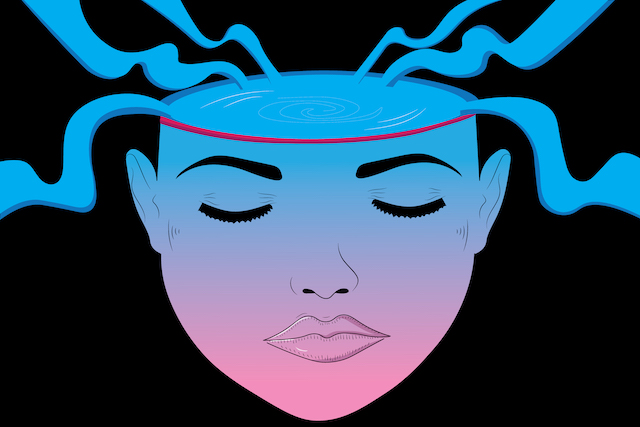
    Of course, you don’t tell anyone how you feel, as you’re too embarrassed to admit you even have these feelings, so you just bury it all away.

    I know these feelings all too well, as I’ve been through them all. It took me years to finally face up to what I actually felt and deal with it. As a coach once told me, “Buried emotions never die.”

    I knew I always wanted to be in the arts. I loved dance and drama, and I wanted to be an actor. I could feel it so strongly that I never even considered a different career.

    I started dance classes at the young age of six, and at eleven years old I went to a performing arts school. So my training began.

    After school I went to a reputable college where I did a further three years of training. I was sixteen years old and was told to lose weight and wear heels and make-up. I didn’t realize it at the time, but this wasn’t the healthiest thing to tell a teenager.

    After three exhausting years I graduated. All the training, the hard work, the sacrifice had led up to this moment. I was going to get an agent, start working in theater, and move into TV and film.

    But that didn’t happen.

    Instead of going full steam into my career, I froze. The last term of college crushed me.

    The last term all led up to our final show. The show ran for a few weeks in different locations around the city, and it was meant to be an opportunity for us performers to show off our talent. Everyone was meant to invite agents in the hopes of getting signed.

    However, I didn’t invite anyone. I was so ashamed of my performance. I felt I had been cast in utterly the wrong role, and no matter how much I tried, I just couldn’t make it work, and no one seemed to care.

    I remember wishing I would fall down the stairs of the tube station so I would break my leg and not have to perform; I was so humiliated.

    Rather than leaving college confident and excited, I left with my confidence at rock bottom.

    I never did anything with my training. All those years, all those dreams, all those aspirations, but when push came to shove, I didn’t do anything with it.

    For years I told myself that the last term was so tough that it broke me, and that is why I never continued after college. I blamed everyone else.

    It took me years to admit that it was actually my decision to quit. It took me even longer to understand why that was. I realize now I was scared.

    In fact, I was petrified that I wasn’t as talented as I thought I was. I knew if I put myself out there and tried to make a career out of it and failed, I would have proof that I wasn’t talented.

    If I blamed everyone else and quit before I got started then, in my head, I could always be amazing and could have always potentially had a career in the arts.

    Emotions are so complex, though, that it took me a long time to dig deep enough to find this truth.

    Thus, I found myself aged eighteen years old, with no formal education, and all I had ever wanted to do was perform, so what now? I was totally lost.

    I just froze. I didn’t get an agent; I didn’t go to auditions. I just quit.

    I had spent my entire life working toward this moment, and at the final hurdle I fell. It really shook me up; I felt like an utter failure and was humiliated.

    I was so ashamed and embarrassed that I stayed in contact with no one from college, except two friends.

    I remember walking down Oxford High Street and seeing two of my former classmates. I jumped into a shop to hide from them because I was afraid they would ask what I had been up to.

    All I could think was, “What would I tell them?” They were probably off in West End Shows, and what was I doing? I was a failure. Of course, this was before social media, so no one knew what I was or was not doing.

    Eventually I decided I would take some time out and go to Thailand. I ended up spending a year there. I became a diving instructor, and I met the man that would become my husband.

    Once back home, I got a job in recruitment and my career went from strength to strength. I thought I had moved on and was happy with my life.

    Yet whenever I would meet someone who asked about my education or what I did at school, I would panic. “What do I tell them? How do I explain that I trained, but never turned it into a career?” They would know my dirty secret, that I was an untalented failure.

    I would lie and make up stories as to why I decided to change careers after my education.

    I couldn’t understand why I still cared so much about this. Why did I feel I had to lie?  Although life was great, deep down I felt that something was missing. It sometimes felt like there was a dark mass in the pit of my stomach.

    I had a session with my coach about this feeling, and what came up? The arts, my love for dancing, my failed career, my shame, my embarrassment. I remember breaking down in tears. I was so angry that twenty years later I still hadn’t moved on.

    I was so angry that this was still such a big thing in my life. That it was still there with me. I just wanted it to go away. It felt pathetic that it still had such a huge hold over me; what was wrong with me? I just kept saying, “This is so ridiculous, why can’t I just let it go?”

    But remember what I said earlier? Buried emotions never die. They never leave you; they’re just festering

    I was so confused by it all, I didn’t understand why it still had such a hold on me. Why I felt so embarrassed and full of shame. My coach helped me unpack it all.

    The lies I had told myself had become so much a part of me; I had to work hard to pick it all apart to find the truth.

    After so many years, I was finally able to face up to what had happened. I was just a scared teenager. I was so scared of failure and rejection that I found a way to protect myself by making up a lie and quitting.

    I needed to make peace with this, and I needed to accept responsibility. I found this hard to do, as I didn’t like this version of me. It was much easier to blame everyone else than to see it was my fear that stopped me.

    I needed to forgive myself.

    I stopped telling myself lies and admitted that when I graduated, I was petrified of failure, so I quit before I could fail. I realized I still had a love for the arts and I needed to find an outlet in my life.

    It was hard work and took many sessions to really dig into the truth, but once I did, I was finally able to talk about the arts and my past without shame or embarrassment. I could finally move on.

    I did a lot of work re-connecting with teenage Alice. Writing letters to her, forgiving her, and showing her compassion. I also did a lot of work on acknowledging what I had achieved and who I had become.

    I know I’m not alone in what I felt and what I went through. I wish I could have started this healing process a long time ago because as much work as I have done, I know there is still more to do.

    For anyone who is experiencing what I did, know that you’re not alone and you’re not silly for feeling the way you do. Also know, you can change it.

    I learned so many things in the process.

    You can’t just ignore what you feel.

    At the time I was so confused by what I felt. Instead of trying to understand what was happening, I just buried everything.

    Eventually I had to look my shame and embarrassment in the eye and understand what they were telling me about myself. What was the message?

    There is always a message behind your feelings and emotions; you just need to be brave enough to hear them. I found journaling really helped with this.

    It takes time.

    If, like me, you have already spent years ignoring what you felt, that also means you’ve likely spent years telling yourself lies. What you are feeling is complex, and it will take time to work through it. Don’t expect an overnight change.

    Things still come up now that I have to work through. Human beings are extremely complex, and it takes time to break through all our barriers.

    Share what you’re feeling because you won’t be alone.

    I remember telling my old manager about how I felt. He had the same background as me, and he said, “Alice, I felt exactly the same way.” He told me he moved cities just to get away from people he knew.

    Just hearing that made me know I wasn’t insane. It was amazing to hear he understood.

    We hear it all the time, but sharing what you’re going through really does help. So share your story.

    Stop punishing yourself and have fun.

    For anyone reading this who can relate, you have likely boxed away something you loved. It’s time to take it out of the box and allow yourself to have fun again. You don’t need to keep punishing yourself.

    I didn’t allow myself to dance for years. It was too painful. However, my body was screaming out for it. I realized it wouldn’t be a career, but that didn’t mean I had to cut it out of my life completely. I could still enjoy it.

    It’s been a long journey for me. Mainly because when I quit twenty years ago, I had a rush of feelings and emotions, and I didn’t know how to deal with them, so I pushed them away and lied to myself. It took a long time to undo all the stories I had told myself.

    You don’t need to be embarrassed or feel ashamed, but also know it’s okay if you do feel this way. Just don’t hide from these feelings. Understand them, embrace them, and make peace with them. That way you can allow yourself to move on.

  • Living Without a Grand Purpose: Why I Find Meaning in the Little Things

    Living Without a Grand Purpose: Why I Find Meaning in the Little Things

    “Ironically enough, when you make peace with the fact that the purpose of life is not happiness, but rather experience and growth, happiness comes as a natural byproduct. When you are not seeking it as the objective, it will find its way to you.” ~Unknown

    I have always enjoyed helping others. Ever since I can remember, my empathic nature has led me to feel what others are feeling and to try and assist them to the best of my ability. Serving others has always been a point of pride for me.

    I have built my entire life around the idea that my life serves a greater purpose in the universal machine. My suffering and the life experiences I’ve had are leading me toward a grand destination, where I can look back and finally make sense of everything that’s happened and feel fulfilled. I’ve held this belief for so long and internalized this message so deeply that to think of any alternatives seems insane.

    Can I share a secret with you? I am terrified that I might be wrong about all of it. Maybe my life didn’t align to fulfill some sense of greater purpose. Maybe my experiences, good and bad, held no other significance other than to propel me forward into the unknown.

    Nothing I have ever set out to do has worked out in the way I imagined it would. And now I am in my thirties, and I have no idea what I’m doing. What do you do when you have no sense of direction or purpose? Why has the universe left me this way? I’d like to share my story with you…

    I joined the Air Force in my early twenties to get away from my small town. The military paid for my education, and I was able to start a career while I was young. I wasn’t excited about my career field in the slightest though. I was a communications officer, and I hated computers.

    I wanted to connect with people and help them. I also wanted to assist my faith group in sponsoring the first Pagan chaplain in the Department of Defense. I asked the universe for guidance, and I received what I thought was an unequivocal ‘yes.’ So, I attended seminary and trained to become an ordained minister.

    Fast forward several years, and my health changes after I give birth to my son. I can no longer serve on active duty, so I decide to change goals to become a chaplain for the Department of Veteran’s Affairs. I serve two years in two separate VA hospitals as a student chaplain; supporting people in crisis, teaching groups, learning about mental health care, and serving veterans of all walks of life. I apply to many chaplain jobs within the VA, and none of them work out.

    My family and I relocate several times. I apply to chaplain jobs wherever we go, and nothing works out. It is now two years after I finished my time at the VA hospitals. I ask the universe for guidance again, completely stumped as to why my efforts to be a chaplain have not panned out despite my best efforts.

    I hear about life coaching, and research acquiring a life coaching certification. The skills are similar to what a chaplain does, and if I start my own business, I can focus on a specific population to serve. In my time at the hospitals, I have realized I connect with and love helping veterans. I create my own coaching business aimed at helping veterans with trauma and post-traumatic stress disorder (PTSD).

    A year goes by. I have attended business seminars, marketing classes, hired my own coach as a mentor, and created all of my social media accounts and a website. I put out content and throw myself into networking with non-profits and influential people. I end up with one paying client and I am burnt out emotionally and professionally after nine months of consistent effort.

    My emotional health starts to deteriorate. I feel dejected, useless, and I feel like a failure. I am so good at helping people when given the chance, but it feels like the universe is conspiring against me. In other words, I have internalized the notion that my self-worth is dependent on what I can do for others rather than my inherent worth.

    Where did this come from? Why do I feel this way? I sit down and unpack this. I realize after some reflection that my tendencies to want to help everyone else is deeply rooted in the idea that I am not worthy. Many times throughout my life I was unwanted and abandoned (I have a history of abuse), and that sets up a shame spiral within me that I have perpetuated by my need to feel loved and wanted.

    I feel if I am not serving some purpose, or giving to others in some way, then I am not fulfilling my duty in life and I am worth nothing. How many of us can relate to these feelings? And what can we do about them?

    I had a heart-to-heart with my friend about this, and she made me realize several things. How do we truly know what the purpose of our life is? How do we know we weren’t meant to be kind to one person, or to step in at the right time to say something and then our lives are complete to be enjoyed till the end of our days? Do we really know what life is about, or is it a complex web of experiences and feelings with no designated plan?

    I’ve given thought to these questions, and I find comfort in the answers I find in the little things: Coffee in the morning on my back porch. Helping my son with his homework. Cooking a nutritious meal for my family. Having a conversation with a friend when they are in need of support.

    I have to be intentional about not letting my mind wander to the “what if?” and “am I doing enough?” narratives in my head and take each day as it comes with what I can do in the now.

    I am slowly warming up to the realization that my worth is not dependent on what I do for people. My only responsibility is to live my life to the best of my ability, with experiences and personal growth being my primary focus. I don’t actually know if my life has a grand purpose, and for now that is okay. I find meaning in the little things.

  • The Most Important Questions to Ask Yourself If You Want to Be More Authentic

    The Most Important Questions to Ask Yourself If You Want to Be More Authentic

    “Authenticity is the daily practice of letting go of who we think we’re supposed to be and embracing who we are.” ~Brené Brown

    Have you ever just wanted to relax, let go, and let yourself be?

    Why is this so challenging for so many? Why don’t we just live naturally and allow our authenticity to be felt, expressed, and seen?

    Well, when many of us were little, being authentic was not okay, so we focused on trying to do things the “right way” according to what others had to say, because our survival was at stake. The more we did this, the more we disconnected from our true essence.

    We’re not bad or wrong, we needed to do this in order to be loved and accepted instead of rejected, because to a child, being rejected is like death.

    The more we were shamed for how we were feeling, what we were doing, or how we were being, the more we learned that being true to ourselves was not okay. This was the beginning of self-abandoning—disconnecting from our authenticity and believing that there was something wrong with us.

    When I was growing up, if I did or said anything that my parents didn’t like, they would punish me, scream at me, or give me the silent treatment; that was the worst one to me.

    I used food to comfort myself because no one validated my feelings or comforted me. This was the consistent trauma I experienced as a child—not being seen, heard, or acknowledged for how I was feeling. This was especially hard when I was afraid or crying.

    I would often hide in my closet and under my bed with food. Eating was how I self-soothed and how I created my own safety.

    Eventually I would have to come out and interact with my family and society, which made me anxious and afraid because I was always trying to figure out the “right things” to do and say.

    And even when I thought I was doing and saying the right things, my father often screamed at me and said, “Damn it, Deb, you never do anything right.”

    Soon enough I became so afraid of speaking, sharing how I was feeling, and asking for what I wanted or needed that I suppressed that energy and turned into a people-pleaser. Then, when I was thirteen my doctor told me to go on a diet, and at age fifteen I became a full-blown anorexic, living in severe deprivation.

    I created a shield around me to protect myself. And no matter how much I tried to let go of the anorexic behaviors of depriving and denying myself of everything that was nourishing—even after twenty-three years of going to therapy and being in hospitals and treatment centers—I still held on tightly, or maybe “it” held onto me for survival and safety.

    This is what happens with our coping mechanisms, they serve at a time but then keep us in a bind; we want to let go but something inside says no.

    How did it keep me in a bind? I judged myself and got mad at myself for doing the eating/starving/exercising routine, and then I judged myself and got mad at myself for not being able to stop, which created even more self-hatred and feelings of hopelessness.

    I also had severe anxiety and depression because I was suppressing my true feelings. I wasn’t allowed to be me; instead, I had to be how everyone else wanted me to be. I resisted this internally and then needed relief from all that conflict, which the eating/starving/exercising routine gave me.

    Eventually I got so tired of fighting against my own biology and not being allowed to be me that I became suicidal. I thought that if I took my life, I would finally be free, but all those attempts just made my family even more mad at me, and they put me in another hospital for “not behaving.”

    I felt so lost, lonely, and confused; trying to fit into a mold of other people’s opinions, putting all my attention on trying to be the right person, which created fear in my system and a sense of separation from my true essence; my authentic expression.

    Being authentic in a world where social consequences are at stake if we don’t behave according to what others say isn’t easy; it takes a lot of courage, strength, and feeling comfortable with who we are.

    Being authentic is being vulnerable and real, sharing how we truly feel. Some of us don’t even know what that may be, because we’ve spent our lives numbing, protecting, or projecting, and/or telling ourselves we shouldn’t be feeling how we’re feeling—just as our parents may have done.

    When people ask me, “Debra, what did you want to be when you were growing up?” I always reply with “I just wanted to be me,” but I didn’t even know who “me” was, I was so disconnected from my true essence.

    It’s been a process to get to where I am today, living in a more authentic way; however, it wasn’t easy. I experienced rejection, pain, and people getting mad and leaving me for not meeting their expectations.

    At the beginning it was challenging to honor and take loving care of myself because it went against my family’s rules and the ways I was used to being. It was challenging to share so openly and honestly, realizing not everyone will agree or like me; however, being authentic is one of the greatest blessings I’ve ever experienced on my life journey.

    It’s helped free me from the eating disorders, self-harming, and depression, and it’s helped me find ease with my anxiety because I no longer hide how I‘m truly feeling—my fears, pain, shame, and insecurities. By embracing them, I started feeling more at peace with myself.

    I’ve “come out of the closet” in many ways. I’ve embraced that I’m gay. I’ve uncovered and am still discovering some of my natural talents, gifts, and abilities. I share openly and honestly about how I’m feeling and about my life journey—the things I’ve learned along the way, the things I’m still learning today. And I flow in my natural, authentic way. In “essence” I’ve come back home to myself.

    If you’re struggling with any type of addiction, an eating disorder, depression, anxiety, or self-harming, please be kind and gentle with yourself. Those symptoms are often responses to our childhood traumas. Those symptoms are not the problem, and neither are you.

    The real trauma isn’t what happened to us; it was a disconnection from our true essence, our authentic expression, and the stories we concluded about ourselves and our life experience that may still be running the show.

    In order to heal and feel at ease internally, so we can shine authentically, we need to heal the trauma and shame we’ve been carrying. We need to make peace with ourselves and what we’re experiencing. And we need to embrace all parts of our being with the understanding that everything we do is meeting a need. Finding healthy ways instead of unhealthy ways to get those needs met is key.

    If you’re like me, you may be afraid of noticing and feeling your deep shame; however, it was in my shame that I uncovered some of my greatest qualities that make me uniquely me—qualities I once needed to hide so I would feel loved, accepted, and safe.

    This was where the healer in me lived. This was where the poet in me lived. This was where the author, writer, artist, speaker, singer, and dancer in me lived. This was where my inspiring, fun, creative, wild and free spirit lived. This was where the honest explorer and curious part of me lived, where the one who knows how to be compassionate and loving with myself and others lived

    This was where I met my authentic self—by going into my shadows and embracing those fearful and tender parts that had been hurting and hiding. By making them feel safe by embracing, understanding, hearing, loving, and seeing them, and giving them permission to express themselves naturally.

    We need to forgive ourselves for abandoning ourselves to be loved and accepted by others. We did what we needed to do at the time, and now we can give ourselves permission to flow with our authentic rhyme—by discovering/uncovering our unique ways of expressing and learning how to meet our needs, physically, mentally, emotionally, and spiritually.

    To be authentic is to be vulnerable, and to be vulnerable is to soften our heart, to let down the walls of armor and protection and allow ourselves to feel, process, and express how we’re truly feeling; this allows us to have truer and deeper connections with ourselves and others.

    To be authentic is to connect with our inner child. They hold the keys to our talents, gifts, true joy, creativity, and natural ways of being and expressing. This is healing, allowing our true revealing, feeling safe in our bodies and allowing ourselves to fully be ourselves again, blooming from the inside out.

    I love this quote from Jim Carrey: “We have a choice to take a chance on being loved or hated for who we really are.” I would add, or we can suppress who we truly are and just add to our wounds and scars, and never get to experience the sincerity and divine greatness of who we can be.

    When we start to live authentically, we can enjoy life in the present moment because our mind is no longer trying to figure out how we “need to be” or trying to protect us from our pain, shame, vulnerabilities, and insecurities. By embracing them we feel more at ease, and we don’t have a need to numb or suppress with coping strategies that may not be healthy

    Here are a few questions you can ask yourself to help you identify what’s standing in the way of your authenticity:

    • What were you rewarded for as a child?
    • What did you get punished for as a child?
    • How did your parents want you to look, dress, wear your hair, etc.?
    • What were you told that success looks like?
    • What were you judged and criticized for?
    • What were you told not to be like? For example, “Don’t be loud, don’t cry, don’t get angry, don’t do or say or feel…, etc.”
    • What were you told was wrong or bad about you? For example, “You’re too sensitive, you’re too needy, you never do anything right, you ask for too much, you’re not good enough, etc.”

    Here are a few questions you can ask yourself to help you find your authentic expression:

    • What comes easy and natural for me?
    • Who am I when no one is looking?
    • What do I value?
    • What am I inspired to do but my head tells me not to?
    • What did I love to do as a child?
    • What do I truly enjoy doing now?
    • What is real about me, regardless of whether I judge it as good or bad?
    • What are my best qualities? “I’m caring, I’m loving, I’m empathetic, etc.”

    Here are some questions for self-inquiry:

    • Am I enjoying what I’m doing, or am I doing what I think I “should” be doing?
    • Do I always try to find the right things to say, or do I say how I truly feel?
    • Do I pretend to not be bothered when I really am?
    • Do I try to look good to others and create a false self-image, so I’ll be loved and accepted?
    • How do I feel about myself? Do I feel like I’m being true to who I know myself to be?
    • How do I relate to myself when I’m happy?
    • How do I relate to myself when I’m feeling sad or angry?

    Here’s the simple truth I know about beautiful and amazing you: You are inherently good, you’re naturally valuable and lovable, your uniqueness is a gift, you are divinity perfect. You’re worth taking up space, you’re an important part of this human race, you matter. This isn’t about striving for perfection, it’s about embracing your authentic expression.

  • How I Stopped Arguing with People in My Head and Cultivated Calm

    How I Stopped Arguing with People in My Head and Cultivated Calm

    “Thoughts fuel emotions. If you don’t like what you’re feeling, step back and examine what you’re thinking. Pain is inevitable, but you’ll suffer a lot less if you disengage from your thoughts.” ~Lori Deschene

    The warm droplets from the shower are bouncing off my skin. I could be relishing in the warmth. I could be exhilarated by the cleansing power of this precious water.

    Instead, I am entranced by an argument.

    I’m animated and tense. Gesticulating wildly and frowning.

    In the shower.

    There’s no one else there. I’m not shouting or even speaking out loud. This is all happening in my mind.

    Over and over, I rehash my position. Imagining my opponent’s rebuttal and conjuring up another defense. Each time I hone my argument feeling more certain that this is the winning strategy.

    Finally, I realize I’ve been in the shower for far too long. So I step out and start my day, barely noticing what had just happened.

    I’m driving to the shops. I could be singing along to my favorite tunes or discovering a new idea via a podcast.

    Instead, I am arguing in my head again.

    Yes, I’m paying attention to the road. Driving safely. Yet in the back of my mind the wheels are turning in constant mental warfare.

    I’m cozy in my bed, lying next to my beloved partner. I could be enjoying his reassuring presence. I could be calmly drifting off to sleep.

    Instead, I am resisting rest by mentally rehearsing conflict. Lost for minutes, hours perhaps? Time slipping away in a fog of hostility.

    In these quiet moments that I could be relishing, I’m filled with stress and tension.

    Who am I fighting? It doesn’t matter. It could be anyone.

    These arguments could be with family members, friends, or even strangers on the internet. If someone, somewhere has said something I disagree with, the mental argument is on!

    It took me years to realize how much my mental energy I wasted this way. And once you’ve seen it, you can’t unsee it.

    When I realized that these subconscious arguments were occurring, I began to see how frequent they were.

    Endless opportunities for calm and clarity were stolen by arguing with people in my head.

    Why I Would Mentally Argue with People

    In my quieter moments—showering or drifting to sleep—my subconscious thoughts were becoming conscious.

    Feeling like my nervous system was on high alert was not a new feeling to me. But realizing how much stress I was creating in my body and mind during these argumentative moments was confronting.

    It took so much effort for me to be a calm person, and I had been practicing for years. I thought I was making progress. I thought I was calmer than I had ever been.

    But witnessing this internal mental conflict was disheartening. My mind was a merry-go-round of malevolence.

    In her seminal book, How Emotions Are Made, neuroscientist Lisa Feldman Barrett outlines a new theory of how emotions work.

    Emotions are not a reaction to a stimulus. Emotions are stories that we construct from the internal and external sensory information presented to our brain from moment to moment.

    As Lisa says, “An emotion is your brain’s creation of what your bodily sensations mean, in relation to what is going on around you in the world.”

    I was constructing arguments to deal with stress I felt on a regular basis.

    And that stress? It was from complex trauma.

    How My Trauma Gave Rise to Mental Arguments

    It’s common to think of trauma as big things. War, violence, abuse, or neglect. But trauma isn’t about the event itself: it’s about how your body processed it.

    Trauma is a fundamental feeling of threat. A perceived lack of safety. It is anything that overwhelms your ability to cope. And there’s a lot that can overwhelm a child.

    And in the face of overwhelm, without consistent soothing from a calm caregiver, a child will grow up with a model of the world that is unsafe, inconsistent, and uncertain.

    Growing up as a highly sensitive person in an insensitive world, coupled with intergenerational trauma, led to a lot of overwhelm, anxiety, and depression for me.

    And as a traumatized highly sensitive person, my felt sense of safety was lacking.

    So I thought my mental arguments were a way for me to feel safe with other people. If I could get people to agree with me, and think like I did, then I knew they wouldn’t be a threat. We would all get along because we would all agree.

    But I misunderstood the purpose of these arguments. I thought I was dress rehearsing conflict in order to create safety.

    In reality, I was conflating existing stress with the need to argue.

    My body was feeling stress from unresolved trauma, and my brain was constructing stories of similar times I felt stress. During arguments.

    I wasn’t stressed because I was arguing, I was arguing because I was stressed.

    How I Stopped Arguing with People in My Head

    You’ve probably heard the term “safety first.” I couldn’t get to a place of mental calm without first developing a felt sense of safety in my mind and body.

    And even though I had been practicing meditation for years, there were a few very specific tools that helped me to find that safe feeling.

    1. EMDR

    EMDR stands for Eye Movement Desensitization & Reprocessing. It’s an incredible somatic therapy that is at the cutting edge of trauma treatment.

    Finding an EMDR therapist was a game changer. She helped me release many traumatic memories and start to feel safer overall.

    2. Cultivating calm

    The mind-body connection is well established. So, in order to have calm thoughts, I realized I also needed a calm body. In meditation I would practice embodying calm as much as possible.

    How much deeper could I make my calm? How much more could I sink into the bed or chair? How much more could I let go?

    3. Self-regulation

    A well-regulated nervous system can easily shift from stress to calm. And activating calm is a learned skill, called self-regulation.

    Learning to self-regulate as an adult was a difficult practice. First, I needed to pay attention to when dysregulation or stress was occurring.

    For me, signs I’m becoming dysregulated are talking more loudly, biting my nails, or constant movement like playing with my hair or jiggling my legs.

    Learning to recognize my increasing stress and breathe deeply or practice being still helped me to embody calm outside of my meditation practice.

    4. Calm relationships

    We are hardwired to need each other. And I think this gets overlooked a lot in the self-help world.

    Self-regulation is a vital skill. And there’s lots of ways you can learn to self-soothe. But we also need calm relationships. Calm families. Calm communities.

    In fact, regulation can happen through relationships. This is called co-regulation. Ideally, it begins in childhood being consistently soothed by our caregivers.

    But co-regulation also continues in adulthood. And it happens through secure attachments with our friends and intimate partners. Co-regulation can even exist in a relationship with a trusted therapist.

    Having a few close people that I could co-regulate with was vital for helping me to feel safe and calm.

    5. Letting go

    The final piece of the puzzle was realizing I didn’t need people to agree with me in order to feel safe. I can have strong values and disagree with people and still be okay.

    Letting go of the need to be right… of the need to change someone else’s mind… of the need to create safety through validation… was liberating.

    I’m no longer as triggered by differences of opinions. I’ve freed up so much mental energy. My creative output has skyrocketed. And I regularly feel a sense of calm clarity.

    Takeaway

    Becoming a calm person isn’t easy. We are buffeted by chaos and suffering all around us. But learning to feel safe in my body, to let go of mental conflict, and embodying calm has been life changing for me. I hope that by sharing my story, you can find a greater sense of calm in your life too.