Tag: expectations

  • From Pain to Peace: How to Grieve and Release Unmet Expectations

    From Pain to Peace: How to Grieve and Release Unmet Expectations

    “The wound is the place where the Light enters you.” ~Rumi

    Before 2011, I had heard many spiritual teachers talk about “accepting what is.” It sounded nice in theory, like good mental information to chew on. But it didn’t feel embodied. I understood it intellectually, but I wasn’t living it.

    Then I attended a weekend intensive with a teacher I deeply respected, and something in the way he explained it hit deeper. It wasn’t just talk. The essence of his words turned a spiritual idea into something I could start to live.

    In that talk, he shared a story about a father whose son had become paraplegic. The father was devastated because he had so many expectations—that his son would go to college, graduate, get married, and have children. But those dreams died the day of the accident.

    The father was still living in a mental loop: “I should be going to his graduation.” “I should be at his wedding.” He couldn’t let go of the life he thought his son was supposed to have.

    The teacher explained that the father needed to grieve his expectations, not just in his mind, but in his body. That hit me hard. It was like an athlete expecting to win a championship and then getting injured. They’re stuck in that same mental trap: “I should have had that career,” and they suffer for years because life handed them a different card.

    That story cracked something open in me.

    The Weight of ‘Shoulds’ on the Body

    I’m someone who tends to be idealistic. I had high expectations for myself, others, and how life was supposed to go. And when people didn’t live up to those ideals, whether in business, relationships, or everyday interactions, it really hurt. I believed people should be honest, ethical, and truthful. They shouldn’t lie; they shouldn’t manipulate. I had a long list of “shoulds” and “shouldn’ts” that governed how I expected life to go.

    When life didn’t meet those expectations, I felt disappointed, angry, even hateful at times. My body held the tension. I had chronic stress, emotional pain, and health challenges. For six months, I was even coughing up blood, and doctors couldn’t find anything wrong. Looking back, I see now that I was holding on so tightly to my expectations that my body was breaking under the pressure.

    This is what that teacher was pointing to: that to truly accept what is, we have to grieve our expectations on a body level. It’s not enough to tell yourself affirmations like “just accept it” until you’re blue in the face. You have to feel where your body says, “No.”

    That means noticing: does your body feel heavy? Is your heart tight or tense? If there’s anything other than lightness or peace, then there’s something you haven’t grieved or released.

    By staying present with those sensations, without trying to fix or change them, you start to feel shifts. The signs of release are subtle but real: yawning, tears, vibrations, or a sense of energetic movement. It’s like something in your nervous system finally says, “Okay, I can let go now.”

    Letting Go Became the Practice

    After that retreat, I spent the whole summer sitting with these “should” beliefs. Every day, I made time to observe my thoughts and emotions. I noticed how often I was clinging to ideas like “I should have done this” or “they shouldn’t act that way.” It was uncomfortable at first. I didn’t realize how much I had been carrying around.

    I committed three to four months to this work. Being self-employed gave me the space to dive deep, and I felt it was necessary to do my own inner work before I could help others with theirs. I probably put in hundreds, maybe thousands, of hours during that time.

    Through that commitment, I released huge chunks of subconscious programming I didn’t even know were there. I realized I had inherited a lot of my “should” thinking from my upbringing. My mother also had strong expectations; when things didn’t go her way, she’d have intense emotional reactions. I had absorbed that pattern without realizing it.

    At the end of those few months, I felt like I had begun the real journey of embodying spiritual growth. Not just reading about it. Living it. Accepting what is became something I could feel in my bones, not just think about.

    But that was just the beginning.

    Acceptance Happens in Layers

    Over the next ten years, I noticed a pattern: about every six months to a year, a similar trigger would arise. Same emotion, same resistance, but less intense. The duration of my suffering shrank, too. What used to upset me for weeks now only remained for a few days, then a few hours.

    I came to understand that accepting “what is” happens in layers, like peeling an onion. At first, I released the more obvious emotional charges held in the heart or gut. But as time went on, I discovered deeper, more subtle conditioning stored in the nervous system, bones, tailbone, even in my skin and sense organs.

    The body doesn’t release it all at once—maybe because doing so would overwhelm the system. With each layer that releases, it feels like the body grants permission to go deeper.

    To find and clear these deeper layers, I learned muscle testing from the Yuen Method of Chinese Energetics that helps uncover subconscious resistances. Muscle testing was quite a powerful experience, teaching me to intuitively talk to the body to find and release unconscious ancestral conditioning and forgotten traumas that are decades-old or generational programs located in different body areas.

    My Personal “Should”: Loved Ones Should See My Good Intentions

    For example, I used to hate it when my father made negative assumptions about my good intentions or deeds. Instead of appreciating my efforts, he would criticize them, leaving me with the feeling that no matter how hard I tried, it was never good enough for him.

    This took me many years to work through, and each year, with each trigger, I discovered so much conditioning. I would have emotional meltdowns; my body would be tense and angry, just like my mom, because that’s how she is. From working on these triggers over the years, he can hardly get a reaction out of me anymore.

    I was essentially reacting in a hardwired way. When my father made negative assumptions about my mom, she would often respond with emotional meltdowns and angry outbursts. I realized I had inherited the same pattern.

    Over the years, each time my father pushed a button, I had to do continuous work on the different layers of conditioned reactions in specific areas of the body. His button-pushing became a gift: it constantly revealed more hidden layers of emotional reactivity.

    These days, if he makes negative assumptions, it might still bother me a little, but it’s nothing like the angry, hateful emotional reactions I used to have. If my body still reacts slightly, it’s giving me feedback, making me aware that there is still unconscious conditioning that needs to be released.

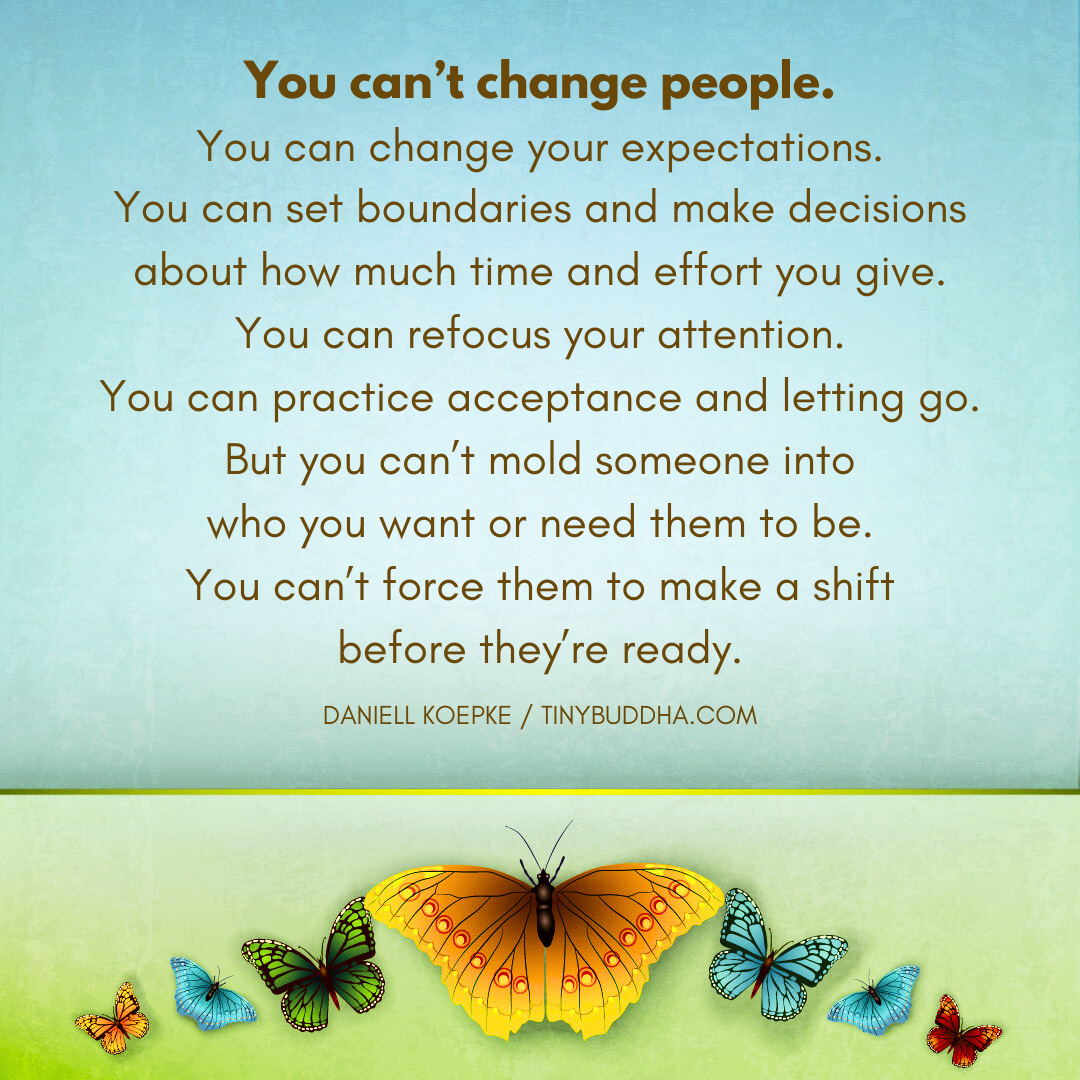
    If you do this work, over time, you will notice your loved ones may still push the same buttons and sometimes even say unkind words or behave in ways that used to deeply hurt you. But your triggers and reactivity can be significantly reduced.

    You won’t take their words or actions as personally anymore. Instead, there’s a growing sense of love and acceptance—for yourself, the situation, and your loved ones, regardless of what they do. Doing this work feels like moving closer to unconditional love, or at least as close as we can get.

    The Ongoing Unfolding of Acceptance

    This process taught me that accepting what is isn’t a one-time breakthrough. It’s a slow unwinding of everything we were taught to expect, demand, or resist. It’s a return to what’s actually here, moment by moment, breath by breath.

    Even now, I still get triggered. But I’m better at meeting those moments with curiosity instead of judgment. I know the signs in my body. I can feel when something hasn’t been grieved yet.

    If you’re like me, if you have a long list of “shoulds” about yourself, about others, about life, maybe it’s time to sit with them. To feel where they land in your body. To grieve the life you thought was supposed to happen.

    Because healing doesn’t come from controlling life. It comes from letting go of the fight against it. It comes from feeling into what is, with an open heart and a patient presence.

  • What Happened When I Stopped Saying Yes to Everything

    What Happened When I Stopped Saying Yes to Everything

    “Daring to set boundaries is about having the courage to love ourselves, even when we risk disappointing others.” ~Brené Brown 

    I used to believe that if someone was in need and I had the ability to help, it was my duty to step in. Whether it was managing caregiving responsibilities for family, fielding crisis calls from friends, or stepping up at work when no one else would, I said yes without hesitation. For me, helping seemed to be the measure of a “good person.”

    But what I didn’t realize is that many of us confuse obligation with responsibility.

    Obligation feels like it’s inherently ours to do, regardless of choice. Responsibility feels like something we voluntarily take on—sometimes because of what we believe is expected or what others have convinced us is ours to carry. The distinction between the two is subtle, but the effects of misunderstanding them are profound.

    The truth is, we’re taught early on that helping others is the right thing to do. And for women, in particular, the world emphasizes that stepping up for others is what defines us as strong, capable, and valuable. So I did. I said yes to nearly every pull on my time, energy, and peace—until my body stopped me.

    The Wake-Up Call: The Day My Body Stopped Me

    You don’t realize how much you’ve given—how much you’ve carried—until your body asks you to stop.

    For me, that wake-up call came in the form of an ulcer. At the time, I couldn’t fathom why my body was failing me. I ate healthily, exercised, and generally lived a balanced lifestyle—or so I thought.

    But what I hadn’t realized—what so many of us fail to see—is that ulcers, burnout, and other stress-related conditions don’t come from what we eat. They come from what’s eating away at us.

    What had been quietly eating away at me were all the pulls on my time and spirit, pulls I had allowed to continue because of my inability to recognize the damage and deliver an emphatic no. Caregiving, crisis management, being the go-to problem solver—these were the things that slowly consumed me as I ignored the whispers of my body and spirit, telling me to pause.

    The ulcer wasn’t just a physical issue—it was a wake-up call. It forced me to confront the weight of my yeses and how they came at the cost of my peace and wellbeing.

    The Power of the Pause: How I Learned to Reassess My Yes

    Healing took time, and it wasn’t just about recovering physically. It was about rebuilding my habits and, more importantly, my mindset.

    I began to understand that every pull on my energy—a friend’s distress signal, a family member’s caregiving need, or even an opportunity at work—wasn’t necessarily mine to answer. I needed to stop operating on autopilot and start responding with awareness. I called this practice the pause.

    Before I gave my yes, I learned to pause and ask myself:

    1. Is this truly mine to do?
    2. What will this cost me in time, energy, and peace?
    3. What is motivating me to say yes—guilt, duty, or an honest desire to help?

    The pause gave me clarity. Sometimes, the answer was obvious:

    • “I’ll think about it and let you know.”
    • “I can help with this part, but I won’t be able to take on the rest.”
    • “No, I can’t. You should ask around to find someone else.”

    Other times, the pause forced me to confront patterns I’d ignored—like over-helping to avoid discomfort or defaulting to yes because I thought no would disappoint someone. Each time I paused, I learned something new about why I was saying yes, and each answer helped me protect my energy more thoughtfully.

    The Pull of Expectations: How Societal Conditioning Shapes Our Yes

    One of the hardest parts of reassessing my yeses was confronting the power of societal expectations.

    Helping others is often framed as the ultimate virtue—that “good people” step up, solve problems, and make sacrifices when others can’t or won’t. For women, this idea takes on an even sharper edge. We’re taught that caregiving and emotional labor come naturally to us, that putting others first is what makes us valuable.

    The world celebrates women who “do it all,” often without asking what it’s costing them.

    As I reflected on my incessant yeses, I realized how much of this cultural messaging I’d internalized.

    I thought of my younger self, watching the women in my life extend themselves without pause—my mother, my grandmother, my mentors. They juggled caregiving, work, and family without ever asking whether it was sustainable. I thought of the messages I’d absorbed as a child, like the idea that refusing to help when you’re able is selfish, or that good people sacrifice no matter the cost.

    These beliefs shaped how I approached every ask. It wasn’t guilt that pulled me toward yes—it was the weight of these expectations, handed down through generations without question.

    But here’s what I’ve learned: these expectations might shape us, but they don’t have to define us. Balance isn’t selfish—it’s necessary. Redefining responsibility isn’t about rejecting others but about making sure the cycle of overextension stops with us.

    Reassessing and Reconnecting: How Thoughtful Yeses Changed Everything

    Pausing didn’t just help me recover physically—it reconnected me to what mattered most.

    By becoming intentional about my yeses, I was able to show up fully for the people I love without losing myself in the process. Instead of saying yes to everything, I started saying yes to what aligned with my values, what honored my peace, and what made my energy sustainable.

    Thoughtful yeses gave me something I hadn’t had in years—balance. And with that balance came clarity, purpose, and freedom. I let go of obligations that weren’t truly mine, found strength in saying no, and started living in a way that felt authentic rather than automatic.

    It wasn’t just my time and energy that transformed—it was me.

    Closing Reflection: Your Own Litmus Test for Balance

    If you’ve ever felt the pull to say yes without pausing first, I want to encourage you to stop—just for a moment. Ask yourself:

    • Is this truly mine to do?
    • What will saying yes cost me?
    • What is motivating this choice, and does it align with what I value most?

    We’re often told that saying yes is the ultimate virtue. But the truth is, balance is the measure of alignment. It’s not about doing everything; it’s about doing what truly serves both who you are and what the situation requires.

    With every pause, you ask the most important question of all: Does this honor the person I’m becoming?  And from that space of clarity, your yes—when you give it—becomes not just an answer but a gift.

  • How to Embrace the Glorious Mess of Everyday Life

    How to Embrace the Glorious Mess of Everyday Life

    “Embrace the glorious mess that you are.” ~Elizabeth Gilbert

    Let’s begin with a simple fact: life is inherently messy. Despite our best efforts to organize, control, and perfect, life has a way of surprising us and tossing our neatly folded plans into disarray. I used to think that if I worked hard enough, if I was good enough, if I did everything right, I could keep the chaos at bay. But life, as it turns out, doesn’t work that way.

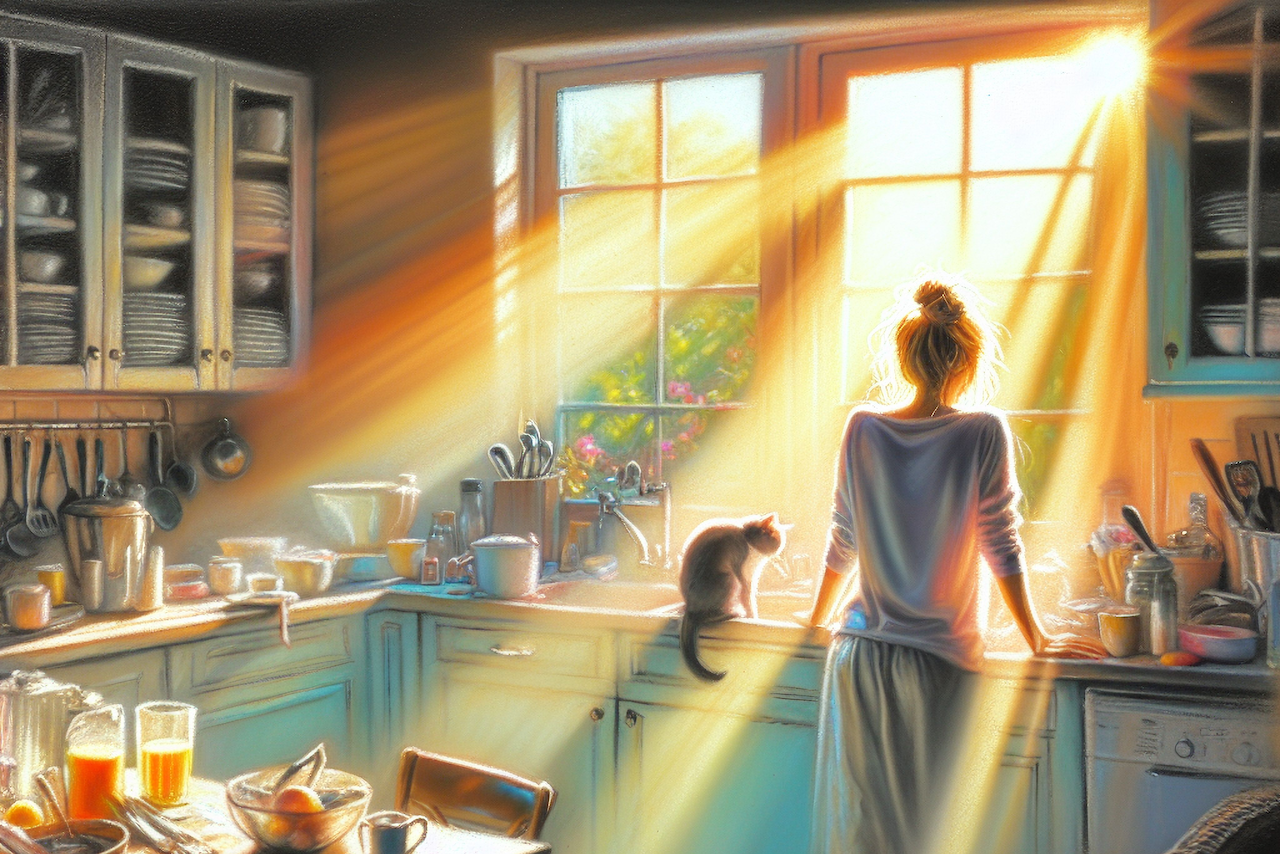
    My kitchen, for instance, is a testament to the beautiful chaos of daily living. There are dishes in the sink, crumbs on the counter, and perpetually sticky spots on the floor from toddler and puppy splashes.

    For the longest time, I let these imperfections bother me, believing they were reflections of my failure to maintain control. A sign I was falling short as a mother, a wife, a homeowner, a professional person, an adult. Then one day, I was relieved by a revelation. This mess is not a sign of failure but of life being lived. The chaos is evidence that I am showing up, day after day, doing my best, and this is more than enough.

    The Beauty of Showing Up

    Showing up, as it turns out, is half the battle. We often get so caught up in the pursuit of perfection that we forget the importance of simply being present.

    I have learned that life isn’t a quest for perfection, but a journey of embracing the mess and the inevitable chaos. True beauty lies in finding grace in the everyday moments, those uncelebrated instances that may never make it to Instagram but form the very fabric of our existence.

    For me, this realization came during a particularly difficult period in my life. I was dealing with a career transition, an injury that stopped me from participating in my beloved outlet—running, family issues, and a general sense of being utterly overwhelmed.

    I felt like I was drowning in a sea of responsibilities, unable to keep my head above water. Then, one day, a wise friend gave me a piece of advice that changed everything: “Just show up,” she said. “Show up and do your best. That’s all you can do.”

    Lessons from the Mess

    Embrace Imperfection

    We live in a world that glorifies perfection, but the truth is, perfection is an illusion. Embrace your imperfections, your mistakes, and your failures. They are part of your story and make you who you are.

    The Japanese concept of wabi-sabi, which finds beauty in imperfection, inspires me to accept my flaws and see them as unique marks of my journey. A cracked bowl is repaired with gold and revered for the richness of the story and life it represents. Its imperfections set it apart in beauty, just as yours do.

    Find Beauty in the Ordinary

    Life is made up of small, ordinary moments. Find beauty in these moments, whether it’s the warming way light filters through your kitchen window in the morning or the delightful screech of your child’s laughter. This is what matters.

    One of my most cherished memories is of a simple evening spent baking cookies with my two-year-old son. Flour was everywhere, the cookies were slightly burnt, and my shirt was blotched with butter, but when I let go of my ideal of cleanliness and order, I tapped into a priceless and memorable joy.

    Be Kind to Yourself

    We are often our own harshest critics. Practice self-compassion and be kind to yourself. Acknowledge your efforts and give yourself credit for showing up, even when things are difficult.

    During this tough period, I started a habit of writing myself small notes of encouragement: “You can handle this. You are a good mom. A caring therapist. A worthy person.” It felt awkward at first, but over time, it became a powerful tool for self-kindness.

    Let Go of Control

    Trying to control everything is exhausting and ultimately futile. Let go of the need to control and learn to go with the flow. Trust that things will work out, even if it’s not in the way you expected.

    I used to plan every detail of family vacations, but the most memorable trips were the spontaneous ones, where we let go, embraced the adventure, and followed our curiosities as they surfaced.

    Practical Tips for Embracing the Mess

    Practice Mindfulness

    Mindfulness involves being present in the moment and accepting it without judgment. When you find yourself overwhelmed by the chaos, take a few deep breaths and focus on the present moment. Notice the sights, sounds, and smells around you.

    I started a daily mindfulness practice, spending just two minutes each morning in quiet reflection. That’s right—two! That’s all I can manage before I hear “Mommy, Mommy,” but it makes a marked difference in my ability to be present and receptive. This simple act has transformed how I approach my day.

    Set Realistic Expectations

    It’s easy to get caught up in unrealistic expectations, both for yourself and for others. Set realistic goals and be flexible when things don’t go as planned.

    I learned this lesson the hard way when I tried to juggle my counseling practice, family responsibilities, and my new exercise and rehab routine. It was only when I scaled back, created a list of true priorities, and focused on one meaningful task at a time that I found a sustainable balance.
    Celebrate Small Victories

    Acknowledge and celebrate your achievements, no matter how small they may seem. Every step forward is progress, and it’s important to recognize and appreciate your efforts.

    My husband and I have created a gratitude practice at the end of the day where we share even the smallest victories, like finishing a task or having a good conversation. It helps us rise above the inevitable frustrations and disappointments of the day and reminds us of our blessings and progress.

    Learn to Say No

    It’s okay to say no to things that don’t serve you or that you don’t have the capacity for. Prioritize your well-being and focus on what truly matters to you. I used to say yes to every request, stretching myself thin. Learning to say no was liberating and allowed me to invest my energy in what truly mattered.

    Moving Forward with Grace

    As I stand in my kitchen, surrounded by the beautiful chaos of daily life, I am reminded of the profound lessons that come from embracing the mess. The crumbs on the counter and the sticky spots on the floor are not symbols of failure but of life being fully lived. They show that I am present, day after day, doing my best.

    Life’s messiness is where we find our true selves—where we learn to embrace imperfection, find beauty in the ordinary, and show kindness to ourselves. It’s where we let go of control and learn to go with the flow, trusting that things will work out, even if it’s not in the way we expected.

    Embracing change and the chaos that comes with it has taught me that the most beautiful moments often arise from the most unexpected places. It has shown me that resilience, adaptability, and strength are born from facing our fears and stepping into the unknown.

    Recently, a wise friend gifted me a fridge magnet that reads, “A clean house is a sign of a wasted life.” There was a time when I might have felt defeated or even insulted by this message. Instead, I now see it as a gentle reminder to exhale and accept myself and my messy life as they are—worthy, unique, and filled with rich lessons and avenues for growth.

    If you find yourself struggling with the messiness of life, I encourage you to look for the grace in the chaos. Embrace the imperfections, show up, and do your best. Remember that you are enough, just as you are. Life doesn’t have to be perfect to be beautiful.

    So, the next time you find yourself overwhelmed by the crumbs on the counter or the sticky spots on the floor, take a moment to breathe and appreciate the life being lived in those messy, imperfect spaces. Show up, do your best, and trust that this is more than enough.

  • Why I Give Without Expectations (and Don’t Think It’s a “Toxic Trait”)

    Why I Give Without Expectations (and Don’t Think It’s a “Toxic Trait”)

    “Some of the kindest souls I know have lived in a world that was not so kind to them. Some of the best human beings I know have been through so much at the hands of others, and they still love deeply, they still care. Sometimes, it’s the people who have been hurt the most who refuse to be hardened in this world, because they would never want to make another person feel the same way they have felt. If that isn’t something to be in awe of, I don’t know what is.” ~Bianca Sparacino  

    I recently came across a meme that implied that helping someone who would not do the same for you is a “toxic trait.”

    I’ve been thinking a lot about this meme.

    At first, I could totally relate to this; it doesn’t seem fair to give of yourself, your valuable time and resources, to individuals who wouldn’t be bothered to ever do the same in return.

    But then I dove a little deeper into that thought.

    Friends and family in my own life have accused me of having this “toxic trait,” especially regarding how I help people who have been unkind to me; people who have cheated on or wronged me.

    While it’s certainly true, on the surface, and a lot of us are probably “guilty” of giving more than we receive or giving to people who, as illustrated, “wouldn’t do the same” for us, I don’t consider this to be a toxic trait, in the worst sense.

    Let me tell you why…

    When my ex-husband, a man who has arguably caused the most pain and upheaval in my life and in the lives of my children and family, comes to me with a need, most everyone around me encourages me to dismiss it out of spite or “karmic balance.”

    But when I don’t, and instead help when I can, they get angry with me or seem disappointed, as though I have wasted myself and my time on someone unworthy of it.

    I used to have this little cross-stitch hanging on my wall that read “People who need love the most deserve it the least.” That’s always stuck with me. Best $1.50 I ever spent at a thrift shop for home décor.

    All of us, at some point in time (maybe once, maybe on more than one occasion), have been the person “who would not do the same,” the unworthy one.

    Let’s be honest, even the most philanthropic of us can be choosy sometimes with who we give our time, attention, money, and energy to. That’s not necessarily a bad thing, to be considerate of where you spend those treasures.

    But my guess is that we all have benefitted from the kindness of someone we wouldn’t necessarily return the kindness to. But maybe we paid it forward to someone else.

    If we’re living a decent life, the number of those instances will be small.

    But they’re still not zero.

    So when we give of ourselves, maybe unknowingly—but even better, with the knowledge that it will not come back to us—we are making a choice to give purely.

    Does it sometimes drain us? Yes. And that’s certainly an aspect that needs attention; to replenish oneself in order to give is important.

    But is it a toxic trait to be good to someone without the expectation of getting anything in return?

    Some of history’s greatest and most outstanding human beings have done just that. Mother Theresa comes to mind, for instance.
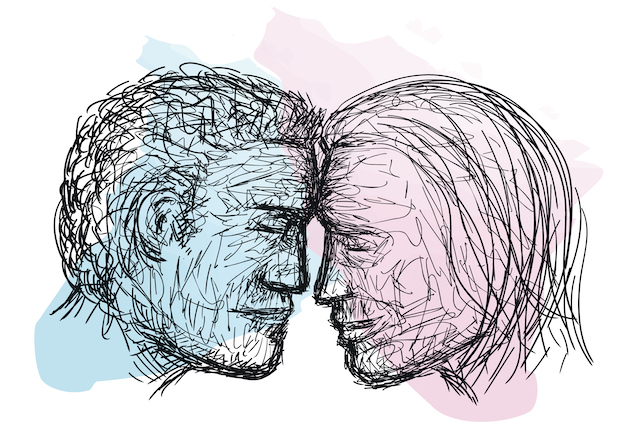
    I don’t buy into the narrative that giving is toxic, nor is giving to someone who wouldn’t do the same for you.

    Genuine, truthful, selfless kindness, that’s what this world needs a little more of—with the understanding that those who are giving need to take time to replenish themselves when necessary. To help without conditions, but rather in love and compassion; that’s the type of person I am trying to make a conscious effort to be.
    We should definitely take time to reboot and fill our cups back up when we need to, absolutely. But no one should be faulted for trying to do better, to be bigger, for taking the high road.

    We should all be encouraged to do so.

  • 4 Things to Try When You Want Change but Don’t Know What to Do

    4 Things to Try When You Want Change but Don’t Know What to Do

    “If you get stuck, draw with a different pen. Change your tools; it may free your thinking.” ~Paul Arden

    For a year and a half, I could feel a career shift coming. I had worked hard to cultivate a career I loved, but I began feeling disconnected from my work. The meaning I had originally felt from it was no longer there. Each time I started a new project, I felt tired and unmotivated.

    At first, I thought it might be burnout. So I took a few weeks off to see if I could reset myself into feeling excited about my work again. But when I returned, I felt the same. The things that I had built my career around, that previously gave me energy and meaning, no longer resonated.

    I thought about the type of work I did daily and couldn’t imagine myself still doing it ten years from now. But what could I imagine myself doing? I had no idea.

    I struggled and strived to figure out what a career shift might look like. I read several books, including Finding Meaning in the Second Half of Life by James Hollis (Ph. D.), but while I resonated with the ideas in several of them, I still felt no closer to an answer.

    I became very intentional about noticing when things gave me energy. At one point, I went to a dinner party where someone brought tarot cards and gave me a reading. It was so energizing! I went home and immediately ordered the same set of tarot cards. I began learning about them and started doing readings with friends and at parties.

    “What does this mean? Should I become a tarot card reader?” I thought. But that didn’t resonate for a variety of reasons.

    By this point, I was telling everyone who would listen that I was “directionless.” It was a new label I used often. When someone asked what I did for work, I would say, “Meh, I’m directionless.”

    Well-meaning friends and acquaintances started offering their opinions of what I should be doing next. I even googled, “How to make a career change.” I felt like I was walking around in a black fog where I could barely make out what was ahead of me. Sometimes I could see a slight shape—a glimmer of something that gave me energy. But what did it mean? And how could I use that information for what was next?

    I went through a cross-country move to a location where I had no friends. Because of this, I had more time to myself than usual. I spent each day going inward and connecting to my body through meditation, simple somatic practices, like stimulating my vagus nerve, and parts work.

    Finally, I realized that the answer was never in my head. It was in my body—wisdom that had been blocked by all the thoughts and old beliefs that had formed, and parts of me that wanted to protect me and keep me safe.

    I found that a part of me didn’t want a career change because it was too scary and unstable. Instead, it wanted to stay with what was known, dependable, and safe. I befriended this part and worked through the fears. As I spent more and more time going inward, the answer appeared clearer and clearer. It had been there all along, and finally, I was able to access it.

    If you’re feeling stuck, here are a few things to try.

    1. Identify parts that may be trying to tell you something.

    If you are feeling stuck, there may be a “part” of you that is keeping you there to protect you. These parts are often created during childhood when we might not have had as many resources as we do now.

    For example, maybe you learned during childhood that being seen by others can be unpredictable and dangerous. So a “part” of you could have been created that helped you make decisions based on that information. Now, as an adult, you likely have more resources, but that information never got to the “part” that was created.

    So, let’s say that you want to write a book and you just can’t seem to move forward. No matter what you do, you’re staying stuck. Why? One reason might be because this “part” knows that if you write a book, you will be seen by others, and based on experience, that can be unpredictable and dangerous. So it prevents you from stepping out and taking risks where you might be seen. You may not even be aware of this part consciously. Yet it could be there, working day and night to protect you.

    2. Meditate.

    Being stuck can sometimes prompt negative thoughts, such as “What if I’m stuck forever?” or “I’m not good enough.” These thoughts can then lead to negative emotions, which can then make us feel even more stuck and overwhelmed. It’s a vicious cycle. Meditation can help you break out of this cycle and receive clarity, which can help you find direction and move forward.

    Set a time each day to meditate. It doesn’t need to be that long—even just ten minutes is enough. If you have trouble sitting silently, you could search for a guided meditation on YouTube.

    Make it part of your routine and do it at the same time each day to keep momentum going. Doing it at the same time each day will help it become part of a habit and make it easier to remember.

    If you start thinking while you’re sitting silently, that’s okay! Just come back to your breath. You don’t need to be perfect. You just need to cultivate some stillness and silence. This practice helps you drop out of your mind and into your body, where so much wisdom lives.

    3. Stimulate your vagus nerve.

    Your vagus nerve regulates your entire nervous system. When your vagus nerve is activated, it helps calm your nervous system, which helps shift you into a more creative, open state of being. It is from this state that you can more easily access wisdom within yourself.

    There are a variety of ways to stimulate your vagus nerve. Because the vagus nerve is connected to your vocal cords, humming or singing is one way to achieve this:

    1. Focus on your breath and notice anything you feel in your body. Maybe you feel pressure on your chest, a pain in your neck, a burning in your throat, etc.
    2. Breathe in deeply.
    3. As you exhale, say “Voo” out loud for the entire length of the exhale.
    4. Sit and notice how your body is feeling now. Is there any difference?
    5. Continue steps two through four until you feel a shift.

    4. Change your environment.

    Have you ever taken a trip to a new place or gone on a great hike and felt a sense of renewed inspiration, clarity, or presence? The reason for this is because we grow when we’re out of our comfort zone.

    Being in a new environment, meeting new people, and having new experiences takes us out of our comfort zone, opens our minds, and provides us with the opportunity to grow and learn more about ourselves. It shakes things up from our normal day-to-day experiences.

    Get out into nature or go on an overnight getaway. It doesn’t need to be something fancy—anything that will get you out of your current space can help shift the stuckness.

    Is there an area of your life where you feel stuck or don’t know what to do? Which of these actions most resonates with you? Or, do you have an action you typically take that works best?

  • Trust Restored: Why I’m Letting Go of Preconceived Ideas About People

    Trust Restored: Why I’m Letting Go of Preconceived Ideas About People

    “The problems around us are only compounding. We will need to rediscover our trust in other people, to restore some of our lost faith—all that’s been shaken out of us in recent years. None of it gets done alone. Little of it will happen if we isolate inside our pockets of sameness, communing only with others who share our exact views, talking more than we listen.” ~Michelle Obama

    I’m up at the American River, one of my favorite summertime spots. I have a ritual of floating down it, then hiking back up the hill to my clothes. I love how the swift current knows exactly where it’s going, making any paddling unnecessary. I love how you can just lie back and let it take you as you look up at the cloudless blue sky.

    As I float, the sun beats down on my skin, but the river’s coolness counteracts its scorch. Small groups of Canadian geese speckle the shore. The air is still, its quiet punctured only by the occasional train sounding in the distance.

    Once I’ve reached the bottom, I set out back towards my towel—walking along a series of dirt paths consisting of small hills. They’re quick and steep like bunny slopes, coated with golden dust that glints beneath the sunlight.

    While walking them I notice two men picking fruit from a tree in the distance. Feeling exposed in my half-clothed state, I immediately tense up. I realize that having no shoes means I’ll be unable to walk quickly past.

    Bracing myself for discomfort, I continue walking. As the distance between us narrows, I wait for them to whistle, or to jokingly ask  if I need help finding my clothes—or create discomfort in whatever other way, be it through words or stares (as I’d become accustomed to men doing).

    I walk past, armor on, shield up—raising it a little more when one of the men begins to speak.

    His words are, “Hello,” followed by,  “You’ve got some tough feet!”

    They contain no sexualizing, nor any subtle attempt at intimidation. And in response to this comment— the kind one human would make to another, his equal—I find myself reacting with human thoughts in return:

    Yes—this terrain IS pretty rugged. I guess my feet ARE pretty strong. Thank you, Sir.

    **

    I think about how, in Whistling Vivaldi, a black man whistles classical music when crossing paths with white strangers on the street. He does this in hopes of quelling their fear and discomfort that are born from prejudice. Implying benevolent intentions and sophistication, his whistling preemptively wards off prejudicial treatment.

    Perhaps this man’s comment was the (gender) equivalent to this example—an attempt at polite conversation to keep from coming across as threatening.

    Or maybe he’d briefly entertained the same thoughts that often precede the sorts of comments I’d anticipated. Maybe in the past he would have converted those thoughts into unwitting weapon words, then launched them my way. Maybe, though, because our society is growing and learning and its people are evolving, he decided that day not to.

    Either way, I felt relief that the men did not behave in the way I’d predicted.

    It got me thinking about preconceived ideas. How we often develop templates, then apply them to the individuals we regularly interact with. How few encounters encourage us to challenge or expand these templates, because much of our lives are structured around familiarity. And how it’s easy to take one look at a person and file them away into a specified bin inside our minds, perhaps unaware we’re even doing it.

    How often do we go into an encounter with our mind already made up—both about the person and about what they could possibly have to say? Their words pass through a filter in our head, confirming what we already know or believe to be true.

    Sometimes our expectations turn out to be accurate. Other times they do primarily because we expect this of them, therefore never open our minds to the possibility that we might be proven wrong.

    People act in ways that contradict our initial views of them, but we don’t see it when we’re not looking for it.

    When I was a Lyft driver, I drove many passengers I was sure I’d have nothing in common with. One was a seemingly straight-laced white man who worked for a tech company. I thought we’d have little to talk about, but an hour later we were eating In ‘N Out and discussing everything from our country’s quick fix approach to handling emotions to how his brother’s coming out changed their relationship to finding a balance between impactful work and a job that pays the bills.

    So often we decide a person is a certain way. Our mind closes. Thereafter we do, indeed, fail to connect. But not on account of differences, but the fact that no connection is possible when the heart and mind are closed.

    **

    No shift in thinking takes place in a single instance. The fact that those two men at the river pleasantly surprised me, for instance, doesn’t erase the overall pattern. Many more such encounters would be necessary for a true paradigm shift.

    But it’s a start. And from now on when I have the bandwidth, I want to give people the opportunity to act in ways that contradict my preconceived notions of them.

    I don’t want to get to that point anymore where I stop seeing others as individuals. Where I’m blinded to what we have in common because I’m seeing only what they represent; the harm done by the larger group they belong to; the political implications of their behavior.

    For instance, several years ago a young man had approached me while I was reading at a bar—and I completely ignored him. At that time I was so fed up with men, so annoyed with their repeated intrusions on my dates with women, and so frustrated that it was them who approached me in public (never women), that I just kept staring down at my book. I didn’t say anything back. In the moment it felt empowering.

    When I thought about the incident years later, though, I regretted my behavior. The guy hadn’t even been aggressive in the way he’d approached me. He’d been earnest, apprehensive, even shy—the way I imagine I can also be at times when I approach women. He didn’t represent All Men; he was his own person, doing something in that moment that might have made him nervous, or pushed him out of his comfort zone.

    I’m not saying it was my job to ease those feelings, or that I owed him this. It’s more that I realized that now I would have genuinely wanted to. Wanted to have at least said hi. Wanted to have at least politely told him I wasn’t up for conversation. Wanted to, maybe not have smiled, but at least treated him more like a human than an implied enemy.

    I want to take my frustrations with patriarchy and heteronormativity up with the concepts themselves—and with individual humans only when they are truly practicing it.

    I’d like to believe that polarized positions aren’t set in stone. That they can evolve and expand with time. That we won’t be doomed to perpetual gripping of shields while walking this planet.

    This isn’t our climate right now—but I hope and wonder if one day we’ll at least start inching closer.

  • How I Learned the Power of Letting Go After My Father Developed Dementia

    How I Learned the Power of Letting Go After My Father Developed Dementia

    “There is beauty in everything, even in silence and darkness.” ~Helen Keller

    When I was eleven years old, I would force myself to stay awake until the wee hours of the morning.

    I was severely anorexic at a time when eating disorders were considered an “inconvenience” you brought on yourself. Anorexia was dismissed as a rich, white girl’s disease (although we were certainly not rich)—a disease that was easily curable with a prescription for a chocolate cake.

    Although my emaciated body was a dead giveaway of my condition, it was school that noticed the change in me first. My once stellar grades began to slip, and I was falling behind in the advanced academic and art program I was a part of.

    “Just eat already,” my teachers would tell me, and when I tossed my lunch into the garbage, I’d be sent to the nurse’s office to watch The Best Little Girl in the World. Again.

    At home, grape-flavored bubble gum and bouillon cubes were my foods of choice. I did toe-touches, crunches, and jogged at least four times a day, passed out some mornings, and hid my body under layers of flannel shirts on the hottest August days. But even as my disease raged, home was still my refuge, a place where my eating disorder could take its hair down and run wild.

    Thankfully, both my parents worked full-time and often through dinner, so mealtimes weren’t much of a struggle. And when we did eat together, I became as much of a master at hiding my food as I was at hiding my body.

    I was also smart. Or maybe conniving is a better word. A weekly trip to Friendly’s for ice cream (the irony of that name!) fooled my overworked parents into believing that I was fine.

    Puberty had simply shaved off any “baby fat” I had, they reasoned. What they didn’t know was that puberty never had a chance with me. No sooner did my period appear, I starved it away.

    But even with the ice cream trips and their growing awareness, I still felt fairly safe at home.

    Until that one moment that changed everything.

    On a sunny, unremarkable fall day (Isn’t that what Joan Didion tells us? We are most surprised by those tragedies and traumas that happen on “normal” and “beautiful” days…?), my father surprised me by picking me up early from school.

    Hurrying to the office for dismissal, there was a tiny, naive part of my eleven-year-old self that thought maybe he was surprising me with a trip to Disney World.

    That’s what happened to my friend, Mary, the previous year. When she returned from her impromptu trip, she was sporting tanned skin and a perpetual grin. She then spent most of our fifth-grade year with mouse ears glued to the top of her head.

    But there was no Magic Kingdom for me. Instead, without so much as an inkling as to where we were going, my father hustled me into his car, and we drove away. Sitting next to my father, a man who held all the power over me, my stomach ached as I wondered what was about to happen.

    My weak heart pounded in my chest, and as we drove, I prayed it wouldn’t give out. Catching a glimpse of my ashen skin and white, cracked lips in the rearview, I knew that I was nothing more than a stray dog in a shelter, ripped from my cage by a complete stranger, wondering if I was about to be put down, thrown into a fight, or worse.

    Finally, we arrived at our destination, a medical center in a strip mall. As soon as we walked through the front door, I gagged on the thick scent of medicine and grape lollipops that hung in the air. Without a second to catch my breath, I was whisked into a doctor’s office and onto a scale.

    Looking down her nose at me, the doctor snapped, “You’re too skinny. You need to gain weight.” While I stood there on the scale, she turned to my father and diagnosed anorexia nervosa.

    Then she looked at me. “If you don’t eat,” she warned in a sharp tone, “we’ll have you put in a place for ‘girls like you’.” She then informed me that once I was locked in that wretched prison of force-feedings and shackles (as I imagined it), I wouldn’t see my family again until I was “fixed.”

    When we returned to the car, my father spoke the first words he had said to me all day: “So? Will you gain weight?”

    “Yes,” I answered, too frightened to fight. Too scared to advocate for myself. Too terrified to tell him that this wasn’t a choice. I wasn’t choosing to starve myself; I was sick.

    But even if I had spoken, he wouldn’t have understood. No one did.

    From that moment on, I knew that I was completely alone. That’s when I began to stay up way past midnight, quietly jogging in place. I’d stop only to press an ear to the door, straining to hear what my parents were saying. Would they send me away? To that place?

    “I’ll never let it happen,” I assured myself. I would die before I’d go to a place where I was literally stripped of myself.

    For the next few years, the games continued, and although there were always doctors and threats, I kept myself just alive enough to stay out of that particular treatment center.

    ****

    Flash-forward almost forty years, and today, my father is an old man with dementia.

    As the Universe sometimes works in strange ways, I am now one of his primary caretakers. Although our relationship was strained for many years and I missed out on the experience of having a strong male figure in my life that I could trust, he did walk me down the aisle, and I am here for him now that he needs help.

    My father doesn’t remember that day that will forever be burned into my brain. He doesn’t remember the hell I went through the years that followed—the fear, the insecurities, the isolation, and the self-inflicted bruises I sported because I hated myself so very much. More than anything, he was, and is, clueless of the real battle scars—the ones that lay deep inside.

    He doesn’t know that that one “unremarkable fall day” when he pulled me from school started a negative spiral in my life, a time when I began aligning with damaging beliefs and inflicting self-harm.

    All he knows now is what his dementia allows him to—if the sun is out, if the squirrels ate the peanuts he tossed to them, and whether or not I am there to help him; to deliver his groceries, to take him out on drives, and to care for him.

    Yes, this could easily be the ultimate story of revenge, but years of teaching and practicing yoga have brought me down a different path.

    The path I have chosen is the path of letting go.

    Truthfully, my father’s dementia has left me no choice but to let go, at least of some parts of my life. I’ve needed to let go of expectations, of attachments to the outcome, and even, sometimes, like in those moments when he calls me “Sally,” my own name and identity.

    But in letting go, I have found that his disease has brought some gifts as well. I’ve learned to slow down and appreciate the daisy he wants to admire, the flock of chickadees darting in and out of a bush he’s watching, and the feel of the cool fall air on my face as I help him to and from a doctor’s appointment.

    Letting go has allowed me to experience all those things that I was previously too busy to appreciate. As Helen Keller said, “There is beauty in everything, even in silence and darkness.”

    But letting go because of his dementia wasn’t enough.

    I had to let go for me, too.

    To let go of the toxic weight from the past, I released that moment when everything changed, all those years ago.

    How? By simply deciding to put the weight down—and not just with regard to that event, but in all aspects of my life.

    Was it easy? No. But it was doable.

    In letting go, I didn’t worry about forgiving (although it is an important step for healing), or seeing someone else’s perspective. I simply unhanded my tight grip on all the “wrongs” I had endured and still carried with me, as well as all those things for which I blamed myself.

    Every one of us will live through events, some that we consider positive, and others, not. The only control we have is in how we deal with the circumstances we’ve been given.

    We can choose not to shoulder the burden, and to unpack those weights we’ve been carrying. We can close our eyes, breathe deeply, and tell ourselves, “I will put that weight down.”

    That’s where our true power lies.

    Have I forgotten my past? Of course not. But I have let it go, and in letting go, I have reclaimed an important relationship with my father, and more importantly, with myself.

    By letting go, I have released my suffocating grip on life, and reclaimed my personal power.

  • Stop Waiting for Perfection and Fall in Love with Your Life Now

    Stop Waiting for Perfection and Fall in Love with Your Life Now

    I know, so cliché, right? I can practically hear your eyes roll. But hear me out.

    In a society driven by results, achievements, and ideals of perfection, there is a huge pitfall that I am becoming increasingly aware of—that we can be so focused on trying to achieve our “best life” that life itself could pass us by and we would have missed it. Missed the beauty of just being here.

    We’ve all heard the sayings “Slow down and smell the roses” and “Life is a journey, not a destination.” We hear these sayings and pass them off as embroidery on a quaint pillow, but what if we didn’t? What if life really is in the details?

    I mean, how many of us will ever actually attain the “perfect life” we are being sold? Are we just trapped in never-ending, self-defeating cycles of diets, bad habits, and perpetual “self-improvement”?

    What if we just paused for a second. Took a break from social media. Blocked out all the outside noise. Just got quiet. What would your inner voice, your subconscious, tell you?

    What makes you truly happy? What feeds your soul? Makes you tick? Even reading that back I realize I sound very “new age,” but what I mean is, aren’t we done with being told what will make us happy? And why does life have to be spectacular to be fulfilling? Can’t what we have just be enough?

    Recently, I lost my dad after a very short and aggressive battle with cancer. I didn’t see it coming. I thought he would go on forever.

    I had been estranged from my dad for a few years before he got sick. We had drifted apart for lots of reasons but mainly because he was never there for me. Our relationship was very one-sided and usually consisted of me running after him, wanting him to notice me, to give me the love and approval I so badly felt I needed from him.

    He wasn’t any of the things a father should be. He wasn’t reliable or safe or protective or even present, and I resented him for abandoning me when I was little.

    But when it came down to it, when I faced losing him, when I saw him in his hospital bed and he told me he “wasn’t long for this world,” all of that melted away and I longed desperately for more time.

    I wish I had let go of my expectations, my resentment, and my pride and just accepted him and salvaged a relationship with him. I loved my dad, and I wish I had spent more time just being with him. Now, that time has passed.

    His loss taught me something. Life is precious. We don’t have forever. We have now. This moment. We can choose to love our lives now.

    Don’t wait until you’re skinner, prettier, fitter, earning more money, famous, a millionaire. (Most of us will never be those last two things.)

    If your life is particularly hard right now and your needs aren’t being met, work to change what isn’t working. But don’t get so focused on what you want that you forget what you already have.

    Let’s stop wasting the precious time we have here with the people we love, who make our life beautiful.

    Appreciate all the little things that make you happy.

    For me, it’s coffee shops and lazy mornings, walks by the river or in nature, grabbing lunch with my friends or dancing the night away, cuddles on the sofa, spending time with my kids, those few precious moments with my partner in the morning before the day begins.

    These things are what make a life. While we are striving to “live our best life,” we run the real risk of completely missing the one we are already living.

    My one wish is that we all wake up and start appreciating the life we have right now. That we reject the notion that we have to have perfect bodies, perfect faces, perfect houses, families, relationships, to have a truly happy life.

    Wake up to the fact that we are being sold this lie purely so that we buy more stuff, work more hours, keep striving for the mythical pot of gold at the end of the rainbow.

    Love your life now. Fall in love with all the little things. Happiness doesn’t come from physical possessions. It comes from appreciating everything money can’t buy. You could already be living your “best life” without even trying.

  • Unbecoming the Old Me: How I’m Finally Discovering That Life Can Be Fun

    Unbecoming the Old Me: How I’m Finally Discovering That Life Can Be Fun

    “The definition of insanity is doing the same thing over and over again expecting different results.” ~Albert Einstein

    I woke up one morning and realized that I had no idea who I was. I realized that over the past thirty-something years I had been everyone but myself.

    I was like a chameleon molding into the people that surrounded me. Not wanting to make noise or cause disturbance to others or trigger my own inner wounds.

    My goal was being whoever I thought the person around me wanted me to be. To be accepted, loved, and liked by others. I realize now that I was searching for something external to validate what I needed to give myself. I needed to learn who I was. I needed to like, love, and get to know myself.

    Once you discover that you do not like yourself and that you don’t even know who you are or what you like, change starts to happen. You start to identify areas where you were using people and things to fill a void that only you can fill. Alcohol to numb the pain, sex to feel less alone, to feel valuable. Helping others and fixing external problems so you don’t have to look at yourself.

    I had no clue this is what I was doing. Honestly, I thought I just wanted to help people. Turns out I was projecting externally what I needed to be doing internally. We tend to do this without any awareness. If you find yourself constantly nurturing or encouraging other people but, on the inside, you feel alone, sad, or wondering if this is all life has to offer, you may be doing this as well.

    Pay attention to what you constantly give to others. It’s likely that’s what you need to give yourself. Pay attention to what you say to others because you likely need to say that to yourself. 

    The journey to discovering myself has been a long one. It has been a fun one and a difficult one. I have explored different activities and hobbies—reflecting back on activities that I enjoyed as a child and bringing those back into my life; trying new things that I have always been curious about or wanted to try. I have kept the ones that bring me joy and peace and eliminated the ones that lower my energy.

    I have also done this with people, jobs, and my own thoughts. The voices in my head have been the most challenging to discard. But after years of consistently working with them, my inner dialogue is finally much nicer.

    Yes, the criticism does still arrive, but I see it for what it is and get curious about it. I ask if what my negative inner voice says is true. Ninety-nine percent of the time it is not. I see what it is trying to teach me.

    I often will ask myself: Who said that to you and when? Oddly enough, my thirty-year-old self’s belief system was one I built as a kid, when I concluded that I wasn’t good enough and I was only valuable when I had something to give someone. It’s really funny when you realize you are an adult body carrying around beliefs you developed as a child, with zero awareness. 

    I also had to take the time to reflect on how my actions and thoughts were playing a role in my life. I had to make the decision to basically do the opposite of what I had been doing to get different results.

    For example, instead of waiting for the people around me to start respecting and prioritizing me, I had to start respecting and prioritizing myself. I had to identify my wants, honor my needs, and set boundaries in relationships.

    Instead of sleeping in, I had to start getting up early before my son so we could have a pleasant morning versus running out the door. I had to nurture myself at the beginning of the day before the world had a chance to pull at me.

    Instead of holding my truth in, I had to muster up the courage to speak it. To share my feelings, rock the boat if I had to, and trust I wasn’t “being crazy.”

    Instead of tiptoeing around everyone and trying to please them, I had to understand that this is not even possible.

    Instead of hating myself, I had to start loving myself.

    Instead of being closed off, I had to open my heart—to myself, others, and the world.

    Instead of remaining stuck, I had to start taking baby steps to discover who I am and who I want to be. Like spending time in silence in nature so I could hear my inner voice, making art, saying positive words to myself in the mirror while brushing my teeth, and meditating for just three minutes a day.

    Before I started doing the opposite of what I had been doing, I had no clue that life could be fun. I am here to tell you that life really can be fun, you’re not alone, and by taking one small step you can begin to transform your life into something you didn’t even know was possible for yourself.

    It does take courage, compassion, consistency, and commitment, but if you start today, when you look back in a few years you will not even recognize yourself or your life.

    If you start to believe bigger than your beliefs about yourself and this world, magic will start to happen.

  • How I Stopped Feeling Embarrassed and Ashamed of Being Single

    How I Stopped Feeling Embarrassed and Ashamed of Being Single

    “Be proud of who you are, not ashamed of how someone else sees you.” ~Unknown

    “When was your last relationship?” my hairdresser asked as she twisted the curling wand into my freshly blow-dried hair.

    “Erm, around two years ago.” I lied.

    “Why did you break up?” she asked.

    “Oh, he had a lot of issues. It wasn’t really working out.” I lied again.

    I had gotten quite good at this, lying to hide my shame over being in my early thirties and never having been in a serious relationship. I had learned to think on my feet; that way, no one would ever call me out. The last thing I needed was people’s pity and judgment.

    I sat in my chair thinking about what she might say. Should I have told her that I have never been in a serious relationship? Would she be compassionate or judgmental? Would she feel sorry for me and think there was something wrong with me? That was a risk I was not willing to take.

    I felt so much shame and embarrassment around my relationship status that I would avoid discussions about it at all costs. Or I’d lie or get defensive with family and friends who would bring it up, to the point that they noticed it was a sore subject and would avoid asking about my love life.

    I learned to recognize how shame manifested in my physical body—the anxiety I felt when someone would ignorantly ask when I would be having children, the rapid heartbeat when asked if I would be bringing a plus-one to gatherings, and the knots in my stomach when I would be invited places that would consist of mainly couples.

    The shame I felt around my relationship status had always prevented me from speaking my truth because I was afraid I would be judged harshly.

    I felt like someone with an addiction who was in denial. I was so ashamed that I couldn’t bring myself to say the words “I’ve never had a serious relationship” to anyone, not even my closest friends and family, despite them knowing deep down.

    The Quest to Find Love

    I felt aggrieved that I had gotten to my early thirties without ever being in a serious relationship. The creator didn’t love me; it had forgotten about me. I desperately wanted a loving relationship, as I was tired of being alone, and I wanted to experience true love.

    I had a warped belief that being in love meant that I would feel happier, content, and life would genuinely be easier. After all, this is what we are told in fairy tales—the princess gets her knight in shining armor and they live happily ever after!

    Over the years, I delved into the dating scene, trying dating apps, and keeping an active social life so I could meet people. Time went by, and I dated multiple unavailable men who ran when they sensed I wanted something serious.

    This eventually got tiresome, and it took a toll on my self-esteem and confidence. I felt undesirable and not good enough.

    I couldn’t understand what I was doing wrong! Was I being punished? I was well-educated, with a good career and prospects, and I wasn’t bad looking at all. And more importantly, I was considered kind, outgoing, and friendly by those who knew me.

    Enough Is Enough

    I was exhausted and frustrated and had no more energy left in me to keep looking for a good match.

    I was so fed up with being met with disappointment and feeling bad about myself that I slowly began to give up on love.

    I convinced myself that I would never find the right partner, that I wouldn’t experience the over-glamorized idea of love I had conjured up in my head from early childhood.

    This only heightened my feelings of shame. It told me that not only was I not good enough to have a partner, I wasn’t capable of seeing something through until the end, and I didn’t possess the courage to ‘tough it out.’ Shame told me I was a bad person, unworthy of love.

    Sulking into my pillow on a Sunday afternoon, I had a sudden thought: Maybe it’s not them, maybe it’s you. I got angry at this thought. How could I possibly be to blame? I’ve done nothing wrong. The only thing I am guilty of is wanting to be loved.

    Another thought came: Maybe you can do something to change your experiences. This thought didn’t get me as angry, and after reflecting on it for a day or two, I concluded that I had to take some responsibility for the kind of men I was attracting.

    I took a step back from finding ‘the one’ and put my energy and focus on working on myself. I concluded that most of the qualities I wanted in a man I didn’t even have in myself—for example, confidence and assertiveness.

    Compassion Over Everything

    I learned that shame can be ‘killed’ when it’s met with compassion, so I started being kinder and less critical of myself. I made a conscious effort to avoid negative thoughts, praised myself as often as I could, and tried not to be too hard on myself.

    I confided in my close friends about the shame I felt around my single status, despite it taking much courage to do so. The more I admitted to people that I had never been in a serious relationship, the better I felt and the more I began to accept it.

    Being vulnerable with those I loved was like a weight being lifted off my shoulders. What’s even better was that I wasn’t judged harshly or pitied as I anticipated, and instead, I was shown love and compassion.

    I remember telling a new colleague that I hadn’t been in a serious relationship, and she said, “Me too.” My fear of how she would react quickly turned to relief that there were people just like me, that I had nothing to be ashamed of.

    I was, however, choosy about whom I told my story to, as not everyone is deserving of seeing me at my most vulnerable. I knew I had to be careful because if I was not met with compassion and was judged and ridiculed, this could have exacerbated the shame I already felt.

    Love is Love, No Matter Where It Comes From

    I began to realize that love is love, and regardless of my relationship status, I had plenty of it. I didn’t need a partner to feel loved, and love isn’t less valuable because it doesn’t come from a relationship.

    We can be shown love by our friends, family, colleagues, ourselves, and even strangers. This love is just as special and meaningful as the love you experience in a relationship.

    With this in mind, I began to cultivate more self-love in order to boost my confidence and self-esteem. After all, the best relationship I’ll ever have is the one I have with myself.

    I started being kind to myself and saying nice things about myself through daily affirmations. I also accepted compliments when I was given them, took time out for self-care, and put boundaries in place where needed.

    As a result, my confidence and self-esteem grew, and I started to understand my worth and value.

    Letting Go of the Need to Find Love

    Over time, I began to let go of the need to find love. I hadn’t noticed that it had completely taken over every part of my being. I wasn’t closed off to finding love; in fact, I was very open about finding a potential partner. Only this time, I was okay with it if it didn’t happen.

    I let go of the idea that someone would be coming to rescue me, and I concluded that I could be my own hero and best friend.

    I let go of the idea that I needed to be in a relationship to be happy and made a conscious decision to be happy at that very moment. As a result, I began to feel free, liberated, and completely content with where I was in life.

    When I let go, I noticed that the shame I felt around my relationship status had stemmed from fear. I was scared of what people would think of me because I wasn’t meeting the status quo. I was scared that I wouldn’t be able to start a family.

    Where I Am Now

    I still haven’t met ‘the one,’ and I’m okay with this. I am now at peace, joyful, and enjoying my life as it is in this present moment.

    I no longer feel the shame I once felt around my relationship status or the fear that I have been left behind. I understand that I don’t have to be ashamed, as there are plenty of others just like me.

    I choose to see my single status as my superpower. I get to use this time to learn and grow. I embrace and appreciate every moment of being single, as I know that when I do get into a relationship (which I will), I will miss moments of being single and having no one to answer to.

    There are, of course, times when negative thoughts and behaviors try to rear their ugly head, but I simply remember who I am and ask myself, “Does this thought or behavior align with what I want or who I want to be?” If it doesn’t, I simply let it go.

    For anyone reading this who’s experiencing feelings of shame and fear because they do not have a partner, remember you’re still worthy single, and you deserve your own compassion and love. Once you give these things to yourself, you set yourself free.

  • Why I Didn’t Trust Myself to Make Decisions (and What If It’s All Okay?)

    Why I Didn’t Trust Myself to Make Decisions (and What If It’s All Okay?)

    “Tell me, what is it you plan to do with your one wild and precious life?” ~Mary Oliver

    Lately, I’ve been taking time to think about what I actually want. Not what I “should” want or what other people want for me.

    One thing I have learned is that mistakes happen when you choose not to follow your inner guidance system. The problem is that, for many years, I chose not to listen to mine.

    Whenever it screamed and pulled at me, desperate to get my attention (“Don’t purchase a car from that shady car dealership! Don’t go out with that person who makes you feel very uneasy! Don’t spend thousands of dollars on a degree that doesn’t make you happy!”), I would simply override it. I would tune out everything my gut was telling me, and instead, justify in my head why doing xyz would be a perfectly fine idea.

    After enough of these experiences piled up, rather than arriving at the realization that I willfully chose to ignore my intuition and that’s what got me into trouble… I arrived at a somewhat different conclusion. I decided that I simply wasn’t good at making decisions.

    So I stopped trusting myself. Before making an important decision about anything, I’d always have another person “validate” it. You know, just in case. My justification was, if I end up making a totally messed up decision, well, I don’t need to feel too badly about it since it was backed by another human being. Evading personal responsibility at its best.

    Now, short term, this sort of worked.

    The people offering guidance and helping me with my decisions were sound-of-mind individuals who cared about me. In fact, some of their guidance was largely beneficial to me, and I’m glad I listened.

    The thing is, while listening to others can be very helpful, it should not be used as a crutch. If someone gently encourages you to make a decision that you know, deep down, is good for you, that is perfectly fine. However, if you are relying solely on input from others because you’re afraid to make the “wrong decision,” that needs to be examined.

    Three problems started to slowly arise for me.

    One, I started to lose my own voice. I started to forget my own taste and what I liked, disliked, agreed with, or disagreed with. I convinced myself that I honestly didn’t know. But oh, I knew. I just was terrified of admitting it to others, much less myself.

    Two, there were occasionally moments where someone’s advice did not resonate with what I wanted. Wait, disagreeing with someone?! Feeling like I might have a separate, completely valid opinion that is different than another human’s?? TOO MUCH TO HANDLE.

    And three, chaos ensued when multiple people had multiple opinions about how I should live my life. And every single person expected me to honor their advice and guidance. And oh my god, what do I even do now?

    After years of dealing with the anxiety caused by trying to do everything everyone wanted, as well as the deep depression that arose as I realized I had become a former shell of who I was, unsure of who I was or what I wanted, I knew that something needed to change. I was lost and slipping away.

    I started making small decisions. It felt terrifying.

    I would like to buy this shirt. I would like to eat sushi for lunch. I would like to stay in this evening, rather than go out.

    Little wins for self-advocacy!

    Then I started making bigger decisions.

    I would like a new job. I would like to stop “hustling” during my non-work hours and just do things that make me happy. I’d like to take more abstract, nature photos than cookie-cutter family photos.

    With each little decision I made, I also made sure to pay close attention to how I was feeling.

    If I felt a tightness in my chest and a feeling of uneasiness, I would pay attention to that. I’d think to myself, “You know what, brain… I know you might object to this for various reasons, but the heart is telling me to steer clear of this decision.”

    I slowly started becoming much more aware of everything my body was feeling at any given moment.

    I also started to realize something else. Maybe there truly are no “shoulds.”

    No matter what decision you make, there will be someone who is all for it and someone who disagrees completely. There are thousands of choices that a person can make in a day. It’s impossible to guarantee that everyone will like or approve of all of these little choices. From the decision to order a cinnamon dulce latte at Starbucks (yes, I see all you Dunkin’ Donuts diehards out there cringing), to the decision to dye your hair purple.

    What about the even bigger decisions? Such as the choice to work a certain job, have a family or not have a family, follow a certain political party, etc.

    What if the whole point is to simply live in accordance with our values, and honor other peoples’ desire to do the same?

    What if it is literally all okay?

    To plant down roots. To fly with wings.

    To be financially abundant and have more than you could need. To have just enough to live happily and comfortably.

    To be tall, short, skinny, fat, lean, muscular, and everything in between.

    To live on your own or to live with others. To be in a relationship or to be single. To work sixty hours a week or five hours a week. To have a job you adore or a job that pays the bills.

    To be a work in progress. To be sure. To be unsure.

    To still be learning. To still be searching. To be saved. To not believe. To be straight, gay, bi, or none of the above. To love men. To love women. To love animals. To simply love.

    What if it is okay to have hard ambition and dreams that are larger than life?

    What if it is okay to have soft ambition and dreams that are just right, which make us happy and honor our capacity?

    What if it is okay to not have any “ambitions,” per se, and to simply focus on cultivating habits rather than reaching goals?

    To experience satisfaction on our own terms without needing to prove anything to anyone, ever.

    What if being enough isn’t about trying to be everything to everyone? Rather, it is about being who you want to be, unstoppably, and nothing more?

  • How I’ve Redefined Success Since ‘Failing’ by Traditional Standards

    How I’ve Redefined Success Since ‘Failing’ by Traditional Standards

    “Once you choose hope, anything is possible.” ~Christopher Reeve

    When I was a child, I wanted to save the world. My mom found me crying in my bedroom one day. She asked what was wrong, and I said, “I haven’t done anything yet!” I couldn’t wait to grow up so I could try to make a difference.

    At fourteen, I joined a youth group that supported adults with disabilities. We hosted dances and ran a buddy program. I helped with projects at state institutions and left saddened by the conditions for the residents. I planned to work at a state institution.

    As a senior in high school, I was voted most likely to succeed. It was unexpected, like so many things in my life. I hoped to find meaningful work that helped others.

    My first year at Ohio State, I fell head over heels in love and married the boy next door. A month after my wedding, newly nineteen, I started my first full-time job as manager of a group home for men with developmental disabilities. I never finished college.

    At twenty-three, I was officially diagnosed with depression after my first baby, but the doctor didn’t tell me. I read the diagnosis in my medical record a few years later. I grew up in the sixties with negative stereotypes of mental illness. I didn’t understand it, and I thought depression meant being weak and ungrateful. I loved being a new mom, and I wanted the doctor to be wrong.

    I was a stay-at-home mom with three young children at the time of my ten-year high school reunion. The event booklet included bios. For mine, I wrote something a bit defensive about the value of being a mom since I didn’t feel successful in any traditional way.

    At thirty, I experienced daily headaches for the first time. I tried natural cures and refused all medication, even over-the-counter ones, while the headaches progressed to a constant mild level. I kept up with three busy kids, taught literacy to residents with multiple disabilities at a state institution, and barreled on. I thought I understood challenges.

    At forty, I went to a pain clinic at Ohio State and received another depression diagnosis. This time it made sense. The diagnosis still made me feel vaguely ashamed, weak. Still, I rationalized it away.

    Which came first, the depression or the headache? Maybe it was the headache’s fault. Anti-depressants were diagnosed for the first time, which managed my depression. Until…

    When I was forty-two, I fell asleep at the wheel with my youngest daughter Beth in the passenger seat. She sustained a spinal cord injury that left her paralyzed from the chest down. I quit my job at the institution to be her round-the-clock caregiver.

    Beth was only fourteen when she was injured. However, she carried me forward, since between the two of us, she was the emotionally stable one. She focused on regaining her independence, despite her quadriplegia. I let her make the decisions about her care and her future. Sometimes we need someone strong to lead the way.

    Every day, every hour, every minute of our new life felt impossibly uncertain. New guilt and anxiety merged with my old issues of chronic pain and depression. Increased doses of my anti-depressants did not prevent me from spiraling down. There was no light at the end of the tunnel. No hope of light.

    I put a tight lid on my feelings, which was a challenge by itself. I didn’t want to give the people I loved more to worry about. I also felt that if I gave in to my emotions, I wouldn’t be able to function. And I desperately needed to help Beth. That’s what mattered the most.

    I started counseling several months after the car accident. At the first session, I thought I would find a little peace, with more ahead. It wasn’t that simple. I felt like a failure, and thought I failed at counseling, too, since I didn’t improve for some time. I should have reached out for help right after Beth’s injury.

    Weekly counseling helped me, along with my husband always being there for me. However, Beth was the one who showed me how to choose hope. I watched her succeed after failing again and again, over and over, on her quest to be independent.

    Beth and I shared unexpected adventures, from our small town in Ohio to Harvard and around the world. She has had the most exciting life of anyone I know. She’s also the happiest person I know because she finds joy in ordinary life, and that’s the best kind of success.

    Since I was voted most likely to succeed in 1976, I learned that success encompasses so much more than I originally thought. Things like being married for forty-five years to my best friend. Raising three great kids. Working meaningful jobs and helping others. Volunteering and mentoring. And learning meditation to better cope with chronic pain.

    Today, my depression is mostly managed with prescriptions, which also feels like a kind of success. I’m no longer ashamed of my depression. It’s part of who I am, and I know for a fact that I’m not weak or ungrateful. There’s light at the end of the tunnel, a bright light.

    Hope is an incredibly powerful thing. And if you never give up? Hope wins.

  • A Gentle Reminder to Anyone Who’s Struggling This Holiday Season

    A Gentle Reminder to Anyone Who’s Struggling This Holiday Season

    “It’s okay to want to be alone. It’s okay to take time for yourself.” ~Kate Allan

    It’s the holiday season, the most wonderful time of the year, they say, but it’s not for all of us. For those of us coping with the loss of a loved one, family estrangement, loneliness, financial difficulties, or health struggles, the holidays can be one of the hardest times of the year.

    For some of us the holidays can feel as if we have been cast out in the cold. As if we are forced to look through a window of a happy, loving family.

    Many of us are filled with feelings of longing for things that can never be, such as more time with a loved one we have lost or a supportive family. We find ourselves swept into memories of holidays past or lost in fantasies about what the holidays would be like if we had a different life.

    We find ourselves feeling pressured to hide our problems, bake a dozen cookies, put on a happy smile and an ugly Christmas sweater, and attend that office holiday party. There, we smile and engage in exhausting small talk, and do our best to avoid the subject of what we are doing for the holidays.

    These events can leave us feeling totally depleted. We buy obligatory gifts for our friends or coworkers, and we spend hours trying to figure out what they might like. After the gift is purchased, we second guess ourselves and worry that we missed the mark.

    Some of us might host parties and obsess over making our tree look absolutely perfect in a desperate effort to please others and give people the impression that everything is fine.

    Society has filled our heads with unrealistic notions about perfect gifts, immaculate homes decorated with lavish matching decorations, endless resources to spend, and happy times spent with family. Some of us find ourselves exhausted and stressed trying to live up to social pressures or expectations of others.

    Over the years, as I have struggled with various losses in my life or felt cast aside by family members, I have learned that the most important thing we can do over the holidays is take care of ourselves.

    As an altruistic person who goes out of the way to please everyone, taking care of myself does not come easily to me. In the past I felt guilty for putting my own needs first, but over the years I’ve learned that our own needs are just as important as everyone else’s. If we sacrifice ourselves to please others, it can not only be harmful to ourselves but those around us as well.

    If you are struggling this holiday season, take time to reflect on how you would like to spend the holidays. Remember, you don’t have to buy the perfect gift for everyone, put up a tree, decorate the entire house, spend hours baking cookies, or even attend that family gathering.

    If you are worried that a friend will be disappointed that you are not attending an event, you can suggest that you meet up for coffee when you’re feeling up to it.

    In the past I worried that a friend would judge me for not attending a holiday event. However, over the years I have learned that true friends are empathetic and do not judge us for needing to take time for ourselves.

    The most important thing you can do if you are struggling during the holiday season is pay attention to your own needs and do what you feel is best for you.

    If you feel like curling up on the couch with Netflix or a good book and a pet instead of going to a party or a family gathering, give yourself permission. It can sometimes be better for our health and well-being to decline an invitation and rest.

    If you are someone who is used to keeping busy, the holidays can become more difficult because our workplaces are often closed or slower than other times of the year.

    In order to cope, I create a to-do list filled with new recipes I want to cook or bake, household cleaning that would be helpful to do, movies/shows I want to watch, places I want to go to see Christmas lights, and other things I have wanted to do. I also buy myself something that I have always wanted but don’t necessarily need as a form of self-love and self-affirmation.

    I also engage in volunteer work because when I am helping others I feel less alone and have less time to ruminate about the past or events that are outside of my control.

    I have discarded holiday traditions that did not bring me joy. I don’t go to church or make desserts with dried fruit or decorate my tree with handmade ornaments that are unsafe for my pets. I try not to buy material gifts for all of my friends. Instead, I treat friends to events such as concerts, art gallery exhibits, or museum shows we can enjoy together.

    I have held onto a few traditions that have made me happy. A childhood friend used to buy me a hallmark ornament as a gift, and now I buy one for myself. I donate to a charity, and I buy a gift for a for a child in need.

    I have also started to create my own traditions such as making my favorite cake and taking a break from digital communication. Each day I take time to feel grateful for the things that I have and the people and pets that help to make my life magical.

    I don’t force myself to do anything I am not feeling up for, and I do not spend time with people I do not feel comfortable being around. Once I started doing this, the holidays stopped being draining, exhausting, and socially challenging and started to become relaxing and peaceful.

    When I find myself feeling down, I remind myself that all situations are temporary, and the future could look very different. There may be other holiday seasons when I feel upbeat, excited, and eager to spend time with people who love me. But for now, I need to love myself, and that means doing what’s best for me.

    The best thing that any of us can do this holiday season is be kind to ourselves and take care of ourselves like we would our closest friend. This is the best holiday gift we can give ourselves.

  • The Best Way to Deal with Dissatisfaction (It’s Not What You Think)

    The Best Way to Deal with Dissatisfaction (It’s Not What You Think)

    “Trying to change ourselves does not work in the long run because we are resisting our own energy. Self-improvement can have temporary results, but lasting transformation occurs only when we honor ourselves as the source of wisdom and compassion.” ~Pema Chodron, The Places That Scare You

    In my late thirties, I was a yoga teacher and an avid practitioner. I lived by myself in a small but beautiful studio apartment in Tel Aviv, Israel, right next to the beach.

    Every morning I woke up in my large bed with a majestic white canopy and said a morning prayer. I meditated for an hour and practiced pranayama and yoga asana for another hour and a half.

    When I was done, I prepared myself a healthy breakfast and sat at the rectangular wooden dining table, facing a huge window and the row of ficus trees that kept me hidden from the world. I ate slowly and mindfully.

    Since then, my life has shifted. I found love, got married, had a child, started a new business, and moved to live in the US. I stopped having the luxury of a two-and-a-half-hour morning sadhana. But my morning prayer stayed with me all this time:

    I am grateful for everything that I have and for everything that I don’t have.

    I am grateful for the opportunity to live.

    I love myself the way I am.

    I love my life the way it is.

    I love all sentient beings the way they are.

    May all sentient beings be happy and peaceful, may they all be safe and protected, may everyone be healthy and strong, and know a deep sense of wellbeing.

    I created this prayer because I wanted to be grateful for life, but I was not. I wanted to love myself, but I did not. It was sort of “fake it till you make it.”

    I borrowed this principle from the metta bhavana practice. In this practice you send love and good wishes to yourself, then to someone you love, then to someone neutral and eventually to someone you have issues with.

    When you send love to someone you hate, you connect with your hatred and resentment. You can witness how hard it is for you to want this person to be happy and well. But the more you do it, the easier it becomes. The hatred dissolves and you become more authentic with your wishes.

    Similarly, I assumed that if I kept telling myself that I was grateful, I would eventually become grateful. If I told myself that I loved myself, I would eventually love myself.

    Today, I can say that I do love myself and I do love my life, a lot more than I used to when I created my morning prayer. But the more I am happy with what I have, the harder it is to say that I am happy for everything I don’t have.

    Right now, for example, I am dissatisfied with my business income.

    I could reason myself out of my dissatisfaction.

    I could tell myself that I only started my business three years ago, just before COVID. I am still not making enough money, but I am making money and my situation keeps improving.

    My husband makes enough money for both of us, so my life is pretty good as it is. I know I am fulfilling my purpose, and it gives me great satisfaction to serve and inspire others. I get many affirmations that I am on the right path.

    I could also count my blessings.

    I have an honest and deep, loving relationship. I have an out-of-this-world connection with my son. I have a charming old house in a city that, for me, is heaven on earth. I have great friends and a strong community of likeminded people.

    I could compare myself to many other people who do not have any of these gifts.

    This is what most of us do when we feel discontent or dissatisfied with our lives. We sweep our lack of satisfaction under the rug. We remind ourselves of all the reasons we should be content. We convince ourselves to stop complaining and be happy.

    But when we fake our gratitude, when we reason ourselves to be happy, or focus on our gifts rather than our sorrows, we do not increase our happiness, we get further away from it!

    Let me explain.

    Behind our dissatisfaction there is pain.

    There might be childhood wounds, there might be weaknesses. When we ignore our frustration, we miss a valuable opportunity to work with these themes.

    When I delved into my discontent, I realized a lot of it was rooted in my childhood. My father was a banker, and my mother was an artist. My mother loved art and different cultures. She wanted to travel to many places. She worked hard at raising three children, but she did not get to travel because my father thought traveling was a waste of time and money. My mother had no say, since she was not the one who made the money in our house.

    Because of this, as a child I promised myself that I would never be financially dependent on anyone. This decision motivated me to study accounting and economics, and to have a successful financial career. My work did not fulfill my purpose, but it brought me financial security.

    For me, not having a sustainable income equaled being weak, like my mother was.

    When I understood that, I could work with it. I could remind myself that I was not my mother. That I was a good businesswoman. That I’d made some good investments. That I was strong.

    We are afraid to experience dissatisfaction and pain because we fear they will bring us down. But in truth, depression comes from not dealing with the pain! You can only suppress your discontent for so long. At a certain point, everything you swept under the rug comes out, and you discover that in its dark hiding place it grew bigger and bigger.

    After my mother died, when I was eighteen, I decided to live life to the fullest. I was very grateful for being alive, and I thought my gratitude should be expressed with constant happiness. For few years, I forced myself to be happy, and pushed all the pain, hurt, and loneliness away.

    I lived like I was on top of the world, until one day I crashed to the ground. I got so depressed I could not get out of bed or stop crying for months.

    At first, I did not even understand why I was depressed while my life was so “perfect.” It took me years to open my eyes and see all the things I refused to acknowledge before.

    Since then, I’ve come a long way. I stopped running away from my pain. I turned around, looked it in the eyes, and said, “let’s be friends.”

    Even though I have so many reasons to be grateful, I am still allowed to be dissatisfied. I am not going to judge myself for that. I am not going to tell myself to stop whining and snap out of it. I am not going to deny this pain or try to modify it and shape it into gratitude.

    Befriending your pain and dissatisfaction is not an easy process.

    Our natural tendency is to fear these feelings, to avoid them, to deny them. It requires us to go against our instincts.

    On the first slope I ever skied, my instincts told me to lean back to prevent falling. But leaning back is exactly what makes you fall. You need to lean forward, into the downhill, in order to slow yourself down and ride the slope well.

    Leaning into your dissatisfaction works exactly the same. When you accept your dissatisfaction and allow yourself to be dissatisfied, you work with the situation. You make it your teacher. You appreciate the wisdom of it. Only then, transformation occurs, and you become content.

    So why do I keep saying the same morning prayer?

    In his book Infinite Life, Robert Thurman quotes Ram Dass, who once asked his guru “’What about the horrors in Bengal?’ His guru smiled to him and said, ‘Don’t you see, it’s all perfect!’ Ram Dass then said, ‘Yeah! It’s perfect—but it stinks!’”

    According to Thurman, there are two perceptions of reality that we must hold together. There is the enlightened perception in which everything is perfect, and the samsaric perception, in which we experience pain and dissatisfaction, which must be acknowledged and worked with.

    In my morning prayer I hold the enlightened perception. But when I start my day, I remember to lean into my true deep feelings, especially when I feel pain, frustration, and dissatisfactions. It makes me so much happier.

  • The One Thought That Killed My Crippling Fear of Other People’s Opinions

    The One Thought That Killed My Crippling Fear of Other People’s Opinions

    “Don’t worry if someone does not like you. Most people are struggling to like themselves.” ~Unknown

    For as long as I can remember, I have been deathly afraid of what other people thought of me.

    I remember looking at all the other girls in third grade and wondering why I didn’t have a flat stomach like them. I was ashamed of my body and didn’t want other people to look at me. This is not a thought that a ten-year-old girl should have, but unfortunately, it’s all too common.

    Every single woman I know has voiced this same struggle. That other people’s opinions have too much weight in their lives and are something to be feared. For most of us women, there is nothing worse than someone else judging our appearance.

    After that fear first came to me in third grade, I carried it with me every day throughout high school, college, and into my twenties. This led me to trying every diet imaginable and going through cycles of restricting and binging. I just wanted to lose those pesky fifteen pounds so I could finally feel better about myself and not be scared of attention.

    There was no better feeling than getting a new diet book in the mail and vowing that I would start the next day. Following every rule perfectly and never straying from the list of acceptable foods. I stopped going to restaurants and having meals with friends because I wouldn’t know the exact calorie count.

    All this chasing new diets and strict workouts was because of one simple thought that I carried for years. I just assumed everyone was judging my body and would like me more if I lost weight. I was constantly comparing my body to every other woman around me.

    This fear of what other people thought also led me to have a complicated relationship with alcohol in my late teens and early twenties. At my core I am naturally sensitive, observant, even-keeled, and sometimes quiet. But I didn’t like this about me; I wanted to be the outgoing party girl that was the center of attention.

    The first time I got drunk in high school I realized that this could be my one-way ticket to achieve my desired personality. With alcohol I was carefree, funny, and spontaneous, and I loved that I could get endless attention. I was finally the life of the party, and no one could take it away from me.

    I wanted everyone to think that party-girl me was the real me, not the sensitive and loving person that I was desperately trying to hide. Classmates were actually quite shocked if they saw me at a party because I was so different than how I appeared in school. It was exciting to unveil this persona to every new person I met.

    But the thing with diets and alcohol was that this feeling of freedom was only temporary. When the alcohol wore off or the new-diet excitement faded, I was back to the same feelings. In fact, I found that I was even more concerned about what people thought of me if the diet didn’t work or the alcohol wasn’t as strong. I feared that they would discover the real me.

    The irony was that whenever I drank, I felt worse about myself after the alcohol left my system. I felt physically and emotionally ill from the poison I was putting into my body. I would often be embarrassed about not remembering the night before or fearing that I said something I shouldn’t have. It was a nightmare of a rollercoaster that I no longer wanted to be a part of.

    I decided in my mid-twenties that alcohol would no longer have power over me. That I wouldn’t rely on it to feel confident and instead work on loving the real me. I decided to break up with alcohol and put it on the back burner. I was moving to a new city where I didn’t know anyone, so I figured this would be a good time to start fresh.

    Once I moved and started my new life, those same familiar fears and pangs of shame started to show up again. If I wasn’t the loud party girl, who would I be? What would people think of me if I wanted to stay in and read instead of partying? I wasn’t confident in my authentic self yet, and I was desperately looking for a new personality to adopt. That’s when I turned back to a familiar friend for help: dieting.

    In the span of five years, I tried every major diet out there: paleo, keto, vegetarian, vegan, counting macros and calories, you name it. I dedicated all my free time to absorbing all the information I could so I could perfect my diet even more. At one point I was eating chicken, broccoli, and sweet potatoes for every single meal. My body was screaming at me for nutrients, but I continued to ignore it.

    Then one day I hit that illustrious number on the scale and finally felt happy. Well, I assumed I would feel happy, but I was far from it. I felt like absolute crap. My hair was falling out, I had trouble sleeping for the first time in my life, my digestion was ruined, and I had crippling fatigue. I finally lost the fifteen pounds, but my health was the worst it had ever been.

    I felt betrayed. The scale was where I wanted it, but I wasn’t happy. I was more self-conscious of my body than ever before. I didn’t want people to look at me and notice my weight loss. That little girl that cared about what people thought was still ruling my life. I had to make a change, and I had to start loving the girl in the mirror no matter what I looked like. My life depended on it.

    It was during one of those nights where I felt so confused and lost that I stumbled into the world of self-development. I bought my very first journal and the first sentence I wrote was: “Self-love, what does it mean and how do I find it?” I vowed to myself that I would turn inward and get to know the real me for the first time in my life. 

    This new journey felt uncomfortable and scary and pushed me completely outside my comfort zone. I couldn’t just hide behind external sources anymore like I did with alcohol and strict diets. I had to get to know authentic Annie and show the world who she was.

    It was in this journey that I found my love of writing and inspiring people. I decided to follow my dreams and get certified as a life coach and finally make my writing public. But when I went to hit publish on my first post, that same fear reared its ugly head.

    This time I was deathly afraid of what my coworkers and friends would think. They would see the real me, the sensitive soul that had deep feelings and wanted to inspire other people. This fear caused me to deny who I was for far too long, again.

    I hesitated for years to share my writing because this fear stopped me. But this time I wasn’t going to let it have control over me anymore. One day this thought popped into my head and stopped me dead in my tracks. It was an enormous epiphany and one I couldn’t ignore. The thought was:

    When I am eighty years old and looking back on my life, what do I want to remember? That I followed the same path as everyone else or I followed my heart?

    As soon as that thought came to me it was like I was hit over the head. For the first time in my life, I understood it. I realized that if I kept living my life in fear of other people’s opinions, I wasn’t really living my own life.

    Every human is here to be unique and serve out their own purpose, not to just follow the crowds blindly. I couldn’t live out my purpose if I wanted to hide away.

    Self-acceptance and self-love come from knowing and respecting all parts of myself. It comes from acknowledging my shadow sides and still putting myself out there regardless of opinions. It comes from going after big and scary goals and having fun along the way. Because the absolute truth is this: other people’s opinions are not going to matter in one year. They won’t even matter five minutes from now.

    So now I want you to ask yourself the same question: What do you want to remember most about your life when you are at the end of it?

  • How Releasing Control Opened Me Up to a Limitless Life

    How Releasing Control Opened Me Up to a Limitless Life

    “What the caterpillar calls the end of the world, the master calls a butterfly.” ~Richard Bach

    I have always wanted to create a family.

    As a child, I lovingly cared for my dolls and fell head over heels for my college boyfriend. Kneeling before me with a ring, he said, “I want you to be the mother of our children.” I swooned as we walked down the aisle at the tender age of twenty-two, convinced I was set for life. I had the husband, and I would have the family.

    I entered into our marriage with the expectation and security of certainty. We had vowed to be together for life, so I believed that was the truth.

    But I had another love besides my husband.

    I was in love with performing.

    After a childhood of classes in the arts, I was accepted into the BFA Musical Theater Program’s inaugural year at Penn State University. I soaked every minute up and graduated with summer work already booked and the plan to move to New York City with my new husband and dive into my career.

    Creating a family could wait. Broadway was calling.

    Except I found myself hitting a ceiling. Despite working consistently as a professional, Broadway eluded me. With the exception of two Broadway shows that closed before I would have joined them, I would choke when I was invited back for a second or third audition, and never make it any further.

    I was a true triple threat, strong in my singing, dancing, and acting, but I didn’t know how to deal with the loud and critical voice in my head. When I needed to deliver my best at these big moments, the critic would become deafening and my voice would crack or I would spontaneously “forget” which leg to step forward on while I was dancing. In those moments, it was as if all my training went out the window.

    Over time I was losing confidence. I literally worked at every level except Broadway. I worked off-Broadway, regionally, did national tours and commercials, and kept auditioning in hopes my break would come.

    And then I found myself at the age of thirty-seven staring into my husband’s eyes as he told me, “I don’t think I love you anymore. I don’t think I want to be married anymore. I don’t think I want to have children.”

    The security and certainty I had clung to in my twenties evaporated in smoke. I lost my marriage and the ability to create the family I had desired for the last fifteen years.

    In the face of my divorce, I felt a great urgency arise. It fueled me to heal emotionally, spiritually, and mentally from my heartbreak and to seek the right support to guide me as a single woman. I worked with love coaches and therapists and joined women’s groups to help me make sense of how to find a life partner.

    And then four and a half years later, I went on a first date with a kind blue-eyed man who took me to the Brooklyn Botanical Gardens and gently opened an umbrella over my head as rain began to fall. In all the dates I had been on, I had never felt like this before, and we quickly fell in love.

    Before I became exclusive with him, I asked how he felt about creating a family and was thrilled when he shared that was his biggest desire as well. We were married a year and a half later and began to try naturally to get pregnant.

    Creating a family was now. There was no more waiting. I had the husband and the security. Certainty had returned to my life again.

    Except after a year of trying, nothing had happened. So, we entered into IVF as I had frozen my eggs after my divorce for this very reason. We followed all the steps, and I was convinced this was going to work. With the number of fertilized eggs, I imagined we had two tries and I was completely open to twins. But on the day of the transfer, only one egg was ready, and the other three became unusable.

    The pressure was unmanageable. I was experiencing migraine headaches from the synthetic hormones and was terrified it wouldn’t work. Which it didn’t.

    I vowed I was done with the drugs and our family was either going to happen through natural causes or through adoption.

    A year later, I found myself staring at a positive pregnancy test.

    My husband and I were giddy beyond belief, and began to read children stories to the growing life inside me.

    Creating a family was now. There was no more waiting.

    Except just before my eleventh week, I stared at an ultrasound with no heartbeat. The white light that had fluttered with such ferocity at seven weeks was now a static white dot.

    While we went back to trying, my heart was broken. Nothing was happening, so we entered into the process of adoption.

    Within two months we were matched with a birth mother, and I wept when we got the call. The birth mother had just entered her second trimester, so we had several months to wait.

    Now we could prepare! I dived into podcasts, books, and workshops, learning everything I could about adoption, about being a trauma-informed parent, and what products felt most aligned with our values. I created a registry, and we both planned to take time off work.

    Everything was set.

    Creating our family was now. There was no more waiting.

    And then a month before the baby’s due date, the birth mother changed her mind. In adoption, they call this a disruption, and that is exactly how it felt.

    I found myself reliving every pillar of my journey. Choosing Broadway over family. The divorce. The failed IVF. The miscarriage. And now the disruption. I wasn’t just mourning the recent loss; I was mourning decades of a desire that had burned in my womb.

    I thought it was the end of the world. End of certainty.

    I found myself feeling completely disoriented. I had planned maternity leave from my business and set up an elaborate schedule for my approaching book launch all around the adoption. I had a nursery filled with a stroller, changing table, clothes, and a glider. I had thought of everything.

    I had planned it all out, because I wanted to believe it was going to happen. I wanted to believe there was no more waiting. I wanted to believe in certainty.

    I pulled an Oracle card from Alana Fairchild that read, “This comes with special guidance for you. More love is rushing towards you like a great cosmic tsunami. You will struggle with this blessing to the extent that you will attempt to hold onto what has been. So don’t. Let go. You’ll perhaps get some water up your nose, but nothing will come to you that you cannot handle. Instead, you’ll have no idea what is going on. Oh, how the tsunami will deliver you into your divine destiny!”

    So I did something new. I surrendered. I surrendered all my plans.

    I started coaching my clients again. We went back to being active again with the adoption agency. I started my book marketing tasks again.

    But none of this had any certainty or definitive timeline. After decades of knowing the exact day and time things were going to happen, I embraced not knowing.

    I embraced waiting. Because it seemed there was nothing else to do.

    It felt like a part of me was dying, the part that had planned my family with such ferocity and certainty.

    In my grief, I turned to the Oracle deck’s guidebook and saw Robert Brach’s quote. As soon as I read it, I began to weep in resonance.

    How I had strived to stay the caterpillar.

    The caterpillar of certainty. The caterpillar of timelines. The caterpillar of planning.

    But the caterpillar couldn’t transform with these values. It needed to be washed up on the waves of love, and finally enter the cocoon to grow into a sacred butterfly.

    Robert’s words speak to that profound moment when we recognize that the way we’ve been living our life doesn’t work anymore. If we want to grow, we have to let go of our clinging, specifically our clinging to certainty.

    Because the truth is, our greatest power comes in the acceptance of not knowing.

    If you “don’t know” then you are actually opening yourself to a limitless life, one that is led by divine timing, instead of what your ego wants to believe is “right.”

    What if experiencing the same thing over and over is actually a divine tap on the shoulder to try something new?

    What if being disoriented and not knowing when your desire will arrive is the softly spun silk surrounding your most vital soul?

    For me, the tsunami washed me up on the shore with sacred wisdom. No longer holding onto a timeline was actually a deep relief. Going through the cycle of trying to control every aspect of creating my family had been so taxing and exhausting.

    I had formed a castle of certainty with bricks and stones, only to discover it was actually made of sand. And when the waves crashed through, I saw it was never meant to last. It was always meant to wash away.

    Now I’m opening to something far more powerful than certainty. I’m opening to trust.

    I don’t know when my family will come. I have no idea how my desire is going to manifest. Perhaps my life has actually been working out beautifully, creating a divine path I may not have “planned” but one that has sparked a vital inner transformation.

    One that has opened me to the possibility of my life unfolding in a new direction. And with that, I can let go of crawling on the ground in vain as the caterpillar. Now I can just open my wings and fly.

    Now I can simply receive.

  • Why Judging People Is Really About You (Not Them)

    Why Judging People Is Really About You (Not Them)

    “It’s easy to judge. It’s more difficult to understand. Understanding requires compassion, patience, and a willingness to believe that good hearts sometimes choose poor methods. Through judging, we separate. Through understanding, we grow.” ~Doe Zantamata

    Why doesn’t he say something?

    I was sitting at the dinner table with my partner and friends. Everyone was interacting and talking to each other, except my partner. He was just sitting there quietly. I had to admit, this situation made me very uncomfortable.

    Why was he so quiet? We had been dating for over six months and normally, when it was just the two of us, he was very talkative, we had vivid discussions, he knew his opinions and was not afraid to speak his mind. But now, at a dinner with friends, he was a shadow of his normal self.

    To be honest, I felt a bit embarrassed. What would my friends think? Did they quietly judge him too? Did they think he was boring and uninteresting?

    When we got back home, I was irritated and annoyed. Have you ever had that feeling, when all you really want is to be brutally honest with someone? To explain exactly what they did wrong and explain how they should behave instead? I wanted to lecture him. To tell him this: “It’s rude not to interact at social gatherings. It’s weird. Can’t you behave? It’s sloppy! What’s wrong with you? What’s your problem?” 

    I didn’t say those things to him. Instead, I allowed what had happened to sit with me for a few days. Slowly, I started turning that finger I was pointing at him toward myself. Maybe this wasn’t all about him, maybe it had something to do with me?

    That’s when it struck me. He wasn’t having a problem. I was!

    I realized that my upbringing had given me certain values and “truths” about relationships and social interactions. This is how you behave: You actively participate during conversations, anything else is considered rude. You ask people questions and share stories during social gatherings; otherwise, people will think that you’re uninterested. That’s what I learned growing up.

    Because my partner wasn’t acting in accordance with what I had been taught, I judged him. Instead of asking myself why he was behaving the way he was, I put labels on him. When we came back home, I had, in my mind, labeled him as rude, boring, self-conscious, and not living up to the standards I wanted in a boyfriend.

    Now, eight years later, I know that my husband was quiet during that dinner because he needs more time with new people before he’s fully comfortable. He didn’t do it because he was rude. On the contrary, I know he cared deeply about me and my friends, he was just showing it in a different way.

    When I understood this, I knew that my judgment really had nothing to do with him—it was all about me. In judging my partner, I realized that I most of all judged myself. My judgment was never about him—it was about me.

    This insight did not only bring me more compassion, less judgment, and more closeness in our relationship, it brought me a new perspective and new values that made my life better.

    Below you’ll find the steps that I followed:

    1. Identify: What judgment do you make about someone?

    The first step is to be aware of the judgment(s) you make about other people. In my case, it was thoughts like “He’s rude and awkward,” “I’m better than him at interacting socially,” and “Maybe we’re not a good match? I need someone who can interact socially.” Often judgments include a feeling of you being superior, that you know or behave better than other people.

    Just become aware of the judgments you’re making (without judging yourself for having them). This is the first step in transforming the judgment.

    2. Ask yourself: How should this person be instead?

    In the specific situation, ask yourself how you think the other person should be or act instead. According to you, what’s the best behavior in the situation? Be honest with yourself and write exactly what comes to mind, don’t hold yourself back here.

    In my case, I wanted my partner to be fully involved in the conversations. I wanted him to be talkative, interested, and curious about my friends.

    3. Go deeper: Why is it important to be this way?

    Be curious and ask yourself, why is it important to be or act in the way that you prefer? If a person doesn’t act that way, what does it signal about the person? What is the consequence of not being or acting in the way you desire?

    For me, social skills translate into good manners and that you can behave appropriately. I used to think that people that weren’t behaving in the “right” way, according to my viewpoint at the time, weren’t taught well by their parents. I labeled them as uninteresting and not contributing to the group. (Now, I know better, but more on that soon).

    4. Spot: What underlying value is your judgment coming from?

    Ask yourself what underlying values and beliefs that are fueling your judgments. What’s the story you’re telling yourself about the specific situation? Be brutally honest here.

    In my case it was the following: Being unsocial is negative and equals weakness. Not being socially skilled is awkward and weird. It means that you are less—less capable, less skilled, less smart/intelligent, and ultimately less worthy. (Just to clarify, this was my judgment and insecurity speaking, and it’s obviously not the truth).

    From my upbringing I had learned that social skills are highly valued. I was taught to be talkative, to engage in social interactions, and to articulate well. If you didn’t live up to these expectations, you felt inferior and less worthy.

    5. Make a choice: Keep or replace your values?

    When you have defined your underlying values and beliefs, you have to make a choice: Either you keep or replace them. And the crucial questions are: Are your values and beliefs serving you or not? Are they in line with your moral standard and aspirations?

    I chose to replace my values. Instead of valuing people based on social skills, I chose to replace that value with acceptance, respect, curiosity, and equality. As much as I didn’t want to judge someone for their skin color, gender, or ethnicity, I didn’t want to judge someone based on how they behave socially.

    Instead, I made a conscious choice to accept and respect all individuals for who they are. And to be curious and kind, because in my experience, every person you meet can teach you something.

    Transforming Judgment to Your Benefit

    Looking back at that dinner with my partner, I was so close to falling into the trap. To get into a fight where I would hurt my partner badly and create a separation between us. It took courage to turn the finger of judgment I was pointing towards him and to turn it towards me instead.

    I realized that my underlying values and beliefs had consequences, not only for the people close to me, but also for myself. They implied that if someone has a bad day and doesn’t feel like interacting, that this is not okay. That others and I are not allowed to be ourselves and to show up just as we are (talkative or not).

    I realized that the values that my judgment stem from did not only make me judge my partner, they also made me judge myself. I was not allowed to just show up. I realized that my upbringing had given me a sense of insecurity and uncertainty. Sure, I had learned how to interact and be the center of attention. But the underlying painful feeling was there. I had to be an entertainer. I had to always be smiling and in a good mood. I had to be curious and ask other people questions.

    If not, I’d be excluded. I felt that I was only accepted when I was happy, outgoing, and enthusiastic. That was stressful and it didn’t make me feel safe.

    Also, to my surprise, once I stopped judging my partner, he became more social and talkative at social gatherings. Why? Because previously he’d probably felt my judgmental look, and that made him even more uncomfortable and introverted. When I stopped judging he felt acceptance and respect. And that, in turn, made it easier for him to be himself, even at social gatherings.

    The bottom line is this: When you judge someone it always comes back to you. What I discovered was that because I judged others, I was also very hard on myself. The more I have worked on this process, the more forgiving, accepting, and loving towards myself I have become.

    Next time you find yourself judging someone else, stop and reflect. Follow the five steps and remember: it’s key to be honest, vulnerable, and curious.

    Free yourself from the chains of judgment and allow acceptance, compassion, and liberation to enter—both for yourself and others. You got this!

  • A Simple Guide for Introverts: How to Embrace Your Personality

    A Simple Guide for Introverts: How to Embrace Your Personality

    “To be yourself in a world that is constantly trying to make you something else is the greatest accomplishment.” ~Ralph Waldo Emerson

    The world has a preference for the extroverted among us. In school we learn public speaking, and we are expected to raise our hand and participate in discussions. We act as if what we hear and see from a person can tell us everything there is to know about them. But what about the unspoken, that magical light that lives within us?

    Here’s what I’ve learned about being an introvert that has helped me embrace, value, and honor myself.

    1. It’s okay not to love small talk.

    As an introvert, I grew up sometimes wondering why I was different. Quiet time felt like sustenance for my soul. I would relish in the serene morning glow, breathing in the fresh stillness in glorious solitude.

    Then I would go about my day. Often, I could get lost in my thoughts, which were then suddenly interrupted by small talk and chatter from those around me. It took me a while to learn how to do small talk in a way that felt comfortable but still authentic to who I am.

    It’s not that I don’t have a personality or don’t enjoy (meaningful) conversations with other people; it’s just that there is a rich, inner world inside that needs tending, like a garden needs water.

    2. Don’t feel pressured to change who you are.

    “You’re really funny when you come out of your shell!” my classmate told me. Wait? Does that mean I need to change? Should I try to be funny more often? It’s not uncommon for these types of comments to be directed at introverted personality types, like me.

    My classmate had the type of personality that was loud, boisterous, but also charming at times. A much more outgoing personality type, definitely. Luckily, the world has room for all of us, I learned. Not only that, but it needs all of us.

    “Why are you so quiet?” a new acquaintance asked. I tried to make some conversation but felt an awkward pressure to find just the right thing to say.

    I now know there’s nothing wrong with being quiet. It’s just the way I am, and I don’t need to analyze or defend it.

    3. Sometimes silence is best.

    A friend was telling me about the death of her father. Unfortunately, I know this kind of pain and loss myself. No words could change or take away those emotions for her, so I simply sat with her in the silence, just existing and letting it be.

    “I know this is hard,” I said. “Thank you,” she said. There was no more to say at that moment. Only the silence could speak just then. It said enough, and there was no need to interrupt it.

    Introverts don’t shy away from silence, which makes us well equipped to hold space for other people when others might attempt to talk them out of their feelings.

    4. A quiet presence can be powerful.

    While in training to become a teacher, I was told to “be more authoritative” and commanding. At the time I felt hurt by this comment. Now, years later, I look back at that and realize that who I am at my core is not in line with that type of persona. And that’s okay.

    It’s not even a bad thing. It’s just a misunderstood thing. Introversion is not good or bad. It’s just an orientation. The world doesn’t need only extroverts or only introverts. We need each other.

    Now, rather than feeling ashamed of my quiet presence, I know that the world values and needs my good listening skills. I’m good at making observations about people and the world around me. I think deeply and carefully craft what I say.

    5. Choose your environment and your people wisely.

    In college, I spent some time working in a busy restaurant that required a lot of juggling, constant interaction with many different people, and multi-tasking. I learned quickly that this was not the type of environment I could thrive in. It would take me an hour or more after coming home to just feel myself come out of the overwhelm.

    Now, I know that that was a good learning experience about the type of work atmosphere that isn’t compatible with my long-term happiness. I like working with people, but if I fully deplete my battery at work and then use my free time to recover from that, it’s an exhausting way to live.

    The time that we spend at work, at home, and with friends is precious. Choose where you spend your energy and invest wisely. Understand what overstimulates you and where you thrive. Keeping that balance helps to protect you from too much stress and overwhelm.

    6. Be kind to yourself.

    As an introvert, I spend a lot of time with my thoughts. Sometimes these thoughts can feel self-critical. We all have this tendency to be down on ourselves at times. It can feel easy to do this, especially when people are telling you to be more outgoing.

    Rather than being down on myself and self-critical about my skills, I try to leave more room for self-compassion and awareness. I may have a different style or way of being, but there’s just as much room for me in the world as there is for more extroverted types.

    7. Dare to be yourself.

    To my fellow introverts out there, know that you are enough and your rich inner world is beautiful. Don’t let the world pressure you into feeling that you should be louder, more outgoing, or different than you are. It’s the rich diversity of people and personalities that makes the world interesting.

    Also, be sure to take care of yourself so you can be your best. As an introvert, quiet and solitude recharge and energize you—it’s how you’re wired. It’s okay to tend to your need for space and quiet contemplation . Having enough alone time is as important of a need as sleep, food, or other areas of replenishment in your life.

    Sometimes living in a world of extroverted personality types can feel challenging or draining to navigate as an introvert. It’s okay to be different and allow space for that part of you. With time, those special extroverts around you may even get to know you and learn to respect and value you for just the skills and qualities that make you unique.

    “Introverts are collectors of thoughts, and solitude is where the collection is curated and rearranged to make sense of the present and future.” ~Laurie Helgoe

  • How Not Setting Boundaries Serves Our Primal Need for Acceptance

    How Not Setting Boundaries Serves Our Primal Need for Acceptance

    “When we fail to set boundaries and hold people accountable, we feel used and mistreated.” ~Brené Brown

    I used to believe that others didn’t have healthy boundaries. They didn’t know where to draw the line, and I was the victim of overbearing people. People that would always cross the invisible line.

    When people crossed that line, it left me feeling uncomfortable, exhausted, and resentful. It felt wrong in my gut, but I never knew how to communicate it or change it until later in life. Lack of boundaries seeped into every part of my life, personal, professional, and everything in between.

    For example, an ex-boyfriend assumed it was okay to borrow my car. I wanted to be nice and easygoing, so I let it slide until I found myself walking home in the middle of the day from a long work shift. The same ex-boyfriend also moved in with me during a difficult life transition for him, and I thought being supportive meant letting him stay.

    I struggled with staying up late to talk a friend through her troubles night after night, even though I knew I needed to rest and felt depleted. In many cases, she wasn’t listening and was unaware of how long we had been speaking. I wanted to be helpful and caring and thought that it was the right thing to do.

    I also felt afraid to speak up with friends on subjects I was passionate about and would keep quiet when a friend said something that I didn’t agree with because I didn’t want to rock the boat or receive her judgment of my different opinion.

    In work situations, not setting boundaries meant I made myself overly available and overly responsible.

    I had a boss that would call me during off hours to complete a task he wasn’t able to do during the day. My instinct was to ignore, yet the people-pleaser in me wanted to be a “good” employee. I also went above and beyond finding my own replacements when I left jobs so that the transition would be smooth, and my co-workers wouldn’t have to bear any extra weight with my leaving.

    I’d continuously find myself offering and accepting situations that left me stressed out and resentful and would wonder why other people didn’t notice.

    I blamed others until I realized that it wasn’t anyone else’s job to guess what I was thinking or feeling. It wasn’t their responsibility to change to suit me; it was my responsibility to change to suit myself—my truest self, the part of me that felt confident enough to be honest, communicate, and trust that it was okay to do what was best for me.

    My problem with boundaries wasn’t that other people kept crossing the invisible line. It was that the line was invisible. I needed to start setting boundaries with myself. That meant recognizing that I struggled with setting boundaries because I felt safe and secure when I over-gave. I felt loved and worthy.

    After realizing why I struggled with boundaries and empowering myself to learn more about my unhealthy pattern of people-pleasing, setting boundaries became about facing my fears around others’ approval or disapproval.

    Being able to say no to people I loved or jobs I cared about might come at a cost to me. Would they ultimately love and accept me even if I didn’t meet their needs, or would they abandon me?

    In most cases, the communication or conversation wasn’t so dire; however, the fear I felt was big. After years of habitually putting others first and pleasing, I had to have the courage to disappoint others and even lose relationships that no longer fit.

    Thankfully, when I faced my fear of speaking up and potentially being abandoned, I was mostly met with unconditional love and support. In fact, most of the judgment came from myself and not from others. The pain I felt wasn’t about them, it was about me.

    To overcome my fear, I spent time journaling and listening to my heart. I spent time getting to know myself and accepting myself. I realized it was safe to be myself and that the relationship that mattered most was the relationship with myself. When I started to love and accept myself, I no longer searched for love acceptance through approval of others.

    I had to reach a point when honesty with myself and honoring my deepest desires became non-negotiable. Continuously going above and beyond for others left me angry and lonely. I wasn’t able to be authentic, so even if I was accepted by others, it was impossible for me to feel good.

    If you struggle with setting boundaries, speaking up for yourself, or saying no, begin by asking yourself why. What part of you desires to put others first? What are you truly afraid of? And are you willing to face your fears in order to meet your needs and create more reciprocal relationships?

    In order to communicate our needs to others we need to be clear with what they are first. That means taking the time to understand what is most important to you and what helps you feel your best.

    If, like me, you’re afraid of being abandoned, you can overcome your fear of rejection by understanding where it stems from and taking the time to nurture and soothe it. Then taking initiative and getting clear with what you want (and don’t want) won’t be a problem any longer.