Tag: exercise

  • A New Understanding of True Health: 6 Practical Tips

    A New Understanding of True Health: 6 Practical Tips

    “Your body is precious. It is your vehicle for awakening. Treat it with care.” ~Buddha

    For years, I thought I was healthy. I was eating what I thought was a “balanced” diet, working out regularly (mostly cardio and HIIT), and I felt like I was ticking all the boxes for self-care. On the surface, everything seemed fine. I thought I had health all figured out.

    But the truth is, I wasn’t actually healthy. I was caught up in a cycle of restriction and over-exercise, trying to make my body fit a version of health that wasn’t serving me. I was punishing my body, not nourishing it. And it wasn’t until I hit a breaking point that I finally started to question everything I thought I knew about health and well-being.

    The Illusion of “Being Healthy”

    Growing up, like most, I was surrounded by diet culture. Thinness was celebrated, and I was constantly told that my worth was tied to how I looked. I learned to equate “health” with being skinny, and any deviation from that ideal felt like failure.

    This mindset became a driving force in my life. I believed I had to earn my self-worth through extreme exercise and rigid food control. It wasn’t just about being healthy—it was about fitting into a certain mold. My body became a project, something to be molded, shaped, and controlled rather than something to be nurtured and cared for.

    I spent a lot of time believing I was healthy because I was always doing the “right things”—working out and eating “clean.” But I wasn’t really paying attention to how I felt. Cardio and random gym sessions were my go-to, and I never took any days off. The goal was always to burn calories, not to feel strong or energized. I thought that the more I exercised and the fewer calories I ate, the healthier I would become.

    And when it came to food, I was equally obsessed with control. I counted every calorie, avoided anything “bad,” and felt guilty every time I ate something that wasn’t on my list of approved foods. I never went out to eat, as it gave me too much anxiety. I wasn’t eating to nourish my body; I was eating to control it.

    Despite all these so-called “healthy” habits, I was exhausted. I was drained all the time, despite my best efforts to fuel myself with “good” food and work out regularly. My body was telling me something was off, but I wasn’t listening.

    The Wake-Up Call: Realizing I Wasn’t Truly Healthy

    The turning point came once I realized I was still unhappy with my body, even after pushing it to its limits. I had finally found myself in a healthy relationship, yet I was still trying to make myself as small as possible.

    That’s when it hit me: I wasn’t truly taking care of my body. I was pushing it too hard with exercise and restricting the food I ate, trying to mold it into some version of myself I thought was “healthy.”

    It was clear: Health isn’t about being obsessed with calories burned or how little I can eat. It’s about taking care of yourself holistically, nourishing your body, and respecting its signals.

    Strength Training: The Empowerment I Was Looking For

    Once I realized something had to change, I decided to shake up my routine. I swapped my hours of cardio for strength training with a plan. I was always under the impression that weightlifting would make me bulky, but I realized it was exactly what I had been missing. I wasn’t just exercising to burn calories or eating to punish myself—I was exercising and eating to become stronger, to take up space.

    Strength training taught me something profound: It’s not about punishing your body to fit into some ideal. It’s about building your body’s power and resilience, which translates to feeling stronger, more confident, and energized. I was working to feel strong and capable rather than just lean or toned. It wasn’t about what I looked like but how I felt in my own skin.

    As I started lifting weights, I noticed a huge shift. I felt more empowered. I was proud of my progress. Every time I got stronger, I felt more in tune with my body. I realized that true health comes from building resilience, not burning out.

    Nourishing My Body, Not Punishing It

    The next major shift for me was with food. I had spent so long treating food like the enemy—avoiding it, restricting it, and feeling guilty when I ate something “bad.” But I soon realized that nourishing my body was not about deprivation. It was about fueling it with the right nutrients to support my strength and energy.

    I started to focus on eating foods that made me feel good: healthy fats, lean proteins, complex carbs, and plenty of veggies. I stopped counting calories and started listening to my body. I ate when I was hungry and stopped when I was full, without guilt or shame.

    For the first time, food became a tool for nourishment, not something to control or punish myself with. I stopped labeling foods as “good” or “bad” and instead focused on what fueled my workouts, gave me energy, and helped me feel my best. Nourishing my body became a form of self-love.

    A New Understanding of True Health

    Looking back, I understand that true health isn’t about fitting into a particular mold or following strict rules. It’s not about punishing your body with excessive cardio or restricting what you eat. True health is about building a sustainable, balanced lifestyle that allows your body to thrive—physically, mentally, and emotionally.

    I thought I was healthy when I was obsessing over calories and pushing myself to exhaustion with cardio, but I was missing the bigger picture. Real health comes from nourishing your body, moving in ways that empower you, and caring for yourself with kindness and respect.

    Practical Tips for Shifting Toward True Health

    If you find yourself in a similar cycle of over-exercising, restricting food, and feeling drained, here are some tips to help you shift toward a more balanced approach.

    1. Focus on strength, not just cardio.

    If you’ve been stuck in a cardio-only routine, try adding two thirty-minute sessions of strength training per week. It doesn’t have to be intimidating. Start with bodyweight exercises or dumbbells and gradually increase the challenge as you build strength.

    2. Nourish your body.

    Shift your focus from restriction to nourishment. Eat foods that make you feel energized and strong—whole foods that support your body’s needs, like lean proteins, healthy fats, and lots of vegetables.

    3. Move with purpose.

    Instead of overdoing cardio, choose movements that make you feel good. Strength training, yoga, walking, swimming, or even dancing are great ways to stay active without overstressing your body.

    4. Let go of perfection.

    Health isn’t about being perfect; it’s about balance. Don’t stress about eating the “right” foods all the time or burning as many calories as you can. Focus on what makes you feel good and sustainable in the long run.

    5. Listen to your body.

    Your body is your guide. Pay attention to its signals. Eat when you’re hungry, move with purpose, and rest when you need to. Trust that your body knows what it needs to be healthy.

    6. Allow yourself to rest.

    Rest is just as important as movement. Don’t skip it! Your body needs time to recover and rebuild strength. Allow yourself to rest and recover without guilt.

  • Why We All Need to Pause More Often and How to Do It

    Why We All Need to Pause More Often and How to Do It

    “Taking time to do nothing often brings everything into perspective.” ~Doe Zantamata

    I have always been that person who just cannot seem to slow down. An overachiever? That’s putting it mildly. In every aspect of my life—work, relationships, personal goals—I have always pushed myself to the absolute limit. It is like I have this internal drive that just won’t quit.

    At work, I am always the first one in and the last to leave. Deadlines? I would meet them days early. Projects? I would volunteer for extra ones, even when my plate was already full. And don’t even get me started on my personal life. Whether it was fitness goals, learning new skills, or maintaining relationships, I approached everything with the same intensity.

    I set these incredibly high standards for myself, and I didn’t ever want to fall short. The thought of not meeting my own expectations was like this constant knot in my stomach, anxiety at its peak. I was relentless, always pushing, always striving, never giving myself a break.

    And as for motives, once I set my mind to something, there was no going back. I would make these strict plans and stick to them religiously. It didn’t matter if I was exhausted or if life threw a curveball my way. I would power through, even during the hardest burnouts I ever had in my life.

    Looking back, I realize I was incredibly hard on myself. It wasn’t just about avoiding certain behaviors or sticking to my goals. It was this rigid, almost punishing approach to everything. I had this idea that if I wasn’t constantly pushing forward, I would somehow fall behind.

    Being strict to the core might sound admirable, but let me tell you, it comes at a cost. There were times when I would lie awake at night, my mind racing with all the things I needed to do and all the goals I hadn’t yet achieved. Relaxation was a foreign concept. Taking a break felt like failure.

    It’s funny, you know. People would often tell me to take it easy, to give myself a break. But in my mind, that was just an excuse for mediocrity. I couldn’t fathom the idea of not giving 110% to everything I did.

    Little did I know, this relentless drive was setting me up for a major wake-up call. But that’s the thing about being an overachiever—you don’t realize you are burning the candle at both ends until, well, there’s no candle left to burn.

    It wasn’t until I forced myself to take a step back that I realized the toll this constant cycle of proving myself was taking on my mental health. I remember a particular moment when I felt completely overwhelmed by the endless to-do lists and expectations that I could not meet, no matter what. Instead of powering through like usual, I decided to pause.

    It is like the saying goes: We need to step back to see the bigger picture. We, as humans, have tunnel vision. The pause from the chaos of daily life hustle made me realize what I had been missing all along.

    I realized that my worth wasn’t defined by perfection but by my ability to be present, to find joy in the journey, and to extend kindness to myself. I had personified myself into these roles. Great friendship and good mentorship made me realize what taking a pause really meant.

    I have always gone above and beyond to prove to everyone around me that I am capable of doing great things too. But that stopped when I paused and thought about living up to their expectations of a great life more than mine.

    So, did I stop doing everything?

    No, definitely not; stopping doing everything in life and taking a pause is different. Pausing is not about grinding to a halt or procrastinating. It’s about creating space—to breathe, to reflect, and to gain perspective. And ironically, it’s in those moments of stillness that we often find the clarity and inspiration to move forward with greater purpose and fulfillment.

    What exactly happened when I took a pause?

    I realized a few things when I started taking pauses in my life:

    Clear picture: Taking a pause made me look at my life and perceive what was really going on with a clear perspective. It made me look at my problems from a different angle.

    Focus: Although I gave importance to all the things around me, the constant grind and cycle of work kept me from focusing on things that really needed to be looked into. Pausing changed my focus from being a people-pleaser to what I want myself to be.

    Health: How many times have we all eaten what we got our hands on whenever we were hungry and regretted our food choices later? A better focus on my life made me want to look at my food choices and exercise routine differently. This change made a good impact on my health.

    Stress: The amount of stress I was relieved from as soon as I started taking breaks was good; nah, it was great! Stress is something everyone has in their lives nowadays. I bet you can’t find anyone who is stress-free in life. (Even the rich are stressed about how to invest their money better.) Taking a little pause from the stress of what’s next is great for everyone in life, not just me.

    Energy levels: It is indeed true that energy levels are boosted after a much-deserved break from any routine. My positive energy was high in dopamine; I had clear goals for what to do. I was motivated to do certain things I would have postponed if I hadn’t realized I deserved the pause.

    Better work: There are two types of people: those who want a break before doing great work, and those who can only take a break after their good work. (This was an Instagram meme, by the way.) Whichever category you fit in, you need a break to perform at your best. I have observed that I work better after a good coffee break; my creativity is then at its peak.

    How did I incorporate pauses into my life?

    You might be thinking, “I don’t have the time to take a pause. My time is valuable.” A motto I have also suffered from, like most people in life. Pauses need not be as big as becoming unemployed, dropping all that you usually do, and starting new things.

    Meditation: It can be as simple as a ten-minute mindfulness meditation session. All you have to do is breathe and release that cortisol out of your body.

    Exercise: If you are someone who doesn’t like to sit still, you can go for a walk or run perhaps. A quick adrenaline pump can make you energized. Research suggests that your energy levels stay the same even an hour after exercise.

    Work break: If you are someone who works a lot, you can take five-minute breaks to maintain your workflow. You can also practice the Pomodoro technique, which a mentor of mine taught. It involves working for twenty-five minutes, followed by a five-minute break.

    How did I recognize the signs that I needed a pause?

    It’s funny how our bodies and minds have ways of telling us when we need to slow down. It’s like they’re waving red flags, trying to get our attention. I started noticing these little signs popping up more and more.

    There were days when I would wake up feeling like I had run a marathon in my sleep: totally exhausted, head pounding, and shoulders so tense. And I could not focus on any of my tasks. It was like my brain had decided to take an unscheduled vacation without bothering to inform me.

    Emotionally? Let’s just say I wasn’t exactly winning any “most cheerful person” awards. I found myself snapping at the smallest things, feeling anxious over stuff that normally wouldn’t faze me. People were constantly walking on eggshells around me. It was like my emotional fuse had shortened.

    And then there were the behavioral changes. Suddenly, I was the queen of procrastination, putting off tasks I usually tackled head-on. My coffee consumption skyrocketed. I mean, how else was I supposed to function?

    It took me a while to realize that these were all signs pointing to one thing: I desperately needed a pause.

    But here’s the thing: Taking a break isn’t just about flopping onto the couch and zoning out (though sometimes that’s exactly what we need). It’s about creating an environment that actually lets you recharge.

    I started by decluttering my space. You’d be amazed by how much mental clarity you can get just by tidying up a bit. I carved out a little corner of my home that became my ‘pause zone’—no work allowed, just pure relaxation.

    Setting boundaries was a game-changer. I had to train my family and friends to understand that when I was in my pause zone, it was like I had an invisible “Do Not Disturb” sign hanging over my head.

    I got a bit fancy with it, too. I started using some lavender essential oil (turns out, it really does help you chill out) and found this great playlist of nature sounds. There is nothing like the sound of gentle waves to make you forget about your overflowing inbox, right?

    The point is, creating a space that encourages you to pause doesn’t have to be complicated. It’s about finding what helps you unwind and making it a regular part of your routine. Because, let’s face it, we all need those moments to step back, take a breath, and remind ourselves that the world won’t fall apart if we take a little break now and then.

    I have also come to realize that taking a break doesn’t always mean jetting off to some exotic location or spending a fortune on a lavish vacation. Sometimes, the most effective pauses are the small ones we take in our daily lives.

    It could be as simple as changing up your morning routine, like maybe taking a different route to work or savoring your coffee on the porch instead of rushing out the door. Perhaps it’s dedicating ten minutes to mindfulness before bed or taking a quick walk around the block during your lunch break.

    These mini pauses, these tiny shifts in our day-to-day patterns, are like little reset buttons for our minds. They give us a chance to step back, even if just for a moment, and see our lives from a slightly different angle.

    And often, it’s these small, consistent breaks that make the biggest difference. They remind us that pausing isn’t about escaping our lives but about being more present in them. So next time you’re feeling overwhelmed, remember: A meaningful break doesn’t have to be big. Sometimes, the smallest pause can offer the greatest perspective.

  • The Epiphany That Freed Me from My Body Obsession

    The Epiphany That Freed Me from My Body Obsession

    “Your body is precious. It is your vehicle for awakening. Treat it with care.” ~Buddha

    What is the first thing that comes to mind when you hear or see the word fitness? Do you think of an Olympic power lifting athlete, gymnast, or swimmer? The way we interpret and respond to the word fitness is a driver of physical health, but also our mental health.

    From a young age I associated health with fitness, which, to me, meant fitter is better. Society fed me the image of perfection. And so the chase of fitness became a moving target that could never be achieved.

    “I am strong, I am healthy,” I thought. I saw my physique as evidence of my ever-improving health. My fatigue and sore muscles were the price to pay for optimal health, or so I believed.

    Friends, family, folks at the gym, even strangers reaffirmed me by complimenting me on my body. This fueled my desire to continue “improving” my fitness.

    Like a house, foundation cracks take time to become problematic. For a while the cracks may go unnoticed. But then one day, leaks from a heavy rain begin to appear.

    Swapping nutrition for calorie-dense meals. Chugging shakes void of any enjoyment. Eating was becoming a chore and was no longer guided by my hunger, but instead by the precisely calculated macro nutrients needed to ensure I was meeting my calorie requirements to grow my muscles.

    Physically, I looked good, but I didn’t feel good. “What is wrong with me?” I wondered. I began to search for answers.

    Did I have low testosterone? Were there chemical imbalances that could be blamed for my insomnia, low mood, irritability, and anxiety?

    We hear these things all the time: Exercise your way to a better mood! Exercise helps you sleep! A fit body equals a fit mind!

    I ignored the cracks in the foundation for a while. It was easy given all the positive feedback I was receiving. I kept lying to myself: “This is happiness. I am happy!”

    I travel a lot. I enjoy seeing other cultures and meeting people. However, travel previously presented a problem: deviation from my exercise routine, thus derailing my goal of improved fitness.

    Even preparing for a trip became problematic. I’d find gyms at my destination and ensure the schedule or itinerary could accommodate.

    I never considered that I had an underlying issue as it related to my exercise, fitness, and physique because, again, society and everyone around me were telling me I was healthy in spoken and unspoken ways.

    The Cracks Begin to Worsen

    Fitness is not exponential. In fact, it is quite the opposite. “Gains” are more easily acquired when starting out and have diminishing returns as time passes. Despite knowing this concept from a biological perspective, logic didn’t win the day.

    Eventually, my time and energy yielded fewer tangible results. Maintaining what I had built took diligent planning in terms of nutrition and other activities. Simply stated, my physique started to rule my every move.

    Still naïve to the reality of what was going on, I decided my hormones must have been out of whack. While my testosterone was on the low end, it wasn’t terribly out of range. Even still, I decided to leap into the world of TRT (testosterone replacement therapy) in hopes that this would give me the boost I needed. (Note: This was under the supervision of a physician.)

    Again, the external affirmations began to flow. But something else happened, something more serious. I began paying the price for this new boost in the form of side effects.

    Insight: The Side Effect I Needed

    By now my life was entirely run by my desire for more “fitness.” But I began to wonder, “Do I really want to do this for the rest of my life?” I then experienced somewhat of an epiphany.

    The side effects and challenges with TRT served as a desperately needed wakeup call. I began to scrutinize my goals. I asked, “Are these goals serving me as a whole person? How could I have gotten so far off course? How did my passion for fitness and my desire for self-improvement lead me here? What am I doing to my body?”

    I realized with crystal clarity that I had conflated fitness for health and wellness. And more importantly, I started to understand that “fitness” should not be achieved at the expense of emotional and mental wellness. Fitness does not equal health.

    For some this might sound like a no-brainer. I knew that anxiety disorders and obsessive/compulsive disorders exist. What I didn’t know is that the phenomenon I was experiencing is far more prevalent than one can imagine.

    Blurred Lines

    We are fed from a very young age that fitness means strong, fast, and powerful, and that fitness is something you can see. My goodness, this couldn’t be farther from the truth.

    We are told to exercise and that exercise is good. And exercise is good, in moderation. However, unhealthy exercise is increasingly becoming problematic for a significant number of people worldwide. The obsession of supranormal musculature has gone from nonexistent to shockingly prevalent over the past half century.

    The line between healthy exercise and too much is often blurry because, on the surface, fitness looks healthy. We look at someone with a six-pack and think, “Oh, they’re healthy,” when in reality we have absolutely no way to holistically determine someone’s health just by looking at them.

    As I mentioned before, the calorie-stuffing and arguably obsessive-compulsive behaviors around eating take place at alarming levels in the “fitness” world.

    Body dysmorphia comes in many shades and is defined as a mental health condition where a person spends an excessive amount of time worrying about their appearance (Mayo Clinic).

    Accepting that I suffered from body dysmorphia was both freeing and disappointing. Freeing because I was no longer blind to the true source of my difficulties. Disappointing because I felt powerless on so many levels.

    Somewhere along the line the fruits of my exercise had become a source of validation for my worth and existence. Sure, being strong and fit is good, but at some point, that goal was 100 miles behind me.

    My New Perspective

    The side effects served as my awakening, and it was time to get to work. I know first-hand, from my work, that changing one’s perspective, though difficult, is doable. So I made it my mission.

    This process was slow. Relearning is as much biological as it is emotional in that creating new neurocircuitry doesn’t happen overnight.

    I started to conceptualize fitness as more than the summation of strength or speed. What if I include what I can’t see: how I feel, physically and emotionally?

    I reassessed my values and started making sure my goals were in sync with them.

    This new way of thinking demanded that I approach fitness and self-improvement from the inside out, not the outside in. The driving goal became a desire to feel whole, content, and enough.

    Before, I felt physically drained and fatigued. Emotionally, I felt empty, shallow, and lost. My motivation was external. My relationship with my body was one of disrespect.

    It took time, but I am now able to see physical activity in a new light—as a way to keep my body operating optimally. My relationship with food is driven by my desire to fuel my temple, to connect with nature as a sustaining source of life, and to replenish and nourish my life.

    Where I am Today

    I push myself physically, but not in the same way as before. Today, my body is my temple. I exercise several times a week, but I listen closely to my body’s whispers. Soreness and fatigue are signals that it is time for rest.

    I believe fitness is the byproduct of health, not the driving force. To me, fitness is not the reflection in the mirror. Fitness is how I feel physically and emotionally. Fitness is feeling whole.

    The improved relationship I have with myself is proving to be worth it many times over. My relationships with those close to me have improved. I feel at ease in the company of others because I’m not waiting for their affirmation to boost my self-worth.

    I know there will be good days, weeks, and months along with bad. But now that I have had a taste of stillness and peace, I am confident the good will outweigh the bad.

    My body is my best friend. I now treat it as such.

  • Forever Healing: 4 Things I Now Prioritize After Cancer

    Forever Healing: 4 Things I Now Prioritize After Cancer

    “I have come to believe that caring for myself is not self indulgent. Caring for myself is an act of survival.” ~Audre Lorde

    I’m a year out after completing chemo treatment for non-Hodgkin’s lymphoma and on my healing journey. Cancer is a nasty little thing and can rear its ugly head at any time again. So, to minimize those recurrent chances and to feel like I’m doing all that’s in my control, I’ve accepted that this healing path will be for the rest of my life.

    I originally thought I’d be spending this first year rebuilding myself. And I have. However, I now see that this is a forever life path. Healing is a daily intentional practice, and I am on its continuous road.

    Being proactive by incorporating healthy practices into one’s life isn’t a guarantee against illness, but it at least makes us feel like we’re taking charge and doing all that’s in our control to ward off disease and optimize our health and well-being.

    I began exercising more than thirty years ago when my ex-husband moved out to begin divorce proceedings. My friend Gloria came by one day and pushed me to go to the local gym. She said it would be good for me. “Okay, I’ll try it out,” I said, “but I don’t think it’s for me.”

    Well, fast forward… exercise became a life practice. Over the years my basement became home to a treadmill, stationary bike, free weights, a trampoline, bars, and a balance ball. The local gym is also my place of exercise, as is the boardwalk and nature trails. Like brushing your teeth and taking a shower, exercise is a daily living activity.

    Healing encompasses a lot of factors. Sometimes it can feel overwhelming. Good enough must become a mindset and motto so we don’t beat ourselves up over occasional off days.

    So what goes into a healing path?

    Exercise is a must and a biggie.

    Since that’s been a permanent structure in my life, I don’t have to work on that one. Like a tree trunk, it’s rooted deep in my ground. When the walking, biking, weightlifting, yoga postures, hoola hooping, or trampolining don’t take place for a few days, my body calls out, “Move me, twist me, stretch me, strengthen me.”

    I have now added a new piece to my exercise: HIIT (high intensity interval training). Twenty minutes of HIIT a few times a week is indicated as an anti-cancer workout. And my dream and goal of ballroom dancing is being realized once again, as I’ve excitedly resumed my lessons that I started shortly before I was diagnosed. Movement comes in many forms.

    Contemplative practices are inner forms of reflection and calming activities.

    Meditation and breathing exercises, journaling, and time in nature are all soothing and quiet activities, bringing us back to ourselves. We listen to and feel what’s inside, what may be bubbling up, what our gut is telling us. We put aside the external distractions to promote the engagement of our calming parasympathetic nervous system.

    For, as we all know and feel, as our anxiety levels have skyrocketed, we live on high alert all the time, fighting off the invisible tigers, as our fight-or-flight response is continuously engaged. We don’t have to be a guru meditator, but giving ourselves a few minutes a day to just be, sitting in quietude and breathing deeply, is a natural antidote to stress and a huge release of cortisol. And as we know, stress is a big contributing factor in illnesses.

    Our lives are lived in a state of perpetual busyness and hecticness as we push ourselves toward productivity and perfection; therefore, we must prioritize activities that counter that busyness and bring us back to our selves. We oftentimes want to drown out our pain with distractions and busyness, but it catches up with us one way or another.

    Eat to live becomes a mindset for a lifestyle of healthy eating.

    We are gifted with a body that requires food to function well. As I am not a nutritionist, I’m not dishing out dietary advice. My new level of healthy eating is nature’s foods and limiting inflammatory, processed foods and sugars.

    Before cancer, I had always been a big ‘nosher.’ Entenmann’s cakes, cookies, potato chips, Dr. Pepper soda, and ice cream were my after-dinner desserts. I cut most of this out years ago when I got ulcers and had reflux and irritable bowel.

    One of my best takeaways from my trip to the Amazon was our hiking guide in the jungle, who said, “The jungle is our supermarket and pharmacy.”

    The people there, as in many poorer countries, have very low rates of cancer and heart disease. Their food is plant-based, along with some fish and meat. And look at the Blue Zones, the places in the world where the people live the longest and healthiest. Those purple potatoes go a long way for them.

    Making intentional food choices becomes a habit, giving ourselves the good stuff to fuel our body. This can be a harder part of the lifestyle to keep up with, as food preparation and shopping become a focal point. And for someone like me who’d rather be anywhere but the kitchen, this is definitely more difficult. It is an ongoing process for me.

    The bigger purpose and mindset keep me on track. My guiding mindset is this: My body took care of me through my chemo treatment, and now it is my duty, in gratitude, to take care of it. I am paying it back for how it kept going and didn’t break down; it didn’t break me. So I look to feed it well.

    I’ve upped my healthy eating to another level. My one square of dark chocolate each day satisfies my chocolate craving, and it has no sugar. I’ve developed a taste for this 100% dark chocolate. Practice and repeat. And whereas I used to choke down one piece of broccoli or asparagus, I now eat many pieces with my meal. Yay to baby steps of becoming more of a vegetable eater!

    Inner psychological work is a new one for me.

    I’ve been to numerous therapists throughout my adult life to deal with different circumstances, but now my therapy has taken on a whole new level and direction. During my treatment, I knew I wanted some type of support but did not want to join any support group or go to regular therapy again. I found, on this site actually, a creative arts therapist with whom I’ve been doing therapy like never before.

    My goal, besides coping through the chemo treatments, was healing myself from the inside out. I had an intuitive sense that I needed to clear out my whole gut and center area of my body where the lymphoma had appeared. Get rid of the cobwebs that had taken root in there and work through past resentments, upset, anger, hurt, and all the rest of those toxicities.

    Art, instincts, and unconscious work were all at play in this therapy, and continues today; uncovering and working through stuff that I never looked at like this.

    This is my new life, beyond the simple wording of self-care. It’s focused and purposeful care of body, mind, heart, and soul.

    It’s work, but after a while it feels really good to be doing this with the big purpose of optimizing our well-being so we can live our best life.

  • How I Am Learning to Trust My Body More and Control It Less

    How I Am Learning to Trust My Body More and Control It Less

    “I’m a beautiful mess of contradiction, a chaotic display of imperfection.” ~Sai Marie Johnson

    I don’t identify as having an eating disorder. I don’t struggle with anorexia, bulimia, or binge eating.  Yet I exercise precise control of my weight, down to the pound. If I gain a mere two pounds, I can feel it. First in my stomach. Then in my face.

    That’s when the self-loathing kicks in.

    I beat myself up for gaining those two pounds.

    I wear a shirt to sleep at night, instead of being naked like I am when I am two pounds lighter.

    I leave the towel wrapped around me when I get out of the shower, to avoid having to look at my naked body in the mirror.

    I eat only a smoothie for breakfast.

    I go to bed hungry.

    I don’t want to have sex because I don’t feel good in my body.

    I restrict myself from food and pleasure until I lose those two pounds.

    What’s worse is that I desire to lose even more weight.

    Sometimes I google “BMI calculator” and enter my height and weight in the tool. The tool tells me I am a normal weight. I enter a weight several pounds below my actual weight to see what weight I would need to be to be underweight. That weight is 133 pounds.

    I secretly crave to be underweight. Which is why I was so happy when I got food poisoning a few weeks ago and weighed 133 pounds for four days.

    I am disgusted with myself for being happy about this. I was throwing up for two days, was only eating toast, and was extremely weak. Yet I felt happy because I was smaller.

    I didn’t want to return to my normal weight. I wanted to remain small.

    I did slowly regain that weight. I hopped on the scale at the gym yesterday and I weigh 136.8 pounds. “Shit,” I thought. I want to be down to 135 before my wedding in three weeks. I quickly started calculating and felt relieved, knowing it would be easy to lose less than two pounds in three weeks. No problem.

    I’m also disgusted with myself about the amount of time I spend thinking about food and my weight. What did I eat today? Did I have too many pretzels? What will I eat for dinner? Today was my rest day, so I have to eat less. 

    I am slowly becoming aware of how much brain space food and weight take up. I wonder what creativity I could unleash if I devoted less time to thinking about food and more time to brainstorming, dreaming, and problem-solving.

    In addition to all this thinking, I also snack incessantly. Yesterday I counted and I went to the kitchen twelve times to get a tiny snack. A couple of pretzels, a mandarin, a handful of granola, a bite of chocolate, a few blueberries.

    I’m not sure if my constant snacking is due to actual hunger or if it’s connected to a more general anxiety and inability to relax.

    I think it’s both. When I eat a bigger breakfast, I have less desire to snack throughout the day. But I also think there’s an element of anxiety, because I find a moment of calm through the action of putting a bite of something in my mouth. For me this doesn’t show up as over-eating when I’m stressed, it’s more of a daily anxious habit. Perhaps some sort of desire for oral fixation.

    I could go even deeper to say that perhaps I feel like I am missing something in my life and, therefore, try to fill that void with snacks. I’m not sure if that’s the case, because mostly I am pretty happy and content. Yet my snacking behavior could suggest otherwise. Perhaps both things can be true. I can be happy in some ways and still yearn for more.

    I am also assessing my other eating habits. I don’t severely restrict myself from treats. I eat cake when I want to. I eat McDonald’s at the end of a long backpacking trip. I treat myself to an occasional burger. But I don’t enjoy these less healthy foods guilt-free. If I have cake one night, I’ll work out extra hard the next morning. It’s almost like I punish myself for indulging in a treat.

    I’m not sure what’s under my desire to be small. I know some of it comes from messages from society that thin is beautiful, and the insidious design of our culture to distract women with matters of physical appearance, so we have less brain capacity to think about things that really matter. I think it also comes from the positive feedback I receive about how fit I am. As if I’m a better person because I’m thin. I’m not.

    To this last point, I’m making an effort to give more non-appearance compliments to other people. My favorite one to give (and to receive) is: “I love your energy.” Let’s attune more to people’s energy than the size of their waist or definition of their brows or shape of their butt.

    I also know I have perpetuated these unfair beauty standards. I do it under the guise of: “I want people to be healthy.” But I know that thin does not necessarily mean healthy. I know that bigger does not necessarily mean unhealthy. Also, who decided that being healthy is something to strive for?

    Sure, we have a survival instinct, and being strong, mobile, and able to endure will help us survive. But I’m not sure that being healthy is some kind of moral standard. I strive for it for myself, but just like anything else, it’s an individual person’s decision if they want to be healthy, and what healthy means to them.

    Yes, I’m seeing the contradiction here, because I say I strive to be healthy, yet my desire to be underweight doesn’t seem mentally (or physically) healthy. The amount of time I spend thinking about food doesn’t seem healthy either. Which means I am going along with the lie that has been shoved down my throat my entire life: the lie that thin and small is beautiful.

    Of course I know that is not true. Of course I know that a person’s soul is what makes them beautiful. Of course I know that being weak and underweight is not healthy. Yet in some areas of my life, I act as if I don’t know these things.

    I would like to get to a place of trusting and listening to my body. Trusting it when it wants to eat a big burger after a long hike. Trusting it when it wants a piece of cake on a random night. Trusting it when it craves fruits and vegetables. Trusting it when my stomach feels jittery and empty and wants more fuel.

    I would also like to get to a place of not beating myself up if I gain two, three, four, or more pounds. I want to actually believe that I am still beautiful and worthy, no matter what my weight is.

    Wow. It’s weird to write this. Normally I write about my challenges once I’m on the other side of them. After I have unpacked them. But this time I am writing about a challenge right as I am becoming aware of it. Which means I don’t yet have much wisdom for you. But here’s what I do know:

    1. Exercise should be something we do because we love our bodies, not because we want to control them and keep them small.

    Sometimes I do have this relationship with exercise.

    I love being alive, and I do strength and cardio training because I want to be strong and mobile when I’m old. I want to be on this journey of life as long as possible. I do lunges because I want to be able to climb up a mountain and be stopped in my tracks at the beauty of our planet. I run because those endorphins make me feel good.

    Other times, I crank up the incline on the treadmill to punish myself for eating too much popcorn at the movies the night before. Or I try to do all the squats and deadlifts to make my butt rounder. My goal is to release those latter motivations, because those are grounded in control and inadequacy, not love.

    2. Your worth is not connected to your weight.  

    Read that one again. You are talented, strong, and beautiful no matter what your weight is. You can desire to lose weight or gain muscle or strengthen your heart, but doing so gets to be an act of love.

    3. We should stop thinking of indulging as a bad thing.

    To indulge is to allow oneself to enjoy the pleasures of life—eating a sweet fig in June, eating a chocolate croissant just because it tastes good, hugging your partner after being apart for a few days, driving through your neighborhood listening to your favorite song, sitting outside in the sun on a summer day, and sipping your coffee in the morning.

    Life should be pleasurable, and I want us all to indulge more, without guilt.

    4. Get to know your body.

    What I mean by that is not just getting to know how your body looks, but how your body functions.

    One of the most empowering and transformative things for me in the last few years has been learning about my menstrual cycle. Through reading, coaching, talking to my doctor, and being aware of my own body, I know what is happening hormonally each day of my cycle. I am able to pinpoint the day, how I will feel, and what my body will need. And then I (try to) honor what she needs.

    For example, on day seventeen of my cycle I am usually cranky, tired, and hungry. I clear my schedule, sleep more, and eat what I want.

    5. Your relationship with your body might not be black and white.  

    In some ways, I have a healthy relationship with my body. In other ways (as described above), I do not. Both things can be true. I think the goal is to shift toward a place of love and acceptance, and to spend less time thinking about what you look like and more time being aware of how you feel, how you live in alignment with your values, and how you show up for others.

    6. People’s struggles with confidence and self-esteem manifest in many different ways.

    Some people close to me might be surprised to hear about my inner dialogue and complex relationship with food because I look healthy. (And mostly, I think I am healthy.) But it doesn’t mean I don’t fall prey to the social pressures to look a certain way. We all do in some way or another.

    So let’s have grace, empathy, and understanding for each other, and know that we’re all going through stuff, whether it’s visible or not.

  • 5 Ways to Use Movement (Not Exercise) to Support Your Mental Health

    5 Ways to Use Movement (Not Exercise) to Support Your Mental Health

    “Nothing is more revealing than movement.” ~Martha Graham

    It seems like only yesterday that I was at home with a newborn, a kindergartener, two dogs, and a husband who, just like me, was working from home, when we were thrown into the unthinkable COVID19 pandemic.

    It didn’t take long for the stress and tension to build in my body. The feeling of instability, uncertainty, and fear, not to mention the post-partum anxiety, took its toll on my body as it became more rigid, bound, immobile, and frozen.

    All the ways I had relied on movement as exercise were taken away, adapted to in-home and Zoom learning, which unfortunately did not work for my schedule or home life. It was the first time in a long time that I was not able to incorporate dance into my week.

    It seemed very hard to expand, stretch, even breathe, and that’s when it hit me. A little voice inside said, “You need to practice what you preach!” I needed to redefine movement and focus it on my mental health; connecting to movement for emotional well-being and not just for physical activity.

    When most of us think of movement we think of exercise. While all exercise is movement, not all movement is exercise.

    There are so many ways our bodies move, even involuntarily, that contribute to not only how we feel but what we think. Science tells us that molecules of emotion exist throughout the body, so wouldn’t it make sense that in order to manage those emotions, we need to tap into all the ways to move the body that houses them?

    First, let’s look at what movement is. Movement is anything that allows the body to change position or relocate. This can be something as grandiose as running a marathon, or a resting heartbeat, blood pumping, even breathing. All of these examples involve parts of the body or the whole body shifting its position.

    So, with this in mind, how are you moving right now? Now ask yourself, how is this movement impacting my mood in this moment? Is it supporting a healthy mindset or perpetuating a habit or behavior that contributes to a negative thought pattern?

    In my case, as mentioned above, my movement was very limited, confined, and rigid. It was often impeded by another person, my newborn, who through no fault of his own needed me for survival. I neglected my own body’s needs and it took a toll on my mental health.

    Changing the way you think or even feel actually comes down to changing how you move. So what can be done? Here are five ways you can use movement to support your mental health.

    1. Focus on your movement right now.

    When we focus on our movement in the present moment, we minimize the anticipation of what’s to come, which is often tied to fear or anxiety. We also mitigate dwelling on the past, which can harbor feelings of guilt and doubt.

    Every movement is an opportunity to be in the moment, because every moment is found in movement.

    Bring to mind one part of your body and simply become aware of its shape, how much space it takes up, if it has any rhythm, or even the lack of movement present. Begin to shift this part of the body in small ways and explore how this part moves.

    I began to recognize that my body was closed and tight. So I intentionally made an effort to check in with my posture, giving myself an opportunity to stretch and expand in my body to counter the negative effects I was experiencing.

    2. Cross the midline of your body.

    When we engage in any cross-lateral movement, like walking, marching, or giving ourselves an embrace, we encourage one hemisphere of the brain to talk with the other. This boosts neural activity across the corpus collosum, which increases neuralplasticity, otherwise known as the brain’s ability to change. This allows new pathways to develop which directly corresponds to our emotional resilience, ability to problem solve, and think critically.

    Begin by giving yourself a big hug or simply touching opposite hand to opposite knee. You could also try exercises or yoga poses that require you to cross your midline, like side bends, windmills, or bicycling while lying on your back.

    3. Move your spine.

    When you engage in movement of your spine, you tap into your self-awareness. This vertical plane of the body houses our core; beliefs, identity, moral compass. Bringing attention to the spine and any way it is able to move gives us the opportunity to become more aware of our inner world, how we feel, and what we need.

    Keep in mind that you do not have to be flexible, but gently explore all the ways you are able to move your spine, rib cage, and even hips.

    I like to start my day from the comfort of my bed, lying on my back, bringing my knees into my chest, and hugging my legs. As I tuck my chin, this allows my spine to curve as I attempt to connect head and tail.

    4. Play with timing and space.

    We move in familiar ways because we like comfort, even it that comes at a price for our mental health.

    Our bodies tend to stick to a certain timing, pace, and even shape as we move through our world. When we change up the timing and shape or the space our bodies take up, we begin to challenge our minds by moving out of our comfort zone. This can be uncomfortable, but done in small bouts and with ease, can increase our window of tolerance or ability to manage stress.

    Notice the natural pace of our movement (walk, gesture, etc.) and try speeding it up and/or slowing it down. Same thing with space, can you take up more space? How does that feel?

    5. Move more, not better!

    Increasing all the movements at our disposal makes us more resilient in our minds. When you only move in so many ways, then you can only think in so many ways.

    When we move our bodies more, in new and unfamiliar ways, building a robust movement vocabulary, we increase our ability to transition through life, manage challenges, or at the very least, begin to connect with ourselves in a different way. This can lead toward more self-compassion and empathy.

    When I began moving more throughout my daily life, I had more compassion for myself and my children, who were also struggling to make sense of the world, just like me. I could model my own need for regulation and safety in my body, and as a family we were better for it.

    Your body, and its movement, is your greatest resource for emotional well-being and mental wellness. It often starts with noticing all the ways your body currently moves and inviting in new ways of moving whenever possible.

    There is no wrong way to do this, as it is an individualized practice designed to harness your own mind-body connection. Furthermore, it’s not the movement alone that matters but the execution as well. Being mindful and intentional as you engage in this practice is vital.

    Integrating the aforementioned tips into your lifestyle is a guaranteed way to A.C.E. your mental health. By becoming more AWARE of our movement, we can CHALLENGE our current behaviors and EXPAND our minds in order to live more emotionally regulated lives.

  • 5 Simple Yet Essential Self-Care Tips That Can Change Your Life

    5 Simple Yet Essential Self-Care Tips That Can Change Your Life

    “Never be ashamed to say, ‘I’m worn out. I’ve had enough. I need some time for myself.’ That isn’t being selfish. That isn’t being weak. That’s being human.” ~Topher Kearby

    Years ago, my extended family, who I am very close with, migrated from Vietnam to America as permanent residents. Four separate families had a couple of kids in each family. They are nice, kind, and loving people, and their kids were super cute and respectful.

    My relationship with my extended family has taught me a lot of lessons throughout my life so far, but this was one of the most impactful ones to date.

    Throughout the first few years of their residency here in the USA, they struggled with the language barrier and navigating an unfamiliar setting. As with most people who choose to migrate to another country, it was challenging for them to learn how to adapt to their new normal here in the United States.

    I couldn’t bear seeing them struggle, so I decided to step in to help them through this huge transition they were facing. I took them to most of their doctor’s appointments, brought them to work on time, helped them out with school conferences for their kids, and supported them in the completion of other tasks that they weren’t able to do on their own.

    I didn’t see this as a burden at all. In fact, I was having fun helping them because I love them so much.

    If you’re like me, you will understand this. When I am helping people that I care about, I tend to forget about taking care of myself. Slowly, this began to be the case.      

    The love I have for my family fueled my energy, which made me overlook the importance of caring for myself. Sure enough, after a while of supporting and caring for my family through their transition, I started to feel emotionally depressed and physically drained.

    I couldn’t find an explanation for why I was feeling this way, so I decided to check in with my doctor. My doctor explained that I had nothing to worry about regarding my physical health.

    After determining that I was healthy, I realized that there must have been a deeper explanation for why I was feeling that way. That’s when I knew my exhaustion was coming from overly helping and caring for my family. After all, I was taking on responsibility for everything in their lives from the little things to the important things.

    At this point, there was a little voice inside my head saying that it was time to sit down with myself and re-evaluate how I was spending my time and energy. Deep down I knew that this would be the only way for me to feel healthier and happier.

    For the sake of my well-being, I decided to implement positive change in my life, Once I did, I was amazed at how my physical and emotional well-being began to improve.

    I didn’t want to leave my family hanging, so I made sure that I took the time to show their kids what they needed to know so that they could help their parents and themselves. I knew that they had other family members that were willing to step in when they needed assistance with tasks.

    It took me a while to make this decision because I didn’t want to leave them without ensuring that they would be cared for. Thankfully, their children were confident taking over some of the tasks and helping their parents and their own families with the transitions that they were making.

    Sometimes, setting healthy boundaries with the people you care about also comes with setting a boundary with yourself.

    You cannot control how other people will react to your choices, no matter how badly you would like to be able to. With that said, it will bring you comfort knowing that you are doing what is best for you.

    In my case, I knew I needed to take better care of myself. I also took comfort in knowing that the choices I made for myself wouldn’t bring harm to anyone else. In time, I hope that my family will come to understand; but if they don’t, that’s okay too.

    I will always be wishing the best for them and sending them the brightest blessings in their life, regardless of if it is from a distance or up close.

    It was through this experience that I learned that the best way to care for others is to begin with caring for yourself. This may seem selfish or unnatural at first. However, with time, you will find that you are more capable of adequately caring for others when you are well cared for yourself.

    Once you master the art of self-care, you will find that you have more time and positive energy to put toward caring for those around you. Here are a few tips on where to begin on your journey toward self-care.

    1. Stay in touch with your feelings.

    If you’re honest with yourself about how you feel, you’ll be better able to meet your needs. It can be a challenge to be truthful with yourself and others about your feelings, but if you don’t, you’ll end up burnt out and resentful. This was my first step toward taking care of myself: telling my family I was feeling depleted.

    Ask yourself: How do I feel about how I currently spend my time? Am I honoring my needs and priorities? How do I feel about how much I give in my relationships? Am I overextending myself or giving more than I receive?

    2. Spend time with others.

    You can’t spend all of your time alone and remain emotionally healthy. Part of self-care is surrounding yourself with people who uplift, encourage, and support you.

    The ideal amount of human contact varies greatly from one person to another. No matter how much of a loner you might be, though, spending time with others matters because human connection brings happiness, joy, and belonging.

    When I realized I needed more time for reciprocal relationships, I set out a schedule to hang out with some of my closest friends.

    Call some of your friend or relatives to catch up, and ask them to get together. You’ll feel more connected, and if you open up about what’s going on in your life, you’ll be able to receive support instead of always being the one who gives it.

    3. Spend quality time alone.

    When you spend time alone, you’re able to get in touch with yourself on a deeper level. You get to reflect, introspect, and make a plan for anything that needs to change in your life. This will help you accomplish your goals, and you’ll feel more grounded as a person.

    Again, how much time you need to spend alone is an individual preference. It can be hard to refuse requests or say no to gatherings, but if you find the right balance for you, you can stay connected to other people while keeping up with your personal goals.

    4. Exercise regularly.

    When I decided to prioritize myself, I committed to keeping myself active and in shape. I personally enjoy weight training, pilates, dancing, and taking long walks by the lake. Not only do I feel physically stronger, I have more energy and get a boost of feel-good chemicals every time I exercise.

    Any physical activity is better than nothing, but you’ll feel a lot better if you can devote thirty minutes each day to movement, whether you play a sport, dance, or participate in a group exercise class. Your body is designed to move, so when it’s not using its potential, it creates stagnation.

    5. Manage stress.

    Take frequent breaks throughout the day to relieve tension and restore your energy before tackling your next task. Check in with yourself regularly to look for signs of stress, including physical exhaustion, getting irritated easily, having a lack of focus, and mindlessly eating junk food.

    When you notice your stress level rising, practice deep breathing or utilize any other relaxation methods that work for you.

    I generally like to get a massage, go for a walk, meditate, and journal. I like to write out all the stress on paper and burn it away.

    Another stress relief practice that I often do is chanting. It’s a healing method to help you clear any worries, stress, fears. When I chant for a period of time, my energy always shifts, bringing me back to a more grounded state.

    If you take on other people’s energy, you may want to practice energy cord cutting. This can be as simple as visualizing yourself detaching a cord connecting you to someone who drains you.

    Practicing forgiveness for yourself and others is also a powerful stress-release method. I highly recommend the Ho’opononopo practice; if you’re not familiar with it, you can go on YouTube and look it up.

    The quality of your self-care is a great barometer of your overall well-being, and it can keep you firing on all cylinders. If you’re feeling down and out, give extra attention to your self-care. You deserve the time and attention. A regular self-care practice also demonstrates that you truly recognize your own worth.

  • 30 Self-Care Tips: How to Avoid Sickness, Burnout, and Exhaustion

    30 Self-Care Tips: How to Avoid Sickness, Burnout, and Exhaustion

    “Remember, you are your own best investment. Invest in yourself and your lifestyle. Quality of life is a key component in finding joy and maintaining self-confidence.” ~Akiroq Brost

    Do you ever sacrifice your own well-being to take care of others? If this sounds like you, chances are you are doing more harm than good.

    Think about when you get on an airplane. What’s the first thing they tell you?

    “In case of a loss of cabin pressure, please put your own oxygen mask on first and then assist your children or other passengers.”

    They tell you this because if you don’t take care of yourself first, you will pass out and die! You can only help others and save lives after you meet your own needs—not just in an emergency scenario, but also in your everyday life. This is where self-care comes in.

    I used to think it was selfish to prioritize my needs over the needs of others.

    I thought showing love for others meant that I had to continuously give of myself and put their needs ahead of my own. As a result, I constantly felt drained, fatigued, and exhausted. I had given all of myself away and there was nothing left for me.

    Not only was I working a highly stressful job in finance, I was also launching my personal training business, which required a combined eighty-five hours per week.

    To add insult to injury, I was pushing my body to its physical limits in the gym seven days a week and sleeping only four to six hours per night. As if this wasn’t enough, I was also trying to balance having a boyfriend, a social life, a family, and a kitten.

    At this stage in my life it was a common occurrence to collapse on top of my bed, clothes on, after a long day only to get up and repeat the cycle all over again. Eventually depression started to creep in, and I completely stopped doing anything for the sake of enjoyment; everything became goal oriented.

    I forgot who I was. I forget how to be happy. I didn’t see the value in taking time for myself to recharge, get in touch with my inner being, and assess what I really wanted out of life.

    I was solely focused on making money and pleasing others, trying to buy the love I didn’t deem myself worthy of on my own. It’s called the disease to please, and it will kill you if you let it.

    I kept this pace up for a period of two years with no vacation and few days off until I had no choice but to pull the brakes.

    My immune system suddenly shut down, and a barrage of illness and infection ensued. My goals of being the epitome of perfection and efficiency came to an abrupt halt. The disease to please had finally caught up with me.

    First I developed a potentially life-threatening case of pneumonia. Immediately after that I developed a staph infection in my neck that was literally the size of a golf ball! I then became so lethargic that getting out of bed became a huge challenge.

    This lasted for months.

    I had never felt so low in my life, and I knew I had to take this unfortunate series of events as an opportunity to grow and learn; otherwise, it would all be for nothing!

    This was a huge kick in the pants telling me to SLOW DOWN TIM, TAKE SOME TIME FOR YOURSELF!

    Finally I had gotten the message, and I knew it was time to take a step back to re-evaluate my lifestyle choices, motivations, and habits.

    How could I expect to help others when I wasn’t taking care of myself? I was putting myself last. And that helps no one!

    I knew it was time to stop sacrificing myself and start practicing some serious self-care.

    Stop Extreme Burnout and Exhaustion Before it Stops You

    If you neglect yourself for an extended period of time you will experience extreme burnout. This is when you push yourself so hard that you literally can’t go on anymore and you just collapse.

    If you are concerned about extreme burnout, here are some signs you might be at risk:

    • You are so completely exhausted by the end of the day that you collapse on the couch and fall asleep without realizing it.
    • By the end of the week you are so fatigued you can hardly get out of bed in the morning.
    • You sleep an inordinate amount of time during the weekend just to feel normal again.
    • No matter how much sleep you get, you wake up exhausted.
    • Caffeine is a necessity to wake up and get through the day.
    • You often work so hard you forget to eat.
    • You have extreme cravings for junk food and eat excessive amounts of sugar for energy.
    • You binge on Netflix and other distractions to avoid being alone with your thoughts.

    If you find you are at risk of burnout, or just feel you want to take better care of yourself, self-care is the answer you are looking for.

    What Exactly is Self-Care?

    Initially I had a lot of misconceptions about self-care; I thought it was about being eternally happy all the time. Then I realized it’s actually impossible to be happy all the time and suffering is a necessary part of life that is required for personal growth.

    True self-care strengthens and deepens our connection with ourselves so we can understand how to meet our needs from a mental, emotional, and physical standpoint.

    Self-care builds your connection with who you are at the core of your being so that when the tides of life get rough, you are anchored and don’t get swept away.

    It helps you to not sweat the small stuff and prevents burnout and exhaustion. Ultimately, a self-care practice will allow you to understand yourself, find your passion and purpose, and take you on the path to live a fulfilled life.

    It’s not easy to break bad habits, especially if you’ve spent years putting other people’s needs before your own. Here are some tips on how you can start to treat yo’self!

    Self-Care Ideas for Mental Health

    • Relax and allow yourself to do nothing (no cellphones allowed!)
    • Meditate
    • Read an educational book with a focus on personal growth
    • Listen to an educational podcast (news is not included as educational)
    • Play with your pet
    • Cuddle your significant other
    • Do something that makes you smile
    • Create something artistic or play an instrument
    • Listen to music you love
    • Practice gratitude with a gratitude journal

    Self-Care Ideas for Emotional Health

    • Forgive someone you have been holding a grudge against
    • Do something that’s scared you that you’ve always wanted to do
    • Focus on your own needs and goals instead of comparing yourself to others
    • Practice compassion for yourself
    • Take a break from social media
    • Allow yourself to feel your feelings instead of running from them or distracting yourself
    • Read a fictional book that lifts your spirits
    • Take a break from technology—unplug
    • Help someone and don’t expect anything in return
    • Practice positive affirmations (Example: You are enough just as you are right now in this moment.)
    • Write down a few things you appreciate about yourself

    Self-Care Ideas for Physical Health

    • Practice deep breathing
    • Move to music you love
    • Get adequate sleep
    • Lift weights
    • Walk
    • Play a sport
    • Go outside—get some sunlight on your skin
    • Try yoga or another mindful movement practice (also good for your mental health)
    • Eat healthfully (fruits and veggies, unrefined foods)
    • Look in a mirror and love your body as it is right now, without judgment

    How a Daily Self-Care Practice Changed My Life

    Self-care saved me from extreme burnout. It wasn’t easy to slow down and find time for myself throughout the day, so instead, I get up early and devote one hour of time to myself.

    I created a daily self-care routine that starts my day off on a positive note. This positivity bleeds over into other aspects of my life, and it’s been life-changing.

    I used to be miserable getting up for work in the morning. Now getting up is enjoyable because I have something to look forward to like going to the gym, listening to a podcast, or meditating. I’ve noticed I’m generally happier and filled with a sense of gratitude for my blessings in life.

    I also lost twelve pounds in eight weeks, even after reducing the amount of time I spent in the gym, by reducing daily stress triggers and practicing healthful eating. Previously, I’d put a lot of stress on my body with my lifestyle and excessive working out. This stress created a hormone response in the body that actually made me gain fat instead of losing it!

    My big weight loss secret: stress reduction, moderate exercise, and mindful eating! It also helps that I’ve shifted my mindset; whereas I used to work out just to look hot, I now focus on my health and aging gracefully.

    My gratitude practice is another important part of my daily self-care routine. By practicing gratitude I’m able to find more moments of joy in my daily life and I’m much more attentive to those I love. With mindfulness and meditation practice I experience less anxiety, stress, and negative thinking.

    Self-care has allowed me to be aware of the constant neurotic thought patterns I’ve developed that hold me back and make me feel inadequate or like I don’t measure up. I can see more clearly how these patterns are essentially bad habits.

    And just like any bad habit? They can be broken! It’s been a huge confidence booster.

    Mindfulness helped me identify and overcome fear and self-doubt and work up the courage to start following my passion of writing and helping others after years of telling myself I wasn’t good enough.

    And here we are today!

    If you are like me and you take care of everyone in your life except for yourself, I implore you to try some of the thirty self-care tips I shared above. It really is of the utmost importance not only for your own health, but for the health and well-being of everyone you care about as well.

    I know it’s hard to find time for self-care; that’s why I recommend scheduling one hour of time every single day just for you. Self-care might seem silly or frivolous, but it literally saved my life.

    And it just might do the same for you!

  • Why Fibromyalgia Is the Greatest Gift of My Life

    Why Fibromyalgia Is the Greatest Gift of My Life

    “The wound is the place where the light enters you.” ~Rumi

    TRIGGER WARNING: This article contains discussions of difficult topics, including suicidal depression and a fatal car accident.

    I’ve always been an active, athletic person. In my twenties I was huge in tennis, squash, and swimming, and I began every morning with an intense workout that cleared my head and let me confront the day’s challenges with a relaxed, positive attitude. So, when I started experiencing mysterious pains and fatigue that didn’t go away no matter how much sleep I got, my life was turned upside down.

    After two years of doctors’ visits, I finally received the earth-shattering diagnosis: fibromyalgia. My worst nightmare had come true. The doctors told me I would have to stop exercising as all the sports I loved are hard on your joints, and according to them I needed to take it easy. But physical activity was my life, and I quickly found that “taking it easy” was emotionally devastating for me.

    Without my workout routine, my depression and anxiety spiraled out of control. I couldn’t find meaning or purpose in my day-to-day life anymore. The days blurred together, and all the energy I usually released through exercise turned inward, against me, in the form of daily panic attacks.

    Worse than anything was the sense that my body—my best friend and my #1 support system for so many years—had betrayed me. And on top of this, the symptoms of my fibromyalgia were not getting better despite the enormous sacrifice I had made of giving up exercise. In fact, they were getting worse.

    My turning point came several years after my diagnosis, when I was in my early thirties.

    My condition had continued to decline, and I was ready to give up—on my body, on myself, and on life. It’s not something you can really understand unless you’ve experienced it yourself, but I had reached a point where I had no interest and no motivation to go on living. The uphill battle just wasn’t worth it to me anymore.

    I remember the moment like it was yesterday. It was nighttime, pouring rain outside my third-story bedroom. I opened the window, put my head outside, and screamed from the top of my lungs into the howling wind: “Why, God, why do I have to go through this?” Then, overtaken by a sudden urge, I lifted my leg to climb out of the window, to fall to my death and put myself out of this agony.

    At that moment, something happened that I still, to this day, cannot rationally explain. Out of the corner of my eye, I saw a child standing by my side—a child I quickly recognized as the younger version of myself.

    She looked up at me with pleading eyes and begged me to keep going. She told me to go back to my workout, that exercise would be my remedy, and that fibromyalgia, my greatest struggle, would lead me to my destiny.

    I closed my window, feeling like I had just woken up from a dream. That night I made the choice not to give up on my life, somehow knowing my story would not and could not end here. I realized I had more to offer—instead of turning my misery into someone else’s grief, I could turn it into a gift that I could share with the world.

    Although I had promised my friends and family that I would take it easy and not work out anymore, the next day I spent an hour swimming at the public pool. While I was there, I shared my story with a lifeguard who in turn shared some unexpected wisdom with me: “A doctor reads the book, memorizes it, and repeats it to the patient, but the patient knows her body.”

    His words resonated with me. I started doing a mild exercise routine: a few hours a day of swimming, which was easier on my joints than tennis or squash. After a while, I decided to retry some of the other sports I had loved to play before my diagnosis and found that, as long as I was careful, I could enjoy them without too much pain. The trick was knowing my body—learning and recognizing its warning signs, keeping a close eye on how I felt, and not letting myself overdo it.

    The young girl, the one who had stopped me from taking my own life, was right: exercise was my remedy.

    My mental health started to improve, and while I was still experiencing body aches, swollen joints, and all the other joys of my disease, I had a renewed, intentional outlook that made them possible to manage. I couldn’t choose to live my life without pain, but I could choose to live it without suffering.

    I will not lie to you and tell you it was a smooth recovery. I had bad days—days where all I could do was curl up in bed and cry, days spent feeling sorry for myself and angry at the universe. Days where my symptoms got so bad that I forgot all about my positive mindset and the mission I had set for myself, to turn my struggle into something positive and use it to help others.

    I experienced a serious setback when, almost ten years after my diagnosis, I was driving with my best friend and we got into a horrific car accident. I was the one at fault. My friend, who was thrown from the car, ended up being declared brain dead at the hospital; I myself suffered severe injuries that badly worsened my fibromyalgia symptoms, and I was told by doctors that I would likely have to start using a wheelchair if my condition did not improve.

    (Incidentally, while receiving psychiatric treatment for extreme suicidality in the days following my accident, I was also diagnosed with ADHD and dyslexia—a fact that might once have given me consolation or comfort in understanding why I am the way I am, but given the circumstances, only served to depress me further.)

    My physical decline combined with the trauma of causing my friend’s death was more than I could bear, and I again spiraled into hopeless agony. It was one of the darkest periods of my life, even worse than the few years after I was first diagnosed with fibromyalgia. But I did not succumb to misery as I almost had back then. And now, looking back, I see why.

    This disease, and my active and consistent determination to make the best of a bad situation, had given me the best possible tools to deal with whatever hardship came my way.

    I was in worse physical and emotional shape than ever before. But years ago I had made a choice to keep going, and followed through with that choice for many years, and because of this my mind was in perfect shape to keep me from falling apart when I hit rock bottom.

    So I kept going. Through my tears and my pain, I got up each morning and faced the day, whether I wanted to or not. Not only did I continue working out, I became certified as a yoga and Pilates instructor. It was during this time that I got my black belt in Taekwondo, though it took me six years. I even started working as a fitness trainer, finding that my experience with fibromyalgia gave me a unique perspective on physical and mental health that my clients appreciated.

    This realization was the beginning of a much larger realization about the struggles each of us will face in our lives.

    First, setbacks are an inevitable part of any recovery process.

    If you’re not seeing forward progress on a day-to-day basis, that doesn’t mean you’re not still moving forward! I went through long periods of nothing but bad days, but I wasn’t giving up, and that’s what mattered. Continuing to fight is an active choice—you are making progress every day that you choose to stay alive.

    Second, no matter what you’re dealing with, you have the power to turn it into something amazing.

    Fibromyalgia made me a better, more compassionate, and more open person, allowing me to connect with people on a deeper level and help them more than I could before. It opened up opportunities and put me on personal and career paths I would never have followed otherwise. It taught me patience, gratitude, and—more than anything—that I am capable of so much more than I think.

    Fibromyalgia has been the greatest gift of my life, but I need you to understand that it is a gift because I chose to turn it into one. The universe handed me an awful situation, and as you now know, I came close—too close—to letting it destroy me. It was my own decision to turn my pain into the blessing that it has become, for myself and for those around me.

    Life is full of hardships, but the incredible thing about being human is that we have the ability to choose how we respond to them. You can choose to fall apart, or you can choose to turn your pain into a gift.

    What will you choose?

  • The Areas of Our Lives We Need to Balance to Find Peace and Contentment

    The Areas of Our Lives We Need to Balance to Find Peace and Contentment

    “Happiness is not a matter of intensity but of balance, order, rhythm and harmony.” ~Thomas Merton

    Balance is everything and is really what we are striving to find in life. Balancing work and play. Balancing food and exercise. Balancing a social life and solitude. Balancing being and doing. Finding balance is finding freedom.

    Once I was truly able to comprehend this it was a game changer on my healing journey. Any suffering you experience in life can be attributed to a lack of balance.

    What is balance? The ancient Chinese philosopher Lao Tzu speaks of The Dao, which means “the way.” It is essentially the balance of the yin and yang energies. The masculine and the feminine. The dark and the light.

    Everything has two extremes, and the Dao lies in the middle. It is where there is no energy pushing in either direction. It is where harmony lies. The only thing we are doing wrong in life is doing too much of one thing and not enough of something else. It takes all your energy to do the extremes.

    “The inefficiency of your actions is determined by how many degrees off center you are. You will be that much less able to use your energy for living life because you are using it to adjust to the pendulum swings.” ~Michael Singer

    Balance. That’s it. That is the key.

    Food, exercise, and relationships are core areas where I have spent many years living off balanced. You may be able to relate.

    Food. I’ve wasted an incredible amount of energy with my pendulum falling to the extremes when it comes to food. What to eat, when to eat, how much to eat… all comes back to balance.

    I spent years swinging to the extremes of excess or deprivation. Overeating and binging to starving and fasting. Eating a sh*t ton one day to eating nothing the next. Eating too much junk food to only eating healthy food. Neither of which are necessary.

    I wasted an exorbitant amount of energy living in these extremes.

    When I was overeating, my body was having to spend all its energy digesting large amounts of unnecessary food, robbing me of precious energy I could have used elsewhere like developing a passion and connecting deeper with others, which I came to realize were the underlying reasons as to why I was overeating. I was off balance with my personal connections and was using food as a replacement for the nourishment and love I really needed from other humans.

    Remember that every single thing we do takes energy, and we only have so many energy units in a day, so it’s imperative to become conscious of where you are using up energy in order to make sure you are using it wisely.

    Another predominant area that I found myself living purely in the extremes was with exercise. Unlike food, where I consciously knew that eating too much and starving myself wasn’t good for me or what I needed, it remained unconscious for quite some time that too much exercise is most definitely a thing.

    I spend many years chronically exercising with extreme HIIT workouts, running, intense vinyasa yoga classes, and weight training. The endorphin rushes I got post-workout felt too good to be bad for me, plus we are told again and again how important exercise is, so I sincerely didn’t see anything wrong with my relationship to exercise. However, I lived in a state of complete exhaustion unconsciously, not realizing the balance needed between exercise and rest.

    If you are doing extreme workouts, you must also create space for recovery.

    I was holding onto an extreme amount of stress in my body due to this lack of balance, which impacted my sleep. It took me many years to become conscious of this habit and realize that me not sleeping was directly correlated to me overexercising. I was addicted to exercise without realizing it.

    Once I stopped working out six days a week and started incorporating gentler exercises like yin yoga and walking instead of running, my body was able to let go of the chronic stress hormones it was addicted to, and I was finally able to find rest.

    So yes, exercise is a good thing, but you can definitely overdo it. Many people live in the other extreme of never exercising, which is equally as unhealthy and depleting of your energy. Balance, it’s all about balance.

    The last predominant area where balance is essential is in our relationships.

    Are you spending too much time with your boyfriend and not enough time with friends? Or maybe you have too many surface friendships and not enough deep connections with the same people. Maybe you don’t have enough relationships at all and it’s keeping you in a state of chronic loneliness. Or living in the other extreme and don’t have enough alone time to recollect your energy, as solitude is also essential to our health.

    Furthermore, you can lack balance inside relationships themselves. Too much sex, not enough sex. Too much giving, not enough receiving. Too much talking, not enough communication… Where do you lack balance in your relationships?

    The examples of where you can be off center can be applied to every single area of your life, the list is endless. Not spending enough time in nature vs. spending too much time in the sunshine and getting sun damage. Not spending enough time engaging in self-care vs. obsessing about self-care and not using your energy elsewhere. Not taking enough time off from work to relax and enjoy life vs. not working at all and giving back to humanity in some way, which leads to a lack of fulfilment and purpose in life.

    The tricky thing about balance is that it differs for everyone. There is no exact formula that everyone must follow in order to find the balance they need. It’s really just about tuning into your body and listening to what needs aren’t being met in your life and where you are hurting yourself by engaging in an extreme.

    So stop and ask yourself: Where in my life do I lack balance? How can I create more balance in order to find a place of beautiful harmony and flow in my life?

    Confucius said that balance feels like the perfect state of still water. Let’s settle our water and find a level of deep peace and contentment that will naturally arise as a result.

  • Discovering Pleasure in Movement Instead of Exercising from Fear

    Discovering Pleasure in Movement Instead of Exercising from Fear

    “The choice that frees or imprisons us is the choice of love or fear. Love liberates. Fear imprisons.” ~Gary Zukav

    I come from a family of runners. When I was a young girl, my father would rouse us out of bed on the weekends to run the three-mile par-course at the local park, competing with my siblings for who could do the most sit-ups at the stations along the route. We would end the event with a bunch of chocolate eclairs from the local 7-11 as a reward.

    As benign as this story may be, it describes a pattern of connection between exercise and food that, by my late teens, became a rigid and dominating force in my life.

    The rules were clear: if you run or swim, you’re allowed to eat ice cream (my favorite treat); if you burn enough calories each day, you are a valuable human being who deserves to be on the planet and feel good about yourself. These beliefs crept in and took hold in my mind and became a kind of religion, complete with rules and a doctrine, as well as self-inflicted emotional punishments for deviation.

    As many of us do, I received messages from the world about needing to control my body and food.

    One family member told me that “making friends with my hunger” was an admirable power I should strive to achieve. Another time a complete stranger hit on me in a bar and when I declined to talk to him further, he said he thought at first I was “fat” (or maybe “phat”?) but now decided I was just “large.” I guess one was a compliment and the other an insult, but I found both mortifying.

    In a strange way, I think becoming bulimic saved me from this rigidity. If I ate too much and didn’t feel like exercising, I had another way to repent of my apostasy: I could always purge. I read somewhere that people with bulimia can be described as “failed anorexics,” and maybe this was true for me.

    By the time I reached my early twenties, I had made great strides in healing my eating disorder through psychotherapy, taking a deep dive into spiritual practices like meditation, and tuning into bodily wisdom and intuition. But my inner critic continued to torture me with demands for intense exercise.

    I gained more weight than I ever had before as I let go of the most dangerous part of the eating disorder—the purging—yet it was more difficult to surrender the last line of defense between me and the fat, ugly, undisciplined mess I was sure I was doomed to become.

    One of my mentors made a gentle suggestion that I give up exercise completely. I thought she was out of her mind! Her suggestion posed a threat to my ego’s fragile illusion of control over my body, so I pretended to entertain the idea but secretly shoved it away.

    Eventually, though, I took a good, raw look at the state of my body and mind. I had chronic shin splints from high school and college sports that had never fully healed; my body was always hurting as a result of developing an autoimmune disorder; I had come to hate exercise; and outside of the ephemeral moments of peace I found during meditation, I was depressed and anxious.

    It was time to put things on the line and test out the radical new approach to self-love, of not exercising.  So I decided that I wouldn’t exercise unless my body asked for it. For-real asked for it, not obeying the dictates of mental compulsion.

    I waited.

    One month passed.

    The first month was the hardest. Lots of self-criticism emerged, as well as fears about gaining weight. I breathed and talked to friends, did manual work cleaning houses (my gig at the time), journaled, meditated, prayed to a feminine divine presence whose wisdom I had begun to trust—if only just a little bit.

    Then the feelings came. Lots of feelings. Crying, memories of things I had forgotten about from a childhood riddled with trauma and loss, fear about the future. Feelings of shame about my eating disorder, my body, my lack of accomplishments despite a higher education.

    The second month.

    I started to notice more pleasant feelings. Pockets of peace and well-being, even moments of joyful laughter began to open like surprise packages from myself. Without exercise, my days became slower, more meandering and unstructured, and I felt free for the first time since I was quite young.

    The third month.

    I became aware of an effervescent feeling inside my legs, a bubbly, tingly sensation. I asked myself—what the heck was that? Then it came to me, my body wanted to move!!

    That day I took the most delicious walk in Golden Gate Park, not having any agenda about where I was going or how long I’d walk for. I found a grove of eucalyptus trees that shrouded me in complete silence, the kind of silence that is a palpable presence against your skin, like a hug, and I sat down in the middle of the grove and wept with joy. In that moment, I knew I was going to be okay.

    In that moment, I didn’t care how big or small my body was. I just wanted more of this moving-for-pleasure, this moving that comes from deep within. Moving because I’m in a body that wants to express itself with joy, grief, play, and all the emotions in between.

    That’s what happens when we stop pushing ourselves from a place of fear—fear of losing control, gaining weight, and not being good enough. We eventually feel pulled by a sense of love—for ourselves, for our bodies, and for the deeply satisfying and invigorating act of moving.

    Did I ever feel “fat” again and try to force myself to run to make the “feeling” go away? Or suffer an attack from my inner critic? Yes, of course.

    But what I discovered was that the journey out of an overexercising pattern doesn’t come from listening to the same old toxic and relentless demand for exercise. I had to rediscover the deep and spontaneous source of my body’s own desire to move in order to begin to heal.

    Once I found that natural aliveness, even though the old fearful and manipulative thoughts preyed on my mind from time to time, they didn’t have as much power as before, and I could hear another, kind and compassionate voice, stemming from deep-body-listening.

    My practice after that was to wait for that tingly bubbly feeling in my legs, which usually happened every four days or so, and use that sensation as a guide. Then I would take my bus pass, put on my running shoes, and walk or run as far or as little as I wanted.

    Sometimes I made it miles to Ocean Beach and sat on the wall meditating, then took the bus back.  Other times I just went to my favorite grove of trees and prayed and cried and felt so incredibly lucky to have listened to the small, quiet voice bubbling up from within.

  • Movement, Stillness, and Insight: My 3 Daily Non-Negotiables for a Busy World

    Movement, Stillness, and Insight: My 3 Daily Non-Negotiables for a Busy World

    “Put yourself at the top of your to-do list every single day and the rest will fall into place.” ~Unknown

    We live in a busy world. There is always something, or someone, fighting for our attention. It’s easy to feel overwhelmed. It’s easy to lose the time we need for ourselves. The white space in our days is often the first thing to get squeezed out as demands on our time escalate.

    To combat this pull to overwhelm, I decided to create a list of daily non-negotiables.

    Having a list of non-negotiables means I get to control at least a portion of my day. I can ensure some of what is important to me keeps its space when everything else is at risk of being crowded out.

    The Daily Three

    My daily three, as I have coined it, includes time for the following.

    1. Movement
    2. Stillness
    3. Insight

    Let’s break each down.

    Movement

    This is time for either a formal movement practice (most often bodyweight strength work, some weights, or yoga), an informal mobility flow and stretching what is tight, or just a long walk. Some days will include a combination of all.

    I believe deeply in the power of a physical practice. Regular movement is good for the mind and body. It energizes and nourishes us. It can also boost our mood, reduce chronic pain, and help us sleep better at night. All good reasons to make movement a priority in our days.

    And this time doesn’t have to be something we dread, like an early morning trip to the gym (personally, I love these). We can also introduce an element of play. Discovering movement on a deeper level. Rediscovering that childlike quality of just enjoying being in our bodies and seeing what they can do, whether that means dancing, tumbling, hula hooping, playing frisbee, or running down a hill, arms flailing, like we did as kids.

    There are many ways we can settle on what works best for us but also experiment, peppering our day with mini-movement breaks.

    Stillness

    Time to reflect, to ponder. Time to absorb. Time to reset and replenish. Time to be.

    Some will use this time for a seated meditation. I prefer long walks (which, along with writing and yoga, are as close as I get to a formal meditation practice).

    This is also my time for listening to music. Music settles my mind on the busiest of days, bringing me back to myself. For others, it may have the reverse effect, but this works for me.

    Less frequently, this space will also mean time for a more indulgent self-care routine (massage, sauna, steam, etc.). Time to switch off and be pampered. We all deserve some pampering occasionally.

    Time in stillness can often mean thinking of how I can be of service to others and the world around me in some small but meaningful way. This could be a random act of kindness or something more substantial. While self-care and time inside our own heads is important, so is time spent thinking on how we can make the world a little better for those around us.

    This is also the time for a gratitude practice. Thinking of one to three things I’m grateful for today. Big or small, they all count.

    Making space for a gratitude practice is one of the most powerful changes anyone can make to their lives. It shifts the lens through which we see the world. When we feel gratitude, true appreciation, and joy for something, it’s hard to stay in a negative space. When I think about being grateful for something (or someone), my mind clears; it focuses purely and simply on the act of being grateful.

    Too often in life, our mind wants to zig and zag. Striving for the next thing and the next. Planning and plotting ahead. Dwelling on the negative, what we are missing, what we did wrong, how far we are from our goals, how we dealt with a situation in a less than optimal way. This negative bias and future-creep do not serve us well. We suffer.

    Instead, we need to be a little kinder to ourselves and detach from our expectations of what could or should be. Making time in our day for stillness acts as an anchor to bring us back to ourselves. It’s grounding.

    Insight

    Time to learn something new or dig deeper into an area of interest.

    This will usually involve reading (or re-reading) a book, listening to a podcast, or listening to someone smart.

    Sometimes it might be a passage from a favorite book I come back to or a quote that speaks to me. I collect quotes for my writing, but there are several favorites I return to over and over. They always provide me with inspiration and are a source of energy.

    This can also be a time to go deeper on a subject in a more expansive way. A course, workshop, or some time with a coach of some sort. Doubling down on a subject we are passionate about.  Investing in our knowledge.

    Why Have a List of Non-Negotiables?

    Your non-negotiables may be different than mine, depending on your needs and values. Regardless, this practice ensures we prioritize the things that serve us (or we need) amongst other priorities. Writing them down and having them in our mind’s eye keeps them present.

    This can be time for self-development and self-care. Time to grow, time to reset, time to reflect. Time to slow down.

    This is positive fuel that we can run on. A foundation to launch from.

    Why Daily?

    A daily frequency is particularly important when establishing a new habit. Once ingrained, you may wish to revert to a less frequent practice.

    A better question might be, if it’s important, why not daily?

    Why Three?

    Because it’s not too many or too few. Three is doable. You might prefer more or less if you give a similar practice a proper go. Experiment and keep what works for you. As my examples have shown, I have been liberal in what my three encompass, I encourage you to do similar.

    The Time Conundrum: Doing What You Can, When You Can

    When life gets busy, it can be tough to find any free time in your days, especially if you have young children (or babies) to see to, or elderly dependents that count on you.

    The good news is you can work your non-negotiables into the time you have available. A short five minutes here or there, between other responsibilities, adds up.

    If you have trouble making time for half an hour of seated meditation every morning, perhaps you could reduce the pressure and instead allow five to ten minutes before you go to bed (or even in bed) each night instead. Or use a meditation app on your phone for your day while walking from work to home. As I write this, in our home, we are currently experimenting with some Yoga Nidra time just before bed.

    You can even look for opportunities to combine some of these non-negotiables with your other daily activities—for example, dancing with your kids so you get the benefits of movement while bonding with your little ones.

    The important thing is that we make at least some time for things that are important to us and for us, a promise to ourselves and form of self-care. Some days we might have more time, some days less.

    There is no right way to do this. We all work from where we are and with what we have. These non-negotiable elements should add to the quality of our lives, not create an additional stressor.

    So long as we make a little time for the things that nourish and energize us, we will reap the benefits.

    Experiment, make your own list of daily non-negotiables, and feel the power of this simple habit.

  • How I Overcame My Debilitating Gut Issues by Digesting My Emotions

    How I Overcame My Debilitating Gut Issues by Digesting My Emotions

    “I do not fix problems. I fix my thinking. Then problems fix themselves.” ~Louise Hay

    Here’s my secret: In order to fully heal over a decade of debilitating digestive disorders, I had to stop trying to heal. Instead, I had to do nothing. What, do nothing? Yes, that’s exactly right—I had to let go of the search for the perfect cure. Let me explain.

    I developed chronic gut problems at age fourteen—such a precious age! After being dismissed by doctors (“It’s all in your head; it’s a girl problem”), overprescribed antibiotics for years on end, or just given hopelessly ambiguous, catch-all diagnoses like IBS, gastroparesis, candida, h. pylori, and leaky gut (as any sufferer of gut problems can relate to!), I became my own wellness warrior.

    For twelve years, I was on a crusade to find the “right” answer: the right elimination diet, the right supplements, the right doctor, the right healer, the right yoga poses, the right amount of water for my body weight, the right breathing techniques, the right blogger, the right retreat, the right fix that would heal my gut once and for all.

    In truth, I was stuck in a healing loop, and healing became my identity. Sound familiar? I let myself believe that I could never be truly healed, so that I would always be chasing the next popular protocol or promise—paradoxically, it was almost easier that way. “Healing,” which is one of the most profound inner transformations we can undergo, had become a completely disembodied, intellectual exercise.

    I have to be gentle with myself. My quest was not deliberate self-sabotage. You see, I was desperate to get better.

    To not be afraid that any given food, no matter how “healthy,” could set off a land mine of symptoms. To not keep living small so that I could be close to a bathroom and heating pad at a moment’s notice. To stop being defined by my “stomach problems,” and start living fully, or living at all. Until the gut problems led to a cascade of other health problems, and I had to wake up.

    In my healing loop, I was cut off from my inner voice, from my inner guidance, my compass. No wonder I couldn’t get off the loop to a place of true equanimity, balance, and wholeness, in all areas of my life.

    I had no access to my gut intuition.

    Now, I can’t say for sure what came first: suppression of this intuition, which led to gut issues, or the onset of my gut issues themselves, which led to further suppression of my intuition.

    Either way, indigestion, in any form, is literally the inability to let go of the past, of experiences and events that are transient, but that we choose to let define us. Our guts are where our will, personal power, and courage reside. Or, when imbalanced or compromised, our guts are where fear, inaction, and indecision take hold.

    We know this on the same instinctual level that leads us to say, “She’s got guts; trust your gut; I have a bad gut feeling about him; be more gutsy!” But what if we actually listened and trusted our guts? What does that even mean?

    Similarly, we’ve all heard about the mighty microbiome—how we are basically superorganisms composed of trillions of gut bacteria that support everything from immunity to serotonin production. But how does this information translate into the beautiful unification of mind, heart, and belly that leads to quantum healing?

    Sure, we know to take probiotics and eat fermented foods to feed our good gut bugs, but how often do we hear about the metaphysical roots of gut problems—fear, dread, anxiety—and how to weed them out?

    Beginning to Digest My Emotions

    Eventually, when I was twenty-six, I became so depleted from outsourcing my healing powers to “experts,” that the only wounded healer I was left with was myself. Sicker than ever, I realized that no elimination diet would ever work, because there was something else eating away at me.

    What was I not digesting? After twelve years of gut problems, I began to ask myself this question. A wonderful massage therapist told me to start talking to my belly, to ask her what she needed.

    Every day, I lay down with my hands resting on my stomach, and I simply said, “I am willing to feel what is ready to be felt. I am ready to digest my emotions.” That’s all I did. I lay there and waited for my emotions to arise.

    My belly was so tightly contracted, so afraid of herself, that at first, nothing came up at all. I felt completely detached from my entire digestive tract. After all, I’d been beating her up for years, admonishing her for making me sick, feeling completely helpless and victimized in the face of symptoms.

    So I just kept my hands on my belly and trusted. I spoke to her softly. “I am well. What I need to heal is already within. I am willing to feel what is ready to be felt.”

    Little by little, tears came. I imagined the pain was dissolving as black smoke and floating out of my body. Days passed, then weeks. My belly began to give in. I began to digest. And when I did, my whole body shook with the emotion I was most afraid of, fear itself.

    Fear—of failure, of success, of my power, of my weaknesses, of not being enough, of being too much, of the future, of the past, of what was not and what would never be.

    I was holding a lifetime of fear in my stomach, and my stomach was contracting around it, protecting that fear like my life depended on it. My life did depend on it—as a defense mechanism from the vulnerability and open-hearted living that lies beyond fear.

    That fear was slowly depleting me of my life force, of my ability to assimilate anything positive, from nutrients to joy.

    At first, facing a fear so elemental and ingrained can literally seem like dying. And a death of sorts is taking place.

    A deeply somatic, cellular release is underway. All the body needs is support to let the process unfold. S/he needs love, rest, and compassion. S/he needs to know she is safe—and s/he will do the rest.

    It was in that space of not trying to heal, of doing nothing, where healing really began. Because ‘nothing’ is where the little voice of gut intuition can take form. That little voice, what I call the Inner Wise Woman (or Man), can emerge—first quiet, wounded, and confused, and then a little more resilient each day.

    Begin to recognize that voice. Listen to its timbre, its intonations. Learn to trust it. S/he is never wrong. And beyond that voice is where true healing, and true living, begins.

    How to Practice Emotional Digestion

    How do you digest fear? How do you sit with a belly full of fearful thoughts long enough to witness and dissolve them?

    This is the process of emotional digestion that healed my gut after twelve years of incessant pain and discomfort. It is a powerful practice of learning to trust yourself and your intuition, and, if done regularly, will transform much more than just physical pain.

    1. Listen

    Each symptom is a sign, a messenger, of an inner imbalance at play. You have to get quiet enough to listen to the messages.

    Lie on your back in a comfortable position where you can fully relax and release. Place your hands on your belly. Don’t do anything—don’t think about the pain, or what could be causing it, or how to fix it.

    Just breathe and be. Trust that the information you need will surface at the perfect moment, when the body is ready to impart his or her wisdom.

    After you have brought your mind-body into a state of peace and coherence, send your body a signal of safety by repeating an affirmation:

    “I am well. I am whole. I love you and I’m listening.”

    You may lie here for half an hour, or for hours. You may be ready to tune in after a few minutes, or you may need to repeat this practice every day.

    Know that wherever you are is perfect, and everything you need to heal is already within. All you have to do is listen.

    2. Ask

    Once you have become comfortable with the practice of simply listening to your body, you are ready to ask him or her what s/he needs. Tell your belly (or whichever part of your GI tract is in pain), either aloud or in your head:

    I am fully ready and willing to feel what needs to be felt.

    And just see what comes up. Breathe into the answer.

    It may be a resounding voice in your head, or a wellspring of emotion, or a very subtle shift in perception. The more you practice, the more refined your intuition will become. Once feelings have begun to arise, ask your belly:

    What messages are you sending me through these symptoms?

    What feelings can I release from my gut, so I can receive what I need in this moment?

    What information do I need to know to heal?

    Meditate on the answers. Again, depending on the duration of your symptoms, this process may take months or years for answers to fully reveal themselves.

    Don’t worry. Everything is unfolding in perfect time.

    3. Shift

    You have listened to your body’s innate wisdom and asked for answers. Now it is time to shift this knowledge into deep healing. You are literally transmuting the pain so you can make space for more beauty, grace, health, harmony, and peace in your life.

    If you have been storing fear in your belly, call upon courage and belief.

    If you have been storing scarcity mindset and inaction, call upon abundance and willingness.

    If you have been storing low self-worth, call upon gratitude and peace.

    There are many ways to shift a physical manifestation of a metaphysical imbalance—both somatic and emotional. Here are some potent and practical ideas.

    Write through whatever answers arose in your emotional digestion, meditation, and self-inquiry practices. Ask your belly to write what s/he really needs to you/through you. Then, do not judge the words—just let them flow. You may be surprised what comes up.

    Repeat a positive, present-tense statement daily for a month. For indigestion, author and healer Louise Hay suggests the following: “I digest and assimilate all new experiences peacefully and joyously.”

    Move the energy through you. Dancing, shaking, and yoga are among the many powerful ways to literally shift your energy by moving it out of your body, and calling in more refreshing, open, and higher vibrations.

    Try energy healing. Sometimes, the support of an intuitive energy healer, reiki practitioner, or bodyworker is fundamental to releasing stored psychospiritual blockages from the body.

    Once you have listened, asked, and shifted the energy of fear, pain, indecision, lack of will, or whatever arises from your gut, you make space for a radical, new capacity: your intuition. Your inner knowing. Your Inner Wise Woman or Man.

    Next time pain arises, instead of trying to heal, ask your intuition: What does my body need to heal?

    And listen as s/he tells you the perfect medicine for your unique body vessel.

  • The Surprising Strategy I Used to Stop Bingeing (and Why It Worked)

    The Surprising Strategy I Used to Stop Bingeing (and Why It Worked)

    “Sometimes the thing you’re most afraid of doing, is the very thing that will set you free.” ~Robert Tew

    I recovered from binge eating and bulimia by giving myself permission to binge. Sounds crazy, doesn’t it?

    My decades-long weight and food war started in my teens, immediately after reading my first diet book, about Atkins, to be exact. I spent the following two decades trying to lose weight (only to keep gaining) and struggling with food.

    By my early thirties, I’d finally managed to lose weight, but it hadn’t end the war, it had just started a new one. The war to try to keep the weight off and transform my body even further.

    Thus began the decade of my “fitness journey.” I became an award-winning personal trainer and nutrition wellness coach and even a nationally qualified, champion figure athlete.

    The weight and food war continued through it all.

    I was introduced to clean eating by a trainer I hired before I became one myself. Four days into my first attempt at clean eating, I was bulimic—bingeing out of control then starving myself and over-exercising to try to compensate. Within eight months, I was officially diagnosed.

    Bingeing to the point of feeling like I may die in my sleep became common, and I realized I had two choices: potentially eat myself to death or heal. I chose the latter.

    I sensed that understanding what was driving those behaviors was the key to learning to change it all, so I decided to get busy learning just that.

    And I recognized that meant I had to stop obsessing over (and hating myself for) my food choices. They were not the problem; they were the symptom of whatever was going on in me that was driving those behaviors.

    So I gave myself full permission to eat whatever I wanted, whenever I wanted.

    I even gave myself permission to binge as much as I wanted.

    And I slowly started bingeing less and less. Now it’s been years since I have—the drive is just completely gone.

    I know permission to binge sounds crazy, but has trying to force yourself not to binge or eat “bad things” been working? Is trying to judge, control, criticize, restrict, and shame your way to “eating right” and/or health and happiness working?

    If so, carry on. But if what you’ve been doing hasn’t been working, stay with me while I explain two reasons why permission is so vital, and the helpful versus unhelpful way to practice it.

    Why Is Permission So Vital?

    Permission to eat whatever we want helps reverse two of the biggest reasons we eat self-destructively: restrictions and self-punishment.

    Food restriction (the rules around what we think we should or shouldn’t be eating) caused my cravings, overeating, and even bingeing.

    Science has shown that food scarcity/restriction activates a millennia’s old survival instinct in our brains that triggers cravings, compulsions, and even food obsessions until we “cave.”

    Self-punishment contributes to bingeing because we treat ourselves how we believe we deserve to be treated.

    We’ve been taught that certain foods are good and create “good” bodies, and that certain foods are bad and create “bad” ones. We’re taught that we are what we eat, and to judge weight gain or eating “bad” things as failure, that we are good or bad depending on what we eat and what size we are.

    We punish ourselves by trying to restrict even more, or we go in the other direction and overeat the things we keep telling ourselves we’re not supposed to have, which fuels the cycle.

    How can you want to make nurturing or nourishing choices for yourself when you’re hating, judging, shaming, and criticizing yourself? You can’t.

    That thought, “Oh well, you already screwed up, you may as well eat the rest and start again tomorrow”—that all or nothing thinking, the bingeing, the self-sabotaging—it’s being driven in large part by those two things: restriction and self-punishment.

    Full permission, even to binge, helps start to shift both.

    It stops the feelings of scarcity around certain foods (so they lose their allure), and it helps improve the relationship you have with yourself (so you’re no longer judging and berating yourself for eating “bad things”).

    Now, you may be thinking, but Roni, eating whatever I want got me into this mess. I can’t be trusted to just eat whatever I want.

    Here’s where the biggest lie of all has steered us in such a toxic direction: the idea that our natural compulsion is to “be bad” and eat all that bad stuff is bull.

    We’re not born into bodies that naturally want to eat in ways that make them feel like garbage. We’re not even born into bodies that are “too lazy to exercise.” I call bull on all that too.

    We’re born into bodies that know how to eat and naturally want to move. We’re born into bodies that want to feel good and are actively working to try to keep us healthy 24/7.

    But we’re actively taught to ignore or disconnect from them, and we get so good at ignoring and disconnecting from our bodies’ natural cues that we can’t even hear them anymore.

    We learn patterns of thinking and behaving that get programmed into our brains and end up driving our choices, rather than the natural instincts we were born with.

    It’s not your natural instinct to chow down on a whole bag of potato chips just because they’re there. Nor is it your natural instinct to ignore your body’s cry for some movement. Those are learned behaviors.

    By the time we get to adulthood, the ways we eat, think, and live just become learned patterns of behavior—that can be changed when you stop trying to follow other people’s rules and start understanding how you got where you are.

    When you spend your life stuck in that “on track” versus “off track” cycle you’re completely disconnected from yourself, your body, and what you actually want and need.

    The two things that are driving you and your choices when you live in that place are either:

    1) learned patterns of thoughts and behaviors from old programming (when you’re “off track”)

    or

    2) fear and other people’s rules about what you think you should be doing (when you’re “on track”)

    Neither have anything to do with you—with what you, at your core, actually need or want.

    By giving yourself full permission to eat what you want, when you want (yes, even permission to binge) you’re given space to reconnect with yourself and what’s best for you.

    What You Think Permission Is Vs. What It Actually Is

    There are two ways to do this whole permission thing: the way you think you’re doing it when you’re “off track” and the helpful way.

    Typically, when we “fall off track” or binge, we start “allowing ourselves” all the foods we can’t have when we’re on track, but the whole time we keep telling ourselves it’s okay because when we get back on track, we won’t have it anymore. Then we feel bad and guilty the whole time.

    That’s not permission, it’s a clear example of the food restriction/self-punishment cycle that fuels feeling out of control around food/overeating or bingeing.

    How? It’s restrictive and punishing. We know at some point we won’t be “allowed” to have it anymore—ya know, when we start “being good”—and since we’re already “being bad” we may as well just eat all of it, then we end up not feeling great.

    That’s a food restriction/punishment fueled diet mindset that perpetuates those old patterns.

    True permission means losing all the food rules and judgments. I know it sounds scary and wrong, but it really is key to learning to want to eat in ways that serve you and hearing your body when it tells you what makes you feel your best.

    Begin noticing the things you’re saying to yourself around your food choices and start noticing how the foods you’re eating make you feel after you eat them.

    Do you feel energetic and good when you eat that thing, or do you feel bloaty, lethargic, and sick? How do you want to feel?

    If you’re eating lots of things that are making you feel the latter, just notice that, get curious about why, and most importantly, extend yourself compassion and kindness.

    The next time you’re about to eat something that you know makes you feel terrible, remember how it made you feel last time and ask yourself, do you really want to feel that way right now?

    If you think, I don’t care, ask why? Why do you not care about treating yourself and your body well? Don’t you want to feel good? If you keep hearing, I don’t care, that’s a sign more digging is likely required, but permission is still where you start.

    Notice how often through the day you judge yourself for eating something you think you shouldn’t. How does that judgment affect the choices you make next?

    Remind yourself that what you eat doesn’t determine your worth, and you’re an adult. You’re allowed to eat whatever you want.

    Giving myself permission to eat whatever I wanted, even to binge, was the first step toward a binge-free life because it helped me learn to change the biggest reasons I was bingeing in the first place: destructive thoughts, habits, and behaviors that were caused by food restriction and self-punishment.

    It’s how you start learning to end the food war, to trust yourself and your body, to stop feeling out of control around food, and to start making choices that make you feel your best, because you deserve to feel your best.

  • Freedom from Food – This Time for Good!

    Freedom from Food – This Time for Good!

    “Nonresistance is the key to the greatest power in the universe.” ~Eckhart Tolle

    I cannot say that I didn’t struggle in my life. But there’s one area in which I have overcome the challenges I was facing with hardly an effort: letting go of the eating disorder I was suffering from, getting rid of the extra weight I was carrying, and maintaining the results easily for twenty-eight years.

    How Did I Do That?

    In a minute I’ll tell you exactly how I did that and how you can do it too. But first let me take a moment to explain what exactly I was dealing with.

    As a child I always loved to eat and ate quite a lot, but though I wasn’t skinny I was always thin.

    At around fifteen I developed an eating disorder. I usually say that I suffered from bulimia, but when I read the symptoms, I’ve realized it might have been a binge eating disorder.

    I would eat a huge amount of food one day in a short period of time, and the next day I would start an extreme diet plan that I never managed to maintain for long. On one occasion I managed to maintain such a diet plan for several months until my period stopped and my hair started falling out.

    I would rarely vomit. Firstly, because it took a couple of years until I found out it was possible, and secondly, because it made my eyes red and swollen.

    But I think the exact diagnosis is not that important. In any case, I was suffering. And I’m sure you can relate, because even if you are not diagnosed with an eating disorder, you might still be struggling with endless cycles of dieting and overeating.

    (You may not be calling your eating plan “a diet,” since today it’s fashionable to say “I simply eat healthy” instead. But all those healthy *and strict* eating plans are ultimately diets, and like any diet, they eventually drive us to binge eating.)

    Why Did This Happen to Me?

    Concurrent with the development of my eating disorder I struggled as a teenager with bullying for six years.

    As an adult, when thinking about what happened, I used to say that eating was a distraction from my feelings. This is not entirely wrong; however, over time I’ve realized that this was not the main cause of my problem.

    My mother struggled most of her life with obesity and for years she tried all sorts of diets, without success.

    When I was in the seventh grade, she became concerned that I was eating too much. “If you keep eating so much, you’ll end up being fat like me,” she repeatedly told me.

    As a consequence, I came to believe that I inherited her tendency to be overweight and thus shouldn’t eat certain kinds of food. And because I had a hard time resisting the temptation, I started eating in secret and eventually developed an eating disorder and gained weight.

    The Big Shift

    Toward the age of twenty-three I woke up one morning with the understanding that not only did I think about food all day long, my efforts to overcome my weight problem didn’t get me anywhere.

    That morning I decided I would never diet again, even if it meant being overweight my entire life. I also decided that the foods that made me break my diet time and time again would become an integral part of my menu.

    For instance, from that day on, for many years my breakfast consisted of coffee and cookies (and that wasn’t the only sweet thing I ate that day).

    Once the burden of dieting was removed from my life, I no longer felt the irresistible urge to finish a whole block of chocolate like before. I knew I could eat chocolate today, tomorrow, the day after tomorrow, and so on; and thus, I got to the point where I had chocolate at home and didn’t touch it—something I couldn’t imagine before.

    During the following year my weight has balanced and to this day, twenty-eight years later, I am thin and maintaining a stable body weight.

    I still think quite a lot about food, but not obsessively, only because I enjoy it so much. I also eat quite a lot, by estimation between 1700-2000 calories a day (I don’t count). I love healthy food but also enjoy unhealthy foods, and I never feel guilty for something I ate; in the worst-case scenario I suffer from a stomachache or nausea.

    The Principles That Gained Me My Freedom

    1. No food is the enemy.

    Contrary to popular belief, no food by itself has the power to create addiction, ruin your health (unless you are suffering from a specific medical condition), or make you instantly fat. However, many people have gotten extremely rich by convincing you otherwise.

    Obviously, the main part of your diet should be healthy, yet the bigger problem than eating unhealthy food is stressing, obsessing, and loathing yourself for doing so!

    If you can’t control yourself in front of a certain food, allow yourself to eat it only when you are outside or buy it in small packages.

    2. No food is strictly forbidden.

    When we forbid ourselves from a certain food, we inevitably develop an uncontrollable desire for it, and eventually find ourselves helplessly bingeing it.

    When we allow ourselves to eat whatever we crave, as I did with sweets, the day that we don’t feel like eating the food we couldn’t resist before, or desire it only once in a while, will surely come.

    The reason why this idea seems so unrealistic to most people is due to what I’ll describe next.

    3. Give yourself permission.

    The secret of my success was that I really allowed myself to eat whatever I want for the rest of my life.

    While people sometimes say that they give themselves permission to eat certain foods, they are still driven by fear of these foods and by the belief that they shouldn’t be eating them.

    While “enjoying” their freedom, in their minds they say to themselves, “tomorrow I’ll get back on track.” (Tomorrow, in this context, can mean the next day or “as soon as I can.”)

    And as long as this is their state of mind, they’ll be impelled to eat as much as possible of the forbidden food today.

    4. Stop treating yourself as an emotional eater.

    According to the urban legend about emotional eating, a “normal” person should only eat when they are hungry, only healthy food, never eat for pleasure only, and never reach a sense of fullness.

    Anything but this is emotional eating.

    But this is a complete deception, and if you hold onto it, you’ll forever be dieting and bingeing and will always feel that something is wrong with you.

    I often eat a bit too much or things that are not so healthy. I eat not only according to my needs but also for pleasure. And if I overdo it, nausea, stomachache, and a feeling of heaviness remind me that I need to regain balance.

    I’m not saying that overeating has no emotional motive; I’m just saying that this idea has gone way too far.

    5. Follow your own guidance.

    I can promise you that as long as you eat according to someone else’s plan, or according to any strict plan, over time your efforts will be futile.

    Rules such as “You must eat breakfast,” “three (or six) meals a day,” “Chew each bite thirty times,” “Never eat in front of the TV,” or, “Don’t eat after 7pm,” will only stand between you and your natural instincts and enhance fear and self-judgment.

    I eat fast, mainly in front of the TV, I eat small portions every one to three hours, I eat late at night—and that’s fine for me.

    So listen to yourself and learn through trial and error what works best for your body.

    6. Be honest with yourself.

    Often people say things like, “I’ve forgotten to eat,” “I’m never hungry before 4pm,” or, “one modest meal a day totally satisfies me.”

    They insist so strongly it’s the truth that they manage to deceive even themselves. But only for a while. Eventually their natural hunger and satisfy mechanisms reveal the truth, and again they find themselves bingeing.

    So don’t play games with yourself. It might work in the short term, but it keeps you in the loop of weight fluctuations and obsessive thinking about food in the long term.

    7. Do not waste calories on something you don’t like.

    If you insist on eating something you don’t want to, you’ll find yourself craving what you really desired and eventually eating it in addition to what you already ate.

    8. Be physically active.

    Being physically active boosts your metabolism and immune system and supports your emotional and physical well-being.

    Sometimes, however, people set a trap for themselves when they push themselves too far with exercising, and thus, after a while they can’t endure it anymore and ultimately quit.

    Instead, be as active as you can and in the way that best suits you. That will serve you much better in the long term.

    9. Focus on reaching a balance.

    Your ideal body weight might be a bit higher than the one you desire. But remember, insisting on reaching a certain body weight that is beyond your natural balance will cost you your freedom and keep you in the vicious circle of dieting and bingeing.

    Last but Not Least…

    The concept I’ve offered here won’t make you lose weight overnight. It took me a year to lose the excess twenty-two pounds I was carrying. And if you have more weight to lose it might take a bit longer.

    But if you feed it well, without driving it crazy with constant fluctuations between starvations and overeating, over time your body will relax and balance itself, this time for good.

  • Being Skinny Doesn’t Make You Fit or Healthy

    Being Skinny Doesn’t Make You Fit or Healthy

    “Your body is precious. It is your vehicle for awakening. Treat it with care.” ~Buddha

    As a 5’4″ petite, half-Asian, people have always assumed that I’m fit. However, my slender figure hid the sins of a poor diet and exercise routine for a decade.

    The truth is, being skinny doesn’t make you healthy. There are many hidden dangers of being so-called “skinny fat.” (Though this is a commonly used term for unhealthy skinny people, it’s worth noting that bigger doesn’t always mean unhealthy. So perhaps a more accurate term would be “skinny unhealthy.”)

    Skinny fat, also known as “normal weight obesity,” affects both men and women who have seemingly healthy weights and Body Mass Indexes (BMI). However, a 2008 study by the University of Michigan found that nearly one-fourth of Americans of normal weight had high blood pressure or high cholesterol.

    I spent all of my twenties as a skinny fat woman. I haphazardly worked out without any routine or strategy, mainly copying what my friends did or running on a treadmill. I drank too much alcohol and never followed any diet consistently. My idea of a healthy dinner was frozen potstickers over a bed of lettuce.

    This thinking changed after my then-fiancé, now-husband, Ryan, proposed. I kicked it into high gear and used my engineering background to dive into the research. With six months to go before the wedding, I started experimenting with my body, diet, and exercise to have a toned body for my dream wedding.

    How Do You Know If You’re Skinny Fat?

    Dr. Ishwarlal Jialal, director of the Laboratory for Atherosclerosis and Metabolic Research at UC Davis Health says, “They look healthy, but when we check them out, they have high levels of body fat and inflammation. They’re at high risk for diabetes and cardiovascular problems, but you wouldn’t know it from their appearance.”

    Whether or not you’re capable of eating Taco Bell every day for lunch without gaining a pound, don’t be fooled. Bad diets will catch up with you. Here are other descriptions to see if you’re skinny fat:

    • You wake up skinny, but by the end of the day, your stomach has bloated as if you’ve gained twenty pound
    • You have a muffin top yet are slender everywhere else but your midriff.
    • You tend to reduce food intake during the day if you plan to fit into a tight shirt in the evening.
    • People dismiss your weight fluctuations and concerns due to your small or slender size.
    • Despite a sometimes-poor diet, you don’t seem to gain weight.
    • No matter how much cardio you do, your weight also seems to stay the same.
    • You’ve never seen muscle definition.
    • You can’t do a pull up to save your life and have “jelly arms.”

    According to InBody, a body composition device manufacturer, recommended body fat ranges for healthy men are between 10-20%, while for women 18-28%. If your weight is normal or low, yet you have a higher percentage of body fat, then you may be skinny fat.

    The same as being overweight, a bevy of health problems can afflict those men and women who are skinny fat, including higher risks of cardiovascular diseases.

    It took me years to understand that while I was skinny, I wasn’t healthy. Since then, I began taking intentional and systemic steps to get my health back on track.

    Now that we’re all housebound, it would be all too easy to indulge poor eating habits, and it’s understandable and okay if we splurge every now and then. But this could be a great time to develop new habits that can improve our overall health—which is crucial to maintaining a healthy immune system.

    If you’re ready to go from skinny fat to fit, here’s what you need to keep in mind:

    1. Know that it takes time.

    The problem with being skinny fat is that it takes a lot of effort to shift your body composition, a lot more than it often does for others. I can see my husband’s defined muscles after a week of workouts and healthy eating. For me and others who are skinny fat, it may feel like your body simply stays the same. However, you’ll undoubtedly start feeling better, even if you can’t see the results.

    Eating well and working out provides a whole spectrum of benefits, from better sleep to more energy. I felt better within a week although didn’t see any physical results for about two months. Don’t fear. Stay consistent and follow the plan. Good things are happening.

    2. Forget the scale.

    Many men and women are obsessed with the number on the scale. The truth is, the scale can’t tell you if it measures water weight, fat, or muscle. In fact, the scale can be downright misleading for skinny fat people. You may think that you don’t need to change your unhealthy habits because you’re a normal, or even low, weight.

    So, instead of focusing on the weight when you’re improving your diet and fitness, focus on tracking inches or taking photos as the primary data benchmark for success.

    Document your “before” stats by measuring the size of your chest, arms, waist, hips, and thighs. Next, take photos of yourself from the front, side, and back. Date them and store them somewhere safe. Don’t worry. No one ever has to see them. The important thing is creating a benchmark to see your health and body composition improve over time.

    Once you start focusing on eating better and working out regularly, you’ll likely become leaner in some areas, but more muscular and bigger in others. Either way, you’re on track to becoming healthier.

    3. Focus on five or six small meals a day.

    If you’re only going to do one thing, hone in on healthy eating. Eat fiber-rich foods like leafy vegetables and beans while reducing simple carbohydrates and sugars. While someone who is skinny fat may not see the adverse affects of a poor diet, consider this: a single chocolate milkshake is only burned off after sixty minutes running on a treadmill. Be thankful of your body’s metabolism, but don’t take it for granted.

    For all skinny fat men and women, I recommend eating smaller meals more frequently. While it’s a big scientific debate as to whether three or six meals a day are better, studies support that smaller meals help stave off hunger and reduces the potential to overeat or binge.

    As someone who has intermittent fasted, ate a traditional three large meals daily, and also experimented with small, frequent meals, I found that the small, frequent meals were most effective at keeping me the same size throughout the day. It also required advanced meal prepping, which meant extra thought was put into my food and nutrition.

    For me, moving to five small meals wasn’t as hard as I thought. Here was a typical day of vegetarian eating for me:

    8:30 AM – Breakfast smoothie loaded with frozen spinach and peanut butter

    10:30 AM – A snack of pumpkin or sunflower seeds, plus a banana

    12:30 PM – Homemade cup of vegetable soup with a strawberry and goat cheese salad

    3:00 PM – A half-cup of Greek yogurt with low-sugar, high-fiber granola

    6:00 PM – Asian vegetable stir-fry with quinoa

    This plan was enough food to keep me satiated and never hungry—although my colleagues joked that whenever they came into my office, I was always eating! This diet plan along with my workouts helped me move past my skinny fat phase.

    Remember, no matter your size, women should never consume less than 1,200 calories, and men should never consume less than 1,600 calories a day. If your goal is to increase muscle mass, then you might even have to eat more!

    4. Stop the cardio and grab the free weights.

    Hands down, the fastest way to leaving your skinny fat behind is through weightlifting—and you can even use DIY weights, like packages of rice or beans or paint cans.

    Weightlifting is something I would never have tried without my husband first suggesting it. With six months to go before the wedding, I knew my current cardio and running routines wouldn’t get me there! So, I acquiesced and started an online weightlifting program in our home gym.

    Unlike with cardio and aerobic exercise, weightlifting and other anaerobic exercises (like sprints and HIIT) build lean muscle mass. Instead of burning fat and oxygen, your muscles burn stored sugar called glycogen. Then, as you grow more muscle, new benefits follow including more calories burned, faster metabolism, increased bone density, and lowered blood sugar.

    For the first couple of months, I was skeptical that the weightlifting was doing anything. For years my mantra was “the more you sweat, the better the workout.” There were some days when after forty-five minutes of lifting, I didn’t even break a sweat! Before I wrote it off, however, I consulted my “before” stats and photos.

    When I saw the results, my jaw dropped. As someone who kept a never-changing figure since high school, I had put on muscle and looked more vibrant and healthier than ever. Outside of feeling sexier and stronger, the photos revealed that I hid all of my excess fat in my back. To top it off, my small Asian hips grew by four inches.

    As our wedding loomed closer, I realized that my perspective had changed about what my “dream body” looked like. Instead, it was now apparent that being skinny should never have been my goal. My body physique had become even bigger in some places, yet I had never felt so strong, confident, and healthy. I remember leaving my dress fitting the weekend before our wedding giddy, feeling more beautiful than I had ever felt before.

    It’s been an eye-opening journey, but it’s been rewarding to share that yes, men and women can go from skinny fat to fit with a few small dietary and exercise steps.

  • The Skills You Need to Survive Stress When It Hits

    The Skills You Need to Survive Stress When It Hits

    “The greatest weapon against stress is our ability to choose one thought over another.” ~William James

    Have you ever been in a situation where you felt your world was ending? When the stress was overwhelming and you were so miserable, all you wanted to do was wallow in it and growl at the world from underneath the bed covers?

    Or maybe you worry about things that might happen in the future. Do you see a minor accident on the road and have those flashes of imagining that your partner or your child died in a car crash?

    Does your imagination crawl in horror over how you might survive such a terrible event?

    Or maybe your cousin has had a stroke, and you wonder if it runs in the family and you’re next.

    Do you wonder how you would cope if that were the real situation? Do you think that you have the resources and strategies you need to get yourself through the crisis?

    My coping mechanisms were severely tested recently. Here’s my story and what I learned about gratitude and coping with stress.

    Waking Up with Only Half My Face Working

    Three weeks ago, I woke up to find I was suffering from semi-facial paralysis. My right eye did not blink or close. My mouth could barely open on the affected side. And when I tried to smile, I could only manage a very crooked grin—the right side just didn’t move.

    The pain was bad, shooting up into my head like an electric shock landing in the center of my brain.

    I woke up my husband. The ambulance came, and I was rushed off to A&E, or ER, or, in my case in Portugal, the Sala da Emergência.

    I thought I’d had a stroke. I lay on the trolley, feeling sorry for myself and wondering what kind of life I might have by the end of the day.

    How Learning to Cope with Stress is Like Learning to Fish When Hungry

    Some people seem to cope effortlessly with whatever life throws at them—maybe it’s genetics, maybe it’s upbringing. But most of us struggle. We have to work hard to find peace amidst a storm of chaos.

    Sometimes it feels too overwhelming, and we sink into despair, anxiety, and depression. We turn to crutches such as comfort food, sleeping pills, or alcohol.

    But a crutch is a temporary fix to tide you over. Long-term crutches can mean you forget how to walk. We need to embody skills that work for the rest of our lives.

    It’s like teaching a man to fish. Show him how to use a fishing rod, and he has a means of getting food for the rest of his life. It’s the same for coping with stress. We need skills, strategies, and tools we can use on a daily basis so that when the blows strike, we’re ready and resilient.

    So where can we look for the skills and fishing rods that help us cope with overwhelming stress?

    Learning to Use 5 Fishing Rods That Hook You Away from Stress

    Here are basic skills that I drew on when I was waiting to hear the medical verdict in the hospital.

    Don’t get me wrong, I’m not an expert on any of these skills. But these are the ones that worked for me. There are others. But maybe you wouldn’t have thought of these basic things as skills or tools that actually work to cope with life-threatening events.

    1. Breathing is the simplest tool.

    Yeah, well, we all do that all the time, don’t we?

    Yes, we do. But stress tends to make us breathe more shallowly, so getting into the habit of regular deep breathing when you’re not stressed can help dissipate the crippling effects of stress when it strikes you hard.

    Deep breathing triggers your parasympathetic nervous system and quietens the fight or flight response. (I did deep breathing in the MRI machine.)

    2. Meditation is another.

    Down the millennia, learning to meditate has started with concentrating on breathing, but you can take it further. With practice comes peace and transforming happiness. It takes time and regular practice. Then meditation gives you a place to go to find the calm to cope with harrowing life events. (I used this as a means of getting through the pain to sleep.)

    3. Exercise.

    When you’re feeling that miserable, the last thing you may feel like doing is going out walking or running or going down to the gym. But exercise triggers endorphins in your brain, so it’s a great tool to help you cope with stressful events. It can be as effective as drugs in controlling pain and stress.

    See it as a tool you can use to lift a mood, even just a little bit, and soon you’ll see exercise as a great stress buster. (Actually, I didn’t use this tool, as I could barely walk because my balance was affected. But I’m starting to use it as I improve.)

    4. Talk to friends and family.

    Just telling people about a problem can help you. You’ll feel supported if you feel someone’s listening. Feeling acknowledged gives you strength to cope. Developing your social network is a vital life skill. (Can’t thank my friends, neighbors, and family enough for the support they’ve given me. They were wonderful!)

    5. Choose your reaction.

    You may have no choice about being flung into a stressful crisis, but you do have the choice of how you’re going to react. Our immediate reaction might be fight or flight followed by a large dose of panic. Much better to pause and engage the brain to give yourself mental space to concentrate on choosing how to react.

    Mastering the Skill of Choosing Your Reaction: The Power of Gratitude Journaling

    What I have found hardest is the skill of choosing your reaction.

    For the last year, I’ve grappled with the concepts and practice of gratitude journaling. It seemed such an alien practice to me, kind of false and insincere, merely going through the motions. In a half-hearted way, I’ve kept a gratitude journal.

    On the other hand, there is a lot of science as well as celebrities endorsing its effectiveness.

    It’s dead simple: All you do is write down three to five things for which you’re grateful or thankful or that brought you joy. You can do it every day or every few days—just do it regularly.

    According to the science, it opens your mind to looking for the positive in everything. It trains your mind not only to look for happiness but actually to be happy with what you already have. It stops you from taking what you have for granted. You learn to appreciate people, possessions, and events in new ways.

    Eventually, it alters the structure of your brain and even changes your personality to one more positive in outlook.

    It takes time, but the benefits abound—better sleep, better health, better social relationships, less pain, lower blood pressure, and more energy.

    So, does it really work? Let me take you back to the hospital where I was lying on the trolley feeling miserable.

    Not Dead Yet: The Tide of Gratitude Turns

    After I’d seen the triage nurse and been sent for blood tests, I started to realize I couldn’t just wallow in self-pity. Okay, I was sick, very sick, but not dead yet.

    I started to look around and see how the hospital system worked. I saw how the truly kind staff worked so hard to make everyone comfortable. I watched and marveled at their skill at changing beds with patients still in them. I saw the care they put into dealing with a fractious old lady. (No, it wasn’t me!).

    They sent me for a CAT scan. I marveled at the machines that helped find a diagnosis, at the pain relief from drugs. I could see the system working, for others and for me.

    Suddenly, I was able to rise above the misery of my own illness. It was a shift in perception. All these people and all these facilities surrounding me were devoted to helping me and the other patients. And help me they did!

    Boy was I grateful!

    I felt better, even though I couldn’t close my eye or blink, my sight in that eye had faded, I couldn’t hear in one ear, my speech was slurred, and sitting or standing up saw me in a tizzy of vertigo.

    I was so grateful for a health system that could deal with my emergency.

    The Flood of Well-Being from Gratitude

    As I was flooded with this powerful feeling of thanks, I learned that you have to dig deep into the emotions to reap the benefits of gratitude, to feel the benefits of optimism. But when I needed it, it came bubbling through.

    And that flood of well-being hasn’t left me. I’m slowly and cheerfully recovering.

    Yes, it will take time, but already my smile is returning as the paralysis recedes. Each day I’m grateful for my happy life in this lovely country I’ve recently moved to.

    I realized that all the effort I’d made trying to reap the elusive benefits of gratitude journaling did actually work. I chose to look at my own situation, to reject the self-pity, and see the positive. I chose my reaction to my crisis, and it pulled me into recovery.

    Stress Busting: Practice Makes Perfect

    So how about practicing the skills for when you need them?

    Take a few deep breaths every day so that when you start to feel stressed, it’s natural to start breathing that way.

    Put the effort into supporting your friends and family. Maybe try a bit of meditating.

    Take the time to keep your gratitude journal. Just write down a few things you’re really grateful for: the splash of cheerful color from that flower blooming in the garden, the chatty email you got from your friend, the delicious piece of cake your neighbor brought you.

    Then, the next time that disaster scenario leaps into your imagination, imagine how you’ll choose your reaction. You won’t go into panic mode. See yourself using the skills that you’ve been honing, dealing with the crisis in a positive way, or even preventing the crisis in the first place.

    Then imagine that it happens for real: You scarcely need to think of the skills you need, as your daily practice makes it natural for them to kick in straight away. That’s just the way you operate these days.

    Starting with a few words that recognize a benefit and pleasure that you’ve enjoyed, you’ll learn a skill that can, in the end, make a difference to your whole life.

    Get writing today.

  • How Mother Nature and I Manage My Depression

    How Mother Nature and I Manage My Depression

    “I go to nature to be soothed and healed, and to have my senses put in order.” ~John Burroughs

    I sat on the front stoop sobbing, unable to move. Hunched over like a heaving dog hugging my knees and clutching a wad of decomposing tissues. About fifteen minutes before, I’d managed to get myself off the couch where I’d been parked, withered and absent, for the fourth consecutive day, and had made it through the front door.

    Once there, I tried to stay upright, but like cool syrup I slid down the side of the wrought iron railing and down onto the steps. Now all I had to do was get up and walk to the mailbox and back and maybe I’d feel better. But I couldn’t do it. It was too much.

    I hoisted my ladened head from my knees and stared out the driveway to the mailbox about seven hundred feet away. It may as well have been ten miles… or fifteen feet. It didn’t matter, it was too far.

    “Please just help me get up,” I pleaded to a somber sky. The help didn’t come and so there I sat crying, searching for the energy or the wherewithal to make myself move. Fifteen minutes, twenty minutes, twenty-five… the time oozed by thick and distorted.

    It had happened before, more than once, and had overtaken me at varying speeds and intensity.  Sometimes it leached in with the change of seasons; like an inflatable pool toy left floating past the end of summer, sad and wilted, the air having seeped out in infinitesimal degrees. Sometimes I could fight it off, catch it before things got too grim. Not this time. I’d felt myself spiraling down, hot wind escaping me until I was in a deflated heap, slack and flaccid on the sofa.

    It had happened a few years ago, although not this bad, and a chirpy classmate had suggested that I just “snap out of it!”

    “Just… ‘snap out of it?’” I repeated.

    “Yeah!! Snap out of it!”

    “It’s not that simple,” I said.

    “Sure, it is! Like the song says, ‘Put on a happy face!’”

    “Are you kidding me right now?”

    “No, I’m not kidding,” she said. “It’s mind over matter. Just distract yourself by doing something that makes you happy. Stop thinking about it… you know, snap out of it!”

    I looked at the woman through a haze of disbelief and deadpanned, “Just snap out of it. Gee. Why didn’t I think of that?”

    Another friend enquired, “Why don’t you just ask for help when things get bad?”

    “Because you can’t,” I said

    “What do you mean you can’t? You just pick up the phone and ask for help. It takes two seconds!”

    “I mean you can’t; not when you’re in the depths of it. That’s the insidiousness of it. When you need help the most is when you’re least able to ask for it.”

    “That doesn’t make any sense,” the friend replied. “If you’re sick you call the doctor. If your car breaks down you get it to a mechanic. If you have a drinking problem you go to AA. When you need help, you ask for help!”

    “That’s like telling someone who is trapped under a piano to walk over to the phone and call the movers,” I scoffed. “You simply can’t”

    “Of course, you can! You’re not actually trapped under a piano and you’re not paralyzed, are you?”

    “Well, no, obviously it’s a metaphor. But in a way you are… paralyzed, I mean.”

    “Oh, come on… I think you’re being a little dramatic.”

    “And I think you’re being dismissive and oversimplifying it.”

    “Because it’s pretty simple. You just ask for help.”

    “I don’t think there’s anything I can say to help you to understand how it feels. I just don’t know how to explain it if you’ve never experienced it.”

    “Well, I think if someone needs help, they should just ask for it.”

    I sighed and said “Maybe the name says it all. It’s a good name for how you feel. ‘Depression.’ There’s the word depression like a hole in the ground and you definitely feel like you’re stuck down in a hole. And there’s depression in the sense that something is pressing down on you. It absolutely feels like there is a physical weight holding you down. It’s inexplicably heavy. It’s heavy in your mind. It’s heavy in your lungs. It’s heavy in your body. Sometimes, when it’s really bad, it’s nearly impossible to move.”

    Nearly impossible… but not impossible,” my friend said. “You could still get to the phone.”

    Okay… Whatever…

    But that was then and now I was alone. No nonbelievers to convert nor pep talks to deflect.

    Medication had worked to a degree and only for a while. The struggle to find the right prescription and dosage combined with the ever-growing list of side effects had proven too much. I also swore I could feel the drugs in my system, and they made me feel toxic, for lack of a better term, and I couldn’t stand it.  So, under my doctor’s guidance I’d titrated off my meds.

    I’d discovered that, for me, the best way to loosen the grip of despair and keep it at bay was intense, intentional, physical exercise. As I slowly increased the time I spent walking, then running, my doctor kept close tabs on my progress. It had worked. It was my magic pill and like any prescription, I had to take it without fail or face a relapse.

    I’d found that he more/less I exercised the more/less I wanted to, and the better/worse I felt; it was self-perpetuating in both directions, and over the past couple of months I had gotten lazy; my laziness turned into malaise, the malaise had become despondence, and despondence had gotten me here. Sitting languid and bleak between a spitting gray sky and the gravel drive.

    It was late September in Mid-Coast Maine. The days were growing shorter and winter would not be long behind. The hibernal season was always a struggle and it was harder to manage my mood. The window of opportunity was closing. If I didn’t get ahead of it straightaway there’d be no escaping without medical intervention. I had to move my body so my mind could follow, it was the only way out and would happen right now or not at all.

    I had to dig down deep, excavate some minuscule untapped reserve, the survival instinct maybe, and use it to push back against the darkness with everything I had left.

    Okay. On the count of one… two… three… I took a deep breath in and with the exhale, slowly rolled forward off the step onto my hands and knees into the small dusty stones. I looked out to the end of the drive, toward the empty road and the stand of pines beyond, then hooked my eyes onto the mailbox. Just get thereCrawl if you have to, but go.

    I crept a few feet forward on all fours, the sharp pebbles jabbing into my knees and palms “I think you’re being a little dramatic…” I rolled my eyes and set my jaw. Sitting back on my heels, I pushed with my hands and came up into a four-point squat. I sat there for a minute keep moving keep moving then, fingers splayed on the ground, I stuck my fanny in the air, grabbed hold of my thighs one at a time, and hauled myself up.

    Arms crossed over my stomach and chest, stooped and shivering, I hugged myself. Move. Move your feet Taking tiny steps, increments of half a foot-length, I shuffled forward; right, left, pause… right, left, pause…  “God it’s so hard.” Keep going keep going…

    Over the past couple of years I’d become an athlete, a trail runner. I ran twenty-five or thirty miles a week, up and down ski slopes in the summertime, yet right then I could barely move. There was nothing physically wrong with me, but depression is an autocrat and I’d fallen under its totalitarian rule. It forbade me from moving with my normal grace and ease and instead had me shackled and chained… but I kept going.

    “You should die from this,” I breathed out loud. “If there was a true, proportionate cause and effect, feeling this bad should, in all fairness, kill a person.” Keep going keep going. 

    But it doesn’t. It squeezes the life out of you but doesn’t actually kill you.”

    I was halfway to the mailbox.  I didn’t pick up my feet, just sort of slid them along, rocking back and forth like a sickly penguin leaving drag marks behind. It hurt to move, it hurt to breathe.

    “Please help me,” I turned my face upward and beseeched the misting sky. “Please give me a sign. I need something, anything, so I know this will be worth it. If you do, I promise I’ll believe it and I won’t give up.  I promise I’ll keep going.” Right, left, right, left. I was closing in on the letterbox, tears flowing. My body ached.

    I got no sign, no random flash of light nor clap of thunder, just the sound of the breeze in the pines and my feet scratching in the pebbles.

    When I was about ten feet away, I extended an arm, right, left, right, left, almost there… reaching…  fingertips touching the cold damp metal. “I did it,” I feebly cried. Maybe there’s something in the mail today… maybe that will be my sign. I opened the box and peered inside. Nothing. Just a flyer from the market with its weekly specials—not even real mail, just more junk.

    But with or without a sign, I’d made it.

    Oh… God… I turned around and, clamping my Kleenex and the stupid flyer to my chest, stared blankly back down the driveway to the house. Now I have to do it again. It was so far. “Just get it over with and then you can be done.”

    I breathed in and started back… right, left, right, left, right, left, I resumed my melancholy march. My gaze was fixed yet something moving high in a tree caught in my periphery… a bird; a crow or raven maybe.

    I paused and looked up, and there he was flapping his wings just a bit, arranging himself on his perch. The huge chocolate-colored body and glorious white crown were unmistakable, even at this distance.

    Bald Eagles were common up here, but this was no ordinary creature and I knew it.  Strength, pride, power, Mother Nature to the rescue again. Yes, this was my eagle and I understood the message he brought. I sniffled, dragged my damp sleeve across my nose and cheek, and nodded. “Okay,” I whispered. “Thank you. This is good. I can do this”

    I regained momentum. Right, left, right, left. I’m a runner, I’m an athlete, I eat hills for breakfast, Goddammit. Keep going. Hand outstretched, I grabbed hold of the railing and climbed the three steps to the house. I made it back, albeit barely, and let myself inside.

    I got out of my wet clothes and wrapped myself up in my accomplishment and a fluffy robe. I would get a little something to eat, I thought, take a hot shower, go to bed, and watch TV.  I still felt like hell, but I did it. I would get some sleep tonight and first thing tomorrow morning, I told myself, I would go to the mailbox again… and maybe just a little bit farther.

    * * * *

    When a person releases any type of toxicity from their lives or stops accepting their drug of choice, in whatever form it takes, after years of abuse, they discover all sorts of things about themselves that may have been masked by, or mistaken for, their addiction.

    One of the things I unearthed when I got sober was a history of severe depression that I’d attributed to alcoholism; I was wrong, they weren’t one and the same. They were, however, mutually parasitic, two separate entities that fed off one another.

    Which came first, the depression or the alcoholism, I have no idea and, frankly, it didn’t really matter to me. My substance abuse certainly exacerbated my despondency, but cessation didn’t cure it; I was left with chronic, sometimes debilitating bouts of despair.

    My first twelve-step sponsor suggested we meet for weekly walks at the town reservoir, a three thousand-acre forested reserve dotted with pristine watershed lakes. It was to become a transformative practice.

    Once a week, we walked and talked our way around a popular three-mile loop where I learned, among many other things, a quote that I believe helped save my life: “Move a muscle, change a thought.”

    This quote introduced me to the theory that physically moving the body helps dislodge negativity and facilitates a healthy thought process. It also reintroduced me to my love of the woods, something I’d forfeited long ago to alcoholism.

    The activity became so enjoyable that I began to seek out my new like-minded friends for a “walk at the Res,” building healthy relationships in a tranquil setting, eventually heading out on my own as well.

    I’d walk the loop after work as the days grew long and hike for hours on sunny weekend mornings. I’d often catch glimpses of deer, even a doe with her fawn. It relaxed me and made me smile, which may not sound like much but for me, as sick as I’d been, it was a big deal.

    Surrounded by the soft shapes and sounds of the forest, the whispers of the breeze rustling the leaves, the sound of water moving over rocks in the creeks and the birdsong in the trees, and the rich smell and feel of earth under my feet, I found the magical world I’d claimed as a girl and then left behind.

    Being alone in nature I found peace and my very first feelings of joy as an adult. I’d forgotten that joy existed, let alone that it was something that might be available to me. Not to be understated, it also kept me occupied, away from dangerous environments and temptation.

    As the happiness in my heart grew and my healthful body returned, I began going for short runs. It wasn’t easy, but I kept at it, physically challenging myself gradually, mindfully, and without impunity. The endorphins, already being released on walks and hikes, increased proportionately with the pace, the distance, and demand of the terrain.

    I was feeling strong, happy, empowered; literally and intentionally changing the chemical balance in my brain. With the blessing and guidance of my therapist, I slowly replaced my antidepressants with scheduled, purposeful exercise, proud to be scaling my active participation in my recovery under the watchful eye of my doctor.

    After several years, I traded regular visits with my shrink for the occasional tune-up with a sports physician.   Nature was at the center of my spiritual healing and running and hiking had become my medicine.  And like any medicine, if I kept taking it, it kept working and, well, if I didn’t…

    ****

    Day by day, I had allowed one excuse after another to erode my commitment to exercise and disrupt my healthy routine, but I’d just sloughed it off. “No big deal,” I told myself. “I’ll get back to it tomorrow.”

    But my “tomorrows” were adding up and before I knew it, momentum was lost and the pendulum had swung. Then, my relationship fell apart. My conditioned response would have been to run it off; take my anger and pain into the woods and leave it there rather than turn it inward. But it was too late. My depression had already taken hold and gotten ahead of me, so instead of hitting the trail I’d spiraled down and hit the couch… and I stayed there for days. It was a very difficult lesson, but I learned it. I have yet to make that mistake again.

    Today, nearly twenty years after my long journey to the mailbox, I have a million things to do. But first, I went for a run.

    I know I need to make intentional exercise a priority, and to celebrate the small victories when all I can manage is a short walk. When you’re depressed it can be hard to see this, but small wins are wins, nonetheless.

    If you’re struggling right now, I get it.  I know you can’t just snap out of it. I know it’s hard to ask for help. I know you might need medication, and there’s nothing wrong with that. But perhaps, like me, you’ll find it helpful to get out of your head, get outside, and get moving.

    If there’s one thing I’ve learned it’s to never underestimate the healing power of physical exercise and mother nature.
  • 5 Things I Wish I Knew Before Trying to Lose Weight

    5 Things I Wish I Knew Before Trying to Lose Weight

    “You yourself, as much as anybody in the entire universe, deserve your love and affection.” ~Buddha

    I struggled to maintain a healthy weight for a large part of my life.

    Had I known these five things before my weight-loss journey, I would have had a much easier time shedding the pounds and would have realized that weight loss isn’t a magic fix-all solution to my issues.

    If you’re trying to lose weight, perhaps some of my lessons will be helpful to you.

    Here we go…

    1. This has to be for you, not someone else.

    Growing up as a closeted gay child, I was taught that homosexuality is a sin and anyone who likes members of the same sex is unworthy of love and affection.

    This caused me to develop an internalized belief that I was not good enough, which led me to seek external validation from others as the source my self-esteem.

    Being gay was a very heavy secret I carried, and as a result I became very heavy myself.

    Afraid to be seen, I used weight gain to hide myself from the rest of the world.

    After coming out, I thought if I had the hottest boyfriend then I would finally feel good about myself.

    I lost thirty pounds, transformed my body, and achieved my goal of dating a hot guy. My self-esteem was through the roof… until he broke up with me and I never saw him again (whomp, whomp). I had failed to achieve my goal, and I felt terrible about myself.

    Now I see the issue started when I attached my fitness goal and my self-esteem to something outside myself that I could not control—a guy wanting to date me.

    The reality is, a new body or a new boyfriend was never going to solve my problems. I had to ‘work out’ my inner self before I could feel good about my outer self.

    It’s like having an old, scratched-up cell phone that is super slow, so you put a brand new case on it and suddenly it’s nice and shiny again! However, the original issues are still there, and the phone is still damaged below the surface.

    Like the phone with the new case, I was still that same little boy inside desperately seeking validation from others.

    What I needed was to accept myself and to stop looking to others to validate my self-worth.

    Through meditation and coaching I’ve come to see that feelings of worthiness come from within. I choose to lead a healthy lifestyle for the sake of my own health and well-being, and I recognize that I have inherent value on my own, regardless of my appearance or what other people think.

    Nowadays I set goals that are within the realm of my own power and are not dependant on validation from others like: “I want to lose weight to be healthy and live a long life” instead of “I want to lose weight to have a guy ask me out.”

    Remember: You’re a whole, complete, capable person regardless of how you look. Just because you want to improve for tomorrow doesn’t mean you can’t feel good about yourself today.

    No one has the ability to make you feel a certain way about yourself; only you have that power! When you set goals within the limits of your own power, you will be unstoppable.

    2. You may lose friends, and that’s awesome!

    Let me explain: When I first set out to transform my body, most of my friends were very supportive… until they weren’t.

    A lot of my friends weren’t into health and fitness. As I got closer to my goals, they would say things like, “Who do you think you are? Acting all better than us with your salad and healthy lifestyle!”

    Sometimes it’s the people who know you best who hold you back from changing the most. They met you when you were a certain way, and they want you to stay that way.

    If you surround yourself with people who aren’t used to success, they may become fearful and threatened because you are reflecting back to them something that intimidates them. Not everyone is going to be happy for you.

    In letting go, you create space for other likeminded people who can support you on your path. Having help from people who have been in my shoes helps keep me motivated and allows me to learn from the experience of others. This saves a lot of time and effort and makes the journey more enjoyable.

    You can find supportive people by making friends with people at the gym, joining a running group from meetup.com, or joining a meditation studio. You can even consider working with a trainer or coach if you need a little extra help.

    3. Our self-talk can make or break our progress.

    I used to look in the mirror and focus all of my energy on my flaws. I would tell myself, “I want to lose weight so I’m not gross and disgusting.”

    Every time I thought about my goal I reinforced the identity of someone who is “gross and disgusting.” This negative self-talk was not helpful for my self-confidence, and it often led to binge eating. Not something you want to do when trying to lose weight!

    In order to create lasting change, I had to cut out the negative self-talk by connecting with a positive intention for my goal. So I shifted my intention toward living a healthy life and aging gracefully.

    I stopped putting my attention on the things I disliked about myself, which depressed me, and instead focused on the positive goals I was working toward, which energized me.

    After I changed my view of myself I was finally able to lose the weight—and enjoy the process.

    4. Patience is everything.

    Patience is more than just waiting, it’s the ability to put in the work required to achieve your goals and keep a positive attitude throughout the process.

    After I set out to lose weight, for the first three weeks I felt like nothing was happening and I was wasting my time. The funny thing is, this is when all the work started to pay off. By week four, I could finally see noticeable changes on the scale and I was moving in the right direction.

    It’s the small, seemingly insignificant choices we make every day that add up to something extraordinary. If you don’t have the patience to wait for these things to happen, you won’t make progress on your goals.

    Remember, a journey of a thousand miles is nothing but a series of single steps. Take things one step at a time, and you’ll go far!

    5. To reach any goal, you need to define success, create an action plan, and fall in love with the process.

    I’ve often felt overwhelmed by all the conflicting health and fitness information available. I didn’t know which plan was right for me, so I would try a new one every week and never see any changes.

    The truth is, the best plan for me is the one I stick to and have fun with.

    It’s important to fall in love with the process. Fitness is a lifelong journey, and if you don’t enjoy the process you’ll give up.

    If you’re feeling confused about which plan is best for you, try picking one that sounds fun and stick with it for eight weeks. If you haven’t seen any progress, try something new.

    Also, be sure to define what success looks like for you—whether that means hitting a certain number on the scale or being able to hike a specific number of miles—so you have a clear direction of where you are headed.

    When I set out to lose thirty pounds I had a defined goal in mind. This allowed me to focus my energy and weed out distractions. It also gave me motivation, purpose, and a clear vision for my future.
    Lastly, track your progress as you go, since this will keep you focused and motivated. I resisted doing this for a long time, but it’s made a world of difference. It’s like using a road map. When you see how far you’ve come, it’s a lot easier to stay committed to reaching your destination. Apps like MyFitness pal are great for tracking fitness goals.

    Ultimately, every fitness journey is about more than losing weight and changing your physical appearance. The most successful transformations are those that begin with self-love and require ‘working out’ your inner being as well as your physical being.

    Losing weight was merely a side effect of my bigger goal to lead a healthy lifestyle, and my fitness goals have grown to focus more on the health of my mind, body, and spirit, rather than solely my physical appearance.

    Because I find it hard to prioritize my own needs, I created a daily self-care routine and I devote a minimum of one hour every morning to my health and well-being. Self-care is the secret to my weight loss success because weight naturally falls off when you make healthy lifestyle choices and take care of your body.

    And finally, remember the power of intention! It’s not what you do but why you do it that will enable you to succeed.

    I wish you the best of luck on your journey, and am sending you all my love!

  • How to Get in Shape When You Feel Lazy and Unmotivated

    How to Get in Shape When You Feel Lazy and Unmotivated

    “Motivation is what gets you started. Habit is what keeps you going.” ~Jin Ryun

    Can I be brutally honest with you for a moment?

    I was the “fat kid” growing up, and I’ve struggled to find the motivation to lose weight and lead a healthy lifestyle my whole life.

    I first realized I was fat when the teacher asked for a volunteer to play Santa in the third grade Christmas play, and Aaron Valadez loudly blurted out, “Tim would be perfect for the role since he’s already got the belly!”

    I literally died right there. Mortified.
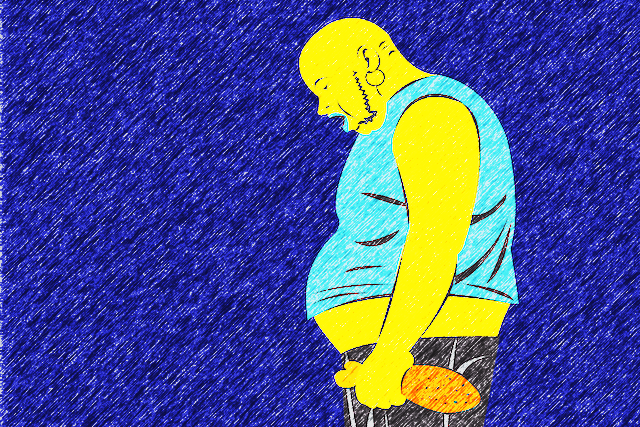
    This was the first time in memory when I turned to food to numb my pain and embarrassment. Congratulations to me, I had discovered the emotional rollercoaster known as binging! A rollercoaster which I would struggle to get off of for my entire life…

    I can pinpoint the exact moment when I told myself enough is enough.

    I was devastated after a recent breakup and was feeling lonely, lost, and depressed.

    These were very uncomfortable emotions. And what do I we when I feel uncomfortable emotions? I eat them, of course!

    Luckily I had a box of cinnamon buns ready for the occasion. I became powerless to stop myself, as the rush of the binge and my inner saboteur had taken hold. In a moment of sheer ecstasy and gluttonous pleasure I ate eight cinnamon buns in one sitting.

    And then….

    The rush was over. The sweet taste provided a fleeting moment of relief.

    Now all that remained was an empty box, an empty apartment, and an empty heart.

    Oh god, what had I done??!!

    I shouldn’t be surprised, I had spent the last three weeks repeating this cycle every night before bed.

    But today as I was cleaning up the crumbs, I decided I’d clean up my act too!

    Tomorrow will be different! I finally had found the motivation to stop the binging, stop the bad habits, and stop treating myself like I was worthless.

    Tomorrow, I thought, will be the day I start a healthy diet, start a daily exercise routine, and start treating myself right!

    But tomorrow never came.
    The next day I was back at it again with the sweets. A moment of relief from the pain of loneliness was far sweeter than anything the gym or a healthy lifestyle had to offer.
    Like a moth to a flame I was powerless to resist the sweet temptation, and I didn’t give a damn about my reputation!

    Only after the damage was done and the sweets gone did I feel motivated to clean up my act. Motivation was never there in the moments I needed it most. Where had my motivation gone and how could I get it back!?

    I’ve discovered that motivation was the last thing I needed. I never found the motivation to stop, and it’s the best thing that’s ever happened to me. Motivation is trash.

    Why is Motivation Trash?

    I know we all think motivation is what drives action, but in many cases it’s the other way around—actions create motivation.

    Have you ever felt like you didn’t want to go to the gym, but then once you put on your gym shoes and walked out the door you felt super motivated and ready to go? That’s an example of motivation coming after the action.

    Motivation should never be the sole force driving your actions because it is a temporary emotion. Just like you can’t feel sad or angry all the time, you can’t feel motivated all the time.

    Motivation was not going to save me from my cycle of binging and self-sabotage. My problem was I knew exactly what I needed to do (lose weight), but I didn’t know how or why I wanted to do it.

    I needed to connect to the intention, or the why, behind my goals before I could determine how to follow through on them. It’s not what you do; it’s why you do it that will ultimately drive you to succeed.

    I also needed something that required very little willpower or motivation; what I needed was a habit. 

    The Power of Habit and Intention

    Habits are at the center of everything we do; most waking hours are spent executing one habit after another without even thinking about it.

    What do you do when you wake up? Get out of bed, make the bed, make coffee, drive to work?

    These are all examples of habits that are essential for our daily lives to run smoothly. Because they are so engrained in our brain there is very little thought or resistance that occurs when executing our daily routine.

    In my case, I knew I needed to create a habit to replace my binging and to get off the couch. I wanted to create a habit of a daily fitness routine and get back to the gym.

    Before I could create a habit that would stick, I first had to connect with the intention behind it. A powerful intention is something bigger than just yourself, and is connected to a higher purpose that will have a positive impact on the world.

    A habit infused with a powerful intention is what carries me through to get those workouts in even when I’m not feeling motivated to go.

    How Intentions Can Give or Take Away Your Power

    Intentions are so important because a poorly developed intention can actually drain your energy.

    For instance, when I was stuck in the binge cycle my intention was: I want to lose weight because I don’t want to be a disgusting loser fat slob.

    Surprise, surprise, this intention sucks! The issue is two fold:

    The first problem is that it is not connected to a higher purpose. It’s all about ME ME ME!

    Second, it’s framed in a negative way that reinforces the belief that I am a disgusting fat slob.

    A negative intention like this destroys my self-confidence and willpower and actually makes me more likely to binge again.

    How to Set a Powerful Intention  

    I knew I needed a more powerful intention to carry me through when temptation rears its ugly head!

    My new intention is simple—I want to get in shape to have a healthy life and age gracefully, and I want to inspire others to do the same.

    Notice how this intention is connected to a higher purpose, something greater than just myself—inspiring others.

    With this new intention, it became clear how laying on the couch eating cinnamon buns hurts not just me but those around me as well. This new intention gave me the energy I needed to follow through on my goals and build the right habits into my daily life when motivation was nowhere to be found.

    If you want to create a powerful intention, think about how to connect your goals to something bigger than yourself; this could be having the energy to take care of your family, to help your local community, to save the planet, or anything you want it to be.

    There can be multiple intentions behind a habit; try to find the intention you connect with most and focus on that.

    How Do You Stick to a Habit?

    I found the best way to stick to a habit is first to understand what a habit really is.

    Every habit consists of three parts: cue, routine, and reward.

    Cues are triggers for habits to begin. For instance, my alarm in the morning is the cue that triggers my morning habit, and the routine kicks in. Having a routine is the best because it takes the motivation and decision making out of the process. No longer is energy wasted on the internal debate thinking about if or when I’m going to the gym. There’s no need to make a decision; I just follow the process.

    After the alarm cue I get out of bed, put on my gym clothes, drink a huge glass of water, and then start walking to the gym. When I arrive at the gym I (usually) feel energized and ready to face the workout ahead.

    The most resistance I find to starting a new habit is in this first stage. Remember Newton’s first law of motion? Things in motion tend to stay in motion? Well this law also applies to habits!

    Once you get started, you build momentum and it becomes easier to follow through.

    The Three-Minute Rule

    To encounter the least mental resistance to starting a new habit, the goal is to have the shortest cue time possible. A cue time of three minutes or less is my golden rule. This leaves very little time for willpower to falter.

    Don’t want to exercise? Make putting on your workout clothes the cue that starts your routine. Once your clothes are on and you are in motion you’ll be well on your way to getting that workout in!

    Start Small

    The real secret to creating a new habit is to start out small in the beginning.

    When I wanted to start working out, I told myself I would go to the gym and only exercise for five minutes. After that I would leave. I didn’t plan to exercise; I only planned to show up. I wasn’t worried about the benefits of exercise; I was focused on building the habit.

    I recognized if I didn’t have the habit in place there was no point trying to stick to a routine. Build the habit first and let the rest come naturally.

    The truth is, even today when I don’t want to work out, at the very least I’ll go to the gym for five minutes. Even if all I can manage to do is breathe, that’s okay because I’m keeping my momentum going and my habit intact.

    Of course I almost always stay for more than five minutes; this is a psychological trick I use to get my ass to the gym even when I’m not motivated.

    Importance of Routine

    The second stage of a habit is the routine. This is the actual going to the gym and working out part. Once the cue is complete and the habit solidified in your daily life you can pretty much run on autopilot here.

    Just think of all the times you’ve been driving home from work and arrived in your driveway only to realize you didn’t remember driving home at all. That is an example of a routine that runs on autopilot. Similarly this idea of autopilot can also apply to your workouts once it becomes a habit.

    Reward Reinforces the Habit

    The last stage of any habit is the reward stage. In the case of exercise, the reward for me is feeling energized and focused, and getting the rush of feel good endorphins that follow a good workout.

    Brain activity spikes in the reward stage, and the link between cue and reward is reinforced. This is what makes habits so hard to break. Every time we complete a habit, it gets reinforced in the brain by the reward.

    This means every time I go to the gym it becomes easier to come back because I reinforce the link between the cue and the reward in my brain. Resistance to the workout decreases, and executing my habit of daily exercise becomes easier and easier.

    Pro Tip: Writing out a habit with pen and paper has been shown to dramatically increase follow through.

    Try writing out this sentence (with pen and paper):

    “I’m going to go to exercise on [DAY] at [Time of Day] at [Location]”

     By doing this, not only do you increase your chances of exercising, you also turn your time and space into a cue to commence your new habit. Getting started is the hardest part, so the more cues you have, the greater your chances for success.

    How Working Out Changed My Life

    After I replaced my unhealthy habit of binging with the healthy habit of working out, some rather unexpected benefits occurred in my life. I quit smoking, lost weight, and started making healthy diet choices.

    A healthy diet increased my mental energy and willpower, making it much easier to handle the stress of life. Now, instead of opening a box of cinnamon buns when I’m stressed, I’ll open up my gym bag and head out the door. I now treat myself with the respect I deserve. And it all started by stepping foot in the gym for five minutes a day.

    If you want to make fitness part of your daily life, stop relying on motivation this instant!

    Get connected to the intention behind your goals and make it about something bigger than just yourself.

    Once you have your intention, write down with pen and paper the time and place of your workout to increase your chances for success.

    Create a habit of going to the gym or hiking or practicing yoga or doing whatever exercise you enjoy—the shorter the cue time to begin your fitness routine the more likely you are to follow through.

    Start small and commit to exercising at least five minutes a day. Build the habit before worrying about the actual workouts.

    After you have a habit of exercising, experiment to find a workout plan you find fun and can follow consistently.

    And remember, things in motion stay in motion! Meaning even if you feel like being lazy and sitting on the couch, it’s very likely once you actually get started you will find the motivation for an amazing workout. Remember motivation often comes after the action and not before. Just get started already!!!

    I’m not special. I struggle with my weight and self-image every single day. I have to constantly battle debilitating neurotic thoughts telling me I’m not good and I should just give up. These are some of the tips I used to pick myself up out of a depression and get in shape when I wasn’t feeling motivated. With these tips I know you can do the same!