Tag: empowered

  • Feeling Pressured to Follow the Crowd and Become Someone You’re Not?

    Feeling Pressured to Follow the Crowd and Become Someone You’re Not?

    In a world that pressures us to conform and toe the line, it can be hard to live a fulfilling, authentic life.

    We can easily spend years trying to be someone or something we’re not—checking off all the right boxes, meeting everyone’s expectations—all in a bid to gain approval from society, our peers, our parents, and even ourselves.

    But this comes at a steep cost to our well-being. Not only do we lose ourselves and slowly disconnect from everything that brings us joy and meaning, but we can also end up hating ourselves for struggling to measure up… when ironically, we don’t even really want the things we’re pushing ourselves to achieve. We just think we’re supposed to attain them.

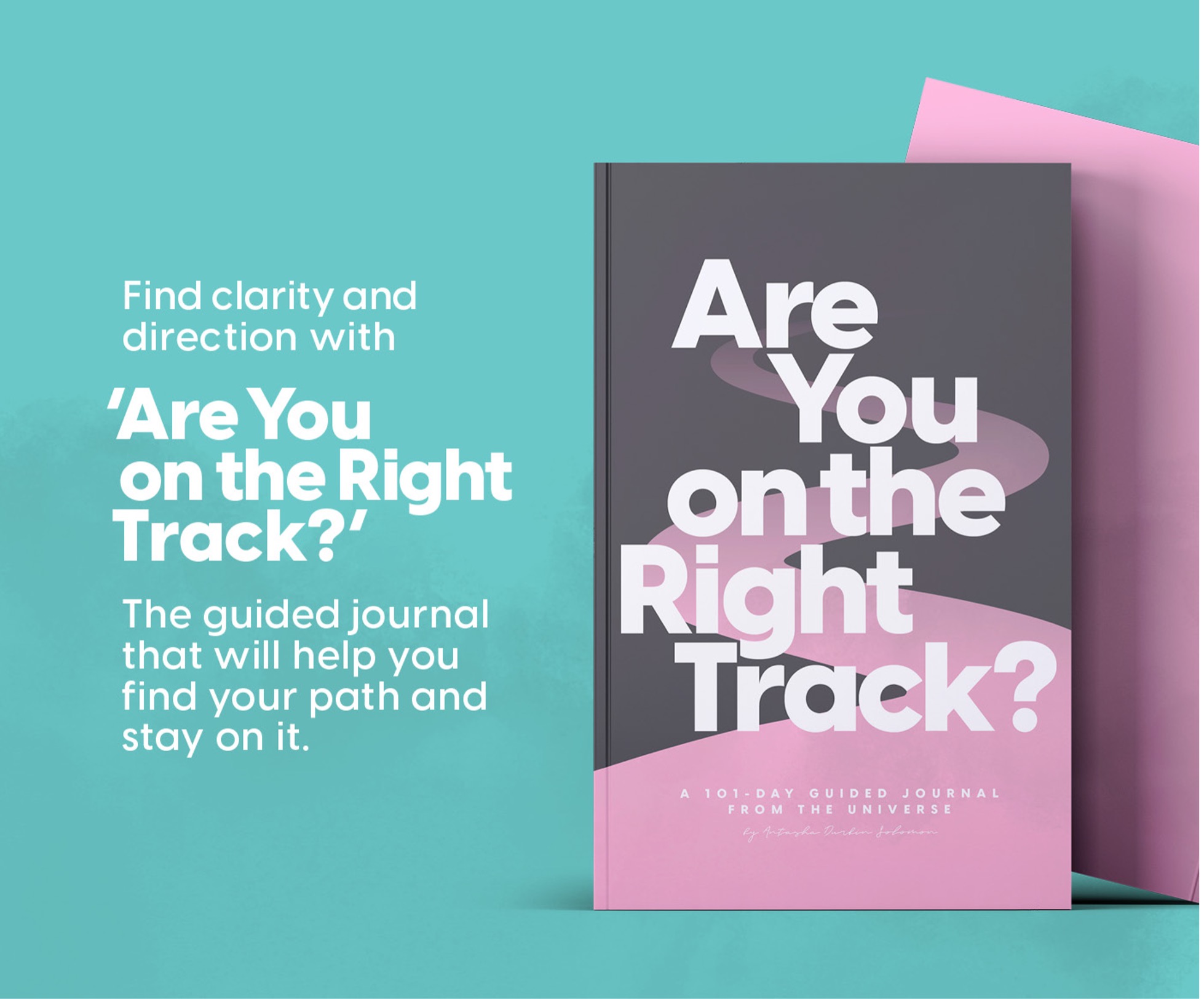
    If any of this sounds familiar to you (and I suspect it does for most of us), I think you’ll appreciate this heartfelt letter from Tiny Buddha contributor Antasha Durbin Solomon’s book, Are You on the Right Track? A 101-Day Guided Journal from the Universe.

    I hope it serves as a reminder that the best person you can ever be is yourself.

    Letter 71: Living an Authentic Life

    Dearest One, 

    You could spend your entire life pretending to be someone you’re not, all in a bid to gain acceptance from others. But when your journey comes to an end, you’ll pull off the mask you’ve been wearing and realize you wasted your life playing pretend. 

    Or you can make the conscious decision to take the path less traveled and live authentically as yourself. This takes courage, especially in a world that programs you to believe that money, beauty, and recognition are the most important things in life. 

    Let this letter serve as a reminder that your time on Earth is limited, but you are not. Don’t waste another second pretending to be someone you’re not. Embrace your uniqueness and every attribute that makes you who you are. Explore your interests. Build upon your passions. And spend your time—your greatest currency—in whatever way truly serves you. 

    You get one shot at this life. Make yours count. 

    With endless love,

    The Universe 

    Are You on the Right Track? is truly a treasure trove of inspiration and motivation. Each letter offers simple yet powerful reminders to help you take back your power and live a purpose-filled life. And the journal prompts can help you dig deeper and make meaningful change, one step and one day at a time.

    To access the full journal and all 101 letters, click here. When you buy the book (eBook or paperback), you’ll receive free enrollment in Antasha’s popular online course, “21 Days of Energy Healing for a Happier, Healthier Life,” which typically costs $49.99. To gain access:

    Antasha will then provide you with an access code and course link.

    I hope you enjoy this transformational journal as much as I did!

  • I Cheated on Him with My Higher Self (and We’re Still Going Strong)

    I Cheated on Him with My Higher Self (and We’re Still Going Strong)

    “It’s okay to let go of those who couldn’t love you. Those who didn’t know how to. Those who failed to even try. It’s okay to outgrow them, because that means you filled the empty space in you with self-love instead. You’re outgrowing them because you’re growing into you. And that’s more than okay, that’s something to celebrate.” ~Angelica Moone

    “How could you do this to me? It’s obvious you’re with someone else.”

    That was the third and final message I received from my partner of nearly three years, several weeks after we had finally decided to break up. I say “we” because initially it seemed that the decision was mutual, although it would later be revealed that it was me who wanted out.

    He was right, by the way. I had left him for someone else.

    No, not the lover that he had conjured up for me in his own mind. In fact, what had pulled me away was much more powerful and seductive than that. I had cheated on him with my higher self. And she had been trying to win me over for quite some time.

    My higher self: AKA my intuition, AKA my inner badass that will never be ignored. Yep, she’s the one I had left him for.

    Much like when I was nearing the end of my marriage, she had started off with a gentle nudge, a tap on the shoulder every now and again. I’ve noticed throughout my life that if I don’t stop what I’m doing, these attempts to get my attention will become more consistent, until what was once a whisper finally becomes a roar.

    Such was the case three years ago when she decided that I should shave my head. At that point, I had invested a lot of money turning my naturally dark brown hair into a platinum blond mane. This was before the pandemic, when I couldn’t imagine anything coming between me and my monthly visits to the salon.

    As with most suggestions that come from my higher self, my ego was not impressed.

    If the two of them had been sitting across from one another, the conversation would have gone something like . .

    “You want to do whaaaat??”

    “Shave it.”

    “Excuse me?”

    “Take it all off.”

    “All of it?”

    “All. Of. It.”

    So I attempted a compromise by shaving a bit off the side. I knew I was kidding myself when I thought that would be the end, but at least it was a start. Over the course of the next twelve months, I felt equal parts admiration and jealousy whenever I caught a glimpse of someone with a shaved head. This peculiar mix was familiar to me, and it signaled what was destined to happen next.

    When I had finally made the decision, it was a random Tuesday morning, and it made absolutely no sense to my logical mind. Unlike the ego that thrives on being booked and busy, the higher self loves white space. When we give ourselves the opportunity to tune out and tune in, our deepest desires have a funny way of being revealed.

    That fateful day I had decided to take an extra long walk with my dog through one of the parks here in Barcelona. There’s nothing like nature, movement, and a bit of solitude to help you cut through the noise and get to the heart of what you really want. Instead of returning to my apartment, we headed to the salon.

    As I took a seat at my hairdresser’s station and looked at myself in the mirror, my ego had a full-blown tantrum while my higher self popped open the proverbial champagne.

    In those moments of feeling the clippers pass over my scalp, watching my shoulder-length hair fall to the floor, I finally felt free. Whether it’s our hair, our jobs, or a relationship we’ve long outgrown, the higher self seeks our liberation, no matter what the cost.

    That day when I told my then partner what I had done, the conversation didn’t go as I had hoped but exactly like I had imagined.

    “You’re bald.”

    While this was indeed a fact, the tone made it feel like a personal attack. He asked me why someone so beautiful would intentionally make herself so ugly. For once in my life, being “pretty” hadn’t been the deciding factor. I wasn’t so concerned with how I wanted to look but rather how I wanted to feel. As I’ve come to learn since, life really changes when this perspective starts to shift.

    If his thoughts and feelings were any indication, I was no longer much to look at when it came to the male gaze. Ironically, all he could see was “a weirdo” while the person I saw with my own eyes was a queen. 

    While my ex couldn’t get past my shaved head, I couldn’t get over the luminosity and the brilliance that could fully shine through. As he continued to fixate on what I had lost, I knew the truth of what I had gained: freedom, courage, and beauty on my own terms.

    Perhaps I always knew that he would leave me over a haircut. No one likes to think that the future of their relationship comes down to the length of their hair, but he had told me from the beginning that shaving my head was the one thing I should never do. Funny the rules we’ll follow in an attempt to belong to other people while we strategically abandon ourselves.

    I had spent nearly four decades of my life searching for safety in the fulfillment of everyone’s expectations. I used to be an expert at figuring out what they wanted and becoming exactly that. Until one cold, cloudy morning in February 2021, when I decided I was done. Done with the pretending. Done with the pleasing. Done with the denial of what I knew to be true.

    I was finally ready for a different kind of love. And this time it was all my own.

    You could say that I cheated on my ex with my higher self, or maybe she was the one I was meant for all along. Either way, I’ve chosen to be faithful to my inner wisdom. And from what I can tell, we’re still going strong.

  • The Secret to Eternal Youth: How to Feel Excited About Life Again

    The Secret to Eternal Youth: How to Feel Excited About Life Again

    “To be fully alive, fully human, and completely awake is to be continually thrown out of the nest. To live fully is to be always in no-man’s-land, to experience each moment as completely new and fresh. To live is to be willing to die over and over again. ” ~Pema Chödrön, When Things Fall Apart

    I am forty-nine years old, and I’ve never felt so young in my life. Many people my age feel old. Many people younger than I am feel old, while many people who are older than I am still feel young.

    What makes someone feel young? I can assure you it has nothing to do with how many wrinkles you have. It is something much deeper than that and yet something very simple.

    Most of us get serious about life around the time we are thirty. We devote ourselves to building our career, building our family, or both. From young people who care mostly about having fun, we become responsible adults. We need to prove ourselves, to make money, to buy a house, and to secure our future.

    “Along the way, I forgot to get excited about things. Everything became a project, something I had to deal with,” a friend told me when I asked her if she was thrilled about buying a new house.

    When we build our home, our career, our family, and our reputation, there is a part of us that we leave behind. When we enter the world of mortgages, insurance, and pension funds, fun goes out the window. And when that happens, we lose our fire.

    Fire is fun; it’s freedom, it’s joy. Fire is courage and boldness. Fire is passion and excitement. Fire is being spontaneous, taking risks, and saying your truth. Fire is exercising and moving energy.

    Fire is fighting for what you believe in. Fire is believing in yourself, believing in life, believing that you deserve to fulfill your wildest dreams. Fire is having wild dreams. Fire is learning new things and teaching them to others. It’s being inspired and inspiring.

    So often we are overwhelmed with life’s demands, and we forget to have fun; we forget to keep our fire alive, and we lose our mojo. Some of us got burnt by our fire when we were younger. Fun led to addictions and other destructive behaviors. We have learned to fear our fire and avoid it at all costs.

    During a few wild years when I lived in New York City, a friend once said to me, “In our twenties we have to do crazy things so that we have something to talk about in our thirties.”

    This is how we live, feeling that from this point onward, life is going downhill toward decay. We feel like our prime years were left behind. We try to reduce the signs of aging to feel better when we look in the mirror or at pictures of ourselves. But no matter what we do, we won’t look like we did in our twenties.

    About three years ago, I started feeling old. I’d always looked younger than my age, but I lost in the Botox race, as I did not do any. I lost my passion; I lost my desire to have fun and enjoy myself; everything was very serious.

    I hated looking at my pictures. All I saw was the lack of charm and beauty that I once possessed. I tried to convince myself that these were external, irrelevant, and unimportant concerns, but they were not; they reflected something deep that was going on in my life.

    Don’t get me wrong. During this time, I was already working at something I loved with all my heart. I loved mothering my son more than anything in the world. I loved my husband and was very grateful for our marriage. But except for my work and my family role, I didn’t care about anything. There was absolutely no time or ability to enjoy life.

    Then things got even worse. I got sick and was forced to constantly deal with my health and nutrition. My diet became more limited than it ever was; I could not enjoy food anymore. I thought I was going to die. I was already older than my mother when she passed away at the age of forty-four, and it just made sense that I would follow in her footsteps to heaven.

    But I was also lucky. I was lucky because there was something inside of me that was stronger than all of this. An inner voice told me that I was still alive and that I should not take it for granted. Every day I got to live was a gift. What was I going to do with this?

    Was I going to look back and cry for not being as beautiful as I once was? Or was I going to look forward and make my life the way I wanted it to be? I realized that it was all up to me. I could continue sinking down into my dietary limitations, my homework struggles, and my aging looks, or I could ignite my fire.

    I decided that it was time to make a big move, from Israel to the US, where I’ve always wanted to live. In order to be fully alive, I had to throw myself out of the nest.

    Even though my husband had no desire to make this move, I knew it was a matter of life and death for me and that I had to take the lead. It was my truth, and it required taking a huge risk.

    During the pandemic we could not even make a preliminary visit, nor could we know for sure if our son would be accepted to school, but we had to take our chances.

    Once we settled in Asheville, NC, I bought new colorful clothes. After years of wearing black bamboo jumpsuits, I added some flair to my wardrobe.

    I took some courses with great teachers who inspired me. I got back to practicing yoga and became a part of the local yoga community. I got back to listening to music that made me want to dance.

    I started writing and publishing my work. I started telling my truth more often. I had some big talks with important people in my life. I said some things I’d never dared say before. What did I have to lose? What does anyone have to lose?

    That’s the beauty of being older. You are wiser, more experienced, you know yourself, and you understand life better than ever before. You are mature enough to deal with your fire in a healthy way.

    You already know that there is no point in pretending or hiding. You can live your truth, you can be who you really are, and you can work toward the fulfillment of your dreams. And it’s rejuvenating, so rejuvenating, despite the wrinkles and the fact that your body is no longer in its prime.

    You can live like you’ve died and come back to life. What will you do differently? Do it. Do it today. Don’t wait.

    If your life does not excite you, make it exciting. If life is not fun, make it fun. Obviously, you can’t control everything. The human experience is not always fun, but no matter what your circumstances are, you can always make things better for yourself, even if it’s just a change of attitude.

    People, especially those on the spiritual path, dismiss fun, and I am the first one to admit that I do this. There are always more important things to do. It’s so hard to find time to mother, to be a partner, to work, to cook, to write, to meditate, to practice. Alcohol is bad, drugs are bad, and sugar is bad. All the things you used to have fun with in your twenties are bad.

    For years I prepared all of my family’s meals. When you eat out, the food does not have your loving energy and is not made with the same organic, local, and fresh ingredients. This is all true, but the pressure to constantly cook had a counterproductive effect on my health.

    Today, sometimes I eat out or order in, and it makes me so happy. I am more flexible, more open, and I am much healthier. It’s all about finding the middle path. If your path puts out your fire, it means that something is wrong.

    It’s not that igniting my fire has solved all my problems. The human experience is still hard. I am still facing many challenges, in some ways even more challenges. When you change, or say your truth, it’s usually not so easy for the people around you to deal with. But I am empowered to deal with my problems. I feel fully alive and beautiful.

    Today I love the way I look. I love the way inspiring aging women and men look. When you live out of passion, courage, and truth, you radiate beauty.

    If you are willing to look beyond the anti-aging ads, you can see that aging is a beautiful process. I’m excited to age. I want to get old. My mother did not have the chance to be old. I have so many dreams to fulfill, and I am grateful for every moment given to me to fulfill them.

    One thing is for sure: I will never lose my healthy fire again.

  • How Mindfulness Made Me an Empowered Introvert (and How It Can Help You)

    How Mindfulness Made Me an Empowered Introvert (and How It Can Help You)

    “Introverts live in two worlds: We visit the world of people, but solitude and the inner world will always be our home.” ~Jenn Granneman, The Secret Lives of Introverts: Inside Our Hidden World

    Never at any point in my life did I think I was an introvert. I always thought I was just a regular kid flowing with life’s experiences just like everyone else, and there was nothing strange about me.

    That was until I started being told I was too quiet, serious-faced, shy, and a nerd. I liked, and still do like, my own space and doing things by myself or with a very close friend. Spending time at home surfing the web, learning new things, and obsessing over the latest technology has always been my thing.

    I never liked the idea of being around groups of people, attending parties, and socializing for long periods of time because I felt weighed down and lacked energy for such activities.

    I would always feel anxious and self-conscious walking outside, and whenever someone approached and started talking to me, things would end up being awkward no matter how hard I tried to keep a steady conversation going.

    Such was my life. As I kept growing, it became so much of a bother that it started affecting how I perceived myself.

    I became more anxious—stressed about socializing and being outside, making friends, and even expressing myself in serious situations like job interviews.

    I also had a bad temper back then, and whenever I got angry, I turned into this ugly and angry bear that could not be calmed down by anyone. After my moments of anger, regret would slowly creep in, and I would chew myself up for all the mean things I’d said and done to others.

    “This is not the kind of life I want to live to my old age,” I thought to myself. Being the introverted nerd I was, I decided to do deep research and look for permanent solutions to change the situation for the better.

    In the research phase I stumbled upon the practice of mindfulness. The idea of training your mind to remain in the present moment and being aware of your thoughts, feelings, and sensations was kind of interesting to me, and I felt it could work for me.

    So, I took up the responsibility of learning about mindfulness and how I could get started and use it to improve upon myself.

    A few years down the line, after immersing myself in the practice and doing it daily, I have seen much improvement in my life and how I do things, and I couldn’t be prouder of myself.

    I have become more empowered and equipped to handle the aspects of my life that I had problems with before, and I’ve seen good results with them.

    5 Ways Mindfulness Empowered Me as an Introvert

    Here are the five ways mindfulness changed and improved my life for the better.

    1. Mindfulness made me feel comfortable in my introvert skin.

    Initially, I thought the only way my life was going to improve was by training myself to be extroverted.

    I had even created a strategy of how I would slowly become more talkative and vulnerable—how I would force myself to attend more social events, talk to as many people as I could, and tell them everything about my life. Then they would feel I’m being open with them and in turn open up to me, and life would become amazing.

    Looking back, that strategy was designed to help me live a lie. It was supposed to teach me to be everything besides myself, and I’m glad I didn’t get to execute the plan because I discovered mindfulness shortly after considering it.

    After practicing mindfulness for a while, I became aware of my nature as an introvert and how I did things in my life. I noticed that while there were many drawbacks to introversion, there were also many advantages.

    And extroverts face problems that spring from their extroversion just as introverts get criticized for their introversion.

    As an introvert, I often appeared to be boring and quiet, so many people disliked me, but a friend told me that because he was an extrovert, he had many fake friends who hurt him.

    That’s when I discovered no side is better than the other. Introversion and extroversion both had advantages and disadvantages.

    With that realization, I became comfortable being the introvert I was, and I thought to myself, “I’m going to hold onto my nature as an introvert. It may not be perfect, but at least I won’t be living a lie by pretending to be someone I’m not.”

    2. Mindfulness made me more confident.

    Self-acceptance is perhaps the best thing I got from mindfulness because it helped me feel comfortable with who I was, and as a result, my confidence increased.

    I no longer believed that it was bad to be an introvert and instead, focused more on the positive side of it. I also came to learn that extroverts envied me just as I envied them.

    While I thought being an extrovert was cool, I remembered that extroverted friends had once told me they wished they were like me. They thought my quietness gave me a mysterious personality, and being comfortable staying alone for long periods also made me powerful and independent. Remembering this added to my overall confidence and self-acceptance.

    I went from “Man, I wish I was more social and talkative!” to “Man, I love how I’m quiet and comfortable being alone!”

    Also, being aware of the anxious and stressful thoughts and feelings I had when I was among people helped me realize that they were baseless, and they were just that—thoughts and feelings. Things that would keep coming and going.

    They were neither the reality nor the truth.

    I had created exaggerated scenarios in my mind, which made me feel anxious and awkward around people. By simply being aware of them, without doing anything, they became powerless and the social anxiety slowly disappeared from my life.

    3. Mindfulness gave me mental clarity and focus.

    By learning to be aware of my thoughts, sensations, and feelings in the present moment, I had fewer thoughts and was also able to have more control over my feelings. Fewer thoughts, especially the anxiety-inducing thoughts, translated to more mental clarity and focus.

    Instead of having negative thoughts about how other people perceived me when I was interacting with them, or about how awkward I felt talking to them, I became more open and aware of the experience of speaking with people, and began going out more without overthinking it.

    That slight change of approach made it possible for me to look people in the eye when talking to them and keep a normal and steady conversation without someone realizing I was once a “socially disabled” introvert.

    On top of that, the reduction of distracting thoughts and the emotional control I got from the practice helped me improve my level of productivity in my education and work.

    It turns out when you have fewer thoughts to explore, your mind can maintain focus for a long period and your attention span increases.

    4. Mindfulness increased my self-awareness.

    By being constantly mindful throughout the day, I was able to understand myself better. I discovered the specific areas in my life I was good at as well as those I needed to work on.

    For instance, I noticed that when speaking to people, I would think before I spoke. This helped me avoid the embarrassment of saying thoughtless words that would make me look like a fool or hurt the person I was conversing with.

    I also realized that while I was strong with my communication, I lacked when it came to taking action. I took many thoughtless actions, which got me into trouble.

    With the tiny observations I made, and through the reflection of better approaches combined with determined and disciplined effort, I was able to improve and became a better person.

    5. Mindfulness brought me peace and inner harmony.

    Within a couple of years, I went from a socially awkward, constantly anxious, self-loathing person to a self-loving, more confident, mentally and emotionally stable person, which helped me feel more peaceful and in sync with myself.

    I didn’t have to pretend or think and do things from an extrovert’s point of view so that I would be accepted. I accepted myself as I was and discovered how other people love my introverted traits, and this brought me a feeling of satisfaction with myself.

    Moreover, I was free to think and act according to my nature, and that has made everything in my life work in harmony.

    How I Made Mindfulness Work in My Life (And How You Can Too)

    After researching and reading articles, watching videos, and listening to podcasts and teachings on mindfulness, I decided to take action.

    I began with mindfulness meditation because it is the easiest and most rewarding first step to mindfulness. It not only helps you learn how mindfulness feels and how to cultivate it but also trains you to be mindful without much effort.

    It is even more rewarding when you use guided meditations for mindfulness meditation. I worked with guided meditations for a couple of months before I could begin meditating on my own, and I saw good results.

    A guided mindfulness meditation will walk you through your whole experience, with the help of an expert who’ll explain how to relax your mind and body so you can have a fulfilling session.

    It’s simply the best place to start building mindfulness in your life.

    I began meditating for one or two minutes and increased the duration to five minutes, then ten, and then twenty as I felt more at ease with the practice.

    After I got comfortable with meditating, I started incorporating mindfulness into my daily life, practicing while eating, listening and speaking, showering, walking, and working.

    These techniques really improved my level of mindfulness and helped me be more aware of myself. The best approach is to begin incorporating these techniques into your life one by one. Begin with the one you feel is easiest to work with and stick to it for a few weeks. Then take up another technique and do the same until you find it natural to do all of them throughout the day.

    The goal is to do the regular activities more mindfully, and as a result, increase your moments of mindfulness through the day.

    I have seen mindfulness turn my life around as an introvert, and if I was able to become that empowered through it, I believe you can too. I invite you to work closely with mindfulness and see how it can spice up your life.

  • 3 Empowering Ways to Reframe Anxiety: Work With It, Not Against It

    3 Empowering Ways to Reframe Anxiety: Work With It, Not Against It

    “If I take death into my life, acknowledge it, and face it squarely, I will free myself from the anxiety of death and the pettiness of life—and only then will I be free to become myself.” ~Martin Heidegger

    If you are a lifelong anxiety warrior like me, you’ve been on a journey of ups and downs.

    Anxiety fills our whole bodies. Tension. Heart pounding. Sometimes I feel like my heart must be visibly pulsating so much so that if there are others around, they can see it.

    There are varying levels and types of anxiety, including clinical disorders. But the thing that we have in common is that at times we feel intense despair—like the world is caving in on us. We can feel literally stuck and life may even feel meaningless.

    But what if anxiety isn’t always negative? What if we could begin to see it differently?

    I’m going to share with you three archetypes that I use to cognitively reframe anxiety. Seeing anxiety in these ways has helped me feel more empowered in my journey.

    First, I’d like to share a short story about my journey with anxiety.

    I began to experience anxiety in early childhood. My parents divorced when I was three—about the same time I developed asthma.

    The back and forth visits between my parents were hard on me. Just as I’d get comfortable in one place with one set of rules, it was time to change. I felt an internal struggle to be one Melissa in two different households.

    I was sick a lot as a child and was routinely hospitalized each year for my asthma. I also pretended to be sick at times to stay home because the transition back to school felt so overwhelming. Missing school only created more anxiety as I tried to catch up.

    To complicate matters, I grew up with a mom who could be very nurturing, but wildly unstable at times. Many of my fears and anxieties arose throughout my youth when my mom would spend months, sometimes years, in bed with some ambiguous illness no doctor could diagnose.

    I believe the peacemaker and people pleasing roles I often served in my family played a part in developing my highly sensitive and empathetic nature.

    Anxiety continued to visit me frequently throughout my youth and into adulthood as I contemplated my place in the world while healing past trauma.

    When I was in graduate school, I talked to my therapist about medication. I was grieving the sudden death of my mom and was in constant struggle with anxiety. While there are cases that necessitate medication, I chose to explore other routes.

    Today I still encounter feelings of self-doubt, abandonment, thoughts about death, my purpose, not fitting into the societal mold, and so forth. Some of these issues tie into what we might call existential anxiety, the anxiety that arises when we contemplate our life’s existence.

    What has helped me to understand anxiety’s true nature is to work with anxiety rather than against it. By working with anxiety, we can start to see the light in anxiety rather than a dark monster. These are the archetypes I have assigned to anxiety to reflect that light.

    1. Anxiety as Motivator.

    A few years ago I attended a workshop in Mexico City on existential psychotherapy. One of the key concepts in existentialism is that anxiety is a core human experience that moves us toward growth and development. Because we know our time is limited and we all grapple with big, unanswerable questions, we feel anxiety about existence itself, and about making our lives matter. This anxiety calls us to be ourselves and live with purpose as we examine our lives.

    Becoming a yoga instructor was one of the most terrifying times of my life. Despite years of public speaking and outreach as a social worker, finding my teaching voice was different. It was scary, as I doubted my capacity to bring a tradition I revered so much to others in a meaningful way.

    Now when I face anxiety before teaching, I ask it to help me tap into the human anguish that my students face in other ways to best support them. It fuels my purpose of sharing my own vulnerability from the heart.

    Some amount of anxiety is healthy and compels us to ask ourselves who we are, why we’re here, and where we’re going. Anxiety typically relates to these questions under the surface. The exception would be if we are talking about a specific fear, like spiders.

    There is a difference between existential anxiety (which calls us to live with meaning) and pathological forms of anxiety (which deeply impair our ability to function). When anxiety becomes a problem, it becomes a disorder; yet, the treatment (cognitive behavioral therapy, talk therapy, etc.) is typically the same.

    How does anxiety show up in your life as a motivator? Does it move you toward action?

    2. Anxiety as Teacher

    When I encounter pain, particularly as it relates to anxiety, grief, and family conflict, I try to remember to ask myself, “What is there to learn here?” By asking this question, I take myself out of the role of victim and into the role of an empowered learner.

    Because we see anxiety as a mental health problem, we forget that anxiety is not just living in the brain. It fills us with sensations and emotions in our bodies as our beliefs and old stories play out. Something is happening within us that is requesting our presence. Anxiety can help us to become more aware of what needs greater attention and love.

    As an empath, I am prone to absorbing the emotions of others. There are moments when I experience anguish because of a painful time someone else is having. My body tightens up and feels suffocated when this happens.

    When this occurs, I become more aware of what is happening and that I need to change something. It’s a cue to me that I need to do something with the suffering I’m feeling. It’s time to get on my yoga mat or go for a walk or maybe it’s a cue that I need to set boundaries in a relationship.

    How does anxiety show up in your life as a teacher? What do you learn from anguish?

    3. Anxiety as Liberator.

    Wait, what? That was my reaction when I wrote the word. Allow me to explain.

    As a society, we pathologize despair are taught anxiety is a sickness, which leads to us feeling bad about feeling bad. But since anxiety is a natural part of being human, it’s inevitable that it will surface. Even though I feel alone with anxiety sometimes, I try to remember I’m part of a collective experience of confusion, doubt, and suffering.

    Sometimes anxiety arrives in my life and I’m able to take a moment to realize its origin. I notice that behind that anxiety is often very deep compassion, very deep fear, very deep desire to be a better person, and so forth. I then can see anxiety as a very deep capacity to experience the spectrum of human emotions and allow them to coexist.

    Anxiety can either be avoided by living on the surface, as existential psychotherapist Emmy Van Deurzen puts it, or it can be deeply embraced as an inherent part of our being. If we choose to avoid it, it will smack us in the face later in life.

    When we can start to observe anxiety in this way, we start to see it for what it is. We see that joy and anguish can exist together. We can lean into it discomfort rather than avoid. And through this process, we can begin to feel a sense of freedom.

    What if anxiety is not something wrong with you but just part of the path?

    The ideas I outlined might take a little time to resonate. I encourage you to sit with them and feel into each archetype before reaching any conclusion.

    **I am not suggesting that reframing anxiety in this way can cure severe clinical disorders. My intention is provide a thought-provoking piece to explore as a complement to any professional treatment you may receive now or in the future.

    Color splash image by Signe7542

  • How to Live Out Loud: 8 Lessons for an Authentic, Empowered Life

    How to Live Out Loud: 8 Lessons for an Authentic, Empowered Life

    Woman on car vacation travel waving

    “To be yourself in a world that is constantly trying to make you something else is the greatest accomplishment.” ~Ralph Waldo Emerson

    Growing up, I was shy, bullied often, or ignored because I couldn’t stand up for myself.

    My parents, immigrants from Colombia, South America, bequeathed me an inheritance of brown skin, brown eyes, and a language full of emotion. Nothing like the world I was thrown into.

    I started kindergarten not knowing a word of English, trying to find my place in a sea of white faces. I stood out like a fly in milk.

    I was teased and ostracized in class and during recess, until the nuns stopped the torture. I grew up smart and pretty, and over the course of my life, that got me by. I learned to hide my self-doubt behind my looks and mind.

    For years, I tried to adapt to a world I felt I didn’t belong to. I felt like a chameleon, turning a different shade of color based on the situation.

    The pressure to fit it was greatest after college. I bought into the “more is better” philosophy. Status and material possessions became my goal. I became successful playing a game I thought I was winning while losing my individuality and creative spirit.

    A Shift To Authenticity

    As I have advanced in age, I have learned a few things about being authentic. My outlook on life changed after the birth of my son and the two years I spent as a full-time mother. I no longer craved attention or felt the need to belong. The playfulness of my childhood returned to my life through my son.

    Reflecting back on this critical phase of my life, I realized that what brought me into a mature assessment of my values was a combination of three things.

    First, I spent time in meditation and quiet reflection, often in nature. Being in nature connected me to a spiritual source within me, and that became the origin of my personal power and confidence.

    Second, I remembered how to play. It may sound frivolous, but play is learning. When you play, you tap into joy and creativity, uninhibited by judgments and criticism. Play opens the imagination, and this is the beginning of manifesting your dreams.

    Third, I began to spend more time on what I cared about and less time on what I call my “shoulds.” I can always tell when I am out of harmony with my true nature by asking myself if I am doing something because I feel I should do it or because it inspires and energizes me.

    How to Create An Authentic Life

    Currently in my fifties, I now make choices that align with my values, even if it displeases someone else. I continue the practices I began when my son was young to stay attuned to what matters most to me in the present moment.

    I learned that unless I placed value on myself, no one would value me. I’ve become less tolerant of ignorance, unkindness, and victimization.

    I have been able to identify a set of practices that sustain and nourish me. These practices lead to an authentic, empowered life.

    Because I practice these lessons, I live an extraordinary life traveling between two countries, doing work that is location independent, and having the flexibility to express myself creatively in ways that benefit others too.

    Lesson 1: Begin to see yourself as more than what you have allowed yourself to believe.

    Spiritual activist Marianne Williamson wrote, “Our deepest fear is not that we are inadequate. Our deepest fear is that we are powerful beyond measure.” I see how true this is for me.

    Reach beyond your comfort zone to discover the hidden potential within. Do whatever you find difficult to do, and discover that you possess more power than you had allowed yourself to believe.

    I learned this lesson walking through the rainforests of Ecuador with a family of shamans. There I was, sweat pouring down my face, frizzy hair and mud all over me, trying to keep up with five native shamans on a “walk” through the Ecuadorian rainforest.

    I would never have believed I could do this. I always thought I wasn’t strong enough or brave enough to go into a raw and natural setting and survive. I came out of the experience transformed, asking myself, “If I can do this, then what else am I capable of?” That lesson helps me tap into my power to overcome the challenges that I face every day.

    Lesson #2: Make a commitment and trust that life will hand you the curriculum required to meet it.

    It takes courage to commit to something bigger than yourself.

    You may be committed to being a change agent or building a business that has a significant social impact. You may be a community activist taking on the politics of making change happen in your community. You are thrust into a leadership commitment that exceeds your capacity, but because you have the vision and the drive, you step up to the challenge.

    These larger commitments force you to adapt to the challenge and to bring forth all of your creative potential in service of a larger vision. Life becomes the classroom, and the commitment becomes your coursework.

    For years, I dreamed of building a retreat center in Ecuador, a haven for individuals to reflect and renew their lives and to resolve the unresolved questions of their lives. Every time I thought of doing this, the daunting nature of such a project made me take a step back. After years of dreaming, I decided the time was now to commit, or this would always remain an unfulfilled dream.

    I could not remain the most comfortable version of myself, the one that played it safe, and succeed at this project. I had to develop my capacities as a leader, a project manager and a visionary to manifest this dream. The project became my curriculum, and Ecuador became my classroom.

     Lesson #3: Courage is the active engagement of fear.

    Fear is the one thing that stops you from living an empowered, authentic life. You wonder what people may think of you, or you fear losing acceptance and relationships if you are vulnerable and authentic. You listen to the gremlin telling you that you are not enough. You stop trying and growing.

    You have three choices: You can allow fear to stop you, ignore it, or engage and transform it into the energy that propels you forward.

    Think of fear as a message to pay attention, telling you that there is something you need to address. For example, your fear might be showing you that you need to challenge your people-pleasing nature, or you need to work on your self-confidence.

    Engaging your fear positively allows you to anticipate problems and find solutions. It causes you to focus on the essentials to achieve remarkable outcomes. Distractions fall away, and you can accelerate your goals.

    Courageously engaging your fear allows you to transform its negative energy into the positive energy of movement.

    Lesson #4: Become the center of your universe.  

    What does it mean to become the center of your universe? It means you make a choice for your well-being first and foremost. It is a conscious choice for self-care. It is a way of loving yourself.

    You begin making healthy choices such as choosing to get enough sleep instead of staying up all night. You choose to eat healthy and nourishing food instead of skipping meals or eating junk food. You choose to have life-affirming, respectful, and loving relationships. These are all ways to express how much you value yourself.

    This expression of self-love is the foundation for self-esteem, self-confidence, and self-care. Without it, you cannot create an authentic and empowered life.

    Lesson #5: To grow, you must embrace the fullest expression of yourself. 

    If you let others define you, you will never know yourself and you will never find peace and happiness. You will always live someone else’s version of your life story. You will never know your beauty and greatness by being someone you are not. The incongruence between how you live and who you are will cause dissonance, distress, and disease.

    Seek out people and activities that bring forth that creative expression of your heart and soul. If you want to go on a cross-country trip or spend a month taking cooking classes in Italy, find a way to do that. If you want to stay close to home, learn a craft, play a musical instrument, or attend literary lectures. These all have the potential of sparking your creative potential.

    These are not frivolous pursuits, although some may claim that they are. These are ways of opening yourself up to the inspiration that leads to an authentic life.

    The things that inspire you will attract the right relationships, the right work, and the right life for you. 

    Lesson #6: Myth: You have a purpose in life. Wrong!

    Seek self-knowledge; discover your true nature and purpose will find you. As you age, what you care about will change. That’s how you grow and evolve. You will discover that there are many ways, not just one way, to express yourself authentically.

    Be attentive of when you feel depleted or when you feel yourself struggling. Notice when you feel energized and inspired, when your passion is ignited. These are all clues to what you want to include or exclude in your life.

    Asking, “What is my purpose?” leads you through a maze to nowhere. Stop looking for your purpose and start looking deeply in the mirror to know yourself first.

    Purpose is the result of being authentic and living in harmony with that.

    Lesson #7: Engagement coupled with reflection brings clarity.

    A good friend recently asked me, “How did you decide to move to Ecuador, even part-time? I’m trying to make some changes in my life, and I don’t know how to begin.”

    I thought about it and realized I had combined two ways of being that seem to be in opposition of one another, but together they form a powerful method to go through transitions.

    I thought a lot about what I wanted and I spent time observing myself here and in Ecuador to find the truth about what I wanted out of my life now. I tried new things, like living in Ecuador for three months and leveraging technology to be able to work remotely, to see how I could design this new life that was calling to me.

    This combination of reflection and action is like creating the journey, one step at a time, as you’re walking it. Simply reflecting on a change doesn’t work any better than thoughtlessly moving from one activity to the next.

    Taking one action, reflecting on it, adjusting, and then taking another action creates the steps to living an authentic life. Eventually, you will arrive at your destination.

    Lesson #8: Make curiosity your greatest ally.

    Being curious is opening yourself up to something new. Leading an authentic, empowered life means learning new things about yourself and the world all the time.

    It requires a high level of self-awareness and an enhanced quality of attention to gather the insights that teach you how to design your extraordinary life. Curiosity is the way you engage life as the adventure it is.

    I believe that until we become authentic in the way we work and live, we will not be able to find real joy, fulfillment, and happiness. It is only through an authentic life that we can empower ourselves to do the work we were meant to do in the world.

    If you feel like you are leading a stranger’s life, you probably are. You can change that. It takes courage and being around the kind of people who appreciate and love you.

    Everything you believe about yourself holds the possibility of being less than the truth. What if those beliefs are the source of your unhappiness? Consciously choose to believe something more empowering, and it will change your life.

    You deserve to be you in your fullest expression. You deserve to wake up each day feeling confident and healthy and loved. It starts with you. Start now.
  • What the Bathroom Scales Are Not Telling You

    What the Bathroom Scales Are Not Telling You

    Feet on Scale

    The only person who can pull me down is myself, and I’m not going to let myself pull me down anymore.” ~ C. JoyBell C.

    At a recent visit to the doctor’s office I had some routine checks done. Afterward, the doctor flipped through the findings and said, “Blood pressure, good. Pulse, good. Weight, okay.”

    He then continued talking about other things, but my mind was still on his previous words. “Weight, okay.”

    Why wasn’t my weight “good” like my pulse and blood pressure? 

    I had managed to completely skim over the fact that my vital signs were absolutely fine. I immediately fixated on the physical aspect—and added my own negative slant to it. 

    There is so much that is so deeply ingrained within us that even when we are self-assured, we still get caught off guard sometimes.

    A few weeks before the doctors appointment I’d gone shopping for a winter coat. I found one I liked, grabbed two sizes for comparison, and went through to the fitting room. One size was slightly too snug under the arms and the other gave me more freedom to move.

    But the better fitting coat had a label that read “large.” And I had a problem with it.

    I tried both coats on again, as though somehow expecting a different result. I told myself I was just making sure. Just being certain. Once again I determined that the larger size was a better fit. Except this time, I played it a little differently.

    Instead of just looking at my body shape and size in my reflection, I looked into my eyes. I reminded myself that I am a beautiful, empowered woman who does not permit herself to be restricted by limiting labels. Who does not measure her self-worth by numbers. 

    And off I went to the cash register smiling.

    Both experiences gave me a bit of a wobble, but I was also grateful for the opportunity to remind myself of what truly matters.

    It can be challenging at times to keep our confidence in tact, because even when we deflect the worst of what some of society (and almost all of the media) tries to throw at us, occasionally it finds a way through.

    Yes, I could be slimmer. I could say no to the glass of wine or the homemade fudge. I could. But—empowerment alert—I don’t want to.

    I choose my life. All of it. I choose the thoughts that I feed my mind and I choose the food that I feed my body. I strive to ensure that I’m in balance.

    There is a space between greed and deprivation and I (mostly) live there. Sometimes I wander. I’m okay with that. Because honestly, it’s better for me to visit both directions occasionally than to be hell-bent on staying firmly in the middle. 

    I follow a plant-based diet and I exercise every day. But I don’t want to be fixated on a so-called ideal (and unrealistic) image that doesn’t allow me to enjoy my life.

    Sometimes a little loss of control is good for the soul.

    Like many of us, I used to obsess about my weight. I would step onto the bathroom scales every single day and look to see if I could hit that magic number. Quite often I did. I also had a variety of hospital trips that unearthed low blood pressure, repeated urinary tract infections, and a brutal inner ear infection.

    And that’s why I went to the cash register with the large coat and a larger grin.

    The bathroom scales cannot tell me how much my contribution to this world counts. They cannot tell me the density of the passion I feel for what I do. They cannot tell me the value of my cherished relationships.

    What if we stopped measuring our waistlines and started measuring our magical moments? The ones where we laugh like lunatics with our friends. The ones where we look down and find our hand wrapped in someone else’s. The ones where we let ourselves get gorgeously lost in a book or a movie. The ones where we fill up on love and get dizzy drunk with happy. 

    Will you get to the end of your days thinking, “I’m so glad I spent all those years sucking in my stomach”?

    Or will you smile as remember how much you enjoyed creating precious memories?

    Will your final thoughts be that you wish your thighs had been slimmer or smoother?

    Or will you just be grateful that they carried you?

    Will you ponder on what everyone else thought of your life?

    Or will you just think “I’m glad I did it my own glorious way”?

    I may have the odd moment of self-doubt (aka being human) but there are many, many more moments where I remember that I’ve come a long way since being that younger, slimmer, unhappier, less confident girl.

    I’m now a woman with a wonderful weapon—an empowered mind. And believe me when I tell you, she doesn’t play small.

    Feet on scale image via Shutterstock

  • Why People Who Feel Complete on Their Own Have Stronger Relationships

    Why People Who Feel Complete on Their Own Have Stronger Relationships

    Couple Holding Hands

    “Self-love, self-respect, self-worth: There’s a reason they all start with ‘self.’ You can’t find them in anyone else.” ~Unknown

    One day, somewhere around the age of twenty-seven, with a rich background of long-term relationships, dating, alone time, and searching for the man who would complete me, it hit me.

    Why was I looking for someone to complete me when I believed that every person could be whole by him or herself? Why did I feel like something was missing, and why was I building my hopes on someone I had never even met?

    I realized I had been looking for someone to believe in me, someone who would encourage me and give me the confidence to know that I was good enough to go after what I wanted.

    I didn’t trust myself to make the right decisions for my life. I was looking for approval so I could believe that the way I acted and the things I did were right.

    Right after this realization came a deep recognition: I am the only one who can truly know what’s best for my life. Even when I make mistakes—and for sure I will—it doesn’t mean that I can no longer trust myself.

    It just means that there is a new part of myself that I’m not at peace with or just not familiar with yet. And it’s time to explore, discover, and choose if I wish to change and improve that part of me.

    I felt so good that I decided to declare myself a complete woman, out loud, to the universe. I announced with pride that I was whole as I was, by myself, and if I felt that something was missing or out of key in my life, it was up to me to find and fix it.

    It was up to me to believe in myself, to trust myself, to listen to my intuition and follow my gut, to pick myself up when I fell, and to keep encouraging myself when I felt stuck or weak. I would be my approval, and I would give myself confidence.

    I felt good about my declaration and decided to take it one step further. I announced that I would stop my search and not look for a partner anymore. I would celebrate, enjoy life, accomplish my wishes and dreams, and I would do more than fine by myself, with myself. I truly believed in it. I felt it. I felt whole.

    With all that self-empowering, I knew that I would still want to keep the partner option open. After all, love between two people can be a beautiful thing, and there was no reason for me to dismiss it if it came into my life.

    But in order to keep myself from getting lost again, to keep my promise and stay tuned to myself, I decided to put in writing all the qualities I’d want in a man if I were to be in a relationship again. Qualities I believed were beneficial, encouraging, empowering, and right for me. 

    Removing the fear of staying alone and knowing that I wasn’t incomplete without a man gave me the strength and courage to clarify what I wanted, without compromising.

    I wrote the list in a positive tone and in present tense, as if this man already existed. Some of the things I wrote included:

    • The man I’m with accepts me for who I am.
    • When I’m with my man, I can be myself. Totally.
    • The man I’m with supports me and encourages me to fulfill my dreams.
    • The man I’m with believes in mutual and individual growth.
    • We can share everything—every thought, every emotion—knowing we are there for each other, to support without judgment.
    • We do our best to improve our communication so we can understand each other.
    • We always see challenges and difficulties in life as an opportunity for mutual and personal growth.
    • We’re open to giving and getting feedback from each other.
    • We always find life interesting, both when we’re together and apart.

    Satisfied with my finished and complete list, I confirmed my thoughts by reading it out loud to the universe. Then I put my list aside, as my work was done.

    I continued my life as a new whole and happy woman. This liberated me from feeling like I was lacking.

    It was an amazing freedom! I was more confident. I was less restrained around other people, especially men. I laughed louder, danced more freely, and looked straight into their eyes with no shame and without worrying about how they saw me.

    I developed myself as a therapist. I started to sing out loud, a thing I always desired. I felt blessed and in return, bliss.

    After a few months, a special man came into my life. And like real life should be, it wasn’t all sparkling and perfect from day one. We worked, invested, and developed our relationship intensively, being 100% honest, sharing every emotion and feeling that came up. Working it out together proved worthwhile.

    Six months into the relationship I realized that my list was fulfilled. I was an empowered woman with an empowered, loving man by my side.

    I never imagined how much a supportive relationship could benefit from my personal growth, my belief in myself, and my ability to become stronger.

    This experience has taught me so much about not only myself but also about how to be a good partner in a relationship.

    The most important thing that helps our relationship be so successful is that from day one I asked my partner to make the same promise I made to myself—to always be honest and true to yourself, to be whole and complete on your own, without anyone’s approval.

    It’s our personal responsibility to take care of ourselves, to feel joy and fulfillment in our life. No other person can make us feel whole in the long run if we don’t feel whole on our own.

    Completing ourselves doesn’t guarantee we’ll find the perfect partner, but it does open us up to the possibility of stronger, healthier relationships, based in mutual respect and empowerment.

    Couple holding hands image via Shutterstock

  • On Making Positive Choices for a Happy, Empowered Life

    On Making Positive Choices for a Happy, Empowered Life

    “Life is a choice.” ~Unknown

    I’ve recently realized that life is a never-ending stream of choices, even when you think you don’t have many options.

    Some look insignificant on their own but somehow manage to contribute to a massive whole. Others can feel overwhelming, and you don’t always realize when you make them what the consequences will be—how they’ll shape your life story.

    The biggest decision I’ve made in the past six months is to return to university and complete the MA Creative Writing course I began two years ago. It’s almost a choice I never made—a life I never had—though it leads to the future I’ve dreamed about for years.

    Good stories aren’t about people; they’re about action. They’re about what people do and what happens when they do these things.

    What we do is based upon the choices we make, whether it be in our everyday efforts to keep on top of our washing or in the extraordinary moments when we decide to take that job offer, even though friends and family don’t understand because it’s less money (but a lot more fun).

    Over a year ago my ‘action’ was to intermit my studies because I needed to get my health under control. I was hoping the decision of whether or not to return would pass me by like the summer had already done and relieve me of the burden of having to consider my options.

    I could still be sitting here now avoiding a decision. Instead, I found the strength to make a choice, and in doing so, I’ve discovered my health problems haven’t gone anywhere. They’re still there, and they’re still creating challenges I can either meet or run away from. Action not only drives us but also reveals us. (more…)