Tag: empathy
-
How I Stopped Dismissing Praise and Started Believing Compliments
“I’ve met people who are embattled and dismissive, but when you get to know them, you find that they’re vulnerable—that hauteur or standoffishness is because they’re pedaling furiously underneath.” ~Matthew Macfadyen
It was impossible to miss the dismissive hand gesture and distasteful look on her face in response to my comment.
“You ooze empathy,” I had said in all sincerity to my therapist.
“And what’s it like if I blow off or disregard that compliment?” she countered. Then, as usual, she waited.
“Ah, it feels terrible,” I sputtered as the lights of insight began to flicker. I was acutely aware of an unpleasant feeling spreading throughout my chest and stomach. I sensed I had just deeply hurt someone’s feelings.
That experience hung in the air for several moments, providing plenty of time to push the boundaries of awareness.
Was I really so unaware and quick to disregard compliments? Was that the terrible feeling others experienced when I didn’t acknowledge or subconsciously snubbed what they offered in the way of a compliment or kind word? Was that what it felt like to be on the receiving end of dismissiveness?
Leaving that session, I began the usual reflection of mulling over all that had transpired and the feedback I’d received. Growing up with minimal encouragement, I was beginning to see it was taking an enormous amount of time for me to recognize that compliments from others were genuine. I tended to be skeptical and often did not actually hear them.
I hadn’t realized compliments could be accepted at face value and didn’t always come laden with hidden agendas and ulterior motives. I hadn’t thought that compliments were given as a result of merely wanting to offer appreciation. Something great was noticed—something great was acknowledged. Period.
So where did such a suspicious nature come from?
As a kid, I didn’t readily trust the motive behind a well-spoken piece of praise, as it often was a double-edged sword for me. I’d receive a compliment from my mom, but it quickly turned into a way for her to talk about how wonderful she was and how the great parts of her trumped mine by leaps and bounds.
I recall an experience when I was feeling great about interacting with student leaders. I started to share my feeling of pride with my mom and got out a few sentences before she interrupted. The topic changed to the ways she worked with her students and influenced them. The message I had internalized: sharing doesn’t mean you will receive validation or compliments for what you share.
After excelling academically, my dad dismissed my master’s degree as “Mickey Mouse garbage.” He rarely acknowledged positive experiences with more than a, “Hmmmmm” or “Oh.” The message I had internalized: sharing doesn’t mean there’s and understanding or appreciation for what you share.
Without a lot of experiences that offered encouragement, acceptance, or recognition, I lacked a backdrop on which to deal with compliments. My strengths and talents were unacknowledged, and I hadn’t learn to appreciate them. I tended to mistrust sincerity and downplayed positive input.
With the assistance of an attuned therapist, I started on a journey of learning to trust what was offered to me rather than dismissing it. With a delicate offering of insight, I was able to repair my automatic deflect button and understand others were genuinely recognizing and affirming my strengths when they offered compliments.
Here are several ways that helped me repair dismissiveness after I became much more aware of my tendency to deflect positivity.
1. Pay attention to the positive.
I started to observe anything good around me, challenging myself to see and focus on what was positive instead of indulging our natural negativity bias (the tendency to focus more on the negative, even when the good outweighs the bad).
I looked for examples of encouraging feedback and genuine compliments that came my way or that were given to others. I kept a gratitude journal, reminding myself of what I appreciated each day. I was training and rewiring my brain to truly see and focus on positivity.
2. Recognize when my old conditioning is resurfacing and how this may affect someone offering a compliment.
I consciously challenged myself to believe other people had only good intentions instead of projecting feelings from my childhood experiences with my parents. I challenged any inner suspicious dialogue that came along. And I remembered how good it would make others feel if I allowed myself to feel good when they praised me instead of dismissing what they’d said.
3. Receive and acknowledge compliments.
I practiced listening more carefully when I received compliments and risked absorbing and feeling delighted by them, allowing warmth, pride, and happiness to settle internally. I watched for them and I became less inclined to snub what I heard. I practiced offering an appreciative and gracious “Thank you” instead of allowing my mind to doubt, dispute, deflect, or dismiss the positive feedback.
A wonderful by-product of working against dismissiveness is that I am more naturally positive and appreciative of others. I spontaneously offer more heartfelt and earnest appreciation, thanks, and compliments to others. I actively look for ways to do that in my everyday interactions and work to express empathy.
Just recently, having watched a mom interact positively with her young boys in the local park, I risked offering a compliment. “Excuse me. I just wanted to let you know I noticed how wonderfully you interacted with your sons and how happy they seem.”
The woman was delighted to receive the feedback said how pleasant it was that someone noticed. She then turned to her boys and shared with them what had happened. All four of us felt encouraged!
I am grateful that I am now much more able to hear, believe, and absorb positive feedback. I make a deliberate effort to relish positivity, and I feel a lot more appreciative of myself and life as a result.
-
The Signs of a Strong Friendship (and an Unhealthy One)
“Lots of people want to ride with you in the limo, but what you want is someone who will take the bus with you when the limo breaks down.” ~Oprah Winfrey
“How on earth am I supposed to survive? I have no friends whatsoever!”
These were the thoughts that ran through my mind then when I first set foot in London five years ago. I felt raw and vulnerable in the beautiful new city that I had to make my new home, alone, with my two kids, while my husband was overseas. I wondered how I was supposed to do it all.
Well, I had J, a friend I’d met on my honeymoon in Bali, but we had only kept in touch occasionally, so I didn’t expect much from her. I couldn’t really call her my friend, maybe a pleasant acquaintance, but surprisingly she turned out to be my much-needed rock-solid support system and guardian angel.
Every Saturday after work, she came over to my place, and we hung out. Sometimes we would walk to the park. Other times she would encourage me to drive (something I resisted). She visited my daughter when she fell and was in a cast and made my four-year-old daughter’s birthday memorable. She even helped me put up my garden table and chair. To say that I was grateful for her kindness would be an understatement.
I was grateful—one, because the help and friendship she offered was unexpected. Secondly, because she did it with a great and open heart. And lastly, because she accepted me for who I was and what I could offer at that point.
For the first time in my life, I was a ‘receiver’ in a friendship. Until then, I was always the giver.
But with J, things were different. Her generosity touched me so much, so I thanked her often and told her how much I truly appreciated the trouble she took. But she always shrugged it off. One day as I was thanking her for the millionth time, she said, “Lana, the friendship goes both ways. I too appreciate hanging out with you and your little kids. They add a lot of joy to my life also!”
She then proceeded to tell me that she lost two of her friends to cancer in the last few years, and the sudden losses left her feeling devastated. She said spending time with us helped her through that. I was shocked to hear it but was also pleased to know that my kids and I could fill that void for her in our imperfect selves.
Her honesty and generosity taught me some essential lessons on friendship and helped me differentiate between a healthy and unhealthy one. So, let’s unpack them.
The Tell-Tale Signs of Healthy Friendship
1. There is an equal amount of give and take in the relationship. Both people’s needs are considered essential, and the friendship doesn’t feel lopsided.
2. You’re both honest and transparent with each other. When J honestly opened up to me, it cemented our friendship because it made me feel equally important. Till then, I thought I was the vulnerable person in need of her, and I was surprised to know that she needed me as well.
3. You’re both kind and compassionate, and you completely accept each other. Whenever J arrived, she was always considerate of how overwhelmed I was. She was happy to have an overwhelmed, scared, and disoriented friend and accepted me for who I was.
4. Good friends don’t try to control, dictate, or tell you how to live your life. Though I was new to many things, she didn’t try to control me. She offered suggestions and sometimes pushed me out of my comfort zone but never crossed any boundaries. She gave me the space I needed.
5. Good friends are generous—with their time, resources, or whatever they have to give. J was generous with her time and company and took me to various places. I was happy to have another adult with me as I visited new locations with my girls.
6. Good friends appreciate each other and don’t try to take advantage of each other’s vulnerabilities.
7. Good friends don’t try to manipulate the other for personal gain. They may help each other, but they don’t use each other. They spend time together because they care for each other and enjoy each other’s company, not because they want something from each other.
Whenever there is an equal amount of give-and-take in a relationship, honesty, respect, and empathy for one another, you can be sure it is a keeper.
Through J, I learned that friendship is a two-way street. Before that, I had no standards and welcomed anyone and everyone in my life as friends. Even the ones who walked all over me and took advantage. J upped the bar for me.
So, what are the signs of an unhealthy friendship?
1. It feels one-sided. The other person dominates the friendship and prioritizes their needs and wants over yours.
2. They’re insensitive to your needs—they don’t consider them essential, or they trivialize them as unnecessary, either by joking or making your needs sound insignificant.
3. They subtly undermine you, implying that you aren’t good enough, can’t do what you want to do, or shouldn’t bother pursuing your wants, needs, and interests.
4. They see you as a means to an end, meaning you are useful for some specific purpose. Maybe you can help them move forward with their career, or you’re a bridge to connecting with someone else.
5. They do not respect you—they ignore your boundaries, talk to you in a condescending tone, and/or treat you like you’re not a priority.
6. They don’t respect or appreciate your time or effort.
7. They’re demanding and think everything rotates around them.
8. They have numerous issues that they can never sort out on their own. They never ask about you; you’re only there to listen to their problems and service their needs.
9. They’re always competing with you, and everything is a game where they want to be the winner.
10. They don’t want to know about you—your past, your feelings, or your interests.
11. They repeatedly bail on you unexpectedly, as if they don’t value your time together.
Walter Winchell says that “A real friend is one who walks in when the rest of the world walks out.” Here’s hoping you find that real friend who understands you, lifts you, and brings out the best in you!
-
Learning to Honor My Grief When the World Has Become Desensitized to Loss
“The answer to the pain of grief is not how to get yourself out of it, but how to support yourself inside it.” ~Unknown
Since losing my husband Matt over eight months ago to cancer at the age of just thirty-nine, I have noticed so many changes happening within me, and one of those changes is a fierce sense of protectiveness that I have over my grief.
We are living in a unique time in history. The world has turned upside down due to the coronavirus pandemic, and at the time of writing this the UK had just passed 100,000 Covid-related deaths with many more not involving Covid.
That is an obscene amount of grieving people, and when I also consider the fact that not all loss is related to death, I suspect that everyone in the country is experiencing grief on some level right now.
But I worry that this universal loss has become so entrenched within our daily lives that it is now considered the norm to be traumatized.
The news of more deaths no longer seems to shock us. We’ve become detached from each other in order to survive and preserve ourselves, and this is being reinforced daily with messages of staying home and socially distancing.
Our human need for closeness and connection has become secondary to the very real threat to life we are facing, and so we willingly obey to these new rules—we wear masks and keep away from each other, we retreat, and we don’t complain about the psychological wounds we are facing as a result of this because the alternative is even worse.
There is a collective sense of numbness, which is a well-known coping mechanism for extreme levels of stress, and I cannot help but tune into this from my own fear response.
I also feel numb sometimes, and I can certainly see the rationale for adopting this defense mechanism, but this is why my grief feels like a gift to me now: I am thankful that I can connect with and embrace my feelings of pain and anguish. This is my healing; this is me moving through life as I know I was intended to do.
We weren’t made to deny or repress our emotions, we were made to learn and grow through them, because emotions are energy and energy needs to move. When I refuse to allow my emotions space to be present within me, they become trapped inside.
I know this because it has happened to me before. Grief is strange, it is the most painful and intense experience I have ever had, and yet it is also recognizable to me. I know that I have felt it before but in a different form and at a different time.
Deep down I also have an inner knowing that I am meant to feel it. In the past, I was scared of the enormity and intensity of my emotions, and so was everyone I was close to. They would recoil when I expressed them, so I would repress them instead and do everything I could to push them down.
The result? Years of suffering with anxiety, depression, and unexplained physical illness and ailments, which I now understand to be a manifestation of my trapped trauma.
Bessel Van der Kolk defines trauma as “not being seen or known.” To be truly seen is to risk vulnerability, but we are continuously shamed for being truly vulnerable in our society, a society which rewards busyness and productivity above our human needs.
Unfortunately, this mutual denial can prevent us from healing. In our culture there is a lack of tolerance for the emotional vulnerability that traumatized people experience. Little time is allotted for the working through of emotional events. We are routinely pressured into adjusting too quickly in the aftermath of an overwhelming situation.
So, we have a problem. At a time when more of us than ever need to embrace vulnerability to avoid retraumatizing ourselves with a lack of connection to others, we are simultaneously battling with a sense of internalized capitalism. Which do we choose? Authenticity or attachment?
I believe that we need both, but I also believe that it must start with authenticity, and here’s why.
My grief feels sacred to me, like it’s the last bit of my love for Matt that I have left, and for that reason I refuse to let it pass me by without really experiencing and cherishing it.
I recognize that the authentic, broken me is just as important as the joyful, whole me, and that I cannot expect to experience one without the other.
I do not wish to drift into a false identity where I am always “okay” or “fine” or “not too bad” when anybody asks because really that is all I am permitted to say in those moments. I cannot speak the truth because the truth is unspeakable. There is an unspoken rule that we must never expose our pain in too much depth, we must keep it contained within a quick text message or a five-minute chat in order to help keep up the illusion that we have time for compassion within our culture.
But we all know that’s not the truth if you live as we are subliminally told to live—with a full-time, demanding, and challenging career and a mortgage to pay, with a family to look after and a social life to uphold, with a strict routine that includes time for exercise, meal planning, and keeping your appearance aligned with what is currently deemed socially attractive, and with just enough spare time to mindlessly consume the latest Netflix drama.
It really leaves little to no time or the emotional energy it would take to fully witness another person’s pain. So, we turn away from it instead, because we know that if we dare to look a grieving person in the eye, we can locate the universal phenomenon of grief within ourselves and find some affinity to it. And that throws up all sorts of questions that go against our busy lifestyles we are grappling to keep hold of.
When I have too many superficial exchanges, however well-meaning they are, I end up feeling more disconnected and lonelier than if I hadn’t had an exchange at all, so I choose solitude instead.
Some pain cannot be spoken of, it can only be felt, and for me, that can only happen when I have the space and time to intentionally tune into the feelings, without having to cognitively bypass them at every opportunity. However, without a witness to my pain, I never truly feel seen or known either.
The more time that passes, the harder it is to bring Matt up in the brief conversations I am still able to have or to express my true feelings.
I’m aware that with time my grief becomes less relevant as more and more people are experiencing their own losses. But I have barely even begun to process Matt’s death. He died during the pandemic, and I am still living in that same pandemic eight months on. I have been locked away for my own safety and for the safety of others, so the true effects of my loss and the trauma attached to it won’t be fully felt until the threat has lifted.
My brain has been wired for survival for almost a year now—what must the effects be of that?
I am afraid that the rawness of my pain has a time limit to it, and if I do not fit into the cultural narrative of grief, then I will be rejected, and it’s that fear of rejection that continues to pull me away from sitting with my pain. I have become hypersensitive to other people’s reactions, and I can sense when my pain is too raw and uncomfortable for them, so I avoid the loudest and most consuming part of me to enter the conversation in order to make them more comfortable
But… I’ve noticed a pattern happening when I prioritize others’ comfort over my authenticity.
I begin to suffer. I experience emotions like fear, anger, and guilt, and these pull me away from the pure-ness that is my grief. Pain and suffering are not the same thing. Pain is a necessary component to healing and growth, but suffering is a bypassing of the raw pain underneath.
I believe that the key to healing is to embrace the sorrow of loss throughout life. Loss happens continuously, but we often forget to experience it because we glorify the illusion of always being strong, mentally healthy, and resilient.
Fear is a block to healing. It activates our survival brain and keeps us there. Never feeling safe enough to process our emotions, we continue to suffer instead.
Alice Miller, the renowned swiss psychologist, coined the phrase “enlightened witness” to refer to somebody who is able to recognize and hold your pain, and this becomes a cycle. Once you have had your authentic pain validated and witnessed, this frees up space for you to become an enlightened witness to another.
That is why I believe there are so many people needlessly suffering right now. We are all afraid to confront the human condition of pain because we are afraid to lose our attachments to others, so we mask it and avoid it and deny it at any cost.
I am terrified of losing my attachments to others too. I am terrified of ending up alone, and I am terrified of never being loved again. But I am more terrified of having to sacrifice my true self in order to gain that love.
So, I vow not to put my grief on hold, and I welcome you to join me. However deep the pain becomes, I encourage you to sit with it and honor it as being a true reflection of the magnificent intensity of being human.
-

Why I Now Love That I’m Different After Hating It for Years
“Only recently have I realized that being different is not something you want to hide or squelch or suppress.” ~Amy Gerstler
I grew up during the traditional times of the sixties and seventies. Dad went out to work and earned the family income, while Mom worked at home raising their children. We were a family of seven. My brother was the first-born and he was followed by four sisters. I was the middle child.
I did not quite know where I belonged. I oscillated between my older two and younger two siblings, feeling like the third wheel no matter where I was.
I was the one in my family that was “different.” I was uncomfortable in groups, emotionally sensitive, intolerant of loud noises, and did not find most jokes funny. Especially when the jokes were at the expense of someone else. Oftentimes that someone else was me.
Yes, I was the proverbial black sheep. I stood on the fringes of my own family, a microcosm of the bigger world.
Life felt hard and lonely. I felt isolated and misunderstood. Too frequently I wondered what was wrong with me and why I did not quite fit. Others appeared to be content with the status quo. I never was. Others didn’t questions the inequities I saw in life. I did. Others did not seem to notice the suffering of others. I epitomized it.
Being different did not exactly make me the popular one. In fact, quite the opposite. Who knew what to do with my awkwardness? I sure didn’t.
As a result, I was depressed a good part of my life. That was not something that was identified or talked about then. Too often it still isn’t. A disconnected life and feelings of loneliness and isolation will lead to depression, among other things.
I hit my teens and did what too many do: I looked for ways to be comfortably numb. My choice was alcohol. It gave me an opportunity to “fit in” or at the very least, not care about the fact that I did not. I rebelled. I self-destructed. For years.
As life will have it, I grew up, feeling my way in the dark, wondering when the lights would go on. I turned inward looking for the comfort I could not find from the world. I hid my pain and lostness. At times, I prayed that I would get cancer and die.
A heroic exit was not to be my path.
Do you know what I am talking about?
Maybe you feel what I have felt. Maybe you know the pain of chronic isolation and what it means to be different in a culture that prefers sameness. Do you wonder if you will ever be okay? Do you wonder if you will ever fit?
Well, let me tell you:
First of all, you fit. You have always fit. You belong. You have always belonged. You are needed—more than you know. These are truisms.
Others do not have to think you belong in order for you to know you do. Others do not have to treat you as insider in order for you to know you are.
Knowing, intellectually, that you belong is one thing. Feeling like you belong, now that is an entirely different thing. That is an inside job. In other words, that is your work to do.
So, I did what I had to do to bring change, in order to get the life I wanted. I stepped up to the challenges in my life, which came through my work world and my personal relationships.
I often ran into conflict with authority figures, changing jobs frequently. I didn’t know how to let others close to me. I was afraid of being rejected, so I used anger and avoidance to distance those that mattered to me the most. I was not happy, content, or at peace. I felt that more often than not.
So, I faced my pain and hurt instead of numbing it.
As I got more honest with myself, I began to consider that maybe there was nothing wrong with me. Maybe there was something wrong with the world or the system that wants to tell me there is something wrong with me.
So, I began to view myself through different eyes. I began to make some noise. I got out of the bleachers and stepped into the ring. I chose to participate in life as I was, not as others thought I should be. I started to push up against the boundaries that others had set.
Yes, I faced rejection. I dealt with disapproval. It was hard. Really hard. It hurt. I cried. I stomped my feet. I cried again. I gave myself permission to feel angry.
In spite of the internal chaos, in spite of the hurt, in spite of my turmoil, I would do it all again.
When we are trying to make changes, when we are owning our own lives, when we bump up against the expectations of others, it frequently gets messy before it gets better.
DO IT ANYWAY! Because it does get better. For every person who rejects you, another will embrace you. But you can only meet those people if you first embrace yourself. Because you need to accept yourself to be able to put yourself out there.
When you feel afraid to move forward, move anyway.
When you want to quit because it feels too hard, rest. Do something nice for yourself. Then get back up and keep moving.
There is light. Even when you can’t yet see it.
There is hope. Even when you can’t find it.
There is love. Even when you can’t feel it.
Work at finding your voice by getting quiet and paying attention to your feelings and inner nudges. Learn to trust yourself by acknowledging that only you know what is true and best for you. Know your worth by recognizing your intrinsic value as a unique person with an abundance of admirable qualities.
Start caring more about approving of yourself than waiting for others to approve of you. Own your life and take responsibility for your well-being and happiness. No one can do that for you.
Figure out how to forgive yourself for the mistakes you will inevitably make. Learn how to love yourself more than anyone could ever love you.
Accept yourself—the good, the bad, and the ugly. Then get about changing the ugly as best you can.
This is what I have done. This is the hard work that brings transformation.
In the process of all of this I made a phenomenal discovery…
ME!!
What a discovery! I have gifts to bring to the world. Gifts that will leave this world better than I found it.
When I was younger, I didn’t like how sensitive I was to the energies around me, how I felt things to the core of my being, and how I hurt when I saw someone else hurting.
Those around me seemed playful and fun, though, I could see the hurt in them. Life did not feel playful and fun to me. It felt serious. People were hurting. Why didn’t anyone other than me notice?
I was hurting. Why didn’t anyone notice?
I gravitated to the heavier side of life, fully identified with the suffering around me.
I wanted to be anything other than what I was.
I now understand these qualities to be empathy and intuition. Two things the world greatly needs.
I learned to trust those qualities. They led me down a road I could never have imagined. I now have a thriving counseling practice, helping others to heal. I get to watch them discover their gifts. Better than that, I get to watch them go from hating who they are to loving and embracing who they are.
Then they go out and find ways to help others do the same.
But this story is not just about me. It is also about you.
There is nothing wrong with you. You are amazing and beautiful, just as you are. Flaws and imperfections included.
Don’t change yourself for a world that wants to tell you who you are.
You tell the world who you are. Let’s change this place together and allow difference to be the norm, because our beauty is in our diversity.
I invite you to take the journey inward to self-discovery. Then bring what you’ve learned and share it.
Bring who you are and let’s change this world, one person at a time.
-

How Embracing Your Sensitivity Can Benefit Your Relationship
“Today I want you to think about all that you are instead of all that you are not.” ~Unknown
If you are a sensitive person like me, you may think being sensitive is problematic. Especially when it comes to love and relationships.
Maybe you’ve been called “too sensitive” by your partner or a parent. Maybe you feel overly emotional or have strong reactions to things or take things personally that don’t bother your partner, or you are easily irritated or get cranky all too often, or you feel the urge to be alone a lot more than you think you should in a healthy relationship.
If so, you may believe you really are too sensitive.
Now, sensitivity can cause problems in our relationships when we’re operating unconsciously and feel at its mercy. That tends to bring out the harder aspects of sensitivity.
I know this all too well. Not knowing I was a highly sensitive person and not understanding how to work with my sensitivity was the biggest reason my first marriage ended in divorce.
And even before that, for most of my life, I thought something was wrong with me because of what I now recognize is my genetic trait of high sensitivity.
I hear the same from so many sensitive women I speak with.
But I’d like to flip that perception on its head. Because high sensitivity is often misunderstood and totally undervalued. Particularly when it comes to marriage and intimate relationships.
Think about it: What do most women want more of in their relationship?
They want their partner to be more attentive to them. To have more understanding of what’s going on for them. To be more responsive to their words and gestures. To be more tender with them. To be more conscious of them.
I always wanted my first husband to be deeper with me. More caring and empathetic. More in touch with himself and his feelings…
If you, too, would like more of any of the above in your relationship, then what you want is more sensitivity. All those things are what “sensitive” means.
Sensitive is defined as: attuned to, aware of subtleties, caring, sympathetic, empathetic, compassionate, understanding, perceptive, conscious of, responsive to, alive to…
Sensitivity is, in fact, exactly what we need more of in our relationships, not less. It’s an asset in love.
And if you are also a sensitive person, you were built to embody it. To bring all of those juicy delights to your relationship.
If you were born an HSP, it’s a cause for celebration. We are made for love.
Once we’ve done our own work to develop the best aspects and manage the challenging parts of the trait, we gain access to what we need to have the depth, connection, understanding, love, and passion we want most with our partner.
In other words, we develop into the best possible role model for being in a loving relationship—one non-sensitive people should aspire toward.
Of course, there are unhealthy ways our trait can be expressed. Ways that do lead to more hurt and struggle than harmony and love in relationships. These more “negative” aspects (like “touchiness”) are really only expressed when we have not learned how to consciously work with our sensitivity.
Once we do, the “negative” aspects fall away, leaving us with all the good parts that are most needed for the healing and thriving of relationships—and even the healing of our world!
Many things keep us playing out the negative aspects, but I’ve found that the biggest thing is believing old, outdated (and frankly wrong) judgments about sensitivity being a bad thing. Because it leads us to being self-critical and feeling bad about who we are.
When we berate and look down on ourselves for our sensitivity, we feel ashamed, we close off, and we become more negative.
If we are at war with ourselves like this, we can’t open up our hearts to others or life. We are likely to feel like others are at war with us, so we take things personally and feel gripped by negativity and inner turmoil. We can’t come from sensitivity toward ourselves or toward others because we’re too bogged down.
I know this because I judged myself for my sensitivity plenty in the past, and it only forced me into a hole, hiding my light under self-judgment and anger at myself. That anger poked out left and right and spilled over onto my husband, hurting our marriage and leaving us miserable with each other.
After our divorce, I learned about HSPs and that I was one. What an aha moment! I stopped trying to squash my sensitive nature as I learned to accept and even love it. I felt safe to honor it, and much happier and more relaxed in my skin (finally!).
Then, the best parts of my sensitivity were able to shine through naturally. And I was able to powerfully guide my second marriage into one that is now, by my definition, amazing.
How to Tap into the Healing Power of Your Sensitivity in Your Relationship
I bet many things you’ve been self-critical about are actually aspects of your sensitivity! That was the case for me. So consider and answer this question:
How might the things you’ve judged about your sensitivity be the things most needed to take your relationship to the depth and health you long for?
Take time to recognize the brilliance of your sensitivity, the healing it can bring to your world. You are naturally wise, so go to your own mind and heart to come up with your answers.
Here are some hints from my experience and ponderings to get you going:
Could your emotionality be the antidote to the numbness and disconnection that are so often the kiss of death in an intimate relationship?
Could your capacity to feel big feelings be the deepest, most sustainable source of love in your partnership, carrying your partner in its tide?
Could the moments when you are flooded with overwhelming feelings in your relationship be an internal request to pause so you can process deeply—and reap the wise insights that arise from that pause that will take your love and understanding of each other to the next deep level?
Could your natural tendency to see the little things in yourself and others as flaws or problems help you diagnose the areas that need to be healed or developed in your partner—and inside yourself—so you can thrive together as a couple? Could it be the call to become the most conscious, empowered, loving version of yourself, able to navigate both the joys and challenges of love with grace?
Could that same tendency to be bothered by little things and get easily irritated because of your subtle attunement to detail also be the very thing that helps you really know and be deeply attuned to your partner, and help him feel really known and loved?
(My sensitivity helps me know my husband’s inner world without a word from him and allows me to understand what he’s going through. He’s told me many times some version of these words: I feel so supported, seen, and loved for who I am. I feel you really get me. I’m in awe of how in tune we can feel.” Hearing that feels like music to MY ears.)
Could your people-pleasing tendencies and over-concern about making sure your partner and others in your life aren’t upset be the compassion and conscientiousness we need to survive and thrive as a species? The very thing that inspires others to look out for each other with fierce care and kindness—once you’ve learned to bestow the same grace on yourself?
Could your need for quiet and space alone to decompress be just the example other humans need in order to put an end to this toxic, fast-paced culture that robs us of actually enjoying life—and is even robbing the planet of life itself? Could it be just the thing our society needs to learn to slow down and de-stress so each of us can access the love, insight, and creative problem-solving we need to thrive in our partnerships and on this planet for generations more?
When I recognized the asset my sensitivity is, I was able to climb out of the hole of self-rejection and shame and change how I showed up in my relationship.
I could suddenly pay deeper attention to my partner, offer a little support here, a little insight there, say just the right thing at just the right time because I’m so sensitively aware, come up with creative solutions to navigate those inevitable sticky moments couples have, let my big wide heart out, and be all those things that I want my partner to be for me: loving, reassuring, aware, understanding, and respectful.
I started living out the kind of love I’d only dreamed of before. And it caught on. My husband has learned to be way more empathetic with me, more caring, and more attuned to me. Way more… sensitive.
We can pass on our gift of sensitivity to our partners by modeling it, by leading the way.
Do you see how your sensitivity is an underutilized healing resource in your love life? The highly responsive superpower of sensitivity that you embody enables you to lead your relationship in a much healthier and more loving direction if you honor it.
It should be a goal to not only feel great about your sensitivity but also to become more sensitive. In a healthy way.
The lack of tenderness, the instinct to shut down and disconnect, the lack of empathy and compassion and understanding that is so destructive in our marriages and in our world—it can end here with you. Now. Your sensitivity is the remedy!
We sensitives are the particular variation of human needed to sway our relationships into healing, if only we give ourselves the sensitivity, care, tenderness, and encouragement we need by believing in ourselves instead of berating ourselves.
We are the ones to lead ourselves and others back to our hearts, back to compassion, care, and being in tune with others. Back to sensitivity.
Start by telling yourself the truth:
You are different from the “norm.” But different in just the way that’s most needed for love to thrive in your home and community.
If you really believed that, would you finally start appreciating the qualities that make you, you? Would you do all it took to cultivate them instead of squashing them? I would. I am. Let’s do so together.
-
Why I Now Believe Everyone Is Doing the Best They Can
“You just never know what someone is dealing with behind closed doors. No matter how happy someone looks, how loud their laugh is, how big their smile is, there can still be a level of hurt that is indescribable. So be kind. Even when others are not, choose to be kind.” ~Andrea Russett
Everyone is doing the best they can. When they can do better, they will.
“I disagree,” you say. “I see people who are not doing their best all the time!”
Before the year 2006, I had a ton of complaints about the world and the people around me, including my parents, friends, and coworkers. I felt no one cared. Or at least didn’t care enough to try to do better. People seemed to do the bare minimum to get by or only what benefitted them directly. They didn’t care about how they affected others. They certainly didn’t care about me.
I had issues with my family I couldn’t make sense of, such as how my parents treated me, the way they communicated or lack thereof, and how they were never there for me. Everything I experienced in my family seemed like the direct opposite of how parents love their children was publicized.
Outside of my own family dynamics, I saw others with a variety of their own family issues. From financial struggles, household duties, to resentment and neglect, even abuse.
My view of mankind and my hopes to find happiness were dark and pessimistic.
I went to therapy, attended workshops, tried support groups, but nothing really answered the burning question I had in my mind: “Why do people continue to behave the way they do when they can change? WHY?”
Then in 2006, I attended a three-day workshop hosted by the late Dr. Lee Gibson. It changed my perspective forever.
Lee, as we all lovingly called him, was a brilliant behavioral psychologist who taught from a spiritual and energetic foundation. It was my first experience seeing everything from a holistic point of view, and I was hungry for more. I still practice all of his teachings today.
Among all the Leeisms he shared, it was the insight, “Everyone is doing the best they can. When they can do better, they will” that sparked a lightbulb in my head. It would free me from an emotional trap I had created for myself.
I will admit, it took me some time to fully grasp and embrace that perspective. I was not going to let everyone off the hook that easily. Every moment I was hurt, ignored, and betrayed flashed before me. What about my uncaring parents, my condescending boss, or my selfish boyfriend? Why should I give them the benefit of the doubt?
Then it occurred to me that I was, in fact, doing my best at the very moment but still felt sad, angry, not good enough in many areas of my life. Not because I wasn’t trying, or didn’t want to be better, but because I didn’t always know the exact right things to say or do every step of the way. I was filled with confusion and uncertainty a lot of time, bombarded by my own emotional past. And as far as I knew, I had never chosen a lesser option if I knew there was a better way. Turned out I was the first person I needed to give that benefit of the doubt.
If others are going through similar struggles, bound by emotional pains and egotistical voices, then I can surely believe they are as helpless as I was in breaking free of those patterns until they are aware and have the right tools to do so.
Life events are arbitrary, and most of us don’t get to practice each scenario over and over again until we get it right (like in the movie Groundhog Day). We are often put in a position to respond to whatever is thrown at us unexpectedly. All we have to go by is what we learned at a young age from our guardians or mentors. Even if we suspect they were not the best ways, we are still unsure what the best ways are.
It was as if a weight was lifted off my body. My mind felt more open, and I began a sort of social experiment by slowing down, observing the way people react in different situations from an outsider’s point of view, and freeing myself from taking anything personally.
What I discovered was when I positioned myself at a place of compassion and objectivity, I became less reactive to others’ reactions. The knowledge of everyone is doing the best they can but can’t help themselves gave me a sense of power—a power to disengage from their personal struggles and maintain focus on my own powers.
Shortly after that shift of perspective, my relationship dynamics began to shift as well. The people around me gradually put down their weapons and began to relax and open up about their internal struggles. They even started to take an interest in how I felt and expressed remorse in how they behaved in situations. It was unbelievable!
I won’t lie in saying all my relationships have flourished. A few of them remained the same or faded away, while others were brought closer than ever because of my newfound perspective.
For me, the greatest outcome was knowing that the few relationships that could not progress was not because of my rigid condemning stance of “Why wouldn’t you try to be better?” And that was a new level of emotional freedom.
-
The Unexpected Impact of Growing Up with a Difficult Mother
“Difficulties in your life do not come to destroy you, but to help you realise your hidden potential and power, let difficulties know that you too are difficult.” ~Abdul Kalam
Do you sometimes daydream that your mom is gone, and all your troubles disappear along with her?
I used to imagine that, too.
When Mom was in intensive care, swaying between life and death, I sat outside, shell-shocked, trembling all over my body, trying to comprehend the doctor’s words: “Her condition is critical, and only time will show if she will make it. I’m sorry.”
For a moment, I imagined that Mom was going to die right there, in that old hospital building with rotundas, pylons, and stucco ceilings.
And the thought of her not returning into my life felt like a relief. It felt terrific: finally, I could relax and live my own life… Then, the moment passed, and the muscles tightened around my chest, suffocating me with the energy of a rested beast.
My mom was a fighter, and she survived against the odds. We had thirteen more years together, drifting between bad and awful. Then, close to the end, it all changed unexpectedly. It was nothing less than a miracle… or was it?
Don’t Throw the Baby Out with the Bath Water
The thing is, you can run away or go incommunicado, and it might bring you temporary relief. But sooner or later, history will catch up with you unless you stop running and heal yourself.
Don’t misunderstand me—in extreme cases, the only way to save yourself is to get away from your tormentor. But in the majority of cases of family tension, it’s about a cavalcade of unhappy, struggling women who never felt loved by their mothers and don’t know how to love us as a result. Generations of unhappiness and needless suffering.
It’s like being a part of the machinery, a gear in a wound-up clock that keeps running till either someone forgets to wind the clock, or one gear gets out of synchronicity and sabotages the entire mechanism.
You can be that irreverent, rebellious gear and break out of a generational pattern of mistreatment as long as you have the will to heal. But don’t throw the baby out with the bathwater.
What on earth do you mean?
Let me explain.
You Are YOU Because of Your Mom
I’m guessing your mother never really listens, or if she does, she turns it against you. She is critical, hurtful in her remarks, and she controls your life with a hard hand. And she loves to complain about her life all the time, how hard it is, how lonely and unappreciated she feels, and how tired she is, being left without help.
These complaints drive you crazy—you have enough worries of your own. You may be still too angry and resentful to find understanding and empathy for your difficult mother. I get it.
At your core, I know that you are kind and sensitive, a good listener, and an empathetic person. You understand the pain of others because you have been there, too. Even if you do not always know what to say, you know how to be there for another person.
But you are also a fighter. You have to be because your mom tries to run your life according to her plan, but you won’t let her. This life is yours, you are a separate person, and only you know what’s right for you, so you have to prove to her and yourself that you can be happy on your own.
You fight for your dreams and make them come true, one by one. You don’t wait for a fairy to come and give you everything you need to be happy served on a plate. Instead, you try to change your life for the better, bit by bit.
You are strong and resilient, more than you give yourself credit for.
You see, the “side effect” of being criticized and chastened, of having another’s will imposed on you, is your ability to think for yourself. You see that your mother’s behavior is irrational and confusing, and you question her judgment and decisions. You can sense people who potentially can hurt you, and you avoid getting involved with them when you listen to your inner voice.
Always remember that that resilient and robust part of you is in there, and you can connect with it at any time. It may feel like being angry for a good reason—that anger gives you the energy to stand up for yourself. Use it to protect yourself and grow.
You may not see it right now, but your trials are gifts to help you become a better person. Just zoom out, and you will see it—the bigger picture of your existence.
As the Steel Was Tempered
Each experience we live through is valuable because it teaches us a lesson we need to learn.
Your mother was responsible for you when you were a kid. Well, you’re not a kid anymore. How you feel about yourself is your responsibility now. Take it, and you will be able to change your life.
And what has to be done?
Healing.
It takes time, but that doesn’t mean you should be on a treadmill working hard all the time. You should live and enjoy your life here and now; doing so will help speed up the healing itself.
Thinking back, the most important milestones of my healing were:
#1 Undergoing therapy.
Before therapy, I didn’t remember much of my childhood, and those memories that I still had were the memories I would rather forget. But the truth is, I didn’t want to remember any good stuff because it wouldn’t support the image of a terrible mother I had back then. My pain and fear so absorbed me that I couldn’t see any good in Mom at all.
Therapy helped me to clear the anger from my heart, and doing so unfroze the good memories of my childhood: Mom reading goodnight stories for me every night; Mom making pretty dresses for me or buying me an outfit she hardly could afford; Mom spending her vacation at home so that I could take a friend to the Black Sea.
In time, I realized that pure good and evil don’t exist—we are all mixed up, cocktails of light and darkness. Owning our shadows helps us get off a high horse of righteousness and stop pointing the finger at others. We are all humans, and that means being faulty.
#2 Studying trauma.
Educating myself about childhood abuse and other trauma-related topics helped me understand the cause of the problem. It also showed me that I wasn’t crazy, and none of it was my fault. That healing was possible and necessary if I wanted to live a happy life of my own. But probably the biggest takeaway was learning that I wasn’t alone in this situation.
#3 Getting curious about my family’s history.
Exploring my mom’s background and understanding her wounds helped me forgive her later and move on with my life.
#4 Building boundaries and keeping my distance.
Distancing myself emotionally from Mom helped me rebuild myself as an independent person and not an extension of her, and set up healthy boundaries.
#5 Becoming a better daughter.
Learning better communication skills allowed me to connect with Mom at another level, minimizing new hurt. Better communication means choosing your fights and avoiding some of the unnecessary ones.
For example, if your mother complains about being lonely, you can validate her experience—just like that! After all, she may live alone, and if she feels lonely despite all your help, she has the right to her feelings. So by saying, “I understand, Mom, it must be tough for you,” you can prevent an attack and help her hold on to her feelings.
P.S. You have to sound empathetic and authentic to get the response you want.
#6 Continuing with the effort.
Keeping up your efforts to keep contact alive to the very end, always trying to reach her, can pay off later when you least expect a change.
Not at all costs, however. Use your judgment. In cases where there is a very malignant relationship, it’s up to you to keep your distance or avoid contact altogether.
#7 Cultivating positive relationships.
Making friends with emotionally healthy people can allow you to enjoy sane, healthy relationships and learn better ways of interacting.
Is it easy? Not in the beginning, but you can learn. It can be scary, I know, but it will be rewarding, too. So, give it a chance.
Do the Work Only You Can Do
Losing my mom back in 2005 would probably have made my life easier in some ways, but would it have contributed to my healing and growth? Maybe not.
And I would’ve missed the opportunity to meet a different Mom that last year of her life—that one who beamed with a smile of delight on her face when she saw me, bottomless love and appreciation in her eyes. Our mutual forgiveness and hugs—she had never hugged me before!
All the pain and anger toward my mom are gone, and I finally feel at peace. Believe it or not, I miss her. I have pictures of her and Dad that I took from her apartment after she died; they are now in my office. I say “Good morning” to them every day when I step in.
There’s work that only you can do. Do it not just for you, but for the next generations of your family, and also for the world, which needs kindness and acceptance more than ever. Stop trying to change your mother and use the energy to build yourself up.
Be angry, sad, and hurt—feel it all. Then, let go and move on. If anyone can do it, it’s you, because thanks to your difficult mother, you are strong, resilient, and have a strong will to change your life for the better.
Do it!
-
What We Need to Do Before Asking “Are You OK?”
“Connection gives purpose and meaning to our lives.” ~Brené Brown
R U OK Day is a crucial campaign to address mental health problems in our community. Even prior to the pandemic, isolation, loneliness, and disconnection from each other meant that the simple act of asking “Are you OK?” needed to be prompted.
We may go days, weeks without seeing each other in person, instead relying on sporadic whatsapp messages, emojis, or comments on each other’s social media posts. We may spend all our time at our work places, but not make time to see our friends and family.
So, what are we missing? Well it’s that face-to-face, daily interaction where we read each other’s emotional cues, have spontaneous and natural flowing conversations, plenty of eye contact and laughing, chatter, and crying together. Simply put—the human experience of sharing our unique energy with one another.
So, is asking “R U OK” enough? No, definitely not. It is one piece of the empathy and connection puzzle.
In most cases, you have to be emotionally ready for the answer that may await you on the other end of that question. Do you have the time, energy, or motivation to listen to the answer? What if someone says they are not OK, but you have already judged that their life is totally fine—why would they not be OK? What if they tell you that they are struggling, but you feel that you are struggling more? What if they say they are OK, even though they really are not?
In the above cases, your ideas of what a person may answer and your judgment of their situation will greatly influence the way you respond. But also, if you don’t have a prior, strong connection to that person, their ability to open up to you is also greatly diminished.
So, when I think about what this boils down to, I feel it’s about building long-lasting, trusting. and deep connections with the people around us. Without that, we cannot possibly expect real emotions to be shared, and for responses from that person to be loving and supportive.
I think about my own experiences of trying to share difficult emotions with various people in my life.
There was a time when I was a new parent to my second child who was very unsettled, was only managing very broken and limited sleep, looking after two children under five years old, co-running a business, and working part-time during the week.
I remember many instances of sharing my feelings of being so alone, exhausted, isolated. and needing support, only to be invalidated and dismissed by well-meaning individuals, or the person didn’t know how to respond, so therefore detached and moved on from the conversation.
I also recall the confidante being in so much pain themselves, it became a competition about whose pain was worse.
I remember being honest about not coping during stressful periods in my life, resulting in the perception that I was weak and incompetent, and me thus being treated that way.
These reactions can be very hurtful and harmful and can detract us from seeking the help we need. In many cases, that person may not even realize that is the effect of their actions. In fact, their reaction is commonly a mirror to how they may judge themselves.
So the “R U OK” campaign is a great idea, but it’s not the whole solution.
Before we ask that question, we need to foster a relationship in which we make space for the other person.
This starts with being incredibly accepting of ourselves first, including awareness of our emotions and struggles. We then need to be attentive, loving, supportive, and non-judgmental to those we choose to have in our lives. And there has to be deep trust that the person who you are sharing with will only come from a place of acceptance and love.
Only then can “R U OK” be most effective in reaching its purpose. The purpose being: when you are not OK, when you are in pain and are having trouble dealing with it, that person will help you accept these emotions, guide and support you, and make you feel genuinely and authentically loved, in a moment when you may need it the most. For them to remind you that your emotions will pass, but their friendship will not.
Let’s create and foster these connections with one another daily, consciously building our tribes, and reach out often to each other. Let’s intentionally create space and time for these relationships in our busy lives.
We can also get creative about how we meet as couples, friends, families or communities, whether it be regular catch-ups working toward a common goal, meeting up to exercise, play sports and dance, cook together, or group meets at parks to walk and talk (with masks and social distancing as long as necessary, of course).
Let’s also be open to opening up our lives to new people who also need this support. Because not everyone has been lucky to find these connections, or has been able to build their tribes yet.
And finally, if we are always present and conscious with ourselves and our loved ones, asking, “Are you OK?” will come naturally—and so will our response when they inevitably one day say “no.”
-
How to Love a Lying, Cheating Heart
Brett’s name flits onto my screen with an incoming email.
“Call you right back,” I say, hanging up on a friend.
Last time I talked to Brett, the Obama family lived in the White House. Last time I thought of him? Last year, as Melania took her third crack at presidential Christmas décor, and I failed to muster enough spirit to fetch our pre-lit tree from the garage.
Brett’s message came in through the contact form on my website. He invited me to meet for coffee; full respect if I decline.
Four years ago, it was me who reached out to Brett. On a dreary morning in early December 2015, I called his office to report that our spouses had been having an affair.
The receptionist had put me on hold. I held my breath, rehearsing: I don’t know if you remember me. My husband Sean used to work with Rebekah—
A soft click, then Brett’s voice on the line, “Jess.” He held that syllable of my name as if it were a preemie, just born. “I’m so sorry about Sean.”
I slumped on the sofa. Five weeks in, I was still surprised to be greeted with condolences. “Thanks, Brett.” I said. “And I’m sorry for what I’m about to tell you.”
A heart attack claimed Sean, in the Houston airport, on November 4, 2015. I woke up that morning a stay-at-home mom whose super-achieving husband was about to become CEO of a mid-sized company. By lunchtime, I was an unemployed widow, and sole parent of a heartbroken nine-year-old.
My love story with Sean had begun in 1995. He was my biggest supporter, my closest confidante, and the co-author of a lifetime of inside jokes. When Sean died, I lost my best friend in the world. Two weeks later, when a good friend—who thought I already knew—let slip that Sean and Rebekah had been having an affair… I lost him again.
I knew I was a mess, and resisted the urge to ricochet my pain onto Brett. But I finally decided to call him once I’d cottoned on to Sam Harris: “By lying, we deny others a view of the world as it is. Our dishonesty not only influences the choices they make, it often determines the choices they can make… Every lie is a direct assault upon the autonomy of the person we lie to.” Bingo.
Years earlier, newly enchanted lovers Sean and Rebekah had set up dinner with Brett and me at Redwater Grille. I got to know Brett a little that night, and (since she didn’t attend Sean’s funeral) that evening was the last time I saw Rebekah. We sat next to each other in the leather booth. She took a bite of her salad, then held her French-manicured fingertips in front of her lips, “I fink I broke my toof.” Her cheeks were flushed pink. She looked timid and wide-eyed, like an anime character.
“Lemme see,” I said, and she lowered her hand a little. The white porcelain veneers on her two front teeth were chipped, revealing a black half-moon and craggy yellowed ridges. “It’s not that bad,” I said, patting her arm as she scooted past me toward the washroom. “You can barely notice.”
Sam Harris would not have been impressed with me that day.
I told Brett about the affair in order to show him the respect I wished I’d been given. That doesn’t mean he welcomed my call. He never took me up on my offer to provide phone records or boutique hotel receipts. I don’t know what happened next in Brett’s world. Maybe he forgave his wife.
Not me. A couple weeks after talking to Brett, I went for revenge. No public shaming. No, “You banged my husband—prepare to die.” I owed Rebekah a few medical details, and I felt I owed myself the gratification of parceling them in unpleasantries and delivering them at a wildly inconvenient time.
Christmas Eve 2015: I dropped off my son to sleep over with a cousin, walked my dogs by the river, and then settled into an armchair under a cozy blanket at home. In the late afternoon twilight, I pulled out my phone and fired off an onslaught of text messages.
I felt like a boss for eight seconds, then realized how easily she could have thwarted me: Block caller—pass the eggnog. Damn.
I re-sent the messages to Rebekah’s Skype account, instructing her to let me know she got them. No response.
I paced, stared out the window. Lights twinkled at my neighbors’ houses. Smoke plumed out from their fireplaces. I called Rebekah’s cell. Called family’s landline. Nothing. I looked at my car keys, hanging next to the garage door. If Rebekah didn’t acknowledge me by midnight, I’d be crashing down their bloody chimney.
Around the time that each of us should have been eating Santa’s cookies and going to bed, it occurred to me that Sean had once been Rebekah’s boss. I logged into Sean’s personal email account and wrote to Rebekah’s work account with the subject line, “Immediate action required: Possible HR concern.” Instant reply. She shot back, saying she’d sue for me harassment.
I deleted her empty threat. Boom, bitch.
Four years later, I’m curious how Brett’s life has unfolded. I’m keen to know how my revenge plan landed at Rebekah’s end, and I just want to ask Brett what the hell happened?
For me, shrieking, “How could you?” toward Sean’s side of our empty bed turned out to be pretty unsatisfying. The only answers I’ve ever gotten are the ones I’ve cobbled together with my Nancy Drew skills. Brett’s email invitation said, “A LOT has happened since Sean’s passing (and the events around his life which somewhat entwined us.)” He’s right—we’re entwined. I can’t wait to talk to him.
Brett’s late. He texts: Urgent call from his son’s school. I order a latte and grab the last free table—a tall two-seater, inches from other patrons.
I stand up when Brett arrives and walk to meet him near the door. Brett’s tall, broad-shouldered, and athletic. We’ve both aged in the eight years since we last saw each other, but he’s still young-looking for his early fifties, and an attractive guy. We hug and say hello. I gesture across the crowded cafe, point out the lack of privacy and say, “You wanna get outta here?”
He gives me a quizzical look. I burst out laughing, realizing what I’ve said. We end up in the sunroom of a quiet restaurant. It’s the mid-afternoon lull, and we have the place almost to ourselves. Our table is directly under a blazing patio heater. I tuck my winter parka into the corner of the booth and settle in. I order a burger and an iced tea. He gets a cranberry soda.
Brett tells me that when I called him back in 2015, he and Rebekah were 90% down the road to divorce. He hadn’t been a perfect husband. She’d been happy to lay all the blame on him. He says that his conversation with me was a light at the end of the tunnel. It’s been a long process, but their divorce will be finalized soon.
Brett mentions that he’s writing a book. Same here. He’s had a lot of physical pain and health problems from the stress of all this. Me too. He’s been learning mindfulness practices in order to heal. The enemy of my enemy is my new bestie. The server checks to see if we want drink refills. We do.
Many years ago, I knew a fitness fanatic who followed a zero-sugar diet, but one Saturday each month he’d go to the movies, sneak in a bag of Goodie Rings and a bag of Twizzlers, and polish off the cookies and red liquorice while watching the show.
I feel like that guy, watching Fatal Attraction, when Brett starts dishing about Rebekah.
“She’s got these kinks in the bedroom…” (om nom nom)
“She’s pretty much slept with all her bosses…” (nom nom nom)
“Our son suspected her of cheating on me. He confronted her, and she tore a strip off him so deep, she cut him right to the core.”
(gulp)
My text onslaught to Rebekah had ended with: “My Christmas wish? That your children find out what a worthless, selfish, life-destroying coward their mother really is.” A pang of guilt flares in my belly. I take a sip of iced tea.
I tell Brett about a three-day trauma release workshop I recently completed. “There was a dead ringer for Rebekah in that class. I could barely look at her. She looked exactly like her, but ten years younger.”
“Ten years? Coulda been her. You should see what she spends on plastic surgery.”
I raise an eyebrow.
“Well, she kinda has to—a lot of people see her naked.” (Nom nom nom)
When it’s time to pick up our kids, we thank each other for the meeting. I zip up my parka. Brett says, “I hope this was half as good for you as it was for me.”
It was better. I’m giddy on a schadenfreude rush.
One morning a week, I venture into Rebekah’s neighborhood to see my physical therapist. When I get to the stop light near the hospital, I always hold my breath, worried that she’s in a nearby vehicle, scoffing at me in my fourteen-year-old minivan. After today, I’ll never be nervous about bumping into Rebekah again.
That night, my stomach hurts. Snippets from my conversation with Brett bubble up.
He told me that Rebekah’s family emigrated from Hungary. I’ve spent the last two years learning as much as I can about healing trauma. One of my teachers is Dr. Gabor Maté, who was born in Budapest. He was two months old when the Nazis invaded. His grandparents were killed in Auschwitz, his father was sent to a forced labor camp. He and his mother starved. He speaks about the long-ranging impact of those experiences on his own life, and the rippling impact on his relationships, on his children.
Dr. Maté’s story shapes an outline of what might also be true for Rebekah’s parents.
Brett said Rebekah’s father was a problem drinker. Mine too. Colorful details self-populate into my imagined picture of Rebekah’s early life.
One area of trauma research that I’ve been particularly drawn to is epigenetics. Our bodies contain molecules that prompt genes to either express or to remain dormant. That’s why some people with genetic markers for cancer will develop the disease and some won’t.
Traumatic experiences can be a stimulus for gene expression, and, beyond that, traumatic experiences code into our genetic material to help our offspring recognize threats.
When children live through trauma, they stop coding for connection and start coding for protection. This can affect the way they’re able to relate to others. I can’t know if any of this is true specifically for Rebekah, but when I attacked her, I sensed that pain point.
The first eleventy-bazilion views of Brené Brown’s TEDx talk The Power of Vulnerability—those were mostly me. Listening to Brown, I could see the people in my life filing into two camps: On one side were those who believed they were worthy of love and belonging, and on the other: the tortured, the troubled, the pain-in-the-ass people with whom having a relationship felt like driving a pot-hole riddled road. The erosive force that kept those people lonely, insecure and disconnected: shame.
When I assaulted Rebekah’s worthiness, I was trying to crush her f*cking windpipe. I wished for her children to see her as a coward because that was the most hurtful thing I could think to say. I wanted her to die of shame.
I picture the scene Brett told me about: Their teenage son confronting Rebekah about the affair. I can see her yelling, red-faced, her finger pointing into his chest. Her big blues eyes are narrow with contempt.
I imagine the boy shrinking back. His nervous system floods with chemicals that will help him build neural pathways to avoid this danger in the future. He’s coding for protection. He’s learning to doubt himself.
My wish has come true. This boy has seen his mother wearing the coward’s ugliest face: the bully. I wished for something that has hurt a child. If I’d eaten a bag of Goodie Rings and a bag of Twizzlers I could purge that feeling from my system, but I have to lie here in the gurgling awareness that the pain is being passed to another generation.
The next day I feel achy and drained. Brett follows up with a text, thanking me for meeting. I thank him back. He told Rebekah that we met for lunch, and she wasn’t pleased. He adds: “It appears she feels no remorse toward what she did to you and me.” That should piss me off, but it doesn’t. I read Brett’s text again, trying to spark some outrage. Nothing.
The way Brett’s framed it for me, expecting Rebekah’s contrition looks like a baited steel-jawed trap. I don’t feel outrage because I can see the hazard, and I’m not caught.
It dawns on me that I’ve been able to come to terms with Sean—against admittedly long odds—partly because I relinquished the requirement that he apologize. Of course I wanted Sean to be sorry, but given, y’know, the circumstances I don’t get to hear him say those words. I’ve wanted Rebekah to be sorry too, and she’s alive. She could make amends if she chose, but if Brett and I need that, we’re giving her the power to withhold it.
Brett and I did not deserve to be betrayed. We didn’t deserve to be lied to. But the most hurtful lie of an affair is the romantic whopper that nobody ever apologizes for: That two people are moved by an overwhelming chemistry—the whole world falls away . . .
Raise your hand if you fell away while your partner was sneaking around with someone else. Hey—would ya look at that. We were all still here.
The chemistry of an affair is a complex chain reaction. Bonds are broken. New bonds are formed. Highly reactive, unstable isotopes are created. When Rebekah took up with my husband, she also created a relationship with me—not as an unfortunate byproduct, but as an inevitability. To this day, she tries to ignore that fact. I started off unaware that she was a force in my life, but her impact was perceptible, long before I knew what was causing the change.
Rebekah’s instinct is to erase me from her world. That’s not so different from my attempt to snuff out her life force in a stranglehold of shame. It’s not easy to find common ground with someone who wants to banish you from existence.
At lunch that day, Brett gave me the piece that changed the equation: He was upstairs in their bedroom when Rebekah got the call that Sean had died. He heard a sound coming from the kitchen, an animal wail he didn’t recognize as Rebekah’s voice—until she started sobbing. I know the sound he means. My body emitted that same tortured cry over the loss of the same man.
That kind of pain isn’t just common ground; it’s primordial, alchemical. We couldn’t see one another, but Rebekah and I were in that pain-place together.
That’s enough for me. I want to stop contributing to the suffering. My well-being doesn’t depend on anyone’s remorse; it depends on my decision not to create more pain.
It’s not Christmas Eve, but somewhere in the cosmos right now, there’s a shooting star, a streak of light making its way through the darkness. In Rebekah’s real name, I wish upon that star:
May your children know you as worthy, generous, creative, and brave.
When I sent that hateful message to Rebekah, I thought I was taking my power back. I imagined my spite as a ballistic missile, swift and on target. Now, I see a reeling, desperate woman—all alone—waving a word-slingshot like a maniac.
I’m stronger now.
This new wish? There’s a mushroom cloud over it. Shockwaves ripple out from its epicenter. This wish is seeping into the groundwater.
May you know yourself as worthy, generous, creative, and brave.
May we all.
Boom, fellow bitch.
-
3 Practices That Help Ease the Pain of Being Highly Empathetic
“I do not ask the wounded person how he feels, I myself become the wounded person.” ~Walt Whitman
Empathy is the ability to put yourself in another’s experience and understand with depth the gravity of their situation. In general, I believe the world needs more empathy.
But I’ve learned over the course of my twenty-nine years that sometimes being a highly empathetic person is incredibly painful. And sometimes too much of a good thing is a bad thing.
Hearing stories of the pain that people experience can be extra painful when your mind tries to carry their pain around with you. Empathy is healthy when it’s useful and helps a wounded person feel understood and validated and release their pain. But it’s unhealthy when you carry it with you as if it is your own.
Feeling sorrow for someone who is suffering is part of our humanity and connection to each other. Carrying the sorrow as if it belongs to you ends up feeling traumatizing and can cause you to disconnect from others.
I’ve always struggled with holding on to the pain of others. From the stories of suffering I hear on the news to the people I run across in my everyday life, I’ve found it difficult not to get lost in their pain and end up holding on to it. When that problem hit even closer to home, I reached a breaking point that ended up teaching me how to stop it.
My sister is a nurse who was working on a trauma unit floor the day she was assaulted by a patient. Seeing the bruises covering her face and her eyes swollen shut was a gut wrenching experience. For months after that my mind turned over and over again how she must have felt.
I’d see the surprise and fear on her face in my mind’s eye. I’d feel the terror and the pain. And the overwhelming relief when he was finally off of her. Followed by the sense of humiliation and vulnerability at being alone on the floor.
She was wounded. My overly empathetic brain created me as the second wounded one.
I am a highly sensitive woman who struggles with both ADHD and Anxiety. These three challenges come together into the perfect storm to torture me with too much empathy sometimes.
High sensitivity makes me more attuned to others. ADHD makes it extra difficult to control my runaway thoughts. Anxiety creates a sense of ongoing vulnerability that keeps the wound open. This perfect storm has required a strong internal set of resources to combat it. In the traumatic aftermath of my sister’s assault, I finally found the recipe for that resource.
These three things have helped me reduce the internal wounding of being too empathetic.
Mindful Attention to Words without Pictures
I was on the phone with my mom as she was processing what happened to my sister, and I noticed that the most painful part of it all was the movie reel playing in my head as my mind interpreted her story in pictures.
I couldn’t bear the emotional onslaught that I could feel coming and somewhat intuitively picked up on a mindfulness tool that I now swear by. As she continued, I made a conscious effort to hear only her words. To only focus on her words.
When my mind started to create the overwhelming pictures, I would return my focus to the sound of the words themselves. I tried to hear the words and only understand them to the extent of their definition—devoid of the extra meaning and emotional context I had been attaching to them.
Even though this practice was difficult to do, I was able to leave that conversation without feeling re-wounded. And that was a first.
A Mindful Mantra
It wasn’t just the conversations and specific triggers that created the wounded feeling. My anxious ADHD brain would recreate the story on its own. It would play that movie of what my sister experienced start to finish. In those moments, there were no words to attend to. There was only me and my sometimes-torturous brain.
It was out of that experience that I developed what I’ll call my mindful mantra. It starts with the recognition that my thoughts have run away from me. When I see that, I imagine that it was all playing out on a picture book that I can see myself firmly shut. I even imagine the sound of a book being forcefully shut.
Then the mantra. Every time I catch myself in this place I use the same mantra, and over time it has become helpful in its own right. This could be anything, but for me, my mantra goes like this:
“Nothing good goes down this path.”
It serves as a reminder that there is nothing useful to me or to the wounded person (in this case my sister) in fixating on their painful (now past) experience. It’s also a subtle reminder that choosing to stop the internal battle isn’t hurtful to the person who’s been wounded.
With that, I find that I can practice the next skill before re-engaging myself in something else.
A New Visual for Letting Go
Sometimes the mind tries to hold on as if it’s not quite ready to let go. My ADHD mind has extra trouble with this. It’s in those moments that I practice this mindful visual exercise. I sometimes need to practice it several times before my brain is ready to transition on to something more helpful.
But like any mindfulness practice, I find that the more I bring my mind back to the exercise, the better it gets at using the exercise for letting go.
I see my thoughts (or sometimes the book in which I closed them up) floating down a river. I grew up in an area with a ton of amazing waterfalls that debut in this visual exercise. I visualize a powerful, tall waterfall like the ones I grew up with and I see my thoughts fall over the edge.
Then I stand and watch them flow on the river beneath until they are completely out of my sight.
After this, I’ve found that it can be helpful to engage myself in another activity to help my brain transition. Sometimes that looks like a good movie or a walk with my husband. Other times, it’s a hobby or project I’m interested in that helps grab my attention.
If the movie reel starts to play again, I send it back over the waterfall.
With these strategies, I’ve been able to finally find some peace with my mind. Even though they are challenging strategies that sometimes take practice, I’ve found them to be well worth the effort.
-
I Hear You: A Must-Read Book for Stronger, Happier Relationships
Have you ever felt like someone was listening to you but not really hearing you—or worse, not even fully listening?
Maybe they were more looking through you than at you, just kind of zoning out, all the while nodding, as if taking in what you were saying, but not. Or even worse still, maybe they weren’t giving you any signs of engagement, but rather alternating between glances up at you and glimpses down at their phone.
It’s rare these days to get someone’s full attention, and even more difficult to end a conversation feeling truly heard and understood—as if the other person not only got what you were saying but also empathized with your feelings.
These are the kinds of conversations that fuel us, soothe us, and build stronger bonds, and yet they’re not easy to come by.
To some degree it’s because we all have a tendency to get wrapped up in our own problems and caught up in our own emotions. But it’s also because this is a skill we’re never taught.
In all our years of formal education, no one ever explores the art and power of listening, understanding, and validating other people.
And no one outlines what it looks, sounds, and feels like to communicate with focus and empathy so we can create the kind of deeply fulfilling connections that make everything in life feel more manageable.
I believe these are the kind of conversations that can change and even save lives.
When we feel heard and understood, we feel calmer, more confident, and more comfortable with our own feelings—which means we’re less apt to fall into self-destructive patterns as a means to escape them.
We also feel closer to the people who are validating us, since we know we can trust them and truly let them in to our complex inner workings.
That’s why I’m excited to share with you Michael Sorensen’s powerful new book I Hear You: The Surprisingly Simple Skill Behind Extraordinary Relationships.
I consider myself a highly empathetic person, who naturally seeks to understand and validate others, and yet I still found this book to be tremendously valuable.
In just 137 pages, Michael has outlined everything we need to know to communicate empathetically, both in personal and professional relationships, which will enable us to:
- Strengthen our connections
- Minimize conflict and unnecessary drama
- Provide support and encouragement when we don’t know how to fix other people’s problems
- Help more than we could by offering unsolicited advice
- Create relief in conversations that may have otherwise felt tense
- Help others feel safe and loved
- Become the kind of person everyone wants in their life
As a sleep-deprived new mother navigating the consuming world of parenthood with an equally exhausted partner, I’ve had plenty of recent experience communicating poorly.
If you’re a parent, you’re perhaps familiar with the frustration and resentment that can quickly build up as you’re establishing how you and your partner will carry this joyful-yet-heavy new load together.
It’s easy to fall into blame mode when you’re juggling more than feels manageable and sifting through a range of messy emotions, with only brief windows of relief.
I’ve ended many a conversation feeling both annoyed and guilty, and consequently, less connected to my partner than usual—at a time when I’d rather be basking in shared bliss.
But Michael’s book helped me see how he and I were invalidating each other, which kept us both stuck in frustration and defensiveness.
The crazy thing is that we both had good intentions and had no idea what we were doing to so consistently inflame each other. Our hearts were in the right place, but we constantly felt like we were saying the wrong things and just getting each other more upset.
Michael’s four-step validation method may be simple, but it’s powerful because it enables us to provide to the people we love the one thing we all want most: the comfort of understanding.
It won’t solve all of our problems or give us the power to solve everyone else’s, but it will help us create relief instead of adding to a growing sense of tension.
It won’t eliminate differences of opinion, but it can help us learn to hold another’s without invalidating our own.
I especially appreciate that Michael peppered the book with real-world examples to help us apply this formula in varied situations. It’s easy to understand something intellectually but far more difficult to put it into practice, especially when emotions are running high. In tandem, the steps and examples shared in the book can serve as a wonderful blueprint for avoiding and defusing difficult conversations, even when navigating overwhelming feelings.
I don’t read many books these days because my time has become far more limited, but I’m glad I added I Hear You to my reading list. It’s a quick read that I know will have a long-lasting impact on my relationships and my life, and I suspect it can do the same for you.
If you’re interested in grabbing a copy, you can get one on Amazon here.
**Though this is a sponsored post, with an affiliate link, you can trust that I only promote products and services I truly believe in. As my review conveys, I Hear You fits the bill!
-
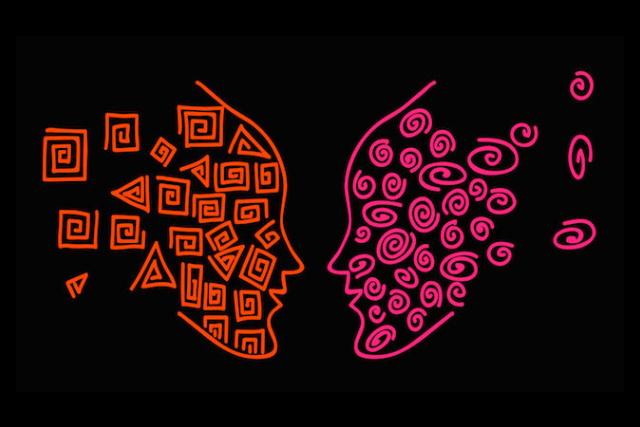
It’s Not Either/Or: The Power of Opening Your Mind and Seeing Both Sides
“Compassionate listening is to help the other side suffer less.” ~Thich Nhat Hanh
In late 2017 my husband and I were both getting ready for work one morning when I casually said, “Hey, I think I’m going to start teaching yoga in the jail.”
Without missing a beat my husband said, “Well, that’s a terrible idea. Why would you do that?”
He gave this comment as a statement, flat and decisive. I had suspected I would get this type of response, so I tried to play it cool, like it didn’t bother me. But it still stung a bit, since I had hoped for his support.
As a long-time yoga teacher, I was excited about the opportunity to serve those who could potentially receive the practice’s mind-body benefits and who also might not have access to or have experienced yoga before.
I knew I wasn’t going to fix them with a single yoga class, but I hoped by connecting with someone who saw them as whole and unbroken, they’d know they don’t have to be defined by their current situation.
My husband, on the other hand, saw it through the eyes of a police detective who specializes in crimes against children. He has seen the worst in human behavior on levels you and I can’t even begin to imagine. Additionally, he had worked in the very jail I was going to. He knew much better than I, with my dialed-up altruism, what could go wrong.
He is an outstanding human being, as is almost every single police officer I’ve met. His misgivings were based in a reality I had never experienced but one he had the first-hand experience of.
I understood his concerns, but my pride and ego were still hurt because he didn’t support the work I wanted to do.
I went ahead and pursued teaching with the support of the Prison Yoga Project and ended up teaching the female inmates at the county jail.
In the early weeks, my husband and I continued our unofficial cold war and didn’t talk much about what I did. But that didn’t affect my enthusiasm.
I love my work at the jail. My students are as diverse as an exclusive studio’s clientele. I’ve had pregnant women, a mother-daughter duo, young, old, and a few who’ve gotten out only to come back a few weeks later.
I never ask what they’re in for, but their tattoos tell more about their lives than I could read in their record—the deep grief for all they’ve lost engraved in black and smeared faded colors on their skin.
The most common tattoos are in memory of people who’ve died. I wonder if there is something temporarily soothing to literally feel the pain of grief being etched into their skin and buried under the surface. I only have to look at the tattoo on my own wrist in memory of my son to know the answer.
In the months that followed that initial conversation, my husband and both began to soften our stance. I found him to be a good resource for some questions I had about legal procedures or other things that came up, and he was curious about the women and their yoga experience.
Then one day a few months back he came home and shared that a long, emotionally difficult case he’d been working on had wrapped up. The woman was sentenced to one year in the jail where I was working.
He admitted he felt a moment anger that she would be able to take yoga classes after what she’d done. But then, he took a breath, sighed, and said that he would rather see her have the chance to come out better than to hurt any other children. We both softened.
Within a week I too had a moment of questioning my decision to work with inmates. In an altercation with a man who was strung out on drugs and unhinged with violence, one of my husband’s co-workers was injured so badly he needed to be hospitalized. The perpetrator was arrested and taken to the jail where I teach.
It was my turn to be angry and imagine that this man (or someone like him) could’ve hurt or killed my husband. Did I really want to support someone who could threaten one of the most valuable things in my life?
I felt so deeply conflicted. Then I wondered if my husband felt betrayed by me because I was teaching at the jail. Did he feel I was either with him or against him? And did I expect him to be with me in my altruism or else he was against me?
Either/Or and Both/And Mindsets
Life is too often defined as either this or that. And, it seems, when we choose our side we must also choose all the things that are aligned with that side. For example, if I’m a woo-woo yoga teacher then I must be against the police. Our culture increasingly demands that we stake our claim, unwaveringly.
When we fall into the trap of an either/or mindset we shut ourselves off from opportunities, connections, and relationships that could alleviate suffering for people on both sides of the issue.
Either/or thinking is divisive at best. It places us firmly in our own silos, cloistering us in an imaginary us versus them utopia, whereas “both/and” thinking creates community and connection. It allows us to begin to build webs of supports that extend beyond our own ability to impact change.
Perhaps you’ve found yourself in the either/or conflict when you discover that your favorite co-worker supports the opposite political party. You feel your stomach tighten and then extrapolate what else they must believe that you find offensive. These mental games likely result in feeling that you’re at war with this person, resulting in your work relationship suffering.
A great place to start to transition to both/and thinking is to use the Zen Buddhist tenant of “not knowing.” When we open to the fact we don’t know everything about the situation it softens us.
In the example of your coworker, perhaps they’ve been influenced by different life experiences that have shaped their beliefs and opinions about what’s best for our country and the people in it. And perhaps you even share similar values but hold different perspectives about the best approach to honoring them.
When you consider that people who seem against you may also have good intentions, it’s easier to find common ground and work together instead of against each other.
When my husband and I began to see our situation as both/and not either/or it was much easier to see how each of us could positively impact the individual systems we work in and, even in a small way, create healing for those involved.
Recently in my Buddhist Chaplain studies, we looked at systems using Donella Meadows’ model. In her book, Thinking in Systems, she says, “You think that because you understand ‘one’ that you must, therefore, understand ‘two’ because one and one make two. But you forget that you must also understand ‘and.’”
Seeing that my husband’s work is necessary and my work is necessary, even within the same situation, is a powerful force that creates change.
It would be easy to put me in my woo-woo yogi silo and my husband in the cop silo. Instead, we agreed to focus on both our work and how the overlap can be an opportunity to dissolve the hard lines of either/or thinking and look for the places where “and” exists. Then we lean deeply into those places, because these are the tender places of real change.
We need to learn to make our silos more permeable.
One of the other things I’ve learned in my Buddhist Chaplain program is that when we consider the best way to positively impact how a system is functioning, we can start by focusing close in, then zooming out.
If I am standing in the middle of a river I can feel the power of the flowing water, but when I stand on a mountaintop and look down at the same river it can look calm and peaceful. Both of those perceptions of the river are correct, but I’ve changed my vantage point.
When we feel ourselves being asked to take an either/or position we can take a moment to zoom out and in to find balance in our perspective taking. We need to do both, get wet and get distance!
Another negative outcome of the either/or mindset is that it forces us to find blame. When I assume the either/or mindset in a situation, then by default the person who is opposing me must be incorrect and therefore is also to blame when things go wrong. When we are looking for someone to blame it takes us out of accountability for our own actions and it removes us from being empathetic to another person.
Without empathy, it is very hard to come from a place of compassion. And without compassion, we de-humanize the other person. The result of dehumanization is believing that the other person is less than us and therefore deserving of whatever bad things come their way.
In the case of my husband and the woman he sent to jail, rather than dehumanize her with an either/or mindset, he saw her as both human and deserving of something good, while she took responsibility for her action.
Each time we choose a both/and mindset over an either/or mindset we release ourselves from having to find someone to blame and we stay connected to our human experience without dehumanizing another person.
A both/and mindset doesn’t mean we have to let go of being change-makers in the world. The world needs change-makers now more than ever. But there will never be peace and compassion in the world if we can’t do both—get in the river to feel the power and climb the mountain to see the calm. As one of my teachers at the Upaya Institute said, “A nudge of calm can shift a storm.” Be the nudge, not the storm.
-

Our Shame Does Not Have to Silence Us Unless We Let It
“Empathy’s the antidote to shame. The two most powerful words when we’re in struggle: me too.” ~ Brené Brown
There is so much power in giving yourself a voice, in choosing to use that voice for truth, in giving life to the secrets, judgment, and shame you keep hidden away. “Me too” can change someone’s life.
I learned this firsthand almost a decade ago. It changed my life, and it’s changed countless others around me.
I gave my shame a voice, and she was loud, strong, and bold. She brought light to a secret others would have preferred I kept. She brought comfort in my struggle. She brought wisdom in my pain. She began what would be a lifetime of courage, speaking up, and going first. She started it all.
My Secret Shame
Let’s go back to what started this story of shame to begin with. Rewind nine years. I was sixteen at the time, and there I was, standing in only lingerie and a pair of incredibly high and uncomfortable heels, applying makeup to make me look older…braces and all.
Nine years ago I was a prostitute. I was legally allowed to have sex, yet I was illegally standing in a high-end brothel hours from home, trying my best to pretend I knew what I was doing—read as: I had NO idea.
Why on earth was I there, you may ask? I made a choice. A misguided choice, but still a choice. A choice my mother supported because we’d both gotten caught up in the glamorized story her friend, also an escort, had created and manipulated us into seeing.
“I just see men as money,” she told me, which sounded appealing given that we had little at the time. I was stronger than my mum, and we both knew it. So I chose; it would be me.
At an age where I was supposed to be exploring what being in my body felt like for me, I was being passed around like an object so others could explore my body.
Night after night I would go numb. I would silence the inner voice screaming to leave with Valium, alcohol (because I was nineteen, according to my forged birth certificate), and sleep deprivation. I was in all-out survival mode, and I was experiencing guilt, shame, and invasion again and again. The longer I stayed silent, the stronger it all became.
I was a good little girl and kept my mouth shut, doing what I thought I had to do to survive. Be quiet. Say nothing. Just oblige. Don’t rock the boat.
So I didn’t.
I stayed a few weeks and spent many hours, sleepless days, and countless showers trying to wash away the shame I was carrying. Until I couldn’t keep it quiet anymore. I couldn’t not speak. I couldn’t not vocalize how I felt. I couldn’t not say no anymore.
So I said no and began taking my life back.
Many people will blame my mum. Some always will. Many can’t understand how I let the blame go. But I spent many years condemning her, and the world of victimhood sucked me in deep. In order to heal and move on, I needed to accept the decision we had both made. And I needed to accept that, like all humans, she did the best she could with what she had at the time.
Please know there was anger there, and at times there still is. Sometimes I feel hurt, let down, and all the rest. But I choose to rise above it, and I choose a new future for myself by letting go of the need to be a victim in any of this. Because I never was, and never will be.
Owning my past and releasing my shame is the most empowering decision I’ve ever made for myself. It all started with empathy. I had to stop believing that I was ultimately flawed because I had been a prostitute. I had to recognize that I too was doing the best I could at the time.
I could not be living the life I am now, in the relationship I’m in with myself right now, without seeing the sixteen-year-old me with utter love and compassion, dissipating all judgment.
I need you to know that speaking up about my shame was scary. I was outing a secret that impacted many more than just me. Yet I never hesitated in doing it. Why? Because I had a deep desire to let others know that they are never alone, and I knew there was a deeper meaning to all of this. There had to be; it’s what got me through.
I couldn’t let my shame silence me. I never will again.
The Gift of Voicing My Shame
It was through experiencing shame and sharing it that I learned the power and freedom voicing our shame brings. And the understanding of what binds so many of us. How many people are walking through life silenced by shame? Unable to find their voice for fear of judgment? As a result, what kind of life are they living? In stuffing down their pain, they end up blocking themselves from joy.
How fortunate was I to be able to experience shame and then release it? Yes, fortunate.
I now appreciate that I was able to learn something early in life, at an age many others wouldn’t, that freed me from the chains that bound so tightly and weighed me down so deeply.
Sharing my shame created a beautiful opportunity for me to look at my life so far through a totally new lens. I came to appreciate that my most painful experiences had gifted me the insight and heightened awareness I now have.
What unfolded from me speaking was a declaration to myself, and to the world, that we do not need to stay silent with our shame. I publicly shared my experiences, as well as the self-harm and self-destruction that followed, and a sea of “me too’s” flooded in.
People reached out thanking me for letting them know they aren’t alone.
People reached out acknowledging me for being inspiring and giving them the courage to do the same.
One woman even contacted me, saying she left the sex trade after my story went public, because… “me too.”
All of this came from the courage to speak up.
Lives were changed, and mine was never the same.
Our shame does not have to silence us. Unless we let it.
To anyone experiencing their own secret shame, this is what I want you to know.
Whether you’ve experienced something traumatic or feel shame about not having it all together, speak up. Shame cannot exist if you have empathy, a voice, and acceptance.
We all experience shame, for different reasons, at different times. It’s okay.
There is no shame in being you. Please reread that again and again. You are not your worst decisions. No matter what you’ve done, you deserve love, empathy, and understanding. And you are never alone.
-
“You’re Too Sensitive” Is a Lie
“I used to dislike being sensitive. I thought it made me weak. But take away that single trait, and you take away the very essence of who I am. You take away my conscience, my ability to empathize, my intuition, my creativity, my deep appreciation of the little things, my vivid inner life, my keen awareness of others pain and my passion for it all. ~Unknown
My phone rang and it was my boyfriend. I slipped out into the hall. “Hey you,” I answered. We’d been texting about getting together that night.
“Why don’t you just come over to my place and I’ll cook?”
“Hey there,” he replied. “I’d really rather go out. What about the Swan? I can meet you there at 7pm.”
“Okay…” I hesitated, “That will work. I should probably get back to work, but see you tonight.”
I didn’t really want to meet at the Swan, a pub near my house. I just wanted a quiet evening at home, but it felt stupid to argue about it.
“What’s wrong with me?” I thought. “Why can’t I enjoy going out for dinner like a regular person?”
I arrived at 7:03 pm and he was already there. We found a table in a quiet-ish area and sat down.
The music was loud and there were what seemed like 100 different conversations happening at once. I was having a hard time concentrating on what my boyfriend was saying.
He got up to go to the washroom.
“My boyfriend’s taking me out for a nice meal,” I thought. “I should be grateful.”
But the chair felt hard and my back felt sore.
“Seriously, what’s wrong with me??” I thought. “I somehow find a way to complain about everything. Why can’t I just have a good time? Why can’t I focus on my boyfriend and the yummy food and enjoy myself? I really am spoiled…”
My boyfriend returned and I ordered a second drink to numb the overwhelm I was feeling and the voices in my head.
Whether to go out or stay in was a constant point of tension between us. He ran his own law office and so worked from home most days. He wanted to get out of the house in the evenings. I worked in an office and was introverted and sensitive, so at the end of the day I really just wanted a quiet evening at home.
It wasn’t until months later when I found a Facebook group for highly sensitive people (HSPs) that I realized I wasn’t the only one who felt like this.
As I scrolled through the posts I found a whole community of people who get overwhelmed by loud noises, fluorescent lighting, and more than one conversation happening at once.
A whole community who can’t watch scary movies, who are very sensitive to other people’s emotions, and notice when others are upset even when they’re pretending to be fine.
I realized that I wasn’t the only one who felt things deeply and who gets overwhelmed by cocktail parties and grocery stores.
As I read through the posts I felt relief flood through my body. I finally understood that I wasn’t stupid or ungrateful or spoiled. I was just built differently. I was just highly sensitive, and so my needs are different than other people’s need.
Like most HSPs, I like quiet. I like warm and soft lighting. I like hiding under the covers. I often can’t wait to get home to the quiet oasis that is my house at the end of the day.
Now with the help of the HSP community and my therapist I’m learning to stop trying to get rid of my sensitivity and how to embrace it.
If you think you might be highly sensitive, here are a few things you can do that might help:
1. Take the HSP test.
Taking the test and getting confirmation that I was highly sensitive helped me accept my sensitivity. If you’re highly sensitive that’s simply a fact and there’s nothing wrong with you.
You can take the test here.
2. Join an HSP community.
Joining the Highly Sensitive People FB group was a real turning point for me in accepting my sensitivity. I didn’t post in the group for over a year but reading other people’s posts gave me confirmation that I wasn’t crazy.
There’s nothing like knowing you’re not alone and others share the same struggles. Joining this group or another HSP community will bring you a sense of peace and acceptance of who you are.
3. Embrace your sensitivity and protect yourself.
I live alone in a quiet neighborhood. I only invite a couple of people over to my house at a time. I politely decline invitations to loud or overwhelming parties.
If you’re highly sensitive you have to be insanely protective of your energy. HSPs are often amazing creatives or healers, but if you’re drained because you aren’t protecting your energy you won’t have much to give back.
I know it can sometimes feel stupid to walk around the city with giant headphones playing white noise or declining an invitation to a friend’s party, but I guarantee you’ll be happier and healthier if you protect yourself.
That boyfriend and I ended up breaking up for a number of reasons, but one of them was that he couldn’t accept my sensitivities.
4. Ask for help from the people you trust.
This might be the hardest one to do. Well, this and protecting yourself are both really difficult!!
I sometimes dissociate if there’s loud music or even something as simple as a very intellectual conversation. The hardest but also best thing to do if this is starting is to tell the person I’m with what’s happening to me.
I might say something like, “I want to stay in this conversation, but I’m starting to feel overwhelmed and am having a hard time connecting. Can we slow things down for a minute?”
The more you can explain to the people you’re close to what’s happening, the more they can help you. I’m learning that most people actually want to help me when I’m overwhelmed but just don’t understand what it’s like or what they can do.
The more you can say things like “I’m feeling overwhelmed. Can we just walk in silence for a minute?” or “Will you just hold my hand for a minute?” or “Can we just turn off the music for a little while?” the more the people who care about you can help.
You’d be surprised, your non-HSP friends want to help you; they just have no idea what it’s like or how they can help.
5. Do things that make you feel happy, safe, and protected.
Figure out what you love and what makes you feel safe and prioritize those activities.
This might include:
- baths with candle light
- hiding under the covers for as long as possible
- walks alone in nature
- canceling a coffee date and staying in
- telling a friend you trust what it’s like to be highly sensitive
- hanging out with other HSPs who totally get it!
I’ve come along way from the days when I would say yes to invitations just to fit in, and my life has transformed into something more beautiful than I could have ever imagined.
I quit my office job with bright lights and lots of other people’s emotions swirling around and went out on my own. I designed my business where I walk outside in nature while helping people out on the phone.
Just yesterday I was out beside Lake Ontario watching a flock of swallows dip and dive and play. And I had this moment where I thought, “Is this really my life? Is this really what I get to do?”
I’ve realized that the more I protect my energy, the more I can really give to the people I work with, and so I am more protective than ever.
As a highly sensitive person, you have a special gift to share. As you learn to accept your sensitivity and protect your energy your life will change. You’ll become happier and healthier and have more to contribute.
By protecting yourself you’re not being selfish or greedy or difficult; you’re actually being generous. The world needs your gifts and when you take care of yourself, you’ll be able to give more and make the impact on the world you were meant to make.
-
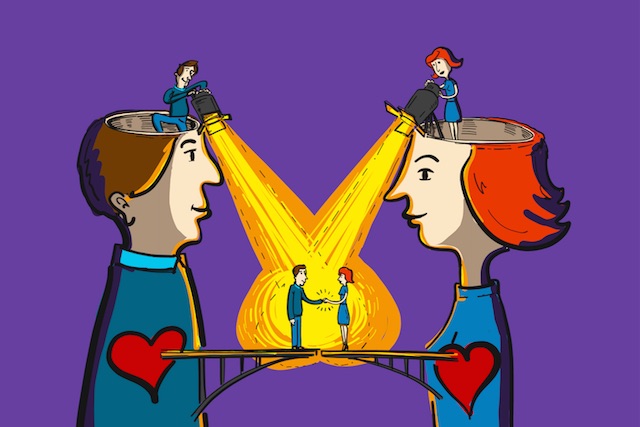
Understanding the Cycle of Pain: How to Transmute Anger into Empathy
“When we get angry, we suffer. If you really understand that, you also will be able to understand that when the other person is angry, it means that she is suffering. When someone insults you or behaves violently towards you, you have to be intelligent enough to see that the person suffers from his own violence and anger. But we tend to forget … When we see that our suffering and anger are no different from their suffering and anger, we will behave more compassionately.” ~Thich Nhat Hanh
There is so much to be angry about every day because life is unfair.
My own situation right now is infuriating. I left my job and my home country in large part to return back to the US and help my mom care for my father. During that time, my mother’s frustration with her role as caregiver, along with the emotional stresses and practical limitations it placed on her, often boiled over into rage directed at me. This situation persisted for ten months.
Immediately after that, she herself became terminally ill, and now my role is caregiver. My whole life plan has had to change as a result, so my hopes of going back to my old life now need to take a backseat to my mother’s illness, which was brought about by her own behavior (smoking). For so many years I had asked her to quit, to which she reacted—you guessed it—angrily.
When it was clear she wasn’t doing well, I encouraged her to see a doctor. She got angry with me.
While in the hospital, she was frustrated at being confined to a bed. She took her anger and frustration out on me for that too.
Now, faced with difficult treatments and limitations on her lifestyle, she lashes out at me every day or two. Me—the only one at home with her, and the only one of her four children who has the will and/or ability to care for her in this way.
I’m not going to lie—it’s difficult to refrain from reacting in kind, and sometimes I do just that.
In my cancer caregiver support group, I found this is a common thread—people are angry, and they have difficulty directing and dealing with that anger.
One woman has a husband whose blasé attitude toward his cancer puts him in a lot of dangerous situations. This completely stresses her out because she is in a constant state of worry about his health and safety. But, rather than expressing these sentiments, she has internalized them, allowing anger to slowly fester.
It was a significant and therapeutic step for her to actually admit that she was angry. Her way of coping thereafter was to withdraw from her husband in order to preserve her own emotional well-being.
Another woman was angry because her husband, sick on-and-off with cancer for nearly twenty years, was also depressed through his illness, leaving her as the sole caregiver and breadwinner. Needless to say, her marriage was far from the storybook version she’d originally had in mind. Her way of dealing with her anger was to be productive—to be the best mother and caretaker she could be—and occasionally vent or break down to some trusted friends or our group.
There is nothing wrong or shameful about either of these two approaches. Both women have shown incredible fortitude in the face of difficult situations. Furthermore, their reactions were certainly much more constructive and peace-promoting than simply popping off and reacting temperamentally.
However, I have found it helps take me to an even more peaceful state to remind myself of the cycle of pain.
In this cycle, as succinctly described by Thich Nhat Hanh above, people act out in negative ways (e.g. aggressive, uncaring, etc.) as a result of inner pain. Even if that pain is difficult for us as outsiders to understand, it is there as a matter of fact.
Though it may help to intellectually understand the specific causes and dynamics of the individual’s pain, in most cases that isn’t possible because you cannot get inside someone else’s head. But we can still accept that the other person is in pain. Once we accept this, we can relate it to our own and therefore feel empathy.
This is very difficult to do in the moment. What helps me when I feel the flush of temper is to take a deep breath and close my eyes. When I take in that breath, I imagine myself “breathing in” the other person’s pain, which appears to me internally as smoke or pollution.
I then imagine in my head what they are going through. That is why it helps to understand what the pain is. In my mother’s case, it’s the fear of her disease as well as the discomfort with suddenly having to deal with the restrictions it places on her time and activities.
I imagine them dealing with that pain, and as the breath comes in I feel a sensation permeate my body. I then let out the breath, which I imagine to be a vapor of peace. I feel lighter and calmer.
I call this alchemy for the soul—transmuting anger into empathy.
When I expressed this in the group, I was met with crickets, except for the woman who was angry about her husband’s careless attitude about his condition. She had two comebacks.
First, she said although that was a “nice” sentiment, she needed to take care of herself at this point and not worry about her husband’s emotions. After all, as the cancer sufferer, he was receiving all kinds of sympathy from every corner. Fair enough.
Secondly, she said that it takes a lot of energy and effort to “suppress” your feelings when you’re already feeling exhausted from being the caregiver. I understand that too.
At that point, I dropped the matter, firstly, because I sensed her slight agitation and secondly, because I thought it might strain the dynamics of our safe place if I came across as a preachy teacher in a group of equals.
What I wanted to say was that this is not about her husband’s feelings. In fact, quite the opposite—doing this would be all about her emotions.
To hold onto anger and need to direct it somewhere, to me, is draining. I need to carry it around and find where to put it. I need to put effort into not blowing up at someone. To me, this exercise of alchemy for the soul feels like the opposite of “suppression,” whose Latin origin literally means to “press down.”
When I perform my little alchemy ritual, the feeling is much more of a lightening up or dissolving kind of sensation. Rather than doing someone else a favor, I feel like I am treating myself well, which allows me to treat others well too (and not begrudge them for it!).
Even when someone else is clearly the “cause” of your anger, it helps to remember that it isn’t really him or her—it’s his or her suffering that is at the root of the hurtful actions. Yes, they are responsible for what they do, but it helps to remember that it’s human to sometimes act out when you’re hurting.
If you feel that this thinking lets the person off the hook too easily, remember that however hurtful someone’s actions are, no one can “make” you feel a certain way. Ultimately, how you react internally to someone’s actions, what you choose to focus on and how you think about it, is your own responsibility. To blame another person for how you feel is to give him or her power over you.
To be clear, I’m not making excuses for bad behavior. If someone does something cruel or thoughtless or aggressive to you, it is his or her failing for doing so. But however hurt you may feel in the moment, that person does not have the power to make you carry that hurt with you in the form of anger.
Once again, this has nothing to do with you being a saint and deigning to give that person compassion or forgiveness; it’s about you taking care of yourself by stopping the angry chain reaction that can lead to all kinds of hurt and unfortunate behaviors.
Why not just allow yourself to just be angry and make up a sad story about what was done to you in which you are cast as the victim? In a sense, you’re totally justified in doing so, but where does that lead? How does that help you? The truth is, you very well might have been a victim of someone’s aggression in that moment, but only you can make yourself remain a victim by carrying around the negativity.
When you help yourself by letting go of your anger, you help everyone else around you too.
This is a practice that has very much helped me, but it’s not the only way to deal with anger. I’m always in search of new strategies myself, so please feel free to tell me what’s helped you cope.