Tag: emotional

  • Abuse Isn’t Always Physical, and We Never Deserve It

    Abuse Isn’t Always Physical, and We Never Deserve It

    “A bad relationship is like standing on broken glass. If you stay, you will keep hurting. If you walk away, you will hurt but you will heal.” ~Autumn Kohler

    It happens little by little, bit by bit. So very slowly that before you know it, you can’t recognize the person you lie next to at night and you hate the person you see staring back at you in the mirror.

    Who is that person?

    Where is the strong, capable, unflappable, and carefree person that you once were? When did you become someone so pathetic, so small and malleable?

    I have never been the kind of girl who accepts bad behavior, let alone anything verging on abuse.

    I believe in good manners, in kindness, in treating others as you wish to be treated. I also believe absolutely in apologizing when I get it wrong.

    I don’t let my two little people get away with being rude, cheeky, or back-chatting a grown-up. So why did I let him treat me so appallingly? Why didn’t I stand up to him? Why didn’t I get out?

    I have always left, you see. With all the significant relationships I’ve been in, I have always ended it.

    I have always made that call. I’ve always run away when I couldn’t do it anymore, or cut my losses before I could get hurt.

    I ended my engagement to my ex mere months before the “big day.” I called time on my first marriage, seven years after saying “I do,” when three straight years of trying hard to fix it had failed.

    So why didn’t I leave him?

    People think domestic violence has to involve fists, bruises, and physical pain. Well, I can now put my hand up and admit that I was abused—but he never laid a finger on me. It doesn’t make it any less painful or significant or wrong.

    I am beginning to get comfortable owning what happened to me, but its effects have lasting consequences that I am aware of almost daily.

    The more time I spend analyzing what he did, and his potential motivations, the less I feel I understand what our relationship was about, and the more blatant the abuse appears.

    He controlled, manipulated, and systematically ignored me.

    I wasn’t allowed answer the door to other men if my husband wasn’t in the house, nor was I allowed to speak to other men at the pool where we trained.

    He loved my little skirts and dresses while he was wooing me, but as soon as he had me it was always, “I hope you’ve got appropriate knickers on wearing that” or, “you will keep your legs closed if you go out wearing that.”

    When he thought I had overstepped some invisible, unfathomable, and constantly shifting line, he could look me straight in the eye and yet completely ignore me for three straight days, without skipping a beat.

    Not a word would leave his mouth. For days on end. And for a girl who can talk the hind legs off a donkey, that is pretty much the worst kind of torture imaginable. I was invisible. I was nothing.

    But it happens gradually, remember.

    In the beginning, he built me up and showered me with words of love and affection. He placed me on a pedestal and worshipped me. I had never felt so precious to anyone before.

    He made himself the very center of my universe, and made himself so large that he obliterated everyone and everything else. Little by little, increment by increment, my universe became so very small, and by degrees I became myopic, a mere shadow of the woman I once was.

    In some ways, the hardest thing for me now is coming to terms with the fact that I didn’t have the nerve to get out.

    I had irrationally made the decision to stay because I truly felt that it was the only choice I had.

    I think I justify it by saying that it was the only thing I could do—for the sake of my children. They had already been through so much; I couldn’t damage them further.

    And anyway, his behavior was only directed at me. Once he had me controlled, managed, and living in fear, it was was only ever about me; I perceived that my children were safe from any form of direct threat.

    The decision to get out, to get free and safe, wasn’t a decision I ever had to make, or got the chance to make. By some weird twist in the way the universe works, I received the ultimate “get out of jail free” card. The abusive monster of a man to whom I had given three years of my life died.

    He died suddenly and shockingly, and in doing so simultaneously set me free and inflicted his biggest, most significant controlling act.

    Now, almost exactly one year later, I still feel immense and overwhelming relief that I am out of that place; that like a caterpillar trapped, bound and confined, I have been able to break free and spread my beautiful wings.

    But I still feel some misplaced sense of shame that I didn’t get to make that call. That I didn’t put my big girl brave pants on and make that decision first, and for me.

    Being in that relationship is, without question, the biggest and worst regret of my life, one that I will carry to my grave.

    I wanted to write this for all the people who feel trapped, who feel like a watered down impression of the person they once were. For the people who don’t feel able to speak out and ask for help.

    I know how that feels.

    I know the shame and embarrassment that keeps your lips sealed, even around those who you trust and love the most.

    Just because there are no physical marks doesn’t mean it isn’t abuse.

    When you question yourself and you try to tell yourself that it’s really not that bad, that he or she loves you, really, but has just got a few issues to deal with, or worse still, that it’s your fault he or she treats you this way, trust your gut.

    If they continually put you down, shut you out in an attempt to manipulate and control you, ignore your needs, threaten you in any way, call you “crazy” or “overly sensitive” when you dare to raise your worries, and/or blames you for their reactions, that is not love. It is abuse.

    It’s easier somehow to make excuses, accept the blame (you will even start to believe it), but know that you could end up spending the rest of your days in an a broken and painful place—a relationship where you feel small, worthless, and lonely beyond words.

    Somewhere in your gut, you likely know this is true.

    Whether your inner voice is yelling at you, or just whispering to get out, you know. You know it’s not right and that you deserve so much more. You deserve to have the chance for your wings to be set free.

    And I pray that you do.

  • Clear Your Emotional Clutter and Open Up to Joy (Interview and Giveaway)

    Clear Your Emotional Clutter and Open Up to Joy (Interview and Giveaway)

    Woman Jumping

    UPDATE – The winners for this giveaway are:

    • C
    • Lori Pacheco

    When I was in my early twenties, I spent three months in a residential treatment center in a last-ditch effort to heal from depression and bulimia. Among many different treatment modalities, I participated in an experiential therapy that involved a ropes course and other adventure activities.

    One day, along with a dozen other frail women, I strapped a backpack full of tennis balls on my back and climbed to the top of a rock wall. It was hard enough to walk on some days; getting to the top with what felt like ten cats clinging to my back took everything I had in me.

    It was only when I completed the task, exhausted, that I understood the point of this draining exercise.

    Our therapist then instructed us, one by one, to open our backpacks and toss each ball down to the ground, naming each an emotion that had caused us pain.

    “This is my shame,” I yelled. “This is my anger. And this is my self-loathing.”

    This metaphorical emotional unloading, combined with the energetic release that often follows extreme exertion, brought me a lightness of being that I’d never before experienced.

    I had lived my life like the climb up that wall—weighed down by my emotions—and I had a glimpse of what it felt like to be free of them.

    Still, while the exercise was liberating, I didn’t know how to recreate that feeling of emotional freedom in my everyday life.

    Years later, I learned that mindfulness could provide the peace I desperately craved. I learned that I could fully embody the present moment, and see the people and things right in front of me without filtering them through my fickle emotions. I learned that I no longer had to live trapped inside a mind that constantly bombarded me with disempowering stories about my painful past.

    No one has to live that way. And the good news is, clearing that “emotional clutter” doesn’t require a daily trip up a rock wall.

    We can all overcome our toxic patterns and find freedom from the old pains and traumas that have weighed us down. Mindfulness is the key, and anyone, at any age, in any circumstances, can learn to practice it and reap the benefits.

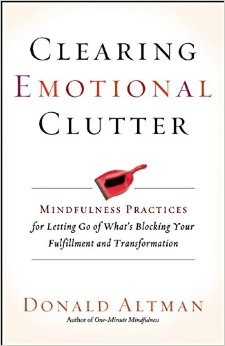
    In his new book Clearing Emotional Clutter: Mindfulness Practices for Letting Go of What’s Blocking Your Fulfillment and Transformation, author Donald Altman combines modern neuroscience with ancient practices to show how habits and patterns can be modified with only a few minutes of attention daily.

    It’s a powerful book that can hep anyone release their emotional pain to find happiness, fulfillment, and peace.

    I wish I’d found this book, and these practices, years ago, as they truly are life-changing.

    I’m grateful that Donald took the time to answer some questions about his work and his book, and that he’s offered two free copies for Tiny Buddha readers.

    Clearing Emotional ClutterTHE GIVEAWAY

    To enter to win one of two free copies of Clearing Emotional Clutter:

    • Leave a comment below
    • For an extra entry, tweet: Enter the @tinybuddha giveaway to win a free copy of Clearing Emotional Clutter http://bit.ly/1SLXcyB

    *US winners will receive a physical book in the mail; winners outside the US will receive an eBook.

    THE INTERVIEW

     1. Tell us a little about yourself and what inspired you to write this book.

    Mindfulness has helped me immensely in my life. I got on this path when I was going through a difficult life transition and found myself repeating an old, toxic pattern. It’s that idea that wherever you go, your problems always follow you. That is, unless you do something about it!

    Around that time I met a Burmese Buddhist monk—the Venerable U. Silananda—who had been teaching mindfulness in the U.S. since the 1970s. He possessed a palpable sense of compassion and availability that made me ask the question: How does someone become like that?

    When I had the opportunity to ordain with him as the head of the monastery, I jumped at it. Although I was in the monastery for a short period of time, it was an experience that changed my life direction because I was primed and ripe for the experience of looking inward.

    I wrote my first spiritual book while at the monastery, and continued to train with one of the monks afterward. I’m very grateful for the transformative experience the monks provided for me, which helped me nurture greater compassion and connect with my purpose. Now, my writing is focused on helping others find joy and fulfillment.

    Clearing Emotional Clutter is an important book for me because it integrates cutting edge brain science and research with the ancient practice of mindfulness. It shows that you don’t have to go into a monastery to transform your life, overcome past negative clutter, and rewire your brain.

    2. How do we accumulate “emotional clutter,” and why do we need to clear it out?

    No one can control what happens in life. There are losses, aging, and challenges throughout every stage of life, not to mention the daily wear and tear of stress. What we can do is to respond skillfully by not letting the emotional clutter pull us into states of dis-ease and unhappiness.

    By clearing out clutter, we can transform even difficult moments and respond to life in a way that helps us find the inherent joy that is present.

    3. You talk about getting off the emotional elevator. What do you mean by that?

    You can think of your emotions like an elevator that takes you up and down. What moves the elevator? What old programs are running in your head that push the buttons on your elevator to that it moves you up and down? Something good happens in your life and the elevator goes up. Something bad—even a perception of something being bad—and the elevator shoots down. But what if you could control that yourself?

    This book helps you decide who and what you are going to let push your emotional elevator buttons. Letting others push our mood elevator buttons can be exhausting. We’re not in control of our own elevator. Clearing away clutter means you get free from old emotional clutter programming and ways of thinking.

    4. In Chapter Two, you introduced a tool called “Inner-Facebooking.” Can you elaborate a little on this and share an example of how it’s helped you personally?

    Facebook is a wonderful way to post and put up for others what’s happening in our lives. In the same way, we are constantly putting up mental posts in our minds—through our thoughts and beliefs—that represent a kind of second Facebook: An Inner-Facebook, which shapes how we experience the world, ourselves, and others.

    If your Inner-Facebook posts are unhappy and unflattering, no wonder you feel bad and depressed. I have a whole chapter about noticing your Inner-Facebook posts so you can be more aware. Inner-Facebooking is a skill that helps you to emotionally regulate. Then you can change your Inner-Facebook posts to be more positive and accurate.

    Personally, I’ve gotten better at noticing my own inner-Facebooking posts. For example, my luggage was lost when traveling recently. But rather than respond to the highly reactive and anxious thoughts that my mind posted in that moment, I was able to step back and make a new, more realistic and helpful post that said, “My luggage is going to be found. Besides, in the big scope of things, losing my luggage isn’t that big a deal.”

    5. In Chapter Four, you wrote, “Much of the clutter of discomfort, discontent, and conflict that we experience in life comes from our unwillingness to accept things as they are.” I think we often equate acceptance with giving up. How can we simultaneously reduce the clutter of resistance while working to make positive changes in our lives?

    Acceptance is about realistically viewing your situation. It’s about surrendering to the truth that you may not have control over the situation. You recognize that it is what it is. That does not mean you are giving up. Submission, on the other hand, is about giving up.

    Acceptance allows us to surrender to the truth of our situation. So, if you’re frustrated at being caught in a traffic jam on the freeway, for example, you can have acceptance of what you’re experiencing instead of fighting with it. This means that you can then move forward in a more realistic and effective way instead of getting all stressed out and carrying the experience with you throughout your day.

    6. You devoted an entire chapter to “family emotional clutter.” How do we accumulate this type of clutter, and how does it negatively impact our lives?

    In my workshops I always ask, “Does anyone here have a difficult person in your life?” Everyone raises their hands.

    Family emotional clutter can negatively impact our future relationships and how safe we feel around others. If you’ve had negative relationship issues that have been a pattern in your life, that’s a sign you need to work on that clutter. Repairing this will lead to more loving, healthy, fulfilling, and secure relationships.

    7. What’s one thing we can do to begin releasing “family emotional clutter” to avoid these negative consequences?

    First, we can recognize that all people have suffered, even that person in your family who may have mistreated you. In fact, your family’s suffering may go back centuries. So, rather than feeling permanently victimized, it’s important not to pass on the wave of suffering in your family, and to know that you can heal.

    I believe that we can get a new brain download by finding benefactors in our lives. We can learn how to attune and alter our brain’s social and emotional rewiring. It’s a helpful process that I describe in one of the Lifestyle Tools found in Clearing Emotional Clutter.

    8. You talk about friendships as a tool to release emotional clutter. How and why can our relationships help with this, and how can we help other people release their emotional clutter as well?

    Research shows that having friends is the key to a happier life. The three seeds that make friendship grow and mature are the seeds of trust, acceptance, and empathy.

    Trust is essential, and that takes time to develop, so you need patience and real mutuality in a relationship.

    Acceptance means not being so demanding. It means accepting that everyone has flaws. Sometimes you need to let things to as a foundation for friendship.

    Lastly is empathy. Empathy is what lets you really feel connected to a friend. Develop these and you’ll develop friendship.

    9. In the chapter devoted to listening, you shared an acronym, HEAR, that can help us keep our emotional clutter out of conversations and “enter a more spacious and less defensive awareness.” Can you tell us a little about that and how it helps?

    Talking can be clutter that sometimes blocks understanding and deeper meaning. If we are to remove clutter in the moment, we need to be present with all our senses, especially listening. This acronym is designed to help us when we’ve stopped listening—like during an argument, or when we’re feeling defensive or caught up in our own opinion. It goes as follows:

    H- Hold all assumptions. Empty your ego and get curious. Set your personal beliefs and assumptions aside for a few minutes and take a more objective perspective as you listen.

    E- Empathy to engage, not enrage. With empathy, you can enter the emotional world of the other person so you can understand them better rather than try to deny or devalue what they are feeling.

    A- Absorb and accept. Understanding, with openness. Let in the ideas of the other person. Acceptance doesn’t mean you have to agree, but that you can accept this is the other’s belief.

    R- Reflect, then respect. Take time to pause before you respond. Take a step back so that you can think about what you’ve heard. Then, respond respectfully and with kindness.

    10. In Part 3 of the book, you explore ways to prevent new emotional clutter. What’s one practical thing we can all do daily to de-clutter?

    I especially like the idea of being faithful to this moment. You can be 100% committed to whatever you are doing. Uni-task, so you are fully present with this moment. This means fidelity to the breath, to walking, to eating, to working. Whatever you are doing, you can do so fully, without your mind being one place and your body being someplace else.

    That means that when you walk, walk. When you eat, eat. When you drive your car, drive. Cut down on the distractions and do one thing fully. In this way you can appreciate and savor even the most ordinary moments and that “in-between” time that is an important part of our days and lives.

    You can read more about Clearing Emotional Clutter on Amazon here.

    FTC Disclosure: I receive complimentary books for reviews and interviews on tinybuddha.com, but I am not compensated for writing or obligated to write anything specific. I am an Amazon affiliate, meaning I earn a percentage of all books purchased through the links I provide on this site. 

    Woman jumping image via Shutterstock

  • Sensitivity Is a Gift: How to Thrive with a Bleeding Heart

    Sensitivity Is a Gift: How to Thrive with a Bleeding Heart

    “You are not a mess. You are a feeling person in a messy world.” ~Glennon Doyle Melton

    I can recall crying myself to sleep at night when I was a little girl. Not a loud bawl, more of a soft weep.

    My mom would tuck me in goodnight and as soon as she turned the lights on her way out, I would be left with a feeling of fear and sadness. Not because I was afraid of the dark, but because I was afraid of my dark.

    The thoughts that entered my mind that kept me from falling into a peaceful slumber as an elementary school kid were rife with pain and suffering.

    Mom would say, “Think good thoughts, honey.” But I didn’t. I couldn’t. I was too affected by all the suffering I saw.

    I cried for all the injustice in the world.

    I cried for all the pain I couldn’t necessarily see but could sense in others.

    I cried for the kids getting bullied at my school.

    I cried for myself getting teased at school.

    I cried because people died and I didn’t get why they had to.

    Somewhere along the way I received the message that it wasn’t okay to cry, or feel anything other than fine. That it was somehow bad to feel emotion. That to be a good little girl, I had to conceal and go along.

    The only problem was, I had a lot of feelings. All the time I had them, intensely strong ones.

    The world is not set up to honor sensitive people. When we see someone crying, we also usually see someone rush to their side and say “Oh, don’t cry.”

    My question is, why?

    Why can’t we cry? What is so bad about crying?

    I want to scream from the rooftops:

    I reserve the right to be sad if I’m sad.

    I reserve the right to be mad if I’m mad.

    And I reserve the right to cry if I feel like crying. It’s my life and I’ll cry if I want to.

    Crying is a sign of life, by the way. It means you are alive. It’s the first thing we want to hear when a new baby is born—their cry. It is one of the most natural human reflexes we have.

    But growing up as sensitive or empathetic, we learn that we are oversensitive, too much, too emotional, cry babies, wimps, too fragile, over-reactors. So what is given to us as a gift—our sensitive nature—is often squashed, repressed, and stifled.

    And when we don’t know how to use our superpower sensitivities for good, the weight of the world’s suffering will most definitely crush us. My sensitivity felt like a wicked curse for a long time, before I learned how to treasure it like the blessing it is.

    Some things I have learned:

    Honor your sensitive nature.

    Do this by affirming yourself and realizing that this is how you were made. Make the best of it and turn it from a commonly perceived negative trait to your biggest asset.

    Maximize the strength of being highly sensitive by making sure you have a creative outlet. It is essential to have a place for it all to go. Whatever it is for you, go there as much as you can to release the myriad of emotions from any given day. Find it, do it, love it, and let it rejuvenate you.

    Find your fellow heart-bleeders.

    It can be alienating to feel like you’re the only one feeling so deeply. But there are so many of us out there, I assure you. There’s even a book called If You Feel Too Much.

    Kindle up friendships with these people and create your tribe. There is such strength and power in connecting with like minds. You will know who they are by the way you feel around them—they see and accept and love your depth of feeling, they do not shame you for it or tell you to change your nature.

    Reserve the right to cry.

    Crying is a release and a ritual of mine. I love when a good, hard cry sneaks up on me in yoga. It’s just so healing. My emotions can overwhelm me, from unbearable grief to overstimulating joy. I cry to help release that energy overflow; otherwise, my heart might explode. I am moved to tears on a regular basis and let them come and go as they please, even welcome them now.

    You do not have to be the suffering-holder and pain-keeper.

    Just because you are acutely aware of the pain and emotional nuances of those around you doesn’t mean you need to take it on and make it your own. In fact, you really can’t. It’ll bring you down with them.

    There is a beautiful word in the English language known as boundaries. Compassion is also a beautiful word. Boundaries and compassion can, in fact, co-exist. The way to be compassionate and have boundaries at the same time is to show your love and caring for others without taking responsibility for their pain and problems by trying to fix them.

    Being born extra-sensitive is a gift, so long as we choose to see it that way. It was my fatal flaw until I learned what to do with it. When we can learn to work with it, rather than against it, we can undoubtedly make it our greatest strength and the source of all the magic and richness in this life.

  • How to Overcome Emotional Overload When You’re Highly Empathetic

    How to Overcome Emotional Overload When You’re Highly Empathetic

    “When someone throws you a stone, throw back a flower.” ~Gandhi

    “Ouch,” I cried out instinctively as my husband, Barry, and I walked through the beach parking lot, barefoot. It was only when Barry turned to me and asked me why I yelled out that I realized it was him who stubbed his toe, and not me.

    “Because it hurts,” I answered him. He looked at me curiously and said, “But it didn’t hurt you. It hurt me. I’m the one who stubbed my toe.”

    It hadn’t dawned on me that feeling other people’s pain wasn’t a “normal” reaction.

    All my life I have been extremely empathic, but for the first half of my life I didn’t even realize that this was a unique character trait, that not everyone shares.

    When I was in close contact with people who were yelling, I would literally shake. When those around me were sad or scared, I would drink in those feelings like a sponge, not realizing that these feelings weren’t my own.

    As a result, I felt on edge a lot of the time, as I was carrying not only my own feelings but also the emotions of many people around me. However, I was not in touch with this anxiety—I didn’t even know it was there. It was unconscious.

    Because I was empathic, I was often sympathetic to the plights and concerns of friends and family.

    Even as a child, people turned to me for guidance in resolving their problems. At the time, I didn’t mind because I was happy to offer whatever support I could.

    However, as I entered my teen years, the burden of other people’s emotions, on top of my own unresolved feelings, became too heavy to bear. But I didn’t know that consciously. I wasn’t even aware of what was happening for me.

    I turned to food, alcohol, and other substances to numb the intensity of what I felt.

    I felt a strong need to withdraw and I could no longer be in the same room or the same house with people who carried intense, often unconscious, emotions.

    I had to learn ways to manage the emotional energy—both my own feelings as well as the energy of others—that I was absorbing.

    This was a major key for me in breaking free from food and all other addiction. There were many bumps along the road as I learned to do this. Over time, I discovered four powerful ways to help manage emotional energy.

    1. Practice awareness.

    I noticed that if I wasn’t aware of what I was feeling, either in response to an internal shift, such as a hormonal or mood change, or a reaction to another person’s strong emotion, I was much more likely to be reactive and act out in a way that wouldn’t feel good to me.

    With awareness, I could consciously choose a response and an action that I could feel good about.

    2. Understand the nature of energy.

    A big key to healing for me has been the understanding that my response to my environment also feeds the energy. Therefore, if someone throws me a stone and I throw another stone back, or worse, a rock, I am going to exacerbate the problem.

    Not only will I add fuel to the fire and cause pain for the other, but I will be increasing my own suffering. Energy feeds on energy.

    If my daughter comes home from a long day at school expressing negativity, if I feed on that, consciously or unconsciously, by being in any way critical, negative, or judgmental myself, I will only increase the dark energy that is now in the kitchen.

    Instead, if I can give her love and sweetness, most likely that will be healing to her and the energy will shift to something that’s supportive and healing for both of us. That’s because love is all the soul seeks and when we can come back to a loving place, everything else in life becomes manageable.

    When we drift from a place of love, kindness, wholeness, and forgiveness, we feel “out of sorts” and often express bad energy (anger, fear, complaining, etc.).

    3. Don’t take anything personally.

    One of the main reasons I came to see that I absorbed and hung on to other people’s dramas and intense energies is because I bought into their suffering at some level. But over time I realized that nothing means what I think it does.

    I don’t have to force open the caterpillar’s cocoon to help it become a butterfly. I realized that the same power within me that has turned every difficulty and challenge I have faced into an ultimate lesson and blessing is in everyone else, too.

    I have learned to trust that other people, even those I love the most, need to learn life’s lessons through their own experiences and insights.

    I’m not responsible for fixing the energy or the situation. My only responsibility was and is how am I managing my own energy: am I adding goodness, love, and warmth to the space and people around me, or am I contributing to the creation of a frenetic and fearful environment?

    4. Balance yourself.

    The key to staying balanced for me is to continuously stay connected to my heart—my deeper, spiritual self—and when I stray from there by getting caught up in the voices in my head or the drama unfolding around me, to know the short-cut back to center.

    For me, the most powerful way to do this is with a form of meditation that I call self-hypnosis.

    This method helped me to heal so many aspects of my life, including my health, which had deteriorated at a young age, my weight, and food addiction issues as well as my relationships. Any type of meditation—and even just a few minutes of deep breathing—can help us center ourselves.

    Being empathic and super sensitive to energy is not something that I can just decide to change, but I can become more aware of how it affects me.

    The empowering thing is the realization that I can change my reactions and my own behaviors, no matter how overwhelming the emotions, my own and others’, feel to me, in the moment.

    Because 90% of the behaviors we do are habitual—meaning we are only doing them because we did them yesterday—we can literally re-train the brain to respond in a new way to the exact same stimuli.

    I used to think my only two choices were to react to negative energy with negativity or to withdraw and detach. Neither option was conducive to building strong, supportive relationships or to my own happiness.

    I now know that when someone throws me a stone, I can throw back a flower (as a wise spiritual teacher once recommended), and I can feel great about it!

    I wouldn’t change my empathic nature even if I could because, on a positive note, it has helped me to understand people and open my heart to them—to realize that we are all on the same human journey together, seeking compassion and love, even if we’re not going about it in the most effective way.

    Every cloud has a silver lining, and the blessing of empathy and feeling emotions strongly is the opportunity to connect to our deepest strength and transmit something greater that can bring healing to our self and others.

  • How To Stop Being A Slave To Your Emotions

    How To Stop Being A Slave To Your Emotions

    Emotions

    “I don’t want to be at the mercy of my emotions. I want to use them, to enjoy them, and to dominate them.” ~ Oscar Wilde

    Would you describe yourself as emotional?

    Do you feel like your mood can change instantly according to what happens in your day?

    Then you may be a slave to your emotions.

    Being an emotional person and leading with the heart can both be great qualities. Leaning into our feelings allows us to be more self-aware and helps connect us to others. But if we allow our emotions to dictate how we live our lives, it can lead to anxiety, depression, and even have a negative impact on our health and relationships.

    As an empathetic person who feels things deeply, I have learned this lesson the hard way.

    It took me many years to grasp the concept that all emotions stem from thought. As a young woman with low self-esteem, I didn’t realize that my negative self-talk and sensitivity to others’ opinions were having a profound effect on my emotions and moods.

    After years of faulty thinking about who I was and what I had to offer in life, I found myself in my doctor’s office clutching a prescription for anti-depressants. My emotions had officially taken control of my life.

    At the time I had no idea that each negative thought was having a compound effect on how I viewed myself and my life.

    The older and wiser me has learned to be very aware of my emotions and to check in with myself on several levels before allowing them to have the final say.

    Here are some of the lessons I’ve learned over the years to help me manage my emotions rather than allowing them to lead the way. 

    Validate your emotions first.

    When you find yourself riding the wave of emotion, it’s important not to dismiss those feelings. Emotions can be a lot like unruly children in need of attention. Once we validate them, we allow them to be seen and have a voice.

    Feeling our emotions is an important part of life; it’s what we do with them that can create problems.

    For example, if I’m feeling bored, sad, or lonely, I tend to turn to food for comfort. This usually doesn’t end well. As I gain weight I then feel even worse because now my self-esteem suffers. Leaning into my emotions instead of numbing them with food has been a huge part of my process.

    When we validate our emotions, we become more aware and accepting of them, and we begin to understand where they come from. It’s only in this place of awareness that we can see what power they may hold over us. 

    Be aware of your triggers.

    If you know you struggle with specific emotions, such as anger, jealousy, or fear, try to become aware of the circumstances that trigger them.

    In my own life, I have learned that I often feel angry when I am disrespected or unappreciated. So if I ask my kids several times to do something and they ignore me, I feel anger beginning to rise inside.

    Not too long ago I would have given in to the emotion and started to shout, whereas nowadays I’m able to tune in to the preceding thought—they don’t respect me—recognize that it isn’t true, and avert the anger. 

    Awareness is power; it gives us the control to choose how we respond.

    Always remember that emotion is derived from thought. If we find ourselves experiencing strong emotions, it’s helpful to examine the thoughts that preceded them. Then ask the question, are these thoughts based on truth, or my perception of the truth? 

    Write it down.

    One of the biggest tools in helping me deal with my emotions has been to write them down. I have been journaling daily for about three years now, always asking questions about my emotions and trying to dig beneath the surface-level thoughts.

    If I feel at the mercy of my emotions, I’ll ask a simple question in my journal, such as, why do I feel so overwhelmed today? From there I can work back through the sequence of events and thoughts that have led me there.

    I will then ask a positive action question to engage with another emotion, such as, what is one positive thing I can do for myself right now?

    If you don’t have time to write, try to at least ask the questions.

    Take responsibility.

    How many times have you told someone that his or her actions made you feel a certain way? For example, “You made me angry when you were late.”

    It’s true that other people’s words and actions affect us, but we also need to take responsibility for the emotions we feel in response to those words and actions. No one can make you feel anything; it’s always your choice.

    So often the reactive emotions we feel are based on our own perception of the truth, and on the things that matter to us. Being late may be one of your triggers for anger, but for someone else it may be their norm and no big deal.

    Consider also that people act a certain way based on many influences that differ from your own, such as culture, upbringing, beliefs, and life experiences.

    Take time away.

    When you’re strongly connecting with a negative reactive emotion, it’s important to take time away from the person or situation you are reacting to. Never act on strong emotion. Wait until you are feeling calm and have given yourself time to rationalize and think. Only then should you act. 

    Even if the emotion is a positive one, it can still lead you down a destructive path. How many times have you done something you later regret in the name of love?

    Create your mantra.

    It’s easy to say, “Take time away,” but hard to do in the heat of the moment. If I find myself beginning to anger and I’m not able or quick enough to remove myself from the situation, I try to connect with my mantra. A mantra is just a word or short phrase that helps you become aware of your emotion and not be controlled by it.

    The word I use is “soft” because I associate this with a gentle temperament. For you it may be something completely different, depending on the emotion you are most reactive to.

    Ultimately, it’s important to remember that you are not your emotions—you have the ability to decide if they lead you or if you lead them.

    As you build awareness and learn to recognize your triggers, you will become increasingly savvy about when your emotions are serving you well and when you may need to take charge of them.

    Emotions image via Shutterstock

  • A Life-Changing Guide for Emotionally Sensitive People (and a Giveaway!)

    A Life-Changing Guide for Emotionally Sensitive People (and a Giveaway!)

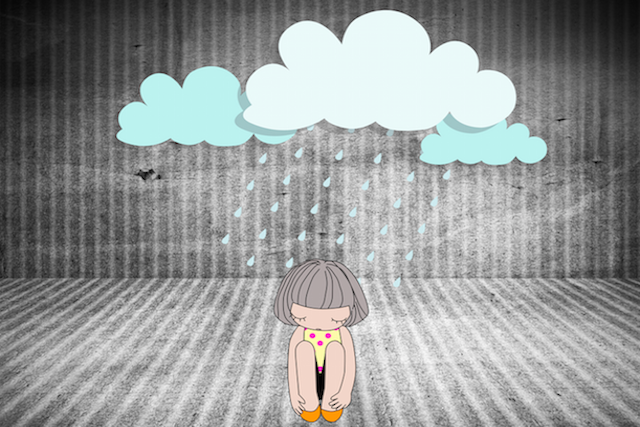
    Sad Girl Illustration

    Update: The winners for this giveaway have been chosen:

    You’re too sensitive. You’re making a big deal out of nothing. Why are you letting that bother you? Why can’t you just let it go? Really, you’re crying? What’s wrong with you? 

    If you’re an emotionally sensitive person, like me, you may have heard some of these phrases throughout your life. And, like me, you may have concluded that your emotions made you tragically flawed.

    For the longest time, I felt a deep sense of shame about my sensitivity. And I found it difficult to deal with everyday life—not just because I felt everything so deeply and often reacted irrationally, but also because I absorbed other people’s feelings as if they were my own.

    I remember in elementary school when most of my peers had to get shots from the school nurse. I’d already gotten one at my pediatrician’s office, so I sat in the hallway as, one by one, they approached her office to meet certain doom.

    I could recall the fear and dread I’d felt in the moments before the needle pierced my skin, and I relived it, over and over again, as each student approached the door. In fact, my vicarious anxiety was so intense that I threw up, right there in the hallway.

    I didn’t just empathize with their pain—I felt it. Deeply. And repeatedly.

    I constantly felt emotionally overwhelmed, and often confused about the root of my feelings. All I knew was that I hurt—a lot—and I wanted to make it stop.

    When I first realized I wasn’t alone with my emotional sensitivity, it was like someone rubbed a soothing balm on the achy heart I wore on my sleeve.

    And it was even more liberating to realize I could leverage my sensitivity for good, as I have through Tiny Buddha.

    Suddenly, it wasn’t something I had to hide; it was something I could openly acknowledge and harness in a positive way.

    Still, I’ve had to work at managing my emotions, and I’ve had to learn to challenge destructive thoughts and behaviors that only exacerbate my pain.

    If you too experience intense emotions, you don’t need to feel bad about yourself, or powerless to your heightened sensitivity.

    Psychologist Karyn D. Hall has written a life-changing book that can help you manage your emotions so they don’t take over your life.

    The Emotionally Sensitive Person: Finding Peace When Your Emotions Overwhelm You offers proven strategies to identify emotional triggers, challenge negative thought patterns, and recover from emotions more quickly.

    I wish I’d read this book years ago. It’s insightful, practical, and chock-full of effective strategies to transform your sensitivity from a burden to a gift.

    I’m grateful that Karyn took the time to provide some incredibly detailed answers to my questions about emotional sensitivity, and that she’s provided two free copies of The Emotionally Sensitive Person for Tiny Buddha readers.
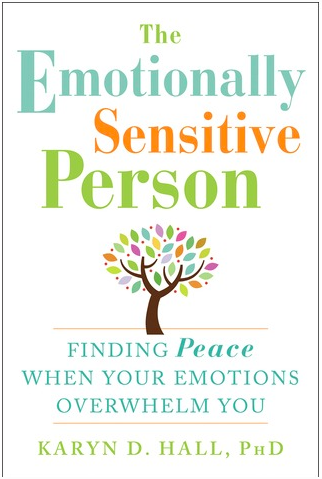
    Sensitive CoverThe Giveaway

    To enter to win one of two free copies of The Emotionally Sensitive Person:

    • Leave a comment below
    • For an extra entry, tweet: Enter the @tinybuddha giveaway to win a copy of The Emotionally Sensitive Person http://bit.ly/1KZGNnL

    You can enter until midnight PST on Friday, May 22nd.

    The Interview

    1. Tell us a little bit about yourself and what inspired you to write this book.

    I’m a therapist who works with emotionally sensitive people and I’m an emotionally sensitive person too.

    I noticed that many people were suffering because they felt different, rejected, and flawed because of their emotional sensitivity. Many of them had heard statements like, “You’re just overreacting,” and “Stop being so dramatic,” for most of their lives.

    In my work I found that if emotionally sensitive people could understand and accept their sensitivity, and not judge themselves because of it, that could ease some of the suffering they experience. I also believe that learning to manage intense emotions is part of decreasing their suffering.

    Being emotionally sensitive is not an illness, but it does mean you are more vulnerable to anxiety and depression and other disorders. Judging and hating yourself for being sensitive is part of the pain and suffering that happens.

    I wanted to write a book that could help emotionally sensitive people accept their sensitivity and learn to manage their intense emotions to help them live the life they want to live.

    2. What causes emotional sensitivity?

    Emotional sensitivity is biological. Research shows that some individuals are born with more intense emotions, meaning you react faster to emotional situations, your emotions are more intense, and your emotions take longer to fade. Events in a person’s life could also influence that emotional sensitivity.

    3. Emotionally sensitive people, like myself, often feel shame for being this way. What can help people like me feel less ashamed, more accepting, and perhaps even proud of their emotional sensitivity?

    First of all, ask yourself if the shame you experience is based on facts. All emotions have a purpose, and the role of shame is to keep you from behaving in ways that would get you kicked out of groups that are critical to your survival.

    Most likely being an emotionally sensitive adult will not get you kicked out of important groups. Is the shame from being judged by others as flawed? Perhaps as a child? Maybe from people who didn’t understand? Perhaps give some thought as to what specifically the shame is about and how it came to be.

    So if shame is not justified, that being emotionally sensitive is not something that warrants shame, then consider that the way to overcome shame is to do the opposite behavior to that which shame urges you to do.

    Shame urges you to hide. So the opposite behavior is to not hide. To do the opposite is to look people in the eye, and stand up proud of your sensitivity. When people say, “You’re overreacting,” respond with pride, “Actually, this is exactly how I feel—I feel emotions intensely.”

    Many times it is the discomfort that other people have with emotions that leads them to criticize your emotional reactions.

    Our culture tends to value logical, analytical thinking. That doesn’t make their way better. In fact, emotionally sensitive people are the ones who become passionate about causes and make changes in the world. They are artists and caregivers and those who contribute to humanity.

    The positives of being emotionally sensitive are often overlooked. If you consider it very carefully, what could or are you proud of about your emotional sensitivity? Make a list and review it often. Keep the positives in your mind to help you keep a balanced view of your emotional sensitivity.

    Let yourself really see what your sensitivity is about—check out reality and let go of myths you might have accepted along the way about the “wrongness” of emotional sensitivity. Do you care intensely about others? Do you express yourself authentically?

    Another idea is to practice self-compassion in place of judging yourself. Respond to yourself as you would a friend who feels emotions strongly.

    If your emotional sensitivity leads to depression or anxiety or to behaviors that you know are not effective or helpful, then focus on changing the behaviors and learning ways to manage your emotional sensitivity that work for you rather than judging your sensitivity.

    It’s not wrong, it’s just different. Judging your sensitivity is like judging yourself for how short or tall you are. It just is. It’s not helpful to continually berate yourself for your height, and in the same way seeing your sensitivity as wrong or yourself as flawed only adds to your distress and suffering.

    4. What are the two different types of emotional sensitivity, and how do they manifest?

    The two types I’ve identified are reactive and avoidant. People who are reactive act on feelings without thinking and are very quick to respond to emotional triggers. They have strong impulses that come with their emotions. They can be spontaneous and fun and also may act in ways that cause difficulties for themselves.

    The avoidant type attempts to push away or avoid uncomfortable emotions and/or situations. The avoidant type might not attend gatherings if someone at the event was upset with her and would avoid other situations that might involve difficult feelings, such as confronting someone who owed her money or saying no to someone who asked for a favor.

    5. What are some things we can do to improve our ability to manage our emotions?

    There are many options to improve your ability to manage your emotions. One area is prevention.

    This means that you make sure that you get sufficient sleep, eat a nutritious diet, take prescribed medications, take care of your physical health, exercise, and create positive experiences to build your resiliency. Work to develop safe and emotionally intimate relationships so you have a support network.

    Let go of judging, stop avoiding your emotions, learn ways to change your emotions, and stop feeding or building difficult emotions. The book discusses the specifics of these ideas. In addition, I have a subscription website opening soon called DBTCoaching.com that focuses on coping skills.

    6. You wrote that emotionally sensitive people tend to “catch” other people’s emotions. Can you tell us a little about this, and how we can stop doing it?

    Emotionally sensitive people are often tuned in to the emotional experiences of other people, so much so that they may experience the emotion that someone else is having. If you are with someone who is sad, you may feel sadness too, for example.

    Awareness that you are experiencing an emotion that actually belongs to someone else is helpful in letting go of it.

    If someone is relating an experience that made them sad, then you can say to yourself, “Not my experience, her experience,” to help maintain the boundary.

    If you experience emotions that you imagine others might have, such as “She must be so sad,” then remind yourself that someone else’s experience is not necessarily the same as yours. For example, if someone is moving, he might be excited and happy instead of sad or scared or vice versa.

    7. In reading the “Identifying Your Emotions” section of the book, I realized I’ve mislabeled many thoughts as feelings, compromising my ability to cope with my actual emotions effectively. Can you share a few examples of mislabeling thoughts as feelings, and how we can identify what we really feel?

    Some examples of mislabeling thoughts as feelings can be as simple as, “I feel like I’ll never succeed,” “I feel like I don’t fit in anywhere,” and “I feel like I’m different from anyone else.”

    Those expressions are actually thoughts. To be more accurate your would say, “I think I don’t fit in anywhere and that makes me sad,” and “I think I’m different from anyone else and that makes me sad.” Then you either challenge the thoughts or find ways to cope with the feelings that come with the thought.

    It’s difficult to challenge statements when you express them as feelings. “I am scared because I think I’ll never succeed” gives you the information about both the feeling you are having and the thought.

    You recognize that as a negative thought and you can challenge it. Is that statement true? In what situation do you think it is true? Do the facts back it up? If so, what do you need to do differently? The emotion of sadness would indicate coping skills to help you deal with that specific emotion.

    8. In Chapter 6, you wrote, “Judgments hide primary feelings.” What did you mean by this—and how can we challenge our judgments?

    We often judge when we are emotionally upset. “He is a complete jerk,” is a judgment. What led to that thought and emotion? Maybe you were embarrassed because you spilled wine all over yourself and your date didn’t offer to help clean up. You use the judgment of him to cover the embarrassment.

    “I spilled wine all over myself and I felt hurt that he didn’t help me clean it up,” might be more accurate.

    9. The chapter that was most helpful to me personally was the one on decision-making—particularly the part about separating the decision from the emotion and accepting emotional consequences. Can you expand on this?

    I’ve found that many emotionally sensitive people believe they can’t make decisions but they actually avoid decisions because of the emotional consequences of those decisions.

    There are few choices that don’t have emotional consequences. Even picking a restaurant for a group dinner means someone will likely not agree with the choice and may be disappointed or critical. You know which restaurant you want, but you struggle with the decision because of the emotional consequences of the decision. You don’t want anyone upset.

    If you can separate the two, the choice of restaurant and the emotional consequences of the choice, then you can be clear about what the issue is and how you want to manage it.

    10. What do you think is the most important thing an emotionally sensitive person can do for their well-being?

    Accept themselves as they are, completely and totally, and also work on changing behaviors that are keeping them from being effective in building the life they want to live.

    You can find The Emotionally Sensitive Person on Amazon here.

    FTC Disclosure: I receive complimentary books for reviews and interviews on tinybuddha.com, but I am not compensated for writing or obligated to write anything specific. I am an Amazon affiliate, meaning I earn a percentage of all books purchased through the links I provide on this site. 

    Girl under rain clouds image via Shutterstock
  • Avoid the Pain of Emotional Eating and Transform Your Mood

    Avoid the Pain of Emotional Eating and Transform Your Mood

    Eating Ice Cream

    “To ensure good health: eat lightly, breathe deeply, live moderately, cultivate cheerfulness, and maintain an interest in life.” ~William Londen

    In essence, interconnectedness refers to the linkages between all things. Some even take it a step further and say that not only is everything linked, but in actuality, there are no real distinctions between you and me, between thought and behavior, or between past, present, and future.

    On the surface, the concept of interconnectedness seems simple—everything is linked to everything else, and everyone is linked to everyone else. However, in practice, applying the concept of interconnectedness to the way I live has been anything but simple.

    After much contemplation, I came to the conclusion that if I were going to truly live interconnectedness, and not just think or read about it, I would need to fully grasp the fact that my thoughts, actions (or inactions), and outcomes were fundamentally intertwined.

    This not only impacted the ways I engaged with others, but also shaped the ways in which I engaged with myself, particularly with respect to what, when, and how I eat.

    Interconnectedness Eating 

    You see, for me, preparing and eating colorful, veg-centric dishes are beautiful, almost spiritual acts. Unfortunately, though, when negative emotions or stress creep into my life, my philosophy on the transcendent nature of food and eating gets replaced by hurried preparations and scarfing down faux-food.

    It was during one of my particularly busy weeks that I found myself mindlessly eating cookie dough ice cream for dinner, and thought, “How could interconnectedness help insulate me from this cycle of soothing my negative emotions with poor eating habits?”

    First, I tried to document my patterns.

    Upon doing so, I realized that when I am sad or angry, I actually don’t eat. I just totally lose my appetite. I also realized, however, that by not eating, I am essentially robbing my body of its ability function and, of course, to regulate my emotions.

    Moreover, deprivation also meant that I was not cooking—the one activity, in addition to dancing, that’s a surefire way to turn my negative mood around.

    So here it was, interconnectedness working oh so clearly: sadness and anger connected to deprivation, deprivation connected to physiological deterioration, and both of those phenomena connected to me cutting out the very thing that makes me feel better—cooking.

    When caught in this cycle, my energy wanes, negative emotions persist, and deprivation runs rampant. It was clear: My feelings, my behaviors, and my body were interconnected.

    Going back to stress, rather than not eating at all, I tend to eat a lot when I’m stressed, a lot of sweets, that is. While not total deprivation per se, consuming a bunch of processed sugar leads to similar ends—feeling undernourished, prolonged negative emotions, and negative physical outcomes, as well.

    All of this to say, the first part of interconnectedness eating is noticing. Noticing the linkages between our emotions, our thoughts, and our food choices and eating behaviors.

    Some folks eat a lot; some do not eat at all. Some folks prefer sweets; some salty or fatty foods. For some people, stress, sadness, and anger elicit the same eating behaviors; for others, there are nuances between the three. The point is, it’s important to ask yourself what are your specific patterns?

    Then what? What do you do once discovered your patterns?

    Set a Mood of Joy By Creating a Nourishment Ritual

    Stop.

    Now, when I’m sad, angry, or stressed, I stop. I stop, I note what I am feeling, and then I think about what role I have played, either through my actions or through my appraisals of the situation, in whatever has led me to feeling negative. I remember that I am interconnected with whatever it seems like on the surface is causing my negative mood.

    Importantly, just as I help to create my own sadness, anger, or stress, I can also transform my sadness, anger, or stress into my joy.

    Again, how you may ask? By going into full on nourishment mode.

    I put on a frilly apron, which makes me feel cute, and turn up some Latin or Brazilian music, which soothes my soul. In short, I start by setting a mood of joy, even I do not feel joyful yet. By starting the ritual of nourishment before food ever touches my tongue, I’m on track to a better mood and healthy actions.

    Next, I think about a dish to make, one with aromas that tantalize my nose and with colors that intrigue my eyes. Then, I start to prepare the dish. I cut, stir, whip, and sauté with care. In this way, cooking becomes a calming, nourishing act of mindfulness in and of itself.

    Once my dish is prepared, I set the table. Then, I serve myself, give thanks, and taste my culinary creation. With each bite, I’m reminded of just how lucky I am to have access to food, and with each moment of gratitude, a little bit of my sadness, or anger, or stress dissipates.

    Even when I do not have time to cook, I do this last set of actions—setting a place at the table, savoring my food, and evoking gratitude because I’ve found that just the act of slowing down can be realigning.

    I Still Have Far to Go

    Although I still have a lot of progress to make before I completely stop reaching for ice cream after a stressful day, I can see the difference in my eating after recognizing that my emotional, physical, spiritual, and social selves all benefit when I embrace their interconnectedness.

    We all owe it to ourselves to be conscientious about our eating patterns, but with so many demands, it can be exhausting to do so consistently.

    I truly believe though when we recognize interconnectedness and embrace the power we all have to create joy in our lives, we liberate ourselves. Why not use this power in the context of something we do each and every day—eat.

    Photo by Masha Kushnir

  • Setting Emotional Boundaries: Stop Taking on Other People’s Feelings

    Setting Emotional Boundaries: Stop Taking on Other People’s Feelings

    “The way you treat yourself sets the standard for others.” ~Sonya Friedman

    The longer I stayed on the phone, the more agitated I became. My mother was on the other end, as usual, dumping her emotions on me. I had moved to Los Angeles for graduate school in part to escape all of this—my mother’s unhappiness, my sense of responsibility, the pressure to be perfect.

    When I hung up the phone, I felt an overwhelming sense of anger. At the time, I could not (correction: would not) allow myself to admit that I was angry with my mother. I couldn’t reconcile having such negative feelings and loving my mother at the same time.

    After all, hadn’t she sacrificed so much for me? Hadn’t I always considered her to be my closest confidante? Didn’t I proudly declare her to be my best friend when I was younger?

    Even the most positive memories between my mother and me have been eclipsed by the shadow of her depression.

    As a young child, I could never understand why my mommy was so sad all the time. I cherished the rare days she was carefree and silly and held these moments close to my heart. When she slipped into a depressive state, sleeping days at a time in her dark room, I willed her to come out.

    Early on, I learned to temper my behavior and my own emotions so as not to instigate or prolong her sadness. In my young mind, I made myself responsible for her and was not able to separate her feelings from mine.  

    I wanted her to be happy and thought that if I was always “good,” she would be. When she wasn’t happy, I blamed myself.

    Unconsciously, my mother fed this belief when she constantly bragged to others that I was the “perfect daughter.” The pressure to live up to my mother’s expectations overwhelmed me. I suppressed many negative feelings and experiences in favor of upholding the ideal she and I had co-created.

    That day, I turned this anger toward a safer target, my co-worker. That day at work, I blew up. I can’t remember what I said, but I distinctly remember the look of confusion on her face. My frustration with my inability to express myself made me even angrier. I excused myself, ran to the bathroom, locked myself in the last stall, and bawled my eyes out.

    Soon after, I took advantage of the free counseling services on campus. Over the next several weeks, my counselor helped me realize that it was okay to feel the way I was feeling. This was a radical idea for me, and one I struggled with at first.

    Because I had suppressed my own feelings for so long, when I finally allowed them to surface, they were explosive.

    Anger, resentment, and disgust came alive and pulsed through my body whenever I spoke with my mother during this time. While she seemed to accept truth and honesty from other people, I tiptoed around certain topics for fear of upsetting her.

    I never felt I could share the difficulties and challenges I experienced in my own life because this contradicted who I was to her. I felt I had no right to be unhappy. When I attempted to open up about these things, she often interrupted me with a story of her own suffering, invalidating the pain I felt.

    She seemed committed to being the ultimate victim, and I resented her for what I perceived as weakness.

    I realized that to get through my graduate program with my sanity intact, I needed to limit the amount of time and energy I gave to her. Instead, I found ways to protect and restore my energy. Writing became therapeutic for me. I found I could say things in writing I was unable to verbalize to my mother.

    This won’t be an easy letter for you to read, and I apologize if it hurts you, but I feel like our relationship is falling apart, and one of the reasons is that I’ve kept a lot of this bottled up for so long. I never thought you could handle honesty from me, and so I lied and pretended everything was okay because I was always afraid I would “set you off” or that you would go into a depressed mood.

    You unconsciously put so much pressure on other people (me especially) to fill your emptiness, but that’s a dangerous and unrealistic expectation, and people can’t and won’t live up to it. And they start to resent you for it. I do want you to be happy, but I’m starting to realize that I can’t be responsible for your happiness and healing; only you can.

    Seeing my truth on paper was the ultimate form of validation for me. I no longer needed to be “perfect.” I gave myself permission to be authentic and honored every feeling that came up.

    When I was ready, I practiced establishing boundaries with my mother. I let her know that I loved and supported her, but it negatively affected me when she used our conversations as her own personal therapy sessions. I released the need to try to “fix” things for her.

    I took care of me.

    Do you have trouble establishing healthy emotional boundaries?

    Take a moment to answer the following questions adapted from Charles Whitfield’s Boundaries and Relationships: Knowing, Protecting and Enjoying the Self.

    Answer with “never,” “seldom,” “occasionally,” “often,” or “usually.”

    • I feel as if my happiness depends on other people.
    • I would rather attend to others than attend to myself.
    • I spend my time and energy helping others so much that I neglect my own wants and needs.
    • I tend to take on the moods of people close to me.
    • I am overly sensitive to criticism.
    • I tend to get “caught up” in other people’s problems.
    • I feel responsible for other people’s feelings.

    If you answered “often” or “usually” to the above statements, this might be an indication that you have trouble establishing healthy emotional boundaries.

    Like me, you’re probably extremely affected by the emotions and energy of the people and spaces around you. At times, it can be incredibly hard to distinguish between your “stuff” and other people’s “stuff.”

    It is incredibly important to establish clear emotional boundaries, or we can become so overwhelmed and overstimulated by what’s going on around us that it’s sometimes hard to function.

    Here are a few ways to begin the process of establishing healthier emotional boundaries.

    1. Protect yourself from other people’s “stuff.”

    I can feel when someone is violating a boundary because my body tenses up. I realize that my breathing is very shallow. I feel trapped, small, helpless.

    The first thing I do is to remind myself to breathe. The act of focusing on my breath centers me and expands the energy around me. In this space, I can think and act more clearly.

    When I feel myself becoming too overwhelmed, I try to immediately remove myself from the situation. Sometimes all it takes is a couple of minutes to walk away and regain my balance. Other times, I have had to make the decision not to spend time with people who consistently drain my energy.

    Having a safe space to retreat, practicing mindfulness and meditation, or visualizing a protective shield around yourself are other methods that can help restore balance when boundaries are invaded.

    Find out what works best for you.

    2. Learn to communicate your boundaries in a clear and consistent way.

    For many, this can be the most difficult part of the process for various reasons. We don’t like to appear confrontational. We’re afraid that if we set clear boundaries for ourselves, the people in our lives will begin to resent us. However, learning to communicate boundaries effectively is necessary for healthy relationships.

    I’m not comfortable with that.

    It doesn’t feel good to…

    I’m not okay with…

    I’d appreciate it if you wouldn’t…

    Please don’t…

    If you cringed at the thought of using any of these phrases, you’ll be relieved to know that communicating your boundaries doesn’t always have to be with words. You can also effectively communicate through the use of non-verbal.

    Closing the door, taking a step back, shaking your head, or signaling with your hands can be less threatening ways of letting others know what you will and won’t accept from them.

    3. Be patient with the process.

    When I first realized that I was taking on the negative emotions of my mother, I became extremely resentful and disgusted with her. Instead of taking responsibility for my role in allowing this dynamic to occur, I blamed her for every negative thing that had happened in my life.

    I closed myself off from her and shut her out completely. Our relationship became incredibly strained during this time as we both readjusted to the new boundaries I was setting.

    Eventually, I was able to allow her to have her own emotional experience without making it about me. I could listen and no longer become enmeshed or feel obligated to do something about what she was feeling.

    Whenever you change a pattern, it is natural to feel resistance from inside as well as outside the self. As you practice, your ego may start to act up and make you feel like you are “wrong” in establishing boundaries.

    Others may also become resentful of your newfound assertiveness. They may be used to a certain dynamic in your relationship, and any change has the potential to cause conflict.

    Remember to be kind to yourself through the process and repeat the following affirmation:

    I respect and love myself enough to recognize when something isn’t healthy for me, and I am confident enough to set clear boundaries to protect myself. 

  • 5 Steps to Deal with Emotional Baggage So It Doesn’t Define You

    5 Steps to Deal with Emotional Baggage So It Doesn’t Define You

    Woman and a Suitcase

    “Sometimes the past should be abandoned, yes. Life is a journey and you can’t carry everything with you. Only the usable baggage.” ~Ha Jin

    You’ve probably heard of the fear of missing out but what about the fear of letting go?

    My father was volatile and mentally unstable. Criticism was his preferred method of communication. As a child and teenager, I learned to keep my thoughts and feelings locked away and became an expert at deflecting personal questions.

    Without realizing it, I carried this habit into adulthood, avoiding any talk about my feelings or turning them into a joke. When a friend finally called me on it, the shock of self-recognition quickly turned to resistance. This is who I am, I thought. Why should I change?

    I plodded on, working as hard as ever to keep my fortress intact. It wasn’t making me happy yet I wasn’t ready to change.

    As I struggled with my desire to cling to hurtful memories and self-defeating behaviors, it dawned on me that I was afraid to let go because defensiveness was part of my identity.

    The problem wasn’t that I had baggage—everyone has baggage—but that it had come to define me. I didn’t know who I would be without it. At that point it hit me: I had to dig deep, discover the person I wanted to be, and then act on it.

    After I identified that I was holding on to the past because it seemed too important to jettison, I discovered that letting go is harder than it sounds. Relaxing a long-held belief isn’t a one-day, one-week, or even a one-year process. However, it is possible.

    This is the five-step process I discovered:

    1. Write an honest list of the thoughts, beliefs, and behaviors that weigh you down.

    Grab a pen and notebook, find a quiet space, and spend thirty to forty minutes thinking and writing. It is important to be honest and write down whatever comes to mind. Don’t judge what comes up, just take note.

    2. Reflect on each item and identify the source of the thought/belief.

    Travel back in time and see where you picked up these items of baggage. Do you fear intimacy because a partner cheated on you? Do you dread holidays because your parents drank too much? Acknowledge the painful memories but don’t wallow in them. Write it down and move on to the next step.

    3. Find at least one positive in each hurtful experience/situation.

    Look for the silver lining in your cloud. For example, my father’s criticism made me aware of the power of words and taught me the importance of speaking with kindness. Looking for the good in the past helps you reclaim your power. You are no longer a victim; you decide what you take from that experience.

    4. Create affirmations to foster change and counteract negative thoughts.

    Take the positives from step four and turn them into affirmations or statements of intent, i.e.: “I will speak with love” or “I will treat people with kindness.” This puts the emphasis on positive future behavior and frees you from the past. Make the affirmations tangible: put a reminder on your phone, write them on post-its, or put a list on the fridge.

    5. Practice patience and mindfulness.

    It takes time to change habits, especially when they are rooted in deep hurts or fears. Check in with yourself regularly using journaling or meditation. If you find yourself shouldering old baggage, be sure to acknowledge it, then gently release it and focus on your affirmations. Replacing negative thoughts with positive actions will help you let go for good.

    There are infinite possibilities for each of us, baggage notwithstanding. Everyone has pain. It’s part of what makes us who we are. What defines us, however, is how we handle it. One of my favorite artists, Bruce Springsteen, has some wise words on the subject:

    “You can find your identity in the damage that’s been done to you. You find your identity in your wounds, in your scars, in the places where you’ve been beat up and you turn them into a medal. We all wear the things we’ve survived with some honor, but the real honor is in also transcending them.”

    By taking the time to identify and understand our baggage and making a conscious decision to let go, we free ourselves to experience life in a richer, deeper, more meaningful way.

    Photo by Donnie Nunley

  • Direct Your Emotional Memory to Feel Good Now

    Direct Your Emotional Memory to Feel Good Now

    “When everything seems to be going against you, remember that the airplane takes off against the wind, not with it.” ~Henry Ford 

    You’re stuck at work and you dream of something better.

    This dreaming usually starts off great. You imagine yourself sitting at a desk working on a million dollar project or teaching underprivileged kids how to multiply seven times three.

    Whatever your vision is, it’s good to daydream about this, but what usually happens is that we snap out of it, and reality smacks us in the face. We’re answering phones, running errands, and hating our lives.

    I’ve been there, most of Gen Y is currently there, and everyone else was also there at some point in their early careers. Through the years I’ve interviewed hundreds of people about their careers. Each one always talks about one tool that they use over and over again.

    Selective Memory

    I noticed that most of the older people look back on their early careers in fondness. They forget about the pain and remember the good times. A lot of times they even look back on the pain in fondness.

    They see how their superpowers had developed over the years. They know that each struggle was a part of their career growth and happiness.

    My father, a small business owner, an electrical contractor, struggled in his early years. He had to run around hunting down jobs. No one knew who he was, so the jobs didn’t fall on his lap. He had to schmooze with old and new contacts.

    I remember him coming home dejected, tired, and grumpy. I could have gotten free meals from the school, but my parents were too proud. I brown bagged my lunch 99.9% of the time. We couldn’t afford $.75 for a school lunch.

    Now my father looks back on that time in fondness. He’s proud of my family’s fortitude. It got them to where they are now. Let’s put it this way, they can go on vacation anytime they want even though my father still works. He works because he enjoys what he does and doesn’t want to give this up.

    If only he could have seen the magic in what he was creating when he created it. He would have saved himself a lot of worry. It’s this process that we can all use to help us to bring happiness to our struggles. (more…)

  • How to Create Emotional Freedom by Setting Healthy Boundaries

    How to Create Emotional Freedom by Setting Healthy Boundaries

    “I’ve discovered that you can’t change people. They can change themselves.” ~Jim Rohn

     “As much I want you to be happy, I’m realizing that I can’t be responsible for your happiness.”

    I had never spoken truer words in my life. Even as the tears flowed down my cheeks, I felt a profound sense of freedom and lightness.

    My mother suffers from major depressive disorder. For much of my life I truly believed that there was something I could do to bring her out of it. I tried to be the perfect daughter. I minimized my own emotional presence. I did everything I could to make her smile.

    Yet nothing I did seemed to make any difference in her mood.

    Though I couldn’t articulate it as a child, I felt I was to blame. I hadn’t been entertaining, engaging, or good enough to keep her from feeling sad.

    I internalized my mother’s moods until I was no longer able to tell the difference between what she was feeling and my own emotions.

    I didn’t give myself permission to express any of the emotions I perceived to be negative, such as anger, sadness, guilt, or shame. It seemed my mother had sole ownership of these, so I suppressed them within myself.

    As I got older, I began to interact in much the same way with romantic partners, friends, and others I encountered. Like a chameleon, I took on the emotions of other people and was greatly affected by their moods.

    Most of my relationships were unhealthy and unsatisfying, involving varying levels of codependency.

    I felt trapped within myself. I grew tired of pretending. I craved emotional freedom.

    Then my therapist said something that completely changed me: “It is okay to feel angry, sad, disappointed, or frustrated”

    For me, this was a revolutionary idea, and extremely empowering. I didn’t think it was acceptable to be anything other than happy and “perfect.” Once I gave myself permission to feel these things, I noticed that these emotional experiences did not consume me as much as they once did.

    I felt liberated. (more…)

  • Finding Positive Ways to Express Difficult Emotions

    Finding Positive Ways to Express Difficult Emotions

    “Never apologize for showing feelings. When you do so, you apologize for the truth.” ~Benjamin Disraeli

    Each day, month, or year I want to be something different when I grow up. At some point I want to open up a smoothie truck with a best friend, I want to teach yoga to cancer patients, and I want to travel to Australia and become a bartender just to support myself.

    But more so than what I want (or think I want) to be, I know what I am. I am a wife, a sister, a friend, an Egyptian, a listener, a weirdo, a poet, a marketer, a dog mom, and a wannabe yogi.

    But most of all? I am emotional.

    I am so emotional at times that my husband comes home to an inconsolable wife sitting alone on the couch crying. And what has set me off into this uncontrollable fit, you may ask? Some kid in a commercial misses his dad who is on a business trip, and (thanks to Skype services) he gets his bedtime story from 3,000 miles away. Sad? Yes, I know.

    Sad, but common. I have emotional friends. I also have completely apathetic friends. I love them. They are completely real with me when I get out of hand and help bring me back to earth.

    Something I just can’t help but get emotional over is death.

    It’s funny because I don’t have a problem with my own death. I could talk about that for days—how it’s going to happen, when I think it will happen, anything, until my husband tells me he doesn’t want to hear about it anymore and leaves the room.

    My grandparents along with many members of my family live in Egypt. I went to Egypt every other summer since I was born. I looked forward to seeing my cousins, the beaches, my aunts—everyone, but specifically my grandfather. I am my grandfather’s favorite grandchild (his words, not mine). (more…)

  • Battling with Your Body: 4 Simple Tips for Overall Well-Being

    Battling with Your Body: 4 Simple Tips for Overall Well-Being

    “Your body is precious. It is our vehicle for awakening. Treat it with care.” ~Buddha

    I believe there are four key aspects to our existence:  mental, physical, spiritual and emotional.  The mind is a fairly straightforward concept, and many people can identify with a spiritual component of life.

    Yet there is one other aspect of life that I believe is essential to a full and healthy journey on this planet—the emotional element of living. And that emotional state seems to be inextricably tied to the physical.

    I have always struggled with the physical. I’ve had a love-hate relationship with my body since I was cognizant of my existence. As a chubby kid, I felt different and defective. I sought relief in my grandmother’s frozen cool whip in the extra freezer located in our garage.

    I gulped down chalky pink Pepto-Bismol when I wasn’t even sick. Why? Because it was sweet.

    I couldn’t handle the monkey bars. The ball always hit me in the face. I was always last to finish running around the field at recess.  As I matured, I grew out of the chubbiness but I was never satisfied with my body.

    I spent the summer of my 11th year frantically emulating a 1984-era Richard Simmons in his 7-Minute Abs video and simultaneously saving enough money to buy a McChicken sandwich, fries, and a hot fudge sundae at McDonalds.

    Disconnected from my body, I grew into a young woman and ignored my physical existence as best I could; becoming what author Geneen Roth calls a “walking head” with that insufferable body attached. 

    I alternated between trying to eat “right,” permitting myself to eat “bad,” and feeling bad about eating bad.  If I ate a salad for lunch, I might have a half-gallon of ice cream for dinner. Alcohol eventually contributed to my lack of self-care, adding extra calories and acting as yet another way to escape my body.

    Fast forward through my twenties: After several attempts at Weight Watchers, a failed relationship, a bout with antidepressants, and a nervous breakdown, I managed to lose over 40 pounds with Weight Watchers. Down to the size I wore when I graduated from high school, I was sure my life would get better.

    It didn’t. It got worse. So I dyed my hair blond. I drank more wine.

    Then I stopped drinking. I stopped smoking cigarettes. I fully embraced sobriety, found a higher power, and earned two master’s degrees. I lost even more weight. Now my life should be perfect, right? 

    Wrong. I still can’t live comfortably in my body. And I’m soothing my discontented soul and body with food. Now it’s ice cream (or more specifically, Ben and Jerry’s Half Baked Frozen Yogurt, which has only 3 grams of fat per serving, compared to Peanut Butter Cup ice cream which has 25 grams of fat, so it isn’t that bad).  (more…)