
Tag: emotional well-being

  • How to Stay Kind Without Losing Yourself to Toxic Behavior

    How to Stay Kind Without Losing Yourself to Toxic Behavior

    “The strongest people are the ones who are still kind after the world tore them apart.” ~Raven Emotion

    A few months ago, I stopped being friends with my best friend from childhood, whom I had always considered like my brother.

    It was a tough decision, but I had to make it.

    In the past five years, my friend (let’s call him Andy) had become increasingly rude and dismissive toward my feelings.

    Not a single week went by without him criticizing me for being optimistic and for never giving up despite being a “failure.”

    Still, I tried to be understanding. I really did.

    I knew he was always stressed because he was going to graduate from college two years later than his peers.

    And I knew he felt insecure about not being as rich and successful as “everyone else.”

    But one can only take so much, and after so many years, I just couldn’t anymore.

    It’s hard to keep showing up with warmth and patience when the other person not only doesn’t appreciate you but even attacks you for being “naive in the face of reality.”

    (Yeah, he’d somehow convinced himself that I was in denial about my lack of success—as if the only way to react to failure were to get angry and frustrated.)

    If you’ve always tried your best to be kind and gentle, you too might have been in a similar situation and wondered at least once, “Why bother?”

    Because even though we don’t expect trophies or medals, a complete lack of appreciation can become difficult to accept after a while, and a simple “thank you” can start to matter more than we wish it did.

    I’ll admit that, because of Andy, I almost gave up on being a kind person multiple times.

    Luckily, I didn’t, and in the months that led to my difficult decision, I learned some important lessons on how to stay kind even when it starts to feel like there’s no point to it.

    I hope these lessons will help you stay true to yourself, too.

    1. Make sure you’re not using kindness as a bargaining chip.

    Just as positivity can become toxic, there is such a thing as a harmful way of sharing kindness.

    Here’s what I mean.

    In my teenage years, I used to be what some would call a “nice guy.”

    You know, the type of guy who prides himself on being nice, except he’s really not.

    In typical “nice guy” fashion, I treated kindness as a transaction. (”I’m doing all these things for them, so they should do the same for me” was a typical thought always floating in my mind.)

    I would be nice and generous to others, but I would always compare what they did for me to what I had done for them.

    Then, if they didn’t reciprocate in a way that I found satisfactory, I would secretly start to resent them.

    It’s not my proudest memory, but it shows how even something positive like kindness can be weaponized.

    And it’s not just “nice guys” who do that, either.

    Many parents make the same mistake: they try to guilt their children into showing gratitude or obedience by bringing up all the sacrifices they’ve made for them.

    Of course, all this does is make the kids feel bad and even distrustful, as they may start to wonder whether their parents’ sacrifices were made out of love or selfish motives.

    Because when kindness is given conditionally, it stops being about helping—it becomes about satisfying one’s desperate need for appreciation.

    Needless to say, this is unhealthy for all parties involved.

    That’s why it’s best to…

    2. View kindness as an expression of who you are.

    It’s easy to forget—especially when it goes underappreciated for too long—that kindness should be, fundamentally, an expression of yourself.

    You are kind because it’s who you are, not because you want someone else’s approval.

    When I look back on my friendship with Andy, I’m obviously not happy about all the times he attacked my self-esteem, dismissed my feelings, and put cracks in our relationship without a second thought. However, I can at least be proud that I didn’t let that break me and instead stayed strong.

    Because that’s what this is about.

    Being kind, even in the absence of thanks, is an act of self-respect.

    It’s not about wanting others to notice.

    It’s about staying true to yourself, regardless of how unappreciative others might be.

    3. Remember you’re allowed to withdraw your kindness.

    Kind people always struggle with this.

    We worry that if we quit going above and beyond for someone, it might mean that we’re not good people anymore.

    This is why it took me so many years to finally stop being best friends with Andy: I was afraid of being told I wasn’t really kind after all.

    I didn’t want that to happen, so I kept being as generous as possible, despite how often he hurt me.

    For years, I kept cooking, doing the dishes, vacuuming, mopping, and doing all sorts of chores that normally would be divided equally among roommates.

    I wanted to do my best to give him as much time and space to focus on his studies (although I was in his same situation and had my own studying to do).

    I refused to see that he didn’t plan on treating me any better.

    In fact, years before, he’d already made it clear he didn’t believe I deserved to be repaid for all the things I did.

    Yet, I just let him disrespect me and hurt me and kept being kind to him. Because kindness shouldn’t be conditional, right? Because it should just be an expression of yourself, right?

    But here’s what I now understand: just because you shouldn’t expect people to treat you well in exchange for your kindness, it doesn’t mean you should accept being treated badly.

    There’s a limit to how much thanklessness you can tolerate before it starts eating you up inside.

    You have every right to pause or withdraw your kindness when you’re being treated poorly. This is about setting healthy boundaries. You’re not being selfish or arrogant.

    I can’t believe how long it took me to realize that unconditional doesn’t mean boundaryless.

    Kindness with zero boundaries isn’t kindness at all but self-abandonment.

    There’s nothing noble about completely neglecting yourself just to be as generous as possible to someone else.

    Be kind because that’s who you are, but don’t let yourself be taken for granted.

    4. Don’t let negative people convince you to quit.

    We all know people who are never content with feeling miserable by themselves, so they try to make others feel just as miserable.

    And when they keep criticizing you for being a “goody two-shoes” just because you have a positive attitude, it’s hard to stay unperturbed.

    You may even start to question yourself and if you should maybe stop being a positive person.

    But let me assure you: letting negative people decide what kind of person you should be and what kind of life you should live is NEVER a good idea.

    Because, again, some people just want to tear others down.

    You could change your whole personality and become exactly like them, and they would still criticize you and judge you.

    Why? Because the reason they hurt others in the first place is that they’re (unsuccessfully) wrestling with their own problems.

    It’s not about you being “too nice” or “fake.” It’s about them not being able to find it in themselves to be patient and generous and always choosing to just lash out instead.

    Good people are never going to criticize you for being kind.

    Even if they believed that your brand of kindness might not be pleasant in some instances, they’d just tell you. They wouldn’t try to make you feel bad.

    Stay True to Yourself

    When kindness feels thankless, it’s easy to wonder if it’s even worth it—especially if the thanklessness comes from someone we care about.

    I’ve been there more times than I can count, and yes, it always feels awful.

    But kindness isn’t merely a way to please others—it’s how we respect ourselves.

    You have the right to press PAUSE or STOP when someone disrespects you too much.

    You don’t have to let others take you for granted just because you’re worried they might have something to say about your genuineness.

    Because, honestly, what if they did?

    You don’t need their approval.

    You’re kind because you’re kind. It’s that simple.
  • The Unexpected Therapy I Found on My Phone

    The Unexpected Therapy I Found on My Phone

    “Sometimes you will never know the value of a moment until it becomes a memory.” ~Dr. Seuss

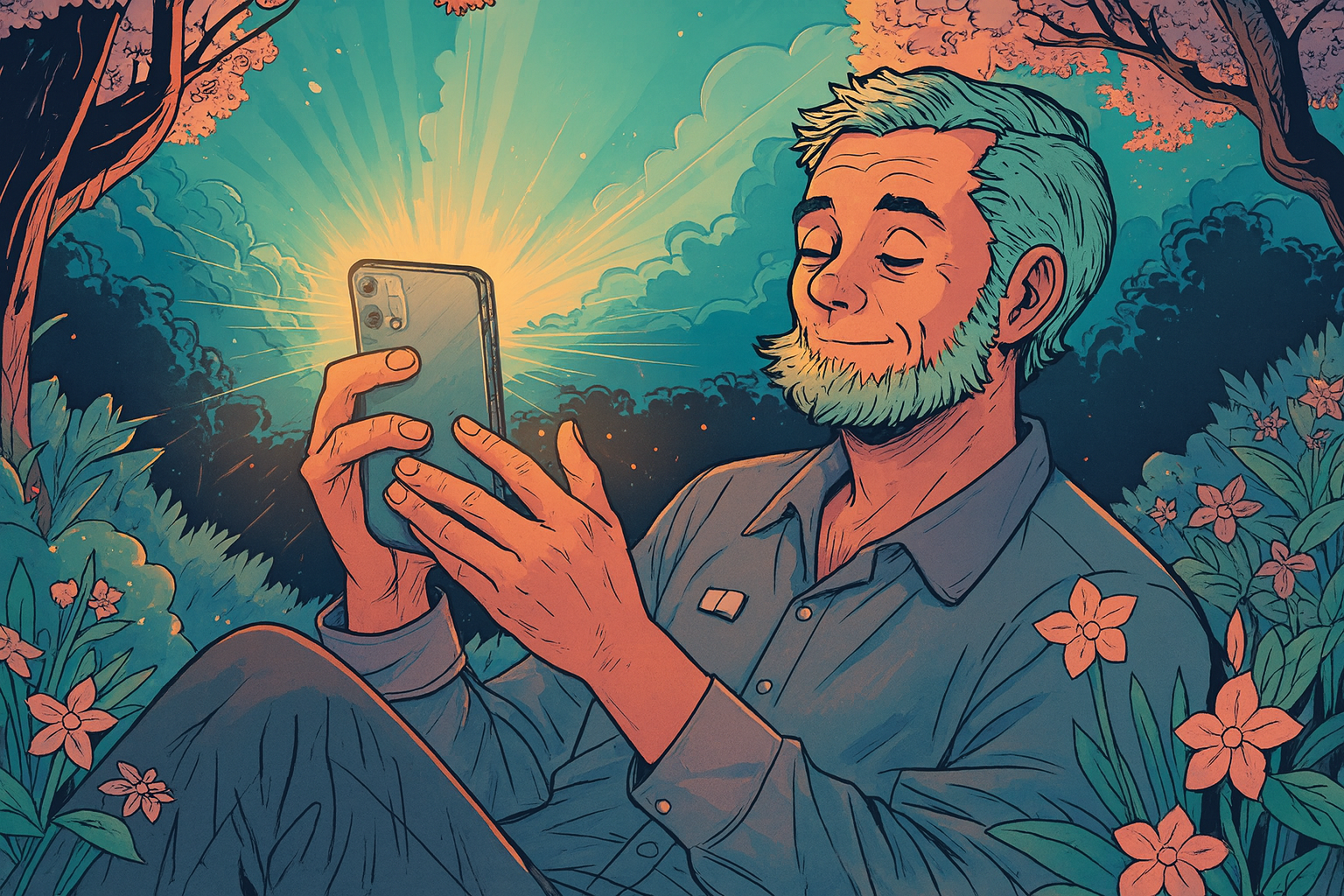
    The notification pops up on my phone: “Jason, we made a new memory reel for you.” I pause whatever I’m doing, probably something stressful involving deadlines or dishes, and feel that familiar flutter of excitement. What chapter of my life has Google decided to surprise me with today?

    I tap the notification, and suddenly I’m watching years of Father’s Day adventures unfold. It started accidentally—one Father’s Day trip to the Buffalo Zoo that somehow became our tradition. Instead of buying me something I didn’t really need, we chose experiences. Year after year, we’d visit a new aquarium or zoo.

    There’s my son at age three at the Erie Zoo, barely tall enough to see over the penguin exhibit barrier. The same kid at five at the Baltimore Aquarium, tentative but overjoyed as he touched a stingray for the first time. Then six at the Philadelphia Zoo, taking in the fact that there is a tube system where some of the big cats can walk overhead.

    Buffalo, Erie, Philadelphia, Baltimore, Charleston. We’d mapped Father’s Days across the Eastern Seaboard without ever planning it. So much time has passed since we started. My son has grown taller, lost teeth, found his voice. I’ve gotten balder, maybe a little softer around the edges. But there we are, year after year, choosing moments over things.

    We tell ourselves to create experiences instead of accumulating stuff, but just how important that choice is never really hits until you play it back. Here was the proof: a memory bank I didn’t even realize we were building, one Father’s Day adventure at a time.

    The emotions hit in waves. Pure joy at his excitement over feeding the stingrays, happy sadness watching his younger self discover jellyfish for the first time, overwhelming gratitude for every single trip we took. This ninety-second reel has become medicine for whatever current stress I’m carrying.

    And that’s when it hits me. My phone accidentally became my therapist.

    When Technology Gets It Right

    I never intended for Google Photos to become part of my self-care practice. Like most people, my wife and I take hundreds of photos without much thought, letting them pile up in digital storage. The idea of actually organizing or regularly looking through them feels overwhelming. Iƒt feels like thousands of images scattered across years of living.

    But then technology stepped in with an unexpected gift. These automated memory reels started appearing, curating my own life back to me in perfectly sized emotional portions. Not the entire overwhelming archive, just a gentle serving of “Remember this?”

    At first, I was skeptical. Another way for a tech company to keep me glued to my screen when I routinely looked for ways to escape. But as these memory notifications became part of my routine, I realized something profound was happening. Google’s algorithm had accidentally created something I never knew I needed: regular reminders of how blessed my life has been.

    The beauty is in the surprise element. I’m not seeking out specific photos when I’m feeling down. That can sometimes backfire, making me feel more nostalgic or sad. Instead, these curated moments arrive when I least expect them, like getting a text from an old friend who you haven’t heard from it a while.

    The Science of Digital Reminiscence

    Research shows that positive reminiscence (deliberately recalling happy memories) can significantly improve mood and reduce stress. When we engage with positive memories, our brains release dopamine and activate the same neural pathways associated with the original experience. We literally get to relive moments of joy.

    Visual memories are particularly powerful. Studies in cognitive psychology reveal that images trigger stronger emotional responses and more vivid recall than other types of memory cues. When we see a photo from a happy time, we don’t just remember the moment. We can almost feel ourselves back there.

    Nostalgia, once thought to be a purely melancholy emotion, is now understood to be a powerful mood regulator. Research from the University of Southampton shows that nostalgic reflection increases feelings of social connectedness, boosts self-esteem, and provides a sense of meaning and continuity in our lives.

    But what makes these digital memory reels especially effective is that they’re unexpected and brief. Unlike deliberately scrolling through old photos (which can sometimes lead to rumination or sadness), these automated highlights arrive as pleasant surprises and end before we get overwhelmed.

    The timing is often perfect too. These notifications tend to pop up during mundane moments, like waiting in line, taking a work break, sitting in traffic. Exactly when we need a little perspective on what really matters.

    The Emotional Range of Remembering

    Not every memory reel hits the same way. Some make me laugh out loud, like the diversity of my son’s increasingly elaborate Halloween costumes or the series of failed attempts to get a decent group photo at our destination wedding. Others bring that “happy sadness” I’ve come to appreciate… seeing my grandmother in photos from a few years back, her smile bright even when her health was declining.

    Then there are the reels that just make me feel deeply grateful. The random afternoon when we decided to try goat yoga. The collection of action shots over the years: chasing my son around the house in a homemade superhero costume, his skateboarding phase, catching up with friends we haven’t seen in some time. These aren’t momentous occasions, just evidence of a life filled with small adventures and genuine connection.

    What strikes me most is how these photos capture joy I might have forgotten. In the daily grind of parenting, working, and managing life, it’s easy to remember the stress and overlook the sweetness. But here’s photographic proof: we’ve actually had a lot of fun together.

    The reels remind me that while life hasn’t been all butterflies and rainbows, the good has consistently outweighed the tough times. The visual evidence is overwhelming. We’ve been blessed, again and again, in ways both big and small.

    Embracing Digital Self-Care

    I’ve learned to treat these memory notifications as legitimate self-care appointments. When that notification pops up, I pause whatever I’m doing and give it my full attention. No multitasking, no rushing through. I let myself feel whatever comes up. The giggles, the happy sadness, the overwhelming gratitude.

    Sometimes the timing feels almost magical. The day my social anxiety took over because I had to present during three different meetings, a reel appeared featuring peaceful moments from the trip my wife and I took to Newport, Rhode Island (mostly so I could try a lobster roll). When I was worried about whether I was doing enough as a parent, I was served a compilation of my son’s biggest smiles over the years.

    It’s become a form of mindfulness I never planned. These brief interruptions that pull me out of current anxiety and remind me of the bigger picture. They’re proof that I’ve been present for beautiful moments, that I’ve prioritized what matters, that love has been the consistent thread running through our ordinary days.

    The Memory Bank We Don’t Realize We’re Building

    Those Father’s Day zoo trips felt routine at the time. Just something we did because that’s what families do on special days. I wasn’t thinking about creating lasting memories or building traditions. I was just trying to make sure my son had a good day.

    But now I see what we were doing, and that was making deposits in a memory bank that would pay dividends years later. Every photo was evidence of intention, of showing up, of choosing joy even when life felt overwhelming.

    The beauty of these digital memory reels is that they reveal patterns we might not see in real time. They show us that we’ve been more intentional than we realized, more present than we felt, more blessed than our current mood might suggest.

    The Gift of Automated Gratitude

    In a world where technology often leaves us feeling more anxious and disconnected, these memory reels offer something different: automated gratitude practice. They’re gentle reminders to pause and appreciate not just where we are, but where we’ve been.

    They don’t require apps to download or habits to build. They just arrive, like grace, when we need them most.

    So, the next time you get one of those memory notifications, pause. Let yourself be surprised by your own joy. Look at the evidence of love in your life. The big moments and especially the small ones. Notice how much good has happened, even during life’s inevitable challenges.

    Your phone is holding more than photos. It’s holding proof of how blessed your life has been.

    And sometimes, that’s exactly the reminder we need to keep building that memory bank, one ordinary, beautiful day at a time.

  • 5 Ways to Use Movement (Not Exercise) to Support Your Mental Health

    5 Ways to Use Movement (Not Exercise) to Support Your Mental Health

    “Nothing is more revealing than movement.” ~Martha Graham

    It seems like only yesterday that I was at home with a newborn, a kindergartener, two dogs, and a husband who, just like me, was working from home, when we were thrown into the unthinkable COVID19 pandemic.

    It didn’t take long for the stress and tension to build in my body. The feeling of instability, uncertainty, and fear, not to mention the post-partum anxiety, took its toll on my body as it became more rigid, bound, immobile, and frozen.

    All the ways I had relied on movement as exercise were taken away, adapted to in-home and Zoom learning, which unfortunately did not work for my schedule or home life. It was the first time in a long time that I was not able to incorporate dance into my week.

    It seemed very hard to expand, stretch, even breathe, and that’s when it hit me. A little voice inside said, “You need to practice what you preach!” I needed to redefine movement and focus it on my mental health; connecting to movement for emotional well-being and not just for physical activity.

    When most of us think of movement we think of exercise. While all exercise is movement, not all movement is exercise.

    There are so many ways our bodies move, even involuntarily, that contribute to not only how we feel but what we think. Science tells us that molecules of emotion exist throughout the body, so wouldn’t it make sense that in order to manage those emotions, we need to tap into all the ways to move the body that houses them?

    First, let’s look at what movement is. Movement is anything that allows the body to change position or relocate. This can be something as grandiose as running a marathon, or a resting heartbeat, blood pumping, even breathing. All of these examples involve parts of the body or the whole body shifting its position.

    So, with this in mind, how are you moving right now? Now ask yourself, how is this movement impacting my mood in this moment? Is it supporting a healthy mindset or perpetuating a habit or behavior that contributes to a negative thought pattern?

    In my case, as mentioned above, my movement was very limited, confined, and rigid. It was often impeded by another person, my newborn, who through no fault of his own needed me for survival. I neglected my own body’s needs and it took a toll on my mental health.

    Changing the way you think or even feel actually comes down to changing how you move. So what can be done? Here are five ways you can use movement to support your mental health.

    1. Focus on your movement right now.

    When we focus on our movement in the present moment, we minimize the anticipation of what’s to come, which is often tied to fear or anxiety. We also mitigate dwelling on the past, which can harbor feelings of guilt and doubt.

    Every movement is an opportunity to be in the moment, because every moment is found in movement.

    Bring to mind one part of your body and simply become aware of its shape, how much space it takes up, if it has any rhythm, or even the lack of movement present. Begin to shift this part of the body in small ways and explore how this part moves.

    I began to recognize that my body was closed and tight. So I intentionally made an effort to check in with my posture, giving myself an opportunity to stretch and expand in my body to counter the negative effects I was experiencing.

    2. Cross the midline of your body.

    When we engage in any cross-lateral movement, like walking, marching, or giving ourselves an embrace, we encourage one hemisphere of the brain to talk with the other. This boosts neural activity across the corpus collosum, which increases neuralplasticity, otherwise known as the brain’s ability to change. This allows new pathways to develop which directly corresponds to our emotional resilience, ability to problem solve, and think critically.

    Begin by giving yourself a big hug or simply touching opposite hand to opposite knee. You could also try exercises or yoga poses that require you to cross your midline, like side bends, windmills, or bicycling while lying on your back.

    3. Move your spine.

    When you engage in movement of your spine, you tap into your self-awareness. This vertical plane of the body houses our core; beliefs, identity, moral compass. Bringing attention to the spine and any way it is able to move gives us the opportunity to become more aware of our inner world, how we feel, and what we need.

    Keep in mind that you do not have to be flexible, but gently explore all the ways you are able to move your spine, rib cage, and even hips.

    I like to start my day from the comfort of my bed, lying on my back, bringing my knees into my chest, and hugging my legs. As I tuck my chin, this allows my spine to curve as I attempt to connect head and tail.

    4. Play with timing and space.

    We move in familiar ways because we like comfort, even it that comes at a price for our mental health.

    Our bodies tend to stick to a certain timing, pace, and even shape as we move through our world. When we change up the timing and shape or the space our bodies take up, we begin to challenge our minds by moving out of our comfort zone. This can be uncomfortable, but done in small bouts and with ease, can increase our window of tolerance or ability to manage stress.

    Notice the natural pace of our movement (walk, gesture, etc.) and try speeding it up and/or slowing it down. Same thing with space, can you take up more space? How does that feel?

    5. Move more, not better!

    Increasing all the movements at our disposal makes us more resilient in our minds. When you only move in so many ways, then you can only think in so many ways.

    When we move our bodies more, in new and unfamiliar ways, building a robust movement vocabulary, we increase our ability to transition through life, manage challenges, or at the very least, begin to connect with ourselves in a different way. This can lead toward more self-compassion and empathy.

    When I began moving more throughout my daily life, I had more compassion for myself and my children, who were also struggling to make sense of the world, just like me. I could model my own need for regulation and safety in my body, and as a family we were better for it.

    Your body, and its movement, is your greatest resource for emotional well-being and mental wellness. It often starts with noticing all the ways your body currently moves and inviting in new ways of moving whenever possible.

    There is no wrong way to do this, as it is an individualized practice designed to harness your own mind-body connection. Furthermore, it’s not the movement alone that matters but the execution as well. Being mindful and intentional as you engage in this practice is vital.

    Integrating the aforementioned tips into your lifestyle is a guaranteed way to A.C.E. your mental health. By becoming more AWARE of our movement, we can CHALLENGE our current behaviors and EXPAND our minds in order to live more emotionally regulated lives.