Tag: emotional eating

  • What Finally Helped Me Break Free from Constant Food Noise

    What Finally Helped Me Break Free from Constant Food Noise

    “Between stimulus and response there is a space. In that space is our power to choose our response.” ~Viktor Frankl

    For years, I thought something was wrong with me.

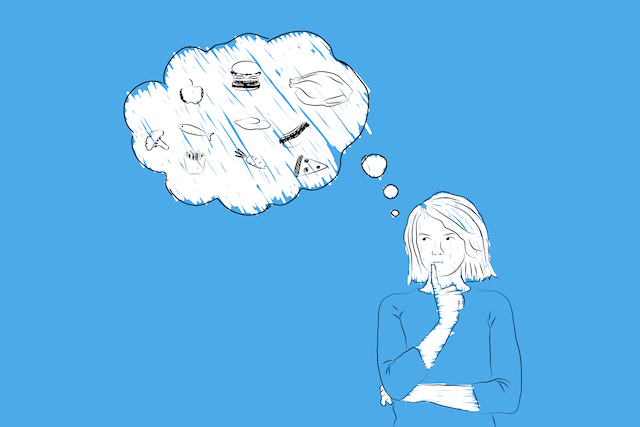
    No matter what I was doing—sitting in a meeting, walking the dog, or watching TV—my brain was busy debating food.

    Should I eat? Shouldn’t I? I could just have one more bite, couldn’t I? What should I eat next? I’ve blown it today, haven’t I? I’ve failed again. Shall I just eat whatever I want and start again tomorrow?

    The chatter was constant. It left me exhausted, ashamed, and convinced that I was weak.

    I told myself it was a lack of willpower. If I just tried harder, surely I could silence it. But the harder I fought, the louder it became.

    The Night Everything Changed

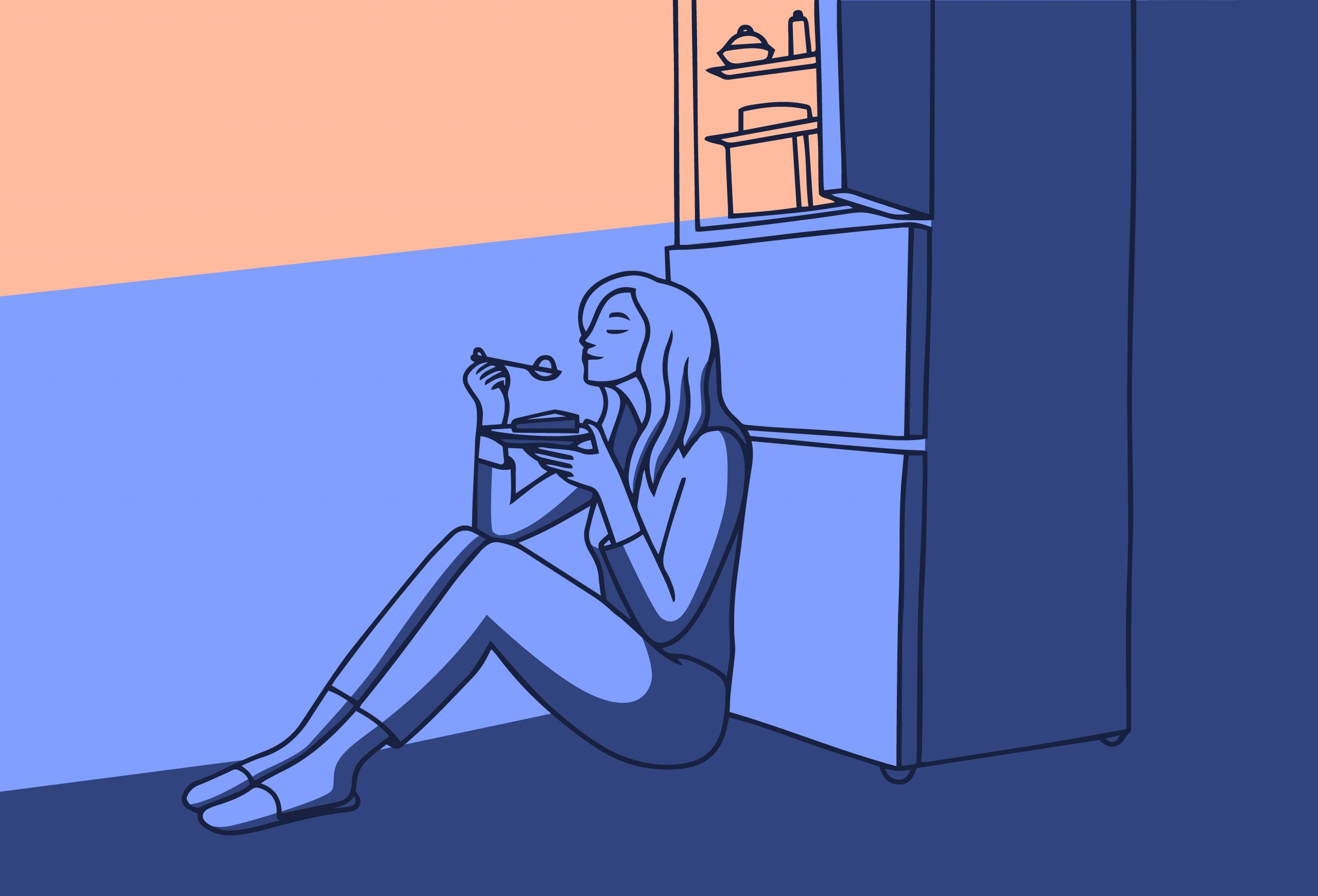
    One night, after a long and stressful day, I stood in the kitchen with the fridge door open.

    I wasn’t hungry. My stomach was full from dinner, but my mind was shouting at me to grab something, anything.

    The noise in my head felt unbearable. It was as if I couldn’t relax until I gave in.

    In that moment, for the first time, I paused. I asked myself a simple question: What am I really hungry for right now?

    The answer wasn’t food. It was comfort. Distraction. Relief from stress I hadn’t dealt with.

    It hit me that food wasn’t the real problem. The problem was the mental chatter about food, what many people now call food noise.

    What I Discovered About Food Noise

    Food noise isn’t hunger. Hunger is physical: your stomach growling, your energy dipping, your body asking for fuel.

    Food noise is mental: urgent, repetitive, often specific. It pushes you toward food even when you’re not hungry, convincing you that you need it to cope or to feel better.

    Learning this was a turning point. For years I had labeled myself a failure. But food noise wasn’t about failing at all. It was about how the brain works.

    Every time I ate in response to boredom, stress, or fatigue, my brain logged it as a “reward.” The next time I felt the same cue, the noise grew louder. The loop repeated itself until it became automatic.

    Understanding this gave me something I’d been missing: compassion for myself. I wasn’t broken. I was human. And if my brain could be trained into these loops, maybe it could be retrained out of them too.

    How I Began to Quiet the Noise

    I didn’t wake up one morning free of food chatter. It quieted slowly, through small practices that I repeated again and again.

    Naming it

    When the thoughts started, I said to myself, “That’s food noise, not hunger.” It may sound simple, but naming it gave me distance. It reminded me I wasn’t my thoughts.

    Pausing before reacting

    At first, I felt powerless against the urges. But I began experimenting with a short pause. Just two minutes. During that pause, I’d sip water, stretch, or step outside. Sometimes the craving was still there afterward, but often it had already passed. That pause gave me back a sense of choice.

    Refuting the chatter

    The hardest part wasn’t the food itself. It was the voice in my head.

    It would say, “You’ve already ruined the day; you may as well keep going.” Or, “One more won’t matter.” I believed it every time, and each binge ended with guilt and shame.

    I finally found help with a cognitive behavioral tool I’d never heard of before: the refutation.

    A refutation is simply answering back to the thought—calmly, clearly, without judgment. It’s like shining a light on a lie.

    The first time I tried it, I wrote my food noise down on paper: “You’ve ruined today, so you may as well give up.” Then I wrote my response underneath: “One moment doesn’t ruin a whole day. If I stop now, I’ll feel better tonight. If I keep going, I’ll feel worse.”

    It felt strange at first, almost like arguing with myself. But slowly, those written words became a voice I could access in real time.

    Now, when the chatter starts, I can hear both sides: the urge and the refutation. And with practice, the refutation has grown stronger.

    Some of the ones I use often are:

    Food noise says: “One bite won’t hurt.”
    Refutation: “One bite keeps the loop alive. Every time I resist, I weaken it.”

    Food noise says: “You can just start again tomorrow.”
    Refutation: “If I wait until tomorrow, I make waiting a habit. The best time to start is now.”

    Food noise says: “You’ve earned this.”
    Refutation: “I’ve earned peace of mind, not more noise.”

    At first, I had to write them down. Over time, they became automatic.

    Self-kindness

    For years, slipping up meant spiraling into guilt and shame. Now, when I give in, I remind myself, “This is hard, and I’m learning.” That kindness keeps me moving forward instead of sinking deeper.

    Each of these practices was like a mental rep in the gym. The more I repeated them, the stronger I became.

    What Quiet Feels Like

    The first time I realized I had gone an entire morning without obsessing about food, I almost cried.

    The silence in my head felt like a gift.

    Quiet doesn’t mean I never think about food. It means food has stopped being the background soundtrack of my life.

    I can work without constant distraction.

    I can sit with my family without guilt.

    I can enjoy a meal without a running commentary in my mind.

    Most importantly, I’ve started to trust myself again.

    The Bigger Lesson

    What I learned from food noise applies far beyond eating.

    Our minds are noisy places, full of chatter about success, relationships, fears, and the future.

    If we treat every thought as urgent and true, we end up exhausted. But if we learn to pause, to name the chatter, and to choose differently, we create space for peace.

    The greatest gift wasn’t just a quieter relationship with food. It was discovering that not every thought in my head deserves a reaction.

    That lesson has changed more than my eating. It has changed how I live.

  • Eating Too Much While Working from Home? How to Solve Emotional Snacking

    Eating Too Much While Working from Home? How to Solve Emotional Snacking

    “We eat the way we eat because we are afraid to feel what we feel.” ~Geneen Roth

    Sometimes I feel like asking me, a recovering overeater, to work from home is as unreasonable as hoping a sex addict will pen a report from the lobby of a brothel.

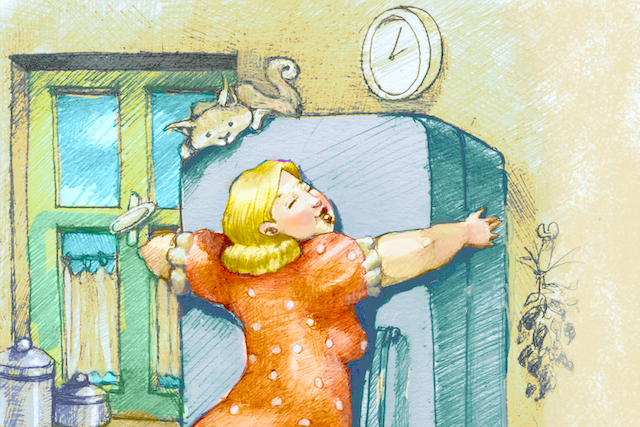
    Snarky email? Feel annoyed. Get Penguin bar from cupboard.

    Meeting over? Feel relief at no longer being on camera. Eat Wagon Wheel from cupboard.

    Worked hard today? Need a reward. Wait, who ate all the kids’ lunchbox treats? Never mind, people, all good: I found the cheese.

    This was me when my desk moved from an office full of doctoral researchers to the corner of my living room.

    Some people would say I was emotional eating, or “stress eating.”

    But I didn’t recognize myself in that description.

    Where was the stress? I worked for a university: plenty of holidays, flexible hours.

    And although I hated the way I ate, I didn’t feel anything dramatic about work.

    Looking back, yeah, I had the odd frustrating collaboration, a smidge of self-doubt, a bit of trying to make myself do a spreadsheet while believing “I’m not a spreadsheet person.”

    I treated these low-level doubts and insecurities as insignificant because, like we all are, I was a professional at ignoring them.

    What I couldn’t ignore, though, was a twenty pound weight gain.

    So I tried to eat better food.

    For instance, I banned chocolate from the house, put the kids on school lunches, and got the bread machine making wholemeal bread.

    Unfortunately, the problem didn’t vanish: After working my way through a whole fresh baked loaf with butter one rainy Zoomtastic Wednesday in November, I just felt gross and out of control.

    Then came the self-criticism. “I’m weak. I can’t stop.” That made me want to eat even more.

    I was stuck in a vicious circle. But my vicious circle was like a half-moon: I could only see the half that involved stuffing my face.

    Then one day, something happened in my work life that woke me up to what was really going on when I was eating.

    At my work, we had to complete an annual professional development review. It was like a form I had to fill out about my strengths, weaknesses, and progress goals that my line manager and I both signed off on.

    I put it off. For days, I ate dry granola standing up in the kitchen. I invented a weird mousse, made of creme fraiche stirred with tons of cocoa powder, honey, and lemon essence. I mixed and ate it multiple times a day.

    When I finally tried to fill the form out, I fell apart. I felt my weaknesses were so glaring, and that I was such a productivity lost cause, that I cried and cried.

    The unavoidable issue was, although I got results by throwing creativity and enthusiasm at my job, I was hopeless with time management and focus.

    I phoned my line manager and told him everything (except the food part) in one outpouring.

    He was a total star. Kind, receptive, unfazed.

    He proposed a new daily practice…

    Planning.

    Urgh!

    The idea was to plan my time every twenty-four hours, in my calendar.

    It was a complete disaster. Every day, I’d veer wildly off-plan.

    For instance, I’d aim to spend two hours producing slides for a presentation but end up reading research papers. Then I’d do my best work for the half hour before school pick up and arrive to the school gate late again.

    Luckily, writing on my daily schedule became my new favorite procrastination tool: Even if I’d done nothing, at least I could evaluate why.

    So I started noting, alongside my schedule, what I actually ended up spending my time on.

    And I didn’t just write down the activity, either; I went further. I wrote my rationale for getting sidetracked.

    Total. Game. Changer.

    For each sidetrack, I wrote down the exact words I’d been inwardly telling myself, to make whatever had overtaken the priority seem so important in that moment. (My manager never saw this part, so I could be really honest with myself).

    And there they were, in black and white! All the visits to the kitchen. All the thoughts and feelings behind the eating, made visible.

    Since this was about time management, it gave me some objectivity on the eating issue.

    This time-tracking activity was surfacing data about my eating behaviors, but unlike other attempts to track my eating, this time it wasn’t about my body, my weight, or my self-worth. Cold, hard info neutralized my outrageous, shameful eating habits just enough for me to be intrigued by what the hell was going on in my head.

    That information led me to these learnings that I’m about to share with you.

    Insights that completely revolutionized my emotional eating. I’m going to show you a perspective shift, an understanding, a tool, and a strategy.

    These four things completely took me by surprise but had been under my nose all along.

    Tools that help me to continue to unlearn my emotional eating as it relates to work.

    Simple techniques that have helped me get healthier and more productive, and waste less of my energy hating myself for having snacked randomly all day.

    So, if you’re feeling like food is calling you from the kitchen all day long, and you fear you’re just someone who needs to be in an office to function, think again.

    These discoveries are going to help you let go of your urges and make all working environments an option.

    Seriously, if working at the kitchen table can be safe and doable for me, it can be for you too.

    1. A perspective shift: People don’t make you feel things; your thoughts do.

    Some days, I blamed my boss for my eating.

    For instance, she’d pick holes in my idea… I’d feel discouraged… Damn, now I’d polished off half a loaf of banana bread.

    But she didn’t make me feel bad; my thoughts did.

    I was making her criticism mean something about me: “I’m useless at my job and I’ll never get recognition.”

    Until I wrote them down, those sentences ran all day beneath my awareness, so of course I felt inadequate and cheesed off!

    We don’t notice our thoughts until we externalize them by speaking them out loud, or writing them down.

    We swim around in them all day. It’s like being a fish that doesn’t know it’s in water.

    2. An understanding: Feelings are physical.

    When I felt tempted to go to the kitchen, it felt like a physical compulsion to walk there.

    Like my body was a puppet, and the food was a puppet master.

    I realized that feelings like urgency and self-doubt make my body especially restless. Jittery, insecure.

    With a feeling coursing through me, my body literally did not want to stay seated at my desk. It wanted me to walk, move, shake off the crawling feeling.

    That’s when the penny dropped that all emotions are bodily experiences.

    Not just the extreme emotions: butterflies in your tummy, needing the bathroom before appearing on stage, or feeling like you’ve had a double espresso when you’re in love.

    But also, low-level challenging emotions that normally reverberate in our bodies but are somewhat under our radar: boredom, confusion, slight overwhelm.

    3. A tool: Change your thoughts on paper.

    So now that I was noting my justifications for going to the fridge, I could see that my body’s restlessness was ramped up and my eating was given the go-ahead by the exact sentences I was running in my head.

    Let me show you an example.

    Thoughts about the task: “I don’t know where to start.” “This communications plan is just a formality; nobody will read it.” Feelings: Daunted. Hopeless. Draggy low energy. Justification for eating dark chocolate: “I’m tired, this’ll wake me up.”

    With this understanding, I was able to make changes before the urge to eat even arose.

    Instead of thinking downer thoughts and then believing food would pick me up, I could purposely say more encouraging sentences to myself to create motivated and confident feelings.

    Except how? How could I think a new thought? Um, just think it?

    Since writing things down was working for me, that’s what I kept doing.

    I remembered revising for exams, when writing things over and over was my go-to revision method.

    “Getting this done now will make my future life simpler.”

    “I’m phenomenal at coping with my workload.”

    Try writing it down right now!

    “My work is a valuable contribution to the world.”

    Imagine believing that was true.

    When I discovered that, I was like: Mwah ha ha ha! I have the power to control my feelings!

    4. A strategy: Surf your urges.

    Journaling helped me nip some of my triggers in the bud.

    But what about when I was already in the kitchen, or boiling the kettle, and the urge to browse the cupboard was already upon me?

    Once an urge had hit me, I felt like eating was the only way to quiet it.

    But now I had a new perspective on emotions as being physical, and I realized that urges are the same. Urges are just emotional desire. Restless desire in the body.

    I also realized that I already let urges and desires come and go every day without acting on them.

    For instance, I hadn’t acted on the urge to send a sweary, irate email to management for making me repeat an onerous online training I had done twelve months earlier. No brainer: Being rude would cost me my livelihood.

    I just composed it in my head, had a rant to my husband, and then it passed. My body was inflamed with it for a bit, but after a while the sensation subsided.

    So I wondered: What’s the equivalent for the urge to eat?

    I noticed: When I have the urge to eat, my neck feels tight. I feel unsettled. Graspy.

    It’s laughable really. When I feel compelled to satisfy an urge to go eat peanut butter on toast, I really just want to dissipate a fleeting tension in my neck?

    Try it. Two minutes.

    The even better news is, after a few days of letting urges come and go, they stopped coming so thick and fast.

    So, friend, you don’t need to go back to the office to escape your compulsions.

    And there’s nothing wrong with you for having them.

    Our brains form habits to help us get through the day. They are just learned ways of coping with the emotional terrain of working life, and if I can learn better ways of coping, guaranteed you can too.

    We put a lot of ourselves into our work lives, and work requires more of us emotionally than we give ourselves credit for.

    It takes intentionality to not use food, Netflix, checking Facebook, and anything else that’s easy and mind-numbing to take the edge off the tougher feelings, and there’s nothing wrong with that.

    It takes a willingness to feel our feelings bodily, which is a skill we can cultivate.

    So please go easy on your lovely, hard-working soul. Be patient. You’re doing a great job of being you.

    And next time you’re staring vacantly into the cupboard while the kettle boils, remember you’re not alone. I’m learning this too.

  • How to Protect Our Kids from a Lifetime of Food, Weight, and Body Image Issues

    How to Protect Our Kids from a Lifetime of Food, Weight, and Body Image Issues

    I went on my first diet when I was around fourteen or so because, as they often do in growing teens, my jeans started getting tight.

    And because I grew up in the same anti-fat culture we all have, I hated myself for it.

    Around the same time, an adult in my life who was always obsessed with “eating healthy” gave me a copy of the new book she was reading outlining the healthiest way to eat.

    It was a book on the Atkins/low-carb diet.

    The author spent the bulk of the book demonizing carbs, explaining in convincing-sounding detail all the science he supposedly had about not only how harmful carbs were but how they were the cause of weight gain.

    Three things happened from reading that book.

    1. I became scared of eating carbs and started trying to eliminate them because, while of course I wanted to be healthy, I was terrified of gaining weight.

    2. Instead of losing the five pounds or so that I wanted to lose, I gained about five pounds and a slow progression of weight gain continued for years. Because the harder I tried to eliminate the carbs, the more I craved and obsessed over them; always eventually caving, eating them, and then hating myself for it and promising to start “being good tomorrow.

    Eventually the caving led to overeating them because “as long as I was being bad anyway, I may as well eat them all and get them out of the house so I won’t be tempted when I start being good again.”

    3. An almost three-decades-long war with my weight, my body, myself, and food began. A war that resulted in a hospitalization in my early thirties, after my first foray into the world of “it’s not a diet; it’s clean, healthy eating,” for bulimia so severe I often felt like I was going to eat myself to death.

    And the whole time, I blamed myself for it. I believed I was stupid, weak, pathetic, a pig who needed to try harder to control myself.

    So I kept trying. For more than half my life I tried, and it almost killed me.

    I’ve been working with women around the whole weight and food thing in one form or another for over fifteen years now. I started sharing my story because after listening to other women describe their histories with food and weight, I realized that my story is not unique.

    Varying degrees of my story are the norm, and they all start in basically the same seemingly innocent ways.

    We want to lose weight or “eat healthier,” so we do what we’re taught we’re supposed to.

    We start a diet or “healthy eating plan” of some sort that tells us what we “should” and “shouldn’t be” eating. This leads to a lifetime of trying to control our intake and our bodies, which results in disordered eating patterns, weight cycling, and self-loathing.

    I regularly hear from women in their seventies or eighties who have spent their entire lives fighting this losing battle with themselves to “eat right” and lose weight.

    In one survey of US women a few years ago, 75% reported disordered eating behaviors or symptoms consistent with eating disorders.

    My recovery didn’t start until I realized a few basic truths.

    First, if I had any hope of healing, I had to figure out what was causing my eating issues. Ultimately, it came down to my conditioning: patterns of thoughts, beliefs, and behaviors that had developed over the course of my life as a result of many different things, not the least of which being:

    1. The stories I had learned to believe about bodies and the people in them: Big ones are bad, unhealthy, undisciplined, and lazy. Small ones are good, healthy, and disciplined, and they work hard.

    These misguided beliefs taught me not only to live in fear of weight gain and the harsh judgment of others if I gained weight, but also to judge myself and my body harshly when I did so. This contributed to not only the decades of weight gain and disordered eating but ultimately the eating disorder.

    2. The stories I’d learned about food: These are the good foods, the healthy foods, the foods you should be eating, and those are the bad foods, the unhealthy ones, the ones that cause all manner of disease, poor health, and weight gain. Those are the foods you have to give up forever, or only allow in moderation.

    These misguided beliefs taught me to live in fear of food and my body becoming unhealthy or fat if I dared to eat the “wrong” thing. This created the never-ending pattern of promising myself I was going to “be good” only to end up craving, caving, hating myself, and starting over that I felt trapped in for so many years.

    3. Disconnection with myself, my body, and my own needs: As long as I was trying to make myself eat or do the things I thought I “should” do in order to control my body and my food intake, I was stuck in my head. Stuck in fear. Disconnected from myself, my body, and even the decision-making part of my brain. Ruminating, promising, obsessing, hating.

    In that state, I had no ability to understand the messages my body was constantly sending me about what it needed, nor did I have any concept that my body was something that could be trusted to tell me that. I saw it as an enemy to be ruled over, controlled, and beaten into submission… rather than the ally, healer, and communicator that it is.

    4. Self-loathing: I didn’t like, love, trust, or value myself, so my entire self-worth and relationship with myself relied on what my body looked like and my need to control how others saw me.

    The second truth I had to realize: if I had any hope of recovering and making peace with myself, my body, and food, I had to change the things that were causing the war.

    That meant giving up the obsession with my weight and eating or looking perfect.

    I had to recognize those things for what they were—distractions that kept me from dealing with the issues that were causing the problems in the first place and were making matters worse.

    So I put all my energy into changing the causes.

    It didn’t happen overnight, but one day I realized I couldn’t remember the last time I’d engaged in compensatory behaviors. The binges were getting fewer and farther between.

    And then I couldn’t remember the last time I binged or even overate, and I couldn’t even imagine ever doing it again.

    It’s been many years since those things were my daily reality, and I’m thrilled to say they simply don’t exist in me anymore because I changed the conditioning that was causing them. I learned to reconnect with and trust my body when it tells me what it needs or wants, and I learned to value myself enough that I cannot imagine treating myself or my body poorly anymore.

    Recovery and peace are blessings that I don’t take for granted for a second and I’m still grateful for every minute of the day.

    But disordered eating and eating disorder recovery are unbelievably difficult, prone to multiple relapses, and many aren’t so lucky.

    This brings me to my main points because the simplest solution to disordered eating or eating disorder recovery is to prevent those things from ever starting in the first place.

    That’s my dream, to save future generations from growing up with the disordered eating patterns/eating disorders and horrible body/self-images that ours has grown up with.

    It starts with us, as parents.

    What I Wish Parents Understood

    Living with disordered eating patterns or an eating disorder is a special kind of hell that I wouldn’t wish on anyone.

    It’s like living with the meanest, most self-destructive monster in your head one can imagine.

    You know the things you’re thinking and the choices you’re making are harming you, you know they’re making you miserable, you’re desperate to stop, and yet… no matter how hard you try, you can’t.

    You feel powerless. Hopeless. Helpless. Trapped.

    Recovery was one of the hardest things I’ve ever done in my life—and I’ve not had an easy life, so that says a lot.

    Given this, it’s my view that in addition to helping those struggling recover, prevention at an early age needs to be a top priority.

    And parents, I’m not trying to place blame, but after fifteen years of hearing women talk about their struggles, I’ve come to realize that we are often a big part of the cause, although not purposely of course.

    We all have our kids’ best interests in mind.

    We want our kids to be the healthiest, most confident versions of themselves, and we’re all doing the best we can to help them get there.

    We want them to maintain healthy bodies and eat nutritious foods. Nobody doubts that we all want the best for our children and are doing our best.

    But the way we’re approaching it is almost guaranteeing that our kids are going to struggle with the same food issues, eating disorders, or a lifetime of disordered eating and failed diet attempts that so many in our generation have.

    They’re learning to fight the same wars we have in the same ways we learned to fight them.

    All the things we typically do to try to help encourage health (restricting “bad” foods, teaching them that some are “good” and some are “bad,” encouraging them to lose weight or even acknowledging their weight) are among the worst things we can do for the health of our children.

    It’s difficult to overstate the damage that weight and food shame does to adults, and that damage is worse in children.

    We also have to remember that they learn from us. If your kids watch you struggle with food and your weight, if they see you tie your mood and your self-worth to your scale, they are going to be at a significantly higher risk for developing an eating disorder or living with those same struggles themselves.

    So this is what I want parents everywhere to know: encouraging weight loss, labeling or restricting their food intake (good vs bad, allowed vs not allowed), discussing weight, restricting foods, and dieting yourself—all of those things that millions of us are doing every single day that diet and healthy eating cultures have taught us is expected or accepted—they’re putting our children at risk.

    Research has shown that the younger girls are when they go on their first diet, the more likely they are to engage in extreme weight control behaviors like vomiting and laxatives (that’s an eating disorder), abusing drugs and alcohol, and becoming overweight by the time they reach their thirties.

    One out of four dieters will develop some type of eating disorder. That’s a number that’s doubled in the last twenty years. And the majority of the rest develop very disordered eating patterns.

    Eating disorders are widely recognized to have the highest mortality rate of all mental illness, while also being among the most underdiagnosed and under/poorly treated.

    Not even to mention the levels of anxiety, depression, and self-loathing that typically come from years of living with disordered eating and battling with our weight.

    There is a better way.

    Encouraging Healthy Choices Without the Risk

    DON’Ts

    Don’t discuss weight, size, or bodies—not yours, not theirs, not anyone else’s.

    Don’t let other people discuss their weight in front of them—not their doctor, not relatives, no one.

    Don’t label foods—no good, no bad, no healthy, no unhealthy… no food labels. At all. Binary food labels can cause shame, create self-punishing behaviors, destroy our relationship with food, and contribute to overeat/binge/restrict cycles that can take years to heal.

    Don’t tell them they are what they eat—our food choices don’t determine our worth.

    Don’t restrict foods—let them eat what they want. Restriction leads to guilt, shame, overeating, or bingeing and fuels disconnection.

    Don’t force exercise or “burning off calories”—encouraging exercise as a means of weight loss is setting them up for trouble.

    DOs

    Do encourage them to consider how their food choices make their body feel. How does that big mac and fries make their body feel when they’re done eating? What about the candy for breakfast? Do they feel good when they’re done eating? Or do they feel sick? Would they rather feel good, or sick? How does skipping a meal make their body feel? Do they want to feel that way? Do they really want to ignore their body’s most basic human needs with restriction? Why?

    Do encourage them to consider why they’re eating. Are they physically hungry? No? Are they emotionally hungry? Teach them the difference and help them learn to accept, honor, and express the emotions they’re trying to feed or soothe rather than ignore or numb them.

    Do teach them the value of understanding the why behind the choices they’re making and how their choices are often a result of their relationship with themselves.

    Do teach them that the relationships they have with themselves, food, and their bodies are the most important relationships they’ll ever have in their lives and to protect and nurture them.

    Do lift them up, teach them to value themselves exactly as they are, for who they are, not what they look like, weigh, or how they eat. Teach them to value and respect others, no matter what size they are.

    Do teach them about self-acceptance, kindness, authenticity, self-compassion, and the power of mindful living.

    Do teach them to appreciate the wonder and magic of their bodies, no matter what size they are. Teach them how to stay present in the moment and in their bodies, so they learn to listen to and trust their own bodies.

    Do teach them humans come in all shapes and sizes—and that no one shape or size is any better than another.

    Teach them that they are enough, exactly as they are, and that neither their bodies nor their food choices define their worth.

    And that will all be way easier if you learn it for yourself first.
  • How I Broke My Stress Eating Habit When Nothing Else Worked

    How I Broke My Stress Eating Habit When Nothing Else Worked

    “The pain seems so much more difficult than the cookies. But it’s not. The pain covered in cookies becomes pain covered in fat covered in more pain.” ~Brooke Castillo

    Do you ever eat when you’re stressed, sad, tired, alone?

    Bag of chips after a hard day?

    Ordering the take-out when your partner’s away?

    I did.

    Seven years ago, my newborn baby cried every evening.

    I’d feed her, change her, and blow raspberries on her neck. Still, she screamed—like a smoke alarm you couldn’t stop.

    I tried singing to her, burping her, begging her…

    I felt useless, desperate.

    In my journalism job, before maternity leave, I’d often doubted my capability. But my new job as a parent? Totally out of my depth.

    I envied my husband, swanning off to the office. The second he got back, I’d thrust the howling baby at him.

    “Tell me what to do!” he’d yell over the din.

    At my wits’ end, I’d put on the sling, wrestle her in, and head into the Berlin streets.

    If I bounce-walked, muttering “Hi Ho, Hi Ho, it’s off to sleep we gofour billion times, she’d sleep. Then I’d feel like I deserved a medal. Or, failing that… an ice cream? (My district was renowned for boutique ice cream shops.) Black cherry and mascarpone! Perfect.

    “Dinner’s ready,” my husband would say when we got back. I’d wipe my chin. Afterward, I’d be mega full.

    First few times it happened, I promised myself I’d nix the habit before anyone noticed. But every day from then on, when the witching hour arrived again, you know where I’d go. Before long, I knew every kiosk, every flavor, and often ran to double scoops.

    Honestly? I was overeating at home too.

    When my baby girl dozed off breastfeeding, I didn’t dare move a muscle. I’d sit there, peeling slices of Emmental out the packet.

    It was fifteen years since I’d recovered from binge eating and bulimia, so this new eating problem was scary. Plus, my post-baby waist already bulged over my leggings.

    Over the next couple of months, I Googled emotional eating tips for what to do instead.

    I tried substituting healthier snacks, but ate whole bags of carrots and prunes.

    I tried to “feel my feelings” more, but as I wallowed in self-pity, I wondered if I was doing it right.

    I talked to my friends. Over coffee and cake, of course.

    I read a book about mindful eating. On my phone, over lunch.

    The fact is, I was just trying superficial fixes, without understanding how my mind worked.

    When I finally understood how emotions fuel our behaviors, it changed not just my eating, but my handling of life too. I even lost my baby weight, eventually.

    But more importantly, my emotional eating has shown me how to manage my mind.

    So, if you’re eating when you’re not hungry, whether through stress from parenthood or something else, this is for you.

    Let me show you where I got confused so you can solve your eating more easily. Because solving emotional eating isn’t complicated. It only seems hard because we get it mixed up with self-judgment, and because we think we need to take the stress away to stop the eating.

    Confusion 1: I spent time dealing with feelings that were just drama, not the real scary emotions.

    I probably should have cried more after my baby screamed so much. But I didn’t want to scare her.

    I would have liked to kneel on the floor and wail with exhaustion, and anger at the rejection I felt. Those were my heartfelt feelings. Real, raw, ugly, unflattering and immature, but true.

    By eating instead of feeling, I brushed those emotions under the carpet. And then covered the area with more mental mess: food-related self-doubt, regret, blame, failure, victimhood, despair, more eating.

    I’m not saying decluttering your brain of food drama is a waste of time—actually, in the process we learn to cut ourselves some slack, and that’s golden.

    But the shame from all the self-judgment is only the surface layer of mess, and ultimately, you have to aim to clean deeper.

    Feel deeper. Feel beyond guilt.

    Confusion 2: Believing it’s wrong to use food to numb your feelings.

    I hold my hands up: eating ice creams was pure escape. Afterward, I’d feel like I’d abandoned myself and my baby. That didn’t feel right, but it doesn’t make it wrong.

    If you’re eating to avoid your emotions, you’re not naughty, or bad, or wicked, or greedy, or weak.

    Sure, in an ideal world, we’d eat when we were genuinely hungry, not just craving relief. But eating when you’re physically hungry is a skill, not a rule. You have to learn skills. Not just beat yourself up.

    “I didn’t need to eat. Why do I always do this? I’m getting fat.” 

    It makes no sense to bully yourself into changing when you’re still figuring out how. It’d be like me yelling at my baby for not being able to communicate with words.

    My husband laughed once when I called myself an emotional eater. He was like: “What is that?

    So I could ask that too, and tell myself: “I’m not sure what’s going on yet, but bit by bit, I’m going to understand this.”

    Big difference!

    Confusion 3: Labeling yourself as a problem person if you eat in a disordered way.

    I kept having this thought:

    I can’t help it, it’s my personality. I had eating disorders.

    To be fair, I did act like an addict.

    I mean, one minute I’d be breastfeeding. And the next minute I’d come to my senses with an empty muesli box on my side table and wheat flakes crusted onto my pajamas.

    And I’d go: What is wrong with me??

    So I Googled. Took personality tests on the internet. Felt helpless and doomed.

    Then, I read something cool: “Your personality is just a collection of habits.” Bingo! I didn’t have to label myself an “overeater” or a “binge eater” or “an addict,” which made me feel bad about myself and made it harder to stop.

    For now, I could just be “someone who overeats sometimes.”

    The grace I gave myself when I said that washed through my body like a relief.

    From thereon in, I started figuring it out, one tiny change at a time.

    Confusion 4: Playing wac-a-mole with triggers.

    A habit, as I’m sure you know, is a chain reaction. Something sparks a thought that food would be good. That trigger can be a feeling, a time of day, that buttery croissanty smell…

    So, you might think you’re at the mercy of whatever presses your buttons and start trying to avoid your triggers. But tiptoeing around triggers isn’t the answer.

    First: not practical. Avoiding your mum because she mentions your weight. Walking past Delice de France with a clothes peg on your nose.

    Second: pointless. Why? Because the reason your emotional eating began isn’t the reason you keep doing it.

    Let’s go back to Berlin—I want to show you how my emotional eating habit evolved.

    The first day I went out with my crying baby, I wasn’t intending to eat ice cream. I saw the Eis kiosk, and I thought, “I want something for myself.” That day and that day only, there was a fully conscious decision.

    My brain took notes. After that, any time I felt less-than, it said, “Let’s eat again! That was easy!” Pretty soon, I was eating whenever I felt rubbish.

    Eating biscuits, overwhelmed by my messy flat.

    Eating biscuits, resentful of others’ great sleep.

    Eating weird instant soup, because I’d run out of biscuits.

    You can’t eradicate triggers. You’d have to solve life. But breathe. You don’t have to.

    The solution to emotional eating is to not rush to solve anything.

    When I was stress eating in Berlin, I was so busy trying to solve my stress—or eating—I wasn’t really paying attention to the thoughts or feelings in each moment.

    It was all flying under my radar in a hailstorm of pretzel crumbs and salt crystals.

    I started noting the actual sentences that I’d told myself in the moments before I had overeaten. Sometimes I just wrote a word in a circle. A feeling. An urge!

    Bit by bit, I realized, I’d avoided my feelings because I thought it was bad of me to have them.

    For instance, I resented the enormous responsibility and daily duty of caring for a baby, and feared my creative, rock ‘n roll life was over—but I dismissed that feeling as selfish.

    I envied my husband for going to work and I missed my ambition—but I judged that sadness and jealousy as “ungrateful.”

    I desperately missed getting praise, or pay, or achieving things on a to-do list—but I cringed at my neediness for someone else to tell me I was doing a good job.

    Turns out, I did want something for myself. Not just an ice cream! An identity beyond motherhood.

    But with self-judgment so harsh, I can see why I couldn’t admit those feelings.

    I didn’t need to express my true feelings—to paint huge canvases, or sing my lungs out in my car.

    Or shove them down.

    Or spend any time on a psychiatrist’s couch exploring the gaps in my own upbringing.

    Or instantly solve them.

    I just had to live with the dilemma for a while. Acknowledge the emotional conflict. I needed to witness it.

    Same as I had to be there for my daughter.

    I couldn’t stop her crying! She got born, she wasn’t cool with that, and I don’t blame her—it’s a pretty exposing, vulnerable business being alive.

    My job was just to hang in there with her, going, “I know you’re crying, I’m here, I can’t make it better, but I’m not going to abandon you.”

  • I Was a Bulimic Nutritionist, but I’m No Longer Ashamed or Hiding

    I Was a Bulimic Nutritionist, but I’m No Longer Ashamed or Hiding

    “Shame derives its power from being unspeakable.” ~ Brené Brown

    I felt like a hypocrite. I would tell my nutrition clients to eat a salad with vegetables, then I’d go home and scarf down an entire pizza. After guilt and shame set in, I would purge and throw it up.

    I think I became a nutritionist partly so I could better control my relationship with food. If I learned the secrets behind eating I could biohack my way to putting the fork down, losing weight, and finally being happy. This was back when I thought thinness equaled happiness.

    It’s taken me over ten years to recover from an eating disorder. Years filled with perfectionism, shame, and isolation as I untangled that my worth is not tied to my weight. I share my story in hopes that it sparks a deeper dive into your own relationship with food.

    Growing up I was an over-achieving, people-pleasing perfectionist. Which by itself may have been fine but, paired with a sexual trauma I experienced in early University, it was the perfect storm for developing an eating disorder.

    I used food as a coping mechanism for the trauma I’d endured. It was a way to dissociate from having to feel the shame of being assaulted. I assumed it was my fault this terrible thing happened, and while eating as much and as fast as possible, I could numb out from strong emotions.

    For a short period of time, I was worry-free.

    But then inevitably came the guilt and shame—ironic, since I was trying to numb the shame of my assault with food.

    Why did I have to eat so much? Now I’ll gain weight, and if I gain weight no one will like me. Why don’t I have the discipline to control my food? To control myself? I am truly worthless.

    Somehow my brain had built the association between looking a certain way and being accepted, worthy, and even safe. Having a sense of control over what I ate and how I looked made me feel powerful in a way. And maybe subconsciously it gave me a sense that I could also control what happened to me.

    I knew I needed help in University when after purging for the third time one day I had a sharp pain in my chest. Bent over the toilet, clutching my heart, I realized things had gotten out of control.

    Luckily, before I lost my nerve, I set up an appointment with a counselor. And there began my long and twisty road to recovery from bulimia. A word I would rarely utter in the coming years, instead referring to it as my “food issues,” downplaying the severity of my illness. Bulimia was something only celebrities developed, not something a straight-A student like me could encounter.

    Wow, was I ever wrong! Along this journey I’ve met many others like me, and I discovered we had more similarities than differences. We put immense pressure on ourselves to be perfect, had an insane need to control everything, and we all felt deep shame about our behavior. Many others I met had also experienced trauma and used food to soothe.

    In 2008, when I first sought treatment, I worked in secret on my recovery, only talking with a counselor and a doctor. I needed weekly blood tests to ensure my electrolytes were balanced. Turns out purging is very hard on the body, something my lack of tooth enamel will attest to.

    It was years until I told friends and family, and even now many will be shocked reading this article. It was easy to hide from roommates, as I would binge alone in my room and come up with creative reasons to use the bathroom when needed. Sometimes even purging into bags in my room then disposing of it later.

    In 2013, after a few weeks of some particularly painful binging sessions, a doctor told me I had lesions in my throat. I could barely swallow, having to sip smoothies through a straw. And my first thought was:

    Yay, now I’ll definitely lose weight.

    Thankfully, it was followed by a second thought.

    This is dumb. I’m putting my health at serious risk here… to be thin? That makes no sense.

    That’s when I knew I needed to kick my recovery into high gear. I started out-patient treatment in Toronto and attended support groups with others like me. I learned to sort through complicated emotions and release my need for everything to be perfect. In short, I was on a great track.

    But here’s the thing no one tells you about recovery—it’s not linear. I was settling into my career as a nutritionist, my binging episodes reduced, then someone would make an off-hand comment…

    Wow, you cleaned your plate, you must’ve been hungry!

    And boom, I would spiral out and feel compelled to rid myself of the extra calories. Secretly hunched over the toilet once again, knowing I had failed.

    I didn’t think people would trust my nutritional advice if I gained weight. I was also a yoga instructor at this point and convinced students wouldn’t return to my classes if I didn’t have a lean svelte yoga body.

    I continued the ups and downs of recovery for years. Having to choose recovery every single day was exhausting. Over time, the periods between binges got longer.

    For me, there was no silver bullet cure. It was a combination of using mindfulness to sit with difficult emotions and getting a whole lot of therapy to address the trauma. I never thought I’d get to this place, but eventually I learned to see myself as a worthy person—no matter my past, no matter my size.

    I used to think having an eating disorder was a shameful secret. Now I see that struggle as the source of my strength. It takes an incredible amount of courage to address trauma, and working tirelessly on recovery has taught me how to bounce back over and over again.

    I went through the ringer for many years, having to hide many of my behaviors, and thinking my weight was the most interesting part of me. I share my experience as part of the healing process, to take away the shame that hides in the shadows. I hope it encourages you to examine your relationship with food and your body—and how you might also be using food or another substance to avoid dealing with your own traumas.

    We tend to judge what we’re eating and think of food as something to be controlled, but eating disorders aren’t just about food. They’re a reflection of how we judge ourselves and our need to regain control when we feel we’ve had none.

    If we can come out of the shadows and face our pain and shame, we can start to heal, but it might not happen overnight. It might be two steps forward and one step back, sometimes one step forward and two steps back—and that’s okay. People who struggle with eating disorders are often perfectionists, but we need to accept that we can’t be perfect at healing. It’s a process, and as long as we stick with it, we will see progress over time.

    Now that I’ve worked through the pain of my past, I can finally see that food is something to be enjoyed and celebrated, and I too deserve celebrating, no matter my size. I don’t need to be perfect to be worthy. And neither do you.

  • Freedom from Food – This Time for Good!

    Freedom from Food – This Time for Good!

    “Nonresistance is the key to the greatest power in the universe.” ~Eckhart Tolle

    I cannot say that I didn’t struggle in my life. But there’s one area in which I have overcome the challenges I was facing with hardly an effort: letting go of the eating disorder I was suffering from, getting rid of the extra weight I was carrying, and maintaining the results easily for twenty-eight years.

    How Did I Do That?

    In a minute I’ll tell you exactly how I did that and how you can do it too. But first let me take a moment to explain what exactly I was dealing with.

    As a child I always loved to eat and ate quite a lot, but though I wasn’t skinny I was always thin.

    At around fifteen I developed an eating disorder. I usually say that I suffered from bulimia, but when I read the symptoms, I’ve realized it might have been a binge eating disorder.

    I would eat a huge amount of food one day in a short period of time, and the next day I would start an extreme diet plan that I never managed to maintain for long. On one occasion I managed to maintain such a diet plan for several months until my period stopped and my hair started falling out.

    I would rarely vomit. Firstly, because it took a couple of years until I found out it was possible, and secondly, because it made my eyes red and swollen.

    But I think the exact diagnosis is not that important. In any case, I was suffering. And I’m sure you can relate, because even if you are not diagnosed with an eating disorder, you might still be struggling with endless cycles of dieting and overeating.

    (You may not be calling your eating plan “a diet,” since today it’s fashionable to say “I simply eat healthy” instead. But all those healthy *and strict* eating plans are ultimately diets, and like any diet, they eventually drive us to binge eating.)

    Why Did This Happen to Me?

    Concurrent with the development of my eating disorder I struggled as a teenager with bullying for six years.

    As an adult, when thinking about what happened, I used to say that eating was a distraction from my feelings. This is not entirely wrong; however, over time I’ve realized that this was not the main cause of my problem.

    My mother struggled most of her life with obesity and for years she tried all sorts of diets, without success.

    When I was in the seventh grade, she became concerned that I was eating too much. “If you keep eating so much, you’ll end up being fat like me,” she repeatedly told me.

    As a consequence, I came to believe that I inherited her tendency to be overweight and thus shouldn’t eat certain kinds of food. And because I had a hard time resisting the temptation, I started eating in secret and eventually developed an eating disorder and gained weight.

    The Big Shift

    Toward the age of twenty-three I woke up one morning with the understanding that not only did I think about food all day long, my efforts to overcome my weight problem didn’t get me anywhere.

    That morning I decided I would never diet again, even if it meant being overweight my entire life. I also decided that the foods that made me break my diet time and time again would become an integral part of my menu.

    For instance, from that day on, for many years my breakfast consisted of coffee and cookies (and that wasn’t the only sweet thing I ate that day).

    Once the burden of dieting was removed from my life, I no longer felt the irresistible urge to finish a whole block of chocolate like before. I knew I could eat chocolate today, tomorrow, the day after tomorrow, and so on; and thus, I got to the point where I had chocolate at home and didn’t touch it—something I couldn’t imagine before.

    During the following year my weight has balanced and to this day, twenty-eight years later, I am thin and maintaining a stable body weight.

    I still think quite a lot about food, but not obsessively, only because I enjoy it so much. I also eat quite a lot, by estimation between 1700-2000 calories a day (I don’t count). I love healthy food but also enjoy unhealthy foods, and I never feel guilty for something I ate; in the worst-case scenario I suffer from a stomachache or nausea.

    The Principles That Gained Me My Freedom

    1. No food is the enemy.

    Contrary to popular belief, no food by itself has the power to create addiction, ruin your health (unless you are suffering from a specific medical condition), or make you instantly fat. However, many people have gotten extremely rich by convincing you otherwise.

    Obviously, the main part of your diet should be healthy, yet the bigger problem than eating unhealthy food is stressing, obsessing, and loathing yourself for doing so!

    If you can’t control yourself in front of a certain food, allow yourself to eat it only when you are outside or buy it in small packages.

    2. No food is strictly forbidden.

    When we forbid ourselves from a certain food, we inevitably develop an uncontrollable desire for it, and eventually find ourselves helplessly bingeing it.

    When we allow ourselves to eat whatever we crave, as I did with sweets, the day that we don’t feel like eating the food we couldn’t resist before, or desire it only once in a while, will surely come.

    The reason why this idea seems so unrealistic to most people is due to what I’ll describe next.

    3. Give yourself permission.

    The secret of my success was that I really allowed myself to eat whatever I want for the rest of my life.

    While people sometimes say that they give themselves permission to eat certain foods, they are still driven by fear of these foods and by the belief that they shouldn’t be eating them.

    While “enjoying” their freedom, in their minds they say to themselves, “tomorrow I’ll get back on track.” (Tomorrow, in this context, can mean the next day or “as soon as I can.”)

    And as long as this is their state of mind, they’ll be impelled to eat as much as possible of the forbidden food today.

    4. Stop treating yourself as an emotional eater.

    According to the urban legend about emotional eating, a “normal” person should only eat when they are hungry, only healthy food, never eat for pleasure only, and never reach a sense of fullness.

    Anything but this is emotional eating.

    But this is a complete deception, and if you hold onto it, you’ll forever be dieting and bingeing and will always feel that something is wrong with you.

    I often eat a bit too much or things that are not so healthy. I eat not only according to my needs but also for pleasure. And if I overdo it, nausea, stomachache, and a feeling of heaviness remind me that I need to regain balance.

    I’m not saying that overeating has no emotional motive; I’m just saying that this idea has gone way too far.

    5. Follow your own guidance.

    I can promise you that as long as you eat according to someone else’s plan, or according to any strict plan, over time your efforts will be futile.

    Rules such as “You must eat breakfast,” “three (or six) meals a day,” “Chew each bite thirty times,” “Never eat in front of the TV,” or, “Don’t eat after 7pm,” will only stand between you and your natural instincts and enhance fear and self-judgment.

    I eat fast, mainly in front of the TV, I eat small portions every one to three hours, I eat late at night—and that’s fine for me.

    So listen to yourself and learn through trial and error what works best for your body.

    6. Be honest with yourself.

    Often people say things like, “I’ve forgotten to eat,” “I’m never hungry before 4pm,” or, “one modest meal a day totally satisfies me.”

    They insist so strongly it’s the truth that they manage to deceive even themselves. But only for a while. Eventually their natural hunger and satisfy mechanisms reveal the truth, and again they find themselves bingeing.

    So don’t play games with yourself. It might work in the short term, but it keeps you in the loop of weight fluctuations and obsessive thinking about food in the long term.

    7. Do not waste calories on something you don’t like.

    If you insist on eating something you don’t want to, you’ll find yourself craving what you really desired and eventually eating it in addition to what you already ate.

    8. Be physically active.

    Being physically active boosts your metabolism and immune system and supports your emotional and physical well-being.

    Sometimes, however, people set a trap for themselves when they push themselves too far with exercising, and thus, after a while they can’t endure it anymore and ultimately quit.

    Instead, be as active as you can and in the way that best suits you. That will serve you much better in the long term.

    9. Focus on reaching a balance.

    Your ideal body weight might be a bit higher than the one you desire. But remember, insisting on reaching a certain body weight that is beyond your natural balance will cost you your freedom and keep you in the vicious circle of dieting and bingeing.

    Last but Not Least…

    The concept I’ve offered here won’t make you lose weight overnight. It took me a year to lose the excess twenty-two pounds I was carrying. And if you have more weight to lose it might take a bit longer.

    But if you feed it well, without driving it crazy with constant fluctuations between starvations and overeating, over time your body will relax and balance itself, this time for good.