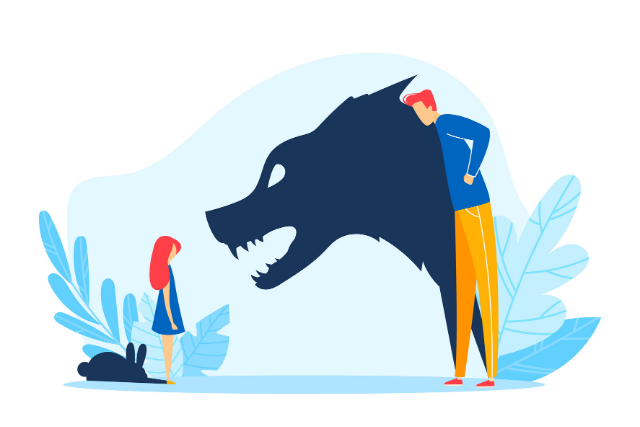

Tag: emotional abuse

  • The Day I Found Out from the Internet my Estranged Father Had Died

    The Day I Found Out from the Internet my Estranged Father Had Died

    “The scars you can’t see are the hardest to heal.” ~Astrid Alauda

    On a lazy Sunday morning as I lounged in bed, I picked up my phone, scrolled through my news feed on Facebook, and decided to Google my parents’ names.

    I am estranged from my parents, and I have not had much of a relationship with them in over fifteen years; however, there’s a part of me that will always care about them.

    I Googled my mother’s name first and found the usual articles about her dance classes, and her name on church and community bulletin boards. From what I was able to find, it appeared she was doing well.

    Then I went on to Google my father’s name. The first item I came across was an obituary posted on the website of a business that provides cremation and burial services. However, there was no actual obituary, only a few pictures of a much younger man and a profile of a much older man.

    Was this my dad’s obituary? It couldn’t be, could it? In shock, I convinced myself that it wasn’t his obituary, but I could not shake the nagging feeling that it was.

    For the last month I had a feeling that something was off, that something terrible had happened or was going to happen. At the time I attributed these feelings to work stress and the global pandemic.

    When I learned of the death of one of my mentors, who had been like a father to me, I attributed these feelings to this experience. Could I have been wrong?

    Later that morning I decided to search for my dad’s name in the obituary section of the online local paper. His name came up instantly, and much to my horror, this was how I learned about his death.

    Shock washed over me as I read the obituary. He had been dead for a month when I began having those intense, unsettling feelings of foreboding, as if something terrible had happened. It all made sense.

    My full name, which I had legally changed several years ago, was mentioned in the obituary under his surviving relatives, which quickly turned my feelings of shock into rage. Did my family think that I didn’t care about him? Did they think that I didn’t have a right to know about his death?

    I reached out to members of my estranged support group only to learn that many others had found out about a parent’s passing in the same manner.

    Years earlier I had feared that I might find out about one of my parents passing through Google; however, I had dismissed the fear and forced myself to believe that someone in my family would tell me if one of my parents had passed.

    In the days and weeks that followed I continued to Google my dad’s name. As I read tributes written by friends and other family members, I was hit with the realization that I did not know the person they were describing.

    He was described as a “simple religious man who was a welcoming neighbor, a devoted friend, family man, and an excellent father.” To me, however, he was none of those things, and as I continued to read the tributes, sadness and anger washed over me, and I was forced to reflect on the painful relationship that I’d had with him.

    In kindergarten I remember him telling me over and over, “You are as dumb as a post.” Later, after a visit to see his father, he repeated his father’s hurtful words, “You’re a wild hair, and you’re going to come to a sad end.”

    He continued to repeat these words on a regular basis throughout our relationship. Every mistake I made was met with harsh judgements, such as “You will never be good at that, you were just wasting your time, you were never going to amount to anything.”

    When I failed, he rubbed my failures in my face, and to this day failure is one of my greatest fears despite becoming a somewhat successful professional and academic.

    Time and time again, he told me:

    “It would be much easier to care about you if you did well with your studies.”

    “You’re illiterate, you’re a delinquent, you’re a dunce, and you are an embarrassment.”

    “You are never going to amount anything; you are going to end up working a minimum-wage job with angry, stupid people.”

    “You are fat, you are lazy, you are unfocused, and you are wasting your time with that stupid piano; you will never amount anything with that hammering.”

    After I broke up with my first serious boyfriend, my father told me, “What do you expect? A person like you is naturally going to have problems with their relationships, I fully expect you to have serious problems in your marriage as well.”

    When I was preparing to move away to go to university, he told me, “When you flunk out, don’t expect to come back here, just find a minimum-wage job and support yourself.”

    It’s taken me years to realize that comments like these are verbal abuse!

    Verbal abuse can be disguised in the form of a parent insulting a child to do better, to push themselves to be more, to lose weight, or enter a particular field. It can be disguised as caring or wanting to push someone to be a better version of themselves. Regardless of the parent’s motive, insults and put-downs are, in fact, verbal abuse, and no number of justifications can change this.

    Verbal abuse can have devastating effects on a child’s life, and these effects can be felt well into adulthood.

    Throughout my childhood and into my teens, my parents’ abusive comments caused me to believe that no one would want me and that I was not good enough for anyone. This limiting belief inhibited my ability to form friendships. As a result, I spent much of my childhood and my teens alone, playing the piano or spending time with my pets.

    The friendships that I did form were often one-sided because I made it very easy for people to take advantage of me, because I believed that I had to give and give in order to be worthy of the friendship.

    I also feared failure more than anything else and became very anxious in any environment where I might fail. This inhibited me from trying new things, and I only engaged in activities I knew I was good at.

    It was not until my mid-teens that I met a mentor who not only saw my work but loved me and nurtured me as if I was his own daughter. For the very first time in my life, I had an adult to support me apart from my grandmother and my grandfather, who believed in me and reminded me every day of my value and my abilities.

    “You are good, you are smart and highly intelligent, you’re capable of doing anything you set your sights on,” he would tell me. At first, I did not believe him, but in time I slowly began to see myself through his eyes.

    He talked to me the way a loving parent would have. When I failed, he didn’t make fun of me; instead, he encouraged me to reflect on what I’d learned from the experience and how I could do better in the future.

    He instilled in me the foundation of shaky self-confidence that enabled me to have the courage to apply to university. Without this relationship, I would likely not be where I am today because I would not have had the courage to break free from the verbally abusive narrative my parents had taught me to believe, or to challenge this narrative.

    As I was reading attributes about my father in tributes from people who knew him, I was filled with a sense of longing. Had my dad been the man who was described in those tributes we could have had a healthy relationship, and I would not have had to make the painful decision to cut him out of my life.

    At the same time, these tributes forced me to accept that we are many things to different people. To some people we are a wonderful friend, a kind neighbor, and a loving parent, but to others we are a rude jerk, a self-centered person, and verbally abusive or neglectful parent. Each one of us has the right to remember the dead as they experienced them and honor their memory as we see fit.

    Years after cutting my parents out of my life I silently forgave them for the hurt they had caused me, and I worked to let go of the pain from the past. However, at times, I found myself fantasizing about what a healthy adult relationship could look like with my father.

    I imagined mutually respectful philosophical discussions, long walks, trips to far off places, and most importantly, being seen not as an unlovable failure, but as a successful adult worthy of love and acceptance.

    My last conversation with my father before my grandmother had passed away was positive, which only fueled these fantasies. Yet in these fits of fantasy, I was forced to accept my father for who he was and acknowledge the painful fact that some people are just not capable being who we need them to be.

    We can choose to plead for a relationship that will never be, or for the person to be something they are not, or we can choose to accept them as they are and accept ourselves in spite of their abuse. But this means we must let go and accept that the future holds time we can never have together.
  • How I Healed from Gaslighting and Found Self-Love After the Abuse

    How I Healed from Gaslighting and Found Self-Love After the Abuse

    “I smile because I have survived everything the world has thrown at me. I smile because when I was knocked down, I got back up.” ~Unknown

    Had you asked me only two years ago I wouldn’t have even been able to tell you what gaslighting was, nor that I had been a victim.

    That’s the thing about gaslighting, it can sneak into your life unknowingly, and before you know it, it can lead you to breaking point where you are doubting your sanity and your life is spiralling out of control.

    Gaslighting is a form of emotional abuse, where an uneven power dynamic is created by an abuser, leading their victim to doubt their reality.

    Gaslighting is insidious in that it can begin subtly, then, as the victim’s confidence is chipped away, can lead to further forms of abuse, where the victim is coerced into submission of the wants of the abuser.

    I was in my twenties when I met Chris* (*name changed). He was charming, he complemented me, he made me laugh, and the chemistry between us made us virtually inseparable. I was in love, my life was perfect, and there was nothing that could bring me down from the loving high I felt.

    It did, though. Things came down, crashing down, and only three years later I was in the midst of a breakdown and contemplating suicide.

    I can’t exactly pinpoint when the gaslighting started; I had what I thought were misunderstandings—me just being “stupid,” forgetting things or making a “big deal” out of nothing. Chris was always the “brains” of the relationship, and I was “fortunate” that he corrected me when I made these errors. I had no clue this was only the beginning of what was to come.

    Then one day I was about to confront Chris for cheating on me, after finding evidence on a phone of mine he had used, when he uttered the words that were my undoing: “You do know that imagining things is the first sign of craziness, right?”

    Staring at me was a man with a cold stare. “You’re crazy, I don’t know how I can be with someone who makes up lies about me like that.” I looked at the phone, which was empty, no evidence of messages showing he had been unfaithful. They had definitely been there, and I had seen them, or at least I thought I had?

    I no longer lived with the Chris I loved; instead, he was replaced with a Jekyll and Hyde, who on some days was loving and on other days was calculated and manipulative.

    These changes in character were another form of ammunition in the mind games of gaslighting, allowing the gaslighting to go undetected. By granting me good days, it lured me into thinking things weren’t as bad as they were, a form of control to avoid me leaving the relationship.

    It also gave Chris further power by accusing me of being “ungrateful” when I attempted to protest later unacceptable behavior. “After what I did for you the other day, you accuse me of this?” How could I think negatively about him after all he was doing for me? And so the abuse continued.

    Each day I walked on eggshells not knowing what I would do wrong by Chris, and as a result I became a shadow of my former self, losing all confidence. With my loss in confidence I lost my ability to defend myself, and as a result was subjected to other forms of cruel abuse.

    Despite feeling my life was falling apart, I rarely considered leaving; instead, I clung onto the relationship, attempting to repair the damage I was made to believe I had done.

    Even if I had decided to leave, I felt I had no one, or nowhere to go. For over two years he told me I was crazy, so I had started to believe that was my truth. I thought if I tried to turn to someone for support, they would only reinforce that I was crazy or not believe me.

    It still brings a tear to my eye that I couldn’t open up to my sister, one of the closest people in my life. After seeing the dark circles under my eyes and weight loss, she asked if I was okay. The only response I could utter was “I’m fine.” The sad truth was that I wasn’t fine, I was far from it; my life was in chaos and I was starting to feel I couldn’t cope much longer.

    The strain of living in fear finally took its toll, so I hit my rock bottom. I felt that if I didn’t leave, there was no other option than to take my own life.

    Somewhere inside I took the last ounce of strength I had to leave. I was faced with a barrage of message from Chris, which switched from messages of promising to change, to messages of hate, having lost his control. How, I don’t know, but I managed to maintain no contact, blocking him out of my life forever, and for the strength I had during that time, I am forever grateful.

    Despite how low I had gotten I still was unable to identify that the relationship had been abusive, whether out of denial or lack of knowledge, and so did not reach out for support. Instead, in the years that followed I’d experience panic attacks, never felt safe, and had a gut-wrenching fear of certain people.

    I’d been so manipulated that I assumed these behaviors were just further evidence that I was “crazy”, and so I lived in this shame for another ten years.

    Finally, two years ago I did one of the bravest things I could have done: I listened to the small voice inside of me, the small voice that for the past twelve years had told me things weren’t right. The small voice that had been silenced by my abuser, that had been my apparent “crazy.” The small voice that knew I should have left, but that I didn’t have the confidence to listen to.

    I now realized that small voice was my gut instinct, and it was telling me that my life could improve, but I needed to open up and seek professional support.

    It takes an enormous amount of courage to open up and engage in important healing work after abuse. In asking for support we are opening ourselves up to be vulnerable, when it was our vulnerabilities which have been exploited.

    We are putting our trust into people, after having put trust in people who have hurt us.

    We are allowing opportunities to feel emotions and have a voice when our emotions and voice were ignored or silenced.

    Without support, though, we risk remaining in abusive relationships, or repeating patterns of attracting toxic people into our lives.

    This is by no means an exhaustive list, but these are some of the things I have learned and done as part of my recovery, which has allowed me to begin to love and trust in myself again.

    I’d like to note that I refer to “abuse” in this section, because that is what gaslighting is, a form of emotional abuse. I’d also like to note that in realizing we have experienced abuse, it is important that we don’t state this to the abuser. Accusing a person of abuse can put us at increased risk of negative consequences. Instead, seek support from those who are trusted/professional support.

    I’ve acknowledged the abuse.

    Acknowledging the abuse has been a long, and at times difficult but necessary process.

    Due to the manipulation I experienced I’ve been challenged with frequent questioning if what I remember was correct. I’ve also spent many a sleepless night trying to rationalize what happened, making excuses for Chris.

    These rationalizations and questioning were a coping mechanism, to avoid the pain of admitting someone I loved could hurt me. Being patient with myself and being willing to trust the process together with my therapist, I’ve slowly come to terms that I have been subjected to abuse.

    Frequently I would utter the words “but he wasn’t like that all of the time.” I’m learning that regardless of the amount of the time, even it’s only 20%, abuse is abuse. As we begin to heal, we find a newfound respect for ourselves and become unwilling to accept any form of abuse in our lives.

    Throughout the process of acknowledging I’ve experienced abuse I’ve been gentle with myself. I had to allow myself time to grieve the relationship with the person I had loved and who at times I still love.

    I’ve given myself permission to feel any emotion I’ve needed to feel; I’ve cried, felt immense sadness, fear, and I’ve felt anger. While raw, each emotion has been necessary, and now that I’m coming out of the other side, I have a newfound love and acceptance of myself without the shame and guilt I had once lived in.

    If we want healthy relationships, we need boundaries.

    “Boundaries” is another term that entered my vocabulary shortly after I began therapy. A boundary sets a personal limit on what behavior is acceptable or unacceptable with us. Boundaries can represent our emotional, physical, or spiritual needs; they may be different for various people in our lives, e.g. family, friends, partners, colleagues, and can be adapted according to the trust we develop in a person.

    Before I learned about boundaries, I had felt selfish for having my own needs. What I hadn’t realized is that setting boundaries is in no way selfish, and instead come from a place of self-love, self-respect, and self-worth.

    I also feared that setting boundaries would lead me to be abandoned and rejected, not realizing that people who respect our boundaries are the ones we should keep in our lives, and those who don’t we should remove.

    With a better understanding of boundaries, I have been able to understand the role I have played in relationships; by not being clear about how I wish to be treated. As an example, I would say to Chris I needed space when he would shout and swear at me, yet I never followed through. Unintendedly I was communicating to him that I had low self-worth, and so made me a target for abuse.

    To set a boundary we need to communicate our needs and if necessary, implement consequences when they are not respected. This can be hard, particularly if we have experienced any form of abuse that has led us to lose our voice, but with time and practice it gets easier.

    To assist in communicating my boundaries, I have spoken to trusted friends and my therapist about things going on in my life and what I needed from a person. By listening to me these people have given me the opportunity to practice what I would I like to say.

    In time I’ve begun to communicate things that are important to me and my well-being; I’m no longer feeling forced to do things I don’t want.

    Boundaries are of course two-way, and my ability to respect other people’s boundaries instead of feeling abandoned has also improved. I’m not perfect at it, but it is empowering to honor my needs, and in doing so my relationships have also improved.

    I’m learning to have fun again.

    How ironic is it that you leave an abusive relationship only for your life to still feel controlled; only this time it is by an inner bully, the internalization of all the abuse you have experienced?!

    For years my internal voice was relentless: “You’re worthless, you’re dumb, you’re so stupid.” At times it was as bad, if not worse than the abuse. I also had an incessant fear that “something would go wrong,” and as a result was hypervigilant constantly scanning for threats and risks. As a result of the inner critic and hypervigilance I lost the ability to have fun, not being able to let my guard down.

    Realizing these inner attacks were flashbacks and emotional scars from years of constantly being belittled and gaslighted gave me relief.

    I’ve learned that while they can be scary, they are just thoughts, they are not true and cannot hurt me.

    Mindfulness has been a powerful tool in overcoming these attacks; when an attack has been brought on, I’ve noticed it happening, not reacting, just noticing. I’ve then been able to introduce thought-stopping, where I have been able to interrupt the toxic thoughts at their first sign with a counter thought such as “stop,” or “I’m safe now.”

    Learning to have fun again is one of the hardest parts of my recovery; there are times when it is harder, particularly when I have a lot of stress going on in my life. It is a journey and takes time, but my inner bully has decreased, and I am allowing more fun into my life.

    Above all, I’ve treated myself with love and compassion for what happened.

    My therapist has repeatedly reminded me “You did the best you could in the situation with the resources you had available to you.” Prior to hearing this I judged myself incessantly for not leaving the relationship sooner, and for waiting so long to seek support. I felt I had wasted years of my life and felt like a failure.

    By judging myself, I realized I was continuing to hurt myself. As I’ve begun to heal, I have been able to reframe my experience from self-criticism to self-compassion.

    Emotional abuse is destructive both in the short term and long term, evoking feelings of fear, confusion, hopelessness, and shame. It comes as no surprise that during the abuse I had been unable to look after myself. Again, as with anything there are harder days than others, on days where I am unable to provide myself with kindness, I ask myself how a loved one would respond to me in the circumstances?

    Each person’s experience will be different, with mine being only one example. In writing this article my desire is to raise awareness of the devastating impacts of gaslighting and to share a message of hope.

    To anyone reading who is experiencing, or who has experienced abuse, we can have a better life where we no longer live in fear. While our trauma begins in relationships, having access to trusted and healthy relationships can also help us heal.

    It isn’t a quick process, but with each day things can and will get better. Having been forced to the deepest lows of my life, and made it to where I am now, I am living proof that we can have a better life.

    You are beautiful, you are loved, and you are a survivor. Be kind to yourself.