Tag: emotion

  • Riding the Wave of Rage: How Mindfulness Became My Lifesaver

    Riding the Wave of Rage: How Mindfulness Became My Lifesaver

    “Letting go gives us freedom, and freedom is the only condition for happiness. If, in our heart, we still cling to anything—anger, anxiety, or possessions—we cannot be free.” ~Thich Nhat Hanh

    My anger has gotten the best of me more than I care to admit. I’ve smashed windows, broken chairs, had movie-worthy brawls on the beach, and said gut-wrenching stuff that has brought people I care about to tears.

    I grew up when mental health was not taken seriously, nor was it even on my radar. I just took my wild nature to mean I was screwed up and hopeless. And sadly, the thought of seeking support only brought up more anger. It felt like I was weak, pathetic, and a loser for being unable to sort my life out.

    So, without understanding why my emotions were such a rollercoaster (undiagnosed depression and type II  bipolar disorder), I didn’t know where else to turn except to my dear ole friend Sailor Jerry, the purveyor of fine spiced rum. Alcohol only fueled my emotional outbursts, exacerbating the problem.

    Knowing that kind of anger lived inside me brings on an emotional blubbering mess of a show. Because overcoming the guilt that came from identifying with those actions and feeling like that’s who I was as a man took years of therapy.

    It feels so different than the person I am now.

    I understood in therapy that it’s not my fault per se, but it is my responsibility to do something about it.

    Nothing has driven that lesson home more than being a dad.

    And if my daughter is anything like my wife and me, we got ourselves a wild child ready to test our limits.

    Living with Canadian winters means it’s inevitable that, at some point, you’ll lose control of your car. I once did a complete 360 on the highway on the way to work as I lost control on black ice. I didn’t think; I just acted based on what I learned in driving school.

    If you’re driving your car and it starts to skid, you go with the flow of your vehicle and move in the direction of the skid, not against it. That’s how you regain control, even if it seems counterintuitive.

    Anger is the black ice of emotions. You’re often thrown into a spiral of anger before you even have the chance to mindfully be aware that you’re losing control. That’s why I’ve found the practice of mindfulness and daily meditation life transforming.

    The anger never goes away because you never stop experiencing the emotions of life, but through the practice of mindfulness, you create space between the stimulus (my wife and I fighting, exhausted from a sleepless toddler, and businesses to run) and the response (thinking it’s time to end the marriage).

    You can choose to respond and act differently because you see the trigger for what it is for you.

    Think of it like a gigantic pause button that allows you to slip into Matrix mode. You see the stimulus, pause for presence, and respond with intention. My daughter is not purposely trying to throw our lives into chaos. My wife and I aren’t fighting because we no longer love each other. We’re dealing with the tornado nature of a toddler, running businesses, and being pushed to our limits.

    It’s better to respectfully and constructively communicate your feelings with your partner if you plan to stay married. I get it. Easier said than done, but we need to believe that we’re not inherently flawed and beyond help.

    My previous relationships all had their fair share of fights (stimulus), resulting in my doom spiralling into believing it was time to burn it all down (response). Without a pause between stimulus and response, the middle became a breeding ground for an unconscious poison cocktail of guilt, shame, and a need to escape the uncomfortable reality of what I was facing.

    Let’s be honest. I wasn’t making any effort to change. Repairing a relationship without tools is damn near impossible. Through therapy, I gained a deeper understanding of my emotional struggles and the root causes of my anger. Now, I have a fully stocked toolbelt that I feel comfortable using.

    And that’s where the power of mindfulness comes in. You learn to know and trust yourself well enough to tap into a greater energy around you, and you become calm in any situation. You see the black ice, grip the wheel, and control the situation by keeping yourself present with the stimulus.

    When faced with a challenge, do you possess the mental flexibility and self-awareness to remain centered and connected with that space between stimulus and response, and move forward in a way you can be proud of?

    Or do you struggle against challenges, only to give up because negative self-talk and conditioned thinking compel you to repeat the same destructive pattern, leaving you guilty and ashamed?

    I’m not saying I never get angry anymore. But I sure as hell try my best not to throw rocket fuel on the fire. Addressing the root of the problem—undiagnosed depression and type II bipolar disorder—helped me better understand how to cope with a rollercoaster of emotions and feelings that previously felt beyond my control.

    Life is a lot like being in a high-stress athletic event. The ability to react to another player’s actions without emotional triggers often makes the difference between making a wise or a poor decision and ultimately winning or losing the game.

    The only difference is that the game of life truly never ends. We will only lose if we stop improving and holding ourselves to a higher standard for how we show up in the world. Taking full responsibility for our lives can be terrifying, but it also creates a sense of personal freedom. This is because it allows us to take action toward becoming the people we know we’re capable of being.

    To thrive, you must mindfully choose to go with the flow of your emotions and drive toward anger, shame, and guilt, not away from them. You must sit with these feelings, pause to recognize how you’ve been triggered, and consciously choose a response you’ll feel good about. This way, you regain control of your life by releasing yourself from a pattern of actions that no longer serves you. Remember, practice makes progress.
  • How I Overcame My Anger to Be Better for My Family

    How I Overcame My Anger to Be Better for My Family

    “Where there is anger, there is always pain underneath.” ~Eckhart Tolle

    As a special-needs parent, it feels that I am in constant anger and fight mode.

    I am fighting with my children on the home front.

    I am fighting for their right to get access to services.

    I am fighting for their acceptance.

    I am fighting for my children to help them make progress.

    To be in constant fight mode can be overwhelming and exhausting.

    In my weakness, I let my emotions get the best of me.

    I lose my temper with my loved ones.

    The One Thing I Regret Saying to My Daughter

    A particular incident that took place many years ago stands out in my mind to this date.

    The principal of my daughter’s school told me she was causing lots of problems there. Her behavior was disturbing her classmates, and many parents had complaints about it.

    “We feel that this school is not suitable for her and it would be best to find her another school,” said the principal.

    I fought with the school to let her stay. This was the third school we had to fight for her acceptance.

    I felt that I was coming to another dead end.

    After that meeting, I headed home and was greeted with an onslaught of screaming and shouting children.

    Adding to that chaos, my daughter with autism poured out the contents of every toiletry bottle she could find into the bathtub. It is incredible how much children can do given one minute unsupervised.

    At that very moment, I snapped and yelled.

    “What is wrong with you? What is wrong with you?”

    “Why are you always wrecking the house?”

    “Why can’t I have a moment of peace without you causing any trouble?”

    “I did not sign up for this!” 

    “I don’t want you!”

    My daughter with little communication skills stood frozen. I saw fear in her eyes. She felt every ounce of anger I had in me then.

    Why Yelling Further Delays a Child’s Development

    When children misbehave, yelling at them seems like a natural response. We feel that when we yell at them, we get their attention, we are disciplining them.

    None of us likes to be yelled at. When we yell at our children, they are more likely to shut down instead of listening. That is not a good way to communicate.

    For children on the spectrum, yelling can be particularly detrimental, as it may result in them retreating into their own world and not engaging with other people even more.

    The more we connect and engage with them, the more they can thrive and grow. Hence, yelling can never be a means to “discipline” them regardless of how stressful and frustrated we may feel at that moment.

    Not Yelling—Easier Said Than Done

    Trust me. No one understands this more than I do. When you are stressed and frustrated, releasing all that pent-up emotion seems like the only solution.

    I struggle at managing my anger. There are so many times I find myself regretting the way I spoke and raised my voice to my loved ones.

    With each angry word exchanged, I see my daughter retreating into her own world, and it pains me so much. Her mother caused all of that.

    The truth is, I am not angry with my daughter for the silly things she has done.

    It is not her fault.

    My beautiful daughter is not making life difficult for me, she is having a difficult time.

    For her sake, I’ve I had to find a positive way to deal with my anger issues.

    I’ve needed to help myself so that I could help her.

    Anger Is Just a Mask for Another Emotion

    Anger is often a secondary emotion. It is a mask that covers a deeper feeling that I am unwilling to address.

    Behind my anger are my fears, frustration, and insecurities.

    More than often, my anger stems from my inability to control what is outside of myself.

    I am unable to change the school’s decision not to accept her.

    My daughter is unable to receive decent therapy support in our home country.

    Instead, I have had to be my daughter’s therapist, and I felt insecure about my abilities to help her then.

    All these overwhelming feelings of being frustrated, being unfairly treated, not being respected, triggered the anger inside of me. Unfortunately, my poor daughter had to bear the angry burns of her hot-headed mother.

    How I Address the Real Meaning of My Anger

    In order to manage my anger, I’ve needed to:

    1. Acknowledge the emotion I am feeling.

    What am I feeling now?

     I am feeling angry.

    Telling myself that I am angry helps me to calm down.

    It’s important to recognize and feel the anger in these situations. By addressing it, I am acknowledging that I matter, and it prompts me to take a deeper look at what is going on behind the scenes.

    2. Identify the emotion behind the anger.

    What am I feeling besides anger?

    I am feeling rejected by what the school has done, and I am also feeling anxious about having the time to find another school for my daughter, or if I even can.

    My anger is always trying to tell me something. Once I listen to it, I’m in a better place to understand the situation and move forward toward the healing process.

    The more clarity I get about why I am angry and the more I acknowledge those emotions, the less my anger impacts me. By gaining more clarity, I can also find productive solutions to solve my problems.

    How I Manage My Anger

    1. Replace negative thoughts with more constructive ones.

    I realize that my attitude affects how I interpret my circumstances. It impacts my thoughts, energy, and above all, the actions I take.

    Much of my anger and frustration can be better managed when I practice reframing.

    Instead of saying, “My child is a brat who doesn’t listen and is out to make my life miserable,” I try to say, “My child doesn’t quite understand what I’m trying to tell her. I need to demonstrate to her what she is required to do.”

    By reframing my thought process and how I describe my children and my problems, I am able to see things with acceptance, compassion, and empathy.

    2. Identify common anger triggers.

    Identifying my common triggers helps me mentally prepare myself prior to the event.

    I start by visualizing a typical situation and ask myself how I can respond to it wisely. The more I practice this visualization, the more I can react to such situations more appropriately.

    It also helps to journal down what times and moments cause these triggers.

    3. Practice some relaxation/calming exercises.

    Using simple relaxation and calming strategies helps me soothe those angry feelings.

    Some examples of common relaxation exercises:

    • Having a cup of tea
    • Using breathing techniques
    • Practicing yoga and meditation
    • Listening to music
    • Exercising
    • Using stress-relief tools (e.g. stress ball)

    Since I’ve been practicing these exercises, homework and therapy times at home have been more pleasant for me and the children. Meditating for five minutes before homework takes away any lingering frustrations and stress.

    4. Focus on the solution, not the problem.

    All too often, when a problem occurs, I focus on the negative situation, and this puts me in a bad mood. I resolve more things when I focus more on the solution instead.

    To start, I take the time to fully analyze the problem and make a list of possible solutions.

    When I do this, I know I am taking proactive steps to improve our lives. I am focusing on what I can control instead of mindlessly reacting to my circumstances.

    5. Find humor in the situation.

    Sometimes laughter is the best medicine.

    Finding humor in a situation, even amid the most trying times, can be both relieving and empowering.

    I was in the car when my daughter started screaming and crying suddenly. I stopped the car and asked her what the matter was; no amount of coaxing, hugs, and bribes {sweets} was able to calm her down.

    I was feeling stressed with the situation, so in desperation, I made funny faces and fart noises at her. and she laughed hysterically. After a good laugh, my daughter explained that she was angry with me because I promised her earlier that I would bring her to the shop, but instead was driving toward home.

    If I had responded in anger then, I would not have been in a position of empathy to help her, and the mystery to her emotional outburst would remain unsolved.

    6. Take a time-out.

    When I sense a wave of anger coming up, I try to excuse myself from the situation. Taking a time-out prevents me from saying things that I may later regret.

    Finding a quiet area to cool down and practicing some of the relaxation exercises mentioned above has saved me on many occasions.

    When the anger has subsided, I find it helps to think of what I may say before returning to the scene.

    7. Practice forgiveness.

    It’s difficult to find peace when we’re bottled up in anger and pain. Constant internal hostility saps away our energy both physically and mentally.

    It helps me minimize the hostility within to see everyone like my daughter—not giving me a hard time, but having a hard time. It’s much easier to forgive when I consider that everyone else is struggling, trying their best, and sometimes falling short.

    By forgiving, I accept the events for the way they are. I am letting go of any negative attachments.

    By forgiving, I am taking control of my life by saying that this act no longer defines me, it no longer controls me.

    By forgiving, I can finally find peace and move on with my life.

    Learning How to Own My Anger

    I have seen first-hand how my anger affects my family. It doesn’t serve them at all. Out of love and necessity, I will do whatever I can to be a better person for them.

    Hence, every day in every way, I am making a conscious effort to control my anger before it controls me.

    There will be days when I still mess up. We are all human and we will never be perfect.

    I recognize my mistakes and acknowledge what needs to be done to improve.

    Slowly but surely, I am getting there. I am, and will always be, a constant work in progress.

    Is your anger controlling your life? What strategies have helped you work through and let go of your anger?

  • Why Embracing Painful Feelings is the Key to Happiness and Freedom

    Why Embracing Painful Feelings is the Key to Happiness and Freedom

    Woman Feeling Free

    “In our struggle for freedom, truth is the only weapon we possess.” ~Dalai Lama

    I often ask myself what led me to that place of feeling like I didn’t deserve to love myself.

    When I look back to my youth I remember feeling hopeless. My mom, my hero, was sick a lot, and I could tell she wasn’t happy. And my dad didn’t always know how to act around a sensitive little girl.

    There was a “funny” story told at family gatherings about how after seeing the movie Mary Poppins, I would sit for hours in my little red rocking chair outside yelling, “Mary Poppins, please come and take me with you.”

    I would laugh alongside them at these stories, but in my stomach I’d always feel this sadness.

    I had wanted a flying nanny with a magical tote full of exciting gadgets to take me away to that land of dancing penguins, laughing, and flying kites. Away from the anxiety and sadness about my mom’s health.

    I felt afraid of losing my mom and not having any control to make it better for her. So at a very young age food became my best friend. It was a comforting to me, and I loved that I could actually control something in my life.

    In high school I discovered Dexatrim. This was my secret. And there was shame in that secret. But I got better and better at numbing my real feelings.

    I based my happiness on numbers—how much I weighed, how many calories I ate, how much money could I make, how many men could I get, and how many credit cards could I own.

    I attracted men who mirrored my thoughts about my body. Feelings about never being thin enough, smart enough, sexual enough, or pretty enough.

    All of this was in my head, controlling my life and ordering me around.

    So there I was, in my early forties, a successful makeup artist in the film industry. I had “the perfect life”—beautiful daughter, a gorgeous home, a handsome husband, vacations, cute dogs, a nanny, and a housekeeper.

    What the hell did I have to complain about? I was living the dream.

    But there I was, a middle aged woman who, at the very core of her being, despised herself. My life revolved around constant deprivation, spending money recklessly, and allowing myself to be in a controlling, verbally abusive relationship.

    I would love to say that one day I had enough and woke up from this self-defeating fog, but the way I’d treated myself had taken its toll. I was a forty-four-year-old zombie.

    I was numb, depressed, and basically dead inside.

    One day I heard the familiar voice of my husband yelling at me. Normally I would tune it out and accept the misery of it, but this time I noticed my six-year-old daughter was listening. What I saw in her expressions to this woke me up.

    Damned if I’d allow this sad, lonely, self-loathing history to repeat itself.

    I got help and moved out with my daughter and dog in tow.

    I slowly allowed feelings of anger, vulnerability, fear, and helplessness to come in, without giving them power over myself.

    I got better at setting boundaries with friends and men.

    I became accountable for my role in my life.

    I made peace with my ex-husband and myself.

    But my best friend, food, was a much tougher relationship to end.

    With the help of an amazing therapist, I did a great amount of work on myself and attracted a kind, loving man into my life. He made it safe for me to talk about the shame and guilt I had around my body and food.

    However, that “mean” Alison was still very much alive. One day I hit a wall. In two years I had lost twenty pounds, gained twenty-five, lost thirty, and gained thirty-five. My best friend, food, had become my worst enemy, and my body was paying the price.

    So I did something crazy: I allowed myself to stop all the constant chatter that was in my head. I sat quietly and let myself feel.

    And did I ever feel.

    All these feelings came flooding in: Guilt. Anger. Despair. Sadness.

    I felt asphyxiated. I wanted to run, shut it off, and go back to being miserably numb, but somehow I knew this is where it needed to end, right where it began. Inside of me.

    By not judging my feelings, by not making them right or wrong or giving them power over me, I learned to simply use them as a gauge for what I needed in that very moment.

    I was now able to love my body no matter what the number on the scale was because I was no longer controlling my body as a distraction from my feelings.

    I learned to not fight the feeling of being uncomfortable and to just accept it. This enabled me to hold my daughter while she cried and know that it was enough to just be there; I didn’t need to control or “fix it.”

    I also allowed myself to be vulnerable around my husband by sharing my feelings about my body and the shame I had felt. His loving support allowed me to feel safe to express my feelings openly without worrying he would leave me.

    It also allowed me to finally feel all the beauty in my life without worrying it would all go away.

    For so long I thought once I weighed a certain amount or had a certain amount of money I would feel whole. But you see, I had it backward.

    Once I allowed myself to just sit and feel, I could finally hear what was really missing in my life: all I’d ever wanted was to feel safe, loved, and heard, and to know I’d be okay if I let myself feel out of control.

    Food stopped being my friend and became a way to fuel my body. I allowed real friends in, ones that allowed me to be open, honest, and vulnerable.

    I changed my approach to money, no longer charging everything in sight because I was terrified of scarcity. I allowed myself to feel scared knowing that this was simply a fear, and it had no power over me.

    I learned that it was okay to show up as myself, and that controlling my life was not going to allow me to have the balance I so desperately craved. That letting go of control, allowing myself to feel, and relaxing in the present gave me happiness without having to stuff my feelings down or rely on food to soothe me.

    So you see, the very thing that scared me the most, allowing myself to feel, was actually the key to a happy life.

    It may seem counterintuitive, but numbing pain isn’t the way to escape it, because stuffing it down doesn’t make it go away. True freedom comes from feeling, learning what we need, believing we deserve it, and having the strength to create it.

    Woman feeling free image via Shutterstock

  • Finding Strength and Moving On from Heartbreak

    Finding Strength and Moving On from Heartbreak

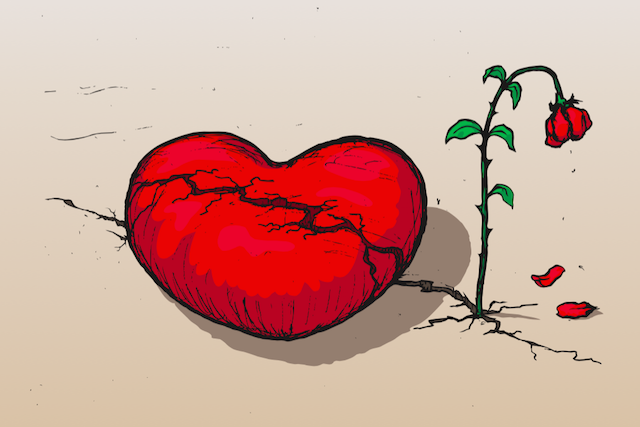
    Broken Heart

    “Sometimes things fall apart so that better things can fall together.” ~Marilyn Monroe

    Whether we’re processing disappointment or a tragedy, heartache can seem irrevocable, as if our entire existence has been nuked into bleak devastation.

    While it can be hard to consider the possibility that these barren circumstances could be necessary, or fruitful, heartbreak can show us a great inner strength that exists in unsuspecting, subtle ways.

    I was never the kind of person who was convinced that consuming, true love was real. (You know, the kind that Celine Dion sings about.) Yet, that is exactly where I found myself when I met a man who had a set of traits that I had only dreamed of.

    And when it abruptly ended, with no explanation, I was devastated and bewildered. Now on the other side, these are the things I would have said to the girl laying on the pitch-black bathroom floor when she was drowning in questions about faith and forgiveness.

    Every activity is an act of strength when you’re struggling.

    Every time you get out of bed, go to a yoga class, or just do the dishes is a strong initiative of willpower because you’re pushing forward with your life, household, and health. You may still feel depressed, but it’s in these small measures that you’re seeding something wholesome for your present and future.

    Be proud you took a risk.

    While the destination may not be the oasis you’d envisioned, you have to remember why you set out on the journey.

    You took a chance by opening up to someone or attempting a new endeavor. It takes a great deal of courage to venture into an exploration of the precarious unknown, and you have to give yourself praise for making an effort.

    Move with the emotion.

    Sorrow can feel like a suffocating place of confinement. Yet trying to power through and forcing yourself to get over what you’re feeling is an act of denial. Our sentiments are a part of us and they can’t be amputated on command. Honor this part of yourself and try to progress with it in tow.

    Accept your choices.

    We can incessantly pick at the “should haves” and “would haves,” but your inner GPS chose a route based on the information you had at the time. You couldn’t have done anything different. When you can fully embrace this, it is an act of forgiveness to yourself, because you stop questioning your capabilities. Everything you did was as it was supposed to be.

    Stay present.

    The monkey mind wants to pick at the past and guess about the future. It takes work, but when you can fully focus on the details of the present moment, the questions and concerns will subside. You can do this by taking notice of your senses in your immediate surroundings—the taste, smell, touch, and of course your breath.

    Just like any fitness routine, it takes practice. Don’t be bothered by the number of times you have to re-center your thoughts; just keep doing it.

    Look for beauty.

    Whether you go to a museum, a botanical garden, or just enjoy a sunset, seek out the aesthetic that you find pleasing. Doing so will allow you to reconnect with a part of your true self. It can also be a soothing reminder that there are other amazing things in life beyond your distressed situation.

    Ask for company.

    Some cultures teach us to shoulder our own burdens. And as such, you may want to lock yourself away in isolation because you may not want to reveal your state of affairs or you don’t want to trouble anyone else. But if you’re really feeling lonely, reach out to family member or a friend.

    You probably feel fragile in this vulnerable condition, but showing up with an affliction allows others to know you on a more genuine level, and it also may reveal a greater depth of their own. Even when you feel broken, other relationships can form and even grow.

    Getting through heartache can be incredibly difficult. Give yourself what you need to let your healing unfold day by day, without judgment for the method or self-care that you choose.

    You can’t predict how long the process will take, but there will come a time when the pain and anguish will diminish. You’ll get there…

    Broken heart image via Shutterstock

  • Direct Your Emotional Memory to Feel Good Now

    Direct Your Emotional Memory to Feel Good Now

    “When everything seems to be going against you, remember that the airplane takes off against the wind, not with it.” ~Henry Ford 

    You’re stuck at work and you dream of something better.

    This dreaming usually starts off great. You imagine yourself sitting at a desk working on a million dollar project or teaching underprivileged kids how to multiply seven times three.

    Whatever your vision is, it’s good to daydream about this, but what usually happens is that we snap out of it, and reality smacks us in the face. We’re answering phones, running errands, and hating our lives.

    I’ve been there, most of Gen Y is currently there, and everyone else was also there at some point in their early careers. Through the years I’ve interviewed hundreds of people about their careers. Each one always talks about one tool that they use over and over again.

    Selective Memory

    I noticed that most of the older people look back on their early careers in fondness. They forget about the pain and remember the good times. A lot of times they even look back on the pain in fondness.

    They see how their superpowers had developed over the years. They know that each struggle was a part of their career growth and happiness.

    My father, a small business owner, an electrical contractor, struggled in his early years. He had to run around hunting down jobs. No one knew who he was, so the jobs didn’t fall on his lap. He had to schmooze with old and new contacts.

    I remember him coming home dejected, tired, and grumpy. I could have gotten free meals from the school, but my parents were too proud. I brown bagged my lunch 99.9% of the time. We couldn’t afford $.75 for a school lunch.

    Now my father looks back on that time in fondness. He’s proud of my family’s fortitude. It got them to where they are now. Let’s put it this way, they can go on vacation anytime they want even though my father still works. He works because he enjoys what he does and doesn’t want to give this up.

    If only he could have seen the magic in what he was creating when he created it. He would have saved himself a lot of worry. It’s this process that we can all use to help us to bring happiness to our struggles. (more…)