Tag: embrace

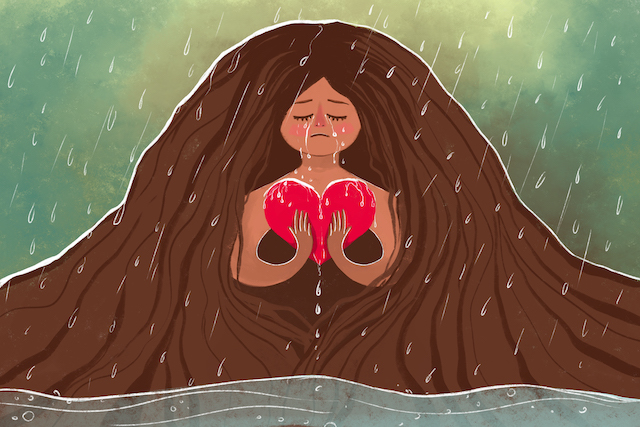
  • The Grief We Can’t Run from and Why We Should Embrace It

    The Grief We Can’t Run from and Why We Should Embrace It

    “I will not say: do not weep; for not all tears are an evil.” ~J.R.R. Tolkien, The Return of the King

    Grief creeps up on you when you least expect it. It reminds you of the person you have lost when you’re out for coffee with friends, watching people hug their loved ones goodbye at the airport, and when you’re at home thinking about people you should call to check-in on.

    Even when you think that enough time has passed for you to be over it, grief pulls at your heartstrings. You think about all the ways that life has changed, and your heart longs to have one last conversation with the person you have lost, one last hug, and one last shared memory.

    A wise person once told me that when you love someone the hurt never really goes away. It grows as we do and changes over time becoming a little bit easier to live with each year.

    Grief is not something we can run from. I know this now from trying to run, hoping I would never have to feel the pain I was carrying deep within my heart.

    In November of 2020 I lost my godfather, a person I loved and cared for deeply. I also learned about my estranged father’s death when I googled his name. The reality that my estranged family had not had to decency to tell me of his death stung. I also lost people I had known and were connected to in my community.

    The news of these deaths hit me with an initial shock—they did not seem real. For a day after discovering the news of each loss I found myself walking around in a blur, unable to eat or sleep. The next day I was able to force myself to function again. It was as if the people I had lost were not really gone.

    When friends and family learned of the losses I had faced they reached out to me and offered support. I assured them that although I was sad, I was fine. Growing up in an unsupportive family I did not know how to accept their support, as it felt foreign to me. So, to avoid talking about my feelings and facing my pain, I turned the conversation back to them and asked about their work and/or their children. Slowly, people stopped asking how I was doing or how I was feeling because on the surface I seemed more than fine.

    I was functional in my professional roles, writing articles, engaging in research, mentoring students, collaborating with colleagues, and making progress in my PhD program. I appeared like myself during online work and social events. I continued to support my friends and neighbors as if nothing had changed. Silently, I was fighting a battle that even I knew nothing about.

    Each day I would force myself out of bed and tackle a lengthy to-do list comprised of personal and professional work and obligations. In the evenings I would force myself to work or engage in physical activity so that I did not have time to feel. In the initial darkest moments, I convinced myself that if I kept going, kept moving forward, I would not have to feel the pain I carried in my heart. 

    I became more productive than normal. I wrote more academic and non-academic articles, I volunteered and provided support to online communities, and I readily volunteered to edit colleagues’ work. In the few moments of downtime I gave myself each day I would either sit blankly staring at my computer or find myself crying. I couldn’t feel sad, I did not have time to feel sad, I needed to keep going I told myself.

    The pandemic made it easier to live in denial about my losses and pain because normal rituals associated with death, like funeral services, had either been postponed or restricted to a select number of individuals. Perhaps if these rituals had been in place, I would have been forced to address my grief in a healthier manner.

    I continued to run from my pain by adding accolades to my resume and taking on as many projects as I could find. Spring blurred into summer, and I found myself becoming irritated by the slightest annoyance. Sleepless nights and reoccurring nightmares became normal. I had less patience for my students, and I struggled to be there for the people who needed me.

    I found my mind becoming slower, and by the end of June I was struggling to function. Yet, because I knew what was expected of me and did not want my friends or family to worry, I hid it.

    As pandemic restrictions began to ease, and other people’s lives began to return to normal, I became painfully aware that my life could not. I saw my friends hugging their fathers in pictures on social media. Friends recounted seeing family for the first time in over a year and shared pictures of them hugging their loved ones. People in my life began to look forward to the future with a sense of hopeful anticipation. Work began to talk of resuming in-person activities.

    I could no longer use the pandemic to hide from my grief, and I became paralyzed by it. I had to feel the pain. I had no choice. I couldn’t function, I couldn’t sleep, and I could barely feel anything except for the lump in my throat and the ominous weight in my chest.

    My godfather, my biggest cheerleader and the person who made me feel safe, was gone. It felt as though anything I did or accomplished didn’t matter the same way anymore. I longed for conversations with him I would never be able to have. The passing of time made me aware of the changes that had taken place in my life and how much I had changed without him.

    Throughout July I found myself crying constantly, but I was compassionate with myself. I no longer felt I had to propel myself forward with a sense of rigid productivity. Instead, I focused on slowing down and feeling everything. I asked work for extensions on projects, which I had previously felt ashamed to do. Other obligations I either postponed or cancelled.

    I found myself questioning my own life’s purpose. Had I truly been focusing on the things that mattered? What mattered to me now that the people I cared about most were gone? How could I create a fulfilling life for myself?

    There were days I didn’t get out of bed from the weight of my grief. Yet there were also days when I began to feel again—feelings of sadness, peace, joy, and even happiness that I had been repressing for months.

    I allowed myself to cry when I needed to or excuse myself from a social event when I was feeling triggered. When feelings of longing washed over me, I accepted them and acknowledged that a part of me would always miss the people I had lost. Within the intense moments of pain and loss I found comfort in the happy memories, the conversations, and the life we had shared.

    Slowly, the nightmares disappeared, and I began to sleep better again. Although I was sad, I also began to experience moments of happiness and feel hopeful again.

    The grief I had tried so desperately to run from became a strange source of comfort. Grief reminded me that the people I had lost had loved me, and the fabric of their lives had intertwined with mine in order to allow me to be the person I am today.

    The questions that plagued me, about what mattered to me, gradually evolved into answers that became action plans toward a more fulfilling life. In running toward grief and embracing it I made myself whole again and discovered a life I never would have otherwise known.

    We instinctively want to avoid our grief because the pain can feel unbearable, but our grief is a sign we’ve loved and been loved, and a reminder to use the limited time we have to become all that we can be.

  • How to Really Embrace Yourself (Even in the Face of Criticism)

    How to Really Embrace Yourself (Even in the Face of Criticism)

    Arms Open

    Above all, be true to yourself, and if you cannot put your heart in it, take yourself out of it.” ~Unknown

    Sitting at a party minding my own business, I wasn’t expecting it. I had no reason to. A comment filled with sarcasm and authority shot out at me from a across the room.

    “Shut up Kathryn.”

    It hit me like a bullet aimed straight at my heart.

    I wasn’t even aware I was being particularly quiet. I was simply being me. Taking in my surroundings, quietly observing, listening to the conversations that encircled me.

    But someone had noticed I was in a quiet mood. And for reasons that I will never fathom, they felt the need to bring it the attention of the entire room.

    “Shut up Kathryn,” they smirked.

    The comment instantly consumed my thoughts as all eyes turned toward me and sniggers of laughter filtered through the room. As my mind went fuzzy, I grappled for an appropriate response.

    But what possible response is there?

    As my insecurities were highlighted to anyone who would listen, I wanted the ground to open up and swallow me whole. Right there and then.

    They thought they were being funny. But I found little to laugh about. The pricks of tears welled up as I fought hard to push the pain away, deep inside me. But I had to play along. Had to pretend. Had to smile. Had to laugh. As if all was okay.

    But it really, really wasn’t.

    And when I got home I cried. Then I cried some more.

    I was haunted by three little words that represented everything I felt insecure about: my quiet nature. My introversion. My shyness. The things that I wished I didn’t have to deal with. The things I wished I could change.

    When I look back at that day as a teenager, I want to comfort my younger self. To hold her close and whisper in to her ear that it will all be okay. To tell her that she will look back at this day and gain strength from it.

    That she will learn to grow, embrace herself for who she is, and feel so empowered; that even though she didn’t dare share her feelings with anyone at the time, as an adult she will find the courage to share this story with you today.

    To really embrace your natural persona, to live life in a way that’s completely and utterly true to who you are, and to let go of the words of the critics that may shroud your thoughts, here are three pieces of advice that have worked beautifully for me and which I hold close, if ever I falter.

    Surround yourself with support.

    Here’s the thing—you aren’t on your own. We all have insecurities, we all face challenges in our lives, and we can all find support if we reach out for it.

    Move yourself away from the critics and release their scathing comments from your world. They come from people with their own troubles and you don’t need them in your life.

    Instead, surround yourself with the people who make you feel alive—who provide you with support, inspiration, and words of encouragement.

    And then turn to these people in times of need. They are the ones you will help you grow, thrive, and learn to love every inch of who you are.

    Work out where you shine.

    We are all born with wonderful strengths that, if used on a daily basis, can help us find our true calling.

    Give yourself the time and space to reflect and then begin to develop a self-awareness and understanding of situations where you feel completely content and comfortable.

    These are the moments when you are in ‘flow’—when life feels easy as you start doing the stuff that you were born to do.

    By bringing more of these moments into your life, your confidence in your abilities will flourish and your insecurities over time will fade.

    Listen to your body and give it what it needs.

    I truly believe we all need to listen to our bodies more. If you start your day feeling exhausted and drained, then think about what that means.

    You are only human, so give yourself a break. If you feel like resting, then rest. If you crave time and space by yourself, then don’t feel guilty about turning down an invitation to go out with friends.

    Nurture your mind, body, and spirit in whatever way it craves, and your strength will surely grow.

    Learning to embrace yourself is a journey that can hold many challenges. And if you’ve had to face unhelpful criticism or scathing comments throughout your life, then it can be all the more tricky.

    But do you know what? There are amazing ways that you can help yourself and find peace with who you are.

    You’ve just got to give yourself the time to grow.

    Photo by pshegubj

  • 33 Things to Accept and Embrace

    33 Things to Accept and Embrace

    “Letting go gives us freedom, and freedom is the only condition for happiness.” ~Thich Nhat Hanh

    Today is my 33rd birthday, and at this very moment I am likely sipping a fruity drink by a pool in Las Vegas.

    My boyfriend and I go there often on his Monday and Tuesday off days because it’s not too far from LA; the weekday hotel rates are great; and we’re both huge fans of buffets, shows, and (occasional) poolside day drinking.

    Since I’m writing this in advance, I can’t speak to how I actually feel right in this very moment, but I imagine (and hope) it will be a little something like this:

    I’m wearing a bikini, not a one-piece, like I did for years when I was younger—and I’m rocking it with confidence because I’ve finally decided my imperfect 5’1″ figure is flawsome.

    I’m fully lathered in sunscreen, despite my pasty, almost transparent complexion, because I’ve realized I need to take care of my body if I want it to be healthy.

    I’m mesmerized by the sun and the water, and easing into the moment, despite having a ton of work to do and even more professional uncertainty.

    And I’m grateful for a million and one things worth loving—smiling strangers, free WiFi, enjoyable work I do through it, and time to disconnect from it.

    Looking back over the years, I realize my biggest challenge has always been learning to let go. I put so much energy into trying to control my body, my relationships, and my future that I wasn’t able to relax and enjoy the moment.

    This is something I still work at, but I’ve made a lot of progress.

    So in honor of this day, I decided to share with you 33 things I’ve learned to accept and embrace:

    1. Beauty cannot be defined. Beauty is a reflection of what we deem valuable. For me, it’s an inner radiance and bliss that transcends judgment and fear, or at least makes an effort to.

    2. Perfection cannot be obtained (and it’s boring anyways). Trying to be perfect makes us feel inferior and desperate to change; owning our uniqueness makes us feel worthy and excited to evolve.

    3. Love will be messy at times. Sometimes love looks nothing like the ideal. Unless you’re in an unhealthy relationship, lean into the messiness. That’s where the intimacy is. (more…)