Tag: eating

  • Consumed by Food? 6 Lessons on Overcoming Disordered Eating

    Consumed by Food? 6 Lessons on Overcoming Disordered Eating

    “The struggle you’re in today is developing the strength you need for tomorrow. Don’t give up.” ~Robert Tew

    For a good twelve years of my life, I was obsessively consumed with food.

    I had this unhealthy relationship with my body and my eating. I simultaneously loathed myself and desperately desired to be skinnier, while also compulsively binging until I couldn’t move.

    For months I would restrict. I’d eat some fruit for breakfast, green peppers, and ranch dressing for lunch and a few bites of whatever was in my fridge for dinner. I was also hooked on diet pills and exercised until I worked off every single calorie I had eaten (which was not much).

    And then, because no one could ever sustain a diet of 800 calories (if that!), I ended up binging. I’d find myself in this compulsive frenzy, stuffing my face with bowls of ice cream, cookies slathered in icing, leftover brownies, and candy.

    This was followed by fits of depression, a deep loathing of my body, and promises to start again on Monday.

    I lost and gained the same sixty pounds over and over and over again. It was an exhausting and miserable way to live.

    When I began getting help, I thought I would never get to the end.

    My recovery consisted of lots of tears, endless pages of journaling, voraciously reading through self-help books, a mentor who guided me through the process (and kept me afloat when I wanted to give up), yoga, meditation, and lots of lessons learned along the way.

    It took years to get to the place I am today, where I don’t think about what I’m eating 24/7, I’m not consumed with being a size two, and I can relax into a life filled with freedom and ease.

    But every hardship, struggle, and tear was worth the fight because I’m a different person now. I’m the authentic, happier version of that girl I used to be. My life is full; my heart is happy (most of the time). And the lessons I learned on my journey still impact how I live today:

    Here are the top lessons I learned from my crazy, all-over-the-place eating.

    1. Comparing yourself to others only sets you back.

    When you gauge your own progress, your own body, and your own successes against others, it leaves you in an endless game that you’ll never be able to win. Trying to keep up with other people leaves you hopeless and discouraged. Others’ lives are depicted through snapshots; you never get the whole picture.

    Your journey is about focusing on your own milestones and progress. You can never compare your insides, struggles, and hardships with someone else’s, because you never know what is going on deep within them.

    There is a depth to everyone that we aren’t aware of. Each of us has our own battles, struggles, and insecurities. Focusing only on you frees up the energy it takes to create deeper healing.

    2. Your relationship to food mirrors your relationship to your life.

    Your relationship to food reflects your relationship to everything in your life: your family, your friends, yourself, and your mental/emotional state. What you are doing with your body/food is a projection of what you are doing in your mind/spirit.

    Exploring your relationship with food takes you deeper into your relationship with everything else in your life.

    The need for control and certainty is reflected in rigid, inflexible food rules. Fear of loneliness and emptiness is seen in eating for comfort and escape. Hurrying through life, always wanting to be in the next place and achieve the next goal, is reflected in rushing through meals. When we are aware of these connections, we can begin to change.

    When we change our relationship to food, we change the way we live. When we abuse our body, we abuse ourselves. And when we respect and honor our body, we respect and honor ourselves.

    3. You will never be done.

    Dealing with food issues isn’t something you can just ignore, put aside, or avoid. Healing disordered eating means dealing with it every day, multiple times a day, for the rest of your life.

    This is actually good news! You will constantly be refining what works for you, what foods give you energy, how emotions contribute to eating, what way of eating fits into your lifestyle, and what truly serves you.

    When you fall back into old habits, when you find yourself wanting to overeat and restrict, you’ll know it’s a signal to go deeper (see #2).

    4. Perfectionism derails progress.

    Striving to be a perfect eater, have the perfect body, and be a perfect person is stifling and exhausting. When you’re yearning to achieve this unattainable goal, it only sets you up for failure.

    We need to soften our expectations, relax into our imperfect selves, and realize that no one is meant to be perfect in any area of life. In a “perfect” world, everything is stagnant. There is no growth and no evolution. It is only through mistakes, trial and error, and experimentation that we learn and grow.

    When you allow yourself to make mistakes—whether it’s messing up your food plan, getting into a fight with a family member, or realizing your work isn’t satisfying—this is how you learn, incorporate feedback, and chart a new course.

    5. You are really, truly good enough—just as you are.

    I always thought that I had to lose more weight, be thinner, and have a flatter stomach in order to be accepted by others, and that I needed their acceptance to be happy. But the irony is that when you truly believe you are innately acceptable, just as you are, your healing begins to deepen and you’re able to nurture a happiness that isn’t dependent on what other people think.

    6. Disordered eating is your soul desperately crying out for help.

    Our biggest obstacles often turn into our biggest lessons. A screwed up relationship with food forces you to go deeper into yourself to really heal. It gently nudges you to explore the depths within you that you didn’t know were there, to heal all limiting beliefs, emotions, thoughts, and habits, and uncover who you really are.

    This journey is an act of pure, unfiltered courage. It exposes you raw and leaves you vulnerable. And as you realize this truth, you realize this is a gift. This is a chance to go deeper, live more honestly, and be more authentic. And isn’t that what living really is all about?

  • Avoid the Pain of Emotional Eating and Transform Your Mood

    Avoid the Pain of Emotional Eating and Transform Your Mood

    Eating Ice Cream

    “To ensure good health: eat lightly, breathe deeply, live moderately, cultivate cheerfulness, and maintain an interest in life.” ~William Londen

    In essence, interconnectedness refers to the linkages between all things. Some even take it a step further and say that not only is everything linked, but in actuality, there are no real distinctions between you and me, between thought and behavior, or between past, present, and future.

    On the surface, the concept of interconnectedness seems simple—everything is linked to everything else, and everyone is linked to everyone else. However, in practice, applying the concept of interconnectedness to the way I live has been anything but simple.

    After much contemplation, I came to the conclusion that if I were going to truly live interconnectedness, and not just think or read about it, I would need to fully grasp the fact that my thoughts, actions (or inactions), and outcomes were fundamentally intertwined.

    This not only impacted the ways I engaged with others, but also shaped the ways in which I engaged with myself, particularly with respect to what, when, and how I eat.

    Interconnectedness Eating 

    You see, for me, preparing and eating colorful, veg-centric dishes are beautiful, almost spiritual acts. Unfortunately, though, when negative emotions or stress creep into my life, my philosophy on the transcendent nature of food and eating gets replaced by hurried preparations and scarfing down faux-food.

    It was during one of my particularly busy weeks that I found myself mindlessly eating cookie dough ice cream for dinner, and thought, “How could interconnectedness help insulate me from this cycle of soothing my negative emotions with poor eating habits?”

    First, I tried to document my patterns.

    Upon doing so, I realized that when I am sad or angry, I actually don’t eat. I just totally lose my appetite. I also realized, however, that by not eating, I am essentially robbing my body of its ability function and, of course, to regulate my emotions.

    Moreover, deprivation also meant that I was not cooking—the one activity, in addition to dancing, that’s a surefire way to turn my negative mood around.

    So here it was, interconnectedness working oh so clearly: sadness and anger connected to deprivation, deprivation connected to physiological deterioration, and both of those phenomena connected to me cutting out the very thing that makes me feel better—cooking.

    When caught in this cycle, my energy wanes, negative emotions persist, and deprivation runs rampant. It was clear: My feelings, my behaviors, and my body were interconnected.

    Going back to stress, rather than not eating at all, I tend to eat a lot when I’m stressed, a lot of sweets, that is. While not total deprivation per se, consuming a bunch of processed sugar leads to similar ends—feeling undernourished, prolonged negative emotions, and negative physical outcomes, as well.

    All of this to say, the first part of interconnectedness eating is noticing. Noticing the linkages between our emotions, our thoughts, and our food choices and eating behaviors.

    Some folks eat a lot; some do not eat at all. Some folks prefer sweets; some salty or fatty foods. For some people, stress, sadness, and anger elicit the same eating behaviors; for others, there are nuances between the three. The point is, it’s important to ask yourself what are your specific patterns?

    Then what? What do you do once discovered your patterns?

    Set a Mood of Joy By Creating a Nourishment Ritual

    Stop.

    Now, when I’m sad, angry, or stressed, I stop. I stop, I note what I am feeling, and then I think about what role I have played, either through my actions or through my appraisals of the situation, in whatever has led me to feeling negative. I remember that I am interconnected with whatever it seems like on the surface is causing my negative mood.

    Importantly, just as I help to create my own sadness, anger, or stress, I can also transform my sadness, anger, or stress into my joy.

    Again, how you may ask? By going into full on nourishment mode.

    I put on a frilly apron, which makes me feel cute, and turn up some Latin or Brazilian music, which soothes my soul. In short, I start by setting a mood of joy, even I do not feel joyful yet. By starting the ritual of nourishment before food ever touches my tongue, I’m on track to a better mood and healthy actions.

    Next, I think about a dish to make, one with aromas that tantalize my nose and with colors that intrigue my eyes. Then, I start to prepare the dish. I cut, stir, whip, and sauté with care. In this way, cooking becomes a calming, nourishing act of mindfulness in and of itself.

    Once my dish is prepared, I set the table. Then, I serve myself, give thanks, and taste my culinary creation. With each bite, I’m reminded of just how lucky I am to have access to food, and with each moment of gratitude, a little bit of my sadness, or anger, or stress dissipates.

    Even when I do not have time to cook, I do this last set of actions—setting a place at the table, savoring my food, and evoking gratitude because I’ve found that just the act of slowing down can be realigning.

    I Still Have Far to Go

    Although I still have a lot of progress to make before I completely stop reaching for ice cream after a stressful day, I can see the difference in my eating after recognizing that my emotional, physical, spiritual, and social selves all benefit when I embrace their interconnectedness.

    We all owe it to ourselves to be conscientious about our eating patterns, but with so many demands, it can be exhausting to do so consistently.

    I truly believe though when we recognize interconnectedness and embrace the power we all have to create joy in our lives, we liberate ourselves. Why not use this power in the context of something we do each and every day—eat.

    Photo by Masha Kushnir

  • How to Eat Mindfully and Actually Enjoy Your Food

    How to Eat Mindfully and Actually Enjoy Your Food

    “Smile, breathe, and go slowly.” ~Thich Nhat Hanh

    It’s Sunday night. A steaming plate of spaghetti is set in front of me. Salivating with wide eyes I grab my fork and prepare to dive in. We know how this will end. I will say to my husband while patting my tummy and undoing my top button, “Tomorrow we will start our healthy eating plans.”

    This scene raises a number of questions:

    Why can’t I resist the urge to inhale my meal like an out of control Scooby Doo bingeing on Scooby snacks? Even when my body is screaming “Enough—you’re killing me,” I will still reach for another donut.

    Secondly, when did we become so unconscious that my Mandarin buffet gorge from the night before is a mere fog like hangover?

    We are just plain food obsessed.

    You don’t have to look far to prove this obsession. Walk down any fast food-lined street in any North American town and observe the unprecedented obesity.

    Look to our health crisis. Not only are millions of Americans suffering from eating disorders, but the hospital hallways are lined with people with heart disease, cancer, and an epidemic influx of diabetes.

    Look to our media. I shudder every time I hear someone say they love the show “Man versus Food.” Have you ever been to a factory farm? In order to feed our gluttonous ways, factory farms are piling millions more animals into production spaces, causing harm to animals, the environment, and humans.

    In short, we have a lot of sick people and a lot of animals suffering.

    Why is something we deem so pleasurable causing so much harm? We could debate many arguments as to why we have developed unhealthy food relationships, reasons such as two working families, fast food biggie sizes, lack of exercise, technology, and inexpensive junk food.

    But at the root of the problem is that in our fast paced society we have forgotten how to slow down and eat mindfully.

    When we regain consciousness and reconnect to Mother Earth the ugly side effects of our food obsession inevitably dissipate.

    My very wise Buddhist teacher recently gave us a challenging assignment. The intention was to discover that everyday mundane tasks, such as eating or washing the dishes don’t have to be mundane at all. Our first challenge: Practice mindful eating. The results must surprise you.

    5 Steps to Mindful Eating

    1. Examine your emotions.

    It’s nearing bedtime; the house is quiet and dark, my agitated mind illuminated by the dim fridge light. What am I feeling? Boredom, anxiety, anger, sadness? Am I really hungry? After all, I did have dinner a mere three hours ago?

    The truth is, my husband and I had an argument, I’m in need of comfort and my mind is fixated on the chocolate peanut butter ice cream in the freezer. But after three months of nightly indulgence and two inches added to my waistline I’ve only compounded my frustrations, not abolished them.

    This is a perfect example of eating by emotion. Looking at your mind from above it makes it easer to recognize unhealthy eating patterns and make changes. Before you steal from the cookie jar always ask yourself, does my body need nourishment or am I feeding my emotions?

    2. Find a food you love and set the stage for success.

    A natural, colourful fruit is always a good first choice; an apple was my first. Now turn off all media, put your iPhone away, and no talking. It might be hard at first to bottle your urges for idle chatter, but be still, breathe deeply, and fight against it. Start with ten minutes.

    3. Express gratitude.

    Resist the urge to bite into your apple. Take a moment to consider all the kindness that went into growing this apple. This may at first sound absurd but this practice develops your own loving kindness and gratitude.

    Think about the mother who raised the farmer who planted the apple tree. Think about the miraculous ecosystem. Consider the apple pickers, the supermarket workers. Honestly, we could go on forever and what you would ultimately discover is that the kindness of the entire universe is in this apple.

    Now that’s some food for thought, but don’t worry if you’re not there yet. Maybe just start by expressing gratitude that you are able to eat in peace and comfort. Say a silent thanks.

    I’ve noticed that expressing gratitude centers me in the present moment, negative emotions dissipate, and it reminds me not to take things for granted.

    4. Savor the flavor.

    While this may seem like an eternity with your bowl of sweet raspberries on the counter taunting you, but in reality it’s only a mere minute or two; still, if you can, hold off long enough to closely observe your food. Feel the coolness of the apple, examine the deep red color, smell the sweetness. Allow your senses to explode.

    Okay, now we’re ready. Slowly take a juicy bite, roll the apple in your mouth, savor the sourness, play with the texture, and notice the intensity. Before you take another bite, chew slowly and completely before swallowing. Eat the entire apple this way: slowly, silently, mindfully.

    Unbeknownst to my co-workers the mundane mid-day apple break in my cubicle has suddenly turned into a powerful experience. After practicing mindful eating I’m also fascinated to realize that I don’t even enjoy the tasteless, processed morning granola bar that I scarf down in the car.

    Mindful eating naturally results in a love of healthy foods. It’s inevitable.

    5. Build the mindful eating habit.

    We live in a busy world and there will always be days when we need to wolf down a slice of pizza on our lunch break, but consider practicing this technique once a week, and then once a day. Eventually, it will just become habit. You’ll become be present.

    However you should beware there are side effects of mindful eating, the fine print reads:

    You may develop a love of natural foods, feelings of satisfaction, a sudden desire to be active, an ability to recognize your body’s nourishment needs, weight loss, mood control, more energy, glowing skin, disease prevention, control over your emotions, living in the present moment, and quieting the mind.

    Imagine the change we could invoke throughout world if everyone practiced mindful eating. It’s not too late to teach our children new habits. The positive transformation to our health care system, our own and our children’s health and wellness, and the entire animal kingdom is exciting and within grasp.

    We don’t have to be food obsessed. Let’s break the cycle. Doesn’t it make you want to go grab a fuzzy peach and give it a try? Go on. I’m about to enjoy an intense blueberry experience myself.

  • 13 Tips for Eating More Compassionately

    13 Tips for Eating More Compassionately

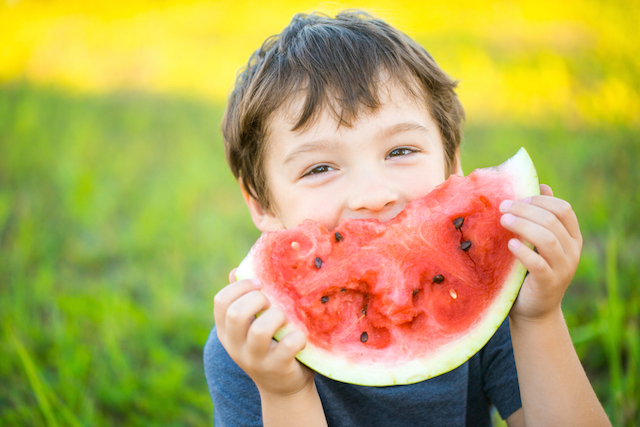
    Boy Eating Watermelon

    “If you want others to be happy, practice compassion. If you want to be happy, practice compassion.” ~Dalai Lama

    As a child, I had no idea that such a concept as vegetarianism even existed, let alone veganism.

    Since I grew up on a sheep farm, raising animals and eating them were just what we did.

    The sheep, cows, and chickens from my childhood seemed to have pretty happy lives. There was grass to eat and water to drink and space to roam about. The only thing that used to worry me about them was that they’d freeze outside in the winter with no coats on.

    It wasn’t until I went to university that I even thought to question whether I should be eating lamb, or beef, or chicken.

    Over the years, I’ve come back to the point of view that while I really respect people who choose to be completely vegetarian or vegan, it’s not for me.

    As a little experiment, I spent a month being vegetarian last year. While I found I struggled with a completely plant-based diet, it did give me some great ideas for how to eat more compassionately by not eating meat every day.

    It was quite refreshing to look at my diet with a completely fresh pair of eyes. To be honest, I was surprised by how easy it was to adapt some of my favorite dishes to suit a meat-free way of eating.

    Here are some of the lessons I’ve picked up to help get you started eating more compassionately.

    1. Make Monday meatless.

    Something I’ve been experimenting with over the last few months is making a conscious decision to eat meat-free on Mondays. It’s a great way to add a bit of veggie fun into the week. And I’ve actually found that seeking out vegetarian options for Monday has meant we’re more likely to eat vegetarian at other meals as well.

    2. Add some lentils to your life.

    I’ve always been a fan of lentils, but after my month of vegetarianism, I developed a newfound respect. If you’re in a hurry, canned lentils are a really convenient option.

    Cooking lentils from scratch is pretty simple, unlike beans and chickpeas. No soaking required, just simmer in a pot like pasta until the lentils are tender (about 15-20 minutes). Drain and use anywhere you’d normally use ground beef. Lentil bolognese, lentil tacos, lentil burgers, lentil lasagna, lentil chili—there are endless possibilities.

    3. Replace canned fish with canned legumes.

    You can do this whether it’s a tuna or salmon salad or a tuna sandwich. Canned white beans or chickpeas will be equally as satisfying and quick. If you normally mash your sandwich tuna with mayonnaise, try mashed chickpeas with Vegenaise for a change.

    4. Grate Brazil nuts, not cheese.

    If you love your grated parmesan sprinkled liberally over everything but are keen to cut down on cheese, consider Brazil nuts. They make a wonderful alternative. Just finely grate your nuts with a Microplane and use them anywhere you’d normally be reaching for the parmesan.

    5. Make the most of mushrooms.

    Known as ‘meat’ for vegetarians, a large roasted portobello or field mushroom can be just as satisfying as a steak. Just pop them in the oven with a little garlic, thyme, and a generous drizzle of olive oil. Leave for about a half-hour until tender and juicy.

    6. Order the vegetarian option for a change.

    One of the surprise outcomes of my vegetarian month was the discovery that the ‘vegetarian’ option on restaurant menus can be surprisingly delicious. Next time you’re out, why not give the veggie lasagna or the veggie burger a go?

    7. Try some tofu.

    While tofu may have a reputation for being pretty bland, it’s actually a great protein sponge for soaking up flavor. Try cubes of tofu in your favorite curry or stew. Crumbled tofu tends to work well as a ground beef replacer when you’ve had enough of lentils. Or try scrambled tofu with a little curry powder and a softened onion as an alternative to scrambled eggs.

    8. Cream it with tahini.

    Love creamy sauces? Then tahini, or ground sesame seed paste, could be just the thing if you’re looking for a dairy-free alternative. Drizzle this nutty sauce over roasted vegetables or make a dressing by combining equal amounts of tahini, lemon juice, and water.

    9. Go nuts.

    More than just a source of essential fats, nuts are a great way to add crunch and protein to veggie meals. They’re also a wonderfully portable snack for vegetarians and carnivores alike.

    10. Embrace the avocado.

    When eating meat-free, it can be difficult to fill up. Avocado salad with a handful of nuts is one of my favorite vegan lunches. And don’t forget guacamole.

    11. Delve into dark chocolate.

    Dessert can be a lonely place without butter and cream. Fortunately, there’s a whole world of vegan-friendly dark chocolate to explore. You could even get creative and serve a few different dark chocolates from different regions or chocolates with different cocoa contents, and have a little chocolate tasting party to end a meal.

    12. Season with soy sauce.

    I recently read a theory that the Buddhist monks invented soy sauce as a way to convince the masses to become vegetarian. Fish and meat are rich in compounds like amino acids and glutamates, which make them taste delicious.

    Soy sauce also contains a generous slug of these tasty glutamates. So it can be a great flavor booster in vegetarian dishes. Other sources include tomato and mushrooms.

    13. Avoid fake “meat” products.

    I’m a fan of Michael Pollan’s adage to not eat anything your grandparents wouldn’t recognize as food. To me, it defeats the purpose of avoiding meat products if you’re going to expose yourself to the additives and flavors required to get something that isn’t meat to taste like meat. They can’t be good for us.

    Ready to give meat-free Monday a try? Here’s a simple recipe to get you started:

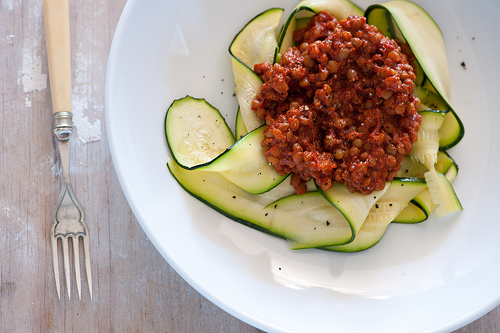
    Lentil ragù with zucchini ‘noodles’ recipe


    Serves two

    Inspired by the good old family classic spag bol (or spaghetti bolognese), these baked zucchini noodles are one of my favorite options for gluten-free comfort food. It’s handy to have a mandoline or vegetable peeler to get lovely fine noodles. You could serve the lentil ragu with pasta if you prefer.

    Feel free to add to the lentils – I’ve kept it super simple but a little garlic, onion, chilli or even basil would work.

    • 2 zucchini, sliced into ribbons
    • 1 can lentils (400g / 14oz), drained
    • 4 tablespoons tomato paste
    • grated brazil nuts, to serve
    • salad greens, to serve

    1. Preheat oven to 200C (400F).

    2. Layer zucchini ribbons over a baking tray a few layers deep. Drizzle with olive oil and bake for 10 minutes or until the zucchini is no longer crunchy.

    3. Heat 3-4 tablespoons olive oil in a medium saucepan. Add lentils and tomato paste and cook for a few minutes until hot.

    4. Taste and season lentils, adding a little more olive oil or some butter if the tomato is too sharp.

    5. Divide zucchini between two plates and top with lentils.

    6. Serve with grated Brazil nuts on the side and a green salad

    Boy eating watermelon image via Shutterstock

  • How to Enjoy Food More: 7 Tips to Savor Meals

    How to Enjoy Food More: 7 Tips to Savor Meals

    “We are indeed much more than what we eat, but what we eat can nevertheless help us to be much more than what we are.” –Adelle Davis

    As I mentioned before in my blog post about needing less money, I recently decided to offer barter advertising through Tiny Buddha—meaning I plan to promote products and services I support in exchange for things I need.

    This week I started my first barter arrangement with L.O.V.E. Delivery, a company here in Los Angeles that delivers organic produce right to your door.

    Before my first shipment arrived two days ago, I actually found myself anticipating its arrival with giddy enthusiasm, like a kid on Christmas.

    It was kind of exciting to know I’d be getting a more diverse assortment of produce than I’d purchase in the store; and it would all be naturally produced, fresh, and personally packaged by someone who loves the work he does.

    I also appreciated that receiving this food created a sense of mealtime mindfulness that started with the delivery, extended to the preparation, and then culminated with a sense of hyper-awareness while eating. It’s instinctive to savor food when you feel a sense of respect and even awe for it.

    I haven’t always felt that way. As a teen and in my early 20s, food was my enemy. I felt happiest when I felt in control of it—meaning I ate a minimal amount of it.

    Even after I adopted a healthier attitude toward food, it remained a rival of sorts. All too often, I hurried through the grocery store, piled the cheapest and easiest-to-prepare items in my cart, and then rushed through the acts of cooking and eating, like items to be checked off my to-do list.

    Anyone who has traveled internationally knows that many other cultures enjoy the experience of preparing and eating meals far more than most of us do in the United States. (more…)

  • Food is My Friend: 6 Tips for Mindful Eating

    “Your body is precious. It is our vehicle for awakening. Treat it with care.” ~Buddha

    Thank you for this food we are about to eat.

    Many of us grew up with families who began each meal with a blessing. These prayers followed people from generation to generation like an affectionate family member showing up when everyone sat down at the dinner table.

    These days, this honoring ritual is largely absent as we pick up food in a bag at a drive-through window, eat from cartons taken directly from the refrigerator without bothering to put the food on a plate or sit down, and spend meal times separated from family members.

    When did our connection to the food we eat become so distant and problematic? Many people have a love/hate relationship with food; they disparage particular foods even when they crave them. They say, “I want you—go away!” Doesn’t that seem a bit neurotic? What a mixed message!

    A mistreated person often acts out in ways that can cause trouble. I think of food as doing the same thing. It tugs at you when you have other things to do and makes demands that you pay attention to it when you would much rather think of something else.

    A perfect example of this is when you are positive you don’t want to eat the ice cream that is in the freezer. The entire time you are thinking this, you get a spoon, get the ice cream and finish all of it!

    I created the following exercises to remind myself to maintain a healthy and respectful relationship with the food I eat. As a result, I’ve lost weight and I choose healthier foods. Give it a try and see if it helps you, too. (more…)