Tag: drugs

  • To My Narcissistic Friend: Thanks for Being My Toxic Mirror

    To My Narcissistic Friend: Thanks for Being My Toxic Mirror

    “It’s okay to let go of those who couldn’t love you. Those who didn’t know how to. Those who failed to even try. It’s okay to outgrow them, because that means you filled the empty space in you with self-love instead. You’re outgrowing them because you’re growing into you. And that’s more than okay; that’s something to celebrate.” ~Angelica Moone

    I’ve had the most unusual, baffling, and frustrating experience with someone recently. And yet, it’s also been a massive catalyst for growth. I’ve seen myself more clearly by observing the behavior of someone who, in some ways, is a lot like me.

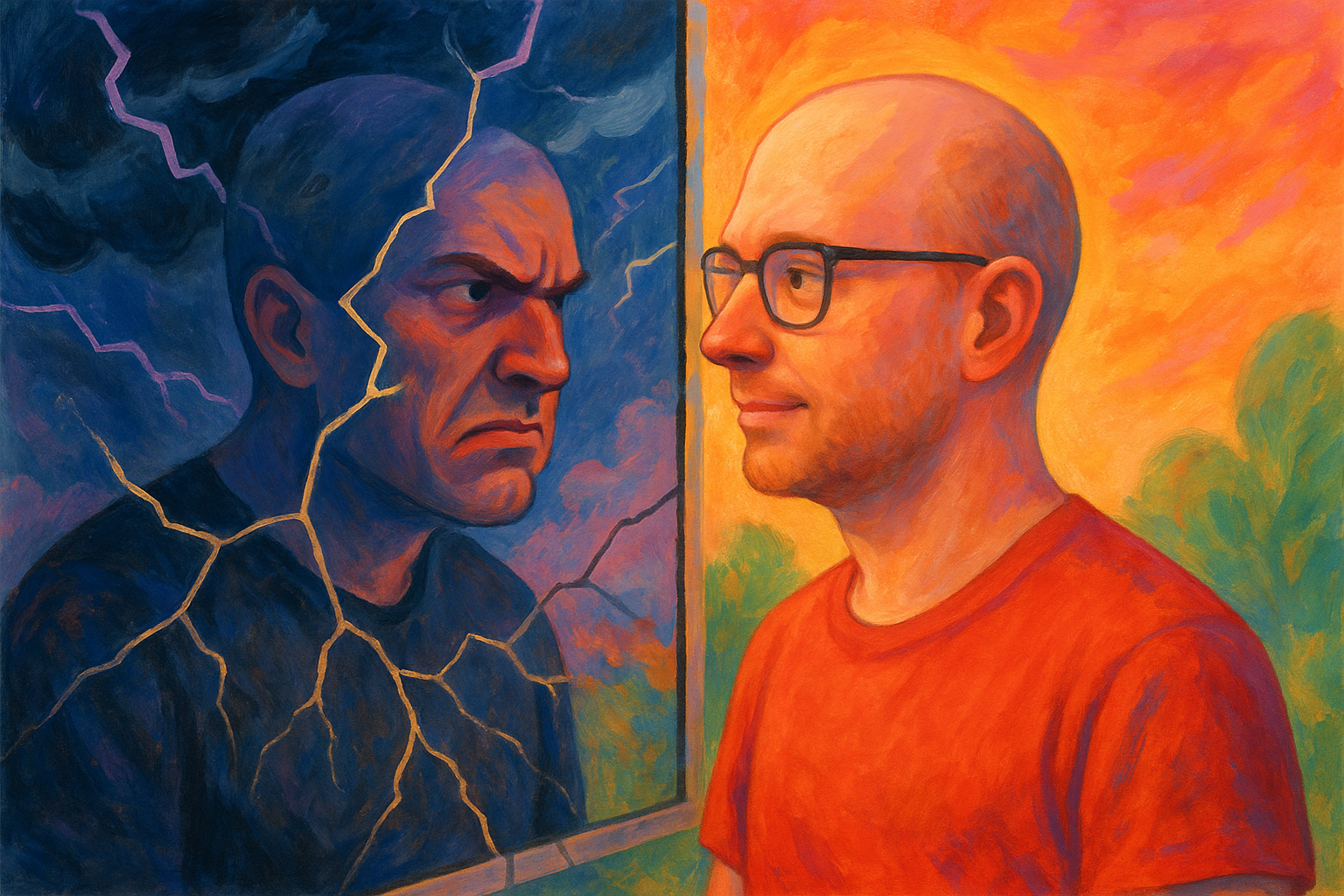
    For me, it’s been the purest demonstration of the phrase “Others are your mirror.”

    This person—let’s call him Simon—has been incredibly toxic.

    He’s insulted me deeply, hurled cruel names, and used gaslighting, manipulation, and blame-shifting to twist reality.

    At times, he cloaked control in false compassion, pretending to help while subtly undermining me.

    He projected his insecurities onto me so persistently, I began to doubt my own sanity—wondering if I really was as terrible as he claimed.

    Thankfully, I’m in a strong place mentally right now. I can see how someone more vulnerable could be shattered by Simon. In fact, I know he’s left a trail of broken relationships behind him. People abandon him left, right, and center—the moment they get close, his toxicity flares.

    At his worst, Simon has been absolutely vile. He ticks nearly every box for narcissistic traits. He can’t handle even mild criticism. When I offered gentle, constructive feedback, his ego erupted, and he lashed out with shocking viciousness. He claims to want self-improvement, but when real opportunities arise, his ego slams shut. Growth is blocked at the gates.

    And yet, despite all this, I feel deep compassion for him. I’ve read enough about narcissists to understand where this behavior might come from. He’s going through hell: job loss, depression, drug use. I’ve been in a scarily similar place. So my empathy kicks in hard. Even though he’s been monstrous, I see pieces of myself in him.

    After clashing with him multiple times, I gave it one final try. I knew by then that avoiding narcissists is usually the wisest route—they rarely change—but I extended one last olive branch.

    It lasted less than a day. He snapped it in half and flung it back in my face.

    It feels like I’m some kind of unbearable truth agent to Simon. His soul just isn’t open enough to withstand my presence. I’m far from perfect, but I’ve worked hard on myself. I try to stay humble, self-reflective, and growth-oriented—and that’s like kryptonite to someone with such a fragile, inflamed ego.

    So now, Simon is blocked. I’m proud I tried. It didn’t work. And for my own well-being, I had to let go.

    I’ve grieved the friendship that might have been. Because, believe it or not, Simon has redeeming traits in spades. He’s brilliant, creative, charismatic. He seems to care about others—though I wonder if that’s driven more by ego than empathy.

    So what good came out of all this chaos? Watching Simon’s worst traits has helped me examine my own.

    Don’t get me wrong—I’m pretty sure I’m not a narcissist, and I don’t think I’ve ever been as vile as Simon.

    But. I have lashed out. Especially when my ego’s taken a hit.

    Back when I was addicted to drugs, I had a devastating fallout with one of my oldest friends—let’s call him Anthony. He was deeply concerned about my behavior. He had a young son, and didn’t trust me—with good reason.

    I’d promised I wouldn’t take drugs on a lads’ holiday, then did it anyway. I betrayed his trust. Later, when we tried to arrange a meetup, Anthony did something incredibly difficult: he told me I wasn’t welcome at his home. He couldn’t risk me having drugs on me—in case his son found them.

    Anthony tried to handle it with kindness and care. But it crushed my ego. My best friend thought I was a danger to his child.

    I exploded. I did a Musk. In a blaze of rage, I told my best friend to go F himself.

    That ended a fifteen-year friendship. I was already depressed, but after that, I spiraled into suicidal depths. Deep down, I knew I was to blame—but my ego couldn’t take it. Blaming Anthony was easier than facing myself.

    He wouldn’t speak to me for years. Eventually, we reconciled, but something had died. The warmth was gone. He kept me at arm’s length, understandably. Now, we don’t speak at all. It’s clear he’s given up on me again. That still stings, but I accept it.

    So can you see why I felt a connection to my new friend Simon?

    Watching him lash out recently awakened something primal in me. It reminded me of my worst moments. And I never want to go there again. I want to master myself; build emotional intelligence; stop letting my volatility hurt people.

    Simon showed me how bad it can get when you’re spiraling—and it’s terrifying.

    All my life, I’ve struggled with emotional volatility. I don’t lose my temper often, but when I do, it’s nuclear. Words are my sword, and when I swing carelessly, the damage is brutal.

    Which brings me to a truth I’ve come to believe: Strong men don’t lack the capacity for destruction—they master it.

    They walk with a sheathed sword, drawing it only when absolutely necessary. It’s restraint, not weakness. It’s honor. It’s the way of the gentleman, the noble warrior. My blade is my voice—sharp, but it’s best when kept in check.

    Weak men lash out at the slightest wound. I refuse to be a weak man.

    Meeting someone as damaged as Simon has clarified my mission. I must continue to heal. I must shed the worst parts of myself. I saw my shadow in him—distorted and exaggerated. It horrified me. And it inspired me to rise above it.

    I’ve started psychotherapy. I’ve even been using ChatGPT as a kind of therapist—surprisingly helpful. This past month has been a surge of self-development. And I have Simon, of all people, to thank.

    Is he doomed to remain toxic? Maybe. The scientific literature suggests that the odds aren’t good. But it’s not my burden anymore. He didn’t want my help. I have to put my own well-being first.

    By cutting him off, I protect myself from future pain.

    And in doing so, I’ve gained greater empathy for those who once cut me off. They saw someone chaotic, unsafe, emotionally destructive. I wish they could see how much I’ve changed in the last ten years. But I respect their choice to keep their distance.

    We can’t change the past. Some bridges are too obliterated and irradiated to ever rebuild.

    But if we choose humility and self-reflection, we can always choose to grow.
  • Lost, Scared, and Broken: How Self-Awareness Saved My Life

    Lost, Scared, and Broken: How Self-Awareness Saved My Life

    “The first step toward change is awareness. The second step is acceptance.” ~Nathaniel Branden

    I felt lost. I felt broken. I felt scared.

    As I sat alone in that cold, dark jail cell, I felt like I had hit rock bottom.

    My feet chilled against the cold stone floor. The creaky wooden bench, stitched together with narrow strips, tormented me.

    Inmates shouted all around me. Their voices echoed in the dark. It was like the noise of the outside world had finally caught up with the noise inside my head. I just wanted to scream.

    I was sixteen, but I felt as if my life was already over. Shame and regret filled my heart as I wondered: Is this really all there is? Is this the path my life has taken? Who am I becoming?

    For the first time, I faced a truth: I was becoming the person I despised most—my father, a man consumed by addiction and destruction.

    My father’s absence was a constant presence in my life. Only occasionally, when he was off one of his benders and attempting to get clean, was he around. But usually, he would drink a lot of alcohol at the house.

    I hated him. I hated that man so much for the pain that he caused my mom. The sweetest woman that I have ever known in my entire life. She is the person in my life who taught me about true strength and resilience. She is one of the reasons that I know single mothers are some of the most daring and powerful people.

    Despite all the anger and hatred I carried toward him, I was walking the same path, making the same choices.

    I’d started drinking and smoking weed at thirteen, began selling drugs soon after, and was eventually caught with varied substances, lots of cash, and a scale.

    I was becoming no good, like my father. In fact, I was doing the exact same thing I hated him for—causing my poor mom so much pain.

    The weight of that realization was crushing. I felt as though I was drowning in the results of my actions and choices.

    I thought of my mother, a single woman. She did all she could to raise us. She had sacrificed so much for me and my siblings. And here I was, her middle child, sitting in a jail cell as the police smashed our house because they thought I’d been running a big drug operation. I was expelled from not just a school but an entire school district.

    I pictured her at home, staring at the smashed windows and broken-down doors in hurt and disbelief. The shame of that tore at me. I wanted to be the man who made her proud, the man who helped her, not another weight on her shoulders. I had let her down. I had let myself down.

    And at that moment, I knew—I couldn’t keep living this way. Something had to change.

    The Moment That Changed Everything

    In that cold, uncomfortable jail cell, I asked myself: Who am I becoming? Is this the man I want to be? Is this my future? The fear, shame, and regret were suffocating. I had no tools or mentors to help me through them. But even in the darkness, something clicked.

    This was my wake-up call. I had hit rock bottom. I had two choices: continue down this path toward self-destruction or take control of my life. It was now or never.

    When I got out, I made a decision to change. I did everything I had to do. I completed my community service. I attended a wilderness program. They put a group of troubled boys together and had them camp on islands for a month. I followed all the rules.

    It was one of the places where I first learned to face my fears. Because we were climbing a mountain one afternoon, and it was a steep one.

    I had a fear of heights (still do), and I forgot that I had told them this earlier that day or at the start of the program. Honestly, I can’t remember exactly.

    That day, I looked up at the mountain we were told to climb and decided to push through my fears. So I climbed. I was breaking my barriers and overcoming limiting beliefs. One instructor said something I can’t recall any teacher or peer telling me back then.

    “Look at you overcoming your fears, Eddy. I’m proud of you.”

    To be real, I forgot about that moment until now. Writing this blog has brought tears to my eyes.

    None of it was easy. In fact, it was one of the hardest things I’d ever done. It took everything I had. I had to change my habits, face my limiting beliefs, and distance myself from those who wanted to bring me down.

    In fact, one of the hardest things then was that my “friends” abandoned me. None of them were there for me when I got out. None of them reached out to me. Still to this day, I haven’t heard any word from them.

    But it was the only way forward.

    Lessons in Self-Awareness and Reflection

    Looking back, I realize that the moment in the jail cell was the turning point of my life. It was the hardest, most painful experience I’ve ever had. But it opened my eyes to the power of self-awareness and reflection.

    Self-awareness isn’t about acknowledging your mistakes. It’s about knowing your core self. It’s about seeing the patterns in your life that hold you back. Then, you must choose to break those patterns.

    Through self-awareness, I discovered that I had the power to change the course of my life. And that’s what I want to share with you.

    How Self-Awareness Can Change Your Life

    1. Create space for reflection.

    You don’t need to hit rock bottom to start reflecting on your life. Take a few quiet moments in your day. It can be five minutes in the morning or ten minutes before bed. Ask yourself, “Where am I heading?”

    Journaling is an excellent tool for this. It allows you to get your thoughts out of your head and onto the page where you can look at them objectively. Journaling has been the saving grace of my entire life.

    When I lost one of my best friends to pancreatic cancer, I went backpacking and filled a whole journal.

    When I decided to make a big decision and take a risk career-wise, it was through journaling.

    When I had to make a decision or process the pain from a relationship, it was through journaling.

    If journaling feels overwhelming at first, start with one question: What do I need to let go of today? I ask myself this question every morning. Write down the first thing that comes to mind without overthinking it.

    2. Face the truth, even when it hurts.

    Real change starts with honesty. Be brutally honest with yourself. Look at your life—your habits, your choices, your relationships—and ask, “Is this serving me?” This level of honesty is uncomfortable, but it’s the first step toward growth. Growth’s largest leaps stem from stepping out of our comfort zone.

    3. Start small, but be consistent.

    You don’t need to make drastic changes overnight. Instead, focus on making small, meaningful changes in your daily life. Whether it’s improving one habit or letting go of one toxic relationship, these small steps will create lasting change over time.

    I learned this from a mentor of mine and James Clear’s book Atomic Habits. Starting small seems pointless to most of us. That change needs to come in one big, massive swipe. But that’s not how we work as people. That kind of change returns us to our original state.

    My mentor taught me that if we only move a millimeter to the left or right when driving, it will seem like we’re in the same spot at first. But a week, a month, or a year down the road? You will be in a completely different place in life than you would have if you went straight.

    4. Reframe your struggles as opportunities.

    I learned a big lesson: Our failures and mistakes are our biggest chances to grow.

    When you face challenges, ask yourself, “What is this teaching me?” Reframe your failures as lessons and use them to become stronger.

    So often people believe that their pain or the failures they’ve experienced in the past are what’s holding them back when actually it’s their perspective.

    These moments in our lives are actually our breakthrough moments. The moments when what was once a should or sometime later becomes a must.

    Almost all breakthroughs or massive moments of growth in our lives come from these failures, obstacles, or challenges. Whatever word you want to use. Mine had a significant impact.

    That cold, dark jail cell was the lowest point of my life. But it was also the moment that saved me. Through self-awareness and reflection, I was able to take control of my life and change my future.

    For me, the journey started small—taking accountability for my actions, cutting ties with people who held me back, and focusing on one habit at a time. It wasn’t an overnight transformation, and I stumbled many times along the way. But each step, no matter how small, brought me closer to the person I wanted to be.

    You don’t need to have all the answers right now. Take the first step.

    I urge you to embrace your moments of stillness. They may come in peace or struggle. Use them to reflect on your life.

    Don’t wait until you’ve hit rock bottom to ask the hard questions. Take time to reflect on who you are, where you’re heading, and what changes you can make to live a more authentic, fulfilling life.

    Next Step

    If you’re struggling with where you are right now, take a moment today to pause and reflect. Ask yourself, “What can I learn from this? How can I use this to grow?” Embrace the power of self-awareness and start taking small, meaningful steps toward a better future.

    Take it from somebody who has been there—small steps do lead to big changes.

    So, go grab yourself a pen and paper and begin reflecting, reframing, and moving that millimeter in another direction. You’ll be amazed at how much your life will transform.

  • Addiction Is Messy, But These Things Help Me Stay Clean

    Addiction Is Messy, But These Things Help Me Stay Clean

    “Staying sober really was the most important thing in my life now and had given me direction when I thought I had none.” ~Bradley Cooper

    I remember that exact feeling of shame that washed over me when I was filling Yeti water bottles with 100 proof vodka instead of water. Then I chugged it, all while knowing it was the worst idea. Yet, I couldn’t stop.

    Addiction is messy.

    My social outings were with the wealthiest in the town, always with plenty of other alcoholics in my midst. I surrounded myself with people who drank like me because why on earth would I want to associate with someone who doesn’t drink? It looked like I was living the life when, in reality, I was dead inside.

    The truth is, sometimes your soul has to die before you decide to actually be alive. My soul died, but my body continued living, and I wore a shield, defending myself from people. I wanted them to see the person I was projecting; the person I wanted to be.  

    I wanted to be all of the things that I was showing them, but I was truly depressed, anxious, troubled, and lost.

    My addiction started with a boy. I was addicted to him, to love, to the idea of love, and eventually, to his drugs. He became my dealer, my controller, my manipulator, and my life.

    He introduced me to hard drugs, and I immediately latched on. He completely stripped me of any sort of normal life.

    But I would do anything for him. The occasional use turned into daily use.

    At the time, I was in college, and I was still managing to do well. However, he got a job offer in another city thousands of miles away. He said if I didn’t come with him, we were done.

    I went into a depression I had never known before. I remember sleeping for days in my parents’ basement. The thought of being apart from this boy completely broke me.

    So I moved with him. My messy addiction was getting worse.

    It wasn’t long before he found someone in our new city who knew a dealer. I got excited knowing there was something else to try, so I dove right in. These drugs led to complete destruction. 

    I was now failing school. Me, a straight-A honor student. My mom came out to visit for my twenty-first birthday. She could tell something was off, but I had been lying for so long.

    I wasn’t ready to tell anyone.

    I knew I was only in the relationship because he got me drugs. I was scared to leave because he was my first love, and I didn’t know anything else. My life was a mess.

    I dropped out of college, claiming an “emotional breakdown.” I didn’t have a job. I had no idea what I was doing with myself.

    I was completely lost.

    A few months after my birthday, I called my mom and told her I needed to come home. Of course, the next morning I regretted it, but it was too late. My parents were on their way to get me.

    My soul finally completely died because of the mess I was in.

    I broke up with the boy.

    I quit drugs cold turkey. Looking back, I have no idea how I did this; I don’t remember withdrawals or cravings. I was determined to start cleaning up my life, but addiction is messy, cunning, baffling, and powerful. So I replaced drugs with alcohol.

    I always drank to get drunk. I felt that I had missed out on college life, and I needed to make up for it. I had been controlled for too long; I was finally free.

    I did what I thought was normal for someone in her early twenties. I drank every day, starting at 5 p.m. That’s what adults do, right?

    I didn’t think I had a problem until I realized how much more alcohol I needed compared to my friends. Every time we went out, they were completely hammered, and I barely had a buzz. I started bringing my own shooters in my purse so that I could have extra on hand.

    I would pour vodka into mini shampoo bottles so that it wasn’t evident that it was alcohol. I’d buy 100 proof to get the job done quicker.

    I thought it was fun. It was my secret, and I liked hiding it. It was like a game.

    When people saw me drink three glasses of wine, they had no idea about the water bottles filled with vodka that I had chugged earlier. I’d gauge how much I was drinking by counting the number of gulps I took or by seeing how many shampoo bottles were empty.

    I hid how much I was drinking very well. I was a functioning alcoholic. I had a great husband, amazing friends, and a stable job. 

    In my mind, there was no way I was an alcoholic because I had all of these things.

    There were several incidents that should have been the end, but I was never ready. It took years of looking at myself in the mirror, thinking, Ellen, this has to stop. You can’t continue drinking like this. So, I would try drinking a different way.

    Only wine during the week.  Vodka on weekends. Svedka instead of 100 proof Smirnoff.

    Anything.

    The only thing that stayed consistent was that I never allowed anyone to see how much I was truly drinking. I knew it deep down in my dead soul that I would either die drinking or that I would have to admit out loud that I had a problem.

    The day finally came, the day I had been putting off for years because I was so scared. My last drink.

    I learned later that my last day drinking was one of my “yets.” The things that make you convince yourself that you are not an alcoholic. “I haven’t gotten a DUI… yet.” Or “I haven’t lost my job… yet.” Mine was “I’ve never brought alcohol into work… yet.”

    My last drink was really a continuation of several days of drinking. I had finished everything that was hidden in the closet by 6 a.m. before heading to work.

    I took my lunch break early (like 9:15 early) and drove to the first liquor store. It didn’t open until 10:00. I thought to myself “only an alcoholic would be caught waiting for a liquor store to open; I can’t do that.”

    So I went to another one nearby. Yes! It was open!

    I went in and got my usual. The cashier rang me up and said, “Why are you here so early today?” I was so embarrassed.

    Little did he know I needed this to calm my shakes, feel better, and make it through the morning.

    I had basically woken up still drunk and was just continuing the drunk in order to feel okay. I was completely wasted by lunch.

    I knew I would be fired if anyone noticed. I had to get out of the building.

    I called my husband. I knew he’d be upset, but I have the most supportive and compassionate husband. He picked me up from work.

    He was scared, confused, and completely sad. Why was I wasted at work on a Thursday by noon? On the drive home before passing out, I finally knew that something needed to change.

    I knew that I was the only person who could make that change. I didn’t want to live this way anymore.

    For me. The only way getting sober works is when you realize you have to do it for yourself.  No one else can do it for you.

    And that was it. I started my journey in recovery that day.

    My sober life is amazing. Yes, I still have regular life problems, but everything is so much more manageable without the haze. I can do things now that I never did before, and everything makes a little more sense.

    I’m back to being Ellen.

    I have amazing things in my life that keep me clean and sober. Addiction is messy, but we do recover. First and foremost, I have a strong program of recovery.

    It wasn’t until I went to a rehab center that I learned that people in this world could teach me how to live a sober life and develop healthy coping mechanisms. I know how to soothe myself without substances and how to navigate this world without numbing myself.

    I work a recovery program that includes meetings, steps, and constant interaction with like-minded people. I have mostly sober friends and have cultivated lifelong relationships that matter.

    Secondly, I was able to get pregnant and start a family once sober; I have twins! I believe that the Universe had all of this lined up for me. I could never have done any of these things in any different order.

    Finally, I have good relationships with loved ones and peers. I am not lying to them every day, hurting them, and treating them terribly. I know I am loved, and I am not alone.

    Everything is perfectly in place the way it is supposed to be according to my journey. And now I can actually see that clearly.

    Addiction is messy, but it made me who I am today. Without this mess, I would not have this life. Now that I am clean, my soul has been brought back to life.

  • How to Get Through Your Darkest Days: Lessons from Addiction and Loss

    How to Get Through Your Darkest Days: Lessons from Addiction and Loss

    “You are never stronger…than when you land on the other side of despair.” ~Zadie Smith

    In the last years of my twenties, my life completely fell apart.

    I’d moved to Hollywood to become an actor, but after a few years in Tinsel Town things weren’t panning out the way I hoped. My crippling anxiety kept me from going on auditions, extreme insecurity led to binge eating nearly every night, and an inability to truly be myself translated to a flock of fair-weather friends.

    As the decade wound to a close, I stumbled upon the final deadly ingredient in my toxic lifestyle: opiates. A few small pills prescribed for pain unlocked a part of my brain I didn’t know existed: a calm, confident, and numb version of myself that seemed way more manageable than the over-thinking mind-chatter I was used to.

    At first the pills were like a casual indulgence—I’d pop a few before a nerve-wracking audition or first date, the same way other people might have a few drinks before going out on the town. But my casual relationship to opiates was short-lived: soon the pills were no longer reserved for awkward dates or nerve-wracking auditions, and instead necessary for any type of outing or interaction.

    I knew I’d crossed an invisible line when I began to feel sick without a “dose” of medication. The physical pain they’d been prescribed for had long subsided, but they’d created a need that only grew with more use. Soon I became sick if I didn’t take any pills, which is when I began going to any lengths to get more.

    I wanted so much to stop but felt trapped on a terrible ride: I’d wake hating myself for what I’d done the day before, and with deep shame I’d vow earnestly to quit—then afternoon would come and with it, withdrawal symptoms. As my stomach would turn and my head would spin, I’d lose the resolve to stop and begin searching for my next fix. With that fix would come a few hours of relief, followed by another cycle of self-loathing, a vow to quit, and more failure.

    It was a spin cycle that likely would have killed me had life not intervened in ways that at the time felt devastating; in a span of two weeks my “normal” façade collapsed and, with it, most pillars in my life. Like a house of cards toppling, I lost my job, car, relationship, and was evicted from my home.

    It felt like a cliché country song where the singer loses everything, except in those songs that person is usually likeable and innocent—but in my story, I felt like the villain.

    As I watched my entire life crumble around me, I felt no choice other than to return home and seek the shelter of the only person who had always been there for me—my mom.

    The mom who had raised me with morals like honesty, accountability, and kindness, although I hadn’t been living them for a while. The mom who had struggled raising two kids alone, gotten us off food stamps by going to nursing school, and who watched helplessly as I descended into the same cycle of addiction that had taken the life of my father.

    She told me I could stay if I was sober; I vowed to try, though I’d stopped believing my own promises long before.

    In the recovery program I found soon after, there was an oft repeated saying on every wall: “it’s always darkest before the dawn.” If taken literally, it makes you think about how dark the night sky is before dawn breaks… how heavy, looming, and consuming. Before the light returns, it can feel like the darkness will never end.

    That was how my early days sober felt.

    But as I cobbled together a few weeks and then a few months, I began to feel the faintest bit of trust in myself. Through abstinence and therapy, mindfulness and a sober community, the hopelessness that had seemed so all-consuming began to crack open and let in some light.

    I moved out into my own apartment, returned to school to complete a long-sought college degree, and had a waitressing job that I loved. Then, just after I achieved one year sober, I got a phone call from my brother that would change everything.

    “Melissa, you need to come home,” he said, his voice thick with tears. “It’s mom.”

    My stomach dropped as I gripped the phone, suddenly feeling about five years old. I’d find out later it was a heart attack.

    I felt the darkness descend again.

    In the days that followed her death I felt like a dependent child that was unable to care for myself. I dragged myself through brushing my teeth, dressing, and arranging her funeral; it felt like my heart had stopped along with hers.

    The same thought kept circling the drain of my head—how can I live the rest of my life without my mother?

    I couldn’t imagine not having her at my graduation, wedding, or when I became a parent. Her disappearance from my future brought up a dread much worse than that of the previous year— but as I began to settle into my grief, I realized I had a path through this moment, if I were willing to take it.

    The tools I’d forged in sobriety would prove to be useful in the dark days that followed. I share them below as an offering for anyone who travels through a dark night of the soul: simple steps to keep in mind when you can’t see a path forward.

    Take things one day at a time.

    In sobriety, you learn that imagining your whole life without another drink or drug can be so daunting that you just give up and get loaded. So instead of borrowing future worry, you learn to stay in the week, the day, and the moment.

    I didn’t have to know what having a wedding without my mother would be like—I just needed to eat breakfast. I didn’t need to imagine my graduation—I just needed to get myself through one more class. As I pieced my future together one moment at a time, I found that I could handle the emptiness in bite size pieces. I didn’t have to figure it all out—I just had to keep going.

    Allow feelings to come and trust that they will go.

    Much of what I’d been running from as an addict was the discomfort of my feelings. I didn’t want to feel rejection, so I contorted myself to be liked; I didn’t want to feel sadness, so I busied myself with the next activity. In recovery I learned that we can run from feelings all we want, but eventually they catch up to us in some form. Instead of running I’d learned to allow; instead of busying myself I’d been taught to turn toward pain and trust that it wouldn’t last forever.

    Though this was easier said than done, some part of me knew that running from the grief of my mom’s death would only snowball into a freight train later. I’d scream in my car as I seethed with the unfairness of it all; I’d rock with sobs on my couch when the sadness became too much. It wasn’t pretty and it felt terrible, but when I let the grief shake through me. I found that there would always be an end… that at the bottom of my spiral a thread of mercy would appear, and I would be able to go on.

    Tell the truth.

    From a young age, I felt much more comfortable in a mask of smiles and jokes than sharing how I was actually doing at any given moment. Though getting sober had helped me shed layers of the mask, I still found myself trying to likeable, approved-of, and “good.” But as grief zapped my energy and ability to make myself palatable, when people asked how I was doing I started to be honest.

    Sharing the pain I felt after my mom’s death was like standing naked in the middle of the street—I wasn’t used to crying in front of people and didn’t think they’d like me when they found out I wasn’t always “fun and easy going.” But it was exactly this type of vulnerability that allowed true friends to materialize, old connections to deepen, and the support I longed for to appear.

    Allow yourself to be forever changed.

    In recovery from addiction, I began to think of my sobriety date as a second birthday—the start of an actual new life. Though the way my former life had burned to the ground was painful, I welcomed the chance for a new start.

    But when my mom died, I didn’t realize that losing her would again scatter me into a thousand unrecognizable pieces—pieces I kept trying to fit back together but weren’t ever going to be the same, because I wasn’t.

    Once I allowed my life, relationships, and priorities to be changed by my grief, I found a self that was stronger, more resilient, and somehow more tender. I never would have chosen the form of this lesson, but I came through these experiences a more authentic version of myself… an overarching goal of my life.

    *

    It’s now been seven years since my mom’s death, and I’ve been sober for eight. As my journey continues to unfold, I never lose sight of how broken I once was and how dark things seemed. I also know that the struggles of life aren’t over; they’re part of being human and living a full life.

    But something I now keep in mind is that it’s always darkest before the dawn—I know I don’t have to always see the light…

    I just have to keep going.

  • He Broke My Heart But Taught Me These 5 Things About Love

    He Broke My Heart But Taught Me These 5 Things About Love

    “Sometimes the only closure you need is the understanding that you deserve better.” ~Trent Shelton 

    I’ll never forget the day we met.

    It was a classic San Francisco day. The sky was a perfect cerulean blue. The sun sparkled brightly.

    I ventured from my apartment in the Haight to Duboce Park to enjoy the Saturday. Dogs chased balls in the dog park. Friends congregated on the little hill. They giggled, listened to music, and ate picnic food. Kites flew high in the breeze. Adults tossed Frisbees in their t-shirts and bare feet.

    And I sat, bundled up in my scarf, zippered fall jacket, warm wool socks, and cable-knit sweater.

    This was summer in San Francisco. I had recently moved to the city at the end of May from the east coast with steamy eighty-degree weather, and now in July I sat on a hill and shivered. The famous saying fit perfectly, “The coldest winter I ever spent was the summer I spent in San Francisco.”

    I decided to venture to a nearby café, a French café called Café du Soleil (The Café of the Sun) and warm up with a hot beverage. I loved their outdoor seating.

    When I arrived, the café was packed. Every seat in the patio and the whole place was taken, except for one free stool at the bar next to a tall, handsome man.

    I sat down next to him with my hot chocolate and commented on how crowded the café was. He smiled and agreed, no longer interested in his salad or his glass of white wine. He was interested in me instead. His eyes sparkled.

    Fireworks!

    He was an artist, a photographer. He was a creative like me. Recently, he purchased his first house in Oakland, which included a lovely garden and was close to his work at a fine Japanese restaurant. Our conversation flowed easily, but from the moment I met him, I noticed a dark cloud over his head.

    “Are you married?” I asked.

    He jiggled his left fingers to show an empty hand.

    “No. No ring,” he said.

    “Kids?” I asked.

    “No,” he said, “but I would like some.”

    Our eyes locked. He sighed.

    “But… I’ll never have kids,” he said.

    I pressed my lips.

    “Oh, I think you’ll have kids one day,” I said in a lulling voice, looking sweetly into his eyes.

    He melted.  He really saw me. His eyes were full of adoration, love, and awe.

    We started dating immediately. It was fun and easy. He came to see me perform in Berkeley and I visited him in Oakland (in Fruitvale where he lived), where it was warmer and sunnier. He cooked me meals at his home with fresh fish and vegetables from his garden.

    Hummingbirds danced in the air when we were together. We drove to romantic rendezvous, danced, and he introduced me to the important people in his life: his best friend and his boss.

    The more time we spent together the sunnier and brighter he became, the happier we both were.

    Later, he admitted that he actually made most of his money selling drugs, followed by bartending, and that photography was only a hobby, not a profession. Also, he confessed that he had an alcohol and drug addiction. This was the reason his previous relationship ended even though they were both in love.

    I became sober before I moved to California. I overlooked the red flags because of our remarkable chemistry. Since I didn’t drink, he only drank one glass of wine with me at dinner and didn’t seem to want another. Because I didn’t do drugs, he never did drugs around me and he never talked about missing them.

    Everything was going perfectly, or so I thought. We never fought. Then Malik took his annual vacation to an event called Burning Man in Nevada while I stayed in San Francisco looking for a new apartment. Burning Man was very popular among the San Francisco locals and I was intrigued, but my sublet was up and I had to find a new place fast.

    Described as the “biggest party on earth” or “the only place where you can truly be yourself without judgment,” Burning Man was where people could party all day and night, dress up in outrageous costumes, see fantastic art and performances, and be completely uninhibited.

    When Malik returned from Burning Man, the storm cloud over his head reconvened above him and overshadowed him. He was jittery and paranoid. In fact, I didn’t recognize him; he became distorted and ugly. His eyes were glassy and darted back and forth like Gollum in The Hobbit. Hunched over, he tapped his fingers incessantly.

    “Everything happened too fast,” he blurted. “I told you, I don’t want to fall. I just wanted to have fun. I didn’t want to fall. I can’t sustain a relationship longer than two years. You want more than that. You should have kids. You’re getting older. You’d be a great mother. You need to have kids while you still can. You deserve that. You’re beautiful. There are plenty of handsome men in San Francisco. Why would you pick me? Pick one of them!”

    “Malik… we are having fun. I won’t let you fall. Let’s glide. Why are you talking about marriage and kids?”

    “You want more. I know it. I see it.”

    “We’ve never talked about the future.”

    “It’s not going to work. It’s over.”

    “Why are you breaking up with me? It makes no sense. Things were good before you left. We never fought. You were only gone a week. You mentioned having fun with a girl. Did you meet someone else?”

    His jaw hung open; his eyes bugged, and he took a large melodramatic step backward and gasped. He was shocked by my directness and accusation. But perhaps he was also stunned by my keen intuition.

    Sure enough, over the magical week, he met a beautiful redhead from Arizona, a single mother, who was interested in doing drugs with him in the desert, to escape her demons.

    They had so much fun together, isolated in a made-up city, laughing in the temptress of the sweltering heat. They experimented with Molly on the floor of his tent and “died together.”  Like Romeo and Juliet.

    I was devastated. Malik was no longer the person I thought he was. I had envisioned a life together. I had imagined traveling the world together.

    He told me he didn’t want me to text him any longer, and I didn’t. But the pain seared inside of me. and I held on for hope that he would see his faults and come back to me. How would he maintain a long-distance relationship with someone he did drugs with in the desert for a week? It made no sense. But that was how much he valued drugs over me.

    I never felt closure. I never felt that I was able to express all of my feelings. I wondered if I had been more vulnerable with him, if he knew how much I cared, if he would have had second thoughts and returned to me. He never came back. He never texted. It took me a long time to let him go. He was a big love for me.

    Looking back today (years later), I learned:

    1. Trust a soulmate connection.

    I felt it deep in my heart. I had met a soulmate. There was no denying it. Even though it didn’t work out, he opened my heart to love.

    2. See the red flags.

    I didn’t understand it at the time, but now I know that you can’t help anyone get over drug addiction. They have to want it for themselves.

    3. Don’t cling to love.

    Don’t cling in a relationship and don’t cling once it’s over for it to return. This was a hard lesson for me because when I love, I love hard.

    I have learned if you love someone and they cannot commit, do not hold on. If you love someone and they don’t want to be in a relationship with you, don’t think that in time, they will come to their senses and see how great you were and regret it and come back apologetically. People sometimes move on fast. Set them free. Holding on only hurts you. Allow yourself some peace too.

    4. Value honesty.

    A relationship without honesty is not a deep relationship. One shouldn’t have to drag it out of someone that they are dating someone else or that they have a drug addiction.

    5. Be with someone who has the same vision of the future.

    If you don’t have the same vision of the future, it’s not going to work. It shouldn’t be assumed that you know their wishes or that you have the same vision. It must be communicated.

    Meeting Malik opened my heart. Even though our time together was brief, it changed me forever. After overcoming the grief of losing a soulmate, it taught me not to settle, that I deserve better, and to trust that I will experience an even greater love next time.

  • Tips from a Former Addict: How I Made a Change for Good

    Tips from a Former Addict: How I Made a Change for Good

    I was a drug addict. Yes, I did it all. No, my childhood was not full of abuse, I was actually a pretty lucky kid, and I had it no worse and no better than anyone else, except for maybe some “daddy issues.”

    I am not much for blame. I know who was smoking, sniffing, and popping, and it wasn’t the bad angel on my shoulder who made me do it, it was just me.

    I can give you the exact reason why I started doing drugs. I was afraid to just be myself, simple enough. Everyone else’s thoughts of who I needed to be or what made me cool was more important than embracing my authentic self.

    Drugs were a huge part of my life, and they influenced the places, people, and pain I endured, but again, this was still all a choice.

    I had wonderful opportunities at my fingertips but let them go for a long-term abusive relationship.

    I lost jobs, burned bridges, and hurt my family.

    I stole, lied, and fought.

    Had random sex, lost respect, and wanted to die.

    On a good note, I still maintained a relationship with my higher power. Even though I checked out on him, he was always there to check in on me, and I always had my mother’s, sister’s, and best friend’s support. This is major because we are not meant to do this alone.

    Change Is a Brewin’

    Before any change happens, most people need something extreme to take place, like a near-death experience or hitting rock bottom.

    Unfortunately, I had to hit rock bottom—a couple of times.

    The first time, I had started doing heroin for a good three weeks, and as my whole world was spiraling out of control—like breaking my boyfriend’s hand for what looked like a piece of black tar heroin… only to find out it was just a piece of stepped-on gum on the floor—a glimpse of light still managed to show through, and I made a decision right there.

    I quit… for good. Yes, it happened that fast. Turns out I’m not about that life.

    The second time, I was homeless with my sister. My mom was tired; who could blame her? She had two daughters she loved with all her heart who continued to make the worst choices, despite what she taught us. So, she kicked us out.

    Subconsciously, I was desperately seeking a better path. My actions would say otherwise, but deep down we all know what we really need. I was finally ready to make the choice to make a change.

    Change for Good

    “No matter how hard the past, you can always begin again.” ~Buddha

    If you want change, if you truly want it, it will be so. Don’t say I’m “trying.” That implies you are still holding resistance, and as Buddha also says:

    “Change is not painful, only resistance to change is painful.”

    A drug addict, or anyone who has ever been addicted to anything in their lives, knows they will stop when they want to. This is at no one else’s will but their own. That doesn’t mean it will be easy or they won’t need help. Just that it starts with a choice—their own.

    If you have ever seen the show Intervention, you know it is very rare that someone who was brought to rehab by the petition of their family ever stays away from drugs for good.

    This is a dire truth, but I can tell you from experience that when you don’t make this commitment for yourself, the decision loses its empowering effect, and you won’t know the feeling of having sovereignty over your own life.

    Whether you are a drug addict or just know you need something to change, accept that you need change and start searching (like you’re doing now, and luckily it brought you to me).

    I am not perfect now… or am I, since I am finally being me? There are days I still get stuck in a mood, but the difference now is I have learned to acknowledge it.

    Acknowledge It… Whatever You’re Feeling

    After I stopped doing drugs completely, and I mean completely, I realized my anxiety was at an all-time high every day. What I needed to do first was acknowledge it, but I kept trying to hide it. Like I was trying to convince myself that I didn’t feel the way I was feeling. I guess because I hadn’t realized yet that I really didn’t know who I was without drugs.

    Say it out loud, even if it’s weird, “I feel so anxious right now” or “I am feeling sad”—it dissipates faster, and maybe if you say it to someone you trust, they can help dig up what the issue is. My boyfriend and I do this with each other and found that sometimes a hug does the trick.

    Once you start admitting that you’re not feeling okay—right when your body is signaling you—you can search deeper into why and find out by paying attention to patterns.

    First, I started acknowledging that I was feeling crappy. I began to also pay attention to the thought patterns that led up to the feeling, or what happened just before the feeling commenced.

    This gives you glimpse into the type of thoughts you are ruminating on. Is there something you have not let go? Is there an irrational thought that keeps coming up? Is your self-talk demeaning?

    When you suppress it, it comes out in lots of different ways, trust me.

    I am the queen of looking crazy because I blew up randomly at a co-worker, overreacted completely to a joke (and made it awkwaaaard), yelled at my boyfriend when he wasn’t giving me the right responses to a story I was telling, and my favorite phrase as the broken girl was, “No one gets me…” Acting like a victim is not the same as admitting what you are really feeling, though it may be easier.

    Find the Good, and Self-Love Will Follow

    During your search, you will find an abundance of “ways to make yourself happy” and outlandish claims of instant happy pills or whatever.

    The important thing right now is to adopt good habits—go toward good and good things will follow. The key is learning to love yourself. The hard part is finding ways to apply this.

    There are two main ways I’ve learned to be good to myself: yoga and meditation.

    This dynamic duo is popular for a reason, guys.

    I recommend Yoga with Adriene, all day. She is amazing. She always says, “Find what feels good.” To a drug addict like me, I/m like, that’s what got me in this mess, Adriene, but if you insist.

    All joking aside, if you have ever done something like drugs, impulse buying, or even eating a donut, it makes you feel good for a short period of time, right?

    And then you seem to need more, feel guilty, or crash (maybe all three). Finding what feels good, in Adriene’s terms, is listening to your body, not your impulses.

    For example, you know when you stretch after you’ve been sitting down for a while, you just seem to know exactly how and which way to move because you know what feels good? Start there. If you practice both yoga and meditation, take all your expectations and trash them. Just listen to whomever is teaching you and follow their guidance.

    Turn Those Good Habits into a Ritual

    After I found yoga and meditation, I started to enjoy taking care of myself. This was more than an addiction; it soon became second nature.

    I recommend you start with:

    • Yoga in the morning. Yoga with Adriene has a ton of beginner videos I started with
    • Mediate whenever you can. I recommend Dr. Tara Brach, who teaches mediation and emotional healing so you can learn easily to do it on your own
    • Make time to do something you really love. Mine was drawing and painting.

    You would think eating healthy would be on the list, right?

    Stopping drugs cold turkey made me lose my appetite, so I was proud if I ate anything at all. But, before I knew it, the chemicals in my brain changed and I started to crave healthy food, and in abundance.

    I didn’t just jump into some random diet because I was “doing everything good for me” now. I knew I needed to take things step by step when making such a big life change and let healthy habits naturally build on top of each other. When we try to do too much at once, and try to form new habits without intrinsic motivation, we often fail.

    Inc.com explains about 60% of us make New Year’s resolutions but only about 8% of us actually achieve them. We are humans, not technology; we can’t click on a software update and “you are now equipped to achieve your goals”—in my best Google Home voice.

    Give yourself some time and be kind to yourself. Once you start making healthy choices, you will naturally want to make more. Honestly, I was proud of myself for already achieving what I had, and my soul couldn’t get enough. I was treating myself with respect, then came love, and then came a deep connection to everything and everyone around me.

    Though you might start feeling happier with yourself and your life, this doesn’t mean you’ll be happy all the time.

    If you need to cry, let the tears flow. There were some days I would ball my eyes out non-stop but feel so cleansed afterward. Actually, there are even some days now when I feel I need to cry and I just do it. And you know what? My anxiety disappears when I didn’t even realize it was building up in the first place.

    Learn Your Triggers and Avoid Them for Now

    During my transformation I had to start identifying my triggers and avoiding situations I knew would start the cycle all over. I realized this meant the difference between change for now and change for good.

    Whatever you are struggling with, identify what triggers you the most into doing it. This will involve you really being honest with yourself, and not judging yourself for what you find out. Right now is not the time to be your own worst critic.

    I hope you know that just reading through this shows how strong you are and how capable you are of living life as yourself and truly at peace.

    I am the first to call myself out, beat myself up, and feel guilty as hell. Don’t do this to yourself.

    This is a vulnerable time, and you need all the love you can get—giving yourself love is the only way to conquer what is causing you pain.

    So instead of going out when everyone else was, I stayed home because I knew that social scenes would make me want to grab a drink; I would start smoking a cigarette (which I also quit), and then who knows what I would want to get my hands on once I was on a roll.

    I waited months before I trusted myself to get out and hang. The power you attain when you realize you can say no—without FOMO—is greater than any feeling you are chasing by giving in.

    If I can do it, so can you.

    You have a whole support system available to you, and yeah, maybe it’s full of strangers in a meeting. But once you get in touch with yourself, you will realize we’re not really strangers at all; we all come from the same energy, and we all mean way more to each other than you’ve ever thought.

    If you ever need support from somewhere, you can always get it from me. The real me. Without drugs. Finally unafraid to be myself, because I finally love myself.

    **This post represents one person’s personal experience and may or may not reflect your unique situation. Especially f you’ve experienced trauma or abuse, you may need professional help to address the root cause of your addiction. There is no shame in getting help, or in struggling as you work toward recovery. Be good to yourself, be patient with yourself, and keep reaching out if you’ve yet to find the right people to help you!

  • How to Love an Addict (Who Doesn’t Love Themselves)

    How to Love an Addict (Who Doesn’t Love Themselves)

    I grew up in a family of high-functioning addicts. We looked like the perfect family, but as we all know, looks can be deceiving. No one was addicted to drugs, so that obviously meant that we had no problems. Cigarettes, alcohol, food, and work don’t count, right?

    I have come to realize that what we are addicted to is nowhere near as important as the admission that we’re addicted to something. When we try to make ourselves feel better by telling ourselves that gambling or porn or beer is nowhere near as bad as crack or heroin, we are merely lying to ourselves. In the recovery movement, we call this denial.

    Denial was the foundation my life was built on. We did not speak of my grandfather’s abusive behavior and alcoholism. We did not question my grandmother’s chain-smoking habit. We did not mention my other grandfather’s drunken falls and injuries. We never tried to help my aunt who was eating anything she could get her hands on. No one questioned the countless hours my father spent working.

    There were so many things we just never talked about. There were so many things that were secrets. Things I had to hide. The unspoken family rule.

    I loved my family members. I still do. They were good people. They tried really hard. They just didn’t know how to look after themselves, to value themselves, to love themselves.

    They did the best they could under the circumstances and with the lack of awareness, information, and support at the time, and I don’t think it’s ever fair to judge that from the outside.

    I have gone through my stages of anger, judgment, and resentment and come out the other side. All that is left is sadness and love.

    I loved my family members. I loved them so much and all I ever wanted, even as a little girl, was for them to be happy.

    I wanted my granddad to not drink come 4pm so he would stay the lovely man that he was. I didn’t want to see him shout and cry and fall over. I didn’t want to be scared like that and watch my grandmother cry while helping him up and cleaning away the blood. He was a good man, but he had seen the worst of World War II and I don’t think he ever recovered from that.

    Maybe he would have been an alcoholic without those experiences; I will never know, and it really doesn’t matter because he was not just that.

    He was kind and generous. He played with me and made me laugh. He cuddled me in bed and told me story after story. We had so much fun together. Remembering those happy times will warm my heart for the rest of my life. I will be forever grateful for those happy memories and the time I had with him. I guess that he is the first addict I ever loved.

    My grandmother was the kindest person I have ever met. In my eyes, she couldn’t have been any more perfect. I wish that she had lived longer so that I could have had the opportunity to get to know her as an adult.

    What would I have seen? Would I have seen a woman who didn’t set any boundaries? Would I have seen someone who gave and gave without ever really getting anything back? I don’t know. I cannot say. But she was definitely the love of my life. And maybe that’s because she might have been codependent and treated me like a little princess, or maybe it is that she was just one of the kindest people the world has ever seen. It might even be both.

    It doesn’t matter who it was and what they were addicted to, I loved them. I truly loved them. I loved them then and I love them now even though they are no longer alive and haven’t been for decades.

    Addiction may change how they behaved at times, but it didn’t change the essence of them. And that’s what I have always loved. It doesn’t mean that I was blind to everything that was wrong. It doesn’t mean that I didn’t sense that something was terribly wrong.

    Today, I love the addicts in my life from a greater distance. The pain of loving someone who doesn’t love themselves is too much to bear. We speak and we care, but there is an emotional depth we can never reach. A depth I craved then and I depth I will crave if I let myself forget who I am loving.

    Because that’s what I found to be my solution for maintaining relationships with people I love but who struggle to love themselves:

    I can love them, but I can only do so by accepting that there is an emotional distance I will never be able to bridge. I have to accept that the closeness I seek, I can never get. I may get a hint of it every now and then, but I can no longer allow myself to be lured into wishing and hoping that things will change how I want them to change.

    I can love them and I can hold space for them, but I cannot change them. What I can do is remove my expectations and hopes and dreams for them and their relationship with me by accepting the reality of our situation.

    This gives me freedom. It gives me freedom to love them while being true to myself and honest about my feelings.

    It allows me to enjoy the contact and connection that exists while having healthy boundaries in place that protect me from sacrificing my own well-being and peace of mind in a misguided attempt to save them from themselves. It is that separation that finally allows us to connect.

    It gives us space to respect our struggles and each other as individuals. As long as I failed to see that, I tried to change them, and that’s what stopped us from connecting.

    And so. learning that I cannot change another person and that only they have the power to do so, opened me up to actually being able to love them.

    I also learned that I cannot love another person into loving themselves. I used to believe that meant that my love wasn’t good enough—that I wasn’t enough—but I now know that the love they needed and the love they sought was the one that only comes from within.

    Because if my love could have saved them, it would have. I loved them that much.

    But love that comes from the outside needs to be able to connect with the love that’s on the inside, and that love, they just hadn’t connected with.

    That love they never found during their lifetime.

    And so, they couldn’t teach it to anyone else either. No one knew about it, and everyone just coped with their pain in the only way they knew how to.

    I wanted them to look after themselves and be happy so very much. I wanted them to be healthy for me. I wanted them to stay alive for me. I didn’t understand that I couldn’t save them. I didn’t really comprehend that part for most of my life, which paradoxically has cost me a lot of my life.

    I know the yearning and the craving. The wishful thinking. The rollercoaster of hope and crestfallen disappointment. The believing in them and cheering them on only to watch them fall again.

    But I was always on the outside. It was never in my control. It never really had anything to do with me or meant anything about me.

    I just happened to be born into my family and love them.

    For most of my life I wondered if I did really love them or if I just loved what they did for me, but I can now say with absolute certainty that I loved them.

    The things I loved doing with them, I haven’t done in decades and yet the love is still as strong as ever. As is the gratitude.

    I am grateful for the kindness they’ve shown me and the lessons they’ve taught me. I am grateful for their perseverance and their endurance. I am grateful for the thousand things they were, because they were more than addicts.

    They had dreams and aspirations when youth was on their side. They had things they liked and favorite clothes they wore. They had friends and social lives. They danced and they had fun. They kissed and made up. They tried really hard to be the best people they could be, and how could anyone ever say that that wasn’t good enough?

    They never did anything to intentionally purposefully hurt or harm anyone because they were good people. Good people who never hurt or harmed anyone but themselves. And witnessing that was painful. Knowing that that is what happened and continues to happen is still painful.

    It is a reality I wish wasn’t true. If there was something I could do to change that, I would. But I know I can’t. And that is the reason why I can love the addicts in my life.

    When I thought that I could change them or save them, I couldn’t love them. Love accepts people as they are. It does not seek to change someone so they fit in with your idea of them. Love is inherently respectful. Trying to change someone isn’t.

    I could never really control them or their substances, and I have lived with the panic of not being able to. But I have made friends with it. I now know how to soothe myself and in that way, I take care of myself. I have achieved what they never could.

    I cannot control what my addicts do to themselves. I cannot control the choices they make. But I can control my choices.

    And I choose health, growth, and love. I will not continue the family heirloom of addiction and self-abandonment.

    Instead, I have learned to love in healthy ways. And that includes me. I have learned to take care of myself and dare I say it, like myself. But I couldn’t have done it if it wasn’t for my family.

    While they provided me with my challenges and relational struggles, they also provided me with kindness, love, and strength. For some reason, they managed to love me enough to let know that there is another way of  being because that is what has kept me going.

    I always knew there was something wrong. I just didn’t know what it was. And I also always knew that there was a better life out there, and I was right. I just wish that my addicts could have also had that experience. I wish we could have had it together, and I don’t think that I will ever stop wishing that.

    But I accept the reality that is and I will continue to do for myself what they could not do for themselves so my children will not share the struggles of the past. I focus on what I can control, and I take full responsibility for my own life. I look after myself how I wish they had looked after themselves. I do it for me. I do it for my children. And I do it to honor them.

    Because I know that they would want for me what I wanted for them. The difference is that I am able to give it to them. And I do so with all my love.

  • How I Stopped Chasing Highs and Self-Destructing

    How I Stopped Chasing Highs and Self-Destructing

    “Problems cannot be solved with the same mind set that created them.” ~Albert Einstein

    In our culture, it’s pretty common to think of rock ‘n’ roll hedonism a little wistfully. From Keith Richards to Hunter S. Thompson, the wild nights and strung-out days of the world’s most iconic party animals are seen as integral to their sparkling creativity, rebellious nature, and untouchable glamour.

    So many people, especially if they want to make it in the creative industries, idealize and inevitably attempt to mimic these lifestyles. Whether they want to be a “work hard, play hard” music producer, channel Hemingway as a bar-frequenting writer, or fulfill the image of free-spirited artist, artificial highs come with the territory.

    When I was in my twenties, I fell for this concept hook, line, and sinker. I was working in the music industry and quickly cemented my image as the consummate party boy. Up for any new experience and the person you came to for a good night out, to an outside observer, it would seem that I was having the time of my life.

    However, after the months turned into years of living this way, it became clear that all those hard-drinking, pill-popping creatives have produced their canon of work in spite of their lifestyles, not because of them.

    When you hear the amazing tales of fun and debauchery, you don’t see the crashing hangover the next day, or the sense of hopelessness and despair that comes with being trapped in yet another comedown, while life refuses to move forward.

    I was relying on various kinds of chemical highs to hide the fact that in every other part of my life, I was stressed and strained to breaking point.

    Plagued by chronic insomnia, I hadn’t had a good night’s sleep for years. But within my industry, this pleasure-seeking and self-destructive behavior felt normalized, because that’s how most people behaved.

    Instead of living the dream, I felt trapped in an endless cycle of stress and anxiety. Letting my hair down one too many times a week was a shortcut to feeling okay—at least for one evening.

    The fact is that this kind of hedonism doesn’t make us feel better in any meaningful long-term sense. It’s a distraction. It’s a way for us to temporarily feel good, and potentially open us up to interesting experiences—but the highs never last. In fact, I spent much of my twenties feeling utterly drained, with no time or inclination to nurture anything truly worthwhile.

    There’s an idea that all this “stay up all night, work all day” overindulgence is fine, or even laudable. That’s until the day when we step over the shadowy and undefined line into addiction, and our behavior is suddenly viewed as embarrassing and shameful.

    I never came close to this point; in fact, to some of my peers and colleagues, it would have been far weirder and more uncomfortable socially if I were teetotal. But my lifestyle was still undeniably self-destructive.

    My own health and well-being fell behind every other consideration, especially my career. Whether it was taking a second job and running myself into the ground in order to keep it all going, or staying up all night at events before getting up for another day of work, it simply didn’t end.

    It was when I found myself completely exhausted, yet entirely unable to sleep at 2am on my ex-girlfriend’s couch—thinking of nothing but how my life was going nowhere, and convinced that there was no point left—that I realized things had to change.

    Moving Away from Hedonism

    I walked for hours that night, feeling like I was at the bottom of a pit full of regret, fear, and bitterness. But the simple action of getting up, getting out, and allowing myself to feel these emotions rather than mask them with my busy non-stop lifestyle was one of the first positive actions I’d taken for months.

    It was a dark time, and I still used partying to numb myself to the realities of my life, but a chink of light had been let in. My friends could see I was in trouble, and after they whisked me away for the week, I decided to remove myself from the life I’d created and go to South America for a few months.

    I got lucky in the fact that a big record deal finally paid me enough to extricate myself from the music business, but it was a shift in thinking that made me want to do this in the first place.

    I learned that when something isn’t working, we can’t be afraid to let it go. Being a success in the music industry was my dream, but I had to acknowledge that this wasn’t a healthy or enjoyable part of my life anymore.

    The realization had landed that we need something more meaningful and fulfilling to enjoy our lives than a series of fleeting and artificial highs.

    It became ever clearer that success didn’t equate to working all hours and pursuing a unsustainable lifestyle in order to make a broken and inadequate “Plan A” work. I had to figure out why exactly I had chosen to pursue such self-destructive behaviours, and get to the root cause.

    Seeing Clearly and Moving Forward

    With far less hedonism and hard work to hide my issues, solving my anxiety-induced chronic insomnia became a priority. However, like many people I found myself focusing on the symptoms of my problems, completely unaware of and failing to tackle their hidden source.

    I tried herbal sleeping tablets, but was instinctively reluctant to try anything pharmaceutical (which was interesting, considering I’d been so willing to take any number of illegal substances in order to have a good time).

    Ear plugs and eye masks made no difference, and it was apparent that, as with my hedonistic life choices, I was simply skimming along the surface of things rather than looking deeper. It was as if there was a patch missing from the roof of my house, and instead of going up and fixing it, I was putting up a leaky umbrella each time it rained.

    It was only the chance recommendation from a friend of a friend that led me to Vedic meditation—the technique that changed my life. After my first lesson I slept soundly for the first time in years, and within a few weeks my insomnia had eased entirely.

    It was through meditation that I learned about a different kind of hedonism. Years later, I have left my partying days far behind, but live a far more vibrant, creative, and enjoyable life. By swapping late nights for bird song and record deals for teaching, I moved away from self-destruction, and toward self-growth.

    Of course, this took a long road of self-discovery (which isn’t over yet!). But I feel there are some pointers which can help people if they’ve found themselves trapped into a similar situation to mine.

    Here are three ways to move on from self-destructive behavior.

     1. Allow yourself to learn from the lows.

    It’s all too easy, after enduring the depths of a hangover all through Sunday and a drawn-out week at work, to get to Friday night and think the answer to all that sadness and frustration is another night of overindulgence.

    I’m not saying this is easy, but instead of relying on your usual route to a good time, make yourself sit with your feelings. Without the (ultimately counterproductive) balm of alcohol and other such substances, you will start to see things as they really are, and work out if there’s anything that needs to change.

    2. Switch up your routine and break the cycle.

    Getting away from my life in London was a key part of breaking the bad habits that had me repeatedly making bad choices, which did nothing but make me feel worse (as the saying goes, the definition of insanity is doing the same thing over and over again and expecting a different result).

    It could be something as simple as suggesting to your usual drinking buddies that you try a different, sober activity on a Sunday night, or catching up with friends you haven’t seen in a while rather than sticking with the same crowd.

    The important thing is to show yourself the possibility of a different kind of lifestyle, and to build confidence in the fact that you can manage without your usual self-destructive coping mechanisms.

    3. Think about what’s driving your behavior and address the root cause.

    Hopefully, by taking a step back, you’ll be able to see what compels you to work too hard, party too hard, or indulge in your particular vice (for some people, this could even be over-exercising and obsessing about health).

    Perhaps you are a high achiever and have worried yourself into chronic stress and anxiety. Maybe you have low self-esteem, and don’t believe you are worth looking after. Whatever it is, once you are aware of your motivations it is much easier to address them.

    For me, the key to becoming a much happier person was meditation, and I thoroughly recommend it in all its various forms. But you may find that it is therapy which helps you most, or simply practicing gratitude. Even the most basic act of keeping a journal each day could make the difference.

    Whichever proves to be the most beneficial thing for you, the important thing is dedicating some time to your own self-care. By acknowledging your problems, you give yourself the best chance to fix them.

  • Loving Yourself Through Addiction and Relapse: Be Patient with the Process

    Loving Yourself Through Addiction and Relapse: Be Patient with the Process

    “The greatest glory in living lies not in never falling, but in rising every time we fall.” ~Nelson Mandela

    It’s a cold winter day. As I plunge my hand down into the wax paper bag, I fully expect to find another bite or two. But, alas, there are only crumbs.

    A distinct wave of sadness shoots through my heart. The chocolate scone is gone. And I don’t even remember eating it.

    It is in this moment that I wake up. I quickly shake my head from side to side, as if rousing myself from a long night of troubled dreams.

    What have I just done? What about the vow I’ve made to myself, again and again?

    For years I have known that the best thing for my body’s healing process is to eat fresh, whole, organic foods (lots of leafy greens, fruits, and nuts!) and to avoid ingredients that overstimulate my endocrine and nervous systems, such as sugar and wheat flour.

    And yet, today, here I am again. Eating some stupid, cheap scone I picked up on impulse at the local bakery. Full of who-knows-what ingredients.

    Here I am again. Ignoring my own wisdom. Falling back into the food addiction that has plagued me since childhood.

    Today I have lost control.

    I pull my car over into a parking lot. (Yes, I have been mindlessly scarfing that darned scone while driving!) I take a deep breath.

    Now is definitely the time for some self-love.

    Addiction is a Dirty Band-Aid 

    Whether you struggle with a food addiction like I do or you deal with drug or alcohol addiction, every addiction is the same. An addiction is a loss of control over one’s behavior.

    Our addictive behaviors don’t just randomly happen for no reason. They are a symptom of a deeper issue.

    Why do we get addicted?

    That scone or that cocktail or that cigarette brings about a temporary cessation of suffering. They block sadness, tension, fear, pain, boredom, and anger. They numb any and all negative emotions.

    To put it simply, an addiction is a coping mechanism. It allows us to trudge onward in life, but without really looking toward the deeper issues.

    An addiction may be a short-lived, temporary cure for the pain—but, as we all know, it’s not a long-term solution.

    Running to our addiction is like slapping a Band-Aid on the wound—a Band-Aid that is dirty. Over time, the wound gets infected with the dirt and grime, and it worsens rather than heals.

    The Addiction is Not the Problem

    Here’s the thing about addiction, dear friends: The addiction is not really the problem. The addiction is the glaring symptom.

    If we can look deeper than the symptom and see the situation from a holistic point of view, then we may begin to bring about a resolution to much of the suffering in our lives.

    So, what is the deeper issue? What lies at the root of addiction?

    Ultimately, all addiction—no matter the type or the severity—stems from a lack of connection. When we feel disconnected from other people, from our society, from our deepest hopes and dreams, and from a sense of love, then this disconnection brings about powerful emotions. These emotions hurt, and so we run to the seeming solace of the addiction.

    The addiction may seem, on the surface, as if it’s the problem, but actually it’s not. The addiction is, in reality, a helpful pointer, showing us that there’s some internal healing we need to do.

    The wonderful thing about addiction is that it is a powerful red STOP sign. It screams loudly: “Look! There’s a problem!”

    Addictions help us get in touch with our inner self. Just like a cough helps us connect with the needs of our lungs (do I need fresh air? do I need more exercise? do I need to take certain herbs?), an addiction helps us get in touch with the needs of our heart.

    Our heart is the seat of all emotion. Our heart is where feelings arise, are felt, and then released.

    When we feel a lack of connection and love, we do not feel safe. We do not feel safe enough to explore the many emotions that can arise as a human being in our daily lives.

    When we feel disconnected, negative emotions can feel overwhelming and scary. This is particularly true for those with abuse or trauma in their life history.

    The addictive behavior is a misguided attempt to self-soothe. We believe that if we eat that scone or we drink that beer, then those scary emotions will stop and we will somehow be safe, somehow feel connected again.

    But we all know that doesn’t work. What ends up happening is that, once the temporary high wears off, we are left feeling crappier than ever.

    The addiction is not the problem. The problem, rather, is the false perception that there is no love, no connection.

    Rising from Bottom

    The cliché of the “rock bottom” is a cliché because it’s true. Most addicts eventually experience it.

    Rock bottom looks different for everyone. It will have varying levels of intensity and consequences.

    For some, the bottom is drastic: a suicide attempt, an illness, or a hospitalization. For some, it will simply be a very sad day when they realize that the time has come to change.

    This time of rock bottom is the moment when we begin to wake up. It’s the time when the healing can truly begin.

    For me, my rock bottom with food addiction came when my body had disintegrated nearly to the point of death.

    I was on my perhaps my tenth round of antibiotics that year and having a severe allergic reaction to the medication. Delusional with a high fever, unable to lift myself from bed and barely able to call for help, I realized I probably would not live much longer if I did not change just about everything in my life. Shortly after, I began to explore the world of alternative medicine and began to clean up my diet.

    We can think of this rock bottom—this intense realization that things need to shift—as the bottom of a spiral. This spiral begins at ground zero, and it moves upward through time.

    As the days, weeks, and months pass, and we dedicate ourselves to a new way of being, we will have various challenges that arise. We will learn and grow and allow our emotions to be felt, rather than running from them. We will heal old wounds from childhood that have been lurking for many years.

    Over time, with patience, we will be slowly shifting our perspective. We will become a new and better version. We will be moving from contracted perceptions of disconnection, lack, and fear, into expanded perspectives of connection, abundance, and love.

    Through the adoption of various healing practices such as meditation, support groups, therapy, prayer, Reiki, or exercise, we come into greater harmony within ourselves. We learn to love ourselves.

    Relapses and the Spiral of Evolution

    In my struggle with addiction (not just with food, but with many other substances over the years), I have realized I am grateful to addiction. Addiction has played a very powerful role in my spiritual evolution.

    Addiction is a powerful point of change. It is a journey inward. It the journey of becoming aware and conscious.

    As we humans make this journey, and break the cycles of addiction, it’s so important to remember that change is not linear and it’s often not easy. Relapses happen.

    The spiral analogy can be helpful. If we imagine that we are travelling upwards in consciousness, to greater and greater levels of joy, power, and self-awareness, then we can avoid traps of self-blame when we do occasionally relapse.

    That day when I woke up to find scone crumbs on my lap was a challenging day indeed. I’d just had a disagreement with my roommate and was struggling with money issues. When I stopped at the bakery that day, intent on buying some tea, those scones whispered sweet love songs to me and I could not find the willpower to resist.

    In that relapse, I temporarily lost sight of my own truth: That I want to avoid sugar and wheat flour in order to heal my body.

    In that relapse, I was returning to the particular side of the spiral that was so known and comfortable: running to unhealthy food for comfort.

    And yet, even though I had returned to that old familiar side of the spiral, I actually experienced this relapse from a greater height! In other words, in this relapse, I was able to more quickly move past it and get back to my own power.

    It took just a few minutes and I forgave myself and moved into self-acceptance. I did not beat myself up.

    In that cold car on that cold winter day, I placed my hands on my heart, and whispered some words of love and reassurance to myself. In the past, in the beginning of my healing journey with food, I might have added a cookie or a brownie on top of the scone, as a way to escape the terrible emotions of self-judgment and guilt. But—this time I didn’t! 

    Love Yourself and Heal 

    A relapse is nothing to be ashamed of. It happens.

    If you or someone you love has been healing a pattern of addiction, please know that patience is key.

    The spiral of evolution will bring you situations that will test your courage and self-awareness. Sometimes you will succumb. And that’s okay!

    If you wake up and suddenly find yourself acting in a way that you know is not your highest good, then congratulate yourself for waking up. Take stock of your long-term changes and pat yourself on the back for coming this far.

    Notice how you can more quickly bounce back from the relapse, with greater levels of patience and self-love. Notice how awesome you are!

    Ultimately, the journey of addiction recovery is a journey of healing. And it’s a journey all humans go through, as we refine to greater and greater levels what it means to love and care for ourselves.

  • Why I Now Appreciate Years of Pain and How Gratitude Healed My Life

    Why I Now Appreciate Years of Pain and How Gratitude Healed My Life

    TRIGGER WARNING: This post deals with an account of abuse and may be triggering to some people.

    “Hope is faith’s impoverished sister, but it’s a start.” ~Maureen Barberio, Gettin’ Out of Bullytown

    My life wasn’t always easy. It’s not always easy now, as a matter of fact. But there was a very long period where it was quite difficult and painful. It is sad how many of us can say that, isn’t it?

    I grew up in a dysfunctional home with two sisters. My father was an alcoholic and was physically and verbally abusive. My mother, herself a victim of my father’s verbal abuse, was very loving and complimentary but could do little about my father’s behavior. My mother, sisters, and I have always been very close.

    Each time I was yelled at, and with each blow I received, a little bit of my spirit was broken.

    Instead of gaining confidence during my grade school years, so I could enter the teen years ready to face the hormonal changes and roller coaster of emotions that go along with them, I went into the teen years feeling unworthy of anything good. I looked at my sisters and saw such beauty in them. I looked in the mirror and saw nothing but flaws.

    In addition, I had done what so many children do: I assumed all blame for the abuse my father was heaping on me. I continued to look up to both my parents, as impossible as that may sound, and I took to heart every word spoken about me.

    The fact that my father found me so imperfect and flawed meant it must be so. And being imperfect and flawed meant I was unlovable. The guilt and shame I felt about this was devastating, although at the time I had no idea that guilt and shame was what I was feeling.

    While other girls in high school got prettier and prettier, while my sisters became prettier in my eyes, I viewed myself as less and less attractive. I watched the excitement others had about boys and dating, and I knew in my heart I would never have those things. I’d never fit in. I was different. I was unworthy.

    There’s nothing like leaving a house of sadness on a sunny day, unable to enjoy the beauty of nature because your heart is so heavy that you want to die. There’s nothing like going to school and seeing how carefree your friends are, all laughing and having a great time, and joining in with them even though inside you feel like a piece of garbage who shouldn’t even have friends.

    I felt phony because I had so many secrets, not the least of which was my unworthiness, which they either didn’t see or they recognized but never mentioned out of pity for me.

    Even the most confident girls struggle in high school with all the changes they’re faced with. Imagine going into it convinced you’re nothing but a hideous thorn in everyone’s side. Those high school years magnify the negatives, but with the help of a loving, supportive family, young women come out of them feeling good about themselves and their future. I came out of those years just feeling worse about myself.

    By the time I hit my late teens I was convinced I would never have what ‘normal’ people have in the way of a life where there’s a man who cares about you and you plan for the future and build a life together.

    I was living in emotional pain, and to lessen that pain, I began drinking and using drugs. I wasn’t resorting to these things all the time, but I was using them as tools to help me instead of seeing the root of my problems and pain.

    In my early twenties, I met a man I thought was simply wonderful. The attention felt incredible. I started feeling better about myself. He loved me! This was as close to feeling loved and carefree as I had ever felt before, and it was so different that I embraced it.

    Six months after meeting, we began living together and then married when I was twenty-six, despite the fact that by that point he was drinking heavily and doing a lot of drugs. I guess it didn’t matter to me, because I was doing the same.

    Somewhere along the way, he began being very critical of me, so I found myself on the receiving end of verbal abuse once again. I tried harder to please him, as I had spent my childhood and teen years trying to please my father while always missing the mark. The little bit of my spirit that remained was constantly chipped away.

    To cope with the reality of increased disappointment and anger on the part of my husband, I went through periods of abusing drugs. During other points in our marriage I decided to live without taking substances, but my husband would push me to join him, and to keep the peace, I did.

    Even though I was a fully functioning adult, had jobs and attended college, I spent more than twenty years in a verbally abusive, alcohol and drug-fueled marriage.

    Each morning I’d wake up and tell myself I wasn’t going to drink or do any drugs, and each day that I failed I grew more and more disappointed in myself. I felt such intense shame about who I was and how I was living that it was difficult to even think about. I spent much time feeling depressed in a place of darkness.

    Growing tired of our lifestyle, we eventually stopped drinking and taking drugs and discovered we had nothing in common. The verbal and emotional abuse continued. So at the age of forty-five, I moved out of our home into another property we owned. I had no faith that my life would ever be better, but I hoped it would, and as the quote above states, that’s a start.

    There is something that is so satisfying about seeing a neglected garden of weeds and taking steps to clear them out to see what you can grow. Or watching a caterpillar move through various stages until a beautiful butterfly emerges.

    There were many uncertainties I was facing, but I decided that the Universe gives us each a garden—our lives—and it’s up to us to tend to that garden to see what beautiful things we can grow. Each of us is a beautiful butterfly, and sometimes we must let ourselves go through the process of getting rid of a hard shell in order to emerge as our true, beautiful selves.

    I was uncertain about who I was, what I wanted to do next, and had a million questions that couldn’t be answered. At the urging of a friend who had mentioned it numerous times, I finally gave in when she once again said, “Why don’t you try Centers for Spiritual Living? I think if you go it will help you.”

    And so I went. As soon as I walked in the door I felt like I was home. I actually felt something within me that was so moved on an emotional level that I cried.

    A wonderful speaker talked about gratitude and challenged us to spend forty days writing down everything we were grateful for, an exercise meant to shift our focus and put it on the good instead of what we felt was lacking in our lives. The Minister handed out a journal to each of us, and the person who walked out of the church that day wasn’t quite the same as the one who had walked in.

    Over the next forty days I diligently did my homework by trying to find something I was grateful for. At first it was hard. I’d sit for five minutes, ten minutes, fifteen minutes, and wonder what it was that I was grateful for.

    Oh wait, I’m grateful I don’t drink and take drugs anymore. I wrote that down. I’m grateful to be out of an abusive marriage. I wrote that down. Those seemed a little bit like I was still putting my focus on negative things, however, and I had to ask myself whether or not I was grateful about anything positive.

    Well, yes, I was grateful I finally took my friends advice and went to the Center for Spiritual Living. I was grateful my friend told me about it. Oh, and I was grateful for my friend! In fact, I was grateful for all the new friends I’d made. I was grateful to be living in a place where there was a Center for Spiritual Living to even go to. I was grateful to be living in a place that is surrounded by beautiful nature. I was grateful for nature!

    This is how it went every day. I would struggle to write something I was grateful for, but once I wrote down one thing, it would lead me to another and another and another.

    Sometimes I would close my journal and notice I’d spent thirty minutes writing and it felt like it was only five minutes. The floodgates would just open and I’d get lost in thinking about how wonderful my life had become. One more thing for which to be grateful!

    I so loved this exercise that I did it for a second time once the forty-day challenge was up. What happened after that was nothing short of astounding. I became more interested in the spiritual aspect of life, and filled with a bit more confidence, signed up for A Course in Miracles. I was starving for this kind of information, which seemed to fill me up!

    I began getting out more. I signed up for a couple of classes at the local university, in order to complete my studies and get a degree. I continued the practice of writing down the things for which I was grateful, only now it didn’t take five, ten, or fifteen minutes before I could think of something, I was already coming up with things while I was still reaching for my notepad and pen. I still found the flow to be the same though. I’d write down one thing, which would lead to another and another.

    I continued spending time at the Center, signing up for classes, and reading books to be discussed. It was a whole new world I was being exposed to.

    In the years that followed the dissolution of my marriage I achieved my goal and actually earned two degrees, graduating Cum Laude. Somewhere along the way, I began looking at my image in the mirror differently. I thought: Deborah, you’re not half bad! In fact, you’re pretty! You’re kind. You have a good heart. You’re lovable!!!!

    I met a wonderful man and got married. I started my own business, and I love the work I do.

    As I continued my spiritual studies and practice of gratitude, I came to be blessed more and more. I became a licensed Practitioner at our local Center for Spiritual Living, started a second business, and have become even closer to my two wonderful sisters, enjoying my time with them laughing and joking as though we’re three little girls.

    My life looks nothing like the life I lived until I was in my late forties, and yet, I’m grateful for that earlier life because the pain of it has led me to so many wonderful places. My heart and spirit have healed, and I am committed to spreading the word about the blessings you will receive through the daily practice of gratitude.

    This doesn’t mean my life is perfect, or without worry, or even absent from the occasional feelings of guilt or shame about something, but I am able to quickly deal with those feelings and put my focus back on the things for which I am grateful. And that has made all the difference in the world.

    Can you relate? Just for today, write down some things you feel grateful for. There are plenty of things. Just look out the window, go for a walk, and you’ll find them. Keep doing that each day and make it a habit.

    Think of some things you’ve always wanted to do but didn’t pursue because of fear, shame, lack of confidence, etc., and commit to doing just one of those things. Baby steps. That’s all it takes.

    And when you start feeling down or worried, open up your journal and read through your lists. It will move the focus from the negatives to the positives. You’ll find that writing about gratitude will lead to feeling more positive about your life, prompting you to take action that brings positive results—and even more blessings and opportunities. I’ve noticed this snowball effect in many lives, starting with my own.

    As I live a life that consists of gratitude, I see where every negative experience has molded me, taught me, made me compassionate, and led me to be the wonderful and best version of me that I can be today.

    Isn’t that a blessing?

  • When Your Mind Feels Like a Prison and You Zone Out to Escape

    When Your Mind Feels Like a Prison and You Zone Out to Escape

    Mental Prison

    “All the suffering, stress, and addiction comes from not realizing you already are what you are looking for.” ~Jon Kabat-Zinn

    I’m currently obsessed with Orange is the New Black. As a binge TV watcher, I find dramas at least three seasons long and watch them like a prisoner eating a box of contraband donuts. I’m glued to the iPad in every spare moment, while I cook, exercise, or eat.

    Then it’s over. And all I have left are wasted hours and a tidal wave of guilt. I always make the same promise to myself—no more binge watching.

    I punish myself. I cook and eat in silence, avoiding the TV. I put myself into the mental equivalent of solitary confinement, criticizing and shaming myself.

    But always after the punishment, I’m overwhelmed with the most powerful desire to rebel. I inevitably find myself again lost in the beautiful bliss of screen time, obsessed with yet another show.

    I watched the entire 144 episodes of Buffy the Vampire Slayer in a month and a half during one of my worst rebellions.

    Whether it’s TV, alcohol, drugs, or food, most of us use something to escape. We take the edge off, relax, and zone out.

    But at some point, all of this zoning out can start to become hazardous to our mental and physical health.

    I’m addicted to zoning out. Zoning out has trapped me in my own personal mental prison.

    And I want out.

    My Iron Mind

    We get addicted to escaping and zoning out because we create minds worth escaping from. My mental prison is a foggy and grey place.

    The leader of my mind runs a very tight ship, full of strict and unrealistic rules. When I inevitably fail, I punish myself.

    In my former life as a lawyer I remember not letting myself pee until I finished an email, in punishment for surfing the Internet and wasting 0.2 of a billable hour.

    All of this constant punishment and self-criticism then puts me in such a bad place emotionally that the only way out is an escape route. I binge-watch TV, have too many glasses of wine, pot, or an entire German chocolate cake.

    The War on Binge TV

    The war on drugs tried to teach us that the drugs are the problem. We were told that drugs hijack our brain and force addiction.

    But research now proves that it’s actually not the drug’s fault at all. Two different people exposed to the same drug don’t get addicted the same way.

    In other words, your propensity to addiction to anything is directly related to the circumstances you are in—your life.

    When you live in a mental prison full of punishment and internal criticism, for example, you escape to survive. You escape to not go crazy.

    So if you want to stop escaping with food, drugs, alcohol, or OITNB, you must work to make your mind a happier place.

    I must find a way to dissolve my internal prison.

    Your Inner Bubble Wrap

    Now I’m no expert here, obviously. But I have to think that if I created this mental prison, I can let myself out of it.

    First, I have to stop doing what I’m doing—stop this never-ending pattern of punish-rebel-punish-rebel.

    Whatever your pattern is, try this:

    Stop engaging in it. Just accept what has already happened and then cover the whole thing in compassion.

    So when I watch too much TV, for example, engaging with my pattern is to punish myself with a crap ton of guilt and shame, and then escape that criticism by watching more TV.

    Another way to engage with your pattern is to fight with it. Like for me, arguing with my inner critic to plead my case actually gives it more power.

    Inner criticism is particularly mean and tricky. Try too hard to stop criticizing yourself and you will start criticizing yourself for criticizing yourself.

    Instead of fleeing or fighting, just accept what happened and accept yourself in spite of what happened. Like, if you drew a circle around all of the behavior that you accept for yourself, draw a bigger one.

    I like to look right at my inner critic (in my head) and say, “Yea, so what? So what if I watched too much TV?”

    This opens you up to self-compassion. When you accept yourself no matter what you did, you can start to dissolve even the most powerful mental prison-y pattern.

    Next, you need to replace the negative pattern with a positive one. Plant a garden of positive feelings in your mind, like gratitude and joy.

    I like a “grow” analogy because new thoughts and patterns are like little seeds. At first they may seem small, but if we continue to water them and feed them with our attention, they will grow.

    So start finding ways to create a feeling of gratitude and joy.

    Every time you can remember to do it, find something you love about your life and acknowledge it. Most of us think of gratitude as “I’m thankful for mommy and the dog.”

    But gratitude is so much bigger and more powerful than that. Your mission is to cultivate the ability to find gratitude in any given situation.

    Even if the only gratitude you can find is in your breath, find it. Gratitude is about the feeling state that it creates. Gratitude is inextricably tied to joy.

    This process won’t necessarily free you overnight. But it will start to wrap you in mental bubble wrap, protecting you from the guilt, punishment, and shame that lead to your pattern.

    Strive to become the softest place for you to land. Dream of becoming your own most supportive and accepting friend.

    When you can let go of the way you think you must run your mind, you can embrace what is already a perfect system.

    Mental prison image via Shutterstock

  • Overcoming the Painful Desires and Beliefs That Feed Addiction

    Overcoming the Painful Desires and Beliefs That Feed Addiction

    “Taking responsibility for your beliefs and judgments gives you the power to change them.” ~Byron Katie

    I had spent five horrible years in and out of rehabs and support groups for my substance use problems. Along the way, there were a few periods where I cleaned up for six months, eight months, and almost a whole year one time, but nothing seemed to stick.

    The worst part was that even with all of the painful effort it took to keep the drug and alcohol use going, and all of the painful consequences that were piling up, I was happier in that life than I was during the sober, trouble-free times.

    I believed that getting high and drunk was really great, and I believed that sober life was complete drudgery. These beliefs played themselves out quite predictably.

    I felt tortured and deprived when I was sober. I would trudge to work, then I would trudge home and hope that I could fall asleep quickly to end the misery until the morning.

    Then I would wake up and do it all over again. I lived with a painful desire to get high and drunk the whole time.

    I thought about it when I got up in the morning. I thought about it while I worked. I thought about it when I met with my counselors and therapists. I thought about it before, after, and during the support group meetings that were supposed to help me to resist the desire to get high and drunk.

    I was hanging on by a thread—resisting my desire to get high and drunk one day at a time. Eventually, resisting would become too painful, too unfulfilling, and too unsatisfactory to maintain any longer.

    I was resisting this desire so that I could stop bad things from happening in my life. But then I just ended up lacking bad things. I didn’t have any good things going on.

    When I was abstinent, I didn’t have the thing I believed I needed to be happy and comfortable: heavy drug and alcohol use.

    I took it for granted that I would always have a painful, overpowering desire for heavy drug and alcohol use. I could fight it or give in. I repeatedly gave up the fight and gave in to the desire.

    But then I found a new approach. After years of being taught how to fight the desire, and years of failure, I found a way to change my desire.

    I learned to accept my substance use habits as a simple pursuit of happiness activity (rather than as a compulsion). I learned that I was desiring it and doing it because I believed it was my best shot at feeling good. I learned that I could re-examine that belief once I acknowledged and accepted it.

    I know this might be scary to people who’ve been taught that such habits have nothing to do with choice, but think about it—everything you do is because you believe you’ll benefit from it in some way.

    In some cases the benefits are small, like when smoking a cigarette, which is an extremely mild stimulant that may provide a good feeling for a few seconds or minutes. In other cases the benefits can be big, like when going to college, which can result in more employment opportunities and job security that lasts a lifetime.

    Everything we do is driven by our belief that it will bring us closer to some sort of happiness or benefit.

    Now, getting back to my substance use habit, I had to take responsibility for my beliefs about drugs and alcohol.

    I believed that drugs and alcohol were cure-alls, and that I needed them:

    • For the traumatic pain left over from my childhood
    • For my social anxiety, generalized anxiety, and depression
    • To have a good time at all in any way
    • To feel normal
    • To wake up in the morning
    • To go to bed at night
    • To be creative
    • To clear my mind

    That’s a crazy list of powers I believed that drugs and alcohol had. Several of them are contradictory; yet, these beliefs are not uncommon at all.

    Every time I hear someone express that they’re struggling to stay sober, such beliefs are involved. In fact, I saw someone complain about struggling to stay sober on Facebook recently, and she said:

    “I hate that I can’t have a drink because I know it’ll quiet my mind and I’d relax.”

    This is what creates desire. If you believe you need something to be happy, then you will desire it.

    Unfortunately, our culture has done a great job of convincing us that drugs and alcohol have amazing powers to cure all of our ills. They have also done a great job convincing some of us that we need to “self-medicate” with these substances too.

    The thing is, drugs and alcohol don’t medicate anything. But as long as you believe they are your medicine, you will feel deprived and suffer when you don’t have this medicine. The sooner you stop believing that they are medicine, the sooner this desire will go away.

    The fact is, most of the emotional and behavioral experiences people have while using drugs and alcohol are subjectively created. They’re mostly an effect of expectancy. As a noted addiction researcher observed:

    “Sometimes alcohol may be a relaxant (the martini after the hard day at the office) and sometimes it may act as a stimulant (the first drink at the party).” ~Norman Zinberg, Drug, Set, and Setting, 1986

    Isn’t that a bit unbelievable? It’s a total contradiction and thus literally impossible. Stimulants and relaxants are total opposites. Yet, you probably know from your own experience or watching others that people can have both of these effects while drinking.

    The key is to realize that these effects don’t come from the alcohol itself. They come from you.

    The fact is that you don’t, in reality, need alcohol to relax, and you don’t need it to get wild at a party, because alcohol itself does neither of those things. If you want to relax, you can do it, with or without alcohol. Same goes for getting wild at a party.

    And the same goes for the plethora of things we think drugs and alcohol do.

    The reason for this is that you are actually cognitively creating these states with your intentions. You expect to have these experiences when you drink or drug, and that expectancy itself creates the experience.

    There are plenty of other ways to intentionally put yourself into a relaxed state or any of the other states we believe are caused by substance use. The self-help world offers plenty of good advice on how to do this through mindfulness and other techniques. This website is a great resource for that.

    I encourage readers to seek out such techniques if you feel you need them. However, before you do so, the best thing you can do is rid your mind of the belief that substance use is a cure-all. It is not.

    If you haven’t broken these beliefs first, then in that moment that a new coping skill you learn doesn’t work so well for you (or you just don’t feel like using it—we’ve all been there!), you might feel tempted to return to substance use to deal with the problem.

    If you have broken these beliefs, then you won’t feel tempted to use substances to cope. In this case, when a coping skill doesn’t work out, you’ll rightly look for a different coping method, rather than back to drugs and alcohol.

    Stop giving drugs and alcohol credit for things that they don’t really do. Be mindful of these beliefs, and have the courage to change them. Once you do, you’ll find that you have much less of desire to use substances.

    By severing the connection between stress and substance use, you can permanently end the phenomenon of feeling triggered to use substances when you encounter stress.

    The same goes for severing the connection between substances and any of the other false benefits we’ve been taught to attribute to them. Then it’s up to you to decide how to deal with these life problems, but it will be much easier to solve them without the specter of a “relapse” hanging over your head.

    I embraced the responsibility I had for my beliefs about substance use, and I examined them. I changed them. I ended up believing that drugs and alcohol didn’t have much to offer me anymore, and I believed I could be happier dedicating my time elsewhere.

    Changing my beliefs was my choice. No one else could do it for me. Methadone couldn’t do it for me. Meetings couldn’t do it for me. Even the people who showed me these ideas couldn’t do it for me.

    It was up to me to consciously question what I believed about the objects of my addiction, and how happy they could truly make me.

    As a result of changing my beliefs, I haven’t had an issue with drugs and alcohol for twelve wonderful years now. I don’t feel deprived. I enjoy a drink now and then, without feeling desperation or loss of control.

    When the normal troubles, hard times, and disappointments of life come along, I no longer feel like I need a drink or drug to deal with them, because I no longer believe they’ll help with the situation. When I’m bored, I no longer feel like I need substances to be entertained.

    I now get to live my life feeling free of addiction, and it’s wonderful.