Tag: dream

  • Your Job Doesn’t Define You, No Matter What You Do

    Your Job Doesn’t Define You, No Matter What You Do

    “I’ve learned that making a ‘living’ is not the same thing as making a ‘life.’” ~Maya Angelou

    When I started working toward a life of freedom a year ago and dared to set my sights on my dreams, I never imagined I’d be where I am today.

    However, if you took a snap shot of my life three years ago, you’d have seen a different person. I was a career woman, a high flyer, rising quickly from an office manager to the head of human resources for a fast growing, successful business, going from strength to strength.

    I was living the dream, earning more than enough money to make sure I could buy whatever, and I’d finally become a success at long last!

    Yet today, the story is the complete opposite. I am a cleaner. I work part-time seven days a week, cleaning and clearing up after other people. I work for minimum wage and I work physically hard every single day.

    Who I Thought I Was

    I thought I couldn’t get a better job, a better position in life, or a better chance to show the world that I had finally made it. I was earning substantial amounts of money, getting to travel the world, and buying whatever I wanted.

    I thought that if I could just make it somehow, and prove it to everyone because I was working in London fifty hours a week, that I’d get the respect I’d always deserved. I was completely and utterly defined by my career. Without the job, the status, and money I’d be nothing a nobody, and who wants to be that?

    So, what happened?

    I quit. One day I just decided that it wasn’t for me. It was too stressful; it was life-numbing work, killing me from the inside out. I knew I no longer wanted to work for someone else’s dreams. I was tired of working hard, on the verge of becoming mentally unstable and feeling utterly miserable.

    I realized that what I did as a job wasn’t what mattered. What mattered was the fact that I was happy, that my purpose went a lot deeper than sitting behind a desk, with my head in my hands wondering what the hell I was doing and why.

    The Journey Began

    Once I’d started on this journey, I knew there was no going back because I’d never be satisfied. So I began searching for what really made me happy, what I loved to do, and how I could use that to serve the world.

    I wanted to contribute, to make a difference, and inspire others to do the same. It was like a light had finally been switched on in my brain. I realized that life was what I made it and I didn’t have to do what everyone else was doing. I could try something new, step out of the ordinary, and live an extraordinary life.

    The thing was, however, I had no money. When I’d quit my job, I’d mounted up a lot of debt. My credit cards were maxed out, and the money I did have I had to use for bills, rental payments, and to pay off those debts.

    I became very scared and anxious, as I wanted to follow my dreams and search for what mattered; yet, I still needed to live. I wasn’t about to go backward, so I had to admit defeat; I had to get a job, a menial one, something that required little attention or time that would still paid the bills.

    So I became a cleaner.

    I won’t lie to you; it wasn’t easy. For so long I’d been a high flyer. I was proud of being known as a success and loved being able to afford anything I wanted. Then here I was, a failure, the type of person I felt sorry for and could never imagine being.

    I had become someone I never wanted to be. I was embarrassed to admit it to people, but at the same time I knew I had to do it. Financially, it took the pressure off. It also gave me the freedom to do what I loved during the day, and most of all, it allowed me to rediscover my dreams and work toward them.

    Your Work Doesn’t Have to Define You

    It took me a long time to realize that my work didn’t have to define me. All that mattered was that I could pay my bills, which was the only reason for doing this. The fact that everyone else saw me as just a cleaner didn’t mean a thing; they could think what they wanted.

    I was the only one who knew the truth. I didn’t have to justify myself to anyone anymore.

    It was so liberating.

    Of course, there are down sides. I have days where I get so exasperated, so frustrated that I have to do this job. I get a little down and disheartened, but each time those doubts pop into my head I instantly turn them into something positive.

    So how can you deal with these down times when you’re doing something that isn’t your dream?

    Realize it serves a purpose.

    Remind yourself why you are here, why you are doing this job, and what you are getting out of it. Remember there is a reason for it, and that reason is to pay the bills, the rent, or buy food, and that’s it.

    It’s not that you are a cleaner, or a garbage collector, or whatever you decide to do while you work on your dreams. You are a planner, an achiever, and you are courageous enough to do what has to be done to make sure your dreams happen.

    Be grateful.

    Seriously, this is the most important thing you can do. When I get down I remember that I am so lucky and grateful for the fact that I can do a job, get paid for it, and still work on my dreams.

    If I had a nine-to-five job, I probably wouldn’t be where I am today because I’d be too tired. I’d be too comfortable with the money, the work, and the easiness of it all, so I’d probably stay stuck.

    Sometimes it’s good to be doing this kind of work, as there’s something you really want to get out of. It will motivate you so much more in that way. So always be grateful for having this opportunity.

    Keep cheerful.

    Whenever I go into work, I see all the office staff looking down and depressed. I remember what it felt like to be stuck behind a desk all day doing work that did little for me. So I make sure I am cheerful.

    I spread a little bit of light around me because I feel so lucky to have gotten out of the rat race. If I can make other people see that cleaning isn’t who I am, it’s what I make of it that matters, then perhaps I can inspire others to do the same.

    I hope these will inspire you and keep you on the journey toward your dreams and purpose in life. It’s so important not to let what you do affect who you are. Some people will only see you for what you do, but those people don’t know what you know.

    Always feel blessed and honored to be able to follow your heart and have the courage to go after what makes you happy.

    If you are like me, you are very lucky indeed—and if you want to follow your dreams, begin today before it’s too late!

  • Stop Waiting on Your Dream: Take Tiny Steps to Make “Someday” Now

    Stop Waiting on Your Dream: Take Tiny Steps to Make “Someday” Now

    Watching the Sun

    “The beautiful things about setbacks is they introduce us to our strengths.” ~Robin Sharma

    It was morning, March 2009. My alarm announced another ho-hum weekday.

    On the outside, I had it pretty together. I was living the corporate NYC life with a great apartment, a steady relationship, and a solid paycheck. But in the back of my mind, I knew I wasn’t as happy as I made myself out to be.

    I didn’t know what I really wanted, and I constantly felt like I should just stop complaining in my head and make the best of things.

    So, with every workday, I went through the motions of convincing myself things were great.

    But something was different this particular day: my toe had swollen up like a sausage.

    Did I hit the gym too hard? Take a wrong step in my running shoes? The pain was intense and didn’t get better. So I headed to my doctor to see what was going on.

    His diagnosis shocked me: at thirty-nine, I had arthritis.

    For the next six months, every move I made was excruciating, even with the strong medication I was taking. Even just a few steps shot pain straight up my legs. Walking was almost impossible, and you can forget about high heels and dancing!

    I didn’t get it. I was a healthy, slim woman who’d just dropped forty pounds. I had a boyfriend and a career. But in that moment… I was someone’s grandmother.

    There’s one major upside to unexpected health crises: they wake you up to what’s important.

    Six months of mostly-immobility forces you to sit down and think about your life. And I realized a few things.

    My relationship wasn’t working.

    I really wanted to be happy. He wasn’t a terrible guy, and being a thirty-nine-year-old, single woman comes with its share of challenges. But he wasn’t able to make me a priority, and I knew the timing was all wrong.

    I hated my job.

    The constant go-go-go of my career path had completely worn me out. I didn’t get the same pleasure from it anymore. The only reason I still showed up every day was because of the paycheck (and NYC was just fabulous).

    I’d had the same wild, amazing dream for years.

    I wanted to live between my native New Zealand and New York City. But it seemed almost impossible. What kind of job would give me that kind of freedom, anyway?

    The bottom line was, I needed to stop pretending I was happy with my life.

    I always told myself “I can’t wait to____, as soon as _____.” I was constantly waiting for a catalyst—for my finances to be right, to be in in the right relationship, to have just the right job.

    Feeling chained to my inflamed foot and throbbing burning pain over those months made me realize that captivity was nothing new to me. I’d been a prisoner of self-doubt all my life.

    The only question was: what was I going to do about it?

    I was sick of thinking I would start my dream life someday. I knew if I was to live an awesome life, I had to take action.

    So, after devouring as many self-help books, articles, and blogs as I could find, I mapped out a path to follow.

    Part 1: For the first time, I started focusing on the things that brought me joy.

    When I was finally back on my feet, filled with fresh moxy and ready to tackle the world, I turned my attention to health.

    After my weight loss and six-month bout of sickness, wellness had become something near and dear to my heart. So I played the corporate game by day, moonlighted as a Group Fitness aerobics teacher, and took classes to get my Health Coach certification.

    Being a coach meant the location-independent life I’d always dreamed of on my own terms. It was more than passion to me. It was my key to my freedom.

    Part 2: I downsized and simplified my life.

    My relationship ended, I moved out of my NYC apartment and headed permanently to New Jersey, and eventually settled in a small place on the Jersey Shore.

    It was a cozy hideaway for me while I saved money and figured out what to do next. I studied, worked, and incubated my ideas while I geared up make the full leap.

    And leap I did, soon enough.

    Part 3: I just did it.

    When you’re stuck in bed for six months with no company but books and your laptop, you realize: There’s no perfect time. You’ve just gotta put one foot in front of the other and go.

    But I didn’t do it alone! I spoke with my family and friends of my plans to leave the corporate world and coach instead. While some of them weren’t so sure I could easily be a coach between New York and New Zealand, they gave me their support.

    Five months after starting my health coach training, I left my twenty-plus-year corporate I.T. sales role. Boom.

    Was it easy leaving a dependable income and starting a business from scratch? No! But it was easier than watching life fly by me while I pretended to be happy.

    Nowadays, I’ve got my dream of living between NYC and NZ. I’m in love with my life and my business. My arthritis is under control, and life has never been better.

    Now, it’s your turn to make it happen for yourself.

    It’s okay to be tired of waiting for happiness. But you have to step up and take responsibility for creating it.

    It starts with small shifts that lead to bigger and bigger ones:

    Instead of saying “someday, I’ll…” change your mindset to “I’ll do that.”

    Start writing about what you want—all those juicy little things you’re saving for when things are “just right.”

    Learn to ask yourself: “What’s stopping me?”

    Recognize negative self-talk and self-doubt for what they are: nonsense that keeps you playing small. Ignore!

    Break your goals into small steps, and actively add them to your calendar. Giving yourself real deadlines will help you stay on your path of action and see your goals through to the end.

    You just have to take the first step. Then keep going.

    So… what’s next for you?

    It’s time to catch yourself every time you say “someday,” “I’ll do it later,” or “maybe next week/month/year.”

    Next time that phrase comes out of your mouth: Stop. Think. And get out a pen. It’s time to slip that dream goal into your calendar.

    Even if it’s one small step—reaching out to a colleague, beginning your research—write it down, schedule it in, and make it happen. Do this with the next steps in your journey. Before you know it, you’ll turn “don’t have time” into “done”!

    Make the call. Take the step. Watch what happens.

    Photo by Chad Cooper

  • Finding What You Want Means Realizing What You Don’t

    Finding What You Want Means Realizing What You Don’t

    “Sometimes the wrong choices bring us to the right places” ~ Unknown

    I’ve never dreamed of owning a mansion or acres of land. I’ve never dreamed of meeting Mr. or Ms. Right. I’ve never dreamed of glory on a sports field or stage, and I’ve never dreamed of being a billionaire or “Chief” of a company.

    But I have dreamed of one thing—finding and living out my “calling.”

    I’ve dreamed of coming across a cause, art, subject, or professional field that stuns me in my tracks and induces an epiphany: this is the work I want to live and breathe, the destined object of my monomania.

    Upon graduating from college, I landed a job in human capital (HC) consulting, a field that piqued my interest more than others. There wasn’t an unbridled passion, but I figured myself as one of those who had to make an effort to be passionate.

    And so I put in my best: I always said yes to projects and took on more work even when night after night, I was the lone keyboard typing in the office.

    Though I liked my commitment in the office, I rarely thought of my field in my personal time; this bothered me, because it meant my work hadn’t become my passion.

    If it were true passion, my thoughts at work and away would be intertwined, and my thirst for the field would span office hours.

    I reasoned this was because the field was different than I’d expected it to be, based on what I’d read.

    However, when an email sent to our national pool of associates and analysts requested staffing on a large-scale strategy initiative, my heart skipped a beat. When I was selected as one of two analysts, I was ecstatic.

    Here was finally a chance for me to live and breathe my work, to be in constant productive movement. This project had a steeper learning curve than any, and being on client site removed non-work distractions.

    I was excited that this would show me my passion. And it did. But not in the way I expected.

    For the next six months, I flew out every Sunday cross country to the client site and returned Friday. The scale of the project, aggressive deadlines, and the project manager’s haphazard work style compounded the intensity and stress. Sleep became a luxury, and all-nighters were at least weekly occurrences.

    As months passed, I was living out my ideal of “career monomania,” but the anticipated fulfillment never materialized. While I was stimulated by the novelty and high learning curve, I found it hard to believe in the “why” of the work we were doing.

    Just as on other projects I’d seen, we focused on published report numbers but I didn’t get to work on what I really wanted to know—how to identify what different people valued and how to change behavior.

    When I admitted I didn’t believe in the “why,” the “what” became harder to endure.

    Last minute overnight assignments made me feel resentful; insistence that I work on the car ride to the airport despite my motion sickness made me feel disregarded. I became physically exhausted and mentally de-motivated.

    When I returned to my home office in the Bay, I worked to re-establish “life” in work-life balance. I reconnected with friends, finally joined a self-defense training center (Krav Maga), and set aside time often to read/write.

    However, the project experience left a residual heaviness. Initially, I paid little attention to it until I broke down in my supervisor’s office one afternoon when talking about it. Truth was, I felt resentful and lost because I sacrificed my time, health, and personal life for a “fulfilling” lifestyle that proved otherwise.

    I had to admit my mistake—that I mistook a job for a purpose.

    You see, during college, when searching for my “calling” proved too ambiguous and elusive, I substituted it with something more mentally digestible: search for a job. Over time, I forgot that a “career should be but one tool for achieving your life’s purpose” (Clayton Christensen).

    This project was a slap in the face that my quest to find my calling wasn’t finished. This scared me but also freed me.

    In the next months, I delved into deep introspection. I read, quested, admitted, wrote, shared, debated, and repeated the cycle.

    Slowly, it dawned on me: the topics that I could never stop thinking about, the methods I use to become my own therapist, the readings I’m most drawn to, the topics I want to write about, the conversations I most enjoy, the principles I most believe in, all could be encapsulated within one umbrella field—what I now know as positive psychology.

    My attraction to positive psychology felt unforced and insuppressible. I connected to this field long before I knew how to label it, but I never gave myself permission to take it seriously.

    When I read about these topics, I always felt guilt over not reading about work-related “productive” topics.

    But if positive psychology was already a large part of my life, why shouldn’t I accept this and make it an even larger part?

    Thus, for once, I gave myself permission to be passionate. I read the spiritual/psychological books and articles I wanted. I started my own blog about conscious living. I talked with my supervisor about my interest in projects that dealt with engagement and motivation.

    Something strange began to happen: the more I accepted myself, the more authentic I became to others, and the more the world worked with me.

    My relationships became deeper and more constructive; incidental conversations and incidents motivated me to pursue things I was once afraid of (e.g., publicizing my writing). The more I talked about these topics, the more I met people like me, and the more they introduced me to new contacts and resources.

    Part of me wishes I were writing this post years from now. Perhaps if/when I’ve earned my graduate degree in positive psychology or conducted bold research experiments or have become a holistic HC consultant. I wish I could guide you from first-hand experience how to live your calling once you find it.

    But all of this happened recently, and I can’t promise how this will culminate; but I know that I don’t want to wait for the journey’s “end” to share.

    Like many others, I often restrict myself on condition—”I will be X when I reach Y.” But how many times have we reached our goals, only to realize there are infinite more beyond the horizon?

    “There” is just a state of mind; there is nothing that we want to obtain that could forever satiate our wanting once we obtain it.

    I don’t want to hold off daring or sharing until I reach “there.” I want to treasure and navigate “here”—this space where belief copulates with action, where fears dance with courage, where insecurities bow to passion.

    I believe we each have a calling—something that deeply resonates with, motivates, and fulfills us. For a few, it is evident early on; for others, like me, it requires patience and continual searching.

    But if we are honest with ourselves, if we consciously introspect, and if we dare to never stop questing, we realize that our experiences are orchestrated in perfect concert to guide us to our “Personal Legend,” as Paulo Coelho calls it, as long as we are willing to listen for the soft entrance of music.

    Photo by Jozoana

  • Why You Aren’t Living Your Dreams and What to Do About It

    Why You Aren’t Living Your Dreams and What to Do About It

    “Your belief determines your action and your action determines your results, but first you have to believe.” ~Mark Victor Hansen

    Screech!

    The car engine’s loud revving got quiet. The tires came to a screeching halt.

    This towering, slender, intimidating man, with a beard like the skin of a shaved porcupine, shut the driver side door behind him and approached me with thunder.

    “Is this what you’re doing?!” he demanded. “On the corner—with a girl?”

    It wasn’t her fault, but his expression almost made me turn around and look at her with utter disgust.

    Instead, I was too busy quieting the butterflies in my stomach, looking up everywhere into his chiseled face except his eyes. His head blocked the sun like a solar eclipse on that urban street while his eyes burned a hole in my forehead.

    “You’re going to throw away the championship for this.”

    Never explicitly saying out loud what I did wrong, as he put me to shame, it made the unspoken truth stab my heart like a dagger, over and over, especially because I had deep admiration for this man.

    As he walked away from the sidewalk concrete and drove off, I caught a glimpse of his long hairy calves in my peripheral vision and stared into the black pavement in deep contemplation.

    Yanking my arm away from the hot girl next to me, like an annoyed child from an overprotective parent, I walked up the block and took the bus home.

    I was sixteen when my tennis coach, this amazing man, taught me my first lesson in what it really meant to walk away from a grand vision you have in life, and the price you pay on your personal growth when doing so.

    My sin: I had stopped showing up for tennis practice with two weeks left to a championship game that depended on my performance.

    But why did I do that? And why do so many of us fail to do the things we want to do, resort to our old ways, and ignore our glorious vision in life?

    Luck

    A study by Janssen and Carton demonstrated how what scientists call the “locus of control” affects how timely we do things.

    No, locus of control isn’t that awesome pose at yoga class! It’s our perspective on what’s really  responsible for the outcome of things.

    Do we take personal responsibility for things that happen in our lives and have an inner locus of control? Or, do we blame it all on luck and circumstance, otherwise known as having an external locus of control?

    They gave forty-two students a homework assignment and found that students who had an inner locus of control started and returned assignments sooner, while those with an external locus of control started and returned assignments later.

    We procrastinate more when we blame luck and circumstance for the results we get and avoid taking personal responsibility for what we want to achieve.

    That’s what I did.

    I hung out with my new girlfriend instead of going to practice so that I could retrospectively blame her in the event that I lost the championship. I have a girlfriend now, and she’s taking up my time. That’s why I’ll lose. It’s not because I didn’t take full personal responsibility. It’s her fault.

    My tennis coach was trying to teach me the locus of control at the time, when the locus of other “things” controlled me more.

    Fear and Limiting Beliefs

    Research suggests a variety of reasons on why we fail to do things we want to do, but two stand out.

    1. Fear of the unknown.

    We can’t predict the outcome and the consequences it will have on our self-esteem. We do what we usually do to prevent our self-esteem from getting damaged.

    2. The belief that we’ll perform better at a later date when we’re “more prepared,” which will likely never come.

    This causes us to engage in indecision—on purpose, to validate our stalling.

    In my case, I dated a new girl and stopped practicing to avoid feeling bad in the event that I lost the championship. I knew that I would win the girl, but wasn’t sure about the game, so I focused on the easy win.

    Our human tendency to want to be right, certain, and safe can overshadow doing the hard work, breaking bad habits, and getting something we desperately want.

    Old Conditioning

    On Psychology Today, Ray Williams suggests that the brain is protective over its current habitual patterns. Achieving something new will require new behavior, and the brain will try to resist new patterns to protect its old conditioning.

    The brain is also wired to seek pleasure and avoid pain and fear.

    “When fear of failure creeps into the mind… it commences a de-motivator with a desire to return to known, comfortable behavior and thought patterns,” he writes.

    Before you set out on a journey to achieve something, you must pay attention to the triggers that will happen in your mind, because your mind could derail you.

    The most important factor in overcoming your mind’s tendency to keep you in your comfort zone is awareness.

    The more aware you are of how your brain is conditioned and the lifestyle it’s trying to protect, the better equipped you’ll be to take action.

    When my brain tries to make me curl back to comfort, I whisper to it, “Stop it! We must do this! Think about what we could gain in the long run.”

    Awareness

    While many “gurus” might tell people to wake up earlier, set priorities, and plan better in order to work toward their dreams, these tactics alone do not always help.

    Why? Because it’s our mental conditioning that’s holding us back, and that’s what we need to change. It’s our fear of the future, and often, our lack of personal responsibility that keeps us from taking action, not the failure to create to-do lists and wake up at a specified time.

    Keep a vigilant watch at how your mind will try to take you back to your old ways. This is the only way to change your conditioning.

    Changing your mind and spirit first, letting go of fear of outcomes, and challenging your old conditioning may revolutionize the way you live so that you own up to what you want to do—and then do it.

  • 4 Crucial Steps to Make Your Dream Come True

    4 Crucial Steps to Make Your Dream Come True

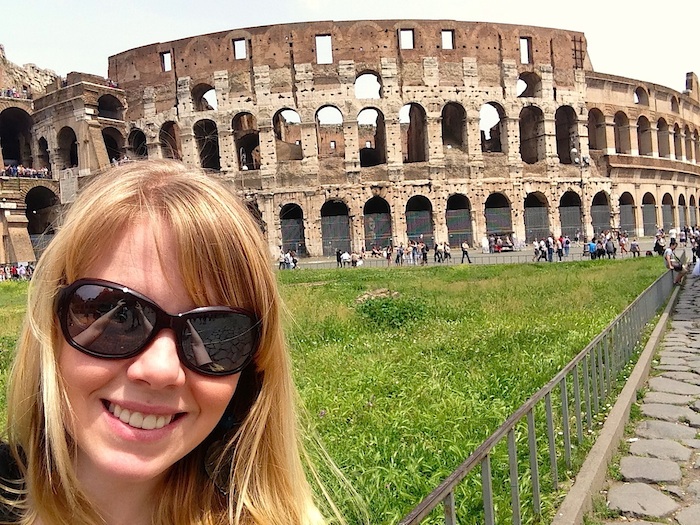
    Lori Deschene at the Colosseum

    “Don’t be pushed by your problems; be led by your dreams.” ~Unknown

    A little over forty-eight hours from now, I’ll be on a plane to Europe where I plan to spend three months traveling (and working) with my boyfriend.

    Saturday is the first day of a dream I’ve held for well over a decade.

    It was my second year in college when I did my semester abroad, staying in a castle my school owns in The Netherlands.

    I was one of less than seventy students there, part of an intimate group that traveled together on three weekend trips to Paris, Amsterdam, and Koln.

    Aside from those group excursions, we all had three-day weekends and two full weeks off to travel.

    I visited Italy and Spain during my weeks off, but spent most weekends on site, largely due to financial constraints. Still, a weekend doing nothing at a castle in Europe is, in itself, an adventure.

    After returning home, I spent the next year working 40+ hour weeks as a hostess at an upscale Boston restaurant (while also studying full-time) to pay off my charged travel expenses.

    My schedule was tight and my job, not all that exciting, but the experience felt worth every uncomfortable moment in that itchy polyester blazer.

    I had started seeing the world. I had gotten a chance to experience dorm life—something I didn’t know much about, being a commuter—and I did it in a castle with a moat, a tower, and historical significance.

    It wasn’t the most emotionally stable time in my life, so I brought a healthy dose of drama overseas, but now, fourteen years later, what I remember most are the excitement of possibility and the pride I felt in working to provide that for myself.

    And it’s those same two things that most energize me now. I’ve dreamed of this. I’ve planned for it. I’ve worked for it. And now it’s happening.

    If you have a dream, something that excites you, inspires you, and maybe even keeps you up at night, I have some advice for you:

    1. Believe that it’s possible.

    So often we think of dreams as things most people don’t get to do—luxuries reserved for people who are privileged, wealthy, or well connected.

    It’s true that some people have more advantages than others. What takes one person five years of planning and saving may require another to do little more than sell a stock and make a call.

    It’s also true that the second person may have worked incredibly hard for said stock. The point is: We’re all starting from different places, for different reasons, with different levels of work required to get from A to B.

    If your dream is something you’re physically incapable of doing, it may be improbable (but not impossible—we’ve come a long way with technology!) And there’s no denying that certain dreams are more difficult to achieve than others.

    But most of the things we dream about are things we could do if we were willing to work toward it, align our choices to support it, and stay flexible in terms of fulfilling it.

    You don’t need to believe it will be easy, or it will happen quickly, or it will look exactly like you visualized it. You just need to believe in the possibility, which really means you need to believe in yourself.

    2. Take tiny steps to work toward it.

    Working toward it entails aligning with the right people, disregarding discouragement from people who don’t support your growth, and taking tiny steps each day to move toward your vision.

    “The right people” are those who help you, support you, encourage you, believe in you, and guide you on your way to this dream. It may include people who’ve done what you want to do, people who also want to do it, and even people who just plain find it cool.

    Share your enthusiasm and progress with them. They’ll keep you excited and help you stick to your plan.

    As for those people who don’t support your growth, there will be many of them, and they most likely won’t be malicious. They’ll be well-meaning people who aren’t able to do step one for themselves, and, therefore, think they’re doing you a favor by discouraging you. Politely decline that favor.

    Their words may seem to keep you down, but it’s how you internalize them that holds you back.

    And as for taking consistent steps, they really can be tiny. It may not seem like much to make a call, bookmark a site, or send an email, but the little things add up over time—and because they’re easily doable, each one may inspire you to do more.

    3. Make choices that support it.

    Much of our experience stems from our choices. Not all of it; there are some things that we can’t control.

    This isn’t a suggestion that if we make all the “right” choices, everything will line up and magically work out. It’s just that we have more power than we often realize—and our power lies in our choices.

    Whatever your dream, the first choice is to prioritize it. As you’re able, dedicate time to it, money to it, attention to it, love to it. Give what you can, as you can, and back that giving with belief, passion, and enthusiasm.

    The other side of this coin is realizing which choices don’t support your dream—when you’re doing too much or pursuing other dreams that conflict, for example.

    For me, that’s meant pushing off some other equally exciting milestones with my boyfriend, like buying a house.

    4. Stay flexible about how you’ll fulfill it.

    It’s tempting to be rigid about a dream—when it needs to happen, how it needs to happen, and who it needs to include. But sometimes when we’re too busy clinging to a specific vision, we miss an opportunity to experience it in different shades.

    This isn’t meant to discourage you from reaching for the stars. It’s just a reminder that there are a lot more of them than you may realize, some far closer than others.

    Being a singer may include a jazz club, not a fan-packed stadium. Writing a book may entail self-publishing, not a six-figure advance. And traveling may include teaching abroad or a string of budget bed-and-breakfasts—I know because this time around, I’ve booked several!

    They may not be the ultimate dream, but they are, in fact, reflections of it.

    And in that moment when you’re doing something inspired, passionate, and in line with your deepest intentions, you’ll feel two things that you may not have realized weren’t exclusive to one specific vision:

    You’ll feel alive. And proud.

    And now, two final thoughts on making dreams come true: know that no dream is better than any other, and stay open to the possibility that your dream may change.

    Regarding the first part, your dream may not seem big or romantic. It doesn’t need to be. It’s an extension of your unique values and priorities, and all that matters is that it matters to you.

    As for the second part, sometimes we attach to dreams simply because we’ve held them for so long. It’s the sunk-cost principle: After you’ve invested a lot of time, energy, or money, it’s hard to consider walking away.

    But if your priorities have changed, you may no longer want it. Accepting this isn’t a sign of weakness or defeat. It’s growth, and the wisdom to enable it.

    Of course, there’s also the possibility that your dream may have changed in a smaller way.

    This weekend when I leave for Rome, my parents, my siblings, and my boyfriend’s parents will also be en route for a short family trip.

    My dream wasn’t just to go back. It was to go with the people I love. And after much conceptualizing, convincing, and coordinating, it’s now coming true.

    What’s your dream, do you believe you can fulfill it, and what tiny step can you take today to start (or continue) working toward it?

    *Update: That’s a picture of me at the Colosseum. I would have shared a picture of me with my family, but they’re all very private people!

  • You’ll Always Have This Day, No Matter Where It Leads

    You’ll Always Have This Day, No Matter Where It Leads

    Walking

    “If you surrender completely to the moment as they pass, you live more richly those moments.” ~ Anne Morrow Lindbergh

    Last week on Valentine’s Day, my boyfriend Ehren and I had a meeting we’d both spent months working toward.

    After writing and rewriting a romantic comedy screenplay for over a year, and consulting with a screenwriter friend to improve it, we’d finally secured a meeting with an agent—her agent. At one of the largest agencies in Hollywood. Presumably to represent us.

    We couldn’t have been more thrilled to know our project might have a real future, and the timing of it, on Valentine’s Day, seemed serendipitous and made it even more exciting.

    The opportunity felt even more gratifying because we’d both been in need of some good news since Ehren’s brother’s sudden passing in December.

    We’d just moved out of our Los Angeles apartment with plans to spend time with his parents in the Bay Area and work on various creative projects together. Yet there were, mere days after our move, heading back to the home we’d just left.

    Though we’d lived in LA for over two years, the city looked different through the lens of magnified possibility.

    We spent the whole drive discussing our next screenplay and planning what we’d say in the meeting. I spent each moment of silence fantasizing about casting, filming, and premieres—a whole new life on the other side of this day.

    We ate at a classic Hollywood deli and ran into one of my favorite comedic actresses. One day we’d write a role for her, I thought.

    We then walked around the neighborhood for a good thirty minutes before arriving early but not too early for what seemed like the most important meeting of our creative partnership.

    I jittered and rambled while sitting in the waiting room. I wanted to be sure that when we walked in, I said enough but not too much, and generally put my best foot forward for the best possible outcome.

    So much had led to this one moment, and I felt that our whole future was wrapped up in it. (more…)

  • Are You Betting On Yourself Or Against Yourself?

    Are You Betting On Yourself Or Against Yourself?

    Jumping

    “The fear of suffering is worse than the suffering itself.” ~Paulo Coelho

    I stood there in the parking lot of my apartment complex, with the hot Phoenix sun beating down on me, as I watched him drive away for what I thought would be the last time.

    With tears rolling down my cheeks, I went inside my apartment after his car had turned the corner and was out of sight.

    When the door closed behind me with that familiar thud, I could almost feel the loneliness swallow me up.

    We met nine months earlier and quickly fell in love. But his time in Arizona had come to an end when he graduated from ASU. With no jobs in sight in Phoenix, he was hitting the highway and driving back to his hometown of Seattle to use his contacts to find work.

    I wanted to go with him, but I was afraid of leaving all that was comfortable and familiar to me.

    When he drove away, with his car filled to the brim with all his belongings, I imagined my life without him. I knew I my life would carry on, as I would wake up every morning, go to work, come home, and hang out with friends and family on the weekends. Perhaps even months down the road, I would probably start dating again.

    Life would inevitably continue—but without him. The thought of being in love with someone who I’d never see again was a hard thing to swallow.

    Step Right Up and Place Your Bets

    Every day, moment by moment, we make choices. Some of those choices seem inconsequential. Most of us only feel the burden of choice when we are faced with one of those “big life decisions.”

    Taking a new job, moving to a new city, starting a business, or having a child, just to name a few. (more…)

  • You Will Not Be The Same Person When You Achieve Your Goal

    You Will Not Be The Same Person When You Achieve Your Goal

    “The journey is the reward.” ~Chinese Proverb

    When you set goals, you naturally focus on the result. If you pay attention to the desired achievement, you will discover the path to get there. However, the value you gain from achieving the goal isn’t just about the reward of accomplishment.

    Once you achieve a significant goal, you will not be the same person you were when you set out on the journey. The process of achieving your goal and the experience you have gained will have changed you. This is why the journey is the reward.

    If you set the goal of losing forty pounds and you get there, you will have gained more than the results of looking good and having spiked interest from the opposite sex.

    In order to lose the weight, you needed to lead a very disciplined and focused lifestyle. You needed to take charge of your diet and ensure you did not lapse into old eating habits. You needed to work out regularly and efficiently, and actually make serious gains in the gym.

    A great body is not just a thing you have; it is a lifestyle you lead. Adopting that lifestyle is the key benefit.

    How many people actually make the necessary sacrifices and do the hard work required to lose serious weight? Not nearly as many as the number who set the goal. Taking those steps changes both the mind and body.

    The reward is not just the tangible change in your body. It is the journey that has given you improved discipline and willpower.

    Exactly the same applies to the goal of quitting your job and running your own business. Everyone dreams about it, but very few people do it. Those who are successful have not just won the prize of being their own boss and earning a better income.

    The long hours they have worked, the risks they have taken with their time and money, the fear and uncertainty of whether it was going to work—these things changed them.

    It took me four years of working on my online business part-time before it earned me enough money to kiss the desk goodbye. The money is not the prize; it is the time and freedom I now have. But if those things had just fallen into my lap without any effort or sacrifice on my behalf, I would not be able to appreciate them in the same way.

    I would still have been the same person I used to be. (more…)

  • Getting Back Your Belief in Yourself

    Getting Back Your Belief in Yourself

    “When you believe something can be done, really believe, your mind will find ways to do it.” ~Dr. David Schwartz

    Fifteen months ago I was in a rut. A rather large rut actually. The recession was well and truly in full swing, and I was up to my eyeballs in credit card and loan debt.

    I could barely afford to live, let alone pay my mortgage, and there was the threat of losing my home hanging over my head every day.

    I had spent most of my twenties and thirties working to pay the bills and the rent as most of us do, and frankly, considering the economic climate, I was just grateful to have a job. However, every day I would wake up in a fog and go through the motions of living.

    Most of the time I felt stressed and exhausted with nothing to focus on or look forward to, and I felt as if I couldn’t do a thing about it—which made me feel worse.

    I’m used to challenges in my life, as I have cerebral palsy. My mum passed away when I was nine, my father left the UK when I was eighteen, and I have been living independently ever since.

    This is not a pity plea. When faced with difficulties, as long as there is some kind of solution or a door I can try, that keeps me motivated to keep looking for a solution.

    Fifteen months ago, I was faced with brick wall after brick wall. I wasn’t happy about it, but I couldn’t see a way out. I’m emotionally tough but my situation was making me question my whole being. I didn’t realize that I was functioning in a depressed state.

    I certainly never thought I’d be a single 37-year-old woman on the hamster-wheel of life doing the same job day in and day out, with nothing really to look forward to.

    I kept asking myself “Really? Is this it? Is this my purpose?” Something just didn’t feel right about the way I was living my life.

    I went to see a friend who specializes in reiki and yoga. She took one look at me and said, “You are at the end of your tether, aren’t you?” at which point I burst into floods of tears. It felt so good to let it all out.

    After a few moments she said, “You can change your life, and you will,” and handed me a small book. (more…)

  • The Unexpected Path to Living the Life You Dream About

    The Unexpected Path to Living the Life You Dream About

    “Of course there is no formula for success except, perhaps, an unconditional acceptance of life and what it brings.” ~Arthur Rubinstein

    I used to be a big fan of working hard, really hard. I still work hard, but I do it from a place of inspiration and peace, instead of fear and must.

    In the past few years, something has shifted within me. It is both confusing and wonderful. I cannot put my finger on exactly what is going on, but it seems to be happening in just the right way.

    Like Arthur Rubinstein says in the quote above, there are no formulas for living the life you secretly dream about, because if you simply accept and welcome life, it’ll reveal itself to you.

    It is not through effort that you mold the universe to your liking, but from allowing the universe to mold you, and show you the way.

    When I began doing what I love, which is showing people how they can be more fulfilled in their work, I thought I had to take a predetermined path to my destination.

    And it almost stopped me, because I didn’t believe in myself. I saw so many others doing what I wanted to do, and they were more accomplished, had more knowledge, and were more successful.

    Or, so it seemed.

    I almost didn’t take action, but I’m glad I did.

    The Biggest Pitfall

    One of the biggest mistakes I made was trying to find the answers outside of myself when the answers were always inside.

    I’m not saying you should abandon learning and research altogether, but for me, it reached a point where I had to listen to my heart, and feel where I should go.

    I resisted going down this path for a long time, and I still sometimes do, because I’ve been a big fan of the mind, of logic.

    However, I’ve realized that I don’t know it all, and when I listen to my heart, I seem to be led to more happiness, peace, and freedom in my life.

    The early days were a struggle, but as I began seeing results, I started trusting my heart more and more. (more…)

  • How to Accomplish Anything Leveraging Collective Energy

    How to Accomplish Anything Leveraging Collective Energy

    “Success will never be a big step in the future; success is a small step taken just now.” ~Jonatan Mårtensson

    I love Zumba, the Latin-inspired dance program that has become a worldwide fitness phenomenon. At the three minute mark of every class, I am alive with how much I enjoy the workout: the rhythm, the moves, the music, the collective energy.

    The room is filled with non-stop music pounding against the walls and ceiling, as over fifty bodies of all ages and sizes come together in synchronized movement.

    At the 12-minute mark, the music is louder and faster. My focus is greater. Breathing becomes more intense.

    By the 33-minute mark, my heart is thumping wildly, more sweat beads are forming, and my quads are sore from all of the deep squats. I feel a little tiredness beginning, but I have no desire at all to stop moving. There is something greater happening in these walls to pull me through any temporary aches.

    When I’m starting to feel the workout burn, I know it’s time to consciously shift my attention to the collective energy in the room. I allow the energy of every pumping heart to lift me up and carry me through the intensity. I connect with energy bigger than my own body.

    As I shake, turn, and step at the 41-minute marker, I remind myself that at every moment of the day, energy of every kind is circling the globe: High energy, low energy, stop-and-go, win-and-exceed, accomplish-and-finish energy.

    A divine balance is always in motion: When I’m feeling a little tired, others in the room are feeling invigorated. When I’m feeling weak, others in the country are feeling strong. When I’m feeling uncertain, others around the globe are feeling absolute conviction.

    There is always a way through our weak spots by connecting personal energy with the continual swirling movement of collective success and accomplishment. Not only is energy always circling the globe, but we can call on the energy of many to support us at any time with any goal. With this knowingness, there is a strategic secret available for success at any time:

    Anything we want to accomplish is being successfully done right now somewhere in the world.

    When we consciously shift our “right in front of me” perspective and tap into the dynamic flow of continual source, our abilities take on a whole new level of potential. Anything we seek to accomplish, grand or small, is possible. (more…)

  • 7 Ways to Benefit from Not Getting What You Want

    7 Ways to Benefit from Not Getting What You Want

    “Remember that sometimes not getting what you want is a wonderful stroke of luck.” ~Dalai Lama

    A year ago, I hit rock bottom. Until that point, I had put all my energy into my dream of becoming a physician. Last year my life slammed into a brick wall, and my plans seemed to be torn into pieces.

    After high school, I took every opportunity to immerse myself in the medical profession while maintaining my grades in college.

    During the summer of my freshman year, I worked as an Emergency Medical Technician and practiced being a first responder during medical emergencies. Over the next three years, I woke up at 6:00 AM on the weekends and drove an hour to work as a Patient Care Assistant on the Trauma floor at Parkland Hospital.

    However, none of my hard work, experiences, or ambitions seemed significant last year when I didn’t gain acceptance to medical school.

    All the work I had put into achieving my dream meant nothing. The energy that I had expelled to become a physician felt meaningless. I was a senior graduating from college, but I no longer had a life plan.

    After a challenging year, I finally let go—and then I got into medical school. (more…)

  • On Finding Your Purpose & Running Down a Dream

    On Finding Your Purpose & Running Down a Dream

    Lost

    “Excellence can be obtained if you care more than others think is wise, risk more than others think is safe, dream more than others think is practical, expect more than others think is possible.” ~Unknown

    A revelation came to me the other day during lunch with my co-worker.

    As I wolfed down my germ-infused salad-bar lunch, I thought about my father for no particular reason other than I probably miss him since moving out of my parents’ house two weeks ago.

    I’ve never been one to admit things, show emotion, or get all mushy, but in my own way I’m very proud of my dad. Although it’s hard for me to let him know, he really is my hero.

    As co-worker X took a pause from chewing, he asked, “What do you think your purpose is?”

    I took a moment to let that commentary sink in.

    Then I replied, “You know who I really envy and admire? My father. He does the hardest manual labor, sweats under the sun, cuts his hands up on stone, turns them purple with acidic grape juice, battles with poison ivy roots, snow plows during the most ungodly hours so rich people can have clear driveways, has more splinters than anyone I know, and he’s never, ever complained. In fact, he’s the true definition of service with a smile.”

    Okay, maybe I didn’t phrase it that eloquently, but let’s pretend I did. (more…)

  • 10 Questions to Ask Yourself Before Giving Up on Your Dream

    10 Questions to Ask Yourself Before Giving Up on Your Dream

    “Commitment in the face of conflict produces character.” ~Unknown

    We all face obstacles in pursuing our goals, whether they’re professional or personal.

    We think we’re on the right track but realize we’ve chosen the wrong approach. We’re enthusiastic and hard-working, but our support system disintegrates when we need them the most. We’re just about to make significant progress when we run out of time or funding.

    Tenacious as we may be, we all have our breaking points—that moment when the potential rewards stop justifying the effort. Usually, that’s the hump that separates your best shot and your best reality.

    Before you throw in the towel and go back to something safe and far less taxing, ask yourself the following questions:

    1. Why did you want to pursue this goal to begin with, and has anything changed?

    You had a good reason for committing to this plan. Maybe you visualized a financially free future once you started this new business, or you realized you’d live longer and healthier if you lost forty pounds.

    Odds are, you still want those things as much as you did before; you just stopped believing you could have them because your attempts have yet to yield results. Now you have to ask yourself: If you push through the discomfort, will it be worth it in the end?

    2. Have you been operating with too much information?

    With so much information at our fingertips on the good ole World Wide Web, it’s easy to overwhelm yourself with more knowledge than you can apply. You read e-books and blogs, participate in teleconferences and coaching sessions, and join user forums to talk about getting things done.

    One of two things happen as a result: You spend more time planning to act than acting, or you devote minimal energy to multiple plans instead of committing to one solid approach. Instead of drowning in all the data, why not narrow it down and start again from a less overwhelming space?

    3. Did you set a smart goal? SMART goals are:

    • Specific—you know exactly what your world will look like when you achieve this goal.
    • Measurable—you have a specific plan to mark your progress as you go.
    • Attainable—you have the attitude and aptitude to make your goal reality.
    • Realistic—you’re willing and able to do the required work.
    • Time-bound—you’ve set a concrete timeframe for completion to create a sense of urgency.

    If you didn’t set a SMART goal, you may have set yourself up for failure. How can you possibly make something happen if you don’t know exactly what you want, or didn’t really believe you could do it? Are you really willing to walk away when you didn’t give yourself every opportunity to succeed?

    4. What’s the worst that will happen if you keep going and don’t reach your goal?

    Often when I want to turn around it’s because I’m afraid of failing—afraid other people will be disappointed in me or judge me, or afraid I’ll have wasted my time. In all reality, no one ever judges us like we judge ourselves, and we always grow and learn through the process of striving, regardless of what we attain.

    If you don’t keep going, you’ll never know how far you could have gone and you’ll miss out on being the person you’d become through the effort itself. If you do keep going, well, it’s like this quote: “Shoot for the moon, for even if you miss you’ll land among the stars.”

    5. Are you afraid of succeeding?

    One of my biggest problems is that I don’t like responsibility. There are many things I’d like to do, but I resist because I don’t want the power to impact, hurt, or disappoint other people. That doesn’t mean that I don’t have dreams. It’s just that I’m just scared of what achieving them will entail.

    If you can relate to this feeling, perhaps you’ll respond well to the mantra I’ve been repeating: Great power comes with great responsibility, but it also brings great rewards. If you play it safe you won’t hurt or disappoint anyone, but you also won’t help or inspire anyone. And equally important, you won’t help or inspire yourself.

    6. Are you acting on impulse or emotion instead of thinking things through?

    Sometimes our emotions give us hints about what we want and what we should do, but other times they’re just responses to stress, and maybe even indications we’re on the right track. If you act in that moment of intense emotion—be it anger, fear, or frustration—you may regret it once the wave has passed.

    So sit back. Take note of what you’re feeling. Feel it fully, without judging it or yourself. Then act when you’ve gotten to the other side. At least then you’ll know you made your decision in a moment of peace and clarity.

    7. Would you enjoy giving a loved one the honest explanation for why you gave up?

    And I mean honest.

    Would you like telling your daughter, “I stopped trying to quit smoking because cigarettes are more important to me than having more golden years to spend with you?”

    Would it be fun to tell your mother “I decided not to go to school because I’d rather spend all my time with my boyfriend of three months than prepare for a career that will ensure I won’t end up jobless and homeless?”

    If you lay it out like this, odds are you’ll realize you had a really good reason for doing this difficult thing, and no matter how challenging the process is, it’s worth plowing ahead.

    8. Would your life be better if you gave up on this goal?

    This may not sound motivational, but sometimes giving up is actually good thing. Perhaps you set a completely unrealistic goal and the pursuit of it is filling you with a constant sense of inadequacy and anxiety. Or maybe the goal isn’t in your or your family’s best interest, and it’s better to get out before you invest so much time it’s near impossible to walk away.

    You could easily use this as a justification to delude yourself, so think about it carefully. Is this goal really a good thing, when you weigh all the consequences of its fulfillment?

    9. How much have you already put in?

    A concept studied in social psychology called “the sunk cost principle” indicates the more we’ve invested in something, the less likely we are to prematurely walk away.

    How invested are you? How much money and time have you devoted? How many sacrifices have you made? Are you really willing to chalk it all up as a loss because you’re not feeling confident in your abilities?

    10. What would you tell someone else if they were in your shoes?

    Would you tell your best friend to throw in the towel because she can’t possibly reach her goal? Or would you practice your finest motivational speech and help her see what you see in her potential? Unless you’re secretly a frenemy who hopes she fails in life, odds are you’d push her to be her best—so why not push yourself?

    It may sound kind of cheesy, but you need to be your own best friend. You, more than anyone in this world, deserve your belief and motivation.

    If you’ve gone through all these questions and still feel resolute about the decision to give up, you have my blessing to abandon your goal. (Bet you feel so relieved!)

    If you don’t—if there’s some lingering doubt—keep working toward that dream that fills you with passion.

    Take a different approach if you need to. Enlist new assistance. Scale back your time commitment to something you can more easily maintain. But whatever you do, don’t give yourself a reason to one day utter the words, “I quit because I was scared.”