Tag: domestic abuse

  • I Don’t Know Who I Am: How I’m Finding Myself Again After the Abuse

    I Don’t Know Who I Am: How I’m Finding Myself Again After the Abuse

    “When you turn the corner / And you run into yourself / Then you know that you have turned / All the corners that are left.” ~Langston Hughes

    Nearly two years ago I left a long-term controlling and abusive relationship.

    I didn’t know that I was in one. I just knew that I was desperate.

    Abusers take everything away from you. I don’t just mean your money or your home or your children, although they take those as well. I mean everything, including your sense of self.

    Toward the end of the relationship, I wrote in my journal: “I have nothing. Nothing. No future. No family. No home. Nothing. I don’t know what to do any more. There seems to be no hope.”

    When I first left I had nowhere to go. I stayed in a hotel for a while and then moved to a pay-by-the week residence. I genuinely could not see any future for myself at that time.

    When you read about leaving an abusive relationship, there is a lot of information about how hard it is to leave. It takes someone, on average, seven attempts.

    It also can be dangerous to leave. Abusers escalate their behavior when they fear that they are losing their control over you. These are important things to be aware of.

    What nobody seems to talk about, and perhaps there are good reasons why, is how hard it is to recover once all the dust has settled.

    I have spoken to the police and been to court and had some excellent support from a domestic abuse charity. I have been to support groups. I feel like I’ve processed a lot of the abuse and that I am now able to move on from that trauma.

    I have a truly amazing therapist, who recognized the situation I was in even when I was trying to hide it from myself. He helped me escape. I credit him with saving my life.

    I have my own flat now that feels safe. I live in a nice area. I’ve made new friends and I am starting to feel part of the local community.

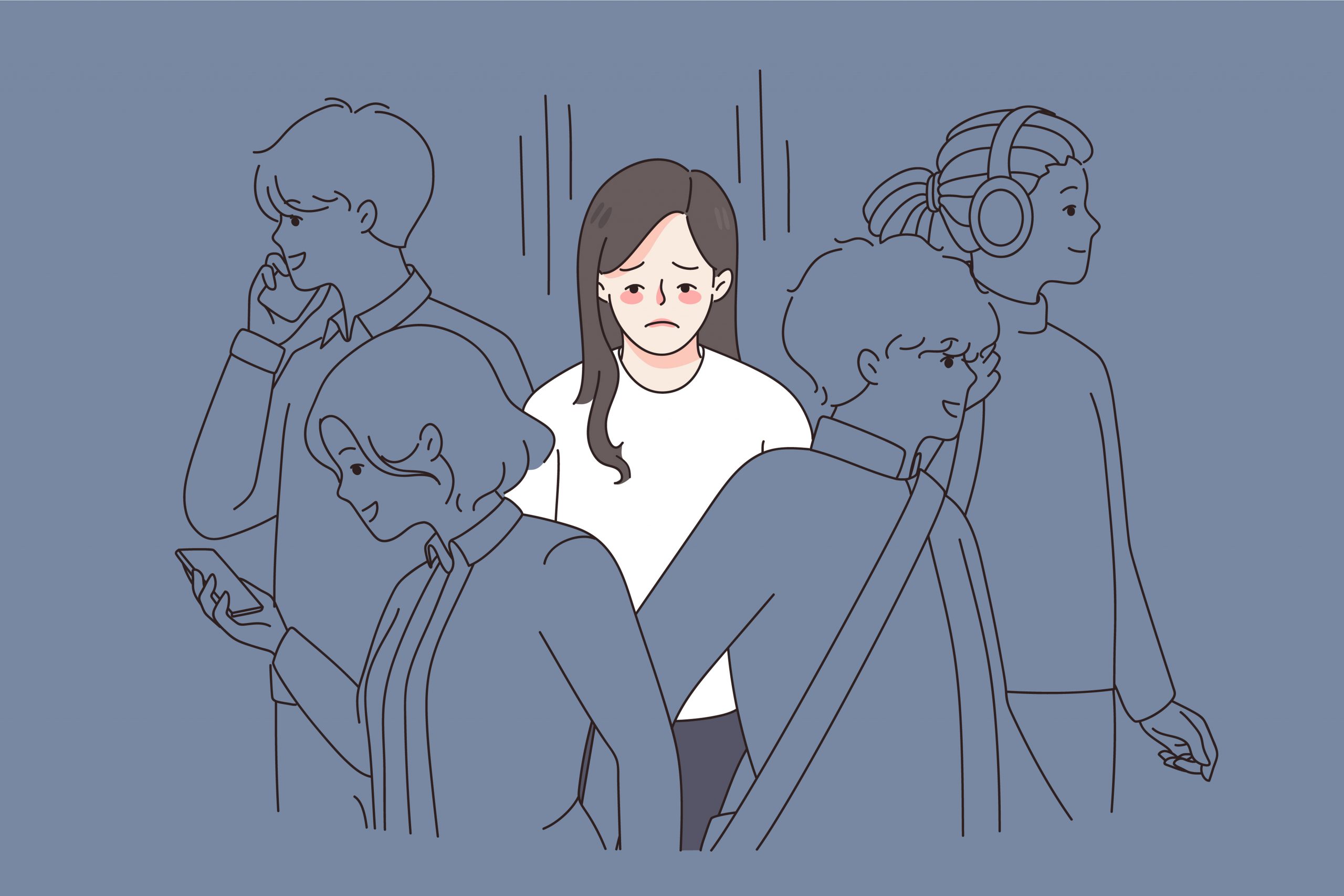
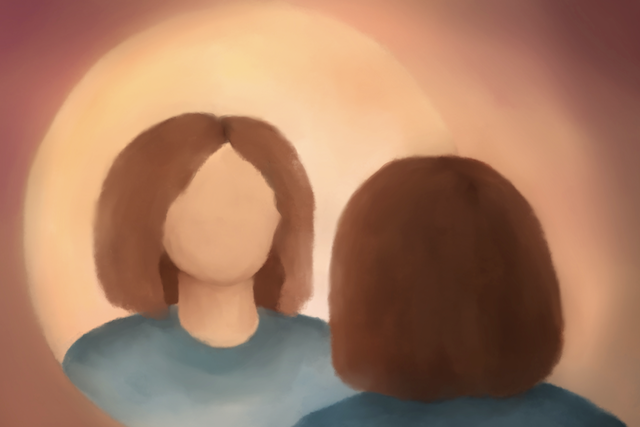
    But two years on from this relationship, I still don’t know who I am.

    Someone recently asked me what I like to watch on TV. I have no idea. I surrendered all TV-watching decision-making to my ex-partner because he had a tantrum if I put something on that he didn’t like.

    I don’t know what I want to do for a job. Up until recently, I worked in my ex-partner’s field, even though it is a field I know little and care less about, because that’s what he wanted me to do. I don’t know what I care about.

    Why am I telling you this? Because I am certain that I am not alone, but sometimes I feel very alone. And if you out there reading this also feel this terrible confusion about who you are and what you want to do, and you also feel alone, I want to tell you something…

    You are not alone.

    This is normal. This is okay. Not okay in the sense that it’s enjoyable or good, but okay in the sense that it is an understandable consequence of your journey.

    You don’t have to feel like there is something especially wrong with you that you aren’t now skipping through the fields gleefully enjoying your freedom. Hooray! I can do whatever I want!

    This is, I think, what people expect a domestic abuse survivor to do once they’ve gotten away from their partner. It’s what I wanted to do. The idea of finally having the freedom to do what I wanted was so exciting.

    It fell down pretty quickly when I realized I didn’t know what I wanted.

    Other than pancakes. I love making and eating pancakes. Hot pancakes with fresh lemon juice and sugar.

    And therein lies an anchor that you can use to start rebuilding yourself and your life.

    Start with something small.

    When you are rebuilding yourself, it feels like this should be profound. You should find out what your values are. What your aspirations and dreams are.

    This is like running a marathon without having done any training. You can’t start with the massive things. Start with the small things.

    What do you like to eat for breakfast?

    Even that is a big question for me because my ex-partner controlled my eating. I wasn’t always allowed to have breakfast. He didn’t do mornings, and if I woke him up making breakfast, he’d start screaming and threatening suicide.

    One day I discovered by pure chance that I like pancakes. And I am sure of this. This is something small but something solid and real.

    I can use this with other things in my life, to find out whether I like them or not. Do I feel about this the way I feel about pancakes? It sounds ridiculous but it works for me.

    It’s okay to change your mind.

    This is a big one. When your life has been unstable because you’ve been constantly gaslit, and subject to the shifting and changing rules that a controlling person indulges in, you want stability.

    You want things to stay the same. And you think that who you are and what you want should stay the same.

    Pro tip: It doesn’t. Not even for “normal” people. And your mind has been infected with the thoughts and ideas of another person.

    When you ask yourself what you want, sometimes it’s not your voice that replies. You may not recognize this at first. Later, you think, wait, that doesn’t feel right anymore.

    You can change your mind. It’s okay. It’s normal.

    I desperately wanted a cat for months. I bored everyone to tears telling them how much I wanted a cat. I looked up pictures of cats and mooned over cats and planned out names for my cats.

    Now I don’t want a cat. Not that I don’t like cats, I just don’t feel ready to take on the commitment of a pet. And that’s okay.

    Try stuff out.

    Do you really like chocolate, or is it that your ex-partner liked chocolate? How do you know?

    Try it out.

    Do you like to sing? Try that out.

    Maybe you find that you love to sing and you hate chocolate. Great. You’ve learned something about yourself.

    I like pancakes, chocolate, and singing. I do not like marmalade.

    Give yourself time.

    I am eternally thankful that a lady in one of my support groups said, “It took me about six years to start feeling like myself again.” At that point I was about nine months out of the relationship and convinced I was a failure because I still felt completely unstable.

    At this two-year point I catch myself feeling frustrated with myself for not having made more progress. Come on, Lily. Why don’t you know what you want to do with your life yet?

    I don’t know because someone emptied out my mind and filled it with their ideas. And made the consequences for thinking differently from them completely catastrophic. I am still scared to hold the “wrong” opinion, even though these days nobody is going to throw heavy objects if I do.

    My brain was rewired over a long period of time and it’s going to take time for me to fix that. This is okay. It’s not fun. It’s hard work. But it’s okay.

    In the meantime, I am going to sing, make pancakes, and eat chocolate.
  • 5 Ways to Start Healing from the Grief of Betrayal and Domestic Abuse

    5 Ways to Start Healing from the Grief of Betrayal and Domestic Abuse

    “If your heart hurts a little after letting go of someone or something, that’s okay. It just means that your feelings were genuine. No one likes ends. And no one likes pain. But sometimes we have to put things that were once good to an end after they turn toxic to our well-being. Not every new beginning is meant to last forever. And not every person who walks into your life is meant to stay.” ~Najwa Zebian

    It’s hard to describe what betrayal feels like. Unless you’ve experienced it, I mean, in which case you’ll know. You’ll know that moment—the punch to the gut, which in my case, even though I was standing in an empty room all on my own, literally knocked me to the floor. I’d seen something, you see.

    Proof that my partner had been cheating.

    It was a beautiful day, the sun was shining. I think I’d been listening to music, probably something upbeat in the hope it would squash the worry that something wasn’t quite right. Maybe (most likely, knowing me) dancing, to carry some of the nervous energy away. Scrolling on social media, distracting myself with other people’s realities, to stop me thinking about my own.

    And then something—something—made me look. A pull. An inexplicable urge. And so, of course, I did.

    There it was. What I’d known in my gut, but had been told repeatedly couldn’t be true. Labelled as “over-reacting,” “seeing things that aren’t there,” “being too sensitive.” What I now know to be gaslighting, that abuse isn’t always physical (even though in my case it was that too). Tangible evidence for all to see.

    And so here I was, in a heap. Collapsed to the ground like a house of cards that had been caught by a gush of air. But it wasn’t air that had taken my legs from underneath me. It was the end of a relationship.

    To this day, I don’t know how long I was lying there. I can picture it in my head even all these years later.  Like a boat that’s adrift. Wind knocked out of my sails. Listless.

    The night drew in, and with it came this incredible wave of noise. Like I was sitting in a busy café, and someone had turned the music up to try and compensate, but you couldn’t make anything out. Except no one could hear this noise, because it was all happening in my head. Thoughts about “what if?” and “if only,” ironically contributing to the din.

    I wanted a hand to reach out from the darkness and give me the answers. To say “It’s going to be fine.” But it wasn’t fine. It was painful. Distressing. Desperate.

    And then, something. A message. A friend. He had no idea what was going on; I hadn’t told a soul. But he knew. At least, he sensed it. So he had messaged me and gently reminded me that I have a right to be here.

    I look back on this moment in my life now as if it was another person. I’m still me, of course, but different, like we all are when we go through grief. Because grief doesn’t just belong to death. We experience it for anything that mattered to us that’s no longer there.

    A divorce.

    A redundancy.

    Even a child leaving for college.

    Endings mean we go through this process; not in stages, but a journey that takes as long as it takes.

    Here are a few insights and tips that might help if you’re on this journey now.

    1. Grieving is a unique experience.

    It’s raw at first; it can be messy, but it does look different to everyone. Some people feel rage, others feel numb. I felt completely lost for a while. There is no right way to mourn a loss; we just find our own way, hopefully with the support of others who get it. Even then, people need to resist the urge to cheer us up or “silver line” what’s happened.

    We don’t always need to find the “upside” of pain or be told “at least you can always get remarried” (sigh). What helped me that night was the generosity of a friend, a simple act of kindness in the willingness to just hold space with me.

    But of course my journey to recovery didn’t end there. Allowing myself to be open to the idea that I didn’t need “fixing”—that I just needed to go at my own pace, finding healthy ways to cope—was hugely beneficial.

    2. Feel what you feel.

    Sometimes we numb out with booze, food, or mindless scrolling so that we don’t have to feel the pain we’re enduring, and I get it; grief can be gnarly. But the reality is, whether we give our feelings a name or not, they’re there anyway. Sure, we can push them down for a while, but if we keep putting pain on top of pain, eventually it rises up and grabs us metaphorically by the throat.

    Give yourself permission to sit with your emotions when you can, or with someone else if it helps.

    3. Reach out.

    I am so grateful in my case that someone reached in, but in the weeks that followed I went in search of people and services that I knew would be able to help. I got in touch with a therapist to sit with my grief and found a mindfulness teacher—a Buddhist monk as it happens. He trained me to be still with the painful thoughts of rejection and abandonment I was having, and the trauma I had been through.

    I also found agencies who could offer practical help with housing and finances, as I literally had nowhere to go, having been isolated from friends and work, what I know now to be a common sign in these cases.

    If you or someone you know has been affected by domestic abuse or are suffering with difficult thoughts, find what services are available in your local area.

    4. Share what you know.

    I do not see what happened to me as a “lesson.” I didn’t need to experience trauma in order to be a “better” person; I was good enough before all this happened actually.

    Having said that, I did find meaning in these moments. I decided to use what happened to me to help others; I became accredited to work with victims of crime and now volunteer my time in a women’s refuge. I also work as an independent advisor to police authorities to help raise awareness of what helps (and what doesn’t), as well as writing and supporting people in other ways.  When you’re ready, you could use the benefit of your experience to help others too.

    5. Take care of yourself.

    I cannot emphasize enough how important it is that when you’re going through a difficult time, your needs matter too. You’re not saying “me first” to the people in your life; you’re just saying “me included.”

    For me, this meant making sure I was eating, getting enough sleep, and yes, even dancing round my kitchen—it all helps.

    I’ve always believed self-care is in the little things, like changing your bedding, putting out clean towels, and getting fresh air. But it can be other things, like spending time in nature, chatting with a friend, or learning new ways to cope healthily with what life throws at you.

    It doesn’t have to be expensive; in fact, restorative acts of self-care don’t have to cost a penny. I love taking myself off somewhere to enjoy a cup of tea and reading a book. You’re allowed to have and do nice things that can help lift your spirits. Give yourself permission to say no and make sure your tribe includes people that help you rise, not bring you down.

    We deal with endings all the time in life, and some might seem inconsequential, but that doesn’t mean we have to forget or pretend they didn’t happen. We can honor our experiences in helpful ways; we might just need to figure out how to do that for a while.

    Allow yourself time and space to discover what helps you best. This might mean taking time out or just taking a deep breath, revisiting your values to understand what really matters to you, setting new boundaries, or distancing yourself from those who don’t help. As Elizabeth Gilbert once so beautifully said, “We can love everybody, but some we must love from a safe distance.”

  • Why Belonging Is So Difficult for Survivors of Domestic Abuse

    Why Belonging Is So Difficult for Survivors of Domestic Abuse

    “Our sense of belonging can never be greater than our level of self-acceptance.” ~Brené Brown

    Sitting there watching The Greatest Showman, with tears pouring down my face, I asked myself why does this song, in fact this whole film, make me cry so much? Why does it evoke so much emotion in me?

    “I am brave,

    I am bruised,

    I am who I’m meant to be.

    This is ME.”

    “Look out cos here I come,

    And I’m marching on to the beat I drum,

    I’m not scared to be seen,

    I make no apologies.

    This is ME.”

    I am brave, I am bruised, and I know, after many years of working on myself, that I am who I am meant to be. But if I am honest, I am still not marching to the beat of my drum, I am still scared to be seen, and I am still apologizing.

    The reason why this film makes me so emotional is because it brings up emotional scars that have still not fully healed. It highlights a part of me that still needs work. I watch these people who have lived their lives as outcasts and have never before found somewhere they belong, and I empathize.

    I have never been cast out of anywhere. I grew up in a stable, loving family, but I am familiar with the feeling of not belonging because for many years I have been scared to show the real me.

    This fear or inability to be me started the minute my ex pushed me over for voicing my opinion and trying to argue my point. It grew with every punch, kick, threat, humiliation, criticism, and brush off. It grew as the secrets I was keeping mounted up, as the lies I was telling became bigger and bigger.

    From the moment my relationship became abusive I did not belong anywhere because I was no longer free to be me.

    I hid what was going on, and when it was obvious something was happening because of the bruises, I made light of it and played it down.

    I withdrew from myself, becoming just a shell of a person. When I was at home with my partner, I was who he expected me to be; when I was with my family, I tried to be just like them. When I was at work, I was who I thought they wanted me to be.

    I found some sense of belonging when I gave birth to my first son. As I lay there in hospital with him in my arms this new feeling came over me—nothing else mattered apart from this wonderful little person. However, I quickly learned to be the mum my partner wanted me to be rather than the mum I wanted to be, and that broke my heart.

    Friends disappeared, work colleagues were unsure how to treat me, and on the one occasion I reached out for help (to one of my son’s teachers), I was brushed off. It was a private school, and domestic abuse was not something that was part of their agenda. I did not belong there.

    When I finally left for good, I turned up to a women’s refuge, with my seven-year-old son, in a place that I did not know, miles away from my family and friends. I thought that was it, that all my pain was going to stop. While the physical pain obviously stopped, the pain on the inside has taken much longer to heal.

    Over fifteen years later, after years of inner work and a happy marriage, I still do not feel that I belong in many places. This is because I am still holding myself back from being me.

    My self-preservation tendencies, which were once so vital for my survival, are now holding me back. The fear that kept me on high alert, that helped me to evaluate my words and actions before speaking or acting, to keep me safe, was so strong that even after all these years, it is still there.

    What if I do something to upset my husband, will he leave me?

    If I voice an opinion that is different to someone else’s, will they brush me off and think I am stupid or stop liking me?

    What if I say something and open myself up and no one cares or listens? That will just make me feel worthless and unimportant again.

    If I do what I really want to do and get it wrong or fail, others will think I am useless.

    Why would anyone want to listen to what I say?

    Making decisions that everyone agrees with means I am doing the right thing, even if I am not sure that is what I want.

    This fear has prevented me from finding places I belong.

    Yes, I fit in wherever I go because I speak and act in a way that suits the situation, that ties in with everyone else. I sit on the fence and do my best to understand and accept everyone’s point of view without voicing my own because then everyone will like me, and I will not get hurt.

    But just fitting in is not good for your self-esteem. It just cements the belief that you need to hide the real you.

    Being a good communicator involves adapting to suit the environment and situation that you are in, but it should not be at the expense of your own values and opinions, which are just as important as everyone else’s. Pleasing everyone else at the expense of yourself means that you are not giving them the best of you, because that can only come from being wholly and truly YOU.

    As a result of domestic abuse, I suffer from low self-esteem. It has got a lot better over the years, but it still pops up now and again.

    I go through times when my self-love and self-worth are purely based on what others think of me. One unkind word, one difference of opinion, one moment of feeling ignored has me plummeting into the depths of self-hatred and self-doubt.

    It normally happens when I meet someone new or join a new group. I am overly concerned with what they think of me, so I mold myself into someone I think they want me to be, ensuring that they like me. I still hold back now and again with my husband, preventing a disagreement that could potentially result in him deciding he doesn’t love me anymore.

    The truth is, everyone who meets you genuinely wants to meet the real you. The best you is the authentic, bruised, brave, perfectly imperfect you.

    There are times when I genuinely feel that I belong, when I feel comfortable being my funny, hyper, jokey self, when I can speak up and voice my opinion, when I have the confidence to make a mistake and to listen to and act on my intuition.

    At these times I feel content, my head is not working on overdrive trying to figure out what I should say and do, my heart is open, and I feel safe to be me. And I know that during these times I am able to give the best of me. These are the times when I feel I am just as important as everyone else. When I feel that I am an equal.

    I want to feel like this all of the time! I don’t want to just fit in. I want to belong wherever I go. I want to march to the beat of my own drum. I want to fulfill my potential and be all I can be.

    I know, however, that there is only one place I truly need to belong and feel safe to be me, and that is within.

    I need to know who I am, what I want, what I like, and what I don’t like. I need to be clear on what my values are and what my dreams and aspirations are. I need to be honest with myself about how I am feeling. I need to work on that overpowering self-preservation mode that is still on autopilot by recognizing that I am safe, that I will not get hurt if I open up and let my true self out.

    I need to give myself a break from the ridiculously high expectations I have of myself and treat myself with compassion and respect. I need to love and accept myself for who I am, not just when I have achieved something.

    Only then will I truly belong, will I be able to unapologetically be me and shout from the rooftops “THIS IS ME!”