Tag: dog

  • How My Dog Became an Unexpected Source of Healing

    How My Dog Became an Unexpected Source of Healing

    “The place of true healing is a fierce place. It’s a giant place. It’s a place of monstrous beauty and endless dark and glimmering light. And you have to work really, really, really hard to get there, but you can do it.” ~Cheryl Strayed

    My memories of my sister are much hazier than they used to be—somehow less crisp and colorful than before. But time has a way of doing that. Images of her that used to show up in bold, bright colors in my mind’s eye have slowly faded to black and white, with various shades of gray and silver popping in from time to time, almost as if to keep me on my toes and keep her memory alive.

    I can still remember her last days, the light slowly dimming from her eyes as she lay bound to her bed, no longer able to move or eat on her own, with feeding tubes in her nose and various devices surrounding her for those inevitable—and fear-gripped moments when she needed help breathing.

    Like the rest of my family, I would take my turn staying in her room, checking on her to make sure she was still breathing. It was always the same routine. With anxiety creeping into my chest, I would place one hand on her belly to make sure it was still rising and falling while leaning in close to her nose, listening for the soft sound of her breath. A sigh of relief would pass through me every time I heard her gentle exhale.

    The night she passed, I had just finished performing that very ritual, rising to leave only once I felt the repeated slow, steady rise and fall of her belly and the soft whisper of her strained breath on my face. I can still remember walking back into the family room and gratefully announcing, ”She’s okay.

    Maybe it was mother’s instinct, but only moments later my mother rushed back into my sister’s room. Her sense of urgency took me by surprise since I had just left the room and everything had been fine. I assumed she didn’t think I could be trusted and needed to see for herself.

    It wasn’t long before I heard the sound of my mother’s screams through the thin walls of our small duplex. I knew right away what it meant—my sister had stopped breathing.

    For a long time afterward, I blamed myself for not having been in the room when she took her last breath, and for leaving her alone in those last few seconds. If I had just stayed another minute, I could have been with her. Instead, I had left the room right as she had been getting ready to leave the world.

    The months that followed were a blur of pain, confusion, and disbelief as I tried to make sense of a world without her in it. At ten years old, I was too young to understand how much my parents were hurting or how deeply my sister’s death affected them. I mistakenly thought their withdrawal and anger were because of something I had done. Maybe I was the one who had messed up—missed the signs that could have saved her night. Or maybe I was the one who they wished had died instead.

    Those thoughts became the foundation for years of self-punishment after my sister’s death. I found myself struggling with feelings of self-hatred and inadequacy, which often showed up as eating disorders, self-harm, and feelings of unworthiness.

    Survivor’s guilt and the belief that I was the “bad” daughter who didn’t deserve to live only added more shame and self-doubt that I couldn’t shake off. But as I got older, I learned to shut the pain—and the memories—out.

    Soon, I stopped thinking about that night altogether. I convinced myself that I had moved past it, telling myself that time really does “heal all wounds.” I couldn’t have been more wrong.

    It would take me decades to understand that time hadn’t actually healed anything. I had just pushed the memories so far down that they became buried under layers of guilt, shame, and unresolved grief, waiting to resurface when I was ready to face them.

    The truth is, time doesn’t heal all wounds unless we do the work to heal them ourselves.

    My own healing came in an unexpected way after years of trying to prove my worthiness through constant people-pleasing, overworking, over-committing, and deliberately taking on more challenging projects and activities, both personally and professionally, just to prove that I mattered and was deserving of my life. I still hadn’t forgiven myself for being the one that lived when a soul as beautiful, bright, and loving as my sister hadn’t.

    I finally realize now that it wasn’t even the rest of the world I was trying to prove my worth to—it was myself. And if it hadn’t been for my dog Taz, I’m not sure if I would have ever come to that realization.

    When I first rescued him, I was unknowingly bringing Taz into my life as yet another way of trying to prove I mattered. Having been severely abused and fresh off a major back surgery, he could barely walk when I first took him in.

    His (understandable) anxiety had created severely destructive—and, at least initially—fear- and pain-based behavior that made him particularly challenging. I can still remember countless friends saying to me, “You know you can’t do this. What are you trying to prove? He’s too much for you.” But my self-punishment game was strong, and their words only pushed me to try harder.

    For his entire first year with me, I would carry him around in his special harness like a suitcase, setting him down for short spurts so he could get the feeling of putting weight on his legs and paws and build enough strength to start walking.

    In the beginning, he couldn’t understand that he had to lift his paws and set them down again to walk, so he would drag them instead, scraping his paws until they were raw and bloody within seconds and prompting me to pick him right back up and carry him again. (I can only imagine what others thought when they saw my 5’2 frame carrying a seventy-pound pitbull around like a duffel bag!)

    That drill went on for months. Inside the house, I would bring him into the carpeted rooms and teach him how to place his paws—down on all fours and crawling along the floor with him as my other dog, Hope, did her part and pranced around showing him how she did it. Slowly, he started to understand. And even more slowly, he started to walk.

    A year later, he was running, which turned into sprinting a few months after that. Another three years after that, he was (cautiously) able to go up and down stairs. And seven years after he came to me, just when it seemed that he was at his strongest yet, he was diagnosed with a rare form of cancer.

    He has hemangiosarcoma. The tumor is on his heart, and every pump is spreading it throughout his body. There’s nothing we can do. He has about ten days before his heart will stop pumping.

    What had started as an emergency visit for his stomach issues had turned into a death knell for Taz.

    The thought of this being the end of his story, when he had already been through so much and finally made it to the other side, seemed unfathomable. In some ways, it was the biggest challenge I had faced yet, and I was determined to save him.

    I didn’t sleep the night of his diagnosis. Or most of the nights after that. Instead, I found myself waking up almost every hour, gazing at him sleeping by my side, tears gathering in my eyes, and wondering how I could save him—and what else I needed to sacrifice to keep him by my side.

    I initially failed to grasp that his illness was the beginning of my healing. And the darkness that would ensue was actually the beginning of the light that would start pouring into my childhood wounds.

    As the pain eclipsed me in those dark, late-night moments, I didn’t even realize what I was doing at first. What started as just trying to soak in every moment with him had triggered the very ritual I had performed for so long as a child. Only this time, it wasn’t my sister I was watching over—it was Taz.

    Every time I woke up and gazed at him throughout the night, I would place my hand on his belly to make sure it was still rising and falling and lean in close to see if I could hear him breathing.

    Just like that, I had brought myself right back into the unresolved trauma loop that I had buried and ignored so long ago. When the realization hit me, I immediately felt transported back to that night decades ago—to that last moment with her, the last time my hand had been on her belly.

    I understood then that I had never truly healed—I had only learned to suppress it. I also realized that the shame, blame, and guilt I had carried for so long had never really left me and were still huge parts of who I was and had been for decades after she died.

    All the unshed tears, anger, and grief that I had never processed came pouring out. I wept for hours. And every time I thought I was out of tears, a new stream would surface.

    That ritual lasted every night for thirty-four days. Courageous as ever, Taz had outlived the ten days he was given, and on the thirty-fourth day, my Tazzie Bear left me. Only this time I was in the room.

    Somehow, we both knew the time had come, and as he lay his head in my lap one last time, gazing lovingly one more time into my eyes and proceeded to take his last breath, I felt his soul leave his body. And somehow, an unexpected sense of peace seemed to have entered mine.

    That beautiful, amazing soul of his had taken my pain with him, and in the process, he had somehow broken the trauma loop I had unknowingly been caught in all those years.

    His death had helped me heal years of pain I didn’t even know I was carrying. As I sat there, holding him in his final moments, I realized that his presence had been the biggest gift I had ever received.

    For animal lovers, this next sentence will make perfect sense: Taz had been far more than my pet; he had come to me as a lifeline, guiding me into my next chapter of healing and self-discovery.

    Because of him, I had officially started a new chapter of my life. One that was free from the debilitating shame, guilt, and pain I had carried for so long. And in that quiet moment, I understood that healing isn’t linear—it’s a journey, often led by the most unexpected teachers.

    And I will forever be grateful that I was lucky enough to have him as one of my teachers.
  • How My Old Dog Taught Me New Tricks

    How My Old Dog Taught Me New Tricks

    “Nature does not hurry, yet everything is accomplished.” ~Lao Tzu

    With two rambunctious kids, a stressful job, and a house to maintain, life was hectic. For many years, my children begged for a dog, and I would always say, “When you are older and life slows down a bit.”

    Time was ticking by, but life was no less chaotic when my then preteens made yet another pitch. With more than a little trepidation, we brought home a little ball of Golden Doodle fluff who we called Murphy. How much trouble could he be?

    In a short time, our cute puppy grew into a hundred-pound goofball. He fit into our lifestyle completely, which is to say, he added more mayhem to the already full and frenetic life we led. We adored him for the love and fun he brought to us, but I wondered when he was going to get over the puppy phase and slow down.

    After two years together, he still yanked us along like rag dolls as he chased squirrels on our ‘walks.’ We tried, and failed, obedience training. Each day, he presented us with a newly chewed shoe or freshly gnawed windowsill when left to his own devices.

    The final straw was when he unzipped my purse with his snout and ripped up my passport, requiring me to declare to the City Clerk that “the dog ate my passport” in order to replace it. Something had to change.

    Instead of considering how Murph’s wild behavior might be a reflection of our own lives operating at warp speed, we settled on an external solution to his destructive antics: We doubled down and naively got a dog for our dog. A year-old Shih Tzu named Teddy Bear joined our merry maelstrom.

    The kids called him Ted, a more ‘manly’ handle, and he settled into our house as his own. While things didn’t exactly slow down with his addition, Ted’s entertainment value was immediately apparent.

    We would pause to laugh as Murphy and Ted wrestled, both growling and sneezing to indicate it was all playful fun. Murph would pick up Ted by the neck and run around the house. Not to be outdone, and despite being outweighed by his brother sixfold, Ted would stand underneath Murphy’s chest, where he couldn’t be reached, and nip at his forelegs, sniper style.

    Ted’s only ‘trick’ was to seek me out when his big brother was getting into trouble, ratting him out for a tasty treat. My ridiculous Poodlehead never held it against his little pal, and I have since surmised that this was a ruse they cooked up to get treats that they could then share at their hapless owner’s expense.

    We continued to race through life and its requisite ups and downs, joys and heartbreaks. Ted and Murphy continued to bring us together in laughter. They joyfully passed eleven years together before the Dood became ill and sadly crossed the rainbow bridge.

    His friend Ted was a little lost for a time. One day, I tried to soothe him by suggesting we go on a car ride. My son Michael exclaimed, horrified, “Mom, that won’t help. The last time you took his brother for a drive, he never came back.” Ouch, but true.

    Still, over time, Ted got used to his place as top dog of the household. At twelve, he had slowed down somewhat from the rambunctious mophead that had enjoyed a good run around the yard in true ‘zoomie’ fashion.

    Rather than pulling at the leash like it was a race to the finish, he now trotted along beside me, sniffing every bush, tree, hydrant, and bug encountered along the way. Initially, I was impatient, tugging him after me in a bid to finish and check off ‘walk completed’ in my imagined to-do list. I was frustrated by the slowing; I was used to the go-go-go of my life.

    ‘What’s the rush?’ Ted’s plaintive eyes would ask when I dragged him away from the latest enticing smell. As I sat in exasperation after one such exchange, I turned to watch Ted quietly sleeping on the couch. His soft snores added a contented rhythm to the silence in the room.

    I reflected: The kids were grown and living their own lives. The rush of birthday parties and soccer games was behind me, and life was shifting into a slower gear. Perhaps it was time for me to consciously step back from the former frantic tempo and embrace the spaciousness of a new perspective.

    Walks started to take on a more contemplative pace. I let Ted take the lead—to stop and start as suited his mood. As he sniffed through the messages left by his fellow canines, I would look around me to pass the time.

    I noticed the buds on the trees and the lilting robin’s song in spring. I took in the heady fragrance of lilacs and lilies of the valley. I was dazzled by the brilliant yellows of marigolds and the purple lavender stalks. I crunched the autumn leaves under my feet, appreciating the natural transition that comes before the barren winter and the promise of new life ahead in the spring.

    We added music to our perambulations. Ted enjoyed a good eighties tune and never complained that it was outdated and passe. Eurythmics and The Clash topped his list. He especially liked it when I replaced lyrics and included his name: “There’s a breeze on the bike path. Walk the Teddy. Walk the Teddy.” (You sang that, didn’t you?)

    Sometimes we would dance along the sidewalk. Despite his age, Ted could keep the beat. And even though my rhythm might have been slightly out of time, Ted was as oblivious as I was joyous.

    While we didn’t break any speed records and my steps did not top ten thousand, we took in our surroundings with meditative awareness. Ted taught me the wonder and awe of the everyday by slowing me down enough to experience it.

    Recently, Ted made his way across the rainbow bridge at almost seventeen years young. I miss him every day but know that he will be frolicking with his brother, enjoying a good wrestle and sniping from Murphy’s underbelly.

    As for me, I honor our time together by remembering the lessons he left me. I reflect on my younger self and consider how life might have been different had I embraced these learnings when I was younger. How might I have enjoyed more quality time with my kids had I stepped off the lightning speed merry-go-round and simply embraced the moment?

    I am privileged to have the time now, in their adult years, to slow down, take note, and appreciate an afternoon of frivolity. I do not take this for granted, and I credit my beautiful Ted for his insight.

    I continue to enjoy daily walks with an attitude of gratitude and the spirit of my Zen doggo along for the fun. I stop to smell the flowers and feel the sun on my skin.

    The eighties playlist still blasts out its timeless tunes, and I think Ted may have even passed along a few of his cool dance moves. And I’m sure even Annie Lennox would agree with the truth in my off-key replacement lyrics: “Sweet walks put me at ease. Ted preferred to sniff at trees.”

    Thank you, my fuzzy friend. May we all find comfort and joy and embrace the beauty of slowing down through the new tricks my old dog taught me.

  • How a Rescue Dog Helped Heal My Lonely, Longing Heart

    How a Rescue Dog Helped Heal My Lonely, Longing Heart

    “Maybe it’s time for the fighter to be fought for, the holder to be held, and the lover to be loved.” ~Unknown

    There’s this cheesy saying I heard once—“Dog, when spelled backwards, is god.” As a companion to my dog, I can honestly say this is truer than you might ever imagine it to be.

    There is something special about dogs or perhaps animals in general. They are not plugged into the matrix of human dramas and suffering the way we are entrenched in it. And because they are out of that cycle, in a way, they become our bodhisattvas.

    I Was Blessed with a Runway Before Takeoff

    It all started when I moved into a shared home with four other strangers. One of them had an eight-year-old pit bull named Kima.

    Until this point, I never thought I could live with a dog. They’re dirty, they shed everywhere, it’s too much work, it’s too expensive, and it’s a lot of commitment. Essentially, dogs would ruin my independence and make my pristine little life very inconvenient. But that’s exactly what I needed—I needed stability, and I needed someone to shake up my self-centered world.

    Basically, all the things I needed in my life were the very things I resisted. Don’t we all do this?

    Kima taught me every day that life with a dog wasn’t so bad. Her wiggly butt, her tendency to contort herself into a tiny ball to fit into my 5’2’’ sitting frame, and her awoooo howls were things I looked forward to every day.

    Things like shedding, smells, and minor annoyances didn’t seem to bother me as much as I thought they would. So naturally, when I moved out of that shared house and into my gorgeous loft, I started fostering dogs.

    Sometimes we become the very people we thought we would never be, and that can be a good thing.

    Keep in mind I was still very commitment phobic. So fostering puppies was perfect—love them, train them, and give them away. To say that fostering was one of the most challenging things I’ve ever done is an understatement. It triggered my nervousness, anxiety, anger, shame, low self-esteem, and guilt—all the things I thought I had “fixed” in myself.

    If they peed on my rug, I’d be blinded with rage on the inside. If they got sick, I thought I had failed as a human. If they were fearful of a leaf, I thought it was because I didn’t make them feel safe. I made all their problems a reflection of myself—no surprise here; it’s a tendency I’ve had my whole life.

    Serendipity Moves In

    Three foster dogs later, I was waiting for my fourth foster to arrive. He was a puppy being driven to Seattle from California. Except the driver’s car kept having issues and breaking down. I was getting impatient. I had been waiting for this foster to arrive for over a week. So I asked my case manager to assign me to another foster, and she in turn asked me to pick a foster from the dogs in line.

    I looked online and saw this beautiful caramel-brindled, light-brownish gold gentle-eyed soul named Cappuccino. I couldn’t believe he wasn’t picked up to foster yet. Yet I didn’t sign up to foster immediately. Looking back, it was fear. But in the moment, I thought it would be good to wait for my assigned foster instead. I thought I should be patient and just wait.

    How our mind rationalizes things away to keep us from really feeling our feelings, eh?

    I kept checking the website trying to see if Cappuccino had been picked up to foster. Subconsciously, though, I was waiting for an excuse not to foster him. “See? Someone else fostered him, so now I have no choice but to wait for my assigned foster.”

    Isn’t it interesting how sometimes we wait for the universe to decide for us so we can avoid taking responsibility for our big feelings and our big destiny?

    I don’t know what came over me, but one day, before I knew it, I had signed up to take Cappuccino instead.

    The Gentleman Monk Arrives

    As soon as Cappuccino arrived, I fell in love with him. He was everything my intuition had picked up on when I first saw his picture online—he was a gentleman monk. But I was very clear that I was going to enjoy being with him, train him, and then give him away.

    Within the first few days of his arrival, it was clear he had a gut infection, which led to bloody diarrhea. He was uncomfortable all the time. He pooped on my carpet. He was terrified of everything, from cars to the wind. He tripped me a few times from getting spooked by nothing. And worst of all, he didn’t seem to like me. He didn’t wag his tail at me. He never seemed excited to see me. In short, he triggered every wound in my heart.

    When the time came to write his bio for his adoption profile, I just couldn’t do it. I wanted to keep him just a little while longer, so I did. But then “a little while longer” came and went. That’s when I started panic-calling everyone I knew. My secret desire was for them to tell me why I would be a good human companion for a dog. In short, I was asking for validation and for permission to adopt him.

    Most people I called did validate me, but it fell on deaf ears. It’s just that I couldn’t believe them. The permission I was seeking came in an unexpected way.

    One friend said, “If it doesn’t work out, you can always give him back up for adoption.” That thought entered my body like a frozen icicle. I would never, ever give him up, no matter what. My passionate commitment came as a surprise to me.

    Another friend said, “You know having a dog is a big responsibility. It’s really tough. They’re expensive too. And you don’t want to be tied down.” These were my own inner thoughts being reflected to me through someone else’s mouth. I heard my own inherent fear and doubt hidden in those rational statements. And I found them to be silly.

    In February 2022, I made the decision to adopt Cappuccino. I named him Azar—a variation of the word Atar, which in Avestan (Zoroastrian) means holy fire, son of god, light, or the visible presence of the divine. Because that is who he is to me.

    Adopting a rescue dog is a heroine’s/hero’s journey, a quest, and an activation.

    A lot of us single people are hurting.

    We don’t feel well-met by the world, we cannot find partners, we start self-obsessing (in the form of self-doubt, self-criticism, etc.), and we can’t find anything about ourselves that we love. The vicious cycle is that, for a lot of us, the longer we stay single, the more entrenched we get in this state of loneliness, longing, and heart emptiness. And the longer we stay in this space devoid of intimate, reciprocal love, the longer we stay single.

    A dog companion can start to chip away at our loneliness, longing, and heart emptiness. And that chipping away begins a whole new life for us.

    Having our dog by our side gives us safety in relationship.

    For many of us, our relationship with our dog may very well be the first relationship we’ve ever felt safe in. It doesn’t matter if it’s not a human one. What matters is that it’s one relationship that just gives to you and feeds your heart.

    Azar taught me that I’m just a much better person when I’m around people who are self-assured, sensitive, playful, goofy, and at peace.

    When I’m around Azar, I don’t feel put upon or burdened by his state of being. He taught me that any other qualities were just not as important to me as I thought they were—qualities like intelligence, ambition, and edginess. I began to prioritize my relationships based on whether they made me feel a similar way Azar did.

    Having our dog by our side challenges us in safe ways to explore our shadows and wounds. 

    Dogs are so forgiving and accepting. They don’t hold mistakes against you. You see all your own shadowy crevices as soon as you begin to take care of a dog. At first, this process is uncomfortable, like all growth is. The purity of their mirror reflects you in your entirety. You’re motivated to address your shadows more than ever before and in a much gentler, more self-accepting way.

    Azar challenged me to address my rage. He’s such a sensitive and fearful dog that the slightest irritation in my mood makes him shake. I didn’t want him to feel that way. So I began to figure out what techniques work for me to address my rage and channel it productively.

    Having our dog by our side combats our strong, independent person archetype.

    This archetype is mostly a mask for how hurt we have been in relationships. We take on hyper-independence to avoid hurting and being betrayed. Our dogs give us stability in the form of something reliable we can commit to. We begin to be happily interdependent with another being.

    With Azar, I found myself more ready and willing to ask for help. I no longer see asking for help as weakness. I see it as a mandatory part of being healthy in this world. On the flip side, I also feel more ready and able to help others. My cup is so full now that I’m no longer guarding what few drops are left in an almost empty vessel.

    Having our dog by our side enhances our understanding of true commitment.

    We begin to see that true commitment sets us free on the inside. That is the feeling we were looking for all along anyway. It doesn’t matter anymore if we’re not able to go certain places or do certain things. Because those things cease being important to us. We’ve reversed our relationship to freedom. Instead of looking for it on the outside to give us the liberation on the inside, we’ve now felt it on the inside and it spills out on the outside.

    For example, if you told me even one year ago that I would drive hundreds of miles doing the nomad life with just me, my dog, and my two-door Honda, I would have said you didn’t know me at all.

    You see, I used to detest driving. I used to feel insecure with the thought of having no home. I used to be terrified of all the potential obstacles of such a risky lifestyle. Yet Azar by my side freed me up to think of the wide-open road as a friend and as a guide.

    I’ll leave you with this: 

    You have much to give. You just need a chance to give it in your own special way. Dogs will learn your love language just as much as you will learn theirs.

    I’m not saying go out and buy a dog just so you will feel better. I am saying that if or when the opportunity arises to have a fur baby by your side, just do it.

    You don’t have to commit to a lifelong dog companion. Maybe all you do is foster. Or maybe all you do is volunteer at a dog shelter to take dogs on walks. Or maybe you pet sit for a friend.

    Don’t be afraid. Start slow. Walk a dog. Play fetch. And watch how your presence alone is enough to give a being peace and joy.

    Much love to you on this journey.

  • How This Dog Person Learned to Embrace Her Inner Cat

    How This Dog Person Learned to Embrace Her Inner Cat

    “It takes nothing away from a human to be kind to an animal.” ~Joaquin Phoenix

    Earlier this year, I went to Egypt with a small group of friends.

    “Egypt will activate something ancient in you,” I was told by one of them. “You have to go.”

    Egypt wasn’t exactly on my bucket list, but in the span of one year, three different people had told me I needed to visit the country, so when the opportunity presented itself, I did.

    The trip was organized by one of my favorite mystics, who thoughtfully designed it around the individual healing needs of everyone in our small group. She determined which temples were most meaningful for each one of us to experience; which acupuncture treatments to administer and when; which Egyptian oils to dab on specific pressure points; which non-religious prayers and rituals to incorporate; and which elder would accompany us and bestow her ancient wisdom and shamanic healing practices along the way.

    For a woman like me on an unconventional healing journey, this was all too good to pass up.

    Almost five years prior, my twelve-year-old son unexpectedly passed away, and I subsequently embarked on a journey to heal my broken heart. I considered talk therapy and prescriptions, but given the alarming rise in depression, anxiety, and mental illness across our country, I didn’t have faith they could help me fast or deep enough. So I fell back on my entrepreneurial ways, relied on instinct, and searched for alternative ways to treat my soul.

    But I wasn’t looking for Egypt. Egypt found me.

    Before committing, I told some friends, “I’m not a group person. I shouldn’t go on this trip.”

    “What do you mean?” they asked.

    “I’m better one-on-one or with just a small group of three or four friends at a time. I can do larger groups—like at an event or party—but I usually end up in the corner talking to someone about something I find meaningful and then sneaking out after a couple of hours.”

    She nodded as if she could relate.

    “Maybe it’s because I’m terrible at small talk and uncomfortable with superficial conversations,” I continued. Or maybe it’s because the energy of so many people in one place at one time overwhelms me.  I can’t imagine traveling with a group of ten people and being surrounded by conversation and activity all day long without time to rejuvenate by myself.”

    My friends assured me I’d be fine.

    The group was hand curated. Everyone was healing from some sort of trauma or heartache and would have plenty of time every day to process the experience on their own. Plus, they reminded me that the benefits of reigniting the ancient Egyptian magic within my soul far outweighed any silly old insecurities and self-imposed policies about group dynamics.

    The evening I landed in Cairo and attended the group’s orientation meeting, however, I already regretted my decision. “Egypt is all about our shadows,” the wise elder in our group announced.

    Huh?” I thought to myself. I didn’t come all the way to Egypt to explore what Carl Jung once termed the “unacceptable” parts of myself.

    As if the elder could hear my confusion, she elaborated, “The lightness and darkness of this country will bring out the lightness and darkness in you.” 

    I looked around at the other group members seated on both sides of me and figured she must have been talking to them. I had already been through my darkest hour. There couldn’t possibly be more.

    When I remembered that our thoughts create our reality, I suppressed my concerns and invited Egypt to light up the ancient goddess within me that was surely clamoring to be freed.

    For the next few days, Egypt humored me. We saw temples. We cruised down the Nile. I even formed some new friendships. The group thing wasn’t so bad.

    Maybe I’m over it, I thought. After all, I had been on an extended healing journey for nearly five years, and it was certainly possible that old insecurities had been quietly addressed during this transformation process that life had chosen for me.

    Just when I started feeling optimistic, however, Egypt suddenly turned.  

    After entering Edfu Temple after sundown, I felt a cold stream of air brush across my neck while the ancient stone I was standing on wobbled and threw me off balance. I spun around, thinking someone had approached me from behind, but didn’t see anyone within a hundred feet of me. I glanced down, tapped on the stone beneath my feet, and noticed its ancientness was more solid and stable than any modern-day masonry.

    Either I had hallucinated the entire experience, or an old Egyptian spirit within the temple walls was playing tricks on me. I convinced myself of the latter and ventured over to some other group members to tell them all about it.

    An hour later, I suddenly felt queasy and plunged into a darkness that caused me to spiral for the next five days. Grief oozed out of every pore in my body while old insecurities screamed for attention like raw nerves.  I had no idea what was happening or why.

    The worse I felt, the more I noticed other group members huddling, laughing, posing for photos, and sharing all the “JOY” that Egypt was excavating from their souls.

    Are you kidding me? I thought. They’re all receiving Egypt’s magic, and I’m the one left in the dark?

    I knew I should not have gone on this trip. I also knew there couldn’t be something wrong with all of them. The issue had to be me.

    So, I began to do what groups always made me do…I drifted to the periphery and tried to isolate. But Egypt would not let me.

    Every time I turned around, there was a cat by my side.

    “I keep attracting cats,” I complained to a woman in our group who happened to be sitting next to me when a cat started rubbing up against my right leg.

    As much as I wasn’t a group person, I was even less of a cat person.

    “What other cats have you attracted?” she asked, her sparkly brown eyes eagerly searching mine.

    “One sat between my feet at breakfast the other day. Another brushed up against me during lunch.  There was even one sitting and purring right next to me on an interior temple wall.”

    “It’s strange,” I continued, “because since my eldest son passed away, gray and white cats are often in my dreams at night and show up in random places.”

    “Like where?” she asked.

    “A few years back, a random kitten jumped on me while I was in a lounge chair next to my husband and started kissing my face and purring. More recently, I had to go to the Emergency Room and when I went outside at 2 a.m. to get some air by myself, a little gray cat walked over and sat next to me.”

    “What did you do?” she asked.

    “I went back inside the hospital.”

    “Pay attention,” she said with a subtle wink.

    “Why?”

    “Cats are nudging you.”

     “I’m a dog lover,” I explained. “Not a cat person.”

    “Well,” she responded like the mystic I soon learned she was, “Cats are trying to tell you something, and you might want to figure out what that is.”

    “Like what?” I asked, genuinely curious.

    “What do cats represent to you?” she asked.

    I had never thought about it. I never owned a cat. I never played with a cat. In fact, I don’t think I’ve ever really known any cat.

    “Cats are disloyal,” I answered. “They run away. They don’t play. And they scratch people. Dogs are better.”

    “That’s not true!” she screeched. “Cats are amazing animals too!”

    “Why are they amazing?” I asked, genuinely curious.

    “What you describe as disloyal, I would call independent,” she reasoned. “Cats don’t operate in herds like dogs. They are not designed to be in groups for too long and are quite comfortable being on their own. There’s nothing wrong with that.”

    “Well, cats don’t play,” I pressed on. “Dogs play and are a lot more fun.”

    “Cats are very playful! she corrected me. “Unlike dogs, who are more needy and constantly flop all over us to get our attention, cats play hard for a few hours at a time and then sneak off to refuel. They know who they are and take care of themselves.”

    I felt a big teaching moment unfolding.

    “Cats are also very mystical creatures,” she added. “They hold feminine energy, so they are highly intuitive about others and extremely protective. You can’t fool a cat. If you try, they will lash out and scratch you. They have no problem protecting themselves.”

    Her words spun around in my head and unlocked new self-awareness.

    I’m independent. I play in spurts. I’m highly intuitive. I don’t like being in groups for too long. I dedicate a lot of time for self-care….

    “Oh no,” I looked up at her and whispered.

    “What?” she leaned in, fully prepared for what I was about to say.

    “I think I have cat energy.”

    She gently touched my arm and channeled some divine wisdom of her own “You do have cat energy,” she replied. “You may love dogs, but you are a cat and should learn to love your own kind too.”

    I started laughing.

    “The one animal I’ve liked the least my entire life is the one I am most like,” I realized in disbelief. I felt lighter and lighter by the second and could tell the spirit of Egypt was pleased.

    When I got back to the hotel, I called my best friend from college. For as long as I could remember, she had been giving me cat cards on my birthday, while I reciprocated the joke by giving the cards of her least favorite pet…dogs.

    “How’s the trip?” she asked.

    “Challenging…but I am calling to tell you about a life-changing moment I had today for the both of us.”

    “Great!” she responded enthusiastically.

    I relayed the entire story and could barely contain myself when I said, “Here’s the best part!”

    “What?” she asked.

    “You, my dear friend…”

    “Oh, no!” she cried out.

    “Oh, yes!” I responded, reminding her that a cat would never lie. “The animal you’ve been the most uncomfortable around and have liked the least your entire life is the one you are most like!”

    I heard silence on the other end of the line.

    “Think about it. You are the floppy one who always likes company. You get restless when you’re alone for too long. And you would play all day long if you could.”

    We were laughing so hard we had to hang up.

    The next morning, I woke up feeling liberated. I embraced my catlike ways and plugged back into the group, slinking in and out as I pleased.

    Everyone welcomed me back with open arms and reminded me that dog energy is incredibly inviting and forgiving. It’s no wonder I have so many dog-like friends in my life teaching me new tricks.

    While I still don’t own or even really know a single cat, I now embody the one I am. As a result, I’ve discovered that the more I accept my natural ways, the more accepting I am of the ways of others.

    Cats no longer intimidate me. Neither do groups. And while I’m still a dog lover, I’ve given up the exhausting effort of trying to be one.

    You do not have to travel all the way to Egypt to learn this lesson for yourself.

    Just look in the mirror. You may find that the traits you like the least about others are often the ones most like yourself.

  • Happy Dog by Katya Buthker

    Happy Dog by Katya Buthker

    Created using charcoal. Was commissioned as a Christmas gift from a husband to his wife. Original size was quite large at 19in x 24in.

  • What My Dog Taught Me About Self-Acceptance

    What My Dog Taught Me About Self-Acceptance

    “Because one accepts oneself, the whole world accepts him or her.” ~Lao Tzu

    We all have recorded messages playing in our heads, from long ago.

    Listen to parents talking to young children. Often the message is less than approving.

    “Don’t put that in your mouth!”

    “Go wash your face right now.”

    “If you keep acting like that nobody will like you.”

    “Look at Cindy, how well she’s doing. If you worked harder you could do as well as her.”

    Those examples are kind compared to what many people will have heard growing up.

    Many of these messages enter our brains before our conscious memories are fully formed. They may be buried somewhere in our minds, but they are real.

    Of course, parents have to train young children. That’s part of their job. But not all parents balance their criticism with approval.

    So, we often grow up anxious for approval, uncertain of our own worth, always feeling that there’s something fundamentally wrong with us, perhaps feeling more or less unlovable.

    This self-critical stance interferes with the warm, loving, mutually accepting, and deeply satisfying relationships we crave all through life.

    Are relationships really that important? The Harvard Study of Adult Development followed people for as long as seventy years. Some thrived, some sank.

    What was the common factor among those who flourished for decades, in every way? Warm, supportive relationships.

    I sucked at relationships as a child. I don’t mean romantic relationships, just friendships. I was the awkward kid who got left out of playground games.

    Yet, there was a part of my life that was quite different. It was full of love and joy.

    Let me tell you about Jolly.

    Jolly was about two feet tall, hairy, with patches of brown, black, and white. For me, it was love at first sight. He was bouncing around frantically, his tail wagging so furiously that it might have fallen off.

    I pestered my parents until they agreed to get him for me.

    In no time at all, I was experiencing why dogs are called our best friends. Jolly was completely in love with me, judging by his behavior.

    If the day had been particularly frustrating for me, Jolly didn’t care. He’d jump on me as soon as I came in the door, tail wagging at dangerous speeds, squealing with delight, trying to lick my face, running up and down the room before repeating the performance, barking with joy, inviting me to play with him.

    Sometimes a teacher would tell me off in school.

    Jolly didn’t care. To him, I was still the most wonderful person in the world. He would still burst with joy when I got home, bury me in licks, desperate for me to play with him.

    Sometimes I would return feeling really low because other kids had been particularly nasty to me.

    Jolly would still jump on me when I opened the door. He would still wag that tail dangerously fast. If he could talk, I believe he would be spewing out love poetry to rival Shakespeare.

    I didn’t even have to go out of the house for him to find me fascinating and totally lovable. It was enough if I went to the next room and came back. He would still be almost bursting out of his skin with joy at seeing me again.

    It was as if he could see something in me that I could not see for myself.

    However, it took me decades to digest and fully accept the lesson that Jolly was teaching me.

    Medical school taught me the neurological pathways and brain areas that are active during criticism, but I didn’t fully embrace Jolly’s message until some decades later.

    For many parents, and for the world, success in life is something that happens in the future of a child. The child grinds out one day after another, chasing that distant glimmer of success.

    The child becomes a young adult, and still they’re chasing that distant success. Work hours are long, relationships suffer, tempers are short, nerves are frayed, emotions run high. Still, success remains like a finishing line that’s continually moving away.

    The young adult grows toward middle age, perhaps with children by now, and still they’re chasing success. For themselves and now for their children too.

    No matter how much they’ve accumulated, there’s always the possibility of accumulating more. Keeping up with the Joneses is an endless game. At the root of it all is the little child’s longing for approval.

    “They’ll discover I’m a fraud.”

    “If they really knew me they wouldn’t like me.”

    “If only I could get that next promotion or close that big sale, people would start respecting me more.”

    “If only I did better, I would become truly lovable.”

    Scratch under the surface, and there might well be a self-critical little child longing for acceptance.

    We experience the stresses and strains of life as burdens that drag us down.

    We get annoyed at ourselves for not doing better.

    We beat ourselves up for experiencing difficult or unpleasant emotions.

    We’re hooked on self-help books and programs because we’re anxious about our flaws.

    We long to be rid of our flaws and imperfections, because we believe that will make us more lovable.

    What would Jolly say?

    “I don’t care. Yes, you need to lose thirty pounds, but right now I love you and want you to know that you are completely worthy of my love.”

    “Yes, you could do with twice as much money and a much bigger house, but right now you are already totally lovable.”

    “Yes, you could do with fewer of those low moods, less anxiety and less anger, but right now you are already worthy of honor and respect.”

    “Yes, you’ve had some messy relationships and screwed up in many ways but right now you are totally worthy of love.”

    The more I learned to accept myself with all my flaws and imperfections, the more relaxed I became about difficult emotions and setbacks in life.

    The more accepting I became of my own imperfections, the more accepting and loving I became toward others.

    The more accepting and loving I became toward others, the more they responded with warmth.

    The child that was left out on the playground is now a much more self-accepting person despite his flaws, often a source of love, comfort, laughter, and joy to others. That is fertile soil for warm, supportive relationships.

    Supportive relationships, as research has found, are the key to wellbeing now and for decades to come. They help keep your body and brain working well for longer.

    At our core, we’re a mess and we’re always falling short of our aspirations. That’s part of being human. It’s okay.

    Jolly would want you to know that you are totally lovable, regardless.

  • 5 Lessons from a Dog on Overcoming Life’s Hardest Challenges

    5 Lessons from a Dog on Overcoming Life’s Hardest Challenges

    Golden Retriever

    “A challenge only becomes an obstacle when you bow to it.” ~Ray Davis

    I remember very clearly the first moment I saw our dog, Carmichael, or Carmy, as we called her for short.

    One tiny pup in a litter of eight Golden Retrievers, it was love at first sight, and I knew she was “the one.” As the years progressed, she became my best friend, confidante, and companion. We were inseparable.

    Opening the front door when returning from school, she would be there waiting, wagging her tail, with the biggest grin on her face.

    She would patiently wait for me to finish my homework, and then we would head out for her turn to play. At night I even wanted her to sleep in my bed; however, Carmy had other ideas and liked sleeping on the floor. It was clear for all to see that we had a bond that could never be broken.

    Our lives together were filled with fun, frolic, and sharing; and as I grew older, so did she.

    As she entered her early senior years, she began to develop hip problems and started to go blind. But devastating as this may have been to us humans, Carmy handled it with grace and love.

    She refused to let the situation bother her, and instead, always insisted on living each moment to the fullest, residing completely in the here and now, with me.

    We enjoyed thirteen precious years together. Through it all, Carmy was my hero and my champion. She overcame every obstacle thrown her way, and always met challenge with a big smile.

    5 Life Lessons Courtesy of Carmy

    1. Always find something to be happy about.

    As Carmy got older, we discovered that she had diabetes, which meant we had to give her two shots each day. However, she always showed determination to be positive.

    Instead of getting depressed after the painful jabs, she simply romped off, as only a Golden Retriever can, looking for food and living for the moment once more.

    Indeed, dinner was one of her favorite events of the day, and she was always the first at the table with an exalted expression of delight if she discovered a fallen crumb.

    When I lost my career and livelihood due to a series of self-inflicted crises, I became depressed and went through the grieving process. When I fell into those moments of feeling sorry for myself, I looked to Carmy as inspiration and tried to find something that brought me joy. In my case, it turned out to be cooking.

    My sister and I made a pact. We agreed to get together every weekend to rustle up a new dish. For those few fantastic hours, we would craft, create, slice, and dice. During those times I experienced complete happiness.

    I realized now how Carmy had felt and appreciated the sheer wonder of living completely in the moment.

    Whatever you’re going through, you can find something that will bring you joy. You just have to be open to it.

    2. Enjoy the ride.

    As you already know, diabetes required us to give Carmy two shots every day. Her partial blindness made it difficult for her to see, and toward the end of her life, her joints started to bother her. Yet you would never find Carmy worried about the future, or depressed about the loss of her youth or mobility.

    She just continued to reside firmly in the present, relishing every scratch of her ears. She thrived on wagging her tail whenever visitors arrived, and made it her purpose in life to be “master-cleaner,” licking every floor in the house!

    When I discovered that my dad had been diagnosed with terminal cancer, I thought my world would end.

    My mind was a flurry of “what ifs” and “whys.” During that time, I found great inspiration in thinking of Carmy. It reminded me to focus on what was in front of me—my dad. We had fourteen spectacular months together, and I am very grateful that I was with him during that time.

    It may seem like your world is ending, but you’re still here—and there are still things to appreciate and enjoy.

    3. Adapt to change.

    Carmy and I had always lived out lives inseparably, and as a result, she always used to travel with me in the car. However, when her joints made hopping into the car too painful, I found a portable step stool, which enabled her to clamber in carefully and gently.

    It was all that she needed. She continued to sit in the back, and I could see her usual grin from the rear view mirror.

    After my dad passed away, I knew my life would never be the same again. That painful period could have easily sent me into spiraling depression. However, the thought of Carmy and her incredible ability to adapt led me to understand that, although there’s not one day that I don’t miss my dad, my relationship with him did not have to stop.

    I learned to develop a new one, based on spirituality, and focused on carrying on his legacy. Carmy taught me that when we are patient, we can adapt to new life changes.

    4. Same routine, different methods.

    Even when Carmy was suffering badly with her illnesses, she tried to stick to her usual routines. She continued to go outside, though of course, couldn’t walk as far. On those walks, she still focused on sniffing the grass, examining the trees, and occasionally bringing her favorite stick inside.

    Her life was based on a specific regime, and she even took her naps around the same time. Carmy didn’t allow any of her challenges to overtake her life.

    It took me a long time to emerge from the violent storm of emotion that submerged me when my dad passed away. And again, remembering Carmy, I continued my routines until I began to appreciate how they offered me renewed stability and comfort while navigating my new reality.

    Your life may be changing, but you can create some consistency, and that can bring you great comfort.

    5. Live the moment, and make the most of it.

    You already know that Carmy was something of a foodie. Her favorite food was her weekend bagel.

    Every weekend, we would buy bagels; and every weekend, Carmy would seize hers, then rush out to the backyard to bury it. She would take the time to find the perfect spot to hide it, then proceed with her particular burying process.

    As she grew older, her beloved habit of romping off into the yard with her bagel also changed. Her age brought about something quite curious, because although she couldn’t run off and bury them, she did develop a new habit.

    She would take her bagels and bury them inside. I would discover bagels under rugs, in the trashcan, and even under the carpet.

    It was during the time that I had made bad decisions in my career that I felt myself on the brink of falling apart. Once again, I found myself looking at the lessons Carmy had taught me.

    When a friend suggested a job that I wasn’t really interested in, I decided to take it, in order to give me the chance to re-examine my life, focus on my passion, and figure out how I might contribute in the world.

    Be open to different possibilities. Trying new things just may enable you to make the best of your new reality.

    Carmy, in her inimitable ways, provided a wonderful example of how I wanted to approach life. She taught me lessons about bravery and helped me understand how to overcome challenges. Those lessons will stay with me forever. I hope they’ll stick with you too.

    Golden retriever image via Shutterstock

  • Pearls of Puppy Wisdom: 7 Lessons from a Furry Little Sage

    Pearls of Puppy Wisdom: 7 Lessons from a Furry Little Sage

    Cavalier King Charles Puppy in the grass

    “Buy a pup and your money will buy love unflinching.” ~Rudyard Kipling

    I didn’t even want a puppy really. Puppies are synonymous with poop and pee. Everywhere. At least until they’re trained, and that takes time.

    Of course, they’re also synonymous with love and affection, puppy breath, and lots and lots of wet kisses. (I’ve learned to keep a towel handy around my little Bella.)

    Certain things I sort of expected when we got our little girl.

    I expected to lose some sleep for a bit.

    I was prepared to sacrifice the cleanliness of our home for a while. (Puppies and puppy toys are about as bad as actual baby messes, and sometimes worse.)

    I even expected to lose an object or two to the jaws of this teething little being—though my beloved $300 Bose noise-canceling ear-buds came as a very unwelcome surprise.

    That was the first lesson our puppy taught me. That hanging on to, dare I say being attached to, material objects is a sure-fire way to set yourself up for suffering.

    I mean, after all, they’re just headphones; they can be replaced.

    When it was all said and done, I was just thankful that she hadn’t chewed through an electrical cord somewhere and shocked herself to death.

    My second lesson under the tutelage of our King Charles Cavalier is one she delivers daily: Don’t forget to stretch.

    Not just after you’ve been sleeping all night, but every time you get up. Extend those limbs to their max and even let out a big yawn to open up your jaw muscles.

    This is a super important lesson for a guy like me that spends so much time hunched over his laptop.

    Speaking of which, it’s exactly when I’m hunched over my laptop that she offers up the third lesson: There’s always time for kisses.

    Now, I know there are many breeds of dogs and each has their own distinct characteristics. Well, the Cavalier is known for an enormous amount of affection; and Bella has it in spades.

    Hardly an hour of work goes by that she doesn’t jump up onto my lap and shower me with puppy kisses. And I’m not talking the quick little peck you might expect from other animals. No siree! She places her forelegs on either side of my neck and covers my face with hers.

    She’s a great reminder for me to give this same kind of love and attention to my family. You can never get (or give) too many kisses.

    The fourth lesson is one I’m still working on mastering, and that’s unconditional love.

    I would joke with my wife that only Bella loves me unconditionally, because if I locked them both in the trunk of the car for an hour, only Bella would be excited to see me and shower me with affection upon my return.

    My wife later experienced the truth of this when she had to leave our puppy in the car for a bit (not in any way endangered, mind you), and was greeted with great exuberance upon her return.

    Which leads me to the fifth lesson: dogs know how to let go. Well, maybe not of a bone, but of grudges, attachments, and feelings.

    Within two minutes of me scolding Bella for eating my ear-buds, she was right back on my lap and begging for playtime and attention.

    She somehow understood that my “No” said in anger was only a temporary thing. She didn’t add any story to it. She didn’t turn it into the idea that from now on I hated her.

    This lesson really got me looking at the places in my life where I could consider letting go. Where was I hanging on to a moment in time and carrying it with me into the future?

    Another great thing I’m learning from our puppy—don’t judge. That’s the sixth lesson.

    As I mentioned early on, I tend to work a lot over my computer, and she tends to try and distract me. In combination, it really does lower my productivity.

    So, sometimes I take Bella and place her in her kennel near me. She may whimper and whine occasionally, much preferring to be roaming loose, but I’ve noticed that she doesn’t judge.

    I mean, okay, maybe it’s a stretch to think that I can read her thoughts or feelings, but, to a large degree, I think I can. And I know that she isn’t sitting there thinking, Hmmmph! He’s just too damn lazy to play with me right now.

    And you know what? It feels good to not be judged. And when I tried it on the other way, it felt even better to not be judging others.

    I think our puppy’s onto something.

    And finally, the seventh lesson showed up over several days. That is, I didn’t see the lesson right away; I was just seeing, well, from human eyes.

    This lesson frequently takes place in my kitchen. On many occasions, I will make (and eat) my lunch standing at the kitchen counter. Please apply the sixth lesson here, and try not to judge me.

    As I’m prepping and eating my food, Bella sits patiently behind me, I suppose hoping for me to drop something. She’s so good about being quiet and not begging (and she’s just so damn cute) that I feel compelled to treat her.

    As I mentioned, I didn’t notice this last lesson for a few days, and then it came upon me like a ton of bricks. Bella never complained. Not one bit.

    Now, I know that may seem trivial, but hear me out.

    She would watch me take a big bite of my sandwich. Then another. And then a third, before I would lightly toss her a small piece of bread (about half the size of a kernel of corn).

    Then I went back to eating before I would treat her again in a bit.

    And then I noticed something big. I was placing very human thoughts into my perceived dialogue for her. That is, I imagined her thinking things like, Why is he getting to take big bites and I’m only getting crumbs? Or, Why won’t he just give me that whole damn sandwich?

    These thoughts I was giving her quickly devolved into things like, Wow, my master is a greedy jerk and What a selfish pig this guy is.

    It took a little bit before I let go of giving her any thoughts at all and actually tuned into what was likely more real.

    She was completely happy with what she got. Her thoughts were more likely in the line of “wonder” questions: I wonder if I’m going to get any food, followed by Oh, hey, I did. Brief pause. I wonder if I’m going to get any food.

    And maybe an occasional I wonder what that food tastes like.

    This lesson was my favorite because it’s all about being present. And not just being present, but also letting go of the need to make things up about the present. The need to give meaning to what we see in the world.

    My little puppy Bella, my great sage, is teaching me all the time. She’s a great example of being, here, now.

    Now if I can just teach her to poop outside.

    Cavalier King Charles puppy image via Shutterstock

  • How to Let Go of Expectations: Lessons from My Dog

    How to Let Go of Expectations: Lessons from My Dog

    Stay committed to your decisions, but stay flexible in your approach.” ~Tom Robbins

    Have you ever finally gotten something you longed for only to find that things didn’t work out as expected?

    I know I have.

    I firmly believed that having a dog was the answer to some of my desires, such as having more meaning in my life and receiving love on demand from another life.

    I bought into irrefutable sayings like, “Dogs love unconditionally,” and, “Dogs are man’s best friend,” and, “Dogs are loyal.”

    As it turns out, the reality can be very different. And yes, those statements are true, but the results of expectations don’t manifest out of thin air. It takes patience, understanding, and a willingness to give more love than you take.

    A Day That Changed Our Lives

    My partner and I talked about having a dog for a while. He set his heart on West Highland Terriers because of their friendly, playful, and gentle nature. We couldn’t decide on the finer details, like shall we get a pup or “rescue” one that really needs a new home?

    Not having children, we thought a dog would be an ideal way to introduce some fun, responsibility, and meaning into our lives, and of course to get an abundance of joy and love. We fought our own demons around the same time; my partner had the blues, and I was still searching for myself.

    Then, by a series of “coincidences,” we found Mowgli. We spent hours scanning the classifieds and had gone to see a couple of Westies already, but none of them felt right.

    One cold February day, we visited a local shelter and set our eyes on an interesting-looking yellow terrier, one that would do.

    As we took him out to the playpen, we admitted to the keeper how we gave up on finding a Westie because the right one was hard to come by. Our jaws dropped when he said, “One’s actually coming in tomorrow. He’s five years old, and his name is Mowgli. Would you like to see him?”

    We could barely contain our excitement!

    My partner turned up the next day, and his first words will always ring true in my ear: “He’s perfect.” He walked him tirelessly for two hours every day until we could take him home a couple of weeks later.

    What Have We Done?

    But things weren’t as smooth as I had pictured. It took me a while to fully accept this little creature into my heart and life.

    We knew he had some behavioral issues that weren’t apparent until we brought him home.

    The first time I realized this was when my partner left the house and Mowgli repeatedly displayed his disapproval by messing in the wrong places. And my empathetic reaction to this? “I see now why they wanted to get rid of him!” However, the situation was more complex.

    After some research, I discovered he suffered from separation anxiety—common among some rescue dogs. Knowing this made it easier to understand what he was going through, and we started to take corrective action.

    Ironically, I was also dealing with my own anxiety problems, and this little dog helped me in some ways to change. I unreasonably chastised him when I was no better. As time went on—using ingenuity and creativity to calm him—small improvements became noticeable.

    Then came the jealousy; he formed a strong bond with my partner, and I felt left out. He didn’t love me as much. Every time I took him out, he didn’t want to go—he kept pulling me back home. I lost sight of the bigger picture and started to resent this poor animal.

    A Sobering Wake-Up Call

    The wake-up call came when he was attacked by another dog in a field and got injured. We all limped home shocked and bemused. My partner and I were irresponsible to let him off lead since we barely even knew him. We could’ve lost him right there.

    I took time off work to look after him, and we began to get closer. I nursed him and took him on walks, carefully introducing him to other dogs. While I got to know local dog owners, I faced my own fear of people too.

    A year on, we have a much better relationship. He still prefers my partner, but I no longer have bad feelings about him. I now understand his needs and emotions better, and I fully accept him and the way he behaves.

    On reflection, he was also teaching me some important lessons—I needed rescuing from my own expectations and rigid beliefs.

    He’s a content little dog most of the time, and we love having him around!

    A Dog’s Wisdom on People and Life

    Take a good look in the mirror.

    The dog’s behavior was a catalyst for me to recognize I needed to change some of my attitudes.

    He was afraid of being apart from my partner, and I was afraid of interacting with people. But he required daily walks, and inevitably we’d meet humans and canines along the way. Slowly, he got used to spending more time with me, and I was getting better at small talk.

    Sometimes you get so caught up with everyday life that it takes a big change to jolt you into reflection on how things really are. Use difficult events in your life as reminders to take a good look in the mirror and ask, “How can this help me?”

    Cultivate patience and let events unfold.

    Clearly, you cannot hurry bonding with a dog. Same goes for human interactions—deep and meaningful relationships will take time to form.

    Chatting in the park regularly can make friends out of acquaintances. I now know a number of people from town who I would have never met if it weren’t for catering to my dog’s needs. If something goes awry, try and try again.

    Befriend acceptance.

    Be willing to receive wholeheartedly what you are faced with instead of judging and wanting to change it. I learned that it was better to acknowledge how things were rather than fighting them and wishing to be different without doing the work.

    Be more present.

    You can immerse yourself in the right now instead of focusing on how things should be. Whatever you experience in the moment, embrace it. And some of it won’t be pretty. But each of them contributes to your understanding and reaction to events.

    Release the need to control.

    One reason you become paralyzed by expectations is because you want to feel in control of every situation coming your way—to be able to deal with everything efficiently and to have a handle on them. But, it’s okay to be out of your depth and admit you don’t have all the answers and may need to learn something.

    Find your role.

    You’ll get more satisfaction out of a seemingly lost situation if you can recognize your part in it.

    I didn’t get instant or unconditional love from this dog, but I had another role to play in supporting both him and my partner while we were figuring him out. I found the answers for his behavior, which enabled me to see my value, making me a whole lot happier.

    Adopt a flexible outlook.

    Consider letting go of rigid beliefs and give yourself permission to change your mind. We all hold onto some values and ideals that we think define us. Sometimes we don’t see the woods for the trees because of recurring patterns we are trapped in.

    Look for opportunities.

    Go beyond the initial projections you had about a situation, and be willing to see what else may be possible. It could be the ideal time for gaining better understanding about yourself and expanding your horizons, thereby allowing for growth that was not apparent before.

    Remind yourself of the bigger picture.

    When all else fails, think of the big reasons for why you’re doing something. Why did we want to take the dog in the first place? A living, breathing soul in need of a forever home and a loving family to take care of him. In this light, all my prior expectations dissipated.

    Turning Around Unhelpful Expectations

    Expectations are like first dates. You put them on a pedestal to which they rarely match up. They confine and limit your vision, clouding anything else that may be out there.

    But they don’t have to paralyze you. Have an open mind. Have the courage to be wrong. Find the usefulness in seemingly lost causes.

    Like a wise old sage, you’ll become skilled at finding valuable lessons even when things don’t go as planned.

    And what you thought was the worst thing that’s ever happened to you might just turn out to be one of the best.

    Western Highland Terrier image via Shutterstock

  • Two-Legged Dog’s First Trip to the Beach

    Two-Legged Dog’s First Trip to the Beach

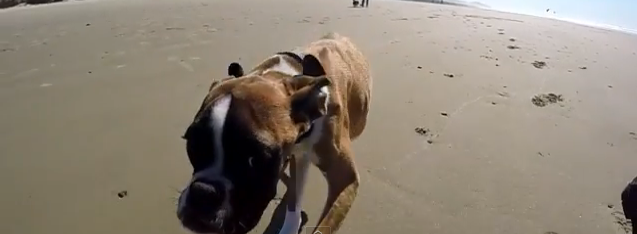
    Boxer puppy Duncan Lou Who was born with deformed hind legs that left him in constant agony. After having them removed, he received a doggy wheel chair, courtesy of Panda Paws Rescue.

    In this short video, we see his first time roaming free at the beach, blissfully unconcerned with what he lacks and seemingly grateful for what he still has to enjoy.