Tag: disease

  • My Cat Had Cancer and Taught Me How to Cope with Illness

    My Cat Had Cancer and Taught Me How to Cope with Illness

    “A cat purring on your lap is more healing than any drug in the world, as the vibrations you are receiving are of pure love and contentment.” ~St. Francis of Assisi

    We all know what it is like to be sick. At some point in our lives we get the flu or a bad cold, but we know the course—get lots of rest and before you know it you are as good as new. But for some of us, we live with chronic illness.

    Chronic illness brings with it day-to-day symptoms, the ones you cannot get away from. Coping with chronic illness is really tough.

    You wonder if you will ever get well, grieve the things you used to do or want to do but can’t, stress about how to maintain employment, and feel invisible to those who don’t know what it is like to be sick.

    Autoimmune illnesses affect 50 million people in the United States and includes over 100 illnesses (aarda.org). I have an autoimmune disease—Crohn’s disease. It is a chronic inflammatory bowel disease.

    Crohn’s disease has many symptoms, which fluctuate day-to-day, and like all autoimmune diseases has remissions and relapses. I don’t know when I wake up if I am going to have a good day or a really bad day.

    Some days it is overwhelming, but others I feel supported and hopeful that I will get better.

    When my twenty-year-old cat Yochabel was diagnosed with bladder cancer, now two of us in the same home suffered with a chronic condition. As we faced our health challenges together, something remarkable happened.

    She became a mirror of myself. I thought I was coping, but she challenged my current perceptions of illness. I had room for improvement as Yochabel, my dear cat companion, offered me lessons for coping.

    Obviously, I didn’t have feline bladder cancer, but her condition, similar to my own, was chronic, and unpredictable. Similarly, treatment direction was unclear and despite seeing diverse specialists, opinions were confusing and conflicting.

    Whether it is cancer, autoimmune disease, or another illness, there are common themes among them. I think of illness as painful, uncomfortable, disorienting, stressful, frustrating, and even depressing from time to time.

    But to my surprise, Yochabel introduced me to a positive aspect of illness. Illness brought irreplaceable gifts to both our lives, one of which is gratitude.

    Notice and Appreciate the Small Things in Life

    When we know our time is limited with those we love, suddenly our perspective shifts. Instead of focusing on what we don’t have, we focus on what we have. Each day Yochabel was physically able to walk to her litter box I was grateful.

    First thing in the morning, I ran into the room where she was sleeping, and when I saw her big beautiful green eyes wide open and heard her purring, I felt gratitude. I noticed that while I was able to appreciate these things in Yochabel, I couldn’t in myself.

    My body, just like hers, was giving me many moments to be grateful for. Despite living with Crohn’s disease for decades, my body gifted me with the ability to walk to see Yochabel, the senses to see and hear her, and a heart that filled with love when I thought of her.

    My body gave me life—a life that I could make the most of because it was my choice regardless of illness.

    Being Present: One Step, One Moment at a Time

    Throughout the ups and downs of adjusting to the bladder cancer, I noticed the stark contrast between Yochabel’s responses and my own. I wanted the answers to be clear and results from treatment immediate. I was impatient and outwardly frustrated.

    Meanwhile, Yochabel’s life was consumed with frequent trips to her litter box. Back and forth each morning I watched her squat to urinate, return to her bed, and start the process all over again. Her pacing made me anxious and angry.

    I asked myself again and again why is this happening to her? She didn’t deserve it.

    I watched her take one step at a time, as though each trek to the litter box was a new one. I, on the other hand, accumulated her sufferings, each trek to the litter box being “stacked” on top of the prior ones as I angrily said, “Here we go again!”

    Meanwhile she was calm and present in each step.

    I wondered how does she do it?

    Then I concluded, it was truly about being in the moment—taking one symptom at a time. The more we accumulate and stack symptoms, the harder it is to cope. One symptom at a time is more manageable.

    I wondered if I could handle my symptoms one at a time.

    It is almost as if she knew this was a process that her body had to unfold in its own time.

    As I watched her presence and approach to a very annoying constellation of symptoms, I realized how much energy I expel trying to rush healing, obtain immediate answers, and get to the end of treatment. This negative response steals energy away from my healing in the form of stress.

    Stress doesn’t help healing, it makes it worse. It was a major difference: Yochabel seemed to manage stress much better than I do.

    It is All About Perception—We Are What We Think

    One side effect of bladder cancer is bleeding. Despite my knowing this can be a common symptom of cancer, my perception of blood is “scary,” and painful.

    In fact, it causes me to freak out!

    Yochabel didn’t perceive blood as alarming. Therefore, every time she urinated blood, while I panicked, Yochabel remained present and calm until my nerves and actions alarmed her.

    To my amazement, even while bleeding, she still purred and sought my companionship and meals.

    I wondered if I could be this calm as my body did strange things; it would certainly be useful.

    It was all about my perceptions.

    Joy and Illness Can Coexist

    The most perplexing to me was Yochabel’s ability to show a joy and zest for life despite what I perceived as uncomfortable—cancer.

    While bleeding, urgently urinating, and dealing with her own lifestyle changes she was upbeat, kind, patient, and obviously joyful.

    I couldn’t think of a day in my life where I exuded outward or inward joy while in a Crohn’s flare. Not to mention, I was irritable towards those around me when I was suffering.

    Yochabel, staying in the moment, never allowed her illness to displace her joy or relationship with me.

    She was always kind and full of gratitude.

    Pet Companions Help Us Heal

    Living with chronic illness inspires me to continue developing and refining what my body and mind need to heal.

    Through the years I have explored many approaches for healing Crohn’s disease and strengthening my immune system.

    I tried physical interventions: diet, routine blood work, and taking vitamins and supplements and emotional interventions: seeing a licensed mental health therapist and addressing the impact of childhood trauma and stress on my health.

    These were all effective in their own ways, but sometimes healing can be simpler than we think.

    Our pet companions are critical assets to our healing.

    Not only do they provide us unconditional love and support, but they are some of our greatest teachers. In the presence of a pet companion, there is no such thing as invisible illness.

    They see us for who we really are and their wisdom and intuition is something all humans can benefit from.

    Hold on to the Gifts in Front of You

    Illness is life changing for caretakers and patients.

    However, the greatest lesson I learned from Yochabel is that some of the difficulty is of my own creation.

    Rushing the human body beyond its natural ability to heal is counterproductive, anger and frustration toward loved ones and oneself is damaging, negative perceptions create stress and confusion.

    Just because illness is present in our lives does not mean we have to surrender to it. We still have our joy, quality time with loved ones, ability to make decisions moment to moment, and hope that things can get better.

    While Yochabel had the cancer, I seemed to be the victim and the “sicker” of the two of us.

    Why?

    Because she didn’t let go of any of these gifts.

    Her focus was holding on to them moment by moment and when I do the same, I can cope much more easily.

    *You can read more about Yochabel’s wisdom, and her end-of-life story, here.
  • What Expecting to Die Young Taught Me About Living a Happy Life

    What Expecting to Die Young Taught Me About Living a Happy Life

    “I’ve come to trust not that events will always unfold exactly as I want, but that I will be fine either way. The challenges we face in life are always lessons that serve our soul’s growth.” ~ Marianne Williamson

    At the age of nine, I was sitting in a doctor’s office at Baylor University with both of my parents when we were all told I wouldn’t live to see twenty-three. The doctor casually told us my dad would probably never get to walk me down the aisle and I’d likely never make my mom a grandmother, but there was great chicken pot pie in the cafeteria on the first floor.

    Enjoy the rest of your day.

    Eight months later, on my tenth birthday, the possibility of my dad walking me down the aisle was permanently taken away when he died suddenly of an aortic and thoracic aneurysm. He had the same genetic abnormality I have, which caused the aneurysm, so by my logic, confirmed by the doctors, my demise was not far behind.

    I had no idea the day I turned ten, the day I lost my dad, my misguided and broken heart gifted me a license to be entitled and reckless until the day I died. Which, according to the medical community, wasn’t that far away.

    Let me back the medical drama bus up back to the day in Texas at the hospital just for a quick, minor detail to note.

    That day my dad and I were simultaneously diagnosed with a genetic disorder called Marfan Syndrome.

    In a very tiny nutshell, it’s a connective tissue disorder found on the fibrillin one gene. It essentially weakens all connective tissue in the body. The result is a body whose heart, lungs, eyes, and spine are severely impacted. A prominent and common feature with this condition is “abnormal” height. People affected are relatively tall (I’m 6’2”, my dad was 6’9”).

    For precautionary purposes, we both stopped participating in any activities that raise the heartbeat, to decrease the risk of having an aneurysm or potentially causing damage to the face due to dislocation of the lens in the eye.

    No contact sports, no exercising, no gym at school. I was basically told I could walk, bowl, or golf. I hated sports anyway, so I was excited to not have to dress for gym.

    This consequently led to a lifetime of comments like “You don’t play basketball or volleyball?! That’s a shame!” or “Omg, you’re so tall!” As if I wasn’t already painfully aware, but I digress…

    Point being, I was told from a very young age on a fairly regular basis, “You can’t.” So I learned to habitually answer, “I can’t” every time someone asked me to do pretty much anything.

    What possible negative effects could this have?

    I couldn’t see it at the time, but this led to a lifetime of constantly assessing every situation based on whether it was going to speed up my untimely death or not.

    I didn’t learn how to question whether or not I liked things but whether or not it was something that was going to kill me sooner or later. In turn, I missed a million opportunities to get to know who I was as a young woman.

    All I knew and all I was told were all the things I couldn’t do all the time.

    This short-term life span turned my life into a short-term life plan. Soon enough the emotional pains of being a teenager and the new kid in high school, along with unresolved daddy issues, kicked into high gear, and I had no idea how to deal with any of it.

    So, I drank. A lot.

    The rest of high school and most of college was a blur. I got married at twenty-three because, well, time was running out for me. And then, when I was twenty-four, doctors told me my life expectancy had suddenly increased to forty.

    (If there’s one emoji to express how I felt it would be the face with the wide eyes and red cheeks that looks like he would say “Oh sh*t!” if he could talk.)

    I panicked and started trying to speed up the clock. Living wasn’t for me. I wasn’t raised to live; I was raised to die. Live all the places, have a baby, buy the stuff, laugh all the laughs, and then die.

    This is where my excessive drinking turned into full-blown alcoholism and prescription drug addiction.

    I was either going to OD or make my heart explode, but I wasn’t going to stick around. I must note that none of this was planned, intentional, or a suicide mission. In my mind at the time, I literally didn’t know what else to do, not even how to ask for help.

    So, someone asked for help for me. Rehab is a whole other blog.

    I’m thirty-nine now, well past my expiration date, and still learning how to live life today. In my drinking days, life revolved around morbid reflection. In early sobriety, life revolved around morbid projection. Today life revolves around just this day. This hour. This moment.

    When one of my coaches asks me to journal about how I want my life to look in five years or where I want my business to be long term, I still don’t know how to answer that.

    I don’t understand long term. And for the longest time, I always thought that to be a nightmarish curse. Until now. 

    My inability to see life long-term seems to be all the rage these days. There’s Eckhart Tolle, Wayne Dyer, and Deepak Chopra all preaching about being present, being here now, and being there with the spirit of love, and I’m over here wondering how long the two-week wait to hear if this gets published is going to feel or if I’ll be around to see it go live.

    When you think about it, we’re all terminal. No one gets out of here alive. Yet we all run around like we’re going to cheat death.

    We run out of joy staying married to jobs, people, and places we are no longer passionate about. We’ve forgotten how to be happy because we’ve made it so elusive.

    It only feels elusive because we’ve spent our time wrong. We’ve spent our time focusing on how we can create a living for ourselves instead of how to create a life for our hearts, and the only way to do that is to get to know yourself first.

    In designing my life by listening to my heart, I discovered a few things along the way.

    I learned that we habitually state we are human beings, but we spend too much time doing. We get stuck in the how and what next instead of being right where our feet are in that moment. I learned to create space and presence for life to happen organically instead of allowing my mind to race with perceived fears.

    Living in each moment used to mean living as recklessly as possible and constantly challenging the odds just to see if I would make it. Today, living in each moment means being driven by what my heart is calling me to do.

    I’ve learned to take the time to figure out what the voice of my heart sounds like instead of the blazing of doubt in my mind. This finally allowed me to see what felt light and right in my life and allowed everything that feels heavy to fall to the way side.

    Heart driven. Soul led.

    This journey was started by a seed that was planted three decades ago. The seed called “I can’t” grew into a self-fulfilling prophecy filled with destruction, heartbreak, sorrow, and the urge to run from everything.

    When I stopped running (drinking, using, blaming, complaining) and learned to be still with myself and all that had encompassed my life, an entirely new life was born.

    In designing my life and healing my soul, I have found that happiness can be found in big moments like reuniting with my soulmate, winning a competition, or leaping into a new career. It can also be found in the smaller moments like watching my child choose a book instead of watching television, receiving flowers just because, or just being grateful for the sunshine.

    But I have found I am the happiest and most content when I am meditating, creating a safe space for others, and playing. Playing like a child on a daily basis is where it’s at. Whether I’m writing, coaching, baking, or gluing rhinestones on anything I can get my hands on, that’s where I’m at complete peace.

    And that (happiness) seems to be the individual goal of most people I meet, but it doesn’t seem to translate into the collective thinking. That’s where I’ve found the hiccup. The getting tied up in what we see everyone else doing, where everyone else is succeeding, and then wondering why we don’t have that perfect slice of peace pie that everyone else seems to have.

    The hardest thing I’ve learned is there is no special sauce, no magical happiness-to-sadness ratio, and no one-size-fits-all solution. We each have to define happiness for ourselves.

    For me, this means doing the work. It looks like me getting brutally honest with my past, mending my mistakes, giving love to every person I meet, and telling those who are close to me what’s really going on every day.

    This connects me to you and you to me, and this is ultimately the biggest lesson I learned.

    We all want to be seen. We all want to be heard. We all want permission to be ourselves. I’ve experienced what that feels like, and now I’m living a life that I was told would never happen. I stopped believing other people’s opinions of me, my life, and where they think it should be when I realized those opinions and thoughts are about what’s missing from their life, not mine.

    There is no slice of peace pie waiting for you or for me. We each have our own pie to flavor, bake, and share. I guess that would be called Purpose Pie. I sit in gratitude every day I have found my pie and am able to share with all who are hungry.

    All of this because they told me I was going to die and the hospital chicken pot pie was nice.

  • How to Love Yourself Through Cancer or Any Other Terrifying Diagnosis

    How to Love Yourself Through Cancer or Any Other Terrifying Diagnosis

    “If you want to see the sunshine, you have to weather the storm.” ~Frank Lane

    One minute your life is just humming along, and out of nowhere you’re hit with a devastating diagnosis. Cancer.

    Believe me, I know what it’s like to get the news you have cancer and to live with the trauma that follows, because I’m not only a licensed psychotherapist, I’ve been treated for both breast cancer and leukemia.

    I know how that diagnosis changes everything. I know how the world around you can still look the same, but suddenly you feel like a stranger in your own life.

    You have trouble getting up in the morning. You have trouble getting to sleep. When you finally get to sleep you’re jolted awake by nightmares. Or maybe you sleep all the time. You can’t eat, or you can’t stop eating.

    You’re drinking too much. You’re smoking too much. You’re terrified, exhausted, and have no idea how you’re going to get through the next few hours, let alone the days, or weeks ahead.

    When I was going through chemo for breast cancer, I read all the books about surviving cancer I could get my hands on. I talked to my oncologist and to other women going through the same thing, trying to find the way to “do cancer right.”

    I worried myself sick that I would get things wrong, until a friend said, “You know, everybody does things differently. Just find what works for you, and do that.” Those words changed everything for me.

    I realized there wasn’t “a right way” to do cancer. There was just the way that worked best for me.

    I believe it’s the same for you. No matter what kind of diagnosis you’re facing, it’s up to you to find what works for you and do that.

    To get you through those tough first days, I’m offering you some thoughts and techniques that worked for me. I hope some of them will work for you, too.

    Be Gentle With Yourself

    When you’re going through a tough time, you may not have the time or energy keep up your usual self-care routine. So, why not let the big things go and start looking for little things you can do instead?

    If you can’t get to the gym, go out for a ten-minute walk at lunch. If you don’t have time to cook a nutritious dinner, add a salad or vegetable to your take-out order.

    Instead of trying to check things off your to-do list, think of ways to make life easier for yourself. If you don’t have time to do something yourself, hire someone, or ask for help.

    Focus on what’s best for you, and that means speaking up for yourself. If you don’t have the time or energy to do something, say “no,” and don’t feel guilty about it.

    Find the Joy

    Be sure to do something you love every day, even if it’s just for a few minutes: sit on a beach, gaze at the stars, read a book, go for a walk, watch a funny You Tube video or TV show. Smile when you can and laugh as often as possible, because laughter connects you with the world in a way that eases anxiety and heals the heart.

    Affirm Courage, Love, and Safety

    What you say to yourself matters. And when you’re going through a tough time, positive self-talk can make a real difference in how you think and feel.

    When I was struggling to find even one positive thought, I found it really helpful to focus on powerful affirmations instead. So, if you find yourself spiraling downward into the depths of negativity, try the following process to break that cycle.

    Healing Affirmations

    Begin by saying your name out loud. Then remind yourself that you’re safe and secure in the moment. Let that feeling soak all the way in to your belly and your bones.

    Once you feel safe, affirm:

    “I have the spirit, will, and courage to meet any challenge ahead.”

    “I can handle anything, one step at a time.”

    “I am always surrounded and protected by light and love.”

    “I speak to myself with loving kindness. I treat myself with loving kindness. I care for myself with loving kindness.”

    “I am always moving in a positive direction toward a positive future.”

    “I am safe.”

    End by promising you will always treasure yourself and honor your beautiful spirit. Affirm courage, love, and safety.

    Nourish Yourself

    Experts recommend eating well, and eliminating sugary and processed foods, alcohol, and caffeine when you’re under stress.

    But maybe you’re having trouble eating anything at all. Or maybe you’re living on chicken noodle soup, pretzels, and chocolate doughnuts.

    Please, give yourself a break. When you’re going through a traumatic experience it’s no time to be following a strict diet or to beat yourself for not eating a balanced diet. Instead, focus on making healthy food choices when you can, and letting go of judgment when you can’t.

    If you find you’re having trouble eating, choose foods you can tolerate and enjoy smaller portions more often through the day.

    If you’re over eating, try eating fruits and vegetables first. Commit to eating only when you’re sitting down. Focus on eating more slowly.

    But if you’ve tried everything you can think of and are still struggling with food, please let your health care provider know what ‘s going on. They’re there to give you support and help in all aspects of your health care.

    Rest

    A good night’s sleep is an important part of healing your body, mind, and spirit, but if you’re struggling to get enough sleep there are a number of things you can do.

    Try going to bed an hour earlier each night. The extra time in bed can give your body some needed rest.

    Once you’re in bed, do your best to keep your focus off your troubles. Relive happy memories, or imagine yourself vacationing in a place where you can relax and enjoy.

    If you haven’t fallen asleep after twenty minutes, get up and do something calming. Write in your journal, do a crossword puzzle, or sip a cup of herbal tea.

    Finally, if you aren’t able to get enough sleep at night, take a nap during the day. Make it a non-negotiable part of your daily schedule. If time is an issue, try scheduling all your activities and responsibilities before lunch, leaving your afternoon for napping or resting.

    Seek Support

    It’s important not to go through this alone. And asking for help is a sign of strength and courage, not weakness.

    When things get rough, call a friend or a family member and ask for support and help.

    If you’re completely overwhelmed and don’t know where to turn, consider getting some professional help. Talking to a mental health provider can give you new insight, hope, and bring you peace.

    Finally, you may also want to consider working with a support group. There’s great power in knowing you’re not the only one suffering this kind of challenge. There are people who are in the same boat and know exactly how you feel.  They may be able to offer comfort and advice in the days ahead.

    Give

    Giving is another powerful way to connect with the people around you. It reminds you of the gifts you still have, and that you’re not the only one going through a tough time.

    There are lots of ways to lend a hand. Offer to drive a neighbor to a medical appointment. Walk the dogs at your local animal shelter. Write a check to your favorite charity or drop a few coins in the donation can as you pass by. Send a card or text to a friend to help them through the day.

    If you’d like to make a longer term commitment, volunteer at your local library, food bank, or senior center.

    And if you think you don’t have any energy or time or left to give, give a compliment. Share a smile or a kind word. You never know how that one small gift could change a life.

    Give Yourself a Healing Hug

    Hugging is a way to give yourself comfort and peace in the middle of any storm. Acupressure is a powerful way to bring ease to both body and spirit.

    I combine both techniques in what I call a healing hug, and highly recommend it to ease fear and panic that can be a part of these tough days.

    Begin by crossing your arms over your chest. There are two important acupressure points located in the soft tissue just under your collarbones called the “letting go” points.

    Chances are that by crossing your arms, your fingertips have landed on those “letting go” points. Take a moment and feel around until you find the spots, about two inches above your armpit crease and an inch inward.

    Once you’re found the points, pull your arms close around you in a comforting, self-hug, and gently massage those “letting go” points with your fingertips. Continue to breathe, noticing on each exhale how the tension and fear flow down your spine and out of your body.

    No matter how difficult or scary your diagnosis, treating yourself with love and kindness will make the journey through the those first tough days easier, and give you a head start on enjoying the sunshine waiting for you on the other side.

  • Coping with Your Partner’s Life-Altering Medical Condition

    Coping with Your Partner’s Life-Altering Medical Condition

    “We don’t know what’s causing it,” I say to friends for what feels like the hundredth time. My boyfriend has been unable to walk or stand without pain for two years. And no doctors can seem to figure out why.

    We were in our early twenties and had only been dating for a few months before his leg issue started. What ensued was a harsh transition from a highly active couple hiking mountains on the weekends, to a sedentary couple that needed to take an Uber to a coffee shop just a few blocks away.

    Our identities as individuals and as a couple were forced to adapt as we struggled to balance our budding relationship and the crippling reality of being unable to walk, bike, run, swim, or do any other form of physical activity together. But this wasn’t the only issue; other areas of our relationship struggled as well.

    Our conversations became strained, our intimacy more limited. We had become much less carefree as we battled to adapt to our new constraints. My partner now seemed to lack the confidence and assuredness he once had, and my plans about how the relationship would grow suddenly had a huge wrench in them with no timeline for when things would get better.

    Along the way I’ve shared our journey with others, and it turns out there are a surprising number of people with similar stories. Their partner was happy and thriving when they met, then they unexpectedly developed a debilitating medical condition that changed everything. I’ve heard examples of several friends whose partners have unexplained chronic pain, nausea, headaches, heart conditions, and more.

    While these are personal anecdotes from my own small circle, I know we are not alone. There are millions of active Reddit threads and support groups in community forums by desperate partners reaching out the internet to answer “When will the person I fall in love with be back?”—“What is going on?!”

    Every situation and relationship is different, and many have been enduring the struggle for much longer than the two years I have been, with much more life-threatening conditions. Hats off to you! However, I have learned a thing or two over the course of my journey that have helped me turn a corner in my relationship even though the issue is still going on.

    Here are my top six tips for coping with a partner’s life-altering medical condition. In other words, here are things I keep telling myself in order to get through one of the hardest things I have ever experienced.

    1. Stop planning for the day they get better.

    In the first few months of our journey, I would create timelines in my head for when it seemed “reasonable” he would be better (“In three months it should be better, right?”… five months… a year, etc.). But those timelines were based purely in blind faith despite not even knowing what the problem was. I would set myself up for disappointment again and again while there was still no progress.

    After enough failed treatments and milestones (birthdays, holidays) that passed when he still wasn’t better, I realized I needed to be open to the harsh reality that today’s medical system is not perfect: it’s slow and often trial-and-error, especially if the doctors aren’t sure what the issue is. There is no time he “should” be better.

    Releasing myself from these expectations, and the pain they created, allowed me to stay more level-headed and focus on the things we can control and enjoy in our relationship.

    2. Do your own research.

    Google everything, study the anatomy of the body, familiarize yourself with Western vs. Eastern medical treatments, take a minute to focus on a dense, peer-reviewed medical journal, educate yourself. This will help with #1, as you will know what is going on, why it’s complex, and why it’s taking so long to figure it out. Knowledge will give you peace of mind.

    You will be able to meaningfully contribute to conversations with your partner as they navigate their appointments and decisions. As a result, you will feel more involved in the journey rather than victimized by it. It’s something you are doing together, and you are empowered to help each other since you are both experts in all the possibilities of what the issue may be.

    3. Seek out others in your situation.

    For the first year or so, I felt entirely alone on the journey. It felt like a secret struggle between my partner and me that my friends and family didn’t understand, or they assumed it was probably better by the next time they asked about it. Finding friends who were going through something similar was instantly comforting.

    With them, I can speak more freely about the emotional toll it is taking on the relationship, swap stories of failed doctor’s appointments, and discuss the next thing we are trying. Hearing about someone else’s unique story has helped provide perspective and get outside of my own head on my relationship.

    If you don’t have any friends going through the same thing, I found a couple people online here and here. Seeing them struggle with their own medical journeys inspired me to stay strong and keep going.

    4. Grow the parts of the relationship that you still can.

    As much as it seems like your partner’s issue is taking up all the space in the relationship, remember there are still other aspects of the relationship that are ready and willing to grow. Try your hardest to not talk about the medical issue all the time. Set up a regular check-in cadence on how you and your partner are feeling about the situation, and spend time outside of that enjoying life together.

    Find new activities to do together, new hobbies to be into together, new conversations you may not have gotten into otherwise. Don’t be ashamed if the activities you do with your partner aren’t exactly what you thought you’d be doing or what your friends are doing with their partners. Cherish your special relationship with one another.

    5. Own your choice to stay in the relationship.

    You may struggle with whether or not you should stay. If you are still in your relationship despite the way the medical issue has changed it, you have likely developed a rationale for why it makes sense to stay, such as “It’ll get better soon so I just need to stick it out,” or “I don’t believe in leaving when there are hard times,” or “We have kids who need us.”

    While those things may be true to you, they represent more about your personal belief system than anything else. This is how you choose to look at the issue, and, in turn, why you choose to stay. In reality, you are not obligated to stay. You do it because you want to do it. This self-awareness will free you from feeling stuck, or like you “have” to be there. It will help you to focus on why you are staying and validate that choice.

    6. Be proud of yourself.

    This is tough! Pat yourself on the back for what you can do and the little wins you have along the way. You and your partner are both learning together, and you should be proud of yourselves individually and as a couple. While these situations can create friction that drives you apart, it’s actually not you two versus each other—it’s you two versus the problem. Stick together and lean on each other. You’re doing a great job.

  • What to Do When Someone You Love Is Sick and Struggling

    What to Do When Someone You Love Is Sick and Struggling

    “Love is not what you say. Love is what you do.” ~Unknown

    As a graduate student in public health, I spent my days talking about illness and death. Normal lunchtime conversations among students covered topics like: how to define a case of multiple sclerosis, the most effective strategy to stop HIV transmission among injection drug users, and the probability you’d be alive in five years after a breast cancer diagnosis.

    None of this talk about illness remotely prepared me for the experience of illness. I was blissfully naive when I started dating a man named Evan with a cough that wouldn’t go away.

    Over the course of a year, Evan got progressively worse in a series of fits and starts. He was in and out of the hospital and died toward the end of 2012. I was heartbroken and devastated. But within a few years, I healed and was back to participating in normal life.

    Then, I started getting dizzy spells and severe face pain. A few months later, a very large yet benign tumor was removed from one of my sinuses. I spent months confined to my apartment waiting for my sinuses to heal and the pain to subside.

    Through these experiences, I’ve seen how a lot of our well-intentioned responses to illness don’t have the intended impact. Here are the top eight lessons I’ve learned a lot about how to be a terrific support as a family member or friend.

    1. Do what is needed, not what you think you should do.

    At the lowest points in Evan’s illness, I had a hard time eating. I barely slept. I was always bracing for what would happen next.

    Evan spent twenty-one nights in the hospital over the course of eleven months. I didn’t spend any.

    Not because I didn’t want to. Because he asked me to leave. Because he wanted me to get enough rest so that he could count on me coming back.

    So that I’d be safe to drive and bring him outside food. So that he could trust me to research the doctor’s recommendations and help him communicate his choices.

    Because he could tell how scared I was, and my fear was making him feel anxious.

    Many of us have dreams of being the valiant caregiver who selflessly never leaves the hospital bedside for a moment. If that’s how you think it will go down, I want to tell you something: that may not be what your loved one needs from you.

    Leaving their side can feel awful. You may feel crushing guilt from not being able to do enough. Friends or family may question your commitment. And when things are really bad, there’s the gnawing fear that you’ll miss out on the moments when you were truly needed.

    But if going home to sleep, taking a walk, or spending an hour crying on your friend’s shoulder is going to make the difference between you being a guilt-laden, anxious wreck and your best self, that is what your loved one needs from you. Serious illness is a marathon. Don’t mistake it for a sprint.

    2. If your loved one wants to talk to you about death, listen.

    For most of the time that Evan was ill, we thought that he had a lung disease that was treatable. It was only in the last two weeks of his life, the day after they sedated him and put him on a ventilator, that we found out that he was terminal. A rare form of lung cancer.

    A month before his death, when he was still at home, Evan had talked to me about what he wanted me to do if he didn’t make it. I cut him off after one sentence.

    Of course I would do what he asked, but I told him that this wasn’t something we needed to talk about. He was going to get healthy!

    This conversation is my biggest regret.

    Evan didn’t think I deserved a boyfriend who was sick. He tried to break up with me twice so I could go find a “normal” boyfriend. I wasn’t having it.

    On that night, I wish I had acknowledged how scary things were for him. I wish I had let him know that whatever happened, I had no regrets about the time we spent together. Because I never got another chance.

    Don’t miss an opportunity to hear what your loved one wishes for you, because you think you’ll be able to do it later. Later, may never come.

    3. Every so often, check in on the support person.

    After Evan died I met up with my friends Derek and Tatiana who had been on their own journey through illness. They were engaged, and Tatiana had been in treatment for breast cancer during the same time that my boyfriend was ill. Derek had been taking care of her. When we met up we laughed about all the well-meaning people who emailed us “cures.”

    Derek and I agreed that one difficulty was how friends and family were so focused on how the patients were progressing that us caregivers often felt invisible and unappreciated. Everyone wanted to know how the patient was doing, what treatment we were trying, and if it was working. But few asked me and Derek how we were doing.

    It’s natural for people to be curious about what’s happening with the illness and the patient. But illness impacts all the people close to the patient, too. Caretakers shift our work schedules so we can be there at the important doctor appointments. We file the bureaucratic hospital paperwork. We learn the ins and outs of insurance companies.

    Being a support person is stressful and scary, yet caregivers often feel conflicted about asking for help themselves. They don’t want to draw attention or resources away from the patient. As a friend, regularly checking in on what you can do to help the support person can help them be a more reliable support.

    4. Don’t hide the fact that you’re unhappy for months.

    When your loved one is sick, you may decide that you want to put off a difficult conversation with them. I know, because I’ve been both the support person who has put off the conversation and the sick person who wasn’t told something.

    When I was sick, I wasn’t able to be the kind of friend that I was when I was healthy. I was grumpy. I wasn’t as quick to pick up on nonverbal cues. My thinking was muddled and foggy.

    During this time, I had a close friend who got tired of sick Lori. When I reached out to her, she would delay our get together, chalking things up to a busy work schedule. Eventually she would agree to meet up and then not enjoy the time we spent together.

    Months later, when I was feeling better I asked her if something was wrong. To her credit, she fessed up that she hadn’t been feeling satisfied by our friendship for months. She hadn’t said anything because she was worried I wouldn’t be able to take it. We are no longer friends.

    If you’re feeling unhappy about a relationship with a person who is sick, don’t bottle it up and hope it will go away. If you’re just showing up out of a sense of duty, you won’t have much staying power. And that day when you disappear with no chance of returning is more than a disappointment for your sick loved one. It’s a crisis.

    5. Understand that “cheering up” a sick person may backfire.

    The surgeon who took it out my tumor warned me that it would be months before I was pain-free and back to normal life. I shared this information with my family.

    Nevertheless, about two weeks after the surgery my mom started asking me if I was pain-free every time she texted me. Three weeks after surgery, she sent me pictures of her trip to Disneyworld with the rest of my family. We’re at the Magic Kingdom!!! There’s a new Under the Sea ride!!! Hopefully, you are out of pain by now!!!

    I’m sure that my mom’s intention was to try and cheer me up. To remind me that there were fun things to look forward to in life.

    Instead, those texts and photos broke my heart. They showed me that my mom was not ready to accept the seriousness of my situation.

    I was at the beginning of six weeks of excruciating pain and no effective medication to counter it. I spent a few hours each day screaming into a pillow and questioning whether life was worth this much pain. After those texts, I stopped asking my mom for emotional support, because I no longer believed she could give it.

    If your loved one is really sick, be sensitive. Acknowledge how tough things are before you gush about your magical vacation, your budding romance, or the wild dance party you went to last night. And if your loved one tells you they’re not in the mood for happy stories right now, honor their wishes.

    6. Realize that your chicken soup may not be wanted or helpful.

    Healing often means special diets. After my surgery I was on a paleo diet with a Chinese medicine twist. Every few weeks the Chinese medicine recommendations would shift as my body’s needs shifted.

    It was exhausting to keep track of what I was supposed to eat and what I wasn’t. But I couldn’t deny that the diet was helping. I was feeling better.

    So every time someone offered to make food for me I felt anxious. My dietary rules were complex and varying, and for a while I was in so much pain that I was communicating with a whiteboard, which made it hard to communicate the myriad ways you could mess up.

    There is nothing worse than receiving food that a kind person has made for you that you can’t eat. Even though you tried to tell them how they had to read the ingredients list on everything. Even rotisserie chicken. Because that “seasoning” contains gluten that you’re not supposed to eat.

    If you do make food for someone on a restricted diet, know that you are not just making food. You are making medicine. And your care and attention to detail needs to be the same as if you were preparing to give someone medicine.

    7. Be prepared for plans to change.

    Every year, my friend Charlotte invites a group of us out to dinner for her birthday. When she invited me in 2015, I told her it would be a long shot for me to go, but I wanted to try. Her birthday came two months after my surgery.

    I was in bad shape. I was having pain episodes that had me crying into a pillow a few times a day. I was also on a restricted diet and trying to limit my physical activity so I wouldn’t spark new pain episodes.

    Charlotte is one of my closest friends, and she did everything she could to make it work. She chose a restaurant that had food I could eat. She called ahead and asked about stairs and elevators. She figured out which of the options had the shortest possible distance between where she could drop me off and the front door.

    And I still couldn’t go. The pain was too bad and I was too tired. I didn’t want her birthday to be spent watching someone cry in pain at her table. Thankfully, Charlotte was understanding.

    If your loved one is sick, the fact that they need to change plans in no way reflects how much they care about you. They are not in control of what happens. Trust that they are doing their best. Don’t take it personally.

    8. Take all of these guidelines with a grain of salt.

    The one certain rule is that there are no certain rules. Depending on the circumstances and the people involved, all of these things could change. Some people may want you to distract them from the circumstances or the pain by pretending that everything is like it used to be. Or they may appreciate you holding your tongue.

    If you aren’t sure that what you are doing is feeling good to the sick person, ask them. Let them know that it’s okay to tell you the truth. You want to care for them and if there’s anything that you can do differently to take better care of them, you want to know what it is.

    Have you been ill? What did you find most supportive? Least supportive?

    Have you been a caregiver? What are you most proud of? What do you wish you had done differently?

  • Gifts from a Terrible Disease: A Message for Anyone Who’s Slowly Losing a Loved One

    Gifts from a Terrible Disease: A Message for Anyone Who’s Slowly Losing a Loved One

    Friends Hugging

    “Challenges are gifts that force us to search for a new center of gravity. Don’t fight them. Just find a new way to stand.” ~Oprah Winfrey

    Alzheimer’s crept into our lives about five years ago. It’s like a vine growing alongside a house, slowly taking over the space that was once free. But in this case, the vine is slowly creeping over my mum’s brain.

    There are so many horrific statistics attached to this disease: Worldwide, nearly forty-four million people currently have Alzheimer’s or a related dementia; one in nine Americans over sixty-five has Alzheimer’s disease; unless a cure is found, more than sixteen million Americans will have the disease by 2050.

    The numbers are so scary I can hardly wrap my head around them. But to be perfectly honest with you, right here, right now, I don’t care about all these statistics. The one thing I do care about is the fact that this is happening to my mum.

    The disease has brought her physical pain, fear, and confusion. In fact, it has brought all of us that.

    Watching my mum disappear into this disease is heart wrenching. Watching my dad having to cope with losing the love of his life, the woman he has been married to for fifty years, makes me sad beyond belief.

    It is a cruel disease. We are all devastated.
It hasn’t been easy for me to process what is happening. In fact, there are days where I know I haven’t processed it at all. I carry around a sadness that is hard to describe; all I can say is that it is a sadness that comes from deep within my soul.

    In contrast, on the good days, I actually consider myself as “lucky.” Despite her dipping in and out of lucidity, she is still there for me, at least for now. And so I am learning to hold on to the precious moments when we do connect, and that has taught me a whole lot about life.

    So far, the progression of the disease has been slow. Slow enough that I have had the chance over the last five years to tell her how I feel. I have had the chance to say goodbye slowly and to make sure she knows I love her every step of the way. Some people don’t get that chance and have to deal with death from one moment to the next. So yes, I am lucky in a way.

    But for me, it’s bigger than that. This time with her has given me the courage to say the things I need to say to those around me, without bottling them up or hiding from them. Because there is only now for her. Later isn’t an option.

    It has helped me voice the sometimes-difficult things that need to be said at work and in my private life.

    It has taught me to express my love for my loved ones. Because cliché as this sounds, life really is too short. And that is a gift I have received from this terrible disease.

    It has also showed me how to live in the moment. My mum’s moments are short, and most often forgotten. When she asks me the same question over and over again, I try not to get frustrated. I repeat myself over and over again like I was saying it for the first time. I am simply living in her moment. And that is a gift I have received from this terrible disease.

    I have also come to realize how much my energy has an effect on her. When words fail, which is happening more and more, it’s the energy between us that connects us. A hug, a touch, or a squeeze of a hand can say so much more than words. That magical hug is enough—for her, for me. 


    With that realization comes a new perspective on how my energy has an effect on others. When I am present, and I mean truly present, I feel my relationships and experiences blossom—from the simple act of buying bread at my local bakery (actually taking the time to breath in the smell of fresh bread rather than just doing something else on the shopping list), to the deep, meaningful moments with my friends. And that is a gift I have received from this terrible disease.

    We all grieve in different ways. Each family member and each friend is seeking solace and comfort in whichever way helps. I have stumbled through this as best as I can, trying to find my own way. But, how do you accept slowly losing a person you love to a disease?

    I don’t have any miracle answers—I wish I did.

    There is advice and support out there, plenty of it. I have found that some of the advice is helpful, while some of it is simply stupid; I would laugh if it weren’t so raw. There is, however, one piece of advice—more of a thought, actually—that I recently received from a good friend.

    It has helped me to look at the situation differently, and on some days, has given me a sense of peace.

    I think that is why I am writing this article—to pass on this advice, on the off chance that someone who is losing a loved one to Alzheimer’s, or any other devastating disease for that matter, may be comforted by it, just as I have been.

    This advice has given me the opportunity to look at this situation through different lenses, depending on how I am feeling on any particular day.

    The beauty of this thought is that it has offered me the space to try to accept the situation bit by bit. It has also helped me to look at life differently; I guess they call that “re-framing.” And on other days, it has helped me to think that my mum actually has her own plan.

    The thought is this: that my mum has found another house to move into. It’s not that she is unhappy where she is, but she has just found another home to live in somewhere else. She is slowly moving all of her stuff there—one plate, one knife, and one book at a time.

    At the moment, she is living in both houses. At some point soon she will have moved out completely.

    I don’t know will happen to her when she does move out. I just hope with all my heart that she is as happy where she goes as she has been with us. And because she can’t take her memories with her, it’s up to me to tell her now, again and again: I love you. I love you. I love you.

    And you know what? I have complete faith that she will take our love with her to her new house.

    I am not religious, but I have found faith.

    Faith—that is a gift I have received from this terrible disease.

    Hugging image via Shutterstock

  • 5 Lessons on Living Life Fully from a Breast Cancer Survivor

    5 Lessons on Living Life Fully from a Breast Cancer Survivor

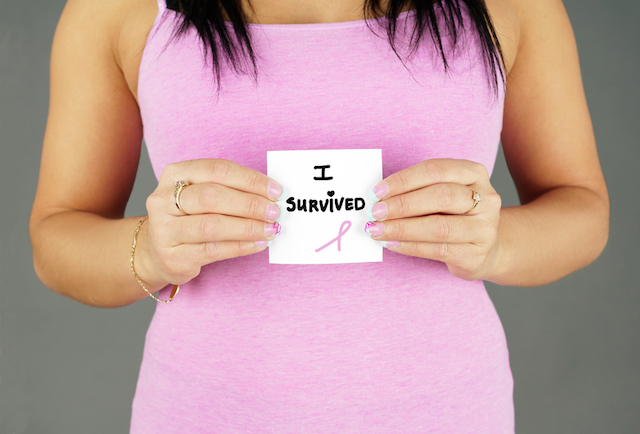
    I Survived

    “We all have two lives. The second one begins when we realize we only have one.” ~Confucius

    When I was diagnosed with stage 2 breast cancer in September 2014 I tried to spin this life curveball on its ugly head and find some lessons from this journey.

    That’s how I dealt with the blow.

    The truth is, I didn’t want people to feel sorry for me. I never wanted to be a victim.

    I wanted to be a survivor from day dot.

    Throughout this process I learned five powerful lessons that I’d like to share with you so that you can live life more fully—without a cancer diagnosis.

    The reality: Cancer changed my appearance.

    The treatment for cancer took away my hair, my eyebrows and eyelashes, and my breasts. All the lovely feminine assets I had were tampered with or lost temporarily.

    The lesson: Love goes beyond looks.

    The people who matter love me no matter how I look. One day when I was heading toward the end of my chemotherapy, my five-year-old boy found a picture of me with all my hair and eyebrows and said, “We love you however you look, Mummy.” That makes me feel blessed beyond belief.

    You’re likely blessed in the same way, and that’s something worth acknowledging and celebrating.

    The reality: Chemotherapy is horrible.

    It saves our lives but the process is yuck. I experienced all sorts of symptoms that were pretty uncomfortable. I almost got used to them as time passed by, yet I had to keep going back for more. For five months.

    The lesson: Don’t take health and energy for granted.

    To get up in the morning and feel healthy, comfortable, and full of energy is a beautiful thing. To feel normal is extraordinary. I will never take my health for granted again. I will never again consider normal days, when nothing exciting happens, mundane or time to kill a chore.

    Each morning when you wake up, even if that day seems ordinary, take a moment to appreciate the extraordinary gifts of your health and vitality.

    The reality: Life is short.

    When I was diagnosed with cancer there was a short amount of time while waiting for the test results when there was a possibility my life would come to an end a lot quicker than I thought. My mortality smacked me in the face.

    The lesson: Life is precious.

    Somehow it’s taboo, and I was a little in denial that my life is short and a tremendous gift. Awareness of my mortality gave me a big kick up the bum to live my life fully.

    Every day is a gift.

    The reality: I experienced fear and anxiety like never before.

    As I went through the cancer journey, my mind could easily have been consumed with worry about what the future holds and thoughts about the past—Why me? What did I do to deserve this? I could potentially be filled with a lot of fear and anxiety.

    The lesson: Love always conquers fear.

    I had never experienced such a feeling of presence. I felt so utterly aware of what matters and how much I have to be grateful for.

    When something like this happens all the petty stuff that fills our lives and relationships falls away, and all that is left is love.

    I have never felt fear in the same way that I have in the past few weeks, but the love I have received from friends and family has stepped up to meet me, and my fear has dissolved instantly.

    Whenever fear comes to meet you in life, try to flip it around and find love. Consider all that you love and everyone who loves you. Like me, you may find fear dissipates immediately.

    The reality: I had to create a lot of change in my life.

    As a mother of two small kids, I am so used to putting myself last and forgetting to look after my needs.

    After my diagnosis, I took myself on a journey of healing, immersed myself in creative projects, meditation, kinesiology, sound healing, distant healings, chakra cleansing, Ayurvedic lifestyle changes and supplements, journaling, and getting back to basics with my relationship with food. 

    The lesson: Everything starts with you.

    I really made myself a priority—because I had to. I had to give myself love. I had to nurture myself. In doing so, I realized how important it is. For me and for everyone around me. The ripple effect it has had on my kids, my family, and friends has been profound.

    Everything starts with your relationship with yourself. Accept, love, and be kind to yourself always.

    In some bizarre ways I feel almost grateful to have been through this experience. Somehow it has shown me to step past fear and be invincible. So I hope I can share this with you, in some way, and give you an element of this perspective.

    Your life is a miracle.

    Every birthday is a blessing and every moment is fleeting.

    I survived image via Shutterstock

  • How a Major Crisis Can Sometimes Be a Blessing in Disguise

    How a Major Crisis Can Sometimes Be a Blessing in Disguise

    “Pain can change you, but that doesn’t mean it has to be a bad change. Take that pain and turn it into wisdom.” ~Unknown

    Ten years ago my life changed in a dramatic way. What I experienced in 2004 seemed like a major disaster at first, but it turns out that sometimes what seems like the worst life experience can actually be one of our biggest blessings.

    In 2004, I was in graduate school, working toward a PhD in history. When I graduated from college in 2001, I wanted to be a professor. Well, that’s what I thought I wanted, but the truth was I was scared to “grow up” and get a real job, and graduate school seemed like a less scary option.

    When I got to grad school in the fall of 2001, I immediately felt like a fish out of water. While in college, I thrived and loved learning about history and doing primary source research. Graduate school was different.

    I remember feeling out of place in classes where everyone read books written by other historians and argued about what they thought of the book instead of diving right into research.

    In addition, I didn’t click with my advisor; we couldn’t communicate with each other, and that frustrated me. I was also a teaching assistant and realized that most of my students couldn’t care less about studying history. I quickly became disillusioned and unhappy.

    When I would talk to my family about how unhappy I was, my parents kept saying, “Well, what do you want to do?” I had no answer to that question. I just knew in my heart that this was not it, but I was too scared to face the unknown.

    Fast forward three years to 2004 when I was planning to have elective surgery that summer only to discover through the pre-op blood work that something was majorly wrong with me.

    After several weeks of tests and a long hospital stay, I finally had a diagnosis (which turned out to be a misdiagnosis, but that’s another story). I was told that I had Chronic Mylogeous Leukemia (CML). The diagnosis terrified me.

    While I was very deeply shaken by this, I attempted to continue with my graduate school program, only to feel more and more dissatisfied with what I was doing.

    Then, in September of 2005, my best friend from college passed away suddenly. Her death rocked me to the core and was the final wake-up call that I needed to change my life.

    After several months of grief and deep depression, I came to realize that life is way too short to be so incredibly miserable.

    Since I didn’t know how long my life would last because of this medical diagnosis, and because I was well aware that twenty-five year olds do just die, it was time to make some major changes. Even though I didn’t know my path forward, I knew to my very core that the one I was on was not for me.

    It took a major health crisis and the death of my friend to get me to admit that it was okay to not know what my next step was, but I needed to give up the path that was so clearly not mine.

    I got a job because I needed health insurance, and I started to work on healing my body, mind, and spirit. I spent hours each week going to therapy and exploring other healing modalities.

    It was through this healing process that I came to realize in a relatively short time what I did want to do. I was sitting in a biofeedback session and I had a moment where I actually saw myself in the practitioner’s chair, doing what she was doing.

    The lightning bolt of inspiration hit and I knew my next path was becoming clear.

    I went back to school, this time pursuing a master’s in psychology. I knew that what I had gone through was a wake-up call and a very statement of what my purpose in life was.

    I knew that I hadn’t gone to hell and back to just work for someone else in a job that didn’t feel deeply meaningful and fulfilling to me.

    I knew, to my very core, that I was here to help others along the healing path.

    If you had told me in 2005 that I would say that what I went through in those two years was on many levels some of the best things that ever happened to me, I would have looked at you like you had two heads.

    But ten years later, I know deep in my heart that without those huge wake-up calls, I might still be pursuing a path that isn’t truly mine because I was too scared to take a big leap.

    If you are currently going through a tough time, allow yourself to feel and express your feelings and, as you do so, practice self-compassion.

    It is okay to feel sadness, anger, frustration, grief, fear, and a whole host of other emotions. By allowing yourself to feel those feelings and letting them move through you, without being self-critical in the process, you allow the energy to shift instead of getting stuck and bottled up.

    Spend some time reflecting on whether there’s some kind of hidden opportunity in what you are experiencing.

    For example, if you have been laid off, perhaps you are being given the opportunity to find more meaningful work. Getting sick can be the opportunity to take a break, rest, and to heal yourself on deeper levels. A breakdown can be the chance to heal pain from your past that hasn’t been fully resolved.

    Lastly, remember that you are not your tough time. For me, not identifying as a “cancer patient” was crucial because if I identified that way, then my whole life was seen through that filter. Don’t attach to any labels that don’t feel right to you.

    Sometimes an experience that seems incredibly horrible can actually have hidden gifts inside it. Just be patient with the path you are on, take it one day at a time, and know that sometime in the future, you will likely gain incredible insight on the gifts of what you are going through.

  • Keep Hope Alive: How To Help Someone Who’s Struggling

    Keep Hope Alive: How To Help Someone Who’s Struggling

    “He who has health has hope and he who has hope has everything.” ~Proverb

    I write this today seemingly healthy.

    My doctors say I’m healthy. I feel healthy. I look healthy. But over the last six months this was not the case.

    In April of this year I was diagnosed with Stage 3 Melanoma. I am thirty-five years old. I am a wife and a mother to a four-year-old and six-year-old. I have my own business. I am busy. I did not have time for cancer.

    But cancer had time for me.

    I’ll never forget the day that I got the call letting me know that not only did I have this “Melanoma,” but it had spread to my lymph nodes as well. More surgery and an immunotherapy called “interferon” would be necessary, and the rate of return even after treatment? Thirty percent.

    The first response inside of me was acceptance. I skipped past all the other emotions because, well, quite frankly, I had so long neglected the mole on my neck that I knew when the whole process started that cancer (and an advanced one at that) was likely.

    But I’m not here to talk about cancer today. I’m here to talk about hope. A hope that springs eternal in the name of community. A rallying around me of family, friends, and even strangers upon this diagnosis. A support system that boldly lifted me and my mindset through every step of the way.

    Dinners, childcare, cards, surprises on my doorstep, texts, calls, long-term visits—this community that I’m so very blessed with rallied in a big way, in a way I never, ever thought possible.

    Even in my darkest and sickest of hours there was always something to be hopeful for because the love that came at me was indescribable.

    It was made of sterner stuff.

    It gave me hope because every time I even remotely started feeling bad, the community would take hold and lift me up in ways that were exactly what I needed right in the moment that I needed it.

    My phone would buzz: “Thinking of you today. Hoping you’re okay. Sending love your way.”

    My email would ding: “You’re amazing through this. Truly.”

    Visitors would stop by: “Let yourself be loved. Let yourself be cared for.”

    This whole cancer thing has taught me, once again, in the beauty of humanity. It has shown me that, even in our darkest hours, others can (and will) lift our spirits. When we are faced with our hardest struggles, it is then that we see the beauty in all that surrounds us.

    Cancer is a bringer of all emotions. It is an un-hinger of all truths and perceptions. Things that once were important are no longer relevant. There is suddenly more beauty in the everyday.

    This I learned not only because I was sick, but because my family, my friends, and perfect strangers showed me how to someday support someone in the same way they supported me.

    So I offer you this: a list of ways to show your support when someone is having a hard time or is going through an illness.

    Make a meal even when they say they don’t need it.

    This was lifesaving for me! Drop it on the doorstep and tell them to freeze it.

    Send texts.

    Little joy buzzes, I like to now call them, sweet messages offering support, jokes, and updates from the outside world.

    Leave a message.

    Hearing the voices of my friends and family as I drifted in and out of consciousness (the treatment I had to endure was five days a week for four weeks, and it was tough) was the most uplifting.

    Drop off trinkets.

    There were times when I was well enough to go outside and sit for a bit in the summer sun. Often, I would find little gifts at my doorstep. I see these now in my office, in my home, in my bedroom, and they make me smile thinking of those who dropped them by.

    Don’t give up quickly.

    Whatever support you would like to offer, know that there may be some “Oh, we couldn’t possibly” or “That’s okay—we’re okay.” People often say this when they could really use the support, so it helps to offer more than once and be clear that you really want to be there for them.

    Help delegate tasks.

    Create a rotating schedule for bringing meals, giving rides, and offering help.

    Admit that it stinks—empathize and then uplift.

    Something from the emotional perspective that I learned during my cancer diagnosis and treatment was that when I told someone about it, they often didn’t know what to say. There was always a silence and then a pause. A loss for words.

    We naturally want to make things “better” and keep it upbeat, which can go a long way in lifting someone’s spirit. That being said, the very first thing I loved hearing from family and friends before the upbeat was “Wow. This sucks.”

    Those words allowed me to connect emotionally with my supporters. Even if they had never had cancer or had never gone through something like this before, the fact that the words were out there anchored me into a place where I could then build up with hope.

    The best response I heard from a friend was this: “This sucks. I don’t like it. It’s going to be hard, but we will get through it and you’re not alone.” So, when in doubt empathize and then offer support.

    Stay long-term if you can.

    If you are able, try and be with your loved ones during the most difficult times. Stay for two days, a week, whatever works. This reprieve is huge.

    Ask yourself: What would I want?

    And then do that very thing.

    Community support can provide a lot of hope, and as the quote says: “He who has hope has everything.”

    As I ride the wave of newfound health, I know deep down that I have a net of support that. If the cancer returns, I’ll still have a battalion of loved ones behind me and they’ll help me keep hope alive.

  • How Accepting Your Pain Can Help You Heal

    How Accepting Your Pain Can Help You Heal

    “Whatever the present moment contains, accept it as if you had chosen it. Always work with it, not against it.” ~Eckhart Tolle

    My partner, Ruth, and I were not happy.

    The inside of her mouth was covered in sores, she couldn’t swallow well, and she was exhausted. The chemotherapy was ravaging her body. Something had to be done.

    When her oncologist, Dr. Patel, came into the room, he perched on his little rolling stool and looked up at her Ruth where she sat on the exam table with her legs dangling.

    She railed against the chemotherapy and what it was doing to her. I seconded her sentiments silently with frequent nods and frowns.

    After some time, Ruth finished her diatribe and crossed her arms, daring Dr. Patel to fix this invasion into the very lifeline of her system.

    His expression had never changed during her speech. He looked at her intently, listening carefully, but his eyes were soft with care and concern. Now those eyes looked deeply into hers.

    “Ruth, don’t resist. Don’t resist the chemotherapy. Allow each drop to enter your body in a healing way and do its work. Resistance does not help you; it only saps your energy. In your treatment, in your work, in all places in your life—don’t resist. Go with whatever comes rather than struggling against it.”

    Ruth and I looked at each other and then back at Dr. Patel.

    Don’t resist? (more…)

  • Body Betrayal: How to Cope with Chronic Pain and Illness

    Body Betrayal: How to Cope with Chronic Pain and Illness

    “As long as you make an identity for yourself out of pain, you cannot be free of it.” ~Eckhart Tolle

    Up until fairly recently, I often felt betrayed by my body. It was always breaking down, leaving me frustrated and bitter.

    No one else seemed to have as many problems.

    I’ve had Juvenile Rheumatoid Arthritis, an inflamed gall bladder riddled with stones that ended in surgery. Chronic migraines, chronic hives, Chronic Fatigue Syndrome.

    Whenever I get sick, it never seems to be something trivial. A cold becomes bronchitis. Hayfever leads to a sinus infection.

    One year after holidaying in Thailand, my partner returned home fit as a fiddle, whereas I got scabies, salmonella poisoning, and acute facet lock (or rye neck, which I did in my sleep!).

    Gah!

    The thing is, I’ve done a lot of healing over the years. I’ve consulted with counselors, acupuncturists, physios, osteos, hypnotherapists, and more. In a lot of ways, I’ve become more in tune and aware of my body and healthier than ever. I feel like I’ve grown as a person, have more resilience, and am able to celebrate the positive side of life.

    So when I found myself trying to heal my chronic lower back pain, I was disapointed to hear the old “poor me, why me?” tape start running again. One day I was lying down, feeling very sorry for myself when something occurred to me:

    What was the lesson that I hadn’t learned yet? What was my body trying to tell me?

    So I asked it.

    Yep, I said, “Excuse me body, I feel really betrayed by you. You always seem to be sick, sad, or sore. What are you trying to tell me?”

    And here was my body’s soft, small answer.

    “I’m not trying to betray you. But I have needs too. I try to let you know but you’re too busy hanging out with your mind. When you two get together, you get lost and sometimes I have to scream at you for you to hear me.”

    Woah. For me, this was an epiphany.

    I had an immense insight with images flashing in my mind from my past. (more…)

  • The Intimacy of Loss: Being Together in this Fleeting Moment

    The Intimacy of Loss: Being Together in this Fleeting Moment

    “We must embrace pain and burn it as fuel for our journey.” ~Kenji Miyazawa

    I love my wife, so it stung the other day when she said, “Hmm … You’re going to have trouble letting me go, aren’t you?”

    She’s not walking out on me. You see, she has multiple sclerosis (MS), and she’s referring to the day she can’t walk any more. She’s convinced herself that she can’t handle the guilt of ruining my life, and expects me to leave when she says so.

    I knew Caroline had MS when I married her. I also knew I loved her.

    And I knew from experience what it was to live in a loveless marriage, hoping against hope that if you work hard enough at it, things will turn around. Of course, there is an element of work in marriage, but it’s got to start with chemistry.

    I fell in love because of our chemistry. Yes, physical chemistry—she’s a real beauty—but I’m not talking about that, either.

    We care about the same things, like honesty and depth and clear insight. And we don’t give a damn about the same things, like having loads of money or achieving great, big visible success.

    Still, we live well, eat well and enjoy fine wines. However, Caroline’s turning into a bit of a homebody as her legs grow less reliable. Her car’s being fitted for a hand-operated brake. She had a bit of a scare recently, so it’s time.

    They say you don’t die from MS, you live with it. Well, they can say what they like. Those are words; we live with the reality.

    Most of the time Caroline’s full of life, charged up by her work as a personal life coach and filled with the satisfaction of seeing eye-popping changes in her clients’ lives. Still, MS is a chronic, degenerative illness. She’s gone through all the scary attacks of temporary blindness, vertigo, and electrical storms in her body, weakness, profound fatigue and inexplicable pain.

    She avoids medications. They’re no cure and the side effects suck. Her mood is usually good, amazing actually. She has a bright outlook on life, and is a great wife and mother.

    When I say she inspires the hell out of me, I’m not just being polite. Being with her has changed my life. (more…)