Tag: disease

  • The Powerful Realizations That Helped Me Heal from Chronic Illness

    The Powerful Realizations That Helped Me Heal from Chronic Illness

    “No one is more influential in your life than you are because no one talks to you more than you do.” ~Dr. Paul David Tripp

    Living with chronic illness can seem like an insurmountable challenge. I felt completely broken and helpless. Amidst my tumultuous journey, I found that mindset is critical to restore vitality.

    For years I dealt with debilitating fatigue, severe joint pain, vertigo, loss of balance, and sleepless nights. I pleaded for help over and over, usually in tears. Oftentimes, people blamed my physical symptoms on my mental health. “You need to get more sleep.” “You are probably depressed.” “You are too anxious.”

    Ironically, I was in the prime of my life, feeling on top of the world. I had a great career, a wonderful husband, and three beautiful little girls. I couldn’t (and didn’t) ask for anything else.

    Eventually, each symptom intensified. Over the course of eight years, I was referred to specialist after specialist. My long list of diagnoses was growing rapidly. Raynaud’s syndrome, lupus, rheumatoid arthritis, neurological Lyme, and hypoactive thyroid.

    A short while later, there I was, with MS in a wheelchair, unable to care for myself let alone my family. I was missing the milestones in my children’s lives. After countless steroids and immunosuppressants, I gained forty pounds of fluid and lost vision in one eye. I developed kidney disease so severe that I was expected to be put on the kidney transplant list within six months. I developed an aggressive tumor leading to complex regional pain syndrome. I nearly died.

    Having a chronic illness changes you. Almost losing your life changes you. At first, I had a new outlook. I was more grateful for the little things. I reprioritized my life without even realizing it. Suddenly, the dishes being put away didn’t matter as much as it used to.

    At the same time, I became angry and resentful. Angry with the practitioners. Why couldn’t they help me? Infuriated with the medical system. Hurt by the lack of actions and phone calls from friends and family. Devastated by others’ judgments while I was secretly aching for their understanding and compassion.

    Ultimately, I healed my body. I stopped taking what I read at face value. I began to explore the research presented on the internet, podcasts, and influencer platforms. I found that my body was severely depleted in nutrients and that I needed to detoxify the low-grade pathogens and environmental toxins I had been exposed to.

    I got out of the wheelchair and even avoided the kidney transplant list, but my soul was still shattered. I hadn’t yet worked on healing my mind. This inadvertently left the door open for a reoccurrence of disease.

    Initially, life went back to normal. I felt renewed and grateful to be alive. But I still felt profound anger and resentment, and I still hadn’t learned how to navigate overwhelm. Then it happened. Another tumor popped up, and my MS symptoms started to return.

    Choosing to focus on my mindset and my thoughts ultimately played a profound role in my healing and recovery. In our fast-paced world, I don’t think we generally appreciate how significant a role this plays in our well-being.

    Your Life Is Always Moving in the Direction of Your Strongest Thoughts

    I often read in scientific literature that humans have a negativity bias, and that negative events imprint on our brains more quickly. Like a well-walked path, once you think a negative thought it’s easier to think that thought again.

    When someone is dealing with chronic illness resulting in a significantly decreased quality of life, the negative events are easy to attach to. Especially when you were never taught to think about what you are thinking.

    In hindsight, I see that I internalized my illness. I let it define me as who I was as a person, which led me into a continuous negative loop. The ongoing self-talk, the thoughts I said to myself over and over, created negative neural pathways and, very literally for me, negativity became a habit.

    This isn’t fair. I hate my body. My body is attacking itself. I am so lonely. I have no friends. I must be a terrible person. What an awful wife I am. My kids deserve a better mom. I am so ugly now. I cost us our home. I am no fun to be around now. I should have eaten better, acted better, known better, did something better… This became my constant inner dialogue.

    If there is one concept I wish I was taught before I became ill, it’s this: What you think impacts what you believe, which impacts how you feel, which impacts what you do and the results you get.

    This one truth was the final piece of healing. Learning to be a witness and inquire about my own thinking took conscious effort. I had to learn to think on purpose, questioning my thoughts to see things differently.

    With big emotions comes big work. It takes time, space, and commitment to work through and identify the (sometimes subconscious) thoughts behind an emotion. But this is the work that broke my overwhelm and need to control. This is the work that disarmed my negativity and has brought me peace. I believe it has helped me remain disease-free for over four years now.

    While the following realizations helped me navigate my beliefs around my chronic illness, they have now become foundational in all areas of my life.

    1. Everyone else’s opinions and actions have everything to do with them and nothing to do with me. If their opinions and actions were based on me, then everyone’s response would be the exact same. 

    Realizing this was liberating. The time I spent thinking about and trying to work around a stranger’s possible judgment of me took me away from being present in the moment with my husband and children.

    Rather than trying to figure how Iong I could walk through a store using a shopping cart instead of my wheelchair, trying on a dozen different pants to cover the swelling in my legs or the eight-inch scar on my knee, and trying to conceal the rashes on my face and hide my thinning hair, I could have been playing with my kids. I used up all that time I will never get back on the chance that one person might make a judgement of me that really had nothing to do with me at all.

    2. Our deep-seated belief systems are subjective, but we get so convinced about the rightness of how we feel that we don’t realize that we see things as WE are and not as THEY are.

    I believed that my family and friends should have checked in more often than they did. I felt lonely and isolated not being able to leave the house. This loneliness hurt deeply. In my mind, I thought that if someone I loved was sick, I would visit often. I would call weekly. But that was my standard. My subjective metric that I placed upon them. It was a belief system I didn’t realize that I had.

    I felt so deeply hurt and lonely that I was convinced I must have been right. I saw everything as I was, not as reality was.

    In reality, I had no idea why there were less visitors than I expected. Their standard was fulfilled for them according to their beliefs. My standard may have been too high compared to another’s. It could have been too low. Struggles behind closed doors could have been occurring that I was unaware of. My negativity could have been too much for another to bear. Being around someone ill could have been uncomfortable. The possibilities are endless.

    3. Arguing with reality is pointless. It just brings suffering. Learning to accept what is brings peace.

    You might say that learning to accept a chronic illness or, in my case, a terminal illness, is unthinkable. I never made it to the point of having to do the thought work to accept that. With each diagnosis and every morbid prognosis given, I recognized it as the doctor’s limiting belief. At the time I was in the mindset of my diagnosis being a barrier that had to be overcome.

    My suffering stemmed from all the other realities around chronic illness. I recognized this every time I said the word “should.” Doctors should be more open minded. I shouldn’t be sick. The health care system should bring in more holistic treatments. My body shouldn’t be compartmentalized when addressing disease.

    Each time I used the word “should,” I sat down and did the thought work to create a new belief that brought me a feeling a comfort instead of dis-ease.

    I conceded that I had no control over an entire health care system or the way someone thinks. But I could find a practitioner who was open to alternative treatments, and I could review the literature myself and make a decision about my care. I could accept what is because hopelessly trying to change the world according to my “shoulds” wouldn’t solve my problem.

    4. Freeing your mind is not about never having a negative thought. It’s about opening up to what else could be true.

    One of the most damaging experiences I had was being told to think, feel, and be positive. This toxic or false positivity dismissed the profound turmoil I was going through emotionally and physically. I ended up feeling more alone. I wondered, why can’t I be positive? I added this lacking skill to the list of things of what was wrong with me.

    The physical pain of my diseases put it in the forefront of my mind. How could I not have a negative thought about pain? How on earth was I supposed to be positive about being in pain?

    This consumed me until I realized what else is true about physical pain. When we feel pain, it’s supposed to be there! It’s our body’s way of communicating that something is wrong and needs our attention. Recognizing that there was another truth brought peace because I could let go of that fight to be positive and believe something I wasn’t ready to. It was a stepping stone to get me out of the negative loop and into a neutral state of mind.

    5. We cannot judge our way into healing. It’s all about compassion.

    As human beings we judge. It helps keep us safe as we assess a potentially dangerous situation; it helps us decide who to keep around us, how we navigate our careers, what medical treatments we’ll undergo, and even what vehicle we drive.

    Unfortunately, we are usually our own worst inner critic. When that inner critic is not driven by an open mind and curiosity, it can derail our healing both emotionally and physically.

    Having compassion allows a sense of grace to guide our thoughts and decisions. Instead of forcing, it implies allowing things to unfold naturally and responding with patience and kindness. I like to say, “Pave your path with grace.” First, identify what your judgment is. Can you absolutely know that it is 100% true? Next, ask: Is it helpful? Is it kind? Would you believe this if it were about someone else?

    Restored and Revitalized

    Everything we take in becomes us on a cellular level. Our food, our products, our environment, and even our thoughts impact the chemical reactions in our cells.

    To recover from chronic illness, I had to put out the fire with nutrition and lifestyle first. Only then could I do the work to deconstruct my fundamental beliefs. Once accomplished, my thoughts about the events and people involved in my diseases lost their power over me. Suddenly, I felt freer than I have in my entire life. I felt empowered and I regained the energy of my twenty-five-year-old self.

    In the beginning I looked to the outside world to make me better. I tried to control everything around me, and it brought me a false sense of joy. Now I look to the inside. As a result, I went from a woman riddled with despair and chronic illness to a woman that became filled with love and appreciation.

    I’m not suggesting that changing our mindset can keep our bodies disease-free, or that all people who are sick are focused on the negative. But shifting the way we think can change the choices we make. And sometimes the smallest choices can make the biggest difference for our health and well-being.
  • 6 Life Lessons from Working with Children Facing Life-Threatening Illnesses

    6 Life Lessons from Working with Children Facing Life-Threatening Illnesses

    “There is beauty to be found in the pain. Life is brutal, but it’s also beautiful. Life is Brutiful.” ~Glennon Doyle

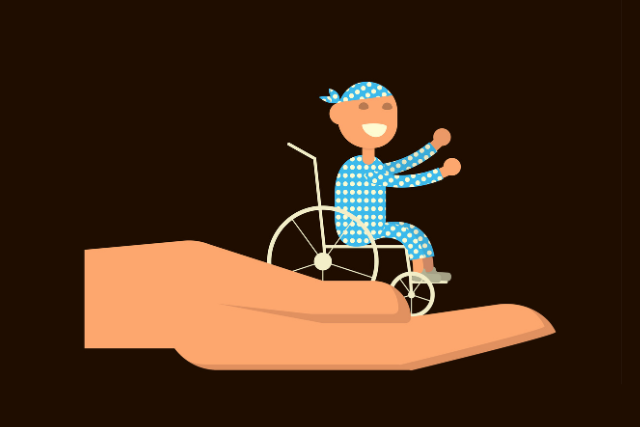
    For four years, I had the honor and privilege of working with children and families in a hospital setting, with most of my time spent in the hematology/oncology department.

    My role as a certified child life specialist was to help prevent and alleviate the stress and trauma of the hospital experience utilizing developmentally appropriate preparation, education, and play. Or at least that’s the “elevator pitch” I would provide during small talk and to casual acquaintances at parties.

    The truth is, it is almost impossible to put into words the uniquely brutal and beautiful experience of walking closely beside people during undoubtedly the most trying time of their lives. The families I got to serve throughout that time left a permanent mark on my heart and have forever changed the lens through which I look at life.

    Here are six of my biggest takeaways.

    1. Don’t take anything for granted.

    It’s one of life’s greatest ironies and also greatest tragedies: that it often takes the removal of a simple pleasure to truly realize its value. Sleeping in your own bed. Breathing in fresh autumn air. The ability to walk and work and go to school and play and move your body (mostly!) the way you want to.

    Do you ever find yourself complaining? About the weather? Traffic? Bills? Your child’s picky eating or refusal to put away their toys? Life-threatening illness has a way of putting things in perspective. What really matters? Often the very things we complain about contain a blessing within that we would greatly miss should it be taken away.

    I often remind myself that if (God forbid) something should happen to my partner, I would long to hear him snoring loudly next to me or to see his laundry piled up next to the basket instead of inside it (cue eye roll). Watching so many sweet souls fight for their young lives has eliminated my ability to complain about virtually anything—because it truly is a gift just to be alive.

    2. You are stronger than you think you are.

    Most of us have no idea how much we are capable of until we have no choice. We don’t know how we could possibly face life’s greatest hardships until they are right in front of us, staring us in the face. We may be trembling with fear, paralyzed with disbelief at the path ahead, certain that it will be the end of us. But then, something clicks on inside and takes over that is bigger than our doubt and fear.

    We human beings are an astoundingly resilient and adaptable bunch. Yes, even (especially!) kids. Some of my fondest memories are those sacred moments spent honoring a child facing their fears in the most extraordinary ways, with more courage than is reasonable to expect of them. They continue to inspire me to find that same grit within myself whenever the going gets rough.

    3. It’s okay to feel your feelings.

    I will never tell you to stop crying when you’re sad. I will never tell you that it could be worse, so buck up. I will never tell you “It’s okay” when clearly, it’s not.

    I’ve noticed that some of us adults have a hard time allowing not only our own feelings, but the feelings of others as well. I believe it is our own discomfort with unpleasant emotions that sometimes causes us to respond in ways that invalidate the experience of another person—child or not.

    After witnessing dozens of rough IV starts on panic-stricken kids, I can confidently say that telling a child they shouldn’t be scared and to stop crying makes it about a billion times worse.

    What does help? Validating the feeling. Holding space. Telling them it is okay to be scared—that’s normal! That it’s okay to cry, and that crying can even help us calm down. Reminding them that they can be brave and scared at the same time. That we believe in their capability. That they are not alone, and there are hands to hold. That something good is waiting on the other side of this challenge!

    As a self-proclaimed “recovering perfectionist,” I didn’t realize at the time how much I needed to hear these very same messages myself.

    4. Humor and play are necessary for survival.

    When I was an intern on the intensive care unit, for the first couple of weeks I felt like I needed to speak in hushed tones and tiptoe around. A big part of my job was to provide opportunities for recreation and play, but I had a hard time reconciling fun with the somber atmosphere of an ICU.

    It didn’t take long for me to see that no matter what situation they’re in, kids are still kids. Even on some of the worst, sickest days, my patients would delight in the therapy dog’s cuddles or even a well-timed fart machine prank. These silly, light-hearted moments were a welcomed reprieve from all the seriousness and were sometimes the only touch of normalcy within that family’s day.

    Never underestimate the healing power of a playful attitude and sense of humor, no matter what adversity life is throwing at you.

    5. Life isn’t fair.

    It has become a cliché and often unwelcomed response to grief—that “everything happens for a reason.” And while I do personally believe in a divine order to things, I have also come to know that this belief does not make us immune to the pain we experience when we are dealt those especially harsh hands. Because reason and emotion do not live on the same plane.

    Reason tells us that loss is inevitable. That we will all lose our parents, possibly our spouses, and that this world is also cruel enough to take children. We can rationally conceive of this. And yet, if faced with the thought of losing our child, our parent, our beloved, we cannot bear it. We suddenly question God. The Universe. Others. Ourselves. We throw our hands up in despair at the audacity!

    And yet, painfully, atrociously, all along, haven’t we heard these stories? Haven’t we empathized with these headlines? Only now, the story is ours.

    We are all, at some point, going to be put through mighty trials. And while those trials may look different, this is a law of life. We don’t always have a choice in what comes our way, but we can always reclaim our power in the way we choose to navigate it, and the meaning we choose to make out of the experience.

    6. Brutal and beautiful can co-exist.

    I always found it hard to answer when people asked me if I liked my job. The immediate response was always a resounding and emphatic YES. Playing this role was my absolute dream, and something I worked incredibly hard for. I found tremendous joy, fulfillment, and satisfaction in it on a daily basis.

    But I had to bear witness to things that still make my soul ache on a daily basis too. Things that would sometimes cause me to sob in my office between tasks or on my drive home. Moments that weighed so heavily on my heart, I found it difficult to “turn it off” when I got home, to be present for my own life and the people in it.

    That contradiction existed in nearly every moment of my work. Am I having a blast, laughing up a storm while playing syringe water guns with an eight-year-old patient? Most definitely! Does it shatter my heart that he has to be here at all, let alone for the past ten months straight? Absolutely.

    I’ve come to accept that life itself is this messy, ever-changing blend of brutal and beautiful. Good and bad, high and low, all swirling together to make up the human experience. The trick is to seek out the beauty in any moment we happen to be in—and if it’s nowhere to be found, it is up to us to create it.

  • Releasing Fascia: A Simple Way to Reduce Tension, Pain, and Disease

    Releasing Fascia: A Simple Way to Reduce Tension, Pain, and Disease

    “Take care of your body, it’s the only place you have to live.” ~Jim Rohn

    I hear this happens to so many, but when it happens to you, it’s unsettling. I didn’t know what was going on with me, and I wasn’t getting any satisfying answers either.

    Most days were good, and I felt fine and went about my regular routine wearing my many hats: mother of two young kids, human mom to three fur babies, a household-manager-of-all-the-things and full-time dental hygienist. And then out of the blue, it could hit me like a ton of bricks… the backache, neck pain, jaw pain, tension headaches, and even migraines.

    I would wake up in the morning with tension or pain in my body, but I had no idea how it got there! Sometimes it was pretty intense too, It would drive me bananas because I couldn’t put my finger on the reason why.

    Didn’t do any yard work yesterday. Didn’t hurt myself. Didn’t trip or fall. Didn’t shovel snow the last few days either. It was so strange. I had no idea what was going on.

    I remember that the first time it happened, I was about thirteen years old. It was a summer morning, and I wasn’t able to get out of bed to go to my babysitting job. Another time, in my late twenties, my lower back seized as I was bent down shaving my legs, so I dropped to the floor unable to get back up. There were many times like these.

    When I had one of those unexplained episodes, I would feel off for a few days and then it would settle. Luckily for me, most days I just felt my regular minimal tension at night. It wasn’t intense, but it was enough for me to notice.

    Other times, I’d have migraines or tension headaches that would last for days at a time. It wasn’t fun for anyone, including my young family. I also felt guilty and stressed out with my list of errands getting longer by the minute. I wanted to avoid this at all costs because it would stop me in my tracks when it happened, and everyone around me suffered.

    During medical visits I was told I had muscle spasms, tension headaches, or migraines. And was told to relax (right!) or prescribed something for the pain or given a topical cream to rub on the affected area. It helped, but I still didn’t understand why it would happen out of the blue like that.

    In my circle, I was hearing things like: “Wait till you hit thirty or forty, that’s when all the problems start!” or “Wait ‘til you’re my age!’ or ‘Welcome to the club!” or my favorite one: “You ain’t seen nothing yet!” To be honest, it was upsetting and depressing to hear that things would get worse as I aged.

    Ever have an ultrasound, scan, or MRI only to be told that everything looked normal? That it must be muscular, or even worse, it’s all in your head? It’s a very frustrating diagnostic for most people, as they are left feeling puzzled and still looking for answers. They’re hoping to find anything that could help, to alleviate some of the pain and tension. They’ve done many things, but nothing seems to help…

    As it turns out, it’s all about fascia!

    What is FA-SH-EE-AH? It is a connective tissue in our body. Picture one continuous piece of a three-dimensional spider web, from head to toe. It’s a semi-opaque membrane, thicker in some areas.

    This tissue does not only wrap or divide our organs, muscles, and other body parts, like previously thought, but it actually interconnects every single one of our cells, all 100 trillion of them! Fascia is everywhere! It protects us, it supports surrounding tissues, and communicates with our entire being. It is the only system in the body that connects to every other system in our body.

    The magic of our precious fascia doesn’t stop here, as it also has a memory! It records our entire life, but it’s the traumatic events—the physical, repetitive, and emotional stresses (every fall, burn, bruise, surgery, repetitive movement), the viruses (hello, Covid!), and infections… plus unprocessed emotions, negative thoughts, limiting beliefs, and unhealthy habits and behaviors—that affect it the most. From the 3rd trimester in the uterus to our last breath, our fascia keeps track and memorizes everything.

    Our beautiful body does have the potential to auto-regulate, and so does our fascia. But we live in a world where productivity is a sport, our to-do lists are never-ending, and our over-scheduling is a badge of honor. This absolutely takes a toll on our body and mind! Therefore, our fascia doesn’t always release like it’s supposed to, and it starts accumulating tensions.

    Tight fascia, that is unreleased, clamps down on its surrounding tissues and gets worse with time. Left unreleased, it can get rock hard. Plus, since it’s like a 3D blanket, it starts affecting and pulling other parts of the body… just like when you tug or pull on a corner of a blanket, it pulls on the entire thing. The fascia in our body is the exact same!

    This is why the root cause of our symptoms may be coming from a completely different place in our body. And it explains why many therapies don’t work, as they treat the location of the symptom and not the cause.

    Bound fascia creates havoc on our health and wellness and has a domino effect on our body and mind. It impacts all our cells (every tissue that makes up the muscles, organs, bones/joints, and all the other systems).

    As an example, clamped fascia that is tight around and inside an organ (remember, fascia is in every cell) will affect this organ so much that it won’t be able to function properly.

    The pain in your neck that keeps coming back, your tight shoulder blades and digestive issues, could all be from tight fascia from that time when you fell off your bike when you were learning to ride at the age of five years old. Your fascia protected you in the fall, but it’s been tight all this time and is now pulling on your 3D fascia blanket.

    The TMJ issues you’ve been experiencing, the acid reflux, and reduced range of motion in your shoulder could be from when you had your appendix removed as a child. With scars, we only see a tiny scar on the skin, but inside, it’s an iceberg of adhesion and it’s pulling constantly!

    That nagging hip tension that’s been around for ages, the ringing in your left ear, and your weak bladder could all be from your high-risk pregnancy and stressful delivery. Those babies take up a lot of room, and our tissues should go back to their original place, but sometimes they don’t, and that starts pulling too! Not to mention the impact of all that stress of having a high-risk delivery; this too could very well be the root cause of your issues!

    Healthy fascia is the missing piece to health and wellness! A holistic approach is needed to release this complex tissue, which impacts us in so many ways. For optimal health, gentle movements are best to release bound fascia and relax your nervous system, which go hand-in-hand.

    If your intention is to release your fascia, you’ll want to avoid anything that is too intense or that jacks it up like HIIT, spinning, and marathons.

    Other than body work (osteopathy, energy work, massage), walking, swimming, yoga, and meditation are great options that you can do without an appointment. Every bit counts! Here are some things you can add to your daily routine to keep your fascia happy and pliable:

    First, stay hydrated! Drink water throughout the day. The general rule of thumb is to drink your weight in pounds, divided by two. That’s the number of ounces your body requires daily to function properly. Therefore, someone that weighs 200 pounds could benefit from drinking 100 ounces of water per day. Some exceptions apply, but for most people this is a good guideline. Remember, we are mostly water, and that includes our fascia!

    Stretching is a must! To stretch a muscle, it takes twenty to thirty seconds, but to stretch and release one layer of our dysfunctional fascia, it can take around three to five minutes, sometimes more.

    Yoga is a great fascia therapy, as it’s wonderfully designed around fascia lines; for example, downward dog stretches the posterior line of fascia. Thread the needle pose stretches the arm line. Fish pose stretches the anterior line.

    Hatha is the style of yoga that most of us think of when we picture yoga. Downward dog, warrior pose, child’s pose, lotus, to name a few poses, are all great options to try.

    In yin yoga, we hold the poses longer, about three to five minutes, which is long enough to release the fascia. That’s when all the magic happens! These poses are gentler. As we hold them, we can feel a little flutter or a soft release somewhere else in the body. It’s all connected!

    Another kind of yoga that is great for our fascia health is restorative yoga. This one is a very passive yoga done with many props. It’s all about supporting the body and feeling safe. This creates immense healing, as it activates the parasympathetic nervous system. It’s incredibly powerful and utterly relaxing! So, let’s not discredit this type of yoga because it’s more passive than the others. The benefits are exponential!

    EFT/Tapping Meditation is also a great option to release tension in our fascia. As we tap on specific acupressure points on meridians in the body (hint: meridian and fascia lines are in the same places!), we release stored unprocessed emotions, limiting beliefs, and negative thought patterns, which all impact our fascia.

    It’s an amazing body-mind release technique! Tapping also activates the vagus nerve, promoting rest and relaxation, which is what we want, as the happiness of your fascia depends on the state of your nervous system, and vise-versa.

    Fascia health is a journey, and it’s so worth it! Do yourself a favor and start releasing your fascia today. Caring for it has the best return on investment and undeniably impacts your health and well-being. You totally deserve it, and your future self will thank you!
  • How I Found Hope in my Father’s Terminal Cancer

    How I Found Hope in my Father’s Terminal Cancer

    “Without realizing it, the individual composes his life according to the laws of beauty, even in times of greatest distress.” ~Milan Kundera

    When my father received a terminal cancer diagnosis, I went through a wave of different emotions. Fear, anger, sadness. It opened a completely new dictionary that I had not had access to before. A realm of experiences, thoughts, and emotions that lie at the very bedrock of human life was suddenly revealed to me.

    After the initial horror and dread at hearing the news had subsided, I was surprised to find a new sense of meaning and connection in the world around me.

    In part, dealing with this news has been profoundly lonely. But the truth is, cancer is a human experience, and it’s been overwhelming and humbling to walk into a reality shared by so many people across the world.

    I was immediately confronted with how much I had avoided other people’s experiences because cancer frightened me.

    Our minds are fickle when confronted with terminal illness. It can be difficult to untangle the horror and pain we associate with cancer from someone’s very rich and dignified life despite it. 

    We see cancer as a deviation from what human life is supposed to offer. A part of this can be found in the values we hold in our culture and our idealization of productivity as proof of our worthiness, with pleasure as the ultimate symbol of success. In this fast-paced, luxury-crazed world, there’s no room for hurt, pain, and mortality.

    On a personal level, I understand that it can be difficult to avoid thinking of cancer as an evil intruder that steals away the ones we love, that disrupts any chance at a good life with its debilitating symptoms and treatments. Cancer is a frightening reminder of limitations and loss.

    I was greatly affected by my expectations of cancer, in that when I found out about my father’s terminal diagnosis, I instantly began grieving a person who was still very much alive. As if life with cancer wasn’t really a life at all.

    After all, terminal means there is no cure. It means that if left untreated, it kills you. It also means that treatment won’t keep you alive forever. You will die of it, unless you die of something else in the meantime, which is likely, considering the risk of infection and complication associated with the aggressive treatment and a deteriorating immune system. It’s a death sentence.

    My first reaction to the news was that my parents had to make the most of the time they had left together. They have always been ardent travelers, and as far back as I can remember, talked excitedly about the trips they were going to take when they were older.

    I instinctively felt existential dread on their behalf and encouraged them to take out their bucket list and start packing their suitcases, to start traveling while they still had the chance.

    Now I see how misplaced my reaction was. To my parents, the whole appeal of traveling vanished when it was motivated by the ticking clock of imminent death. In telling them to go travel, all they heard was “you’re going to die, and you haven’t gotten to the end of your bucket list!”

    It turns out, life is so much more than the collection of ideas we have about what we’re going to do and where we’re going to go. Life is not about getting through a list. Sometimes only the gravest of situations can show us what is sacred in our lives. 

    By living through a pandemic and then receiving a cancer diagnosis, my father’s life came to a bit of a standstill. But despite my original anxiety on his behalf, it wasn’t really the sad ordeal I thought it would be.

    On the contrary. My father woke up from a life of constant traveling and planning for the future, only to find that he loves the life he is already living in the present moment.

    The abundance of life is not out there on a beach in Spain, it’s in the first home he ever owned, next to the forest he loves, where on a wind-still day you can hear the ocean; it’s drinking coffee in the garden with his wife, and reading books in the company of a devoted, purring cat; it’s using the fine china for breakfast and playing board games on rainy evenings.

    I’m sure that my father has moments of fear about his disease and about death, but for the most part, he’s just dealing with the existential and human need of wanting to be treated with dignity, of being more than a disease he happens to have, being more than a symbol of a death that comes to us all eventually anyway.

    Cancer brings with it a whole new world of thoughts and feelings; a lot of it is heavy, a lot of it is fear and pain, but there is also dignity, humility, connection, love, and acceptance. It demands new ideas about life and death, about people, about where we come from and who we are. 

    I cannot imagine anything more human and more dignified than that.

    As I led with, I have gone through a wave of emotions since I found out that one of my favorite people in the world has terminal cancer. It has in no way been easy, but life doesn’t always have to be easy to be good. I have journeyed somewhere deep and unfamiliar and found something there that I never expected to find—hope.

    Hope doesn’t always mean the promise of a better future or of finding a cure to our physical and psychological ailments. Hope is knowing that we are flawed, that we suffer, that we are finite. It dictates that every moment is sacred, and every life has dignity.

    Before we die, we live. The cause of our deaths will be any number of things. Cancer could be one of the reasons we die. We might have cancer and die of something else. That’s not what defines us. And we must make sure not to define each other by it either.

    When someone looks at you and utters the word “terminal,” you might be surprised to find hope. Hope, it turns out, wears many hats. Personally, I found it in the insurmountable evidence of human dignity.

  • Looking Back: The Silver Linings of the Pandemic and Why I’m Grateful

    Looking Back: The Silver Linings of the Pandemic and Why I’m Grateful

    “You gotta look for the good in the bad, the happy in the sad, the gain in your pain, and what makes you grateful, not hateful.” ~Karen Salmansohn

    The 2010 decade was difficult for me. Hardly a year went by without someone close to me passing away.

    When the tragic decade started, I was in the midst of my residency training and free time was a luxury I did not have. When I graduated and became an attending physician, I was too busy caring for patients on my own to take a break.

    In 2018, my world was shattered when one of my best friends died unexpectedly. The sudden shock of it left me feeling helpless. To counter my feeling of despair, I worked even harder to take care of patients in need.

    Shortly afterward, my father-in-law was diagnosed with a recurrence of his cancer. Over the next year, my husband and I spent whatever free time we had flying across the country to see him. We watched as he slowly deteriorated until he took his last breath in 2019.

    Instead of slowing down, I kept on. It seemed like the more I needed a mental health break to grieve, the harder I worked to suppress my grief.

    When the world stopped due to COVID-19, I too was forced to take a pause. With the whole world quarantined, I finally had the time to heal my broken heart.

    With more time at home, my husband and I found ourselves taking more walks, cooking more meals, and openly talking about our feelings. We visited with family over FaceTime and Zoom and shared stories about those who were now gone.

    We found joy in the small things: a sunrise, a bird’s song, and even just a cup of tea. With the past vastly different from what we were living through and the future feeling so uncertain, we were finally living in the present.

    Though the pandemic brought with it so much suffering and sadness, I found unexpected gratitude in the midst of it:

    Gratitude for the time that we had with our lost loved ones before COVID-19.

    Gratitude for the extra time to spend with one another now.

    Gratitude for the technology that allowed us to stay connected with our family and friends.

    Gratitude for the reminder that life is fragile and that “taking it slow” is sometimes necessary.

    Gratitude for the chance to take a step back and reflect on the important things in life.

    Surprisingly, I realized that I felt gratitude for COVID-19.

    It’s been the darkest of times. I’m devastated by all the lives lost and all the other losses people have experienced. The course of humanity has changed, and likely not for the better.

    But I’ve found solace in the silver linings that have emerged from the pandemic—things that will stay with me long after the virus has passed. I am far more grateful today than I have ever been and with it comes a sense of peace and a newfound strength to carry on.

    My father-in-law, for instance, died peacefully at home surrounded by his loved ones. For a year, we were able to join him at his medical appointments and also create new memories. We arranged for a family trip to Mexico so he could enjoy warmth in the wintertime with his sons and brothers.

    These otherwise normal events would not have been possible during the beginning of the pandemic. If he had passed away a year later, we wouldn’t have been able to say goodbye the way we did. I’m grateful for the quality time we had.

    During the pandemic, I finally grieved my best friend’s death. Instead of keeping myself busy to distract from it as I had done before, I now had time to truly process and feel his loss through the five stages of grief. I think about him at least once a day but instead of feeling sorrow, I’m usually thinking about how he would guide me through this new normal.

    While the pandemic is not something to celebrate, it has certainly opened my mind. I never would have thought that something so awful could bring about so much healing and hope.

    COVID-19 made it very clear that life is too short to worry about the little things. Life is too precious not to enjoy every moment, especially with our loved ones. When we choose to be grateful for all that we have, we open ourselves up to more joy, peace, and connection.

    While we may not be able to control our circumstances, we can control how we react to them. We can choose kindness, understanding, and empathy for ourselves and others.

    Did someone just cut me off in traffic? It’s okay, maybe they’re rushing to the hospital to see a loved one. I hope they make it there safely!

    Is the Wifi connection poor again? No worries, I can use this time to read a book.

    Did I make the wrong decision? It’s okay, I’ll learn from it and make a better choice next time.

    Reframing our thoughts to focus on the good, no matter how small, can have a powerful effect on our mood and outlook. Things that would otherwise be frustrating or upsetting are suddenly not so bad.

    For all of us, COVID-19 has taken away so much. But if we can find a way to look for the positive and cultivate gratitude then we can find happiness amid hardship. We can come out of this stronger, kinder, and more connected to the people and things that matter most.

    I’ve developed several good habits during the pandemic. I now journal every day writing about all the things that made me happy. Whenever I spend time with friends and family, I give them my undivided attention. I enjoy my work—I treat my patients as I would my family and consider it a privilege to be part of their care. I’ve also been taking more time for self-care and nurturing my creative pursuits.

    The world has changed and so have I. I am grateful for the life lessons and growth.

  • How I Learned the Power of Letting Go After My Father Developed Dementia

    How I Learned the Power of Letting Go After My Father Developed Dementia

    “There is beauty in everything, even in silence and darkness.” ~Helen Keller

    When I was eleven years old, I would force myself to stay awake until the wee hours of the morning.

    I was severely anorexic at a time when eating disorders were considered an “inconvenience” you brought on yourself. Anorexia was dismissed as a rich, white girl’s disease (although we were certainly not rich)—a disease that was easily curable with a prescription for a chocolate cake.

    Although my emaciated body was a dead giveaway of my condition, it was school that noticed the change in me first. My once stellar grades began to slip, and I was falling behind in the advanced academic and art program I was a part of.

    “Just eat already,” my teachers would tell me, and when I tossed my lunch into the garbage, I’d be sent to the nurse’s office to watch The Best Little Girl in the World. Again.

    At home, grape-flavored bubble gum and bouillon cubes were my foods of choice. I did toe-touches, crunches, and jogged at least four times a day, passed out some mornings, and hid my body under layers of flannel shirts on the hottest August days. But even as my disease raged, home was still my refuge, a place where my eating disorder could take its hair down and run wild.

    Thankfully, both my parents worked full-time and often through dinner, so mealtimes weren’t much of a struggle. And when we did eat together, I became as much of a master at hiding my food as I was at hiding my body.

    I was also smart. Or maybe conniving is a better word. A weekly trip to Friendly’s for ice cream (the irony of that name!) fooled my overworked parents into believing that I was fine.

    Puberty had simply shaved off any “baby fat” I had, they reasoned. What they didn’t know was that puberty never had a chance with me. No sooner did my period appear, I starved it away.

    But even with the ice cream trips and their growing awareness, I still felt fairly safe at home.

    Until that one moment that changed everything.

    On a sunny, unremarkable fall day (Isn’t that what Joan Didion tells us? We are most surprised by those tragedies and traumas that happen on “normal” and “beautiful” days…?), my father surprised me by picking me up early from school.

    Hurrying to the office for dismissal, there was a tiny, naive part of my eleven-year-old self that thought maybe he was surprising me with a trip to Disney World.

    That’s what happened to my friend, Mary, the previous year. When she returned from her impromptu trip, she was sporting tanned skin and a perpetual grin. She then spent most of our fifth-grade year with mouse ears glued to the top of her head.

    But there was no Magic Kingdom for me. Instead, without so much as an inkling as to where we were going, my father hustled me into his car, and we drove away. Sitting next to my father, a man who held all the power over me, my stomach ached as I wondered what was about to happen.

    My weak heart pounded in my chest, and as we drove, I prayed it wouldn’t give out. Catching a glimpse of my ashen skin and white, cracked lips in the rearview, I knew that I was nothing more than a stray dog in a shelter, ripped from my cage by a complete stranger, wondering if I was about to be put down, thrown into a fight, or worse.

    Finally, we arrived at our destination, a medical center in a strip mall. As soon as we walked through the front door, I gagged on the thick scent of medicine and grape lollipops that hung in the air. Without a second to catch my breath, I was whisked into a doctor’s office and onto a scale.

    Looking down her nose at me, the doctor snapped, “You’re too skinny. You need to gain weight.” While I stood there on the scale, she turned to my father and diagnosed anorexia nervosa.

    Then she looked at me. “If you don’t eat,” she warned in a sharp tone, “we’ll have you put in a place for ‘girls like you’.” She then informed me that once I was locked in that wretched prison of force-feedings and shackles (as I imagined it), I wouldn’t see my family again until I was “fixed.”

    When we returned to the car, my father spoke the first words he had said to me all day: “So? Will you gain weight?”

    “Yes,” I answered, too frightened to fight. Too scared to advocate for myself. Too terrified to tell him that this wasn’t a choice. I wasn’t choosing to starve myself; I was sick.

    But even if I had spoken, he wouldn’t have understood. No one did.

    From that moment on, I knew that I was completely alone. That’s when I began to stay up way past midnight, quietly jogging in place. I’d stop only to press an ear to the door, straining to hear what my parents were saying. Would they send me away? To that place?

    “I’ll never let it happen,” I assured myself. I would die before I’d go to a place where I was literally stripped of myself.

    For the next few years, the games continued, and although there were always doctors and threats, I kept myself just alive enough to stay out of that particular treatment center.

    ****

    Flash-forward almost forty years, and today, my father is an old man with dementia.

    As the Universe sometimes works in strange ways, I am now one of his primary caretakers. Although our relationship was strained for many years and I missed out on the experience of having a strong male figure in my life that I could trust, he did walk me down the aisle, and I am here for him now that he needs help.

    My father doesn’t remember that day that will forever be burned into my brain. He doesn’t remember the hell I went through the years that followed—the fear, the insecurities, the isolation, and the self-inflicted bruises I sported because I hated myself so very much. More than anything, he was, and is, clueless of the real battle scars—the ones that lay deep inside.

    He doesn’t know that that one “unremarkable fall day” when he pulled me from school started a negative spiral in my life, a time when I began aligning with damaging beliefs and inflicting self-harm.

    All he knows now is what his dementia allows him to—if the sun is out, if the squirrels ate the peanuts he tossed to them, and whether or not I am there to help him; to deliver his groceries, to take him out on drives, and to care for him.

    Yes, this could easily be the ultimate story of revenge, but years of teaching and practicing yoga have brought me down a different path.

    The path I have chosen is the path of letting go.

    Truthfully, my father’s dementia has left me no choice but to let go, at least of some parts of my life. I’ve needed to let go of expectations, of attachments to the outcome, and even, sometimes, like in those moments when he calls me “Sally,” my own name and identity.

    But in letting go, I have found that his disease has brought some gifts as well. I’ve learned to slow down and appreciate the daisy he wants to admire, the flock of chickadees darting in and out of a bush he’s watching, and the feel of the cool fall air on my face as I help him to and from a doctor’s appointment.

    Letting go has allowed me to experience all those things that I was previously too busy to appreciate. As Helen Keller said, “There is beauty in everything, even in silence and darkness.”

    But letting go because of his dementia wasn’t enough.

    I had to let go for me, too.

    To let go of the toxic weight from the past, I released that moment when everything changed, all those years ago.

    How? By simply deciding to put the weight down—and not just with regard to that event, but in all aspects of my life.

    Was it easy? No. But it was doable.

    In letting go, I didn’t worry about forgiving (although it is an important step for healing), or seeing someone else’s perspective. I simply unhanded my tight grip on all the “wrongs” I had endured and still carried with me, as well as all those things for which I blamed myself.

    Every one of us will live through events, some that we consider positive, and others, not. The only control we have is in how we deal with the circumstances we’ve been given.

    We can choose not to shoulder the burden, and to unpack those weights we’ve been carrying. We can close our eyes, breathe deeply, and tell ourselves, “I will put that weight down.”

    That’s where our true power lies.

    Have I forgotten my past? Of course not. But I have let it go, and in letting go, I have reclaimed an important relationship with my father, and more importantly, with myself.

    By letting go, I have released my suffocating grip on life, and reclaimed my personal power.

  • 5 Life Lessons from a Brain Tumor That Could Have Killed Me

    5 Life Lessons from a Brain Tumor That Could Have Killed Me

    “Life is a balance between what we can control and what we cannot. I am learning to live between effort and surrender.” ~Danielle Orner

    I was slumped against a wall at Oxford Circus Station early one Sunday evening when an irritated male voice suddenly barked, “MOVE!”

    Moments beforehand, I had lost my vision.

    Without conscious thought, I muttered, “RUDE!” and staggered off without clearly seeing where I was going.

    It was only months later, on retracing my steps at Oxford Circus, that I realized I’d been blocking his view of some street art.

    I’d allowed a guy to bully me out of the way while in a vulnerable state so that he could take a picture for social media.

    Lesson 1: Not all disabilities are visible.

    We can never fully know what someone else is experiencing. Mental health, chronic pain, and disabilities are not always apparent. So, when we come from a place of not knowing and are patient with others by default, we open up a window of possibility that exists outside of our judgment.

    Minutes prior, I’d stepped off an underground train and onto an upward escalator. A pain hit my right temple like a bullet. It took my breath away, everything went black, and I felt I might faint.

    Desperately, I clung to the railing. And as the top of the escalator approached, my right foot went floppy, and my vision disappeared. I could see light and color, but the world was blurry, lacking definition.

    I used what little vision I had to follow the distinctive white curve of Regent Street down to a spot where I’d arranged to meet a friend

    Panic finally set in when I realized that my friend was walking toward me, and I could recognize his voice but I could not see his face at all.

    We sat down in a restaurant, and a concerned waitress brought a sugary drink.

    My mind went into overdrive: “Had I cycled too much? Was my blood sugar low? Had I eaten/drank enough? Given myself a stroke? Was I just stressed?”

    Twenty minutes later, my vision slowly returned.

    Relieved but freaked out, I asked my friend if he thought I should go to A&E (ER). He said, “Only if you think you need to.” I felt silly. Scared to take up space. Afraid of being a drama queen. I didn’t trust myself or my experience.

    LESSON 2: Don’t seek external validation.

    The opinions of others are helpful, but only you see and experience life from your own unique perspective. Learning to trust and validate our own experience first and foremost is how we step in our power.

    Later I went back home but couldn’t shake it off.

    The next morning, I visited my doctor, who sent me straight to A&E (ER). The hospital admitted me overnight, concerned it was a mini stroke or aneurysm. But the following morning they discharged me, citing dehydration as the cause.

    One week later, I was back in A&E. More dizziness, more foot numbness, more blurred vision. A doctor described it as “classic Migraine Aura.”

    My gut leapt; that didn’t feel right. “I don’t get headaches,” I protested. “I rarely take painkillers. Why so many all of a sudden?”

    They seemed confident it wasn’t serious, but booked an MRI scan, just to be certain.

    Twenty-five minutes of buzzing, clanking, and humming later, I glided out of an MRI scanner.

    I thanked the technician. “All good?” I asked.

    “It’s very clear,” she replied.

    LESSON 3: Listen to your gut.

    If your gut says that something is off, listen to it. A gut feeling is typically a lurch from your stomach rather than chatter from the mind.

    My gut knew it wasn’t migraines; it told me so, and if I hadn’t strongly advocated for myself, then I may not have got that MRI scan.

    A week later, I was back with my local doctor, experiencing vertigo and earache.

    Did I have an ear infection? Was that the issue all along, some sort of horrible virus affecting my sight and balance?

    The GP opened my records up on his computer and his face immediately dropped.

    “Do you mind if I take a moment to read this?”

    “Of course,” I said.

    He composed himself but his face was ashen.

    “Has anyone spoken to you about your MRI result?” he ventured at last.

    I found myself detaching from reality, like I was watching a movie.

    He told me that they’d found a lesion on my brain and there was a possibility of brain cancer. “I’m so sorry,” he offered finally.

    I left and immediately burst into tears.

    Six days I lived with the idea of having brain cancer.

    Had it spread? How would they treat it? Could they treat it?

    More dizziness, more vertigo ensued, and a wise friend firmly told me to go back to the emergency room and refuse to leave until I got answers.

    Reluctantly, I entered A&E (ER) for the third time.

    After a long wait, a neurologist sprang from nowhere, took me to a room, and showed me my MRI scan. I was shocked by the large white circle in the middle of it.

    “How big is that?” I gasped.

    “About the size of a pea,” the doctor said casually. “I believe it’s a colloid cyst, a rare, benign, non-cancerous tumor. It can be removed by operation, using a minimally invasive, endoscopic camera.”

    Relief flowed through me. “It’s not cancer?”

    After reassuring me it was not, the doctor sent me away, telling me to await further news.

    Outside the hospital I hung around updating loved ones by phone. Suddenly a withheld number rang.

    It was the neurologist: “I’ve spoken with neurosurgeons, and they think you should be admitted to the hospital for emergency surgery. If the cyst bursts you have one to two hours max, or that’s it.”

    “Okay,” I stammered. “I’m actually still at the hospital.”

    “Not this hospital,” he said. “A different one.”

    A taxi ride later, it was 5 p.m., and I was in an emergency room for the second time that day and fourth time that month. Despite the chaos around me, I eventually curled up and got a little sleep.

    Suddenly it was 3.30 a.m. and I was still in A&E. Staff rushed in, grabbed my bed, and hurtled me through corridors. Bright lights from London’s skyscrapers flashed past windows, everything surreal and movie-like again

    The next day, surgeons explained that they wouldn’t be sure that they could reach the tumor until they operated, and there were four different options for surgery, ranging from a minimal endoscopic camera through to opening my skull up with major surgery.

    I hoped and prayed for endoscopy but wouldn’t know the outcome until I woke up.

    The operation was planned for 8 a.m. the following morning. I said an emotional goodnight to my sister. Suddenly a lady interrupted us and said, “I hope you don’t mind me saying, but I saw you earlier and you don’t look sick enough to be on this ward.”

    And there it was—the trigger again, the gift, the insight, the lightbulb moment:

    “Despite how bad I feel on the inside, I don’t look ill enough to have a brain tumor.”

    I didn’t look ill enough to the guy at Oxford Circus taking a selfie.

    I didn’t look ill enough to my friend.

    I didn’t look ill enough to the doctors who turned me away initially.

    And now I didn’t look ill enough for this lady’s expectations of who should be in a head trauma ward.

    I breathed into that pain. Into the feeling of not being seen. Of not being heard.  Of not being validated. Of feeling like a fraud, an imposter. Of not deserving to take up space. Of not trusting my experience.

    And when I found my center, I quietly replied, “Actually, I’m having surgery to remove a brain tumor tomorrow morning.”

    Her face fell, then she wished me luck and moved on.

    LESSON 4: Our triggers are our gifts.

    When we are triggered, it shows us what needs to heal.

    It was me who felt unworthy of taking up space. It was me who felt like a fraud. She was simply my mirror. It’s up to me to heal those aspects within myself and to believe that I’m worthy of taking up space—and to then take it.

    The next morning, my operation got pushed back. It was a major trauma hospital, and bigger emergencies took precedent. I engaged in mindfulness to stay centered.

    I did an hour of breathwork to calm my nervous system. I listened to uplifting music to raise my vibration. I watched emotionally safe movies to collect warm, fuzzy vibes. I drew on my iPad and alchemized my head tumor into a cute pea cartoon character—benign, polite, and cute, not threatening at all.

    A porter arrived at 5.30 p.m. and whisked me away for surgery. After weeks of surrendering to the unknown, it was now time for the ultimate surrender of any illusion of control. I took a deep breath as anesthetic filled my veins.

    LESSON 5: Surrender.

    We can’t always control what happens to us or the outcome. We can only control what happens inside of us and how we choose to show up. We take our power back when we lean into the unknown and surrender. When we resist our current reality, we suffer more.

    I woke up two hours later and got sick.

    My brain was rebalancing after months of increased head pressure. Clutching a blue plastic bag, I looked up to see one of London’s best neurosurgeons waving cheerfully at me. “Your operation is over. We used an endoscope. Minimal invasion. We think we got it all, and it’s not likely to come back.”

    Relief, nausea, and gratitude flowed in abundance.

    I dozed a little while morphine played tricks on my mind. Delicious little dreams filled my head, and I saw the world as one big, animated garden with flowers as cartoon characters.

    I giggled at the thought of plants acting as humans do and imagined an aggressive rose bush declaring war on all of the other plants and throwing bombs. It seemed ridiculous. Humans should be more like flowers, I thought—less ego, just growing, flourishing, blooming.

    I enjoyed this magical trip a little longer, a welcome respite from the hell of the last month, and eventually they wheeled me back to the ward.

    I arrived in time to see the sun setting across London from the twelfth floor.

    It was magnificent. Its beauty, color, and intensity moved my weary body to tears.

    A nurse came to check that I was okay, and I assured her that I was crying happy tears.

    I silently watched the sun as it made its final slip over the horizon, safe in the knowledge that I’d survived another day.

  • The Circle of Love: How I Paid It Forward After My Mom’s Death

    The Circle of Love: How I Paid It Forward After My Mom’s Death

    “If you feel like you’re losing everything, remember that trees lose their leaves every year and they still stand tall and wait for better days to come.” ~Unknown

    Years ago, I was a young housewife, raising two children, and still practically a child myself. When my mother fell ill, we realized it was chronic and I felt the blow.

    Mom had been my closest friend and supporter throughout my entire life. I was still her baby, even though I had babies of my own. And it was a point of pride with me.

    As Mom gradually diminished into a shell of her former self, I tried to help take care of her. There were months of dialysis, hospitalizations, home health care, and finally, both of her legs were amputated.

    To say this was devastating is an understatement. Mom had always been active, a go-getter, and a great tennis player. And how she did love wearing her pretty shoes!

    My dad, brothers, and I grieved with Mom, along with everyone else who loved her. The core of our family was heavily damaged. We did not know which way to turn.

    As time passed, the wonderful nurses of East 3 showed us how to care for Mom. We brushed her teeth, fixed her hair, tempted her with treats, and whatever else we could do to make her happy.

    Nothing worked. As Mom grew sicker, we finally realized what was coming. The overwhelming sense of loss when she passed was indescribable.

    It was a double loss for me. Not only did I lose my mother, but also my best friend. How would I survive without her?

    Would my babies remember her? Would I forget her? What would happen to our family?

    However, the loss pulled my family together and we planned a funeral, burial, and dealt with the onslaught of family and friends.

    On the day of her funeral, I informed my dad I wanted to go to nursing school. He was not encouraging. In fact, he informed me how much he hated to hear it because he had seen how hard nurses worked and the way they were treated.

    I was adamant. Even though I was not known for my science knowledge or my people skills, I went to school.

    Along the way, I experienced another pregnancy and the birth of a daughter. The following day, I was back in class to take an Anatomy and Physiology test.

    My test score was 86. I discovered I was an extremely determined individual. Nothing was going to stop me from getting that nursing diploma!

    After four years of classes and clinical rotations, I graduated as co-salutatorian of my class. Thank heavens for my husband, who kept the home fires burning while I studied!

    Upon graduating, I went to work on South 10, in Oncology, the treatment of cancer patients. We had a lot of patient overflow from other floors. So the clinical experience during my time there was amazing!

    However, the challenges of being short-staffed, overwhelmed with too many patients and insufficient support, did not help my anxiety level! As a result, I did not feel that I handled my job very well.

    I was nervous around others in the workplace, even though I wanted to help them. It was terrifying to think I could make a mistake and end up harming someone or lose the nursing license for which I worked so hard.

    And I did make some mistakes. Thankfully, none that resulted in significant harm. Of course, this did nothing for my fledgling confidence and anxiety.

    I thought about quitting. I hated feeling trapped. In the mornings before work, I would throw up from nervousness.

    I was outside my comfort zone. But I kept returning to work. After the schooling, hours spent studying, and monetary investment involved, how could I throw it all away?

    Undoubtedly, I was scared. It was horrifying to feel so frightened in such a noble profession. The anxiety almost crippled me. I became fatigued. Irritable. My self-esteem, which had been a struggle my entire life, was at an all-time low.

    Then came a very busy day when I was nearing the end of my shift. I was mentally and physically exhausted and looking forward to going home soon.

    When the charge nurse informed me that I was getting an end of shift transfer, I wanted to cry. In this particular case, I needed to perform end-of-life care. And would also have to complete a ton of paperwork.

    The patient was an elderly man coming from MICU (Medical Intensive Care Unit). His end was near, and he was coming to me to die.

    Obviously, I was not thrilled to be dealing with such a patient at the end of the day. Notably, my attitude was not good.

    Yet I had made an oath to care for others and I was committed to that oath.

    So I did not show my bad attitude to anyone and instead hid it inside my heart.

    Shortly afterward, the patient was transported to his new room on South 10. He had a nasogastric tube going into his nose, down his esophagus, and into his stomach. It was to suck out the toxins and poisons building up in his system.

    Also present was a catheter, which drained the urine from his bladder.

    As the man’s family wanted to continue feeding him, IV nutrition was still in place. This meant blood sugar checks were to be performed four time a day. These checks measured the sugar content in his bloodstream to see if it was a healthy level.

    In other words, my new patient required a lot of care.

    The man’s wife and daughter were with him and not quite ready to let him go. But the patient had been made a DNR. (Do Not Resuscitate). This meant no life saving measures were to be used.

    It was simply his time to go.

    The patient was unresponsive, and the daughter convinced her weary mother to leave for a while and get some rest.

    Meanwhile, I monitored the patient, kept him comfortable, and answered his daughter’s many questions carefully and thoughtfully.

    Unbidden, this was a reminder of a painful situation years earlier when it was my mother in that bed. At that time, it was me depending upon the nurse to take care of my dying mother.

    Those nurses had offered comfort. They had helped me cope with Mom’s pain and end of life. Now, it was my turn to do the same thing for someone else.

    I was with another patient when my new patient’s emergency alarm went off. I walked out into the hallway where the charge nurse met me and instructed me to go into his room. Sure enough, my new patient was gone.

    His daughter was beside him when he left his tired body behind. She looked so forlorn and alone. My instinct was to reach out and give her a hug.

    She hugged me back and kept holding onto me as if I were her lifeline. I suppose I was in that moment.

    So for a long time, I sat and listened to her while she talked. She told me about her dad and how much she loved him

    When I eventually rose to leave the room, the daughter said to me, “God brought my dad to this floor to die because he was bringing us to you.” Then she added, “Thank you.”

    Her words filled me with pride. Sometimes, you just instinctively know the right words to say in a situation and when to listen. I learned that I have this skill in the very darkest moments of life.

    And it is a skill of which I am very proud.

    With my self-confidence restored, I, once again, was proud of myself and of my profession. I had eased one of the most painful times in a daughter’s life and brought her comfort.

    I had come full circle.

  • How To Keep Moving Forward When You Feel Like Shutting Down

    How To Keep Moving Forward When You Feel Like Shutting Down

    “I can’t believe what I’m managing to get through.” ~Frank Bruni

    My worst fear was inflicted upon me three months ago: a cancer diagnosis—non-Hodgkin’s lymphoma. Out of nowhere!

    Truth be told though, lots of awful things that happen to us come suddenly out of nowhere—a car accident, suicide, heart attack, and yes, a diagnostic finding. We’re stopped in our tracks, seemingly paralyzed as we go into shock and dissociative mode.

    My world as I knew it stopped. It became enclosed in the universe of illness—tiny and limited. I became one-dimensional—a sick patient.

    And I went into shock. To the point where I didn’t feel. As a person who values mental health and understands the importance of emotions, I seemingly stayed away from the feeling part. It wasn’t intentional; it’s how I coped.

    I dealt by mindlessly and mindfully (yes, that seems like an oxymoron) putting one foot in front of the other and doing what needed to be done, like a good soldier, plowing through the open minefields.  Actions and intentional mindset were my strategies.

    My biggest fear was: Will I make it through the treatments? What if I don’t?

    So I started reigning myself in to not let myself think too far ahead, down into the rabbit hole of fear and anxiety. Being a small person with no extra weight, I was scared of the chemo crushing me. Terror would rear its head when I allowed these thoughts to enter my thin body. What if I shrivel up and die? What if I can’t do it?

    And so my mind work began. I became very intentional about putting up that stop sign in my head so as not to get ahead of myself and project into the unknown, scary future. I began taking everything one step at a time.

    I stop now and digress. I had been in the depths of despair and darkness when, many years ago, my middle daughter, Nava, was diagnosed with lifelong neurological disabilities.

    I had a noose of bitterness and anger pulled so tightly around my neck that I couldn’t even go to the park with her. My envy of the other babies who could sit up and start to climb out of their strollers was too much for me to bear; to the point where I stopped going to the playground.

    My therapy at the time was a life-saver and helped me move from the unanswerable “why me/why her?” questions to the “how” and “what”: how to carry on with a major disappointment and blow, toward creating new expectations and goals, and what to do with this to still build a good life.

    Changing the questions helped me cope and move forward. This has served me well in other challenges throughout the years, such as my divorce and Nava’s critical medical issues years later, for which she was hospitalized for a year.

    So with the cancer diagnosis, I went to the “how” and “what.” How can I deal with this in as best a way as possible? What can I do to optimize my coping skills? How can I minimize my anxiety and fear?

    Having studied positive psychology, resiliency-building, and mindfulness, I’ve gleaned some tools over the years that are serving me now through my personal medical crisis.

    Let’s look at a few.

    Anxiety and Staying Present

    We know anxiety is caused by worry of the future. So staying present is key. Working on our mind to be in the moment and not spiral outward is crucial. I know my PET scan is coming up, and I’m naturally anxious about the results. I tell myself to take today and make it as good as possible and not think about the end of the week. There’s a lot of intentional work that goes into controlling the mind.

    And when we spiral, as we humans naturally do, we allow for that too. “Permission to be human,” as positive psychologist Tal Ben-Shahar states. The important thing is bringing ourselves back. It’s not that we don’t go to dark places; it’s that we notice it and don’t linger and get sucked down into it. We recognize it and can pull ourselves out of it.

    Expansion

    Once the shock and horror of illness begins to settle and we see some pattern or predictability, we can look to expand our identity and role beyond a sick person, or in my case, a cancer/chemo patient. I begin to step outside myself, my illness, toward others and other things that are important to me.

    Connecting with who you are beyond your sickness opens you up and reminds you of the bigger You. We are more than our difficult circumstance.

    I always remember Morrie Schwartz in the book Tuesdays With Morrie—how he cried each morning (as he was dying from ALS) and was then available and present for all his visitors, to be of help and service to them.

    So I reach out to a couple of clients to offer sessions during my seemingly better weeks (in between treatments). I create some (generic) social media posts. I haven’t gone personal with this online, so this blog post is a big (public) deal.

    Meaning in Your Life

    Doing things that are meaningful, however small, and that make you feel good is a sure way to stay engaged and moving. It’s the ordinary things that keep us going. Since I love colors, I wake up and match up colorful clothing and makeup (unless I’m too weak), as that makes me feel good.

    Nature and beauty are my greatest sources of soothing and healing. When I feel okay, I go to a park, sit by the water/ocean, and visit gardens, just get outside and look at the expansive sky.

    I deal with my indoor and outdoor plants. I cut off the dead heads, water them, take some pictures, and check on the veges. This represents growth and beauty.

    I get inspiration and uplift from words, and love non-fiction books of people transcending their adversities. I read, underline, and reach out to authors.

    And I learn. I started a creativity class with someone I actually found on this site. I figure it’s a good time to incorporate creativity and natural healing.

    What infuses your life with meaning? What is important to you? What expands you? Who are you beyond your difficult situation?

    Response and Choice

    Viktor Frankl, psychiatrist, logotherapist (therapy of meaning and purpose), and author of the renowned book Man’s Search For Meaning, is instrumental in the foundational concept that it’s not our circumstances that define us but rather our response to our situations that determine who we are and who we become.

    “Everything can be taken from a man but one thing: the last of the human freedoms—to choose one’s attitude in any given set of circumstances, to choose one’s own way.”

    And another one: “Between stimulus and response there is a space. In that space is our power to choose our response. In our response lies our growth and our freedom.”

    These ideas have been life-changing for me and propel me to avoid an all-too-easy passive and victim-like mentality.

  • What Is Stress-Induced Illness? How Trauma Can Cause Physical Pain

    What Is Stress-Induced Illness? How Trauma Can Cause Physical Pain

    “Wisdom is merely the movement from fighting life to embracing it.” ~Rasheed Ogunlaru

    Three years ago, I fell into the blind spot of medicine: America’s unknown epidemic.

    After numerous tests, scans, scopes, and too many doctors to count, modern medicine could not find anything seriously wrong with me. I also consented to have my gallbladder removed. My first and only surgery at age forty, an “experiment” of sorts.

    Six months into the worst nightmare of my life, my spiraling health started to take a huge toll on me physically, mentally, and emotionally. I didn’t want to live anymore, but I was too chicken to take my own life.

    They Cannot See the Forest for the Trees

    If just one doctor had paid closer attention to my backstory and probed it further, the diagnosis would have been obvious and the treatment plan effective. Here’s the problem: My doctors were only focused on my presenting symptoms and not on my whole being.

    Instead, thoughts of the following conditions (in this exact order) became my daily companions: colon cancer, GERD, IBD, IBS, pancreatic cancer, small intestinal bacterial overgrowth, gluten sensitivity, celiac disease, Meniere’s disease, interstitial cystitis, chronic pelvic pain, pelvic floor dysfunction, motor neuron disease, multiple sclerosis, bladder cancer, thoracic outlet syndrome, pudendal neuralgia, peripheral vascular disease, bile reflux, and a few other conditions I’ve surely forgotten. I was one big, hot mess.

    Of the twenty-six symptoms I experienced, the constant bladder pain was the most excruciating and difficult to deal with. Imagine a UTI that never goes away. Nothing could knock it down.

    The pain took me to the edge of wanting to take my life many times. At one point, I told a doctor that I would give him my entire 401k savings if he could make the pain go away.

    It’s Time to Surrender and Trust the Process

    In September 2021, I surrendered to the pain and requested a referral to an academic medical center after fighting it for nearly two years. Somewhere along the way, I made the conscious choice to walk with the pain instead.

    I quickly learned that doctors specializing in pain medicine do not try to cure pain, but they try their best to equip patients with strategies to cope with their pain. Along with the things my pain psychologist taught me, he encouraged me to reacquaint myself with Curable, an app I had actually loaded onto my phone almost a year prior but had quickly dismissed. Stupid mistake on my part.

    Addressing pain at an emotional and psychological level did not make any sense to me. After all, I had a structural problem, not a brain problem—or so I thought.

    Fortunately, during my second round of trying the Curable app, I discovered Howard Schubiner MD and one of his colleagues, Alan Gordon LCSW, a psychotherapist specializing in the treatment of chronic pain through pain reprocessing therapy (PRT).

    Dr. Schubiner is the founder and director of the Mind Body Medicine Program at Providence Hospital in Southfield, Michigan. His program uses the most current research methodologies to treat individuals who suffer from the mind body syndrome (MBS) or tension myositis syndrome (TMS), as described by Dr. John Sarno.

    What is mind body syndrome? I’m going to answer this in a second, but first I need to take this story back to my childhood. This is where the story gets very interesting and revealing.

    The Haunting Effects of a Bad Childhood

    As I started to dig deeper, I was introduced to the landmark 1998 ACE study that, as its abbreviation indicates, explored “adverse childhood experiences.”

    The ACE research concluded that the more adversities a person experienced as a child—whether it be a parental death or incarceration, poverty, neighborhood violence, or abuse—the more likely that person would be to suffer from serious physiological disorders as an adult. I had six childhood adversities: a household with substance misuse, violence, divorce, severe poverty, neglect, and incarceration of a parent, all at or before the age of ten.

    I also discovered a recent meta-analysis showing that individuals with a history of psychological trauma, regardless of the type of trauma, were almost three times more likely to have chronic pain than those who had experienced no trauma.

    Bingo! Just call me Sherlock Holmes.

    Translation: As a child, I was threatened repeatedly—not physically, but emotionally—causing my body to have a stress response. This prepared my body to fight or flee. Because my body stayed in this stress response mode for an extended period of time, crucial neural connections in my developing brain most likely suffered damage, causing me to be hypersensitive to stressful events.

    In other words, my alarm switch is always “on,” unless I can lower the perceived danger in my brain. My divorce was just the tipping point to my spiraling health.

    The Day the SWAT team Visited My Home

    To illustrate how inept society was in the early nineties at addressing emotional trauma, I only need to point to one early morning when the SWAT team jumped my backyard fence and pointed their submachine guns at me while I was feeding our family dog, Smokey. Their target was my dad (he sold drugs), but he was nowhere to be found.

    He had been out partying all night and had yet to return home. I was the only person home at the time. A scared shitless ten-year-old boy. I liked watching the reality show Cops, but this was completely surreal.

    This is the crazy part. The SWAT team left me in the backyard and told me to go to school, like nothing had happened. I never spoke to a counselor or therapist about this frightening event.

    I grew up thinking it was normal to not talk about emotions—or scary things like being stuck in the middle of a drug raid, alone and helpless. I grew up real fast that day.

    Mind Body Syndrome, Anyone?

    Mind body syndrome, or psychophysiologic disorder (PPD), is a certain diagnosis arising the majority of the time in the absence of tissue or structural damage in the body, when nerve pathways become continuously or intermittently activated by past or current life stressors.

    The Psychophysiologic Disorders Association states that the symptoms of PPD are due to altered nerve pathways in the brain that affect the body. Symptoms can include headache, back pain, chest pain, muscle or joint pain, abdominal or pelvic pain, constipation, diarrhea, bloating, nausea, irritable bowel syndrome, discomfort in the bladder or during urination, fibromyalgia, chronic fatigue syndrome, and many other symptoms.

    To illustrate how inept today’s doctor is at diagnosing a psychophysiological disorder, I only need to point to my first-ever encounter with a board-certified gastroenterologist in March 2019. Gastroenterologists are doctors who are highly trained to diagnose and treat problems in the gastrointestinal (GI) tract and liver.

    Basically, they get paid handsomely to look up people’s butts and take pictures all day long. If you ask me, it sounds pretty mundane and not all that creative. The best news you can receive after getting one of their colonoscopies is that you really didn’t need the procedure after all.

    Emotional Tone Deafness

    To help remedy my bowels that had gone haywire (the first of my many symptoms), I anxiously took the slot of the next available doctor at a nearby GI clinic. While on the examination table, I related that I was smack dab in the middle of a horrible divorce and in a lot of emotional distress after being in a dysfunctional marriage for the last ten years.

    The doctor’s response? Nothing. Zip. Nada. You could have heard a pin drop in the room. Instead of acknowledging my unfortunate circumstances, this dimwit doctor went about the rest of his examination and acted like what I had shared with him was the most benign, most boring thing he had ever heard in his life. By my definition, this was a moral injustice.

    News flash: The Holmes-Rahe Stress Scale indicates that divorce is the second highest stressor for humans, second only to the death of a spouse.

    Searching High and Low

    I had secretly wished that my doctor was going to validate my emotional trauma and scars and identify them as the cause of my bowel changes, but his lack of a response only reinforced the fact in my brain that something was structurally wrong with me. And so that’s the path I went down for nearly three years, trying to find something structural to explain one unexplainable symptom after another.

    When I say I turned over every stone, I really did.

    I went as deep as internal pelvic floor therapy to try to cure my bladder pain. That’s right. My physical therapist and I mapped out and explored every nook and cranny of my pelvic floor via my anal canal. As a bonus, I had homework to complete with a funky wand apparatus.

    Remember, I was desperate and willing to try almost anything. Everything except the butt gas. It’s basically ozone therapy gas that is administered into the body. In my case, I would have given it to myself through my butt.

    I can’t help but laugh when I recall the day I was first presented with this option. This is what my life had become. Wacky alternative therapies.

    In my career, I get paid to find solutions and fix problems. Fixing my health was no different, I thought. In my futile attempt to fix my health, I flushed thousands of dollars down the drain in the process and just about lost my sanity.

    Can This Really Be Real?

    At this point, one might ask if PPD symptoms are real or imaginary. The symptoms are real. In fact, the symptoms can be just as severe as those from any other disease. Some patients with PPD are ill enough to be hospitalized.

    Experts like David Clarke MD, a retired gastroenterologist and president of the Psychophysiologic Disorders Association, like to point out that one in six adults and 30–40% of primary care patients suffer from pain symptoms and chronic conditions that are “medically unexplained.” This is America’s unknown epidemic.

    But wait. There is a silver lining that comes with all this unfortunate news. Once PPD is recognized, treatment is available and is often effective in alleviating symptoms. Dr. Schubiner likes to ask: “Why manage your pain when you can cure it?”

    The Best Treatment Around

    So how effective is the mind body syndrome treatment? Dr. Schubiner and his colleagues published an article not too long ago demonstrating that emotion-focused therapy was superior to cognitive behavioral therapy (CBT) for dramatic pain reduction in people with fibromyalgia, many of whom had experienced childhood trauma.

    Dr. Schubiner and Alan Gordon also helped lead the recent study at the University of Colorado–Boulder that showed that not only can chronic back pain be managed, it can be cured using a mind body approach. In their study of 151 total participants, 66% randomized to PRT were pain free or nearly pain free at post treatment.

    Once I heard this, I started to tackle my pain at the emotional and psychological levels. Along with somatic tracking, expressive writing, mindfulness, and reprogramming the brain, my favorite treatment activity has been intensive short-term dynamic psychotherapy (outlined in Dr. Schubiner’s book, Unlearn Your Pain), where deeply buried emotions of anger, resentment, guilt, shame, sadness, and grief are uncovered and released. Healing often occurs rapidly once these emotions are stabilized.

    During this process of intensive short-term dynamic psychotherapy (ISTDP), I have taken several of my most incompetent doctors, and even my dad, behind the proverbial woodshed, and I have given them the worst tongue lashing they’ve surely ever received in their lives. Cursing is highly recommended and encouraged.

    While I couldn’t literally slash the tires of the doctor who appeared earlier in this story, this was the next best thing. And it felt so good.

    You might be wondering what happened to my dad. He eventually turned his life around, and I am so grateful for this.

    Today, while my pain is not completely gone yet, it’s generally at about a two or three instead of a six or seven. I will take this any day.

  • How to Thrive in Life after Surviving Cancer

    How to Thrive in Life after Surviving Cancer

    “Have a little faith in your ability to handle whatever’s coming down the road. Believe that you have the strength and resourcefulness required to tackle whatever challenges come your way. And know that you always have the capacity to make the best of anything. Even if you didn’t want it or ask for it, even if it seems scary or hard or unfair, you can make something good of any loss or hardship. You can learn from it, grow from it, help others through it, and maybe even thrive because of it. The future is unknown, but you can know this for sure: Whatever’s coming, you got this.” ~Lori Deschene

    Isn’t it amazing how some days are etched in your mind forever and other days are just lost in the wind? One day that is etched in my mind forever is December 27, 2006. This is the day I was told I had breast cancer. While breast cancer is common, being twenty-six years old with breast cancer isn’t that common.

    So here I was, twenty-six years old with breast cancer saying to myself, “Well f*ck, that sure throws off the plans I had for basically anything.” I quickly fell into fear, worry, and “why me?”. I will spare you the details of treatment; it wasn’t any fun. I lost my hair and my dignity and fell into depression when life returned to “normal.”

    Whatever normal is, I was living it. However, nothing was normal. I didn’t know how to live without a doctor’s appointment to go to. I mean, all I wanted was an end to the endless appointments and here I was without them, and I couldn’t figure out what to do.

    So, I took lots of naps because I was exhausted, or so I thought. Well, it turns out I wasn’t exhausted; I was depressed. I was alone with thoughts of wondering when my cancer would come back. I was sucked into a pit of despair that I had never seen before. Who was I becoming? The person who sat in their pajamas all day while I worked from home—yep, that was me.

    I wanted to scream, “I survived cancer, now what?” Where was the manual on how to live after cancer? Who helps me get back to living? I just go back to what I was doing, as if nothing happened? I was tired of saying to myself, “But I’m supposed to feel better, right?”

    As the stream of appointments, scans, lab draws, and phone calls from friends and family continued to slow, I tried hard to be well and remain optimistic. Continue doing my job, walking the dogs, and dragging myself to the gym. Life just didn’t seem real, and depression overwhelmed me for days or weeks at a time. A quick nap turned into a four-hour slumber; my physical body was healing, and my mental body was spiraling downward.

    The difficulty of shifting back to life was not what I expected, and thank goodness for friends. My dear friend Rebecca asked if I wanted to run a half-marathon, but my visceral reaction was no. Then I learned the race took place one year to the date after I finished chemo, so I thought, “Heck yea, take that cancer!” It was perfect timing. One foot in front of the other, I trained for my first half-marathon.

    I kept myself going by trying to run when I could. Running was my go-to mental health fix pre-cancer, and it was starting to work post-cancer too. I remember there were days when I would drag myself to run and come back home in minutes. Then there were days I felt like I had superpowers and it felt so good.

    Rebecca and I crossed that finish line, hand in hand, and celebrated with margaritas and Mexican food, my other go-to mental health fixes.

    So why do I feel inclined to share my story? It’s not just about cancer, depression, running, and margaritas. It’s about making something good come from something bad. 

    Cancer taught me a lot of things. The biggest lesson was to control what I could. That looked like taking a long way home instead of sitting in traffic, not getting worked up about long lines in the grocery store, taking risks like rock climbing in Utah, trying new things like fly fishing in the mountains of North Carolina, singing in my car on the way to work to pump myself up for the day, going on camping trips with my girlfriends, and leaving behind a soul-sucking career.

    I can’t say I am exactly happy I had cancer, but I can’t imagine life without it. It’s a love/hate relationship. Looking back, it was an opportunity for growth and learning that I can do hard things. It was a reminder to focus on being truly alive.

    There is not a guidebook for cancer survivors, no way to time travel to the person you were before your diagnosis, no way to return your body unscathed, or quick way to restore your trust in your body again.  It’s a journey that you must figure out for yourself, one minute, hour, and day at a time.

    You must accept what has happened and discover a new self.

    I learned more in the year after cancer than I had in the previous twenty-six years. You don’t need a cancer journey to do this.

    Life is short; learn to live life to the fullest. However, if cancer is part of your journey back to living, you are not alone in your quest to learn to live again. You can do this. One tiny step at a time, you will learn to truly live again. You will stumble back and take huge leaps forward.

    You can have a life full of purpose, happiness, gratitude, and adventure. Don’t merely survive cancer, thrive after cancer! What are you waiting for? Let’s do this.

  • 4 Ways to Save Your Sanity When Life Gets Hard and Overwhelming

    4 Ways to Save Your Sanity When Life Gets Hard and Overwhelming

    “You can’t stop the waves, but you can learn to surf.” ~Jon Kabat Zinn

    In December of 2020, we noticed Mom’s speech seemed difficult. Like she had stuffed cotton balls in her mouth, and someone was restraining her jaw from moving. We asked her about it, she said it was nothing.

    We hadn’t seen each other since we got together over the holidays. On New Year’s Day 2020, we clinked glasses filled with sparkling wine and shared bold predictions about how this was going to be our best year yet (spoiler alert, it wasn’t).

    With every passing week and conversation, it got worse. We brought it up many times, my sister and I. We pleaded with her to see a doctor. We were separated by thousands of miles and a closed border. My sister in Virginia, me in California, Mom in Canada.

    She said no, it wasn’t a big deal, it was getting better (spoiler alert again, it also wasn’t). She insisted she was fine. She could eat, drink, work, and speak. It was all good. She repeated this message as our worries grew. We felt powerless to help, especially in the face of her denial and refusal to get care.

    In March of 2021, I got an odd message on Facebook messenger. It was from a woman who said she worked with my mother, asking me to call her. She had taken my mother to the hospital the night before, where she was admitted for extreme dehydration and exhaustion.

    Her symptoms made no sense to them either, so she endured a battery of tests. Ultimately, it was revealed that what ailed her was amyotrophic lateral sclerosis, also known as ALS or Lou Gehrig’s disease. A horrible progressive nervous system disease that causes loss of muscle control. It is always fatal, with no known cure.

    Her disease first attacked her ability to speak and swallow, an unusual first set of symptoms. When she was hospitalized, she finally admitted she hadn’t eaten a real meal in thirty days and had been able to drink less and less.

    My sister and I are both career women with young families. I work for a tech company. The work is fast moving, complex, and nuanced. I used to pride myself on my “meeting endurance.” I often tackled days with ten to fourteen meetings, with enough energy left to crank out work deliverables, do an intense workout, and spend time with my six-year-old twins.

    With my mother’s diagnosis and the new responsibilities of caregiving during a pandemic, I had to revisit many of my previous beliefs and assumptions. Here’s what I learned. I hope it helps you too.

    Lesson 1: Out with stretch goals, in with baseline goals.

    I’m a (sometimes) recovering overachiever. I have a history of establishing huge stretch goals and basking in satisfaction when I smash them. For years I was motivated by the striving to do more, be better.

    Until I wasn’t.

    With my mother’s diagnosis and the challenges of parenting and working in a pandemic, overwhelm swallowed me whole. It felt like I was surrounded by fuzzy darkness. Like I was moving through molasses.

    I wasn’t alone, of course; mental health issues skyrocketed globally. Rates of depression and anxiety are rising. The term “languishing” was introduced to express the lack of thriving many more experienced.

    I had to rethink my relationship to accomplishment.

    I have given myself a break from stretch goals. I now set what I call baseline goals. Baseline goals are super small, completely achievable objectives. They are daily or weekly practices that have compounding impact when practiced consistently over years. Simply put, baseline goals are the smallest possible thing you can commit to that will support your well-being.
    Instead of an overwhelming big picture, you create a concrete short-term focus.

    Instead of a lengthy, high-intensity fitness routine or a stretch goal (let’s train for a marathon!), the baseline goal is fifteen minutes or more of movement six days a week. Walking counts. Slow yoga counts. Dancing in the living room definitely counts. I can do fifteen minutes.

    Instead of kicking off a complex transformation project (let’s reinvent how we interact with our customers!), the baseline goal is each morning to determine the biggest priority for the day, and the absolute minimum action that needs to be taken. Then do that thing first. I can figure out one priority. I can do one thing.
    It turns out that when you’re super clear on your minimums, it frees up a lot of the capacity used up by trying to do it all. It releases the guilt from impossibly high standards.

    Lesson 2: Separate your future problems from your current problems.

    It has become almost a mantra for me to say, “That’s not a problem I need to solve today.” There are SO. MANY. PROBLEMS. So many decisions to make.

    I had to learn to be discerning about which problems I needed to tackle now and acknowledge that there were many I didn’t have enough information to figure out, so it made no difference to think about them.

    When my sister and I moved my mother into an assisted living community, our minds were invaded by the “what ifs,” and “what will we do when?”.

    “What if she needs more care than they can give?”, “What if we can’t support the costs?”, “What if we need to move her again?”, “What if they close the borders?”, “What if they disallow visitors?”.

    We started asking ourselves, “What problems do we need to solve right now?”.

    The only problem we needed to solve was immediate care and needs. We didn’t need to know the future. We could respond to new needs as they emerged.

    It’s clearly not a healthy long-term behavior to ignore the future, but in crisis, clarifying where action and decisions are needed has been helpful in deescalating anxiety.

    Lesson 3: Self-compassion is the new black.

    There are many days when I feel like I’m failing in every dimension. No matter where I am or what I’m doing, I am racked with guilt and self-criticism because I’m not somewhere else, doing more.

    Self-compassion is when we give ourselves the same kindness we’d extend to a good friend. When the guilt comes (and I haven’t yet figured out how to keep it at bay), and the self-critical talk starts, I pretend I’m talking to a dear friend. I’m doing my best. That’s all I can do.

    Lesson 4: Embrace the suck.

    It’s easy to become overwhelmed. To let my thoughts spiral into fear, worrying about the future in anticipation of what’s to come. I’ve now come to realize that when I do this, I am borrowing problems from the future. I am suffering in anticipation of things that may or may not come to pass.

    All I have to do is be here, now. That’s all. I don’t need to live the future yet; I just need to live the present.

    Jon Kabat-Zinn said, “Give yourself permission to allow this moment to be exactly as it is, and allow yourself to be exactly as you are.”

    And right now, there are many moments that are difficult and painful. And I am often sad, depleted, and upset. That’s okay.

    I can’t skip the hard parts; I have to experience them. And only by experiencing the most excruciating parts can I also fully experience the joyful moments.

    You only ever have to deal with the moment you’re in right now. We can do hard things.

  • The Beauty in Her Baldness: Why My Mother Was Still Radiant with Cancer

    The Beauty in Her Baldness: Why My Mother Was Still Radiant with Cancer

    “Beauty doesn’t come from physical perfection. It comes from the light in our eyes, the spark in our hearts, and the radiance we exude when we’re comfortable enough in our skin to focus less on how we look and more on how we love.” ~Lori Deschene

    For as long as I can remember, my mom had long shiny silky black hair down to her knees. It was magical in the way that it attracted people and inspired curiosity and connection.

    Everywhere we went, strangers approached her, usually timidly at first with a brief compliment, and then, after receiving her signature friendly head nod and open smile, they relaxed and the questions and comments would pour in as if an unspoken invitation to connect was made and accepted.

    “How long did it take you to grow your hair?”

    “How long does it take to wash it?”

    “It must take forever to dry.”

    “Can I touch it?”

    “Wow, it feels like silk! Annie, come feel her hair!”

    “Does it ever get caught in anything?”

    “You must spend a lot of money on shampoo.”

    Regardless of the comments or the duration of the conversation, everyone always walked away smiling, their step a little livelier, as if the world had suddenly become a better place.

    My mom has a warm, open aura about her. When we’re out in public, she has a way of making people feel instantly valued and appreciated. My sisters and I call it “mom’s juju,” some kind of mystical power that brings out the good in everyone and everything.
    She makes eye contact with strangers and if someone doesn’t avert their eyes away quickly, she nods her head slightly, as if bowing down to them in respect, and offers them a big, generous smile that immediately warms them, causing them to smile back.

    She has a radiant inner happy glow that’s contagious, and over my fifty years of knowing her, I’ve witnessed people shift from closed off and rigid to open and free in a swift, instantaneous moment. It’s almost as if they’ve suddenly been released by a heavy clamp that was holding them down and they stand up taller, happier, lighter… even if only for a moment.

    Mom’s juju makes people come alive.

    It’s ironic that she’s an introvert like me, and I often think about this when I’m out in public.

    I confess that I go into “robot mode” where I forget I’m human and that everyone around me are humans too. I usually do this when I’m short on time and have a specific, focused goal, like grocery shopping.
    I avoid eye contact and deliberately close off my energy, especially when I don’t want to be approached, bothered with small talk, or exchange energy with others. I just want to shop; I don’t want to connect, chat, or stay any longer than it takes me to get my food and leave.

    But my mom, she’s different. She reminds me that I love people and enjoy connecting with them too. She reminds me that it’s more important to connect soul to soul, human to human, than to check off that next thing on my to-do list. She reminds me of the true meaning of the word, “Namaste,” and is the living, breathing embodiment of it.

    The divine in me sees the divine in you.

    When she nods her head upon greeting someone, she’s bowing to the divine in the other person.

    Most people think she’s bowing because it’s an Asian tradition, but to my mom, it’s more than a rote action imposed by a tradition, it’s a gesture of genuine love and respect because she truly does recognize the divine in everyone. And in her recognition of them, they too recognize it in themselves, even if only for a moment, even if they can’t explain it or understand it. They feel different after having the exchange with her.

    My mom’s hair was often the icebreaker for this exchange. It provided an opening for people to approach her.

    Like the sirens in Greek mythology whose singing lured unwary sailors on to the rocks, her hair lured people into a glimpse of their own divinity. They thought they were drawn to her hair, but they were drawn to their own beauty and divinity inside them. The hair was just the seductive song.

    No one knew this, of course, not even my mom.

    To my mom, her hair became something that defined her and her beauty. In a world that has the capacity to tear down anyone’s value, my mom’s hair made her feel unique, exotic, special.

    She enjoyed the attention that people lavished on her hair, and eventually, her self-worth became wrapped up in it, in the same way she would wrap her hair around her neck several times when she was cold.

    In late 2011, my mom was diagnosed with breast cancer.

    Beyond the fear of dying, my mom said that the idea of losing her hair was more difficult than having cancer, and she visualized not only surviving cancer, but surviving it with all her hair intact, despite what the doctors and nurses said.

    If anything could break the rules of science and chemotherapy induced hair loss, we thought, mom’s juju could.

    But after several weeks of chemo, her beautiful long hair started falling out in clumps. It left bald spots that made her look even more sickly and frail, and we realized there are some things mom’s positive juju couldn’t affect.

    Cancer has a way of ravaging you and it doesn’t care who you are or how you feel about it

    On one ceremonious and tearful morning, my mom surrendered to cancer’s command and asked my oldest sister to shave her head.

    It was an emotional, traumatic, and beautiful moment of loss, acceptance, and renewal, all swirled into one, as she watched her hair fall from her head onto the floor, piece by piece, like pieces of her identity falling away from her, and in its place, something different.

    Something clean and pure and unhidden.

    She looked in the mirror and saw herself for the first time—the person she was without the thing that she’d thought made her, well, HER. There was a bald woman staring back at her and she looked even more special, unique, and beautiful.

    I don’t know what my mom was expecting to see after losing her hair. Perhaps there was a part of her that didn’t expect to see anything, as if once she lost her hair, she’d somehow cease to exist. Her identity had been so entwined with her hair that she thought she might be gone too, once the hair was gone.

    But she wasn’t. She was still there. She survived.

    This realization freed my mom. She no longer wrapped her identity (and uniqueness and beauty) around her hair. Cancer made sure of that, it had given her no choice. Any illusion of an old, outworn identity had been swept away with the dead hair on the floor and tossed in the trash.

    She found her new identity—an identity that was based off her inner beauty, not her outer beauty. She discovered she was unique and beautiful without it, and she radiated an inner knowing of this so much so that people started complimenting her on her baldness.

    And she responded with the same signature head nod and grin, but this time, as a free woman, no longer bound by physical illusions of beauty.

    She had become truly free.

    This was the gift of mom’s cancer.

    Cancer has a way of ravaging your false identities and reminding you of what’s real and true.

    Now, eleven years later and cancer free, my mom’s hair has grown back. It’s not the same as it once was, thick and shiny black silk. It’s now thin and gray.

    But a renewed person has emerged, with an even more powerful and radiant juju, and the beauty inside her shines brighter than ever.

  • Why Fibromyalgia Is the Greatest Gift of My Life

    Why Fibromyalgia Is the Greatest Gift of My Life

    “The wound is the place where the light enters you.” ~Rumi

    TRIGGER WARNING: This article contains discussions of difficult topics, including suicidal depression and a fatal car accident.

    I’ve always been an active, athletic person. In my twenties I was huge in tennis, squash, and swimming, and I began every morning with an intense workout that cleared my head and let me confront the day’s challenges with a relaxed, positive attitude. So, when I started experiencing mysterious pains and fatigue that didn’t go away no matter how much sleep I got, my life was turned upside down.

    After two years of doctors’ visits, I finally received the earth-shattering diagnosis: fibromyalgia. My worst nightmare had come true. The doctors told me I would have to stop exercising as all the sports I loved are hard on your joints, and according to them I needed to take it easy. But physical activity was my life, and I quickly found that “taking it easy” was emotionally devastating for me.

    Without my workout routine, my depression and anxiety spiraled out of control. I couldn’t find meaning or purpose in my day-to-day life anymore. The days blurred together, and all the energy I usually released through exercise turned inward, against me, in the form of daily panic attacks.

    Worse than anything was the sense that my body—my best friend and my #1 support system for so many years—had betrayed me. And on top of this, the symptoms of my fibromyalgia were not getting better despite the enormous sacrifice I had made of giving up exercise. In fact, they were getting worse.

    My turning point came several years after my diagnosis, when I was in my early thirties.

    My condition had continued to decline, and I was ready to give up—on my body, on myself, and on life. It’s not something you can really understand unless you’ve experienced it yourself, but I had reached a point where I had no interest and no motivation to go on living. The uphill battle just wasn’t worth it to me anymore.

    I remember the moment like it was yesterday. It was nighttime, pouring rain outside my third-story bedroom. I opened the window, put my head outside, and screamed from the top of my lungs into the howling wind: “Why, God, why do I have to go through this?” Then, overtaken by a sudden urge, I lifted my leg to climb out of the window, to fall to my death and put myself out of this agony.

    At that moment, something happened that I still, to this day, cannot rationally explain. Out of the corner of my eye, I saw a child standing by my side—a child I quickly recognized as the younger version of myself.

    She looked up at me with pleading eyes and begged me to keep going. She told me to go back to my workout, that exercise would be my remedy, and that fibromyalgia, my greatest struggle, would lead me to my destiny.

    I closed my window, feeling like I had just woken up from a dream. That night I made the choice not to give up on my life, somehow knowing my story would not and could not end here. I realized I had more to offer—instead of turning my misery into someone else’s grief, I could turn it into a gift that I could share with the world.

    Although I had promised my friends and family that I would take it easy and not work out anymore, the next day I spent an hour swimming at the public pool. While I was there, I shared my story with a lifeguard who in turn shared some unexpected wisdom with me: “A doctor reads the book, memorizes it, and repeats it to the patient, but the patient knows her body.”

    His words resonated with me. I started doing a mild exercise routine: a few hours a day of swimming, which was easier on my joints than tennis or squash. After a while, I decided to retry some of the other sports I had loved to play before my diagnosis and found that, as long as I was careful, I could enjoy them without too much pain. The trick was knowing my body—learning and recognizing its warning signs, keeping a close eye on how I felt, and not letting myself overdo it.

    The young girl, the one who had stopped me from taking my own life, was right: exercise was my remedy.

    My mental health started to improve, and while I was still experiencing body aches, swollen joints, and all the other joys of my disease, I had a renewed, intentional outlook that made them possible to manage. I couldn’t choose to live my life without pain, but I could choose to live it without suffering.

    I will not lie to you and tell you it was a smooth recovery. I had bad days—days where all I could do was curl up in bed and cry, days spent feeling sorry for myself and angry at the universe. Days where my symptoms got so bad that I forgot all about my positive mindset and the mission I had set for myself, to turn my struggle into something positive and use it to help others.

    I experienced a serious setback when, almost ten years after my diagnosis, I was driving with my best friend and we got into a horrific car accident. I was the one at fault. My friend, who was thrown from the car, ended up being declared brain dead at the hospital; I myself suffered severe injuries that badly worsened my fibromyalgia symptoms, and I was told by doctors that I would likely have to start using a wheelchair if my condition did not improve.

    (Incidentally, while receiving psychiatric treatment for extreme suicidality in the days following my accident, I was also diagnosed with ADHD and dyslexia—a fact that might once have given me consolation or comfort in understanding why I am the way I am, but given the circumstances, only served to depress me further.)

    My physical decline combined with the trauma of causing my friend’s death was more than I could bear, and I again spiraled into hopeless agony. It was one of the darkest periods of my life, even worse than the few years after I was first diagnosed with fibromyalgia. But I did not succumb to misery as I almost had back then. And now, looking back, I see why.

    This disease, and my active and consistent determination to make the best of a bad situation, had given me the best possible tools to deal with whatever hardship came my way.

    I was in worse physical and emotional shape than ever before. But years ago I had made a choice to keep going, and followed through with that choice for many years, and because of this my mind was in perfect shape to keep me from falling apart when I hit rock bottom.

    So I kept going. Through my tears and my pain, I got up each morning and faced the day, whether I wanted to or not. Not only did I continue working out, I became certified as a yoga and Pilates instructor. It was during this time that I got my black belt in Taekwondo, though it took me six years. I even started working as a fitness trainer, finding that my experience with fibromyalgia gave me a unique perspective on physical and mental health that my clients appreciated.

    This realization was the beginning of a much larger realization about the struggles each of us will face in our lives.

    First, setbacks are an inevitable part of any recovery process.

    If you’re not seeing forward progress on a day-to-day basis, that doesn’t mean you’re not still moving forward! I went through long periods of nothing but bad days, but I wasn’t giving up, and that’s what mattered. Continuing to fight is an active choice—you are making progress every day that you choose to stay alive.

    Second, no matter what you’re dealing with, you have the power to turn it into something amazing.

    Fibromyalgia made me a better, more compassionate, and more open person, allowing me to connect with people on a deeper level and help them more than I could before. It opened up opportunities and put me on personal and career paths I would never have followed otherwise. It taught me patience, gratitude, and—more than anything—that I am capable of so much more than I think.

    Fibromyalgia has been the greatest gift of my life, but I need you to understand that it is a gift because I chose to turn it into one. The universe handed me an awful situation, and as you now know, I came close—too close—to letting it destroy me. It was my own decision to turn my pain into the blessing that it has become, for myself and for those around me.

    Life is full of hardships, but the incredible thing about being human is that we have the ability to choose how we respond to them. You can choose to fall apart, or you can choose to turn your pain into a gift.

    What will you choose?

  • How I Overcame My Chronic Digestive Issues by Learning to Breathe Right

    How I Overcame My Chronic Digestive Issues by Learning to Breathe Right

    “If you know the art of deep breathing, you have the strength, wisdom and courage of ten tigers.” ~Chinese adage

    Let me share a little secret: I started healing from decades of debilitating chronic digestive issues when I stopped looking for the next best solution and trying to heal. Instead, I did nothing. And I took a breath.

    Let’s start at the beginning. I was diagnosed with Crohn’s disease (an irritable bowel disease) at the age of eighteen, which would have marked the beginning of my oh-so-anticipated adult life, but instead, I thought my life was over.

    I had every symptom you can imagine—constant bloating, diarrhea, non-stop pain that would keep me bed-ridden for days. There were nights when I would fall asleep hugging my toilet. I could not keep food down and lost twenty-two pounds.

    My dream of going out and having fun with friends, stuffing our bellies with fondue and wine (typical French dish—I was living in Paris at that time) and so many more experiences I was anticipating, were slipping away from me. Instead, a painful, horrible reality was settling in fast.

    After being given medication for life and the advice to “manage my stress” by doctors, suffering from side effects from the treatment with no signs of getting better, I became my own wellness warrior.

    For a decade I went on a crusade for the “right” answer. I experimented with so many diets—the elimination diet, the low FODMAP diet; I quit carbs, then reintroduced them but took out gluten and dairy, while sitting in the lotus position as much as possible to reduce my stress and manage my anxiety. Sound familiar?

    Yet I had no real, sustainable improvements. My flares kept coming back. I realized healing had become my identity. I was desperately trying, looking for the next best wellness promise that would alleviate my symptoms.

    It was exhausting, but I desperately wanted to feel better.

    To not be afraid that any food, as healthy as it may be, would trigger a parade of symptoms. To not have to go to a meeting thirty minutes early to ensure I got the seat closest to the bathroom. To not be defined by my bowel disease and to live my life to the fullest.

    The day I had my first “pooping accident” in the middle of dinner with friends I realized something had to change.

    My quest for the best solution to heal my gut was so desperate, obsessive, and life-consuming that I almost stopped breathing. And when I took the time to take a step back and do nothing, it dawned on me: I had been so disconnected from my body that I literally did not remember how to breathe. 

    I don’t know if my anxiety affected my breathing pattern, which exacerbated my gut disease, or whether my gut disease caused my stress and anxiety, which changed my breathing pattern.

    Either way, a digestive issue, in any form, has as its main root cause what is going on in our head: our self-talk, our stress triggers, more than the foods we eat.

    The connection between our gut and our mind is strong and undeniable. Our digestive tract has its own nervous system and it sends constant information to our brain, our central nervous system.

    We’ve all said to ourselves or to others “trust your gut,” “go with your gut,” “I have a bad / good gut feeling.” It is literally the nervous system in your digestive tract sending signals to your brain that something is wrong or right!

    Similarly, we’ve all heard about foods that help balance our gut microbiome (the trillions of organisms that live in our gut)—fermented foods, probiotics, clean fiber-rich foods to feed our good bacteria. But how often do we hear about our true gut feelings—fear, anxiety, sadness, dread—that can actually kill all the bacteria in our gut we tried so hard to feed through nutrition? And how do we diminish them?

    If we focus on just nutrition to lower the symptoms of the gut, it is only one part of the picture. We have to look at our whole body and ourselves as a whole person. So by also focusing on diminishing stress, anxiety, and depression we can reverse the issues in our digestive system.

    Beginning to Breathe the Right Way

    Eventually, after seven years, I became tired from outsourcing my healing powers to “experts,” and I realized that the solution was not in another medication or diet but rather in my own hands. I took some time to listen to my body and to my breath. I had to re-learn how to breathe right to be re-connected to my body (and my gut).

    I noticed that what goes on in my brain is felt by my gut. When I felt stressed, my gut felt it too. Friends and family advised me to chill out or relax, but if you are dealing with a life situation that is super stressful, it’s hard to know where to start.

    So I took the first step and put one hand on my belly, the other resting on my diaphragm, and gave them love. I told myself, “I am safe, and I trust my body will guide me toward the path to wellness.” I focused on my breath as my belly rose and my diaphragm followed, and as I exhaled, I let go of every thought that was holding me back from my true healing.

    At first, I was overwhelmed with emotions of sadness and self-blame. How could I have let myself become so disconnected from my own body, my own breath? But as I stayed with these feelings and focused on my breath, I reconnected with my body in an unprecedented way. I felt strong, vibrant, and grounded in a way that I had never experienced before. I developed faith that that my body is a beautiful tool that knows what it needs to heal.

    If given half a chance, the body will heal itself by itself. We just need to stop and let it.

    I moved from being obsessed with healing to a space of not trying to heal, of doing nothing, and that is where my healing started. That state of “nothing” allows the little voice in your gut to come out—first quiet, injured, and confused and then a little clearer and more resilient each day.

    That is the voice that you need to acknowledge. Get familiar with it. Learn to trust it. Because this is where your healing and the life of your dreams begin.

    How to Optimize the Power of Your Breath to Benefit Your Gut

    1. Recognize stress.

    Stress manifests in various ways. You might experience it when you cook and your children are wrapped around your ankle, or when you have to spend time with someone you don’t want to see.

    Whatever causes you stress, you will be able to tackle it when you learn to recognize the first signals of stress in your body: a racing heart, irritable bowel, sweating, redness in your face, muscle tension, or jaw clenching.

    Take some time during the day to check in with how you are feeling.

    Go to a quiet place even for two minutes. Put your feet on the ground and feel the sensation of groundedness. Imagine you are at the roots of a big, majestic tree. Do you feel tingling in your hands, a burden on your chest, a pounding in your head?

    Do you experience feelings of anger? Fear? Joy? Anxiety? Happiness?

    Stay with these feelings. Tell yourself that you are safe. Breathe through those feelings and sensations.

    When we slow down and breathe mindfully we are allowing the mind to unpack the stress that can stimulate gut irritation.

    2. Get out of your head and into your body.

    I used to feel anxious and fearful about being in debilitating pain for the rest of my life. I wanted to stop feeling this way so bad. We all want to get rid of uncomfortable feelings as quickly as possible, but this can actually create more anxiety. Stress and anxiety disconnect you from your body, and you get cut off from emotion and intuition.

    It’s natural to feel fearful or anxious when something stressful happens, or we’re thinking about what’s going to happen in the future. But if we focus on what could go wrong, we catastrophize and our internal monologue can derail us.

    It’s important that you don’t criticize yourself for these feelings. Instead, love yourself through it by saying, “This is a normal response to my circumstances, which are stressful or difficult. It’s okay to feel this way.”

    Then do something to get out of your head and into your body. Do some light stretches, take a walk, dance to your favorite song. Anything that gets you physically moving will help you stop obsessing and dwelling.

    3. Calm anxiety by accepting it.

    When we let anxiety run its course without fighting it, it reduces. Fighting the feeling of anxiety is what can trigger a panic attack.

    You may have heard of the phrase “what you resist persists,” and you may have experienced it.

    Recognize and understand your anxiety: Tell yourself, “I feel anxious and nervous because I’m worried about …”

    Then, just breathe: Inhale and exhale slowly for several deep breaths.

    As you continue with this practice, you will get in tune with your body and learn to trust it.

    4. Learn to breathe the right way.

    How are you breathing? Through your mouth or your nose? Maybe you haven’t ever noticed how you breathe. That was me for so long until I started paying attention.

    We should be breathing through our nose. Breathing through our mouth tends to stimulate upper chest breathing, which is more shallow. It places our body in a state of stress, which increases inflammation. When we breathe through our nose, we breathe calming breaths through our diaphragm.

    Studies have shown that when we breathe through our diaphragm we are massaging our internal organs, including our intestine, reducing inflammation.

    Breathing through the nose allows us to breathe more efficiently and stay in a state where the body can heal itself.

    How Should We Start Breathing Correctly?

    Become aware of how you are breathing throughout the day. When you catch yourself breathing through your mouth, switch and breathe through your nose. If you feel stressed or anxious, that is an indication that you are breathing through your mouth.

    Try breathing through your nose as much of the time as possible. The more you practice it, the more you’ll train yourself to calm down quickly.

    Next time your physical symptoms arise, instead of looking for the next best solution and trying to heal, creating stress and anxiety, take a breath and ask your body: What do you need to heal?

    Then listen to the signs it gives you, as it is the perfect medicine for you.

  • How I Get Through Hard Times Using Curiosity, Compassion, and Challenge

    How I Get Through Hard Times Using Curiosity, Compassion, and Challenge

    “Sometimes the worst things that happen in our lives put us on the path to the best things that will ever happen to us.” ~Unknown

    Until I was thirty-seven, I thought I’d led a pretty charmed life: I had a supportive family and good friends, I’d done well academically, always got the jobs I’d applied for, and met and married the perfect man for me.

    In 2013, when I was thirty-five weeks pregnant with my second child, I was diagnosed with stage 3 breast cancer. My baby was induced at thirty-seven weeks, and my chemo started ten days later. In a funny way I was relieved; Okay, I thought, I’ve been seriously lucky up until now that no one has been ill in my life, so if I can survive this, then this is as bad as it gets.

    And that year was bad—moving home, caring for a toddler and a newborn, and going through aggressive cancer treatment was horrendous, but I hunkered down, tried not to think too much about it, and survived.

    In December 2014, literally as we were clinking champagne glasses to celebrate my all-clear results, my husband had a devastating call from his mum in New Zealand. She had just been diagnosed with a rare and incurable cancer. Early the following year my dad was diagnosed with stage 4 bowel cancer, and my mother-in-law died that spring.

    It was at this point I started to feel weighed down with a heaviness. This wasn’t the deal… I’d taken the cancer hit for the team, everyone else was supposed to stay well. I started to lose my trust in the world.

    My urge to control everything and everyone around me, which I now realize I have had since childhood, went into overdrive. I became fearful of change and made list upon list to organize and reorganize my life until I had anticipated everything that might go wrong and put things in place to deal with it.

    My brave dad endured a variety of invasive and aggressive treatments, but his health continued to decline. I could not control what was happening or the sense of loss and grief that at times I felt were swamping me.

    Something had to change: I started journaling, yoga, and meditation. Slowly I felt my anxiety and my panicked grip on my life begin to lessen. I looked inward and I started to notice familiar feelings and patterns, recognized myself responding to roles and labels that I no longer felt to be true.

    There were shifts; very, very small shifts, but with two small children, a husband working long hours, and a dad with rapidly declining health, even small shifts made a difference to my capacity to cope.

    Toward the middle of 2015 my husband started to get awful headaches, nausea, and dizzy spells. He was in a very stressful job, so decided to leave work at the beginning of 2016 to get his health back and decide what he really wanted to do with his life. However, in the spring of 2016 he was diagnosed with an incurable brain tumor. At that stage my children were three and five.

    The next couple of years were consumed by medical appointments for my dad and my husband, alongside the busyness that goes hand in hand with raising young children, but I continued my inner work. I examined my feelings. Was that really how I felt? Had I felt that way before? What helped then, what might help now? Is the story I’m telling myself about this true? What do I need right now?

    In spring 2018 my dad died, in spring 2019 my husband died, and in spring 2020 the UK went into its first lockdown due to Covid-19.

    Every year since 2014 I’ve said to myself, well surely the worst has happened, this year has to be better, and yet each year something else monumental and life-changing has happened. The past seven years have been relentless, and at times I have been overwhelmed by the responsibility of caring for the people I love most in the world.

    People used to hear my story open mouthed and ask, “How do you cope?” I would reply in a way designed to brush them off, remove their focus of attention, and minimize my pain by saying, “Oh well, you know, you just deal with what life throws at you.” I knew that this wasn’t true, but a flippant reply was easier than the truth. After years of continual inner work however, this is my honest reply:

    To boost your resilience, to heal, and to ultimately thrive you have to be prepared to turn over the picture-perfect patchwork quilt of your outer life that you present to the world and take a good look at the messy stiches on the underside.

    You need to be prepared to look at the messiest of those stiches and painstakingly unpick them so that you can find the knots, the tangles, and the imperfections. It’s only when you connect with your authentic self that you’re able to respond to your unique needs in times of crisis and learn what you need to do to foster your own resilience.

    The way of doing this will be different for everyone, but if I could boil it down to one pithy statement it would be to always keep in awareness the 3 C’s: curiosity, compassion, and challenge.

    Here are some ways I’ve applied this in the last seven years to help me, and perhaps these ideas might help you too.

    Allow your feelings.

    Other people are allowed to feel uncomfortable about this, but that is not your responsibility. Your responsibility is to embrace your emotions so you can process them and work through them instead of repressing, denying, or numbing them with substances and distractions.

    In my life this idea of numbing or distracting has taken shape in many ways. One is the compulsion to check my phone rather than sit with feelings of restlessness, boredom, or uncertainty. Sometimes I find myself opening my fridge or cupboard, not because I’m hungry, but because I’m anxious or agitated.

    Recently, I’ve needed to work on sitting with my feelings when I say “no” to someone and worry there will be painful repercussions if I don’t keep other people happy.

    These are all hugely uncomfortable realizations, but offer an opportunity to spot patterns—do I always reach for food after a specific event, do I always reach for my phone when I feel a certain way in my body?

    Once I’ve shown a curiosity about my choices, I can have understanding and compassion for why and challenge myself to do something else. Instead of food can I do some rounds of a breathing exercise? Instead of the phone can I practice some simple yoga poses? Can I pause before saying “yes” to something I know won’t serve me and think of the times I’ve said “no” and there haven’t been negative repercussions?

    Key questions here are: What do I really need, what am I afraid of, and how can I soothe my threat system in that moment before reacting?

    Put your needs first.

    I learned that however much I was needed by other people (and with a dying dad, a dying husband, and two small children I was needed a lot), I had to start the day knowing that at some point I was going to make time to put my needs first.

    Sometimes that was getting up early to enjoy a hot chocolate in peace, often it was taking some quiet time in nature. I joined a gym with a pool because swimming is something I find hugely supportive for my mental health, and I joined an online yoga site as I no longer had the lengthy chunks of time I needed to get to a class in person.

    Embrace ritual and routine.

    Decision fatigue contributes massively to how overwhelmed I can become; routines provide a secure framework for my family to feel supported and give me more energy for the unexpected things that life inevitably throws at me.

    My routine includes:

    • Planning my week ahead on a Sunday—I have a simple document with columns for appointments, reminders, to-do list, and well-being
    • Putting out school clothes and making lunches the night before
    • Having a grocery delivery booked in for the same day and time each week
    • Menu planning and pre-preparing simple meals for the nights of the week that I know will be busy or I am working late

    Put together a well-being toolkit.

    Explore ideas and suggestions that you might find supportive, but don’t feel beholden to it. You don’t need to use all of the tools all of the time. Learning to listen to what you need in the moment (and giving yourself permission to act on it!) is really empowering.

    My well-being toolkit includes…

    • Breathing exercises
    • Journaling
    • Yoga
    • Reading
    • Running
    • Meeting friends for tea
    • Trying out new recipes
    • Sitting still—either meditating, focusing on my breath, or just letting my mind wander

    Build a supportive team around you and know their individual strengths.

    No one person can deliver everything you need. Manage your expectations about what each treasured person can bring to your life and learn who to go to for what.

    Challenge the narratives, expectations, and labels in your life (my 3 C’s).

    Do they still serve you or feel true; where do they come from; what do you need in order to let some of them go

    There were ways I perceived myself and labels others had given me that only addressed the way I presented myself outwardly. By turning over the quilt and looking at the stiches that made up these labels with curiosity and compassion I was able to challenge them.

    For example, am I really “standoffish,” or is that just my defense against crippling social anxiety? Am I really “bossy,” or am I just frightened of how unsafe the world will feel if I lose control? Am I really “capable” or just terrified of asking for help and being rejected?

    I would never suggest this is a simple process, and reaching even a modicum of self-awareness is a daily and never-ending challenge for me. There are no black-and-white answers, so it’s important to become accepting of living in the grey area.

    Ultimately, I believe that approaching each day, every response, every feeling with curiosity invites compassion and understanding, which helps us challenge and address underlying insecurities and outdated narratives that keep us down and stuck.

    Supporting ourselves to see beyond the labels, roles, and responsibilities layered on through our lives allows for the possibility of the emergence of the authentic self.

    This is a work in progress, I am a work in progress, and always will be.

    Some days I am overwhelmed with sadness, a heavy heart, and a sense of loss; some days I awaken already infused with a sense of gratitude and joy. Every day, however, I wake up prepared to be curious and interested, to approach all interactions with myself and others with compassion, and to do what I can to challenge thoughts and beliefs that I don’t want to take into my future. I just know that next year will be a better year.

  • How Beating Cancer Helped Me Stop Being a People-Pleaser

    How Beating Cancer Helped Me Stop Being a People-Pleaser

    “Nothing ever goes away until it has taught us what we need to know.” ~Pema Chadron

    The hardest part of hearing the words, “I’m sorry, but you have cancer” at the age of thirty was knowing I had to tell my mother and my husband.

    Why?

    Not because I was afraid of their reaction, although it would be especially heightened since my father had died of cancer three years prior, but because I was going to take on a role I had never experienced before: a patient.

    For me, being a patient equaled being dependent. Someone who was needy and required others to change their lives to accommodate them. That wasn’t me at all.

    I was a people-pleaser. A self-sacrificer. An empath who could feel the emotions of my family members and worked hard to avoid adding to their stress. 

    I spent my entire life making things easier for those around me. I never complained. I didn’t ask for anything. I willingly gave up my desires to make other people happy.

    I built my life around the premise that I could handle everything on my own; but suddenly, my “I’m fine, don’t worry about me,” mantra was about to change.

    As a young mother with two children under the age of three, I knew that I was going to need help during my cancer treatments. And that fact was more terrifying than my diagnosis.

    Growing up, my family never had any money. My mom and dad worked opposite shifts to avoid paying for daycare, and many times, it was just me and my two older brothers fending for ourselves.

    While I never went hungry, I didn’t always have a lot of food options. I remember the days of powdered milk and wearing my brother’s old, ragged clothes.

    As an empath, I could feel the strain on my parents as they tried to make ends meet. So I learned to be quiet. Shrink down. Not make waves. No milk for cereal? Okay, I’ll just use water. Cold? I’ll just wear my winter coat in the house. I became so good at being “easy,” it became part of my identity.

    “Oh, Natalie never gives us any trouble at all” was something I took as a compliment. It was overwhelming, but over time being a people pleaser became an intrinsic part of me.

    As I grew older, life became a little easier. I got a job, started making my own money, and my parents respected my independence. More importantly, I was able to leave my people-pleasing practices behind for a little while. I went to college, then graduate school, and became a psychologist helping others live better lives.

    I was a helper, which is a more acceptable way to channel my people-pleasing lifestyle. And it worked well to keep my people-pleasing at bay. Until I became a mother.

    When I had children, my husband and I made the decision that I would stay home to raise them. While blessed to have this choice, it reawakened my people-pleasing tendencies.

    In my mind, since I was the one who stayed home, I needed to make everything as easy as possible for my husband, since he was the one going to work. All the night feedings, the diaper changes, the baths, even while recovering from complicated c-sections, my automatic response was, “I got it.”

    When my husband would interject, I would remind him how he needed sleep because he had to go to work, reply that I wasn’t tired, or that it was “faster,” if I did it.

    Was I tired? Yes. Did I sleep during the day? Anyone who has children knows the answer to that one. But that’s all I knew—how to make it easier for everyone else so I could avoid feeling their emotions. 

    When my cancer diagnosis threatened to remove my ability to handle everything on my own, I fought hard against it. I drove myself to my testing appointments, refused any support group or counseling; and I would probably have driven myself to my mastectomy and chemotherapy appointments if they would have allowed it.

    Others called me “strong,” and “stoic,” but I felt confused to hear that until my mother asked me, “Where did you learn that you have to do everything on your own? What is that about?” I shrugged; it was just how I was wired.

    Thankfully, my cancer journey passed quickly, and I was back into my routine in a few short months. I was healthy and immersed in raising children.

    Yet I started to think about my mother’s question and wonder why I consistently refused help from anyone.

    It took a few years and a lot of reading and soul searching, but I came to realize that my empathic abilities were more than just understanding how others feel, but feeling how others feel. And my people-pleasing practices were attempts to remove any feelings of discomfort from my loved ones.

    I wasn’t living authentically for myself; I was living for others. And it was time for a change. 

    Here are five ways that I transitioned from people-pleasing to self-caring:

    1. I learned about boundaries.

    Setting boundaries is one of the most helpful and basic activities that one can do to interrupt the people-pleasing process. I started to tune into my body and notice when I felt uncomfortable, whether it’s how I was being treated or if someone was asking something of me. Those were good indicators that a boundary was needed.

    2. I practiced saying no.

    I always tell my children that just because you can do something, doesn’t mean you need to.

    3. I did some self-exploration.

    My kids would ask me “What’s your favorite food?” Or “What’s your favorite color?” and I could never answer. Why? Because I was so used to going along to get along that I never developed favorites or even a basic sense of what I truly liked and didn’t like.

    4. I started journaling.

    I utilized writing to help me learn about myself. Who am I without a relationship with anyone else? I asked myself questions, listed my wants/desires, and started taking small steps towards achieving those goals.

    5. I was gentle with myself.

    I understand this is a process. I am still in recovery, but now I have the awareness to recognize when I am struggling with wanting to please others rather than myself.

    Ultimately, transitioning from people-pleasing to self-caring enabled me to become stronger, not only for myself but also for the people I care about most. It wasn’t easy to break free from the ways that I had adapted to my childhood circumstances.

    I had to rewire my brain, step by step and it’s still a process. It’s ironic that not having a choice with cancer is what ultimately gave me the freedom to change.

  • How I Overcame My Debilitating Gut Issues by Digesting My Emotions

    How I Overcame My Debilitating Gut Issues by Digesting My Emotions

    “I do not fix problems. I fix my thinking. Then problems fix themselves.” ~Louise Hay

    Here’s my secret: In order to fully heal over a decade of debilitating digestive disorders, I had to stop trying to heal. Instead, I had to do nothing. What, do nothing? Yes, that’s exactly right—I had to let go of the search for the perfect cure. Let me explain.

    I developed chronic gut problems at age fourteen—such a precious age! After being dismissed by doctors (“It’s all in your head; it’s a girl problem”), overprescribed antibiotics for years on end, or just given hopelessly ambiguous, catch-all diagnoses like IBS, gastroparesis, candida, h. pylori, and leaky gut (as any sufferer of gut problems can relate to!), I became my own wellness warrior.

    For twelve years, I was on a crusade to find the “right” answer: the right elimination diet, the right supplements, the right doctor, the right healer, the right yoga poses, the right amount of water for my body weight, the right breathing techniques, the right blogger, the right retreat, the right fix that would heal my gut once and for all.

    In truth, I was stuck in a healing loop, and healing became my identity. Sound familiar? I let myself believe that I could never be truly healed, so that I would always be chasing the next popular protocol or promise—paradoxically, it was almost easier that way. “Healing,” which is one of the most profound inner transformations we can undergo, had become a completely disembodied, intellectual exercise.

    I have to be gentle with myself. My quest was not deliberate self-sabotage. You see, I was desperate to get better.

    To not be afraid that any given food, no matter how “healthy,” could set off a land mine of symptoms. To not keep living small so that I could be close to a bathroom and heating pad at a moment’s notice. To stop being defined by my “stomach problems,” and start living fully, or living at all. Until the gut problems led to a cascade of other health problems, and I had to wake up.

    In my healing loop, I was cut off from my inner voice, from my inner guidance, my compass. No wonder I couldn’t get off the loop to a place of true equanimity, balance, and wholeness, in all areas of my life.

    I had no access to my gut intuition.

    Now, I can’t say for sure what came first: suppression of this intuition, which led to gut issues, or the onset of my gut issues themselves, which led to further suppression of my intuition.

    Either way, indigestion, in any form, is literally the inability to let go of the past, of experiences and events that are transient, but that we choose to let define us. Our guts are where our will, personal power, and courage reside. Or, when imbalanced or compromised, our guts are where fear, inaction, and indecision take hold.

    We know this on the same instinctual level that leads us to say, “She’s got guts; trust your gut; I have a bad gut feeling about him; be more gutsy!” But what if we actually listened and trusted our guts? What does that even mean?

    Similarly, we’ve all heard about the mighty microbiome—how we are basically superorganisms composed of trillions of gut bacteria that support everything from immunity to serotonin production. But how does this information translate into the beautiful unification of mind, heart, and belly that leads to quantum healing?

    Sure, we know to take probiotics and eat fermented foods to feed our good gut bugs, but how often do we hear about the metaphysical roots of gut problems—fear, dread, anxiety—and how to weed them out?

    Beginning to Digest My Emotions

    Eventually, when I was twenty-six, I became so depleted from outsourcing my healing powers to “experts,” that the only wounded healer I was left with was myself. Sicker than ever, I realized that no elimination diet would ever work, because there was something else eating away at me.

    What was I not digesting? After twelve years of gut problems, I began to ask myself this question. A wonderful massage therapist told me to start talking to my belly, to ask her what she needed.

    Every day, I lay down with my hands resting on my stomach, and I simply said, “I am willing to feel what is ready to be felt. I am ready to digest my emotions.” That’s all I did. I lay there and waited for my emotions to arise.

    My belly was so tightly contracted, so afraid of herself, that at first, nothing came up at all. I felt completely detached from my entire digestive tract. After all, I’d been beating her up for years, admonishing her for making me sick, feeling completely helpless and victimized in the face of symptoms.

    So I just kept my hands on my belly and trusted. I spoke to her softly. “I am well. What I need to heal is already within. I am willing to feel what is ready to be felt.”

    Little by little, tears came. I imagined the pain was dissolving as black smoke and floating out of my body. Days passed, then weeks. My belly began to give in. I began to digest. And when I did, my whole body shook with the emotion I was most afraid of, fear itself.

    Fear—of failure, of success, of my power, of my weaknesses, of not being enough, of being too much, of the future, of the past, of what was not and what would never be.

    I was holding a lifetime of fear in my stomach, and my stomach was contracting around it, protecting that fear like my life depended on it. My life did depend on it—as a defense mechanism from the vulnerability and open-hearted living that lies beyond fear.

    That fear was slowly depleting me of my life force, of my ability to assimilate anything positive, from nutrients to joy.

    At first, facing a fear so elemental and ingrained can literally seem like dying. And a death of sorts is taking place.

    A deeply somatic, cellular release is underway. All the body needs is support to let the process unfold. S/he needs love, rest, and compassion. S/he needs to know she is safe—and s/he will do the rest.

    It was in that space of not trying to heal, of doing nothing, where healing really began. Because ‘nothing’ is where the little voice of gut intuition can take form. That little voice, what I call the Inner Wise Woman (or Man), can emerge—first quiet, wounded, and confused, and then a little more resilient each day.

    Begin to recognize that voice. Listen to its timbre, its intonations. Learn to trust it. S/he is never wrong. And beyond that voice is where true healing, and true living, begins.

    How to Practice Emotional Digestion

    How do you digest fear? How do you sit with a belly full of fearful thoughts long enough to witness and dissolve them?

    This is the process of emotional digestion that healed my gut after twelve years of incessant pain and discomfort. It is a powerful practice of learning to trust yourself and your intuition, and, if done regularly, will transform much more than just physical pain.

    1. Listen

    Each symptom is a sign, a messenger, of an inner imbalance at play. You have to get quiet enough to listen to the messages.

    Lie on your back in a comfortable position where you can fully relax and release. Place your hands on your belly. Don’t do anything—don’t think about the pain, or what could be causing it, or how to fix it.

    Just breathe and be. Trust that the information you need will surface at the perfect moment, when the body is ready to impart his or her wisdom.

    After you have brought your mind-body into a state of peace and coherence, send your body a signal of safety by repeating an affirmation:

    “I am well. I am whole. I love you and I’m listening.”

    You may lie here for half an hour, or for hours. You may be ready to tune in after a few minutes, or you may need to repeat this practice every day.

    Know that wherever you are is perfect, and everything you need to heal is already within. All you have to do is listen.

    2. Ask

    Once you have become comfortable with the practice of simply listening to your body, you are ready to ask him or her what s/he needs. Tell your belly (or whichever part of your GI tract is in pain), either aloud or in your head:

    I am fully ready and willing to feel what needs to be felt.

    And just see what comes up. Breathe into the answer.

    It may be a resounding voice in your head, or a wellspring of emotion, or a very subtle shift in perception. The more you practice, the more refined your intuition will become. Once feelings have begun to arise, ask your belly:

    What messages are you sending me through these symptoms?

    What feelings can I release from my gut, so I can receive what I need in this moment?

    What information do I need to know to heal?

    Meditate on the answers. Again, depending on the duration of your symptoms, this process may take months or years for answers to fully reveal themselves.

    Don’t worry. Everything is unfolding in perfect time.

    3. Shift

    You have listened to your body’s innate wisdom and asked for answers. Now it is time to shift this knowledge into deep healing. You are literally transmuting the pain so you can make space for more beauty, grace, health, harmony, and peace in your life.

    If you have been storing fear in your belly, call upon courage and belief.

    If you have been storing scarcity mindset and inaction, call upon abundance and willingness.

    If you have been storing low self-worth, call upon gratitude and peace.

    There are many ways to shift a physical manifestation of a metaphysical imbalance—both somatic and emotional. Here are some potent and practical ideas.

    Write through whatever answers arose in your emotional digestion, meditation, and self-inquiry practices. Ask your belly to write what s/he really needs to you/through you. Then, do not judge the words—just let them flow. You may be surprised what comes up.

    Repeat a positive, present-tense statement daily for a month. For indigestion, author and healer Louise Hay suggests the following: “I digest and assimilate all new experiences peacefully and joyously.”

    Move the energy through you. Dancing, shaking, and yoga are among the many powerful ways to literally shift your energy by moving it out of your body, and calling in more refreshing, open, and higher vibrations.

    Try energy healing. Sometimes, the support of an intuitive energy healer, reiki practitioner, or bodyworker is fundamental to releasing stored psychospiritual blockages from the body.

    Once you have listened, asked, and shifted the energy of fear, pain, indecision, lack of will, or whatever arises from your gut, you make space for a radical, new capacity: your intuition. Your inner knowing. Your Inner Wise Woman or Man.

    Next time pain arises, instead of trying to heal, ask your intuition: What does my body need to heal?

    And listen as s/he tells you the perfect medicine for your unique body vessel.

  • How a Cancer Misdiagnosis Helped Me Face and Heal from Health Anxiety

    How a Cancer Misdiagnosis Helped Me Face and Heal from Health Anxiety

    “Trust yourself. You’ve survived a lot, and you’ll survive whatever is coming.” ~Robert Tew

    “I have bad news. I am sorry. You have cancer.”

    Sitting in the cold, clinical doctor’s office on a snowy, cloudy January day in Chicago, I was six months postpartum with my daughter, and I felt like I had woken up in a nightmare.

    My husband had gone to work that day when I was supposed to have my stitches removed after the laparoscopic surgery to remove a large cyst, so I was alone with my daughter.

    When Dr. Foley entered the room, I took one look at his face and knew something was wrong.

    “Are you sure,” I asked? My daughter was munching away on her Sophie Giraffe in her stroller next to me.

    “Yes, I am sure. I am so sorry.”

    I started to cry. The first thing I said was “I knew I didn’t deserve a good life.”

    “What did you say?”

    “Nothing, it doesn’t matter now.”

    He told me it was stage 1 ovarian cancer. That I would be okay. He told me I might need chemo and to have my ovaries removed, and I may not be able to have any more children. He then referred me to a gynecological specialist. I waited to see her for three weeks.

    My mom flew out to help me. My husband accompanied me to my appointment with the gynecologic oncologist. The office was bleak. The women in the sitting room showed me my future.

    When it was my turn for the appointment, the nurse came in with the doctor. They were pleasant and made chit chat. I could not tolerate their light-heartedness for very long as they asked me about my daughter and being a new parent. Finally, I said, “Can you tell me about my cancer please?!”

    They looked at me astonished and said, “You don’t have cancer! Didn’t Doctor Foley tell you? He called us and said, ‘I have a disaster here!’ We told him it was not a disaster. What you have is a borderline mucinous cyst, which is common for women your age.”

    I don’t think I have ever experienced more relief or gratitude than I felt then, not even after my children were born. What could be more profound than feeling like you were handed a death sentence and then be given a “get out of jail free card?”

    I went home and felt like I had been given a second chance at life. I opened the windows, I cleaned the house, I smiled again. However, that sweetness lasted only a short time before I began to ruminate and worry again.

    The relief never lasted because there was always another disaster around the corner.

    For the years following, I stayed diligent. I saw cancer everywhere. I felt lumps, I felt bumps, I saw weird looking dots on my body, rashes, twitches that would have me flying into a panic. I avoided school outings because I thought a mom had cancer (turns out she has alopecia!) To this day I still get high blood pressure in the doctor’s office even if I am just going in to have a splinter removed.

    I was living a traumatized person’s reality. On the surface, I was functioning, but underneath I was filled with pain and weariness. This diagnosis was one more trauma to now pile onto a lifetime of traumatic experiences.

    Before I got pregnant, I had made two visits to the emergency room because I thought I was experiencing a heart attack. I routinely felt like I could not swallow and that I was choking even when I had nothing in my mouth. I often felt like I could not breathe or get enough air.

    I had lots of visits to the doctor’s office, a heart ultrasound, tests for asthma, bloodwork, etc. They told me it was anxiety, but I could not believe that my mind would cause such strong symptoms.

    Recently, I spent some time doing a form of EMDR on myself, going into the feeling of terror that I feel with health anxiety. It brought up an old memory of me driving with my dad at about ten years old.

    He was drunk driving with my sister and me on the highway.

    I remember yelling at him, “Dad if you don’t stop driving this way I am going to drive!” I remember that moment like it was yesterday. I remembered that feeling of complete helplessness and being out of control.

    “Aha,” I thought to myself. That’s the first time I felt that feeling.”

    Of course, it makes sense I have health anxiety and that I obsess and try to avoid or control it.

    We all have formulated parts of ourselves that at one time served an important purpose—to keep us safe. My protector identity understands how overwhelmed I was and has worked my whole life to keep that feeling at bay. Health anxiety can be a manifestation of trauma.

    Healing took time and intention. It also happened not in a therapy chair but in a dance studio. It was in this space where I first slowed down and was able to feel safe in my body.

    I started salsa dancing and just doing the warm-up of a dancer. Moving each part of the body with intention and curiosity, helped me get acquainted with my body’s unique inner sensations so they felt more familiar and less scary.

    I also tend to have a more obsessive type brain, and finding a way to channel my anxiety into healthy challenges that I can control has been crucial in getting less reactive to health scares. That means dancing more as well as starting a business.

    My brain needs things to latch onto, and both of these give me what health anxiety was giving me (a place to channel overall anxiety) but in a way that feels healthier and within my control.

    Finally, working on my nervous system and getting into a parasympathetic state has been incredibly healing. When you are trained to be hypervigilant, relaxing feels scary! I have found doing practices like restorative or yin yoga help me feel deeper into my body within my window of tolerance.

    Slowly, with time and consistency, my life and outlook for my future started to change. The change was so profound that people saw me and asked what I was doing differently. I started to fully investigate the power of the body to influence the mind. It was at thirty-six years old I started to feel joy for the first time that I could remember.

    I saw recently on Facebook an acquaintance from high school, his wife, young and beautiful with two small children, died of colon cancer. I felt so much sadness and anger at the unfairness of this. I felt compassion. I see it as growth that I did not start researching statistics or going into a health fear spiral.

    Five years ago, I asked my sister what she felt when she heard the tragic news, and she told me she feels compassion.

    I said to her, “Is that what normal people feel?” I saw every tragedy as a warning to get more vigilant, more hardened in my body and my mind, and as a chance to numb out to not feel the range of human emotions.

    Some days, I do feel anxiety at the uncertainty of the world, and health anxiety can still pop up for me. Part of the healing process is changing the way we relate to something that we cannot change and finding healthy tools to help us a cope.

    If you struggle with health anxiety, like I did—obsessing over every ache, pain, or even minor discomfort, worrying about the potential for a serious diagnosis that could irreparably change your life—it might interfere with your ability to function from day to day.

    Maybe you spend hours googling your symptoms and diagnosing yourself, and regularly find yourself in doctor’s offices for the relief of hearing you’re okay—which is likely short-lived. On the flip side, your health anxiety may prevent you from taking good care of yourself, if you skip necessary medical appointments to avoid confirming your worst fears.

    The irony is you might end up creating a self-fulfilling prophecy. Excessive worry can create physical symptoms, like changes in heart rate and blood pressure, tightening in your chest, and difficulty breathing, which can further convince you that you have a terrible disease—and potentially cause health issues down the line.

    Maybe you’ve experienced trauma that made you feel helpless, like me, and that’s why you fear the unknown and being out of control. Maybe you lost someone you love to a serious illness, and you’re afraid it could also happen to you, if you’re not diligent. Or maybe you have a health condition, and you’re afraid of it advancing into something even more dangerous. Whatever the cause, it is possible to heal.

    The first step is recognizing the stories you’re creating in your head and how worry is interfering with your ability to enjoy the people and things you love.

    The next step is accepting that you need help—and then finding the courage to seek it.

    Perhaps, like me, you’ll find it beneficial to try EMDR to help you work through old traumas; and you may want to adopt a practice that calms your nervous system and gets you out of your head and into your body, like yoga or tai chi.

    Or you might need the guidance of a therapist who can help you learn to challenge your fear-based thoughts and beliefs, reduce the coping behaviors that only increase your anxiety, and sit with the discomfort of uncertainty when it arises instead of creating even more anxiety.

    In the end, that’s what it all comes down to: learning to accept that “bad” things may happen in life, but we can’t prevent them by staying hypervigilant and avoiding all activities that could potentially put us at risk. We may feel safer when we do these things, but we’re really just living half-alive in our attempts to protect our lives.

    I do not know the outcome of much of life. What will happen to me, my children, the people I love, the world? In moments of joy, I often feel a twinge of grief. I can now hold both at the same time. I understand sadness and grief in a new way, not something to be afraid of, to numb out or push away, but simply a feeling to let move through me so I can fully experience the range of human life.

  • What Helps Me When I Feel Down About My Chronic Illness

    What Helps Me When I Feel Down About My Chronic Illness

    “Faith is taking the first step even when you don’t see the whole staircase.” ~Martin Luther King Jr.

    A few months back, before the pandemic upended life for all of us, I went through one of those times when I could do nothing but sit at home and rest for my health’s sake.

    I’d recently had another one of my surgeries; I was born with a genetic condition called vascular malformation, which grew and spread quite rapidly on my left cheek and into the mouth during my childhood. It’s the reason I’ve been paying visits to operation theaters for all of my life.

    I had my first successful operation, which was also the toughest time of my life, almost twelve years ago. Yet my visits to the hospital don’t seem to end for one complication or another.

    I’d always had faith in my early years that it was only a matter of a couple of years, that by the time I grew up I wouldn’t have to put up with any of the pains and discomforts and interruptions to life goals, that I’d finally be able to lead a normal life after my not-so-normal childhood.

    But now it doesn’t seem to be the case; my hopes are running out after two decades of trying to keep them up.

    It’s bad enough to live with the multiple scars on my body and my face for the rest of my life, without having to end up in the intensive care unit now and again.

    All I can think of right now is how I can’t give up, because I’ve always tried so hard to live according to my needs and wants. I can’t lose hope after everything  I’ve done and achieved for myself, from picking up my low self-esteem as a kid and making friends to getting my college degree.

    So now I need reasons to keep the spark alive in me.

    It’s said that health is wealth, and without it life seems to be pointless. I know there are many others out there struggling with various health issues, which may have led them to not being able to function at their best.

    Living with a chronic illness is undoubtedly hard, but it is possible to be happy in spite of its difficulties.

    These are some of the things I remind myself of whenever I feel particularly low.

    1. You weren’t a mistake.

    It’s so tempting to think that being born with a genetic disease implies you weren’t meant to live, that you were a mistake on behalf of nature.

    But really, our ancestors survived for almost three million years from the smallest to the largest of dangers. They made it through the heat, frost, starvation, threats from all kinds of animals, from lions and wolves to mosquitoes and bacteria; from earthquakes and hurricanes to the two world wars. And much of it was way before the advancement of technology and science.

    But they made it, all the way to you.

    You would be too good to be a coincidence, don’t you think?

    The human body (and the human mind) is stronger than what you might think. We don’t even fully understand the complex processes that take place inside us, yet if we needed to we could manage to inhabit and survive in every part of the planet, from Antarctica to the Atacama Desert to the Amazon Rainforest.

    Have faith that your body would heal and adapt itself to the world in the best possible way. It’s all about the time.

    2. Don’t compare your life with other people’s lives.

    It can be depressing to watch other people get on with their lives while you may not be able to do the things you want to do.

    But comparing yourself to others makes no sense; they are different people who had and still have different circumstances than you. Comparing is a total disrespect to your situation and to who you really are as a person.

    Here’s when loving yourself as you are in the present comes into play.

    You may not feel very productive or of much use to the world, but that’s all in your head. You are enough as you are.

    And sometimes the way to give meaning to the world is to help yourself first. You are setting an example to others by continuing to live life to the fullest.

    Allow yourself to rest when the need arises, because it is exactly what you deserve at the moment.

    3. Know that life is a gift, and be grateful.

    I’ve found that fiction can provide insights on practically anything under the sun, which is why I love to read. One of the books that really moved me was Paulo Coelho’s Veronica Decides to Die , which tells the story of a woman who survives a suicide attempt and ultimately learns that every moment of her existence is a choice between living and dying. I think it perfectly encapsulates the idea of each day being a gift.

    I know that being grateful for what you have is a clichéd idea, but it doesn’t make it any less true.

    During the times at the hospital, I wasn’t able to take care of my basic needs, so I started to appreciate the little things that I was able to do and experience. I was grateful to be able to eat an egg for breakfast, and to walk around by myself and listen to music on my laptop. I’ve many more reasons to be grateful for right now that I’ve come home.

    I wholeheartedly believe that life’s simplest pleasures are the greatest, as Henry David Thoreau says, “That man is rich whose pleasures are the cheapest.

    4. Don’t let the disease define who you really are.

    I’ve always felt singled out from the rest because of the apparentness of the scar on my face and the disease. It’s hard to try to be normal when everyone knows at first glance that you’re different.

    But I never let that get in my way of how I wanted to live my life because I know that I am so much more than my illness.

    You are an individual with a personality, with your own likes and dislikes, your own quirks and interests and opinions about the world.

    Earlier in my childhood days I was only an academic achiever, but now I can describe myself as a multi-lingual learner, an avid book reader, and a musician.

    But it’s not just about the things you can do. It’s about who you really are.

    Sharing our thoughts and feelings is sharing the most important parts of ourselves, so I’ll continually do my best to express myself authentically.

    Don’t allow people to put you in a box, especially a box that is labeled as “handicapped,” “ill,” or “diseased.” Remember that you are so much more than that and you can give your life any meaning you want.

    Custom artwork by Kelly Benini