Tag: disconnect

  • How to Let Go of Your Need to Be Informed at all Times

    How to Let Go of Your Need to Be Informed at all Times

    “Don’t mistake being informed by trusting what you hear or read in the news. The most trusted information is what you feel in your gut.” ~Charles F Glassman

    I was in my kitchen enjoying breakfast when a report about a murder was mentioned as one of the headlines on the radio news.

    One of my boys started to ask me questions, none of which I could answer. They were questions about a detail of the murder, which I didn’t know, and also about bigger life issues, which at 7 a.m., I was struggling to get my head around.

    I chose to turn the radio off, told the boys that we would chat about it later, and then removed the radio from the kitchen. This was in 2019, and I haven’t missed the radio since.

    I’ve always had a radio in my kitchen and always listened to a talk-based radio station, so it felt a bit awkward for the first week or so, but over time, we began chatting more as a family in the mornings because we didn’t all have one ear tuned into the news.

    A mentor and friend of mine told me a while ago she no longer watches the news. This gave me the permission I felt I needed to embrace this no-news new way of living. I never questioned her decision or asked for more details about the choice she had made. I knew something in me had flipped; I was no longer going to consume the news. This was going to mean radio, television, paper, and social media for me.

    I had to form a few new habits around my news consumption. The next time I was driving my car I took a selection of my old CDs and a charger cable to plug my phone in so I could listen to audiobooks or podcasts. I always used to watch the 10:00 p.m. news headlines, but I decided to leave the sofa at 9:59 and hop straight up to bed at that time. I also stopped buying my weekend newspapers and turned off all news notifications on my phone.

    My husband will occasionally say, “Oh, did you hear such and such on the news?” And I reply, “Nope, remember, I don’t get the news anymore” and then we start talking about something else.

    I understand that the news highlights human interest stories, and part of the need to feel connected to each other might be fulfilled by taking in news stories, but I had to turn away when it all got too much.

    When COVID hit, I questioned my decision. Was I being willfully ignorant? Well, no, actually. I don’t think so.

    I was working in local government at the time, and all my work was face to face with very vulnerable people. My line manager was masterful at protecting his staff team and giving us all the information we needed to do our jobs as safely as possible. There was no way the media, local or national, could have helped me out on that one. I was aware of what was going on because, of course, people told me. Sometimes I was willing to listen to a bit of detail, but mostly not.

    I don’t feel like I’m missing out by not keeping up with the news. I’m acutely aware of what I can control in my life. And I know most of what I would see, hear, or read on the news wouldn’t directly affect me. I came to the conclusion that the news always made me feel worse than before I’d heard or seen it.

    I also recognized that I was not taking the time to see a variety of news sources or get differing viewpoints, so what I was getting was incredibly biased. It seemed to be debt, disaster, or some kind of controversy on repeat. I was not being uplifted in any way shape or form.

    I realized that my life is going to be short enough. I sometimes don’t have enough time for the stuff I really want. So why was I wasting a precious second on something I had no control or influence over?

    I spend a morning a week volunteering with refugees and asylum seekers who tell me their stories. I’d far rather hear first-hand realities from people who are in the same room as me.

    Since turning off all the news channels in my house I have been able to tune in to my intuition and gut feelings more. The less I have consumed other people’s opinions on world events, the more I can hear the whispers of my soul.

    If I need to know something, of course, I can go and look it up. My own research is tailored to what I want or need. I don’t feel like I’m missing out in any way. I feel like everything in my life is slightly better without consuming the news in the way that I used to. I save some money and time and experience far less anxiety. All good things in my opinion.

    I don’t know if I’ll ever go back to watching, listening to, or reading the news in the future. I haven’t missed it in three years (apparently a lot has happened), and I’m doing just fine without it.

    If you’re also considering giving up the news, it might help to start by asking yourself why you’ve felt the need to be informed at all times. Does it stem from fear and the desire to feel safe or in control? Or is it simply that you don’t want to be ignorant about something everyone else might know about and discuss? Then ask yourself what you’re really gaining and what you’re losing—time, energy, or peace, for example.

    Once you understand why you’re constantly tuning in it will be a lot easier to tune out.

    If the idea of eliminating all news feels too much at the moment, perhaps you could try reducing it in one area of your life. Go back to reading a novel instead of a paper on a Sunday. Watch the headlines at 6 p.m. but not the whole program. Listen to a podcast on a subject you feel passionate about and not on a topic you think you should know about.

    We’re bombarded with information these days, but we get to decide what we take in based on what feels best for us.

  • How Weight and Food Obsessions Disconnect Us and Why This Is So Harmful

    How Weight and Food Obsessions Disconnect Us and Why This Is So Harmful

    “We are hard-wired to connect with others, it’s what gives purpose and meaning to our lives, and without it, there is suffering.” ~Brené Brown

    I was inducted into diet culture in my early teens and then into the health and fitness industry in my early thirties, when my “fitness journey” had finally really taken off, and I ultimately became a personal trainer and nutrition and wellness coach.

    Once we’ve given enough years of our life to diet culture, many of us begin to recognize the ways that it’s harming us and all the things it’s stealing from us.

    Peace of mind. Self-worth and self-trust. Mental, emotional, and physical health and well-being.

    My grandmother’s cookies.

    The ability to just eat and enjoy food without fear.

    Self-respect.

    Body trust.

    But we don’t notice all the ways “health and fitness” are promoted in our culture and how they do the same thing. And there are so many other things it steals from us that we often don’t think about or notice.

    One of the biggest examples of this for me, and the women I work with, was connection.

    Connection with myself and connection with others.

    I didn’t start losing my ability to connect because of my induction into diet culture. That started earlier as a result of growing up with an abusive, alcoholic father.

    But those industries preyed on it, fueled it, flamed it, and then ran away with it for decades.

    Feeling connected is a core human need. According to Maslow’s hierarchy of needs, love and belonging are right up there after things like food, water, and safety.

    We are hardwired to connect.

    Recent research has suggested that the brain processes the pain of feeling disconnected or rejected the same way it processes physical pain. Nearly every aspect of our health and well-being relies on connection.

    And while it may seem like we’re constantly connected, especially now through things like social media or video calls, it’s not actually the case.

    Loneliness has been on the rise, worldwide.

    Chatting about what food we should or shouldn’t eat; commiserating over how much we hate our bodies, how much weight we gained, the latest diet attempt we just failed; bragging about how we did in the gym, how much weight we lost, how many steps we took, or how “clean” we’re eating—this isn’t connection. It’s not connecting with others, and it’s definitely not connecting with ourselves.

    In fact, those things keep us from being able to connect with ourselves because we’re so focused on controlling external “shoulds.”

    We may form friendships around those things, but they aren’t based on genuine connections.

    Curating the picture-perfect Instagram feed, gathering around mutually hated or demonized “others,” and sharing memes or videos of the latest TikTok trend are also not the same as real, genuine human connections.

    It’s all just filling space with mindless, external distractions.

    It’s not truly allowing ourselves to be raw, real, and vulnerable. To be seen, heard, and valued for who we uniquely are as individuals—not just the perfectly curated image we present to the world but the messy, raw, and real parts we try so hard to hide.

    The parts we fear make us most undeserving of love and belonging.

    I certainly hid behind many of those things. I used them as a cover, as a tool to hide behind. A mask. A role I played, behind which I could feel (somewhat) safely tucked away and protected.

    My “passion for health and fitness” allowed me to play the badass.

    (In reality, I was scared all the time.)

    It allowed me to play the inspirational “success” story.

    (In reality, I was terrified of putting an ounce of weight back on because I desperately craved the praise and validation I was receiving. And it was destroying my mental, emotional, and physical health and well-being).

    The strong, fearless, confident “fitness freak” that could do anything she put her mind to.

    (Which, in reality, hid the fact that I was so scared and emotionally fragile and felt so broken that I needed the physical strength I could build through exercise just to get through the day.)

    I was good at these roles. I loved these roles, at least in the early years.

    Just be what people expected. Be what I’d seen get celebrated in others. Easy, right? Sure, until it isn’t.

    The longer I wore the mask, the more it started to hurt.

    The harder I worked to keep up those appearances, to maintain that external image of perfection through my body and what I was eating, the more damage it was doing.

    Externally, I was doing everything “right.”

    In reality? I ended up a binge eater, bulimic, clinically depressed, and living with generalized anxiety disorder and panic attacks. For many reasons, not the least of which because I was completely disconnected—from myself, my body, and from others.

    I was so focused on trying to be something I thought I was supposed to be, so I’d be liked, admired, impressive, that I lost who I was and what I needed.

    I lost what truly mattered to me and in life.

    I lost the ability to trust myself, to trust others, to let them in and truly see me.

    In fact, I was terrified of being really seen.

    Because I didn’t like myself and I didn’t believe anyone else would either if they knew the real me.

    So I hid behind what my body looked like. My external strength. The image I built.

    Holy cow, it got exhausting. And soul-crushing.

    You simply cannot simultaneously spend your life worried about what other people think about you (or your body), trying to micro-manage and control the image you project, and also be truly connected to yourself and others in any meaningful way. 

    Because in order to keep up those appearances, you have to actively work to hide parts of yourself—large parts of yourself that you’re terrified will be seen if you dare take off the mask.

    If you’re actively hiding parts of yourself, you’re not able to truly feel seen, heard, and valued… because you are hidden away. Locked in some dark, dusty corner of your inner world, and in my case, stuffed down with food.

    After a while, I didn’t even remember who I was. My identity became so wrapped up in who I thought I was (a worthless failure who was completely undeserving of love or acceptance) and who I was trying to be (the perfect, badass inspiration) to hide it, that I was lost.

    And completely disconnected. From myself and others.

    What I wanted or needed didn’t matter because my entire existence was being driven by fear and the disconnection that causes.

    Fear of rejection and abandonment if I stopped playing the role.

    Fear of weight gain and not looking “good enough.” Fear of not being good enough. Fear of what the binge eating was doing to my health. Fear of what would happen if I stopped micro-managing every morsel of food I ate and just trusted myself with food.

    Fear of judgment.

    And every time I turned around, there were diet, “health and wellness” cultures swooping in and stoking those fears.

    Eventually, I recognized that I couldn’t keep it up. I couldn’t keep playing the role. I was too tired, and it had completely broken me. I couldn’t keep caring about trying to be impressive or accepted. I had to start caring about being healthy and at peace with myself.

    In order to do that, I needed to find my way back to myself. I needed to shut out the garbage that was keeping me disconnected and learn how to connect.

    First with myself, because how could I ever truly connect with others if I didn’t even know who I was when I wasn’t playing the role?

    And how could I heal all that weight and food stuff if I stayed in the fear and obsession that kept me so disconnected from myself?

    I couldn’t.

    So I started working on being present with myself, not an easy feat when you don’t much like yourself. But required, nonetheless.

    I started getting curious and practiced connecting with my body, my thoughts, my emotions, my needs… my inner world.

    Who was I, really?

    What really mattered to me in life?

    Forget what I thought I should eat or do… what did I need?

    Was I really put here to spend my life hating myself, obsessing over these things that are destroying me, distrusting myself, and fearing real, meaningful connection with others?

    What if I could find a way to unconditionally accept myself and my body? How would that change the way I treated it and showed up in the world?

    What did I want to eat? Forget what I was “supposed to” eat; what did I want? How were the foods I was eating making me feel? How did I want to feel in my body?

    Forget what it was supposed to look like or weigh; how did I want it to feel to live in? How were my thoughts and conditioned patterns with food and exercise impacting that? Were they helping or harming? How could I learn to change them if they weren’t?

    And I started practicing being more intentional with my thoughts, beliefs, and actions. Intentionally making choices that were loving and kind, that helped me feel better, in general and about myself. Anything that wasn’t helping me live or feel better, and more connected with myself, could have no place in my world anymore.

    Once I started feeling deeply connected with myself and my body, I slowly started working on learning to connect with others.

    That’s still something I find difficult and am learning to do, but I’m still practicing. In baby steps.

    Because what I learned when I started reconnecting with myself was how much living with an alcoholic father impacted me as an adult.

    It taught me that not only is the world scary, but people are. They’re scary and unpredictable. It also created abandonment issues, and it’s where the fear of not being good enough, and the feeling that I needed to play a role to be loved or accepted, had actually begun. No wonder I had so much trouble connecting.

    I share this story because I’ve come to realize that most of us have an underlying fear around not being good enough that started in childhood for one reason or another. And those predatory industries sneak into every corner of our world, capitalizing on our fear with broken promises that do nothing but make things worse.

    The weight and food obsessions are a diversion.

    A socially acceptable, surface-level distraction that keeps us so externally focused and consumed that we spend most of our adult lives not even knowing that we’re disconnected—or that we’re living in fear and we’re just trying to “fix it” by making ourselves feel more socially acceptable.

    All while disconnecting us more and more. From ourselves and others.

    Because we’re hiding behind diversions and masks.

    Well, my mask is finally off.

    Under it, I have belly rolls. I have wrinkles. I have gray hair. I dye it because I prefer dark hair, but sometimes I put it off and rock a solid skunk stripe of gray down the middle of my head.

    Like all bodies, mine changes.

    None of that means I let myself go. It means I let myself just be.

    I’ve overcome a lot of things in my life, but still struggle with some others.

    I screw up a lot, even fail sometimes. Often, actually.

    I’m exceptionally good at some things and full-on suck at even more.

    I can’t do everything myself. Sometimes I need help and support. I’m still not very good at asking for it, but I’m working on it.

    All of that simply means that like you, I’m human. And I cannot connect with myself or anyone else if I’m trying so hard to be impressive that I’m not being real.

    So I don’t anymore.
  • How Our Smartphones Are Disconnecting Us and What to Do About It

    How Our Smartphones Are Disconnecting Us and What to Do About It

    “These days, whether you are online or not, it is easy for people to end up unsure if they are closer together or further apart.” ~Sherry Turkle, Alone Together

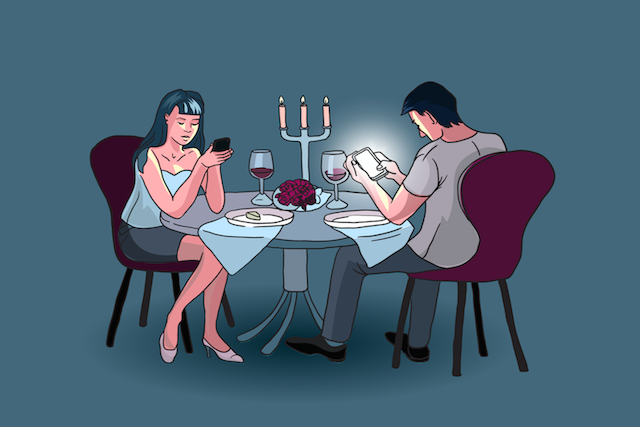
    There was rarely a time when my partner didn’t have her phone in her hand or, at the very least, in a place she could quickly grab it.

    We’d go out for a meal and it’d be there by her plate, positioned so she could dip in and out at any lull in the conversation.

    We’d take a walk and she’d have me in one hand and it in the other, ready to take a photo or catch the next Facebook notification.

    Even when we were in bed, if it wasn’t glued to her face, it’d be right by her side, lying between us like a small child who’d snuggled in for the night and ruined any chance of intimacy.

    It wasn’t good for our relationship, to say the least. Especially considering that, however unhealthy her relationship with her phone was, mine was worse.

    I didn’t realize it at the time. But in hindsight, I can see that most the time she retreated into her phone was when I’d long zoned out and been absorbed by mine: some random article or new app I’d downloaded, updates on the game, or a group chat with work colleagues.

    In that sense, we were perfect for each other. And looking around us, there didn’t seem anything too strange or excessive about our behavior. All our friends and the couples around us were also interacting with each other from beyond their screens, and they seemed perfectly happy—at least according to their Instagram posts.

    But something wasn’t right. Sure, we had our problems, I knew that. But it was something more than that: we were missing that deep feeling of connection. You know, that feeling you get when your partner understands you, without having to say a word. Or the fulfillment of being alone together and feeling like you’re the only two people in the world.

    Surely this fundamental pillar of how you feel about someone had nothing to do with our little glowing screens. So, none the wiser to what was going on, things gradually got worse and, eventually, we broke up.

    I wasn’t blind enough to see our phones had something to do with it, though. I mean, not being able to talk for two minutes without one of us phubbing the other was clearly an issue. And the non-stop messaging whenever we were apart couldn’t have been good for us.

    So when a similar thing started to happen with my current partner—both of us spending more time with our devices than each other and a feeling of disconnection growing between us—I knew there was something going on. And if one thing was for sure, whatever it was, I wasn’t prepared to let it ruin another relationship.

    I started to look more closely at our phone use and put it under the microscope: Why was it happening? Why did I prefer Candy Crush over spending time together? Why did we talk more via text than real life?

    What I found completely changed our relationship. Not only that, it changed my relationships with friends, family, and everyone I meet. And what’s best about it, I haven’t had to disconnect from social media or give up any of my beloved devices.

    I discovered the real issue wasn’t the physical presence of the phone, but rather how it had changed our idea of communication and influenced how we interact together.

    A prime example of this is phubbing—when your partner uses their phone while you’re talking.

    This was an everyday occurrence in my relationship. My partner would often ask me, “How was your day?” and start phubbing the hell out of me just moments into my response. I always thought she just wasn’t interested and was just being rude, but that wasn’t half the story.

    Because instant messaging was now our primary mode of communication, we’d trained ourselves to take words solely on face value—like you would a text or email.

    And so we would never stop to look beyond what was being laid out on the surface and consider all the other information-rich signals that make up the majority of communication—facial gestures, eye contact, tone, body language, and the emotions driving them all.

    Whenever we spoke, it was more like a means to an end. Something we did because we had to. Conversation was a chore that consisted of generic, predetermined questions and equally humdrum answers. All delivered in a way that was monotonous and unappreciative of the other’s attention and contributions.

    So it’ll be no surprise to hear our conversations were never stimulating and meaningful. And because of this, we robbing ourselves the chance to foster that deep sense of connection and understanding that’s so vital to a healthy relationship.

    Phubbing was only the tip of the iceberg. But it was enough to realize the fundamental effects phones were having on my relationships and wake me up to how they were undermining my ability to connect with people.

    Today, by simply being more aware of how we use our devices, me and my partner are closer than ever.

    What’s more, now we don’t use our phones as much as the average couple, but it’s not because we’re following orders from a couples therapist or because some rule from a relationship handbook told us to. We do it because we stay up all night talking and forget about them. Or because we go on a long walk and accidentally leave them at home.

    We do it because we’ve got back in touch with those deep, visceral feelings that nothing on Twitter or Facebook could ever come close to. And because there’s no way we’re going to let them fade away again.

  • There’s No WiFi in the Forest, but You’ll Get a Stronger Connection

    There’s No WiFi in the Forest, but You’ll Get a Stronger Connection

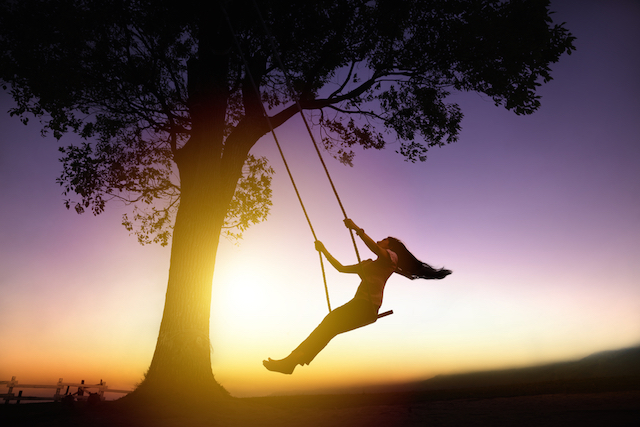
    Woman on a swing

    “The quieter you become the more you can hear.” ~Ram Dass

    We live our lives at such a fast pace. We seem to be working more hours and juggling more tasks both at work and home, with no relenting.

    As part of the technological age, we are connected 24/7, and we find it difficult to switch off.

    It has changed the face of how we live and work. Expectations are higher, the pace of life is quickening, and we’re struggling to keep up.

    In a world that encourages noise and busy-ness, we find it hard to be quiet and still.

    I recently left a stressful job in the corporate world to regain balance in my life. I was so busy making a living that I’d forgotten to make a life, and my health was suffering as a result.

    I am now an advocate for “slowing down to speed up.” Prioritizing relaxation and self-care makes me more alive and more effective, and it allows better decision-making, hence making life easier.

    We have been conditioned by society to maximize every second of the day by doing something. Some people see relaxing as unproductive, wasting time, and even selfish if we’re taking time for ourselves.

    But in this busy world it’s not just individuals that benefit from time out; our bosses, colleagues, friends, and family also reap the benefits when we’re rested and refreshed.

    In the modern age we are overwhelmed by technology. It now dominates our homes and work-life and keeps us in touch with friends, families, and the world around the clock.

    In the days before handheld devices, people could leave the office on Friday and not see their emails again until Monday morning. We would sit on bus and talk to one another rather than being lost in an iPad.

    My former morning routine consisted of eating breakfast while checking Facebook, reading my personal and work emails (even though I was going to be in the office in less than an hour), and then watching the news on TV. A similar kind of routine would play out at the other end of the day over dinner.

    I recently took three months off and spent time living in yoga ashrams and Buddhist temples where there was no TV and Internet.

    Surprisingly, I found I didn’t miss it. It freed up so much of my time each day, time spent enjoying my meal, being present, noticing the birds in the trees, and talking to those around me.

    The most amazing thing was when I returned to civilization and logged on to check the news, Facebook, and emails, I hadn’t really missed anything. But I’d gained so much more.

    I’d experienced what I was doing. I’d not been distracted by petty stories that didn’t matter or that may have impacted my state of mind negatively. Most of all, my mind had become de-cluttered and focused, and I felt a certain clarity I enjoyed.

    As a result of a technology fetish, we are spending more time inside. This is leading to an alarming vitamin D shortage in many developed nations, particularly in the northern hemisphere when we don’t get enough sunlight.

    We no longer live off the land in rural areas. Many of us are confined to cities, living and working in concrete towers. As a result, we have lost touch with our connection with nature, which studies suggest is vital for our health.

    We know how refreshing it feels to take a walk in the park or sit by a lake, and research is now showing it goes much further than that.

    The connection we get from being in nature utilizes all the senses and brings clarity and focus, which is why sometimes when I was struggling for inspiration in the office or couldn’t solve a complex problem, it would help to take a stroll to clear my mind.

    Many offices now use walking meetings as a way of improving health, creativity, and productivity. This is especially powerful in the technological age when emails and phones so often disrupt our concentration and cause breaks in our creativity.

    UK charity Mind suggest that time in nature is beneficial for those with depression, as it enhances mood and self-esteem and reduces anger, confusion, and tension.

    It has also been shown to lower blood pressure, reduce pain, and strengthen the immune system.

    A study done involving patients recovering from gall bladder surgery in a hospital compared a group who had a view of nature outside their window to those without a view of nature.

    This study found that those who looked out onto nature recovered quicker than those who didn’t.

    At the same time as we are suffering from a lack of outdoor sunlight, we also need more exercise. Diseases like obesity and depression are at epidemic proportions, and still worsening. Research suggests that being outside more often could help on both counts.

    According to recent studies, sitting is the new smoking, and hours at desks, in cars, or in front of the TV is damaging our health more than we realize.

    It more than doubles your risk of diabetes and is linked with an increase in heart disease. In fact, inactivity is the fourth biggest killer of adults, according to the World Health Organization.

    I’m not suggesting we should all go and live in caves on the top of a mountain, but I am an advocate for ensuring we have an opportunity to disconnect.

    Maybe turn your work device off over the weekend, have a TV-free night each week, resolve not to check Facebook every day, or even better, take a technology break for a week, maybe when you go on your annual vacation, and see what it does for you.

    Sometimes we need to disconnect so we can reconnect with our real selves and not give way to the many distractions in our lives. This brings the clarity we need to make good decisions and to listen to what we want and how we feel about the things that really matter.

    So I urge you to switch off the TV, turn away from the computer screen, put down your phone, and get outside.

    As the saying goes, there’s no Wi-Fi in the forest, but you’ll get a stronger connection.

    Woman on a swing image via Shutterstock

  • 8 Things I Learned from a Phone-Free Month

    8 Things I Learned from a Phone-Free Month

    “Tell me what you pay attention to and I will tell you who you are.” ~Jose Ortega y Gasset

    I used to live in San Francisco, a city celebrated for its carnivals, free music festivals, thriving bar culture, Mexican food markets, beautiful parks, fantastic literary events, thrift stores, and… (Can you tell I miss it?]

    The effect of having all this culture available is that quite often, we spend more time around the doing of an event than the doing itself. I’ll elaborate.

    I would spend x amount of time on my phone searching for cool events to go to. Then I would be on Facebook, advertising this future event and inviting friends.

    The day of the event I would spend time calling and texting people to establish a meeting place, before following the little blue dot to find that place. Then, during the actual event, I would spend x or even xxxx amount of time trying to find signal to call a lost friend or—in the more likely case—relocate my lost self and find the group.

    When not trying to find signal and/or friends, I would be sending texts telling people who couldn’t make it what they were missing out on.

    Or I’d be holding my phone in the air taking x amount of pictures of where I was and publishing the photos on Facebook/Instagram/Snapchat/all the above (checking my phone every x minutes thereafter to get an update on like-count) trying to show the world how much fun I was having (read: forgetting to have).

    Does any of this sound familiar? The x amount of time spent on my phone combines to way more x’s than the time spent enjoying x event itself. See, I can’t even remember what the event was.

    I remember Nokia’s first advertising campaign: “Connecting People.” Now this slogan would more correctly read: “Connecting Phones,” because I observe that the people behind the phones are actually hugely disconnected from valuable forms of interaction, myself included.

    We live in a world where losing your phone is more dramatic than losing your virginity, and I found it way more distressing because I couldn’t call my mum and tell her about it.

    I lost my phone in the fatal sense; it fell to its death and I was phoneless for a month. This month was somewhat transformative for me. I mean, I know that a phone isn’t technically a limb, but at first it felt very hard to walk anywhere if I wasn’t 100% sure that I was going in the right direction.

    My phone used to guide me. It was brave to go somewhere to meet a friend, not sure if they’d had to cancel without being able to let me know. My phone used to confirm things. Another hard thing was the not knowing what my friends had eaten for dinner the previous night. Instagram used to show me.

    How are people going to invite me to things?! Denial, anger, frustration, loneliness… I’M FALLING OFF THE RADAR! People will forget me! Desperately clicking my heels “There’s no place like phone, there’s no place like phone” … *Spiral into delirious black out.

    It’s hard to believe that a month later I had become pretty nonchalant about even getting my phone fixed. I could now afford to, but I had discovered a charm and liberation to my life without a phone that I was now scared to lose.

    Here are some ways I found myself when I lost my phone:

    1. I would give myself time to get lost, and enjoyed taking notice of my perhaps wayward route.

    I would find things on the way that I’d never seen before—great street art and food joints. If really lost, I would ask locals for directions, and in so doing met interesting characters and appreciated their willingness to help me. I enjoyed not being self-reliant.

    2. My friends were always there to meet me at the time we’d planned in advance.

    When is the last time you made plans with a friend a week or two in advance—Lunch at Rosso on the 12th, 2:00—and not called to confirm before hand? It’s a test in your trust that friends won’t let you down, nor you them. It’s fun to have something to look forward to and to simply… show up.

    3. I didn’t update Instagram nor Facebook for a month.

    I lost the urge to show people a #nofilter photograph of my burrito or let Facebook know which Disney Princess I am according to Buzzfeed. I started reading more, enjoying my own company. When I had moments to spare, I would reflect on my day rather than take out my phone and read about everybody else’s.

    4. I started being present at events in the true sense of the word.

    If you spend all your time on social media telling people where you are, it probably means you weren’t present at all. I mean, take a cool picture, by all means; start a photography blog. But a photograph should be a memory of an experience, not the experience itself. Don’t check out when you check-in.

    5. I became more spontaneous.

    There is something organic about running into friends unexpectedly, when the stars align to connect you with someone even when you couldn’t call to make plans. I could be more spontaneous without a phone, or perhaps it just felt that way because as it was harder to plan things. I started to accept and embrace all the twists and turns of my day.

    6. I became unreachable at times.

    It feels great to be unreachable in a world where we are expected to be so available. We are at the beck and call of a beep or a buzz, and apologize if we respond to a text twenty minutes later because we were in the shower.

    I realized that my time is my own and stopped feeling that I owed people my attention 24/7. When you disconnect from the outside world, you connect with yourself.

    7. I became acutely aware when my company was dividing his/her attention between their phone and me, and I hated it.

    That’s probably how I used to interact before I learned how it feels to speak to the top of someone’s head. I enjoyed the dose of self-awareness, and I like to think I’ve become better company for it.

    8. I realized I wasn’t really staying in touch.

    What I’d been doing to “stay in touch” with friends were things such as liking their Instagram photo, commenting on their Facebook status, vaguely committing to an event they were hosting with no real intention to go, texting sporadic and disinterested-sounding questions like “How’s life?” etc.

    Without a phone, I realized how lazy my most valued friendships had become, namely, because I didn’t suddenly feel disconnected from those people; rather, I realized I hadn’t been connected in the first place.

    I’m not suggesting that you should smash your phone on the ground after reading this; I eventually had my phone fixed, and in these times there are obvious safety and organizational benefits to having one.

    What drives my thought process is this: Phones are merely tools, and we are at risk of trying to extend their function beyond their limitations. Phones are a poor substitute for real interaction, presence, experience and connecting.

    Life doesn’t happen on a tiny screen. Take a leap and leave your phone at home once in a while. Say brb and give your immediate world your undivided attention, because that’s where the good stuff is, and you’re missing it.