Tag: direction

  • How to Reconnect with Your Higher Self for Clarity and Direction

    How to Reconnect with Your Higher Self for Clarity and Direction

    “Listen to the wind, it talks. Listen to the silence, it speaks. Listen to the heart, it knows.” ~Native American Wisdom

    Have you ever felt stuck? Stuck in a business you’ve lost passion for, a job you no longer enjoy, a relationship that no longer fulfills you, or simply stuck in indecision about how to move forward in life?

    That feeling of “stuck-ness” often leads to anxiety, fear, and even shame. I understand these feelings well.

    When the pandemic hit in 2020, my life turned upside down—as it did for many. I was the founder and executive director of a national arts organization, something I had built from the ground up and led for eighteen years.

    Suddenly, overnight, I felt like I could lose it all. My funding partners and sponsors pulled out, I was sinking deeper into my line of credit, and I was responsible for a staff spread across the country.

    The stress was overwhelming. I couldn’t sleep, I became irritable and edgy with my family, snapping at them over the smallest things, and some days it took a tremendous amount of willpower to just get out of bed and face the day. I had never felt so lost, uncertain, or fearful.

    It wasn’t just the fear of losing a business and my paycheck—although that certainly caused a lot of anxiety. The bigger fear was losing my sense of identity. Who was I if I wasn’t the executive director and founder of this organization? Before starting this non-profit, I felt insignificant, like a nobody. I didn’t want to go back to that place. I didn’t want to lose what I had built.

    This fear consumed me, and I asked everyone I knew, “What am I supposed to do?”

    One day, I brought this question to my business coach. She responded with a single question of her own: “What do you typically do when you feel stressed and anxious?”

    “Well, I usually go for a walk in the woods,” I replied.

    “Perfect,” she said. “Here’s what you’re going to do: Every day for the next thirty days, you’re going to go for a walk in the woods and simply look and listen.”

    “What? I can’t do that. I don’t have time for that,” I stammered. In my head, I thought, What kind of business coach tells her clients to go for a walk in the woods? I needed business advice, not nature therapy.

    Somehow, she got a commitment out of me. Every morning at dawn, as this was the only time I felt I could make this daily walk work, I was out the door into the forest behind my house. And every day, I demanded answers from God, the squirrels, and the universe: “What am I supposed to do?”

    Slowly—ever so slowly—something shifted. A sense of calm settled over me. I began to notice the beauty around me: the varying shades of green, the way light filtered through the canopy of leaves, the chorus of birdsong, the creek’s melody as it rushed over rocks, the silky texture of moss-covered bark, the intoxicating scent of spring blossoms—you could almost taste the air.

    And then, I started to feel gratitude. Gratitude for the trees, the air, the stillness. Gratitude for my business coach, who had nudged me toward this practice. This gratitude felt like a swelling of love in my chest for everything that is in this moment.

    And in this calmer state of mind with gratitude in my heart, I asked the question again: “What am I supposed to do?”

    This time, I got an answer.

    “What do you want to do?” a voice bubbled up from within.

    It was my own voice—but like an older, wiser version of me.

    I didn’t miss a beat. “What do you mean, what do I want to do? What am I supposed to do?”

    “No, Anita,” came the steady response. “What do you want to do?”

    “I don’t know. I don’t know.”

    “Yes, you do.”

    That stumped me.

    Later that day, I found myself wandering the spirituality section of a bookstore. A book caught my eye: Conversations with God by Neale Donald Walsch. I picked it up, flipped it open, and one line jumped off the page:

    Frustration and anxiety come from not listening to the soul.”

    My breath caught. I read the words again, letting them sink in. In that moment, I realized a profound truth—I wasn’t listening to my soul.

    I had been here before. This wasn’t the first time I’d been reminded to slow down, go inward, and reconnect with my inner wisdom. But I had gotten so busy, so caught up in my business, my family, and all my responsibilities, that I had forgotten. Not only did I lose my connection to that part of myself, but in many ways, I had lost sight of who I really was and what I truly wanted.

    For nearly five years now, I’ve devoted myself to the study of remembering—of reconnecting with my higher self, God, Source, the Universe (whatever name feels right to you—they are all the same to me). When we connect with our higher self and consistently listen to our soul voice, three truths are revealed:

    • The truth about who we are.
    • The truth about what we really want.
    • And the truth about why it matters.

    When we stop listening to our inner wisdom, we become drowned out by external noise—the voices of others telling us who we should be, the media convincing us we’re not enough, the fearmongering that keeps us feeling small and powerless.

    But when we reconnect with our higher self:

    • Clarity of purpose and direction emerges.
    • Fear and self-doubt loosen their grip.
    • An inner harmony steadies us, no matter how chaotic the world seems.
    • Our capacity for self-love deepens.

    And with that, we become un-stuck. We step into our greatest potential. We create a life filled with meaning, well-being, and joy.

    How Do We Reconnect with Our Higher Self?

    When I first realized I was asking the wrong question and switched to asking, What do I want?”, I skipped an essential step—the inner work that allows you to connect with your higher self and find the answers you seek. Eventually, I figured it out. And it’s really quite simple.

    At its core, reconnecting with your higher self is about slowing down and giving yourself the time and space to cultivate that relationship.

    Here are three key steps to help you do that.

    Step away from the busyness of life.

    Block out time each day to unplug from work, responsibilities, and distractions. Make this a daily non-negotiable. My favorite way to unplug is by walking in nature, which has additional health benefits. I recommend at least twenty minutes of mindful walking daily. Mindful walking is a form of meditation, but simply sitting in meditation is also a great option.

    Speak your gratitude.

    Science has shown that practicing gratitude reduces stress, elevates mood, and improves overall well-being. More importantly, it opens the heart—making it easier to hear the whispers of your soul.

    Engage all your senses in the present moment.

    What do you see, hear, smell, feel, and even taste? When you fully engage with your environment using all your senses, you become present. And presence is the gateway to connecting with your higher self.

    Once you’re grounded in the here and now, that’s when you ask yourself one simple question: “What do I want?” Then, listen.

    Listen with your whole body. Pay attention to ideas that surface, images that appear in your mind’s eye, sensations that arise. Don’t judge any of it. Just be open and curious.

    Nothing may come at first. But keep returning to this practice—getting present, going inward, and asking, What do I want? Soon, you’ll hear the whispers of your soul. And if you learn to listen and act on those whispers, you too will get unstuck and be guided to a most remarkable life.

    Are You Ready to Listen to Your Soul?

    I invite you to embark on your own thirty-day nature challenge. Each day, step outside, breathe deeply, and simply observe. Let nature be your guide as you reconnect with your inner wisdom. Notice what shifts within you—how clarity emerges, how gratitude deepens, how your soul whispers its quiet truths.

    Will you take the challenge? Let me know how your journey unfolds—I’d love to hear what insights arise for you.

    PS: In case you’re wondering what happened next—when I finally tuned in and listened to the whispers of my soul, my life radically changed. I realized that what I truly wanted was to close my business, as I had lost my passion for it years ago, but fear had kept me stuck. The whispers of my soul then guided me to let go of most of my possessions and embrace a nomadic lifestyle.

    This decision has led my husband and me on an extraordinary journey, experiencing many incredible corners of the world. Along the way, I recreated myself as a life and leadership coach, guiding others on their journey to their highest selves. As I continue to listen, life unfolds in the most beautiful and unexpected ways.

  • If You Haven’t Found Your Purpose: How to Feel Good Anyway

    If You Haven’t Found Your Purpose: How to Feel Good Anyway

    “The person who lives life fully, glowing with life’s energy, is the person who lives a successful life.” ~Daisaku Ikeda

    We’ve all heard the phrase “find your life purpose.” It gets thrown around so much nowadays. Many of us have been in what feels like an eternal quest to find it, especially if we’ve been feeling stuck, lost, and out of alignment. Finding our purpose then becomes an almost obsessive search for the solution that will solve all our problems.

    We’ve been led to believe that a life purpose is a single thing, a calling that we’ll be passionate about, and that we’ll know deep inside that we’ve found it. With it, we’ll feel accomplished and fulfilled and, instead of feeling stuck, we’ll have our answer as to what we’ll do day in and day out, giving meaning to why we’ve been put on this planet Earth.

    On the flip side, we believe that without one, we’ll live an uninspired, lackluster life. Without one, we’ll feel out of alignment and be forever stuck.

    But what if I told you that’s not true? That what you think you know about finding your life purpose is, in fact, the thing that’s keeping you stuck, and that you can stop searching for your life purpose and still be fulfilled?

    I know this may sound like a big claim. But after close to two decades of trying to find my own life purpose, I’ve finally learned that a life purpose is not an actual destination and much less the final step. It’s more about a general feeling than a tangible single thing we do. Let me explain.

    I used to be the poster child for doing everything right and by the book. You gave me directions, I followed. I did what I was told to do, no questions asked. I studied what I thought was a sensible career choice and would be expected from a straight-A student that loved math (bachelor’s and master’s in economics, thank you very much).

    My interest in finding my purpose first started during what I thought was my last semester at university. As I thought was expected from a math nerd like me, I was doing the honors stream in economics and needed the approval of the head of the department to graduate. Turns out that, even though I had chosen an elective as per the instructions in the program rule book, the head felt my choice was too “easy” compared to what my peers had chosen and, as such, could not let me graduate from the honors program.

    I had to either graduate from the regular economics stream or stay an extra semester to do a more “difficult” course. (Spoiler alert: I did the extra course and did my master’s too, even though I knew deep down that was not what I really wanted to do. I did it because that’s what I thought I should do.)

    Now, you may think (and I don’t blame you here—these are my thoughts too now in hindsight), what was the big deal about that? Just finish school and get on with life!

    But for me, at that moment, my world came crashing down. It was then that I realized for the first time how I was defining my worth based on what I did and what others thought of me instead of from within. And that single event catapulted me to a journey of self-help and self-discovery that has now spanned twenty years.

    The quest to find my life purpose thus began.

    After graduation, I was feeling so lost that I became obsessed with finding my purpose, sure that once I’d found it, I’d stop feeling so stuck and uninspired, with life just passing me by. I yearned for my life to have meaning and was determined to find my purpose to get that.

    For the next few years, I read books about how to find your purpose. I listened to podcasts and talks and even attended workshops. I was convinced that I’d eventually stumble on that thing that I was so passionate about and naturally good at that I could dedicate my life to doing it.

    I asked myself what I liked to do and made lists. I asked others what they thought I was naturally good at. I took personality tests. Had my natal chart read. I even looked back to what I enjoyed doing as a kid in hope of finding my nugget of gold.

    I tried it all, going down my list like at a grocery store: baking, creative writing, dancing, etc. The trouble was, regardless of what I did, as time advanced, I still felt lost and misaligned. In the meantime, I had to pay my student loans, so finding my purpose took the backseat as I worked in perfectly good jobs that paid the bills.

    Fast-forward more than a decade later, and I was keenly aware that I had spent the last fifteen years working in corporate, feeling lost and stuck in a career I did not want, in jobs that didn’t fulfill me at all, leading a perfectly good normal life, married and with kids.

    I had renewed my search for my life purpose with more vigor than before but kept hitting dead ends. Why couldn’t I have a passion that I could easily gain my life purpose from? What was so hard about finding a purpose that would help me get out of the rut and plug me into the fulfillment and inspiration I so desperately yearned for? Where was my purpose?

    And then the unthinkable happened: I lost a very dear friend.

    Her passing really shook me to the core. I closed off and broke down, letting myself mourn and feel all the feels. I asked myself some hard questions. If it had been me, would I feel like I’d lived to my fullest? Did I have any regrets? There’s nothing scarier than realizing that I was not living how I wanted to and that the main reasons were my doubts and my fears.

    So, in true YOLO (you only live once) form, I made the decision to shake things up. I closed the door on finding my purpose and focused on living my present day-to-day life.

    If I only had now, what was it I really wanted to do and have, and if I did have it all, how would I love to feel? And what did I need to do to feel that way today?

    I dug deep and anchored myself to this vision of how I wanted to feel day in and day out and, based on that, I learned how to create goals and intentions with feeling. I finally understood the importance of making my decisions to ensure I kept or created this feeling I was aiming for, as opposed to making decisions thinking only about an actual end goal.

    You see, it’s amazing how in truth we’re not necessarily chasing a particular thing (e.g., a different dress size, a promotion, a house, completing a marathon, etc.) but instead the feeling that achieving that will create within us (e.g., feeling fulfilled, worthy, peaceful, juicy, complete, etc.).

    When you focus on creating that feeling instead of achieving a particular outcome, you realize that it really doesn’t matter what you do as long as what you’re doing is, in essence, making you feel the way you want to feel. In other words, it’s making you feel good inside.

    In the end, maybe it isn’t, for example, losing weight that’ll make you feel really good (or happy, worthy, loved, etc.) but instead, changing how you talk to yourself daily when you look in the mirror. Focusing on creating that feeling right now will help you make decisions that will feel good and, as a result, help you do things that feel in alignment.

    I also learned ways to quiet my mind chatter, turn down the volume on my inner critic, and become my biggest cheerleader. I learned how to tune in with my body and energy and pause when I need a break. I learned how to build confidence and developed strategies that help me get out of the freeze “deer in headlights” mode I get into when I’m scared and help me get moving forward instead.

    And guess what happened? I realized that I had created a balance and flow to my life that felt good to me. I felt aligned, fulfilled, and motivated, exactly how I thought I would feel had I found my purpose.

    Throughout this journey, I learned that having a life purpose is not about doing something in particular. It’s actually all about aligning your daily actions with your values and desires. Simply put, your life purpose (and everyone else’s, for that matter) is to make sure that every day, you’re living your life in integrity with what you believe in, what you value, and how you desire to feel in this life. That’s it.

    It doesn’t matter what you do, what your career or passions are. It doesn’t even matter if you don’t have one particular passion or career. As long as you are always creating the feeling you want with each action you take daily, you’re living with purpose. And there’s nothing else you need to do.

    Embarking on a quest to find your purpose leads you to believe that answering your soul’s call to live your most aligned and vibrant life is a straight line. That you simply need to tune into your soul to discover that particular something that you can dedicate your life to, the magic bullet that will solve it all. And nothing could be further from the truth.

    You don’t need to find a life purpose to get unstuck and feel inspired and aligned. You simply need to get super clear on what’s truly important to you, what you really need and want, and how you’d feel having all that, and then take daily actions in alignment with creating this feeling.

    Once you do this on a regular basis, you’ll be amazed at how inspired and fulfilled you’ll feel. You won’t feel stuck. You’ll never have to worry again about finding your life purpose because you’ll be living with purpose daily. And that’s what really counts.

  • Feeling Pressured to Follow the Crowd and Become Someone You’re Not?

    Feeling Pressured to Follow the Crowd and Become Someone You’re Not?

    In a world that pressures us to conform and toe the line, it can be hard to live a fulfilling, authentic life.

    We can easily spend years trying to be someone or something we’re not—checking off all the right boxes, meeting everyone’s expectations—all in a bid to gain approval from society, our peers, our parents, and even ourselves.

    But this comes at a steep cost to our well-being. Not only do we lose ourselves and slowly disconnect from everything that brings us joy and meaning, but we can also end up hating ourselves for struggling to measure up… when ironically, we don’t even really want the things we’re pushing ourselves to achieve. We just think we’re supposed to attain them.

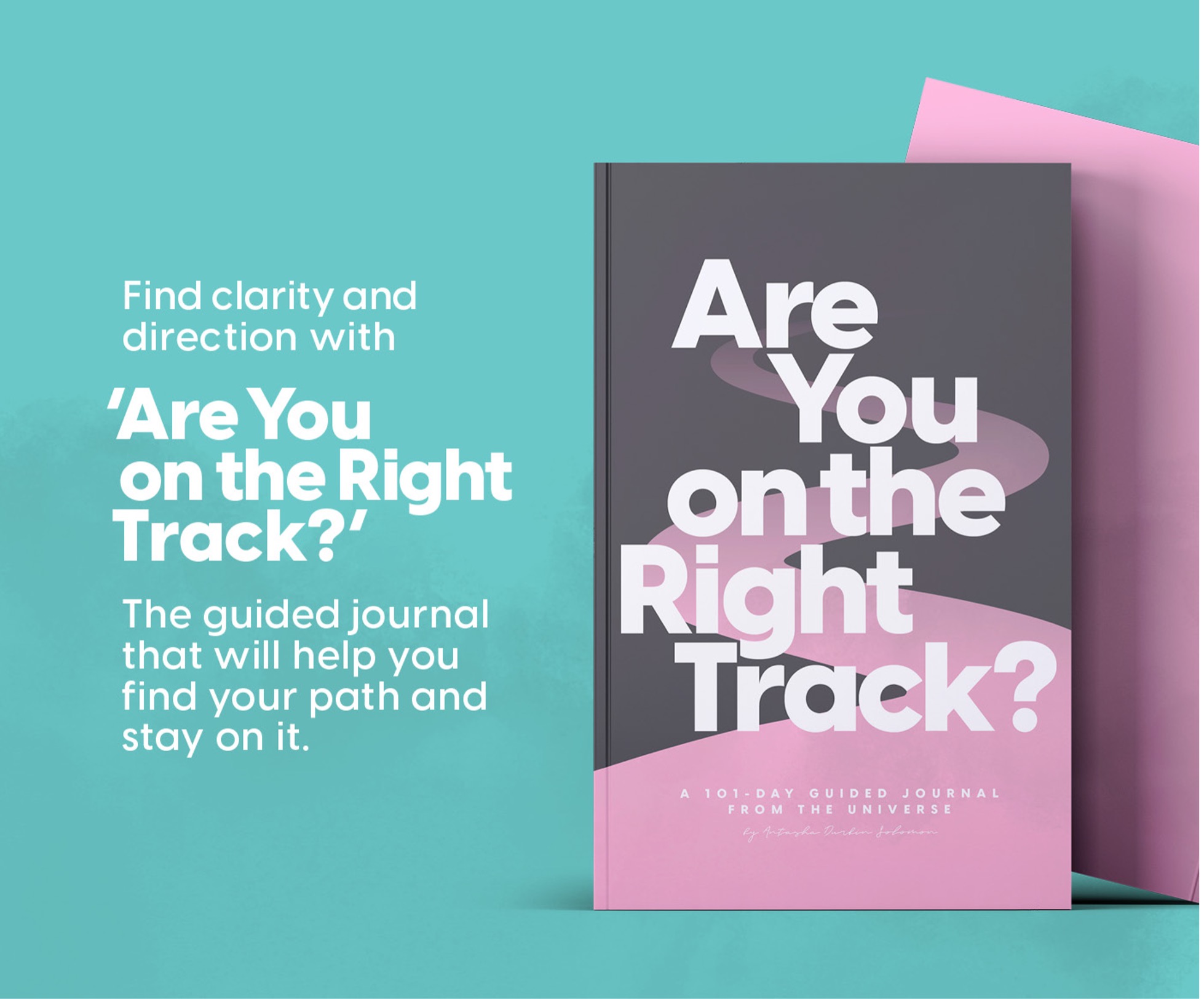
    If any of this sounds familiar to you (and I suspect it does for most of us), I think you’ll appreciate this heartfelt letter from Tiny Buddha contributor Antasha Durbin Solomon’s book, Are You on the Right Track? A 101-Day Guided Journal from the Universe.

    I hope it serves as a reminder that the best person you can ever be is yourself.

    Letter 71: Living an Authentic Life

    Dearest One, 

    You could spend your entire life pretending to be someone you’re not, all in a bid to gain acceptance from others. But when your journey comes to an end, you’ll pull off the mask you’ve been wearing and realize you wasted your life playing pretend. 

    Or you can make the conscious decision to take the path less traveled and live authentically as yourself. This takes courage, especially in a world that programs you to believe that money, beauty, and recognition are the most important things in life. 

    Let this letter serve as a reminder that your time on Earth is limited, but you are not. Don’t waste another second pretending to be someone you’re not. Embrace your uniqueness and every attribute that makes you who you are. Explore your interests. Build upon your passions. And spend your time—your greatest currency—in whatever way truly serves you. 

    You get one shot at this life. Make yours count. 

    With endless love,

    The Universe 

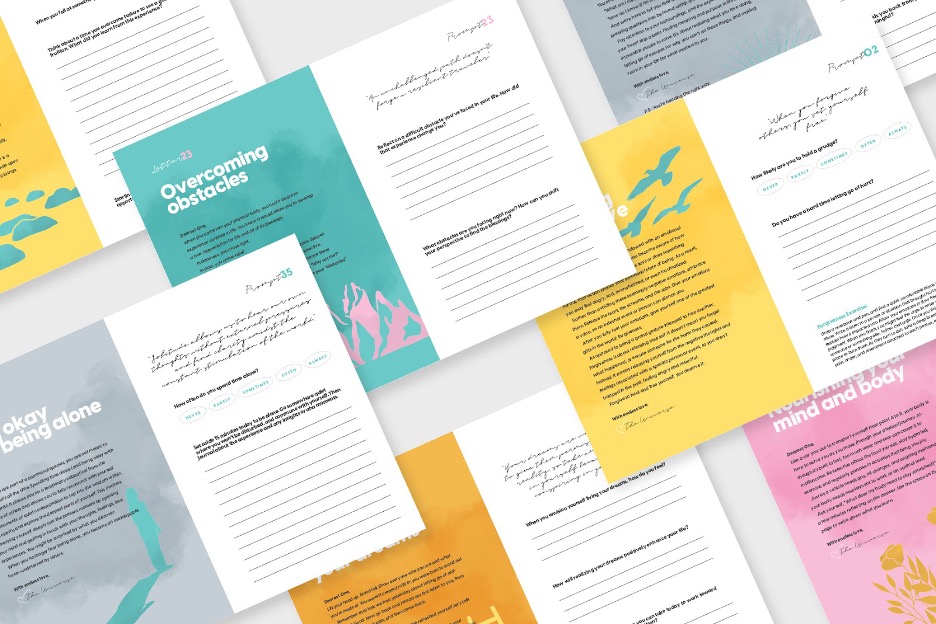
    Are You on the Right Track? is truly a treasure trove of inspiration and motivation. Each letter offers simple yet powerful reminders to help you take back your power and live a purpose-filled life. And the journal prompts can help you dig deeper and make meaningful change, one step and one day at a time.

    To access the full journal and all 101 letters, click here. When you buy the book (eBook or paperback), you’ll receive free enrollment in Antasha’s popular online course, “21 Days of Energy Healing for a Happier, Healthier Life,” which typically costs $49.99. To gain access:

    Antasha will then provide you with an access code and course link.

    I hope you enjoy this transformational journal as much as I did!

  • The Simple Path to Change When You’re Not Satisfied with Your Life

    The Simple Path to Change When You’re Not Satisfied with Your Life

    “Making a big life change is scary, but you know what’s even scarier? Regret.” ~Zig Ziglar

    Fifteen years ago, I made one of the biggest changes in my life. It was something I had wanted to do for so long but had never found the right time, right plan, or courage to do.

    You see, ever since I was in my teens, I had always felt I was meant to be somewhere else.

    The town where I grew up was pretty perfect for raising young kids, but it just wasn’t for me as I entered adulthood. I always envisioned myself somewhere else doing something different than those that stayed and replaced the generations before them.

    When I came back from school in my twenties, I was eager to get my career going and was not in a rush to settle down and have kids like most of my circle. I wasn’t even sure I really wanted to raise a family. I was more interested in exploring this world and not being tied to one way of life.

    At twenty-five I thought, WOW, I finally feel like I’ve got it all figured out.

    I had lived away from home, finished school, had relationships both good and bad, and had a strong work ethic that was instilled in me from a young age. So here I was, ready to take on the world. Build my career, travel, and maybe eventually settle down and start a family… then BANG! Just like that my world started to crumble.

    Within a span of one year, I was dealt some devastating news. My mother and sister were both diagnosed with different devastating diseases.

    My world was crushed. I can still remember the impact I felt on the day I received the news.

    I was in my office when I got the call about my sister, who had lost her speech and ability to move one of her arms and possibly needed emergency brain surgery.

    I was in shock. I had no idea how I felt, what I was supposed to do, or where I was supposed to be. I just sat there with a blank stare for what felt like an eternity but really was likely just five minutes.

    After weeks of testing, it was discovered my sister had MS (Multiple Sclerosis). A life-long debilitating disease, or so I understood at the time.

    Fast forward six-plus months later, my sister was on track with rehabilitation and signs of a full recovery in speech and limb mobility. Then WHAM! My mother received a stage 3 cancer diagnosis.

    I was absolutely devastated and completely torn apart. My mother is everything to me, the woman who inspires me to stand tall and strong no matter what life throws my way. A woman of pure integrity and authenticity, loved by so many.

    After emergency surgery and intense chemo, I am glad to say that both my mum and sister survived their devastating ordeals and have been living life to the fullest since that awful time. But during that time my world was upside down and I was an emotional wreck.

    I had no idea how to unravel all the emotions I was feeling then. I kept myself busy, though, with work, too much partying, and hitting the gym hard. You see, I kept myself looking good on the outside, but I was a complete mess on the inside. I was no longer thriving; I was just surviving.

    I began taking inventory of my life and realized I was not living the life I’d envisioned for myself. I was scared to make a change and also to not make a change.

    Seeing what my family had endured made me realize how precious life is and that I didn’t want to waste mine living a life that didn’t fulfill me in fear I was next for a diagnosis. So, I decided to seek out professional help to gain control and clarity, to heal, and to push through the emotions I was suffering from. Only then would I be able to truly move forward with my life in a positive and productive way.

    Once I had done the “work” on sorting out my emotions, I was able to start creating real change from a healthy, sound perspective.

    I started creating the life that resonated with me one step at a time. You see, change doesn’t happen overnight. It takes time to build. It is a process, and anyone who has made significant change in their lives will tell you that. Their change likely started way before anyone was really aware.

    I wasn’t living the life I wanted, so I thought long and hard about what needed to change and finally took the leap.

    I moved across the country on my own, away from my most significant support, with no job, to start building a life that resonates with me. It wasn’t without challenge or bumps in the road, and it certainly wasn’t perfect. But it’s been absolutely amazing, and I’ve never looked back.

    Besides the emotional trauma, there were so many things holding me back at first—family, friends, familiarity, and fear. But what I’ve come to realize is when you start making positive change in your life, for you, things fall into place over time and you look back and realize the change was worth it.

    People speak from their own feelings, experiences, and fears, don’t let that hold you back from what feels right to you.

    I now live in a place that felt like home from the first time I landed here. I live by the ocean and mountains, which inspire me every day.

    My sister now lives in the same city (in fact, we live the same complex). My brother and his family moved a one-hour flight away now as opposed to across the country. My mother still resides back in the town where I grew up so, I feel I get the best of both worlds. Living in a place that inspires me while having the chance to revisit a vibrant city and old friends to reminisce with whenever I choose to.

    So, what are the top things people say they regret as they get older? I wish I’d….

    • Saved more money or made better investments
    • Worked in a job or career I was more passionate about
    • Treated my body better and had better self-care
    • Spent more time with loved ones
    • Traveled more

    And the list goes on…

    Why do so many people rush through life without taking the time to recalibrate and ensure they are focused on the right things that mean something to them or will enrich their lives? It’s an intricate topic yet simple. Life. Life gets in the way, responsibilities get in the way, others’ opinions, and our own doubts and fears get in the way.

    We’ve all been there, navigating life as it unravels each day, and as things happen, we go with the flow. But have you ever stopped to consider, what’s my “flow”?

    How do I want this day, month, year to go? Why do I keep getting dragged in other directions or the same direction only to live each day with no change? Why does it seem like others are thriving while I am on repeat or treading without progressing?

    You will never know for sure until you take the time to explore what is going on in your life and create awareness around what might be holding you back. With the right support and guidance, you can create change both big and small. In fact, making little changes frequently will add up to making a big change overall.

    Not sure where to start? Here are five proven tips to begin creating change in your life today.

    1. Break the routine.

    Think about what you can give up or take out of your day to switch up your daily routine and do this for a two-week period. This could mean not scrolling mindlessly through social media on your lunch break or not watching TV at night, then seeing what else you could do instead. Which brings me to my next point…

    2. Bring back doing something you love and make it a deal breaker in your week.

    No excuses, make it happen, even you only have a fifteen-minute window for this activity. Same as above, do this for a two-week period, and this next one, as well.

    3. Discover something new.

    What have you always considered trying out or have an interest in that you’ve never explored? Give it a try now.

    4. Journal.

    Keep notes on how you are feeling through the two weeks. Then do it all for another two weeks.

    5. Build intention.

    Each week set the intention that there is time, this is worth it, and you are worth it!

    The purpose of this process is to help you see how even small shifts can change how you feel and add to your life and well-being. This sets the foundation for believing that change gives more than it takes, which helps you find the motivation to seek out new opportunities so you can make larger life changes. Move if you don’t feel thrilled with where you live, sign up for a course to help you change careers, or finally leave the job you hate to do something you love.

    It takes focus, consistency, and perseverance to make change, but everyone has the ability to do it, especially if they start small and take it one day at a time.

    Surround yourself with those that will respect you and the changes you are making. I bet you’ll be surprised to see how many people are inspired and/or motivated to begin making their own changes after watching you. So don’t wait—start today and open up to change so you can live the life you want to live!

  • How to Make Your Life Matter (Even If It Lacks Purpose and Direction)

    How to Make Your Life Matter (Even If It Lacks Purpose and Direction)

    “The purpose of life is to live it, to taste experience to the utmost, to reach out eagerly and without fear for newer and richer experience.” ~Eleanor Roosevelt

    Calm yourself down. It’s okay. All is well.”

    I clung to the sterile white table while the laboratory was spinning around me.

    “It’s just an anxiety attack. It will be over soon.”

    I closed my eyes and took a deep breath, forcing my lungs to expand against the tightness in my chest. Cold sweat trickled down my spine as I battled the all-consuming feelings of overwhelm, panic, and disappointment.

    My life was going nowhere.

    How had this happened? I thought I had a plan.

    I had chosen a promising career in science to make a positive contribution. I’d dedicated myself to changing the world, gaining recognition, and creating a legacy. So my life would matter.

    And yet, I felt empty. Aimless. Unhappy.

    I was stuck in a pointless treadmill of work, eat, sleep, repeat. I had no social life, no hobbies or passions. I focused solely on my research, hoping to enrich other people’s lives.

    But instead, I added to pharmaceutical companies’ profits. I made no difference to anybody. And I was way behind in my career compared to other people my age.

    I lay awake at night, disillusioned and frustrated, beating myself up for my miserable failure, drowning in hopelessness, anxiety, and worries.

    What if I died tomorrow without leaving a mark on the world? Vanished without a trace, my insignificant life instantly forgotten?

    What if my existence was meaningless?

    I stood in the middle of the deserted lab, tears streaming down my face. Everybody else had left to enjoy their evening. Their lives had direction, happiness, purpose. They counted.

    What was wrong with me?

    As despair washed over me, I knew I couldn’t go on like this. I had to find my true purpose in life. Before it was too late.

    My Hopeless Search for Purpose and Direction

    After my fateful (and humiliating) breakdown in the lab, I embarked on a quest to find my true purpose, determined to make my life matter.

    I studied countless blog posts, articles, and self-help books. Desperate to discover the secret to filling my life with meaning, I absorbed every piece of information available on the topic.

    Most writers agreed that we have to focus on the things we love, and use them to contribute to society.

    The problem was that I had concentrated all my time and effort on pursuing an academic career. It had seemed a sensible choice at the time, with excellent prospects of achieving purpose and impact. But it had never been my passion.

    And I was now at a dead end, without a clue about what I loved, because my whole life was purpose-driven.

    I never went for a walk in the sun unless I could pick up some shopping on the way. I never spent time in the garden unless I could pull out some weeds at the same time. And I had abandoned my favorite hobbies of jigsaw puzzles and crochet because I thought they were useless activities.

    I felt guilty and lazy when I wasted precious time on them. Time that could be spent doing something productive and significant.

    For months, I obsessed over finding something I loved that also had purpose, but nothing I felt passionate about seemed important enough to lend meaning to my life.

    Growing more anxious, frustrated, and desperate by the day, I prepared myself to settle for an unfulfilling half-life, devoid of purpose, meaning, and direction. Maybe I had no purpose; maybe my life was too irrelevant to matter.

    But then, a thought popped into my mind that changed everything.

    What if the crucial question wasn’t “What’s my purpose in life?” but “Why is having purpose so important to me?”

    My True Motivation for Seeking Purpose in Life

    Having purpose enriches us. Knowing we can use our gifts to improve our community, better society, and enhance people’s lives, we experience joy. A deep feeling of satisfaction, connection, and fulfillment.

    But, as I dug deeper, I discovered that none of this really motivated my relentless search. At least not primarily.

    The truth was that I so desperately sought purpose in my life because, somehow, I believed that I had to justify my existence.

    It was as if I didn’t deserve to live if I didn’t have a purpose. As if I was unworthy of love and happiness until I could offer something useful to the world—until I had important achievements and contributions to show for myself, and was somehow special, somehow more.

    So, the pursuit of purpose became the sole purpose of my life. And my failure to identify what could give my life meaning left me feeling pointless, stressed, and ashamed.

    All because of one devastating misunderstanding.

    The Tragic Reason Why We Obsess About Our Purpose

    I spent my entire life chasing my purpose—desperate to achieve the one important contribution to mankind that would make me special, that would earn me recognition and approval and justify my existence—because, deep down, I believed that I was worthless.

    I considered myself an empty vessel, devoid of value and significance. I assumed that I had to gain worth through my accomplishments, successes, and qualifications. That I needed purpose and a clear direction in order to gain some worth and finally deserve happiness.

    The absence of purpose in my life created a painful worth deficit. I felt inferior to others who made valuable contributions and earned admiration, approval, and status.

    I mattered less. I was irrelevant because I was useless to society.

    It was my perceived lack of worth that made me feel empty and meaningless. And the only cure I could see was to find that extraordinary purpose that would make me worthy.

    So, I searched more and worked harder. I sacrificed every activity that didn’t seem meaningful and important enough to increase my worth, irrespective of how much I loved it.

    Foregoing all joy, I burnt myself out hunting for my purpose. So I could prove that my life mattered. So I could convince the world of my worth—and my right to exist.

    In the process, I missed the purpose of my life altogether.

    The Empowering Secret to Living a Worthy Life

    I thought I would never be useful enough to have worth, which meant my life would never matter, but I was wrong.

    And I realized it on the day I first cradled my newborn daughter. Looking down at the tiny bundle in my arms, there was no doubt in my mind that she was worth. That she deserved all the happiness and love in the world.

    Yet, she had no accomplishments to her name. She’d made no contributions to mankind and society. She had no concept of purpose, goals, or direction.

    Yet she mattered, simply because she existed.

    In this very moment I understood that we cannot have worth. It’s not something we earn, gain, or lose.

    Worth is the essence of our being. An absolute, inherent, unchangeable part of who we are.

    We are worth personified. Every one of us is 100% worth. From the day we are born to the day we die. And beyond.

    Having a purpose, a goal to work toward, can enhance our life, add to our happiness, and enable us to contribute to the world. But it won’t change anything about our worth, which is unconditional, unlimited, and independent of our actions.

    Success, accomplishment, and focused direction won’t increase our worth. And failure cannot diminish it.

    Because we are worth. We are wonderful expressions of life. And as such, we matter.

    Finding a Way Out of Worthlessness

    And so, five years after the day in the lab that started my journey, I abandoned my unhealthy quest for purpose and focused on accepting my true, inner worth instead.

    Countless times a day I affirmed: “I am worth.”

    I reminded myself of my infinite worth every time I felt useless. I repeated the affirmation when I struggled with my meaningless, aimless existence. And I tried to remember the truth whenever I beat myself up for not being important enough.

    At first my mind resisted, stressed by the change of priorities.

    Too many years it had held the belief that I was worthless, and that purpose was a prerequisite for worth and, ultimately, happiness.

    I ignored it as well as I could, stubbornly affirming my worth, over and over again.

    And step by step, day by day, my understanding of my true worth grew, and the compulsive need for purpose weakened.

    Until one day I was liberated. I felt free to explore my passions, enjoy all my unproductive hobbies, and fill my entire house with crochet doilies. Without guilt, without feeling I was wasting my time on idle indulgences.

    I even found joy in my profession as a scientist once the crushing pressure to achieve, outperform, and impress had been lifted. Once I no longer expected it to give me purpose.

    And I could relax. Knowing that, sooner or later, some purpose would reveal itself to me, without having to be forced, simply because I was focusing on the things I loved.

    The Liberating True Purpose of Your Life

    When I was convinced of my inherent worthlessness, I sought purpose as a means to deserve happiness, while I abandoned the things that actually made me happy because they lacked purpose!

    Looking back, the irony makes me cringe.

    I now believe the purpose of life is to be happy. To grow, thrive, and experience life to the full. To worry less about our achievements, productivity, and the meaning of our life and to prioritize the things we enjoy.​ Even if they serve no purpose at all.

    Because the only way to make your life matter is to make it matter to you. To know your true worth and contribute your unique perspective to this world.

    So, be kind and compassionate. Take care of your loved ones, and yourself.

    Help and support others. Not because you have to earn worth, but because you want to improve their lives.

    And do what you love as often as you can. Walk in the sun, sit on the beach, lie in the grass. Just because it feels good.

    Do it without feeling guilty or beating yourself up for the lack of purpose. Without fear over whether you are important enough, useful enough, influential, significant, or deserving enough.

    Because, at the end of the day, purpose can add to your happiness, but it’s not a prerequisite for it. You don’t need a mission, purpose, a direction for your life to be worth living.

    You don’t have to justify your existence or prove your worth. Not to your parents or your family; not to your friends, your boss, or society.

    Not even to yourself.

    Because you are worth personified. You matter. Right here, right now.

    And as long as you enjoy walking your path, no matter how aimlessly, your life has meaning.

  • Switching Paths: You Can Live an Exciting, Fulfilling Life

    Switching Paths: You Can Live an Exciting, Fulfilling Life

    Excited Man

    “Life begins at the end of your comfort zone.” ~Neale Donald Walsch 

    Lights out. Eyes closed. We biked through an imaginary trail. Our guide shouted the magic word, “switch,” and we knew it was time. We began using our minds to visualize where we wanted to be.

    I imagined biking down my favorite street in a city abroad.

    I enjoyed feeling the bumpy ride on the uneven pavement, looking at the clothes line-drying from beautiful ancient buildings, smelling delicious aromas from local cafés, and listening to the different languages that people were speaking around me.

    My heart felt full. I felt happy.

    The instructor told our group to shout the word “switch” whenever we felt the urge, and each person had the choice to either stay where they were or switch their path.

    I felt every muscle working, my heart pumping, the energy soaring within and around me. Hearing that powerful word pushed me to courageously continue on the path that felt right to me. I did not want to switch back.

    I felt fearless.

    Then the class ended. My eyes opened, the lights turned on, and I was still in the same place. I was left with the idea of that path, and I knew I wanted to be riding down it more than anything.

    Playing this game in my college spinning class reminded me that we all have the ability to create the life we want, but we must be willing to get uncomfortable and embrace change.

    Which Path Would You Choose?

    There’s a path we are taught we “should” follow, a path that we learn about early on from our family, friends, and teachers. There is also a path that is true to our heart, a path that feels right to each of us individually.

    For a long time, I lived as a people pleaser and had difficulty making my own choices without getting approval from others. I wanted to switch paths, but I was afraid I would disappoint the people I loved the most.

    A while back, I realized that I had lost my way to the path that inspired me. I had become too comfortable because I had ignored my heart for so long, and I did not know how to make a change.

    I had recently completed my bachelor’s degree and started teaching. I had a loving family, great friends, a perfect puppy, a motivating job, and many materialistic comforts surrounding me. But deep down inside, I felt like something was missing.

    I had the urge to explore, to travel, and discover the unknown. But I wouldn’t allow myself to follow these urges because the people I cared about and respected perceived them as irrational.

    However, “Switch” reminded me that I am free to choose the path I want to go down, and it ignited the power I have within myself to make it there. So I decided to incorporate “Switch” into my real life.

    My switch was leaving everything that felt familiar to participate in a six-month work/study abroad program.

    Most people in the program were eighteen, and I was twenty-four. Many people questioned why I wanted to do this at my age. But I knew why, and that was all that mattered.

    I was going to live in the Middle East for six months. I would learn a new language, volunteer wherever I was needed, share a room with two eighteen-year-old strangers, and meet ninety people from twenty-six different countries.

    I was bursting with excitement but scared out of my mind, because this would push me out of my comfort zone, and I had no idea what other changes in my life would stem from this big switch.

    The moment I stepped on the plane, there was no turning back. My life was changed forever.

    Incorporating “Switch” into Your Life

    Each one of us has the ability to choose the life we want to live, and to change direction throughout the course of our lives.

    Opportunities for change may become limited after we take on more commitments and responsibilities, and our families grow. But there are still options available to us. If we are willing to get creative and are open to change, we can follow our interests at any stage in our lives.

    Your switch can be minor or more dynamic. Switch is about what you need and what works for you.

    If you feel that you are on a path that is not true to your heart, if you have pushed yourself to pedal along but think you are heading in the wrong direction, if you are afraid of change or are ready to make some changes, employ these five strategies to help you switch and begin living the life you want to live.

    1. Incorporate minor switches into your life.

    Switch the way you drive to work, switch up your schedule, switch your usual restaurant.

    Minor switches prepare you to make larger changes in your life, and enable you to get out of your comfort zone and live the life you want to live.

    2. Visualize what would make you fulfilled.

    Allow yourself to veer off the “should” path and imagine yourself going on a ride to find what’s true to your heart. Focus. Create a picture in your mind and really try to be there.

    What does it look like? Where are you? Who are you with? What are you doing? How are you doing it? How do you feel doing it, and why?

    It’s all too easy to go through life trying to please everyone else, without ever identifying what you value and what interests you. But in order to change paths, you first need to visualize one that excites you.

    3. Identify small switches you can make to work toward your goals.

    There are always possibilities for us to enhance our lives if we are willing to get creative.

    You could take a night class to work toward learning something new; search for free workshops or events (in person or online) that intrigue you; begin a book, debate, or art club with your friends; and/or try something that will make you feel good, such as yoga, dancing, or volunteering, independently or with your family.

    Don’t stress about making a major switch. Not everyone can drop everything and travel abroad (and not everyone wants to). The goal is to identify tiny steps you can take to work toward that life you envisioned.

    4. Don’t attach to your worries. 

    It’s natural to want to please the people we love, but try to let go of any expectations you feel from others, or ones you might have created for yourself.

    If you start worrying about what other people might think of you or fearing their judgment, remind yourself that this is just a story in your head, and you don’t have to attach to it.

    I have learned that the people who truly care about you will be there to support you wherever your path may take you. You might be surprised when you find out who that is, but they will be the ones that set you free, and you’ll both know that it isn’t goodbye forever.

    5. Prepare to be at least a little uncomfortable.

    Whenever we try something new, even if it’s something we’ve always wanted to do, it can feel a little scary and uncomfortable. But that feeling fades over time, as we stretch our comfort zone, and we usually end up feeling glad that we pushed ourselves to grow.

    For example, taking my first spinning class was uncomfortable for me, but over time, challenging myself felt good. It had a meaningful impact on my mind and body. It also ended up leading me to the game “Switch,” and helped me identify the major switch I wanted to make in my life. You never know what you’ll discover about yourself when you get a little uncomfortable.

    It’s never too late to live a life that excites you. Develop a “switch” mindset, and allow yourself to take the first steps toward the life you want to live.

    Excited man image via Shutterstock

  • Changing Directions: 6 Tips to Help You Do What’s Right for You

    Changing Directions: 6 Tips to Help You Do What’s Right for You

    Man at a Crossroads

    “If you do not change direction, you may end up where you are heading.” ~Lao Tzu

    One month before my girlfriend, Sara, gave birth to our first child, we decided to move back to my small hometown to be close to my family.

    This was a great moment for my family, especially for my mom and dad, who had given up hope of me moving back a decade ago.

    I sold my apartment and we signed a rental lease in my hometown. Everything was set and good to go. Sara and I were happy, and we had a plan to follow once the baby was born.

    However, the joy lasted no longer than a long Norwegian summer month.

    When our daughter, Luna, entered the world on the first of June, Sara and I had big doubts about our move.

    Sara didn’t have a job in my hometown, and there aren’t many jobs available. She’d probably have to commute to a larger city, Stavanger. That would result in her spending three-plus hours commuting, losing time with our newborn daughter and me.

    We were aware of this situation before. However, after Sara gave birth, she realized that she didn’t want to spend more time away from Luna and me than absolutely necessary.

    Also, we couldn’t get a bank loan since Sara didn’t have a job and I’d just started my business. And the monthly cost of renting is a lot more expensive than owning an apartment.

    Lastly, we did not have the same network of people in my hometown as we do in nearby Oslo (the capital of Norway).

    Even though we both had a gut feeling that it was wrong, it was still a hard choice to make.

    First of all, we had nowhere to live. I’d already sold my apartment and I didn’t want to cancel the deal, since it would cost me about $10,200 in expenses.

    It was even more expensive to rent in nearby Oslo than in my hometown, which would make it an even worse deal.

    And I didn’t actually want to rent, since I’d previously owned an apartment. I thought it would feel like taking several steps back.

    I talked to the real estate agent who sold my apartment, and he said that the prices on property would continue to rise, regardless of the media saying that the prices would soon have to reach their peak. So buying an apartment would be the best move for us.

    Since I’m normally a calculated guy who is good when it comes to planning and making strategic decisions, I was embarrassed that we were having a change of heart.

    My mind was probably clouded by knowing that I was going to become a father for the first time.

    I didn’t want to hurt my dear family’s feelings, but we had to follow our gut instinct.

    After several evenings of the same discussion and a feeling of uneasiness that made it hard for us to sleep, relax, be happy, and enjoy our time with our newborn daughter, it was time to do what was right, regardless of how difficult it was.

    I’ve been through a lot of challenges and changes in my life; however, this is by far most challenging choice I’ve had to make.

    Why? Because it involved hurting the feelings of the people who I love the most—my dear family.

    Still, we made the decision that we knew was right for us, and it was time for some massive action.

    We cancelled the rental lease in my hometown, searched online for apartments (both for rent and for sale), and chose three for sale that we would take a closer look at the next day.

    After seeing those apartments, I told my family that we weren’t moving, due to our lack of secure income, and explained our situation. They were, of course, sad but they understood the situation.

    Fortunately, we won the bidding war and were able to buy the apartment we liked the best. When I told my family the good news, they were happy for us, despite their disappointment (which is one of the reasons why they mean so much to me).

    We did all this in a period of three days. None of this would have happened if Sara and I didn’t have a strategy and take massive action.

    Throughout this process, I learned six lessons about changing directions.

    1. Accept the change.

    Your life situation can change in a split second, and you have to adapt.

    It’s not always easy to change your mind in life, but even if it’s hard, it’s worth the effort in the short-term to avoid feeling unhappy and regretful in the long-term.

    Sara and I would have been unhappy if we moved, since every single fiber in our body told us that it was the wrong decision.

    2. Don’t procrastinate.

    Procrastinating on big decisions only makes it worse, and they will weigh you down and can make you become depressed.

    3. Face the fear.

    It’s natural to feel afraid of making a hard decision when you fear upsetting other people. However, the most important thing is that you are happy. The people who love you likely understand this and realize that you need to do what’s best for you.

    4. Explain the situation.

    You might fear that people will judge you for your decisions. I was afraid of this too, but they understood when I explained why we needed to make this choice. In addition, the explanation took a bit of the sting out of the bad news.

    5. Follow your gut feeling.

    Tune into your intuition. It will tell you what the right decision is.

    You might feel physically sick when you think about the choice that isn’t actually right for you. You might find yourself asking people for advice and hoping they’ll give you a specific answer, which means that it’s likely the answer your intuition is telling you is right.

    6. Decide to act—and then do it.

    The same recipe for achieving your goals also applies to making a change.

    • You have to identify what you want to change in your life.
    • You have to find out the price of the change. What do you have to sacrifice?
    • You have to have a strong why. Why should you be willing to go outside your comfort zone and complete challenging activities in order to create change?
    • Then you have to decide. Are you willing to pay the price in order to successfully implement the change in your life?
    • If you decide that you will make the change, you have to commit to completing all the necessary tasks whether you feel like it or not.

    Remember that you can’t make everyone happy. The most important thing is to think about your own needs. Only by taking care of your needs can you be there for other people.

    Now you have the recipe for how to handle big changes.

    Go out there, follow your gut, and face your fears!

    At the end of the day you are the one who have to live with the consequences of your choices. You will thank yourself in the long run when the storm has settled.

    Man at crossroad image via Shutterstock

  • Escaping the Trap of “Shoulds” and Doing What You Want to Do

    Escaping the Trap of “Shoulds” and Doing What You Want to Do

    “If you are always trying to be normal, you will never know how amazing you can be.” ~Maya Angelou

    I’ve never done things the “normal” way. Yes, I graduated from high school and went on to college, but then I didn’t go the job-marriage-house-baby route.

    After I had my degree in hand, I moved to Vermont to work at a ski lodge. After a few months of that I packed up all of my belongings and traveled around the country, landing in Montana. I spent a few months there, sleeping on a mattress laid on the bare floor in an apartment with no other furniture.

    I could walk to the grocery store and the library; the two-screen movie theater was also just a couple of blocks away. National parks and glacial lakes were nearby. It was probably the most beautiful place I’ve ever lived.

    I left Montana and traveled around for a while with a boyfriend, then landed in Virginia Beach. I got a job I loathed and quickly experienced a feeling that would become familiar over the years: that of being trapped.

    I didn’t know what I wanted to do with my life, but this wasn’t it, yet I felt I had no choice. I often felt directionless and downright miserable.

    Soon, though, my time in Virginia was through, and I headed back to Vermont. I worked a variety of jobs in the hospitality industry, finding that I actually enjoyed meeting the guests’ needs.

    Then, somewhat suddenly, another move was on the horizon, this one down south to the mountains of North Carolina. I found a job at an inn and stayed there for three years. I enjoyed the job, but the money wasn’t great, and after some time I was starting to feel lost and, again, trapped.

    I left that job for a “good” one. It was a state job, with benefits and decent pay. I hated it and cried almost every weekend, filled with dread whenever I thought about going back Monday morning.

    During this time I started talking to a life coach who I hoped would give me some guidance and hope, and within a few months, I got the courage to leave that awful job. I also got the courage to change course with my career and start my own business, which felt like a good direction for me.

    And then, again, I floundered. Although I loved what I was doing, I wasn’t really making my business work. Looking back now, I know why.

    After less than a year I was majorly money-crunched, so I went back to a regular job. But, as usual, I was bored and felt trapped. I knew there was something more for me, I just didn’t know what.

    Finally after a few more years and a series of events that included a serious illness, the death of my father, and a pregnancy, I took matters into my own hands.

    Even though I still had a full time job, I started making art again. I started doing all of the things I was passionate about. And I went into business for myself again, this time with greater clarity about what I wanted to do, why, and how could I do it.

    It didn’t happen overnight, but with time and hard work, my business started to grow.

    I left the world of cubicles, office politics, and boring meetings forever once my daughter was born, and now I spend my days doing work I love and hanging out with my baby and husband. It feels great, it feels right, and it’s exactly where I’m supposed to be.

    Looking back over my experiences I realize there is one word I’ve carefully left out when describing my journey, and it’s one that showed up whenever I felt held back or trapped. That word is “should.”

    Sometimes “should” showed up alone, other times it was accompanied by its close personal friend, “not.” Either way, whenever should was around, my life suffered.

    “I should get a full time job with benefits after college, that’s the right thing to do.”

    “I should not move to a new state without having a job lined up.”

    “I should try to please other people first.”

    “I should not pursue a career that is so out there. What will other people think?”

    Here are more examples of how “should” can really mess up your pursuit of all things authentic and true, if you let them:

    “I should stay at this job, even though I hate it.”

    “I should stay in this marriage, you know, for the kids.”

    “I shouldn’t pursue that thing that lights me up inside because people will think it’s silly.”

    “I shouldn’t move because my parents will be upset.”

    “I should say yes to that obligation even though it makes me cringe.”

    “I shouldn’t charge too much for my services because then people think I’m full of myself.”

    “I should say yes to another serving of cake so no one thinks I’m rude.”

    Do you see how one little word can interfere with your life in such a big way?

    I am so, so thankful that I never let a “should” interfere with my life for too long. I’m so thankful that my inner compass kept yelling “something’s not right here!” and that I actually listened. I’m so thankful that I was brave enough to move past the excuses when it mattered most.

    If you’re in the same boat, and know there’s something more for you but can’t take the leap because of “should” (or “shouldn’t”), here are some ideas:

    1. Notice when you are falling back on a “should” excuse.

    A good place to start is to notice when you feel sad, fearful, or guilty. Notice what “should” is lingering in the back of your mind, causing that emotion.

    2. Change your thoughts.

    Once you’re more aware of when you’re telling yourself you should or shouldn’t do something, it’s time to change that thought.

    Try something that’s easy for you to believe. Instead of “I should always say yes to new projects at work, it’s best for my career,” try “Maybe it’s okay that I turned down that assignment, since I’m trying to learn about what’s best for me and that one didn’t feel quite right.”

    3. Ignore the “shoulds.”

    You actually don’t have to believe every single thought that comes into your head, especially ones that make you miserable and drive you further from doing what makes your heart sing.

    Next time you hear yourself saying you “should” do something, try saying, “I hear you, but I don’t believe you, so I’m going to think about something else now.”

    4. Figure out who you’re trying to impress or make happy.

    You are most likely trying to stay within the bounds that your family, your church, your community, or society in general has deemed acceptable. Pinpointing who it is that you’re trying to satisfy can help you break free from the game of “shoulds.”

    5. Beware of imposing your own personal set of “shoulds” on others.

    The people who take you most seriously, who are most concerned with pleasing you, are going to be your loved ones. Now that you’re aware of other peoples’ “should” on you, think about how your expectations may be impacting others.

    I still struggle with telling myself I should or shouldn’t do certain things, but I’ve made great progress. I really believe that everyone will feel more content, confident, and in touch with their true selves if they can learn to do things because they want to, not because they should.

  • When You Lack Focus and Direction: Stop Looking for Your “Thing”

    When You Lack Focus and Direction: Stop Looking for Your “Thing”

    “More important than the quest for certainty is the quest for clarity.” ~Francois Gautier

    Isn’t it funny—and annoying and brilliant—how often things turn out to be nothing like we thought they would?

    Six years ago I was recovering from a breakdown and reacquainting myself with my long dormant artistic side, and I remember spending a lot of time wondering what my “thing” was.

    You know, that one specific thing in this life that I was destined to do to be fulfilled, and ideally from which I would earn a comfortable living.

    I had always loved creativity, and particularly art, and had always wanted that to be my thing; I would be an artist, sell my work, and live comfortably on the proceeds.

    There were a couple of problems with my plan, however. One was my upbringing, which told me that art was unrealistic as a way to make a living. As a result, I had done all sorts of things that were nothing to do with my original dream, many of which I hated (hence that final breakdown).

    That mindset is not at all unusual in Western culture and is something many of us have to move beyond, but there was something else too.

    I could not seem to pin down my love of art and creativity to one single focus. I experimented endlessly, on my own and in classes, with everything from acrylics to oils, from printing to sculpture.

    And still I kept thinking, how will I ever know which is my thing? What’s the one thing I’ll be really good at and so endlessly enthused by that I won’t continue this constant dabbling?

    How will I ever be a credible artist if I paint in a different style every time I put brush to canvas? How will I ever fulfill my dream of making a living doing what I love when I seem so scattered and unfocused?

    Since no clear answer was forthcoming at that point, I just kept going.

    Sometimes I envied those who seemed to be born already knowing what their thing was, like my friend who always knew she’d be a vet. I thought they must have or know something I didn’t. That perhaps there was something wrong with me for being so fickle and apparently unable to settle on just one thing.

    But as it turns out, that seemingly flighty, unfocused, shallow dabbling was an essential part of the story, and not at all the waste of time I feared.

    I learned two key things about what I’ve come to see as the “myth of the thing.”

    1. There is what you are passionate and curious about and would do for free (and often do), an

    2. There are all the ways in which that comes through you.

    You are like a prism, full of your own unique mix of colors that join together to radiate a single beam—you.

    In my experience, it’s unhelpful and limiting to assume that you’ll whittle it down to a single thing or work it out with your mind. After all, your mind has no real knowledge of your heart.

    Your “thing that is not a thing” is already there inside you, but without taking action over and over from a place of curiosity and passion, you won’t give your personal and utterly unique filter a chance to make itself known.

    I’ll always be insatiably curious and I think that’s a fantastic trait to have, not a handicap. Today, I love to paint, draw, write, bake, tend my plants, make things, research, gather and share information, read books and blogs, spend time at the beach, explore spirituality, travel, and learn whatever I can about whatever catches my magpie eye.

    You might think I’m still dabbling. But all those things feed and become my thing that is not a thing.

    So what is my “thing”? It’s being what I can’t help being. It’s being curious and creative; it’s exploring, playing, demonstrating and sharing what I learn through the filter of art and creativity; it’s helping, supporting, and encouraging people to find their own unique ways to express themselves creatively.

    It’s doing what I’d do anyway and letting it evolve into something that feeds both me and others, and yes, it’s even starting to bring in an income. I am an artist, only in many more ways than the single one I envisaged.

    My magpie eye isn’t hindering me from finding my thing; it’s part of how my thing manifests. That realization has changed everything, and my life is infinitely richer for it.

    Without it, I would not have tried or learned so many things. I would not now have both a wealth of techniques and experiences and ideas to share, nor the understanding and empathy that comes with having trodden the messy meandering path myself. Both of those important factors unexpectedly became part of my work now.

    While there are many things we all know to do to help us find out who we really are and what we’re here to do, like journaling or meditation, I have found the following also helpful in my quest.

    It takes time, so give it time.

    I know that’s hard, especially if you feel stuck in an unfulfilling job or other restricting life situation. Patience and perseverance will stand you in good stead, so do what it takes to cultivate them. (I suggest a spiritual or energy practice.)

    Widen your view.

    Your “thing” won’t only show up in the obvious places. My creativity doesn’t just appear in the studio; it’s in how I put a meal together, how I arrange my desk, how I use my day, right down to the tiny moments.

    Listen to intuitive nudges.

    Have you developed an unexpected interest in historical fiction? Head to the library. Do you have a sudden urge to grow something? Visit the garden center.

    Not only might you find what you think you’re looking for, you also increase the chances of discovering something new that contributes to your clarity or brings a new opportunity. 

    Think of a task you do regularly that you find mundane.

    Ask yourself, what could I change about how I approach this to make it fun or interesting? How can I apply my unique way of seeing the world here? It could be a mindset change, an intention or affirmation, or it could be the actual physical way you perform the task.

    I have a system for folding my laundry that allows my mind to roam freely for a few minutes; that inner roaming brings in new ideas and insights. Thus laundry becomes not something that wastes my precious time but something that enhances it and brings me more into who I am.

    Stop looking for that elusive “thing.” Start living your life in all the ways that are exciting and interesting to you, right down to the tiny daily details. Explore, create, discover, absorb.

    With some thought and imagination you can do this within your current job, with your children, when you’re doing daily tasks. It doesn’t have to be grand and time-consuming.

    And then you will find that your thing is simply who you can’t help being. The more of your unique inner rainbow you reveal, the more it will become clear who you are and what you are here to do. Just be prepared for it to look a little different—and a lot more beautiful—than you thought.

  • When You Feel Purposeless and Fear You’re Wasting Time

    When You Feel Purposeless and Fear You’re Wasting Time

    “Life isn’t about finding yourself. Life is about creating yourself.” ~George Bernard Shaw

    I wanted a guarantee.

    I wanted to know for sure that if I tried to do something, I would like it; if I devoted my limited time to it, I’d end up somewhere good.

    I had no idea what I wanted to do with my life, and I felt certain this was a phenomenal failing—because if you don’t know right now what you need to do to make your life count, life will pass you by before you’ve ever had a chance to do something meaningful or valuable. At least, that’s what I thought back then.

    So I sat around thinking, analyzing, trying to identify something big enough or good enough, terrified that maybe I’d spend the rest of my days feeling purposeless, useless, on the fringe; doing the same thing in my professional life as I’d always done in my personal life: feeling like I was on the outside looking in.

    When you’re sitting amid a vast expanse of possibilities, in the pressure cooker of expectations and impatience, it can feel almost paralyzing.

    What step do you take when you have a hunch but no solid sense of direction? If it’s only a hunch, then maybe it’s the wrong direction.

    And what if you go in the wrong direction? Then you will have wasted time, and time is finite. And everyone else is so far ahead. Everyone else seems happy and successful. Everyone else is climbing the ladder, earning more money, making a difference, mattering.

    What if you never matter? What if you never do anything important? And worst of all, what if you never have more than a hunch about what’s important to you?

    What if you never feel a spark, a purpose, that elusive “why” that so many people write about?

    What if you never care about anything so strongly that it becomes the bliss you have to follow?

    Sitting in the Times Square Internet café over a decade ago, searching Craigslist for jobs and gigs, I felt a sense of panic and urgency. I needed to figure it out, and fast.

    I was blinded by the fear of never finding what I was looking for, and that made the looking awfully ineffective.

    I thought there was something wrong with me for being so uncertain, so resistant, so unable to identify and commit to any path.

    In retrospect, I see there was nothing wrong with me, or where I was in life. And there was nothing wrong with living in the maybe, looking for new possibilities.

    I wasn’t ineffective because I didn’t yet feel a strong internal pull. I was ineffective because I consistently marinated my brain in anxious, self-judging thoughts.

    My biggest obstacle wasn’t that I felt lost; it was that I felt I shouldn’t be. I felt I should have known, right then, not only what I wanted to do but also how I was going to do it.

    Because without knowing those two things, I felt adrift and incredibly out of control. How can you let yourself ease into the moment if you can’t be sure it’s leading to a better one?

    If I were to walk into that Internet café and approach my younger self, she would probably ignore me, immersed as she was in her frantic searching.

    But if I somehow had the power to command her attention, I’d tell her a few things that maybe, just maybe, could relieve her constant worrying and provide both peace of mind and focus.

    You’ll never be effective if you’re convinced tomorrow needs to be better than today, because this belief stems from resistance to the present—and the present is where your power lies.

    If you’re looking for purpose from a place of inadequacy, you will likely be too overwhelmed by the need to do something big, that matters to the world at large, to identify what matters to you personally and start taking tiny steps toward it.

    Instead of looking for a guarantee that tomorrow will be valuable, know that today is valuable—that you’re not wasting time because you don’t yet feel a sense of purpose. You’re using time well by starting (or continuing) the process of discovering it.

    There’s simply no shortcut to “figuring things out”—for anyone. Instead of being hard on yourself for not having clarity, be proud of yourself for moving forward on a foggy road when you could easily find a cloudless, well-beaten path to follow…to certain dissatisfaction.

    There’s no set timeframe for doing anything.

    You truly can do things in your own time without having to worry about being “behind.” Sometimes it’s the things we do that feel like “stalling” or “getting off track” that end up being the most helpful for our growth.

    And besides, what story will be more interesting to flash before your eyes in the end: one that unfolded in ways you never expected, with unique twists and turns; or, one that followed a specific, predetermined timeline with predictable steps from milestone to milestone?

    The best way to find direction is to trust your instincts instead of forcing yourself to do things because you think you “should.”

    Your intuition is a powerful compass, and even if you think you aren’t making progress, if you’re following your instincts, you are.

    There are always going to be opportunities that look good on paper, and that little, scared voice within may tell you that your life will only matter if you take them.

    Other people may also tell you this, if not directly, indirectly; or, you may assume they’re thinking this, when really, they’re too immersed in their own confusing journey to pass judgment on yours for long.

    But sometimes the best opportunities are the ones you don’t take, leaving yourself open for choices that better align with your own values and priorities.

    I know this may sound as impossible as growing another lung, but try not to worry so much about what other people might think. They may have expectations, but they aren’t living inside your mind, or feeling your instincts.

    The only one who can make wise decisions for you is you. And even if it makes you feel anxious at times, you will eventually thank yourself for being brave enough to follow your heart, not someone else’s head.

    When it comes to creating purpose, there truly is no “wrong” decision.

    You may think you only have one purpose and that you need to push yourself to find it. And you can continue thinking this, if you’re okay with feeling chronically pressured and scared.

    Or, instead of aiming to discover the one thing you’re supposed to do with your life, you could focus on discovering the one thing you want to try right now, knowing that you can change direction any time. And that changing direction won’t be something to be ashamed of; it won’t mean you failed at discovering your purpose before. It will mean you had one purpose then, and now your purpose has evolved.

    It will mean you’re brave enough to let yourself evolve, repeatedly undertaking the sometimes terrifying process of discovering what else you can do.

    Maybe that in itself can be a purpose—to live life in that vulnerable, uncertain place where you’re not boxed into one way of being; unencumbered by the need to define yourself and your place in the world; free to roam when it would feel much safer to tether yourself to one role.

    Ten years ago I thought I was a failure because I hadn’t done anything that felt important. I now know it was all important, and not just because it brought me to this site.

    All those steps were important because those steps were my life. And my life is valuable and worth enjoying regardless of what I do professionally.

    Ironically, adopting this mindset makes it so much easier to create meaning in life, because suddenly it’s not about what you have to do. It’s about what you want to do. It’s about where your heart’s pulling you in this moment.

    And that’s what it means to find direction—to follow those pulls, without a guarantee, knowing that the goal isn’t to end up somewhere good but to learn to recognize the good in this very moment.

    This moment isn’t merely the bridge to where you want to be. This moment—this crucial part of the process—is a destination in itself, and now is your only opportunity to appreciate it, and appreciate yourself for living it.

    Photo by h. koppdelaney

  • Finding a Path When You Feel Like Two Different People

    Finding a Path When You Feel Like Two Different People

    Yin Yang

    “By accepting yourself and being fully what you are, your presence can make others happy.” ~Jane Roberts

    When I was a little girl, I played a lot of imaginary games and spent a lot of time on my own. I wasn’t particularly popular. I was a complete goodie-two-shoes.

    I had no idea what I wanted to be when I grew up. When people asked me, sometimes I said a vet, sometimes an interior designer, sometimes just to work for my parents who have a fruit importing business. Truth is, I had no idea.

    Why do people think a child would know? Sure, you can know things you like doing, but know what you want to do for a living? That’s a tall order for many adults to answer definitively.

    So, I grew up. I finished school. I got my bachelors degree. I joined the family business. I did everything that was expected of me.

    Here’s the thing about doing what’s expected of you: having those expectations means you don’t really get to figure out what you want to do.

    I started doing yoga in university and during that time started to explore a more spiritual side of myself that I’d not really touched on before. I realized I loved helping people and being in nature. I loved the peace I felt at the end of my yoga classes and I loved listening to people’s problems. Turns out I was pretty good at asking the sort of questions which got them answers too.

    But none of that mattered, because I had a ‘proper’ job. I left the family business and moved to London with my boyfriend at the time to develop my career. I was fast-tracked up the ladder and got to senior management within eighteen months. Everyone was so proud of me. I was proud of me. I’d worked my butt off and I was great at my job.

    The only thing: I felt like I was being torn in two.

    The person I was at work was completely different to my online persona and the one I was at home—the one who counseled people and had studied part time for her diplomas in yoga, hypnotherapy, and counseling.

    At work I was professional and logical, with an eye for detail and seeing the bigger picture. I made tough decisions and managed teams of people with grace and business acumen. (Way to blow your own trumpet, hey?!)

    At home and in my ‘other’ life I was a caring, nurturing, slightly under-confident hippy who loved helping people, standing on my head, and laughing with friends.

    For quite a few years I tried to hide my hippy-self from work and my corporate-self from home and yoga and therapy self, but ultimately, I always felt like I was half a person. I was never quite being myself. Whatever ‘myself’ was.

    There were various times when I thought I had to do one or the other; when I had decided I was going to leave the corporate world and be hippy-me full time, but that never really materialized.

    Funnily enough, the idea of giving up yoga and therapy and concentrating fully on my corporate persona was never an option. I guess I’m more hippy than corporate and, ultimately, I needed hippy instinct to survive the corporate world.

    Why am I telling you about my dalliances with trying to separate my two personas? Because there has to be a balance. For whatever reason, the universe was not ready for me to let my corporate life go.

    A few weeks ago, fresh off the plane from an Ayurvedic and yoga retreat in India and spending time with my family in rural Wales, I eventually summoned the courage to tell my director I wanted to leave. I had to follow my heart, I told her. I want to be closer to my family, I told her. I’m a country girl at heart, I told her.

    Then, she told me something. She said, “People think you can’t have the best of both worlds, but you can.”

    Then she offered me the option of working part time. It was something I’d never really looked at seriously. I hadn’t even considered that I could meld my two personalities and it would be enough for either.

    I’d always felt torn, feeling one was fake and one was real. I never even considered the possibility that my two sides could compliment and help each other; that they could make each other whole.

    I don’t know how my dual roles will work—now I am working part time in a corporate job and part time as a therapist—but I do know that, instead of fighting with myself, I have learned to accept both sides of myself.

    It’s not a terrible thing that I am logical and professional and can work well in a pressurized environment. It doesn’t mean I’ve sold out of my hippy roots. Nor is it a bad thing I believe in energy healing and the power of meditation.

    All sides of my personality are valid. They make me who I am. They will always influence the other parts of me. I am whole. Denying one part would be to lose a part of myself.

    So if you feel like you’ve got two different personas fighting for attention, with one invariably being left in the dark, perhaps try to shift your perspective from them being opposing to complementary. There may be cross-overs you haven’t noticed before which might make things seem a little less black and white or all or nothing.

    Photo by _UNPLUGGED_

  • 4 Lessons on How to Find the Right Direction in Life

    4 Lessons on How to Find the Right Direction in Life


    “Life’s blows cannot break a person whose spirit is warmed by the fire of enthusiasm.” ~Norman Vincent Peale

    “Something just doesn’t feel right,” I thought to myself as I walked into my house after a long commute from work, being greeted by my exhausted spouse, who was trying to manage the kids after putting in a long day at her own job.

    Work hard, save money, buy a house, and live happily ever after. The formula I grew up with didn’t seem all that great anymore. Was it broken? I mean, I worked at a good job but felt as though I was meant to do more.

    My stress and anxiety were heightened by the increasing uncertainty in my career, the unpredictability of events, and the complicated, fast nature of life, especially over the last few years.

    I became stuck, frozen, and paralyzed by the chaos of life and work I felt all around me.  

    With no reasonable approach apparent I stood still. Examining my life, overthinking all the various life paths in front of me, presented a scary picture. Each path looked worse than the other, inhibiting any possible action I might take.

    As I was spinning down this spiral of anxiety, my life stagnated and I just felt hopeless.

    Then one day, I took an unexpected trip that changed my life and led me down an unpredictable path, where I learned, adapted, and grew to understand myself better. It also led me toward a life purpose that was neither grand nor perfect, but it seemed to fit. It just made sense, and I discovered it by chance.

    Or was it by chance?

    Breathing fresh air into a stagnant soul, I felt alive again, traveling on a road despite the uncertainty existing around me.

    Over the last few years, through my journey of trying to figure out which path to follow, I learned a lot about those factors that led me to ultimately discover what I think I’m meant to do.

    As a result, I am currently in the middle of a major life change, going from a twenty-year corporate career to being an author, speaker, and career counselor. While I am not sure how the next few years will go, I am at last open to new possibilities.

    Here are four lessons I learned on how to find the right direction in life:

    1. Stop overthinking.

    So much of our stress and anxiety about the future stems from all the analysis and thinking we do as adults. We ask ourselves all sorts of questions. I recall countless nights lying awake, entertaining ideas, and wrestling with my soul. I tried so hard to figure out where I would end up that I often felt defeated before I even began.

    But all the overanalysis got me nowhere; it just burned more time.

    The reality is that no matter how smart we may be, we cannot predict the future. Things are moving so fast and we’re so interconnected that it is impossible to predict where you’ll end up five years from now.

    You just don’t know. And that’s not necessarily a bad thing, because you will not be basing your choice of direction on a forecast that’s likely to be wrong.

    You’ll be making your choice on what’s really important to you, right here and right now, not tomorrow.

    By recognizing and ultimately accepting the unpredictable nature of life, we can stop overthinking and overanalyzing, and start living more in the present moment. This helps to open the mind up to the possibilities of today.

    2. Try anything. Do something.

    When you take action and start doing things, you begin to feel better almost immediately. Instead of thinking about some far-off place in your head, full of uncertainty, you will be working on something that is really certain: your actions.

    So many times, I got caught up in the chaos of life and was consumed by it, until I realized that, while I cannot control what will happen tomorrow, I can control the actions I take every single day.

    That’s the real beauty of life—knowing that you have absolute control over each of your thoughts, words, and actions.

    And by trying, moving, asking, engaging, experimenting, and walking forward, you are one step further than where you were yesterday. And you just never know where that one step will lead you.

    3. Follow your inner voice.

    I used to feel that if only I knew more, I would be able to make a better decision about the direction I wanted to take in life. But as I dug deeper trying to get more information, the hole got so deep that I found myself buried.

    Confused and overwhelmed by so much information, some of it conflicting, I just didn’t know what or whom to believe.

    Then, I just let go. I let go of all evidence and started following my gut.

    I took chances; I took small steps walking forward in the dark. I stumbled, fell, but got back up and went in a different direction. Then again, and again, and again. As they say, the first step was the hardest, but I eventually found my way, not because some data point on a career chart showed me which way to go, but because I started to trust my inner voice.

    Sure, it was often wrong, but it got better eventually because I was out there doing and learning—not sitting and waiting.

    4. Believe in yourself.

    When I first started exploring new opportunities to find the right direction in my life, I found myself overwhelmed by the competition. There were so many others just like me trying to do what I was doing.

    Turning to my friends didn’t offer any respite, because, instead of encouraging me to try new avenues, some of them brought me back to where I began. “Why don’t you be more pragmatic?”

    With such seeds of self-doubt sown within me, it took me some time to recover my momentum. It was in the positive voices of so many others, in blogs such as this, in videos, and in social media, that I found encouragement to keep at it. It felt like these voices were talking about me.

    And in that positive lens, I found the light inside of me to bring forward the resiliency that until then had lain dormant.

    No longer suppressed by someone else’s ideas of the way things “ought to be,” I continued on my newly discovered path. The more I focused on my own voice and the voices of encouraging friends, the more I grew to believe in myself.

    Although for some, finding the right direction might require the journey of a lifetime, I do believe there is one direction in which we are all meant to go: forward.

    By taking small steps each and every day, putting aside overthinking, and realizing that you have everything you need deep within, you can find the right direction in your life. And while it may not be the direction you expected, it will work out just fine.

    Photo by katiaromanova

  • You Will Never Be Finished: Find Peace by Enjoying Where You Are

    You Will Never Be Finished: Find Peace by Enjoying Where You Are

    Touching the Sun

    “We can never obtain peace in the outer world until we make peace with ourselves.” ~Dalai Lama

    “I wish I could do it all over again,” said my grandmother on her 60th wedding anniversary.

    “Really?” I asked.

    A small smile crossed her face as she replied, “Yes. Because when you enjoy your life—when you really enjoy your life—it just goes by so fast. I wish I could go back and do it all again.”

    There was my 80-year-old grandmother, who, in the twilight of her years, spoke to me not of regrets.

    Nor did she tell me about all the things she wished she could have done in her life, or wished she had done differently.

    There were no shouldas, wouldas, or couldas.

    She’d do everything the same. She’d live the same life, with the same experiences, all over again.

    I wonder, how many of us will say that in the twilight of our lives?

    For many years I wouldn’t have said that. I was unhealthy. I ate too much, drank too much, and hardly exercised. I hated my job in politics and public policy, but didn’t know what else to do in my career. And despite having all these friends and family members around me, I was unhappy.

    I lived in my own “dark ages,” until shortly before my 28th birthday when I woke up. Something had to change—I had to change.

    That was three years ago.

    I’ve since lost forty pounds and three dress sizes, and kept it off.

    And last year, after working almost ten years in politics and public policy, I walked away from my job to work as a freelance writer. My new career has gone better than I could have imagined. (more…)

  • Changing Direction: It’s Not Too Late to Be Who You Want to Be

    Changing Direction: It’s Not Too Late to Be Who You Want to Be

    “You are never too old to set another goal or to dream a new dream.” ~C.S. Lewis

    Growing up, people always saw me as the over-achiever and said, “That girl is really going to make something of herself one day.”

    I often felt the pressure of having to live up to these expectations.

    I recently turned 30 and it was a day of reflection for me. I always had this idea that by the time I turned 30, I’d be one of the top celebrities in South Africa, living the life of a talented singer, a self-made millionaire, driving a fancy car, living in a big mansion—the works!

    I realized I was merely living up to an idea I had in my head of what success meant to me.

    Perhaps what I wanted was a tad unrealistic.

    I’ve always been told to dream big and have gone through many ups and downs working toward these goals, but at some point I decided to change my direction.

    I had to grow up and realize that perhaps these things I wanted just weren’t in the cards for me, and that maybe, in realizing my true potential, I first had to be content with that notion.

    When I did this, I realized what I definitely wanted in my life, and it couldn’t have happened at a more perfect time.

    I have my day job (of course); I work in the web industry as a developer and I love it. I enjoy the people I work with and I’m excited to come to work every day.

    It’s just that lately, I’ve started thinking about where my life is headed and how I want contribute to this world and do my part to make it a better place. (more…)