Tag: difficult
-
How to Have a Peaceful Mother’s Day with a Difficult Mother
“I’d rather be honest and authentic and disappoint some people than to exhaust myself trying to keep up the facade of perfection.” ~Crystal Paine
“You’re the Best Mom Ever!”
Nope.
“You’ve always listened, loved, and let me lean on you.”
Not really.
For most of my adult life, every year before Mother’s Day I stood in front of a beautiful display of cards fairly bursting with love, and tried to find one that my authentic self would allow me to give my mother, and that my mother would be pleased enough with that the day would be calm and pleasant.
Out of the corner of my eye, I saw other people browsing, smiling, choosing, and leaving, while I stood there desperately trying to find a verse that would honor my personal integrity.
Eventually, I would find one that was close enough—usually one that expressed what a wonderful woman I thought she was. Because I did. Then I’d head to the checkout counter with a knot in my stomach.
My mother was a narcissist, and most likely had borderline personality disorder.
She was extremely intelligent, attractive, sometimes funny, and a real go-getter. Her creative output was truly amazing. But our relationship was fraught with competition from day one—a push/pull of my trying to satisfy her limitless needs while holding on to whatever threads of my inner self that I could.
There wasn’t much room in her life for me, other than as an extension of herself.
Over the years, I investigated and experimented with innumerable maneuvers to try and please her. But either she did not want to be pleased, or she did not care to grant me the satisfaction of having made her happy. I never knew which it was; I only knew that I never pleased her.
Mother’s Day was one of the most difficult holidays in our family, because no matter what happened or how much attention we gave my mother, her bottomless need for attention remained unfulfilled at the end of the day.
I finally learned that the only way to maintain my sense of self was to give what I comfortably could and let the result roll off my back. Of course, it took a few decades of off-and-on therapy before I could separate myself enough from the enmeshment with my mother that I could keep my own point of view in the forefront of my mind while I interacted with her.
I’d like to share some things I learned in the hopes of helping others whose relationships are similarly entangled. This same advice could apply to your father, should you need this come June.
1. Remember that in the real world, your needs are just as important as your mother’s.
It may only look like hers are massively more important because that’s how she behaves. Do something nice for yourself on Mother’s Day if you can—especially if you’re a mother or father yourself.
2. Try to hold on to your own point of view even while you’re interacting with your mother.
For decades, I just dissociated and became the “Good Little Girl” whenever I was with my mother, but in doing that I caused myself several weeks’ worth of plummeting self-esteem after each visit.
Even if you don’t speak your mind, you can hold on to your own beliefs and feelings about the relationship so you don’t totally lose yourself.
3. Choose not to add fuel the fire.
If your mother gets upset or tries to initiate a struggle, say something like, “This is your special day, Mom. Let’s not fight.”
4. If you need space, take it.
Use the bathroom, go for a walk, offer to get her a cup of coffee or a sweater so you can move to another room. If it works for you, ask a friend a few days before the event to give you a call at a certain time, then say, “Sorry, I have to take this,” and move into another room or outside.
5. Photos can defuse a difficult situation.
Have some photos of your kids, pets, friends, or landscapes on your phone, and whip it out if needed: “Hey, did I show you the new photo of Rover?” Also, this tactic turns your attention and hers from each other to a device.
6. Refrain from mentioning any great news you have until a few days after Mother’s Day, unless it includes your mother.
Some mothers are pleased to share the spotlight; some are not.
7. Remember that you’re probably doing a great job of supporting and encouraging your mother, and you’re most likely an intelligent, talented, and worthy person.
Don’t buy into whatever criticisms your mother might throw at you. Some people get a lift from criticizing—even when they’re just making something up.
8. When you leave, leave it behind you.
Move your thoughts to something you’re excited or happy about. Don’t run over the conversations in your head. They’re in the past, and you can accomplish so much more without bad movies replaying over and over in your mind.
—
In spite of my lifelong difficulties with my mother, there were many things I loved about her. You might say I loved her soul—it was her personality that caused the difficulty.
If you can remain aware of what you love about your mother, it may make your time together easier. And since what you focus on expands, it might even bring those qualities out in her behavior over time.
I know on a very deep level how difficult it can be to move forward in life when a parent seems to do everything possible to hold you back. But it’s imperative to keep going, to build a life that fulfills you. One day your mother will be gone, and there will be much more space in your life for you and your needs and desires. Don’t let her “timing” dictate when you get to start living your life.
In fact, I think there should be a “Celebrate Self Day” to go with all the other holidays. It may be what we all most need.
-

That Person Who Irritates You Could Be Your Greatest Teacher
“The teacher you need is the person you’re living with.” ~Byron Katie
On the bus home from Disney World, my best friend sputtered, “Angela, you are such a huge control freak!”
First, I went into an angry rage. I accused her, “How dare you call me a control freak! I planned this whole trip.”
Next, I resorted to pouting and pointing my finger at her, listing every possible way she was the control freak.
I was in complete victim mode. Classic, right? Little did I know that this incident would be an important self-growth tool for me.
She returned to her seat and I started to reflect on her comment in silence. I realized that I was indeed a massive control freak. I planned everything. For example, in group projects, I volunteered to do all the work so I would get a good grade instead of trusting my teammates.
I’ve come to realize that constantly trying to control people is very harmful. They stop believing that you trust them and let you do all the work. I am not superman and people are capable of stepping up.
The same goes with life situations. I’ve had a lot of success living in the life I want, because I’m very assertive and control situations. But honestly, it makes me miserable and I would much rather sit and back and let the universe take care of it.
My mother always told me that what you resist or dislike in someone else can usually be found in yourself. I realized the qualities that I found annoying in other people, especially my father, were his controlling qualities. Then I realized that those qualities were very prominent in myself.
I know now it had to take someone as close as my best friend to wake me up and realize how much I tried to control situations. She’s a friend who knows everything about me and, therefore, I hold her opinion very highly in mind.
I could have been a victim and blamed her for being cruel or picking out my greatest faults. Instead, I sincerely appreciate her for opening my eyes into how much self-work I still needed to do.
When I look back on my life, I can see how all of my relationships have taught me so many lessons. My ex-boyfriend and I got together like most young couples, looking for someone to fix the other and fill up an empty hole that we could only fill.
Instead, we ended up being extremely codependent and very unhappy. I did not treat myself well during that period of time, and he reflected that perfectly to me by treating me exactly how I treated myself.
Now, I try and love myself to the fullest and am more confident than I’ve been in a long time. I am so thankful that he came into my life and demonstrated to me how I treated myself. He was a mirror and the perfect partner I needed at that time in my life.
I went back even further and examined the difficult relationship I have with my father. We have never been close and since childhood I’ve always been resentful of his, in my opinion, mean-spirited nature and how distant he seemed to me.
Now, I realize that he has been such a gift in my life. If I had never felt that pain, I probably would have never gone to see my life coach and found my inner light and source. I am so thankful that he brought me to her! What a different way to look at it.
I’m not saying you should stay in an unhealthy relationship. There are certainly relationships and friendships that are worth avoiding.
I do believe, though, that people come and go into our lives for certain reasons. And instead of perceiving their existence in our lives as negative, we should learn to see the positive differences they have made.
I can assure you that holding onto resentment for someone in your past or present really only ends up hurting up you in the long run.
So what do you do now? You forgive. You forgive yourself. You forgive the people who you believe caused transgressions against you in your life.
When I realized that I am indeed a control freak; I forgave myself; I didn’t beat myself up. I look forward to letting that quality go in my life, but it served me a great purpose in my past. When I was weaker, it served as a great defense mechanism and made me feel important and in charge.
Now I know that I am not in charge and can move on and eagerly wait for the next the relationships and friendships in my life to continue to teach me how to constantly improve myself.
Couple arguing image via Shutterstock
-

6 Ways to Deal with Critical, Judgmental People
“When we judge or criticize another person, it says nothing about that person; it merely says something about our own need to be critical.” ~Unknown
We all have people in our lives who unintentionally hurt us. Their words may sound harsh. We may feel judged. And they may question our choices so much that we feel emotionally unsafe around them.
People can make comments about our career choice, living situation, life partner (or lack of), child-rearing decisions, and hobbies—and often when we didn’t ask for their opinion or advice.
Oftentimes, the healthiest choice is to stay away from these people. But sometimes we have to pay a hefty price for this choice, and it’s worth exploring other options.
For example, if some of these people happen to be relatives, or someone is your childhood best friend’s spouse or your daughter’s best friend’s mom, staying away may bring other challenges.
And even when we can avoid them completely, it can be valuable to have such people in our lives, as they empower us to learn and grow.
Note: I said we could invite them to be a part of our lives, not consume our lives! There is a big difference between the two.
A few years back, a friend’s words began to hurt me and brought tears to my eyes, lots of tears.
I knew her intentions were good, yet her comments on my choice of work, living situation, and vacations, and her constant unsolicited advice, left me feeling sad and angry.
I opened up my heart and ultimately felt judged and vulnerable.
I could have just let the friendship die, but that wasn’t an authentic manifestation of my values.
A part of me wanted to tell her exactly how I felt, but I didn’t have the courage to face the consequences if she didn’t understand where I was coming from, and that I really wanted to save the relationship.
I was sharing this with my mom, and in my pain I asked her why someone who cared about me would say the things my friend had said.
She said something that stuck. “What if you look at your relationship with her as an opportunity to grow? What if you focused on what you could do and change instead of complaining about her? What if she were a friend not to hold, nurture, and support you, but to help you get a tiny bit closer to your own truth along with some pain and discomfort?”
This was simple, yet deep and profound.
Over the last few years I have become a little more skilled and have more peace and joy around this relationship.
Here’s my list of the wonderful gems that have emerged, and my enhanced toolkit on dealing with difficult relationships.
1. Acknowledge the pain.
I have learned to acknowledge the discomfort with harsh words. This doesn’t mean wallowing in the pain or crying endlessly, but simply practicing awareness and noticing my own sensations and feelings as they arise, without getting overly attached to them or pushing them aside.
I have learned that resistance creates more suffering, and accepting our own discomfort is the first step to lasting peace.
2. Embrace your own fears and insecurities.
Difficult interactions give us an opportunity to embrace our own fears and insecurities. When we feel hurt about something, it’s often because it triggers some unresolved emotion within ourselves.
Recognizing this, we can practice compassionate self-inquiry, without anger or judgment toward ourselves.
I have noticed that comments around my choice of work are most difficult to hear, and as I have peeled the layers I have learned that is where my inner critic is the loudest.
What a lovely opportunity for me to come a tiny bit closer to my own truths, practice self- kindness, and work on myself instead of trying to change others.
3. Cultivate curiosity.
I have learned to have an open and curious mind toward critical behavior. I don’t need to judge or label, but I can still bring a deep sense of curiosity around why people may be behaving or saying such things.
With this sense of curiosity, we’re better able to practice compassion for other people’s pain and suffering.
Oftentimes when people say hurtful things, it’s because they are hurting and have unmet needs, and not because of who we are or what we have done.
4. Demonstrate vulnerability with intelligence.
I often felt upset because I opened my heart and revealed my imperfections and didn’t feel held or heard. I slowly learned that if someone might not accept my truth, it would be wise for me to exercise judgment around how much I share.
As Brené Brown says, “Our stories are not meant for everyone. Hearing them is a privilege, and we should always ask ourselves this before we share, ‘Who has earned the right to hear my story?’”
This didn’t mean that I was better or wiser than other people, but that at this point in our lives, my story doesn’t serve a purpose in our conversations.
5. Create boundaries.
Despite all the benefits that such interactions may bring, boundaries are essential.
A boundary meant saying no to that Saturday dinner invitation (with kindness and gratitude), or agreeing to meet for coffee on a weeknight instead of planning a long, leisurely Sunday brunch. It also meant exercising judgment around the topics that I’d discuss and the opinions that I’d offer.
If a relationship is causing you pain but you feel it’s worth keeping, ask yourself: What boundaries can I set to better take care of myself and my needs?
6. Refuel and recharge.
Practicing this piece can sometimes feel indulgent, or I can confuse this with “being weak,” but at its core, it is an act of strength.
I have learned to take time and create space (even if it’s just five minutes) to do something to recharge and refuel after such interactions—take a walk or practice meditation, for example—in order to ground myself and bring myself back to my sense of calm and worthiness.
—
When people are critical and judgmental, it’s often more about them than us. Still, this gives us an opportunity to learn about ourselves, take good care of ourselves, and practice responding wisely.
Which of these most resonated with you? What’s in your toolkit that could be added to this list?
Finger art of couple fighting image via Shutterstock
-
When Life Gets Hard: Keep Moving Forward, One Step at a Time
“You just do it. You force yourself to get up. You force yourself to put one foot before the other, and darn it, you refuse to let it get to you. You fight. You cry. You curse. Then you go about the business of living. That’s how I’ve done it. There’s no other way.” ~Elizabeth Taylor
Most of us will experience hard choices, stressful events, and difficult situations that will impact us in one way or another for the rest of our lives.
Hard times happen. They teach us lessons, make us stronger, and give us a deeper sense of self. After all, would sitting in the sun mean as much if you hadn’t of experienced the storm first?
Within the past six years I’ve experienced what can only be called “hard times.”
I lost my stepmother to advanced melanoma in August of 2009. Soon after, I was diagnosed with a rare pancreatic cyst, followed by months of testing and an eventual distal pancreatectomy with splenectomy in November of 2010 for the removal of same.
I developed massive complications followed by three more operations and over six months of recovery, with more surgeries still to come.
At the same time, I tested positive for a BRCA1 mutation, which led to a long period of intense screening, doctor consultations, and decision-making regarding what possible surgical steps I needed to look at in order to be proactive in prevention.
I then made a job change after twelve and half years with the same firm. Within a few months of starting with my new firm, my elderly father had a heart attack, was hospitalized, and then spent months rehabilitating. I was his primary caretaker.
Shortly after, in May of 2013, I was diagnosed with stage 1a triple-negative breast cancer, underwent a lumpectomy and five months of chemotherapy, lost all of my hair, and developed a severe blood clot.
At the end of 2013, less than a month after finishing chemo, I elected to have double-mastectomies. In February of 2014, while I was still recovering from bilateral mastectomy surgery, my father fell in his home and suffered a severe head injury.
This led to a long hospital stay and, finally, a move to a nursing home. Then came the arduous task of cleaning out his house and taking care of his debt-ridden estate. Oh, did I mention personal bankruptcy following my cancer treatment and mastectomies?
I didn’t put all of this out there to whine or say “poor me.” But I do know this is quite a lot to go through, particularly in the short span of only a little over half a decade.
My rare cyst, surgeries, complications, blood clot, and cancer tried to kill me, but they didn’t. The stress alone could have killed me, but it hasn’t.
The countless demanding decisions could have pulled me under, but they haven’t. All the emotions and, at times, overwhelming depression might have taken me out too, but I didn’t let them. I keep living; keep moving forward, one step, one day, and one situation at a time.
My father had been on hospice care for several months. He passed away on December 3, 2014. I’m still in the midst of grieving, but I’m glad to have developed some tools to help me along the way.
1. Confront your struggles head on.
We want to bury our heads in the sand and pretend everything is fine, as if these bad things aren’t happening to us. We try to numb ourselves from the pain and reality of the situation. I know I do this. But eventually, you have to face it head on. There is no other way.
There will be times of great heartache when you are forced to make life-altering decisions in which your mind and emotions will play opposing roles. With some of what I have faced, I had to make logical, sound decisions based on the facts available to me at the time. I certainly didn’t discount my emotions, but I moved through them with my eyes wide open.
2. Realize it’s a process, and the process takes time.
Nothing will happen right away. It will take time, and you will travel from one emotion to another and then back again. And it takes as long as it takes. These things cannot be rushed.
Also, we have to remember to take it easy on ourselves throughout the process. For me, this goes back to self-medicating or numbing. I quite often stumble back into old, self-destructive habits. I’m human, not Wonder Woman. Although I like to think that maybe Wonder Woman wouldn’t have survived everything I have.
3. Kick, scream, get your groove on, and then get spiritual with it.
Realize that it’s okay to be angry. Find constructive, creative ways to let your feelings flow out of you.
Climb a hill and once you get to the top, scream until your heart is content. Paint something. Beat up your bedding. It’ll only make it more comfortable. Get in some serious cardio, if you can—try dance. Make yourself really sweat. Then try yoga and/or meditation to even you out.
Dig down deep and take a look inside yourself for what you believe. Whatever higher power, spiritual path, or religious belief gives your soul comfort—whether it’s at home, out in nature, in a church, encircled by loved ones, or in solitude—take a look at finding out what that is.
4. Play out your fears about a situation.
With any given situation, play out the scenarios and then ask yourself, “and then what?” What will I do if this happens next? Keep asking what you’ll do next, how you’ll continue moving forward. This will move you from a fearful, stuck mindset into a more active, productive mindset.
5. Accept that not everyone will have your back.
This may be the hardest lesson to learn. I found out, most painfully, that some people kept their distance; or better yet, were willing to take advantage and kick me when I was down.
Surprisingly, these are often people you thought you could count on the most. Still, others will not only step up, but they will hold you up through the worst of it.
While this can be an incredibly painful lesson, I believe it is a very necessary one. Interpersonal relationships, like life, are fluid. People will come and go. Some people are around to play with us in the sun, while others will weather through storms and seasons with us.
I don’t think it’s meant for us to know who’s who ahead of time, only that this is a fact of life and that you will be okay. Maybe this also teaches us to be more grateful for each relationship, past and present, good and bad. Some of these people will be your greatest teachers in life, whether you or they know it or not.
The best lesson I learned is that you have to keep your focus on the people who stick around instead of the ones who bail.
6. Change your perspective.
I now choose to believe that adversity is meant to knock us on course, not the other way round. Focus on looking at the situation differently. I can say from my experience as a cancer patient, you often have to find humor in the small things. This helps get you through each day.
Even recently, I beat myself up over not yet becoming the perfect picture of optimal health after cancer. I had to realize, with everything I’ve been going through, the fact that I’m still standing at all is true testament to my ability to overcome. This has to be enough for now. Just as I am, I am enough.
7. Look forward to the sunshine.
After every storm there is calm, and then the sun shines. If you keep remembering that, you will make it through.
Give yourself the opportunity to feel and process every thought and emotion. This is what the experience calls for. We all know what happens if we bypass or bury our emotions. We must allow the process to happen and give ourselves the space and time to feel everything.
Eventually, hopefully, we find ourselves grateful for those hard times, which in turn may make us appreciate the good times even more. I am continually working on all of this, but then again, isn’t that the point?
-

How to Rise Above Difficult Circumstances and Be Happy
“Everything can be taken from a man but one thing: the last of the human freedoms—to choose one’s attitude in any given set of circumstances, to choose one’s own way.” ~Viktor Frankl
I first got wind of this transformative concept when I was a teenager reading Man’s Search For Meaning.
It has played beautifully into what has become my life theme: how people transcend their adversities. I’ve forever been inspired by how (some) people can go through so much and yet be able to rise above and live well. I call it living well despite…
It seems to boil down to something beyond circumstance and external situations. Because, as we all know, there are so many people who have gone through terrible situations and yet manage to be upbeat and strong, and push forward in their lives; and yet others who sink into perpetual disappointment and despair. It seems to be a natural tendency to go one way or the other.
When I went through some of my darkest times—having a child born with disabilities and having the same child go through a year-long near-fatal medical crisis, whose outcome was nothing short of miraculous—it was Viktor Frankl’s concept of “man’s inner strength raising him above his outward fate” that I kept going back to, and that definitely helped me stay afloat and cope well.
With my former dark time, I fell pretty deep into despair, and only with the intense help of a gifted therapist was I able to get through the initial grief and grow into my new reality.
With the latter situation, I incorporated specific actions and thought patterns to help me along the terrifying year of my daughter’s life-threatening illness.
What makes some become better and some bitter?
I now have a new piece of fascinating information that ties in to my life theme.
I recently completed a certificate program in positive psychology. There is much proven research on just how much we can do to give ourselves that meaningful and joyful life we all naturally want; or I should say, that happiness we are all after.
Sonja Lyubomirsky, psychologist and researcher in the field of happiness and well-being, came up with a pie chart representation showing the three determinants of happiness. Lo and behold, circumstance is the smallest piece of the pie, at only a 10% contributor to our happiness.
Our genes make up 50%. And here’s the most powerful and influential piece of the pie: our behavior, our intentional activities, make up 40% of our happiness. This can really be the make-or-break part.
This means there’s a lot we can do to increase our life satisfaction, above and beyond our circumstances, negative as they may be.
So yes, we can rise above our difficult situations and we can become better, by first and foremost recognizing and acknowledging that we are not victims but rather active players and creators of our playing field, and then by intentionally reconstructing our views.
Purpose
As Nietzsche wrote, “He who has why to live can bear almost any how.” We always need a reason to go on, especially when the road is slippery under our feet. It’s all too easy to fall and succumb. But just having this stick to hold onto to guide us can keep us on the path.
When my daughter was in a rehab hospital for nine months, what got me up each and every morning was the explicit purpose of being by her side as a cheerleader, encouraging her on her tough fight and climb up the mountain of human functions—from lifting her finger to walking again. It was a very steep ascent, one that entailed lots of grueling work.
Benefit-Finder
It seems to be human nature to have a slant toward the negative. It’s very easy to spot the faults and issues in things. The good news is that even if we weren’t born a glass-half-full person, we can train ourselves to see more of the positive.
It’s about what we focus on. What do you hone in on—the rose or the thorn? When we take in the beauty of the rose, we start to notice other beauty around us. More comes into our purview.
Positive psychology professor, Tal Ben-Shahar states, “When you appreciate the good, the good appreciates.”
Permission to be Human
This means allowing ourselves to feel the gamut of emotions—the unpleasant ones that sometimes drive us to suppress them by numbing means, and the good ones.
Restricting the flow of painful feelings impedes the flow of the positive ones, for human emotions all flow through the same pipeline. We are blessed with a rich emotional make-up. We need to give ourselves permission to feel. This helps create a rich, authentic life.
Once we are aware of our feelings, we can then choose how we act and respond.
Choose to Choose
At every moment we have a choice. Are we even aware of this? We can choose to take things for granted or appreciate the good; we can choose to view failure as a catastrophe or as a learning opportunity; we can choose to succumb or make the best of what happens.
We can walk in the street with our head down (in our phones) or look up and smile at people, which sends in and out positivity.
“Things don’t necessarily happen for the best, but some people are able to make the best of things that happen.” ~Tal Ben-Shahar
So, when the rough times come or the bad things happen, are we able to find or make some good? Can we find the silver lining? Can we look to make lemonade out of lemons?
When adversity hits, we can become better; we can rise above; we can even grow beyond and do things we never thought we could. We now know it’s more in our power than we may like to believe.
It may sometimes feel easier to be a victim, but it’s certainly not a role that leads to a fulfilling, satisfying, and meaningful life.
Our choices, both concrete and attitudinal, make up this 40% of the pie, and this can make us better above and beyond the other half.
Photo by Llima Orosa
-
4 Lessons from the Forest on Dealing with Difficult Times
“Change your opinions, keep to your principles; change your leaves, keep intact your roots.” ~Victor Hugo
This week I revisited a favorite national park, some fourteen years after my last visit. Despite the long hiatus, the reason for both trips was the same.
When I last visited in 2000, my goal was to seek out the solitude and beauty of the rainforest, the creeks rushing headlong through shade-dappled gorges, and the vast rocky cliffs overlooking the distant ocean.
I had suffered a recent breakup and wanted to spend some time in nature, in solitude, in a place where I could find and heal my emotional scars.
This time I returned to the same place to spend hours in walking meditation in the forest, trying to understand what had gone wrong with my latest, and longest lasting, relationship.
After the first trip, I then went to spend a week at music festival, where I met a wonderful man, on New Year’s Eve of all times. We shared thirteen years of friendship, love, and companionship, and enjoyed similar activities, such as hiking, camping, and travelling.
We also shared similar values and a similar outlook on life. He’s a hard-working, wise man, and together we raised a blended family of four boys and one girl. We loved nothing better than to sit around a campfire in some national park, sharing a glass of wine and resting after a long hike over a mountain.
But something happened in the last year, and he changed. We went from the couple that everyone thought had the perfect relationship to two people who could not spend five minutes together without arguing.
To this day, I cannot understand what happened. Why had the man I loved gone away and been replaced by this stranger?
It’s been a long and difficult twelve months, and I’ve learned a lot of hard lessons. Perhaps he never did change. Perhaps I was the one who changed him, and he had just gone back to how he was before he met me. Perhaps I will never know.
I don’t know what is going to happen in our future, whether we will ever end up back together again, even though I desperately hope we can rekindle our friendship and love. And of course, most relationship breakdowns cannot be blamed on only one person, and everyone can try and improve themselves, if not to fix their past, then to fix their future.
These are some of the valuable lessons I learned in the forest. I hope they can help others deal with difficult times in their lives.
1. Slow down. Life is not a race.
Despite the fourteen years that had passed, the forest looked exactly the same. Of course it had changed, but imperceptibly, slowly, and incrementally.
On my first walk, I found myself hurrying to get to my destination, getting impatient when I caught up with slower walkers. I would mumble “excuse me” and hurry past with a quick hello, then walk on at an even faster pace so that I would not hear them talking.
I kept looking at my mobile phone, worried that I had no reception and couldn’t check my email or upload a picture to my Facebook page.
After an hour of this, I said to myself, “Stop it!” I was in the forest to learn, to experience, to think. I had no destination and no deadline. I was there for the journey, and for the lesson.
I turned off my mobile phone and slowed down. I stopped whenever I wanted to, whenever I need to rest. I looked at tiny, beautiful flowers and watched a brilliant blue spiny lobster wave his claws at me, furious that I wanted to walk past his territory.
I saw fungi of all shapes and colors, breathed deep the leaf-mold compost fresh-rain smell, and listened to the call of the whip-bird echoing amongst the trees. I walked eight hours a day and was never tired.
I realized that I had spent much of my life planning for some deadline or other, never enjoying the moment, always looking to the finish line. No wonder we had drifted apart. We were both Type A personalities, always impatient, always rushing, always stressed, and always tired.
2. Have a strong foundation.
In the forest the trees grow so tall and wide, some over 50 feet wide and 300 feet tall. But the forest soil is thin and has few nutrients, especially in mountainous areas. How can such huge trees grow so tall?
They grow so huge because they have built strong foundations, vast thick trunks, networks of stilt roots, and wide buttressed roots. They are also part of a system, of the forest itself. In the suburbs, carved out from where forests once grew wild, solitary trees often fall, toppled by the smallest wind, for they have no support from other trees, and their foundation has gone.
If you are going through troubled times, for whatever reason, you need to have a strong foundation. This foundation could be a network of trusted friends and family, a valued work colleague and confidante, a counselor or spiritual teacher, a strong faith in a higher power, a supportive local community, even a loyal pet.
Just as in the forest, we are all part of one human community, and we depend on one another. If you have a strong foundation, you can weather the strongest storms. Branches might break and fall, fires might rage, but you will survive.
3. Disturbance is not bad.
But the forest also needs disturbances. In the forest, disturbances are an integral part of the system, to bring in new life. In a mature forest, the taller trees absorb nearly all the sunlight, so the forest floor is permanently shaded.
Nothing new can grow until something happens, perhaps a lightning strike, or a flash flood, and then one tree falls or drops branches. This creates a gap where the sunlight can pierce the darkness.
Within days, new life takes root; pioneer species make way for the forest giants of the future. And the giant felled tree will rot and provide food and habit and shelter for other species. The forest is not static, and it needs disturbance to bring new life.
Perhaps the problems that you are facing will disturb you and force you to change and to grow, to bring new light into your life.
4. If you can’t get over it, grow around it.
Many of the giant trees have grown around enormous rocks, their roots piercing the very stone, breaking down the rock into new soil. The trees cannot move the rocks, so they just grow around them.
If you have a problem or are suffering a relationship breakdown, grow around it. Do things to break down the problem into new fertile soil.
For example, you might find yourself separated and unemployed, in which case you could go back to school and get some qualifications so that you are no longer dependent on anyone.
Or, through self-analysis or counselling, you might discover some unyielding rock within yourself, such as an unresolved issue from your childhood, which might have contributed to your relationship breakdown; then you can address that problem, and grow around it, so it is no longer the huge obstacle of the past.
In time, even the deepest wounds heal, and the hardest rocks break down; and new life, and a new forest, can grow from the smallest shoot.
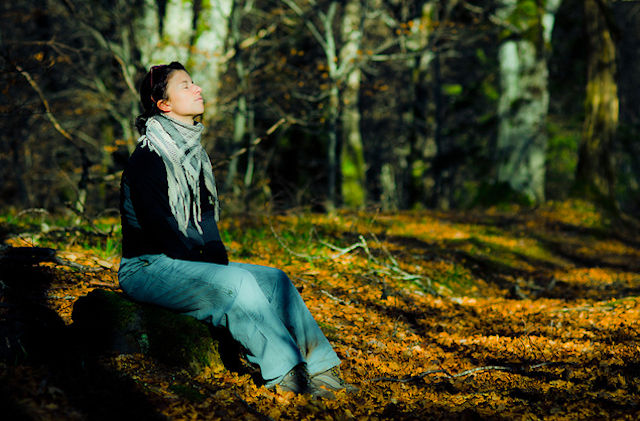
Photo by Gregory Tonon
-
Dealing with Difficult People: 5 Effective, Compassionate Practices
“Whatever you fight, you strengthen, and what you resist, persists.” ~Eckhart Tolle
It’s morning; you’re in a great mood. You’re relaxed and have plenty of time to practice your morning routine. After a delicious breakfast, you head out to start your day. Then it happens: You encounter a difficult person, and your calm turns to calamity.
We all have encounters with people who prefer to stay miserable, making everything difficult. They exist, and perhaps there was a time in your past when you once where one of those negative people. Perhaps you still can be at times.
As a former miserable person, I know it was my inability to handle my mental and emotional states that kept me oozing all over others. I felt so disconnected from life, living obsessively in my mind, that I truly felt helpless.
Most often that helplessness manifested into continuous critiquing, judging, anger, and sometimes even pure rage. I was unwilling to take full responsibility for my relationship to life. I wanted peace, joy, and harmony, but I was unwilling to do the necessary work to experience them.
Difficult people are demanding. They demand something from the external world in hopes of filling the disconnection and restlessness they feel within. Whether they are demanding our attention, a certain action or reaction, or a particular outcome, the root of their behavior is a demand for something other than what is.
Difficult people haven’t yet learned to take responsibility for their whole selves—mind, body, and spirit. Feeling disconnected and restless gives rise to their need to argue, judge, critique, and tweak everyone around them.
Their inability to handle themselves adds fuel to the fire, which perpetuates their harshness.
Underneath their personality is a feeling of being separate and a desperate plea for help.
We can’t change another and we can’t make someone want to change. The only way we can help is by being true to our self, finding our power within, and being an example of wholeness.
Here are a few practices I’ve found useful, loving, and extremely effective.
1. Be still and ground yourself.
Naturally, when we are confronted with a rude, irritable, or irate person, we tend to avoid them. We think that if we avoid them they will go away, or at least we hope they will. The truth is that, although this may happen, it is much more likely that they won’t until we learn an alternate way of dealing with them.
Negative energy has a force and it can knock us on our butt, usually in the form of us engaging in toxic behavior. If we are not grounded, we may find ourselves arguing, judging, or stomping out of the room.
Making sure we are firmly planted in our body enables us to look the person in the eye and be completely present. It gives us the opportunity to remain calm and pause rather than engage in behavior we may later regret.
2. Look them directly in the eyes.
Darkness, negativity, can’t stand light, so it can’t remain in the light. Looking someone directly in his or her eyes dispels darkness. Your light pierces through the superficial persona to their being.
When I practice this tool one of two things always happens:
- The person walks away or stops talking.
- The conversation takes a more positive direction.
We all want to be seen, from the cashier at Target to our spouse. Taking the time to look at someone offers them the greatest gift we have to offer: connection.
Try it as an experiment and see what happens.
3. Listen to understand.
I find that whenever a difficult person confronts me, I automatically tense up and mentally consider my defense. When I am calm and open-minded, I know that I never have to defend myself, ever.
The most effective way to diffuse a difficult person is to truly listen to what they are trying to say, which means keeping my mouth closed and hearing them all the way through.
Whether or not I agree with them is irrelevant, and I certainly don’t need to let them know what I think. I can listen and get back to them if necessary such as with a spouse, co-worker or friend.
I find the following responses to be most effective:
“Let me get back to you on that.”
“You could be right.”
When a person is being difficult, it is because they are responding to their perceived reality rather than what is going on in the moment. Often times their frustration has very little to do with us.
I find when someone’s reaction seems over the top for the situation that repeating the same response diffuses the situation.
4. Learn when to be silent.
Some people are extremely closed-minded and impossible to talk to, but we need to speak to them. When I find myself in a situation with someone who just can’t hear me in the moment, I don’t force the issue. Trying to get my point across to someone that can’t hear me only escalates the situation. Sometimes the clearest form of communication is silence.
At a later time I can revisit the conversation with the person and communicate what needs to be said. Regardless of the person’s response, I can share my feelings and thoughts and let go of the outcome. Focusing on them responding a certain way only results in two difficult people unable to accept what is.
5. Be honest with yourself.
If we are repeatedly in a situation with someone who is abusive verbally, physically, and/or emotionally, we must stop trying to change him or her. If we find we are practicing a spiritual way of life and someone close to us isn’t changing, it may be time to get honest with our self and find out what is really going on.
The question of whether or not to end a relationship with a difficult person, whether a friendship, work or romantic relationship, can only come from within you.
If you can honestly say you have done what you know to do, have asked for help from a friend or professionally and nothing is changing, then its time to go within for the answer and trust what you find.
On the other side of a difficult person is an opportunity to grow.
No matter what we are presented with in life, we have an opportunity to choose more or less responsibility. Remembering that true responsibility is our ability to respond in the moment.
Of course, this takes practice and is not easy. However, as we take more and more responsibility for our life, circumstances and people lose their power over us. We learn to choose our responses moment by moment, no longer being dragged around by emotions, thoughts, or circumstances created by another or our self.
-

The Most Important Thing to Do Before a Difficult Conversation
“You are your choices.” ~Seneca
After four years of radio silence, a former flame appeared in my inbox.
We set up a time to talk later that week. And when the day came, right on time, he called.
We talked. I had many questions. He explained the best he could. The conversation eased into Taoism and Twitter. Totally comfortable.
But for the twenty-four hours beforehand, I was bracing myself.
I was expecting long, awkward silences, angry words, and maybe even a premature hanging up of the phone. In case it’s not clear, things hadn’t ended so well with us.
And if I had lunged into the conversation with all that tightness and fear, I probably wouldn’t be writing these words right now.
Because all my tightness and fear would more than likely have generated tightness and fear in him, and there would be nothing enlightening or inspiring to share out of that.
But thankfully, that’s not how this story pans out.
Here is what actually happened:
I set aside an hour before the call. I didn’t have a plan for what I’d do in that hour. I just knew that it was going to be a time of relaxation and rest.
I sang sweet pop songs while making my bed. I took a long, hot shower. I put on my favorite dress and snuggled with my puppy.
And then I sat cross-legged on my bed and, as Marianne Williamson puts it, I invited the Holy-Holy to “enter where You already abide.”
I meditated on words like “forgiveness” and “compassion.” And I also made room for words like “boundaries” and “clarity.”
The phone rang, and like I mentioned, the conversation went smoothly.
I’ve faced a string of difficult conversations lately and the consistent theme I’m noticing is this:
When I traipse up the stairs in last night’s pajamas with a smudge of peanut butter on my lip and a beeping phone in my hand, I am inviting more of that same messy, jumbled energy into the conversation I’m about to have.
If I want clarity and connection in my relationships, what the heck do I expect to happen when I begin our conversations with restless, twitching unfocused-ness?
What I bring to any interaction is (usually) what I receive from it.
So it boils down to this:
Before walking into tough conversations, we must get clear on who we want to be in that moment.
Before the birth control discussion with your daughter, take ten deep breaths. Remind yourself that you want her to understand the joy of sex and the life-shifting responsibilities it can bring.
Before you take away drunk Uncle Larry’s keys, ground yourself in the love and concern you feel for him and the safety of the other drivers and pedestrians on the road that night.
Before you walk into the big meeting, before you sign the divorce papers, before you say “I do,” pause and ask yourself:
Who do I want to be as I do this thing I’m about to do?
You might choose to be kind, open, attentive, loving.
You might prefer strong, firm, connected, a leader.
Inhale that. Affirm that. Be that.
This doesn’t mean that your body language and words will be in permanent alignment with the qualities you’ve chosen to focus on.
And it certainly doesn’t mean you’ll now morph into some super-human communicator deluxe.
You will still mess up, somehow. That’s part of being human.
But, I believe, you will mess up less.
I believe that when you get deliberate about the intention and energy you want to carry into a conversation or a room, you shift the dynamic.
The context moves from He-made-me-say-it to I choose these words. I choose these actions.
You are no longer floundering around.
You are no longer a victim or a puppet of the circumstances and people around you.
You’re making clear, conscious choices about the person you want to be. That’s what true power is. That’s what it means to create your life.
So before you open your mouth or write the email or turn the doorknob, be clear as seawater about who you want to be in that moment.
And then be that.
Photo by Benson Kua
-
Waking Up and Forgetting a Bad Day
“Life is inherently risky. There is only one big risk you should avoid at all costs, and that is the risk of doing nothing.” ~Denis Waitley
Yesterday was a bad day.
My husband and I got really close to buying a car before we walked away—again. This time it was because it was above our budget (with taxes), because the current owners didn’t have the title (their bank did), and because our own car broke down on the way to trying to buy the new car (didn’t see that one coming).
I was fine about the ordeal yesterday, seeing the whole thing as one big adventure toward the right car in the end. But this morning I woke up angry and fearful. Angry about the time we’ve invested so far without results and fearful that another almost there deal might fall through again.
After three days negotiating on the last fall-through deal, it felt like the failure of failures and just wanted to stay in bed so I could avoid more of them.
Of course I knew rationally that my feelings didn’t reflect reality, that yesterday’s annoyances are small change in the scheme of things, and that I’m fortunate to be even looking for a (second) car let alone have so many choices for which one to buy.
The real problem was that my feelings weren’t staying within the boundaries of the car-shopping situation. They were infecting how I felt about everything from my business to my past choices, to my body image, to my mental health image.
I was flooded within minutes of being awake, and I didn’t know how I was going to coax my mental strength back from cowering in the corner.
So I did what every procrastinating person does these days: I went on Facebook. And after seeing a bunch of uninteresting stuff, my eye caught on the most courageous thing I’ve seen in a long time: a picture of my five-year-old nephew Caleb leaving home for his very first day of school. (more…)
-

4 Easy Steps to Deal with Difficult People

“There is a huge amount of freedom that comes to you when you take nothing personally.” ~Don Miguel Ruiz
It seemed like a simple task. Please switch my gym membership from gold to silver level. I’m not cancelling, just switching.
That was now the third time I repeated my request, each time a little more calmly and a little more slowly, despite the beginnings of blood boiling feelings.
The person on the other end of the phone could not have been ruder. It was as if I was asking for a kidney instead of a membership change. A harsh tone and harsher words ensued. Why, I still have no idea.
You have undoubtedly met them. You have maybe been one, once or twice.
Why are some people continually difficult to deal with? What makes Joe easy to get along with and John such a struggle? Here are the major reasons and what can be done about it.
1. We feel triggered when our needs aren’t met.
We love it when we are acknowledged. We may not be crazy about when we are criticized, but it beats Option #3: being ignored.
Being ignored is a terrible feeling for humans and one that we avoid like the plague. When this occurs, some people revert to “problem child” mode. These are the set of behavioral responses that are so ingrained that it is a reflexive series of actions. It is the default mode.
When you find yourself in such a situation, ask the big question: What is my positive intention here? What am I trying to accomplish? (Or: What is the other person trying to accomplish?)
If you can leave enough of the heated emotions aside, clearing enough space for some patience and I dare say, compassion, the root cause of the behavior often becomes crystal clear.
What are you trying to accomplish? Great. Let’s find a way of getting what you want in a healthy fashion… (more…)
-

Tiny Wisdom: On Risks

“It’s not because things are difficult that we dare not venture. It’s because we dare not venture that they are difficult.” ~Seneca
Taking the path of least resistance actually requires a lot of resistance. It’s human nature to want to soar! To venture out, explore the world, expand ourselves and our minds and live with passion, enthusiasm, and abandon.
You might be doing that already, whatever that means to you. Or you may be containing yourself into a safe, predictable box, assuming everything outside it is far beyond your reach.
It’s not—it’s not nearly as far away as you think.
We’d be kidding ourselves if we pretended the world is without obstacles; but we’d be cheating ourselves if we didn’t acknowledge a lot of them are in our heads.
Today, dare beyond your self-imposed limitations. It’s a lot easier to venture out of your comfort zone when you decide to stop fighting yourself.
Photo by Wonderlane