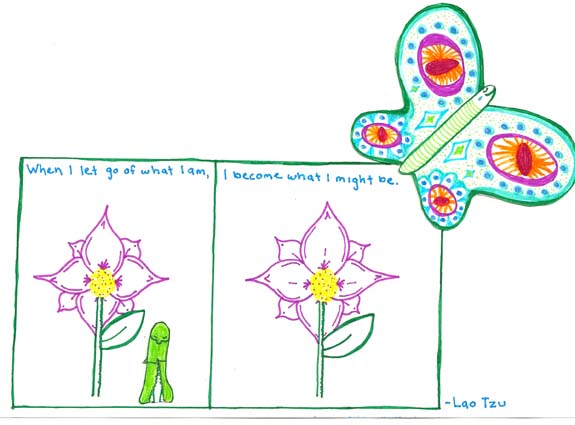
“Dharma actually means the life you should be living—in other words, an ideal life awaits you if you are aligned with your Dharma. What is the ideal life? It consists of living as your true self.” ~Deepak Chopra
From the moment I finished high school until my late twenties, I had “purpose anxiety.”
I wasn’t just confused and missing a sense of direction in life; my lack of purpose also made me feel inadequate, uninteresting, and lesser than other people.
I secretly envied those who had cool hobbies, worked jobs they loved, and talked passionately about topics I often didn’t know much about.
I even resented them for living “the good life” and kept wondering, “Why not me?”
Until it was my turn.
What it took to begin embracing my purpose—or dharma, as I prefer to call it—was one thing: love.
Let me explain.
The 4 Keys to Living Our Dharma (Purpose)
The Sanskrit word “dharma” has many meanings and most commonly translates to “life purpose” and “the life we’re meant to live.” I believe there are four main keys to living our dharma.
1. Cultivating self-worth: the essential first step.
I was bullied in high school, and as a result, I had very low self-esteem for many years. Looking back, I realize that feeling that low self-worth prevented me from embracing my dharma.
Why?
It was because I was too focused on trying to be liked and too worried about what other people thought of me to be in touch with my authentic self. I put all my energy into doing everything I could to look “cool” and be accepted by others rather than what my soul wanted to do, explore, and experience.
The essential idea is that embracing our dharma requires living authentically. As Deepak Chopra says, “[dharma] consists of living as your true self.”
The issue is that it can be difficult to express and live your truth when you feel inadequate, unworthy, and perhaps even unlovable. The risk of being rejected seems too high, and it feels unsafe.
So the first step to living our purpose, I believe, is cultivating radical self-love. It’s a bit of a “chicken and the egg” situation because having a strong sense of purpose increases self-esteem, but low self-esteem makes it hard to embrace our purpose. It’s best to develop both simultaneously.
Here are a few ideas to cultivate self-love that have helped me:
The first one is meditation.
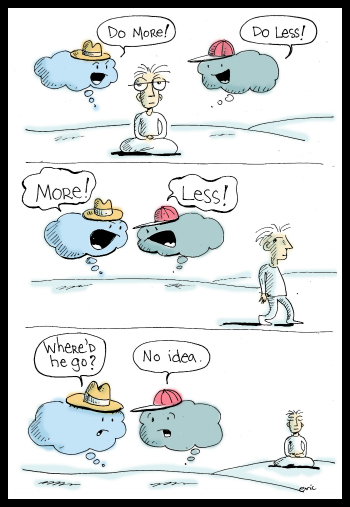
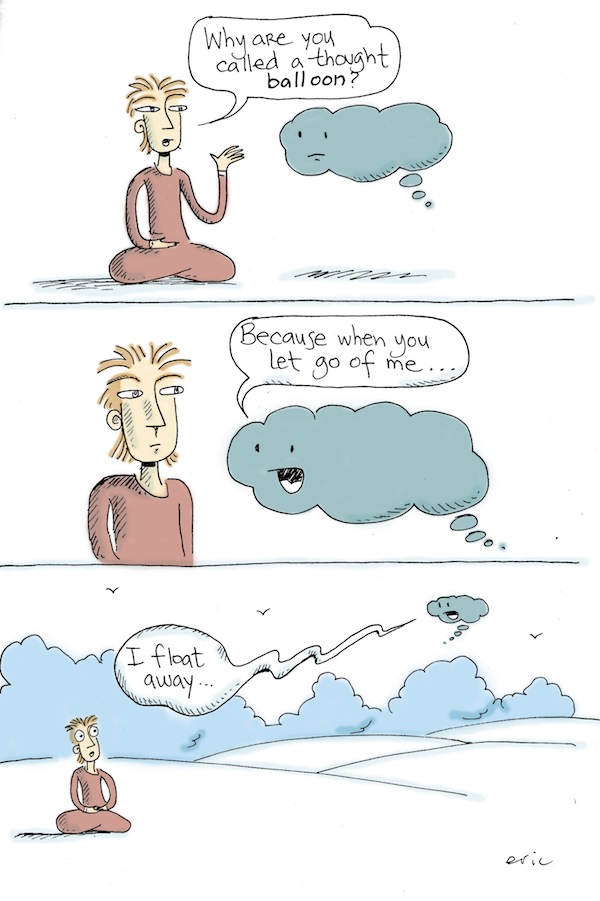
Part of meditation is about allowing ourselves to become aware of and observe our own thinking. When we meditate, we disidentify from our thoughts and get to experience glimpses of who we truly are—of our essence—which is loving and infinitely worthy. As a result, we naturally start loving and accepting ourselves more. Meditation has undoubtedly been the number one thing that has improved my self-esteem.
Another thing that has helped me is self-care.
As I said, I didn’t have many friends in high school and spent much of my time alone. So I started going to the gym after school to do something with my time and be around people (even if I didn’t talk to them). Exercising regularly led to eating healthier and taking better care of myself in several other ways.
I find that self-care is a practical way to cultivate self-love. When you take care of yourself, you show that you care about yourself. Over time, you start genuinely feeling the self-love you are showing yourself and believing it.
The last (effective but cringy) thing that helped improve my self-esteem is an exercise that a therapist recommended.
Here’s how it goes: In the evening, stand in front of the mirror and—looking at yourself in the eyes—say, “I love you, [say your name]. I love [say three things you like about yourself], and you deserve all the good things life has to offer.” Try it for thirty days; it may change your life.
2. Being in touch with and following your inner compass.
Jack Canfield says, “We are all born with an inner compass that tells us whether or not we’re on the right path to finding our true purpose. That compass is our joy.”
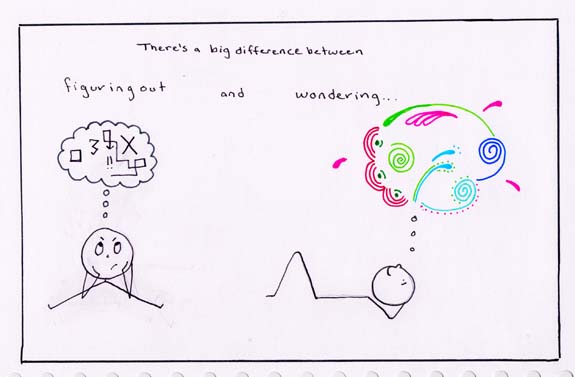
Often, we seek purpose outside of ourselves, as if it’s some hidden treasure we need to find. But, as Mel Robbins puts it, “You don’t ‘find’ your purpose; you feel it.” What feels good—expansive, joyful, intriguing, exciting, or inspiring—to you?
That’s an important question because, according to numerous spiritual books I’ve read, those things we enjoy are clues guiding us to our dharma.
The main difficulty is usually differentiating our true desires from the ego’s “wants” and the desires that come from conditioning. The ego wants to feel important. It’s afraid of not being “good enough,” so it feels the need to prove its worth.
The “wants” that come from conditioning consist of what our parents and society have told us we “should” do. If we follow those “shoulds,” even though they don’t align with our authentic selves, we risk waking up one day and realizing that we’ve climbed the wrong ladder and lived our life for others instead of ourselves.
Here’s something that helps me differentiate those desires.
Make a list of all the things you want to have, do, experience, and become in the next few years.
For each item on your list, ask yourself why you want it. Is it because you feel the need to prove something or want to feel important or perhaps even superior to others? That’s the ego. Is it because you think that’s what you “should” do? That’s likely conditioning. Is it because it makes you feel alive? That’s your heart.
To live our dharma, we must follow our heart’s desires—the things we genuinely love. This requires authenticity and courage.
3. Savoring the experience of being alive.
Another aspect of dharma is loving life—living with presence and appreciating the experience of being alive. There are a few things I find helpful here:
The first idea is to keep a “Book of Appreciation,” as Esther Hicks calls it. Every day, take five minutes to journal about what you appreciate about someone, a situation, or something else in your life.
To savor life, we must also be present. In A New Earth, Eckhart Tolle states that true enjoyment does not depend on the nature of the task but on our state of being—we must aim for a state of deep presence.
He recommends being mindful when attending to even our most mundane tasks. I also like to go on long walks and observe (with presence) the natural elements around me—like the clouds passing in the sky, the smell of trees after the rain, and the sensation of the sun’s rays on my face.
And, of course, having a daily gratitude practice is always a winner!
4. Extending love through joyful service.
Dharma is also about sharing—extending love. One of the best ways to contribute to the collective is to share our gifts in a way that’s enjoyable to us.
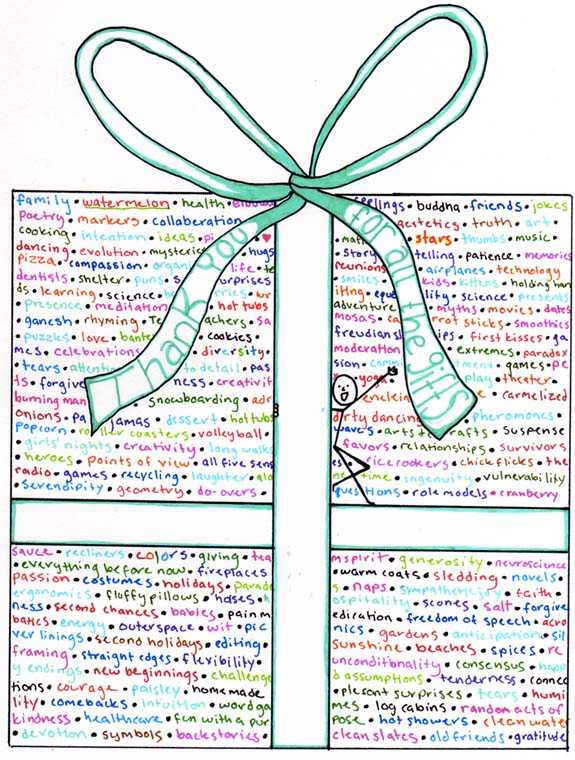
We all have natural gifts—things that come easier to us than to others. Some people are good at writing, while others are great leaders or excel at analyzing data. Perhaps you like to create, manage, nurture, delight, support, empower, listen, guide, or organize.
There’s also another, more profound aspect of contribution that comes from being rather than doing. I remember a passage from a book I read many years ago (I can’t remember what book it was) that went something like this:
“Your contribution [to the collective] is your level of consciousness.”
A higher consciousness radiates greater love, and one of the best ways to uplift others is by being a loving presence.
Dharma: The Bottom Line
Bob Schwartz, the author of Your Soul’s Plan and Your Soul’s Gift, says, “We are here to learn to receive and give love. That’s the bottom line.”
This involves loving ourselves, others, and life in general, and also following our heart—doing things we genuinely love.
I don’t know about you, but this perspective on dharma feels good to me. It has freed me from my “purpose anxiety.”
I hope it can serve you too.