Tag: Determination

  • Are You Sick of Waiting, Wanting, and Wishing for a Better Life?

    Are You Sick of Waiting, Wanting, and Wishing for a Better Life?

    “Perseverance is not a long race; it is many short races one after another.” ~Walter Elliott

    I often find myself impatient with the pace of my progress. Waiting for my life to move forward can sometimes feel like I’m watching paint dry.

    There are so many moments when we feel like our life is at a standstill. This is generally where I double down with my intensity. I hit it with everything I can. The crash comes soon after from the inevitable violent collision of my mind, body, and spirit as they’re pushed beyond their limits.

    The idea of having to wait for anything is a first-world problem. The thought that your cat’s costume might not arrive in time for Halloween is enough to bring some people to tears. Just thinking of Mr. Whiskers having to go out as a plain ol’ cat is a bloody crime.

    And that’s waiting for a cat costume.

    What about that book you wish would just write itself?

    What about that scale that still shows you being forty pounds heavier than you want to be?

    What about that bank account that still isn’t bigger than your credit card bill?

    These are not things we want to wait for. We want the juice without the squeeze.

    We’ve grown so impatient with the idea of waiting for results that we act like moving slowly is a poison to progress. We default to believing the antidote is a shot of intensity straight to the veins. But all that gives us is further frustration, anger, guilt that we’re not doing enough, and the feeling that we need to push harder.

    It’s such a horrible way to approach life. Especially since the only finish line comes when you take your final breath. And I don’t know about you, but I’m in no rush to get there early.

    It’s exhausting even thinking about that period of my life when I wanted to write a book, lose forty pounds, and stop feeling broke. Not a day would pass when I wouldn’t be consumed by feelings of doubt and hopelessness. I should have been pushing out diamonds with the amount of pressure I was putting on myself.

    That struggle led to a life-changing aha moment for me. I realized that there are two ways to approach making progress. You can hit it hard with intensity. Or you can set a long-term aim with consistency.

    Which of these do you think is sustainable for making progress?

    Think back to the children’s story of the tortoise versus the hare. These are lessons worth revisiting for their simple and profound principles on approaching life.

    We all overestimate what we can accomplish in a day, but we underestimate what we can accomplish in a year with steady momentum.

    How do you write a book? By establishing a daily writing habit.

    How do you lose forty pounds? By moving your body every day and eating less than you burn.

    How do you get out of debt? By making a daily choice to spend less than you earn (and invest the difference).

    You’re not going to write a book in a day, but there’s a damn good chance you’ll have one in a year.

    You’re not going to lose forty pounds in a day, but you could in a year.

    You won’t get out of debt in a day, but you’ll set a trajectory for wealth creation that lasts the rest of your life.

    How different could your life be a year from now if you committed to something that’s important to you?

    Sit with that idea for a moment. Soak it in.

    What would it feel like to hold that book in your hands?

    What would it feel like to look at that scale and see the number you want to see?

    What would it feel like to be debt-free and investing in your future?

    I’m serious. Feel it. Wait till you get goosebumps.

    That is peace of mind, relief, and a sense of fulfillment tied up in a bow on Christmas morning. That is the realization that you can have almost anything you want in your life if you stay disciplined with your priorities. That is the power of consistent daily habits.

    There’s a saying about hope not being a strategy for change. I do believe hope is a beautiful emotion. But I’ve seen myself get stuck for years waiting, wanting, and wishing for a better life. Hope didn’t give me a way out because it left me at the mercy of my current circumstances.

    Writer Lu Xun said, “Hope is like a road in the country; there was never a road, but when many people walk on it, the road comes into existence.”

    This is the power of action and putting one foot in front of the other.

    Every action you take is a vote toward the person you want to be. The more we align the things we do on a daily basis with the person we want to become, the more fulfillment we feel in the little things that get us there.

    What do you wish you could change if only it didn’t feel so hard? And what could it mean for your life if every day you prioritized this change and did one small thing to work toward it?

    Make the decision to commit to a simple daily habit that reflects the person you want to be and the life you want to live. When you do this, you’re deciding to take back control of your life. You’re deciding to give yourself a better future. You’re deciding that you matter.
  • How I Created Opportunities in a World Full of Obstacles

    How I Created Opportunities in a World Full of Obstacles

    “I really want to, but I can’t because [add semi-valid reason here].”

    That’s a template sentence to let yourself off the hook.

    It’s not copyrighted, so feel free to use it any time you want to let go of your dreams and not feel bad about it.

    Honestly, it hurts me every time I hear someone say it. I see it for what it is—an excuse.

    Every single one of us has ambitions, hopes, dreams, and goals. We fantasize about them on our commutes to work and before we sleep. We talk about how we will one day achieve them, but when it comes time to put them to action, we use that template sentence.

    I had every reason to use the template sentence. I live in a third-world country in the Middle East. We suffer from a lack of water, electricity, security, and opportunities—especially for girls.

    In the Western world, if you want to learn a new skill, you sign up for a training course, get a book, find articles online, or join a club. It’s different here. Here, we don’t have training courses, libraries, or clubs, and the internet is slower than a snail crawling through peanut butter.

    During my teen years, I felt stuck in my life. I wanted to learn so many things and achieve my wildest dreams, yet I couldn’t. How was I supposed to impact people when I would only leave the house to go to school on the weekdays and grocery shopping on the weekends?

    I read stories of kids my age winning science fairs and inventing devices to solve the world’s leading issues. Yet, there I was, wasting my time at home, waiting five minutes for a single webpage to load.

    I had always imagined what my life would be like, and this is not what I had pictured. Time was passing me by, and my talents and ambitions were going to waste.

    I wanted to have an impact, but I couldn’t because I didn’t have the opportunities to learn and gain experience and feedback. (Notice the template sentence.)

    This way of thinking was eating away at my soul. Day after day, I found myself sinking into a pit of misery. I would spend my days lying in bed, staring at the ceiling. There was nothing I could do to change my life, so why try?

    One day, I had had enough. I had been lying in bed for days. It had been years since anything amazing had happened to me. I couldn’t take it anymore. I couldn’t accept the fact that this would be my life. There was an itch under my skin to make my life worth living.

    “Life is too short to waste it moping about the hand of cards life had served me,” I thought. I didn’t care what it would take. I would do whatever I could to get myself out of the hole I was in.

    I decided to use the resources I had to create the future I dreamed. “Bloom where you are planted” became my life motto. What I had access to at the time was the internet.

    In order to get out of the country I was in, I concluded that I’d need a scholarship. I set my mind on getting the Japanese Monbusho Scholarship. I found blogs, articles, and books online to become fluent in Japanese. I practiced day in and day out. I tried a plethora of different methods to learn new words and perfect my grammar. In a few months, I was able to hold a simple conversation in Japanese.

    I also realized that I would need money. I wasn’t allowed to go out and get a job. This was an obstacle I had trouble accepting. I tried to convince my parents to let me work, but they refused for my safety. My mother introduced me to the concept of passive income and showed me blogs that were making six figures every month!

    I set out to build a hedgehog care website. Every day, after school, I would research hedgehogs and write detailed articles about how to feed them, groom them, play with them, and anything else one would need to know. I went on like this for 3 years, studying Japanese and writing about hedgehogs.

    I’m sure you’re expecting a spirit-lifting ending where I travel to Japan and live off my flourishing website. That’s not how this story ends.

    I didn’t get the scholarship. The fact is, I didn’t even get the chance to apply. I ended up studying in my third-world country. I was crushed. I didn’t want to, but it was either study here or not study at all. Unwilling to accept the facts, I started an online university the next year. I now study at two universities simultaneously.

    As for the hedgehog website, it made me a total of $60 for the three years of work I put into it.

    I can stand here and tell you that I tried, but it didn’t work out. That’d be a lie. It did work out—just not the way I expected.

    I’m not in Japan, but I know how to speak Japanese and have met many interesting people along the way. I learned from them and gained experience just as I hoped I one day would. And instead of one major, I now have two, both of which I enjoy learning about.

    My hedgehog website didn’t succeed, but I created a new one that’s even better with the expertise I gained. I interact with my readers often, helping them find ways they can live their dreams. I love hearing their stories and learning how I helped them build better habits or make their goals a reality.

    I still live in the same country I did before. I still have to wait five minutes for a webpage to load. However, I know that even though the obstacles are always there—and always will be—they have nothing to do with happiness, fulfillment, success, peace, and satisfaction. Some people have it better than others, and some have it worse, but every single person, regardless of circumstance, can control their mindset.

    I didn’t let my obstacles stand in my way, and I created my own opportunities when I found none. In an instant, anyone can decide to embrace the cards they’ve been dealt and create their own unique way to shuffle, redistribute, alter, or mold them into a winning hand.

  • Where Our Strength Comes from and What It Means to Be Strong

    Where Our Strength Comes from and What It Means to Be Strong

    “Strength doesn’t come from what you can do. It comes from overcoming the things you thought you couldn’t.” ~Rikki Rogers

    A friend recently asked me: Andi, where does your strength come from?

    It took me a while before I had a good enough answer for her. I sat contemplating the many roads I’ve traveled, through my own transformational journey and the inspirational journeys of all my clients who demonstrate incredible strength for me.

    I moved to a different country, alone, at eighteen years old and have changed careers, battled a complex pain diagnosis with my child, and lost loved ones. I am now living through a global pandemic, like all of us, and most recently, I am recovering from a traumatic, unexpected surgery. Life has many surprises for us, indeed.

    So where does strength really come from?

    I wish I knew the precise answer to this question so that I could share the secret sauce with you right now, and you could have full access to all the strength you’ll ever need to achieve whatever it is that you really want. (Even the deeply challenging stuff and the tremendously scary stuff. All of it.)

    I do know this:

    Strength is a personal measurement for a truly unique, subjective experience. It’s entirely up to you to decide what strong means for you.

    And I also know this…

    Strength comes from doing hard things. It comes from showing up despite the pain or fear and going through the struggle, the endurance, and then building on that, to keep going forward and upward.

    Strength comes from taking the time to notice and acknowledge what you have managed to do and accomplish until now. So much of the time we go through things without realizing what massive effort something took, and we minimize the entire experience because we only focus on the end result and not the process.

    Strength comes from paying close attention to the small but significant steps and wins and incremental gains along the way. Strength comes from tracking progress and celebrating it one tiny bit at a time.

    Strength comes from within—from moments of activating your highest faith and belief. Knowing why you do what you do, even when it’s not easy.

    Strength comes from aligning with your core values and living with integrity even when no one is watching, and you aren’t in the mood. When we connect to what truly matters to us, we are stronger. When we believe there is a bigger plan and are hopeful about an outcome, we feel stronger. Even if we don’t know why.

    Strength comes from without—by surrounding ourselves with people who lift us up and see our worth, even when we sometimes forget. It comes from choosing to envelop yourself with kindness, inspiration, motivation, and gratitude. It comes from selecting role models and learning from them. It comes from seeing ourselves through others’ eyes—especially those who see our greatness and light when all we see is our flaws, weaknesses, and shortcomings.

    Strength comes from grabbing lessons and blessings, often dressed up as awful mistakes and painful failures.

    Strength comes from collecting moments you are genuinely proud of and taking the time to truly recognize these events for what they are and what they enabled you to accomplish. Don’t overlook them. You get to use these strengths in countless ways and in other areas of your life as much as you want to.

    Strength comes from knowing yourself. As you begin to discover and unmask more of you, you get to make choices that honor more of you, and you get to live your purpose and be more of who you really are. When we know better, we do better.

    The strongest people I know have had insurmountable trials. They know what to say yes to and how to say no. They know how to be proud of themselves with humility and honesty. They know how to pick their circles wisely and accept help, compliments, and advice.

    The strongest people I know cry a lot and feel everything.

    The strongest people I know are the kindest.

    The strongest people I know have wells of inner resources that are invisible to the naked eye.

    The strongest people I know can say sorry and forgive others.

    The strongest people I know can forgive themselves.

    The strongest people I know fall down hard, and slowly, with every ounce of courage, bravery, and might, find a way to get back up again, battered, bruised, and aching.

    The strongest people I know have incredible hearts that expand wider with each hurdle.

    The strongest people I know have endured so much and yet still find their smile to light up the world for others.

    The strongest people I know teach me every single day how to try and be just a little bit stronger myself.

  • How I Found My Place in the World When I Felt Beaten Down by Life

    How I Found My Place in the World When I Felt Beaten Down by Life

    “Some people are going to reject you simply because you shine too bright for them. That’s okay. Keep shining.” ~Mandy Hale

    After I finished school, I was excited about moving forward with life.

    I thought about the career that I hoped to have, where I hoped to live, and the things that I wanted to accomplish.

    After starting off as a secondary high school English teacher and becoming disappointed with the ongoing changes in the public school system, I went to graduate school for law. I thought it would open up a lot of possibilities, but it did not.

    I never had any dream of being an attorney in a courtroom. Instead, I always wanted to work in Europe or South America with people from different cultures, nationalities, and backgrounds. I wanted to make a positive difference in a humanitarian way by working with people personally to implement change and improve their lives.

    Life had something different in store for me, though. I ended up being rejected endlessly, well over a thousand times for every application that I sent out over a period of years.

    Disillusionment set in. There was the feeling of “why even continue to try anymore?” As the rejections piled up, friends that I had known for years began leaving as well. Their calls and visits became less frequent. They moved on with their lives, careers, marriages, and kids.

    I felt left behind and rejected not just by jobs, but by life in general. The hurts and betrayals were leading me to lose my passion and enthusiasm. Then there were the callous remarks from friends, people in the local community, when I asked if they knew of a position, former professors who couldn’t assist in any way now that I’d graduated, college career center advisors, and even extended family members.

    It took time, but I finally came to the realization that those who were endlessly rejecting me weren’t the ones who really mattered. I would keep shining brightly with or without them.

    Here are the four things that helped me to finally “reject” the non-acceptance and rejection that I was experiencing from others.

    1. Realize that “there is no box.”

    Our background, degrees, friends, teachers, families, and the larger culture as a whole try to get us to conform to a narrow set of parameters. If you went to school to be a teacher, you have to be a teacher.  If you studied to be an auto mechanic, you have to be an auto mechanic. And you have to live in this place or this country, because that’s where your family have always lived.

    Someone once told me, “there is no box.” Society tries to “box” us in and to restrict us to defining ourselves within certain narrow limits. However, I realized that there really is “no box,” and that I could apply my skills and talents in other ways and in other places.

    I didn’t have to conform to where I was or seek acceptance from those who were currently around me.

    I started meeting new people and looking at other places and countries, and I stopped trying to seek the acceptance of those who had already decided that they weren’t going to accept me for who I was. The employers, institutions, and agencies told me I was  “overqualified” or that that there were “many qualified candidates” and I hadn’t been considered, or they’d keep my resume on file.

    It was as though no matter what I accomplished and no matter how hard I worked, it was never “the right skill set” or “enough” for the particular place or person that I was submitting to.

    In a way, I came to accept their rejection, because I knew that the answer was getting out of my box and realizing that someone else would be more than happy to accept me for who I was.

    2. Let go of the need for approval by others.

    Letting go of the need for approval opens up exciting new doors. We are finally free to be who we really are.

    I wanted to live up to the expectations of family and society. I think that’s why it hurt so much to receive so many rejections over such a long period of time. I wanted to be “successful” according to society’s expectations. I wanted to follow the path of what everyone told me was a “regular” and “secure” life.

    I’ve since realized that I get to define success for myself.

    Success, for me, means doing what I love—teaching, reading, traveling, meeting and working with people from throughout the world, studying languages, and experiencing different cultures.

    Everything changed for me when I decided to live my life on my terms now rather than looking for a company, agency, government institution, or some other entity to provide me with the chance or opportunity. I wasn’t going to wait for permission from someone or something else.

    I also realized I can use my skills in the world outside of the narrow and limited context of the jobs and people who were rejecting me.

    For example, I can teach, and I can work to help others, but it doesn’t have to be within the rigid structure of the public education system.

    I can use the skills that I’ve acquired to be a global citizen and to learn and grow every day without confining myself to the parameters of one place, country, or culture. I can be an amalgamation of all of them, as I continue to grow as a person, both personally and professionally, but on my own terms, not those that are dictated to be by someone or something else.

    As I let go of the need for others to approve of me, my world expanded, because now I could go after those things in life that I was passionate about rather than just trying to conform and satisfy others.

    3. Start journaling.

    Journaling and connecting with our true selves, and what really brings us joy, can make us value ourselves again in spite of any opposition and rejection that we experience from the world.

    It can also help us reconnect with the things we used to love when we were younger—the passions we lost after going through years of school and trying to do what we thought we had to do in order to be successful in the eyes of society.

    Journaling helped me get back to my uniqueness as a person and was what really motivated and inspired me. It helped me pay attention to what made me happy again and those things that I’d really like to do or accomplish.

    I was inspired by my experiences in the world that were outside of my comfort zone and by the rich and varied cultures and experiences that were waiting out there. As I continued journaling, I also realized I’d always been inspired by the possibility of teaching and helping others, but in an international capacity.

    As a result, I’ve had the opportunity to help students with autism, to teach English to students and adults internationally, and to write for a variety of places abroad that did accept and value my work. However, I would never have explored these aspects of myself if I had been accepted by those who were rejecting me. Which means really, their rejections were blessings in disguise.

    4. Support those who support you.

    “Your circle should want to see you win.  Your circle should clap the loudest when you have good news.  If they don’t, get a new circle.” ~Wesley Snipes

    We can reject rejection by supporting those who support us through both the good and the more difficult times in our lives. Why support those who are only there for you when life is good?

    The hard times made me realize who really was on my side. The people who stayed with me and continued to believe in me supported me through both the victories and the disappointments. There was a tremendous difference between those individuals and others who no longer answered calls or emails, except when I was “successful.”

    Now, I may not have as many friends as I once did, but those that I do have are an important part of my circle and people that I can rely on.

    Someone once told me, “Now I know who the true believers are.” I feel that way about those who have proudly celebrated my successes and have also been there for me during my darkest moments.

    I hope you’re fortunate enough to have people in your life who genuinely support you, even if it’s only one person. If you don’t, try to open yourself up to new people, and stop giving your energy to people who accept you conditionally or regularly disappoint you. Creating a supportive circle begins with that first step of making a little room.

    It wasn’t easy for me to overcome rejection and non-acceptance, and I still struggle with it at times. No one wants to feel left out or like a failure. But I’ve realized I can only fail by society’s terms if I accept them—and I don’t.

    Instead, I’ve rejected the “box” other people tried to impose on me, gotten outside my comfort zone, let go of the need for approval, started rediscovering what excites me, and shifted my focus to those people who have always supported me, regardless of what I’ve achieved. And I’m far happier for it.

  • 6 Lessons from Nature on Living a Peaceful, Fulfilling Life

    6 Lessons from Nature on Living a Peaceful, Fulfilling Life

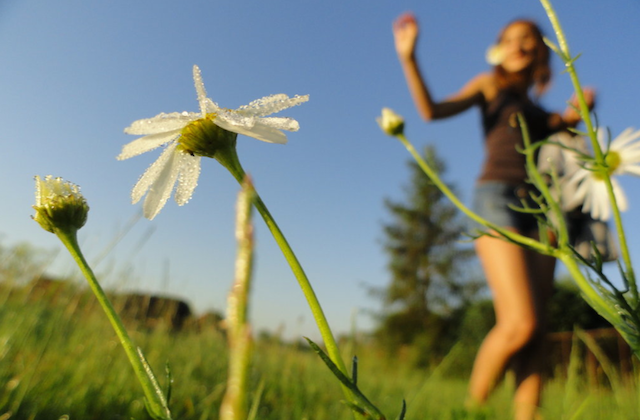
    Dancing in a Field of Flowers

    “Nature does not hurry, yet everything is accomplished.” ~Lao Tzu

    Five years ago, I was feeling really stressed (like millions of other people in the world). I was working full time in a job that was draining me of every single ounce of energy I had.

    I had nothing left to give to myself or those I loved at the end of each working day; life had turned into an incessant cycle of getting up, going to work, coming home, working, and going to bed.

    During this time, I read about so many people who were also unhappy with their lives. People who had reflected upon their existence and realized that this was not harmonious with who they were.

    I read about these people who inspired me with awe yet at the same time felt a sense of desperation. That could never, would never, be me, I thought. And while these conflicting thoughts existed, I became increasingly stressed out and more and more unhappy.

    There were things I enjoyed about my job (and still do). I became a teacher because I felt fortunate in having had such amazing support throughout my own education and wanted to offer young people that same help and guidance in return.

    But at the same time, I was changing as a person and I wasn’t the same being I had been six years previously when I had chosen that path. For my own sanity, health, happiness, and the happiness of those I loved, I knew something had to change.

    And then it did. My partner and I decided to move to a rural area of Herefordshire and buy a hundred-year-old cottage.

    There is no quick fix for happiness and I realized that the most important way to become less stressed was to change my way of thinking. But living in the countryside has undoubtedly contributed to my increased levels of calm.

    There is nothing like walking down a tranquil country lane, whatever the season, and just observing the sounds, smells, and landscape.

    I walk the same route regularly but this never bores me. With every single day, let alone season, something has changed and yet there is also a sense of constancy in nature, which I find incredibly comforting.

    The Lao Tzu quote about nature not hurrying embodies something I find I’m continually trying to work on—slowing down my daily pace. All too often we rush through our days, anxious to get things done at the fastest speed.

    When I’m aware that this is happening, I make myself stop and think: Why am I doing this?

    The pace of our world is frantic and seems to be constantly increasing. Despite this, I support the belief that life is not a race. 

    Going faster doesn’t necessarily equate with accomplishing more or better. In actual fact, the opposite is usually true. If you slow down, you make fewer mistakes, are able to think more clearly, and act with purpose.

    For me, this also results in feeling calmer and being more aware of my surroundings and those around me. This can only be a good thing.

    Frequently, we might tell ourselves that we must do such and such but in most cases, this feeling of having to do something is only a result of pressure from within.

    I personally believe that it’s important for our own sanity and health to slow down (and I apply this to driving, walking, and breathing on a regular basis).

    So this quote got me thinking about what we can learn from nature…

    1. Determination

    Nature is pretty hard to stop. Weeds and grass grow with dogged determination (much to the frustration of the lazy or time-pressed gardener). Many baby birds and other young offspring grow up against a huge number of odds; they are determined to survive.

    With determination, it doesn’t matter how fast (or slowly) you move through life. If you are determined, if you have a goal and a plan to reach that goal, you’re already a long way toward it.

    2. Strength in adversity

    Have you ever pruned or cut back a plant only to wonder whether you ever actually did, because now the greenery has exploded into an amazing array? I used to be reluctant to cut any plants back until someone told me that they actually ‘like’ it.

    I suppose it’s nature’s fight for survival; you cut it so it puts even greater energy into growing more.

    Nature could decide to give in and plants could just shrivel up and die. But they don’t. In life, when things seem tough, we usually have two choices: give in or give more.

    Choose to mirror nature and decide to face problems rather than run from them.

    3. Adaptability

    Nature can be incredibly adaptable. Just think about the four seasons. Animals and plants alike adjust to cope with the changes in climate and meteorological factors.

    Humans are no different. We put on an extra sweater or two in the winter but can be less adept at managing with changing circumstances. Since change is one of the only certain things in life, try to accept this and see it as a positive thing as far as possible.

    You might not be able to control life events, but what you can control is how you respond to them.

    4. Storing inner strength

    When autumn arrives, nature seemingly goes into shut down. But actually, wonderful things are going on, ready for when the plant and animal kingdom come into full swing once more.

    Take a leaf out of nature’s book and nurture inner strength when times seem sunny so that when the clouds appear, you don’t give in.

    5. Collaboration

    One thing nature does really well is working together. Bees and flowers are just one of the many examples of this. Bees collect nectar from flowers to make their honey while the flowers get a good deal out of it by their pollen being spread by their furry winged companions.

    You might be a real people person or perhaps you prefer your own space. Either way, the world is one huge partnership of human beings.

    There are so many things that we simply could not do without the help of others. Look around you; everything you see has been thought of by a human, designed by a human, made by a human (okay, perhaps with the help of a machine, but still). I find that thought pretty amazing.

    I’ll never meet most of the people who somehow are connected to my life, but knowing that every single thing I do I am able to do because of someone else is pretty awe-inspiring. In so far as you can, see people as teammates rather than competitors or adversaries.

    6. Consistency

    With the exception of an extreme weather occurrence, nature is pretty darn consistent. Want to be a super fit runner? Jogging every three months isn’t going to get you there; try to stick to a once weekly routine.

    It doesn’t matter if the day or time has to change as long as you hit that road/treadmill/country lane once a week. Maybe you want your garden to look pristine and something to be proud of. Again, get out there regularly rather than spend five hours slogging away once a month.

    Whatever your thing, be consistent.

    Whether you live in a rural area, town, or city, nature is all around us. Harness the power of nature to live your life and slowly accomplish your dreams.

    Photo by Mint-Flower

  • 10 Questions to Ask Yourself Before Giving Up on Your Dream

    10 Questions to Ask Yourself Before Giving Up on Your Dream

    “Commitment in the face of conflict produces character.” ~Unknown

    We all face obstacles in pursuing our goals, whether they’re professional or personal.

    We think we’re on the right track but realize we’ve chosen the wrong approach. We’re enthusiastic and hard-working, but our support system disintegrates when we need them the most. We’re just about to make significant progress when we run out of time or funding.

    Tenacious as we may be, we all have our breaking points—that moment when the potential rewards stop justifying the effort. Usually, that’s the hump that separates your best shot and your best reality.

    Before you throw in the towel and go back to something safe and far less taxing, ask yourself the following questions:

    1. Why did you want to pursue this goal to begin with, and has anything changed?

    You had a good reason for committing to this plan. Maybe you visualized a financially free future once you started this new business, or you realized you’d live longer and healthier if you lost forty pounds.

    Odds are, you still want those things as much as you did before; you just stopped believing you could have them because your attempts have yet to yield results. Now you have to ask yourself: If you push through the discomfort, will it be worth it in the end?

    2. Have you been operating with too much information?

    With so much information at our fingertips on the good ole World Wide Web, it’s easy to overwhelm yourself with more knowledge than you can apply. You read e-books and blogs, participate in teleconferences and coaching sessions, and join user forums to talk about getting things done.

    One of two things happen as a result: You spend more time planning to act than acting, or you devote minimal energy to multiple plans instead of committing to one solid approach. Instead of drowning in all the data, why not narrow it down and start again from a less overwhelming space?

    3. Did you set a smart goal? SMART goals are:

    • Specific—you know exactly what your world will look like when you achieve this goal.
    • Measurable—you have a specific plan to mark your progress as you go.
    • Attainable—you have the attitude and aptitude to make your goal reality.
    • Realistic—you’re willing and able to do the required work.
    • Time-bound—you’ve set a concrete timeframe for completion to create a sense of urgency.

    If you didn’t set a SMART goal, you may have set yourself up for failure. How can you possibly make something happen if you don’t know exactly what you want, or didn’t really believe you could do it? Are you really willing to walk away when you didn’t give yourself every opportunity to succeed?

    4. What’s the worst that will happen if you keep going and don’t reach your goal?

    Often when I want to turn around it’s because I’m afraid of failing—afraid other people will be disappointed in me or judge me, or afraid I’ll have wasted my time. In all reality, no one ever judges us like we judge ourselves, and we always grow and learn through the process of striving, regardless of what we attain.

    If you don’t keep going, you’ll never know how far you could have gone and you’ll miss out on being the person you’d become through the effort itself. If you do keep going, well, it’s like this quote: “Shoot for the moon, for even if you miss you’ll land among the stars.”

    5. Are you afraid of succeeding?

    One of my biggest problems is that I don’t like responsibility. There are many things I’d like to do, but I resist because I don’t want the power to impact, hurt, or disappoint other people. That doesn’t mean that I don’t have dreams. It’s just that I’m just scared of what achieving them will entail.

    If you can relate to this feeling, perhaps you’ll respond well to the mantra I’ve been repeating: Great power comes with great responsibility, but it also brings great rewards. If you play it safe you won’t hurt or disappoint anyone, but you also won’t help or inspire anyone. And equally important, you won’t help or inspire yourself.

    6. Are you acting on impulse or emotion instead of thinking things through?

    Sometimes our emotions give us hints about what we want and what we should do, but other times they’re just responses to stress, and maybe even indications we’re on the right track. If you act in that moment of intense emotion—be it anger, fear, or frustration—you may regret it once the wave has passed.

    So sit back. Take note of what you’re feeling. Feel it fully, without judging it or yourself. Then act when you’ve gotten to the other side. At least then you’ll know you made your decision in a moment of peace and clarity.

    7. Would you enjoy giving a loved one the honest explanation for why you gave up?

    And I mean honest.

    Would you like telling your daughter, “I stopped trying to quit smoking because cigarettes are more important to me than having more golden years to spend with you?”

    Would it be fun to tell your mother “I decided not to go to school because I’d rather spend all my time with my boyfriend of three months than prepare for a career that will ensure I won’t end up jobless and homeless?”

    If you lay it out like this, odds are you’ll realize you had a really good reason for doing this difficult thing, and no matter how challenging the process is, it’s worth plowing ahead.

    8. Would your life be better if you gave up on this goal?

    This may not sound motivational, but sometimes giving up is actually good thing. Perhaps you set a completely unrealistic goal and the pursuit of it is filling you with a constant sense of inadequacy and anxiety. Or maybe the goal isn’t in your or your family’s best interest, and it’s better to get out before you invest so much time it’s near impossible to walk away.

    You could easily use this as a justification to delude yourself, so think about it carefully. Is this goal really a good thing, when you weigh all the consequences of its fulfillment?

    9. How much have you already put in?

    A concept studied in social psychology called “the sunk cost principle” indicates the more we’ve invested in something, the less likely we are to prematurely walk away.

    How invested are you? How much money and time have you devoted? How many sacrifices have you made? Are you really willing to chalk it all up as a loss because you’re not feeling confident in your abilities?

    10. What would you tell someone else if they were in your shoes?

    Would you tell your best friend to throw in the towel because she can’t possibly reach her goal? Or would you practice your finest motivational speech and help her see what you see in her potential? Unless you’re secretly a frenemy who hopes she fails in life, odds are you’d push her to be her best—so why not push yourself?

    It may sound kind of cheesy, but you need to be your own best friend. You, more than anyone in this world, deserve your belief and motivation.

    If you’ve gone through all these questions and still feel resolute about the decision to give up, you have my blessing to abandon your goal. (Bet you feel so relieved!)

    If you don’t—if there’s some lingering doubt—keep working toward that dream that fills you with passion.

    Take a different approach if you need to. Enlist new assistance. Scale back your time commitment to something you can more easily maintain. But whatever you do, don’t give yourself a reason to one day utter the words, “I quit because I was scared.”