Tag: depression

  • The Prowler in My Mind: Learning to Live with Depression

    The Prowler in My Mind: Learning to Live with Depression

    “There is a crack in everything, that’s how the light gets in.” ~Leonard Cohen

    When depression comes, I feel it like a prowler gliding through my body. My chest tightens, my head fills with dark whispers, and even the day feels like night. The prowler has no face, no clear shape, but its presence is heavy. Sometimes it circles in silence within me. Other times it presses in until I don’t know how to respond.

    In those moments, I feel caught between two choices: do I lie still, hoping it passes by, or do I rise and face it? Often, I choose lying down—not out of paralysis but patience. Sometimes the only way to coexist with the shadow is to rest, to surrender for a while, to let sleep take me. And sometimes, when I wake, I feel a little lighter. Not free of the prowler but reminded that it is possible to live alongside it.

    Carl Jung once wrote, “Everyone carries a shadow, and the less it is embodied in our conscious life, the blacker and denser it is.” I know this to be true. The more I try to push my depression away, the heavier it becomes. But when I bring awareness—even reluctant awareness—its power weakens.

    The Shadow as Teacher

    The shadow is not only my enemy. It also serves as a teacher. Depression forces me to face the parts of myself I would rather outrun: shame, grief, fear, anger, discontent. But it also carries hidden truths. Jung suggested that the shadow holds not just what we reject but also forgotten strengths and possibilities.

    For me, the shadow’s message is humility. It reminds me I am not in control, that I can’t polish myself into perfection. It pushes me to listen more deeply—to the pain I carry and the struggles I see in others. It insists that healing doesn’t come from pretending the darkness isn’t there. It comes from being willing to see it.

    Buddhism and the Prowler

    Buddhism gives me another way to see this. The Buddha taught that suffering doesn’t just come from clinging to what we crave; it also comes from turning away from what we don’t want to face. That turning away is called aversion.

    When the prowler moves through me, my instinct is always to turn away. I want to push it out, distract myself, pretend it isn’t there. But each time I run from it, the shadow grows stronger.

    In meditation, I practice staying. I sit and breathe, whispering silently, “May I be free from fear. May I be at peace.” I’ll be honest, sometimes these words feel empty or even silly. They don’t always lift me. But saying them creates a pause—a moment of willingness to stay instead of running. The prowler doesn’t vanish, but it softens a little under the light of compassion.

    Creativity and the Shadow

    I’ve also discovered that my documentary work—filmmaking, writing, teaching—is only authentic when I acknowledge the shadow. My camera becomes a mirror. When I pretend everything is light, the images feel flat. But when I allow the complexity of shadow into my seeing, the work has depth.

    When I sit with people to listen to their stories, I often sense their shadows too—grief unspoken, fear beneath the surface, contradictions in how they see themselves. I can recognize those shadows because I have lived with mine. Facing my own shadow allows me to meet others with greater truth and compassion.

    To create honestly means letting the shadow into the frame. Without it, there’s no contrast, no tension, no truth.

    Caregiving as Light

    One of the greatest gifts in my life now is caregiving for my ninety-six-year-old mother. These small daily acts bring moments of unexpected reprieve.

    I remember one morning, bringing her a simple breakfast—just toast and tea. She looked at me and smiled, her face lighting up with gratitude. In that moment, the prowler loosened its grip. It was such a small thing, yet it fed the part of me that wanted to live.

    Playing her old-time tunes on my Gibson mandolin does the same. When I see her foot tapping or hear her hum along, something shifts inside me. Caregiving sheds light into the darker places of my heart. The simplicity of preparing food or sharing music reminds me that love and service are stronger than despair. These acts don’t erase the shadow, but they bring balance, showing me I am more than my depression.

    Feeding the Shadow, Feeding the Light

    I’ve come to see that I sometimes feed my depression. Not on purpose, but through worry, anxiety, and rumination. Each time I circle the same fears, I am handing the prowler a meal.

    And then there are other times when I feed something else. The words of meditation may feel hollow, the wolf story may sound idealistic, but the simple acts are real: making my mother breakfast, playing her a mandolin tune, writing with honesty, or even just breathing one steady breath.

    It reminds me of the well-known story of two wolves: A grandfather told his grandson that inside each of us are two wolves. One is fierce and destructive, filled with anger, envy, fear, and despair. The other is peaceful and life-giving, filled with compassion, hope, and love. The boy asked, “Which one will win?” The grandfather replied, “The one you feed.”

    For me, both wolves are real. The prowler and the peaceful one live side by side. I don’t deny my depression. I know it is part of me. But I also know I can choose, moment by moment, which one I will feed.

    Presence with the Shadow

    The prowler still comes. I suspect it always will. Some days it circles silently like a vulture. Other days it urges me to lie down and surrender. And sometimes, when I wake, I feel a small relief—a reminder that coexistence is possible.

    This is what presence has come to mean for me. Presence is not escaping into light or denying the dark. Presence is staying with what is—the prowler, the heaviness, the caregiving, the fear. It means breathing with it, resting with it, even sleeping with it, without running away.

    Both Jung and the Buddha point in this direction. Jung says we cannot become whole without making the darkness conscious. The Buddha says we cannot be free if we turn away in aversion. And I have learned that I cannot create or care for others or live fully if I refuse to face the prowler inside me.

    So I continue step by step. I breathe. I stay. I rest. I create. I bring my mother breakfast. I play her mandolin tunes. I feed the peaceful wolf. I coexist. The shadow still prowls, but I am here too—more awake, more human, more present.
  • Why You’re Not Happy (Even If Life Looks Fine)

    Why You’re Not Happy (Even If Life Looks Fine)

    Do you sometimes see people running around enjoying life and wonder what you’re missing? Sometimes I used to think I must be a horrible person. I had so many things going for me, and I still couldn’t be happy. I would ask myself, is there something wrong with me? Am I a narcissist?

    Then sometimes I would decide I was just going to be happy. I would fake it until I made it and just accept that’s who I was. But it wouldn’t take long for me to feel overwhelmingly depressed.

    I had a little dark hole that would constantly pull at me, and I didn’t have the energy to keep ignoring it. My attempts to do so just made it scream louder, and then I really was in a mess. This, of course, made me feel worse because it would remind me that I must be crazy.

    As I worked through my healing journey, I discovered there are three key reasons why we can’t just muscle up and be happy. We need to work through these three obstacles to move from just surviving and having moments of happiness to thriving and living a life full of joy and inspiration. To living a life where we love who we are and what we are doing and have hope for the future.

    Life is never perfect, but it sure is a lot more enjoyable and fun when we love, enjoy, and fully experience the present moments we are in.

    So what are these obstacles? And what strategies can you use to work through them?

    1. Validate Past Experiences

    When you don’t fully validate and process painful past experiences, the energy of those experiences gets trapped and contained within your body.

    It takes consistent and continual emotional energy to keep the walls around those experiences high and the energy within contained. The energy and emotion inside are deep and strong, and to keep these feelings away from our consciousness. we can’t allow ourselves to experience any deep or strong feelings, even the good ones.

    Allowing yourself to pull down these walls and grieve all the deep and strong feelings inside will free your emotional energy to feel deep and strong happy feelings too.

    For me, this meant feeling and processing the sexual abuse I endured as a child.

    For years I convinced myself that I was fine and that it happens to almost everyone. I tried to minimize my experience and leave it in the past. The walls I had built to keep all the grief and pain of those experiences out of my conscious daily awareness drained me and prevented me from feeling life in real time. I was guarded, with very shallow access to my feelings.

    No one wants to go back and work through the pain of the past, but I discovered that doing grief work with my therapist allowed me to truly let go of the pain and thrive in the present.

    2. Let Go of the Need for Control

    When you’ve been hurt in the past, it is normal to want to curate a life where you can’t get hurt again. We create a sense of safety by ensuring our life is as predictable as possible. Any time someone in our circle acts in a way that is outside our control, we ensure they “get back in line” so we feel safe.

    For example, if your partner doesn’t immediately return your text, you might get upset and lash out about how disrespectful he is being. If your kids don’t seem to be as concerned about their grades as you think they should be, you might panic and shame them, saying they will be stuck working in fast food restaurants for the rest of their lives. We want everyone to act as we think they “should,” so our world feels nice and safe and predictable.

    Zoom out and look at this scenario… Could it be any more boring? No wonder it’s impossible to feel true joy and happiness. Joy and happiness come from the ability to be spontaneous, light, free, and unpredictable.

    I think a lot of people mistake feeling safe for feeling happy. Being in a constant search for safety keeps us in survival mode. Knowing you are safe with yourself no matter what allows you to move out of survival and into a higher consciousness that brings joy, pleasure… and happiness.

    It is true that many of us have very real pain from the past, and it is perfectly normal to want to protect ourselves from feeling that pain again by attempting to curate a life we can fully control. This is an unconscious decision we make out of self-protection.

    Choose to make the conscious decision to let go of control. Trust that you now have all the resources within yourself to feel safe, no matter what happens. Releasing the need to control will bring you the ability to feel joy, pleasure, and fun again.

    This one was difficult for me and took a long time to integrate. Because of my abusive childhood experiences, I overcompensated for my feelings of worthlessness and lack of safety with a drive for success and perfectionism to try to control how others perceived me.

    If my co-worker wasn’t pulling her weight, I would stay late and work weekends to ensure the work was done, and done well. If my husband wouldn’t spend time with me or plan dates, I would plan dates and put all the reservations in his name so it looked like he was investing in me and our relationship. If my kids were not interested in wearing outfits that I thought would make our family look perfect, I would bribe them with candy so we could look good and put together as a family.

    I thought that making myself and my family look like we had it together meant that we did, and we would therefore be happy. Man, this couldn’t be further from the truth, and it actually drove not just myself but everyone in the family system in the opposite direction.

    No one likes to be manipulated, and even if we can’t exactly identify that’s what is happening, we feel it. Honestly, I had a bit of an identity crisis as I let go of how I wanted life to look and embraced living and feeling life in real time. What I can say is that since I’ve let go of control, life has been full of more peace and joy than I knew possible.

    3. Look for Happiness

    What we look for, we will find. There is a reason we constantly hear people talk about gratitude. When we look for things we’re grateful for, things we enjoy or love, we create more of those things in our lives. We begin to see how much joy and happiness we already have.

    We so often completely overlook the goodness that’s all around us because we are preconditioned to see and experience all the things that are going wrong.

    This third step is caused by not working through the first two. When we haven’t validated our past painful experiences, we look for validation in all our current painful experiences.

    It’s like those experiences keep haunting us until we take the time to turn around and look at them. They cloud our ability to see the happiness we already have all around us. We can’t experience the innocence and joy in our children. Nor can we accept the love and connection our friends want to offer us or appreciate all the amazing things we are doing well at work.

    When we are stuck in the need for control, we look for all future outcomes that will help us to stay safe instead of looking for all the joy and pleasure that is already in our life. We don’t have enough bandwidth to do both, at least not all at once; so, for example, if we spend all our time subconsciously looking for ways someone else might hurt or abandon us, then we don’t have the energy left to look for joy and pleasure in our relationships.

    One day I had to make a choice. I decided I had had enough of being tired, frustrated, and miserable. I knew it would take a while for my circumstances to change, but that didn’t mean I had to stay stuck and feel isolated, frustrated, and lonely.

    I made the hard choice to look for happiness. At first, I would journal things I found happiness in, and over time it became more subconscious than conscious. It also helped to talk about it with a good friend, as we both challenged each other in looking for happiness.

    Sometimes I still struggle. If I haven’t been taking care of myself, this one is the first to slip. I start to slide back into an old pattern of looking for how life is screwing me over. I know that I’m better able to keep my mindset in happiness when I engage in self-care as often as possible.

    If enough is enough and you are ready to move on from feeling like you are just surviving life, implement the following three strategies to overcome the obstacles to joy.

    First, start journaling or processing your feelings about past experiences. It could be a good idea to do this step with a professional, depending on what you have been through.

    Next, start identifying how much control you have over your life and the people around you and see where you can loosen up the reins a little.

    I can almost hear you saying back to me, “But everything will fall apart if I let go!” Let it fall apart. You don’t want a partner and kids who live only to make you satisfied and “happy.” Let life get a little messy. They (and you) will be so much happier if they just get to be themselves, make mistakes, and develop connections out of genuine love and respect… not out of fear of failure or mistakes.

    This last one is pretty simple: start looking for joy. Get curious when you find it hard or upsetting to look for joy. Often, turning things around is simply a choice. Change your subconscious conditioning from looking for what is going wrong to looking for what is going right.

    These three steps will help you attract the people and experiences that will bring you everything you are looking for.

    Before you know it, your past pain will be a distant memory that doesn’t impact your day-to-day life. Instead, you will feel a sense of freedom and joy because you’ll be able to live life in the moment rather than in your head trying to predict outcomes, and because you’ll have reset your pre-conditioning to look for the good in life everywhere you go.

    This is what it takes to be one of “those people” who just seem happy and full of life. Which strategy will you try first?

  • Beyond the Inner Critic: Choosing a New Reality

    Beyond the Inner Critic: Choosing a New Reality

    “To think new thoughts, you have to break the bones in your head.” ~Jean-Paul Sartre

    Respectfully, Mr. Sartre, I disagree. This is that story, and it’s not for the faint of heart.

    Today Was a Bad Day

    Oh no, not again!

    The walls were closing in on me, and I could see their faces all flustered and red.

    Why are they yelling at me? I mean, are they yelling at me?

    I could feel the tension in the room; I just couldn’t hear anything. Well, actually, yeah, I could.

    I could hear her.

    I could hear Annabelle.

    I knew it was my turn to say something. But what if my voice shook? What if they laughed at me? What if I opened my mouth but the words wouldn’t come?

    Seriously?! You’re quoting Eminem now? What the hell… What’s wrong with you? Say something, anything, goddamn it!

    Meet Annabelle, the charming voice of my inner critic. Unlike my parents, she is always… well, there. Unwelcome, but there.

    I could tell it was happening all over again. And I just froze.

    Why can’t you get anything right? You’re such a mistake. No wonder you don’t have any real friends!

    At this point, my thoughts were beyond saving. Annabelle was leading them. And between us? This twenty-something-year-old just wanted a break!

    You better believe that on the ride home, Annabelle kept drilling my mind over and over, like a relentless woodpecker.

    Congratulations! You are now the laughing stock of your cute little debate club. Lol, don’t even bother showing up next time!

    I hurried to my room and slammed the door shut. Maybe that would drown Annabelle out.

    “Okay, okay, start saying your affirmations quick! Maybe that’ll do the trick,” I said to myself, anxiously pacing back and forth around my desk.

    I am confident. I am strong. My life has meaning…

    But nothing worked. No amount of positive thinking did anything for me. So, I did what anyone in my shoes would do. I gave in to Annabelle and wallowed!

    It’s funny how I can almost see her smug face smiling down on me. Good on her. She got what she wanted—a broken plaything.

    Self-pity, check.

    Self-hate, double-check.

    A crushed spirit with no will to carry on? Checks through the roof.

    I had hit rock bottom again. And my once-vibrant eyes turned cold, staring into the void.

    Before I tell you how I moved past this, let me tell you what really went down with me.

    I Was Visited by a Familiar Friend

    … dear ol’ anxiety!

    I like to think of anxiety as this beast with two heads.

    One head always wants to manage other people’s perceptions of us. It craves their thumbs up or nods of approval because it cannot survive without them.

    The other is always in a place of no trust—no trust in ourselves, others, or the process of life. It believes that nothing has ever worked out for us or ever will.

    Maybe that’s what Annabelle was doing to me that day—jumping to the worst-case scenarios, dramatizing the whole thing in my head.

    That’s anxiety for ya.

    My Door Went Knocking a Second Time

    Of course, it’s not a party without depression.

    Depression is like that uninvited guest with a gloom and doom sign stamped on its forehead.

    When I trapped myself in my room for hours after coming home from the club, I felt horrible.

    There was no light at the end of the tunnel for me. This was it. I couldn’t see the point in anything anymore, and I was convinced that the world would be better off without me.

    That’s what depression does.

    Actually, Louise Hay got it right when she defined depression as “anger you feel you do not have the right to have.”

    It is anger stuffed down in the body somewhere—suppressed anger that seeks an outlet for release.

    That’s why, in the middle of my meltdown, saying affirmations didn’t work for me. It was too soon for that.

    I guess the best way I can describe my two companions to you is this: If depression were a person, it would be someone who waves the white flag—someone who feels defeated and all given up. Anxiety, on the other hand, would be someone who tightly holds on to the flag and refuses to let go.

    Now, if you saw glimpses of yourself in my experience, please know these feelings are very real in the body. Chemically speaking, the body would be in a state of imbalance, running on low levels of the happy hormones like serotonin and dopamine and high levels of the stress chemicals.

    These conditions will give anyone the impression that they won’t survive this storm. But that cannot be any further from the truth.

    So, how did I make it to greener pastures?

    #1: I gave myself permission to feel anger.

    Why am I angry?

    When was the last time I felt robbed of a right? The right to feel, the right to mess up, the right to express, the right to make mistakes?

    Is it possible that I am angry with myself for feeling angry because I learned growing up that it was wrong to feel that way?

    Thinking about these things was enough to get me to scream. It was like every part of my soul begged to reconnect with my throat chakra and get my voice back, or at least some of it.

    Within the first minute or so, I felt my lungs give in. Who knew that screaming into a pillow could be this exhausting?

    But I needed to scream. It felt good. Really, really good.

    #2: I accepted my emotions.

    There was no fuel left in me to go against the grain anymore. I couldn’t keep denying what I was feeling. I had to name it to tame it.

    So I looked in the mirror and unburdened: I feel anxious. And I feel depressed. Okay? There.

    But that’s not all I did.

    I reminded myself that depression and anxiety are my body’s way of letting me know that there is a dis-ease within me.

    Dis-ease means a lack of ease or an absence of harmony. It’s how the body signals to a person that they are far from optimal health. Great!

    With that in mind, I accepted these feelings and thanked my body for communicating them to me.

    Even though our feelings are always valid, our assessment of the situation—the thoughts behind those feelings—may not be.

    This led me to my third strategy.

    #3: I observed my thoughts.

    Like I said before, this wasn’t my first rodeo.

    Thanks to my journal, I went over The List—my list of unshakeable truths I had outlined in times of emergency. And this was definitely an emergency.

    That’s when I stumbled upon a quote from Eckhart Tolle:

    “Observe your thoughts, don’t believe them.”

    Eureka!

    It’s very likely that when someone feels depressed or anxious, they will be bombarded with a sea of negative thoughts that ring true for them. Garbage thoughts, really.

    But should they believe their every thought?

    This is also at the heart of Dr. Joe Dispenza’s work. He advocates that not every thought we think is necessarily true.

    “Most thoughts,” he says,are just old circuits in your brain that have become hardwired by your repetitive volition.”

    And so, I didn’t fight Annabelle. I didn’t try to reason with the negative thoughts she was feeding my brain.

    I didn’t even justify them or resist them.

    Like passing clouds, I observed them without judgment. And when I felt ready, I saw them fade into the background.

    It’s common knowledge that when we’re calm and relaxed, we make room for magic and healing. It is the quickest and easiest way to build better habits and restructure our minds.

    #4: I chose better thoughts.

    Thoughts are the mental movies we play in our minds. And the mental movie I was running up there was less than ideal.

    Did Annabelle’s useless chatter help me or hurt me? Did her thoughts empower me or keep me small? Did they breathe life into me or slowly lay me on my deathbed?

    If I really wanted to change this circumstance, I had to change the thought patterns that made me perceive it in the first place.

    Instead of saying affirmations that were lifeless to me, I chose phrases that felt good to say aloud—phrases I had little to no resistance to.

    These are some of my favorites!

    • Divine love in me casts out all discord. I am at peace now.
    • I am guided by the divine presence within me. It created me and is restoring me to perfection now.
    • Infinite intelligence reveals the perfect solution to my problem.
    • I breathe deeply and fully. As I take in the breath of life, I am nourished.

    These affirmations remind me that I am always whole, loved, and supported, even in a moment where I might feel embarrassed or inferior.

    This was my rule of thumb: If a thought doesn’t empower you or fill you with love, question it.

    #5: I made a promise to myself to stay consistent with my new story.

    Consistency is the name of the game.

    Once I decided on my new thoughts, I wanted to repeat them daily.

    I didn’t force myself to immediately accept these new thoughts. I knew Annabelle would fight me on them tooth and nail.

    So the effort was gradual and accumulative. Easy does it!

    As always, a relaxed body and a calm mind are much more susceptible to change than a stressful body and mind.

    I promised myself that whenever depression or anxiety crept in, and boy, how they did, especially in the beginning, I would feel them without entertaining the thoughts associated with them.

    Those were the moments when I’d tell myself: I am capable of change. I can learn new ways of thinking. I am teachable. 

    Bit by bit, through consistent repetition, the old, tired thoughts got replaced with new, vibrant ones.

    Final Thoughts

    Notice how I didn’t say “my” anxiety or “my” depression? How I said, “I felt anxious or depressed,” and not “I am anxious or depressed?”

    That’s because you and I are NOT the depression or the anxiety. We are the beings experiencing these conditions.

    So no, Mr. Sartre. You don’t have to break the bones in your head to think new thoughts.

    You just have to move forward with loving awareness. And the rest will fall into place.

  • 4 Ways to Help Someone with Mental Health Challenges

    4 Ways to Help Someone with Mental Health Challenges

    “Just being there for someone can sometimes bring hope when all seems hopeless.” ~Dave G. Llewellyn

    Have you ever found yourself in a situation where someone told you something deeply personal and traumatic and you were stuck on what to say to them, how to act, and how to behave?

    This happens to me regularly, and it’s not that I don’t have feelings or emotions about what’s happened to the person. I feel deeply sorry for them. But I sometimes freeze and don’t know what to say or do.

    When it comes to mental health issues, this can be even harder to broach. And I say that with a severe amount of irony because I have mental health issues myself. I was diagnosed with borderline personality disorder in 2017.

    Sometimes, when we have experience with things, knowing what to say or do can still be difficult.

    Nevertheless, I want to share a few things I’ve learned from how people have treated me and how I’ve chosen to treat people.

    Hopefully, after reading this, you won’t find yourself acting awkward when someone opens up to you about what they’re going through!

    This generally applies to people you view as friends—people who would open up to you and be willing to share what’s happening inside their heads.

    So, I guess a theme or mantra we can keep in mind would be, “A true friend shows care and concern whenever possible and, in fact, is a brother or sister who is born for times of distress.”

    What does this mean?

    Well, we ourselves can be overwhelmed when a friend is suffering from mental distress. We don’t know what to say. We don’t know what to do. Of course, we feel bad for them. Perhaps we even empathize with them.

    But what’s more important is the fact that we show how much we care by trying to help them cope with what they’re going through.

    How do we do that? My first tip is to listen when they want to talk.

    You don’t have to respond to everything they say, but you should acknowledge what they say to show you’re fully listening. It could be just a gentle “aha” or an eyebrow raise.

    Remember to remain compassionate as well. Don’t jump to conclusions; keep an open mind and avoid judgment.

    When someone opens up to you, maybe they’re doing it for the first time and not thinking about how it sounds. They’ll probably say things that they don’t mean and might later regret. Just be a good friend and listen.

    And if you disagree with something they say, sometimes it’s best to say nothing.

    The next pointer I have for you is that when you decide to speak (when you think it’s necessary to respond), remember to speak in a way that consoles them.

    Bear in mind that your friend, family member, whoever it is, they’re probably anxious, and if they’re dealing with mental health issues, they likely feel some worthlessness as well.

    So, with your kind words, you can reassure them that you care, comfort them, and encourage them, even if you don’t know the ‘right’ things to say.

    Your words might sound a bit muddled, but that doesn’t matter; if your tone reflects warmth and kindness, your friend will pick up on that. They’ll understand that you’re there to care for them and that you’re doing your best.

    Something else to consider is making an offer to help practically.

    Don’t assume you know what your friend needs. Instead, ask how you can help.

    If your friend is struggling to express what they need, you could suggest something practical that you could do for them.

    You could do some chores around the house for them, go food shopping for them, clean up for them, or do something else that you know they need. You could also just offer to walk with them to get them outside, which might lift their spirits.

    Remember that sometimes, it’s not just what you say or how you say it; it’s the things you do that show you care.

    Maybe, like me, you’re not the best with words, but your actions can show that you care about your friend and want to help them.

    The final piece of advice that I have for you is to be patient.

    You might be ready to talk and offer sage and sound advice, but maybe your friend isn’t ready to hear it.

    If that happens, just remind your friend or reassure them that you’ll listen when they are ready to talk, and you don’t need to offer any advice at all if they just want an ear.

    Don’t take it personally if your friend says or does things that upset or hurt you. They might cancel plans with you or become irritable. Remember to be patient and understanding, because this is how you ultimately offer the support they need.

    And if they cancel on you, know that it doesn’t reflect badly on you. It’s a reflection of where they are at the current time.

    So remember: Be quick to listen, speak consolingly, offer practical help, and be patient.

    This winning combination offers the most benefit to you and your friend.

    Well done for wanting to help your friend out; dealing with mental health challenges isn’t easy, but having someone to talk to is so important.

  • How to Feel More in Control in Life in Four Steps

    How to Feel More in Control in Life in Four Steps

    “You may not be able to control every situation and its outcome, but you can control how you deal with it.” ~Unknown

    Life is often crazy and rushed. Sometimes it’s difficult to feel a sense of control. It can be utterly chaotic and leave us feeling lost.

    This is exactly where I was two years ago. I had no idea what I wanted to do with my life. I felt hopeless, directionless, and completely lost pretty much every day.

    I didn’t feel like I had a grip on anything in my life, including my thoughts, emotions, and actions.

    I had just returned from the local doctor, a prescription of antidepressants in hand and the first pill on its way down my throat, when something dawned on me.

    I realized that this was not the answer. I realized that thinking a drug would fix all of my issues was not only a false fantasy, but it was also extremely ironic. Because by taking them, I was actively choosing to worsen the cause of my issues.

    By taking the drug, I’d be sacrificing even more of my freedom and control. I’d essentially be putting the fate of my future into the hands of a daily dose of pills.

    I am not saying antidepressants are bad, nor am I suggesting that anyone should stop taking them, as they can be beneficial to many people’s mental health. They were simply something I realized I could avoid taking by instead addressing my problem in an alternative way.

    I believe it was at this very moment that everything changed for me. It was then that I realized that I was the cause of my problems, and only I could be the solution, so the journey began.

    Since then, I’ve been the happiest I have ever been, with a newfound sense of control and an unshakable feeling of self-belief.

    These are the four ways I managed to obtain this sense of control. I hope these steps can help you do the same.

    1. Taking Responsibility

    Taking responsibility is one of the most important things a person can do, but it might not be what you think. What was the first thing that came to mind when thinking about taking responsibility? Is it owning up to your negative behavior? Is it admitting when you’ve done wrong?

    I’d like to instead focus instead on the things that are not your fault.

    This might leave you confused at first. You might be wondering why anyone would take responsibility for things they haven’t caused.

    Just because something isn’t directly your fault, it doesn’t mean you can’t take responsibility for it. In my case, I was blaming my childhood and upbringing for the way I felt. I thought that because certain things had happened to me, and they were not my fault, I was somehow entitled to stew in my feelings and react negatively to them.

    But who does this type of mentality benefit? It certainly didn’t benefit me. In order to get better, I had to take responsibility for the way I was. Only then could any meaningful change occur.

    I’m not saying you should blame yourself. This actually eliminates blame altogether, because it doesn’t matter who’s at fault. If you’re the one suffering the consequences, you’re also the one who needs to take responsibility for them.

    The moment something negative has happened, it is done; it can’t be changed. Thus, the only thing left for you to do is deal with the consequences the best you can. Refuse to be left bitter and resentful and, instead, learn and grow.

    The next time something negative happens in your life, ask yourself, “Am I dealing with this in the best possible way?”

    2. Doing Hard Things

    The moment I started doing hard things, my life started to change for the better.

    Life is difficult, and as far as I’m aware, it’s always going to be. Have you ever met or heard of someone who has been through some extremely tough times throughout their life? These people are always very mentally strong, and less affected by tough times.

    The bad news is we can’t fake these sorts of tough times, nor can we recreate them. But we can raise our standard of difficulty in other ways. I mean, people have literally built a building and put a bunch of heavy metal things in it for others to come to pay and lift them.

    I’m not saying you have to go to the gym; I’m simply saying that to become less affected by life’s inevitable attacks, we can actively increase our tolerance for discomfort so that when they do come, we are much less affected.

    This gives us control, as we can’t prevent life from hurting us, but we can actively choose to reduce the pain it causes.

    Some examples of hard things I started to do included running, taking cold showers and ice baths, and following a healthier diet.

    Start implementing daily hard things into your routine, and you’ll notice the difference.

    3. All Wins Are The Same 

    When pursuing a goal, it’s very easy to get caught up thinking about achieving it, but this only results in an overwhelming sense of distance between you and the goal. You’d be much better off focusing smaller. Instead of comparing who you are now with your ideal self, focus on the very next thing that will move you closer to the person you want to be.

    Doing this not only removes that feeling of distance, but it will also constantly make you feel like a winner. And trust me, all wins are the same, so you might as well celebrate them all.

    What do I mean by all wins are the same?

    There is a concept I have recently been interested in, which is the hedonic treadmill.

    According to Wikipedia, “The hedonic treadmill, also known as hedonic adaptation, is the observed tendency of humans to quickly return to a relatively stable level of happiness despite major positive or negative events or life changes.”

    This means we get used to things very quickly. So let’s say your goal is to lose fifty pounds. Losing the first pound is the same as losing the fiftieth.

    Equally, it’s the same if your goal is to reach a million subscribers or to earn your first one million pounds (or dollars).

    To lose fifty pounds, you must have already lost forty-nine. To reach one million subscribers or your first one million pounds/dollars, you must at some point be at the number 999,999.

    I’m not underestimating these achievements—not at all. And I’m also not saying you shouldn’t have big goals.

    But I’m saying the value that comes from them only comes from the context that is applied to them. People fail to understand that the value attached to the goal was given by a past version of themselves, whereas a completely different version has experienced them, so essentially, the value has gone.

    The version of you that sets the target and the version of you that reaches it are used to two completely different standards. By being able to reach your goal, you have subsequently removed all value from it.

    The difference between 999,999 and 1 million is 0.0001%, yet quite literally no one celebrates reaching the former.

    This is the reason why people feel so empty when they finally reach their goals.

    To avoid this, and to constantly feel like a winner, you should focus on the very next step and celebrate every win.

    4. Discipline = Freedom 

    You’ve probably heard of discipline and all of its benefits many times before, as it is a crucial thing to adopt if you want to be successful at anything in life. However, I’m going to be talking about a positive aspect of discipline that no one knows or talks about.

    And that’s the sense of freedom that comes with it.

    There is an obvious way that discipline leads to freedom: By avoiding procrastination and getting tasks done immediately, we end up having more time.

    But there is a more profound sense of freedom that discipline gives us.

    As I have already mentioned, we’ll all inevitably experience feelings of discomfort in life, often from things completely out of our control.

    Now, let’s say you let these feelings stop you from doing what you know you should do. You’re letting external circumstances dictate how and where your life goes.

    Having the discipline to continue doing what needs to be done regardless of external situations or the feelings that might ensue will give you the most profound sense of freedom.

    Without discipline in these situations, you’re essentially losing all sense of control.

    One of the biggest things I felt when I started to build discipline, although I didn’t know it at the time, was a wave of freedom I had never felt before.

    Externally, everything in my life was exactly the same—nothing on the outside had changed. Yet everything on the inside had. I felt free. Being in control of your life means everything suddenly no longer feels permanent and you no longer feel helpless.

    As mentioned above, doing hard things is a great way to build discipline, as you’ll most likely feel like doing these the least. But discipline can also be built by the smaller and more mundane things, like waking up earlier or refusing to snooze, starting a daily meditation practice, or replacing endless scrolling with learning a language.

    These are some of the small things I used to build more discipline. Yours could look completely different. The trick is to find something productive that’s a challenge to be persistent with—then a sense of control and a feeling of freedom will follow.

  • A Little Hope and Encouragement for Hard Times

    A Little Hope and Encouragement for Hard Times

    “If your path demands you to walk through hell, walk as though you own the place.” ~Unknown

    Trigger warning: This content contains references to self-harm and suicide.

    It was in the spring semester during graduate school. I was living alone in a one-bedroom apartment and working nearly full-time hours at night.

    The anti-depressants weren’t working so well. I was keeping up with my therapist, but I suppose it was too much.

    I felt too much. It hurt so much and couldn’t handle it. You could list out the symptoms of depression, and I had them all.

    Unable to deal with the stress of college, broken relationships, or other life events, any added stressor seemed unbearable. I cried a lot, had terrible neck pain, and even failed one of my classes.

    I’d hurt myself more with wild hope that the physical pain would outweigh the emotional. It was a low point at the bottom of the pendulum swing.

    When I began to feel like eternal sleep was the only peace in sight, I turned myself in by telling my therapist exactly what I was planning to do. They wasted no time and had me in safe hands quickly.

    That was the second time I went to the mental hospital within a year. I stayed in my room mostly and cried a lot, but the staff were kind and helpful.

    My psychiatrist was concerned about the underlying cause. He eventually landed on clinical depression and general anxiety disorder. After a three-day stay and medication adjustment, I was released.

    Over the next while, I did well enough. Eventually finishing my graduate degree had a positive effect on my chronic migraines.

    I’d had multiple treatments to ease the headaches. Once a migraine attack lasted for two weeks. When they suddenly eased, my doctor basically shrugged and attributed them to stress.

    About a year later, I had a new therapist and psychiatrist. Finally, I was diagnosed with treatment-resistant depression, general anxiety disorder, and borderline personality disorder.

    It explained why I had been through so many medication adjustments, the bouts of insomnia, and the frequent mood swings. I believe that simply having some answers helped.

    My medication was adjusted again, and I began to feel much better. There was no more self-harming, and I grew my support group. I am with the same therapist and on the same medication several years later.

    During all of this, I changed jobs twice, lost a mentor to COVID, and moved to a new house. There were also things going on in my family that were out of my control.

    What was obvious was that I was able to cope with life events much better than before. I learned to adopt a lot of tools to help combat old habits.

    For example, instead of freaking out over a situation, I could take a moment and meditate if able. I was able to considerably lower my stress and anxiety this way.

    Instead of isolating after a rejection, I could seek out a close friend to talk to or go out with. To help me stop thinking negative thoughts about myself, I’d write positive things on sticky notes and place them around the house. Like:

    “You have a good work ethic.”

    “You are a loyal friend.”

    “You have a beautiful smile.”

    Yes, they felt like lies after listening to self-hatred for so long, but perseverance made the difference.

    At some point, I had a moment. A realization.

    Sometimes we go through things and feel like we don’t have the strength to make it through.

    “This is how I go out,” was often a phrase I’ve uttered to myself in defeat. It’s easy to focus on the negative and let ourselves be overwhelmed. That’s why reflection is so important.

    The beauty of it is that if we can push through, the current struggle will shrink behind us like a bend in the road.

    Everything we endure serves to make us stronger and much more fit to face the next challenge.

    Currently, I’m experiencing some things that would have crushed the old me. Obstacles I’ve never faced before. People have repeatedly asked if I am all right.

    “I will be,” is a favorite response of mine. It signifies faith and the belief that things are not static. Things always change.

    Sure, I get sad sometimes, but giving up is out of the question. I’m constantly reminded of the saying:

    “I didn’t come this far to only come this far.” ~Matthew Reilly

    Hope is a beacon I keep burning in my soul. I feed it daily, and it illuminates an otherwise deep darkness.

    I had to go through all of that to be strong enough for right now. All of this—the waiting, the sleepless nights, the hard work—it’s all going to be another bend in the road. A story to share. It’s muscle to climb the next hill.

    I guess you could say I’m owning this struggle. Walking through ‘hell’ like I own the place.

    When new stressors and worries come up, I put them in the pile of things I can’t do anything about. If so-called obligations arise, I am at liberty to decline for my peace of mind.

    When good news comes around, it’s a glimmer of light. Daylight piercing through the other end of my dark tunnel.

    It combines with the light of hope inside and urges me onward and upward. I’m expectantly moving toward it and looking for the next stage in my journey.

    As a final thought, those tough experiences made it possible for me to help and encourage people today.

    There were times that I thought no good could possibly come from the pain. Looking back though, I feel only gratitude. I’m grateful for myself for persevering, for the professionals that helped me, and for my support people that listened.

    If you are facing something difficult, own it in the knowledge that you will get through it. One day you will look back on it and smile.

    Live it.

    Feel it.

    Own it.

    Overcome it.

  • 7 Pillars of Mental Health: How to Feel Your Best (Almost) Every Day

    7 Pillars of Mental Health: How to Feel Your Best (Almost) Every Day

    “Sending love to everyone who’s doing their best to heal from things they don’t discuss.” ~Unknown

    When I was twelve years old, I planned on taking my own life. I had a plan, I had the means, and I thought about it every single day for months. No one was aware—not my family, not my best friends, not my teachers at school or my peers. It would have been a huge surprise in my community had I attempted it, because I didn’t appear as someone who was severely depressed.

    Thankfully, I never acted on it, and fifteen years later I can speak about it easily, as I have truly healed my mind, and I doubt I will ever again experience such darkness.

    Over the years, my anxiety and depression morphed into a variety of different symptoms including eating disorders, substance abuse, and a deep lack of self-love and trust. Finally, I received some diagnoses between the ages of eighteen and nineteen, and I decided to jump headfirst into healing.

    Living with bipolar disorder, anxiety, and ADHD is not always easy, especially because I decided not to take any medication. (A personal choice that was right for me but might not be right for all.) After many years of trial and error, I’ve managed to cultivate a lifestyle that is fully conducive to healing my mind, and I uphold this healing lifestyle as my priority every single day.

    As I reflect on times in my life when I haven’t been at my best, or when I’ve fallen into a depressive episode, there are always aspects of my self-care routine that have fallen to the wayside. On the contrary, when I am at my high functioning, life-loving best self, I am effortlessly practicing what I call my seven pillars of mental health!

    I learned from experience what science also proves is good for us, and I promise that if you focus on these seven areas of your life most days (if not every day), you will feel better for it!

    1. Exercise

    When we exercise, our brain releases endorphins and a host of feel-good chemicals, which are essential for making us feel calm, content, and happy! Exercise is not only great for our brains, but also helps to boost our self-confidence, increase our energy, and boost our immunity, and has many positive effects for our body.

    The key here is consistency; double blind studies have found twenty minutes of daily exercise to be as effective at increasing levels of well-being as leading antidepressants. Let that sink in!

    Moving my body every single day has been a huge priority of mine for years, and it became even easier when I found hobbies that offer fun while I’m exercising! For me, that means going hiking, rock climbing, skiing, highlining, and pretty much anything else that gets me outdoors, in nature, and moving around.

    Find a way to move your body that you genuinely enjoy. It shouldn’t feel like a chore. You could go for a walk in nature with a friend, have a dance party in your kitchen, or try a new hobby or sport. Move your body, every single day, and feel the lasting benefits!

    2. Sleep

    Oh, elusive sleep, how important you are! Sleep is a crucial time for our bodies to regenerate cells, to integrate and process emotions, and to turn the lessons from our days into memories.

    When we have a poor sleep, we not only feel the effects the next day, but at least two days later (and sometimes even longer). Improving our sleep leads to lower levels of stress and anxiety, better cognitive functioning, stronger immune systems, and more energy.

    A huge shift in my mental health journey came when I decided to prioritize having a beautiful day over staying up late at a bar and sleeping the next day away. (Besides, that hike won’t feel nearly as fun if you stayed up drinking until 4 a.m.) Having a beautiful morning begins the night before, and you deserve to enjoy the daytime!

    Here are some tips to improve your sleep:

    • Go to bed and wake up at a similar time each day (ideally before 10 p.m., as the majority of your HGH, a hormone essential for cellular growth and repair, is released between 10 p.m. and 12 a.m. while you sleep)
    • Turn off the screens at least one hour before bed, if not sooner
    • Avoid eating a big meal at least two hours before bed
    • Set up your sleeping space to be dark, quiet, and at a cool temperature

     3. Nutrition

    You truly are what you eat, my friends! Not only does the food you consume literally become the cells that make up your body, but you also have an entire nervous system in your gut.

    The Enteric Nervous System (ENS) is where the majority of your serotonin and dopamine are produced. When our guts are healthy, our minds feel the benefits, and vice versa. This is also why IBS (irritable bowel syndrome) and anxiety are so closely linked, and why, for some, IBS can actually be cured with meditation and hypnotherapy.

    Nutrition plans are so specific for everybody, but some guidelines that are helpful to follow are:

    • Eat seasonally
    • Eat locally
    • Eat a wide variety of whole foods
    • Avoid processed foods (easier said than done, go easy on yourself)

    How you eat is equally as important as what you eat. Allow yourself to slow down, bring a moment of mindfulness into every meal, and practice gratitude for the miracles that brought this nourishment to your plate. I absolutely love food, and bringing in these simple adaptations had a huge impact on both my gut health (goodbye, IBS) and my mood.

    4. Meditation and mindfulness

    Modern science is proving what ancient wisdom has been saying for centuries. Meditating for as little as five minutes a day leads to lower stress and anxiety, improved sleep, enhanced creativity, and a huge host of other benefits! Download a free meditation app and give yourself a simple five minutes of time in the morning; your mind will thank you!

    Mindfulness is something that can be practiced throughout every moment of the day. It is simply an awareness of your thoughts, feelings, and the present moment. A trick I like to use is to post little sticky notes around my house with words like “pause” and “breathe.” Whenever I see a note, I’m reminded to take a moment to be mindful, check in with myself, and take a deep breath.

    5. Connection with nature and source

    The only two things that consistently increase our well-being more than we expect them to are exercise and time in nature. We are natural beings, and when we experience poor mental health, it often stems from a feeling of disconnection. Reconnecting with nature, reconnecting with source/ divinity/ spirit, and reminding yourself of the bigger picture you play in the universe can do wonders for your mood!

    As a menstruating woman, connecting with nature also means connecting with my body and tuning into my cycle. We require different things at different times of the month, and tuning into these rhythms is a beautiful way to reconnect to the cycles of nature all around us.

    6. Connection with humans

    You are the sum of the five people that you spend the most time with. What inspires you about them? What do you love about them? The cool thing is that they’re thinking the same things about you!

    We are social creatures, and we need each other, as mirrors, in order to thrive. Make a date to see a good friend this week, text someone you haven’t spoken to in a while just to tell them you love them, and flex your social muscle!

    When I first started figuring out my pillars of mental health, I thought that if I simply did the things to take care of myself, that was enough. I was quickly reminded that feeling happy is much better when shared.

    7. Good old-fashioned self-care

    Although prioritizing the above six pillars make up a rigorous self-care routine, it is still so essential to take “me time” and do whatever recharges you. This might be a hot bath, a day to yourself, or a gorgeous restful evening, but whatever it is for you, make sure you prioritize it!

    Upholding these seven pillars of mental health allows me to live a healthy, happy life, without medication, even with the diagnosis of bipolar disorder (among other things). (Again, not something I’m recommending for all—everyone’s situation and needs are different!)

    No matter what your mental health journey has looked like, I promise that if you prioritize each of these pillars, and always make the next best decision for yourself, you will find healing, just as I have.

  • Stop Catastrophizing: How to Retrain Your Brain to Stress and Worry Less

    Stop Catastrophizing: How to Retrain Your Brain to Stress and Worry Less

    “Don’t believe everything you think.” ~Unknown

    A couple of years ago, I entered a depressive state as I sat through many long, eventless days while on partial disability due to a bilateral hand injury. I was working one to two hours a day max in my job, per doctor’s orders. The medical experts couldn’t say if or when I would feel better.

    As I sat in pain on my sofa, day after day, running out of new TV series to occupy my time, I couldn’t help but catastrophize my future.

    What’ll happen if I can’t use the computer again? My whole career is based on computer work. 

    Will I ever be able to cook, clean, and drive like normal without pain?

    Do I have to give up my pole dancing hobby—a form of self-expression that I love so dearly?

    Shortly before my injury, I was preparing to change careers, and I was particularly excited about it. But worker’s compensation required me to stay put in my current job because I relied upon them to cover my medical expenses. I felt stuck, and I didn’t know how to get out.

    If you’re familiar with the slippery slope of catastrophizing, then you’re no stranger to how quickly you can get swept up in a thought that takes you down a dark tunnel. When you fixate on a problem and the worst possible outcome, it can feel viscerally real in your mind and body.

    There’s no mystery as to why any of us catastrophize. Perhaps you do it more than other people, but the truth is that our brains and nervous systems are evolved to keep us safe through protective measures, such as assuming the worst in order to prepare for it or to avoid taking risks altogether.

    If your brain judges a certain situation as potentially dangerous to your physical or social survival, it will not hesitate to activate the stress response in your amygdala, pumping the stress hormone cortisol throughout your body.

    Everyone’s brain also has a negativity bias, so it likes to err on the side of caution—in other words, you often experience more anxiety over a problem than is necessary or even helpful.

    When I was on disability, my nervous system downregulated my body into a depressive state, where I assumed nothing good was possible and I didn’t have to feel disappointed if the worst came true—which it never did.

    When you’re immersed in an anxiety episode, you have less access to the conscious, wise part of your brain that can solve problems. The biochemicals produced in your body generate more similar thoughts and feelings, which makes it easy to spiral into an even worse state of anxiety or depression. Your stories about yourself and the world become increasingly negative. It’s like the stress response is hijacking your brain and nervous system.

    Understanding how your brain functions when you’re engulfed in a catastrophizing episode is important for a couple of reasons.

    First of all, your body is doing what it knows to do best—mobilizing you to stay safe. The stress hormone helped us escape wild animals in our evolutionary past, but we’re not facing life-or-death situations anymore. The problem is that our brains haven’t updated to modern times.

    Once you know that your body is just trying to spin a doomsday story to protect you, then you can drop any beliefs you have about yourself—like “There must be something wrong with me for picturing such horrible possibilities!” Because there is nothing wrong with you.

    Secondly, the key to returning to reality and stopping the habit lies in your ability to reverse the stress response and regain control of your thinking brain, where you have clarity. Regulating your emotions and nervous system will biochemically allow you to change your stories and beliefs about yourself and the future. When you’re regulated, the narrative shifts into hope, possibility, and inspiration.

    How to Change Your Stories

    There is no shortage of somatic and mindfulness practices that regulate the nervous system, allowing you to reduce stress hormones and climb out of the non-existent future catastrophe.

    The first step is deciding you want to change.

    You have control over how you want to feel and what you want to do differently. If you’re ready to let go of catastrophizing your future, then the next step is to start noticing when you’re going down that old habit road. Catch yourself in the moment and try the following techniques to shift out of the problematic state so you can put an end to those unhelpful thoughts.

    Shift into Peripheral Vision

    If your inner dialogue is running rampant and you know it’s not serving you, peripheral vision is a great way to silence those thoughts immediately. Find a focal point in your room or the space around you. Without moving your eyes, soften your gaze like you’re diffusing your focus. Expand your awareness to all the space around that focal point. Continue to slowly expand out, as if you can almost see behind yourself. Try this for about twenty seconds. Shift back into focus and repeat at least once more.

    Palpating + Self-Touch

    Bring your palms together and start rubbing them one against another, creating some warmth and friction. Bring your full attention to your hands, noticing what you’re feeling in between your fingers and palms. Play with speed and pressure. Notice the temperature of your own hands. Maybe you even want to stretch the fingers back and forth.

    Do this for about thirty seconds, and then bring both hands to opposite shoulders, like you’re giving yourself a hug. Let both hands trace down your arms to the elbows in a sweeping motion. Then bring them back to the shoulders and back down again. Repeat for as long as it feels good.

    Build a Case for Possibilities

    As you build a practice of resourcing your body, get curious about what you’re moving through and moving toward. As you find moments of hope and possibility, write down what you’re excited about, looking forward to, and ready to change. Provide the written evidence to yourself that you know how to feel differently about your future. Remember this feeling, because you have control over finding your way back to it.

    Remember That Things Can Always Turn Around

    Recognize that your brain thinks anxiety will help you prepare for the worst, but that too much anxiety limits you. And remember that it’s possible things will turn out far better than you imagine.

    Challenge your own thoughts, and teach your mind how to imagine best-case scenarios instead of tragedies. What’s everything that could go right? This isn’t about hinging your happiness upon a narrowly defined marker of success, because no one knows how the future will unfold. Rather, consider that the future might pleasantly surprise you, so you can have a frame of mind that’ll make it easier to keep moving forward, pivot when needed, and develop resilience for the uncertainty of life.

    Your Brain is Paying Attention

    The incredible truth about interventional self-regulatory practices is that your brain is paying attention. In other words, it’s noticing that you’re cutting short an old habit and taking a turn down a new path. With repetition, this rewires the brain.

    Your brain is always learning, always picking up how you’re feeling and responding to the same old triggers and stressors. Thanks to neuroplasticity, your brain and nervous system are changing. Be tenacious about stopping the self-limiting patterns, and your body will have no other choice than to update.

  • Anxiety Sucks, But It Taught Me These 7 Important Things

    Anxiety Sucks, But It Taught Me These 7 Important Things

    “Anxiety is the dizziness of freedom.” ~Soren Kierkegaard

    Let’s be clear:

    This isn’t an article about positive thinking.

    This isn’t an article about how silver linings make everything okay.

    This isn’t an article about how your perspective on anxiety is all wrong.

    The kids call those things “toxic positivity.”

    No toxic positivity here.

    This is an article about my lifelong relationship with anxiety and what I’ve learned from something that won’t go away. At times the anxiety spikes and feels almost crippling. I have a hard time appreciating the learning at those times, but it’s still there.

    That is what this article is all about.

    Please do not confuse me learning things from something that won’t go away with me endorsing that thing or saying it’s a good thing. I would trade everything I’ve learned from anxiety for less anxiety. I don’t even like writing about it because focusing on it this much gives me anxiety. But I want to write things that help people.

    How a Bare Butt Sparked My Anxiety

    Stranger Things has shown how cool the eighties were. For the most part, this is true. I miss arcades and the music. I miss the freedom I had as a kid that I don’t see kids having these days. I miss some of the fashion. I don’t miss people not knowing anything about mental health.

    We used to play football every day after school at a baseball field/park in our little town. This was unsupervised tackle football with kids a lot older than me.

    I remember one time a guy broke his finger. It was pointing back at him at a ninety-degree angle. He took off sprinting toward his house. One of the older kids said, “He’s running home to mommy!” and we all went back to playing.

    Oddly enough, possibly breaking my finger didn’t worry me. What did worry me was one day when a kid was running for a touchdown, and another kid dove to stop him. He only caught the top of his pants, pulling them down and exposing his bare butt. He made the touchdown anyway, but while everyone else thought it was hilarious, it scared me to death.

    What if that happens to me?

    I started tying my pants up with a string every day, pulling it tight enough to make my stomach hurt (remember, this was the eighties—I was wearing those neon-colored pajama-pant-looking things). I started to feel sick before we played football, before school, and before everything.

    You would think it was obvious that I was dealing with anxiety, but you have to remember that in the eighties and nineties, we did not talk about mental health like we do now. We didn’t throw around terms like anxiety and depression. I was just the weird kid that threw up before he went to school.

    The anxiety has gotten a little more noticeable over the past few years. It seems to have gotten worse since having COVID in 2020 and 2021. I don’t know if that’s a thing, but it feels like it is. It has forced me to deal with it mindfully and with more intention. It’s never pleasant, but I’ve learned a few things.

    1. Anxiety has taught me to be present.

    The crushing presence of high anxiety forces me to be exactly where I am at that moment. I’m not able to read or write. I cannot play a video game or watch a movie with any kind of enjoyment. There’s nothing I can do.

    This roots me in the moment in a very intense, authentic way. That might seem bad since I’m anxious, but there’s another layer to it. When I can be completely present with the physiological sensations of anxiety, I recognize that they are energy in the body. When I’m super present, I can see how my mind is turning those sensations into the emotion we call anxiety, and that’s where my suffering comes from.

    2. Anxiety has taught me about control.

    I’ve been told that my hyper-independence and need to be prepared for anything is a trauma response. I was a therapist for ten years, and I still don’t know what to do with this information. I do know that anxiety gives me a crash course in what I can control and what I cannot control.

    The bad news is that I can’t control any of the things that I think are creating anxiety. The good news is that I can control my response to all those things. Anxiety forces me to do this in a very intentional way.

    Anxiety also puts my mind firmly on something bigger than myself. Maybe it’s that higher power we hear about in AA meetings and on award shows. It’s good for me to get outside my head and remember that I’m not in charge of anything. It’s helpful to only box within my weight class.

    3. Anxiety teaches me to have good habits and boundaries.

    I’m bad about allowing my habits and boundaries to slip when times are good. I start eating poorly, I stop exercising, I stay up too late, and I watch a bunch of shows and movies that beam darkness and distraction directly into my head.

    I also start to allow unhealthy and even toxic people to have a more prominent role in my life. This is all under the guise of helping them because people reach out to me a lot. Over the years, I’ve learned I have to limit how close I let the most toxic people get to me, no matter how much help they need.

    When I’m feeling good, I start thinking I can handle anything, and my boundaries slip. Anxiety is always a reminder that the unhealthiness in my life has consequences, and I clean house when it spikes.

    4. Anxiety reminds me how important growth is.

    Once I clean house, I start looking at new projects and things I can do to feel better. I start taking the next step in who I want to be. This has been difficult over the past three years because the waves of anxiety have been so intense, but I see the light at the end of the tunnel as the good habits I put in place and the new projects and things I started are beginning to come to fruition.

    I chose to let my counseling license go inactive and focus on life coaching because it’s less stressful, and I’m better at it. This would not have happened without anxiety. I have changed my diet and exercise in response to blood pressure and anxiety, and these are good habits to have whether I am anxious or not.

    5. Anxiety taught me to be gentle.

    I’ve written and spoken a lot about my desire to be gentler with people. I’m not unkind, and I have a lot of compassion for people, but this is often expressed gruffly or too directly. It’s how I was raised, and I often feel like I am patronizing people if I walk in verbal circles when I’m trying to help them with something.

    When I’m experiencing high anxiety I feel fragile, which helps me understand how other people might feel in the face of my bluntness. I started working on being gentler around 2018, and I was disappointed in my progress.

    It was also around that year that anxiety began to become a fixture in my life again. As I look back now, I can recognize that I am a lot gentler with everyone around me when I’m anxious. Being a little fragile helps me treat everybody else with a little more care.

    6. Anxiety taught me to slow down and ask for help.

    When I started experiencing increased anxiety, it led me to make quick decisions and change things to try to deal with it. This makes sense. Evolutionarily, anxiety is meant to prompt us to action.

    The problem was that these decisions rarely turned out to be my best ones and often led to other consequences I had to deal with down the line. Because of this, I’ve learned that an anxiety spike is not the time to make big decisions.

    If I have to make a decision about something, I slow down and try to be very intentional about it. I’ve also learned I need to talk it out with somebody else, something I’ve never been inclined to do. Asking for help is a good thing.

    7. Anxiety helps me speed up.

    Yeah, yeah, yeah, this is the opposite of what I just said.

    Let me clarify.

    One of the most important quotes I’ve ever read came from the folk singer Joan Baez: “Action is the antidote to anxiety.” (Years later, I learned she might have said despair instead of anxiety, but I heard it the first way).

    Some tasks bring anxiety that I do not want to deal with. These usually involve phone calls or emails to bureaucratic organizations or errands that I find unpleasant and anxiety-inducing (avoiding these also makes sense—our evolutionary legacy cannot understand why we would do something that may feel dangerous).

    Over the years, I’ve learned that anxiety diminishes if I take the steps I need to take to address these tasks. The cool thing is that this has translated over to many of my day-to-day tasks.

    By acting in the face of anxiety, I’ve gotten pretty good about doing things when they need to be done. I mow the lawn when it needs to be mowed, take out the trash when it needs to be taken out, put the laundry up when it needs to be put up, and get the oil changed in my truck when it needs to be changed.

    Once we start addressing tasks immediately, it becomes a habit. Anxiety helped me do this.

    Anxiety Still Sucks

    So there you go. Seven things anxiety has taught me. I’m grateful for these lessons, but they don’t make anxiety any less difficult in the moment.

    Anxiety is meant to suck. It’s meant to make things difficult and uncomfortable for us until we do something to address the problem. The problem, unfortunately, is often un-addressable these days.

    We worry about things like losing our job, not having enough money, divorce, and the general state of the world. Anxiety did not develop to address any of these things, so sometimes being comfortable with discomfort is the best we can offer ourselves.

    Maybe that’s the last thing anxiety is teaching me.

  • How I’ve Navigated My Grief and Guilt Since Losing My Narcissistic Father

    How I’ve Navigated My Grief and Guilt Since Losing My Narcissistic Father

    “One of the greatest awakenings comes when you realize that not everybody changes.  Some people never change.  And thats their journey.  Its not yours to try and fix it for them.” ~Unknown

    In 2021 my father died. Cancer of… so many things.

    Most of the events during that time are a blur, but the emotions that came with them are vivid and unrelenting.

    I was the first in my family to find out.

    My mother and sister had gone on an off-grid week-long getaway up the West Coast of South Africa, where there’s nothing but sand, shore, and shrubs.

    I was living in China (where I continue to live today), and we were under Covid lockdown.

    He called me on WhatsApp (which was rare) from the Middle East, where he lived with his new wife. Asian and half his age.

    The cliche of the aging white man in a full-blown-late-midlife crisis. Gaudy bling and all.

    He looked gaunt and ashen-faced. That’s what people look like when they’re delivering bad news. He dropped the bomb.

    “I have cancer.”

    What I am about to admit haunts me to this day: I cared about him in the way one human cares for the well-being of any other human. But at the time, I never cared at the level that a son should care for a father. I had built a fortress around myself that protected me from him over the years.

    He’d never really been a parent to me. He wasn’t estranged physically, but emotionally, he’d never been there.

    He was emotionally absent. He always had been.

    I was the weird gay kid with piercings, tattoos, and performance art pieces.

    He was a military man. The rugby-watching, beer-drinking, logically minded man’s man.

    We were polar opposites—opposite sides of completely different currencies.

    I sat with the bomb that had just been delivered so hastily into my arms and ears. Information that I didn’t know what to do with. It felt empty. I didn’t know how to feel or how to respond. 

    Six years earlier, in 2015, I had flown back to South Africa to sit with my mother on her sofa for two weeks while she grappled with the complexity of the emotions of being recently divorced after forty-something years of marriage.

    My mother and I always had been close. She had spent her life dedicated to a narcissistic man who had cheated on her more than once, who was absent a lot of the time during our childhood because of his job in the Navy, and from whom she had shielded my sister and me.

    He had hurt her again. And I hated him for it.

    She had been devoted to him. Committed to their marriage. Gave him the freedom to work abroad while she kept the home fires burning. She’d faithfully maintained those home fires for over a decade already. She had planned their whole future together since she was sixteen years old and pregnant with my sister, who’s five years old than me.

    And this is how he repaid her.

    He’d taken it all away from her and left her alone in the house they’d built together before I was born.  Haunted by the shadows of future plans abandoned in the corners.

    She descended into a spiral of anxiety and depression, resulting in two weeks of inpatient care at a recovery clinic with a dual diagnosis of depression and addiction (alcoholism) that wasn’t entirely her fault.

    He caused that.

    I remember lying in bed when I was about six or seven years old; I was meant to be asleep, the room in deep blue darkness. Hearing my father in the living room say, “That boy has the brains of a gnat.”

    I assume I hadn’t grasped some primary math homework or forgotten to tidy something away. Things that I was prone to. Things that annoyed him to the point of frustrated outbursts and anger.

    “Ssh! He can hear you,” my mother replied. I still hear the remorseful tone of her voice.

    He was logical and mechanical. I am not.

    I don’t remember my crime that day, but I still suffer the penalty of negative self-talk, a lack of confidence, and a fear of being considered “less than” by others.

    It’s one of my earliest memories.

    And there, in 2021, I sat with the news of his diagnosis. I didn’t know what to feel.

    Guilty for not having the emotional response I knew I was meant to be having?

    Shouldn’t I be crying? Shouldn’t I be distraught?

    How do other people react to this kind of news?

    I’ve always been a highly sensitive person. It’s my superpower. The power of extreme empathy. But there I sat, empty.

    I felt trapped.

    I was in China in 2021, and we were under Covid lockdown. There were zero flights.

    I was emotionally and physically trapped.

    Gradually, more feelings started surfacing.

    At first, I felt compassion for a fellow human facing something utterly devastating.

    Then I started to feel fear for my mom, who had held onto the idea that maybe, one day, they’d get back together.

    I was terrified about how she would take this news when she returned from her holiday.

    Within a few weeks, a “family” Facebook group was set up—cousins, uncles, people I’d never met before, myself, my sister, and my mother.

    And the “other woman” and her kids from previous relationships, none of whom we’d ever met.

    Phrases like “no matter how far apart we are, family always sticks together” were pinging in the group chat.

    I didn’t know how to absorb those sentiments.

    Family always sticks together? Didn’t you tear our family apart? Where were you when I was lying in a hospital bed in 2011 with a massive abdominal tumor?  Family always sticks together? What a convenient idea in your hour of need.  

    More guilt. How could I be so jaded?

    A month later, in January 2021, he passed away.

    It happened so quickly, and for that, I am grateful. No human should ever suffer if there is no hope of survival.

    That’s when the floodgates of emotions opened.

    I cried for weeks.

    I cried for the misery and suffering he caused my family, my mother’s despair, and my sister’s loss. I shed tears for my grandfather, who had lost two of his three sons and wife. I wept for my uncle, who had lost another brother.

    I cried for the future my mom had planned but would never have.

    And I cried for the father I never had and the hope of a relationship that would never be.

    I sobbed from the guilt of not crying for him.

    Then I got angry. Really, really angry.

    I got angry with him for never being the father I needed. I got mad for the hurt he caused my mom. I blamed him for never accepting me for me. I was angry with him because I was the child, and he was the adult.

    Being accepted by him was never my responsibility.

    In the weeks and months that followed, the wounds got deeper. My mother’s drinking got worse, to the point of (a very emotional and ugly) intervention.

    We found out that my father had left his military pension (to the tune of millions) to his new, younger wife of less than a year and her four children from different men. 

    While I want to take the moral high ground and tell you it’s not about the money—it’s solely about the final message of not caring for his biological children in life or death—I’d be lying.

    My sister and I have been struggling financially for years, and that extra monthly money would’ve offered us peace of mind, good medical insurance, or just a sense that he did care about our well-being after all.

    But there’s no use ruminating on it.

    Accept the things you cannot change.

    It’s been two years since he passed away.

    I’ve bounced between grief, anger, and acceptance, like that little white ball rocketing chaotically around a pinball machine, piercing my emotions with soul-blinding lights and sound.

    The word “dad” never meant anything to me. To me, it was a verb, not a noun. It never translated into the tangible world.

    My mother once said, “Now I know you were a child who needed more hugs.”

    She hugged me often.

    But I also needed his hugs.

    I’ve found a way to accept that he would never have been the father I needed. I will never have a relationship with my father. Even if he were still alive, he would never have been capable of loving us the way we needed him to.

    You cannot give what you don’t have.

    He was a narcissist. Confirmed by a therapist in the weeks and months after their sudden divorce.

    He was never going to change. He didn’t know how to.

    Using NLP (neuro-linguistic programming) techniques, I’ve been able to reframe the childhood memories I have about my father.

    That fateful night all those years ago, lying in bed, hearing those words that have undermined my confidence and self-worth for thirty-four years: “That boy has the brains of a gnat.”

    Through visualization and mental imagery, I’ve found a pathway to healing.

    Through NLP, I became the observer in the room of that memory. I could give that little boy lying in bed, his head under the sheets, the comfort, protection, and acceptance he needed.

    I wrapped golden wings around that little boy and protected him.

    I became my own guardian angel.

    During the same session, my NLP coach gently encouraged me to look into the living room where my father sat that night.

    What I saw in my mind’s eye took my breath away.

    I saw a broken and withered man. His legs were drawn up close to his chest. I saw the pain inside him. I saw a man who didn’t know how to love or be loved.

    I saw a man who was scared, confused, and deprived.

    In that moment of being the observer, the guardian angel in the next room, a brilliant light forcefully rushed from me and coiled around him. A luminous cord of golden energy.

    I don’t know if the surge of energy wrapped around him was to heal or restrain him. Frankly, it doesn’t matter. It was pure love, compassion, and light. And it was coming from me: I was my own Guardian Angel.

    At that moment, all the past yearning for his love, acceptance, and approval dissipated. I didn’t need it from him; I needed to give it to him—filled with empathy and compassion. I needed to release him from the anger, hurt, and pain he had caused.

    I needed to do it for myself, but I also needed to do it for him.

    I’ve accepted him for who he was.

    It took a lot of journaling, visualization, mindfulness and meditation, listening to Buddhist teachings (Thich Nhat Hanh in particular), and sitting with the emotions.

    It took the desire to heal myself and him—to be happy and whole again.

    He was painfully human. But aren’t we all?

    He was a narcissist. He drank too much, cheated on his wife, never took the time to have any meaningful connection with his kids, and loved Sudoku.

    He caused my mother pain that still haunts her to this day.

    She still dreams about him.

    I like to think that if he had one more chance to reach out from The Great Beyond, he might say something along the lines of what Teresa Shanti once said:

    “To my children,  I’m sorry for the unhealed parts of me that in turn hurt you.  It was never my lack of love for you.  Only a lack of love for myself.”

    He was a deeply flawed man—but he was my father.

  • How I Claimed My Right to Belong While Dealing with Imposter Syndrome

    How I Claimed My Right to Belong While Dealing with Imposter Syndrome

    TRIGGER WARNING: This post briefly references sexual abuse.

    “Never hold yourself back from trying something new just because you’re afraid you won’t be good enough. You’ll never get the opportunity to do your best work if you’re not willing to first do your worst and then let yourself learn and grow.” ~Lori Deschene

    The year 2022 was the hardest of my life. And I survived a brain tumor before that.

    My thirtieth year started off innocently enough. I was living with my then-boyfriend in Long Beach and had a nice ring on my finger. The relationship had developed quickly, but it seemed like kismet. Unfortunately, we broke up around June. And that’s when the madness began.

    I believe it to be the extreme heat of the summer that somehow wrought this buried pain from underneath my pores to come up. Except the pain didn’t evaporate. It stayed stagnant, and I felt suffocated.

    There were excruciating memories of being sexually abused as a child. Feelings of intense helplessness came along. I had nightmares every night, and worse, a feeling of horrendous shame when I woke up. All of this made me suicidal.

    Before I knew it, every two weeks I was being hospitalized for powerful bouts of depression, PTSD, and the most severe anxiety that riddled my bones.

    This intense, almost trance-like experience of going in and out of hospitals seemed like the only way to cope with life. I felt broken, beyond repair. I gained a lot of weight and shaved my head and then regretted it. My self-esteem plummeted.

    I felt like I didn’t belong to society anymore. I’d had superficial thoughts like this before, growing up in the punk scene, but the experience of constantly being in and out of mental hospitals was beyond being “fringe.” I felt extremely alienated.

    With many hospitalizations in 2022, I was losing myself. Conservatorship was now on the table. I was terrified and angry at the circumstances fate had bestowed upon me.

    In my final hospitalization in December, I suffered tortuously. I was taken off most of the benzos I was on, and I was withdrawing terribly, alone in a room at the psych ward. My hands and feet were constantly glazed in a cold sweat.

    I was so on-edge that every sound outside my door jerked my head up. The girl next door would sob super loud, in real “boo-hoos,” and do so for hours on end. It eroded me. I would scream at her to stop, but she would then cry louder.

    If there was a hell on earth, this was it. I told myself, with gritted teeth, staring out the window, that this would be my last time in a psych ward. No matter how miserable I was, I would just cope with it. I didn’t want to deal with this anymore.

    So I made a commitment to myself to really try to get better. Hope was hatched by that intense amount of pain. I knew I had a long journey ahead to heal, but that there was no other way but up.

    After that final hospitalization, I joined a residential program that helped me form new habits. There was a sense of healing and community there. I felt a mentorship connection with one of the workers, who was a recovered drug addict.

    I was glad I was finally doing a little better. I realized I shouldn’t have gone to the hospital so much and perhaps should have plugged into one of the residential places first.

    This year has been easier as a result of sticking to treatment and addressing some of the issues that were plaguing me. I now have better coping mechanisms to deal with symptoms of PTSD, as well as some better grounding techniques.

    As a result, I’ve been able to go back to work, despite still dealing with intense anxiety. For the first time in a while, I feel hopeful for my life. But I can’t help but getting hit with a barrage of thoughts before I go to work.

    This whole thing I’m going through is commonly known as “imposter syndrome.” Basically, it feels like I don’t belong where I’m going in order to make the quality of my life better. I feel like a fake or a phony, afraid my coworkers will understand who I really am—someone who has struggled with PTSD and depression.

    As a result, some days are more difficult than others when it comes to showing up at work. I’ll have mini panic attacks in the restroom. There’s an overwhelming feeling of surrealness.

    Although I’m glad to have gotten out of the merry-go-round of doom, putting on a happy face and attempting to appear as a healthy, well-adjusted person is too much sometimes.

    And I know it’s not just in my situation that people experience imposter syndrome. Some people that were once extremely overweight feel out of place once they’ve lost their extra pounds. Others who are the minority in race or gender where they work can also feel like they don’t belong.

    I’ve come to realize this is a universal experience, the feeling of “not belonging.” It’s also a syndrome of lack of self-worth. I try to tackle this in baby steps every day.

    Here are some things I try to live by to feel more secure where I’m trying to thrive.

    I ask myself, “Why NOT me?”

    There’s a Buddhist quote that suggests, when you’re suffering, instead of asking, “Why me?”, you’re supposed to humble yourself by asking, “Why NOT me?” But I think this is also relevant to feelings of belonging.

    When you feel like you don’t belong, ask yourself, “Why NOT me?” Why wouldn’t you deserve to belong, when everyone else does, despite their varied challenges? This sort of thinking levels the playing field.

    I remind myself of my worth.

    I could spend hours thinking about why I’m not adequate or deserving. But I try to think about why I do have a right to be there. I deserve to get a paycheck like everyone else. I deserve to work, no matter what I’ve been through, and to value the sense of belonging offered through my coworkers.

    I try to power through my inner resistance.

    Many days this is more difficult than others, but I know if my greater goal is improving my life and feeling like I belong to society again, its worth challenging all the mental resistance I feel. I also know that my feelings will change over time if I keep pushing through them.

    Cherish the times of connection.

    There are times at work where I feel really connected to my coworkers, even though I doubt we have the same psychiatric history. I try to savor those times of connection because they keep me going. Since we are social beings, it is important to us to feel connected.

    Take comfort in knowing this will fade.

    Already, having just worked a few weeks at this job, my feelings of imposter syndrome are starting to fade. If I had known this would happen in the beginning, I wouldn’t have put so much anxiety on myself. If you’re going through this too in any capacity, just remember that the feelings are only temporary and will pass as you find your footing.

    Make peace with your past.

    Everyone has a past, some that may feel more shameful than others. But don’t conflate that with your right to belong and be a contributing member of society. Sure, some things are harder to rebound from than others, but that doesn’t mean that you can’t get past them. And that doesn’t mean you need to be defined or limited by your past challenges.

    Validate your feelings of struggle.

    Although it would be nice to just use denial to move forward, that’s not possible since you know the truth. You know what you’ve been through and how it’s affected you. I validate my experience in the struggle by going to support groups after work. That way I’m not gaslighting myself, pretending I’m fine. It’s just about knowing there’s a time and place for that unheard, marginalized part of yourself.

    We all put on a brave face to be accepted, but we all deserve to belong, regardless of how we’ve struggled.

    Don’t let your struggles define you. Instead, validate the fact that they have given you the strength to get where you are now.

  • Thinner is Not Better – Healthy, Connected, and Happy Is

    Thinner is Not Better – Healthy, Connected, and Happy Is

    “Standards of beauty are arbitrary. Body shame exists only to the extent that our physiques don’t match our own beliefs about how we should look.” ~Martha Beck

    I have so many women around me right now—friends, mothers, clients that are on a diet—constantly talking about their weight and how their bodies look, struggling with body image.

    I am profoundly sad about the frequency and theme of those discussions.

    At the same time, I deeply get it; it is hard to detach from our conditioning.

    I too struggled with body image at one point in my life, and for a very long time. I suffered from anorexia in my late teens and early twenties. I was skinny as a rail and thought I was not thin enough. I hated the way I looked. I was never perfect enough.

    I controlled my food intake as a way to regain control over my life, as a way to maybe one day be perfect enough that I might feel loved. I almost ended up in the hospital, as my weight impacted my health, physically and mentally. I had no period, no healthy bowel movement. I was so unhappy and depressed. I had no energy.

    The messed-up thing is that the skinnier I looked, the more compliments I received from a lot of people, from family to friends: “You are so slim and gorgeous.” To me, this just validated the way I treated my body—and myself—with control, self-criticism, and harshness.

    Then there were the magazines, showing skinny models, getting so much positive attention. I was obsessed. The more my body looked like those magazine pictures, the better; though I could never quite get to a point where I looked at myself in the mirror and liked what I saw. It was an endless circle of judgment, control, and unhappiness. 

    It took me many years to change the way I saw my body and debunk the standards created by “society” for women.

    For many years I bit my tongue each time I would hear other women around me comparing and judging their body size and shape, repeating the same narrative of needing to lose weight. These conversations felt like an unbearable ringing in my ears, a knot in my stomach, the story in my head of “I am not good enough.”

    I was in the process of creating a new set of standards for myself, of what it was to be a woman in this world, but the old stories were hard to escape and easier to follow because they were the gold standard. I did not have any role models of women out there, younger or older, loving their body just the way it was.

    There was a point, though, when it was just too draining. I noticed that it was not the striving to get to a perfect body that brought me love. What brought me love was being vulnerable, authentic, sharing my inner life, supporting others, having deep talks, being kind with myself and others, and doing the things I loved.

    From then on, I started to soften and release all those standards that had been gifted to me. I allowed myself to be okay with how my body looked, to enjoy food, to enjoy movement, to enjoy my body. I learned to truly love my body, and with that came a different type of respect: I learned to rest when my body was tired. I learned to eat really nourishing food. I learned to move every day in a way that was respectful to my body and that I enjoyed.

    Thinner is not better. Healthy, connected, and happy is.

    Practicing yoga helped me so much in embodying this new belief, and studying neuro-linguistic programming as well.

    The truth is we are “society”—all of us, women and men—which means we are the agents of change. So let’s pause, reflect, and choose new standards. Is this constant need to lose weight healthy or serving anyone?

    There are a few different things to separate and highlight here.

    If your weight negatively impacts your health or your life, if you feel heavy in an unhealthy way and can’t do the activities you’d like to do, that is a different story; and yes, please, take care of your body, through what you think will work best for you: exercise, nutrition, mindset, support.

    Your body is your vessel to experience life, so finding your way to a healthy body is a worthwhile investment. And daily movement and good nutrition will have such a positive impact on your vitality and health, physical and mental, so yes, go for it, with love, softness and kindness—no control, judgment, or harshness.

    But if you feel that your body is strong and healthy, but you don’t like the way it looks… I feel you. I was there. I felt the shame, the discomfort, the sadness, the feeling of not being good enough. Allow yourself to feel this pain. It is okay, and human nature, to feel concerned about your appearance. We all want to be part of the tribe, to be loved and admired.

    But then, ask yourself, is it me that does not like the way my body looks, or is it because of society’s beauty standards? Is it because of all the noise from my friends, constantly talking about weight and looks? Do I want to transmit those standards to the next generation? To my sons? To my daughters? Is it really the most important thing for us women, to look thin and good? Is this story serving us all? Is it love?

    No, it is not love, and it serves no one. Not the women suffering in silence because they believe their body is not slim enough. Not the partners of those women who can’t appreciate their true beauty and fullness. Not the daughters that will believe the same messages and suffer as well. Not the sons that will not know how to recognize beauty in its diverse shapes and forms. Not society as a whole, which will be robbed of having a happy, compassionate, loving, self-confident population.

    So let’s choose differently. Let’s celebrate our different body shapes and weights and strength. Let’s feel good and enjoy life, movement, and food without counting and restricting and denying love to our bodies and selves.

    Let’s stop talking about our weight constantly and find other ways to connect.

    Some might say that I am too slim to really speak about this subject, that I have it easy. This is not quite true. My body has changed so much throughout the years. I went from an ultra-skinny teenager and twenty-year-old with anorexia, to a healthy weight in my thirties, to ups and downs with weight throughout my two pregnancies and breastfeeding journeys. I have seen my body change quite a lot and have been judged for how I looked oh so many times. I have been judged for being skinny, or envied for being slim, and I have been judged for gaining weight.

    Today I am forty-three. My body is not as slim as it used to be. I have a bit of fat around my belly, and my breasts are not as round and firm as they once were, but I feel strong and healthy. And I am SO grateful for my body for enabling me to experience life so far, and for creating life and feeding life, that I don’t want to ever criticize or shame my body again.

    I have learned to love every scar, my stretch marks, my extra skin, because they are the witness of my life, my loves, my years.

    So thank you, body, for everything you allow me to experience.

    The alternative to loving my body—the constant internal criticism and self-doubt—is too draining.

    We, as humans, are society, so let’s change this conditioning. Let’s never transmit this idea of what a woman’s body should look like to our daughters, to our sons. Let’s invent a world where it does not matter what you weigh as long as you feel healthy and good within. Let’s change the chattering from what diet we are on to how our heart is feeling.

    Let’s celebrate bodies, in their diverse beauty and forms.

  • Why Life Felt Hard for Me for Years (and 7 Lessons That Have Helped)

    Why Life Felt Hard for Me for Years (and 7 Lessons That Have Helped)

    “You’re so hard on yourself. But remember, everybody has a chapter they don’t read out loud. Take a moment. Sit back. Marvel at your life; at the mistakes that gave you wisdom, at the suffering that gave you strength. Despite everything, you still move forward, be proud of this. Continue to endure. Continue to persevere. And remember, no matter how dark it gets, the sun will rise again.” ~Unknown

    All my life I knew I was different. If I didn’t look so much like my mom, I would have believed the jokes my brother told me about how I was adopted. I just couldn’t relate to everyone else in my family—or the rest of my world.

    I was a little black girl that often got called an oreo because, well, you can imagine.

    I didn’t talk a lot, spent a lot of time writing, and a lot of time alone. Going to parties gave me headaches, and being forced to mingle made me want to hide.

    Although I didn’t know it had a name for it, I was introverted even as a child.

    As I grew up, those things didn’t change much. And I found life to be hard. Exhausting even.
    But no one ever said that life was easy, right? I kept that thought at the forefront of my mind and pushed on like the rest of the world.

    I did what everyone did.

    I got pregnant and found not just pregnancy to be a challenge but parenting as well. Moved out of my parents’ house and was met with more challenges. Got married and felt as if I was literally losing my mind.

    The responsibility of it all had become so much. Too much.

    Everyone else made it look so easy. Why was this proving to be so hard for me? My mind wouldn’t let me rest.

    I was never suicidal, but I was waking up wishing I hadn’t. I needed help. And not just prayerful thoughts or a comforting word.

    I needed professional help. And I needed it fast.

    So I sought out a doctor and made an appointment. Turns out I was suffering from depression and anxiety.

    Well, that explained a lot. Things made a lot more sense now.

    I adjusted my lifestyle to support my mental health by doing things like journaling, eating healthier, and exercising. I even took the medication that I was prescribed.

    But something still wasn’t quite adding up. As hard as it was, I brushed it off as anxiety and carried on with my life.

    It wasn’t until my baby, who was now twelve years old, confided his own life struggles to me that I had to revisit the whole mental health issue.

    After finding a psychologist for him, she suggested we do some testing to see what was really going on.

    Those tests revealed a few different things, including depression and anxiety. And also, autism spectrum disorder.

    I hurt for my baby. And honestly, I didn’t know how to relate to him anymore with this whole autism thing. It forced me to do a deep dive into research because I needed to understand how I could best help him.

    That’s how I found my missing piece.

    The way I identified with the characteristics of autism was shocking. The relatability was unreal. I scored so high on an online assessment that I knew I had to share this with a doctor.

    The results were in, and it was clear that I had autism spectrum disorder as well.

    For thirty-seven years and nine months of my life, I thought I was just like everyone else. I thought that life was just supposed to be this hard.

    Turns out there was a reason I couldn’t relate to how everyone else was getting on.

    It felt so good, knowing that I had a valid reason for thinking it was harder on me than those around me.

    I was so relieved to discover that I wasn’t a bad mother because of the times I would have preferred to be working on my ‘special interests,’ like jewelry-making and crocheting, rather than parenting. It was eye-opening to find out that my executive functioning skills were behind what formerly seemed like laziness and a lack of motivation. I was thrilled to know that I wasn’t the only one with conversational issues.

    What I learned brought my son and I so much closer together. And we’re learning how to get through life with this newfound knowledge. It has also taught me some valuable lessons about life.

    1. Don’t worry about what everyone else is doing.

    We are all born differently, and everyone has their own purpose in life. You can’t spend your life trying to copy someone else because their life seems so great.

    I never wanted to be like anyone else. But because the world has a way of making you feel like you’re not enough as you are, I tried to be like everybody else.

    I went to college even though I had no interest in it. I worked at jobs that ate away at my soul. And I got married before I understood what marriage was even about.

    I did these things because my dreams were dismissed by people who had professional careers, high social standings, and a successful family life.

    But what I didn’t know then is that we weren’t made the same. Just because it worked for them, doesn’t mean it was supposed to work for me.

    They have talents and skills that make it easier for them to appear effortlessly awesome at what they do.

    But they also have struggles behind the scenes that I didn’t see.

    Following traditions and trends is not mandatory. Do what’s best and easiest for you and you will create a life worth living.

    2. Pay attention to your feelings.

    What you feel is valid. If there is something going on with you, don’t dismiss it right away. Lean into those feelings and ask yourself why you’re feeling that way so that you can figure out what you need to do to feel better.

    Just because the people around you don’t understand how you feel, it doesn’t mean what you feel is wrong.

    3. Be gentle with yourself.

    It’s so easy to be rude and disrespectful to ourselves, often without even realizing it.

    I used to beat myself up because I couldn’t keep a job. I would get depressed because I didn’t know how to be social with other people. And I always put myself down because I felt like such a flake.

    But I know now we are each the one person we have to be around all day, every day. We can’t just cut ourselves out of our lives.

    So treat yourself how you would treat a good friend. Lift yourself up even when you mess up. Be honest but gentle.

    Pay yourself compliments. Treat yourself. And don’t let anyone else treat you poorly.

    4. Know that you aren’t the only one going through difficult times.

    Life does come with some hardships. Even though you have your own things that you’re going through, there is someone out there rocking a big ole smile every day that is going through something too.

    Had my son not been so open with his feelings, it would have been much more of a struggle for him to just live.

    Pay attention to your loved ones. Notice changes that are going on. And ask others how they’re doing.

    5. Get help when you need it.

    Pride can keep you from getting the help you need. So can denial and believing you’re unworthy. It takes strength to admit that you need support for your mental health, but your mind is just as important as your body.

    When you know what’s going on, you can better address the situation.

    Discovering that I have depression, anxiety, and autism has led me to learn about the differences in my brain. Because of that, I’ve been able to find ways to get things done that work for me so that life isn’t quite as hard as it’s been.

    6. Know who you are.

    Take time to get to know yourself. The more you know about who you are, the better prepared you’ll be for whatever comes your way.

    Knowing what you like and want out of life will keep you from going after things that will not make you happy. Knowing what you don’t stand for will keep people from running over you and make it easier to see when you need to remove yourself from certain situations.

    It will also give you the confidence to go after your dreams and believe in yourself.

    7. Know your limitations.

    Some things are hard to do just because they’re uncomfortable. Others are hard to do because you have mental or physical limits that, when reached, can lead to serious ramifications.

    One of the hardest things for me to do is socialize. Even the simplest conversations can stump me. And sometimes, I physically and mentally freeze and simply can’t do it.

    An example of this is when I take my son to therapy every week. He goes in with the therapists without me and comes out with the last therapist he’s seen, and it’s her job to inform me of how the sessions went.

    It’s the most stressful two minutes of my week. The other moms seem to have it all figured out. They go back and forth with lots of lively conversation, laughter, and other body language that they throw into the mix.

    But when it comes to me, my eye contact is sporadic, I’m full of one-word answers, and I typically have no follow-up questions. I’m sure I do more head-nodding than speaking.

    I used to walk away feeling so lame and defeated. The truth is, I still feel defeated at times because I’d like to be able to socialize successfully, but I’ve accepted that it’s just not for me. I’m okay with that. I definitely don’t feel lame because of it anymore.

    Know how far you’re willing to step outside of your comfort zone. If you want to try new things, find out what you can do to work around your limitations, but know that it’s okay to stay comfortable as long as you’re in a good place for you.

    The truth is life isn’t easy. It’s full of uncertainty, trials, and craziness. So much craziness.

    Even though life may deal you a hand that doesn’t seem fair, there is always a way to get through even the darkest moments. Keep hope alive and search for a way to push through.

  • How Yoga Helped Heal My Anxiety and Quiet My Overactive Mind

    How Yoga Helped Heal My Anxiety and Quiet My Overactive Mind

    “The privilege of a lifetime is to become who you really are” ~Carl Jung

    Yoga is often celebrated for its physical benefits: greater flexibility, increased strength, improved circulation, and so on. But nothing could have prepared me for the transformational effect that yoga has had on my mental health and well-being.

    I was diagnosed with anxiety and depression when I was fourteen, and I have struggled with both for most of my life. My mind was my worst enemy, constantly worrying and criticizing to the point where it became hard to do anything. Even the things I really wanted to do became too overwhelming.

    I knew about the positive impact of exercise and healthy living on mental health, and I had dabbled in yoga classes at the gym for years in an attempt to drag myself out of this hole I was in.

    I did notice some small changes in my mood and energy levels. I couldn’t explain it, but I would always feel a certain buzz after a great yoga class.

    So, in 2022, I decided to take this yoga thing seriously. I began practicing daily and even studied for a yoga teacher training qualification.

    Since then, I have noticed significant changes in not only my physical body and well-being but in my mental health too. Most notably, my anxiety levels have significantly decreased. Of course, I still have moments of anxiety, but I feel better equipped to cope with them and less likely to allow them to pull me into a downward spiral.

    Disclaimer: This is not medical health advice; it is simply my own experience. If you are struggling with your mental health, please seek a medical health professional.

    How Yoga Can Help with Anxiety

    Yoga helps you recognize your emotions and triggers.

    The first thing to know about yoga is that it is not a series of complicated poses used to make you look a certain way or increase your flexibility.

    Instead, it is an inner practice where we unite our body, mind, and spirit and become one with the universal life force energy that sustains all of life.

    Meditation and breathwork are just as important parts of yoga as the poses (known as asana).

    With this knowledge, yoga has the power to transform your mental state from a place of stress and anxiety to complete peace with yourself and the world around you.

    It allows you to notice how you’re feeling and what you’re thinking without judging yourself. It allows you to understand your body, how it works, and what messages it’s trying to communicate to you about your health and your needs.

    By learning to recognize when I felt anxious and why, yoga provided a safe space to release those triggers and emotions that I would ordinarily suppress.

    Yoga regulates your nervous system.

    When we experience high levels of anxiety, we are constantly living in fight-or-flight mode. The fight-or-flight response is designed to switch on in moments of danger and stress to protect you and then return to homeostasis once the threat has gone.

    However, in this day and age, many people are experiencing an overactive fight-or-flight response due to an increasingly stressful lifestyle. And many live in a constant state of hypervigilance as a result of trauma or abuse.

    Living in fight-or-flight mode takes up an enormous amount of energy, and our bodies cannot keep up with the demands long term. Over time, the body and mind begin to shut down and we get illness and disease as a result.

    This is what happened to me. My body could not cope with the pressure I was putting it under daily, so my mental health suffered.

    Practicing yoga allows you to calm your nervous system and creates a space where the mind and body feel safe to exit fight-or-flight mode and actually relax.

    One way to do this is through practicing breathwork, also known as pranayama.

    Yogic philosophy believes that the breath is how we can harness our energy and the energy of the universe. We can alter our emotions, energy levels, and even physiological responses, such as the fight-or-flight response, with just the breath.

    When I notice I am starting to feel anxious, I breathe deeply into my stomach for the count of four, hold it for four, and then slowly exhale for the count of four, also known as belly breathing.

    While this may sound trivial, it really helps me to feel calm in moments of stress and anxiety.

    Breathing slowly and deeply activates our parasympathetic nervous system. This sends signals to the brain that there is no danger here and the fight-or-flight response does not need to be activated.

    Yoga teaches you new coping mechanisms.

    Yoga taught me different techniques to cope with my anxiety and panic attacks.

    Firstly, yoga teaches that you are not your mind. You are not your thoughts, your beliefs, or even your body.

    When we study the five koshas (layers of the self) we can see our physical being is just a vehicle to navigate this world in; it is not who we are as a whole. For example, the koshas teach us that our essence cannot be entirely in our physical body because physical bodies are subject to change, yet who we are remains.

    This mindset applies to our thoughts too. Once I started acknowledging that my thoughts did not always come from me, they began to hold less weight. Most of our thoughts are just ‘re-runs’ of things we are told as a child or things we repeatedly hear from society that get internalized. They are not necessarily representative of who we truly are.

    This knowledge allowed me to distance myself from my anxious thoughts instead of letting them consume me.

    Secondly, through pranayama and meditation, both essential aspects of yoga, I learned to recognize how I was feeling and allow those feelings to exist within me, without trying to change them or distract myself from them.

    When we don’t allow our emotions space to be there, we are instead rejecting that aspect of ourselves. We push these feelings deeper and deeper down as a way to avoid dealing with them, without realizing we are actually ingraining them deeper into our psyche.

    By giving our emotions space to be felt, we can release them from our mind and body so we don’t have to carry them with us through our life.

    Yoga helps you be more present.

    To practice yoga, you need to be focused and in the present moment. To hold balance poses like tree pose or to get into the correct alignment of warrior 1, you need to be paying attention to what is happening around you right now.
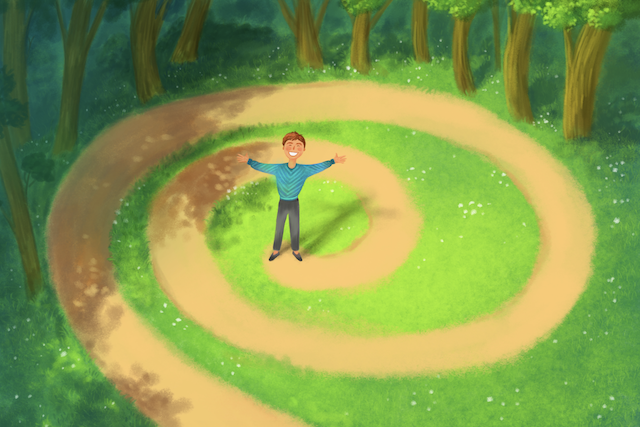
    If your mind drifts while you’re holding a balance pose, you can bet your body will lose all balance too.

    Yoga forces you to be in the present moment, to be fully engaged in what you are doing, and doesn’t allow room to think about anything else.

    For me, this is exactly what I needed to get out of my anxiety-ridden head. One of my main struggles with anxiety was that I could not stop myself from thinking. The incessant noise of my own mind was exhausting to live with.

    However, when I am in a yoga flow, the noise stops. The mind chatter about future scenarios that will probably never happen is no longer there, as I am using all my focus to get into the proper alignment of the pose.

    The more you practice focusing, the easier it is to apply this in your daily life. I can now notice when my mind is overactive and instead re-direct it to the task at hand. By giving our full attention to the thing we are doing, we can quieten that anxious voice within and begin to enjoy the present moment.
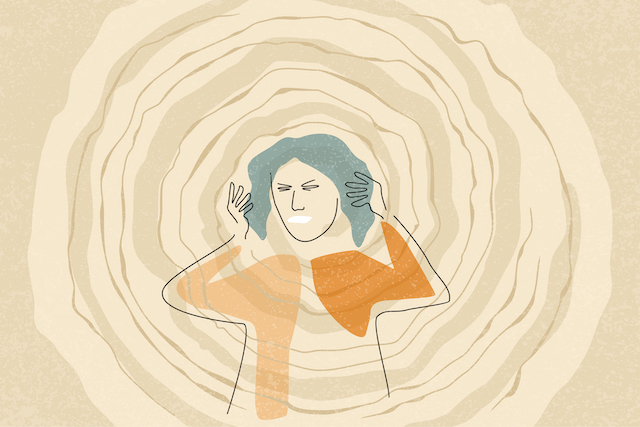
    Yoga has so many incredible benefits physically, mentally, and spiritually. Since sticking to a consistent yoga practice, I have noticed my anxiety decrease dramatically and I am able to live a full and happy life without my mind controlling me.

  • Abandonment Wounds: How to Heal Them and Feel More at Ease in Relationships

    Abandonment Wounds: How to Heal Them and Feel More at Ease in Relationships

    “I always wondered why it was so easy for people to leave. What I should have questioned was why I wanted so badly for them to stay.” ~Samantha King

    Do you feel afraid to speak your truth or ask for what you want?

    Do you tend to neglect your needs and people-please?

    Do you have a hard time being alone?

    Have you ever felt panic and/or anxiety when someone significant to you left your life or you felt like they were going to?

    If so, please don’t blame yourself for being this way. Most likely it’s coming from an abandonment wound—some type of trauma that happened when you were a child.

    Even though relationships can be painful and challenging at times, your difficult feelings likely stem from something deeper; it’s like a part of you got “frozen in time” when you were first wounded and still feels and acts the same way.

    When we have abandonment wounds, we may have consistent challenges in relationships, especially significant ones. We may be afraid of conflict, rejection, or being unwanted; because of this, we people-please and self-abandon as a survival strategy.

    When we’re in a situation that activates an abandonment wound, we’re not able to think clearly; our fearful and painful emotions flood our system and filter our perceptions, and our old narratives start playing and dictate how we act. We may feel panic, or we may kick, cry, or scream or hold in our feelings like we needed to do when we were children.

    When our abandonment wound gets triggered, we automatically fall into a regression, back to the original hurt/wound and ways of reacting, thinking, and feeling. We also default to the meanings we created at the time, when we formed a belief that we weren’t safe if love was taken away.

    Abandonment wounds from childhood can stem from physical or emotional abandonment, being ignored or given the silent treatment, having emotionally unavailable parents, or being screamed at or punished for no reason.

    When we have abandonment wounds, we may feel that we need to earn love and approval; we may not feel good enough; and we may have our walls up and be unable to receive love because we don’t trust it, which keeps us from being intimate.

    We may try to numb our hurt and pain with drugs, alcohol, overeating, or workaholism. We may also hide certain aspects of ourselves that weren’t acceptable when we were young, which creates inner conflict.

    So how do our abandonment wounds get started? Let me paint a picture from my personal experience.

    When I was in third grade a lady came into our classroom to check our hair for lice. When she entered, my heart raced, and I went into a panic because I was afraid that if I had it and I got sent home, I would be screamed at and punished.

    Where did this fear come from? My father would get mad at me if I cried, got angry, got hurt and needed to go to the doctor, or if I accidentally broke anything in the house. Did I do it purposely? No, but I was punished, screamed at, and sent to my room many times, which made me feel abandoned, hurt, and unloved.

    When I was ten years old, my parents sent me away to summer camp. I kicked and screamed and told them I didn’t want to go. I was terrified of being away from them.

    When I got there, I cried all night and got into fights with the other girls. My third day there, I woke up early and ran away. My counselor found me and tried to hold me, but I kicked, hit her, and tried to get away from her.

    I was sent to the director’s office, and he got mad at me. He picked me up, took me out of his office, and put me in front of a flagpole, where I had to stay for six hours until my parents came to get me. When they got there, they put me in the car, screamed at me, and punished me for the rest of the week.

    When I was fifteen, I was diagnosed with anorexia, depression, and anxiety and put in my first treatment center.

    When my parents dropped me off, I was in a panic. I was so afraid, and I cried for days. Then, my worst nightmare came true—my doctor told me he was putting me on separation from my parents. I wasn’t allowed to talk to them or see them for a month. All I could think about was how I could get out of there and get home to be with them.

    I didn’t understand what was happening. I just wanted my parents to love me, to want to be with me, to treat me like I mattered, but instead I was sent away and locked up.

    I started to believe there was something wrong with me, that I was a worthless human being, and I felt a lot of shame. These experiences and many others created a negative self-image and fears of being abandoned.

    For over twenty-three years I was in and out of hospitals and treatment centers. I was acting in self-destructive ways and living in a hypervigilant, anxious state. I was constantly focused on what other people thought about me. I replayed conversations in my mind and noticed when someone’s emotional state changed, which made me afraid.

    It was a very exhausting way to be. I was depressed, lonely, confused, and suicidal.

    There are many experiences that trigger our abandonment wounds, but the one that I’ve found to be the most activating is a breakup.

    When we’re in a relationship with someone, we invest part of ourselves in them. When they leave, we feel like that part of ourselves is gone/abandoned. So the real pain is a part of us that’s “missing.” We may believe they’re the source of our love, and when they’re gone, we feel that we lost it.

    So the real abandonment wound stems from a disconnection from the love within, which most likely happened when we abandoned ourselves as children attempting to get love and attention from our parents and/or when our parents abandoned us.

    When I went through a breakup with someone I was really in love with, it was intense. I went into a panic. I was emotionally attached, and I did everything I could to try to get her back. When she left, I was devastated. I cried for weeks. There were days when I didn’t even get out of bed.

    Instead of trying to change how I was feeling, I allowed myself to feel it. I recognized that the feelings were intense not because of the situation only, but because it activated my deeper wounding from childhood. Even though I’ve done years of healing, there were more layers and more parts of me to be seen, heard, cared for, and loved.

    The “triggering event” of the breakup wasn’t easy, but it was necessary for me to experience a deeper healing and a deeper and more loving connection with myself.

    When we’re caught in a trauma response, like I was, there is no logic. We’re flooded with intense emotions. Sure, we can do deep breathing, and that may help us feel better and relax our nervous system in the moment. But we need to address the original source of our thoughts, feelings, and beliefs in order to experience a sense of ease internally and a new way of seeing and being.

    Healing our abandonment wound is noticing how the past may still be playing in our thoughts, feelings, and behaviors. It’s noticing the narratives and patterns that make us want to protect, defend, or run away. It’s helping our inner child feel acknowledged, seen, heard, safe, and loved.

    Healing the abandonment wound is not a quick fix; it does take self-awareness and lots of compassion and love. It’s a process of finding and embracing our authenticity, experiencing a sense of ease, and coming home.

    Healing doesn’t mean we’ll never be triggered. In fact, our triggers help us see what inside is asking for our love and attention. When we’re triggered, we need to take the focus off the other person or situation and notice what’s going on internally. This helps us understand the beliefs that are creating our feelings.

    Beliefs like: I don’t matter, I’m unlovable, I’m afraid, I don’t feel important. These underlying beliefs get masked when we focus on our anger toward the person or what’s happening. By bringing to the light how we’re truly feeling, we can then start working with these parts and help them feel loved and safe.

    Those of us with abandonment wounds often become people-pleasers, and some people may say people-pleasing is manipulation. Can we have a little more compassion? People-pleasing is a survival mechanism; it’s something we felt we needed to do as children in order to be loved and safe, and it’s not such an easy pattern to break.

    Our system gets “trained,” and when we try to do something new, like honoring our needs or speaking our truth, that fearful part inside gets afraid and puts on the brakes.

    Healing is a process of kindness and compassion. Our parts that have been hurt and traumatized, they’re fragile; they need to be cared for, loved, and nurtured.

    Healing is also about allowing ourselves to have fun, create from our authentic expression, follow what feels right to us, honor our heartfelt desires and needs, and find and do what makes us happy.

    There are many paths to healing. Find what works for you. For me, talk therapy and cognitive work never helped because the energy of anxiety and abandonment was held in my body.

    I was only able to heal my deepest wound when I began working with my inner child and helping the parts of myself that were in conflict for survival reasons make peace with each other. As a result, I became more kind, compassionate, and loving and started to feel at peace internally.

    Healing takes time, and you are so worth it, but please know that you are beautiful, valuable, and lovable as you are, even with your wounds and scars.

  • Change Made Easy: How to Get Unstuck by Doing What You’re Already Doing

    Change Made Easy: How to Get Unstuck by Doing What You’re Already Doing

    “Don’t wait for your feelings to change to take action. Take action and your feelings will change.” ~Barbara Baron

    You are stuck because you are waiting to want to do the things you know you need to do to get better. You aren’t doing the things you know you need to do because you don’t want to feel bad, but you already feel bad. You are already doing what you don’t want to do. Why not choose to do something that you don’t want to do that will actually move you forward?

    If you are waiting to want to do the things that will create change, you will remain stagnant.

    I was stuck in misery and self-hatred for most of my life. I knew there were things that would help, like diet, exercise, and therapy. I also knew that there were parts of myself that I was afraid to acknowledge or confront. Like how selfish I could be, or how poor my attitude was about almost everything, or how I felt used by men when I too was using them.

    We all have a shadow side; we all have shame and guilt. We are all perfectly imperfect. When I stopped running and trying to hide these parts of myself, from myself and others, it gave me space to heal and nurture myself. It created space for me to take one small step to take control of my mind, which then led to another step, and so on.

    What you need to start doing depends on your level of depression, misery, or disconnection with yourself and spirit.

    If you are at the point where you can’t get out of bed because you hate yourself and your life, then start with mirror work. It’s not easy for most of us to look into our own eyes in the mirror. We have to face ourselves instead of focusing on other people, and this can bring up a lot of self-judgment. But over time, as we say loving words to ourselves, it becomes easier to challenge that judgment.

    Start with something simple. Simply place your hand on your heart and tell yourself, “I am trying to love you.” “I want to learn to love you.” “I love you.” Repeat this over and over.

    If you need a friend to come over to pull you out of the bed, then call and ask a friend.

    It might feel like you’re the only one struggling, and you might fear that asking for help means you’re weak, inferior, or a burden. But no one has it altogether. And people want to help, but we often don’t know how or what to do. It’s okay to ask for help. It’s brave and takes courage to ask for help. Give yourself props for having the courage to ask for help.

    Creating a better life for yourself does not require you to make big changes all at once. Consistently doing small things is what will move you forward. But you might even resist the small things.

    Let’s say a friend suggests you try painting, journaling, going for a walk in nature, meditating, or stretching. More than likely, you’ll say, “I don’t want to.” More than likely, you have received this advice before. I would pick the suggestion you have heard most frequently or the one you feel the most resistant to.

    Let’s use painting, for example. Your knee-jerk reaction might be to say, “I am not an artist” or “I am not creative.” That’s a lie. That is your mind trying to keep you where you are because that’s what the mind does. Even if you are in a bad spot mentally, the status quo feels comfortable to your brain. It is what your mind and body are familiar with.

    We are all creative beings with an unlimited amount of knowledge that resides within us. We have the ability to heal ourselves. To reconnect ourselves to something greater than our mind and our thinking. You have that power within you, but you have to take a different approach to what you are already doing, and that means doing what you don’t want to do.

    Ask yourself: What is the smallest step, the smallest thing that I don’t want to do, that will move me forward?

    For me, it was committing to three minutes of daily meditation, which I knew was an achievable goal. I found that once I got into the practice, I usually ended up spending more than three minutes. In the beginning, I often felt uncomfortable and restless, but after a couple months I started to really enjoy it. Sometimes my heart feels expanded, my mind has only positive thoughts, and it feels like pure bliss.

    I now spend ten to twenty minutes a day in meditation. Once that became a habit, I added to it.

    Meditation has helped me pause and get curious about my thoughts instead of getting carried away with them.

    For example, let’s say I have the thought “OMG, he has not called me in two days. He must not like me. I suck. No one is ever going to choose me. I am so boring. Maybe I should text him. Wait, no, don’t text him…”

    Mediation has given me the ability to hear the first thought—“OMG, he has not called me in two days”—and stop it right there.

    I learned, with consistent practice, to pause and change the course of my thoughts.

    So now my internal dialogue would sound like “He is probably busy, but if he doesn’t like me, that’s okay too because I like me. What is something I can do in this moment that will bring me joy?”

    Mediation has also helped me create space for hidden parts of myself to come forward and for creative ideas to surface. You see, we can only have one thought at a time. If you are constantly ruminating, having negative, judgmental thoughts about yourself or others, there is no space for creative, loving, supportive, healing thoughts to come through.

    I have been on the road to recovery and healing from trauma for years. There were times when I felt frustrated and would spiral back down, but by making things I don’t want to do habits, I’ve changed my life. All by committing to taking simple, small steps.

    Commit to one tiny thing that you don’t want to do, that you can do every day, for a hundred days, and see what happens. Be prepared to have your mind blown.

  • 7 False Beliefs That Will Keep You Trapped in Your Head Forever

    7 False Beliefs That Will Keep You Trapped in Your Head Forever

    “There is only one cause of unhappiness: the false beliefs you have in your head, beliefs so widespread, so commonly held, that it never occurs to you to question them.” ~Anthony de Mello

    When people come to me suffering from anxiety, fear, anger, self-judgment etc., there are five things they invariably believe to be true.

    Let’s take anxiety as an example. Most (if not all) people with anxiety believe that:

    1. It’s bad or wrong to feel anxious.
    2. It shouldn’t be there.
    3. There’s something wrong with me (for being anxious).
    4. My mind should be peaceful.
    5. I can’t experience peace until my anxiety is gone.

    Pretty much everyone nods in agreement as I take them through this list.

    Few people, if any, would question the truth of these statements.

    They are, as the spiritual teacher Anthony de Mello says:

    “Beliefs so widespread, so commonly held, that it never occurs to you to question them.”

    And I’d say that these beliefs alone produce 98% (if not more) of the unnecessary suffering that most people experience.

    Maybe you’ve heard the expression “pain is inevitable, suffering is a choice”?

    Experiencing anxiety is unpleasant. There’s no denying it’s a painful experience.

    But it’s our beliefs and mental commentary about anxiety that cause most of the suffering.

    “Anxiety is awful. I hate it. I can’t go on like this. What’s wrong with me? I shouldn’t be feeling this way. I’m so screwed up. I’ll never be happy again.”

    The mind’s commentary about the anxiety adds fuel to the fire and turns a painful experience into full-blown suffering.

    Lasting peace can never be found on the level of thinking. The mind is restless by nature. It’s not wrong. It’s simply how the mind is.

    To end suffering, we need to change the way we relate to the mind.

    And to do this, we need to see through the false beliefs that hold us captive.

    As long as you believe that certain thoughts are bad or wrong, that they shouldn’t be there, and that there’s something wrong with you for having them, you will continue to suffer… not so much from the thoughts themselves but because of your beliefs about them.

    The solution is so simple that most people overlook it completely.

    Getting to Know the Mind Better

    There’s a quote from Abraham Lincoln I like to use:

     “I don’t like that man. I must get to know him better.”

    Exactly the same logic applies to your anxiety, depression, fear, or critical inner voice.

    If you don’t like your anxious thoughts, resisting them won’t help.

    The answer is to get to know them better.

    The Two Approaches to Becoming Free of the Mind

    There are two approaches we can take to find more inner peace.

    The first is to try to fix or change our thoughts through “working on ourselves.”

    I tried this approach for years and discovered that change comes painfully slowly… if at all.

    After years of effort, I had very little to show for it.

    Then I had a breakthrough.

    On a six-month meditation retreat, I stumbled upon a completely different approach to dealing with the mind—a way that was much easier, much more effective, and far quicker, immediate in fact.

    Through getting to know my thoughts (and feelings and emotions) better, I came to a completely different understanding about myself, my mind… and the path to peace.

    I saw that:

    It’s not your thoughts, feelings, or emotions that cause you to suffer. Suffering is self-created through the way you relate to them.

    See through the false beliefs that hold you captive, and your troublesome thoughts will no longer have the same power to affect your peace.

    Since then, I’ve outlined 7 false beliefs that keep most people trapped in their heads for life.

    The 7 False Beliefs That Will Keep You Trapped in Your Head Forever

    “Demand is born out of duality: ‘I am unhappy and I must be happy.’ In the very demand that I must be happy is unhappiness.”  ~Jiddu Krishnamurti

    The beautiful thing about beliefs is that the moment you see through them, they lose their grip on you. You become liberated in the seeing alone. It requires no time.

    False Belief #1: The mind should be quiet and peaceful; otherwise, there’s something wrong.

    I love the following quote from the Indian spiritual teacher Nisargadatta:

    “There is no such thing as peace of mind. Mind means disturbance; restlessness itself is mind.”

    Restlessness is the nature of the mind. Expecting it to be quiet and peaceful is like expecting water to be dry or expecting the grass to be pink.

    It’s not the restless nature of the mind that disturbs your peace. It’s the belief that there’s something wrong and that it should be different.

    You don’t suffer because the mind is restless. You suffer because you believe it shouldn’t be.

    Expect the mind to be messed up, crazy, confused, and anxious. Don’t be surprised. There’s nothing ‘wrong.’ It’s called being human.

    False Belief #2: Suffering is caused by negative thoughts, feelings, and emotions.

    What if it were possible to feel down, sad, concerned, anxious even—and to remain perfectly at peace throughout?

    Negative thoughts, feelings, and emotions, although unpleasant, are not the primary cause of suffering. We suffer because we reject them, think there’s something wrong, and believe they shouldn’t be there.

    If you don’t mind feeling sad, don’t think there’s anything wrong with it, and don’t think the feeling needs to go for you to be okay, you can be sad and peaceful at the same time.

    Most people confuse peace with feeling good. It’s not the same.

    Our thoughts and emotions are like clouds passing across the sky. It’s inevitable that there will be dark ones as well as light ones.

    The key to ongoing peace is to embrace them all. Even if they don’t feel good.

    And anyway, what makes a thought negative? Another thought that says so.

    False Belief #3: It’s bad/wrong to be anxious, down, and depressed, or feel unworthy.

    This belief definitely falls under the category of “beliefs so widespread, so commonly held, that nobody thinks to question them.”

    Most of us enjoy warm sunny days more than dark cloudy ones.

    But it doesn’t make cloudy days bad or wrong—less pleasant perhaps, but not wrong.

    In the same way, the challenging thoughts and emotions that cloud our inner sky are not inherently good or bad, right or wrong. Like the weather, they are neutral events—part of the human condition.

    The real problem (or only problem, in fact) is the notion that unpleasant = wrong.

    And this belief, in turn, triggers the mental commentary: “It shouldn’t be there, there’s something wrong with me that needs fixing, I’m unacceptable as I am, I can’t be happy until it’s gone,” etc.—in other words, suffering.

    False Belief #4: I can’t experience peace until this/that pattern is resolved.

    I talk to many people who have been waiting for twenty years for their anxiety to be healed so they can start living again.

    And I’ve seen lifelong anxiety sufferers experience deep peace within a minute or two through seeing through certain beliefs.

    I call it the path of understanding, as opposed to the path of self-improvement.

    Peace is your nature. And it’s ever-present, no matter what is going on in the mind.

    People wait, often for years, for the dark clouds of anxiety, sadness, or self-doubt to move on, before they can get back to living life to the full.

    There’s a powerful meditation called the “Noticing Exercise” that I like to share with people who believe they can’t experience peace just as they are.

    Without going into too much detail here, I ask people to bring a difficulty to mind, and then, through directing their attention to what’s happening right here, right now, I guide them to become fully present in the moment.

    When I ask them afterwards how their experience was, they usually use words like “peaceful,” “still,” or “expansive.”

    And when I then ask what happened to their difficulty during the exercise, people invariably say, “Oh, I totally forgot about it.” More evidence that you don’t have to wait for your issues to be healed before you can live fully.

    Peace is available right here, right now—no matter what is going on in your mind or in your life.

    False Belief #5: Engaging with the mind is mandatory.

    If you had told me years ago, when I was a chronic overthinker struggling to find any peace at all, that engaging with the mind is not mandatory, I would have said you were nuts.

    When thinking is unconscious and running on autopilot, as is the case with most people, it feels like it’s something that’s happening to you—as if you are an innocent victim being bombarded by an unrelenting torrent of thoughts, and that you have no choice but to listen.

    You’re not so much thinking as being thunk!

    But here’s the truth. You are the one in charge, and the mind only has as much power as you give it. It may not seem this way, but it’s true.

    As we saw previously in the “Noticing Exercise,” you are free to withdraw your attention from the mind in any moment. Thinking is a choice. It’s not mandatory.

    Mooji, a teacher I like a lot, says that we suffer because we are open for business. If you choose to close up shop, the mind becomes powerless to affect your peace.

    When you learn to step back and watch the mind objectively, you can choose whether to get involved or not. Overthinking is an unconscious habit you can learn to let go of.

    False Belief #6: I’m responsible for the thoughts in my head.

    Try closing your eyes for a moment and, like a cat intently watching a mouse hole, watch to see what your next thought will be.

    You’ll discover that you have no idea what’s going to appear.

    Thoughts are self-arising. You play no part in their appearance.

    Thinking is a different matter.

    For years, I used to judge myself harshly for the thoughts that appeared in my head. I used to think there was something wrong with me for having angry thoughts, jealous thoughts, sad thoughts, etc.

    The mind is a lot like a computer. It spits out thoughts in accordance with your programming—the cultural impressions you picked up as a child and through your unique life experiences.

    Your thoughts are not who you are.

    Which brings us to the final false belief:

    False Belief #7: I am my thoughts.

    For much of my life, I was compulsively preoccupied with the content of my mind. My thoughts were like a tight ski mask glued to my face, and they pretty much filled up my entire inner space.

    Through meditation, I was gradually able to create more and more space between myself and the thoughts and learn to observe them objectively and non-judgmentally—to see the thoughts, not be the thoughts.

    I discovered that there was another dimension of my being that was untouched and unaffected by the passing traffic of thoughts.

    The analogy of the sky and the clouds is often used in meditation practice.

    All types of cloud pass across the sky—dark ones, light ones, big ones, small ones, fast moving clouds, slow moving clouds—but the sky has no preference and always remains the same.

    I discovered that thoughts are not “me” and that, through learning to remain as the witnessing presence, they lost their power to affect my peace.

    When you leave the mind in peace to do its thing, it will leave you in peace to do yours.

    Peace is your nature; not the peace that comes and goes as passing clouds, interspersed with restless thoughts, but the unchanging peace of your true nature.

    You are not your thoughts. And knowing this is real peace.