Tag: depressed

  • Why “Be Positive” Isn’t the Best Advice When You’re Down

    Why “Be Positive” Isn’t the Best Advice When You’re Down

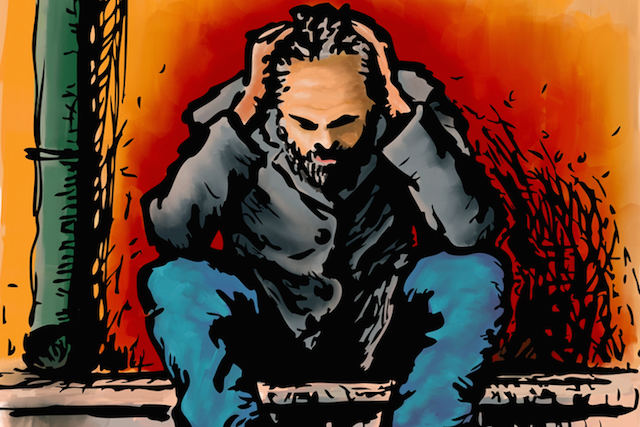
    Depressed man

    “Learn the alchemy true human beings know. The moment you accept what troubles you’ve been given, the door will open.” ~Rumi

    As much as I tried to apply personal development ideas in my life, I failed big time.

    All the affirmations in the world couldn’t make me love myself.

    The more I tried to “be present,” the more all-over-the-place my mind became, getting lost in overthinking.

    Mindfulness didn’t work for me either. Observing my thoughts got me to chase each and every thought and analyze it. When I tried “letting go,” I just held on tighter.

    This was my experience from reading hundreds of popular self-help books over a ten-year period. I studied intensely as if for a PhD, experimenting with the techniques several hundred such books suggested, but still my life wasn’t working very well, to say the least.

    My mind was a storm of thoughts and emotions. Sometimes I had panic attacks, which caused me to spend hours in bed, making me unable to work for stretches of time. I tried various drugs (medical and recreational) and other compulsive behaviors in an attempt to get over my depression that descended on me like storm clouds.

    Through my job at that time as a journalist, I interviewed some of my favorite personal development authors of the time, in a bid to overcome the low feelings and anxiety that were ruining my life. But little helped.

    At first I thought it was just me experiencing such problems—that there was something wrong with my mind—but when I spoke to other people in a support group I started at the time, I realized many people were experiencing the same frustrations as I had with some of the books out there, which made it all sound so easy.

    Although they knew they “should” be positive and focus only on what they wanted, they couldn’t do it. And then they felt bad about themselves that they couldn’t do it.

    Positive Thinking Pressure

    Positive thinking is everywhere these days, and yet it’s not helping the depression statistics—which are going up, not down.

    “Be positive” has become the new way of telling someone to “cheer up.” It didn’t work then and it doesn’t work now. It’s hardly like you need to be told that you should feel better. Of course you already know that. Of course you’ve heard it a million times before. And it’s downright annoying and useless to be told it again.

    Like Instagram and other forms of social media, this “positive thinking” movement seems to be about living up to an ideal standard of perceived perfection all the time. Not satisfied with looking “perfect,” now you’ve got to think perfectly, too.

    It’s like something out of the film The Stepford Wives, where real people are replaced with robots. Denying our emotions is an insult to the journey of what it means to be a human being, and it does nothing to help people feel better.

    Why It’s Okay to Be Down

    Even the great saints and mystics weren’t this perfect. They had bad days, and they were open about it. Buddhism, for example, teaches in the Noble Truths that pain is universal and inevitable. Of course, there is a difference between “feeling down” and dealing with major depression, but for many of us the former evolves into the latter because we compound our feelings with self-judgment.

    Unlike certain dubious New Age “teachings,” these authentic masters understood that negative thinking is part of the human journey, and that it’s okay to feel less than your best sometimes. And they also knew that it’s a quick route to self-hatred to expect any more of yourself.

    Without going into the low emotions, we would not feel and appreciate the high emotions. And another thing: it’s the challenges that actually evolve the best times and bring the best out of us by strengthening our “mind” muscles.

    Think of going to the gym and telling the trainer you want the ideal body, but you don’t want any tension on your muscles. It’s the same with experiencing challenges. The tension of life evolves us. 

    What to Do When You’re Feeling Low

    When you’re feeling low, the mind races into overthinking and you start trying to figure out a way to get out of the mood. Although doing this makes sense, this is exactly what keeps you stuck there. Like fighting with a giant spider’s web, the more you try to escape, the more trapped you get.

    Your Choice: To Fight or Relax

    In the middle of a bad mood you think your option is to feel good or not—to “be positive” or “be negative.” But it isn’t. Your two choices are seemingly more limited than this: to be okay with where you are, or fight against it.

    The frightened mind really wants to overthink and so trying to “be positive” becomes near impossible Trying to “be positive” is actually self-criticism; it is sending the message that you “shouldn’t” feel bad. We look for books to help us—suggestions to help us get out of the mood—all the while anchoring deeper into the darkness.

    Instead, you want to turn and face where you are. So in other words, you want to go with the anxiety rather than fight against it (and against yourself).

    You may not want to be there, but that’s beside the point. Making peace with somewhere you don’t want to be seems illogical, but it’s a necessary step in moving to where you want to be.

    Accepting All Parts of Life

    Now, whenever I feel low, I know it’s not the end of the world; it’s part of life. When I feel this way, I also know that positive change is on its way. I know that my life is evolving; that new ideas are on their way.

    Just as I don’t have a nervous breakdown at the gym when I feel tension in my muscles as I workout, I no longer fall apart when I feel the tension of life evolving me. I welcome it. I accept the process. And I accept myself even when I can’t accept the process in any moment. After all, I’m human.

    Nothing has gone wrong if we find ourselves feeling less than our best sometimes, despite what we may have read.

    Negative thinking will not make your world fall apart—quite the opposite. It is the source of our evolution. And the first step to feeling better is realizing it’s part of the process, and it’s okay. Just as what we resist, persists, it is only in acceptance that we can let go and move on to better feelings and better experiences.

    Meditation

    Forget rearranging thoughts; trying to sift the positive from the negative. Those “new age” gimmicks will get you nowhere, kind of like rearranging the deckchairs on the Titanic. To shift your life, a more “serious” approach is necessary. And that’s where meditation comes in. It’s something that’s been proven for centuries through all faiths and philosophies. In short: it works.

    Through meditation, we come into the present moment and foster a sense of inner calm. It’s not about changing our thoughts. It’s about learning not to attach to them and diminishing their power over us.

    Once you’ve made friends with exactly where you are, even with your negativity, a regular practice of meditation will make you less likely to be taken by those storms of negativity in the first place. But if they do take you down occasionally—and they probably will because that’s the journey of being human—you now know what to do about it.

    If you are suffering from depression or anxiety I recommend that you find a professional to support you and not do this journey alone.

  • Healing from Depression: It Begins With Asking for Help

    Healing from Depression: It Begins With Asking for Help

    Adult Man Crying

    “I speak of a clinical depression that is the background of your entire life, a background of anguish and anxiety, a sense that nothing goes well, that pleasure is unavailable and all your strategies collapse.” ~Leonard Cohen

    Right before my eighteenth birthday, when I was about to go to university, I was hit by a car and sustained multiple fractures to my right leg. This led to a couple of operations and the best part of ten months with me unable to walk.

    While all of my school friends and peers were having the time of their lives in school, I was silently suffering with depression and anxiety, both of which continued to increase.

    Whether it was the weed I smoked, the bottles of whiskey I drank, or the junk food I ate, I could not find comfort or relief from anywhere. Things just got worse, and I felt absorbed and consumed by the victim mentality that I had let penetrate my identity.

    I dropped out of university after re-doing my first year. Despite passing, I just couldn’t go back. I was so ashamed to be me. I didn’t even tell my future housemates that I wouldn’t be returning.

    About this time I realized there was a problem. In retrospect, it should have been glaringly obvious to me, with the self-medicating that was going on, but of course it’s harder to spot problems in ourselves.

    In two years I had gone from one of the most outgoing people I knew, someone who always liked to do things like play sports or party, to a recluse who needed some sort of alternate state of consciousness to function. I started working and going out again on the weekends with some of my old friends and people I had met through work.

    Naively I thought the problems were dissipating and I was returning to who I used to be. Now I look back on it and I know that the younger me had no idea who I was. Things leveled out for a few years until one day I had a breakdown on the way to work.

    There was now no denying the extent of the problem, but hell, if you are in denial you can dig your heels in pretty firmly, and that’s what I did.

    After a few more years of self-medicating, something happened, and to this day I can’t put my finger on the trigger, but something changed that made me realize enough was enough. A good friend recommended a therapist to me, and I was keen to see him and work through the issues that had been building up for seven years.

    So I met with Peter and it seemed like an expensive chat with a nice guy for the first five or six sessions. Around this time I also had had a regular meditation practice. One day whilst meditating I felt like I gave myself permission to open up at the next session with Peter, but I have no idea from where or by whom this permission had been granted.

    I was finally able to approach the issues with candor and rank honesty. I was able to bare my soul and describe how I had felt.

    It’s weird to think that at the age of twenty-five this was perhaps one of the first times I’d done this, but I’d been so suffocated by depression and anxiety, and numbed by my self-medicating, that I had not once looked under the surface to see what things were really like inside. 

    Therapy began to get in to the nitty gritty of what was causing me to feel how I felt.

    I had a fortunate and mostly happy childhood. My parents always did their best for my brothers and me. I could never doubt that. Interestingly, though, there were some wounds from my formative years that may well have contributed to me making some less than ideal choices in my teenage years.

    Add to this the massive fear of missing out and jealously of my peers when I began university, and it’s a perfect recipe for some kind of psychological disorder, which in my case manifested as depression and anxiety.

    I want to take a moment to describe the feeling of depression and anxiety as I experienced it, because I think too often in many parts of our society they are not described in their full ugliness.

    Imagine waking up and feeling sick. Sometimes you throw up, sometimes you don’t. You then have to think about going to work. These thoughts mainly contain a deep sense of dread—not dread of anything in particular, but dread at the overall sense of having to interact with the world.

    It’s so hard to describe because I wasn’t scared of interacting with people and I had friends, I just didn’t want anybody to know me.

    After the dread comes self-loathing. I wasn’t worth knowing. I wasn’t worthy of any attention or any of the good things in life. How could anybody want to be around me? I didn’t feel deserving of anything really, and I projected this on to my work life, where I never tried anywhere near as hard as I could.

    If it were the weekend, I’d do the only thing I knew that would help me: smoke weed or get drunk. It seems ridiculous now, and it probably is, that despite me being anxious and paranoid about going out, I would smoke weed, which only served to exacerbate this reluctance to leave the house. But it was my crutch; it held me up. (It didn’t, it made things worse.)

    I’m aware of the futility of describing feelings in explicit terms. Nobody else but me will know exactly how I felt.

    It’s like having a weighted vest on your chest that makes doing anything difficult. It’s like having the most negative person you could think of on your shoulder constantly nagging you, deeply instilling a sense of not being good enough and destroying any modicum of self-worth and self-respect that remained.

    Despite this being my personal experience, I now know that I was not alone. Nearly a fifth of people in the UK, where I live, suffer with depression or anxiety at some stage in their lives. This I am okay with, it’s natural. Life has its downs, bad stuff happens, and it is our psyche’s way of dealing with it.

    What I am not okay with is that it’s estimated that 50-80% of people suffering with depression do not receive treatment. 

    The stigma surrounding mental health issues in functional human beings is astounding. Because of our society’s attitude toward mental health, many people suffer in silence, and suffer much longer than they might need to.

    I want people to know that you can talk to people. You can get help. There are support structures in place through healthcare providers that can give you a light at the end of the tunnel.

    I was one of the lucky ones who, through a stroke of luck, found a way to ask for the help I needed. I’m still not sure how that happened, but I know I am forever grateful for it.

    Through therapy, learning to accept myself, and my meditation practice, I am fortunate enough to say I don’t think I will head down that road again. And I know that the people around me will help me. If not, then I can pay to see qualified professionals who will be able to give me the help I need.

    I know we have weeks and campaigns to raise awareness of these issues, but this is something we should always be aware of.

    If you are the one who is suffering, know that there are people out there who can help. If you’re suffering in silence and carrying on, then you have already shown you are brave enough to ask for help.

    If you know somebody who is suffering, remind them that you are there for them, and that there are people who can help.

    With the rate of diagnoses of these types of illnesses increasing over the last half a century or so, it’s more important than ever that we are able to help each other in anyway we can, especially with something as quintessentially human as our feelings.

    There are a few links below to free online resources that can provide support in dealing with your feelings. Of course, you can also discuss how you feel with a trusted friend or family member, or a professional. However you do it, know that taking the first step and asking for help is how it starts to get better.

    Anxiety Forum – Recommendations and a forum to discuss anxiety

    The American Psychological Association – Site includes research on anxiety, getting help, psychology news, and helpful books pertaining to the illness.

    Depression Forums – Offers a caring, safe environment for members to talk to their peers about depression, anxiety, mood disorders, medications, therapy, and recovery.

    Mental Health Forum – Loads of information and a friendly place to discuss mental health issues.

    British Association for Counselling & Psychotherapy – Find a UK therapist.

    For further resources see the Tiny Buddha Helpful Free Resources page

  • How to Deal with Depression and Anxiety: 10 Lessons from a Lake

    How to Deal with Depression and Anxiety: 10 Lessons from a Lake

    Woman near water

    “Forces beyond your control can take away everything you possess except one thing, your freedom to choose how you will respond to the situation.” ~Viktor Frankl

    Low moods can roll in like a numbing wave, washing out the pleasure from life.

    If you’ve experienced this, you’re not alone. Surveys have shown that the vast majority of people in the US eventually experience some depressive symptoms, and many are anxious. I’ve been there before.

    Early in my medical career, I made some research findings that contradicted the then-current views. My boss was not an expert in that area, so he simply sat on the papers, refusing to submit them to a professional journal. I was idealistic, but he preferred safety.

    My helplessness in the matter dragged me down, until I fell ill. I developed a serious chest infection and could hardly drag myself out of bed, not even for the bathroom. I felt numb, demotivated, useless, and hopeless.

    Luckily, some senior colleagues arranged for me to do further studies. The change of scene helped. Then I was offered a great job, soon followed by an even better one, and a third.

    Life soon got so busy that twenty-four hours in a day no longer sufficed. My career flourished, but my family had to put up with an irritable insomniac who frequently traveled abroad and had forgotten how to relax.

    I then took a break in Scotland one fall, with colorful trees and blue sky reflected in the mirror-like surface of a lake. The beauty was glorious, so I started to learn about this wonder of nature. The more I learned, the more I found parallels with challenging situations, depression, and anxiety.

    Gray, rainy days followed. I went out on the next sunny day and threw a pebble into the lake. The lake rippled, but eventually returned to its calm state.

    Here’s what I learned from the lake about overcoming depression and anxiety.

    1. Acknowledge your emotional pain.

    A lake freely expresses distress during stormy days, with a turbulent surface. Suppressing feelings is unhelpful.

    Hidden emotional pain can eventually overwhelm you, as with my chest infection. Once you name your feelings, they lose some power. You become the observer, not the victim, of feelings.

    Allow tears to flow naturally; they express hurt. Write or record on your phone what’s troubling you and how you’re feeling, like a child blurting out everything. Read that, or listen back, to gain understanding.

    2. Practice distraction.

    In stormy weather, the lake’s focus shifts to its depths. We too can benefit from shifting our focus away from persistent, unhelpful thoughts and feelings. This can help restore perspective.

    Whenever my life feels too stressful, I find that making music or doing vigorous exercise can transform my mood.

    Distraction can be as simple as counting the number of red cars passing by, or watching a funny video, listening to your favorite music, singing, coloring, having a massage, walking in nature, playing with children or pets, or anything that absorbs or relaxes you.

    Your brain, like a computer, has a limited amount of “working memory.” Distraction keeps it occupied. Depression and anxiety have less room.

    3. Accept what can’t be changed.

    When you throw a rock into a lake, it won’t resist. Ice may break, but the liquid lake won’t. In discussions with my inflexible boss, I was hard as ice, and paid for that with illness.

    How can distress be made more bearable? Recognize when you are resisting something that can’t be changed, and pause to observe your own breathing and bodily sensations.

    If unhelpful thoughts or feelings arise, notice them without engaging with them, and return to observing your breath. Then distressing thoughts, feelings, and circumstances won’t easily break you.

    4. Become less self-critical.

    A lake nurtures its inner life, with nutrients circulating below the surface. We, too, need to nurture ourselves, especially when experiencing depression or anxiety. Both are bullies that try to turn us against ourselves.

    If self-criticism grows, try going through a list of positive characteristics and identify a few that best describe you. Then, elaborate and write out some of those characteristics in detail, using specific examples. To illustrate, if compassion is one of your characteristics, recall specific incidents when you comforted someone in distress.

    After repeating this exercise for a few positive characteristics, you’ll feel much better about yourself and life.

    5. Hold on to hope.

    A lake is fed by streams. We have “streams” that can feed us, as well, if we enable them.

    Try reaching out to others who are likely to understand how you’re feeling, perhaps by joining, or starting, a well-being group, or seeking professional help. Others can listen to you and reassure you.

    Also, realize that you’re not set in stone. Scientific research shows that even your brain can change. I’m much more optimistic, sympathetic, warmer, and calmer now than I was in my twenties. We can all learn and grow, no matter what our age..

    6. Become skilled at self-parenting your inner child.

    Imagine your toddler falling over repeatedly while learning how to walk. Think of the loving, encouraging, heart-warming things you might say. Practice saying such things to your inner child.

    I got far more criticism than appreciation as a child, but I now consciously reverse the balance in my self-talk. I remind myself that my faults are just part of being human.

    This will benefit not only you, but also the people around you. As you shower unconditional love on yourself, it will overflow to your children, family, and friends. A lake gives life to all around, but it must renew itself with water.

    7. Reduce big problems to small solutions.

    As you regain perspective and energy, you can start to tackle problems.

    Pick one problem that seems solvable. Pick the most promising solution. Identify a simple next step.

    Congratulate yourself when you take this small step. Then take the next small step. Keep going, and you’ll be pleasantly surprised.

    Life need never be more complicated than taking the simple next step. A lake needs no giant moves.

    8. Change what can be changed.

    A lake is big enough to survive storms. The most powerful change you can make is to grow bigger than your unhelpful thoughts and feelings.

    When you’re depressed or anxious, your thoughts tend to become distorted. However, you needn’t swallow the first thought that jumps into your mind.

    For example, if someone barked at me, I previously assumed it had everything to do with me. However, it might have been some stress in their life causing their rude behavior. I don’t need to know for sure; I need just to weaken the force of my first thought. Then I can go on with life, lighter and freer.

    Further, if something goes wrong in one area of my life, I needn’t believe that everything will go wrong in all areas of my life. The more confident I become of a happier future, the more powerful I grow.

    9. Boost your physical well-being.

    A lake is constantly active. Older plant life from near the surface sinks to the depths, and the different layers mix. That’s how a lake stays in good condition.

    The healthier I eat and the more regularly I do vigorous exercise, the calmer and more energized I feel.

    Nourishing meals with plenty of vegetables are much healthier than sugary or processed snacks and drinks. Regular, vigorous exercise is powerfully effective against depression, according to scientific research.

    10. Cultivate “flow.”

    A lake would rot and dry out if the water stopped flowing. As you develop, “flow” could help boost your confidence and calm.

    “Flow” is a state where you’re completely absorbed in an activity, with your skills rising to meet the challenge of the activity. You feel strong, alert, unselfconscious, and at the peak of your abilities. Your brain is fully occupied by the activity.

    I experience “flow” when I’m creating original music. It’s a wonderful experience, every time. Find and cultivate your own sources of “flow.”

    Depression and anxiety need not define you, no matter how tight their grip. Take courage from scientific research. It confirms that most people with symptoms of depression and anxiety can eventually enjoy fulfilling lives.

    Even your brain can develop new cells, connections, and functions.

    You could become like a lake that endures wintry storms and gales, but survives to enjoy the colors of spring, summer, and fall. Eventually, one small step at a time, you could become as deeply peaceful and energized as a lake.

    Practice showering your inner child with unconditional love, and experience the difference.

  • How to Move Forward When You Feel Like Your Life Is Over

    How to Move Forward When You Feel Like Your Life Is Over

    Stormy Night

    “When you get to the end of your rope, tie a knot and hang on.” ~Franklin D. Roosevelt

    At seventeen years old, baseball was my life. I played on the top summer Connecticut baseball teams, constantly practiced and trained, and dreamed of being a starter for the high school varsity team. Junior year I was on varsity but didn’t get any playing time, so I was putting all my hopes and dreams into spring of my senior year.

    When I went to college showcases, I was one of the standout players and I received many letters in the mail from interested colleges who wanted me to go and play for them. I had scouts coming up to me saying, “Wow, you are an incredible hitter and ballplayer.”

    Senior year, I did extremely well in tryouts. In live scrimmages against other teams, I was one of the only players on our team to consistently hit well.

    In the last scrimmage of tryouts, I crushed a double against a Division I college-recruit athlete, one of the only players on my team to get a hit off of him. As a soon-to-be college athlete, I was one of the best players in the league.

    Unexpected News in the Locker Room

    On the bus ride back to the locker room after the final day of scrimmaging against another team, I was on cloud nine. I’d had a good game and had proved myself. Years of hard work and sacrifice were finally coming to fruition.

    The coach took out the list and read the names of the players who made the team.

    My name wasn’t called…

    I was cut.

    I was beyond devastated—I was destroyed. On the drive home, all I could think was, I’m nobody, I’m nothing, and I’m worthless. Those horrible thoughts kept playing in my head like a broken record.

    I had all of my self-worth caught up with being on this team.

    The Dark Night of My Soul

    When I got home my parents were loving and supportive, but I pushed them away because I was so upset. I isolated myself, terrifying thoughts running through my mind:

    I’m nothing. My life is over. I will never be able to show my face to the world again. All my years of hard work are wasted.

    With all my self-worth flushed down the toilet, my dreams gone, and embarrassed to the full extent possible, I was ready to take my own life. I was ready to kill myself.

    Have you ever been so zoomed in on something that you completely lost yourself in it?

    That was exactly what I was experiencing, and because it was ripped from me so unexpectedly, I truly no longer wanted to be alive.

    Senior year turned out to be the worst year of my life after everyone told me that it would be the best year. The happy endings we see in movies don’t always exist in reality. At the time, it seemed like my life had become a nightmare from which I couldn’t escape.

    I went to the garage, grabbed the rope from the workbench, and considered hanging myself from the tree out back. But just before taking my own life, one last spark of hope came to me that said, “Put the rope down, go up to your room, and go to sleep. You will get through this.”

    Thankfully, I listened to that intuitive knowing that came to me.

    When You Feel Like Your Life is Over

    We all have things that we care passionately about, sometimes to an unreasonable and unhealthy extent. While our individual situations and circumstances are vastly different, feelings are what connect us and are universal. The feeling of devastating loss is the same.

    When those things that you care about most dearly are taken from you for reasons beyond your control, you don’t need to go to the extreme like I did.

    Through discussions with hundreds of people in travels around the world, extensive research, and my transformation over the last seven years from someone literally on the brink of suicide, I’ve discovered proven tips and insights you can apply to get through your dark night of the soul, that moment when you feel like your life is over.

    Take it one breath at a time—literally.

    Put down the million and one things from your past that you are upset about and the billion and one things in your future that you are anxious about and simplify life down to one moment, this moment.

    Just before I was about to hang myself, I used individual breaths to take me out of my downward spiral of self-hatred.

    Keep it in perspective.

    The tendency of the human mind is to zoom in on situations and lose perspective, especially when your heart and soul are involved in the outcome. We live in a huge world with a vast array of possibilities, and even though it doesn’t seem like it at the moment, your best days are ahead of you and your life is not ruined.

    Instead of trying to think positively, shift back to neutral.

    When you are that depressed—at rock bottom, with no hope like I was—the last thing you want is to be overly positive. Imagine driving your car and instead of putting it into drive, you are slowly shifting from reverse back to neutral; instead of fighting your thoughts, choose to be the observer of your thoughts.

    Recognize what’s happened is not a reflection of your worth.

    Your self-worth is infinite, and it’s not dependent upon external circumstances such as making or not making a team or getting a job, nor does it depend on what others think of you.

    Know that you are loved.

    I know it may not feel like it, and I absolutely understand the feeling of embarrassment that you’ll never be able to talk about what you are going through, but even when you feel most isolated, I promise there are people who still love you dearly.

    Remember that there is a hidden opportunity in every setback.

    When one door closes, another one opens. You can use setbacks to your advantage and a crisis is an opportunity for a breakthrough.

    Realize this situation serves a purpose.

    This unexpected and unfair situation you are going through (or have already been through) is the very situation life wants you to experience to get you to your next level. At the age of seventeen, with my biggest dream of being a starter on the high school varsity baseball team shattered to pieces, I never would have thought, from my limited vantage point, that life could get better, but it did.

    The truth is you can handle any challenge life hands you.

    The temporary feeling of rock bottom will go away when you realize just how connected and important you are. You have a purpose and you will help others.

    Why Did No One Tell Me?

    I’ll never understand, for as long as I live, why not one person told me that my self-worth doesn’t depend on being on some silly team. The people I went to high school with were as brainwashed as I was when it comes to what really matters in life.

    But you know what? I can’t control those people I went to high school with and I peacefully wish them well. But I can control, in this present moment, the experiences and lessons I share with the world. And I’m here to tell you that there is always a solution and a way out, even when you think all possible options and solutions have been exhausted.

    No matter how badly you feel right now, you will get through your predicament and end up using it to your advantage. You will find the silver lining and do incredible things with your life.

    See you at the mountaintop.

    Stormy night image via Shutterstock

  • 10 Thinking Patterns That Can Fuel Depression

    10 Thinking Patterns That Can Fuel Depression

    Depressed

    “Nothing can harm you as much as your own thoughts unguarded.” ~Buddha

    You know the feeling …

    When out of the blue your mood switches.

    One moment you’re feeling upbeat and optimistic; next you’re feeling down in the dumps.

    You can’t think clearly and struggle to put things into perspective. The bright outlook on life of a moment ago has vanished, and in its place now resides an intense longing for its return.

    You feel disconnected, lost, and confused, and everything around you looks and feels dark and bleak. And even though you have no reason to feel this way, it feels all too real to you.

    And you know where that leads. You’ve been there many times before and don’t want to go back.

    I know the feeling too.

    Recovery is such an illusory term.

    It implies that once recovered, the depression is gone. But those who have recovered know this is false.

    Recovering from Depression Is Not the End of the Battle

    Having spent half of my life depressed, two years after recovery, I still find myself waging the battle of relapse. A battle that at times seems harder to fight than the recovery—just as you tasted the sweetness of the non-depressed life, you never again want to taste the bitterness of depression.

    On the surface, a mood swing looks like “having a bad day.” The kind everyone experiences and snaps out of quickly. But for those with depression, the consequences of mood swings can be severe and lasting.

    First, there’s the sudden change in mood, the one that is more than “feeling-down-soon-will-snap-out-of-it,” followed by a drastic change in outlook. One moment you’re looking at life through clean lenses, and now dirty ones blur your vision.

    Then the inevitable guests start showing up—low self-confidence, paralyzed will, self-loathing, and the most dreaded of all, inertia.

    Not getting completely trapped in the spell of this depressed mood is key in preventing relapse, which is not always easy to do.

    How to Keep Depression from Disrupting Your Life

    I used to believe depression was about “feelings,” so my focus was on understanding and managing my emotions. An approach that not always kept me from relapse—until I learned about the connection between thoughts-feelings-behaviors and about mastering one’s mood, which gave me a new perspective on depression.

    We think. We feel. We behave.

    “It is an obvious neurological fact that before you can experience any event, you must process it with your mind and give it meaning. You must understand what is happening to you before you feel it.” ~David D. Burns, M.D.

    So, how do you master your mood? Well, it’s not that hard. It involves the following:

    1. Detecting the mood change, its severity, and duration.

    For me, the most severe of mood changes, when I’m most vulnerable to relapse, is when it lasts more than a couple of days.

    2. Knowing the consequences of giving in to the depressed mood, as this is key in forcing you to take action.

    In my case, it always leads to the vicious cycle of procrastination, guilt, regret, and self-loathing. A cycle that, once started, is difficult to break.

    3. Taking action to keep the depressed mood from lasting too long.

    The longer it lasts, the more debilitating it becomes, and the harder it is to get back to normal.

    One of the things I used to do as soon as my mood changed was write about how I felt, a strategy that didn’t always keep me from relapse. But when I came across Feeling Good by Dr. David D. Burns and learned about the thinking patterns of depression, I found a new way to battle it.

    The 10 Thinking Patterns You Need to Recognize to Prevent Relapse

    A few weeks ago, I found myself close to relapse after having completed a major project—one I’d been working on for a while that needed to be done—which put all other work on hold. When it was done, I felt pretty good, but the feeling didn’t last long, and I soon found my mood changing.

    One moment I was feeling happy and proud of what I’d accomplished; next I was miserable and beating myself down.

    I had no reason for feeling the way I did, and this was confirmed when I put the thoughts behind the feelings to the test using the ten thinking patterns of depression to challenge them.

    1. All-or-nothing.

    At the core of perfectionism is the tendency to evaluate ourselves in terms of absolutes and nothing in between—good or bad, winner or loser, smart or dumb. In this situation, not being able to do both—complete my project and keep up with other work—pointed to not having achieved the “perfect situation.”

    2. Overgeneralization.

    Believing that if something bad happened once, it will happen over and over and over. “I did it again,” the thoughts that reinforced the belief it will always be this way—unable to manage and prioritize my work.

    3. Mental filter.

    The tendency to focus on one negative aspect of a situation while ignoring all other positive evidence. In spite of having completed the project, my focus was solely on “how behind I was.”

    4. Disqualifying the positive.

    More destructive than mind-filtering, this involves taking a positive experience and turning it into a completely negative one. With all the distorted thinking already stewing in my head, the sense of achievement from this moment was replaced by a sense of failure for not being able to keep up with everything else.

    5. Jumping to conclusions.

    Automatically jumping to negative conclusions without any basis for it. The immediate assumption here was that “I’ll never be able to catch up,” even though I always have in similar past circumstances.

    6. Magnification and minimization.

    The tendency to magnify our mistakes and weaknesses while minimizing our successes and strengths. The heightened sense of failure for not being able to keep up obscured my abilities and skills to overcome this and any other challenges.

    7. Emotional reasoning.

    Looking at life through painful eyes where everything looks bleak and dark. Once the wheels of distorted thinking were set in motion, everything I needed to do to get caught up appeared daunting and impossible.

    8. Should statements.

    The useless mind-noise resulting from being disappointed with ourselves and the world, reminding us of what we could’ve, should’ve, or would’ve done differently. “I should’ve tried harder to keep up.” “I must do all of this to catch up.” These were the thoughts that began popping into my head.

    9. Labeling and mislabeling.

    The constant labeling and mislabeling of ourselves in a self-deprecating manner. Once trapped in this way of thinking, the usual self-loathing terms to devalue myself showed up—loser, not smart enough, can’t do anything right.

    10. Personalization.

    Feeling responsible and guilty when there’s no reason for it. Even though I had a valid reason to do what I did (postpone other work), I blamed myself and felt horrible for finding myself in the situation I was in.

    Everyone thinks in this manner at one time or another.

    But for those with depression, it’s a way of life, with each distortion feeding and supporting the others, keeping us in a constant state of emotional turmoil.

    Transforming the Distorted Thinking of Depression

    Giving the insane thinking of the depressed mind a name, an identity, takes away its power to make us depressed. A power that lies in its obscure nature and that, once exposed, can be seen and defeated.

    This new way of understanding how the depressed mind thinks revealed how most (if not all) of the time when I’m depressed, it has nothing to do with what’s going on in my life but rather the result of distorted thinking.

    Today, armed with this knowledge, whenever I feel the depressed mood coming on, I immediately start jotting down the thoughts that pop into my head. I give them form by labeling them, and then I replace them with rational ones by questioning their validity.

    In this situation, the negative thoughtsI am so behind, and I’ll never catch up” kept me from acknowledging the positive aspects of having completed a major project. A form of mind-filtering, they persisted, making me feel overwhelmed, guilty, and anxious, all potentially leading to relapse.

    On the surface, “falling behind” was true. However, the underlying assumption—that I intentionally procrastinated—was wrong.

    When I realized this, the distorted thoughts lost their validity giving way to a more accurate and rational way of thinking: That this was a major project that needed to be completed and required all my attention. And that “putting everything else on hold” was a conscious choice made and not due to procrastination.

    Master Your Mood and Stop Being Victimized by Depression

    One by one, I challenged and transformed every distorted thought until there were none. As a result, my mood improved, and I went back to relishing the joy and pride the moment warranted for having completed the project.

    You can do it too.

    Master the mood of depression so it doesn’t take over your life.

    Learn to master it, and never again feel the fear of relapse.

    Break the chains of its prison by giving form to its formless thinking, and free yourself once and for all.

    And never allow depression to keep you from fully and uninterruptedly savoring the joy that life brings!

    *This post represents one woman’s unique experience of preventing a depression relapse. If you’re struggling with depression and nothing seems to help, you may want to contact a professional. 

    Depressed image via Shutterstock

  • Things Change When You Do (and Small Changes Add Up)

    Things Change When You Do (and Small Changes Add Up)

    Man breathing deeply

    Even the darkest night will end and the sun will rise.” ~Victor Hugo

    A year-and-a-half ago, I was diagnosed with a severe anxiety disorder and obsessive-compulsive disorder. Every day, I felt like I was travelling through an endless tunnel. The only way I could fall asleep was by pretending that I was dying.

    My life felt pointless. I felt like I was on the wrong path. The combination of my two mental illnesses made me feel like I was a prisoner in my own body, like I could not control my brain.

    Since this point in time, a lot has changed. My surroundings have changed, my friends have changed, and, most importantly, I have changed.

    It is important for me to mention that these things did not change because someone else forced my life in a different direction. These things did not change because I read a self-help book that inspired me to turn everything around.

    These things changed because, every day, for the past year-and-a-half, I have gotten out of bed with the intention to make small changes in my life.

    These small changes, like microscopic pieces of dirt, added up. They became a mountain of positivity. I would like to share the changes that I have made, with the hope that they will inspire you to be your own hero or heroine, to make your own destiny.

    Take care of yourself first.

    Take a moment to think about how much technology influences your life. How often do you reach for your phone? Are you ever woken up by your phone’s pings and vibrations? Is your computer always on?

    For a long time, I would wake up and reach for my phone or computer. I would anxiously check my messages before I had even washed my face or brushed my teeth.

    Technology prevents us from living in the moment, in the here and now. It prevents us from taking care of ourselves first, especially if you are programmed to instantly respond to the sound of a phone call or text message (like I was).

    Before I go to bed, I turn my laptop off and put my phone on airplane mode. If I wake up in the middle of the night and cannot go back to sleep, I avoid all electronic devices. Instead, I grab a book or meditate.

    In the morning, I wake up. I make myself a cup of tea, eat a healthy breakfast, wash my face, brush my teeth, and do whatever else I need to do to feel ready to face the day.

    Yes, it is hard at first and, yes, avoiding my phone does make me anxious sometimes. But, practice makes perfect. The more we focus on taking care of ourselves, the better able we are to handle the ups and downs of everyday life.

    Start going outside.

    This morning I sat on my front porch with a cup of tea and my dog by my side. I sat there and admired my surroundings, watching cars go by. I even wrote some poetry and doodled away on index cards.

    Spending more time outside reminded me that there is so much to be grateful for. It reminded me that I am a part of something bigger, that I matter.

    The combination of fresh air and sunlight on your skin can work wonders. Feeling the fragrant grass beneath you makes you feel present. Allowing the wind to blow your hair in all directions reminds you that there is something magical about the world that we live in.

    When I am outside, I can let go and let nature take control. I can become a part of the world. In other words, I can let go of my anxiety and just be.

    Pave your own path.

    Growing up, people would always tell me, “Anna, sometimes you have to do things that you don’t want to do.” The problem with this saying is that I had interpreted it all wrong. I had interpreted it as, “Anna, sometimes you have to be unhappy.”

    Yes, there are days when we have to go out of our way to set things in motion. There are days when we have to pay bills, clean our car, and walk our dog even though we are tired.

    But it is important to remember that we should never live our lives in a manner that makes us continually unhappy. We should never work in an office that makes us miserable. We should never do what other people tell us to do because it will “make us money” or “be the right thing.”

    If painting makes you happy, paint. If writing makes you happy, write. If getting up on a stage and dancing makes you happy, do that.

    So what if everyone else is doing something different? So what if people say that you will never make it? At least you will be happy.

    Once you start writing your own story, you will realize that what everyone else is doing does not matter. You will realize that, yes, some days are hard, but, overall, you would not have it any other way.

    Laugh it off.

    For a long time, I cared a lot about what others thought. I dressed a certain way, acted a certain way, and did certain things because I wanted others to think that I was perfect.

    The funny thing is, I succeeded. People thought that I was perfect. That is when I learned that “perfect” does not mean “happy.”

    Slowly, but surely, I adjusted my idea of perfection. Instead of thinking of perfection as this robotic, unflawed form of living, I started to think of perfection as simply living my life: making mistakes, laughing, acting weird, and being myself.

    As someone that used to rely on other people’s opinions, this was hard for me. Over time, I had to learn a hard lesson: not everyone is going to like you and that is okay.

    Replacing my feelings of insecurity with feelings of humor helped a lot. Every time I felt insecure and needy, I laughed. I laughed at the fact that I am weird, goofy, and a little bit crazy. I laughed at the fact that life can be a bumpy ride.

    They say that “laughter is medicine,” and they are right. Laughter can heal even the deepest wounds of insecurity.

    If all else fails, ask for help.

    Going to therapy was scary. Telling a stranger about my problems was difficult. Describing the way that I felt was exhausting.

    But, you want to know something? It all worked out in the end. Therapy made me feel better, it made me feel refreshed and as if I had released all of the negativity from my being.

    Asking for help does not make you weak. As someone who used to be afraid to leave the house, I can say that asking for help took a lot of strength. It can be just as hard as getting up in the morning to face the day.

    The thing about asking for help is that it is a way of saying, “I am not giving up on myself.” To me, that is one the bravest statement of them all.

    I would like to leave you with my favorite quote:

    “Success is not final, failure is not fatal: it is the courage to continue that counts.” ~Winston Churchill

    Man breathing deeply image via Shutterstock

  • How to Get Your Joy and Vitality Back When You’ve Been Depressed

    How to Get Your Joy and Vitality Back When You’ve Been Depressed

    “When everything seem to be going against you, remember that the airplane takes off against the wind, not with it.” ~Henry Ford

    We all have this image of how depression looks. It’s a person looking all sullen and grim. Rain is usually involved. It’s dark. It’s cloudy. It’s depressing.

    But what about the sunny depression, the one that almost never shows its face in public, the one that looks just… normal.

    I’m a naturally happy person. I wake up smiling. I go to bed smiling. I even smile in my sleep, or so I’ve been told. Yet I’ve been depressed, depressed to the point where I was struggling to find reasons to go on, knowing in my rational mind that I need to find them, yet unable to get there emotionally.

    I was never diagnosed with depression, partly because I refused to actually see a professional about it and partly because I wanted to believe I could somehow find my way out without medication, since it wasn’t induced by a chemical imbalance.

    In a brilliant TED Talk, Andrew Solomon says that “the opposite of depression is not happiness, it’s vitality.” And that’s what I was lacking—the vitality, the drive to do something every day, the desire to step out of the numbness.

    I would spend my weekends alone in my apartment. I would pretend to be sick or tired, and when I would go out, I would go out of my way to not let anything seep through the armor I had built for myself.

    Most of the time, when driving back home, I would start crying in the car and would continue crying until I’d finally fall asleep.

    Sometimes I would sleep, even have happy dreams; other times, I would continue to cry in my dreams until the next morning when I would get up, go through the motions, put on make up to cover my swollen eyes, and start pretending everything was okay once again.

    If you’re reading this wondering if this applies to you and your life, take a look at the signs that finally made me realize I was depressed.

    • I would always find excuses not to do things.
    • I thought I was tough, that I didn’t need help; therefore, I didn’t ask for it.
    • I would cover my lethargy with smiles.
    • I didn’t actually feel unhappy, just uninterested in everything.
    • I started questioning if there was something at the other end, if I would ever get out of this state.

    The more I thought about everything, the sadder I got, and nothing seemed right anymore. I missed the happy me, the one who would wake up with a huge smile on her face, the one who believed that magic happened every day, who made everyone feel better and radiated light wherever she went.

    I looked around and realized I had no idea how to ask for help. I had never done it before and I considered it an act of weakness. But I still decided to try to ask for help. 

    Who was I going to ask? My friends? My family? My boyfriend? I felt ashamed, as if asking for help would make me seem less worthy of their love, as if I would turn into a disappointment. So I didn’t, at least not directly.

    I hinted toward the fact that I was depressed. I may have actually phrased it as “being sad,” but I never asked for what I needed, mainly because I didn’t know what I needed. I didn’t want to be coddled or have anyone feel sorry for me. I just somehow wanted to be loved and supported, but I didn’t really know how.

    And then it hit me. I would never have back the time I was wasting now; I would never have that moment when I could have woken up happy with a giant smile on my face.

    Every moment I spent being sad and depressed was a moment I wasn’t happy, a moment I could have spent with my family, my friends, and my boyfriend. For every moment I was depressed, I was losing a moment of happiness.

    I made a commitment to myself to find that happy me, that person full of love and vitality, the person that I knew still existed inside of me. It wasn’t easy. I had so many moments when I just wanted to crawl back into the cocoon of sadness and numbness I had created for myself, but I still tried every day.

    I knew I didn’t want to go on like this anymore. Here are a few things you can do when you find yourself in a somewhat similar situation.

    1. Stop putting yourself down for not waking up with a smile on your face.

    Instead, create a routine that will help you start the day off right. I did a short, guided meditation every morning. It was only five minutes long and at first it annoyed me, but I stuck with it and soon enough I started waking up and looking forward to it. And after a while, I was starting to do it every time I had a few minutes to myself. This allowed me to step into a place of acceptance and a place where I loved myself no matter what.

    2. Start looking for the little moments.

    Instead of demanding for the entire day to be happy, look for those little perfect moments in every day. Those little perfect moments can be as simple as your coworker bringing your favorite coffee to work one day or someone calling you just to say they missed you.

    For me, the perfect moments I will probably always remember were going to my favorite pizza place in the middle of the night, getting tickets to a concert I was dying to go to, yet it had been sold out for months, getting text messages that just said “I miss you” or “You’ve been on my mind.”

    3. Surround yourself with joyful people.

    And stay away from the ones who only see the bad side of things. We all have those people in our lives that charge us with energy and lift our spirits, and then we have those people who bring us down.

    I tried as much as I could to spend time with those high-energy people that filled me with love and joy.

    Sometimes when I was around those joyful people, I would feel a little sadness and anxiety, as if the pain inside me just wanted to come out. And many times, I decided to talk about it with them, knowing that they would always find the best thing to say to bring me up and help me release that tightness inside.

    4. Allow yourself to feel your feelings.

    If you feel happy for a moment, allow yourself to be happy; if you are feeling sad, allow yourself to be sad without judging yourself, but also without dwelling on that feeling of sadness.

    5. Don’t dwell on the negative.

    Whenever you feel like talking about all the bad things in the world, find a tiny little thing that was good and hang onto that one.

    When those moments come when you feel full of anxiety, as if you’re going to break into a million pieces, allow yourself to talk about how you’re feeling, to get it all out, to release it and then to let it go.

    I always found it helpful to talk about things with a positive person who did nothing else but listen. They didn’t push their advice on me, they didn’t convince me it was all in my head; they just listened and asked questions that helped me understand what was going on, and supported me as best as they could.

    6. Start working out.

    I worked out even more than before, to the point where exercise became my therapy. I would always pick the classes or the home videos with motivational trainers who lifted my spirit. Soon enough, I not only felt good during and after working out, but I also felt good when I looked in the mirror.

    Throughout this journey of coming back to my happy and joyful self, I took big steps and little steps. I just took everything as it came and looked for reasons to keep me on my path every day.

    Some days it was easy, other days it felt like a pain, and other days I just felt numb, as if I was waiting for my life to pass and get to a better place all on its own. Then I would remember once again: I will never get this time back; this time might be all I have. How do I want to spend it?

    Do I want to be numb, full of pain, or full of fear? Or do I want to live it to the fullest, to enjoy every moment as much as I can, to be kind and loving?

    I don’t know if I laugh in my sleep, but I do wake up smiling. My dreams are back, my desire to live life regardless of the challenges and circumstances thrown at me is back, and my sunny sky is real now.

    It’s not always easy, and the days when depression rears its ugly head can still show up when you least expect it. But if you’re kinder to yourself, if you set healthy boundaries, and allow yourself to be happy and sad, then you’re already winning

  • How I Broke Free from Depression When I Felt Suicidal

    How I Broke Free from Depression When I Felt Suicidal

    “I’m stronger because of the hard times, wiser because of my mistakes, and happier because I have known sadness.” ~Unknown

    I was diagnosed with clinical depression and prescribed anti-depressants when I was twenty-one years old. I refer to this point in my life as the “Dark Ages.”

    Leading up to grad school, I’d suddenly become afflicted with incomprehensible despair.

    At seventeen, for the first time (at least for the first time I could remember), I considered suicide. I felt as if life should’ve been more than what it was. I had a deep sense that I was supposed to be contributing something spectacular to the world, to the tune of curing cancer or working with AIDS patients in Africa.

    As such, I fell short of my ideal self, and this illusion ravaged my soul. So I emptied a parents’ prescription medication into my palm, retreated into my room, and prepared for my tragic exit.

    As I was bringing the pills to my mouth, I heard the ring of an incoming instant message. I’d forgotten to sign offline. This friend of mine spent the next hour or so hearing me out. I was literally saved by the bell.

    But my despair kept visiting me like a persistent acquaintance that wanted to be more than friends. By the time I was in grad school, he’d showed himself in and made himself comfortable, asking me how long he could stay this time.

    I didn’t have an answer for him because I was getting comfortable playing house with the ole chap, until one day I realized I’d locked myself in with him, condemning myself to be a prisoner in what soon evolved into his house. We were cellmates, he and I.

    At times, I felt empty. Only a shell of a person. At other times, I felt overwhelming hopelessness and sobbed without end, uncontrollably and inconsolably.

    Still, other times I felt rage over my past, which was stained with childhood sexual abuse. And then there were the times I simply felt like being silent and alone.

    I was at the bottom of a shadowy well, and the sunlight above seemed impossibly out of reach. Could I ever climb out of this? I wondered. Or was I doomed to forever suffer this terrible fate, plagued with suicidal ideation, loneliness, and raw debilitating emotions for the rest of my life?

    As it were, I found a way out.

    It wasn’t easy. I wouldn’t lie to you.

    And yes, there are still times when I lose my way and unintentionally trip back into that old, dark well.

    But I’m stronger these days, and I’m able to catch a protruding ledge on my way down and hold my weight.

    I’m strong enough to climb back out. In fact, I’ve never fallen all the way to the bottom again, but even if I did, I’ve developed an interminable tenacity that will always see me climbing toward the sunlight one more time.

    So how did I do it?

    First, I freed myself from prison.

    That is to say, I owned my story. As I hailed from an evangelical Christian background at the time, it was a struggle to come out with regards to depression (as it is with any giant we face). The doctrine of many such religious institutions asserts that if you only believe enough, pray enough, fast enough, give enough…then your trial will pass.

    Miracles certainly can and still do occur, but the problem with such doctrines is the failure to realize that some afflictions are meant to remain with us—whether to assist us with our own personal development or to raise the collective consciousness of those around us.

    Further, people often find that they have no reason to own a “sob story.” This is perhaps one of the biggest locks on silence’s prison. We believe only people with certain circumstances deserve to be depressed. If, however, you are successful, loved, and seem to have it all, then what reason have you to feel sad?

    Unfortunately, people don’t realize that this is precisely what some forms of the attack take—feeling despair even when there are no external reasons why you should feel that way.

    Whatever your cause, the first step in taking the reins back where it concerns your life is to simply own your story and admit to yourself what you feel.

    Next, share your story.

    I never really saw myself as a potential poster child for sexual abuse survivorship or for mental health. All I knew was that every time I shared my story with someone, I felt my heart cast off a dead weight and become lighter.

    Know this: Repression only causes further depression. The more you resist your story, the more you push it deeper into the recesses of your soul, the more likely it is that your depression and silence will take physical manifestation (for me: panic attacks, among other things).

    The cure? Share your story. Yes, it will be scary at first, but you’ll soon be amazed by the sense of liberation and freedom that you feel shortly afterward. Share it with a friend. A family member. A support group. Share it on an online forum. Share it below in the comments if you’d like. Just share it!

    When we do away with silence, we not only free ourselves from its prison but we build community with each other and force loneliness to dissolve.

    Lastly, declare war.

    I had to make a decision. Was I going to let depression collar me up and take me out for walks whenever it so chose, or was I going to reverse roles and become the master of my own life?

    Was I going to fight this?

    Was I going to throw ropes down that old familiar well so that on days when I did trip and fall in, I’d have something to hold on to?

    Yes, I decided. I was. I owed it to myself. Because I was worthy. Because I deserved love. Because I deserved peace. And so do you.

    Our wars, like any war out there, are fraught with countless battles. It’s also entirely a trial-and-error type of warfare you’ll be enacting. Sometimes you’ll be on the offense; sometimes on the defense. Sometimes you’ll feel winded with defeat; other times you’ll feel high with triumph.

    What’s important to remember is that everyone is different. What works for one person may not work for you. What works for you for one season may not work in the next.

    You have to commit to continually finding new weapons and keeping the ones that are most effective. My own arsenal has consisted of things like: yoga, meditation, breath work, community, hobbies, exercise, professional help, medication, music, and more.

    And my encouragement to you would be to try all of these things and then some, and constantly evaluate and assess their impact on you.

    But what I most what you to remember, my sweet kindred soul, is that you are so much more than a diagnosis; and more importantly, you are not alone.

    I stand with you—as do millions of others around the world. And I believe hope can be yours. I believe, in fact, that hope already lives inside of you.

    It’s the voice deep in your heart that keeps you going, day after day. It’s what compelled you to even read this post. It’s the stirring up inside of you that wonders at a brighter tomorrow.

    Together, I believe we can combine the energy of our individual hopes until they come an unstoppable cosmic force that not even the most relentless of giants can contend with until we’ve reached every last one of us with the message our souls yearn to hear: you are not alone, you are loved, and we will stand with you through every storm that comes your way.

  • When You Feel Down or Stuck: How to Effectively Be What You’re Not

    When You Feel Down or Stuck: How to Effectively Be What You’re Not

    Sad Man

    “Success is achieved by developing our strengths, not eliminating our weaknesses.” ~Marilyn vos Savant

    I often hear the words “be yourself.” I love those words, and I truly believe that everyone should strive to be the truest version of who they are. There’s nothing more attractive than a person who is just so utterly themselves, even when society tries to push them the other way.

    Strong willed people are some of my favorite types. They can be righteous. They can be overly moral. However, they know what they want, they know who they are, and they know that nobody else determines their definitions of themselves.

    They stand up for what they believe in. And most importantly, they stand up for others when it matters.

    As somebody who is quite strong willed myself, I appreciate the beauty in the statement “be yourself.” However, I have also come to appreciate the softer side of letting go.

    This includes being wrong sometimes and even admitting it. This also includes opening my mind to the possibility of all possibilities; seeing the positive in the negative, understanding the behavior of those who may seem morally corrupt (to me), taking benefit from the other side of a passionate debate, and learning information when I want to reject it.

    As somebody who preaches the importance of being yourself, I admit I have a trick up my sleeve that has something to do with pretending to be who you’re not. Yup! I feel deliciously devious even just saying that.

    This trick is well known in the world of Positive Psychology, a term coined by Martin Seligman, Ph.D. in psychology.

    So what is this trick? Well, when you find yourself feeling down and depressed, it can help tremendously to ask yourself:

    “What would the happy version of me do at this moment?”

    Not only does this get you into a goal-oriented state, but it also takes a load off the negativity that you might be feeling. It takes your mind state from “oh woe is me” to imagining what will actually make you happier. It’s proactive.

    When you can imagine yourself being something greater than what you feel at the moment, you actually flip on a little switch in your brain that will attempt to propel you toward that image.

    This can work not only when feeling down, but with any goal you may have in mind.

    “What would the healthy version of me do?”

    “What would the brave version of me do?”

    “What would the successful version of me do?”

    You’re not shaming yourself in any way; you’re only gently shifting your mind set into one that is proactive and ready to take charge of your life.

    When I was struggling with feeling low, oftentimes I’d lie in my bed in the morning and not want to get out of it. It felt like there was no point.

    I was given a beautiful child at the age of twenty-three, and even though she has been the light of my life, at the time my identity felt as though it had been ripped from my very soul.

    The relationship I was in at the time was manipulative and emotionally abusive, probably on both sides. I didn’t feel like myself and I felt very restricted. My carefree spirit turned into a negative, depressed, shriveled up little hole inside my heart.

    Now, this might sound odd to some, but I have always been impressed with warrior-type women. I believe that I possess some warrior qualities within myself (we all do), and when I think of them, I feel strong, like I could take on anything!

    One day it just clicked. As I was lying in bed, not wanting to get out of it, I thought to myself, “What would the warrior in me do?”

    Out of bed I jumped! I continued to use that saying in many different ways and for many months. Now it has become a part of me.

    I am that warrior woman.

    I am strong enough. I am not a victim of life’s circumstances. I create my life and everything in it. I don’t react to life. I make life what I want it to be.

    To me, a warrior is not a victim. A warrior makes her life what it is; she creates it herself.

    When I shift my mind into this realm, I realize that other people do not control me; I control myself. Nobody is in charge of how I get to feel.

    In my relationship, I had been putting that control into somebody else’s hands, and when I decided to take back control over my life is when I finally realized the relationship was not going to work either way. Unfortunately, we had to part ways, but lessons were learned and I was finally able sit back and breathe.

    Try this tool out for yourself, and see how it changes your perspective the next time you’re feeling stuck.

    Who knew that pretending to be who you’re not (in a positive way) could strengthen the qualities that you never knew were inside of you?

    Photo by Ohfooy

  • When You’re at the End of Your Rope: 7 Tips to Help Yourself

    When You’re at the End of Your Rope: 7 Tips to Help Yourself

    Hard Times

    TRIGGER WARNING: This post deals with an account of sexual assault and may be triggering to some people.

    “Life’s challenges are not supposed to paralyze you, they’re supposed to help you discover who you are.” ~Bernice Johnson Reagan

    During my first year away at college, I struggled with depression and anxiety. I felt broken, hopeless, and lost, and I didn’t know how to cope.

    At times, I thought about jumping out of my fourth floor dorm room window.

    Thankfully, I didn’t.

    It all began on the day I moved into my dorm in August of 2008. My parents took me out to dinner, and right before they dropped me off, they got into an argument.

    For most of my life, they were always arguing about something. Many times I chose to simply brush it off and ignore my own hurt feelings. But something about leaving home for the first time made me realize that their turbulent relationship really did bother me.

    My roommate hadn’t arrived yet, so I spent my first night at college alone in my dorm room, crying and worrying about how my parents would get along while I was away.

    During the first week of classes, I was raped, only I didn’t realize it until weeks later.

    I went out with some new friends, and we met two guys who invited us back to their place, where we had a few drinks. My friends left, but I decided to stay.

    I told the guy that I wasn’t going to have sex with him, but he didn’t honor my request. At the time, I didn’t see what had happened to me as “rape.” I reasoned that I had let a guy take advantage of me while I was intoxicated.

    My denial gradually shifted to self-blame. If only I hadn’t stayed. If only I hadn’t been wearing such a short skirt. If only I hadn’t asked him to cuddle and led the way to his room.

    I felt angry and disgusted with myself. I thought it would be easier if I pretended that the rape had never happened.

    Throughout my first semester, I also struggled with adapting to a new life away from home.

    The shock of being in a new and unfamiliar environment with thousands of people I didn’t know made me feel anxious, overwhelmed, afraid, and alone. I had so much free time, but I felt paralyzed by anxiety and didn’t know what to do when.

    I made a few friends, but I didn’t have a solid friend group. I felt lost in a sea of too many faces, and I doubted that anyone even noticed me or cared.

    I didn’t feel connected to my university, and I definitely didn’t feel like I belonged. At one point, I thought: I don’t even know who I am.

    I had transferred from a community college to a large university to study magazine journalism in a top journalism program, but I was having major doubts.

    A few weeks into my classes, I discovered that I hated deadlines and could care less about the news. I also felt intimidated by other journalism students and unsure of my own skills and abilities.

    I felt depressed about so many different things at once—the rape, my parent’s toxic marriage, my lack of identity and sense of belonging, and my uncertainty about my major.

    I isolated myself inside my dorm room as a way of coping with my struggles. I spent many weekends crying, feeling sorry for myself, and trying to sleep away my pain.

    This was not the enjoyable college experience I had envisioned.

    I tried to act like everything was okay, but on the inside I was falling apart. I did not want to talk to anyone about any of my struggles. I couldn’t because I felt too ashamed and did not want to be judged.

    I avoided my friends and family from back home. I felt vulnerable, and I didn’t want any of them to know what I was going through. I had too much pride to show any weakness.

    The only thing that I could do was write. I started a new journal, and I wrote down everything that was bothering me. Writing helped me to identify, explore, and confront my struggles. Most importantly, it gave me a voice.

    Eventually, I made a few friends and grew to trust them, and also met a wonderful, supportive guy who is now my boyfriend. I managed to confide in them about a few of my struggles. Speaking out loud about them strengthened my voice and gave me power.

    I graduated from college six months ago, and I can’t say that I have completely overcome all of my struggles, but I did manage to confront every one of them.

    I wrote until there was nothing left to write. I let my parents know how I feel. I changed my major. I talked to two counselors. I became more involved in college life. I let others in.

    It took me years of seeking, exploring, and learning how to help myself in order to get to where I am now. I had to sincerely want to help myself.

    Learning how to navigate and help yourself is one of the most important things you can do in life. Only you can truly help yourself—no one else can fix your problems for you. It takes a huge amount of courage and determination to confront your struggles.

    Sometimes it will seem easier to ignore them and pretend they don’t exist.

    When they begin to surface, the pain might seem like too much to bear. You may just want to give up on yourself and your life.

    But in your moments of greatest hardship, you have the ability to pick yourself up and carry on. Knowing and believing that you are worthy of a long, happy existence, you have the power to help yourself.

    These are some steps you can take to confront your struggles and help yourself:

    1.  Admit to yourself that you’re struggling.

    So often we lie to ourselves and pretend that we are fine. By admitting to yourself that you are struggling, you acknowledge that what you are experiencing is real. Adding a positive affirmation can also help.

    Stand in front of a mirror and say out loud: I am struggling right now, but I know that I can make it through.

    2. Write down everything that’s bothering you (even if it seems trivial).

    Identify your struggle(s). What is it specifically that you are dealing with?

    Identify your feelings. How is this struggle making you feel? Depressed, anxious, terrified?

    Identify your needs. What do you need to feel better and overcome this struggle? How can you take good care of yourself? You may need time alone, or you may need to be around others who are supportive.

    3. Allow yourself to feel.

    When we experience negative emotions, we often try to resist or ignore them. We think to ourselves, “I shouldn’t be feeling angry” or “I don’t want to feel hurt.”

    This harmful resistance comes naturally to us, and we do it to protect ourselves, but it only masks the truth and creates more suffering. Remind yourself that it’s okay to feel however you are feeling for as long as you need to.

    4. Know thyself.

    Be aware of specific events or emotions that tend to trigger stress, anxiety, or depression in you. How do you react to stress, pain, loss, etc? When you feel overwhelmed and unable to handle a situation, pay attention to how you deal with it and determine if your coping mechanisms are helping you or hurting you.

    Do you smoke to relieve stress? Do you drink or use drugs to escape your problems? Do you withdraw from people and activities? Replace negative coping strategies with positive strategies, such as meditating, exercising, spending time with loved ones, or listening to music.

    5. Talk to someone you trust.

    Talk to a close friend, spouse or girlfriend/boyfriend, counselor, or family member. Sharing your struggles with someone can help you release negative emotions, process what you’re going through, and ease your heavy burden. No one will think less of you for struggling or asking for help.

    6. Create a self-help plan.

    Make a list of actions you can take the next time you are feeling overwhelmed, anxious, or depressed. Choose what works best for you for each emotion.

    For example, write down: When I feel overwhelmed, I am going to take five deep breaths, paint, and play basketball. Or: When I feel depressed, I am going to listen to uplifting music, write, and talk to a friend.

    7. Write a letter of encouragement to yourself.

    Use a gentle tone and kind words, as if you are writing to a dear friend. You might be surprised at how comforting it can be to read your own words of hope and encouragement. Tuck the letter away in a special place, and read it the next time you are struggling.

    Remember that you are never, ever alone, even though you may feel that way. And know that it’s okay to open up to others; you don’t have to handle this on your own. Opening up requires courage and vulnerability, but it truly is a testament to your inner strength.

    One of my favorite quotes from a Tiny Buddha contributor is: “Pain is temporary, but growth is permanent.”

    Remember that your struggles only make you stronger—they help you grow and become better prepared for more of life’s challenges.

    Photo by Hartwig HKD

  • Dealing with Dark Days: Help for When You Don’t Feel Your Best

    Dealing with Dark Days: Help for When You Don’t Feel Your Best

    “The problem is not that there are problems. The problem is expecting otherwise and thinking that having problems is a problem.” ~Theodore I. Rubin

    I live in a rainy city. For most of the winter it’s endless grey, weeks in which you’re lucky to get a glimpse of the sun at all.

    It might be drizzling, it might be pouring, or it might be merely fog. It is certainly wet.

    For me and a lot of the people who live here, it’s almost a deal breaker. When I first arrived, I spent a lot of time complaining that it was raining again. When the sun came out, I summarily dismissed it with “yeah, but for how long?”

    Sometimes I still fantasize of moving somewhere nice and hot. Maybe I’ll melt all summer long, but at least there’s sun, right?

    The bottom line is that I like living here. For a thousand reasons, it’s my home. I’m not going anywhere.

    So my choice is this: embrace my decision with a full heart, rain and all, or live in bitterness, fearing the next cloud.

    I can’t change the weather.

    I also live in a rainy mind. Like everyone I’ve met, I have anxieties, fears, and a thousand other difficult moods that arise in me on days when I’ve counted on sunny, focused productivity.

    For the last couple of years, it’s been panic attacks.

    Everything is going so well until something derails and my world becomes scary, my breath comes with difficulty, and I’m falling down the rabbit hole again.

    The hardest part to let go is my plans for the day. I was going to write a blog post, clean the kitchen, or go out with friends, but now I’m crouched in the corner expending all my energy to keep air pumping into and out of my lungs.

    Not fun.

    But recently I realized, I can’t change the weather.

    Sure, I can do things to take care of myself so panic attacks are less likely, but if it’s not one thing it’s another:

    I couldn’t sleep last night, and now I’m tired. My project isn’t coming along like I’d hoped, and now I’m cranky. The other people involved in my plans got sick, and now the plans are canceled.

    Life isn’t always sunny. Life gets rainy.

    And no, that’s not fun. Rain on a day you were hoping for sun is frustrating and sad. It can seem like everyone in the world expects constant sunny positivity from you, and when you can’t manage it, there’s shame and guilt.

    But it’s kind of magical when you decide to look at it like it’s largely outside of your control. What if today’s mini disaster blew in on the wind with the clouds? What if that same wind will blow it out again?

    Maybe today you’ll finally buy some rain boots so you can go for a walk without getting wet. Maybe today you’ll learn that the beach is different in the rain, but still kind of cool. Or you could spend today curled in a ball, cursing the grey.

    Either way, it’s still raining. Either way, you’re still lovable. You don’t have to like the weather, but it’s an option.

    And the funny thing that happens, once you stop fighting your internal weather, is it becomes calmer. It turns out that so much of the problem was the expectation that would things be different than they are, that everything would go smoothly.

    Now when it rains, I tell myself I know that I will see the sun again. It might be two weeks, but it’ll happen. Probably sooner than I think.

    When I feel anxiety creeping up, I remind myself that we all have emotions that are difficult for us. That I will feel calm and happy again, probably pretty soon.

    And then I have the space to make the best of the day I was given, not the one I ordered.

    Some thoughts that help (think of them as affirmations if you like):

    1. This is the weather right now. I can’t change the weather, but I can take it into account to make myself more comfortable.

    2. The sun always comes back. There are always days when things go right. This discomfort is temporary.

    3. Everyone has hard days, even if not everyone talks about them. I’m still normal and lovable when my weather is rainy.

    4. I’m allowed to feel disappointed that things aren’t going the way I wanted. I don’t have to be ready to make the best of it right away.

    5. What if today were supposed to be rainy? What if this were exactly the right thing?

    What helps you on days when things aren’t going according to plan?

  • Becoming More Positive When Negativity Feels Instinctive

    Becoming More Positive When Negativity Feels Instinctive

    “Dwelling on the negative simply contributes to its power.” ~Shirley MacLaine

    If you have ever felt the depths of depression, you know it’s not the same as being sad or having “the blues.” It’s the hopeless, overwhelming feeling of melancholy where nothing, not even the people you love, can pull you out.

    It can feel like being under water in the ocean while the waves keep washing over you, pushing you further and further underneath, while no matter how hard you try, you can’t seem to break the surface to get that much needed air in order to survive.

    Unfortunately, I am no stranger to this foe, this unwelcomed presence of darkness. I suffer from chronic depression, and it has followed me around for many years, letting me know that it will never completely disappear.

    For a long time, I thought of myself as a victim. It always seemed that others had it much easier. I felt so alone. While I knew there were others out there who suffered from mental illnesses, it was hard to not have a “poor me” attitude while living in it.

    I got to the point where I wouldn’t even try to go beyond taking a pill every day to stave off the depression. I felt hopeless most of the time. Even in good times, beneath the surface, there was sadness over the impending doom that I knew would eventually take over again.

    The last major depression I had was a year ago. I had to move back in with my parents (at age 34) when I was jobless, hopeless, and had just hit rock bottom. This has happened more times than I care to admit.

    But this time was different because I was determined to crawl out of that dark place and never fall back in again.

    I had a choice—I could either keep going down the same old traveled road where I knew all the stops and turns, or I could veer off in a new direction, one that might lead to inner peace and happiness.

    I decided to take the road less traveled. It has not been an easy one because I’ve hit plenty of bumps and I’ve also crashed into a wall or three. The biggest challenge was finding decent mental health care, since I had spent years searching for it, to no avail.

    After finally finding a good psychiatrist and getting my medication tweaked, I added some much needed therapy. This has helped me come to terms with the fact that, while my chemical imbalance is something that I was born with, I wasn’t controlling my illness; it was controlling me.

    This last year has truly been a turning point for me. Keeping a journal of my thoughts in both good times and bad has led to an epiphany about the way that I think.

    I realized how hopeless I had been for so many years. I was so jaded that I truly believed I would never lead a happy life due to my mental illness.

    I used to think that happy-go-lucky people had never experienced any hardships. I now realize that while those people actually do have problems, it’s their attitude that gets them through the rough times.

    Unhappiness generally occurs not because of what happens in a person’s life, but because of how that person thinks about what happens.

    I now know that while I cannot change what has happened in the past, my attitude and outlook in the present will help me deal with whatever happens in the future. Having control over my thoughts will make my inner world a place of freedom instead of a prison.

    I’ve become determined to be one of those happy people. But that takes work—lots of work!

    My negative mind rejected the idea of any positivity at first. Slowly but surely, using affirmations in my daily life has provided much needed guidance in my ongoing metamorphosis into a positive person. It takes practice to train your mind and you have to work at it each day, but it can be done.

    So how does someone become a positive person?

    Work on erasing that negative song playing over and over in your mind.

    Replace that track with a positive tune and make sure it is one you can dance to!

    Use daily affirmations. Two that have helped me are:

    “I willingly accept things as they come, even if I don’t like it.”

    How I respond is always my choice.”

    Keep reminding yourself of the good things in life.

    It could be something simple—for example, that you have a roof over your head or that you have plenty to eat.

    Take care of yourself physically and it will help you mentally, as well.

    Exercise, eat well, take vitamins.

    I have to remind myself often that change is not going to happen overnight, and it will take more than a few months to be able to become the positive person I desperately want to be.

    I’m trying to talk to myself in the same compassionate way I would talk to a friend. I am working on seeing each incident in my life as beneficial to me in some way.

    In the last year, I have started yoga. Quieting my mind has proven to be quite a difficult task to master, since my brain is a blabbermouth. However, each breath helps be in the moment. I’m still pretty inflexible, but I have goal poses that keep me motivated.

    I have also started to meditate, which has proven to be even harder since, even though I have no trouble being still physically, that talkative mind of mine won’t quiet. I was frustrated until I started to use some daily affirmations and chants. I’m now able to channel and squash all those negative thoughts that pop up.

    I have also found writing to be a passion. Putting my negative thoughts on paper helps me to identify the distorted thinking that can still occur from time to time. It also helps me spin those thoughts into positives and look at things from a new perspective.

    Negative thoughts may creep back in sporadically, but I remind myself that how I respond is always my choice. If I have problems, they occur because I still have more to learn.

    Since I control my thoughts, I can decide to think positively about anything. My happiness ultimately depends on me.

    When I feel those creepy incessant thoughts start bubbling around in my brain, I remind myself that it took time for me to fall apart, and that means it may take a substantial amount of time to put myself back together again.

    While I hope I’ll never experience depression again, I know that I may. I also know that next time I feel it looming, I won’t go down without a fight. I’ve grown as a person and I am stronger today because of it.

    Many people say that you are who you are and you can’t change. I don’t think that’s true. It may take a long time and there will be days when those negative thoughts creep back in, but anyone can be more positive if they really work at it.

  • How to Maintain a Healthy Relationship When You’re Depressed

    How to Maintain a Healthy Relationship When You’re Depressed

    “Love isn’t a state of perfect caring. It is an active noun, like struggle. To love someone is to strive to accept that person exactly the way he or she is, right here and now.”  ~Fred Rogers

    When you’re depressed, your perception about many things changes—so how does this affect your relationships?

    I’m thinking about this today, because—drum roll, please—I’m a little depressed.

    Now, I’m not depressed in the suicidal “I want to drive off the road” kind of way, but in the far less dramatic but still deeply unpleasant “mild to moderate” kind of way.  

    For me, one of the most challenging aspects to feeling like this is that I don’t feel as connected as I normally do—with my friends, the world in general, and with my beautiful, kind, sweet, smart, sexy husband.

    And this isn’t specific to me; this is what depression is, a lack of feeling.

    When you’re depressed, you can’t access feelings of self-love. And since the love you feel for others is a reflection of the love you feel for yourself, this is why you feel disconnected.

    You have an intellectual understanding of the love you have for your girlfriend/mother/sister/boyfriend, but you can’t feel it as much as you normally do.

    Years ago, during a time when I was depressed, crying, and unhappy, a friend told me, “I can see you’re still feeling something, so you can’t be too depressed.”

    And it’s true. The more depressed you are, the quieter your heart is. It’s like a continuum.

    It’s not like you don’t have all the feelings in you; you just can’t feel them right now. Just in case you’re tempted to worry about not having feelings.

    And this can be a problem in a relationship. One day you’re connected to yourself, and therefore your partner too, and the next day you don’t feel connected to anything.

    When you’re depressed, you misread situations; you perceive others as being critical of you. (more…)

  • 30 Ways to Improve Your Mood When You’re Feeling Down

    30 Ways to Improve Your Mood When You’re Feeling Down

    “The secret of joy is the mastery of pain.” ~ Anais Nin  

    When I was eighteen, I got depressed and stayed depressed for a little over a year. For over a year, every single day was a battle with myself. For over a year, every single day felt heavy and pointless.

    I have since made tremendous progress by becoming more self-aware, practicing self-love, and noticing the infinite blessings and possibilities in my life, but I still have days when those familiar old feelings sneak up on me.

    I’m not always self-aware, I don’t always love myself, and sometimes I agonize over everything I don’t have or haven’t accomplished.

    I call these days “zombie days.” I’ll just completely shut down and desperately look for ways to distract myself from my feelings.

    I suspect we all have zombie days from time to time. I think it’s important to give ourselves permission to not always be happy, but there are also simple ways to improve our mood when we’re feeling down.

    Everybody is different, and everybody has different ways of dealing with pain, but if you’re looking for suggestions, you may find these helpful:

    1. Step back and self-reflect. Whenever I start feeling depressed, I try to stop, reflect, and get to the root of my feelings.  

    2. Reach out to someone. I used to bottle up my feelings out of fear that I would be judged if I talked about them. I’ve since learned that reaching out to a loving, understanding person is one of the best things I can do.    

    3. Listen to music. Music can heal, put you in a better mood, make you feel less alone, or take you on a mental journey.   

    4. Cuddle or play with pets. I have really sweet and happy dogs that are always quick to shower me with love whenever they see me. Spending quality time with a loving pet can instantly make your heart and soul feel better.  

    5. Go for a walk. Walking always helps me clear my head and shed negative energy. It’s especially therapeutic if you choose to walk at a scenic location.   (more…)

  • Healing Depression by Taking Care of Your Mind, Body, and Spirit

    Healing Depression by Taking Care of Your Mind, Body, and Spirit

    “Suffering is not caused by pain but by resisting pain.”~Unknown

    Prior to my twenty-second birthday I was spiraling down a self-destructive path, partying at all hours of the morning and drinking excessively to numb my pain. I was a rebel with a cause, as the lure of the nightlife kept me away from my dysfunctional home.

    I was searching for love and happiness in all of the wrong places, but the universe stopped me dead in my tracks, both literally and figuratively, when my brother committed suicide.

    Devastated by the loss of his presence in my life and the close bond we once shared, I felt utterly alone. I couldn’t fathom my life without my beloved brother. His death was not something I anticipated.

    I needed answers and some sort of explanation as to how a happy-go-lucky young man had changed into a moody and depressive person.

    In my grief-stricken state, I went to the public library and retrieved books on suicide and mental illness. I needed to categorize his disease. Was it bipolar, schizophrenia?

    Coincidently, I had a medical appointment with a general practitioner. I was a new patient and had never met this doctor before. But I immediately felt at ease with him, and though I went in for a physical reason, I left his office with a plan for self-healing.

    After a few sessions with the doctor, I learned about depression, dysfunction, abuse, and addiction. Initially I didn’t know what those terms had to do with me and my brother’s death.

    I was completely overwhelmed, and as I excavated my past, I plummeted even deeper in my darkness. I remained stuck in stage four of the grieving process—depression.

    My pain was so unbearable I even contemplated my own death. When the doctor offered antidepressants, I declined.

    I chose talk therapy as opposed to antidepressants, not because of any stigma, but because I envisioned myself in a vegetated state for the rest of my life.

    I already had family members in this predicament and I vowed that it was not going to me. So I was quite aware that I was genetically predisposed to manic or bipolar depression.

    After one year of dealing with my issues, I abandoned my own treatment. I was caught up in a whirlwind romance with my prince charming. We got married and built a life that my girlfriends dreamed of.

    Yet, I was still unhappy and, after a nine-year relationship, I found myself divorced, picking up the pieces of my life, and headed back to the doctor’s office.

    I was severely depressed and diagnosed with bipolar tendencies. Still, I stubbornly refused antidepressants. (more…)

  • Understanding and Lifting Depression: 5 Helpful Attitudes

    Understanding and Lifting Depression: 5 Helpful Attitudes

    “We are all faced with a series of great opportunities brilliantly disguised as impossible situations.” ~Charles R. Swindoll

    People almost always misunderstand depression. I know I used to.

    My first dance with depression happened fifteen years ago. I was in my early twenties and it totally freaked me out.

    When you’re depressed, your perception of pretty much everything changes.

    Except you don’t realize that it’s your perception that’s changed, and instead it feels like the world has turned bad. If you’ve been depressed you’ll know what I’m talking about.

    It goes something like this …

    One day you feel confident and happy, and then the next day, ugh!

    All the ideas and plans you have now seem ridiculous, your thoughts become morbid, and boy do you feel sluggish and sleepy, and why (yawn) is your boyfriend/friend/parent/spouse being so critical and mean all of a sudden?

    And if that’s not enough, the world seems more abrasive—as if someone’s turned up the volume and taken off your sunglasses.

    This is what happened to me. I cried. I felt sorry for myself. And I couldn’t for the life of me understand why I felt so bad: I had loads of friends and an awesome boyfriend; I’d recently been accepted into a post graduate masters degree program for human nutrition.

    Life was good. Or it would be if I only could stop crying!

    Finally I went to the doctor, which made me feel better because the doctor told me I had a chemical imbalance in my brain; but then she told me I was “depressed,” which made me cry again since I thought depression was for negative people with no plans for their life.  

    So that was that. I was depressed. I had an illness. I took the medication and kind of, sort of started to feel better.

    But after a year things started to change. I don’t remember why I started doing this—maybe I read it somewhere—but I stopped taking antidepressants, and whenever a “flat” period would come I’d watch it with as much distance as I could summon.

    I started to notice that if I just let the “flatness” be and stopped worrying about it, my perception about something would shift, and as it did, the depression would lift.

    The more times this happened, the more I began to trust that it was going to happen. And always, there standing on the other side of the flatness, was an understanding that made my life richer, less stressful, and more pleasant, well worth the ticket of entry.

    Back then I had very little sense of self-care. I pretty much treated myself like a machine—a friendly, do anything for anyone, study-hard, play-hard machine. (more…)