Tag: depressed

  • The Prowler in My Mind: Learning to Live with Depression

    The Prowler in My Mind: Learning to Live with Depression

    “There is a crack in everything, that’s how the light gets in.” ~Leonard Cohen

    When depression comes, I feel it like a prowler gliding through my body. My chest tightens, my head fills with dark whispers, and even the day feels like night. The prowler has no face, no clear shape, but its presence is heavy. Sometimes it circles in silence within me. Other times it presses in until I don’t know how to respond.

    In those moments, I feel caught between two choices: do I lie still, hoping it passes by, or do I rise and face it? Often, I choose lying down—not out of paralysis but patience. Sometimes the only way to coexist with the shadow is to rest, to surrender for a while, to let sleep take me. And sometimes, when I wake, I feel a little lighter. Not free of the prowler but reminded that it is possible to live alongside it.

    Carl Jung once wrote, “Everyone carries a shadow, and the less it is embodied in our conscious life, the blacker and denser it is.” I know this to be true. The more I try to push my depression away, the heavier it becomes. But when I bring awareness—even reluctant awareness—its power weakens.

    The Shadow as Teacher

    The shadow is not only my enemy. It also serves as a teacher. Depression forces me to face the parts of myself I would rather outrun: shame, grief, fear, anger, discontent. But it also carries hidden truths. Jung suggested that the shadow holds not just what we reject but also forgotten strengths and possibilities.

    For me, the shadow’s message is humility. It reminds me I am not in control, that I can’t polish myself into perfection. It pushes me to listen more deeply—to the pain I carry and the struggles I see in others. It insists that healing doesn’t come from pretending the darkness isn’t there. It comes from being willing to see it.

    Buddhism and the Prowler

    Buddhism gives me another way to see this. The Buddha taught that suffering doesn’t just come from clinging to what we crave; it also comes from turning away from what we don’t want to face. That turning away is called aversion.

    When the prowler moves through me, my instinct is always to turn away. I want to push it out, distract myself, pretend it isn’t there. But each time I run from it, the shadow grows stronger.

    In meditation, I practice staying. I sit and breathe, whispering silently, “May I be free from fear. May I be at peace.” I’ll be honest, sometimes these words feel empty or even silly. They don’t always lift me. But saying them creates a pause—a moment of willingness to stay instead of running. The prowler doesn’t vanish, but it softens a little under the light of compassion.

    Creativity and the Shadow

    I’ve also discovered that my documentary work—filmmaking, writing, teaching—is only authentic when I acknowledge the shadow. My camera becomes a mirror. When I pretend everything is light, the images feel flat. But when I allow the complexity of shadow into my seeing, the work has depth.

    When I sit with people to listen to their stories, I often sense their shadows too—grief unspoken, fear beneath the surface, contradictions in how they see themselves. I can recognize those shadows because I have lived with mine. Facing my own shadow allows me to meet others with greater truth and compassion.

    To create honestly means letting the shadow into the frame. Without it, there’s no contrast, no tension, no truth.

    Caregiving as Light

    One of the greatest gifts in my life now is caregiving for my ninety-six-year-old mother. These small daily acts bring moments of unexpected reprieve.

    I remember one morning, bringing her a simple breakfast—just toast and tea. She looked at me and smiled, her face lighting up with gratitude. In that moment, the prowler loosened its grip. It was such a small thing, yet it fed the part of me that wanted to live.

    Playing her old-time tunes on my Gibson mandolin does the same. When I see her foot tapping or hear her hum along, something shifts inside me. Caregiving sheds light into the darker places of my heart. The simplicity of preparing food or sharing music reminds me that love and service are stronger than despair. These acts don’t erase the shadow, but they bring balance, showing me I am more than my depression.

    Feeding the Shadow, Feeding the Light

    I’ve come to see that I sometimes feed my depression. Not on purpose, but through worry, anxiety, and rumination. Each time I circle the same fears, I am handing the prowler a meal.

    And then there are other times when I feed something else. The words of meditation may feel hollow, the wolf story may sound idealistic, but the simple acts are real: making my mother breakfast, playing her a mandolin tune, writing with honesty, or even just breathing one steady breath.

    It reminds me of the well-known story of two wolves: A grandfather told his grandson that inside each of us are two wolves. One is fierce and destructive, filled with anger, envy, fear, and despair. The other is peaceful and life-giving, filled with compassion, hope, and love. The boy asked, “Which one will win?” The grandfather replied, “The one you feed.”

    For me, both wolves are real. The prowler and the peaceful one live side by side. I don’t deny my depression. I know it is part of me. But I also know I can choose, moment by moment, which one I will feed.

    Presence with the Shadow

    The prowler still comes. I suspect it always will. Some days it circles silently like a vulture. Other days it urges me to lie down and surrender. And sometimes, when I wake, I feel a small relief—a reminder that coexistence is possible.

    This is what presence has come to mean for me. Presence is not escaping into light or denying the dark. Presence is staying with what is—the prowler, the heaviness, the caregiving, the fear. It means breathing with it, resting with it, even sleeping with it, without running away.

    Both Jung and the Buddha point in this direction. Jung says we cannot become whole without making the darkness conscious. The Buddha says we cannot be free if we turn away in aversion. And I have learned that I cannot create or care for others or live fully if I refuse to face the prowler inside me.

    So I continue step by step. I breathe. I stay. I rest. I create. I bring my mother breakfast. I play her mandolin tunes. I feed the peaceful wolf. I coexist. The shadow still prowls, but I am here too—more awake, more human, more present.

  • A Little Hope and Encouragement for Hard Times

    A Little Hope and Encouragement for Hard Times

    “If your path demands you to walk through hell, walk as though you own the place.” ~Unknown

    Trigger warning: This content contains references to self-harm and suicide.

    It was in the spring semester during graduate school. I was living alone in a one-bedroom apartment and working nearly full-time hours at night.

    The anti-depressants weren’t working so well. I was keeping up with my therapist, but I suppose it was too much.

    I felt too much. It hurt so much and couldn’t handle it. You could list out the symptoms of depression, and I had them all.

    Unable to deal with the stress of college, broken relationships, or other life events, any added stressor seemed unbearable. I cried a lot, had terrible neck pain, and even failed one of my classes.

    I’d hurt myself more with wild hope that the physical pain would outweigh the emotional. It was a low point at the bottom of the pendulum swing.

    When I began to feel like eternal sleep was the only peace in sight, I turned myself in by telling my therapist exactly what I was planning to do. They wasted no time and had me in safe hands quickly.

    That was the second time I went to the mental hospital within a year. I stayed in my room mostly and cried a lot, but the staff were kind and helpful.

    My psychiatrist was concerned about the underlying cause. He eventually landed on clinical depression and general anxiety disorder. After a three-day stay and medication adjustment, I was released.

    Over the next while, I did well enough. Eventually finishing my graduate degree had a positive effect on my chronic migraines.

    I’d had multiple treatments to ease the headaches. Once a migraine attack lasted for two weeks. When they suddenly eased, my doctor basically shrugged and attributed them to stress.

    About a year later, I had a new therapist and psychiatrist. Finally, I was diagnosed with treatment-resistant depression, general anxiety disorder, and borderline personality disorder.

    It explained why I had been through so many medication adjustments, the bouts of insomnia, and the frequent mood swings. I believe that simply having some answers helped.

    My medication was adjusted again, and I began to feel much better. There was no more self-harming, and I grew my support group. I am with the same therapist and on the same medication several years later.

    During all of this, I changed jobs twice, lost a mentor to COVID, and moved to a new house. There were also things going on in my family that were out of my control.

    What was obvious was that I was able to cope with life events much better than before. I learned to adopt a lot of tools to help combat old habits.

    For example, instead of freaking out over a situation, I could take a moment and meditate if able. I was able to considerably lower my stress and anxiety this way.

    Instead of isolating after a rejection, I could seek out a close friend to talk to or go out with. To help me stop thinking negative thoughts about myself, I’d write positive things on sticky notes and place them around the house. Like:

    “You have a good work ethic.”

    “You are a loyal friend.”

    “You have a beautiful smile.”

    Yes, they felt like lies after listening to self-hatred for so long, but perseverance made the difference.

    At some point, I had a moment. A realization.

    Sometimes we go through things and feel like we don’t have the strength to make it through.

    “This is how I go out,” was often a phrase I’ve uttered to myself in defeat. It’s easy to focus on the negative and let ourselves be overwhelmed. That’s why reflection is so important.

    The beauty of it is that if we can push through, the current struggle will shrink behind us like a bend in the road.

    Everything we endure serves to make us stronger and much more fit to face the next challenge.

    Currently, I’m experiencing some things that would have crushed the old me. Obstacles I’ve never faced before. People have repeatedly asked if I am all right.

    “I will be,” is a favorite response of mine. It signifies faith and the belief that things are not static. Things always change.

    Sure, I get sad sometimes, but giving up is out of the question. I’m constantly reminded of the saying:

    “I didn’t come this far to only come this far.” ~Matthew Reilly

    Hope is a beacon I keep burning in my soul. I feed it daily, and it illuminates an otherwise deep darkness.

    I had to go through all of that to be strong enough for right now. All of this—the waiting, the sleepless nights, the hard work—it’s all going to be another bend in the road. A story to share. It’s muscle to climb the next hill.

    I guess you could say I’m owning this struggle. Walking through ‘hell’ like I own the place.

    When new stressors and worries come up, I put them in the pile of things I can’t do anything about. If so-called obligations arise, I am at liberty to decline for my peace of mind.

    When good news comes around, it’s a glimmer of light. Daylight piercing through the other end of my dark tunnel.

    It combines with the light of hope inside and urges me onward and upward. I’m expectantly moving toward it and looking for the next stage in my journey.

    As a final thought, those tough experiences made it possible for me to help and encourage people today.

    There were times that I thought no good could possibly come from the pain. Looking back though, I feel only gratitude. I’m grateful for myself for persevering, for the professionals that helped me, and for my support people that listened.

    If you are facing something difficult, own it in the knowledge that you will get through it. One day you will look back on it and smile.

    Live it.

    Feel it.

    Own it.

    Overcome it.

  • The 3 Ms That Help Me Cope with Seasonal Depression

    The 3 Ms That Help Me Cope with Seasonal Depression

    “The word ‘happy’ would lose its meaning if it were not balanced by sadness.” ~Carl Jung

    My two-year-old son looked up at me with his big, blue, beautiful eyes.

    He wanted me to play. I took a toy car in my hand and rolled it along the wooden living room floor we were both sitting on, making an enthusiastic VROOM as I did it. He smiled. He appreciated my effort at sound effects.

    The streetlights standing on the road outside our living room window were already glowing warmly, even though it was barely 4:30 p.m. and the sky was black.

    I miss the summer evenings, I sighed to myself.

    I stared up and out at the darkness briefly before Henry demanded my attention and I found myself looking down, playing cars again. I smiled up at him, doing my best to appear happy. To make him feel like I was enjoying playing cars with him.

    The truth is, I didn’t feel enjoyment playing with him.

    For a few weeks at this point I hadn’t felt much enjoyment from anything.

    I was going through the motions. Attending to my familial and professional responsibilities as best I could. All the while, longing to be back in bed so I could sleep. Except, upon waking up, I never felt fully rested. I was instantly greeted by the same familiar feelings of fogginess, emptiness, and numbness.

    Every morning as I got dressed, it felt like I was dressing myself in armor. Like the knights would wear in the movies I watched as a boy. A heavy metal armor that made the simplest of movements, like getting out of bed in the morning and playing cars with my son, feel like a battle that required all the strength I could muster.

    I’ve suffered from seasonal affective disorder, a type of depression, for all of my adult life, but the winter of 2021 was the worst episode to date.

    I put it down to a combination of sleep deprivation from being a parent to a toddler (I now understand why sleep deprivation is used as a torture technique), ongoing physical and mental challenges with long COVID, and uncertainty around whether I’d see family over the Christmas period due to lockdown restrictions.

    As the darker days descend, I’m preparing myself for another potential battle.

    I know I don’t need to fight this battle alone, so I’ll be calling on my friends and family to support me, as well as working with a therapist who formerly helped me process my experience.

    There were three focuses that helped me get through the depressive episode last year. Here they are, the 3 Ms.

    1. Mindfulness

    Writer Rolf Dobelli suggests that we are two selves—the remembering self and the experiencing self.

    Our remembering self is our story—who we think we are based on our past. My remembering self tells me I’m English, I love a double espresso, and have a history of anxiety and depression.

    My experiencing self is different. My experiencing self is the me who is here, right now.

    Experiencing myself writing.

    Aware of the tapping sound my fingers make as they dance along the keyboard as I type.

    Aware that my heart is beating slightly faster than usual, probably due to the chocolate I scarfed down a few minutes ago.

    Aware of feeling vulnerable as I write about seasonal affective disorder.

    Our experiencing self exists moment to moment, whereas the remembering self only exists in the past, through thought.

    This idea was helpful to me during my 2021 depressive episode because it reminded me that I’m more than a depressed person (which would be a story from my remembering self); I’m a person who feels a lot of sadness, as well as many other feelings and emotions, some that feel comfortable, some that feel uncomfortable.

    Back then, I’d take time each day to practice a mindfulness meditation. Sitting for five minutes, simply observing how I was feeling, importantly, without judgment.

    Noticing what my mind was focusing on, as well as bringing awareness to my emotional state and breath.

    I’d cultivate an attitude of compassion toward myself, avoiding firing the second arrow that’s taught in Buddhism, and not feeling bad for feeling bad.

    I’d simply accept how I felt in the moment and allow myself to feel sad, helpless, and hopeless, without judgment, knowing that my feelings are always fleeting.

    2. Meaning

    The second M that helped me was meaning.

    We’re told the meaning of life is to be happy. But there are going to be periods when we’re simply not going to feel happy. This doesn’t have to mean our life becomes meaningless; instead, it’s in our moments of unhappiness that it’s best to focus on what brings our life meaning.

    Even though I don’t always enjoy playing cars with my son, raising him and spending time with him and his mum gives my life tremendous meaning.

    Some mornings last winter I didn’t feel like getting up, and if I lived alone, I probably would have stayed in bed. But knowing my son and wife were depending on me, I felt a sense of duty to show up and be the best dad and husband I could be given my struggles.

    I showed compassion toward myself by not believing any thoughts saying I needed to be perfect. Instead of choosing to feel ashamed for how I felt, which would make me feel like withdrawing, choosing self-compassion helped me to tackle my various responsibilities but also be realistic and not over-commit.

    It meant honest communication and being okay with doing less than I normally would. I made a Top Ten Actions List by asking myself, what are the most important actions to take today to look after myself and address my responsibilities?

    I also made a list of all the people, places, and activities that give my life meaning and breathe life into my soul and aimed to dedicate time toward them each day. Having a clear and achievable focus was helpful, and as the depression slowly lifted, I was able to return to my normal level of action.

    3. Moments of Joy

    Like the streetlamp I watched glowing warmly from my living window, there were moments during the depressive episode that pierced through the surrounding darkness.

    The sound of my son’s laughter as he chuckled hysterically.

    Feeling the peace and stillness of the forest on my walk.

    Being reunited with friends after lockdown and catching up over a coffee.

    The wisest words I’ve ever heard were these: Look for the good in your life, and you’ll see the good in your life.

    This isn’t a matter of positive thinking—it’s a matter of acknowledgement.

    Even on the days when my mood was at its lowest, there were a handful of joyous moments shaking me temporarily from my depressed state and waking me up to the truth that even on the darkest of nights, there are lights shining for us.

    These lights, the people and events bringing joy to our life, are little beacons of hope, reasons to be appreciative. And basking in their warmth momentarily can keep us trudging along in the darkness until, hopefully, a day arrives when it lifts and the sun rises again.

    At the end of each day last winter, I’d take a minute to write down any joyous moments and bask in their warmth again as I revisited them in my mind.

    The most challenging aspect of depression is how it tries to convince us that not only is everything bad, but everything will stay bad permanently.

    Through focusing on mindfulness, meaning, and moments of joy, fortunately, I was able to see again that this isn’t true.

  • How I’ve Redefined Success Since ‘Failing’ by Traditional Standards

    How I’ve Redefined Success Since ‘Failing’ by Traditional Standards

    “Once you choose hope, anything is possible.” ~Christopher Reeve

    When I was a child, I wanted to save the world. My mom found me crying in my bedroom one day. She asked what was wrong, and I said, “I haven’t done anything yet!” I couldn’t wait to grow up so I could try to make a difference.

    At fourteen, I joined a youth group that supported adults with disabilities. We hosted dances and ran a buddy program. I helped with projects at state institutions and left saddened by the conditions for the residents. I planned to work at a state institution.

    As a senior in high school, I was voted most likely to succeed. It was unexpected, like so many things in my life. I hoped to find meaningful work that helped others.

    My first year at Ohio State, I fell head over heels in love and married the boy next door. A month after my wedding, newly nineteen, I started my first full-time job as manager of a group home for men with developmental disabilities. I never finished college.

    At twenty-three, I was officially diagnosed with depression after my first baby, but the doctor didn’t tell me. I read the diagnosis in my medical record a few years later. I grew up in the sixties with negative stereotypes of mental illness. I didn’t understand it, and I thought depression meant being weak and ungrateful. I loved being a new mom, and I wanted the doctor to be wrong.

    I was a stay-at-home mom with three young children at the time of my ten-year high school reunion. The event booklet included bios. For mine, I wrote something a bit defensive about the value of being a mom since I didn’t feel successful in any traditional way.

    At thirty, I experienced daily headaches for the first time. I tried natural cures and refused all medication, even over-the-counter ones, while the headaches progressed to a constant mild level. I kept up with three busy kids, taught literacy to residents with multiple disabilities at a state institution, and barreled on. I thought I understood challenges.

    At forty, I went to a pain clinic at Ohio State and received another depression diagnosis. This time it made sense. The diagnosis still made me feel vaguely ashamed, weak. Still, I rationalized it away.

    Which came first, the depression or the headache? Maybe it was the headache’s fault. Anti-depressants were diagnosed for the first time, which managed my depression. Until…

    When I was forty-two, I fell asleep at the wheel with my youngest daughter Beth in the passenger seat. She sustained a spinal cord injury that left her paralyzed from the chest down. I quit my job at the institution to be her round-the-clock caregiver.

    Beth was only fourteen when she was injured. However, she carried me forward, since between the two of us, she was the emotionally stable one. She focused on regaining her independence, despite her quadriplegia. I let her make the decisions about her care and her future. Sometimes we need someone strong to lead the way.

    Every day, every hour, every minute of our new life felt impossibly uncertain. New guilt and anxiety merged with my old issues of chronic pain and depression. Increased doses of my anti-depressants did not prevent me from spiraling down. There was no light at the end of the tunnel. No hope of light.

    I put a tight lid on my feelings, which was a challenge by itself. I didn’t want to give the people I loved more to worry about. I also felt that if I gave in to my emotions, I wouldn’t be able to function. And I desperately needed to help Beth. That’s what mattered the most.

    I started counseling several months after the car accident. At the first session, I thought I would find a little peace, with more ahead. It wasn’t that simple. I felt like a failure, and thought I failed at counseling, too, since I didn’t improve for some time. I should have reached out for help right after Beth’s injury.

    Weekly counseling helped me, along with my husband always being there for me. However, Beth was the one who showed me how to choose hope. I watched her succeed after failing again and again, over and over, on her quest to be independent.

    Beth and I shared unexpected adventures, from our small town in Ohio to Harvard and around the world. She has had the most exciting life of anyone I know. She’s also the happiest person I know because she finds joy in ordinary life, and that’s the best kind of success.

    Since I was voted most likely to succeed in 1976, I learned that success encompasses so much more than I originally thought. Things like being married for forty-five years to my best friend. Raising three great kids. Working meaningful jobs and helping others. Volunteering and mentoring. And learning meditation to better cope with chronic pain.

    Today, my depression is mostly managed with prescriptions, which also feels like a kind of success. I’m no longer ashamed of my depression. It’s part of who I am, and I know for a fact that I’m not weak or ungrateful. There’s light at the end of the tunnel, a bright light.

    Hope is an incredibly powerful thing. And if you never give up? Hope wins.

  • A Gentle Reminder to Anyone Who’s Struggling This Holiday Season

    A Gentle Reminder to Anyone Who’s Struggling This Holiday Season

    “It’s okay to want to be alone. It’s okay to take time for yourself.” ~Kate Allan

    It’s the holiday season, the most wonderful time of the year, they say, but it’s not for all of us. For those of us coping with the loss of a loved one, family estrangement, loneliness, financial difficulties, or health struggles, the holidays can be one of the hardest times of the year.

    For some of us the holidays can feel as if we have been cast out in the cold. As if we are forced to look through a window of a happy, loving family.

    Many of us are filled with feelings of longing for things that can never be, such as more time with a loved one we have lost or a supportive family. We find ourselves swept into memories of holidays past or lost in fantasies about what the holidays would be like if we had a different life.

    We find ourselves feeling pressured to hide our problems, bake a dozen cookies, put on a happy smile and an ugly Christmas sweater, and attend that office holiday party. There, we smile and engage in exhausting small talk, and do our best to avoid the subject of what we are doing for the holidays.

    These events can leave us feeling totally depleted. We buy obligatory gifts for our friends or coworkers, and we spend hours trying to figure out what they might like. After the gift is purchased, we second guess ourselves and worry that we missed the mark.

    Some of us might host parties and obsess over making our tree look absolutely perfect in a desperate effort to please others and give people the impression that everything is fine.

    Society has filled our heads with unrealistic notions about perfect gifts, immaculate homes decorated with lavish matching decorations, endless resources to spend, and happy times spent with family. Some of us find ourselves exhausted and stressed trying to live up to social pressures or expectations of others.

    Over the years, as I have struggled with various losses in my life or felt cast aside by family members, I have learned that the most important thing we can do over the holidays is take care of ourselves.

    As an altruistic person who goes out of the way to please everyone, taking care of myself does not come easily to me. In the past I felt guilty for putting my own needs first, but over the years I’ve learned that our own needs are just as important as everyone else’s. If we sacrifice ourselves to please others, it can not only be harmful to ourselves but those around us as well.

    If you are struggling this holiday season, take time to reflect on how you would like to spend the holidays. Remember, you don’t have to buy the perfect gift for everyone, put up a tree, decorate the entire house, spend hours baking cookies, or even attend that family gathering.

    If you are worried that a friend will be disappointed that you are not attending an event, you can suggest that you meet up for coffee when you’re feeling up to it.

    In the past I worried that a friend would judge me for not attending a holiday event. However, over the years I have learned that true friends are empathetic and do not judge us for needing to take time for ourselves.

    The most important thing you can do if you are struggling during the holiday season is pay attention to your own needs and do what you feel is best for you.

    If you feel like curling up on the couch with Netflix or a good book and a pet instead of going to a party or a family gathering, give yourself permission. It can sometimes be better for our health and well-being to decline an invitation and rest.

    If you are someone who is used to keeping busy, the holidays can become more difficult because our workplaces are often closed or slower than other times of the year.

    In order to cope, I create a to-do list filled with new recipes I want to cook or bake, household cleaning that would be helpful to do, movies/shows I want to watch, places I want to go to see Christmas lights, and other things I have wanted to do. I also buy myself something that I have always wanted but don’t necessarily need as a form of self-love and self-affirmation.

    I also engage in volunteer work because when I am helping others I feel less alone and have less time to ruminate about the past or events that are outside of my control.

    I have discarded holiday traditions that did not bring me joy. I don’t go to church or make desserts with dried fruit or decorate my tree with handmade ornaments that are unsafe for my pets. I try not to buy material gifts for all of my friends. Instead, I treat friends to events such as concerts, art gallery exhibits, or museum shows we can enjoy together.

    I have held onto a few traditions that have made me happy. A childhood friend used to buy me a hallmark ornament as a gift, and now I buy one for myself. I donate to a charity, and I buy a gift for a for a child in need.

    I have also started to create my own traditions such as making my favorite cake and taking a break from digital communication. Each day I take time to feel grateful for the things that I have and the people and pets that help to make my life magical.

    I don’t force myself to do anything I am not feeling up for, and I do not spend time with people I do not feel comfortable being around. Once I started doing this, the holidays stopped being draining, exhausting, and socially challenging and started to become relaxing and peaceful.

    When I find myself feeling down, I remind myself that all situations are temporary, and the future could look very different. There may be other holiday seasons when I feel upbeat, excited, and eager to spend time with people who love me. But for now, I need to love myself, and that means doing what’s best for me.

    The best thing that any of us can do this holiday season is be kind to ourselves and take care of ourselves like we would our closest friend. This is the best holiday gift we can give ourselves.

  • Why I Had to Stop Judging Myself to Start Healing from Childhood Trauma

    Why I Had to Stop Judging Myself to Start Healing from Childhood Trauma

    “I now see how owning our story and loving ourselves through that process is the bravest thing that we will ever do.” ~Brené Brown

    A few years ago, when I began recovering from childhood trauma, the first thing I learned was that I needed to master the skill of self-awareness.

    However, becoming aware came with some pretty hard truths about who I was, what I did, and how I acted because of what had happened to me.

    Although I eventually found the courage to face some challenging experiences from my past, I wasn’t ready to forgive and accept myself.

    When I acknowledged the impact of my past trauma and abuse on my current life, I immediately started blaming myself. It was difficult to accept that I pleased people to gain validation and stayed in toxic relationships since I didn’t feel worthy or lovable. Therefore, I went straight for what I knew and was accustomed to—judgment, guilt, and shame.

    As Bessel van der Kolk explained in his book The Body Keeps the Score:

    “While we all want to move beyond trauma, the part of our brain that is devoted to ensuring our survival (deep below our rational brain) is not very good at denial. Long after a traumatic experience is over, it may be reactivated at the slightest hint of danger and mobilize disturbed brain circuits and secrete massive amounts of stress hormones. This precipitates unpleasant emotions, intense physical sensations, and impulsive and aggressive actions. These posttraumatic reactions feel incomprehensible and overwhelming. Feeling out of control, survivors of trauma often begin to fear that they are damaged to the core and beyond redemption.”

    Although self-awareness is the first step toward nurturing change in our lives, many of us reach for judgment when faced with uncomfortable truths about ourselves and our past experiences. Ironically, the lack of self-acceptance blocks us from healing and moving past what happened to us.

    Is it possible we sabotage our healing by being overly hard on ourselves?

    For example, victims of sexual assault are often held hostage by the shame they carry around. Since speaking about the assault is terrifying, they remain silent while secretly taking responsibility for the abuse.

    If guilt and shame are predominating emotions we carry inside, how can we move toward successful recovery and accept our wounded inner child?

    We do it by letting go of judgment for what happened to us and, instead of taking responsibility for the harm we experienced, we become responsible for our recovery.

    I remember when I was about seven years old, my father got angry because my brother and I were playing around the house and making noise. He slammed our bedroom door so hard that the glass shattered. As he was moving toward me with his face red and furious, I urinated.

    Any time I looked back at this experience, I felt an overwhelming sense of shame and promised myself that I would never get weak and scared of anyone.

    As I got older, I adopted a survival mechanism of being a toughie. I would put on the mask of a strong woman while suffocating on the inside since I felt fragile, weak, easily offended, and anxious.

    However, I couldn’t stand facing my weaknesses.

    Anytime I felt sad, vulnerable, or emotional, I would judge myself harshly. In a sense, I became my biggest internal abuser.

    After I got divorced, I was haunted by self-judgment and felt worthless because of what I allowed while being married. Disrespect, pain, neglect, and lies. How can a worthy person allow such things? I couldn’t stop judging myself.

    Eventually, I began working on my guilt through writing and daily forgiveness meditations. Although I started to understand the importance of acceptance and forgiveness in my healing and recovery, I was only scratching the surface.

    The real challenge arose when I confronted who I was because of what happened to me. My focus started to shift from blame to self-responsibility. Although it was a healthy step forward, it was a long and intimidating process. Since I was deeply absorbed in my victim mentality and filled with shame and judgment, accepting myself seemed like a dream I would never reach.

    It was difficult to admit that I had stayed in a toxic relationship by choice, manipulated people with my tears, and created chaos and drama in my closest relationships to gain attention and feel loved. However, the discomfort I felt was a sign that I was on the right track. If I was willing to keep my ego at bay, I could achieve progress.

    Here’s how I overcame self-judgment and began healing my childhood wounds.

    1. I began to open up and speak the truth.

    At first, I had to face how disgusted I felt with myself. Once I began talking about what happened to me while finding the space of refuge with my therapist, coach, and close friends, judgment began subsiding and acceptance took over.

    My favorite piece of advice from Brené Brown is to share our story with people who deserve to hear it. Whether you speak to a therapist, a coach, a support group, or a very close friend or a family member, make sure this person has earned the right to hear your deepest and most vulnerable feelings and memories.

    Speaking our truth in the space of acceptance is one of the most beautiful ways to heal and process traumatic memories and experiences. A safe space and deep connections are fundamental when healing ourselves, especially if we get hurt within interpersonal relationships.

    2. I acknowledged what happened to me.

    The breakthrough during my recovery happened after I read a book by Oprah Winfrey and Dr. Bruce Perry titled What Happened to You? Suddenly, so much of my behavior started to make sense.

    I wasn’t the sick, disgusting, heartless human being I considered myself to be. I was a wounded adult who didn’t address her traumatic experiences from her childhood while acting from a place of survival and fear.

    When we begin healing ourselves and find the causes behind our (often) unconscious and self-sabotaging behaviors, we become more understanding of who we are and move away from judgment. There is a power in asking, “What happened to me?” instead of “What is wrong with me?”

    Understanding yourself from an open and compassionate place allows you to reach for the love and acceptance your inner child craves. I don’t believe that we are broken or need to be fixed. We are worthy and whole souls whose purpose is to find our way back to ourselves and reconnect with who we are at our core.

    3. I learned to silence my inner critic.

    Learning to recognize the little mean voice inside my head was challenging. My thoughts of judgment were so subtle that they passed by me without awareness.

    The easiest time to spot critical thoughts was when I was meditating. Even during meditation, I judged myself: “Sit up, make sure you focus on your breath. Oh, come on, Silvia, do it better. You aren’t good at meditating. Your mind just wandered again!”

    Since we have about 60 000 thoughts in a day, I decided to focus on my feelings. By observing my emotional state, I became better at identifying what I was thinking and was able to step in to change it .

    I remember one particular night when I was feeling very depressed and hopeless. I asked myself, “What am I thinking that’s making me feel this way?” The answer I observed was, “No one will ever truly love you.” It was the first time I decided not to believe these thoughts. I sat down and made a list of people who showed me love, care, and compassion.

    If you often judge yourself, you may need some practice  and loving patience. However, if you are working on your healing, understanding and accepting yourself is a way of telling your inner child, “I love you, I am here for you, and there is nothing wrong with you.”

    Once I discovered the positive effects of self-acceptance on my recovery, I realized that being overly hard on myself had nothing to do with healing but everything to do with the trauma I’d experienced.

    Today I understand that the little voice inside my head giving me all the reasons to stay stuck in survival mode is my inner child screaming, “Someone please love me.” And I am ready to do just that.

  • Addiction Is Messy, But These Things Help Me Stay Clean

    Addiction Is Messy, But These Things Help Me Stay Clean

    “Staying sober really was the most important thing in my life now and had given me direction when I thought I had none.” ~Bradley Cooper

    I remember that exact feeling of shame that washed over me when I was filling Yeti water bottles with 100 proof vodka instead of water. Then I chugged it, all while knowing it was the worst idea. Yet, I couldn’t stop.

    Addiction is messy.

    My social outings were with the wealthiest in the town, always with plenty of other alcoholics in my midst. I surrounded myself with people who drank like me because why on earth would I want to associate with someone who doesn’t drink? It looked like I was living the life when, in reality, I was dead inside.

    The truth is, sometimes your soul has to die before you decide to actually be alive. My soul died, but my body continued living, and I wore a shield, defending myself from people. I wanted them to see the person I was projecting; the person I wanted to be.  

    I wanted to be all of the things that I was showing them, but I was truly depressed, anxious, troubled, and lost.

    My addiction started with a boy. I was addicted to him, to love, to the idea of love, and eventually, to his drugs. He became my dealer, my controller, my manipulator, and my life.

    He introduced me to hard drugs, and I immediately latched on. He completely stripped me of any sort of normal life.

    But I would do anything for him. The occasional use turned into daily use.

    At the time, I was in college, and I was still managing to do well. However, he got a job offer in another city thousands of miles away. He said if I didn’t come with him, we were done.

    I went into a depression I had never known before. I remember sleeping for days in my parents’ basement. The thought of being apart from this boy completely broke me.

    So I moved with him. My messy addiction was getting worse.

    It wasn’t long before he found someone in our new city who knew a dealer. I got excited knowing there was something else to try, so I dove right in. These drugs led to complete destruction. 

    I was now failing school. Me, a straight-A honor student. My mom came out to visit for my twenty-first birthday. She could tell something was off, but I had been lying for so long.

    I wasn’t ready to tell anyone.

    I knew I was only in the relationship because he got me drugs. I was scared to leave because he was my first love, and I didn’t know anything else. My life was a mess.

    I dropped out of college, claiming an “emotional breakdown.” I didn’t have a job. I had no idea what I was doing with myself.

    I was completely lost.

    A few months after my birthday, I called my mom and told her I needed to come home. Of course, the next morning I regretted it, but it was too late. My parents were on their way to get me.

    My soul finally completely died because of the mess I was in.

    I broke up with the boy.

    I quit drugs cold turkey. Looking back, I have no idea how I did this; I don’t remember withdrawals or cravings. I was determined to start cleaning up my life, but addiction is messy, cunning, baffling, and powerful. So I replaced drugs with alcohol.

    I always drank to get drunk. I felt that I had missed out on college life, and I needed to make up for it. I had been controlled for too long; I was finally free.

    I did what I thought was normal for someone in her early twenties. I drank every day, starting at 5 p.m. That’s what adults do, right?

    I didn’t think I had a problem until I realized how much more alcohol I needed compared to my friends. Every time we went out, they were completely hammered, and I barely had a buzz. I started bringing my own shooters in my purse so that I could have extra on hand.

    I would pour vodka into mini shampoo bottles so that it wasn’t evident that it was alcohol. I’d buy 100 proof to get the job done quicker.

    I thought it was fun. It was my secret, and I liked hiding it. It was like a game.

    When people saw me drink three glasses of wine, they had no idea about the water bottles filled with vodka that I had chugged earlier. I’d gauge how much I was drinking by counting the number of gulps I took or by seeing how many shampoo bottles were empty.

    I hid how much I was drinking very well. I was a functioning alcoholic. I had a great husband, amazing friends, and a stable job. 

    In my mind, there was no way I was an alcoholic because I had all of these things.

    There were several incidents that should have been the end, but I was never ready. It took years of looking at myself in the mirror, thinking, Ellen, this has to stop. You can’t continue drinking like this. So, I would try drinking a different way.

    Only wine during the week.  Vodka on weekends. Svedka instead of 100 proof Smirnoff.

    Anything.

    The only thing that stayed consistent was that I never allowed anyone to see how much I was truly drinking. I knew it deep down in my dead soul that I would either die drinking or that I would have to admit out loud that I had a problem.

    The day finally came, the day I had been putting off for years because I was so scared. My last drink.

    I learned later that my last day drinking was one of my “yets.” The things that make you convince yourself that you are not an alcoholic. “I haven’t gotten a DUI… yet.” Or “I haven’t lost my job… yet.” Mine was “I’ve never brought alcohol into work… yet.”

    My last drink was really a continuation of several days of drinking. I had finished everything that was hidden in the closet by 6 a.m. before heading to work.

    I took my lunch break early (like 9:15 early) and drove to the first liquor store. It didn’t open until 10:00. I thought to myself “only an alcoholic would be caught waiting for a liquor store to open; I can’t do that.”

    So I went to another one nearby. Yes! It was open!

    I went in and got my usual. The cashier rang me up and said, “Why are you here so early today?” I was so embarrassed.

    Little did he know I needed this to calm my shakes, feel better, and make it through the morning.

    I had basically woken up still drunk and was just continuing the drunk in order to feel okay. I was completely wasted by lunch.

    I knew I would be fired if anyone noticed. I had to get out of the building.

    I called my husband. I knew he’d be upset, but I have the most supportive and compassionate husband. He picked me up from work.

    He was scared, confused, and completely sad. Why was I wasted at work on a Thursday by noon? On the drive home before passing out, I finally knew that something needed to change.

    I knew that I was the only person who could make that change. I didn’t want to live this way anymore.

    For me. The only way getting sober works is when you realize you have to do it for yourself.  No one else can do it for you.

    And that was it. I started my journey in recovery that day.

    My sober life is amazing. Yes, I still have regular life problems, but everything is so much more manageable without the haze. I can do things now that I never did before, and everything makes a little more sense.

    I’m back to being Ellen.

    I have amazing things in my life that keep me clean and sober. Addiction is messy, but we do recover. First and foremost, I have a strong program of recovery.

    It wasn’t until I went to a rehab center that I learned that people in this world could teach me how to live a sober life and develop healthy coping mechanisms. I know how to soothe myself without substances and how to navigate this world without numbing myself.

    I work a recovery program that includes meetings, steps, and constant interaction with like-minded people. I have mostly sober friends and have cultivated lifelong relationships that matter.

    Secondly, I was able to get pregnant and start a family once sober; I have twins! I believe that the Universe had all of this lined up for me. I could never have done any of these things in any different order.

    Finally, I have good relationships with loved ones and peers. I am not lying to them every day, hurting them, and treating them terribly. I know I am loved, and I am not alone.

    Everything is perfectly in place the way it is supposed to be according to my journey. And now I can actually see that clearly.

    Addiction is messy, but it made me who I am today. Without this mess, I would not have this life. Now that I am clean, my soul has been brought back to life.

  • How to Deal With Low Moods: A 4-Step Plan to Help You Feel Better

    How to Deal With Low Moods: A 4-Step Plan to Help You Feel Better

    “And some days life is just hard. And some days are just rough. And some days you just gotta cry before you move forward. And all of that is okay.” ~Unknown

    I have always struggled with low moods. I guess that considering that I spent close to twenty years of my life inactive and depressed, this could be seen as progress. But that still didn’t feel good enough.

    I wanted to feel more balanced, light, and happy, and I wanted to achieve it in natural ways without having to take any kind of medication since that hadn’t worked for me in the past.

    So I began to research. I asked around. I read books. I watched videos. I became a psychotherapist.

    Most people can’t tell you how you shift out of low or bad moods. Sit with it, they say.

    And sure, that is a huge help because, up until that point, I would beat myself up over being in a low mood, which just made things worse.

    So ditching that beating-myself-up habit did help a lot.

    But here’s how I went further with it.

    During my studies and my experiences as a psychotherapist, I realized that everything has a cause. It might look random, but it never is. So there had to be a reason for my low moods. It was time for a lot of self-observation and self-exploration.

    Funnily enough, my work with my clients helped me uncover what I was looking for. It is, after all, always so much easier to see it in other people than it is to find it in yourself.

    I discovered that my moods were primarily linked to two things.

    The first one was needs, or more accurately, unmet needs.

    The second one was feelings, unexpressed feelings.

    Before my healing journey, there was no way for me to change my mood in any way because I wasn’t aware of my needs, and all I ever did was suppress and inhibit my feelings.

    Both of these things logically result in low moods.

    So why didn’t I meet my needs or feel my feelings? These simply weren’t things I had been taught how to do. In fact, suppressing my feelings was encouraged. No, it was demanded.

    If I didn’t, I would get punished. I would get hit. And a child learns very quickly how to keep themselves safe, so that’s what I did.

    I remember this one time I got bullied really badly. As I walked into the family home, I collapsed on the floor and cried. This was not something I had ever done before. It was a rare occasion. I had a proper breakdown.

    My mother looked at me in disgust, stepped over me, and carried on with cleaning the house.

    I don’t exactly remember how long I lay there, but it must have been a long time because she repeatedly stepped over me and ignored me in my pain.

    So that’s what I learned to do to myself.

    Whatever was going on, I ignored it.

    I never stopped to ask myself what I needed or how I felt. I didn’t give myself any reassurance or encouragement. I didn’t help myself in any way, so my only go-to point was depression or a low mood.

    On the inside, I kept my loudly screaming needs and feelings locked up in a tiny little jar just waiting to explode. I had to keep my moods low to keep the pressure down. I had to be quiet to make sure I didn’t accidentally unlock the biggest scream the world had ever heard.

    Today, I realize that my low moods were symptoms of me ignoring myself, not feeling my feelings, and not meeting my needs.

    I didn’t know how to honor my feelings and needs then, but I learned how during my work and healing journey.

    When a low mood visits me today, I don’t step over myself. I don’t repeat the patterns of the past. I don’t repeat the lack of kindness and warmth. Instead, I do these four things:

    1. I dig deep instead of surrendering to my low mood.

    I no longer just leave myself in it. I don’t just tolerate it.

    I notice it, stay with it, and love myself too much to not do anything about it.

    Instead, I get curious.

    2. I accept instead of fighting my low mood.

    There’s no point in putting yourself down when you’re already feeling low.

    You’re not doing anything wrong when you feel bad.

    It’s just a sign that you need to check in with yourself and figure out what’s going on for you so that you can take care of yourself in a healthy and loving way.

    So that’s what I do.

    3. I ask, “What’s going on for me?

    Sometimes it’s obvious what’s impacting my mood. It could be a bad night’s sleep, an argument, or a cold.

    Sometimes it’s harder to figure out what’s going on, but then it’s important that I stay with it and don’t just shrug it off.

    In my experience, mood management has a lot to do with emotional self-care.

    I ask myself:

    • What feelings might I be suppressing?
    • In what ways might I be inhibiting or censoring myself?
    • Am I staying in the wrong kinds of relationships for me?
    • Do I forget to set boundaries?
    • Am I not having enough fun or variety?
    • Do I need to stretch myself more and grow?

    Learning how to meet my needs and feel my feelings were the two most important aspects of my healing journey. So much started to make sense once I knew what to do about my feelings or needs.

    My moods weren’t just random anymore. They made sense. And if they didn’t, I knew that I hadn’t found all of the puzzle pieces yet.

    4. I have compassion for myself.

    It’s wonderful to be a human. It’s also hard.

    We have feelings and moods and needs and relationships and dreams and fears and so much else going on.

    It’s not simple, and it’s not easy.

    We have to give ourselves some credit for all the great things that we achieve and do.

    But most of all, we have to appreciate who we are and how we are.

    We want to improve things. We want to feel better and be better for ourselves and for others. That alone needs to be celebrated!

    The not giving up. The striving to grow. The commitment to healing. All of that needs to be acknowledged.

    And all of you deserves compassion. Low mood or not.

  • Want to Help Someone Through Depression? Here Are a Few Things to Try

    Want to Help Someone Through Depression? Here Are a Few Things to Try

    “There were two classes of charitable people: one, the people who did a little and made a great deal of noise; the other, the people who did a great deal and made no noise at all.” ~Charles Dickens

    “It’ll be okay, just…”

    If I could have taken that expression and thrown it at each person who said it to me when I was struggling with depression, it would have felt much better than hearing it each time.

    Here are a few ways people ended that sentence:

    “Try not to think about it.”

    “Cheer up.”

    “Get some exercise.“

    “See someone about it.”

    All well-intentioned, true, and completely unhelpful.

    I didn’t need to hear advice, or pointers or solutions. I just needed them to be present, to remind me I wasn’t alone.

    I was in a new town, totally broken, in despair, having had no physical rest for weeks. I couldn’t pray, couldn’t read (I tried), couldn’t sleep, and felt like moving forward was the most insurmountable task of my life.

    I could write a book about my journey to and through depression; I could list all the unhelpful things people said and did, but instead I just want to share a few things that did make a difference for me personally while I was at my lowest point. If someone you love is struggling with depression, here’s how you might be able to help.

    Be present.

    It is so difficult when we don’t know what to do or say to help. Just being present is so valuable. Make it a point to be there physically whenever you are able. And if you’re not able to be there in person, be present from afar.

    My best friend Crystal lived very far away at the time. But she knew about my struggle. One day she called, and when I was too drained to even talk, she started praying for me on the phone. She continued to call every weekend and prayed on the phone for about thirty to forty minutes, while I just sat there and listened, often crying. For a year! That was like someone picking me up and carrying me. I am so grateful to her.

    You may not do exactly the same thing, but if you can, make yourself present. Physically be with the people you want to help. You don’t even need to say much. If you are unable to do that, call or write. A quick note that will only take thirty seconds to write, a text that reads, “I love you.” Or “I’m thinking about you.” Or “I’ll see you soon.” Or “You are such a good…” (friend, mother, person, artist, whatever …

    This will remind them that they are not alone or forgotten.

    Let them talk.

    Without judgment or interference. There may not be too many insights you can provide, especially if you haven’t been through the same struggle, but listening is such a priceless gift to offer.

    Most of their thoughts or perspective may be flawed—depression can distort our perception—but they need the freedom and safety to express them. Then, you can gently and graciously challenge their thinking if you think that would be helpful.

    Let them cry too, it’s okay. It’s a release. Feelings need to be felt in a safe environment until they’re processed. It’s better than holding them inside and letting them weary and crush you.

    Take them for a walk.

    Somewhere beautiful, if possible, and if you can throw a dog into a mix, even better.

    Nature and animals are so healing! When Winston Churchill said, “There is nothing better for the inside of a man than the outside of a horse,” he knew what he was talking about.

    I personally felt like I was being rebuilt from the inside every time I was around trees, or just touching a horse or a puppy.

    Help with what they need.

    Find out what they need, not what you think they need. Maybe it’s to watch their kid while they sleep, or perhaps bring them a meal they would enjoy. Maybe you can help them clean their desk or a bedroom, a kitchen, a closet. Find out from them what would be helpful.

    One time, when I was struggling, an older woman who met my husband at work learned that I was in a rather tough spot in life and insisted that she and I talk because she really “wanted to help.” This lady, knowing I had just had a baby, asked if I “could get a babysitter so she could visit with me and teach me some things” about life and parenting. It seemed like it was more about her than me. Needless to say, I didn’t want anything to do with her or her “wisdom.”

    Hug and hold.

    A good hug fills a gap between loneliness and belonging and triggers oxytocin, along with the rest of the “happy” hormones. It’s so comforting and therapeutic.

    Remind them of all they have overcome.

    They may resist your attempts to show them their strength, but you can state the facts that prove they are strong or determined, and that these qualities are already in them and will assist them in getting well.

    Celebrate little victories.

    Because they probably won’t.

    Accomplishing anything is a victory for someone who is barely motivated to do anything at all. Help them see that they are progressing, even if it doesn’t feel like it. Hope is what is so needed in order to keep moving forward.

    Then, after doing these things, you can tell them: “it will be okay.” And maybe then they’ll believe it.

    I wish you well in encouraging those you love.

  • Where My Depression Really Came From and What Helped Me Heal

    Where My Depression Really Came From and What Helped Me Heal

    “How you do one thing is how you do everything.” ~Unknown

    One afternoon, during a particularly low slump, I was getting out of the shower. Quickly reaching for something on the sink, I knocked an old glass off the counter, shattering it onto the floor.

    In most cases, one might experience stress, frustration, or sadness upon accidentally breaking an object that belongs to them. They might feel agitation on top of their already poor mood. But in the moment the glass shattered, I felt instant relief.

    It was an old item I’d gotten at a thrift store, and the image on the glass was all but worn off. In the back of my mind, I’d wanted to get rid of the whole glass set, and the shattering of one of its pieces served as a firm confirmation it was time to let go.

    In that unexpected moment of relief, I realized I was holding on to the glasses out of some strange obligation and a fear that I wouldn’t have the money to replace things if I gave them away.

    I marveled at this interesting aspect of my consciousness I had not noticed before, wondering, “What else am I doing this with? How many things in my life are subtle burdens that I tolerate out of some vague sense of obligation? Does it really make me a “good person” to tolerate so much, to hold on to so much unwanted baggage from the past?

    Suddenly, I remembered something I had recently learned from one of my mentors about depression: We must stop clinging to people, places, and things that no longer deliver the joy they once did. Even more importantly, release things that never delivered joy, even when we thought they would.

    This sacred practice is all too underrated. We must cut the dead weight in our lives, even if it is unnerving. Whether it is a negative relationship, a job in which you are disrespected, a habit that is draining your health, or even some unwanted items in your home that are taking up too much space.

    It is our stubborn unwillingness, our fear of letting go, that keeps us in low spirits, day after day. In these instances, we are waiting for the impossible. We are waiting for things to miraculously improve without us having to do anything different.

    Even though I was in a bad mood, I thanked the glass and the sudden shattering for its lesson. The humbling realization was that I was a clinger—someone who stuck with people, places, and things long after they’d proven they were not right for me.

    As the saying goes, “How you do one thing is how you do everything.” The glasses that I didn’t really want any more were a small symbol of how I was an energetic hoarder. I kept things until life forcefully yanked them out of my hands.

    Often, I clung to subpar situations out of fear. I was afraid of being left alone, with nothing, so I’d gotten myself into the habit of anxiously settling. And as we all know, settling is no way to live a satisfying, dignified life.

    When we settle, the parts of us that aspire to grow are denied respect. We subconsciously tell ourselves it is not worth it—we are not worth it.

    My habit of settling had gotten me into more binds than I could count—low-paying jobs, incompatible relationships, boring days, and restless nights wondering what I was supposed to be doing. Why weren’t things better?

    The simple answer was, I didn’t choose anything better. I didn’t know how.

    When we don’t know ourselves, we don’t know what we want and need. And when we doubt our worth or our ability to make things happen, we hold ourselves back from what would make us happy. This is where depression breeds, along with burnout, stress, and apathy.

    So how can this painful spiral be prevented? And if you already find yourself in this predicament, how can you climb out of the hole?

    1. Assess everything in your life.

    What just isn’t working, no matter how hard you try, in work, your relationships, your habits? These are the areas where you need to make a decision. Either let something go or make a change that is significant enough to transform how you feel about the situation.

    2. Find the hope.

    Hopelessness is a huge aspect of lingering depression. The problem is, people often try to talk themselves into being hopeful about something that actually isn’t going to work (e.g.: a relationship that was meant to end). Instead of clinging, let go and seek out new things that feel truly hopeful instead.

    It’s not always easy to let go, especially when it pertains to relationships, and particularly when you’re not hopeful there’s anything better out there for you. Start by asking yourself, “Why do I believe this is the best I can do, or what I deserve?” And then, “What would I need to believe in order to let go of this thing that isn’t good for me and open myself up to something better?”

    3. Change anything.

    When we are stuck in a rut, it usually means things have been the same way for too long. Routine and consistency can be a poison or a cure, depending on the situation. If you’re feeling stuck, look for how doing the same thing every day isn’t working. Sometimes, making any random change is enough to shake you out of that rut.

    This could mean taking a new route to work or doing something creative when you usually binge watch Netflix. Sometimes little changes can give us a surprising level of new insight and self-understanding.

    4. Lastly, admit to what you really want.

    If you won’t risk being hopeful and taking action toward what you really want, you will default to a life of tragic safety. You will shy away from the truth, clinging to all the things that don’t really resonate with you. Ironically, you have to be willing to risk loss to in order to acquire valuable things in life.

    So start by being brave enough to admit what you really want in all aspects of your life, and perhaps more importantly, what you need. What would make you feel fulfilled and excited about life again?

    We often think of depression as a vengeful disease that robs us of our joy and vitality. But when we begin to look at our lives with more honesty, we can see depression for what it really is: a messenger.

    I like to think of depression as the first phase of enlightenment—a reckoning we must endure to come out the other side with clarity. When we stop pushing negative feelings away, we can discover why they exist and what steps will resolve them.

    For me, this meant letting go of how I thought my life should be and embracing how it was. Rather than lamenting about the past or obsessing about the future, I started taking practical steps to improve the present. This included cleaning up my diet, giving up a job that no longer worked for me, and digging into attachment styles to learn how to improve my relationships. The more action I took, the more hopeful and empowered I felt.

    The road to happiness isn’t nearly as direct as we would like it to be, but this gives us the opportunity to access what we truly wanted all along: self-understanding, self-acceptance, and self-empowerment. Depression isn’t a problem, but a road-sign. The question is, will we ignore it, or let ourselves be guided?

  • Congruent Depression: What It Is and How to Overcome It

    Congruent Depression: What It Is and How to Overcome It

    “Not all of the depression that people experience is an illness… Unlike clinical depression, congruent depression is actually appropriate to your situation.” ~Dr. K

    ​Every day is the same. Every day I’m stiff. Every day I’m tired. These are the two main things that people with fibromyalgia deal with. It’s been like that for a couple of years now. Six to be exact.

    I’ve faced so much hardship all at one time: no job, no income, no friends, dealing with an emotionally immature/narcissistic mother, and not living where I want to live. All of this is making me sleep poorly.

    It’s all been chaotic and stressful and hasn’t helped my fibro or been helpful since discovering my highly sensitive personality trait a year and a half ago.

    I read that when you have fibro, you’re often depressed. However, anyone would feel mentally down in the dumps if they experienced these painful sensations all the time. Then for a little while, I started to believe that maybe I ​was​ truly depressed. I met all the criteria, after all.

    So I hopped onto the free listener service, 7 Cups. I’ve been using it for almost two months, and it’s helped me somewhat. It‘s good to have somewhere safe to vent, to feel heard and validated. It’s also nice to know someone is actively listening to what you’re saying. Still, despite this intervention I’ve had days where I’ve felt down.

    However, today, the clouds parted.

    I watched a video on YouTube by Dr. K on congruent depression.

    It’s a type of affective depression that occurs​:

    -When you’re in circumstances that you can’t control or have little control over

    -When you have no fulfilling purpose

    -When something is lacking from your life

    This type of depression is actually normal. You’re experiencing a very human reaction to a slew of negative situations that you feel you have no power over. It is your body telling you that something needs to change.

    It can also happen if you feel you have no direction, or the paths you’ve taken have always led to bad outcomes.

    ​Congruent depression can be remedied if one does the following​:

    1. Find purpose of some kind.

    Life purpose is complex nowadays, and our brains haven’t caught up. There’s very little physical labor needed to survive. Most of us don’t have to chop wood, work in fields, or trudge back and forth to a well, and I’m pretty sure no one rides horses on dirt roads. It’s harder to find true purpose when you don’t really need to do anything because everything is done by a machine.

    But we can still find purpose by working on something that matters to us personally, fighting for causes that we believe in, finding ways to help other people, and pursuing our interests and passions.

    2. Connect with people (to deflect loneliness).

    As humans, we are wired to be social/connect, but our modern digital world doesn’t help with this. We’re the most connected we could have ever possibly imagined, yet we are very disconnected. I believe this, aside from social media, is also another factor in the increasing rates of suicide.

    We need to connect with friends and family—face to face. And we need to really be present with them, honest with them, and open to their honest feelings so we can connect on a deeper level. When we can’t connect face to face, virtual connecting works just fine, so long as physical distance doesn’t turn into emotional distance. This is why I’m trying to post more to social media—so I can genuinely connect with people and feel less alienated.

    3. Find some way to deal with mind-numbing boredom (that doesn’t involve gaming, binge watching, social media, etc.).

    Our leisure activities in the hyper-digital age are all about consumption, not creation. There’s less painting, playing instruments, working with our hands—the kind of things that bring pleasure and joy to the person and society at large.

    Find a hobby that you can immerse yourself in, something physically engaging and maybe even creative—something that will get you out of your head and into a state of flow.

    4. Address the issues that contribute to your feeling of helplessness.

    Re-locate, find another job, or break off toxic relationships, if these things are contributing to your depression. None of these things are easy, but just taking steps to create positive change can help you feel empowered and more in control of your life.

    I’m actually considering moving at some point, pending COVID updates and my health, because I know this would go a long way toward improving my state of mind.

    5. Focus on self-discovery/self-help.

    Uncover your past traumas and commit yourself to healing. Work on identifying and overcoming limiting beliefs. Discover how you’re sabotaging yourself or holding yourself back so you can get past the blocks that keep you stuck.

    It’s only by learning about oneself, without the input of others prejudices or judgments, that one can find peace and happiness.

    *Self-help resources are free and plentiful nowadays. There are eBooks, podcasts, YouTube channels, blogs, websites, and Facebook groups to help with your personal development. You can also use astrology, the Myers-Briggs Type Indicator, and the enneagram to get a better look at yourself on an individual level. I personally have been using astrology and tarot to understand myself and have found both very helpful, and I’m loving the book Becoming Bulletproof by Evy Poumpouras.

    You can take all the prescriptions you want, do all the therapy there is out there, but for many, these are costly, time-consuming Band-Aids. They are not fixing what’s actually wrong—the drudgery of working a dead-end job you hate, the pain of staying with an abusive spouse, etc.

    That’s not to say taking medication or doing therapy is wrong. However, if you’re doing therapy and taking medication and nothing seems to improve, then you need to do more. You have to make actual changes in relationships, jobs, and lifestyles, to really feel different.

    Medication and therapies are simply aids to help you regain a better footing in the physiological and psychological sense. The rest is truly up to you.

  • I Got Fired for Struggling with Depression, and It’s Not Okay

    I Got Fired for Struggling with Depression, and It’s Not Okay

    About all you can do in life is be who you are. Some people will love you for you. Most will love you for what you can do for them, and some won’t like you at all.” ~Rita Mae Brown

    The stigma associated with mental illness has improved in recent years, but there is still work to be done.

    I am a certified life coach and a certified personal trainer. As an employee of a major global fitness studio chain, I was once discriminated against for my mental health issues.

    I have always been an athlete, and I love sports. Before deciding to go to college for engineering, I thought I’d take the medical school route with the goal of becoming an orthopedic surgeon—I was always fascinated with the body’s structure and how all of the muscles, ligaments, and tendons worked together. But I chose the engineering path and kept my athletic pursuits and fascination with body mechanics and such as hobbies.

    When I was going through my divorce, I decided to get my personal trainer certificate. I had been a stay-at-home mom and part-time photographer since my first child was born, and divorcing meant I would need to go back to work. However, I was not interested in a corporate cubicle job.

    I studied hard, took the exam, and quickly landed my first training job as a coach for a global fitness studio chain. The classes at this particular chain were basically high-intensity interval based, combining treadmill running, rowing, and strength training. The classes of up to thirty-something athletes were coached by one trainer who timed the intervals and explained the workouts.

    It was a very high-energy workout and atmosphere with loud, pumping music and drill-sergeant-like yellings of encouragement.

    The training for this position was an intense week-long ordeal. I worked my butt off during that week with no guarantee of a job (which they neglected to tell us until the week of training was almost over).

    When I was ready to teach my first class, I was excited and nervous, but I ended up loving coaching the classes. There were many unfit individuals who barely knew how to do a squat, and I loved not only teaching them but encouraging them and helping them believe that they could master these exercises and become good at them.

    I helped many people see themselves as athletes when they went from barely being able to walk for three minutes straight to actually running for three minutes straight.

    We had member challenges, including a weight loss challenge. I loved it, and given my background battling an eating disorder, this was my chance to come at weight loss from a place of healthy living—not losing weight to measure up to some ridiculous standard.

    After each class, members of my team would stay after to ask questions about nutrition, exercise, and recovery. I loved sharing my knowledge with them as well as cheering them on. I knew they could reach their goals, and they did. My team won the challenge.

    During this period of time working for this company, I was struggling with my own personal hell. I would show up to class to coach and put on my high-energy, happy face, blast the music, and yell those firm, but loving words of encouragement for my athletes to give it everything they had during each interval. But inside, I felt like I was dying.

    I lived with a sinking, sick pit in my stomach. I’d often leave the studio and cry in my car before going back to the lonely home that once housed a family.

    During my tenure at the studio, I was hospitalized for severe depression twice. Both times required me to take a short leave of absence—a few days the first time, and nearly a week the second time.

    I also took a last-minute trip on Christmas Day back home to see my family so I would have some family support for that first Christmas without my kids (they were with their dad that year). I got someone else to cover the class I was scheduled to teach.

    When I returned from my trip, I came back to work and taught my scheduled classes. As I was leaving, the head trainer and one of the main investors of all Maryland franchises made me stay so they could fire me.

    They told me that my performance wasn’t up to par and that they had to let me go.  

    Funny, I had never had anyone give me any indication that I needed to improve anything to keep my job. Not even in my evaluation with the head trainer—she gave me some constructive feedback but also indicated that I was doing a good job. There had been zero warning signs.

    After my departure, a large number of my students reached out to me asking where I was and why I wasn’t teaching anymore. When I told them the reason, they were appalled and angry. One or two even canceled their membership.

    They loved my classes and would come because they liked my style of teaching. I asked to see member surveys for my classes, but management refused to show them to me stating that “surveys don’t tell the whole story.”

    Other trainers, including another head trainer who had been with the Maryland franchises since the first location opened, thought the whole thing was absurd and offered that I could come back and teach at his location. As much as I loved coaching, I was still too upset at the way the company had handled my dismissal to take him up on his offer.

    I tell this story because what happened to me was cruel and heartless and should never happen to anyone who is genuinely giving their best effort in a job. It should never happen to anyone without proper warning.

    I was struggling on a level I doubt either the twenty-something head trainer or bougie investor ever had to endure, and they let me go for some made-up reason that, below the surface, really came back to my mental health struggle.

    Authenticity is a topic that is near and dear to my heart, and I feel that authenticity in the workplace is sorely lacking.

    All too often, we feel like we can’t show up as our authentic selves for fear of looking weak or incompetent. We need to be competitive and not show any sign that we aren’t anything but perfect for fear someone else might get ahead because of an incorrect perception (one that is wrongly distorted by mental health struggles) that others have of our ability to get the job done.

    I did my job as a coach and trainer, and I did it well. Ask any of my students. But on some level, management sensed my weakness and decided I didn’t fit the “brand image” of this very popular and trendy international fitness studio chain because I was struggling with mental illness.

    If you asked them, I am quite certain that they would argue their reasoning had to do with other factors, but the facts just don’t add up.

    I had never been let go from a job in my life. This added to my depression and anxiety. I understand that if I had not been able to perform my duties, that would have been grounds for dismissal. But I gave it my all and never received any negative feedback indicative of my job being in jeopardy.

    My struggle with depression at that time was no different than someone struggling with a physical illness.

    If I was undergoing treatment for cancer, I am quite certain this scenario would have gone quite differently. I am certain there would have at least been a conversation about the situation, rather than just flat-out making up an excuse that my performance wasn’t up to par and firing a single mom without another job to go to.

    We have to remove the stigma mental illness has in the workplace. We have to make it okay for people to show up and say, “Hey, I’m struggling right now. I am doing my best, but I’m having a hard time.” That shouldn’t be a weakness. If anything, it’s a strength to admit when you’re struggling and need some help.

    Are strides being made? Yes. But the disparity between the perception of physical illness and mental illness is still too great. This needs to change.

    How could my former employer have handled this differently?

    First of all, if they didn’t think my performance was good enough, they should have given me a chance to improve. They should have told me that I needed to change something, because I’m the type of person that, when given feedback, will do everything possible to nail it. At that point in my life, I was still firmly rooted in perfectionist mode, and the very thought of someone thinking I’m not perfect would have been enough to send me into a frenzied mission to correct that perception.

    If they were not thrilled with the time I had to take off for my hospitalizations and my last-minute trip where I had someone else cover one class, the head trainer should have communicated to me that it was unacceptable and given me a warning. That would have given me a chance to have an honest conversation about the struggles I was having.

    In even a minimally caring environment, it makes more sense to help employees succeed rather than throw them away the moment you don’t like them. It’s much more expensive to go through training a new employee than to try to improve one you already have.

    In the fitness industry in particular, I feel that there is little room for perceived imperfection, and there is even less room for a flawed trainer or coach. The fitness industry perpetuates the lie that trainers and coaches have their sh*t together—that’s why they’re the ones training you. That’s why you can’t get these results yourself—because you’re not perfect and you don’t know how to be perfect.

    Authenticity in any workplace is so important. When we are afraid to show up as ourselves with not only our flaws but also our gifts and talents, that’s where creativity ends. When we aren’t able to exercise our creativity, innovation is thwarted. And when innovation stops, that’s where everyone gets stuck.

    Looking back, I now know that I never want to be employed by such shallow and uncompassionate people, but I also know that just wasn’t the place for me. There is no place I want to be where I can’t show up as my true self and say, “Hey, I can bring a lot to the table, but I’m also flawed and I’m okay with that.”

    The reaction should be “Yeah, me too. Welcome to the club,”

    Because we are all imperfect. And that’s a fact.

  • The Key to Helping a Person Who Is Depressed

    The Key to Helping a Person Who Is Depressed

    “Don’t look for someone who will solve all your problems. Look for someone who won’t let you face them alone.” ~Unknown

    Depression for me is like constantly walking up a hill.

    Most of the time the hill has only a one percent gradient. You can hardly even tell it’s a hill. I walk, run, jump, skip along, doing cartwheels and stopping to smell pretty flowers and listen to bird-calls; it’s sunny and warm, with clear blue skies.

    Even though I have to put in a little bit of effort to walk up, times are good.

    And then something happens in my life, like I lose my job, I have to move, or I’m having ongoing arguments with my partner, and my hill starts to get a bit steeper.

    It’s still reasonably easy climbing, but it takes a little more effort. It gets a bit darker around me, like the sun has just gone behind the clouds. But it’s fine. I can do it.

    And then some other things happen, like I’m feeling stressed out because it’s exam time, and I call my friend to hang out but she doesn’t have the time, and I injure myself and can’t do my usual activities anymore—and my hill gets even steeper.

    And then all of a sudden, almost without me realizing it, I’m on hands and knees, crawling up this really steep hill.

    It gets kind of dark around me, and pretty windy, like a storm is brewing. The temperature drops, I get goosebumps. But I don’t look at the darkness around and behind me. I am still aiming for the spot of brightness at the top. I know I’ll get there soon.

    I struggle to make eye contact with people, go out to social events, or call friends back, because I’m so focused on just making it up the hill.

    And then some other things happen, like I get a virus, or someone I love dies. And then my hill is so steep it’s like climbing a ladder, but slippery and made of grass and dirt and rocks.

    I freak out a little bit now, because it’s really hard! I’m scared of falling, but I still keep trying, to keep going up. Even though I’m barely moving.

    I can’t talk to you. It’s like I retreat right into the depths of my mind, and I can’t connect with anyone. I really need all my concentration not to fall.

    And then it starts raining. Really heavily. It’s become pitch black, like the middle of a moonless night. It’s still crazy windy. I try to grab a tuft of grass, to hold on to something, anything. But it’s slippery and wet, it slides through my grasping fingers, and I fall.

    And I fall, down the hill; sometimes not so far, sometimes a long way before I can grab a hold of something and stop myself. And I’m scared. Because that far down the hill, it’s dark, it’s rainy and stormy, and I feel so alone.

    And at that point, people around me—my friends, my family—get frustrated with me. Because I’m crying all the time, at this point. (Wouldn’t you, stuck in a storm in the dark?).

    People think they need to, or they think I want or expect them to, fly down on a helicopter, throw me a rope, and haul me straight back up to daylight. Fix me. Save me.

    I can understand people wanting to do that, because you know, I would like it to be that easy. It would be nice. But no one can do that for me. It’s my hill. I have to climb it—myself.

    And what is so comforting, at this point, is someone to just climb next to me. That’s all I want.

    Just someone to sit it out with me, dry my tears and hold my hand, and give me words of encouragement and feed me occasionally, while I start to make the trek back up from so far down.

    Because it’s a whole hill I have to walk up! It’s really steep that far down! It’s going to take me a little while. It’s hard for me to even remember what it feels like to be near the top.

    But I’m trying, I’m forever climbing, and eventually I do get back up to the daylight, where it levels out and it’s not so steep and hard at all.

    Though it can be tough climbing next to me, because when I’m down I’m inclined to do things like cry or ignore you or get angry with you over nothing, its worth it! Because when I get back up and I’m skipping along in the sunshine, I’m a really great person.

    If you have someone in your life that’s struggling up their own hill in the dark, could you not worry about fixing them and instead just offer to be there with them? Sometimes that’s the most meaningful thing.

    Depressed woman image via Shutterstock

  • What We Need to Do Before Asking “Are You OK?”

    What We Need to Do Before Asking “Are You OK?”

    “Connection gives purpose and meaning to our lives.” ~Brené Brown

    R U OK Day is a crucial campaign to address mental health problems in our community. Even prior to the pandemic, isolation, loneliness, and disconnection from each other meant that the simple act of asking “Are you OK?” needed to be prompted.

    We may go days, weeks without seeing each other in person, instead relying on sporadic whatsapp messages, emojis, or comments on each other’s social media posts. We may spend all our time at our work places, but not make time to see our friends and family.

    So, what are we missing? Well it’s that face-to-face, daily interaction where we read each other’s emotional cues, have spontaneous and natural flowing conversations, plenty of eye contact and laughing, chatter, and crying together. Simply put—the human experience of sharing our unique energy with one another.

    So, is asking “R U OK” enough? No, definitely not. It is one piece of the empathy and connection puzzle.

    In most cases, you have to be emotionally ready for the answer that may await you on the other end of that question. Do you have the time, energy, or motivation to listen to the answer? What if someone says they are not OK, but you have already judged that their life is totally fine—why would they not be OK? What if they tell you that they are struggling, but you feel that you are struggling more? What if they say they are OK, even though they really are not?

    In the above cases, your ideas of what a person may answer and your judgment of their situation will greatly influence the way you respond. But also, if you don’t have a prior, strong connection to that person, their ability to open up to you is also greatly diminished.

    So, when I think about what this boils down to, I feel it’s about building long-lasting, trusting. and deep connections with the people around us. Without that, we cannot possibly expect real emotions to be shared, and for responses from that person to be loving and supportive.

    I think about my own experiences of trying to share difficult emotions with various people in my life.

    There was a time when I was a new parent to my second child who was very unsettled, was only managing very broken and limited sleep, looking after two children under five years old, co-running a business, and working part-time during the week.

    I remember many instances of sharing my feelings of being so alone, exhausted, isolated. and needing support, only to be invalidated and dismissed by well-meaning individuals, or the person didn’t know how to respond, so therefore detached and moved on from the conversation.

    I also recall the confidante being in so much pain themselves, it became a competition about whose pain was worse.

    I remember being honest about not coping during stressful periods in my life, resulting in the perception that I was weak and incompetent, and me thus being treated that way.

    These reactions can be very hurtful and harmful and can detract us from seeking the help we need. In many cases, that person may not even realize that is the effect of their actions. In fact, their reaction is commonly a mirror to how they may judge themselves.

    So the “R U OK” campaign is a great idea, but it’s not the whole solution.

    Before we ask that question, we need to foster a relationship in which we make space for the other person.

    This starts with being incredibly accepting of ourselves first, including awareness of our emotions and struggles. We then need to be attentive, loving, supportive, and non-judgmental to those we choose to have in our lives. And there has to be deep trust that the person who you are sharing with will only come from a place of acceptance and love.

    Only then can “R U OK” be most effective in reaching its purpose. The purpose being: when you are not OK, when you are in pain and are having trouble dealing with it, that person will help you accept these emotions, guide and support you, and make you feel genuinely and authentically loved, in a moment when you may need it the most. For them to remind you that your emotions will pass, but their friendship will not.

    Let’s create and foster these connections with one another daily, consciously building our tribes, and reach out often to each other. Let’s intentionally create space and time for these relationships in our busy lives.

    We can also get creative about how we meet as couples, friends, families or communities, whether it be regular catch-ups working toward a common goal, meeting up to exercise, play sports and dance, cook together, or group meets at parks to walk and talk (with masks and social distancing as long as necessary, of course).

    Let’s also be open to opening up our lives to new people who also need this support. Because not everyone has been lucky to find these connections, or has been able to build their tribes yet.

    And finally, if we are always present and conscious with ourselves and our loved ones, asking, “Are you OK?” will come naturally—and so will our response when they inevitably one day say “no.”

  • How Mother Nature and I Manage My Depression

    How Mother Nature and I Manage My Depression

    “I go to nature to be soothed and healed, and to have my senses put in order.” ~John Burroughs

    I sat on the front stoop sobbing, unable to move. Hunched over like a heaving dog hugging my knees and clutching a wad of decomposing tissues. About fifteen minutes before, I’d managed to get myself off the couch where I’d been parked, withered and absent, for the fourth consecutive day, and had made it through the front door.

    Once there, I tried to stay upright, but like cool syrup I slid down the side of the wrought iron railing and down onto the steps. Now all I had to do was get up and walk to the mailbox and back and maybe I’d feel better. But I couldn’t do it. It was too much.

    I hoisted my ladened head from my knees and stared out the driveway to the mailbox about seven hundred feet away. It may as well have been ten miles… or fifteen feet. It didn’t matter, it was too far.

    “Please just help me get up,” I pleaded to a somber sky. The help didn’t come and so there I sat crying, searching for the energy or the wherewithal to make myself move. Fifteen minutes, twenty minutes, twenty-five… the time oozed by thick and distorted.

    It had happened before, more than once, and had overtaken me at varying speeds and intensity.  Sometimes it leached in with the change of seasons; like an inflatable pool toy left floating past the end of summer, sad and wilted, the air having seeped out in infinitesimal degrees. Sometimes I could fight it off, catch it before things got too grim. Not this time. I’d felt myself spiraling down, hot wind escaping me until I was in a deflated heap, slack and flaccid on the sofa.

    It had happened a few years ago, although not this bad, and a chirpy classmate had suggested that I just “snap out of it!”

    “Just… ‘snap out of it?’” I repeated.

    “Yeah!! Snap out of it!”

    “It’s not that simple,” I said.

    “Sure, it is! Like the song says, ‘Put on a happy face!’”

    “Are you kidding me right now?”

    “No, I’m not kidding,” she said. “It’s mind over matter. Just distract yourself by doing something that makes you happy. Stop thinking about it… you know, snap out of it!”

    I looked at the woman through a haze of disbelief and deadpanned, “Just snap out of it. Gee. Why didn’t I think of that?”

    Another friend enquired, “Why don’t you just ask for help when things get bad?”

    “Because you can’t,” I said

    “What do you mean you can’t? You just pick up the phone and ask for help. It takes two seconds!”

    “I mean you can’t; not when you’re in the depths of it. That’s the insidiousness of it. When you need help the most is when you’re least able to ask for it.”

    “That doesn’t make any sense,” the friend replied. “If you’re sick you call the doctor. If your car breaks down you get it to a mechanic. If you have a drinking problem you go to AA. When you need help, you ask for help!”

    “That’s like telling someone who is trapped under a piano to walk over to the phone and call the movers,” I scoffed. “You simply can’t”

    “Of course, you can! You’re not actually trapped under a piano and you’re not paralyzed, are you?”

    “Well, no, obviously it’s a metaphor. But in a way you are… paralyzed, I mean.”

    “Oh, come on… I think you’re being a little dramatic.”

    “And I think you’re being dismissive and oversimplifying it.”

    “Because it’s pretty simple. You just ask for help.”

    “I don’t think there’s anything I can say to help you to understand how it feels. I just don’t know how to explain it if you’ve never experienced it.”

    “Well, I think if someone needs help, they should just ask for it.”

    I sighed and said “Maybe the name says it all. It’s a good name for how you feel. ‘Depression.’ There’s the word depression like a hole in the ground and you definitely feel like you’re stuck down in a hole. And there’s depression in the sense that something is pressing down on you. It absolutely feels like there is a physical weight holding you down. It’s inexplicably heavy. It’s heavy in your mind. It’s heavy in your lungs. It’s heavy in your body. Sometimes, when it’s really bad, it’s nearly impossible to move.”

    Nearly impossible… but not impossible,” my friend said. “You could still get to the phone.”

    Okay… Whatever…

    But that was then and now I was alone. No nonbelievers to convert nor pep talks to deflect.

    Medication had worked to a degree and only for a while. The struggle to find the right prescription and dosage combined with the ever-growing list of side effects had proven too much. I also swore I could feel the drugs in my system, and they made me feel toxic, for lack of a better term, and I couldn’t stand it.  So, under my doctor’s guidance I’d titrated off my meds.

    I’d discovered that, for me, the best way to loosen the grip of despair and keep it at bay was intense, intentional, physical exercise. As I slowly increased the time I spent walking, then running, my doctor kept close tabs on my progress. It had worked. It was my magic pill and like any prescription, I had to take it without fail or face a relapse.

    I’d found that he more/less I exercised the more/less I wanted to, and the better/worse I felt; it was self-perpetuating in both directions, and over the past couple of months I had gotten lazy; my laziness turned into malaise, the malaise had become despondence, and despondence had gotten me here. Sitting languid and bleak between a spitting gray sky and the gravel drive.

    It was late September in Mid-Coast Maine. The days were growing shorter and winter would not be long behind. The hibernal season was always a struggle and it was harder to manage my mood. The window of opportunity was closing. If I didn’t get ahead of it straightaway there’d be no escaping without medical intervention. I had to move my body so my mind could follow, it was the only way out and would happen right now or not at all.

    I had to dig down deep, excavate some minuscule untapped reserve, the survival instinct maybe, and use it to push back against the darkness with everything I had left.

    Okay. On the count of one… two… three… I took a deep breath in and with the exhale, slowly rolled forward off the step onto my hands and knees into the small dusty stones. I looked out to the end of the drive, toward the empty road and the stand of pines beyond, then hooked my eyes onto the mailbox. Just get thereCrawl if you have to, but go.

    I crept a few feet forward on all fours, the sharp pebbles jabbing into my knees and palms “I think you’re being a little dramatic…” I rolled my eyes and set my jaw. Sitting back on my heels, I pushed with my hands and came up into a four-point squat. I sat there for a minute keep moving keep moving then, fingers splayed on the ground, I stuck my fanny in the air, grabbed hold of my thighs one at a time, and hauled myself up.

    Arms crossed over my stomach and chest, stooped and shivering, I hugged myself. Move. Move your feet Taking tiny steps, increments of half a foot-length, I shuffled forward; right, left, pause… right, left, pause…  “God it’s so hard.” Keep going keep going…

    Over the past couple of years I’d become an athlete, a trail runner. I ran twenty-five or thirty miles a week, up and down ski slopes in the summertime, yet right then I could barely move. There was nothing physically wrong with me, but depression is an autocrat and I’d fallen under its totalitarian rule. It forbade me from moving with my normal grace and ease and instead had me shackled and chained… but I kept going.

    “You should die from this,” I breathed out loud. “If there was a true, proportionate cause and effect, feeling this bad should, in all fairness, kill a person.” Keep going keep going. 

    But it doesn’t. It squeezes the life out of you but doesn’t actually kill you.”

    I was halfway to the mailbox.  I didn’t pick up my feet, just sort of slid them along, rocking back and forth like a sickly penguin leaving drag marks behind. It hurt to move, it hurt to breathe.

    “Please help me,” I turned my face upward and beseeched the misting sky. “Please give me a sign. I need something, anything, so I know this will be worth it. If you do, I promise I’ll believe it and I won’t give up.  I promise I’ll keep going.” Right, left, right, left. I was closing in on the letterbox, tears flowing. My body ached.

    I got no sign, no random flash of light nor clap of thunder, just the sound of the breeze in the pines and my feet scratching in the pebbles.

    When I was about ten feet away, I extended an arm, right, left, right, left, almost there… reaching…  fingertips touching the cold damp metal. “I did it,” I feebly cried. Maybe there’s something in the mail today… maybe that will be my sign. I opened the box and peered inside. Nothing. Just a flyer from the market with its weekly specials—not even real mail, just more junk.

    But with or without a sign, I’d made it.

    Oh… God… I turned around and, clamping my Kleenex and the stupid flyer to my chest, stared blankly back down the driveway to the house. Now I have to do it again. It was so far. “Just get it over with and then you can be done.”

    I breathed in and started back… right, left, right, left, right, left, I resumed my melancholy march. My gaze was fixed yet something moving high in a tree caught in my periphery… a bird; a crow or raven maybe.

    I paused and looked up, and there he was flapping his wings just a bit, arranging himself on his perch. The huge chocolate-colored body and glorious white crown were unmistakable, even at this distance.

    Bald Eagles were common up here, but this was no ordinary creature and I knew it.  Strength, pride, power, Mother Nature to the rescue again. Yes, this was my eagle and I understood the message he brought. I sniffled, dragged my damp sleeve across my nose and cheek, and nodded. “Okay,” I whispered. “Thank you. This is good. I can do this”

    I regained momentum. Right, left, right, left. I’m a runner, I’m an athlete, I eat hills for breakfast, Goddammit. Keep going. Hand outstretched, I grabbed hold of the railing and climbed the three steps to the house. I made it back, albeit barely, and let myself inside.

    I got out of my wet clothes and wrapped myself up in my accomplishment and a fluffy robe. I would get a little something to eat, I thought, take a hot shower, go to bed, and watch TV.  I still felt like hell, but I did it. I would get some sleep tonight and first thing tomorrow morning, I told myself, I would go to the mailbox again… and maybe just a little bit farther.

    * * * *

    When a person releases any type of toxicity from their lives or stops accepting their drug of choice, in whatever form it takes, after years of abuse, they discover all sorts of things about themselves that may have been masked by, or mistaken for, their addiction.

    One of the things I unearthed when I got sober was a history of severe depression that I’d attributed to alcoholism; I was wrong, they weren’t one and the same. They were, however, mutually parasitic, two separate entities that fed off one another.

    Which came first, the depression or the alcoholism, I have no idea and, frankly, it didn’t really matter to me. My substance abuse certainly exacerbated my despondency, but cessation didn’t cure it; I was left with chronic, sometimes debilitating bouts of despair.

    My first twelve-step sponsor suggested we meet for weekly walks at the town reservoir, a three thousand-acre forested reserve dotted with pristine watershed lakes. It was to become a transformative practice.

    Once a week, we walked and talked our way around a popular three-mile loop where I learned, among many other things, a quote that I believe helped save my life: “Move a muscle, change a thought.”

    This quote introduced me to the theory that physically moving the body helps dislodge negativity and facilitates a healthy thought process. It also reintroduced me to my love of the woods, something I’d forfeited long ago to alcoholism.

    The activity became so enjoyable that I began to seek out my new like-minded friends for a “walk at the Res,” building healthy relationships in a tranquil setting, eventually heading out on my own as well.

    I’d walk the loop after work as the days grew long and hike for hours on sunny weekend mornings. I’d often catch glimpses of deer, even a doe with her fawn. It relaxed me and made me smile, which may not sound like much but for me, as sick as I’d been, it was a big deal.

    Surrounded by the soft shapes and sounds of the forest, the whispers of the breeze rustling the leaves, the sound of water moving over rocks in the creeks and the birdsong in the trees, and the rich smell and feel of earth under my feet, I found the magical world I’d claimed as a girl and then left behind.

    Being alone in nature I found peace and my very first feelings of joy as an adult. I’d forgotten that joy existed, let alone that it was something that might be available to me. Not to be understated, it also kept me occupied, away from dangerous environments and temptation.

    As the happiness in my heart grew and my healthful body returned, I began going for short runs. It wasn’t easy, but I kept at it, physically challenging myself gradually, mindfully, and without impunity. The endorphins, already being released on walks and hikes, increased proportionately with the pace, the distance, and demand of the terrain.

    I was feeling strong, happy, empowered; literally and intentionally changing the chemical balance in my brain. With the blessing and guidance of my therapist, I slowly replaced my antidepressants with scheduled, purposeful exercise, proud to be scaling my active participation in my recovery under the watchful eye of my doctor.

    After several years, I traded regular visits with my shrink for the occasional tune-up with a sports physician.   Nature was at the center of my spiritual healing and running and hiking had become my medicine.  And like any medicine, if I kept taking it, it kept working and, well, if I didn’t…

    ****

    Day by day, I had allowed one excuse after another to erode my commitment to exercise and disrupt my healthy routine, but I’d just sloughed it off. “No big deal,” I told myself. “I’ll get back to it tomorrow.”

    But my “tomorrows” were adding up and before I knew it, momentum was lost and the pendulum had swung. Then, my relationship fell apart. My conditioned response would have been to run it off; take my anger and pain into the woods and leave it there rather than turn it inward. But it was too late. My depression had already taken hold and gotten ahead of me, so instead of hitting the trail I’d spiraled down and hit the couch… and I stayed there for days. It was a very difficult lesson, but I learned it. I have yet to make that mistake again.

    Today, nearly twenty years after my long journey to the mailbox, I have a million things to do. But first, I went for a run.

    I know I need to make intentional exercise a priority, and to celebrate the small victories when all I can manage is a short walk. When you’re depressed it can be hard to see this, but small wins are wins, nonetheless.

    If you’re struggling right now, I get it.  I know you can’t just snap out of it. I know it’s hard to ask for help. I know you might need medication, and there’s nothing wrong with that. But perhaps, like me, you’ll find it helpful to get out of your head, get outside, and get moving.

    If there’s one thing I’ve learned it’s to never underestimate the healing power of physical exercise and mother nature.
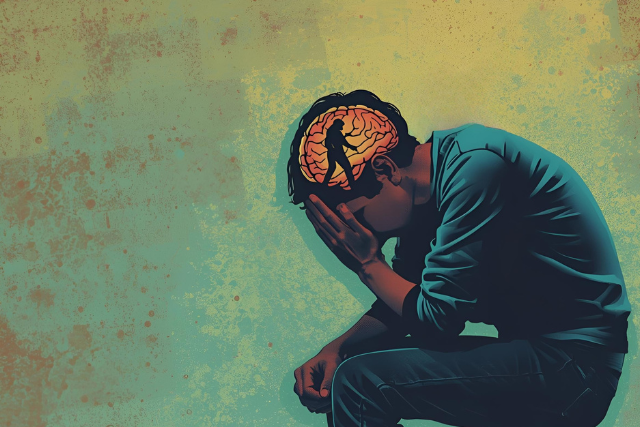
  • How Embracing and Loving My “Negative” Emotions Helped Heal My Pain

    How Embracing and Loving My “Negative” Emotions Helped Heal My Pain

    “Do not fight against pain; do not fight against irritation or jealousy. Embrace them with great tenderness, as though you were embracing a little baby. Your anger is yourself, and you should not be violent toward it. The same thing goes for all your emotions.” ~Thich Nhat Hanh

    For a long time, heaviness and dark feelings were very familiar to me. In a strange way they were comforting; I felt safe in darkness. The light felt more painful to me, but I also wanted to change because I wanted to free myself from the limitations of staying in the dark.

    I first started struggling with depression when I was young. From an early age my mother told me there was something wrong with me, particularly when I dared to express “negative” feelings, like anger. It became a mantra that filled my mind all the time. This one statement pervaded my entire life and dramatically affected the choices I made and didn’t make, well into adulthood.

    In my early forties, after much searching, I hit rock bottom. I was lying in bed, wanting to die, my thoughts telling me how wrong I was as a human being, when another thought popped into my mind: “What if depression is a gift?”

    Depression had felt like this never-ending darkness that clouded everything in my life. Even at times that I should have seen as positive, the depression prevented me from enjoying them. Depression was an old friend, one I not only tolerated but believed was the whole of who I was.

    I found my identity in feeling like a failure, and not moving forward meant that my identity was correct; I was confirming that this was who I was—until I understood that I was meant to be so much more than this depressed woman, sad, sorrowful, constantly grieving and frustrated. There had to be more to life.

    Instead of looking at what was wrong with myself, I started looking at the feelings that came up, noticing that my aversion to them was not only perpetuating them, but was affirming that I was not worthy of love, acceptance, or even acknowledgement.

    I could no longer fight who I was. I had to start looking at myself as a whole, including the pain and trauma, so I started to imagine that my repressed emotions were small children—and not just any small children, but orphans.

    They lived in a large orphanage, where nobody cared for them and the only adults that came in to see them were mean, critical ones who would beat them if they showed anger or leave them to cry if they were sad.

    There were many children in there, cowering in their cribs, with no one to hold them or reassure them that they were safe.

    Some of my “orphaned children” were shame and embarrassment. I’d felt these feelings many times in my life, and they’d prevented me from sharing my skills or even recognizing that I had any at all.

    I also had angry orphaned children who had been made to believe that anger was negative and bad, not positive fuel for creativity and healthy boundaries.

    And then there were my sad orphaned children, who had not properly grieved the loss of their father, who’d passed in my late twenties.

    These parts of me didn’t need to be alienated; they needed my love, care, and attention.

    I’d orphaned these feelings because I didn’t want them to be part of me, but because of this, I lived a half-life for a long time. Rejecting my feelings, ironically, fueled my depression, because you can’t selectively numb your emotions. When you numb any, you numb all.

    Instead of embracing these suffering children, I’d created diversions to avoid them.

    As a child, I used food to avoid feeling lonely, rejected, and broken. In my teens and early twenties, I was a binge drinker, consuming huge amounts of alcohol four days a week to repress my emotions. As an adult, this meant too much coffee and sugar, or I overworked to avoid feeling anything.

    At one point I used “positive thinking” to distract myself from these neglected aspects of myself. This was probably the most powerful distraction, because by thinking I needed to be grateful and happy all of the time, I was automatically rejecting all other emotions.

    It was easier to pretend than to make friends with these aspects of myself.

    I eventually realized that I couldn’t do this to myself anymore. I no longer wanted to lie or consider a huge part of my nature, my shadow, wrong.

    Self-compassion and self-acceptance are so important if we are to be balanced human beings. If we are unable to acknowledge and accept the pain inside of ourselves, how can we ever expect that things will change? How can we be less judgmental of other people if we judge ourselves harshly most of the time?

    Embracing pain isn’t easy. It takes courage and commitment to take this transformative path, to begin to reframe depression and other mental health issues as a gift, as an awakening, to help us return to who we really are, which is loving, kind, compassionate, and accepting.

    Though the darkness had felt safe, I eventually realized that I was afraid of the light because it illuminated those dark corners where my orphaned emotions live.

    It was time to stop fighting my feelings and give them a new home in my heart. Here’s how I did just that.

    Embracing My “Orphaned” Emotions

    1. Acknowledge.

    The first thing I had to do was to acknowledge that I had been avoiding my pain, and to accept that it was okay that I did this. If I beat myself up for deserting parts of myself for so long I’d just be putting further shame or blame into that orphanage.

    I had to accept that sadness, fear, anger, and rage were healthy emotional experiences, sometimes necessary, and that I’d previously rejected these feelings as a way to protect myself until I was ready to face who I truly am.

    If you’ve also abandoned your most wounded, fragile parts, decide to break the cycle now. Acknowledge what you did but also why, and have compassion for yourself.

    2. Get to know your feelings.

    Take the time to get to know these pain feelings, but do so as an unconditional mother would, without judgment, without needing to fix or make the feelings anything other than what they are. When sadness or sorrow comes up, take a quiet moment to witness this child within with loving attention.

    3. Accept them as gifts.

    Our feelings are not there to make our lives miserable; they’re there to show us what may not be working in our lives, or what needs to change.

    When I accepted that depression was a gift, I began judging myself less harshly and embracing the feelings I’d repressed for so long. Essentially, I started accepting all of myself.

    I’d gotten comfortable viewing myself as a failure, and I thought my unconventional life confirmed that’s what I was. I was living with my best friend who was in his seventies. I was single, poor in my eyes, and unattractive. I believed that because I didn’t have my life together in my forties—I didn’t have a home of my own, a partner, or a successful career—I wasn’t acceptable or enough as I was.

    My depression was a sign that I needed to change how I viewed myself. This enabled me to see not only that I am enough as I am, but others are enough, exactly as they are right now.

    Instead of stuffing down your depression, anxiety, shame, loneliness—or whatever emotion you’re tempted to resist—ask yourself: What message is it trying to send to me? What would I do differently in my life if I listened to this emotion instead of suppressing it?

    4. Remember it’s not a race.

    When I first started owning my shadow I found it challenging to stop my avoidance practices, but I initially tried to rush through this process. I thought I could immediately accept all feelings, whenever they arose, without ever giving in to my old habits.

    I eventually realized I had to be kind to myself and to take each new step as mindfully as possible. I also had to understand that I would probably fall back into old habits at times and accept this was all part of the healing process.

    It takes regular practice and persistence to welcome those unwanted emotions time and time again. It takes time to internalize that it’s not about getting rid of any feelings, but about welcoming them as part of self-love and personal growth.

    5. It’s all about trust.

    Becoming aware of our painful emotions is only one step. Until we are able to fully welcome and embrace them, life will trigger us to love them further. Things will happen that evoke all the feelings we want to avoid—challenges in our work, relationships, and other aspects of our lives.

    We can turn back and ignore the triggers, or we can trust that whatever shows up is meant to teach us unconditional love. It takes faith and trust to love shame, anger, and fear. We need to trust that this is worthwhile and that we’re capable of re-parenting ourselves in a more wholesome way.

    I know that my old ways of avoiding and distracting myself from the pain never worked—that I had to go through it to go beyond it, and that going beyond it does not mean I will never feel sad or despairing again. I will, but I can do so from a place of trust, knowing I will be okay, because I now understand that all of me is lovable, and I am enough exactly as I am right now.

  • How to Take Back Control from the Negative Script in Your Head

    How to Take Back Control from the Negative Script in Your Head

    “You don’t have to control your thoughts. You just have to stop letting them control you.” ~Dan Millman

    I’d love to say I had an “Eat, Pray, Love” moment where sitting sobbing in the bathroom I received divine guidance to leave my husband and go traveling the world eating amazing food. But sadly, it wasn’t quite that profound.

    It was more a long series of nights sobbing in the bathroom, looking at myself in the mirror, and concluding “You’re broken.”

    I wasn’t depressed and hadn’t been for a long time. My anxiety, a lifelong companion, was under control. So what was wrong?

    A general feeling of discontent, a lack of energy and enthusiasm to do more, a loss of my spark, a quietening and turning inward, and these overwhelming onslaughts of negativity and tears whenever I felt criticized or something went wrong, which was often. A sense of resentment and frustration that I’m sure ensured those around me felt less inclined toward being loving and giving me the care that I needed.

    So all those nights in the bathroom crying didn’t lead me to any insight, but thankfully the universe did send me guidance in other ways.

    Someone posted a video to a Facebook group I was part of by a guy named Richard Wilkins. It was called “My F*ck It Jeans.”

    Richard is well in his sixties, yet here he was making a Facebook video about how he doesn’t let his age dictate how he feels, acts, dresses, or his enjoyment of life. He doesn’t worry about others’ opinions or society’s views of how someone his age should be, but instead lives true to himself, and has never been happier. And here I was in my early thirties, feeling wiped out and like my spark for life had been put out before I’d even realized I had one!

    Over the next year I followed Richard on Facebook, and was drawn to drive one fateful Saturday morning to Northampton, to his Recharge Day.

    Richard always says, “The reason you are there is never the reason you are there.” This certainly proved true for me. I thought I was there to find out if the course would help my husband, but after I cried myself through the first half of the morning, I quickly realized I needed to be there for me.

    “You are not broken.” Richard’s words cut into my thoughts.

    Did I hear him right? Did he say I’m not broken? Did I dare to believe that? And how did he know that’s how I felt? There were over 200 people in the room. Was it possible that some of them also felt broken? If so, was it likely that I was the only one who really was?

    It was this question that led me to turn up on Richard’s front door step a few months later to attend a five-day Broadband Consciousness (BC) course with him and his partner, Liz, and seven other strangers, who have now become friends.

    For the next five days I shared things I’d not shared with anyone before. Then I shared more.

    I listened and didn’t jump in with advice. I made no plan for what I must do when I got back from the course. I didn’t look at my phone.

    I struggled, then I had a breakthrough, then I struggled harder. I spoke up when I did and found others had the same struggles. I supported others and they supported me in return.

    I woke up easily and full of energy. I laughed. I cried. I ate lots of biscuits and didn’t care. I felt like a very heavy weight had been lifted from my back. I felt like life didn’t have to be so damn hard anymore.

    I learned a way of separating that negative voice in my head (which BC calls “the script”) from the real me.

    I learned that the script is anything that doesn’t serve me and I would not choose.

    I learned to recognize the real me.

    I learned that the script is just thoughts based on incorrect beliefs, and that they are not true.

    I learned that if I’m not choosing my experiences, my actions, and my feelings, the script will choose for me.

    I learned that it’s not necessary to listen to, analyze, or try to change the script. All I need to do is recognize when it is the script talking and not me. And not believe it. And not act on it.

    And I learned this not from talking about myself but from witnessing other people and the script in their heads. Because guess what? The script told them they were broken too. And useless. And they always get it wrong. And they are fat and ugly. And they are not good enough. And they are not loved. And on and on… We were literally all reading from the same script!

    Since returning from the course, the impact has stayed with me and grown. After over thirty years of listening to the script, for every month I spend not believing it I get to know the real me more and ignore the script more easily.

    So how can we all take steps to turn away from the script and tune into our true selves?

    First off, you have to recognize the script and be open to the possibility that what it’s saying isn’t true.

    In fact, make it your job to discredit the script, to prove what it’s saying to be fake news.

    Remember that time it said you were dying because you were having a panic attack? Not true!

    What about the time it said you couldn’t do that thing, but then you did it? Yup, it was lying!

    Oh, this is a good one—how about that time it said you were worthless and no one would hire you? Ho ho ho!

    Once you recognize the script you will be surprised by how many times it pops up!

    Secondly, remember that you are not the script.

    Think of the script as a physical book. It has many chapters documenting every mistake we’ve ever made, all the bad things that could or have happened, detailing how we ‘should’ behave, think, and feel about every situation under the sun.

    The script also has an audio version, which is what we can hear in our heads each day. But it is not us. It is just the script being read to us.

    If the script says you are useless, this is not true, nor relevant. It is just the script’s opinion.

    Mentally put down the script and accept that, although we can’t change what’s in it or get rid of it, we don’t need to read it all day long, and we certainly don’t need to act upon what it says.

    Lastly, choose! Don’t let the script sit in the driver’s seat.

    The script lives in our reptilian brain and is much faster at responding than our conscious brain. If we don’t consciously choose thoughts, feelings, and actions, the script will jump in and choose for us.

    Start with small things: What would I choose to eat? What activities do I love? Be mindful of what you say. Cut off the script and choose to think of something else. Get out of bed at the time you planned to. Choose not to engage in arguments. Choose to take a bath or read a book.

    Every small choice moves us away from the script and strengthens our choosing muscles.

    Here are my top tips for doing so:

    1. Laugh or smile.

    I recently went to a laughter yoga class for the first time and learned that your body and mind don’t understand the difference between forced laughter and natural laughter.

    When you smile or make a laughter sound it makes you feel better. It strengthens your relationship with your true self and draws you away from the script. So as well as remembering to smile and laugh for no reason, building opportunities to laugh into your life can also be a real help.

    2. Focus on what the script doesn’t see.

    When you’re walking down the street, the script is on high alert for potential threats. It’s trained to look out for all the negatives and potential problems. If you (your higher self) are not alert, you will listen to all the bad things the script has spotted, not just in the street but in your job, your relationship, the activity you’re doing, your children’s behaviour, your body… and on and on.

    One way to practice disconnecting from the script and tuning into the real you is to focus in on all the good stuff the script filters out (in BC we call these “pearls”). Pearls don’t have to be anything huge. It could be a text from a friend, a hug for your child, a chance to grab a cup of tea in silence, or a warm bed at the end of a long day.

    3. Be mindful of your language.

    The more we look for something, the more it will show up in our life. This is true not just in terms of what we see in the world but also the stories we tell ourselves.

    The reptilian brain (where the script lives) doesn’t take time to fact-check what it tells us, yet because it’s coming from inside our own head we tend to believe it. It’s like taking in a headline but not reading or researching the article, then accepting that headline as fact and maybe even repeating it to others.

    So, if someone asks you how you are and you immediately jump in with “tired” or “stressed,” this is what you will believe and therefore how you will feel. If you moan about your partner or say critical things to them, you are repeatedly telling yourself that your partner isn’t good enough. How do you think this affects how you feel and act toward them? And the response you get in return?

    4. Choose.

    Start choosing instead of allowing the script to choose for you.

    Choose food you know will make you feel good. Arrange activities that bring you joy. Say no to that event you don’t really want to go to. Choose to go for a walk at lunchtime. Choose to give your opinion or choose to forget the ironing and take a bath.

    Do whatever you feel called to do when you really tune into your feelings rather than letting autopilot or society’s demands take over.

    5. Let it pass.

    A food craving lasts three minutes, so if you can ignore it for that long it will be gone. I’ve found it’s the same with the script.

    When something triggers the script and you suddenly feel angry, sad, or inundated with critical thoughts, it will generally abate after a few minutes. No need to act on the script either by saying something or doing something. Let it pass, then, when you’re no longer in the script, decide if you need to act.

    Also, remember that whatever triggered the script is not responsible for your subsequent feelings, it is the script making you feel bad, not your colleague, partner, or the guy who cut in front of you in the line.

    6. Share. Learn. Explore.

    The world of self-development can be overwhelming. The script will always tell you that you need to learn more, fix this problem, work on yourself just a bit more. Be conscious of this and instead stick to readings and learnings that align with the simple practices I have mentioned above.

    Focus on sharing as you learn rather than feeling drawn to learn more and more and more. This will reinforce the messages and in turn, you will learn through the telling.

    Be aware of your learning style. If you learn from sharing, then talk to people about what you have learned here. If you learn from writing, write about your experiences or doodle your own version of how to explain the script to a stranger.

    When we share what we have learned and help others, we move away from ourselves and our own problems, and this prevents us from dwelling and drawing more problems to us.

    7. Exercise.

    Everyone says this, but it’s for good reason. Exercising for twenty minutes a day is as effective in boosting your mood as some antidepressants. So whether you’re depressed or not, that has got to be good for you! It gets you out of your head, where the script is, and into your body.

    By getting into your body, you can tune into your conscious mind, and you’ll likely find that ideas, inspiration, and solutions to your problems present themselves.

    8. Listen to music that uplifts you.

    Similarly, use music to get yourself out of your head and into a chosen state. Choose music that reminds you of happy times, or music that gets you energized and ready for inspired action.

    9. Get competitive but not angry.

    Try to avoid getting angry with the script, since it’s only trying to help, although ineffectively. Instead, develop a healthy competition with it.

    If the script thinks you are too lazy to go for a walk, do it.

    If the script thinks you are too scared to do something you’d love to do, do it anyway.

    If the script thinks you should say no to an amazing opportunity, ignore it.

    If the script wants you to lose it with your partner, choose not to.

    Thank the script for its input, but remind it that your real self has the resources, experiences, and skills to deal with life without its help.

    10. Keep asking, “Is this true? Would I choose this?”

    Odds are, once you tune into your higher self, you’re realize the answer is no. And you’ll be able to choose for yourself instead of letting the script run the show.

  • How I’ve Learned to Free Myself from Depression When It Hits

    How I’ve Learned to Free Myself from Depression When It Hits

    “No feeling is final.” ~Rainer Maria Rilke

    I’ve battled depression for most of my life. In my younger years, it gripped me pretty frequently. I was first hit with suicidal thoughts at the age of fifteen, and it scared the bejesus out of me. I was young and dumb and had no idea what was happening.

    When I was twenty-five it hit again. This time, however, I understood the cause. I was getting divorced, and my entire life was in turmoil.

    It was at this time that I decided that I was going to do something about it. So, I dove into the world of personal development. I read every book I could get my hands on.

    The following are some realizations I’ve had about depression and what’s helped me break free from it. This may not work for everyone, but perhaps there’s something here that can help you.

    Depression is like a Chinese finger trap: the more you try to get free, the more trapped you become.

    When I was younger, I would try to fight my feelings. I believed in facing my challenges head on. As any young man would do, I would see myself as the hero of my own story and depression as the villain.

    The last time it hit me, however, I wasn’t nearly as brazen. I laid in my bed and the feeling washed over me like a flood. One minute I was okay, and the next I was going haywire.

    All I could think about was killing myself. And the crazy part of that is that I had a great life, and that I didn’t want to actually do it. I just wanted the intensity to end. I wanted to be free from the feelings that penetrated everything I did.

    Depression is like a Chinese finger trap. The more you fight it, the more it gets you in its grasp. And the only way to get out is to do the very thing that you intuitively feel is wrong.

    You only get free from depression when you lean into it.

    I know that goes against every piece of self-help advice that exists. But depression is a different animal. You can’t positive-think your way out of depression because this kind of mental battle is a big part of what causes depression in the first place. Obsessing over your thoughts keeps you stuck in your head.

    It’s a trap of the most frustrating form because your attempts at defeating depression often serve to keep it firmly in place. In other words, your resistance to depression causes it to strengthen its grip on you.

    There is a concept in psychology and cognitive behavior therapy (CBT) called “exposure therapy.” The idea is that the more you expose yourself to the thing you fear, the less intimidating and fearful that thing becomes.

    I was able to get over my fear of snakes in this manner. One summer I made the goal to hike a certain trail near my house. However, the trail constantly had snakes on it, and I was deathly afraid of them.

    I didn’t want to give up on my hiking goals, so I forced myself to walk past the snakes. Eventually I realized that they are relatively harmless and won’t bother you unless you bother them.

    Do you fear your depression? I know I did, especially when it became so bad that suicidal thoughts would creep in. I would spend many a night in bed just lying like a brick, afraid to move because I was scared that I would do something to hurt myself.

    When you lean into your feelings, they dissipate.

    And thus is the wisdom of the Chinese finger trap. The only way out is to lean in. To stop fearing what you feel and start facing what you feel.

    When I started thinking about the things that may have been causing my depression instead of the things I thought could cure it, I got a better understanding of what my depression was.

    I saw that things like negative core beliefs and unhappiness with my career and finances were contributing to my depression, and that I needed to deal with those things. Depression, then, was more of a symptom of the real problem rather than the source.

    You don’t beat this enemy by fighting him. You beat him by standing in front of him and telling him that you are not afraid. And then you deal with the things that make him strong.

    I liken depression to a storm. It will hit you all at once, but it won’t stay around forever. If you wait long enough, the feelings will pass. And what is left after the feelings pass is in your hands.

    You can choose to let the storm of depression keep you in a depressed state even when the actual feelings aren’t there. Or you can pick yourself up, dust yourself off, and keep moving forward.

    Leaning into your feelings releases their power over you, but you still need to wiggle yourself free after you release your feelings.

    This is probably the most important part of dealing with depression.

    It’s not enough to just face your feelings and lean into them. If you’ve ever played with a Chinese finger trap, you eventually realized that to release its grip on your fingers, you had to push them further into the trap. However, to truly get your fingers free, you had to wiggle them back out slowly.

    This is exactly what depression is like. You may not have control over when depression strikes. You may even need medication to deal with it. But you can control what you do when you’re depressed, and you can break free. I am proof of that. I’ve battled this feeling, this inexplicable feeling, for most of my life. But I now know what true joy and true happiness is.

    You can know joy too. You can get past depression when it hits. You don’t have to let it define you any longer.

    How do you wiggle free? I use a process of deep introspection, mindfulness, and work toward a powerful purpose in my life.

    At the root of my depression were the most insecure and sensitive things I thought about myself. This is true for many of us. These beliefs run under the surface of our psyche like a motor. Pay attention to the things that make you emotional and look for the beliefs you have about yourself that are behind them.

    For example, I used to feel shame whenever someone would single me out in front of others. While this is a common feeling for people, I looked for the belief that may have been fueling that. I discovered that underneath it all was an old belief from childhood: “I am bad.”

    Now, when I recognize that this belief is surfacing, I remind myself that it’s human to make mistakes sometimes, and that doesn’t make me a bad person. This prevents me from spiraling into a shame cycle, which can easily lead to a depressed state.

    You have negative beliefs about yourself as well, and, while it’s an extremely emotional process facing them, it’s also cathartic. Find someone you trust and talk to them about these thoughts and feelings. Or journal about them to understand why you formed them and how you can let them go.

    Another powerful tactic for wiggling free from depression is mindfulness. I like to solve puzzles or do something creative to take my mind away from the thoughts that depression causes me to have.

    Note that this isn’t meant as a way to avoid your problems. Depressed thoughts are like a tape that plays automatically in the back of your mind. When you immerse yourself in an activity, you interrupt that tape and break the negative cycle so that you’re no longer fixated on negative thoughts (which is akin to pushing your finger deeper into the trap).

    It’s also helped me to fix my finances. They say that money can’t buy happiness, but that’s not the entire truth. According to this study, our income can actually increase our happiness up to a certain amount, since it’s easier to be happy when we’re not struggling to survive.

    To fix my finances, I stopped wasting money on things that weren’t bringing me joy (such as a cable subscription) and focused on ways to increase my income. I learned pretty quickly that, although being rich doesn’t make you happy, I feel a lot more at ease when I’m not living paycheck to paycheck.

    Lastly, I’ve focused on finding meaningful work. One of the biggest culprits of depression is a feeling of hopelessness and despair. So, finding meaningful work or a deeply personal life purpose will do wonders. For more information on finding meaning, check out Viktor Frankl’s book A Man’s Search for Meaning.

    In my case, I found that the career I was in was making me more depressed. I was an engineer, but the long days sitting in a cubicle were driving me mad. I wanted a career where I felt like I was doing something that mattered.

    So, I went back to school and became certified to teach. I ramped up my writing career and started freelance writing. I did more of the work that I loved to do. When you do more of the work that you love to do, you become more of the person you want to be, which makes you a lot happier with yourself and your life.

    And that leads me to the final point…

    You are not your depression. You are the person who is feeling depressed.

    Until I realized this, I was seeing myself as a depressed person, and I was allowing it to define me.

    You are not your feelings. Stand in front of a mirror and shout that to yourself. Scream it to the world. You are more than that.

    You are whatever you choose to be. See the possibilities of who you can be and move toward those things. Don’t let depression beat you up and keep you trapped. The door is open. All you have to do is walk through it.

    *Disclaimer: Depression can have many different causes, and different people may need to take different approaches to healing. Don’t be afraid to seek professional help if nothing else has worked for you. There’s no shame in needing or accepting support!

  • 7 Mind-Shifts to End Depressed Overeating

    7 Mind-Shifts to End Depressed Overeating

    “Maybe the reason nothing seems to be ‘fixing you’ is because you’re not broken… You have a unique beauty and purpose; live accordingly.” ~Steve Maraboli

    Have you ever seen a woman down a family-sized tin of chickpeas?

    Or eat six pita pockets stuffed full of avocado, cheese, tomato, and onion?

    Or a dozen greasy samosas?

    I used to overeat when I was depressed. I’d eat till I was so stuffed, the only thing I could do was sleep.

    (Like Valium, but with added fiber.)

    I’d been doing it since I was a kid.

    My family was vegetarian, so I knew what healthy food was. The problem was, I felt like I had to eat until all the food was gone.

    Sometimes I made myself throw up because I felt so panicked about the amount I’d just eaten.

    I never had any professional help. The only time I talked about it was when I cried to friends at parties.

    They’d say, “You’re slim, so what’s the problem?”

    And I get it. On the outside I looked sorted. But for me, eating was a constant obsession.

    I’d try to rein it in by counting calories. Or I’d plan to only have one or two helpings, but I’d always cave in and eat everything.

    It went on for years.

    It was my normal.

    But it reached an all-time low in my final year at college.

    In the past, I’d overeat in the evening and then sleep off my food coma at night; but now I was binging and sleeping during the day as well, when I should have been studying for final exams.

    It was the most miserable time.

    Every morning I’d head out to the campus library, with a packed lunch in my rucksack, and a plan to read all day.

    But in the library, I’d be bored. By 10:00, I’d eat the sandwiches. Then I’d want more. So by lunchtime I’d head home with bagful of groceries.

    And eat. A lot.

    Then, when I was completely, utterly, totally, abysmally full, I’d crawl into bed.

    I’d wake up when it was dark. I’d hear my housemates joking together. They seemed to be having a normal college experience!

    I hated my body for making me eat. I hated how fat and slobbed-out I felt.

    I was at such a loss, I would have tried anything.

    Thankfully, help did come my way. And it came in a surprising package… a trashy-looking slimming book, advertised in the Sunday papers!

    It promised to “change you from within to help you lose weight.”

    I bought it. I read it.

    But I didn’t just read it; I studied it. I listened to the audiocassettes that came with it over and over again; I took days over each exercise in the book.

    I set aside trying to change what I ate. I wrote “eat normally” every time it said “lose weight.” Instead, I focused on my beliefs around food and body. I found I had plenty to work with!

    I filled journals. I found more and more books about the inner world of the eater. And I started to visualize a different future—one with space for other interests aside from my food and my figure.

    I kept believing in that future. I changed a couple of eating habits, and others just fell away.

    Two years later, I realized I felt more relaxed and guilt-free around food.

    As my self-judgment around food disappeared, I got happier in myself too.

    I was amazed how happy.

    What surprised me was, when I tackled the eating, my depression lifted. Even though overeating was only a side issue!

    Working on my eating shifted how I saw myself. And that changed how I approached everything—I was more assertive, more forgiving to other people, I never locked myself out my house by accident any more…

    (Only joking. I did that yesterday).

    So, in case you’re struggling with food yourself, here are seven mind-shifts that completely ended my overeating.

    They also help you get through almost any unhappy moment in life!

    1. Tell yourself you’re not broken.

    It’s easy to feel ashamed for having a problem when everyone around you makes eating look easy.

    You know what you should be doing, and you can’t. It feels like there must be something wrong with you.

    But there’s not!

    When we’re in a fix, it’s perfectly natural to reach for something. At some point in the past, food was the best solution you could come up with.

    Well done, you!

    Just because overeating doesn’t serve you now, doesn’t mean you were stupid or wrong for taking that approach then.

    For example, I started to overeat because I was pushing myself at school. That sedative, I’m-so-full feeling was a relief from trying hard.

    My real problem was I didn’t know how to relax!

    Of course I didn’t! I was a teenager! It made perfect sense to zonk out instead of seeking inner peace.

    At college I also put myself under insane pressure. My overeating gave me an excuse to hide in bed. It was my way of showig that I was daunted.

    Your eating may look crazy, but that’s how your unconscious waves a red flag, telling you something’s up on a deeper level.

    Your inner wisdom is alive! That’s very much a sign you’re not broken!

    2. Ditch guilt and self-punishment.

    I used to feel like the temptation to overeat was this big weakness that won every time.

    I’d plan to be strong, but then I’d think, “One last time won’t hurt.”

    Then I’d overeat, panic that I’d done it again, and lay on the guilt. I thought, “If I hate myself hard enough, I’ll teach myself such a lesson I’ll never do it again.”

    But I still slipped up, and my self-hate grew.

    And grew.

    Over time, guilt completely sapped my confidence. I felt like a criminal. That I didn’t deserve to ever be normal.

    But there’s nothing morally wrong with overeating. It’s not bad.

    You’re not bad. You’re allowed to make mistakes.

    Let go of the idea that if you don’t feel guilty, you’ll never learn.

    The opposite is true!

    When you stop feeling guilty, you can continue your journey, praise yourself for caring, come up with new creative ways forward, and get to know yourself better.

    3. Make a no-rules pledge.

    Do you have a lot of ideas about what you should and shouldn’t eat?

    I didn’t realize I had food rules in my head, because I never dieted.

    Officially.

    But I always made promises to myself. I tried to be healthy (“No more frozen cannelloni.”) Or ethical (“I’m vegan.”) Or well-informed (“I’ll try being gluten free.”)

    I restricted myself, like a dieter.

    It’s a natural mistake to try to get ‘good at’ eating by following rules and plans.

    It’s not that sticking to plans is bad—it’s great for getting things done, budgeting for a holiday, and not randomly adding grapefruit segments to a birthday cake recipe (sorry, Mum).

    But when it comes to your body and emotions, you need a more intuitive approach.

    Rules and restrictions are an invitation to your inner rebel to go ape.

    You break your rule, you fail.

    Failure is a killer, because you can’t build progress. You just stop! You give yourself a hard time. You start over. It’s a huge drain on your energy and morale.

    So stop making rules.

    Instead, give yourself permission.

    You can choose a vegan option if you want to; you might cook a meal from scratch if you feel like it; and you might pick foods that give you energy, if that’s what you feel like.

    4. Slow down and enjoy your food.

    If you’re overeating as I was, you might think that “enjoying food more” is the opposite of what you need!

    But (weird thought coming up…)

    … maybe you don’t enjoy eating enough!

    As an overeater, sure, I’d think about food all day. But while I was actually eating, I’d be completely zoned out.

    Learning to eat slowly, and concentrate, made it easier to switch off about food between meals.

    It also redirected all the worry about what I was eating, into a more relaxing focus on how I was eating.

    Plus, when I slowed down everything tasted yummier! Even a sweaty boiled egg from a lunch box was really good.

    The more you enjoy the eating experience, the more your cravings settle down. And one day, you notice you’re full: satisfied, but not stuffed.

    I was blown away when it happened to me. In my mind’s eye I can still see the potatoes I left on my plate. I just sat staring at them.

    They were just potatoes. They didn’t have any power over me.

    5. Move your body.

    I used to dread sports.

    I thought it was all about counting things and competing. And I felt like I never measured up.

    The only good feelings I got after exercise were from knowing how many calories I’d burnt.

    At college, my friends went for a run, but I couldn’t join in. I felt embarrassed that I could only run for …

    One. Minute.

    So I went to the park secretly, to shuffle around with my headphones.

    One minute was almost pointless… but not quite. Because after I did that a few times, I found I liked my body a tiny bit more.
    I felt refreshed. I wasn’t judging my body from the outside, I was feeling good inside instead.

    There’s a lovely word for that: embodiment.

    I started to have fun.

    I joined my friends. They liked to go running in nature, with fresh air and flowers. They’d speed off, and I’d just boogie to my walkman by a rhododendron bush.

    You can move your body, even if you’re not good at it. You don’t need to be head to toe in lycra. You don’t have to think about calories, or try to do a bit more each time. It doesn’t have to look like exercise at all!
    It can look like messing around with a hula hoop.
    Chasing pigeons.

    Or walking.

    When you embody, your self-criticism about your body calms down. And that helps eating become natural and easy.

    6. Let your desires lead you.

    When I overate, I used to feel possessed by urges. A thought like “avocado pita” would start up.

    AvocadoAvocadoAvocado! PitaPitaPita! Aargh!

    I thought cravings were evil forces that wanted to ruin my life, and that eating to the point of self-disgust was the only way to silence them.

    But now, when I look back at those binges, they make perfect sense: My body was starving for carbs!

    “Lo-carb” was a fashionable way to eat around that time, and my housemates didn’t buy bread or pasta, so I’d slipped into it too.

    So our appetite isn’t evil after all! It guides us to what our bodies need.

    When I realized that, I saw that I didn’t accept my other hungers either.

    When I was tired, I didn’t rest. I’d party for fear of being antisocial. And I’d never ask for what I liked in bed.

    Food, sex, space, sleep, success, money. It’s not wrong to want!

    Your desires make you, you. When you enjoy what nobody loves quite as crazily as you, you’re living out your life purpose.

    Blue cheese was created by the universe. And then it needed someone to go nuts about it.

    That’s what I’m here for.

    7. Redirect your energy where it counts in the world.

    When eating is an obsession, it takes over your day.

    All that brainpower spent on eating doesn’t leave much for things that matter to you. The things that make life fun.

    By the end of college, I couldn’t see the point of studying literature anymore. I didn’t want to admit that my degree was a big, expensive, mistake. Hibernating under a duvet was easier.

    But I also didn’t dare own up to what I really wanted: to illustrate and write and perform. To communicate and belong and connect.

    I always thought, “First I’ll fix my eating and get a better body shape, and then I’ll go for it.”

    Wouldn’t it be awesome if we used all that energy to love our people and do our thang?

    Straight away, not later when we’re ‘perfect’?

    Beneath my food challenge was another, bigger challenge that I was avoiding: to do what I cared about.

    It’s ongoing, but it’s worth it.

    The more I stop worrying about my eating, the more voom I have to throw at it.