Tag: dependency

  • How I Embraced Alcohol-Free Living: 4 Things That Made It Easier

    How I Embraced Alcohol-Free Living: 4 Things That Made It Easier

    “What is necessary to change a person is to change his awareness of himself.” ~Abraham Maslow

    A few years ago I decided to take a break from alcohol, and I also decided I would probably be lonely, miserable, and boring for the duration of my break.

    I’d allowed a lot of social conditioning to affect me, and I was sure people who didn’t drink either had no friends, had hit a drastic rock bottom, or had no fun. I didn’t know if I was going to find happiness or even contentment on the other side of my drinking career, and this worried me.

    I began to examine those thoughts and feelings around my drinking and brought my behaviors into a sharper focus. It led me to…

    Awareness (of my drinking habits)

    I look back and can now clearly see that I was, for a very long time, a gray area drinker.

    A gray area drinker is someone who falls into the bracket between never drinking and physical alcohol dependency.

    Society tends to view problematic drinking in black and white terms. “You’re an alcoholic and you need to be fixed, or you’re not an alcoholic and are therefore okay.” Well, I think it’s more nuanced than that. There’s a spectrum between the extremes of rock bottom and every now and again drinking, and it’s a long spectrum.

    A gray area drinker could be consuming a couple of glasses of wine each evening or could be someone who binge drinks on the weekend or someone who can abstain for a month at a time to prove they haven’t got a problem.

    I was capable of any of those behaviors, and, looking back, I fit the description of a gray area drinker very neatly. I wasn’t physically dependent on alcohol, but I might have been emotionally dependent. I used it to help me alter my state of mind into relaxation/fun on a regular basis.

    This can be a confusing place to be when you first start to see alcohol for what it is. I’d say, “But I’m not doing anyone any harm. I’m sinking a couple of glasses of wine on the sofa, and then I’m going to bed—what’s the problem with that?”

    In the past I moved along the gray scale; different ages, different friendship groups, different jobs, different circumstances, different seasons, and different living arrangements all led to different drinking patterns. Apart from the periods in my life where I was pregnant or breastfeeding, I didn’t ever choose to have a really extended time (more than thirty days) away from alcohol.

    Acceptance (that I wanted something different)

    I came to realize that the more I moved along the grayscale, the more or less colorful other areas of my life became. If my joy was a rainbow, the vibrancy of that rainbow either faded or shone brightly depending on how much I was drinking.

    I stopped myself from making a change around my drinking for a long time because I didn’t want anyone to define me as “having a problem.”

    The movies would have you believe that the end of your drinking career needs to be very dramatic, with a family intervention and a massive rock bottom, but this doesn’t need to be the case.

    What if you chose for your drinking days to end with a quiet fizzle out instead of a big firework or massive drama? That’s how it was for me.

    My gray area drinking changed shades of gray over a couple of years, and by the time I was ready to try my alcohol-free life experiment, I was moderating my drinking and never drinking more than two drinks at one time. However, the shades of gray no longer felt good, and I wanted a full-on technicolor rainbow, and I knew that to get one I had to do away with the other—so I did.

    Those gray clouds parted, and one by one all the other areas in my life that had, up until then, been a bit less than joyful started to shine a bit brighter.

    Action (taking steps toward what was next)

    Once I had made the decision to have a break from alcohol for one year, I took action steps to make it more likely to happen.

    I set myself up for success by choosing a time frame I wanted to work toward, educating myself on the harm alcohol does, downloading an app to help me to stay focused, looking for other inspiring people who were already doing what I wanted, and asking for support where I needed it.

    I had assumed that once I made the decision to have a break from drinking, it would be easy to execute, but I was surprised to find it wasn’t. I realize now that this is one of the reasons there are so many amazing sober communities out there—we need each other, and we want to look out for those who we can serve.

    I used to joke that the early days of sobriety constituted a full-time job because I got very focused on a morning routine that supported my needs, I read more than I ever have, I listened to podcasts, and I used distraction techniques in the early days. But actually it wasn’t a full-time job; it was simply learning a new way of being.

    Alignment (and a feeling of contentment or peace)

    Now that I don’t drink, I’ve had to face some truths. Some of them have been uncomfortable. Some have become less uncomfortable over time, and some, well, they are still uncomfortable.

    Deciding to have an alcohol-free year threw me into a bit of an identity crisis. I was mostly okay about changing my home drinking identity but really struggled with my social identity. Shared boozy experiences were a big part of my life and of who I was, or who I thought I was.

    I’ve ended up piecing together a bit of a new identity over time. I’ve reflected not only on who I had been but also on who I wanted to be in the future. I took time to explore what I enjoyed and also consciously began to move away from activities I had stopped enjoying.

    I also looked more closely at my relationships. Who did I want to see more of, and who did I need to move away from a bit? Some of the most surprising support came from the least expected places.

    I discovered that chaos had been a default position for so long that calmness was too unfamiliar. To start with, I had to move slowly toward the identity that I wanted. I’ve accepted that some friendships have changed and some have stayed the same. I’ve also made new friends since becoming sober and a business owner.

    Who am I sober? I’m just someone who chooses not to drink alcohol. I want that to be the least interesting thing about me.

    Who am I sober? I am an improved version of myself, more relaxed, more peaceful, more patient, kinder, and more content. These were not words I would have used to describe myself when I was drinking. Internal chaos reigned.

    Who am I sober? Well, probably the most surprising thing for me is to find myself working as a coach. I spent twelve years as a youth worker, and a large portion of my time was spent talking to young people about their substance use without ever considering my own. When I had gotten sober and completed my coach trainings and certifications, I couldn’t believe what I had achieved. None of this seemed possible a short time ago.

    I recognize now that a large part of the “woohoo, let me lead the charge to the pub/bar/dance floor” part of my personality looked like an extrovert but was indeed an introvert using alcohol as a coping mechanism in situations where I didn’t feel comfortable.

    I’m really happy to lay claim to my more introvert nature now—let me have all the fun, but please can it be in pairs or small groups, please can it be in the morning or afternoon, and please can I go home and have a lie-down afterward? Thank you!

    If you’re struggling to visualize/think about who the sober version of you might be, then follow good role models to get ideas—read books, listen to podcasts, and take action. If you’re thinking of taking someone’s advice, consider if they are currently where you might like to be. Have they been in a similar place to you now, and have you seen them act with care and kindness toward others they are helping?

    Sobriety hasn’t been a ‘one and done’ experience for me; it’s been a process over the last few years, and I’m so grateful to acknowledge that I’m still a work in progress, as I believe we all are.

    Bring awareness, acceptance, action, and alignment into focus as you go, and it might just make things a little bit easier for you.

  • Stop Over-Depending on Others and Seeking Their Approval: How to Set Yourself Free

    Stop Over-Depending on Others and Seeking Their Approval: How to Set Yourself Free

    woman girl stylized like marionette puppet on string

    “Some people think it’s holding tight that makes one strong, but sometimes, it’s letting go.” ~Unknown

    I got a week off of work recently to spend with myself, which is always a wonderfully centering experience for me. I’m an introvert, so I love my alone time. But as I took the time to introspect about some relationships in my life, my Zen-like vacation mindset disappeared.

    It had happened again, and my mood alternated between mad and depressed all weekend. You see, sometimes I turn into a puppet.

    You probably know the feeling, even if you’re not sure what I’m talking about yet.

    There’s a sense of being a little out of control of your life, powerful emotions pulling you in different directions, a nagging sense of worry that never lets up, and losing your grip on that sense of who you are and what’s important to you. That’s my least favorite part—the loss of identity.

    “A lie keeps growing and growing until it’s as plain as the nose on your face.” ~The Blue Fairy, Pinocchio

    For me, these feelings come from becoming overly emotionally dependent on others, usually particular relationships in my life. For many others, and maybe for you, it might not be so specific. The dependency might be spread out over your peers, friends, coworkers, or parents.

    What is Over-Dependency?

    Let’s start out with this: dependency is not a weakness. It’s actually healthy, as long as you can keep it balanced with independence.

    We all need to be taken care of, validated, encouraged, and given support. When we can receive these things from others and use them to nurture our spirits, this is healthy dependency. When we draw strength from these experiences, it allows us to more easily be independent at other times—relying on and caring for ourselves, and being the one to support others.

    This is called interdependence, and it’s a beautiful ebb and flow in relationships of both giving and being able to receive. As social as we human beings are, this is pretty necessary for our survival. The instincts for it run deep in our nature.

    Over-dependency is when you find yourself struggling to return to emotional independence when needed. For me, this involves a lot of worry and obsessing over what someone else thinks of me.

    It feels like an intense need for someone’s approval, otherwise I’m not okay or enough. Sometimes it comes out as continuous attempts to prove myself, or be perfect, or seek compliments. Other times, I give up too early or avoid people who I feel may never approve of me.

    You might see it in others—you know, those genuinely great people in your life who never admit to being good enough.

    When we try so hard to constantly please someone else, we start to become unreal. Over-dependency gives us feelings of emptiness, inadequacy, loss, confusion, and insignificance. We feel unreal not because we don’t matter to others, but because we are making ourselves fake.

    Where Does It Come From?

    This varies for different people. Maybe it was the way you were parented, or being bullied in school. How about becoming a teenager and suddenly feeling the cultural pressure to be a model/genius/super-star? Maybe it was being treated badly in a romantic relationship.

    Mine comes from an abusive relationship I experienced several years ago. My abuser was highly psychologically manipulative, cornering me into compliance with threats, insults, intimidation, blaming, guilt tripping, shaming, and praise.

    He praised me highly when I did what he wanted and attacked my self-worth when I did not. I learned to feel fear and anxiety any time he wasn’t happy because I knew it meant I was at risk for being told that I was unlovable and inadequate.

    It was highly victimizing to know that my worth in his eyes was conditional and dependent on how I made him feel, rather than being recognized as a valuable human being with my own needs and emotions.

    Becoming a puppet was a way to try and protect my little scrap of self-esteem.

    But when I left and cut ties with him, I didn’t realize my puppet strings were still trailing behind me. My victim mentality followed me into other areas of life, and it has taken great courage and a lot of practice to learn how to take it off and let my self-worth stand on its own again.    

    Whatever your own experience, over-dependence usually happens when we try to rely on someone in a healthy way and get hurt instead of being supported. Our instincts kick in, and we try new strategies, looking for ways to get the love we need and avoid the hurt.

    But the more we try, the more we tend to lose sight of ourselves. Slowly, we start trading our unique face for a closet of masks and a set of puppet strings. It’s a cheap trade in the end because we only get temporary approval where we needed unconditional acceptance and love.

    Ways to Ease Back into Interdependence

    Pinocchio: “Don’t hurt him, Jiminy. He’s my best friend.”

    Jiminy Cricket: [outraged] “Your best friend? And what am I? Just your conscience? Okay! That settles it!”

    1. Let your conscience be your guide.

    Listen to the small voice inside you. It’s our warning for when things are becoming unhealthy. Be aware of yourself and how you start to act and feel when you’re wrapped up in pleasing others. Think honestly about how you’ve been caring for yourself lately.

    2. Get some distance.

    Try spending some time with yourself to see if it clears your head. It’s also a good way to mentally check your relationships. The healthy people in your life will give you space when you need it, then be glad to see you return.

    If you don’t do this often they might express concern, but in a way that isn’t blaming, guilt tripping, or desperate. This helps you realize you are a real boy, after all. Maybe you don’t need those puppet strings.

    3. Give yourself love.

    Others aren’t the only ones who can fulfill your need for love. In fact, if you don’t love yourself, you might have a hard time accepting or feeling like you deserve their love.

    Take some time to really accept yourself. When you do this, there’s no need to tell fibs and watch your nose grow just to be loved. Yes, you are flawed; this makes you no less lovable. You deserve time, attention, care, acceptance, appreciation, honesty, and gentleness. Take a weekend to give yourself these things.

    4. Give others love.

    Strangely, over-dependency becomes highly self-focused. I’ve found the easiest and warmest way to slip back into the ebb and flow of interdependence is to give in small ways to other people around me, without expecting anything back.

    This is different from being a puppet, where I’m dancing around just for the sake of earning some cheap affection.

    Gently release those puppet strings and make your own decisions about how you want to interact with people. When I’m focused on giving, it’s also easier to recognize when others are trying to give to me. Then you can accept it back with gratitude.

  • 4 Tips to Get in Touch with Your Feelings Instead of Burying Them

    4 Tips to Get in Touch with Your Feelings Instead of Burying Them

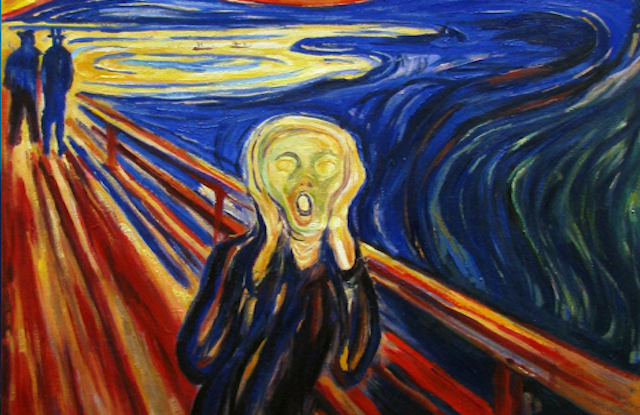
    The Scream

    “Hope is the feeling that the feeling you have isn’t permanent.” ~Jean Kerr

    I’ve just given up smoking. Again. It’s a bad habit that I can’t seem to shake because I’m likely to relapse when I’m stressed.

    I try to rationalize my destructive behavior—I don’t smoke heavily, I don’t smoke that much since I stick to rolling tobacco which makes thinner cigarettes, it’s fifteen minutes to myself where nobody will question why I’m taking time to do and think about nothing.

    No matter how much I justify my bad habit, I can’t deny that I’m dependent on a bad thing to cancel out a bunch of other bad things.

    Most of us use destructive methods to avoid difficult things on occasion. We may choose to remain silent in the face of confrontation instead of speaking out and defending ourselves, or we might hide behind our anger instead of admitting that we’re frustrated and scared.

    Here’s what I’ve been doing to deal with my feelings instead of avoiding them: (more…)