Tag: decide

  • Making Big Decisions: What Would Your Higher Self Do?

    Making Big Decisions: What Would Your Higher Self Do?

    “Sometimes the bad things that happen in our lives put us on the path to the best things that will ever happen to us.” ~Paul Millsap

    The personal growth journey is easy when everything is going to plan. But when you’re presented with a difficult situation, that’s when the real test begins.

    In 2018, I embarked on a nomadic journey to do some soul-searching. I faced my fair share of challenges during this trip, but for the most part, life was good.

    I led a good life and coached people to do the same. But then I was given a reality check.

    Suddenly, I was back in Australia living with my mum. I had no money, no car, no job, and it felt like my life had come crashing down.

    This is where the true test began, as I was forced to confront a fear I had dedicated my life to avoiding: the fear of regressing.

    Revisiting Home: Unresolved Tensions and Turmoil

    After five years on the road, it was great seeing my family and old friends again. But once the initial romanticism of being back home wore off, that joy was short-lived.

    That’s when I began reverting into old patterns.

    I picked up a job working in a restaurant and felt more out of place than ever. My self-worth took a heavy beating, and all these dense feelings from my childhood began to resurface.

    But the icing on the cake was my relationship with my mother. We had some pretty deep issues that were never resolved. Those issues never had to be addressed, but now we could no longer avoid them.

    Returning into this situation as a grown man was not ideal for either of us. There was an endless loop of turmoil that neither of us wanted, but neither of us could break.

    I felt like I was constantly under attack and that she treated me like a child who had to live under a strict set of rules; otherwise, all hell would break loose.

    She felt like her space was being intruded. In her eyes, I didn’t respect how she wanted to live and took advantage of her hospitality.

    And around in circles we went, unable to see eye-to-eye, getting triggered by one another over stupid things.

    No matter how much wisdom I had gained, nor how much healing I had done, this seemed like an uphill battle that I couldn’t overcome.

    Separating Egoic Decisions from Higher Perspectives

    After a particularly painful argument, I had a moment of clarity.

    I saw myself quitting my job, packing my bags, and catching the next flight out of the country. I saw my mother resenting herself for pushing me away.

    For a moment, my ego rejoiced.

    “I sure showed her! Now she will finally see the errors of her way and the consequences they have! And I’ll be free, just the way I like.”

    But then there was regret.

    A higher part of me kicked in.

    “This isn’t a solution. You’re just escaping again and hurting everyone in the process, including yourself. Nothing has been healed. This is your chance to repair this relationship. Don’t take the coward’s way out.”

    It’s easy to run away. Believe me, I’ve crafted an entire life around it.

    But the higher self weeps when the ego succeeds, and I recognized that this was an ego-driven decision: to escape a painful situation rather than heal the root cause.

    As if I was catapulted out of my ego, suddenly I felt compassion rather than pain. A part of me that genuinely wanted to heal this wound for both of us shined through.

    Because I was now in my heart space, the energy changed. I saw that my mother had given me a place to stay and a bed to sleep in. I was overcome with gratitude and compassion, and I saw the situation for what it is.

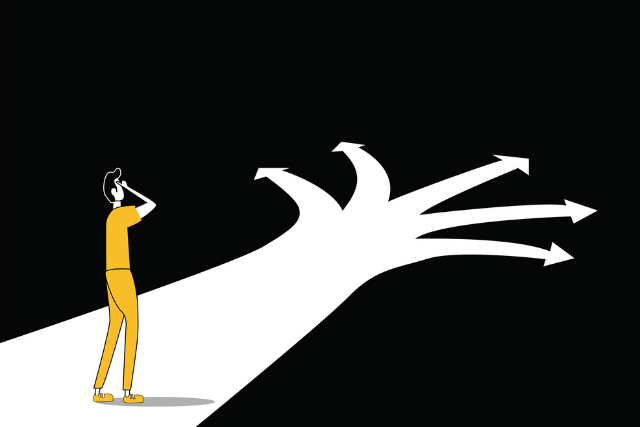
    When you’re at a crossroads, ask yourself:

    What is the path of the egoic self, and what is the path of the higher self?

    The path of the higher self is always the route to take, and that’s the one that will provide genuine joy rather than momentary satisfaction.

    Identifying Your Higher Self

    Imagine your higher self as the best possible version of yourself: the beacon of light that you strive to become.

    When I visualize my higher self, I see a healed man who only wants the best for everyone. He is completely in his heart space, and he doesn’t act from a place of ego.

    He wouldn’t feel victimized. He wouldn’t argue back, knowing that ill-fitted behavior is a manifestation of a wound. Therefore, he would only demonstrate compassion because he genuinely feels it.

    This version of myself knows that there is no better joy than feelings of compassion, gratitude, and love. So he’s the embodiment of these emotions, regardless of what the situation entails.

    My higher self sees the situation from the higher perspective and responds to that.

    It helps to visualize your higher self when you’re at a crossroads.

    Try to understand what they are thinking.

    How do they see the situation?

    What do they feel?

    When you’ve created this vivid image, don’t just model after them. Think like them, see like them, feel like them, embody them. 

    Modeling After Someone You Respect

    If you’re struggling to see your higher self in these situations, try modeling after someone that you highly respect.

    When I was living in Ecuador, I worked closely with an Ayahuasca Shaman for half a year and saw this man as a mentor of sorts.

    To me, he’s a symbol of wisdom, compassion, and understanding.

    During some of my most challenging moments, I would ask myself what he would do. Would he argue back when he feels he is being attacked? Would he drag his feet and play the victim?

    Somehow, I couldn’t see it.

    I imagine that if he was in my situation, he would milk every moment of being back home. He would work on the wounds with his mother and cherish their time together, knowing that it’s limited.

    When you’re not sure what your higher self would do in any given situation, imagine a role model in your situation, and take after them.

    Can’t think of someone you would want to model after? What about influential figures? Historic figures? Religious icons?

    Visualize this person in your shoes and press play.

    Now, do the same thing.

    Separating Intuition from Impulse for Higher Decisions

    Most of the time, we instinctively know what decision is the right one. But our egos coerce us into taking a course of action that really isn’t in anyone’s best interest.

    One thing I’ve learned is that your intuition won’t lead you astray. But first you need to separate intuition from impulse.

    Impulse is an emotion-based, momentary decision. Your intuition is a deeper wisdom that shines through when you tap into your higher self.

    You know what to do; you just need to trust in it.

    Either you don’t want to accept the course of action because it’s difficult, or you haven’t really listened.

    Learn to lean on the wisdom of your heart, not your mind.

    What makes your heart feel heavy when you think about it? Avoid that course of action.

    What makes your heart feel light when you think about it? Follow that course of action.

    Always follow what makes your heart feel lighter, because it knows better than your mind.

    View the Situation from a Higher Perspective

    It was easy to feel like I was doing well when I could avoid my family wounds. I never had to confront those wounds when I was living overseas, so I was under the impression that they were healed.

    Sure, things were fine on the surface level, but that doesn’t mean the deeper underlying issues weren’t still there.

    Without moving back to Australia and getting into a situation where I had to confront those wounds, I would have never created the incentive to heal them.

    Looking back, I’m thankful that the universe gave me this opportunity, because in the five months I’ve been back, a whole lot of progress has been made for a healthier, happier relationship with my mother.

    Instead of getting triggered, I’ve learned to look at the wound.

    Rather than being caught in my ego, I’ve learned to look at the situation through her perspective.

    I am happy to be able to look back at this time in Australia and smile, knowing that I’m now running toward my dreams, and not away from my wounds.
  • 6 Emotions That Can Cloud Our Judgment and How to Make Better Decisions

    6 Emotions That Can Cloud Our Judgment and How to Make Better Decisions

    “Don’t let your emotions outweigh your intelligence.” ~Unknown

    I jump to ridiculous conclusions when I’m emotional, and I’m like anyone else in that sometimes they get the best of me. And it’s pretty damn embarrassing in those moments, especially if I’ve been stupid enough to make any kind of decision.

    Having the awareness to recognize your judgment is clouded by emotion is next to impossible at times. Many of us don’t know how to read the signals. Hence why we get swept away by our caveman instincts and find ourselves saying, “All I see is red when I’m angry.”

    This is a serious problem as an adult.

    Our kids mirror what they watch at home, school, and in society. They parrot what they see and assume that’s the appropriate response. Dad burned down a Wendy’s because they were out of mayonnaise, so of course, it makes sense to punch Samantha in the face because she drew a happy face on your binder at school.

    You, me, and every other human walking this earth are flawed creatures. I don’t mean this in a demeaning you should be ashamed, get your sh*t together, holier than thou, I know better lecture.

    I’m speaking from the stance of being a master at putting myself in stupid situations where it would take friggin’ Houdini-level skills to escape the mess I’ve created.

    And why do I do this? Because my emotions run wild when I’m not looking after myself.

    Humans make horrible decisions when solely guided by emotions (that vanish as quickly as they come). It’s like having horse blinders on. Our focus only becomes what is directly in front of us and is filtered through the emotion we happen to be feeling. We’re blind to all the other inputs that could help us better manage the situation.

    It’s the same reason why 99% of people lose money investing in individual stocks. They buy and sell based on their emotions rather than on the company’s value (the only thing that matters).

    As investment author William Green said, “Most people make their investment decisions (and life decisions) on the basis of an unreliable hodgepodge of half-baked logic, biases, hunches, emotion, and vague fantasies or fears about the future.”

    Ken Shubin Stein is a guy who knows a thing or two about high-pressure decision-making. He spent two decades running a hedge fund in New York. He’s also a professor at Columbia University Graduate School of Business, where he has taught Advanced Investment Research since 2009. Oh, and he also decided to become a neurologist just for kicks because he loves geeking out on how the mind works.

    You’re probably wondering, how could a guy who runs a hedge fund help you live a better life?

    Because the success of his career is judged on one basic idea—don’t make stupid decisions. And I don’t know about you, but wouldn’t life be a lot easier if you felt confident about your decision-making (regardless of how chaotic your life feels)?

    Six specific emotions guarantee you’re going to make a crappy decision.

    Can you guess what they are?

    Honestly, try and see how many you can think of before you read on. Think about the last time you made a poor decision. What emotions were flowing through you?

    I’ll give you a clue. Shubin Stein uses the acronym HALT-PS as a reminder to pause when those emotions might be impairing his judgment. He takes it one step further and postpones important decisions until he’s in a state where these emotions don’t flood his brain.

    Here are the nasty culprits of crappy decision-making.

    Hunger.

    Anger.

    Loneliness.

    Tiredness.

    Pain.

    Stress.

    Think of HALT-PS like a gigantic red stop sign. The moment you notice any of these emotions are present, hit the brakes. You wouldn’t just rip through a stop sign going at full speed because you’re in a rush, so why would you make a rash decision that has a damn good chance of causing you to crash into oncoming traffic?

    HALT-PS creates a buffer between the emotion and the decision. This time delay can be a lifesaver since full-blown emotions are short-lived. Creating a little space means you get a chance to slow down, open your mind, and from a calm state, you can consider the risks that you might have otherwise overlooked.

    Why is HALT-PS such a damn powerful technique to have in your toolbox? Because it helps you answer the question: Why might I be wrong?

    This framework doesn’t only help with the life-changing decisions we make when we’re emotionally overwhelmed. It can also help us catch ourselves before we plant a seed of a belief without noticing the trajectory it puts us on.

    I’m a first-time dad with a five-week-old daughter. Tiredness and stress come with the role. In her second week alive, I was already telling myself that I wasn’t strong enough to be a dad. The sad part was that I believed it under the fog of exhaustion. Was I going to be nothing but a disappointment to her?

    There was a time in my life where I would have let that be my story moving forward. But now, I reflect because there are plenty of reasons why I might be wrong.

    Here I am five weeks in, and I regret selling myself short because I didn’t give myself the chance to prove myself. I’m doing the best I can at something I’ve never done before. Isn’t that the single best lesson we can ever hope to teach a kid? Do your best. Don’t regret what you’re trying your best on.

    Without the awareness of HALT-PS, I wouldn’t have recognized that my thinking was impaired under a cloud of sleep deprivation and stress.

    The more clearly we can view our thoughts, the more clearly we can decide what to engage with and what we can let go of.

    Not every argument needs to be a fight. And not every fight needs to lead to a blowup. We can deescalate situations with ease when we have an awareness of our emotions at the moment.

    I love using HALT-PS for this very reason. Ignoring our emotions is the mental equivalent of drunk driving. It’s stupid. You don’t have the cognitive ability to make a safe decision.

    In the heat of the moment, our emotional disposition and moods routinely distort what we see and how we relate to what’s going on. I’m not that angry is like saying I’ve only had a few beers. It doesn’t take much to wrap you around a pole.

    Keep it simple. Sometimes the best decision is to make no decision at all.

    Most of us are not making life-and-death decisions that need an immediate response. Give yourself space to step back from the situation so you can clearly view your emotions through the lens of HALT-PS.

    Is an emotion present? Be vulnerable.

    I’ve gotten in the habit of telling my wife the truth, and it’s a rather novel idea that works pretty damn well. When I’m charged up, I tell her I’m not in the emotional headspace you deserve for this conversation. When I have the capacity, I promise we will talk about this because I know it’s important to you.

    Be forewarned. Using HALT-PS is like wielding magic powers. It doesn’t make the emotions go away, but you will become a master at surfing the waves that so many people get crushed by.

  • The First Thing You Need to Do to Change Your Life

    The First Thing You Need to Do to Change Your Life

    Bold Man

    “Never forget: This very moment, we can change our lives. There never was a moment, and never will be, when we are without the power to alter our destiny.” ~Steven Pressfield

    Altering your life in the smallest or grandest way is so simple, but it requires you to do something you likely are already doing all of the time.

    If you’ve ever wanted to take up a discipline, begin a new business, stop an addiction, or start anything new, it’s the same for all.

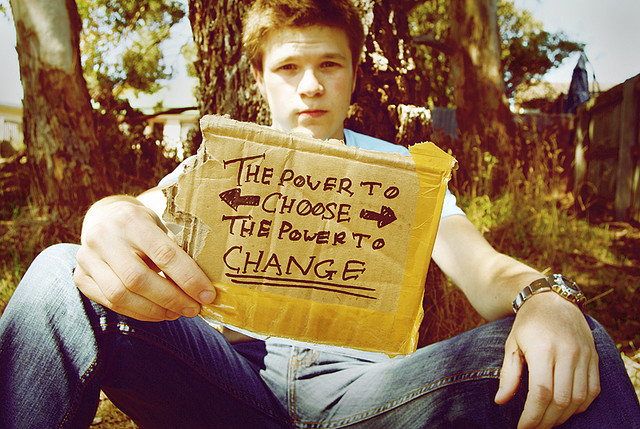
    Any life change requires one simple action: you to decide.

    Over five years ago, I knew in my heart I wanted a different work life, that a greater way of living a life of my dreams could be real for me if I could just take the leap.

    I was afraid of not having the external security that came with that job of five years. But when I looked at my true dreams, and who I’d become not doing what I love, it wasn’t who I felt I was deep at heart.

    Then it happened, I followed the feeling. I simply chose that enough was enough; I quit my job.

    There is a rich and deep aliveness that comes from following your heart, in acting on what you love despite any limitations or fears of the unknown.

    It’s what brings you closer to knowing who you are in your heart, and who I believe we all came to be in this life, dreamers willing to live their dream, not just know dreams exist.

    When I finally decided, there was no more deliberation, or trying to think of all possible outcomes. I stopped thinking about it.

    There are two types of fear: debilitating, poisonous, inaction fear, and an excitement fear that comes with taking inspired action. As soon as I decided, just an excited fear remained. 

    In a moment of true decision where you act on what you love, you experience a feeling of freedom and aliveness that overcomes fear. 

    Poisonous fear exists mostly in indecision, between knowing what you love and the perception that you’re unable to act on it.Perhaps that’s why it’s called “False Evidence Appearing Real.”

    When you take action on what you love, whether you experience fear or not, you’ve decided with your whole being, what’s called a true decision; and it overcomes all else.

    Often I hear people express a desire to do, or be something, and then they list the reasons why it’s not possible in their circumstances. But isn’t it true that possibility doesn’t become available to you until you decide to do it?

    In my experience, what’s possible only becomes real once you decide on the inside and then act on what you feel outside.

    If you’ve ever rented an apartment, bought a home, or booked a flight, you may know the power of decision. I’ve often heard people admit, “I didn’t know whether I could afford it then,” or, “I couldn’t afford it, but I did it anyway.”

    How is it possible to not be able to afford something, but have or experience it anyway? You decided, and more than likely, somehow your life circumstances changed. Some people call those coincidences, miracles, or serendipity.

    What’s meant to be is meant to be because you decide.

    I don’t just mean deciding to put it on credit, although sometimes that is the way, I mean watching your circumstances change to reflect your decision. I’ve experienced watching my business increase or receiving an unexpected financial windfall right after making a decision. It happens differently every time.

    A couple years ago I felt to move to NYC. At that time, I had no external security, no extra money saved, no job, or apartment lined up. I had no real reason to think it was possible based on my circumstances.

    When the feeling came to my heart, I said yes. A true decision is like falling in love; you don’t decide from your head, it’s something that finds you. I had only my feeling, but I’d developed trust for my intuition by this point.

    Decisions with the most impact are those that come from your heart because they have the power to defy what you think is possible (through love), and it’s those decisions that you experience the most aliveness (more love).

    The greatest challenge is your thinking: you may have to embrace whatever limitations are in your mind, and let go of what security you perceive you may lose.

    Following your heart may make no sense, and it may be the opposite of your plans, but it makes sense to the deeper knowing within.

    In the beginning, it’s not easy to follow just a feeling, but the more you do it, the better at it you become, and the more you value yourself for doing it.

    At that moment in time, I didn’t feel compelled or inspired to look for places to live in NYC before I got there, yet I lived in three different places. By staying in my heart and following the moment-to-moment inspirations, I saw the power of my decision unfold with ease.

    First, an old family friend offered me his flat in Manhattan while he was away.

    Before I left, I met a woman at an event visiting from Brooklyn who emailed me two weeks later asking if I wanted a sublet.

    The last place came when I followed my intuition to meet with a friend who surprised me with a place to sublet, which I moved into days later, the day my other place was up.

    From experience, it’s easier to follow the feeling when the possibilities are visible: you have the time, the money, or all the tangible circumstances.

    But what about when you only have a feeling, when the possibilities are still invisible, do you still follow the feeling in your heart?

    Living a life of love is more effortless because you cultivate more presence naturally, but you don’t do it for the effortlessness; you do it because you come to know yourself in that love at a deeper level.

    Sure, the move came with ease, but it was the aliveness I felt in following the feeling that took my breath away.

    Anyone reading this must take note: this was my story of following the feeling in that moment. If I moved to NY now, I would follow my feeling now, which could mean looking long and hard for places. It’s a new moment!

    There is a fine line between a deep knowing, and hoping, wishing, and laziness. I wasn’t not acting out of denial, I was in my truth, but your truth is going to be different every time, so don’t try my story “at home.”

    A friend and inspirational writer who lives intuitively moved with two kids to California, leaving a secure law degree position back east, both she and her husband following their respective feelings.

    Recently, she told me how she bought her house. “The bank should have never approved our loan from a logical perspective, it doesn’t make sense given our finances, but I just knew we had to take a risk and go for it because the feeling was pulling me.”

    In her example, it doesn’t mean she won’t lose her house. Don’t forget life is a risk; so is going after what you love!!

    Following your feeling will not only give you the experiences you perceive to be positive, it takes you to perceived negative experiences so you can be free of the fear.

    I followed the feeling to start a business a couple years ago, and it failed. The feeling took me to a failed business, but now I don’t fear failing.

    Ultimately, your intuition is guiding you to your bigger picture of what you love: less fear, and more power to alter destiny (love). Sometimes it takes you into beautiful romances, but later the feeling pulls you out of that same relationship you thought was forever.  

    The bigger picture has opportunities and challenges; you don’t get one without the other.

    It can be really hard because going beyond limitations stretches you internally. You have to truly love it from your soul, not just your head. And you have to be willing to say yes!

    You want more love, more inspiration, and more empowerment, but don’t know how? Decide first. You want to live a life that’s of freedom? Decide to. Possibilities become possible when you decide.

    The truth is, you’re the only one with the true power to alter your destiny, to shape your life into one you love. It’s starts with what you decide through opening your heart to the feeling. You can complicate it in your head, but it’s that simple. What you love is in every moment; it’s up to you.

    I didn’t always believe in me, but because I decide over and over again to live a life of love despite the fear, I now do.

    No matter who you are out there in this world, I believe in you in this moment. After all, it is a new moment, your moment.

    Bold man image via Shutterstock

  • On Making Positive Choices for a Happy, Empowered Life

    On Making Positive Choices for a Happy, Empowered Life

    “Life is a choice.” ~Unknown

    I’ve recently realized that life is a never-ending stream of choices, even when you think you don’t have many options.

    Some look insignificant on their own but somehow manage to contribute to a massive whole. Others can feel overwhelming, and you don’t always realize when you make them what the consequences will be—how they’ll shape your life story.

    The biggest decision I’ve made in the past six months is to return to university and complete the MA Creative Writing course I began two years ago. It’s almost a choice I never made—a life I never had—though it leads to the future I’ve dreamed about for years.

    Good stories aren’t about people; they’re about action. They’re about what people do and what happens when they do these things.

    What we do is based upon the choices we make, whether it be in our everyday efforts to keep on top of our washing or in the extraordinary moments when we decide to take that job offer, even though friends and family don’t understand because it’s less money (but a lot more fun).

    Over a year ago my ‘action’ was to intermit my studies because I needed to get my health under control. I was hoping the decision of whether or not to return would pass me by like the summer had already done and relieve me of the burden of having to consider my options.

    I could still be sitting here now avoiding a decision. Instead, I found the strength to make a choice, and in doing so, I’ve discovered my health problems haven’t gone anywhere. They’re still there, and they’re still creating challenges I can either meet or run away from. Action not only drives us but also reveals us. (more…)

  • Stop Second-Guessing Yourself: 5 Tips to Feel at Ease with Decisions

    Stop Second-Guessing Yourself: 5 Tips to Feel at Ease with Decisions

    “Good decisions come from experience, and experience comes from bad decisions.”  ~Unknown

    A reader recently wrote to me:

    “I struggle with making decisions and always second-guess myself… I recently had to make a decision about something and after giving it a lot of thought, I decided. Now, months later, my decision is eating me up and I can’t stop thinking I made the wrong decision. So I guess my point is once you decide, how do you stop yourself from second guessing?”

    I know I’ve been there, having made a decision I not only second-guessed but wish I hadn’t made and couldn’t take back.

    I think there are two parts to each of us: who we are day to day, and who we are in our broader intentions. Second-guessing comes when the smaller part—the one that is at the effect of everything—is afraid of the greater part that’s forging a new way.

    When we make any decision, for better or for worse, we effect change. And sometimes it’s scary to be responsible for the change we effect. That’s why I love the saying. “Make a decision. And then make the decision right.” (more…)