Tag: darkness

  • From Loss to Hope: How I Found Joy Again

    From Loss to Hope: How I Found Joy Again

    “Although the world is full of suffering, it is also full of the overcoming of it.” ~Helen Keller

    The phone call arrived like a silent explosion, shattering the ordinary hum of a Tuesday morning. My uncle was gone, suddenly, unexpectedly. Just a few months later, before the raw edges of that loss could even begin to soften, my mom followed. Her passing felt like a cruel echo, ripping open wounds that had barely begun to form scabs.

    I remember those months as a blur of black clothes, hushed voices, and an aching emptiness that permeated every corner of my life. Grief settled over me like a suffocating blanket, heavy and constant. It wasn’t just the pain of losing them; it was the abrupt shift in the landscape of my entire world.

    My cousin, my uncle’s only child, was just twenty-three. He came to live with me, utterly adrift. He knew nothing about managing a household, budgeting, or even basic self-care. In the fog of my own sorrow, I found myself guiding him through the mundane tasks of adulting, a daily lesson in how to simply exist when your world has crumbled.

    Those early days were a testament to moving forward on autopilot. Each step felt like wading through thick mud. There were moments when the weight of it all seemed insurmountable, when the idea of ever feeling lighthearted again felt like a distant, impossible dream. My heart was a constant ache, and laughter felt like a betrayal.

    Then, the losses kept coming. A couple of other beloved family members departed within months, each passing a fresh cut on an already bruised soul. It felt like the universe was testing my capacity for heartbreak, pushing me to the absolute edge of what I believed I could endure. I was convinced that happiness, true, unburdened joy, was simply no longer available to me.

    For a long time, I resided in that broken space. My days were functional, but my spirit felt dormant, like a hibernating animal.

    I went through the motions, caring for my cousin, managing responsibilities, but internally, I was convinced my capacity for joy had been irrevocably damaged. The idea of embracing happiness felt disloyal to the people I had lost.

    One crisp morning, standing by the kitchen window, I noticed the way the light hit the dew on a spiderweb. It was a fleeting, unremarkable moment, yet for a split second, a tiny flicker of something akin to peace, even beauty, stirred within me. It startled me, like catching my own reflection in a darkened room. That flicker was a subtle reminder that even in the deepest shadows, light still existed.

    This wasn’t a sudden epiphany or a miraculous cure. It was a slow, deliberate crawl out of the emotional abyss. I began to understand that healing wasn’t about erasing the pain, but about learning to carry it differently. It was about allowing grief its space while simultaneously creating new space for life to bloom again.

    The first step was simply acknowledging the darkness without letting it consume me.

    I stopped fighting the waves of sadness when they came, allowing them to wash over me, knowing they would eventually recede. This acceptance was pivotal; it transformed my internal struggle from a battle into a painful, but necessary, process.

    I also learned the profound power of small, intentional acts. This wasn’t about grand gestures of self-care. It was about consciously noticing the warmth of a morning cup of coffee, the texture of a soft blanket, the simple comfort of a familiar song. These tiny moments, woven into the fabric of daily life, began to accumulate, like individual threads forming a stronger tapestry.

    Another crucial insight was the importance of letting go of the “shoulds.” There’s no right or wrong way to grieve, and no timeline for healing. I stopped judging my feelings, stopped comparing my progress to an imaginary standard. This liberation from self-imposed pressure created room for genuine recovery, allowing me to be exactly where I was in my journey.

    I started to actively seek out moments of connection. This meant leaning on the friends and remaining family who offered support, even when I felt too exhausted to reciprocate. It was about sharing stories, sometimes tearful, sometimes unexpectedly funny, that honored those we had lost and reminded me that love, even in absence, still binds us.

    Embracing vulnerability became a strength. Allowing myself to be seen in my brokenness, to admit when I was struggling, paradoxically made me feel more grounded. It revealed the immense capacity for compassion that exists in others, and in myself. This openness fostered deeper connections, which became vital anchors in my recovery.

    The concept of “joy” also transformed. It wasn’t about constant euphoria but about finding contentment, peace, and even occasional bursts of laughter amidst the lingering sorrow.

    It became less about an absence of pain and more about a presence of life, in all its complex beauty. I learned that joy is not a betrayal of grief but a testament to the enduring power of the human spirit.

    Ultimately, my journey taught me that resilience isn’t about being tough or never falling. It’s about being tender enough to feel, courageous enough to keep seeking light, and brave enough to get back up, even when every fiber of your being wants to stay down. It’s about collecting the pieces of your broken heart and finding a way to make it beat again, perhaps even stronger and more appreciative of every precious moment.

    I now stand in a place where I truly believe I am stronger and happier than ever before. Not despite the pain, but because of the profound lessons it taught me.

    Every challenging step, every tear shed, every quiet moment of discovery contributed to the person I am today—a little wiser, a little braver, and with a way better story to tell.

    My hope is that anyone facing similar darkness knows that the path back to joy is always possible, and that your story, too, holds immense power and purpose.
  • Dancing with Darkness: How to Reclaim Your Whole Self

    Dancing with Darkness: How to Reclaim Your Whole Self

    “Shadow work is the way to illumination. When we become aware of all that is buried within us, that which is lurking beneath the surface no longer has power over us.” ~Aletheia Luna

    For years, I believed healing was about transcending pain. I took the courses, read the books, learned every energy-healing technique I could find, and became a healer myself.

    And for a while, I felt better. I had breakthroughs. My anxiety lessened.

    My depressive episodes became fewer. But they never fully disappeared. Even after all the inner work, there were still days when I felt unbearably low. Days and nights when my thoughts raced, full of fear and doubt.

    I told myself that if I was truly healing, these feelings shouldn’t exist anymore. That if I was really evolving, I wouldn’t feel this way.

    And worst of all, if I was a healer, how could I possibly still struggle?

    Surely, I was doing something wrong.

    I started questioning myself. Maybe I wasn’t “good enough” as a healer. Maybe I wasn’t doing enough inner work. MaybeI just wasn’t meant to be on this path.

    So I doubled down. I meditated longer. Journaled more. Cleared my energy. Did affirmations.

    And yet, the sadness still found me. The anxiety still whispered its fears. No matter how much I tried to fix myself, these emotions refused to leave.

    It wasn’t until I stopped fighting my pain that something shifted. I realized I had spent years treating my emotions as something to get rid of. But healing isn’t about eliminating pain: it’s about becoming intimate with it.

    So instead of suppressing my darkness, I started getting to know it. Instead of running from my emotions, I sat with them—fully present, without trying to fix them.

    I let my sadness speak through poetry.

    I let my anxiety move through dance.

    I let my shadows express themselves through art, writing, and stillness.

    And something unexpected happened. The more I embraced my pain, the less power it had over me. The more I let myself feel without judgment, the more compassion I had for myself.

    I learned that healing isn’t about reaching some perfect, pain-free version of yourself. It’s about integrating every part of you—even the ones you used to reject.

    I realized that being a healer doesn’t mean being free of struggle. It means having the courage to meet yourself exactly as you are—without shame, without resistance, and with deep, unwavering love.

    Because healing isn’t about erasing your darkness.

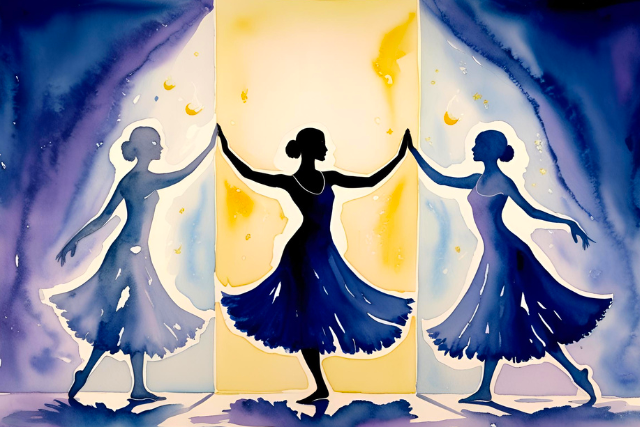
    It’s about learning to dance with it.

    What is the Shadow Self?

    Our shadow consists of the parts of ourselves that we’ve been taught to hide: our fears, suppressed emotions, unprocessed pain, and even our untapped strengths.

    Maybe you were told as a child that expressing anger was “bad,” so you learned to suppress it.

    Maybe you grew up believing that vulnerability was weakness, so you built walls around your heart.

    The shadow isn’t just made up of things we perceive as negative; it can also include hidden gifts. Some of us hide our power because we were taught it wasn’t safe to shine.

    Some of us suppress our intuition because we fear being wrong. Some of us bury our true desires because we’ve been conditioned to think they’re unrealistic or selfish.

    But here’s the thing: Whatever we suppress doesn’t disappear. It just works against us in unconscious ways.

    Our unhealed wounds can show up as:

    • Feeling stuck in the same painful patterns
    • Emotional triggers that seem to come out of nowhere
    • Self-sabotage, procrastination, or fear of success
    • Overreacting to certain behaviors in others (often mirroring what we reject in ourselves)
    • Feeling disconnected, numb, or unfulfilled despite “doing the work”

    So how do we begin integrating our shadow instead of fearing or avoiding it?

    5 Ways to Begin Shadow Integration

    1. Get curious about your triggers.

    One of the easiest ways to identify our shadow is to pay attention to what triggers us.

    Have you ever felt an irrationally strong reaction to something? Maybe a passing comment made you feel deeply insecure, or someone else’s confidence irritated you.

    Our triggers are messengers. They reveal wounds that are still waiting to be healed and integrated.

    Reflection prompt:

    • Think about the last time something upset or irritated you. What was the deeper emotion beneath it?
    • Does this remind you of a past experience or belief?
    • If this was a message from your inner self, what would it be saying?

    When we can sit with our reactions instead of judging them, we open the door to healing.

    2. Identify what youve been taught to suppress.

    Many of our shadow aspects were created in childhood. We learned that certain emotions, traits, or desires weren’t “acceptable,” so we buried them.

    Ask yourself:

    • What parts of myself did I feel I had to hide growing up?
    • What qualities do I judge in others (and could these be aspects I’ve rejected in myself)?
    • What dreams or desires have I talked myself out of because they feel “unrealistic” or “selfish”?

    For example, if you were taught that being sensitive meant being weak, you might suppress your emotions and struggle with vulnerability. If you were raised in an environment where success was met with jealousy, you might unconsciously fear stepping into your full potential.

    By bringing awareness to these patterns, you can begin to rewrite them.

    3. Practice sitting with uncomfortable emotions.

    Most of us weren’t taught how to sit with our emotions. We were taught how to suppress, avoid, or “fix” them.

    But emotions are not problems. They are messages.

    Instead of pushing away sadness, frustration, or fear, try welcoming them as temporary visitors.

    Try this:

    • When a difficult emotion arises, pause, and say, I see you. I hear you. I am listening.
    • Notice what sensations arise in your body.
    • Breathe deeply and allow yourself to sit with it, without rushing to change it.

    The more you practice this, the less power your emotions will have over you.

    4. Reconnect with your inner child.

    Much of our shadow is rooted in childhood experiences—times when we felt abandoned, unworthy, or unsafe.

    Healing these wounds requires reparenting ourselves with love and compassion.

    A simple inner child exercise:

    • Close your eyes and imagine your younger self standing in front of you.
    • Picture them at an age when they felt most vulnerable.
    • Ask: What do you need to hear right now?
    • Offer them the love, validation, and reassurance they may not have received.

    This simple practice can be incredibly powerful in healing past wounds and integrating your shadow.

    5. Express what youve been holding back.

    Shadow integration isn’t just about recognizing our hidden parts. It’s about allowing ourselves to express them in healthy ways.

    If you’ve suppressed your voice, start speaking up.

    If you’ve buried your creativity, allow yourself to create freely.

    If you’ve been afraid of taking up space, start owning your worth.

    Challenge yourself:

    • Identify one way you’ve been keeping yourself small.
    • Take one small step toward expressing that part of yourself this week.

    When we integrate our shadow, we reclaim the full spectrum of who we are.

    Embracing Your Whole Self

    Healing isn’t about becoming perfect. It’s about becoming whole.

    The parts of us that we once rejected hold immense wisdom, creativity, and strength. When we integrate them, we unlock a new level of self-awareness, freedom, and inner peace.

    So, the next time your shadows appear, instead of running from them, try sitting with them.

    Instead of fighting your fears, try listening to what they have to teach you.

    Instead of rejecting the parts of you that feel unworthy, try offering them love.

    Because healing isn’t about erasing your darkness.

    It’s about learning to dance with it until it, too, becomes light.

    I would love to hear from you: What’s one part of yourself you’re learning to embrace? Drop a comment below.

  • We Are Both Darkness and Light: How to Reconcile Them and Grow

    We Are Both Darkness and Light: How to Reconcile Them and Grow

    “We have to bear our own toxicity. Only by facing our own shadows can we eventually become more light. Yes, you are kind. But youre also cruel. You are thoughtful. But youre also selfish. You are both light and shadow. I want authenticity. I want real. I claim both my light and my shadow.” ~Kerry Mangis

    Many of us can recall the painful moments that have shaped us. As we grow older, we become intimately aware of all the ways we were hurt, wronged, or betrayed. I think it’s a natural impulse, to number these moments and process them in order to heal.

    I reflected on this when on my way to the California River Delta—a peaceful marsh-land setting located between the Bay Area and Sacramento that I often sought refuge in.

    The night before I’d watched an episode of Thirteen Reasons Why that had dealt with the theme of the contradictory elements that live inside each of us. How difficult it is to arrive at a clean summary of good or bad once you’re made privy to all a person has been through, every feeling they’ve experienced or thought that’s run through their mind.

    My own list of hurts floats in and out of my mind, activating more on some days than on others. When I’m doing well emotionally, it largely fades to the background. When stress is higher and sleep has failed to restore me, it’s likelier to make an appearance.

    Here’s a little glimpse into how it reads:

    It started for you at the age of five, when you learned that the girl you’d considered your best friend  wasn’t as attached to you as you were to her. 

    In sixth grade your core group told you, seemingly out of the blue one day, that you could no longer sit with them. You didnt know why. You only knew that for whatever reason, people you’d trusted didn’t want you around anymore. Traits and mannerisms you hadn’t previously questioned were suddenly suspect now, and subject to intense self-scrutiny.

    The way you talked. Your interests. The sound of your voice. You just didn’t know. It could have been any of these. Or maybe all of them.

    Regardless of what that thing was, the message that resonated loudest of all was “Not good enough. Not worth keeping around.”

    A year later, self-esteem beaten down, you forged a friendship with a girl who showered you with positive attention one day and shoved you so hard you’d bleed (“jokingly” though) the next. This girl told you that you were selfish in order to get you to pay for things and comply to her wants.

    She rolled her eyes and called you “Dr. Phil” when you told her this hurt your feelings. Whenever you spoke up for yourself, it would lead to a fight. You’d sense this was toxic, years before learning what that word even means, but you’d also blame yourself, thinking maybe this was just what you deserved, or was the best you could do. Especially when there was no one else to turn to.

    Years later, dating hurt your heart too many times to count. You let down your guard and began to trust, only to realize you made a choice that wasn’t smart. Rinse and repeat.

    Your feelings were dismissed more times than you can count—sometimes because you were too afraid to be upfront about them; other times, even when you were. You felt like the carpet had been pulled out from under you, over and over and over again like a sinister movie on repeat.

    **

    I realized that day, as I drove to the California River Delta, that this narrative I’d carried for years wasn’t altogether wrong. Acknowledging those moments is an act of self-compassion. Once we validate what we went through, we can then begin to heal it.

    It was just that this narrative was incomplete. What I had yet to incorporate into my story was the harm that I too had left in my wake—and the way both of these, input and output, fed each other in a repeating cycle.

    And so, as I looked out at the blue-grey water after parking my car, my brain began expanding its narrative.

    You carried those childhood scars with you. They slept, only to activate. When they did, you saw from your vantage point and yours only, blinded to others’.

    You said hurtful things when at your breaking point, lashing out at friends and the people you dated. Consumed by your own issues, you sometimes failed to fully be there or show up for others in their time of need.

    You attached yourself to people and relationships, putting unconscious pressure and expectations onto them without their consent.

    You stayed with women you claimed had let you down, hoping they’d change, or trying to change them. You refused to accept the present moment on its own terms, instead insisting on seeing it for how you wanted it to be.

    Small acts of inconsideration built over the years, even when you weren’t blatantly mistreating someone or behaving in an overtly harmful way.

    My mind had briefly ventured to these uncomfortable places before—but that day, with only itself and the bucolic scenery to contend with, it stayed there for longer than its customary five or ten minutes.

    As I looked out at the water, I considered what attitudes, beliefs, and cognitive-road blocks often stop us from going here.

    How might we learn to move through (rather than away from) thoughts or memories of our mistakes when they surface? I wondered. Because taking accountability benefits not just the harmed person, but our own souls too.

    **

    I was able to see that shame is a big contributor. Brené Brown has said that when held back by this all-encompassing emotion, we cease to grow. So long as we remain stuck in its slog, we’re ironically more likely to repeat the very mistakes that pulled us down there to begin with.

    The character Bojack Horseman (from the Netflix show)—who hurts his friends, strings a good woman along, and even commits sexual assault—is one example of a person (er, horse) undoubtedly stuck in this cycle. He doesn’t see how his own conception of himself as irrevocably damaged largely contributes to the continuation of his harmful behaviors. If you’re just bad and there’s nothing you can do about it, then harming others is inevitable—so why even try to change?

    And so Bojack keeps drinking. He keeps hurting people. He keeps making the same mistakes. He himself continues to suffer. By shrouding himself in the shame robe, he self-protects—both from the hard work of change and from the extreme discomfort of examining the insecurities that underly his destructive actions.

    Those with trauma in our pasts developed coping mechanisms in response to what happened to us, often many years before fully understanding and contextualizing our pain. These defenses resulted in some level of collateral damage on the people around us.

    Some of us thought there was just something wrong with us. Or that these behaviors stemmed from character flaws we’d have to learn how to hide. We didn’t recognize them as signs pointing us toward what needed to be healed.

    Nor did we understand that rather than stay stuck in guilt and shame, we could allow it to guide us. That, when a fork in the road presented itself, we could let the sting of remembering direct us onto the kinder path.

    Black-and-white thinking also keeps us away from full acknowledgement of the past. We may think that if we’ve done bad things, it must mean we’re bad people. But it’s entirely within our control to learn from our past actions and become better every day.

    It took some wonderful people years of fumbling missteps to arrive at who they are today. If we were all judged solely by the single worst thing we’d done, many of us would be on our own right now.

    Sometimes we don’t acknowledge the past because it doesn’t line up with our image of ourselves as good people. Even though merely envisioning oneself as a loyal person or good friend doesn’t guarantee we’ll never act in ways that are hurtful.

    **

    Owning up to our role in past events doesn’t mean we’re forgoing self-compassion. I’ve found I can hold myself accountable and learn healthier replacements for destructive defenses while also maintaining compassion for what my younger self went through, and the struggles she didn’t yet understand.

    I wasn’t taught emotional regulation back when I was in school. Nor how to process my experiences. It’s hard to practice what you haven’t been taught. I remind myself, though, that I now have the tools to teach myself. That I can be that person to heal the hurting younger self who still lives somewhere inside me.

    Rather than allow the shame swamp of my past to ensnare me, I can seek to understand the unmet needs and unprocessed pain that prompted my negative behavior.

    We can extract the debris that led to insensitive actions until eventually we come upon that better and kinder self. The one who exists inside all of us.

    In my own journey, confronting regret hasn’t come without pain—but it has motivated change. Reminders compel me to be better now, to the people in my life currently. They also compel me to be a much better friend to myself.

    I’ve realized that acknowledging what was done to me is just one side of the coin when it comes to full healing and self-actualization. The other side is self-awareness and honesty. Looking not just at what’s most convenient, but also at our impact on others.

    That day on the dock, I gathered a few stones—each representing a person I’d harmed in some way. I held each one in my hands. I wished each person well and imagined filling them with a protective circle of love.

    And then I sent each stone on its way. Watched it fly through the air and land in the water with a small and almost imperceptible splash.

    Each of us is capable of so much better than the worst thing we’ve ever done. Yet much of how we strip those mistakes of their long-lasting power is by owning up to them—while at the same time, forgiving ourselves.

  • Growing in the Dark: Why “Negative Feelings” Matter

    Growing in the Dark: Why “Negative Feelings” Matter

    “Only to the extent that we expose ourselves over and over to annihilation can that which is indestructible in us be found.” ~Pema Chodron

    Pop spirituality and our cultural attitude would have you think it best to banish negativity from your life. Give it the quarantine treatment until it gets better and can rejoin our polite, positive, placative society.

    We are encouraged to cleanse negativity, a blanket descriptor of things that don’t feel good. Push it away with an exhale and inhale positivity. Anger, sadness, and critical thinking can all be forms of “bad vibes” that are sought to be avoided.

    This banishment of negativity is so simplistic. We are humans, capable of such a wonderful range of emotion and experience. Who are we to banish some of the low, dark, hollow notes from our octaves of existence? Too much cleansing makes us dry, brittle, and sterile.

    When joy and exuberance are out for too long, they get stale. When you are always bathing in the light, the light bulb begins to wane and eventually will dim and burn out. A life of constant light is not sustainable. It’s also not possible. Life is much more wonderfully and tragically complicated. Some of the richest parts linger in the shadows or even in the deepest, dark corners of our lives.

    It’s quite easy to sleep through happiness. A good, easy-going life does little to keep us awake and alive. The darker feelings bring us right into the present. The physicality of crying, shaking, with quaky breath and a hot face brings us into our bodies. To our emotional life. To our knees like no other. Darkness is what pops our eyes open to your life. It’s the catalyst for change and renewal.

    At this juncture in my life, I am spending a lot of time in grief and anger. I do not wish to get into all of the intimate details of it, but the gist is that I am going through a divorce. An icky, shattering, tearing asunder of the life I once knew and the dreams I had for the life of my family.

    It’s been tempting to push my feelings aside and pretend I’m okay. But a very small part of me recognizes there is this opportunity for something new. Renewal. Rebirth.

    While I haven’t given birth myself, I have been in the room during a birth. Birth isn’t only the beginning of a delicate, new life. It is deep and wrenching pain. Pain that steals your breath and turns your voice into a howl. It is uncertainty and a dark intensity that knocks at your ability to stand on your feet. It is sitting among blood, sweat, and tears and still finding deep, undisturbed joy.

    I can’t begin the process of rebirth by dimming the less favorable facets of the undertaking. If a rebirth is what I seek, then I am in line for one of the most wholly altering, body-shaking processes in our existence.

    So, here is what I am doing: I am leaning in. I am sitting upon the jagged surfaces of grief and anger, and I am not moving. I am listening to what they have to say.

    I am listening to anger proclaim my sense of self-worth. It rises each time I feel my innate human value has been violated. It reminds me to maintain a protective boundary around my sense of self.

    I am watching grief slice into my heart and reveal its contents. The reason I feel loss is because I have loved and still possess a capacity to love. My grief reminds me of just how much I truly value and hold dear.

    I am engulfed by the ravaging, purifying flames of my anger. I am lying in the center of my dark pool of sorrow.

    I am a human. Delicate and strong. Tender and powerful. I am built for this. I am made to stand in the center of howling storms sent by mother nature and witness devastating wreckage. My skin pummeled by rain. My feet lifted by wind.

    I am also made for watching the storm ease up and transform into calm. I am made for sunlight on my face and the joy of birdsong. The storm isn’t the ending. Neither is the birdsong.

    Your pain matters. Your anger, sadness, discomfort, grief, confusion. All of those dark feelings matter. They matter just as much to your growth as your happiness and gratitude journals. Without fully allowing the dark feelings, the lighter feelings will be kept at bay. When you close off pain, you close off to the full dynamism that is human existence.

    Discarding the hard shell that protects your heart can feel threatening and unsafe. I have been shucked open and shredded by life. I put my wholeness at stake and I am now piecemeal, the shards of my heart spread across the landscape of my experience. This allows my permeability. My walls are down which means I can allow the outer world in and allow my inner world out.

    Things strike me. I am easily moved. I get attached. I cleave and for a time I don’t want to let go—of people, places, moments. The interesting thing is that this piecemeal version of me is actually more whole, more fully alive, more human the the version of me that protected and held it together.

    At the moment, I am gutted. All my sensitive parts are outside of me. I have been opened and torn into with love and cruelty. But, if I can stay with this dark, wounded part of myself, watch the wounds bleed, redden, and pus, then I will also witness the end of the oozing. The healing of the infection. The beginning of scar tissue. A slow, soft mending. An offering to my tender history. A testament to my future strength.

  • It’s Not All Love and Light: Why We Can’t Ignore the Dark and Just “Be Positive”

    It’s Not All Love and Light: Why We Can’t Ignore the Dark and Just “Be Positive”

    “The dark night of the soul comes just before revelation.” ~Joseph Campbell

    If you frequent Instagram or any other social media platform these days, you may notice countless posts about positivity, self-help, yoga, and green juice. And gluten-free everything.

    Most of us equate these messages with spirituality and good vibes. I won’t disagree. These messages do promote good vibes. But, the problem is these posts don’t tell the whole story, and once we log off, many of us still feel incomplete, fearful, and insecure because all of these “influencers” and gurus seem to have it all figured out.

    I’m going to let you in on a little secret: None of us has it all figured out. We cannot possibly summarize the complexity and fluidity of our lives in one post or yoga pose. And from experience, I can tell you that before you get to the love and light part, there’s a lot to muddle through. As they say, Instagram posts are oftentimes just someone’s highlight reel.

    It’s easy to get enticed by gurus because they seem to have all the answers and to always be positive no matter what. When I followed a few well-known, self-proclaimed spiritual teachers, I put them on a pedestal and ignored my own inner guru. I also constantly compared myself to them because I wasn’t blissful 24/7, as they seemed to be.

    Thankfully, that was short-lived. While I honor and respect everyone’s journey, I now realize that I resonate with a vibe of authenticity, not one that only allows others to see the positive without ever discussing the dark side of life.

    I’m inspired by the teachers who share their struggles and transmute them in the name of love and healing, not the ones who claim to always be happy and positive, or who claim they have all the answers.

    The spiritual journey is extremely personal. It leads you to connect to your true essence so you can start making choices from your highest self. The self that’s rich with love, joy, and wisdom. The self that knows which course is best for you. The self that wants you to learn self-love and self-fulfillment and to experience joy and overcome challenges with grace.

    You cannot capture all of this on Instagram, I promise you.

    On this journey, every day is a new discovery and adventure, and yes, there will be days where you feel completely off and perfectly human. So, don’t stress; you are still on a spiritual journey even if there are times when you seem “negative” or swear off positive practices like yoga.

    You are still precious.

    You are still loved.

    You are still so incredibly worthy.

    The beauty of the spiritual journey is that while you discover the infinite love inside of you and tap into your beauty and uniqueness, you also fall in love with your humanness. You start to accept that you are meant to feel all emotions, while also finding ways to be in alignment with what feels good to you.

    In my experience, the work—returning home to yourself—begins by simply acknowledging that something is missing and that you feel disconnected, off, or incomplete. From there, you need to lean into the darkness instead of denying it with positivity (what’s known as a “spiritual bypass”).

    The journey will involve facing your beliefs head on and learning to release and reshape the ones that don’t serve you.

    It will ask you to visit parts of your life and mind that you are ashamed of and would rather ignore or kill off.

    It will ask you to release old wounds and drop the revenge-like mentality against people and circumstances that have hurt you.

    It will require you to visit painful memories and comfort that inner child in you who needs to be nurtured.

    It will require you to be honest with yourself about how committed you are to change.

    These are just some of the questions that I have had to answer thus far:

    Am I truly willing to forgive and move on? Am I willing to see a past hurt as a messenger or a lesson?

    Am I willing to make new mistakes with the understanding that no one is perfect?

    Am I willing to question the beliefs that keep me stuck and feeling depleted?

    Am I willing to let go of relationships that drain me?

    Am I willing to change my lifestyle in the name of healing?

    Am I willing to trust life, accept what needs to go, and embrace what needs to stay?

    The answers came with many tears, and there were many days that I didn’t want to get out of bed because all I could do was relive my mistakes. I was cleansing my soul and at times reliving some painful moments.

    I embarked on this journey to connect with myself again, to connect with my divine essence and the joy that had previously eluded me.

    This connection didn’t magically appear. I had some homework to do. I started to slowly change my diet, although I still struggle with that, I had uncomfortable conversations when I needed to speak my truth, and I found new routines that helped me stay connected with my body, including qigong.

    I found peaceful ways to be creative and have fun, like painting. I also showed up to every coaching session with an open heart, an eagerness to learn something new about myself, and a willingness to release old patterns, habits, and thoughts that were keeping me trapped.

    Though I will continuously evolve every day that I am alive, I feel much closer to my personal truth. And I feel more comfortable expressing it. That’s the true journey.

    Many realizations came to me when I slowed down enough to connect with myself. For example, I realized I’d lived my entire life as an extrovert when in fact my deep essence is stillness and introversion. I recharge in the quiet spaces and I nourish myself when I disconnect for a bit.

    This was not an overnight revelation, but a long journey with many layers. I got to my truth (just the tip of it for now) by releasing emotions and beliefs that were just plain heavy and rooted in fear and doubt.

    This took time.

    So, the truth is that no matter how much green juice you drink or how many yoga poses keep you in shape, if the emotional release is not part of the routine, it will be challenging to maintain lasting change. The emotional healing is the hardest part. It’s the part that I resisted for a long time until I became comfortable facing my shortcomings, my past traumas, and my conditioning.

    Change only occurred when I developed a genuine curiosity about my life and how I live it. I was eager to meet my traumas and brave enough to understand my triggers.

    While I have not magically eradicated all of my fears, I have a new perspective and I maintain a daily routine that keeps me feeling loved and protected so that when challenges arise—because they will—I have a foundation of self-love and self-compassion, knowing that we all struggle.

    I try to eat well to balance my moods. I stay creative every day. I pick one tool daily—mantras, my own customized prayers, salt baths, sitting and breathing, walking in nature—to help me with any challenges. And I try to move my body daily. These little efforts keep me centered.

    It’s easy to recite positive mantras and flash the peace sign, but the real transformation begins inside. Once you expose the darkness, love and light can then enter. And when darkness comes to visit again, the light within you will give you strength to face any challenge.

    The light in you will always guide you home. Keep moving—you’re doing great!

  • The Art of Pain: Why the Dark Times Make Life Beautiful

    The Art of Pain: Why the Dark Times Make Life Beautiful

    Couple on the Beach Painting

    “In each of us lie good and bad, light and dark, art and pain, choice and regret, cruelty and sacrifice… No one can live in the light all the time.” ~Libba Bray

    Happiness, and the quest for it, is not all it’s cracked up to be. What I mean is that I think we’re making a mistake in reaching only for happiness, lightness, good days, and good moods.

    I think that we’re restricting ourselves.

    We’re fishing in an ocean of emotions, looking to only reel in one or two kinds, throwing back the ones we don’t want without even noticing how shockingly beautiful they can be in their strange, confusing way, much like the fascinatingly mysterious fish of the deep sea.

    There was a long time in my life when I wanted happiness, so I avoided pain. I wanted to call myself brave, so I didn’t admit I was afraid.

    In my search for joy, I pushed away the other emotions I didn’t like, thinking I’d be left with only happiness.

    But something was still wrong. I wasn’t full. By denying myself the plethora of emotions and feelings we, as human beings, are supposed to experience, I was only connecting with myself on a surface level.

    I spent many of my days trying to achieve a persistent state of peace and happiness, and I wasn’t being honest with myself.

    How could I just be happy when my heart was broken in two? When my own dad wouldn’t talk to me anymore? When I was uncertain and afraid of the future and the path I decided to take.

    Yet all I wanted was happiness, and I kept pushing away anything else I felt that wasn’t “good.”

    It took me a while to realize that I didn’t feel like myself anymore. And that was because I wasn’t. I was pretending to be a flat placard of peace and joy, which isn’t very real, is it?

    I realized I was robbing my soul of all the emotions and feelings and desires it should have.

    Every feeling and all the changes we go through become precious when we realize they are all necessary, and they create contrasting beauty in our lives.

    Would you rather be happy, or would you rather be full inside?

    Happiness is fleeting. It flits in and out of our days like a bird, singing a beautiful song that we want to revel in all our life, for one moment while the sky is blue, not to be found on the days with dark clouds, heavy winds, and gray skies.

    But fullness—that is deep in our soul. When we have that, it never leaves. Fullness encompasses everything. It’s what allows us to be fully human in all the raw, real ways.

    We need the contrasts that fullness, not just happiness, provides us. How else can we know true joy if we have never known sorrow? How can we feel and trust the deepest kind of love if we have never felt heartbreak?

    In art, this is called chiaroscuro. It’s the play of light and dark within a picture, the idea that you need dark shading on one side in order to notice where the light is supposed to hit on the other.

    I believe that art reflects life.

    I think that by suppressing emotions we don’t like, such as fear and uncertainty and pain, we are taking away the shading of our own image. We’re denying ourselves the beautiful picture that needs the contrasts and shadows in order to be complete.

    Sometimes, two seemingly conflicting emotions can fit together and coexist. Have you ever felt that? Maybe you have pain inside you that you suppressed, and suddenly another person finds a way to gently bring it to the surface.

    That person and their kind eyes bring warmth to your heart, even while the pain is being laid bare.

    Happiness can fill your chest and sadness can well in your eyes until they are entwined in a beautifully poignant harmony. This is chiaroscuro in its most desired form—the shadow contrasting with the brilliant light, creating a depth and fullness that couldn’t be reached any other way.

    Don’t ever think that being so paralyzed by fear you don’t know how to take a step, or feeling angry and betrayed, or sobbing while your heart is in shreds, or feeling lonely or confused or uncertain or whatever you feel, is wrong or not good.

    It’s your shading, your shadows, making up the complete, beautifully exquisite image of your soul and your life.

    Couple on the beach painting via Shutterstock

  • The Gift Of Unsoothable Pain: Darkness Can Lead to Light

    The Gift Of Unsoothable Pain: Darkness Can Lead to Light

    Darkness Leads to Light

    “Blessed are the cracked for they shall let in the light.” ~Groucho Marx

    In 2008, after ten years of marriage, my former husband and I decided to divorce.

    It came as a shock to those who knew us. We were living what most would consider the American dream: two healthy children, beautiful home, great friends, strong careers, two incomes—the works.

    Though my ex-husband and I got along well, the marriage was missing an intimate, heartfelt connection.

    Loneliness and longing grew with each passing year until I could no longer ignore them. I knew the kind of intimacy for which I yearned was not possible in my marriage, so I asked for a divorce.

    Because my ex-husband and I led mostly separate lives, I assumed the transition through divorce would be fairly smooth. Boy, was I in for a rude awakening!

    Divorce, like most significant losses, takes the safe and familiar contour of our lives and blows it to smithereens, leaving us vulnerable and unprotected until the new shape forms. It is easy to underestimate the comfort we draw from what is known; I sure did.

    Shortly after the separation, much like a Ficus tree seems to all but die when moved from its familiar spot, I went into a state of shock.

    It was as if my nerve endings were relocated outside my skin, perturbed at even the slightest agitation. Once-routine tasks, like getting out of bed or going to the grocery store, seemed barely doable. 

    I spent the days toggling between two modes: “about to cry” and “full-on blubbering.”

    I told myself it was not okay to feel the pain because it was a consequence of my own choices. My emotional suitcases were so heavy with fear, shame, and self-doubt, I thought these feelings defined me.

    One night, the struggle reached a crescendo. Sadness and dread filled my entire body, from the inside out, until I was heaving with sobs and howling like a trapped animal. I was convinced the pain would either not stop or that it would kill me. I secretly wished for the latter.

    It was in this moment I realized that some pain is, quite literally, unsoothable: there is no one, no place, and nothing in that moment that can make it better.

    The only way out of unsoothable pain is to go straight through it. Even with this awareness, however, I still wanted to run.

    At first, I tried to numb the pain with limerence. The new relationship went about like any would go between two wounded people lacking awareness; like a train wreck. What’s more, I convinced myself I needed that train wreck to work to prove I wasn’t a failure.

    When we tell ourselves that we need something, we inadvertently look for it in places we are guaranteed not find it.

    This is life’s clever way of showing us, again and again, what needs our own loving attention. If I kept numbing the pain of loss with romantic love, I would keep choosing unsustainable relationships.

    At the base of every true heart connection is acceptance. We cannot offer acceptance to others until we can accept ourselves, wrenched heart and all.   

    Three years and two failed relationships later, I decided it was time to stop trying to soothe the unsoothable, to face grief, and to build a solid life on my own.

    I eschewed romantic relationships for well over a year, devoting that time to friendships and long-neglected passions, like skiing and music. I felt lonely and frequently got scared, but fear was outmatched by a deeply held conviction to stay the course.

    Though I once hoped it would, I am happy to report unsoothable pain did not kill me. In fact, the willingness to push through its contractions has increased my confidence to handle life’s loss and uncertainty. The same can be true for anyone willing to face his/her own darkness.

    If you are experiencing unsoothable pain, you may be tempted to reach for something or someone to numb yourself.

    Avoidance is a way of inviting into your life more of the very thing you are attempting to banish; resistance is futile. Your feelings are intense because something important is happening, so keep going!

    Sometimes unsoothable pain presents itself as fear, telling us the struggle won’t end.

    Sometimes it assumes the voice of self-doubt, convincing us we can’t do it.

    Sometimes pain is accompanied by shame, which cajoles us into believing there is something fundamentally wrong with us because we are hurting.

    Fear, self-doubt, and shame are the normal, temporary emotional byproducts of significant change. Do not believe their stories; they are untrue. Unsoothable pain is the threshold over which we must cross to access more love and more light within ourselves.

    While masking its symptoms won’t cure the disease, taking good emotional, spiritual, and physical care of yourself goes a long way. Here are a few things to consider:

    1. Slow down and breathe.

    It may feel like you are dying when you pause for a bit, but I encourage you to do it anyway. When we slow down and sit with hard feelings, we are taking a brave step toward showing ourselves that we are stronger than pain.

    2. Create small goals.

    During the darkest times, the idea of getting through an entire day felt like a lot, so I broke the day into small chunks to make it more manageable. My goal list looked like “Shower and put on makeup” or “Make it to lunch time.”

    3. Celebrate achievements. 

    When I reached each milestone, I would sometimes say, out loud and in my goofiest cheerleader voice, “Woot! You made it to bedtime! Another day is history!” (Sidebar: always laugh at yourself—the alternative is too unpleasant to consider).

    It may feel silly to celebrate events that seem otherwise unremarkable but, when your nerves are inside out, even the simplest of tasks can feel like a big deal.

    4. Trust more and confide often.

    Make a short list of the people in your life you feel safe falling apart with and let yourself fall apart with them.

    There is nothing shameful about unsoothable pain—it is our vulnerability that allows us to create meaningful bonds with other humans. Sometimes a supportive comment or gesture from a trusted friend can be the encouragement you need to keep going.

    5. Move around.

    You don’t have to qualify for the Boston Marathon, but please do move your body at least once per day.

    Whether your preferred movement is yoga, walking, running, dancing, hiking, or biking, remember that emotions are physical events—we can literally move through them sometimes. If this idea seems like too much, start with your mailbox and work your way out from there (see #2).

    6. Do something that scares you.

    Keeping health and safety in mind, figure out two or three small things you can do that are outside of your comfort zone.

    I wanted to reconnect with my musical side, so I joined a group of singers and songwriters. It wasn’t easy (I cried in the car all the way to the first gathering), but it eventually got easier and the strangers in that group eventually became friends.

    7. Speak kindly to yourself. 

    We are more likely to advocate for people we like so, when you are in pain, speak to yourself as if you are a valued friend. It is when we are hurting that we are most deserving of tenderness. Gently remind yourself that you are doing your best to take care of you.

    8. Be patient. 

    Building a new life shape takes time, so give it the time it deserves. Acting hastily merely increases your chances of having to start over later.

    Building a friendlier relationship with discomfort can eventually diminish its strength and frequency.

    In the meantime, it may help to remember that unsoothable pain is often the sign of a well-lived life—it proves you were courageous enough to risk, to love, and to be affected by loss. After all, it is when the shapes of our lives are wide open that the most light can get in.

    Man walking into the light image via Shutterstock

  • Keep Shining Your Light, Even When You Feel Broken

    Keep Shining Your Light, Even When You Feel Broken

    “I wish I could show you, when you are lonely or in darkness, the astonishing light of your own being.” ~Hafiz

    I keep a prism hanging near the entrance to my home. Its beauty, made possible only by the broken nature of the glass from which it is constructed, serves as a constant reminder that even the broken pieces within each and every one of us can serve as a source of light. It’s a lesson that took me some time to learn.

    Shortly after graduating from college, I took a long, brutally honest look at my life and realized that it had become stagnant and nearly joyless. I was entrenched in a profoundly unhappy relationship, working too much, and laughing too little. I decided then to make a change.

    I acknowledged that the lies I told myself—that I was unlovable, somehow broken, or a victim of an abusive past—had created a world in which deep happiness was seen only in glimpses.

    I accepted as truth that I had not just a right to find happiness but a duty to do so, and I dedicated myself to its pursuit. I ended that relationship, negotiated better hours at work, and set my mind to finding joy. 

    On an academic level, I did everything I could to ensure the growth of my spirit: I cultivated meaningful relationships, I kept a gratitude journal, I did yoga. I read and discussed countless books and articles about age-old wisdom and the secrets of happiness.

    Through dedicated action and a commitment to growth, I was able to rewire my brain to invite and accept happiness in myriad ways.

    But, on a personal level, my path was less clear. Some days I was astonished by the sheer beauty of life and felt fully connected and present. I had profound moments of clarity in which I knew that I was a part of the great fabric of the universe and, as such, deeply beautiful.

    But some days old patterns of dysfunctional thought would creep in. 

    I was astounded to find that my perception of my appearance could throw an entire morning off, or that I still struggled to understand why any person should love me.

    I battled disappointment and sadness as I grappled with those unwelcome thoughts. In those moments of darkness, I began to question whether I had grown at all.

    Meanwhile, friends, family members, and acquaintances would confide in me that my approach to life, cheerful nature, and natural light was an inspiration to them. As I shared some of the wisdom that I had learned during my journey toward self-discovery, I helped those around me ease their own suffering. Yet, still I questioned myself.

    I wondered, “How can I help anyone else when I don’t feel whole?” 

    It was during one of those moments of deep uncertainty that a dear friend urged me to acknowledge my own light.

    He asked me to imagine a world in which I hadn’t shared my joy, a place devoid of the little transformations I had made.

    I had to admit that if I had allowed those moments of darkness to overshadow the clarity I had achieved, the world would be a tiny bit less bright. I acknowledged that it was my duty to prevent that.

    I had to set aside fear—fear that I was not good enough, not complete enough—in order to allow my light to shine.

    There is a quote by Stephen Cope, from The Great Work of Your Life, that I have hanging in my bedroom. It reads, “Each of us feels some aspect of the world’s suffering acutely. And we must pay attention. We must act. This little corner of the world is ours to transform. This little corner of the world is ours to save.”

    With that in mind, I am able to actto offer love, support, help, and kindness when I can. I am able to shine. It is, in fact, our suffering that allows us to transform the little corner of the world that is ours.

    The path to self-growth is not linear. It is a meandering journey through mountains and valleys, and occasionally there are more lows than highs. But it is a journey ever onward, and it is our light—that same light that exists in every one of us—that guides the way, if only we allow it to shine.

    Invite yourself to embrace every aspect of your being. Perhaps there will be times that you feel less than whole, but when those moments come, encourage yourself to remember a time when you made the world a more positive place. Regardless of where you are on your path, that moment mattered.

    The moment you share your light, the world becomes a brighter place.

  • Dealing with Loss: 3 Uplifting Truths About Death and Grief

    Dealing with Loss: 3 Uplifting Truths About Death and Grief

    Enlightenment

    “Don’t be afraid of death; be afraid of an unlived life. You don’t have to live forever; you just have to live.” ~Natalie Babbitt

    I stared at my reflection in the mirror as my face contorted into a painful grimace, tears streaming down my cheeks. My throat constricted to keep the sobbing at bay. My grandmother was dying, and this is how I coped with death: by falling apart.

    I was lucky; this is the way death is “supposed” to go. Grammy was 96 and had lived out her old age in comfort.

    While I knew I would miss her kisses and the way she generously dished out advice, it would be selfish to insist on keeping her here, as if that were an option. Grammy said that she was ready and that this plane held little thrill for her anymore. The inevitable end was here, and yet I was still a giant mess.

    I’d recently been through a wonderful and dizzying period of self-discovery and growth. I’d dug my self-confidence up from the basement and lifted her to the heavens. I had gotten a handle on all my self-sabotaging behaviors, like drinking wine to escape. I even wrote a popular course to help others break bad habits, gain a sense of purpose, and start living big.

    I finally felt like my real life had begun, like I knew who I was, and my need for validation from others had finally dropped away.

    Yet my present breakdown was glaring evidence that we’re never done growing. We’re always evolving to higher and higher ground. We will never “arrive” and there is no final destination in this life, except for death.

    In the coming days as I wrestled with my grief, I was presented with the following three uplifting truths about death.

    1. Death is the ultimate deadline.

    I’m a True Blood fan, but from watching the show and seeing how vampires handle the understanding that they’ve been granted everlasting mortality, it occurs to me that none of them really accomplish all that much.

    Take the case of Eric Northman, who was a Viking when he was turned into a vampire. He’s been roaming the planet for 1,000 years, give or take a few hundred. You’d think that with all that time to dream, plan, and accomplish he could be a motivational speaker, prolific author or artist, or a talk show host with success that rivals Oprah’s. So what is he? He’s a bar owner.

    Death provides humans with the ultimate deadline. Behaviors that hasten this deadline, health-destroying habits like sloth and overeating, are a means of living suicide, of acting dead, and distracting us from fully living.

    When we’re presented with evidence of our own mortality, so many of us wake up and decide that we’re going to cast aside these old habits, figure out what would make us feel happy and fulfilled, and then go do that.

    2. We can’t enjoy life in the absence of darkness.

    Imagine the most glorious spring day of your life. You’re walking around outside, enjoying the perfect temperature that supports your physical comfort. The sunshine makes you feel perky and happy, the trees are blooming, and you feel hopeful and alive.

    Now what if the only weather you’d ever known was like this spring day? Most of us would immediately say, “Yes, that would be great! That’s the only weather I’d ever need to know.”

    There are people who live in climates like this year round and they appreciate it, but the reason they can appreciate it is because they know there are places like London where it rains a lot, or places that are cold and windy and dark for much of the year.

    If all we were ever shown was perfection and we never witnessed a contrast to that perfection, we wouldn’t have a frame of reference for knowing how perfect it is.

    We can’t enjoy life in the absence of darkness. We need a contrast—of sickness to truly enjoy and appreciate our health, and to endure rainy days to fully appreciate the sunshine. We need to know that death exists in order to truly appreciate life and to fully live it.

    3. Grief is fleeting.

    As I stood in front of that mirror, my throat feeling closed off as I tried to keep back the sobs, it occurred to me to physically open up into my grief, to relax into it and to receive it into my body rather than continuing to resist it.

    I knew that physically resisting my grief was painful in my chest and throat. I became curious to know what it would feel like if I allowed the grief to come to me.

    I leaned into it. When I stopped resisting it and I breathed my grief into my lungs and tried to let it fill me, a most curious thing happened: my grief escaped me.

    When you let it in, grief comes and goes. When you resist grief, and when you close your body physically to the experience, then grief hovers around you in an attempt to gain entry. When you invite grief in, it will come and set a spell, and then it wanders off while other emotions visit with you.

    When you lose a loved one, grief will come back to visit with you, again and again. But if each time grief comes knocking you allow it come in, over time, grief will come back less and less frequently and for shorter and shorter periods of time.

    Eventually, when you think of your loved one, rather than thinking of loss, you’ll honor their memory with a smile.

    Photo by Hartwig HKD

  • Don’t Let Anyone or Anything Dim Your Inner Light

    Don’t Let Anyone or Anything Dim Your Inner Light

    Find Your Inner Light

    “The more light you allow within you, the brighter the world you live in will be.” ~Shakti Gawain

    I was born with it. I know I was. There was a light within me that showed in my smile, my dancing around the house, my love for life, for friends, for family, and my bright future.

    I don’t remember the exact day it happened, I don’t remember the last event that did it, but my inner light went out. I was no longer the happy-go-lucky girl I once was; I became lost in an abyss of darkness and sadness. Happiness and joy were thing of the past.

    Was it heartbreak over the guy I was supposed to marry who broke my heart? Was it the fact that my parents got divorced and I was suddenly in the middle of it? Was it because I never stuck up for myself or spoke my truth? Did I do anything so horrible that my “karma” was kicking in?

    I couldn’t figure it out. I was suddenly paralyzed in fear and my world became a place where I no longer wanted to be; I wanted out.

    I was diagnosed with stage three melanoma at the age of twenty-one. The doctor who performed the biopsy called the house to let me know the results and left a message. I deleted the message.

    About an hour later my parents asked me if the doctor had called. I told them yes and that I had deleted the message. They immediately called the doctor’s office in the other room.

    A few minutes later they came into my room crying and told me I had stage three melanoma and needed to have it removed immediately. I wasn’t scared. In fact, I was relieved in a sense that there may be something that removed me from this world of pain I now lived in. I was numb.

    I no longer had the ability to form friendships; I lost that knack which used to come so easily to me. I didn’t allow anyone to get close to me. My walls came up so high and I swore no one would ever get in.

    The shame, the guilt, the embarrassment of the girl I had become began to eat me up alive. Why was I even here anymore? What was the point?

    From the tender age of eighteen I suffered daily with pain and fear, and constantly had to tell myself out loud, “I can do this, I can do this,” whether it was showing up for work or any other area in my life.

    In order to deal with all this emptiness and fear, I felt the only way out was to drink, do drugs, and self-destruct in any way I could.

    I drank to the point where I would black out because that is where I found peace, a total escape from my reality. It didn’t matter to me if I was putting myself in harm’s way or ruining the relationships with those close to me, I had to do it. I didn’t care anymore.

    The last straw was on New Year’s Eve 2001 when I went out and went into my usual blacked out state. I ended up telling my friend I wanted to kill myself. The next morning, my mom, who I had a strained relationship with because of her inability to watch me self-destruct, called me and was in tears.

    She told me my friend called her and told her I said I wanted to take my life. My mom pleaded with me to get help as soon as possible.

    I thought about it for a minute and pondered what she said. Live this miserable life of self-hatred and addiction, or get help. The decision I made was to get help because I had reached my bottom emotionally, physically, and spiritually and had a tiny grain of hope that I had a chance.

    Attending my first rehab at the age of twenty-seven was the beginning of my road to recovery and freedom. I wish I could say I got it my first time around, but that’s not my story. Two rehabs, countless relapses and lost relationships, and continuous fear and anxiety consumed me until the age of thirty-eight, when I finally surrendered and saw that I could not do this life thing on my own.

    Fear ruled my life. It was the gripping anxiety I felt on a daily basis in my stomach and in my heart. I have heard the acronym for fear, which is “Future Events Already Ruined.” I expected the worst to happen in any situation of my life.

    It wasn’t until I realized I wasn’t in charge and my self-will had taken me to these dark places that I felt a load off of my jaded soul.

    I began to see spirituality as a solace to my pain. I had hope (“hang on, pain ends”) that there was a light beyond my darkness.

    I heard you gain strength through trials and emotional bottoms. The fact that I saw others who had suffered and found a way out made me feel like I could do it too. I wasn’t the only one who wasn’t able to cope with life.

    I started to see meditation as a way to find the answers to life’s challenges and struggles. This came as such a relief, because I used to think I had to come up with the answers in my head, which was a dangerous place to be since it had led me to this place where I no longer wanted to live.

    I began attending twelve-step meetings specific to my struggles, which helped me learn skills on how to live my life in a healthy way. I related to people and their pain, and was able to share mine.

    Finally my pain was paying off. It allowed me to help others so that maybe they would not have to suffer as long as I did. I was no longer a victim of my life. I had appreciation and gratitude for my dark past.

    I began to pray to a higher power. I learned for the first time in my life to let go. Let go of the outcomes, the fear, reactions or actions of other people, my career, my job, and my relationships—all of it.

    Am I practicing letting go on a daily basis? No, but the key thing is that I have a willingness to try. Just knowing I have the option to try to let go gives me a peace of mind that I have not had for a very long time.

    I had allowed people and situations that hurt me to burn out my inner light. No one turned off my light; I did. Knowing this gave me the freedom to find it again.

    Everyone is born with an inner light. Some of us can hold on to it and others lose it and have to work extremely hard to get it back. My road back to my light has been painful, scary, exciting, and fulfilling. I would not change any of it. I am a stronger woman because of it and for that I am eternally grateful.

    Photo by Stacy Kathryn Holst

  • Coming Home to Our Light by Embracing the Dark

    Coming Home to Our Light by Embracing the Dark

    “Turn you face toward the sun and the shadows will fall behind you.” ~Māori Proverb

    I am looking out of the window of the airplane. We are above the clouds; the evening sun is just setting. There is a glow all around me. I am lost in this moment. I feel like I’ve never been closer to the heavens. I can stay here in these clouds forever. I am at peace.

    I am returning from my first trip to Jamaica.

    I went to this island paradise on what was supposed to be a fun, party trip. Yes I had fun and I partied a lot. But I also discovered my heart and the truth of my soul.

    I have been running for a long time. Not physically, but emotionally and mentally. I was running from the grief and sadness I feel about my mother’s death. I was running from the fact that I was eating ice cream everyday to deal with this loss.

    I was running from feeling pain. I recently ended a “relationship” with someone who was emotionally unavailable to me. I was running from the truth about that situation. I was running from the boredom I feel at work. I hate corporate life. Sleep wasn’t forthcoming. My mind was too busy running from itself.

    I was running from this person who felt trapped all the time. I felt like if I stopped and faced this hurt, pain, frustration, sadness, and disappointment, I would shatter into a million pieces and I wouldn’t know how to put myself back together. I didn’t like who I had become.

    And then I got to Jamaica, and I had space between me and all the crap I was running from. I was so damn tired too. I finally felt like I could stop running. I felt like I could just be, like I could breathe. I felt like I left all the crap that was my life back in Trinidad and I was free.

    Free to just be. This freedom brought clarity. I realized that, in my running, I was running away from the light, and so the shadows had swallowed me up. (more…)

  • Embracing Our Darkness: We Don’t Always Have to Be Happy

    Embracing Our Darkness: We Don’t Always Have to Be Happy

    It is better to be whole than to be good.” ~John Middleton Murray

    Discouragement is usually an unwelcome guest. Every time it comes knocking on my door, I try to shoo it away or sweep it under the rug.

    In fact, many of us want nothing more than for happiness to be our constant state of being, and have a hard time forgiving ourselves when we falter.

    It happens: We can get immersed in the thick of discouragement for days, feeling mopey, downtrodden, physically, mentally, and emotionally “burnt out” and all in all “not ourselves.”

    When I am in this state, I avoid the page, others, and even my own feelings, not wanting to face the dark and shadowy sides of my own being.

    Though it doesn’t always coincide with the external weather, I can feel rainy inside my own experience and mind from time to time, and I usually struggle against this feeling, only making it worse.

    I am so adamant about being a positive person and believe that shining brightly is far preferable to feeling crummy. I think many of us share this tendency toward wanting to hold onto the light—but then, what do we do with our inner storms?

    Where do we get this notion that to be our truest and most beautiful selves we have to always be happy, elated, content, and sure of ourselves?

    Why do we believe that we must feel confident and inspired, have all the answers, and be buoyant in order to be our best, or at least to “be okay”?

    We are only human after all, and nothing in our instruction manuals or in our description before we were born promises that we will always be perfect and shiny. Yet, we carry this unrealistic pressure on ourselves to be so and often berate ourselves for falling short any time a bad mood strikes.

    It’s tempting to only put our best foot forward. For example, on Facebook, we can often share our sunshine-y moments proudly but may be less apt to proclaim as boldly when we are feeling negative.

    If not for wanting to hide our own seemingly fruitless negativity from others and even ourselves, we might also fear spreading the bad mood to others. (more…)