Tag: curiosity

  • Could Curiosity Be the Best Medicine for Chronic Illness?

    Could Curiosity Be the Best Medicine for Chronic Illness?

    Whether you think you can, or you think you can’t, you’re right.” ~Henry Ford

    We’ve all been there: happily ticking off life’s checkboxes, certain we’ve cracked the code, until—bam!—life decides otherwise. Divorce papers, layoffs, grief, or unexpected illness—life’s curveballs don’t discriminate.

    For me, it was a sudden mystery illness at sixteen. What should have been a simple infection changed the trajectory of my entire life. Doctors were at a loss, tests offered no answers, and I was left navigating an uncertain reality, desperately clinging to control as my lifeline.

    One day I’m cheering at the Friday night football game, and the next I’m navigating a seemingly endless string of endoscopies, colonoscopies, biopsies, EEGs, EKGs, psych tests, countless blood tests, and still no answers.

    I remember the day it all went wrong.

    I was in high school watching a movie at a friend’s house when we burned the popcorn. Annoying, sure, but not a cause for concern. Except for me, the room started spinning, and my head felt like it was going to explode, so I stepped outside to get some air.

    Next thing I know, the cute boy I had a crush on found me passed out in the driveway. This was the beginning of chasing symptoms that were only getting more mysterious and increasingly worrisome.

    Navigating a chronic mystery illness as a young adult felt impossible, devastatingly unfair, and inconsistent. One week I would think the worst was behind me, finally able to put my life back together, and the next I was blindsided once again by some new symptom.

    My friends were getting jobs, going to parties, dating, and discovering who they were while I was curled up on the bathroom floor. By my twenties, leaving important meetings at work to throw up blood in the bathroom was my normal.

    The hardest part was never knowing if I could trust my own body. Was I going to wake up healthy or in excruciating pain?

    I spent years in victim mode, trying to “get it right,” believing if I tried hard enough I could control my way out of the problem. If I could just anticipate every twist, I’d never feel blindsided again.

    Spoiler alert: it didn’t work. My health spiraled, my relationships suffered, and financial problems and self-medication replaced self-compassion and security. No amount of control shielded me from the inevitable messiness of being human, especially a human with a chronic illness.

    Along the way, there were so many rock bottoms I’m not sure I could choose one pivotal moment. By the time I was approaching thirty, I had been on state disability and was taking so many meds that I was having paranoid, suicidal thoughts. It was clear that whatever uphill battle I was fighting wasn’t working, but I didn’t see another way out, and I was too young to give up. I think they call this being stuck between a rock and a hard place.

    There was nowhere to go for advice or more answers, and that is the loneliest I have ever been. The unknown was sitting there, staring me in the face, playing a game of chicken.

    Despite any evidence that I was going to win, I wasn’t going to back down either. So I walked away from traditional treatment plans, which weren’t working anyway, and focused on what I could control: my mindset and my attitude. It was time to learn how to make proverbial lemonade from a batch of rotten lemons.

    To preserve the small amount of sanity I had left, curiosity became my lifeline. Since resisting or controlling reality didn’t work, what if I got curious about it instead? This wasn’t about blind optimism, toxic positivity, or magical thinking. Frankly, manifesting and cosmic trust felt too far-fetched for someone who didn’t know if they would be able to physically or mentally get out of bed.

    I needed something practical, something that felt grounded and possible. “What if?” helped me suspend reality just long enough to see things in a different way. It shifted from a challenging self-experiment to my new guiding principle.

    • What if my body wasn’t betraying me but teaching me something crucial?
    • What if every upheaval wasn’t punishment but an invitation to deeper self-awareness?
    • What if I could find a way to be happy, even if life wasn’t what I thought it would be?
    • What if I wasn’t broken; I just needed to do things differently than other people?
    • What if it didn’t need to be this hard?

    Over time, curiosity helped me open a new reality, one where my biggest pain was also my greatest teacher. I was forced to practice sitting in the discomfort of the unknown and am all the better for it. Eventually, I was diagnosed with a mitochondrial disorder, but at the time, treatment options were limited, so my diagnosis didn’t provide any more certainty than before.

    The road was long and bumpy, to say the least. I mean, there was an entire decade I was hopeless, jobless, and puking blood on the daily. But along the way, my medical journey forced me to embrace a new narrative, one where I didn’t see myself as sick. I changed my relationship to not only my body but also to how I look at life. What felt like a limitation was the key to unlocking my liberation—I just didn’t know it at the time.

    While not a magic pill, this shift helped me heal and stay healthy for almost ten years. Little did I know that another curveball was waiting for me on my fortieth birthday.

    After suffering mold poisoning due to a water leak in my apartment, my mitochondrial disorder came back in full force. I was puking blood on the bathroom floor and all. This time, I wasn’t sixteen, and I had the tools to reclaim my power when everything around me was falling apart. Instead of spiraling about my lack of control or the unfair circumstances, I had the framework to move forward.

    This didn’t change my very real and painful challenges. It didn’t lessen the financial blow or logistical upheaval to my life. But it did allow me to traverse a relapse with the curiosity I needed to move forward calmly and confidently, despite this new uncertainty.

    If you’ve struggled with Hashimoto’s, perimenopause, gut issues, chronic fatigue, back pain, depression, or any other unwanted diagnosis, maybe you can relate. That’s the thing about chronic illness—the symptoms may be different, but the pain of knowing how to move forward is usually the same.

    My lessons were hard-earned, but they helped me transform pain into possibility when everything felt uncertain, and hopefully, they can help you too.

    My three steps to navigating life’s uncertainties:

    1. Curiosity is the door to possibility.

    When life inevitably disrupts your carefully laid plans, allow yourself the space to grieve the loss of your expectations. Let yourself feel the pain because acceptance is key to moving forward. Then gently ask, “What if?”

    This can feel disruptive at first because, if you’re like me, you’ll cling to the reality you know like a life raft in a stormy sea. But if you can’t even entertain a different outcome for a moment, then nothing will ever change.

    • What if my body isn’t failing but asking me to slow down?
    • What if ending this relationship allows space for a deeper connection?
    • What if losing my job is forcing me not to settle for good enough?
    • What if this situation is asking me to finally face a hard truth I’ve been hiding from?

    This isn’t naive positivity; it’s a powerful cognitive shift. Curiosity disrupts habitual thinking and creates space for new truths you previously couldn’t imagine. When you explore different realities, you can start seeing opportunity where before all you saw was pain.

    Action: List your current struggles. Beside each, write down one bold, curiosity-driven “What if?” question. It isn’t wishful thinking—it’s challenging yourself to open your mind to a new possibility.

    2. Radical responsibility is your personal power.

    We’re all storytellers, weaving meaning into the events in our lives. For years, my narrative was, “This isn’t fair,” “Why did this happen to me,” or “I’m sick, so something’s fundamentally wrong with me.”

    While not great for my mental health, this narrative provided comfort because there is safety in certainty—and if you’re the victim of your own story, you don’t need to change. But comfort came at the cost of my agency. Even if it isn’t your fault, you are responsible for the state of your life because what you don’t change, you choose.

    Over time, I recognized that while the limitations of my illness were real, my identity didn’t have to be defined by them. Radical responsibility doesn’t mean blaming yourself or anyone else for life’s twists. It means reclaiming your ability to choose how you interpret and handle those events.

    I eventually chose to rewrite my narrative: my illness wasn’t proof I was broken; it was evidence of my resilience, a catalyst for growth, and my greatest teacher. This allowed me to create a reality where I wasn’t just enduring a chronic illness; I was thriving and learning how to become the best version of myself.

    Action: Write down a belief that’s keeping you stuck. Rewrite it starting with, “I choose to believe… because…” Then decide if that belief is serving you, or if you want to make a different choice. Notice how this shift feels. You control the narrative, not the circumstance.

    3. Community is the key to courage.

    Facing uncertainty alone is overwhelming and counterproductive. Who you surround yourself with not only provides support; it shapes your reality profoundly. I learned quickly that surrounding myself with people who validated my struggles instead of my growth kept me spinning in cycles.

    Statements like “Life isn’t fair,” “There is never enough,” or “That’s just how things are” are everywhere, but they become silent saboteurs. What you say and who you spend time with shape what you believe is possible for yourself and others.

    Finding people, places, and hobbies that support your curiosity, challenge your perception of what is possible, and encourage your evolution are essential. I’ve been moments away from quitting countless times, only to be saved by those who reminded me of my strength and progress. I look at the people around me with deep love, gratitude, and respect because how they show up in the world reminds me of what’s possible.

    Action: Reflect honestly on your relationships. List people who inspire courage and growth and those who reinforce limitations, even if they mean well. Prioritize nurturing the supportive connections.

    The Takeaway

    My experience navigating a lifetime of chronic illness has taught me that you can’t fight the inevitable, messy parts of life. They aren’t always fair (or fun), but you can find freedom instead of fear during the liminal spaces. Embracing uncertainty, however uncomfortable, has shown me that when everything is unknown, anything is possible.

    If you’re skeptical, I understand—I’ve been there. But what if the unknown isn’t something to fear but something to explore? What if embracing uncertainty is the secret superpower you’ve been looking for?

    Whether it’s dealing with chronic illness or any other unexpected plot twist life throws your way, stepping into the unknown isn’t easy, but trust me, it’s so worth it. On the other side is a life that is authentically, unapologetically yours—messy, imperfect, and profoundly liberating.
  • Why My Boyfriend and I Play Like Kids and Are Happier for It

    Why My Boyfriend and I Play Like Kids and Are Happier for It

    “Play is the foundation of learning, creativity, self-expression, and constructive problem-solving. It’s how children wrestle with life to make it meaningful.” ~Susan Linn, Psychiatrist

    We met at a job interview for a summer camp. At the time, I was twenty-two years old and pursuing a bachelor’s degree in English literature and psychology at UBC. On the other hand, H was attending college in the hopes of one day becoming a high school history teacher. He also “liked to promote and support the development of children.”

    During our first date, we grabbed coffee and spent some time at Indigo Books & Music. I was impressed. I had not only found a boy who was willing to tolerate my endless browsing, but genuinely seemed to enjoy it.

    H was funny, dressed nicely, and most importantly, didn’t know much about me. Later, he would learn that I’d grown up a perfectionist, that I became overwhelmed easily, and that I always took life too seriously. I valued the art of productivity and felt self-conscious when acting silly.

    In our early days, we enjoyed sunbathing at the beach and went “playground hopping,” a term coined after spending an entire afternoon going from playground to playground, sitting on the swings, flirting. We climbed the various structures and found out we could no longer get across the monkey bars.

    We had a typical “summer romance.” We sent each other flirty texts at work, and I chased him around the jungle gym during one of our outings with the kids. We played Connect 4 instead of strip poker and went to the candy store to buy samples of all our favorite childhood treats. He loved to make blanket forts and was always to blame for the ensuing pillow fight. We put on music and danced in our underwear in my bedroom late at night.

    He brought out my inner child. We played handshake games while waiting for the bus without caring about the other commuters’ glances. We painted cheap wooden frames from the dollar store and bought a puzzle at Toys R Us. We went to the kid’s arcade and had a playful Skee-Ball competition.

    After a few months of dating, and as a result of my interest into Acceptance and Commitment Therapy (ACT), H and I sat down and made a list of what would become our Common Core Values. Out of sixty values, we picked about a dozen. Then, we talked about them.

    Connecting with our values adds meaning to our lives, but clarifying values can be challenging, because most values are words that are vague. Take, for example, the value of respect. Most people I know value respect. But what does it look like? And what does respect look like specifically in a romantic relationship? We recorded our choices in our newly bought couple’s journal.

    Our values included words such as connection (physical, emotional), equality, boundaries, safety, teamwork, gratitude, humility, and kindness, as well as trust, courage, and vulnerability.

    The value that stood out to me the most, though, was play.

    Play has been one of the core tenets of our relationship. When we first met, he had no idea that I was heavily involved in the mental health community.

    I worked at the hospital where I did peer support work and supported children as well as their families navigate the (highly complex) mental health system. I heard devastating stories of families trying to access care.

    I sat on the board of a non-profit organization that held support groups for students every week and spent a lot of my time holding space for others, while at the same time admiring their resilience. Outside of that, I was busy taking classes, and trying my best to care for my own mental health.

    A few years ago, when I fell in love with Brené Brown’s The Gifts of Imperfection, the chapter that stood out the most to me was: “Wholehearted Living Guidepost 7: Cultivating Rest and Play.”

    In the chapter, she introduced Dr. Stuart Brown, a psychiatrist who has studied play. He explained that play is time spent without purpose and can include a variety of “frivolous activities.”

    As a young adult, overachiever, and university student, I spend most of my time working hard, trying to achieve the definition of “success” society has defined for me. At times, there are sleepless nights, two cups of coffee, and skipped breakfasts.

    When H and I play, we lose track of time. We become immersed in our decorating of gratitude jars, tickle fights, and me chasing him down with an ice cream cone.

    My relationship with H has given me one of the greatest gifts: the ability to lose myself in laughter, and permission to focus on leisure without feeling guilt or anxiety. In the words of Brené Brown, it is all about “letting go of exhaustion as a status symbol and productivity as self-worth.”

    I like to refer to H as “Mr. Fun” because it’s the part I love most about him. If it wasn’t for him, I would rarely allow myself to play. I often feel self-conscious and judge myself harshly whenever I feel the urge to do something “childish,” like coloring. I tell myself, “Don’t be ridiculous. Grow up. You’re not a child anymore.”

    At the time of our discovering our common core values, we had only been dating for three months. Since then, we’ve grown enormously as a couple. The wonderful thing about our common core values is that we now have a silent agreement. We have both committed to living by those values, so we refer to them as needed, especially during a conflict. When we make mistakes, we refer to the value of forgiveness. It lessens the guilt and shame while still holding us accountable.

    Essentially, play encourages self-enquiry, social connection, and being curious about the world.

    Play has allowed us to cultivate a relationship that is based on vulnerability and helps us cope with the uncertainty of the world. It has enhanced our intimacy and helped us relax during stressful times. After all, we are realistic, and understand that our relationship will encounter many obstacles in the future, including having to cope with economic and political instability.

    From an outsider perspective, I am described as responsible, punctual, and can be found balancing my budget with an Excel sheet, every month. You are more likely to find me writing professional emails than singing in the shower or expressing my creativity.

    Sometimes H and I argue about the pros and cons of having carpet in our future dream home and sometimes we make lists of supplies to buy, like Play-Doh, or Legos. Sometimes we discuss Canadian politics while drinking apple juice in plastic cups. We eat Kraft Dinner as a snack and calculate the cost of a one-bedroom apartment. We are both children at heart and young adults trying to navigate the world.

    And not too long ago, H surprised me with a heart shape made of colourful melted beads.

  • Searching for Purpose? 5 Ways to Embrace Not Knowing What You Want

    Searching for Purpose? 5 Ways to Embrace Not Knowing What You Want

    “Omnipotence is not knowing how everything is done; it’s just doing it.” ~Alan Watts

    We sometimes hear of remarkable people who just knew what they wanted to become from a young age. I, however, was not one of them.

    When I was about eight years old, I told my cousin that I wanted to become a scientist. Looking back, I find that pronouncement baffling since I wasn’t particularly interested in science at the time. What I did love doing, though, was making art.

    My interest in art eventually led me to study graphic design. I thought that design would be a perfect fit since I’m creative and logical. But at a certain point, I realized that while design made some sense logically, it didn’t feel right to me.

    I wondered, how could I have put so much time and effort into something I didn’t enjoy doing? It was only much later that I recognized my error: I believed that I had to have everything figured out completely.

    Embracing Not-Knowing

    What do you do when you realize what you worked so hard to attain isn’t what you want anymore? In this situation, many feelings may come up. I felt despair, fear, anger, resentment, sadness, hopelessness, and desperation.

    These powerful emotions can overwhelm us and bring us into a state of paralysis. I remember wanting to pivot, but seeing numerous obstacles before me. If I make a drastic change now, I will have to start from zero, I thought.

    I believe those thoughts and emotions stem from putting too much emphasis on the need to know. In the book The Overweight Brain, Lois Holzman, Ph.D., describes how our obsession with knowing “constrains creativity and risk-taking, keeps us and our dreams and ideas small, and stops us from continuing to grow and learn new things.”

    As Holzman explains, infants don’t know much of anything. However, they grow tremendously in a relatively short period. They can develop this way by “not-knowing growing,” which one does through play.

    Learning to Play Again

    Let’s think for a moment. When you play a game, do you want to know what will happen next? If you did, then the game wouldn’t be any fun—there would be no point in playing it.

    After working for seven years in my full-time job, I ended up quitting with nothing lined up and no idea of what to do next. Leaving your day job like this isn’t something I would suggest to everyone. But for me, it felt like the best thing to do at the time.

    Taking a risk like that was exhilarating. I felt like a newborn child, free to explore the world and its possibilities again.

    Before I made that decision, I used to sit in my office thinking, once I figure out what I want to do, I’ll be able to take some action. But I didn’t need to figure anything out. I just needed to begin by exploring.

    As I tried many new things, I gained insight into who I was becoming. By interacting with the world with openness and curiosity, I found the clarity I needed to create my life with purpose.

    Five Ways to Embrace Not-Knowing

    So, how do you start embracing not-knowing to realize your true potential? Here are five ways for you to consider.

    1. Question your situation.

    Notice the assumptions you’re making about what is and isn’t possible. Like a child, be curious about what opportunities are already available at this moment. Instead of thinking, “Things can’t change because (some reason),” ask yourself: “I wonder what would happen if I said this… looked that way… went over there… tried this and that…?”

    2. Take tiny risks.

    You don’t have to quit your job to find a sense of purpose. Once you’ve identified the possibilities by questioning your situation, see what would happen if you did something different.

    For example, if you’re passionate about diversity, inclusion, and belonging, how can you contribute to supporting that in your current role, or even outside your job? Perhaps you can spark a conversation about it with a few people. Because the risk is low, you may feel a rush of excitement from breaking your regular pattern.

    3. Alchemize the experiences you’ve gained.

    If you lose interest in something you worked hard for, realize that it wasn’t all for naught. Think instead, “Okay, so this is how I feel about it right now. How can I transmute this thing by combining it with other elements to produce something new and life-affirming?”

    For example, I already had design and writing skills. I also had an interest in anthropology, psychology, learning, and human development. So, I tried to combine my existing skills with my interest in learning and human development to become an instructional designer. That pivot eventually led me to join a team in designing an online course that teaches intercultural skills to internationally trained professionals.

    4. Give an improv performance.

    If you’re a person who feels the need to plan everything, see if you can give an improv performance of a different version of yourself. For example, you can perform the version of yourself that finds the unknown exciting. Go out and walk like that version of you, speak like that version of you, listen like that version of you, eat like that version of you.

    If it helps, imagine that you are an actor in a movie scene.

    5. Do something unexpected.

    Do you have a routine that you follow? What if you broke out of that routine for one day? Choose a day when you have no plans and do something that would surprise people who know you well. Maybe you will end up having a conversation with a total stranger and make a new friend.

    Final Thoughts

    From my journey, I’ve learned that not knowing what we want isn’t a sign that something’s wrong. It’s an invitation to walk the path of self-discovery. The journey is not a straight line—there are twists and turns, and sometimes we find ourselves at crossroads.

    Remember that we are constantly in a state of becoming. We can shape each instance of our life by choosing to stay open, be curious, and explore the world with a sense of child-like wonder, which releases us from the confines of the mind.

    Living this way, we give ourselves the space to grow into our true potential.

  • How I’ve Stopped Attracting One-Sided Relationships That Leave Me Feeling Empty

    How I’ve Stopped Attracting One-Sided Relationships That Leave Me Feeling Empty

    “Curiosity will save your soul.” ~Danielle LaPorte

    When I was a young girl, about age five, my mother volunteered weekly at a nursing home. Because she was a stay-at-home mom, I was required to tag along with her.

    While she would wheel all the residents into the front room and sing prayers and read devotionals, I simply couldn’t sit still for 2.5 seconds. I was a busy girl with an agenda. I had people to see and things to do.

    Weekly, I would pop in and out of residents’ rooms while my mom banged on the piano down the hall. In and out of each room I would float, loaded with question upon question for each resident.

    At the ripe age of five, I knew something about these people that many struggle to see. I didn’t see them as sick, helpless people preparing to leave this world.

    Oh, I was fully aware that their last and final days would be spent in this place. I was fully aware that many of the folks sat day after day with no visitors, no family, and no sense of community. And while that broke my heart, I saw these people as productive individuals—teachers, attorneys, homemakers, and accountants who had stories to share and things to offer.

    I saw them as humans who had contributed to society, using their gifts and talents to leave the world a better place.  

    I loved cruising those dark and dim hallways just to see who would make eye contact with me so I could strike up a conversation.

    My curiosity wasn’t just contained to the hallways of the nursing homes. Many times, my mother would find me at a neighbor’s house down the street, following them along while they tilled or pulled weeds in their garden, asking question upon question to experience just a snippet of their worldview and hear their life stories.

    Often, I think my mom was taken aback by this behavior, thinking it was intrusive rather than a gift. Many times, I was told not to bother folks or to be quiet. She didn’t do it to be coldhearted or cruel; I think sometimes my endless curiosity and questions just felt exhausting to her.

    While I have come to see my curiosity as a beautiful gift and one of my strongest skills, I didn’t always see it that way.

    In school, I was often told I was too social, too talkative, by teachers and coaches. My love and curiosity for others weren’t things a lot of other people appreciated. As a child who was also highly empathic, I felt everything. I was very attuned to other people’s feelings and emotions.

    I didn’t really know what my boundaries were, and so I often was overly attuned to others and took responsibility for their emotions, neglecting my own needs and preferences.

    Looking back, I can see how I have always been the cheerleader and the “yes girl” within my friend groups. I was the one who would rally the girls and include everyone because I believed from an early age that everyone mattered, and everyone’s story mattered.

    And frankly, I am not willing to stop using this precious gift of mine. Holding back on using my curiosity in my relationships would be out of integrity for me and mean not showing up as my authentic self.

    However, over these past few years my curiosity led me to realize that these relationships I seemed to care about so deeply were beginning to feel a bit one-sided. Most folks love being around me. I am fun, vibrant, always asking questions and always holding space for others. I love deep conversations and getting to know someone’s heart.

    However, I started to realize that while I was getting to know someone, they really weren’t getting to know me.  

    I started to pay attention to how I felt after being around certain people. It was evident that when I would return home after time with particular friends, I felt empty. Sure, we may have had a “good time,” a few good laughs, but for me, something was missing.

    I turned my own gift of curiosity on myself to explore what that might be.

    I began to realize that many of my relationships were, in fact, one-sided. In order for a relationship to be healthy and to deepen, it has to go both ways.

    While I love getting to know people and deeply understanding them, I crave and need to be known by the other person too.

    I need my relationships to be two-sided.

    Because that is a sign of a healthy relationship. Give and take. Two-sided. Holding space for one another.

    It’s easy for me to allow my curiosity to run rampant when building relationships, but now that I am aware of this deep need within myself there are a few questions I ask myself before giving my time and energy away. Maybe these will be helpful to you too.

    1. Do you take turns sharing about various aspects of your lives?

    2. Do they know about your interests or struggles, just as you know about theirs?

    3. Does this person reach out to you? Or are you the only one initiating?

    If you want to develop healthy relationships, the first thing you have to do is to identify the unhealthy ones. It’s hard to forge healthy friendships if you’re spending all your time and energy on dead-end relationships. So while it never feels good to release old friendships, in order to make room for the new, sometimes you have to release the old.  

    Healthy relationships aren’t created by luck. They are created by knowing what you need and what matters to you and then seeking out or asking for that in your relationships.

    Knowing and communicating our needs is key to intimacy and honesty in our relationships. When we take this step, we are actually teaching people how to be successful in a relationship with us. They get to decide if they have the capacity or desire to meet our needs. Their feedback is all we need to know to either move forward and create greater depth or back away, understanding that this may not be a friendship we want to invest a lot of energy into.

    The truth is that for us recovering people-pleasers, we were often taught to:

    • Be nice.
    • Get along with others.
    • Be polite.
    • Never rock the boat.

    However, being nice, having good manners, and working to make the waters smooth for other people is not how you make good friends. It’s how you become a wonderful houseguest.

    I want more. And I want more for you.

    I want us to learn how to move far away from toxic relationships and pull in healthy ones.

    I want us to have friends who share in our heartaches and celebrate our successes.

    I want us to have friends who know us inside and out.

    In order to have relationships like that—even just one relationship like that—we are going to need to decide we deserve two-way relationships with people who cherish and adore us for who we are, and we’re not willing to settle for less.

  • How I Get Through Hard Times Using Curiosity, Compassion, and Challenge

    How I Get Through Hard Times Using Curiosity, Compassion, and Challenge

    “Sometimes the worst things that happen in our lives put us on the path to the best things that will ever happen to us.” ~Unknown

    Until I was thirty-seven, I thought I’d led a pretty charmed life: I had a supportive family and good friends, I’d done well academically, always got the jobs I’d applied for, and met and married the perfect man for me.

    In 2013, when I was thirty-five weeks pregnant with my second child, I was diagnosed with stage 3 breast cancer. My baby was induced at thirty-seven weeks, and my chemo started ten days later. In a funny way I was relieved; Okay, I thought, I’ve been seriously lucky up until now that no one has been ill in my life, so if I can survive this, then this is as bad as it gets.

    And that year was bad—moving home, caring for a toddler and a newborn, and going through aggressive cancer treatment was horrendous, but I hunkered down, tried not to think too much about it, and survived.

    In December 2014, literally as we were clinking champagne glasses to celebrate my all-clear results, my husband had a devastating call from his mum in New Zealand. She had just been diagnosed with a rare and incurable cancer. Early the following year my dad was diagnosed with stage 4 bowel cancer, and my mother-in-law died that spring.

    It was at this point I started to feel weighed down with a heaviness. This wasn’t the deal… I’d taken the cancer hit for the team, everyone else was supposed to stay well. I started to lose my trust in the world.

    My urge to control everything and everyone around me, which I now realize I have had since childhood, went into overdrive. I became fearful of change and made list upon list to organize and reorganize my life until I had anticipated everything that might go wrong and put things in place to deal with it.

    My brave dad endured a variety of invasive and aggressive treatments, but his health continued to decline. I could not control what was happening or the sense of loss and grief that at times I felt were swamping me.

    Something had to change: I started journaling, yoga, and meditation. Slowly I felt my anxiety and my panicked grip on my life begin to lessen. I looked inward and I started to notice familiar feelings and patterns, recognized myself responding to roles and labels that I no longer felt to be true.

    There were shifts; very, very small shifts, but with two small children, a husband working long hours, and a dad with rapidly declining health, even small shifts made a difference to my capacity to cope.

    Toward the middle of 2015 my husband started to get awful headaches, nausea, and dizzy spells. He was in a very stressful job, so decided to leave work at the beginning of 2016 to get his health back and decide what he really wanted to do with his life. However, in the spring of 2016 he was diagnosed with an incurable brain tumor. At that stage my children were three and five.

    The next couple of years were consumed by medical appointments for my dad and my husband, alongside the busyness that goes hand in hand with raising young children, but I continued my inner work. I examined my feelings. Was that really how I felt? Had I felt that way before? What helped then, what might help now? Is the story I’m telling myself about this true? What do I need right now?

    In spring 2018 my dad died, in spring 2019 my husband died, and in spring 2020 the UK went into its first lockdown due to Covid-19.

    Every year since 2014 I’ve said to myself, well surely the worst has happened, this year has to be better, and yet each year something else monumental and life-changing has happened. The past seven years have been relentless, and at times I have been overwhelmed by the responsibility of caring for the people I love most in the world.

    People used to hear my story open mouthed and ask, “How do you cope?” I would reply in a way designed to brush them off, remove their focus of attention, and minimize my pain by saying, “Oh well, you know, you just deal with what life throws at you.” I knew that this wasn’t true, but a flippant reply was easier than the truth. After years of continual inner work however, this is my honest reply:

    To boost your resilience, to heal, and to ultimately thrive you have to be prepared to turn over the picture-perfect patchwork quilt of your outer life that you present to the world and take a good look at the messy stiches on the underside.

    You need to be prepared to look at the messiest of those stiches and painstakingly unpick them so that you can find the knots, the tangles, and the imperfections. It’s only when you connect with your authentic self that you’re able to respond to your unique needs in times of crisis and learn what you need to do to foster your own resilience.

    The way of doing this will be different for everyone, but if I could boil it down to one pithy statement it would be to always keep in awareness the 3 C’s: curiosity, compassion, and challenge.

    Here are some ways I’ve applied this in the last seven years to help me, and perhaps these ideas might help you too.

    Allow your feelings.

    Other people are allowed to feel uncomfortable about this, but that is not your responsibility. Your responsibility is to embrace your emotions so you can process them and work through them instead of repressing, denying, or numbing them with substances and distractions.

    In my life this idea of numbing or distracting has taken shape in many ways. One is the compulsion to check my phone rather than sit with feelings of restlessness, boredom, or uncertainty. Sometimes I find myself opening my fridge or cupboard, not because I’m hungry, but because I’m anxious or agitated.

    Recently, I’ve needed to work on sitting with my feelings when I say “no” to someone and worry there will be painful repercussions if I don’t keep other people happy.

    These are all hugely uncomfortable realizations, but offer an opportunity to spot patterns—do I always reach for food after a specific event, do I always reach for my phone when I feel a certain way in my body?

    Once I’ve shown a curiosity about my choices, I can have understanding and compassion for why and challenge myself to do something else. Instead of food can I do some rounds of a breathing exercise? Instead of the phone can I practice some simple yoga poses? Can I pause before saying “yes” to something I know won’t serve me and think of the times I’ve said “no” and there haven’t been negative repercussions?

    Key questions here are: What do I really need, what am I afraid of, and how can I soothe my threat system in that moment before reacting?

    Put your needs first.

    I learned that however much I was needed by other people (and with a dying dad, a dying husband, and two small children I was needed a lot), I had to start the day knowing that at some point I was going to make time to put my needs first.

    Sometimes that was getting up early to enjoy a hot chocolate in peace, often it was taking some quiet time in nature. I joined a gym with a pool because swimming is something I find hugely supportive for my mental health, and I joined an online yoga site as I no longer had the lengthy chunks of time I needed to get to a class in person.

    Embrace ritual and routine.

    Decision fatigue contributes massively to how overwhelmed I can become; routines provide a secure framework for my family to feel supported and give me more energy for the unexpected things that life inevitably throws at me.

    My routine includes:

    • Planning my week ahead on a Sunday—I have a simple document with columns for appointments, reminders, to-do list, and well-being
    • Putting out school clothes and making lunches the night before
    • Having a grocery delivery booked in for the same day and time each week
    • Menu planning and pre-preparing simple meals for the nights of the week that I know will be busy or I am working late

    Put together a well-being toolkit.

    Explore ideas and suggestions that you might find supportive, but don’t feel beholden to it. You don’t need to use all of the tools all of the time. Learning to listen to what you need in the moment (and giving yourself permission to act on it!) is really empowering.

    My well-being toolkit includes…

    • Breathing exercises
    • Journaling
    • Yoga
    • Reading
    • Running
    • Meeting friends for tea
    • Trying out new recipes
    • Sitting still—either meditating, focusing on my breath, or just letting my mind wander

    Build a supportive team around you and know their individual strengths.

    No one person can deliver everything you need. Manage your expectations about what each treasured person can bring to your life and learn who to go to for what.

    Challenge the narratives, expectations, and labels in your life (my 3 C’s).

    Do they still serve you or feel true; where do they come from; what do you need in order to let some of them go

    There were ways I perceived myself and labels others had given me that only addressed the way I presented myself outwardly. By turning over the quilt and looking at the stiches that made up these labels with curiosity and compassion I was able to challenge them.

    For example, am I really “standoffish,” or is that just my defense against crippling social anxiety? Am I really “bossy,” or am I just frightened of how unsafe the world will feel if I lose control? Am I really “capable” or just terrified of asking for help and being rejected?

    I would never suggest this is a simple process, and reaching even a modicum of self-awareness is a daily and never-ending challenge for me. There are no black-and-white answers, so it’s important to become accepting of living in the grey area.

    Ultimately, I believe that approaching each day, every response, every feeling with curiosity invites compassion and understanding, which helps us challenge and address underlying insecurities and outdated narratives that keep us down and stuck.

    Supporting ourselves to see beyond the labels, roles, and responsibilities layered on through our lives allows for the possibility of the emergence of the authentic self.

    This is a work in progress, I am a work in progress, and always will be.

    Some days I am overwhelmed with sadness, a heavy heart, and a sense of loss; some days I awaken already infused with a sense of gratitude and joy. Every day, however, I wake up prepared to be curious and interested, to approach all interactions with myself and others with compassion, and to do what I can to challenge thoughts and beliefs that I don’t want to take into my future. I just know that next year will be a better year.

  • Why Curiosity Is My Love Language and How It Makes Me Feel Seen

    Why Curiosity Is My Love Language and How It Makes Me Feel Seen

    “Being heard is so close to being loved that for the average person, they are almost indistinguishable.” ~David W. Augsburger

    The five love languages—a framework for how we give and receive affection created by psychologist Gary Chapman in 1992⁠—include quality time, gifts, acts of service, words of affirmation, and physical touch.

    As much as I love receiving all five demonstrations of care, I’ve always felt that my truest love language was missing from this list.

    My love language is curiosity. I show others I care for them by asking questions, learning their experiences, and being hungry for the essence of them beneath the small talk and the pleasantries. I want to see them for who they are and know what makes them tick. And I, too, want to be loved this way.

    Like many recovering people-pleasers, I spent most of my life over-attuned to others’ moods and needs, accustomed to relationships in which I did all of the seeing but rarely felt seen.

    While I know that people-pleasing is usually an outdated coping mechanism from childhood, I also know that my ability to get curious about others is my superpower. Regardless of its origin, it is just as much a part of me as my eye color or my heritage.

    This desire to deeply understand others is a quality about myself that I love, something that I do just as much in service to myself as in service to others.

    For years, my curiosity often led me to play the role of confidante and cheerleader in my relationships. Friends, partners, and acquaintances said I was an “exceptional listener.” And while I appreciated their praise, I often felt that folks cherished my companionship the way they would cherish a finely polished mirror—a smooth surface in which they could admire their own reflection.

    As I’ve gotten older, I’ve determined that I’m no longer willing to be a part of one-sided relationships in which I know others inside and out, but they regard me as a foreign language. I want a person who can put their ego aside and get curious. I want someone who maps my terrain eagerly, who crests the peaks and sprints into the jagged valleys of my tales, who overturns stones for what lies hidden beneath.

    As someone who spent much of her life feeling unseen, I notice when someone really makes an effort to see me.

    I notice when people look directly into my eyes and ask, “But really⁠—how are you feeling today?”

    I notice when people share a story and then pause to ask, “Have you ever experienced anything like that before?”

    I notice when others seem just as comfortable holding space as they do taking up space.

    I notice when folks treat conversations like opportunities for co-creation instead of pedestals from which to preach.

    I also notice when people ask perfunctory questions and, moments later, check their phones or stare off into space.

    I notice when others use my stories as springboards to leap into their own experiences.

    I notice when I’m interrupted repeatedly by someone who is so eager to speak that they can’t fathom making room for anyone else.

    I notice when people use me as a sounding board or a therapist with no reciprocity in sight.

    With time, I have learned to leave these relationships behind. They drain me energetically and, by participating in them, I teach myself that I am not worthy of more.

    I distinctly remember a friendship where, after every afternoon spent together, my body craved a two-hour nap. I remember other connections that left me feeling hallowed out and sunken, like a withered plant that hadn’t seen a glimpse of sun in weeks.

    Ultimately, it was my responsibility to shift this pattern and make space in my life for healthier connections. I could continue to feel victimized by one-sided relationships, or I could leave them behind and trust that I deserved better⁠—and that better existed.

    We co-create these healthier, reciprocal connections by communicating, clearly, what we need in order to feel seen. The love language framework is so valuable because it gives us a simple, casual way to do so. After all, we can’t expect others to read our minds and know automatically what’s best for us.

    This is why I’ve learned to say to friends and prospective partners early on, “My love language is curiosity. I feel most loved when others ask questions and want to understand me.” By offering this simple truth, we give others the information they need to love us well. Whether they choose to act on that information is up to them.

    If we find ourselves in relationships that are one-sided, we need to be willing to let them go, and embrace the initial loneliness that comes from leaving the old while awaiting the new. We need to learn to trust that we are interesting, that our experiences are valuable, and that our words are just as worthy of space as anyone else’s.

    With every new relationship that makes space for the essence of us, the more believable these truths become.

  • What If There’s Beauty on the Other Side of Your Pain?

    What If There’s Beauty on the Other Side of Your Pain?

    “The important thing is not to stop questioning. Curiosity has its own reason for existing.” ~Albert Einstein

    “I don’t want to live anymore. I don’t want to be here. I can’t do this. It hurts too much. It’s too hard.”

    I’m curious how many times I’ve heard these words over my lifetime. From different people, ages, genders, ethnicities, and walks of life. The words the same, the heaviness no different from one to the next. Hopelessness has a specific tone attached to it. Flat, low, and empty.

    Being the child of a parent who committed suicide, there is a familiar inner fear that washes over me when I hear these words. A hyper alertness and tuning in, knowing it’s time to roll up my sleeves.

    As a psychotherapist, there is a checklist that goes through my head to make sure I ask all of the right questions as I assess the level of pain they are experiencing.

    As a human, a warm wave of compassion takes over as I feel around for what this particular soul needs.

    After asking the typical safety questions and determining this person is not at significant risk of ending their life, I ask, “So what is the end goal here? What do you think happens after you die? Where will you go? How will you feel? What will feel different when you’re dead versus how you feel right now?”

    The answers vary from “It will be dark and nothingness, no feeling, no existence” to “I’ll be in heaven and done with this,” but more often than not they say, “I don’t know.”

    I sometimes question, “Well, if you don’t know how can you guarantee it will be better than this? What if it’s worse? What if you have to relive it all again? What if you are stuck in a dark abyss and can’t get out?”

    More times than not they have not thought this through. They are not thinking about what is next, mostly because what they are really saying is “I don’t want to feel like this anymore.”

    I get that. We all have those moments.

    Then I dig in further:

    “How do you know your miracle is not around the corner? How do you know relief will not come tomorrow if you allow the opportunity for one more day? What would it be like to be curious about what’s next instead of assuming it will all be just as miserable?

    Since you have not always felt like this, is it possible you may one day again feel joy and freedom?

    If you look at your past, you’ll see you have had many fears and low moments. Did they stay the same or did they change? Most of your fears did not come to be, and if they did, you survived them—you made it through. You may have even learned something or strengthened your ability to be brave.

    If you turn around, you can see there is a lifetime of proof that your world is always changing and shifting. You’ll see many moments when it may have felt like things were not going the direction you wanted, but you’ll likely see an equal number of moments that led you to exactly what you needed. Use those as evidence that your surprise joy may be just around the corner.

    During these conversations, my own curiosity resurfaces. I often ponder if my mother held out a little longer what her life would have looked like. I wonder if another medication would have helped her. Or if the words of an inspiring book may have offered her the hope to keep holding on. Or if the feeling of the sun on her face would have kissed her long enough for her to want a little bit more.

    What if she held on to the curiosity of what was to come instead of deciding there were no surprises or joy left? Would she have felt the bittersweet moment of watching me graduate from high school? Would she have been there to cheer me on when I earned my master’s degree hoping to help people just like her? Would she have held my daughter, her first grandchild, and wept tears of joy knowing she made it?

    Who knows what her life would have been like if she held on for one more day? I will never know, but I am curious.

    I have sat with countless children and adults while they are deep in their pain. I ache for them, cry for them, and also feel hope for them. I wonder out loud what will happen next that we cannot see.

    I’ve seen pregnancies come when hope had left, new relationships be birthed when the people involved were sure they would never feel loved again, new jobs appear out of nowhere at just the “right” time. I’ve seen illnesses dissipate once people started paying attention to themselves, and moments of joy build in the hearts of those who were certain there was no light left.

    The truth is, we don’t know what will happen next, but we know we have made it this far. How do we know tomorrow won’t be exactly what we’ve been waiting for?

    I believe our baseline feeling as humans is peace. The loving calm that fills us when we are in the presence of those we adore. The kind of whole that we feel when we’ve done something we feel proud of and we reconnect to the love we are made of. The way we feel when we are giving love to others and the way we feel when that love is returned.

    I also believe that the human experience is filled with struggle and hardship and challenge. I don’t think we are getting out of it. I believe we are equipped with the power to lean into our pain to let it move through us. To use our experiences as our strength and our knowledge for the next wave of frustration.

    I don’t believe we are supposed to suffer, but rather learn to thrive in the face of hardship and use hope as the steering wheel to guide us through… knowing even though the light may not be right in front of us, it’s just around the corner.

    And the more we employ this faith and our practices that support us, the quicker we are able to return to the peace that lies underneath.

    In the moments of hardship, what would it be like to allow for curiosity? To not only acknowledge the feeling in front of us—and feel it—but to also allow for the possibility of what is to come.

    All of our experiences come with the free will to choose how we will respond to them. With openness and wonder or dismissal and resistance. It’s also okay to feel it all at once. The feelings will pass. They always do.

    The next time you feel stuck in a feeling, or what feels like a never-ending experience, consider thinking: I wonder what will come of this. I wonder what I will gain. I wonder what strengths I will develop and how I will support myself. I wonder what beauty lies on the other side of this pain. Don’t push through it but surrender into it.

    Then allow for curiosity. Be open. You never know what surprises the day may bring. Maybe today is the day it all changes. Or maybe tomorrow. You may not know the day, but you can be ready and open for it when it arrives.

  • How Curiosity Can Improve Your Relationships and Your Life

    How Curiosity Can Improve Your Relationships and Your Life

    “I have no special talent. I am only passionately curious.” ~Albert Einstein

    When speaking to a parent recently, she said, “I have made it a rule that my kids read every day for an hour. There are no two ways about it. They now do it and it is great, but I have noticed that they have stopped asking questions, they have stopped being curious, and they look dull, and that bothers me.”

    Strange that reading would dull their curiosity instead of sparking it. But beyond that, this conversation got me curious—about curiosity.

    Why is it important to be curious? And is it even possible to stop being curious?

    Do you remember when you were a child, just grabbing anything and everything and looking at it from all angles, exploring what it was?

    Do you remember being obsessed with asking “Why?” till the crack of dawn because you were fascinated with the mystery?

    Do you remember feeling the wonder in your eye, the sparkle of fascination as you looked at an ant or a worm as if it were magic?

    As I think about it, I feel like there are two fundamental aspects of living—“being” and “doing.”  Curiosity, I feel, is a quality of “being.”

    Curiosity is taking the time to know something, to revel in the moment with wonder and fascination, to go beyond the limitations of the mind, time, perceptions, rules, and expectations.

    A curious mind is a mind that expands and grows, a mind that is fascinated with life, that is fully alive and bubbles with questions and wonders. It is a mind that is keen and observes and is limitless. It is a mind that is sharp and sees beyond the obvious.

    People with curious minds seem to lead fuller lives. If you think about it, they are likely to explore and seize more opportunities because they’re curious about where it could lead, they are likely to connect with more people because they are curious about who and how they are, and they try more new things because they’re curious about how much they can do.

    I actually think we are born curious, born in wonder, born into this magical place of being. So then, at what point do we stop being curious?

    My answer was—when we get caught up in the “doing”!

    Running from pillar to post, taking care of family and work, making ends meet, keeping up with the demands of the world and the ones we place on ourselves, it is not so difficult for the balance of life to tip toward “doing” and more “doing.” Curiosity can take a back seat and monotony can set in sneakily.

    Curiosity, in my opinion, is that polish that adds a shine to each and every single activity, to the “doing.”

    Like Brian Grazer says in his book A Curious Mind, we are born curious and no matter how much battering curiosity takes, it’s right there, waiting to be awakened… and that, to me, is fantastic news.

    So if you would like to awaken your curiosity, feel fascinated, and share this fascination with others, here are a few simple tips.

    1. Drop the label.

    This is a story about the famous Nobel Prize Winner, scientist Richard Feynman. One day when walking in the garden, he asks his father, “What bird is this?” His father says, “It is a brown-throated thrush” and then goes on to say the name in many different languages. Then he looks at Feynman and says, “Now you know absolutely nothing about the bird except the name.”

    A label closes the mind to an exciting world of possibilities.

    He is an “alcoholic,” She is a “liar,” I am a “failure”—all these are labels that can trap us into one way of perceiving the world around us and, in fact, our own selves too.

    There is a lady I know whom I had unknowingly labeled as “annoying.” Every single time she would call, I would say, “She is so annoying.” So it was no surprise that I would get annoyed because I was interacting with the label I had given her and closed doors to any other way of experiencing her.

    Dropping the label helped me notice that she is so much more—she is funny, she is loving, she is dedicated, she is curious, and much more! Now I still get annoyed sometimes, but it is not the only way I experience her. It feels like a buffet of experiences with her, and I feel freer within myself and more loving toward her, and we in fact share a few laughs every so often.

    And all I did was get curious and ask myself, “What else is she?”

    So how do you describe the people and relationships in your life, your work, your circumstances, yourself?

    And what if you could drop the label of something you think you already know? Look at it as if it were new, as if you knew nothing about it. Drop the label and allow your mind to journey through a world of possibilities. What else could it be? How is this happening?

    Think wild and think free!

    2. Go beyond the limitations of “I am bored” and use the power of “but.”

    Have you found yourself saying, thinking, or feeling “I am so bored”?

    Boredom, in my opinion, is poison to curiosity. It limits the mind.

    Oftentimes, feeling bored is not the problem. The problem is when we stop at that and look no further, when we close the door to an exciting world of possibilities.

    A little trick is to trick the mind using the power of “but.”

    Every time you find yourself saying, “I feel bored,” quickly and emphatically add the word “but” after it.

    I am bored, but let’s do something fun! I feel bored, but how do I even know I am feeling it?

    “But” negates everything that is before it and brings focus to what is after it.

    Even if you don’t find a filler after the “but,” just say “but”… and pause…. and see what happens next. Leave that door open.

    If you think about it, “I’m bored” is such a useless thing to say, isn’t it? We like in such a vast world, and we have barely seen anything, how could one get possibly bored? Look at any situation with curious eyes and allow your mind to wander and create what you want to experience.

    3. Question everything with pure fascination.

    Why are the trees green? Why do birds fly? Why is the sky blue? Why am I not getting that pay raise? Why can’t I lose those ten pounds I want to lose? Why am I doing the job I do now?

    The key is asking questions with pure fascination, as if you were trying to solve a mystery.

    Remember, millions of people saw the apple fall, but Newton asked “Why?”

    Growing up, I was teased about having a flat-ish nose. I felt like I had to have a sharp nose, and my grandmother and I would try to stretch my nose out every morning with oil, as if it were made of clay. Then one day, I remember curiously asking her, “Why is a sharp nose better than a flat one? Do they smell things better?”

    Now, I don’t remember what she said, but I can tell you that I love my nose now and am quite curious and fascinated by what a funny thing it is.

    Can you imagine looking at life, relationships, and work with pure fascination? The world becomes a playground of endless possibilities for the mind that is curious and fascinated.

    So what is one thing in your life you could be fascinated with and curious about, and how could that change things for you?

  • 3 Things We Can All Do to Create Stronger, Happier Relationships

    3 Things We Can All Do to Create Stronger, Happier Relationships

    “Love is the absence of judgment.” ~Dalai Lama

    I used to be one of those moms.

    Let me explain.

    I was a single mom for literally my daughter’s entire childhood. That’s okay—I was a control freak, so it really suited me. I got to make all the decisions. Perfect!

    And it was… for me. Not so much for my daughter, but then in those days I was only focused on getting through the day and paying the bills.

    We coped. I made the rules, set the boundaries, and expected her to tow the line.

    Which she mostly did, although sometimes begrudgingly. But then, that’s normal behavior for kids, isn’t it?

    Well, I thought so.

    It’ll come as no great shock, then, I’m sure, when I tell you that she was very eager to escape the clutches of my control-freak-ness and be independent.

    And so post-studies she eagerly shifted into her new role of a young adult seeking employment. This was a milestone. The start of her new career—woohoo!

    The job market was tough, but we remained cautiously optimistic.

    Something would come up. Wouldn’t it? Eventually?

    And then she dyed her hair purple.

    Yup. Purple.

    Being one of “those moms,” my reaction was, with hindsight, completely predictable.

    “HOW WILL YOU FIND A JOB WITH PURPLE HAIR?!” I shrieked, as we moms do.

    She calmly looked me in the eye and said, “This is me expressing who I am, and if any potential employer has a problem with that, then I don’t want to work for them!”

    What could I say. She had a point

    And in fact, she went on to get the very first job that she interviewed for.

    At one of the oldest and most respected academic institutions in our country.

    In one of the most conservative departments.

    After being interviewed by a panel of five academics.

    With her purple hair.

    Now, I’m not too big to admit that I learned a lot from this particular event. Maybe not immediately, but it was one of those times (and there were many) when the parent/child role most definitely reversed.

    And I couldn’t be more grateful.

    Here’s what I learned:

    1. Recognize and identify your filters.

    We view life through the filters we’ve accrued from our life experience. Sadly, this often dulls or taints our experience of life.

    In this case, I saw my daughter as a child, someone incapable of knowing what was best for her. Viewed through this filter, she needed my guidance and opinion, as I believed all children did. After all, as the wise and experienced parent, don’t we always know better?

    Apparently not.

    We see what we want to see, what we’re used to seeing, what we choose to see, not necessarily what is actually in front of us.

    I currently live in a country where there’s a large third world element. And with that comes a lot of roadside hawkers. And I mean a lot!

    Growing up, I was cautioned to avoid them, told they were dangerous, made to look the other way.

    They were pushy, loud, and not to be trusted. So I was told.

    Who was I to argue? Surely my parents knew better.

    And so, for a long time, I avoided them, labeled them as bad, and pretended they weren’t there.

    As I grew older (and wiser), I started to notice them in a different way.

    These people are excited about their wares, enthusiastically trying to entice passers-by, and happy to negotiate very vociferously!

    They are energetic and eager. Friendly and interesting.

    And mostly, they were simply fellow humans trying to make a living.

    A different perspective. A different filter.

    2. Stop judging. Find freedom in being neutral.

    It’s human nature to charge every event in our lives as positive or negative.

    Something is always right or wrong, isn’t it?

    So surely having purple hair when your seeking employment in a tight marketplace is wrong, then. Right?

    Have you ever tried to observe an event as simply neutral? It’s as easy as acknowledging that it simply is what it is—no judgment needed.

    No emotional attachment. No expectation.

    And you get to appreciate the value of the event.

    Being neutral allows you to find how the event can work for you. It allows us to see a bigger perspective. And opportunity.

    I often wonder how different my daughter and my relationship would have been in her younger years if I’d had the awareness then that I have now.

    I remember once in her teenage years when she wanted to share some frustration she felt about a specific teacher with me. I listened with my “mom/adult” filter firmly in place, then decided she was wrong (naturally) and proceeded to deliver my (assumed) much needed opinion on the topic. That’s what she wanted, wasn’t it?

    No, it wasn’t, not at all.

    Not surprisingly, she didn’t share much with me after that.

    She wasn’t looking for judgment. Or my opinion. She was simply looking for someone to hear her.

    If I’d listened with neutrality I could have been that someone.

    3. Get curious about others.

    What’s right for me may be wrong for you. That’s a fact and its part of being human.

    I had a specific idea of what my daughter’s life should be—how it should unfold, where her path should lead—entirely from my perspective.

    I had never really been curious about what she liked, enjoyed, or found interesting.

    Surely if she just followed my lead, life would unfold easily for her. Wouldn’t it?

    She’d shown interest in music, other cultures, and cooking. I noticed, but that’s not the same as being really curious.

    Many moons ago I had a friend who cultivated medical marijuana oil for use with horses.

    I know, I also had wide eyes when she told me, along with a whole lot of judgment. I mean, marijuana is illegal (in our country)! How could she?!

    I somewhat reluctantly listened to her explanation/justification, full of judgment initially.

    And then I noticed how passionately she spoke about her love of horses.

    I noticed her conviction to helping them as naturally as possible.

    Then I thought about the risk she was taking by cultivating this oil. There was no financial gain for her—it was simply an act of love.

    It wasn’t for me to condone or criticize her actions. That’s not my business.

    Yet by being curious, I now understand her actions and see the beauty in her passion and love for her horses, whatever that may lead to.

    Embracing and respecting each other’s choices fosters tolerance and understanding.

    Not only that, but if we really observe those around us with curiosity instead of scorn, we expand our own experience. And isn’t that what life is really about?

    My daughter is now a few years into her career at the same institution.

    And she’s evolved. Her hair is now a medley of colors. (My own rainbow child!)

    And it’s beautiful.

    She’s happy. I’m happy.

    We understand each other. And respect each other. I listen to her with immense curiosity regarding her opinions, even though mine often differ.

    We don’t need to be right. We need to be happy.

    When we drop our resistance, our happiness emerges.

    It’s always there. No exceptions.

  • When You Want to Judge, Be Curious Instead

    When You Want to Judge, Be Curious Instead

    “Curiosity will conquer fear more than bravery ever will.” ~James Stephens

    Earlier this year I wrote a pretty honest and open article about how I was trying to be less judgmental.

    As with anything new, there’s a learning curve. Letting go of judgments hasn’t become a natural and automatic part of my life quite yet, but a skill I’ve recently learned that’s making a huge, huge difference can be summed up in one word: curiosity.

    Let me explain: I recently finished Brené Brown’s newest book Rising Strong. It’s all about getting up after a hard emotional fall, and what it takes to get through the difficult feelings that come with failure.

    One of the key concepts Brown illustrates is how important curiosity is in this process, and when I read that, something clicked: Curiosity is the key to letting go of judgment, as well!

    I became even more certain of this about a month ago. I had taken my daughter to story time at the library, where there were many other young children with their parents and caretakers. Partway through, my daughter started wandering away from the group, and I stood up to follow her.

    As we left the circle, I noticed one mom, a woman who had two children with her, was not engaged with her kids at all. In fact, she was sitting at a table turned away from the group, playing with her phone.

    I saw this as a perfect opportunity to test out my new theory that curiosity would help me let go of judgment. My old thought would have been “Ugh, look at her! She’s not even paying attention to her kids! What’s so important on her phone that she has to look at it right this second?”

    Thinking that way would have left me feeling annoyed, angry, and a little superior, but definitely not in a good way, so I’m glad I remembered that I wanted to try being curious instead.

    This time, I consciously shifted the direction of my thoughts, trying to be curious about her actions rather than making assumptions about them.

    Could she be waiting for a really important email from a family member or friend?

    Is she using her phone to search for a new job?

    Did she have an incredibly rough morning, and really just needs to zone out for a few minutes while her kids are in a safe environment?

    Is it any of my business if she’s looking at a gossip website or texting her friends rather than being highly engaged with her kids?

    When I did this, I felt so much better. I felt happy and light. I was so thankful that I’d remembered to be curious.

    There’s something so freeing about giving a person the benefit of the doubt and coming up with possible reasons for their behavior that go beyond the obvious. It feels so good to operate this way.

    If you’d like to try, here’s what I’ve discovered so far:

    Always skip over your first reaction and look for something deeper. If someone is tailgating you and you start to feel angry, skip the “That jerk!” response and try imagining what could be going on in their lives.

    Could they be running late for work? Thinking about something else and unaware that they’re so close? Notice how those curious thoughts allow you to simply switch lanes and let them pass, rather than fuming and yelling.

    Put yourself in the other person’s shoes. Maybe a salesperson was short with you, and you started mentally calling them names. Trying putting yourself in their place for a moment.

    Is it possible they’re on their second shift of the day because a coworker called in sick? Or they just found out their kid failed geometry for the third time?

    Your harsh judgments of them won’t help you be compassionate or get better service, so you may as well get curious about what’s going on, which will allow you to be kind and non-judgmental

    Ask questions instead of making automatic statements. Making judgments always involves black and white statements that put you in the right. Shifting to curiosity means shutting off that automatic response and asking thoughtful, insightful questions.

    Even family members and close friends deserve your curiosity and compassion. It’s easiest to practice this new skill on strangers, but once you get the hang of it, remember that being curious rather than judgmental of your friends and family will benefit you both.

    Instead of assuming your sister didn’t call you because she cares about her new boyfriend more than she cares about you, try being curious about what’s really going on. Maybe she’s got too many things on her plate right now and could use some help.

    The bottom line is that judgments are assumptions, not truths.

    They’re about you being right and the other person being wrong. They don’t feel good or serve you. Being curious is kinder and gentler, and creates an environment where it’s clear that we’re all different people, dealing with life as best we can.

    It’s really for you, when it comes down to it. Being judgmental doesn’t feel good, but being curious certainly does.

  • 10 Ways to Be the Person You Wanted to Be as a Kid

    10 Ways to Be the Person You Wanted to Be as a Kid

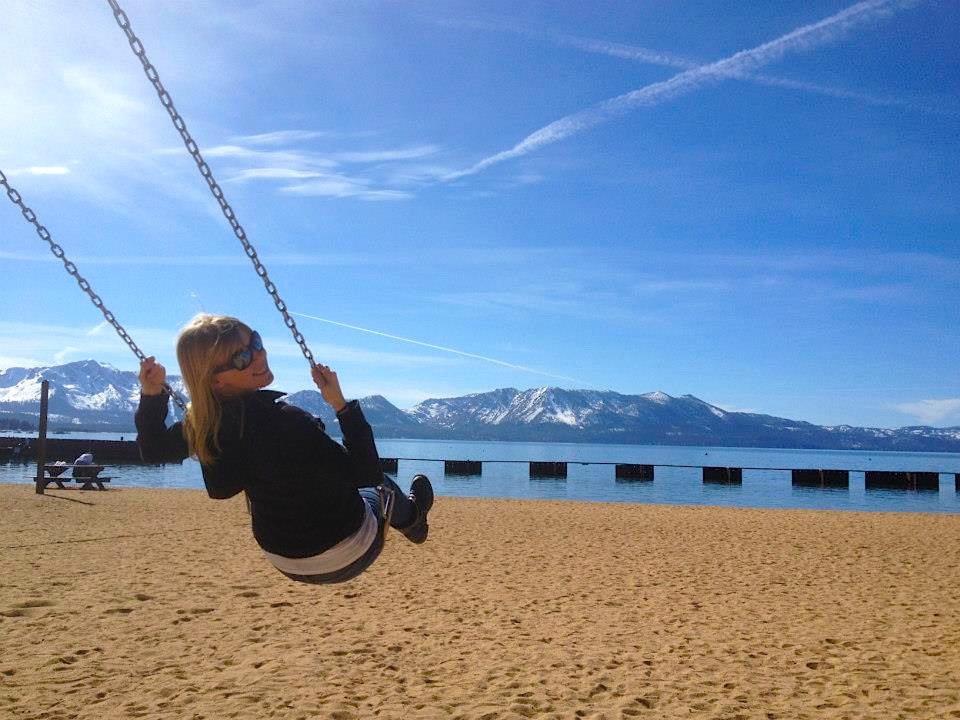
    Lori Swinging

    “While we try to teach our children all about life, our children teach us what life is all about.” ~Angela Schwindt

    When you’re young, anything seems possible. Whether you want to become a school teacher, a ballerina, or an astronaut, it all feels within your reach.

    And you so easily get excited by it.

    You can visualize in vivid detail what it would be like to hold your roses at curtain call, or how proud you’ll feel when you save the day—as a fireman, a soldier, or maybe even a superhero. You pretend your way through different roles and stay open to different ideas of who you are.

    You might know what you like and don’t, and you probably aren’t afraid to vocalize it, but you haven’t yet learned how to get stuck in your ways. You’re too curious for that. That would be boring.

    Though you knew back then that sticks and stones might break your bones but names could never hurt you, you did get hurt sometimes. You cried when a bully teased you, or you couldn’t get something you wanted.

    But the next day you were back swinging and giving underdogs at the playground, smiling and dreaming new dreams again.

    Then life happened. Maybe time and experience taught you to worry, fear, and limit yourself, and you slowly became a person younger you wouldn’t want to play with. You started playing by rules that no one even gave you. You stopped imagining possibilities and believing that you could meet them.

    And worst of all, you started thinking that it’s something the world did to you—not something you choose, moment to moment. (more…)

  • 6 Tips to Keep Becoming Who You’re Meant to Be

    6 Tips to Keep Becoming Who You’re Meant to Be

    “Life is a process of becoming. A combination of states we have to go through. Where people fail is that they wish to elect a state and remain in it. This is a kind of death.” ~Anais Nin

    Last October, in a whiplash-fast, three-hour labor, two and half weeks before my due date, I gave birth to my first baby, a boy, named Jackson.

    While pregnancy hadn’t been a breeze—I was hospitalized twice with complications, and, you know, no sushi for nine months—the first few weeks of Jackson’s life left me feeling, at times, like a shattered shell of my former self.

    His was an ear-piercing scream that seemed endless in those early days, leaving me both physically and mentally exhausted; and save for a few smiles, the hint of who he’d become was so teeny—like a faint, faraway twinkle in the night sky—that I wondered how I’d ever form the bond with my child I so deeply craved.

    Around the time Jackson turned five months old, things began to shift. While his ear-piercing screams still made an occasional guest appearance, an infectious laugh had begun filling some of the spaces between them.

    And the sleepless nights that so recently left me dragging through each day, dreaming of Egyptian Cotton sheets and a strong sedative, had been replaced with eight-, nine-, sometimes even 12-hour blocks of sleep.

    Jackson was becoming a funny, inquisitive, playful little person with a growing personality and a whole host of new tricks: rolling, sitting up, babbling, crawling, clapping. He reacted and responded to me now in a way that felt like communication, using a language of giggles, grunts, and physical cues.

    All these changes, as well as the growing bond between us, reminded me of why I’d been so excited to have a child in the first place: It’s super cool to raise and watch a person rapidly evolve through the formative stages of becoming who he’s meant to be.

    I am also reminded that those stages—those opportunities for growth—may slow in adulthood, but they’re always there for those interested in pursuing them. One of the best ways to find them is to engage in the world like a baby does, by following these six tips: (more…)

  • How Curiosity Can Help Us Heal from Pain and Grow

    How Curiosity Can Help Us Heal from Pain and Grow

    “Curiosity is one of the great secrets of happiness.” ~Bryant H. McGil

    I don’t think I’d be alive if it weren’t for my curiosity.

    Is that a dramatized statement? Maybe.

    For me, curiosity has brought a curious kind of “fun” and “enchantment” to an otherwise bleak, painful, and seemingly hopeless period in my life.

    Diagnosed with “burn-out” (a.k.a. adrenal fatigue) in 2009, my life quickly unraveled in front of me. I lost my job, my health, and my social life.

    From what seemed like one moment to the next (but in fact was a shift happening over numerous weeks) I lost the ability to read or concentrate on pretty much anything for longer than a short instant.

    Did I have it coming? Apparently.

    Did I see it coming? Not really, no.

    So, there I was. I could only manage one task a day. Making a simple phone call was a task.

    It was difficult to accept, and it was frightening.

    I’d always assumed that, whatever happened, I could rebuild my life. I could go and get a job somewhere else and start over, I could make things work.

    Now, it seemed I couldn’t make anything work. (more…)