Tag: crying
-
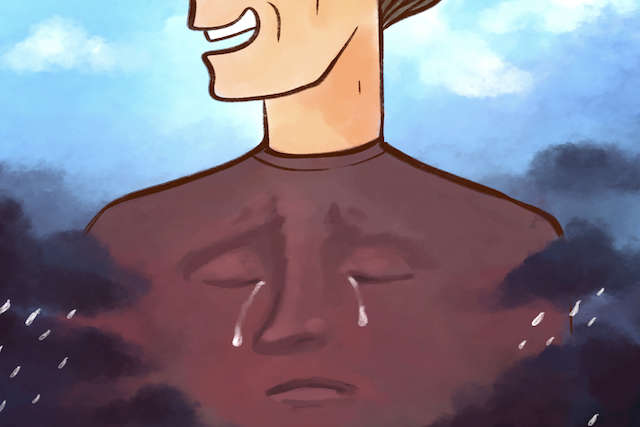
The Truth About Repressing Emotions: Lessons from a Child’s Meltdown
“Cry as often as you need to. It’s the all-purpose healing balm of the soul.” ~Karla McLaren, The Language of Emotions: What Your Feelings Are Trying to Tell You
A few years ago, a good friend invited me to his six-year-old daughter’s birthday party.
As I walked through his front door, I was greeted by the cheerful sound of children running around, their tiny feet pounding on the hardwood floor as they expertly avoided the table full of gifts in the living room.
Their parents looked just as excited, many enjoying the opportunity to finally have adult conversations (even if they were interrupted by their little ones every few minutes).
My friend’s daughter was particularly thrilled on her special day.
At one point, she bounced down the stairs, holding a giant helium balloon shaped like an exotic parrot. She tied the string to her hand and paraded it around proudly, followed by a swarm of children pleading to hold it for “just a few minutes.”
By this time, most guests had moved to the backyard to enjoy the sunny weather. I was chatting with a friend on the porch, observing the celebration in full swing, when suddenly I heard a scream.
I turned to see what all the commotion was about. To my surprise, I saw the coveted parrot balloon gently floating away, its bright colors dancing defiantly against the clear blue sky. And directly below it was my friend’s daughter, having a full-blown six-year-old meltdown.
Undeterred, my friend went over to the middle of the backyard where his daughter was standing and brought her back to a quiet area on the porch next to where I was sitting.
I wanted to give them privacy, but the mediator in me was secretly glad to be able to overhear how he would handle this predicament. I was used to dealing with adults in conflict. That said, I had minimal experience with six-year-old meltdowns.
I listened intently as he leaned over and gently said to her, “You’re upset, and that’s okay. You can be upset, but not here because we have guests at home. Why don’t you go upstairs to your room? You can be as upset as you want there. Would you like me to come with you and cuddle with you?”
His daughter stopped wailing, sniffed a couple of times, and shyly nodded yes to her father’s offer.
The guests, though well-intentioned, were only fueling her distress with their anxious glances and nervous energy. In that moment, it was clear he wasn’t just trying to keep the party running smoothly. He was also focused on ensuring his daughter had a calm, private space to decompress, away from the crowd’s well-meaning but overwhelming concern.
My mouth was hanging open at this point.
You see, I grew up with the well-intended message that I should not feel certain emotions. “Don’t be upset” and “Don’t cry” were common phrases in my family. This taught me that emotions were something to be ashamed of rather than embraced.
Instead of processing my emotions, I seem to have built up an internal archive of unacknowledged feelings. As much as I hoped they would magically disappear, they have stuck around, cluttering my psyche and seeping out at the most inopportune moments. I suspect many of us grew up with this type of messaging—well-meaning but emotionally restrained.
I wonder if, in that process, we learned to silence the very parts of us that make us human.
I used to blame my parents for denying me the ability to process my emotions effectively. I would ruminate in frustration, Why didn’t they encourage me to express myself? Why was sensitivity met with so much discomfort?
But now I realize that’s a very one-sided view of things.
My parents’ struggles ran much deeper than mine. They fled their home country as refugees, with nothing more than $200 in their bank account and the weight of survival on their shoulders. There wasn’t time for this thing we now call “emotional well-being.”
Their world was about making it to the next day, finding work, shelter, food—anything to build a life for us from the ground up. Emotions, in that context, were a luxury they simply couldn’t afford. They weren’t trying to shut me down; they were trying to protect me from the harsh realities they faced every day.
As much as I understand this intellectually, those ingrained patterns of suppression remained entrenched within me for many years.
As adults, we often unconsciously send ourselves the same messages from our childhood. We distract ourselves instead of processing our emotions. Feeling sad? I bet there’s a great new series to binge-watch. Upset about something? Why not take another peek at your online shopping cart?
A little distraction never hurt anyone. But if it’s the only strategy we use, it short-circuits our emotional processing and causes our feelings to linger and fester.
I don’t know what my friend said or did in the room with his daughter. I imagine he gave her a big hug and let her cry her little heart out so that she could properly grieve the loss of her special balloon.
What I do know is that she emerged back at her birthday party feeling calm and smiling, and she was able to enjoy the rest of the celebration with her friends—birthday cake, regular balloons, gifts, and all.
This experience left me wondering about all the moments in my life that I had missed out on because of unprocessed emotions.
How many experiences, big or small, had I not appreciated because that archive of unprocessed emotions was being triggered?
What was the hidden cost of this on my relationships, work, and well-being?
At the end of my life, how would I feel about the time that I spent missing out on my life instead of being more fully present?
I stared into space, pretending to admire the beautiful backyard, as I contemplated these questions.
When I went home that evening, I made a life-changing decision.
I decided that whenever I felt like that little girl who lost her balloon, I’d take some quiet time and allow myself to feel my emotions. I’d especially make sure to feel the uncomfortable ones—disappointment from unmet expectations, frustration caused by stress at work, sadness resulting from the loss of something precious to me.
I can’t say that it’s always pleasant to dive headfirst into the depths of your pain. Sometimes I need to take a break and make good use of those distraction tactics. When I do, I remind myself that it’s not about being perfect; it’s about being whole.
My hope is that when I look back on my life at the end of my days, I’ll know that I embraced all of the emotions we humans are designed to feel. And that, because of this, I was able to enjoy more of my life feeling calm and smiling—just like that lovely little six-year-old girl.
So, I’m curious, what have you learned about emotions from the children in your life?
-
Let Your Tears Flow: The Proven Benefits of Crying
“Crying is not a sign of weakness, it’s a courageous expression of emotions that leads to strength.” ~Unknown
When was the last time you cried? Tears are often seen as a sign of weakness, but for me, they are a powerful guide that helps me recognize and understand my feelings. In a society that frequently suppresses emotions, I want to share my journey with tears and encourage you to reflect on your own experiences.
The Change in My Relationship with Tears
Sometimes, I like to cry. During my studies, I hardly ever cried sober and was proud of it. I attributed the nighttime tears to alcohol and suppressed them.
The cause of my sadness was a stressful on-off situation with a man who emotionally drained me. This relationship was a constant up and down, and I didn’t know how to handle it. Rather than allowing my emotions, I often ignored them and hid behind my studies and social life. Looking back, I realize that this suppression was more harmful than helpful in the long run.
Allowing Emotions
Today, I cry much more often, and usually sober. In recent weeks, I have shed some tears and then wondered how other people deal with theirs. Have you also had such a strange relationship with your tears? It amazes me that a few years ago I was ashamed of them—and that sometimes I still am. However, in recent months I have clearly felt how powerful tears can be and how much they help me recognize and regulate my own feelings.
Tears are not just a sign of grief or pain; they are an important part of our emotional lives and help us cope with difficult situations. Today, I see tears as a valuable tool to better understand and heal myself.
Societal Expectations and Pressure
In our fast-paced world, it is often difficult to recognize how you really feel. When you are angry or sad at work, for example, it seems easier to suppress these emotions in the stressful office environment than to allow them and possibly break down in tears in front of colleagues or the boss. After all, no one wants to be labeled as hysterical or not to be taken seriously. Can’t she control her feelings? Get a grip!
And, of course, it’s not just your image that suffers: Many colleagues or supervisors likely don’t know how to deal with tears and would be completely overwhelmed. What do they do then? An awkward pat on the shoulder or an “It will be alright” while they glance at the clock, wondering how long this emotional interlude will last—can you just leave the crying person sitting there?
I know this article may sound a bit harsh. But that was my view of tears in adulthood: They shouldn’t be there. But who says we always have to function perfectly?
Suppressing emotions can be harmful in the long run. It can lead to increased stress, anxiety, and even depression. People who constantly suppress their feelings can also develop physical symptoms like headaches, stomach problems, and sleep disorders. Ignoring your emotional needs can significantly impair your mental health and overall well-being over time.
Experiences of Other People
Out of curiosity, in recent months, I have asked various people: When was the last time you cried? The responses I received included:
- Fifteen years ago.
- I can’t remember.
- Last month.
- Yesterday
- Last week.
- This morning.
The first three answers came from men, and the last three from women. This supports what studies have been saying for years: Women cry more often than men.
According to research by Vingerhoets and Scheirs, women cry on average five times more frequently than men. It is interesting to speculate whether the more frequent association of tears with femininity is the reason why they are often seen as weak and negative. Typically patriarchal: Everything associated with femininity and emotionality is initially considered weaker and less desirable. This may sound like a bold thesis, but forgive me—sometimes you just have to speak plainly.
I still feel frustration and anger that I suppressed my tears for so long and didn’t take them seriously. Tears have their place and significance in our emotional lives—it’s about time we acknowledge that.
Tears as Signs and Guides
Today, my tears show me the way. When I feel the urge to cry for no apparent reason, I’ve learned to pause and reflect. I have found that there is always something behind my tears, and that they don’t just come for no reason.
I wish I had known that as a young student because the man who caused my tears back then eventually cheated on me, leading to even more heartache. This experience taught me two important lessons: No more on-off relationships for me, and that I should simply be more honest with my feelings.
Recognizing the Need for Action
In situations where I am completely overwhelmed, my body sometimes reacts with tears. Recently, a disrespectful and humiliating encounter brought spontaneous tears to my eyes. This reaction surprised me because, at twenty-eight years old and with diverse experiences, I didn’t expect a condescending comment to trigger such strong emotions.
The context was crucial: Other people were present, which added to my humiliation, and the comment came totally unexpectedly. This strong discrepancy between my perception and the harsh treatment by the other person threw me completely off balance. My body reacted with tears to compensate for the shock.
I managed to escape to a quiet room in time to avoid breaking down in front of the whole group. The tears were short-lived but signaled unmistakably: This is the limit, and I am definitely over it!
This experience also showed me that there are still unresolved issues within me that I need to address. A few months ago, I would probably have reacted differently and suppressed my emotions. Perhaps I would have stayed in a harmful situation—like my nearly year-long on-off relationship with said ex, who was apparently just as good at apologizing as I was at suppressing.
Tears help me recognize that something is wrong, and that action is needed. Fortunately, I now listen to them, try to change situations, and if that’s not possible, I leave them.
Regulating Emotions Through Crying
Tears also help with emotion regulation. After I cry, I feel better: freer and relieved. Admittedly, I also look significantly worse with my red, swollen eyes. But I feel like tears help me tidy up. They wash away everything I no longer need. And for that, I gladly accept a bit of smeared mascara.
Scientific studies have shown that crying can actually reduce stress hormones. Tears contain, among other things, cortisol, a stress hormone, whose excretion through crying can contribute to stress reduction. Additionally, crying can activate the parasympathetic nervous system, which is responsible for relaxation and recovery.
Crying in Front of Others
When was the last time you cried in front of others?
Honestly, I still find it difficult to do this, but I am learning. It’s uncomfortable when others cannot handle the tears, but tears are not bad. They are part of our shared human experience and often lead to deeper understanding and connection. A sense of security probably needs to exist for this. I haven’t often cried in front of others and found it truly liberating.
Last year in the summer, however, I had an emotional rollercoaster ride. First, I was at my grandmother’s funeral. Immediately afterward, I went to a very cool but exhausting four-day festival, where I received a painful rejection from someone I really liked. Additionally, I returned to Germany from a seven-month solo trip and was jobless and somewhat aimless. On the day of my return, I met with my closest friends in the evening and completely broke down.
Those tears, dear people, were the most healing thing that could have happened to me at that moment. All my friends also had tears in their eyes, held me tight, and gave me the space and time I needed. From that point on, things started to improve, and I felt a new sense of security that, no matter how difficult things get or how deeply I fall, I am not alone.
The Strength and Meaning of Tears
That’s why I don’t want anyone to be ashamed of their tears. Tears have a reason, whether we are sad, overwhelmed, angry, or incredibly happy. It is unfortunate that tears are often viewed negatively. I believe it takes true strength to allow them and to find out what message they want to convey to us.
Tears are like little messengers of our soul. Look closer. What might they want to tell you? What are they drawing your attention to? And what might it mean if you haven’t cried for a very long time? What is your relationship with your tears? I invite you to explore this with me—share your thoughts in the comments. I would love to hear your reflections and stories.
-
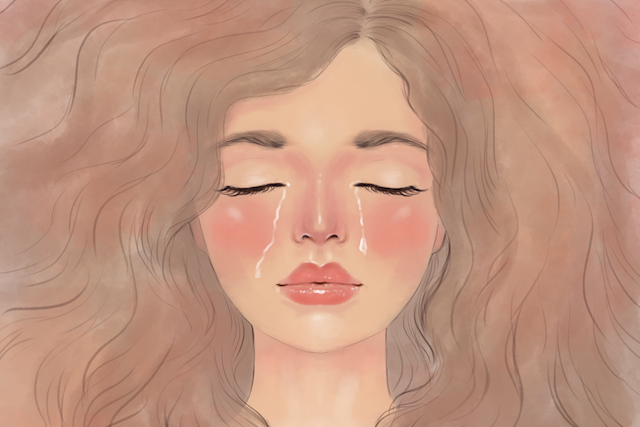
I’m Not Sorry for My Tears: A New Movement
“Do not apologize for crying. Without this emotion, we are only robots.” ~Elizabeth Gilbert
A few nights ago, I was at a groovy, loud Mexican restaurant with some friends. In between sips of spicy margaritas and bites of chips with guac, I was talking with one of my friends privately about her latest struggles. She was confiding in me that she was still quite emotional about losing her mom.
Although it had been two years, she still found herself crying alone and in front of others when she talked or thought about her mother. She mentioned that the week prior, someone at work had asked her a question about her mom and, upon answering, tears had started to flow freely. Then, she was embarrassed and quickly took her hands to her face to wipe the tears and started apologizing profusely.
“I’m so sorry!” she quipped. “I did not anticipate getting emotional. I apologize for the tears.”
This stopped me in my tracks. I was literally stymied by it all right then and there. I thought about this, and it hit me. What the heck is wrong with our society? Wait, don’t answer that. There are way too many things, but I’m referring to this one in particular.
Why do we apologize when we cry? It absolutely should be the opposite. Crying is opening one’s heart and soul. It’s being vulnerable. It’s being real, open, and in touch. It’s exactly what we’re supposed to do when we’re hurting. We are purging ourselves of our sadness with our tears.
When my boys were little and they would burp or fart, I would always say, “Better out than in,” and this is the same. Better out than in. Let them go. Release the flood. Cry your eyes out. And, for the love of all of us, do not apologize.
Instead, I propose we start a movement. Instead of apologizing, how about we do the opposite? Upon tears starting to fall, how about saying, “I’m not sorry I’m crying”? This is taking our power back. It’s taking pride in knowing that you are being real, vulnerable, and open.
My best friend is a therapist. I discussed this with her, and she told me that almost every time a client cries, they apologize to her. Think about that. They are paying her quite a bit of money so that they can be “seen,” and they tell her they are sorry for crying. She told me that she always tells them to never apologize for crying, but that generally doesn’t stop them from saying it in each subsequent meeting.
After realizing the glaring phenomenon of apologizing when the tears start to flow, I noticed it everywhere. It was exemplified in every reality show on TV, as these seem to be prime platforms to cry. Every single time I witnessed someone crying, they uttered the words, “I’m sorry… ugh, so sorry…” as they tried to compose themselves. I could see the embarrassment in their faces and their mannerisms.
I also attended a funeral recently and noticed that every time someone relayed a story to me and started to cry, the next words were always “I’m sorry.” It is ubiquitous. I have never been around someone or seen someone on a show or movie say, “I’m not sorry. I’m not sorry for showing you my heart, opening my soul, and being vulnerable.”
Think about how you feel when you’re with someone who begins to cry. For me, I completely soften inside. No matter what the circumstances. Even if I am mad at the other person, I don’t like them that much, or I don’t know them very well.
The moment someone cries in my presence, I melt a little inside. Whatever guard I had up, whether it was big or small, it comes down. I truly see them as a feeling soul who just happens to be human. I am drawn to them. I feel connected. I want to be closer to them.
I am also a bit honored that they feel safe crying in front of me. I feel a little special, even if that is totally unintentional on their part. I feel like they are letting me in and showing me more of who they are.
So, after coming up with this new manifesto, I knew I needed to start practicing it and see how it felt. It came up two days later. I was telling my husband about a memory I had about his dad, who had recently passed, and in this tender moment, tears started to fall.
I fell into my rote way of thinking and feeling and quickly apologized.
“I’m sorry I’m getting emotional,” I said, and then I remembered. Oh shoot, nooooo, not that. So I course-corrected. “I’m not sorry, I mean.”
The funny thing is that I’m certain he didn’t even notice my backpedaling. I, however, did. I noticed that it felt better to say I wasn’t sorry. It gave me agency. I didn’t feel weak. I felt power in my words and in my tears. And it’s not even about power; it truly is about being real and honest.
There is power in being completely transparent. Life is hard, and our hearts break a little and a lot, and sometimes often. It is our opportunity to truly live the human experience. To cry is to be human. There is no reason to apologize for being human. Let it go. Let it all out with gusto, and then stand strong and say, “I’m not sorry I’m crying” and see how that feels.
I’m not sorry.
-
How My Son Taught Me That Crying Can Boost My Mental Health
“And some days life is just hard. And some days are just rough. And some days you just gotta cry before you move forward. And all of that is okay.” ~Unknown
Over the years I’ve built myself a bit of a reputation as “the emotional one.”
I was always the first to cry at weddings, and that included my own. At that one I barely stopped throughout the ceremony! And as soon as I’m beyond the half-way point of any good holiday, it’s inevitable that a pretty epic sob is waiting in the wings.
At this point I should probably mention that I’m a forty-three-year-old male. I also live in the UK, a country that’s proud of its “Bulldog spirit” and “stiff upper lip.” What this really means is that we’re a country where many people are uncomfortable with their own emotions, and shockingly bad at processing them.
That brings me on to the point of this post—and it’s a happy post. I’m delighted to report that in the past few years I’ve come to see the true value in being able to cry, and being unashamed to do so.
This doesn’t mean I’m somebody who has frequent public meltdowns that make people uncomfortable! In fact, it’s quite the opposite. I’ve reached the point where I’ve learned to recognize my own internal pressure valve. I know when it needs releasing, and know how to do it in a private, dignified, and healthy way.
Human beings are the only animals with the ability to cry. It clearly has a purpose, and it doesn’t take much research to discover it has serious benefits, both mentally and physiologically. Crying is thought to reduces stress hormones and relax the nervous system.
There are alternatives to crying, and we see them all the time: unhealthy behaviors, addictions, outbursts of anger and violence, and patterns of arguments and disharmony.
That takes me back to the whole “stiff upper lip” thing. Emotions have to come out somewhere, and in my experience it’s the people who are fixated on being “strong” and “manly” who live lives cluttered with arguments and hangovers.
On balance, I’d much rather have the ability to cry, and no shame in doing so. Recently, I feel I’ve learned to take it further than that to the point that I can use crying as an extremely useful tool in my mental health armoury.
So, what got me to that point? The answer is simple: fatherhood.
My oldest son has just turned seven years old. And he’s very much like me. It’s a much-misused word, but he’s a “sensitive” lad. He’s hugely empathetic, and a wonderful gentle soul. He’s also very sentimental and—again like me—as likely to be touched by joy as by sadness.
Like everyone else in the world, we’ve had a challenging time since the pandemic began. One of the hardest parts has been navigating the children through it. This means dealing with their lockdown loneliness, but also constantly working out what to tell them so they’re as protected as possible without us insulting their intelligence.
Another part of this is recognizing when it’s all getting a bit much for them.
I can pretty accurately predict when a “meltdown” is incoming for my son. And I always ensure that I’m there ready for him when he wants to let the tears out. I encourage him to take as long as he needs. I cringe when I see parents saying, “that’s enough now,” or worse.
None of this means I’m trying to raise a child who’s constantly in tears! But I am trying to raise a child who knows that having a good howl is a wiser and more evolved way of releasing emotion than punching somebody in the playground or having an undignified argument.
While I’ve been teaching him this, I’ve been learning myself. Just as I’ve learned to predict when he may soon need to “let it all out,” I’ve become much more attuned to when I need to too.
I have some mental health issues. Anxiety is the main one, with a generous scattering of OCD and some periodic depression as the cherries on top.
One thing that indicates my mental health is in trouble is when I can’t cry. Depression is often misunderstood. For me, when it’s at its worst, it manifests as being emotionally empty and numb.
In fact, “the big cry” often marks the turning point in a spell of depression. It means I’ve started to feel again. I’ve learned the pattern over many years, and it’s now got to the point where I can say “I need to cry.”
And that’s a really powerful thing. I know what I need to do, so that empowers me to consciously try to do it nowadays.
As we’ve already established, crying can release stress hormones and calm the nervous system. Who wouldn’t want to do that, especially during a spell of poor mental health?
The trouble is, far too many people are conditioned to feel ashamed of showing emotion. But it’s not like I phone all my mates and say, “I’ve been feeling a bit low, so I’m setting aside an hour today to go in the bedroom with a bunch of sad songs and some tissues.”
This last happened just a few days ago, and I did tell my wife my intentions. That in itself involved a little embarrassment and vulnerability. But when I re-emerged a little later, she said that I looked like a different person—with a bounce in my step and colour back in my cheeks.
That’s why I’ve written this. It is deeply personal, because nobody’s ever proud of having a good cry. I can’t help wondering whether that should change.
I am proud that my children don’t have to live in a house where there are needless arguments. A home where we process emotions in a healthy way—a way that humans alone have access to.
So get that “crying tunes” playlist ready. Learn which old photos set you off, or which films are certain to “hit you in the feels.” And don’t be afraid to tuck yourself away for a while and use the power of emotion to enhance your mental health.
To be clear, this isn’t a weapon I have to deploy frequently or publicly, but it’s one I’ve come to love having at my disposal. It’s there for you too, so don’t be scared or embarrassed to make use of it. The alternatives may be more popular with the “stiff upper lip” crowd, but they don’t benefit them, or the people around them.
Let it out.
-
Sensitivity Is a Gift: How to Thrive with a Bleeding Heart
“You are not a mess. You are a feeling person in a messy world.” ~Glennon Doyle Melton
I can recall crying myself to sleep at night when I was a little girl. Not a loud bawl, more of a soft weep.
My mom would tuck me in goodnight and as soon as she turned the lights on her way out, I would be left with a feeling of fear and sadness. Not because I was afraid of the dark, but because I was afraid of my dark.
The thoughts that entered my mind that kept me from falling into a peaceful slumber as an elementary school kid were rife with pain and suffering.
Mom would say, “Think good thoughts, honey.” But I didn’t. I couldn’t. I was too affected by all the suffering I saw.
I cried for all the injustice in the world.
I cried for all the pain I couldn’t necessarily see but could sense in others.
I cried for the kids getting bullied at my school.
I cried for myself getting teased at school.
I cried because people died and I didn’t get why they had to.
Somewhere along the way I received the message that it wasn’t okay to cry, or feel anything other than fine. That it was somehow bad to feel emotion. That to be a good little girl, I had to conceal and go along.
The only problem was, I had a lot of feelings. All the time I had them, intensely strong ones.
The world is not set up to honor sensitive people. When we see someone crying, we also usually see someone rush to their side and say “Oh, don’t cry.”
My question is, why?
Why can’t we cry? What is so bad about crying?
I want to scream from the rooftops:
I reserve the right to be sad if I’m sad.
I reserve the right to be mad if I’m mad.
And I reserve the right to cry if I feel like crying. It’s my life and I’ll cry if I want to.
Crying is a sign of life, by the way. It means you are alive. It’s the first thing we want to hear when a new baby is born—their cry. It is one of the most natural human reflexes we have.
But growing up as sensitive or empathetic, we learn that we are oversensitive, too much, too emotional, cry babies, wimps, too fragile, over-reactors. So what is given to us as a gift—our sensitive nature—is often squashed, repressed, and stifled.
And when we don’t know how to use our superpower sensitivities for good, the weight of the world’s suffering will most definitely crush us. My sensitivity felt like a wicked curse for a long time, before I learned how to treasure it like the blessing it is.
Some things I have learned:
Honor your sensitive nature.
Do this by affirming yourself and realizing that this is how you were made. Make the best of it and turn it from a commonly perceived negative trait to your biggest asset.
Maximize the strength of being highly sensitive by making sure you have a creative outlet. It is essential to have a place for it all to go. Whatever it is for you, go there as much as you can to release the myriad of emotions from any given day. Find it, do it, love it, and let it rejuvenate you.
Find your fellow heart-bleeders.
It can be alienating to feel like you’re the only one feeling so deeply. But there are so many of us out there, I assure you. There’s even a book called If You Feel Too Much.
Kindle up friendships with these people and create your tribe. There is such strength and power in connecting with like minds. You will know who they are by the way you feel around them—they see and accept and love your depth of feeling, they do not shame you for it or tell you to change your nature.
Reserve the right to cry.
Crying is a release and a ritual of mine. I love when a good, hard cry sneaks up on me in yoga. It’s just so healing. My emotions can overwhelm me, from unbearable grief to overstimulating joy. I cry to help release that energy overflow; otherwise, my heart might explode. I am moved to tears on a regular basis and let them come and go as they please, even welcome them now.
You do not have to be the suffering-holder and pain-keeper.
Just because you are acutely aware of the pain and emotional nuances of those around you doesn’t mean you need to take it on and make it your own. In fact, you really can’t. It’ll bring you down with them.
There is a beautiful word in the English language known as boundaries. Compassion is also a beautiful word. Boundaries and compassion can, in fact, co-exist. The way to be compassionate and have boundaries at the same time is to show your love and caring for others without taking responsibility for their pain and problems by trying to fix them.
—
Being born extra-sensitive is a gift, so long as we choose to see it that way. It was my fatal flaw until I learned what to do with it. When we can learn to work with it, rather than against it, we can undoubtedly make it our greatest strength and the source of all the magic and richness in this life.