Tag: cry

  • The Truth About Repressing Emotions: Lessons from a Child’s Meltdown

    The Truth About Repressing Emotions: Lessons from a Child’s Meltdown

    “Cry as often as you need to. It’s the all-purpose healing balm of the soul.” ~Karla McLaren, The Language of Emotions: What Your Feelings Are Trying to Tell You

    A few years ago, a good friend invited me to his six-year-old daughter’s birthday party.

    As I walked through his front door, I was greeted by the cheerful sound of children running around, their tiny feet pounding on the hardwood floor as they expertly avoided the table full of gifts in the living room.

    Their parents looked just as excited, many enjoying the opportunity to finally have adult conversations (even if they were interrupted by their little ones every few minutes).

    My friend’s daughter was particularly thrilled on her special day.

    At one point, she bounced down the stairs, holding a giant helium balloon shaped like an exotic parrot. She tied the string to her hand and paraded it around proudly, followed by a swarm of children pleading to hold it for “just a few minutes.”

    By this time, most guests had moved to the backyard to enjoy the sunny weather. I was chatting with a friend on the porch, observing the celebration in full swing, when suddenly I heard a scream.

    I turned to see what all the commotion was about. To my surprise, I saw the coveted parrot balloon gently floating away, its bright colors dancing defiantly against the clear blue sky. And directly below it was my friend’s daughter, having a full-blown six-year-old meltdown.

    Undeterred, my friend went over to the middle of the backyard where his daughter was standing and brought her back to a quiet area on the porch next to where I was sitting.

    I wanted to give them privacy, but the mediator in me was secretly glad to be able to overhear how he would handle this predicament. I was used to dealing with adults in conflict. That said, I had minimal experience with six-year-old meltdowns.

    I listened intently as he leaned over and gently said to her, “You’re upset, and that’s okay. You can be upset, but not here because we have guests at home. Why don’t you go upstairs to your room? You can be as upset as you want there. Would you like me to come with you and cuddle with you?”

    His daughter stopped wailing, sniffed a couple of times, and shyly nodded yes to her father’s offer.

    The guests, though well-intentioned, were only fueling her distress with their anxious glances and nervous energy. In that moment, it was clear he wasn’t just trying to keep the party running smoothly. He was also focused on ensuring his daughter had a calm, private space to decompress, away from the crowd’s well-meaning but overwhelming concern.

    My mouth was hanging open at this point.

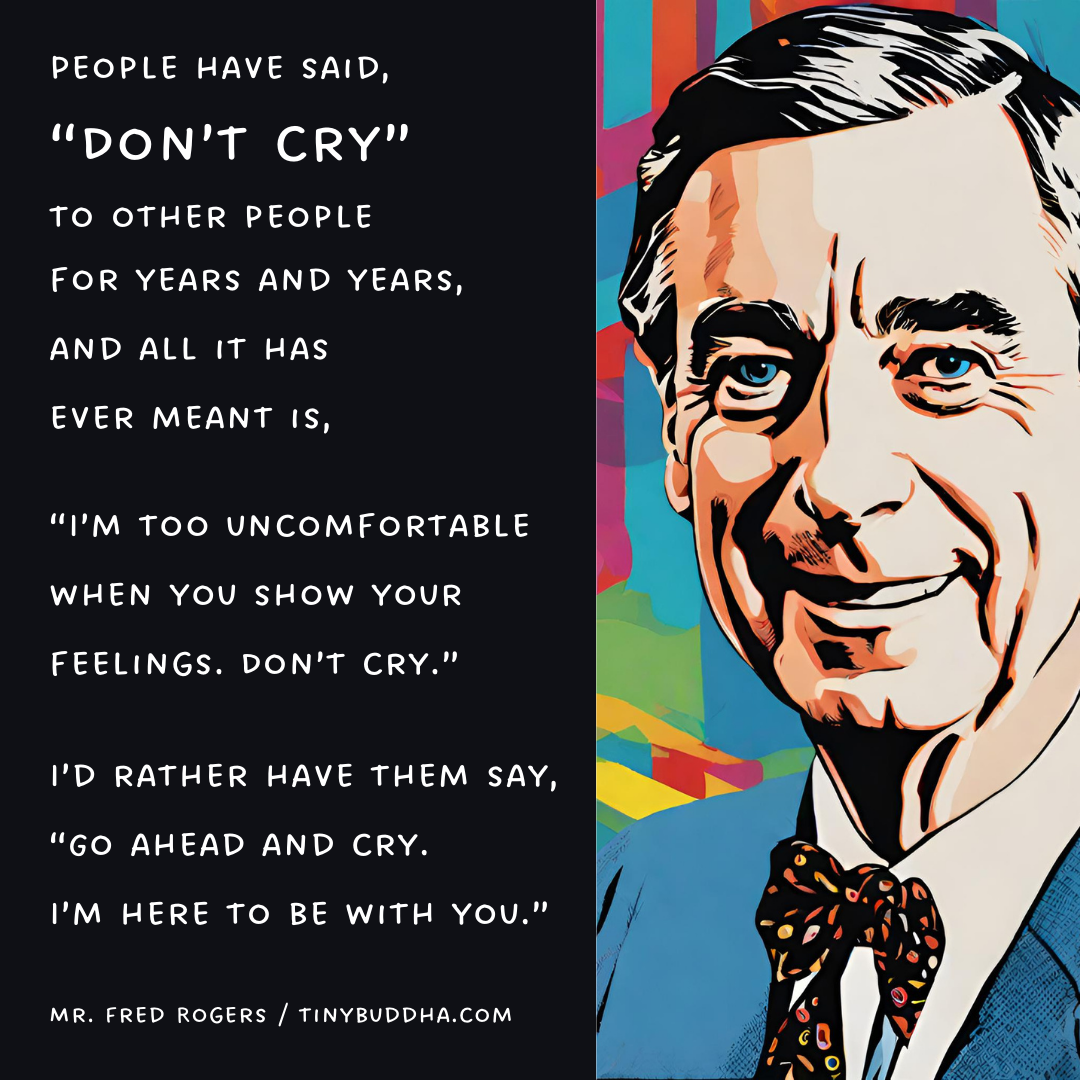
    You see, I grew up with the well-intended message that I should not feel certain emotions. “Don’t be upset” and “Don’t cry” were common phrases in my family. This taught me that emotions were something to be ashamed of rather than embraced.

    Instead of processing my emotions, I seem to have built up an internal archive of unacknowledged feelings. As much as I hoped they would magically disappear, they have stuck around, cluttering my psyche and seeping out at the most inopportune moments. I suspect many of us grew up with this type of messaging—well-meaning but emotionally restrained.

    I wonder if, in that process, we learned to silence the very parts of us that make us human.

    I used to blame my parents for denying me the ability to process my emotions effectively. I would ruminate in frustration, Why didn’t they encourage me to express myself? Why was sensitivity met with so much discomfort?

    But now I realize that’s a very one-sided view of things.

    My parents’ struggles ran much deeper than mine. They fled their home country as refugees, with nothing more than $200 in their bank account and the weight of survival on their shoulders. There wasn’t time for this thing we now call “emotional well-being.”

    Their world was about making it to the next day, finding work, shelter, food—anything to build a life for us from the ground up. Emotions, in that context, were a luxury they simply couldn’t afford. They weren’t trying to shut me down; they were trying to protect me from the harsh realities they faced every day.

    As much as I understand this intellectually, those ingrained patterns of suppression remained entrenched within me for many years.

    As adults, we often unconsciously send ourselves the same messages from our childhood. We distract ourselves instead of processing our emotions. Feeling sad? I bet there’s a great new series to binge-watch. Upset about something? Why not take another peek at your online shopping cart?

    A little distraction never hurt anyone. But if it’s the only strategy we use, it short-circuits our emotional processing and causes our feelings to linger and fester.

    I don’t know what my friend said or did in the room with his daughter. I imagine he gave her a big hug and let her cry her little heart out so that she could properly grieve the loss of her special balloon.

    What I do know is that she emerged back at her birthday party feeling calm and smiling, and she was able to enjoy the rest of the celebration with her friends—birthday cake, regular balloons, gifts, and all.

    This experience left me wondering about all the moments in my life that I had missed out on because of unprocessed emotions.

    How many experiences, big or small, had I not appreciated because that archive of unprocessed emotions was being triggered?

    What was the hidden cost of this on my relationships, work, and well-being?

    At the end of my life, how would I feel about the time that I spent missing out on my life instead of being more fully present?

    I stared into space, pretending to admire the beautiful backyard, as I contemplated these questions.

    When I went home that evening, I made a life-changing decision.

    I decided that whenever I felt like that little girl who lost her balloon, I’d take some quiet time and allow myself to feel my emotions. I’d especially make sure to feel the uncomfortable ones—disappointment from unmet expectations, frustration caused by stress at work, sadness resulting from the loss of something precious to me.

    I can’t say that it’s always pleasant to dive headfirst into the depths of your pain. Sometimes I need to take a break and make good use of those distraction tactics. When I do, I remind myself that it’s not about being perfect; it’s about being whole.

    My hope is that when I look back on my life at the end of my days, I’ll know that I embraced all of the emotions we humans are designed to feel. And that, because of this, I was able to enjoy more of my life feeling calm and smiling—just like that lovely little six-year-old girl.

    So, I’m curious, what have you learned about emotions from the children in your life?

  • I’m Not Sorry for My Tears: A New Movement

    I’m Not Sorry for My Tears: A New Movement

    “Do not apologize for crying. Without this emotion, we are only robots.” ~Elizabeth Gilbert

    A few nights ago, I was at a groovy, loud Mexican restaurant with some friends. In between sips of spicy margaritas and bites of chips with guac, I was talking with one of my friends privately about her latest struggles. She was confiding in me that she was still quite emotional about losing her mom.

    Although it had been two years, she still found herself crying alone and in front of others when she talked or thought about her mother. She mentioned that the week prior, someone at work had asked her a question about her mom and, upon answering, tears had started to flow freely. Then, she was embarrassed and quickly took her hands to her face to wipe the tears and started apologizing profusely.

    “I’m so sorry!” she quipped. “I did not anticipate getting emotional. I apologize for the tears.”

    This stopped me in my tracks. I was literally stymied by it all right then and there. I thought about this, and it hit me. What the heck is wrong with our society? Wait, don’t answer that. There are way too many things, but I’m referring to this one in particular.

    Why do we apologize when we cry? It absolutely should be the opposite. Crying is opening one’s heart and soul. It’s being vulnerable. It’s being real, open, and in touch. It’s exactly what we’re supposed to do when we’re hurting. We are purging ourselves of our sadness with our tears.

    When my boys were little and they would burp or fart, I would always say, “Better out than in,” and this is the same. Better out than in. Let them go. Release the flood. Cry your eyes out. And, for the love of all of us, do not apologize.

    Instead, I propose we start a movement. Instead of apologizing, how about we do the opposite? Upon tears starting to fall, how about saying, “I’m not sorry I’m crying”? This is taking our power back. It’s taking pride in knowing that you are being real, vulnerable, and open.

    My best friend is a therapist. I discussed this with her, and she told me that almost every time a client cries, they apologize to her. Think about that. They are paying her quite a bit of money so that they can be “seen,” and they tell her they are sorry for crying. She told me that she always tells them to never apologize for crying, but that generally doesn’t stop them from saying it in each subsequent meeting.

    After realizing the glaring phenomenon of apologizing when the tears start to flow, I noticed it everywhere. It was exemplified in every reality show on TV, as these seem to be prime platforms to cry. Every single time I witnessed someone crying, they uttered the words, “I’m sorry… ugh, so sorry…” as they tried to compose themselves. I could see the embarrassment in their faces and their mannerisms.

    I also attended a funeral recently and noticed that every time someone relayed a story to me and started to cry, the next words were always “I’m sorry.” It is ubiquitous. I have never been around someone or seen someone on a show or movie say, “I’m not sorry. I’m not sorry for showing you my heart, opening my soul, and being vulnerable.”

    Think about how you feel when you’re with someone who begins to cry. For me, I completely soften inside. No matter what the circumstances. Even if I am mad at the other person, I don’t like them that much, or I don’t know them very well.

    The moment someone cries in my presence, I melt a little inside. Whatever guard I had up, whether it was big or small, it comes down. I truly see them as a feeling soul who just happens to be human. I am drawn to them. I feel connected. I want to be closer to them.

    I am also a bit honored that they feel safe crying in front of me. I feel a little special, even if that is totally unintentional on their part. I feel like they are letting me in and showing me more of who they are.

    So, after coming up with this new manifesto, I knew I needed to start practicing it and see how it felt. It came up two days later. I was telling my husband about a memory I had about his dad, who had recently passed, and in this tender moment, tears started to fall.

    I fell into my rote way of thinking and feeling and quickly apologized.

    “I’m sorry I’m getting emotional,” I said, and then I remembered. Oh shoot, nooooo, not that. So I course-corrected. “I’m not sorry, I mean.”

    The funny thing is that I’m certain he didn’t even notice my backpedaling. I, however, did. I noticed that it felt better to say I wasn’t sorry. It gave me agency. I didn’t feel weak. I felt power in my words and in my tears. And it’s not even about power; it truly is about being real and honest.

    There is power in being completely transparent. Life is hard, and our hearts break a little and a lot, and sometimes often. It is our opportunity to truly live the human experience. To cry is to be human. There is no reason to apologize for being human. Let it go. Let it all out with gusto, and then stand strong and say, “I’m not sorry I’m crying” and see how that feels.

    I’m not sorry.

  • How My Son Taught Me That Crying Can Boost My Mental Health

    How My Son Taught Me That Crying Can Boost My Mental Health

    “And some days life is just hard. And some days are just rough. And some days you just gotta cry before you move forward. And all of that is okay.” ~Unknown

    Over the years I’ve built myself a bit of a reputation as “the emotional one.”

    I was always the first to cry at weddings, and that included my own. At that one I barely stopped throughout the ceremony! And as soon as I’m beyond the half-way point of any good holiday, it’s inevitable that a pretty epic sob is waiting in the wings.

    At this point I should probably mention that I’m a forty-three-year-old male. I also live in the UK, a country that’s proud of its “Bulldog spirit” and “stiff upper lip.” What this really means is that we’re a country where many people are uncomfortable with their own emotions, and shockingly bad at processing them.

    That brings me on to the point of this post—and it’s a happy post. I’m delighted to report that in the past few years I’ve come to see the true value in being able to cry, and being unashamed to do so.

    This doesn’t mean I’m somebody who has frequent public meltdowns that make people uncomfortable! In fact, it’s quite the opposite. I’ve reached the point where I’ve learned to recognize my own internal pressure valve. I know when it needs releasing, and know how to do it in a private, dignified, and healthy way.

    Human beings are the only animals with the ability to cry. It clearly has a purpose, and it doesn’t take much research to discover it has serious benefits, both mentally and physiologically. Crying is thought to reduces stress hormones and relax the nervous system.

    There are alternatives to crying, and we see them all the time: unhealthy behaviors, addictions, outbursts of anger and violence, and patterns of arguments and disharmony.

    That takes me back to the whole “stiff upper lip” thing. Emotions have to come out somewhere, and in my experience it’s the people who are fixated on being “strong” and “manly” who live lives cluttered with arguments and hangovers.

    On balance, I’d much rather have the ability to cry, and no shame in doing so. Recently, I feel I’ve learned to take it further than that to the point that I can use crying as an extremely useful tool in my mental health armoury.

    So, what got me to that point? The answer is simple: fatherhood.

    My oldest son has just turned seven years old. And he’s very much like me. It’s a much-misused word, but he’s a “sensitive” lad. He’s hugely empathetic, and a wonderful gentle soul. He’s also very sentimental and—again like me—as likely to be touched by joy as by sadness.

    Like everyone else in the world, we’ve had a challenging time since the pandemic began. One of the hardest parts has been navigating the children through it. This means dealing with their lockdown loneliness, but also constantly working out what to tell them so they’re as protected as possible without us insulting their intelligence.

    Another part of this is recognizing when it’s all getting a bit much for them.

    I can pretty accurately predict when a “meltdown” is incoming for my son. And I always ensure that I’m there ready for him when he wants to let the tears out. I encourage him to take as long as he needs. I cringe when I see parents saying, “that’s enough now,” or worse.

    None of this means I’m trying to raise a child who’s constantly in tears! But I am trying to raise a child who knows that having a good howl is a wiser and more evolved way of releasing emotion than punching somebody in the playground or having an undignified argument.

    While I’ve been teaching him this, I’ve been learning myself. Just as I’ve learned to predict when he may soon need to “let it all out,” I’ve become much more attuned to when I need to too.

    I have some mental health issues. Anxiety is the main one, with a generous scattering of OCD and some periodic depression as the cherries on top.

    One thing that indicates my mental health is in trouble is when I can’t cry. Depression is often misunderstood. For me, when it’s at its worst, it manifests as being emotionally empty and numb.

    In fact, “the big cry” often marks the turning point in a spell of depression. It means I’ve started to feel again. I’ve learned the pattern over many years, and it’s now got to the point where I can say “I need to cry.”

    And that’s a really powerful thing. I know what I need to do, so that empowers me to consciously try to do it nowadays.

    As we’ve already established, crying can release stress hormones and calm the nervous system. Who wouldn’t want to do that, especially during a spell of poor mental health?

    The trouble is, far too many people are conditioned to feel ashamed of showing emotion. But it’s not like I phone all my mates and say, “I’ve been feeling a bit low, so I’m setting aside an hour today to go in the bedroom with a bunch of sad songs and some tissues.”

    This last happened just a few days ago, and I did tell my wife my intentions. That in itself involved a little embarrassment and vulnerability. But when I re-emerged a little later, she said that I looked like a different person—with a bounce in my step and colour back in my cheeks.

    That’s why I’ve written this. It is deeply personal, because nobody’s ever proud of having a good cry. I can’t help wondering whether that should change.

    I am proud that my children don’t have to live in a house where there are needless arguments. A home where we process emotions in a healthy way—a way that humans alone have access to.

    So get that “crying tunes” playlist ready. Learn which old photos set you off, or which films are certain to “hit you in the feels.” And don’t be afraid to tuck yourself away for a while and use the power of emotion to enhance your mental health.

    To be clear, this isn’t a weapon I have to deploy frequently or publicly, but it’s one I’ve come to love having at my disposal. It’s there for you too, so don’t be scared or embarrassed to make use of it. The alternatives may be more popular with the “stiff upper lip” crowd, but they don’t benefit them, or the people around them.

    Let it out.

  • This Weekend I Fell Apart, and That’s Okay

    This Weekend I Fell Apart, and That’s Okay

    “Look for something positive each day, even if some days you have to look a little harder.” ~Unknown

    This weekend I hurt more than I have in a very long time.

    It all started on Friday, when my boyfriend and I headed out to spend the weekend with friends—two couples, both with babies in tow.

    I’ve been trying, unsuccessfully, to get pregnant since the start of the year, yet I didn’t anticipate that it would be emotionally taxing for me to be around two little families. I was just excited to see our friends, who live in the Bay Area, hours away from our home near LA.

    A little backstory: I’m less than three weeks away from my thirty-ninth birthday, which means I’m now in the category of “high-risk pregnancy,” if I’m even able to get pregnant at all.

    My boyfriend and I first discussed having a baby five years ago, but we kept pushing it off because our families live on opposite coasts, and neither of us was able to agree to live on the other’s coast full-time for the long term.

    We finally decided, at the beginning of this year, that I would be the one to visit my family—as often as I feel I need to, with our kid(s), for the foreseeable future—and we’d commit to staying in LA, which makes sense since we’re working toward a career in film.

    But biology doesn’t just fall in line because you finally get over your fears and decide to make a compromise. We’re both open to the idea of adoption, but there are other personal issues—that my fiercely private boyfriend would not want disclosed—that have complicated matters.

    So there I was on Friday with our friends and their adorable babies—one actually a toddler, since he recently turned two.

    We toasted our get-together around 5:00 with our first glass of wine, and the wine continued flowing throughout dinner. After, we all moved to the deck to partake in an at-home wine tasting.

    The ladies and I discussed my road to pregnancy, and though I was discouraged, for the most part I was fine—until I wasn’t.

    Having lost track of the amount of wine I was drinking, I eventually hit that emotional place I remember from my younger years, when alcohol eventually led to histrionics and tears. It is literally a depressant, after all, and generally not great to imbibe when you’re already feeling fragile.

    I don’t remember all the details of that night, but I know I cried about my fears about not being able to have a family (which, as I mentioned, is an issue complicated by many factors).

    I woke up at 4:00 in the morning and picked a fight with my boyfriend about our relationship. Then I woke at 8:00 with two things: a hangover and a shame-over. I was absolutely mortified.

    I’d gotten drunk, turned a fun night with friends into something heavy and emotional, and had caused my boyfriend a lot of pain and embarrassment. It gave me a little comfort to realize everyone had drunk too much. But I still felt deeply ashamed of having lost control.

    Ironically, I received an email that morning that I’d been waiting on for almost a month. My film mentor had just read the second draft of my first feature screenplay, and she said she was blown away by the massive improvement from the first draft.

    I had never in my life simultaneously felt immense pride and deep shame, but I did right then.

    Fortunately, the friend I cried to was extremely kind and empathetic. And no one judged me or put me down, as good friends never do.

    But that day was pretty rough for me, physically and emotionally. And the next day, it got worse.

    That night I noticed that a few people had commented on a meme I’d shared on Friday, using clipart with a hyper-sexualized female silhouette. They mentioned that it was demeaning to women to use what essentially appeared to be Barbie to represent the female form. One person called it “offensive.”

    Though there were only a few critical comments, juxtaposed against 12,000 shares, I immediately realized I agreed with them. As someone who once struggled with an eating disorder, I’d like to represent women as more than a busty, high-ponytailed caricature.

    This didn’t fully or accurately represent my values or the message I’d like to convey. And I didn’t like the idea of young girls seeing it and concluding, as I may have as an adolescent, that this was what a woman is supposed to look like, even if some women actually look like this. So I decided to take it down.

    With a mind still foggy I decided to write something on Facebook, as I wanted the community to know I felt I’d made an error in judgment. I didn’t want to just delete it. I want to make it clear I don’t agree with a society that puts pressure on women to be femme bots and suggests that our sexuality is our most valuable contribution.

    I mentioned in my post that some people had pointed out that the image was offensive, and I agreed that it was triggering—and the backlash was swift and harsh.

    In retrospect, I don’t think I accurately communicated why I decided to remove this image, since I didn’t address the cultural issue of how women are portrayed in the media and the fact that I’d like to be part of the solution, not the problem. But I’m not sure it would have mattered if I did, since I’d used the word “offensive.”

    I forgot that people often get offended by other people getting offended.

    Over the next day, hundreds of comments came in, many attacking me on a personal level.

    People called me spineless for catering to “snowflakes.” People said they lost respect for me and questioned my aptitude for even doing the work I do, since I clearly have no sense of conviction or belief in my own decisions. Even more alarming, many people mocked the idea of being “triggered,” and essentially belittled anyone with emotional or mental health issues.

    I felt misunderstood, judged, and condescended.

    I hid or deleted many of the worst comments and resisted the urge to defend myself, deciding instead to leave one clarifying comment a couple hours in. But I’m not going to lie; this affected me deeply.

    While on the one hand, I reminded myself that my power was in my response, and publicly, I only responded in one calm, clear comment, I also obsessively monitored the feed.

    By this time my boyfriend and I were at his parents’ house in Nevada, where we planned to stay for a few days, and I wasn’t even close to present. I didn’t want to delete this new post, since I believed I’d done the right thing, but it pained me to see so much vitriol in a space that I hold sacred.

    Then came another blow: I’d noticed a while back that since the start of the year, someone had been sharing every single challenge from my book Tiny Buddha’s 365 Tiny Love Challenges on Facebook. Though this person tagged my page, none of the posts included the book’s title or a link—and some people actually assumed she was writing these posts or getting them from my Facebook page.

    I’d emailed my publisher a few weeks back to ask their thoughts on this, and they told me they could send an email asking her to stop. At the time, this seemed warranted.

    Her Facebook friends didn’t see it that way. After she posted the letter from my publisher’s legal department, tagging my page, once again, the comments turned nasty.

    F— you, Tiny Buddha.

    You suck, Tiny Buddha.

    More like “Greedy Buddha.”

    Unbelievable! She should thank you for the free marketing!

    For a while, I felt completely numb. And I knew I was doing the “wrong” things by obsessively monitoring my phone and letting these comments get to me.

    I knew it wasn’t serving me to dwell in my self-righteousness and how wrong I believed it was for this woman, who enjoyed my work enough to share it, to like comments that attacked me on a personal level. But I did it anyways.

    I was angry with the people who were angry. I was triggered by the people who were triggered.

    And then something occurred to me: This whole weekend was an opportunity. It was a chance to practice some of the lessons that are much easier to practice when everything is going well.

    This weekend was a chance to remember that:

    I need compassion most when I think I deserve it the least.

    Initially, I beat myself up over several things this weekend: drinking to excess, exploding emotionally, hurting my boyfriend, choosing clipart that I wished I hadn’t chosen, letting my publisher speak for me instead of reaching out to the woman personally, and obsessing over the various challenges I was facing instead of being present.

    I told myself I shouldn’t have made any of those mistakes. I should have been beyond this. I was a fraud.

    Then I realized something: I was being as mean to myself as the people online. And not a single blow of self-flagellation was helping me move on. In fact, each self-judgmental thought cemented me further into the hole. Because telling myself I was sucking at life made it awfully hard to find the strength to do better.

    Every time I criticized myself, I weakened myself, and a weakened person is far less equipped to reframe difficult circumstances and respond wisely.

    The only way out was to cut myself some slack. I needed to stop fighting with myself and let go, as if melting into a hug from someone who had finally forgiven me. I needed my own love and compassion.

    So I drank too much and cried. I was hurting. It’s been a long journey toward starting a family, and it’s been hard. It’s okay to hurt.

    So I made mistakes in my work—who hasn’t? I owned them and publicly admitted them. What matters isn’t the fact that I messed up but that I acknowledged it and committed to doing better.

    I don’t have to be perfect. Sometimes I will make mistakes, some public, and sometimes I’ll make many that compound. The only way to stop the cycle is to stop obsessing about having done things wrong. The only way to move into the future is to fully accept the past. Once I did this, I felt freer and better able to be present.

    The approval that matters most is my own.

    It bothered me that people believed I removed the image because I needed approval from the “complainers,” as opposed to having made a decision based on my own beliefs and values.

    But ironically, once the flood of negative comments came in, I did start feeling a need for approval. I wanted people to understand and honor my positive intentions.

    It took me a day, but I was finally able to accept that some people were simply committed to judging me, and this wasn’t something to change; it was something to accept.

    It didn’t matter if some people derided me or questioned me if I felt in my heart I’d done the right thing.

    I eventually deleted the second post because I wanted to put an end to the negativity. There’s far too much of that on Facebook already. But I’m proud I waited and resisted the urge to remove all criticism immediately. For a recovering approval addict, allowing a public character assassination requires immense strength. And I give myself a lot of credit for that.

    It’s rarely personal.

    Intellectually, I knew this when people were insulting me in both places on Facebook.

    I knew that the people who were angry with me for catering to “snowflakes” were really projecting their feelings about what they perceive to be an oversensitive culture. It wasn’t just about this one image. It was about every time someone’s ever said they were offended and their complex feelings about what that means to them.

    I also knew that the people defending the woman who’d been sharing my book online were acting from a place of allegiance to their friend. They were more pro-her than anti-me. Many didn’t even have all the information—they didn’t realize she’d been sharing from a book. So really, I couldn’t take that personally either.

    This wasn’t immediately comforting to me because the attacks were so public, but when I was able to fully absorb this, it did give me some peace.

    Not everyone will see my side, and that’s okay.

    I believe one of our deepest desires is to feel understood—to know that other people get where we’re coming from and that they may even have done the same thing if they were in our shoes.

    I didn’t feel that way when people judged me personally based on the letter from my publisher’s legal department.

    I left a few comments on that post, trying my best to respond from a place of calm, but I know there are some people who will forever think I am greedy and soulless because I didn’t want my book’s content republished online.

    I’ve decided that this is okay. Not everyone has to get me, understand me, support me, be considerate of me, or treat me kindly—so long as I do those things for myself.

    Pain can be useful if you share it to help someone else.

    I decided to share this post for two reasons:

    First, I thought it would be cathartic for me. I felt ashamed for a lot of this weekend, and I wanted to be able to reframe this experience in a way that felt empowering. As I said when I first launched this site, when we recycle our pain into something useful for others, we’re able to turn shame into pride.

    And that brings me to the second reason: I thought it might be helpful for someone else to realize that even someone who runs a site like Tiny Buddha can fall into so many self-destructive traps.

    If you’ve ever drank too much and fallen apart emotionally, know that you’re not alone.

    If you’ve ever obsessed over comments online and allowed something as trivial as a Facebook feud to get the better of you, know that you’re not alone.

    If you’ve ever failed to apply what you know and regressed to the least evolved version of yourself, know that you’re not alone.

    And know that all of these things are okay. They don’t mean anything about you as a person. They don’t define you. And they certainly don’t have to dictate the future.

    This is what I needed to hear this weekend when I was despondent and numb, so today it’s my gift to you. I hope someone benefits from something in my experience, but I suppose no matter what, someone has—me.
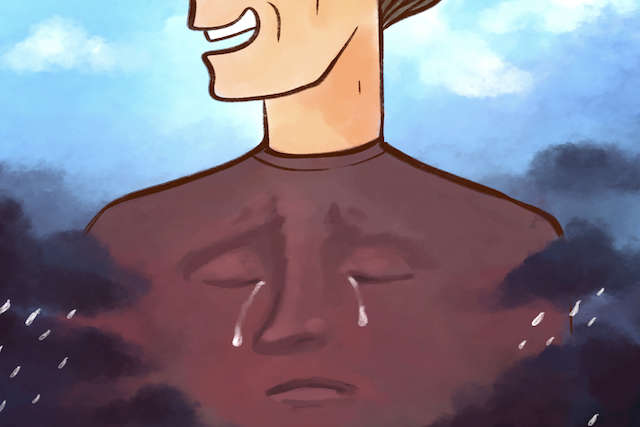
  • It’s Okay to Cry

    It’s Okay to Cry

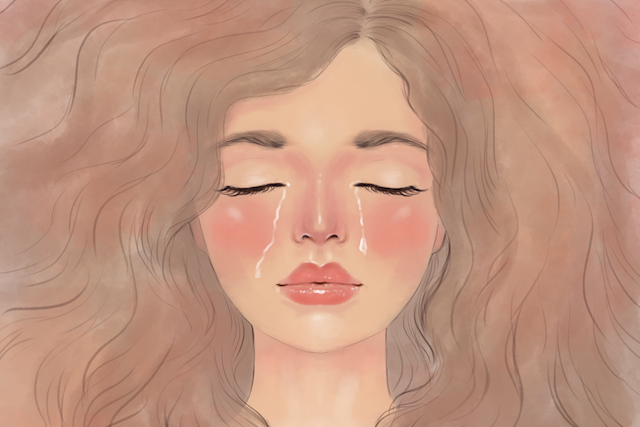
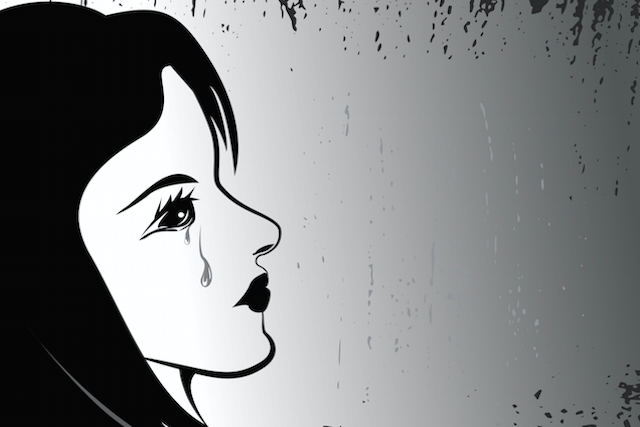
    Woman crying

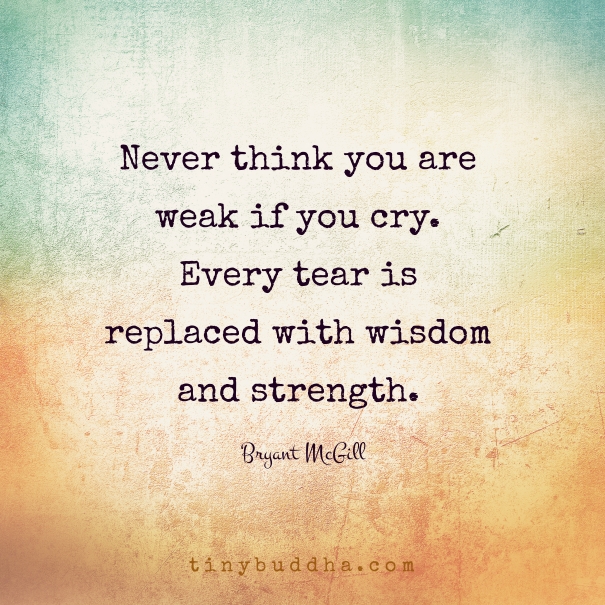
    “We need never be ashamed of our tears.” ~Charles Dickens

    We have all cried, all of us, some more than others.

    But today I am not here to divide us by the liters of tears we have shed.

    Today I want to unite us because we are all the same.

    We all feel sad, stressed, overwhelmed, scared, and frustrated at times.

    Any stay-at-home parent would understand my frustration, my misery, and my overwhelmed days.

    It has eaten me up on the inside. I have been staying at home for the past seven years, looking after my kids, with no face-to-face interaction with adults like you and me.

    All I do is get three boys fed and cleaned (god knows, sometimes I skip the cleaning part). All I do is break up fights. All I do is clear the never-ending mess in the living room. All I do is everything for them, but nothing for me. 

    Some days I ask myself why I have decided to stay at home.

    Some days I ask myself why I have been given such a difficult task.

    Some days I feel that I’m not cut out to be a mother.

    Those are the days when I sit and curl up my knees, with my face in my hands, shoulders heaving, and my two-year-old by my side, wondering what’s wrong with Mama.

    And after the tears have run dry, I know I just have to get up and fight again.

    For I know that if I can’t handle it one more time, I have tears waiting to release me. And that’s okay.

    Today I want to let you know that it is not shameful to be in tears. That you are not a failure just because you couldn’t handle the situation.  That you had been doing so well, too well, that is why you’re now breaking. 

    My dear friend, I just want to let you know that it is okay to cry. Just let it all out, my dear.

    I do it all the time.

    It’s the only place I can go to, shedding those tears.

    It’s the only release I have, shedding those tears.

    It’s the only thing I could do, shedding those tears.

    My message today is that we shouldn’t be afraid to feel our feelings. More importantly, it’s only by feeling our feelings that we’re able to recognize the message they’re sending us and then make positive changes in our lives.

    For me, I discovered that I needed to pay more attention to my own needs, that I needed to find time to pursue my passion, that I needed to find time to mingle with my friends, that I’m not expected to be only a mother.

    I’ve learned that being a good mother doesn’t mean that I have to be around 24/7. Instead, a good mother is one that remembers to take time off for herself. No one is capable of being there for others (even if they are the people you love) without having some time for rejuvenation.

    I’ve learned that the hard way. Neglecting oneself can really make a person lose all sense of purpose, and when that happens, depression comes knocking on your door.

    I’ve learned that being a smart mother doesn’t mean you try to make it on your own. Being a smart mother means I ask for the help I need. Since I am currently residing in a country that is not my own, and neither my husband nor I have immediate family here, that’s meant hiring a babysitter.

    Other than that, we are also enrolling our littlest one into a half-day childcare program in a few days’ time. I can’t wait for the few hours of freedom every day! All of my three children will be in school, and I am determined to use this time to pursue my passion.

    It was only by feeling my feelings that I was able to recognize my needs and make these positive changes.

    Cry if you’re hurting, and realize you don’t have to accept your unfulfilling situation.

    The changes you need to make in your life don’t have to be on a grand scale. Simple changes to your routine may have a much larger impact on your happiness than you can imagine.

    You just have to listen carefully to what you want and need. You have to listen carefully to what’s holding you back. When you can identify these two things, you can make a positive change in your life. I know you can do it!

    Today I want to tell somebody, anybody, that if you see someone crying, please reach out to them.

    If you see someone crying, please don’t judge.

    If you see someone crying, being there could mean the world to them.

    If you’re a man, it is okay to cry too, because only strong people dare to show their feelings.

    You see, tears can come from all sorts of feelings.

    Tears come from stress. Tears come from sorrow. But they make your pain lessen, make you look to tomorrow

    Tears come from pain. Tears come from frustration. But you can get up again. You always have and you always will.

    It’s okay to cry. It’s okay for share your tears with others. And it’s okay to do whatever it is you need to do for you.

  • Sensitivity Is a Gift: How to Thrive with a Bleeding Heart

    Sensitivity Is a Gift: How to Thrive with a Bleeding Heart

    “You are not a mess. You are a feeling person in a messy world.” ~Glennon Doyle Melton

    I can recall crying myself to sleep at night when I was a little girl. Not a loud bawl, more of a soft weep.

    My mom would tuck me in goodnight and as soon as she turned the lights on her way out, I would be left with a feeling of fear and sadness. Not because I was afraid of the dark, but because I was afraid of my dark.

    The thoughts that entered my mind that kept me from falling into a peaceful slumber as an elementary school kid were rife with pain and suffering.

    Mom would say, “Think good thoughts, honey.” But I didn’t. I couldn’t. I was too affected by all the suffering I saw.

    I cried for all the injustice in the world.

    I cried for all the pain I couldn’t necessarily see but could sense in others.

    I cried for the kids getting bullied at my school.

    I cried for myself getting teased at school.

    I cried because people died and I didn’t get why they had to.

    Somewhere along the way I received the message that it wasn’t okay to cry, or feel anything other than fine. That it was somehow bad to feel emotion. That to be a good little girl, I had to conceal and go along.

    The only problem was, I had a lot of feelings. All the time I had them, intensely strong ones.

    The world is not set up to honor sensitive people. When we see someone crying, we also usually see someone rush to their side and say “Oh, don’t cry.”

    My question is, why?

    Why can’t we cry? What is so bad about crying?

    I want to scream from the rooftops:

    I reserve the right to be sad if I’m sad.

    I reserve the right to be mad if I’m mad.

    And I reserve the right to cry if I feel like crying. It’s my life and I’ll cry if I want to.

    Crying is a sign of life, by the way. It means you are alive. It’s the first thing we want to hear when a new baby is born—their cry. It is one of the most natural human reflexes we have.

    But growing up as sensitive or empathetic, we learn that we are oversensitive, too much, too emotional, cry babies, wimps, too fragile, over-reactors. So what is given to us as a gift—our sensitive nature—is often squashed, repressed, and stifled.

    And when we don’t know how to use our superpower sensitivities for good, the weight of the world’s suffering will most definitely crush us. My sensitivity felt like a wicked curse for a long time, before I learned how to treasure it like the blessing it is.

    Some things I have learned:

    Honor your sensitive nature.

    Do this by affirming yourself and realizing that this is how you were made. Make the best of it and turn it from a commonly perceived negative trait to your biggest asset.

    Maximize the strength of being highly sensitive by making sure you have a creative outlet. It is essential to have a place for it all to go. Whatever it is for you, go there as much as you can to release the myriad of emotions from any given day. Find it, do it, love it, and let it rejuvenate you.

    Find your fellow heart-bleeders.

    It can be alienating to feel like you’re the only one feeling so deeply. But there are so many of us out there, I assure you. There’s even a book called If You Feel Too Much.

    Kindle up friendships with these people and create your tribe. There is such strength and power in connecting with like minds. You will know who they are by the way you feel around them—they see and accept and love your depth of feeling, they do not shame you for it or tell you to change your nature.

    Reserve the right to cry.

    Crying is a release and a ritual of mine. I love when a good, hard cry sneaks up on me in yoga. It’s just so healing. My emotions can overwhelm me, from unbearable grief to overstimulating joy. I cry to help release that energy overflow; otherwise, my heart might explode. I am moved to tears on a regular basis and let them come and go as they please, even welcome them now.

    You do not have to be the suffering-holder and pain-keeper.

    Just because you are acutely aware of the pain and emotional nuances of those around you doesn’t mean you need to take it on and make it your own. In fact, you really can’t. It’ll bring you down with them.

    There is a beautiful word in the English language known as boundaries. Compassion is also a beautiful word. Boundaries and compassion can, in fact, co-exist. The way to be compassionate and have boundaries at the same time is to show your love and caring for others without taking responsibility for their pain and problems by trying to fix them.

    Being born extra-sensitive is a gift, so long as we choose to see it that way. It was my fatal flaw until I learned what to do with it. When we can learn to work with it, rather than against it, we can undoubtedly make it our greatest strength and the source of all the magic and richness in this life.

  • Accepting, Feeling, and Releasing Painful Emotions

    Accepting, Feeling, and Releasing Painful Emotions

    “Eventually you will come to realize that love heals everything, and love is all there is.” ~Gary Zukav

    Last year I developed some unexplained symptoms that could be likened to IBS, Chron’s disease, or even morning sickness (although I wasn’t pregnant, so there was no promise of a baby to make it all worth it).

    I had no idea what caused it, why it was there, or what to do about it.

    This shook me because I’d always had a strong intuitive connection with my body and I had always been healthy, but now when I asked my body a question, there was just silence.

    It was as if a thick fog had parked right between my inner wisdom and me, blocking my channel of intuitive guidance about what to eat, what to avoid, and what was really going on underneath it all. It was so quiet—there weren’t even any crickets!

    With my intuition evading me, I was stuck in the surface level “real” world to manage it. I was dealing with debilitating symptoms every day that were, bit by bit, wearing down my strength and self-control, until one day I crumbled in a heap.

    I had decided to practice what I preach and do something nourishing, despite how terrible I felt. So I got my yoga mat with the intention of pushing through my discomfort to do something that would probably make me feel better. As soon as I felt that mat underneath my feet, I felt safe, I felt nurtured, I felt held.

    I had entered a place where I could go deep and be real. I wasn’t expecting my yoga mat to hold me like the compassionate embrace of a lifelong friend, but that’s exactly what it did, and I surrendered to it.

    Once the flow of tears began, there was no way I could stop it. The pain of the everyday struggle, the expectations I had of myself as a mother, the disappointment I felt from not being capable of living my life to the fullest, and the resentment I had toward “everyone else,” who could eat what they wanted without suffering the way that I was… it all came out.

    And underneath it was frustration, then anger, then self-hatred, then rage, then emptiness, silence, and peace.

    I didn’t have any revelations as to what this was all about or how to fix it, but I simply allowed myself to release everything that had been building up inside of me. And just when I thought the tears were done, more would flow. I screamed, I pounded the mat, and I breathed deeply until only peace remained.

    Here’s what I took away from that experience.

    1. Trust is essential.

    Because my intuition went quiet, I stopped trusting myself. I had forgotten that my body was communicating with me in the only way that it could. I didn’t think to look for the lesson or meaning in it all.

    Once I had released all my tears and pain, my sense of self-trust returned and I was able to bring myself back to a space of gratitude and openness.

    Trusting that there is something to gain from your experience will help you to remain open to it rather than feeling bad about it.

    2. It’s okay to cry.

    Crying is not a sign of weakness but rather a sign of strength, self-respect, and love.

    You need to honor your urges to cry. Not only does it clear and release anything that you’ve been holding in, crying also connects you with the present and allows you to be your most authentic self, even if you’re alone like I was.

    3. Self-compassion is a game-changer.

    Once I let out all of the self-hatred that I had been holding onto, I made space for self-compassion.

    I spoke lovingly to myself, I acknowledged the challenges that I had been facing, and I offered myself the nurturing and love that I had previously been searching for outside of myself.

    Being your own friend is a powerful skill that can keep you strong and grounded in the face of adversity.

    4. There’s no need to fear what’s inside of you.

    It might seem dark and terrifying when you look at what you’re hiding inside of you, but there is not a single part of you that won’t benefit from being loved, accepted, and respected.

    Shed some light onto the darkness; give each part of you a voice to express its needs, its pain, and its story. Once you realize that your inner demons cannot hurt you, you take away the power they once held over you and can start loving yourself unconditionally.

    5. We all need a sacred space to be vulnerable.

    We all need a space where we can explore, accept, heal, and (learn to) love ourselves.

    For me it was the yoga mat, but for you it may be your meditation cushion, your local park or beach, or even in your bed.

    Find or create a loving and unconditional space where you can be raw, honest, and vulnerable. Visit it whenever you get a sense that something within is ready to shift and release.

    Surrender into the strong support of your sacred space, and remember that it’s safe to let your feelings flow. It may even be the best thing for you.