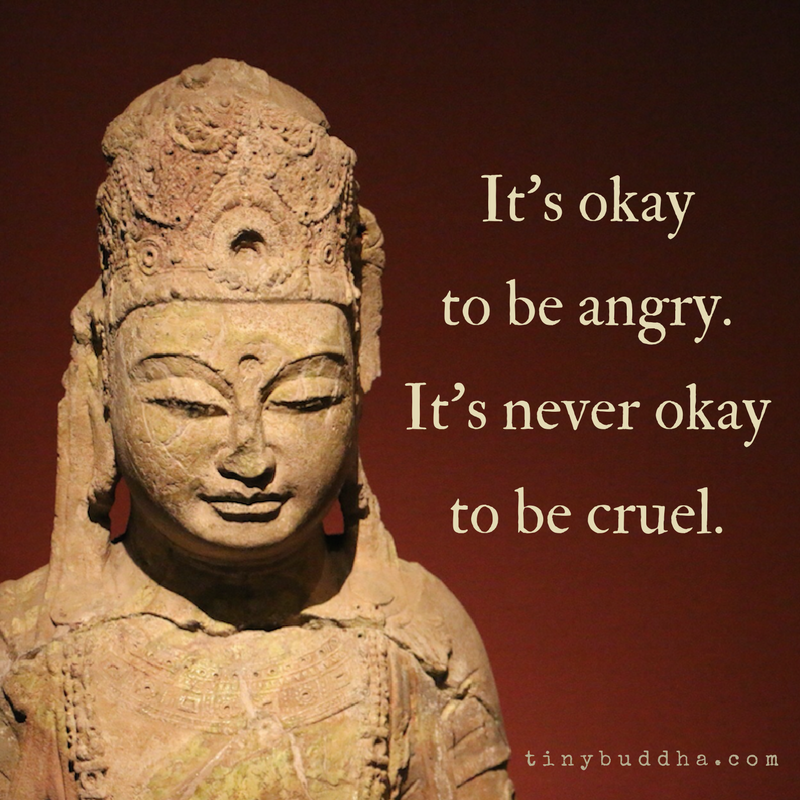
Tag: cruel

  • Standing Up for Yourself Doesn’t Make You Any Less Kind

    Standing Up for Yourself Doesn’t Make You Any Less Kind

    “Being a good person doesn’t mean being a doormat… You can be kind, giving, and full of love, but that doesn’t mean you have to accept disrespect or allow your boundaries to be crossed.” ~Unknown

    I can still vividly remember sitting in my seventh-grade classroom, forcing a laugh as my classmates made jokes at my expense. My cheeks would burn red, but I’d smile along, desperately wanting to belong. For years, I mistook my silence for kindness, my nervous laughter for good nature. I didn’t realize that by laughing at myself, I was slowly chipping away at my own self-worth.

    Growing up, I was the “nice kid”—the one who never caused trouble, never talked back, and always tried to keep the peace. When someone would make a cutting remark about my appearance or mock the way I spoke, I’d respond with a practiced smile and a halfhearted chuckle. I thought this made me mature, diplomatic even. “Just brush it off,” my mother would say. “They’re only joking.” But deep inside, each laugh felt like a small betrayal of myself.

    The pattern continued well into my teenage years. In every social circle, I became the designated “good sport”—the one who could take any joke, no matter how sharp its edges. I wore this label like a badge of honor, never realizing it was actually a shield I was hiding behind. My inability to stand up for myself wasn’t kindness; it was fear dressed up as politeness.

    The turning point came during my first year of college. During a group project, a teammate made a particularly cruel joke about my work ethic. As usual, I started to laugh, but something inside me snapped.

    Years of suppressed feelings bubbled to the surface, and for the first time, I heard how hollow my laughter sounded. In that moment, I realized I wasn’t being nice—I was being complicit in my own diminishment.

    This revelation led me down a path of self-discovery and personal growth. Through therapy, self-help books, and countless conversations with trusted friends, I began to understand the difference between being kind and being a doormat. I learned that standing up for yourself doesn’t make you mean or confrontational—it makes you self-respecting.

    Here are the vital lessons I learned along my journey:

    The first step was the hardest: acknowledging that my laughter was a defense mechanism, not a sign of resilience. I had to accept that it’s okay to not find hurtful comments funny. Real strength isn’t in laughing off insults; it’s in acknowledging when something hurts and addressing it directly.

    I started practicing simple phrases in front of the mirror: “I don’t find that funny,” “That comment was inappropriate,” or simply, “Please don’t speak to me that way.” At first, these words felt foreign on my tongue, but gradually, they became part of my vocabulary. I learned that confrontation doesn’t have to be aggressive—it can be calm, dignified, and firm.

    The most surprising discovery was how many people respected me more when I started setting boundaries. Those who truly cared about me adjusted their behavior. Those who didn’t, well, they showed their true colors, and I learned that not every relationship needs to be preserved at the cost of your self-respect.

    Today, I still consider myself a kind person, but my kindness no longer comes at the expense of my dignity. I’ve learned that true niceness isn’t about accepting poor treatment; it’s about treating others—and yourself—with respect.

    When someone makes a hurtful comment now, I no longer reach for laughter as a shield. Instead, I stand tall in my truth and speak up with compassion and clarity.

    To those who recognize themselves in my story—those who laugh when they want to cry, who smile when they want to scream—I want you to know that your feelings matter. Your discomfort is valid. Your voice deserves to be heard. Being nice doesn’t mean being silent, and standing up for yourself doesn’t make you any less kind.

    The journey from forced laughter to authentic self-expression isn’t easy. It’s filled with uncomfortable moments and challenging conversations. But with each small act of standing up for yourself, you rebuild your self-worth piece by piece. You learn that the strongest form of kindness is the kind you show yourself.

    Remember: You can be both nice and strong, both kind and assertive. The real magic happens when you find that balance—when you can face the world with a genuine smile, knowing you’ll never again laugh at the expense of your own dignity.

  • Dealing with Bullies: How to Cope When People Are Cruel

    Dealing with Bullies: How to Cope When People Are Cruel

    “How people treat you is their karma; how you react is yours.” ~Dr. Wayne Dyer

    I was the quintessential late bloomer, not hitting my growth spurt until my junior year of high school. I’m six feet tall now, but for all of middle school and the first half of high school, I was one of the shortest kids in the entire school.

    Additionally, some thought I had a slight lisp. I was extremely self-conscious about it after a few people unkindly pointed it out to me. During my senior year I wore Invisalign braces, which corrected my teeth and improved my speech mannerisms, but for many years I was embarrassed about my pronunciation of certain words.

    I was frequently bullied for how short I was and the way I spoke. Since I had low self-esteem already, I felt like I was fundamentally flawed and unworthy as a person. It’s safe to say high school was an extremely difficult time.

    When I went to a small liberal arts school called McDaniel College down in Westminster, Maryland, I was ready to start over. I was especially looking forward to meeting new people and leaving the days of being bullied behind. That’s when I met Tom (name changed to protect his privacy).

    The Worst Bully I Ever Had to Face

    Tom was on my college baseball team. He was the meanest, nastiest, cruelest bully I’ve ever had to face in my life.

    Tom hated my guts, and to this day I don’t know why. I’m an analytical and observant person, so here’s my educated guess: One of my values is kindness, so when I meet people, I’m friendly. Perhaps Tom didn’t think I was one of the cool kids because I was “too nice.”

    Tom hung around fellow bullies, people who enjoyed making fun of people. There’s nothing Tom enjoyed more than disrespecting others and making them feel unworthy, it seemed, perhaps because it made him feel better about himself.

    Tom didn’t bully me for my height or for the way I spoke; he bullied me because of my general lack of confidence. I was afraid of him, and he knew it.

    At one party, he told me to go hide in the closet. At another party, he made me feel so unwelcome and embarrassed that I left the party. At the gym once, he purposely bumped into me in an aggressive way and then walked away.

    Why did I do nothing while he treated me like this?

    Two main reasons: One, no one ever taught me how to properly stand up for myself. I did not have the skills, tools, or know-how to assert myself. Two, during my senior year of high school, I came incredibly close to committing suicide. There was still a part of me wondering if I belonged on this planet.

    I had acne that wouldn’t go away, and because I didn’t like myself, I subconsciously thought maybe I deserved to be treated like garbage. Ridiculous, I know, but my self-esteem was low at that point in my life. Bullies like Tom prey on people with low self-esteem, and I was his prime target.

    I stopped going to any baseball parties or social functions. I sat in my room by myself on Friday and Saturday nights. While my teammates were partying, I was letting my social anxiety get the best of me.

    My anxiety ran sky-high when the thought of Tom crossed my mind. I was letting this one person dominate my life. I became depressed because I never would have expected bullying to continue into college. I wondered if things would ever get better.

    The Silver Lining

    After some dark and isolated nights—made easier thanks to phone calls with my awesome younger sister, Annemarie—I realized I had to stop letting Tom ruin my college experience. I started to introduce myself to other people on the campus. I joined other groups and made all sorts of new friends.

    I only saw Tom and the rest of my baseball teammates during a practice, game, or mandatory team function. Many of the other players on the team looked up to Tom as the leader of the pack, the tough guy they admired, so they weren’t people I felt comfortable being around.

    While I chose McDaniel College to continue my baseball career, I decided to stop spending time with people who didn’t think highly of me whenever I could. I made many great friends at my college, and very few of them were on the baseball team.

    I ended up having a great college experience because of this. If not for my experience with Tom, I may not have extended my social circle that far.

    So I have two words for Tom: thank you. Thank you for redirecting me toward kinder, more loving people. Thank you for giving me the motivation to introduce myself to new people instead of limiting myself to some silly clique.

    Eventually, some of the other players on the team noticed how many people I knew at the school. A few of them even said I was popular. I realized something profound then: When you are rejected by a person or group of people, life has given you an opportunity to expand your horizons, meet new people, and make new friends.

    My senior year of college, with my confidence finally starting to rise, I had the guts to go tailgate with my baseball teammates during a school football game. Tom punched me square in the face and then immediately left before I had a chance to say or do anything.

    A week later, I saw him at the library. Rather than retaliate or seek revenge, I asked to have a discussion with him, and he agreed.

    He told me he’d punched me because I was drinking his friend’s beer—the beer that was supposedly for all the players on the baseball team, except for me, that is. I was the only one on the team harassed for this.

    Tom went on to say that during freshman year he didn’t think I was one of the cool kids. He explained that he didn’t hate me as a person, but he didn’t agree with a lot of the things I did.

    “Everyone has their own opinions,” he said. I had no idea what he meant, as in my freshman year of college I was always kind and respectful to others, but rather than inquire further into his inner world, I kept the discussion brief. More than anything else, I was glad the feud was likely coming to an end.

    I don’t know what made Tom become kinder than usual in this final conversation of ours, but as we made eye contact, he could see the big black eye he gave me. He didn’t outright apologize to me, but he clearly felt sorry for what he did. His words and actions were conciliatory.

    Perhaps he respected that I had just spent two semesters abroad, studying at McDaniel’s satellite campus in Budapest, Hungary, as he did mention my travels in our discussion. He probably realized I’d made the most of my opportunities and had an enriching college experience, despite his continual and incessant disrespect.

    To my surprise, he ended the conversation by shaking my hand. We then peacefully went our separate ways. By that point he had quit the baseball team, and I no longer had to see him every day. He never bothered me again.

    How to Move Beyond Bullying

    Dealing with bullying is never easy or pleasant, but it comes with the territory of being human. Bullying happens not only on sports teams and in schools but also in the workplace and other organizations. I hope these tips will help you deal with the cruel people in your life and come out on top.

    Have Compassion

    It can be difficult to have compassion for your bullies, but it helps to remember that hurt people hurt people.

    Bullies want to make you think there is something wrong with you. The truth is there is nothing wrong with you, and they’re the ones with the problem. Deep down inside they feel scared and unworthy, and they believe the only way to build themselves up is to tear someone else down.

    Truly, feel bad for people like this. As I recently learned from my friend Evan Carmichael during a YouTube live discussion with him, this does not mean you must say out loud that you have compassion for them. It’s something you can do within your mind, heart, and soul. Practicing compassion makes it easier to not take things personally and to not react emotionally.

    Don’t Let Their Opinion Define Your Reality

    Tom thought I wasn’t worth hanging out with, but the truth is I have a lot to offer people. Despite Tom’s opinion of me, I ended up making plenty of friends.

    In what parts of your life are you letting cruel naysayers limit you? You are not defined by what other people think; you are defined by your actions and what you think of yourself.

    Don’t let a bully change the way you view yourself. The next time a bully says something to you that isn’t true, pause. Then calmly say, Oh, really? Shrug your shoulders and move on with your day. The bully will most likely be neutralized.

    They are looking to get a reaction out of you and feed off your defensiveness. When you show them that their opinion means little to you, they tend to leave you alone.

    Meet New People

    A bully is one person. There are lots of great people out there in the world for you to meet. Don’t let one bad egg, or a few bad eggs, spoil the bunch.

    If you are in school, join other groups that interest you. If you are in the workplace, attend networking events and other kinds of social outings outside of work each month. The person who will change your life in a positive way is one step beyond your biggest doubt. Don’t be afraid to get outside your comfort zone because it will show you that the world is filled with awesome people.

    Talk to a Close Friend or Family Member

    When I was all alone on a Saturday night in my dorm room, isolated from my teammates, and before I met new people at my college, talking to my sister on the phone helped to remind me of all that was good about me and my life.

    You are only alone if you choose to be alone. Reach out to a trusted friend or family member you feel comfortable with and vent your innermost thoughts and feelings to them. It feels good to have a listening ear, someone who reminds us of our value. Sometimes, we get so caught up in our problems that we forget about the wonderful person we are.

    Don’t Cross the Line Just Because They Do

    My sophomore year of college, while I was drunk, without thinking I went to Tom’s dorm room with a friend, knocked on the door, and went in. It was confrontational, but more than anything else it was an insecure “let’s be friends” kind of thing.

    My incoherence, coupled with the fact that he really didn’t like me, made this a really bad and immature idea. By doing this, I opened up old wounds. His inexcusable actions were definitely on him, but it was not the right time, and I was not in the right state to talk to him. We didn’t get into a fight that night, and he was actually pretty calm in the moment, but it gave him more incentive to bully me in the future, since I’d invaded his private space.

    Remember that just because someone else crosses the line, that doesn’t mean you have to cross it as well. You’re not responsible for what someone else does to you, but you are responsible for how you respond to it.

    Assert Yourself Without Overreacting

    When dealing with a bully who won’t leave you alone, sometimes you need to assert yourself without overreacting. To respond in an even-keeled way, focus on asserting how you feel. Use “I” statements rather than “you” statements as much as you can.

    When you accuse the bully, it will egg them on to keep going. But when you focus on how you feel, it will point out to the bully that they’ve crossed the line. Here are some examples. Try to do this during one-on-one conversations, but say it in the moment if necessary:

    • I don’t like the disrespect. Please stop.
    • I feel frustrated that I’m not getting my space. I’m not getting any respect.
    • I don’t like how our conversations are always one-sided. I need to share my thoughts too.
    • I don’t deserve this. I deserve better.
    • I’m not happy with this. The negativity is pointless. Stop it, or we’re done.

    These tactics did not work with Tom for many years, but they might work with a less extreme bully.

    Send Them Love and Forgiveness

    The late, great Susan Jeffers created an exercise I absolutely love. When you are alone, imagine the bully you are dealing with as a child. Surround them with light and love, and repeat in your mind, I send them love, I send them love, I send them love.

    I was so afraid of Tom that he became a monster in my mind, dictating my actions around my college campus for a while. The truth is, he is a person like the rest of us, and something went seriously wrong in his upbringing. You don’t know what the bully has been through; they’ve become this way because they are hurting on the inside. Send them love and forgiveness.

    Go to the Authorities When Needed

    Be the bigger person, but only do so up to your limits. After Tom physically attacked me with a strong punch that left me with a bruised eye, I was at my limit. In one last attempt to end it, I peacefully confronted him face-to-face, and it worked.

    I don’t believe in retaliation or violence, so I stuck to my values even after he physically hurt me. With that said, if he attacked or threatened me even one more time, I would have gone to my coach and the campus authorities.

    When a bully turns into a criminal, please do not ever be afraid to take action. The bully wants you to live in a prison of fear, but when they see you will not tolerate their actions, they will stop. The last resort before turning it over to the authorities is to tell them directly, “If this doesn’t stop, I’m going to [person in position of authority].”

    They may try to make you feel like less of a person for doing this, but remember that their opinion doesn’t matter. All that matters is that you do what you need to do to find a solution.

    Putting It All Together

    Bullying is an international epidemic, and it needs to stop. But before the world comes to its senses, we’re going to have to learn how to deal with nasty, difficult people.

    The truth is we can’t control how other people act, but we can control how we respond to those other people. By sending our bullies compassion, asserting ourselves, and choosing not to be defined by their opinions, we can create a happy ending for ourselves.

    The experience itself may be a nightmare, but you can peacefully move on with your life knowing you are a person of integrity and values.

    You can move beyond the bullying you are experiencing, or have already experienced. You can find the silver lining and come out on top.
  • What to Do When Words Hurt You (Just Like Sticks and Stones)

    What to Do When Words Hurt You (Just Like Sticks and Stones)

    Mean Words

    “I will not let anyone walk through my mind with their dirty feet.” ~Gandhi

    Sticks and stones may break my bones, but words will never hurt me.

    Do you remember this saying from childhood? It was one I heard often and wanted to believe. The saying states that physical acts can hurt us, but no one’s words can.

    There’s nothing that seems further from the truth. Words hurt, and they stick with us far beyond the time of their telling.

    It was in elementary school where my hair color was a joke. I was a carrot top, and my peers didn’t look kindly on this rare trait.

    They insulted me with disgust and laughter, and I believed the things they said. I wished that I had hair like the other kids. If I were the same as them, they couldn’t say anything mean about me.

    They also insulted me for being flat chested, stupid, a snob, and more. I let the words stick with me and affect my self-perception.

    Fast forward to adulthood, I’m a quiet introvert enjoying my solitude. I’m not one to put myself forward. I’m not a snob, the complete opposite actually, but I’ve been called it on more than one occasion.

    I learned to walk around feeling that in my solitude I was doing something wrong. I was actually hurt by these people’s words and judgments. The words hurt.

    Or so I thought…

    Here’s how it works: Someone says something to us that isn’t very nice, we hear from a friend that a co-worker has insulted our new hairstyle or personality, or we walk down the street and we see someone pointing at us and whispering.

    Someone has spoken harsh words to us or about us, and even though we don’t want to be, we’re hurt.

    We’ve taken these words and ingested them. They are now harboring somewhere deep within us.

    We feed them with worry and anger. We contemplate the words, trying to dissect their meaning. We absorb their negative energy. Then, to make it even worse, we hold on to them, allowing them to fester for days, weeks, or maybe even years to come.

    Why do we allow these seemingly meaningless words to stick with us?

    We rely heavily on the support and acceptance from the people in our life. We feel the pressure to please those around us and to be accepted. We thrive on others’ attention as a confirmation of our own self-worth.

    What we fail to consider is why someone could be using their words against us.

    More than likely, these people are projecting onto us a negative belief or fear they have about themselves.

    Perhaps they’ve ingested too many negative words directed at them. We need to take this into consideration before we allow others’ words to negatively affect our self-perception.

    In truth, words can’t hurt. They are only words. The words cannot live without us feeding them with our thoughts. Without thoughts put behind them, they mean nothing.

    It has taken me some time to realize this, and the way I did it was by becoming a sieve.

    Let me explain what being a sieve means.

    We hear and see things hundreds of times a day.

    We hear a train whistle. We step on a leaf. We hear the words “thank you.” We watch a cat jump on a fence. Our days are filled with sensory input.

    We take it all in at the moment, then we allow it to pass. We still may hold on to the memory, but this experience hasn’t affected us. We allowed them to pass right through us.

    Then there are things that we don’t allow to pass: the judgmental glare, the insinuation that we ate too much, the lack of appreciation, the insult from a nearby driver.

    These instances stick with us. We didn’t let them pass like we did with the cat jumping over the fence. Instead, we fed these experiences with thought after thought, dissecting and defining. We absorbed it all.

    Why? Why do we hold on to some things and allow others to stay with us?

    We think about and keep alive certain experiences. Some are good, like the passionate kiss we received from a lover or a simple smile from a passing stranger. Keep these ones that feel good. Let them nourish you.

    But when you come across an experience that doesn’t feel good, be a sieve. Let what feels bad go straight through you. Don’t hesitate. Don’t let the thoughts or anger take over.

    Here are the extremely simple yet life-changing steps to letting go.

    1. Recognize the bad feeling that comes from words directed at you. Here you have the choice to feed the experience with thoughts or to just let them go.
    1. If you are willing to let the experience go, imagine yourself as a sieve. Now see the bad words and thoughts pass right through you.

    For example, let’s say a friend tells you that a mutual acquaintance said something negative about you, and you immediately feel hurt and angry.

    You could spend the next ten minutes to a week, or even more, dissecting what was said and keeping it alive. Or, you could consider that it’s not personal—that the other person may have been having a bad day, or projecting their own issues onto you—and then choose to let it pass right through you.

    I don’t know about you, but I think the second option would feel a lot better.

    After some practice, being a sieve will become second nature, and all that negativity you once experienced will disappear and go right through you, floating away to be transmuted into something better.

    Maybe the old adage is valid. Sticks and stones can break your bones, but words can never hurt you—so long as you don’t let them.

    Be a sieve and filter it out.

    *This post is referring to occasional rude, ignorant, or insensitive comments, not ongoing verbal abuse. You can read a little more about verbal abuse, and how to respond to it, here.

  • How to Make Your Cruel Inner Voice Work for You, Not Against You

    How to Make Your Cruel Inner Voice Work for You, Not Against You

    Stressed woman

    “We either make ourselves miserable, or we make ourselves happy and strong. The amount of work is the same.” ~Carlos Castaneda

    I’ve always had issues with food, but in the past five years this struggle became a full-blown eating disorder.

    I remember the first time I thought I was too big, in fourth grade. Now I know that I wasn’t too big. Maybe I hadn’t outgrown my baby fat yet, but I wasn’t overweight. Still, all the other girls at my school were smaller than me.

    There was one day when a pediatrician came to our school for a health check. Everyone was measured, weighed, etc. I can still feel the sheer horror I felt when my friends asked about my weight.

    I lied, but they didn’t believe me. Instead, they called me fat and ugly and told me that they didn’t want to play with me any longer.

    This feeling, this shame, stuck with me all my life.

    Since that day I’ve struggled with low self-esteem and the fear of not being accepted for who I am. I believe this was beginning for my eating disorder.

    Inner Voices

    In therapy I learned that my self-talk influences me tremendously, and I also learned that the inner voices aren’t always right. Sometimes they are ego-driven, and not focused on what’s the best for me in the long run.

    My inner voice told me that I’d only be worthy and likable if I were skinny.

    It would cheer me up when I was eating less than the day before, and it would beat me up when I ate “too much.” (Note: one apple plus one tub of cottage cheese was “too much”!)

    I was literally starving myself. I was so brainwashed by that constant mantra of “Come on, Mona. You’re stronger than your hunger! You made it yesterday! You don’t have to eat!” that I didn’t realize I was highly depressed and severely underweight.

    When I finally got tired of feeling constantly miserable, it took two therapists, countless tears, and an incredible amount of hard work to overcome my destructive behavior.

    But I can proudly say, I did it. I made peace with my eating disorder voice.

    Now I want to share with you the technique that kick-started my recovery and gave me back my life.

    Our Inner Team

    The inner team is a model borrowed from communication psychology, developed by German psychologist Friedemann Schulz von Thun.

    Schulz von Thun uses working groups or teams as metaphor for the inner voices we all embody (the inner plurality) and a team leader, who ideally decides and executes (that’s you).

    Unfortunately, our inner voices usually don’t act like a team, but more like a gathering of selfish narcissists pretending to be important, often by screaming louder than everyone else.

    The composition of our inner team depends on our given circumstances, upbringing, and environment.

    In my team, for example, there is “the rational.” Its comments are well thought out and very reasonable. It wants results, numbers, and theories—“no emotional bs.” I also have “the perfectionist,” who always insists on excellence and nothing less.

    In the past five years my loudest voice was my eating disorder voice. It’s been bullying all the other team members to silence them, frantically screaming the calories I had just eaten or pretending to be “the only one who really cares.”

    Here’s how I got my inner team from a one-woman-show (starring my eating disorder voice) to a team of equal partners, trying to achieve a win-win-situation.

    How To Manage Your Inner Team

    Step 1: Identify the team members.

    Who are they? What do they say? Can you give them a name? I suggest you make a sketch to visualize the team constellation.

    When I was in therapy, I paid attention throughout the course of one normal day to listen to and identify the voices that popped up.

    The first thing in the morning I “heard” a voice telling me that I’d screwed up the day before. It told me that I’d destroyed everything I’d worked for by eating so much and that I had to skip breakfast to make up for it.

    This was my eating disorder voice.

    Then a quiet little voice spoke up: “Don’t be to hard on yourself, honey. You restricted yourself for so long, you deserve that cake. And not just one little slice. You deserve the whole cake.” This is, what I call, “the Mother,” as my mum (and grandma) always emphasized the importance indulging in food.

    This team member deeply cares about me and wants to protect me from starving myself, but as “the Eating Disorder” is so overly powerful, it needs to become more drastic itself.

    As I told you, I also embody “the Perfectionist.” During my eating disorder phase, all my team members were affected by the message the eating disorder voice kept yelling.

    It’s like you’re being brainwashed. And so were my other team members.

    I always had an interest in clean eating and when I tried to integrate this concept in my life, “the Perfectionist” was my biggest enemy. If I ate clean for a whole day, but then had a slice of birthday cake, it would beat me up for not eating 100% clean:

    “You’re a failure. You just totally screwed up. Why would you even eat healthy, when eventually you’re always going to ruin everything?”

    Then “the Mother” would jump on that wagon, encouraging me to indulge into the cake, while the eating disorder would furiously try to stop me from doing so.

    With these and my three other team members, it got messy in my head. The next step gives order to the chaos.

    Step 2: Listen carefully.

    Now every team member gets the chance to explain him or herself in greater detail. Make sure to listen carefully to every one and write down the main arguments.

    Some of mine included:

    Eating disorder: “I just want you to be skinny so that you’re confident and no one can hurt you. So please stop eating so much.”

    Perfectionist: “If you stop making mistakes, people will like you. When you’re perfect, they’ll have nothing to criticize.”

    Mother: “You are stressed, I can feel it. Have some cake to calm down; you deserve it. You have to take care of yourself.”

    Only if you truly accept each team member will you understand its message. Think of a team at work. You have to accept people and face them with openness so that they are willing to share their thoughts with you. Only then can you really try to understand what they want need.

    Step 3: Brainstorm. 

    In the previous step you acknowledged each of your team members and gave them permission to exist. Now dig into what each one of them really needs.

    Let’s go back to my example and have a closer look on what my team really wants and needs:

    Eating Disorder: I want to protect you and I want you to love yourself so that you can be confident around other people.

    Perfectionist: I want to protect you from the pain of not being liked.

    Mother: I want to help you comfort and take care of yourself.

    Slightly different from what their message was before, isn’t it?

    Now it’s time to get creative: How can you satisfy the needs in a healthy way? A piece of cake won’t give you any comfort or make you feel less stressed. All it does is provide energy for your body, when what you really need might be a break.

    Step 4: Decide.

    Now that you’re aware of the different motivations, concerns, and needs, it’s easier for you to make an informed and self-determined decision.

    I easily get stressed and would turn to food for comfort. Now that I’m aware of this pattern it’s easier for me to resist the urge to swallow down a jar of peanut butter and do some light yoga instead.

    When my eating disorder voice starts saying that I have to lose weight to be liked, I start talking to it. I say that I heard and appreciate its concerns and that I’m working on becoming more confident, but that I’ve decided to try a different approach this time.

    This is my version of the Inner Team framework, and even if seems a little strange at first to “communicate with your inner voices,” it’s so beneficial.

    This process gives you the chance to take a step back and slow down instead of rushing through life one autopilot decision after another.

    You become mindful.

    By allowing all your inner voices to co-exist, you reduce their tendency to catch your attention through “screaming.” Acknowledge their right to exist and know that they do want the best for you, though their suggestions aren’t always right.

    I can genuinely say that I finally arrived at a point where I am in charge. Thanks to my inner team, I have the power to choose.

    And I choose a healthy life.

    Photo credit: © Mariayunira | Stress Woman Photo