Tag: criticism

  • How to Spot Abusive People and Stop Getting into Toxic Relationships

    How to Spot Abusive People and Stop Getting into Toxic Relationships

    “No one can make you feel inferior without your consent.” ~Eleanor Roosevelt

    When it comes to dating, I have always been drawn to people who made me work for their love and validation. Despite the fact that I, like anyone else, wish to be with somebody that loves and supports me, I have always somehow managed to attract the opposite.

    My relationship history has been fraught with rejection, feeling unworthy, and trying harder to win love and approval. Every time I felt criticized or undervalued, I would look inward and ask myself what I could do to make my partner love me more. I always felt as if it was my fault, and when in doubt, I would blame myself.

    I’m an overthinker and would spend a lot of time in self-reflection. I came to understand that the trauma I had experienced as a child played a large part in my relationship choices.

    Experiencing trauma as a young child leaves a faulty wiring imprint on your nervous system. Instead of developing a secure attachment, the trauma/abuse/neglect causes the brain to develop differently.

    I grew up with very little love and affection and never felt valued by my parents.

    Children who grow up without consistent care and love learn to cope in various ways. They become hypervigilant of people’s moods around them (so that they can stay out of the way of an angry/moody parent, for example), and they can also learn to disassociate from their feelings because they cannot escape the situation.

    Trauma as a child often leads to an anxious attachment style or an ambivalent attachment style, and this affects adult attachment styles too.

    I know for sure that I have an anxious attachment style, and I also have low self-belief and self-confidence. This makes me a prime target for toxic partners such as narcissists or other abusive individuals.

    It is commonly known that narcissistic types attract co-dependent, insecure types. The root cause of co-dependency is the fear of being abandoned. Co-dependents work hard in relationships to avoid the threat of abandonment. Toxic people, however, don’t respond to more love and attention; it just fuels their abuse.

    I knew I needed to break this pattern, or I would never be happy in love. I am now quite adept at recognizing the signs of a toxic person.

    Here are the common signs that you’re in a toxic relationship:

    They tend to lack empathy (although they know how to fake it for at least the first three to six months) and the world revolves around them, not you.

    Of course, people on the autistic spectrum can seem to lack empathy, so this isn’t a guaranteed science, but it is still a sign to consider. My ex found it virtually impossible to put himself in my shoes. He would sometimes say the right things, but his words never really came from the heart.

    My ex abandoned me at Heathrow airport because there was an unexpected issue with my passport. Instead of considering how I might feel, he swore loudly and kicked the baggage around and then said he had to go without me because he didn’t want his birthday ruined.

    We had planned to fly via Singapore to Sydney. I should have known then that this was the start of many awful episodes to come. Thankfully, I joined him twenty-four hours later after hastily getting a new passport issued, but he dumped me (for the first time) four weeks later.

    They will always be at the center of everything they do, and your needs will be unimportant.

    Their time and needs take priority over yours. Relationships are all about compromise and consideration for each other. When the give-get ratio is imbalanced it is often a sign that the relationship will not be equal.

    If you confront them about this one-sided dynamic, they will either dismiss what you say, ignore you, or turn the conversation around and begin to play the victim.

    When I would confront my ex about his selfishness, he would sometimes breakdown and cry and say, “I know I am a terrible boyfriend,” but then he would soon stop crying and life would carry on as it did before.

    They will justify cheating on you and lie about it.

    A friend told me over lunch one day that she had seen my ex on Match.com for the previous nine months. I felt sick, and when I confronted him, he said that it was only ”light window shopping.” I was an idiot and I stayed. I only had myself to blame for allowing this to continue.

    Toxic individuals regard others as objects to be used. I felt replaceable and never felt fully secure in the relationship. Ironically, the one thing that attracted me to my ex in the very beginning was how keen he was on me. I love the way he chased me and the very next day after our first date he called and said, “At the risk of seeming too keen, I was wondering if you’d like to join me again tonight?”

    I was flattered, but of course this is a common sign of a toxic individual. They move in fast; they gain your affection and trust very quickly. Once you’re hooked the manipulation and the control begins.

    Another thing to look out for is subtle or overt criticism.

    My ex would comment on my posture at the dinner table, the way I spoke to friends, the way I cooked, as well as the tidiness of my house. He didn’t like it if I watched television too much and would treat me like a child. He was very controlling, but he never saw that in himself.

    Once, on a journey in the car, I saw the funny side (thank goodness I had humor to help get me through) when he said, “I am not controlling, but don’t ever use the word ‘controlling’ to describe me.”

    A friend of mine remarked at a later date, “That’s like saying ‘I don’t f#%@ing swear’.” Utter madness!

    Emotional abuse can also occur in the absence of criticism, selfishness, and controlling behavior.

    Being ignored can be just as painful. When I was stone-walled or felt neglected, it triggered my childhood trauma and transported me back to the feeling that nothing I did was good enough.

    In fact, my ex triggered me a lot and made me realize how dysfunctional the relationship was. It’s an interesting cycle that I have come across numerous times: childhood trauma and subsequent toxic adult relationships.

    This is what I have learned since finally moving on from my toxic ex-partner:

    If someone is too smooth in the very beginning and tries to fast-forward the relationship, I am wary. I would far rather be with someone who was slightly clumsy and forgetful than someone who is super slick.

    If they lack friends, that can be a red flag.

    Again, this doesn’t happen in every situation, but it can be a sign of trouble to come. My ex-partner had very few friends. He didn’t seem to understand the value of connection and keeping in touch with people unless he needed something from them.

    Underneath all of the bravado was someone who was quite insecure and had high standards for himself. I’m not sure that he actually even really liked himself. He would act extremely confident around others and was able to charm others especially when he wanted something from them. Toxic people often boast about their achievements and seem to think they are more entitled to things than others.

    What I Have Learned from My Past Relationships

    All of my failures in relationships have taught me that the old cliché of loving yourself first is actually true. Instead of planning my life around somebody else’s, I made choices about where I wanted to be and what was important to me going forward.

    I have built a strong foundation from which to explore the world. My strong foundation is built on self-awareness of my strengths and weaknesses. I understand why I sought out toxic individuals and have worked on my self-belief and self-esteem. The inner bully (the negative voice inside) is still there trying to tell me what I can’t do and why I need to be fearful on my own but I’m learning to tune it out.

    I have made more time for people and experiences that uplift and inspire me as well as focusing on inspirational podcasts and videos. What you focus on becomes your reality, and it ultimately affects your quality of life. I’ve become less accommodating to people who make me feel bad about myself.

    Feeling bad about myself is familiar, and I am convinced that previous childhood trauma altered my way of thinking and behaving, and over time it became a habit. The good news is that habits can be changed. We can’t change the past, but we can certainly update our beliefs about what happened and how we wish to see ourselves now.

    When you like and value yourself you will be far less likely to take abuse from others. You will also be more inclined to have healthy boundaries and ensure that there are consequences for those that violate them.

    Know what you will and won’t accept from others and let others know when they have overstepped the mark. If they are decent, they will be upset that they have hurt you and will make an effort to consider your needs. If, however, they dismiss your needs and feelings, that should tell you all you need to know.
  • How I’m Winning Over My Inner Critic by Letting It Exist

    How I’m Winning Over My Inner Critic by Letting It Exist

    “Winning the war of words inside your soul means learning to defy your inner critic.” ~Steven Furtick

    We all have that voice in our head, the voice that’s always negative about ourselves. Our inner voice.  Our inner critic.

    The one that tells us we’re not good enough, not smart enough, not attractive enough. That voice that continuously compares us to other people, so we come up lacking and feeling less than.

    Sometimes that voice is our own. Other times, and for some people, maybe those of us who have felt unloved or disliked by a significant person in our lives, that voice belongs to them.

    Then there are times when that inner critic will take on the voice of multiple people. A parent, a past lover who jilted us, and an abusive boss, for example. It can be quite the party in our heads, and not always a good one!

    For a while, the voice in my head belonged to my mom.

    It became a lot more frequent after she passed away. And a lot more persistent. Her best times to chat with me were always during my morning and evening routines. 

    Why? I haven’t quite figured that out yet. Maybe it was because, during those times, especially with my morning ritual, I was prepping to present my best self to my world, doing my makeup and fixing up my hair. What better time to be critical, right?

    In the mornings as I prepared for the day, I heard how my skin care routine didn’t matter, I was going to get old anyway, and look old. The makeup I applied didn’t make me look any better. The affirmations I wrote on the bathroom mirror were stupid and useless.

    Anything I did to make myself better and healthier didn’t matter. I could never change, and I could never improve myself. Regardless of how much I tried, or how much effort I put in, I would never be good enough. Never enough period.

    At times, I think there was an undercurrent of jealousy. Maybe because I wanted to improve my life, that I wanted so much more from life. More than what she wanted for herself and for me.

    When she was alive, I definitely felt this was why she found so many faults with me and pointed out all my shortcomings. It would make sense, then, that any critical thoughts I had about myself could so easily be transferred to her image, and in her voice.

    I can understand those feelings and see why her feelings came out the way they did. Fears held her back from becoming more, from wanting more. And just possibly, those were my fears too, but now being heard via her voice. Fears of never really becoming who I want to be, of never being enough.

    Sometimes it’s easier to deal with our negative thoughts if we can make someone else responsible for them. Have someone else own them. It takes the burden off of me to change my thinking if I can tell myself these negative thoughts are coming from my mom.

    For a long time, during those morning and evening chats, I argued back. I got very defensive. And I felt like everything I was doing was useless and worthless. During those times it felt like she was right. That my inner critic was spot-on.

    Then one day I got quiet. Maybe I was exhausted with this daily dialogue. I don’t know. But I got quiet. I decided to just let her talk without reacting to what she said. No more arguing. I just smiled, a gentle unconcerned smile, and continued with my routine.
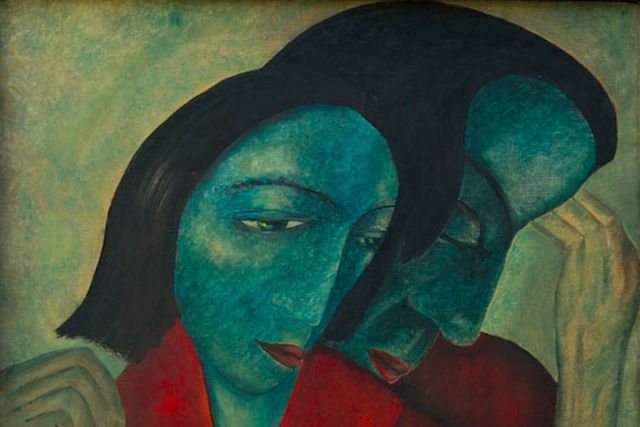
    I let everything that was being said just sit in the space around us. I heard it but didn’t take it in.

    My intention now was to observe. I wasn’t belittling her feelings by ignoring her, I just simply observed and let her talk, giving her voice the space to speak and to be heard. Periodically, I responded with something like, “Yeah, I can see why you think that.”

    For a while this became the style of our regular chats. The new dialogue that the voice in my head was speaking. The negative remarks, the catty remarks, and the put-downs, all drawing a quiet and unconcerned smile, with no negative response from me.

    Before long it changed again. My mom-in-my-head, instead of chastising me for wasting my efforts, became inquisitive. The voice started making positive remarks about the products I used and the affirmations I wrote on the mirror. She became curious. That voice started asking positive questions, empowering questions. Questions that were now on my side—with me, not against me.

    It’s very possible that the reason my inner voice, my inner critic, has taken on the voice of my mom is that I still very much want the approval from her that I felt I never received while she was alive. I will never actually get it now that she is gone, and that’s something I have to accept. But this may be another way that I can maybe feel like I get it, even just a little.

    Perhaps it’s how I can get the approval from myself that I’m seeking too. The belief that I am indeed becoming the person I want to be. That I am indeed enough.

    I’m reminded of this saying, “We can’t control how other people act; we can only control our own reaction.”

    Sure, this inner voice is mine, maybe sounding like someone I know. And one would think we can control our inner voices. But if it were only as easy as that, no one would ever struggle with self-doubt, and at times self-loathing.

    Learning to control that inner voice is like controlling a temper-tantrum-filled two-year-old. Eventually do-able, but it takes herculean effort!

    The method that’s currently working for me is to let that voice speak. Meeting it with a gentle smile and letting it flow around me, without landing on me. Being observant but unconcerned. 

    Over and over, as long as it takes. Because soon that inner voice will be curious about what’s happening with me, what’s working for me, what it is that is bringing me such peace.

    Perhaps the same is true for you. Maybe instead of trying to make your inner critic go away, you just need to let it exist. When you observe your self-critical thoughts without fighting or attaching to them, you take a little of their power away. And maybe as you take your power back your inner voice will slowly transform into something softer, gentler, and on your side, because it can finally see it’s a good place to be.

  • How I Stopped Putting Everyone Else’s Needs Above My Own

    How I Stopped Putting Everyone Else’s Needs Above My Own

    “Never feel sorry for choosing yourself.” ~Unknown

    I was eleven years old, possibly twelve, the day I first discovered my mother’s betrayal. I assume she didn’t hear me when I walked in the door after school. The distant voices in the finished basement room of our home drew me in. My mother’s voice was soft as she spoke to her friend. What was she hiding that she didn’t want me to hear?

    I leaned in a little bit closer to the opening of the stairs… She was talking about a man she’d met. Her voice changed when she spoke of him. The tone of dreamy wonder when you discover something that makes your heart race. She talked about the way they touched and how she felt being with him.

    I felt my body go weak. I could not tell if it was sorrow or rage. All I knew was, she had lied to me.

    Several months prior, my parents had announced their divorce. My mother told me the decision was my father’s choice. She told me he was the one breaking up our family. She told me she wanted nothing more than to stay with us and be together.

    And now I heard her revealing that was not true. She wanted to leave. She was not choosing me. She was choosing him.

    Since I was nine months old, my mother had been in and out of doctor’s offices, hospitals, psychiatrist’s and therapist’s offices trying to find the cure of her mental and emotional instability.

    When I was a young child, she began to share her frustrations and sorrows with me. I became her support and the keeper of her pain. She had nicknamed me her “little psychiatrist.” It was my job to help her. I had to. I needed her stable so I could survive.

    I don’t remember when or if she told us that she was seeing someone. I just remember she was gone a lot after that day. She spent her time with her new boyfriend out of the house. As the parentified child who she had inadvertently made her caretaker, it felt like she was betraying me. She left me for him.

    I was no longer the chosen one—he was.

    I hated him for it. When my mother moved in with him, I refused to meet him. I didn’t want to get to know or like this man she left me for.

    I saw them one day in the parking lot outside of a shopping plaza. I watched them walking together and hid behind a large concrete pillar so they wouldn’t see me. The friend I was with asked if I wanted to say hello. I scowled at the thought. I despised him.

    Within the same year, his own compromised mental health spiraled, and they broke up. He moved out of their apartment. I didn’t know why or what happened. I only knew my mother was sad. Shortly after their breakup, he took his own life. From what we heard, he had done so in a disturbingly torturous way. It was clear his self-loathing and pain was deep.

    My mother was devastated. She mourned the loss of her love and the traumatic way he exited. She stopped taking her medication, and her own mental health began to spiral. My father received a phone call that her car had been abandoned several states away. I’m unsure what she was doing there, but she had some issues and took a taxi back home.

    He later received a call stating that my mother had been arrested for playing her music too loud in her apartment. Perhaps to drown out the voices in her head. She was later taken to the hospital without her consent and was admitted due to her mental instability.

    After several days of attempting to rebalance her brain chemistry with medication, my mother began to sound grounded again. The family decided she would move in with her parents a few states away from us and live with them until she was stable again.

    A few days after Christmas she called me to tell me how sad she was. She grieved her dead boyfriend. I was short with her. I was still angry for her betrayal. I didn’t want to continue being used as her therapist. The imbalance in our relationship was significant, and my resentment was huge.

    I loved her, but I could not fall back into the role of being her support without any support back. It was life-sucking. And I didn’t care that he was dead. She chose him over me. I was fine with him being gone.

    I don’t recall feeling any guilt when I got off the phone that day. I felt good that I had chosen myself and put a boundary in place to not get sucked into her sorrow. I was fourteen years old, less than a week shy of fifteen. I just wanted to be a kid.

    The next day, my mother chose to make more decisions for me and for herself. These were more final. She told her parents she was taking a nap and intentionally overdosed on the medication meant to save her. She died quietly to relieve herself from her pain and left me forever.

    That choice—my own and hers—would change the course of my life.

    The day my mother freed herself from this world was the same day I learned to become imprisoned in mine. I was imprinted with a fear that would dictate my life. I became quietly terrified of hurting other people. I feared their discomfort and feeling it was my fault. From that day forward I would live with the silent fear of choosing myself.

    My rational mind told me it was not my fault. I did not open the bottle. I did not force her to swallow the pills. I did not end her life. But I also did not save it.

    I learned that day that creating a boundary to preserve myself not only was unsafe, it was dangerous. When I chose me, people not only could or would abandon me, they could die.

    Of course, I never saw this in my teenage mind. Nor did I see it in my twenties, thirties or the beginning of my forties. I only saw my big, loving heart give myself away over and over again at the cost of myself.

    I felt my body tighten up when I feared someone would be mad at me. I heard myself use words to make things okay in situations that were not okay. I said yes far too many times when my heart screamed no. All because I was afraid to choose myself.

    The pattern and fear only strengthened with time. I learned to squirm my way out of hurting others and discovered passive-aggressive and deceptive approaches to get my needs met. My body shook in situations where conflict seemed imminent, and I learned to avoid that too.

    What I didn’t see was that this avoidance had a high price. I was living a life where I was scared to be myself.

    On the outside I played the part. The woman who had it all together. Vocal, passionate, confident, and ambitious. But on the inside, I held in more secrets than I knew what to do with. I wasn’t living as me. My fear of being judged and rejected or not having my needs met was silently ruling my life.

    So many have developed this fear over time. Starting with our own insecurities of not feeling good enough and then having multiple experiences that solidified this belief. The experiences and memories differ, but the feelings accompanying them are very much the same.

    The fear of choosing ourselves, our desires, our truths, all deeply hidden under the masks of “I’m fine. It’s fine.” When in reality, we learn to give way more than we receive and wonder why we live unsatisfied, resentful, and with chronic disappointment. Nothing ever feels enough, and if it does, it’s short-lived.

    The memories and feelings become imprints in our bodies and in our minds that convince us we can’t trust ourselves. That we can’t trust others. That we must stay in control in order to keep us safe. We learn to manipulate situations and people to save ourselves from the opinions and judgments outside of us. We learn to protect ourselves by giving in, in order to not feel the pain of being left out.

    We shelter ourselves with lies that we are indifferent or it’s not a big deal in order to shield ourselves from the truth that we want more. We crave more, but we are too scared to ask for it. The repercussions feel too risky. The fear of loneliness too great.

    In the end, our fear of choosing ourselves even convinces us we can live with less. That we are meant to live with less, and we need to be grateful for whatever that is.

    Do we? Why?

    What if we learned to own our fear? What if we accepted that we were scared, and it was reasonable? What would happen if we acknowledged to our partners, families, friends, and even strangers that we, too, were scared of not being good enough? Of being discarded, rejected, and left behind.

    What would it be like if we shared our stories and exposed our insecurities to free them instead of locking them up to be hidden in the dark shadows of ourselves?

    I’m so curious.

    Where in your past can you see that choosing yourself left a mark? What silenced you, shamed you, discouraged you from choosing your needs over another’s? When were you rejected for not doing what someone else wanted you to do? And how has that fear dictated your life?

    Choosing ourselves starts with awareness. Looking at the ways you keep quiet out of fear or don’t make choices that include your needs. Seeing where this fear shows up in your life gives you the opportunity to change it. The more you see it, the more you can make another choice.

    Start with looking at the areas of life where you hold on to the most resentment and anger. Who or what situations frustrate you? Anger often indicates where imbalances lie or when a boundary has been crossed. It shows us where we feel powerless.

    Make a list of the situations that annoy you and then ask yourself, what’s in your control and what’s not? What can you directly address or ask for help with?

    Note the ways you may be manipulating others to get your needs met in those situations and how that feels. Note also what you may be avoiding and why.

    How would it feel to be more direct and assertive? What feelings or fears come up for you?

    Then start with one small thing you could do differently. Include who you could ask for help with this step, if anyone.

    As for me, I have found myself in situations where I lied or remained silent to avoid being judged, in an attempt to manipulate how others see me. I have felt my body cringe with sadness and shame each time. It doesn’t matter how big or small the lie, it assaults my body the same.

    I have learned that speaking my truth, no matter how seemingly small or insignificant, saves my body from feeling abused by the secrets it must keep. Choosing me is choosing self-honesty; identifying what is true for me and what is not based on the way my body responds. I am not in control of others’ judgments of me, but I am in control of the way I continue to set myself up to judge myself.

    I have also found myself agreeing to do things I didn’t want to do in order to win the approval of others, then becoming resentful toward them because I refused to speak up for myself.

    Choosing me in these scenarios is honoring the fact that I will still be scared to ask for what I need, as my fears are real and valid, but asking anyway, even when the stakes feel high. It’s scary to feel that someone may abandon us if we choose ourselves, but it’s scarier to lose ourselves to earn a love built on a brittle foundation of fear.

    l cannot control the past where I have left myself behind, but I can control today, the way I forgive myself for falling victim to my human fear, and the way I choose to love myself moving forward. When I choose me, I have more love to give to others. Today I can take a small step toward change.

    Taking these small steps and building on them will help us to show ourselves that we can make progress in bite size amounts and prove to ourselves we are going to be okay. The small bites are digestible and give us proof that we can do it. This helps us build our ability to do more over time, while also decreasing our fear.

    If we look at our past, we will see the majority of our big fears do not come to fruition, and if they did, we survived them and gained knowledge or strength in the process.

    It’s not the action holding us back, but the memory of the discomfort we still live with. The more we move through these fears, the more that discomfort will decrease, and the more we will trust that we will be okay no matter what.

  • Where Our Inner Critic Comes from and How to Tame It

    Where Our Inner Critic Comes from and How to Tame It

    “Your inner critic is simply a part of you that needs more self-love.” ~Amy Leigh Mercee

    We all have that critical and judgmental inner voice that tells us we’re not good enough, smart enough, pretty enough, etc.

    It tells us we don’t do anything right. It calls us stupid. It compares us to other people and speaks harshly about ourselves and our bodies. It tells us all the things we did or said “wrong” after communicating or connecting with someone.

    Sometimes it projects criticism outward onto others so we can feel better about ourselves. Other times we try to suppress our inner critic through overachieving, being busy, and accumulating more and more things.

    Sometimes it’s a protective mechanism that’s trying to keep us focused on our self-judgments so we won’t be authentic, because, if we are, we may be rejected and not get the love and acceptance we want.

    But, by doing this, we’re creating even more pain and suffering because we’re disconnecting from and rejecting our own essence.

    Just ignoring the critical voice doesn’t always make it go away. It may initially, but soon enough it will resurface if we haven’t healed/embraced our hurts, traumas, and wounds and shifted our internal patterning, which is where it comes from. 

    Have you ever heard the expression “What we resist persists?” Have you ever told an angry person to “just calm down” or a screaming child to stop crying? Does it work? Not when our energy is in a heightened state.

    Why is someone angry? Why is a child screaming and crying? Because there’s something going on internally that’s creating how they’re behaving. There’s often an unmet need or pain that’s asking for attention.

    Thinking a more positive thought to compensate can sometimes work, but sometimes it just creates an inner debate and mistrust in ourselves because deep inside we don’t believe what we’re saying.

    As children, many of us were taught to suppress those “bad” feelings because if we expressed them, we may have been or were punished. Welcome to the beginning of the critical voice; it’s often a frightened part of us that’s wounded and asking for attention. It wants to be seen, heard, and understood.

    My dad used to get really frustrated with me and constantly told me, “Damn it, Deb, you never do anything right.” Hearing that many times left an imprint in my subconscious. I started living with that interpretation of myself, and the critical voice kept me “in check” with being this way.

    For me, the critical voice was my dad’s voice as well as the deep shame I was feeling for making mistakes and not doing things the “right way.”

    I was holding in suppressed anger, sadness, guilt, unforgiveness, resentment, traumas, and pain that I tried to keep hidden with a smile on my face, but eventually it turned into a shame-based identity.

    My inner voice criticized me whenever I fell short or wasn’t perfect according to society or my family’s expectations.

    Just like when we’re triggered by another person, our critical voice is asking for our attention and guiding us to what needs healing, resolving, forgiving, understanding, compassion, and unconditional love.

    When it comes to the surface, we’re experiencing an automatic regression; it’s a part of us that’s frozen in time. It’s a reflection of our unhealed wounds, which created ideas of not being enough or that something’s wrong with us. Basically, it’s a trance of unworthiness.

    When we’re in a trance of unworthiness, we try to soothe ourselves with addictive behaviors. It’s hard to relax because we think we need to do something to be better and prove ourselves, so not doing anything, resting, isn’t safe.

    When we’re in a trance of unworthiness, it’s hard to be intimate with others. Deep inside we think there’s something wrong with us, so we don’t get close because they may find out and leave. This keeps us from being authentic because we don’t feel okay with who we are.

    Deep down I felt unworthy, unlovable, and undeserving, and the critical voice showed me what I was feeling and believing. I didn’t feel safe in life or in my body. How could I? I was living with so much hurt, pain, and shame inside.

    The critical voice is often stronger for those of us with unhealed wounds and who are hard on ourselves, and it tries to get us with shame and guilt. We’re always looking at ourselves as the “good self” or “bad self,” and if we’re identified with a “bad self,” we’ll act in accordance with that in all areas of our life.

    If we’ve become identified with the critical voice, it’s who we think we are; it just seems normal. And when we start to be more kind and loving, it doesn’t seem right because our identity becomes threatened and our system registers that as danger.

    That happened for me. Eventually I became identified with being a “bad girl” who’s critical and hard on herself, and, even when I started being a little kinder, more compassionate, and more loving, I felt an angst in my body. It wasn’t familiar, and even deeper, it wasn’t okay for me to be this way. My survival was at stake, so I would automatically go back to self-criticizing and judging, without conscious awareness.

    The critical voice didn’t only speak to me harshly; it also told me to do self-abusive things like cutting my wrists and face, starving my body or eating lots of sweets, and exercising for hours like a mad woman to get rid of the food I ate, whether it was a carrot or sweets, because I felt guilty. 

    Even after twenty-three years of going in and out of hospitals and treatment centers, taking medication, and doing traditional therapy, nothing ever changed; the critical voice had a hold on me.

    It was a powerful force, and when I tried to stop it, it would get louder. It thought it was protecting me in a backwards sort of way; if it hurt me first, no one else would be able to do so.

    When people used to say to me, “Debra, you just need to love yourself,” I looked at them like they were crazy. I had no concept of what that even meant because I had no experience of it.

    What I’ve come to see with myself and those I assist in their healing is that the more we keep our deep hurts, traumas, anger, guilt, shame, and pain hidden, the more the critical voice chimes in.

    And, for some, like me, it seems overpowering, so we try to find relief through smoking, drinking, eating, or being busy, and/or we experience severe depression, anxiety, or self-harming.

    When we’re consumed by the critical voice, we’re disconnected from our true essence, and when we’re disconnected from our true essence, the love within, we feel a sense of separation; we don’t feel safe with ourselves or others, and we don’t feel lovable for who we are, as we are.

    This is why many people can change, be happy for a day, but then go back to their critical and/or judgmental ways. Our automatic programming, stemming from our core beliefs, kicks in. It’s just like an addiction, and in a sense it is.

    We can try meditating, deep breathing, and positive thinking, but, unless we address the underlying cause, we’re likely to keep thinking the thoughts our internal patterning dictates. They come from a part of us that doesn’t feel loved or safe.

    So, what do we do when the critical voice comes to visit?

    What do we do when it’s what we’re used to, and it just happens automatically?

    What do we do when we don’t know how to be with ourselves and how we’re feeling in a kind and compassionate way?

    What do we do when we have no concept of what it even means to experience self-love or ease in our bodies?

    First off, please don’t blame yourself for how you’re being. Awareness isn’t about judgment; it’s about kindness, compassion, and love.

    Working with and healing our traumas, where the critical voice was formed, is key in shifting our internal energy patterning. Many people call this inner child healing and/or shadow working. 

    This is a soft and gentle process of moving through the layers of trauma with compassion and love and making peace with our protector parts.

    Through inner child healing, we can shift and transform that “negative” patterning and how the energy is flowing in our body. We can help that part of us that’s frightened, hurting, and maybe feeling separate have a new and true understanding so we can feel loved and safe in our bodies.

    When we pause and take a deep breath when we first hear or sense the critical voice, it allows our nervous systems to reset and helps us come back to the present moment; this allows space for compassion, healing, and investigation.

    Why do I believe that?

    Where did I learn that?

    Is it true?

    How does my higher self see this and me?

    Does the critical voice totally go away? No, it may still chime in; it’s part of being human. But once we realize where it’s coming from and heal/shift that energy pattern, more love can flow through, and we can experience our truth. When we learn how to be our own loving parent and meet the needs our caregivers didn’t meet when we were children, the critical voice often softens.

    Remember, the critical voice is just a scared part of us who really wants attention, love, and a way to feel safe. When we no longer take it personally, when we’re no longer attached to it as our identity, we can offer ourselves compassion, understanding, love, truth, and whatever else we’re needing.

    Life can be messy, and our thoughts can be too. This isn’t about perfection; this is about experiencing a deeper connection with our loving essence.

    There’s a sweet and tender spirit that lives within you. This spirit is your deepest truth. This spirit is the essence of you. You’re naturally lovable, valuable, and worthy. You’re a gift to humanity. So please be kind, gentle, loving, and caring with yourself.

  • If You’re Trapped Under a Pile of “Should” and Tired of Feeling Unhappy

    If You’re Trapped Under a Pile of “Should” and Tired of Feeling Unhappy

    “Stop shoulding on yourself.” ~Albert Ellis

    I was buried under a pile of shoulds for the first thirty-two years of my life. Some of those shoulds were put on me by the adults in my life, some were heaped on because I am a middle child, but most were self-imposed thanks to cultural and peer influence.

    “You should get straight A’s, Jill.”

    “You shouldn’t worry so much, Jill.”

    “You should be married by now, Jill.”

    “You should get your Master’s degree.”

    I could go on forever. The pile was high, and I was slowly suffocating from the crushing weight on my soul.

    What’s so significant about age thirty-two? It’s when I decided to divorce my husband of eighteen months (after a big ole Catholic wedding) and ask my parents for money to pay the attorney’s retainer. This is a gal with a great childhood, MBA, and a darned good catch for a husband.

    From the outside, our life looked charmed and full of potential. We’d just purchased our first home, were trying to start a family (despite suffering two miscarriages) and were building our careers. What no one else saw was the debilitating mountain of consumer debt, manipulative behavior, and my intuition’s activated alarm system… sounding off in reaction to the life I’d built and was, for all intents and purposes, stuck in.

    My intuition was done with the low-level warnings. She was sick and tired of being ignored, so she sounded the big one—an alarm that demanded action instead of lip service. I still tried challenging her; what she had presented me with was asinine.

    “But I can’t divorce him. We just got married. What will everyone think? I’m so embarrassed. I should have made better choices. How did I end up here? I did everything right, right? I should suck it up and stick it out; that’s what good Catholics do. This is kind of what life is, I guess… kinda sad, but it seems to work for most everyone else. Ugh, I wanted this… now I’m, what, changing my mind?”

    The alarm was not going to shut off until I sat long enough with those notions to yield honest answers. That was some tough sh*t to sit in. And even tougher to plod through. But it was better than being buried under it.

    This was my first lesson in “There’s only one way out of this mess.” There’s no express lane, no backroad, no direct flight. This ride resembled the covered wagon kind. Bumpy, hot, dirty, and uncomfortable as hell.

    I relented, listened, and tapped into the hidden reserve of courage I didn’t know existed within me.

    The time had come to quit living according to the “should standard” everyone else around me had subscribed to. The time had come to accept this curated life was not the one that would yield happiness for me. The time had come to turn up the volume on this newfound voice and assert to myself (and everyone else) that I was cutting my losses and trusting my inner compass.  

    The time had come to stop shoulding myself.

    Shoulds were my grocery list, my roadmap for life. How was I going to do this adult thing without my instructions???

    I’d already managed to clear a huge should—hello, divorce—and after that, with every should I challenged, another paradigm crumbled. I began to notice shoulds all over the place. After that, my awareness of intention got keener, and I could sniff out the subtle shoulds like a bloodhound.

    SHOULD: When are you having kids?

    CHOICE:  I do not want to have children. (Remember I miscarried twice with my first husband. I was checking boxes on my adulting grocery list. Honesty yielded clarity.)

    SHOULD: He’s too old for you and he has four boys of his own.

    CHOICE:  He is my person. His sons deserve to see their father in a healthy, happy relationship. I can show them love in a new, different way.

    SHOULD: You’re making great money in your job. Why walk away from your amazing 401(k) and great benefits to risk starting your own business?

    CHOICE:  I want to build a life I’m not desperate to take a vacation from. I want to live, serve others, and know when I’m at the end of my life that I chose it and made the most of it.

    Deleting the word “should” is a big first leap in taking ownership of your life. By altering your vocabulary in a simple way, you naturally become mindful of the words you put in its place. Instead of “I should….” substitute with “I choose to….” Instead of “You should…” try “Have you considered…?”

    Keep track of every time you say or hear “should” in a day. Then spend time with each one and get toddler with yourself. Ask why. Ask it again.

    Who says you have to get married or have kids or work a job you hate that looks good on paper? Who says you have to look a certain way or do certain things with your free time that don’t appeal to you? Why are you restless in your life? What idea keeps popping up, begging for your attention? Are you living your truth? What’s in the way? What pile of shoulds are you buried under?

    I get it. We’ve been programmed by our culture and our family traditions to follow the path, stay on course, climb the ladder to success! It’s the only way to be happy, they say. It’s the only way we’ll be proud of you, they insinuate.

    We’ve been indoctrinated with this thought pattern and belief system, and it seems impossible that we have the power to choose otherwise. We have the opportunity, the autonomy, the choice to rewire our iOS and make it what is ideal for ourselves.

    Overwhelm is natural; the antidote is to start small. Find one piece of low-hanging fruit, take a bite, and taste how sweet it is. For example, say no to an invite if you’d rather spend your time doing something else. Allow yourself to do nothing instead of telling yourself you should be doing something productive. Or let yourself feel whatever you feel instead of telling yourself you should be positive.

    Feel how nourishing it is to choose yourself. Experience satiety in your soul. Release restlessness and replace it with intention guided by your intuition.

    Do that and you’ll never should again. Or maybe you will—who says you should be perfect? At the very least you’ll think twice before letting should control you, and you’ll be a lot happier as a result!

  • How I Developed Self-Worth After Being Sexually Harassed and Fired

    How I Developed Self-Worth After Being Sexually Harassed and Fired

    “Your value doesn’t decrease based on someone’s inability to see your worth.” ~Unknown

    In my early twenties, I was a food and beverage manager at a nice hotel in Portland, Maine. About a month after I started working there, they hired our department director, a man twice my age whom I would report to.

    At the end of his first week, we went out for a “get to know each other” drink at a loud and busy bar. As we drank and chatted, he was physically very close to me. I told myself it was because of the noise.

    His knees were against mine as we chatted facing each other on barstools. It made me uncomfortable, but I didn’t do anything about it. He put his hand on my thigh as we talked. I pretended it didn’t bother me.

    He leaned in very close to my face and ear as he talked about himself and told me how attractive I was. He led me through doorways with his hand gently on the small of my back.

    There was more of this over the next few months. More of him stepping on and just over that invisible line. More of me acting as though I was okay with it and convincing myself that I was.

    A few months after that night, he and I were in a position to fire a male employee who had several complaints against him for not doing his work.

    The morning before the firing, Human Resources pulled me into their office to tell me that this employee had lodged a complaint about my boss and me. He had said that he knew we were going to fire him, and he believed it was because my boss and I were having an affair. His “proof” was that he saw us at the bar that Friday night and saw us “kissing.” There was even a line cook who backed up his story.

    A few days later, both of these employees admitted that they didn’t exactly see us kissing, they just saw us talking very closely together, and it looked intimate.

    HR dropped the complaint but no longer felt comfortable with firing this employee, so he stayed on. A few weeks later after a busy event that went poorly due to being understaffed, I was taken into the CEO’s office, and I was fired.

    The male employee continued working there. My male boss continued working there. The male employee was promoted to take my now vacant position. My male boss was promoted to work at a larger resort at a tropical destination.

    These two events—being accused of having an affair with my married older boss, and subsequently being fired for an event that I wasn’t even in charge of staffing—were the two lowest points of my professional career.

    I honestly rarely think back to this time in my life, but I also recently realized that I never talk about this experience because of my embarrassment that I let this happen without objection.

    What This Story is Really About

    I didn’t think that my boss would hurt me. I wasn’t even worried that I would lose my job if I pushed back. I was afraid that if I acted like someone who was bothered by his comments, I would be seen as a lame, no fun, boring, stuck-up prude.

    I subconsciously believed that my worthiness as a person was determined by people who were cooler than me, more successful than me, smarter than me, or more liked than me.

    I believe that had I told my boss “no,” he would have listened. I’d gotten to know him over several months, and while he was egotistical, dim-witted, and selfish, I think he would have respected my boundaries had I set them. I just never did.

    There are a lot of layers to this story. Far too many to cover in one post.

    But the reason for writing this today is to share what I was so ashamed of. I was ashamed that young, twenty-something me was so insecure and so afraid of rejection that her people-pleasing led to allowing this man to touch her and act inappropriately.

    She was so afraid that if she set a boundary and said “no” she would be seen as too emotional, weak, and a complainer. She would become “less than.”

    I’ll restate that there are a lot of layers to this; from the patriarchal system at this business (and society as a whole), to the abuse of men in power, to mixed messages at high school where girls were not allowed to wear certain clothes because the boys would get distracted, to a lack of examples through the 90s/early 2000’s of what it looks like for a young woman to stand up for herself in a situation like this, and far beyond.

    But the part of the story I want to focus on right now is my insecurity. This is the part of the story that I had the most shame and regret about, because this was not an isolated incident for me.

    Insecurity was a Trend Throughout My Life

    People-pleasing was a huge problem for me in several areas of my life for many years. It’s something that held me back from so much.

    • I didn’t leave a long relationship that I’d dreamt of ending for fear that I would disappoint our families.
    • I let people walk all over me, interrupt me while I spoke, and tell me what I should think.
    • In my late twenties I remember being home alone, again, crying that I had no one who would want to spend time with me or go somewhere with me, feeling sad and lonely, when in reality I was just too scared and embarrassed to pick up the phone and ask, for fear of rejection.

    I wasted so many years and felt a lot of pain, and a whole lot of nothing happened as I was stuck. Stuck feeling worthless, unlikable, and unknowing how to “please” my way out of it.

    I spent years numbing how uncomfortable my insecurity made me feel by smoking a lot of pot. I avoided what I came to realize were my triggers by staying home or finding excuses to leave early if I did go out. I blamed everyone else for how they made me feel. I compared myself to everyone and constantly fell short.

    Until eventually, I realized the cause for all this pain and discomfort was believing my worth was based on what other people thought of me.

    The Emotional Toolbox That Saved Me

    If I could go back in time to give myself one thing, it would be the emotional toolbox that I’ve collected over the years so that I could stop living to please other people, because I know now that I am inherently worthy.

    By my thirties I found myself on a journey to lift the veil of insecurity that hid me from my real self. This wall I’d inadvertently built to protect myself was keeping me from seeing who I really was beneath my fear and anxiety.

    Once I found the courage to start tearing down that wall and opening myself to the vulnerability necessary to truly connect with the real me, I was able to discern between who I am and what I do. I learned to stop judging myself. I learned my true value. And I liked what I saw.

    Finding My Core Values

    I came to realize that it’s hard to feel worthy when you don’t really like yourself. And it’s even harder to genuinely like yourself if you don’t truly know yourself. Figuring out my core values was a crucial part of the puzzle.

    Core values are the beliefs, principles, ideals, and traits that are most important to you. They represent what you stand for, what you’re committed to, and how you want to operate in the world.

    Knowing your core values is like having a brighter flashlight to get through the woods at night. It shines a light on the path ahead—a path that aligns with your true self—so that you can show up in the world and to challenging situations as the person you want to be.

    It helps you decide in any given scenario if you want to be funny or compassionate, direct or easy-going, decisive or open-minded. These aren’t easy decisions to make, but knowing how you want to be in this world helps you make the decisions that best align with your authentic self.

    And when you truly know yourself and act intentionally and authentically in tune with your values (as best as you can) a magical thing happens: You connect with your own inherent worthiness.

    For me, I came to realize that I am a compassionate, kind, courageous, funny, well-balanced woman constantly in pursuit of purposeful growth. I like that person. She’s cool. I’d hang out with her.

    More importantly, I believe she is a good person deserving of respect. Which means I don’t need to accept situations that cross my boundaries. I have a right to speak up when something makes me uncomfortable.

    So how do you want to be? Which of your principles and qualities matter most to you? And what would you do or change if you chose to let those principles and qualities guide you?

    Connecting With Others About My Shame

    Shame breeds in the darkness. We don’t normally speak up about the things that we feel embarrassed about. And that leads to us feeling isolated and alone with how we feel.

    Whether it’s reading stories online, talking with friends, joining a support group, going to therapy, or working with a coach, share and listen. A vital component of self-compassion is learning to connect over our shared experiences. And it takes self-compassion to respect and believe in our own self-worth, especially when confronted with our inner critic.

    By sharing my feelings of insecurity, I learned that a beautiful friend of mine also felt ugly. I thought, “Wow, if someone that gorgeous could think of herself as anything less than, my thinking might be wrong too.” I found out that even talented celebrities from Lady Gaga to Arianna Huffington to Maya Angelou have all felt insecure about their abilities. That somehow gave me permission to feel the way that I did, which was the first step in letting it go.

    Who can you connect with? If you’re not sure, or you aren’t at a place yet in your journey to feel comfortable doing that, perhaps start by reading stories online.

    Coaching Myself Through Insecurity

    Alas, I am only human. Therefore, I still fall victim to moments of insecurity and feel tempted to let other people dictate my worth. Knowing that purposeful growth is important to me, I know that the work continues, and I’m willing to do it.

    So I coach myself through those challenging times when I say something stupid and worry about being judged or I come across someone who is similar to me, but more successful and fear that means I’m not good enough. I’ll ask myself questions as a way of stepping out of self-judgment mode, and into an open and curious mindset. These are questions like:

    • If my good friend was experiencing this, how would I motivate her?
    • Did I do the best I could with what I had?
    • If the universe gave me this experience for a reason, what lesson am I supposed to be learning so that I can turn this into a meaningful experience?
    • What uncomfortable thing am I avoiding? Am I willing to be uncomfortable in order to go after what I want?

    Or I’ll break out the motivational phrases that remind me of my capabilities or worthiness like:

    • I can do hard things.
    • My worthiness is not determined by other people’s opinions.
    • This is just one moment in time, and it will pass.
    • Even though this is difficult, I’m willing to do it.
    • I forgive myself for making a mistake. I’ve learned from it and will do better next time.

    Tools like these are simple, but priceless. They gave me my life. And I can say now without hesitation, I like myself, I love myself, I love my life, I’m worthy as hell, and I’m my own best friend. That’s how I want to live my life.

    Because of this, I have the confidence to speak my truth with courage, and I have the confidence to live authentically and unapologetically myself. And the number one person I’m most concerned with pleasing is myself.

  • Hurt by Negative People? How to Stop Taking Things Personally

    Hurt by Negative People? How to Stop Taking Things Personally

    “Some people are in such utter darkness that they will burn you just to see a light. Try not to take it personally.” ~Kamand Kojouri

    The saying goes that money makes the world go round, but of course that’s not true.

    It’s our relationships.

    How we relate to other people and how they relate to us keeps our world turning. When things go well, all’s right with our world. When things go badly, it can feel as though our world has ground to a halt.

    This is exactly how I felt whenever I had a difficult experience with a loved one or friend.

    Whenever they lashed out at me for no real reason, it felt as if I couldn’t move on again until their negativity or bad temper had blown over. Until that happened, I replayed the scenarios in my mind, trying to work out where I was to blame for their behavior, and feeling awful in the meantime.

    That’s why our relationships will always be the most important thing in our lives—they have such a strong impact on us, both good and bad.

    That is also why it serves us well to try to have the best possible relationship with others, as well as ourselves. That includes improving the connections we have with the difficult and less-than-positive people in our lives and strengthening our boundaries in the process.

    We probably all have several negative people in our lives—those who criticize, complain, belittle us and other people, and say or do cruel things. They can be the closest to us, people we have known all our lives, and that makes their negativity harder to escape and endure.

    I had a family member who was very negative about pretty much everything. Spending time in their company was usually a draining and disheartening experience due to their complaining and sniping comments.

    This person made it very clear whenever I met them that they had little time or affection for me, which of course made family get-togethers less than enjoyable.

    I was also puzzled as to why they were like that: we’d never argued, and I had never, to my knowledge, done or said anything mean to them. Yet, they still acted in a negative way toward me, especially if I mentioned affirmative life experiences such as a great holiday or a new exciting project.

    Unsurprisingly, I responded to their negativity with a sense of apprehension, frustration, and confusion, which stopped me from enjoying the company of my other relatives. It also made me wary about fully expressing myself or talking about my life. And my uneasiness undoubtedly made the atmosphere between my family member and me even more negative.

    We all Have Emotional Scars from the Past

    I eventually recognized that I was hurt by my relative’s treatment in large part because I took it personally and allowed it to affect my self-image and self-esteem—as if I somehow deserved it. Then I realized something that changed everything for me.

    We all have a self-image shaped in large part by other people. Family, friends, and partners, who’ve likely scarred us through anger, resentment, jealousy, judgment, neglect, or even outright abuse. And this affects how we show up in the world.

    Everyone, including the people who have wronged you or been negative toward you in some way, has scars from their past too.

    Maybe your critical mother doesn’t know any better because her mother was critical. Maybe your absent father never knew his father either. Maybe your backstabbing friend was jealous of you for reasons only known to them. Perhaps your cheating partner had abusive parents, and your partner sabotages relationships because they don’t believe anyone can love them.

    Each and every one of us carries around our scars, going out into the world to meet other people who have scars, and when we connect, these combined scars can sometimes tear open.

    We all See Ourselves Through Others’ Eyes

    We all tend to see ourselves through our loved ones’ eyes—starting with our parents when we’re young—because we assume their perceptions of us are accurate and blame ourselves if they’re not flattering. Our self-image can alter based on their comments, emotions, and actions—positive and negative.

    This is a classic case of our relationships shaping our sense of self, an ongoing shaping that begins even before we can fully understand the meanings of what other people say or do to us.

    We are each the result of our experiences within our multiple relationships and interactions. How other people relate to us affects our image of ourselves, but that doesn’t mean we are helpless in the face of other people’s behavior toward us.

    We may not have had much of a choice as a child, but it’s a different matter once we’re adults. With awareness, we’re now able to protect ourselves far better from others’ negativity toward us and set necessary boundaries.

    Learning to Connect in a Different Way

    If you’re dealing with a negative or painful relationship that leaves you feeling bad about yourself, you can of course choose to distance yourself from the person and limit contact. Sometimes, however, this isn’t possible, so you have to learn how to connect in a different way while safeguarding yourself from their negative impact on you.

    I decided I had to respond differently to my family member and their negativity for the sake of my well-being. I began to look beyond their behavior and actions, and in doing so I started to piece together an idea of what might be the real cause of their pain and unhappiness.

    I recalled they had often moaned about how much they hated their job, how they disliked the town they lived in and their neighbors, and they also often complained of tiredness and physical aches and pains.

    I began to see that this person’s negativity—even if it was aimed at me, maybe due to their feelings of envy—wasn’t really about me. They were unhappy with their life in general. Negative people are often unhappy on many levels.

    It also helped me to remember we all have emotional scars, as mentioned before. When you approach people from a place of understanding, compassion, and empathy, you no longer see them as cheats, liars, betrayers, or “bad” people out to get you—even though they might cheat, lie, or betray you. You instead begin to see beyond their behavior and recognize that they’re in pain.

    When you do that a lot of their power over you starts to fade. You begin to see them as vulnerable, like everyone else. You start to realize that their negative actions toward you reflect far more on them than they do on you.

    People often hurt each other because of their own deep pain and because they don’t know any other way to act. This is often a painful lesson to learn.

    But when you finally grasp this difficult truth, you become more accepting of what happened, more forgiving, and ready to let go and move on. You realize you do not need to take on their negativity, brood about it, or feel you are the cause of it.

    That doesn’t mean you have to condone or accept mistreatment. And that’s not to say people’s negativity toward you won’t bother or hurt you ever again, but the effect won’t be so intense. You’ll realize that the situation isn’t really about you at all. Any pain they try to inflict on you is simply a reflection of what they feel inside; it no longer feels so personal.

    When I stopped taking my relative’s negativity personally, I was able to interact with them in a different way. I was much more relaxed in their company and able to enjoy family gatherings much more.

    When you stop taking other people’s negativity personally, you cease to be so susceptible to creating your self-image through their eyes. In fact, you start to focus far more on how you view them.

    Then you’re also free to focus less on their negativity and bad behavior and more on how you respond to it. That might mean setting boundaries and limiting your contact with them, and that’s okay. Sometimes you have to understand and empathize from afar to take good care of yourself.

    We’re All in the Same “Life” Boat

    Essentially, we’re all in the same “life” boat, bobbing up and down on the vast ocean of existence.

    We are all fallible. We all inflict hurt on others, intentionally and unintentionally.

    We all experience negative situations and inevitable suffering, and we simply have to accept this. Without pain and suffering we might not value joy or experience spiritual growth. If we never experienced adversity, we might not appreciate our strength.

    And without negative people we might not be truly grateful for or cherish the loving, supportive people we have in our lives.

  • 5 Life-Changing Pieces of Advice I Would Give to My Younger Self

    5 Life-Changing Pieces of Advice I Would Give to My Younger Self

    “I’d go back to my younger self and say, ‘Lighten up. Take it easy. Relax. Don’t be so anxious about everything. Try not to have today stolen from you by anxiety about yesterday or tomorrow.’” ~Bill Nighy

    I believe there is great power in looking back at our past to learn from our experiences, mistakes, and regrets.

    The Spanish philosopher George Santayana remarked, “Those who do not learn history are doomed to repeat it.” I might add that the history we need to study the most is our personal history so that we don’t keep making the same mistakes over and over again in our lives.

    If I had the option to go back to my past, this is the advice I would give my younger self.

    1. Express yourself freely and work to overcome your shyness.

    In the past, there were many opportunities that I didn’t take and many friendships that I failed to make because I was shy and often felt uncomfortable and self-conscious. Some people would interpret my shyness as rudeness, so it was crippling to me in many ways.

    Advice to myself:

    Make a conscious effort to interact and express yourself freely around others, no matter how uncomfortable it may make you feel in the moment. If you struggle, take deep breaths to relax yourself and calm your irrational thoughts.

    Nobody is judging you and analyzing you as thoroughly as you may think. Everybody is too absorbed in their own world to spend time caring about every little thing you say and do.

    Try to do the opposite of what a shy person would do in any given situation. Easier said than done, I know, but if you do that long enough, you’ll start creating a new identity for yourself in your mind. That’s really all you have to do to overcome being shy. The more you do it, the easier it gets and the more confident you’ll become, and soon it will feel natural.

    2. Stop fighting your negative feelings.

    For the longest time, I would try to resist and battle my negative emotions, like anxiety,  hoping they would go away somehow. If I felt that familiar knot in my stomach and started thinking anxious thoughts, I’d tell myself I should be positive because our thoughts create our reality.

    A couple of years ago, I finally realized that the way to free yourself of negative emotions, as counter-intuitive as it sounds, is to accept them.

    The more we try to fight our feelings with the underlying thought “I shouldn’t be feeling this way,” the worse we feel. However, these feelings pass much faster when we allow ourselves to feel them without judging them or thinking that they shouldn’t be happening.

    Advice to myself:

    Let go of the need to try and fix your negative emotions with your mind.

    Accept your unpleasant feelings and focus your attention fully on the sensations these emotions invoke instead of thinking thoughts like “I shouldn’t be feeling this way,” “This shouldn’t be happening.”

    When you do this, you will find that the unpleasant feelings dissolve much more quickly, and you will stop making things worse by feeding them with more energy.

    View your feelings as visitors, for they always come and go. Like most visitors, all they want is your attention and acknowledgement, and once you give them what they want, they will be on their way.

    3. Embrace uncertainty.

    In college, I spent a long time desperately trying to figure out my future, wishing for clarity on what I should be doing with my life.

    Many of us have a compelling need to have our whole lives all figured out. We hate not knowing where life may take us, and we seek the comfort of knowing what the future has in store for us.

    But no amount of mental analysis of our future can provide us with the answers. And that’s okay, because we don’t always need to know what we will be doing a year from now.
    Sometimes the only thing you can do is trust in life. Because when we are not trusting, we automatically start worrying, because that’s our mind’s default tendency.

    Advice to myself:

    Know that it’s okay to be confused and not have all the answers. Learn to be okay with not knowing and make room for surprise and mystery, because that’s a big part of what makes life exciting and interesting.

    Most of your fears and worries about the future, if you closely examine them, are nothing more than mental fabrications and do not exist anywhere else than in your mind. Most of the things you worry about won’t actually happen, and even if they do, you might learn and grow from those experiences. Hence there is no need to take your fears so seriously and get worked up over them.

    4. Stop trying to run away from discomfort.

    Our mind tends to prefer the known and comfortable and likes to seek out the easiest way to feel good.

    We’re often hesitant to do things that require effort or make us feel uncomfortable, since our natural tendency is to avoid feeling any discomfort.

    But many of the things that are beneficial for us and worth doing in life will require enduring some kind of discomfort. To run away from discomfort is to run away from growing and evolving as a person.

    That’s exactly what I did for most of my life. I avoided meditating, exercising, journaling, and spending time alone without technology—habits that have all had a positive impact on my life—during the times when I would have benefited from them the most because I felt resistance whenever I tried to get started.

    I also avoided being vulnerable with other people. But I’ve noticed over the last two years that if I stay with the discomfort of interacting with new people instead of running away, as I used to do, the interactions ultimately become rewarding and enjoyable.

    This is true of most things—reward lies on the other side of discomfort, but first we have to push through.

    Advice to myself:

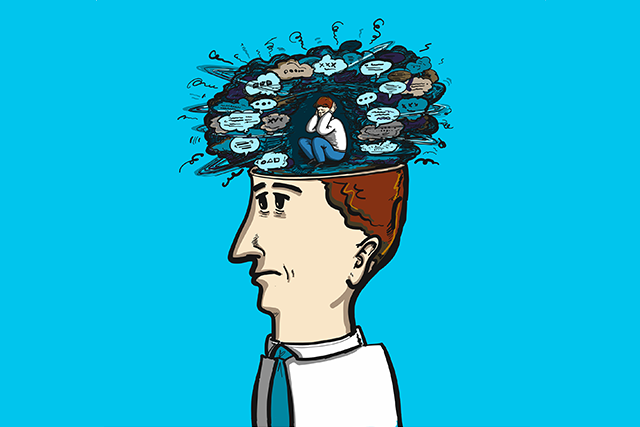
    The mind can be very persuasive and convincing and come up with an endless list of reasons to procrastinate or avoid feeling any discomfort. But don’t let your mind deceive you.

    Discomfort often points toward what you should be doing, not what you should be avoiding. Be willing to dive deep into discomfort and learn to embrace it. It will help you more than you know.
    5. Accept yourself and stop judging yourself.

    When I was in college, I used to judge myself a lot because many of my interests, such as spirituality and metaphysics, were very different from all my friends’ interests.

    It was a few years later that it finally dawned on me that I needed to stop looking outside for validation and permission to accept myself.

    Once you learn to accept yourself, it doesn’t matter what others may or may not think. Other people’s opinions may bother you fleetingly, but you will need to live with what you think about yourself every day, so don’t make it hard by judging yourself.

    Advice to myself:

    You don’t need to judge yourself or feel embarrassed about wanting to spend your free time journaling, meditating, reading books, or enjoying spending time alone by yourself.

    Don’t feel compelled to be like everyone else, and there is absolutely no reason to be apologetic for following and doing what lights you up.

    Because the truth is, it’s okay to be different and unique. Imagine how boring the world would be if we were all the same.

    If you could talk with your younger self, what would you say? What do you think you would have done differently? What advice would you have for them?

  • Avoid Feeling Bad: How to Stop Taking Things Personally

    Avoid Feeling Bad: How to Stop Taking Things Personally

    “There is a huge amount of freedom that comes when you take nothing personally.” ~Don Miguel Ruiz

    Oh man, if I had a dollar for every time I took something personally…

    I’d be rich by now.
    When I quit my corporate job in Paris and took a year off traveling people would often ask me, “So, what’s your plan now?” A normal question to ask, I know. But back then, I usually got offended by that question and other follow-up ones. It made me think that others were judging my decision and questioning my ability to change career paths.

    Or when I was single and people would ask, “So, are you seeing anyone right now?” Again, I’d often assume that they thought less of me if I didn’t have an interesting single life or wasn’t dating someone special.

    Or in the early days of dating my boyfriend, when he wouldn’t have time to talk or see me at times, I’d take it personally and assume the worst. Maybe I had done something to mess everything up. Maybe he didn’t think I was that interesting after all.

    Taking things personally is emotionally draining. It often makes you assume the worst and puts you into the victim corner. Sometimes, of course, it’s worth reflecting on our own behavior, which can help us develop and grow as individuals. But taking things personally, when many times they’re not, just tears down our self-esteem and makes us question ourselves.

    Here are a few ways to stop taking things personally:

    1. Question your negative beliefs.

    When we take things personally, it’s often because we hold a negative belief that is fueling our perception of a situation. For example, if you say “hello” to an acquaintance on the street and get upset because they don’t reply back, you might believe that people who don’t acknowledge you are rude or that they have something against you.

    Look at the limiting belief behind the situation and question it. Maybe they didn’t actually see you. Maybe they didn’t have time to perceive that it was you who passed by. Or maybe they were simply too occupied in their own mind to engage with anyone else.

    Many times, our beliefs make us misinterpret situations negatively and turn them against ourselves. We form negative assumptions and inevitably feel hurt if we don’t take the time to question our thoughts and beliefs.

    2. Don’t assume you know everything.

    When I left my job to travel for a year and get clear on what business to start, I was scared of what others, especially colleagues I respected, would think of me. I simply assumed that they would think I was irresponsible for leaving a good career for… well, I didn’t know yet.

    There was one colleague in particular, who I really looked up to, that I already had assumed judged me for my decision. Whenever she mentioned something about her career, I turned that against myself as a way of confirming “I knew it, she thinks I’ve made a terrible mistake.

    Then one day, when we were talking about my journey and the choices I had made, she said, “You know Maria, I think you’re so brave. I wish I had the courage to also quit and pursue my own business.” This proved to me that we don’t know what others are thinking about us, even if we think we do. So don’t assume you know everything.

    3. Know that it’s not about you.

    When someone seems harsh or insensitive it’s easy to assume it’s personal. But often, it’s really not. Someone who’s rude to you in traffic might have had a terrible morning. Someone who makes a condescending comment might struggle with their own self-esteem and self-confidence. Someone who’s cold and short in their communication might be really stressed.

    It’s worth reflecting on what we can learn when it comes to things we take personally. In my experience, there’s always a lesson. Try to extract it and then leave the rest.

    For example, when I started a podcast, a friend sent me a picture over Instagram with the message “Women doing podcasts just found a substitute for therapy.” It was supposed to be funny, but it wasn’t to me.

    My learning in that situation was to care more about what I wanted to do instead of one other person’s opinion (or joke). (And I’m happy I’ve continued because, since then, we’ve received so much positive feedback on the podcast!)

    4. Create a counter-story.

    Often, when we take something personally, it’s because it confirms a negative story we have running in the back of our mind. For example, if someone in your family makes a joke or comment about you being messy or having limited cooking skills—and you regularly tell yourself that you’re somehow inferior to others because of these things—you might get offended.

    So, what should you do? Create an empowering counter story. Maybe you’re a bit messy, but so what? You might also be really creative. And maybe you’re not so great at cooking, but you have other skills—for example, you’re the one who always sorts out conflicts between people.

    In short, tell a story that benefits you and remember that we all have flaws, quirks, imperfections, and weaknesses. Needless to say, if you don’t like your behavior, then of course, you have the power to change it. But sometimes you simply need to accept that you are who you are, and there’s nothing wrong with that.

    5. Accept that we’re all different (and not everyone needs to like you).

    You might be taking something personally because this gives you a greater chance of getting someone’s approval. If it’s about you, then there’s something you can do about it. If it’s about them, then it’s truly out of your hands, and all you can do is accept that, for whatever reason, they don’t like you or won’t let you in.

    No single person on this planet is liked by everyone. That’s just part of life, for all of us. Instead of trying to change yourself to be liked by someone, shift your focus and ask yourself why you need this person’s approval. Is it that you’re uncomfortable with disapproval in general, or do you want them to like you for other reasons, such as they are a friend of a friend?

    When you identify the root cause of your discomfort with their disapproval, you’ll be able to tell yourself what you need to hear to let it go—for example, that their opinion doesn’t mean anything about you as a person.

    6. Create space between an “offense” and your reaction.

    When we take something personally, it’s easy to lash out in anger, frustration, or pain, which only makes things worse. Before you step into action, try creating some space between the situation and your reaction. Breathe, step away, and allow yourself to calm down before acting out.

    Maybe you interpreted the situation in a negative way. Maybe this person wasn’t judging or being condescending toward you. Maybe there’s something you don’t know about the situation. Try not to react to the situation, but to respond once you have calmed down. Perhaps with a little time and space you’ll recognize your initial conclusions were wrong.

    7. Ask for clarification.

    If you know the person who said or did something that made you feel bad, ask for clarification. What did he or she really mean? What was his or her intention? Many times, we interpret situations negatively. But in my experience, after asking for clarification, we realize the other person didn’t intend to hurt us.

    So instead of letting your thoughts spin off in a negative direction, ask the person to spell out what he or she really meant. You may be surprised by the number of times you learn that you completely misread a situation.

    8. Practice self-compassion.

    This is what it all comes down to, isn’t it? Practicing self-compassion when we’re being hard on ourselves. Because even though someone else might say or do something to offend us, we’re the ones who decide how we let their behavior affect us. We can always choose not to take negative comments to heart or get down on ourselves just because someone else was rude or insensitive.

    Practice saying, “I’m not letting that in” to draw a clear line when you’ve decided not to take something personally.

    Whether you misinterpreted a situation or someone actually was rude to you, you decide whether to invite it in or not. So stand guard to the door of your mind. Keep a high standard and make sure to let in words, thoughts, and beliefs that empower and strengthen you.

  • The 6 Personalities of People-Pleasing and How I Overcame Them

    The 6 Personalities of People-Pleasing and How I Overcame Them

    “The truth is, you’re never going to be able to please everybody, so stop trying. Remember, the sun is going to continue shining even if some people get annoyed by its light shining in their eyes. You have full permission to shine on.” ~Unknown

    I used to be a rebel. I was the girl at the party who would waltz into a room and have everyone in awe, their attention and curiosity caught by my presence. I felt it, they felt it, it was magnetic. I loved it—I had become the girl I wanted to be.

    That was until one night at a party, while I was making a batch of popcorn in the kitchen, someone came up to me and asked, “Why do you need to prove yourself all the time?”

    This question caught me so off guard. I was instantly confused. I was staring into space trying to figure out how I was proving myself all the time. So, I asked exactly how I was doing this.

    It turned out that when someone shared a story about themselves, I would share one of my own, and it came across as bigger and better. This person went on to tell me, “Actually, no one likes it, and it’s totally not necessary to win over your friends.”

    Holy moly. My blood started pumping faster through my veins, my face was burning up, my gut was wrenching at the thought of these people who I called friends not liking me. I thought I had finally found my community of like-minded souls.

    In this exact moment, I made the biggest decision of my life.

    It was time to squash down who I was, again. You see, I was in my mid-twenties, and I finally felt free from my childhood patterns. I was confident. I had friends. I could finally be me—who I was without the filter.

    They needed a toned-down version of me.

    So, I began to hide.

    I would sit in the corner or behind someone else. I wouldn’t share stories of my life adventures. I stopped dressing to impress. I apologized for silly things, and I watched every move I made around these people. It was exhausting, but the fear of them not liking me was crippling.

    Over the years I perfected these new behaviors of how to not be “too much” for the people around me. I went from being a wild, carefree soul to someone who was filled with anxiety in every social scenario.

    These new patterns overflowed into my work, family, relationships, and friendships. I became oversensitive, reactive, and uncomfortable to be around.

    After a decade of self-punishment, I was on a call with someone who I was working with, and they called me out for apologizing for not getting something right, even though it was the first time I had tried what they were teaching.

    Then the words that flew out of my mouth were: I did it again.

    Seriously, here I was, thinking I had it all figured out. I had adapted my behaviors, beliefs, patterns, and values to get through life, all in order to please other people. This was the slap on the face that I needed.

    So, I went on a deep soul journey that involved journaling daily. I took a real good look at myself and what I had created in my life. I began evaluating friendships, my work, the people in my day-to-day life, my family, and my environment.

    I had created a reality where I was no longer happy.

    My life revolved around everyone else’s needs, and I placed them before my own. I had become so aware of people’s energy, reactions, body language, and tone that I felt like I was suffocating.

    And for what?

    To not have friends, to not have people like me, to sacrifice my life for others.

    From that moment forward, I chose me.

    In order to do that, I needed to recognize how I’d formerly denied myself and my feelings so I could become aware of when I was tempted to fall into old patterns.

    Let me share with you the six personality types I lived through for a decade, how they play out in our daily lives, and how I overcame them.

    The Six People-Pleasing Personality Types

    The Approval Seeker

    When I was living in approval-seeking mode, my actions were geared toward praise. I would do anything to be the best employee in my jobs, from working overtime to taking on extra responsibility. I would play by the rules when it came to my family. I would make an effort to be noticed by my friends, all while chasing that sense of belonging.

    Praise was the fuel that kept me going. It reinforced the things I was doing right.

    The remedy to being an approval seeker is self trust, owning my values and my beliefs instead of looking for external validation. I simply started by questioning my motives in my actions.

    If I suspected I was doing something solely or primarily to receive approval, I asked myself, “Would I make this choice if I were being true and fair to myself?”

    The Busy Bee

    As a busy mumma of two, wife, business owner, sister, daughter, and friend, there was a time when I thought I had to keep it all together for everyone around me. I was the person who organized all the parties, Christmas dinners, birthday celebrations, family get-togethers, kids’ school activities, groceries, holidays, and anything else you can think of.

    The people around me saw me as dependable and organized, and they knew that I would do any task to help out. Of course without any fuss because I was being of service to the ones I loved.

    After I spotted a yoga class I really wanted to attend and realized I needed to make time in my schedule, I started to review my weekly routine. I realized I didn’t have to be everything for everyone at all times, which was hard to accept since “acts of service” is one of my love languages. But I knew being less busy was an act of kindness and love for myself.

    The Conflict Avoider

    When people raise their voice or assert their authority to me, I tend to crumble. It looks like I am still standing there, but in my mind, I’m in the fetal position on the floor.

    Speaking up for what I believe in is sometimes easy when I am fueled by passion for topics I love, but there are a few people in my life who turn me back into the conflict avoider in a second.

    In tense situations with these people, I often observe what is about to play out and create an exit strategy. I ask myself, “What do I need to do? Who do I need to be? What do I need to say to get me out of here?”

    When I recognize I’m doing this, I now take a few breaths to ground myself before leaning into the discomfort I’m feeling. I consider how I can stay true to my values and respond in a way that opens the space for discussion.

    The Self-Sacrificer

    This is the most common form of people-pleasing because it’s driven by love. It happens with our nearest and dearest.

    I once had a boyfriend who was into punk music, and slowly, over time, while dating him, I turned into a punk chic. I listened to his music, I wore all black, I tore up my clothes, and I went from blonde to black hair. I would have done anything for his love.

    Self-sacrificing is when we put others’ needs ahead of our own, fitting in with their agendas and adapting to them, yet in this process we lose small pieces of ourselves.

    It’s a personal crime when this happens because it takes years to rediscover all the things we once loved.

    Experimenting is the cure to finding that feeling of pure happiness we once held. I took belly dancing and various yoga classes, went for walks in different places, and challenged myself to try new and old things to see if they lit me up. I also reminded myself that I don’t need to sacrifice my interests and needs for anyone else because, if they truly love me, they’ll want me to honor those things.

    The Apologizer

    Sorry! Oops, sorry. Oh yes, I would apologize for everything from accidentally bumping into someone at the grocery store to taking a long time getting drinks at a bar.

    I eventually realized I apologized all the time because I believed I was at fault in each situation—not just super observant and sensitive to other people, as I’d formerly believed. I blamed myself for all kinds of things, from meeting my needs to taking up space.

    One day I decided to walk the busy city streets with my head held high, no more side-stepping to get out of other people’s way or apologizing for almost bumping into them. I bit my tongue and simply reminded myself that it is okay to have my own agenda, I am not to blame for things that are out of my control, and I have a voice.

    The Sensitive Soul

    Often, I would guard myself against the world, even though I wanted to trust it, because I had a hard time creating emotional boundaries. The word “should” always hung over my head—I should always be available, I should be able to listen whenever someone needs me. But this took a huge toll.

    Everyone would come to me to share their story, offload their junk, and then move on, leaving me with a negative energy load. I would push down my feelings and pretend everything was okay. Also, I felt like I couldn’t share my story with others because they were in a bad mood, feeling sad, or the timing wasn’t right. I was a doormat.

    I needed to address my conditioning in order to stop taking on other people’s problems. Why did my feelings come second to others’? Why were their stories more important than mine? I discovered that I had been putting others on a pedestal and that I needed to dig deep into the “shoulds” and start tackling them one at a time until I was able to speak up and set limits.

    I started people-pleasing because someone told me I was always trying to prove myself, but ironically, that’s what people-pleasing is—trying to prove you’re a good person by doing all the right things so no one will be upset or disappointed. Ultimately, though, we end up disappointing ourselves.

    Since I’ve started challenging these personalities, I’ve slowly offset my need to please. It hasn’t been easy, but I’m now a lot closer to the person I used to be—someone who likes who she is and has nothing to prove to anyone.

    Do any of these personalities sound familiar to you? And how are you going to tackle it?

  • How I Found My Place in the World When I Felt Beaten Down by Life

    How I Found My Place in the World When I Felt Beaten Down by Life

    “Some people are going to reject you simply because you shine too bright for them. That’s okay. Keep shining.” ~Mandy Hale

    After I finished school, I was excited about moving forward with life.

    I thought about the career that I hoped to have, where I hoped to live, and the things that I wanted to accomplish.

    After starting off as a secondary high school English teacher and becoming disappointed with the ongoing changes in the public school system, I went to graduate school for law. I thought it would open up a lot of possibilities, but it did not.

    I never had any dream of being an attorney in a courtroom. Instead, I always wanted to work in Europe or South America with people from different cultures, nationalities, and backgrounds. I wanted to make a positive difference in a humanitarian way by working with people personally to implement change and improve their lives.

    Life had something different in store for me, though. I ended up being rejected endlessly, well over a thousand times for every application that I sent out over a period of years.

    Disillusionment set in. There was the feeling of “why even continue to try anymore?” As the rejections piled up, friends that I had known for years began leaving as well. Their calls and visits became less frequent. They moved on with their lives, careers, marriages, and kids.

    I felt left behind and rejected not just by jobs, but by life in general. The hurts and betrayals were leading me to lose my passion and enthusiasm. Then there were the callous remarks from friends, people in the local community, when I asked if they knew of a position, former professors who couldn’t assist in any way now that I’d graduated, college career center advisors, and even extended family members.

    It took time, but I finally came to the realization that those who were endlessly rejecting me weren’t the ones who really mattered. I would keep shining brightly with or without them.

    Here are the four things that helped me to finally “reject” the non-acceptance and rejection that I was experiencing from others.

    1. Realize that “there is no box.”

    Our background, degrees, friends, teachers, families, and the larger culture as a whole try to get us to conform to a narrow set of parameters. If you went to school to be a teacher, you have to be a teacher.  If you studied to be an auto mechanic, you have to be an auto mechanic. And you have to live in this place or this country, because that’s where your family have always lived.

    Someone once told me, “there is no box.” Society tries to “box” us in and to restrict us to defining ourselves within certain narrow limits. However, I realized that there really is “no box,” and that I could apply my skills and talents in other ways and in other places.

    I didn’t have to conform to where I was or seek acceptance from those who were currently around me.

    I started meeting new people and looking at other places and countries, and I stopped trying to seek the acceptance of those who had already decided that they weren’t going to accept me for who I was. The employers, institutions, and agencies told me I was  “overqualified” or that that there were “many qualified candidates” and I hadn’t been considered, or they’d keep my resume on file.

    It was as though no matter what I accomplished and no matter how hard I worked, it was never “the right skill set” or “enough” for the particular place or person that I was submitting to.

    In a way, I came to accept their rejection, because I knew that the answer was getting out of my box and realizing that someone else would be more than happy to accept me for who I was.

    2. Let go of the need for approval by others.

    Letting go of the need for approval opens up exciting new doors. We are finally free to be who we really are.

    I wanted to live up to the expectations of family and society. I think that’s why it hurt so much to receive so many rejections over such a long period of time. I wanted to be “successful” according to society’s expectations. I wanted to follow the path of what everyone told me was a “regular” and “secure” life.

    I’ve since realized that I get to define success for myself.

    Success, for me, means doing what I love—teaching, reading, traveling, meeting and working with people from throughout the world, studying languages, and experiencing different cultures.

    Everything changed for me when I decided to live my life on my terms now rather than looking for a company, agency, government institution, or some other entity to provide me with the chance or opportunity. I wasn’t going to wait for permission from someone or something else.

    I also realized I can use my skills in the world outside of the narrow and limited context of the jobs and people who were rejecting me.

    For example, I can teach, and I can work to help others, but it doesn’t have to be within the rigid structure of the public education system.

    I can use the skills that I’ve acquired to be a global citizen and to learn and grow every day without confining myself to the parameters of one place, country, or culture. I can be an amalgamation of all of them, as I continue to grow as a person, both personally and professionally, but on my own terms, not those that are dictated to be by someone or something else.

    As I let go of the need for others to approve of me, my world expanded, because now I could go after those things in life that I was passionate about rather than just trying to conform and satisfy others.

    3. Start journaling.

    Journaling and connecting with our true selves, and what really brings us joy, can make us value ourselves again in spite of any opposition and rejection that we experience from the world.

    It can also help us reconnect with the things we used to love when we were younger—the passions we lost after going through years of school and trying to do what we thought we had to do in order to be successful in the eyes of society.

    Journaling helped me get back to my uniqueness as a person and was what really motivated and inspired me. It helped me pay attention to what made me happy again and those things that I’d really like to do or accomplish.

    I was inspired by my experiences in the world that were outside of my comfort zone and by the rich and varied cultures and experiences that were waiting out there. As I continued journaling, I also realized I’d always been inspired by the possibility of teaching and helping others, but in an international capacity.

    As a result, I’ve had the opportunity to help students with autism, to teach English to students and adults internationally, and to write for a variety of places abroad that did accept and value my work. However, I would never have explored these aspects of myself if I had been accepted by those who were rejecting me. Which means really, their rejections were blessings in disguise.

    4. Support those who support you.

    “Your circle should want to see you win.  Your circle should clap the loudest when you have good news.  If they don’t, get a new circle.” ~Wesley Snipes

    We can reject rejection by supporting those who support us through both the good and the more difficult times in our lives. Why support those who are only there for you when life is good?

    The hard times made me realize who really was on my side. The people who stayed with me and continued to believe in me supported me through both the victories and the disappointments. There was a tremendous difference between those individuals and others who no longer answered calls or emails, except when I was “successful.”

    Now, I may not have as many friends as I once did, but those that I do have are an important part of my circle and people that I can rely on.

    Someone once told me, “Now I know who the true believers are.” I feel that way about those who have proudly celebrated my successes and have also been there for me during my darkest moments.

    I hope you’re fortunate enough to have people in your life who genuinely support you, even if it’s only one person. If you don’t, try to open yourself up to new people, and stop giving your energy to people who accept you conditionally or regularly disappoint you. Creating a supportive circle begins with that first step of making a little room.

    It wasn’t easy for me to overcome rejection and non-acceptance, and I still struggle with it at times. No one wants to feel left out or like a failure. But I’ve realized I can only fail by society’s terms if I accept them—and I don’t.

    Instead, I’ve rejected the “box” other people tried to impose on me, gotten outside my comfort zone, let go of the need for approval, started rediscovering what excites me, and shifted my focus to those people who have always supported me, regardless of what I’ve achieved. And I’m far happier for it.

  • How to Motivate Yourself with Kindness Instead of Criticism

    How to Motivate Yourself with Kindness Instead of Criticism

    I don’t always make the best choices, but today I choose compassion over intolerance, sympathy over hatred, and love over fear.” ~LJ Vanier

    It’s crazy to me now, to look back and realize how freaking hard I was on myself for decades.

    Had I ever talked to anyone else the way I talked to myself, it would surely have left me friendless and jobless, and I definitely would have been kicked out of school.

    Basically, I was a bully. Just to myself.

    If I said something awkward, I called myself an idiot.

    When I couldn’t find the motivation to clean my house, I called myself a lazy slob.

    If I wasn’t invited to a party, I told myself it’s because no one liked me.

    When work projects were hard, and I had to make it up as I went, I told myself that I was going to get fired as soon as my boss figured out that I had no idea what I was doing.

    My parents set high expectations of me. A’s were rewarded and B’s were questioned: “Why didn’t you get an A?”

    They are successful, intelligent people (who somehow also are able to keep a clean house, like all the time), so if I did anything that didn’t meet what I assumed were their expectations, I told myself, “I’m not good enough, I’ll never be good enough.”

    At a certain point, I realized this “strategy” wasn’t working out for me.

    It wasn’t making me any smarter or more successful.

    It wasn’t making people like me more.

    It wasn’t getting my house any cleaner.

    What it was doing was making me feel like crap. Every day. And it got old.

    Looking back, I realize now my catalyst for change was when I finally pushed past my social anxiety and found the courage to take classes at the gym.

    I found that I performed better when in a group because of the positive energy of people cheering me on.

    After a while I noticed I didn’t cheer people on quite as much as they cheered me on, and since it felt good for me to hear it, I busted through my fears and started cheering on everyone else in the class.

    It felt really good.

    It felt even better when it dawned on me that I could talk to myself that way too.

    And that is what self-compassion really is.

    What is Self-Compassion, Anyway?

    Self-compassion is speaking to yourself as kindly and empathetically as you would a friend.

    It involves consciously directing kindness inward.

    Self-compassionate people recognize that being imperfect, failing, and experiencing challenges are all inevitable parts of life, so they’re gentle with themselves when confronted with painful experiences rather than getting angry when life falls short of their expectations.

    Therefore, they speak in kind words—intentionally—to themselves.

    It is recognizing the shared humanity in our suffering and difficult experiences.

    When we’re being compassionate toward someone who is going through a hard time or has made a mistake, we say things like:

    • “You’re not alone.”
    • “Everyone makes mistakes.”
    • “You’re only human.”
    • “I’ve been there too.”

    Because there is comfort in recognizing that pain and making mistakes is part of life, it’s part of the process, it’s how we grow, and we all do it—literally every human.

    When we don’t take the time to say that to ourselves when we misstep, we feel isolated, and isolation breeds shame and separation and makes us feel worthless.

    Why We Are So Darn Hard on Ourselves

    We live in a success-driven, “no pain no gain,” “win at all costs,” “if you have time to lean you have time to clean,” “failure isn’t an option” kind of culture.

    There is nothing wrong with pushing ourselves and driving success.

    The problem is, we are a mimicking species, and when all we see are examples of people being hard on themselves and few or no examples of people being kind to themselves, we don’t know what that looks like.

    So the idea of self-compassion is foreign to most people. As such, we have these misconceptions that keep us from being self-compassionate.

    Myth #1: I need high self-esteem to feel good about myself.

    One of the biggest misconceptions about self-compassion is that it is the same as self-esteem.

    We grow up believing that high self-esteem is the key to feeling good about ourselves.

    The problem is, in our culture, to have high self-esteem, we have to be above average or special in some way.

    It’s almost an insult to be considered “average.” If someone were to say, “There’s nothing special about her” that would make a person feel especially bad.

    So, by this measure, self-esteem is conditional to everyone else’s status in comparison to ours. Our self-esteem (and therefore self-worth) go up and down as those around us go up and down.

    That’s why there are so many bullies in our society—because putting others down is one way to make your self-esteem go up.

    (There are literally studies showing an increase in bullies and narcissism in our society in the past several years, and many psychologists point to the “self-esteem” movement as a big factor.)

    Myth #2: I need to be hard on myself, or I’ll let myself get away with anything.

    A lot of people have the misconception that self-compassion is self-indulgence.

    They worry that they could be too self-compassionate and too soft on themselves, that they need to be hard on themselves in order to keep on track.

    But self-compassion enhances motivation, it doesn’t hinder it.

    Let’s say your friend is upset that she texted someone, and they haven’t texted her back.

    Do you say to her, “That’s probably because you did something wrong. I bet she doesn’t like you anymore, or maybe she never really did. You should apologize even though you don’t know what you did wrong, since she is most likely mad at you for something.”

    Absolutely not!

    Not only is it a mean thing to say, you know objectively that this is almost certainly not true.

    You would likely say, “I know that feeling too. I get disappointed when I don’t get a response from someone. But she likely forgot or is busy, just like a lot of people. Her not replying isn’t a reflection of you, it’s an inaction by her. Don’t worry, she still might message you back, or you can message her again later!”

    Which one of those feels more motivating? Which one feels more stressful?

    Which way do you talk to yourself when you slip up?

    The motivational power of your inner bully comes from fear, whereas the motivational power of self-compassion comes from love.

    How to Practice Self-Compassion

    1. Mindfully recognize when you hear your inner critic talking.

    We get so used to using negative self-talk that we don’t even notice it. We just run with the critical stories we’re telling ourselves.

    But you can’t change anything unless you recognize when you’re doing it by mindfully bringing attention to your thoughts, without judgment.

    First, notice how you feel. Because self-criticism feels crappy. That’s your sign that you need to do a little mindful digging.

    Now, the best tool you can use when you get that sign is to ask, “What is the story I’m telling myself?”

    • The story I’m telling myself is that people at work think I’m a fraud because I’m making everything up as I go, and I’m not giving myself any credit for all that I do know and have achieved.
    • The story I’m telling myself is that I’m not a good mom because I let my house get messy, and I’m not thinking about how happy and healthy my kids actually are.
    • The story I’m telling myself is that I’ll never lose weight because I ate those cookies, and I’m not giving myself permission to make a mistake.

    What is the story you’re telling yourself, and what language are you using to tell it?

    2. Understand the positive intent behind your negative self-talk.

    This is going to help you reframe your negative self-talk into self-compassion.

    Let’s say you’ve been wanting to lose weight, but you look down and realize you just ate an entire box of cookies.

    And now your harsh inner critic is saying, “You’re disgusting, you’ll never be able to lose weight, you have no self-control, this is why you’re so fat.”

    Again, words we would never say to someone else.

    What is the positive intent, what is that self-critic voice trying to achieve?

    • It wants me to be more conscious of when I’m eating and what I’m eating.
    • It wants me to be a little stronger when I have these cravings so I can lose weight.
    • It wants me to make a better choice in the future.

    Right? It’s not trying to beat you up for the sake of beating you up. That voice has a purpose, it’s just using the wrong words.

    3. Reframe that positive intent with self-compassion.

    Restate what your self-critic is saying with the voice of self-compassion by talking to yourself as you would a friend or loved one, recognizing the shared humanity in the experience, and consoling in the fact that this too shall pass.

    Can you look inward and say, “I see what you’re doing here. Thanks, subconscious, for the reminder, I know you’re just looking out for me. Now that we’ve heard what you have to say through the self-critic voice, let’s hear what the self-compassion voice has to say…”

    What would that sound like?

    “I get it, I’ve had a stressful day, I skipped lunch, and I’m tired, so I just fell back on an old habit—I made a mistake. Now that I know why I ate all those cookies, I can make a better decision tomorrow. All is not lost.”

    Which one of these feels better? Which one would motivate you to do better tomorrow?

    4. If you think you can’t be self-compassionate…

    If and when during this growth process, you find yourself thinking, “I just can’t stop talking to myself in that negative way, it doesn’t feel natural to speak positively to myself,” I want you to understand two things…

    First, self-compassion is a habit.

    That negative self-talk you’ve been doing for years has simply become a habit.

    It’s become your habitual reaction to stress, adversity, and failure. And that’s what we’re doing here: breaking old habits and creating new ones.

    It will be a challenge at first, as are all new habits. But with some practice, this is going to get easier and easier. It’s making self-compassion your new default mode.

    It will feel weird and unnatural at first. Don’t let that make you think it isn’t working. The more you practice this, the more you are training your brain to focus on compassionate self-talk instead of criticism, meaning you’ll spend less and less time with that critical language and more time with the compassionate language. In time, this will become your new, natural response.

    Eventually, you’ll reach a point where you say, “Hm, if I did that a year ago, I would have beat myself up for days. Good for me!”

    Second, you have a natural negativity bias that is working hard right now.

    When you feel like you can’t be self-compassionate, understand our natural negativity bias.

    We all have a negativity bias. It’s there with the intention to keep us safe. Your ancestors who were on the lookout for mountain lions lived longer than those who sniffed flowers all day.

    But we are centuries beyond the point in our evolution where we need to be on guard in order to keep safe at all times. When you’re living with chronic stress and anxiety, your negativity bias is sticking in the on position.

    Meaning, all you can see are threats. What could go wrong. What is wrong. What might be wrong. If you get a ninety on a test, you look at that ten that you missed and not the ninety that you achieved.

    Know that you have blinders on to positivity, that your negativity bias is making you focus solely on challenges instead of achievements.

    It’s what I call wearing poop-colored glasses instead of rose-colored glasses. Mindfully notice when you’re wearing them. Then take the glasses off! (They smell and they aren’t helping anything, anyway!)

  • My Secret to Overcoming the Painful Trap of Perfectionism

    My Secret to Overcoming the Painful Trap of Perfectionism

    “A meaningful life is not being rich, being popular, or being perfect. It’s about being real, being humble, being able to share ourselves and touch the lives of others.” ~Unknown

    Hello, I’m Kortney, and I’m a recovering perfectionist.

    Like so many of us, I spent the greater part of my life believing that unless something was perfect, it wasn’t good at all. There was really no in-between. If it wasn’t perfect, it was a failure.

    One of the problems with perfectionism is that it’s common to believe it’s a positive thing. In our society, people tend to value it. If you’re someone that aims for perfection, you must be accomplished. Driven. Smart.

    Have you ever had a sense of pride over being called a perfectionist?

    I have.

    Have you ever thought about why?

    Speaking for my own experience, when someone called me a perfectionist, I felt like even though I didn’t believe I was perfect, it meant that they were perceiving me as being perfect. They saw me as being one of the best, or as someone who was talented. It was validation that I was seen as someone who was good at things.

    My rabid thirst for this sort of validation fed the perfectionist machine for years.

    If you’re wondering what it means to be a perfectionist, here are a few traits:

    • Perfectionists obsess over mistakes, even when it’s not likely that anyone else even noticed.
    • Their self-confidence depends on being perfect.
    • They think in black and white—things are either good or bad. Perfect or failure.
    • They have unrealistic expectations and crazy-high standards for themselves and beat themselves up when they don’t meet them.
    • They put up a front that everything is perfect, even when it’s not, because the thought of someone else seeing their imperfection is unbearable.
    • Despite their quest for perfection, they don’t feel anywhere close to perfect.
    • They can’t accept being second-best at something. That’s failure.
    • They spend excessive time on projects because they’re always perfecting one last thing.
    • They spend a lot of time searching for external approval.
    • No matter what they do, they don’t feel good enough.

    At one point in my life, all of those bullet points described me well. I wasted so much time worrying about approval and validation so that I could feel like I was awesome. But I never felt even close to awesome. I never felt good enough at anything.

    Sure, there were times when I felt like I was good at something, but then I had to raise the bar. Just being good at something wasn’t enough. There was always another level to reach. The bar kept getting higher and higher, which isn’t necessarily a bad thing for people who are striving to make improvements in a healthy way, but for a perfectionist whose self-worth hinges on reaching the bar every time it’s raised, it’s not a positive.

    It was exhausting.

    After a lot of struggle in my life, I knew I needed to explore my perfectionist ways and find a way to be more compassionate toward myself. Perfectionism was holding me back from loving my life. And to be honest, I don’t think I intentionally set out to rid myself of the perfectionist mentality specifically. It came as a byproduct of a great deal of other personal work.

    I began to realize that I had many beliefs that were etched into my brain that weren’t helpful. Beliefs that I never thought to question. These beliefs also severely hindered my ability to be happy and to live the life I wanted to live.

    We all have belief systems that we don’t really think to question. We’ve grown up with them. We’ve learned them from the media, culture and society. But if we actually take a step back to notice that these thought patterns that inhibit our ability to grow and progress are there, we can start to question them.

    Some common limiting beliefs that keep people stuck in perfectionism are:

    • People reward me for having high standards. They are impressed and I gain approval.
    • The only time I get positive attention is when I am striving for big things or achieving.
    • If I make a mistake, I’m a failure.
    • If only I can make so-and-so proud with my achievements, he/she will love me, and I’ll be happy.
    • If I fail, I am worthless. Failing is not okay.
    • If I don’t check over everything multiple times, I’ll miss something and look like an idiot.
    • My accomplishments are worthless if they’re not perfect (i.e.: receiving a “B” instead of an “A” in a class is a failure),
    • If others see my flaws, I won’t be accepted. They won’t like me.

    The good news is that thoughts like these are examples of faulty thinking—faulty belief systems that keep you stuck in perfectionism. By identifying the specific thoughts and beliefs that keep you stuck in perfectionism, you can start to build new, more helpful thought patterns and belief systems.

    I also stumbled upon another secret for overcoming perfectionism.

    The secret is that I became okay with being average. I worked to embrace average.

    If you’re a perfectionist, you know that being called average feels like the end of the world. It’s a terrible word to hear. My inner critic was not having it. “How dare you even think average is okay?” it hissed.

    As a teenager, a twenty-something, and even a thirty-something, my world would have come to an end if I had accepted being average.

    But sometimes life has a way of making you better.

    Life has a way of putting things into your path and it presents opportunities for you to grow. Everyone has these opportunities at one point or another, but you have to notice them and choose to take advantage of them.

    There was a time not too long ago when I went through a really difficult time and had to rebuild my life.

    Looking back, I can see that the situation was an abrupt “lane-changer”—a push in a new direction to make a change. I was not living my best life and I wasn’t meant to stay stuck in that lane. I struggled with depression and anxiety, much of which was triggered by perfectionism.

    By working on thoughts like the ones I listed above, and working to accept lowering my standards—the ones that told me that achievement and success were the only way I would be worth anything—I gradually learned to replace my old standards with this one:

    Just be happy.

    Learning to make this my standard led me to a place where I am okay with being average. Eek! I said it. Average.

    Today, I can honestly say that I’m pretty happy with being average. Do I like to do well? Sure. But it doesn’t define my self-worth. While it’s created more space for me to fail, at the same time it’s created the space for me to succeed.

    The difference is that my self-worth isn’t tied to whether I succeed or fail.

    Here’s how I look at it:

    I’m really good at some things, but I’m not very good at other things. You are really good at some things.  And you aren’t very good at other things too. The good and the not-so-good all average out.

    At the end of the day, we are all just average humans. We are all the same. We’re humans trying to live the best life we can. We are more similar than we are different.

    Don’t you think that if we all ditched our quest to be perfect, or better than everyone else, we’d feel a little happier? Don’t you feel like we’d all be a little more connected?

    If you struggle with perfectionism, I invite you to take a look at the list of limiting beliefs above and see what resonates for you. What evidence can you find that can disprove these limiting beliefs? What would you like to believe instead? Try on those new beliefs and build them up with new evidence to support them.

    And along the way, work on accepting that you are enough, even if you’re average.

  • If You’re in a Painful Relationship and Considering Estrangement…

    If You’re in a Painful Relationship and Considering Estrangement…

    “I understand the life around me better, not from love, which everyone acknowledges to be a great teacher, but from estrangement, to which nobody has attributed the power of reinforcing insight.” ~Nirad C. Chaudhuri

    I was brought up to understand that family is family.  So I have naturally given great weight to the importance of family bonds. However, what happens when a familial bond breaks? Do you commit yourself to holding on despite the cost, or do you acknowledge the damage and take the necessary steps to sever the tie?

    Personally, I sit somewhere in the middle. Any important relationship deserves an extended amount of effort, patience, understanding, and forgiveness in rebuilding. However, you can only do so much, and there comes a point when it could be in everyone’s best interests to walk away.

    I speak from personal experience. I’ve been estranged twice in my lifetime. Once from my father, which was my choice, and the other time from my sibling, who ultimately made the decision to walk away; I guess I just dotted the i’s and crossed the t’s on it.

    Let me be clear, neither estrangement was a wonderful experience. The process of severing ties is heartbreaking, regardless of the situation that led to the estrangement. It hurts when you feel you’ve been rejected, and it hurts when you know you’re rejecting someone.

    But when it’s the right decision for you, and once the hurt abates somewhat, there is a sense of relief. Although you may never feel happy about it, you’ll feel happier overall for the steps you took in protecting yourself and your well-being.

    As with all life events there is opportunity to learn and reflect…

    In hindsight, there are certain actions I should have taken before the relationships ended, especially when it came to my sibling. Perhaps taking these actions could have prevented the outcome? Who knows? Regardless, these behaviors would certainly have helped me heal quicker even if the end was inevitable.

    If you find yourself struggling in a relationship with a family member—or any type of relationship for that matter—these five suggested actions can help.

    1. Be yourself.

    This is what I kick myself the most about when I think about my estrangement from my sibling. I was never myself. I was always trying to impress them and seek their approval.

    You see, my sibling was a lot older than me; by the time I was two they had already left home. Visits were few and far between, and when my sibling married, there were tensions between my family and their spouse.

    Everything had to be done to keep them happy. We had to tread on eggshells around them to maintain the relationship, and that stuck with me well into adulthood. I believed If I stepped out of line then the relationship would end. So I said what I thought they wanted to hear and acted in the way I felt I needed to act.

    This led to a lot of resentment on my part. No matter how hard I tried, I never felt fully accepted.

    As I saw this would soon impact my own children, I knew things had to change.

    I stopped kowtowing, and within a year they had broken away, communication basically stopped. The hardest thing was knowing that all those years I had presented an unauthentic version of me. I felt I had let myself down. What might have happened if I had just been myself?

    It can be challenging to be yourself when it’s a family member you want to please, but you can’t let the labels they place on you define you. Be who you really are. Yes, you might be rejected, but being someone you’re not is exhausting and likely to lead to more unhappiness. You’re the one who has to live with yourself after all—it’s better to love the person you are!

    If I had my time again, I would just be me, and I encourage everyone to adopt this approach too.

    2. Communicate.

    Relationships all too easily break down when there is a lack of communication. Good communication builds your connection, helps you deal with potential issues early, and allows both parties to have their needs met.

    Too often, we end up shouting, judging, criticizing, or not communicating at all. This isn’t a recipe for a healthy relationship.

    In his book Non-violent Communication, Marshall Rosenberg sets out a framework he created which allows people to express their needs and make requests without any negative behaviors. Using this method can make it easier to ask for what you want, and it also gives you a better chance of actually getting it. It’s a technique I wish I had known a lot earlier, but one that I use now to great effect.

    It’s a four-step process:

    Convert judgements to observations.

    So rather than saying, “You never listen to me” (quite an emotionally charged statement), you would say, “I see you checking your phone when I try to talk to you,” which is more factual and less likely to trigger a defensive response.

    Say how you feel.

    Express how you’re feeling without blame or judgment. Instead of saying, “I really needed you and you weren’t there,” express your feelings like this: “I was feeling really alone.” This is a powerful way of expressing ourselves and taking ownership of our feelings.

    State your needs as they relate to you and your values.

    So rather than saying, “You need to change how you treat me,” you would say, “I have a need to be respected as a human being.”

    Ask for what you want.

    Start with “Would you be willing/like to…?” For example, “Would you be willing to put your phone down when we have a conversation?” Framing your request in this way gives the other person the freedom to say no, meaning they don’t feel forced or pressured and in turn more likely to say yes.

    Here’s an example of the four-step process all put together:

    I see you checking your phone when I try to talk to you. I feel frustrated. I value being listened to. Would you be willing to put down your phone when we have a conversation?”

    3. Stand strong (even when you’re scared).

    As a recovering people-pleaser, I used to shy away from standing up for myself. I would choose to agree rather than confront. Life was more peaceful when I just smiled and nodded. But this is not a healthy strategy.

    With my father, I needed him to acknowledge and take responsibility for his actions. With each attempt to broach the subject of his behavior toward my mother and me, there would be denial, false accusations, and even aggression. Fear would make me back down.

    But you have to stand strong, even when you’re scared. If an issue is important to you, don’t allow for it to be brushed under the carpet to fester. Facing issues head on allows you the opportunity to resolve them. It provides you (and them) with clear boundaries and makes repeat behaviors less likely.

    4. Accept your part.

    Nobody is perfect. Relationships are two-person territory. It would be so easy for me to look back and put everything on my sibling or on my father, but that would be inaccurate. I have to accept my share of accountability too. We all do.

    I should have spoken up. I should have acted differently in certain circumstances. I should have been honest about how I was feeling. People aren’t mind readers after all. This isn’t about accepting all of the blame; it’s just about acknowledging your part. It helps you grow as a person.

    5. Forgive and let go.

    Firstly, you need to forgive yourself. You’re a human being after all, we all make mistakes. Show yourself the same compassion you readily show to others.

    Secondly, when you’ve had time (which may include therapy) and feel capable, start to forgive the person, even if you’re now estranged. This doesn’t mean you have to forget what happened but more allow the anger, resentment, or any other emotions that don’t serve you to be lifted from your heart.

    I find writing a gratitude letter (listing what you found good about them and your time together, plus anything you’re grateful to them for) really helpful in the process of forgiving and letting go. It helps to refocus on the good side of the person (and your relationship) rather than the negative.

    Remember, we feel hurt because we loved and cared deeply, two important components of a happy life. Letting go allows us to move forward to what is right for us. Use what happened to personally grow and build a better life.

    Every life event, good or bad, has something to teach us…

    I’ve grown so much from my own experiences and use those learnings to positively affect all the other relationships in my life. There is always hope for reconciliation, but for now, I’m at peace with where I’m at, and I hope you will be too.

  • If You’re Insecure and Afraid of Rejection Like Me…

    If You’re Insecure and Afraid of Rejection Like Me…

    “How brave the moon shines in her skin; outnumbered by the stars.” ~Angie Welland-Crosby

    I have this reoccurring dream where I am about to teach a yoga class. I stand to teach, and no one is paying any attention to me. They are all distracted or in deep conversation with one another and have no interest in engaging in the class.

    As I begin, one by one the students get up and leave. I am mortified and discouraged, though I continue to teach anyway.

    I wake up from the dream with a sinking feeling in my stomach and heaviness in my heart. Rather than indulge and spiral into sadness, I turn directly toward the aching.

    “Where is this coming from?” This is the question I ask myself as I dive into self-healing. Just as the body has the ability to heal itself on a cellular level when injured, we too have the ability to heal our emotional wounds.

    I have never been fired, from a job or relationship. I have always been the one to leave. This is not something I take pride in, rather I see a pattern that has developed over the course of my life since childhood.

    When I receive criticism, my insecurities are triggered. It must be because I am not good enough, as an employee, teacher, friend, partner. Clearly there is something wrong with me. My instinct in these situations is to run, to leave before anyone discovers my flaws, before I feel more hurt.

    I fear being abandoned or rejected, so at the first sign of conflict I retreat, like a turtle that goes into its shell the moment it senses danger.

    When I look back at my past I am left with overwhelming grief. As I peel back the layers further, I see more clearly the origins. Beliefs deeply rooted in childhood and cemented in adolescence. False beliefs of being replaceable, unworthy, not enough.

    Underneath the protective armor is an extremely sensitive and hurt little girl.

    A girl whose older sister locked her out of her room and refused to play.

    A girl who was teased by neighborhood kids for being weird.

    A girl whose best friend started an “I hate Shannon club” in fourth grade.

    A girl who always saw her friends as smarter, prettier, cooler, and more likeable.

    A girl who was desperate to be accepted.

    These deeply rooted wounds need proper acknowledgement in order to be healed.

    When we feel vulnerable or hurt, we tend to close off our hearts, gossip, turn to anger, or run away rather than address the discomfort. None of these behaviors will heal our emotional wounds. They are only temporary means of alleviating the pain. In order to break these old, conditioned patterns, first we must identify where the feelings are coming from.

    When We Feel Rejected

    Let’s face it, people can be mean. We ourselves can be mean.

    It can be hurtful and scarring to be left out, rejected, or on the receiving end of another’s harsh comments or behavior. But often, it isn’t as personal as we think. Often, others hurt us because they themselves are hurting. Perhaps it isn’t even intentional and the other is unaware they are inflicting pain.

    When we look beneath the surface of rejection, we ultimately discover feelings of fear and abandonment. But we can choose to change how we think about rejection, and consequently, what we feel.

    While we can’t control what other people think, say, or do, we can control how we receive and perceive. We get to choose whether we allow another’s comments to define who we are or how we feel about ourselves.

    There are some situations where walking away is the right thing to do. But not out of fear, spite, or in defense, but rather from a place of surrender and acceptance.

    We can redirect our energy to people and situations that are positive and enriching. Mutually loving relationships and situations where we treat one another with kindness, support, and encouragement. Where, rather than tear one another (or ourselves) down, we lift each other into the highest version of ourselves.

    There are countless situations that can trigger feelings of unworthiness, but I’d like to focus on two specific ones that have been particularly challenging for me.

    When a Relationship Ends

    Whether we chose to leave or not, there is often a deep sense of loss when a relationship ends. These feelings of loss can reappear at any time after we think we have moved on, especially when we witness someone else taking our place. A place that once made us feel special, valued, adored.

    I experienced this as I watched my ex’s new girlfriend move into a home that was once mine. The feeling of being replaceable. Even if ultimately, a relationship isn’t good for us and is no longer what we want for our future, watching someone move on can bring up grief and insecurity.

    Rather than indulge in these feelings, we can choose to be happy for the other. Happy they have found love and comfort in someone else. Happy at their own ability to heal and move forward with their life.

    Not always easy when we haven’t found love or comfort in another, we haven’t healed, and we aren’t moving forward with our own life. What makes it even harder is that we often reject ourselves when we feel rejected by someone we loved. The antidote? Focus on finding love and comfort in ourselves to reinforce that we are still worthy of love, and we don’t deserve to be or feel rejected—by anyone, including ourselves.

    When We Compare Ourselves to Others

    Jealousy is a destructive emotion and can be triggered by an off-hand comment, a sideways look, or a social media post.

    We are happy and content one moment, the next our ex updates their Facebook status to “in a relationship,” or we see a post from someone who appears to be doing better in life, and we are sent into a downward spiral that involves stalking profiles, comparing ourselves to another, anger, questioning our decisions, feelings of regret… the list goes on.

    In order to overcome the green-eyed monster, we must stop comparing ourselves to others and see our own unique gifts.

    Often it is the desire to be someone special that drives unhealthy behavior and thought patterns. Consider this: You already are special. You already are good enough, just as you are. Without having to change or do anything different. You can stop trying to be good enough and allow yourself to just be.

    When I recently experienced conflict in an interpersonal relationship, I was talking with my mom and I said to her in defeat, “I just try so hard to be a good person.”

    She said to me, “Well then stop trying. You already are a good person. You don’t have to try, it’s who you are.”

    The truth is, no one has come before you or will come after you with your exact qualities. You don’t need to prove yourself to anyone else or to yourself. The fact that you even exist is a miracle. What a gift. Allow who you are to shine, and allow others to shine, without insecurities, jealousy, or fear. Our true gifts are revealed when we recognize we are each perfect just as we are.

    It’s Time to Write a New Story

    Those old stories from childhood, the hateful words on the playground or rejection from others, they don’t fit any more. They never did. We unfortunately allowed them to mean something about us and replayed the same story over and over again. As adults we have the ability and awareness to see and break these old patterns.

    Just recognizing our old stories is a great first step. The next step is to create new stories that better align with who we want to be and how we want to feel. And the last step is supporting those new stories with our perceptions and interpretations.

    Instead of interpreting a breakup or layoff as proof of our unworthiness, we can tell ourselves there’s something better out there for us—and we deserve it. Instead of expecting people to reject us, we can focus on all the reasons we’re worth accepting, and recognize that if they don’t, it’s their loss.

    We can also help ourselves engrain these new stories by surrounding ourselves with people who support, value, and encourage us.

    As I continue on my own path to healing, I am so grateful for an amazingly supportive boyfriend and network of friends and family (including my sister, who has become my best friend over the years), as well as an incredible puppy who teaches me the meaning of unconditional love daily (I highly recommend a dog for healing emotional wounds). Even when I retreat or fall into old patterns, I continue to be surrounded by people who accept me, challenge me, lift me, and inspire me to be the best version of myself.

    My new dream goes like this: I show up to class to teach yoga and students arrive ready and willing to practice. They are engaged and excited to be there, and so am I. I am no longer insecure and fearful of rejection or abandonment. In this new dream, I give everything I have and allow my gifts to shine. In doing this I give others permission to do the same.

    We are the authors of our own story. The kind of story where we get to live our best life. We can rewrite our story if it no longer fits as we continue to grow and evolve on our path. What will your story say about you?

  • 8 Ways to Stop Worrying About What Other People Think of You

    8 Ways to Stop Worrying About What Other People Think of You

    “You can’t force anyone to value, respect, understand, or support you, but you can choose to spend your time around people who do.” ~Lori Deschene

    It can be paralyzing.

    The worry about what other people think about you, I mean. That worry can hinder you from pursuing your dreams. It can stop you from expressing your true nature and stand in the way of the life you so badly want to create.

    This worry can easily get your mind wandering to dark places and trigger feelings of insecurity, anxiety, and self-doubt. When it has a grip on you, you do anything to avoid rejection, ridicule, and potential embarrassment. Better to be unseen than negatively judged, right?

    You know that you shouldn’t worry about what others think of you. But that’s just easier said than done.

    For a long time, I felt stuck because I was afraid of other people’s opinions. Due to this fear, I was terrified of pursuing a new career path. Eventually, I reached a point where I couldn’t take it anymore.

    I knew I had to deal with the fear and worry of other people’s judgment, or I wouldn’t be able to live the life I wanted. And I was not willing to compromise on that—neither should you.

    To help you move past the fear of other people’s opinions, I’ve put together a list of ideas that have helped me. Use this list as your go-to whenever your worries about what other people’s opinions get the best of you.

    1. Know that you’re not a mind reader.

    I used to assume that I knew what other people thought of me. But assumptions often lead to bad conclusions.

    When I left my corporate job to travel and pursue my own entrepreneurial endeavor, I was afraid of ex-colleagues judging my decision. I thought they would see me as naive, reckless, or foolish for making that decision.

    Turned out I couldn’t have been more wrong. During the following months and years, many of them became my greatest supporters! Some said I was brave for walking my own path, others opened up about their desires to do something similar. The takeaway here is: You never know what people think about you unless you give them a chance to speak.

    2. Understand that it’s never about you.

    This has been a game-changer for me! Hear this: Another person’s judgment about you is never about you—it’s about them. It’s a reflection of their fears, limitations, and perceptions.

    One of the closest people in my life told me that I was making a mistake by quitting my corporate job to start my own business.

    First, I felt that he judged me and didn’t support my decision. Later on, I realized that his reaction was a mirror of his beliefs, fears, and view on the world. For him, staying at a corporate job meant security, safety, and a good life.

    When I realized that he always had my best interest at heart, I felt nothing but compassion and love for him. To make sure you navigate your choices right, ask yourself: What do I want? What is the right thing for me to do?

    3. Stop judging yourself.

    Many times, we’re so aware of what we find awkward about ourselves that we look for others to confirm our beliefs. So, the judgment we fear from others is really a reflection of what we judge ourselves for. Sneaky, right?

    Be honest with yourself, what do you judge yourself for? It can be related to your health, career, relationship status, living situation, or looks. Then ask yourself why you judge yourself for this. What beliefs are driving the judgments? Do you believe it’s wrong to prioritize career over family? Do you believe it’s bad to be the center of attention?

    Once you challenge these beliefs and stop judging yourself, you’ll be able to make peace with who you are and the choices you’ve made, good and bad. Once you’ve reached acceptance, you won’t fear the judgment of others because you stand behind yourself.

    4. Stop judging others.

    The more we judge others, the more we tend to believe that they judge us. It’s a vicious cycle. So, instead of judging others for their choices, character, religious views, ways to dress, or something else, choose to be curious about the differences and diversity.

    Ask yourself what you can learn from this person? Why this person is in a certain way? Maybe there are reasons for it. As Wayne Dyer said, “When you judge another, you do not define them, you define yourself.”

    5. Use your worry as guidance.

    What is it that you worry other people will judge you for? Perhaps it’s your job position, living situation, relationship status, insecurities, looks, or intelligence. That worry tells you there’s either something you need to accept and make peace with or something you need to change.

    For example, maybe you can start pursuing a new career path that feels more aligned with your values. Or maybe you can choose to view your situation today as a stepping stone to something better. When you approve of yourself and your life, other people’s opinions won’t matter as much.

    6. Expect reactions from others.

    Instead of trying to avoid getting reactions from others, expect them! If you try a new plant-based diet, change career paths, or decide to go all-in on that geeky hobby of yours, expect people to say something about it. And take it as a good sign because it means you’re doing what’s right for you, even though people will have opinions about it.

    As Aristotle said, “There is only one way to avoid criticism: do nothing, say nothing, and be nothing.” And that’s not you, right? You are here to live to the fullest, follow what excites you, and be the incredible person that you are.

    7. Focus on long-term happiness.

    Judgment and criticism from others can hurt. But it will never hurt as much as regret. Do you know what most people regret on their deathbed? This: “I wish I’d had the courage to live a life true to myself, not the life others expected of me.

    Be willing to take judgment and criticism in the short term, in exchange for what will serve you long term. Focus on living life true to yourself and not on the life others expect of you.

    8. Approve of yourself.

    Acceptance of yourself is what it all comes down to, right? Once you approve of yourself, you stop worrying about other people’s opinions. You have the one approval that matters most: your own.

    Look at your imperfections, flaws, and the choices you wish you had made differently and accept it all. Know that you are enough. Know that you’ve done the best you can, from where you once were. We all want you to be the person you are meant to be—including the quirks, flaws, and imperfections.

    Living with the worry that other people will judge you is hard. It can keep you stuck, paralyzed, and separated from the life you want to live.

    It’s time to take your power back. Use this list, choose one or two points that resonate, and practice them. Then, once you’re ready, come back to the list and choose another point.

    Stop living in accordance with other people’s expectations and start living life true to yourself.

    Now, go out and show the world what you’re made of. We are waiting eagerly.

  • How Forgiving Yourself and Others Changes Your Brain

    How Forgiving Yourself and Others Changes Your Brain

    “Be quick to forgive, because we’re all walking wounded.” ~Anonymous

    People often behave in ways that we find irritating, annoying, or worse. This can happen especially with people close to us.

    They can speak with little consideration for the impact of their words. They can criticize us and pounce on our mistakes. Sometimes they do unfair things that seriously disadvantage or damage us. Or they let us down when we’re counting on them.

    All these behaviors can lead to us feeling wounded. The scars can persist for years or even decades. The closer the offenders are to us, the greater the impact tends to be.

    Most of us would like others to understand us, to act reliably, and to be approachable when things go wrong. We’d like them to be kind in dealing with our mistakes or offences. We’d like them to understand that we aren’t set in stone, that we aren’t just the sum total of our mistakes.

    We deserve a chance to recover and show our better side. We’d like them to be more understanding and put a more favorable interpretation on what we did or failed to do.

    However, it can be different when others behave badly. Often, we spend a lot of time and energy going over the way we were wronged, mistreated, disappointed, disrespected, or disregarded.

    Dwelling on the perceived wrong kindles the fire of a grudge. The more we dwell on it, the bigger this fire grows.

    Can this fire burn us?

    When I was in high school, some of the coolest kids formed a band. Everyone wanted to be in that band. I played the piano, so I too wanted to be in it.

    One of my closest friends also played the piano, but not as well. It became a bit of a tussle between us. I was chosen, to my delight.

    When we started playing gigs, a piano was not always available. So I took to the melodica, a little instrument into which you blow. It has a keyboard.

    We started playing gigs, with quite a good response from audiences. Everything was going well, until we were invited to play a gig in a venue right near my home.

    The melodica was at the band leader’s house, because we rehearsed there. I asked for it to be brought to the gig.

    On the evening of the gig, my bandmates turned up. Unfortunately, the melodica could not be found. Apparently, it had been brought to the venue by the band leader but had disappeared.

    This was a bitter blow. I had so looked forward to strutting my stuff before a home crowd. I rushed around to various people who might have a melodica, but could not find one.

    The gig happened without me. I was downcast.

    Eventually, the real story came out.

    The melodica had been brought to the venue. The close friend I mentioned, who also played the piano, had simply taken it away and hidden it.

    I was outraged. I felt betrayed, violated, and angry. I felt ready to run my friend over with a large truck.

    We didn’t speak for a couple of years. Then I got an apology of sorts. Somehow, things were never the same between us.

    I went off to medical school and our paths have never crossed since.

    What happens to your brain when you cling to a grudge?

    The parts of your brain that specialize in criticism grow more active. They feed on your thoughts about the grudge. The neurons involved lay down more connections, strengthening this response.

    The next time someone behaves in a way that you disapprove of, your brain more readily jumps to criticism and judgment.

    All that is understandable, you’re not alone in practicing criticism. But there’s a price to pay for this practice.

    The same parts of your brain that criticize others also criticize you. You tend to become more unforgiving about your own mistakes. Self-acceptance recedes. It becomes harder for you to like yourself.

    Further, this can lead to a cycle of mutual criticism between you and people who matter to you. It tends to weaken the supportive relationships we all need.

    A recent study among 5,475 men and 4,580 women aged over 50 showed that a single point increase in negative social support score resulted in a 31% rise in the risk of eventual dementia. Negative social support is where you experience a lot of critical, unreliable and annoying behaviors from others, especially people close to you.

    What can you do to start breaking this downward spiral of mutual criticism and self-criticism?

    First, ask what stresses or problems may have led to the undesirable behavior. Try to find explanations that weaken the impact of the “bad” behavior on your mind. This is as true for self-criticism as for criticizing others.

    Perhaps there were circumstances that led to you acting in regrettable ways. If you regret it, don’t wallow in the regret. Find explanations to understand why you did what you did.

    Give yourself the gift of forgiveness, strengthen your resolve to do what is good and important going forward, then move on. This same gift of forgiveness may be given to others, recognizing that all human beings are vulnerable to errors or even terrible behavior.

    Forgiveness is not the same as reconciliation with the offender. Reconciliation is the re-establishment of mutual trust. That requires a further step as part of negotiation.

    But forgiveness can proceed regardless of reconciliation and mutual trust.

    The more you practice understanding and forgiveness, starting with yourself, the more you strengthen the self-reassuring parts of your brain. These are the same parts that show empathy and compassion to others. They make you more accepting of yourself, with all your flaws and stumbles.

    We all have flaws and stumbles. That’s okay. It’s part of being human.

    If I could go back to my youth and replay my friend’s apology, I hope I would respond with more understanding. After all, if our positions had been reversed and I’d been blinded by envy, who knows what I might have done.

    For a better quality of life right now, with more self-acceptance, and for a lower risk of cognitive decline, try loosening your grip on grudges. And be gentle with yourself when you slip up in this effort. The steering wheel of your life often requires a little time, patience and practice before you can turn it reliably.

    I’m still practicing. That’s okay.

    Illustration by Kellie Warren. Find her on Instagram @kellistrator.

  • How to Prevent Blame and Criticism from Destroying Your Relationship

    How to Prevent Blame and Criticism from Destroying Your Relationship

    “Who is it that’s unhappy? The one who finds fault.” ~Anonymous

    If you are anything like me, you yearn to know in your bones that you are showing up in your primary relationship as your best self. You want to be loving, kind, and supportive (and to reap the gifts those qualities sow in your love life). But certain habits of interaction get in the way, making you feel inept and ashamed.

    Like many of us, I grew up in a family that was steeped in criticism and blame. Though I rebelled against this behavior intellectually, it found its way deep into me.

    When the first blush of love-bliss wore off in my more serious relationships, blame and criticism would rear their ugly heads, leaving me guilt ridden and very disappointed in myself. It always created distance in my relationships.

    This habit is the top reason relationships fall apart. Not only does it feel terrible to the one being criticized, it also destroys the perpetrator’s own sense of confidence in their worthiness and integrity, further shutting down the free flow of love.

    Looking back at my first marriage, I see that this ingrained and destructive habit was at the root of our love’s erosion. Because I tended to use a subtle form of blame and criticism that were harder to label as such (I mostly thought I was asking for things, when actually I was belittling and condemning), it became pervasive. Over time, like weeds left to grow rampant, it overtook our joy entirely.

    Criticism and blame can be blatant or subtle. The obvious expressions are often in the actual words we choose. But, as I learned the hard way, it’s the subtler forms of blame and criticism that can do the most damage because they are harder to spot.

    Since much of our communication is non-verbal (up to 93%!), it makes sense to take a good look at if and how we are imparting blame and criticism without words.

    Some of these subtle ways include:

    ~Tone of voice (“Can you please stop…” said with a tone that drips blame or implies stupidity.)

    ~Sounds (“Ugh!” meaning, “There you go again.”)

    ~Body language (rolling your eyes, giving them cold looks… I once stuck out my tongue at my partner in a heated moment.)

    ~Asking someone to “do better” can be an insidious form of criticism, if not done well. This was my main way of using it.

    In my current partnership I vowed to do things very differently. I let him be him, no complaints. We enjoyed years of authentic, kind, tolerant, and loving ways of relating to each other. I felt proud and happy to have seemingly overcome that bad habit.

    And then we hit a rough patch. Over the course of one stressful year we had a baby, with all the lack of sleep and physical and emotional adjustments that brings, as well as built a house (a huge and challenging job…as the saying goes: “build a house, lose a spouse”), while also raising my older boys and maintaining the rest of our lives.

    The strain of this time put a lot of pressure on me, and I found my old bad habit of blaming and criticizing really hard to suppress, as if it had a life of its own.

    I started subtly putting him down, sometimes saying things like, “You never listen!” or once, “You are such a teenager!” because he stayed out later than he said he would. But mostly it showed up in my tone of voice, judgmental and intolerant. This would set him off and send us downhill fast.

    This went on for a few months. I felt terrible about it, yet didn’t know how to stop. The effect was that he became more on guard, not as open and warm as usual. And I started berating myself for my behavior, which cut me off from being able to feel and express my warmth and love.

    It also made me afraid I might destroy this incredibly good thing we had—one of the most cherished things in my life.

    It was time to regroup. So I rested up and rebalanced a bit. It was from this more centered place that I had the capacity to take a really hard look at where I was going wrong.

    The powerful insights I discovered have all but completely eliminated that harmful way of relating. Here they are for you, with tips on how to live them so that you can keep, revive, and grow that beautiful thing that is the love in your life.

    1. Build an inner eco-system of self-compassion. 

    Don’t make the mistake of re-directing any blame back at yourself. Instead, try kindness and curiosity.

    Start by understanding that blame and criticism are misguided attempts at protecting yourself and, ironically, at creating a better relationship. At the heart of it is a longing to feel good. Although the goal is virtuous, the method is not. Just understanding this invokes a sense of self-compassion.

    Then, consciously cultivate an attitude of kindness toward yourself.

    The next time you are experiencing the fallout emotions of having blamed or criticized your partner, simply feel what you feel. Be there with yourself the way you would with a child who is having a temper tantrum—compassionately.

    Put your hand on your own heart (or cheek or arm) and say to yourself “be safe, be well, be at ease, my dear.” I like to call myself “my love, or my sweet” when I do this.

    Experiment and see what feels most resonant for you. As feel-good hormones are released through this simple action, you start to feel more safe and at ease inside yourself. This raises your ability to be your authentically loving self in your relationship.

    2. Own it.  

    Taking responsibility for your unskillful ways is essential for wholeheartedly ending them.

    Whether in the heat of the moment or later, you must be able to say: “Oops, my bad—again!” Admitting your blunder to yourself (compassionately) and to your significant other is part of taking responsibility for your actions.

    Doing so will help soften your partner’s barbed defenses and start to ease any tension. An authentic “I’m sorry” can work wonders, as a starting point.

    Own that when you are complaining or blaming you usually want something but are simply sharing that ineffectively. Instead, figure out what you want. Then be brave enough to ask for it—when you are ready to use a calm kind tone.

    3. Notice that fear is the underbelly of blame and criticism. 

    Below every angry expression of blame or criticism is fear. Fear of discomfort, pain, or otherwise feeling bad. Fear hijacks our brain and makes even our allies look like enemies, leaving behind the rational, kind, and loving parts of our nature.

    A small example would be if I were whining to my man about how he never sticks to his agreements about our division of house chores. Underneath that blaming expression is the fear of feeling stressed out and exhausted by having to squeeze more chores into my already full schedule.

    The key here is being deeply and bravely honest with yourself. When you find yourself about to criticize or blame someone, or having just done so, ask yourself, “What am I afraid of here?”

    Then ask, “What’s underneath that?” You might find that sadness lives there. Or even shame. Either way, this will help shift you out of anger and into curiosity, compassion, and a sense of integrity as you draw closer to your genuine truth. If you can uncover that truth just once, it will unravel the grip of the habit and make it easier to stop the next time it tries to grab you.

    4. Enlist your body.

    When the mood of blame and criticism hovers close, smothering you from the inside out, move your body. Shift your position, go for a walk or, my favorite, dance.

    Instead of closing in on yourself, as fear and anger cause us to do, allow movement to physically open your posture, shake out the irritation, express the frustration, and soften your muscles.

    Or maybe your need is to rest, shifting the body into a softer easeful state. This will melt your fear brain, connect you to your essence and get you back to acting from your natural kind goodness.

    5. Redirect to appreciation. 

    Ask yourself a really good positivity-boosting question to direct your attention toward appreciation. As a self-protective measure, our brains are wired to look for the negative. To counteract this bias in our relationships, we must consciously look for what is positive.

    So ask yourself, “What is wonderful to me about him/her?” If at first answers come slowly, stick with it and the floodgates will open.

    When I do this I start to see many things that I adore about my man, and it fills me with love, replacing anger or fear. Nothing is too little: his cheekbones, the way he plays with our sons, the unique sound of his breathing as he shifts into sleep…

    Sharing these appreciations with your partner through words or gestures encourages a flourishing of warmth and affection.

    Now that I am through those few months of stress when I was once again ensnared by the temptation to criticize and blame, I am grateful for that time because it motivated me to dig out the roots of that harmful habit.

    I am now deeply confident in my ability to show up as my best, most loving self in my partnership (which helps my man do the same).

    These days, if my love life were a garden, it would be the most lush, colorful, and medicinal place, with an occasional root leftover from that giant old criticism tree that I pulled up not so long ago.

    When those roots occasionally grow a shoot, I notice it and gently but firmly pull it up using the techniques I discovered. Then I turn back to adoring my magical garden, allowing it to nourish my whole life. And you can do this too.

    Couple painting here

  • 3 Ways to Decide Whose Opinion of You Matters

    3 Ways to Decide Whose Opinion of You Matters

    “The most courageous act is still to think for yourself. Aloud.” ~Coco Chanel

    “You know, Joui, I really like how you look tonight. I always thought your style before was… just a little wacky,” smiled Harry, a man I’d met during a forced networking meeting. He then smirked knowingly, like he was doing me a great favor.

    Inside I screamed.

    As a stylist one of the biggest fears my clients mention when we discuss any big change is feedback, judgment, and shame from their peers. And they are right to be fearful.

    People will have commentary, trust me. But while everyone has an opinion, not everyone has a clue.

    So we must be extremely careful who we let give us feedback.

    I have made this mistake many times in the past. I let another person’s opinion cloud my own vision without first asking myself whether I even respect that opinion.

    Like Harry, somehow just because they are a person with eyes I allow their remark to dig deep into my psyche and contort my energetic field. It feels like watching too many moving images at once.

    Yes, I am sensitive. One unchecked opinion can cause me to feel ungrounded and unable to think clearly for myself.

    But ultimately, this is my life. I’m the only one living behind my eyes, so I am the only one who can and should take ownership of my decisions.

    So in cleansing my life recently I decided to create a set of requisites to better decide whose opinions I will let in.

    I first came upon the idea in Brené Brown’s book Daring Greatly. She says that the work that scares us makes us most alive. But the more public and vocal you get, the more vulnerable you can become to outside input.

    And so she created criteria for her own feedback “force field,” so to speak. Brown says “If you are not in the arena and also getting your arse kicked, I am not interested in your feedback.”

    Let’s get back to Harry, for example. He made this comment during the annual BNI (Business Networking International) holiday party.

    I was dropping by the BNI holiday party about a year after I ended my membership, mainly for old times sake. It was during a period of my style where I was intentionally letting go of originality and flamboyance to explore different ways of expressing my identity.

    The night of the party I was in full-blown “mainstream sexy,” a pair of fitted black leggings, a classic pair of black heels, a white sweater, simple earrings. It was part identity experiment and part research project to understand women who enjoy looking this way so I could better support a broader range of style choices.

    Now it was Harry’s turn to tell me how the flat-ironed, mainstream version of me was so much better than the wacky side he’d seen a year before. And let me just say, from one angle he was right.

    I looked great. But sometimes looking “great” isn’t the point.

    In a world of endless options, it’s more important to look like me.

    This is why getting your criteria straight for whose input you let in is vital. Otherwise, it is very easy to find yourself waking up one day and not recognizing yourself because you fell into other people’s ideas of who you are instead of your own.

    If you are going to allow someone to be a competent mirror for you, here are a few factors I suggest considering.

    1. Is this person someone whose life’s work you admire? Is this someone with a promising, positive vision of themselves in the world? Essentially, do you love what they are up to?

    2. Do you love the way this individual sees you and who you aspire to be? Are they someone who supports you and inspires you to rise to every opportunity for personal growth?

    3. If this person is commenting on style, image, or branding do they have good taste? Do they have taste you admire? Have they mastered aesthetics? According to Brené Brown, are they “in the arena”?

    Most importantly, trust most those people that hold you in a warm, accepting light, and have your best interests at heart.

    So let’s take a moment to reflect on Harry and his opinion of my look.

    1. Was Harry the epitome of style? Answer: No.

    2. Was Harry the type of person I respected in work, career, life? Answer: No.

    3. Was Harry the kind of person I wanted more of in my world? Answer: Once again no.

    So how did I interpret Harry’s comment? Well, it did influence me in so far as I had been looking for a moment to stop experimenting in this style. His response to “Mainstream Joui” reminded me I was off.

    I needed more flair. I needed to bring back a little Wacky Joui, and fast. I guess this is an example of a reverse influence.

    You must carefully and consciously select the people who you actively allow to influence you, and whose judgments you take to heart.

    And remember, if you are a creative, empath, artist, or any type of deeply sensitive being, be on high alert. You may be extremely vulnerable to molding yourself to those around you and what they need.

    Choosing who you hang around with has the power to make or break you. You are the company you keep.

    You are the opinion of those closest to you.

    Chose wisely.

  • Our Words Have Power (So Speak Kindly To and About Yourself)

    Our Words Have Power (So Speak Kindly To and About Yourself)

    “I monitor my self-talk, making sure it is supportive and uplifting for myself and others.” ~ Louise Hay

    Three years ago, I ended up with no work in a foreign country. I was almost depressed, as I didn’t know what to say when people asked questions about my profession. The idea of making no income injected my mind with a wide repertoire of worries, fears, and concerns.

    I was lost and stuck, and the way I was labeling myself at the time felt quite painful: unemployed. Not only did it look like I had a serious problem to deal with, I was starting to feel like I was a problem, myself.

    We all perceive the reality of our experiences filtered through our own lenses, the expectations we set on ourselves and others, and our individual system of belief. To some people, being unemployed is a fact. Not good or bad, normal or abnormal, right or wrong. To me, it held a strong negative connotation. In a world that generally validates our self-worth through what we do for a living, being left with no work made me feel like a total failure.

    Thanks to Wayne Dyer, one of the spiritual teachers who helped me grow into who I am today, I managed to change my perspective and see things in a much different light. Here’s what I remember him saying in an interview on YouTube: “Your only problem is your belief that you have a problem. When you change the way you look at things, the things you look at change.”

    His words spoke to me from the inside out. It came like thunder: a wake-up call that was going to shift my entire experience. The moment I decided to look at the situation from another angle, everything changed.

    I decided to eliminate the word “unemployed” from my vocabulary, and I went for more empowering words instead. I was “job hunting,” and “looking for better employment opportunities” while being “in transition to a new career.”

    Those feelings of frustration and sadness, which came with a deep sense of unworthiness and identity loss, got replaced by a much cleaner space of possibilities, hope, and curiosity for a fresh start.

    By changing my perspective and the language I was using to describe my experience, I stopped feeling like a victim. Things were not imposed on me any longer, and I had power.

    All of a sudden, I could see the bright side of the situation. When I was busy with work, always running somewhere, working overtime to reach goals and fulfill my duties, I so much wanted to get more time. When I was left with no job, I accused life of being unfair. It wasn’t.

    I realized I had all the time in the world—and what a precious gift that was, because time never comes back! I had enough savings to rely on and a supportive husband, as well. And I had a dream to pursue—to do soul work with people and make this world a much better place. One year later, I got certified as a coach.

    Today, I know that was a real blessing in disguise. “Unemployed” was not a weakness, but an opportunity for me to grow professionally and build a new career from scratch.

    I have also learned that failing with anything doesn’t make me a failure, because I am not what I do. Being left with no work was an experience, and it didn’t have to define me or lower my self-worth unless I allowed it to.

    One more time, Wayne Dyer was right: I am a “human being,” not a “human doing.”

    You see, the thoughts we think and the words we speak have tremendous power. Words are a form of energy, and their vibration has a high impact on the way we feel and think; they can either empower us or put us down.

    I invite you to try the following exercise: think of a situation in your life that looks like a problem. Stay for a moment with that and get mindful of how that feels in your body.

    Now, think of the same situation as if that was an issue or a topic for you to brainstorm, reflect, and deal with. Can you see the difference and how much lighter you feel?

    You’ve done nothing else but replacing the word “problem” (which feels like a burden, something heavy for you to carry) with “issue” (much lighter, something that you could find a solution to).

    When I was a child, my mother advised me always to pay attention to my words. “One can kill or save another with only one word,” she said. I didn’t get what she meant at that time, but now I do.

    Looking back on my life, I came to realize I spent many years punishing myself with disempowering words about who I was. Thinking I wasn’t good enough, perceiving myself as a failure when I was making mistakes, taking myself for granted, unable to acknowledge my achievements, as if “anyone could do that” or “it wasn’t anything big or special.”

    “Stupid me!” “I’m not good enough.” “I’ll never get this.” “This is too big for me.” “I am average.” That’s how the voices in my head used to sound.

    Years later, thanks to the beautiful work of Louise Hay, I have learned that being mindful of my self-talk is one of the best forms of self-care and self-respect.

    “You’ve been criticizing yourself for years, and it hasn’t worked. Try approving of yourself and see what happens.“ ~Louise Hay

    I knew I would have never told my best friend what an idiot she was for doing this or saying that. And if she were to consider herself ugly or stupid, I would have never encouraged such an idea. I would have supported her in the best way I could.

    It took me a while to understand how unfair I was to myself: talking to others kindly and showing them compassion while putting myself down every day. Just like everyone else, I was also a person, worthy of being seen and listened to, appreciated, understood, forgiven, respected, acknowledged, nurtured, and loved.

    The day I stopped making myself small with my self-talk, my life transformed, and here’s what I know to be true today:

    I am whatever I believe myself to be. If I think I am smart, beautiful, ugly, or stupid, that’s what my reality becomes. We all get to shape our own story by the way we feel, act, and think.

    Besides that, I don’t have any weaknesses; I only have areas for growth.

    While I am aware of the things I need to work on (do less and be more, become more patient and sometimes calmer, talk less and listen more and so on), the very fact that I have replaced the word “weakness” by “area for growth” is empowering. Like everyone else, I am on a journey called Life, and that’s all about learning.

    My husband and I moved to Mexico a few months ago. We can understand Spanish, but neither of us can speak it. I could see this as a weakness, but I choose not to. This is nothing but an area for growth: we are both going to acquire new skills, expand our knowledge, and grow as individuals. We’ve already started to take lessons.

    The words we use in our everyday life have power. They can either destroy or build relationships with ourselves and other people. Getting mindful of our self-talk is one of the best forms of self-love and self-compassion. Let us choose our words wisely.

    Language shapes our behavior, and each word we use is imbued with multitudes of personal meaning. The right words spoken in the right way can bring us love, money, and respect, while the wrong wordsor even the right words spoken in the wrong waycan lead to a country of war. We must carefully orchestrate our speech if we want to achieve our goals and bring our dreams to fruition.” – Dr. Andrew Newberg, Words Can Change Your Brain

    And now, I would like to hear from you. If there were one single disempowering word for you to eliminate from your vocabulary, what would that be?