Tag: creativity

  • How a Creative Hobby Can Boost Your Mental Health

    How a Creative Hobby Can Boost Your Mental Health

    “The world always seems brighter when you’ve just made something that wasn’t there before.” ~Neil Gaiman

    A few years ago I wrote an article about my personal experience with bulimia. The piece was published by several different media channels, and some time afterward I was interviewed by CNN.

    It was the first time I had publicly and explicitly spoken about that particular part of my journey. But the desire to acknowledge and address the emotional effects of my experience had been present for some time.

    Prior to writing the article, I hadn’t felt ready to lay myself bare in such a direct way. However, I instinctively knew that I needed a means of self-expression that would allow me to speak of what I’d been through without being quite so specific.

    That’s where creativity came in.

    I began using photography as a way of expressing everything I was still too vulnerable to verbalize. It was a beautiful revelation for me to realize that I could share my thoughts and feelings in an abstract way. I could pour my pain into the creation of something new. This was a crucial step in my recovery.

    I’d begun binging and purging as a way to avoid my feelings after the breakdown of my marriage. I had fallen out of love with my husband, and I was carrying a tremendous amount of guilt inside me, constantly feeling as though I’d failed my family and friends by not being able to make my relationship work. I hated myself for walking away from my marriage, for daring to want more.

    I was also dealing with intense pressure at work and financial stress, all of which had left me feeling as though everything was out of control.

    Bulimia had given me the illusion of control, but it was also a way of punishing myself for not being able to stay in a relationship that everyone else expected me to be content with.

    Mental health issues are often accompanied by feelings of shame and guilt. We tell ourselves that we should be able to handle everything, that we shouldn’t be placing a burden on our loved ones. It’s a self-destructive cycle that has the potential to send us spiraling.

    Although creativity doesn’t act as a magic wand, it does give us an opportunity to take a breath and gain a greater understanding of what’s going on internally. We can use creativity as a means of translating ourselves to ourselves.

    Photography became a lifeline for me. I could capture texture and shadow, play around with light and motion. I could convey some of the darkness that was still haunting me, but instead of succumbing to my feelings, I was able to build something from them.

    I also began to use poetry and creative writing as tools to help me channel my emotions. The personal value of this was enormous. In creativity I had a friend, a means of telling my own story in my own way, and a source of strength and support that I could rely upon to be there for me.

    Here’s how a creative hobby can help us cope with mental health issues:

    1. Creativity reminds us that we have the ability to effect change, and it also helps us be more present.

    When we are experiencing mental health challenges, it can be easy to fixate on the fear that there won’t be any light at the end of the tunnel. When I was dealing with bulimia, I would obsessively weigh myself every morning and every night. If I were away from home or in a place where I didn’t have access to a bathroom scale, I would feel a sense of rising panic. I couldn’t imagine a time when I would be free of the need to control my weight.

    Immersing ourselves in creativity can help us believe in our ability to heal, grow, and change because we are actively participating in the production of something new.

    Whether it’s baking, gardening, painting, dancing, sculpting, or any other creative pursuit, we are taking an idea and breathing life into it.

    This not only helps to keep our focus on the present moment, thus alleviating future fears, but it also gives us the additional benefit of shaping and impacting an outcome through our efforts.

    When we create, we are combining imagination and resourcefulness. We are envisaging an end result and then taking action to make it happen. This adds to our personal skill set and emboldens us to have the same courage in other areas of our life.

    Whenever I’m revisited by old demons that threaten to topple me, I create something. Anything. The act of creating helps me to re-center and focus on my abilities, rather than obsess about my perceived shortcomings. It also helps me step outside myself, shift my perspective on my challenges, and remember what’s truly important.

    I recently herniated a disc in my back and was unable to practice yoga with as much ease as usual. As I lay on my mat at home one morning, feeling frustrated at my body for failing me, I began to slip into some old self-talk about not being good enough.

    But then I noticed the pattern that the sunlight was projecting on the wall beside me. I took my phone and snapped a photo. As the light shifted again once more, I was reminded that nothing is static and everything is always changing. My energy automatically lifted.

    Creativity teaches me about trust and impermanence and also expands my sense of awareness. The simple act of witnessing and photographing the moving light was enough for me to remember that each day is full of beauty. I don’t want to miss any of it by wasting my energy on criticizing my body.

    2. Creativity enables us to process some of what we’re feeling without the intensity of putting ourselves under a microscope, and it can also help us meet our needs.

    We’re not always ready to closely examine every experience. We’re not always comfortable talking things through, or wading into the depths of our pain or trauma. But we need to work through these feelings, or else they’ll lie beneath the surface, limiting and controlling us.

    Creativity can offer us a safe space in which we’re able to release some of our emotional weight without over-analyzing. We eliminate the scrutiny but still receive the benefit of self-connection.

    When we’re able to connect with what we’re really feeling—whether it’s anger or regret or disappointment—and then channel that into a creative project, we are less likely to engage in behaviors that are numbing or harmful. Which means we actually work through the feelings instead of just distracting ourselves from them.

    Creativity can also be a compass. It’s a way of identifying an inner need and then permitting ourselves to meet that need.

    Perhaps you are craving more vibrancy or flavor in your life. Being creative might mean choosing bright, bold fabrics to make a clothing item, or being experimental in the kitchen with new cuisine.

    And just as creating something from nothing can help us believe in our ability to create change in other areas of our lives, meeting some of our needs through creativity can empower us to meet other needs—the need for self-care or boundaries, for example.

    When we’re struggling with mental health issues, it’s easy to minimize or neglect our needs, but this only prolongs our healing. Creativity helps us trust our intuition and follow our instincts. It isn’t necessarily a substitute for therapy, but it can play a pivotal role in helping us build confidence and resilience, enabling us to both work through how we’re feeling and take good care of ourselves.

    3. Creativity enables us to connect with others and build community.

    Common mental health issues such as depression or anxiety can lead to social withdrawal and isolation, increasing feelings of loneliness and heightening the body’s stress responses.

    Creativity is a wonderful way to connect with others. Social media platforms provide us with ways to share our creativity and spark conversation with people who have similar interests. When I first began blogging online, I was amazed at how quickly I was able to become part of a supportive community, many of whom I’ve since met in person.

    Most libraries or community centers offer group arts and crafts classes. These are fantastic opportunities to establish local connections and circle with others. I recently attended a free creative sculpture workshop at the New York Public Library. I had no previous experience, and my creation was far from perfect—none of that mattered. It felt amazing to come together with other people and make something.

    We are all creative beings. Experimenting with different mediums can be a wonderful way to find out what sparks joy and brings comfort. You don’t have to be an expert. Remember, perfection is not the goal; you’re simply making your world a little brighter.

    My journey with creativity has given me more than I could ever have anticipated. It may not always change external circumstances, but inwardly there’s a shift every single time. An easier breath. A blank canvas and a fresh start. A reminder that I can begin again and again, as many times as necessary. And sometimes that’s all we need to be okay.
  • Create More, Consume Less: How to Feel More Excited About Life

    Create More, Consume Less: How to Feel More Excited About Life

    “Creating means living.” ~Dejan Stojanovic

    We live in a consumer culture. We love to eat, drink, and be merry—while binge watching whatever’s trending on Netflix and getting a dopamine hit for every item added to our cart on Amazon Prime.

    We love to take it all in—information, entertainment, status updates, news reports, substances, and an endless array of stuff. There’s never a shortage of things we can consume, often to keep our minds distracted and our feelings silenced.

    Now don’t get me wrong. I love a good meal, a Jim Beam or two, and an afternoon spent zoned out on my couch, Penn Badgley haunting me hour by hour as his stalking escalates from creepy to criminal.

    And I’m all for staying educated and updated, on issues both important and inane. I’ve spent hours obsessively researching all things health-related, and I’m embarrassed to admit that my search history reveals more than a healthy number of celebrity websites, if such a number exists.

    I also understand the instinct to shut down for a while. Our minds can get intolerably loud, and sometimes, external demands can be overwhelming. A little disengagement can be a good thing in a world that often requires us to be on.

    But there needs to be some kind of balance. If we spend our whole lives ingesting information and scarfing down an assortment of stuff meant to soothe us, we’ll never have the time or space to connect with ourselves and create the things we want to create.

    I’m not talking just about artistic expression, though I personally feel more alive when I’m bringing some type of creative vision to life. I’m talking about filling the void inside with our own curiosity, passion, and awe instead of constantly stuffing it with external pleasures.

    It may not seem like it in the moment when our shows, social media, or shopping carts beckon, but often the greatest pleasure stems from actively working toward a life that excites us.

    What are some things we can create?

    1. A mission statement

    Many of us go through our days without a sense of purpose. We have no idea what we value or what we stand for. We have no idea what we’re really doing with our lives, or why.

    Nothing feels exciting when nothing is fueled by passion or intention.

    In order to feel alive, we need to be connected to what matters to us most individually. I’m not talking about a specific career direction, though that could be a part of it. I’m talking about creating a blueprint for how you want to show up in the world so you can be the person you want to be and make decisions that feel right for you.

    For example, my current mission statement is:

    To live with wonder, courage, compassion, and integrity, prioritizing family, freedom, adventure, and creative expression.

    Knowing what I value, I’m better able to decide which opportunities to pursue and accept and which ones to politely decline.

    This doesn’t have to be set in stone. Mission statements change over time as we grow and evolve. So write, revisit, and revise, as often you deem necessary.

    2. Art

    This is the low-hanging fruit for this list. Yes, art is something you can create! Big shocker! But it clearly has a place here nonetheless.

    Especially if you’re tempted to consume to avoid your feelings, why not channel them into a creative project instead? Creativity is not only calming and healing, it’s a journey back to the simplistic joy of childhood—when you had countless Lego castles, doodle-filled pages, and chalk street art masterpieces to show for your time. And the possibilities are endless.

    You could color, sketch, paint, sculpt, sew, crochet, knit, make jewelry, build something, or write a poem, short story, or song. You could art journal, scrapbook, create a magazine collage, try origami, or make something with unconventional materials (duct tape, wine corks, doll parts from your childhood).

    If you tune into your feelings and curiosity, you’ll find endless inspiration, and if you look around, you’ll find endless materials to use and recycle.

    It’s worth noting that quite frequently, consumption fuels creation. I can’t tell you how many scripts I read and films I watched when preparing to write my first screenplay. Every movie helped me learn and sparked ideas for my own story and its execution.

    Though it’s also wonderful to enjoy art for the sake of it, there’s something thrilling about consuming with a purpose. Not just to be entertained but also to be inspired—so you can create something personally meaningful to you that will hopefully move and inspire other people to live and a love a little louder.

    Little feels more exciting than chiseling a piece of your heart into something beautiful that will endure, while simultaneously motivating other people wake up and live more fully.

    3. A medium for self-expression

    We live in an exciting time for self-expression. No longer do gatekeepers get to decide whose words deserve a platform. Anyone can start a blog, vlog, or podcast to share their thoughts and views with the world.

    The beautiful thing is, it’s not too hard to get started. You don’t need a fancy site or special equipment to get going—though those things are nice to have, and they’re things you could always acquire in time, if you like the medium you choose and decide to see how far you can take it.

    With a little googling you can easily find a way to get set up today, for free, so you can move out from the shadows and share what’s in your heart and on your mind.

    Not only will you give yourself an opportunity to express your feelings and feel truly seen, you’ll likely also help other people through your honesty and vulnerability. Yes, you.

    If you think your voice doesn’t matter, consider this: a blog can reach only one person, and yet be the one thing that saves or changes that person’s life. You never know who you’ll help or inspire by finding the courage to speak up.

    4. Memories

    At the end of it all, when we look back on our lives, we won’t take a mental inventory of the dollars we earned, followers we gained, or items we checked off our to-do list. What we’ll see is a mélange of moments—times when we loved, connected, got outside our comfort zone, and engaged with the world with wonder and enthusiasm.

    These moments generally don’t just fall into our laps. We have to actively create them. And sometimes that means stepping outside the realm of our routine and actually doing the type of things we daydream about.

    There’s a scene in the movie Stepmom (spoiler alert!) where Susan Sarandon’s character, Jackie, knows her cancer is getting worse and her time with her family is limited. So she does something out of character and beautifully touching: She wakes her daughter Anna in the middle of the night and takes her horseback riding, in the snow.

    Anna says she’ll never forget this moment, and how could she? She’s nestled close to her dying mother, on a horse, in nature—when the night’s at its most peaceful and she’s usually asleep and unable to see it. Together they feel completely present and alive in this magical moment of connection and awe.

    We can all create these kinds of moments. We can create magic for ourselves, someone else, or both, if we’re willing to prioritize it and put in the effort.

    5. Possibilities

    I suspect a lot of us feel pretty discontent with our lives. Perhaps Thoreau conveyed it best when he wrote “The mass of men lead lives of quiet desperation.”

    Most of us merely survive and think of thriving as a luxury unavailable to the majority. I’m not going to lie; it’s easier for some to thrive than others. Some of us are born into more ideal circumstances, and some get more advantages.

    But perhaps the problem isn’t just that not everyone gets the same chances, but also that not everyone takes the same chances.

    If we settle into a pit of discontentment and do the same things every day, nothing will ever change.

    The only way to make our lives any better is to find and seize opportunities instead of waiting for them to come to us.

    Make the call. Send the email. Sign up for the course. If you can’t afford it, research scholarships or free or cheap alternatives. Do something to create a new possibility for your life, whether it pertains to your work, your hobbies, or your relationships.

    Then the next purchase you make might be something you need for this exciting new path, not something you want because you’re miserably unhappy with the status quo of your unfulfilling life.

    6. New connections

    We live in an increasingly disconnected world. We spend more time holding devices than hands and look into more screens than eyes, as the Dulce Ruby quote suggests. This is such a lonely way to live. But it doesn’t have to be like this. Not if we prioritize forming and maintaining relationships.

    Of course this isn’t easy. It can be challenging to pull ourselves away from our usual indulgences, get outside our little bubble of comfort, and get present in the world beyond our own door. But it’s oh so worth it.

    One day last year I was a feeling a little down about my limited social circle where I live near LA. I’ve moved a lot, I travel a lot, and I work from home; and I haven’t done a great job prioritizing relationships where I live.

    As I was scrolling through my Facebook feed on this afternoon, trying to distract myself from the sadness in my heart, I decided to do something different; so I navigated to a group for Highly Sensitive People, that contributor Bryn Bamber had actually recommended in a post about sensitivity, and introduced myself, asking if anyone lived near LA.

    Several people responded, including one who’s become a great friend—someone I can relate to on a deep personal level. Someone who gets me, who I get back. And not only did I make a new soul connection, I also opened myself up to new possibilities: because of her, I began volunteering at a nearby community theater, where I hope to volunteer again in the future.

    It can feel awkward to initiate conversation with someone new. Or at least it feels that way for me. But as Frank told Don in The Green Book, “The world is full of lonely people afraid to make the first move.” Make the first move. You just might change two lives.

    In the words of Ferris Bueller, life goes by pretty quickly. Friendships evolve or fade, jobs run their course, kids grow up—and before you know it, we’re looking back at our years, either feeling proud of everything we created or wondering how and why we squandered our time.

    I don’t know about you, but I want to prioritize the things that truly matter to me and fill my hours with purposeful actions that fill my heart with peace, passion, and excitement.

    I want to make beautiful things, share empowering ideas, and collect more moments of awe than there are grains of sand on the beach.

    I also want balance.

    I want abundant movie marathons, occasional retail therapy sessions, and Sunday morning mimosas.

    I want trashy magazines in the tub, an endless rotation of used true crime books, and a full Netflix queue that seems to scream, “I know what you like, Lori. I get you.”

    But I want to consume those things intentionally. Not to avoid or escape anything, but just because they’re fun.

    I think that’s a reasonable goal for all of us. To be a little more intentional, a lot more engaged, and in the end, far more excited about the lives we’re living.

  • How Expressing Myself Helped Me Release Chronic Pain

    How Expressing Myself Helped Me Release Chronic Pain

    “Live life as if everything is rigged in your favor.” ~ Rumi

    It can be frightening to experience physical or mental pain. It’s not something anyone wants to deal with; nobody wants to race against the clock hoping that some future experience will take away their pain. Nobody wants to question the purpose of anything, like seeing a friend or even traveling, just because they feel their pain will ruin it.

    During my freshman year at college, I woke up one day with horrific nerve pain in my legs and in my pelvic area. What was this? My instinct told me this would go away in a few days, and when it didn’t, I took to Google to diagnose myself. According to Google, I had hundreds of different diseases and infections. That only kicked up my anxiety.

    I started seeing doctors—neurologists, urologists, and pain management specialists as the time went by. Over the course of few months, the pain not only spread but also got more difficult to deal with. The doctors were stumped. I was stumped. No MRIs or nerve conductive tests had any conclusive results. A spinal tap came out clear. I didn’t have any type of autoimmune disease.

    During the course of all this, I was extremely depressed. It was difficult to leave my bed, go out with friends, and enjoy the simplest things. I loved learning and I was in the midst of very exciting classes, but I identified with my pain—I believed I was pain and I was hopeless—so I cut out anything that interested me or could bring me happiness or joy.

    I was eighteen, young, and adventurous, but my pain caused me to fear the future. What was going to happen in next six months? I was convinced I would never get better. 

    It seemed the only thing I could do to escape the pain was release anger and tears and do different drugs. Though I had this new pain and was now a different person, I could not accept that and let go of the person I’d been before it happened.

    I finally had a breaking point when I was studying in Greece but couldn’t enjoy myself because of all the negative, terrifying thoughts my mind could produce. I kept fantasizing about life in the future, in situations that didn’t exist and situations that could “save me”:

    • I’m going to move to New York one day and then I will be fine, and I will be so happy.
    • This pain won’t stop me from meeting someone and gaining a beautiful partner, and I’ll be saved.
    • One day my writing will be published, I’ll be famous, and I will be so good!

    What I now know is that I was just feeding my ego. None of those scenarios were going to stop my pain or save me.

    The following year I decided not to go back to school. I had to ‘fix’ my broken self. It started off with many psychological TED talks. Many books on Eastern Religion, then meditation books, books on medicine and illness. It wasn’t always easy to find the motivation to research and read, but some part of me knew that it was the only way to free myself.

    After so much reading and many different books, I had to jump to action.

    I started meditating because I’d heard that it could help you tune in and listen to your body. This opened up a new world to me, and after some time, I realized my pain could have purpose and could be managed with meditation and other meaningful activities, including: 

    • Journaling
    • Creative expression

    Creativity has always been a passion of mine, and I had fiddled with meditation in the past, but not in a serious manner. All of these activities not only helped me deal with physical pain, but also helped me discover more about myself and my interests.

    I realized when there isn’t a cure for your chronic pain and the medications prescribed only make you feel worse, you have to take responsibility for yourself. And that’s what I decided to do.

    Journaling freely with no restraints took the focus off the pain and put me in the present moment. It helped me realize I could create my own reality, my own narrative.

    Through journaling, I was able to see how much I had to be grateful for. I was able to develop my intuition, let go of the day’s anxieties, and keep track of how my choices affect my mood.

    I recognized that I kept writing “I am pain,” and “I am depressed and scared” in my journal. It brought me the awareness that I am not pain, nor am I my depression. I was aware that I was in pain and I had feelings of depression, but I would no longer identify with those feelings.

    Journaling unlocked a new world. I physically felt the anger around my heart. I felt the pain in my legs. I felt my migraine. So, I wrote about it. I started writing directly to the areas of my body that hurt. “Dear Legs…” I asked my pain specific questions. I was ready to learn from the pain. It had to have a purpose, and I had to become present with it in order to recognize it.

    Journaling allowed me to see the repetitive patterns in my life. The things I was writing about were the same things I was worrying about two years ago. The same issues that I never took the time to actually acknowledge. Could it be that these issues needed attention so badly that they had to manifest physically within my body? The more I journaled, the more I started to believe that was true.

    I wrote, and hours went by, and eventually, I was writing about my childhood. I was writing about book ideas, TV ideas, I was creating characters. I was writing about how much I love to learn.

    And I didn’t put any pressure on this creative expression. I didn’t tell myself, “This has to be a bestseller!” and “This has to be the next Hamilton!” I just began creating. It made the time fly by, it was productive, and it took the energy away from my pain.

    While writing, my pain and mind transformed. It was as if each word written took a little bit of pain with it and transported it onto the paper. My writings became deeper and more creative, and my pain became less villainous and distracting. The more I journaled about the pain, the more I discovered about myself.

    Meditation was another form of journaling for me. I was able to watch my thoughts, and on days when I experienced heavy pain, I could see how they could change quickly and violently.

    On days where my pain was mild, my thoughts were filled with hope and excitement. I wanted to get out of bed and go out and see the world. However, if five minutes later aches came, my thoughts completely changed. I would glue myself to the television, waste my day, and fantasize about those “one day” experiences I would have: New York, a partner, fame.

    When I noticed this pattern, I stepped back and laughed. It was insane to witness how fast thoughts can change. How much easier it was to identify with a depressed mindset rather than a happy, hopeful one.

    I realized I had a choice: I could feed into the negative thoughts or choose to view the world optimistically. I decided I was not going to follow the negative, depressive narrative my mind provided for me. I was going to choose to identify with a more positive, open, and loving mindset.

    Meditation revealed that I am more than my pain. I was aware that I was in pain; I was seeing my thoughts. How could I be those thoughts if I was aware of them? And more importantly, if I wasn’t my thoughts, I couldn’t be my pain either!

    All of this, in time, helped show me that I didn’t need to be fixed, because I was already perfect. Sure, I was still messed up and my body didn’t feel right, but I was more than my physical body.

    Regardless of what would happen in the future, I had the tools my pain had brought me. I had the awareness to start creating my own reality. I knew I was bigger than whatever pain I would face.

    For a long time, I thought I had to achieve the maximum level of consciousness possible in order to free myself of pain completely. I had to be perfect.

    However, I soon realized that that my pain may never fully be gone, and I may never have complete Buddha nature. But that didn’t and doesn’t matter.

    An extraordinary life is not a pain-free life. An extraordinary life resides in the in the ordinary of the everyday. There is no need for perfection.

    I came to realize that I always was and always will be whole and complete. Regardless of where I live, regardless of my relationship status, regardless of my health.

    Nothing—good or bad—could define my life anymore. The only thing I could be from here was authentic and mindful to what I needed.

    I believe my pain needed expression; my inner child, the neglected being I had shut off for so long needed a way out, so it manifested in pain. All the times I listened to music I wasn’t into to impress others, all the times I spent hiding my sexuality from others and myself, the times spent stuffing my feelings down because of a large ego, I was neglecting my inner child.

    Not getting the right amount of sleep, going on ten mile runs and having a bag of Doritos for dinner, never drinking water but constantly drinking Gatorade and other sugary drinks—I hadn’t even provided the basic necessities for a child to thrive, let alone given that child love and expression.

    So that’s where I had to start. I had to start giving my inner child proper hydration and sleep, and much, much love. As I did with my pain, I had to sit down and talk to my inner child. I also started to spend time with my present self. Taking myself out on a date to a movie I wanted to see, going out to dinner with a nice book, taking long walks without a phone and other distractions. I had to show my inner child and myself unconditional love.

    I realized that previously, I was scared to be unique. I was afraid of expressing myself. What would people think? It was much easier to neglect, suppress, and resist feelings rather than be wrong or be judged.

    Gratefully, I was able to curb my pain and take it down many levels. It seems the more I discover about myself, the more I express my authentic self, the more I free myself.

    Now I make sure I do something every day to connect with my true self. Writing. Meditation. Sitting in nature. Having a cup of hot tea, focusing deeply on the present moment. In the present moment, you are truly saved.

    It’s still hard to wake up in pain and believe the Universe is rigged in my favor, but the experiences my pain gave me, the people I met through it, the maturation I developed from it, confirms that it is the truth.

    Meditation, journaling, and expressing myself awakened me from my pain. It provided more insight and compassion to those around me because we are all in some type of pain. Pain cannot be compared, because pain is a lesson constructed for each of us. The best thing we can do is make friends with our pain so we can understand what it’s trying to teach us. To meditate on the normal anger that arises with pain and sympathize with it.

    Ask your pain questions. Give yourself a hug. When it’s one of those days, be there for yourself. In the end, all you can do is surrender to the Universe and choose to graciously learn from it.

    It’s not always easy, especially when the pain takes control. It’s hard to step back and look at everything through a lens of positivity, but it is possible. All you can do is keep breathing, keep encouraging yourself to focus on the moment—the breath—and like everything in life, the pain will pass.

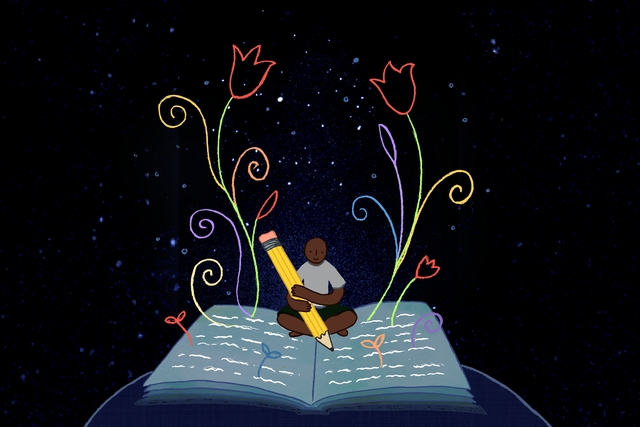
    Illustration by Kaitlin Roth

  • Karmic Eye by Claire Jones

    Karmic Eye by Claire Jones

    “Shallow men believe in luck or in circumstance. Strong men believe in cause and effect.” ~Ralph Waldo Emerson

    Understanding the workings of cause and effect allows one to make sense of life. If you understand and believe all your actions have consequences, then the common sense thing to do is to pay attention to those actions.

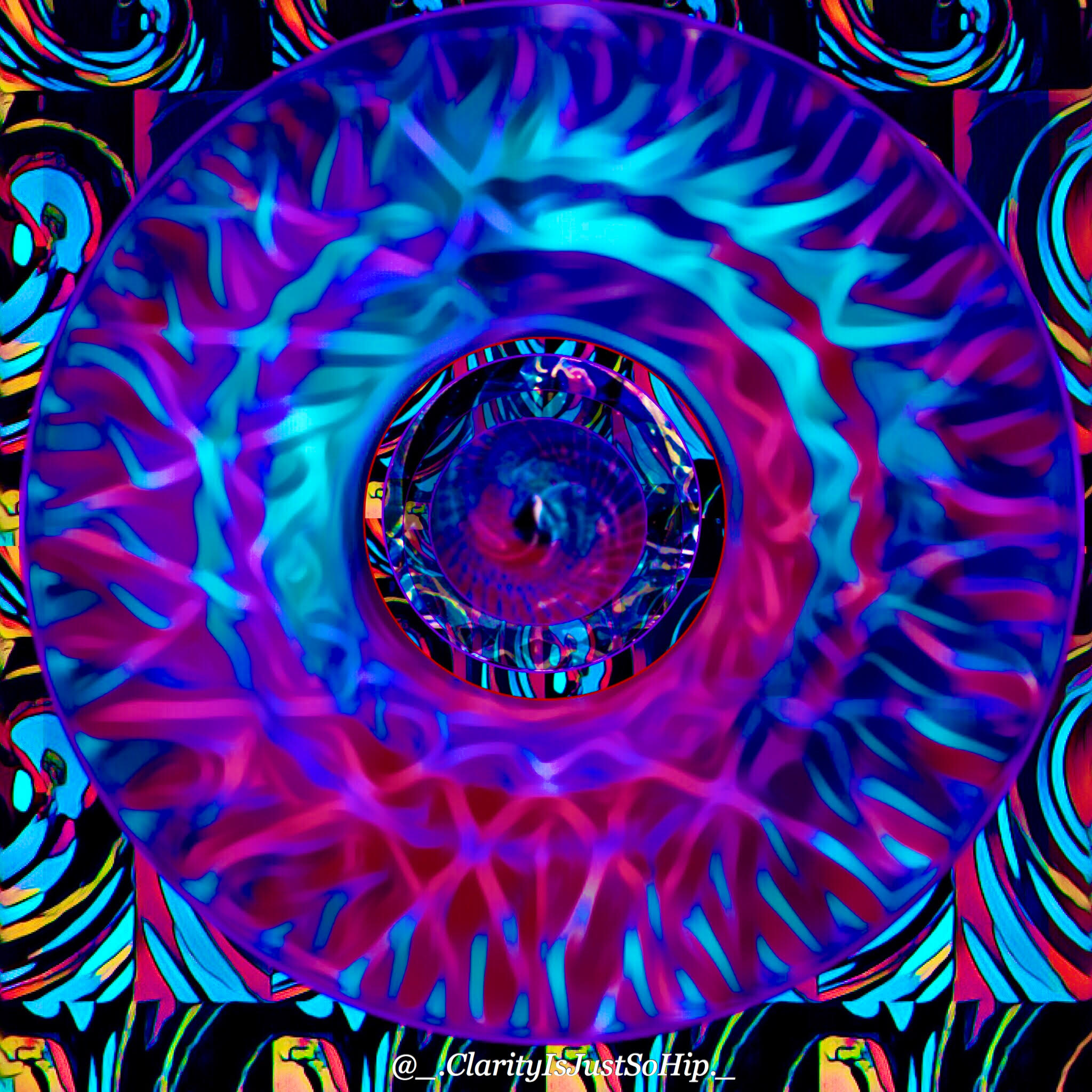
    This vibrant piece is my interpretation of how the invisible threads of cause and effect reverberate through the ether.

    A practicing Buddhist of twenty-five years, I adhere to the law of cause and effect or karma. I live my life grounded in awareness, clarity and presence because of this law. As practitioners of Buddhism we understand that our words, thoughts and actions will always have consequences. This perspective allows us to accept and to take responsibility for our lives and environment.

  • Creativity Coloring Page for Tiny Buddha’s Worry Journal

    Creativity Coloring Page for Tiny Buddha’s Worry Journal

    Hi friends! Since Tiny Buddha’s Worry Journal launches in three weeks, I’ve recently been sharing some of the coloring pages, which all depict things we can do to minimize anxiety in our daily lives.

    So far I’ve shared:

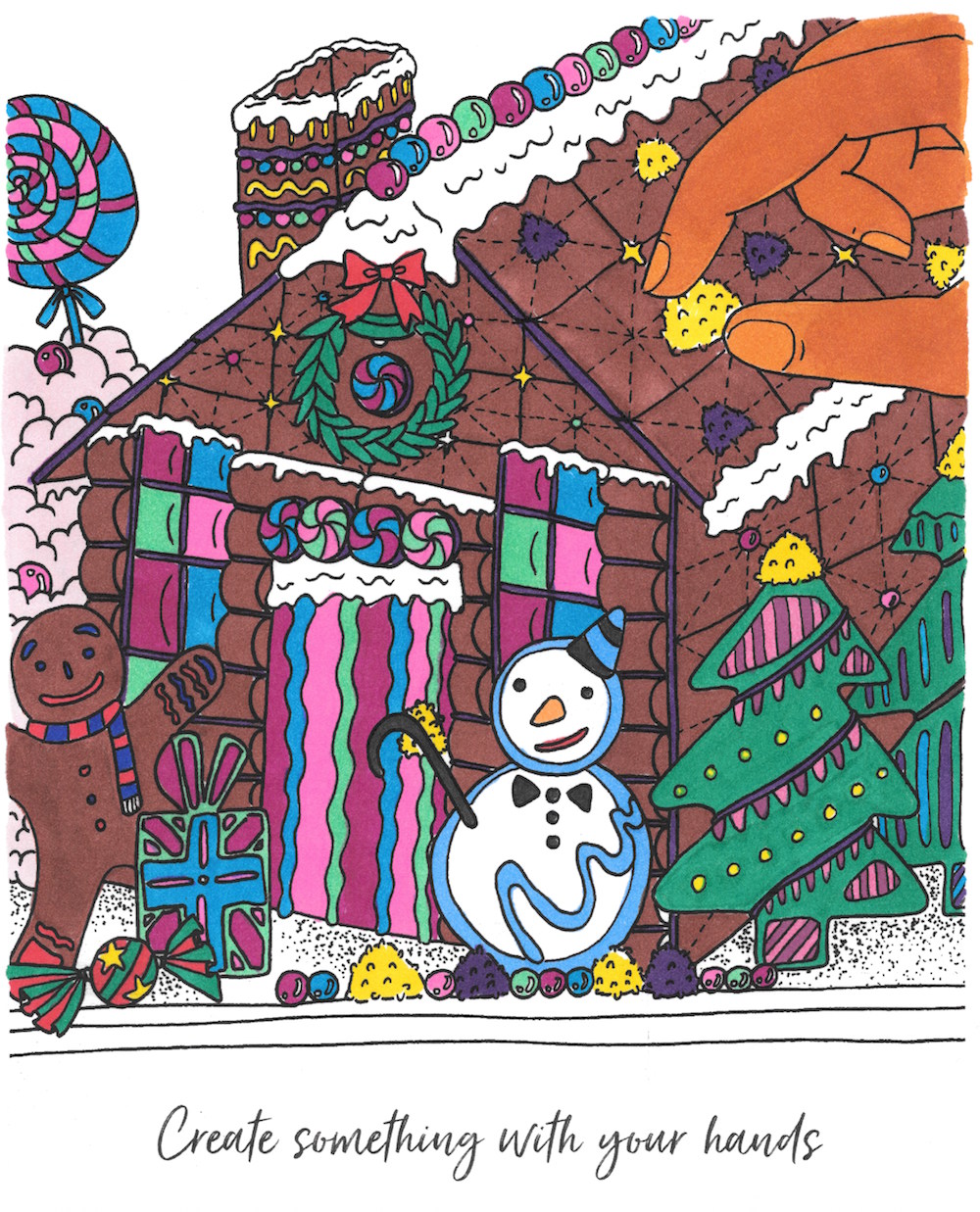
    Today’s tip: Create something with your hands.

    If you’ve ever immersed yourself in any type of creative activity, you know how meditative and calming it can be.

    When we’re focused on the next brush stroke, bead, or stitch, we’re deeply immersed in the present moment—not caught up in our thoughts, fears, and worries.

    This is why I decided to include doodling and coloring pages in this journal. Research has shown that coloring calms down our amygdala—the fear center of the brain—and it also activates the parts of the brain that are responsible for focus and concentration.

    Beyond that, coloring and other creative activities bring us back to the ease of a simpler time—before we had to worry about bills, bosses, and other stresses of adulthood.

    When we were kids, we didn’t need to make time for creativity; it was as natural as breathing and saying no to things we didn’t like. Whether we were pretending to be pirates, fairies, or superheroes, we were always eager to pick up some cardboard and markers to make our own accessories and props.

    And for that brief flicker of time, all we saw was the fantasy in our head, projected onto our bedroom or yard.

    For many of us, childhood wasn’t all rainbows and butterflies, but the time we spent creating was.

    When I look back on my life up until now, I see that all the happiest and most defining moments involved some form of creativity.

    Like the decade I spent working at an afterschool program for kids, where I directed them in plays, made some of their costumes, and often designed arts and crafts projects for us to try.

    And the years I spent sketching in my book of shadows (during my teenage wiccan years), trying to create a guidebook for magic and light in the dark ages of my adolescence.

    And the time I spent crocheting afghans for everyone I love—first during the three months I spent at a residential treatment center for eating disorders, and later while traveling across the US with assorted mobile marketing tours.

    These days, I don’t create with my hands often enough. I’m more likely to create something digitally (like the many coloring posters in the fun & inspiring section). But whenever I disconnect from technology and focus on making something from nothing, it’s like the whole world stops—along with my thinking mind. And for a brief flicker in time there’s only heart. Just love, joy, and pure presence.

    I know there are a lot of you out there who also enjoy creating, and I would love to connect with you. So please, take a minute or two and say hello. Introduce yourself if we’re not acquainted, and tell me about something you’ve recently created, or you’d like to create. You can even share a picture if you’d like. Whatever it is, it’s a piece of your heart, and I would love to see it.

    From now until June 26th, you’ll get three bonus gifts, including a guided meditation series on letting go, when you pre-order Tiny Buddha’s Worry Journal. All you need to do is order a copy here and forward your purchase confirmation email to worryjournal@tinybuddha.com

  • Why Creativity Is the Path to Mindfulness, Happiness, and Peace

    Why Creativity Is the Path to Mindfulness, Happiness, and Peace

    “Mindful and creative, a child who has neither a past, nor examples to follow, nor value judgments, simply lives, speaks and plays in freedom.” ~Arnaud Desjardins

    No human being lives without experiencing the duality of life.

    Good and bad. Love and hate. Life and death. Acceptance and rejection. Success and failure. Joy and jealousy. Compassion and judgment.

    So why do we spend so much time trying to pretend that it’s bad to experience all of it, the good, the bad, and the ugly?

    Even our weather men and women tell us it’s a going to be a bad day because it’s raining or snowing. I mean, come on! The earth rejoices when it rains; snow is a natural part of our eco-system.

    Why do we try so hard to suppress the difficult feelings and experiences in our lives? Because our brains are wired that way? Because we were traumatized? Because our parents, teachers, and God knows who else told us to?

    Does it really matter, as we heal, who, where, and why?

    I remember the first time I heard the quote “Thoughts are things.”

    I knew instantly that if that was true, I was in trouble because I had a lot of thoughts I wasn’t proud of and never voiced out loud. I was taught at a very young age not to “rock the boat” or be “too dramatic” and the worst, “Your mom is unhappy because of you kids.” Yikes!

    So, when things got bad at home or at school or at church, they got stuffed. In me. In my heart. In my gut and in my head.

    On the outside I looked fine. Cute, bubbly, artistic, smart. But on the inside I was scared, confused, and anxious, and did not have a clue how to interact comfortably with people.

    I tried really hard (unsuccessfully) to fit in.

    Luckily, I had the outlet of art. I drew, I painted, I sewed, I made batiks—whatever I could get my hands on in the art department at the Catholic High school I went to, or whatever my mom would let me touch at home. She was an amazing seamstress, but, with eight kids, had neither the time nor patience to teach me. Luckily I’m old enough that we had “Home Ed” in high school, so I learned to sew well enough that my mom would let me use her sewing machine.

    Being creative got me through high school and into college with no major consequences. I wasn’t insecure, lonely, or in need of an outlet. I didn’t drink too much, I wasn’t promiscuous, and I didn’t do drugs.

    Fast forward a couple decades and I can tell you that eventually, I did experience the consequences of trying to drink my thoughts and feelings away. 

    I stayed pretty creative as long as I could, but, as life goes, I grew up, got married, had kids, and started to work.

    The turning point was when I lost my family of origin after some dramatic, painful events that I’ve chosen not to discuss publicly. (I learned the hard way that going over and over painful past events is not helpful to my healing.)

    I could not deal with what was going on inside of me.

    I started to drink more and more to squash what I was feeling.

    Within a few years, the addictive gene in me eventually cried out “GOT YA!” and I was lost.

    And this is what led me to the finding peace through being creative again. My crisis. My breakdown.

    An intervention with beautiful, sober women who didn’t know me but wanted to see me find myself again led me to being creative again.

    These women had been learning how to draw and paint from a friend who eventually became my sponsor.

    When I saw what these women had painted, with no artistic experience, it triggered something good inside me—the memory of being creative. (Yes, people, we can have good triggers!)

    “Whatever this is, I’m in!” I said, and I was on my way home. Home to my true self.

    They introduced me to an art form I had never heard of before, mandalas. I had no idea what a “mandala” was. Never heard of it and didn’t care. The mandala teacher had a studio full of every art supply you can imagine and space for many women to create. I was in heaven!

    As I drew and painted my first mandala, my creative mind took over and the crazy thoughts in my head stopped.

    I didn’t realize it then, but being creative again forced me to be what we all strive for when we think of being mindful: calm, serene, awake, and aware. 

    My goal was to have fun and be creative again, but what I got was far more than that.

    I reactivated the divine creative energy we are all born with.

    When I’m engaged in any creative activity, my “monkey mind” settles down. My inner critic has little to say. I’m not regretting the past or fearing the future. I’m in the here and now. I’m centered, relaxed, and rejuvenated.

    I got really curious—what’s was going on?

    Why had engaging in creative endeavors become so significant in my life? Why did it feel like that had been the single most important thing in my healing (after being sober, that is)?

    The Interconnectedness of Creativity and Mindfulness

    So began my research into creativity and mindfulness.

    I discovered that Carl Jung used art therapy with his patients. He encouraged the spontaneous drawing of mandalas. He believed that by just letting his patients draw with no interference, they would heal things in their psyche without even knowing it.

    Most mandalas have an intuitive, irrational character and, through their symbolical content, exert a retroactive influence on the unconscious. They therefore possess a ‘magical’ significance, like icons, whose possible efficacy was never consciously felt by the patient.” ~Carl Yung

    I stumbled upon a new book about the power of doodling called The Doodle Revolution, by Sunni Brown. In her book, Sunni cites a lot of very famous people who used doodling to help them think better and retain information. She challenges all the parents, teachers, and bosses who say, “Stop doodling! Get serious! Grow up!”

    “There is NO SUCH THING as a mindless doodle,” according to Sunni.

    CNN reports creative activities impact the body in a way similar to meditation. It’s like yoga for your brain.

    This was also about the time that “adult coloring” became a billion-dollar industry. Why are millions of adults coloring, I wondered?

    The more research I did, the more obvious it became.

    Our society is craving sanity. Coloring reminds us all of the days of childhood when it was okay to pick up crayons and zone out for a bit. Having “adult” coloring books has given millions permission to stop, color, and find peace.

    What I personally experienced while being creative was mindfulness; my brain was quiet yet active while painting, collaging, sewing, drawing, coloring, baking, and crafting.

    Being creative somehow taught me the skill, if you will, of paying attention to me, of being mindful.

    As it turns out, when you are being creative, you are using both your creative self and your analytical self, your left and right brain hemispheres at the same time. This not only quiets your mind, it engages it.

    You are creating without angst. It kind of just happens.

    My creative self was reawakened. I was allowing myself to be me, to feel me.

    Having something creative “in the wings” became important, something to look forward to. Downtime became fun instead of something I dreaded.

    This is not say that being mindful instantly became an easy process for all the other times when I was not doing something creative.

    Having gone through some pretty traumatic years, it was “normal” for thoughts of dread, unworthiness, sadness, and shame to rumble through my mind, like the undercurrent of a river, when I was engaged in mundane activities.

    Being alone cleaning, cooking, doing laundry, doing bills, and working was still wrought with angst and despair.

    I began to yearn for that calm, serene mindfulness I felt while being creative at all times in my life. So I engaged in more creative activities and hung out with people who were on the same path of healing. I began to create a new “family” of people who supported and loved me. 

    I found and became active in a spiritual home. I started to naturally attract friends on the same path of becoming more creative, more mindful, more spiritual, more compassionate and successful in all areas of life.

    I read The Power of Now by Eckhart Tolle and learned how important it is to notice it all—the good, the bad, and the ugly.

    “Wherever you are, be there totally. If you find your here and now intolerable and it makes you unhappy, you have three options: remove yourself from the situation, change it, or accept it totally. If you want to take responsibility for your life, you must choose one of those three options, and you must choose now. Then accept the consequences.” ~Eckhart Tolle

    Wow, it’s okay to have “bad” thoughts. It’s actually normal. It’s hard. And I learned that it’s my responsibility alone how to handle it.

    I’ve subscribed to helpful blogs like TinyBuddha.com and mindful.org.

    I started doing Bikram (hot) yoga.

    Ninety minutes in a hot room doing yoga brought up a lot of difficult memories. But I stayed with it. I stayed in the room even though I was terrible and even though I would sometimes cry during the thirty-second rest periods between poses as I processed memories of hating my body and feeling ashamed and remembered being teased for being fat.

    I began meditating.

    At first I could only meditate with music or a guided meditations for five to ten minutes. I meditated like this sporadically for years.

    Just recently I started meditating in the morning and before bed at the suggestion of my life coach. She suggested two to five minutes, silently, in the lotus position. I said, “I can do at least ten I’m sure.” Much to my surprise, ten minutes was easy so I progressed to fifteen, then twenty, then thirty.

    I am now meditating for thirty minutes, alone, no music, sitting in the lotus position (as best I can) twice a day. This I consider a miracle. Meditating like this has also allowed more memories to gently come up and dissipate. Wow.

    Being mindful is not always an easy road, but it’s a much better path than trying to stuff painful memories, feelings, and thoughts down. 

    It’s much easier than trying to drink them away.

    I know this to be true.

    Being mindful has helped me be comfortable with my thoughts. Okay, that’s not always true—I still sometimes get angry and want them to go away, but I don’t dwell as much, I don’t lash out as much, and I am most definitely a happier, more peaceful person.

    The Process of Being Creative Triggers Memories—Good Ones

    If you activate your divine creative energy, you are activating the positive, shiny aspects of yourself. You remember happier times. You feel accomplished. You’re happy with yourself. You smile more (and people smile back)!

    As you then become more mindful, perhaps through yoga and meditation, the difficult thoughts and feelings are balanced with the positive, creative, and happy aspects of you.

    You take responsibility for your life. It’s fun to be with you.

    You realize that you are the person you’ve been waiting for.

  • Feeling Empty? Here’s How to Find Joy (and Yourself) Again

    Feeling Empty? Here’s How to Find Joy (and Yourself) Again

    “Many people are alive but don’t touch the miracle of being alive.” ~Thich Nhat Hanh 

    “Who are you? No, really. Who are you?”

    I stood at my bathroom mirror, towel twisted around my head, inspecting my own reflection. A woman I hardly recognized looked back at me with empty eyes. Empty mouth. Empty insides.

    “Who are you?”

    Silence.

    “What do you want?”

    Nada.

    “What are you thinking?”

    Zilch.

    I sighed and reached for the toothbrush. The truth is, I’d been there before. That empty-sad feeling. The feeling of not quite fitting in. Not quite feeling fulfilled.  

    Before, I’d brush it off. Dig deep, push through, move on.

    I’d say everything was just fine. It sure looked just “fine.” After all, I was a fully functional adult. Everyone said so.

    I had my education, a career, a husband, kids, a house.

    I was chipping away at that mortgage and student loan debt. They’re the good kinds of debt, you know.

    I’d checked the boxes on life’s to-do list. Isn’t this what we should all be aiming for?

    I didn’t know it yet, but this time would be different. That moment would be the turning point after too many years convincing myself that I didn’t know the answer to my questions.

    This would be the moment of renewal, reclaiming the missing pieces of me and offering them the loving care they deserved all this time.

    Later that day, kneeling down at the washing machine, ruminating about I don’t even know what, it hit me: a full-body NO. This is not what life is meant to be, I thought.

    It was a no to this being my everyday experience. No to living on autopilot. No to feeling empty. No to not even recognizing myself.

    It was a punch through the chest. My eyes welled with bottled up tears, and I had the distinct feeling of just wanting to go home.

    I’d been pushed over the edge of the cliff I’d tiptoed for years.

    The real surprise, though, was the laughter that followed. It tickled my throat and escaped through bursts of tears. I reached up to wipe my cheeks and found a smile there.

    The relief of seeing all of this and finally saying, “No!” was the most amazing thing.

    I spent the next few days in quiet observation, breathing through the pins and needles of waking up.

    At first, I didn’t know what to make of the mixed-up, muddy feelings that met me. Was this anguish? Euphoria? Confusion for sure, but I felt I had no choice but to keep going.

    So, I walked softly and resisted the urge to define this.

    The more intently I listened, the more clearly I started to hear and feel yes and no. They curled through my day, winding themselves around everything I’d just accepted as “the way things are.” 

    The no’s felt empty, hallow, fake. It felt like acting. It was resistance and alarm bells and forcing. Even though it had been my usual mode of operation, being in a state of no also started to hurt.

    But yes… yes felt alive. It was light, expansive, and exciting. I felt energized and creative whenever I was there. The best part was, it was easy.

    Of course, as any of us would, I wanted more of the yes and less of the no. I grabbed a sheet of paper and drew a line down the middle. Two columns: yes and no.

    Beside yes, I wrote “lights me up.” Beside no, “drains me.”

    Then, I listed all of the yes’s and no’s I felt during the day. It was nothing fancy, just a quick word about what I did and how I felt. By the end of the week, I’d created my personal manual for living.

    It was my blueprint for calling my lost parts back.  

    There on that sheet of paper, in my own handwriting, were all the things I’d always known but didn’t yet see.

    I saw that there are naturally things that will be unpleasant or less than thrilling, but that my being doesn’t need to feel that way. There is so much opportunity for yes if we’ll allow for it. So, I started to follow yes with more intention.

    I bought a stack of composition books and carried one with me everywhere.

    I started to draw again after almost thirty years.

    I wrote a poem, and then another and another.

    I started writing children’s stories.

    I fed my spirit good music, sunlight, plenty of color, and lots of space.

    And I remembered that lightness is like oxygen for your soul.

    Now I see that that face, those eyes, those insides, they weren’t empty. They were aching with the kind of deep burn that comes from turning your back on yourself, walking away, and never looking back. I’d just numbed it is all.

    I’d let myself get too busy to think of things like who I am, what I dream, and what I believe more than anything.

    I retreated into my day-in-and-day-out and identified with the little dramas, whether they were mine to start with or not.

    It wasn’t all gloom, mind you.

    I was ambitious. Driven, dedicated, motivated. A real go-getter and other fully functional adult-type things.

    I was also grateful for life’s many blessings and aware of the countless privileges bestowed upon me that had nothing to do with my work ethic or worth as a person.

    Like I said, I was fine. (But not really.)

    I was aimless and stuck in a close enough approximation of inner peace and freedom. I existed as a fragment of me.

    Looking back, it was on that day that I decided that even if I was fine, fine was not enough.  

    Fine is not thriving.

    Fine is not complete.

    Fine is not what I came here to experience, and I couldn’t face another day of pretending to be here and whole.

    My sense of wonder and magic, my awe, my creative spirit, and my light had been calling out to me all this time. Only I couldn’t hear it until then.

    I don’t know if I’d been more scared or ashamed of who I was after casting away these important parts of myself. Maybe I didn’t recognize them as my own. Or maybe I thought this was how it’s supposed to feel. It’s just how things are—you can’t be successful and free, whole and at peace.

    Yet, there they were this whole time, turning toward me like flowers turning toward the sun. They held tight to the cracks in this facade I’d created.

    I suppose they never were lost, just watching and waiting until the day I set down my resistance and welcomed them back home.

    Calling my lost parts home didn’t happen in one grand, sweeping gesture. It took a lot of little moments. Awkward, wobbly baby steps that took me sideways and backward just as easily as forward.

    It took me a while, but I finally figured out that when you feel a yes, you follow it. And bit by bit, all those little steps coalesced into what from the outside looks like the one moment I “took the leap.”  

    If any part of my story resonates with you, then maybe you know what it feels like to pretend to be here and whole. And maybe you’ve had those little moments of clarity and mini-epiphanies that “fine” is not what you came here to experience.

    Maybe you’ve heard your lost parts knocking at your door asking to come home. And maybe you’re ready to listen.

    It may seem like an impossibly long journey when you’re in the walking sleep of I’m fine, but calling your lost parts back and welcoming them inside is as easy as following what lights you up one baby step at a time.

  • 5 Practices That Helped Me Reclaim My Spark for Life

    5 Practices That Helped Me Reclaim My Spark for Life

    “Sometimes what you’re most afraid of doing is the very thing that will set you free.” ~Robert Tew

    In 2014, I was drowning in unhappiness. I had moved to Palestine five years earlier, later met my husband, and decided to remain in one of the most conflicted countries in the world.

    There I was, living in a different country far from the comforts of home that I had always known. My marriage was rife with conflict and pain, and I had nobody to turn to.

    I had no family nearby, and with the high turnover of internationals in the country, many of the friends I’d made had left to go back to their home countries, leaving me behind.

    My fear and shame around the difficulties in my marriage kept me from sharing my struggles with the few friends that remained. My friendships felt shallow, and I felt more and more isolated and alone.

    In that time, I looked back at myself in college and wondered where that carefree girl who was so sure of herself had gone. Not only did I feel like I had lost everything I held dear, but somewhere along the way, I’d lost myself.

    I pretended everything was okay, not only to others but also to myself.

    I distinctly remember the day I woke up to my own reality. I was attending a four-day yoga workshop with my teacher, David Sye. As I moved my body to the music, I felt alive!

    It was the best I had felt in years. Maybe even the best I had felt my entire life.

    I realized then and there that I was unhappy. Something was keeping me from feeling that energy in the rest of my life.

    At first, I was terrified that if I admitted I was unhappy, my life would fall apart. Instead, I embarked on a journey into the body-mind-emotional connection that led to true and lasting healing.

    This journey led me to discover the root pain that was really behind my unhappiness at this time: I had an addiction to perfectionism and a fear of failure that stemmed from a deep feeling of not being good enough.

    As I delved deeper, I found out that this fear stemmed from my early childhood relationship with my parents and the Midwest Christian community in which I grew up.

    Although there were many wonderful things about this community, there was also a lot of pressure to do what you “should”—to not make mistakes and lead the perfect life.

    This attitude found its way into my family. We rarely talked about negative things in our own lives or between us. Instead, we addressed difficult emotions through sarcasm rather than an honest acknowledgement of the needs behind those emotions.

    Since certain emotions were labeled as negative and not addressed, I grew up feeling that I was only good enough if I didn’t feel negative emotions such as anger, guilt, and shame. Therefore, I developed a need to be perfect and a constant fear of failure.

    I was able to cover this up most of my life. Whatever I was good at, I focused on and excelled at. My success gave me confidence. My confidence, however, did not come from being true to myself but came from doing what I thought would look good to others and make me feel special.

    My shaky confidence all fell apart when I was out of my comfort zone in a new country and didn’t have access to all the things I had attached to my identity. To make matters worse, these childhood issues came up in my relationship with my husband and resulted in poor communication and anger. Moreover, I felt great guilt and shame for not having the perfect marriage.

    When I finally admitted to being unhappy, this facade of perfectionism lifted, and I could open up to seeing these wounds and discover the five practices that would heal them.

    I was able to forgive my parents, knowing that they did the best they could and could only teach me what they knew themselves when it came to dealing with emotions—those labeled both negative and positive.

    I was finally able to be vulnerable with others and try new things because I was free of the fear of failing.

    Two years later, my life had turned around. I had healed many of these wounds and felt freer than I ever felt before.

    I thought I had lost myself and who I used to be. I thought I was trying to find the person I was before. I didn’t know that in the end, I wouldn’t find myself. Instead, I would free myself from all that was holding me back.

    The five key practices that helped me do this and get my spark for life back were.

    1. Yoga

    Although I had practiced hatha and vinyasa yoga for several years, I mostly focused on the physical practice of asana. At this point, I added kundalini yoga into my practice a couple of times a week, and this helped me learn the connection between the body and emotions.

    I discovered that our emotions are simply physical reactions in the body. Without movement, these emotions can get stuck in the body and actually block our innate energy. In fact, emotions from our whole life can get stored in our body’s memory, meaning experiences we had as children can affect our daily lives now.

    Eventually, I learned how different poses can not only help me release emotions I am feeling now but how they can be a map to healing any of my struggles in life and freeing up my energy to live my fullest life.

    2. Guided meditation

    When I first started meditating, it was difficult to get myself to sit down even for five minutes. I was always afraid of how I would deal with nothingness.

    I found that having a guided meditation recording made me feel safe in knowing that someone would be there to help me through. I practiced mindfulness meditation, chakra meditations, and yoga nidra.

    Mindfulness meditation was the door into meditation for me. It helped me finally be able to sit and become more aware of what was going on in the present moment.

    Chakra meditations and yoga nidra allowed me to connect deep inside myself. They took me on a journey through the past experiences that were blocking my happiness and connected me to my true inner joy that was there no matter what was going on in life.

    3. Journaling

    Years before, I read The Artist’s Way and discovered the practice of morning pages. In the book, Julia Cameron recommends writing three pages of stream of consciousness writing every morning in order to release thoughts from the mind that are blocking creativity.

    I picked up this practice again and wrote three pages each day in my journal. Only this time, I wrote about my experiences in yoga and meditation. I wrote about the emotions that came out after I did certain yoga practices. I wrote about when I had experienced these emotions before. I wrote about the insights I had during my meditations.

    Journaling about my discoveries helped me to really process my thoughts and emotions and finally let go of past experiences and heal.

    4. Connecting with others

    A big part of the reason that I was unhappy was that I wasn’t open to sharing my struggles. I was afraid to show my vulnerabilities, and, therefore, I felt like nobody knew the real me. I felt alone and isolated.

    I took a baby step when I shared with my friend that something was wrong in life and I needed to turn it around. Then, I finally overcame my fear and shame and opened up to a couple other friends about the problems in my marriage.

    These two steps opened up a floodgate of people coming into my life that I could share with openly and honestly. Fortunately, these people were all proponents of taking care of your mental health, and I finally got counseling, both personally and as a couple.

    Having the support of others gave me strength to make big changes in my life. It also meant that I stopped pretending everything was okay and finally let people see the real me. They saw all my struggles but also all my beauty.

    5. Bringing creativity and pleasure back into my life

    I was always a musical person. During my childhood I’d played piano and sung in the school choir. Finding myself in a new country, suddenly I no longer had easy access to my usual outlets for creativity.

    When I realized how unhappy I was, I decided I needed to prioritize creativity and pleasure in order to feel that spark for life I once had felt. So I reached out once again to those friends I had newly opened up to and told them I had always wanted to learn to paint but was afraid that I wasn’t good enough.

    We then came up with the idea to have art nights together. There was only one rule: it didn’t matter how good we were, we would embrace our inner child and just play with colors and materials.

    These art nights reconnected me with the joy I had been missing and opened the doors for me to allow pleasure back into all areas of my life.

    Through my daily yoga and meditation practice, I discovered more about who I truly was and what was essential for my happiness. I found myself surrounded with deep friendships, people with whom I could explore creativity and share all of my struggles and triumphs. I fulfilled one of my deepest dreams of becoming a yoga teacher.

    Most importantly, I learned that a true spark for life comes from a place of deep acceptance of oneself and the ability to find contentment and joy with life as it is now.

    These five practices became essential for me to continue to come back to my true self and deepen my self-acceptance. They are practices I come back to each day. Especially when stress and difficulties start to build, I know these practices will help me regain my spark for life—that feeling of deep joy and gratitude for all that life has to offer.

  • The Difference Between Letting Go and Running Away

    The Difference Between Letting Go and Running Away

    “It’s about our ability to leave our death on the battlefield of life. Or having the strength and courage to give them our love and to bring them back.” ~Edward Frenkel

    It took me almost twenty years to realize that running away from ourselves isn’t the same as letting go. That realization, as with so many others, came at a time when I was at one of my lowest points.

    The day everything changed began as one of the worst of my life.

    I was struggling with the breakup of a long-term relationship. We’d been due to move in together when I discovered he’d betrayed my trust so badly that remaining in a relationship was impossible.

    I was working long hours in a job I’d grown to hate and I was exhausted. I was barely sleeping, and when I did it was the kind of nightmare-filled, fitful sleep that took forever to return from.

    I’d wake up each morning feeling as though I’d been in a battle as I slept. My fatigue was so overwhelming that I could barely manage to keep my house clean and parent my son.

    I was beat, emotionally, physically, and spiritually.

    My son was staying with his grandmother for the weekend, and once I no longer had to hold it together for him the floodgates opened. It was more than the loss of the man I’d believed I would spend the rest of my life with; it was the knowledge that my life had become passionless across the board.

    I wanted to live a creative life, to sustain myself and my son via spiritual and creative expression. But I felt blocked at every turn and I could no longer hold in my grief and desolation.

    I spent hours wandering from room to room in my silent house. Every now and then I would curl up on the floor and howl uncontrollably. Eventually, I couldn’t cry any longer and I wrapped myself in my duvet and put videos on autoplay, hoping to distract myself into numbness.

    That’s when it happened. I was half-listening to a talk by the mathematician Edward Frenkel. I’d heard it before and enjoyed it, but this time something he said utterly gut-punched me.

    He said:

    “Do you leave your deaths on the battlefield of life, or do you have the strength and courage to give them your love and bring them back?”

    And that was when I knew Edward Frenkel and I had something in common. We both knew something about dying.

    Frenkel described a time in his life he had only recently begun to understand. It was a moment when he was sixteen and he was refused a place at university in Russia because of his Jewish heritage.

    Despite going on to become wildly successful in his field, he spent years disconnected to the sixteen-year-old adolescent inside of him. To the pain of that moment when his dreams were crushed.

    As I listened suddenly she was there again. The girl I had tried to forget. The girl I had left on my own battlefield.

    I’d spent years training as a contemporary dancer. I won scholarships and top roles in performances as well as competitions in choreography. I was young, talented, passionate, and obsessed.

    One dance school called me more than others and I dreamed of finishing my training there. The day of the audition, on my seventeenth birthday, I traveled to that dance school, floating on a wave of excitement, nerves, and a sense of ‘rightness.’ Of knowing this was exactly where I needed to be.

    The process was emotionally brutal. Only five people out of a cohort of over forty were called to the next stage after doing group classes and individual solos. The rest were told to go home, as they’d been unsuccessful.

    I was one of the five. I waited in the corridor for my physical exam and interview. The instructor told us to relax, we’d passed the dance part of the audition and now it was just wrapping up the formalities. We talked about what it would be like in September when we started.

    I went home and slept in a kind of peaceful joy, knowing my dreams were coming true.

    Three days passed and the letter arrived. I began to tear it open, barely registering that it didn’t look quite right.

    It wasn’t a thick envelope, stuffed full of information about course equipment and places to live; this envelope was small and thin. Inside was a letter that simply said they regretted to inform me I had been unsuccessful.

    And that was the day a part of me died. She stayed dead for a very long time.

    I wasn’t as strong as Edward Frenkel, who continued with Math. I know nothing about his home life, but mine at the time was awful.

    Layers of trauma from a close relative’s mental health issues were taking their toll. I’d witnessed multiple suicide attempts and holding it together for my mother, who was struggling to cope, had torn into my psyche.

    Dance had been my refuge from all that. The one thing that had never let me down. The one thing I trusted, believed in, and knew with everything I had I would do with my life.

    The shock of the rejection floored me. I didn’t know what to do. I cried, once.

    And then? I ran.

    I wasn’t strong enough to pick myself up and audition again the next year. Instead, I ran away. I ran to an older, abusive boyfriend. I ran to university instead of dance school. I ran to drugs. I ran to self-harm that lasted right up until the day I became a mother.

    That day almost twenty years later, as I listened to Edward Frenkel’s words I realized that at aged thirty-six I was still running. Part of me had died that day; the part of me that was filled with creative passion and obsession. The part of me that felt a spiritual flow and call so deep there were no words for it.

    I’d spent years putting a band-aid on the pain. I busied myself with little creative projects, even danced a bit as a hobby. I’d told myself it was okay and I had to let her go. Let go of the passion I’d once felt, the sense of rightness and surety.

    But I was kidding myself. I hadn’t been letting her go all those years. I’d been running away from her, running away from the pain of rejection. And not only that, the fear of rejection was still so great I was running from my current creative dreams.

    That day my head began spinning. Could I go back for her? For that girl I’d left dead on the battlefield of my life? How could I, after so many years of rejecting her?

    I paced my room for a few more minutes and then slowly something shifted. I picked up the phone and I called a good friend. That night we drove to the beach.

    I’ve always had an affinity for the sea. It’s where I feel the most alive and peaceful. The stars were out in the clear night sky and pools of water on the sand held the moon’s reflection. I walked alone to the water’s edge and quietly I began to talk to that girl.

    She was angry. Hurt. I’d rejected her and denied her existence for so many years. But slowly, she began to listen.

    I told her that yes the dream we’d had was over and I was sorry for running away from that dream. I told her I was sorry for running away from her. I told her I loved her. Deeply and completely. And, I told her that if she wanted, we could create a new dream together.

    There were a few moments of silence and then I felt her. She was inside me, still. And I realized that all those years I’d been trying to forget her, to ‘let go’ of her, to surrender her passions, when what I really needed to do was embrace her.

    In order to let go of the pain, I had to accept it, allow it, and integrate it and my past self into who I was now.

    Killing her had done nothing for me. It was only by having the strength and courage to give her my love and bring her back to me that I could stop letting the shattered dreams of the past rule my dreams in the present.

    That night I slept properly for the first time in weeks and when I woke up I knew what to do.

    For so many years I’d played at the edges of a creative career. I’d told myself it was “unrealistic” or I’d get round to it “one day.” But I was lying to myself.

    The truth was I’d been so afraid to feel the rejection of my passion again that I sidelined every opportunity that came my way.

    This is what happens when we cut ourselves off from our passions in an attempt to protect ourselves from pain. Because we’ve been hurt, we try to stay safe by remaining wherever feels comfortable, even if that comfort is actually preventing us from accessing potential joy. But without risking pain, we prevent ourselves from growing, and the irony is that by holding ourselves down to ensure we don’t fall we actually create far more pain in the long run.

    When we go outside of our comfort zones and risk falling it opens up a whole new world of purpose, excitement, and engagement.

    Realizing this was difficult but liberating.

    A year after that morning I’d quit the job I hated and was making a living from writing, my other great creative passion. It wasn’t easy. Facing down every objection my mind could throw up about why I should just go back to what was familiar was challenging and sometimes exhausting. Sometimes it hurt like hell. To date, I’ve had my writing rejected more times than I can count.

    But with each rejection, she’s there. I hold her close. I tell her I love her.

    Together we dance. Then we begin again.

  • How to Find That Something That Feels Missing

    How to Find That Something That Feels Missing

    “The spiritual path is simply the journey of living our lives. Everyone is on a spiritual path; most people just don’t know it.” ~Marianne Williamson

    I remember it as if it happened yesterday. I woke up in the middle of the night with the worst tightening of my chest that I had ever experienced. My heart was racing uncontrollably, my hands were clammy and cold, and nothing I did brought relief.

    I prayed. I chanted. I tapped. I prayed and then prayed some more.

    I thought I was going to die. I started to immediately regret all of the things I hadn’t said, all of the things I hadn’t done, and all the ways I’d failed to truly enjoy my life.

    After what seemed like an eternity, I finally fell asleep just to wake up in another panic because my entire body was wired from head to toe. To make matters worse, I needed to be in court bright and early (more on that later).

    I remember walking into my cardiologist’s office in a panic. He insisted nothing was wrong and that I should consider quitting my job.

    “Quit my job?” I laughed out loud several times.

    His face was stoic. He was not joking. Sh** just got real.

    After wearing a heart monitor for thirty days because I needed to get to the bottom of these debilitating episodes, thankfully, I learned that my heart was functioning just fine. But, the symptoms were a message about a much bigger problem.

    I needed a makeover. I needed a blank canvas.

    Up until that moment, I had lived my life checking items off a list—a list society tells us we need to tackle if we want to be happy and successful, both extremely subjective words.

    The list looks something like this:

    • Get the degree. Check.
    • Buy the expensive property. Check.
    • Be a “good” person. Translation: overextend yourself and be everything to everyone. Check.
    • Dive into a soul-sucking career for the sake of prestige and money. Check.
    • Play it safe. Check.

    Well, I had pretty much checked off the whole list. Yet, I could not shake off this deep desire to find something that felt missing. I felt empty, sad, and angry most days, yet I covered it up with a smile and fake gratitude.

    I’d lost my connection. I’d lost myself. I had no idea who I was. I did not know what to believe in.

    It was like I was waking up from a deep sleep. My soul was craving meaning, depth, and connection. I needed to release all of the beliefs that had kept me hostage to fear and zombie-like comfort.

    My day job as a lawyer was adding a layer of stress to my life that I could not shake off. I knew that this was not the path my soul intended, yet I needed the money, so it was not time to leave just yet. And to make things more confusing, I was good at it. My brain would trick me into thinking I needed to stay in that career.

    While I managed my responsibilities during the day, most nights I consume more spiritual material than most do in a lifetime. I was in search mode. Although I learned many beautiful philosophies and teachings, this consumption of information was not the answer I was seeking.

    I sought coaches, attended seminars, and read almost every book under the sun, yet the feeling of connection eluded me.

    Why? Because I was trying to soothe myself from the mental plane and I forgot to feel my way through the process. I did not know how to connect to my body, and I certainly was not in touch with my right brain—the center of intuition and creativity.

    From that point onward, I committed myself to soul work. The road was long and windy. There were rivers of tears along the way.

    During this time, I discovered things I’d kept hidden from myself and got to know myself in new ways. I was peeling back layers that slowly revealed my true self.

    One of my biggest revelations during my journey is that, although I was living like an extrovert, my essence is one of an introvert. I discovered that I am highly sensitive and empathetic. It was difficult for me to accept this because I associated introversion with shyness, weakness, and weirdness, but the more I felt into this truth about myself, the more I started to love the real me.

    My introversion taught me about the beauty of downtime. It helped me feel into my body and learn all the things she needed at any given time to feel relaxed and nourished.

    I realized I’d been living too fast, checking off lists, too busy “being productive” and making sure that I was pleasing everyone. But, I rarely checked in with myself to process my feelings, or to feel into what I really needed. I learned that I had abandoned my needs most of my life in the name of acceptance.

    Much of this process involves facing what we have denied to ourselves for so long. It is painful, but extremely powerful. The gold at the end of the rainbow: I feel more inspired, refreshed, and connected. That is the theme of my life.

    Connection.

    So, what are some of the lessons that you can expect when you say yes to soul work?

    Embrace your feelings—even the dark ones.

    You can’t be happy all the time. It’s not possible, so please do not try. Do not chase happiness.

    This beautiful universe is all about duality. How could you possibly love the light without experiencing the dark?

    You can’t. Because you would not have a reference point.

    And, what is the fastest path to the light?

    Feelings.

    They are the gateway to your soul.

    I’m not referring to your everyday emotions, which can feel like a rollercoaster at times. I’m talking about deep reflection. I am talking about the feelings that are trying to deliver messages to you all day long.

    The good. The bad. The ugly.

    An amazing mentor taught me one of the most powerful processes for releasing negative emotions.

    It just requires breathing and focus on the feeling. Once you feel the energy of an emotion, it shifts and moves as you breathe into it. There are so many insights that come to the surface when you remove the initial layer and make room for the expression of the pain.

    Once the veil of pain is removed, you reach a higher perspective, where you see any situation from a higher plane and not just with your limited human eyes.

    Ask yourself:

    What am I constantly thinking about that’s bringing me down?

    What do I long to release but haven’t been able to?

    Then ask your feelings:

    What are you here to teach me and breathe?

    Feel the feeling; breathe into it. Feel it shift and move inside of you.

    Listen. And then write whatever insights you receive. Do not judge yourself at any point. These are your feelings and they are real to you.

    When I asked these questions, I had to admit to myself that I was continually expecting people to behave and feel like me, and when that did not happen, I felt disappointed. This way of processing the world was bringing me down, so I reevaluated my relationships.

    I realized that I had resentment because I felt like I was a giver in most of my relationships. Why? Because over-giving stems from not checking in and slowing down. I stopped being only a giver. I learned how to receive. I started to express my feelings and most importantly, I started to feel into my needs and say yes to them.

    At first, it felt selfish, but then it became necessary. The more I connected with myself and learned about my true needs, the more available I was for deeper and more authentic connections with the world.

    Let your inner wisdom be your guide. It knows how to best navigate your life.

    We listen to opinions all day long, unconsciously and consciously. People with good intentions want to tell us how we should do things, or how we should feel, think, and act.

    While I personally believe that the universe delivers messages through others sometimes, the ultimate filter of your life must be your inner wisdom, that piece of unconditional love that guides you.

    This guidance is available to all of us.

    Ask yourself:

    What am I refusing to see?   

    What am I ignoring?  

    What am I hiding from myself?

    You may not get answers at first, but you will start to build a connection to your inner world.

    Our brains will always have a conditioned response to these questions, but when we breathe and feel into the answers, a new message may emerge for you. A new perspective may be shown to you.

    One of the biggest revelations for me when I asked these questions is that my true nature is one of a healer and someone who wants to help others heal and get in touch with their hearts. Although my entire life has been all about getting things done and building a career, my true nature is all about feeling and flowing. A very different energy than the one I was creating in my day-to-day life.

    There is no better place than here, than now.

    Being present is one of the most challenging tasks we can undertake, but if we want to transform, we need to learn to master the present. Otherwise, we are forever chasing the next thing.

    I am currently living a reality where I wish I was doing what I love full time, but apparently, I still have lessons to learn from my current day job. I stay present by being a light warrior all day, even in the courtroom. I shine my light everywhere, and I allow it to lead me.

    Although I am transitioning, it has been very challenging to stay present and bring my light to my day job, because the truth is that I want to be there, but I am here for now. But if I can be present here, I can be present anywhere. Because being present means that you are connected to your body.

    To stay present, every so often during the day ask yourself these questions (courtesy of Tosha Silver):

    Where am I?

    What am I doing right this minute? 

    Where has my mind taken me?

    And most importantly, am I breathing fully?

    Love your rest.

    This is huge. It’s essential to your health. Say no as often as possible in the name of rest!

    If my body does not feel like doing something, I honor that now instead of forcing myself to do things out of obligation or pressure. If I am tired and overwhelmed, I no longer have a problem retreating and declining to attend any events, including family commitments.

    At one point, I thought I needed to be everything to everyone. This led to my mini breakdown. While I still have certain obligations because that’s just life, I check in way more often now to feel into whether something is a yes or no.

    This takes some practice, so please be patient with yourself and do not expect everyone to understand your journey. It’s okay, we all have our own path. This is about what feels right to you.

    My new mantra is rest. refresh. repeat.

    The words that come out of your mouth when you’re angry or resentful are not the deep truth.

    Mental truth is reactive and layered with stories from past experiences. Mental truth is often wrapped in deep pain and insecurities.

    Your soul truth is the deeper truth that’s born from self-awareness and personal insight.

    For example, your mental truth may cause you to react to your partner by shouting at them or shutting down when they fail to come home at the time you expected. Your mental truth may make a million assumptions like, “They do not love me or they aren’t there for me ever or they are cheating on me.”

    If you can get to your soul truth, however, you may recognize that your feelings stem from past experiences and your assumptions lie in your own insecurities.

    Your soul truth may ask you to voice your concerns or speak to your partner instead of defaulting to anger or blame. Your truth may ask you to forgive yourself for any past experiences that hurt you.

    Your truth will always ask you to take responsibility for how you feel, and it will always encourage you to speak from your heart and inquire from the source if you are prone to making assumptions. Your truth will also warn you if something is off and will invite you to see things for what they are.

    Breathe and ask silently, put your hand on your heart and ask:

    What is my message about this situation?

     How can I see this differently?

    What is this moment trying to teach me?

    What is my inner truth showing me?

    Your truth will feel profound and anchored in love and wisdom.

    Creativity is the language of your soul.

    When I started to color and draw portraits from YouTube tutorials, I entered the magical world of the right brain. This is where the magic lives.

    Our left brains work hard to analyze and provide logic. Sometimes, this part of our brain can go into a loop because the logical part in us does not take into account our heart’s wisdom, nor does it take our feelings into consideration.

    The right brain is more intuitive and abstract. The right brain is creative. It’s a place where we feel and interpret events through our gut, colors, and senses.

    For example, if I were to express anger through my left brain, I would use words like “volatile,” “pissed off,” or “explosive.” If I were to describe anger using my right brain, I might say it looks like the color red and it feels tight in my chest.

    And if I ask my right brain what anger is here to teach me, most of the time, it will feel like the message is that I am not being honest with someone or myself (of course there are a million other reasons why one can feel anger).

    The right brain offers more depth. Being in my right brain has taught me to feel my body and the sensations and feelings, since these are messages and nudges from our inner wisdom.

    So it is important in order to reach equanimity, to find your creativity and call it forth. You will feel more connected and more centered. Find activities that do not require thinking so you can start to feel the difference.

    As you embark on your own path, which begins with willingness and the realization that something is missing, you will undoubtedly say goodbye to who you thought you were and you will fall in love with the gift that you are.

    You may feel depleted some days, but for the most part you will experience a reorganization of your life and energy. You will feel like a child learning to see the world with new eyes. You will feel a deeper feeling of peace and happiness than you ever could have found by working through society’s list. This is soul work. Are you ready for it?

  • How Creativity Heals Us and Why It’s a Gift to the World

    How Creativity Heals Us and Why It’s a Gift to the World

    “Creativity is the way I share my soul with the world.” ~Brené Brown

    I wrote a poem today for the woman I love(d).

    Just a few weeks ago, I fully believed she was the one I’d be with forever. Love forever. My heart was open so deep and wide to her. We talked about marriage and living together in the woods, making art, and being a family.

    Then things got tough. We talked, we tried, we read books, jetted our intention out into the universe. But we just couldn’t keep it together.

    There was so much pain. But also so much love. There were no lies; there was no betrayal. There was lots of kindness and understanding, attempts at consciousness and empathy. It was really hard, and my heart broke. But it’ll be okay. Just a very different road than I had anticipated.

    After a few weeks we’ve come together again as friends. Really good friends. As she said, “I want to be the best ex-girlfriend you’ve ever had.” And so far, she is. Truly.

    She challenged us to love each other as much as we can while not being together. It’s a big ask. A deeply spiritual question that pushes boundaries of everything we think we know about who we love, why we love, and what we expect in return.

    Tomorrow is the anniversary of the day we met.

    As you might imagine, my poet heart is full of love, hurt, conjecture, compassion, and the mystery of it all. And that brings me to my point…

    Creativity is not a luxury item.

    Writing her some verses about what we had, what we dreamed, and what we’ve become, helped me to clarify my thoughts and feelings. It helped me see into my own truth.

    For anyone who feels compelled in any way to activate and engage with their creativity, it really is so much bigger than it appears. Here’s why…

    Creativity helps us to be seen.

    There are something like seven billion people running around on this planet. Whether you’re driving down the freeway, walking the streets of your city, or tapping around online, it’s easy to feel lost. To feel invisible, inconsequential. It’s a big world.

    When we create something—whether it’s a one-woman show, a video animation, a poem, a song, whatever—we’re taking what’s inside of us and stepping it out. Now it can be shown or heard. Now it can be experienced, transmitted. Now it can be shared.

    When it’s shared, parts of us that were once invisible, hidden, obscured, become known.

    Perhaps you’ll get your fifteen minutes and become popular with the masses. More likely, it’ll be with your extended gang or just a few close people. And sometimes your creation will only be for yourself. Even if no one else checks out your work, it’ll still help you to see yourself. Become better known to yourself. Understand more deeply who you are.

    This is big.

    Creativity helps us express ourselves.

    To be expressed simply means moving from the potential to the actual. A dancer that sits in the corner is not expressed as a dancer in that moment. A chef that heats up a can of soup is not expressed as a chef. You get the idea.

    As my poetry teacher in college said, a poet is not someone with a book of poems on her desk. It’s not someone with a teaching gig or a fat resume. A poet is someone who writes poems.

    This may seem pretty obvious, but it goes deep. As humans, our true potential is nearly limitless. Based on the choices we make, the chances we take, and the efforts we put in, our lives move forward in whatever trajectory we choose. We will essentially be expressed in various ways as the result of our choices.

    Creativity, in whatever form we desire, helps us become who we are. Dancer, poet, entrepreneur, singer, artist, dad, friend, teacher, lover, whatever. It’s your choice. Your effort. Your path. However you choose to express becomes your life.

    This is big.

    Creativity helps us to heal.

    There are plenty of ways to heal. You can see a therapist, dig into some meditation, go on a solo voyage around the world, talk to your pals, hit up a sweat lodge, or go on a fantastic inner journey. It’s all good. Whatever’s right for you is right for you. But there’s at least one key difference in using creativity to heal.

    When we create something, it moves from the internal (an idea) to the external (the expression). Unlike a meditation or a visit with the therapist, our struggles and our catharsis can now be shared.

    I wrote a screenplay called PANACEA’S DREAM about a shaman and scientist who develop a pill that cures any illness. It works, but nobody really knows why.

    Thematically, it’s about the duality between faith and science. This is something I’ve grappled with my whole life. But now, these questions play out through my characters. I’m healed in ways by writing this narrative because I can now integrate the separate parts of myself. I can now see and have empathy for the skeptic within as well as the spiritualist who relies on faith alone.

    Anyone who reads my screenplay or sees the movie will get some kind of benefit from it. Perhaps stir up some questions. My expression can be shared. Unlike that trip to the therapist or the sweat in the lodge.

    So creativity helps us to be seen, expressed, and healed. This is fantastic! But I just recently had a bit of an epiphany and tapped into a deeper truth while talking with my old love.

    Being expressed, healed, and seen is actually a service to humanity. A gift to the world.

    When we are expressed, we become who we truly are.

    When we are healed, we become better versions of ourselves.

    When we are seen, our truth and goodness shine in the world.

    And when we express, heal, and shine, we help others to do the same. This is big. Really big.

    Tomorrow I’m going to take my own advice. I’m going to give my old love her poem. And love her with everything I’ve got in my heart (even though we’re not together). I’m going to express, heal, and be seen in ways I cannot speak.

    Creativity is not a luxury item.

  • Awaken Your Creative Side: Interview with Melissa Dinwiddie and Book Giveaway

    Awaken Your Creative Side: Interview with Melissa Dinwiddie and Book Giveaway

    UPDATE: The winners for this giveaway are Alba and Nette Jordan.

    Like most of us, I spent much of my childhood creating, making everything from finger paintings and friendship bracelets to leaf collages and Lego castles.

    I also spent weeks rehearsing for community theater performances and hours writing poems and stories, with no thought of whether I could make money off any of it.

    I created because it was fun and fulfilling, and that alone was enough.

    Then, like many of us, I got caught up adulting and began spending far more time working and worrying than imagining and playing.

    I wanted to make things with my hands and my heart, as I formerly did, but I feared nothing I made would be good enough, that nothing would come of it, and that I would essentially be wasting my time.

    Since I’ve been reconnecting with my creative side over these past couple of years, I was thrilled when Tiny Buddha contributor Melissa Dinwiddie introduced me to her new book, The Creative Sandbox Way: Your Path to a Full Color Life.

    Part creativity coach, part journal, and part coloring book, The Creative Sandbox Way will help you overcome your internal blocks so you can reclaim the joy of creative expression.

    Through the book, you’ll learn:

    • Melissa’s ten foolproof guideposts that have helped thousands get joyfully creating
    • Five reasons why creative play is good for you, and for the world
    • How to turn creative blocks into friends

    A self-proclaimed happiness catalyst and creativity instigator, Melissa believes that we are all creative, and we can all boost our happiness by living a full-color life.

    Whether you’re just discovering your creative side or nudging it awake after many years dormant, The Creative Sandbox Way may be just what you need to ditch your fear and return to joy.

    The Giveaway

    To enter to win one of two free copies of The Creative Sandbox Way:

    • Leave a comment below. You don’t have to share anything specific; “count me in” is enough. But if you feel inclined, share your favorite creative activity.
    • For an extra entry, share this interview on one of your social media pages and include the link in a second comment.

    You can enter until midnight PST on Sunday, January 29th.

    The Interview

    1. Tell us a little about yourself and what inspired you to create this book.

    My goal in life is to get people creating, and my ultimate mission is to change the entire conversation around creative expression and play.

    We tend to think of creative play as something frivolous and self-indulgent, but not only is creative play not self-indulgent, it’s essential to humans. It’s how you change your life for the better, and, in fact, it’s how you change the world!

    The reason I’m such an evangelist for creative play is because for too many years I was convinced that I was not creative. And that belief caused so much needless suffering.

    Because the truth is, all humans are creative.

    Saying “I’m not creative” is like saying “I don’t know how to be hungry.”

    But creativity gets cut off for so many us, and that unexpressed creativity does untold damage. It turns inward, as ennui, sadness, depression, and it manifests as external behaviors like overspending, overeating, addiction, and meanness.

    Nothing good or productive comes from unexpressed creativity.

    On the other hand, what I’ve experienced in my own life, and in the lives of my readers, students, and clients, is that small daily acts of creative play start a positive cascade in our lives.

    I wrote The Creative Sandbox Way as a love letter to my younger self. It is the book that I wish I’d had at age 43, 36, 27, 19, 13, back when my tender creative spirit was getting beaten down, when I could have benefited from an older, wiser mentor to guide me past the pitfalls.

    2. Who is the book for, and what do you hope they get from it?

    The Creative Sandbox Way is for three types of people:

    • People who believe they aren’t creative, but secretly (or not so secretly) wish they were. The Creative Sandbox Way will show you that you are!
    • Stuck creatives, who desperately want to be doing their writing, painting, music, or whatever their chosen creative expression is, but just can’t seem to get themselves to do it. The Creative Sandbox Way will get you past the stuck and into flow again.
    • Burned-out creative pros, who spend all their time creating for others, so art has become “just a job.” The Creative Sandbox Way will help you rekindle and reclaim the joy that got you into a creative profession in the first place.

    I’ve been all three people, so I know the problems of all three intimately.

    3. Can you talk a little about how perfectionism can hinder our creativity?

    Perfectionism is a curse. Nothing good comes from it, because it leads to paralysis.

    Creativity requires action. Movement.

    In my pre-Creative Sandbox days, I would see a call for entries for an art show, and part of me would want desperately to create a piece to enter, but the Perfectionist Gremlin would take over and convince me that nothing I could create would ever be good enough.

    So guess what I did?

    Nothing.

    That is perfectionist paralysis.

    For too many years I labored under the belief that if I let go of my perfectionism, it would mean letting go of striving for excellence, too.

    What I’ve learned along the Creative Sandbox Way is that you can still pursue excellence, still aim for continual improvement, while allowing yourself to create what you’re capable of creating right now—which may very well be crap! We get to allow ourselves to be human in our pursuit of excellence, rather than beating ourselves up for our failure to be superhuman.

    It’s a fine distinction, and one that took me well into my forties to come to terms with. I only wish I’d gotten here sooner!

    One thing that made a huge difference for me was to remember that, although nobody wants to make crap, we need the crap to fertilize the good stuff.

    Also, just because you allow yourself to create crap doesn’t mean you will, but it does mean you’ll create!

    4. On page 46 you wrote, “In art the only real rule is ‘Whatever works is right.’” Can you elaborate a little on that?

    In every art form, you can find people espousing rules that, if you follow them with precision, will lead to a known outcome. Early on we learn from our teachers and our friends that horses aren’t blue, and which end of the paintbrush is the right one to hold, and what part of the guitar to touch, and how to get the proper sound out of it.

    I don’t have a problem with knowing any of these rules, but the question I want people to ask—and it’s a question that too often gets overlooked—is, what’s the outcome you want to achieve?

    Once you know where you’re trying to go, whatever route you choose to get there is up to you.

    There may be ten or fifty or a zillion different paths to achieve the same outcome. Someone else may choose a different route, may even label your route “wrong.”

    But this is art, not brain surgery! If it gets you where you want to go, and nobody was killed or maimed in the process, then that’s all that matters.

    5. What is it about childhood that nurtures creativity, and why do we lose our connection to creativity as adults?

    We are born zestful, curious, inherently creative creatures, with wildly active imaginations. Unfortunately, we live in a culture that gives us very mixed messages about creativity and creative expression.

    Very young children are typically given a lot of freedom when it comes to creativity, but as we get older, we’re expected to rein it in. Creative expression, we learn, is “frivolous,” “self-indulgent,” and “unimportant.”

    Confusingly, at the same time, the arts are treated as something special, reserved for the elite few—the “special, talented ones,” not everyone else.

    And while we laud our top creators—artists, actors, filmmakers, musicians, dancers—the culture is also rife with negative myths about creatives.

    Films, television shows, and books are filled with images of starving artists, mentally unstable painters, suicidal writers, flaky creatives.

    These are just a few examples of a very long list of negative associations. Although they don’t actually have anything to do with reality (artists are not all starving, painters are not all mentally unstable, nor do they have to be!), the images are so “sticky” and prevalent that people believe them. If this is what it means to be creative, it’s no wonder we lose our connection to our creativity!

    6. You wrote, “creativity often happens in uncertainty,” outside of our comfort zone. What did you mean by this?

    Actually, true creativity always happens in uncertainty.

    Jonathan Fields, author of Uncertainty, pointed this out to me. He puts it something like this: If it’s not uncertain, that means it’s been done before, and if it’s been done before, that means it’s not truly creative.

    Now, this is not to say that reproducing what’s been done before can’t be valuable, but in order to push into our most fully creative realms, we are, by definition, required to step outside of our comfort zone.

    My Creative Sandbox Way Guideposts are designed to help make it easier to do just that.

    7. How do comparisons kill creativity, and how can we avoid this trap?

    First, it’s important to acknowledge that we are creatures of comparison. Part of being human is our exquisite propensity to notice, to recognize patterns and differences. We’re not trying to change this!

    Comparison itself is not the problem. The problem comes when we allow judgment to seep in and dictate what comes next.

    In fourth grade, I remember getting a print from the Scholastic Book Club of a painting of a rabbit that was so realistic it was like a photograph. You could see every hair in its fur.

    The adults in my life told me I was a “good artist,” but when I looked at this print, I knew I could never paint like that. I felt a deep sense of despair.

    Of course, there were all sorts of assumptions going on:

    I assumed that being a good artist meant painting in a photographically realistic style, and that this was the only way to be an artist.

    I assumed that because I didn’t already know how to paint as skillfully as the artist who’d painted that rabbit, that there was no hope for me.

    In fact, of course, there are an infinite variety of ways in which to be an artist. In fact, of course, painting in a photographically realistic style (or any style) is a skill that can be learned.

    As for avoiding the Comparison Trap, I find it comes down more to learning how to spring the trap, rather than avoiding it altogether.

    Personally, I step in the Comparison Trap at least six times a day. But the simple act of noticing when the Comparison Trap Gremlin has taken over allows me to then make a mindful choice about what comes next.

    More on this in the next question!

    8. You wrote that everything that goes well in your life boils down to two elements. Can you talk a little about those elements?

    Yes! I refer to these two elements together as my Golden Formula.

    Melissa’s Golden Formula: Self-awareness + self-compassion = the key to everything good.

    Self-awareness means noticing what’s working and not working in your life. Noticing your likes and dislikes. Noticing your reactions to situations.

    It means being a scientist and a detective in your own life, getting curious, and putting yourself under the scientist’s microscope and the detective’s magnifying glass.

    Self-compassion means responding to whatever you discover with love and kindness. It means not holding superhuman expectations of perfection, but acknowledging that you are just like the other seven billion people on the planet, and that’s okay.

    Self-compassion means forgiving yourself for being human.

    As a dyed-in-the-wool perfectionist, it took me well into my forties to loosen perfectionism’s grip on me, but when I final started living my life according to my Golden Formula, holding self-awareness and self-compassion as the key to everything good, life became a lot kinder and gentler. I now call myself an intentional imperfectionist, and highly recommend imperfectionism as a practice.

    (Hint: in practice, imperfectionism is really the same thing as self-compassion, and we get to practice imperfectionism in our practice of imperfectionism, because we are going to be imperfect at it! For a deeper dive into the benefits of and research behind self-compassion, I highly recommend Dr. Kristin Neff’s book, Self-Compassion: The Proven Power of Being Kind to Yourself.

    9. In Part Two of the book, you talk a little about the link between creativity and our emotional state. How does creativity affect our mood?

    Here’s an excerpt from The Creative Sandbox Way:

    First off, when you do your art (or if you’re still uncomfortable calling it art, call it your creative thing), it nourishes you. It fills you up, feeds you, makes you happy, and gives you joy. This alone is a radical, world-changing thing! I’m not saying you’ll achieve world peace, but you are part of the world, after all, and if you change your emotional state from negative to positive, you have, therefore, changed the world.

    Now it’s true that doing creative stuff may also frustrate you at times, maybe even a lot of the time, but something about it feeds you or you wouldn’t crave it, right? Think about it: If you’re unhappy, hungry, cranky, and resentful from never giving yourself what you need, you bring this negative energy to everything you do and everyone you interact with. You spread negativity, or victim energy, or plain old crankiness everywhere you go.

    On the other hand, when you’re happy and your soul is fed, you bring happy, well-nourished energy to everything you do and everyone you interact with. You bring more positivity and joy everywhere you go. Instead of a little rain cloud, spreading darkness and dreariness, you’re like a little sunbeam, spreading warmth and light, and that, on its own, changes the world for the better.

    This is not just fluff, either; science has proven that not only is happiness contagious, but people who live near a happy friend have a 25% higher chance of becoming happier themselves, and that increases to 34% if you simply live next door to a happy person.* Even more surprising, this “happiness effect” actually extends beyond the people we come in direct contact with. When you become happy, it reaches not just to your friends, but up to three degrees out, to friends of friends of friends.

    You may have been taught that doing your creative thing is selfish, but in fact, it’s quite the opposite. Doing your art spreads ripples of joy, and this enables you to offer up your best self to the world in everything you do.

    Doing your art is an act of generosity of spirit to others, not just to yourself.

    Even if you impact just one other person, even if all you do is make them smile, guess what? You have changed the world for the better.

    * See this Harvard Medicine article and this NPR article.

    10. Is there anything else you’d like to add?

    Only this: small daily acts build creative confidence and joy.

    Don’t wait until you have big chunks of time, or you will likely be waiting forever. Start now, start small, and start anywhere.

    And thank you so much for the opportunity to share with the Tiny Buddha community!

    Go get creating!

    You can learn more about The Creative Sandbox Way on Amazon here.

    FTC Disclosure: I receive complimentary books for reviews and interviews on tinybuddha.com, but I am not compensated for writing or obligated to write anything specific. I am an Amazon affiliate, meaning I earn a percentage of all books purchased through the links I provide on this site. 

  • 5 Ways a Creative Practice Can Help You Through Grief

    5 Ways a Creative Practice Can Help You Through Grief

    “The discipline of creation, be it to paint, compose, write, is an effort toward wholeness.” ~Madeleine L’engle.

    Heartbreak, sadness, and loss are uniting experiences across humanity—all of us are likely to experience grief in some form.

    In grief, it can be common to feel lost, demotivated, depressed, and also, to experience a loss of self-esteem; it’s difficult to feel good about yourself when you’re processing all of the emotions that go along with grieving.

    Developing a regular creative practice can be a helpful, healing way through loss. I used a creative practice to help find my way through a time of immense sadness and change—a divorce.

    When my relationship ended after sixteen years, there wasn’t a single aspect of my life that remained the same: my family, friendships, the way I parented, where I lived, my work and financial situation—every aspect of my life changed dramatically.

    It was a huge time of change that I termed “reinvention,” and I rebuilt my life from the ground up.

    I grieved the loss of a family, of the amount of time I had with my son, and the fact he was now a child of a split family. I grieved the possibility I would never have more children, and the picture I had for my future life.

    In my experience, grief is something you work through over a period of years. As the old adage says, it takes time. As humans, we experience grief in many forms, so while causes of grief and individual experiences differ between people, I think there are lessons and experiences that we can share.

    I have completed several Photography 365 projects over the last six years since my divorce. These have been the foundation for creativity and gratitude practices that are now the cornerstones of my life.

    Whether you are a creative person trying to maintain your creativity or someone who is looking for a tool to help you through grief, developing a regular creative practice will be helpful.

    When you’re grieving, it can feel as if everything in your life has changed, and often it has. Creativity can be a solid, comforting, and familiar friend—a pillar of self-support.

    A creative practice is any creative activity you undertake on a regular (preferably daily) basis. Ways of utilizing and growing your creativity are virtually limitless—from cooking, to coloring, car-restoration, and on to calligraphy.

    The key is to find an accessible, achievable activity that works for you, that you can commit to adding into your life. (If you’re grieving, consider leaving that larger-than-life art installation for now, and focus on something you can work on in your pajamas if need be!)

    Make no mistake, establishing a creative practice takes effort, commitment, and discipline, just like many of the most worthwhile things in life. But it will reward you, again and again.

    Creativity has the ability to become a cornerstone of your life, as well as a pathway through grief, and a stimulant of huge growth.

    Creativity shares a trait with grief that is not commonly acknowledged: They can both be tools for growth. Typically, grief throws down challenges you wonder whether you have the strength to bear, but which, over time, you can learn to live with, heal from, and even thrive because of.

    Creativity, in a gentler fashion, can do the same. It will undoubtedly stretch and challenge you, but can be gentler than grief, because you can actually enjoy it! Choose an activity you love, are curious about, or have always wanted to try, and surrender to the healing power of creativity.

    Here are some key ways that creativity and a daily creative practice helped me, and can help you.

    Creativity challenges us to look for (and find) the beauty in every day.

    The world can look grey through grief. The shine disappears from everything and you feel as though you’re looking at the world through an ever-present veil.

    My creative practice—a Photography 365 Project where I took a photograph of my life every day for a year—helped (and forced!) me to look for something beautiful in life, every single day.

    Some days this was a struggle, but if I took a poor-quality, boring picture, it made me feel worse to look at it, and I realized I felt much better when I took a great picture. So I kept looking for beautiful pictures to take, one day at a time.

    Creativity provides a focus and something to look forward to.

    I completed my photography 365 projects with a group of like-minded women from all over the world. We shared our pictures online, became a part of each other’s daily lives, and helped motivate and support each other. We brainstormed, counseled, shared ideas, and held space.

    I cannot emphasize how critical a group of like-minded souls will be to helping you complete a sustained creative project. I not only looked forward to discovering what my photo of the day would be, but I looked forward to seeing what everyone else found as well.

    A cheerleading squad in the form of an online community, a virtual or real class, or a group to join can be enormously helpful as you develop your creative habit.

    Seeing something beautiful in every day makes us grateful for the good in our lives.

    Looking for the photo of the day became a daily, all-day search. I became far more aware of all that was around me: I chased the light, examined people’s faces, noticed nature, and raised my eyes to the horizon. I became an observer of the beauty of life, which helped me on the days I felt too sad, overwhelmed, or exhausted to be my beautiful self.

    The irony was, that by capturing the beauty in photographs, I became part of it, and as I recorded it I had it to look back on as proof. Proof that life was still good—that there were good moments in every day.

    As I worked through my 365 Project, it inspired me to begin another 365 Project, where the subject was consciousness.

    As I found my feet through grief, I bought a tiny red diary where I recorded one forward step toward my dreams (no matter how small) every day. I also wrote down what I was grateful for in each day, and the good things that had happened.

    (Note: the size of the diary was important in this project for me. I didn’t want to feel overwhelmed by 365 large blank pages, so I deliberately bought the tiniest diary I could find. Just a small space to fill each day, with one forward step. It helped).

    Creativity provides a daily outlet for feelings and emotions.

    It’s important to be honest with yourself and others about how you’re feeling, particularly in grief. A creative practice provides you with a forum in which you can check in with your feelings.

    You turn up to the page, the canvas, or the camera. You breathe, and then you feel. Your inner dialogue becomes the window through which you make or create. You can feel, process, and then let your emotions go when you express them creatively.

    The beauty of this is that the process is two-way. I made art to express my feelings, and I took photographs that depicted sadness, vulnerability, love, emptiness, loneliness, hope, and many other feelings. But in the main, I wanted to make beautiful art—art that lifted me up. So I made art to express my feelings, but I also felt better because I made beautiful art.

    Creativity is a portal into joy. No matter your age, stage, ability, or creative outlet, creativity gives you a place to simply be, to turn up, and either feel all there is to feel, or lose yourself entirely in the creative process.

    Chances are, you’ll do both. And while you do, creativity will be working its magic in your life—slowly but surely stepping you toward greater joy. When you’re grieving, these can feel like small steps, and it does take time. But if you persist, if you can open your heart to allow creativity in, you will succeed.

    Creativity can improve your self-esteem.

    Creating through grief can be difficult, because creativity is linked to self-esteem (creativity and self-esteem both sit in the sacral chakra). When we’re heartbroken, self-esteem can suffer.

    As a highly creative person, I was often frustrated by my grief, because it made creating so difficult. The effort required to push through the sadness, exhaustion, overwhelm, and all that was going on as I rebuilt my life made completing the big projects in my head seem almost impossible.

    And yet, by breaking my creativity down into tiny daily tasks, creativity became manageable, and I accomplished a long-held goal: I documented my daily life in photographs for an extended period of time, creating a body of work for a solo exhibition.

    Ultimately, how I chose to respond to my divorce led to me stepping fully into my creative purpose and life as an artist. Creativity helped me heal, and what I clung to in a difficult time has been reinforced as my greatest strength.

    We do not always choose what happens to us in life, but we do choose how we respond. Creativity is an invaluable component of our lives, whether we’re in grief or not; and its powerful healing properties are transformational.

  • How Using Your Hands Creatively Can Reduce Stress and Anxiety

    How Using Your Hands Creatively Can Reduce Stress and Anxiety

    Painting

    “Making something, even imperfectly is empowering because it’s an expression of the self.” ~Alton & Carrie Barron MD

    Do you ever suffer from stress or anxiety?

    If so, you’ve probably tried to find relief, but finding something that works for you can be quite hard. We all react differently to different remedies, and what works for one person may not be the best remedy for you.

    I used to suffer from stress and anxiety a lot. After trying lots of different remedies, I finally found relief in an activity I never considered would help.

    I was locked into a life dependent on templates for everything that wasn’t basic living. Without clear instructions, clear steps, and a clear understanding of the desired end, I couldn’t get myself to start a project, journey, or activity, no matter how big or small.

    At every seminar or webinar, I asked a million questions. I needed to know everything in excruciating detail. The thought of missing or misunderstanding something would send me into a panic.

    Just the thought of doing anything without knowing every step in advance caused me tremendous stress and anxiety. Even in something as innocuous sounding as in creating art.

    I always loved art. Art materials always made me salivate, but I never made the time for it because I didn’t know what to do with those gorgeous materials.

    Years ago when I was a kindergarten teacher, I used to love watching how the kids expressed themselves creatively in their art. It brought me so much joy that I eventually became an art teacher.

    This got me involved in reading any and every book on art and creativity I could find.

    How I First Heard of This Unlikely Cure for Anxiety and Stress

    Not until I started reading voraciously about all kinds of creative art for adults and how healing it was did I discover the connection between stress, anxiety, and using your hands to create.

    If I could bottle its effects, I would make a fortune.

    I read a wonderful book called Painting Your Way out of a Corner about the amazing meditative effects of different types of unplanned and improvisational art.

    Then I read The Creativity Cure by Alton and Carrie Barron, both doctors who talk about how healing creative hand use is, which is the act of using your hands along with your imagination to create something new.

    From those books, I learned that creative hand use that focuses on process rather than result can relieve anxiety and stress. I also learned that the creative activity couldn’t rely on following a template.

    Creative hand use is supposed to help you by expressing yourself. When you follow a template, you are not expressing yourself; you are expressing the person who designed the template.

    When we make something, even imperfectly, especially imperfectly, we are truly expressing ourselves, which is what helps us relieve our stress and anxiety. This is why art that focuses on the process as opposed to the product is so much better.

    According to the books, creative hand use, when done right, could relieve anxiety and stress in the following ways:

    You gain more self-awareness.

    Painting and doing art from imagination evokes thoughts, feelings, and behaviors that block us in normal day-to-day experience. It loosens up our thinking and leads to notice how we make decisions.

    Do we hide from our mistakes or try to cover them up? Can we let go and be responsive to the moment or do we need stay in control? Are we scared of making a mess, looking silly, not being good enough? All of these things come into play as we create without preconceived ideas and embrace the results.

    Once you have this new awareness, you can use it to make better choices and be more effective. This will help clear up your anxieties thus making you happier and less stressed.

    You become more resilient.

    As you create, you might find that sometimes you try something that doesn’t work out quite as you thought it would. You learn to accept this and simply continue with the process. You continue and try to make the best of what you’ve got. After a while, you’ll notice that when things in your life don’t go as planned or when you’ve made a mistake, you can more quickly recover and move on.

    You become more confident in your decisions.

    By valuing the process of what you are doing, you learn how you make decisions. Simple projects need many small decisions that lead to larger ones. As you make decisions and notice that you can deal with any of their outcomes, you begin to have less anxiety and more confidence in your decision-making.

    You experience peace of mind, tranquility, and sense of well-being.

    Certain types of creative work put you into a meditative state as you focus on what you are doing by being strictly in the moment. This will also give you all the benefits that meditation promises, like peace of mind, tranquility, and a sense of well-being that leads to a less stressful life.

    So Did Creative Hand Use Heal My Stress and Anxiety?

    I had to see for myself if it was true.

    I chose mixed media as my creative activity because it seemed to fit the criteria the best; you need no skill or template to do it. It uses a combination of painting, doodling, pasting, stamping, and stenciling, and there is no wrong way to do any of it.

    Creating without some guidelines can lead to chaos and anxiety, so to begin, I gathered the most exciting project ideas that I found from all of my notes, bought some materials, and then started a small class in mixed media art with some neighbors.

    As we started, I quickly realized that I needed everything to be perfect even before we got started. I needed to check my materials and my notes to see if we had everything I might need; just beginning was quite a hurdle for me to overcome.

    When I began, a refrain would run through my mind, “It’s not perfect, but it doesn’t have to be,” over and over again as I struggled with things not being exact.

    Only as I continued with the art did my anxieties start to resolve over time.

    What a freeing, relaxing feeling.

    Over time, I also noticed I had fewer problems with my stress and anxieties in everyday life. I noticed I could start projects earlier without obsessing over every little detail. I found that I wasn’t as anxious in the face of big decisions. I discovered that, in general, I felt more calm, relaxed, and at ease.

    Get Rid of Your Stress and Anxiety Once and for All

    Just because I chose mixed media art to be my art vehicle does not mean that you cannot get the same benefits with other forms of creative hand use as well.

    Unplanned watercolor painting (as discussed in the book Painting Your Way Out of a Corner), sculpting, or clay work can give you the same benefits.

    If art is not your thing, then other types of creative hand use are available such as gardening, crocheting, knitting, woodworking, or even cooking.

    You will express yourself, and you will become more self-reliant, productive, stress-free, and happier as you get absorbed in something greater than yourself—your creative handiwork.

    The important thing is to choose one of these creative activities that you feel drawn to and then to make serious time for it.

    Once you get hooked, you won’t know how you handled your stress before you got creative.

    And a wonderful new world will open before you.

    Painting image via Shutterstock

  • 10 Ways Creativity Can Completely Change Your Life

    10 Ways Creativity Can Completely Change Your Life

    “Life is a great big canvas. Throw all the paint you can on it.” ~Danny Kaye

    I’ve had those days when I felt like my life was in the doldrums. When I felt stuck in the same-old, same-old and wondered how to get a pick me up. When I wished I had more passion or purpose or maybe just a jolt of joy to shake things up.

    Sometimes there were things I thought might make me happy, but I couldn’t have them just because I wanted them. Like, I couldn’t just snap my fingers and meet the man who sweeps me off my feet or become a kazillionaire.

    But there is something that’s always at my (and your) fingertips. Something we always have that will instantaneously make us happy, right now in this moment.

    And that is (drum roll please…) our creativity.

    Creativity is not just for artists or making art. Creativity is life making. It’s anything we do that turns us on, invigorates us, or offers a simple moment of pure merriment.

    For me, I love to paint and write. I knit while watching my favorite movies. I have a blast cooking and sharing my recipes. I let myself go wild in dance class.

    All of us have something we enjoy doing. Or something we think we would enjoy but don’t do because the bigger, more major things in our daily lives take priority. We just don’t make the time for it.

    Or we judge it as “a little hobby” (like crafting, kickball, or learning magic tricks).

    Or we think it will never become something significant or important (like changing the world.)

    Or we deem it as just plain silly. (Why pick up singing when we don’t even know how to stay in harmony?)

    But the things we enjoy are far more important than we could ever realize and can make a significant impact on our lives.

    Here are ten reasons why (and there are so many more):

    1. Creativity makes us present.

    Because we’re doing something we like to do, we’re engaged in the moment. Time passes in an instant ‘cause we’re just having some good ol’ fun.

    When I paint, write, knit, dance, or cook it’s like active meditation. Being present with myself dials up my knob of attention and wakes me up.

    Creativity stimulates us to be more mindfully in tune with our overall lives. It also calms our nervous system, decreases anxiety, and helps restore balance.

    2. We better our relationships.

    Simply because we enjoy doing something we love, we connect to ourselves more intimately. We develop a profound relationship with our inner selves.

    The more we connect to ourselves, the more we’re able to connect to others and deepen all of our relationships. This secures healthier bonds.

    And because we’re more fulfilled, the less we need others to fulfill us and the more we have to share. Our happiness expands and others feel it too and want to spend more time with us.

    3. We’re playing again.

    As kids we could create anything and have fun with it without worrying about what other people thought.

    We could sing out loud in the car, turn a mud-pie into a monster, or let our stuffed animals have conversations. We were all free in one-way or another.

    Creativity returns us to the innocence of our childhoods. And giving ourselves a break from the pressures of adult responsibility, we become lighter and increase our sense of humor as we delight in the pleasure of our amusements.

    4. We’re led to new wonderful opportunities.

    The current of creativity is like a river finding its sea. It always leads us to bigger waters. So even a small creative project might open us to whole new possibilities. We never know where it might lead.

    On a whim I got this idea to make a board game. My friends loved to play it and soon, I was hosting game parties once a month at my house for up to thirty people. It became such a wonderful way to bring people together, a publisher picked it up and today everyone can play it.

    But we don’t do it for product. We do it for pure joy and interest.

    For sure with any kind of project, as our creative juices get flowing, there’s an infinite pool to draw from to keep our inventiveness growing.

    5. Depression is lifted.

    While doing the things we enjoy, even if it seems small or easy, the self-judgments we make (like we’re not enough, or bad, or we don’t matter) are suspended. We do it just because of the sheer delight of doing it.

    It’s the permission we give to ourselves to do what we love that makes us forget we’re in the slumps. The more we engage, the more our spirits fly.

    Doing something that is not demanding or to win is the antidote to any dreariness or blahs. My mood always uplifts when I’m creating something just for my own gratification.

    6. It’s always new.

    Every time we make stuff we’re embarking on fresh, unknown territory. Each time we begin and as we continue, we’re traversing on a new adventure.

    Creativity has this awesome way of always changing things up. Even if it seems “mundane” like stirring a soup, or knitting a loop, or moving my body, it always brings a different experience.

    A plus is it also initiates new perspectives.

    7. We get out of our own way.

    When doing something we enjoy, we’re focused on the act of doing it rather than self-ruminating. It immediately gets us out of our head.

    So much of our unhappiness is bred from being fixed and consumed by our thoughts and behaviors. We tend to observe our feelings, words, and actions far too often.

    But when we’re engaged creatively, we’re freed from any internal traps that say something about us, especially because it doesn’t have to be so serious.

    It’s also the #1 best replacement for any addictions.

    8. We become amazed by our intuition.

    We may wonder what gives us pleasure when we feel stuck. But there’s always something whispering to us.

    That’s the beauty of creativity. It might be telling us to take a pottery class, or sign up for a book club, or learn a new spiritual practice because it knows this will add some sparkle and enliven us.

    When we listen, we realize that we’re being led by something much greater than us. The more we listen, the more astounded we are by what lives inside us.

    9. We build character.

    As we attend to our creativity, we feel better about ourselves. This simple act of showing up serves our self-respect and confidence.

    The more we make pleasurable, creative acts a priority, the more we rejuvenate, strengthen, and grow.

    Each time I sit down to write and my fingers get moving, I feel proud of myself for meeting the blank page head on.

    The overall gain is a greater sense of gratitude.

    10. Love begets love.

    The more we cultivate what we love, the more love we accumulate. Our cup flows over.

    Clearly there are days we may show up to do something we enjoy and it isn’t always enjoyable. Sometimes the cake doesn’t rise, the paint spills, or my muscles are sore. But finding creative ways to solve the problems can be fun if we continue.

    When we don’t worry about how it turns out and we do it simply for the wonder of exploration, our heart expands and love abounds. And this spreads out into our entire life.

    So, what’s compelling you to create? What might creativity be telling you to do because it’s sure you’ll gain from it? What if you just said yes to your freedom, fun, and happiness?

  • 9 Mostly Free Ways to Spark Creativity and Fun

    9 Mostly Free Ways to Spark Creativity and Fun

    “People want to be creatively satisfied, and having fun is such an important part of that.” ~John Lasseter

    I stopped having fun when my mother was diagnosed with dementia.

    I didn’t have time for fun because I had to spend every spare moment thinking about Mom, wondering how I could help her, talking to my dad, wondering how I could help him, and worrying about the future, including fretting over whether I, too, was losing my mind.

    Then one day, I asked my mother what it was like, living in such confusion.

    “I can’t worry over it too much,” she told me. “When I lose a thought or a word, I try to laugh and let it go.”

    I realized that’s what I needed to do: acknowledge that Mom had dementia, appreciate her, and then laugh and let go.

    To help myself with the surrender and laughter aspects, I made a list of quick ways to inspire my own sense of creativity and playfulness. I’m still using this list.

     1. Give yourself a picture.

    Create a visual image for your week. This is a great thing to do on Sunday night or Monday morning. Think of how you want the week to feel and look and how you want to be.

    Do you want to live the week with the abandon of a boy stepping off the high dive? Do you want to roller skate through the week, listening to great music? Do you want to drive around with a “Get out of Jail” free card so you can have a little extra wildness and still not be in trouble?

    Draw a picture or cut out a photo from a magazine. Working with an image helps you create your ideal week.

     2. Get literal with down time.

    Each time you come into your home, make a point of putting something down, such as a purse, a sack of groceries, or a briefcase. Say to yourself, “When I put down this sack of groceries, I put down all the things that keep me from enjoying being here in my home.”

    Saying this simple line helps you release grouchiness (well, you did have a very hard day), tiredness, or other stuff that’s bugging you.

    3. Give someone a delightful surprise.

    Think of someone you know who could use a little boost. Maybe it’s your child, your spouse, your mom, or a co-worker. Think of an easy and unexpected way you can cheer them on.

    Maybe your child needs a dollar under his pillow, regardless of the status of his teeth. Maybe your spouse needs a love note tucked into her briefcase. Maybe a co-worker needs a bagel waiting on his desk.

     4. Make instant art.

    Create a three-minute collage. Think of something you’d like to do or someplace you’d like to visit. Then get an old catalog or magazine, tear out appropriate pictures or words, and tape them on paper to make a mini collage.

    Stick this collage someplace where you will see it often. Or put it in a self-addressed stamped envelope and ask a friend to mail it to you within the next two months. Mini-collages also make lovely birthday cards for friends.

     5. Leave loose change for others to find.

    Walk down the street and every block or two, drop a dime, a nickel, or a quarter on the sidewalk. Imagine how people will smile and feel lucky when they discover these small treasures.

     6. Trigger your reality.

    Think of what you want more of in your life, such as a sense of surrender, more time for creative exploration, or more serenity. Then create visual cues that remind you of your quest.

    A small white flag in tucked into the corner of your desk signals you don’t have to fight so often. For a creative jolt, make a cardboard letter B, attach it on a spring to your wall, reminding you to “B off the wall.” A piece from an old puzzle taped to a map of your state reminds you to live in a “state” of peace.

    7. Swing your feet.

    Sit somewhere high, stare into space, and swing your feet. You’ll get a delightful sense of freedom and irresponsibility. It’s a relief, not always having your feet on the ground.

    8. Bat a balloon.

    Blow up a brightly colored balloon and bat it around. This is a great way to lighten up the energy. Do this alone in your office for a few minutes during that late afternoon draggy period. Or invite in a simpatico co-worker and see how long you can keep the balloon up in the air.

    9. Coax out your creativity.

    Make a list of ten fun and creative things you really want to do. Plan to do at least one of them.

    Writing this article was on my “fun and creative” list. What’s on yours?

  • When YOU Disappear Your Masterpiece Appears

    When YOU Disappear Your Masterpiece Appears

    Mindfulness

    “Happiness is absorption.” ~T.E. Lawrence

    During my years in university, there was a cook that I remember to this day. He worked in the university grill. He was well known amongst the students and staff. For his happiness.

    Whether it was 6AM or 6PM, whether it was weekday or weekend, sunshine or hail, he greeted everyone with a boisterous “Good morning. How are you this morning?”

    There might have been forty people in the breakfast line and he would greet every single one the same way. Many, including myself, would often wonder how it was that a man could be so joyful. Regardless of the time or the day.

    While this was the quality he was most known for, I found another which was even more impressive.

    I once snuck into the kitchen to watch him cook. I wanted to see this man in his natural state. What was he like behind the scenes?

    As he would make a grilled cheese sandwich, he would place the bread onto the grill as if it were made of glass. He placed two pieces of cheese onto the bread and he took his spatula and he pressed down evenly and gently.

    His left hand poured a small bit of oil onto the pan, while his right handled the spatula. He placed the sandwich onto a plate. Precisely in the center. He took a knife and pressed his left palm upon the top of the blade and pressed down, and then after it was cut he flicked his left hand into the air as if it were a show.

    But there was no one there to watch. No one that he knew of, that is.

    Suddenly one of the servers dropped a plate which fell and shattered about thirty feet from him. He didn’t so much as flinch. His focus remained on the sandwich. On his ultimate creation. All the while, his lips remained pursed in concentration. His sleeves hung loose at the wrist. The entire affair was done with such rhythm, such grace. It was a ballet.

    I remain convinced to this day that he did not even hear the plate fall.

    I have spent years giving myself to my endeavors. It was difficult in the beginning. Distractions were the order of the day. And the mind was difficult to settle.

    But it is much easier now. In fact, I have used this approach not only with work but with my daily existence. And things happen of their own accord. Whether it is playing the piano or writing a discourse, the fingers seem to find their own way. The instincts and the motions come to me rather than from me. And I sit watching the beautiful dance unfold.

    This, my friends, is what I have discovered is the secret of making a masterpiece of your craft.

    Society, from childhood forward, is taught to do things according to a certain technique. In a certain way. According to a certain methodology.

    Superiors judge the individual for how well they follow the methodology. How good the result is. And whether every direction is adhered to. The type of individuals that are created in this manner are not leaders but followers. What is being taught is not creativity, but mimicry.

    Is it a wonder that the creative, the elite, in any discipline are so few? It is not that only a subset of human beings harbor creativity. It is that only a subset choose to nurture it.

    The world is addicted to the “how to.” And there is no shortage of individuals to indulge them.

    Creativity is a profound rebellion. That which comes from a sacred place within you is far superior than that which comes from the world around you.

    The secret of work lies not in the comparing of the result against a prevailing standard. The secret of work lies not in following a recipe. The secret of work lies not in the praise that it garners.

    The secret of work lies in the state of the human being performing it. The secret of work lies not in mindfulness. But mindlessness.

    Mindlessness?

    Yes, mindLESSness.

    If you examine an event or a time in your life when you created something valuable, a masterpiece of your creation, you will find that time disappeared. During those minutes or hours in which you worked, nothing else in the world existed. You were the only person in the world. And your task was the most important thing in the world.

    There was no time. There was no distraction. There was no mind.

    And most glorious of all, there was no YOU.

    Your hands worked of their own accord. Dancing to a rhythm all their own. Neuronal impulses traveled directly from brain to fingertips, bypassing YOU altogether.

    There was no thought of what it might look like. There was no hope of anyone liking it. There was no fear of it being ridiculed. The entire affair was thoughtless, mindless, and egoless. This is how masterpieces are created.

    In the end, it is YOU that stands between you and your masterpiece.

    When you become lost in what you are doing . . .

    When the mind goes away . . .

    When YOU disappear . . .

    Your masterpiece appears.

    Zen man image via Shutterstock

  • When Your Inner Critic Stifles Your Creativity: 4 Helpful Truths

    When Your Inner Critic Stifles Your Creativity: 4 Helpful Truths

    painting

    The reason we struggle with insecurity is because we compare our behind-the-scenes with everyone else’s highlight reel.” ~Steve Furtick

    We live in an artistically enriched country. The world is already full of all kinds of music, so much art, and so many books. With the Internet, you can experience art’s many forms at the click of a mouse.

    In my heart, I am an artist. Ever since I was a young girl, I have loved creating artwork. Writing stories, drawing illustrations, playing the piano, painting, sculpting…

    The unfortunate thing is that I am paralyzed—not in the medical sense. I have working limbs, imagination, training, experience, and the resources to “actualize my potential” as an artist. The thing I lack is confidence.

    I am crippled by my own self-doubt.

    When I was young, I didn’t seem to care about what other people thought. But the older I get, the more apprehensive I become. My fear of failure is greater than my fear of never creating anything ever again.

    All artists, to some extent, have a very tough self-standard. The fear of falling short of your expectations can easily prevent you to create, particularly if you lack confidence.

    Each time I see a beautiful painting, hear a moving song, come face to face with a realistic sculpture, or read an inspiring autobiography, I become immobilized. Instead of being stimulated by what I see, I get discouraged, and I am way less likely to create anything on my own. “The world doesn’t need anything else,” I think, “because it already has those.”

    “What do I have to offer to the world? Why would anyone want to hear my voice? What original, unique art can I possibly create that doesn’t already exist? I might as well give up…”

    I think this negativity comes from the bad habit of listening to my “inner critic” instead of focusing on “reality.”

    If I let the pessimistic thoughts of my inner critic control my life, then I would never become the artist I want to be. My inner critic loves to put down my individuality and threaten me with failure. I’ve come to the conclusion that my inner critic doesn’t want me to succeed.

    With that powerful information, each time I am tempted to belittle my individuality, I remember these four encouraging truths:

    1. I am me, and there is no one else who is me. No one else can create what I can create.

    2. Having courage doesn’t mean you’re not afraid. Having courage is taking action in spite of being afraid.

    3. Your imperfections are part of who you are and part of what makes you beautifulBe proud of being you, even with all your flaws and failures.

    4. If you fail, so what! If you create art for the world, you will never be satisfied. Create art for yourself.

    I often repeat these things to myself when I am doubtful, when my inner critic is running the show and ruining my life.

    Becoming an individual artist can be very scary, especially if you have been paralyzed by fear for a long time. It’s comfortable to go along with the flow, to conform to the culture, and to continue on in the old ruts in road.

    However, there is extraordinary life beyond the paved road. There is a giant wood, a great green meadow, an infinite horizon, and countless things to explore. If you always live your life according to the norm, then you will be missing out.

    Life changing advice: You don’t have to believe what your inner critic tells you.

    Do you have the strength to swim against the flow, to be an individual, to create your own art? Maybe not right this moment, you think, but there is something you can do to help yourself out. You can retrain your thoughts and learn to control your inner critic to allow reality have a rightful place in your life.

    If I am experiencing an artist’s block, when I realize my inner critic has taken control, I take out a piece of paper and make two columns.

    One reads “inner critic,” and the other reads “reality.” Underneath each header, I make lists (kind of like a pros and cons sheet), distinguishing one thought from the other.

    One way to help determine which category to put your thoughts in is to listen to the tone of the thought’s voice (how you talk to yourself). If the tone is anxious, nervous, babbling, stereotypical, and offers you no way out, then it is your “inner critic.” If the tone is optimistic, unemotional, constructive, and practical then it is “realistic.”

    Below is an example of a recent list I made while having trouble finishing a painting:

    Inner Critic

    • You can’t do it; you are a “nobody.”
    • What if you make a mistake? No one will like you if you produce bad art.
    • You will never be famous. You’re ugly and fat; ugly and fat people cannot produce good art.
    • Artists are irresponsible. The world hates artists.

    Reality

    • I have artistic talent.
    • Sometimes I let perfect get in the way of good.
    • Most days I enjoy creating art.
    • I am loved no matter what I do, even if I am not perfect.
    • No else can be me; therefore, no one else can create what I can create.

    This mental exercise will take practice, but over time, you will begin to see positive results in your life and your creativity.

    At first, it will be difficult to distinguish your self-critic from reality, especially if you have obeyed your fears for a long time. If you try it, I guarantee that you will begin to enjoy a more nourishing, creatively enriched life in the process.

    I have been utilizing this practice for a while now. After the first few months, I didn’t have to make physical lists anymore; I could separate the thoughts in my head. Even though, I am still a long way off from where I want to be, I am a lot closer to my goal than I was before.

    What are some of your hurdles as an apprehensive artist? How do you overcome your obstacles?

    Photo by TinyTall

  • 8 Ways We Block Our Creativity and Keep Ourselves Stuck

    8 Ways We Block Our Creativity and Keep Ourselves Stuck

    “Accept your past without regret, handle your present with confidence, and face your future without fear.” ~Unknown

    I have always considered myself a creative person, and formerly, I didn’t put much attention or energy into where  inspiration came from.

    There was a time when I had just started writing copy, designing, printing, and hand-painting T-shirts. Having worked on a few creative ventures before then, I felt that this time things were different.

    I urgently and passionately worked into the early mornings, designing and putting ideas and concepts on paper, afraid that I would lose the inspiration. Dramatic as it may sound, this was my first brush with raw creative inspiration and the waves of delight and despair it makes you ride.

    Fast-forward many years later, I had gotten myself gradually into a non-creative nine-to-five job. I began wondering why I didn’t feel as inspired to create.

    These last few years have been an attempt to reconnect with creative inspiration. I have always been interested in writing and the power and magic of words. I strongly feel like there is a writer within me who is waiting to unleash his creativity.

    As I turn the clock back, I reflect over how I blocked my own creativity—what thoughts, beliefs, and excuses got in the way. If you’re also feeling stuck, some of these may be holding you back:

    1. I am not an expert and I don’t feel ready.

    This is the most fundamental level at which we block ourselves from using our creative powers. We tell ourselves that we’re not ready, and we believe we need to learn more before we can begin.

    We may never feel completely ready, but we’ll feel a lot better and a lot more confident after we allow ourselves to take action.

    2. I don’t believe in myself.

    Have you ever met someone who was talented but chose to remain a wallflower in their own life because they didn’t believe they were?

    I remember the time I stood in front of fifty students to teach biology. Before the class, I’d looked at myself in the mirror, nervous and unsure if I would be received well. I looked squarely into my eyes and reconnected with a sense of deep belief that I was good enough for the task.

    As a result, I felt authentic and allowed myself to be a vehicle of expression to others.

    Since that day, I’ve incorporated many creative techniques in my teaching methods. Instead of just lecturing, I tell stories, use models, and engage my students in hands-on activities.

    3. It’s not the right time.

    Time is a wonderful excuse to put off that dream project because we always think we’ll be better prepared or have more time later. But every time I’ve asked myself if I could carve out some time for my creative dreams, the answer has been a resounding “yes,” because I know it’s a worthy, fulfilling, and rewarding experience, and that I need to make time.

    4. It’s not perfect: analysis paralysis.

    Perfectionism can kill creativity. You wear yourself thin by assuming something isn’t good enough, and you get stuck in analysis.

    I have endlessly analyzed the merits and demerits of a creative venture, never quite going past that stage—never taking any real action to make it happen.

    We create standards for perfectionism based on our beliefs, and think that we don’t measure up. This becomes a self-limiting experience. When we realize we’re the ones setting the high standards, we have the choice to accept imperfection and become free to express our creativity.

    5. I feel overwhelmed.

    Having too much on your plate can push you into overwhelm mode, and everything feels like a crisis. How can you create if you don’t know where to begin?

    Whenever I feel like this, I take the time to unwind, breathe, and slow down. I clean my space, de-clutter my surroundings, and put things back to where they belong. I allow myself to take a break, relax, and do what I enjoy.

    I’ve realized that we were not designed to be on “go” mode all the time; doing too much makes us feel like hamsters spinning on a wheel. I’ve made the choice to step off. The solution is to take small steps!

    6. I’m afraid of failure.

    As a society, we are mortally afraid of failing and looking bad. Success and the quest for the better life are deeply programmed in us. We don’t always learn to fail, brush off, and move on, and we don’t accept that failure is not only probable, but also inevitable.

    I learned the lesson of failure when I began working in a laboratory setting. In science research, much of what you do on a daily basis fails. These failures become stepping stones for what finally works.

    7. I feel uncertain and don’t know what to do next.

    How many times have you felt uncertain and unwilling to do something new, and therefore became stuck?

    When we realize that uncertainty is just a step in the creative process, we can begin to feel at ease with it and focus on moving forward.

    8. I’m dwelling on the past and blocking my creative energy in the present.

    When I was angry, I told myself stories about how everyone else was to blame for my problems—how I had it difficult and why no one understood or cared.

    Now I realize that by being caught up in my stories, I stunted my creative growth. Instead of using the energy of anger and my stories as an impetus to create more, I just let it waste away.

    When ancient stories and programs bubble up, I do some acceptance and forgiveness work. I allow the emotions to come up and then I thank them and ask what can I learn from them. I then choose to forgive and let go. This frees up my energy to create more in my present.

    What blocks your creativity, and are you ready to get unblocked?

  • 50 Creative Questions To Create The Life You Really Want

    50 Creative Questions To Create The Life You Really Want

    “If you focus on results, you will never change. If you focus on change, you will get results.” ~Jack Dixon

    The first time I picked up a brush to paint I was 28 years old. I had never painted before, not even as a child. I couldn’t draw (except lousy little doodles) and never even thought I would enjoy painting.

    A friend of mine encouraged me to take a workshop about painting for process. Since she pushed so hard, I went.

    My world exploded open.

    On the first day, we stood next to a long table where cups of colorful bright thick Tempra paint laid in rows with one brush and a cup of water next to each of them.

    The instructors told us to simply choose the color that called to us in the moment without thinking, pick up the brush, dip it into the paint, and bring it to our white paper pinned against a wall. Then we were supposed to do only one thing: PLAY!

    Painting for process is not about having a cathartic experience, throwing paint onto the paper a la Jackson Pollack. It’s about being respectful of the process, holding the brush carefully like a pencil, and being present when connecting the brush to paper.

    The key to the creative process is to let go of the concept of “product.”

    The instructors encouraged us to avoid standing back to look at what we were doing. This would trigger analysis, judgment, and self-consciousness. We were supposed to paint freely, like children, and forget about the demon of outcome.

    If judgments came forward like “My painting is bad,” or “It doesn’t look like I want it to,” or like in my case, “It looks like a cartoon,” we were to ask ourselves three simple questions:

    • What if it could be bad?
    • What if you let go of preference?
    • What if it didn’t matter if it looked like a cartoon or not?

    Keep painting!” my teachers encouraged. “Keep going to a color and bring the brush to the white page.”

    And when I got stuck (and sometimes wanted to curl up in a ball and cry) my kind teachers came over and gently nudged me to keep meeting myself head on. (more…)